Mirror Wall Decor · Listicle
20 Creative Mirror Wall Decor Ideas Anyone Can Do

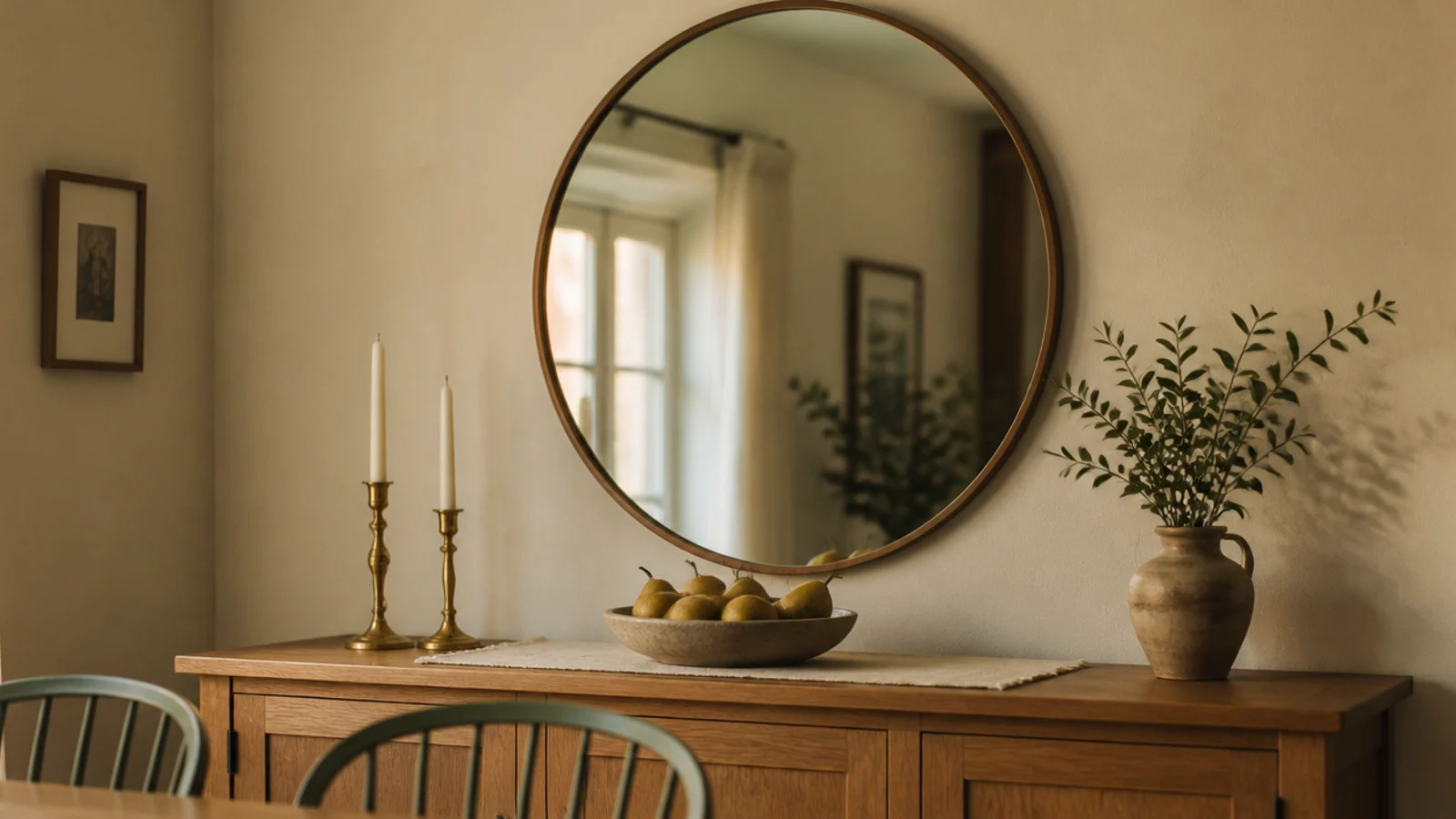
Mirror wall decor in a dining room has one advantage no other room offers: people sit still there, so what the glass reflects genuinely matters. I have hung mirrors over sideboards, banquettes, bar carts and one truly awkward radiator, and the wins are always about placement and sizing rather than the frame. Here are twenty ideas you can copy this weekend, with the numbers that keep them safe.
In this guide22 sections — tap to openHide
- 1.Sizing mirror wall decor for a dining room wall
- 2.One oversized round above the sideboard
- 3.A mirror on the wall opposite the dining window
- 4.A cluster of five above the buffet
- 5.Two matching mirrors flanking the doorway
- 6.A leaning mirror in the dining corner
- 7.A tall arched mirror in a narrow dining nook
- 8.A convex porthole mirror as punctuation
- 9.Candles in front of the glass
- 10.A mirror instead of art at the head of the table
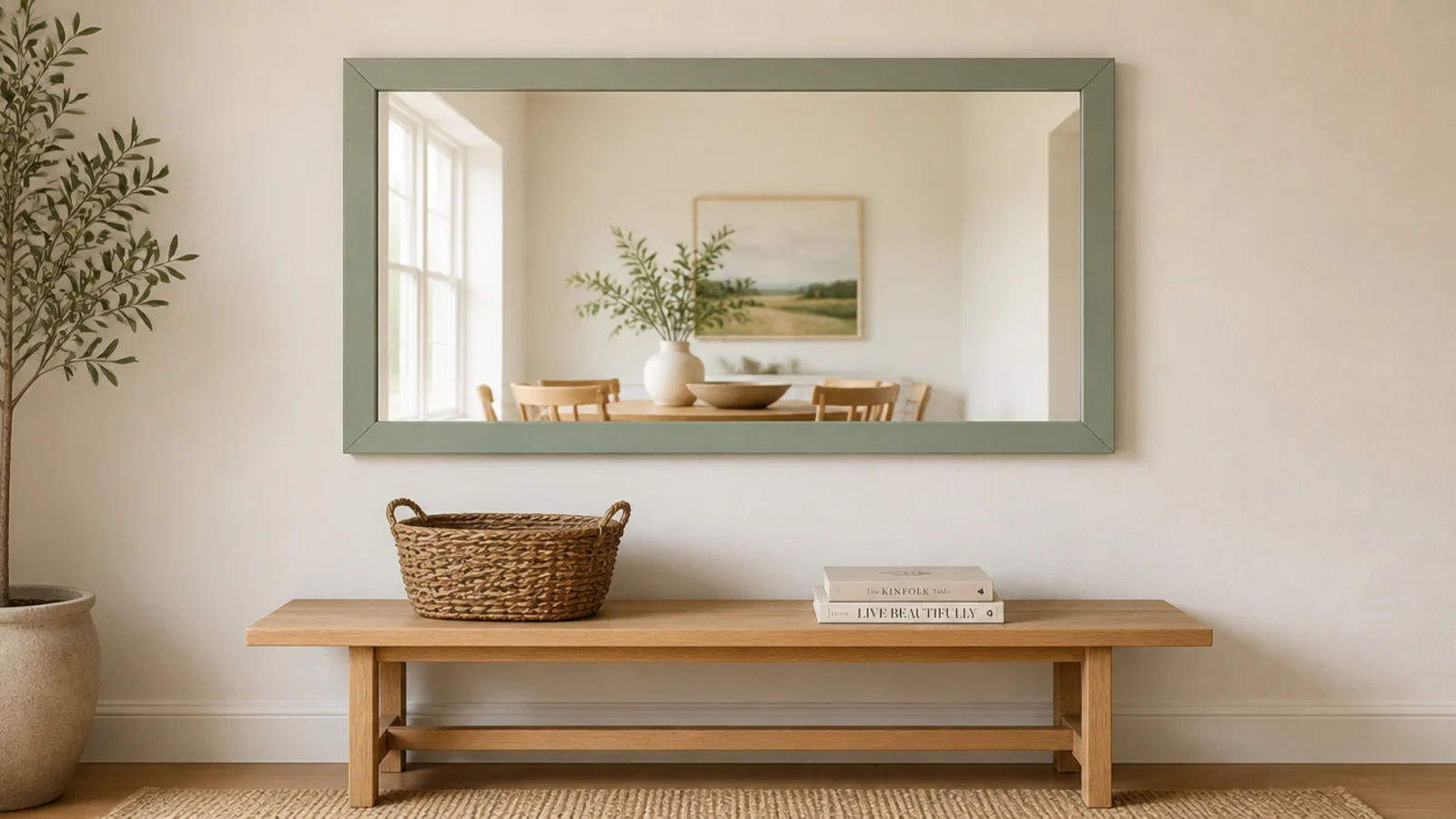
- 11.Paint the frame the wall color
- 12.Frame a plain mirror with painted trim
- 13.A gallery mix of mirrors and framed art
- 14.A mirror above the bar cart
- 15.Layer a small leaner in front of a hung mirror
- 16.A mirror behind a big plant
- 17.Antiqued glass for a room with hard light
- 18.A mirror above a banquette, hung high
- 19.A slim mirror to widen a galley dining area
- 20.Mirror the pendant, not the doorway
- 21.A mirror-backed niche or built-in
- 22.Mistakes to Skip
Sizing mirror wall decor for a dining room wall
Start with the furniture, not the wall. A mirror above a sideboard should span two-thirds to three-quarters of the sideboard width — on a 60-inch buffet, that is a 40 to 45-inch mirror, or a cluster covering the same span. Leave six to eight inches between the furniture top and the bottom of the frame.
On an open wall with nothing beneath it, centre the glass at 57 to 60 inches from the floor so the middle lands at eye height for a standing adult.
Then check the reflection before you check the frame. Sit in the chair you actually use and picture what the mirror will show. Opposite a window, it bounces daylight through the whole room. Perpendicular to that window, it mostly shows you the opposite wall.
Weight decides the hardware. A 30-inch round runs 15 to 25 pounds and a big framed rectangle can pass 40, while the plugs in the box carry about 10. Go into studs, use two hanging points so the frame cannot pivot, and pick anchors rated well above the real number. For anything large, ask whether the glass is safety-backed.
Budget tiers: a small accent mirror is $20 to $45 ($), a good statement round is $60 to $150 ($$), and an antique or oversized piece runs $200 and up ($$$).
1. One oversized round above the sideboard
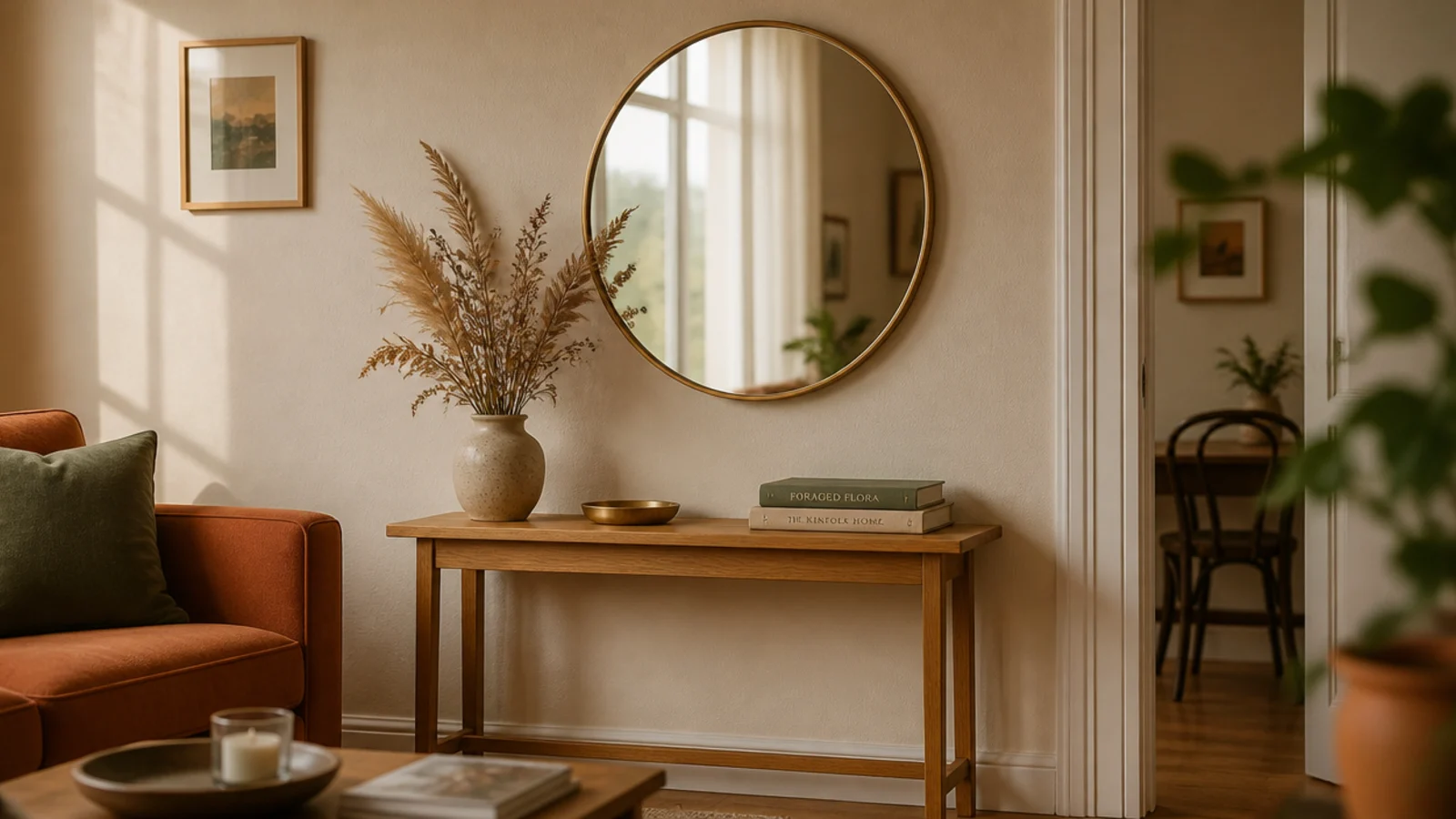
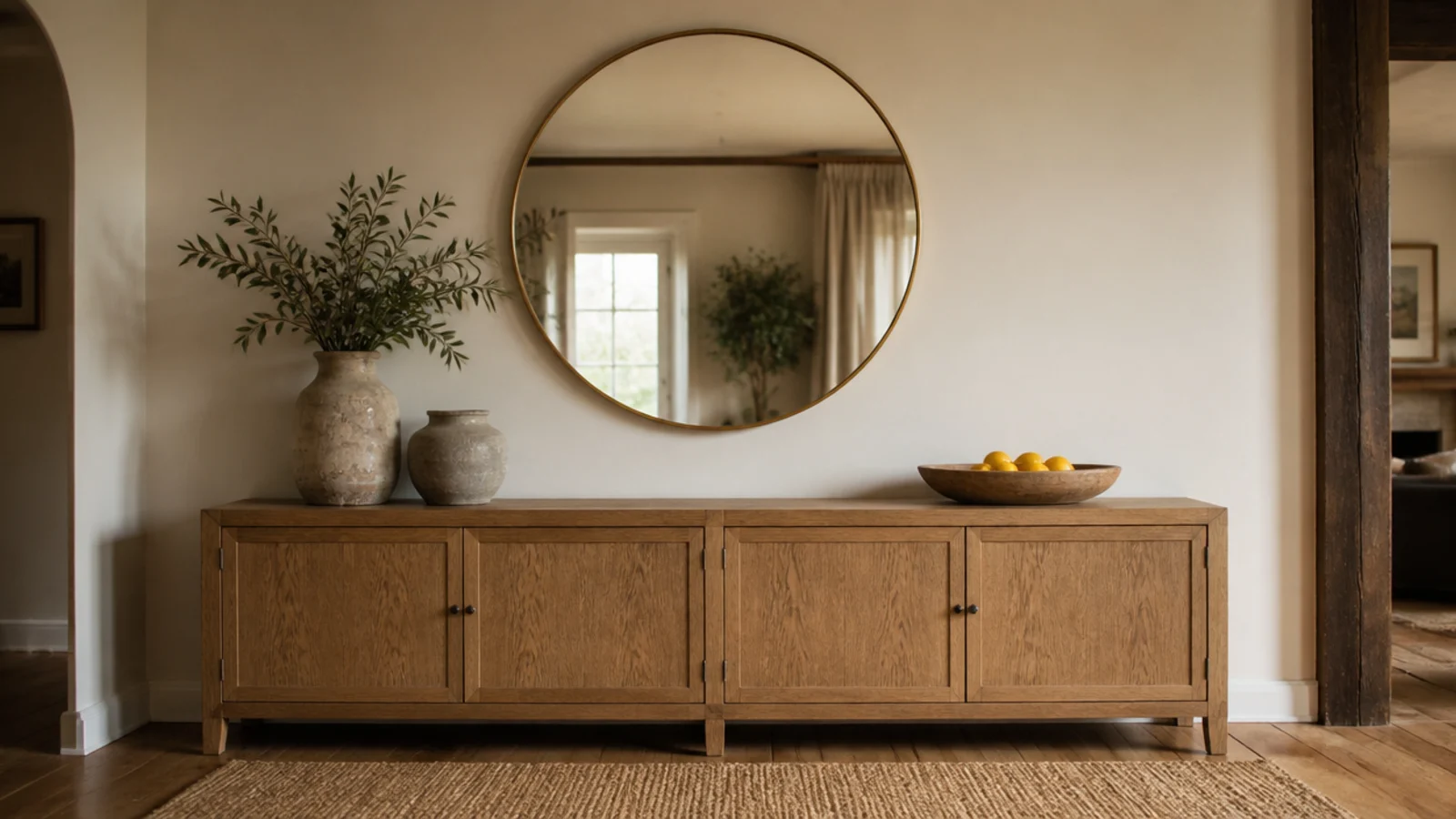
The most reliable dining room move there is. A single 40-inch round above a 60-inch sideboard gives the wall a clear centre and stops the buffet reading as a lonely slab of furniture.
Go bigger than feels comfortable. Undersized mirrors are the most common mistake in this room by a wide margin, and a mirror that looks large propped on the floor almost always looks correct once it is up. Hang it eight inches above the top, on two fixings into studs, and put nothing else on that wall.
2. A mirror on the wall opposite the dining window
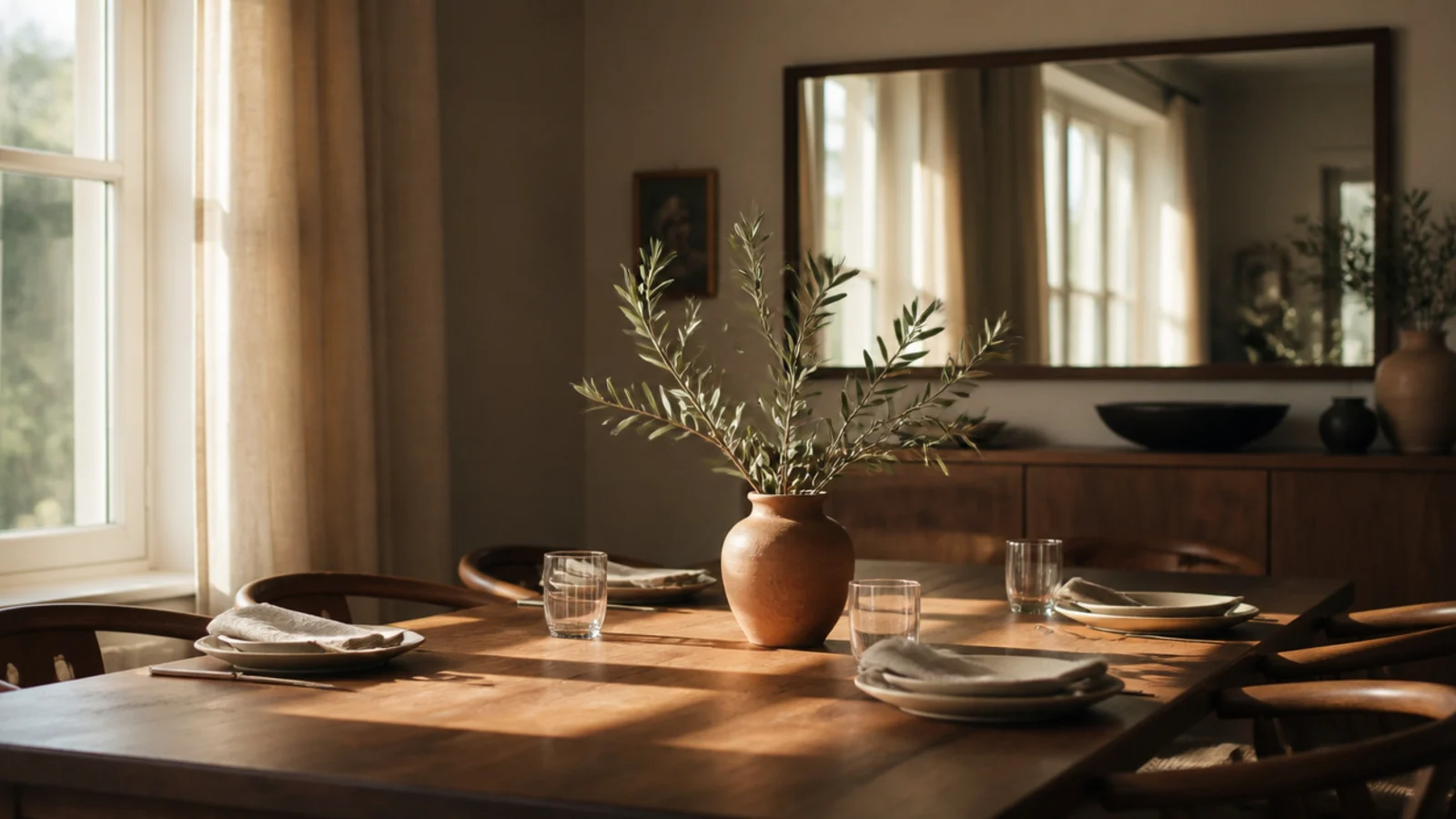
This is the placement that actually changes how the room feels at 4pm in December. Daylight hits the glass, bounces, and lands on the far side of the table.
Stand at the window and look straight across; whatever wall you are facing is the one. If the opposite wall is broken up by a doorway, centre the mirror on the largest unbroken section rather than forcing symmetry with the table. Light does not care about your furniture layout, and the difference in a north-facing room is worth more than another lamp.
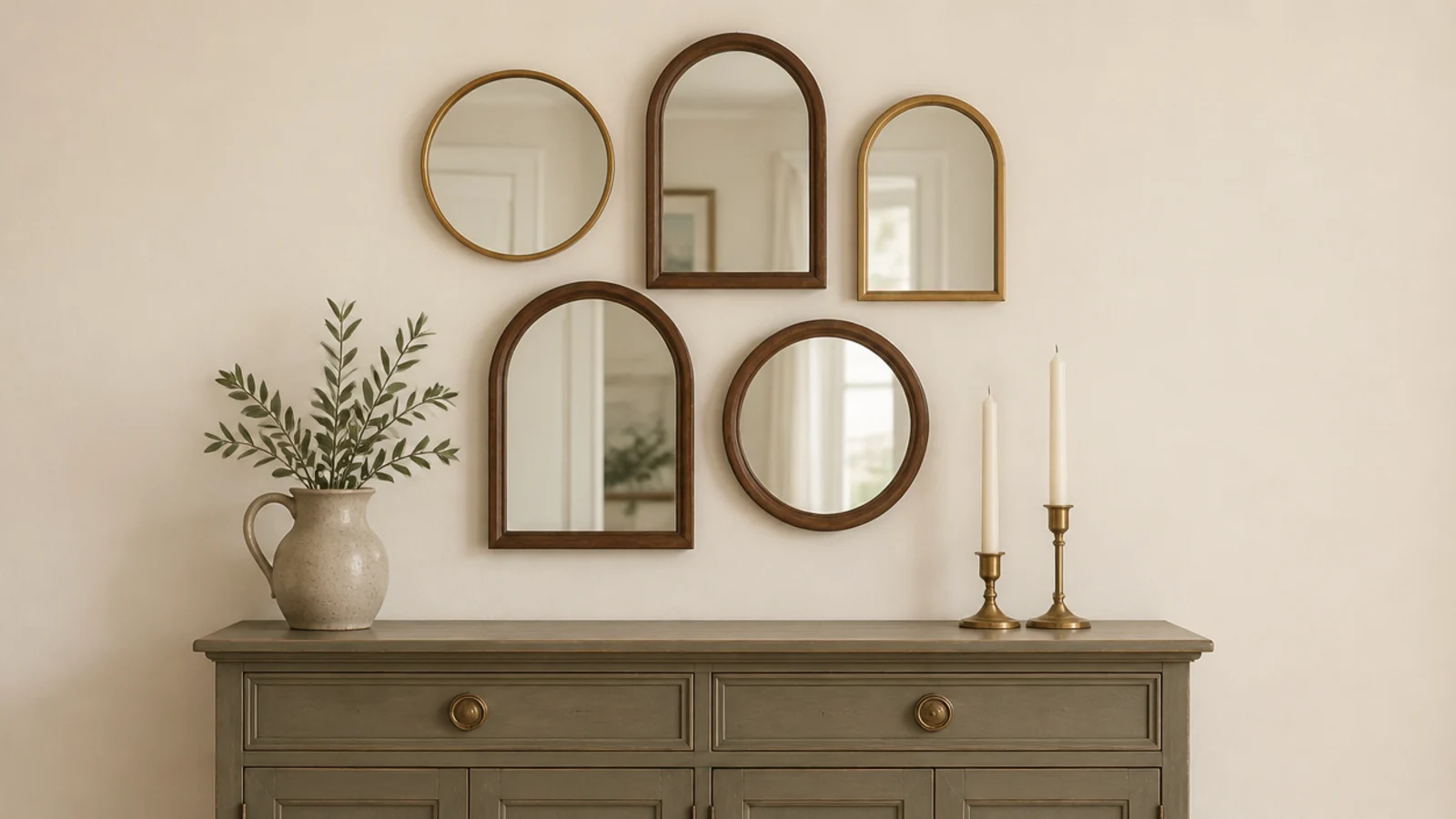
3. A cluster of five above the buffet
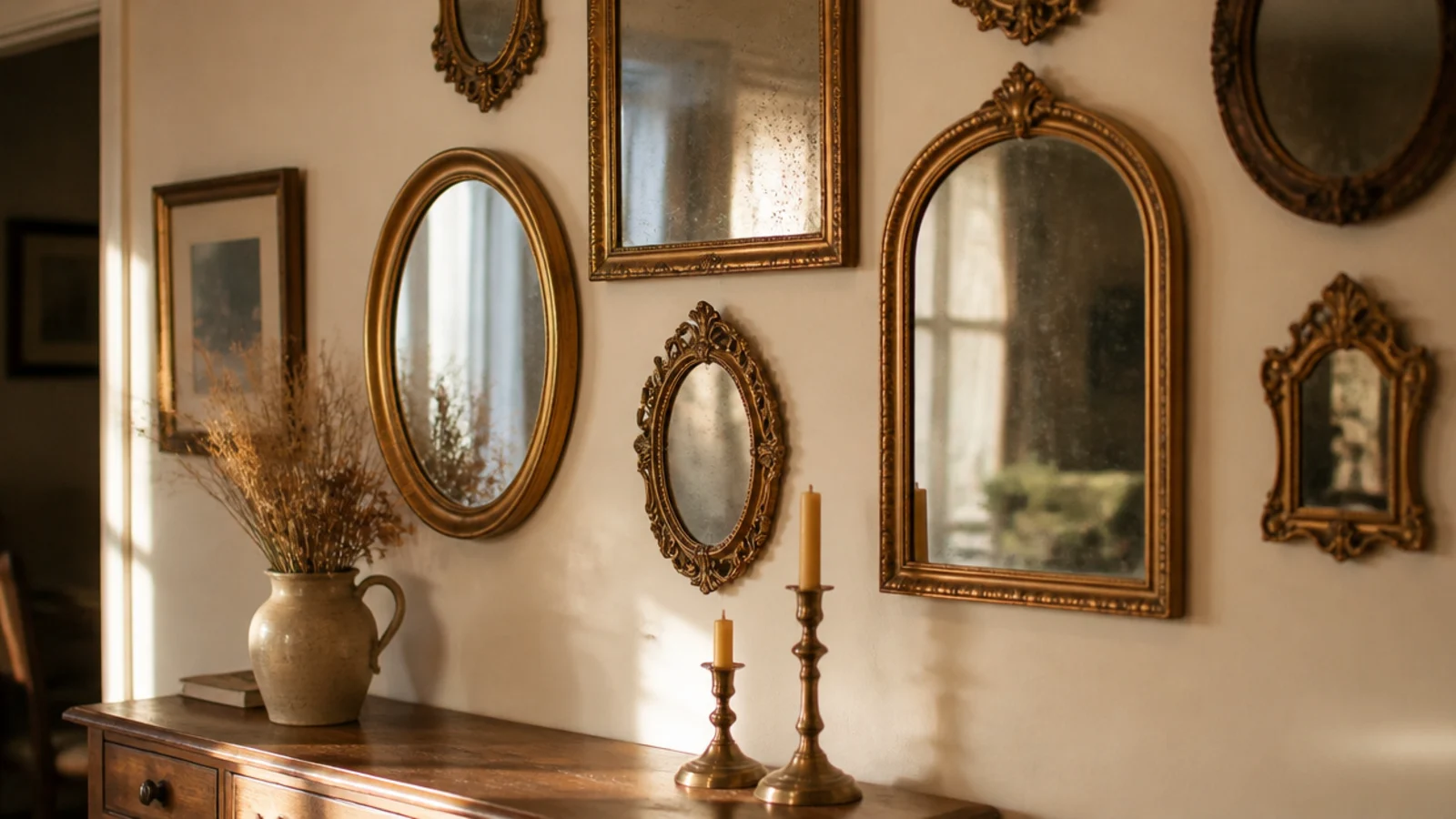
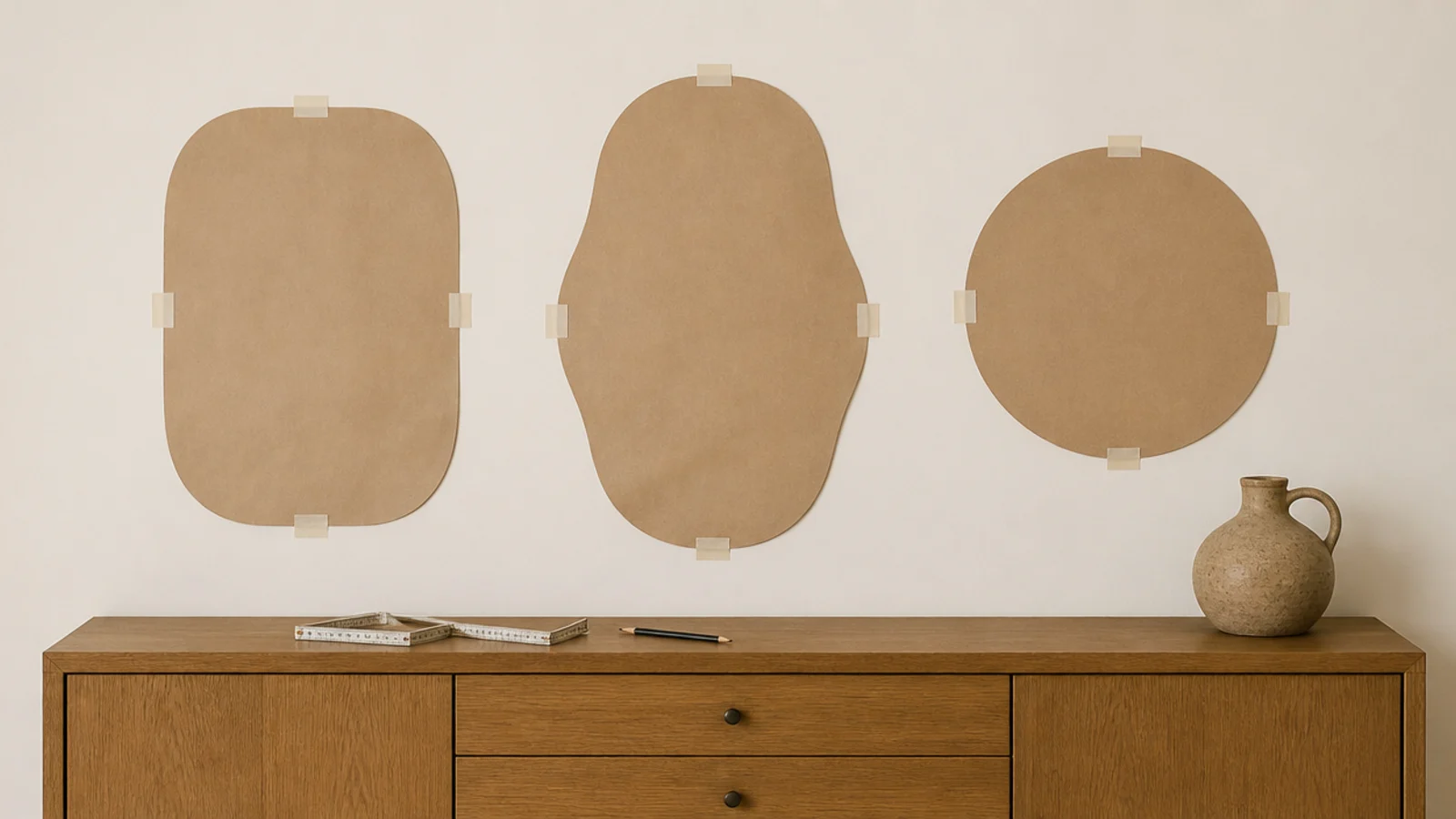
Five small mirrors read as a collection where one small mirror reads as an accident. Use mixed shapes — two rounds, two arches, one oval — in a single metal finish, with 2 to 3 inches between frames.
Lay them on the floor in the shape of the wall space first and photograph the layout from directly overhead. That photo is your plan. Cut paper templates from the photo, tape them up, and adjust for a day before a drill appears. There is more on this in mirror cluster wall.
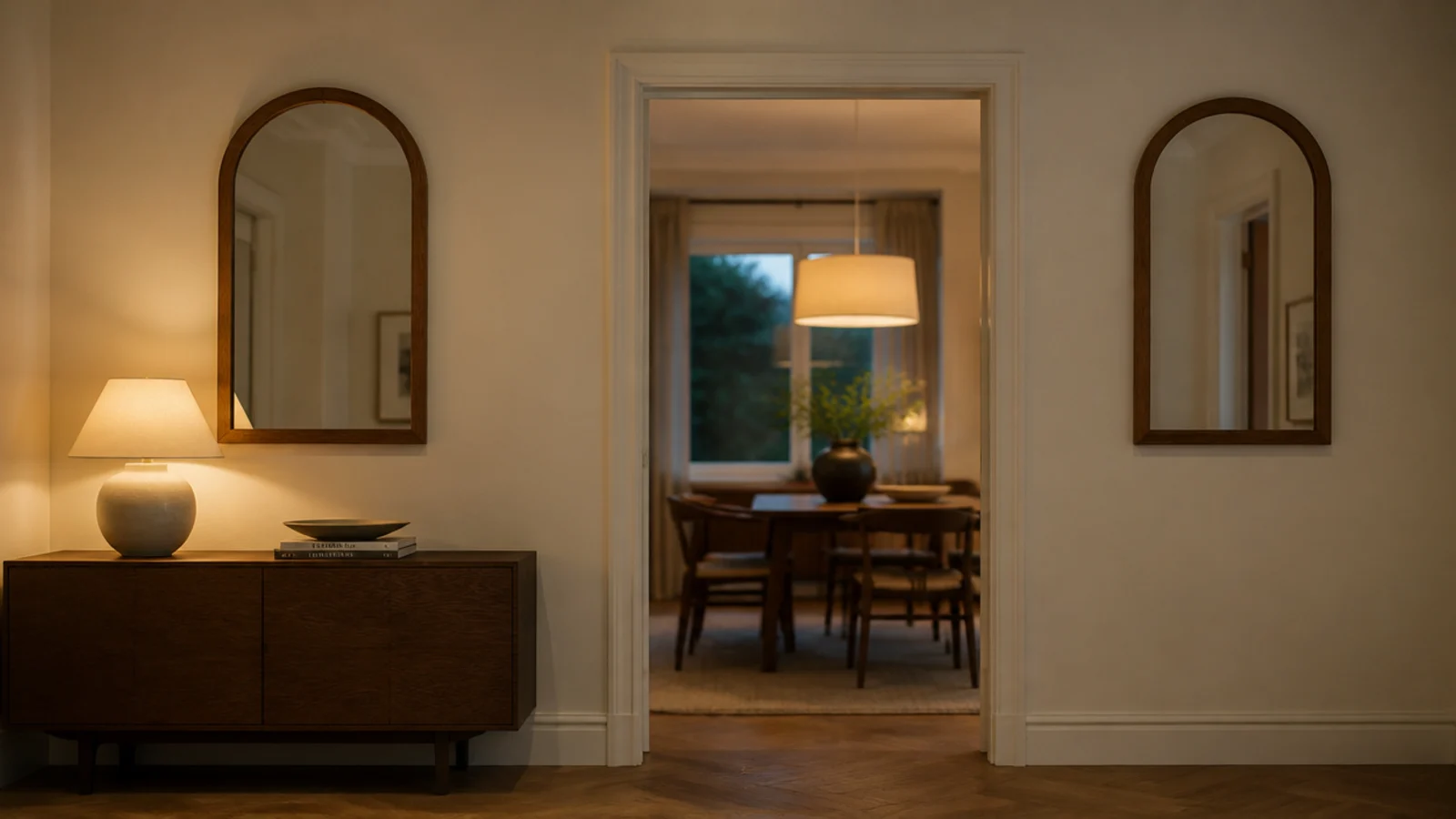
4. Two matching mirrors flanking the doorway
When a dining wall is already busy with a doorway, a radiator or a run of windows, symmetry is the shortcut to calm. Two identical mirrors either side of an opening, hung at the same centre height, settle the whole wall.
Keep them modest — 24 to 30 inches each — because the pair is the statement, not the individual piece. Measure from the doorframe rather than the wall corners so the gaps read even, and use two fixings each so neither one drifts out of level over time.
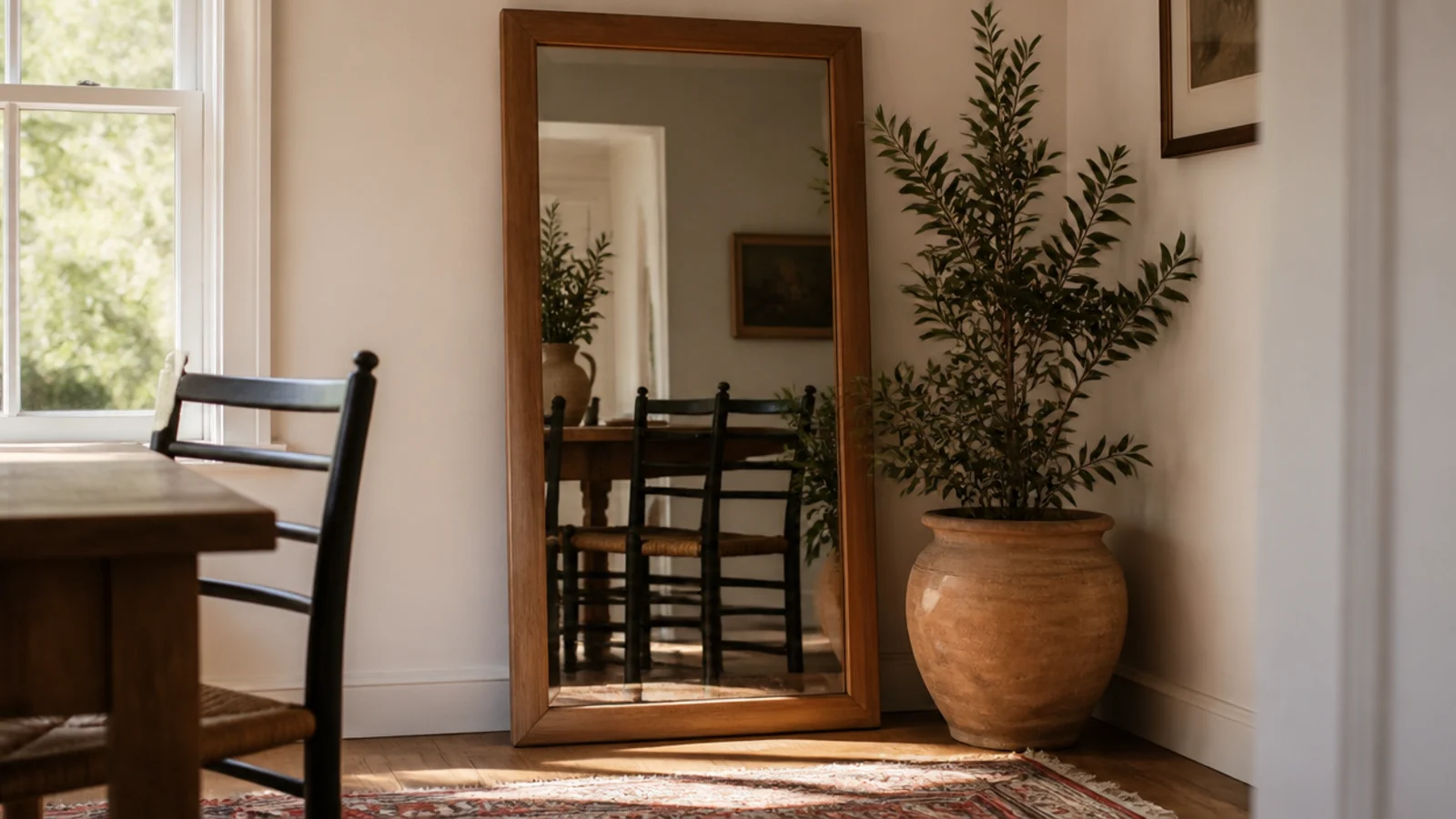
5. A leaning mirror in the dining corner
A tall mirror leaned into a dining corner reflects the table at an angle, which shows depth rather than a flat repeat of the wall. It also skips the hanging problem entirely.
Lean at roughly five degrees, put felt pads or clear silicone bumpers under the frame feet, and strap it to a stud. A large leaner can top 60 pounds, and in a house with children the strap is the whole idea rather than an optional extra. Expect $150 to $320 for something 65 inches tall.
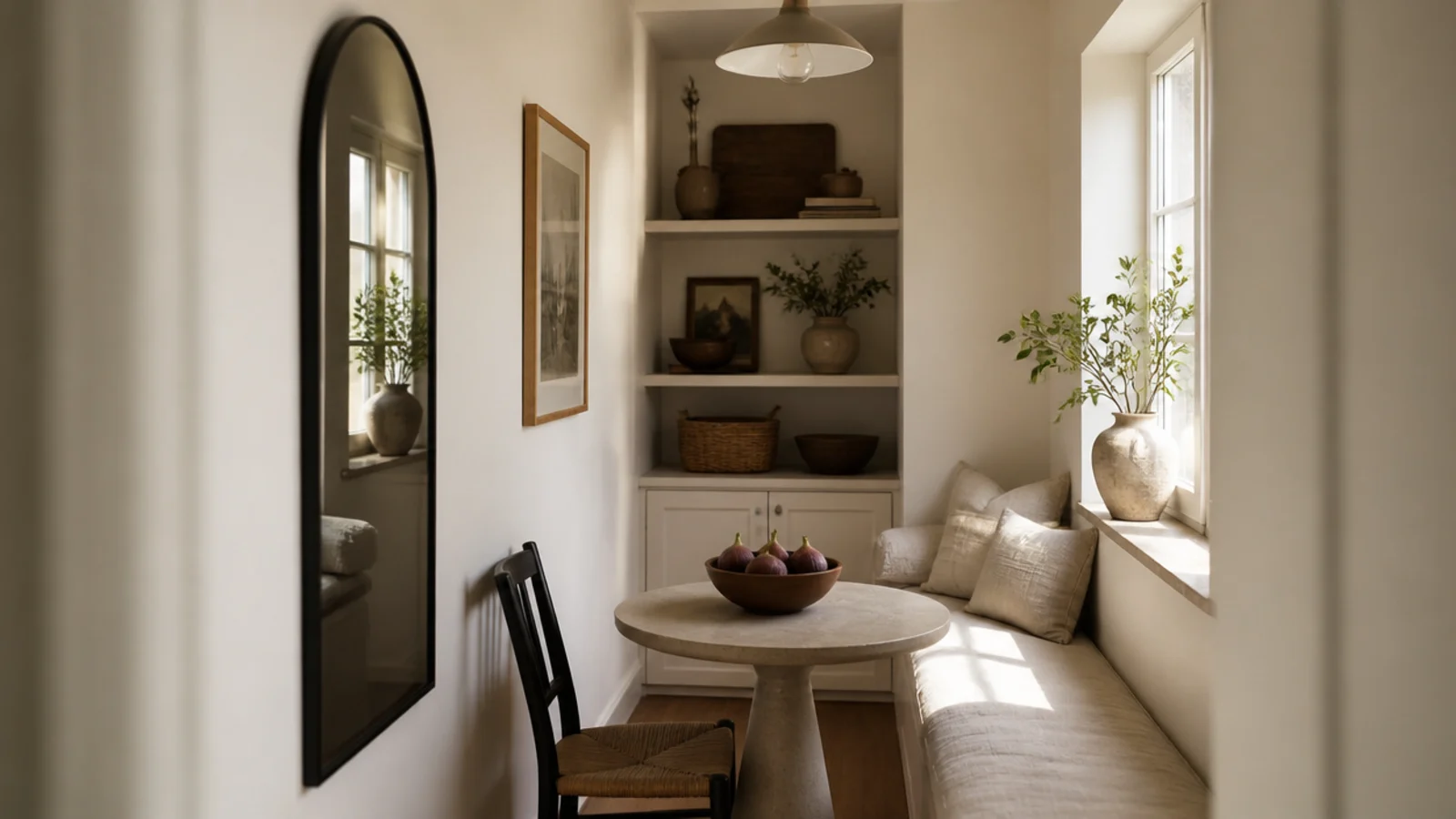
6. A tall arched mirror in a narrow dining nook
Narrow nooks feel low because everything in them is low — bench, table, cushions. One tall arched mirror, roughly 48 by 20 inches, gives the eye a vertical line and the whole nook reads taller.
Hang it on the long wall beside the bench rather than the end wall, so the reflection carries down the space instead of straight back at whoever is sitting. Keep the bottom edge at least 14 inches above the cushion. Thin black or warm oak frames disappear best in a small nook.
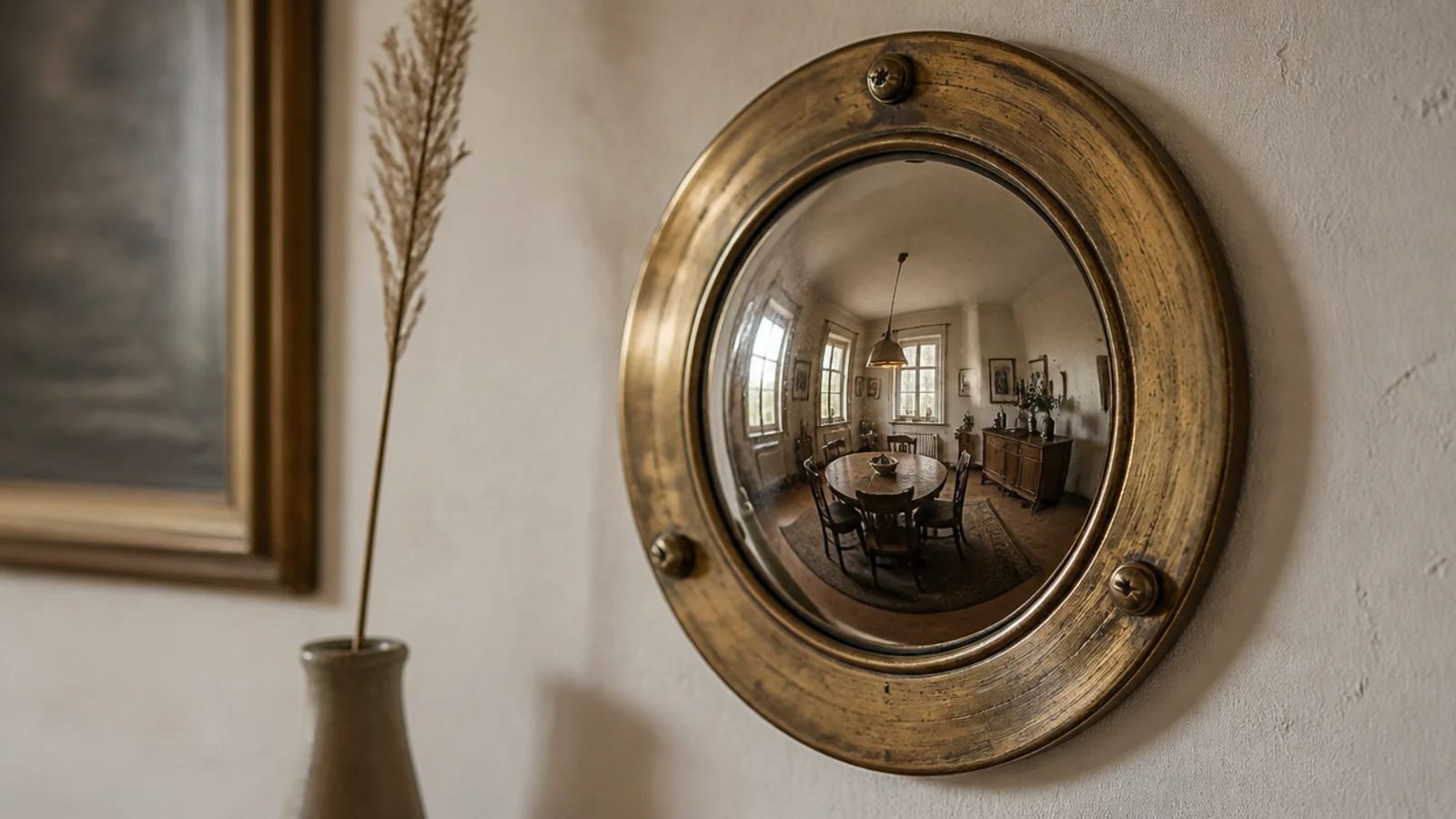
7. A convex porthole mirror as punctuation
A convex mirror is the least practical and most useful piece in this list. You cannot check your face in one, and that is precisely why it reads as sculpture instead of a bathroom fitting.
An 18 to 24-inch convex in aged brass hung on an otherwise empty stretch of dining wall gives the room a full stop. The curved glass compresses the entire room into a small bubble, which is genuinely interesting to look at from a seated position. They are light, usually under 12 pounds, so one good fixing does it.
8. Candles in front of the glass
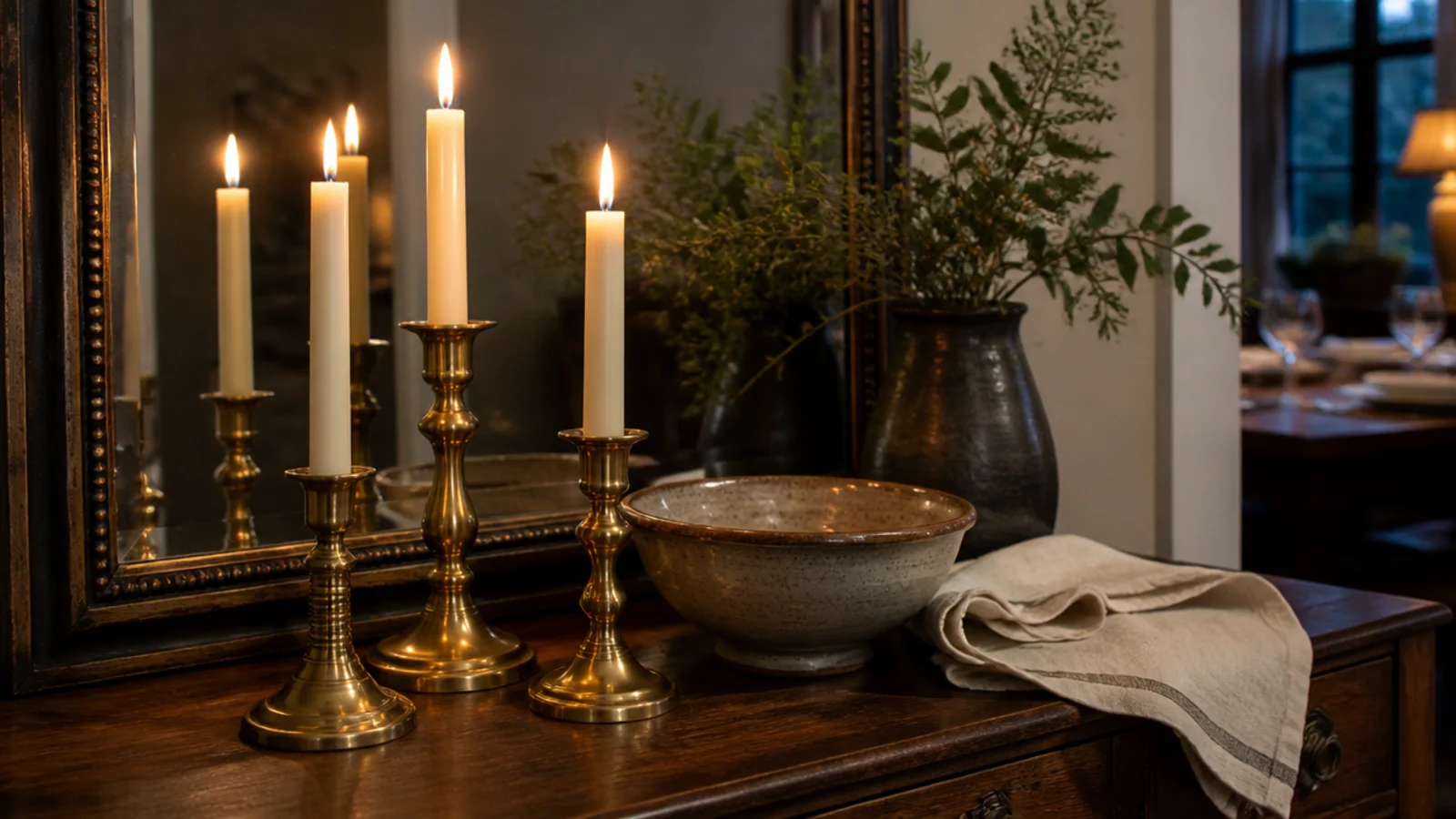
The cheapest trick in this article and the one guests always notice. Set candlesticks on the sideboard directly in front of the mirror and every flame reads twice.
Three brass tapers at staggered heights, 4 to 6 inches from the glass, is the arrangement that works. Keep the flames well clear of the frame itself and never leave them burning unattended near reflective glass, which throws heat as well as light. Total cost is about $18 and the effect only shows up after dark, which is exactly when a dining room needs it.
9. A mirror instead of art at the head of the table
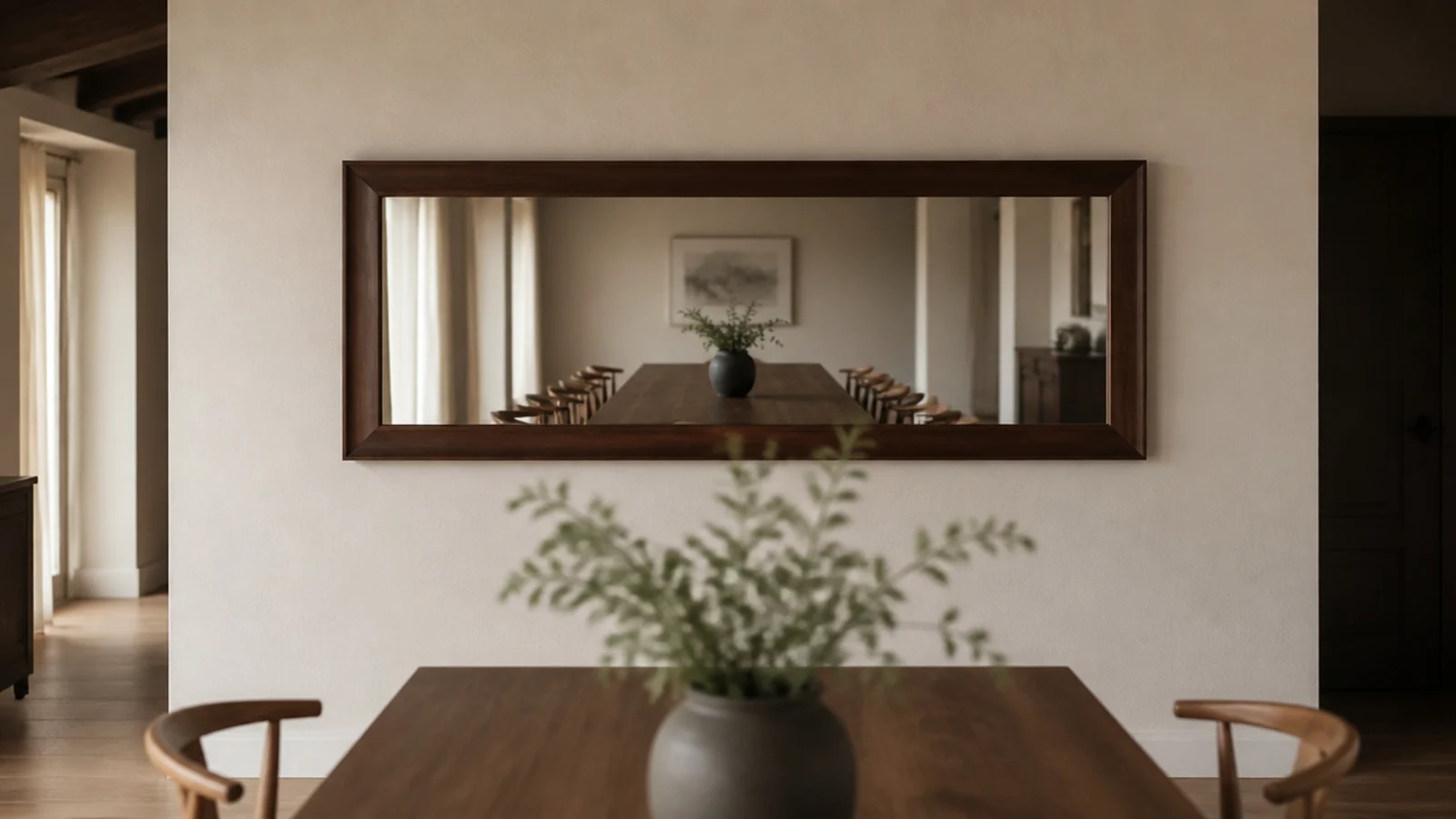
The end wall of a dining room is the one everyone faces. Art there gets stared at for an hour at a time, which is a lot to ask of a print.
A wide horizontal mirror in a simple walnut or oak frame handles the job better, because what it shows changes with the light and the company. Size it to roughly the table width, hang the centre at 57 to 60 inches, and use two fixings into studs. Anything over 40 pounds deserves safety-backed glass.
10. Paint the frame the wall color
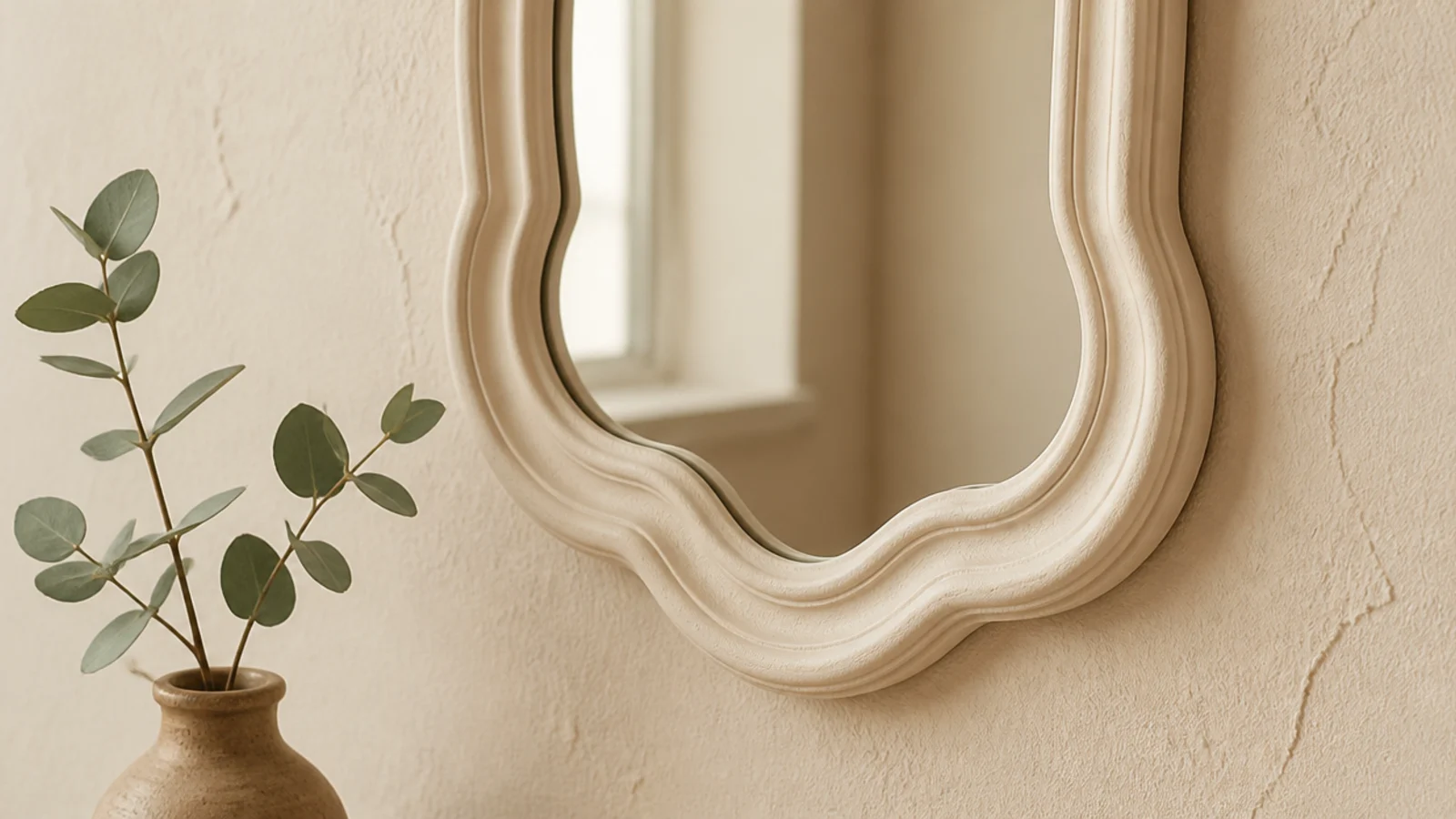
An ornate frame you half-like becomes an architectural detail the moment it matches the plaster behind it. Two coats of the wall color in satin, brushed carefully into the mouldings.
This is the fix for inherited mirrors, thrift finds and anything gilded that fights your palette. Once the frame recedes, only the glass shape reads, and the piece stops competing with the table. A sample pot costs $9 and the whole job takes an evening plus drying time.
11. Frame a plain mirror with painted trim
A builder-grade frameless mirror looks rented. Plain mitred pine trim, glued and pinned around the edge and painted, turns it into a fitted piece for about $12.
Use a simple profile — a flat 1.5-inch board or a light ogee — and paint it sage, soft black or the wall color. Cut the mitres slightly long and shave them down; a gap at a mitre is the only thing that gives this trick away. Full instructions live in the step-by-step mirror wall project.
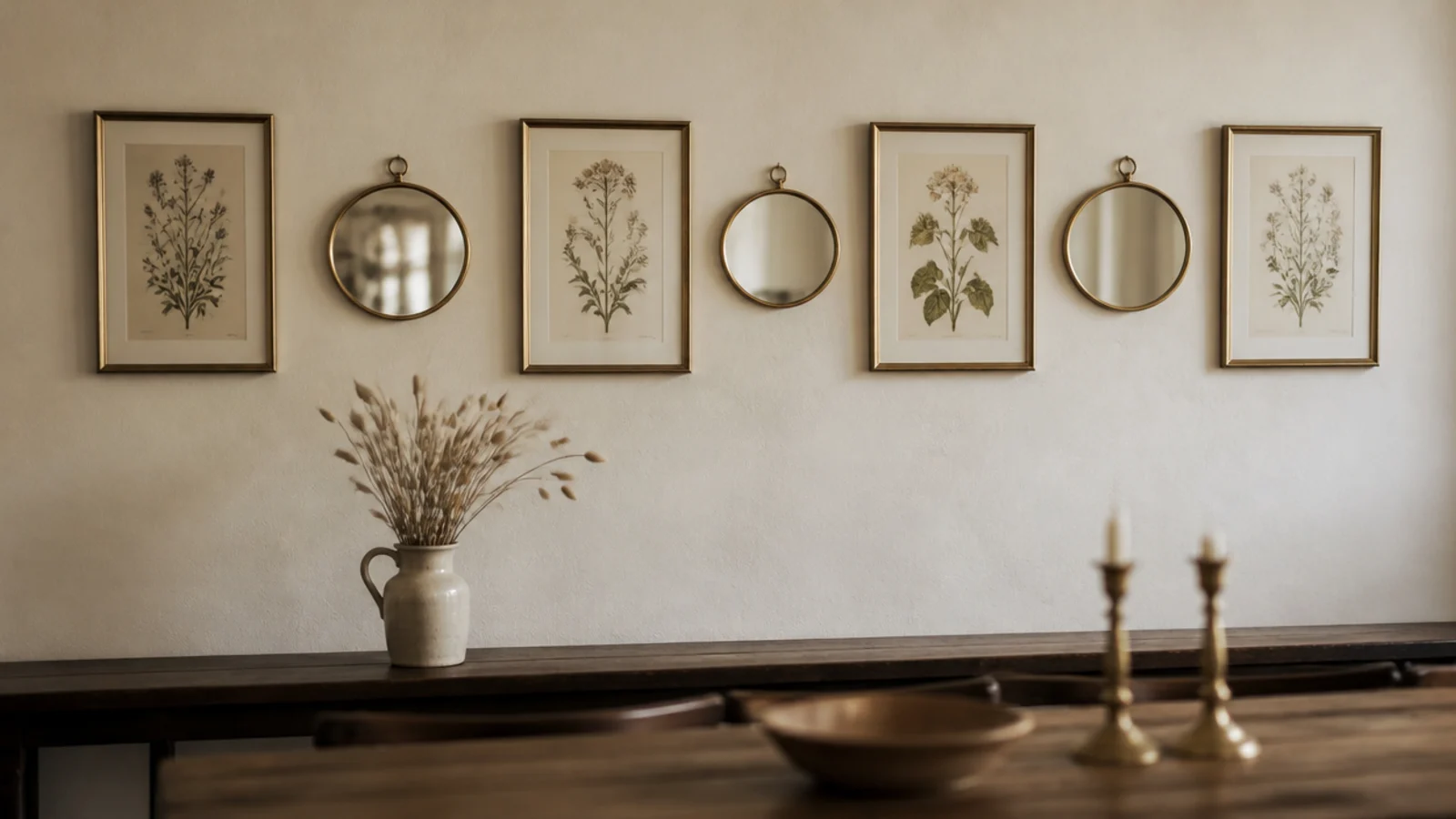
12. A gallery mix of mirrors and framed art
A gallery wall made only of prints can feel heavy above a dining bench. Swapping two or three frames for small mirrors gives the arrangement air.
Keep the mirrors in the same finish as at least half the frames so the wall reads as one family. Put the mirrors toward the middle of the group rather than the outer edges, where they mostly reflect the ceiling. Two to three inches between frames throughout, and no more than two finishes total across the whole wall.
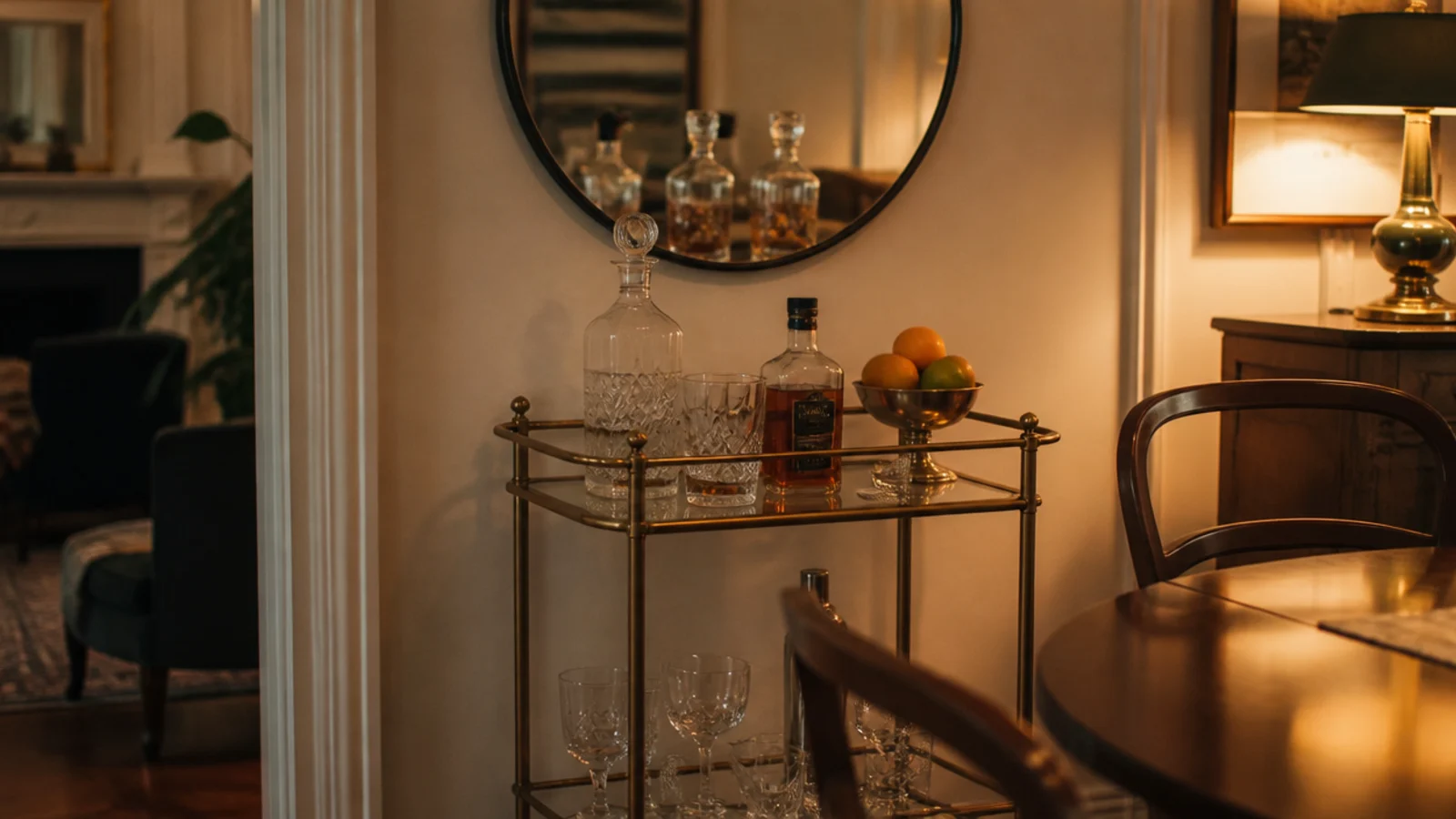
13. A mirror above the bar cart
A bar cart in a dining corner always looks slightly under-stocked. A round mirror above it doubles the bottles and glassware without you buying either.
Hang it 10 to 12 inches above the top shelf, sized to roughly the cart width. Keep the cart styling low and grouped so the reflection shows shapes rather than clutter. Warm brass frames sit well against cut glass and amber bottles, and a single small lamp on the cart makes the whole corner glow after dark.
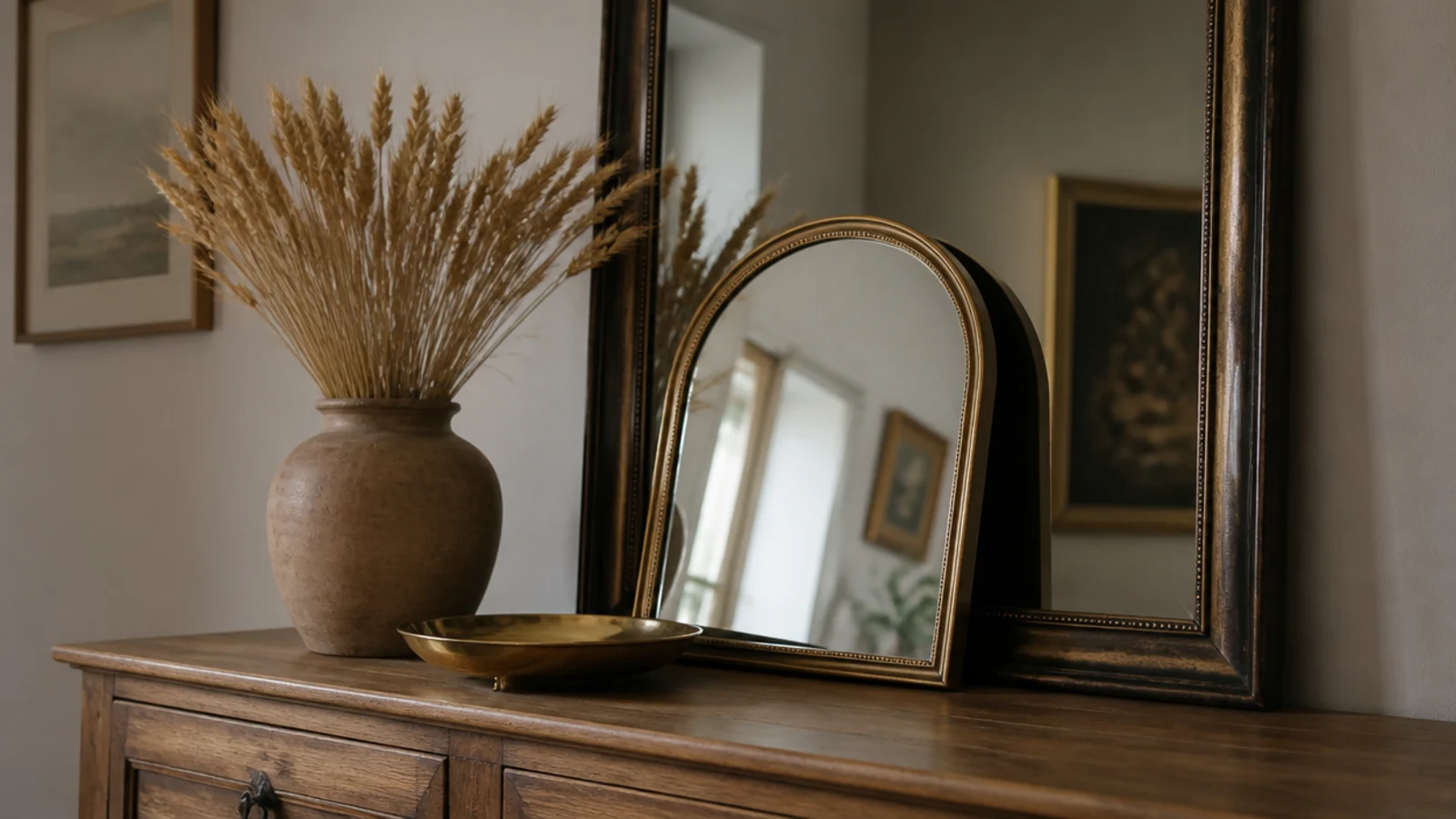
14. Layer a small leaner in front of a hung mirror
Layering reads expensive and costs nothing extra. Hang the large mirror first, then lean a much smaller one on the sideboard so the frames overlap by three or four inches.
The overlap is the whole point — a small mirror parked beside a big one just looks like indecision. Vary the shapes rather than repeating them, and add one soft object like a dried arrangement so the vignette is not all hard edges. Museum putty under the leaner keeps it from walking on a polished surface.
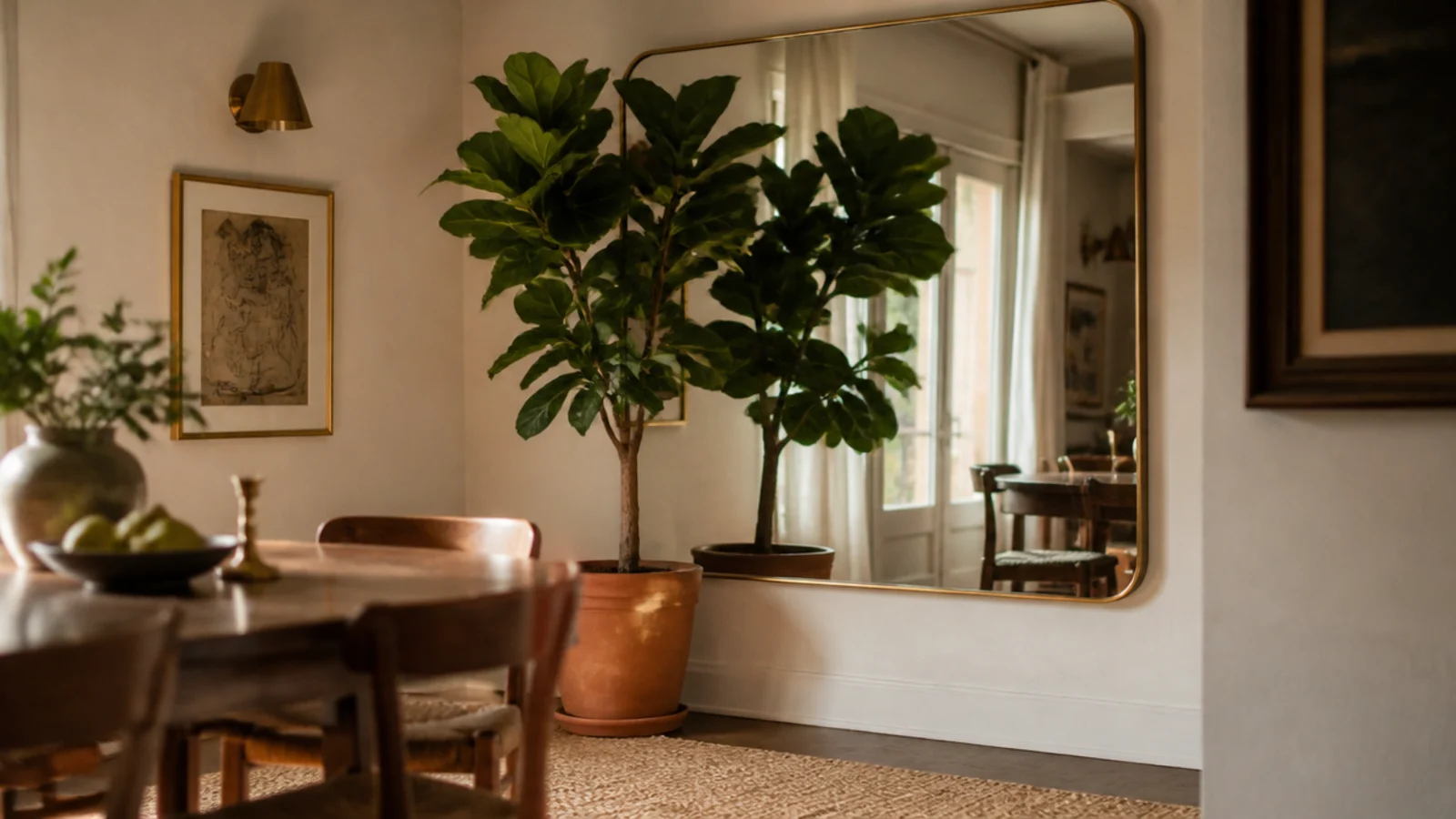
15. A mirror behind a big plant
Put a tall plant in front of a wall mirror and you get twice the foliage for the price of one pot. It also solves the problem of a mirror reflecting something boring.
A fiddle leaf fig, a large monstera or a tall dried arrangement all work. Set the pot 8 to 12 inches out from the glass so the leaves read separately from their reflection instead of pressing flat against it. Watch the light — a mirror behind a sun-loving plant bounces extra light onto its back leaves, which they like.
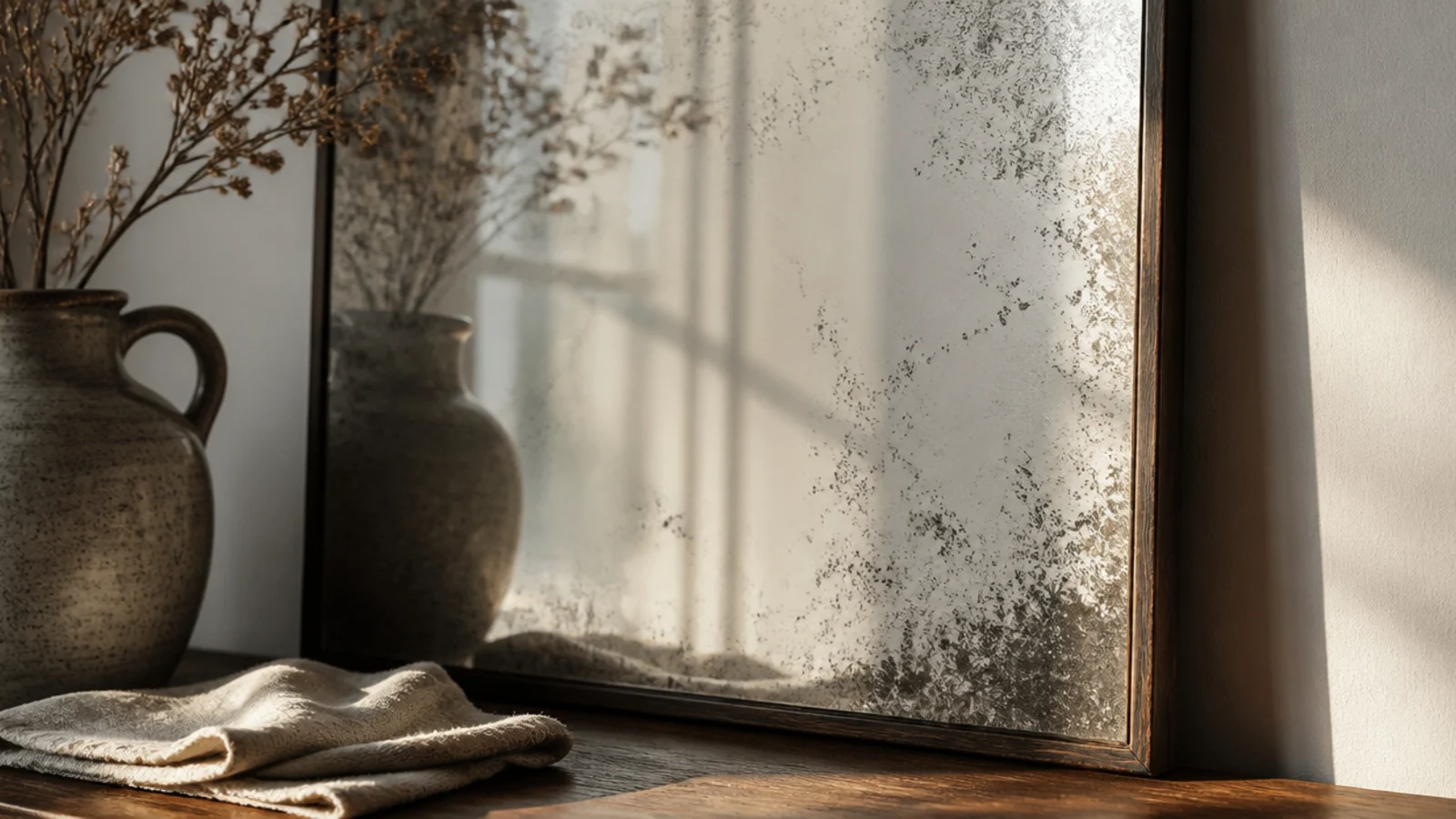
16. Antiqued glass for a room with hard light
A clear mirror in a room with strong afternoon sun turns into a glare panel around 4pm. Antiqued or foxed glass diffuses that light instead of firing it back.
The mottled silvering also hides fingerprints and dust, which matters in a room where people lean on things. Expect to pay a premium — antiqued panels run $120 to $300 for a decent size — but it is the correct answer for a west-facing dining wall. Vintage pieces often arrive with this patina already, which is a good reason to look secondhand first.
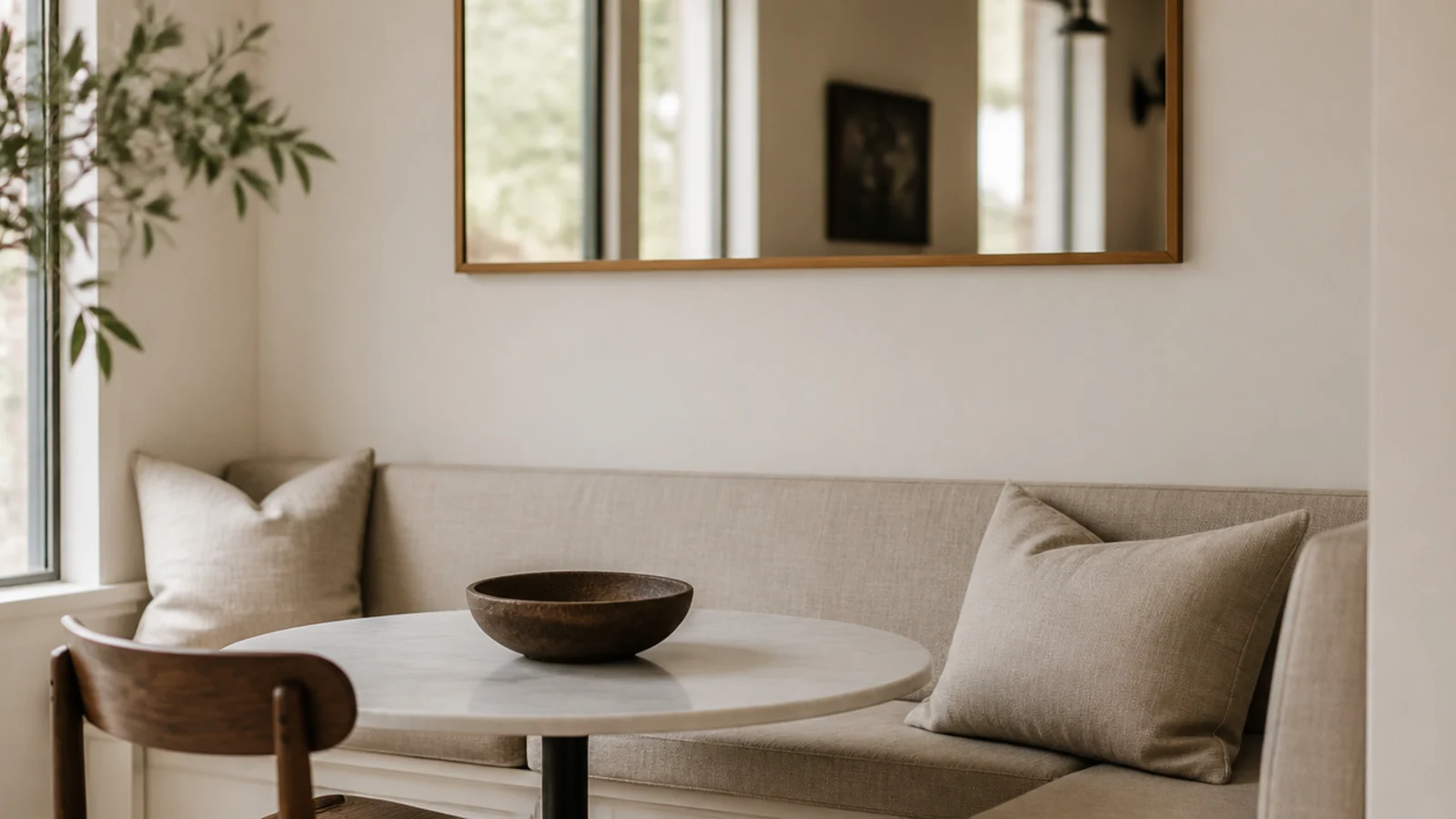
17. A mirror above a banquette, hung high
A banquette is a sofa that people lean their heads against, so treat this exactly like hanging above a sofa. Height is a safety decision here, not a styling one.
Leave at least 14 inches of clear wall above the cushion top, choose the lightest frame that suits the room, and fix into studs with two points. Safety-backed glass is genuinely worth the upgrade over a seat. If the only mirror you love is heavy, put it on the opposite wall and hang something soft over the bench instead.
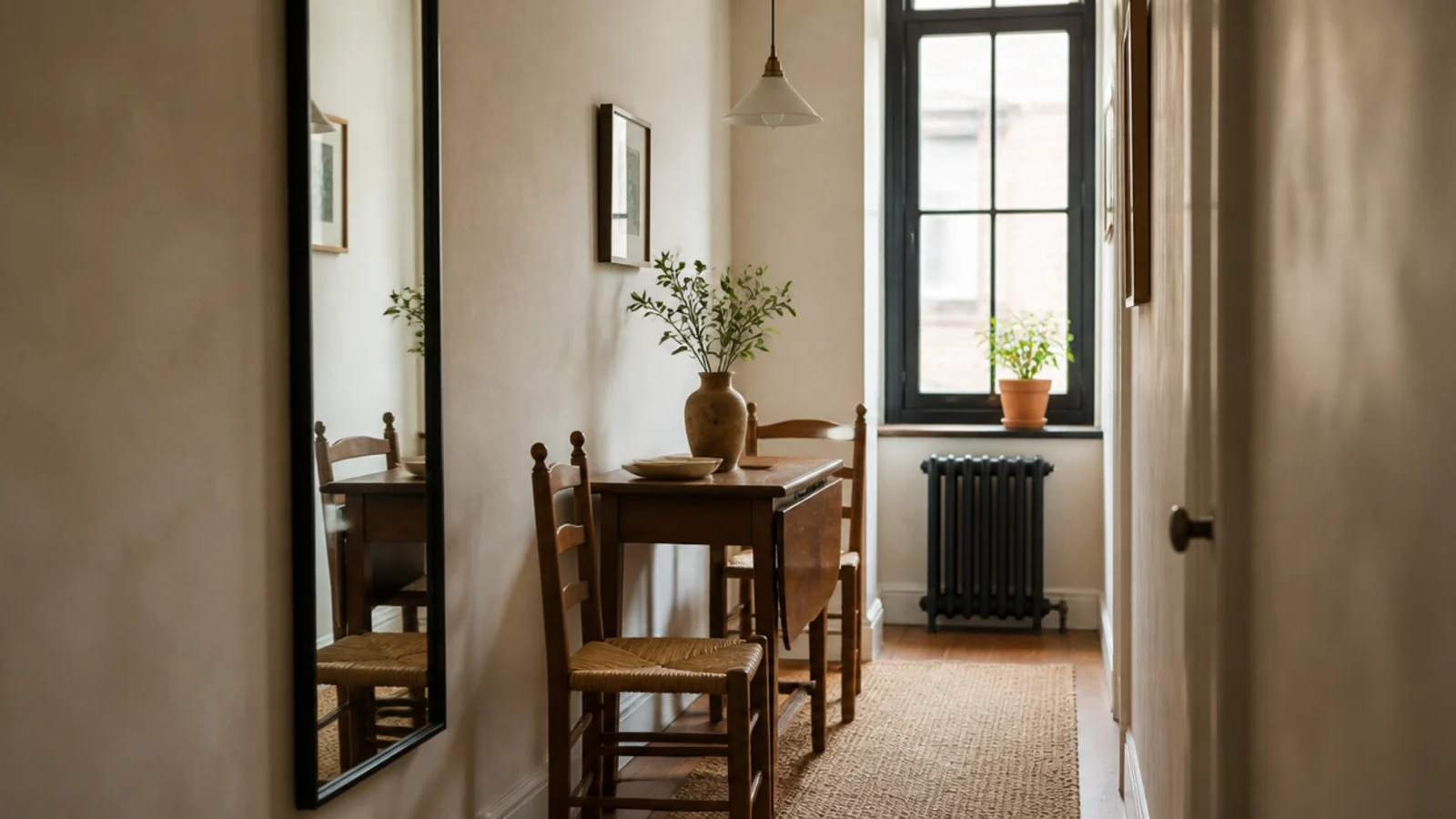
18. A slim mirror to widen a galley dining area
In a long thin dining space, a horizontal mirror emphasises the length you already have too much of. A tall narrow one does the opposite.
Run a slim full-height mirror — 18 to 24 inches wide, floor almost to ceiling — on the long wall. It reads as a second opening rather than a decorative object, and the room stops feeling like a corridor with a table in it. Mount it with two fixings top and bottom, and keep the bottom edge clear of chair backs.
19. Mirror the pendant, not the doorway
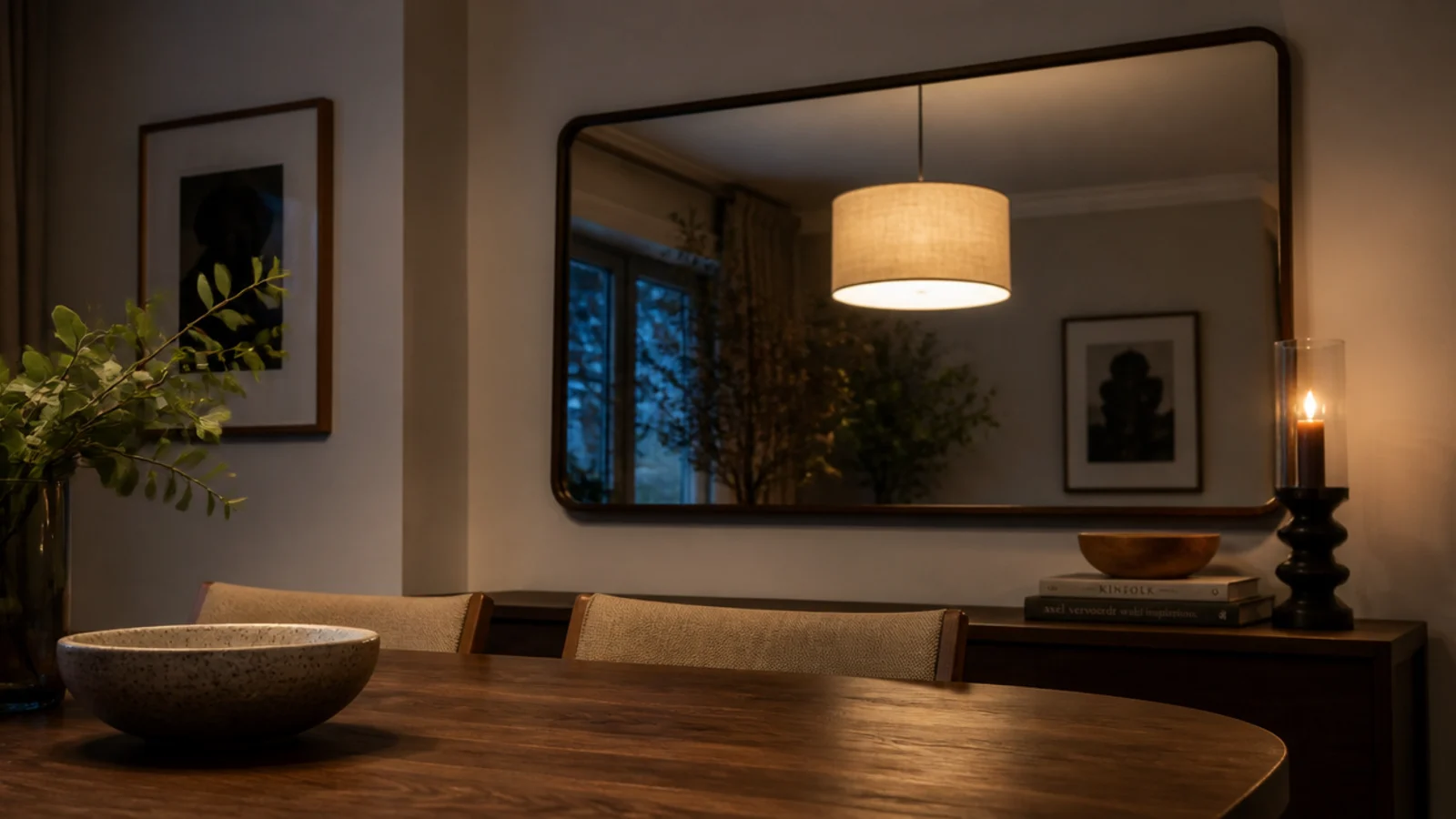
Before you commit, sit in every chair and look at the wall you are planning to use. A mirror that catches the warm glow of a pendant, a lit hallway or a window is doing work. One that shows the back of an open door is not.
This ten-minute check has changed the wall I was going to use in more than half the dining rooms I have worked on. It costs nothing and it is the difference between a mirror people notice and one they walk past.
20. A mirror-backed niche or built-in
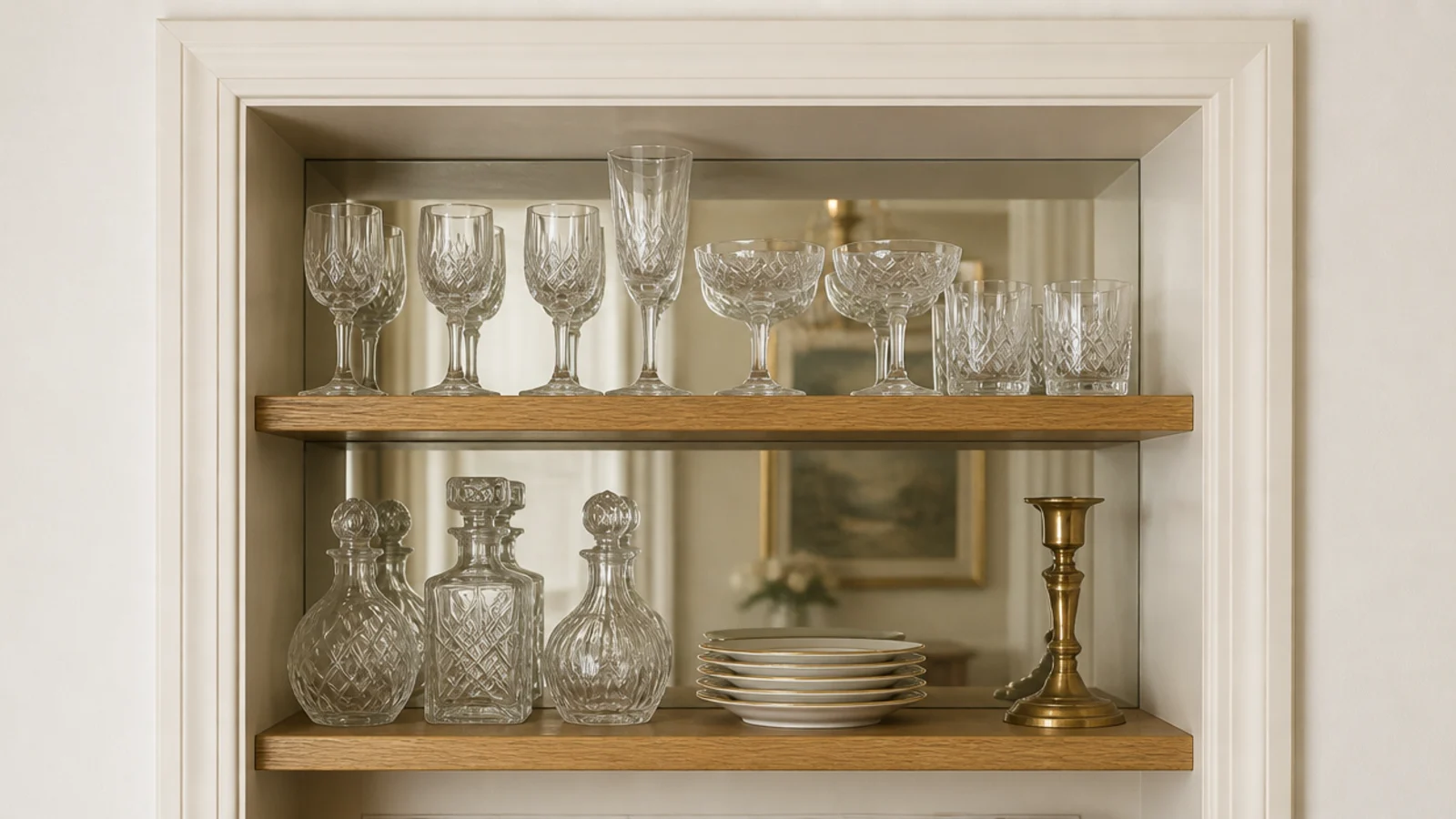
If your dining room has a shallow niche, an alcove or a run of built-in shelving, mirroring the back panel makes six inches of depth read like sixteen.
Glass merchants cut panels to size for $60 to $140, and the panel sits behind the shelves rather than carrying any weight. Style the shelves lightly — glassware, a few plates, one candlestick — because a mirrored back doubles everything including clutter. The shelving equivalent for a living room is covered in built-ins around a fireplace.
Mistakes to Skip
- Buying a mirror sized to the wall instead of the furniture. Above a sideboard, two-thirds to three-quarters of the furniture width is the rule, and the wall has no say in it.
- Drilling before laying the cluster out on the floor. Paper templates cost nothing and every mirror wall I have rushed ended up with a spare pair of holes in it.
- Hanging heavy glass low over a banquette or bench where a head rests. Fourteen inches of clearance and safety-backed glass, or pick a different wall entirely.
Frequently asked questions
How big should a mirror be above a dining sideboard?
Aim for two-thirds to three-quarters of the sideboard width. On a 60-inch buffet that means a 40 to 45-inch mirror, or a cluster that occupies roughly the same span. Leave six to eight inches between the sideboard top and the bottom of the frame so the two pieces read as one arrangement rather than two separate decisions.
Where should a mirror go in a dining room?
On the wall opposite the window if you have one, because that is the placement that actually bounces daylight into the room. A mirror perpendicular to a window mostly reflects the wall across from it. Second best is above the sideboard or buffet, where the furniture gives the mirror a reason to be at that height.
How do I hang a heavy dining room mirror safely?
Into studs, with two hanging points, using hardware rated well above the real weight. A 30-inch round is 15 to 25 pounds and a large framed rectangle can pass 40, while the plugs in the box carry around 10. Two fixings stop the frame pivoting, and safety-backed glass is worth asking about on anything large.
How many mirrors should a cluster have?
Odd numbers read better than even ones, so three, five or seven. Vary the sizes rather than repeating one shape, keep two to three inches between frames, and stay within two frame finishes. Lay the whole group on the floor and photograph it from directly above before a single hole gets drilled.
Do mirrors make a dining room look bigger?
They make it look deeper, which reads as bigger. The effect depends entirely on what gets reflected: a window, a lit hallway or the length of the table all add apparent depth. A mirror that reflects a blank wall or the back of a door adds nothing at all, so check the reflection from where people actually sit.
Pick the wall by its reflection first and the mirror second — that order fixes more dining rooms than any amount of shopping. The mirror wall decor ideas guide covers the other rooms in the house, and the mistakes I made first covers what to avoid before you drill. Save the pin below so the sizing numbers are with you when you measure.
Want more like this? Browse all 15 mirror wall decor guides — they all use the same measurements and budget tiers.
Pin it for later
Save this to your Mirror Wall Decor board
Pin it now so it is waiting for you when the tape measure comes out — and so the next person hunting for this idea can find it too.
Save this pinKeep going
More ideas worth saving while you have the tape measure out.