Living Room Built-In Shelves · Listicle
15 Cozy Living Room Built-Ins Ideas That Look Pricey

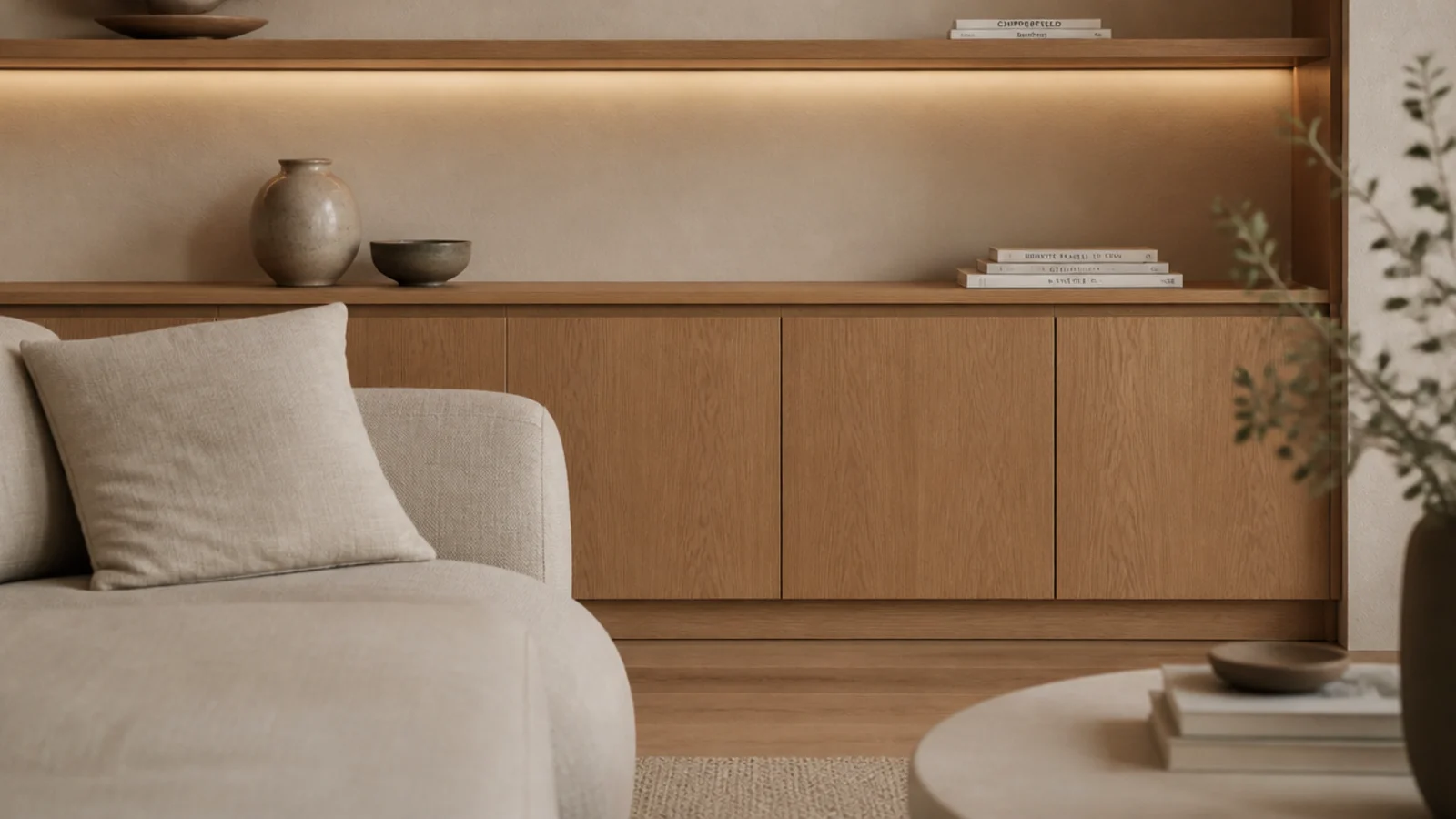
Modern built in shelves get their look from what is missing rather than what is added. No moldings, no visible hinges, no knobs, no busy styling — just consistent gaps, one material and light in the right place. That absence is also why a modern run is unforgiving: every joint you would normally hide behind trim is now on show. Here are fifteen details that make a wall of shelves read as commissioned cabinetry.
In this guide17 sections — tap to openHide
- 1.What makes modern built in shelves look expensive
- 2.Handleless doors with a push latch
- 3.A shadow gap instead of a face frame
- 4.One long open band in a closed wall
- 5.Warm oak against a pale plaster wall
- 6.An LED strip routed into the shelf
- 7.Continuous grain across the doors
- 8.A monolithic wall painted one color
- 9.A floating base with a recessed shadow line
- 10.Thicker shelves that read as solid
- 11.Deliberate asymmetry in the bay layout
- 12.A fluted panel as the accent
- 13.A recessed niche for the screen
- 14.Closed below, open above, nothing between
- 15.Plaster or microcement around the opening
- 16.Restraint: fewer objects, bigger pieces
- 17.Mistakes to Skip
What makes modern built in shelves look expensive
The expensive look comes down to three decisions, and none of them is the material.
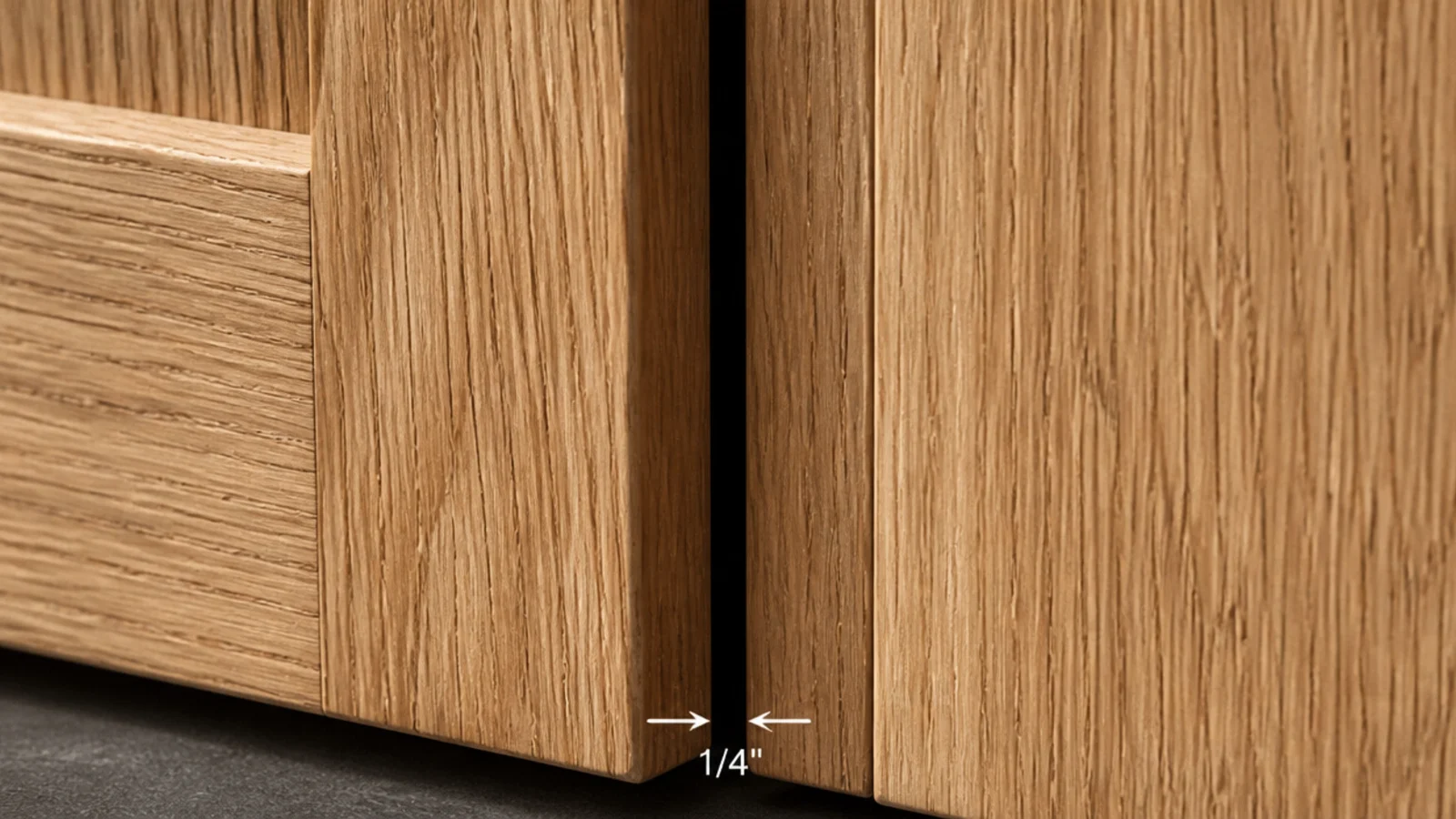
First, the reveal. Traditional built-ins use a face frame to cover the plywood edges. Modern ones use a consistent shadow gap of about a quarter inch between every part. The gap has to be the same everywhere, which means your carcasses need to be square and your fillers scribed properly at the wall.
Second, the front face. Push latches or a routed finger pull keep the door face unbroken. If you want visible hardware, use a slim edge pull that runs the full door width so it reads as a line.
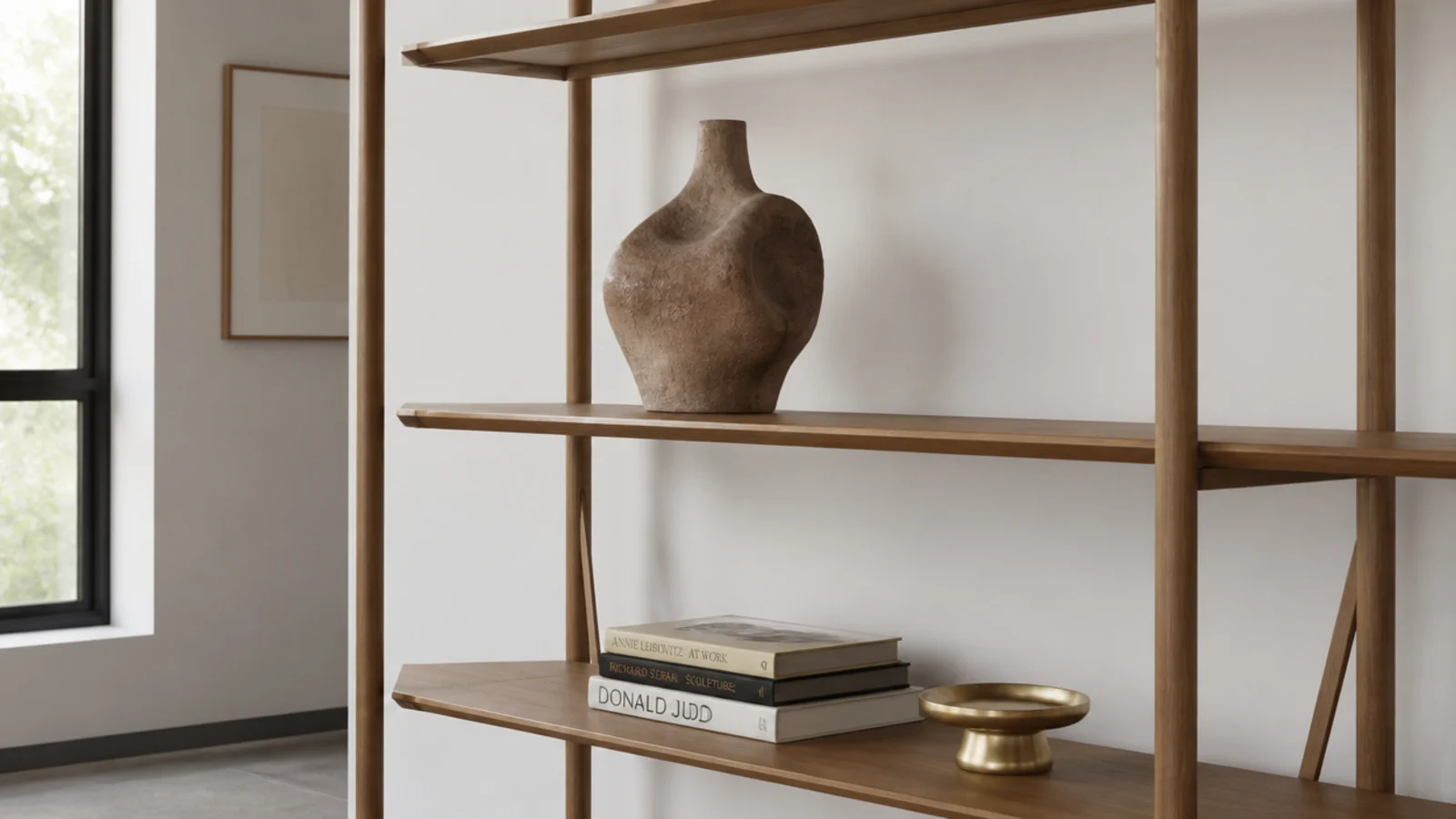
Third, thickness and depth. A 3/4-inch shelf looks thin on a modern wall and sags past a 32-inch span anyway. Build up to 1.5 or 2 inches. Keep books at 11 to 12 inches deep and go to 14 to 16 only where baskets or media gear live.
Budget tiers: $ is $150 to $400 to reface and trim existing units per alcove. $$ is $500 to $1,200 in materials for a plywood run with doors. $$$ is $2,500 to $6,000 and up for a sprayed, cabinetmaker-built wall with integrated lighting.
1. Handleless doors with a push latch
Nothing dates a modern built-in faster than a row of knobs. Push-to-open latches cost about $4 each and let the door face stay completely unbroken.
The trade-off is fingerprints, so a matte painted finish or a prefinished oak veneer with a factory coating beats bare wood here. Set the latches at the outer top corner of each door rather than the middle, because that is where hands naturally land and where the door has the least flex.
If you want something to grip, rout a 3/4-inch finger channel into the top edge instead.
2. A shadow gap instead of a face frame
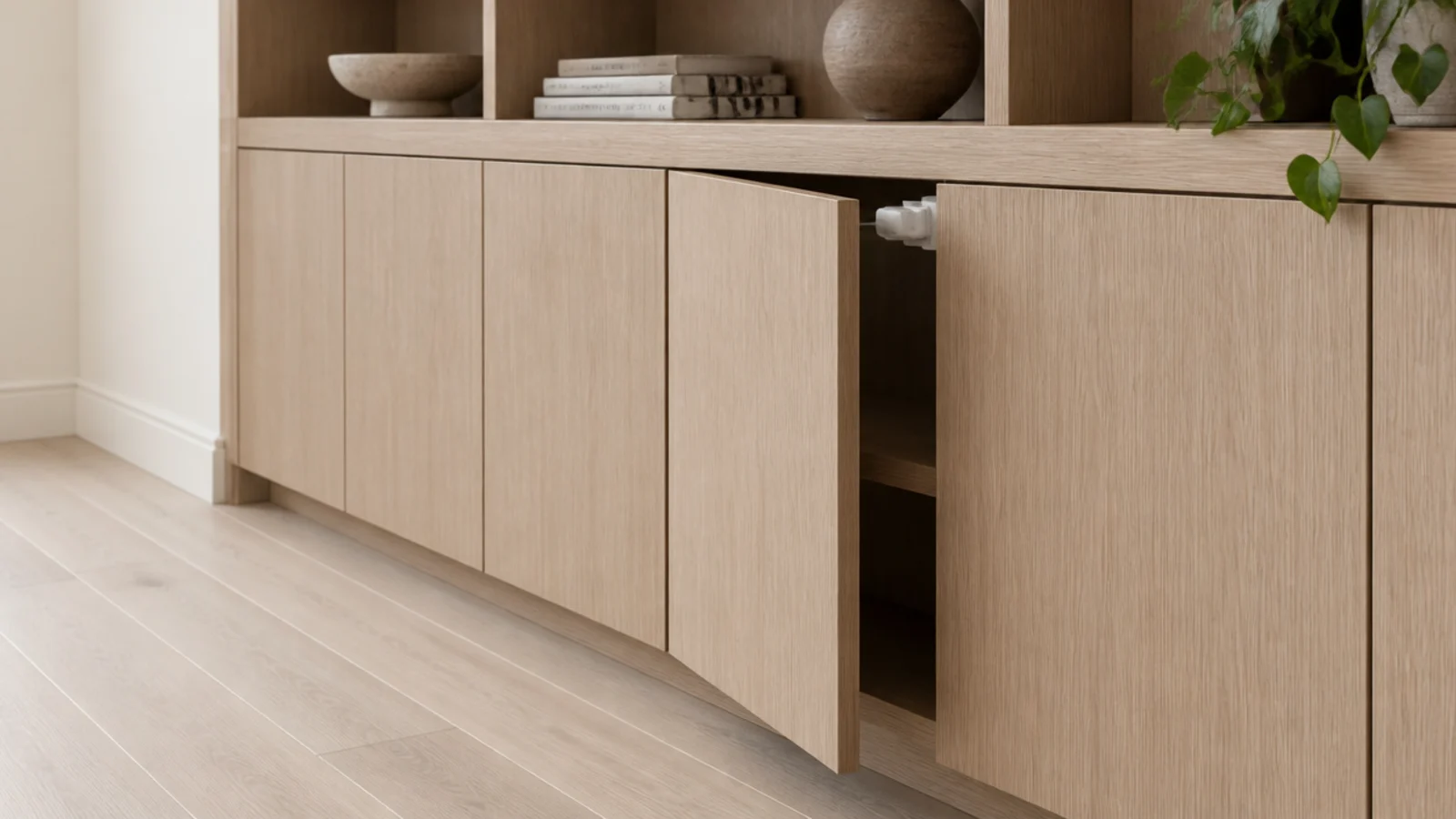
A face frame is a traditional detail. Replacing it with a consistent quarter-inch shadow gap between the carcass and the wall, and between every door, changes the read of the whole unit.
It also demands accuracy. A gap that runs a quarter inch at the top and three-eighths at the bottom is more obvious than any molding would have been.
Set the carcass plumb, then scribe a filler strip to the wall and hold the door faces off it by an even margin. The scribe is doing the work that trim used to do.
3. One long open band in a closed wall
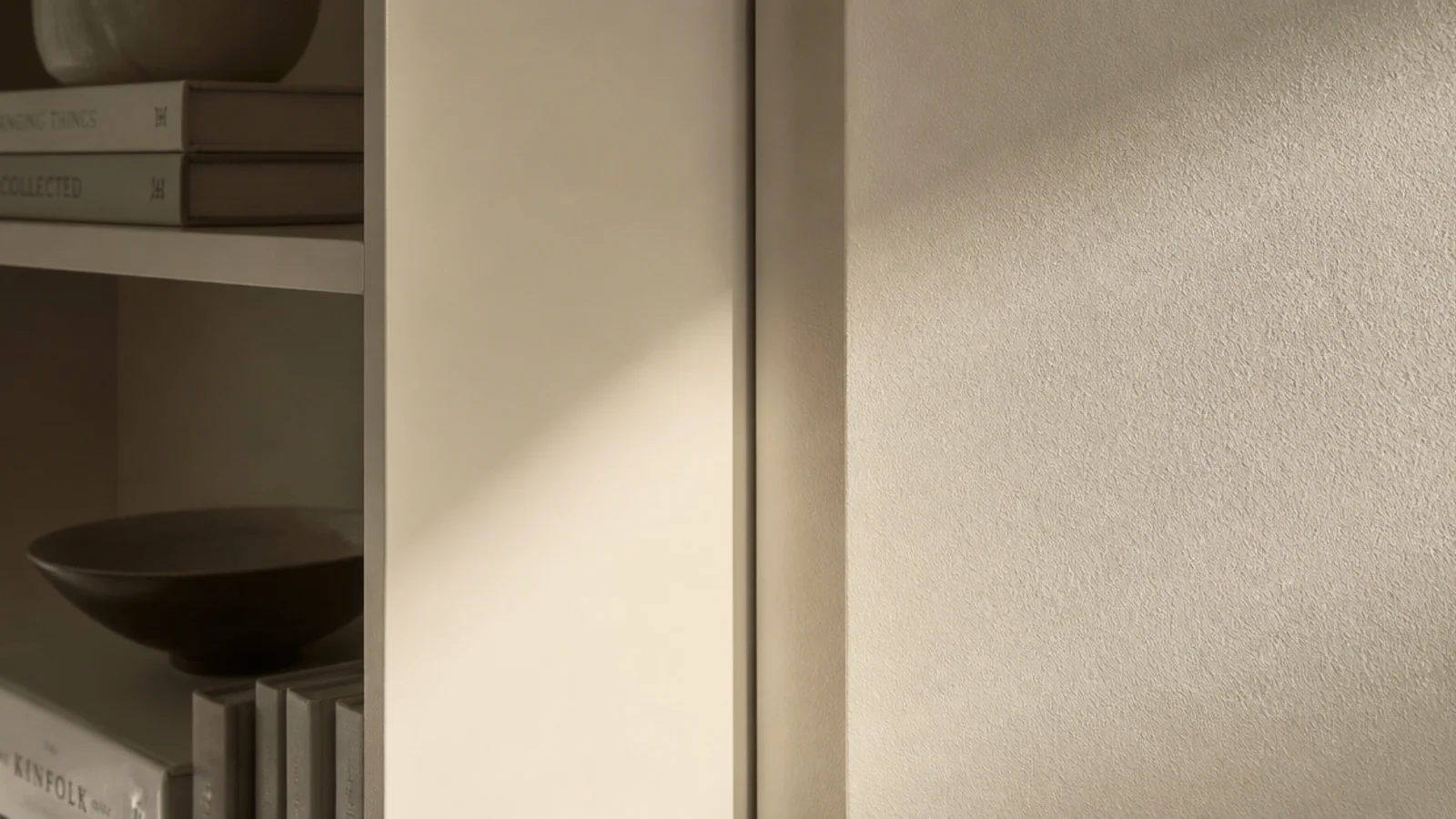
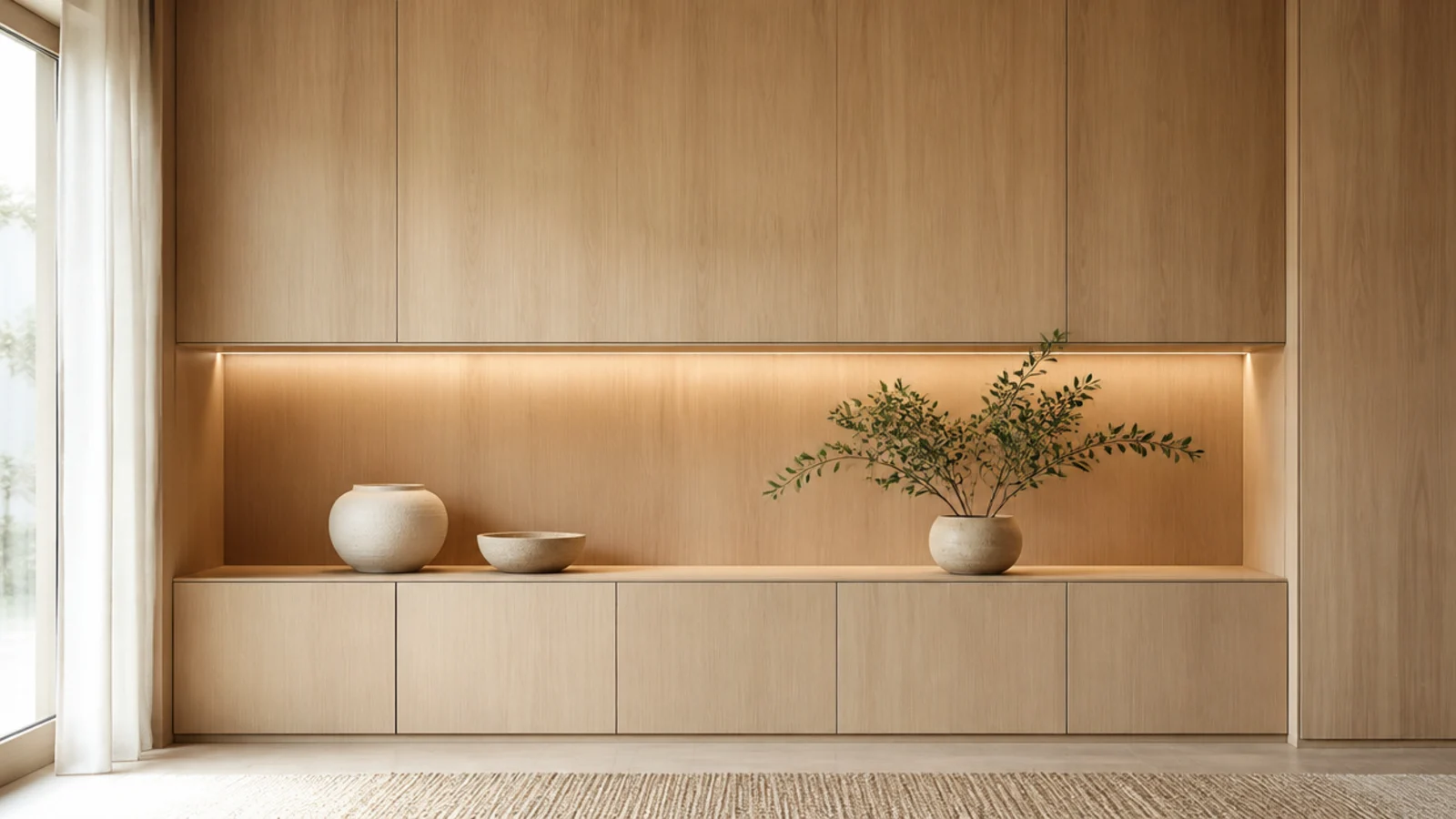
Instead of a grid of open bays, close the whole wall and cut one continuous horizontal opening through it at chest height, around 40 to 48 inches off the floor.
That single band gives you somewhere to put six objects and nowhere to put sixty, which is exactly the discipline a modern wall needs.
Make the opening 14 to 16 inches tall so it takes a large art book standing up, and light it from above with a recessed strip. Everything else lives behind doors.
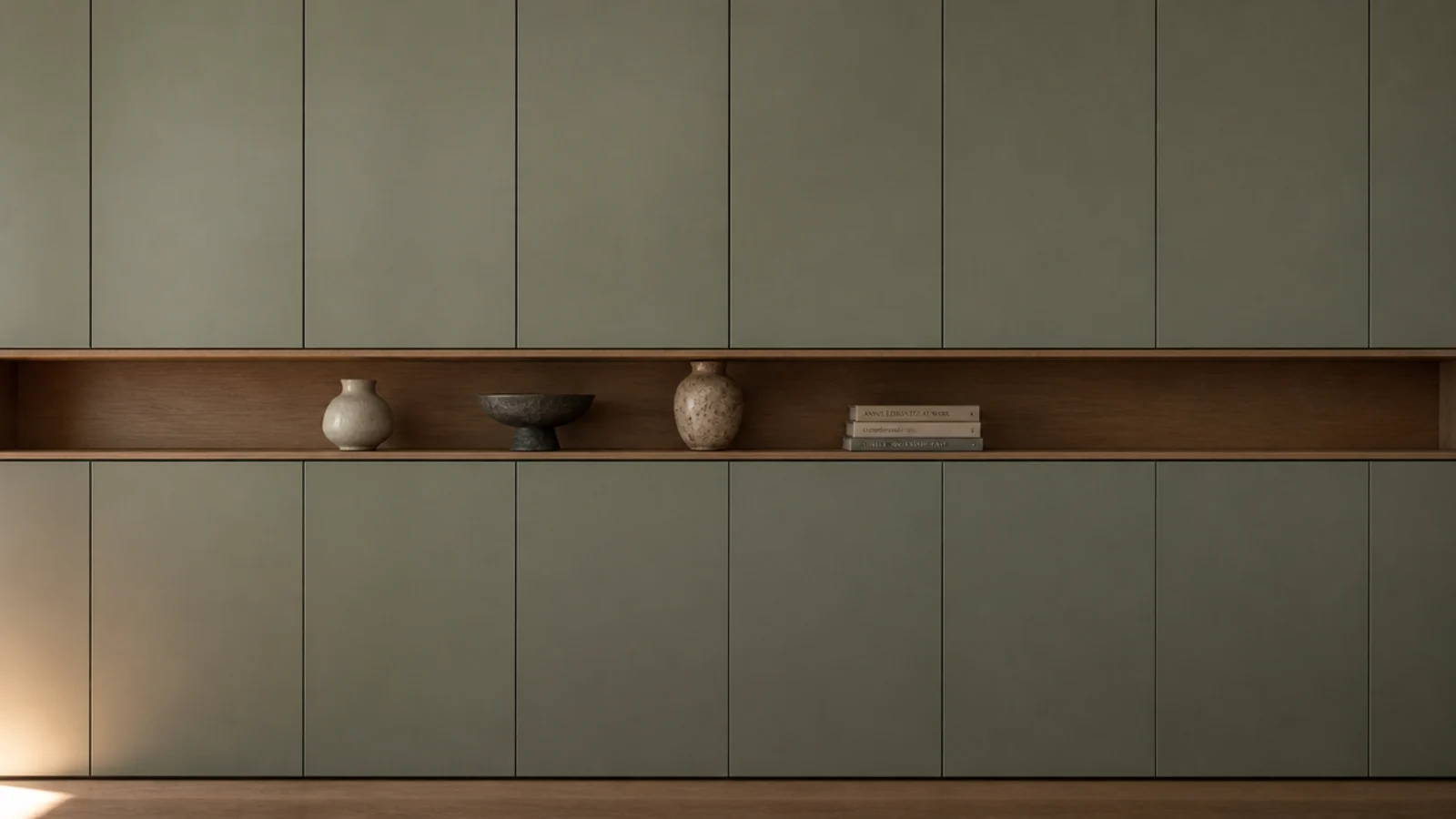
4. Warm oak against a pale plaster wall
Minimal joinery in white can read cold. White oak veneer plywood against a warm plaster or limewash wall keeps the geometry modern and the room cozy.
Prefinished veneer runs $110 to $160 a sheet, which is roughly $50 more than paint-grade plywood, and it saves you a full weekend of finishing.
Use iron-on edge banding on every visible edge, trim it flush with a cheap edge trimmer, and the plies disappear. That one detail is what separates cabinet-grade work from a shop build.
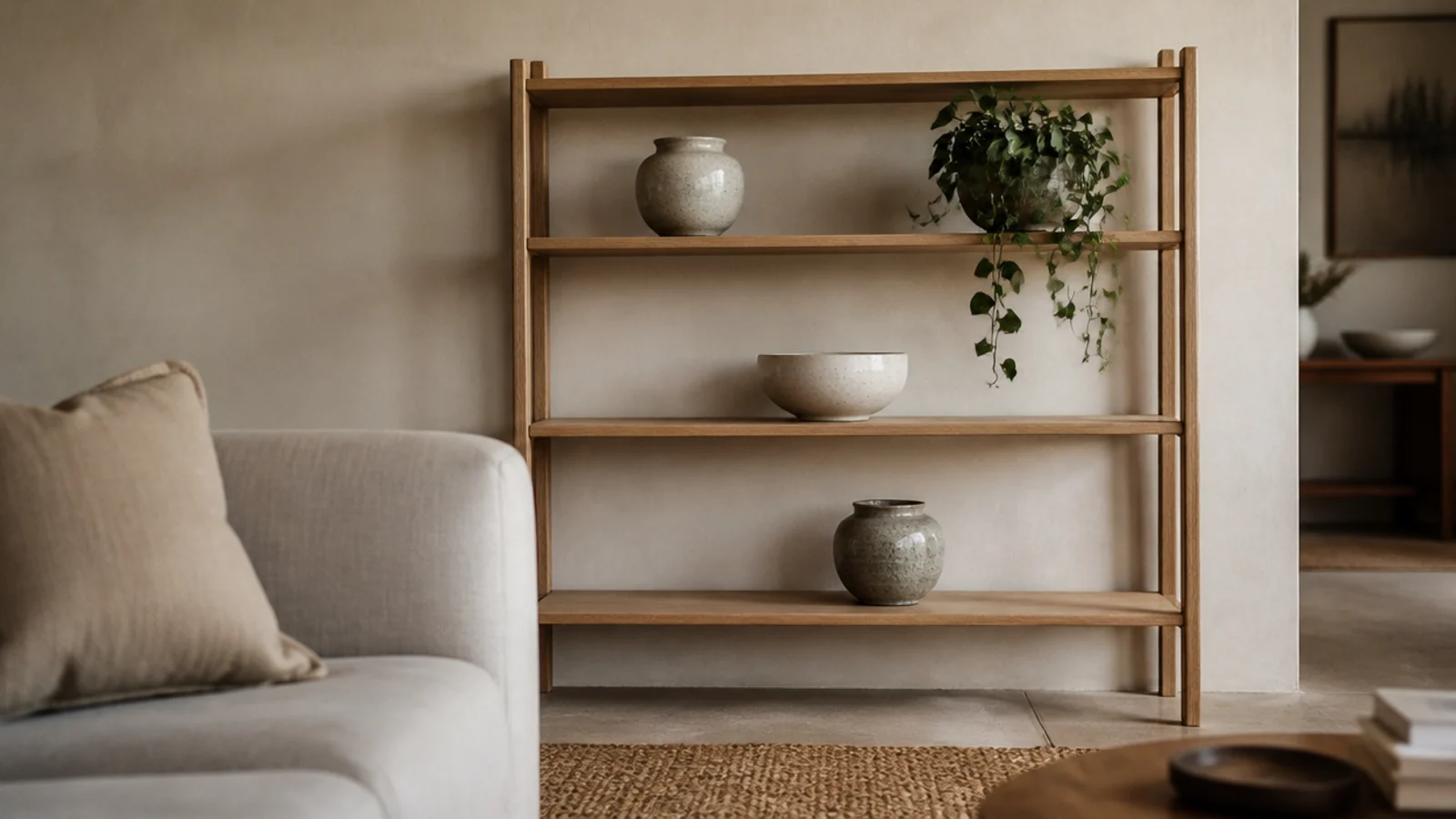
5. An LED strip routed into the shelf
Hidden lighting is the single most convincing luxury detail on this list. Rout a half-inch groove into the underside of a shelf, seat a 24V warm LED strip in it, and run the cable through the carcass to a driver hidden in the base cabinet.
Always 2700K, always on a dimmer. Cool white light on wood turns it grey and makes an expensive wall look like retail shelving.
Budget about $60 to $120 for a strip, driver and dimmer for a single run.
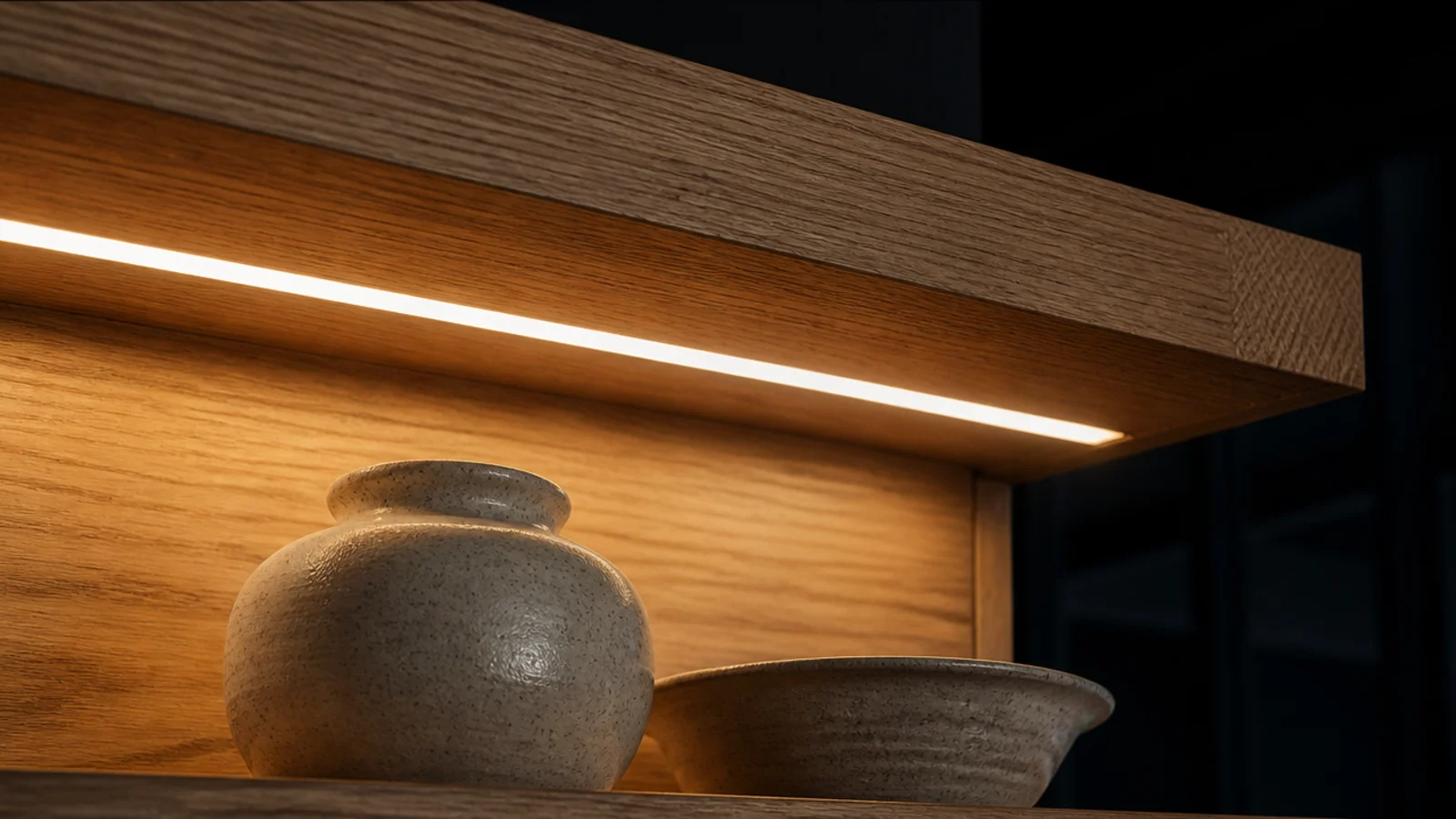
6. Continuous grain across the doors
Cutting all the door fronts from one sheet in sequence, so the grain runs unbroken across the whole run, is a genuinely high-end detail that costs nothing but planning.
Lay the sheet out, mark the door positions with chalk, number them, and cut in order. Keep the numbers on the back until the doors are hung.
It works on a run of two doors and it works on a run of six. Interrupt the sequence once and your eye notices immediately, even if it cannot say why.
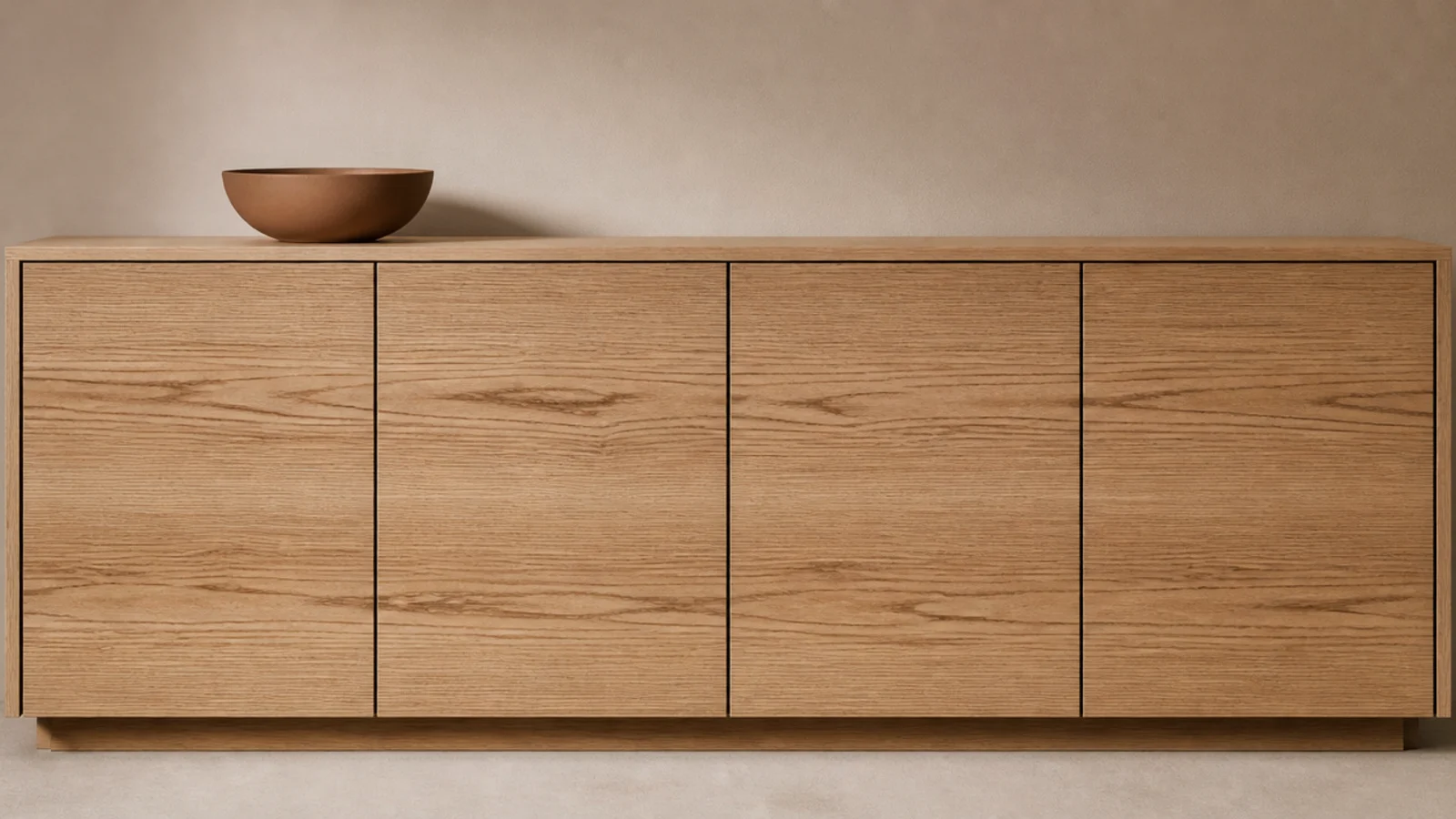
7. A monolithic wall painted one color
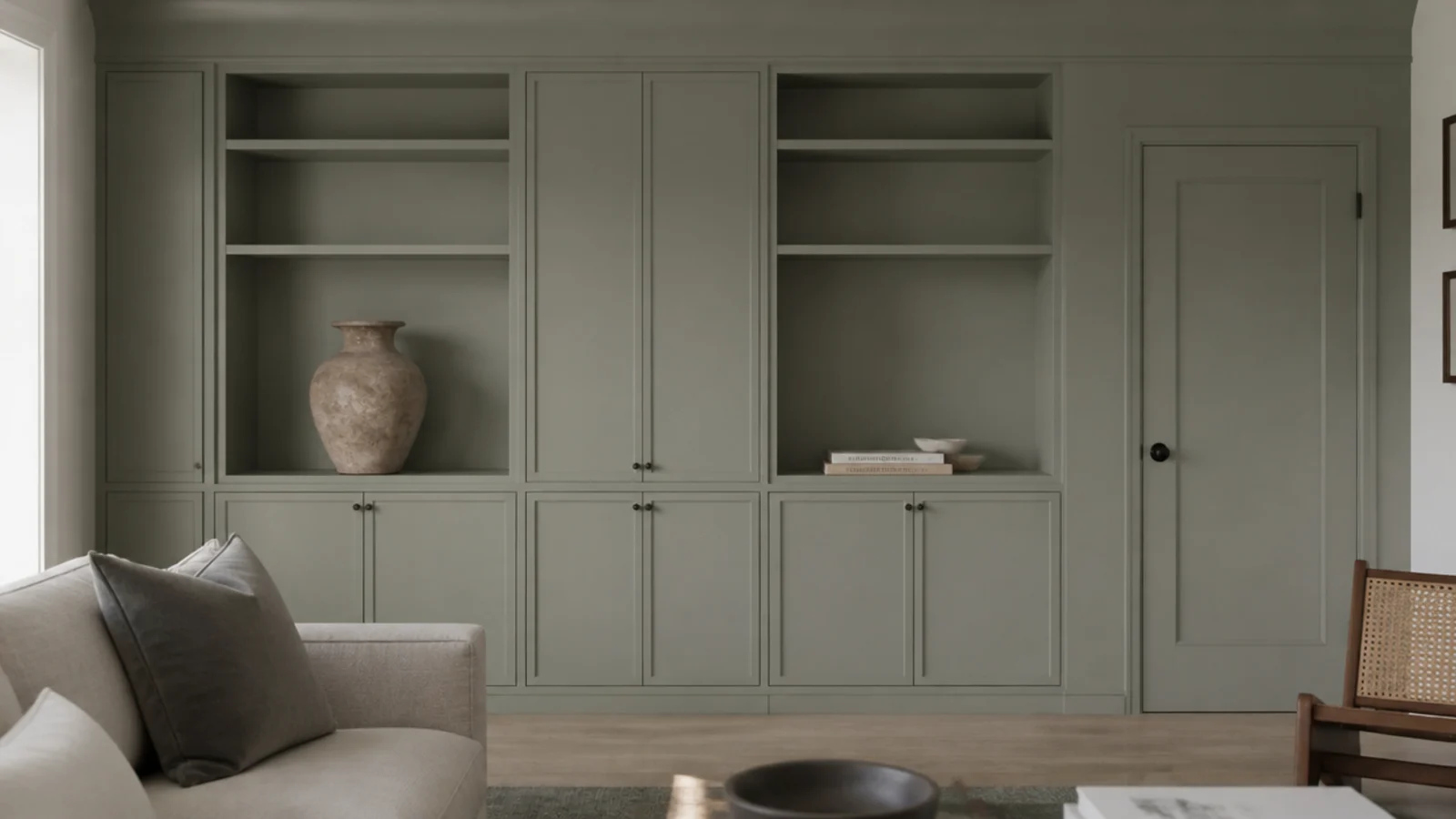
Paint the doors, shelves, frame and surrounding wall the same color in the same sheen and the built-in stops being furniture entirely.
Eggshell or satin in a soft cream, a muted sage or a deep charcoal all work; what matters is that nothing on the wall contrasts with anything else.
This is also the cheapest version of the modern look, because it forgives paint-grade materials. If you want the color rules in more depth, white built in shelves covers undertones and sheens.
8. A floating base with a recessed shadow line
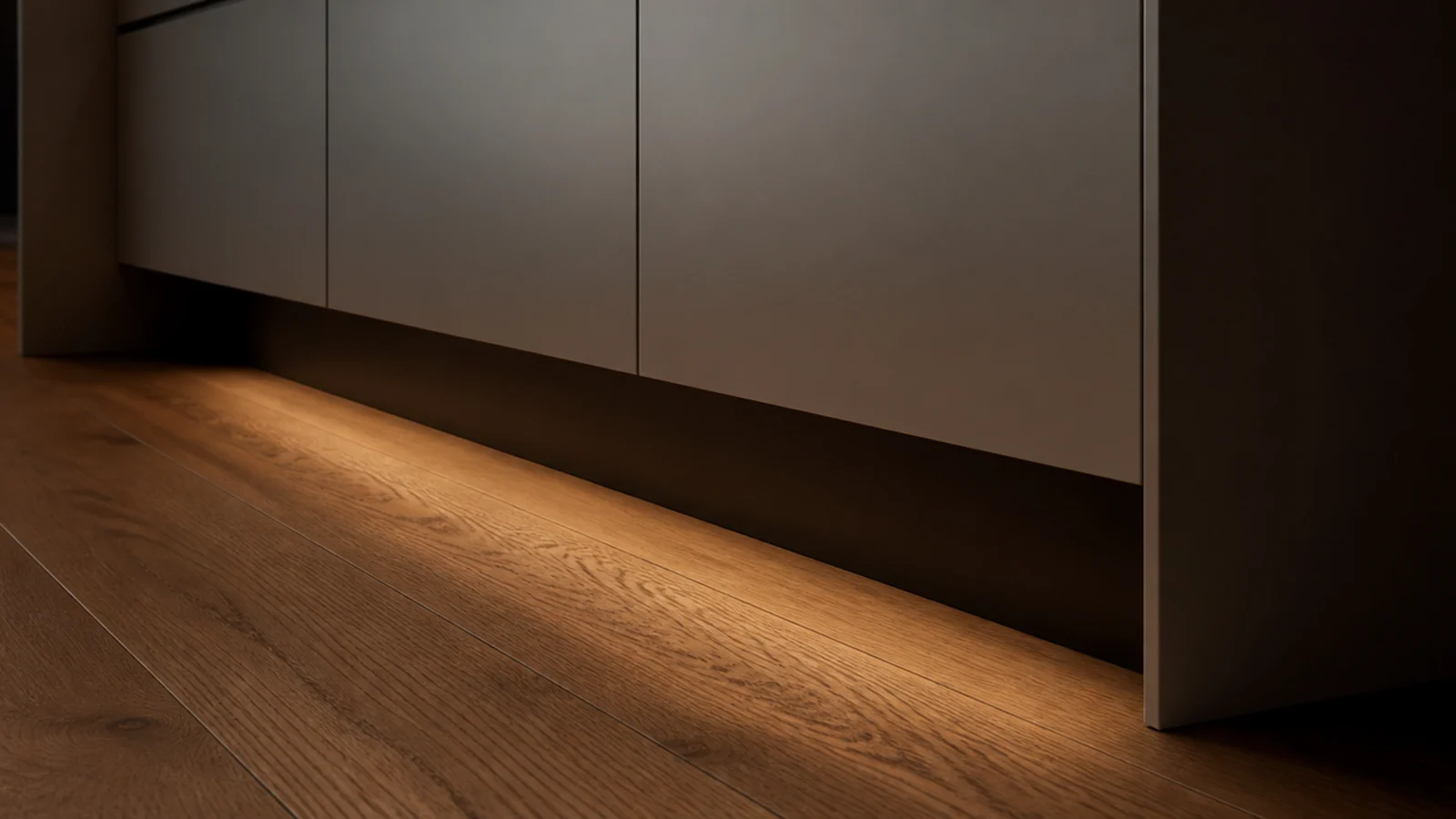
Set the base cabinets back 4 inches from the front face and stop them 4 inches above the floor, and a heavy run of cabinetry suddenly looks weightless.
The recess reads as shadow, so the eye sees the cabinet floating rather than sitting. It also hides the fact that your floor is not level, since the shadow absorbs any variation.
Support it on a plywood ladder frame screwed to studs. This is one place where a wall fixing is genuinely doing all the work.
9. Thicker shelves that read as solid
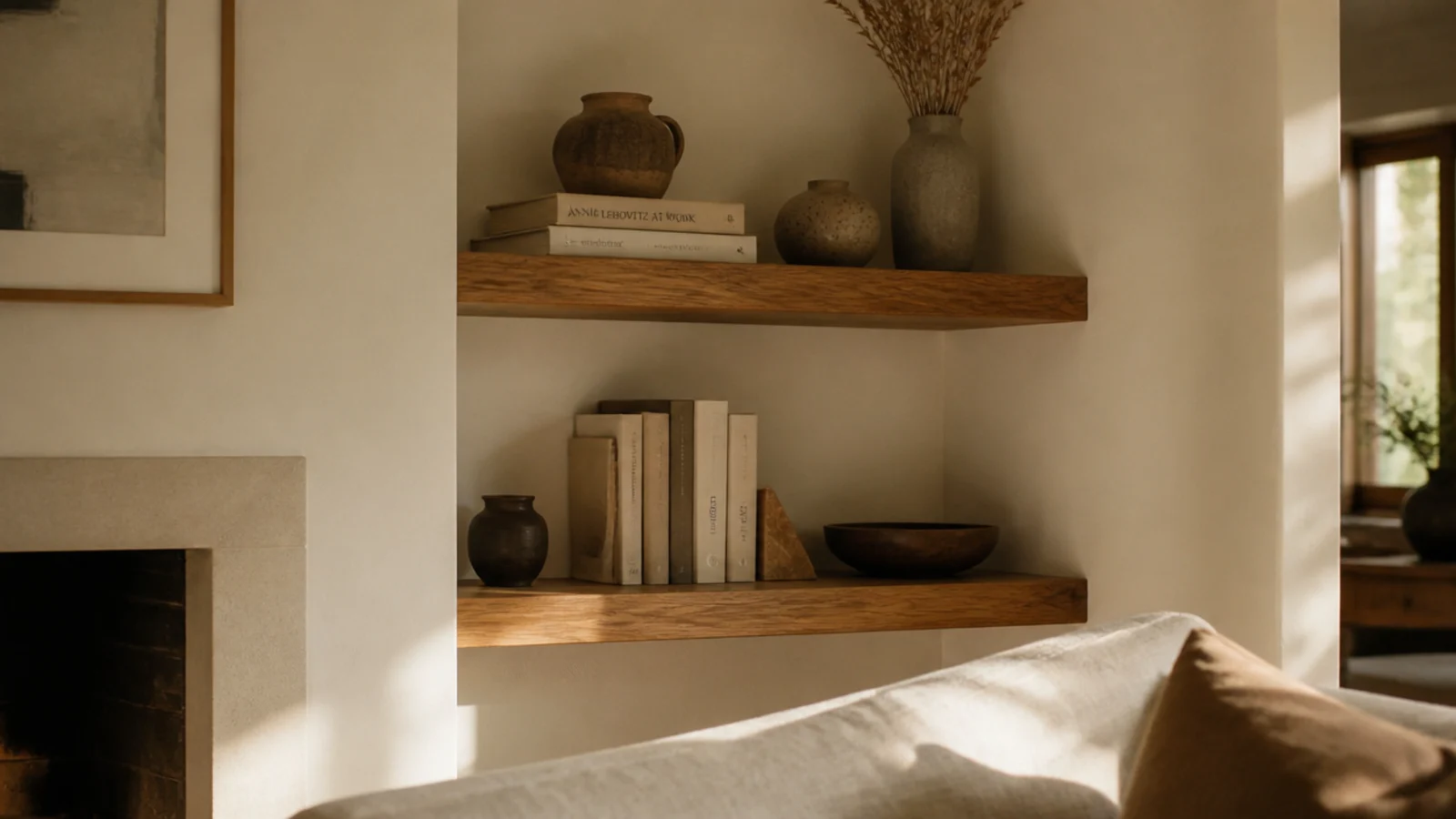
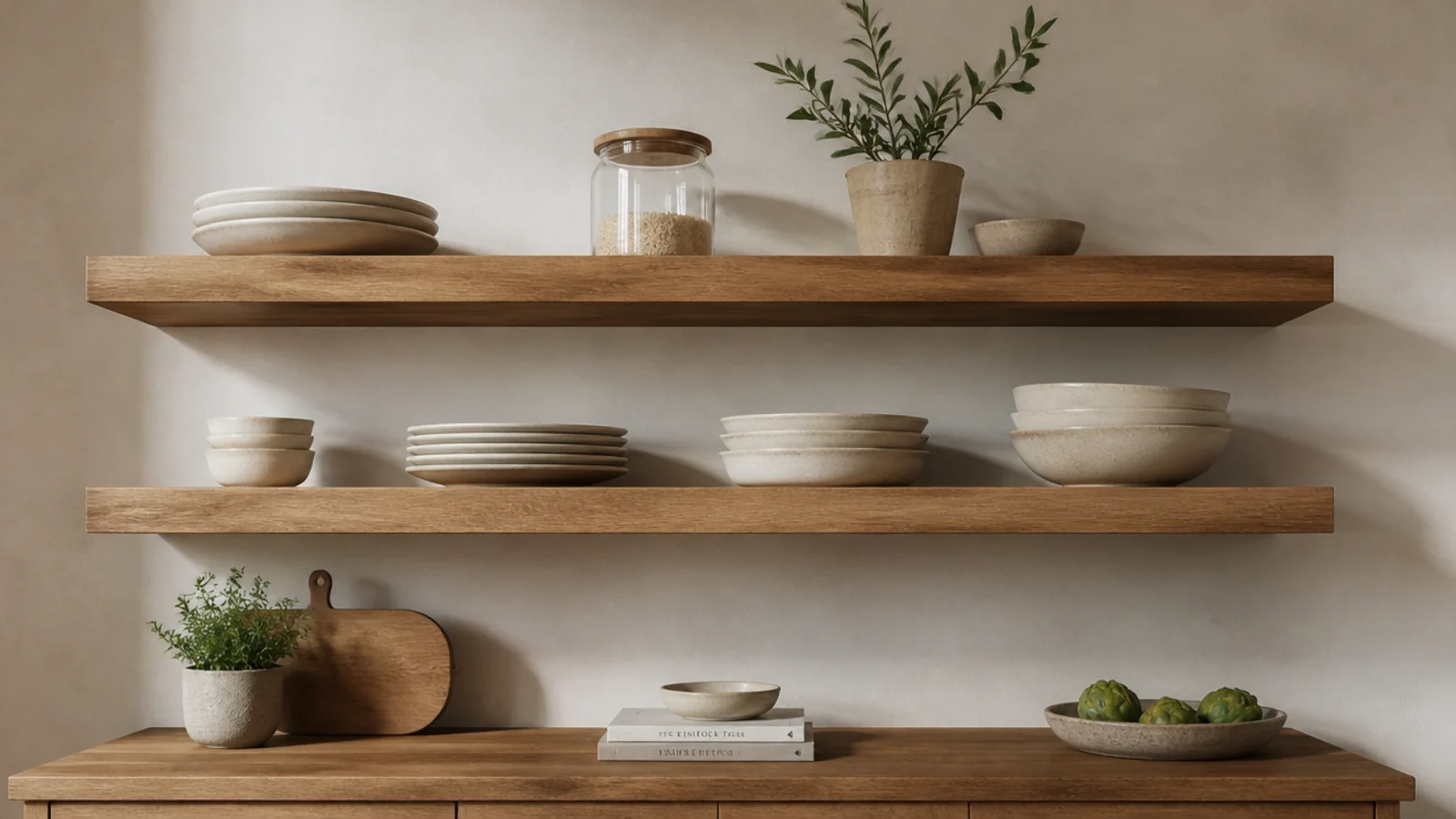
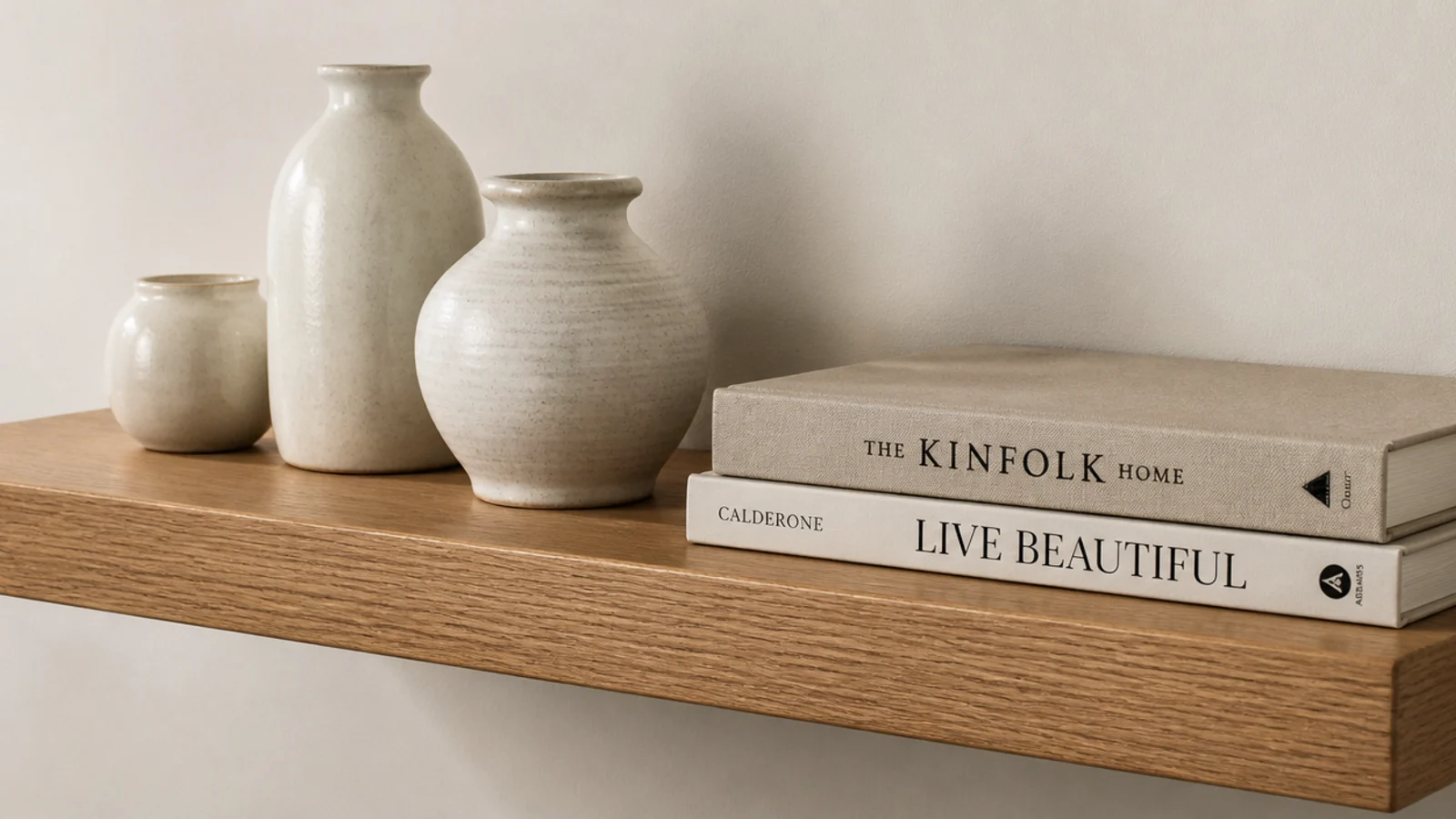
A 3/4-inch shelf edge is the tell that gives away a budget build. Two inches reads as solid timber even when it is a hollow box.
Build a torsion box: a plywood top and bottom over a simple internal frame, edged in solid wood. You get the visual weight without the actual weight, and the box is far stiffer than a solid board of the same depth.
The simpler version is a solid 1x2 lip glued to the front edge of a normal shelf, which also fixes the 32-inch span problem.
10. Deliberate asymmetry in the bay layout
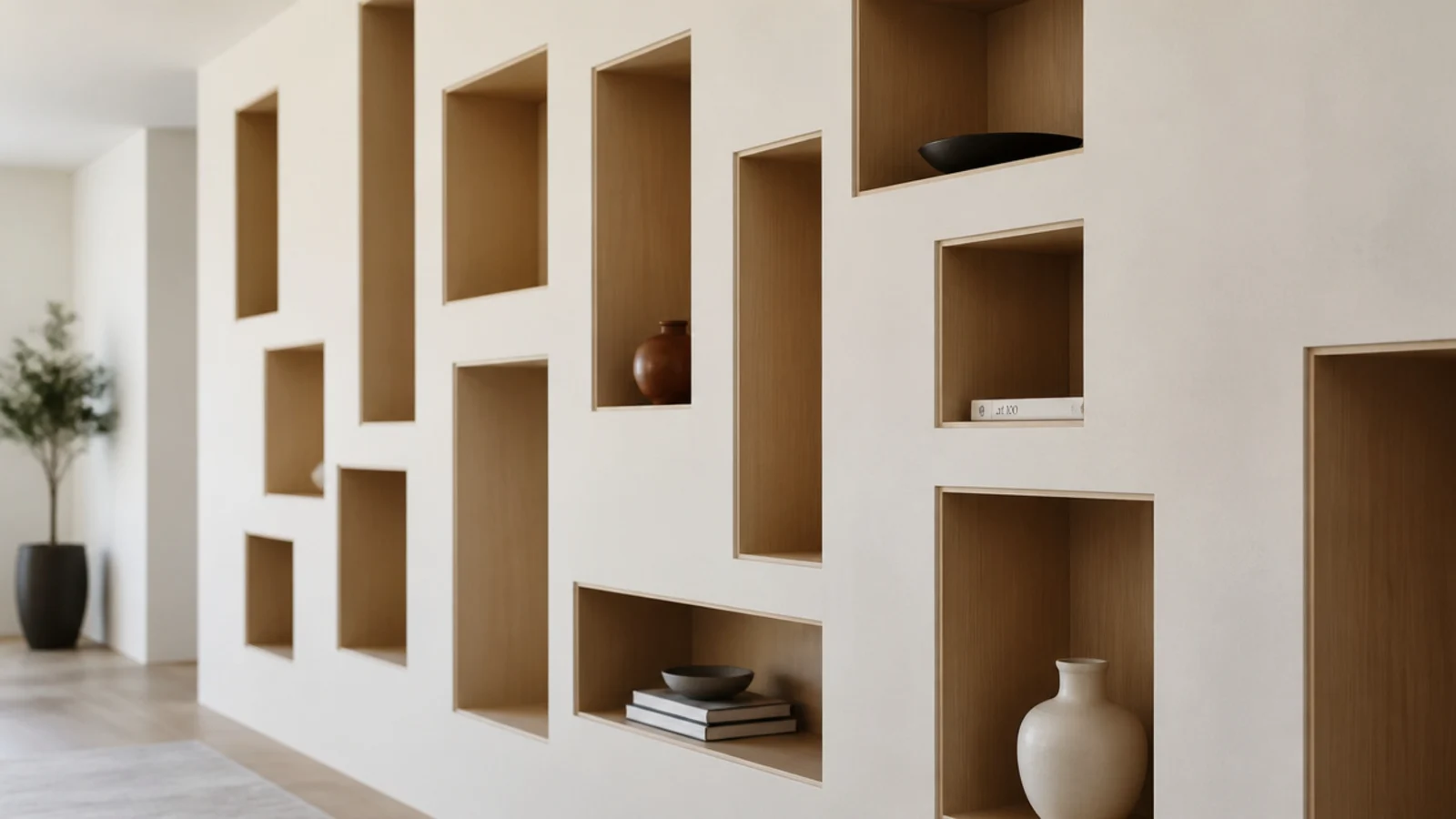
A grid of identical square openings looks like a shop fitting. Openings in two or three different heights, arranged with intent, look designed.
Pick a rhythm and repeat it: tall, short, tall, short, or one oversized bay balanced by three small ones. Keep the vertical lines aligned even when the horizontals vary, or it starts to look accidental.
Draw it at scale on paper before you cut. Ten minutes with a pencil is what makes this read as a decision.
11. A fluted panel as the accent
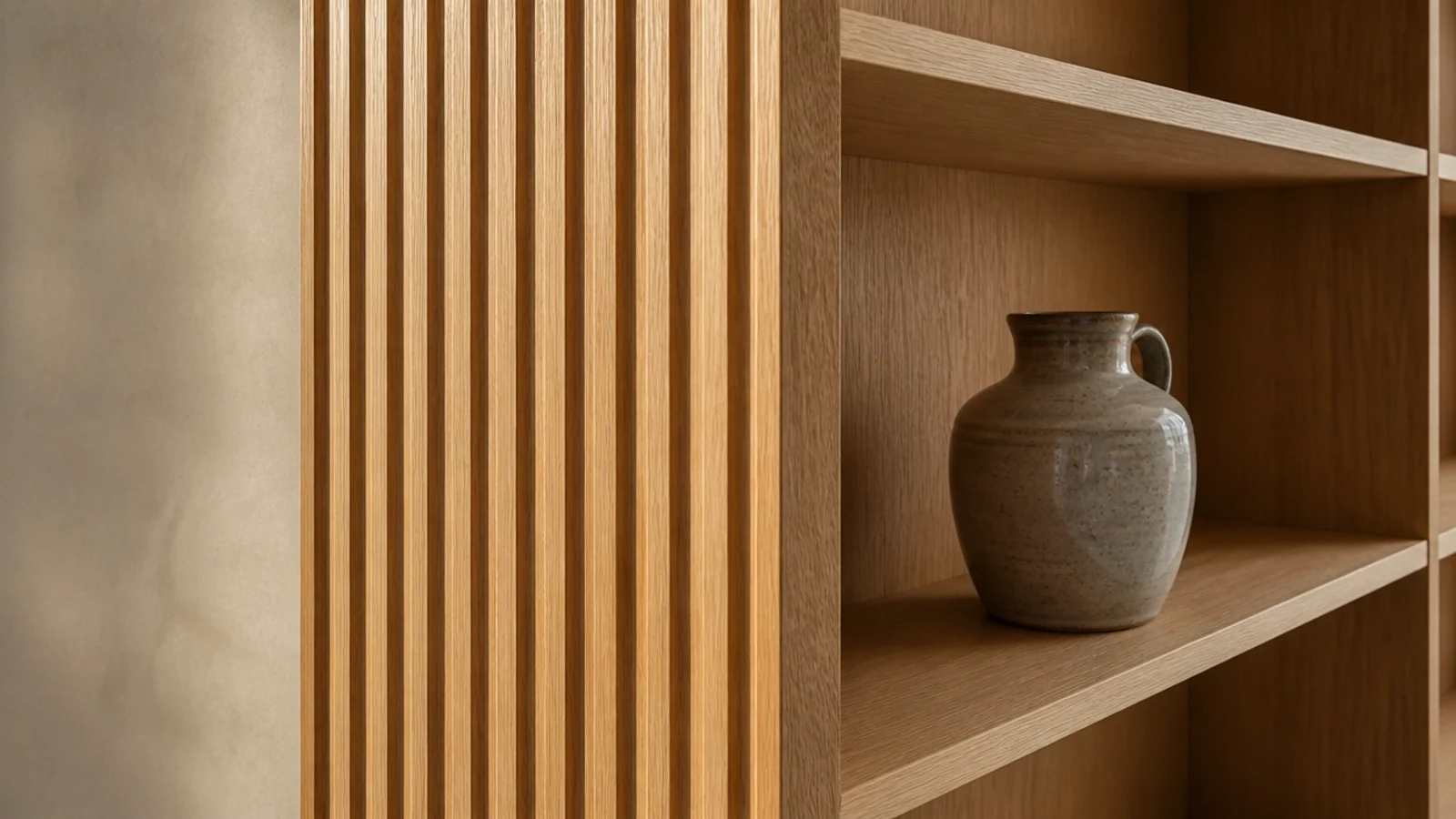
Fluted or reeded panelling on one end panel, one door or the base of a run adds texture without adding pattern.
Pre-made fluted MDF panels run $40 to $80 a sheet and cut with a normal blade. Use them on a single element and keep everything else flat, or the whole wall starts to hum.
Paint them the same color as the rest of the run. The texture reads through the paint as shadow, which is exactly the point.
12. A recessed niche for the screen
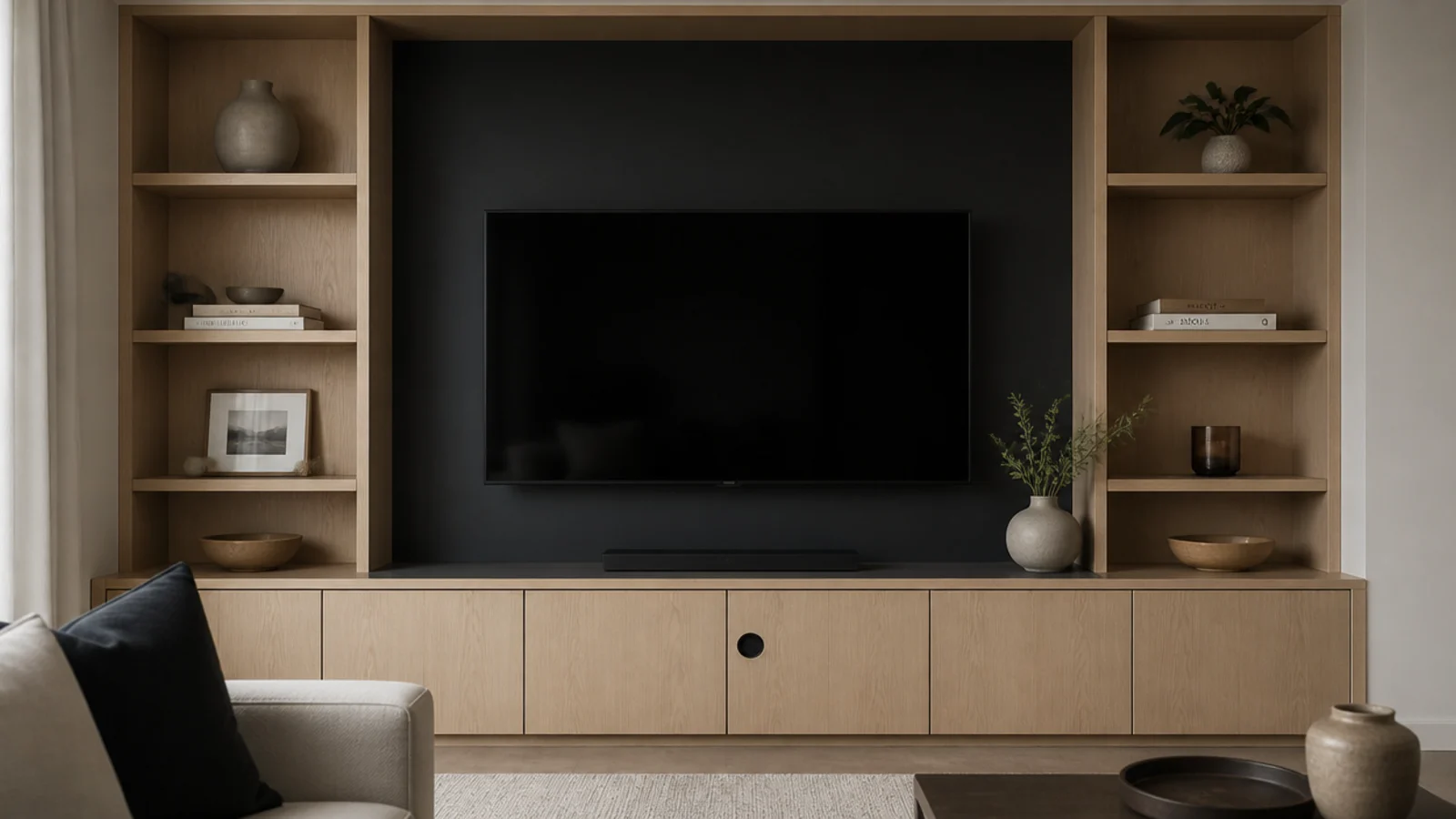
Setting the screen into a niche rather than hanging it on the face is what makes a modern media wall look integrated. Give it 4 inches of clearance each side of the screen and paint the inside of the niche a shade or two darker than the frame.
The dark recess makes the black rectangle disappear when the screen is off.
Media gear needs 14 to 16 inches of depth and airflow, so vent the cabinet below and drill a 2-inch grommet before you load anything into it.
13. Closed below, open above, nothing between
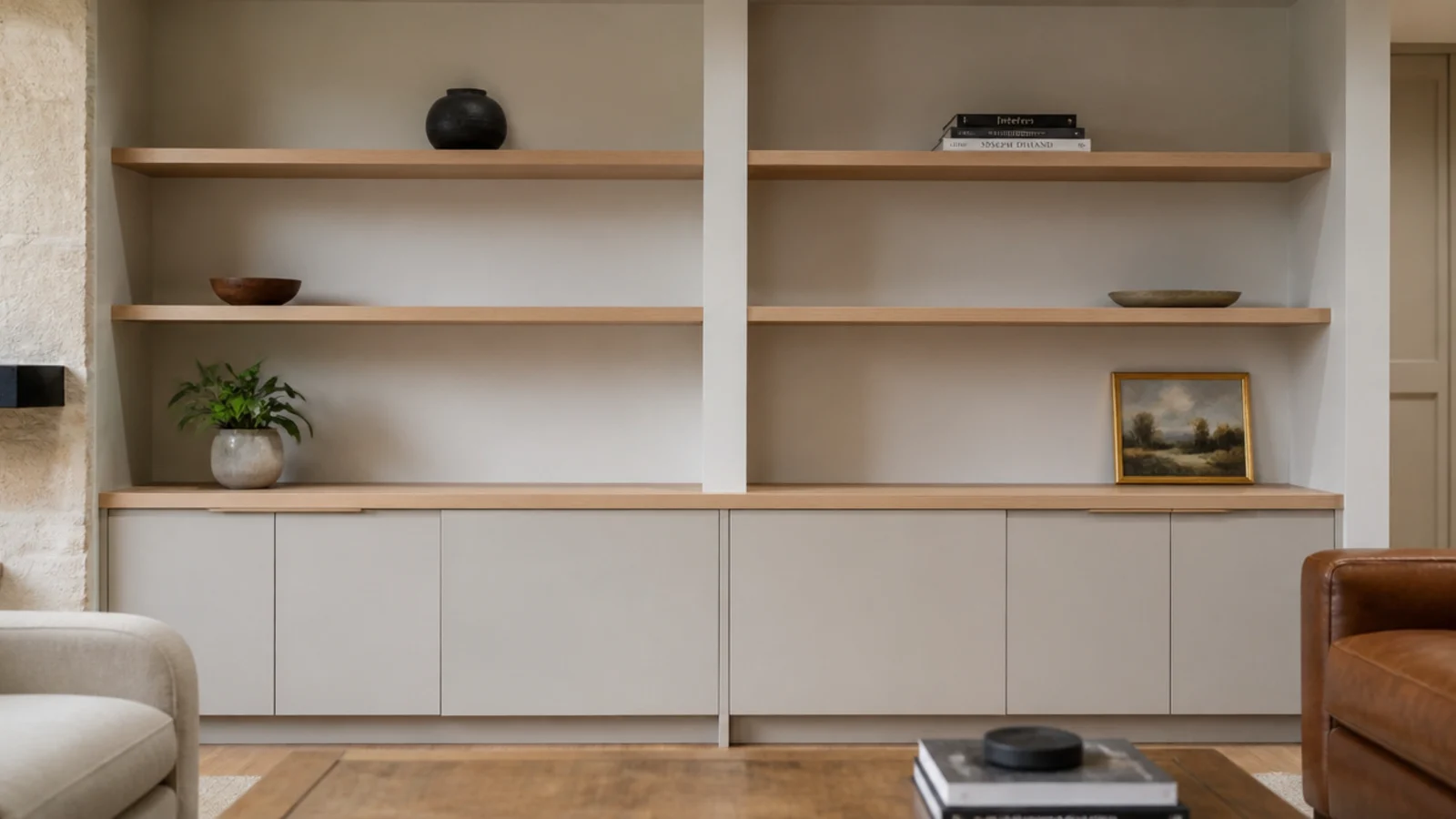
The most reliable modern layout is also the simplest. Closed doors up to 30 inches, a solid top, open shelves above, and no decorative transition between them.
The top surface wants to be something with presence: a solid oak counter, a stone remnant, a thick painted slab. That horizontal line at 30 inches carries the whole composition.
Keep the open shelves at 11 to 12 inches deep so they step back from the base and the wall does not loom over the room.
14. Plaster or microcement around the opening
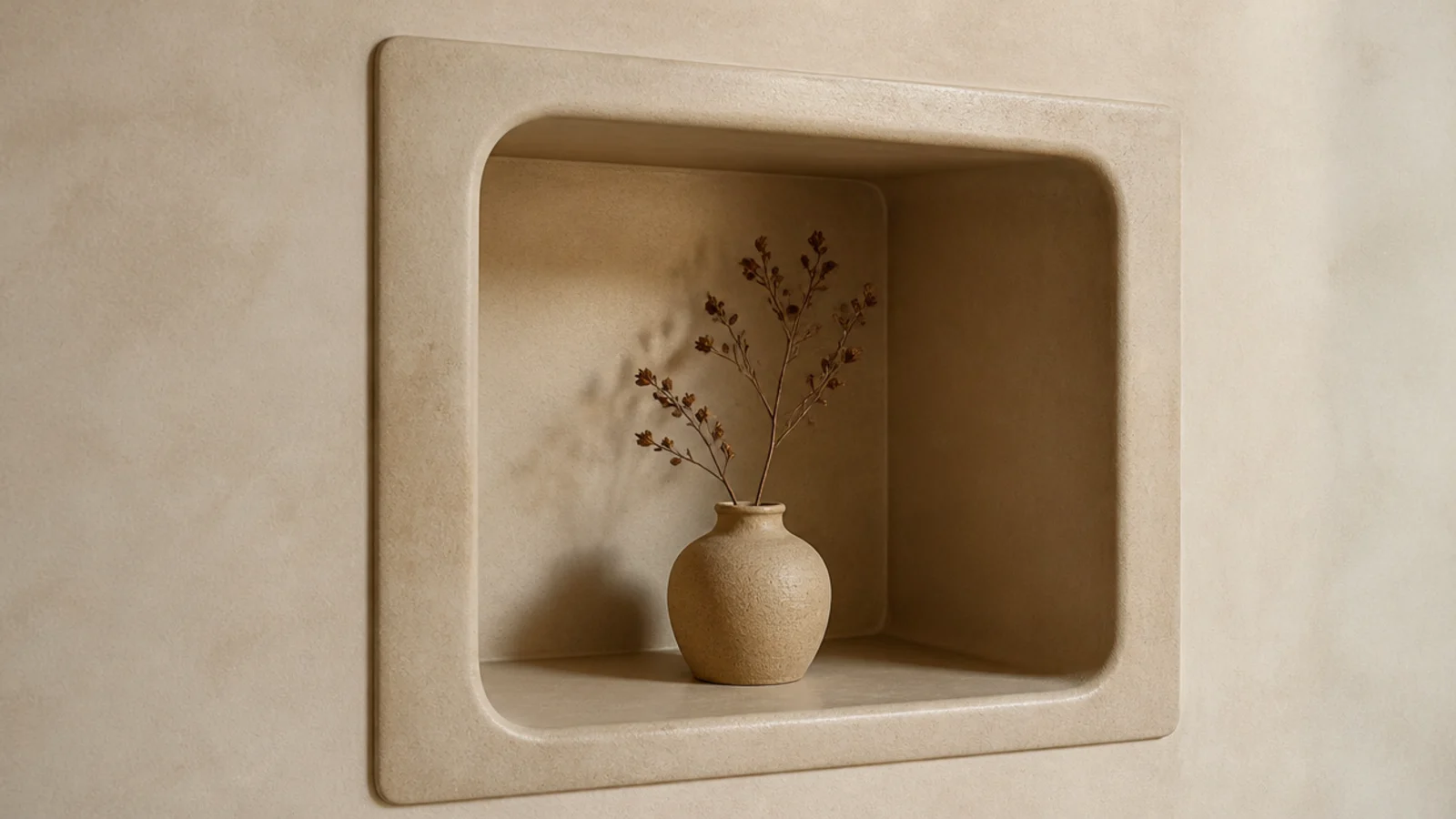
Wrapping a niche in microcement or lime plaster removes every trim line at once and gives you softly rounded corners that no joinery detail can match.
A small kit runs $80 to $150 and covers a niche surround. It goes on in two thin coats over a primed board, and the trowel marks are the finish.
Keep the styling inside the niche to one or two large objects. Any surface this tactile does not need much company.
15. Restraint: fewer objects, bigger pieces
Modern shelving fails on styling more often than on carpentry. Fifteen small objects on a minimal wall look like clutter; three big ones look like a decision.
Aim for one large sculptural piece per bay, one low horizontal stack of books, and roughly half the shelf left empty — more than the third you would leave on a traditional built-in.
The emptiness is the luxury. For the full arrangement logic, built in shelf styling covers ratios, heights and what to hide.
Mistakes to Skip
- Inconsistent reveals. A quarter-inch gap at the top and three-eighths at the bottom is more visible than any molding, and it is the fastest way to make careful work look sloppy.
- Cool white LED strips. At 4000K and above, warm oak goes grey and painted cabinetry looks like office shelving. Stay at 2700K and put it on a dimmer.
- Leaving 3/4-inch shelf edges exposed on a long span. They look thin, they sag past 32 inches, and a glued solid lip fixes both problems for about four dollars.
Frequently asked questions
What makes built-in shelves look modern rather than traditional?
Three things: no face frame, no visible hardware and a consistent reveal. Modern cabinetry uses a shadow gap of about a quarter inch between parts instead of moldings, push latches or routed finger pulls instead of knobs, and one continuous material. Traditional built-ins get their character from profiles and trim, so removing the trim is most of the transformation.
How thick should modern built-in shelves be?
One and a half to two and a half inches reads as solid and current. A 3/4-inch shelf looks thin and dated on a modern wall, and it also sags past a 32-inch span. Build a hollow box around a plywood core to get thickness without weight, or glue a solid lip on the front edge and paint the whole thing one color.
What material should modern built-ins be made from?
Prefinished white oak veneer plywood for a wood look, or MDF for a sprayed painted finish. Veneer plywood at roughly $110 to $160 a sheet gives you real grain with a stable core, and edge banding hides the plies. MDF takes spray paint better than plywood because it has no grain to raise, but it needs a solid lip on any shelf over 30 inches.
Should modern built-ins have handles?
Not usually. Push-to-open latches or a routed finger pull along the top edge of the door keep the front face unbroken, which is the whole point of a modern run. If you want a handle, use a slim edge pull in brushed brass or black and run it the full width of the door so it reads as a line rather than an object.
How much do modern built-ins cost?
Materials run $500 to $1,200 for a plywood run with doors in one alcove, plus $150 to $300 more if you use white oak veneer instead of paint-grade sheets. A cabinetmaker building and spraying the same wall starts around $2,500 and reaches $6,000 and up for a full-height wall with integrated lighting.
Pick one detail rather than all fifteen — a consistent reveal or a hidden light strip will do more for a plain run of shelves than a whole new door style. When you are ready to build, the twenty-step shelf build covers the scribing and spans that make reveals possible, and floating kitchen shelves uses the same thick-slab logic on a shorter run. Save the pin so the reveal and lighting numbers are with you at the shop.
Want more like this? Browse all 15 living room built-in shelves guides — they all use the same measurements and budget tiers.
Pin it for later
Save this to your Living Room Built-In Shelves board
Pin it now so it is waiting for you when the tape measure comes out — and so the next person hunting for this idea can find it too.
Save this pinKeep going
More ideas worth saving while you have the tape measure out.