Center Table Living Room · Listicle
30 Gorgeous Marble Center Table Living Room Picks

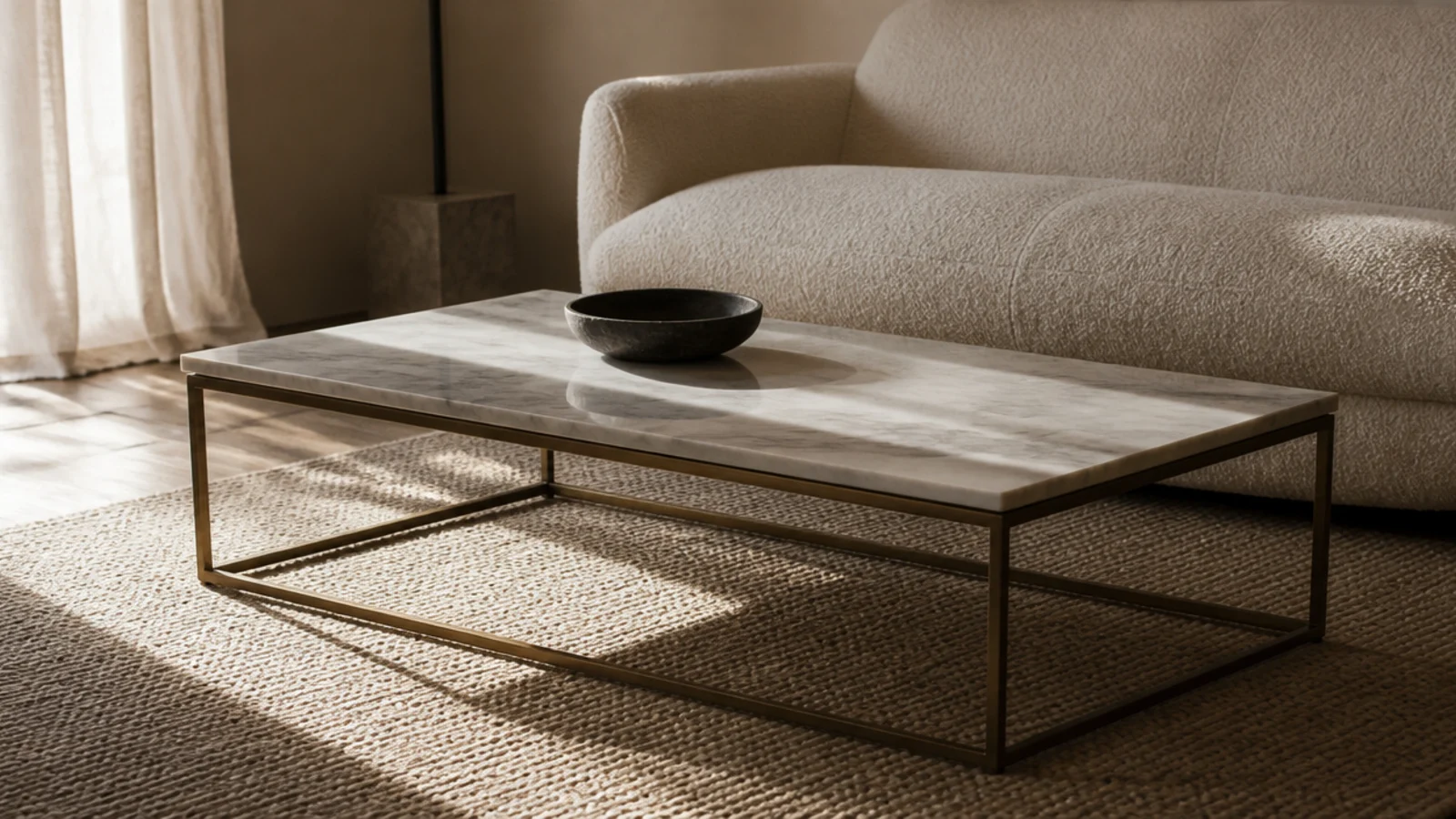
Stone is the one material where the buying decision and the maintenance decision are the same decision. A slab that looks perfect in a showroom behaves very differently in a room where wine gets poured and a toddler pushes a toy car across it. Choosing a marble center table living room piece well means knowing which marks come out, which do not, and which stones do not mark in the first place. Here are thirty picks with the numbers attached.
In this guide32 sections — tap to openHide
- 1.What marble center table living room owners need to know first
- 2.Choose honed over polished for daily use
- 3.Carrara for a quiet grey, Calacatta for drama
- 4.Travertine when the budget will not stretch
- 5.Quartzite if you want stone that resists acid
- 6.Buy an offcut from a countertop fabricator
- 7.Three-quarter inch is the practical thickness
- 8.Check the base is rated for the weight
- 9.Ask for an eased or bullnose edge
- 10.Mitre a build-down for a two-inch look
- 11.Marble on an unlacquered brass frame
- 12.Marble on a blackened steel cross base
- 13.A solid marble pedestal drum
- 14.Stone top on a timber plinth
- 15.Book-match the veining across a joint
- 16.Vein-cut for stripes, cross-cut for clouds
- 17.Green marble for colour without paint
- 18.Black stone with a single white vein
- 19.Rosa and pink marbles for warmth
- 20.Sintered stone if you want the look without the care
- 21.Thin stone panel over a plywood core
- 22.Use an impregnating sealer, not a topical one
- 23.Run the water test twice a year
- 24.Clean with pH-neutral products only
- 25.Blot every spill inside sixty seconds
- 26.Learn the poultice for the stains you miss
- 27.Know the difference between etching and staining
- 28.Felt dots and coasters, permanently
- 29.Ease the corners if children are crawling
- 30.Start with a marble tray instead
- 31.Level it properly before the top goes on
- 32.Mistakes to Skip
What marble center table living room owners need to know first
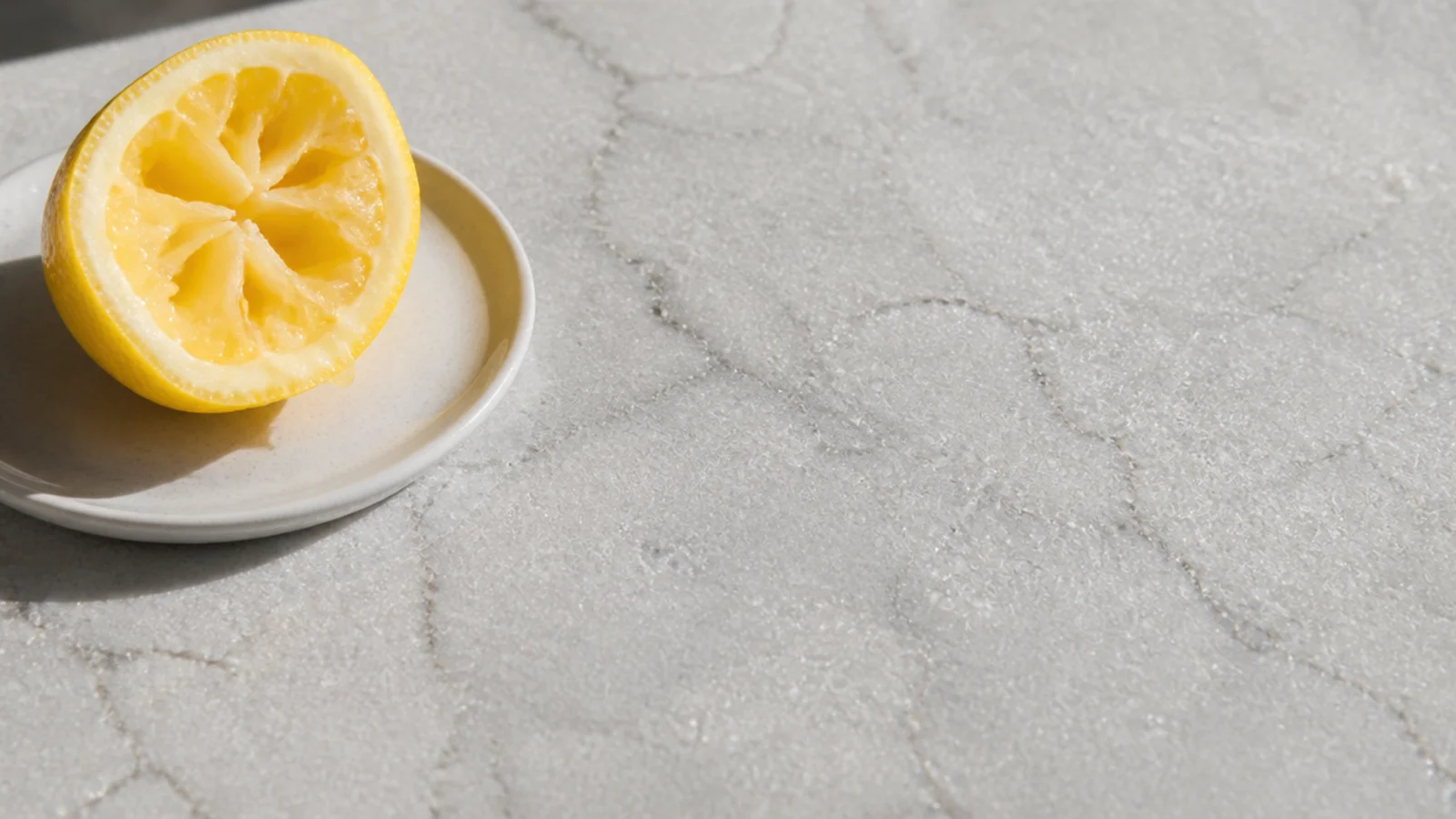
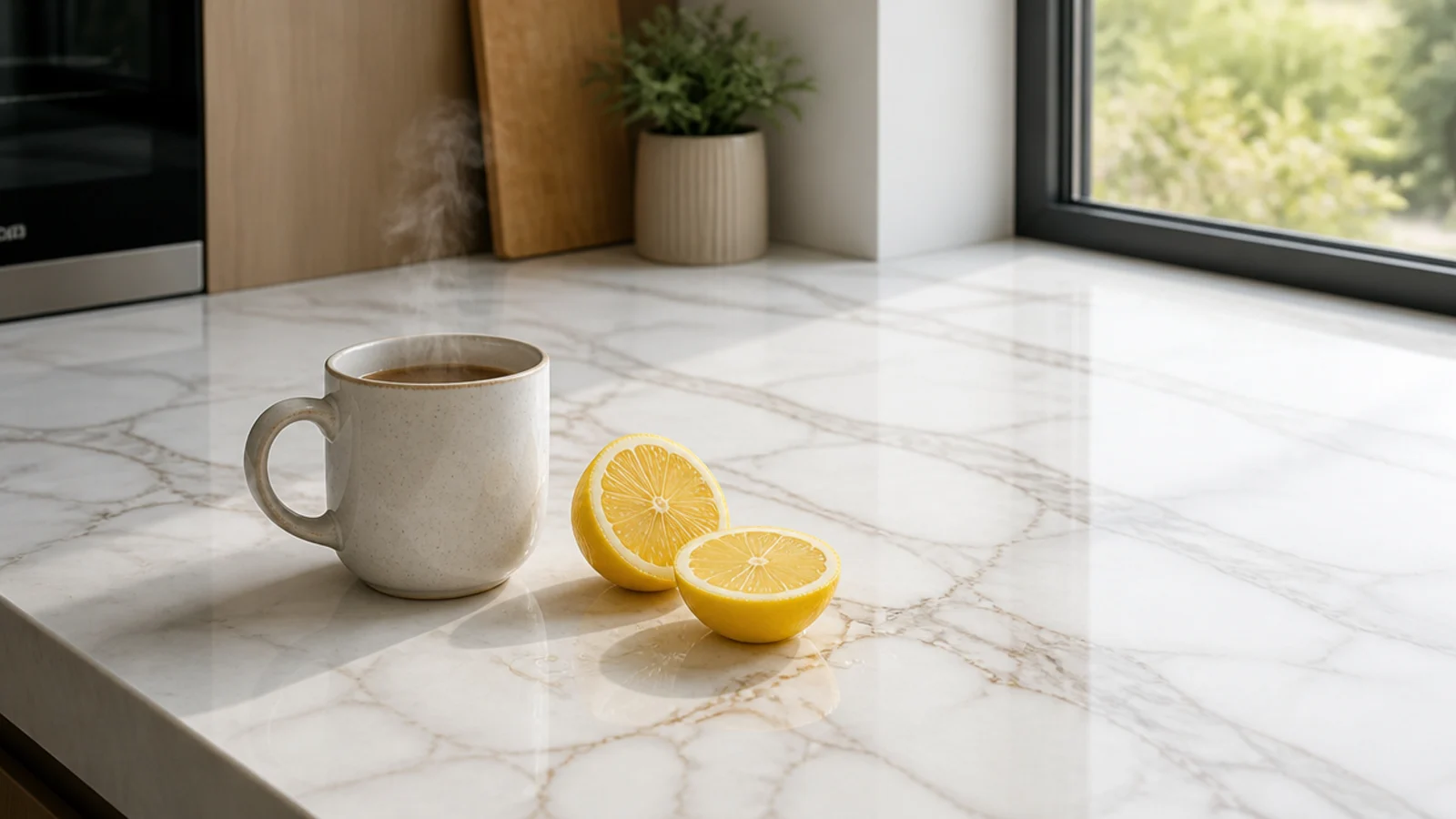
Two kinds of damage, and they are not the same problem. Staining is absorption — wine, oil or coffee soaking into the pores and leaving a dark shadow. A sealer reduces it, and a poultice usually lifts it. Etching is a chemical reaction between acid and the calcite in the stone, leaving a dull matte mark rather than a dark one. Lemon, vinegar and some cleaners cause it, and no sealer prevents it.
That distinction drives everything. Honed marble hides etching because the surface is already matte; polished marble shows every etch as a dull patch under a lamp. In a room used every evening, honed wins nearly every time.
The maintenance is small but non-negotiable. Seal with an impregnating sealer every six to twelve months on a honed top, up to two years on a dense polished one. Test rather than guess: a tablespoon of water left five minutes should not darken the stone. Clean with pH-neutral products, never vinegar or citrus. Blot spills straight down inside about sixty seconds rather than wiping them sideways.
Then weight. Marble runs about 10.5 pounds per square foot at three-quarter inch thickness, so a 48 by 26 inch top comes in near 90 pounds, and a 36-inch round about 75. Check the frame is rated for it and lift with two people, carrying on edge rather than flat. Budget $40 to $80 per square foot for a fabricator offcut against $150 upward retail — the budget luxury guide covers sourcing remnants properly.
1. Choose honed over polished for daily use
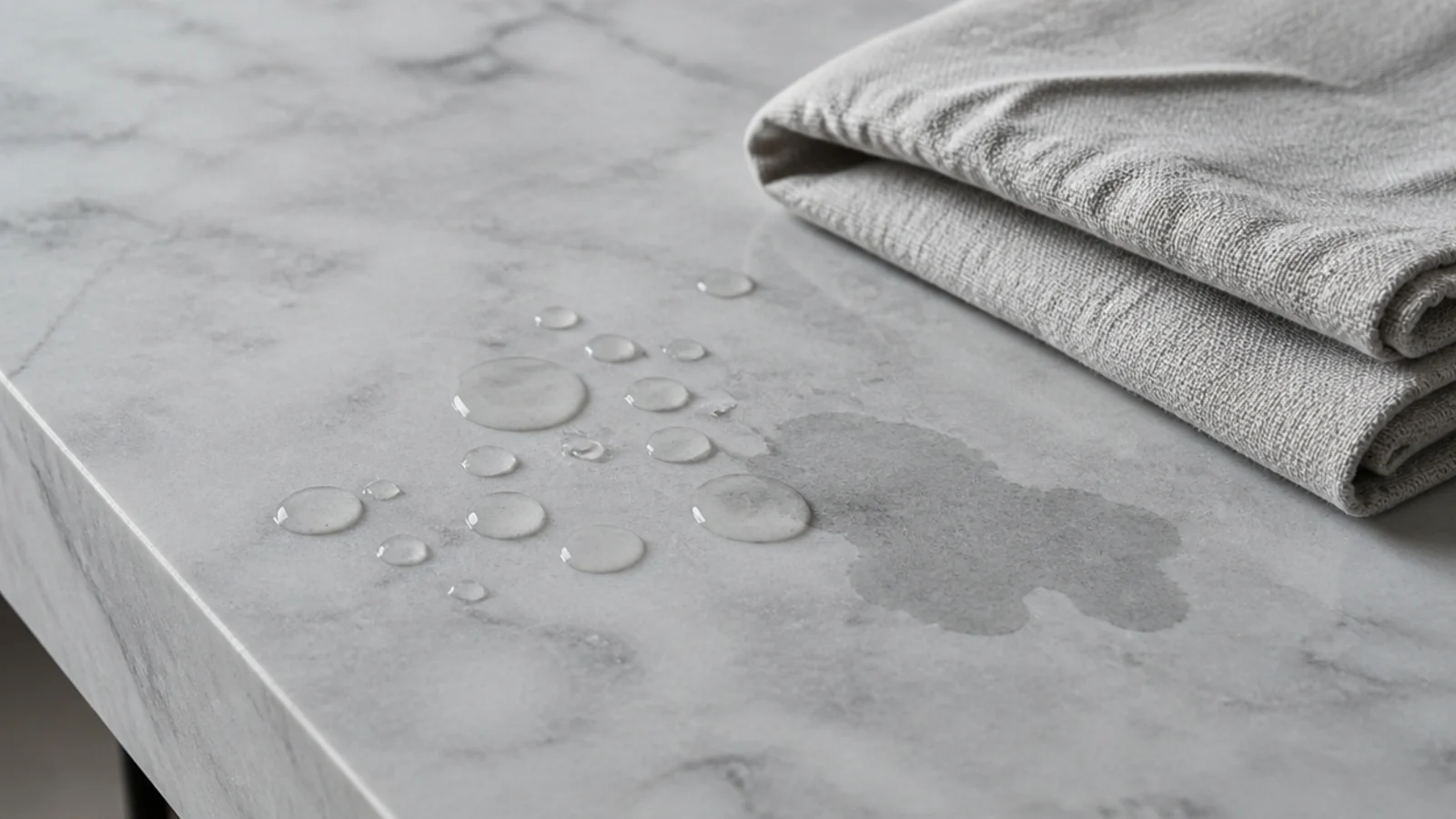
A matte surface hides fine scratches and etch marks that a polished slab displays under every lamp. Honed is slightly more absorbent, so it wants sealing at the shorter end of the schedule, but it ages far better in a room where people actually put drinks down.
2. Carrara for a quiet grey, Calacatta for drama
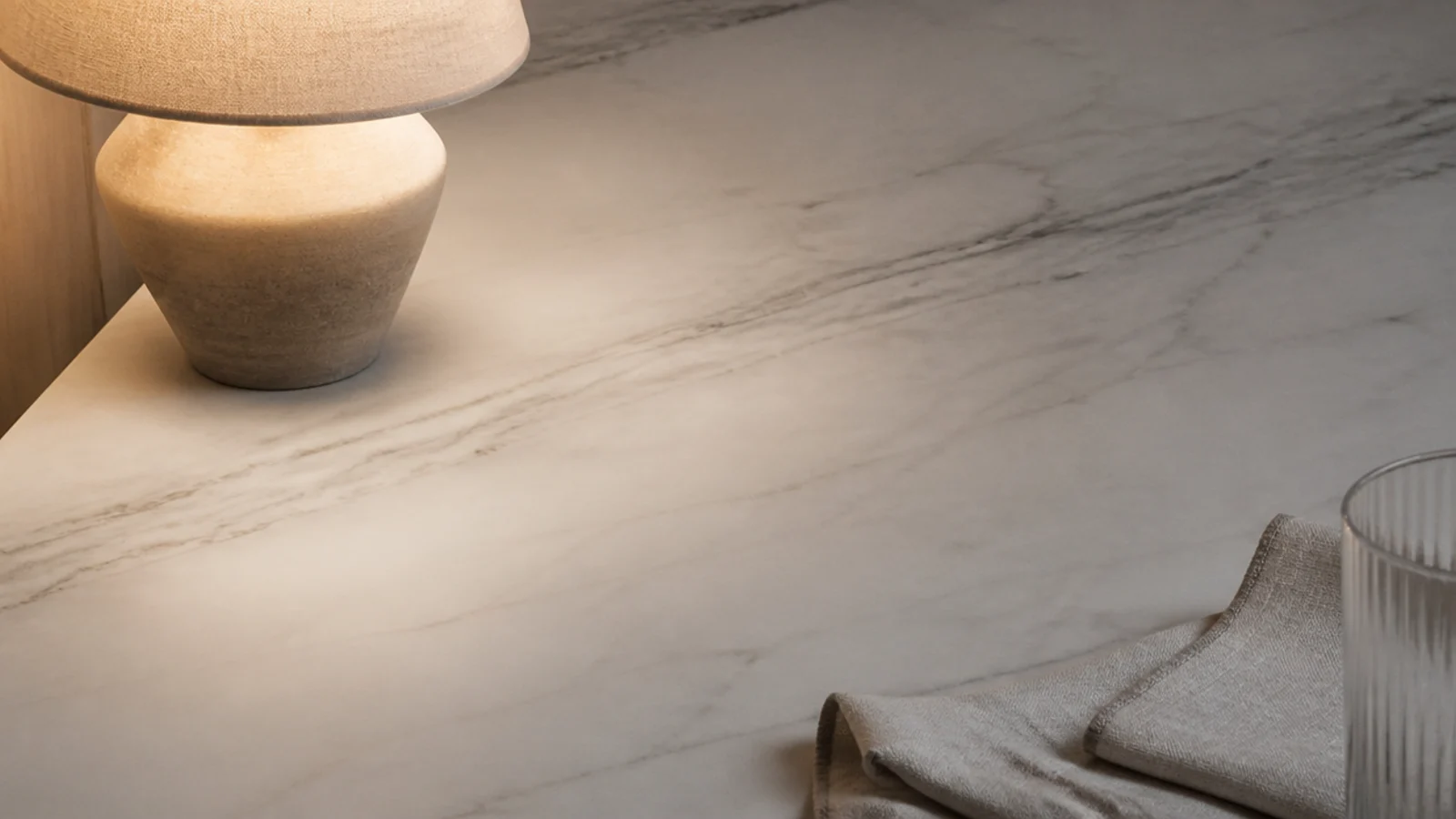
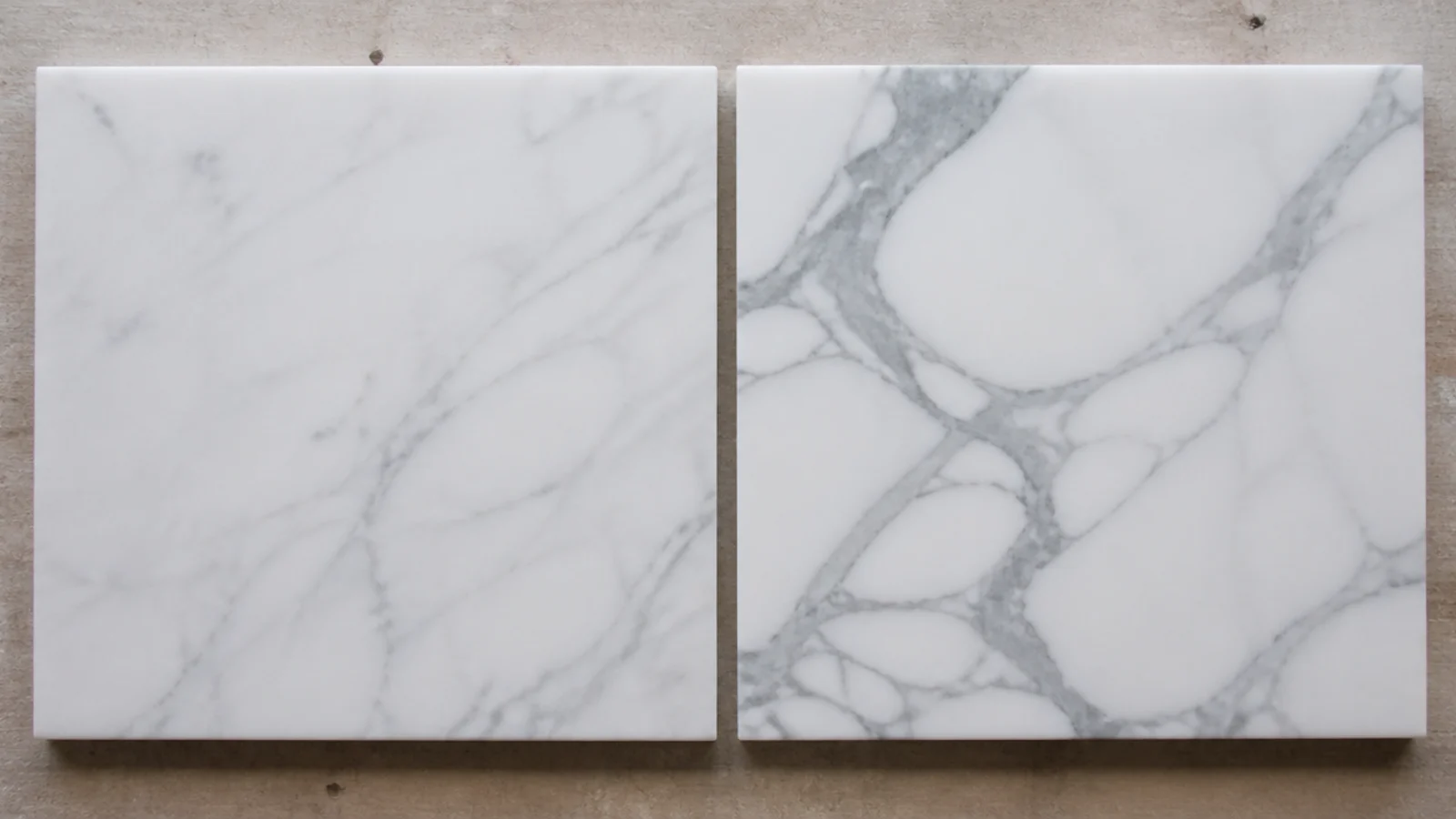
Carrara carries soft feathered grey veining and is the least expensive of the white Italian marbles. Calacatta has thicker, bolder veins on a whiter ground and costs two to three times more. In a small room, the quieter stone almost always sits better.
3. Travertine when the budget will not stretch
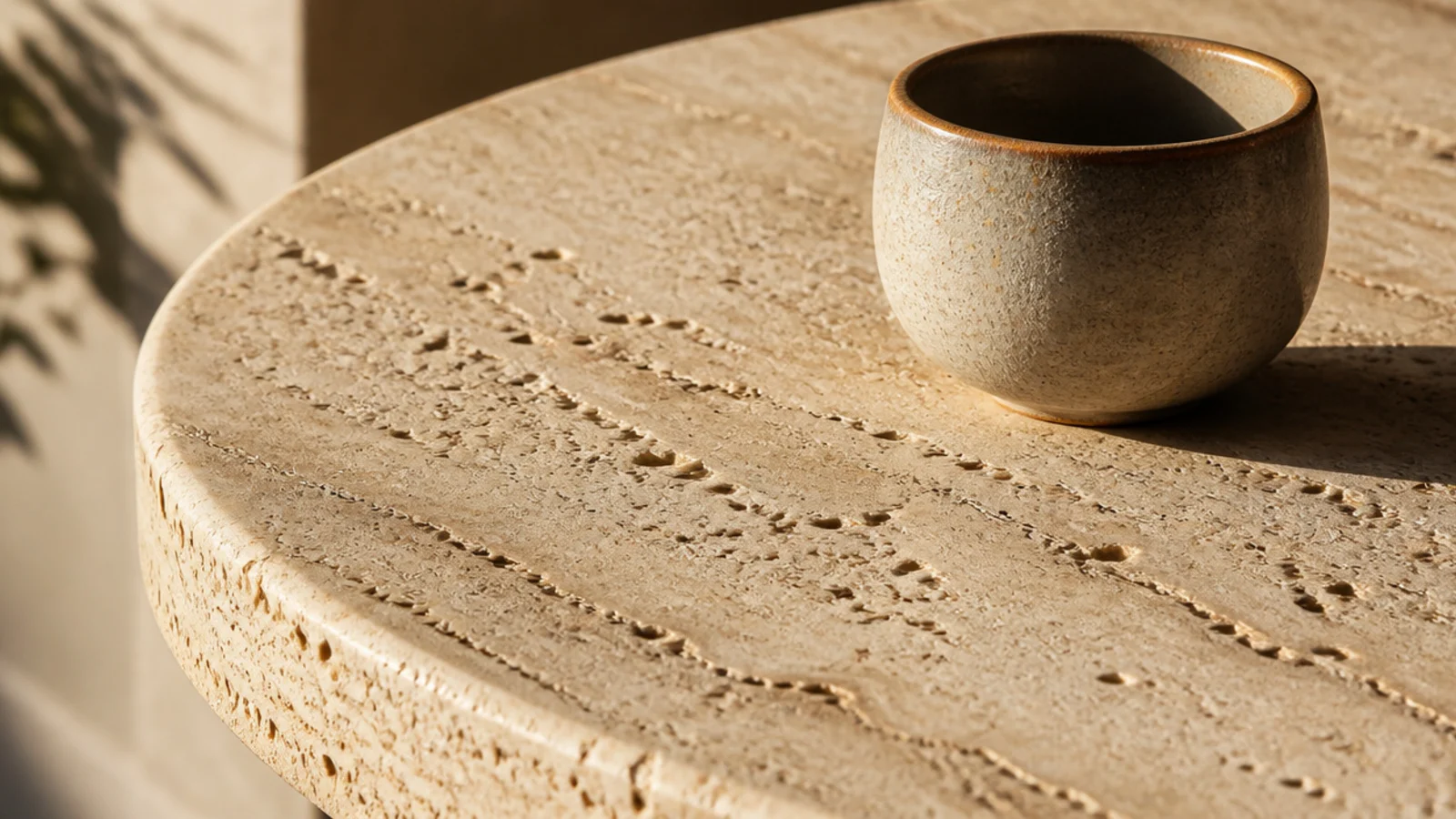
Travertine runs roughly half the price of a named marble and reads warmer. Its open pores are usually factory-filled with resin, which also makes it slightly easier to wipe clean. It takes the same sealing schedule and etches the same way, so treat it identically.
4. Quartzite if you want stone that resists acid
Quartzite is silica rather than calcite, so lemon and wine do not etch it. It is harder than marble at around 7 on the Mohs scale against marble's 3 to 4, and it still wants sealing against staining. Expect to pay 20 to 40 percent more than Carrara.
5. Buy an offcut from a countertop fabricator
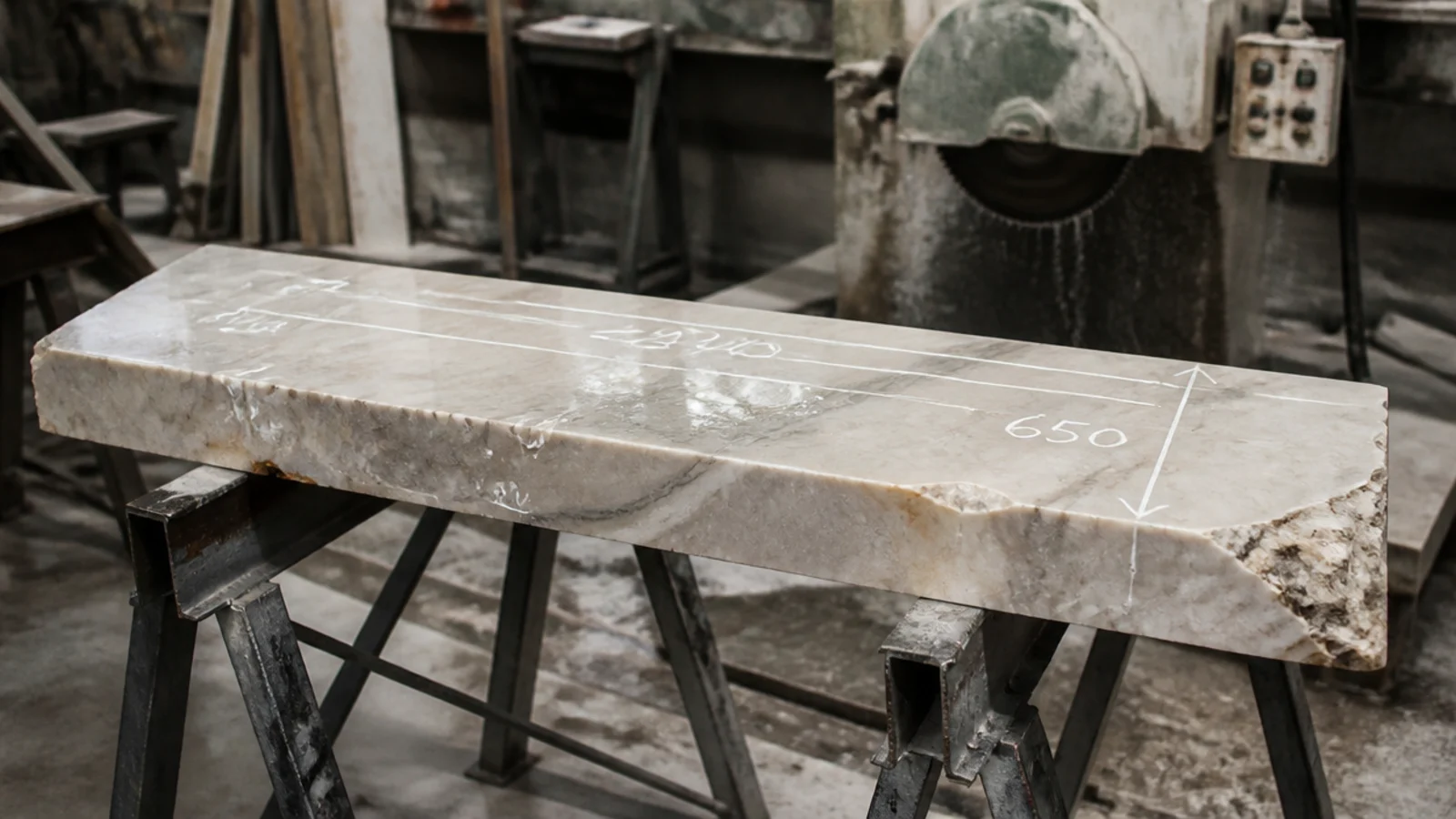
Coffee table tops come out of pieces too small for a kitchen counter, which is exactly what stone yards stack outside. Take your two dimensions and expect $40 to $80 per square foot including a cut and an eased edge, against far more for the same stone in a finished table.
6. Three-quarter inch is the practical thickness
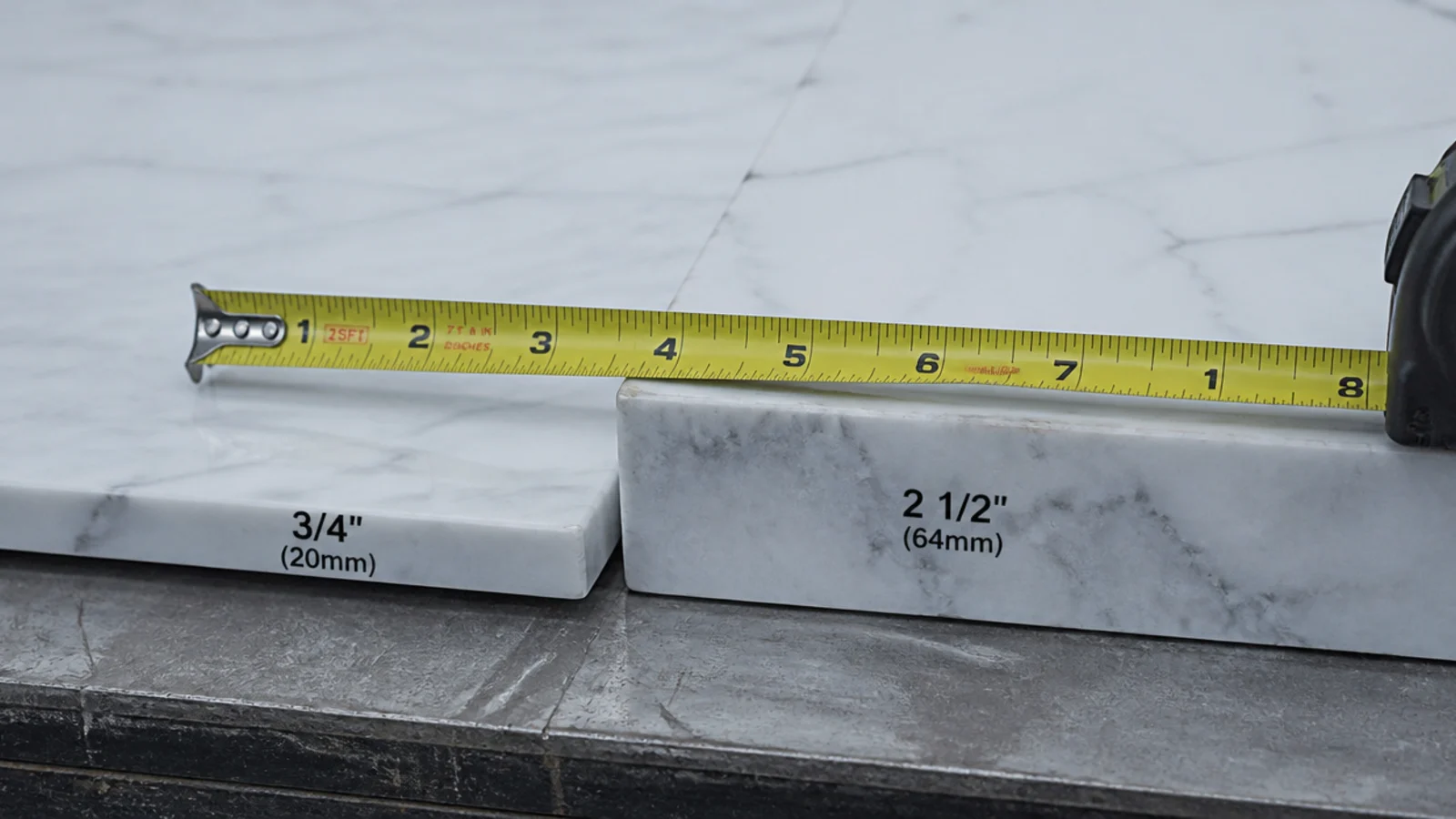
Twenty millimetres is strong enough for a coffee table span, light enough to move without machinery, and thin enough that a normal base can carry it. Inch-and-a-quarter slabs look magnificent and weigh around 17.5 pounds per square foot, which quickly becomes a delivery problem.
7. Check the base is rated for the weight
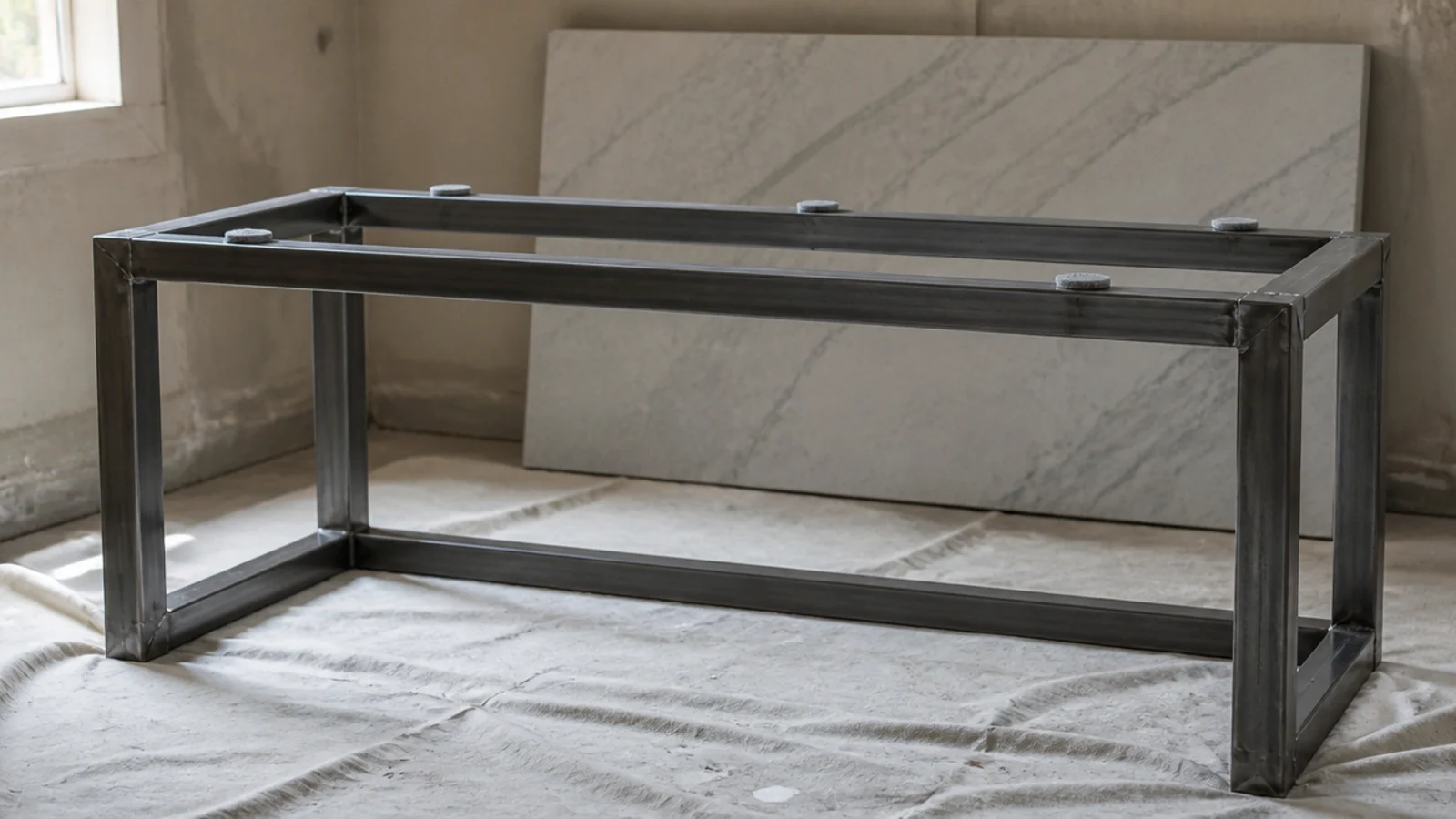
A frame designed for glass is not automatically fit for stone. Look for welded rails rather than bolted ones and a continuous bearing surface rather than four small pads. If the frame flexes when you push a corner empty, it will flex under 90 pounds of marble.
8. Ask for an eased or bullnose edge
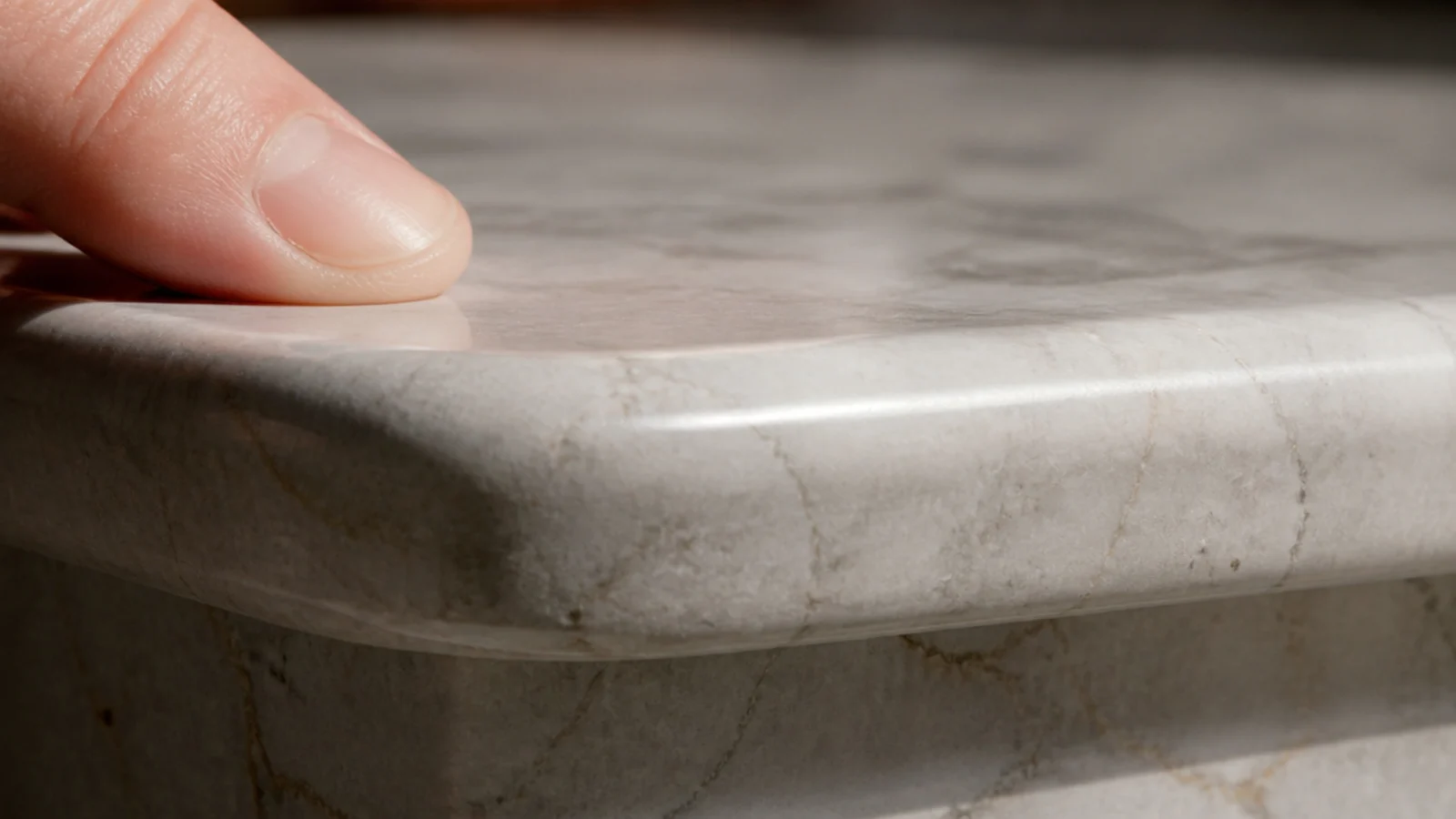
A sharp arris chips the first time a vacuum cleaner hits it, and the chip is permanent. An eased edge removes the fragile corner for almost nothing at the point of fabrication. Bullnose reads more traditional, a simple ease reads modern.
9. Mitre a build-down for a two-inch look
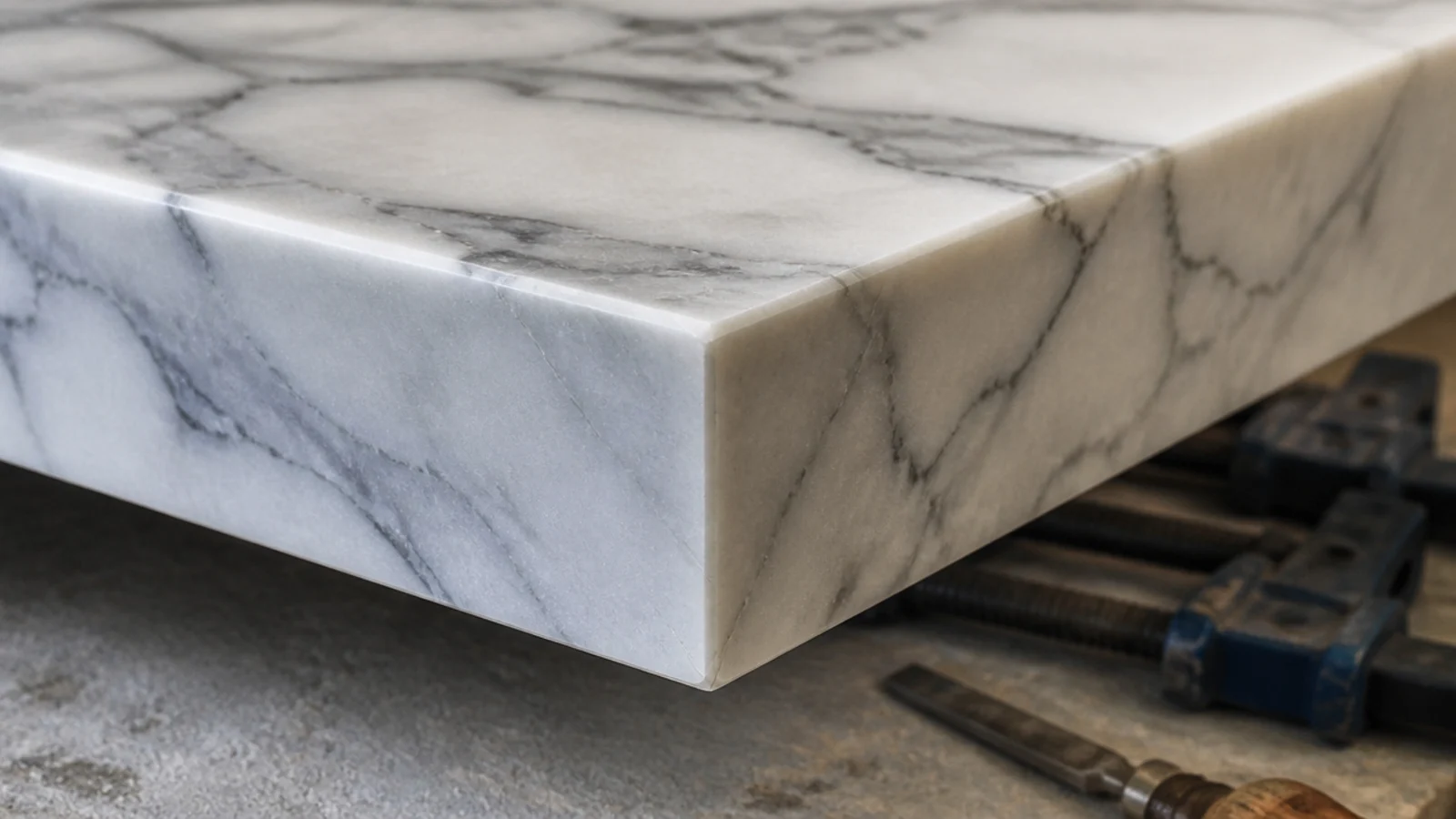
A mitred strip glued under the perimeter turns a three-quarter inch slab into a two-inch apparent edge without the weight of a thick one. Fabricators do this routinely on kitchen islands. Expect to pay $20 to $35 per running foot for the extra work.
10. Marble on an unlacquered brass frame
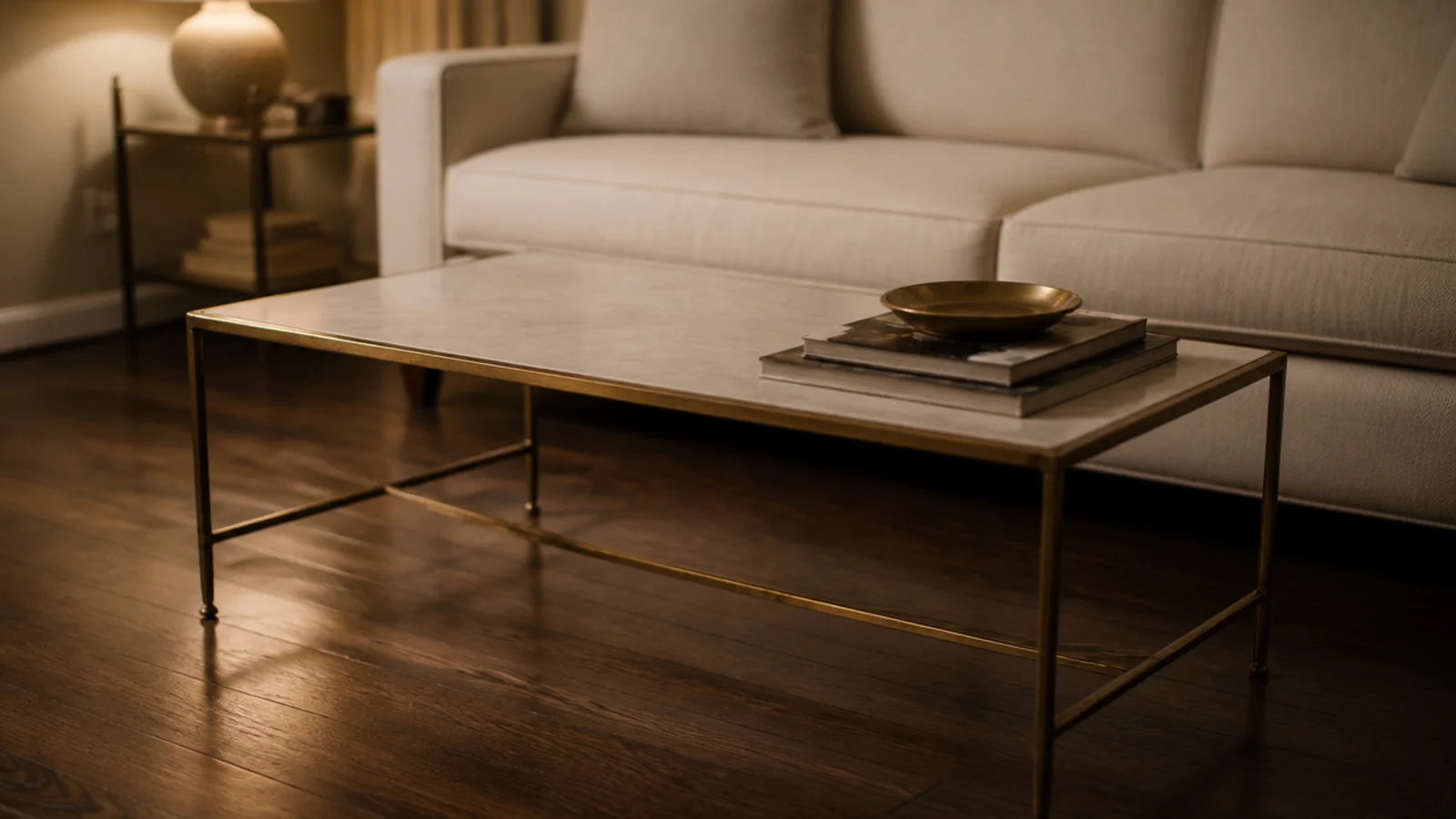
Pale stone and warm brass is the most reliable pairing there is, and unlacquered brass darkens with handling rather than flaking like plated finishes. The stone stays exactly as it was while the frame develops a patina, which is what stops the piece looking new for a decade.
11. Marble on a blackened steel cross base
A dark low base makes the stone appear to float and keeps all the visual weight at the top. Cross bases also give better legroom than four corner legs. Check the contact pads are felt or rubber so the stone is not resting on bare steel.
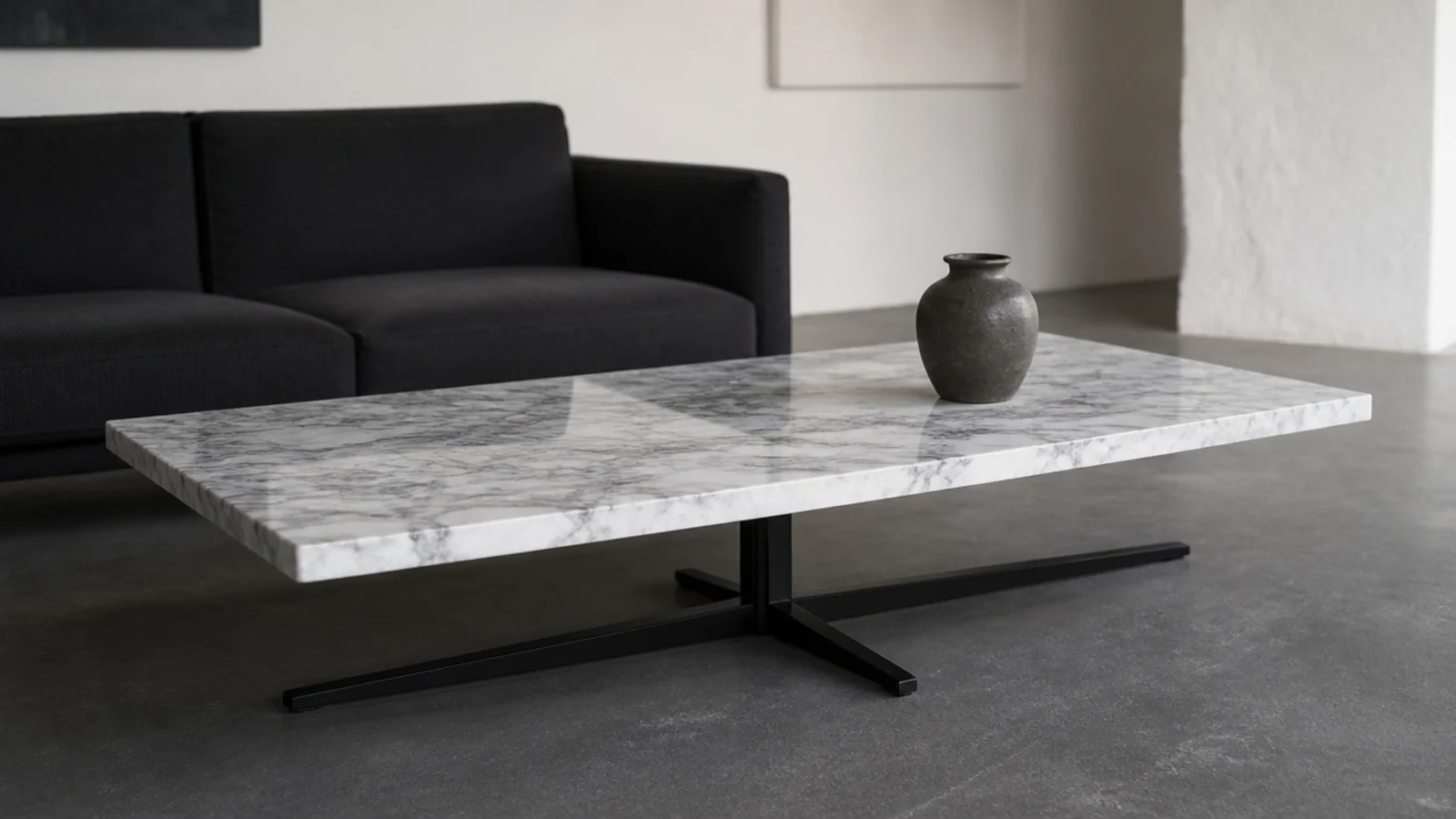
12. A solid marble pedestal drum
One block, no joints, nothing to work loose, and a mass that puts it beyond being nudged out of place. A 32-inch solid drum can pass 200 pounds, so confirm the floor and the route into the room before ordering one.
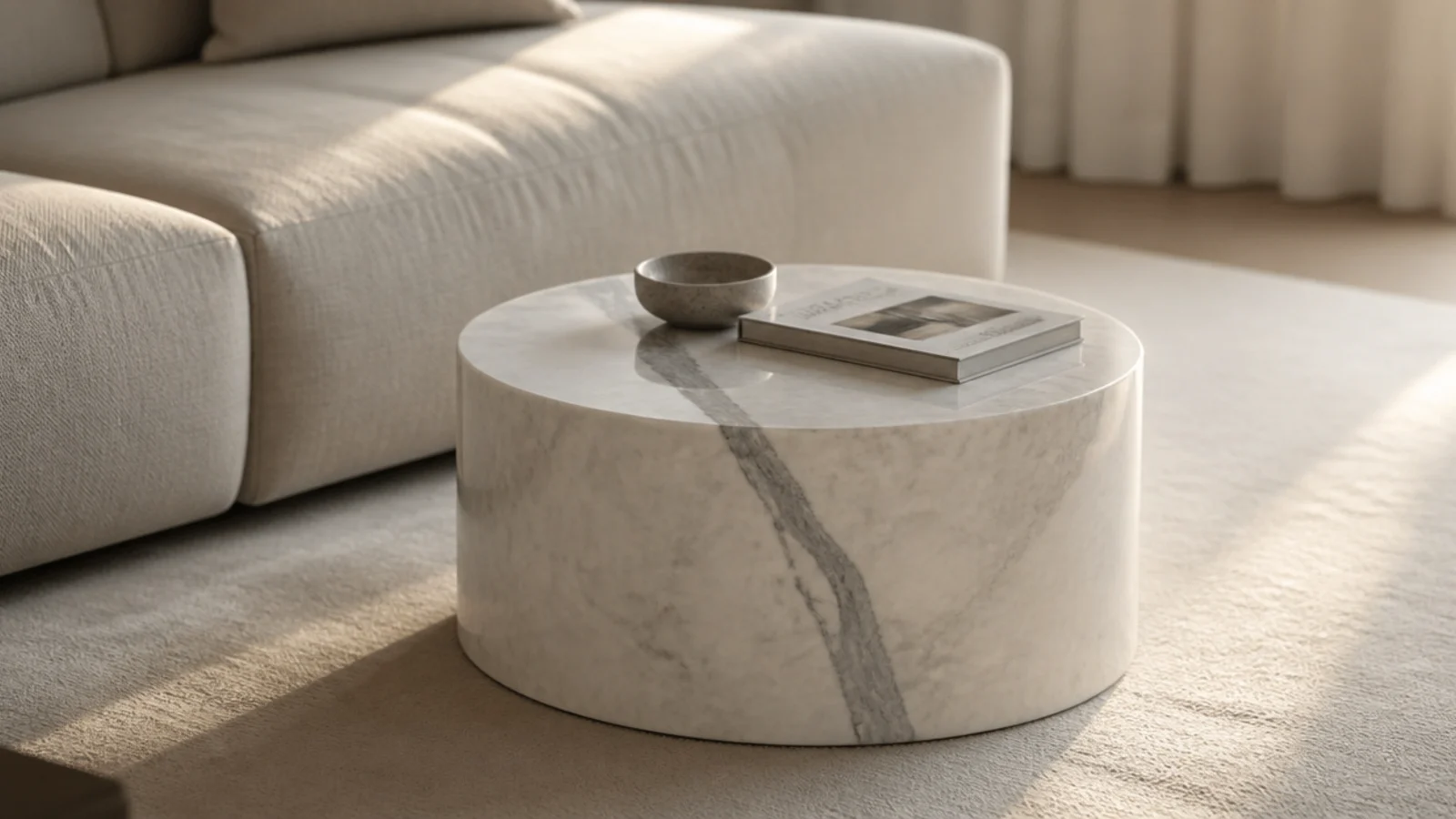
13. Stone top on a timber plinth
Cool stone over warm oiled oak balances a scheme that would feel severe in stone alone. Keep the plinth inset from the slab edge by two or three inches so the stone reads as a floating plane rather than a lid.
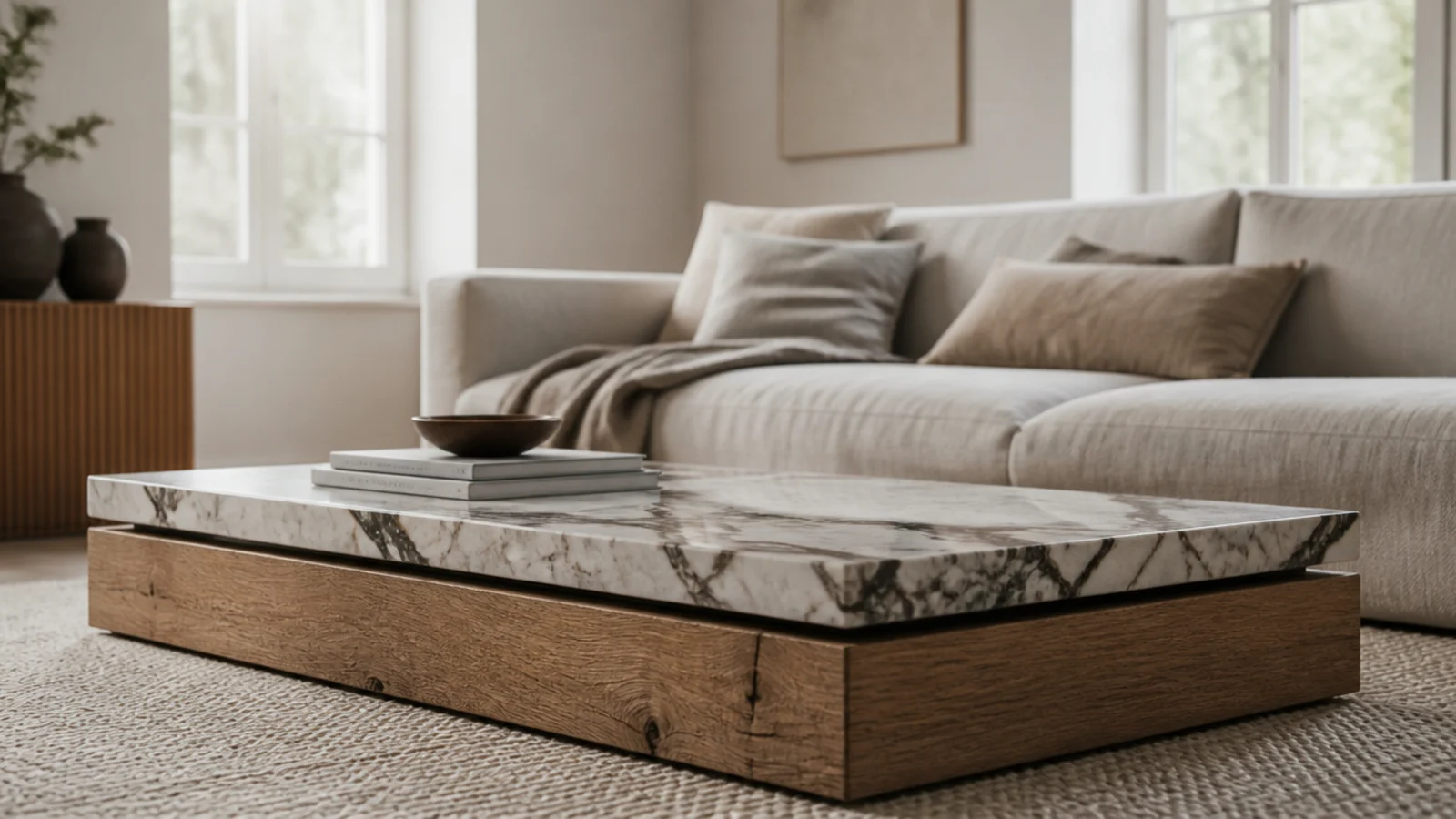
14. Book-match the veining across a joint
Where two pieces meet, ask for the slabs to be opened like a book so the veins mirror. It costs nothing extra if the fabricator cuts from one block, and it turns a visible seam into a deliberate feature.
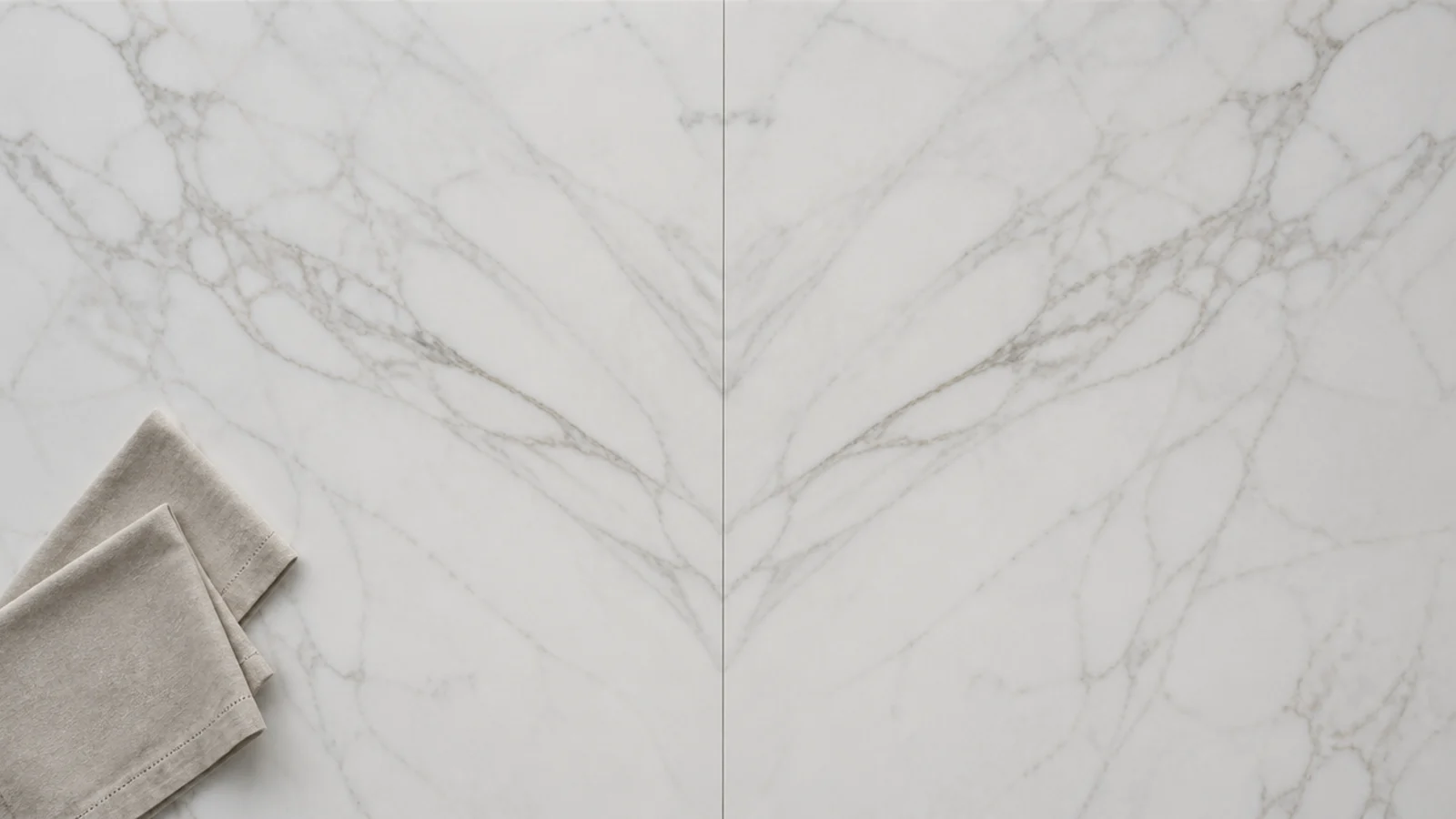
15. Vein-cut for stripes, cross-cut for clouds
The same block gives completely different faces depending on the cut direction. Vein-cut produces linear banding that suits a long rectangle; cross-cut gives soft cloudy figuring that suits a round top. Ask which you are being shown before you commit.
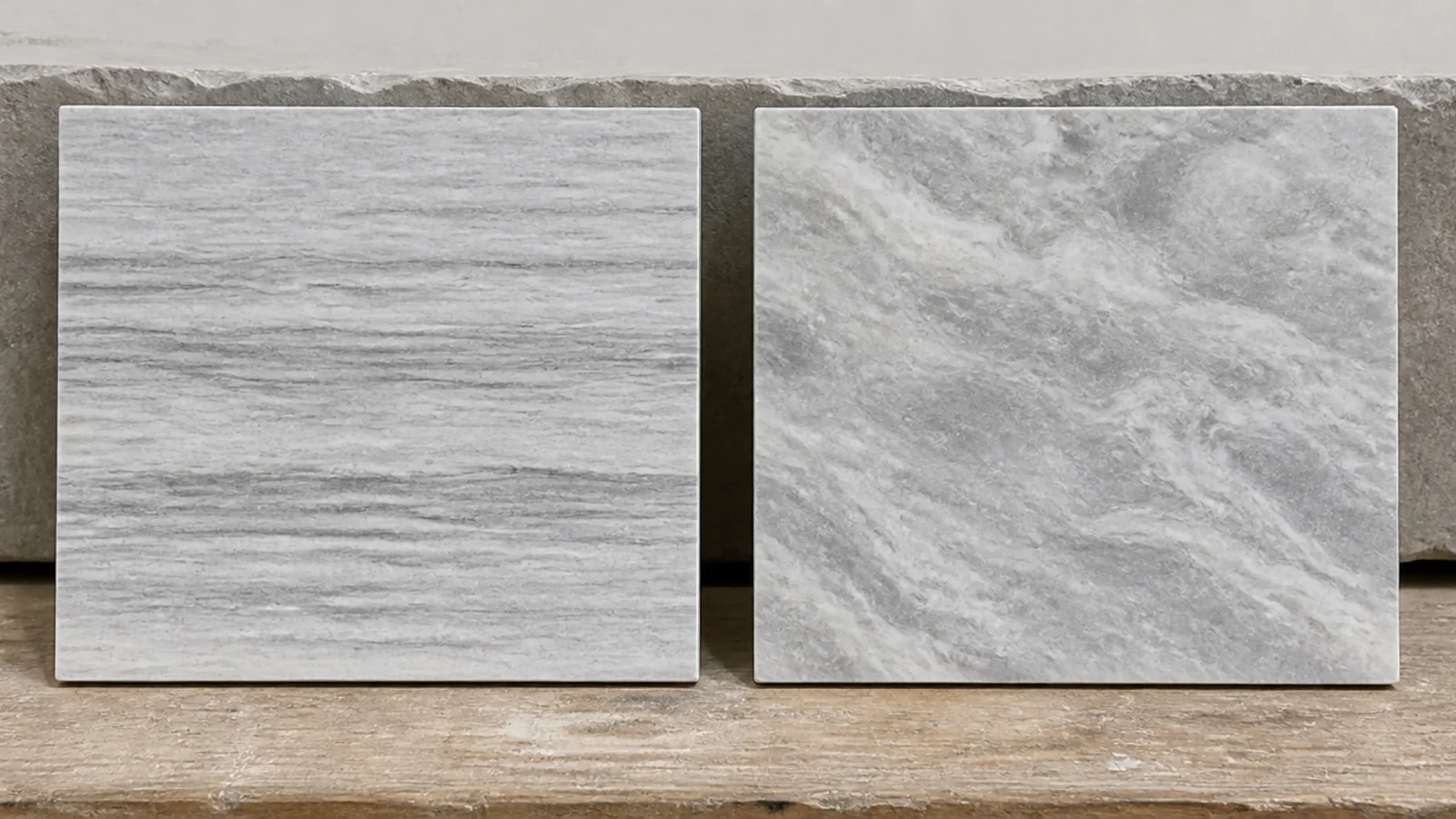
16. Green marble for colour without paint
Deep green with white veining brings a saturated colour into a neutral room in a material that will never date the way a painted finish does. It also hides marks better than any white stone, which makes it quietly practical as well as dramatic.
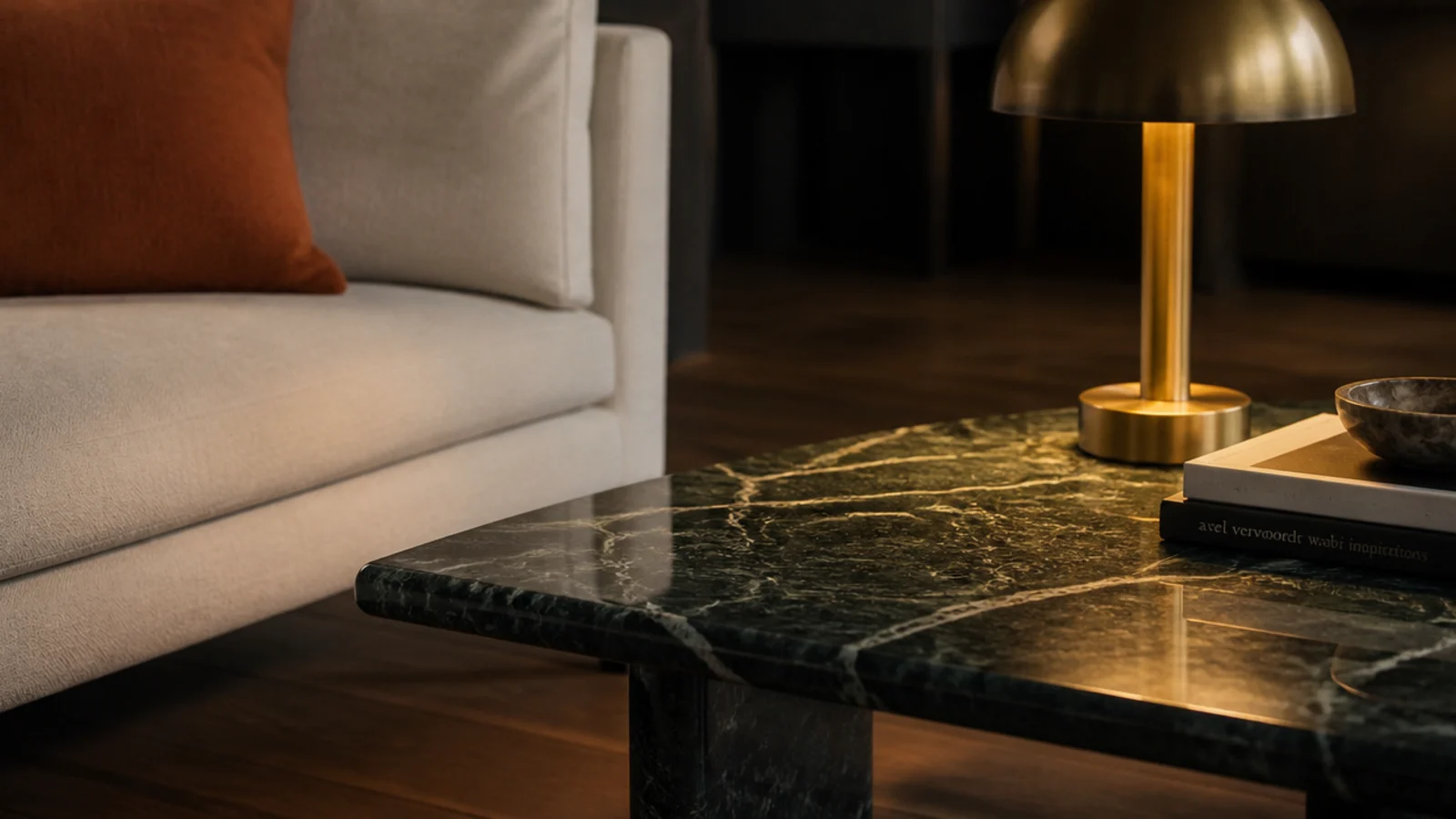
17. Black stone with a single white vein
A dark top disguises rings and crumbs almost completely, and one strong vein gives the surface its whole character. Black marble does show dust and water spots more than pale stone, so keep a dry microfibre nearby.
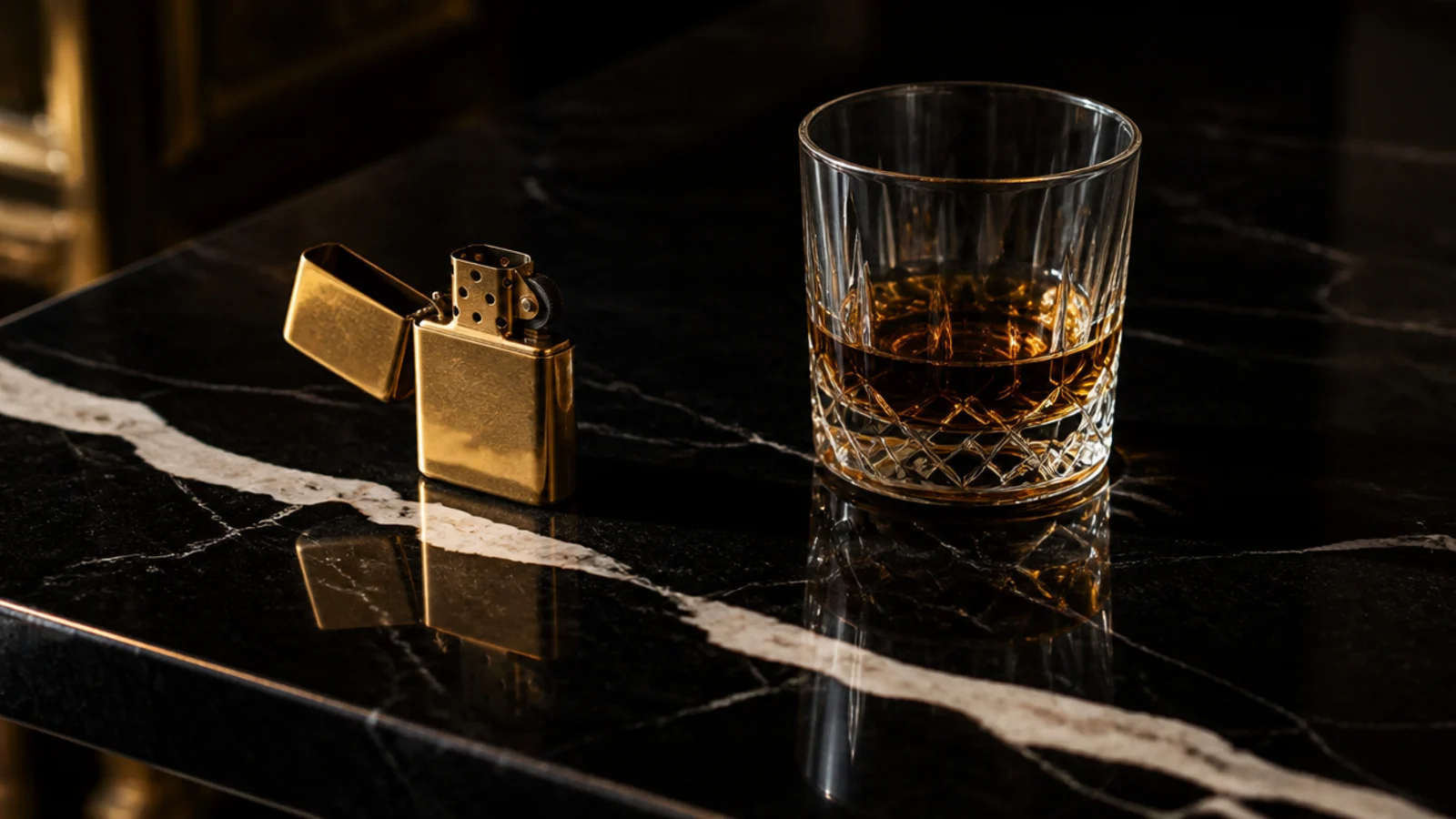
18. Rosa and pink marbles for warmth
Pink-toned stone sits beautifully with oak, cream and terracotta, and it is usually cheaper than the fashionable whites. It reads warmer under lamplight than any grey marble, which matters in a room used mostly after dark.
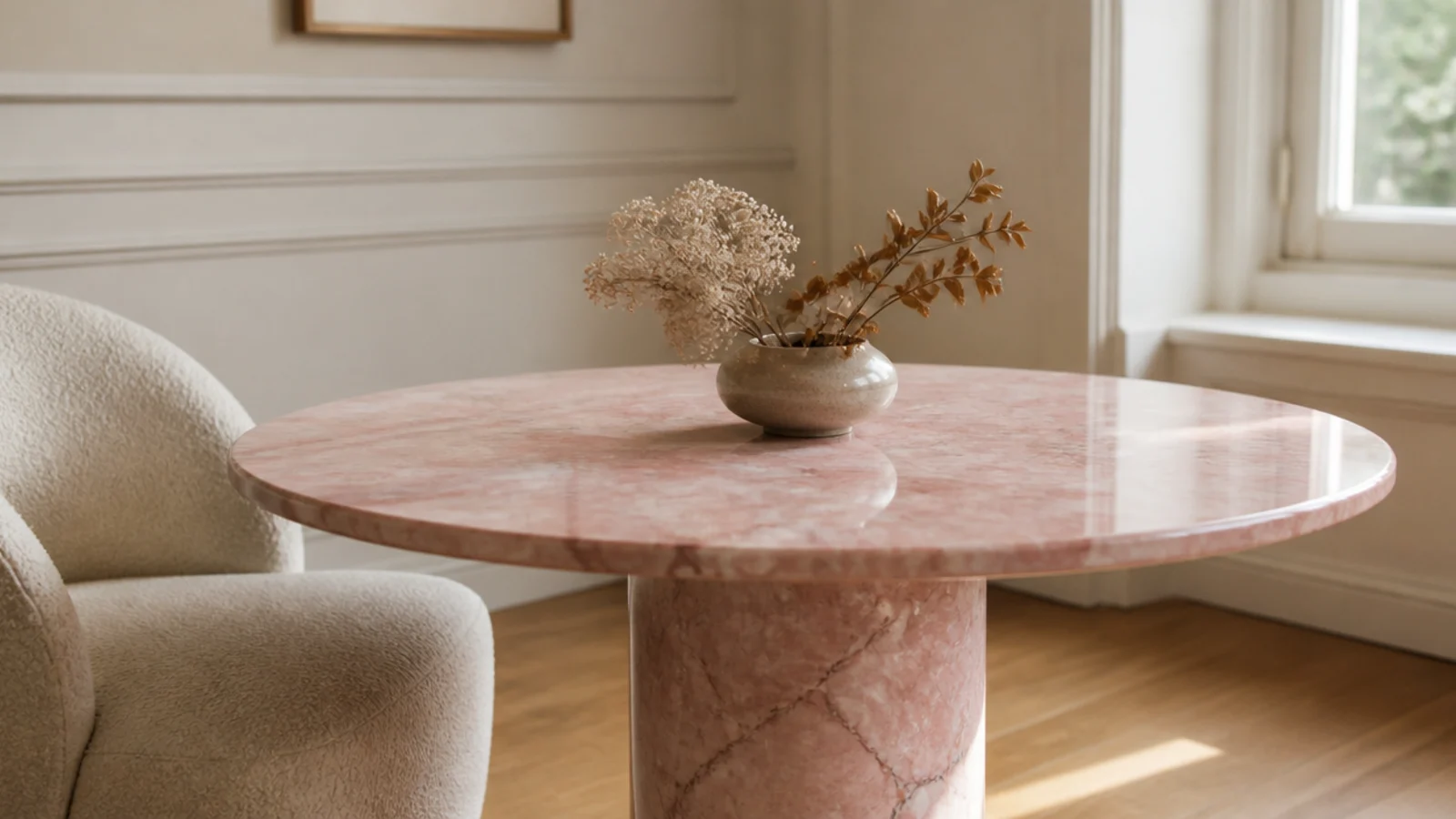
19. Sintered stone if you want the look without the care
A fired porcelain or sintered slab in a marble pattern needs no sealer, does not etch, and shrugs off wine and oil entirely. It will chip on a hard corner knock where marble would too. For a household with small children, it is the sensible answer. The modern picks guide has the construction details.
20. Thin stone panel over a plywood core
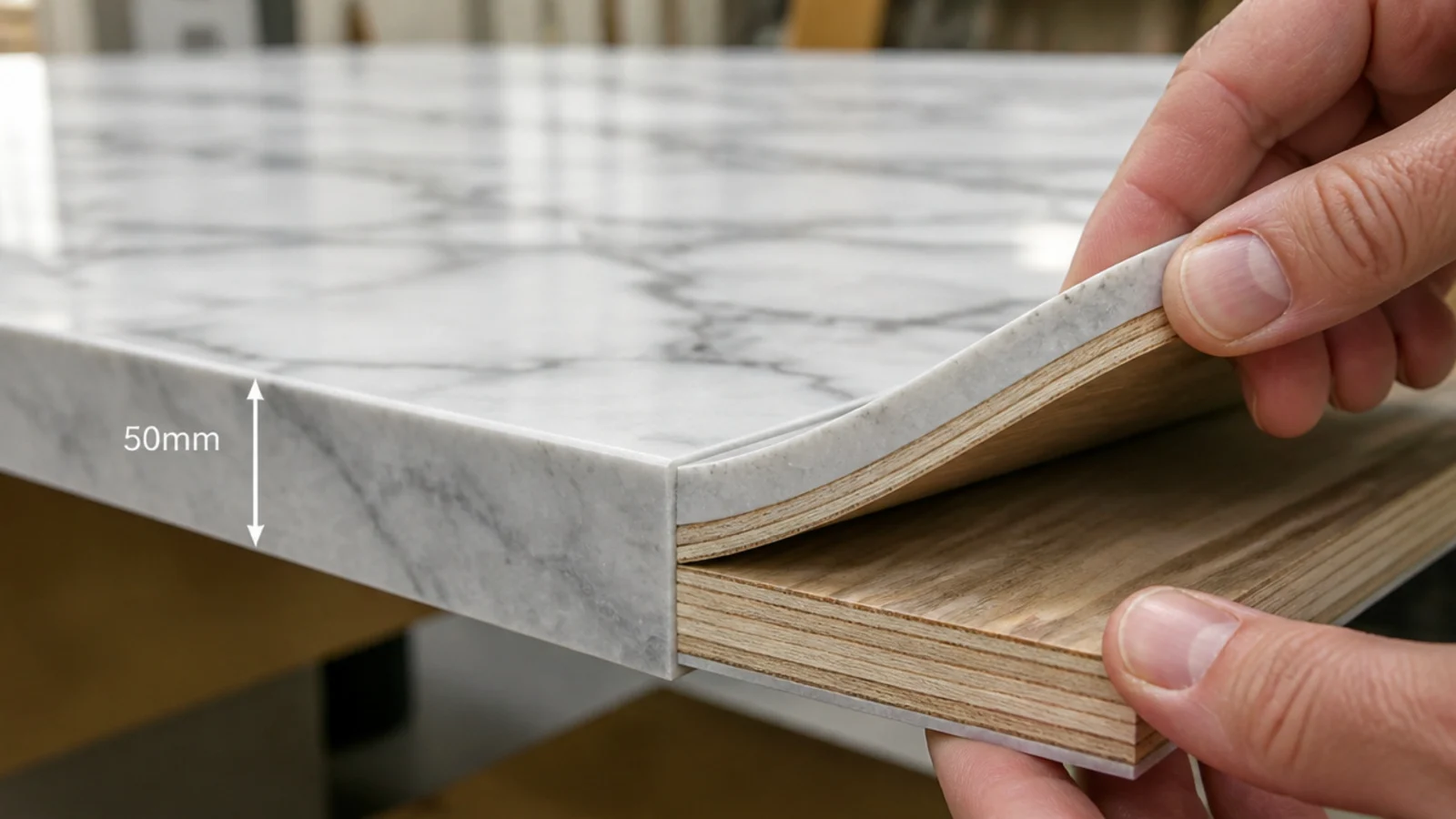
A 10mm marble facing bonded to plywood gives you real stone at roughly a third of the weight, which makes upstairs flats and lightweight bases possible. The edge detail is what gives it away, so specify a mitred edge that hides the core.
21. Use an impregnating sealer, not a topical one
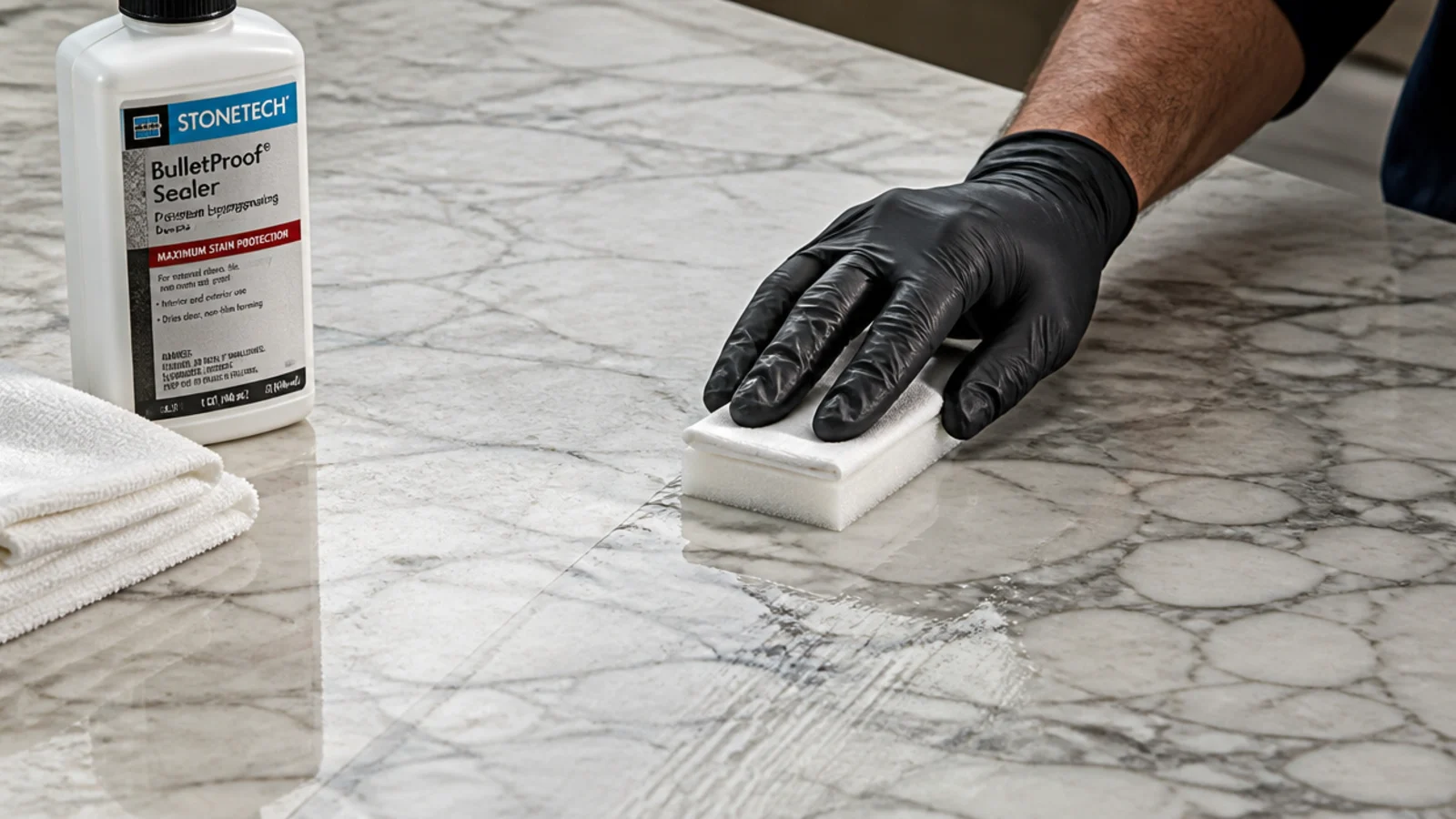
Impregnating sealers soak into the pores and leave the surface looking untouched. Topical sealers sit on top as a film, scratch white, and cannot be spot-repaired. A bottle costs $20 to $35 and covers a coffee table many times over.
22. Run the water test twice a year
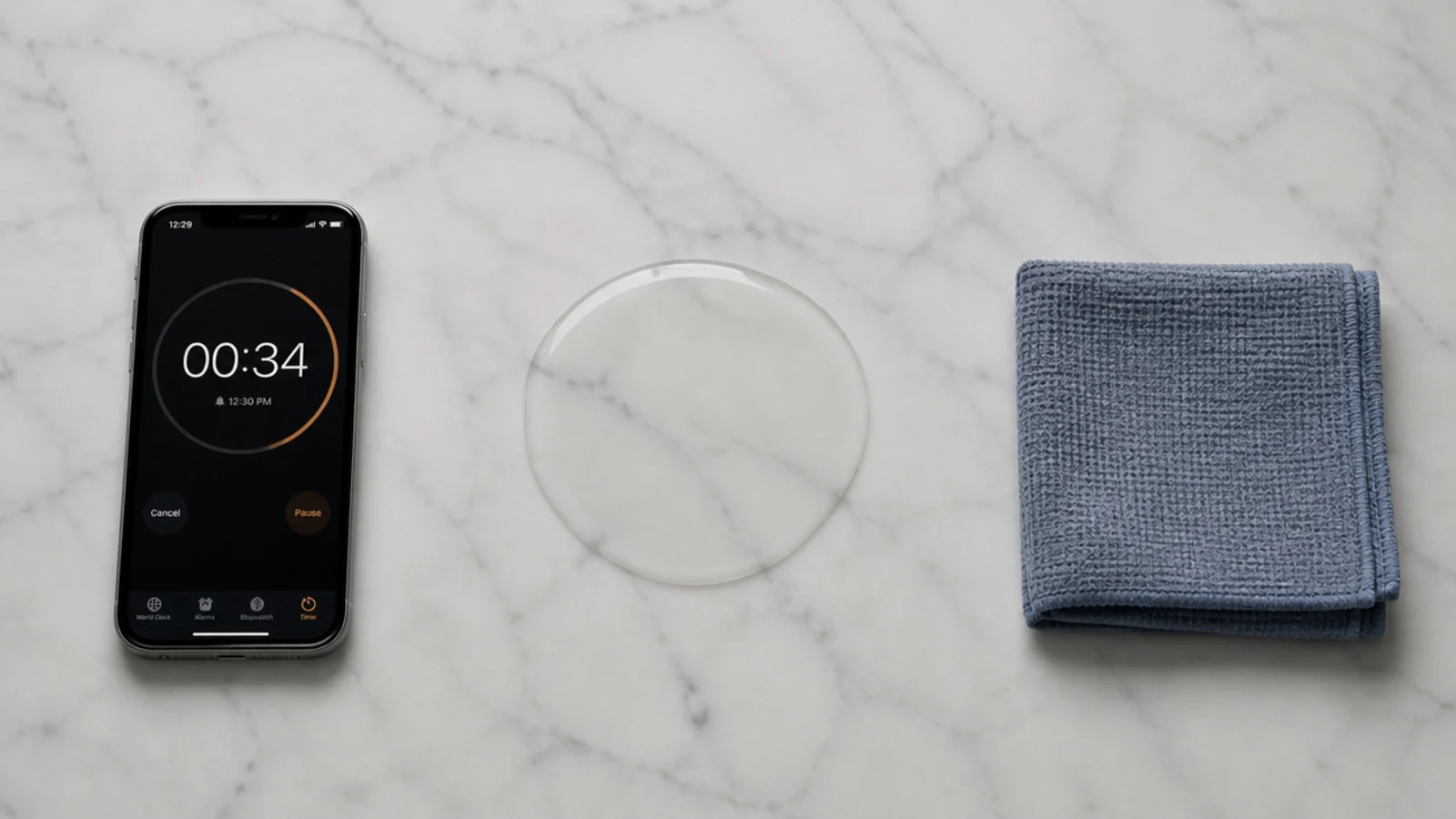
Leave a tablespoon of water on the stone for five minutes and lift it with a cloth. If the patch is darker than the surrounding stone, the sealer has worn through. Two minutes of testing beats a year of guessing, and spring and autumn are easy dates to remember.
23. Clean with pH-neutral products only
Vinegar, lemon, bathroom sprays and most kitchen degreasers all etch calcite stone. A pH-neutral stone cleaner, or warm water with a drop of mild dish soap, is all a marble table ever needs. Rinse and dry rather than letting cleaner evaporate on the surface.
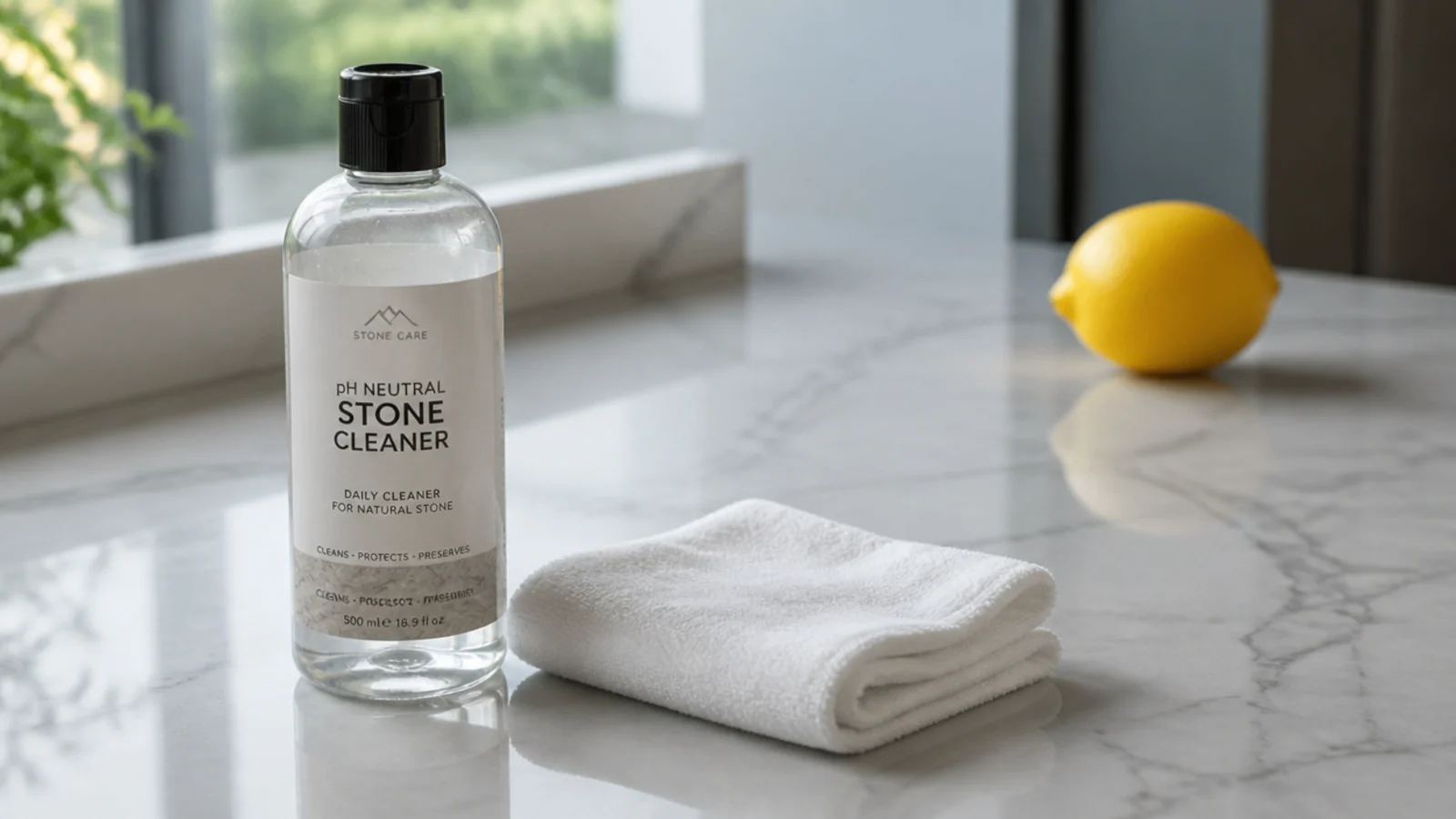
24. Blot every spill inside sixty seconds
Press a cloth straight down and lift. Wiping drags the liquid across more stone and pushes it further into the pores. Red wine, olive oil and coffee are the three that punish a slow response, and all three come out easily if you catch them immediately.
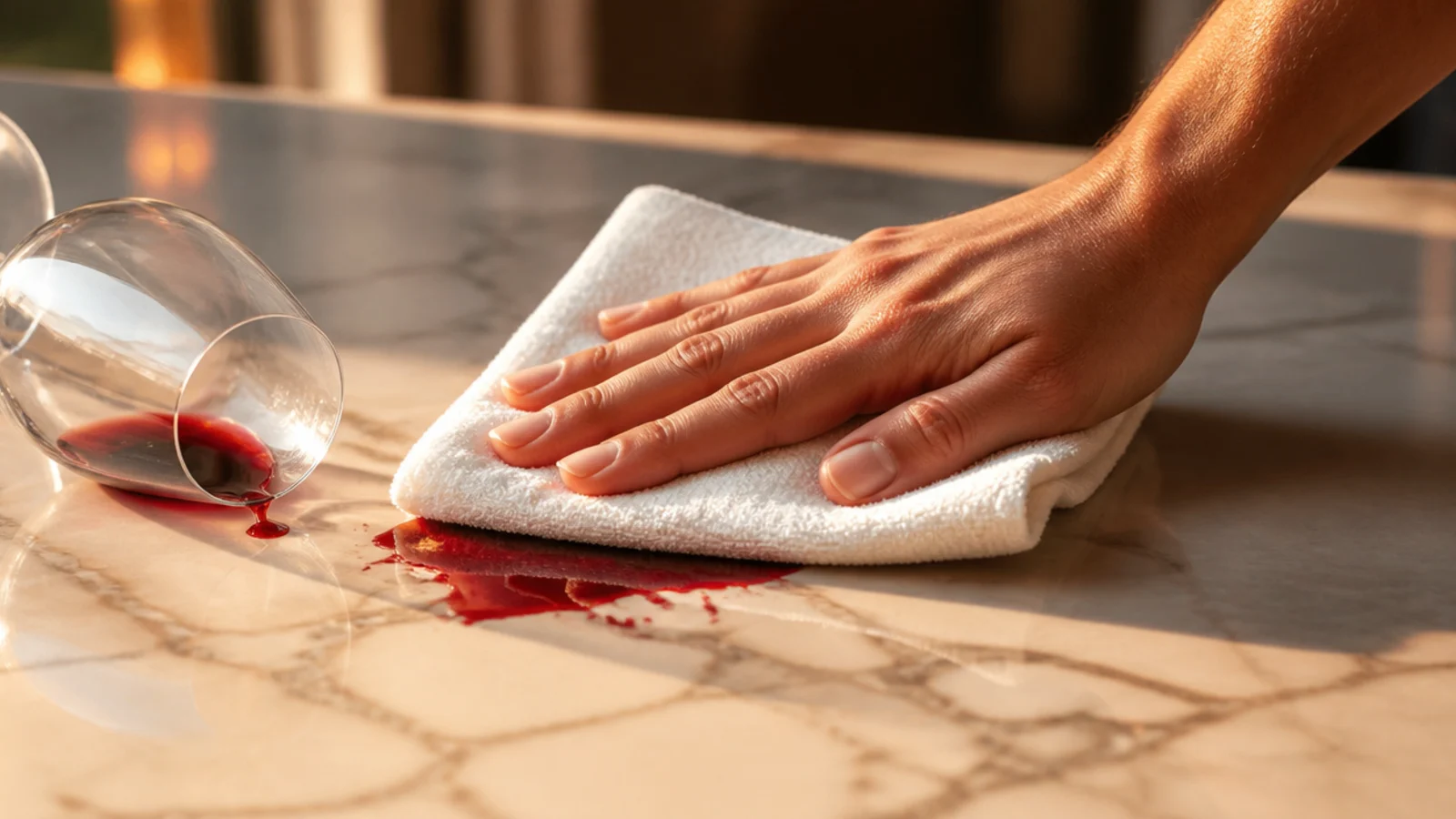
25. Learn the poultice for the stains you miss
Baking soda mixed with water to a thick paste, spread a quarter inch over the mark, covered with plastic wrap taped at the edges, and left 24 to 48 hours. As it dries it pulls the stain out of the stone. Two applications are often needed on wine.
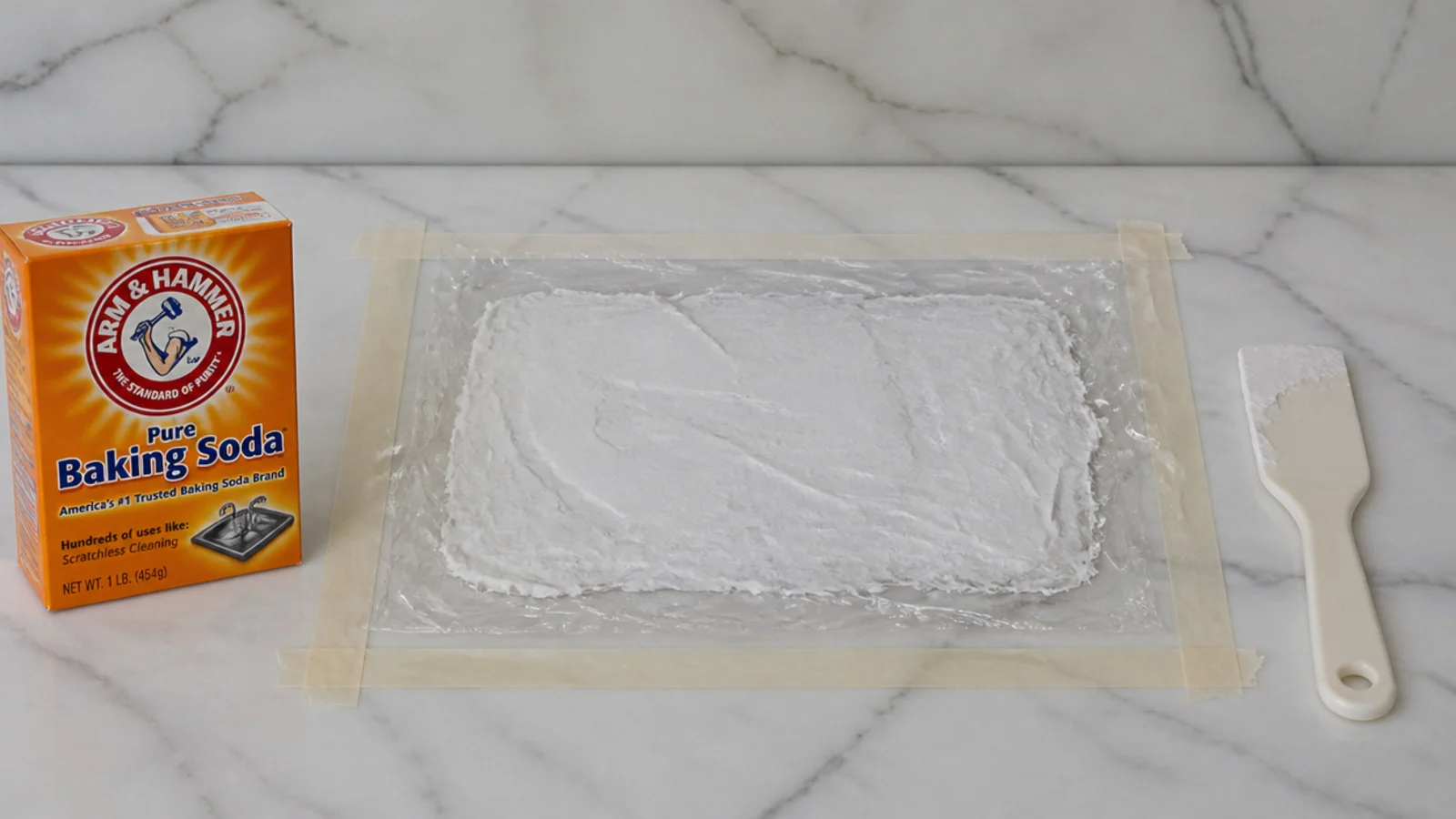
26. Know the difference between etching and staining
A dull matte ring is an etch and needs polishing powder, not a poultice. A dark shadow is a stain and needs a poultice, not polishing. Treating one as the other wastes an afternoon and occasionally makes the mark worse.
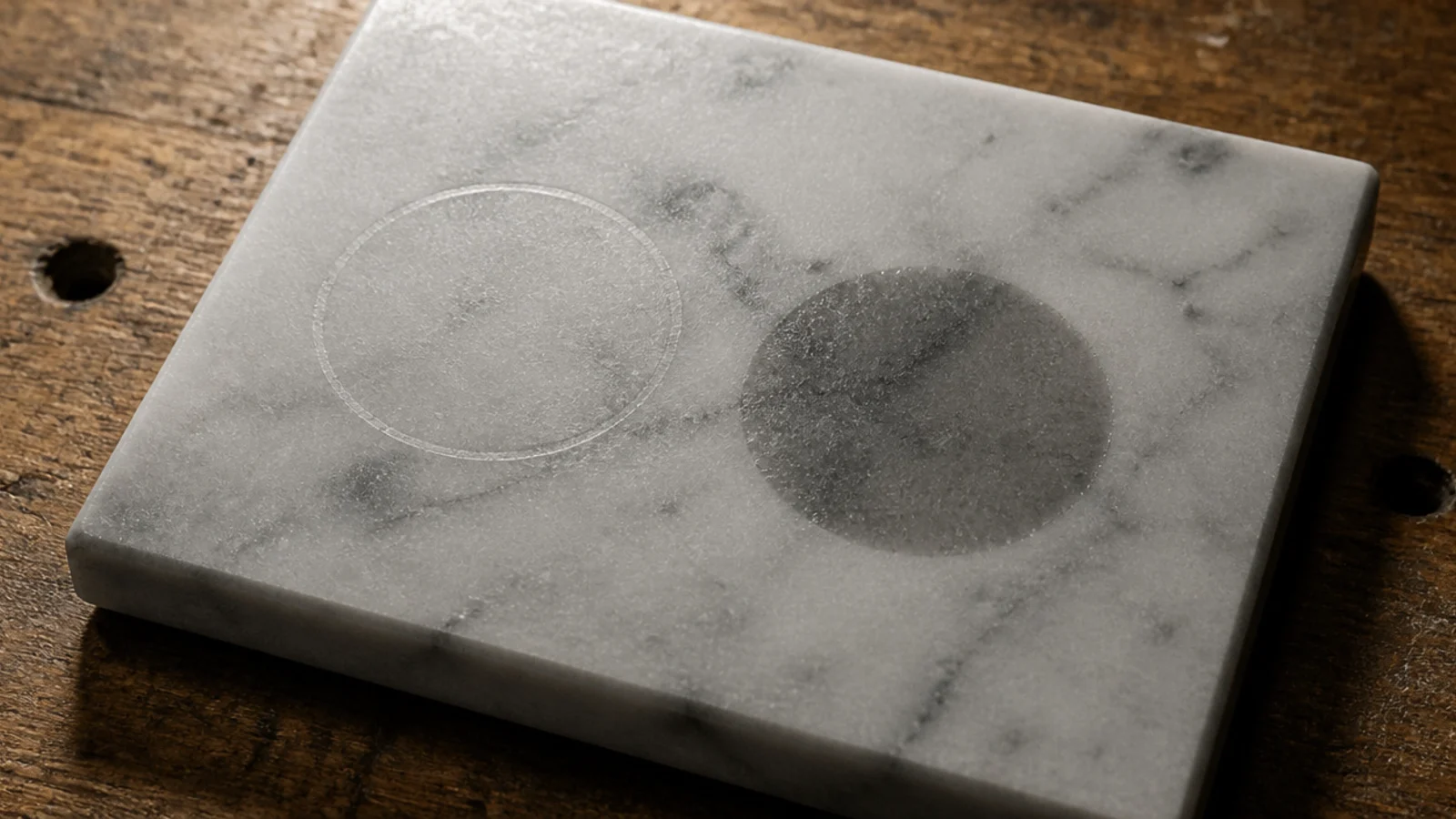
27. Felt dots and coasters, permanently
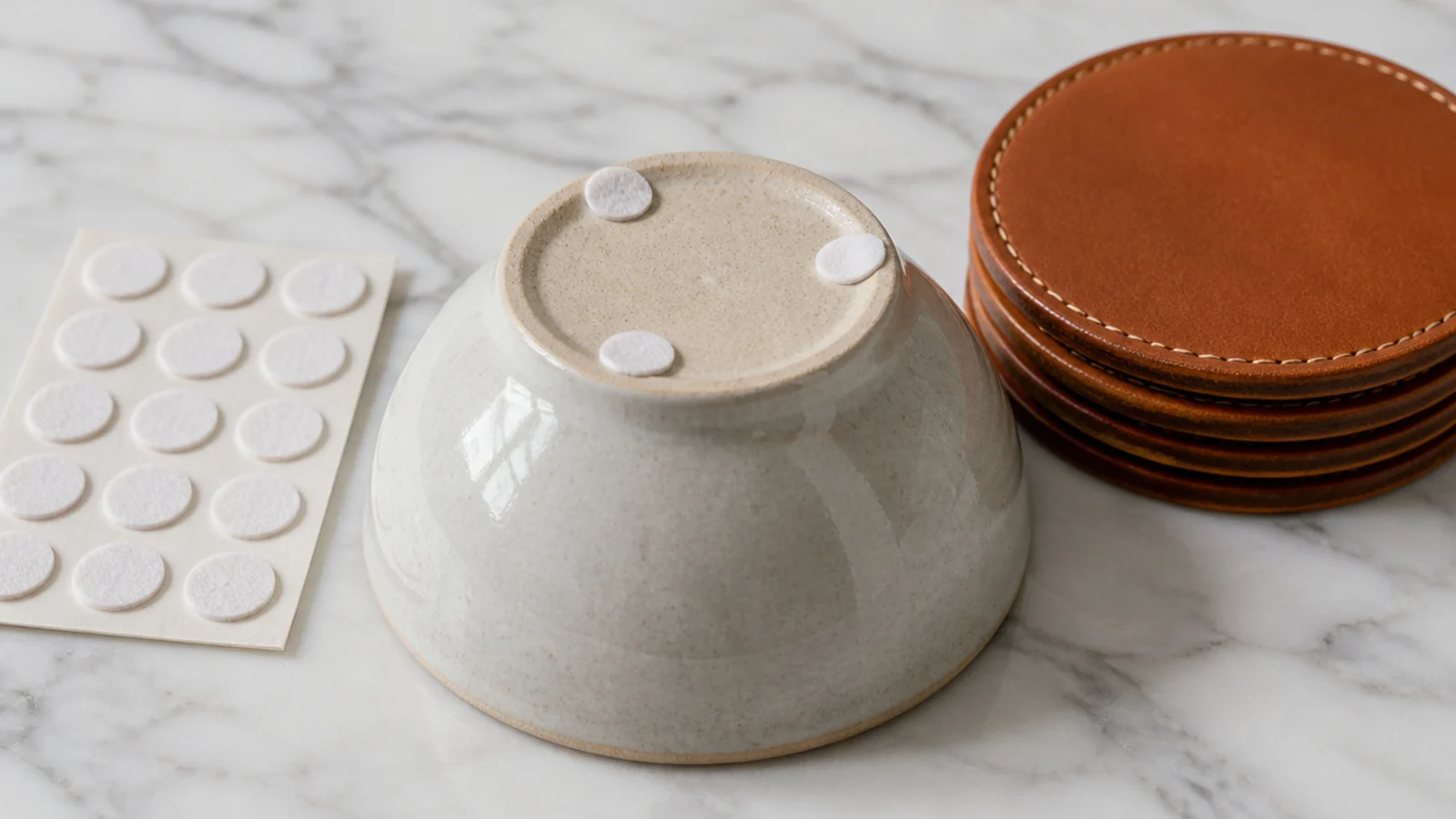
A sheet of felt dots costs about $6 and stops grit under ceramic bases scoring the surface. Leather or cork coasters left out in the open get used; coasters in a drawer do not. Together they prevent most of the damage a stone table ever suffers.
28. Ease the corners if children are crawling
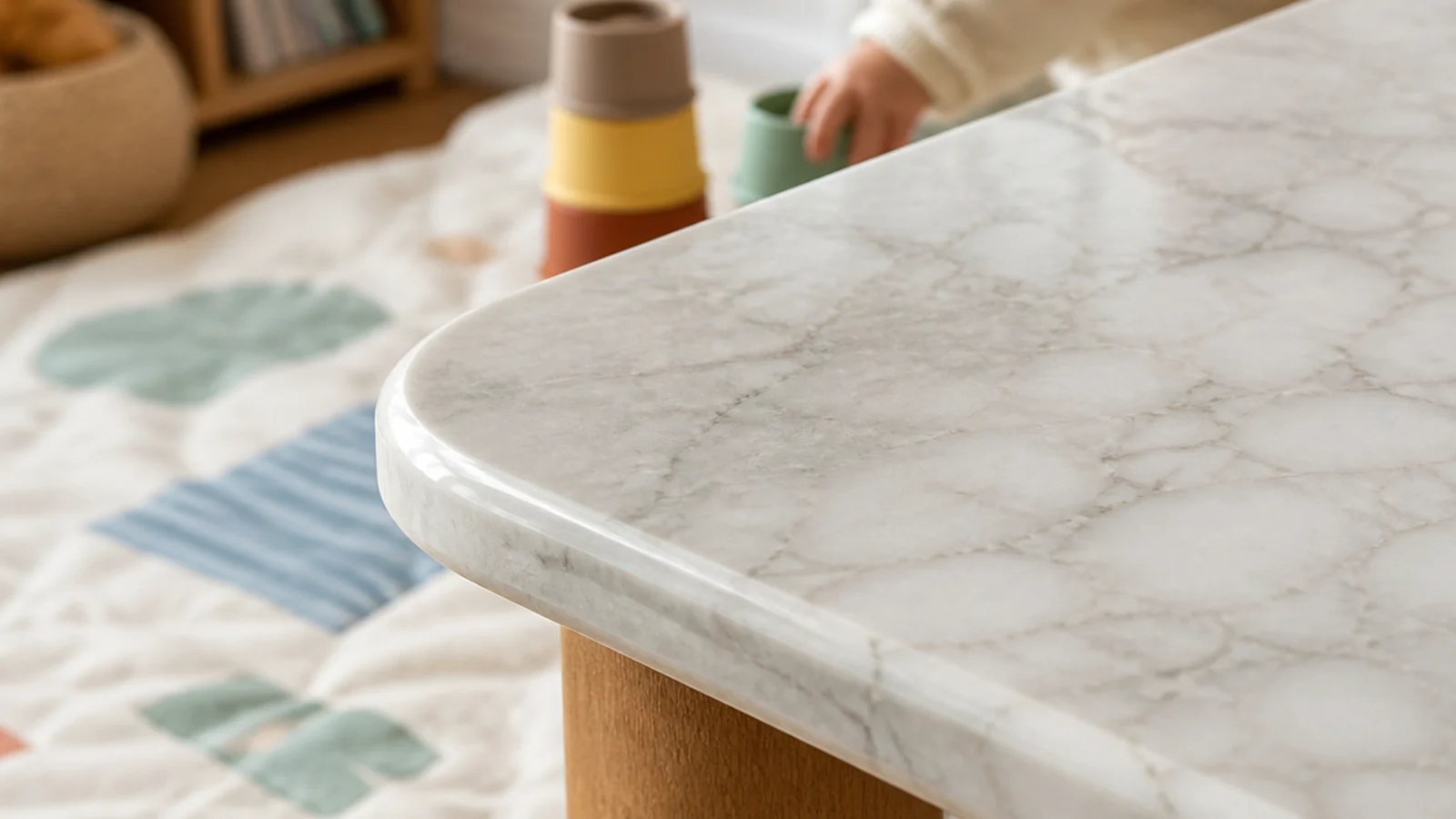
Marble corners sit at exactly the height of a head learning to stand up, and stone does not forgive. A fabricator will radius all four corners for $30 to $60 when the top is cut, which is far easier than retrofitting bumpers that fall off.
29. Start with a marble tray instead
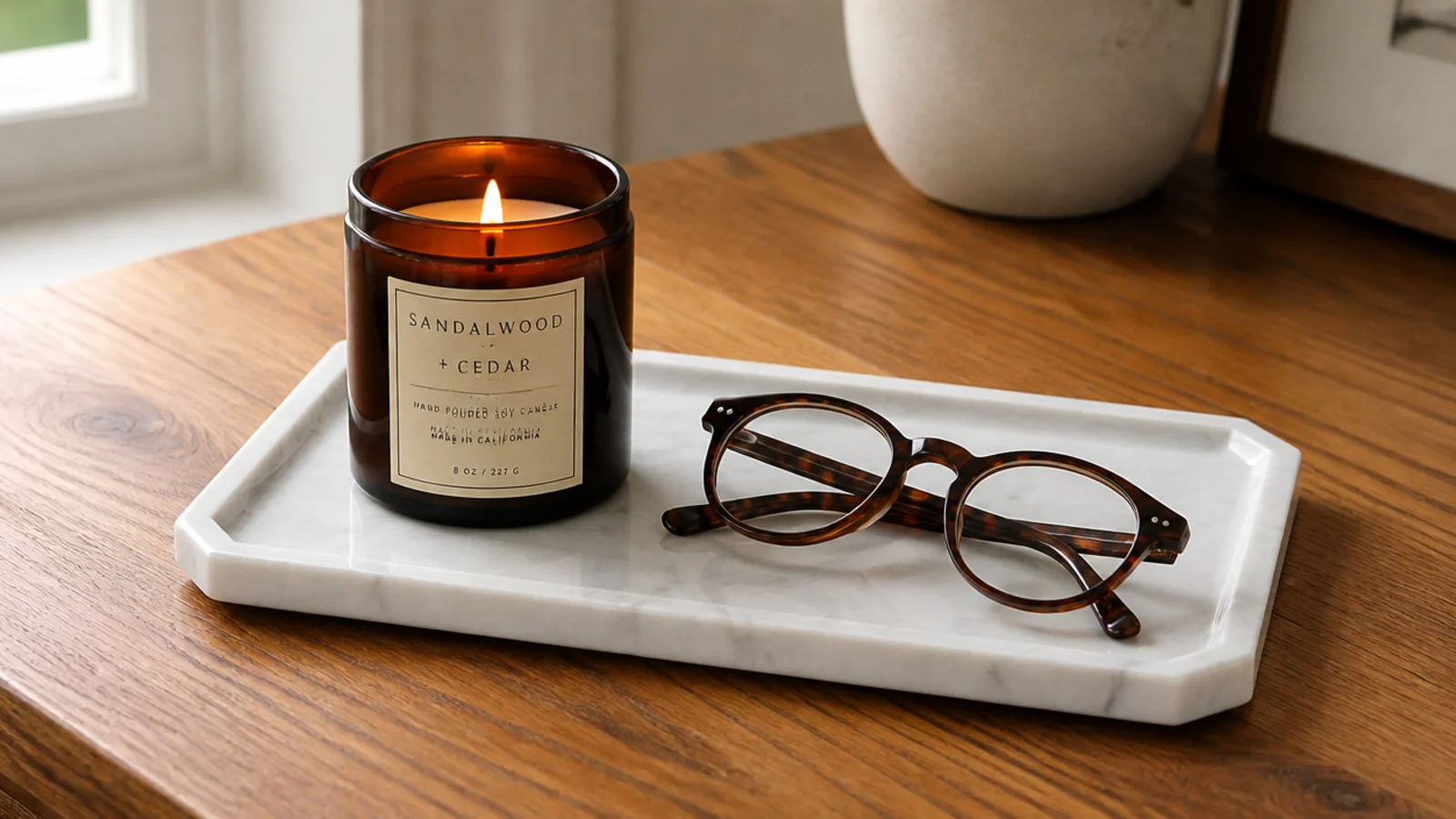
A stone tray at $40 to $90 lets you live with the material for a season before committing to a slab. You learn quickly whether your household blots spills or leaves them, which is the real question behind buying stone at all.
30. Level it properly before the top goes on
Adjust the glides and check with a spirit level while the frame is still empty and light. Once 90 pounds of stone is in place, nobody lifts it again, and a table that rocks under a heavy top puts point loads into the slab. The round table guide covers pedestal bases that stay level on thick rugs.

For the general sizing and clearance rules, the main center table guide has the measuring sequence. If the room is getting a stone theme, the surface care in kitchen shelf ideas covers the same sealing questions on open shelving, and modern TV unit decor balances the wall opposite.
Mistakes to Skip
- Assuming sealer prevents etching. It does not — sealer reduces absorption, and etching is acid eating into the calcite. A single lemon slice on a polished top leaves a dull mark that only polishing powder removes.
- Cleaning stone with vinegar or a bathroom spray. Both are acidic, both etch, and the damage is spread evenly across everywhere the cloth went rather than confined to a single ring.
- Wiping a spill sideways. Blotting straight down lifts liquid out; wiping pushes it into three times as much stone and turns a coaster-sized mark into a plate-sized one.
- Ordering a slab without checking the route into the room. Ninety pounds of stone will not go up a tight stair turn on edge, and delivery teams will not force it.
Frequently asked questions
How often should a marble center table be sealed?
Every six to twelve months for a honed top in daily use, and up to two years for a dense polished slab. Test rather than guess: leave a tablespoon of water on the surface for five minutes, and if the stone darkens where it sat the sealer has worn off.
Does sealing stop marble from etching?
No, and this is the most common misunderstanding about stone. Sealer reduces absorption, so it prevents staining. Etching is a chemical reaction between acid and the calcite in the stone, which leaves a dull mark rather than a dark one, and no sealer prevents it.
What removes a stain from marble?
A poultice. Mix baking soda with water to a thick paste, spread it a quarter inch thick over the mark, cover with plastic wrap taped at the edges, and leave it twenty-four to forty-eight hours. As it dries it draws the stain up out of the stone.
Is honed or polished marble better for a coffee table?
Honed, in almost every household. The matte surface hides the fine scratches and etch marks that show instantly on polished stone, and it reads softer under lamplight. The trade-off is that honed marble is slightly more absorbent, so it wants sealing more often.
How much does a marble table top weigh?
Roughly ten and a half pounds per square foot at three-quarter inch thickness, and about seventeen and a half at an inch and a quarter. A forty-eight by twenty-six inch top in three-quarter marble comes in near ninety pounds, which is a two-person lift and a base rated to hold it.
Want more like this? Browse all 15 center table living room guides — they all use the same measurements and budget tiers.

Pin it for later
Save this to your Center Table Living Room board
Pin it now so it is waiting for you when the tape measure comes out — and so the next person hunting for this idea can find it too.
Save this pinKeep going
More ideas worth saving while you have the tape measure out.