TV Unit Decor · Listicle
25 Gorgeous TV Unit Decor Wooden Design Picks

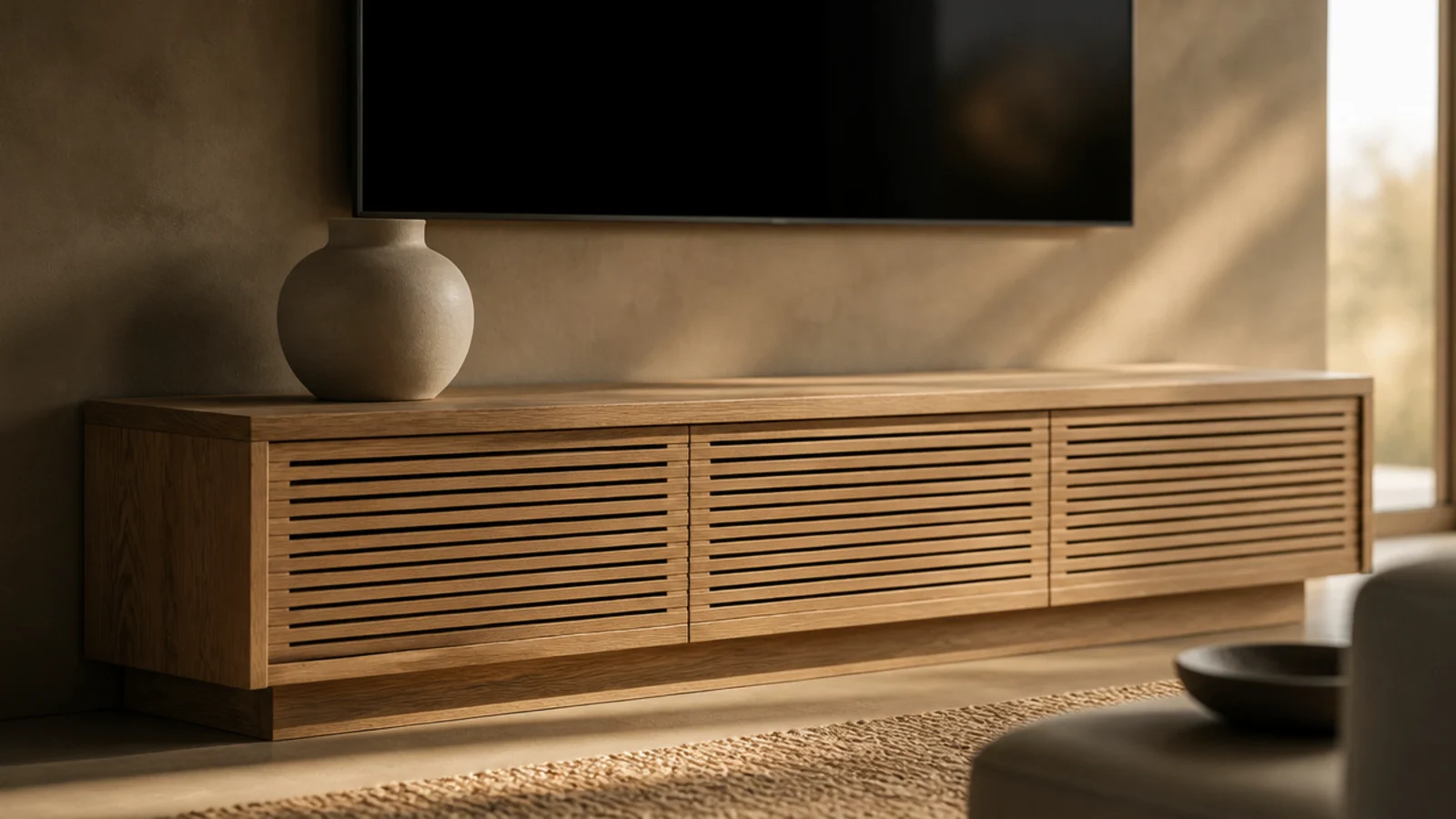
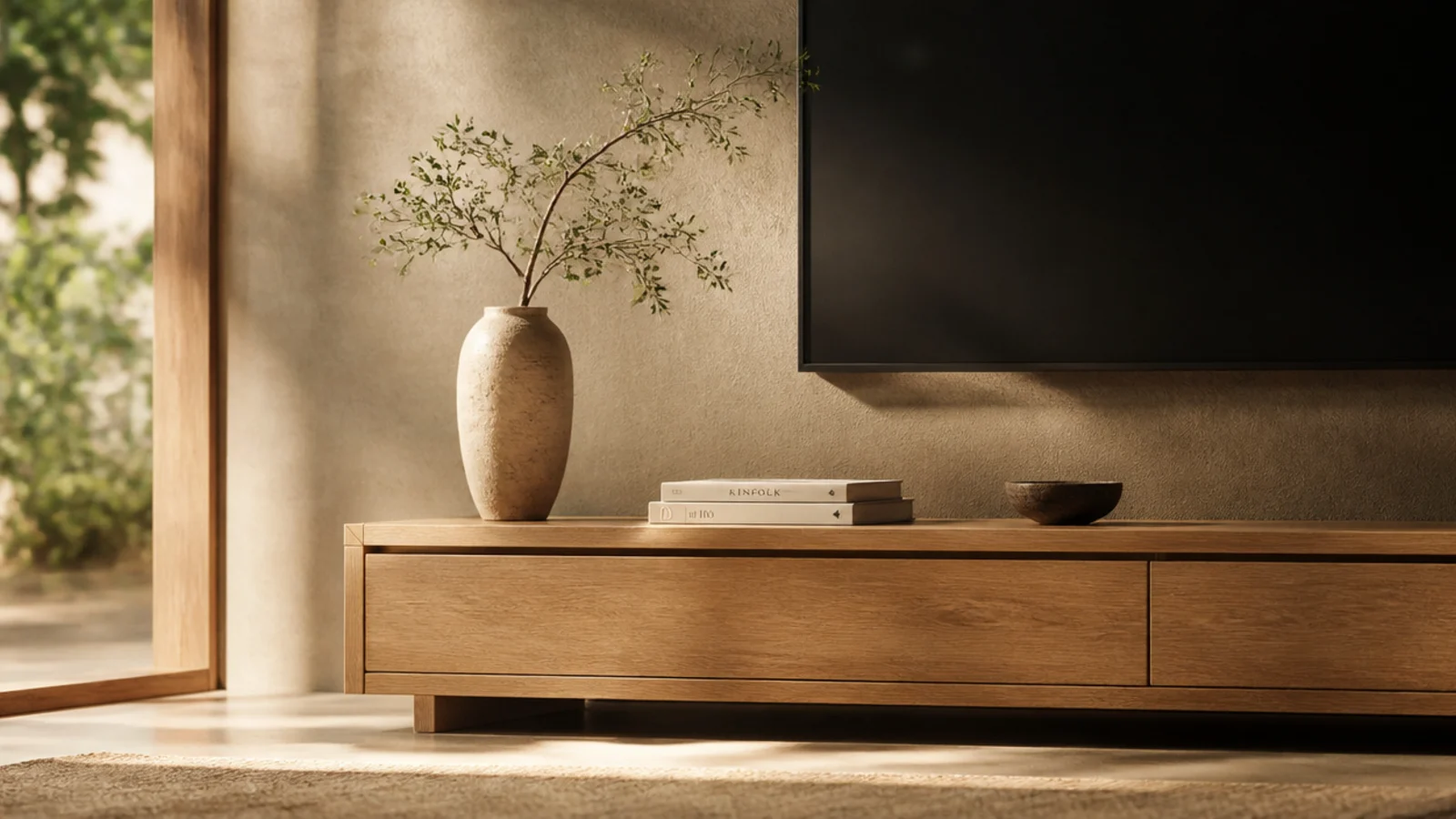
Timber is the one material in a media unit that gets better or worse with time, and which way it goes is decided at the buying stage rather than the styling one. Species hardness predicts the dents, finish decides whether a scratch is a five minute job or a refinish, and a solid top fixed rigidly will split itself across a heated winter. TV unit decor wooden design is worth this much attention because the cabinet will outlive the television on it by twenty years. Here are twenty-five options and the detail that separates them.
In this guide27 sections — tap to openHide
- 1.What TV unit decor wooden design choices hinge on
- 2.Quarter-sawn white oak for a hard-working unit
- 3.Walnut in a room with little daylight
- 4.Ash under a clear oil
- 5.Reclaimed pine with the marks left in
- 6.A vintage teak sideboard
- 7.Birch plywood with the edges shown
- 8.Fluted oak fronts for shadow
- 9.Slatted battens with ten-millimetre gaps
- 10.A live edge shelf under the screen
- 11.A butcher block top on a painted carcass
- 12.Cane panels in a timber frame
- 13.Mango wood for solid timber on a budget
- 14.Sheesham for deep reddish tones
- 15.Smoked or fumed oak
- 16.Limed and whitewashed oak
- 17.Two-tone: pale carcass, dark top
- 18.Hardwax oil rather than lacquer
- 19.Run the grain in one direction
- 20.Dovetailed drawer boxes
- 21.Let a solid top move
- 22.Ask what the veneer thickness is
- 23.Choose the edge profile deliberately
- 24.Match the floor closely or contrast hard
- 25.Pair timber with one stone element
- 26.Re-oil once a year and it lasts
- 27.Mistakes to Skip
What TV unit decor wooden design choices hinge on
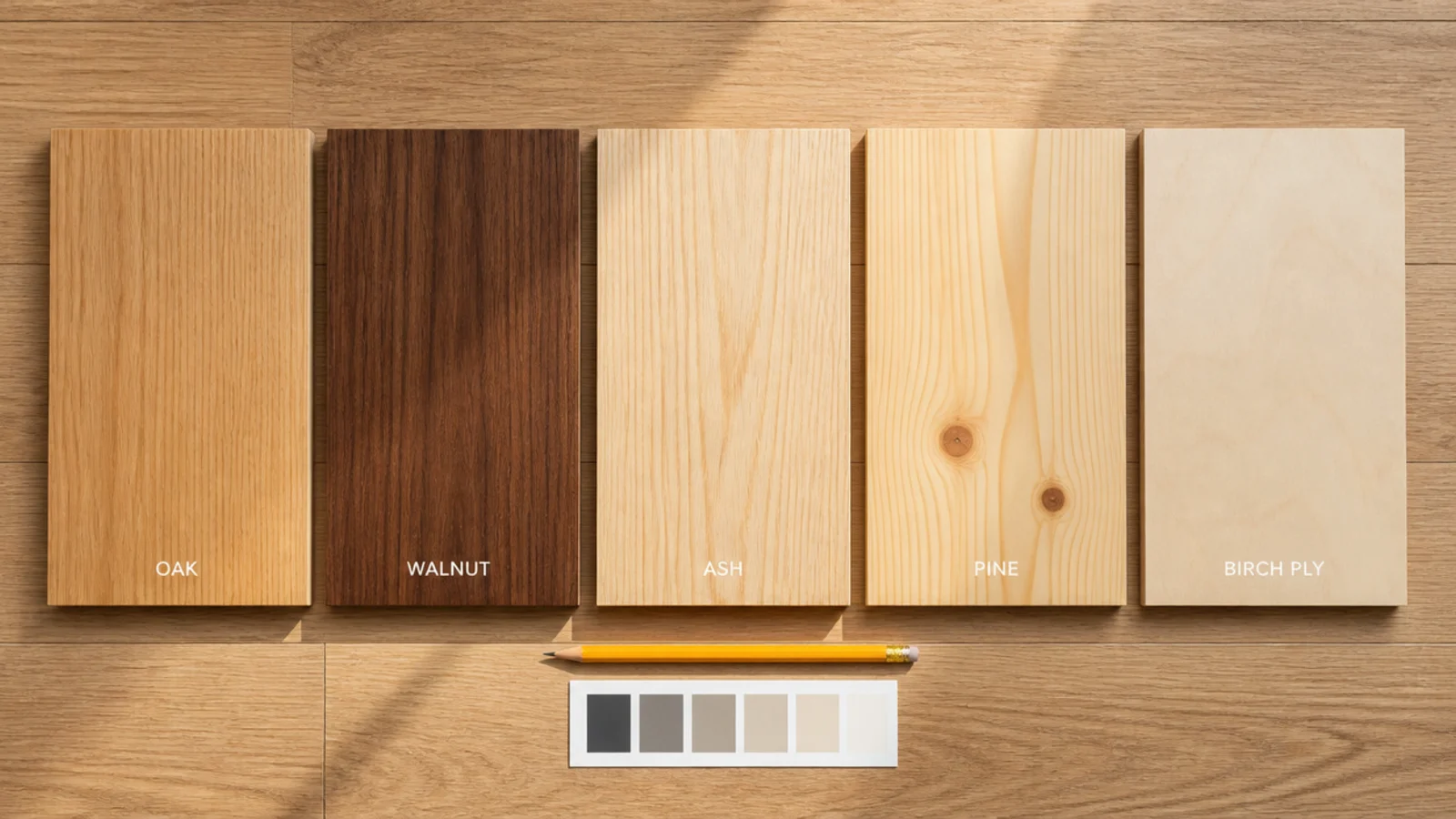
Hardness first, because a media unit takes knocks from feet, consoles and vacuum cleaners. On the Janka scale, white oak and ash sit near 1,300, walnut about 1,010, mango and teak around 1,070, sheesham roughly 1,660, and pine down near 690. Anything under about 900 will show marks within a year in a busy room.
Then construction. Solid timber moves — an 18 inch deep top can travel an eighth to a quarter of an inch across the grain between a damp summer and a dry heated winter — so tops need slotted fasteners and panels need to float in grooves. Veneer over a stable core does not move, which is exactly why long runs use it.
Then finish. Hardwax oil sinks in, feels like wood and repairs with a cloth; lacquer sits on top, resists spills better, and hides nothing when it is deeply scratched. Solid oak units run $700 to $1,500, mango $250 to $500, birch ply built at home $250 to $450 in materials. For the wall behind the timber, the TV wall design guide covers colour and cladding.
1. Quarter-sawn white oak for a hard-working unit
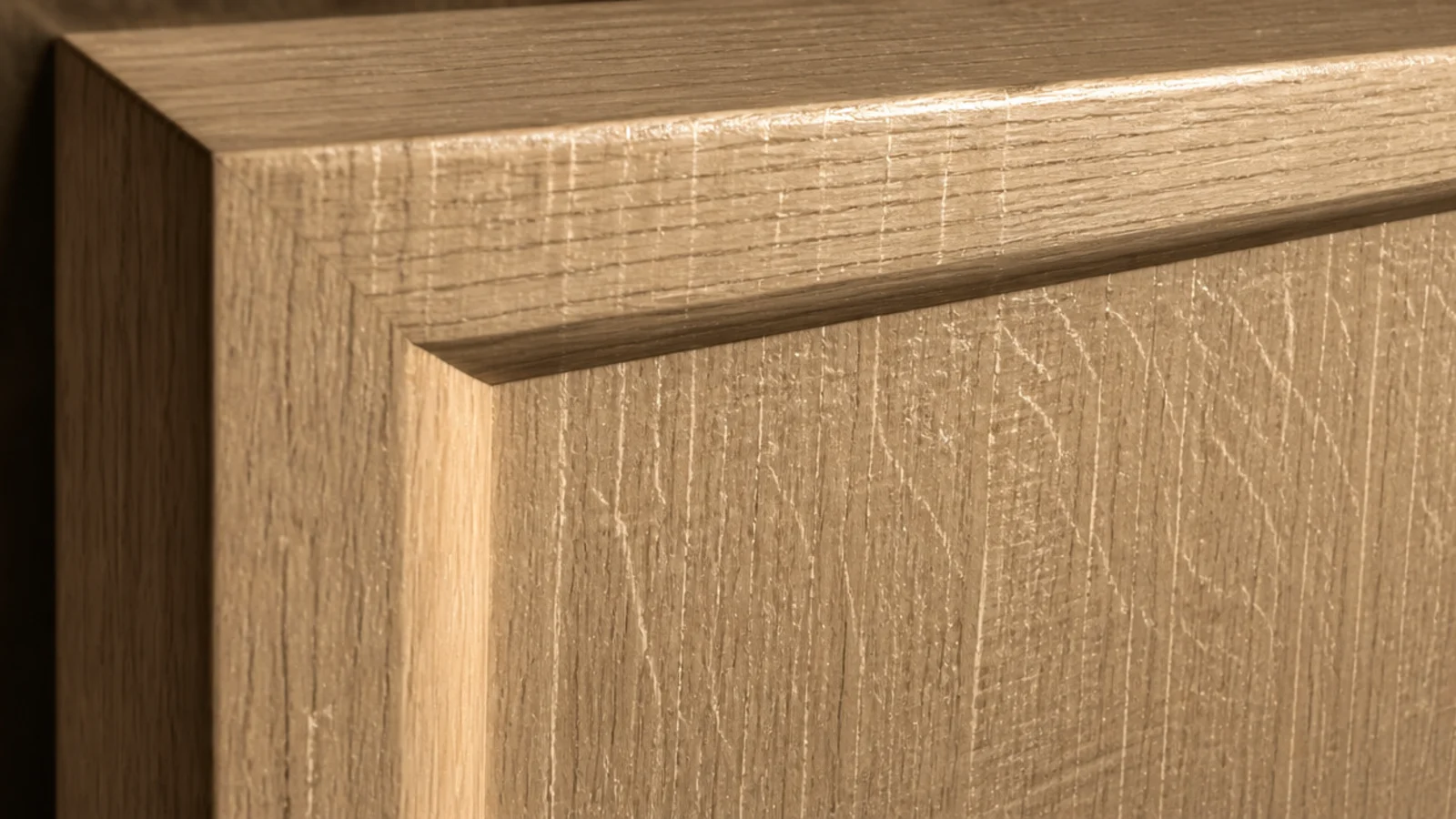
Quarter sawing cuts the board so the growth rings run near vertical, which halves the seasonal movement and brings out the silver ray fleck. It costs 20 to 40 per cent more than plain sawn and it is the reason old oak furniture is still flat. For a long media top, that stability is worth the premium.
2. Walnut in a room with little daylight
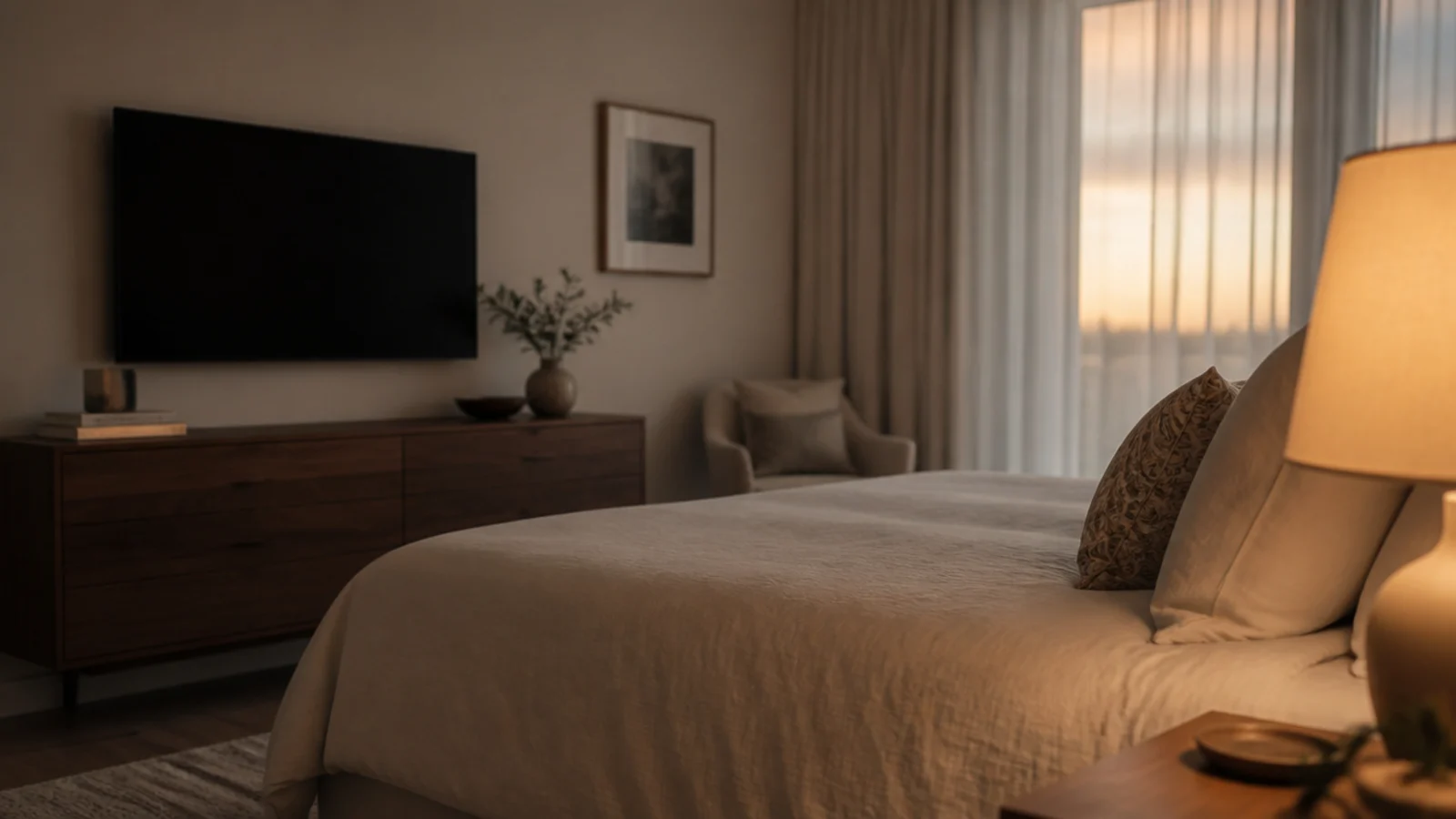
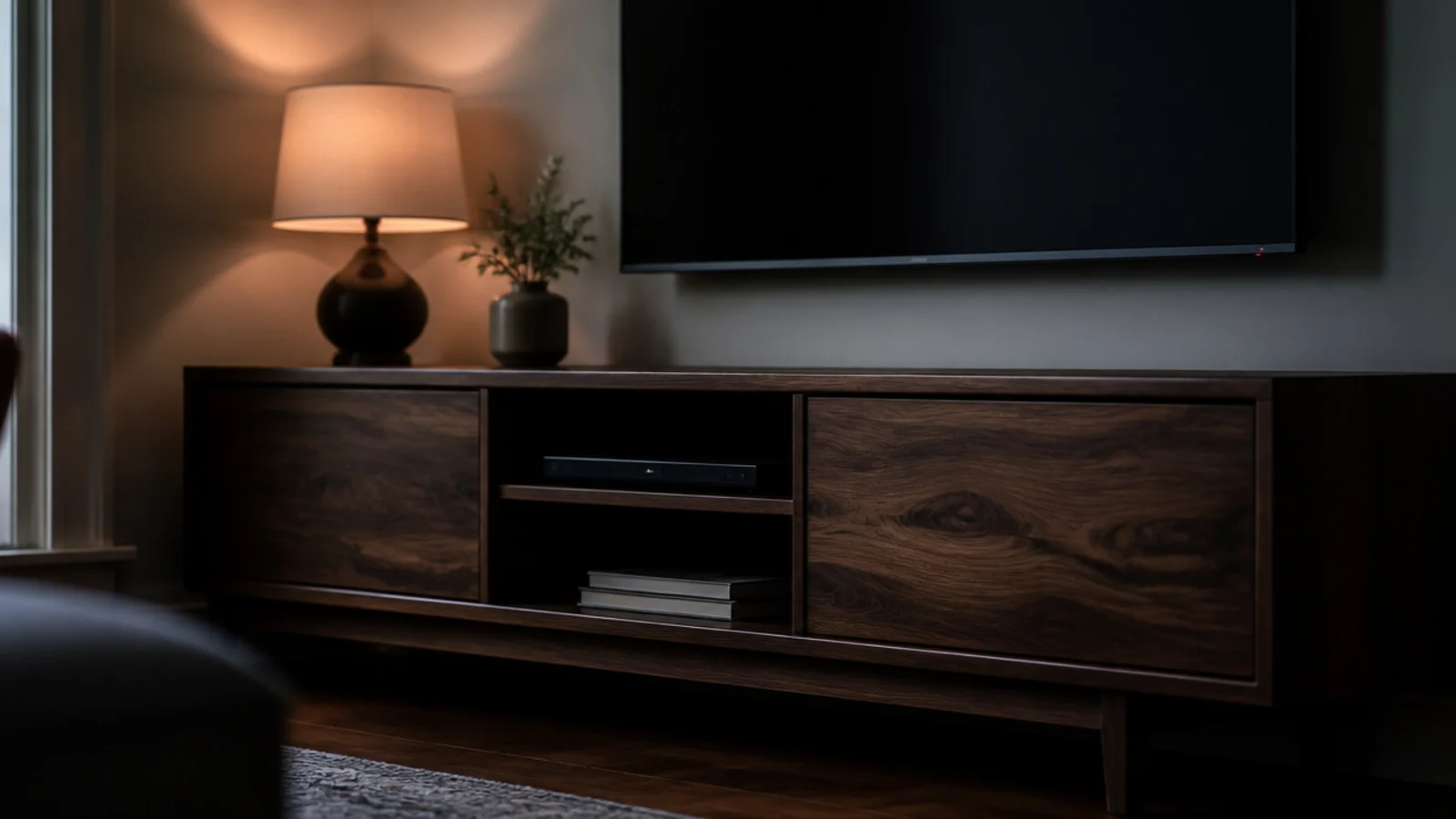
Walnut reads warm in rooms that never get sun, where oak can look flat and grey. It is softer at about 1,010 Janka, so keep it away from where a vacuum hits, and expect it to lighten slightly over years rather than darken. Expect a 30 to 60 per cent premium over oak.
3. Ash under a clear oil
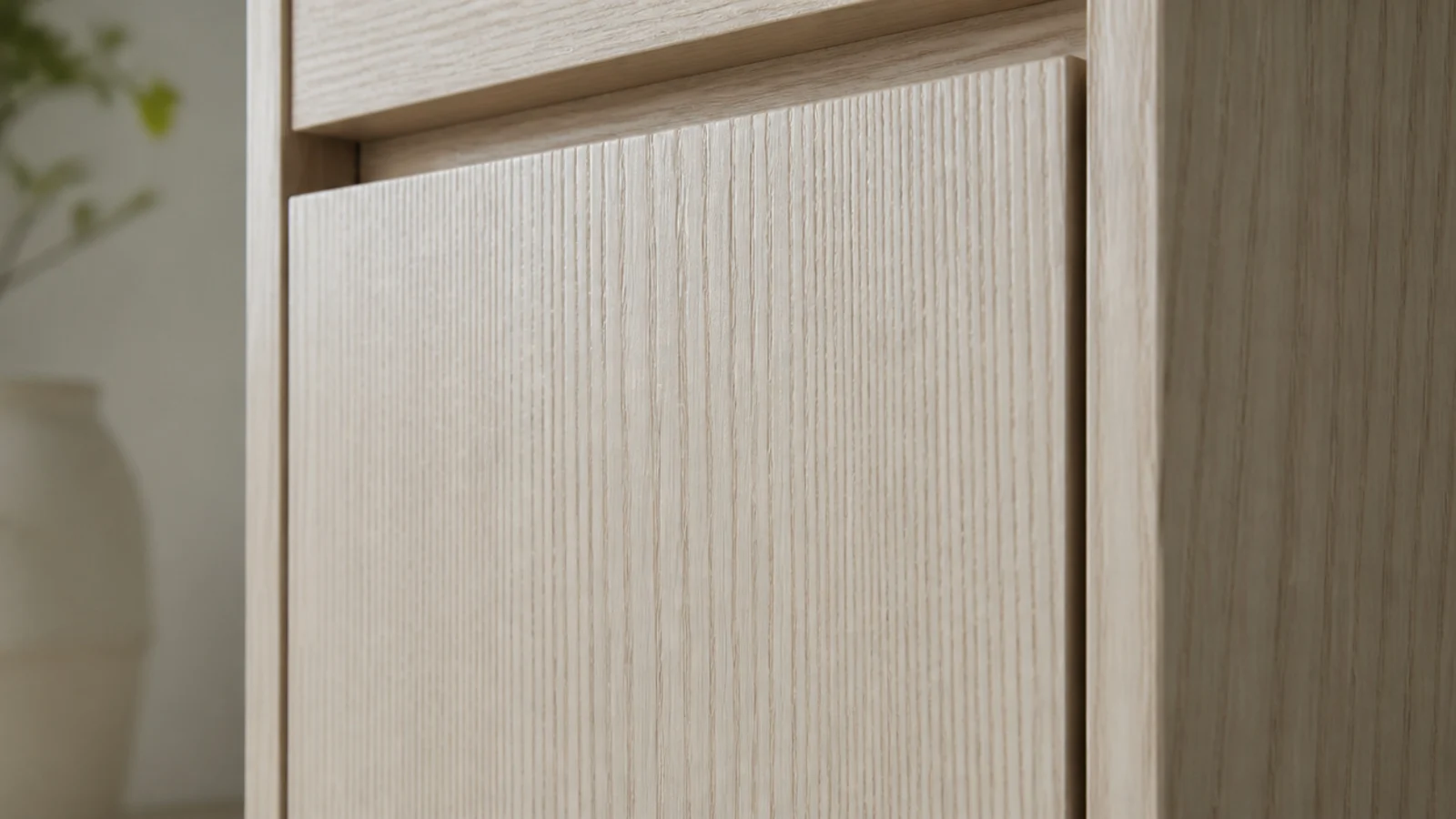
Ash has oak's hardness with a paler tone and bolder open grain. Under a clear matte oil it stays genuinely light instead of ambering, which suits a room where you want timber warmth without darkness. It also takes a stain more evenly than most pale hardwoods.
4. Reclaimed pine with the marks left in
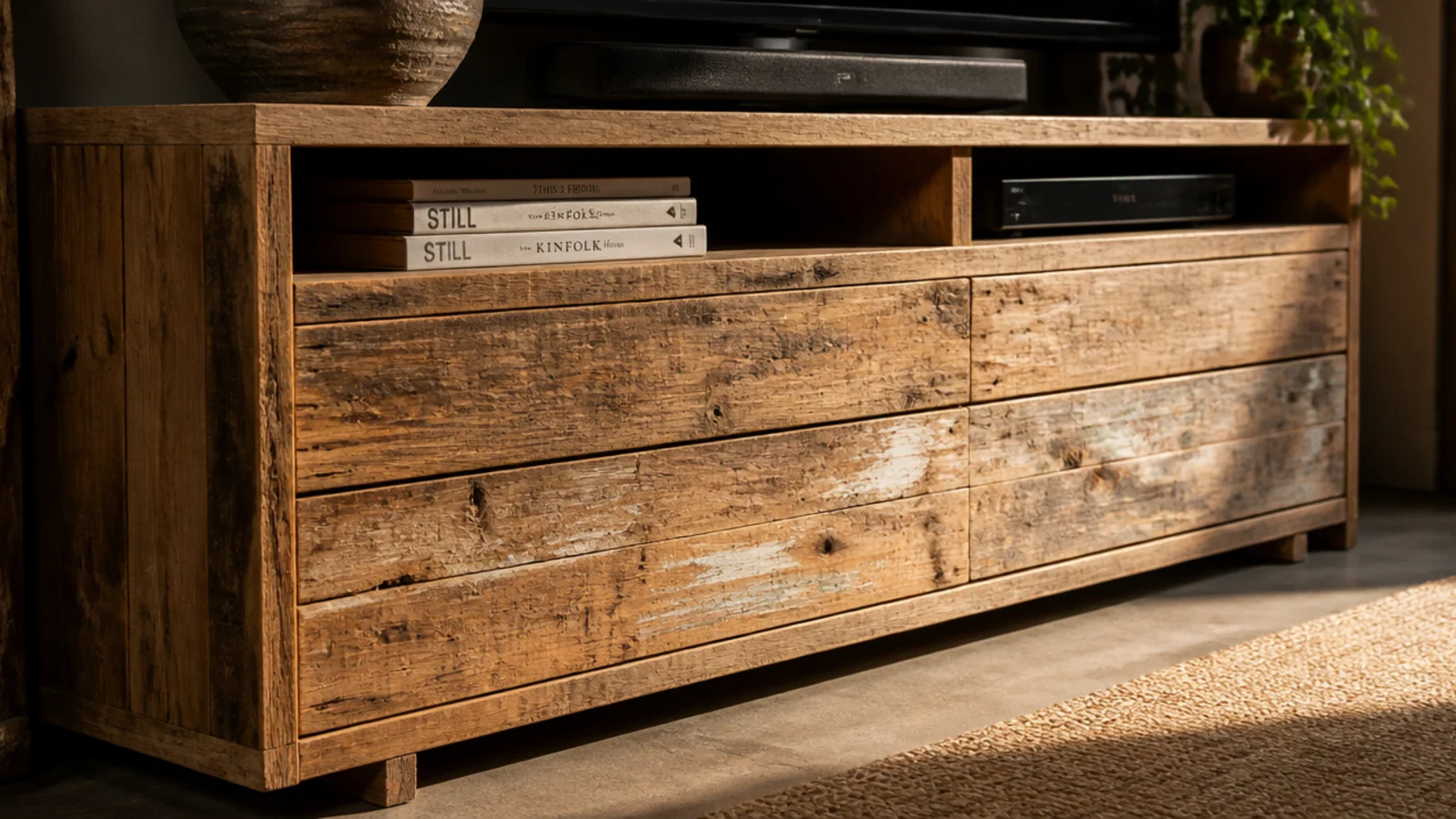
Old pine is soft, at roughly 690 Janka, so it will dent — and that is the point, since it is already dented. Nail holes, saw marks and paint traces give a cheap timber the one thing money cannot buy. Sand to 120 grit only, and finish with oil rather than lacquer.
5. A vintage teak sideboard
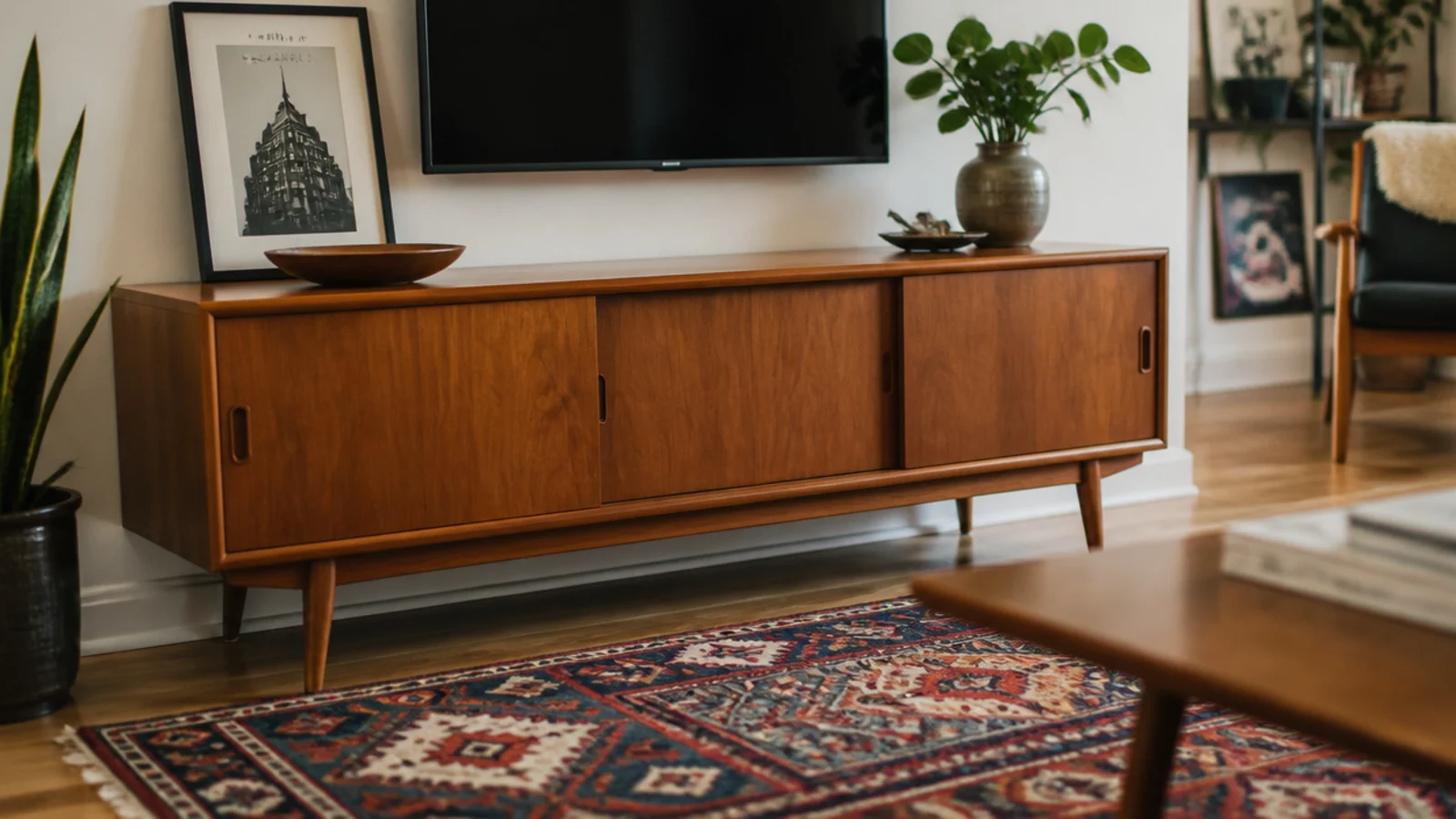
Teak sideboards from the 1960s and 70s turn up at $150 to $600 and are built to a standard that new furniture at three times the price rarely matches. Check the veneer for bubbling near old heat sources, and confirm the back panel can take a cable cut without weakening the carcass.
6. Birch plywood with the edges shown
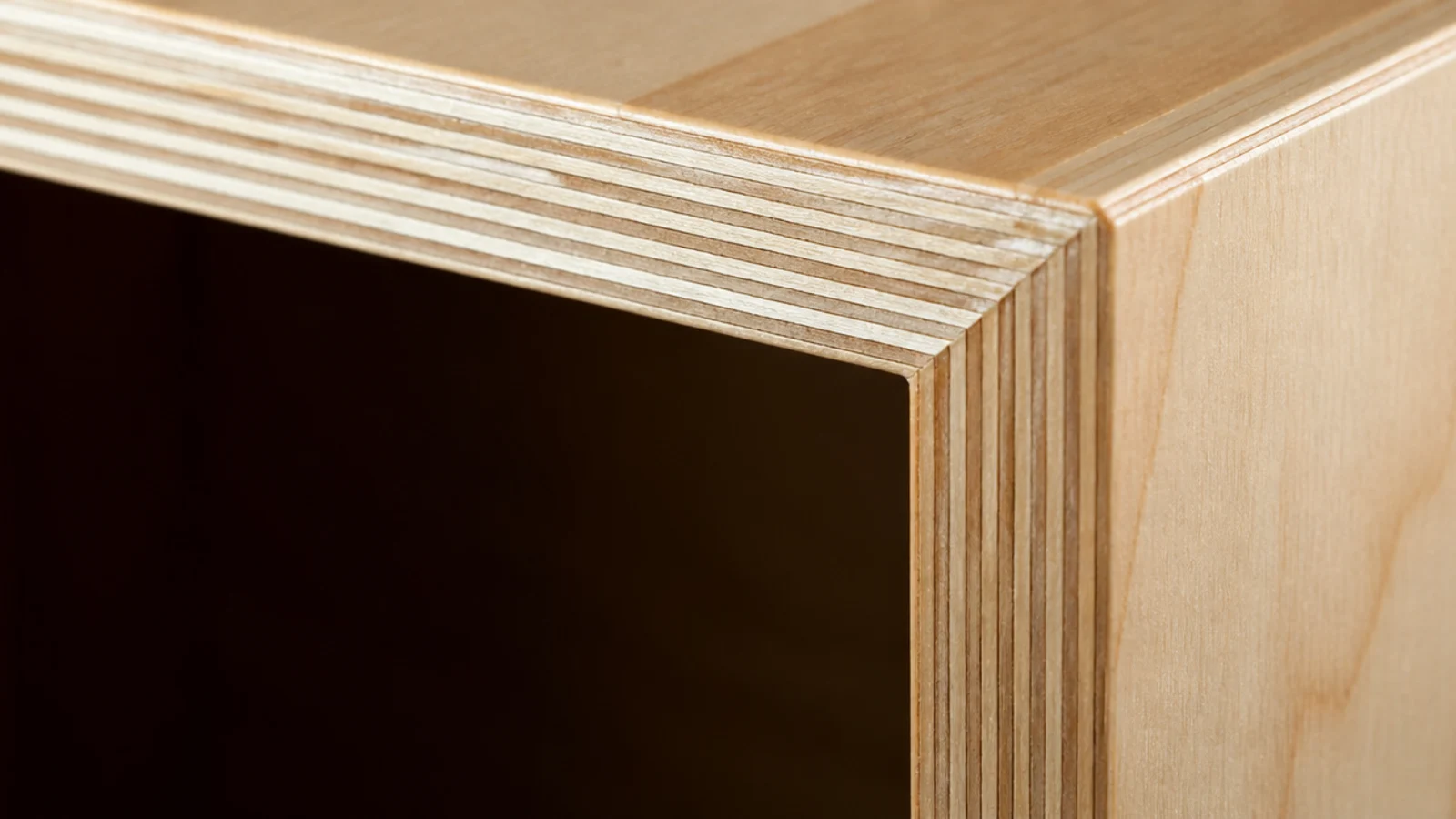
Exposed laminations read as an honest material rather than a substitute for one, and 18 mm birch ply is stiffer across a span than most solid boards. Sand the edge to 180 grit and oil it so the layers stay crisp. It is the cheapest good-looking carcass material available.
7. Fluted oak fronts for shadow
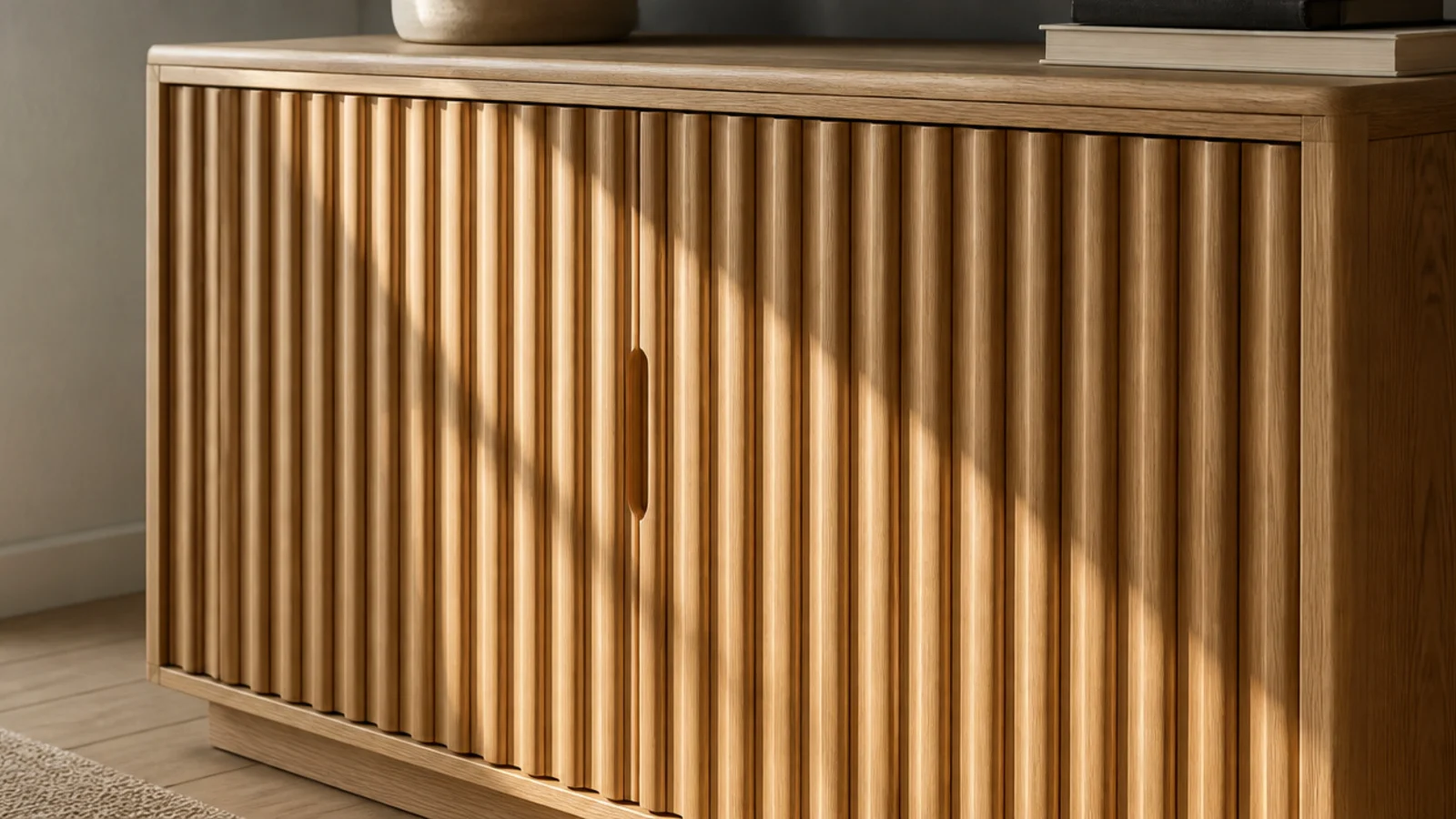
Vertical ribs give a flat cabinet door its own shadow, which stops a long run reading as a slab. Standard fluting uses 12 mm ribs at 25 mm spacing. In solid oak it stays straight; in veneered MDF above a warm device it can distort, so keep fluted fronts off the gear bay.
8. Slatted battens with ten-millimetre gaps
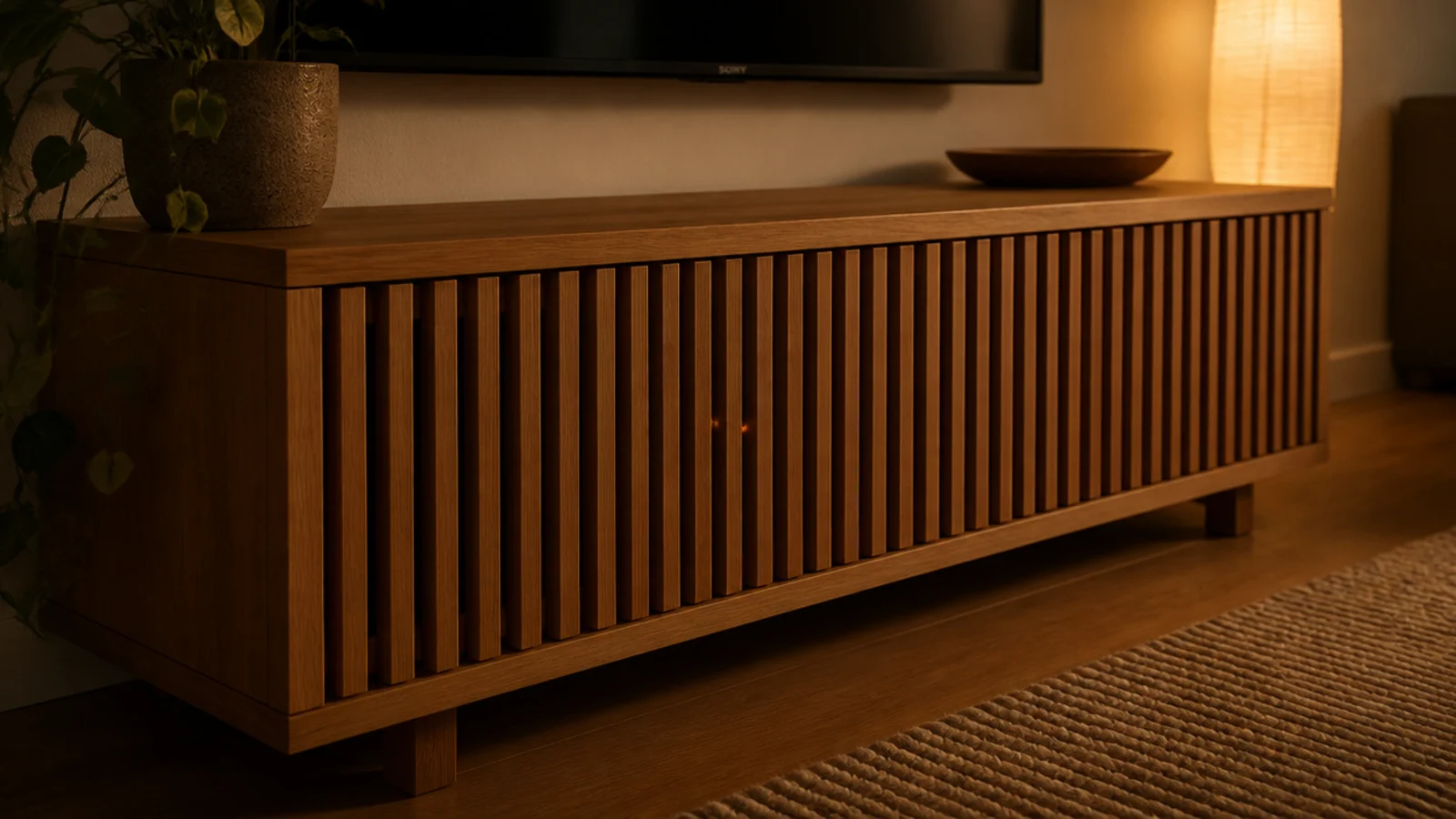
Twenty millimetre battens with 10 mm gaps give roughly a third open area, enough passive ventilation for a console behind a closed door, and infrared passes straight through. Solid timber battens stay straight where veneered ones cup. It is the most practical timber door there is.
9. A live edge shelf under the screen
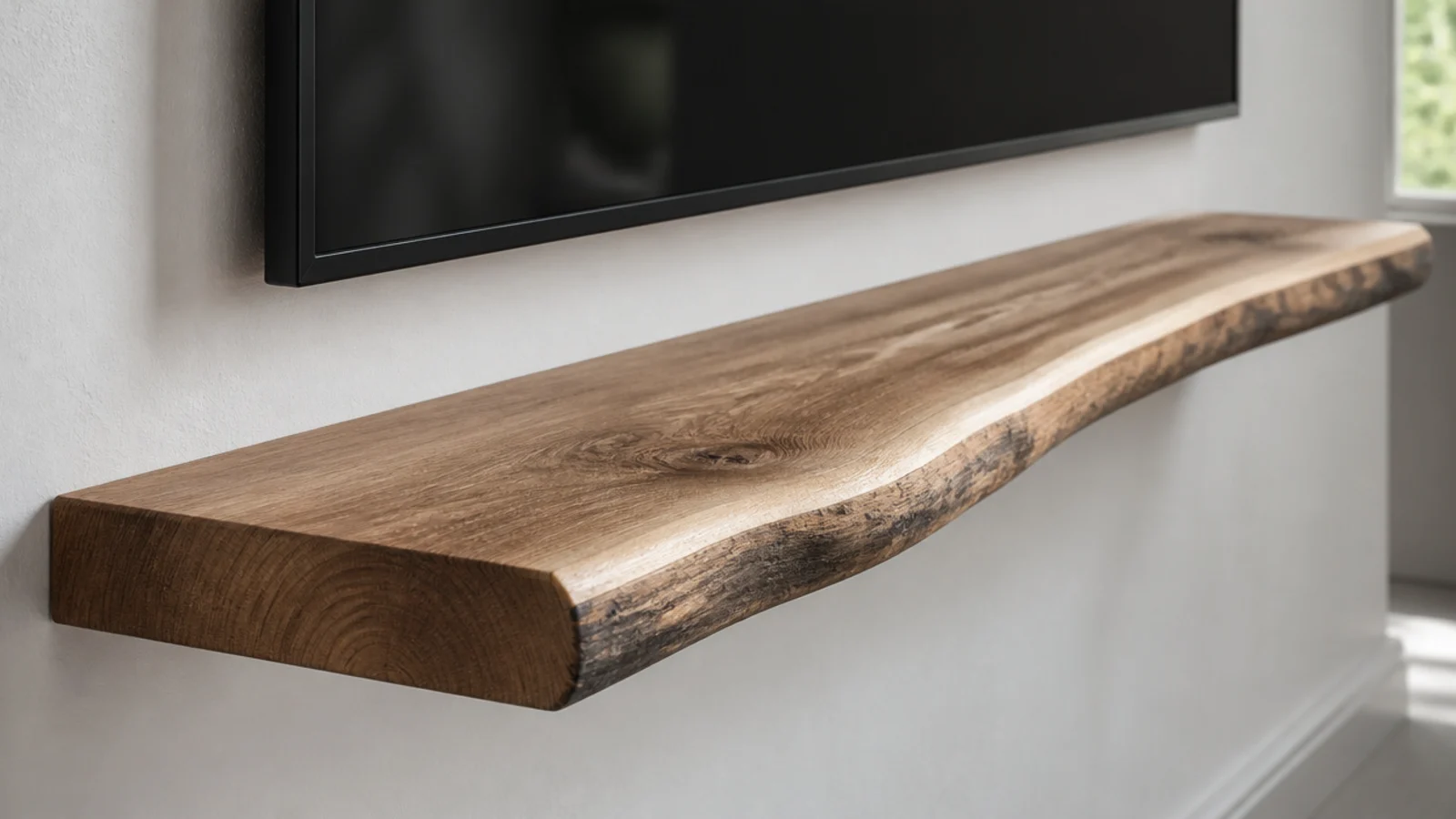
One waney edge under a wall of straight lines does what a curve does in a room of rectangles. Keep the slab 35 to 45 mm thick so it does not need a bracket every 18 inches, and make sure the underside is sanded and finished as thoroughly as the top.
10. A butcher block top on a painted carcass
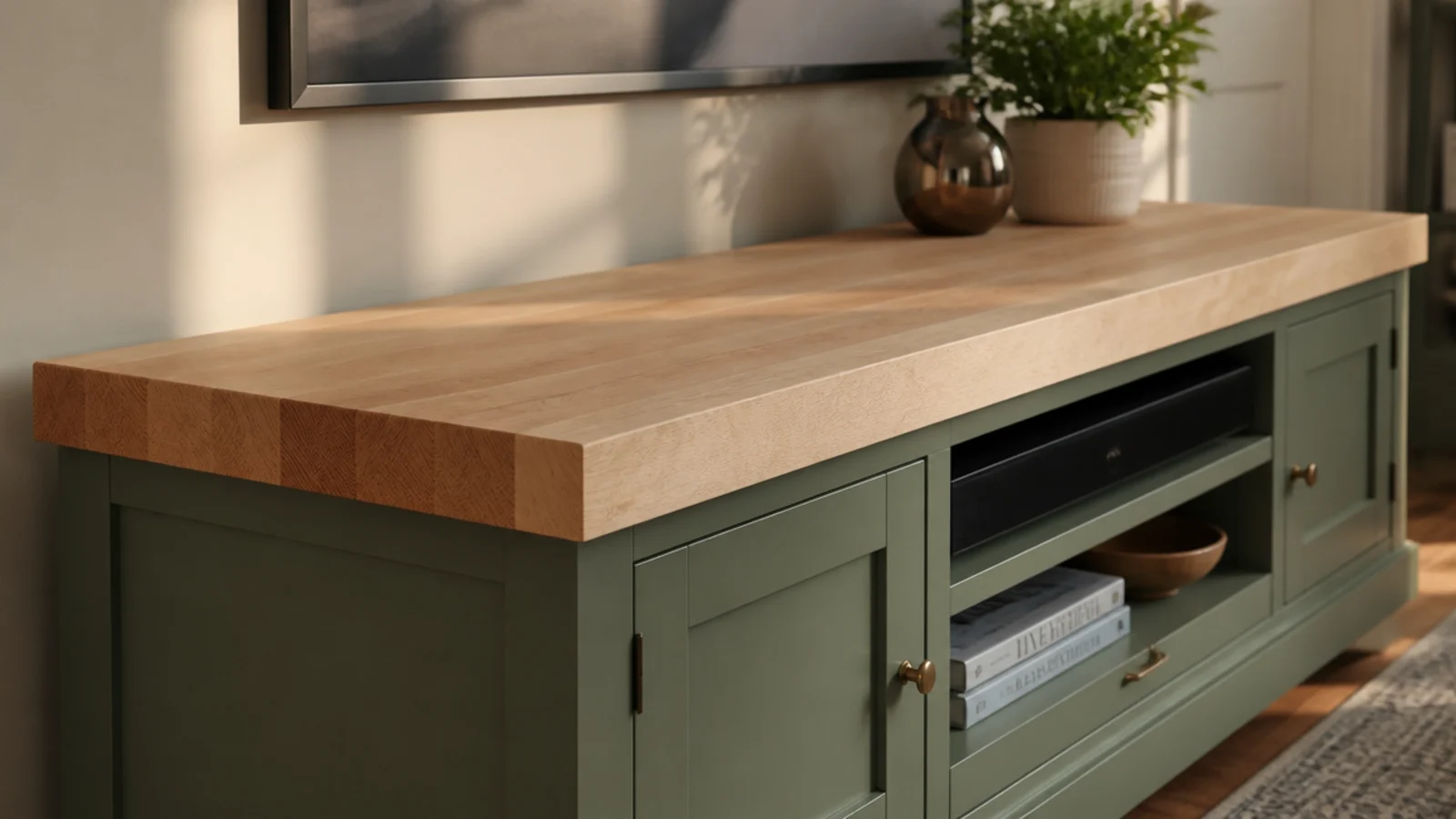
Timber where you touch it, paint where you do not. A beech or oak block top on a painted carcass gives you a solid wood surface for a fraction of a solid wood cabinet. Oil it twice on the underside as well, or it will cup within a season.
11. Cane panels in a timber frame
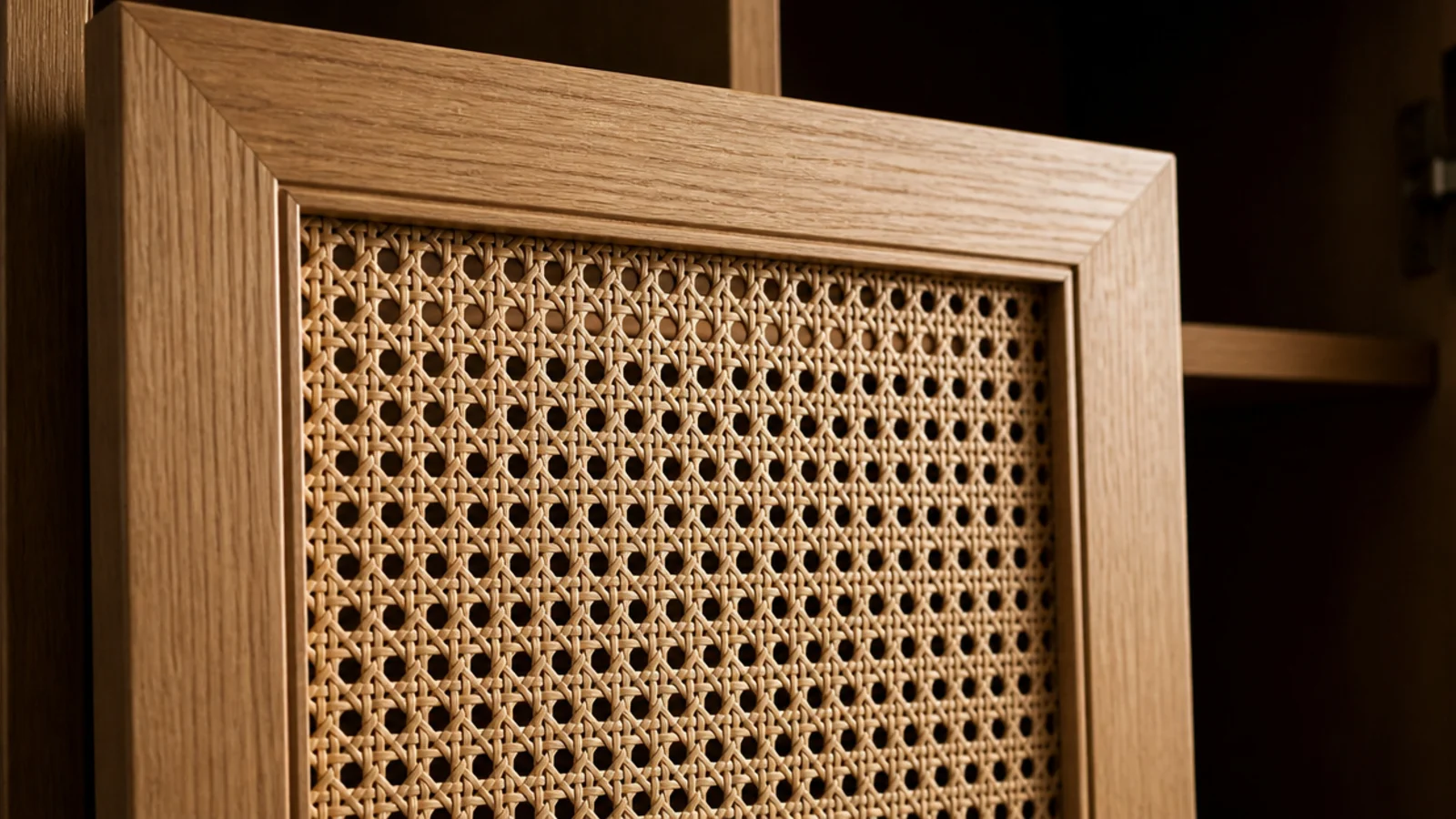
Cane webbing set into a solid timber frame vents better than any other door treatment and softens a wall of hard surfaces. Keep it out of direct sun, which dries and eventually splits the weave, and re-tension it with a light water mist if it slackens.
12. Mango wood for solid timber on a budget
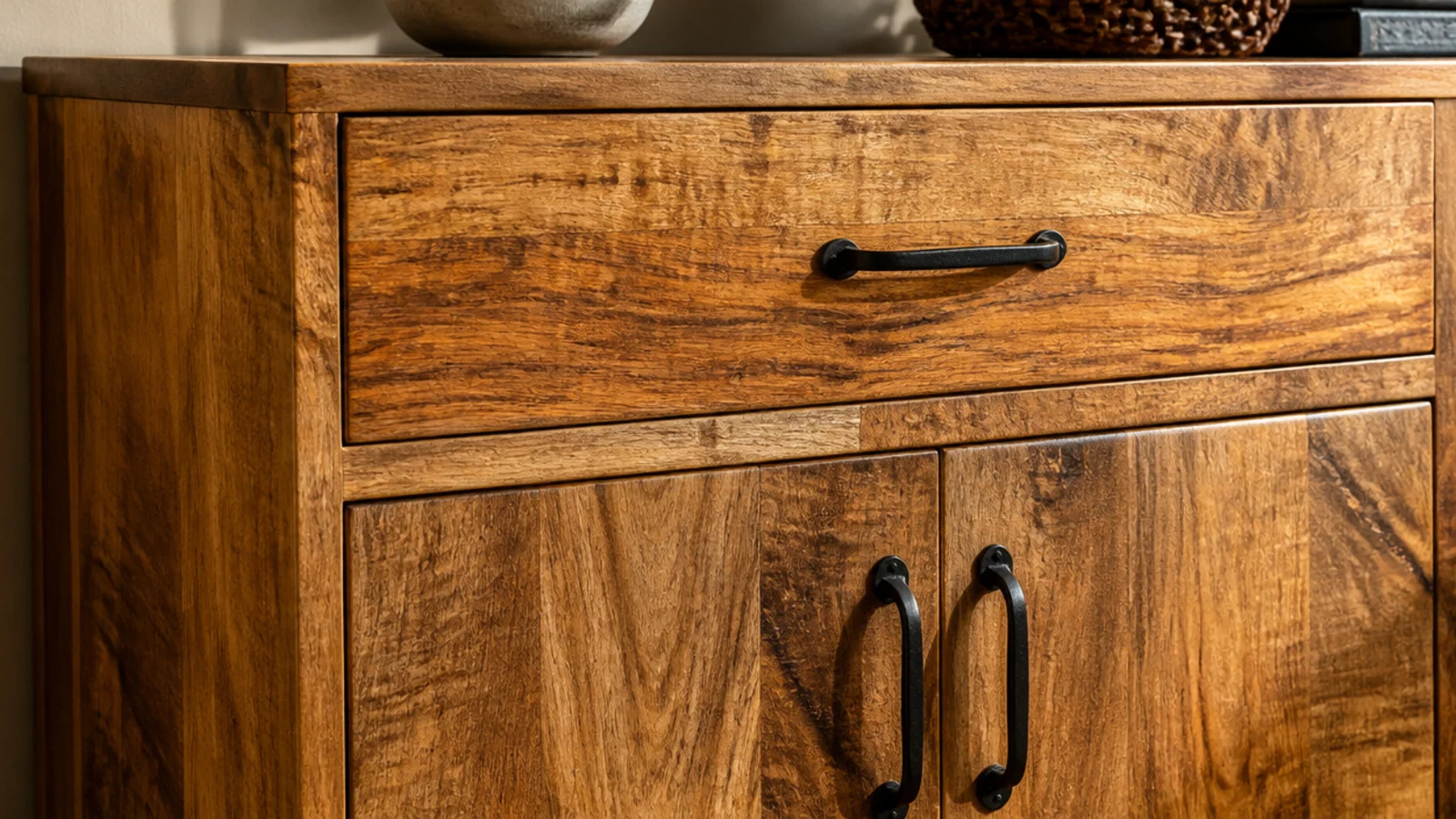
Mango sits around 1,070 Janka, comparable with teak, and comes in at $250 to $500 for a media unit. The grain varies wildly from golden to near black, so buy the actual piece rather than ordering from a photograph. Check the finish is even across every face.
13. Sheesham for deep reddish tones
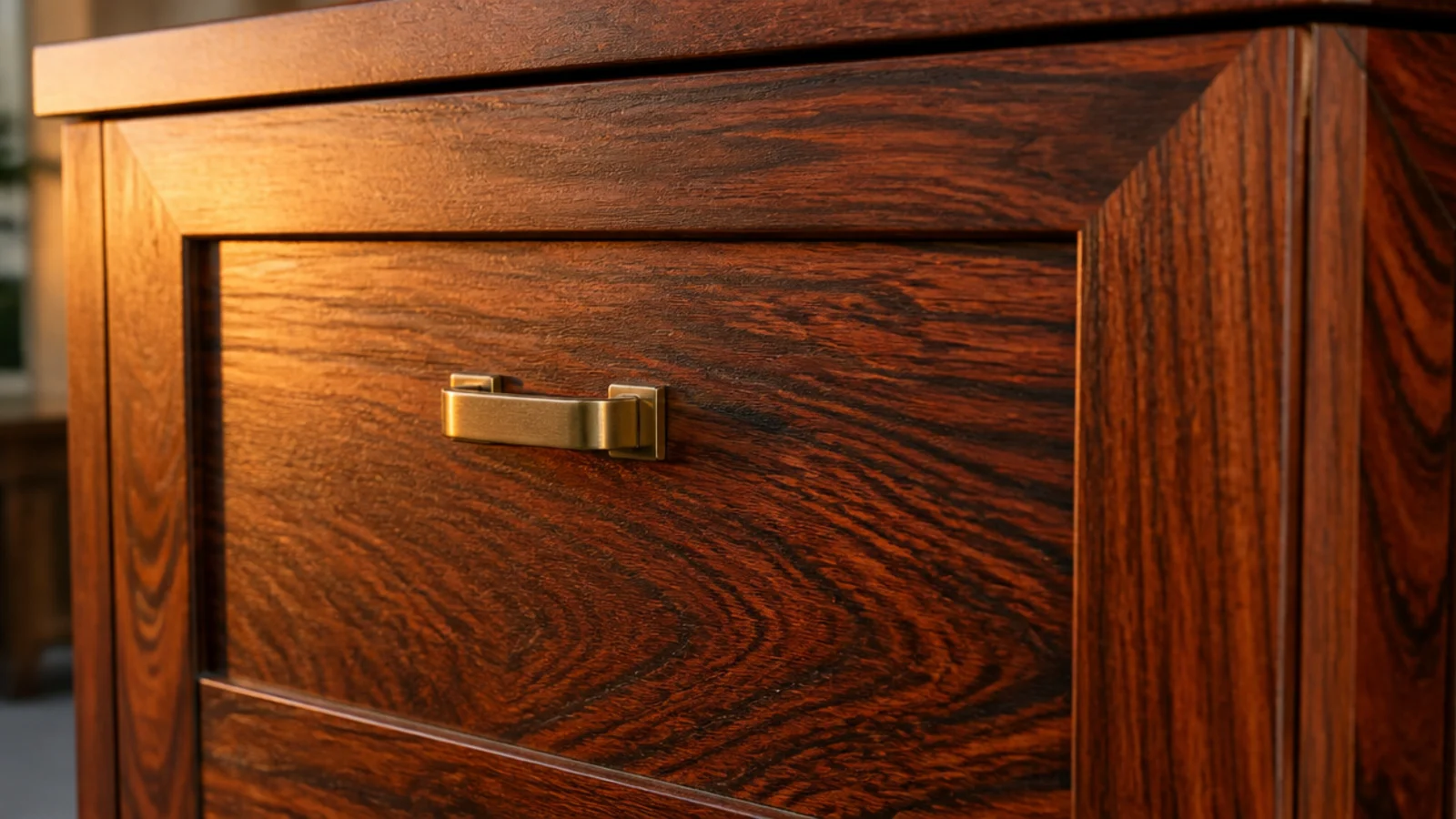
Sheesham is dense, near 1,660 Janka, which makes it far more dent-resistant than pine or mango. The interlocked grain gives a strongly streaked figure that suits warm palettes. It is common in the Indian home guide, where units are often built in it.
14. Smoked or fumed oak
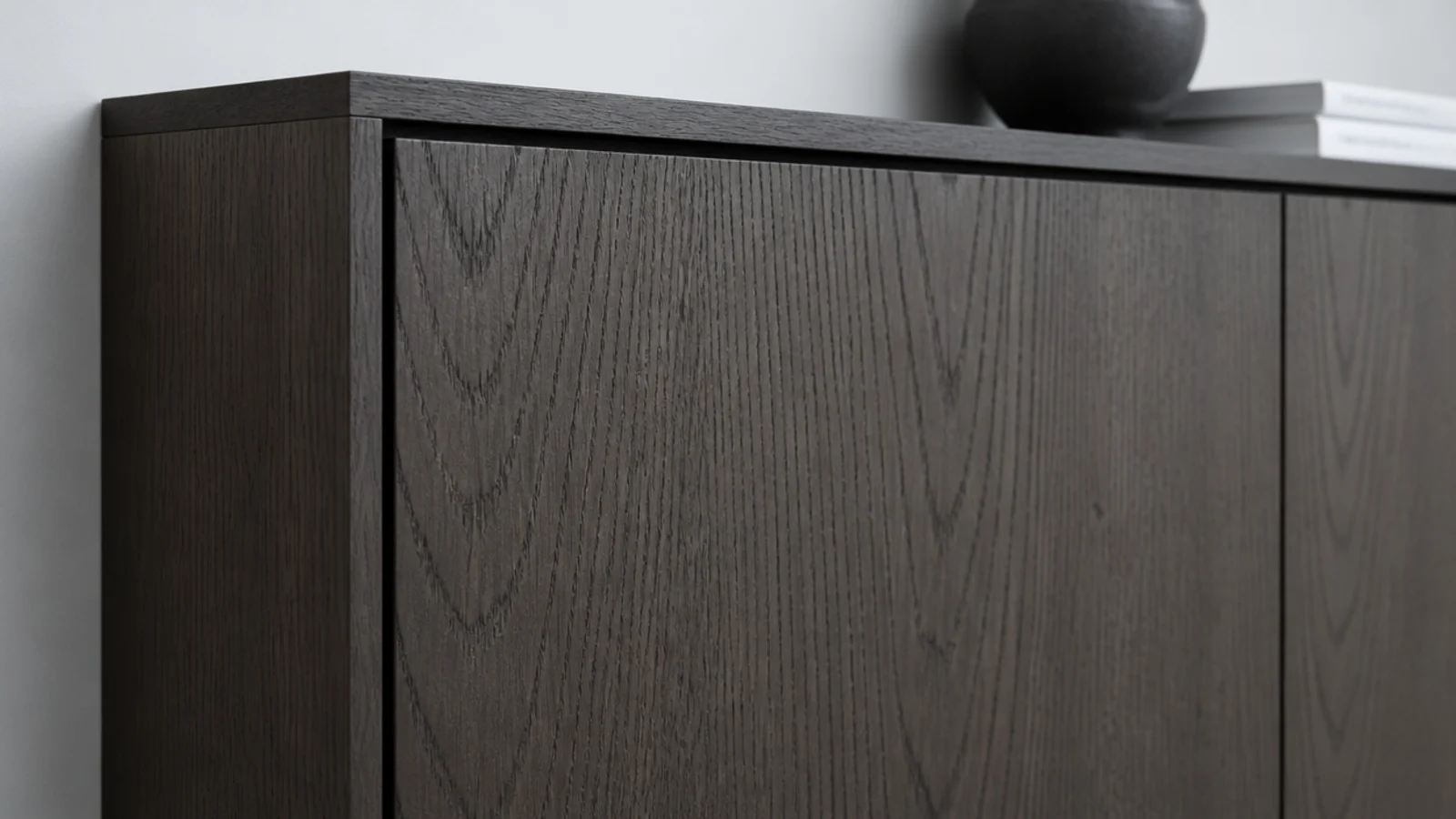
Fuming reacts with the tannin in oak and darkens the timber through its thickness rather than sitting on the surface, so a scratch does not show pale underneath. It leaves the open grain visible, which a dark stain tends to muddy. Expect a modest premium over natural oak.
15. Limed and whitewashed oak
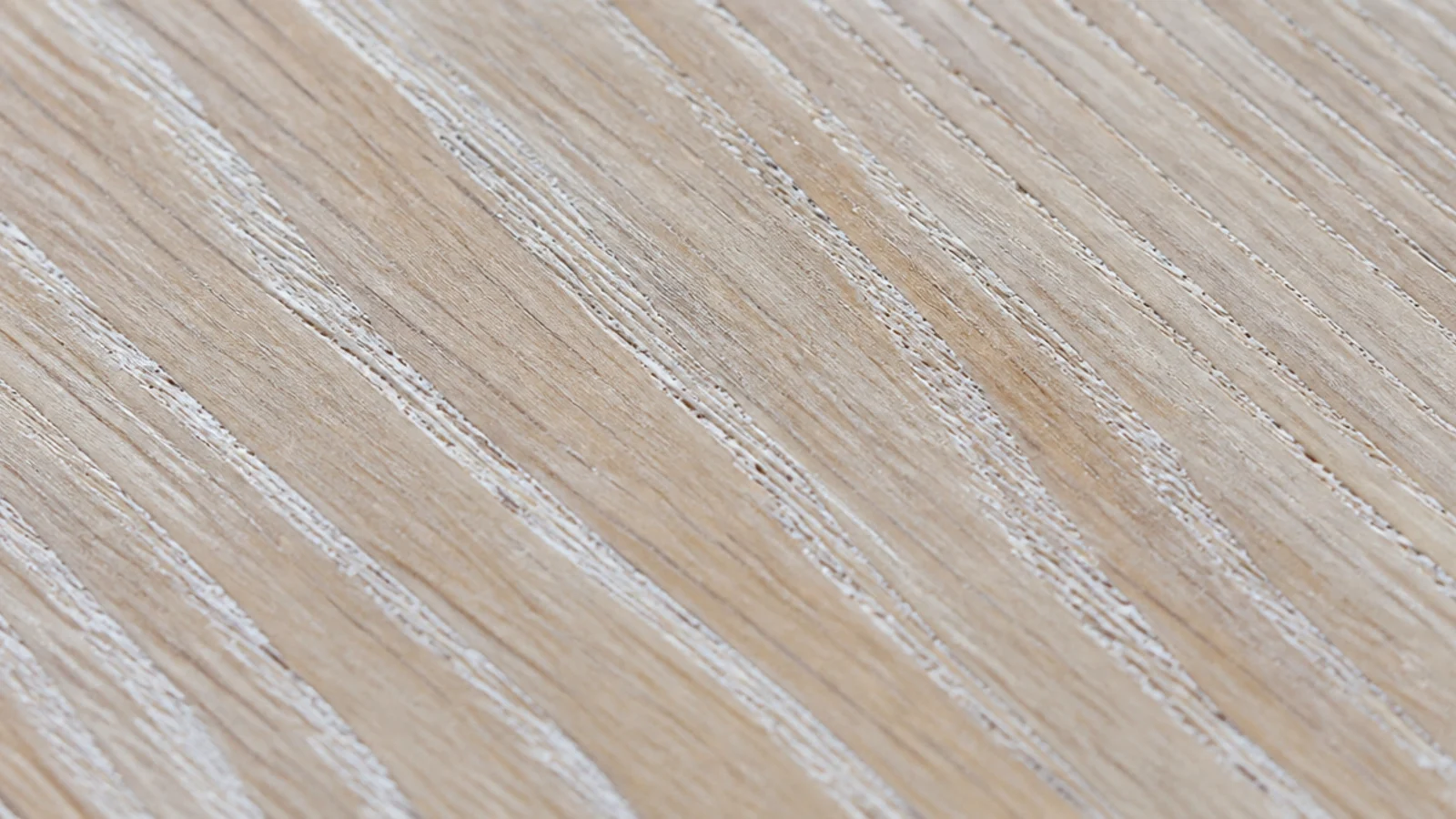
Liming leaves white pigment in the open pores and pale timber between them, which lightens a unit without hiding what it is made of. It suits coastal and Scandinavian palettes and it is achievable at home with liming wax on bare, open-grained oak.
16. Two-tone: pale carcass, dark top
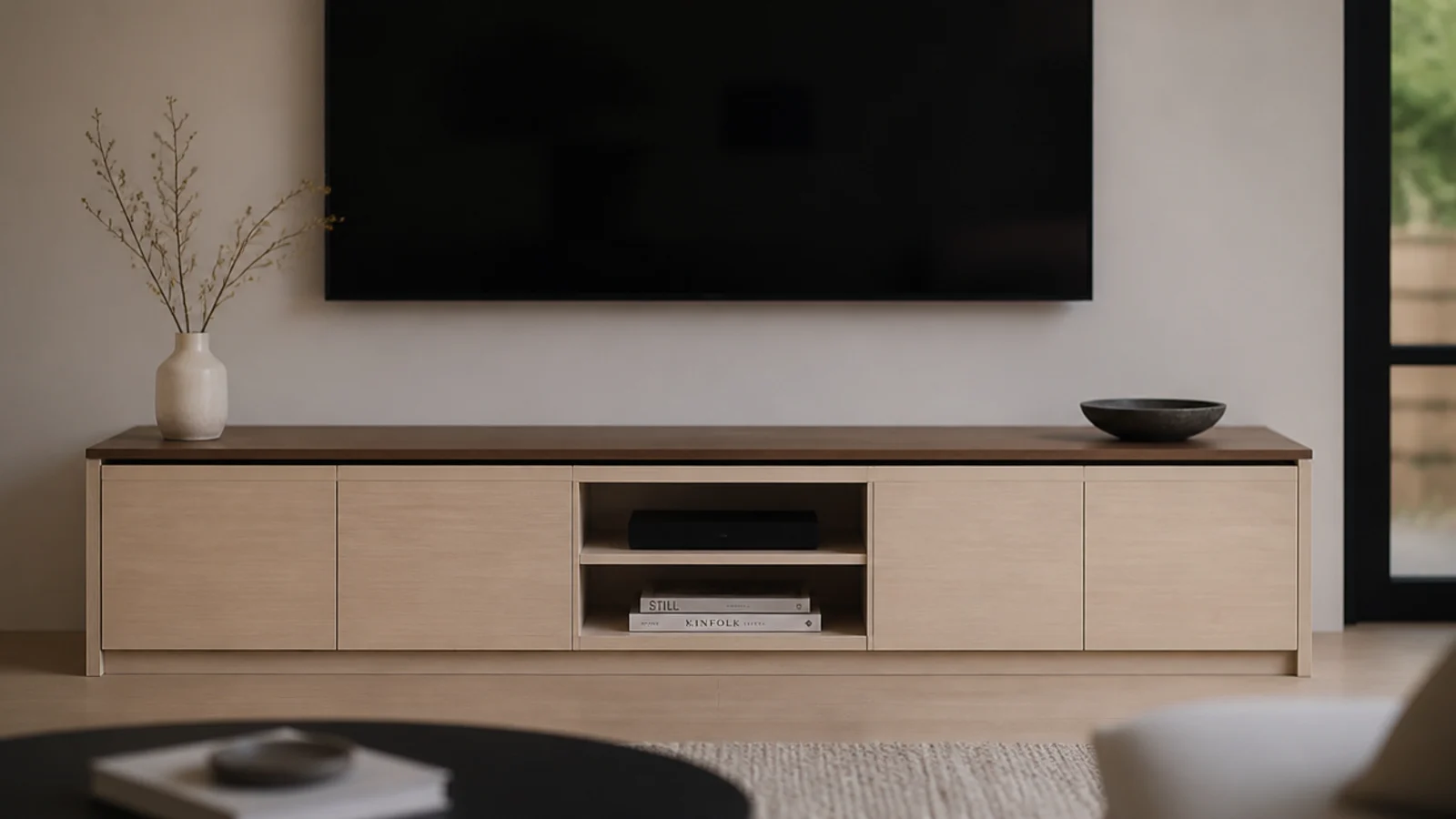
A dark top on a pale carcass grounds the piece and hides the surface that takes the most marks. Keep the contrast clear — a pale ash body with a walnut top rather than two mid-browns. The junction line should be crisp, so a mitred or square edge beats a rounded one.
17. Hardwax oil rather than lacquer
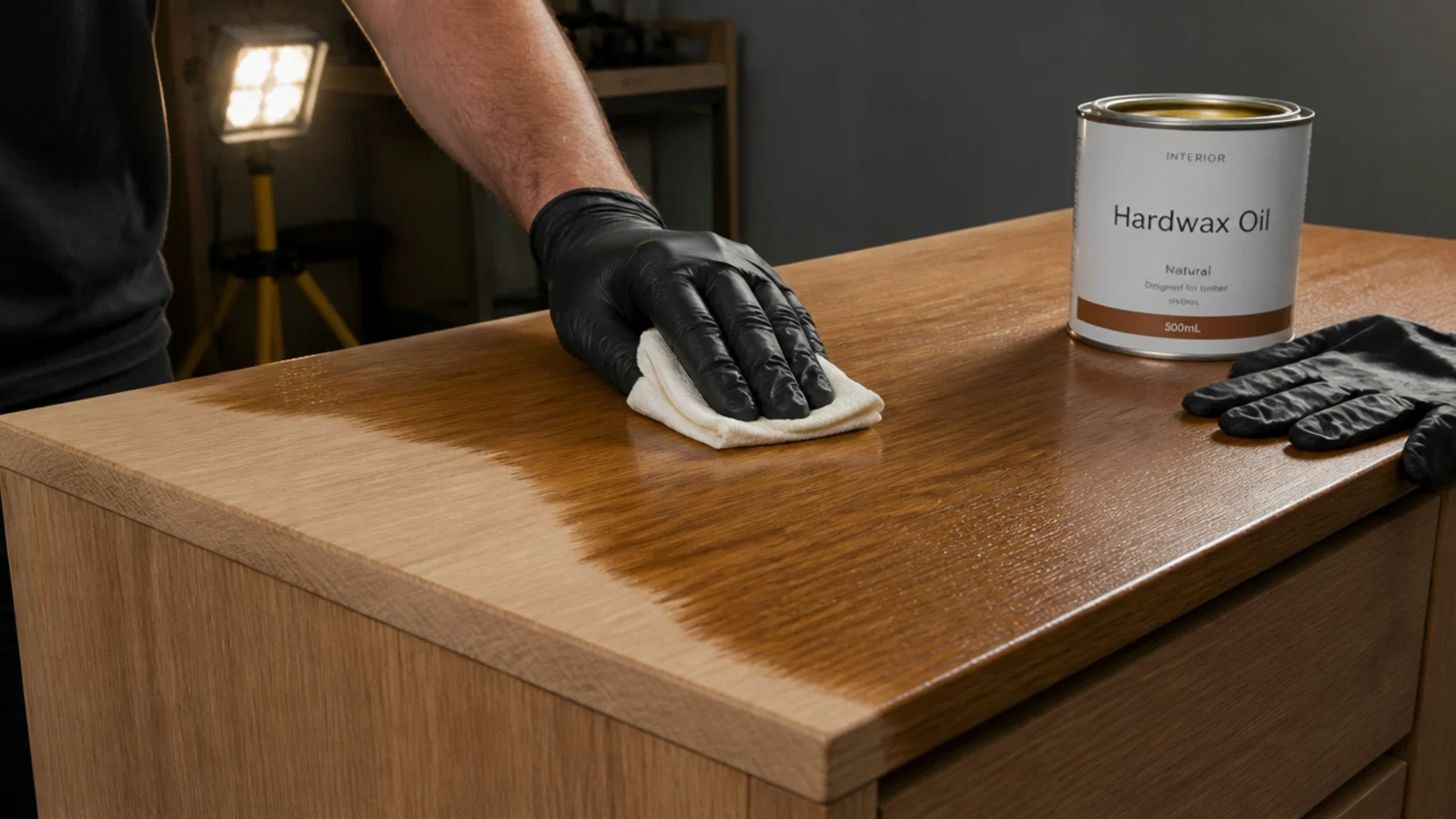
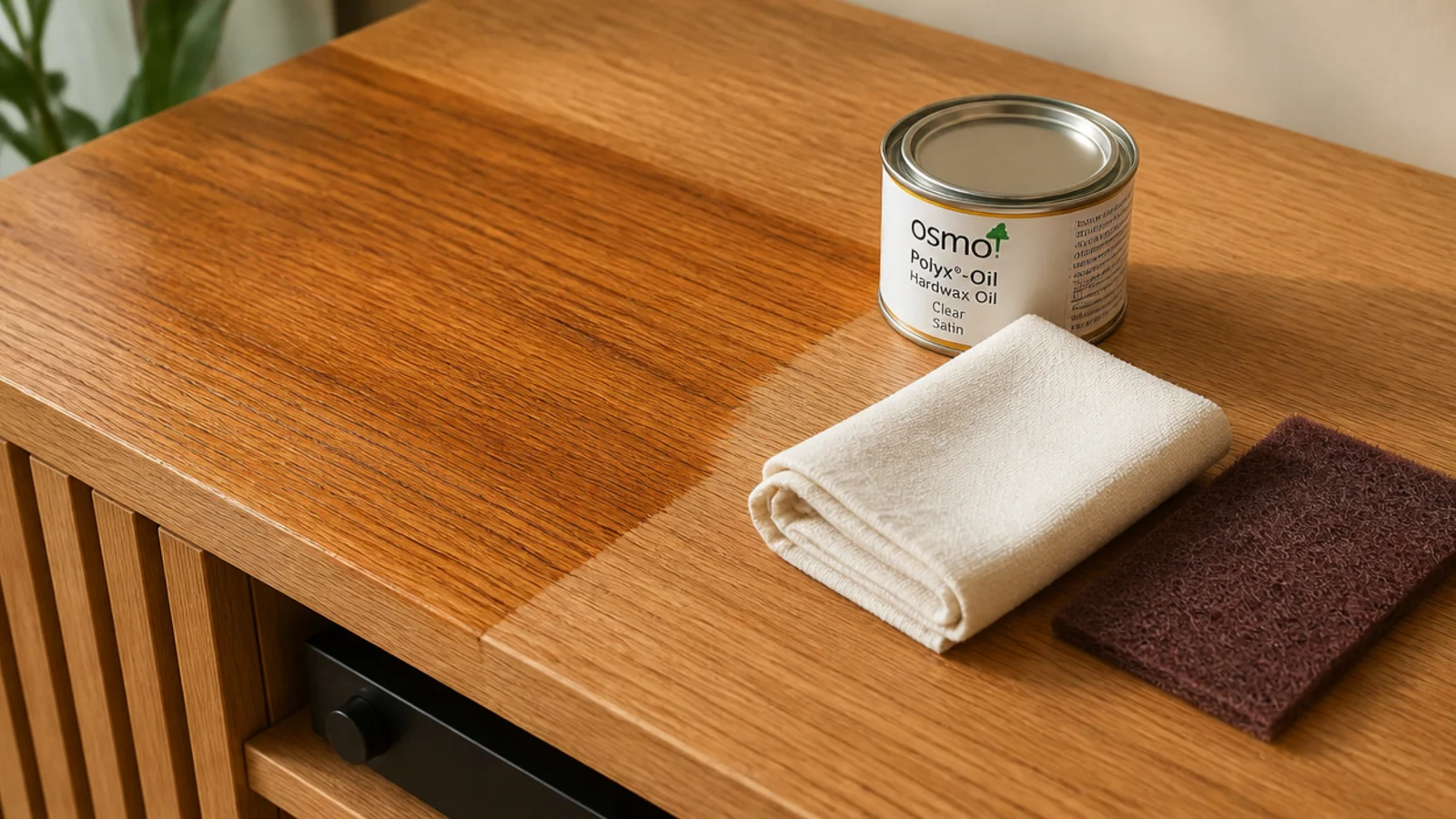
Oil is the finish to choose if you intend to keep the piece. A ring or a scuff sands out with a fine pad and a wipe of oil in ten minutes. Lacquer resists spills better but any deep scratch means refinishing the entire panel to avoid a visible patch.
18. Run the grain in one direction
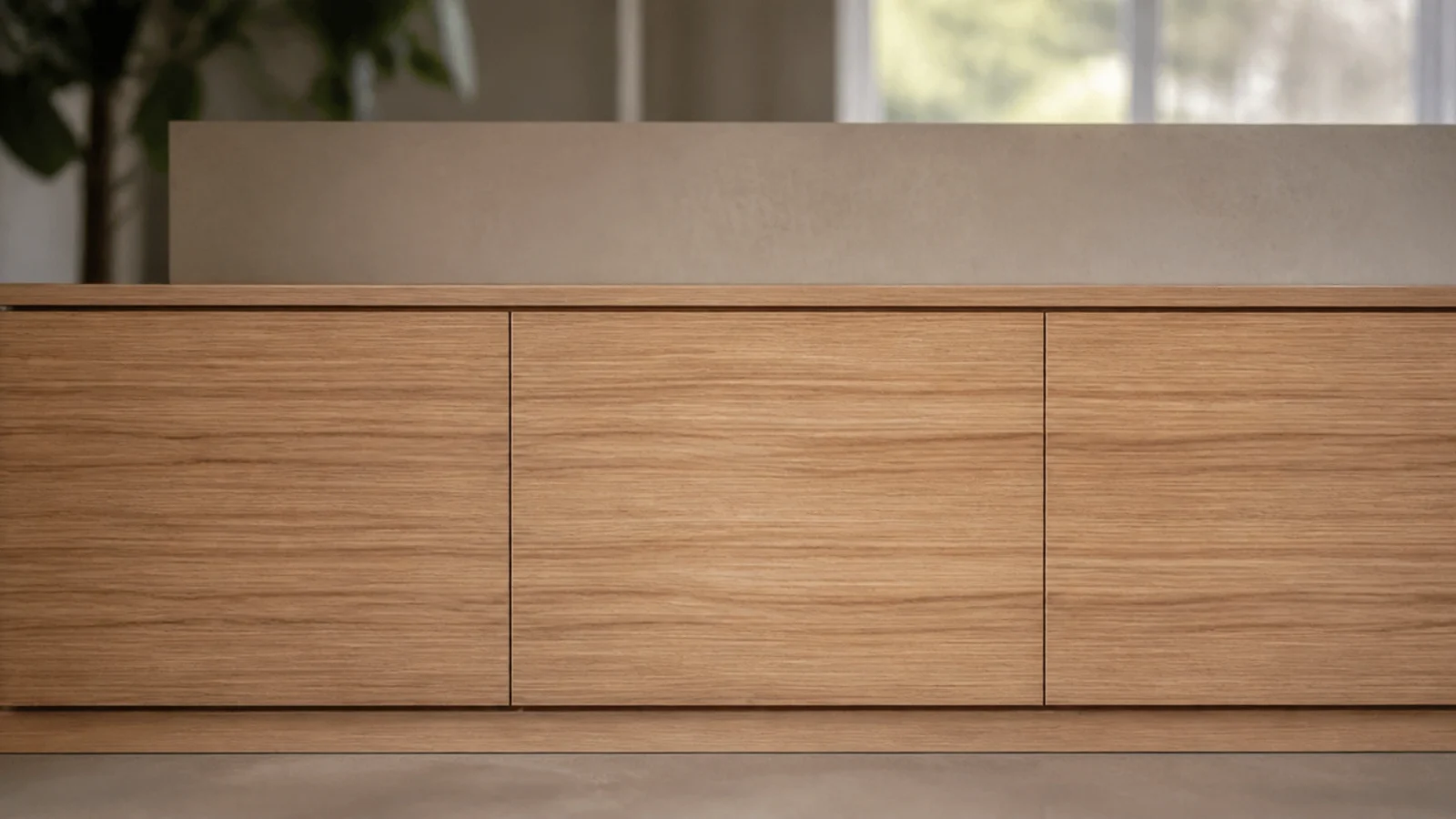
Grain that runs the same way across every door reads as one panel; doors cut from random offcuts read as flat-pack. On a made-to-measure unit, ask for sequential veneer or matched boards. It costs little at the drawing stage and cannot be corrected afterwards.
19. Dovetailed drawer boxes
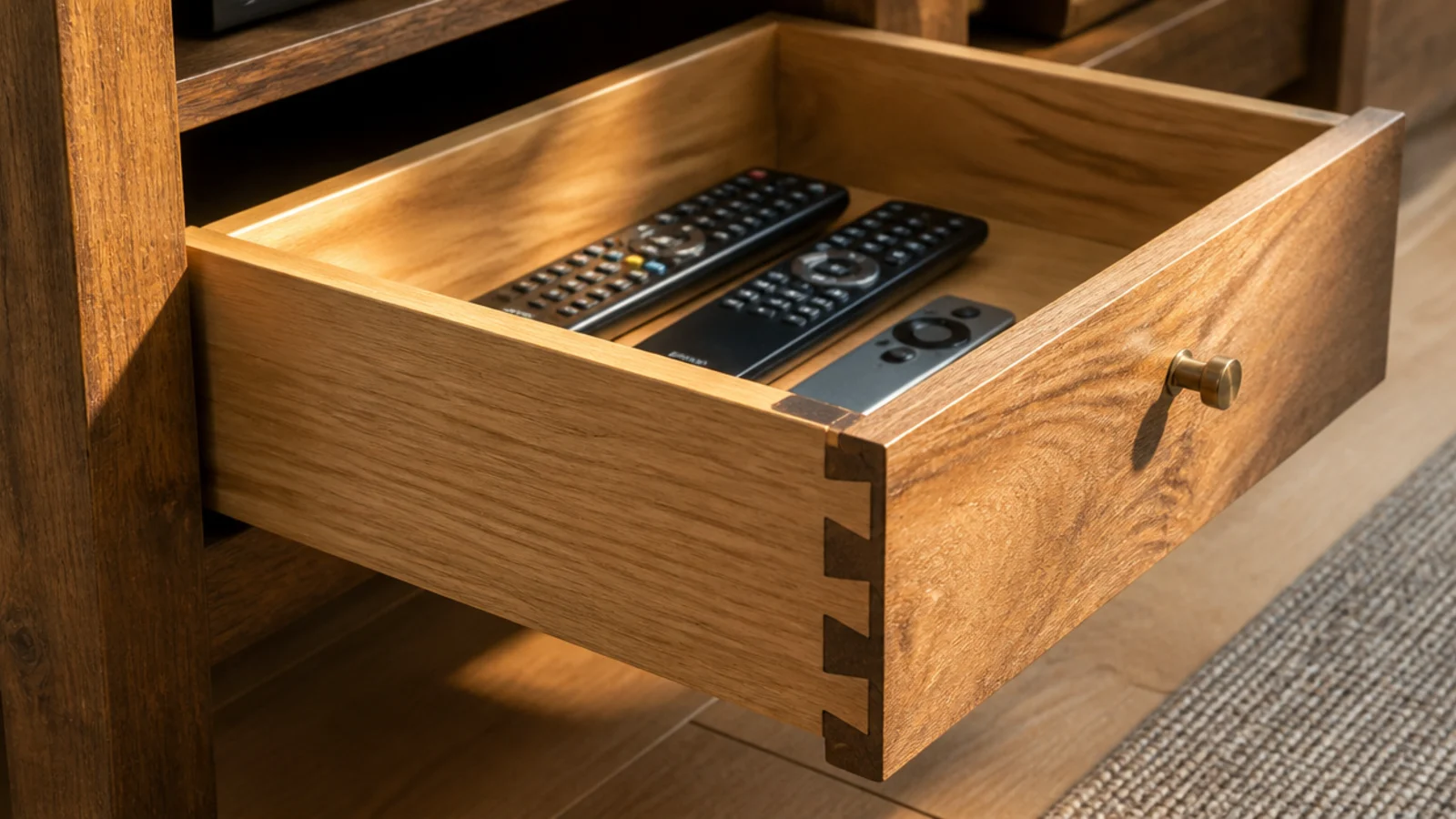
Look at the drawer corner before you look at the front. A dovetail or a housed joint is doing structural work; a stapled butt joint is not. Solid timber sides with a captured base will still run smoothly in twenty years, which is more than most cabinets manage.
20. Let a solid top move
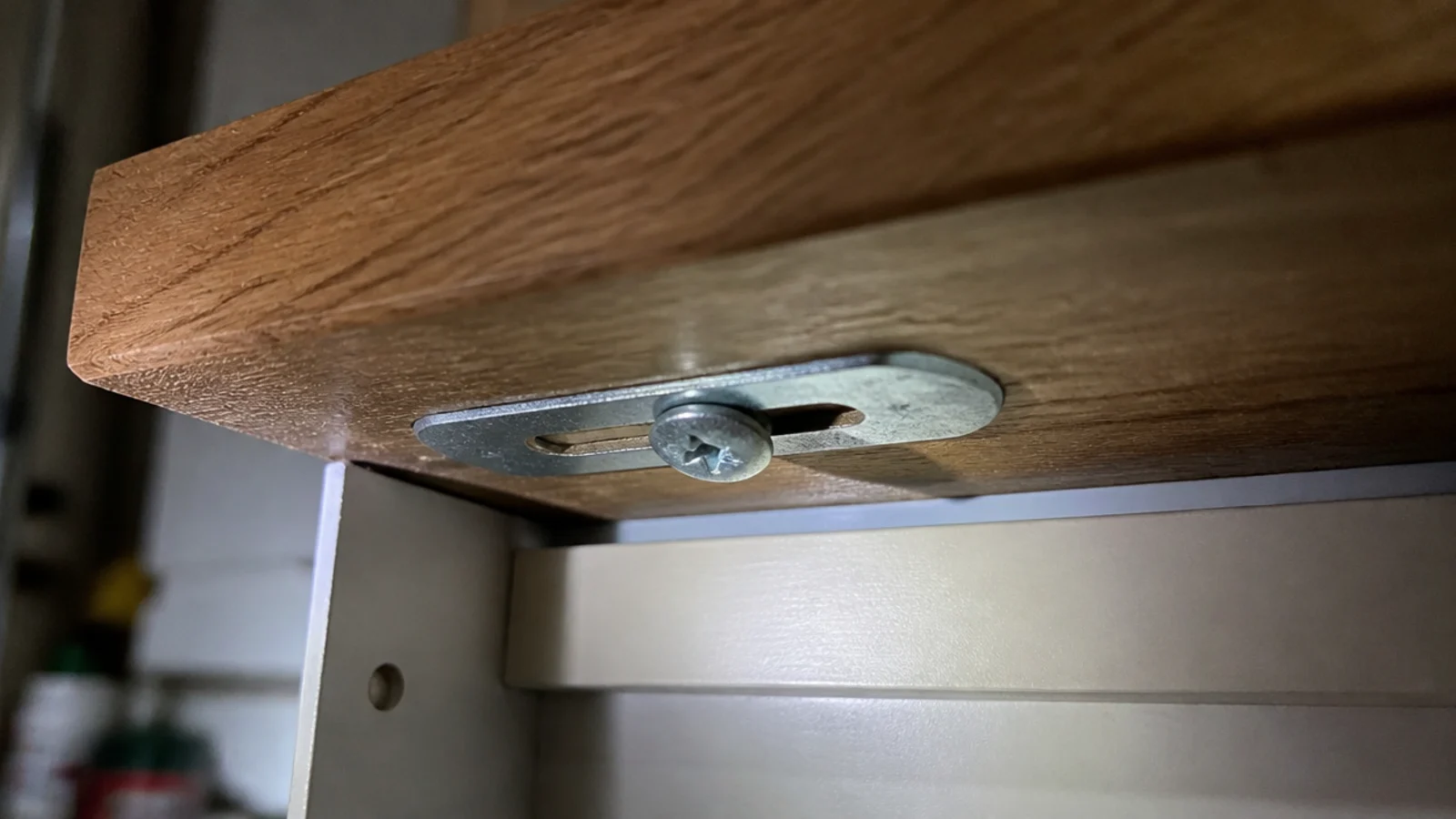
Slotted brackets, buttons or figure-eight fasteners let a solid top expand and contract without splitting. If a maker glues a solid top rigidly to a carcass, that is the thing to query. This one detail causes more cracked furniture than any other.
21. Ask what the veneer thickness is
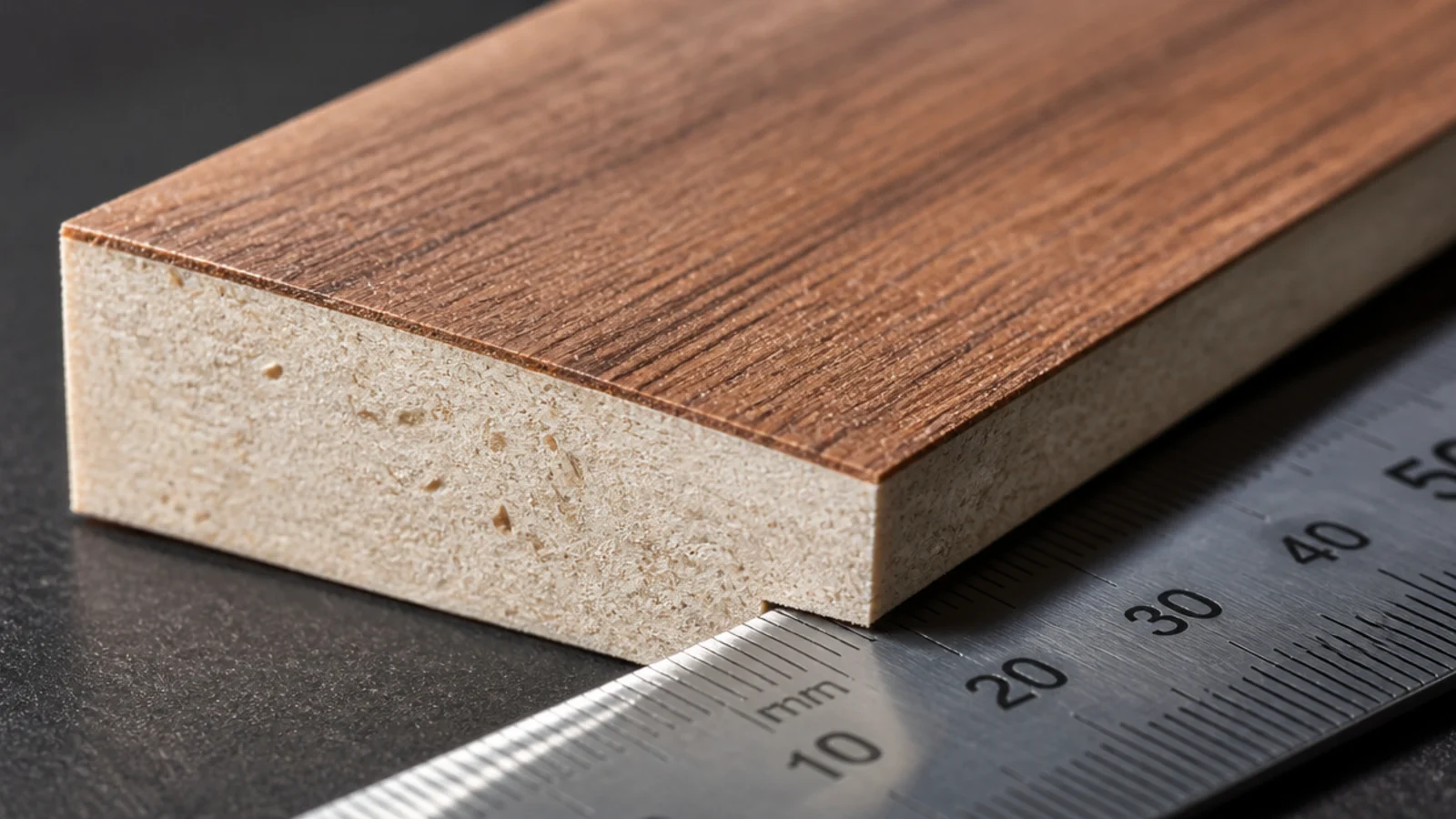
Standard furniture veneer is about 0.6 mm, which is fine on a stable core and cannot be sanded back more than once. Anything thinner is a printed foil rather than timber. The modern cabinets guide covers what else to check on a spec sheet.
22. Choose the edge profile deliberately
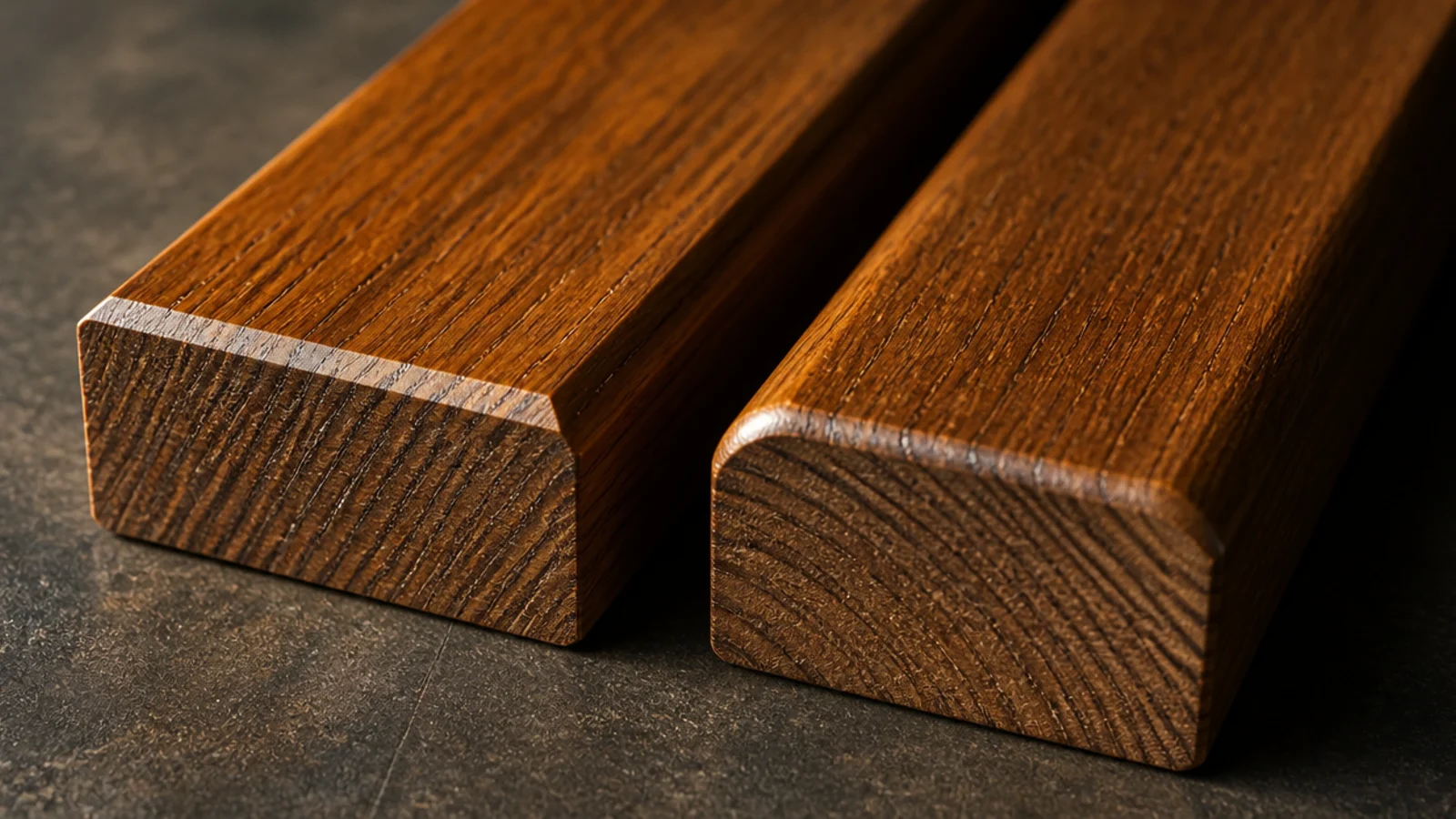
A chamfered arris reads crisp and modern; a bullnose reads soft and traditional. Both beat a square edge, which chips. On a unit in a walkway, a 3 to 5 mm radius on the corners is worth asking for, since it takes knocks without denting.
23. Match the floor closely or contrast hard
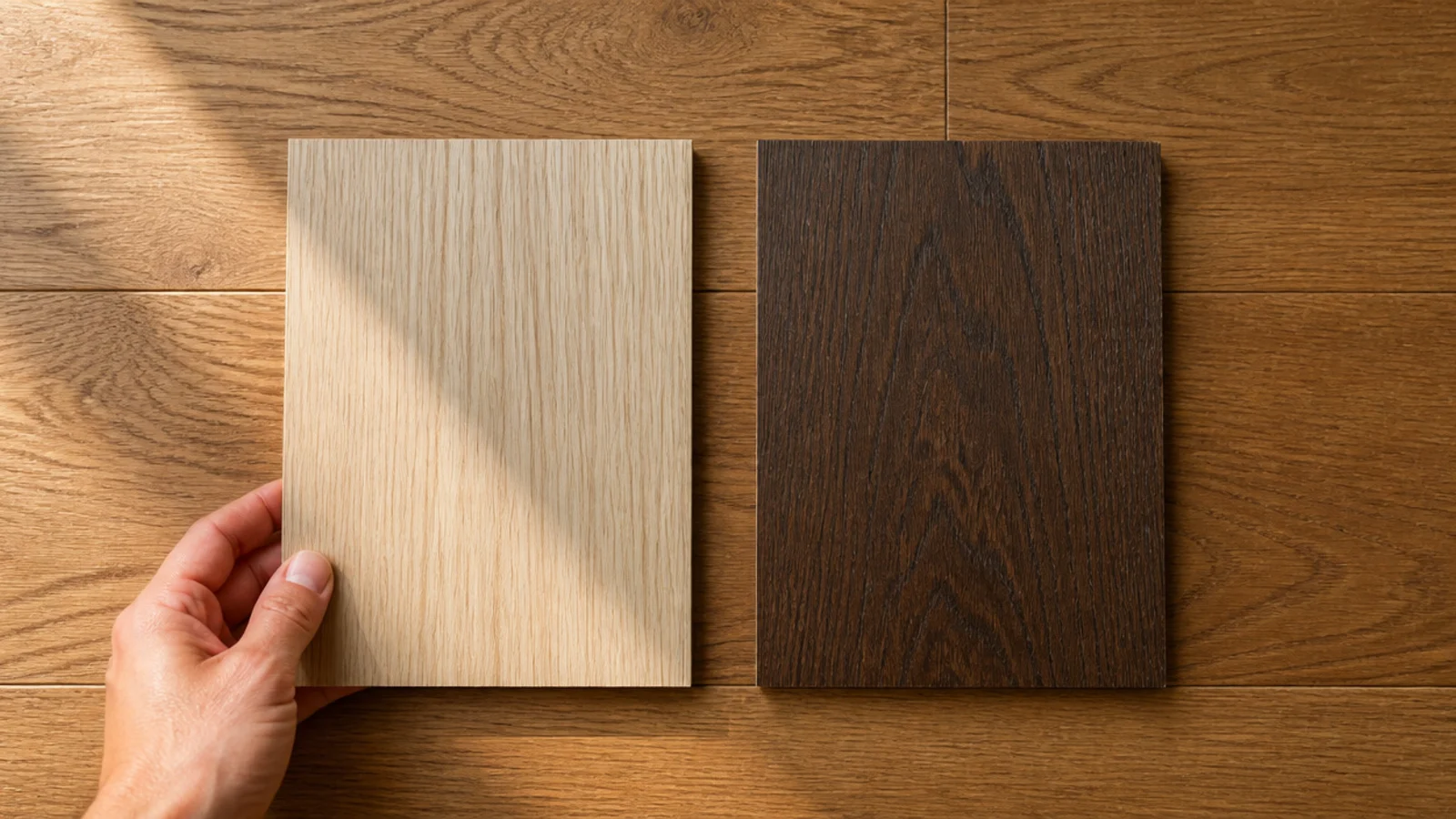
Two woods within a couple of shades of each other is the combination that always looks accidental. Take a sample home, lay it on the floor in daylight, and look at it for a day. Pale on dark and dark on pale both work; almost-the-same does not.
24. Pair timber with one stone element
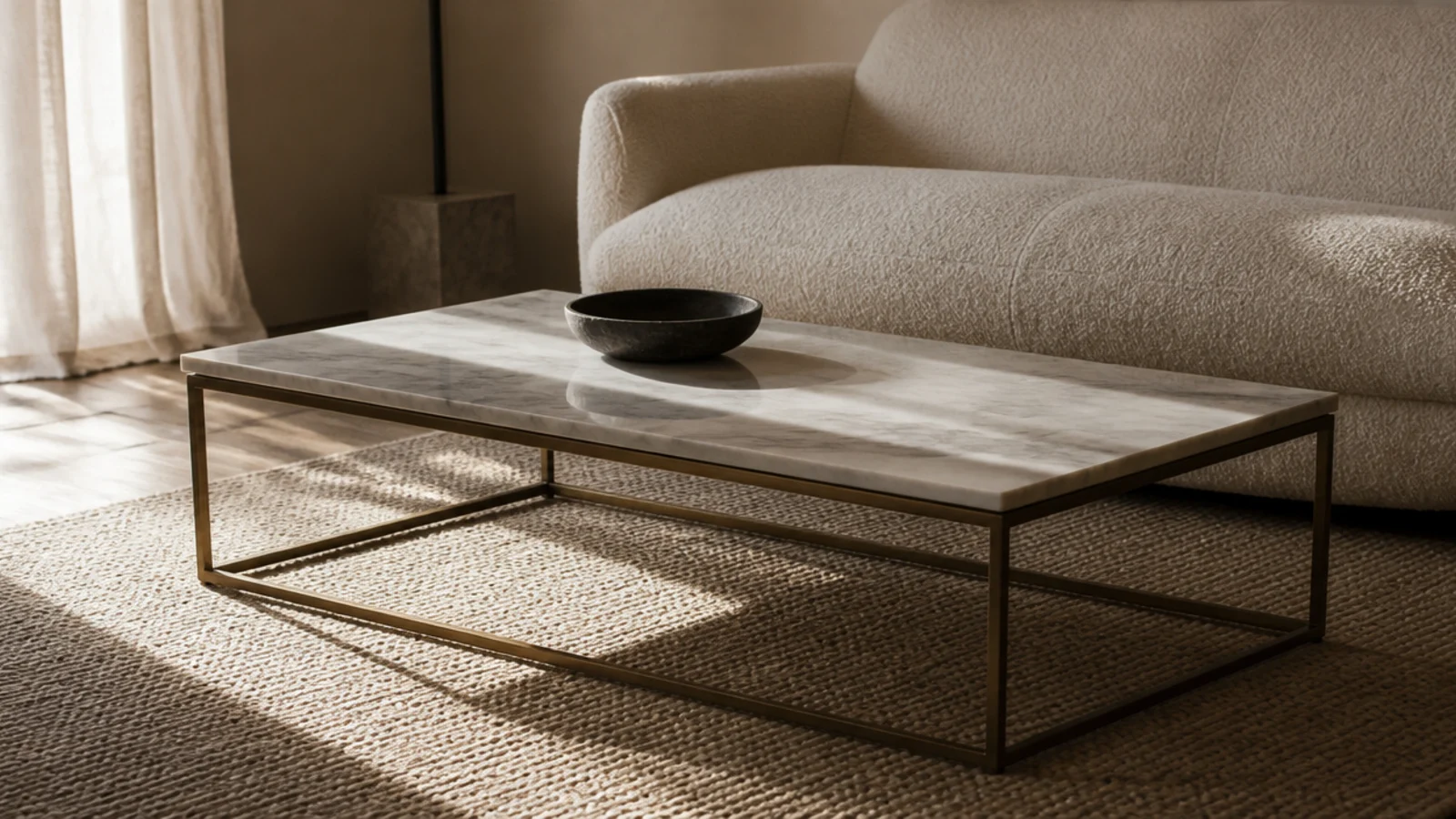
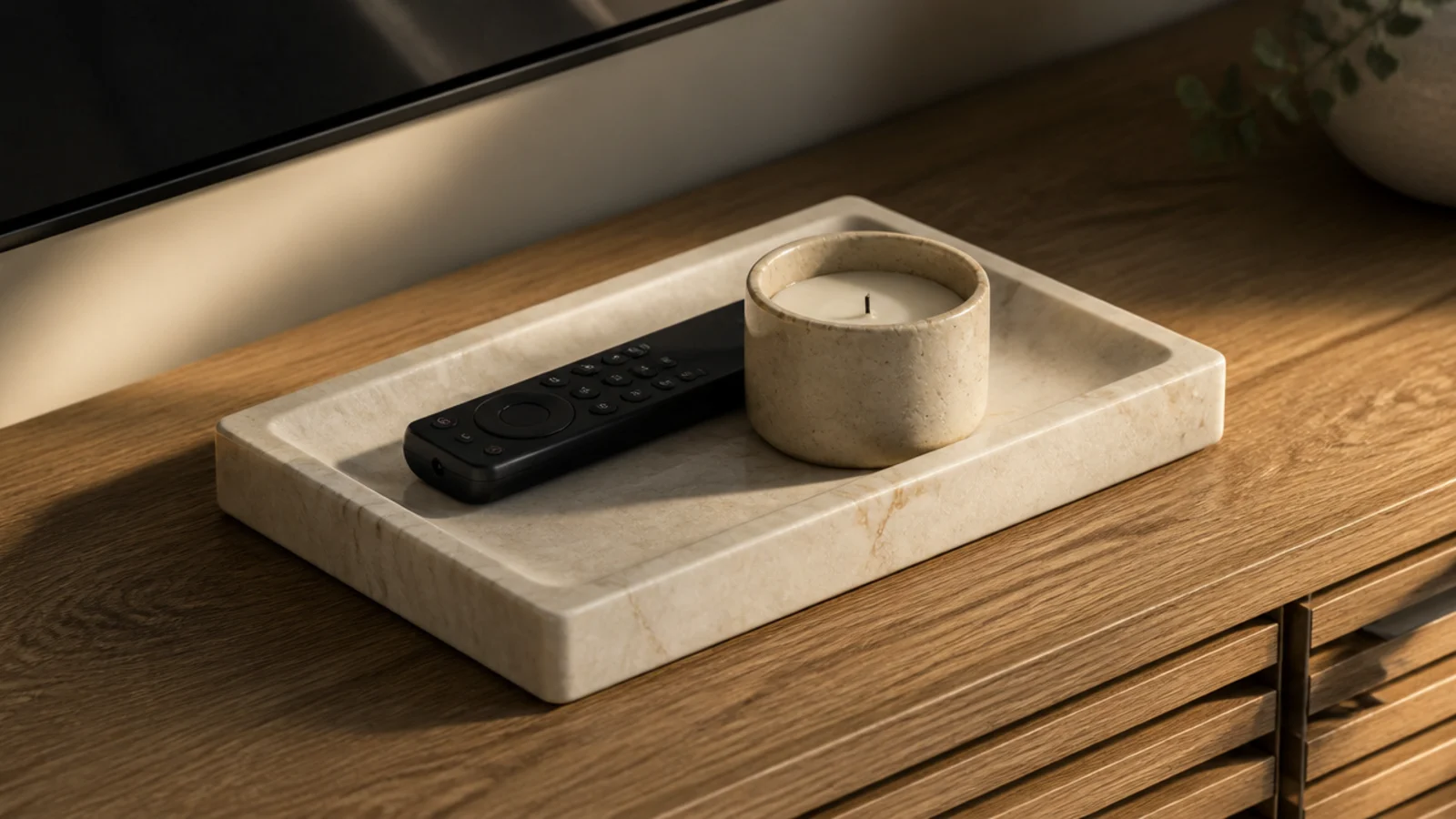
A honed stone tray or a porcelain top gives timber something cool and hard to sit against, which stops an all-wood wall reading as a sauna. One stone element is enough. The cozy living room setups cover the rest of the material layering.
25. Re-oil once a year and it lasts
Twenty minutes with a fine pad and a cloth of hardwax oil each year keeps an oiled unit looking new indefinitely. Do the top and any horizontal surface; vertical faces rarely need it. Skip this and an oiled top goes grey and thirsty within about three years.
For the practical side of the same cabinet, the clutter-hiding guide covers cable routing and ventilation in timber carcasses. If the unit sits alongside open shelving, floating shelf ideas has the span and load numbers for solid boards.
Mistakes to Skip
- Buying softwood for a busy room. Pine at roughly 690 Janka picks up dents from a vacuum cleaner within months, and no finish prevents it.
- Fixing a solid top rigidly at both ends. Timber moves seasonally, and a top that cannot move will split rather than stay flat.
- Judging veneer by the word alone. A 0.6 mm veneer on a stable core outperforms a badly dried solid board across a long run.
- Choosing a lacquered finish for a piece you plan to keep for decades. Repairability matters more than initial resistance on furniture that lives for twenty years.
- Putting a second wood tone in the room without checking it against the first. If the two are close but not equal, the eye reads it as a mistake every time.
Frequently asked questions
Which wood is best for a TV unit?
White oak and ash are the reliable choices: hard enough to resist dents at around 1,300 on the Janka scale, stable indoors, and easy to repair. Walnut is softer at about 1,010 but reads richer in a dark room. Pine at roughly 690 dents if you look at it wrongly.
Is veneer worse than solid wood?
Not automatically. A 0.6 mm veneer over a stable core stays flatter than solid stock across a 90 inch run and lets you have book-matched grain no solid board could give. The real question is core quality and whether the edges are mitred or taped, not whether the surface is a slice.
What finish should a wooden media unit have?
Hardwax oil if you want to repair it, lacquer if you want to forget it. Oil sinks in, feels like timber and takes a spot repair with a cloth and a little more oil. Lacquer resists spills better but any deep scratch means refinishing the whole panel.
Do solid wood TV units need expansion gaps?
Yes. A solid timber top 18 inches deep can move 1/8 to 1/4 inch across the grain between a damp summer and a heated winter. Tops should be fixed with slotted brackets or buttons that let them slide, and panels should sit in grooves rather than being glued solid.
How do I match a wooden TV unit to my floor?
Either match closely or contrast clearly. Two timber tones within a couple of shades of each other look accidental, while a pale ash unit on a dark oak floor, or walnut on pale boards, reads as a decision. Comparing samples on the floor in daylight settles it in minutes.
Want more like this? Browse all 15 tv unit decor guides — they all use the same measurements and budget tiers.
Pin it for later
Save this to your TV Unit Decor board
Pin it now so it is waiting for you when the tape measure comes out — and so the next person hunting for this idea can find it too.
Save this pinKeep going
More ideas worth saving while you have the tape measure out.