TV Unit Decor · Listicle
20 TV Unit Decor Bedroom Layouts That Fit

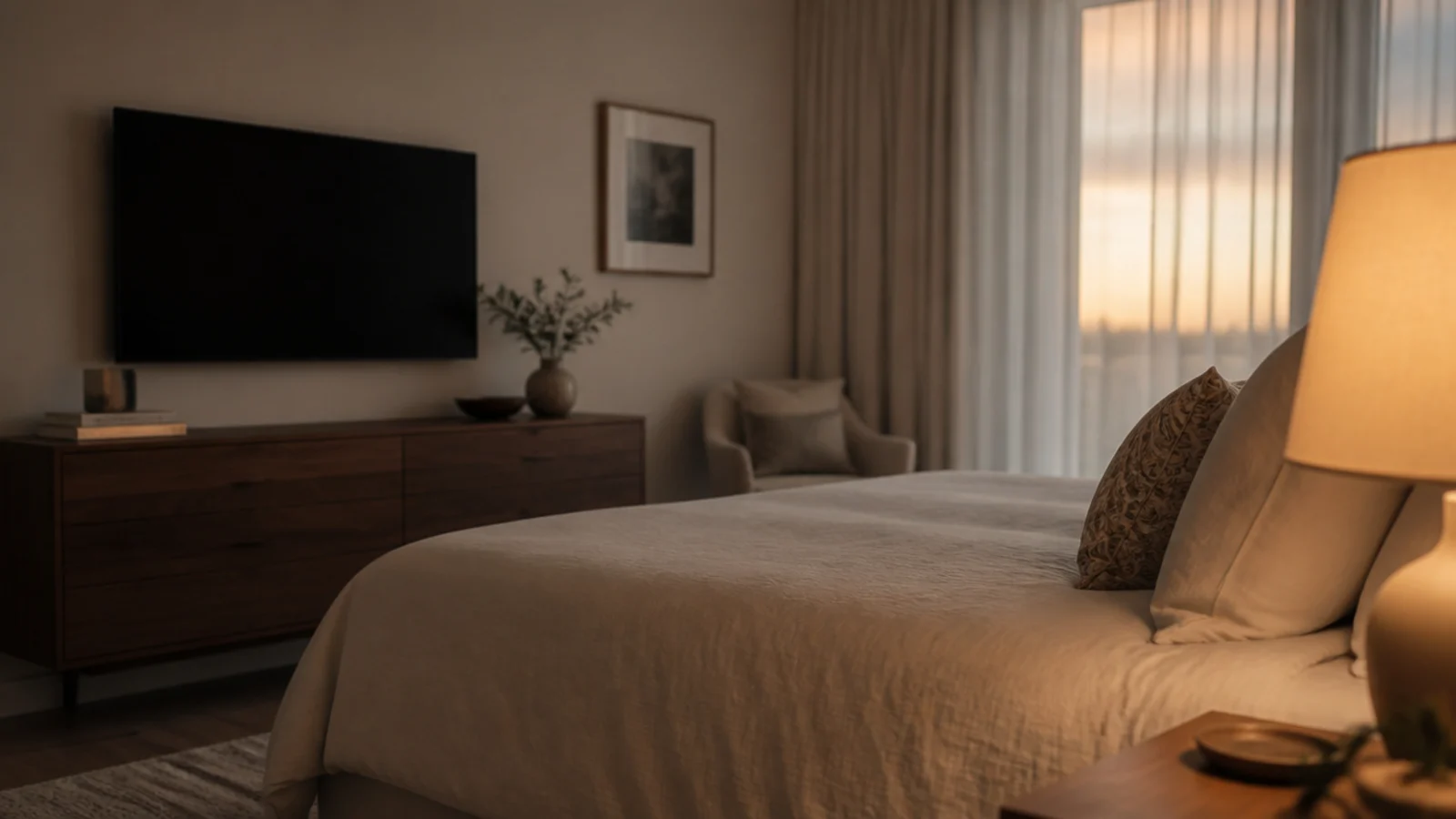
Bedrooms break every rule a living room sets, and the first casualty is height. You watch a bedroom screen propped against pillows with your head a foot higher than it would be on a sofa, which is why a panel hung at living room height leaves you looking at the bottom bezel all evening. TV unit decor bedroom layouts have to solve for that, plus a walkway that runs right past the furniture and a window that is usually in the wrong place. Here are twenty arrangements that fit.
In this guide22 sections — tap to openHide
- 1.What TV unit decor bedroom layouts get wrong
- 2.Centre the screen at fifty inches, not forty-two
- 3.Tilt the panel down ten to fifteen degrees
- 4.Put the screen at the foot of the bed
- 5.A forty-three to fifty-inch panel is plenty
- 6.Let a dresser do both jobs
- 7.Float a shelf above a low chest
- 8.Hide the screen inside a wardrobe bay
- 9.A lift cabinet at the foot of the bed
- 10.An articulated arm from the side wall
- 11.Keep the screen off the window wall
- 12.Add blackout curtains for daytime viewing
- 13.Protect the walkway around the bed
- 14.Keep the media unit below bedside height
- 15.Route the cable behind the drawers
- 16.Choose headphones over a soundbar
- 17.Use a warm bias light at low output
- 18.Drop the brightness and set a sleep timer
- 19.Strap the unit in a child or teen bedroom
- 20.Mount high on a shelf bracket in a tiny room
- 21.Hide it behind a sliding panel
- 22.Mistakes to Skip
What TV unit decor bedroom layouts get wrong
Start with the eye line, lying in the position you actually watch from. Propped on two pillows against a headboard, most people's eyes sit 44 to 52 inches off the floor on a standard bed, which is 8 to 10 inches higher than seated on a sofa. Centre the screen at 48 to 52 inches and tilt it down 10 to 15 degrees.
Then the distance. The gap from a headboard to the opposite wall in an average bedroom is 8 to 10 feet, which suits a 43 to 55 inch panel. Divide the distance in inches by about 1.5 for a workable diagonal, and resist buying to match the living room.
Then the route. Twenty-four inches of clear walkway along each side of the bed, 30 at the foot if that is the way to the door or a wardrobe. That number sets your maximum cabinet depth long before styling comes into it. A dresser doing double duty costs $250 to $700; a tilting bracket $30 to $70. For the wall behind, the TV wall guide covers colour and panelling.
1. Centre the screen at fifty inches, not forty-two
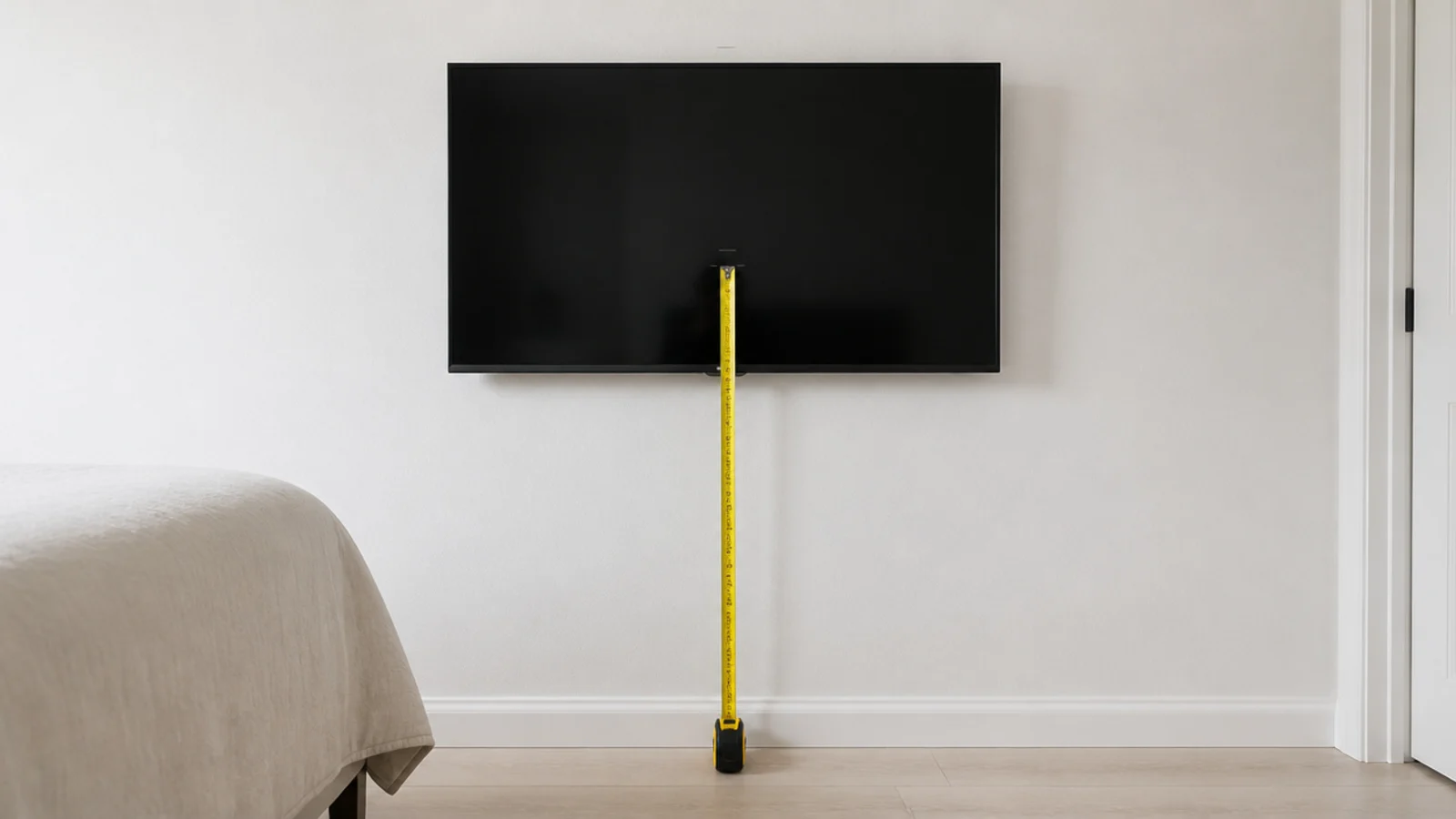
The single change that fixes most bedroom setups. Pillows lift your eyes 8 to 10 inches above sofa height, so the living room number leaves the panel too low and you end up craning downward. Measure from the floor to your own eyes while propped up and set the middle of the glass there. On a bed with a 25 inch mattress top and a tall headboard, that mark usually lands somewhere between 48 and 52 inches.
2. Tilt the panel down ten to fifteen degrees
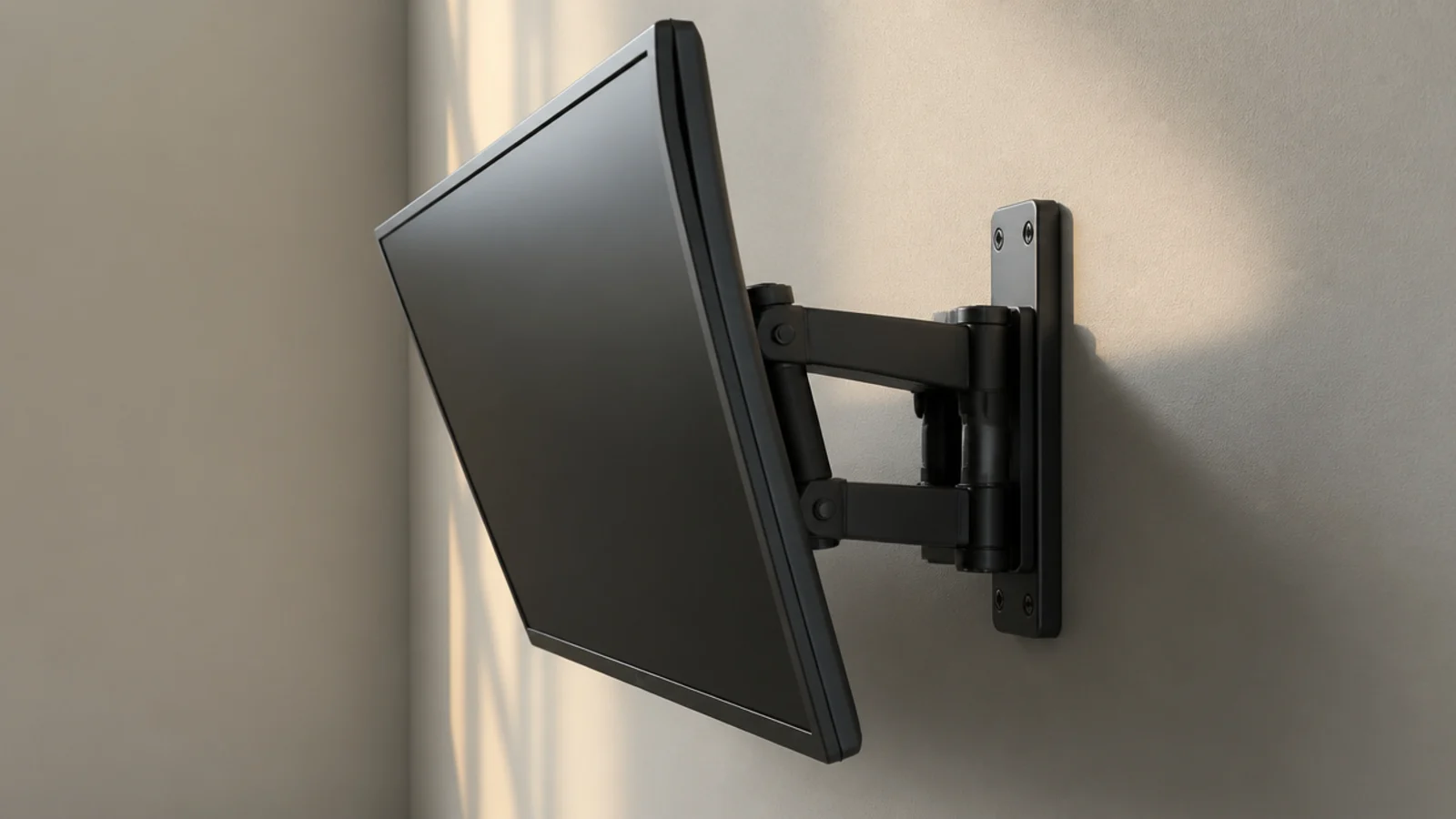
A mount that only sits flat sends the picture to the ceiling once the screen is above eye level. A tilting bracket costs $30 to $70 and angles the glass toward the bed, which also cuts the reflection of a bedside lamp. Check the bracket carries the panel weight, usually 30 to 60 pounds at these sizes.
3. Put the screen at the foot of the bed
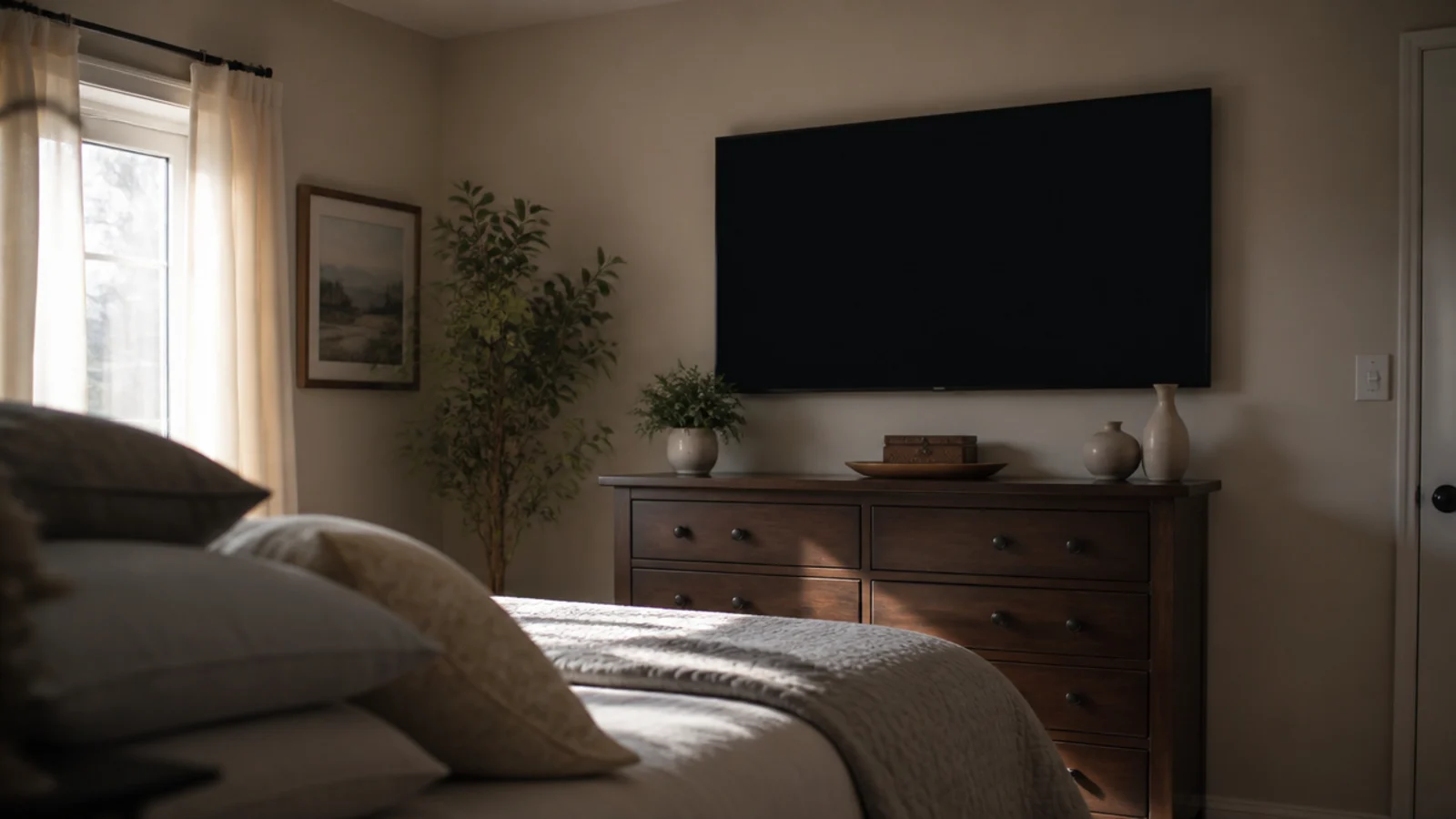
The foot wall gives you the longest sightline in the room and the only one nobody walks across. It also keeps the screen out of the path between the door and the bed. If a window occupies that wall, mount on the wall beside it rather than in front of it.
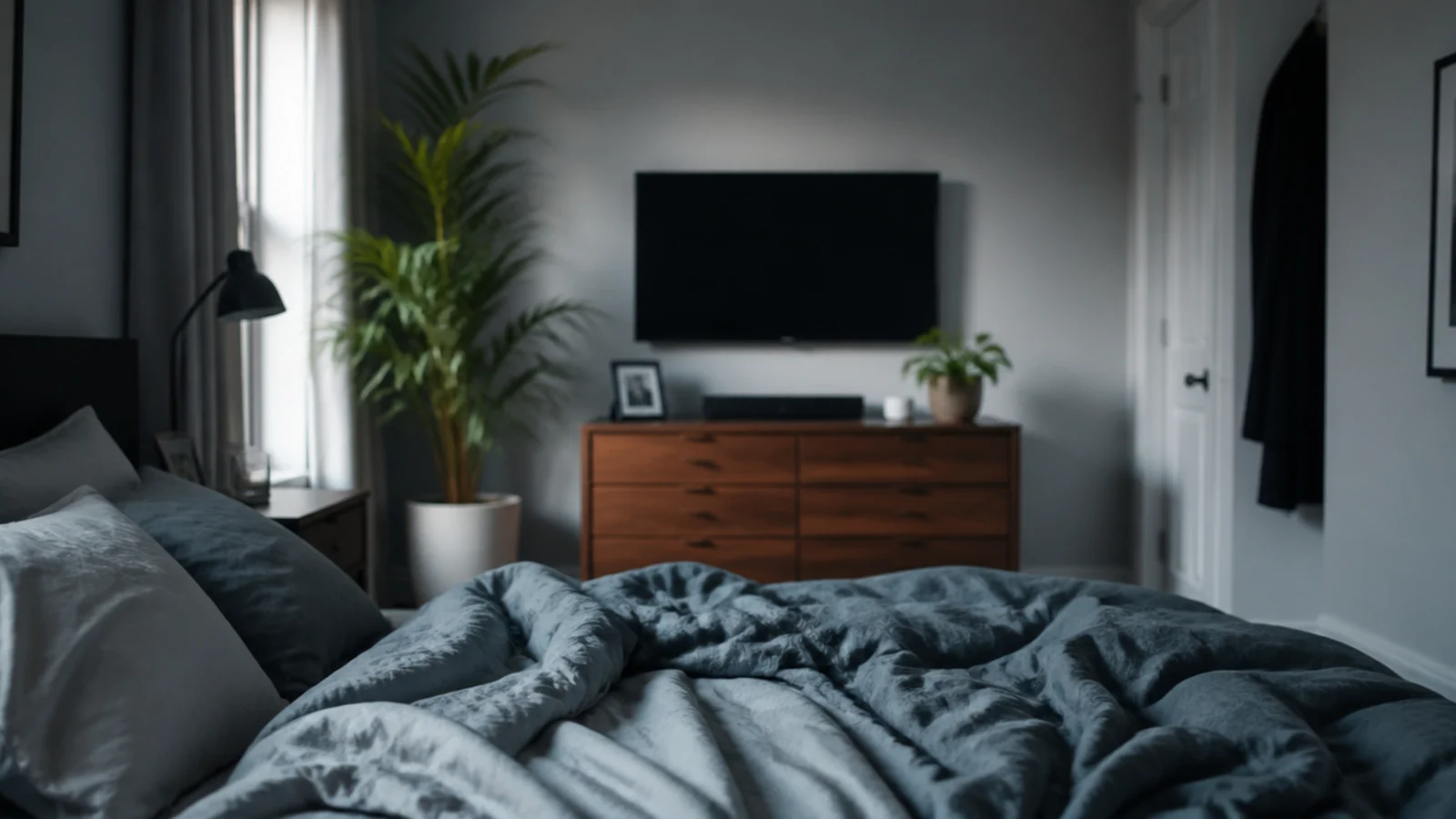
4. A forty-three to fifty-inch panel is plenty
At 9 feet, a 55 inch screen is already generous and a 65 inch fills more of your vision than is comfortable when lying down. Smaller panels also weigh less, which matters when mounting into plasterboard where you can only reach one stud. A 43 inch television runs 18 to 25 pounds against 45 to 60 for a 65, and that difference decides which fixings are honest.
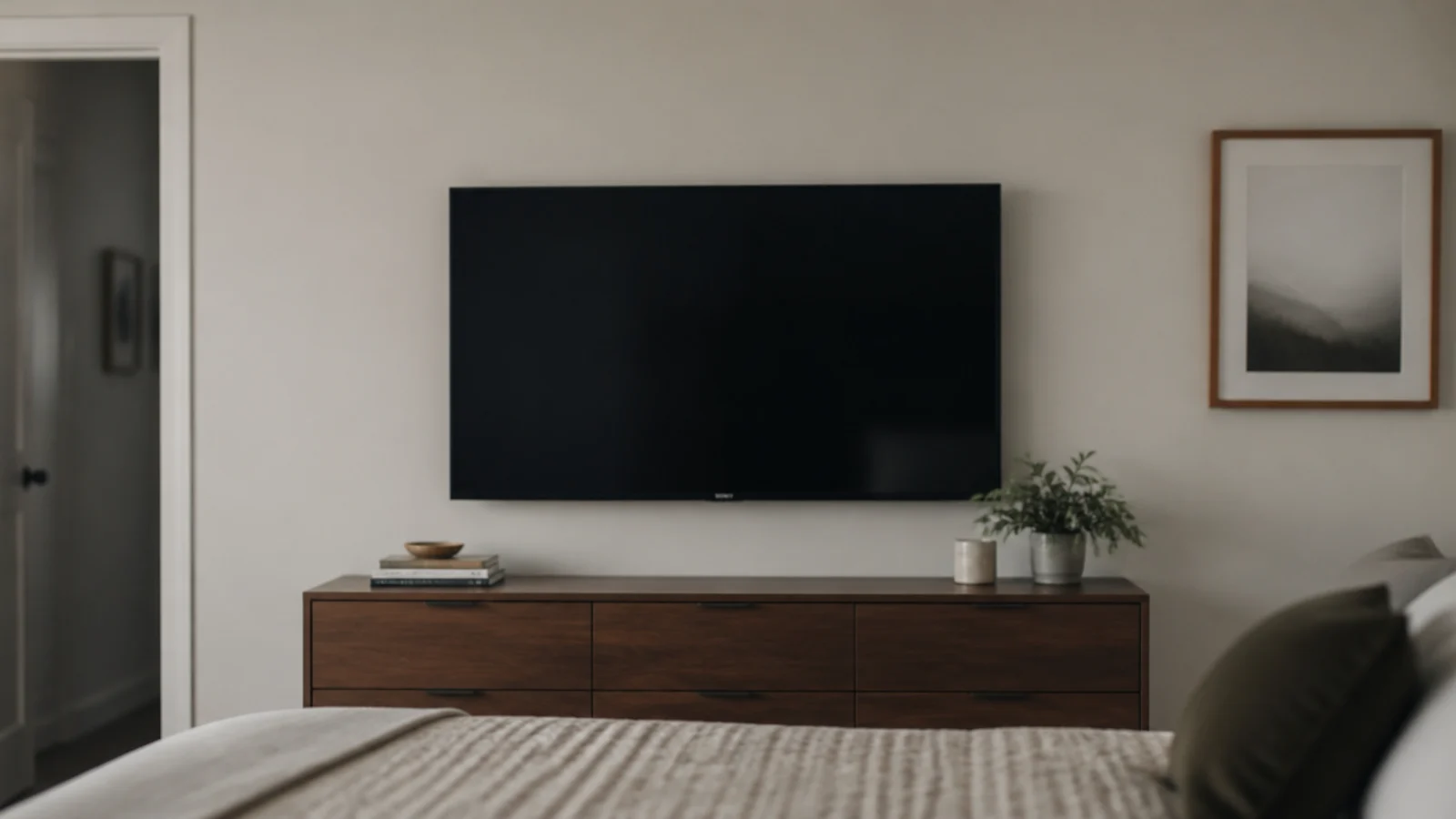
5. Let a dresser do both jobs
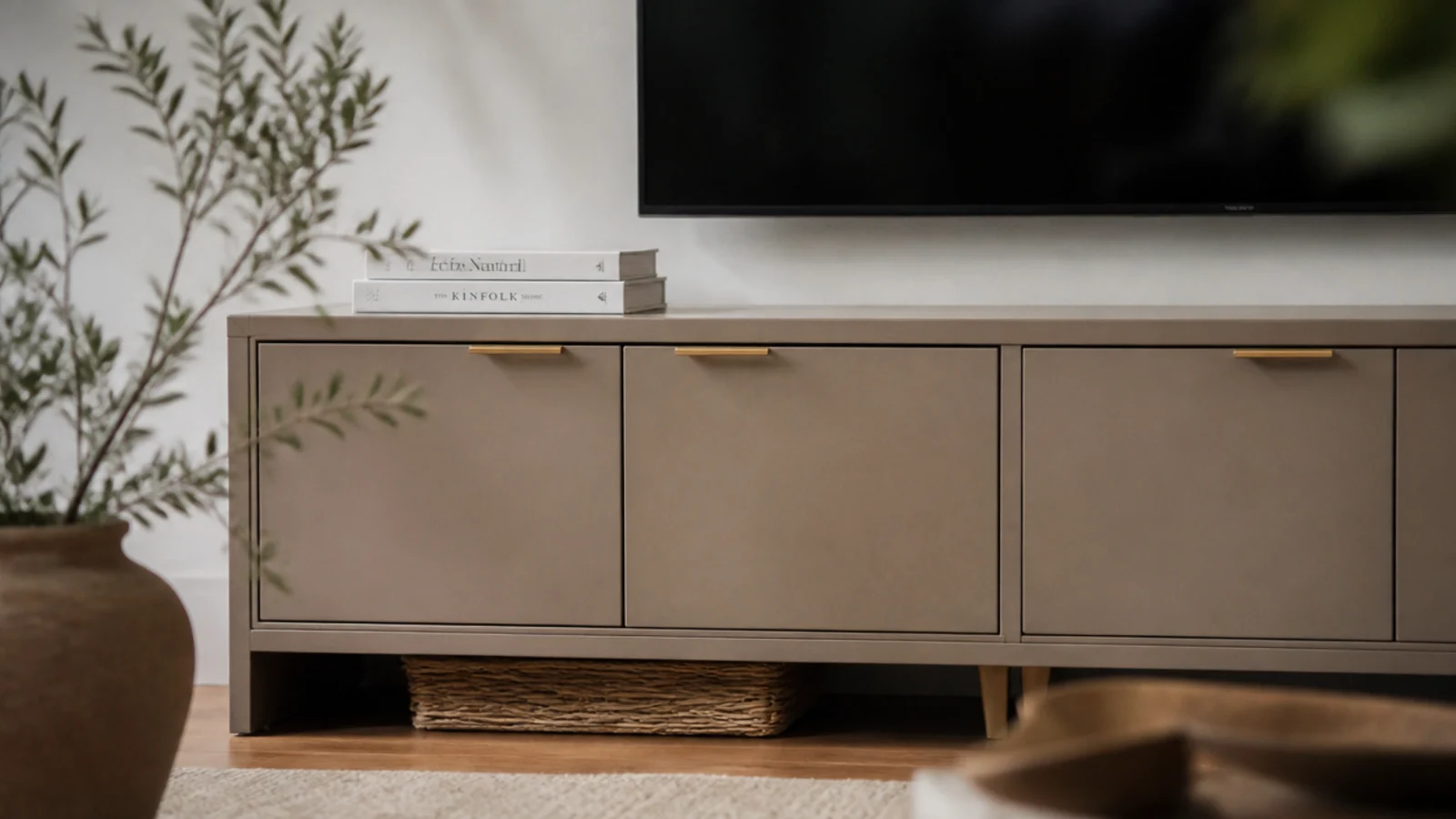
Most bedrooms cannot spare a wall for a media unit alone. A dresser at 30 to 36 inches tall holds clothes below and gives the screen a wall above it. Mount the panel rather than standing it on the top, so the dresser surface stays usable and the screen height stays correct.
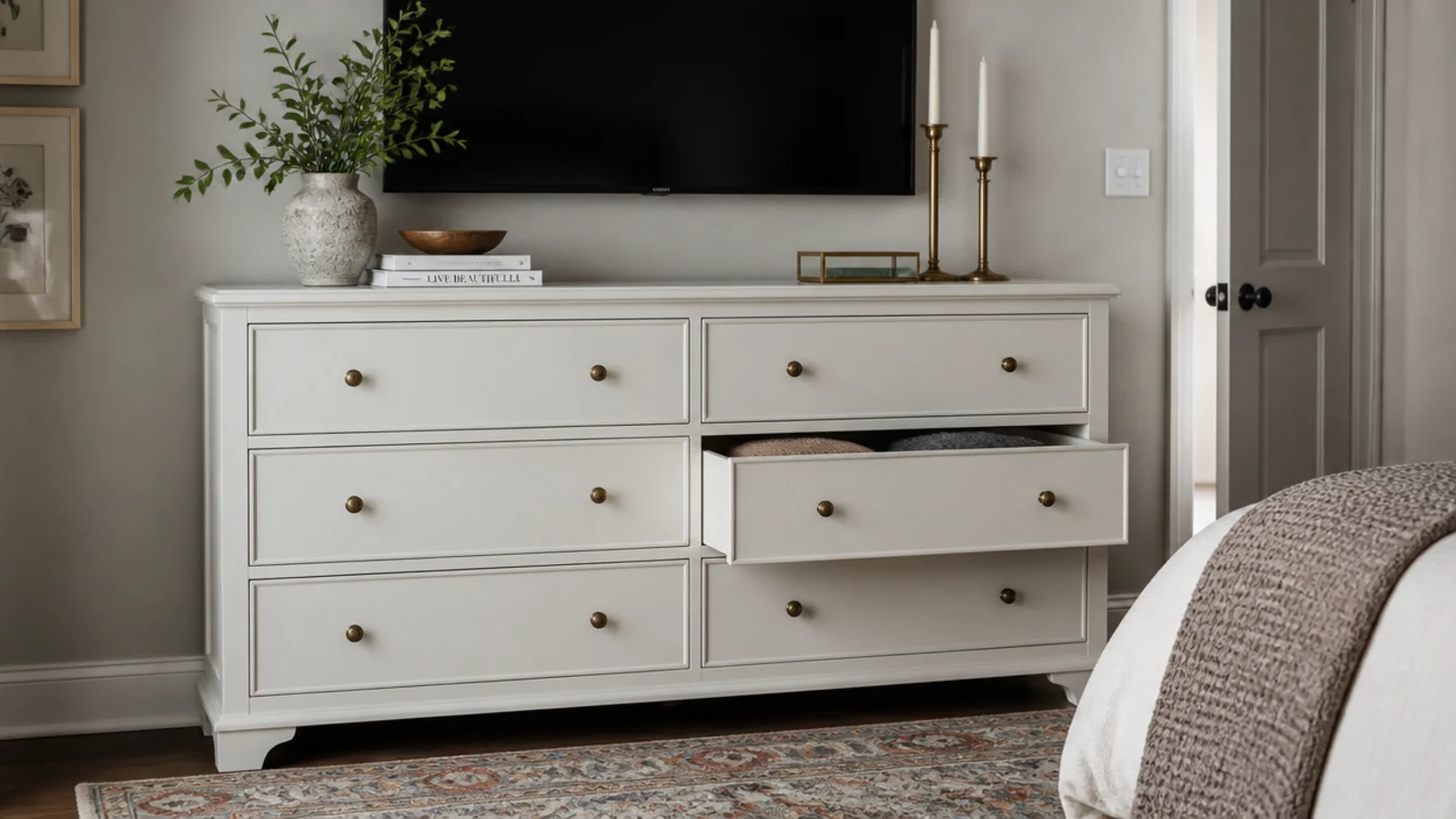
6. Float a shelf above a low chest
If the chest is too low to reach the gear comfortably, a slim floating shelf between the chest and the screen gives the streaming box a home at hand height. Keep it 10 to 12 inches deep and fix into studs; 18 mm ply spans 30 inches under 30 pounds without dipping.
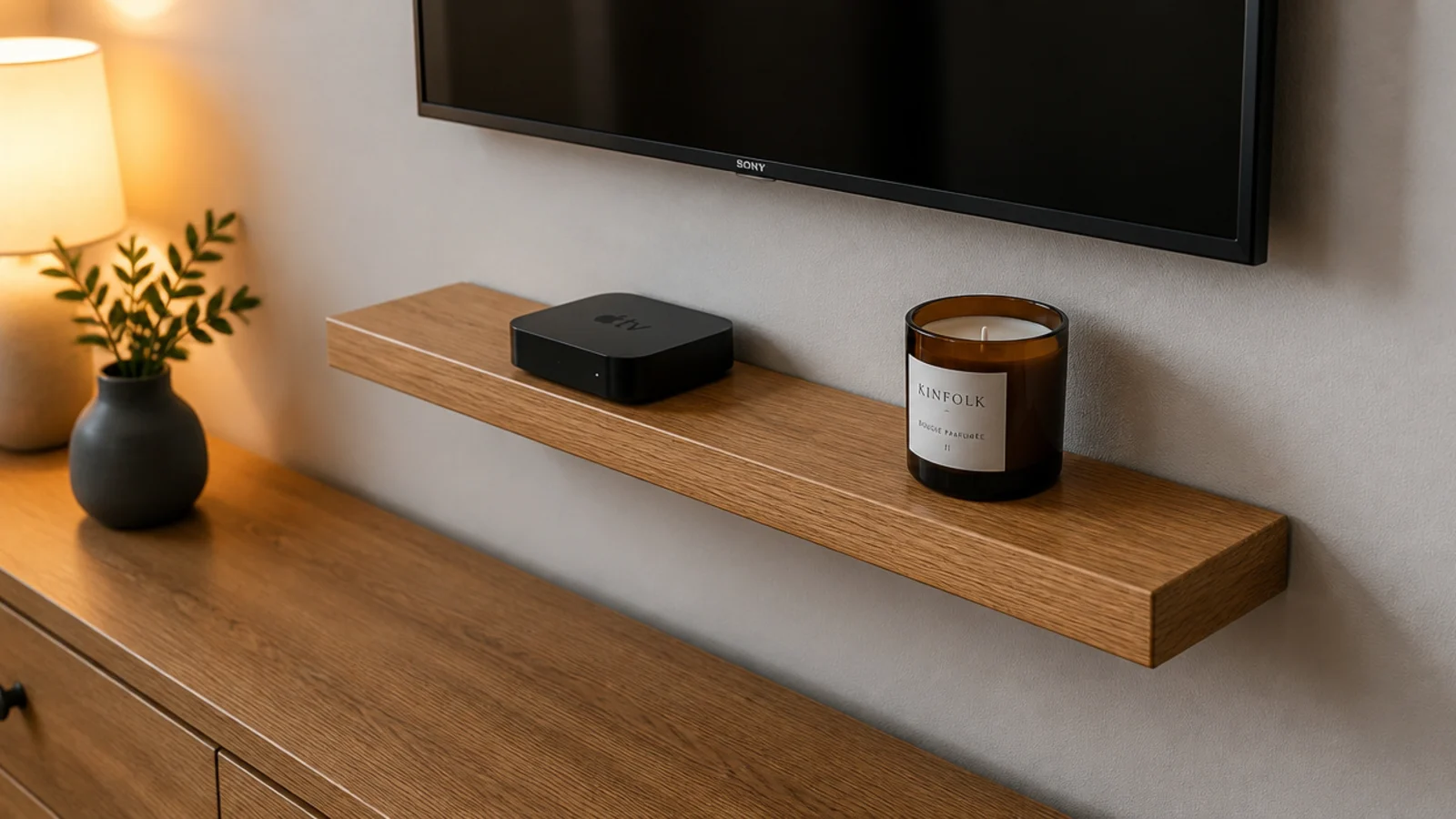
7. Hide the screen inside a wardrobe bay
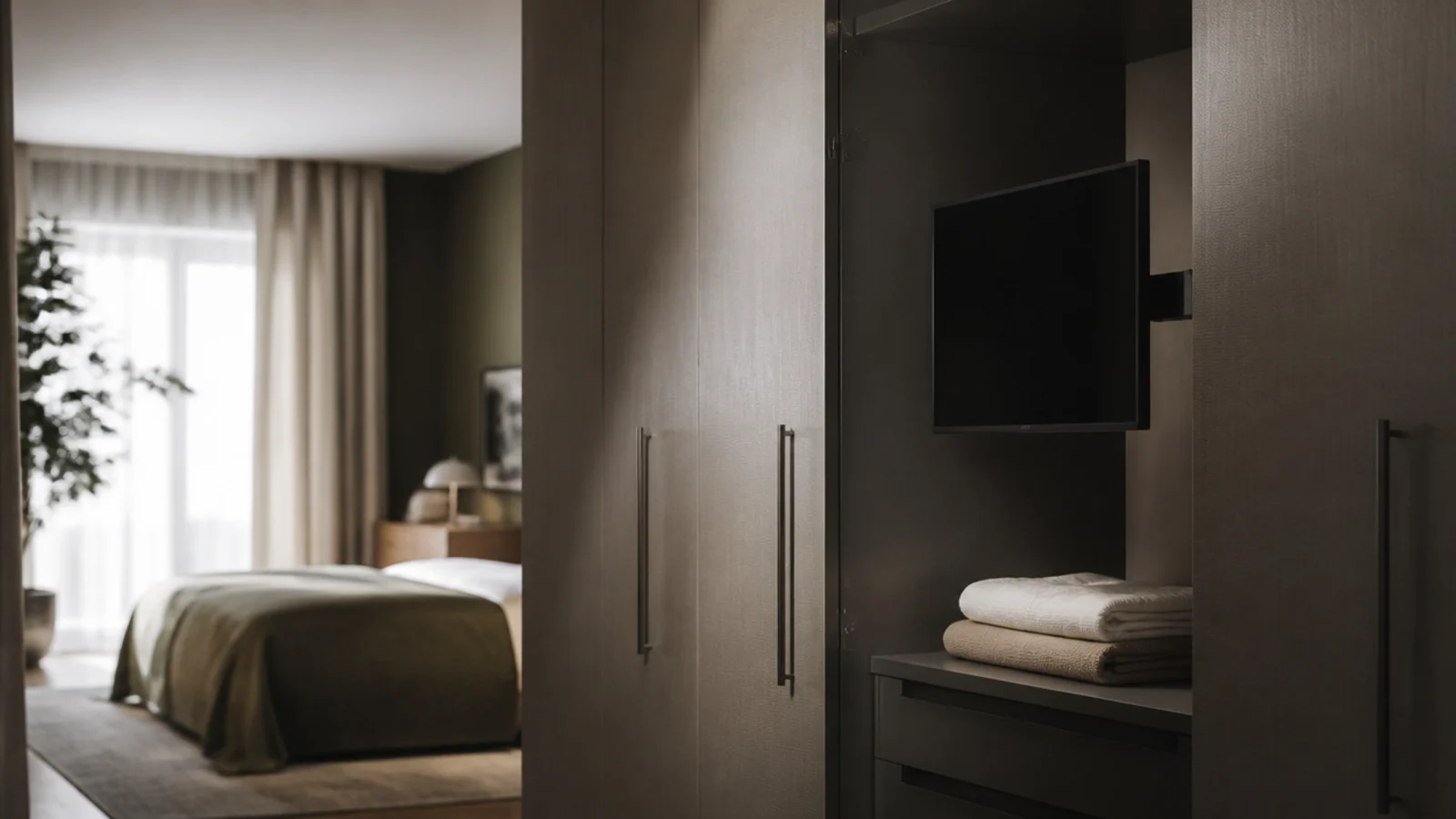
Giving up one bay of a fitted wardrobe to a screen on a slim bracket means the bedroom reads as a bedroom whenever the doors are shut. Allow 4 inches of clearance behind the panel for cables and heat, and cut a vent in the top of the bay.
8. A lift cabinet at the foot of the bed
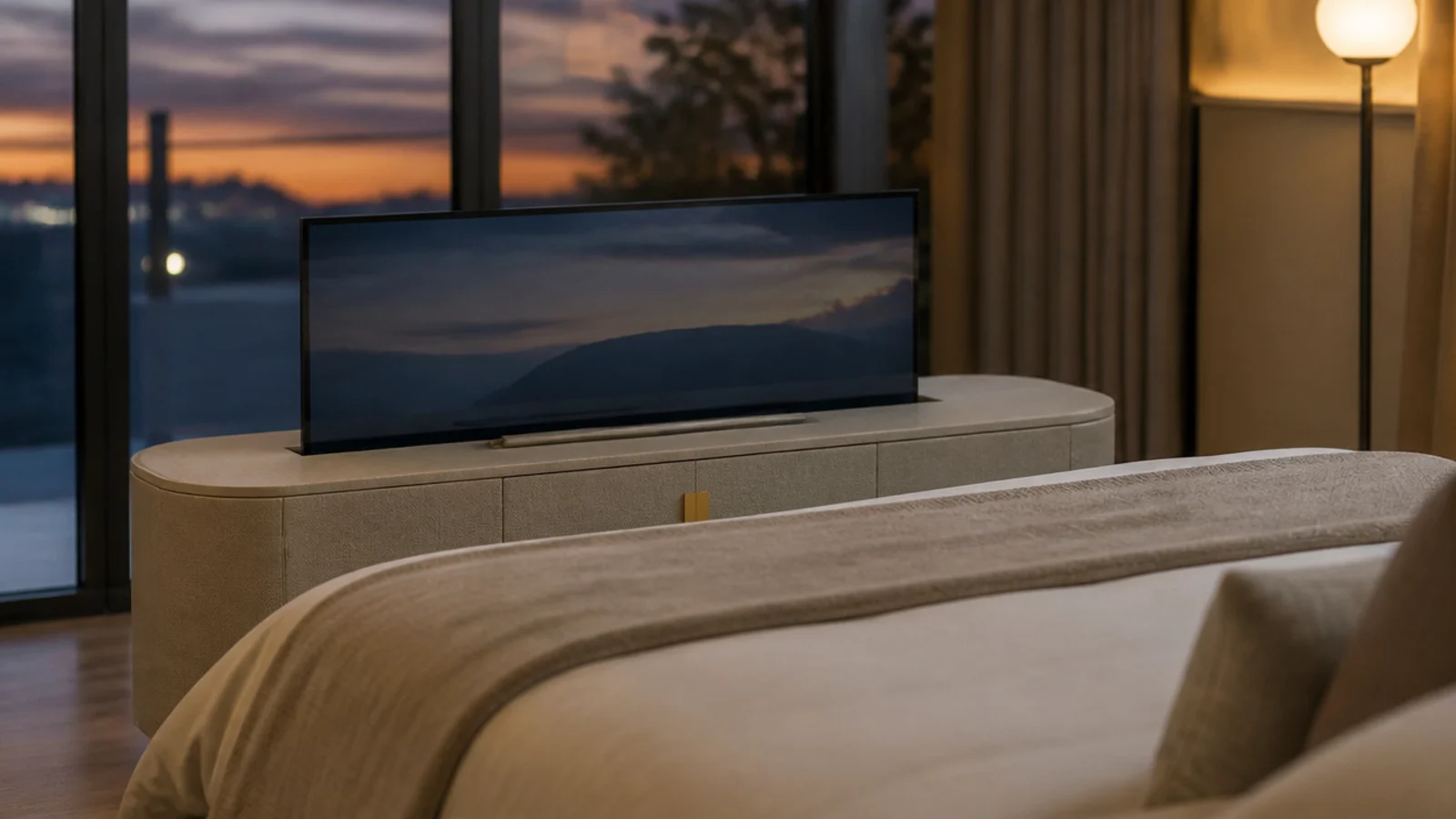
A low cabinet across the end of the bed with a motorised lift keeps the walls completely clear. Mechanisms carry 60 to 120 pounds and cost $400 to $1,200, and the cabinet needs to be at least 20 inches deep to swallow the panel. Check the raised screen still clears the ceiling light.
9. An articulated arm from the side wall
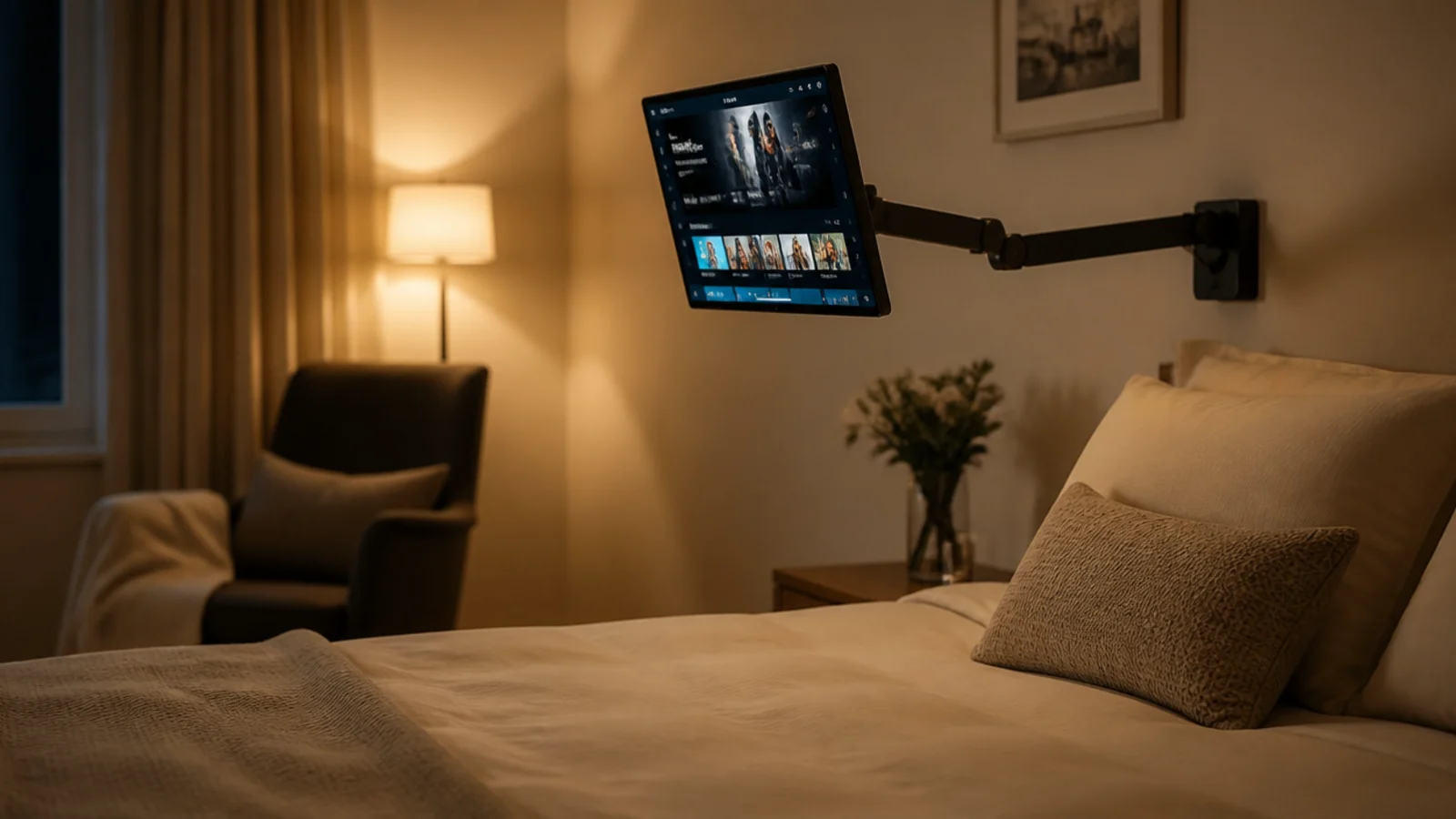
Where the bed faces a window or a door, an arm lets the screen live flat against a side wall and swing out only when wanted. Arms carry 45 to 75 pounds and need two studs. It also lets one person angle the picture without the other losing it.
10. Keep the screen off the window wall
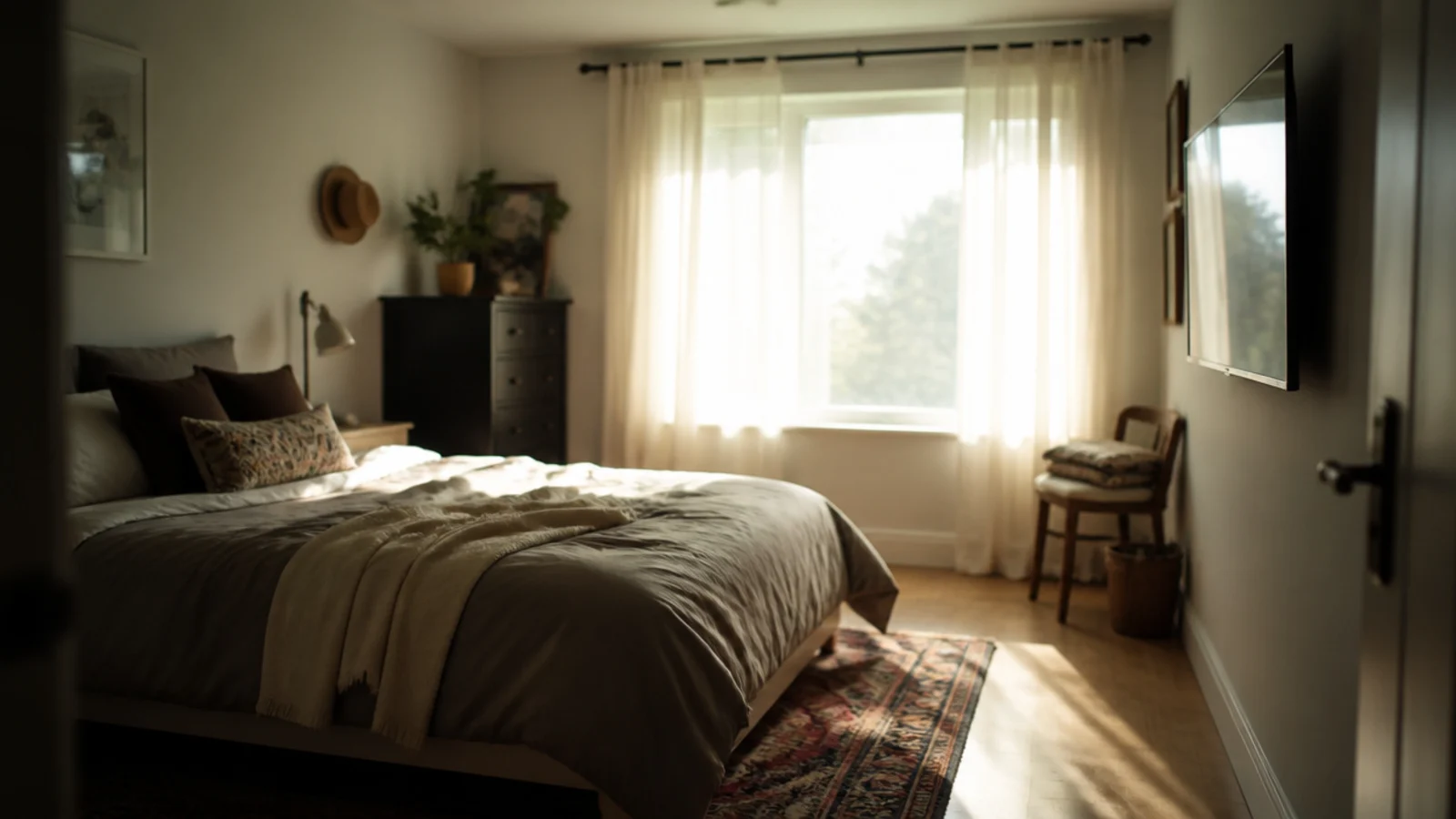
A panel with daylight directly behind it is close to unwatchable in the afternoon, and no picture setting fixes backlighting. Mount on a side wall or the foot wall instead. The simple picks guide covers layouts where the obvious wall is already taken.
11. Add blackout curtains for daytime viewing
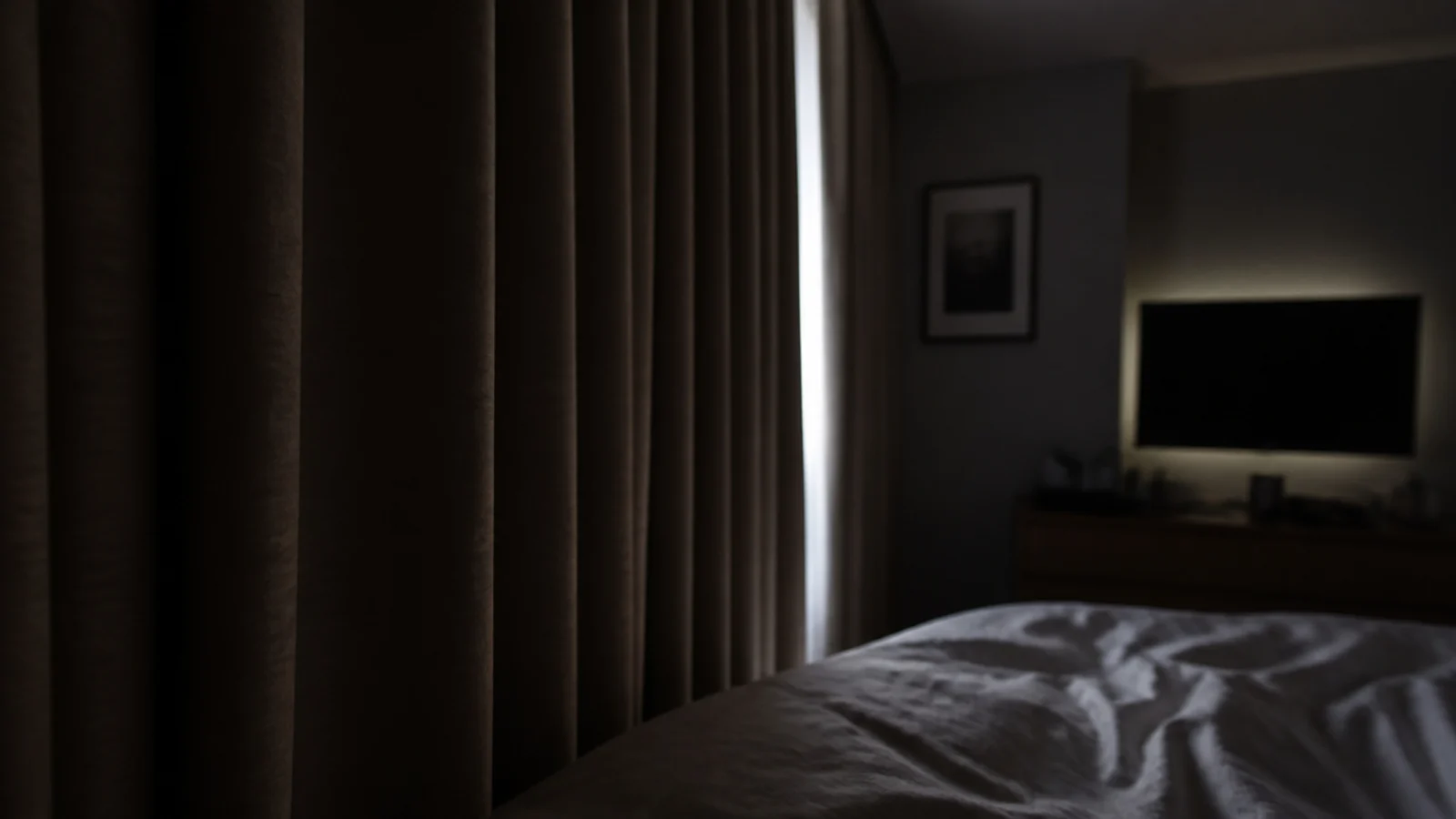
Lined blackout curtains solve glare, heat and early summer mornings at once, and they add a large soft surface that quiets the room. Hang the track 4 to 6 inches below the ceiling and let the fabric reach the floor with a half inch of clearance.
12. Protect the walkway around the bed
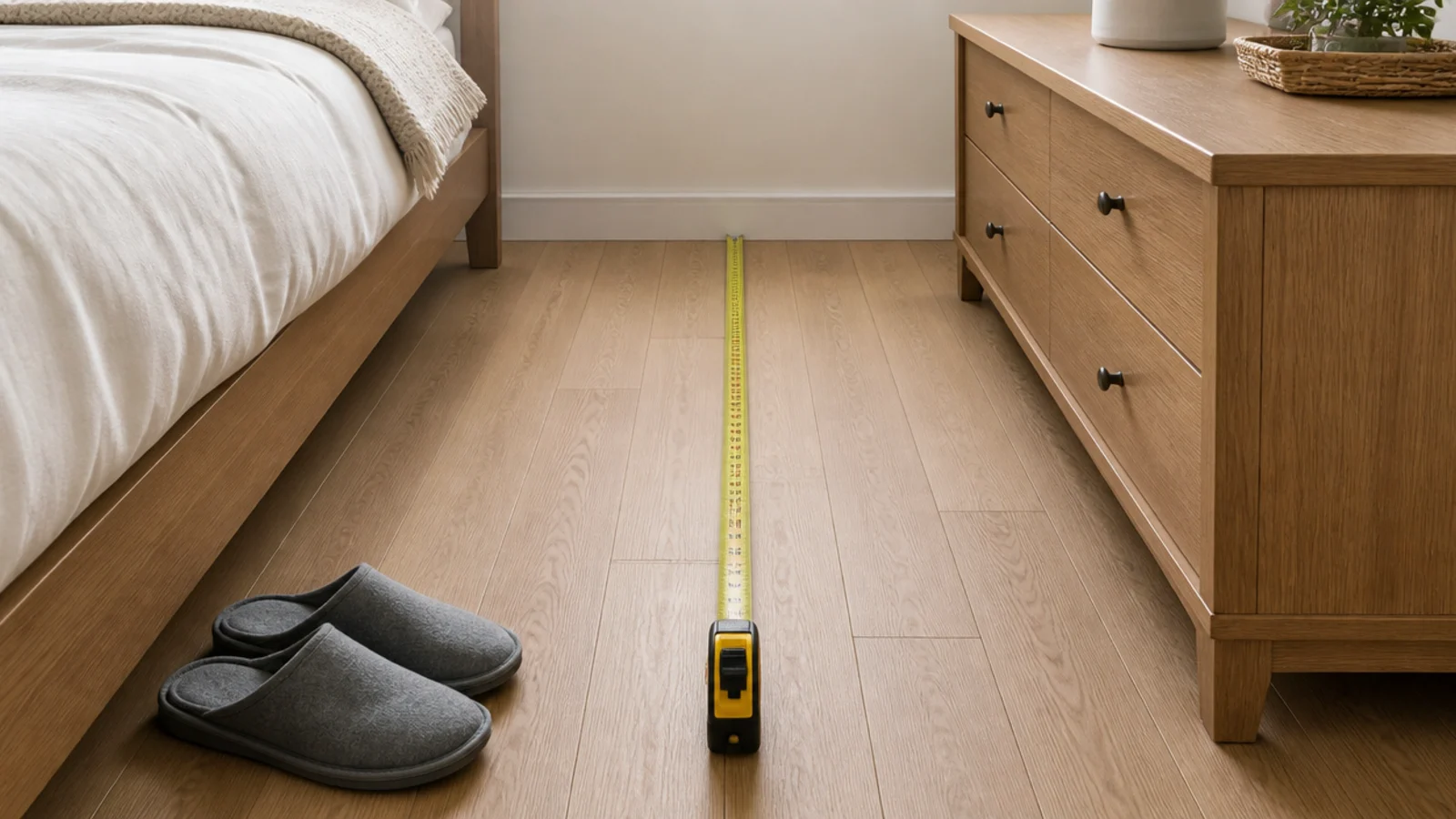
Twenty-four inches along the sides, 30 at the foot where that is the main route. Measure it before choosing the cabinet, not after. A 20 inch deep unit at the end of a bed in a 10 foot room can leave a gap nobody passes through twice without turning sideways.
13. Keep the media unit below bedside height
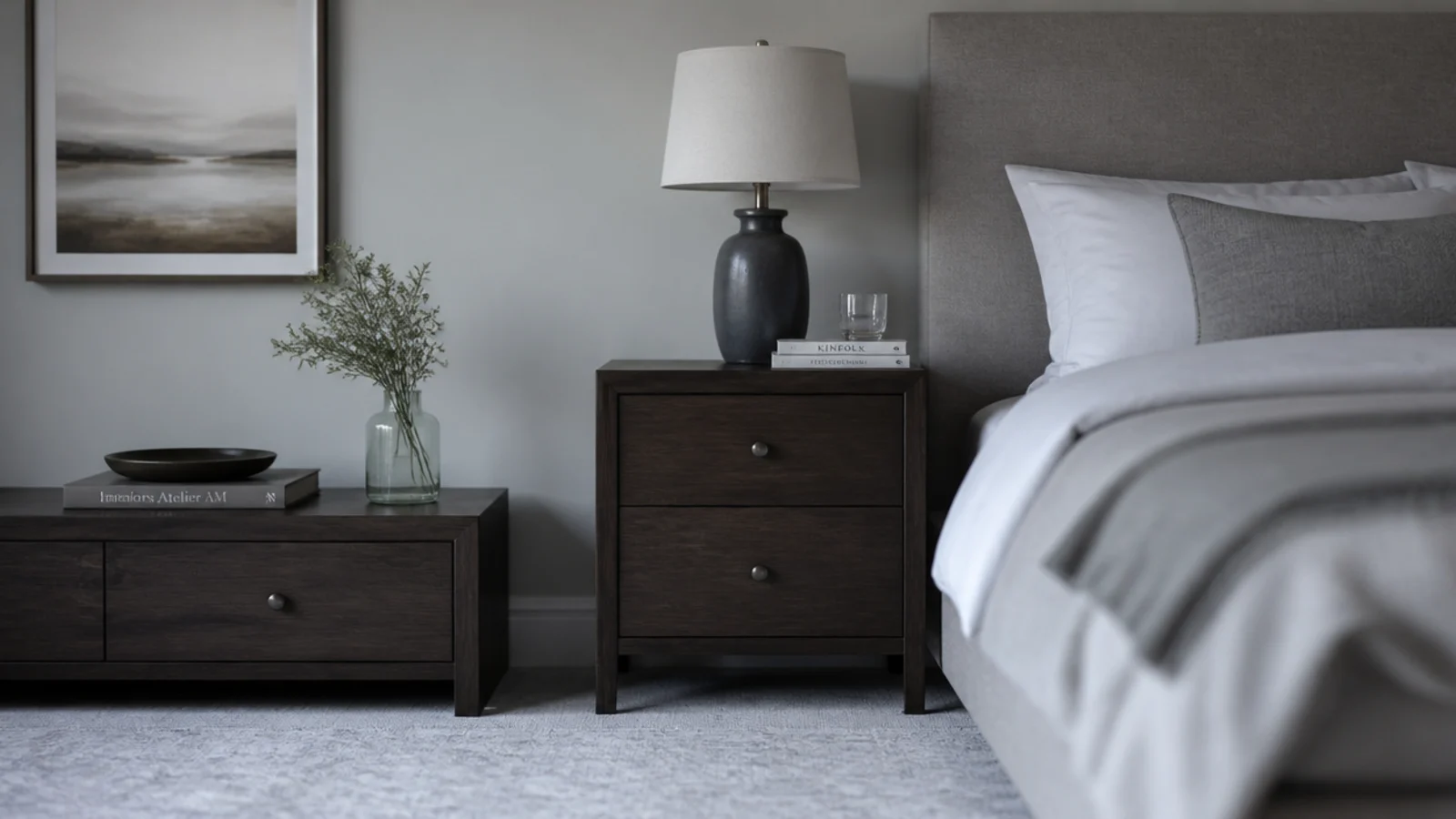
If the media chest is taller than the bedside tables, the room reads as a series of competing horizontals. Keeping the chest at or just below bedside height — usually 24 to 30 inches — settles the composition, and it keeps the screen height right at the same time.
14. Route the cable behind the drawers
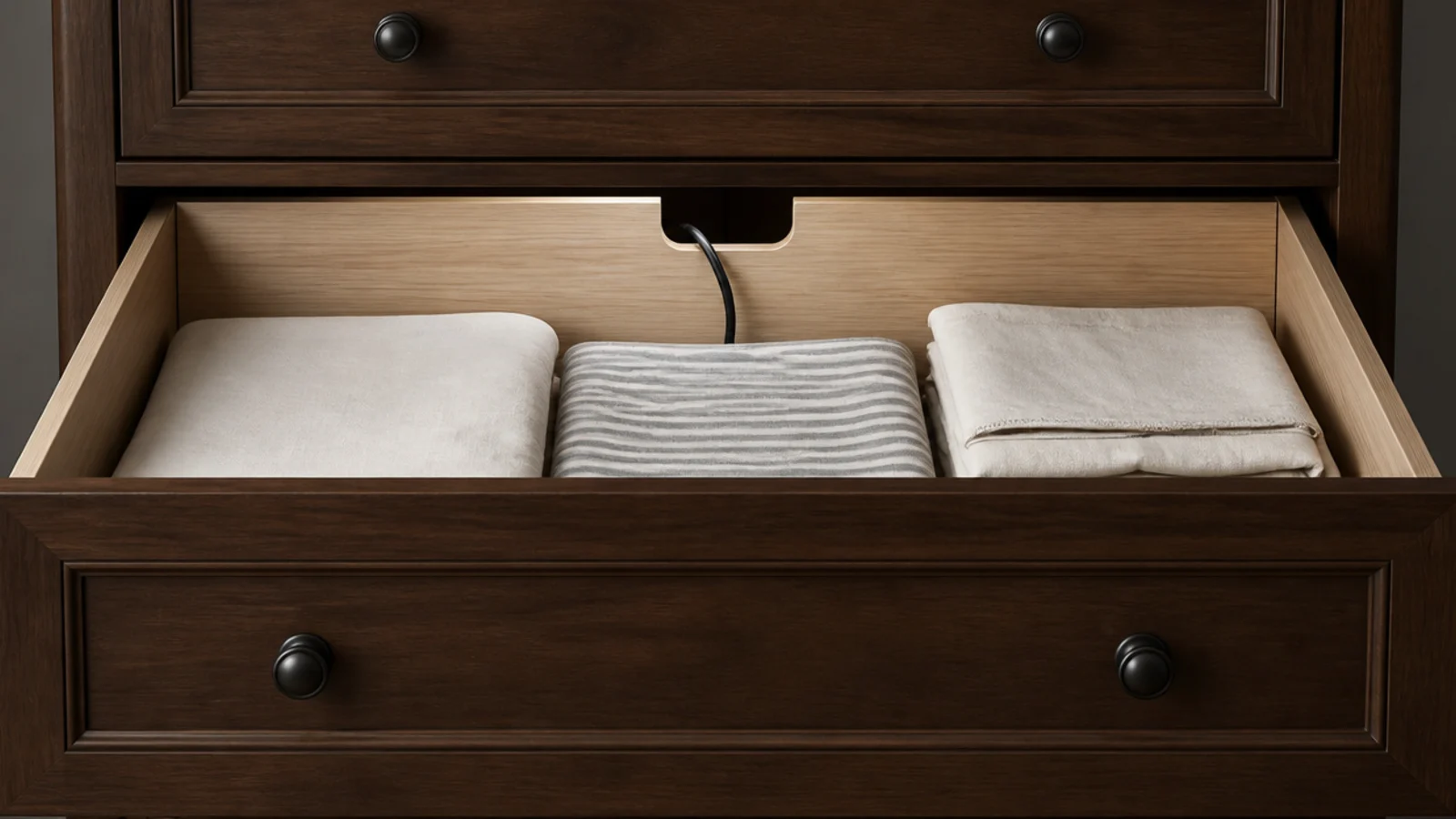
Cut a 1 inch notch in the back panel of the top drawer and feed the leads into the carcass. Keep the power strip inside the cabinet rather than on the floor. Four inches of gap between the dresser back and the wall stops connectors bending against the plaster.
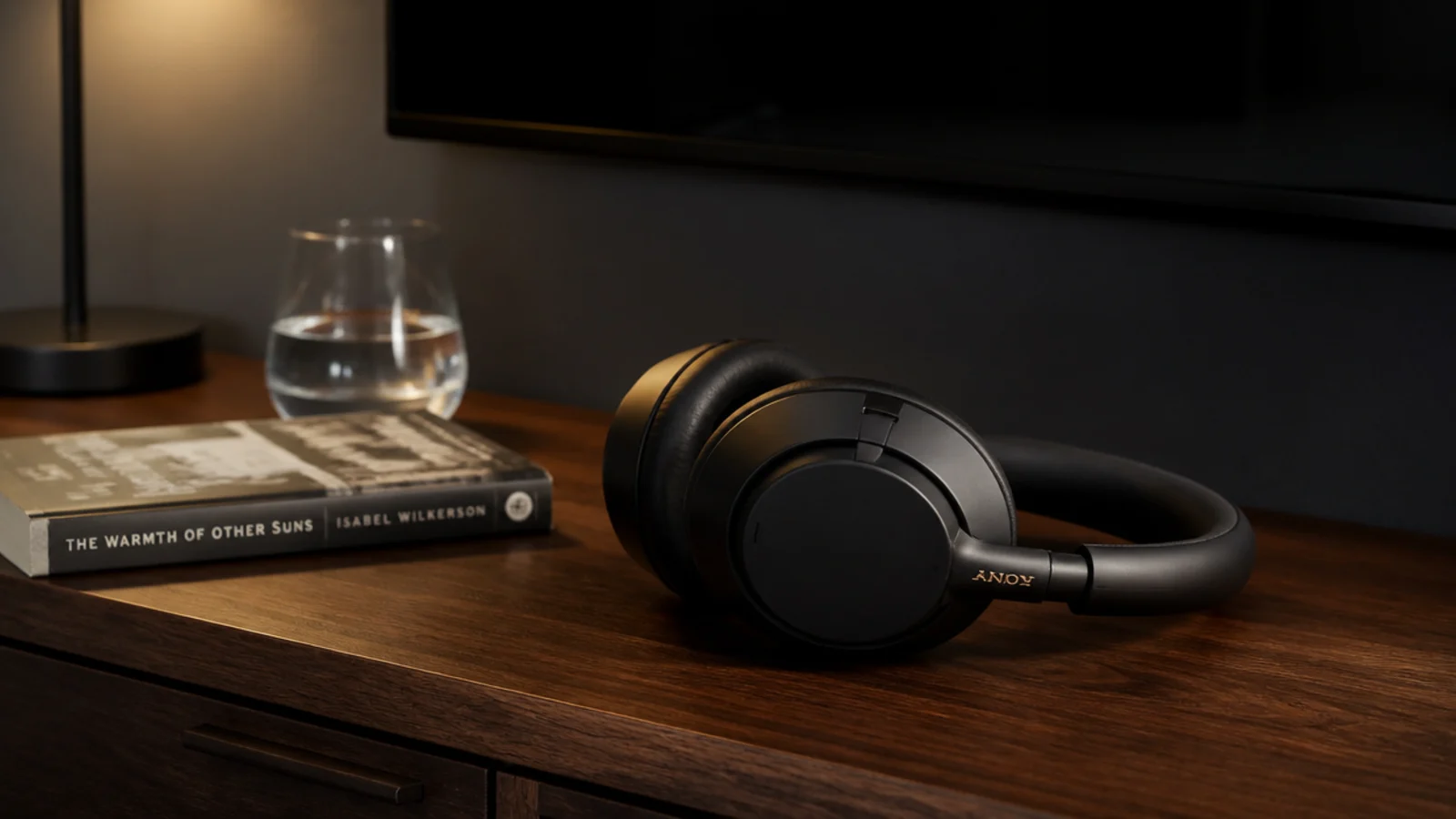
15. Choose headphones over a soundbar
A bedroom rarely needs a soundbar, and a shared bedroom actively benefits from wireless headphones instead. One person watches, the other sleeps. If you do want a bar, keep it on the dresser top rather than in a drawer, and check it does not block the screen's infrared window.
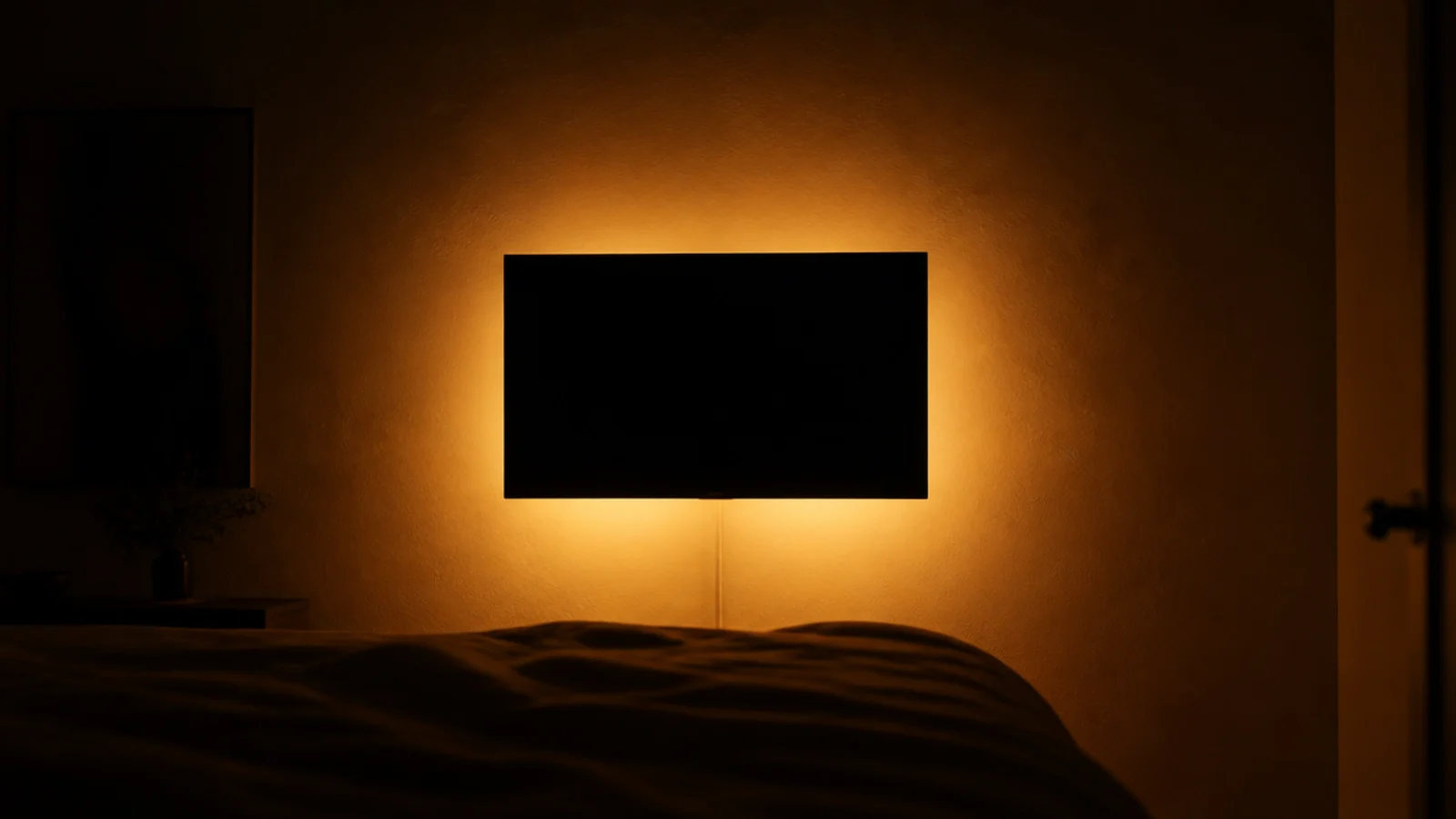
16. Use a warm bias light at low output
The living room answer is a 6500K strip. In a bedroom, a warm 2700K strip at low brightness suits the room better and does less to the eyes late at night. Face the diodes at the wall, not into the room, and run it at around 20 per cent.
17. Drop the brightness and set a sleep timer
Most televisions ship in a shop-floor picture mode that is far too bright for a dark bedroom. Switch to the filmmaker or cinema preset after dark, turn the backlight down, and set the sleep timer. It is free and it makes the room noticeably calmer at night.
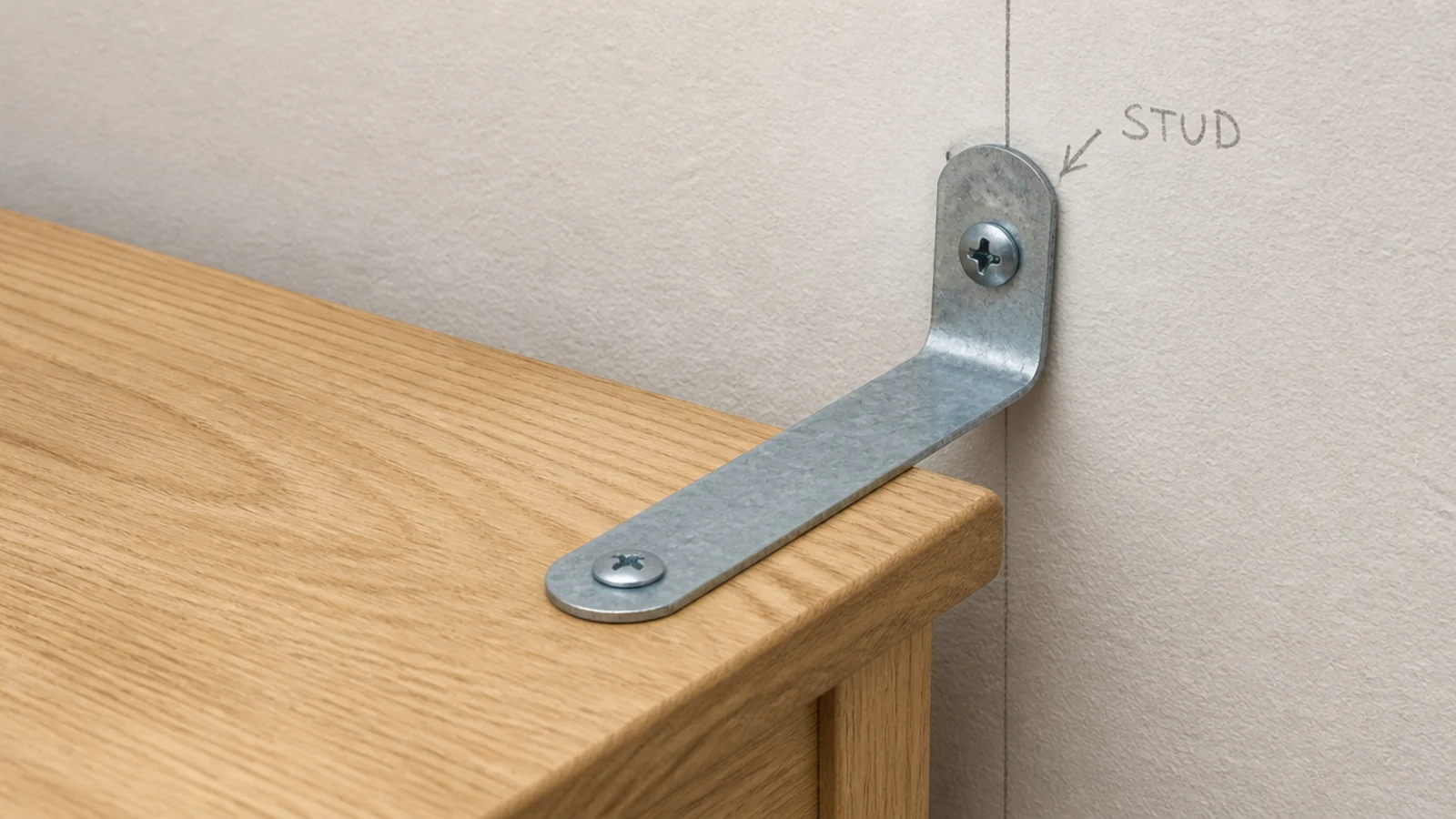
18. Strap the unit in a child or teen bedroom
Any chest or unit over about 30 inches tall in a child's room needs an anti-tip strap into a stud, and so does a television standing on furniture. Two straps cost under $15 and take five minutes. Drawers make excellent climbing frames, which is exactly the problem they cause.
19. Mount high on a shelf bracket in a tiny room
In a box room, floor space is the scarce resource. A small panel on a high bracket above the door line or in a corner keeps every square foot usable. Keep it under 32 inches so the viewing angle from the bed does not become uncomfortable.
20. Hide it behind a sliding panel
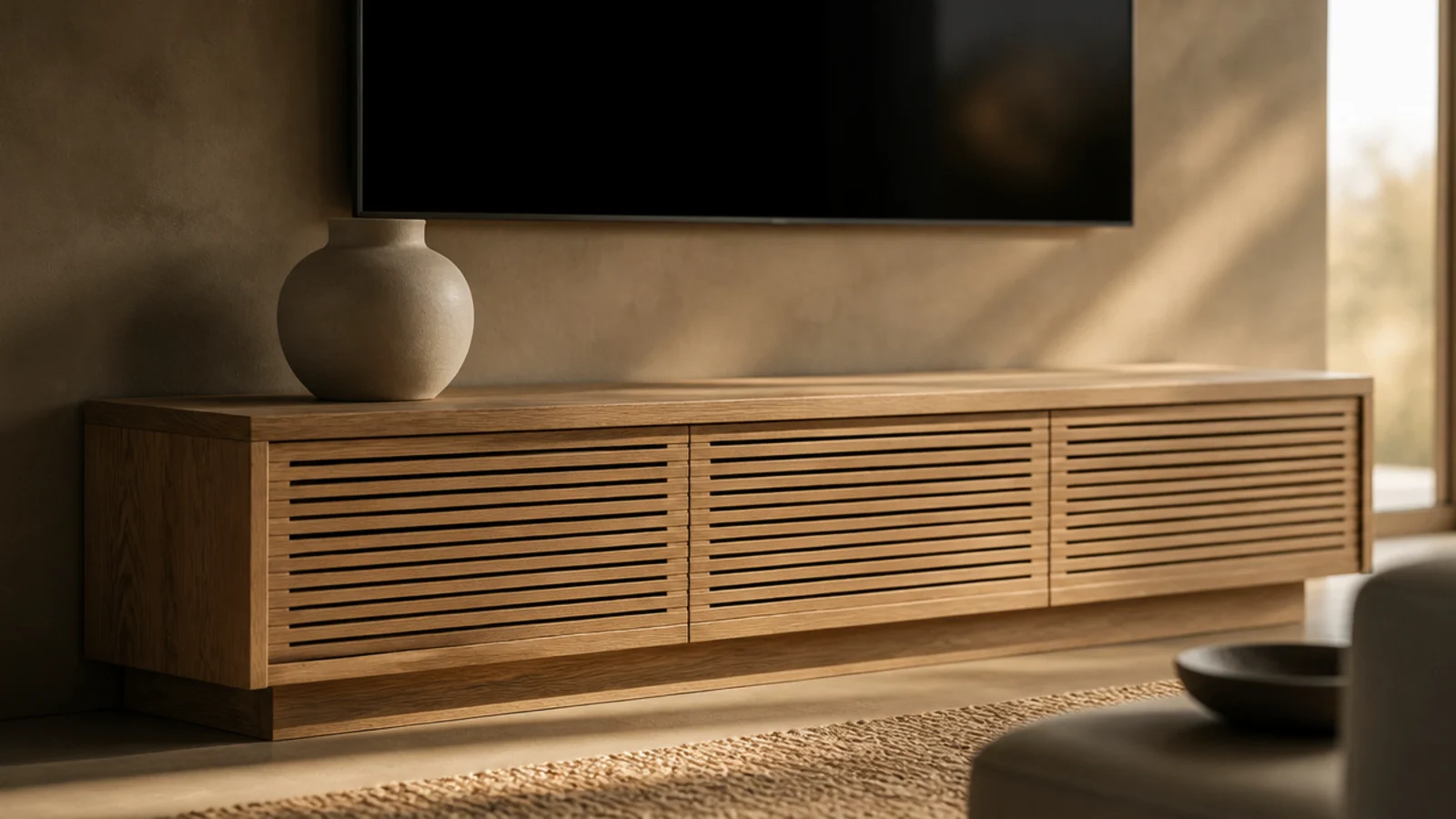
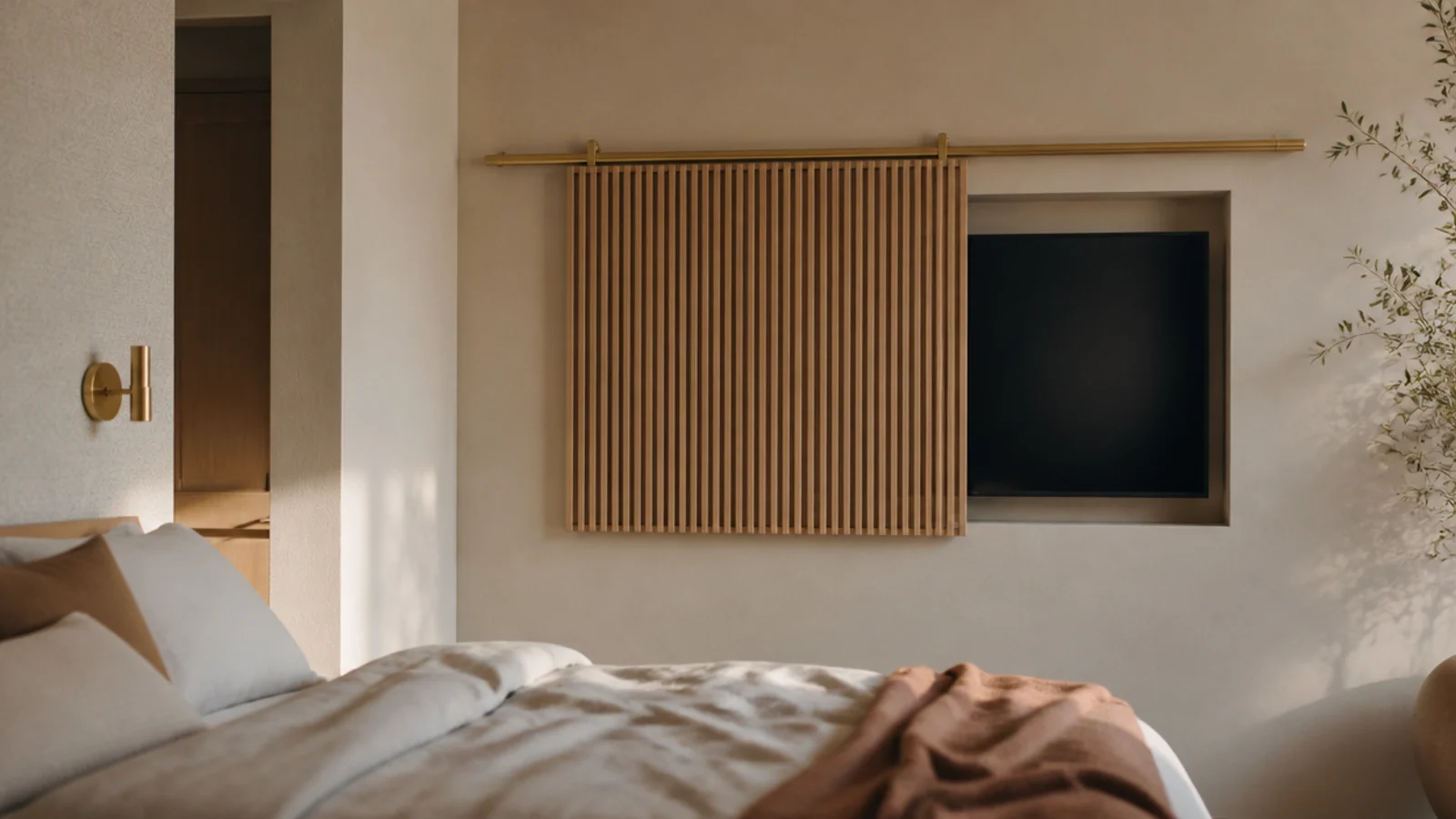
A slatted or fabric panel on a brass track slides across the recess and turns the screen back into wall. It suits a bedroom that doubles as a sitting room. Allow the panel width plus its parking space when planning the wall. The modern media wall details cover the joinery version.
For the cable and heat detail behind any of these, the clutter-hiding guide has the grommet and vent numbers. If the bedroom wall behind the bed needs work too, DIY headboard ideas covers the opposite end of the room.
Mistakes to Skip
- Hanging the screen at living room height. Forty-two inches is right for a sofa and about ten inches too low for a bed, which is the most common bedroom mistake by a distance.
- Buying the same size panel as the living room. Nine feet of viewing distance does not need 65 inches, and the extra size mostly buys neck strain.
- Choosing a deep unit for the foot of the bed. Every inch of depth comes straight out of the walkway, and 24 inches is the minimum that works.
- Leaving a tall chest unstrapped in a child's room. Drawers pull out into a staircase, and a television on top makes the tipping load far worse.
- Mounting opposite a large uncurtained window. Backlight beats any picture setting, and the fix afterwards is either curtains or a second set of holes.
Frequently asked questions
How high should a TV be in a bedroom?
Higher than in a living room, because you watch propped against pillows rather than seated upright. Centre the screen at 48 to 52 inches from the floor for a standard bed, then tilt the panel down 10 to 15 degrees so the glass faces your eyes rather than the ceiling.
What size TV suits a bedroom?
Smaller than most people buy. At the 8 to 10 feet between a headboard and the opposite wall in an average room, a 43 to 55 inch panel is comfortable. Divide the distance in inches by about 1.5 for a workable diagonal, and remember you are lying down rather than sitting back.
Can a dresser be used as a TV unit in a bedroom?
It is usually the best answer, since a bedroom rarely has room for two pieces of furniture on one wall. Keep the dresser top between 30 and 36 inches, mount the screen above rather than standing it on top, and cut a cable notch in the back of the top drawer.
How much clearance do I need around a bed with a TV unit?
Twenty-four inches of walkway along the sides of the bed and 30 inches at the foot if that is the main route to a door or a wardrobe. Measure this before choosing cabinet depth, because a 20 inch deep unit at the foot of a bed can leave a route nobody can pass through.
Is a bedroom television bad for sleep?
Bright, cool light late at night makes it harder to settle. Drop the picture brightness after dark, use the sleep timer, add a warm bias light behind the panel rather than a cool one, and keep the screen off the wall you face while falling asleep if you can.
Want more like this? Browse all 15 tv unit decor guides — they all use the same measurements and budget tiers.
Pin it for later
Save this to your TV Unit Decor board
Pin it now so it is waiting for you when the tape measure comes out — and so the next person hunting for this idea can find it too.
Save this pinKeep going
More ideas worth saving while you have the tape measure out.