TV Unit Decor · Listicle
25 Simple TV Unit Decor Picks For Small Rooms

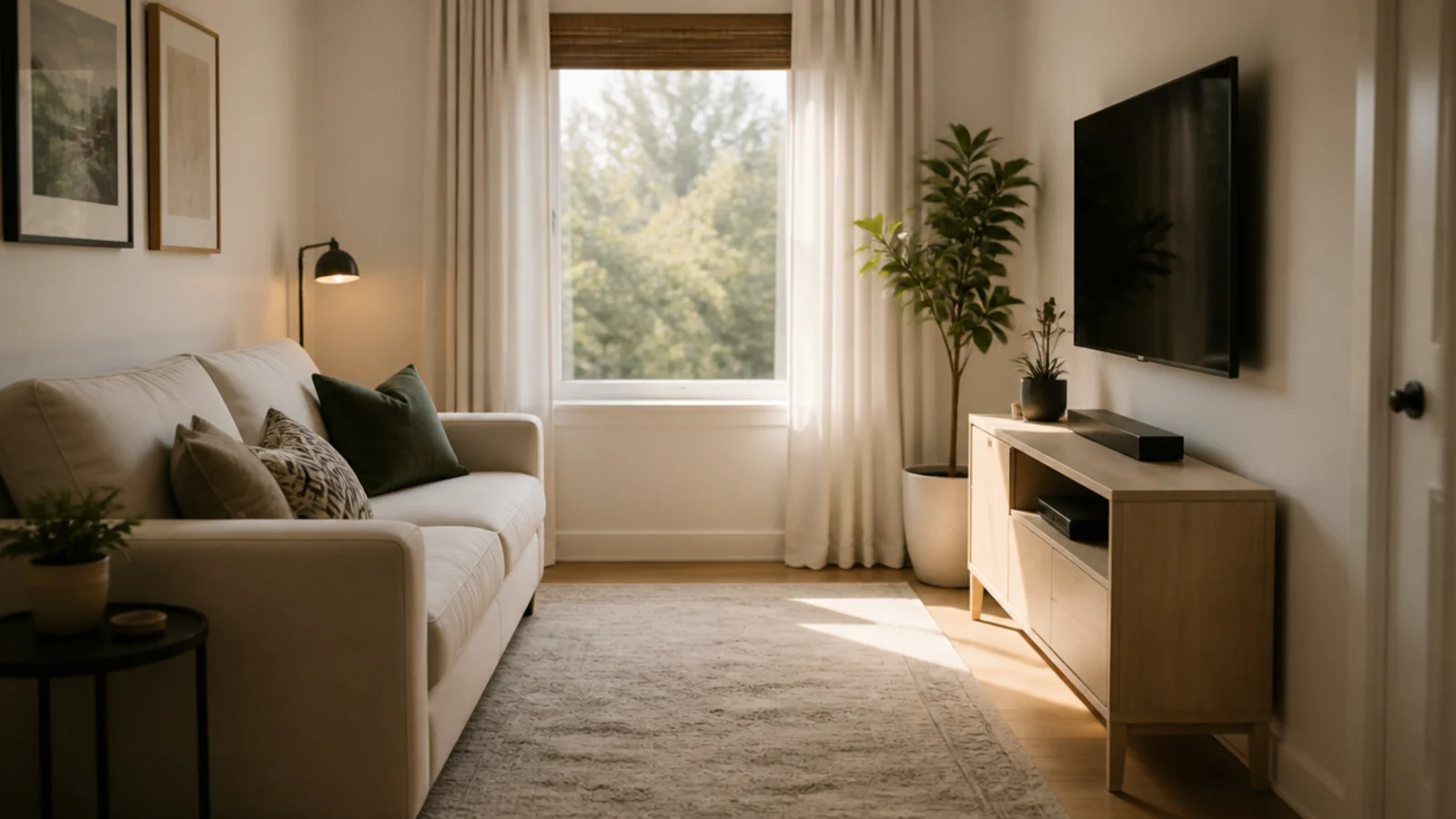
Small rooms punish depth more than anything else. A cabinet two inches deeper than it needed to be takes those two inches out of the only route across the floor, and no amount of styling gets them back. Simple TV unit decor works in a compact living room because it starts with the walkway, the seating distance and the screen size, then buys the smallest piece of furniture that does the job. Here are twenty-five picks that fit rooms where a foot of floor is a real number.
In this guide27 sections — tap to openHide
- 1.What simple TV unit decor gets wrong in a small room
- 2.A forty-eight-inch unit under a forty-three-inch screen
- 3.A floating shelf instead of a cabinet
- 4.The twelve-inch deep console
- 5.Wall-mount the screen and skip the stand
- 6.Two sturdy crates side by side
- 7.A low bench with baskets underneath
- 8.A corner unit with an angled back
- 9.A slim sideboard doing two jobs
- 10.One drawer above one open shelf
- 11.Paint the unit the exact wall colour
- 12.Bracket the soundbar under the screen
- 13.Use the wall above rather than the floor below
- 14.Choose legs over a solid plinth
- 15.Keep the unit pale so the wall recedes
- 16.One basket for everything loose
- 17.Paint out the cable raceway
- 18.Swap glass doors for cane
- 19.Do not buy a unit narrower than the screen
- 20.A rolling cart in a studio flat
- 21.A wall-hung drawer at eight inches deep
- 22.Retire the media tower
- 23.Hang the mirror opposite, never behind
- 24.Use bias light rather than a table lamp
- 25.Round the corners where people squeeze past
- 26.Two objects on top, and no more
- 27.Mistakes to Skip
What simple TV unit decor gets wrong in a small room
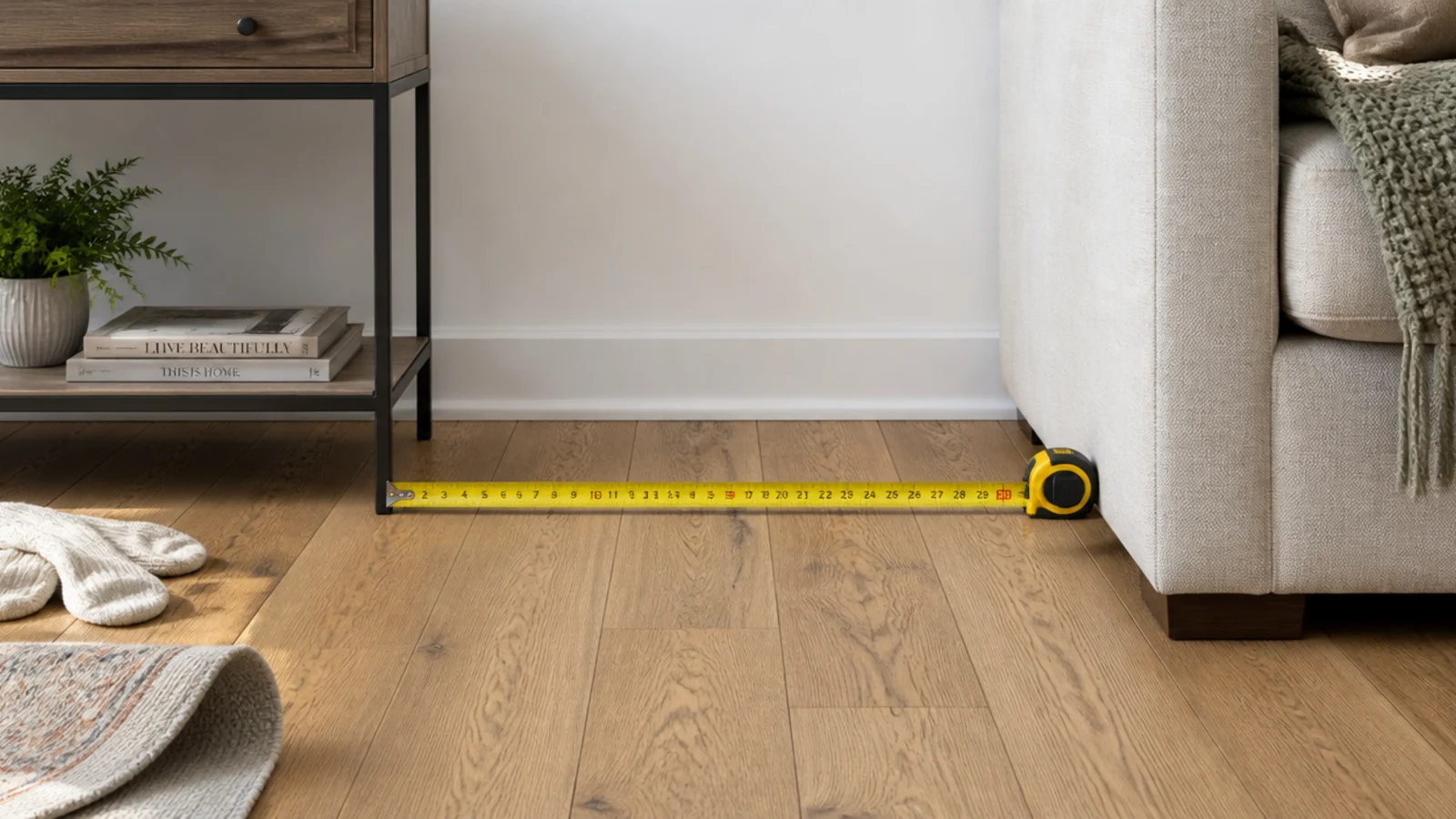
Measure the route first. Thirty inches of clear floor is what a person needs to walk past comfortably, and 14 to 18 inches is enough where they only reach across to a coffee table. Whatever is left after that is your maximum cabinet depth, and in most small living rooms it lands at 12 to 15 inches.
Then check the screen against the seating distance, not against the wall. Divide the viewing distance in inches by roughly 1.5 for a workable diagonal — at 7 feet that is a 55 inch panel, at 5 to 6 feet a 43 to 50. A 65 inch screen at six feet fills more of your vision than a cinema front row.
Then set the heights. Screen centre at 40 to 42 inches, cabinet top at 16 to 20. A 43 inch television is about 37.5 inches wide, so a 48 inch unit reads correctly and a 60 inch one starts to swamp the wall. Compact units run $90 to $250, a floating shelf under $40 in materials. For the wall itself, the TV wall guide covers paint and panelling in tight rooms.
1. A forty-eight-inch unit under a forty-three-inch screen
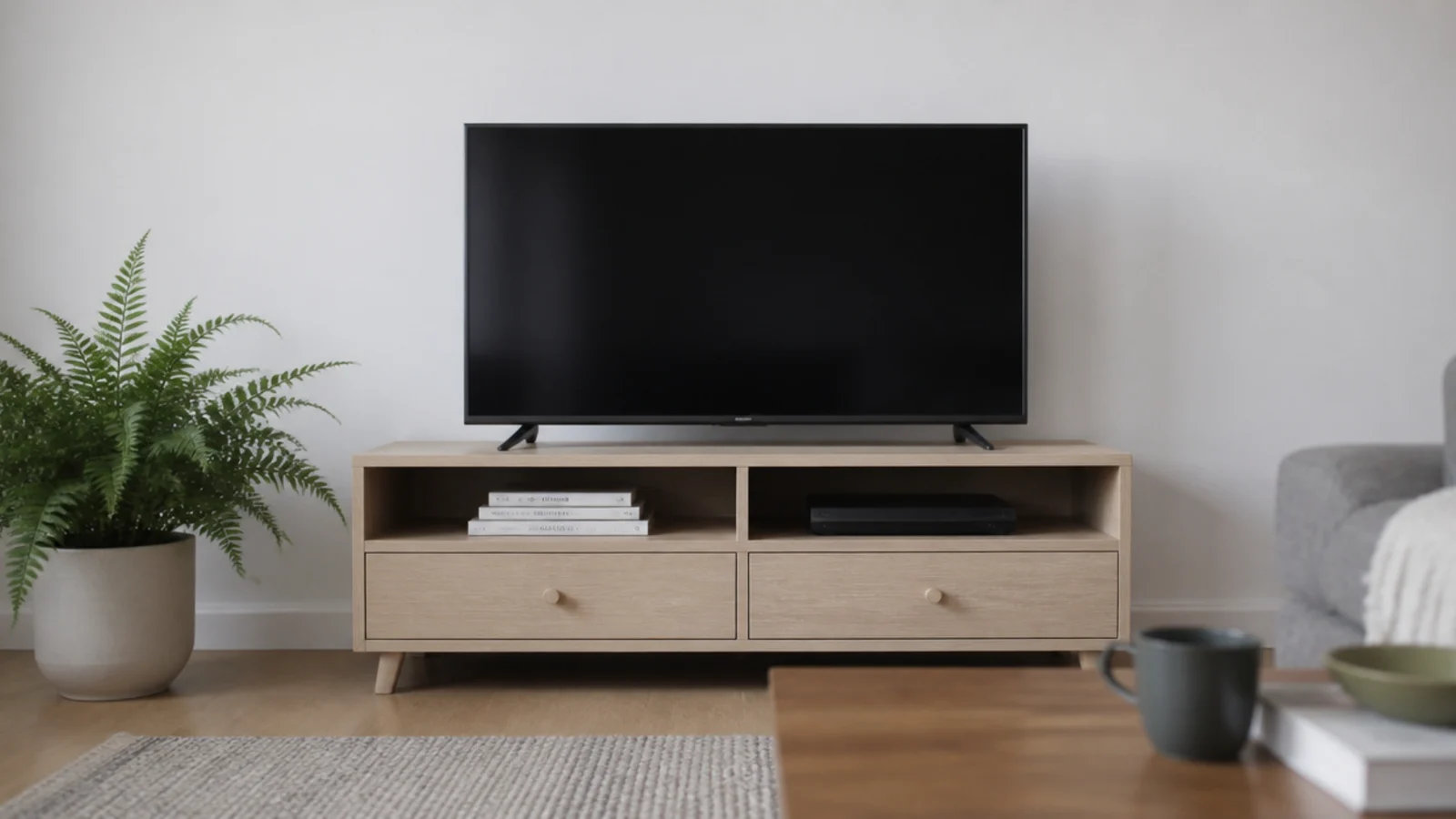
The cabinet should beat the screen width by about 12 inches in total and stop well short of the wall ends. For a 43 inch panel measuring 37.5 inches across, a 48 inch unit gives you 5 inches showing each side. It is the proportion that makes a small wall look deliberate rather than crowded.
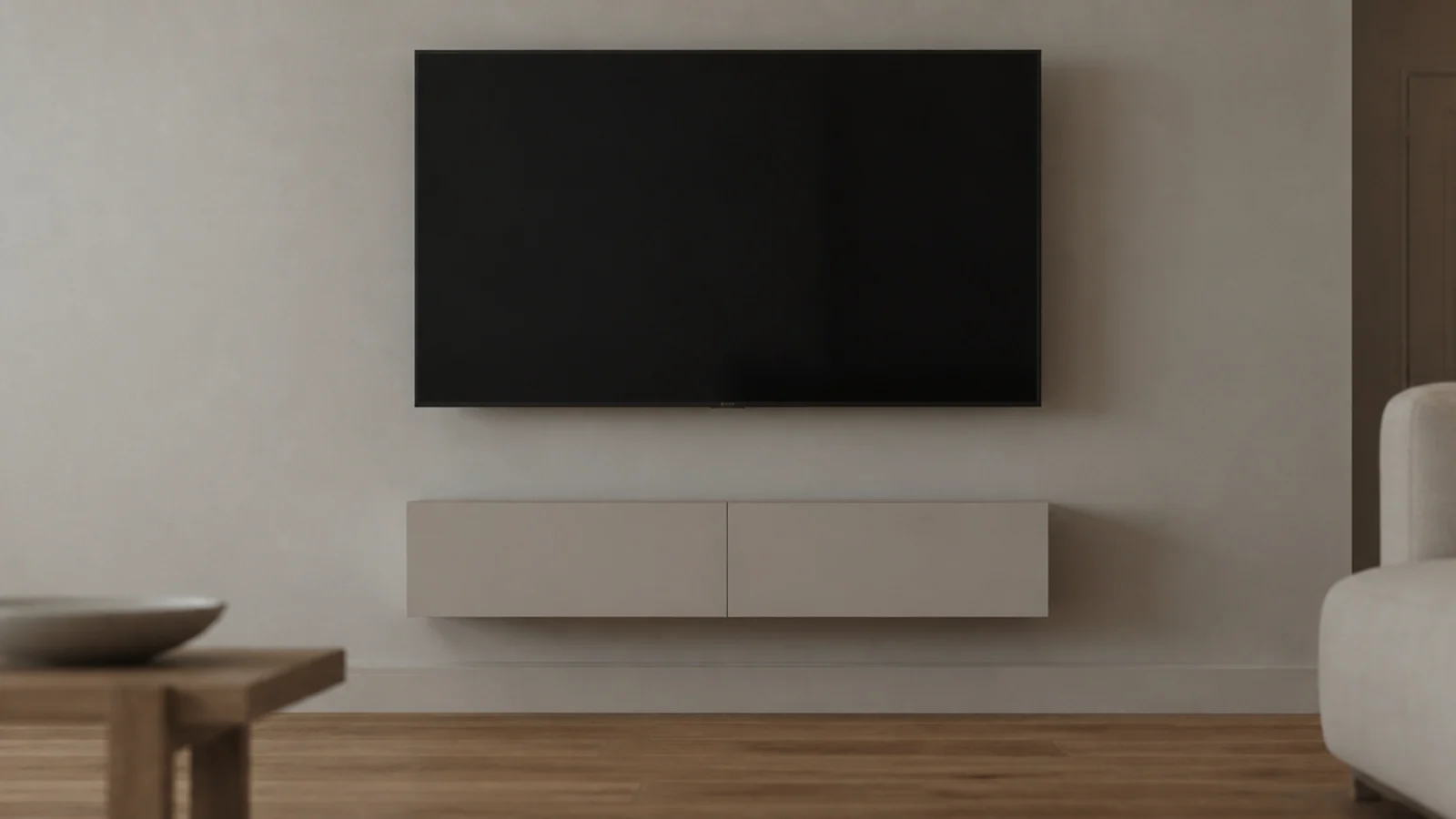
2. A floating shelf instead of a cabinet
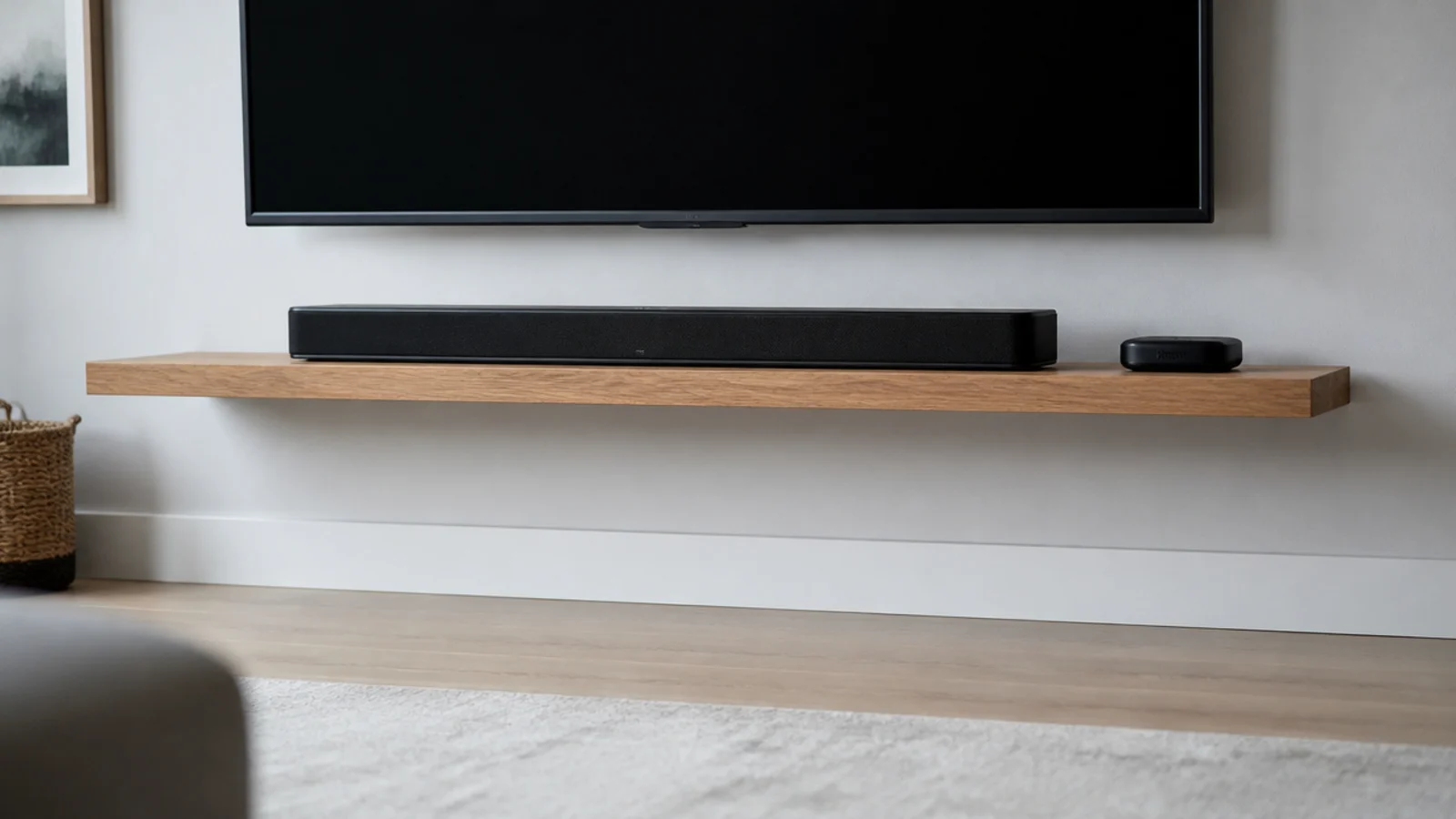
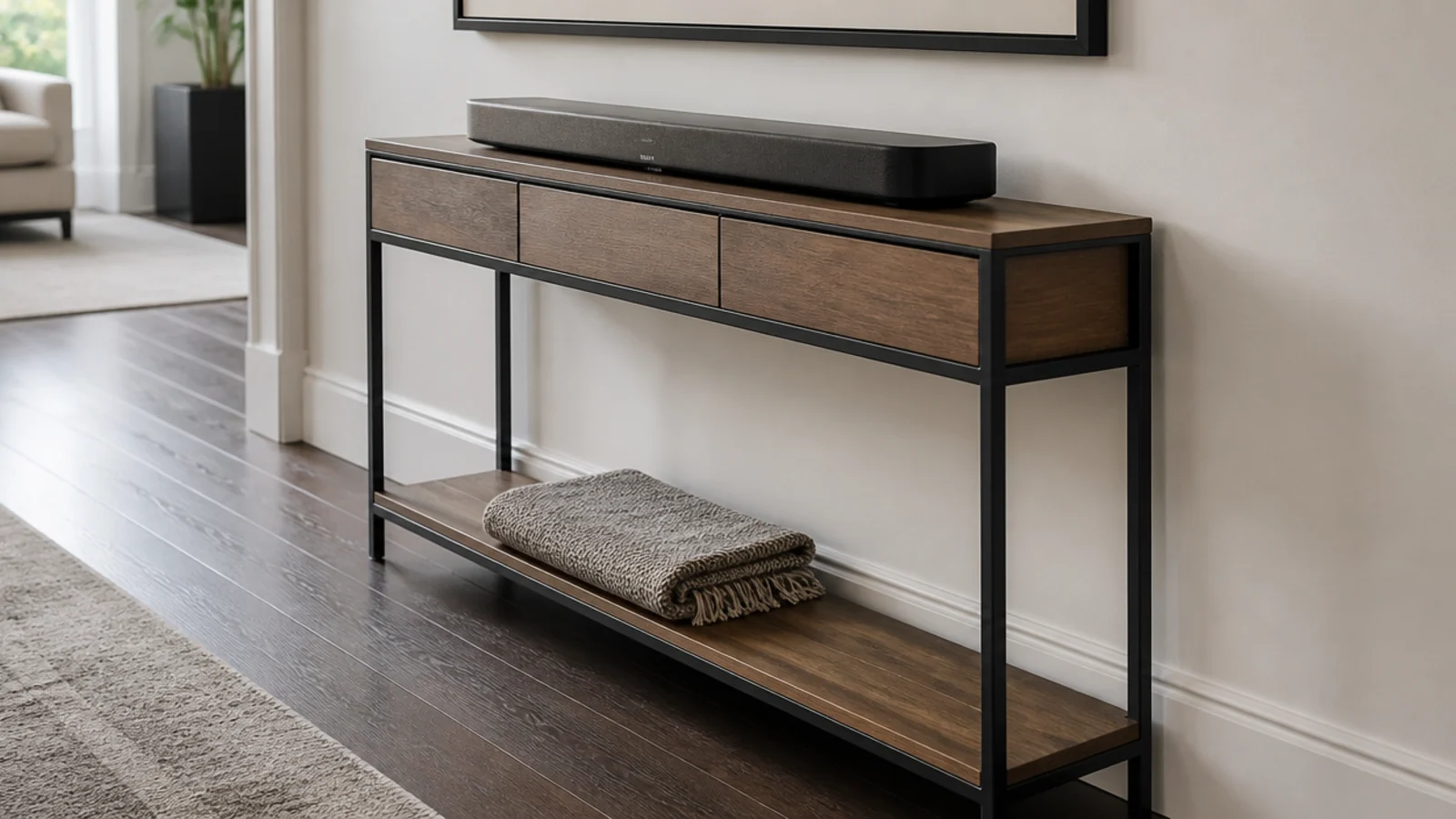
One 12 inch deep shelf fixed into studs carries a soundbar, a streaming box and nothing else, which is genuinely all most rooms need. Eighteen millimetre ply spans 30 to 32 inches under 30 pounds without visible dip. The floor stays completely clear, which is what actually makes a room feel larger.
3. The twelve-inch deep console
Twelve inches is the sweet spot for tight rooms: deep enough for a 4 inch soundbar and two slim boxes, shallow enough to leave a real walkway. Anything under 12 inches deep and over 30 inches tall should be strapped to the wall, because the footprint stops being stable.
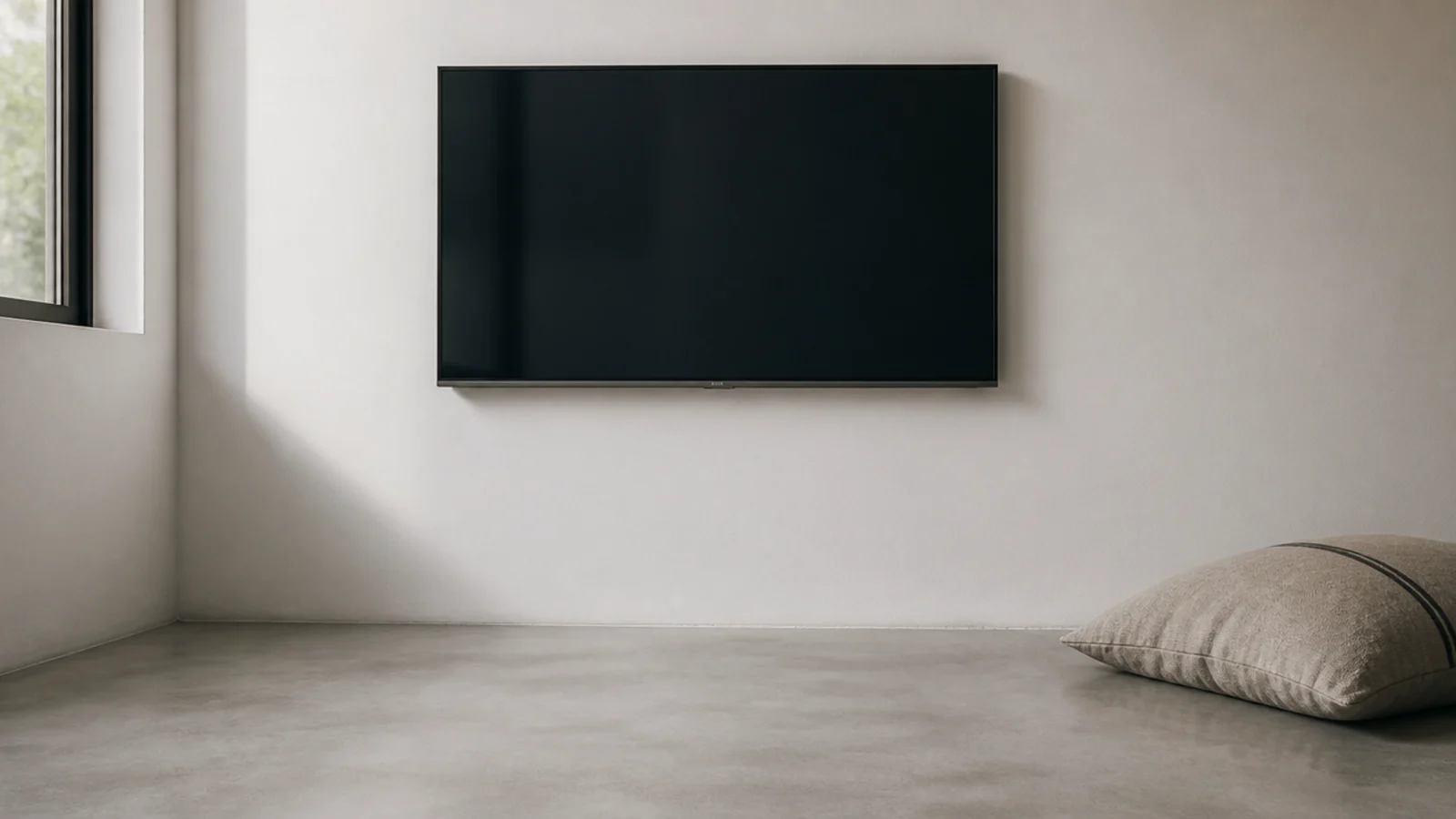
4. Wall-mount the screen and skip the stand
A low-profile bracket holds a panel about 2 inches off the plaster and costs $25 to $60. Removing the furniture entirely is the single biggest visual gain available in a small room. Fix into two studs at 16 inch centres — a 55 inch television runs 30 to 45 pounds before the bracket.
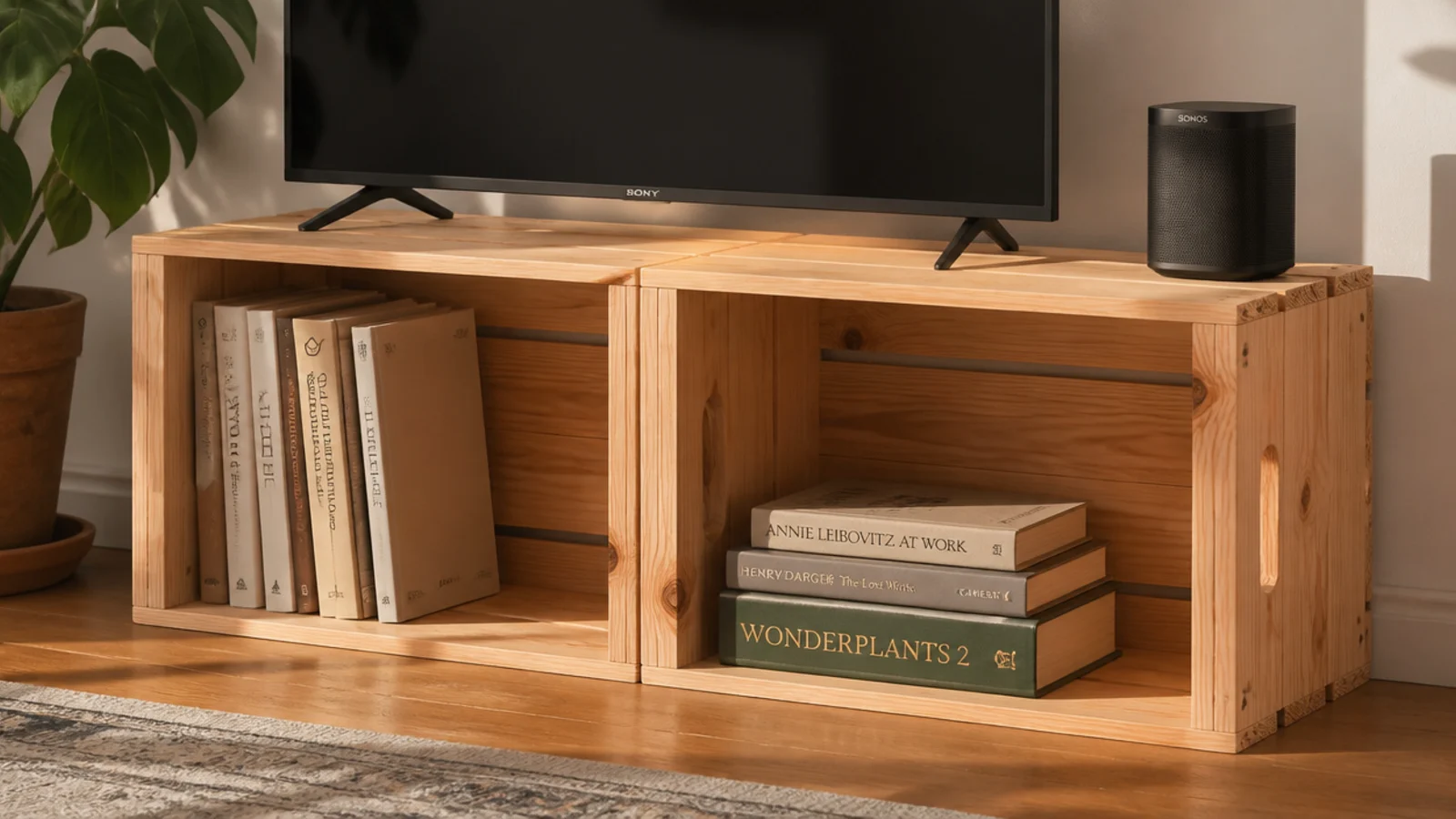
5. Two sturdy crates side by side
Two solid crates on their sides make a 30 to 36 inch base with built-in cubbies for around $40. Add felt pads underneath so they slide rather than scratch, and screw them to each other so the top stays level. It is a genuinely good rental answer, not a compromise.
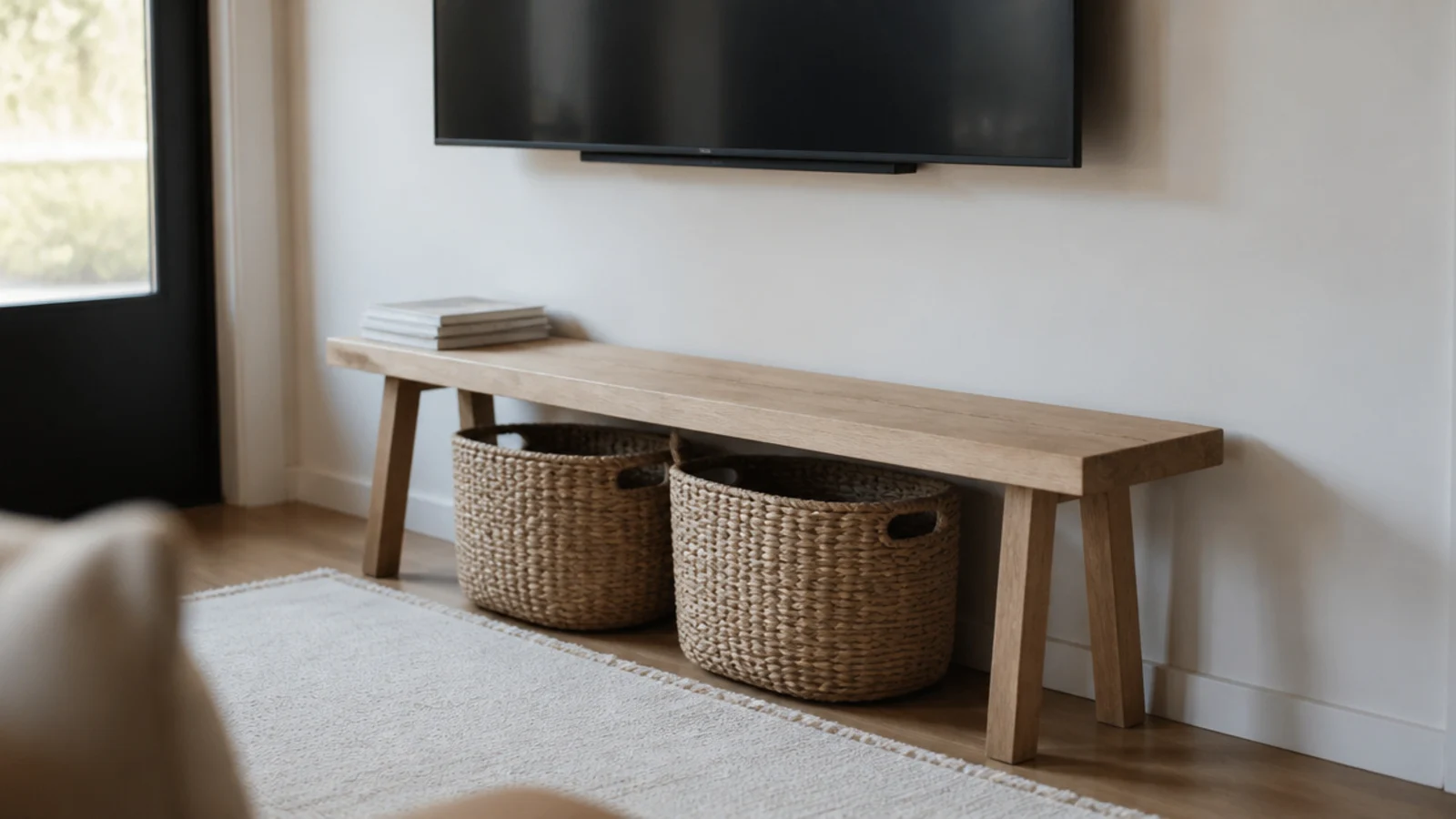
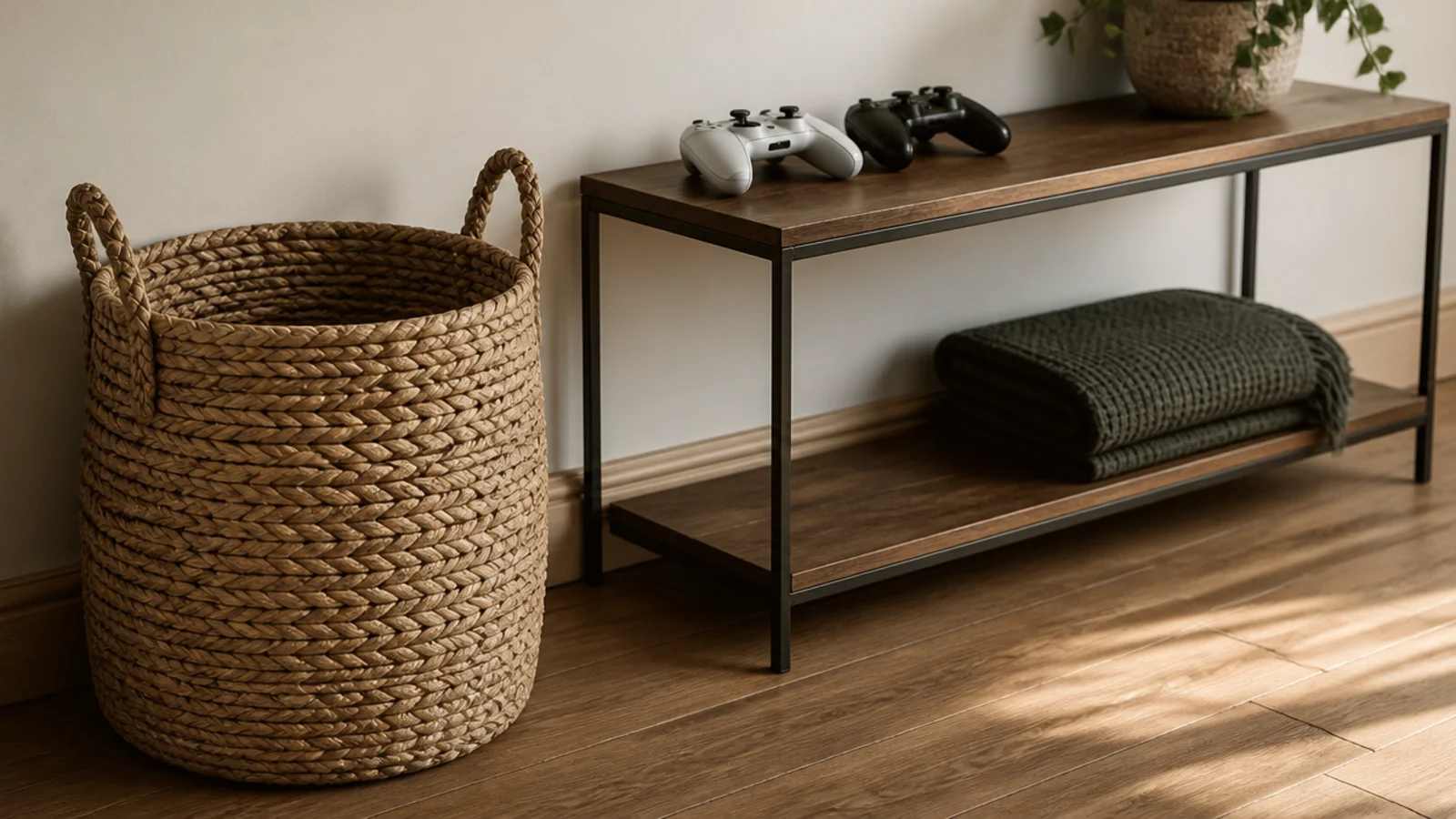
6. A low bench with baskets underneath
A 12 inch deep bench has no doors to swing into a walkway, which matters more in a small room than storage does. Two baskets pushed underneath take the blankets and the controllers. Measure the opening and buy baskets an inch smaller in each direction so they slide out one-handed.
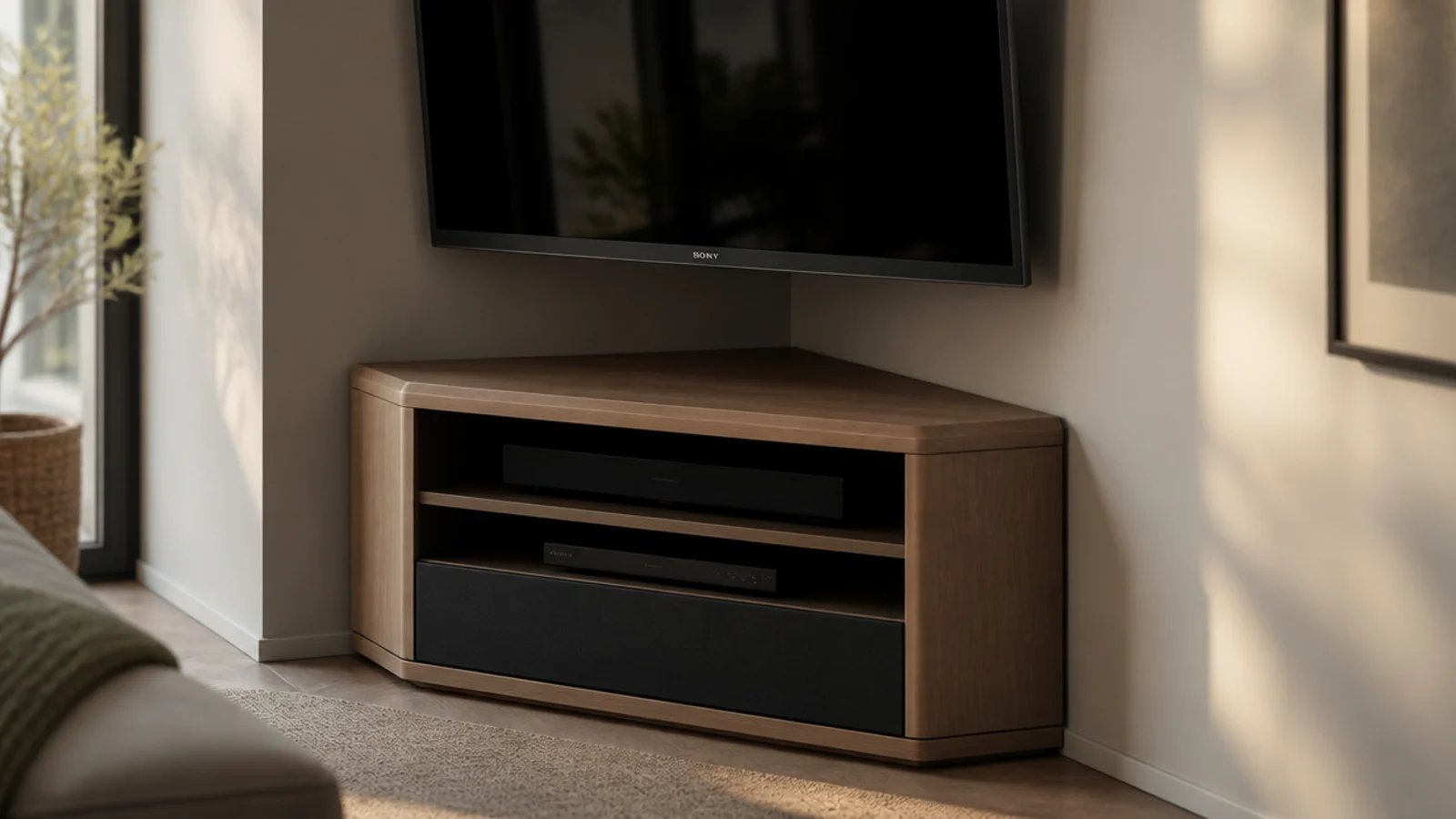
7. A corner unit with an angled back
A chamfered back lets a unit sit tight into the corner and uses the one area a rectangular room usually wastes. It works where the sofa faces a corner rather than a wall. Measure the diagonal across the corner first, and check the screen can still angle out without touching either wall.
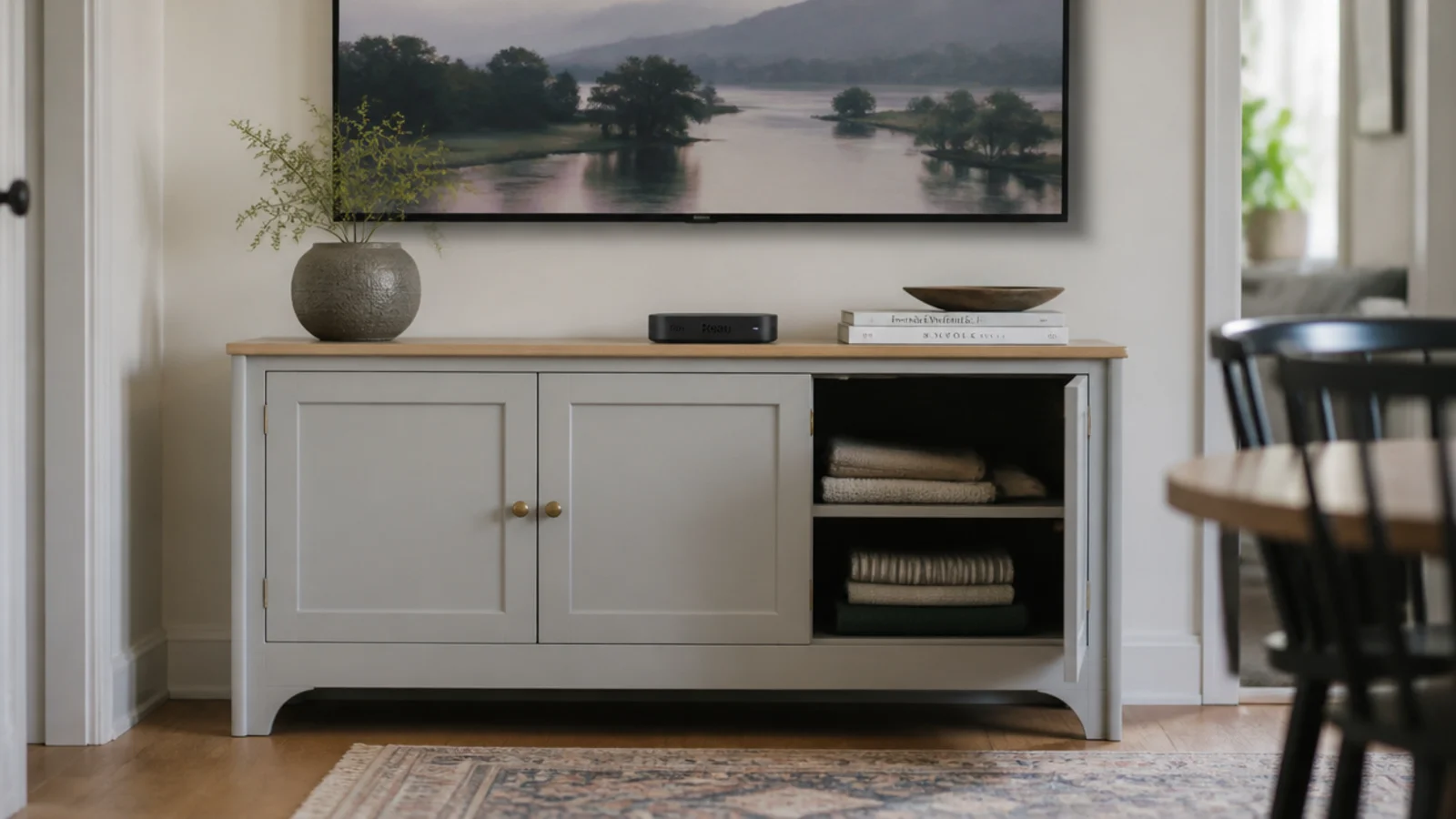
8. A slim sideboard doing two jobs
In a room with no separate storage, a 15 inch deep sideboard can carry media gear on one side and household things on the other. It also stands at a useful height for a lamp. Keep the top at 20 to 30 inches and hang the screen above rather than standing it on top.
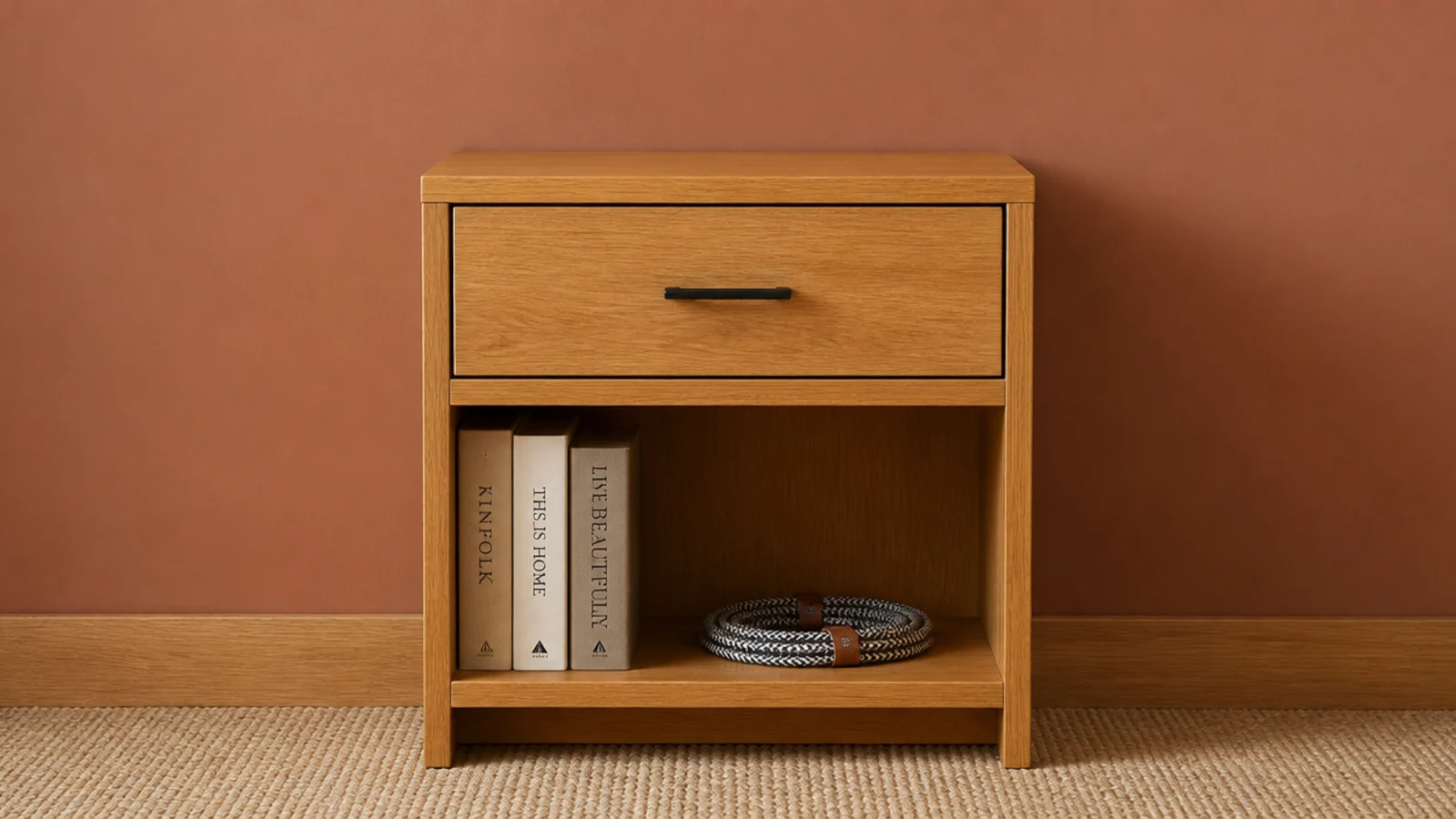
9. One drawer above one open shelf
The best small-format layout there is. The closed drawer takes cables, remotes and the small ugly things; the open shelf below holds books you are actually reading. The whole piece stays under 16 inches deep and reads far lighter than a two-door cabinet.
10. Paint the unit the exact wall colour
The cheapest way to make a cabinet stop competing for attention. Match the colour and the sheen, not just the colour — an eggshell unit against matt plaster is close enough that the eye stops separating them. It costs about $25 in paint and an afternoon.
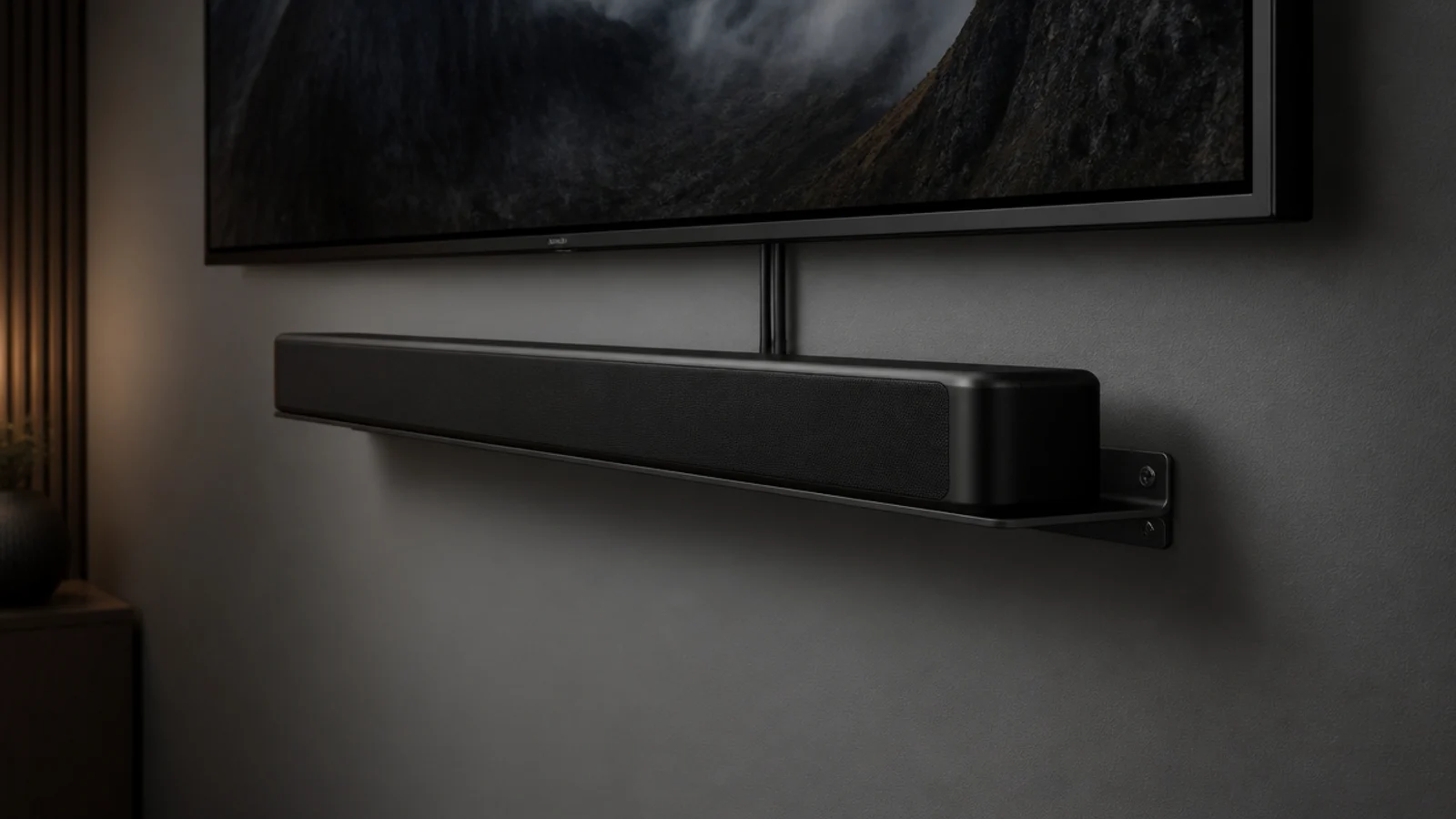
11. Bracket the soundbar under the screen
A soundbar bracket costs $15 to $30 and hangs the bar within a couple of inches of the screen's bottom edge, which is where it should be anyway. That frees the entire shelf below and removes one more object from a surface that has very little room to spare.
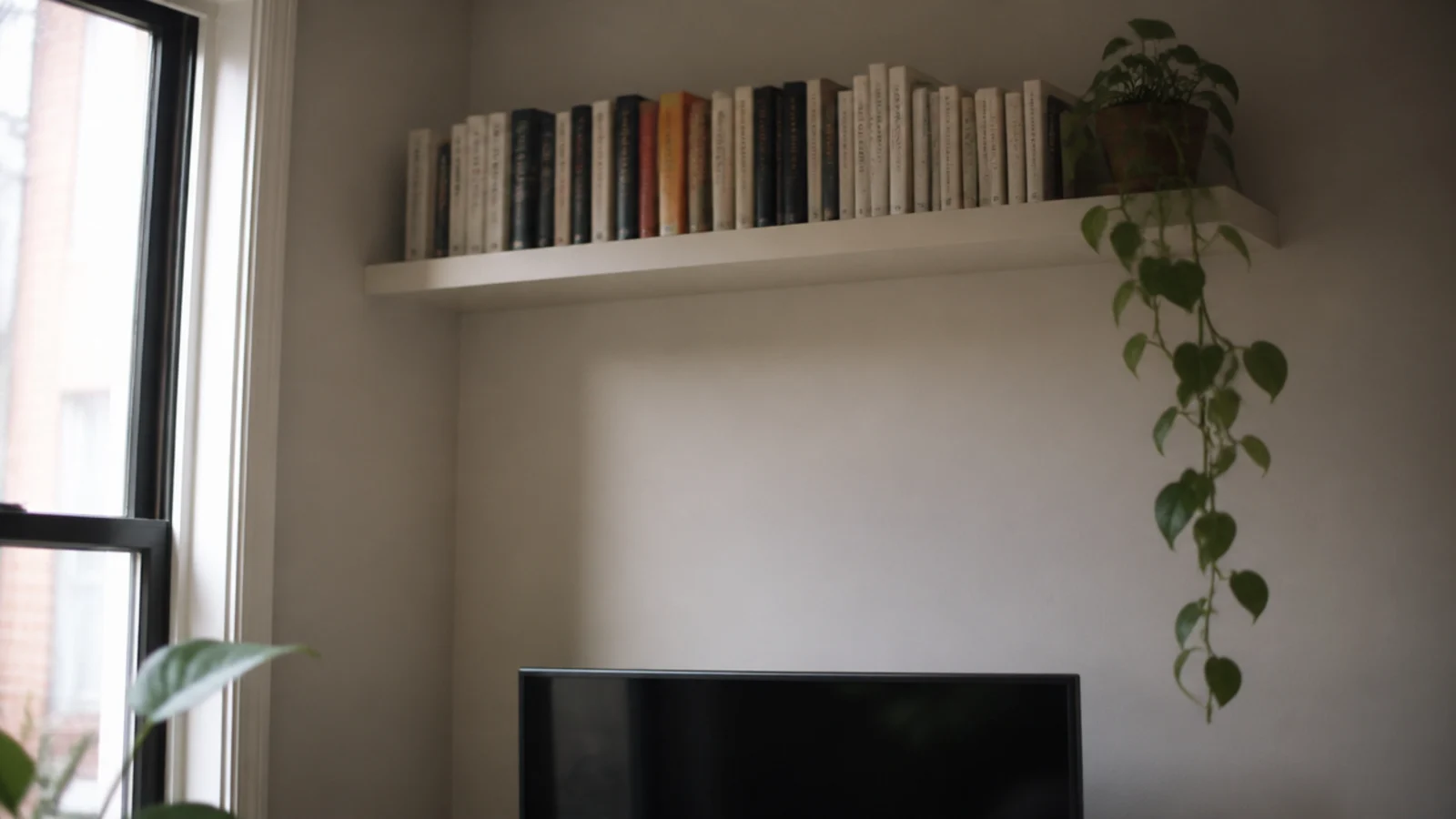
12. Use the wall above rather than the floor below
A shelf fixed 10 to 12 inches above the screen holds books and a plant on space that costs nothing. Keep anything on it light and non-breakable, and keep the tallest object under 16 inches so it does not crowd the panel from a seated view.
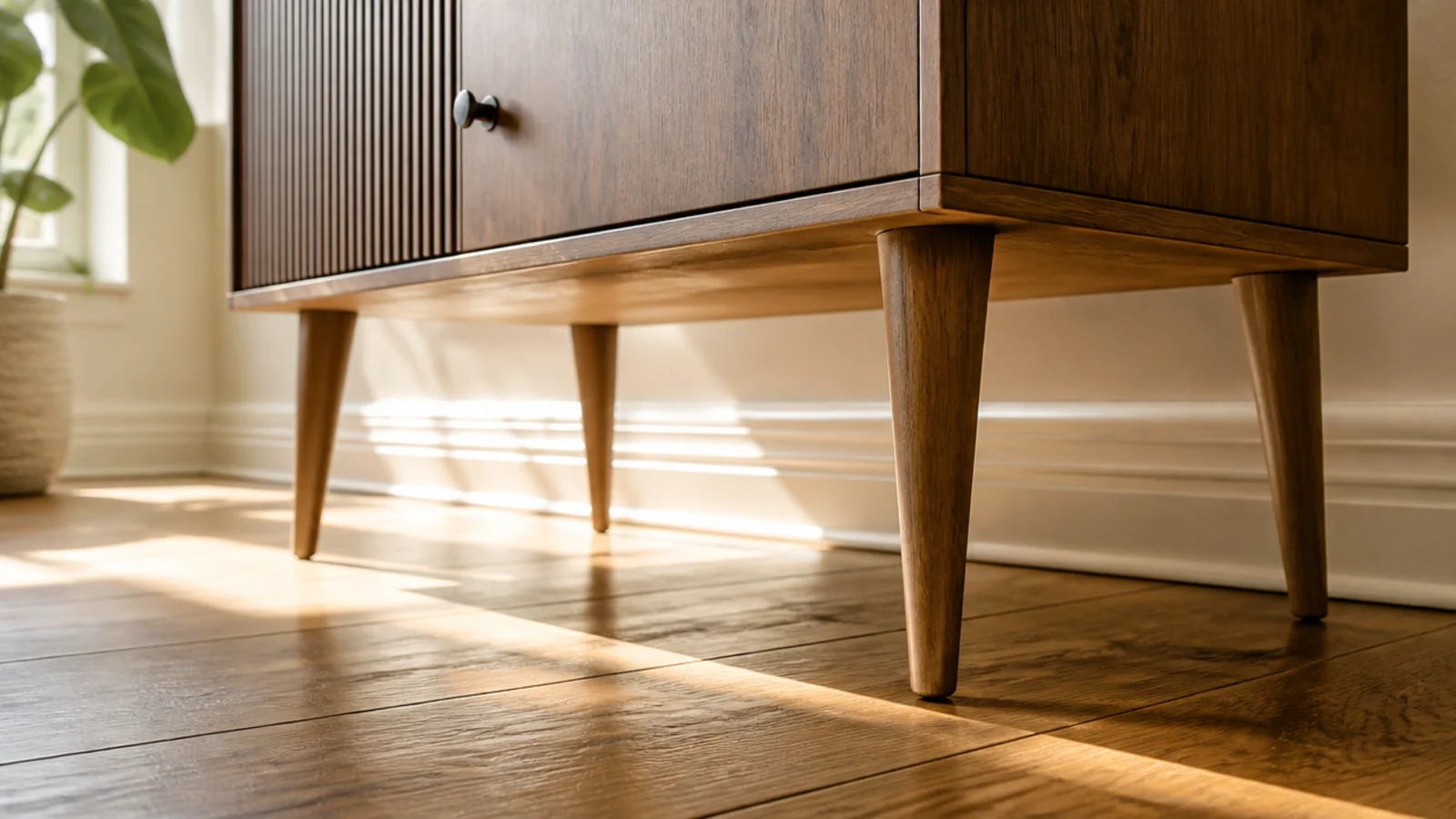
13. Choose legs over a solid plinth
Four slim legs let light and floor run underneath, and the eye reads the extra floor as extra room. A plinth does the opposite. If the piece has to be a box, recess the base by 6 to 10 mm so it at least gains a shadow line.
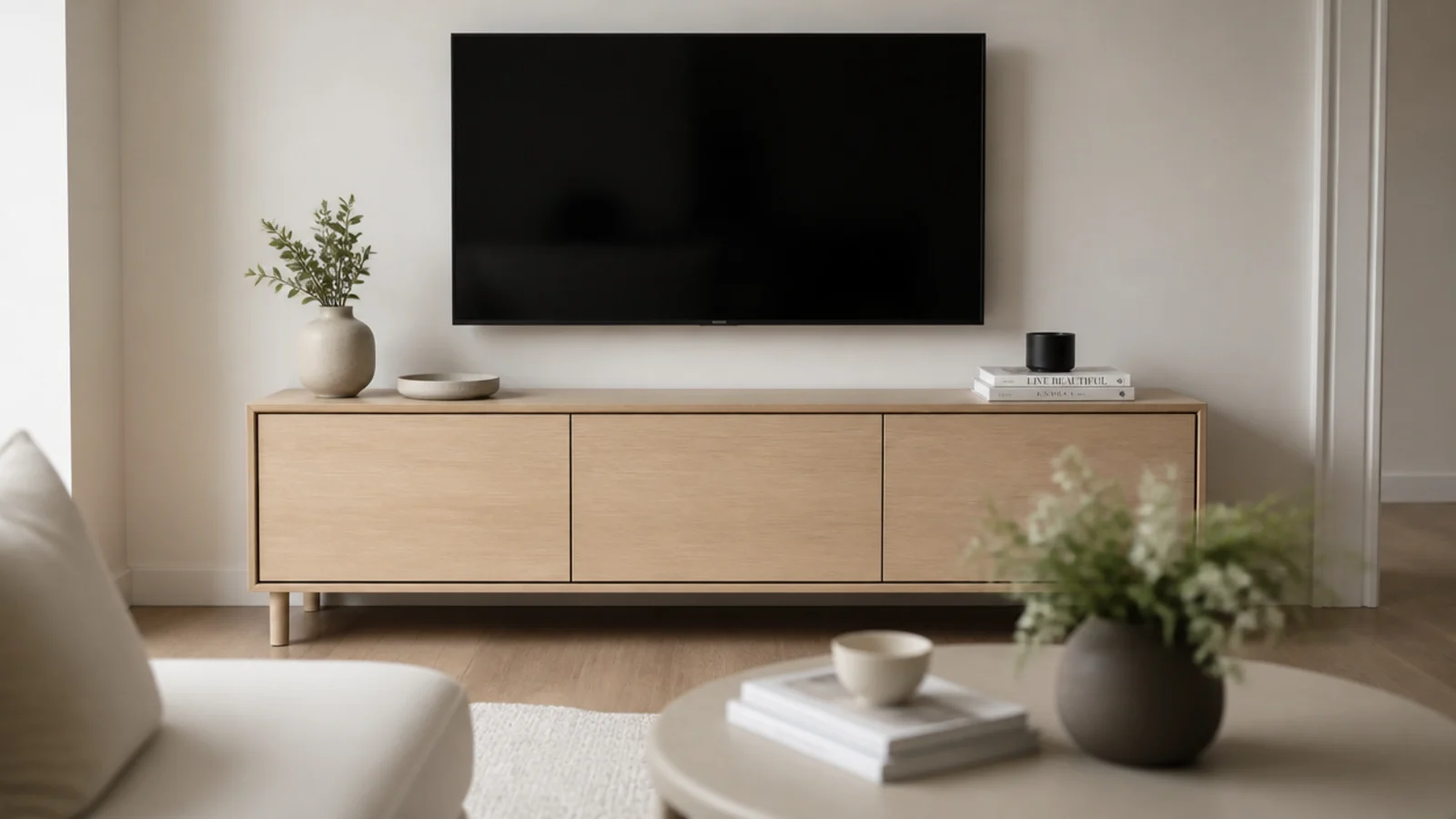
14. Keep the unit pale so the wall recedes
Dark furniture advances and pale furniture retreats, which matters a great deal on a wall you sit six feet from. Bleached oak, off-white and soft greige all keep the wall reading as background. Save the dark tone for one small object instead.
15. One basket for everything loose
A single 16 to 18 inch basket takes the blanket, the controllers and the charging cables in one move. Five small containers create five decisions; one large one creates none. Choose a soft weave so it forgives being overfilled on a Friday night.
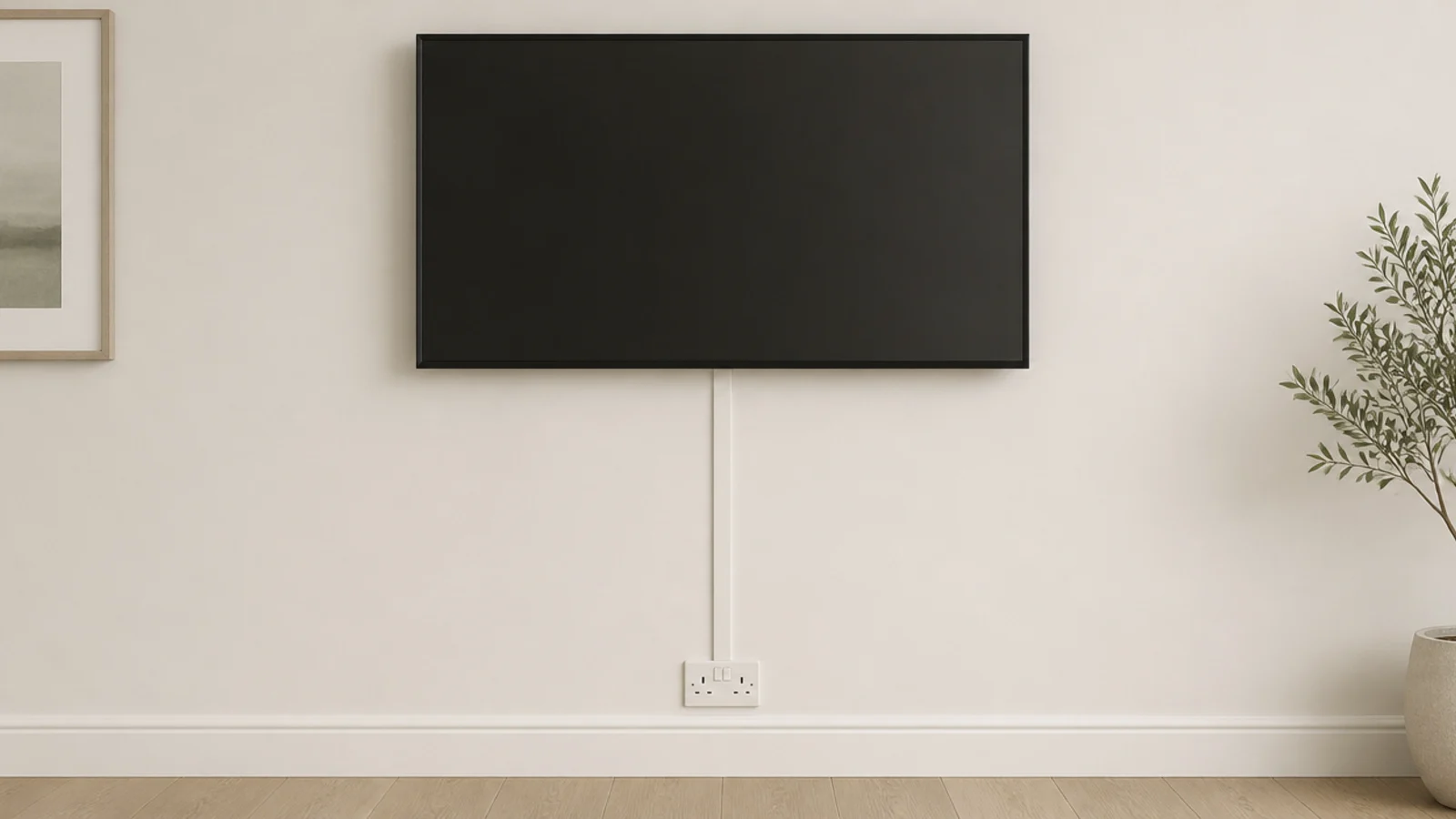
16. Paint out the cable raceway
A 1.5 inch raceway swallows six to eight cables and costs under $20 for a 6 foot run. Fill the joins, prime, then paint it in the wall colour and the same sheen. From six feet away it is invisible, and it needs no rated cable and no permission from a landlord.
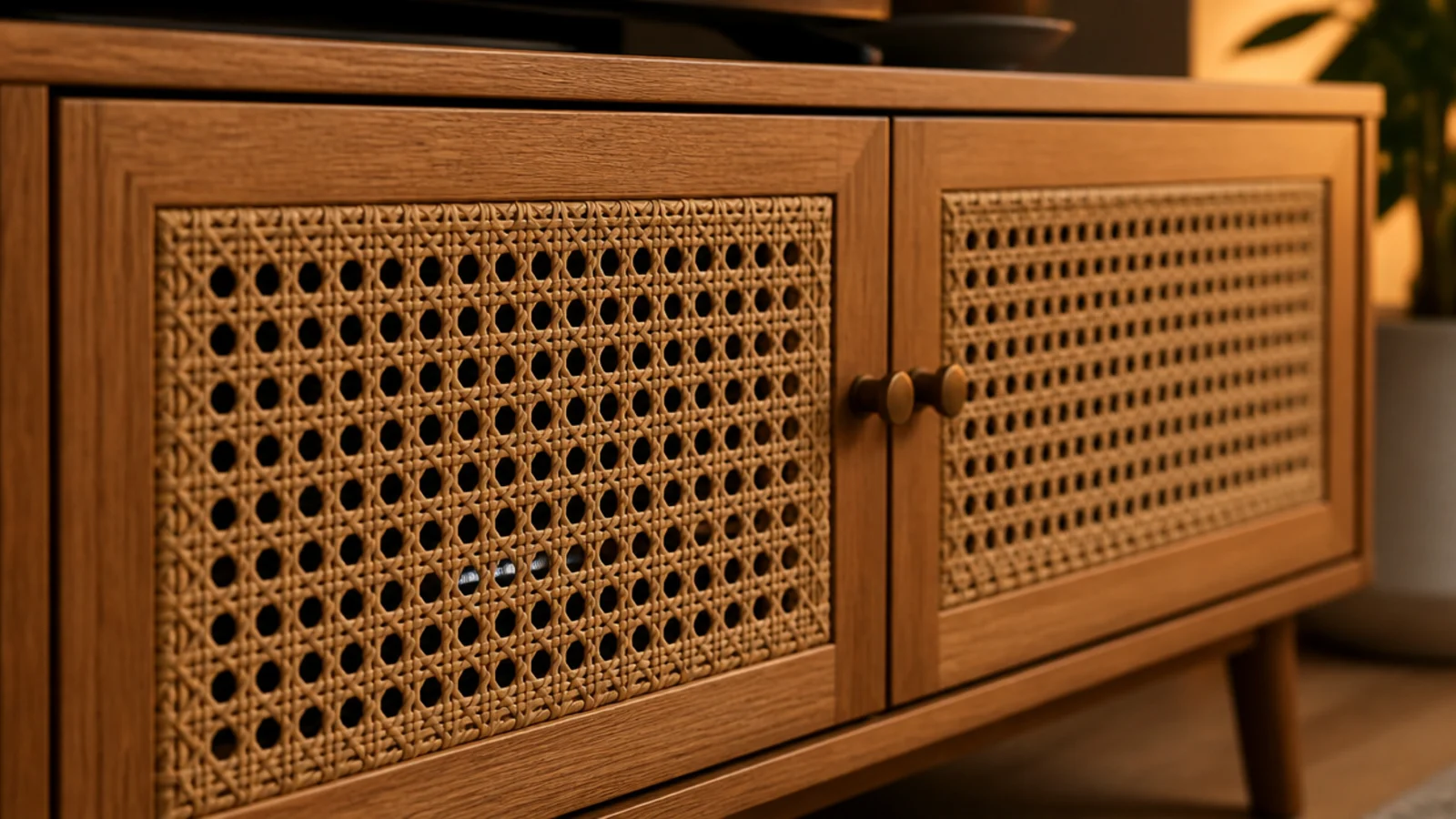
17. Swap glass doors for cane
Glass shows every fingerprint and traps heat; cane hides the gear from a seated eye while letting warm air out and infrared through. A cane insert kit runs $25 to $50 and fits most flat door fronts with a router and an afternoon's patience.
18. Do not buy a unit narrower than the screen
An overhanging panel looks unstable from every seat in the room, and in a small space that instability is unavoidable because you are always close to it. If the only unit that fits is narrower than the screen, hang the screen on the wall instead.
19. A rolling cart in a studio flat
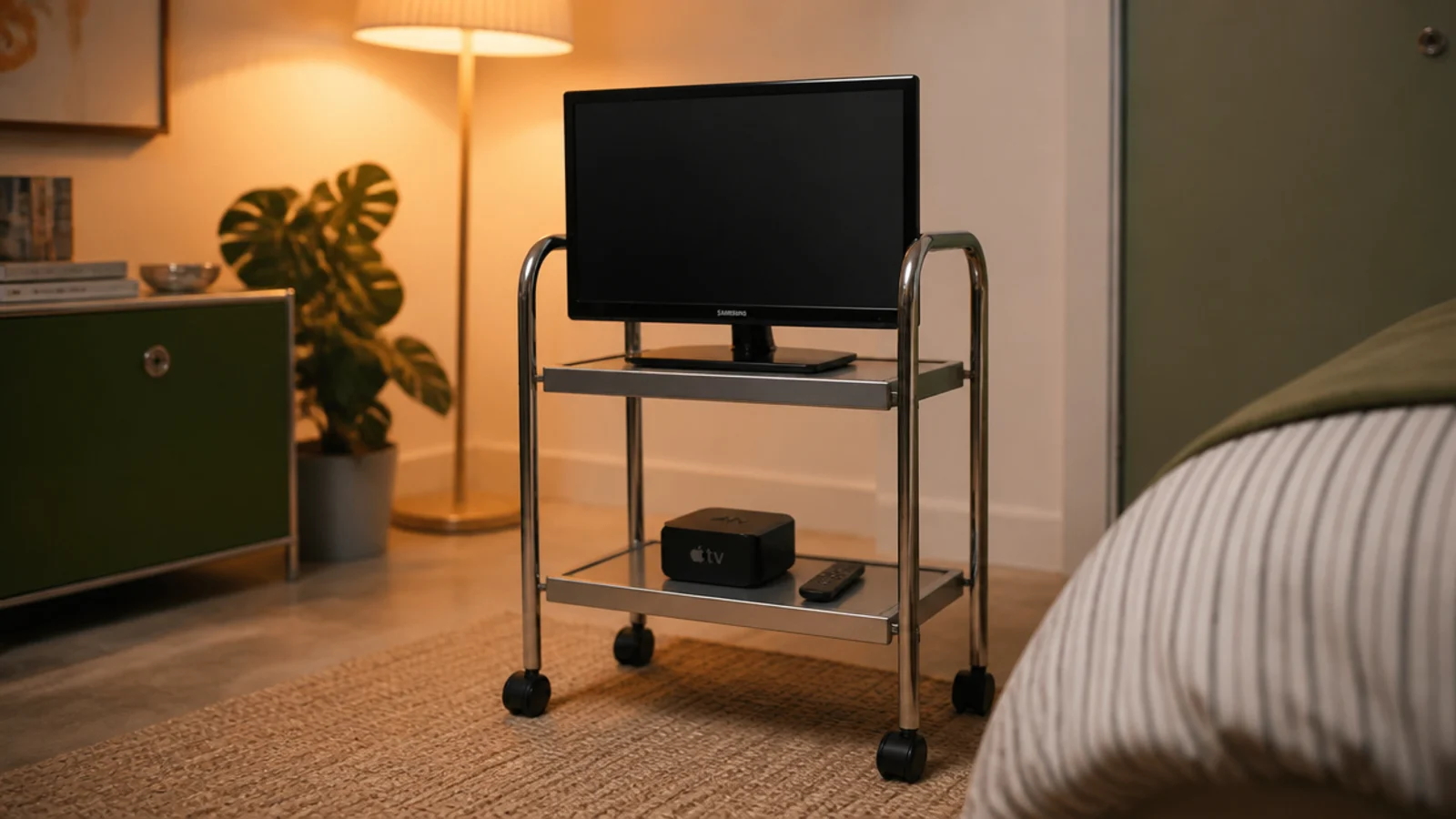
A 24 inch cart on locking castors lets one small screen serve a sofa in the evening and a desk during the day. Keep the total load under the cart's rating, usually 60 to 100 pounds, and lock the wheels once it is placed. The budget ideas guide has more movable options.
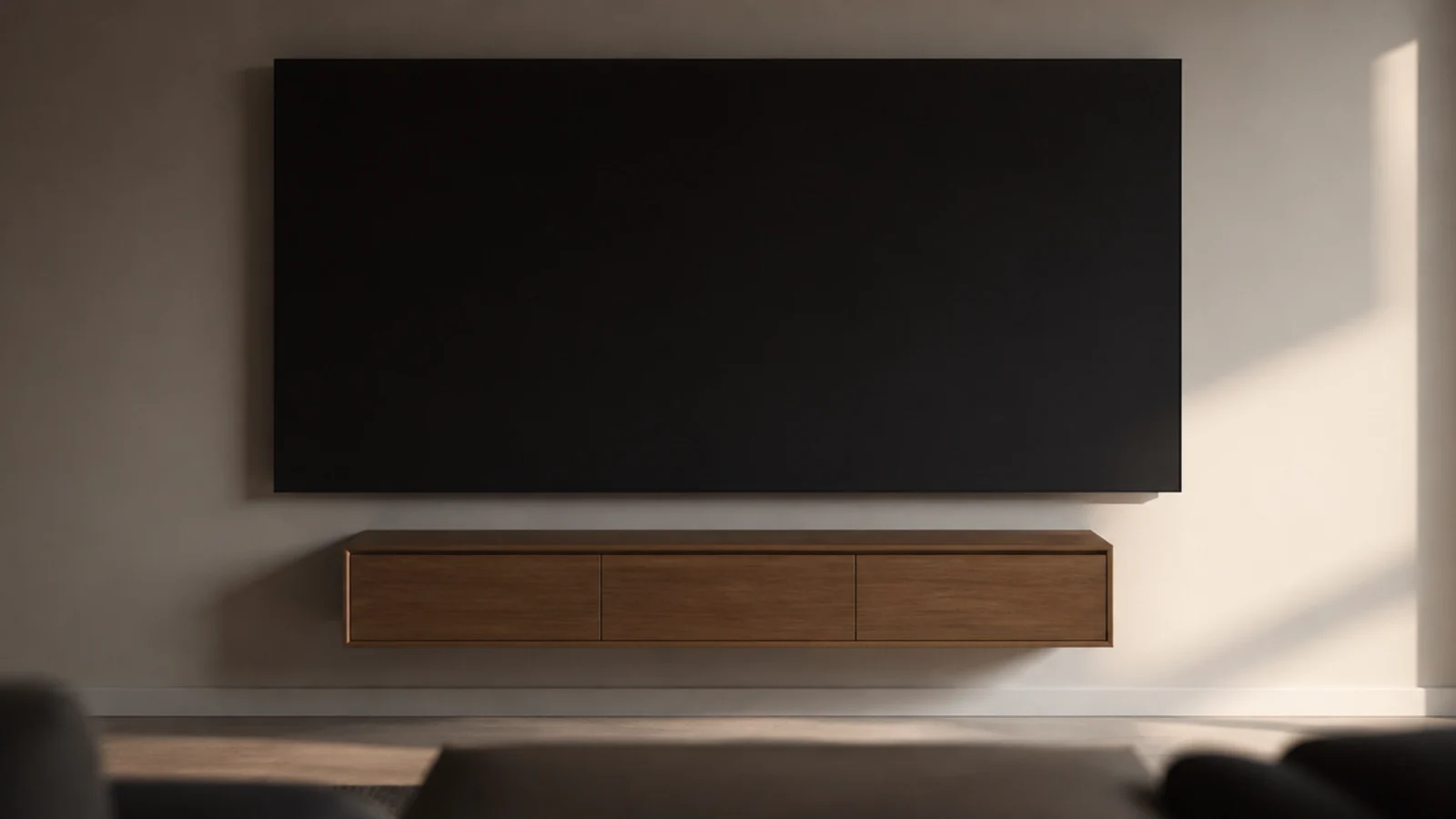
20. A wall-hung drawer at eight inches deep
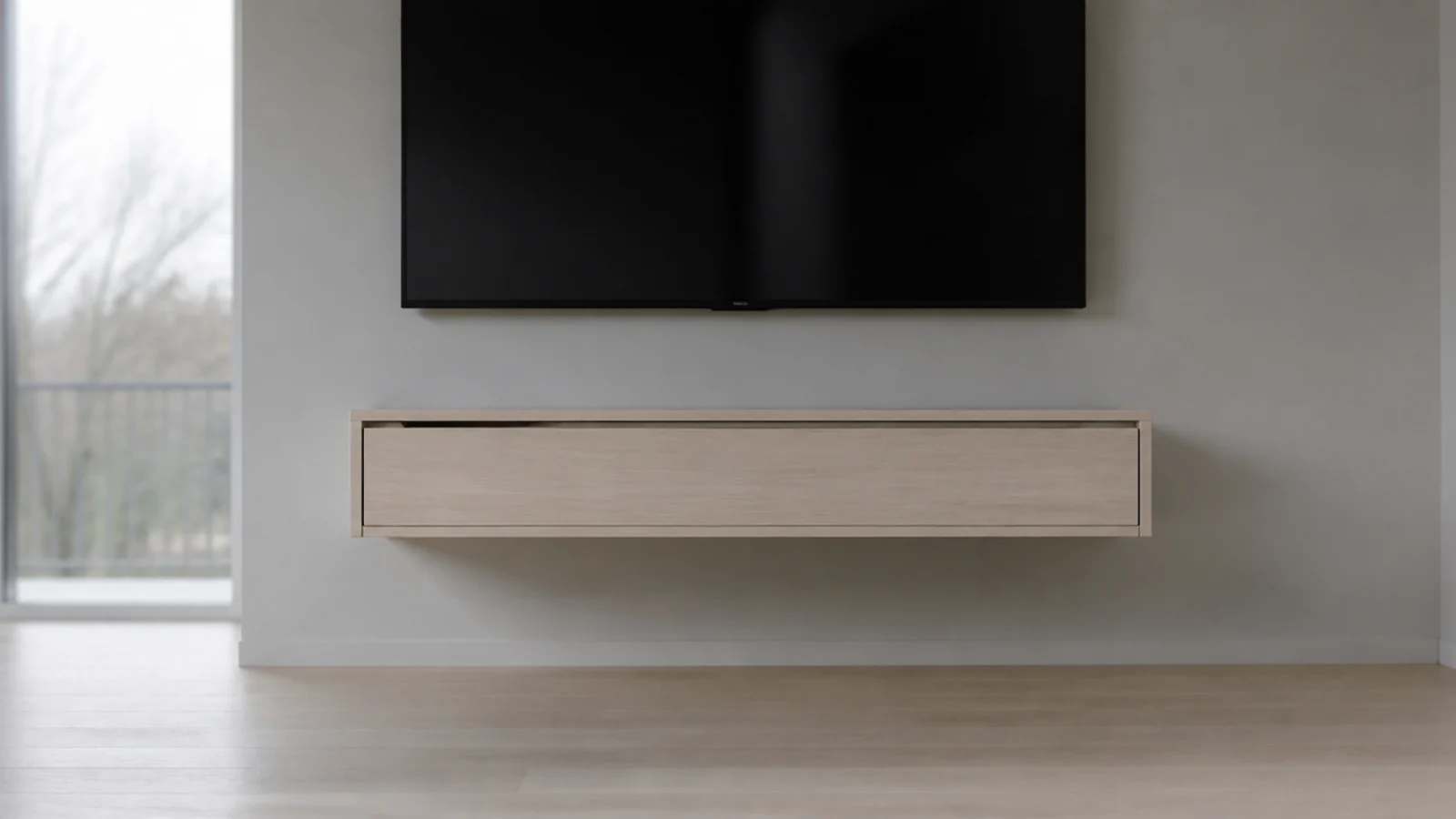
A single floating drawer gives closed storage with no floor footprint at all. Hung on a French cleat into two studs it carries well over 50 pounds, far more than remotes and cables will ever weigh, and the underside stays clear for cleaning.
21. Retire the media tower
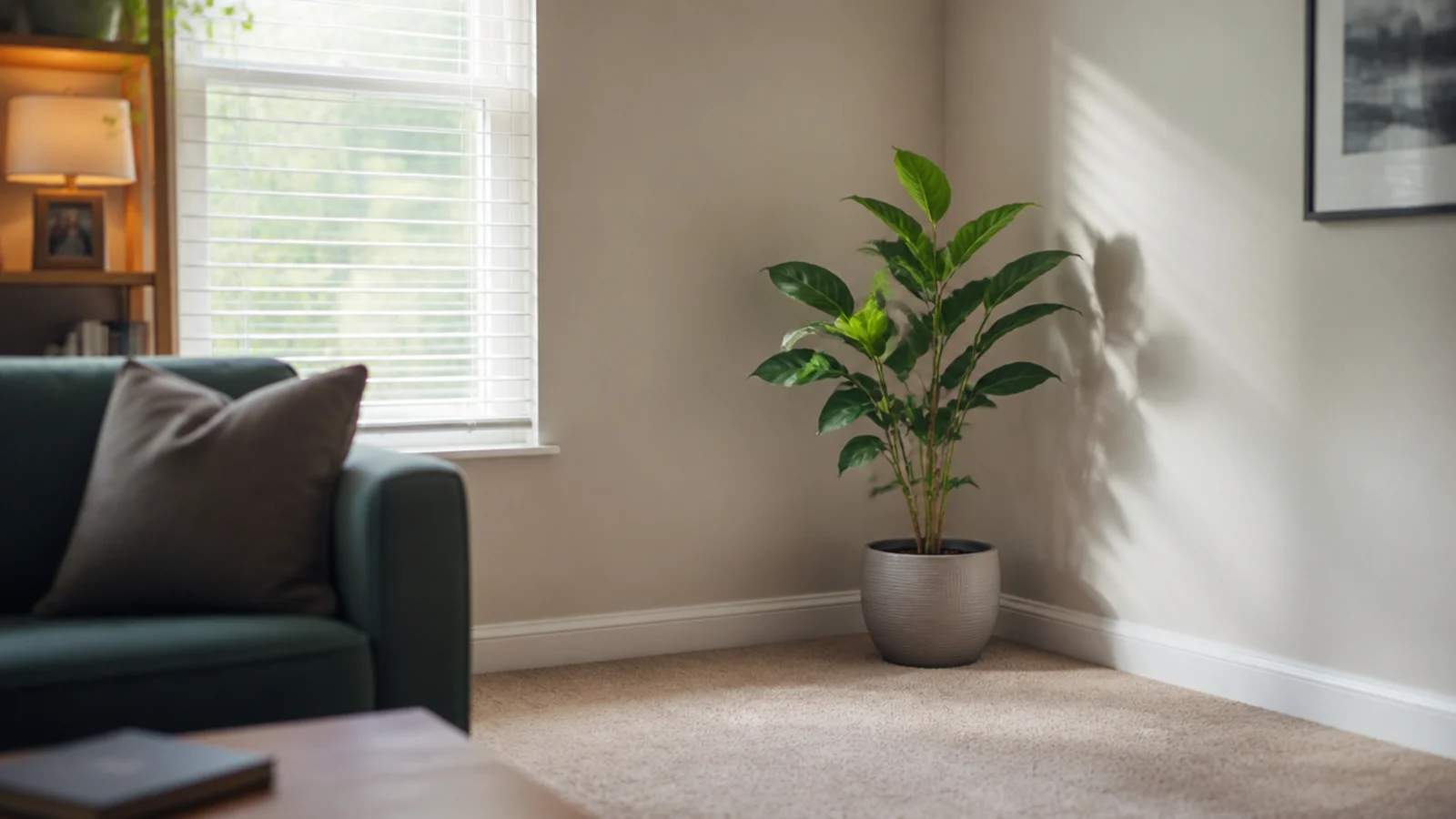
A disc tower holds perhaps 60 items in a footprint that could be a chair. Keep the twenty you rewatch in a single basket or a drawer and let the rest go. In a small room, the furniture you remove does more than the furniture you add.
22. Hang the mirror opposite, never behind
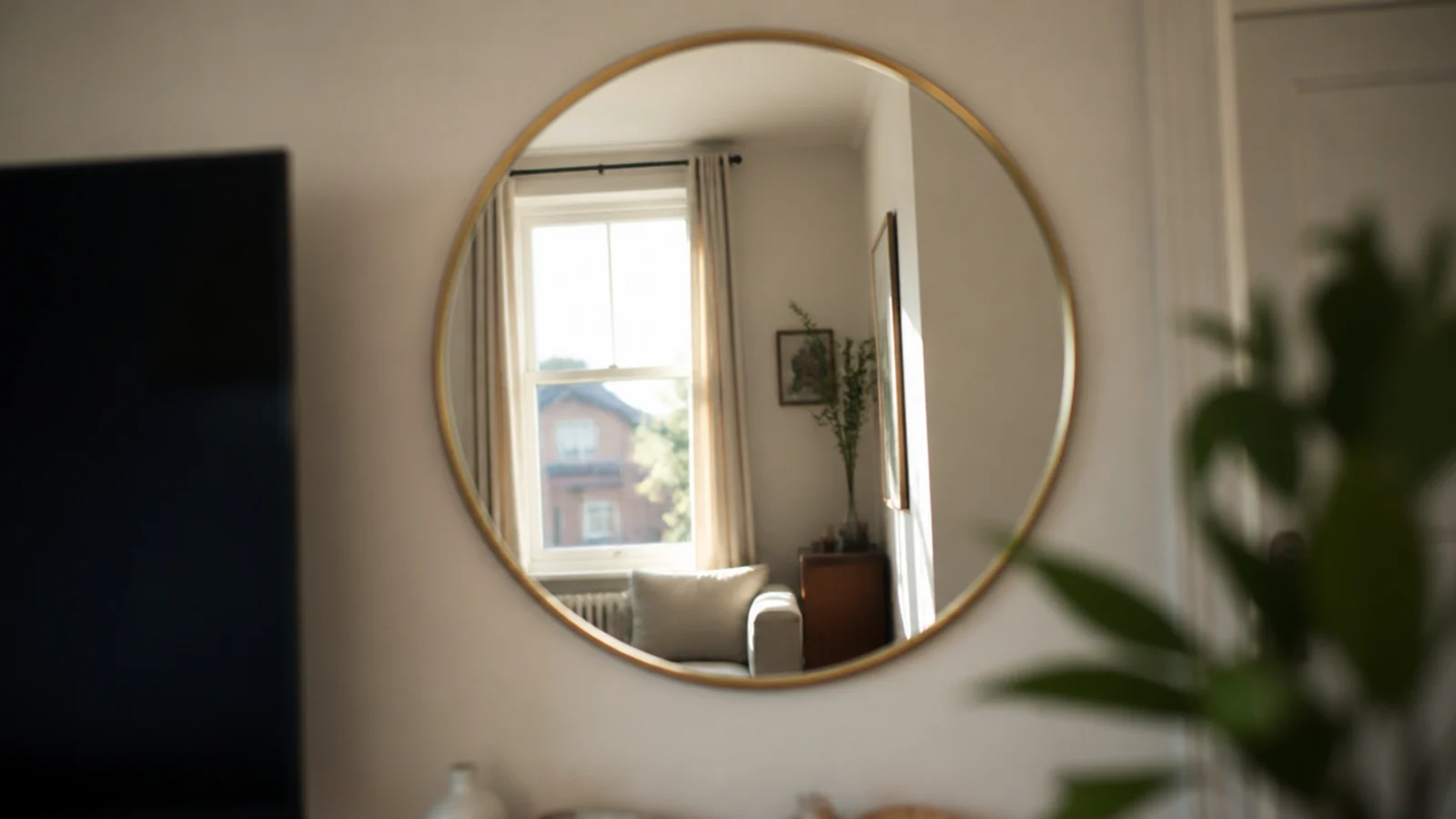
A mirror on the facing wall bounces daylight back across the room and makes it read wider. Directly behind or beside a screen it only doubles the glare and gives you a second bright rectangle. There is more on placement in mirror wall decor ideas.
23. Use bias light rather than a table lamp
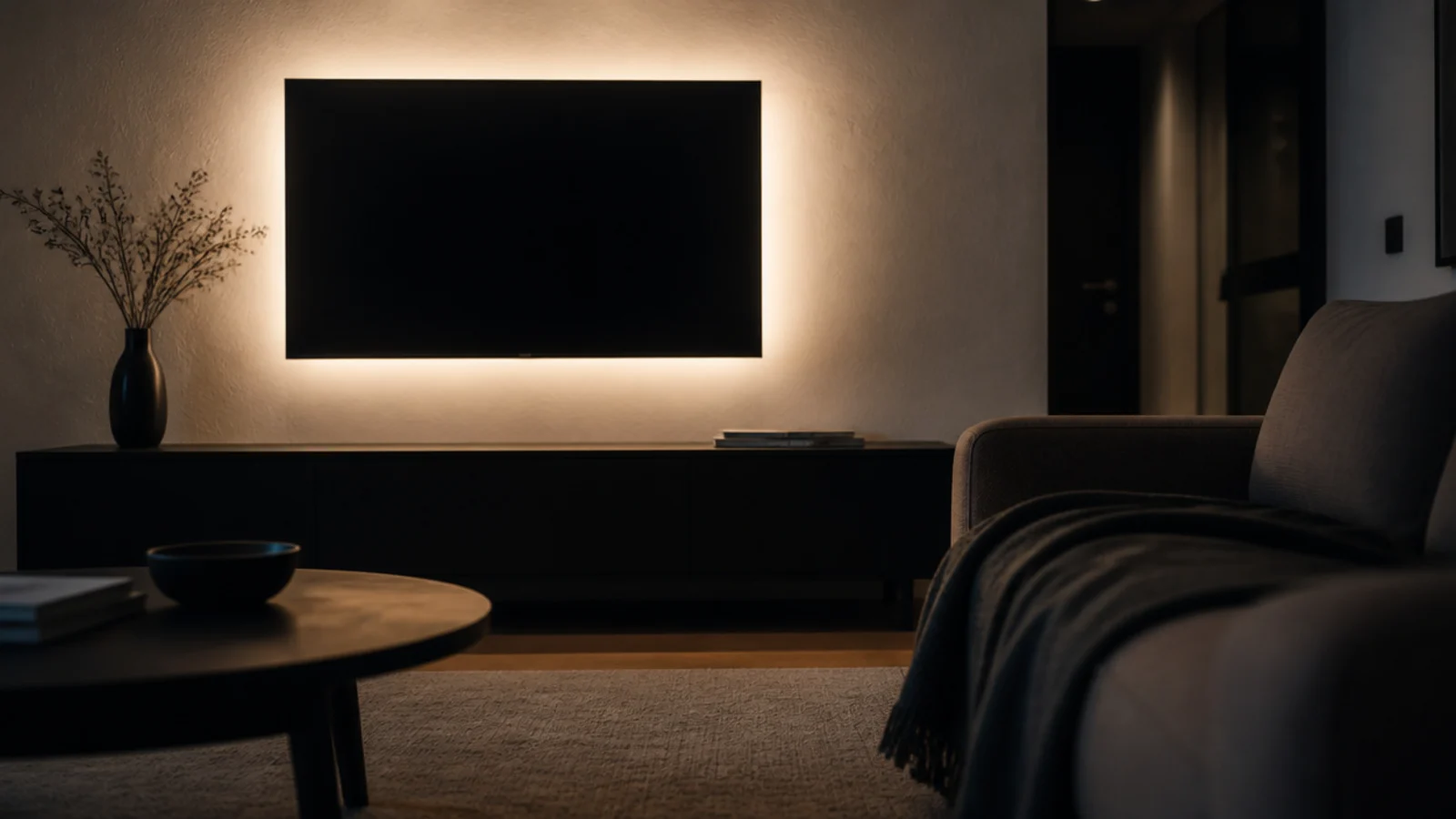
A 6500K strip drawing 1.5 to 3 watts per metre behind the panel lifts the wall to roughly a tenth of screen brightness and takes the strain out of watching in a dark room. It costs about $15 and it frees the surface a lamp would have taken.
24. Round the corners where people squeeze past
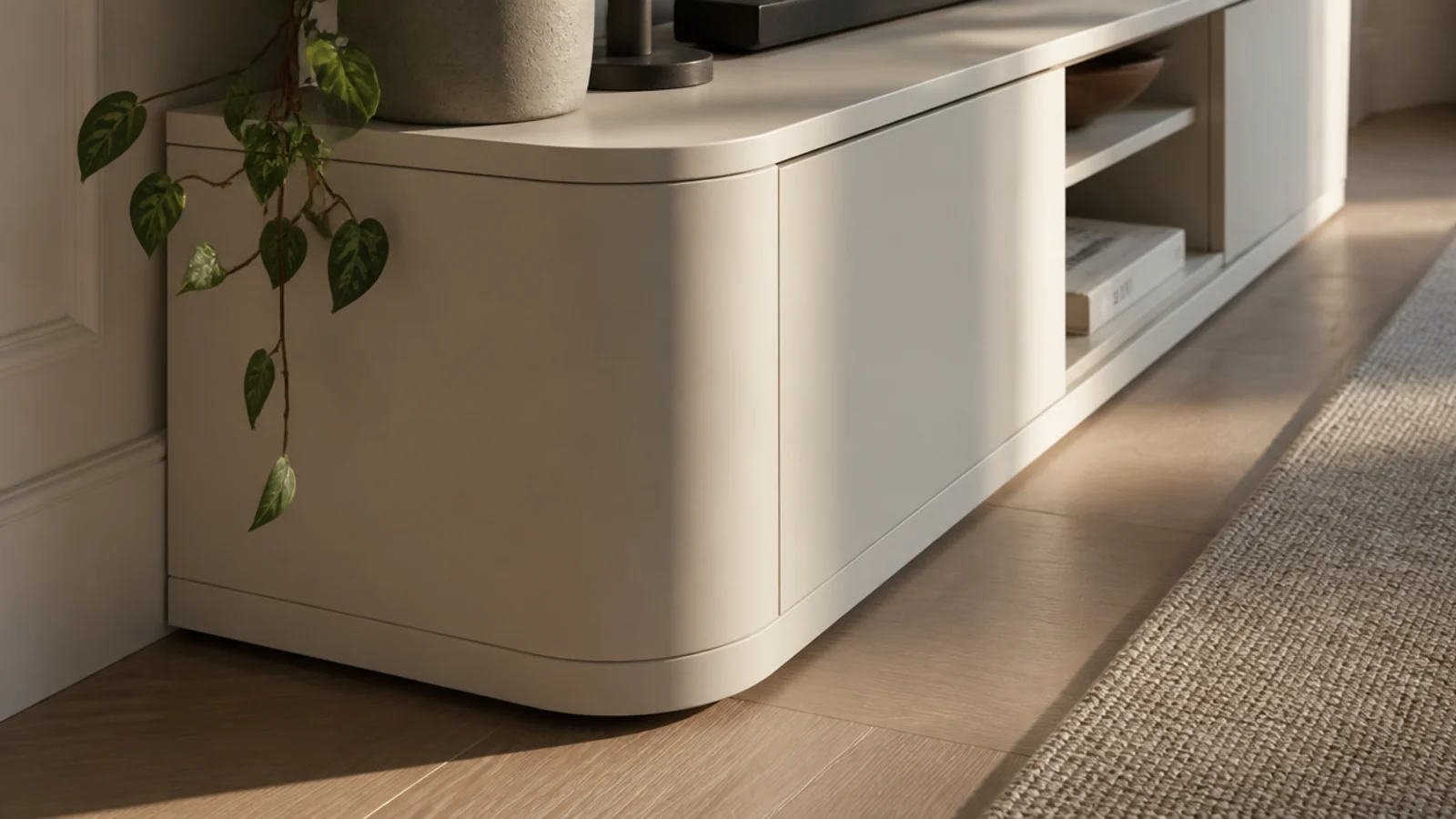
In a walkway under 30 inches, a square cabinet corner finds a hip in the dark eventually. A radiused corner or a chamfer solves it permanently. This matters most in the route between the sofa and the door, which is the path everyone takes at speed.
25. Two objects on top, and no more
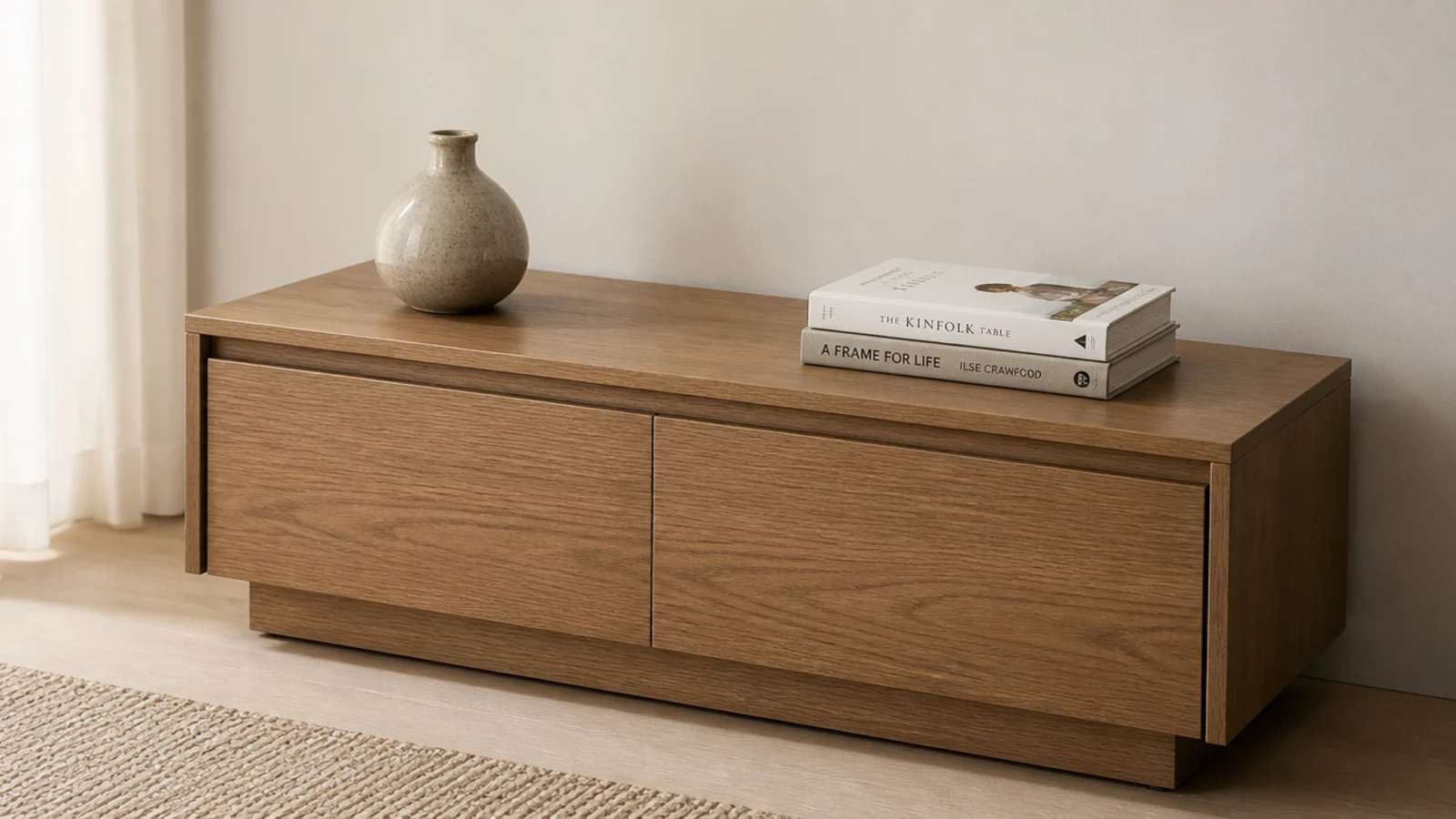
On a 48 inch top with a screen above it, two objects is the working limit — one tall, one flat. Three starts to read as storage because the surface is short. The clutter-hiding ideas cover what to do with everything the top can no longer hold.
If you are furnishing a bedroom rather than a living room, the bedroom layouts guide has the heights for watching from a mattress. For the table that sits in front of a compact unit, the center table guide covers small-room proportions.
Mistakes to Skip
- Buying an 18 or 20 inch deep cabinet for streaming boxes alone. That depth only exists for a receiver, and in a small room it costs you the walkway for nothing.
- Choosing the screen by budget rather than by distance. A 65 inch panel at six feet is uncomfortable to watch, and no amount of picture quality fixes the angle.
- Pushing the console flat against the skirting. Even 3 inches of gap stops connectors bending and lets you reach a plug without moving furniture.
- Filling every basket and cubby on day one. Leave a third empty and the setup absorbs the next thing instead of spilling onto the floor.
- Adding a second small cabinet when the first fills up. The answer in a small room is nearly always less stored, not more storage.
Frequently asked questions
What size TV suits a small living room?
Work back from the seating distance. At 7 feet a 55 inch screen is comfortable and a 65 inch is close to the edge; at 5 to 6 feet a 43 to 50 inch panel is the sensible ceiling. Divide your viewing distance in inches by about 1.5 to get a workable diagonal.
How deep should a TV unit be in a small room?
Twelve to 15 inches carries a soundbar and two slim boxes, and it is the depth that keeps a walkway usable. Only go to 20 inches if a full-size receiver has to live inside. Every extra inch of cabinet depth is an inch taken off the route past it.
Is a floating TV unit better in a small room?
Usually, yes. Keeping 12 to 16 inches of clear floor under the cabinet lets the eye read the floor all the way to the wall, which makes the room feel wider, and it clears the 3.5 to 4 inches a robot vacuum needs. It has to reach studs, so check the wall first.
How much walkway do I need in front of a TV unit?
Thirty inches where people cross the room, and 14 to 18 inches where they only reach across to a coffee table. If a door swings into the space, measure the swing before choosing the cabinet depth, because that arc is usually what decides the maximum.
Can I skip the TV unit entirely?
Yes. Wall-mounting the screen and adding a single 12 inch deep floating shelf beneath it gives you somewhere for a soundbar and a streaming box while leaving the whole floor clear. It is the cheapest option here and the one that makes the smallest room feel largest.
Want more like this? Browse all 15 tv unit decor guides — they all use the same measurements and budget tiers.
Pin it for later
Save this to your TV Unit Decor board
Pin it now so it is waiting for you when the tape measure comes out — and so the next person hunting for this idea can find it too.
Save this pinKeep going
More ideas worth saving while you have the tape measure out.