Center Table Living Room · Listicle
25 Living Room Center Table Decoration Wins

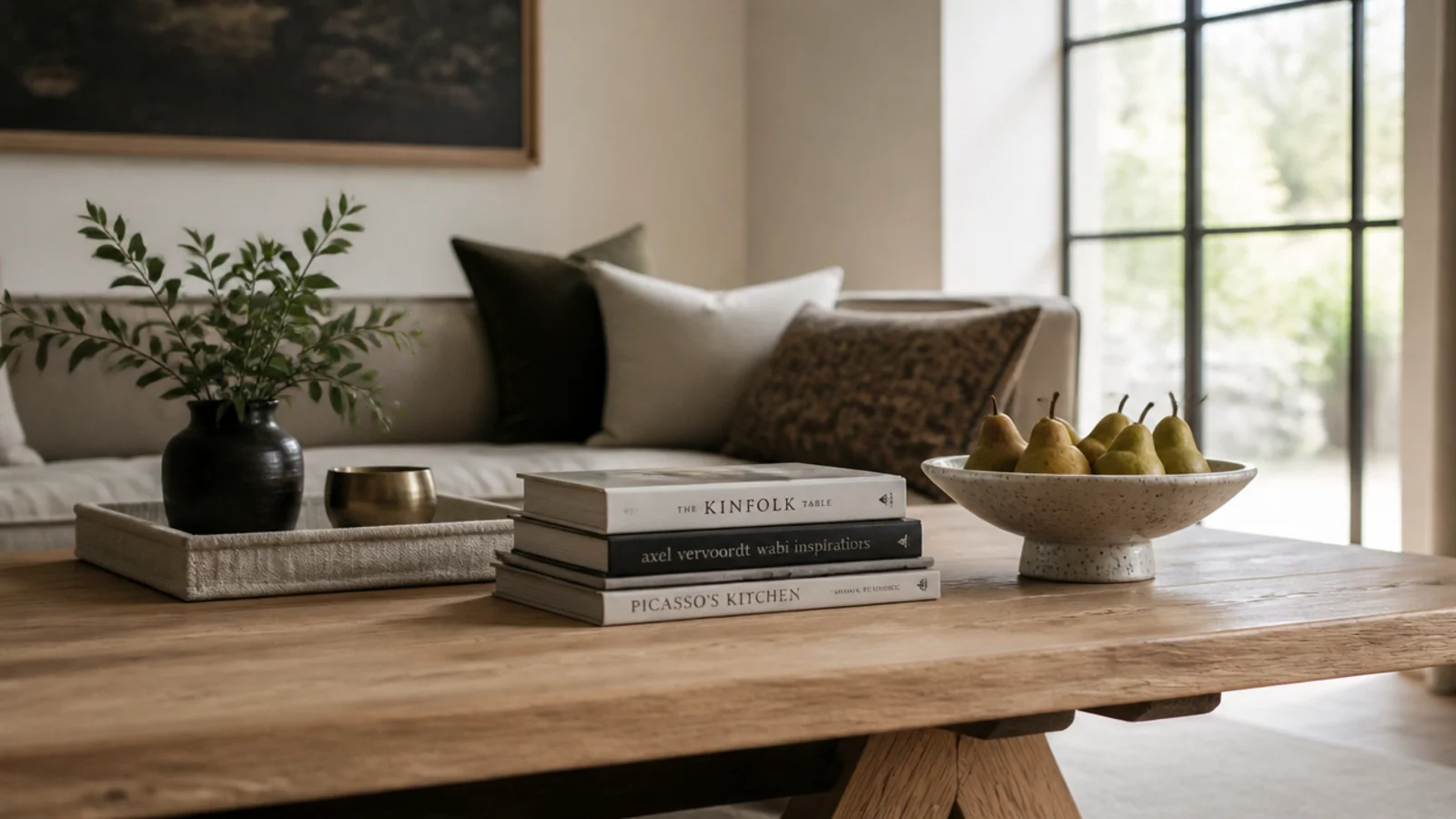
Most table arrangements are built for a photograph and dismantled by the first person who sits down with a plate. The ones that last are built around the fact that the surface has a job. Good living room center table decoration works at three heights, leaves somewhere for a mug, and can be pushed aside and rebuilt in about fifteen seconds. Here are twenty-five arrangements and rules that hold up on an ordinary Wednesday.
In this guide27 sections — tap to openHide
- 1.What living room center table decoration has to survive
- 2.Size the tray to a third of the table top
- 3.Build the arrangement at three clear heights
- 4.Cap everything at eight inches
- 5.Work in odd numbers
- 6.Anchor with one oversized bowl
- 7.Lay books flat and use them as a plinth
- 8.Put one living thing on every table
- 9.Group candles in threes at different heights
- 10.Put three textures on the surface at once
- 11.Add exactly one reflective object
- 12.Cut branches instead of buying flowers
- 13.Keep a bowl of fruit that gets eaten
- 14.Let one colour repeat from the rug
- 15.Give the ugly things a lidded box
- 16.Include one thing with a story
- 17.Treat empty space as an object
- 18.Set the tray on a diagonal
- 19.Layer a runner on a very large top
- 20.Match the coaster metal to the room
- 21.Keep a small dish for matches and keys
- 22.Repeat a curve on a rectangular table
- 23.Weight the arrangement toward the seating
- 24.Change the arrangement when the clocks do
- 25.Photograph it and remove one thing
- 26.Reset the whole surface once a fortnight
- 27.Mistakes to Skip
What living room center table decoration has to survive
A low table gets looked at from two positions: standing in the doorway, and sitting four feet away with your eyes about 18 inches above the surface. Those are completely different compositions, and almost every styling failure comes from arranging for the first and living with the second.
Three numbers govern the whole thing. Keep everything under about eight inches tall, including the vessel, so two people on opposite seats can see one another. Size the tray to roughly a third of the table area — 16 to 20 inches on a 48-inch top. And leave at least one clear patch about the size of a spread hand at the end nearest the seat people actually use.
After that it is heights and numbers. Three groups rather than three objects: something tall and narrow, something low and wide, something flat. Unequal spacing. Odd numbers. One material that repeats elsewhere in the room and one that appears nowhere else, so the table belongs without looking bought as a set.
Cost is genuinely optional here. Cut branches, a kitchen bowl and two books you are reading will beat almost anything from a homeware shop, and they change with the season for nothing. If the table itself is still undecided, the style guide runs through which shapes suit which rooms.
1. Size the tray to a third of the table top
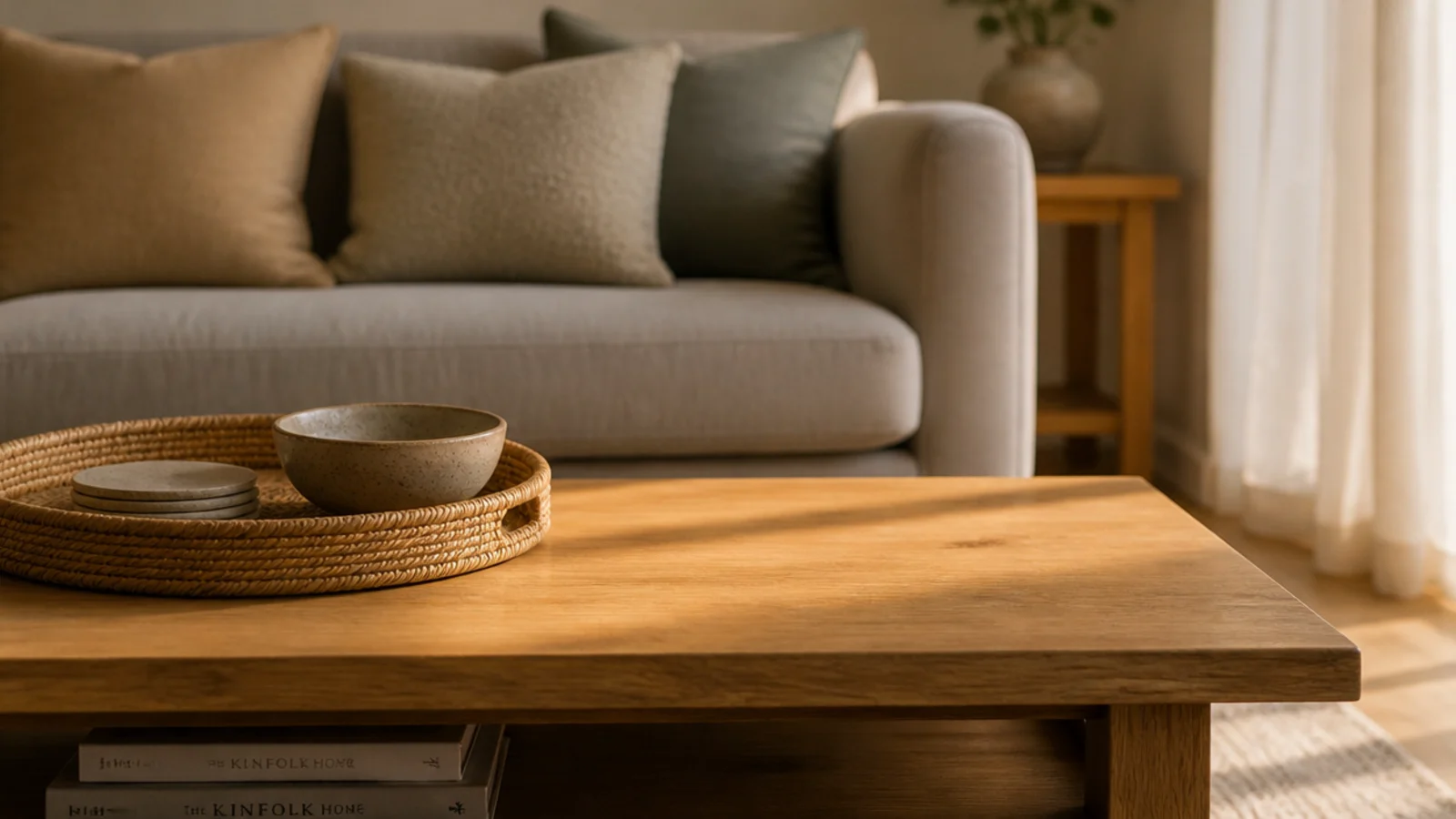
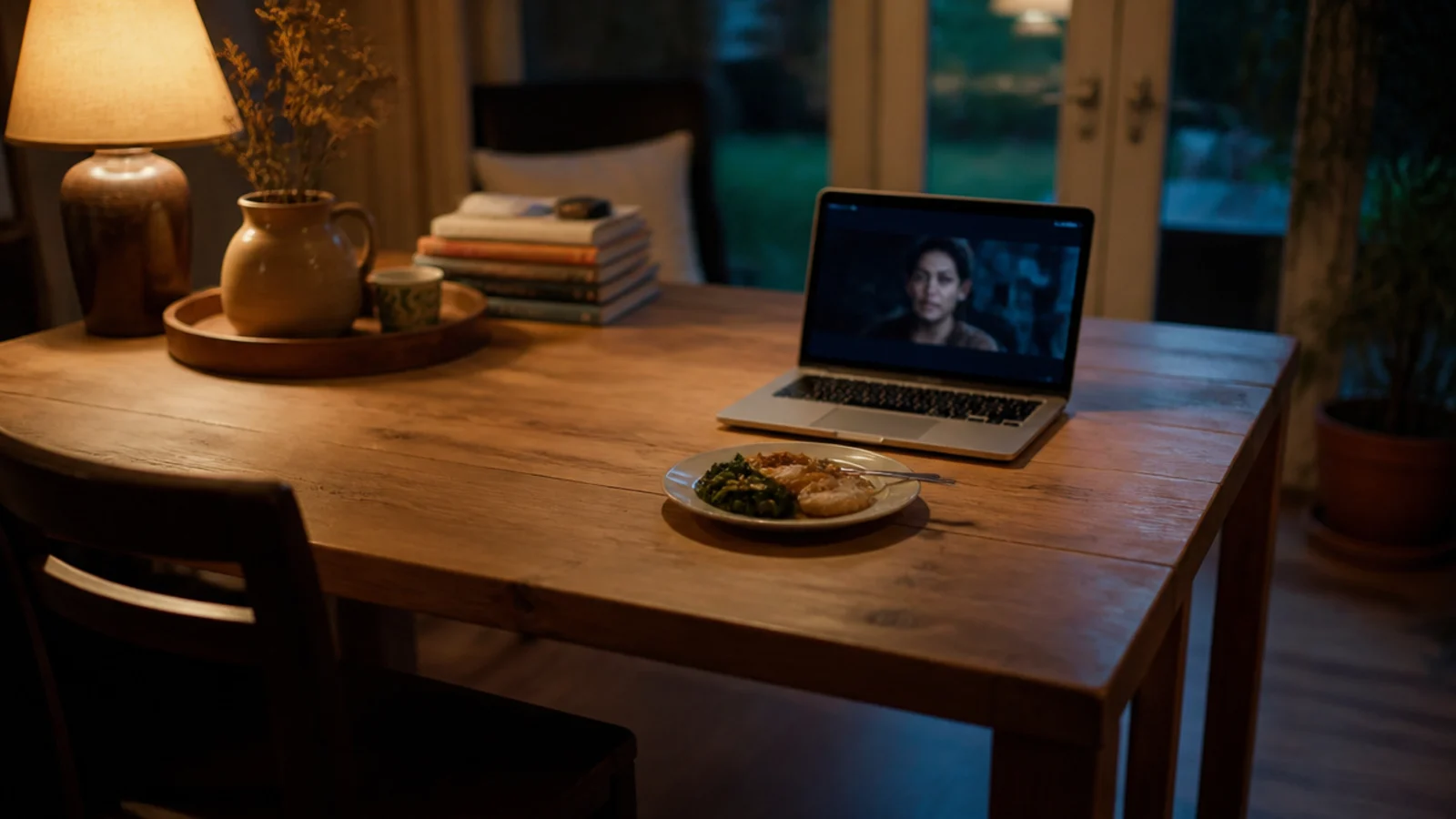
A tray that is too small makes its contents look crammed against the rim; one that is too large stops reading as a container. On a 48 by 26 inch top, aim for something around 18 by 12. Choose a rim at least half an inch high so nothing slides off when it is carried.
2. Build the arrangement at three clear heights
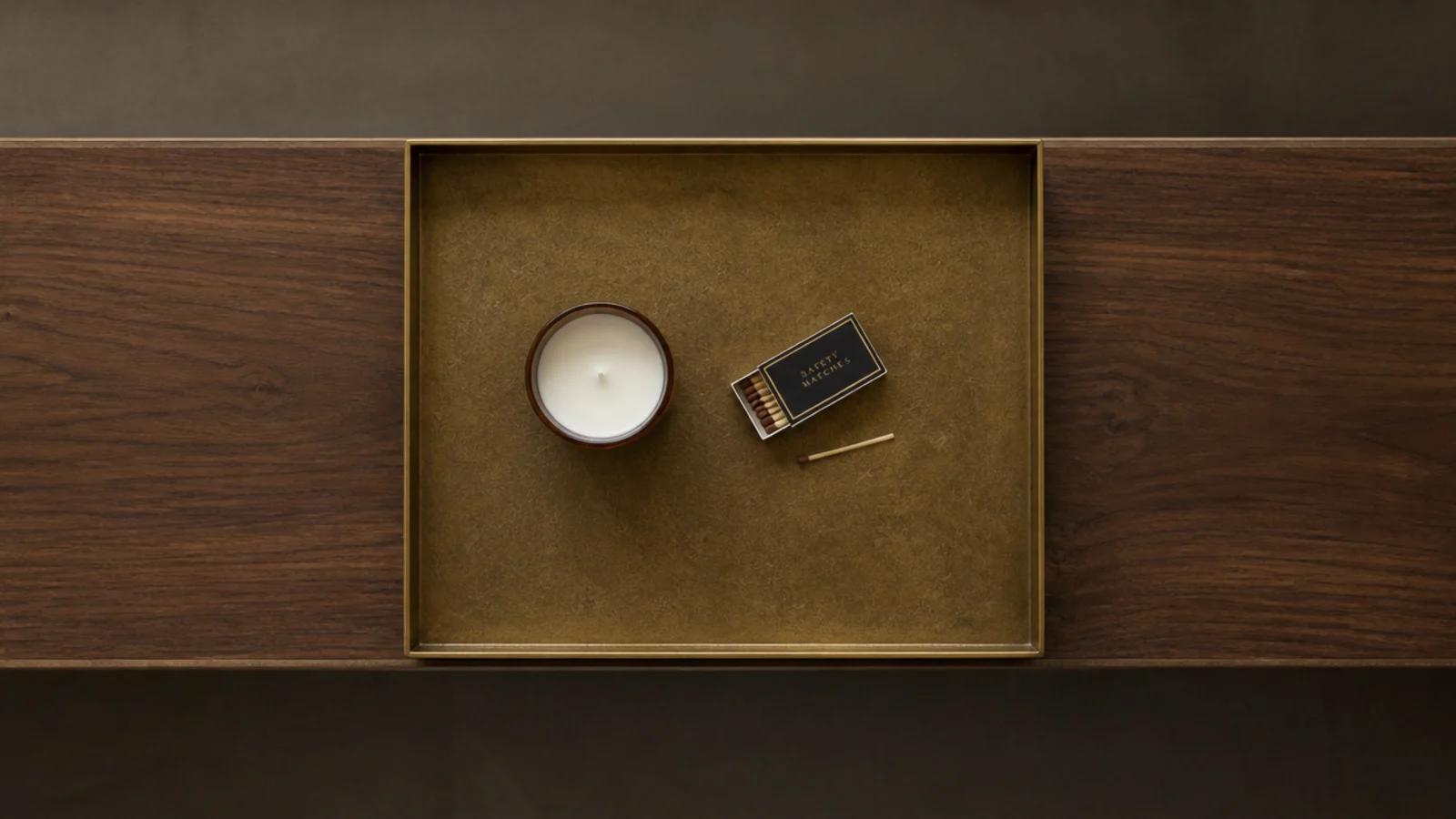
Something around seven inches tall, something two to three inches high and wide, and something flat. The step between them has to be obvious — a five-inch vase next to a four-inch bowl reads as a mistake rather than a composition. Double the difference and it settles instantly.
3. Cap everything at eight inches
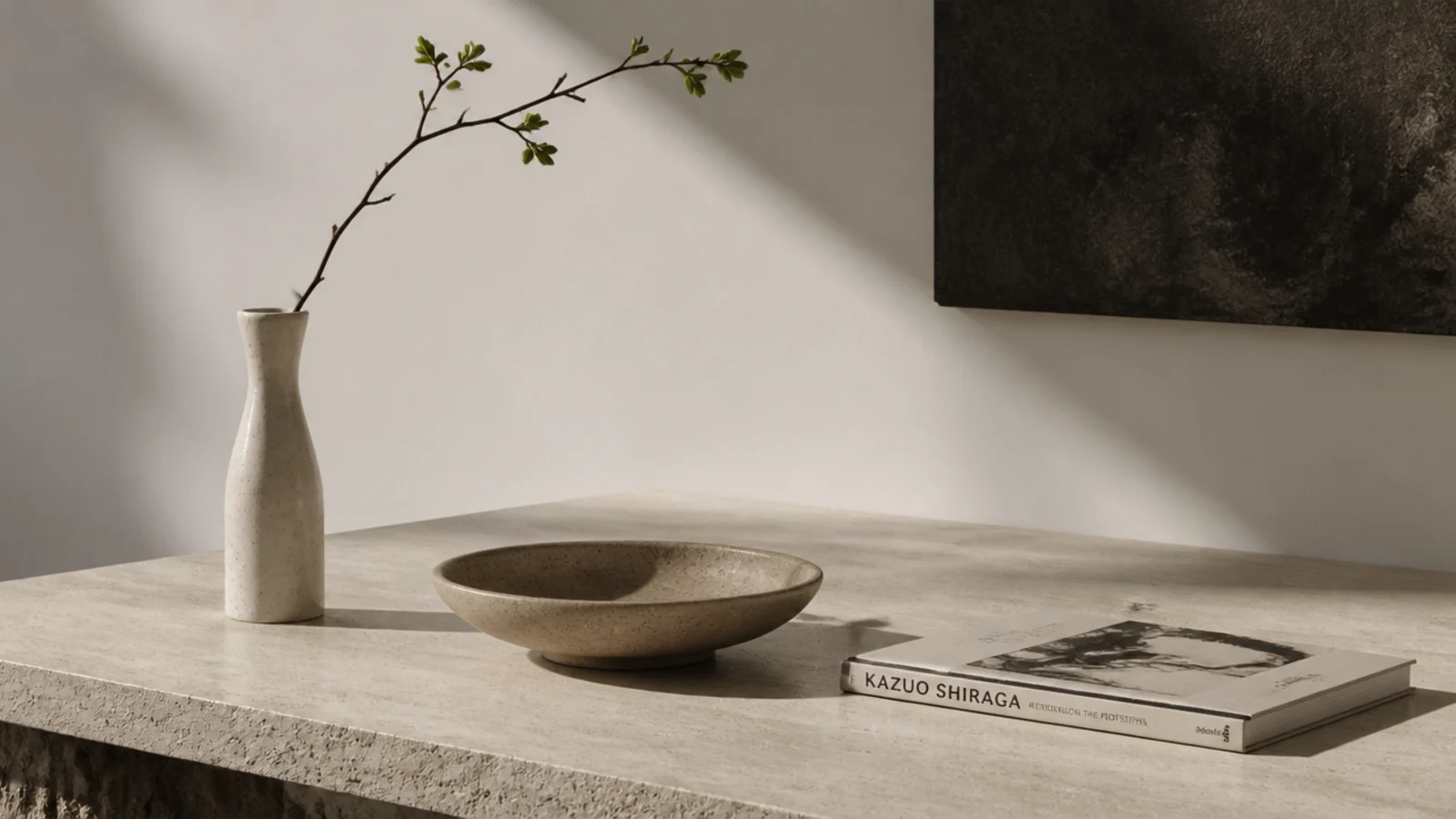
The purpose of the seating arrangement is that people can talk. Anything above eight inches sits directly in that eyeline. Tall stems, big lamps and sculptural branches all belong on a console behind the sofa, where they add height without cutting the room in half.

4. Work in odd numbers
Three objects or five, never four. Even numbers pair off visually and the eye reads them as a set; odd numbers stay slightly unresolved, which is what makes an arrangement look casual rather than staged. This applies to groups as much as to individual objects.
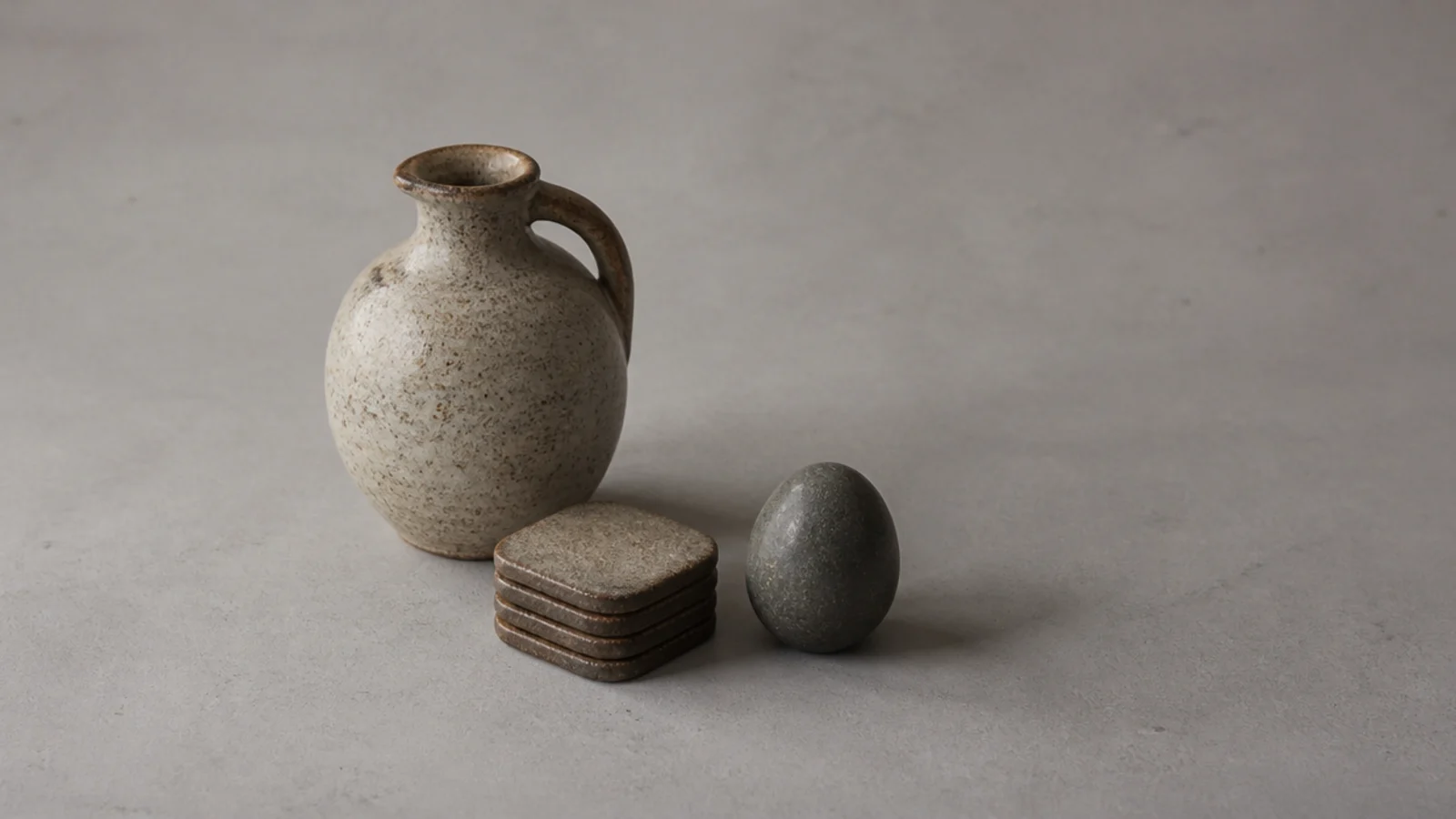
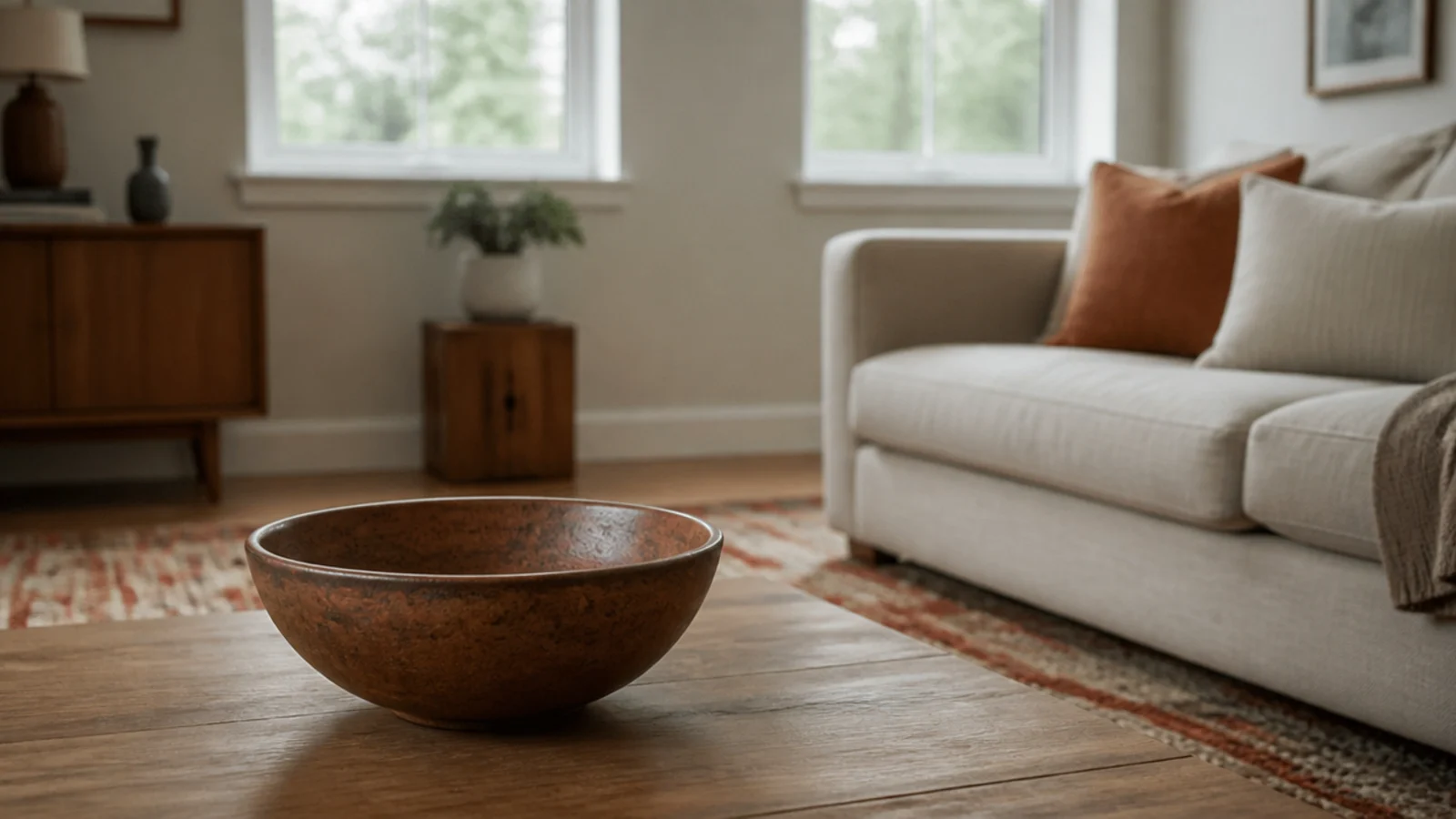
5. Anchor with one oversized bowl
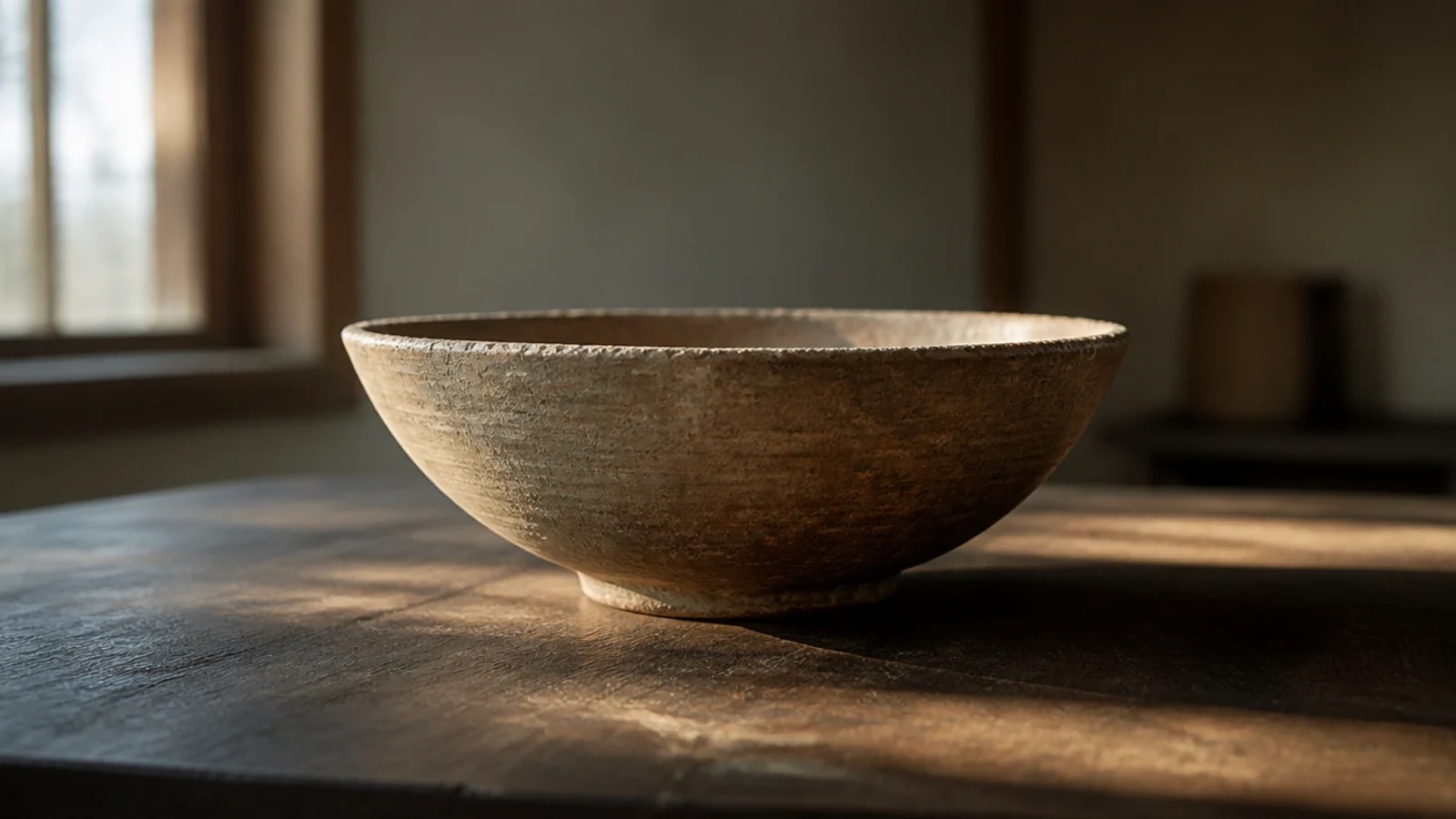
A single 14 to 18 inch bowl does more than six small pieces and costs less than the six. It gives the eye somewhere to land, leaves the rest of the top clear, and doubles as a place to drop fruit, keys or the things that would otherwise be scattered.
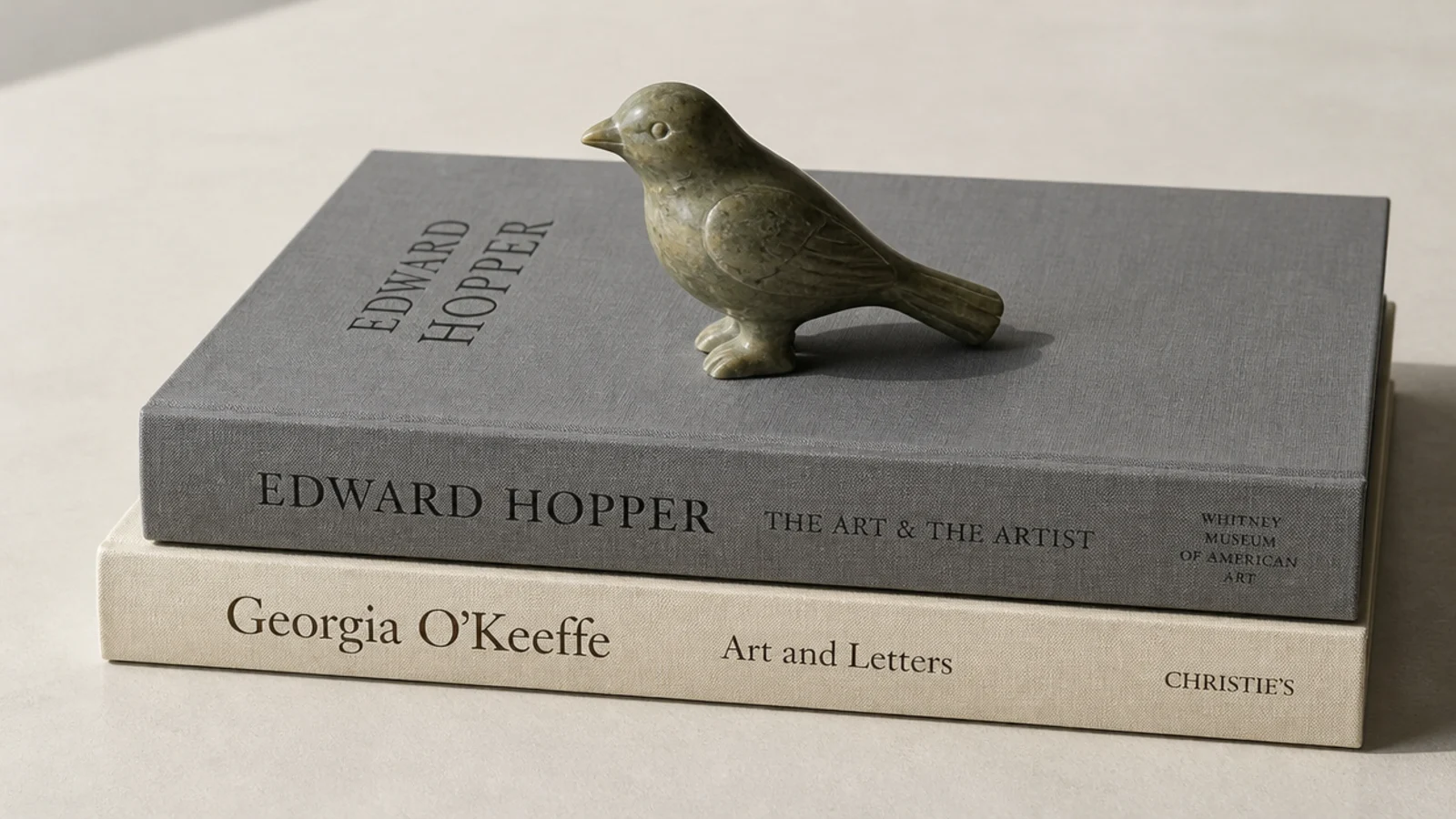
6. Lay books flat and use them as a plinth
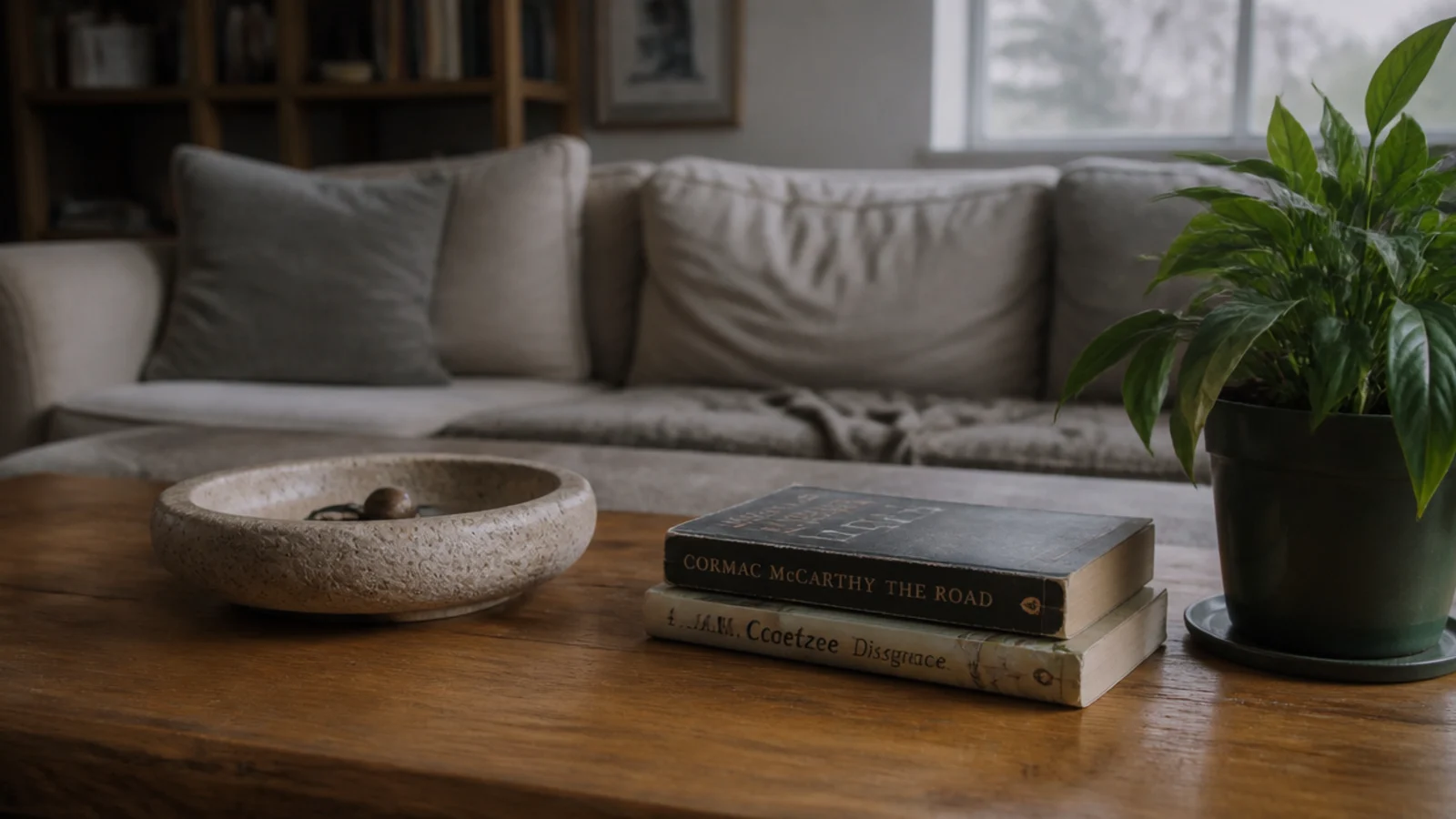
Two large books stacked squarely lift a small object into view and add an inch and a half of height where you need it. Flat stacks also read calmer than upright rows, and they are the one styling prop almost every household already owns.
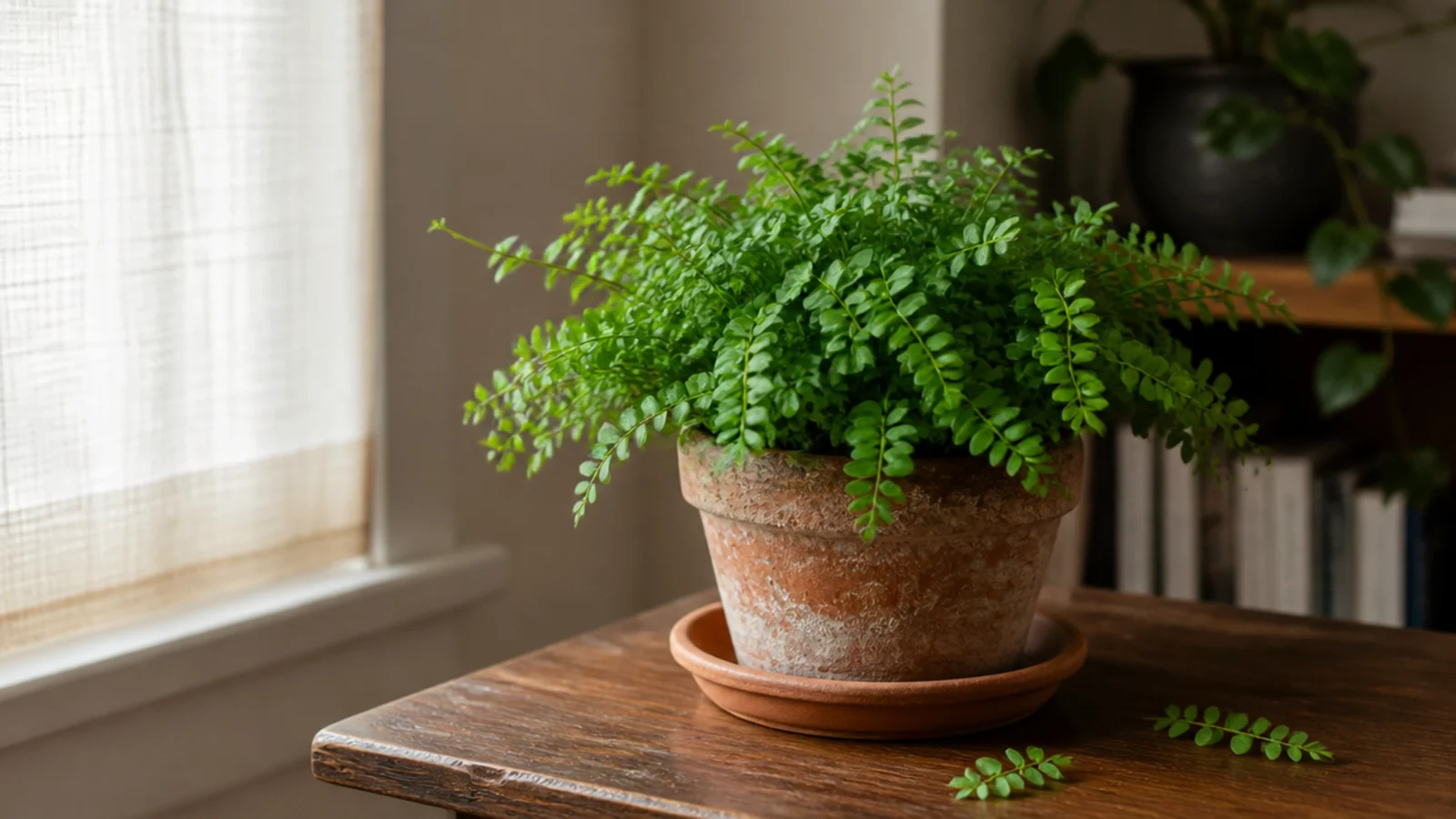
7. Put one living thing on every table
A small fern, a trailing plant or three stems in water. It is the only object on the table that improves week to week, and it is the difference between a room that looks arranged and a room that looks inhabited. Use a saucer so no water reaches the timber.
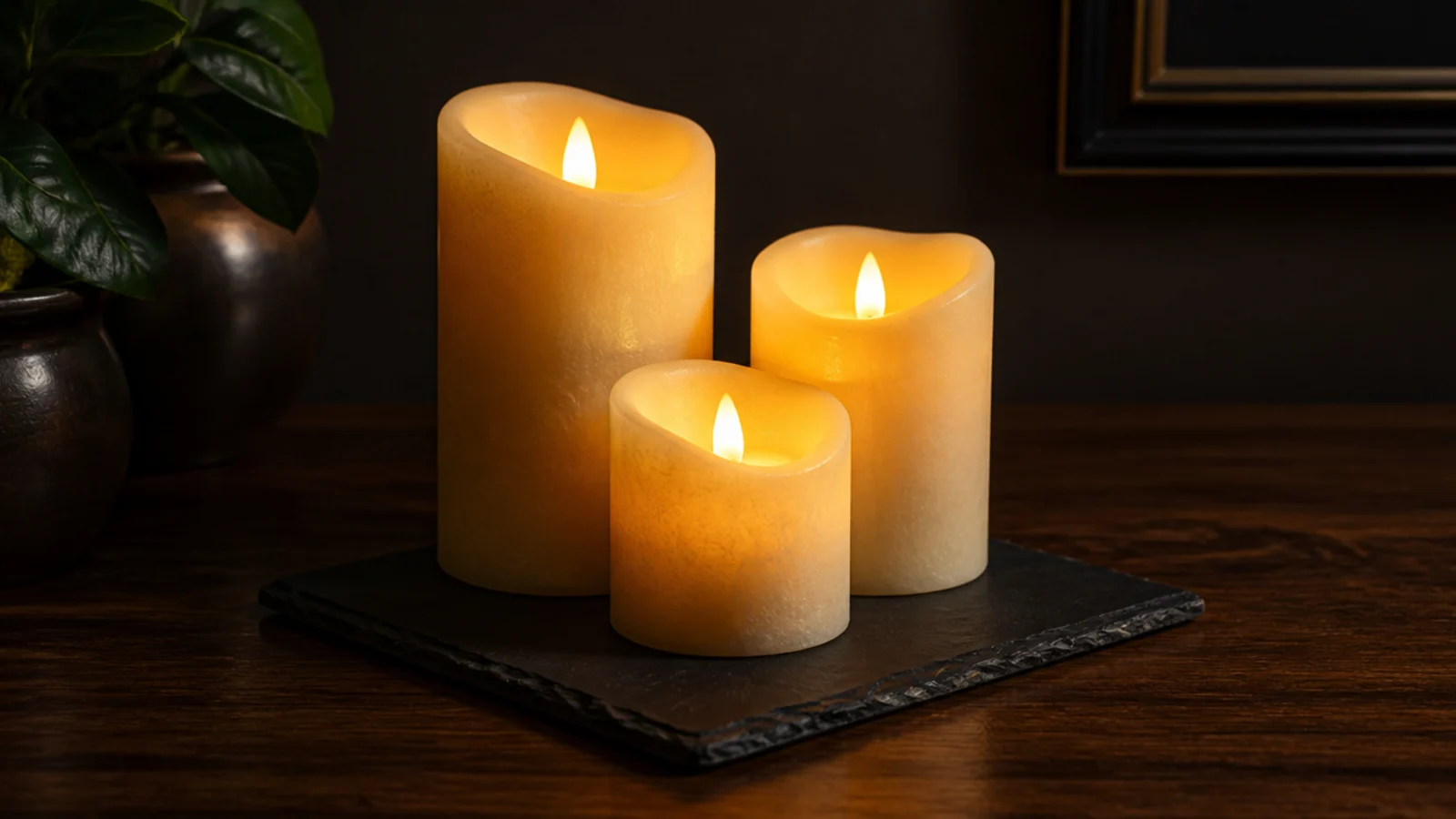
8. Group candles in threes at different heights
Three pillars at roughly three, five and seven inches, clustered rather than spread. Use rechargeable LED versions on a low table — knee height is exactly where sleeves, throws and paper travel, and a flame at that height in a room with textiles is a risk not worth taking.
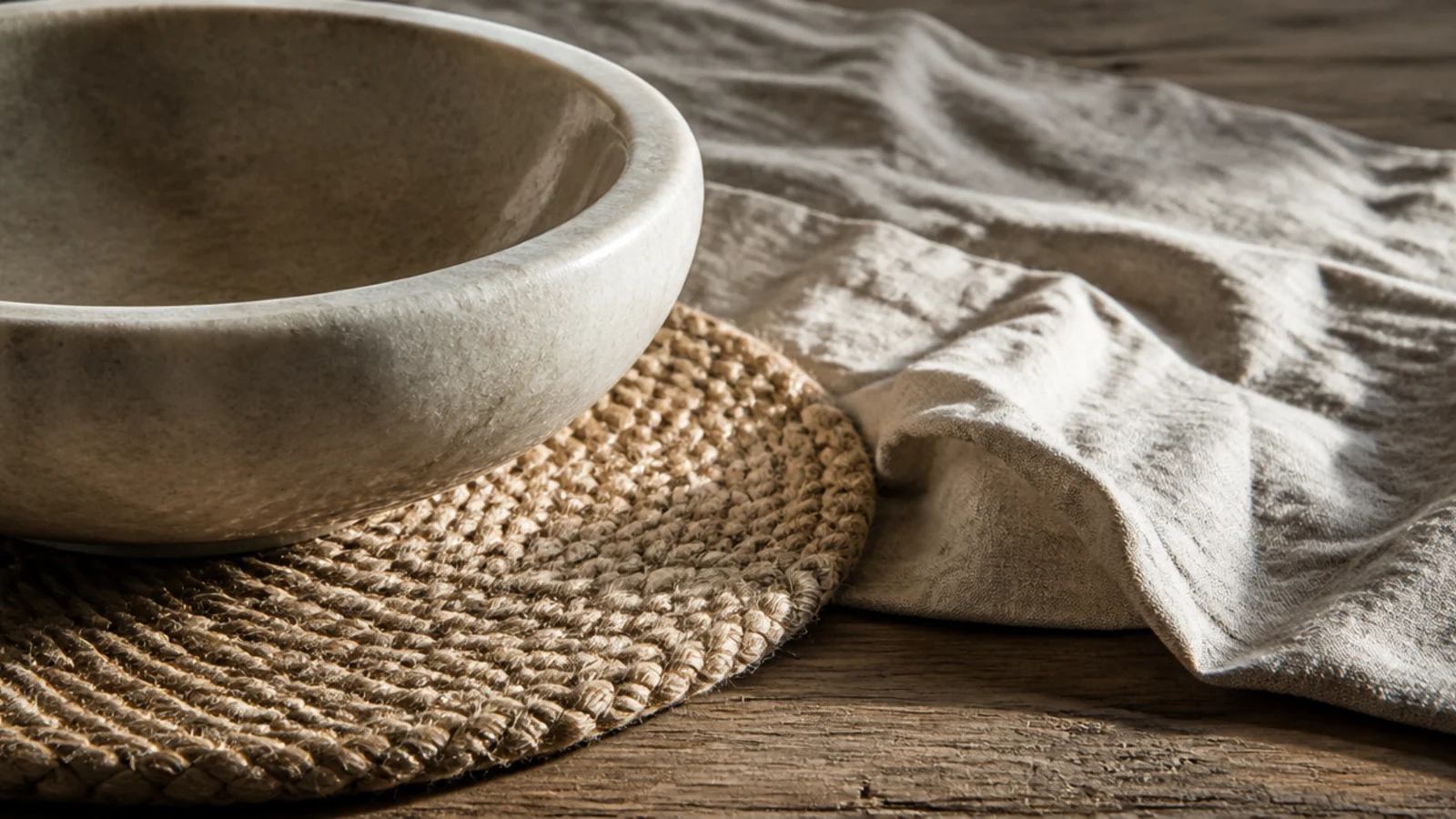
9. Put three textures on the surface at once
Hard, woven and soft. A stone or ceramic piece, something in rattan or cord, and a folded cloth or linen runner. Texture is what a photograph cannot fake and what makes a neutral arrangement interesting without adding a single colour.
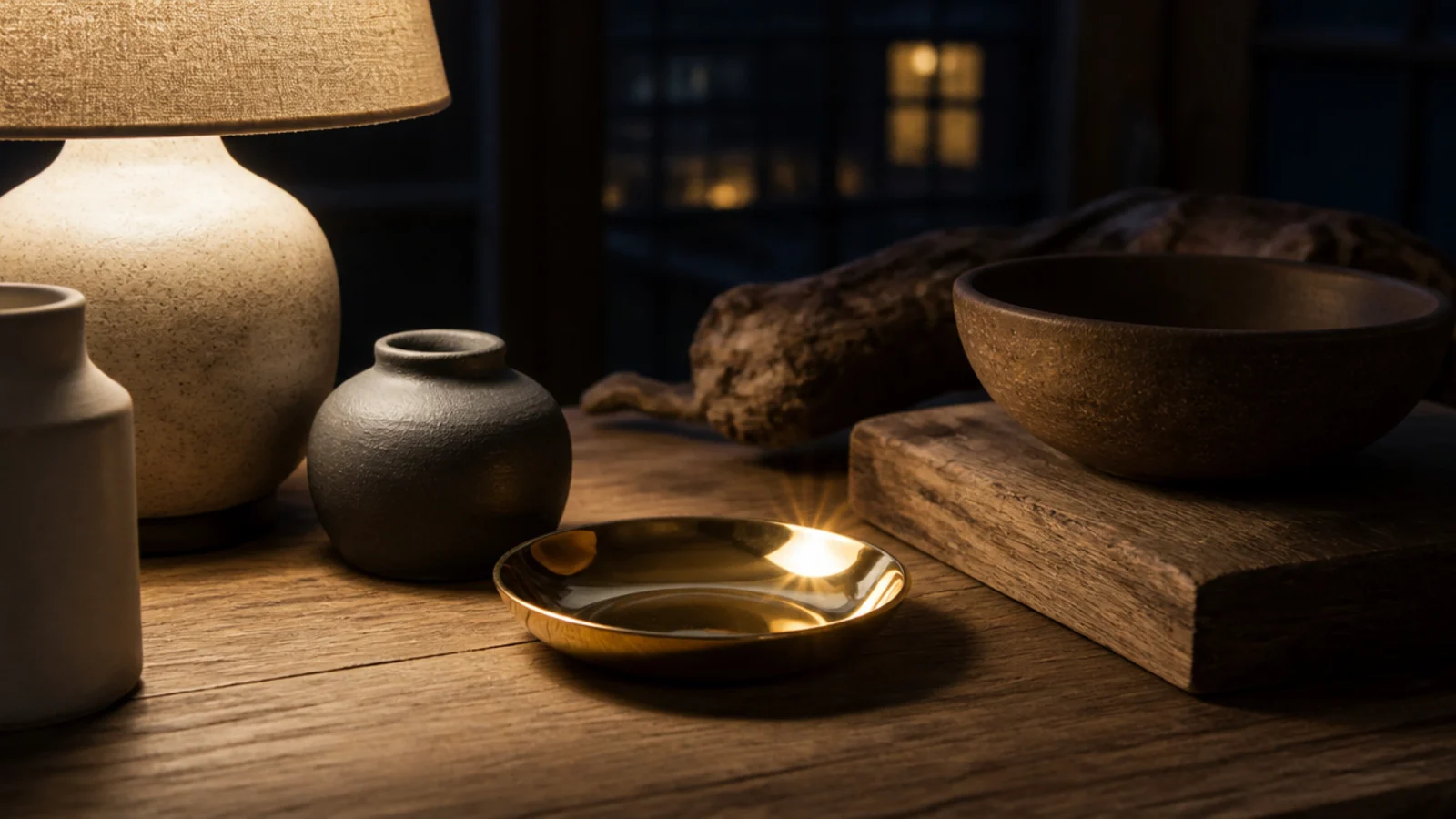
10. Add exactly one reflective object
One brass dish, one mercury glass vessel, one polished stone. A single point of shine in a group of matte things reads as jewellery. Two or three reflective objects start competing, and the whole table takes on the look of a display cabinet.
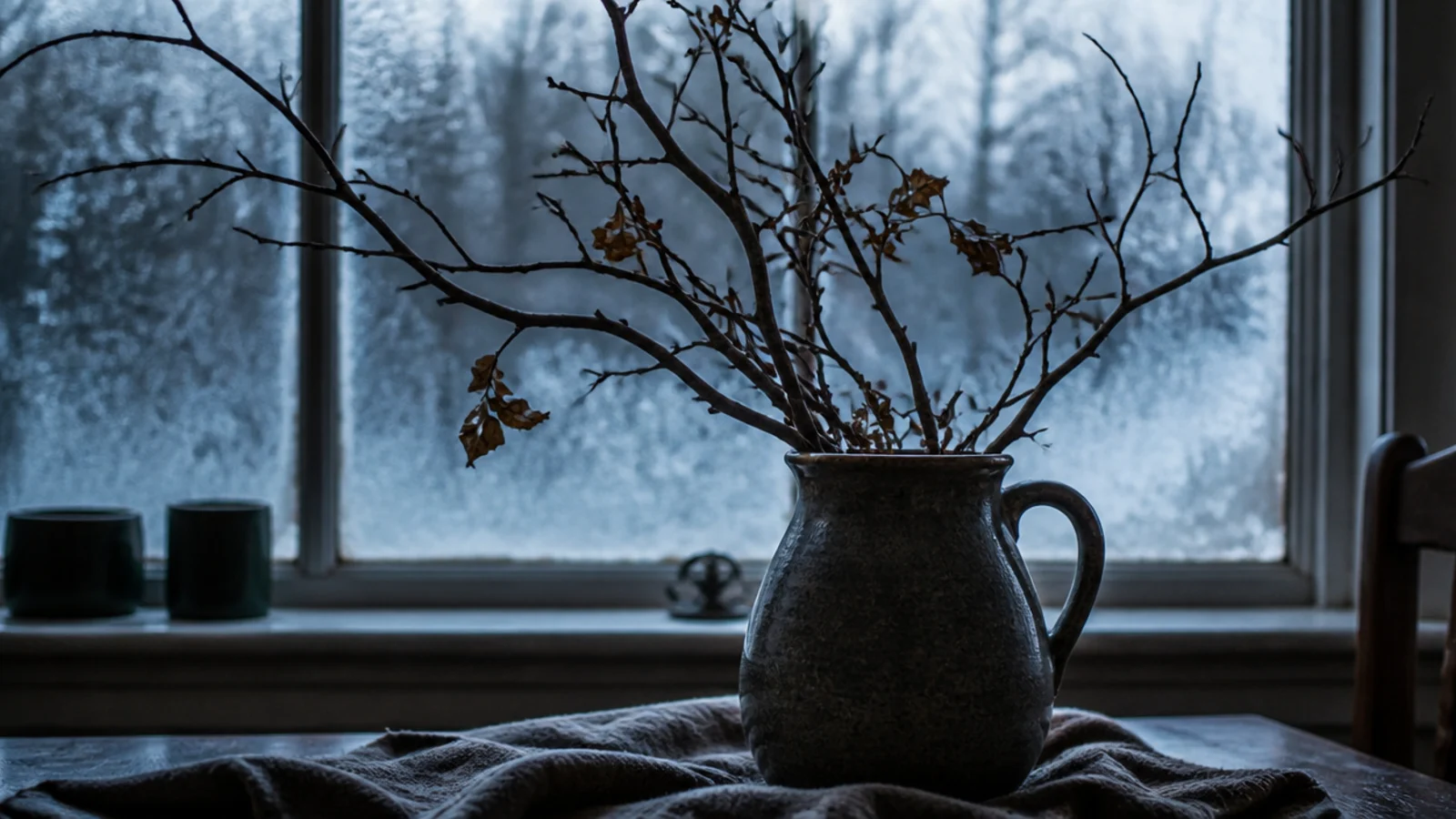
11. Cut branches instead of buying flowers
Three branches in a heavy jug outlast cut flowers by weeks, cost nothing, and change with the season on their own. Cut them at an angle, strip anything below the waterline, and keep the total height under about ten inches so the sightline survives.
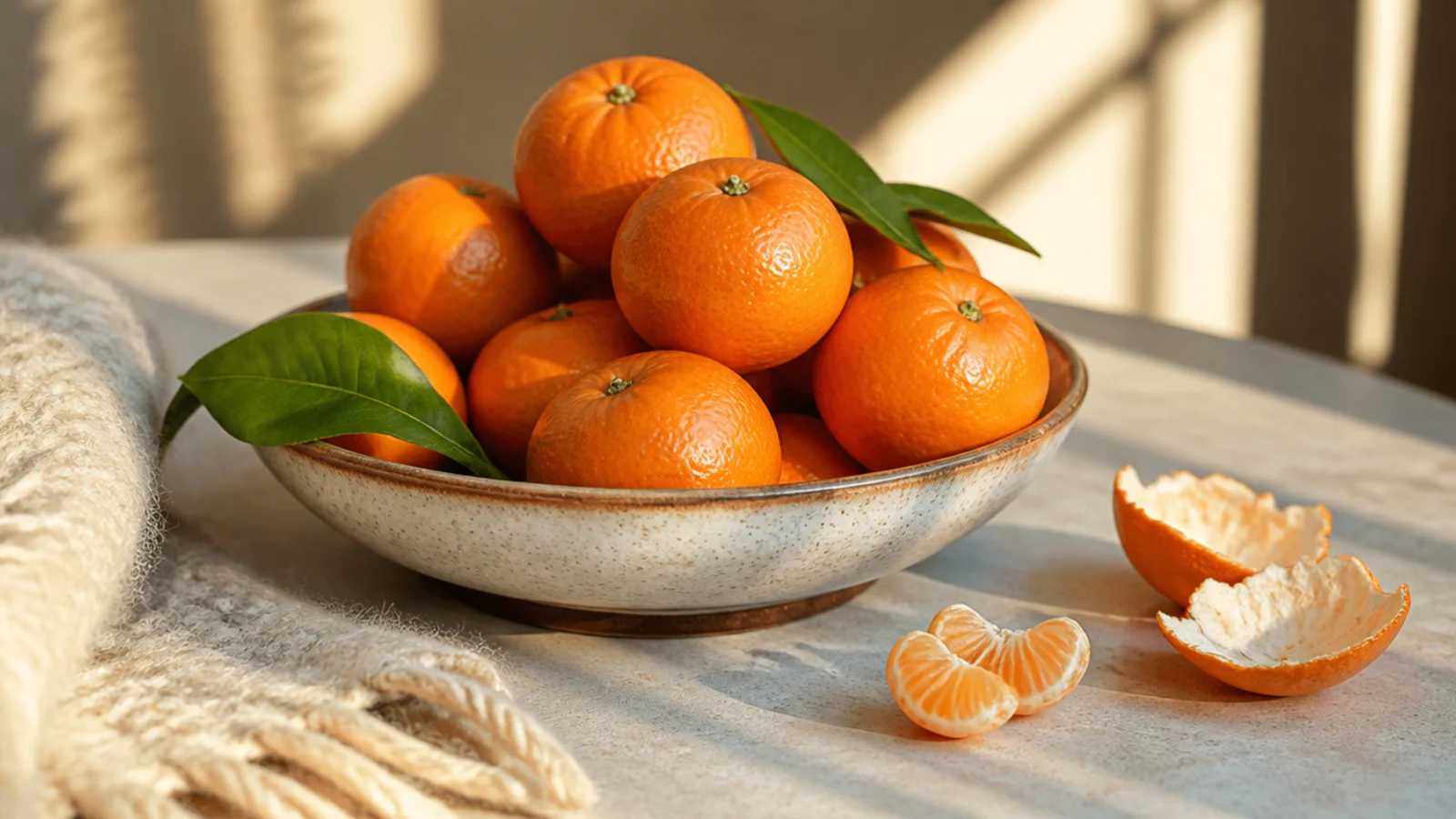
12. Keep a bowl of fruit that gets eaten
Citrus in winter, stone fruit in summer. It brings a colour into the room that nothing else does, it costs $4, and it disappears by itself rather than becoming another object to dust. Choose a shallow bowl so the fruit is visible rather than buried.
13. Let one colour repeat from the rug
Pull a single tone out of the rug or the curtains and repeat it in one object on the table. That repeat is what makes the table look like it belongs to the room. The decoration ideas for renters covers doing it without buying anything permanent.
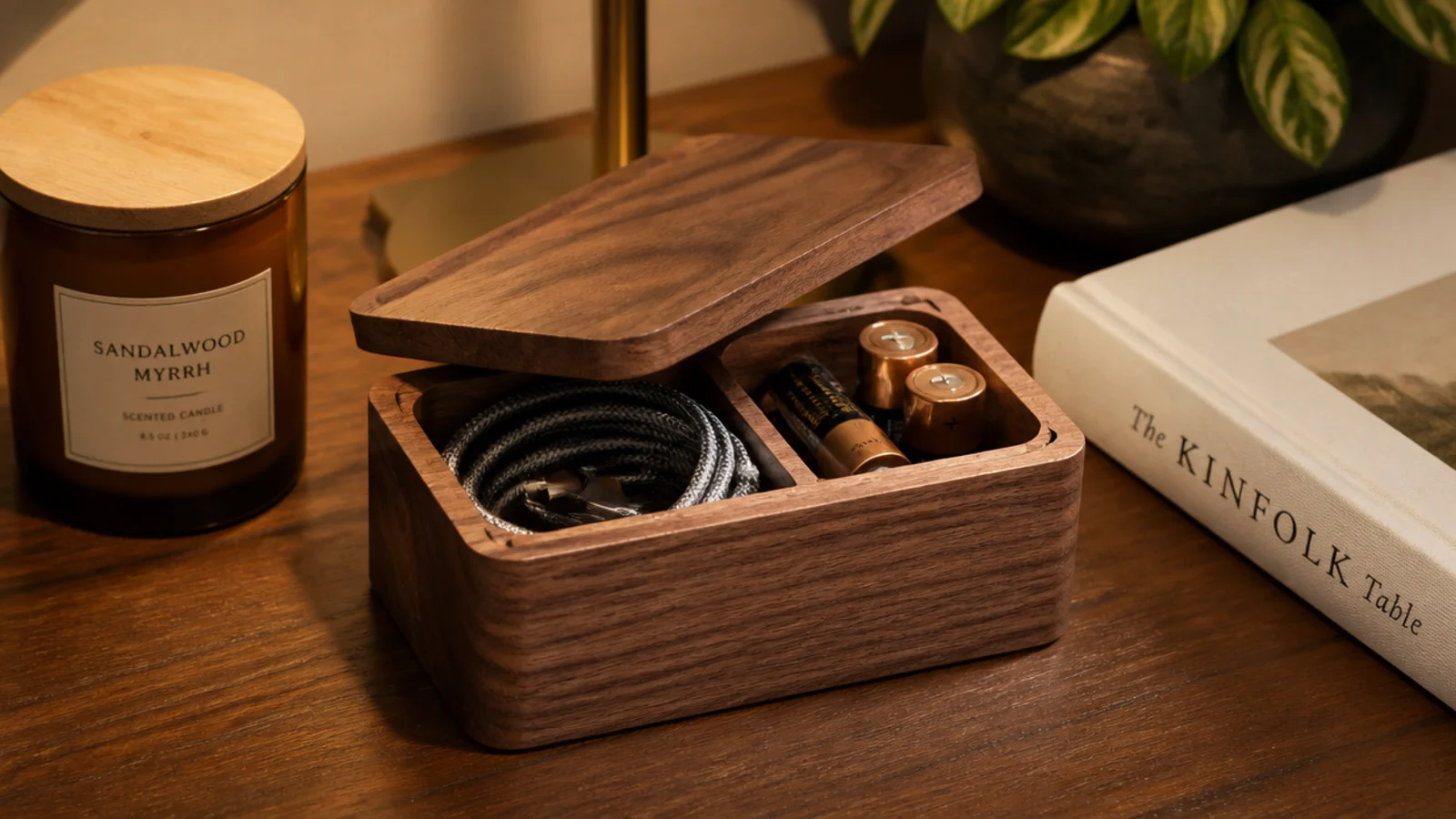
14. Give the ugly things a lidded box
Chargers, batteries, pens and the remote you never use go in a lidded box about eight inches square. Closed storage on the table beats a tidy pile on the table, and it beats a drawer in another room that nobody will ever walk to.
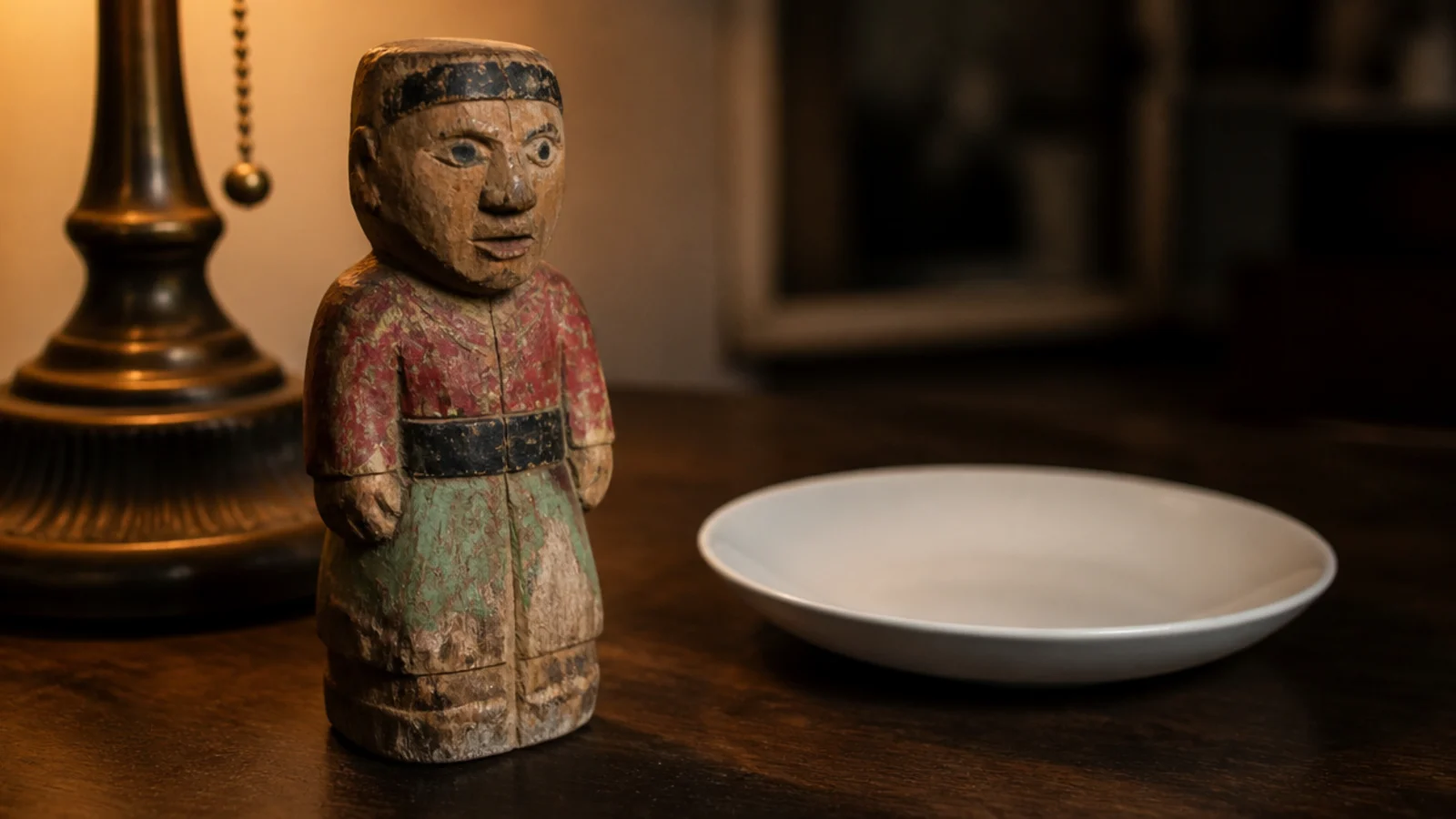
15. Include one thing with a story
A carved object from a trip, something inherited, a piece of driftwood. It is the one item guests ask about, and it is the reason the arrangement does not look like it was bought in a single transaction. Personal beats expensive on a low table every time.
16. Treat empty space as an object
Two small groups with a wide bare stretch between them looks considered. The same objects spread evenly looks like a shelf. Bare timber, stone or glass is a material in its own right and deserves as much of the top as the things you put on it.
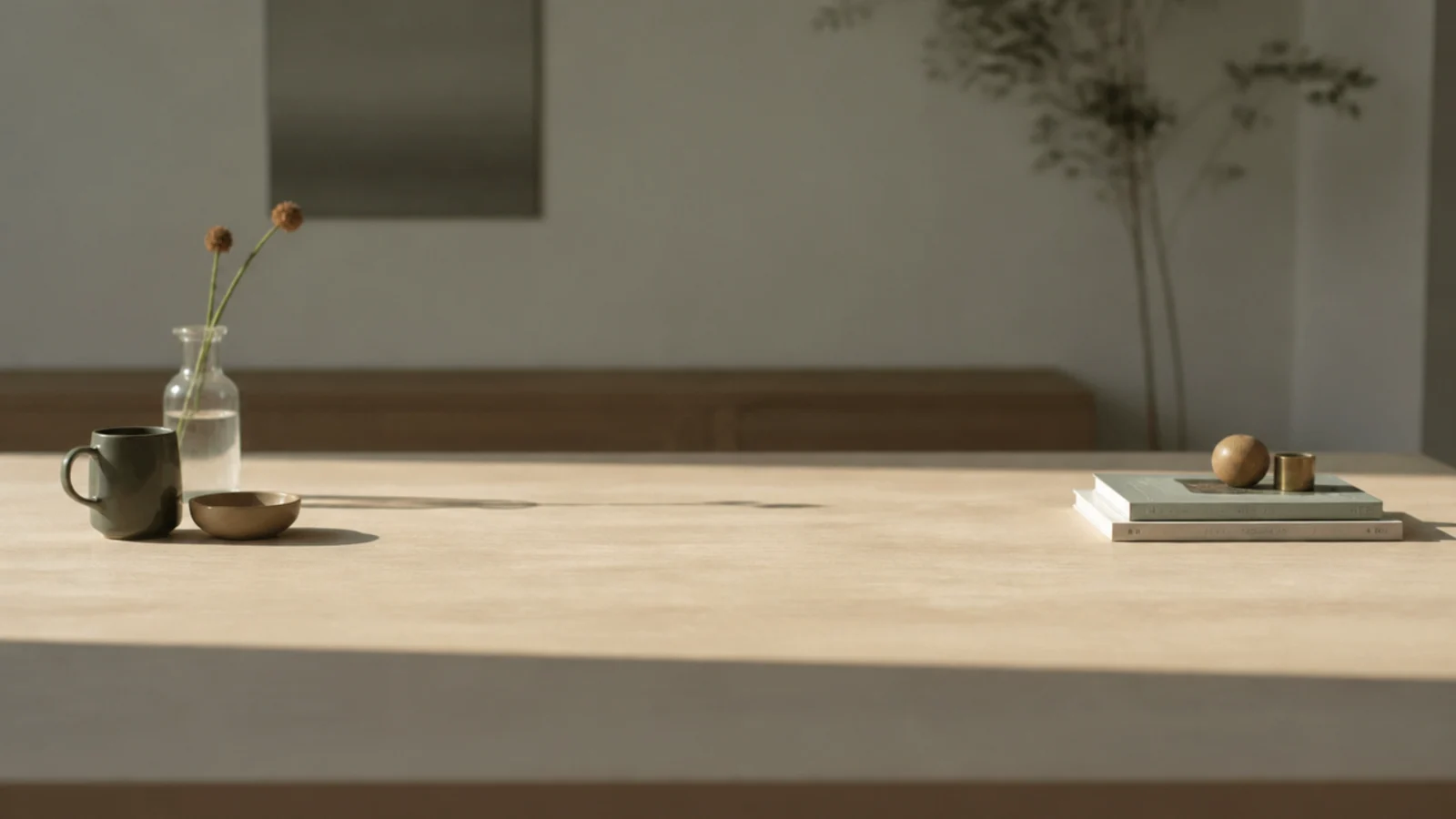
17. Set the tray on a diagonal
A rectangular tray squared up to a rectangular table repeats the same grid three times. Turning it 15 or 20 degrees breaks that instantly and makes the arrangement look placed rather than measured. It also stops the corners lining up with the table corners.
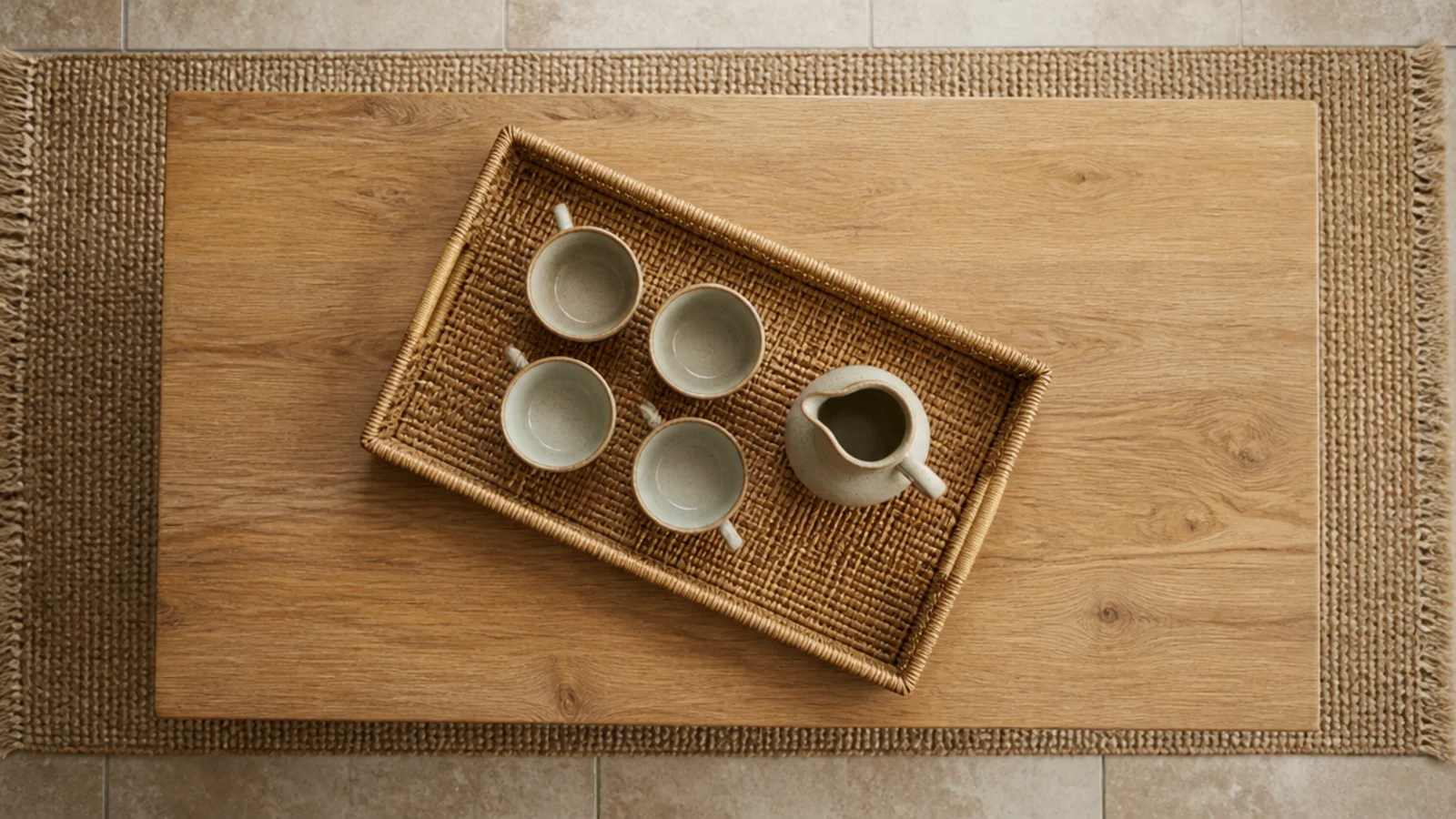
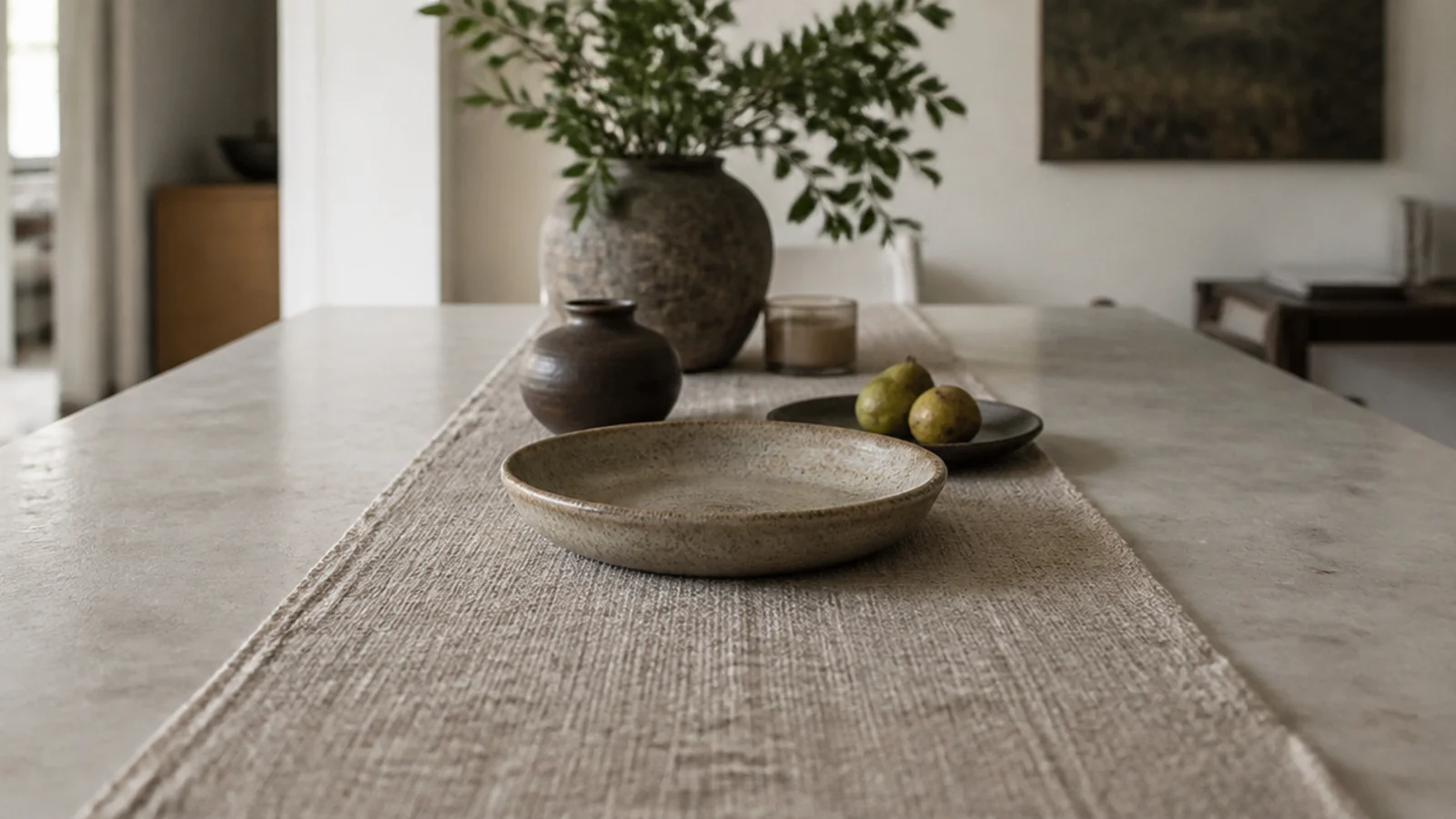
18. Layer a runner on a very large top
A 60-inch table can swallow an arrangement whole. A linen runner down the centre gives the objects a defined zone to sit in and cuts the apparent width by a third. Keep the runner narrow, around 14 inches, so plenty of the surface still shows.
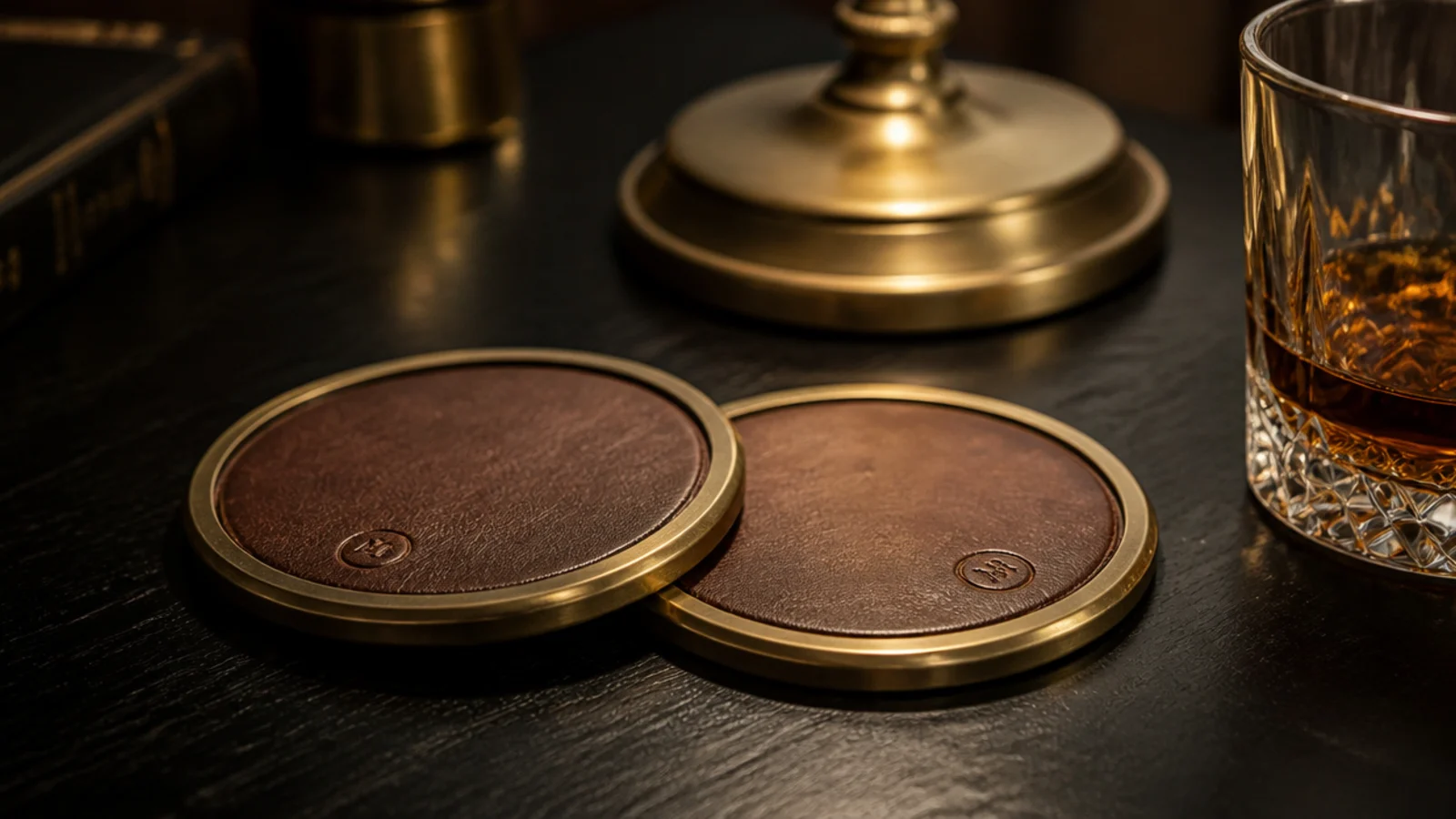
19. Match the coaster metal to the room
Coasters live on the table permanently, so they are decoration whether you intended them to be or not. Choosing a brass or blackened metal rim that matches the nearest lamp or handle turns a functional object into part of the scheme for no extra money.
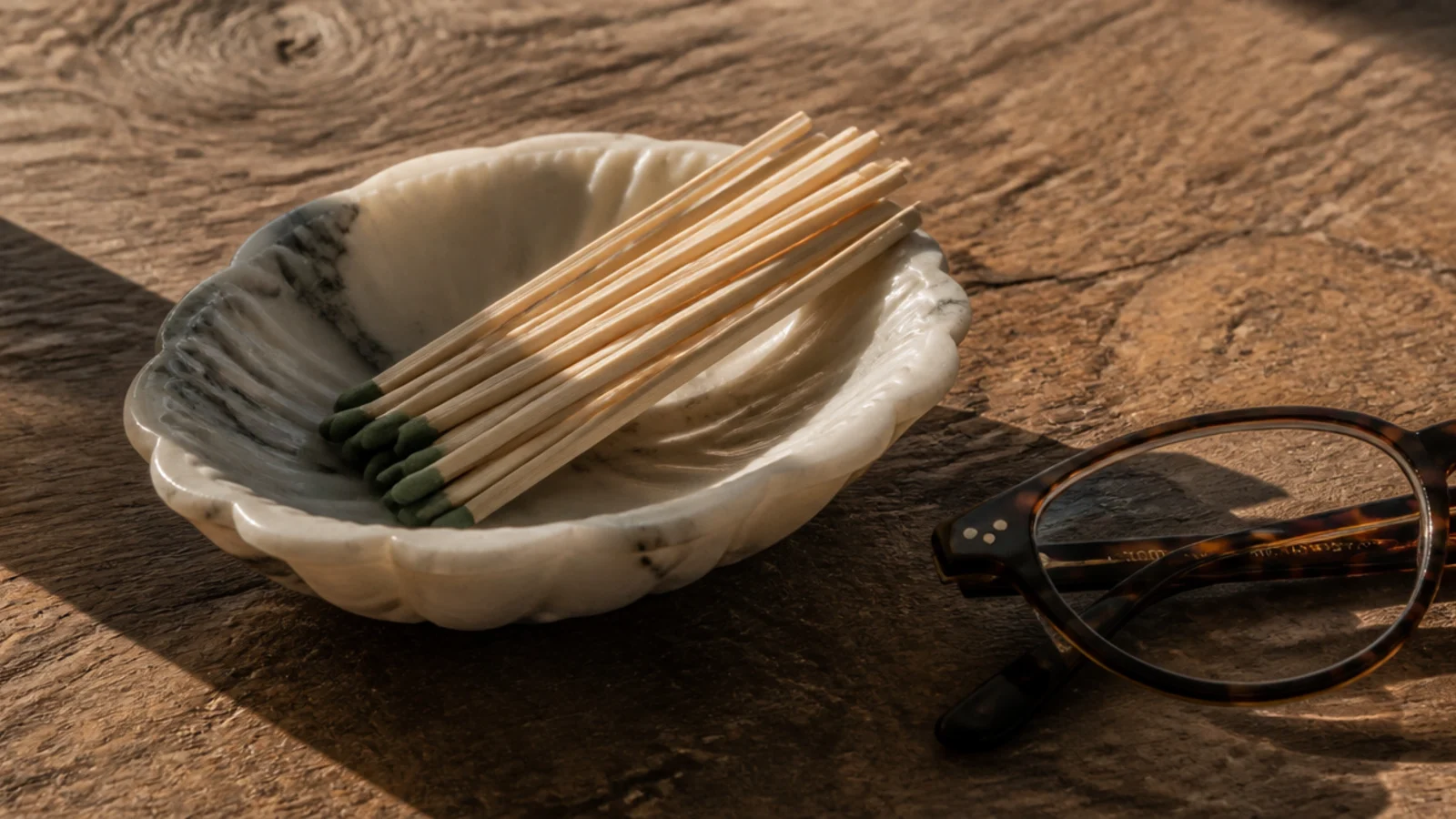
20. Keep a small dish for matches and keys
A four to six inch dish absorbs everything that would otherwise scatter: keys, matches, a stray coin, an earring. Small loose objects are what make a styled table read as untidy, and the dish solves it without adding visual weight.
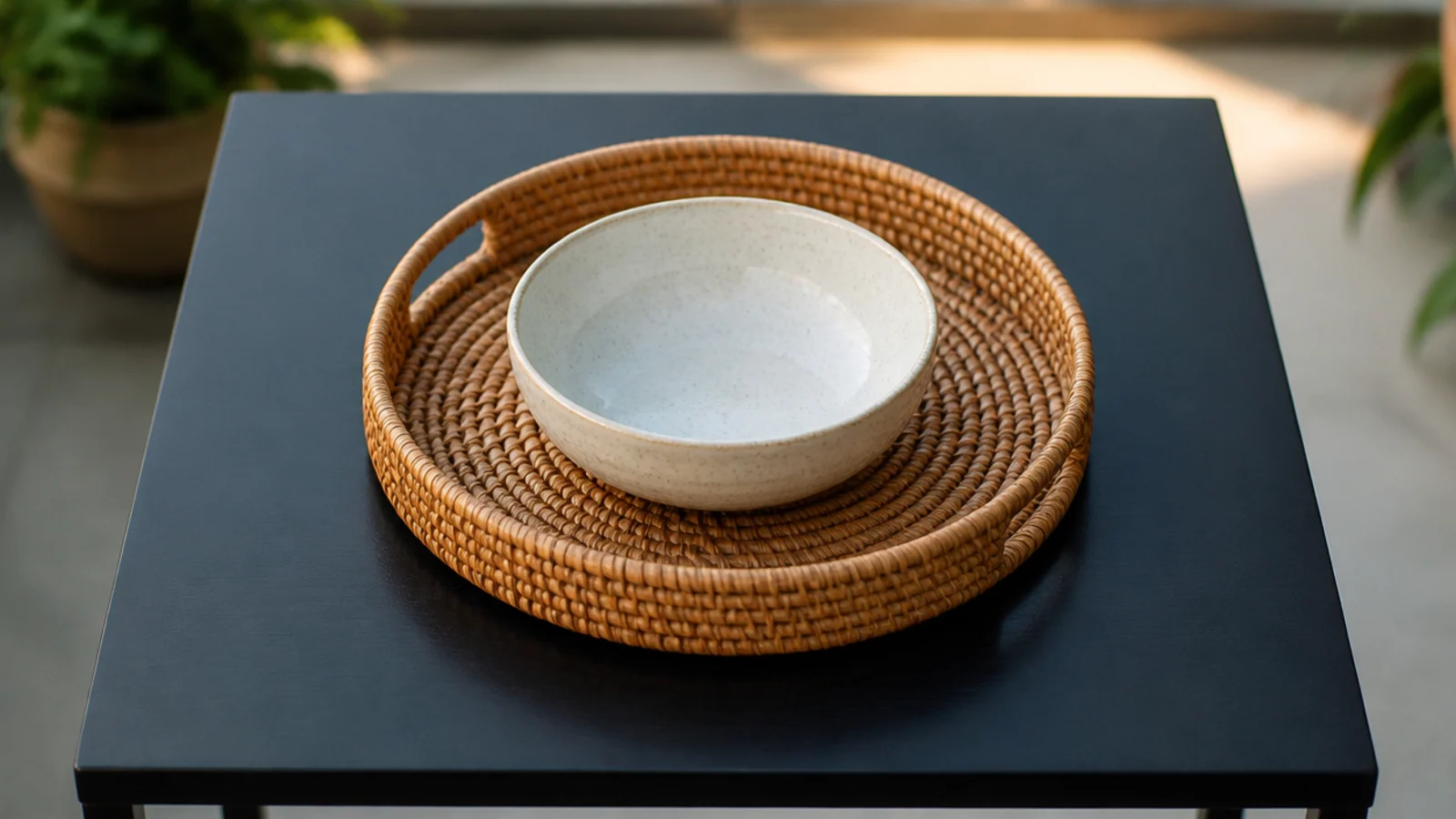
21. Repeat a curve on a rectangular table
A round tray and a round bowl on a rectangular top soften a surface that is otherwise all straight lines and corners. It is the fastest way to stop a hard-edged modern table feeling severe, and it costs nothing beyond choosing round rather than square.
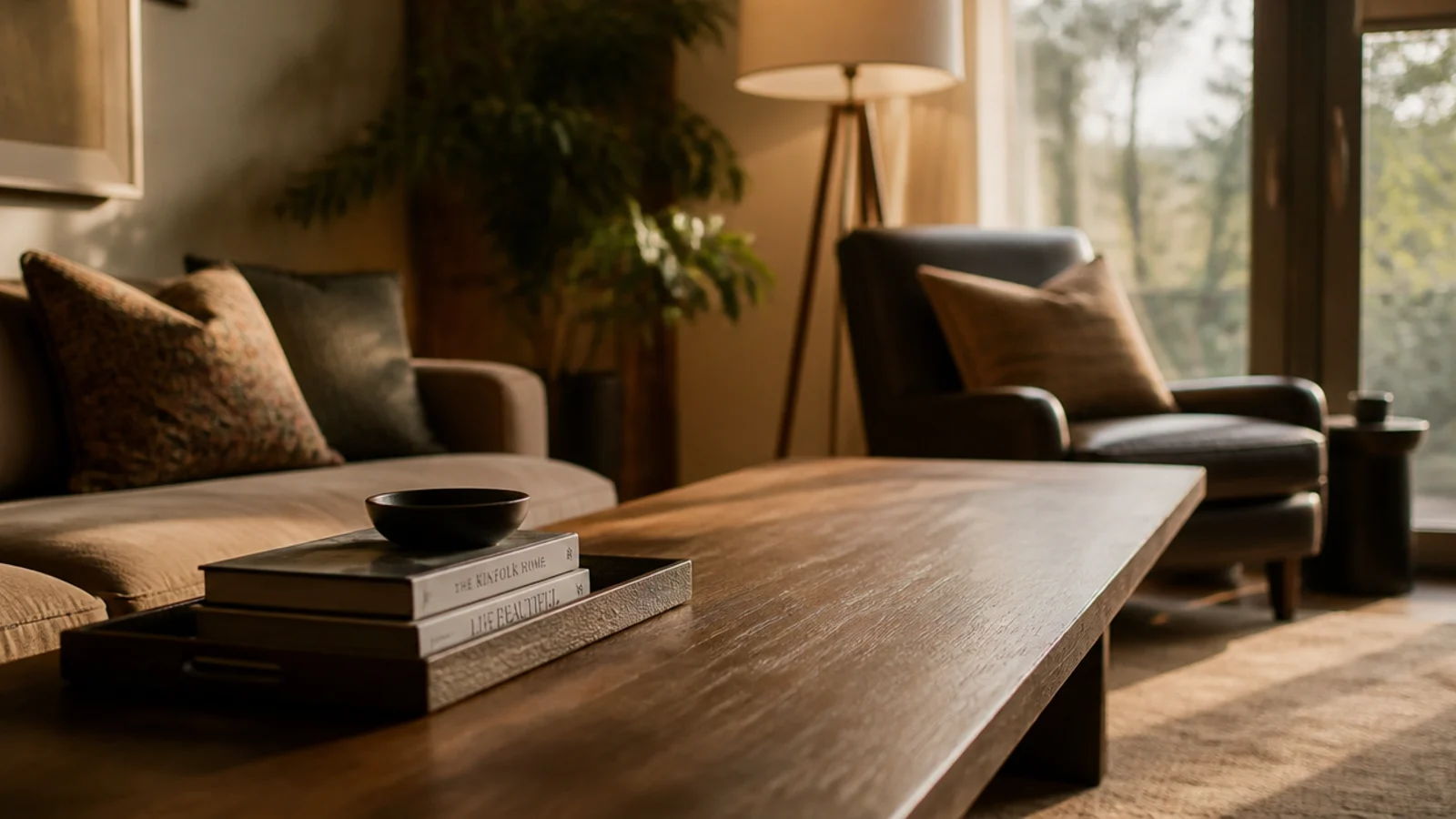
22. Weight the arrangement toward the seating
Style the half of the table closest to where people sit and leave the far half quieter. Furniture is used asymmetrically, and an arrangement that acknowledges that survives longer than one placed perfectly in the geometric centre.
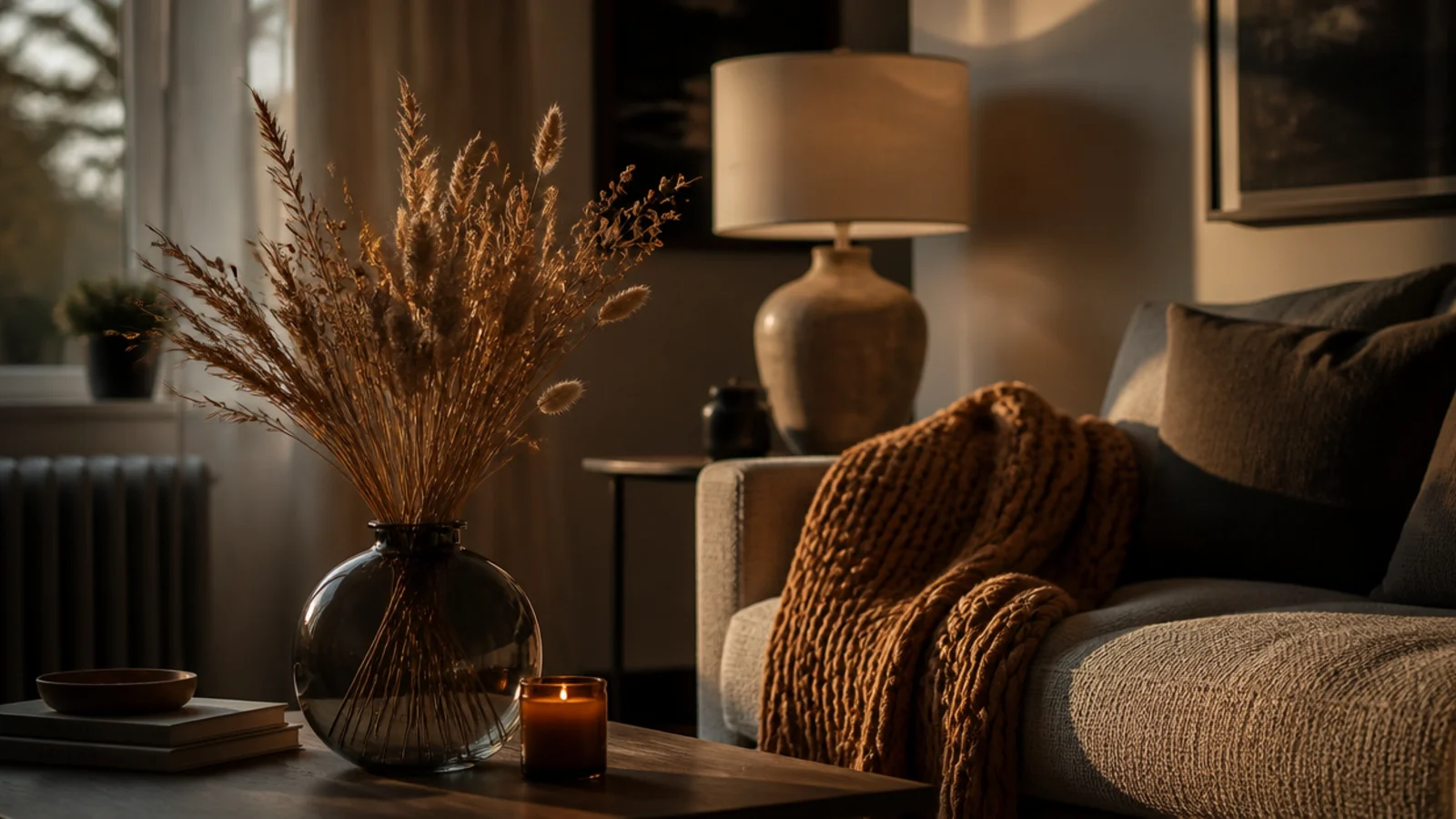
23. Change the arrangement when the clocks do
Twice a year is enough. Dried grasses and a wool throw for the dark months, something green and a bowl of fruit for the light ones. Two changes a year keeps a table from becoming invisible, which is what happens to any arrangement left in place too long.
24. Photograph it and remove one thing
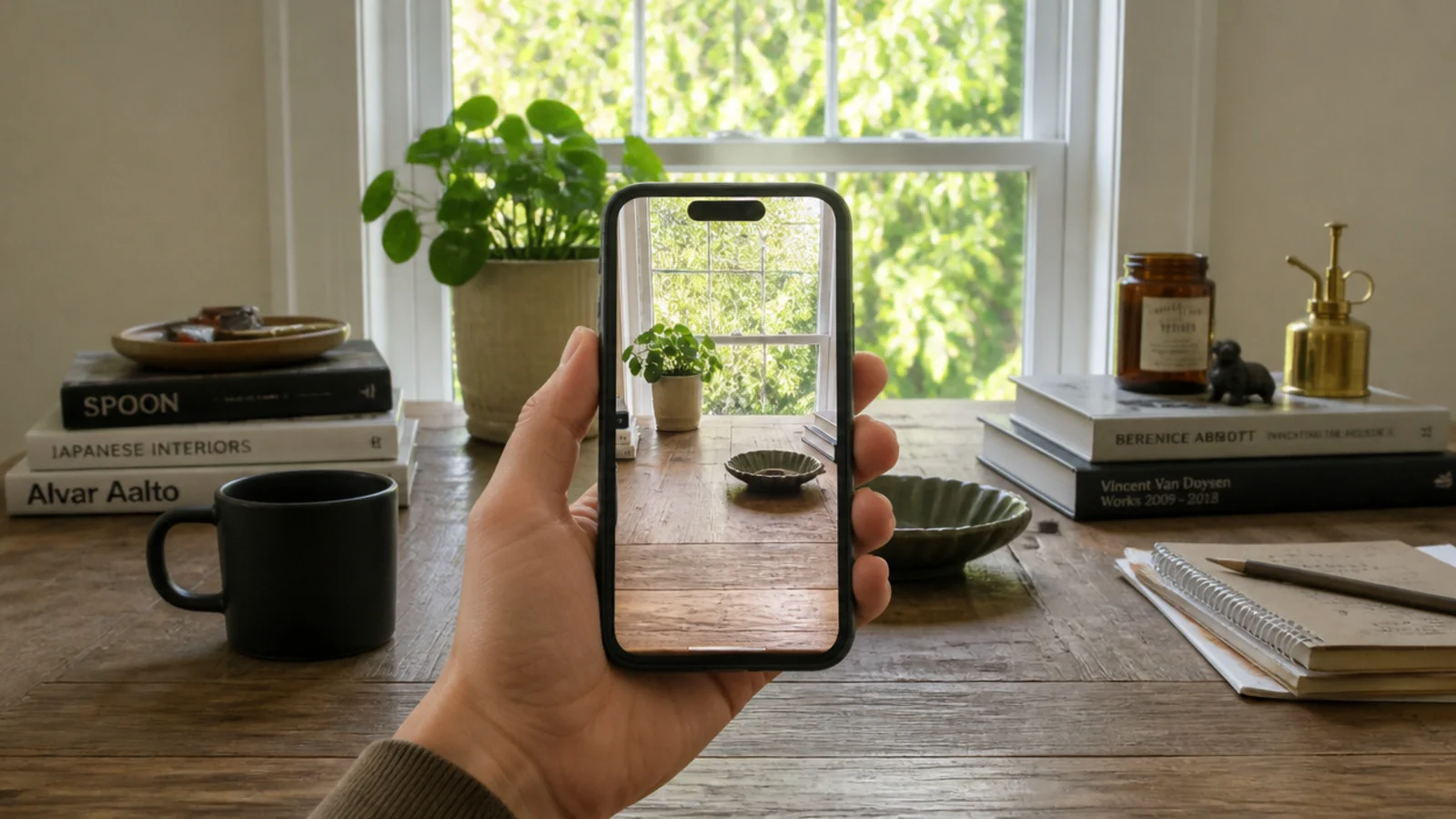
Your eye forgives a busy surface; a phone camera does not. Take the photo from the doorway, look at it for five seconds, and take away whichever object you noticed second. It is almost always right, and it takes less than a minute.
25. Reset the whole surface once a fortnight
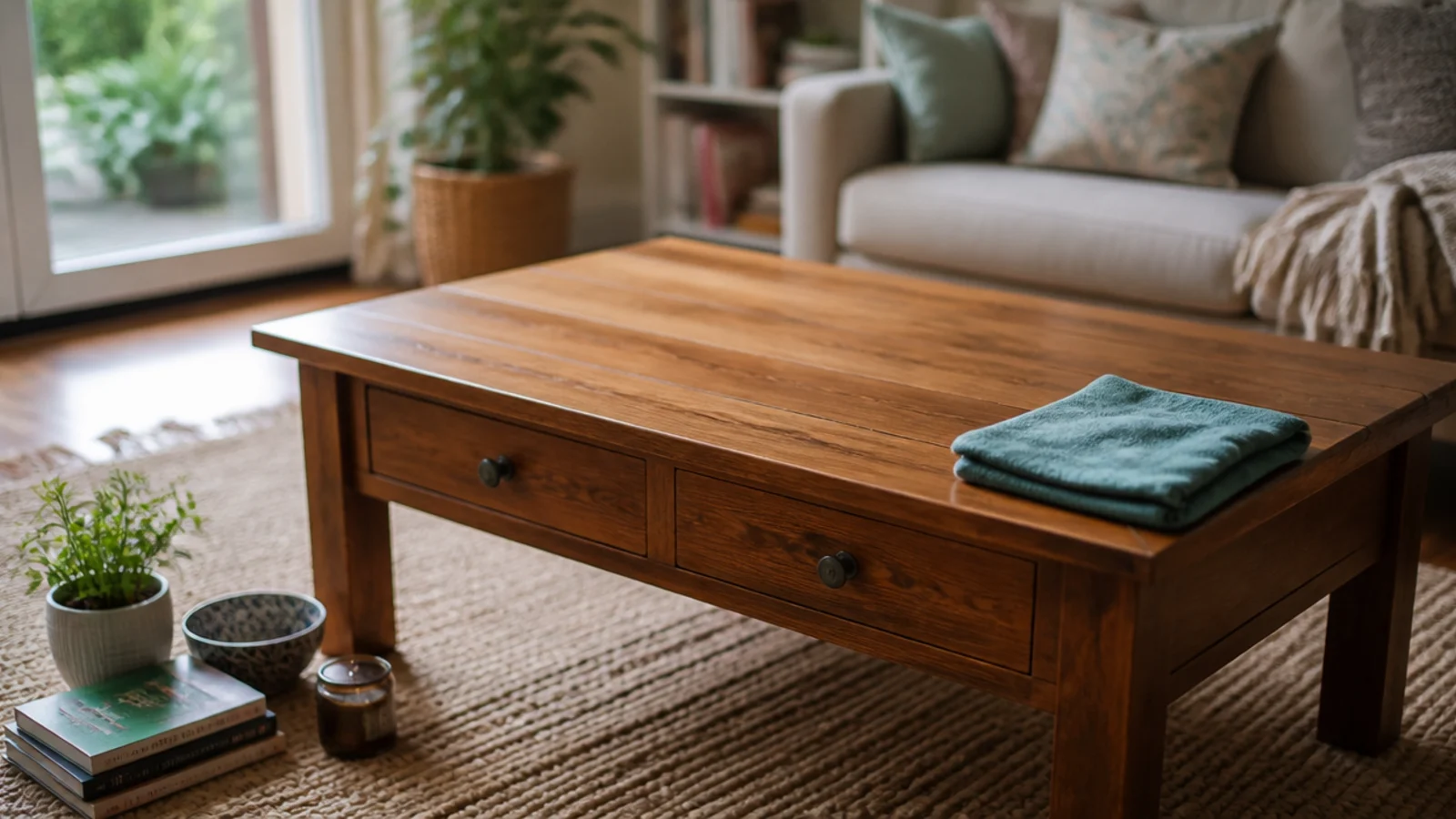
Clear everything onto the rug, wipe the top, and put back only what earns the space. Surfaces accumulate silently, and rebuilding from empty is faster than tidying around what has gathered. Fifteen minutes, twice a month, keeps the table permanently right.
For the practical habits underneath all of this, the owner tested ideas guide covers trays, coasters and cables in detail, and the marble table guide has the sealing schedule if your surface is stone. Mirror wall decor handles the wall opposite, which is what a low table arrangement is usually reflected in, and TV unit decor balances the other end of the room.
Mistakes to Skip
- Arranging tall stems on a low table. Anything over eight inches sits in the eyeline between two people, which undoes the entire reason the seating is arranged around the table in the first place.
- Spreading objects evenly across the surface. Even spacing reads as a shop shelf; grouping two thirds of the objects into one cluster and leaving the rest bare reads as styling.
- Leaving a lit candle at knee height among throws and paper. Rechargeable LED pillars give the same glow, run for hours, and cannot be knocked into a blanket by a dog or a sleeve.
- Buying six small decorative objects instead of one large one. Small pieces crowd a surface, collect dust individually, and cost more in total than the single anchoring bowl that would have done the job better.
Frequently asked questions
How big should a tray be on a center table?
Roughly a third of the table surface, which on a forty-eight inch top means something around sixteen to twenty inches long. Much smaller and the objects inside look crowded against the rim, much larger and the tray stops reading as a container and starts reading as a second table top.
How many objects should go on a center table?
Three groups, not three objects. A tall element, a low wide element and something flat, arranged as a triangle with unequal spacing. Five or six separate items spread evenly across a top reads as a shelf rather than an arrangement, however nice each individual piece is.
What is the height limit for a center table arrangement?
About eight inches including the vessel. Above that you are sitting in the eyeline between two people on opposite seats, which defeats the purpose of arranging the furniture around a conversation. Tall stems and big lamps belong on a console behind the sofa instead.
How do I decorate a center table without buying anything?
Cut three branches from the garden, borrow a bowl from the kitchen, and pull the two books you are actually reading off the shelf. Seasonal foliage in a jug is the single most reliable free arrangement there is, and it changes every few weeks by itself.
Should the table decoration match the rest of the room?
Pull one colour from the rug or the curtains so the table belongs, then let one object be entirely unrelated. A perfectly matched arrangement looks bought as a set, while one repeated colour plus one outlier reads like a room that has been lived in and added to.
Want more like this? Browse all 15 center table living room guides — they all use the same measurements and budget tiers.
Pin it for later
Save this to your Center Table Living Room board
Pin it now so it is waiting for you when the tape measure comes out — and so the next person hunting for this idea can find it too.
Save this pinKeep going
More ideas worth saving while you have the tape measure out.