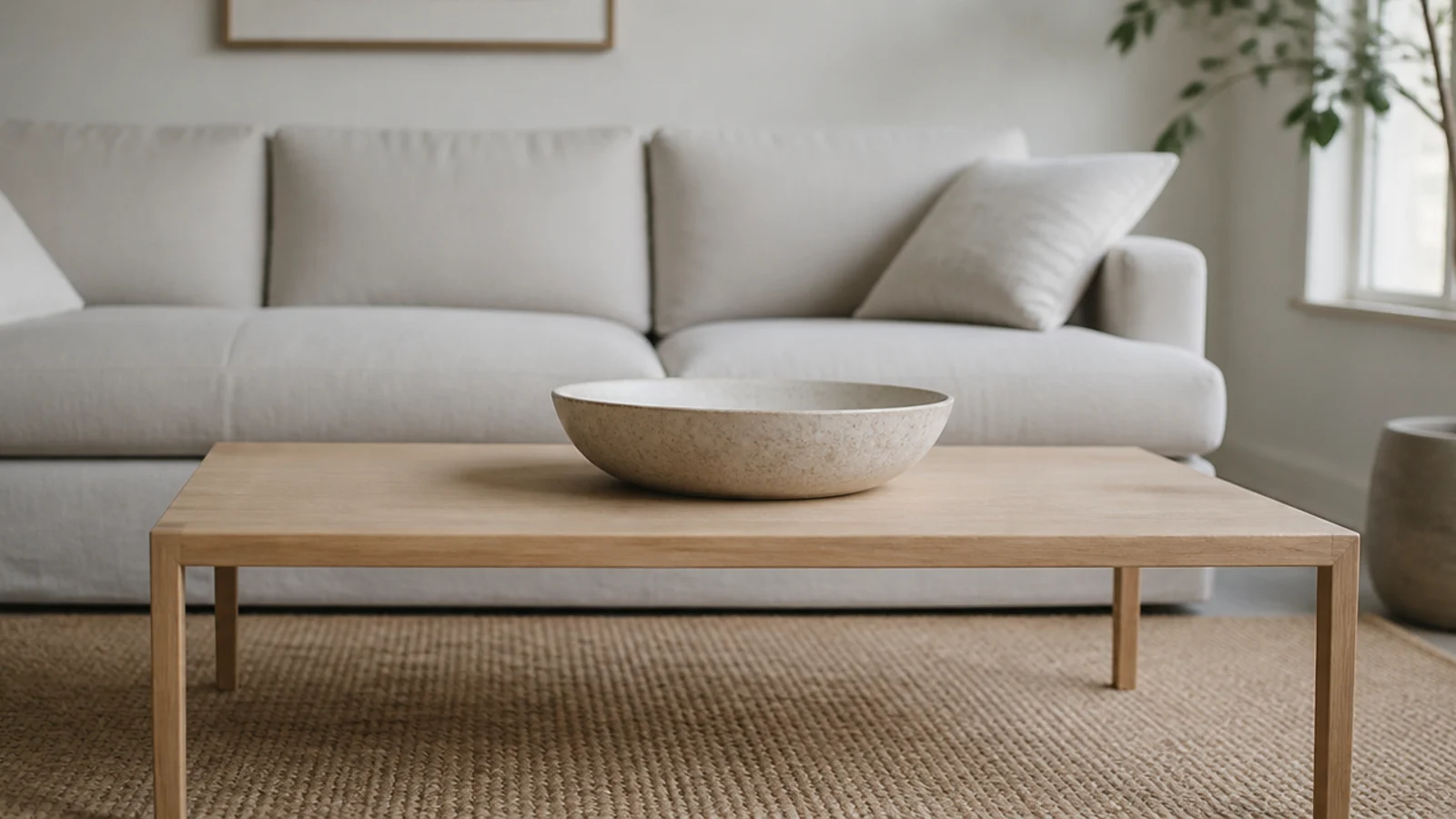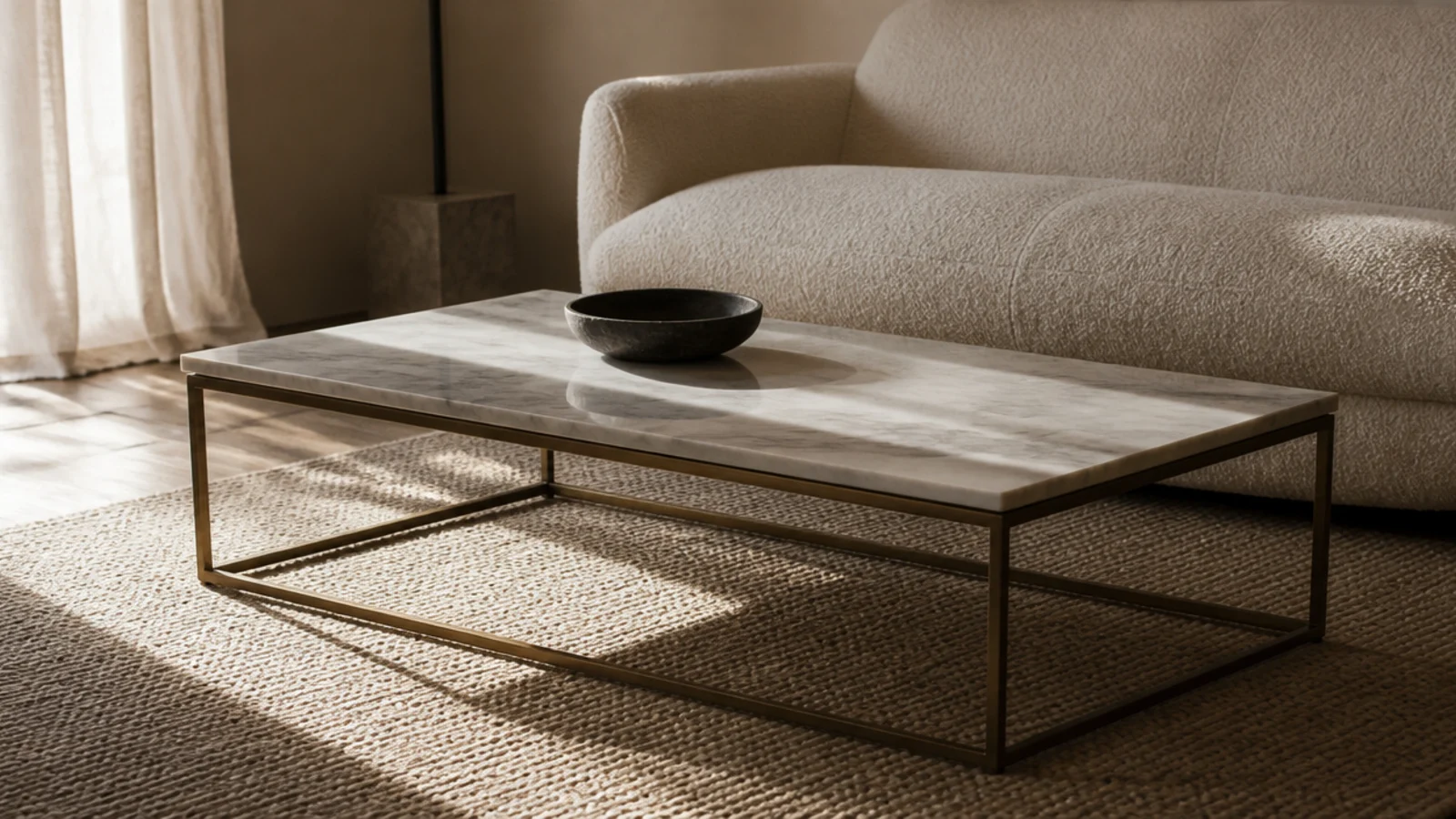
Center Table Living Room · Listicle
25 Living Room Center Table Decor Ideas For Renters

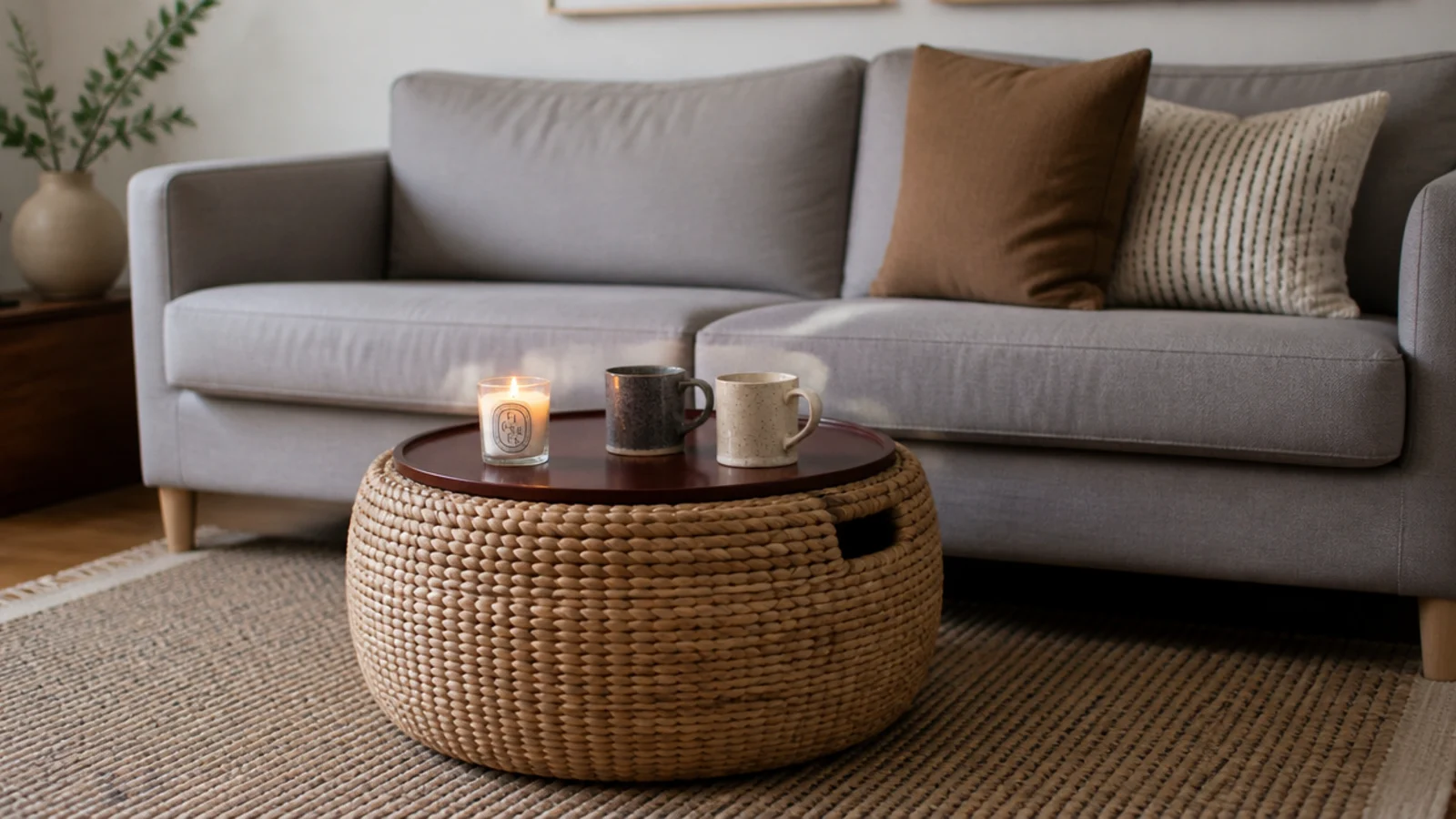
Renting changes the brief. Nothing can be drilled, nothing can mark a floor you do not own, and everything has to fit in the back of a car in eighteen months. The upside is that the constraint pushes you toward the things that actually work anyway: light, cheap, movable and secondhand. These living room center table decor ideas all leave no trace, cost very little, and survive a move.
In this guide27 sections — tap to openHide
- 1.What living room center table decor ideas have to do in a rental
- 2.A flat tray on a lidded basket
- 3.Two lightweight cubes that split for the move
- 4.A trunk that packs itself on moving day
- 5.Felt pads on every foot before anything slides
- 6.Natural rubber under the rug, never PVC
- 7.Removable vinyl wrap over a dated top
- 8.A marble tray instead of a marble table
- 9.Nesting tables for a flat that keeps changing
- 10.A folding table that lives in a cupboard
- 11.A rattan drum light enough to carry alone
- 12.Charity shop books as the whole styling budget
- 13.Cut branches instead of florist stems
- 14.A rechargeable lamp with no socket needed
- 15.Removable adhesive clips for the cable run
- 16.A washable runner over a damaged top
- 17.Stacked crates as a low table
- 18.A plywood top on folding trestle legs
- 19.Buy secondhand and resell for what you paid
- 20.Keep it under forty-two inches and fifty pounds
- 21.Paint with a finish you can sand back
- 22.A cork or leather mat where laptops land
- 23.Coasters that never leave the table
- 24.Photograph the flat before you move anything
- 25.Store the landlord furniture rather than binning it
- 26.Size the tray to carry the whole styling
- 27.Mistakes to Skip
What living room center table decor ideas have to do in a rental
Three tests. Does it mark anything permanent? Can one person carry it? And will it still fit in a room whose dimensions you cannot predict yet?
The marking question is mostly about feet and backing. Felt pads on every leg before the table is slid even once, and a natural rubber or felt rug pad rather than a cheap PVC-backed one, because PVC can react with floor finishes over months and leave a shadow that comes straight out of a deposit. The same logic applies to adhesives — removable clips for cables, never permanent tape.
The carrying question sets the size. Under about 42 inches long and under 50 pounds covers almost every rental sitting room, goes up a narrow stair with a turn, and still works in front of anything from a two-seater to a small sectional. The usual measurements still apply: top within one to two inches of the sofa cushion, 16 to 18 inches of gap in front, 30 to 36 on a walking route.
The budget question is the easiest. Buy one thing larger than feels sensible — a bowl, a tray, a lamp — and get everything else free or secondhand. Branches from outside, books from a charity shop, a jug from the kitchen. A full setup lands around $60 to $120, and the simple table guide covers doing it with even less.
1. A flat tray on a lidded basket
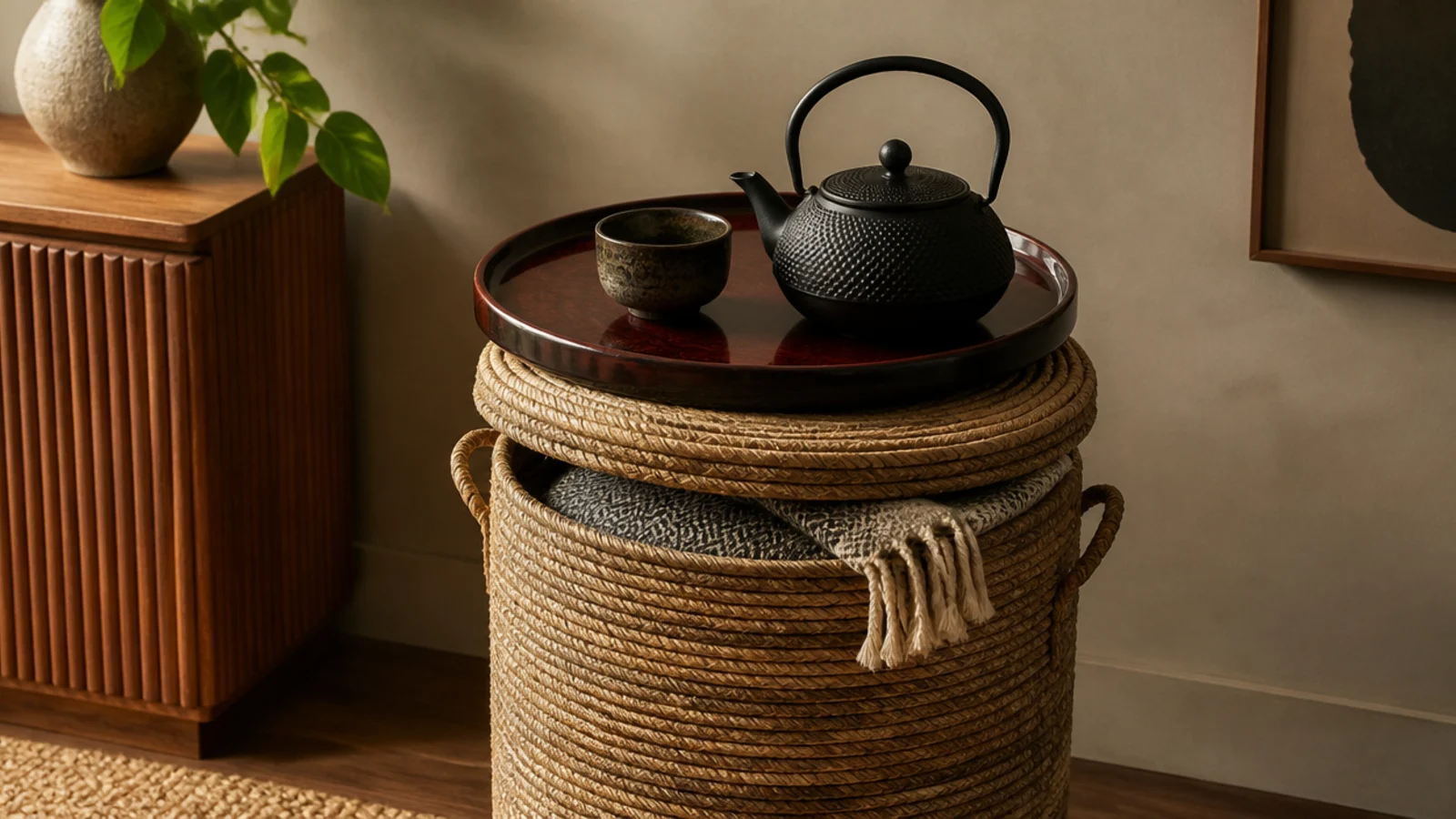
A wide lidded basket with a rigid tray on top gives you a 20-inch surface, storage for throws and nothing that touches the floor except woven grass. Around $50 to $70 total, and it is the only table on this list you can carry upstairs with one hand.
2. Two lightweight cubes that split for the move
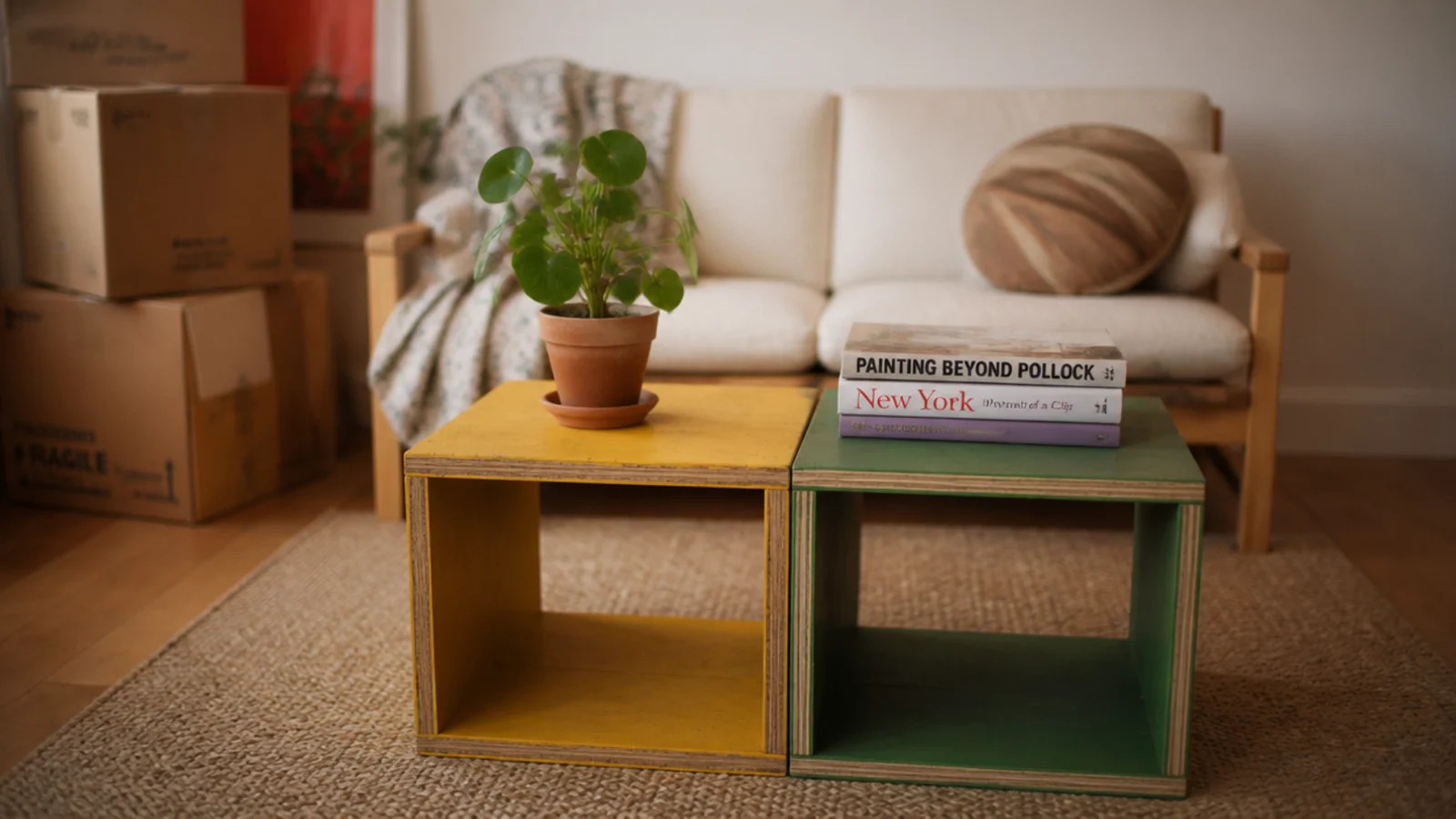
Two 18-inch hollow cubes push together into a 36-inch square and separate into two boxes that carry books on moving day. They also work as extra seating when the room fills up, which matters in flats with more friends than chairs.
3. A trunk that packs itself on moving day
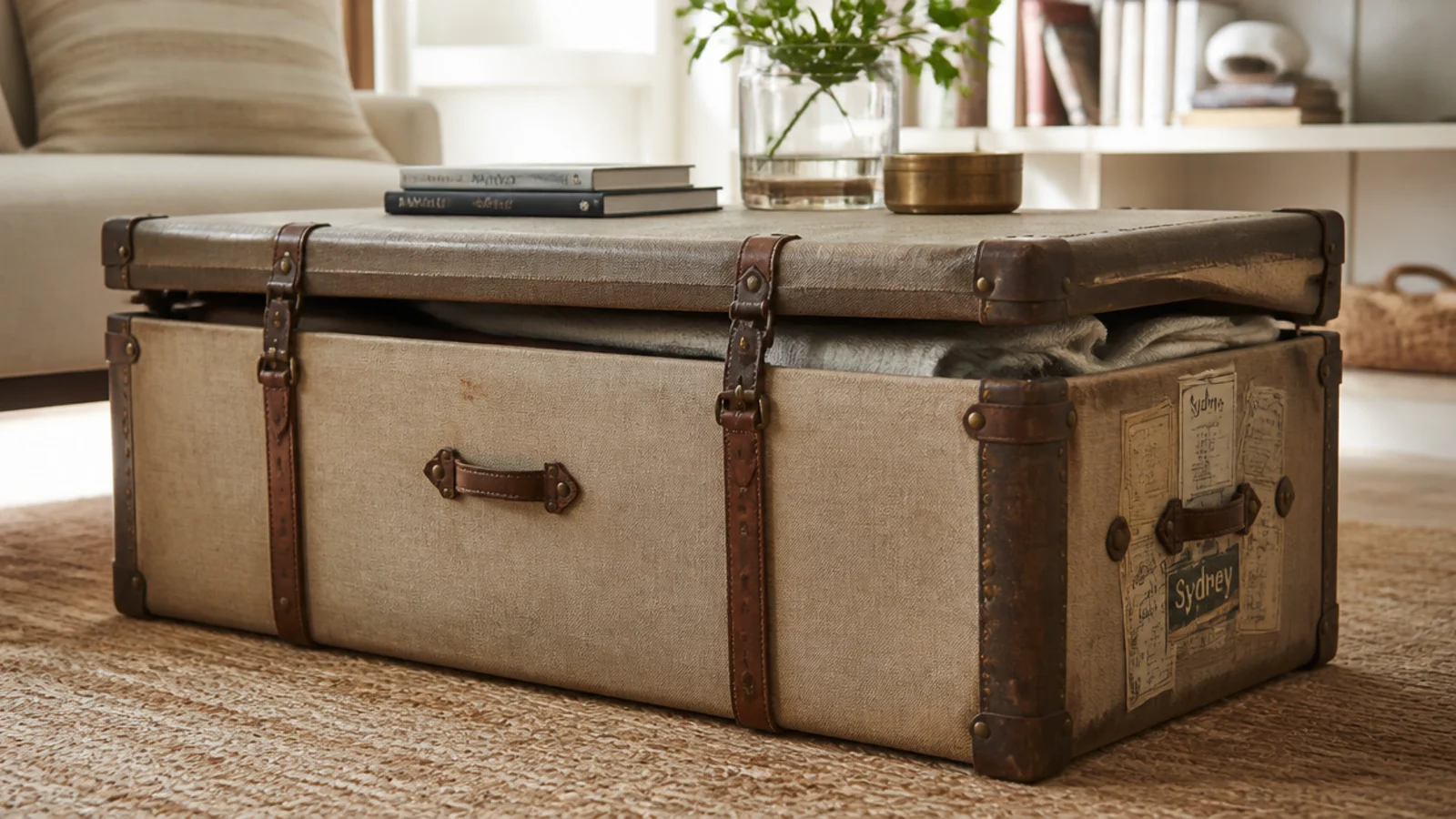
A canvas and timber trunk works as a table for two years and then becomes the container for the bedding on the day you leave. Treat the storage as seasonal — anything under a lid gets forgotten — and check the hinge has a stay.
4. Felt pads on every foot before anything slides
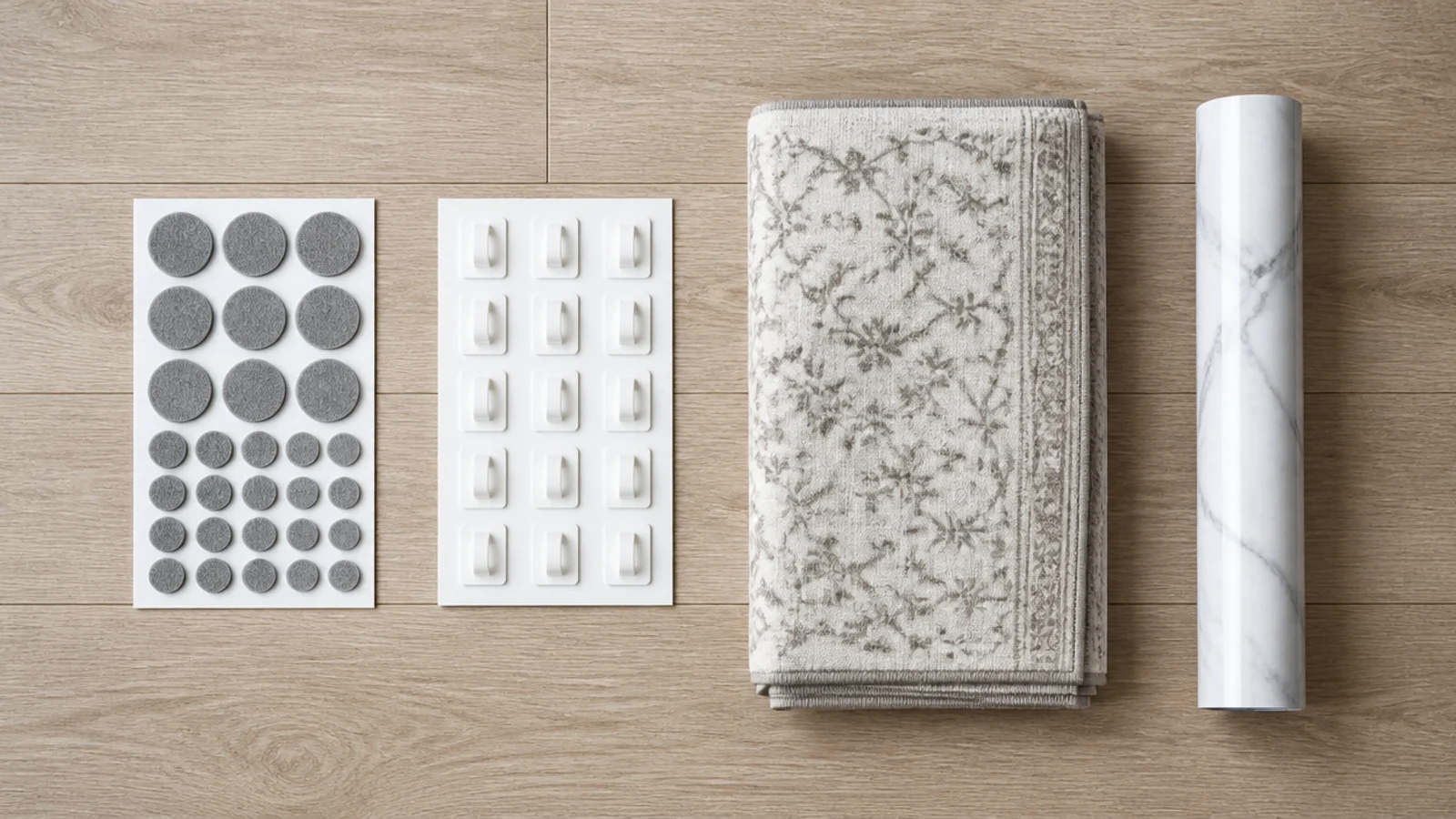
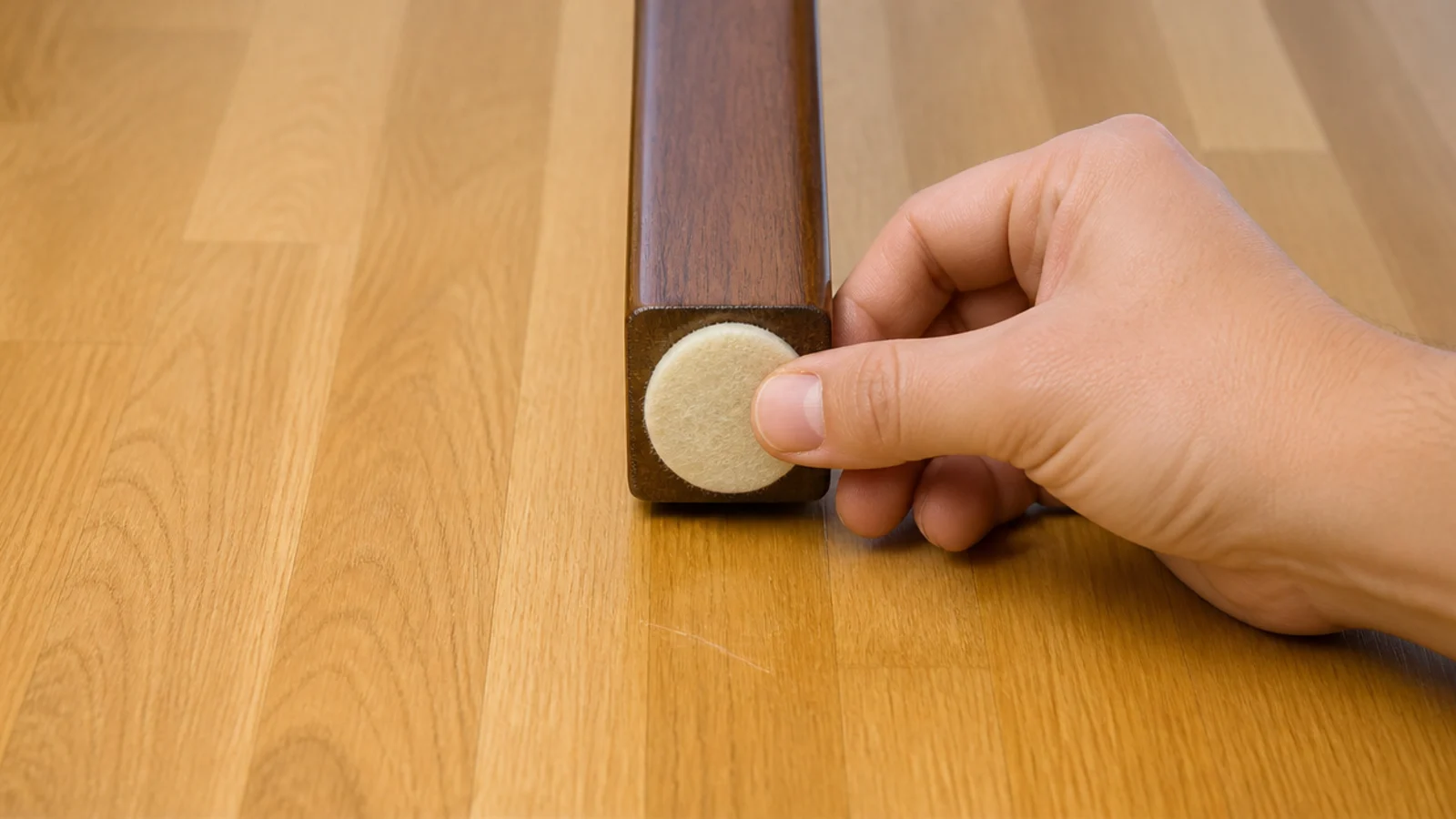
Six dollars of felt against a deduction that is routinely $80 to $200. Fit them before the table is ever moved, not after the first scrape, and check them twice a year because they wear through and grit works into the backing.
5. Natural rubber under the rug, never PVC
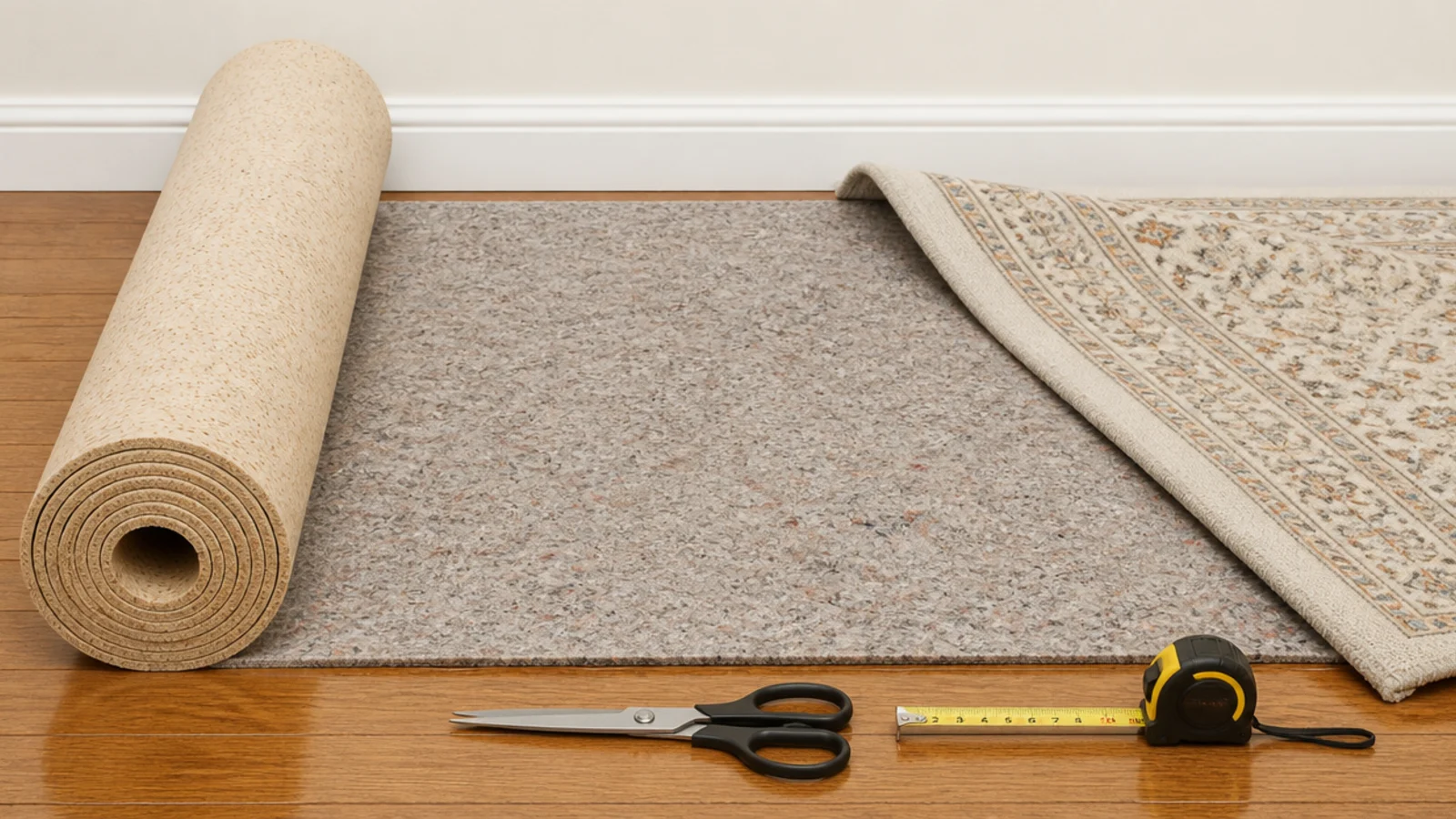
A quarter-inch felt-and-natural-rubber pad stops the rug creeping and the table travelling with it. Cheap PVC-backed pads can react with varnish and polyurethane floor finishes over months, leaving a cloudy mark that no amount of cleaning removes.
6. Removable vinyl wrap over a dated top
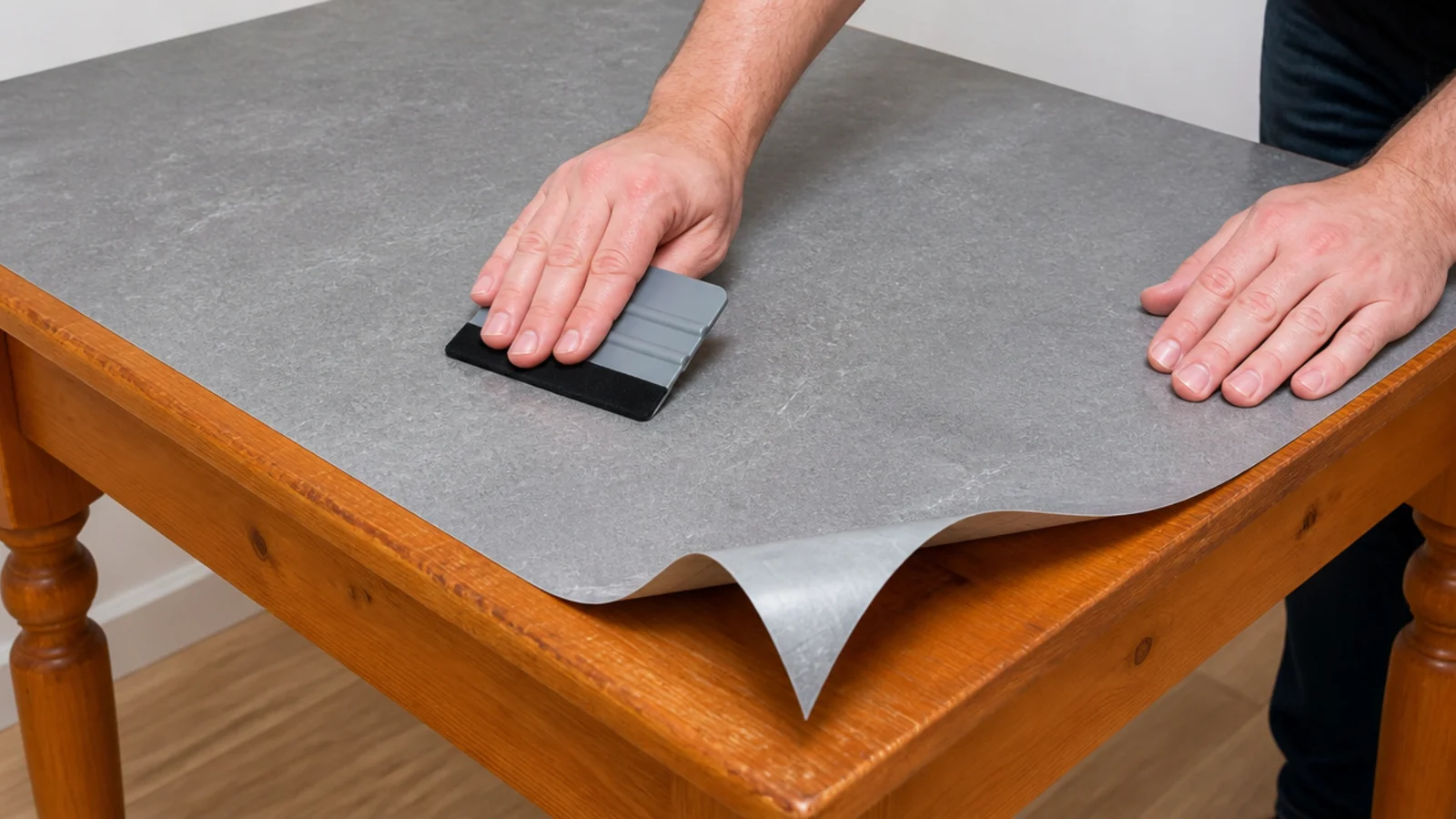
Matte stone-effect or timber-effect vinyl costs $20 to $40 a roll, applies with a plastic squeegee in an afternoon, and peels off cleanly when you leave. It is the only way to change a landlord's table without owning the consequences.
7. A marble tray instead of a marble table
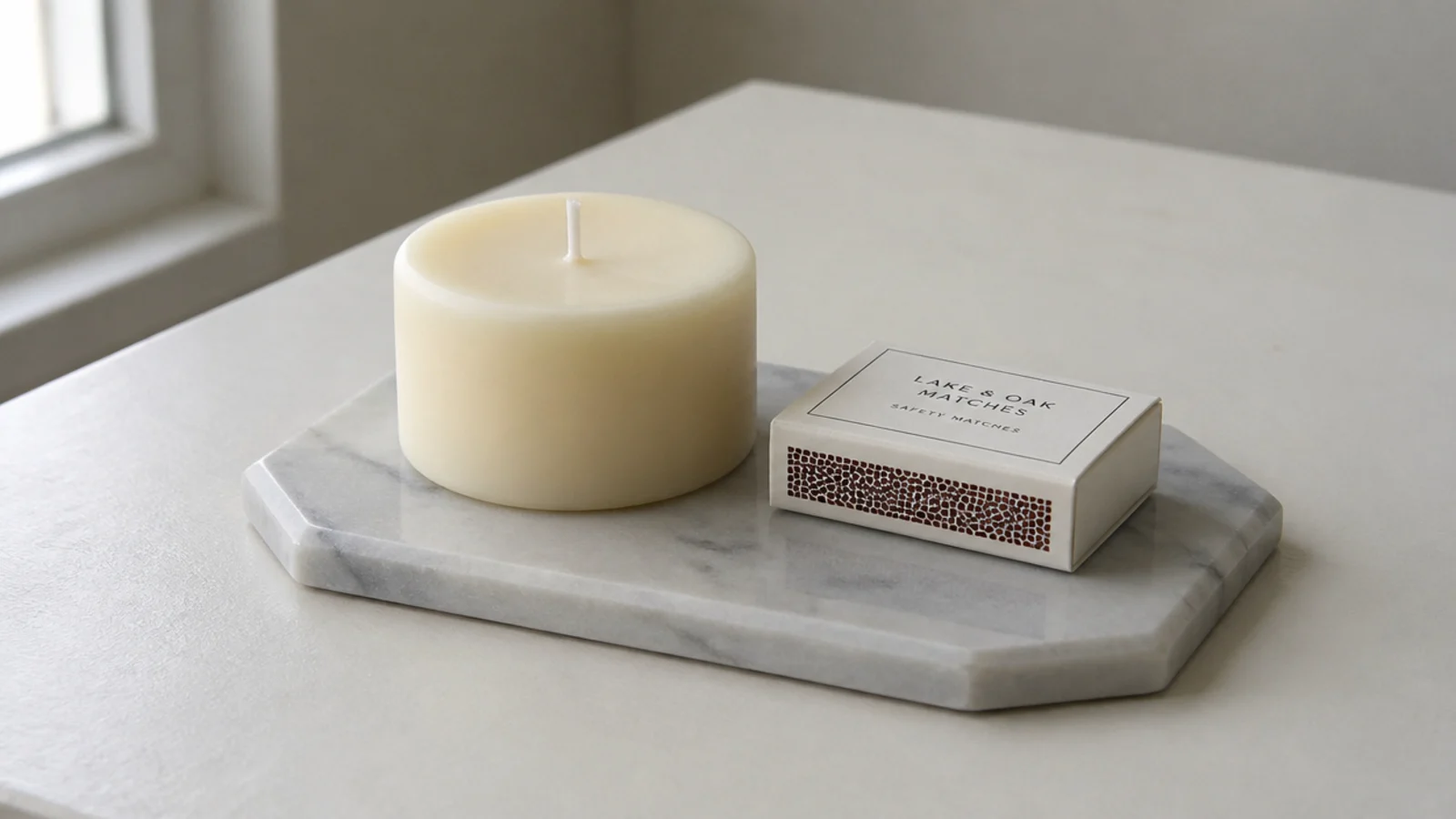
A honed stone tray at $40 to $90 gives you the material where you actually look at it, with none of the weight, cost or sealing schedule of a slab. It also moves house in a tote bag. The marble guide covers the care if you later go bigger.
8. Nesting tables for a flat that keeps changing
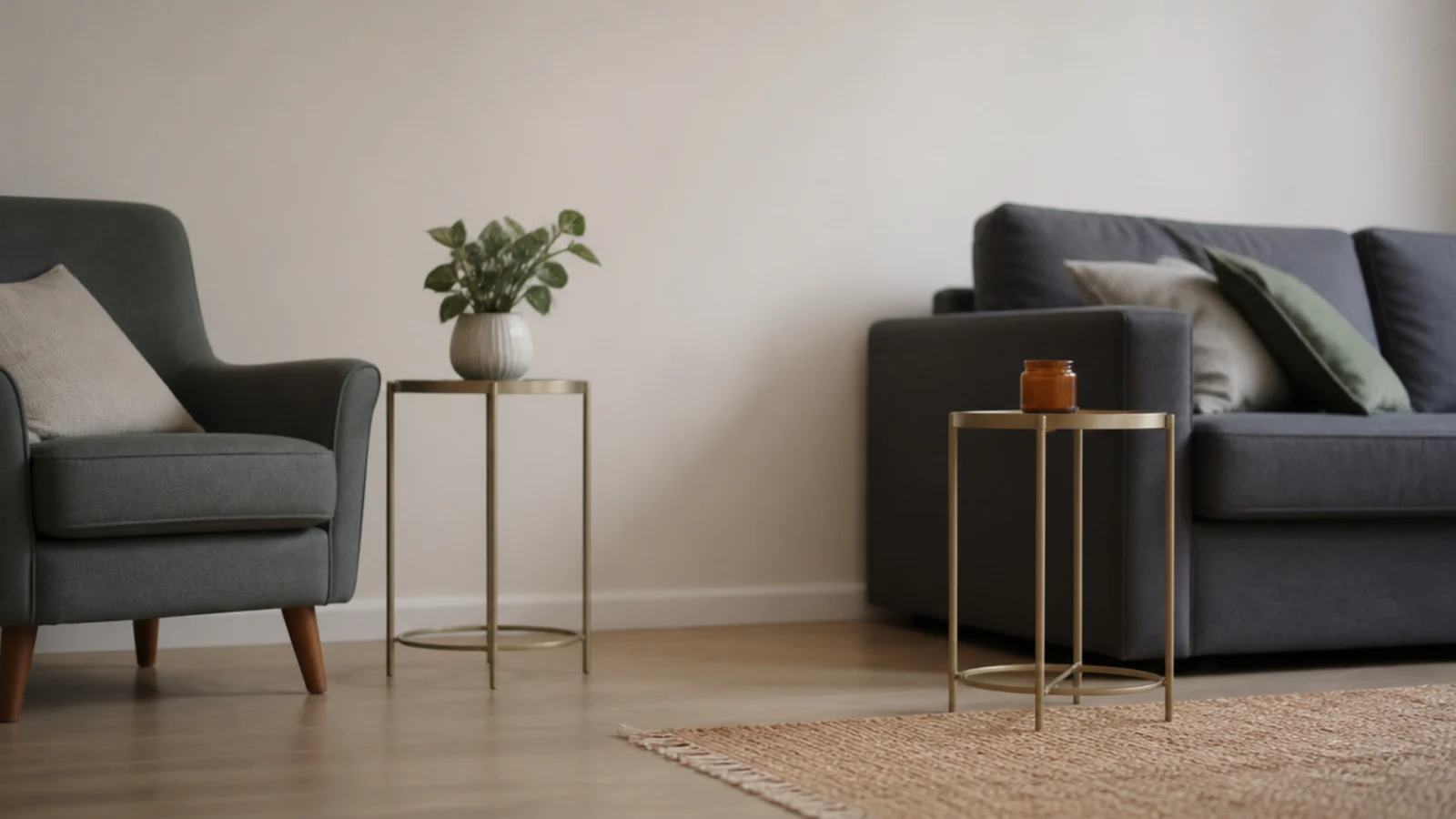
Two tables in one footprint, pulled apart when guests arrive and stacked when the room shrinks. Light metal versions weigh 8 to 15 pounds each, so a whole set moves in one trip. Keep the height step under three inches.
9. A folding table that lives in a cupboard
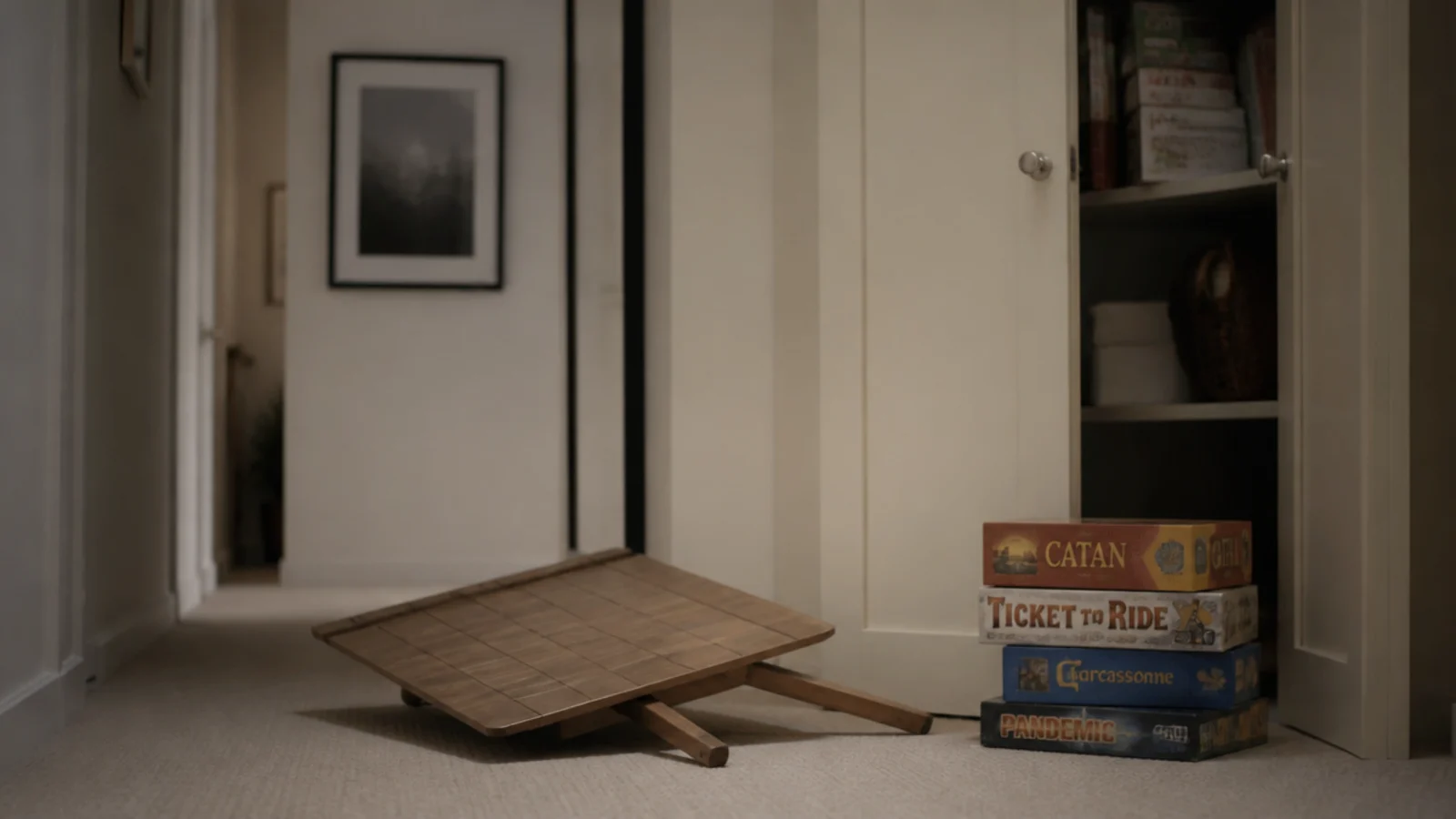
Low folding tables collapse to about two inches and stand behind a door. In a studio where the living room is also the dining room and occasionally the yoga room, being able to remove the table entirely is worth more than any styling.
10. A rattan drum light enough to carry alone
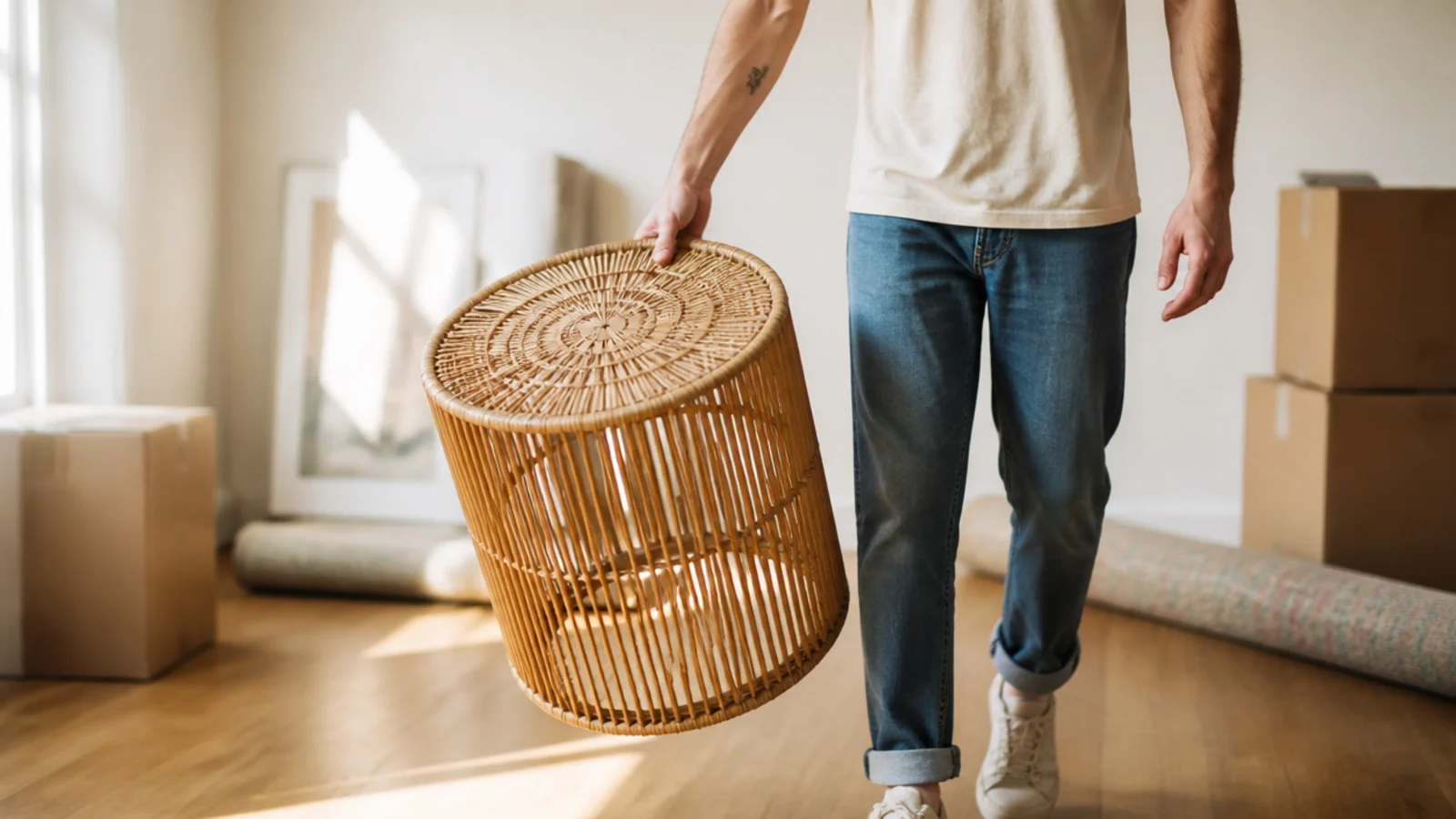
Woven drums run 10 to 18 pounds against 60 to 90 for a solid timber one. Buy the version with a glass insert so mugs sit level, keep it out of direct sun which makes cane brittle, and accept that it will not survive a wet glass sitting on bare weave.
11. Charity shop books as the whole styling budget
Two dollars each, cloth covers, faded spines, and they look far better than new hardbacks bought for their colour. Two or three flat stacks give you height on a table for the price of a coffee, and they are genuinely readable.

12. Cut branches instead of florist stems
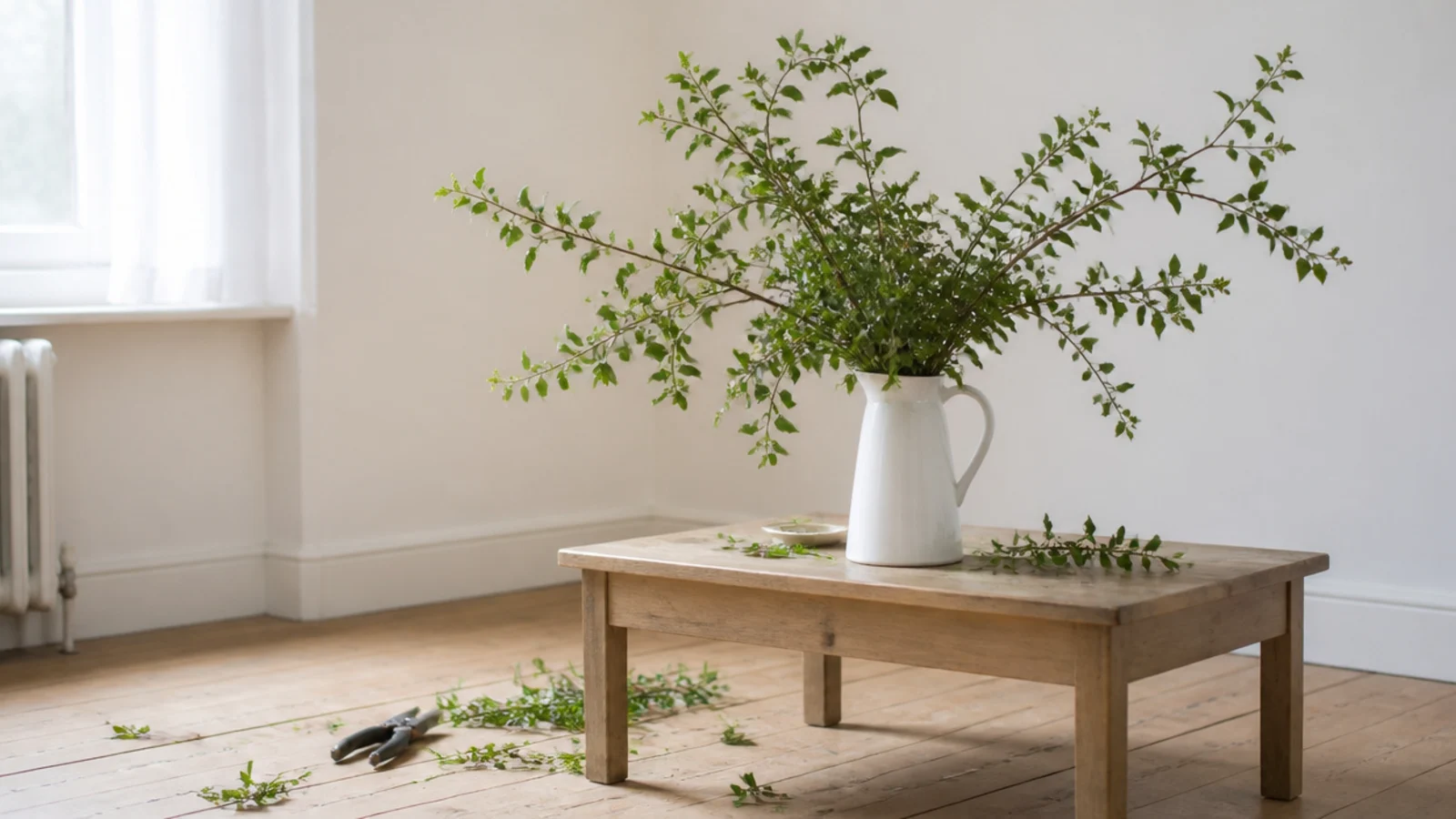
Three branches in a kitchen jug outlast cut flowers by weeks and cost nothing. Cut on an angle, strip anything below the waterline, and keep the total height under ten inches so people can still see across the room.
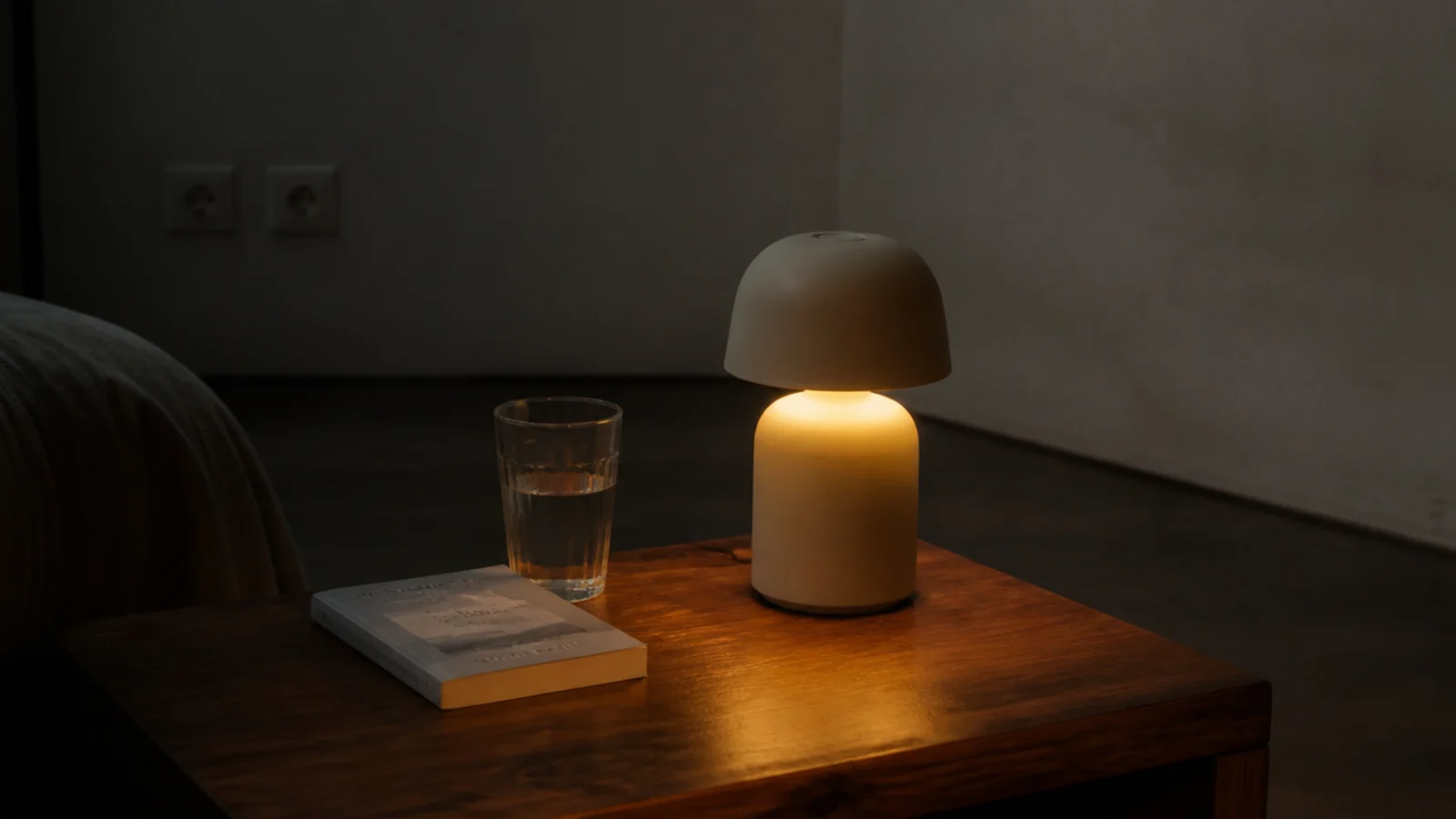
13. A rechargeable lamp with no socket needed
Rental sitting rooms rarely have a socket where you want light. A cordless lamp at 300 to 500 lumens in warm 2700K runs 6 to 10 hours a charge, needs no extension lead across a floor, and comes with you when you go.
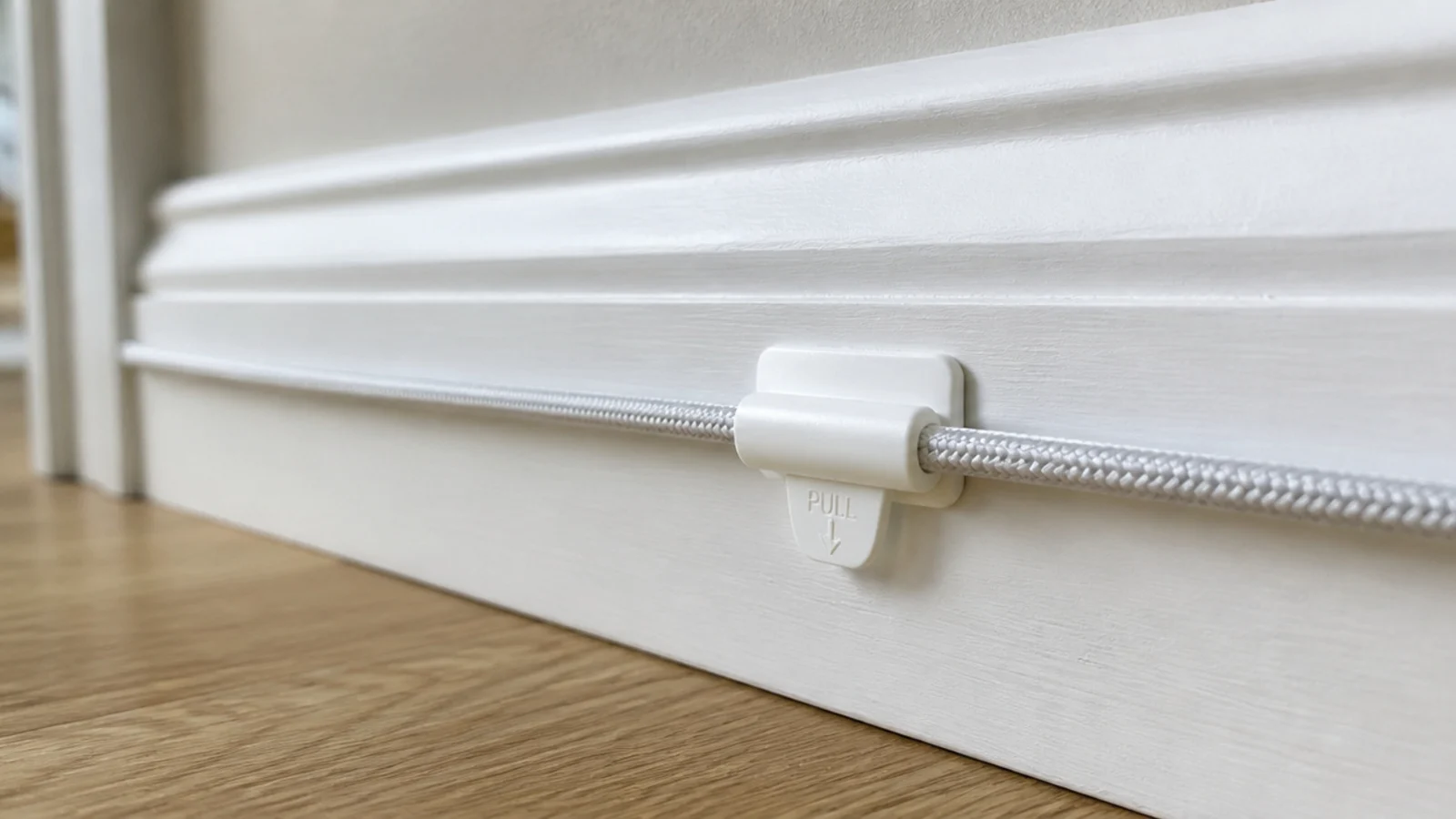
14. Removable adhesive clips for the cable run
Removable clips hold a charging cable along a skirting or down a table leg and release with a slow straight pull. Never use permanent adhesive tape on paint — it lifts the finish, and repainting is the second most common deduction after floor damage.
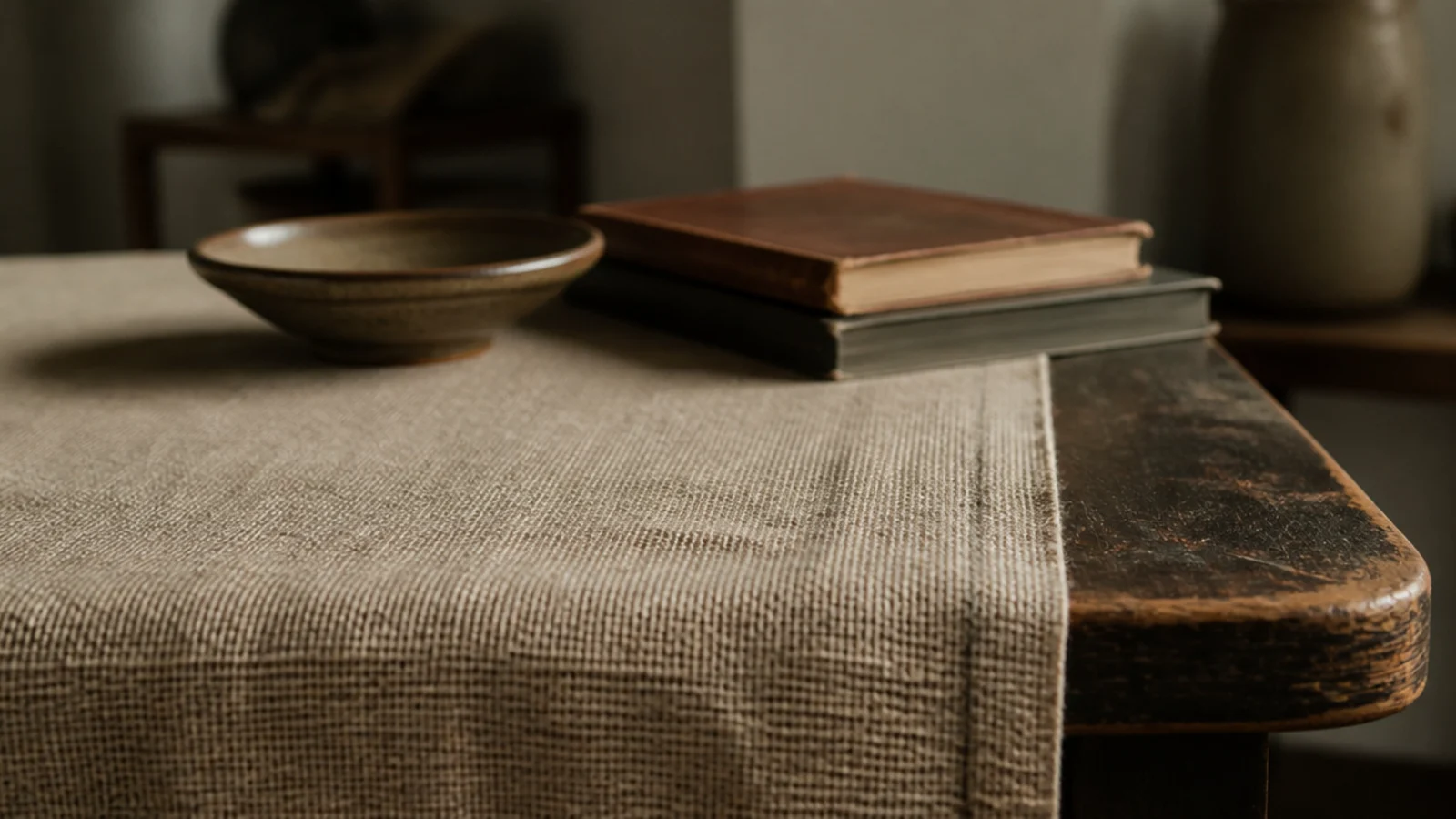
15. A washable runner over a damaged top
A linen or cotton runner hides scratches, rings and the burn somebody else made, and it goes in the machine at 40 degrees. It costs $15 to $30 and it is the fastest way to make a tired landlord table irrelevant.
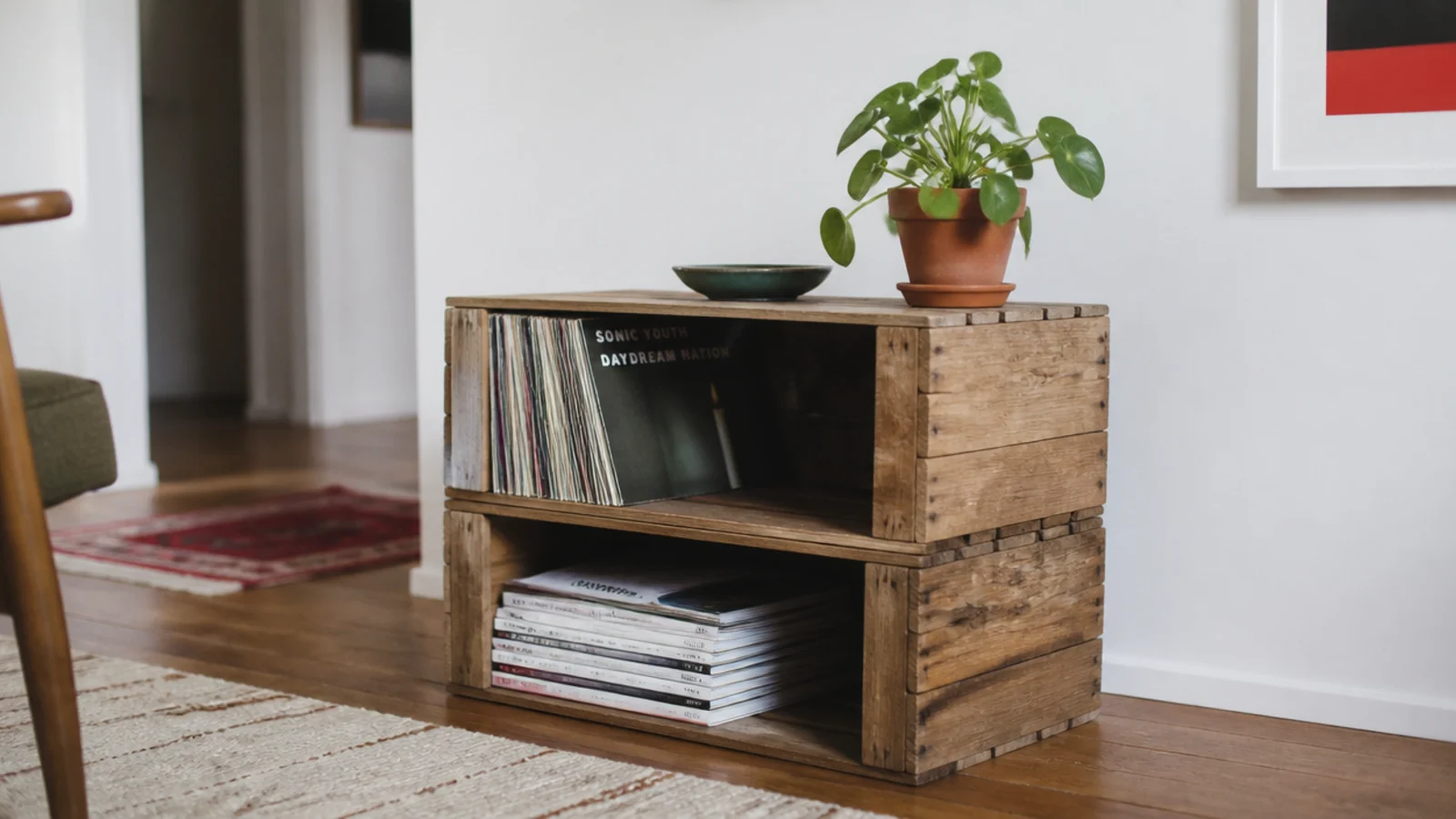
16. Stacked crates as a low table
Two reclaimed crates on their sides give you a surface at around 16 inches and storage for records or magazines inside. Sand the edges, add felt pads, and the whole thing costs under $25 and can be left behind without regret.
17. A plywood top on folding trestle legs
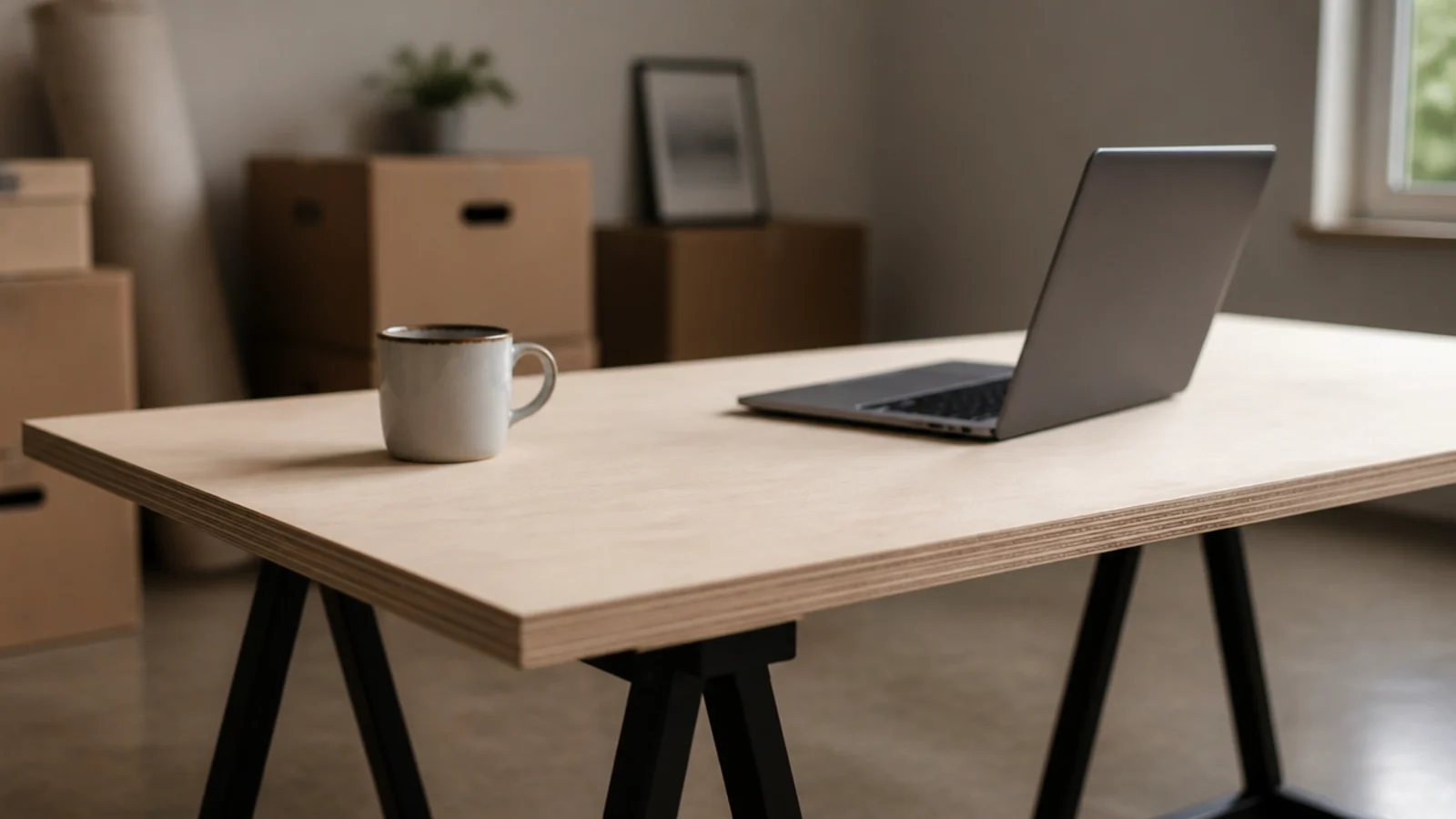
A sanded birch ply panel with the plies showing at the edge, resting on low folding legs. Around $50 in materials, flat-packs to nothing, and looks deliberately plain rather than cheap if you round the corners and oil the surface.
18. Buy secondhand and resell for what you paid
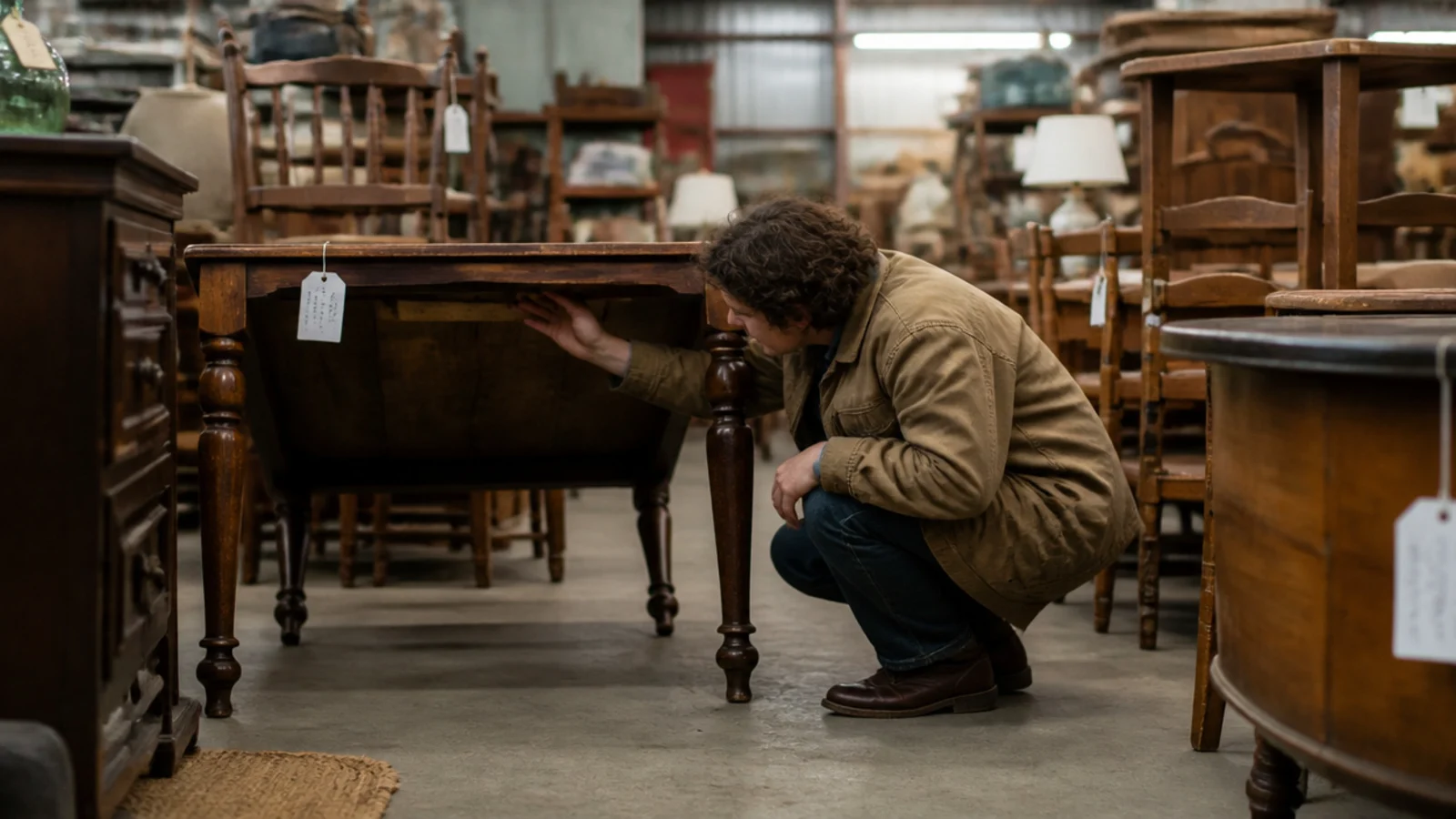
Solid old furniture has already finished depreciating. A $90 secondhand table will still be worth $90 in two years, where a $200 flatpack will be worth nothing and will not survive the move. Check the joints rather than the finish.
19. Keep it under forty-two inches and fifty pounds
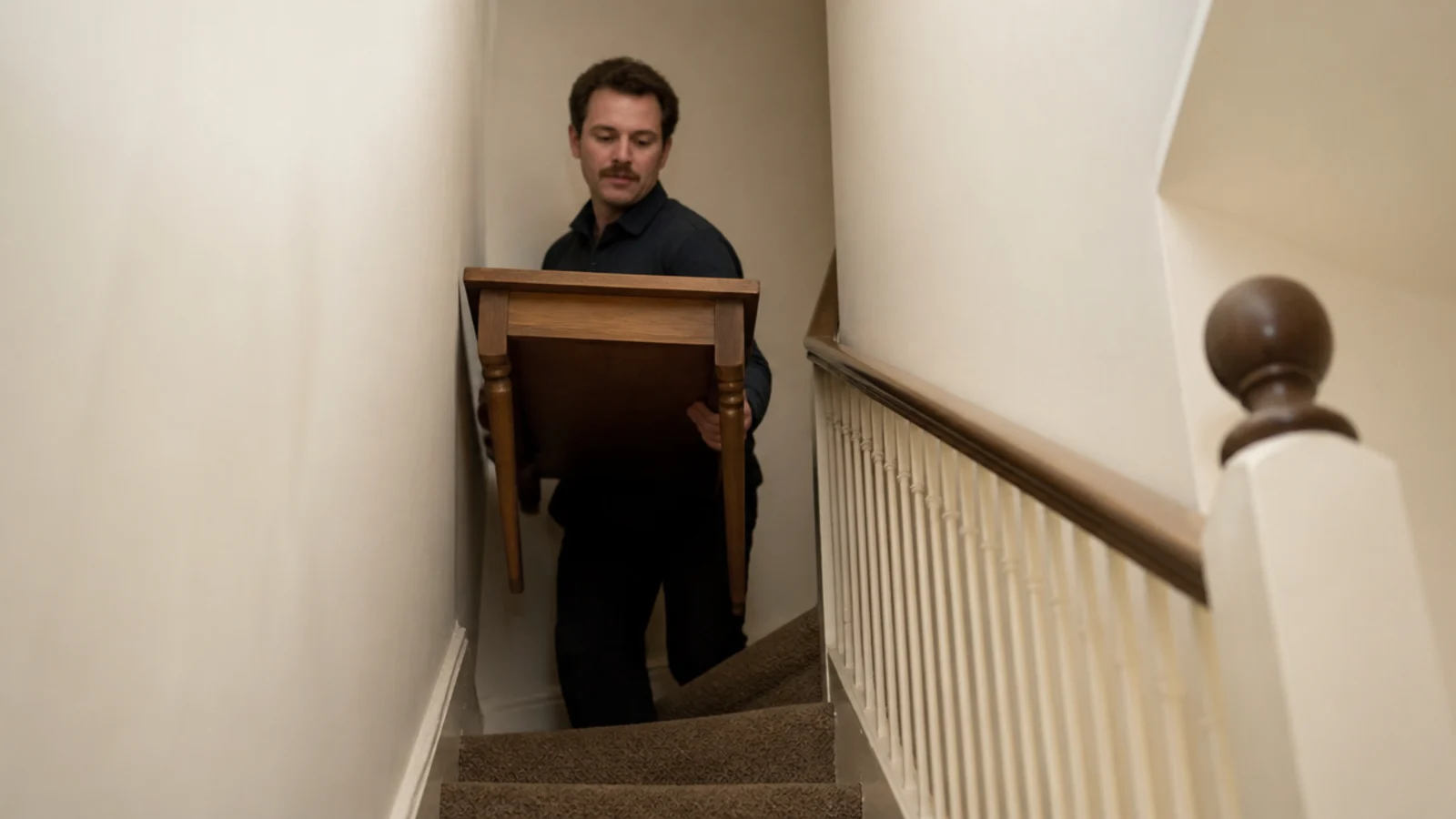
That is the size that fits the next flat as well as this one, gets up a narrow staircase with a turn, and can be lifted by one person. Oversized tables are the pieces that get abandoned in the hallway on moving day.
20. Paint with a finish you can sand back
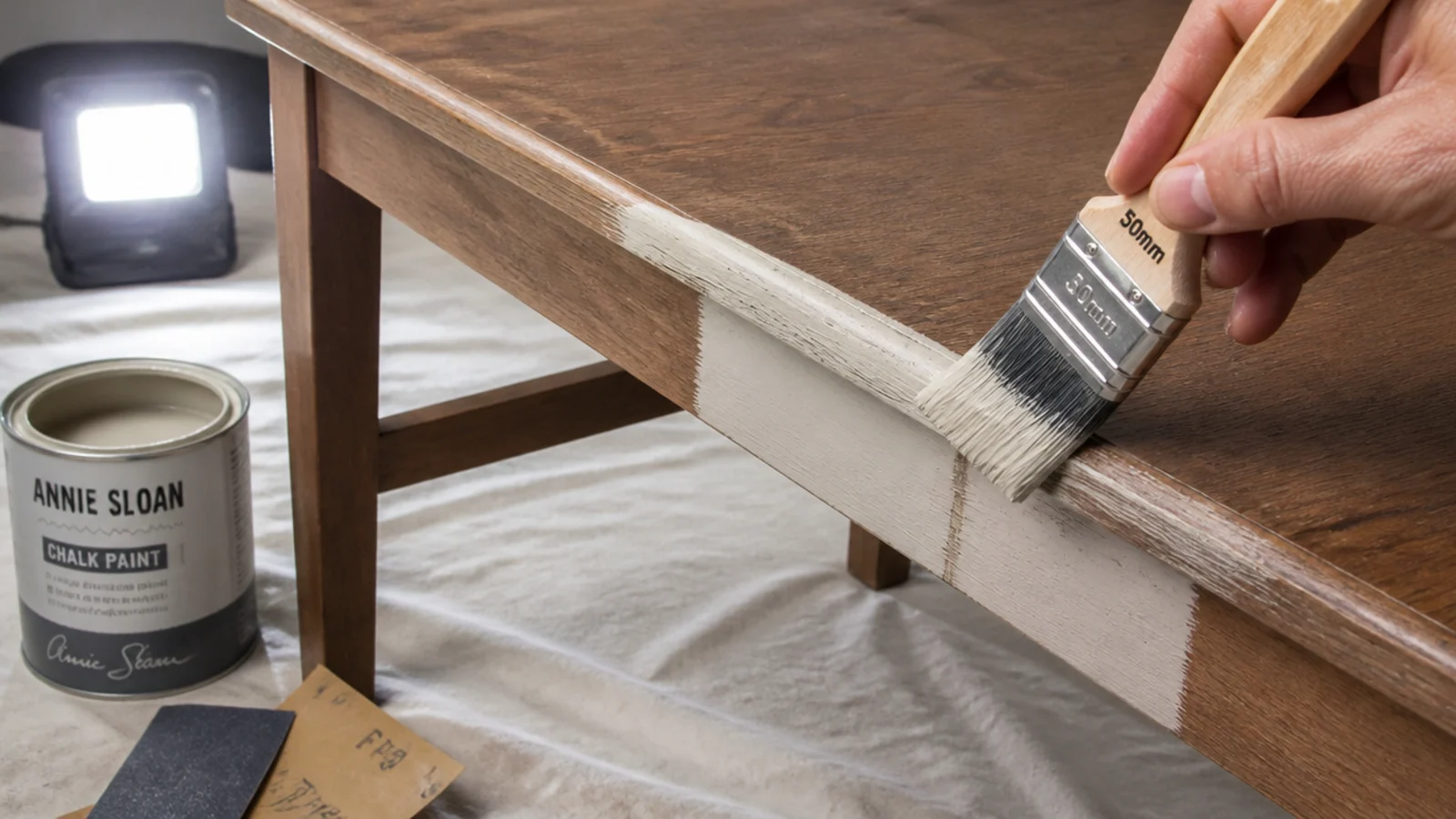
Water-based chalk or eggshell on a cheap secondhand table can be sanded off in an hour if you tire of the colour. Two thin coats, 220 grit between them, and a water-based topcoat. Avoid oil-based paint, which yellows and is far harder to reverse.
21. A cork or leather mat where laptops land
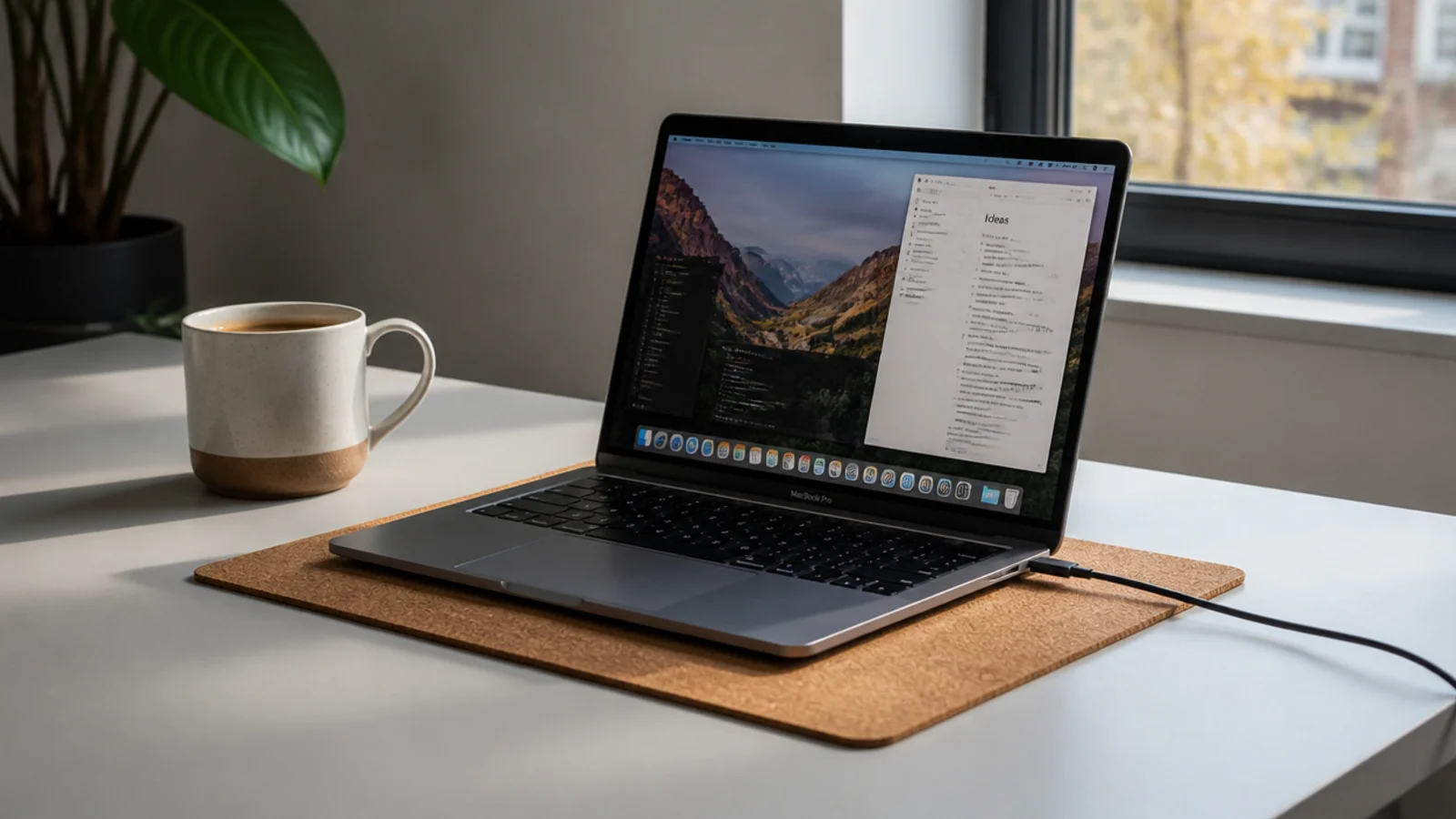
A 12 by 16 inch cork mat takes the heat, the feet and the constant sliding that puts fine scratches into any table top. In a shared house it is the single most useful $12 you can spend on furniture protection.
22. Coasters that never leave the table
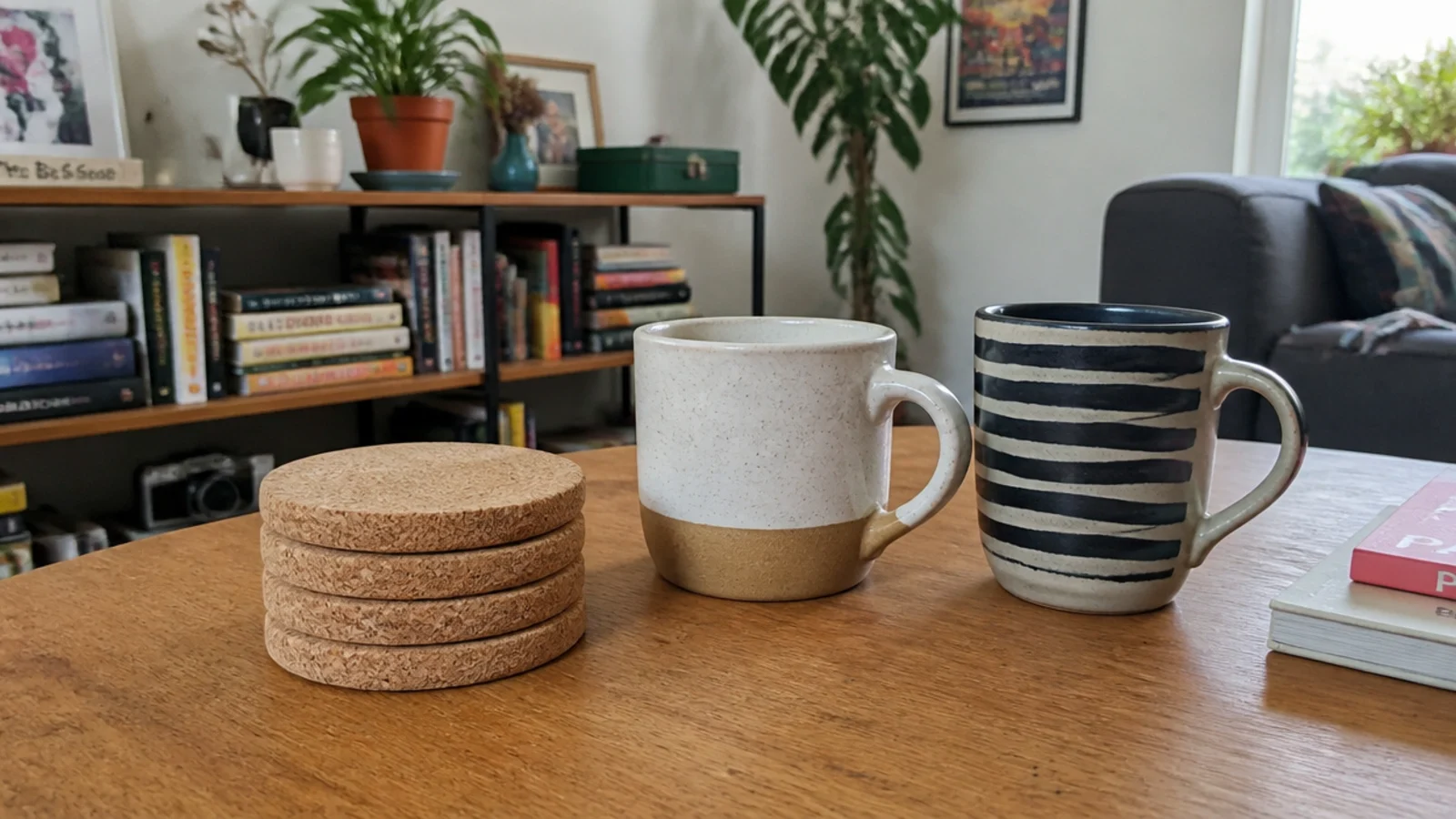
In a shared house, coasters kept in a drawer are decorative. Leave a stack of four thick cork or leather ones in the open, within reach of the seat everybody uses, and rings largely stop happening. Replace them when they warp.
23. Photograph the flat before you move anything
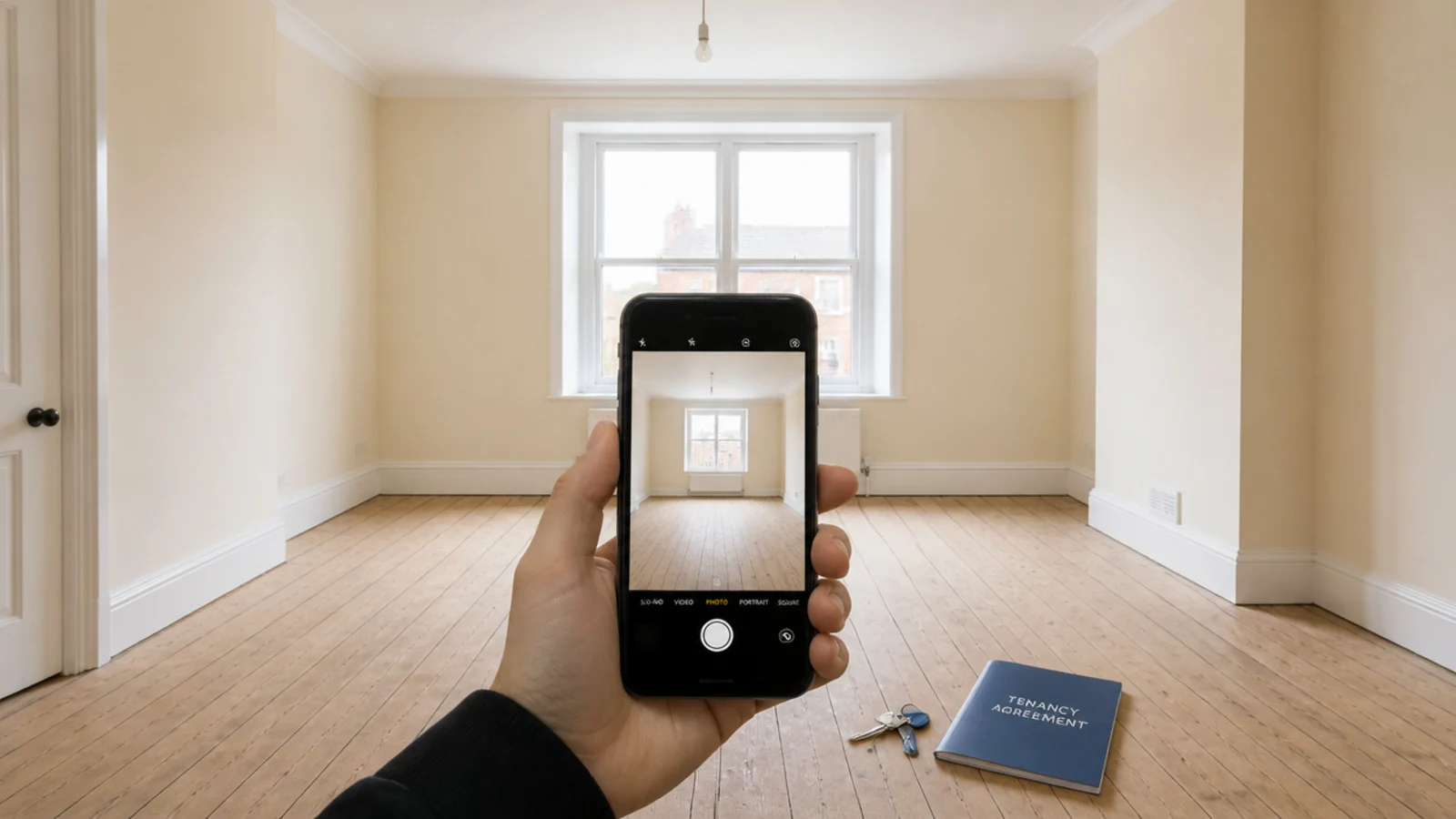
Ten photographs on move-in day, including the floor under where the table will sit. It costs two minutes and it is the only evidence that the mark by the radiator was there before you were. Email them to yourself so they are dated.
24. Store the landlord furniture rather than binning it
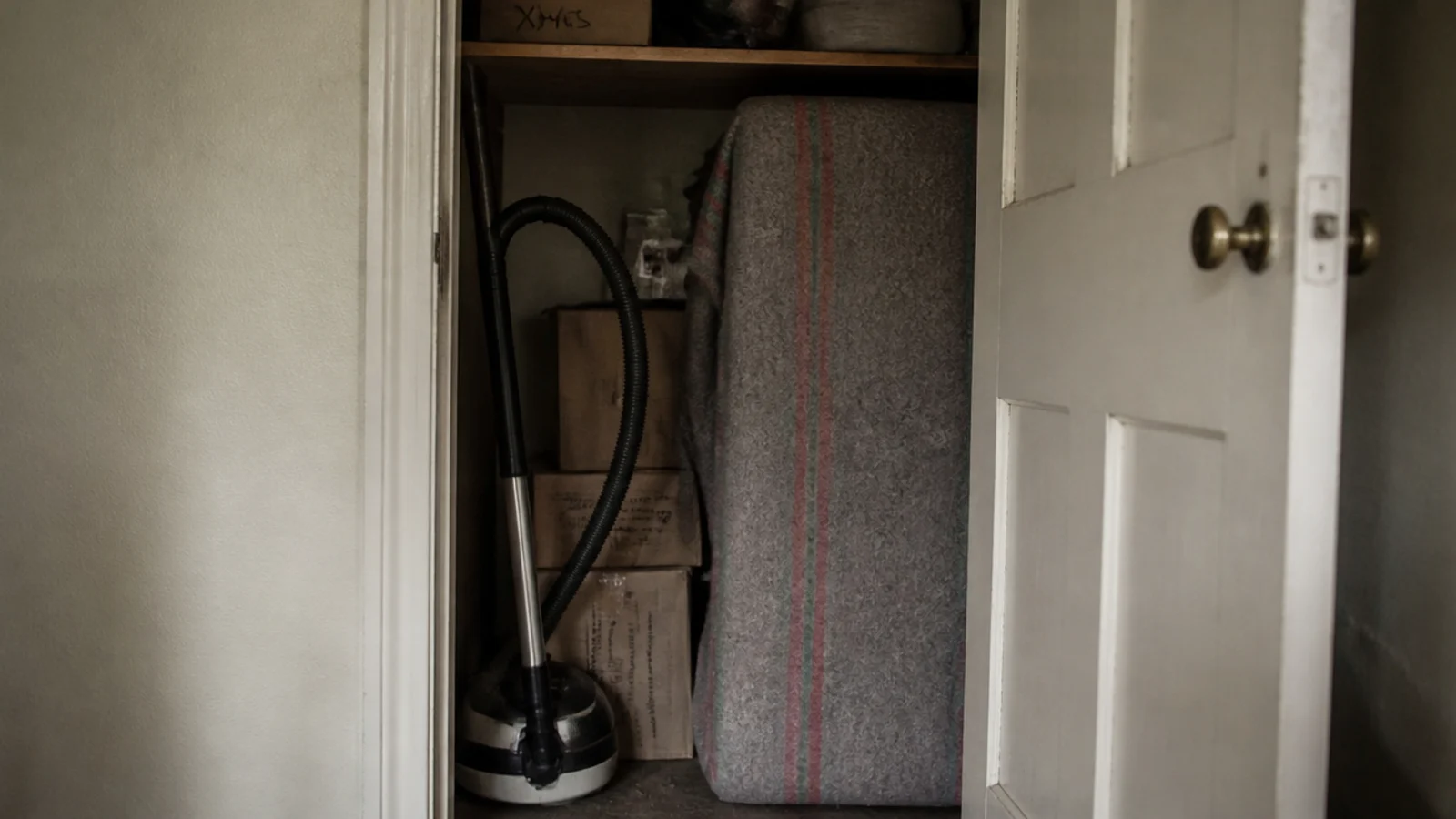
Wrap the table you are replacing in an old blanket and stand it in a cupboard or on top of a wardrobe. It has to come back at the end of the tenancy, and replacing a piece you disposed of costs far more than storing it.
25. Size the tray to carry the whole styling
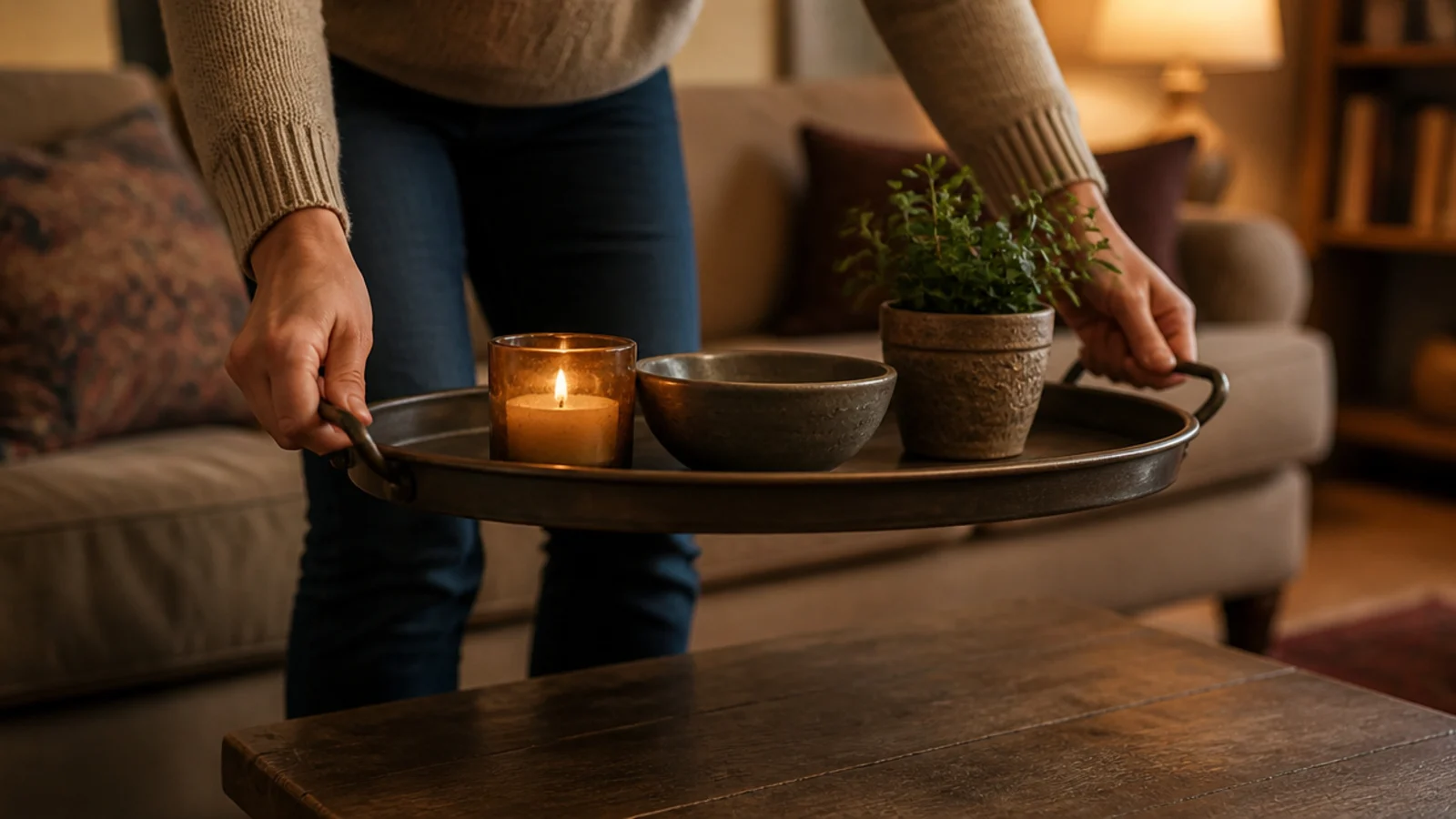
A tray with handles, big enough to hold everything that lives on the table, means the surface clears in one lift for dinner, homework or a laptop. It is the habit that keeps a rented living room usable. The decoration guide covers what to put on it.
For the habits that keep any table usable, the owner-tested ideas guide has trays, cables and coasters in detail. Rugs are the other renter question in the same room — rugs in living room covers sizing and pads — and entryway shoe storage solves the clutter that otherwise ends up on your coffee table.
Mistakes to Skip
- Skipping felt pads because the table feels light. One slide across a varnished floor leaves a scratch that costs more than every pad you will ever buy, and it is the most commonly deducted item at check-out.
- Using a cheap PVC-backed rug pad. Over months it can react with the floor finish and leave a cloudy patch exactly the shape of the pad, which no cleaning removes.
- Taping cables to painted walls. Permanent adhesive lifts paint when it comes off, and repainting a wall is a bigger deduction than the tidiness was ever worth.
- Throwing out the landlord's furniture. It has to be returned at the end of the tenancy, and replacing a piece you disposed of always costs more than the cupboard space would have.
Frequently asked questions
What is the cheapest center table option for a rental?
A flat tray on a wide lidded basket. It gives you a surface around twenty inches across, storage for throws underneath, nothing that scratches the floor, and the whole arrangement usually comes in under sixty dollars and travels in the back of a car.
How do I protect a rented floor from table legs?
Felt pads on every foot before the table is ever slid, and a rug pad underneath the rug. Choose natural rubber or felt rather than a cheap PVC-backed pad, because PVC can react with floor finishes over time and leave a mark that comes out of the deposit.
Can I change a table I am not allowed to modify?
Yes, if the change is reversible. Removable vinyl wrap covers a dated top and peels off cleanly, a washable runner hides damage, and a water-based paint on a cheap table can be sanded back. Nothing here needs a drill or a permanent adhesive.
What size table works across different rentals?
Keep it under about forty-two inches long and under fifty pounds. That fits in front of anything from a two-seater to a small sectional, goes up a narrow stair, and can be carried by one person. Oversized tables are the pieces people abandon when they move.
How do I style a table cheaply without it looking cheap?
Buy one thing bigger than feels sensible and get everything else free. A large secondhand bowl, three branches cut from outside, and two books you are genuinely reading beats a trolley of small decorative objects, and costs about twelve dollars in total.
Want more like this? Browse all 15 center table living room guides — they all use the same measurements and budget tiers.
Pin it for later
Save this to your Center Table Living Room board
Pin it now so it is waiting for you when the tape measure comes out — and so the next person hunting for this idea can find it too.
Save this pinKeep going
More ideas worth saving while you have the tape measure out.