Center Table Living Room · Listicle
20 Simple Center Table Living Room Looks To Steal

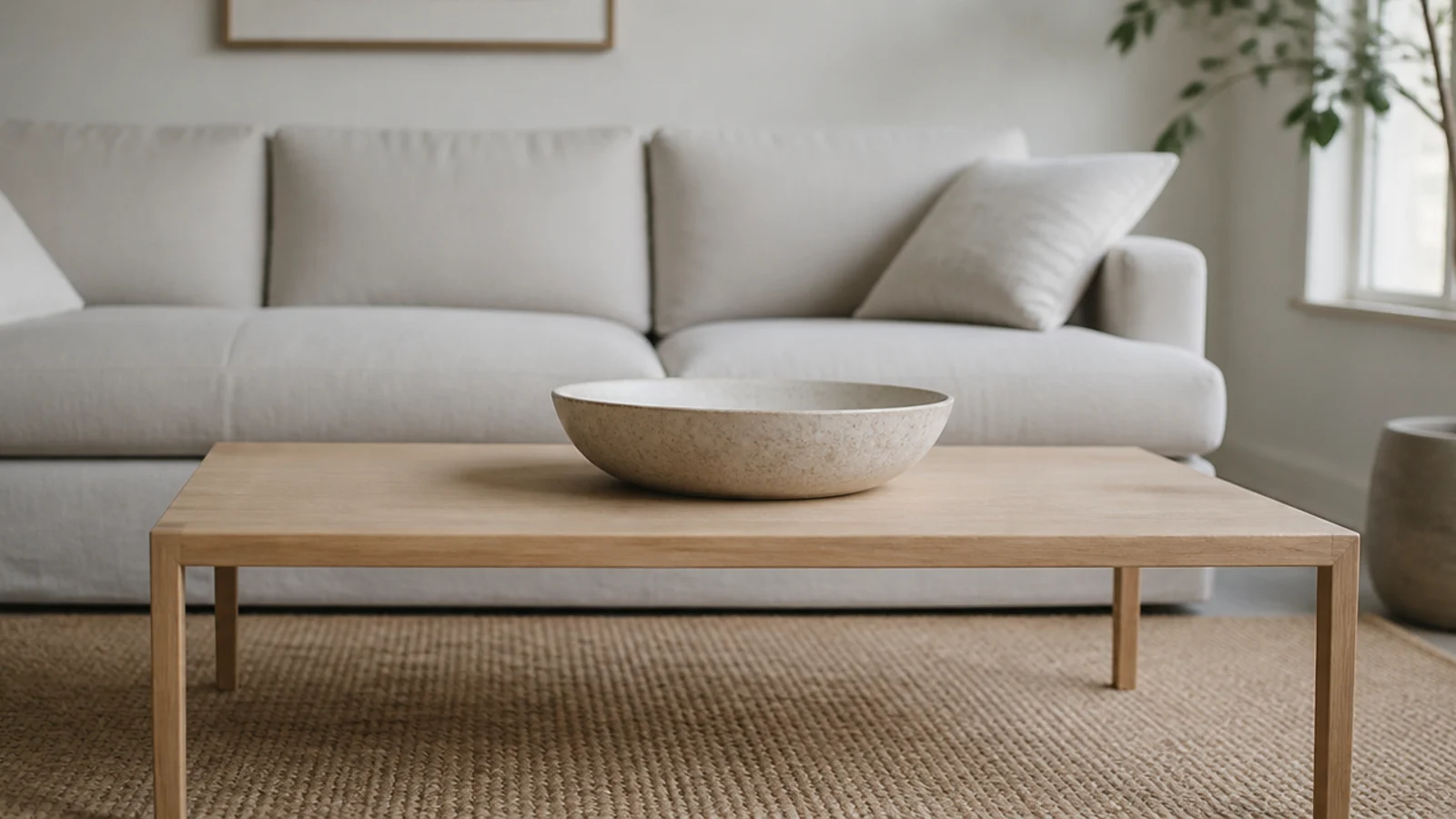
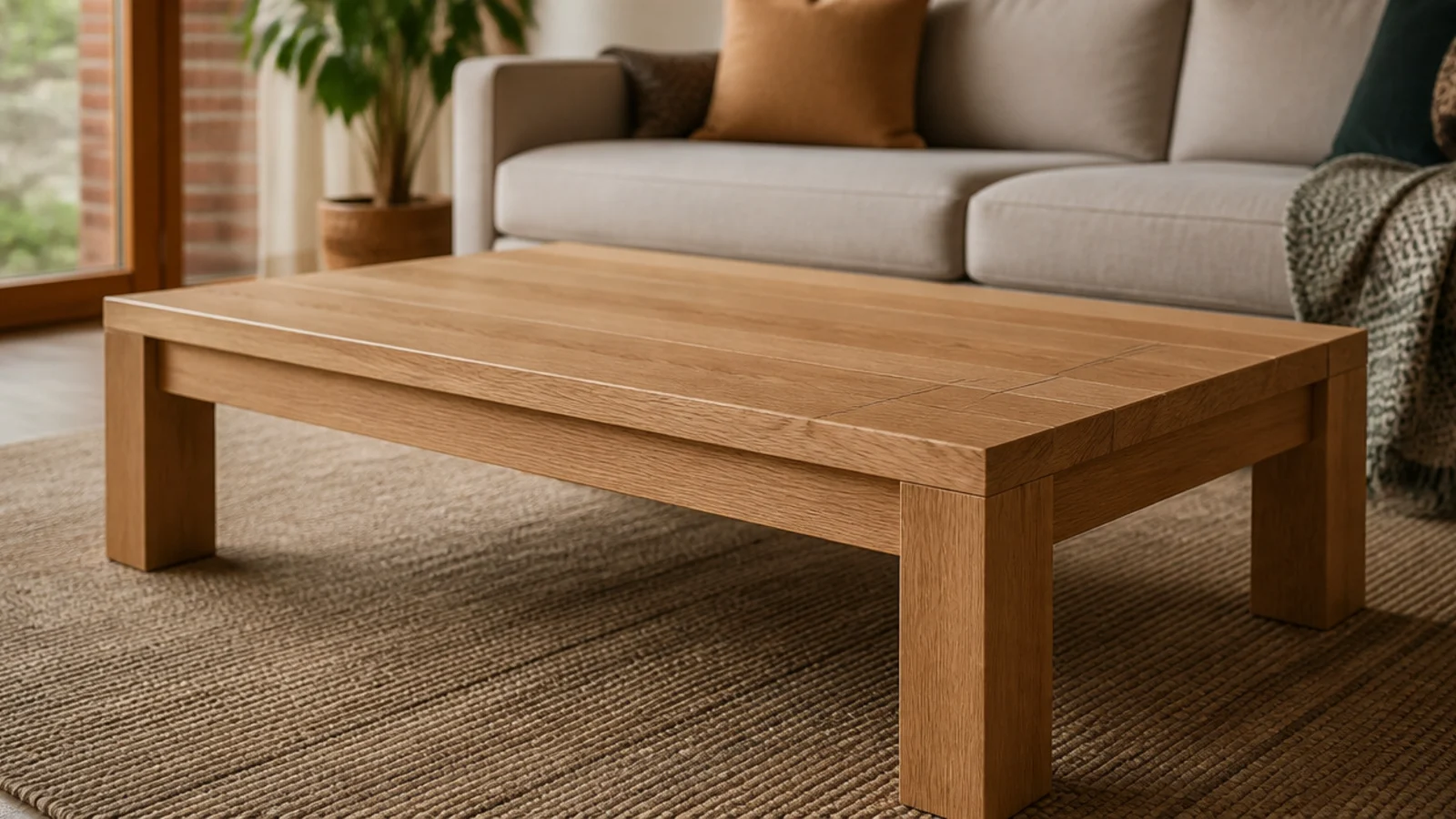
Calm rooms are not empty rooms, they are edited ones. The difference usually comes down to how many materials are competing and how much of the surface is visible. A simple center table living room scheme works because there is nothing to argue with: one timber, one form, two or three objects and a lot of bare top. It is also far cheaper to get right than a busy one. Here are twenty pared-back setups worth copying.
In this guide22 sections — tap to openHide
- 1.What simple center table living room schemes get right
- 2.One material, one form, no contrast trim
- 3.A thin top on an equally thin base
- 4.Pale timber with a clear oil finish only
- 5.A plinth painted to match the wall
- 6.A top the same tone as the floor
- 7.No visible hardware anywhere
- 8.Skip the drawers entirely
- 9.Choose a square with a soft radius
- 10.Leave the lower shelf empty
- 11.A bare top with one wide bowl
- 12.Three objects at three heights, then stop
- 13.One tray and nothing outside it
- 14.A single stack of books, spines aligned
- 15.Cap the tallest object at five inches
- 16.Keep everything in one tone family
- 17.Use two identical objects for symmetry
- 18.One plant and no ornaments at all
- 19.A plain rug under a plain table
- 20.Put the storage in the wall, not the table
- 21.Reset the surface every Sunday
- 22.Mistakes to Skip
What simple center table living room schemes get right
The first rule is subtraction rather than selection. Most cluttered tables are not the result of bad objects, they are the result of six materials on one surface — timber, glass, brass, ceramic, rattan and paper all within two feet of each other. Cut that to three and the table reads calm without anything being removed physically.
The second rule is that bare is a finished state. An empty timber top with good grain is a complete composition. Nothing has to be added for it to look intentional, and the instinct to fill it is what turns a quiet table into a busy one.
The measurements do not relax just because the look is minimal. Top within one to two inches of the compressed sofa cushion, usually 17 to 19 inches. Length around two-thirds of the sofa. Gap of 16 to 18 inches at the front and 30 to 36 inches on any route through. A minimal table that blocks a walkway is not simple, it is just under-decorated.
The last rule is where the clutter goes. Simplicity on a coffee table is nearly always paid for by storage somewhere else in the room, within about four steps of the sofa. A lidded basket, a console drawer or closed cupboards on the wall opposite. The built-in shelving guide covers doing that properly.
1. One material, one form, no contrast trim
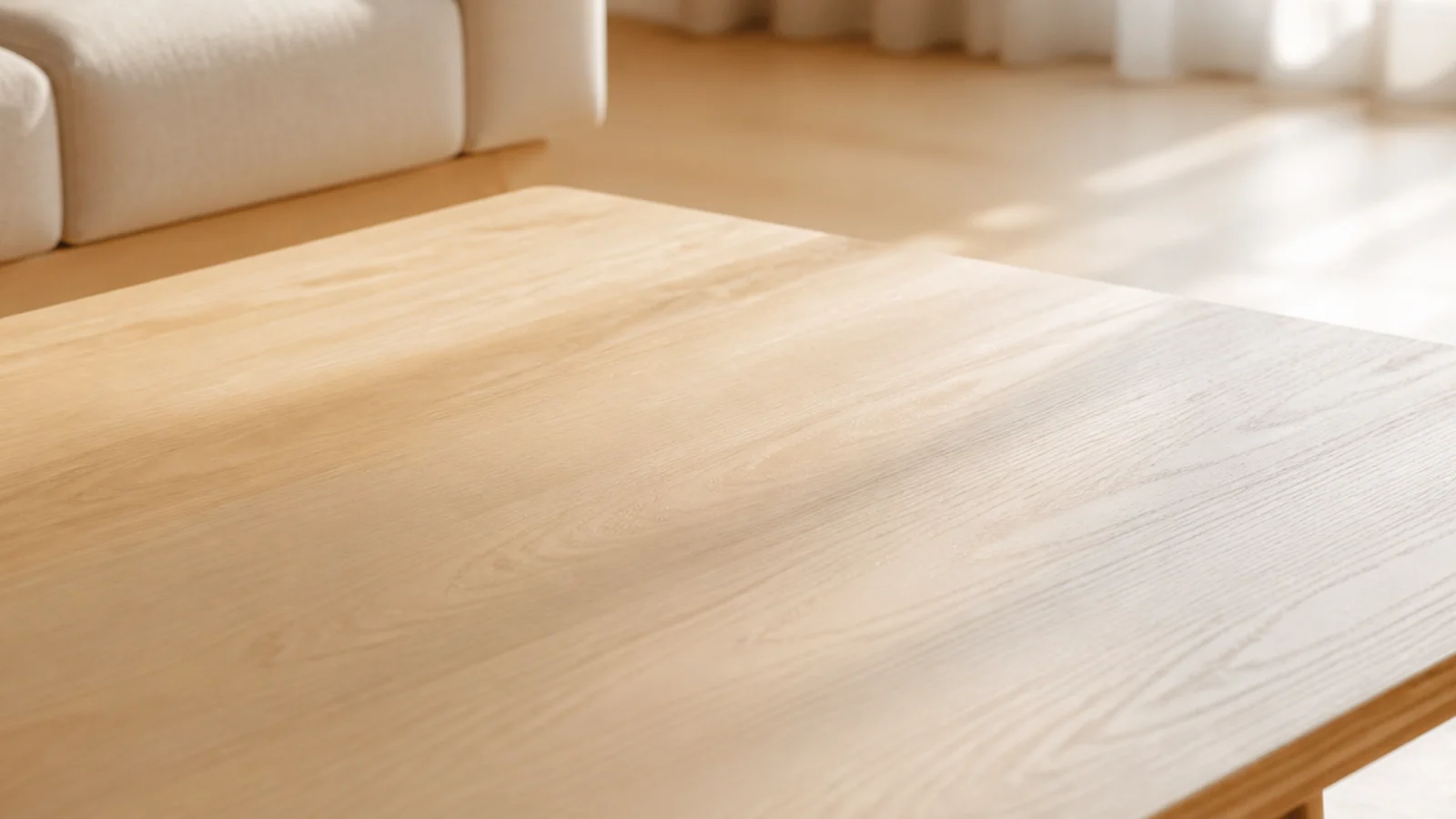
A table made entirely of one timber, with the same species in the top, the legs and the rails, has nothing in it to date. Contrast trims, mixed metals and two-tone finishes are the elements that make a piece look of its year. Single-material furniture is quieter and usually cheaper to build well.
2. A thin top on an equally thin base
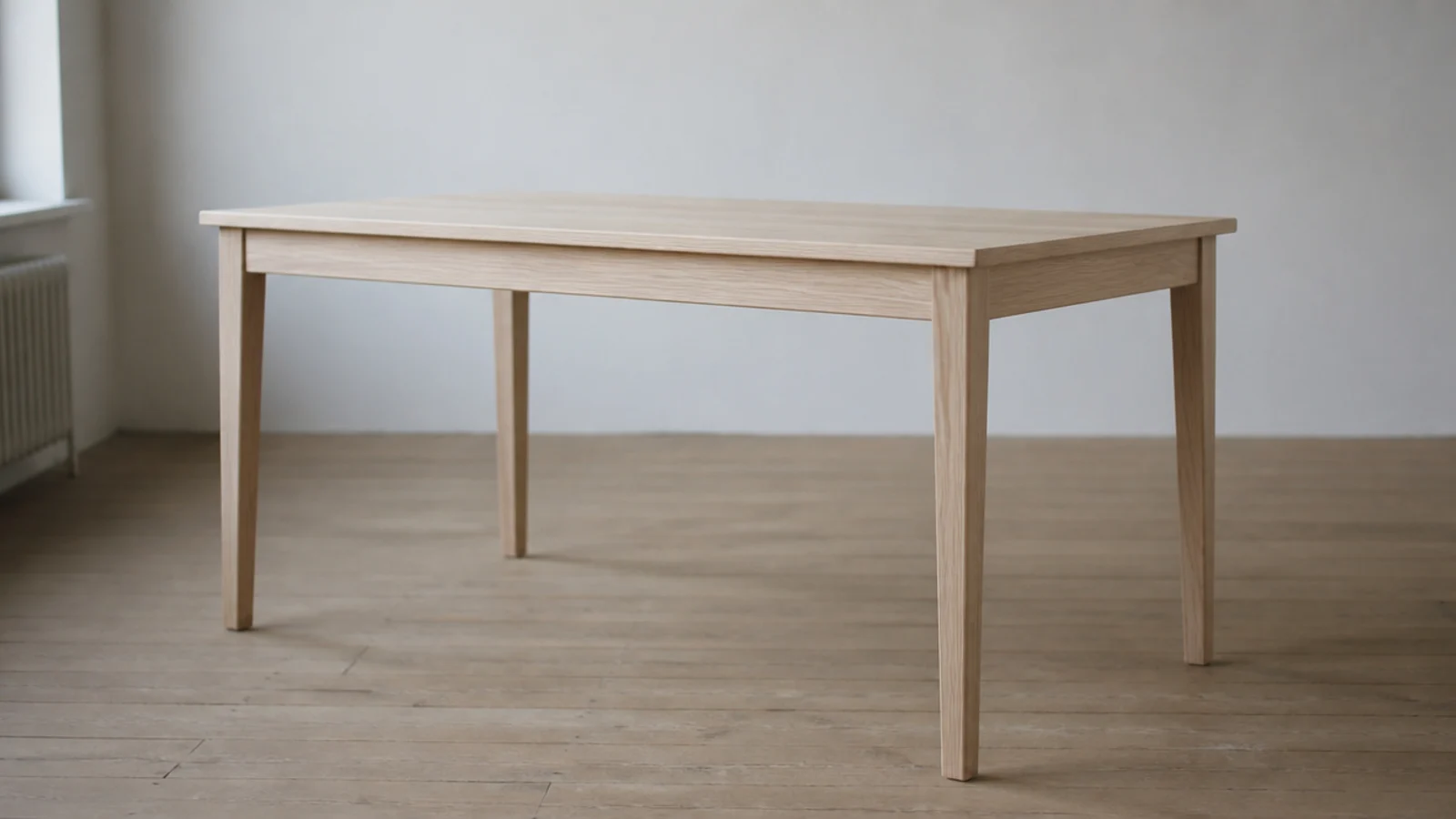
Proportional agreement is what makes a plain table look designed. A three-quarter inch top on three-quarter inch legs reads as one idea; a chunky top on spindly legs reads as a compromise. Pick a thickness and repeat it everywhere on the piece.
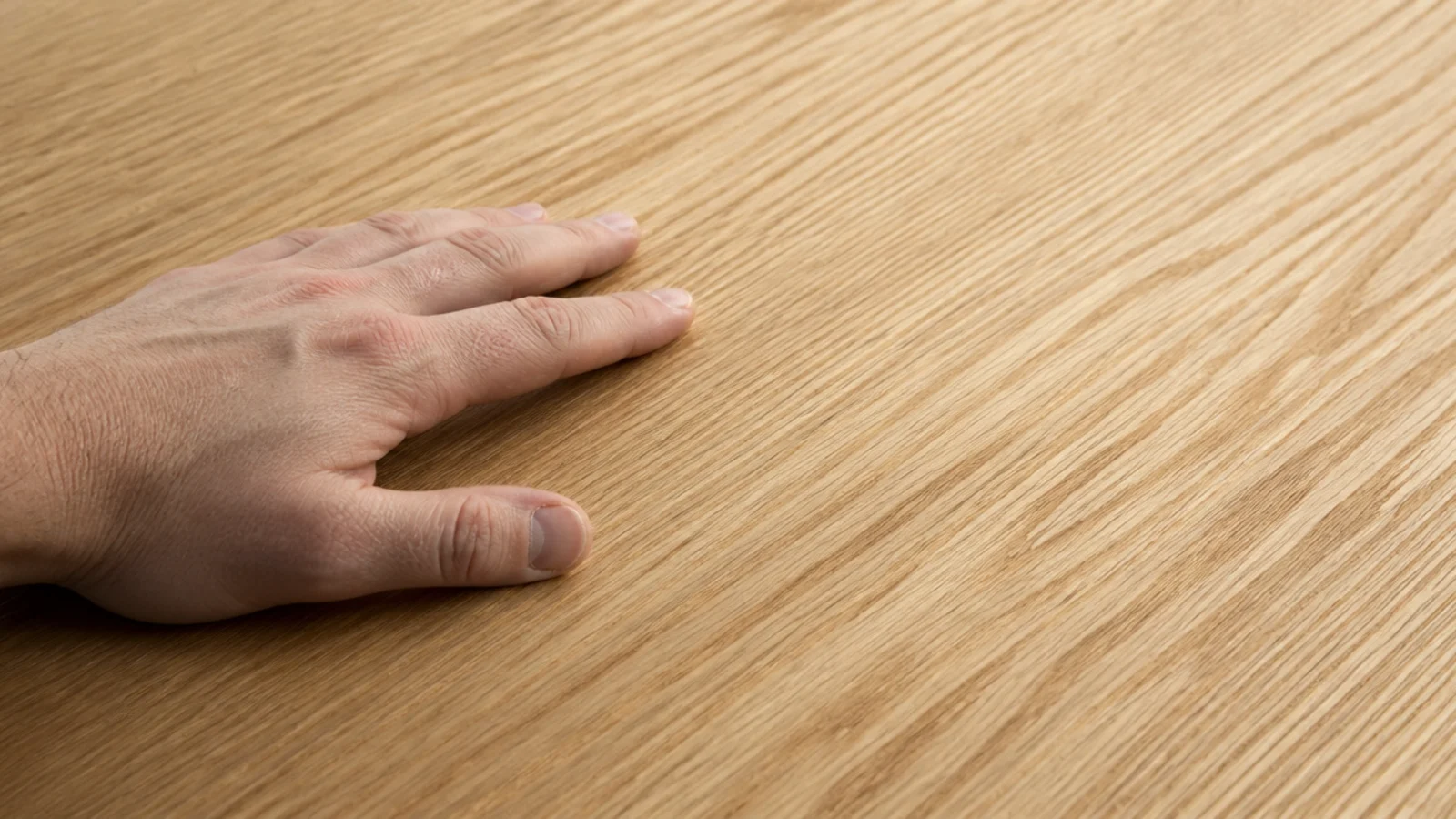
3. Pale timber with a clear oil finish only
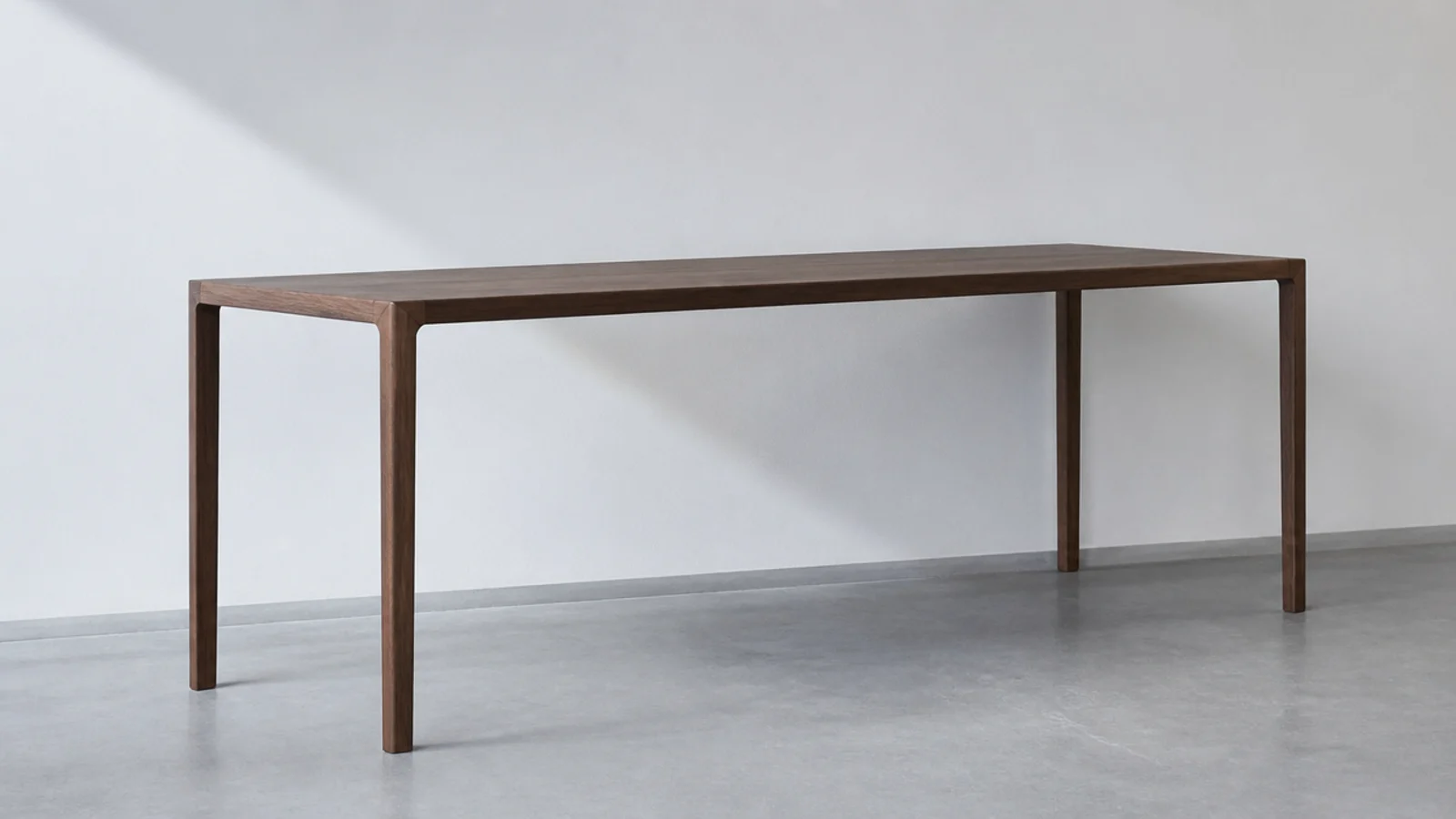
No stain, no lacquer, no sheen. Hardwax oil sits in the timber rather than on it, so the surface stays matte and feels like wood under the hand. It also spot-repairs, which no film finish does. Reapply once or twice a year when water stops beading. A small tin covers a coffee table four or five times over and costs about twenty-five dollars.
4. A plinth painted to match the wall
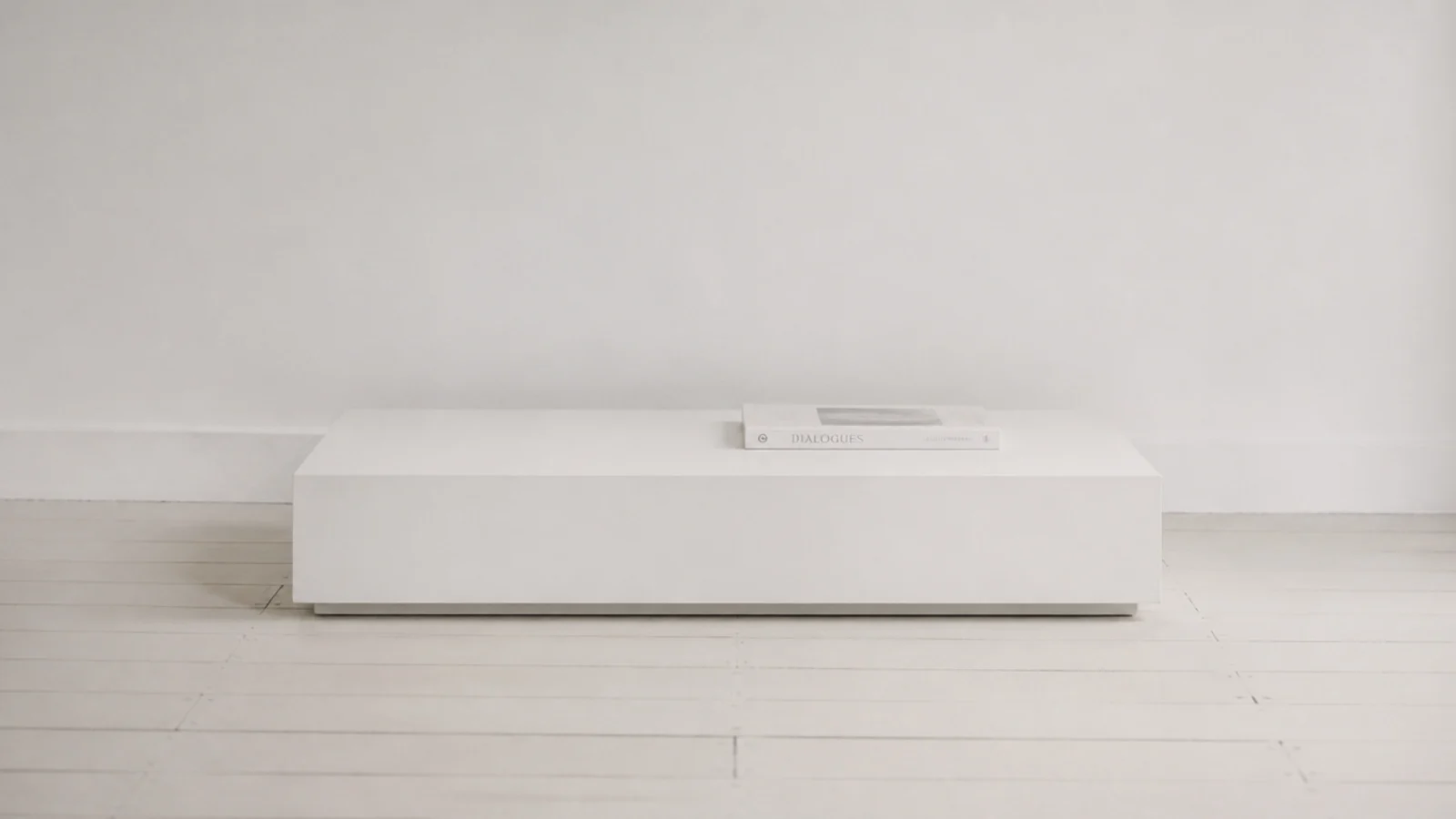
Matching a plinth to the wall colour and the wall sheen makes it read as architecture rather than furniture. It is the cheapest way to make a $70 table stop announcing its price, and it works particularly well in a small room where a contrasting block would dominate.
5. A top the same tone as the floor
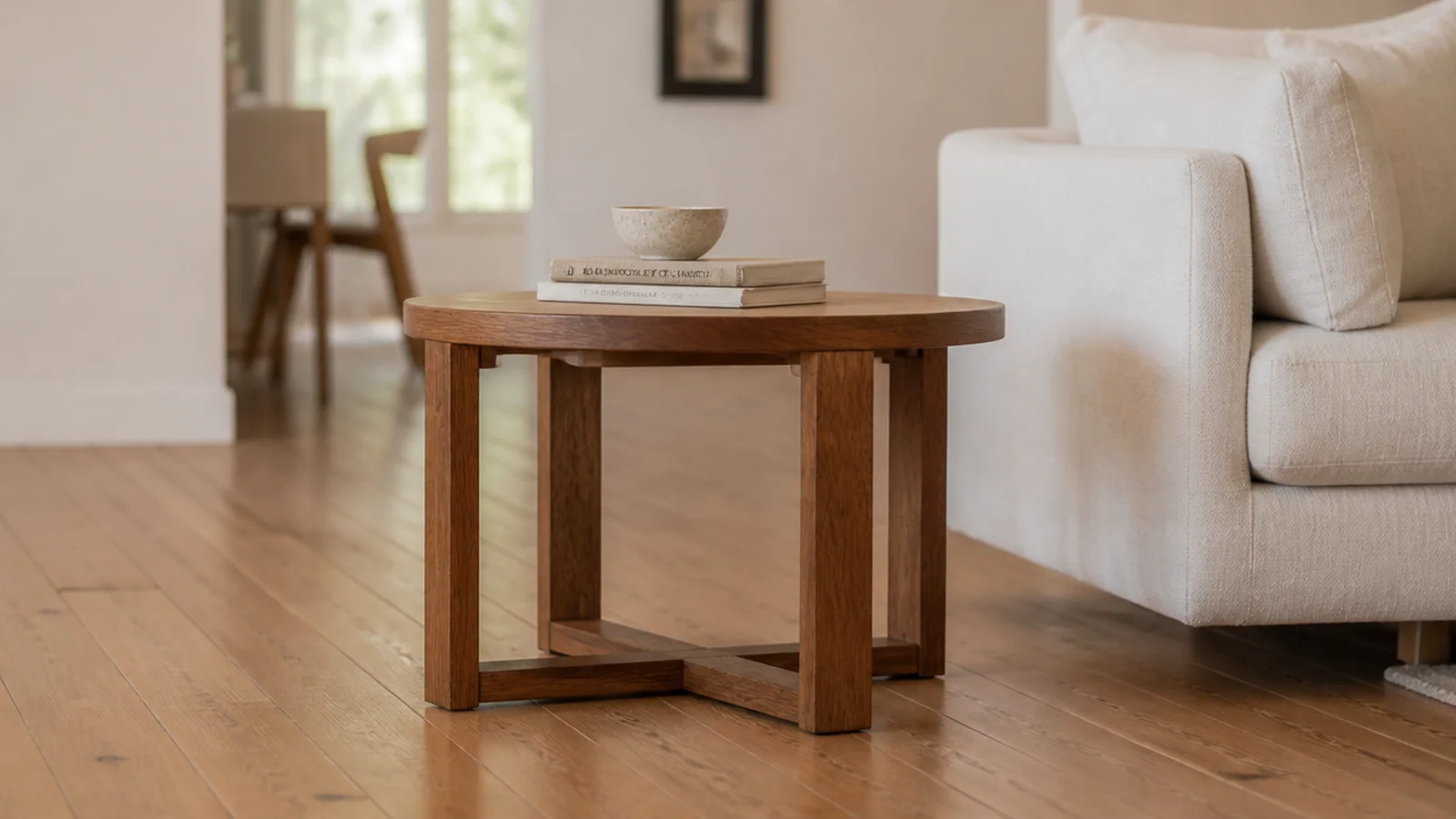
Tone-matching the table to the floorboards makes the piece recede almost completely, which is exactly what you want in a room where the sofa, the art or the rug is already doing the work. Take a photograph of the floor into the shop rather than trusting memory.
6. No visible hardware anywhere
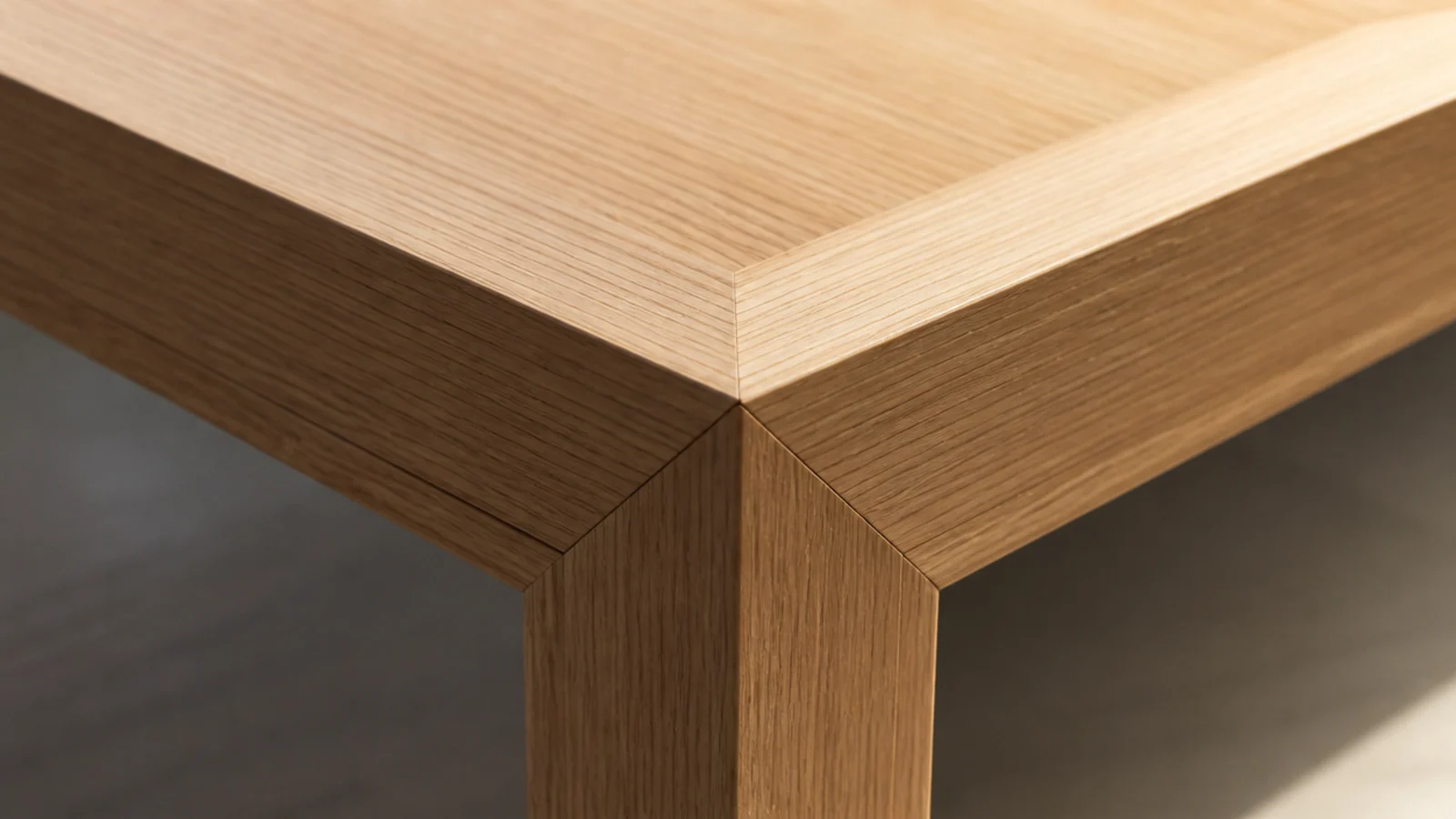
Screw heads, brackets and plastic caps are the loudest budget signal on a piece of furniture. Threaded inserts from underneath, pocket screws inside the frame or a mitred joint all hide the fixing completely. Nothing should break the top surface or the visible edge.
7. Skip the drawers entirely
A drawer is a promise you will fill it. In a room where the storage is genuinely somewhere else, a table with no drawer and no shelf stays clear by design rather than by discipline. It is also lighter, cheaper and simpler to move. Expect to save forty to eighty dollars against the same table with a drawer, which is often the cheapest route to better timber.
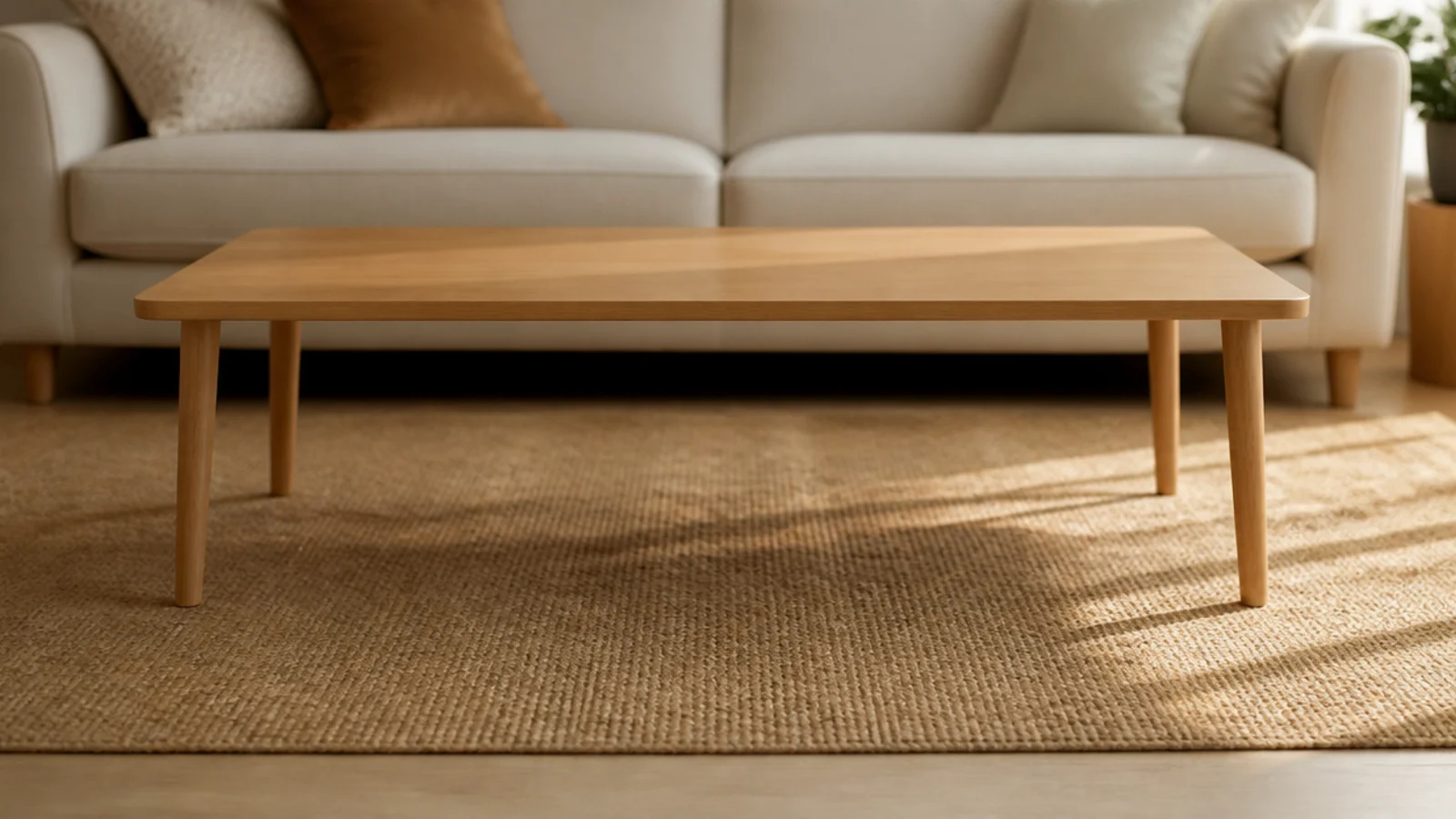
8. Choose a square with a soft radius
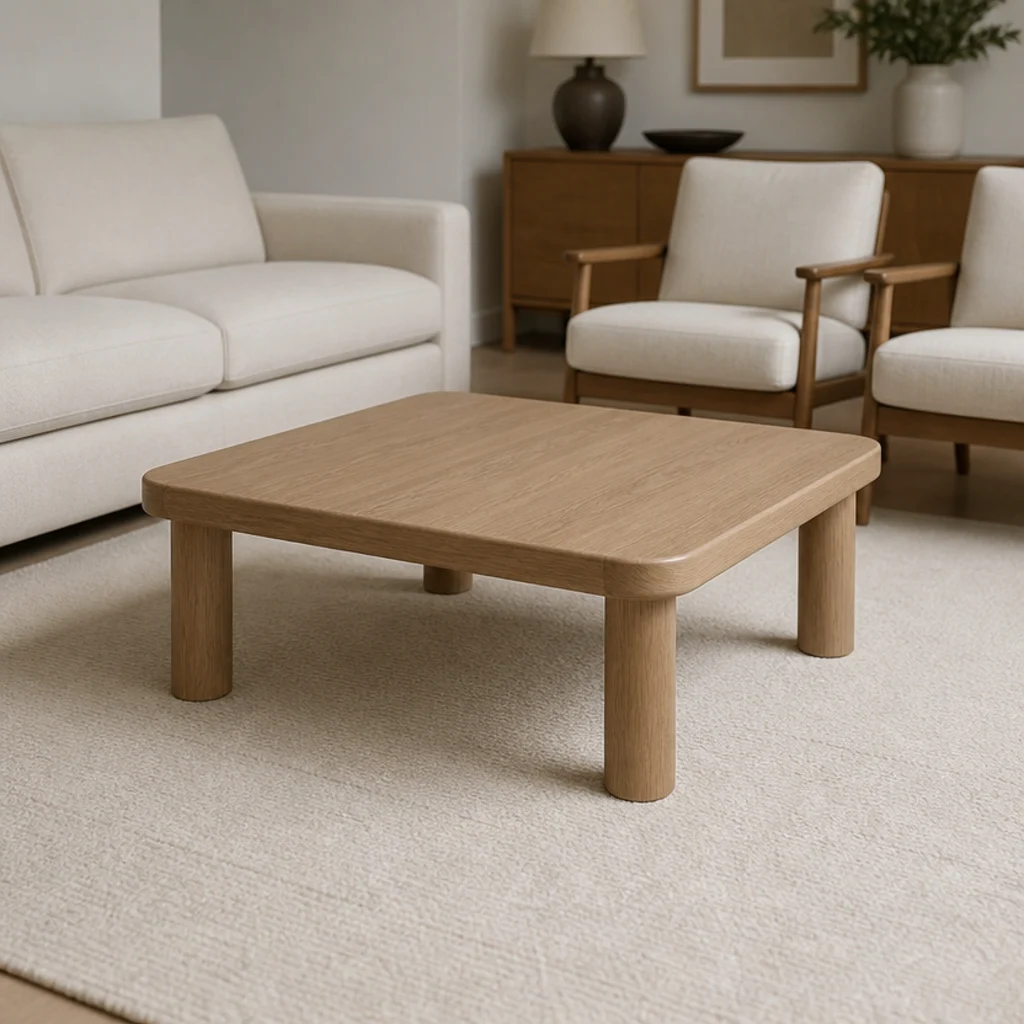
A square top with corners rounded to about three-quarters of an inch is the calmest shape in a room full of angled seating. It also chips less and hurts less. Keep it around 36 to 40 inches so it reads generous without blocking the floor.
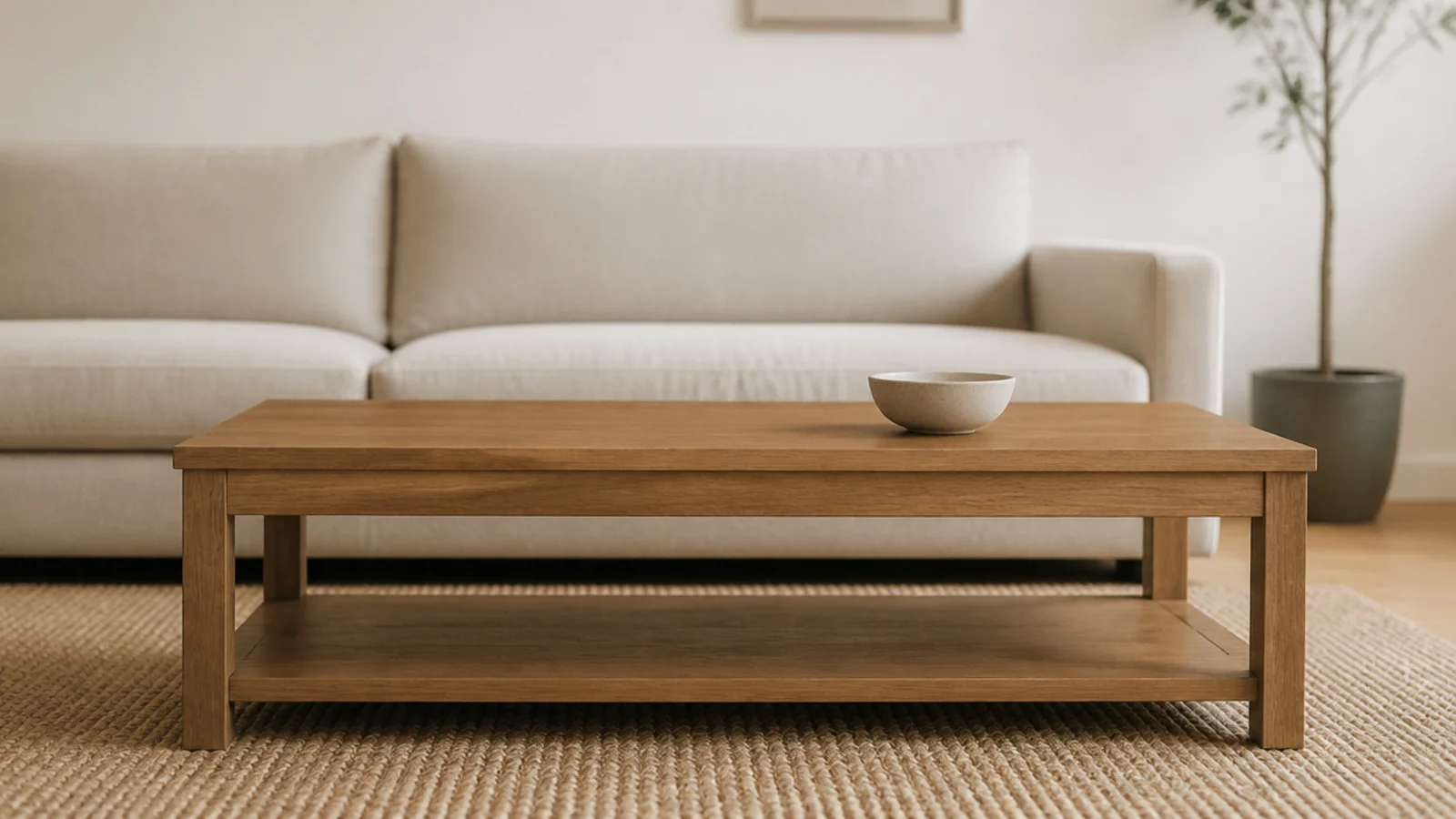
9. Leave the lower shelf empty
If the table has a second tier, an empty one reads as air rather than as wasted storage. The rug shows through, the piece stays visually light, and there is no shelf of magazines slowly turning into a pile. This only works if the storage exists elsewhere.
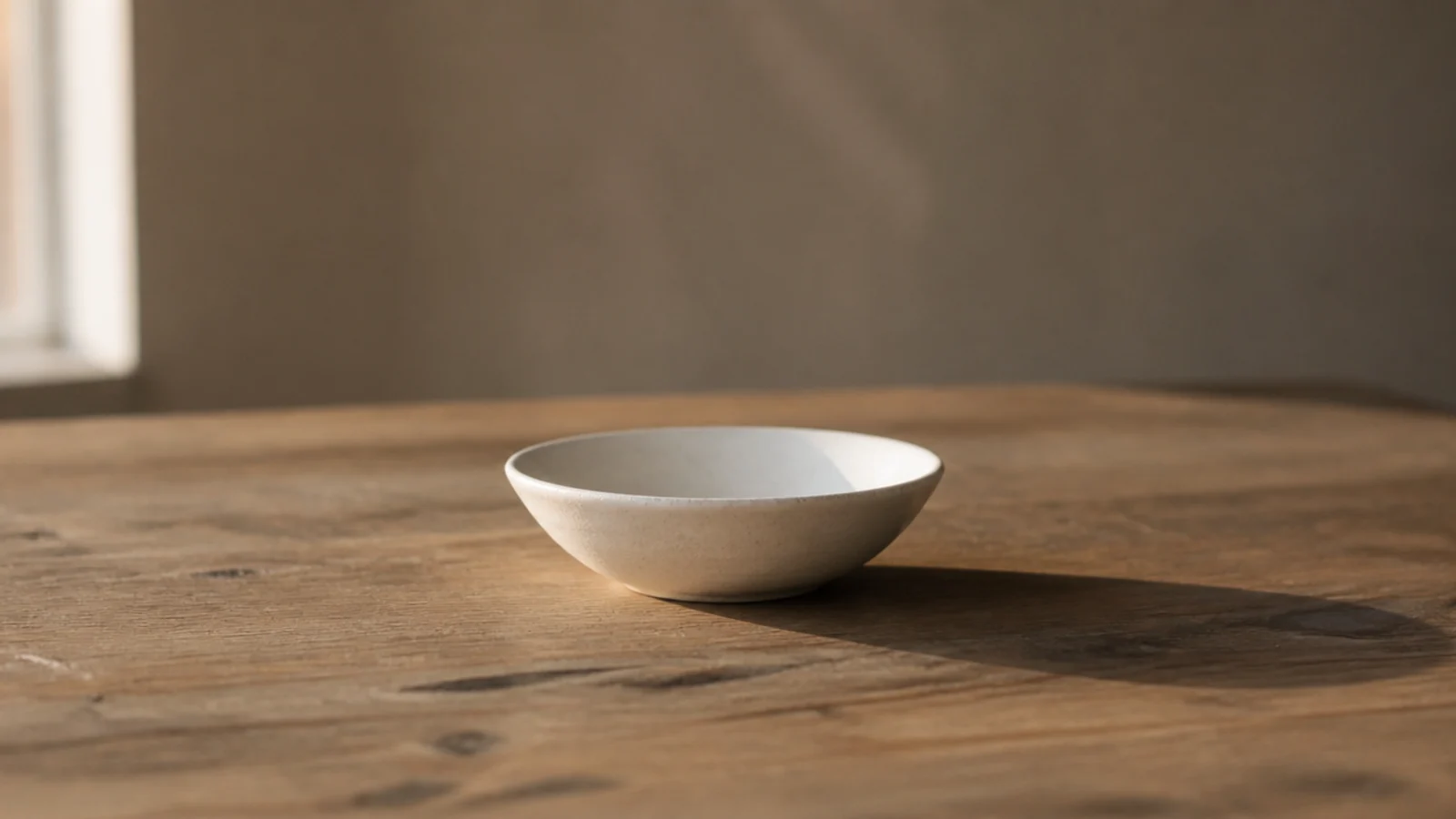
10. A bare top with one wide bowl
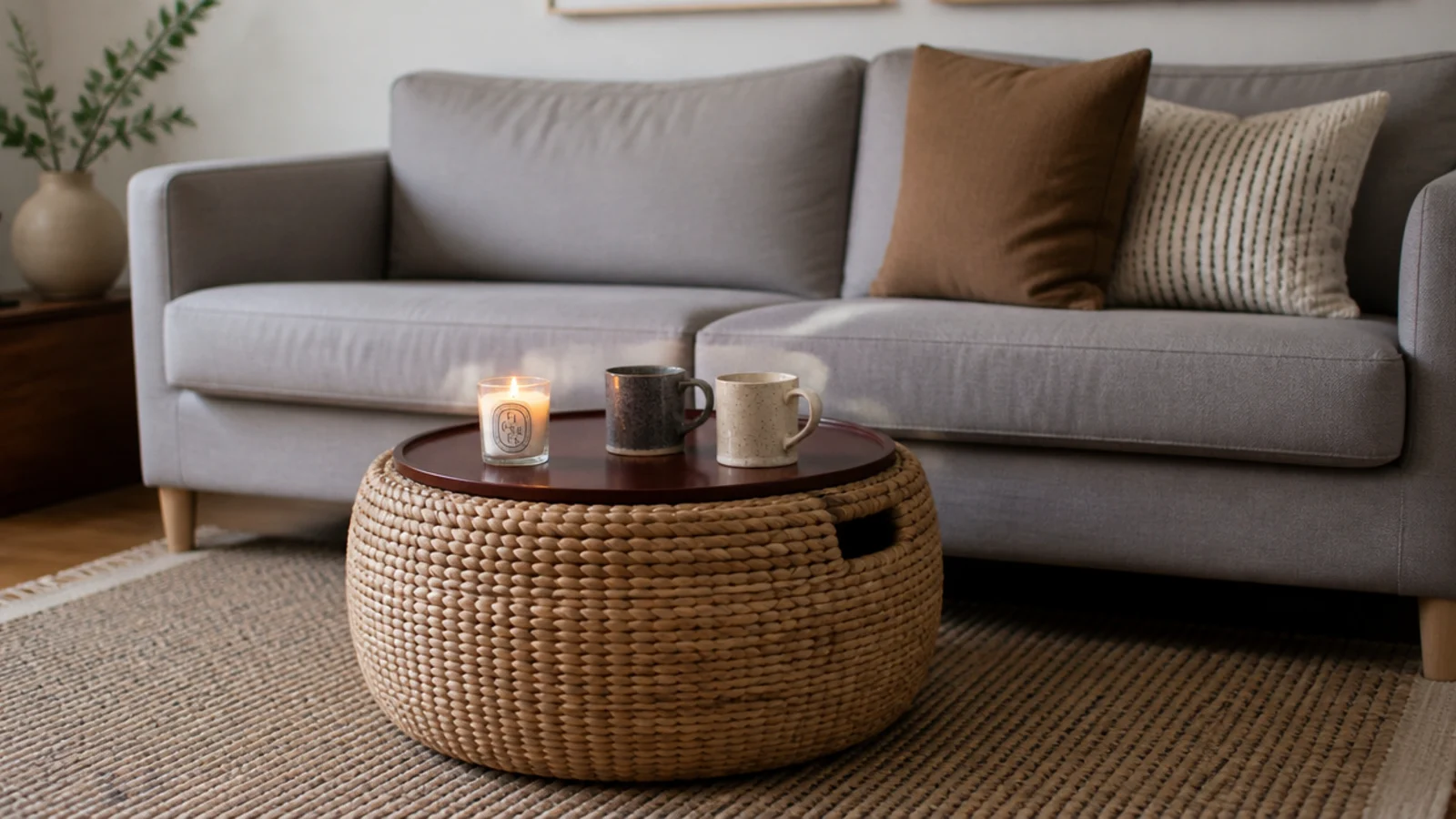
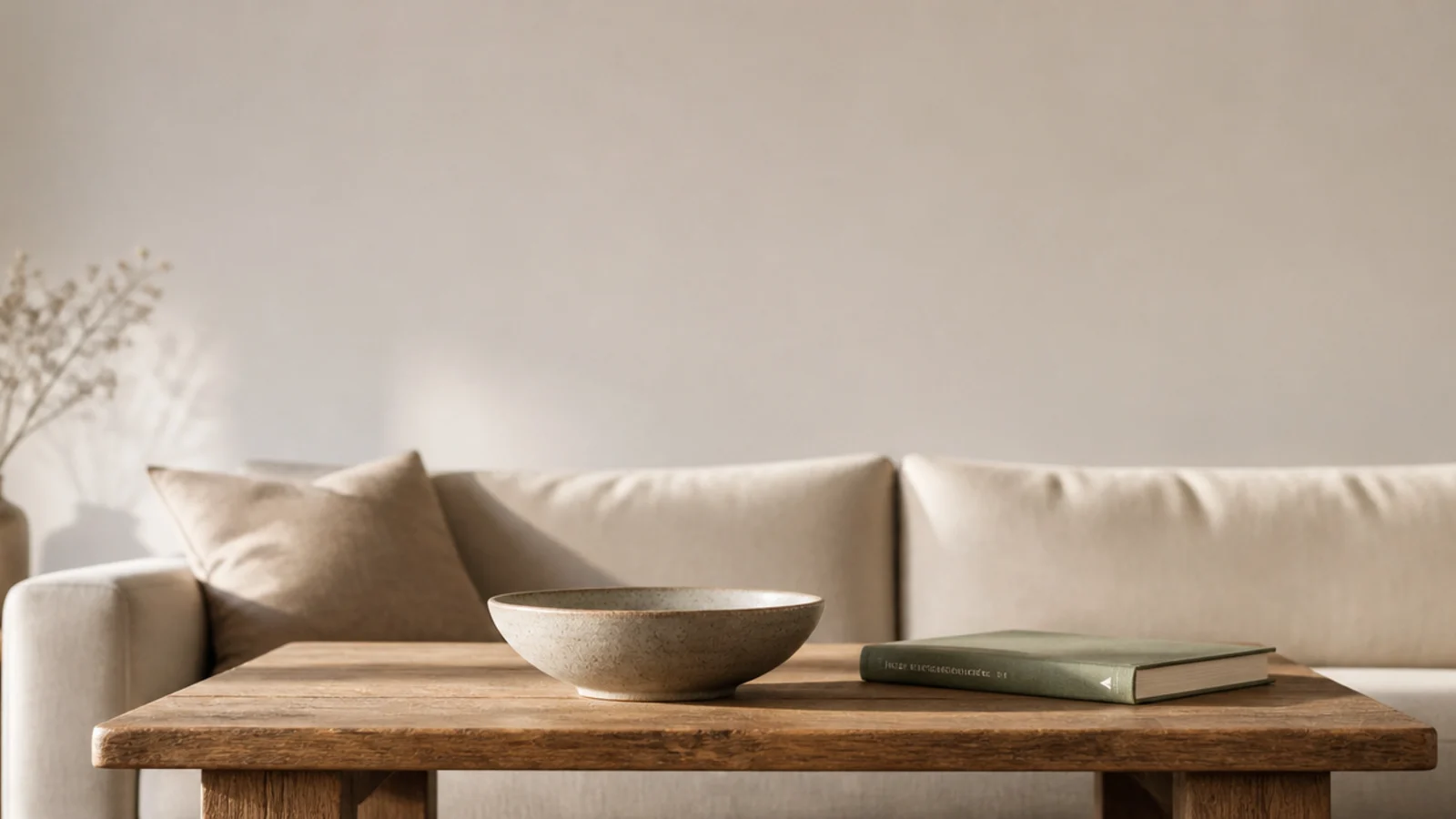
A single 14 to 18 inch bowl on an otherwise empty surface is a complete arrangement. It gives the eye somewhere to land, it costs less than the five small objects it replaces, and it doubles as somewhere to drop keys and fruit.
11. Three objects at three heights, then stop
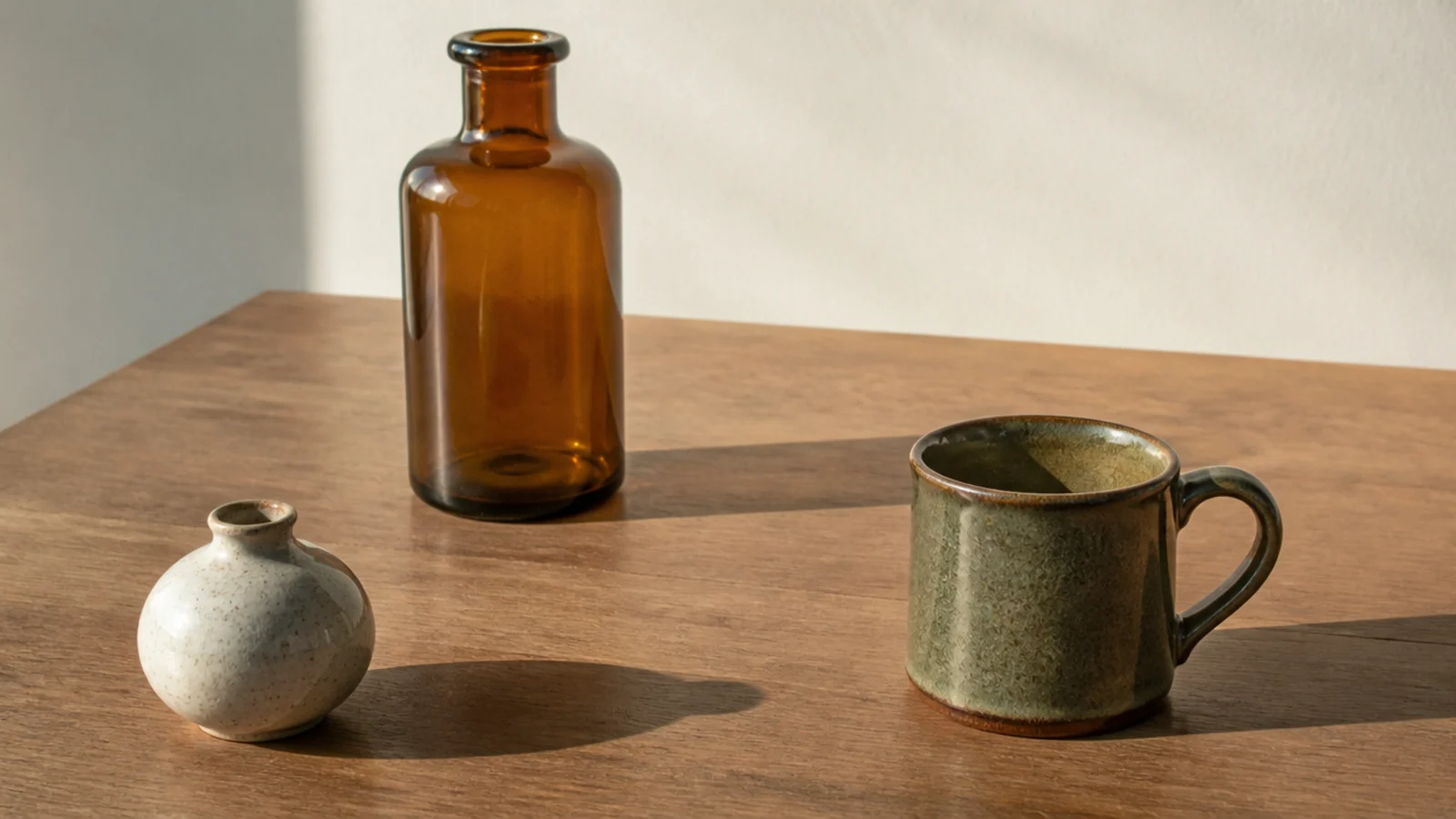
Three is the working limit on a simple table: something with a little height, something low and wide, something flat. Unequal spacing, loose triangle, and then stop adding. The empty surface between them is doing as much work as the objects.
12. One tray and nothing outside it
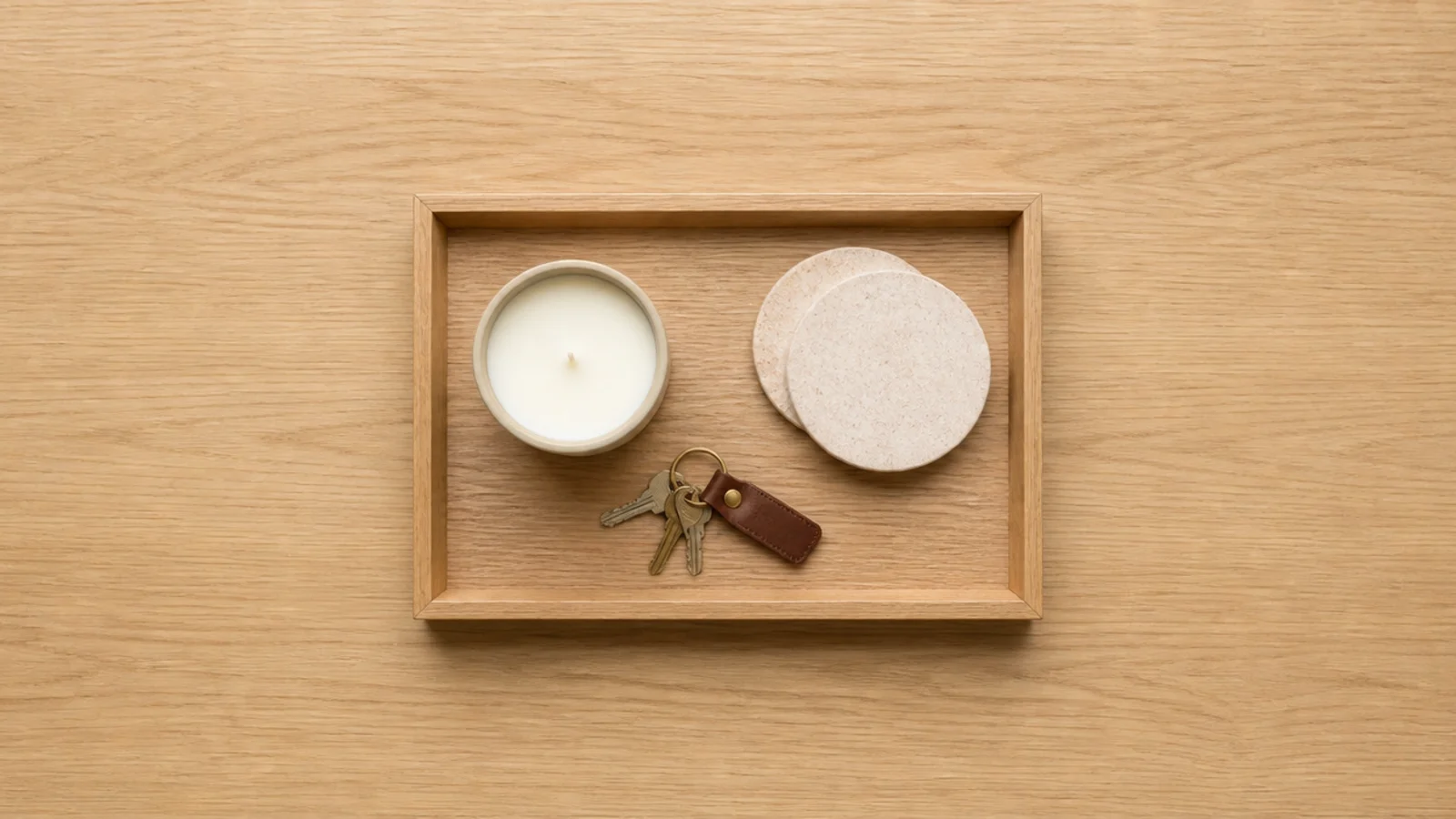
Everything on the table lives inside the tray rim, and the surrounding surface stays completely clear. It is the easiest rule to maintain because it is binary — either something is in the tray or it does not belong on the table.
13. A single stack of books, spines aligned
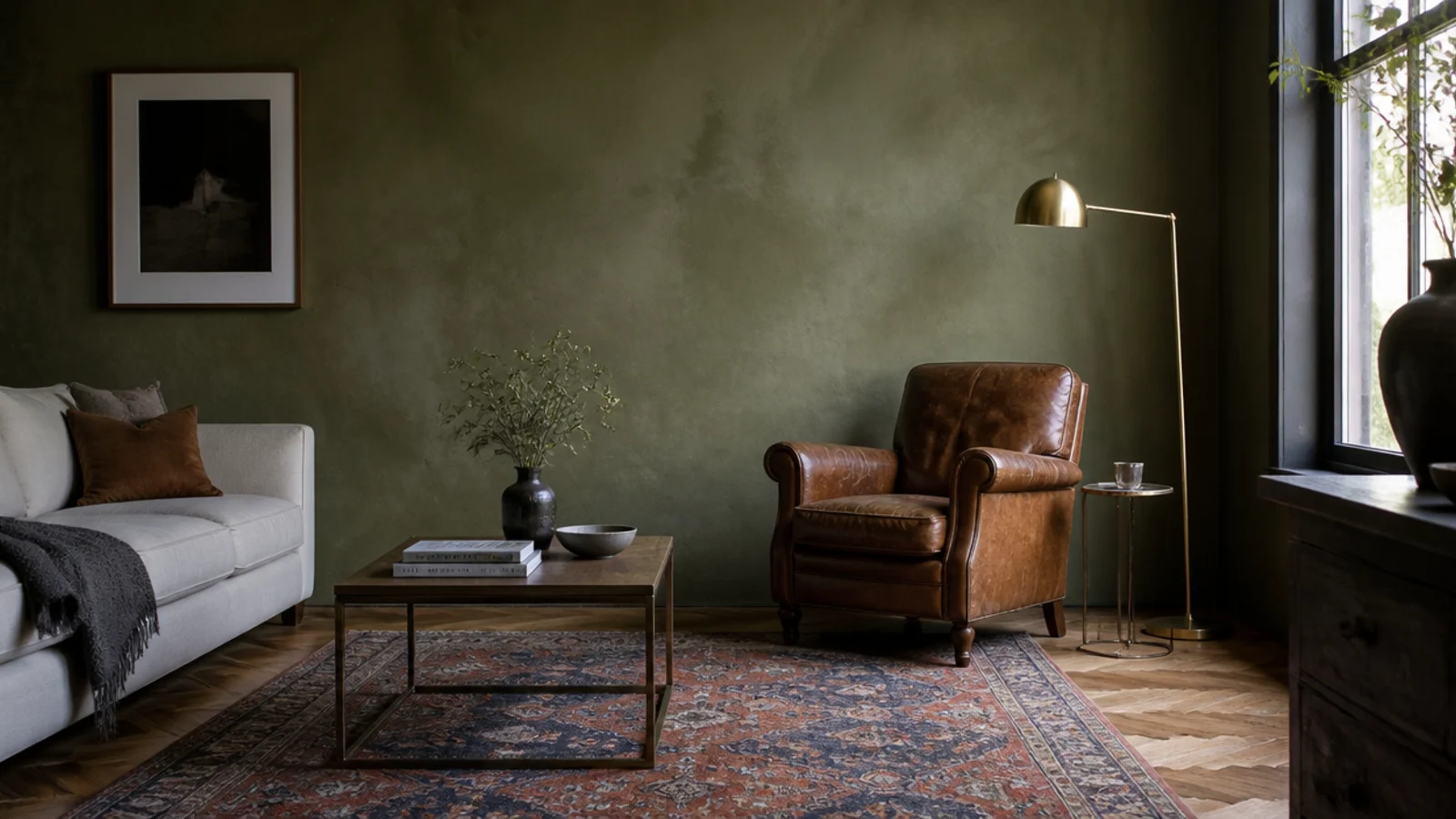
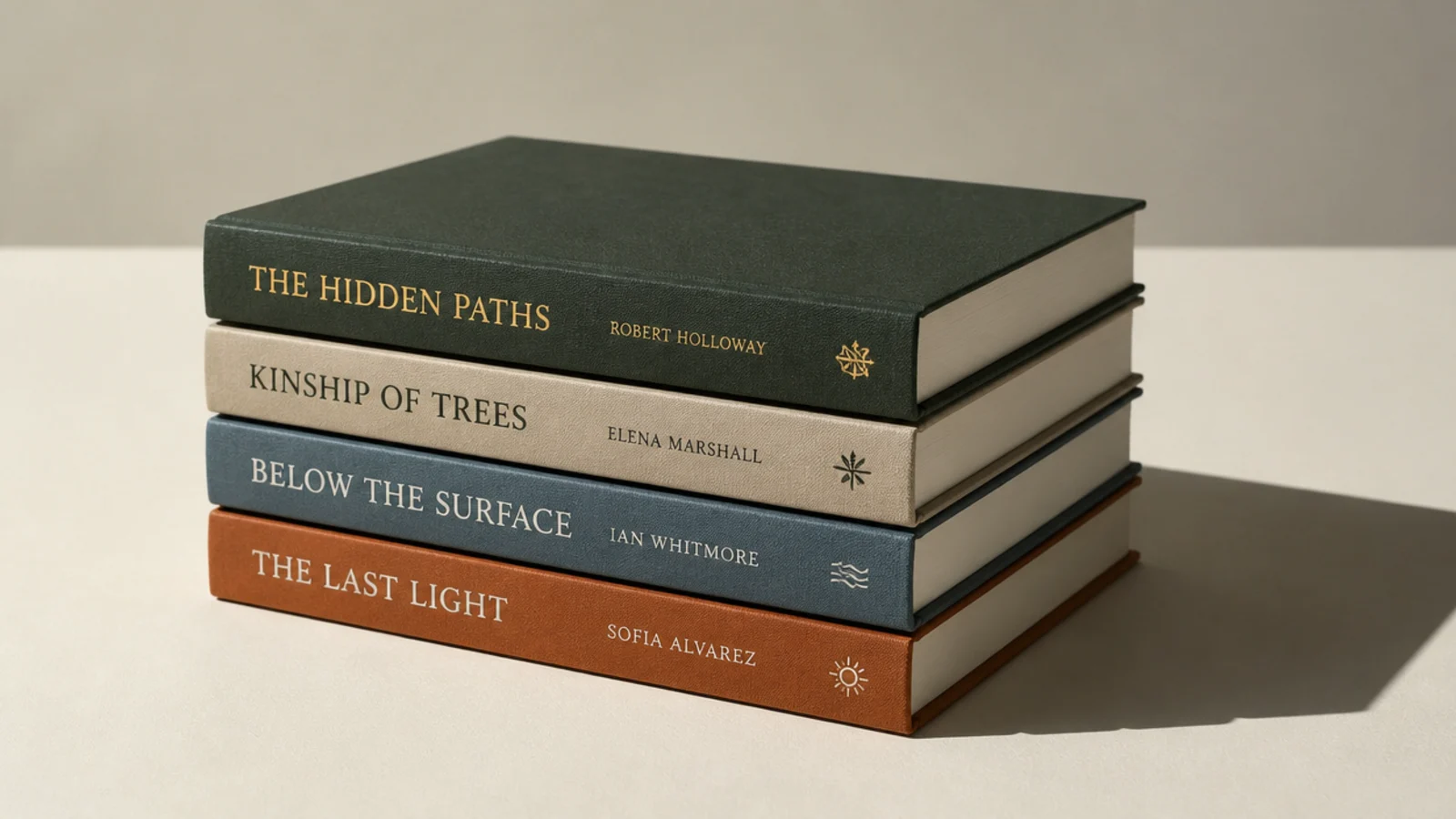
Four books squared up with spines facing the same way. Fanned stacks and crossed piles read casual on a busy table and untidy on a minimal one. On a simple surface, alignment is what carries the look.
14. Cap the tallest object at five inches
The general rule for a coffee table is eight inches; for a minimal one, five is better. Below that height the whole surface stays open and the room reads larger. Anything tall belongs on a console or a shelf where it can be seen properly. Measure from the table top to the top of the object rather than from the floor, because the surface sets the baseline.
15. Keep everything in one tone family
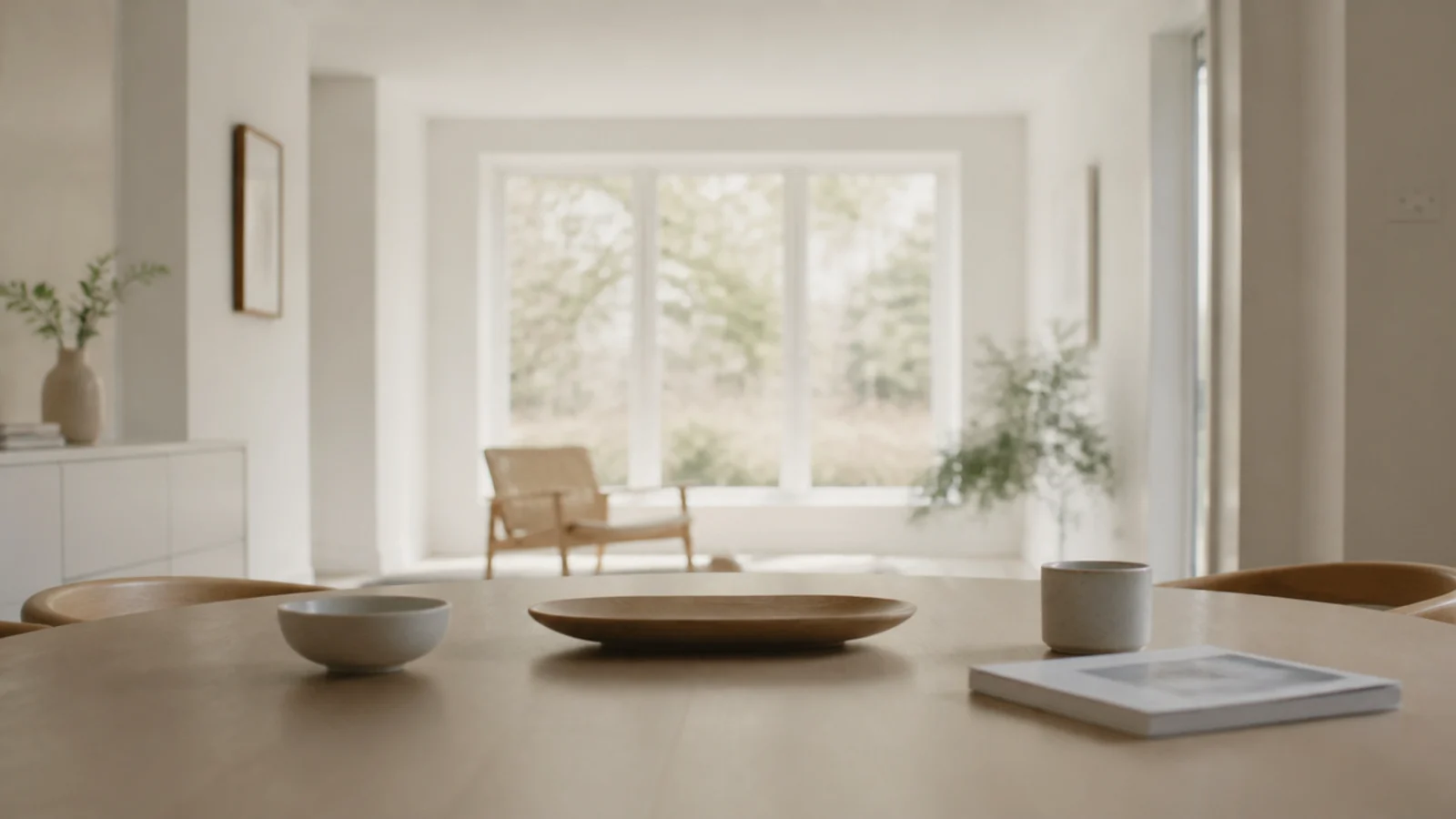
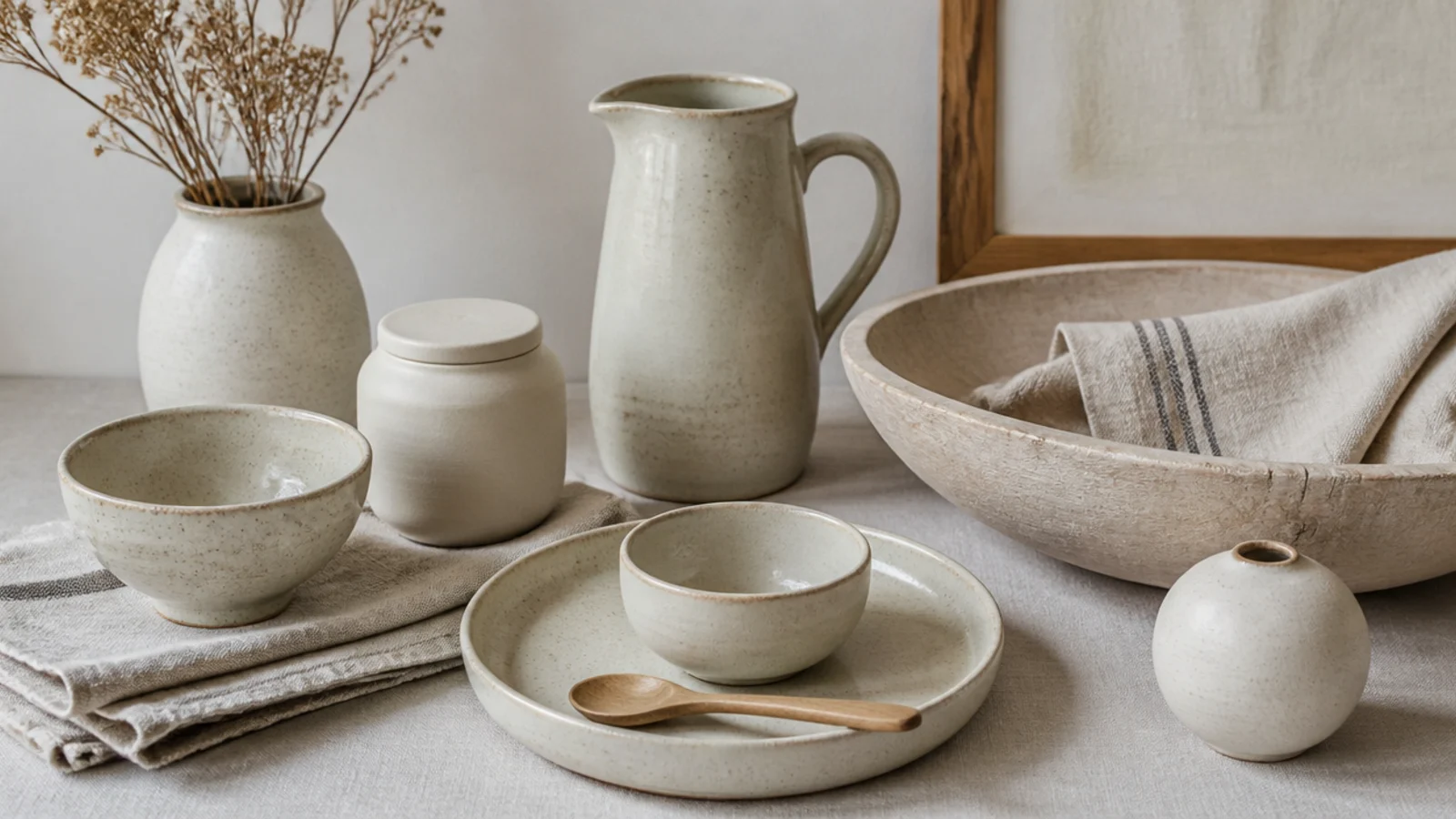
Cream, stone, bone, sand. When the colours agree, texture carries the interest — matte ceramic against crumpled linen against open timber grain. A single tone family with three textures is far calmer than three colours in one material, and photographs better too.
16. Use two identical objects for symmetry
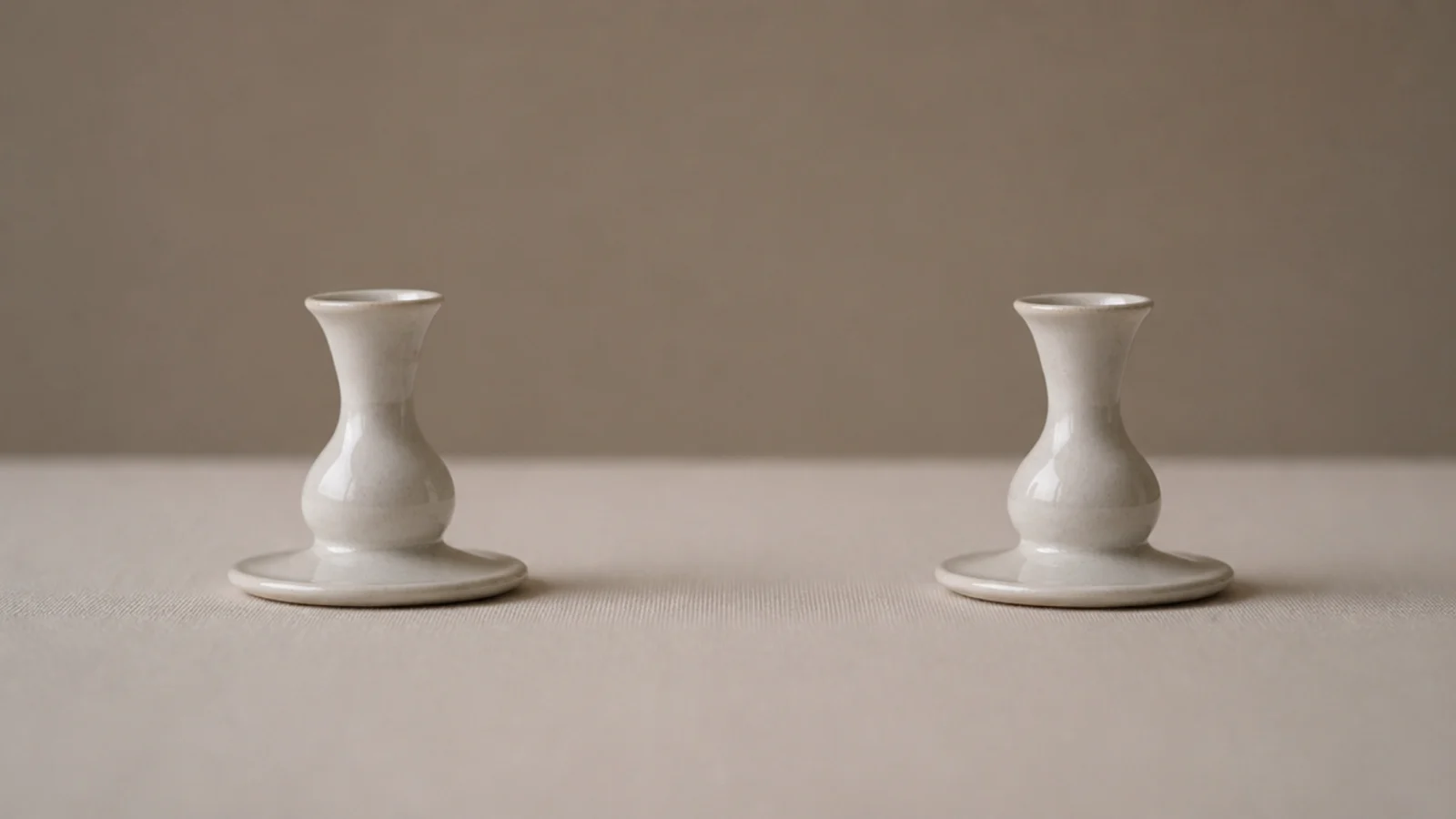
Two matching pieces placed evenly either side of the centre is the quietest arrangement there is. It is a deliberately formal move, and on a plain table it reads as restraint rather than as a shop display. It also takes ten seconds to restore after a evening.
17. One plant and no ornaments at all
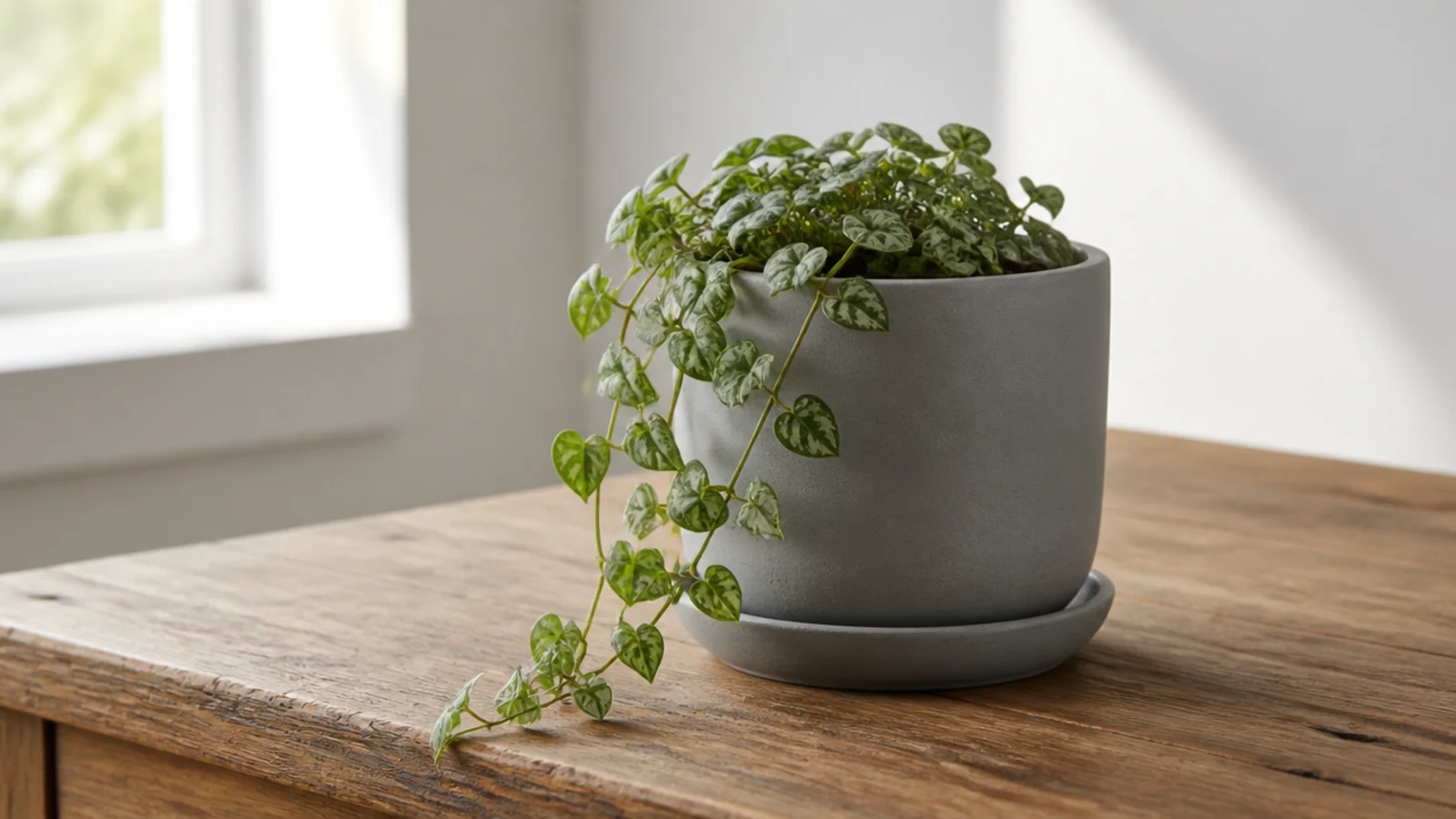
A single small plant in a plain pot is the only object on a table that changes by itself, which is what stops a minimal surface becoming invisible. Use a saucer so no water reaches the timber, and choose something that tolerates the light the room actually has.
18. A plain rug under a plain table
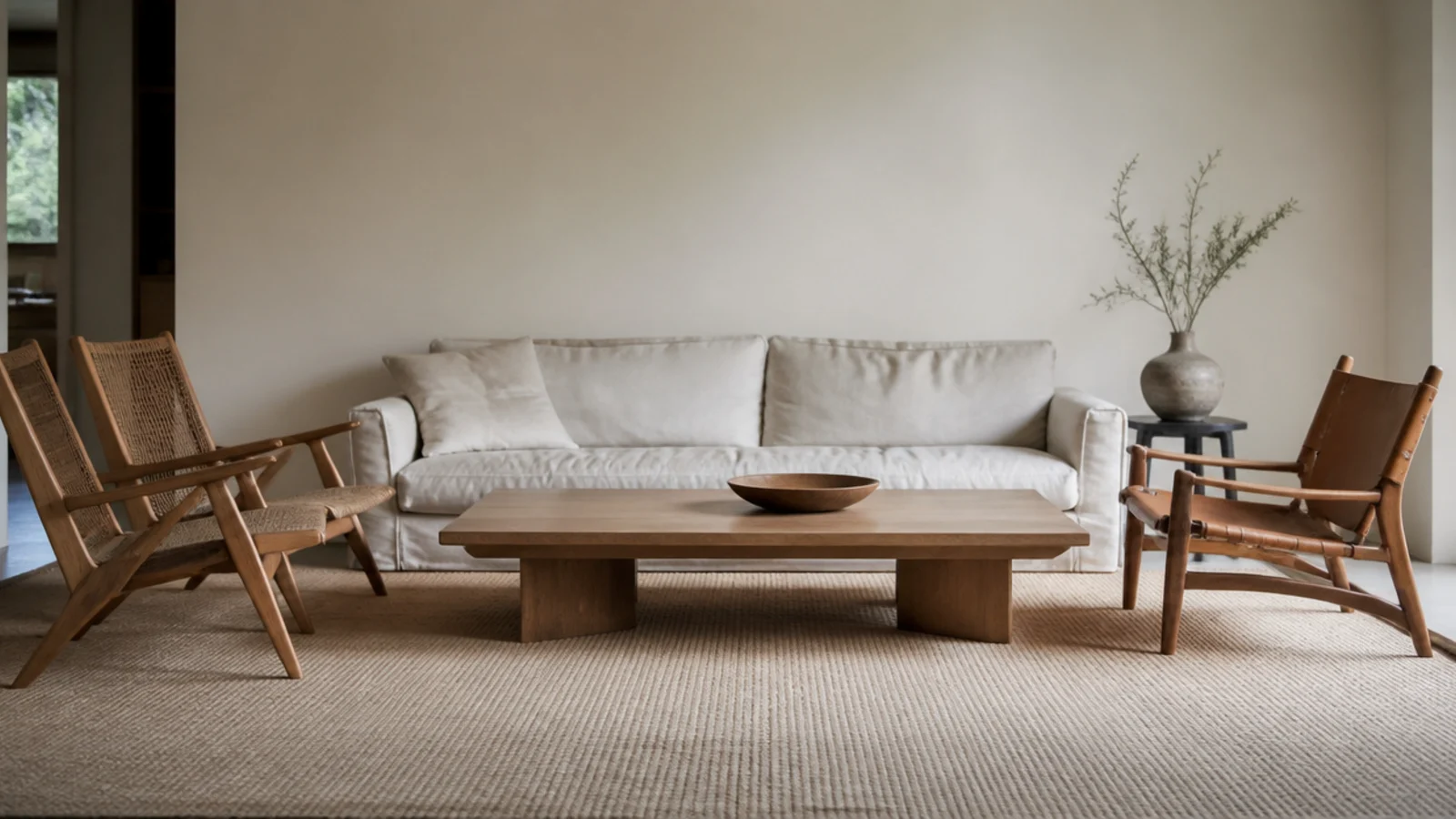
A patterned rug forces the table to compete. An undyed wool flatweave lets the piece sit quietly and keeps the floor calm. Keep 8 to 12 inches of rug showing beyond the table on every side and make sure all four feet land on the pile. An 8 by 10 foot rug suits most seating groups and lets the front sofa feet sit on it too.
19. Put the storage in the wall, not the table
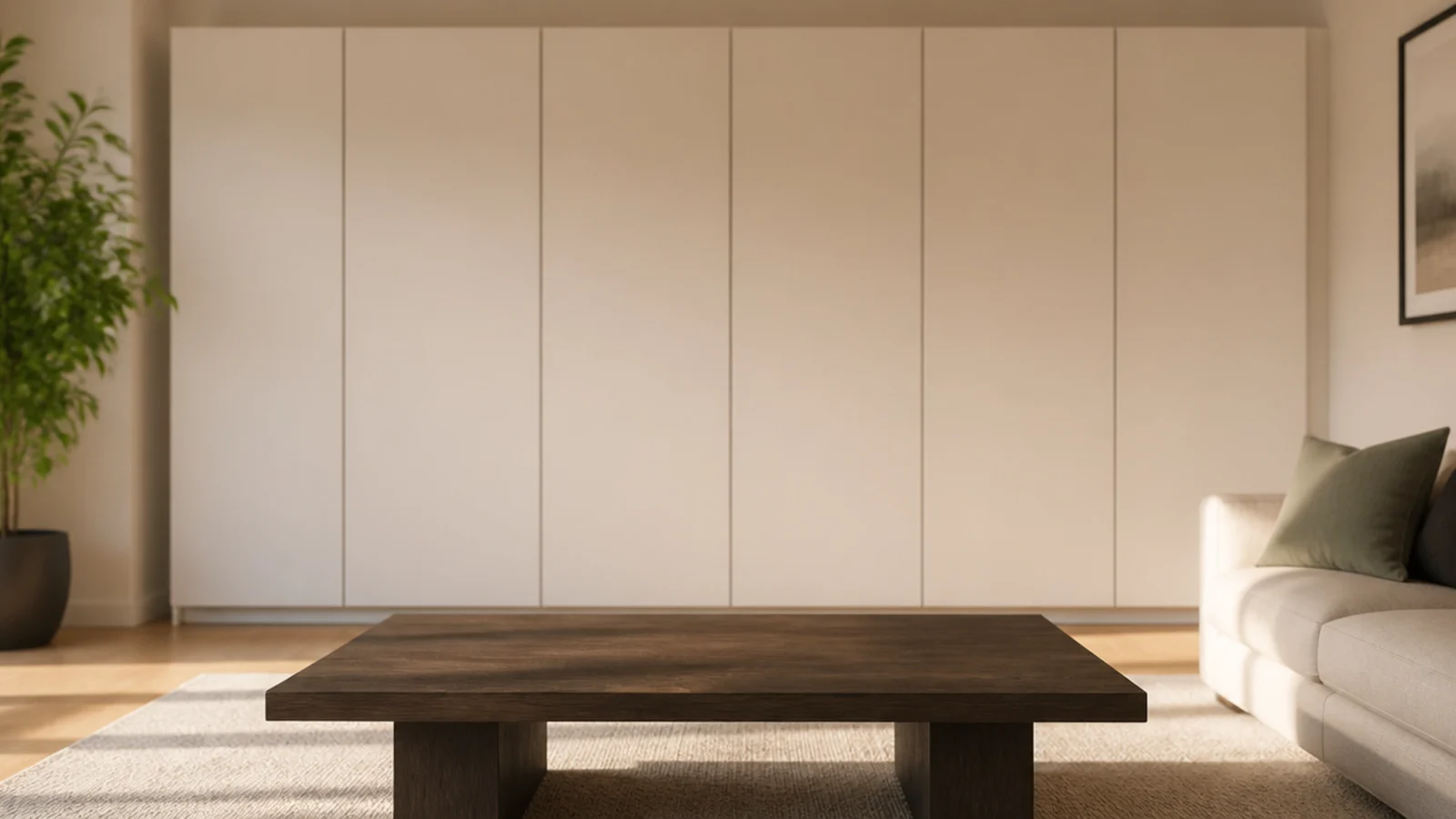
Closed cupboards on the wall opposite, four steps from the sofa, absorb everything the table would otherwise hold. Clutter collects wherever tidying is easiest, so the answer is moving the storage closer rather than asking people to be tidier. Two thirty-inch base cupboards hold more than any coffee table ever will, and they leave the floor in front of the sofa completely clear.
20. Reset the surface every Sunday
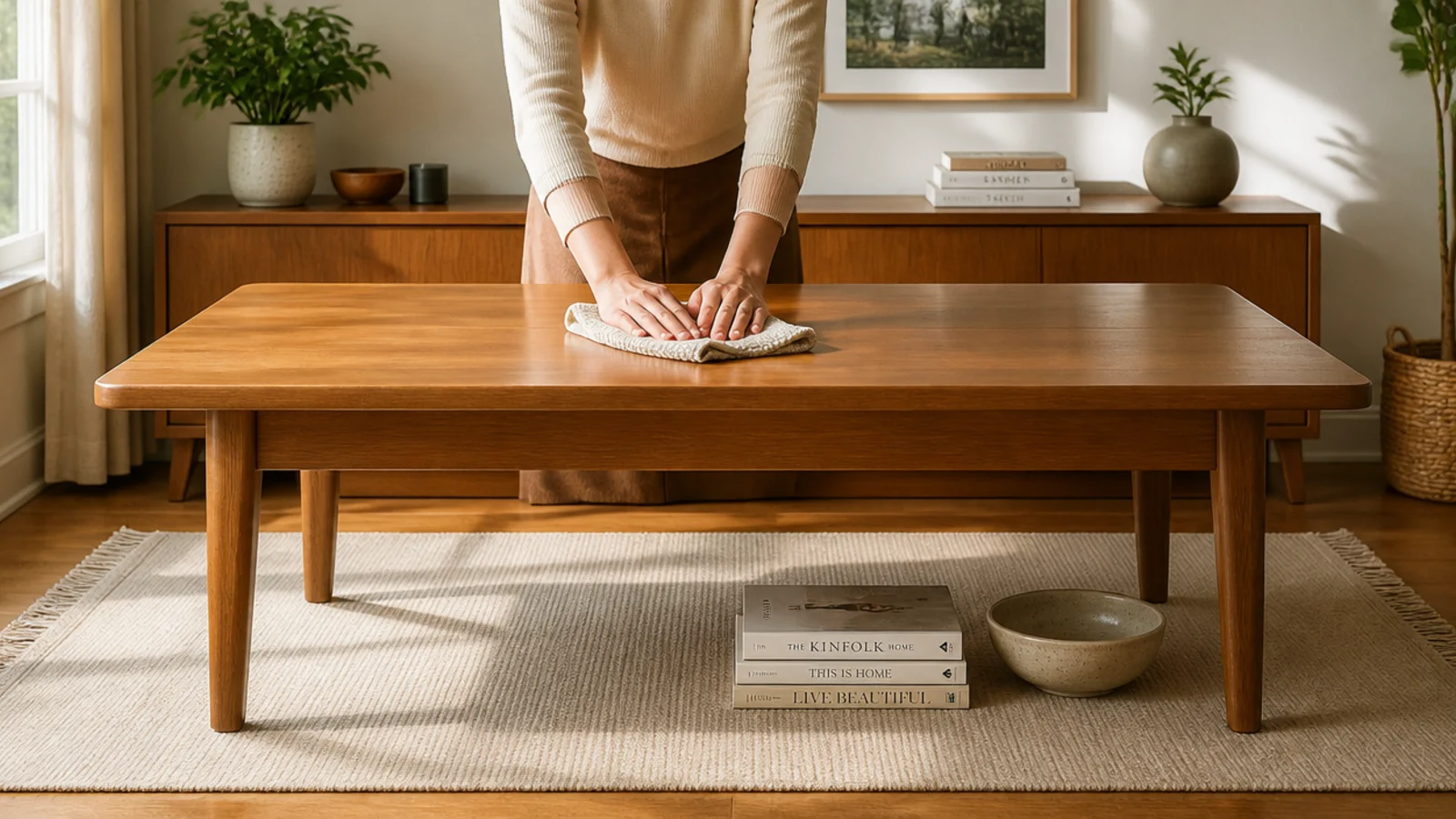
Clear everything onto the rug, wipe the top, put back two or three things. Fifteen minutes a week is what keeps a minimal table minimal, because surfaces accumulate silently. The styling steps for a wooden table covers the order to work in.
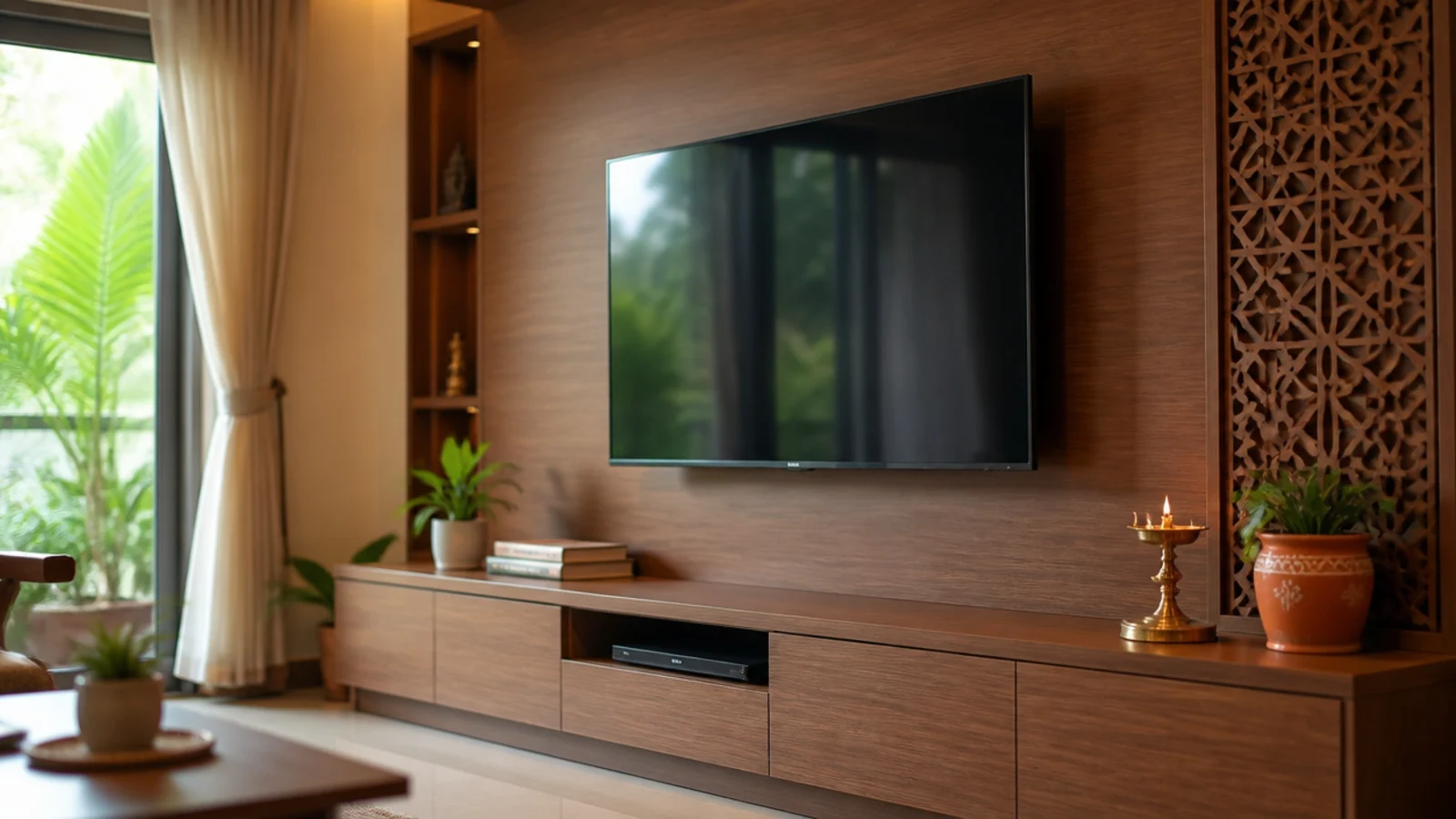
For the construction details behind a plain piece that lasts, the modern picks guide covers joints, edges and frames, and the style guide has the archetypes if you are still choosing a shape. Modern TV unit decor applies the same restraint to the wall the sofa faces.
Mistakes to Skip
- Filling a minimal table because it looks empty on the first day. Bare is a finished state, and almost every object bought in that first week ends up removed within a month.
- Buying a simple table and keeping the storage problem. Clutter has to go somewhere, and without closed storage within a few steps of the sofa it returns to the table by the end of the week.
- Mixing six materials and then removing objects to fix it. The problem is usually the number of surfaces rather than the number of things, so cut the materials to three first.
- Choosing a thick top on thin legs to look modern. Mismatched proportions read as a compromise, and on a plain piece there is nothing else for the eye to look at instead.
Frequently asked questions
How do I make a center table look simple but not empty?
Use one large object rather than several small ones and let the surface do the rest. A single fourteen inch bowl on a bare timber top reads as considered, while the same table with five little pieces spread across it reads as unfinished no matter how nice they are.
What is the simplest table shape for a small room?
A plinth or a low block with no visible legs. There is nothing underneath to see or clean around, no hardware to catch the eye, and the form reads as one quiet mass. Keep it under forty inches long or a solid block starts to feel heavy in a small space.
How many objects belong on a minimal coffee table?
Three at most, arranged as a triangle with unequal spacing, and one of them should be flat. Two works too. The number matters less than the empty space between them, which is what makes an arrangement read as deliberate rather than as things left there.
Should a simple table match the floor?
Matching the tone of the floor makes the table almost disappear, which suits a room that already has a lot going on. Contrasting by two or three shades makes it read as a distinct object. Both work, but matching is the calmer of the two and needs no styling to succeed.
Where should the clutter go if not on the table?
Into closed storage within about four steps of the sofa. A lidded basket beside the table, a drawer in a console, or a cupboard in the shelving opposite. Clutter accumulates wherever tidying is easiest, so the fix is putting the storage closer, not asking people to try harder.
Want more like this? Browse all 15 center table living room guides — they all use the same measurements and budget tiers.
Pin it for later
Save this to your Center Table Living Room board
Pin it now so it is waiting for you when the tape measure comes out — and so the next person hunting for this idea can find it too.
Save this pinKeep going
More ideas worth saving while you have the tape measure out.