Rugs In Living Room · Listicle
25 Large Area Rugs In Living Room Sizes That Fit

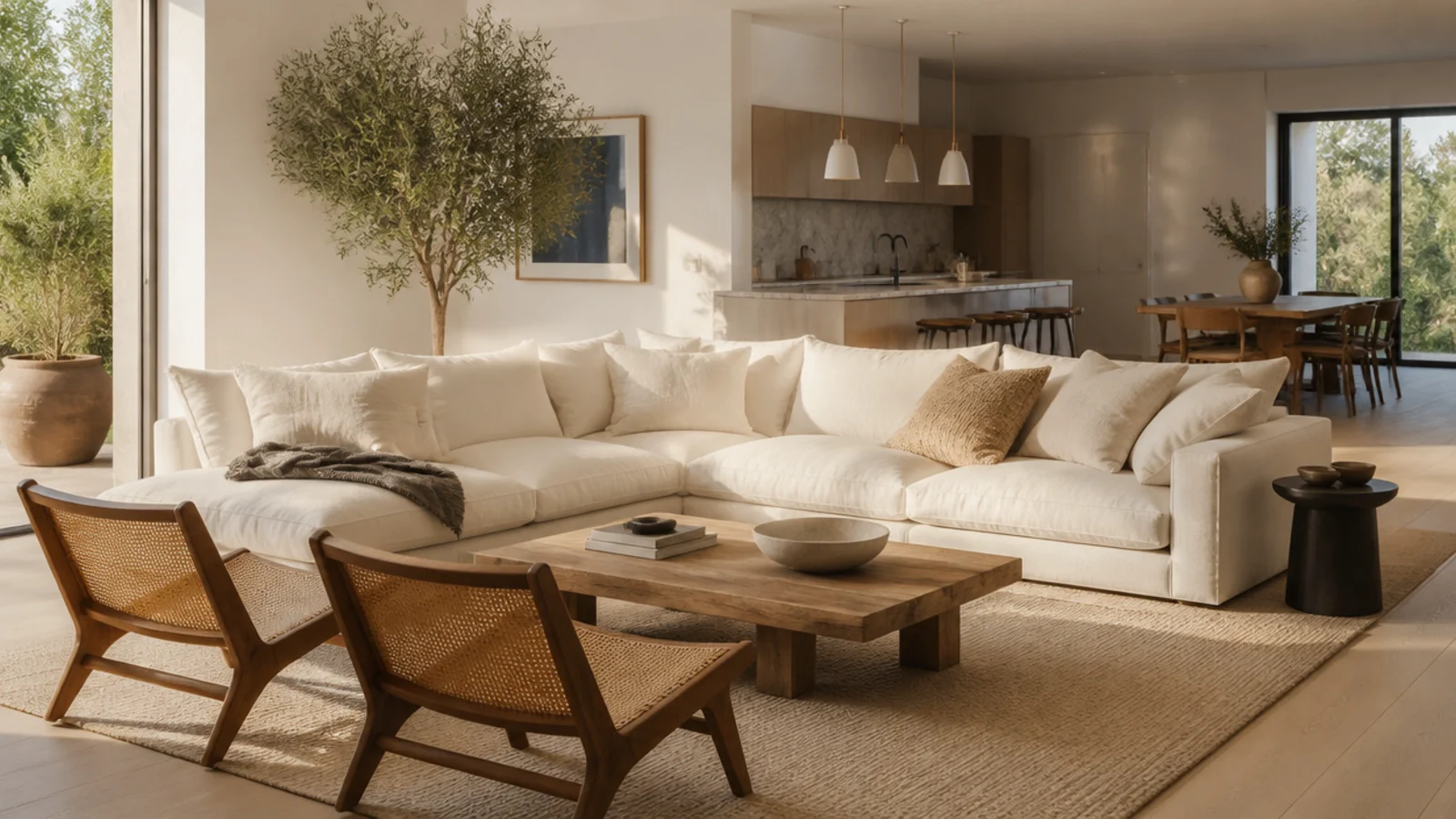
Large area rugs in living room plans go wrong at the ordering stage, not the styling stage. People buy the size that was affordable, or the size the photograph looked like, and then spend years arranging furniture around a rectangle that does not fit. I have returned two rugs for being small and one for being so big the room looked carpeted. Below are twenty-five sizing decisions with the actual room dimensions, clearances and weights behind them, so the rectangle is right before anything is unrolled.
In this guide27 sections — tap to openHide
- 1.What large area rugs in living room plans have to clear
- 2.The 8x10 and the rooms it genuinely suits
- 3.The 9x12 and the moment you need it
- 4.The 10x14 for a room over 16 by 18 feet
- 5.The 12x15 in a true open plan space
- 6.Between two sizes, always take the larger
- 7.Measure the seating rectangle and add eight inches
- 8.All legs on and what it costs in floor
- 9.Front legs on with a 96 inch sofa
- 10.Sectional geometry and the L shaped footprint
- 11.The 18 inch perimeter and when to break it
- 12.Never let the bare floor drop under eight inches
- 13.Give the coffee table eight inches on every side
- 14.Keep 30 to 36 inches of walkway around the group
- 15.In open plan, align to the sofa, not the wall
- 16.Two large rugs against one enormous one
- 17.Cut-to-size broadloom for an awkward room
- 18.Doorways, thresholds and where the rug stops
- 19.What a 9x12 wool rug actually weighs
- 20.Check delivery access before you order
- 21.Pads for large rugs and how to join them
- 22.Relaxing the creases in a very big rug
- 23.How to rotate a heavy rug without help
- 24.Plan the vacuum route for 100 square feet
- 25.Price per square foot falls as size rises
- 26.When a large rug is the wrong answer
- 27.Mistakes to Skip
What large area rugs in living room plans have to clear
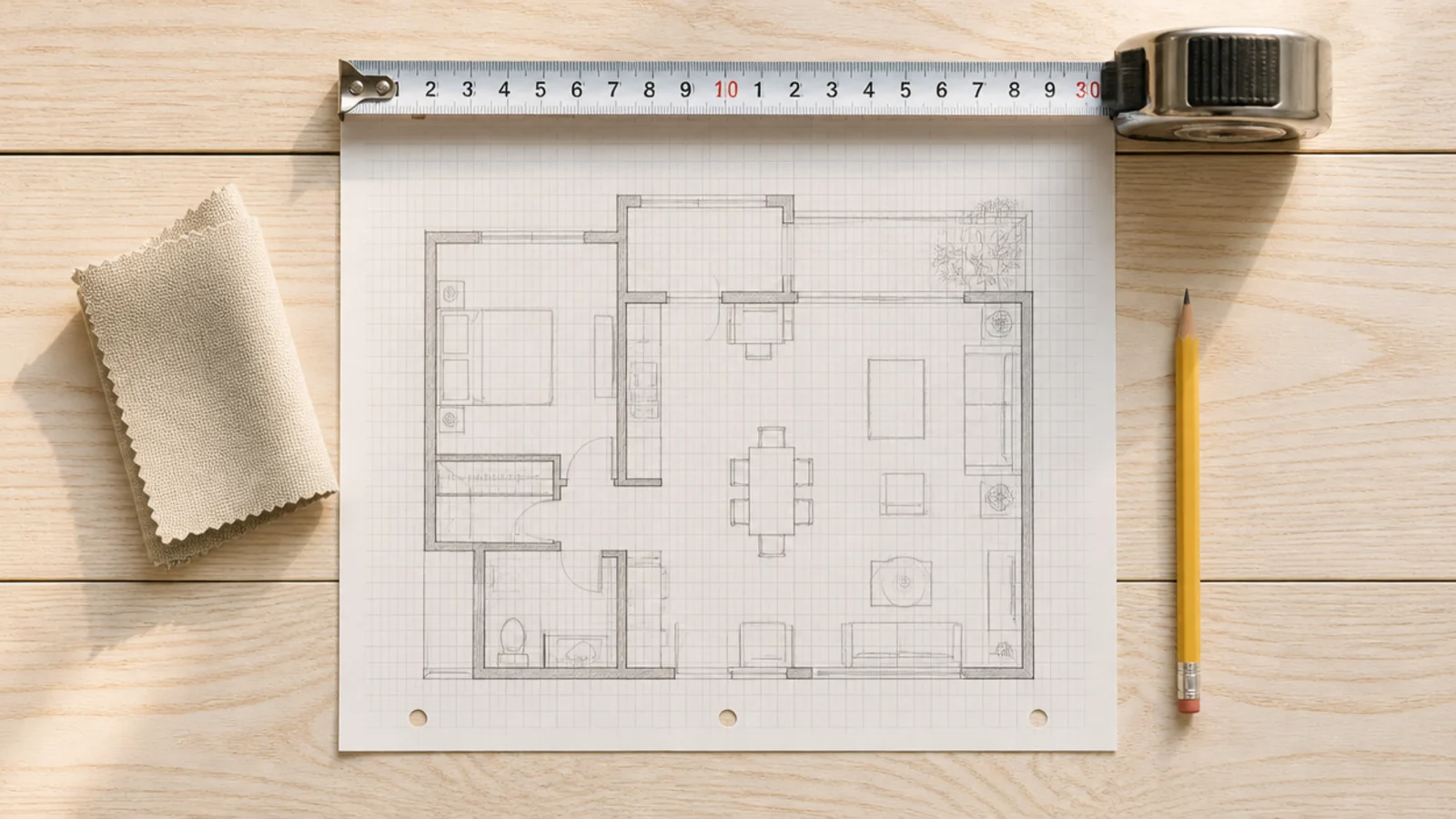
Work from the furniture outward. Arrange the seating the way you want it, measure the outer rectangle — outside arm to outside arm, sofa back to the front of the facing chairs — and add 6 to 8 inches on every side. Round up to the nearest standard size and that is your rug.
The standard sizes map onto rooms fairly predictably. An 8x10 suits most rooms from 12x14 to 13x16 and carries an 84-inch sofa with its front legs on. A 9x12 needs about 14x16 feet and is the smallest size that reliably takes every leg. A 10x14 wants 16x18 or more. A 12x15 is for genuine open plan, where the rug is defining a zone rather than filling a room.
Then check the margins. Eighteen inches of bare floor at the perimeter is the target, 12 inches is comfortable, and 8 inches is the minimum. Below about 6 inches the rug stops reading as an area rug. Around the group, leave 30 to 36 inches of walkway, and give the coffee table at least 8 inches of pile on all four sides.
The last checks are physical. A 9x12 wool rug weighs 60 to 110 pounds, arrives as a rigid nine-foot roll that will not turn a tight stairwell, and needs a felt and natural rubber pad cut 1 inch smaller on each side — without one it slides on a hard floor and the corners lift into a trip hazard. For cost-per-year on the rug itself, see the rug value guide.
1. The 8x10 and the rooms it genuinely suits
The most-bought size in the country, and correct more often than its reputation suggests. It works in a 12x14 to 13x16 room, carrying an 84-inch sofa with front legs on and two chairs opposite. It leaves roughly 18 to 24 inches of bare floor on the long sides. Below a 12x14 room it starts to crowd the walls.
2. The 9x12 and the moment you need it
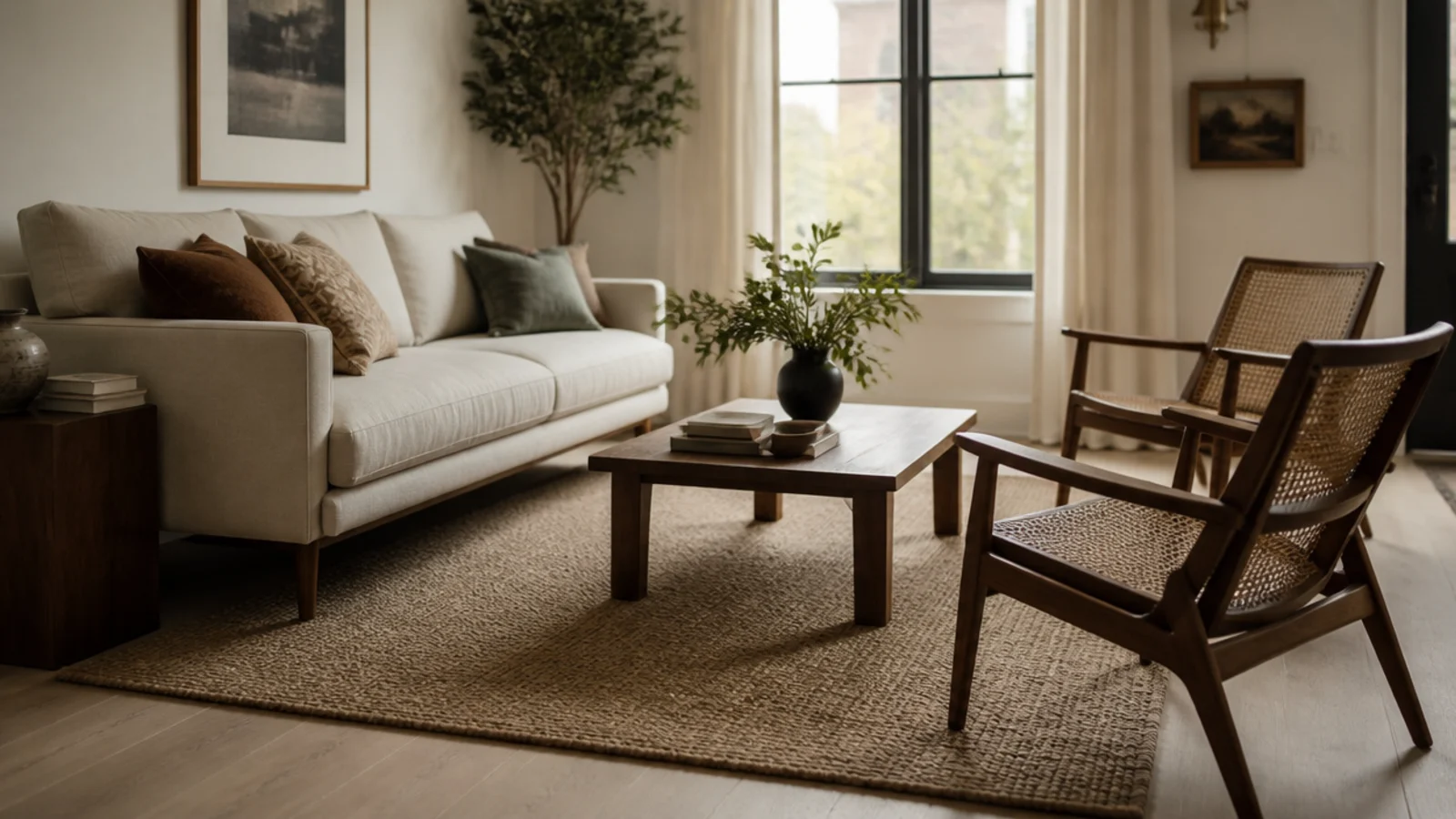
Once you want all four legs of the sofa and both chairs on the rug, this is the entry point. It needs roughly 14x16 feet of room and leaves about 24 inches of floor on the long sides. It is also the size where the price jump feels steep and the visual improvement is largest.
3. The 10x14 for a room over 16 by 18 feet
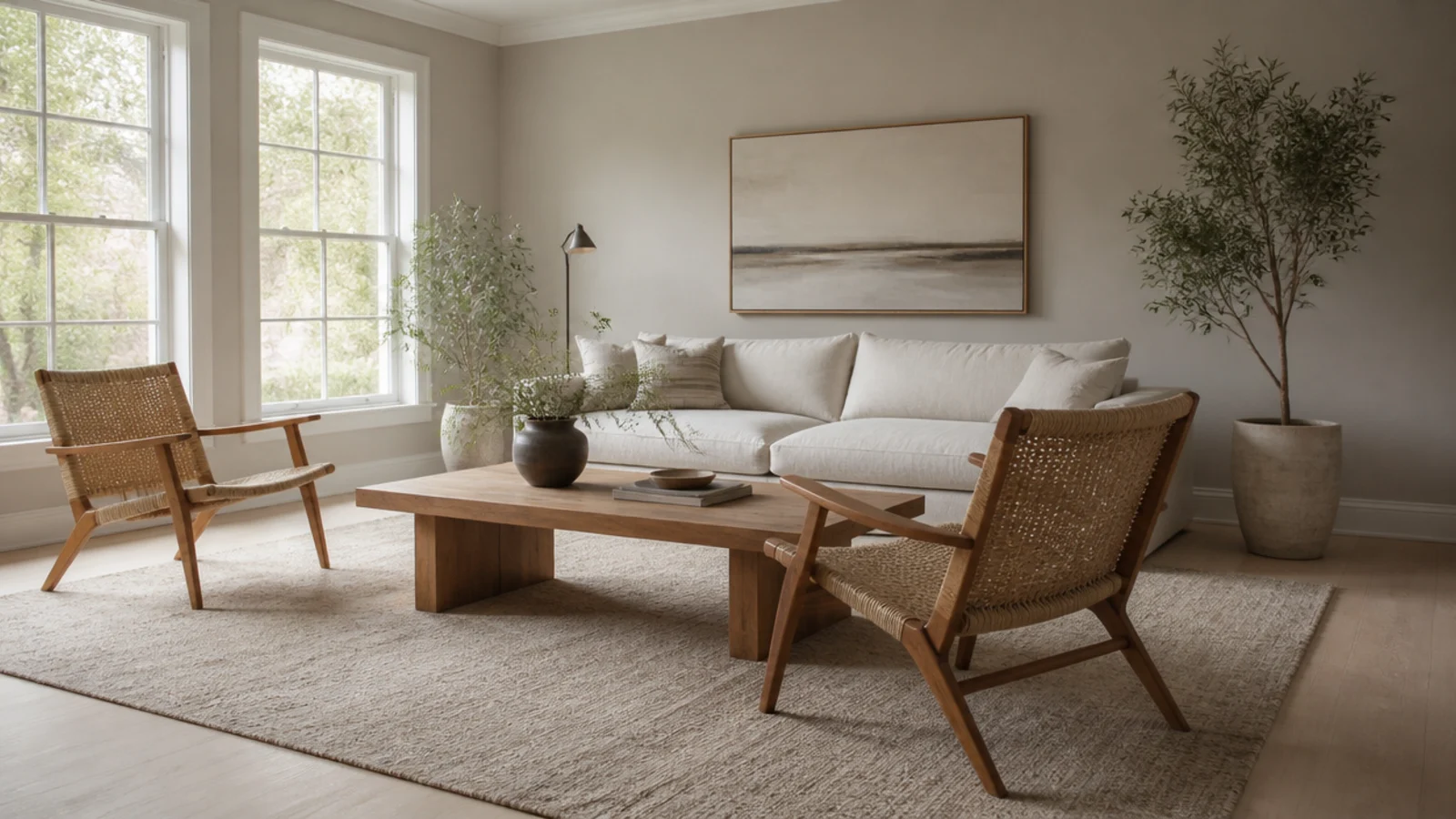
In a genuinely large room, a 9x12 starts to look marooned. A 10x14 restores the proportion and still leaves 24 inches of bare floor on all sides of a 16x18. Expect the weight to rise to 90 to 140 pounds in wool, and expect delivery to need two people and a clear route.
4. The 12x15 in a true open plan space
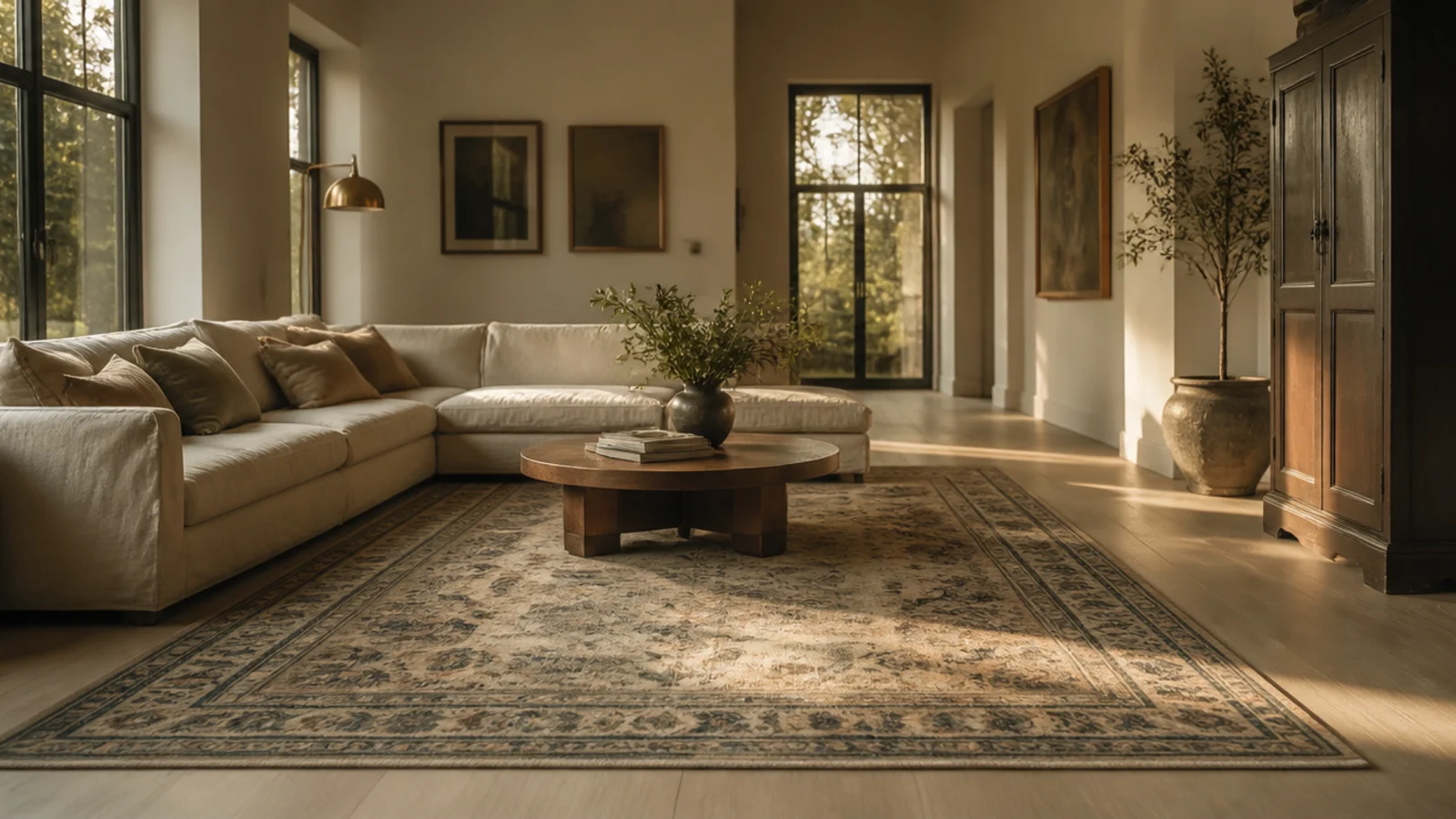
Here the rug's job is zoning rather than covering. A 12x15 is big enough to hold a full sectional, a coffee table and two chairs as one visual unit, with the rest of the open space reading as separate. Custom sizes above this are usually cheaper as cut-to-size broadloom than as a woven rug.
5. Between two sizes, always take the larger
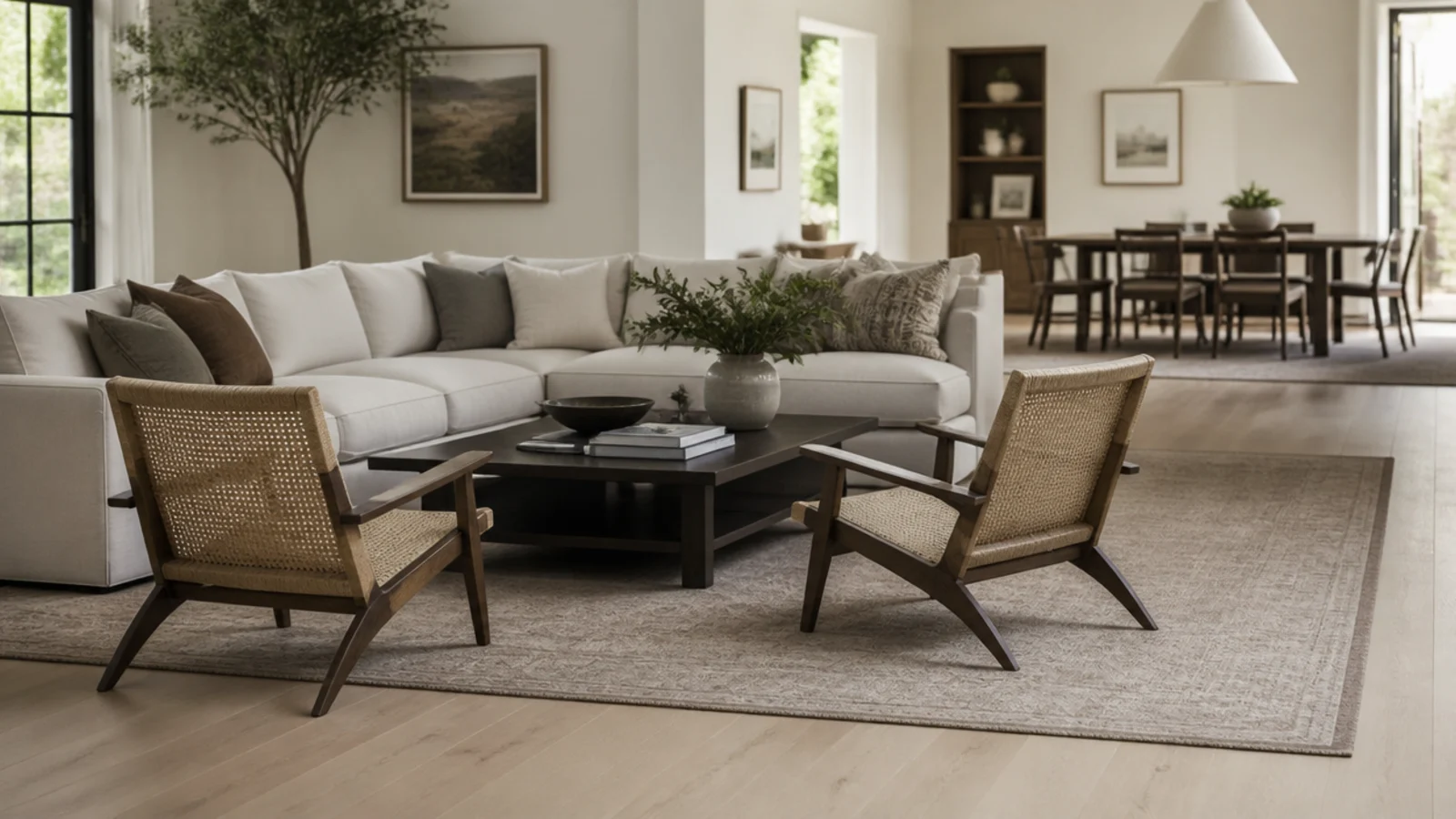
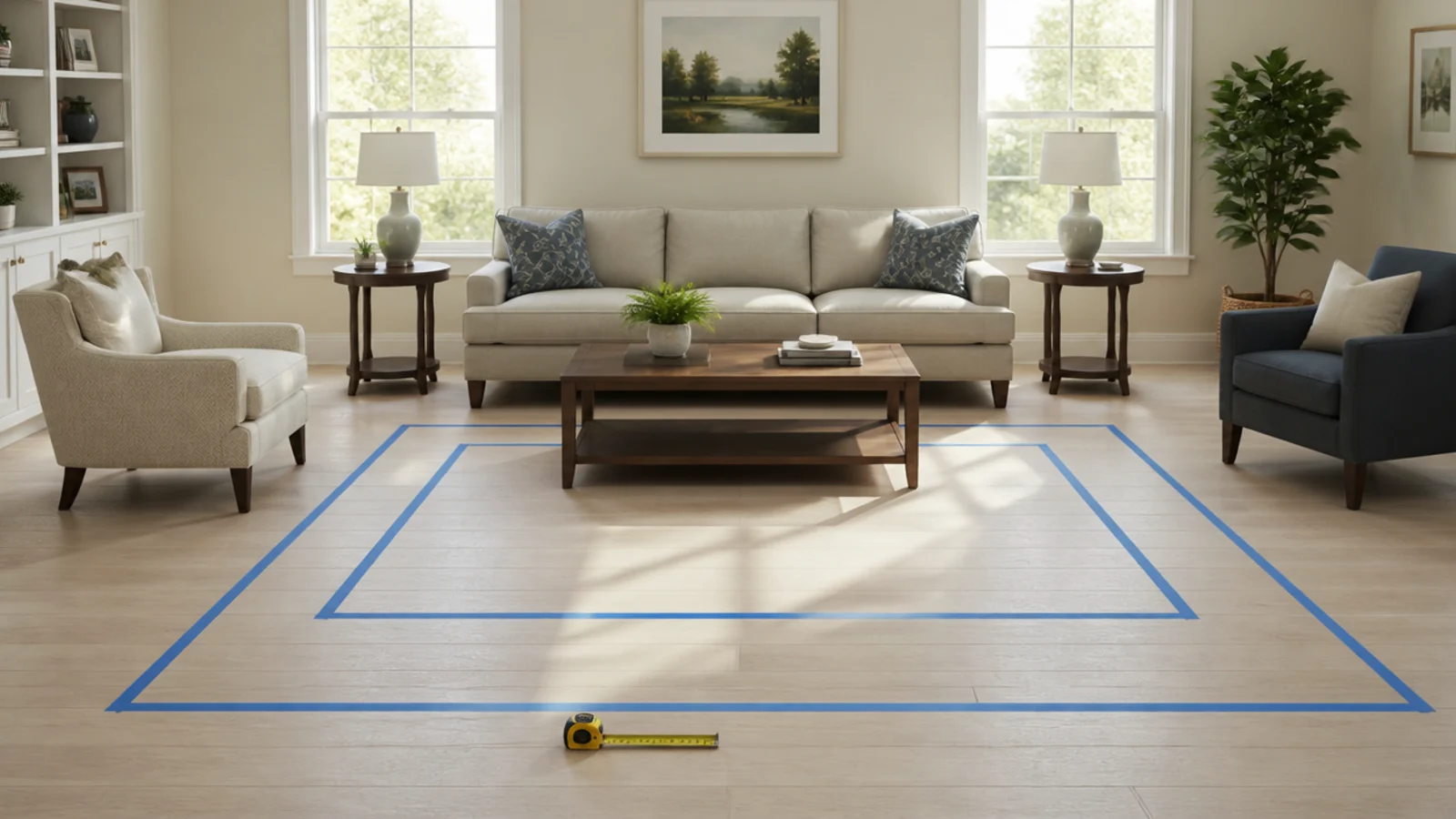
Rugs come in fixed sizes and rooms do not. Tape both candidate rectangles on the floor with low-tack painter's tape and live with them for two days. In nine cases out of ten the larger one is right. A rug slightly too big reads as generous; slightly too small reads as a mistake everyone notices.
6. Measure the seating rectangle and add eight inches
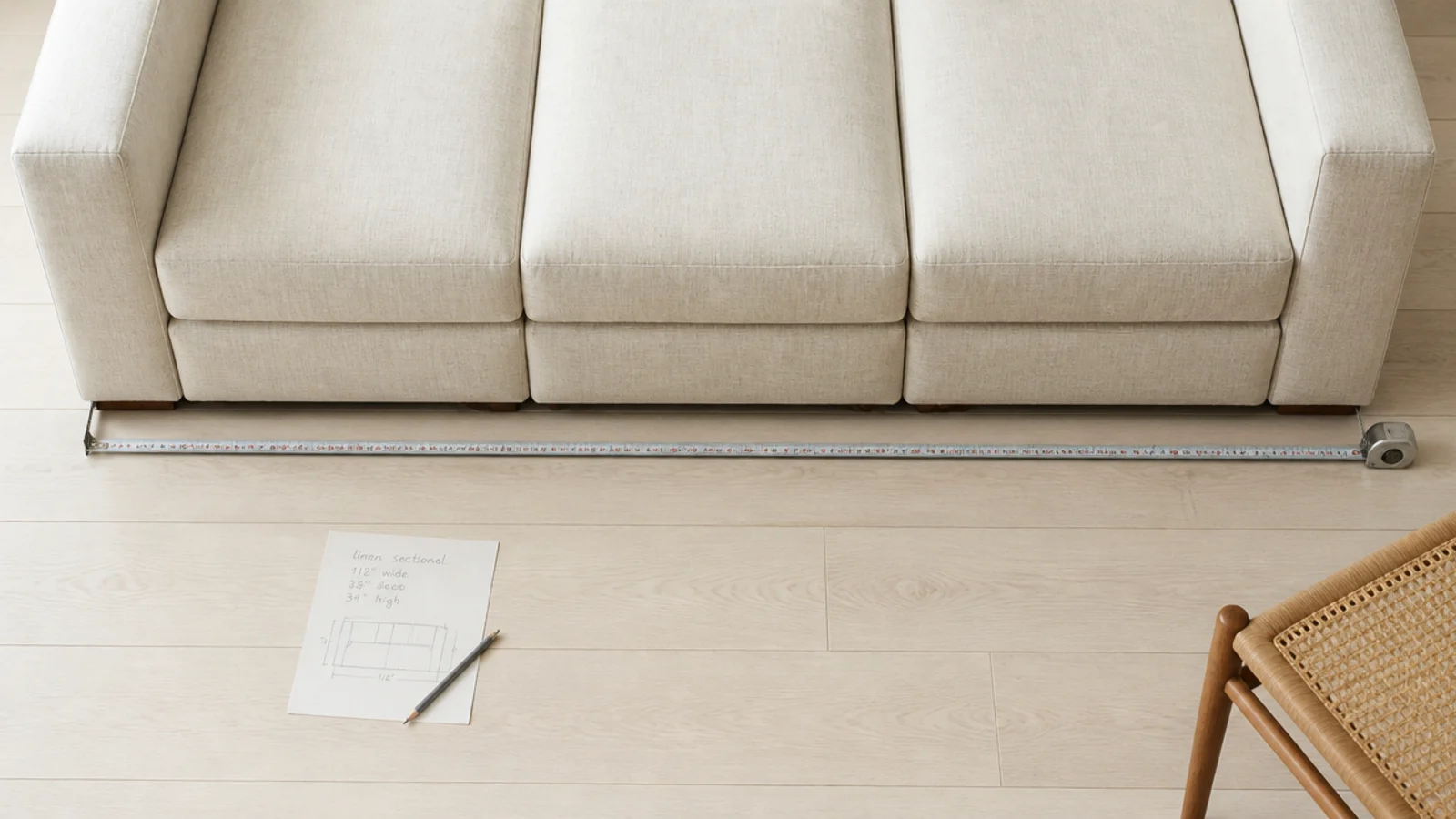
The number that matters is the footprint of the furniture, not the dimensions of the room. Measure outside arm to outside arm and sofa back to the front edge of the chairs opposite. Add 6 to 8 inches on each side. Doing it in this order eliminates the most expensive error in the room.
7. All legs on and what it costs in floor
All legs on is the most settled arrangement and it consumes floor fast: the rug has to be the furniture rectangle plus 6 to 8 inches on every side, which usually means a 9x12 minimum. If that leaves under 8 inches of bare floor at the walls, the room is not big enough and front legs on is the better answer.
8. Front legs on with a 96 inch sofa
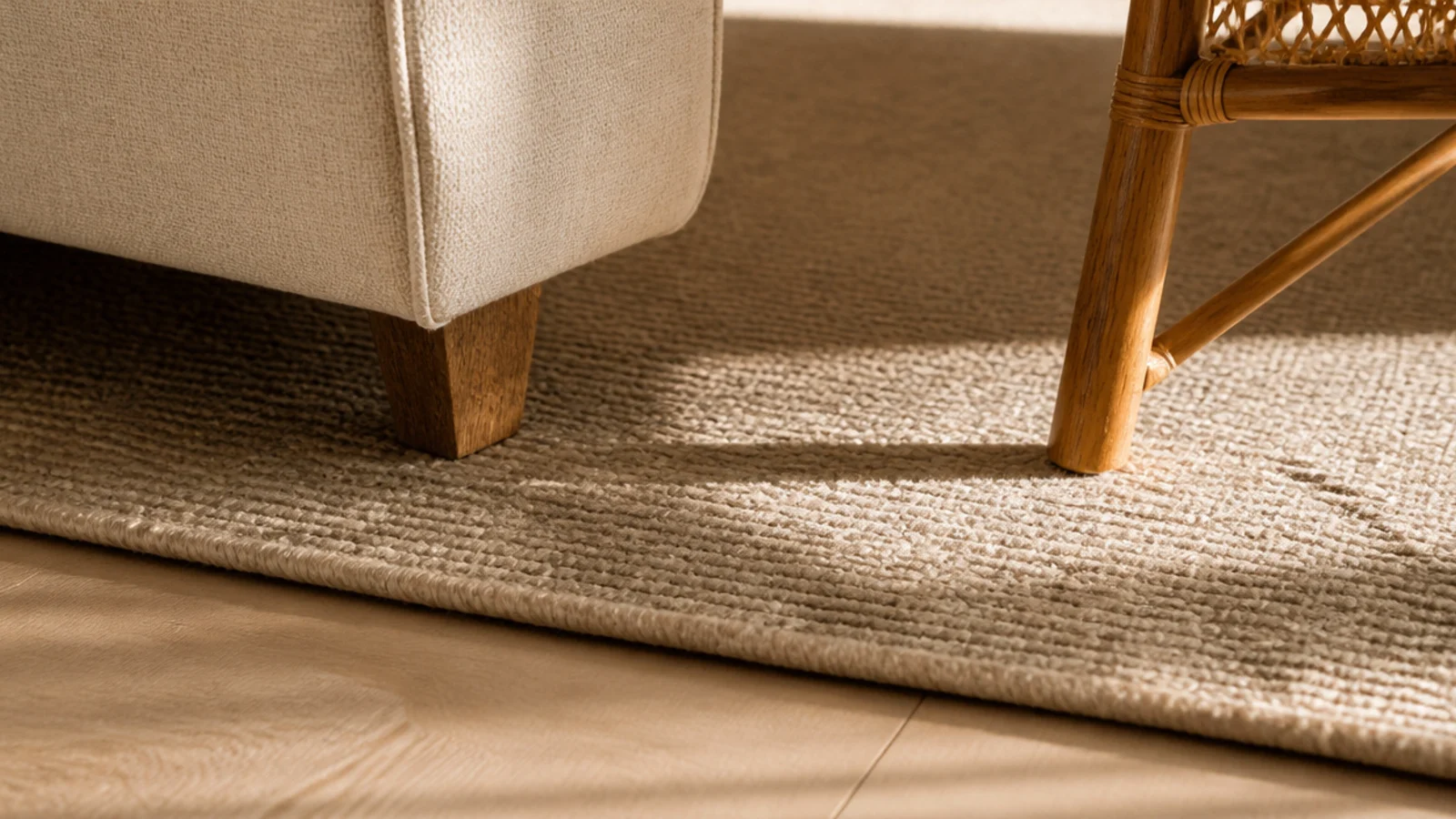
A 96-inch sofa needs a rug at least 108 inches wide so it runs 6 inches past each arm. That is a 9x12 laid with the 12-foot dimension across the sofa. Set the front feet 6 to 8 inches onto the pile. The back legs stay on bare floor and nobody ever notices.
9. Sectional geometry and the L shaped footprint
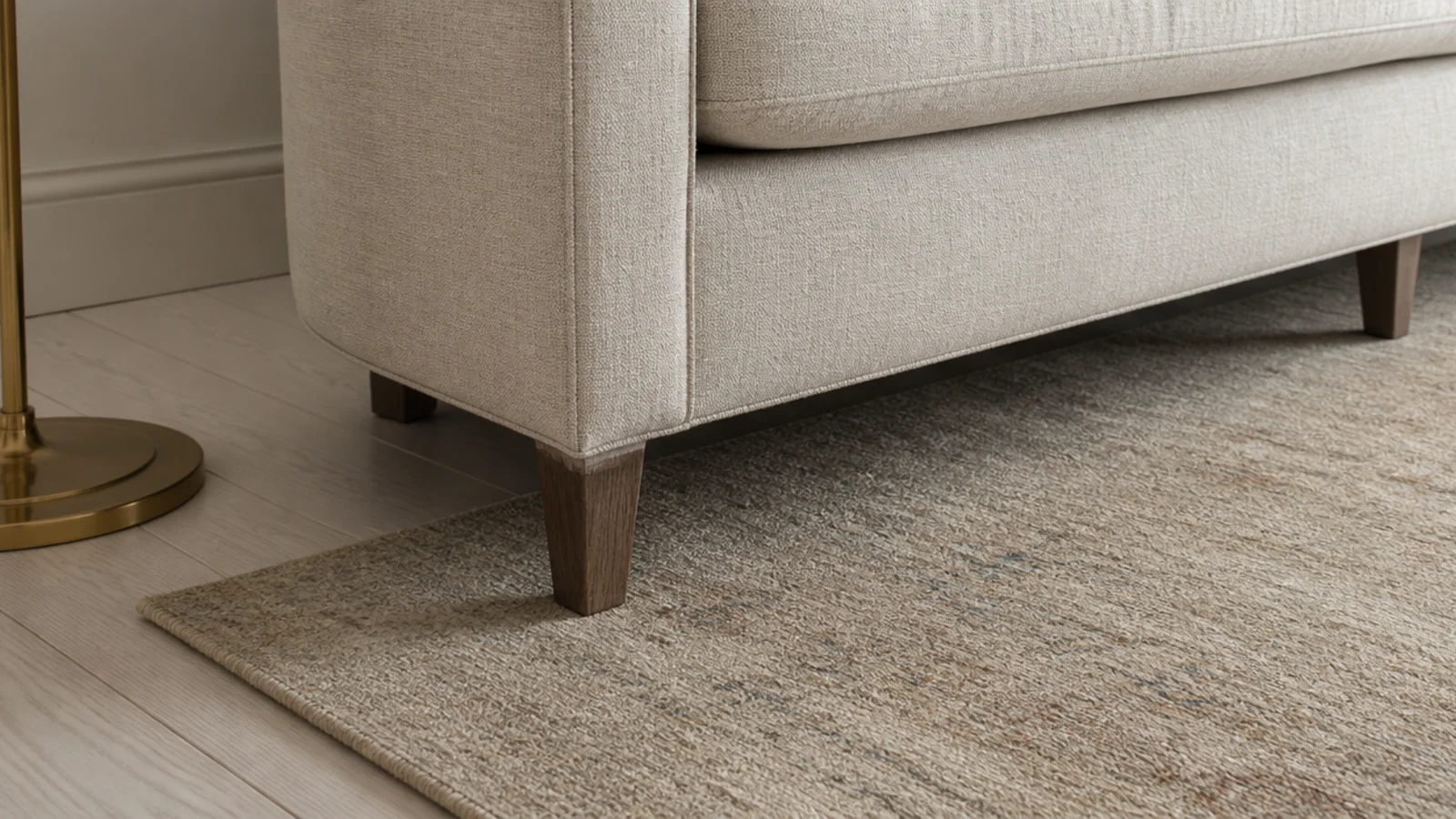
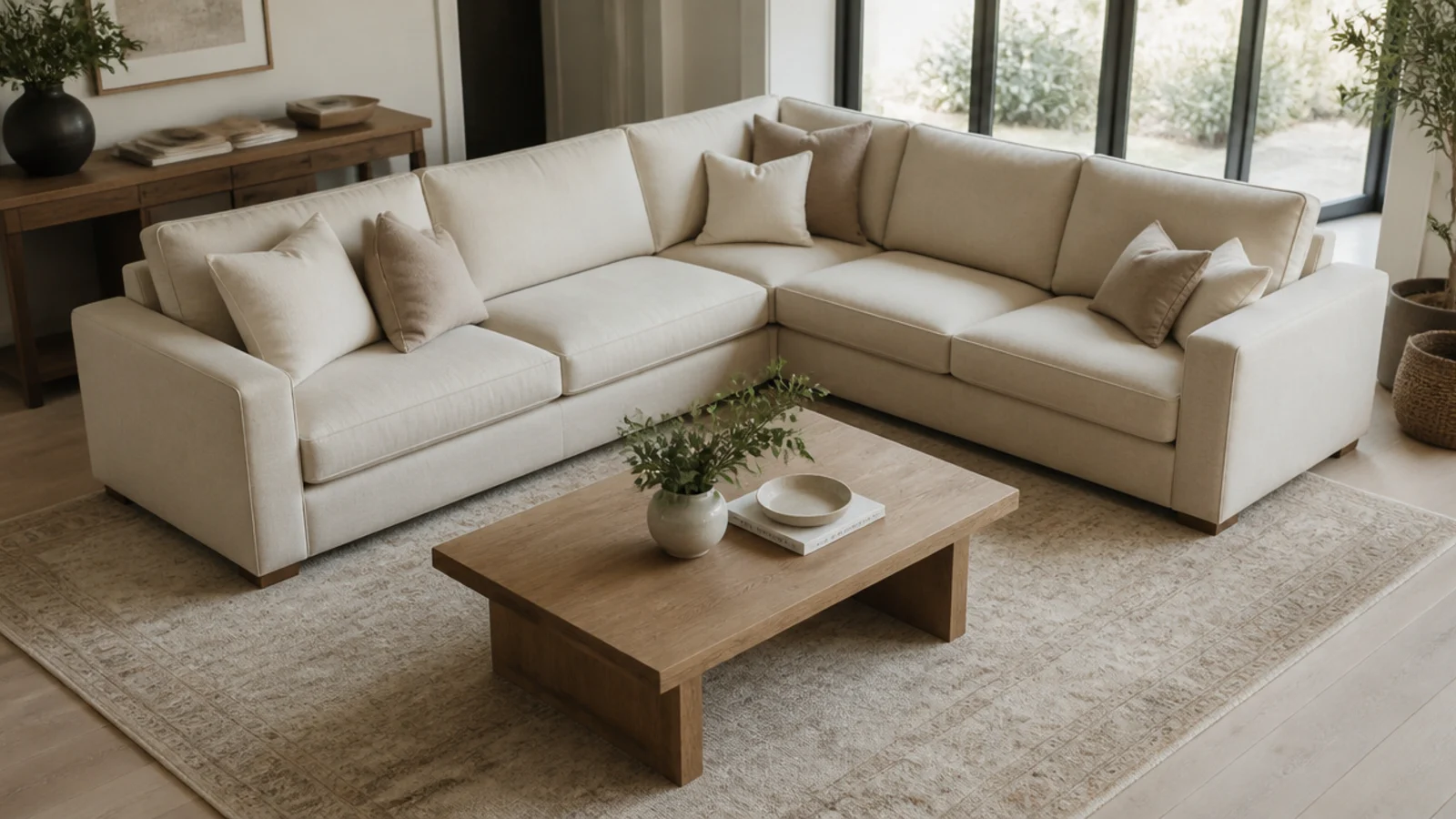
An L shaped sectional still occupies a rectangle — measure the extremes in both directions and work from that. The short return usually sets the rug's depth. Make sure the rug extends past the end of the chaise, because a chaise floating off the edge of a rug is the most common sectional mistake.
10. The 18 inch perimeter and when to break it
Eighteen inches of exposed floor is the target and 12 is comfortable. It is worth breaking on one side only — for instance, running the rug closer to a wall the sofa backs onto so the other three margins can stay generous. What ruins a room is an uneven perimeter on all four sides.
11. Never let the bare floor drop under eight inches
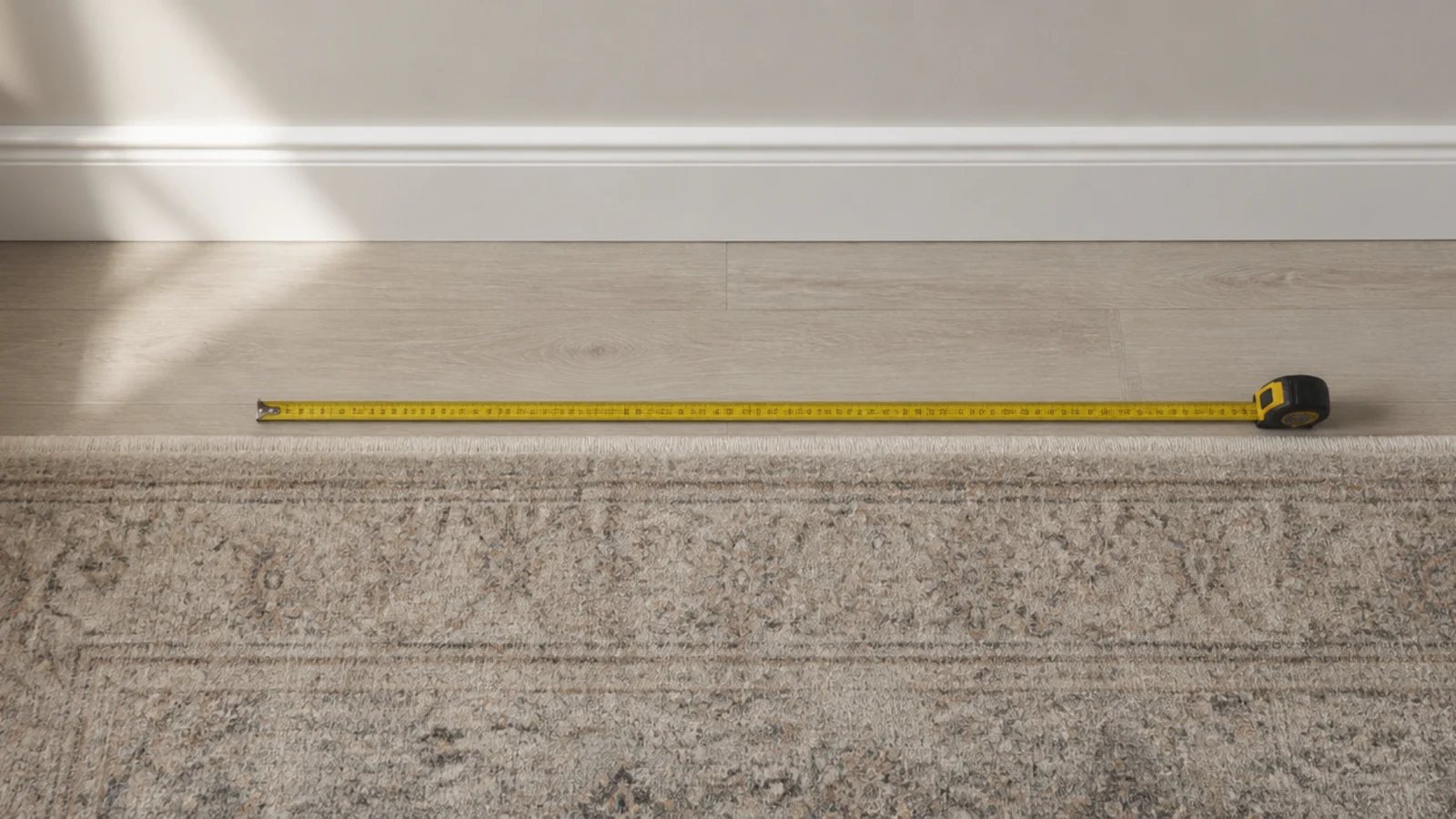
Below 8 inches the eye stops seeing a rug on a floor and starts seeing badly fitted carpet, and under 6 inches the effect is unmistakable. If your calculation lands there, the room needs the next size down with the furniture arranged front legs on, not a bigger rug squeezed in.
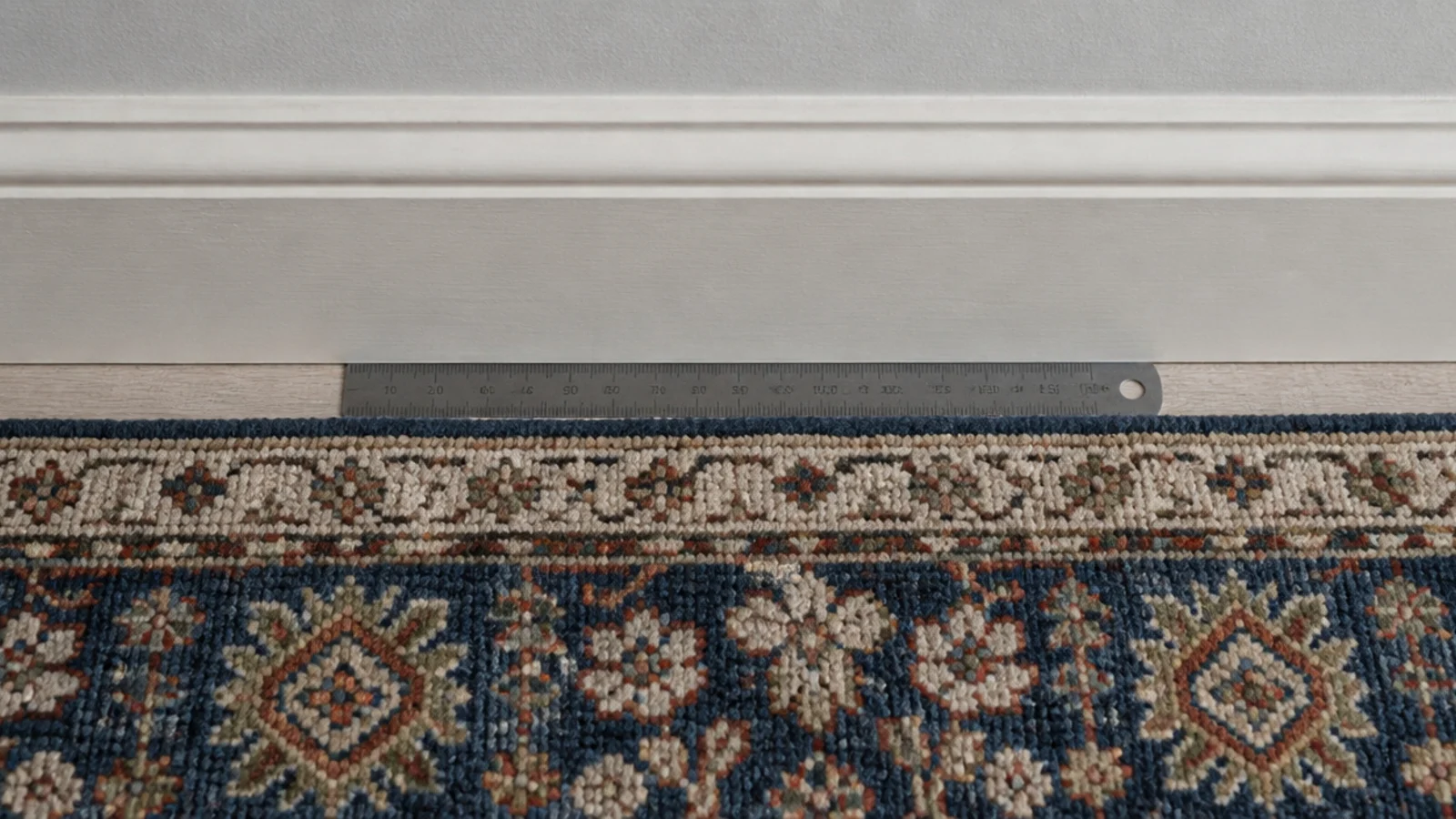
12. Give the coffee table eight inches on every side
The table should sit fully on the rug with at least 8 inches of pile visible all round, and 18 inches of clear space between the table edge and the front of the sofa for legs. Those two numbers together are why a small rug under a full-size coffee table never looks right.
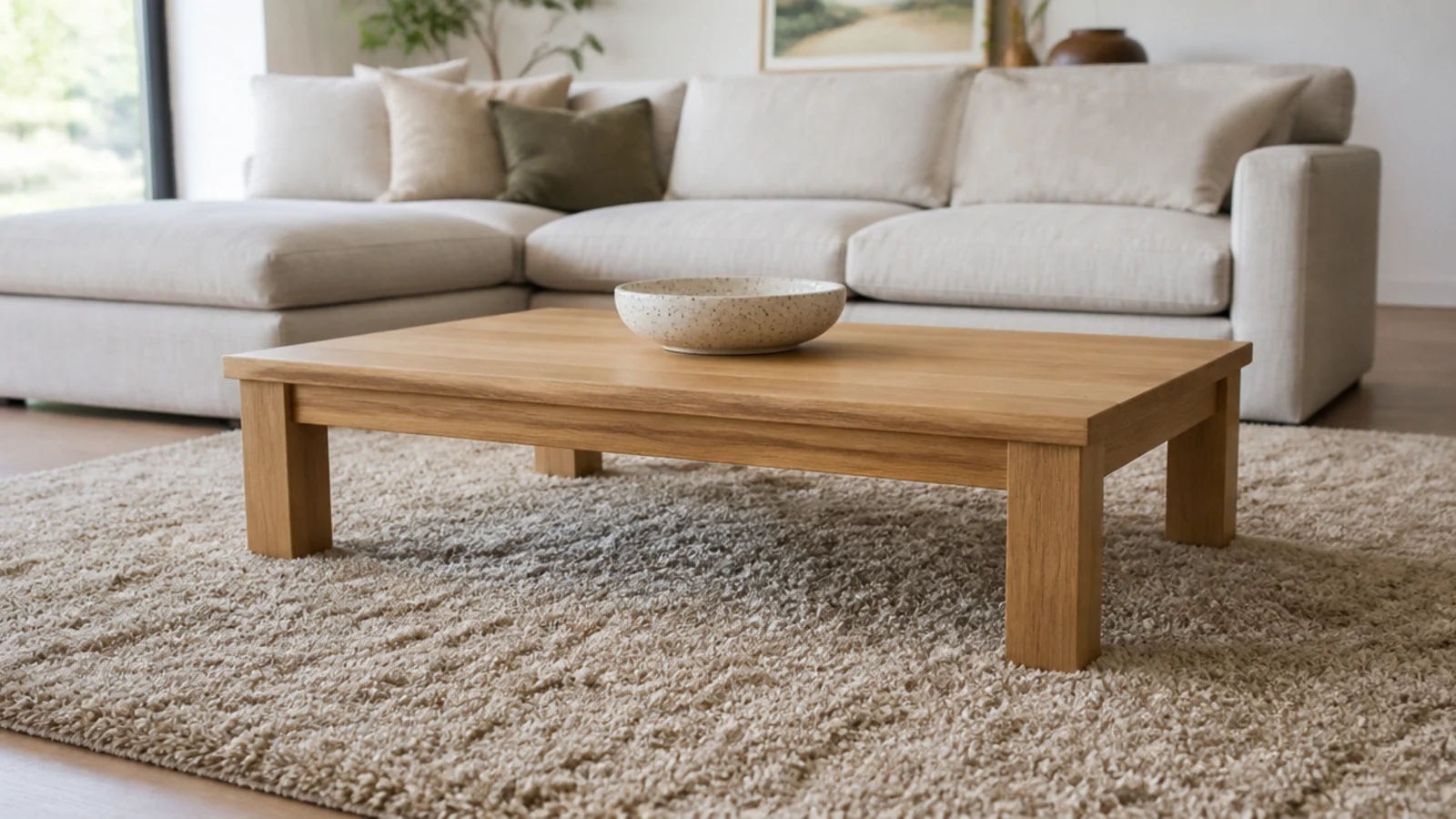
13. Keep 30 to 36 inches of walkway around the group
Measure the route people actually take through the room. Thirty inches is comfortable for one person, 36 for two passing. If the rug pushes that route under 30 inches, either the rug or the furniture arrangement has to give — and it is nearly always the arrangement that should change.
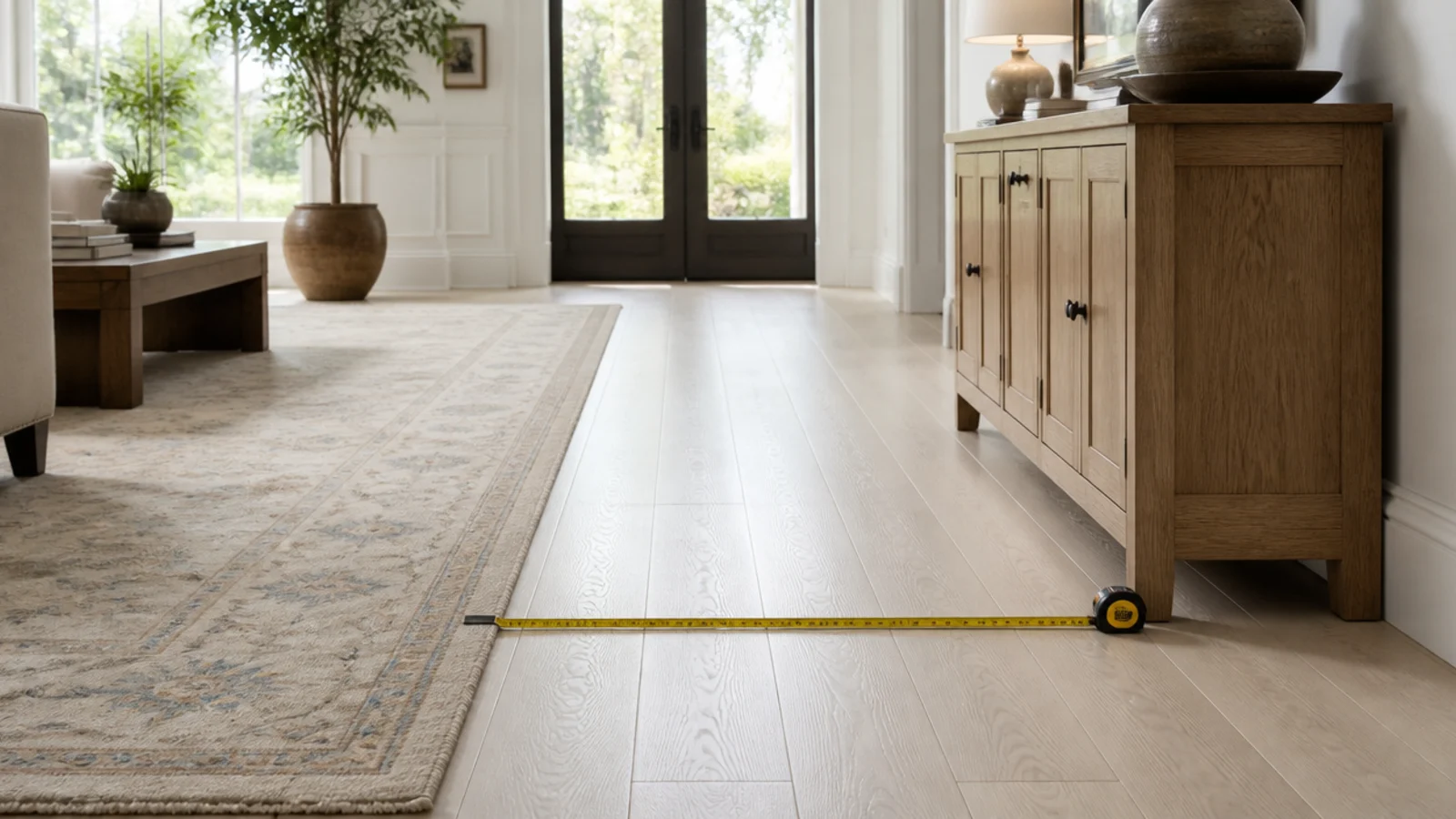
14. In open plan, align to the sofa, not the wall
Open plan rooms rarely have four walls that relate to the seating. Square the rug to the back of the sofa, and accept that it may sit slightly off the wall line. The furniture defines the zone; a rug carefully aligned to a wall the furniture ignores always looks subtly wrong.
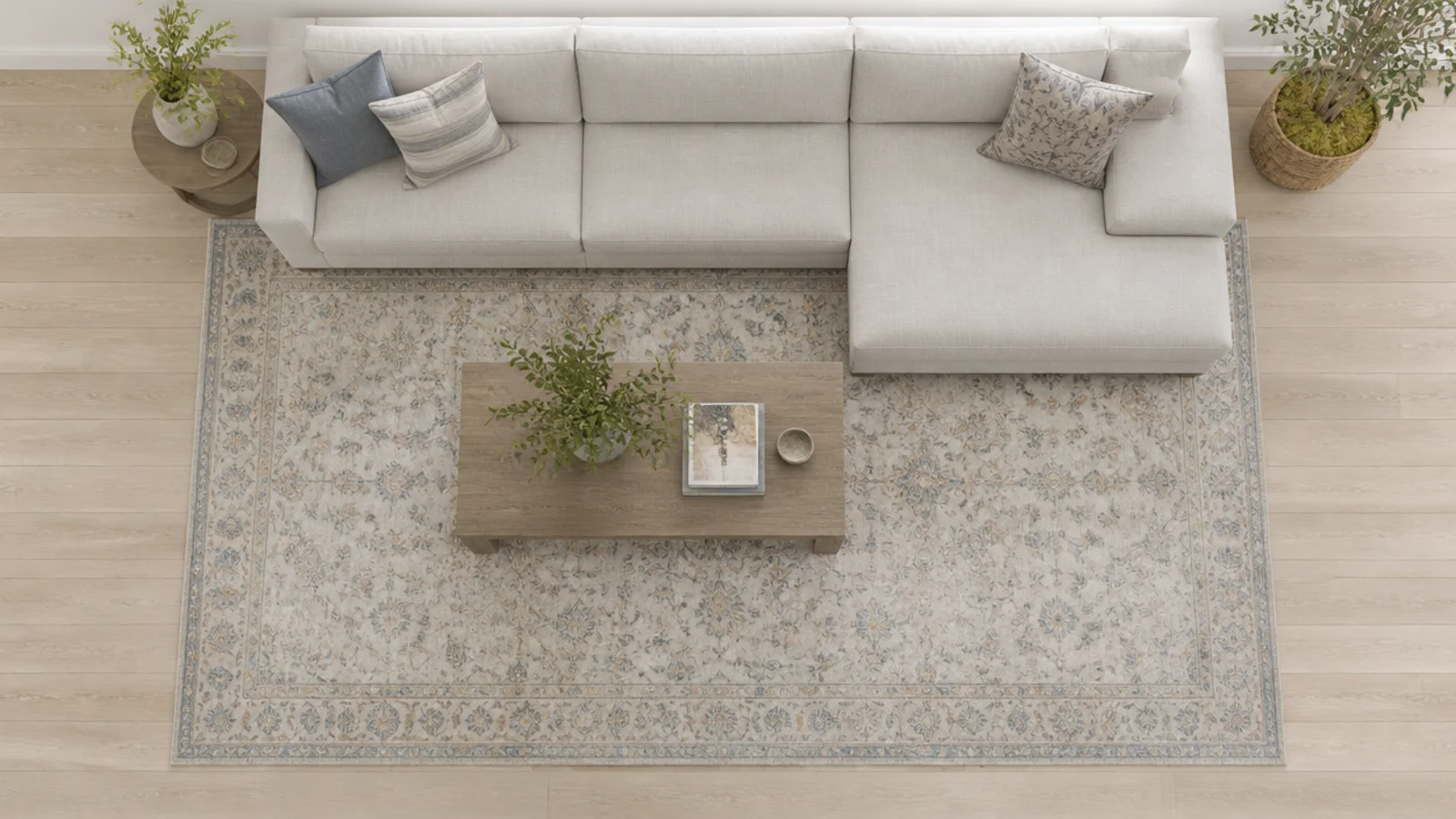
15. Two large rugs against one enormous one
If the space has two clear functions, two rugs read better than one enormous field. Keep them related in tone but not matching, and leave at least 2 feet of bare floor between them so the eye registers two zones rather than a badly aligned join. One rug wins whenever there is only one seating group.
16. Cut-to-size broadloom for an awkward room
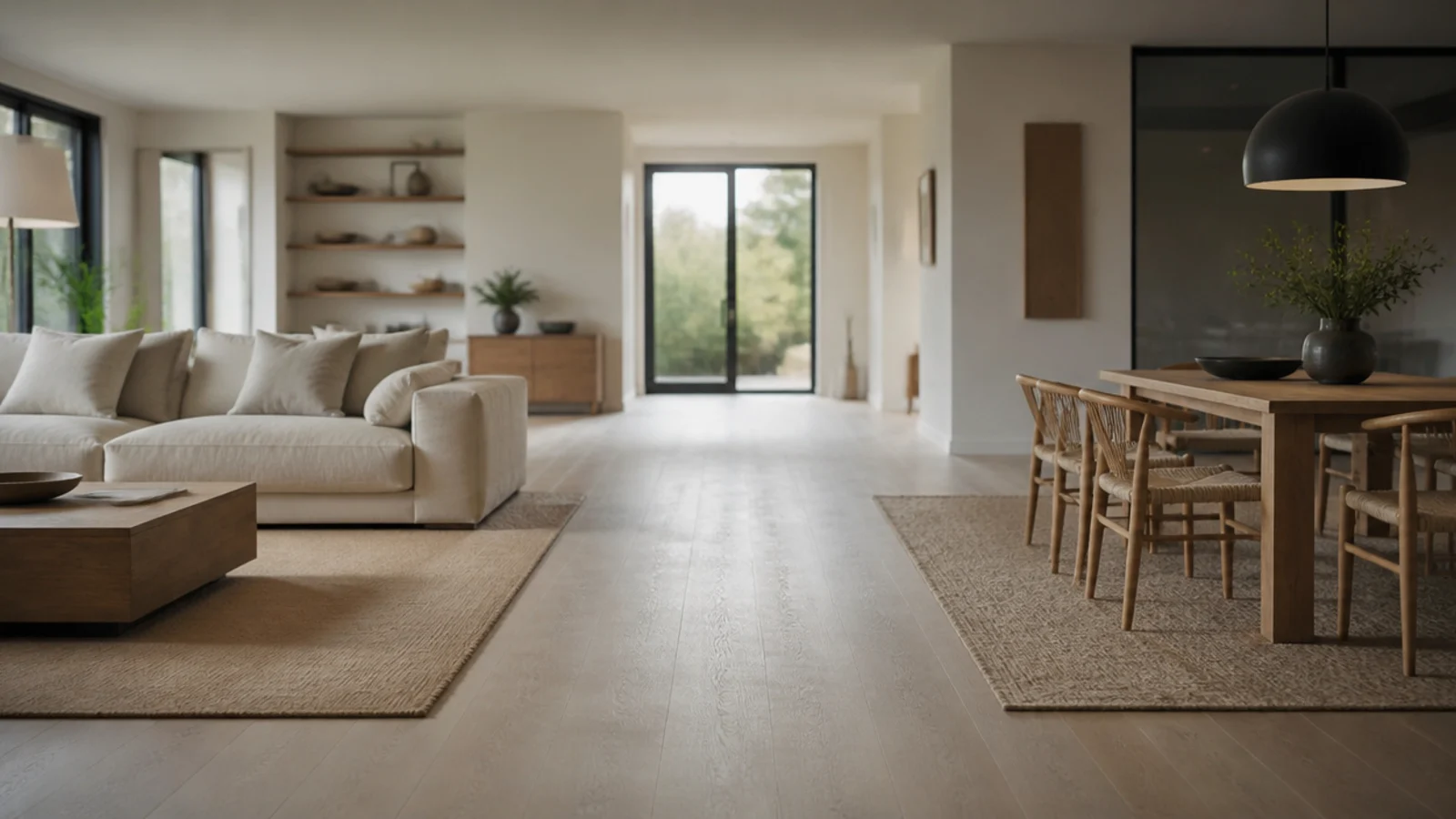
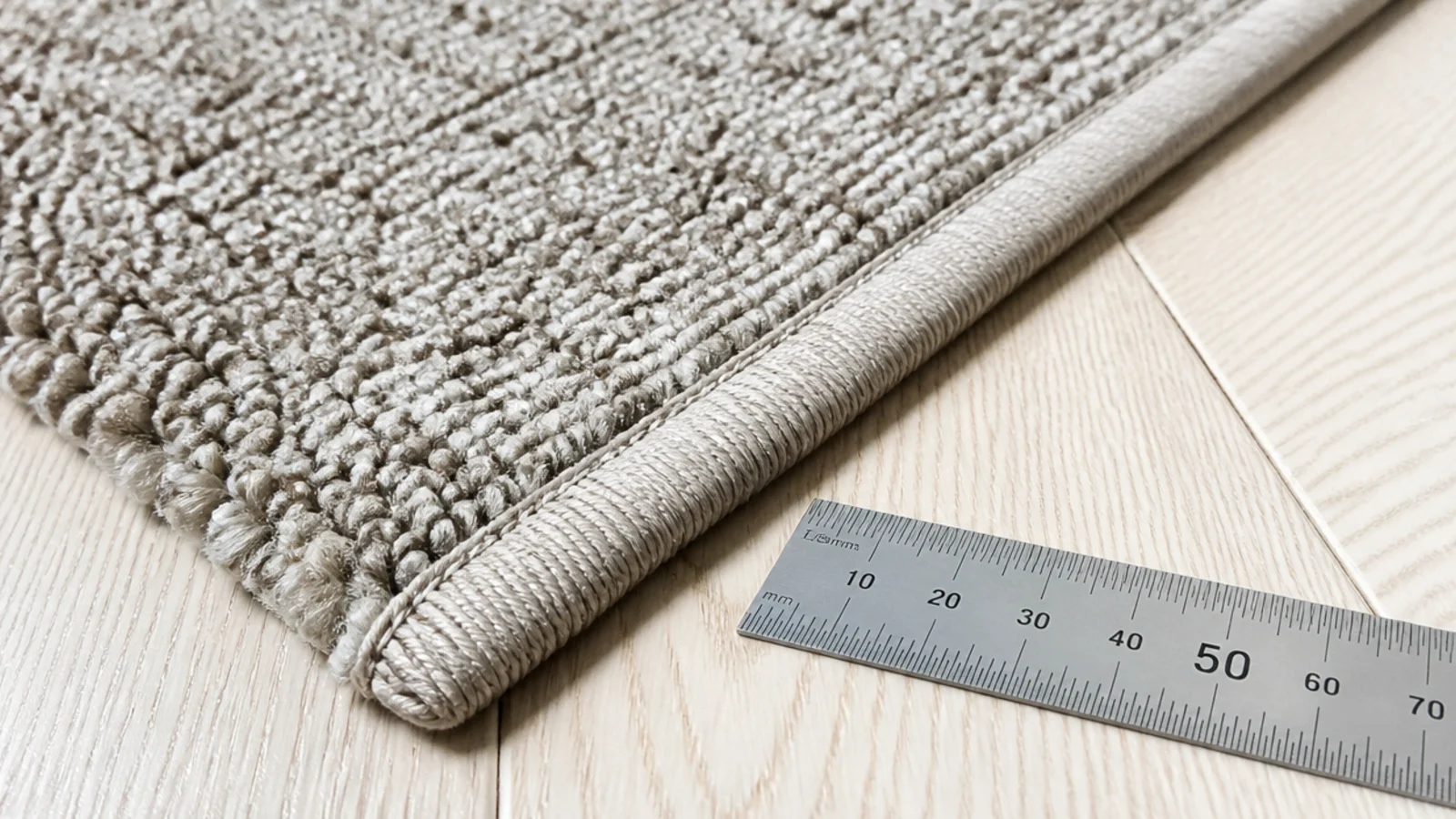
Broadloom carpet comes in 12 and 15 foot widths and can be cut and bound to any rectangle for roughly $2 to $4 a linear foot of binding. For a room that wants an 11x14 or a 9x16, it is far cheaper than a custom woven rug and often the only way to get a proper fit.
17. Doorways, thresholds and where the rug stops
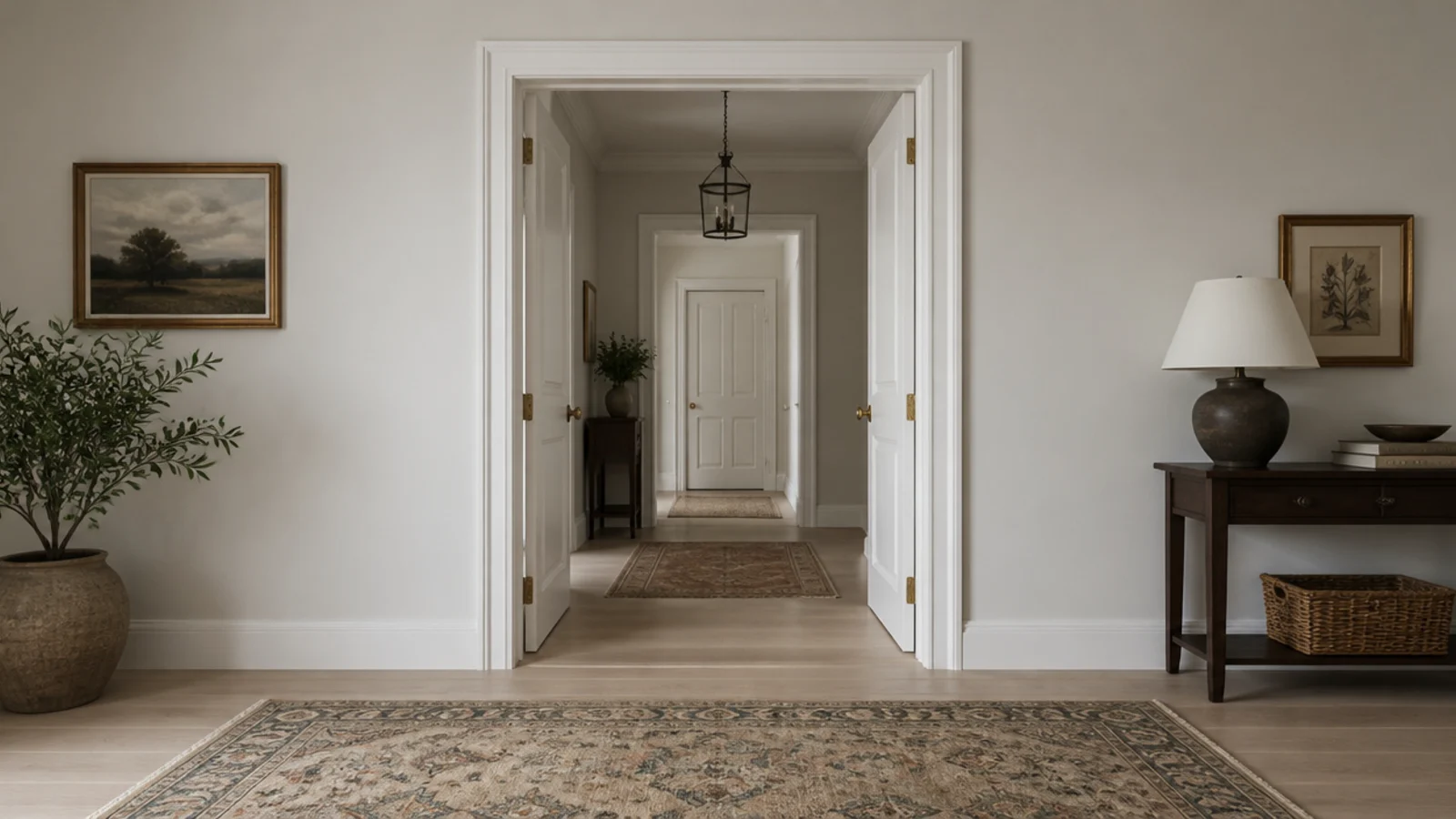
Stop a large rug at least 12 inches short of any threshold. A rug edge that finishes inside a door opening is where people catch a foot and where a corner lifts first. If the room genuinely needs coverage to the door, use a separate small runner there with its own grip pad.
18. What a 9x12 wool rug actually weighs
Sixty to 110 pounds for most machine-woven and hand-tufted wool, and more for a dense hand-knotted piece. That matters for rotating it, for lifting it to vacuum underneath, and for whether you can reposition it alone. Plan on two people, and factor that into how often it will realistically get moved.
19. Check delivery access before you order
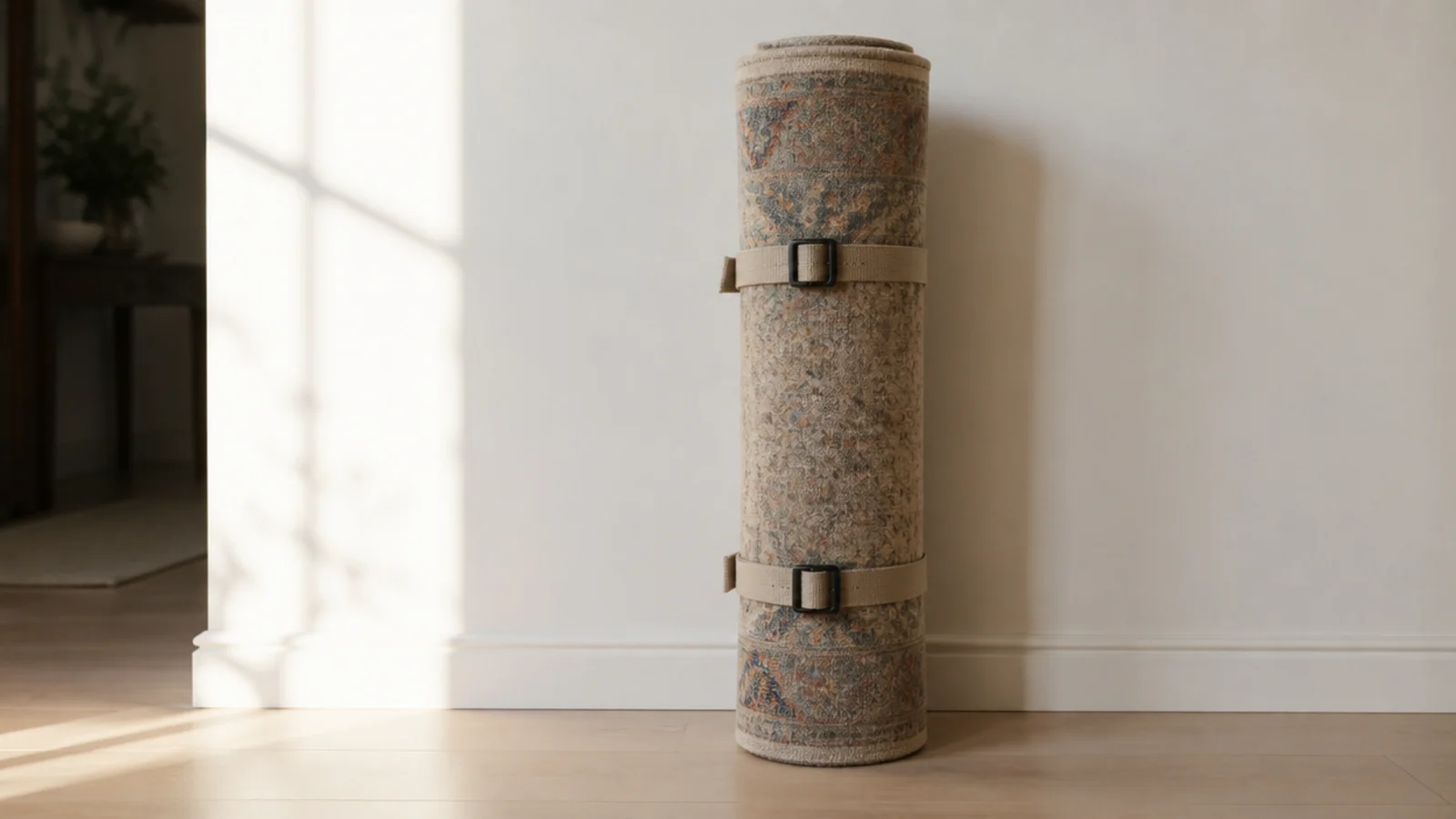
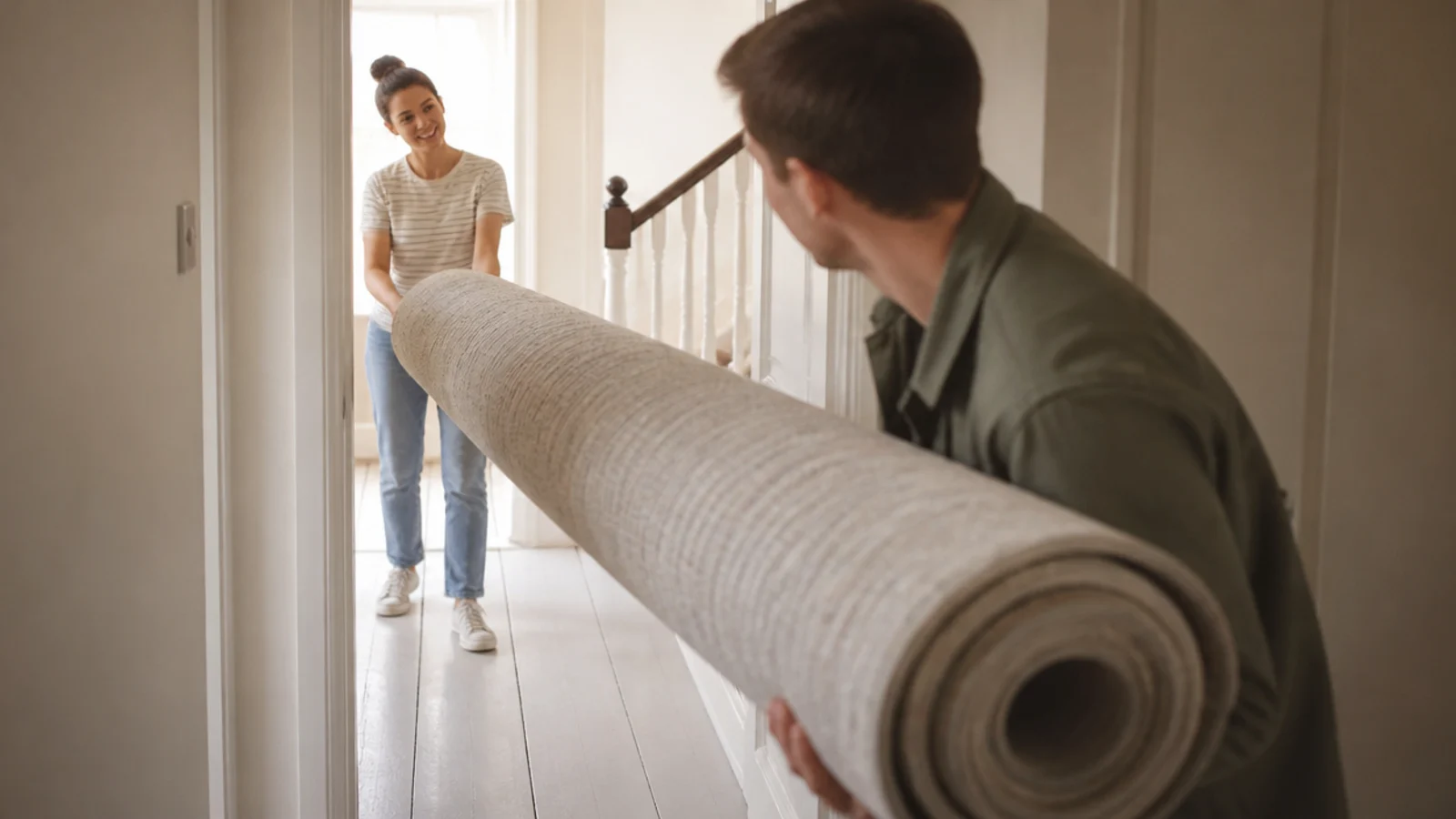
A rolled 9x12 is about 9 feet long, rigid, and cannot be bent round a tight stair turn or through a narrow hallway dogleg. Measure your worst turn before ordering, and ask whether the seller ships folded as an alternative. Folded rugs crease harder but they get into houses that rolls cannot.
20. Pads for large rugs and how to join them
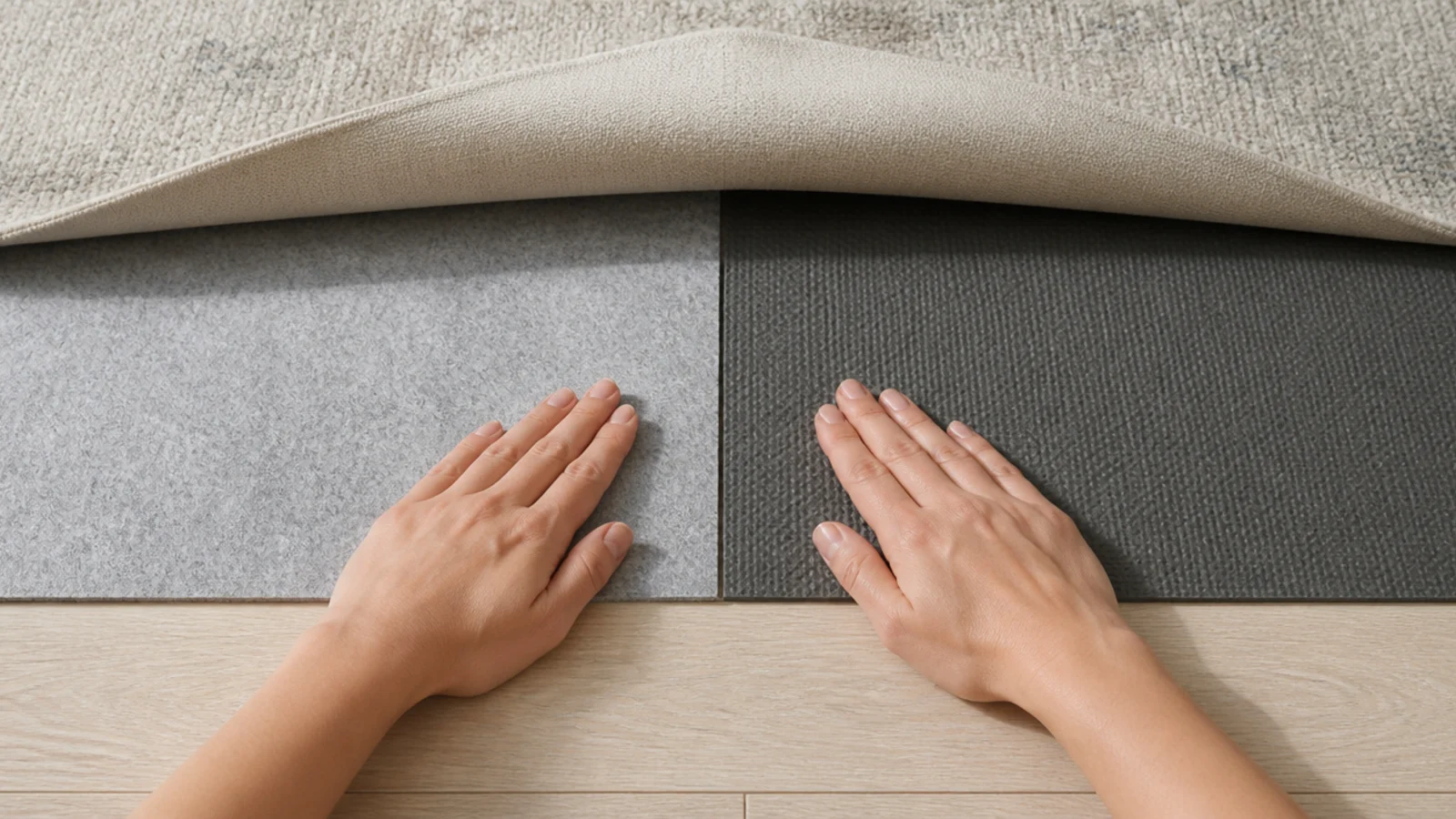
Pads come in fixed widths, so a 10x14 usually needs two pieces. Butt the sections edge to edge rather than overlapping them, because an overlap creates a permanent ridge that telegraphs through the pile. Cut the finished pad 1 inch smaller than the rug on every side.
21. Relaxing the creases in a very big rug
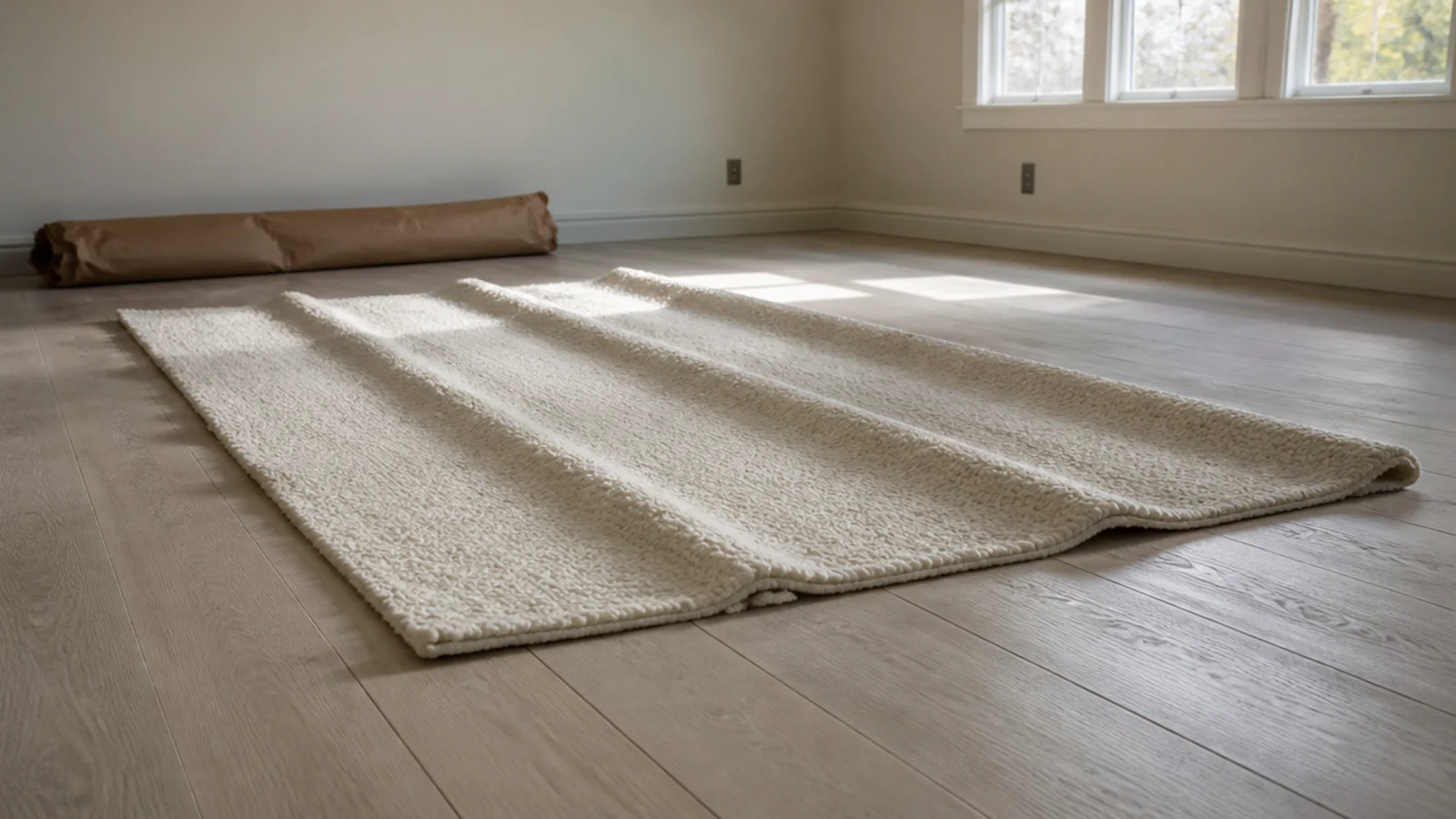
Large rugs arrive with deep fold ridges and look alarming for the first day. Lay the rug flat, put the furniture on it, and leave it 48 hours before judging anything. Reverse-rolling a stubborn end for an hour helps. Do not measure the reveal or decide on a return until it has settled.
22. How to rotate a heavy rug without help
Do it in quarter turns rather than one lift. Move the furniture off, lift one corner, walk it round 90 degrees, set it down, and repeat. Four small movements are safer than one heroic drag, and dragging a loaded rug across a hard floor is how both the rug and the finish get damaged.
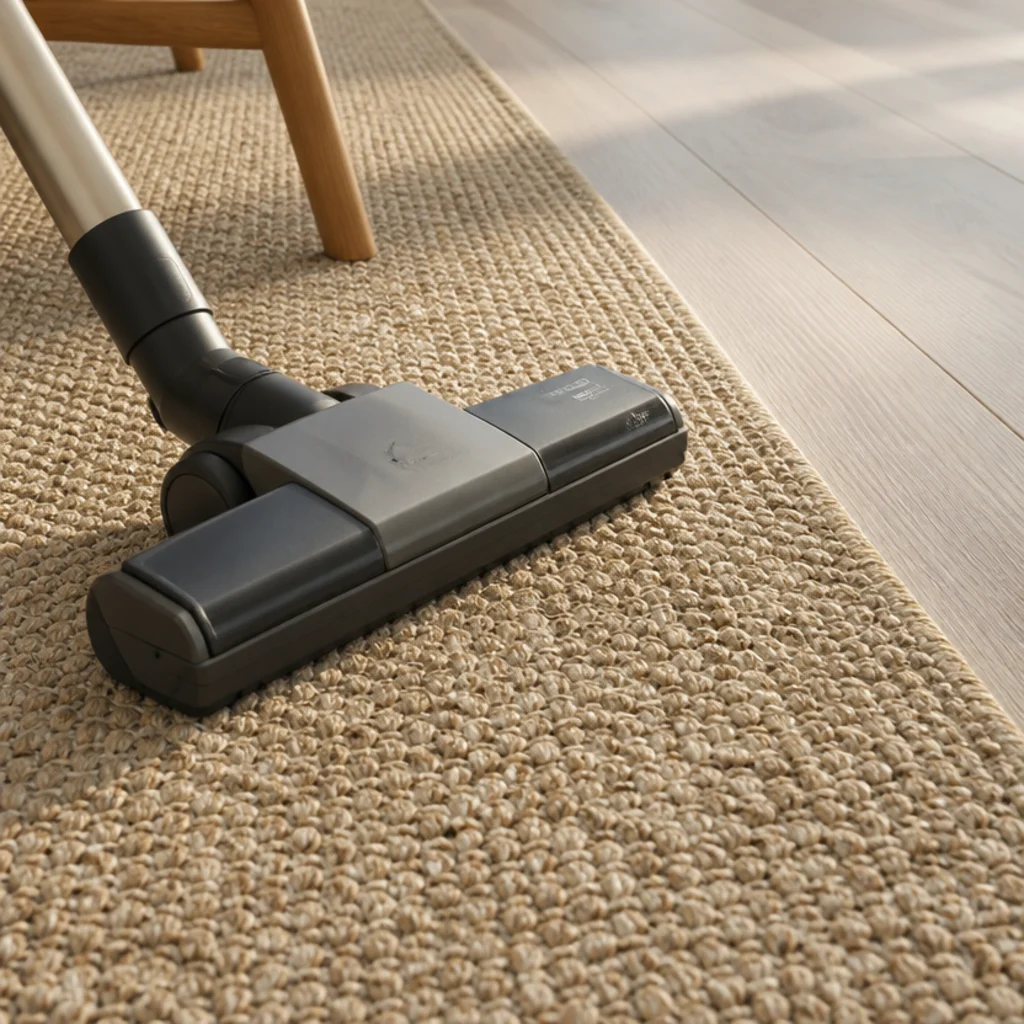
23. Plan the vacuum route for 100 square feet
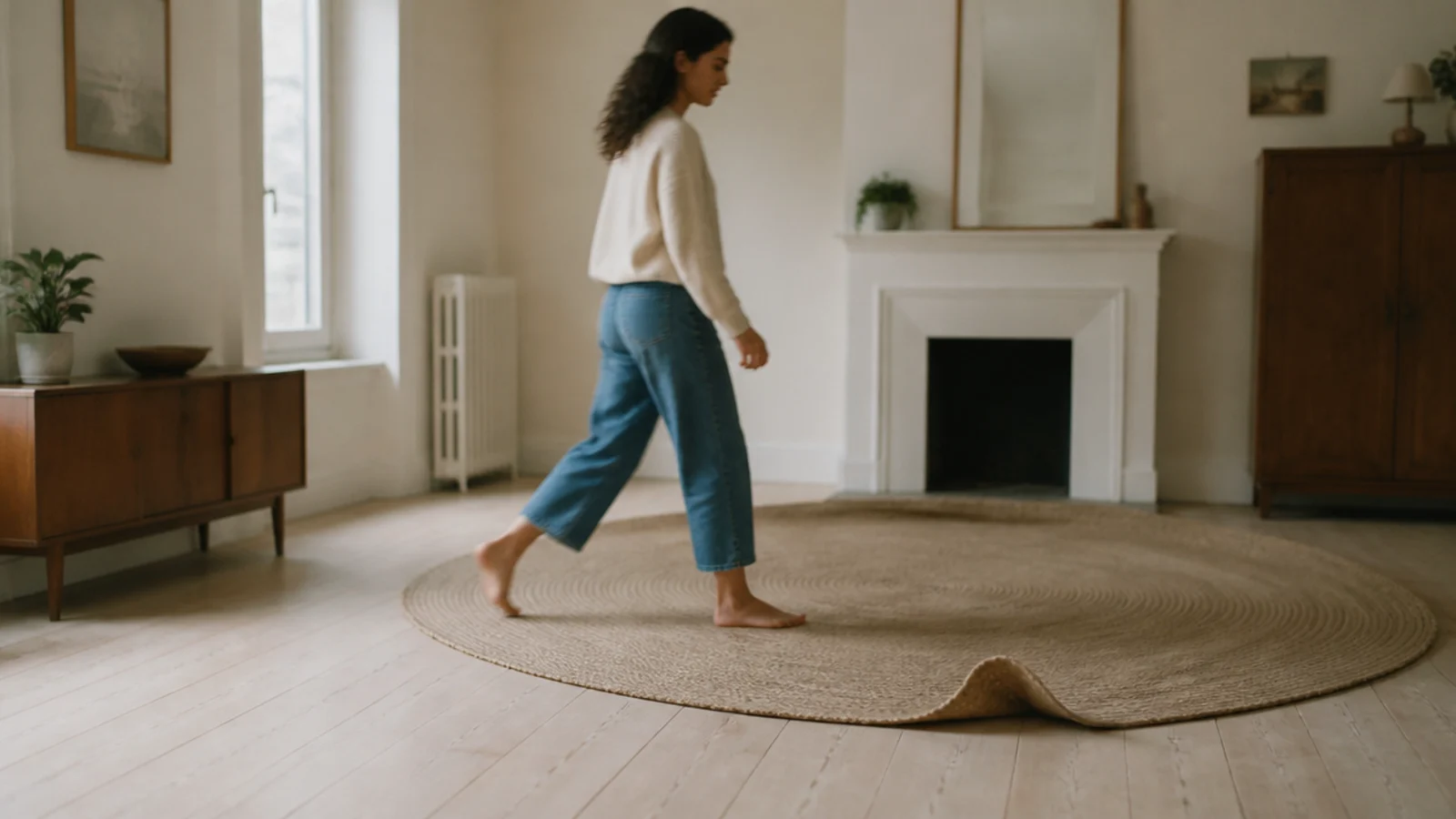
A large rug does not need the same attention everywhere. Vacuum the traffic lane twice a week and the whole field once, with the rotating brush off on loop and hand-knotted constructions. Working in strips along the pile direction rather than across it takes noticeably less time and lifts more grit.
24. Price per square foot falls as size rises
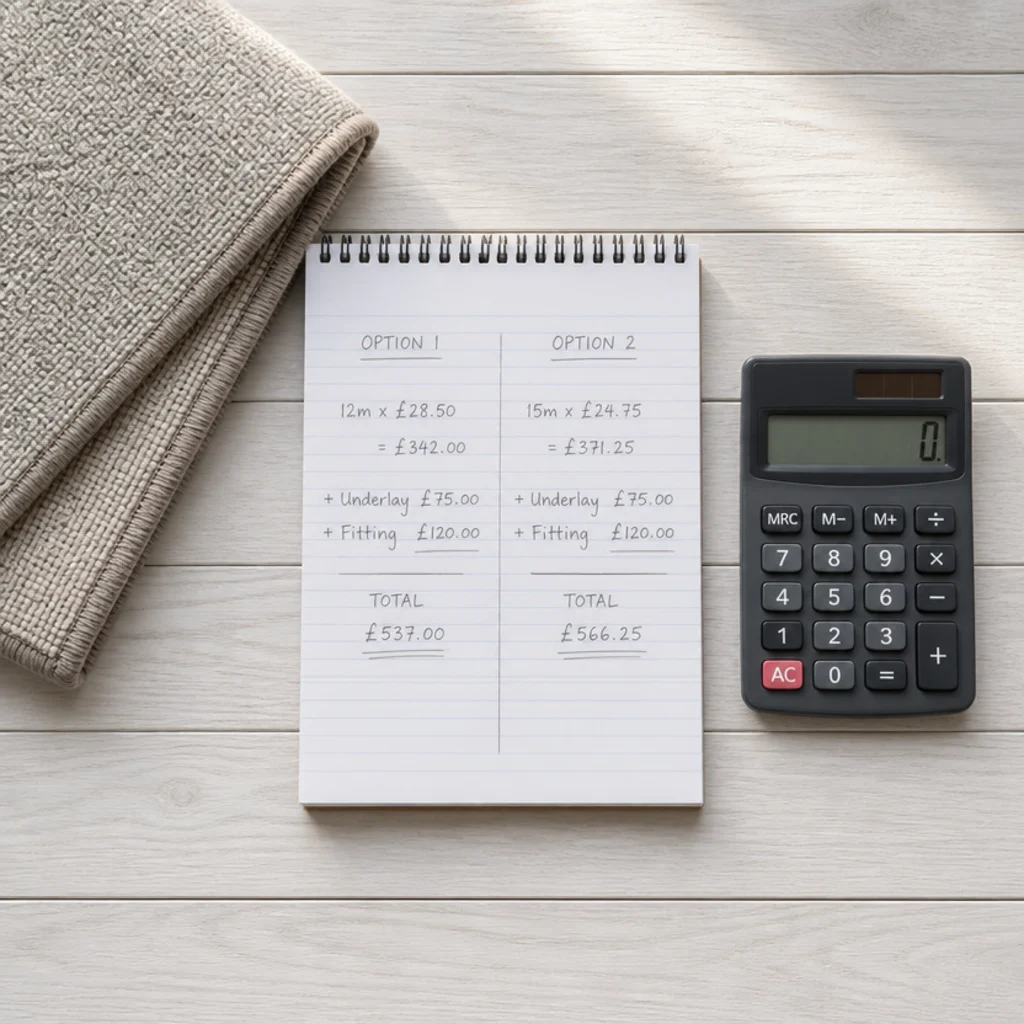
An 8x10 is 80 square feet and a 9x12 is 108, so a $600 8x10 and an $760 9x12 are $7.50 and $7.04 per square foot respectively. Run that calculation before deciding the bigger rug is out of budget — the jump in price is usually smaller than the jump in how the room reads.
25. When a large rug is the wrong answer
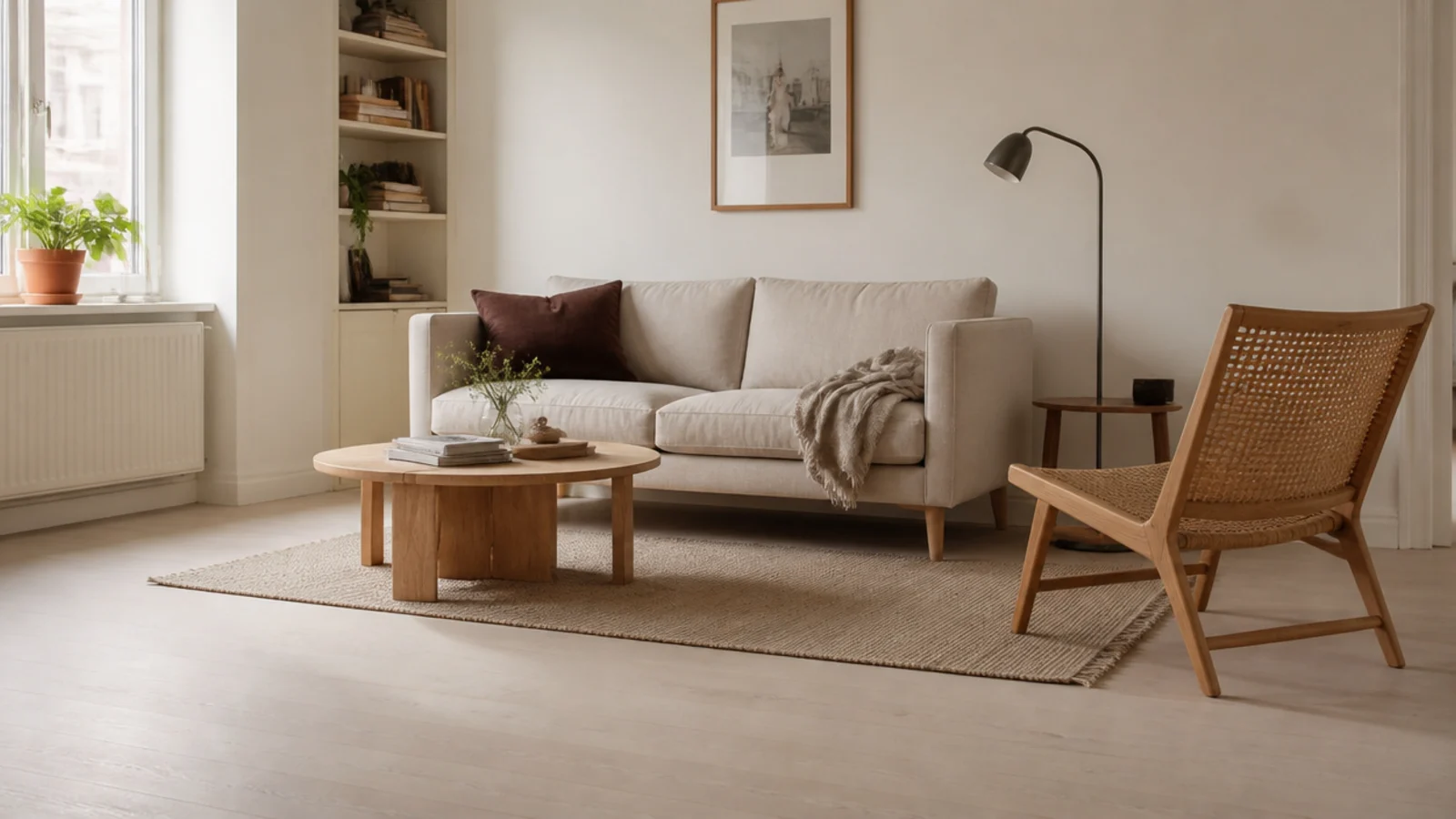
In a room under about 11x13 feet, or one broken up by a fireplace, a bay and two doorways, a large rug fights the architecture. Two smaller rugs, or one modest rug with a generous margin of good floor around it, will look far better than a big rectangle wedged in.
For the placement rules behind these dimensions, the rug fundamentals guide covers front legs on and perimeter margins in detail. The living room center table guide handles what sits in the middle, and the bookshelf styling guide deals with the walls around a large open room.
Mistakes to Skip
- Sizing the rug to the room instead of the furniture. The seating rectangle plus 6 to 8 inches is the number that matters, and the room dimension only tells you what is possible.
- Ordering a 9x12 without checking the stairwell. A rolled large rug is rigid and nine feet long, and there is no graceful way to discover that after the delivery van has left.
- Overlapping two pad sections under one rug. The ridge telegraphs through the pile permanently and becomes the line where the rug wears first.
- Filling the floor wall to wall. Once the bare margin drops under 6 inches the rug reads as ill-fitting carpet, and all the money spent on a large rug stops showing.
Frequently asked questions
What size rug do I need for a 14x16 living room?
A 9x12 in almost every case. That leaves roughly 24 inches of bare floor on each long side and 18 on each short side, and it is the smallest standard size that reliably takes all four legs of a full sofa plus two chairs with 6 to 8 inches of rug still showing past every foot.
Should a large rug go under the whole seating group?
Ideally yes. All legs on needs about 14x16 feet of room; below that, front legs on is the honest answer, with the front feet of every piece 6 to 8 inches onto the pile. What you want to avoid is a rug that reaches some furniture and not others, which reads as an error from the doorway.
Can a rug be too big for a room?
Yes, once the bare floor around it drops under about 6 inches on any side. At that point it stops reading as an area rug and starts looking like badly fitted wall-to-wall carpet. Aim for 18 inches of exposed floor at the perimeter, and treat 8 inches as the absolute minimum in a tight room.
How heavy is a 9x12 wool rug?
Between roughly 60 and 110 pounds depending on face weight and construction, and a dense hand-knotted piece can exceed that. Plan for two people to carry and position it, and check door widths and stairwell turns before delivery, since a rolled 9x12 is about 9 feet long and will not bend.
Is one large rug better than two smaller ones?
In a single seating area, one large rug always looks better and usually costs less per square foot. In an open plan room with two distinct functions, two rugs read more clearly than one enormous one, provided you leave at least 2 feet of bare floor between them so the eye registers separate zones.
Want more like this? Browse all 15 rugs in living room guides — they all use the same measurements and budget tiers.
Pin it for later
Save this to your Rugs In Living Room board
Pin it now so it is waiting for you when the tape measure comes out — and so the next person hunting for this idea can find it too.
Save this pinKeep going
More ideas worth saving while you have the tape measure out.