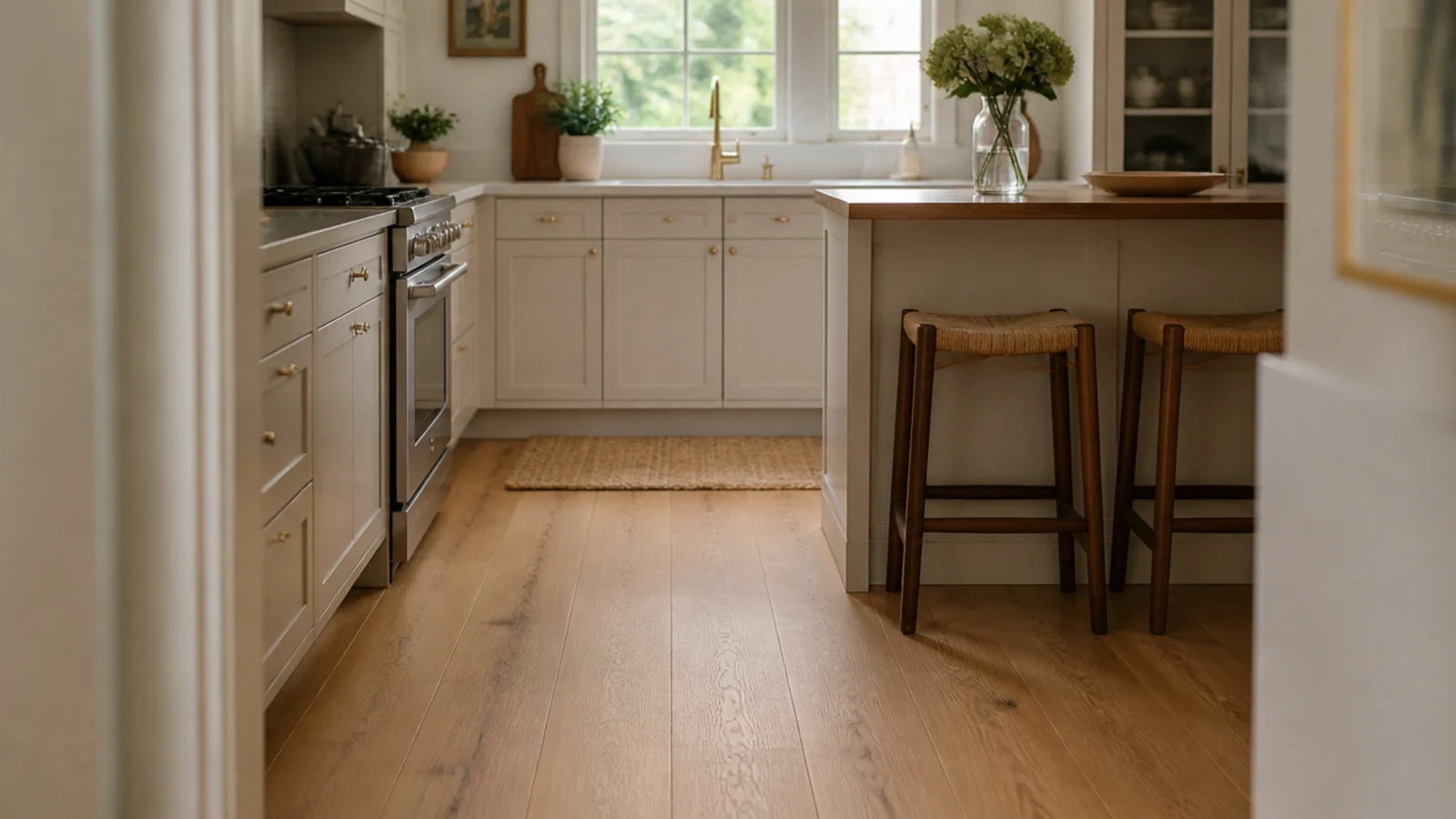
Wooden Flooring · Listicle
25 Wooden Tiles Flooring Bedroom Ideas For Renters

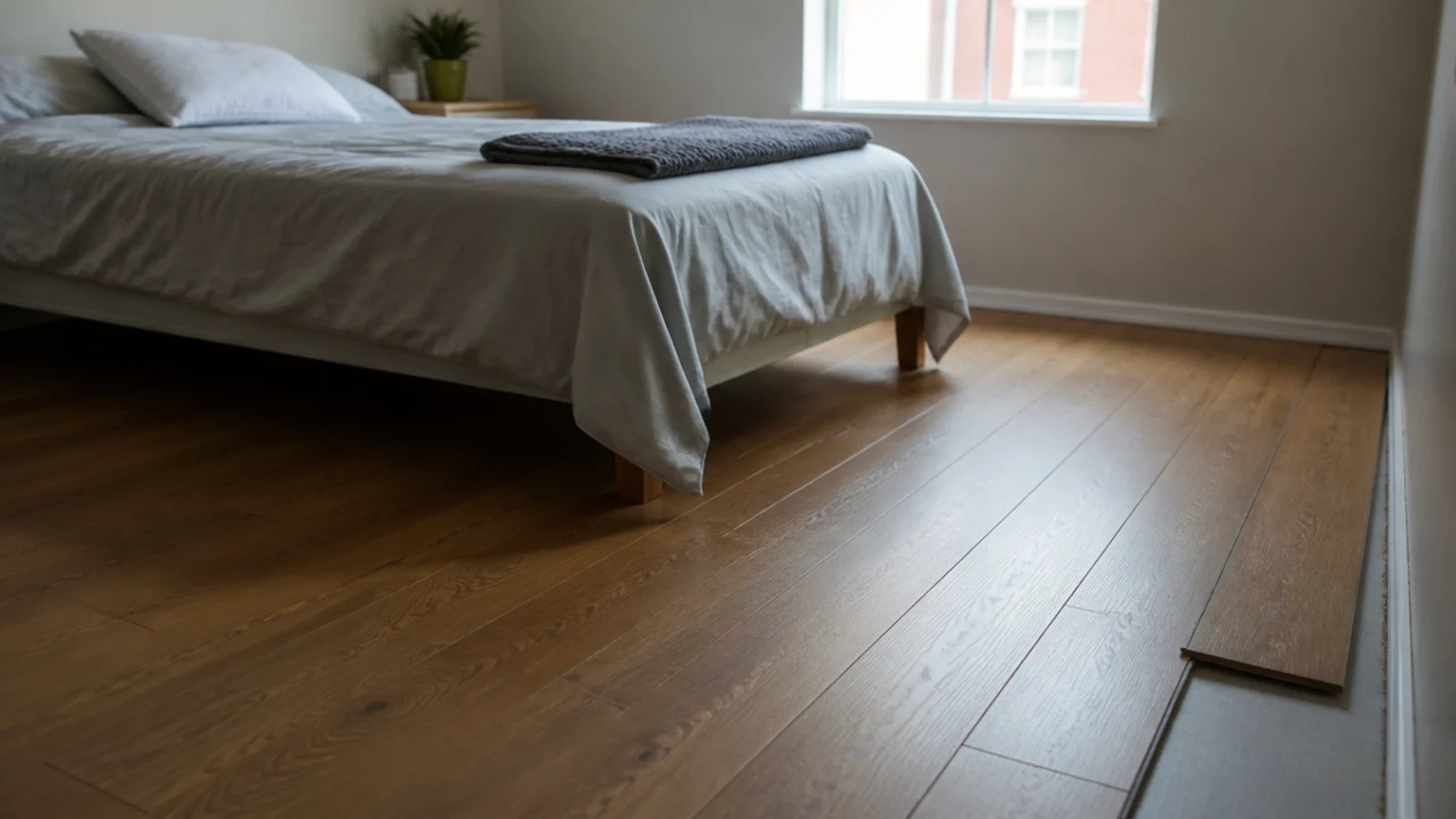
Rented bedrooms come with the worst floors in any home: worn cord carpet, a laminate from two tenancies ago, or vinyl in a colour nobody chose. A wooden tiles flooring bedroom project is the standard fix because it is reversible — the planks float, click or peel, and on the day you leave they come back up and the original floor goes on being the landlord's problem. The trick is choosing a system that clears the door, does not damage what is underneath, and looks like timber rather than a print of it. These twenty-five ideas cover both halves of that.
In this guide27 sections — tap to openHide
- 1.What a wooden tiles flooring bedroom has to do for a renter
- 2.Click planks that float over what is already there
- 3.Peel-and-stick planks under three millimetres
- 4.Loose-lay planks on a floor you cannot level
- 5.Check the door swing before you order
- 6.Acoustic backing if you live above someone
- 7.Roll the carpet up and keep it
- 8.Interlocking tiles for a very small room
- 9.Twelve mil wear layer is enough in a bedroom
- 10.Fill old grout lines before laying over tile
- 11.Trims that fix to the subfloor, not the plank
- 12.Warmth from a rug, not from heating
- 13.Plank flooring in a bedroom with an ensuite
- 14.Cutting planks with a knife, not a saw
- 15.Quadrant beading held with removable adhesive
- 16.Keep the offcuts in a labelled box
- 17.Photograph the original floor first
- 18.Matte planks, never gloss, in a bedroom
- 19.Check the embossing follows the grain
- 20.Wider planks in a bedroom over three metres
- 21.Herringbone format tiles in a small bedroom
- 22.Break up the expanse with a rug and a runner
- 23.Do not pin a floating floor with heavy furniture
- 24.Leave an expansion gap even for vinyl
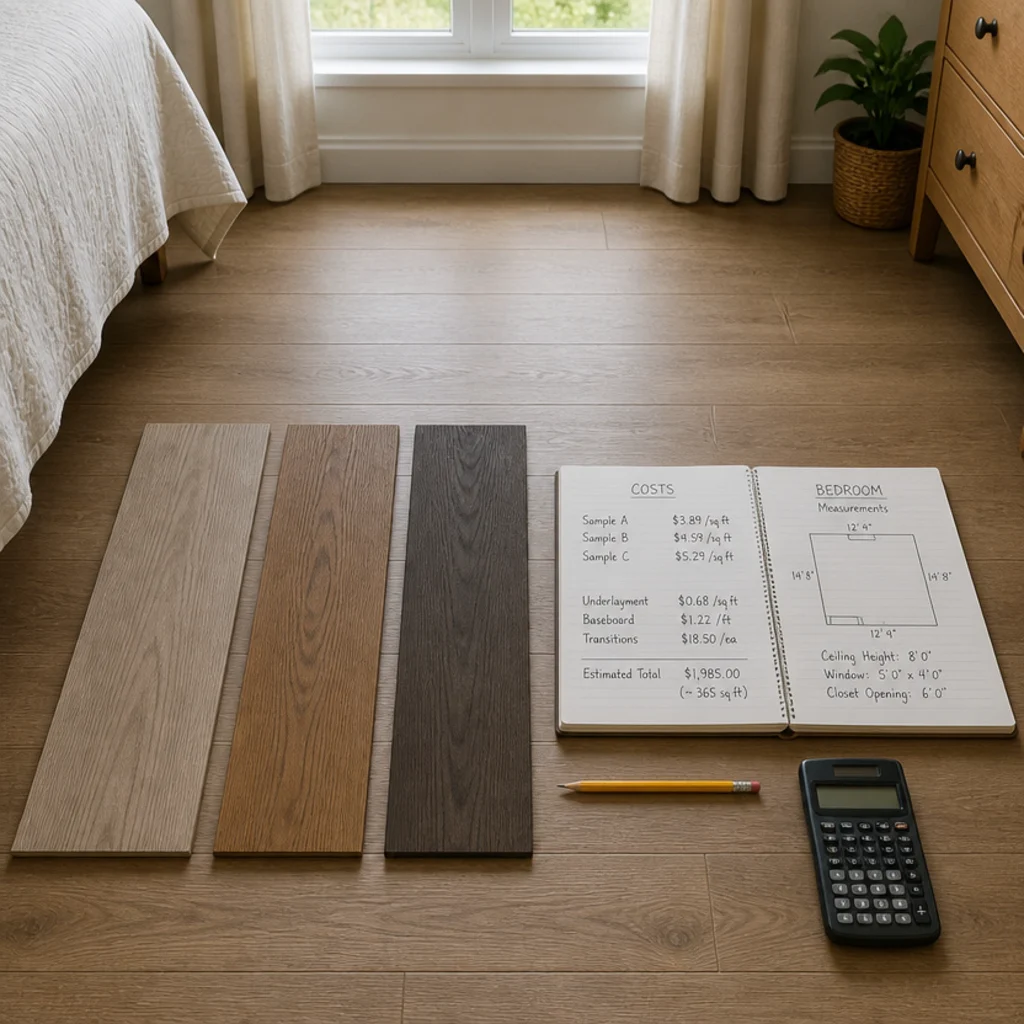
- 25.Work out the cost per square metre honestly
- 26.Plan the reinstatement before you lay a plank
- 27.Mistakes to Skip
What a wooden tiles flooring bedroom has to do for a renter
Four checks, before anything is ordered.
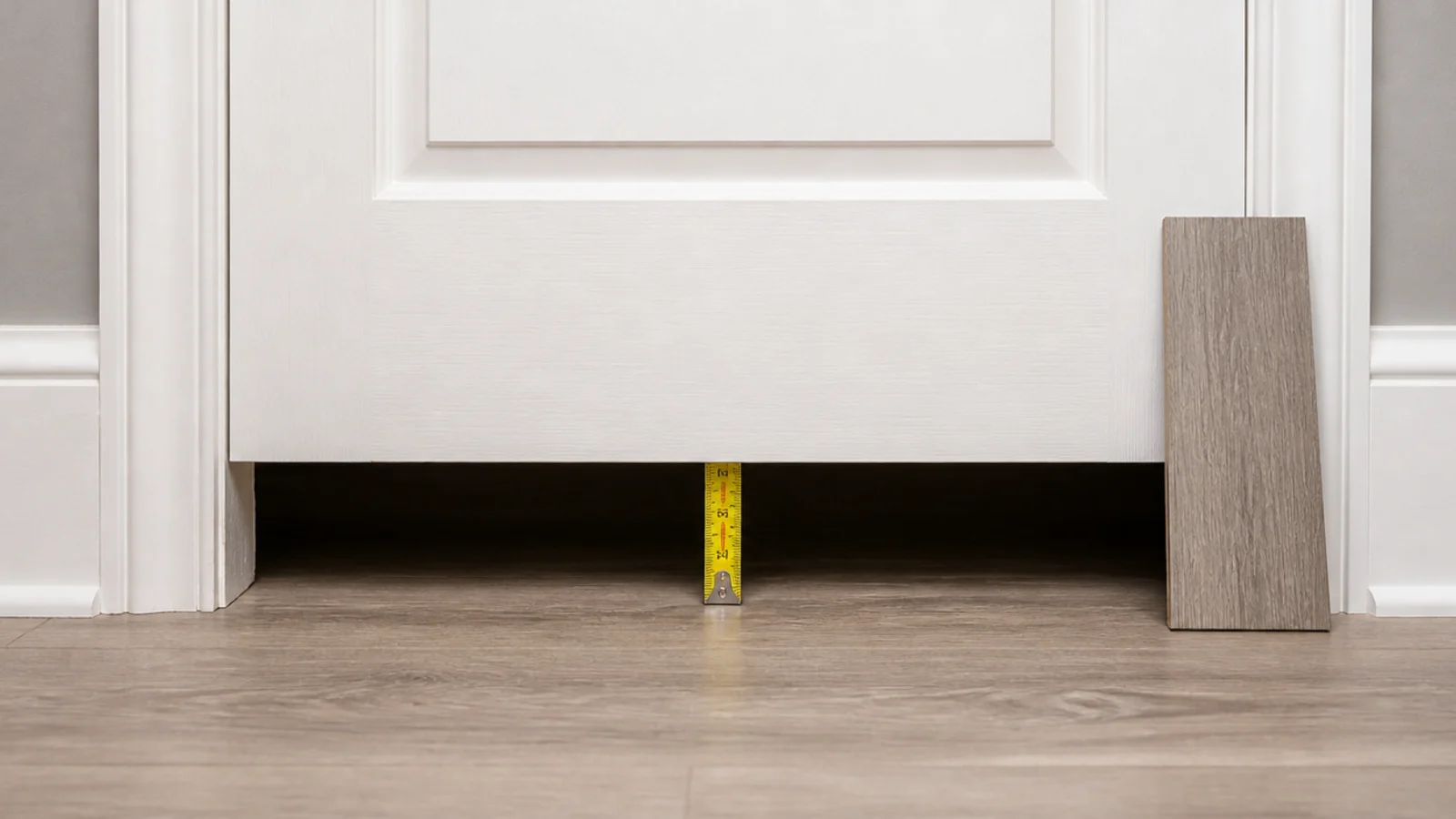
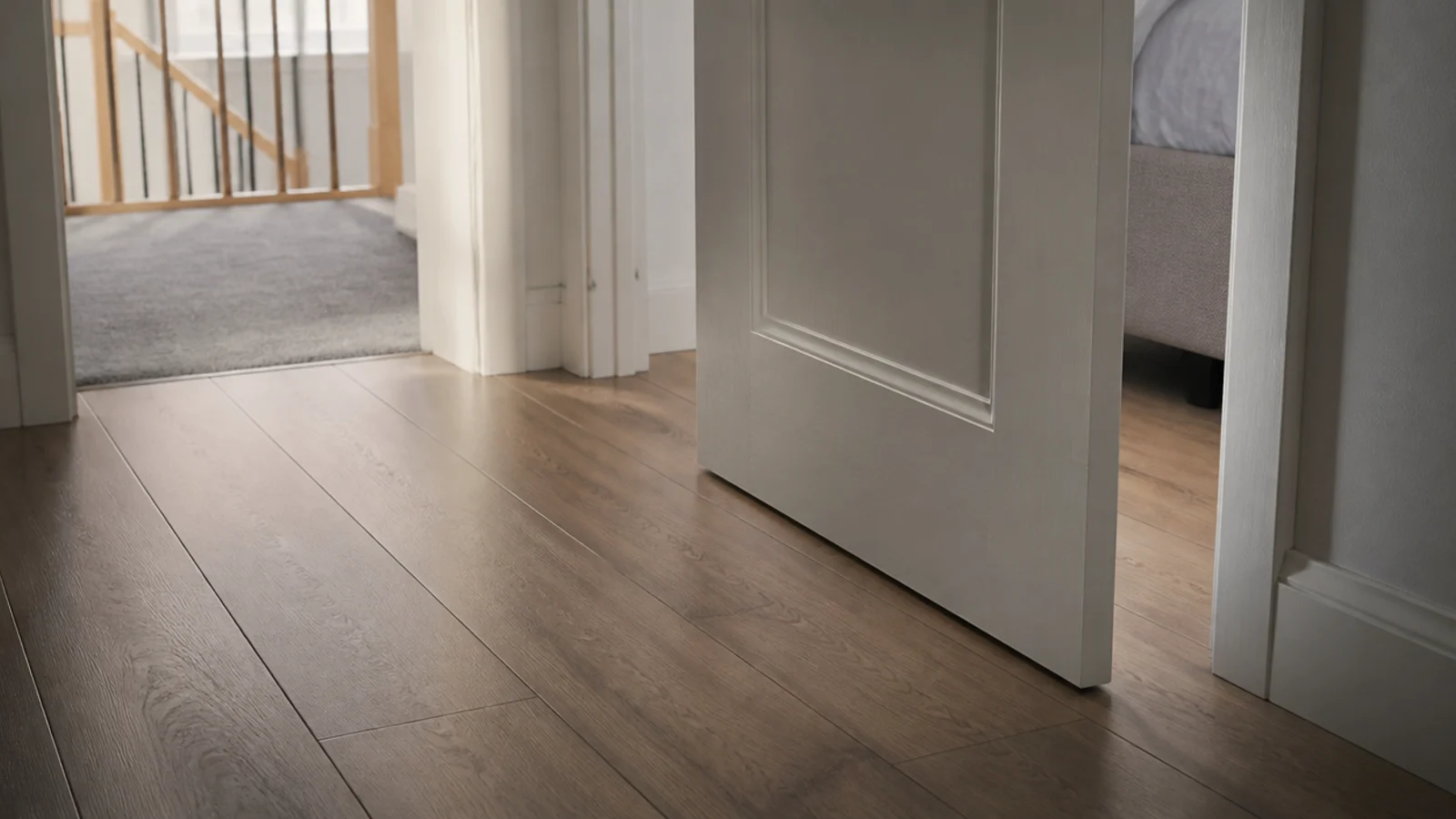
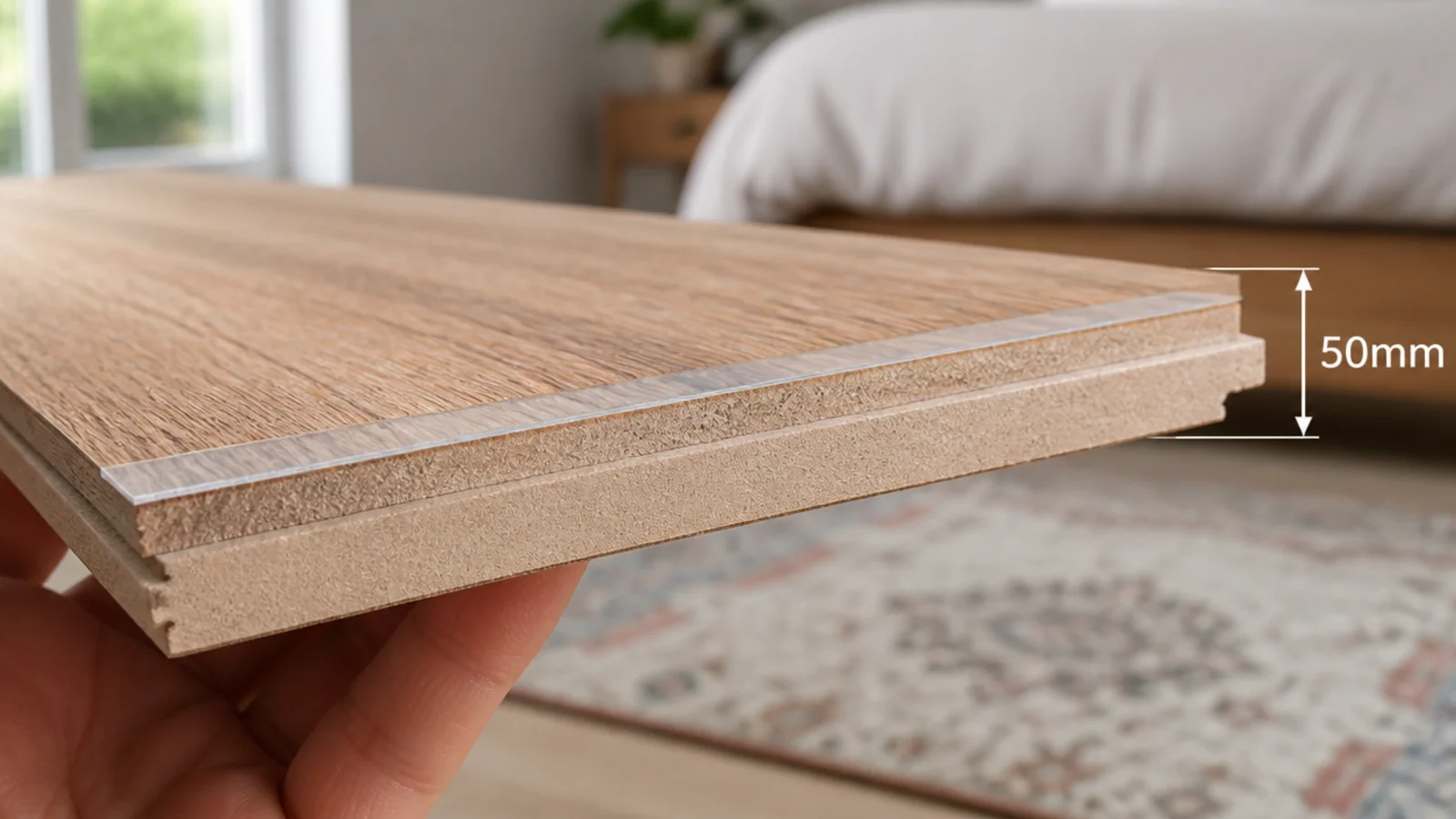
Door clearance. Measure the gap under the door leaf. A 2 to 3mm peel-and-stick plank usually fits under an existing door; a click system with underlay adds 5 to 8mm and often does not. Trimming a door is a permanent change most tenancy agreements prohibit.
Reversibility. Floating click and loose-lay planks lift out cleanly. Peel-and-stick does not, unless the floor beneath is sound vinyl or sealed timber and you have tested removal on one plank first.
Wear layer. In a bedroom, 12 mil is genuinely enough — no shoes, no grit, low traffic. That single decision often cuts the cost of a small bedroom floor by around a third against a 20 mil kitchen specification.
Cost. Budget £12 to £30 per square metre for decent bedroom-grade plank, plus £3 to £6 for underlay. A 3 by 3.5 metre room is roughly 10.5 square metres, so £150 to £350 all in. For the wet-room and kitchen versions of this material, the wooden tiles flooring guide has the harder specifications.
1. Click planks that float over what is already there
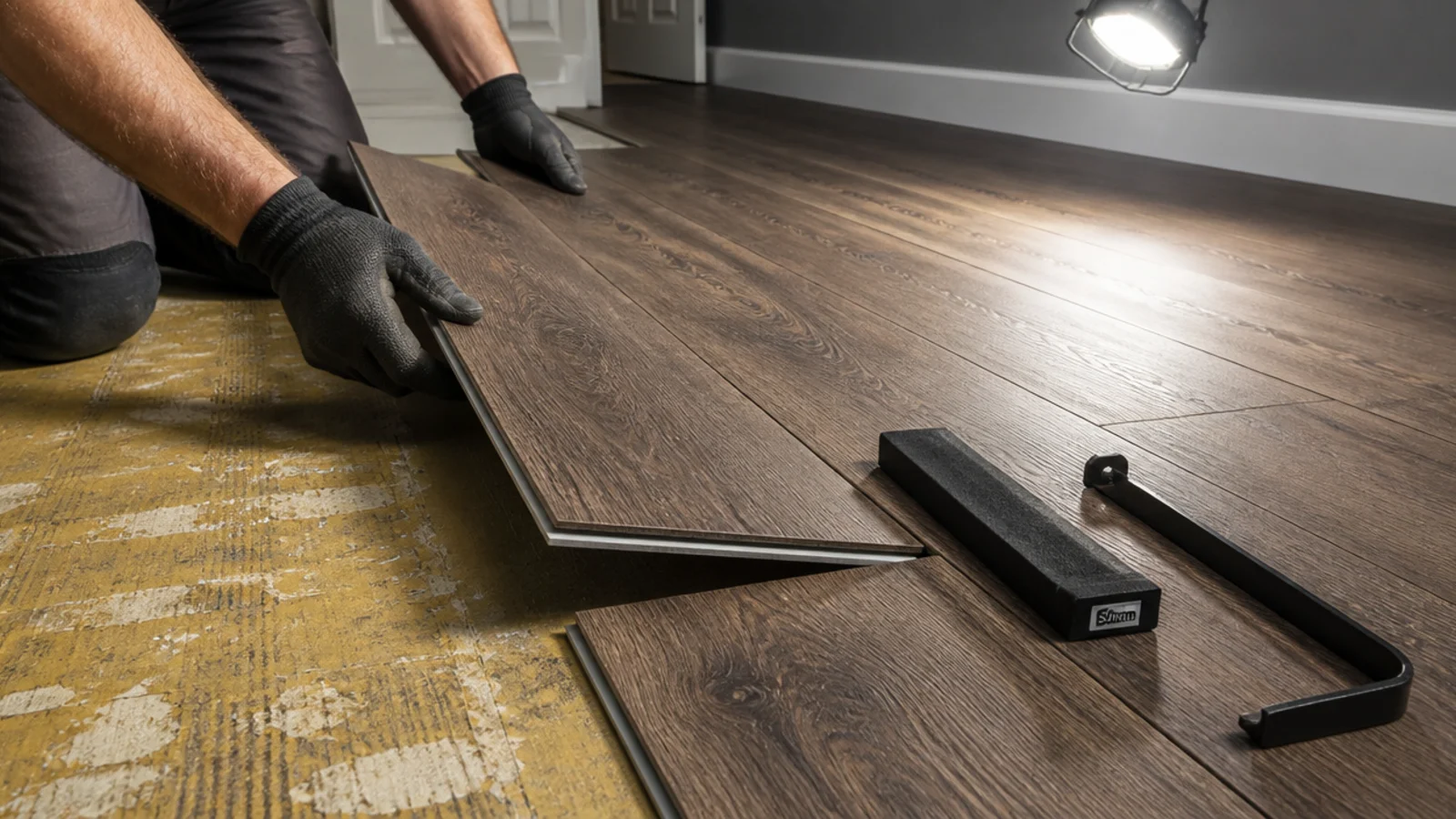
The default renter answer. A rigid core plank of 4 to 6mm clicks into its neighbours and rests on the existing floor with nothing fixed down. It lays in an afternoon, lifts out in an hour, and travels to the next flat if the room sizes are close.
2. Peel-and-stick planks under three millimetres
At 2 to 3mm, self-adhesive planks slide under doors that a click system would jam. They need a clean, dry, genuinely flat base and they telegraph anything underneath. Best over sound sheet vinyl or sealed hardboard, and always test removal on one plank in a wardrobe first.
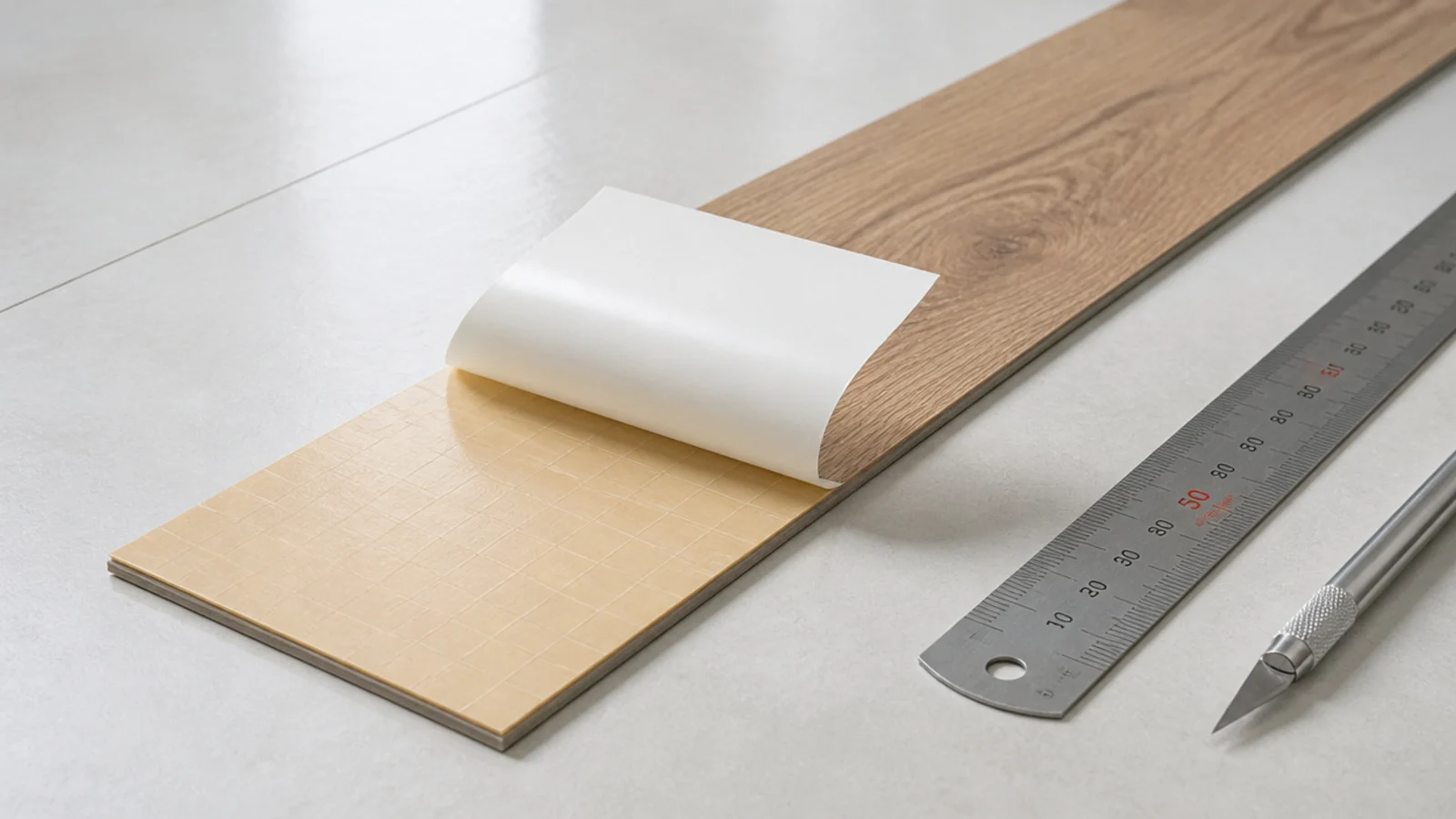
3. Loose-lay planks on a floor you cannot level
Loose-lay planks are heavier, around 4 to 5mm, with a high-friction backing that holds by weight rather than glue or clicks. They tolerate a slightly uneven base better than a click system, and a damaged plank lifts out and swaps in seconds without disturbing anything else.
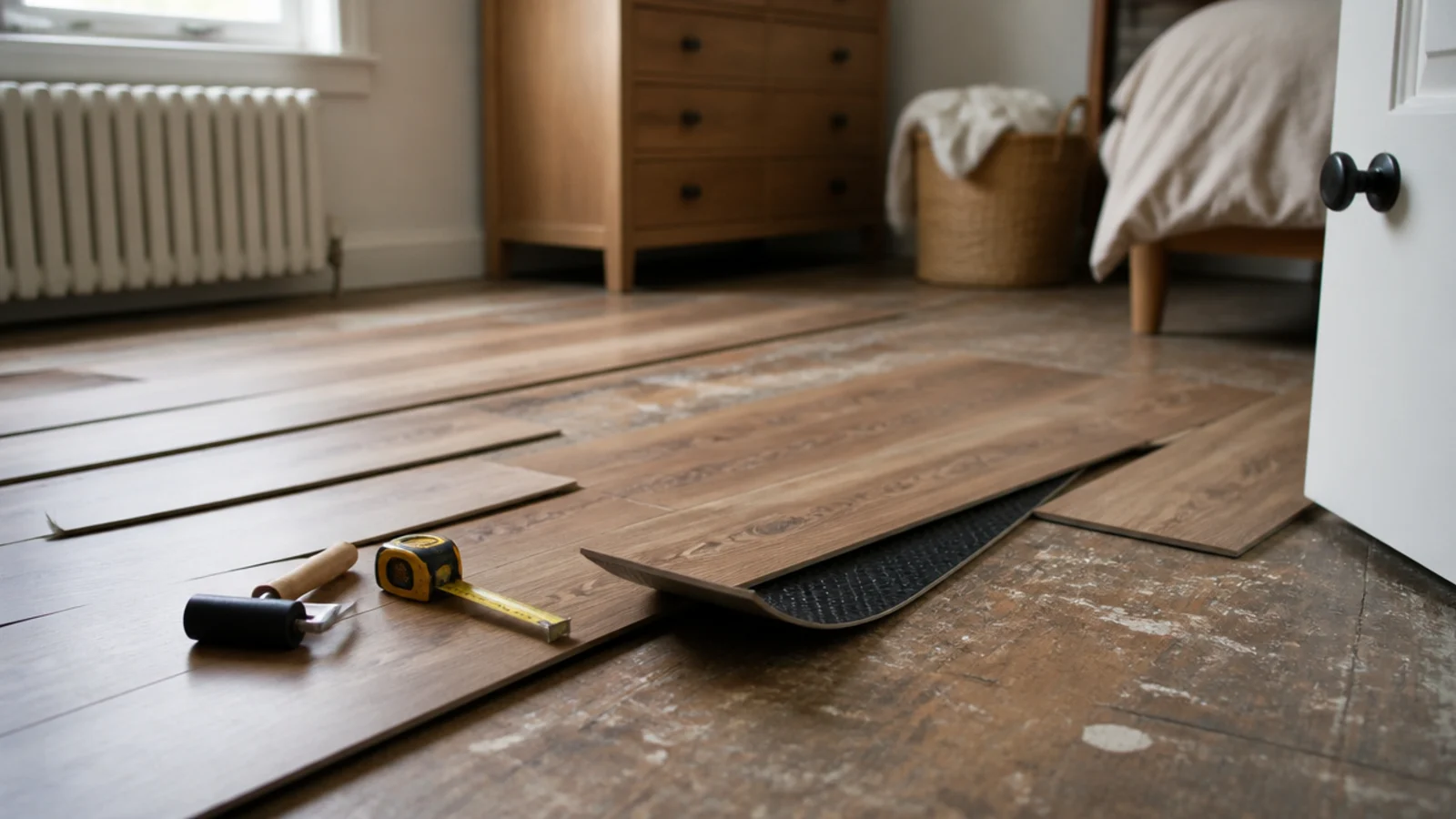
4. Check the door swing before you order
Close the door and slide a plank sample plus a scrap of underlay into the gap. If it drags, either drop to a thinner system or accept that the door needs removing and trimming, which is a landlord conversation rather than a weekend decision. Do this before ordering, not after delivery.
5. Acoustic backing if you live above someone
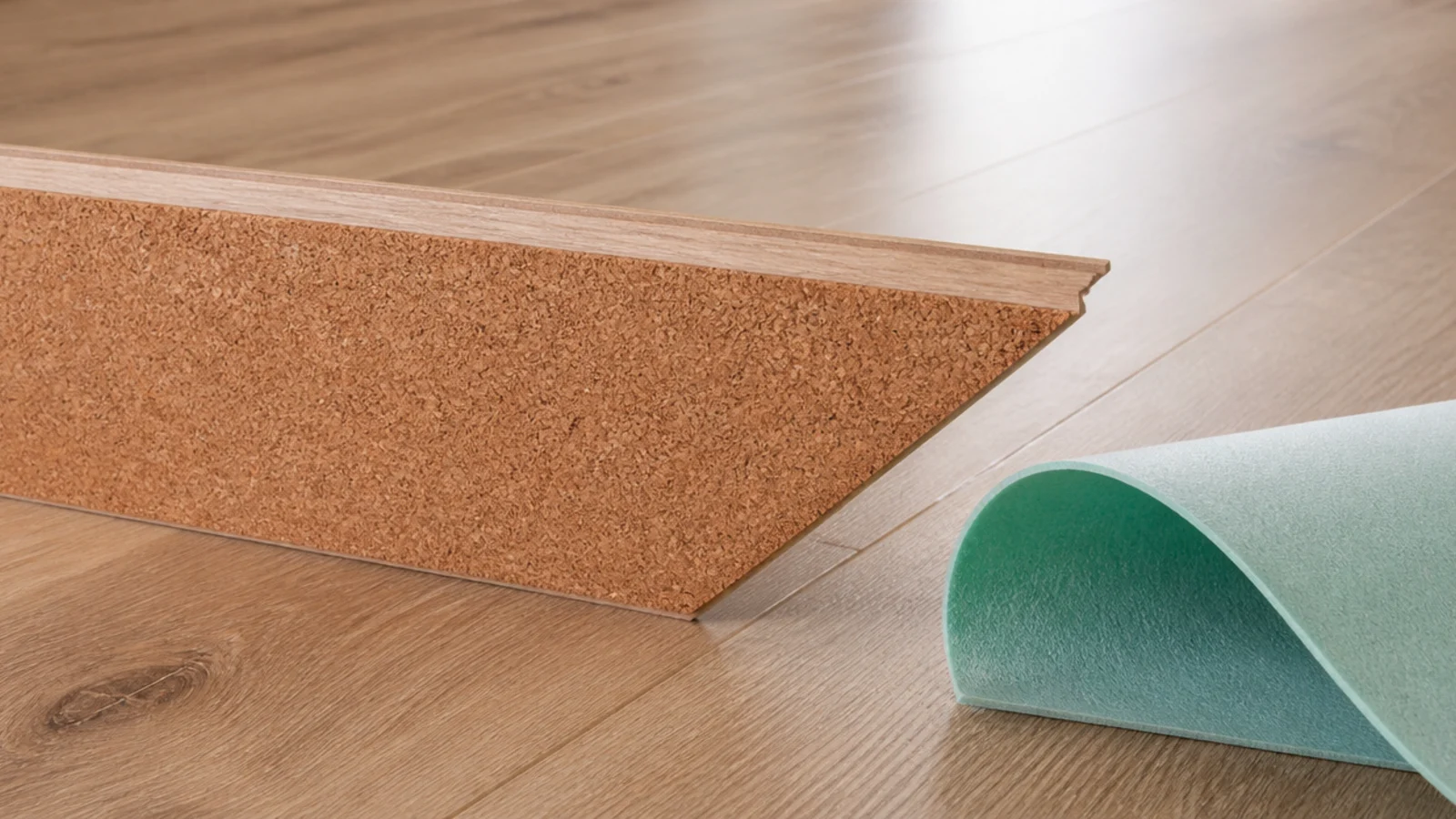
A floating floor over concrete or chipboard drums. A bonded cork or IXPE backing of 1 to 1.5mm makes a large difference to both the hollow sound and the impact noise reaching the flat below. Many leases specify a minimum acoustic performance for hard floors, so check before you buy.
6. Roll the carpet up and keep it
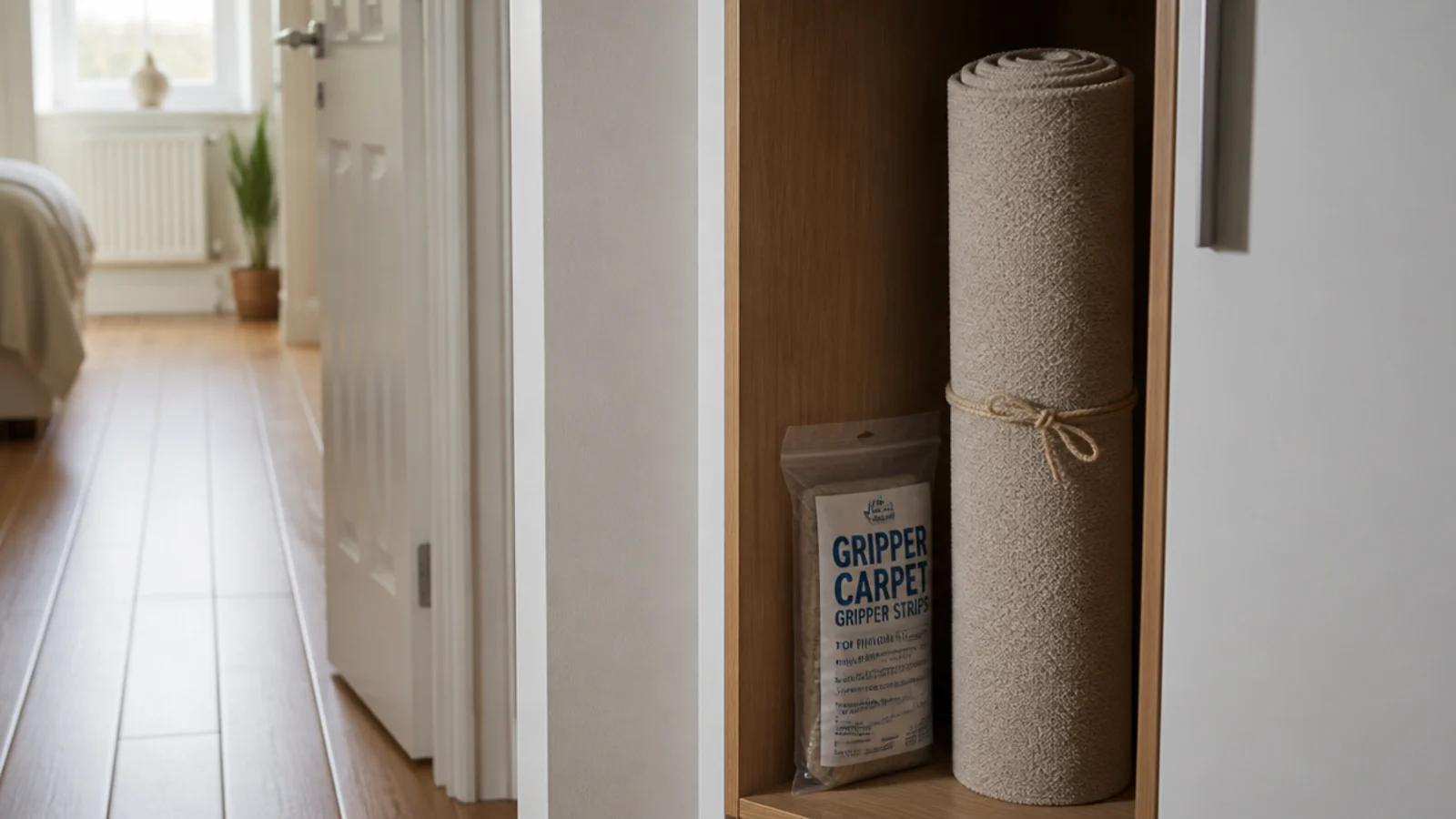
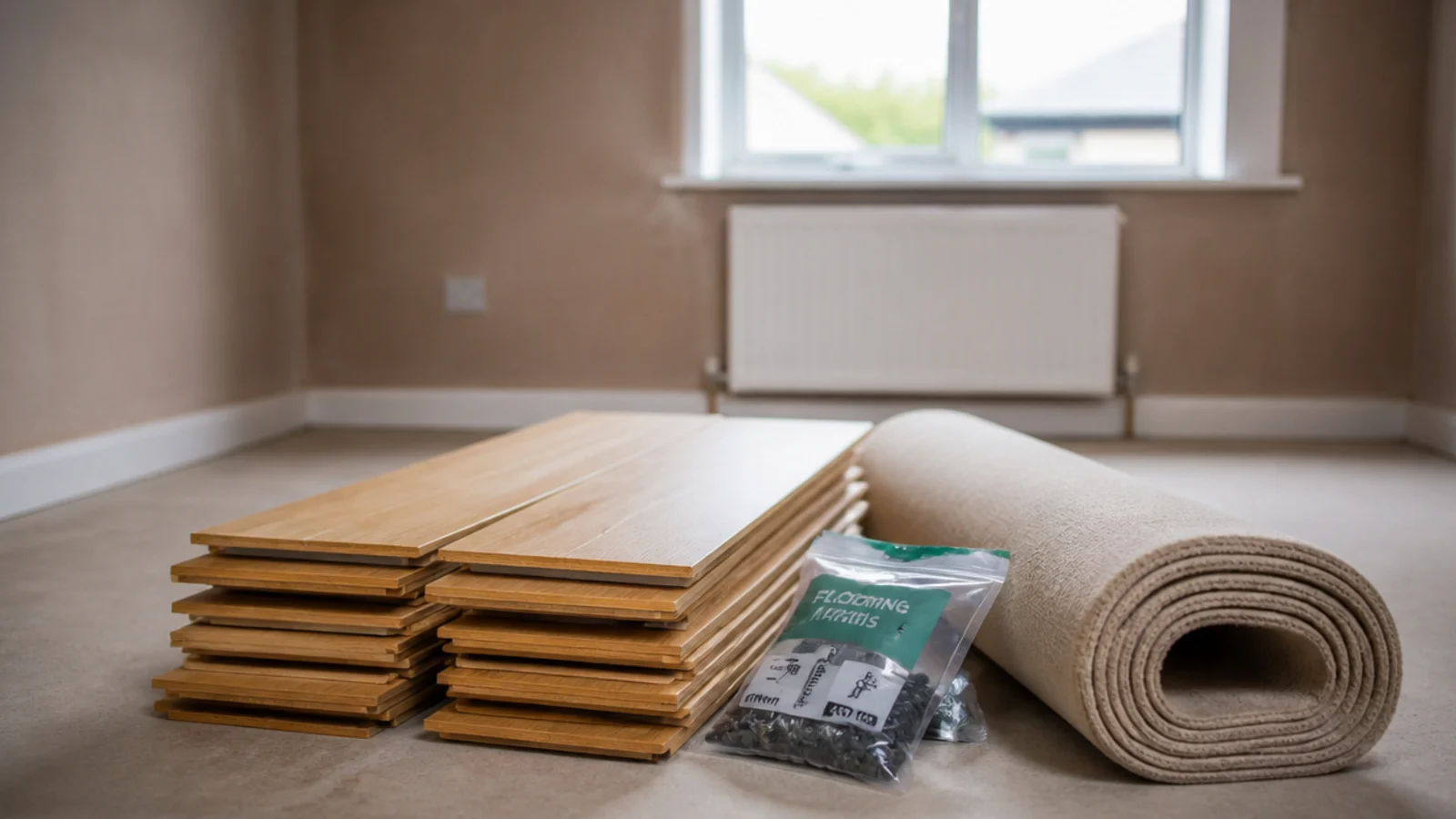
If you lift a carpet, roll it, tie it, label it and store it in the wardrobe with the gripper strips and underlay in a bag. Reinstating the original floor is what turns a deposit dispute into a non-event. Never cut a landlord's carpet to make it fit somewhere else.
7. Interlocking tiles for a very small room
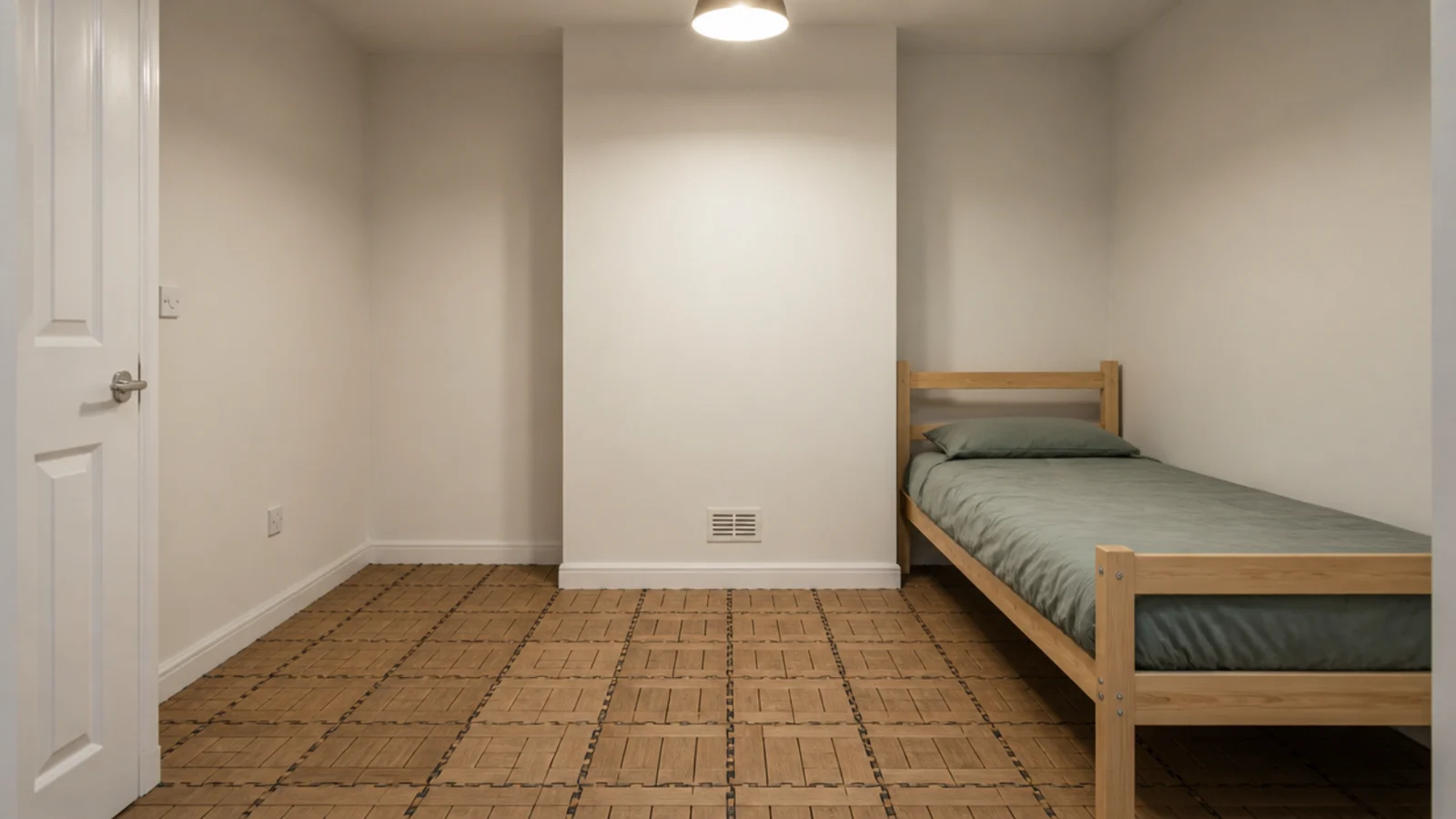
Square interlocking tiles of 300 to 600mm suit rooms with chimney breasts, awkward alcoves and doorways in odd places, because every cut is short. They are less convincing than long planks at a distance, but in a 2.4 metre box room nothing is seen at a distance.
8. Twelve mil wear layer is enough in a bedroom
Wear layer is the clear film on top, measured in thousandths of an inch, and it predicts how the surface ages. Bedrooms see no shoes, almost no grit and a fraction of the traffic a hallway does. Spend the saving on a better print and texture instead, which is what you actually look at.
9. Fill old grout lines before laying over tile
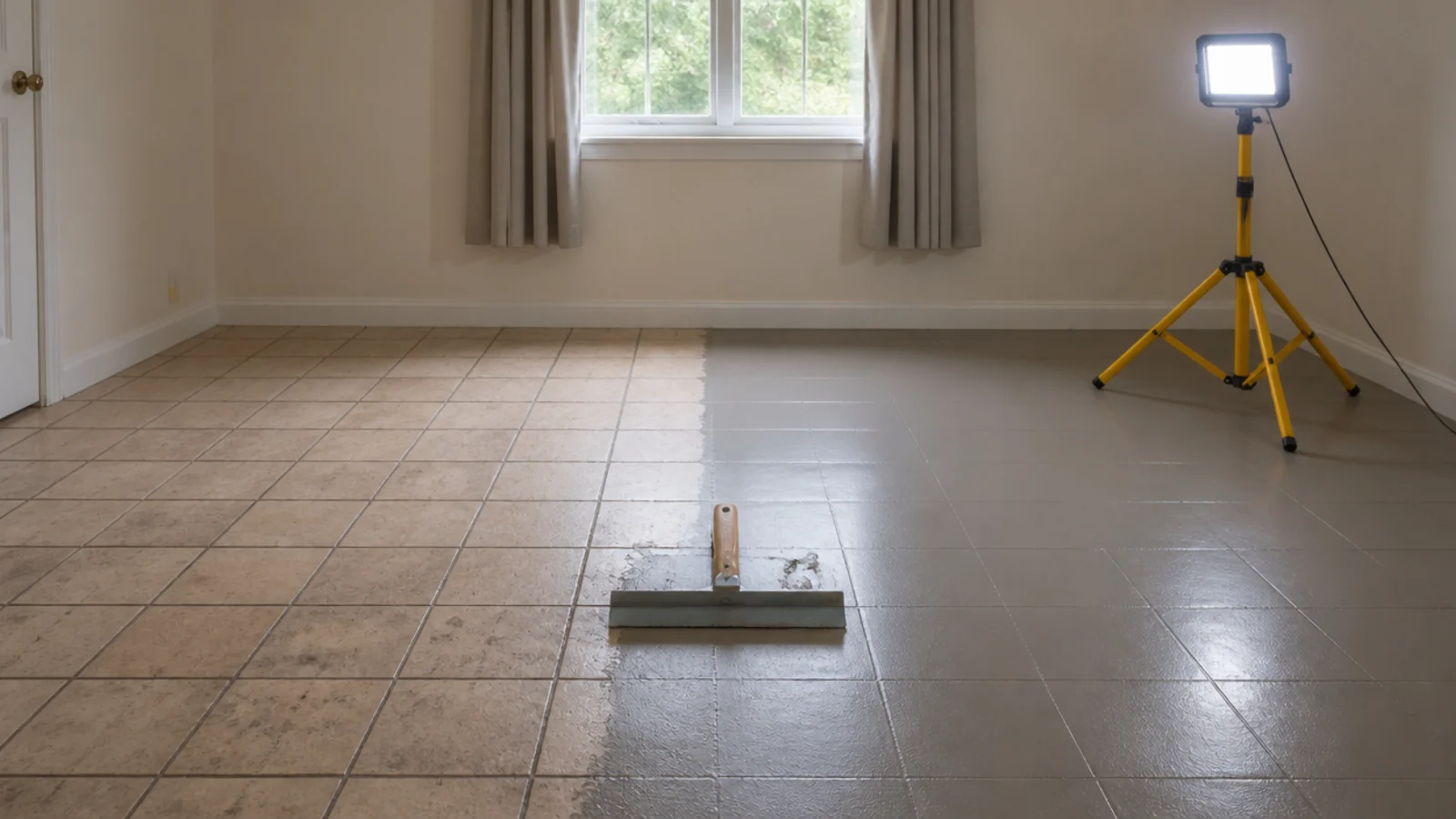
Thin planks telegraph everything beneath them. Skim old grout lines and any dips with a levelling compound, let it dry fully, then vacuum twice. Aim for flat within 3mm over a 2 metre straightedge. Skipping this is why cheap plank floors show a grid pattern within a year.
10. Trims that fix to the subfloor, not the plank
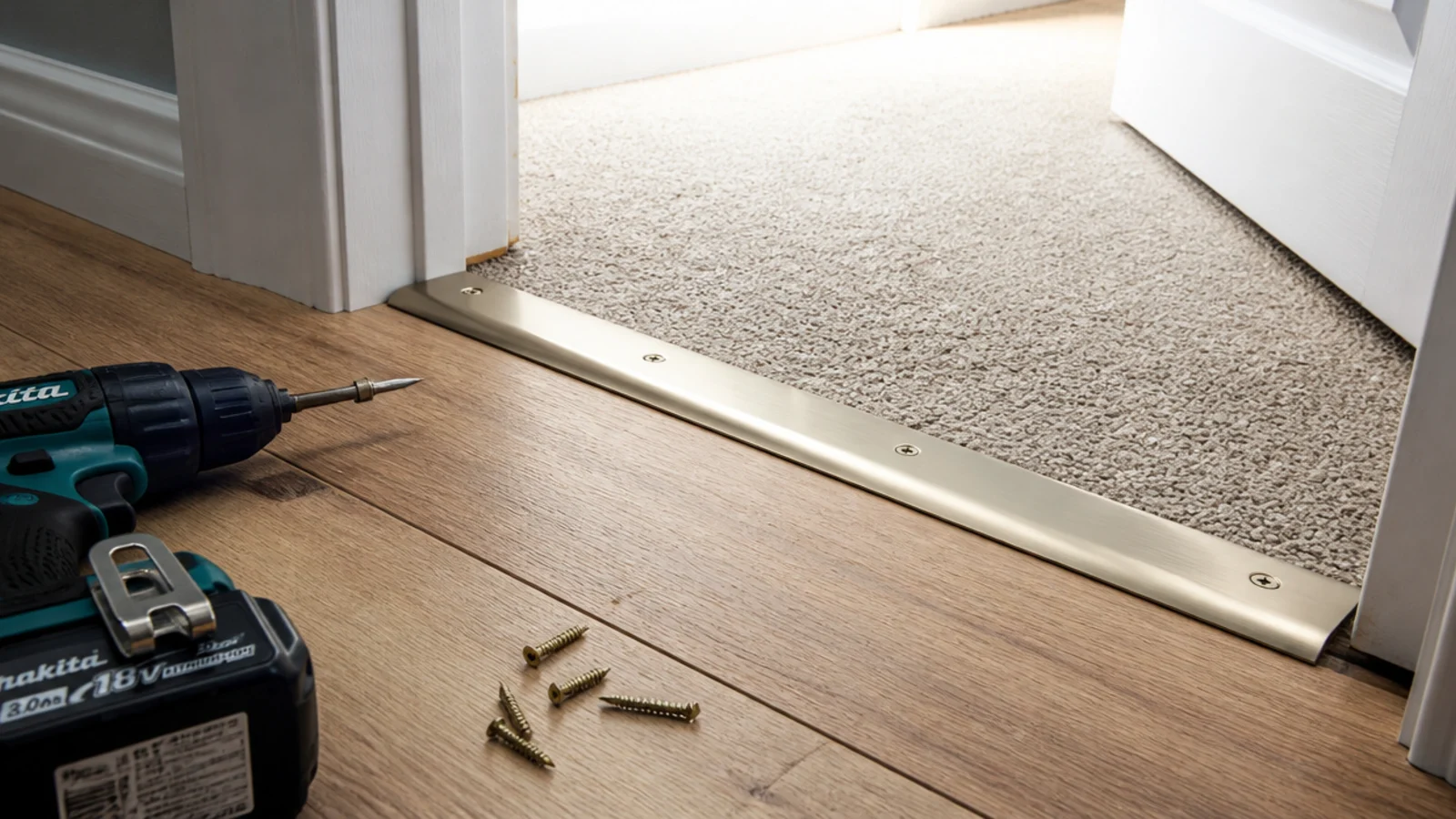
At a doorway, the threshold trim screws into the subfloor between the two finishes, never through the planks themselves. That keeps the floating floor free to move and means the trim comes out with two screws when you leave. Use a flush profile where the heights match.
11. Warmth from a rug, not from heating
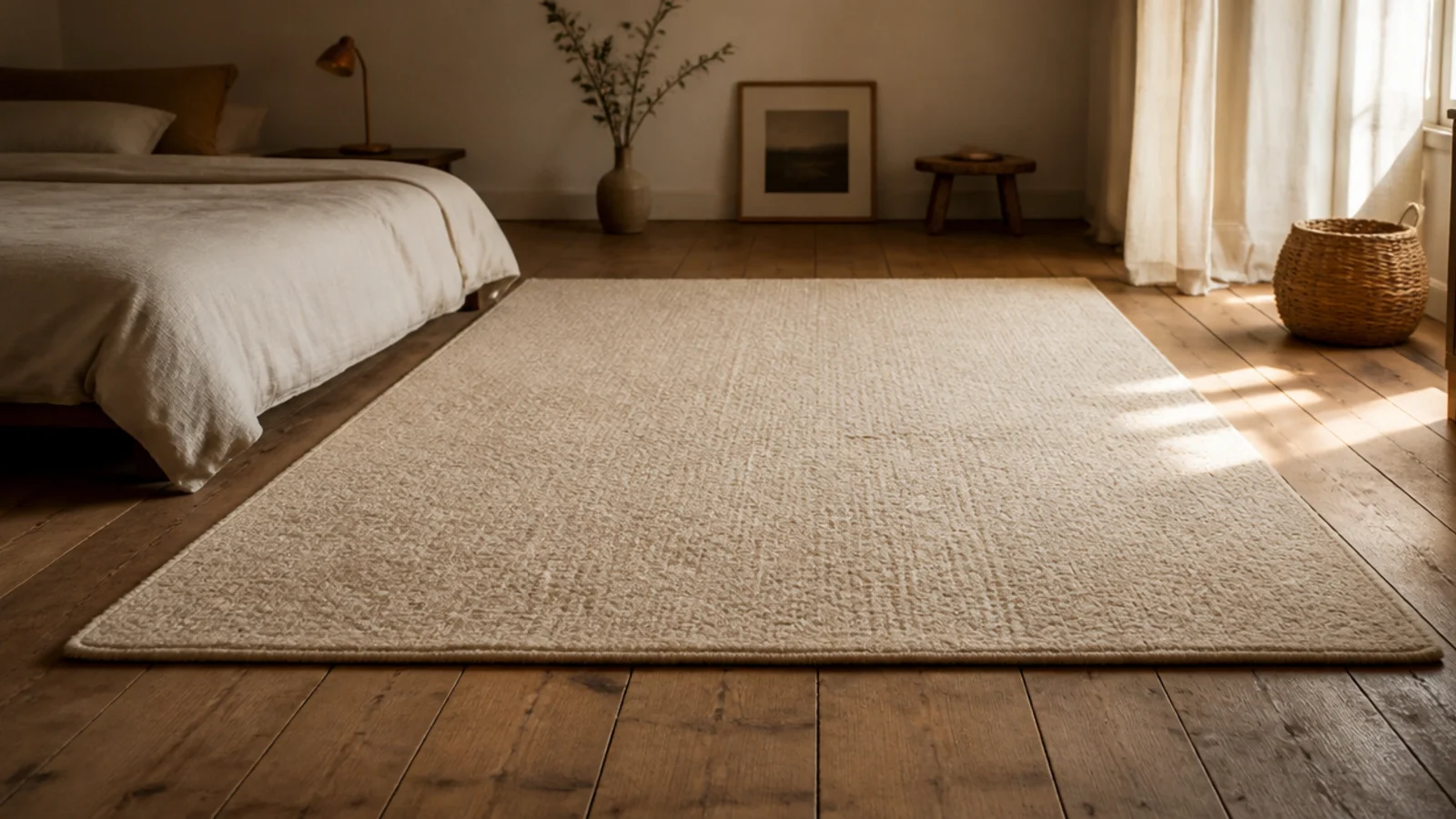
Vinyl plank feels warmer underfoot than porcelain but colder than carpet, and a renter cannot install underfloor heating. A 200 by 300cm rug over a 5 to 8mm felt pad solves it, and both go in the van when you move. Put the rug where your feet land getting out of bed.
12. Plank flooring in a bedroom with an ensuite
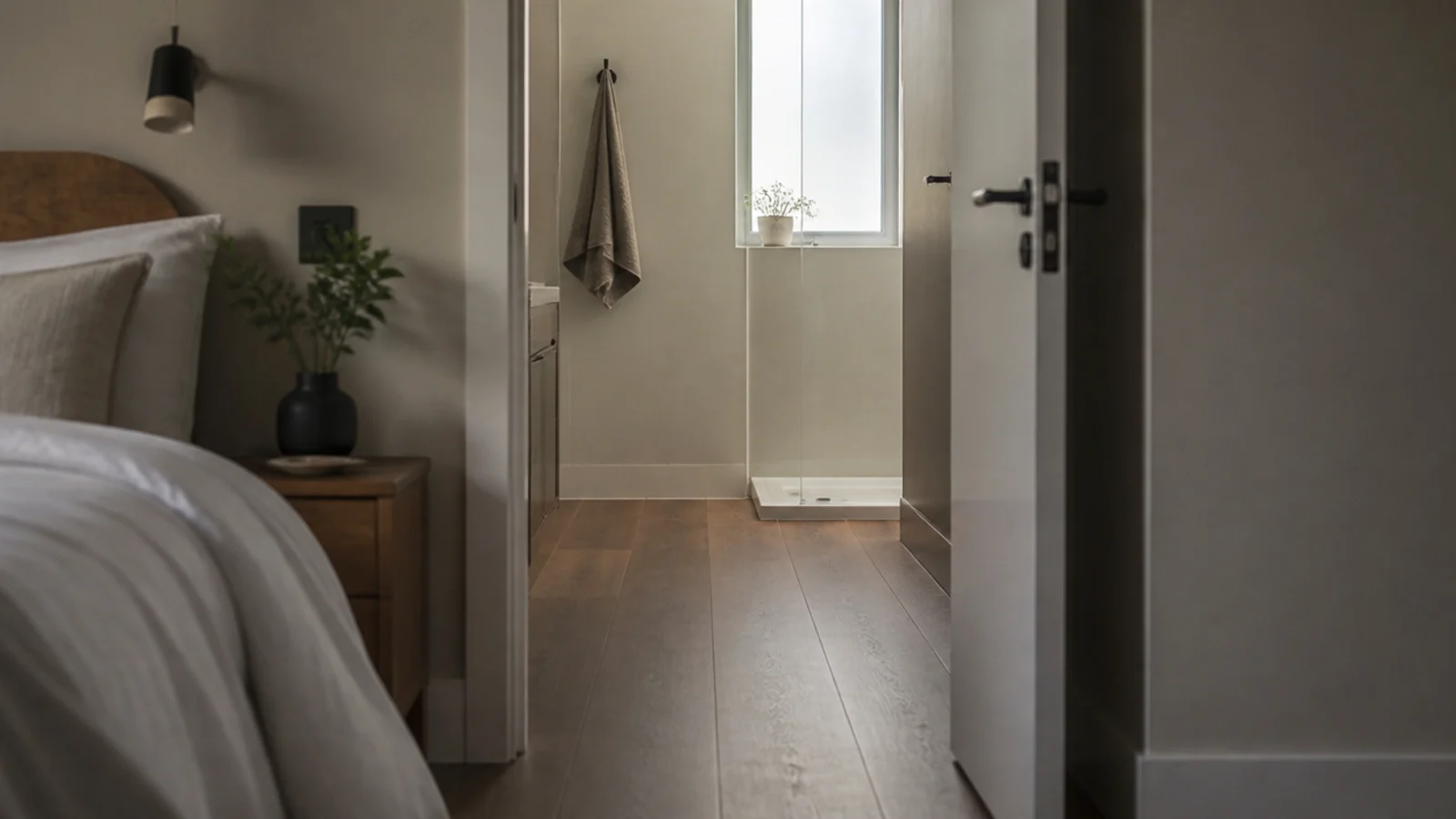
A waterproof rigid core is one of the few floors that can run from a bedroom into an ensuite without a change of material. Seal the perimeter in the wet room with a flexible bead, keep the planks clear of the shower tray upstand, and use a bath mat with a breathable backing.
13. Cutting planks with a knife, not a saw
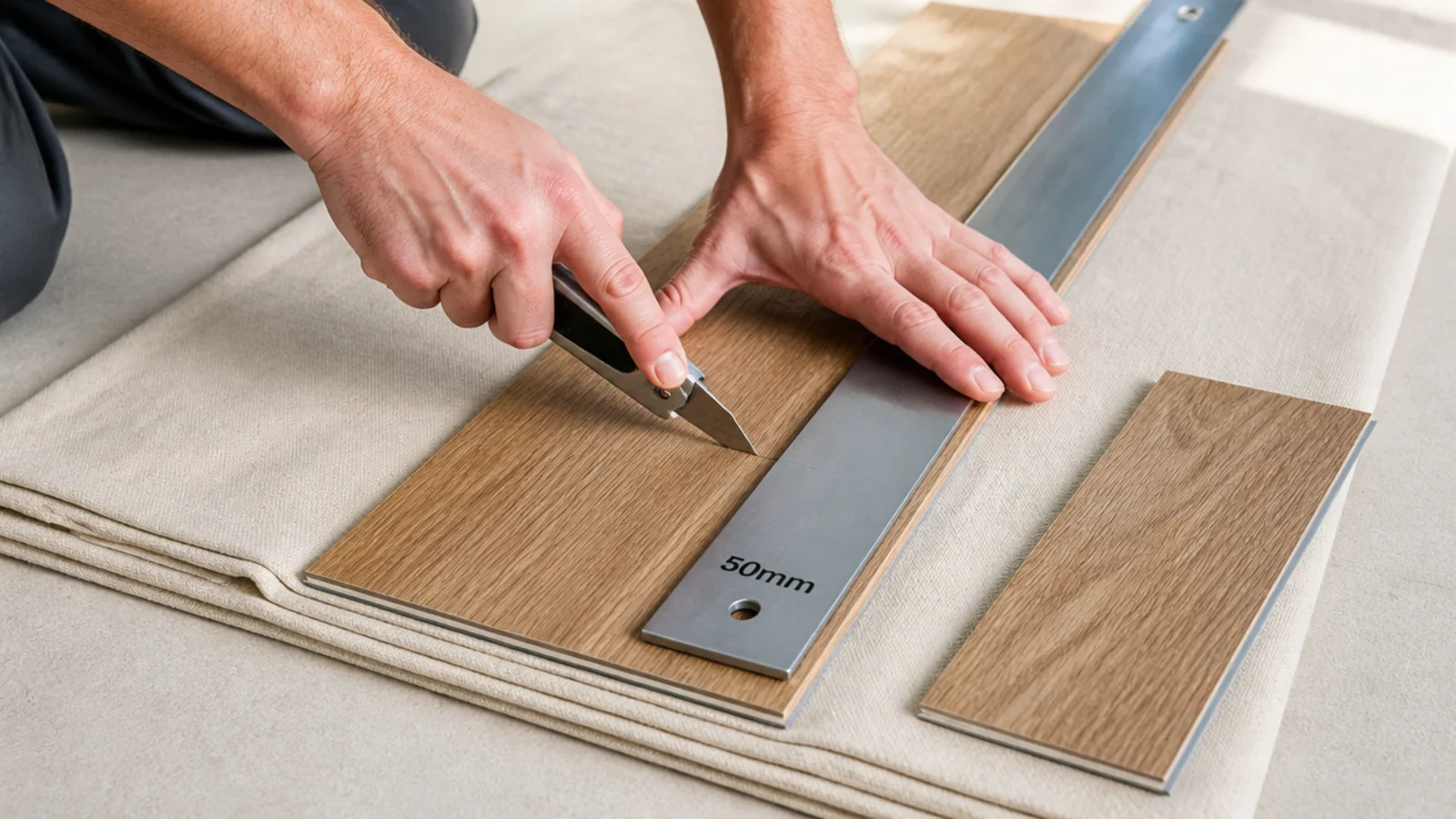
Vinyl planks score and snap with a sharp utility knife against a straightedge. No power tools, no dust, no noise complaints and nothing to clean out of a landlord's carpet on the landing. Score the face two or three times, bend, and finish the back with the knife.
14. Quadrant beading held with removable adhesive
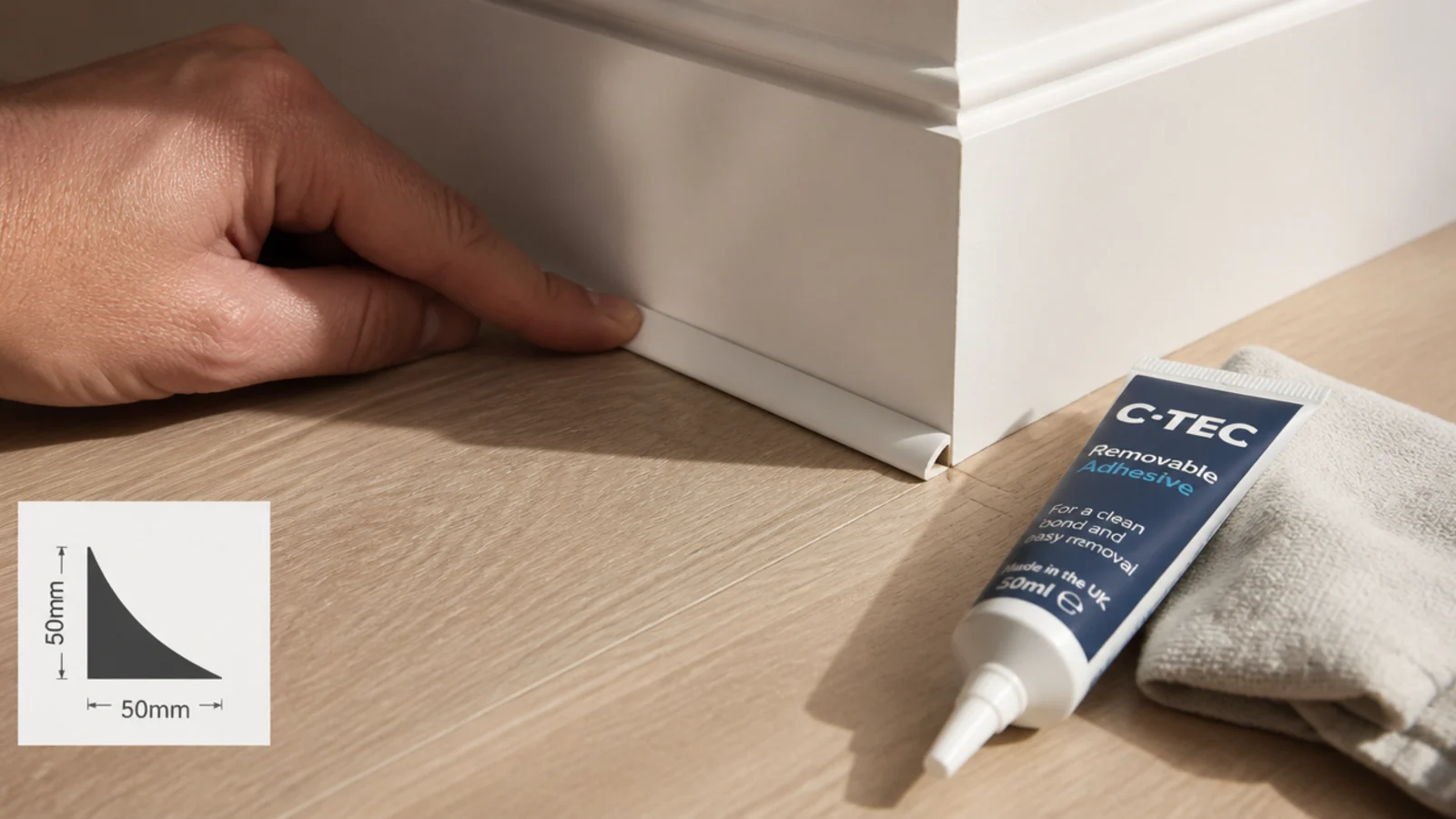
The perimeter gap needs covering, and drilling into skirting is a change. A slim quadrant bead held with a removable grab adhesive on the skirting face — never on the floor — hides the gap and peels off with a plastic scraper and a little heat when you leave.
15. Keep the offcuts in a labelled box
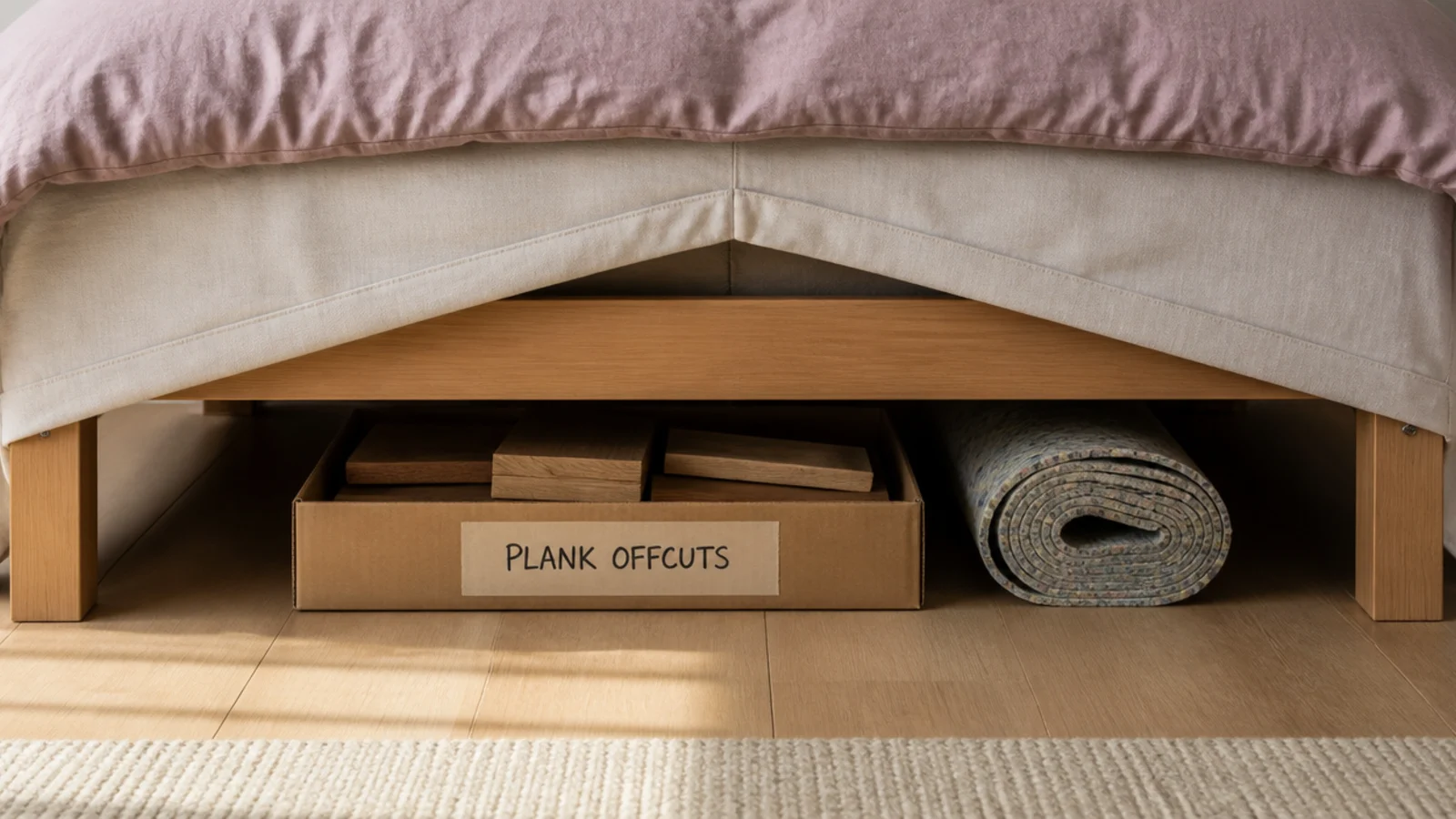
Ranges get discontinued fast in this category, faster than timber species do. Keep a box of offcuts flat under the bed with the range name and batch written on it. One damaged plank with spares is a five-minute swap; without them it is a whole new floor.
16. Photograph the original floor first
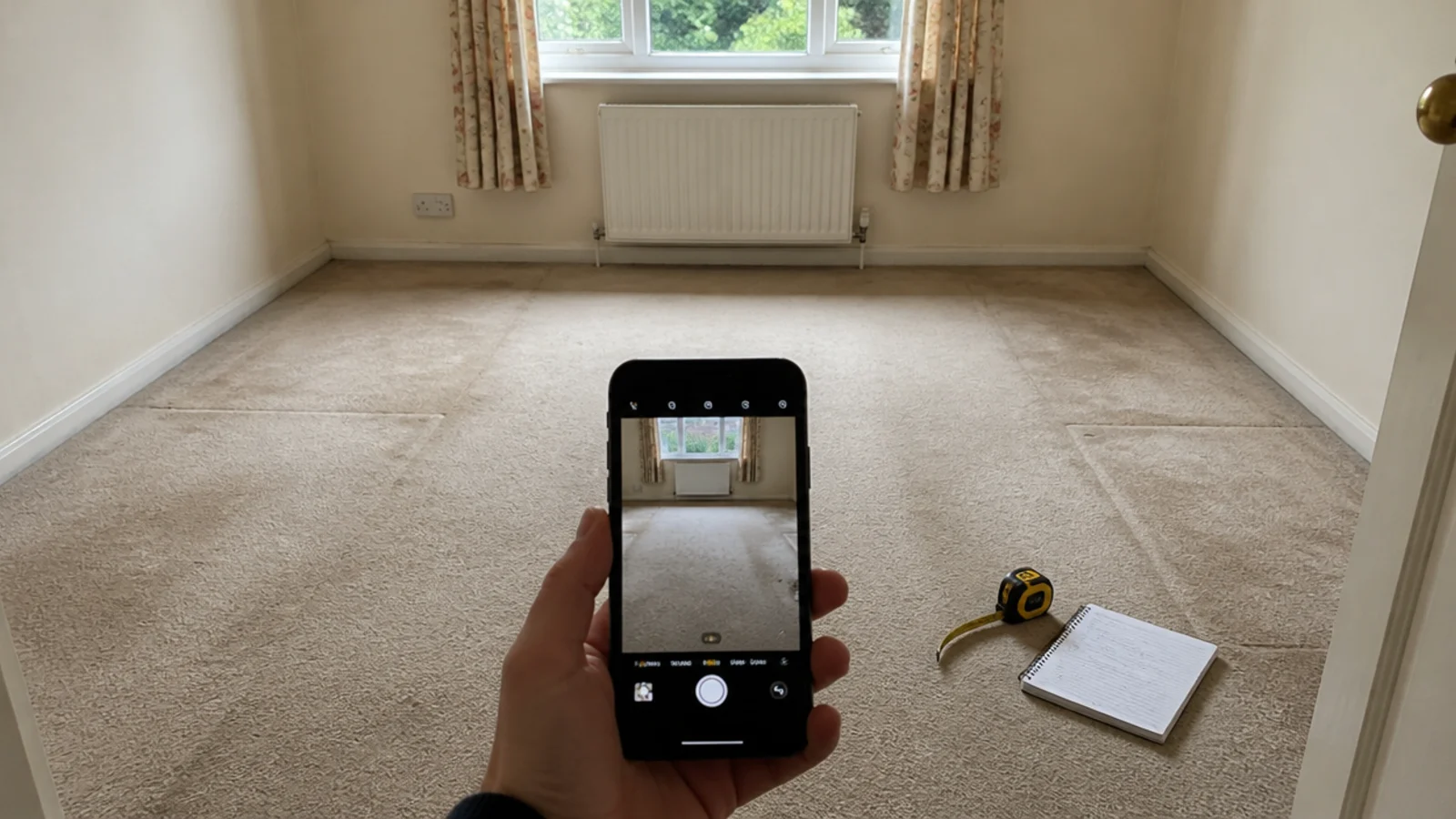
Before anything moves, photograph the existing floor in daylight from four corners, including any existing damage. It takes two minutes and it is the single most useful thing you can do for the end of a tenancy. Save the photos somewhere that is not just the phone.
17. Matte planks, never gloss, in a bedroom
Bedrooms are lit by lamps at a shallow angle, which is exactly what makes a glossy print read as plastic. Choose a matte or low-sheen surface. It also hides the fine scuffs that any floating floor picks up when furniture is dragged rather than lifted.

18. Check the embossing follows the grain
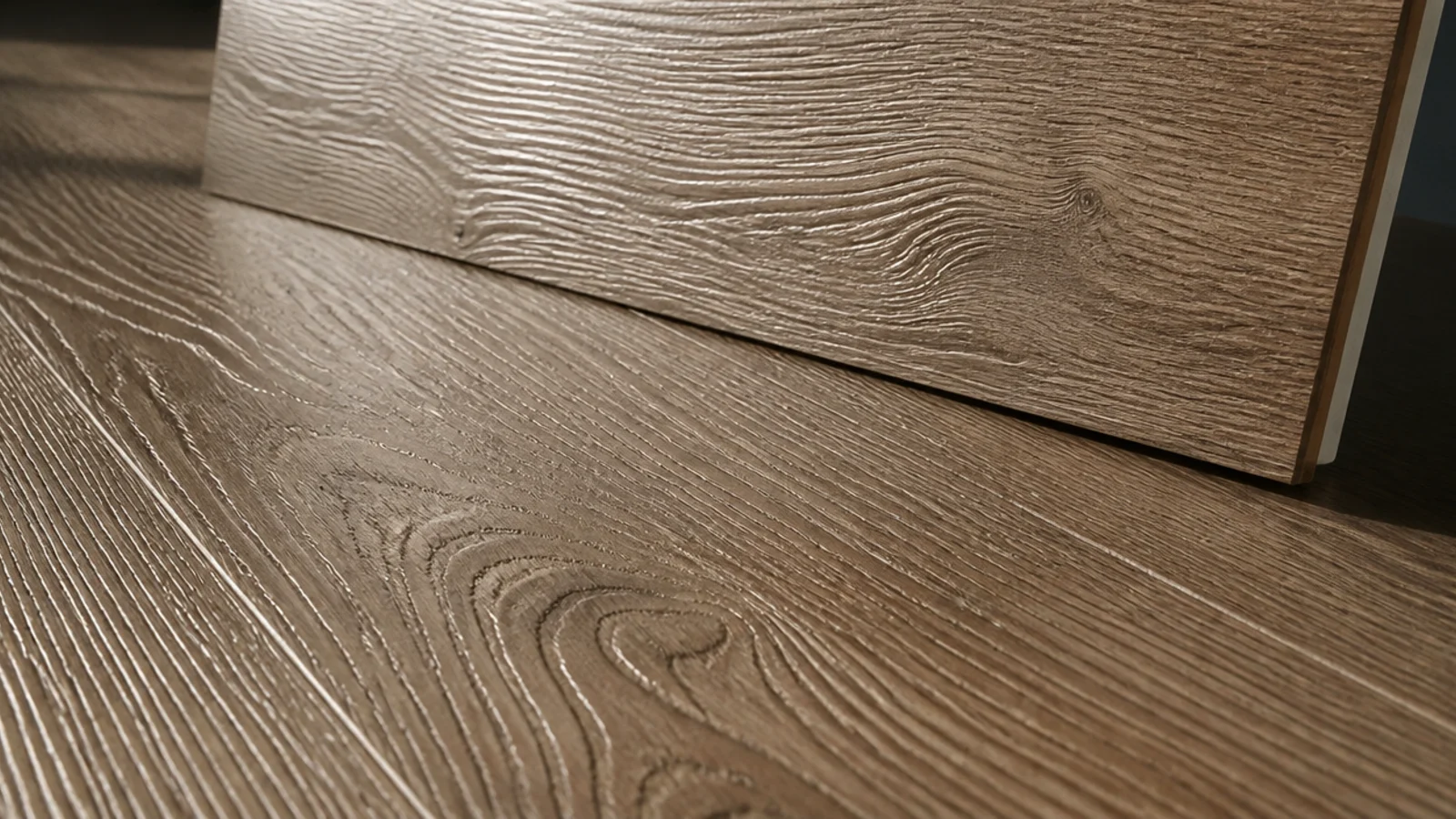
Run a palm across the sample. On a good plank the surface texture lines up with the printed grain; on a cheap one it repeats at random. That single check separates a floor that convinces at conversational distance from one that does not.
19. Wider planks in a bedroom over three metres
Wide format needs floor area. In a room over about 3.5 metres across, a 200mm plank gives few joints and reads convincingly. In a 2.4 metre box room the same plank gives you three runs and looks like sheet material, so drop to 120 to 150mm.
20. Herringbone format tiles in a small bedroom
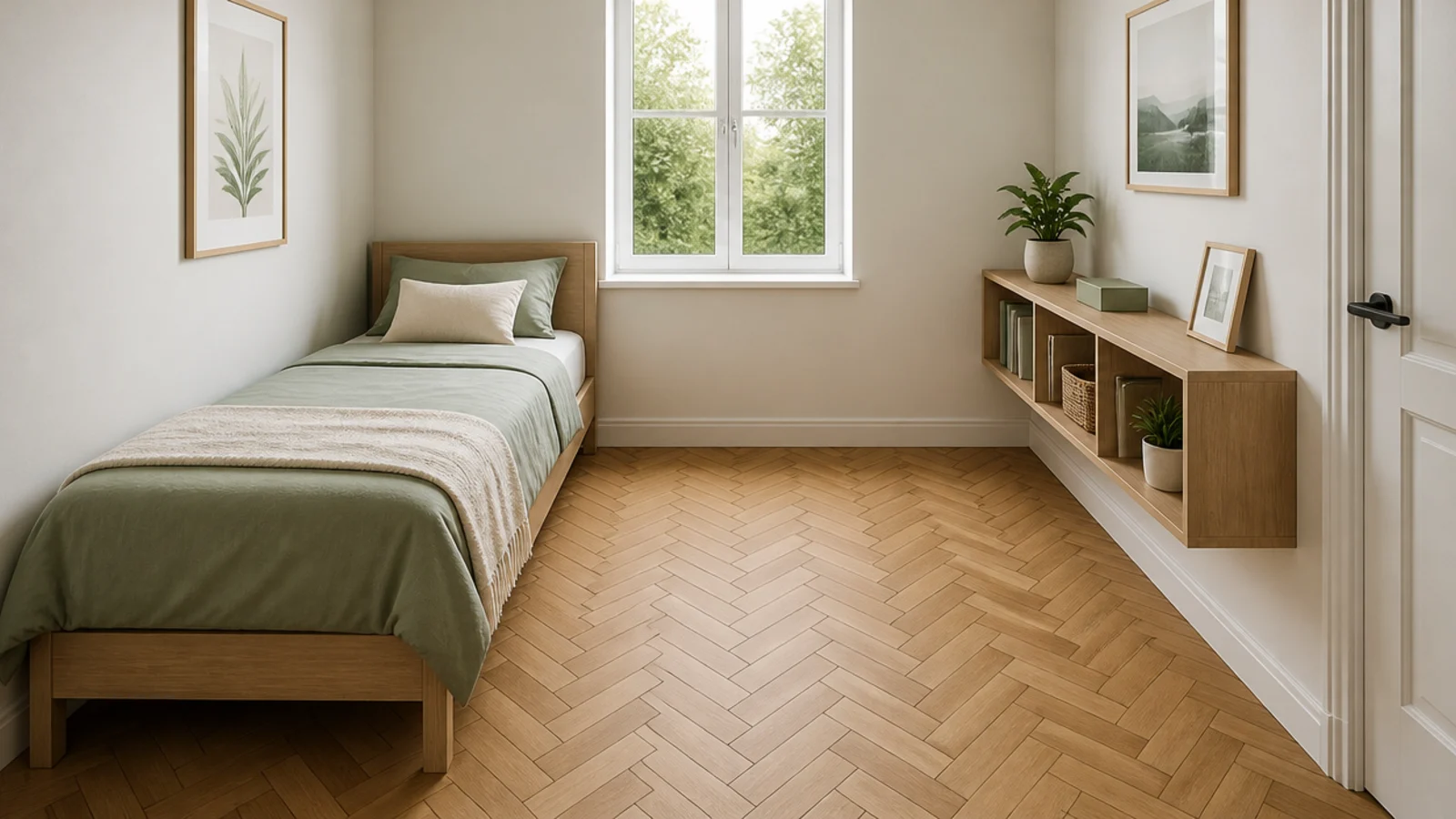
Short wood-effect planks around 100 by 600mm make herringbone affordable, because the cutting waste falls on cheap material. Allow 15 percent extra, set out from a centre line, and the pattern repeats enough times across a small room to read properly. The wooden flooring bedroom guide covers how pattern behaves under a bed.
21. Break up the expanse with a rug and a runner
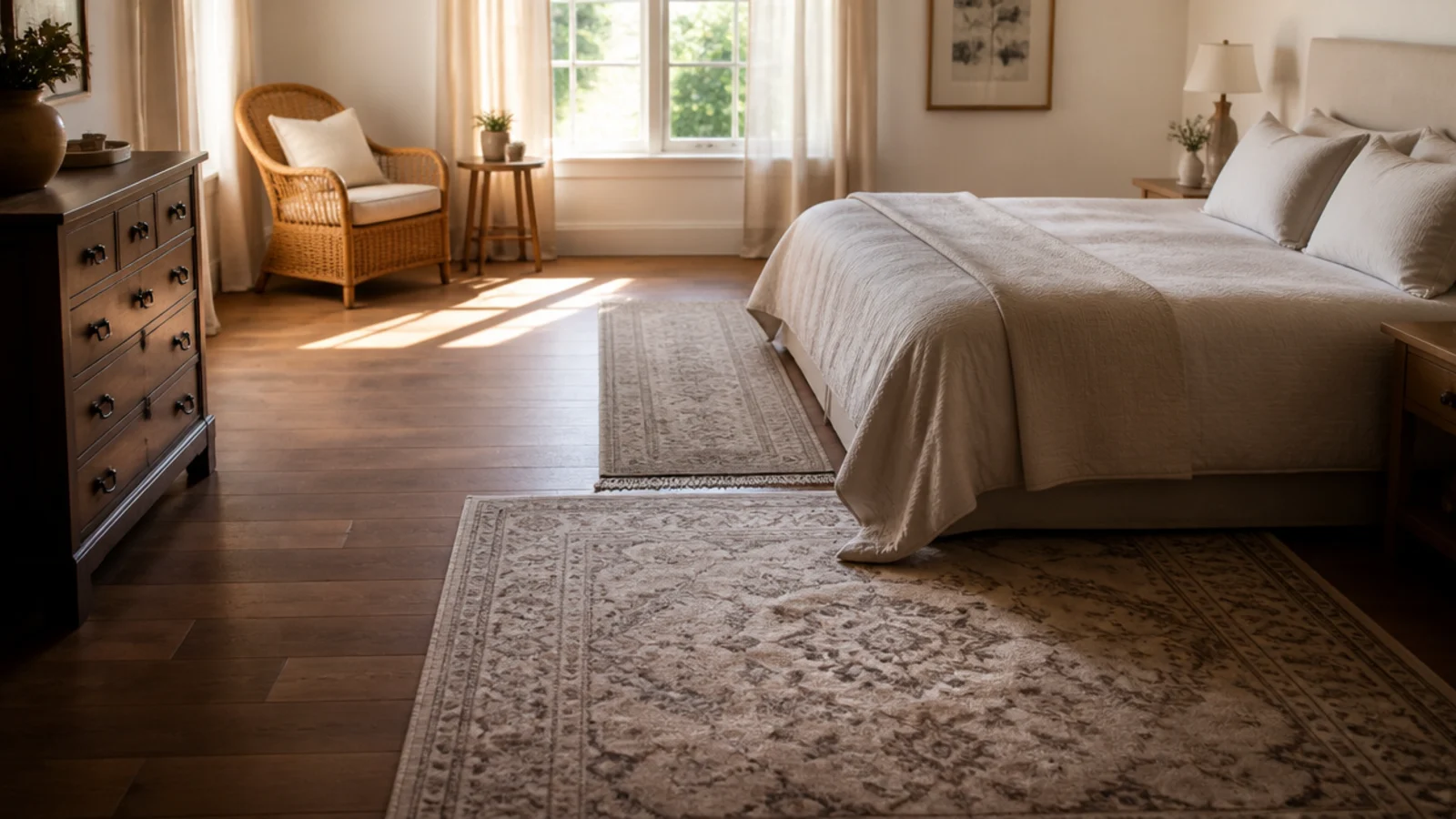
A whole bedroom in one plank finish can read as sheet material rather than as a floor. A rug at the foot of the bed and a runner down one side breaks the surface into zones and adds the texture the print cannot. Rug sizing rules translate straight across to bedrooms.
22. Do not pin a floating floor with heavy furniture
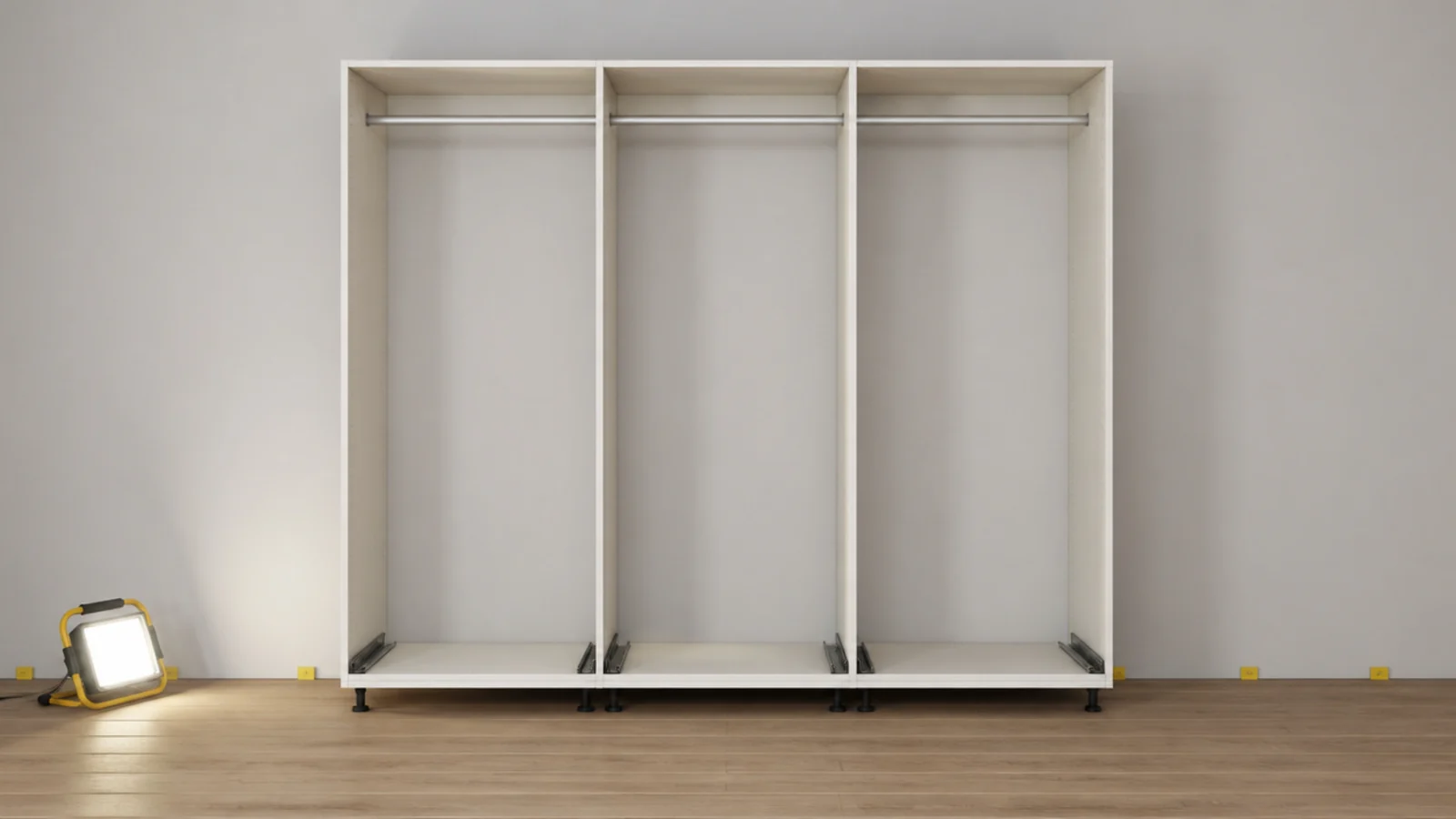
A floating floor has to move as one sheet. A loaded wardrobe standing on it near a wall can trap it and cause a ridge to lift somewhere across the room. Keep heavy items away from the perimeter, or stand them on the subfloor and lay planks up to them.
23. Leave an expansion gap even for vinyl
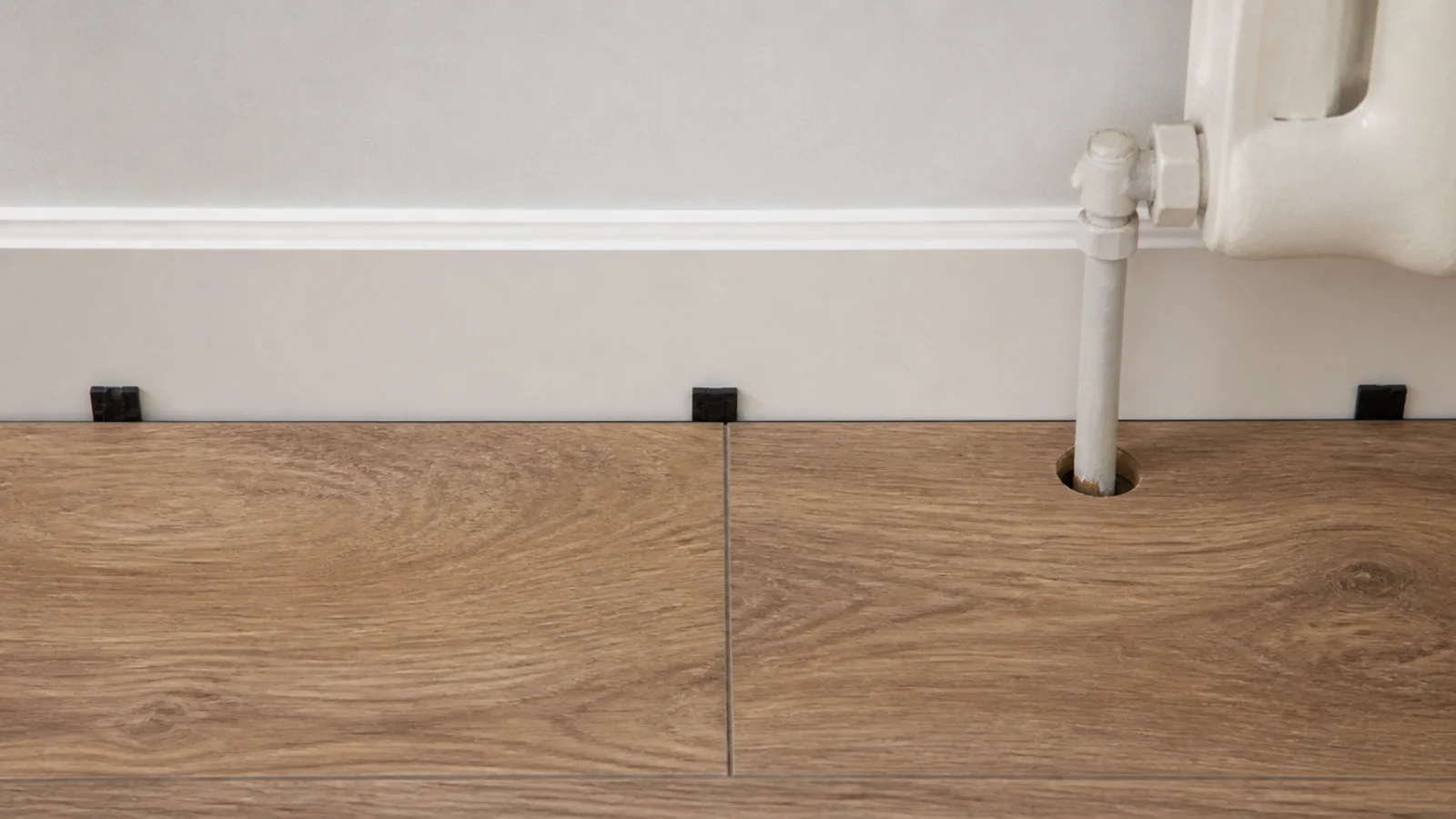
Vinyl and rigid core planks expand with temperature rather than humidity, but they do expand. Leave 5 to 8mm at every wall, doorframe and pipe, hidden behind beading. A floor laid tight to the skirting in January will buckle in the first genuinely hot week.
24. Work out the cost per square metre honestly
Price the plank, the underlay, the trims, the levelling compound and the beading together. Cheap planks with an expensive levelling job often cost more than a mid-range click system over a sound floor. Measure the room, add 10 percent, and get the whole figure before deciding.
25. Plan the reinstatement before you lay a plank
Know exactly how the floor comes out, where the original floor covering is stored, and what tools the removal needs — before the first plank goes down. If the answer to any of those is unclear, choose a different system. A reversible floor you cannot actually reverse is just an expensive one.
Rented bedrooms usually need storage as badly as they need a new floor, and taking it off the ground is what keeps a small room workable. The small walk-in closet layouts work in a fitted alcove as well as a dedicated room.
Mistakes to Skip
- Ordering before measuring the door gap. A floor that stops the bedroom door closing is a floor that comes straight back up, and delivery charges rarely go both ways.
- Sticking peel-and-stick planks to a landlord's timber or carpet. Adhesive on a floor you do not own turns a reversible improvement into a deposit deduction.
- Laying tight to the skirting. Vinyl expands with heat, and a floor with no perimeter gap ridges up in the middle of the room during the first hot spell.
- Throwing away the original floor covering. Reinstatement is what makes the whole project acceptable, and a carpet you skipped cannot be put back at any price.
Frequently asked questions
Can you lay wood-look planks in a rented bedroom?
Usually yes, if nothing is permanently fixed and the original floor is undamaged underneath. Floating click planks and loose-lay planks both lift out cleanly. Check the tenancy agreement first, photograph the existing floor before you start, and keep whatever you remove so it can go back.
How thick can a plank floor be before the door catches?
Measure the gap under the door leaf before ordering. A two to three millimetre peel-and-stick plank usually clears an existing gap; a click system with underlay adds five to eight millimetres and often does not. Taking a door off and trimming it is a change most landlords will not allow.
What wear layer does a bedroom floor need?
Twelve mil is genuinely enough in a bedroom, because there are no shoes, no grit and very little traffic. Save the twenty mil specification for kitchens and hallways. That difference alone can cut the cost of a small bedroom floor by roughly a third.
Will a floating floor sound hollow over a bare subfloor?
It can, especially over concrete or a chipboard deck. A bonded cork or foam backing of one to one and a half millimetres, or a separate acoustic underlay, deadens the drum sound noticeably and improves impact noise for whoever lives below you.
How do you remove peel-and-stick planks without damage?
Warm each plank with a hairdryer or heat gun on low, lift a corner with a plastic scraper and peel slowly at a shallow angle. Residue comes off with an adhesive remover suited to the original floor. Test the method on one plank in a wardrobe before committing to the room.
Want more like this? Browse all 15 wooden flooring guides — they all use the same measurements and budget tiers.

Pin it for later
Save this to your Wooden Flooring board
Pin it now so it is waiting for you when the tape measure comes out — and so the next person hunting for this idea can find it too.
Save this pinKeep going
More ideas worth saving while you have the tape measure out.