Rugs In Living Room · Listicle
20 Farmhouse Rugs Living Room Ideas To Steal

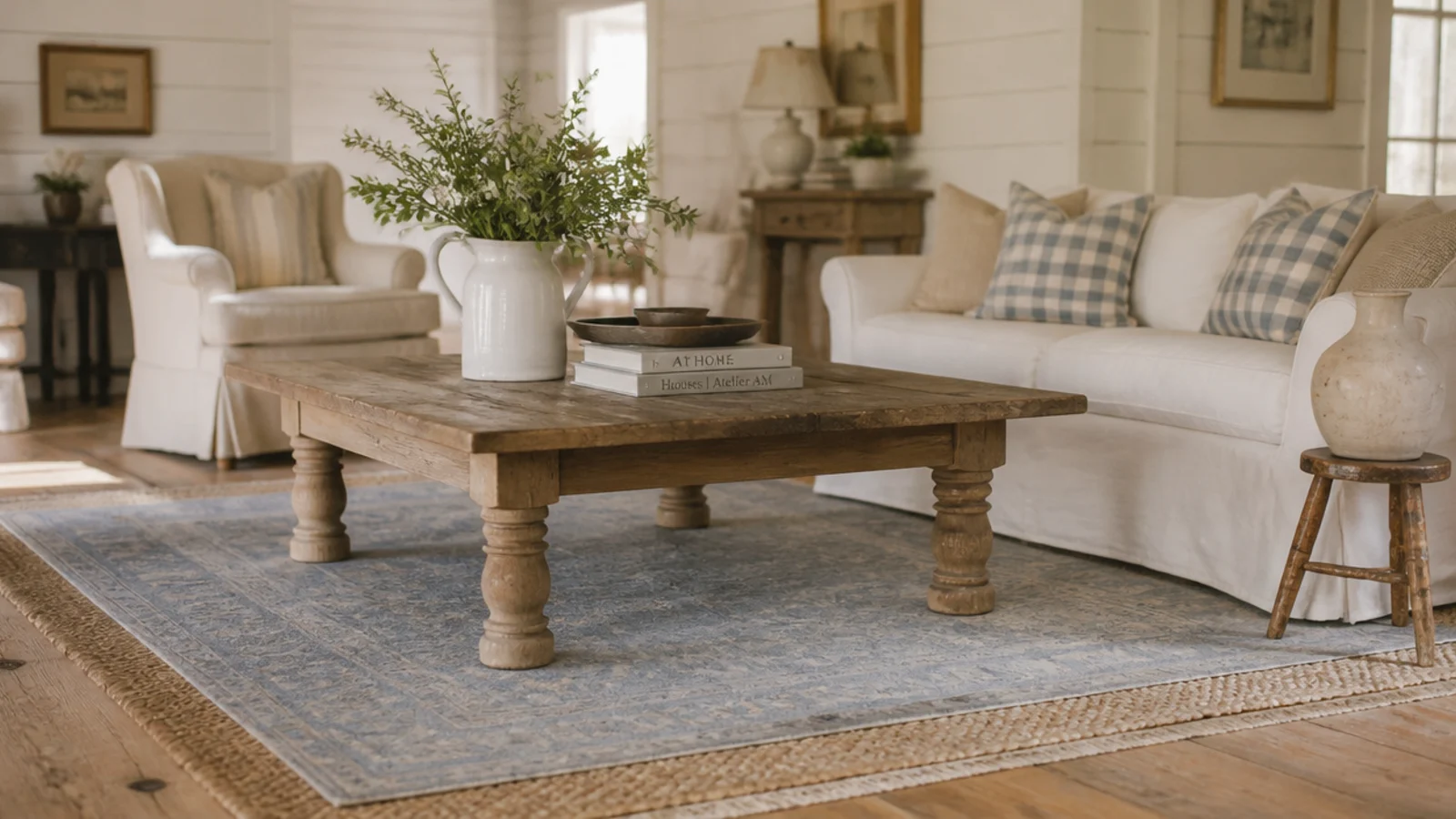
Farmhouse rugs living room floors are supposed to look better after five years of boots, dogs and dropped crumbs than they did on day one. That only happens if the fibre and the pattern are chosen for wear rather than for a photograph. I have laid rugs in two old houses with wide plank floors and a wood stove in the corner, and the ones that worked were rarely the palest or the softest. Twenty ideas below, with the fibre limits, sizes and clearances that decide which ones actually survive.
In this guide22 sections — tap to openHide
- 1.What farmhouse rugs living room floors have to survive
- 2.A jute 9x12 as the base layer of the whole room
- 3.Braided wool in an oval or a round
- 4.A ticking stripe cotton flatweave
- 5.Buffalo check in a muted colourway
- 6.A washed vintage Persian with a very low pile
- 7.A hooked wool rug in front of the fire
- 8.A rag rug made from cotton strips
- 9.A runner along the back of a long sofa
- 10.A wool and jute blend for spill tolerance
- 11.A grain sack stripe across a wide field
- 12.Layer a small hooked rug over the jute base
- 13.Neutral first, pattern second
- 14.Faded blue and cream as the default palette
- 15.Keep the pile low and clear of the stove
- 16.Washable cotton for the dog and the boots
- 17.Choose a pad that suits gapped plank boards
- 18.Size around the hearth, not just the sofa
- 19.Seagrass where boots come through
- 20.Beat it outside monthly and wash it yearly
- 21.Buy secondhand and have it washed first
- 22.Mistakes to Skip
What farmhouse rugs living room floors have to survive
Start with the base layer. A large jute or wool-jute rug at 8x10 or 9x12 gives the room its texture and its proportion for $200 to $450, and everything else layers onto it. Jute's limit is water: a spilled glass leaves a permanent brown ring, so keep it away from drinks, plant pots and the path wet boots take. A wool-jute blend at $350 to $700 solves most of that and is softer to sit on.
Then choose pattern over solid. Ticking stripes, muted checks and faded florals hide mud and crumbs in a way a flat cream field never will. In a room with a dog, that single decision is worth more than any cleaning routine.
Size around the fire before the sofa. If there is a wood burning stove, read the clearance on its data plate — commonly 16 to 36 inches at the front and 8 to 16 at the sides — and keep every rug entirely outside it, with stone or a hearth pad covering that zone instead. Embers pop out when the door opens, and both jute and cotton catch quickly.
Finally, pick the pad for the floor you actually have. Wide antique boards move seasonally and open small gaps, and a thin plastic mesh sinks into them. A quarter-inch felt and natural rubber pad spans the gaps, grips properly and stops the rug sliding, which on a hard old floor is a real trip hazard rather than a tidiness question. For the old wool that ends up on top, the vintage buying guide covers what to check.
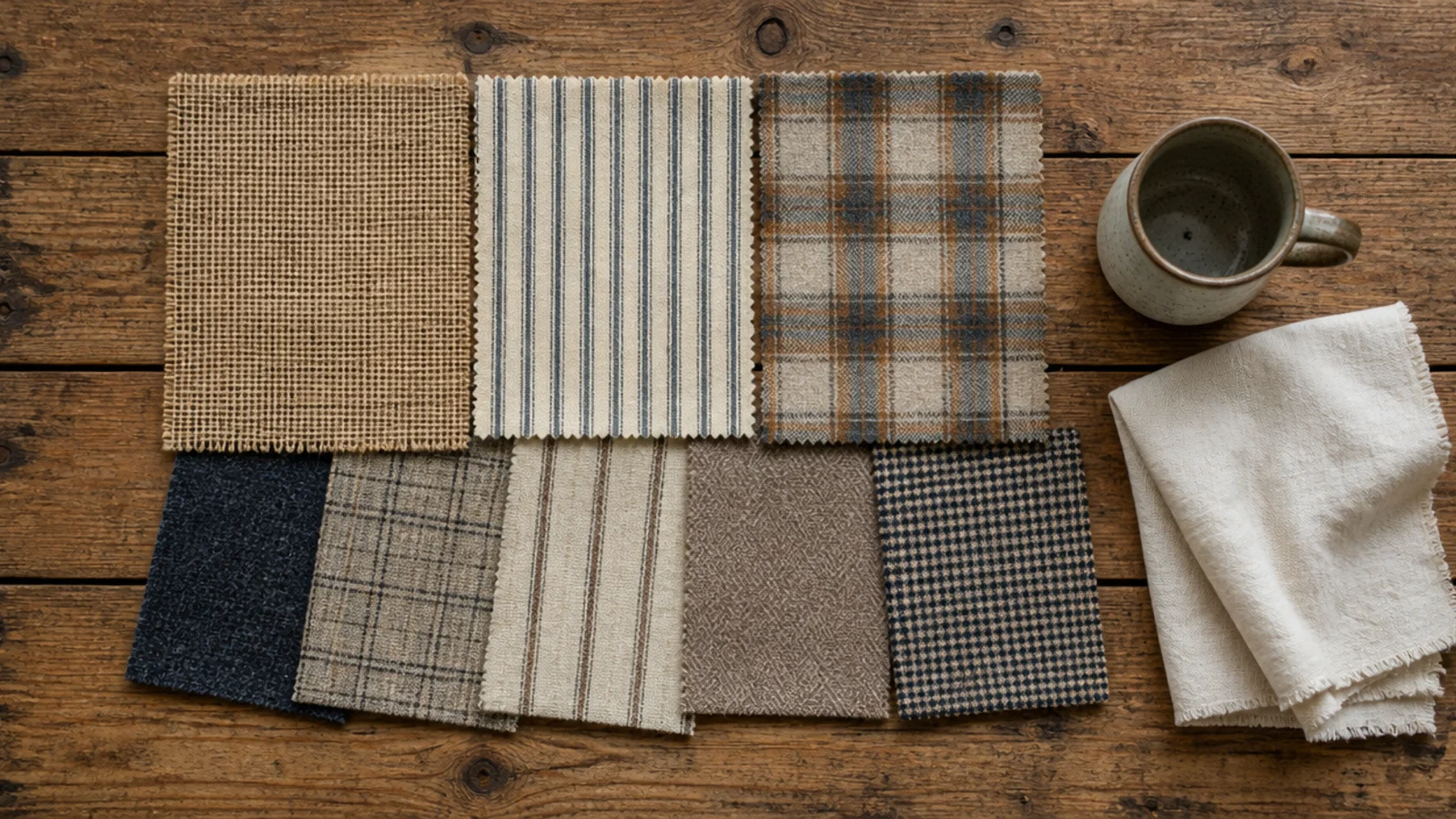
1. A jute 9x12 as the base layer of the whole room
One large natural texture does more for an old room than any amount of pattern. A 9x12 jute suits a room of roughly 14x16 feet and up, reaching 6 to 8 inches past every furniture leg. Buy it as the permanent layer and change what sits on top of it seasonally, which is far cheaper than changing the floor.
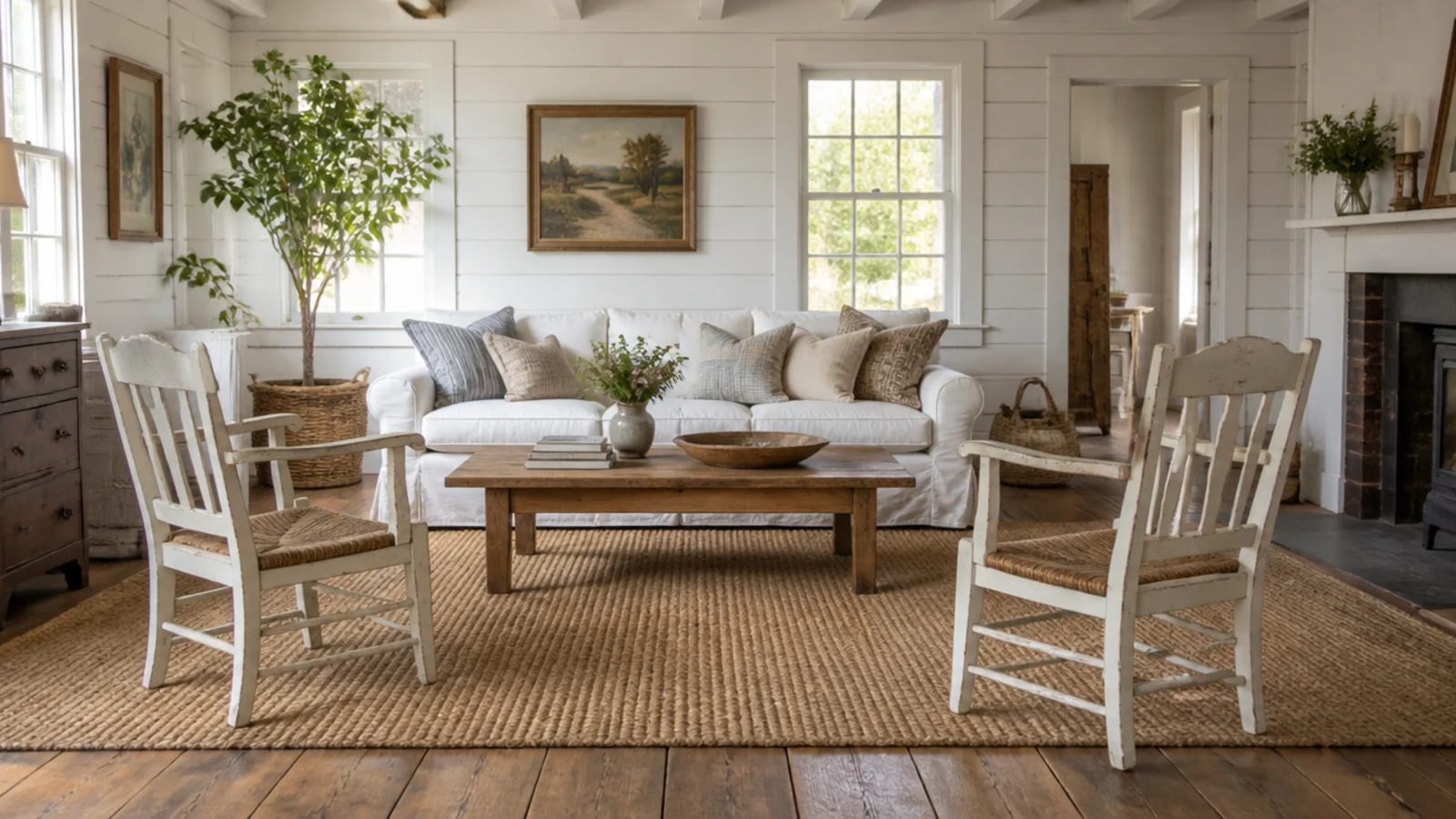
2. Braided wool in an oval or a round
Braided construction hides soil better than almost anything because the surface is already visually broken up. Ovals suit a hearth or a bay; rounds suit a small seating nook. Look for wool rather than polypropylene braid if it will be sat on, and expect $150 to $400 for a 5x8 oval.
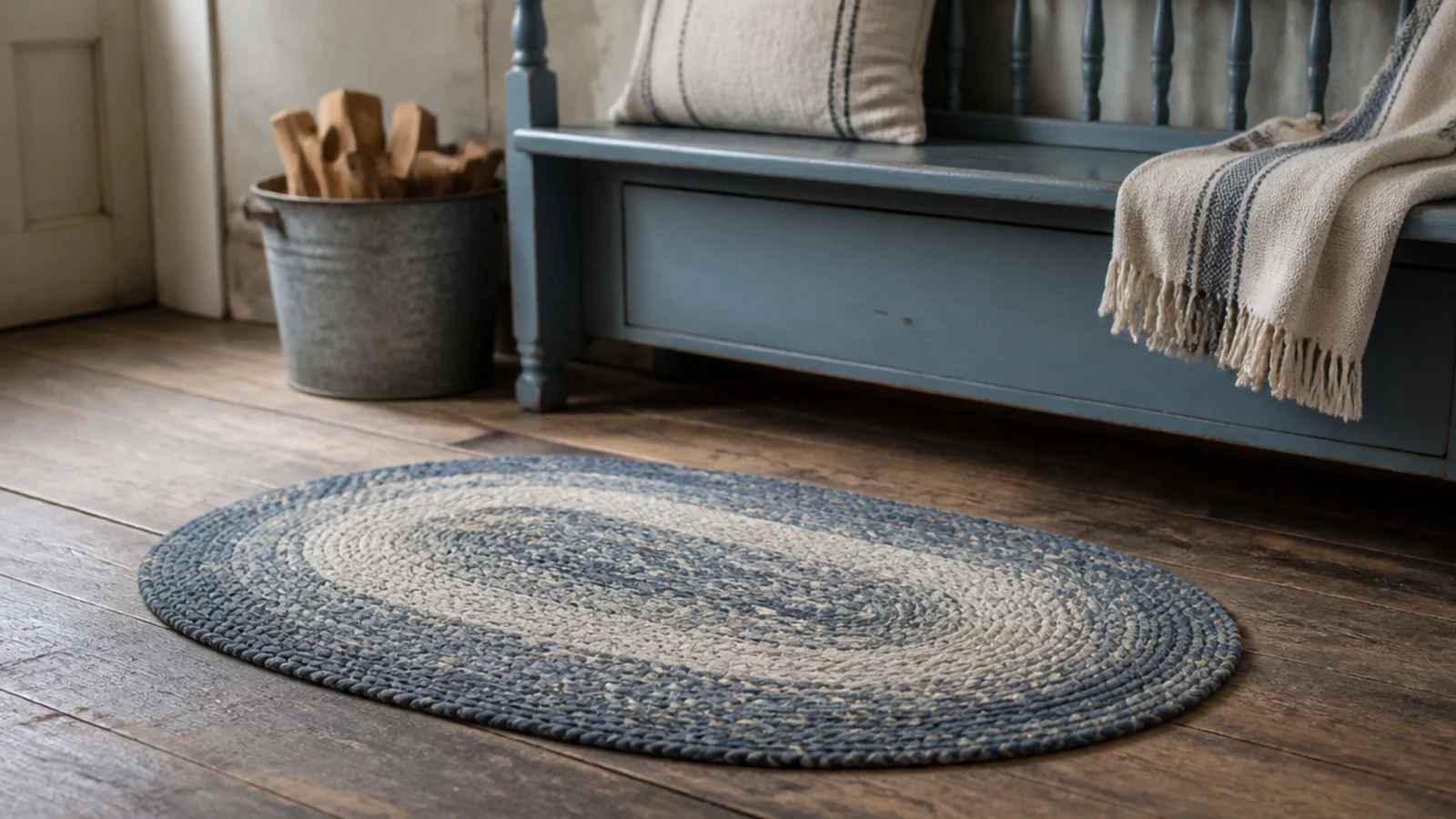
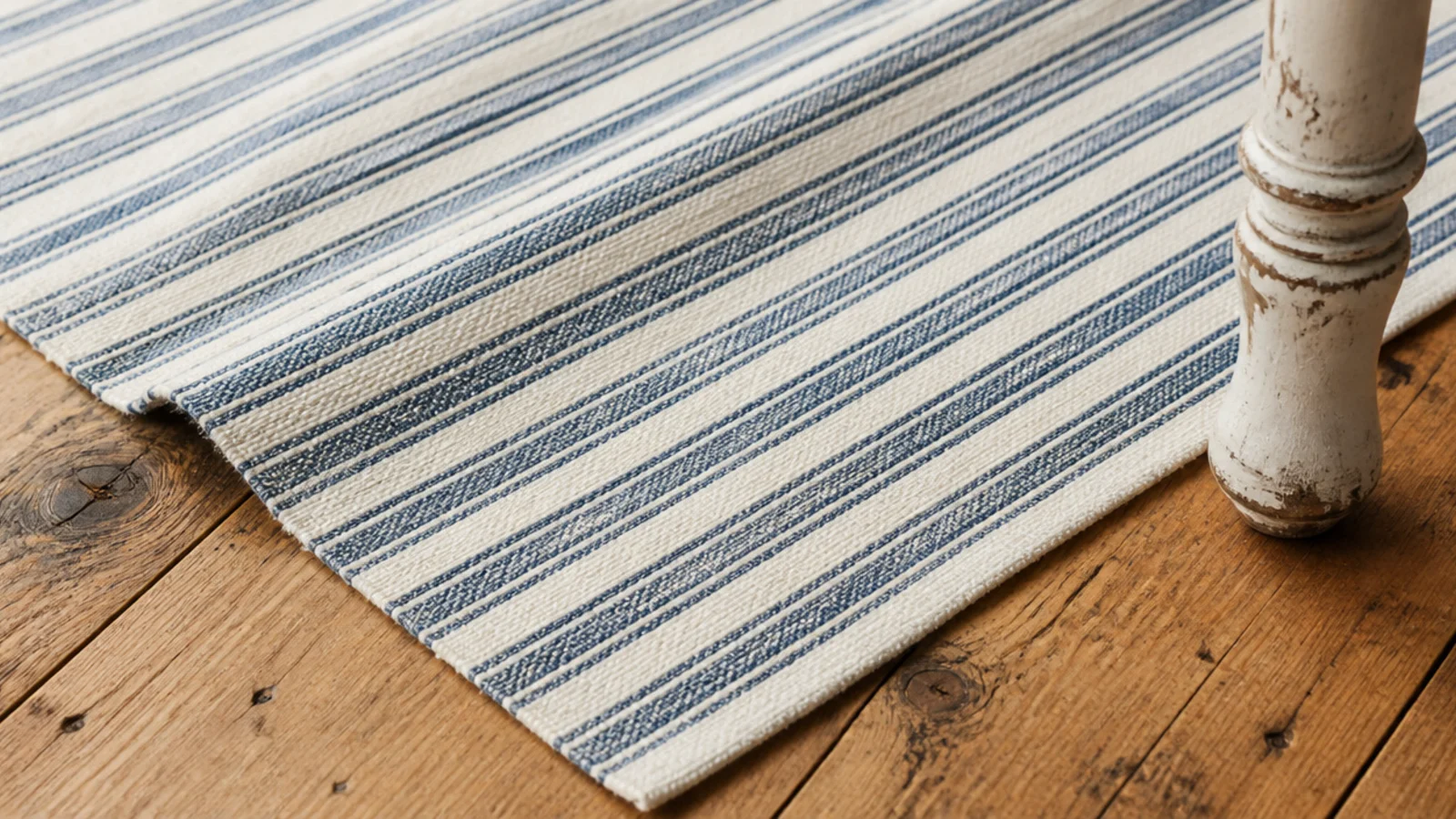
3. A ticking stripe cotton flatweave
Ticking is the stripe that came off mattress covers and grain sacks, which is exactly why it looks right on an old floor. Cotton flatweaves up to about 5x7 go in a domestic washer on cold. They wrinkle and creep, so pad them, and expect $80 to $180 depending on size.
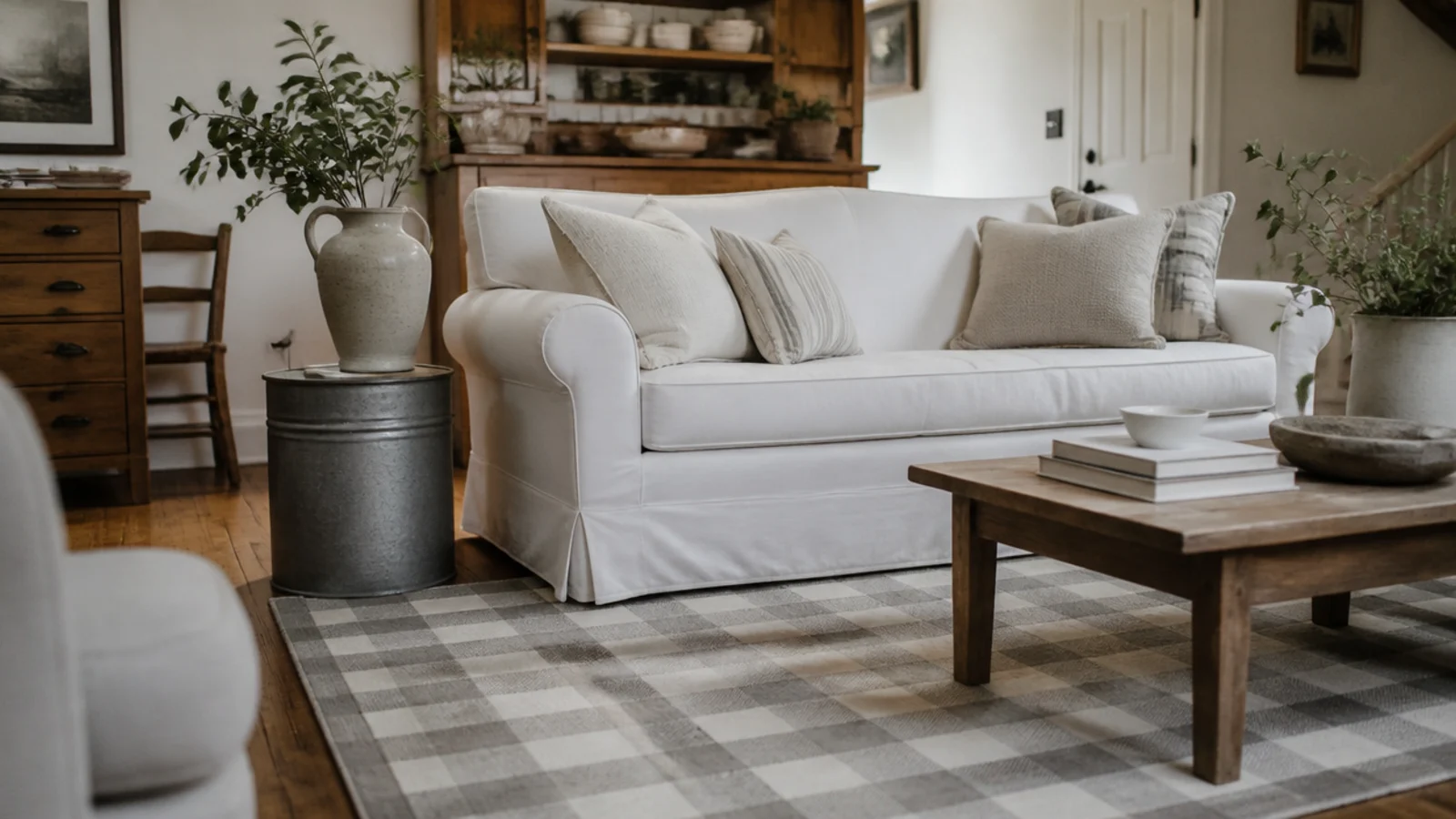
4. Buffalo check in a muted colourway
Check is a farmhouse staple that goes wrong in high contrast. In black and white it dominates every room it enters; in soft grey and cream, or faded indigo and ecru, it behaves like a texture. Keep the check squares generous — small checks read as a fabric sample across a large floor.
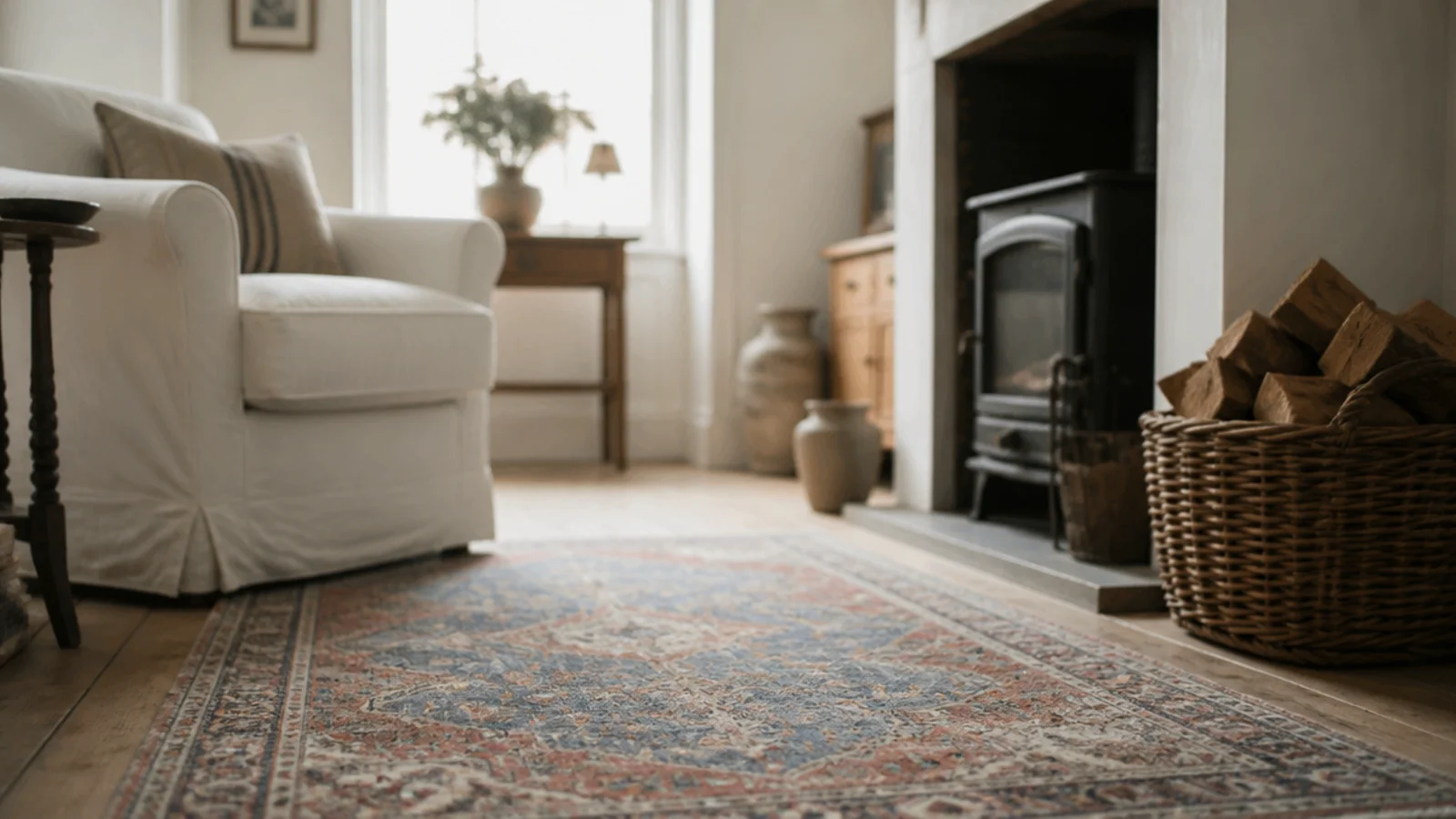
5. A washed vintage Persian with a very low pile
An old rug with a genuinely worn pile is the most practical thing you can put in a farmhouse room. There is nothing left to protect, furniture legs sit flat on it, and the faded colours suit aged timber. Budget $400 to $1,500 for a 6x9 and $3 to $6 a square foot to have it washed before it comes in.
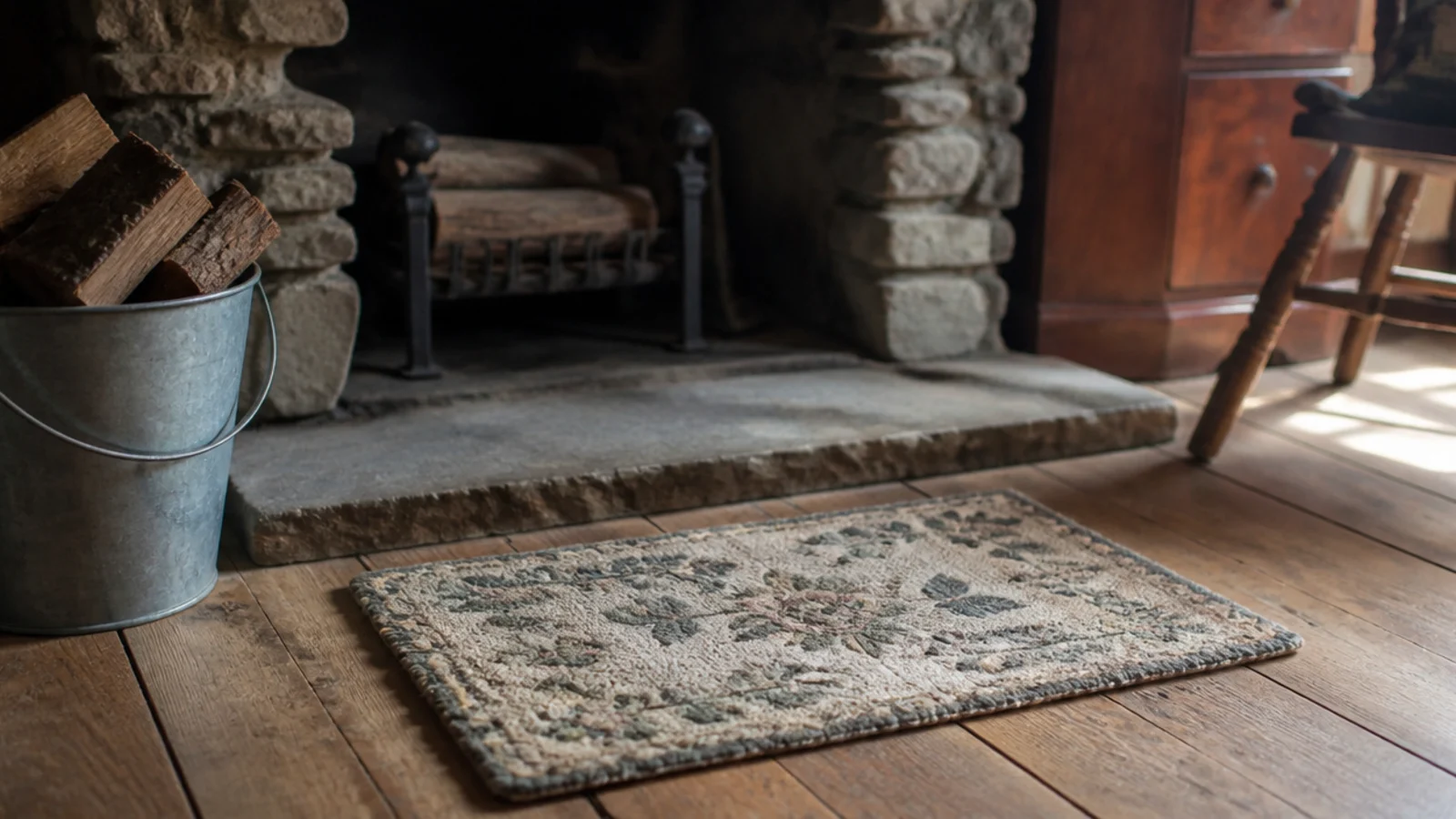
6. A hooked wool rug in front of the fire
Hooked rugs have a dense looped surface that stands up to a lot of foot traffic and is easy to spot-clean. Place it clearly outside the stove or fireplace clearance, and keep a stone hearth or hearth pad covering the zone where sparks land. Small hooked rugs run $60 to $200 and are easy to lift and shake.
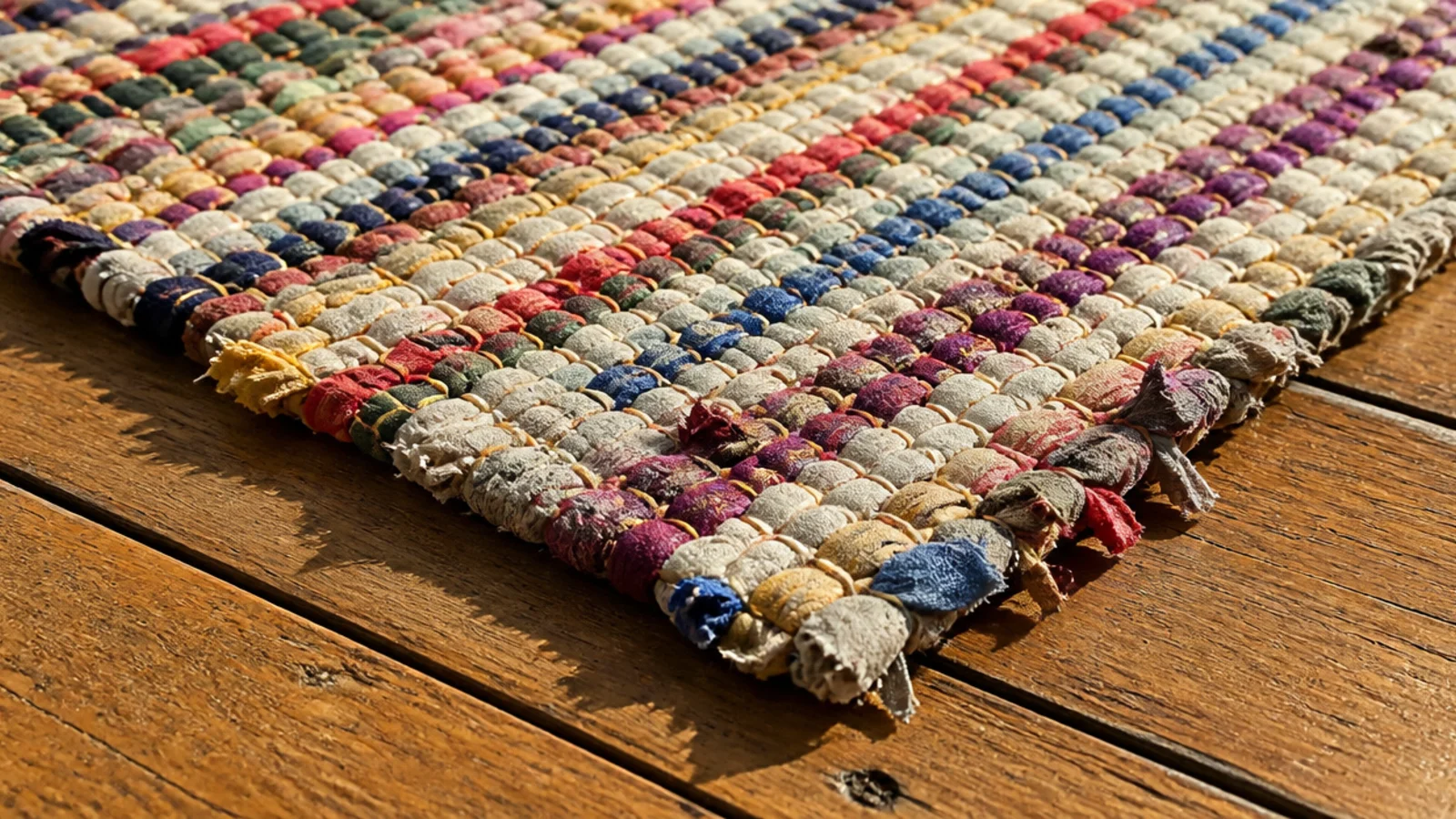
7. A rag rug made from cotton strips
Rag rugs wash like a bedsheet, cost very little, and were originally made from whatever fabric a house had spare. Sizes up to 4x6 handle a domestic machine comfortably. They are thin, so they need a pad, and they fade gently rather than wearing out, which suits a room that gets used hard.
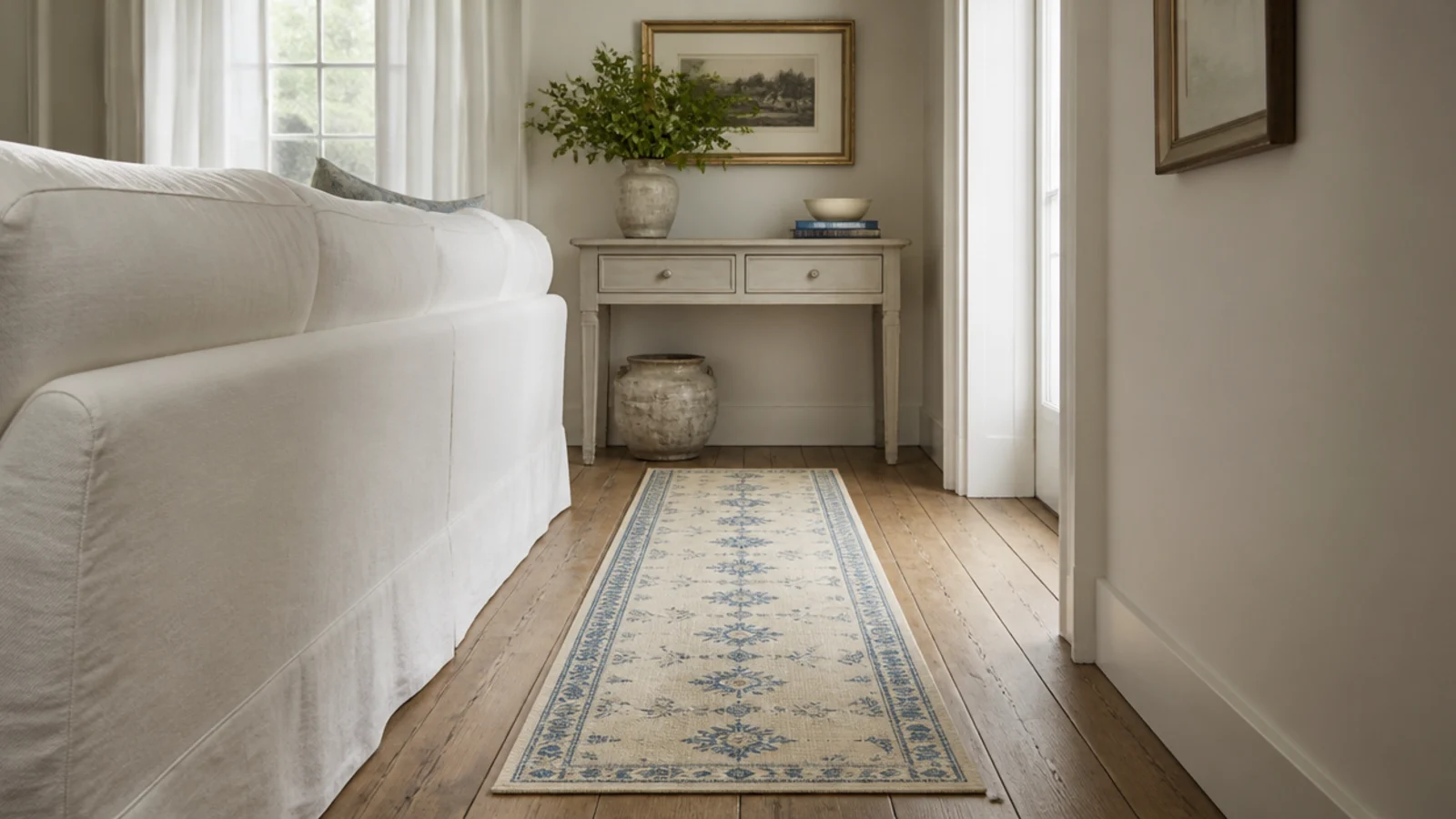
8. A runner along the back of a long sofa
If the route through the room runs behind the sofa, a 2.5x8 or 2.5x10 runner takes that wear on a strip you can replace for $80 to $150. Keep it 4 to 6 inches clear of the sofa so the two never touch, and use a full-length grip pad, because circulation runners move more than anything else.
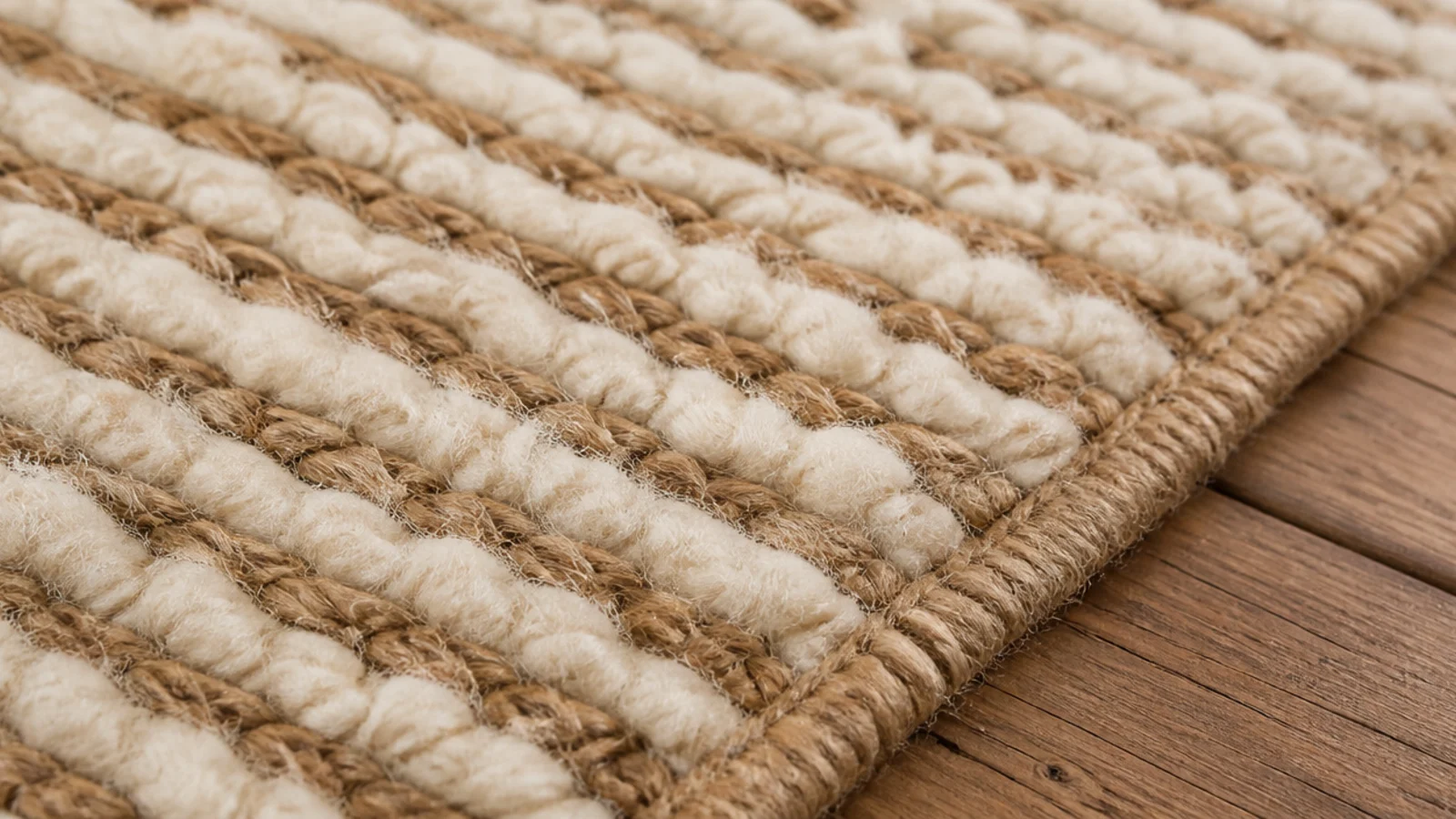
9. A wool and jute blend for spill tolerance
The compromise I recommend most in a family farmhouse room. You get most of jute's coarse texture with wool's far better behaviour around moisture, and a surface that is noticeably kinder to sit on. Expect $350 to $700 for an 8x10, and expect it to last two to three times as long as pure jute in a busy room.
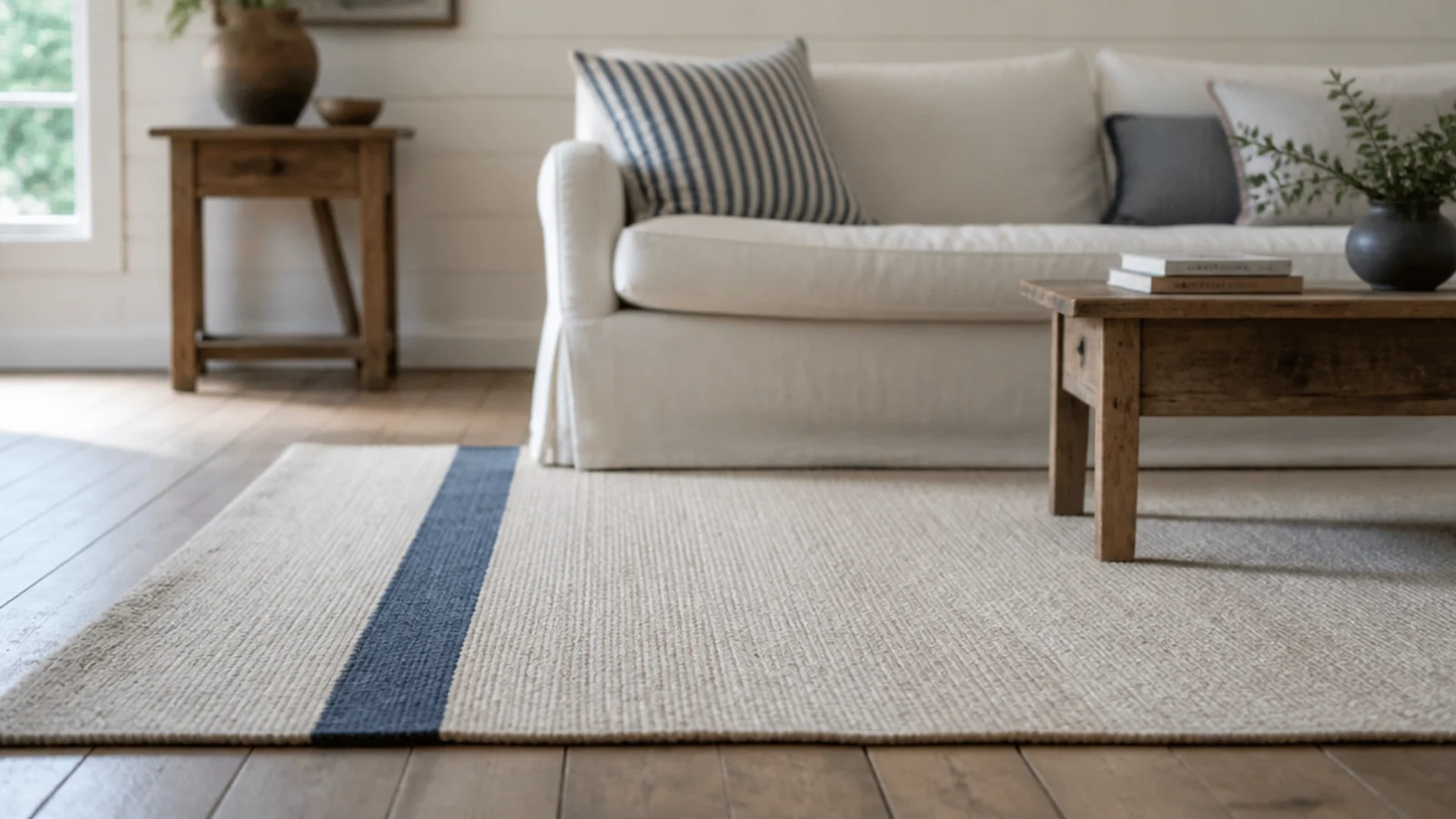
10. A grain sack stripe across a wide field
One broad stripe set off centre across a pale ground, exactly as it appeared on antique grain sacks. It gives a large plain rug a point of interest without introducing a repeating pattern. Run the stripe across the short dimension of a long room and it visually widens the floor.
11. Layer a small hooked rug over the jute base
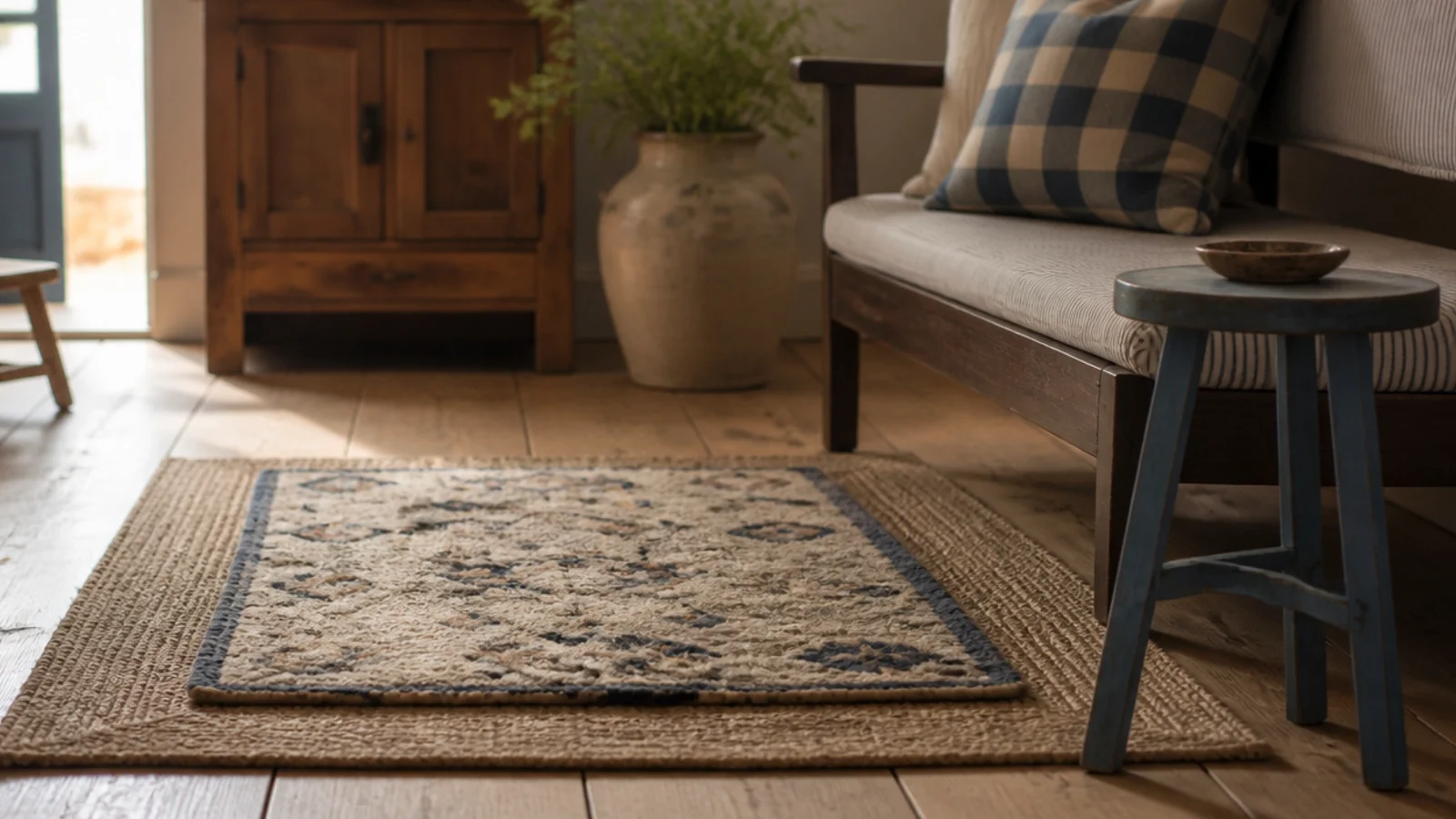
Jute is superb underfoot in boots and unpleasant under bare feet or knees. Layering a small wool or hooked rug on top, with 12 to 18 inches of jute showing on each side, puts something soft exactly where people sit. Grip-tape the two together so the top rug does not walk.
12. Neutral first, pattern second
In a room with beams, panelling and old timber, the architecture is already doing a great deal of visual work. A plain base rug with one patterned piece on top keeps the floor from competing. If you have to choose only one, take the plain large rug — the room supplies the character.
13. Faded blue and cream as the default palette
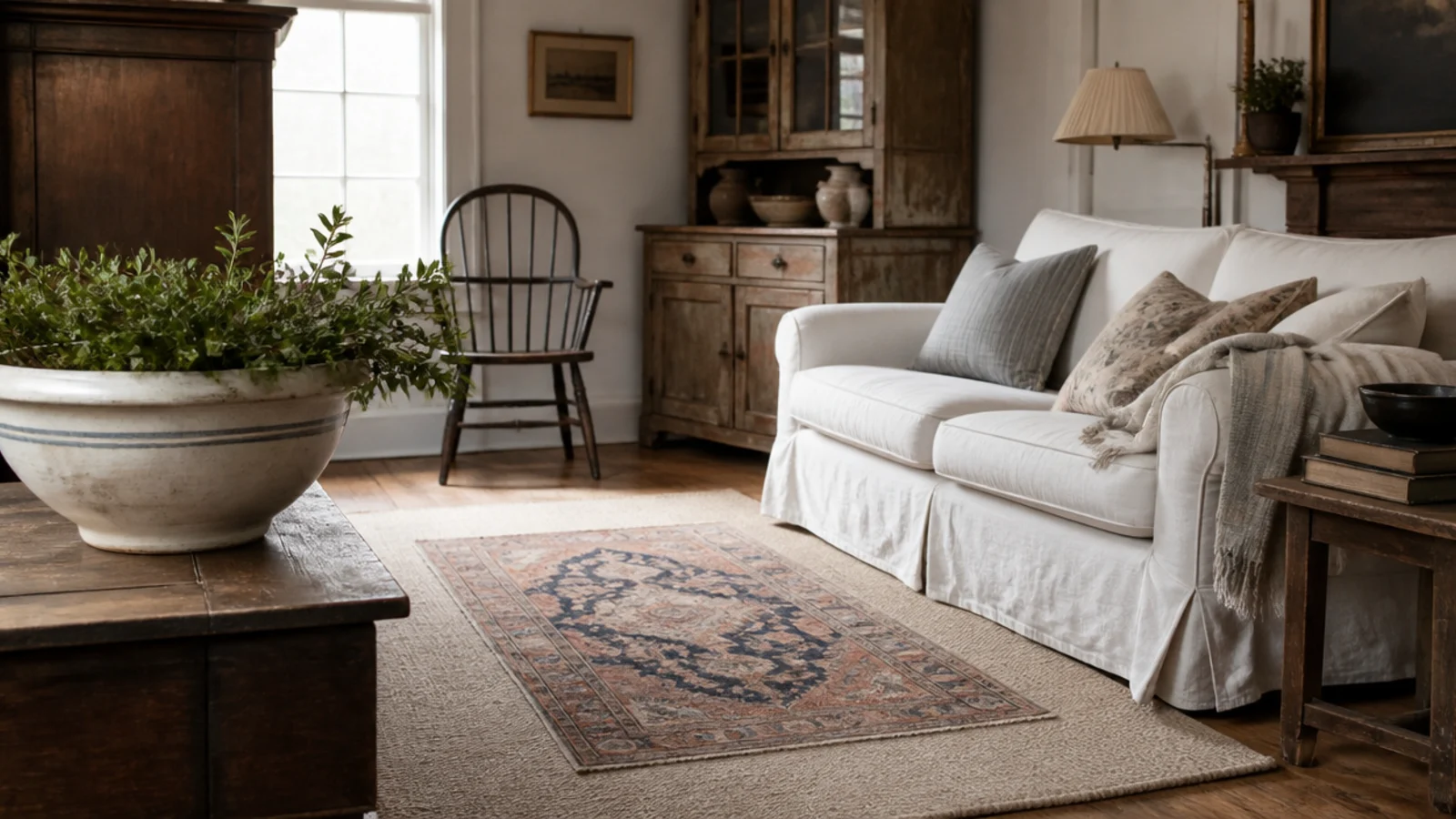
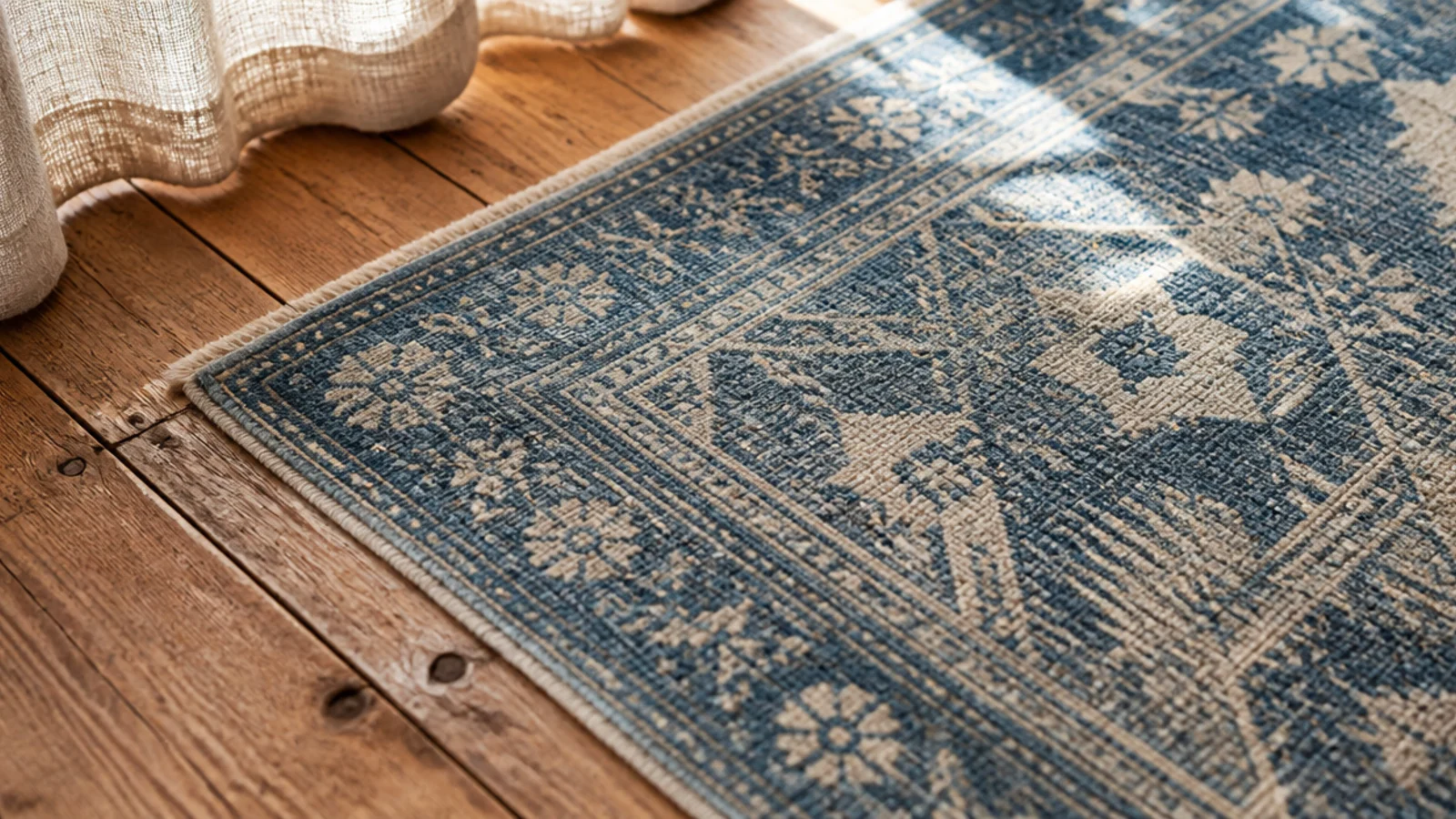
Indigo faded toward soft slate against warm knotted pine is the pairing that reads farmhouse without any props. It works because both colours have warmth in them. A clean bright blue against the same boards looks new and slightly out of place, however good the rug is.
14. Keep the pile low and clear of the stove
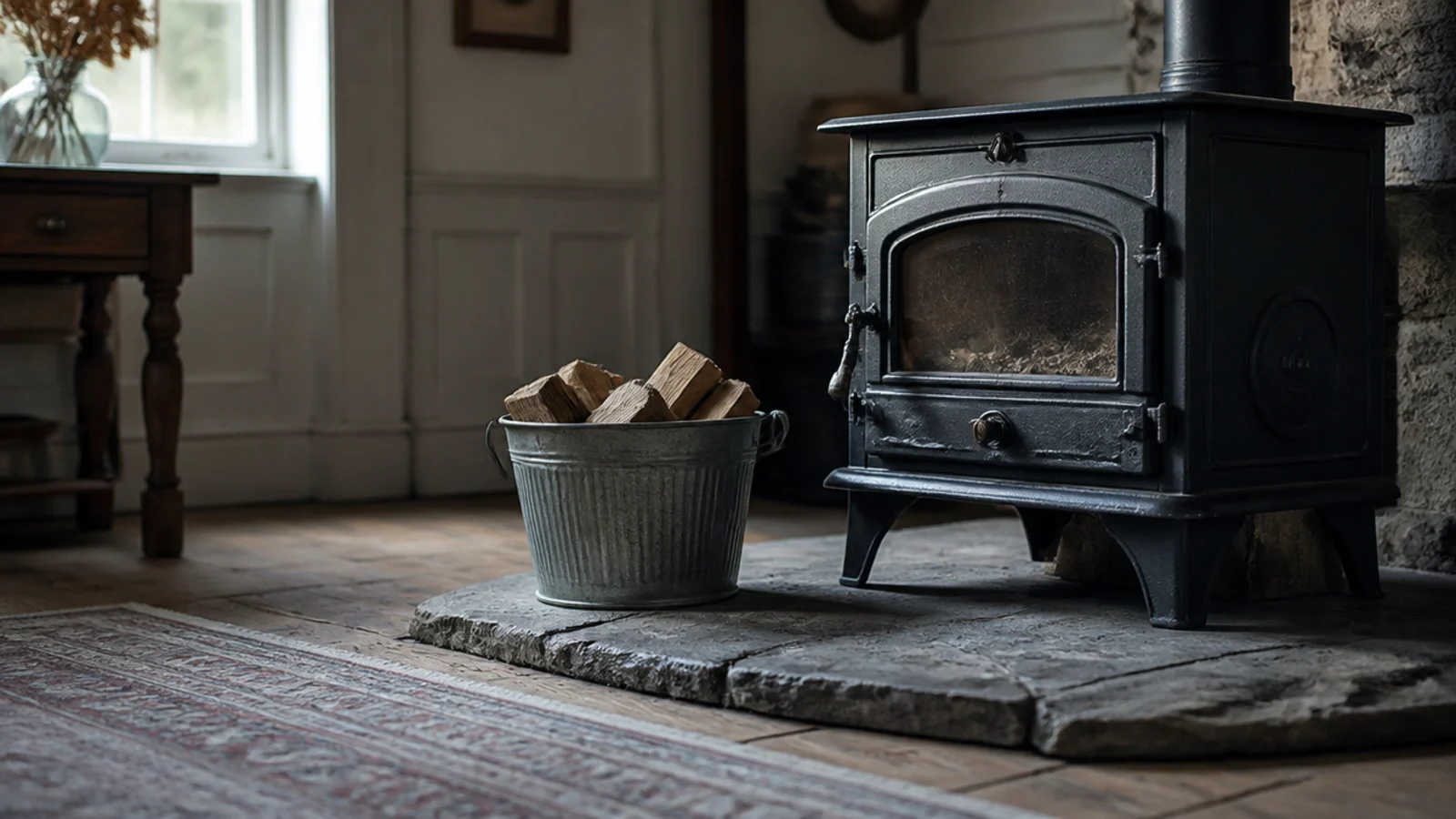
Around a wood burning stove, the rug's job is to stop before the clearance zone starts. Check the data plate, keep stone or a hearth pad in that area, and put nothing flammable inside it. Beyond the clearance, a low pile under a quarter inch also stays flat where people turn to tend the fire.
15. Washable cotton for the dog and the boots
Match the rug size to the machine rather than the room. A 3x5 fits a standard 3.5 cubic foot drum; a 5x7 needs about 4.5 cubic feet. Cold water, gentle cycle, no fabric softener, dry flat. In a house with animals, a rug you can actually launder beats a beautiful one you cannot.
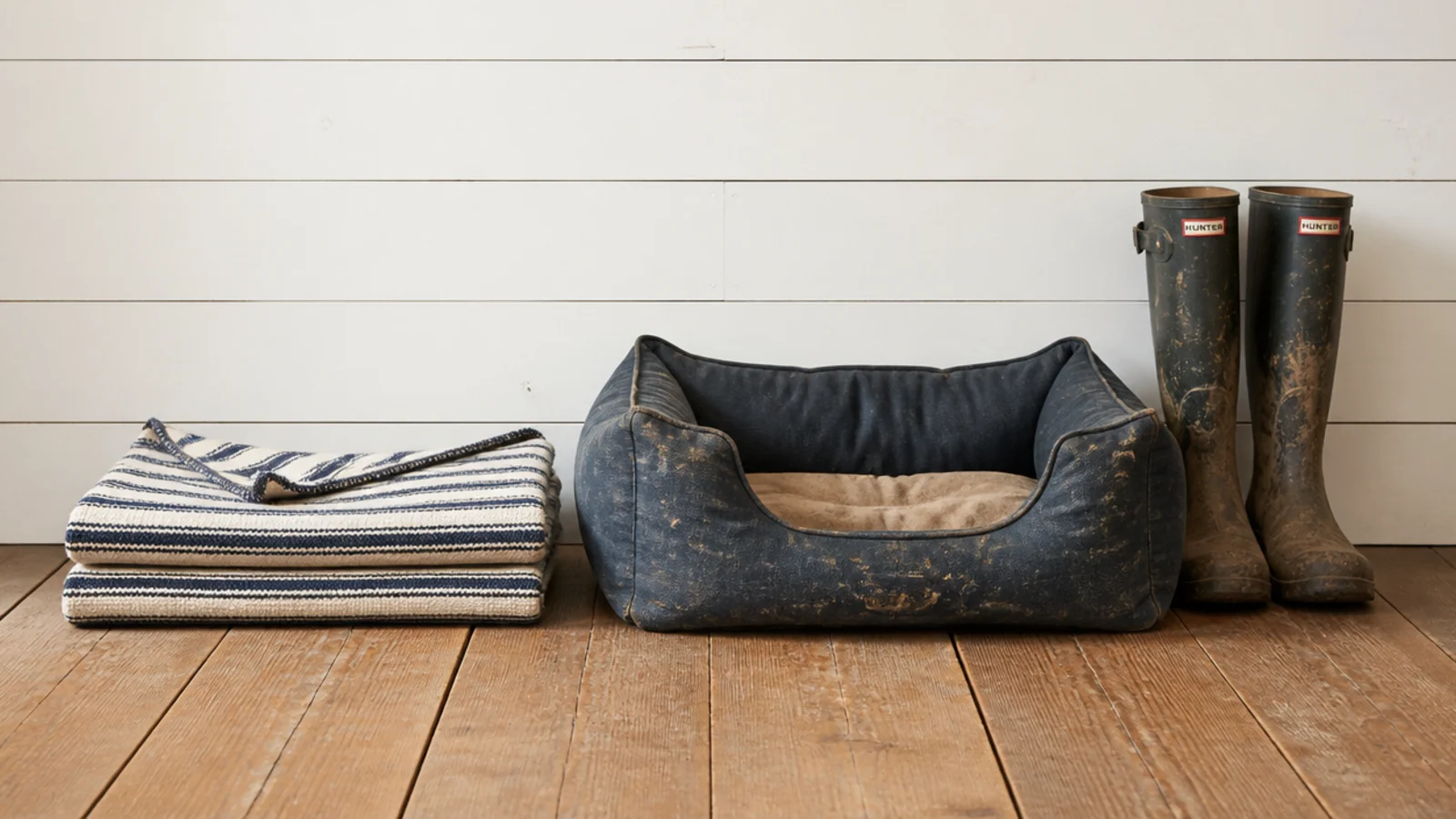
16. Choose a pad that suits gapped plank boards
Wide antique boards open and close with the seasons, and a thin plastic mesh pad sinks into the gaps and telegraphs every line through the rug. A quarter-inch felt and natural rubber pad spans them, grips the timber and cushions the rug. Cut it 1 inch smaller than the rug on every side.
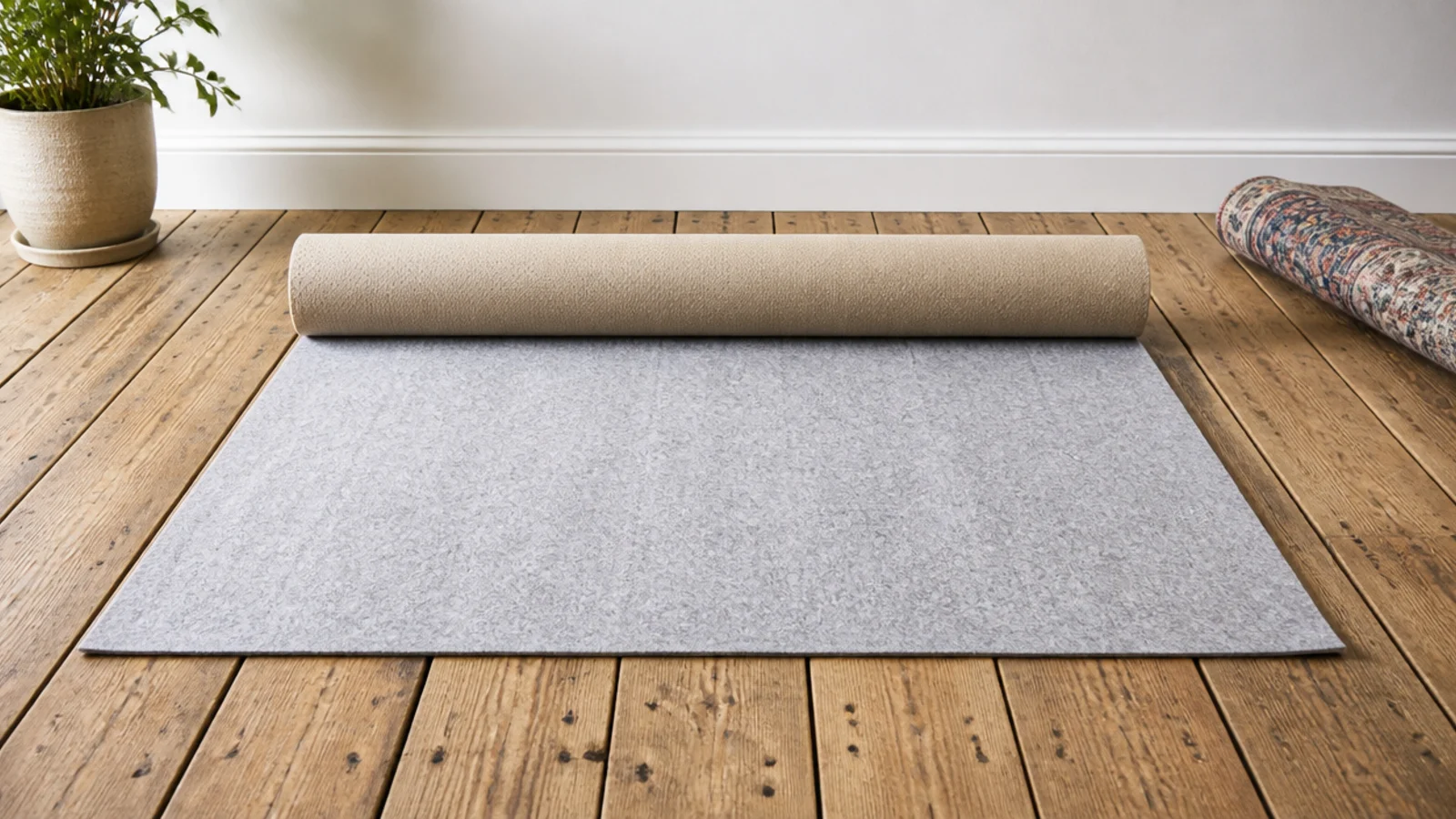
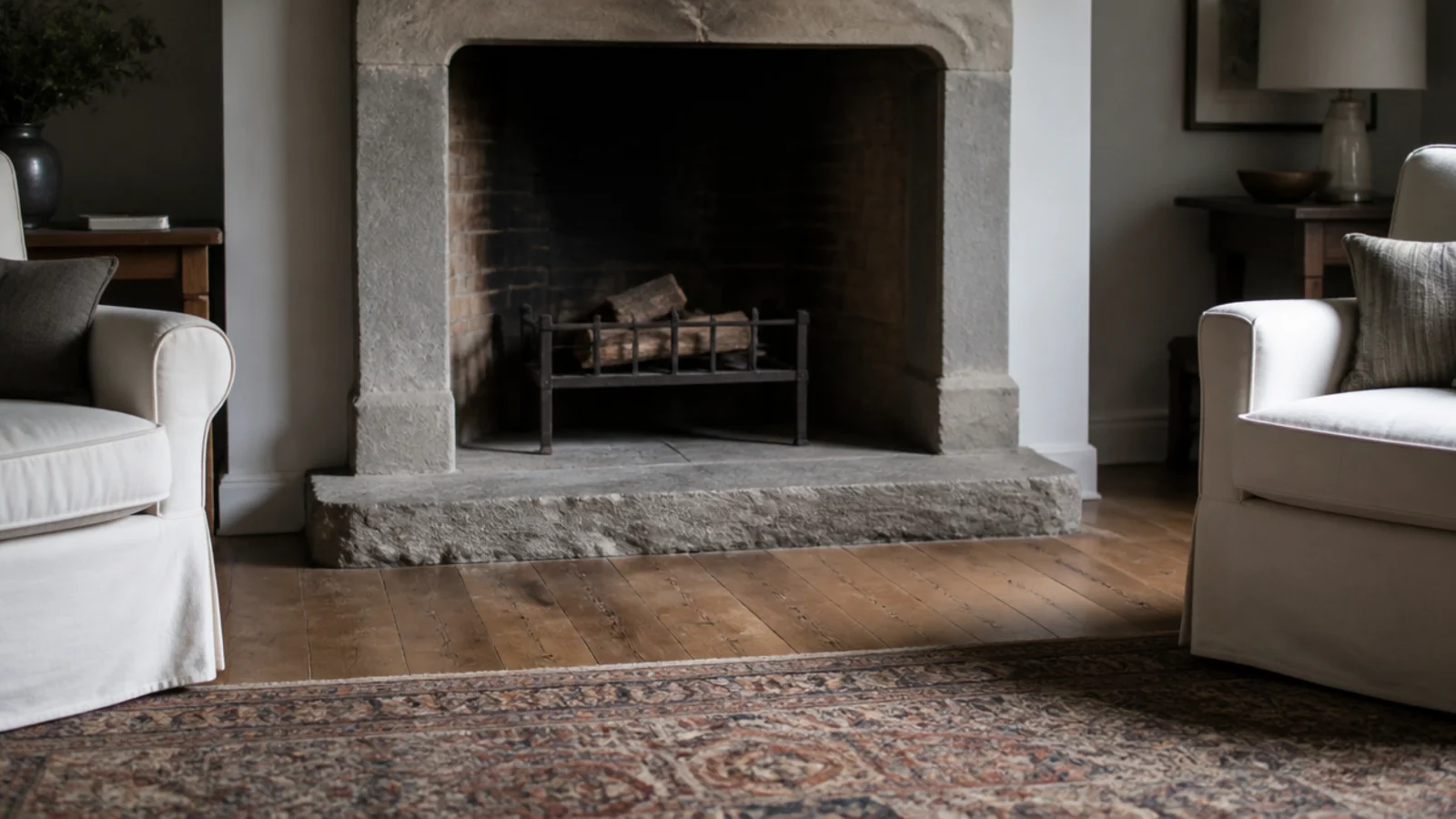
17. Size around the hearth, not just the sofa
In a room with a fireplace, the hearth is a fixed obstacle and the rug has to acknowledge it. Leave the hearth stone entirely clear and start the rug beyond it, keeping the front edge parallel to the hearth line. A rug that cuts across a hearth at an angle unsettles the whole room.
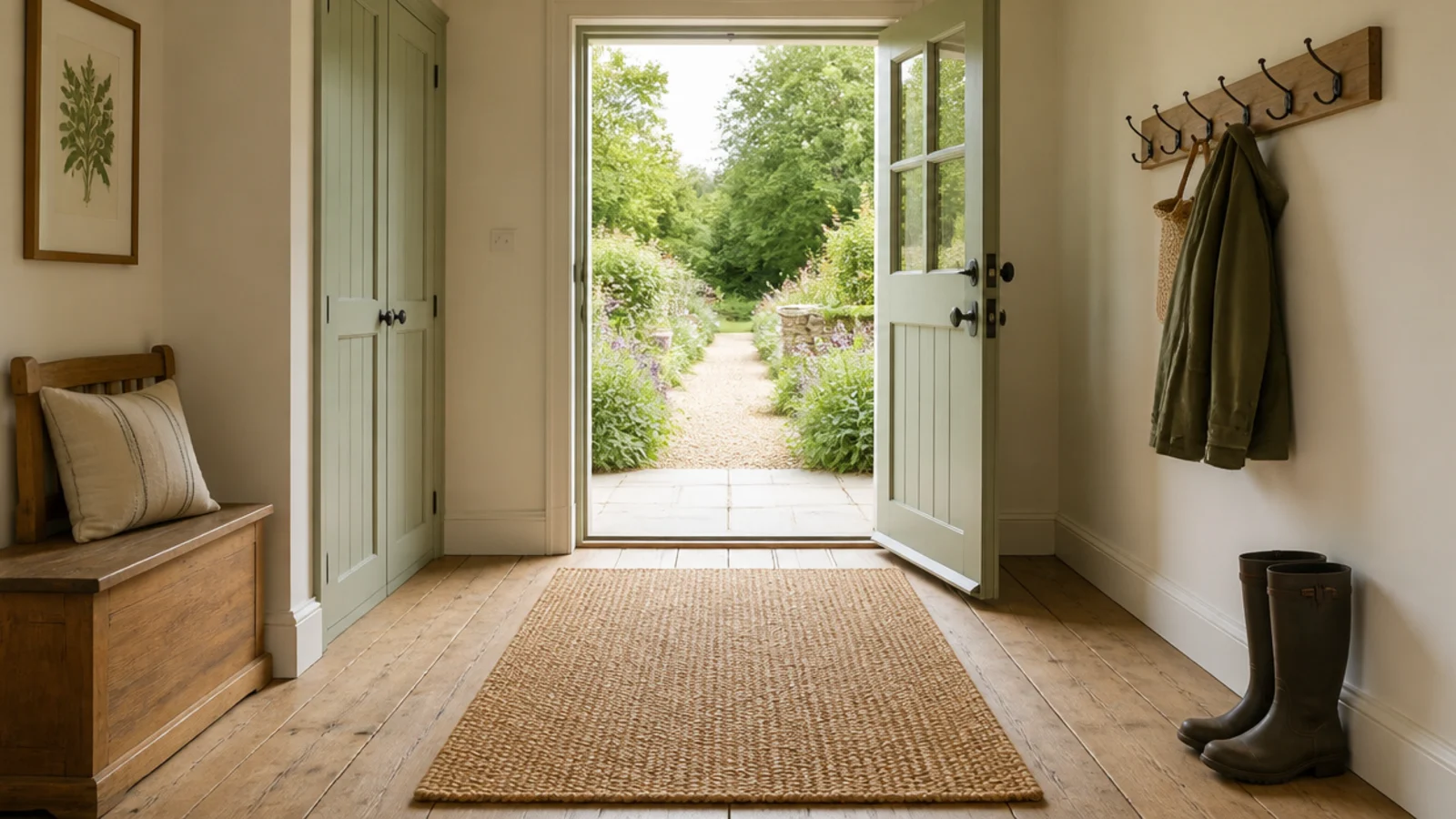
18. Seagrass where boots come through
Seagrass is tougher and smoother than jute or sisal and it takes mud well, which suits the route in from a back door. It also becomes slick when wet, so keep it out of any spot that gets genuinely soaked and pad it firmly. Expect $150 to $350 for an 8x10.
19. Beat it outside monthly and wash it yearly
Anything small enough to carry should go over a rail outdoors once a month. A beater lifts embedded grit that a vacuum leaves behind, and grit is what cuts fibres from the base. Book a professional wash on the large rug every three to five years at $3 to $6 a square foot.

20. Buy secondhand and have it washed first
Old rugs are cheap at house clearances because they are hard to move. Fold one pile-side out and listen for a dry crackle, which is dry rot in the foundation and means walk away. Check the back for moth grazing at the edges. Then have it washed before it ever comes through the door.
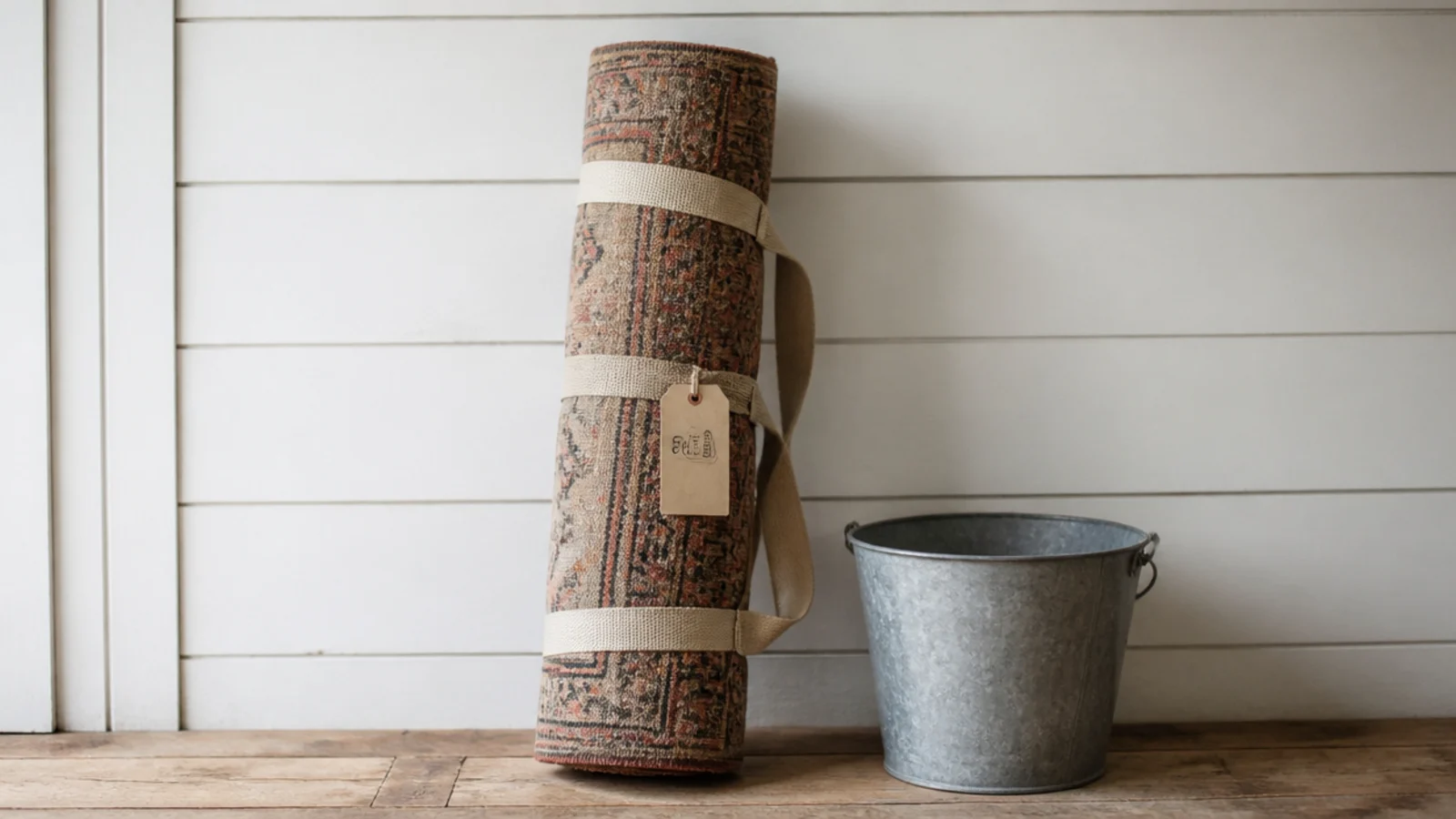
For the stacked version of all this, the layered rug looks guide has base and top pairings, the wooden flooring guide covers finishes for old boards, and the kitchen shelf ideas carry the same materials into the next room.
Mistakes to Skip
- Putting jute or seagrass where drinks and wet boots land. Both stain permanently from plain water, and in a family room that is a matter of weeks rather than years.
- Running a rug into the clearance zone around a wood burning stove. Check the data plate distances, keep stone or a hearth pad in that area, and start the rug beyond it.
- Buying a flat cream rug for a house with a dog. Pattern hides mud, solid pale advertises it, and no cleaning schedule closes that gap for long.
- Using a thin plastic mesh pad on wide plank boards. It sinks into the seasonal gaps, telegraphs every board line through the rug, and does far less to stop it sliding.
Frequently asked questions
What rug suits a farmhouse living room best?
A large jute or wool-jute base at 8x10 or 9x12, with something softer and smaller layered on top. Jute gives the texture and costs $200 to $450, the top rug gives comfort where feet land. That combination also lets you wash or replace the expensive-feeling layer without redoing the whole floor.
How close can a rug go to a wood burning stove?
Follow the clearance on the stove data plate, which is commonly 16 to 36 inches at the front and 8 to 16 inches at the sides, and keep the rug outside it entirely. A hearth pad or stone hearth should cover that zone instead. Embers pop out when the door is opened, and jute and cotton both catch easily.
Are washable rugs practical in a farmhouse room?
Very, in the right size. A 3x5 fits a standard 3.5 cubic foot washer and a 5x7 needs about 4.5 cubic feet, so anything larger goes to a laundromat drum. Cold water, gentle cycle, no fabric softener, and dry flat. In a house with dogs and boots, that is the whole argument.
Will jute survive a busy family room?
It survives feet well and water badly. Plain water leaves a permanent brown ring, so jute belongs away from drinks, plant pots and anywhere wet boots land. It also sheds fine fibre for the first few months. A wool and jute blend gives most of the texture with far better spill behaviour.
How do I keep a pale farmhouse rug looking clean?
Choose a pattern rather than a solid: ticking stripes, muted checks and faded florals hide mud and crumbs in a way flat cream cannot. Vacuum the traffic lane twice a week, beat or shake smaller rugs outdoors monthly, and rotate the main rug 180 degrees every six months so wear spreads evenly.
Want more like this? Browse all 15 rugs in living room guides — they all use the same measurements and budget tiers.

Pin it for later
Save this to your Rugs In Living Room board
Pin it now so it is waiting for you when the tape measure comes out — and so the next person hunting for this idea can find it too.
Save this pinKeep going
More ideas worth saving while you have the tape measure out.