TV Unit Decor · Listicle
20 Cozy TV Unit Decor Living Room Setups To Copy

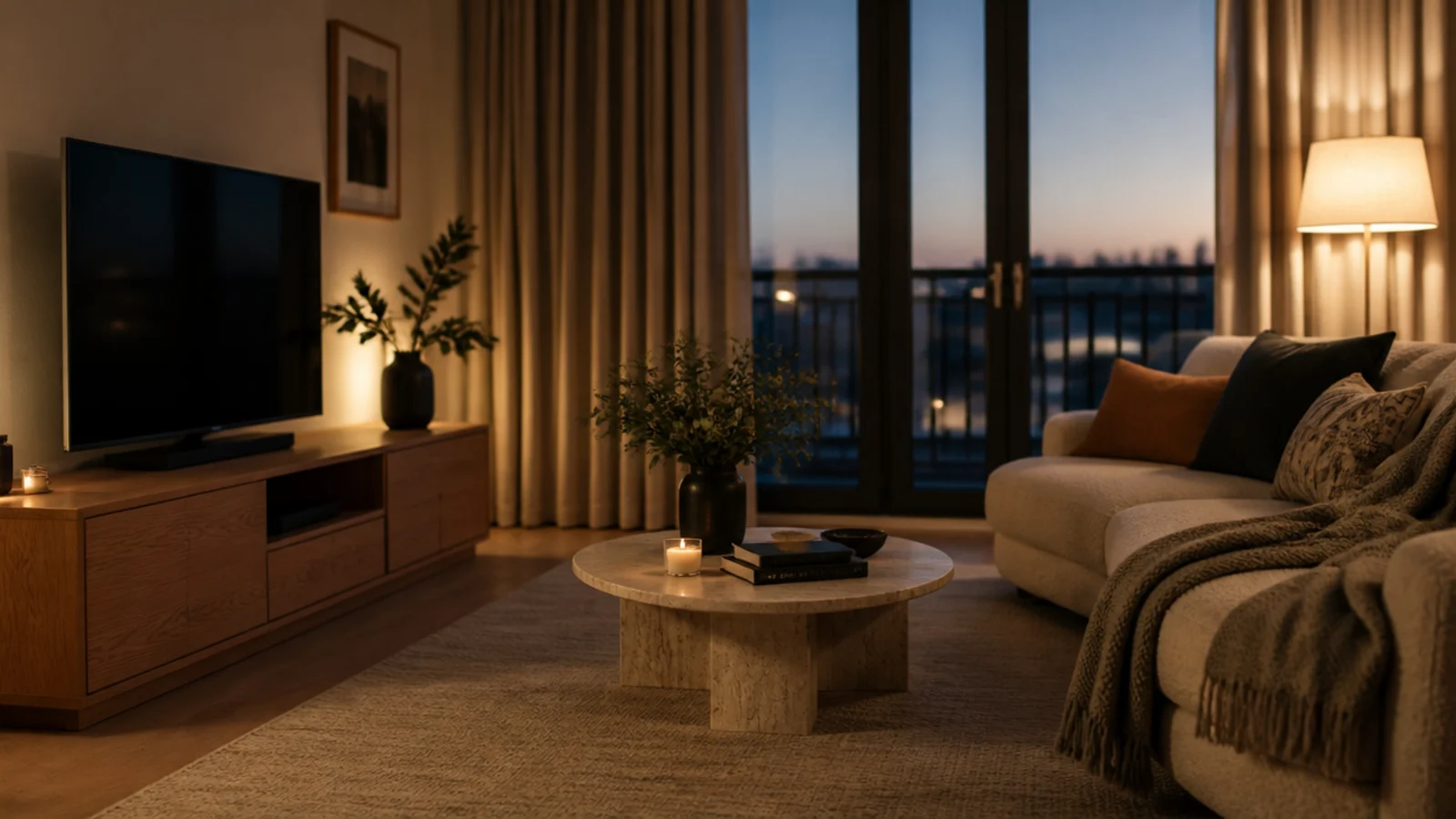
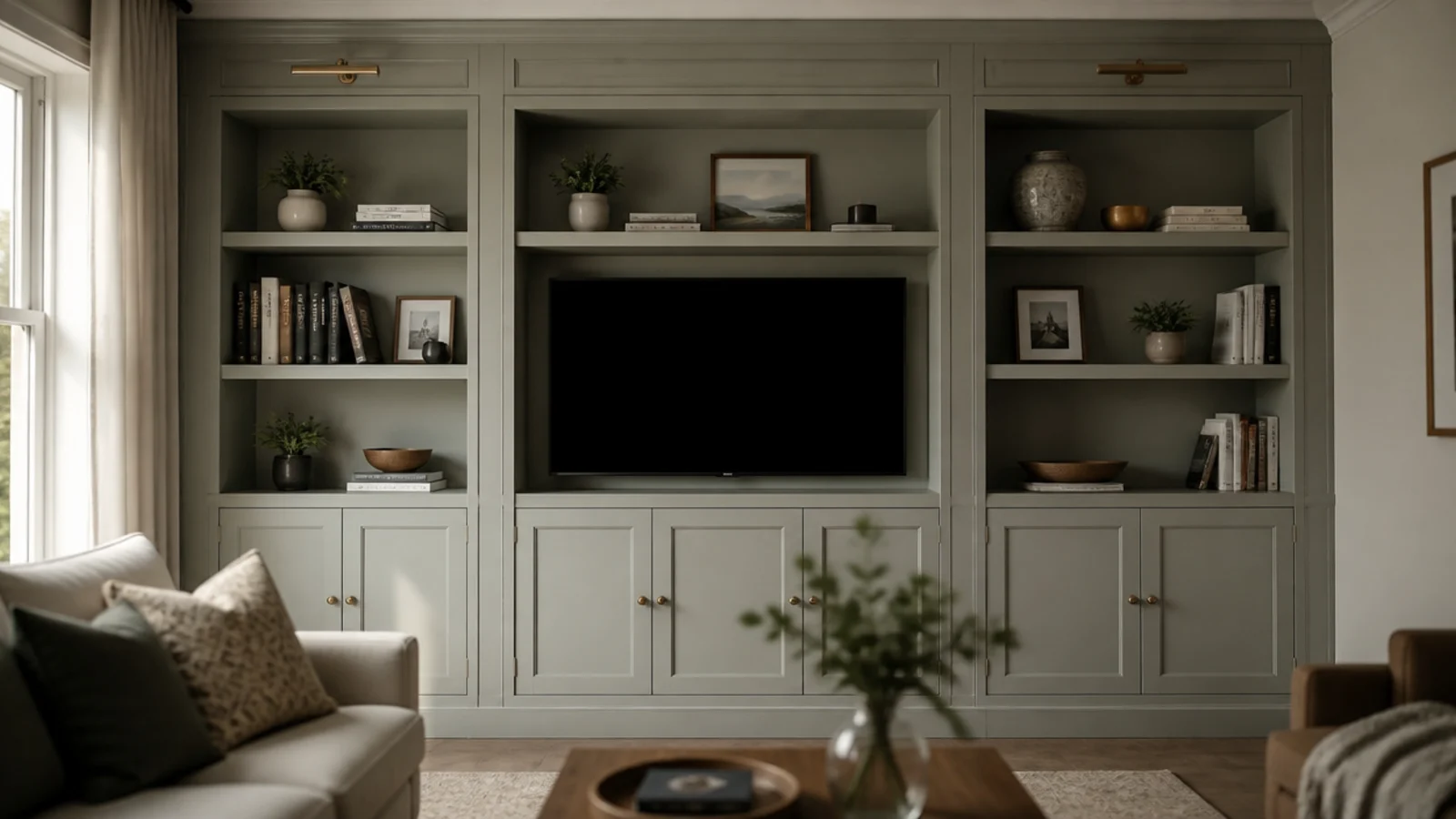
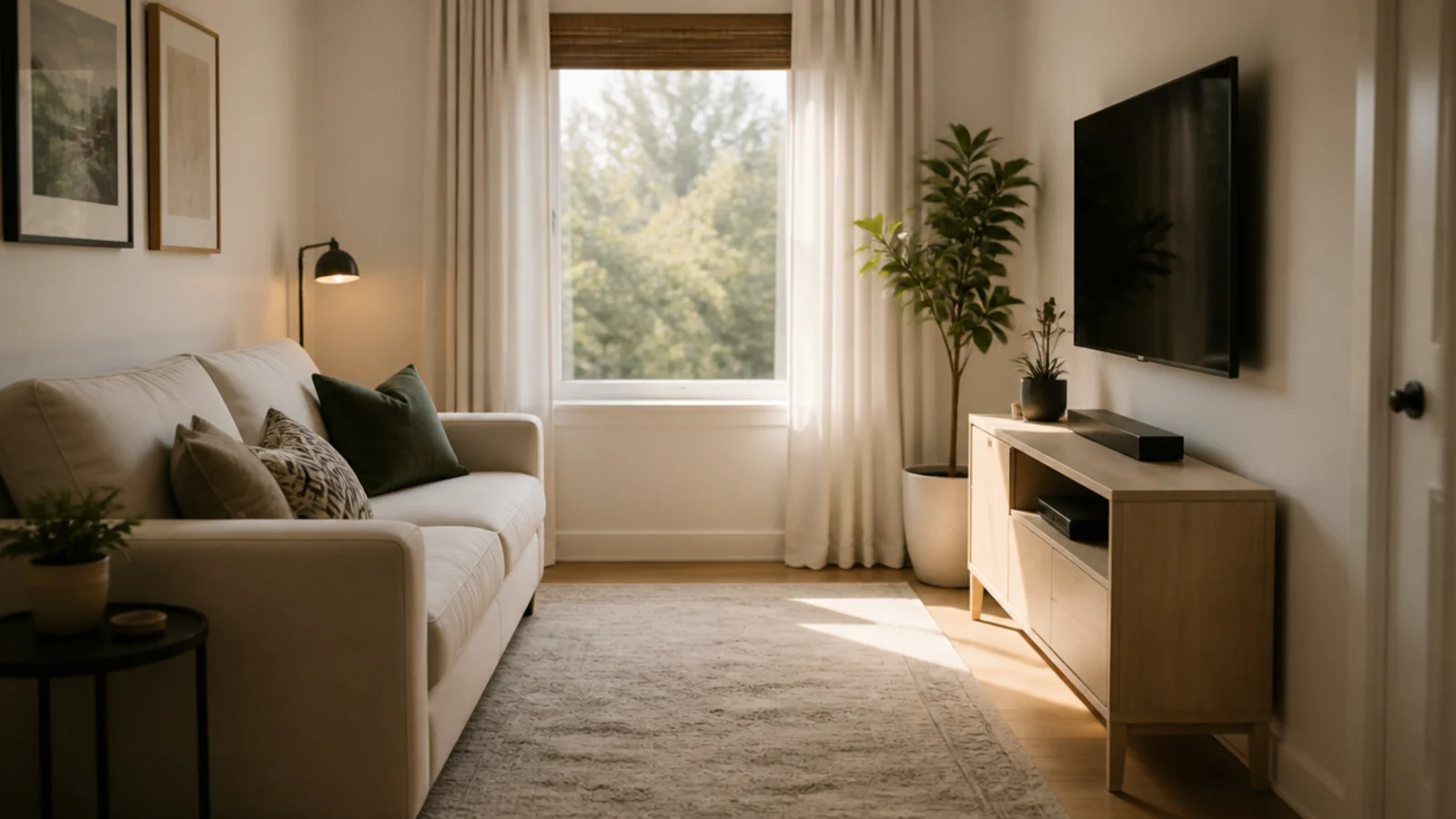
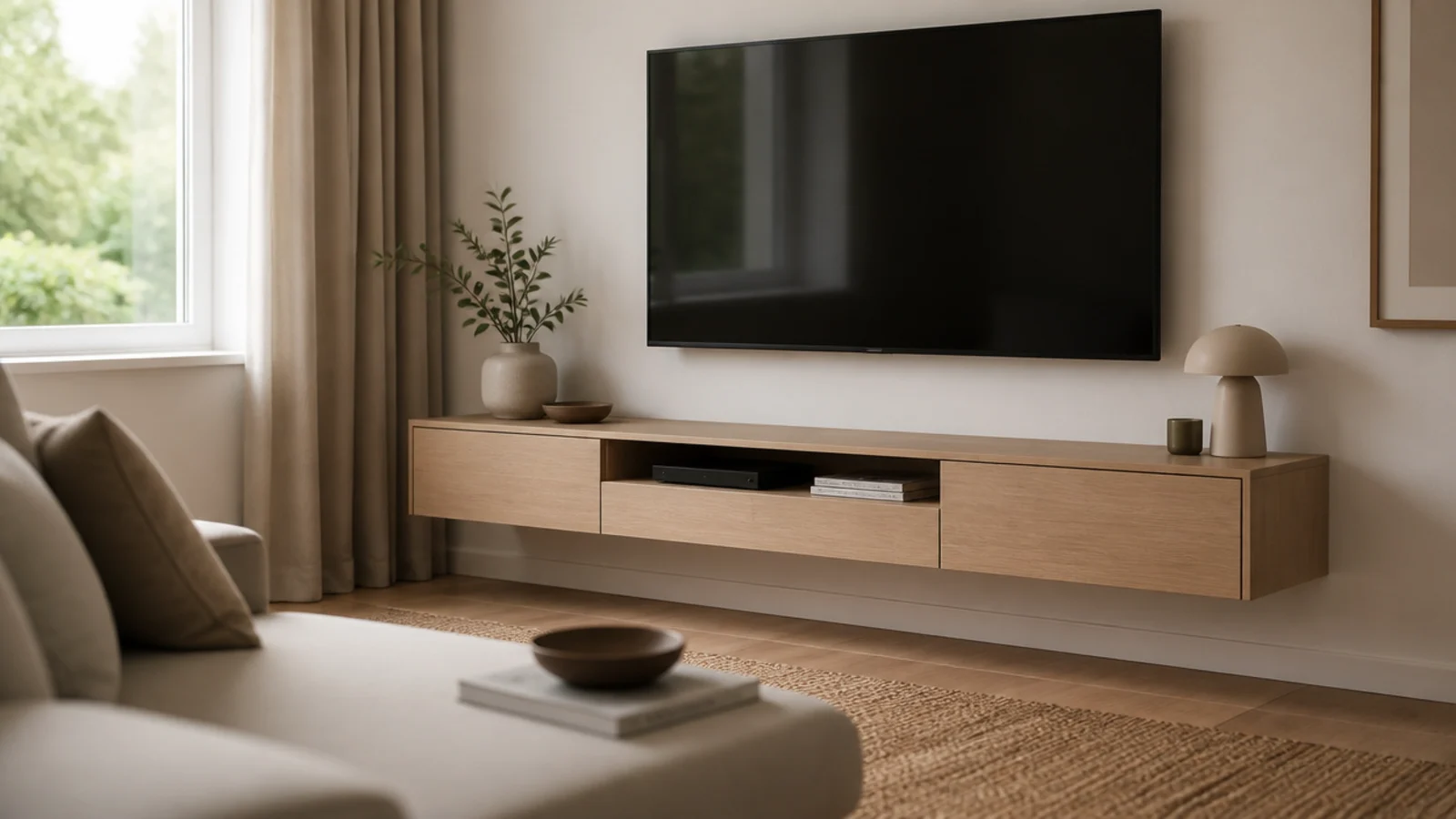
A room built entirely around a screen tends to end up feeling like a waiting area: everything facing one wall, nothing soft, one bright light overhead. The setups that feel warm do the opposite — they treat the panel as one element among several and put real work into distance, texture and lamp placement. TV unit decor living room arrangements that people actually want to sit in share a handful of measurements, and none of them are about the cabinet. Here are twenty worth copying.
In this guide22 sections — tap to openHide
- 1.What TV unit decor living room setups get wrong
- 2.Set the sofa at eight feet from a sixty-five-inch screen
- 3.Put a wool rug under the front legs
- 4.A warm lamp in the corner, never opposite
- 5.A fabric-fronted unit instead of a hard finish
- 6.Layer timber, boucle and linen together
- 7.Keep a blanket basket beside the unit
- 8.Angle two seats toward each other
- 9.Hang the curtains floor to ceiling
- 10.Dim the under-cabinet light for evenings
- 11.Put books on the unit, not only gear
- 12.Group candles at three heights
- 13.A round table sixteen inches from the sofa
- 14.Add a pouffe and floor cushions
- 15.Plants either side to break the rectangle
- 16.Soften the room acoustically
- 17.An armchair at forty-five degrees
- 18.Let the screen sit off-centre if a fireplace is central
- 19.Warm timber against a deep wall colour
- 20.A side table at arm height
- 21.Three light sources for the evening
- 22.Mistakes to Skip
What TV unit decor living room setups get wrong
Distance comes first. Comfortable everyday viewing sits at roughly 1.5 times the screen diagonal, which is 7 feet for a 55 inch panel and 8 for a 65. Rooms fail in both directions: a big screen crammed into a 10 foot room, or a small one stranded at the far end of an open plan.
Then softness. A media wall is glass, veneer and plaster, all of which reflect sound and light. A wool rug, floor-length curtains and an upholstered seat are what stop the room sounding hard, and they do more for perceived warmth than any accessory.
Then light. Three warm sources at 2700K on dimmers, none of them positioned where the reflection lands in the screen, plus a bias strip behind the panel at 6500K. Sit down before deciding any lamp position, because a reflection invisible from standing height sits squarely in the picture from the sofa. Rug budgets run $150 to $600 for an 8 by 10 wool flatweave. For the wall behind, the living room TV wall guide covers colour and panelling.
1. Set the sofa at eight feet from a sixty-five-inch screen
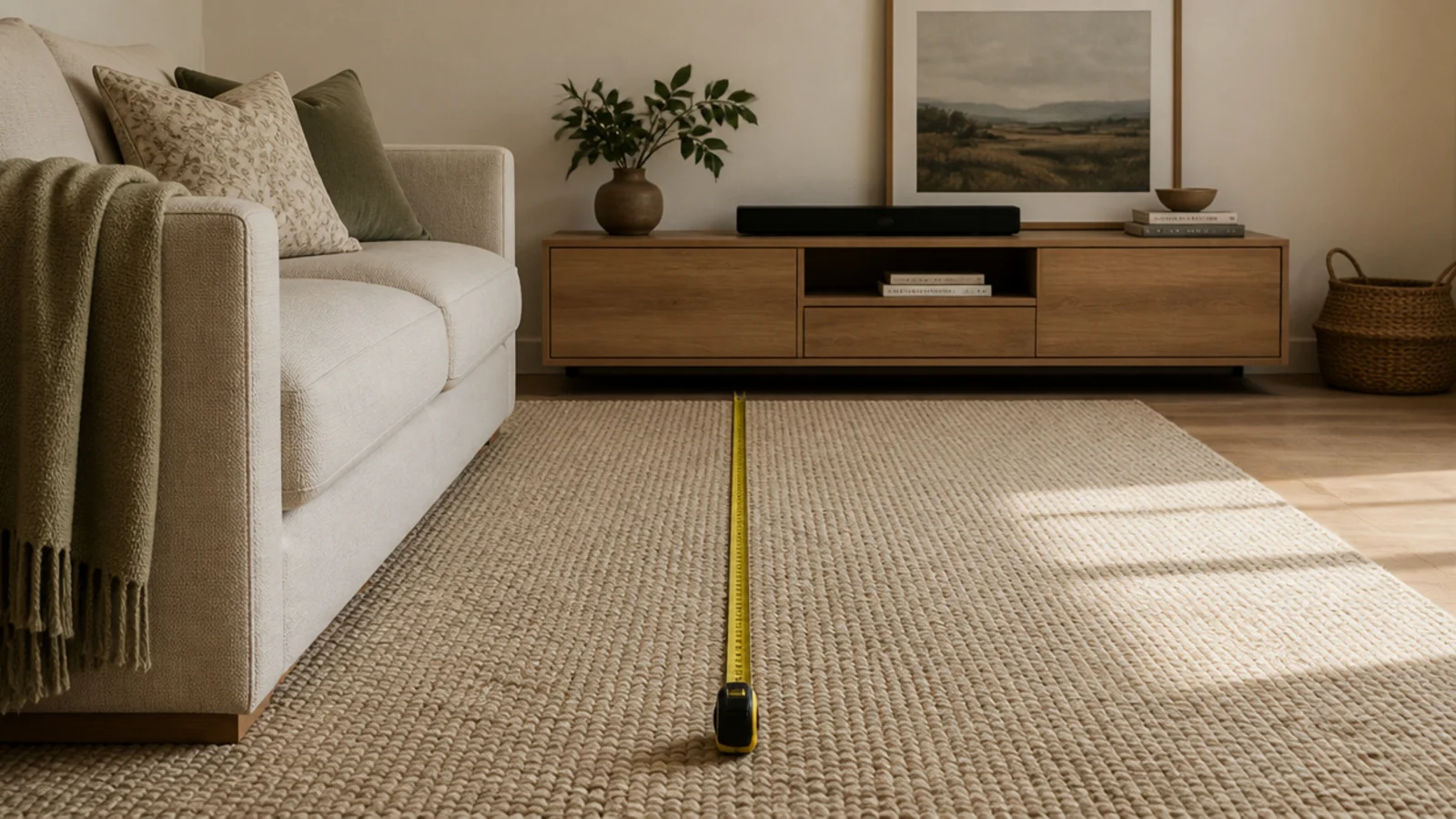
At 8 feet a 65 inch panel fills a comfortable share of your field of view, close enough to see detail and far enough to take in the whole frame without scanning. Below about 1.2 times the diagonal the picture starts to feel like work. Measure from the seat back, not the wall. If the room only allows six feet, drop to a 50 inch panel rather than pushing the sofa against the plaster, which costs you far more in comfort than the extra inches gain.
2. Put a wool rug under the front legs
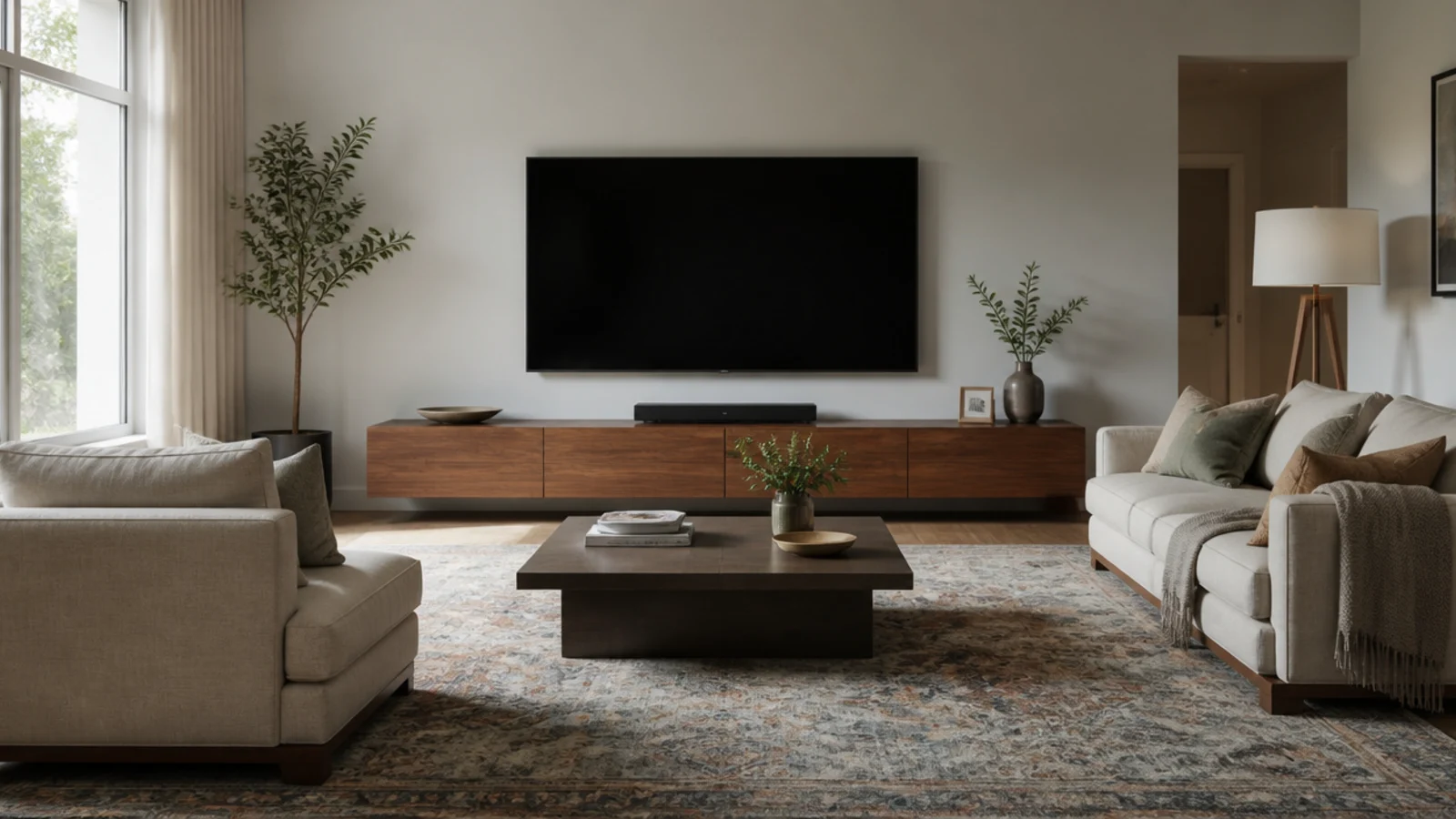
The far edge should run under the front legs of the sofa and any armchairs, stopping 6 to 12 inches short of the media unit. An 8 by 10 covers most three-seat layouts. Wool at 10 to 15 mm pile absorbs sound as well as looking warm, which a flat synthetic will not do.
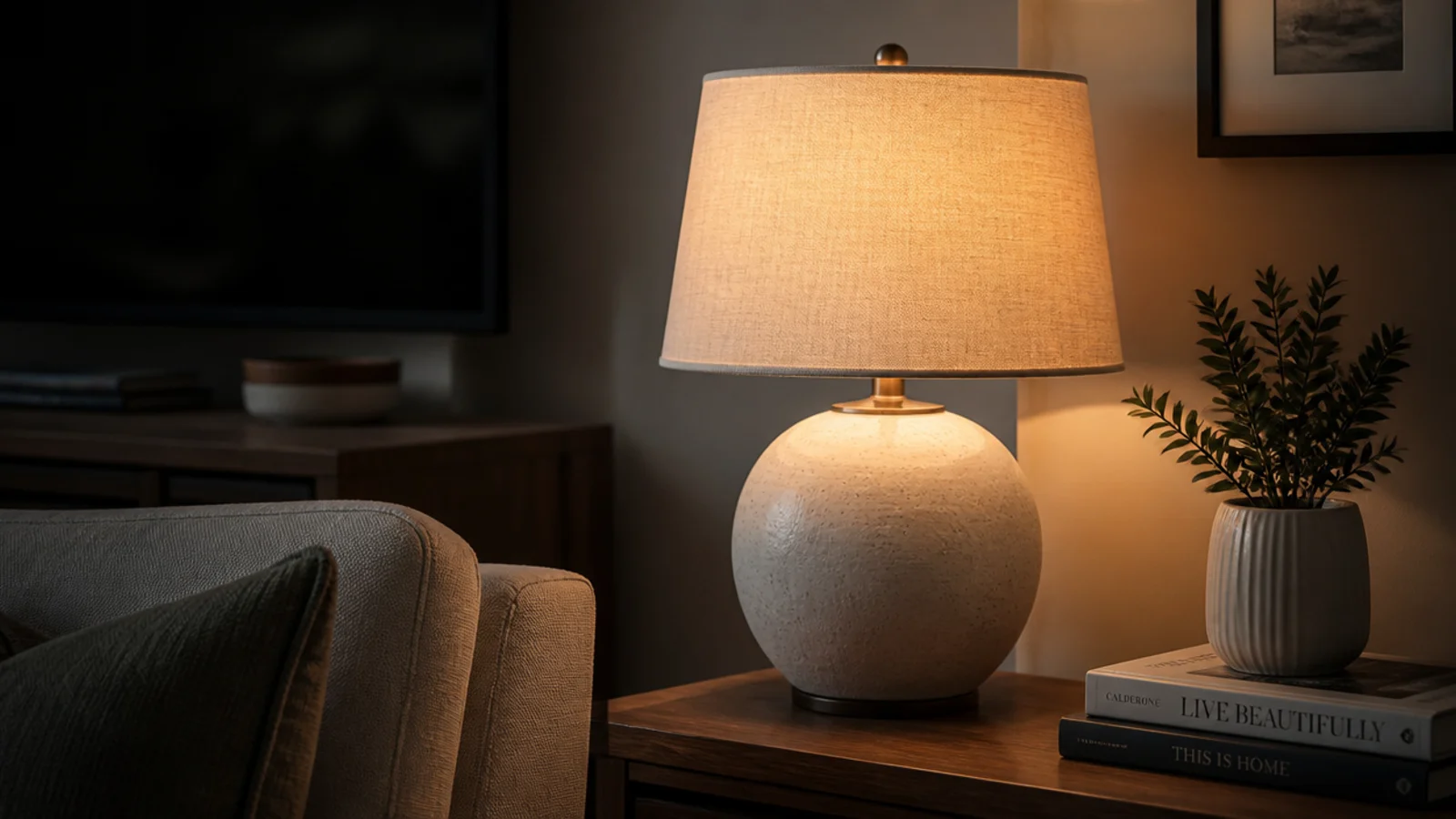
3. A warm lamp in the corner, never opposite
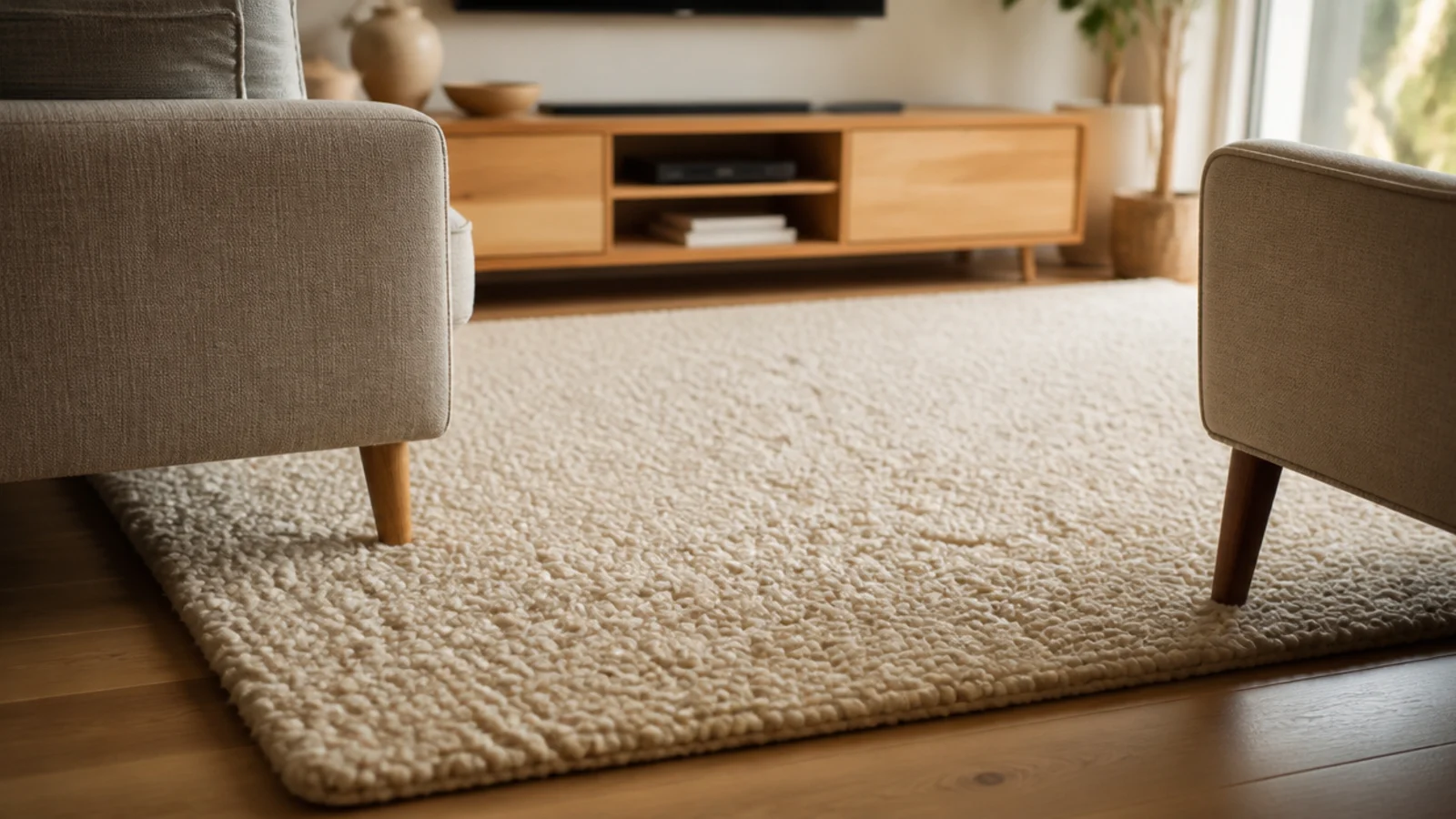
A 2700K bulb at 400 to 600 lumens in a corner gives the room a second centre of light. Placed opposite the screen it lands in the reflection and ruins the picture. Corner placement also throws light onto two walls at once, which does more for warmth than the same bulb in the middle of a room. Two corners lit softly will do the work of four lamps scattered across a floor plan.
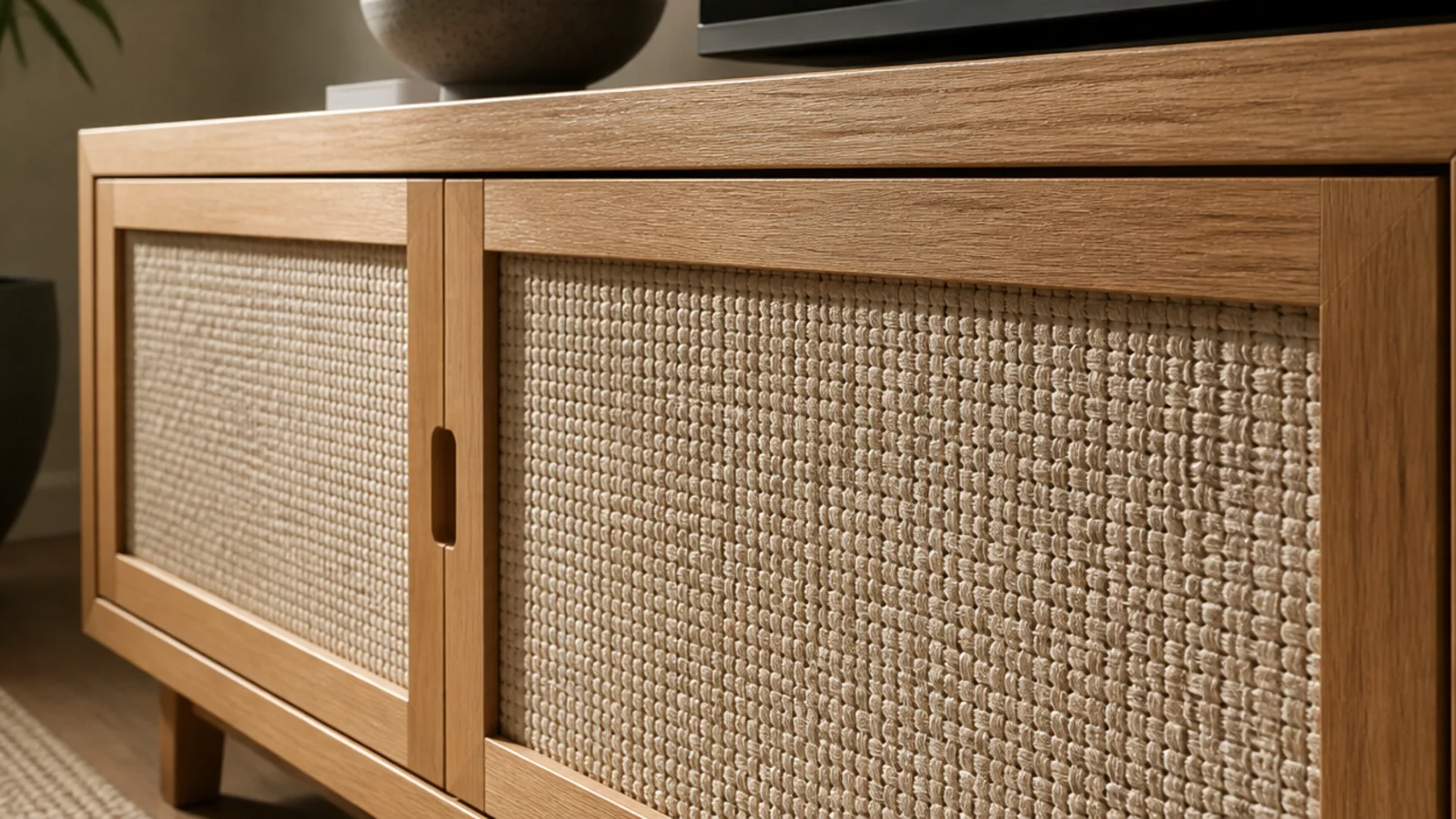
4. A fabric-fronted unit instead of a hard finish
Woven fabric or acoustic cloth panels in the cabinet doors break up a wall of hard surfaces and let air and infrared through. It is the same trick a speaker grille uses. Expect $60 to $150 to have flat door fronts rebated and panelled if you are converting an existing unit.
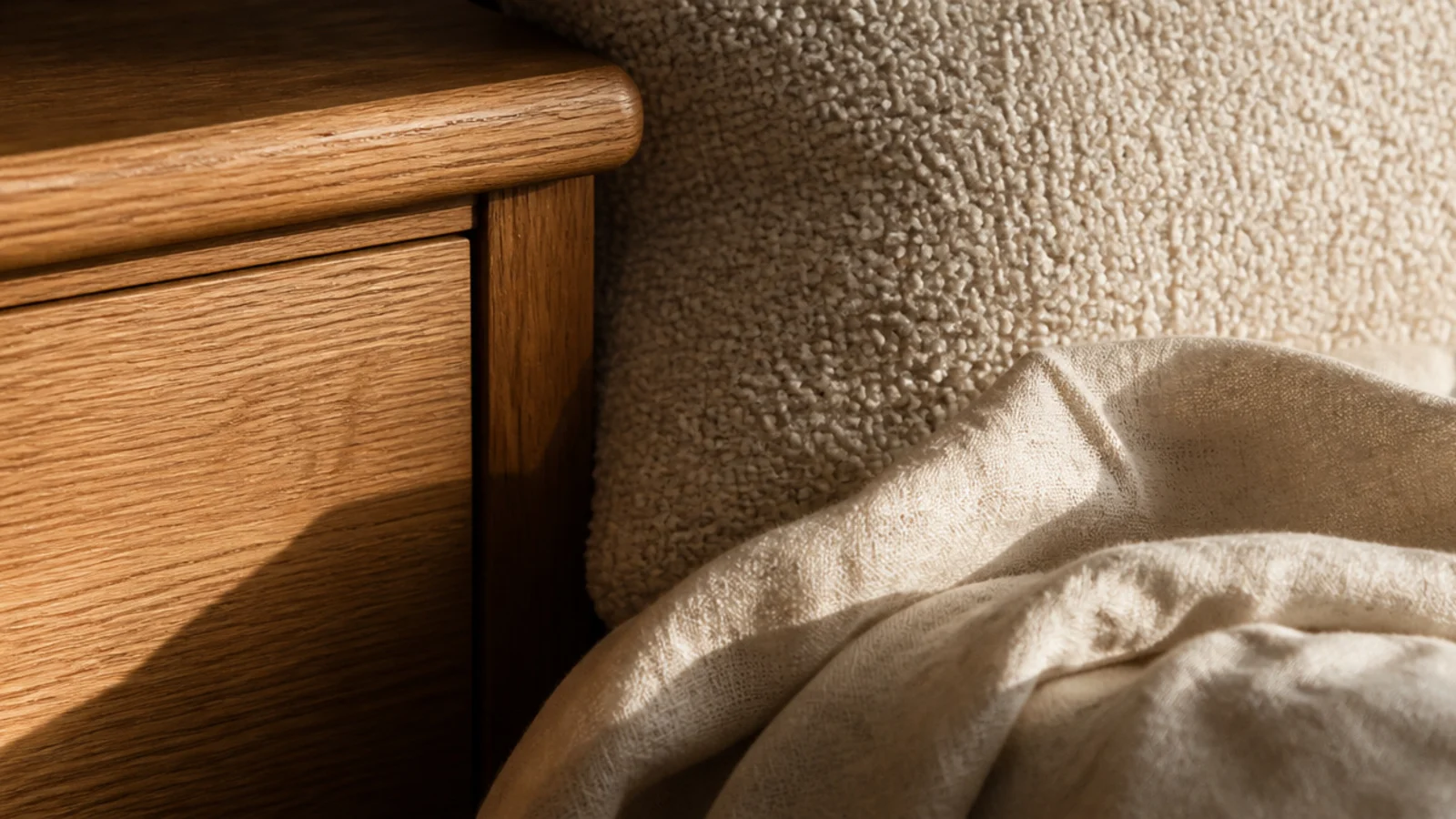
5. Layer timber, boucle and linen together
Three textures in one tonal family gives depth without introducing another colour to reconcile. Warm oak, undyed boucle and washed linen sit together naturally, and none of them compete with a moving picture the way a pattern does. Keep the palette to three tones plus the wood.
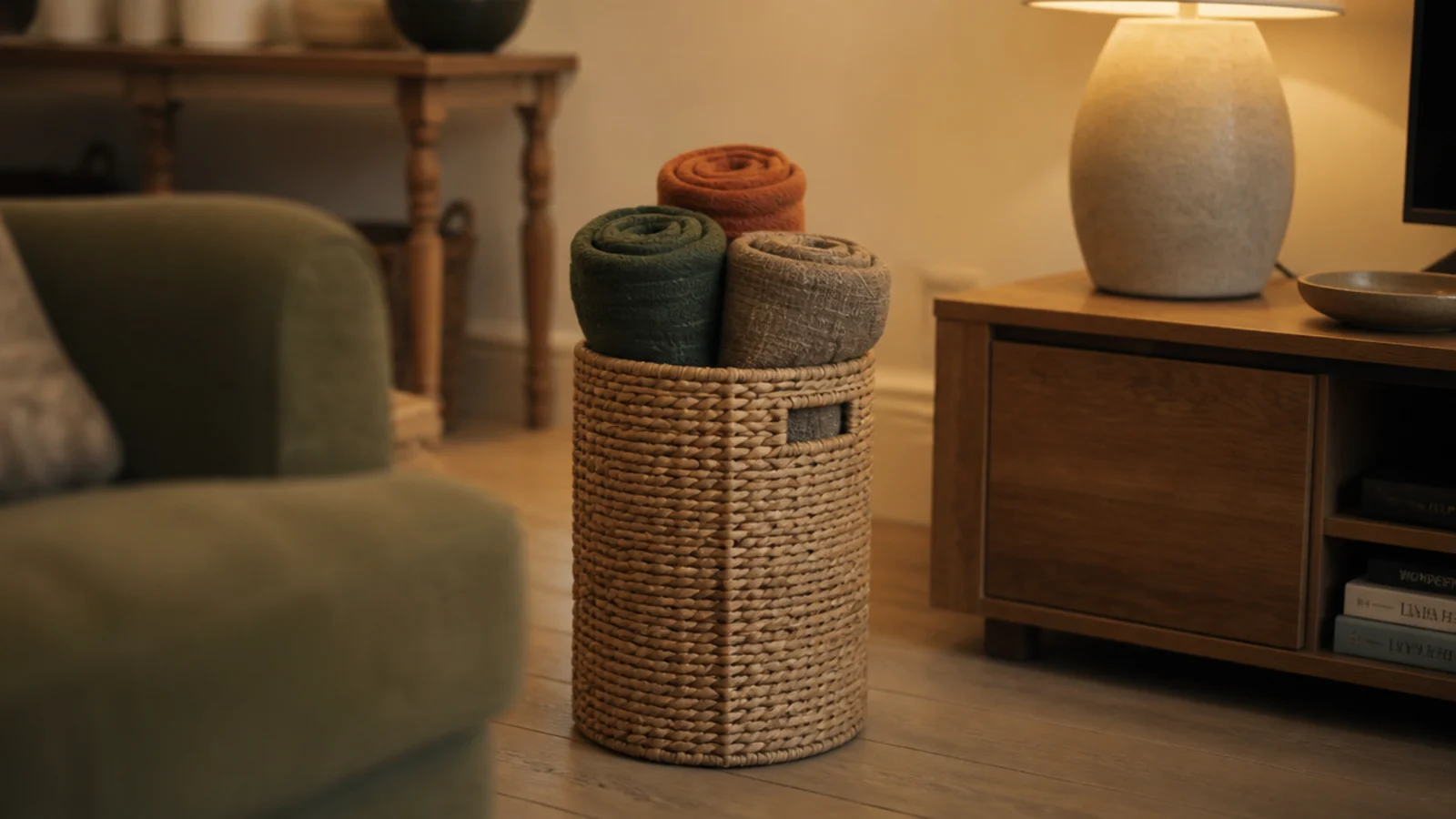
6. Keep a blanket basket beside the unit
A 16 to 18 inch basket holding three rolled wool blankets beside the media unit is the most used object in most living rooms. Rolled rather than folded means the top one comes out without collapsing the stack, and a soft weave forgives being overfilled.
7. Angle two seats toward each other
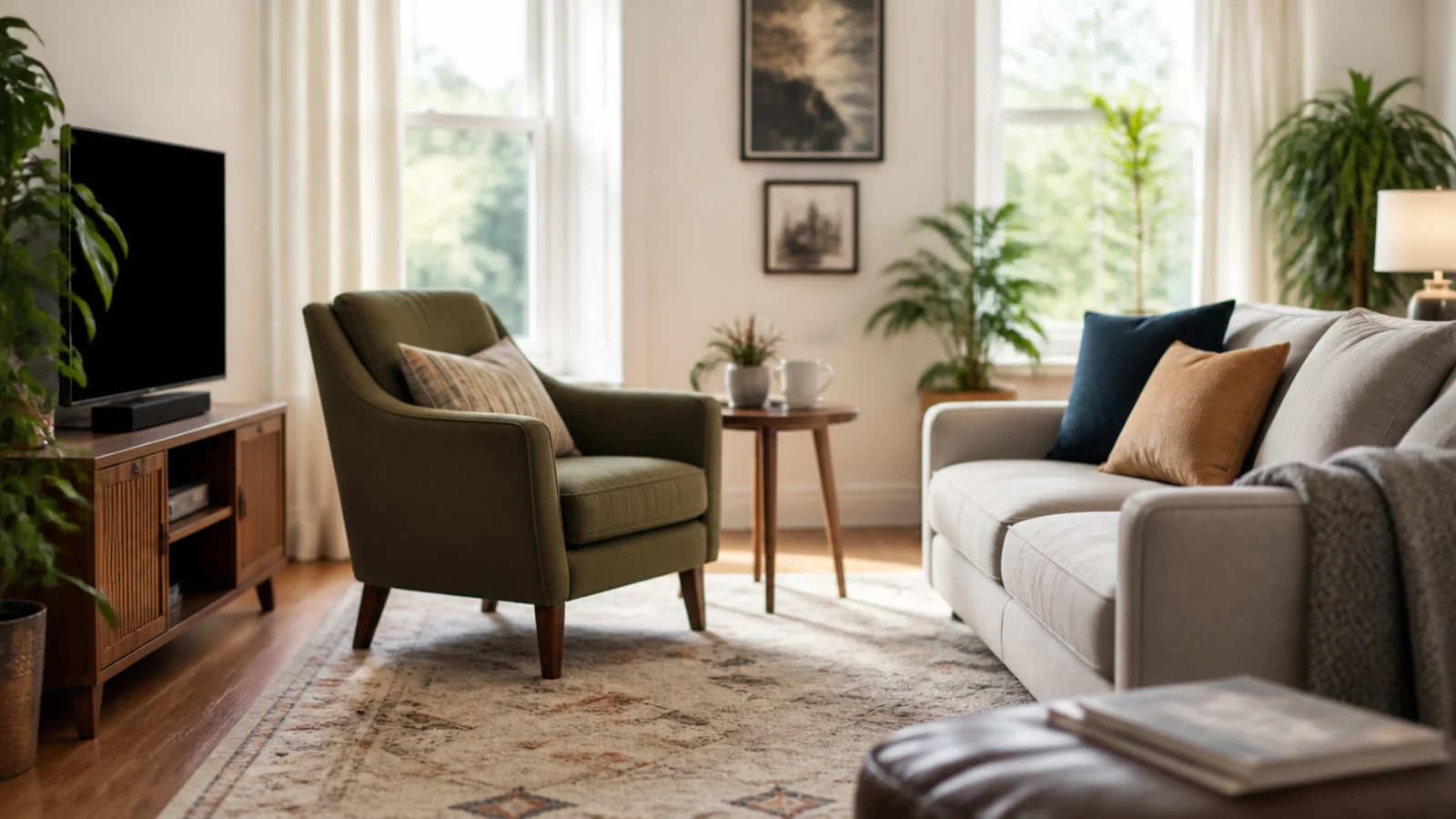
Not everything needs to face the screen. Turning an armchair 30 to 45 degrees toward the sofa creates a conversation zone that survives the television being off. Leave 3 to 4 feet between facing seats so people can talk without raising their voices.
8. Hang the curtains floor to ceiling
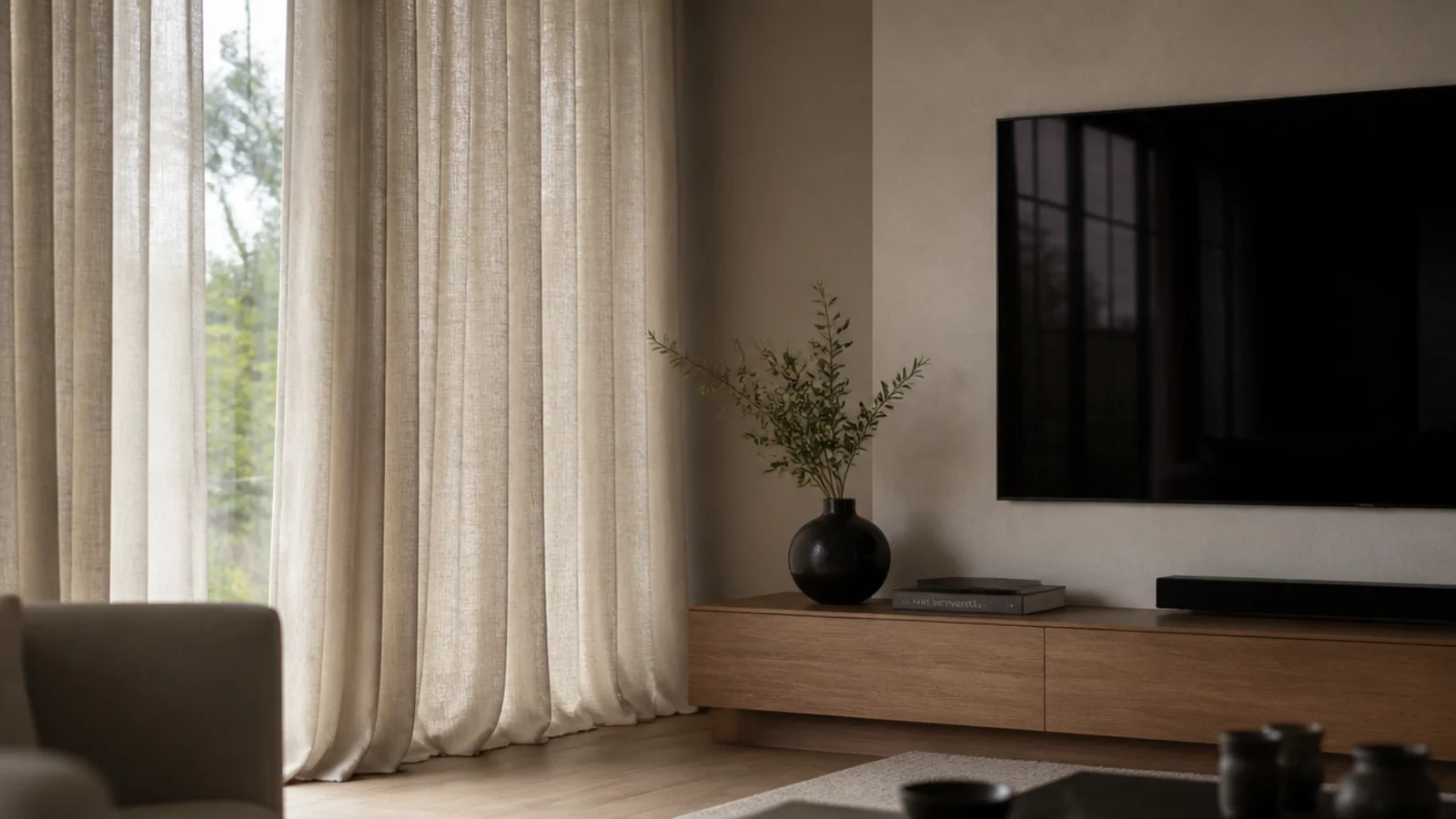
Fix the track 4 to 6 inches below the ceiling rather than just above the window, and let the fabric reach the floor with a half inch of clearance. It raises the perceived ceiling height and adds a large soft surface, which quiets the room noticeably.
9. Dim the under-cabinet light for evenings
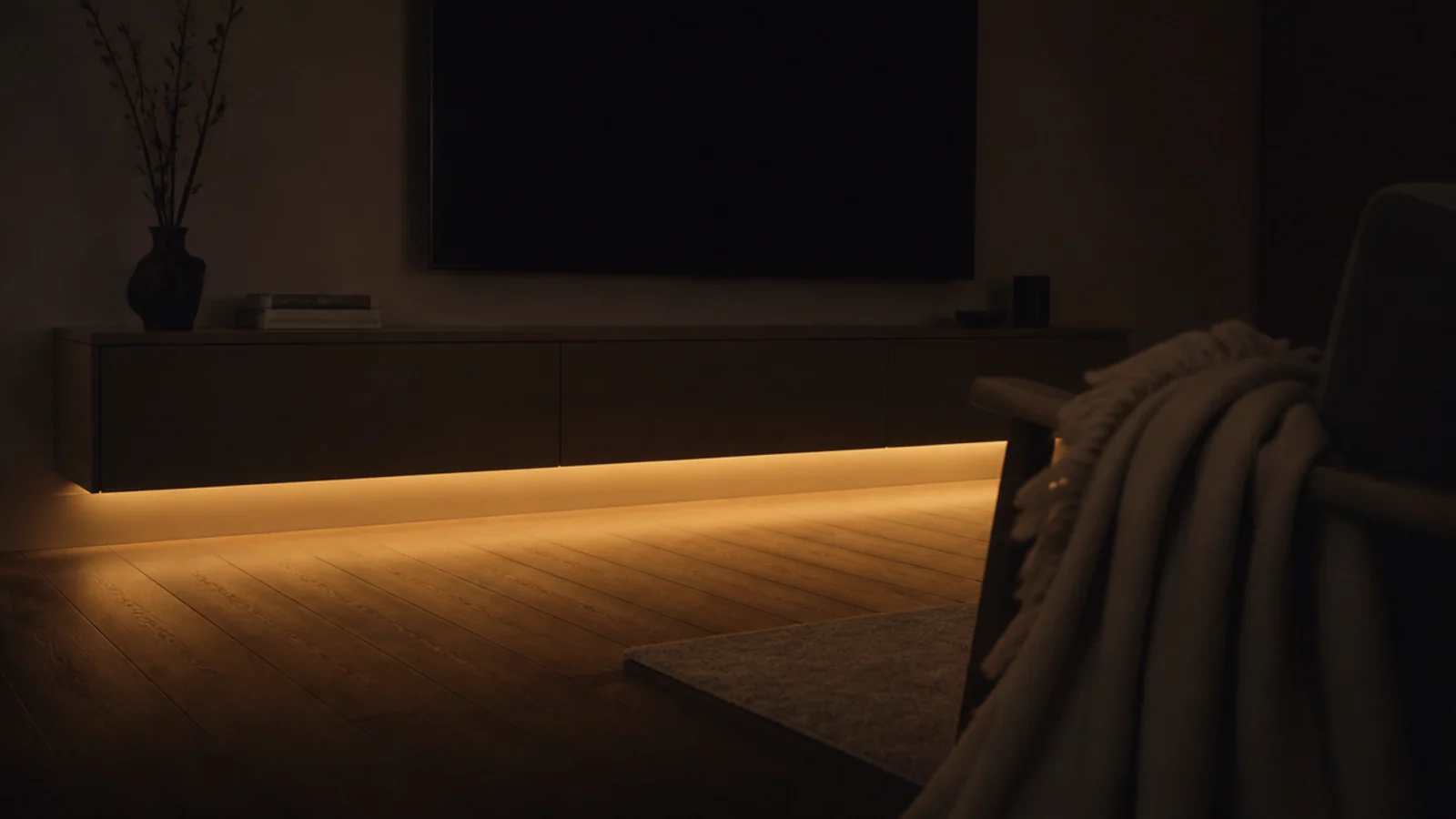
A warm strip at 4 to 6 watts per metre behind the front rail of a floating unit gives you a low glow that replaces an overhead light entirely. Run it near 20 per cent while watching. It also stops the cabinet reading as a dark block once the room lights drop.
10. Put books on the unit, not only gear
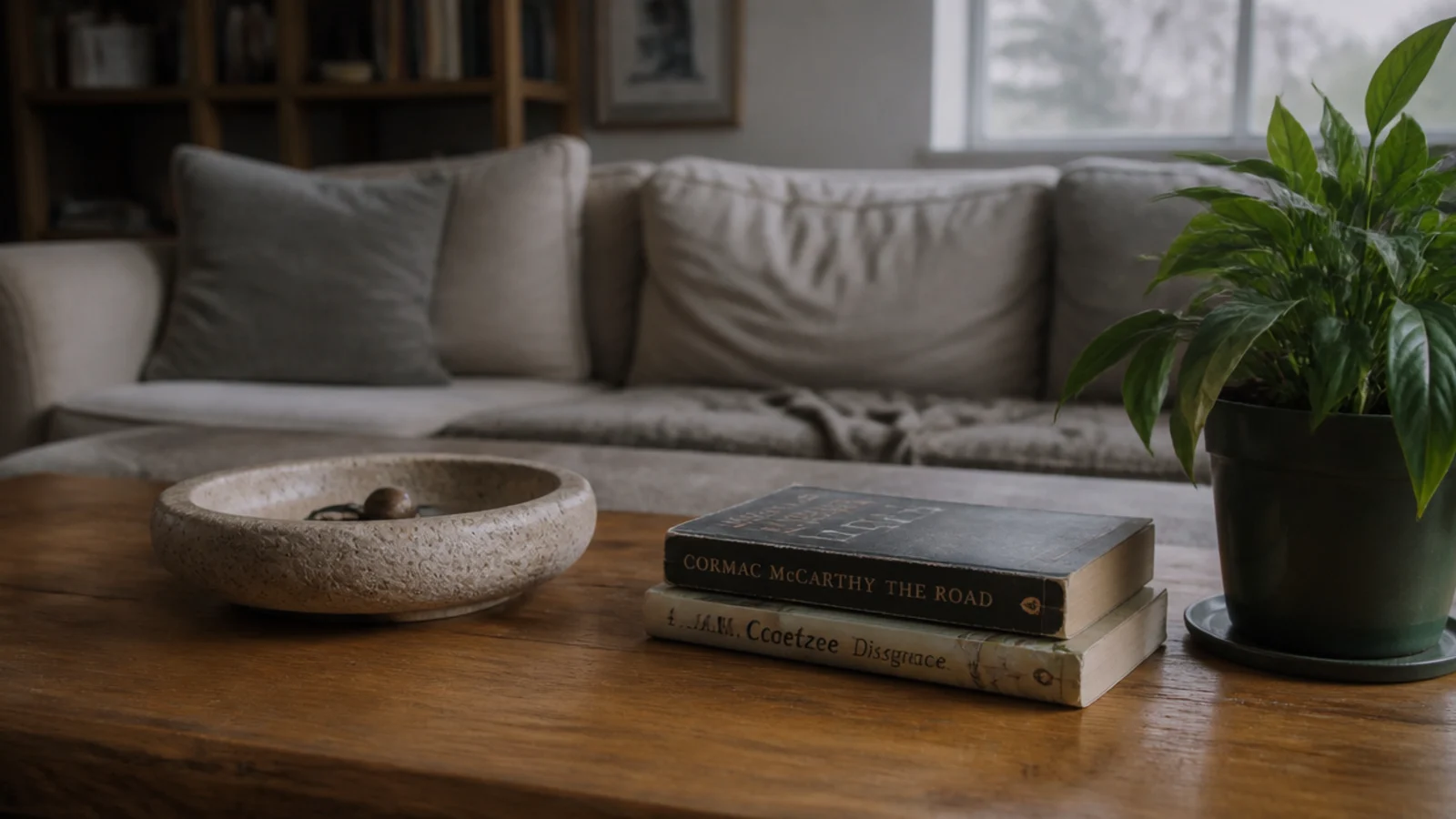
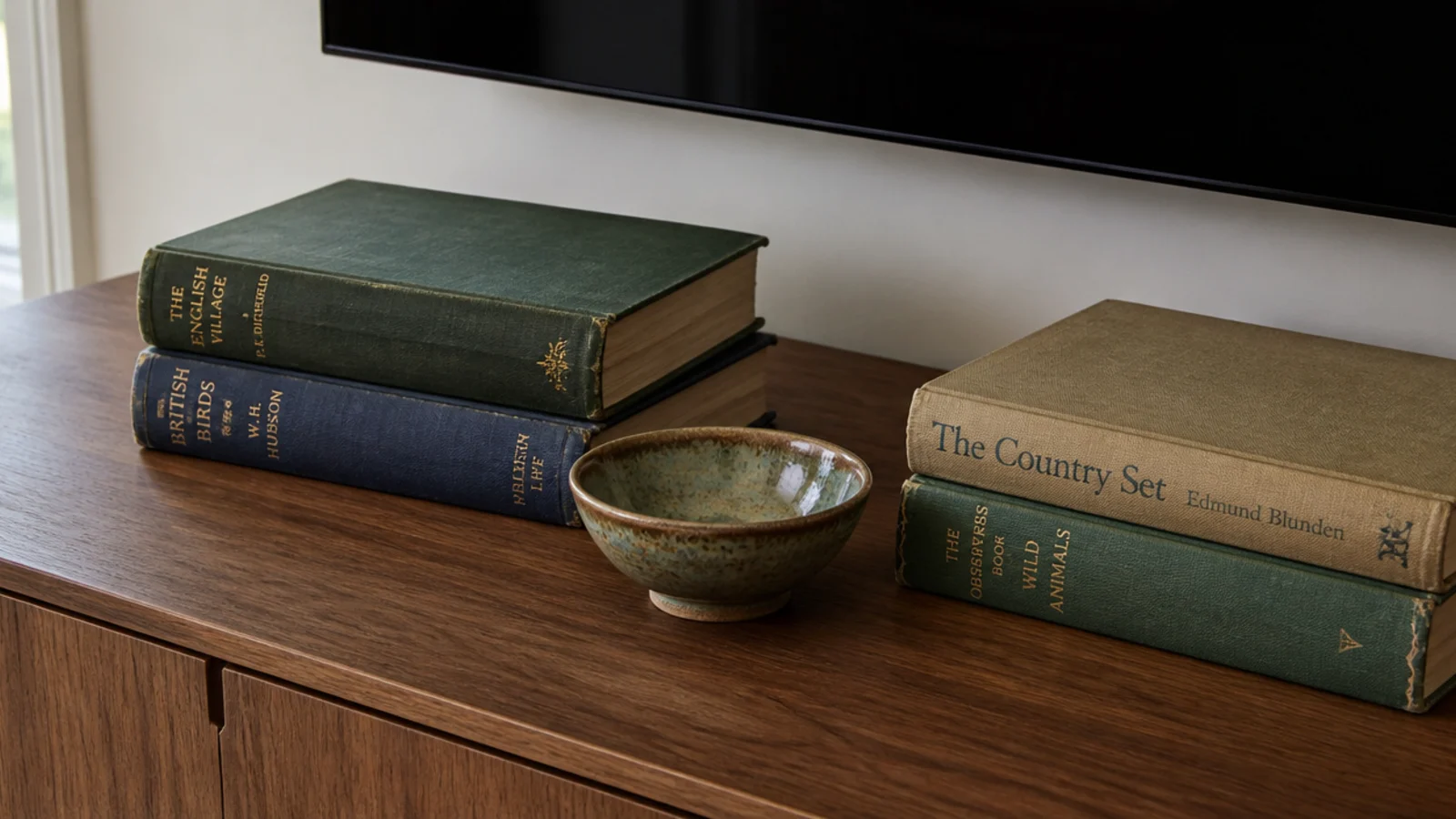
A low stack of well-used hardbacks does more to make a media wall look inhabited than any ornament. Keep the stack under 4 inches so it never crowds the screen from a seated view, and let the spines face out rather than turning them backwards.
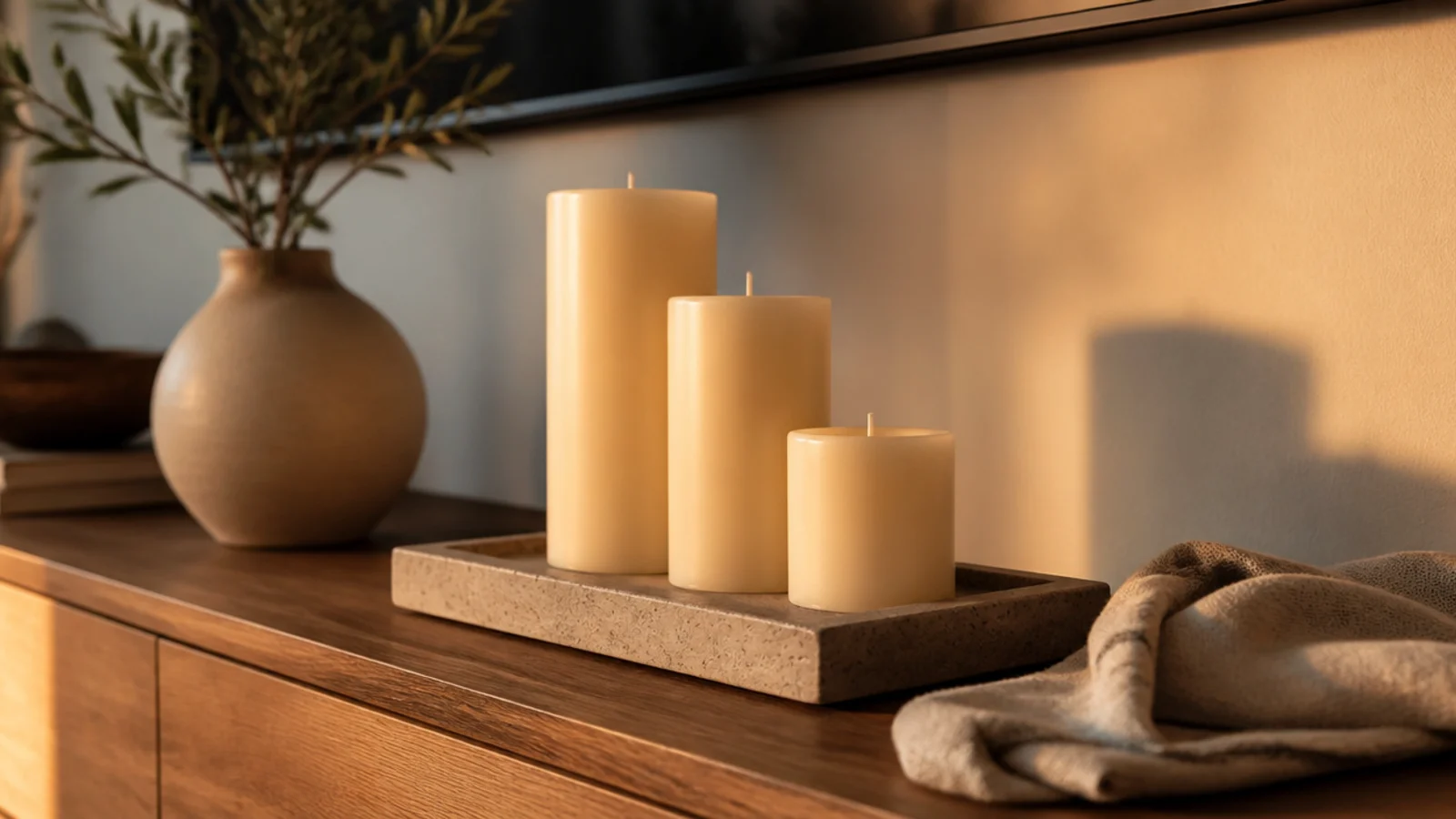
11. Group candles at three heights
Three pillar candles of clearly different heights on a stone or metal tray read as arranged rather than placed. Keep an open flame at least 12 inches from curtains, throws and anything trailing, and use LED pillars on a unit that sits directly under fabric or shelving. More on grouping in aesthetic candle decor.
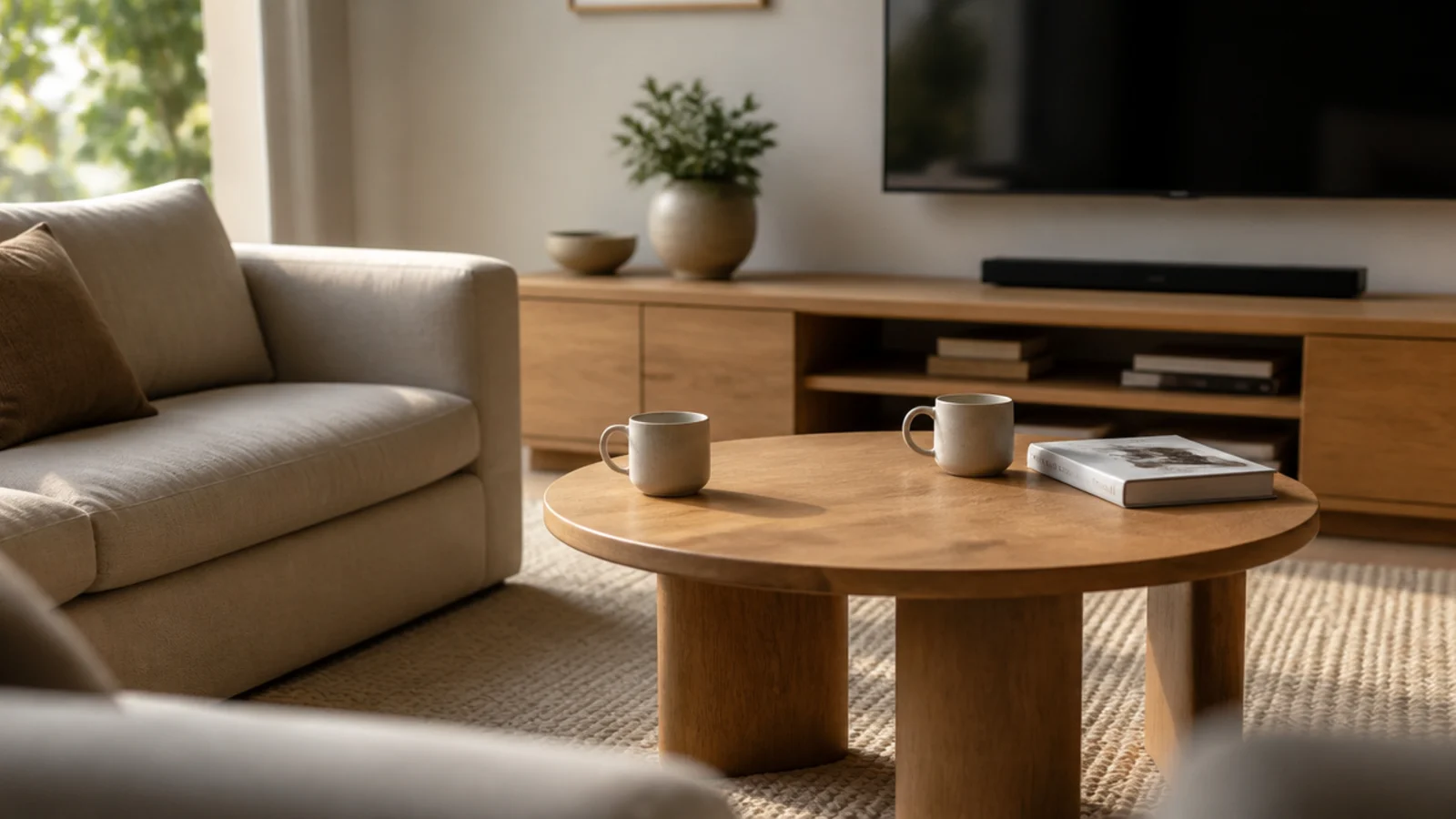
12. A round table sixteen inches from the sofa
Fourteen to 18 inches is close enough to set a mug down without leaning forward and far enough to walk past. A round table also removes two corners from a route people use every evening, which matters in any room under about 12 feet wide.
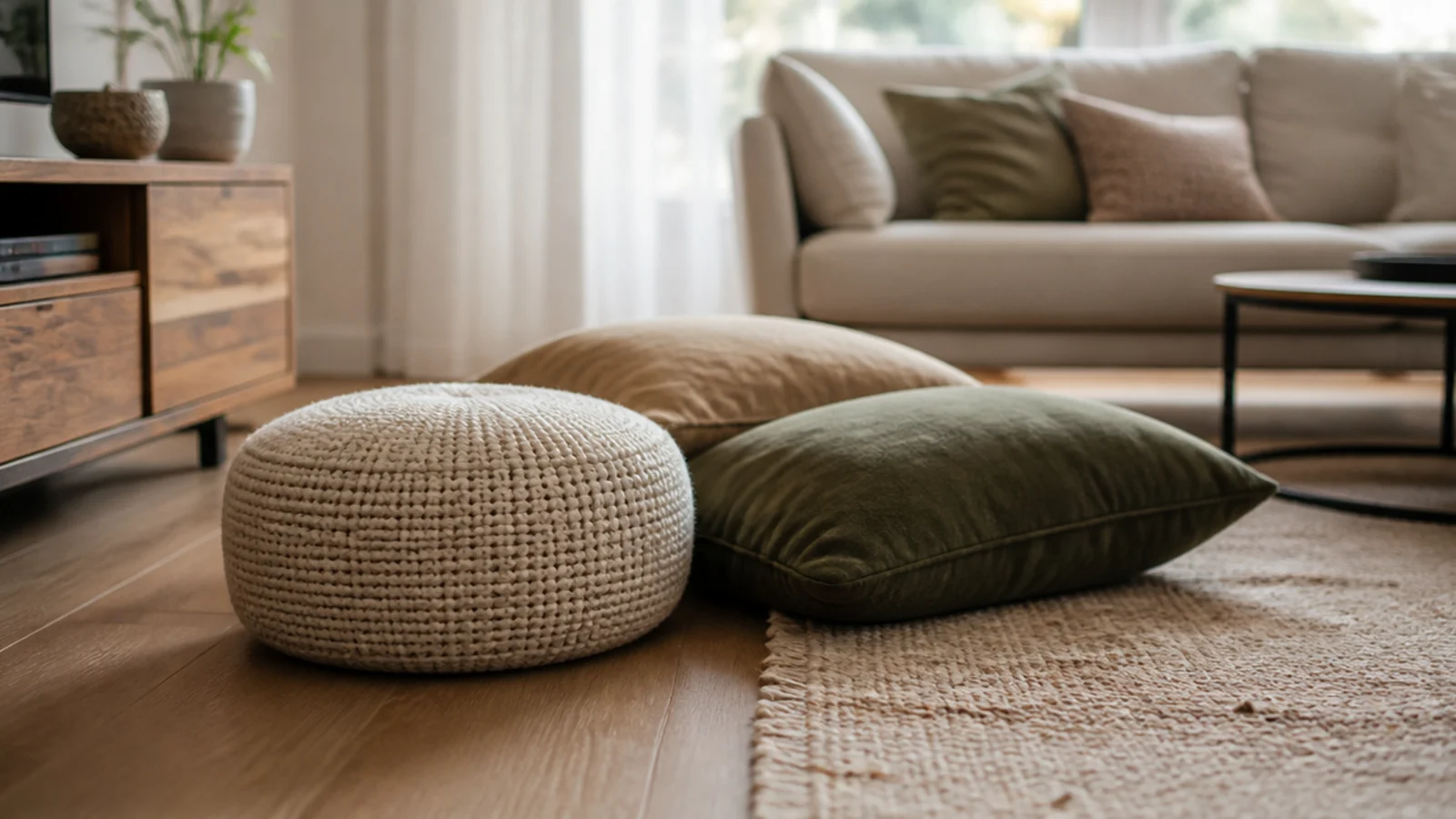
13. Add a pouffe and floor cushions
A 16 to 18 inch pouffe works as a footrest, extra seat and occasional tray base, and it fills floor space without blocking sightlines the way another chair does. Two floor cushions give a family somewhere to sprawl that is not the sofa arm.
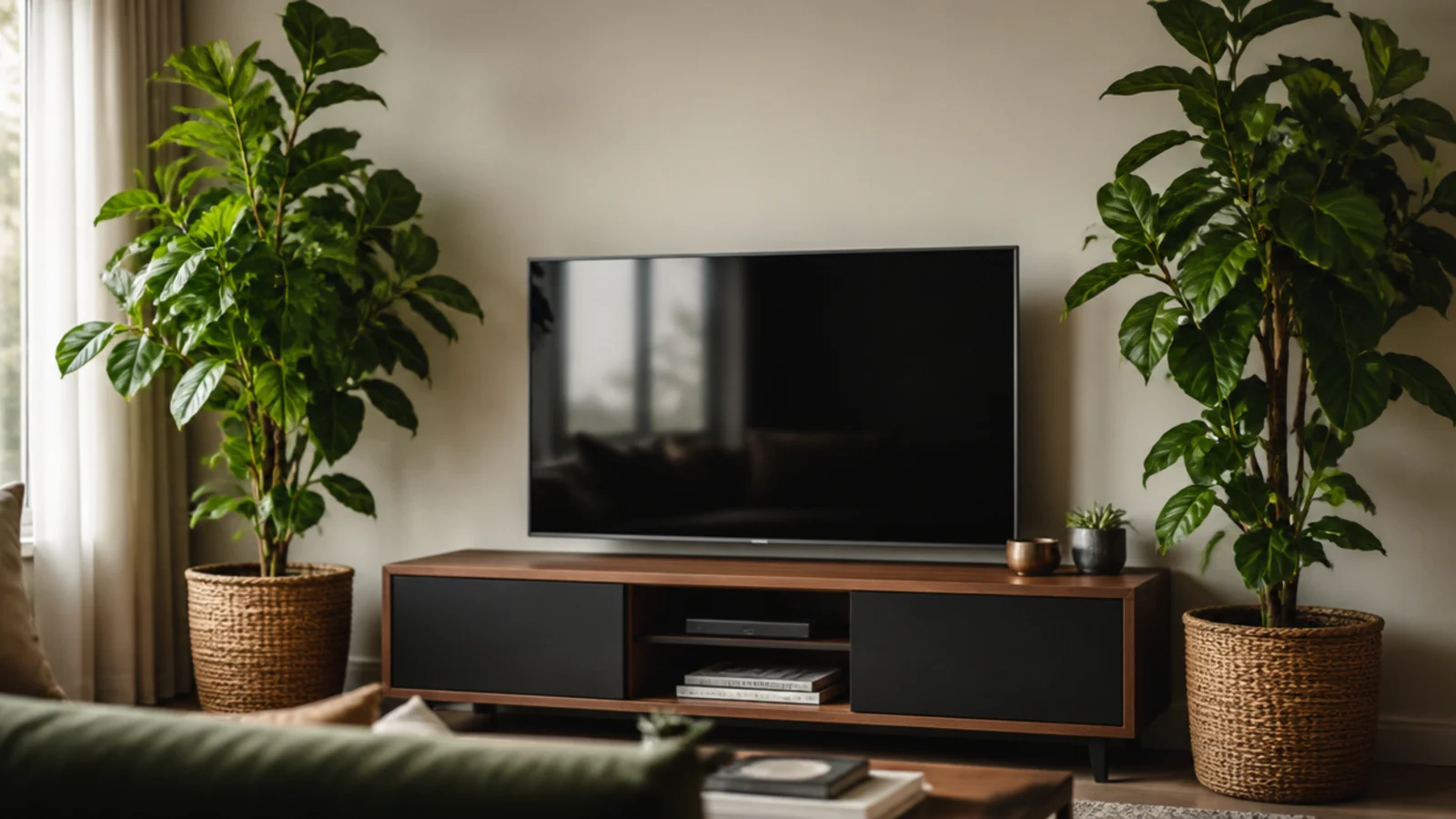
14. Plants either side to break the rectangle
A media wall is a stack of straight lines. Two tall plants at 4 to 5 feet flanking the unit interrupt them with something irregular, and the leaves catch lamplight in the evening. Choose species that tolerate the low light most media walls sit in, and stand them in pots wide enough that a knock from a passing foot does not tip them over.
15. Soften the room acoustically
Hard rooms make dialogue harder to follow and everything sound thin. A rug, curtains and upholstery together take the edge off reflections far more cheaply than an extra speaker. If dialogue is still hard work, that is usually the room rather than the soundbar.
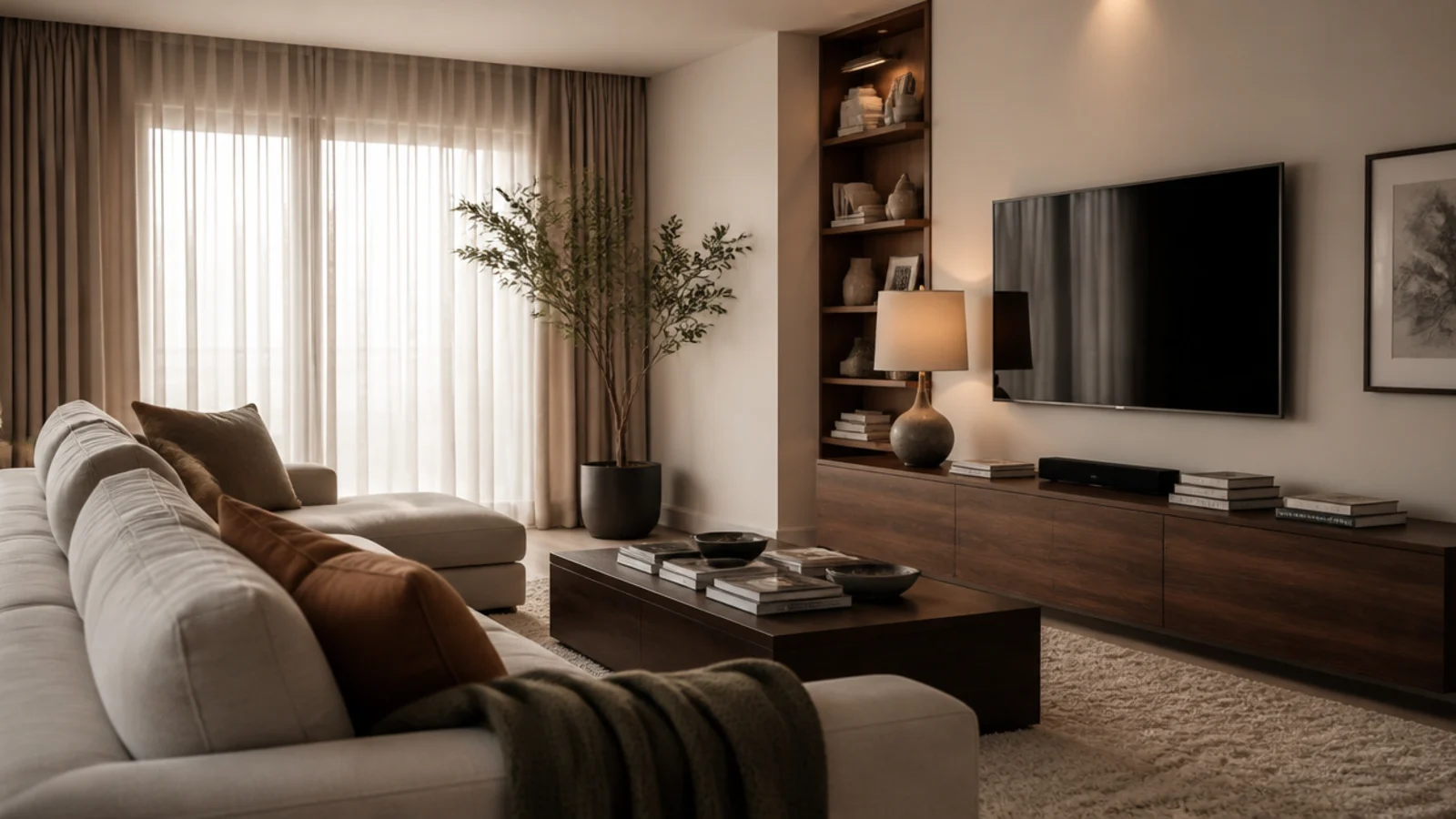
16. An armchair at forty-five degrees
One chair turned off the grid stops a room reading as a row of seats facing a wall. Keep it out of the direct route between the door and the sofa, and give it its own light source so it works for reading when the screen is off.
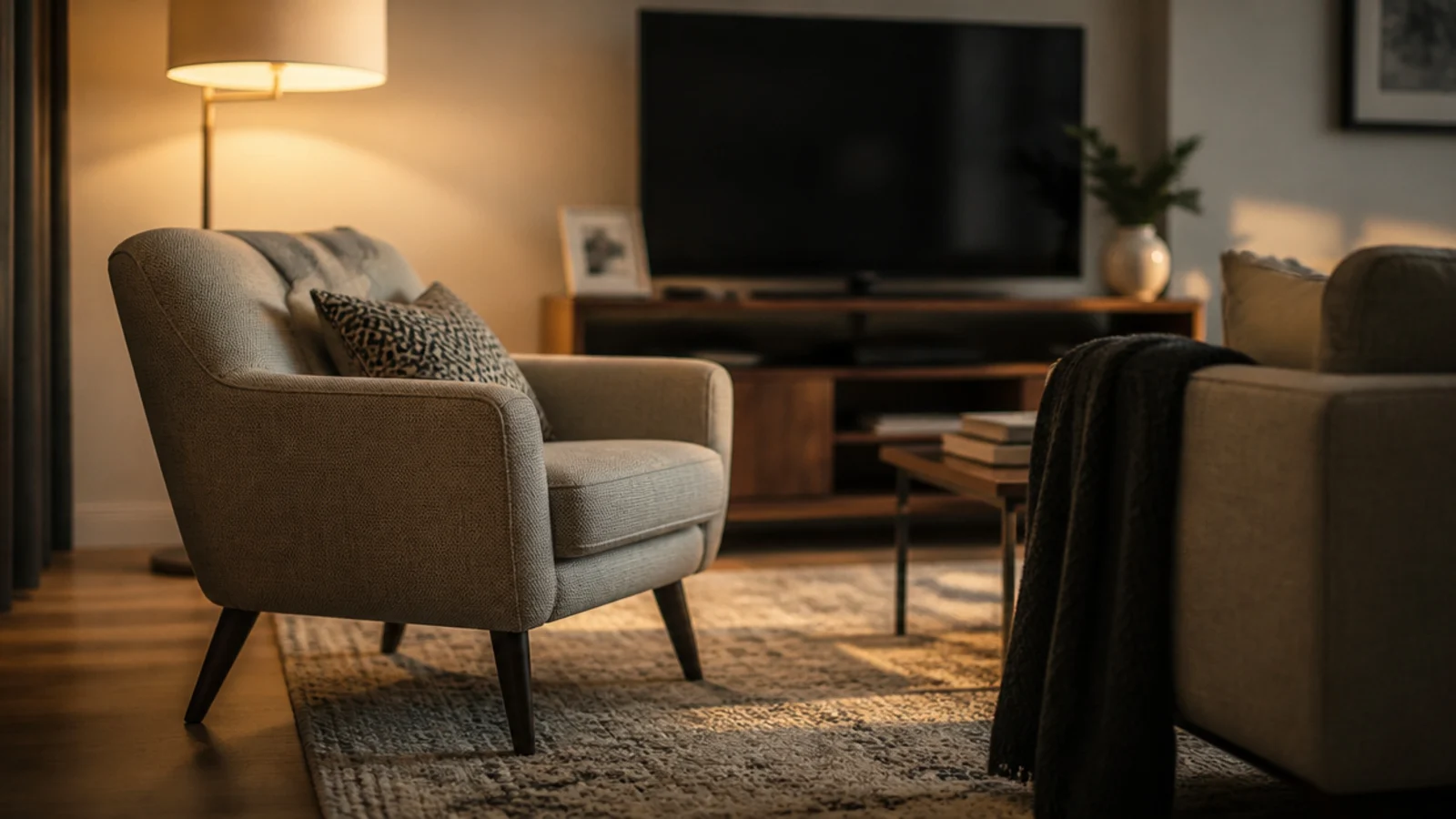
17. Let the screen sit off-centre if a fireplace is central
Mounting a television above a fireplace usually pushes its centre to 55 or 60 inches, roughly double the comfortable upward gaze. Putting the screen in the alcove beside the chimney breast at 42 inches solves the ergonomics and gives the room two focal points instead of a stacked one.
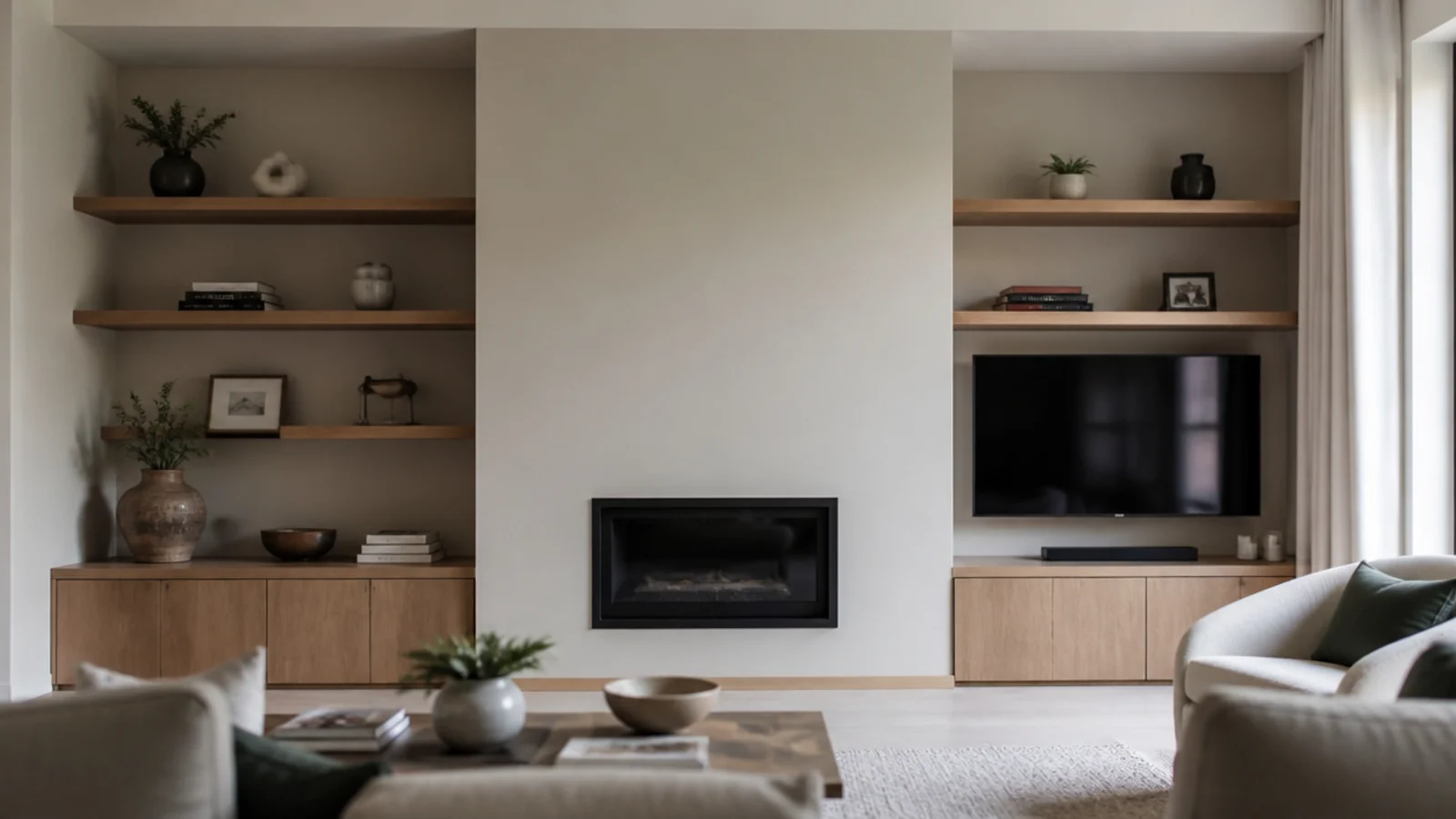
18. Warm timber against a deep wall colour
Honey oak or walnut against olive, clay or deep blue reads far warmer than the same timber on white. A darker wall behind the screen also cuts the contrast with a bright picture. The wooden design guide covers timber tones in more detail.
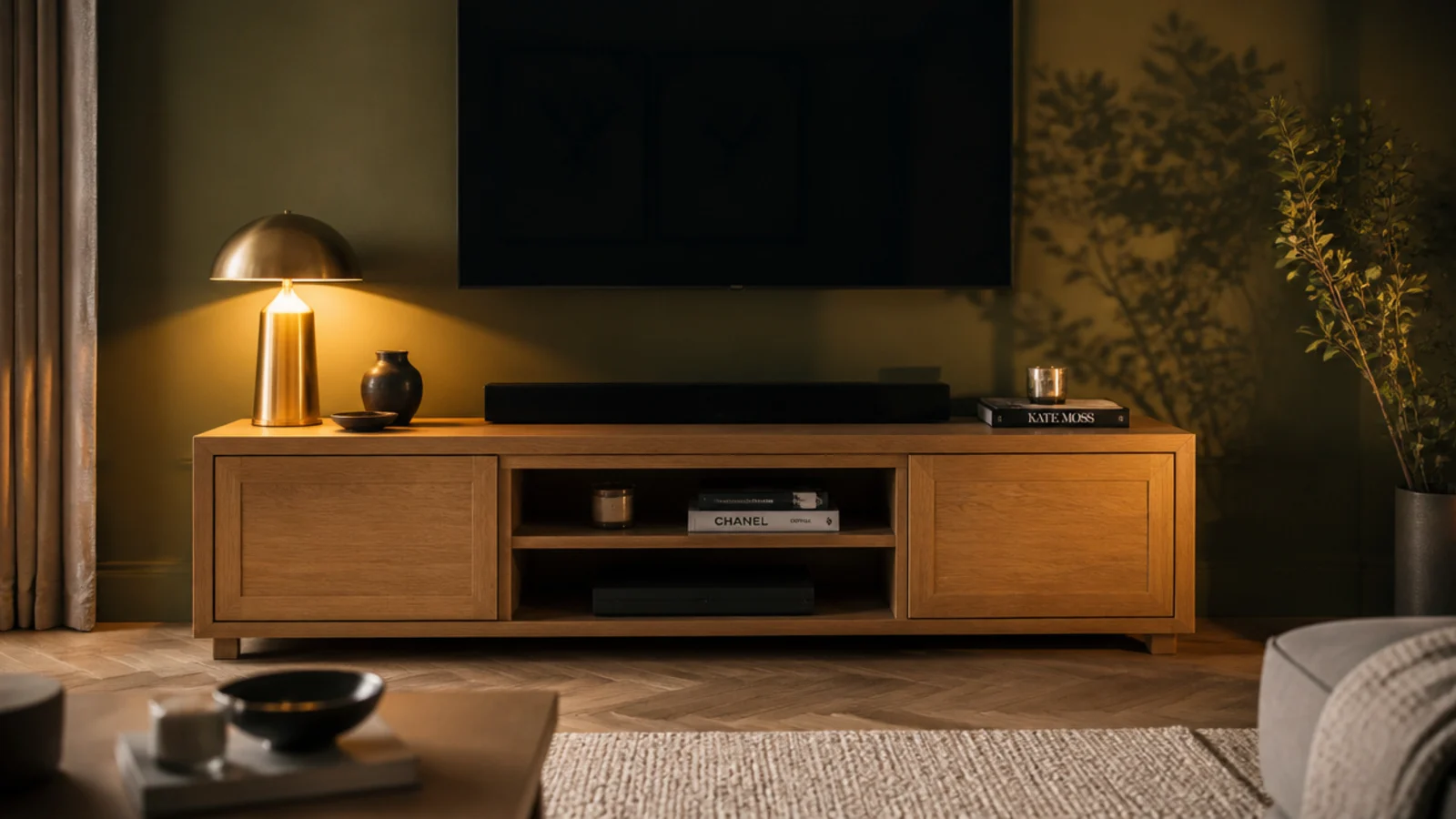
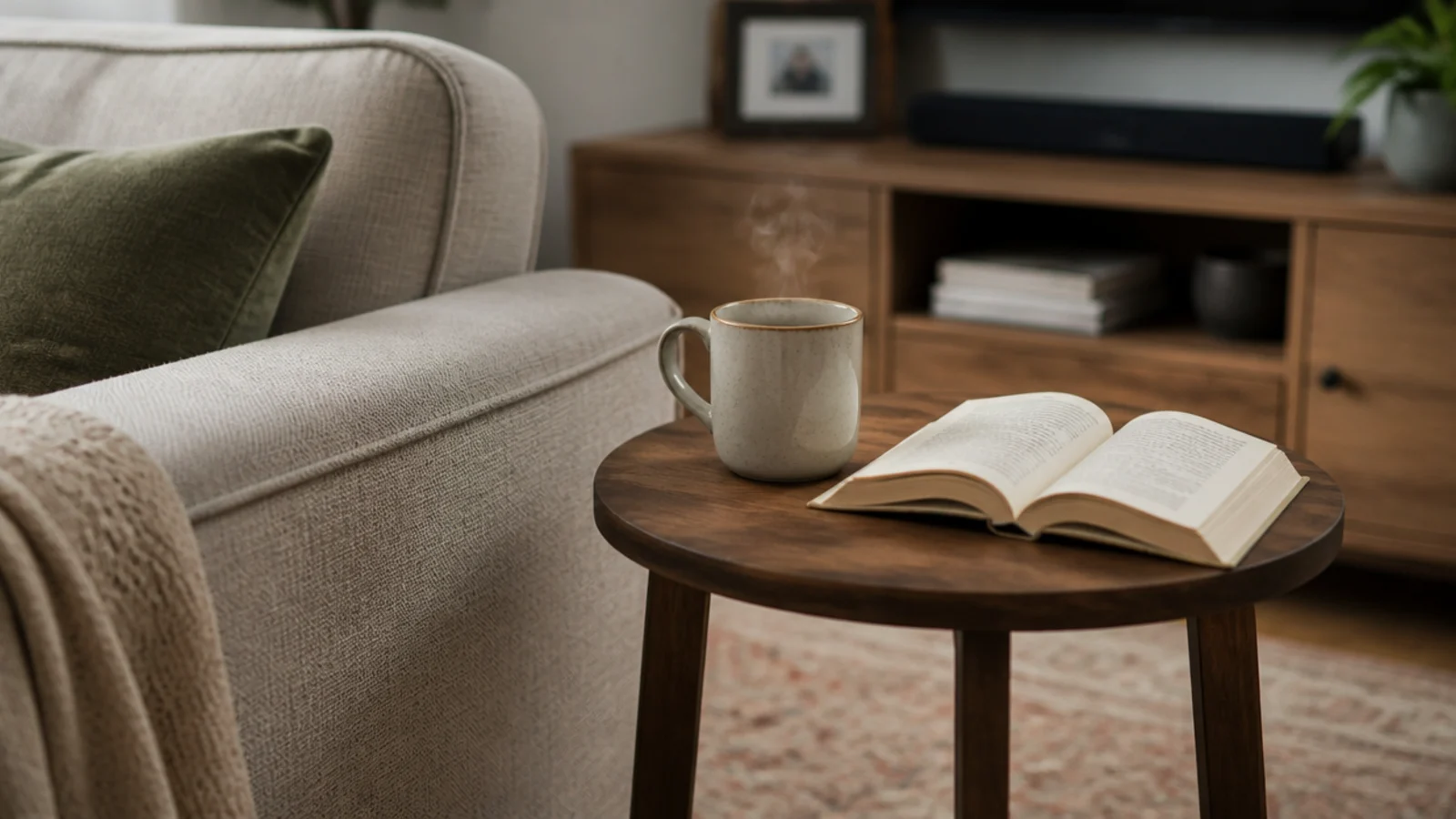
19. A side table at arm height
A table level with the sofa arm, usually 22 to 26 inches, ends the nightly balancing of mugs on cushions. It needs only to be 12 to 14 inches across. This is the piece most living rooms are missing, and it costs less than any other item here.
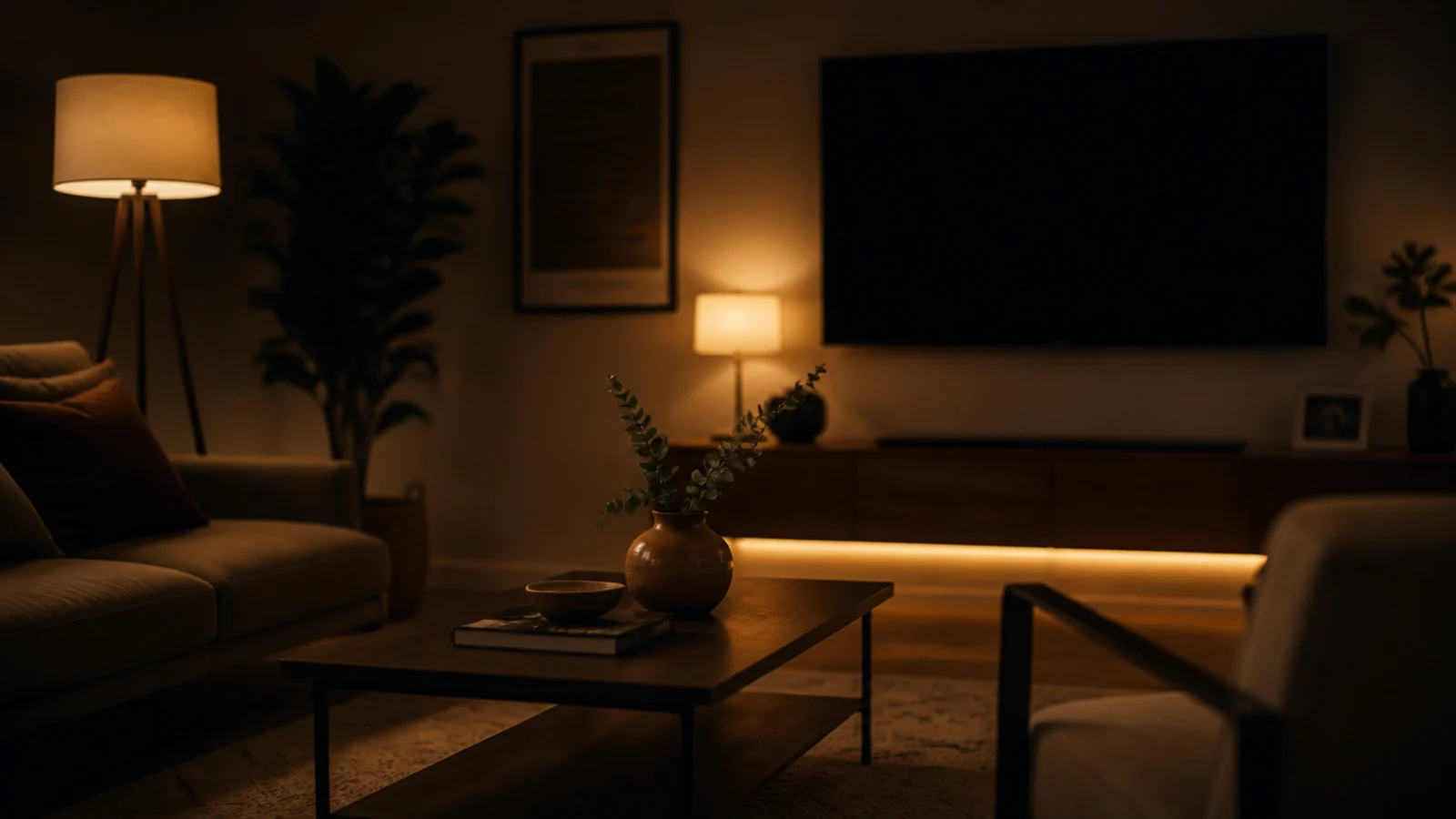
20. Three light sources for the evening
A floor lamp, a table lamp and a concealed strip, all warm and all dimmable, give you a room that changes through an evening. One bright ceiling fitting gives you two states. The styling mistakes guide covers what happens when the lighting is left as an afterthought.
For the practical side of the same wall, the clutter-hiding ideas cover cables, vents and grommets. If the seating plan needs a table to finish it, the center table guide has clearances for every room size.
Mistakes to Skip
- Pushing every seat back against a wall. A room reads larger when furniture floats slightly forward, and it also stops the seating distance being decided by the plaster.
- Lighting the room from the ceiling only. A single overhead fitting flattens everything and reflects straight off the screen, which is why so many media rooms feel cold at night.
- Choosing a rug that stops short of all the furniture. If nothing stands on it, it divides the floor instead of tying the room together.
- Leaving an open flame under a shelf or beside a curtain. Keep 12 inches clear around a lit candle, or use LED where the surface sits directly beneath fabric.
- Buying more storage rather than fewer things. A cosy living room is usually one with less in it, not one with more places to put things.
Frequently asked questions
How far should a sofa sit from the television?
Roughly 1.5 times the screen diagonal for comfortable everyday viewing, so about 7 feet for a 55 inch panel and 8 feet for a 65. Closer than 1.2 times the diagonal and the picture fills too much of your vision; much further and you stop noticing the detail you paid for.
What rug size works in a living room with a TV unit?
An 8 by 10 foot rug suits most rooms with a three-seat sofa, with the far edge running under the front legs of the seating and stopping 6 to 12 inches short of the media unit. Anything smaller than 5 by 8 usually floats and breaks the floor into pieces.
How do I make a room with a big screen feel cosy?
Add soft materials and warm light rather than more furniture. A wool rug, floor-length curtains and an upholstered seat absorb the hard reflections that make a media wall feel like an office, and a 2700K lamp placed off to the side warms everything the screen makes cold.
Where should lamps go in a room with a television?
Anywhere their reflection does not land in the glass. Sit down in the main seat and look at the dark screen before deciding — a lamp that looks perfect from standing height often sits squarely in the reflection from the sofa. Two or three warm sources on dimmers beat one bright ceiling light.
Should the TV be the focal point of a living room?
It will be while it is on, so give the room something else for the rest of the week: a fireplace, a window seat, a strong piece of art on another wall. Keeping the media unit low and the second focal point on a different wall stops the two competing.
Want more like this? Browse all 15 tv unit decor guides — they all use the same measurements and budget tiers.
Pin it for later
Save this to your TV Unit Decor board
Pin it now so it is waiting for you when the tape measure comes out — and so the next person hunting for this idea can find it too.
Save this pinKeep going
More ideas worth saving while you have the tape measure out.