Aesthetic Candle Decor · Listicle
15 Easy Aesthetic Candle Ideas for Any Home

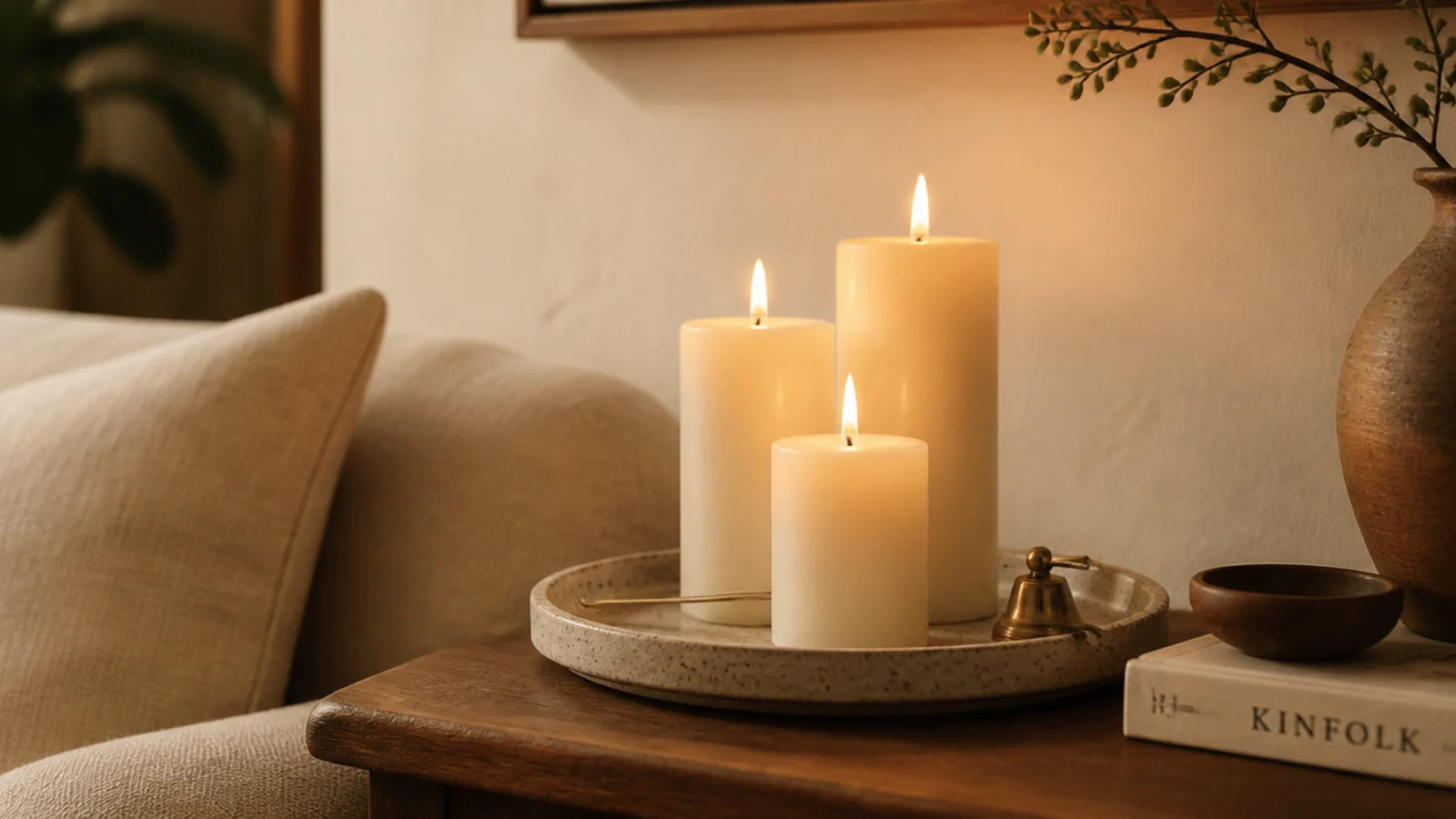
Aesthetic candle decor is the cheapest mood change available in a house, and the one most likely to end in a scorch mark. I have styled candles in five rentals now, and the groupings that looked best were the same ones that were safe: open air above the flame, a hard tray underneath, odd numbers at three heights. Here are fifteen setups that glow beautifully and behave themselves.
In this guide17 sections — tap to openHide
- 1.Where aesthetic candle decor actually earns its keep
- 2.A three-candle cluster on a stone tray
- 3.A pillar trio on the mantel
- 4.Unscented tapers down the dining table
- 5.A hurricane glass for the draughty spot
- 6.Pillars in the empty fireplace
- 7.Votives on a tiled bathroom ledge
- 8.A flameless candle on the kitchen sill
- 9.Battery pillars on the nightstand
- 10.A snuffer tray on the entry console
- 11.A low coffee table group under five inches
- 12.The top of the bookcase, never under it
- 13.Wall sconces with timer LED pillars
- 14.A cloche vignette you never light
- 15.A weighted lantern on the balcony
- 16.A candle care corner with the trimmer
- 17.Mistakes to Skip
Where aesthetic candle decor actually earns its keep
A candle pays off where you sit in the evening and nowhere else. A flame on a hallway shelf you walk past twice a day is decoration nobody sees lit, and it is a flame nobody is watching.
Start with the surface. Stone, ceramic, glass, metal or a stoneware tray — never bare wood, never a woven placemat, never paper. Then check the air. Twelve inches of clear space above and around every flame, measured honestly, with nothing that can catch: no curtain, no shelf underside, no dried stems, no lampshade, no book stack.
If a spot fails either test, it still gets a candle — it just gets a flameless one. Real wax shells with a warm flickering LED look identical from six feet away, and they hold the styling all day without you thinking about it.
The composition rules are simple. Odd numbers, three different heights, and one tray to gather them. A tray does two jobs at once: it catches wax and it makes five small objects read as one intentional group.
Budget-wise, plain unscented pillars run $4 to $12 each ($), a decent scented jar or a set of three flameless pillars runs $15 to $40 ($$), and solid brass holders or a real hurricane lantern run $45 and up ($$$). Renters, note that everything here sits on a surface. Nothing in this list needs a single hole in a wall.
1. A three-candle cluster on a stone tray
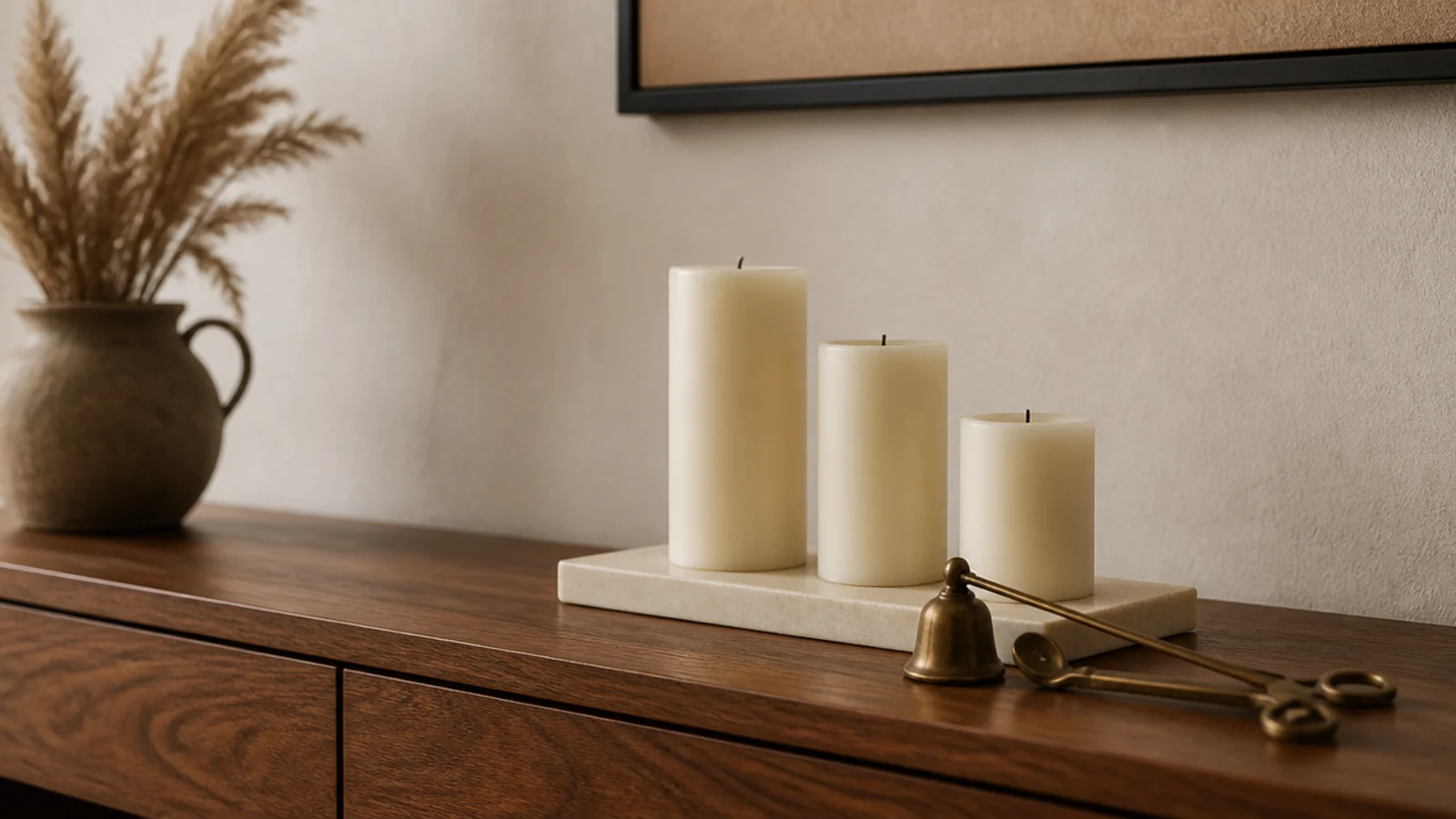
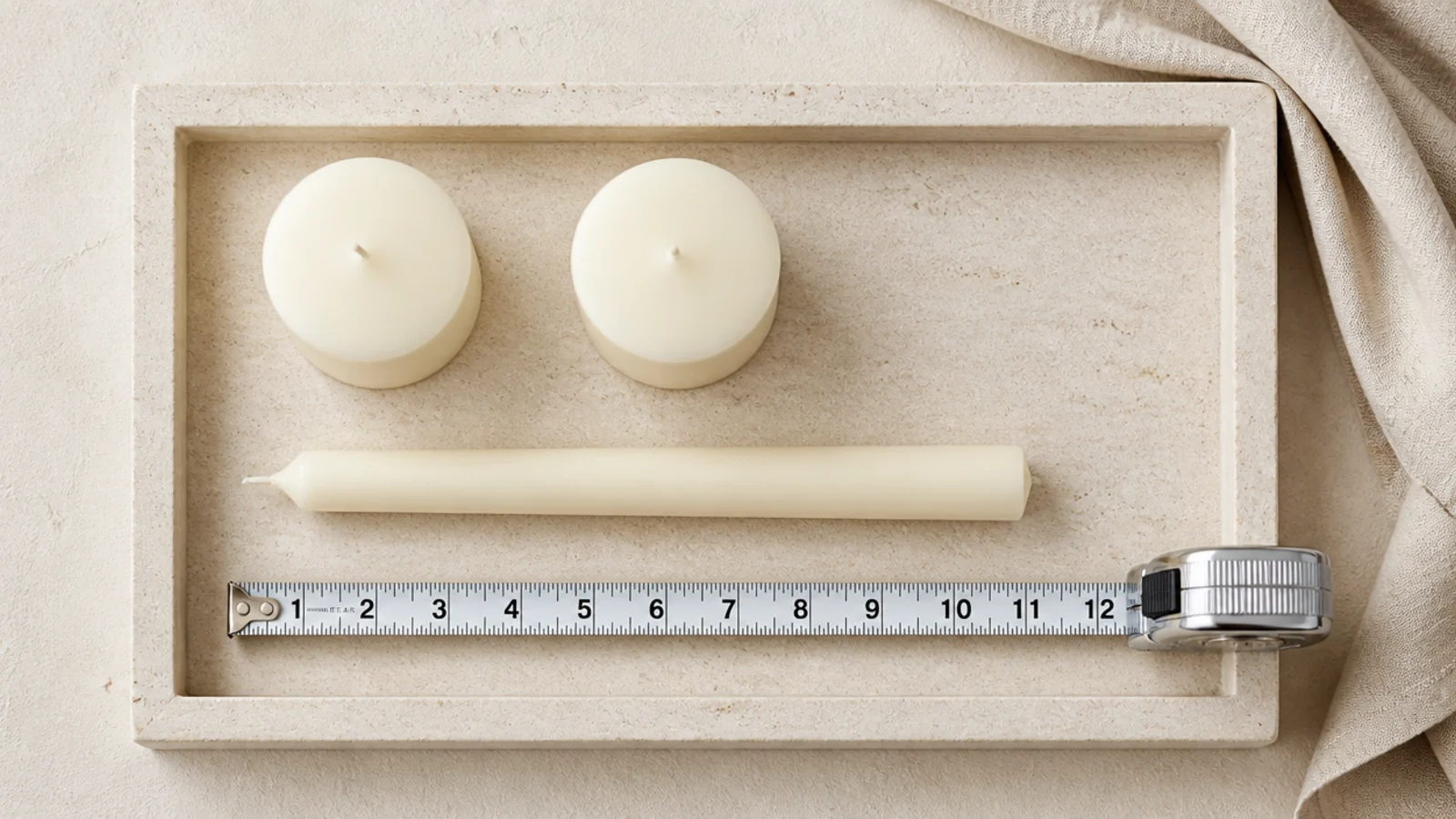
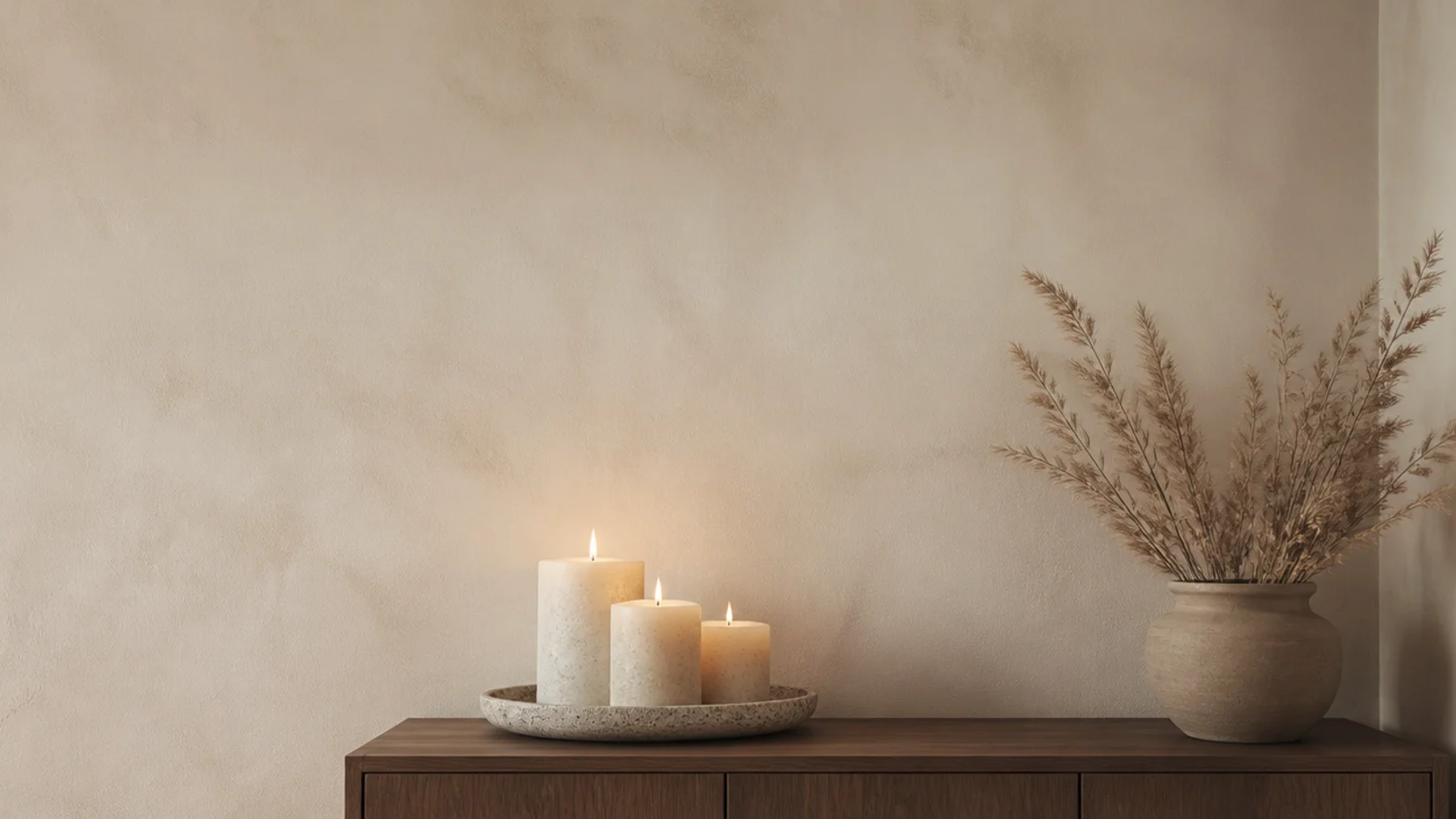
The workhorse. Three unscented pillars at roughly six, four and three inches tall, clustered on one marble or slate tray about 10 inches across.
Buy pillars three inches in diameter or wider — that is the width at which wax melts across the full top instead of tunneling down a narrow shaft. Set them close enough that they read as a group, about an inch and a half apart, but never touching, because two flames that close soften each other and lean.
The tray catches every drip, and it means you can lift the entire arrangement off the table in one hand when you need the surface back. Total cost, around $25.
2. A pillar trio on the mantel
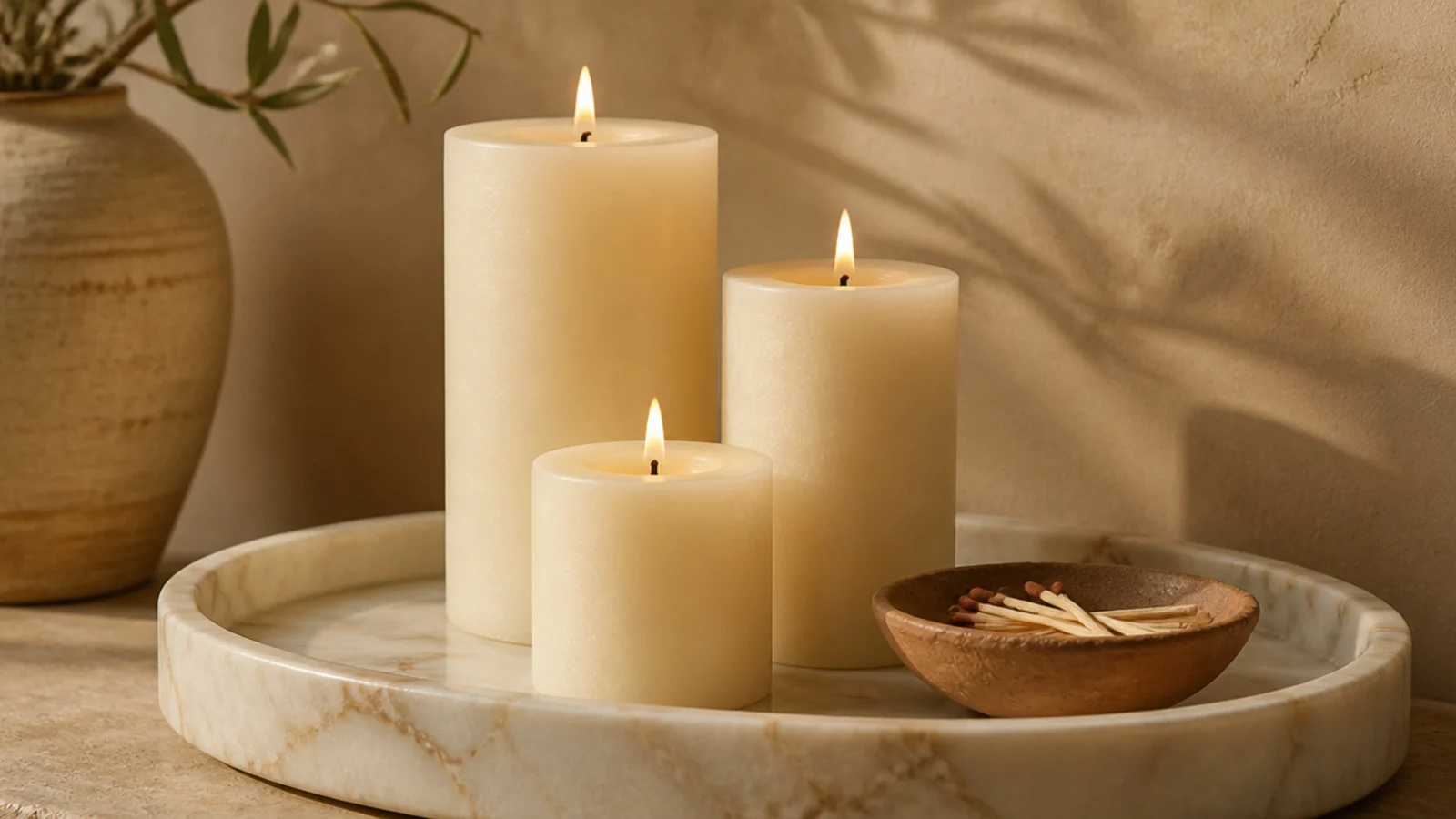
A mantel is stone or painted wood with open air above it, which makes it one of the few naturally safe places for a live flame.
Two rules. Set the candles back at least three inches from the front edge so a sleeve does not clip them, and check what hangs above. If there is a mirror, art, a TV or a garland within twelve inches of where the flame will sit, the mantel gets flameless pillars instead. Heat rising off three flames will haze a mirror and cook a TV bezel over a season.
Space three wide ivory pillars unevenly across the length, heaviest at one end, and leave the other third empty.
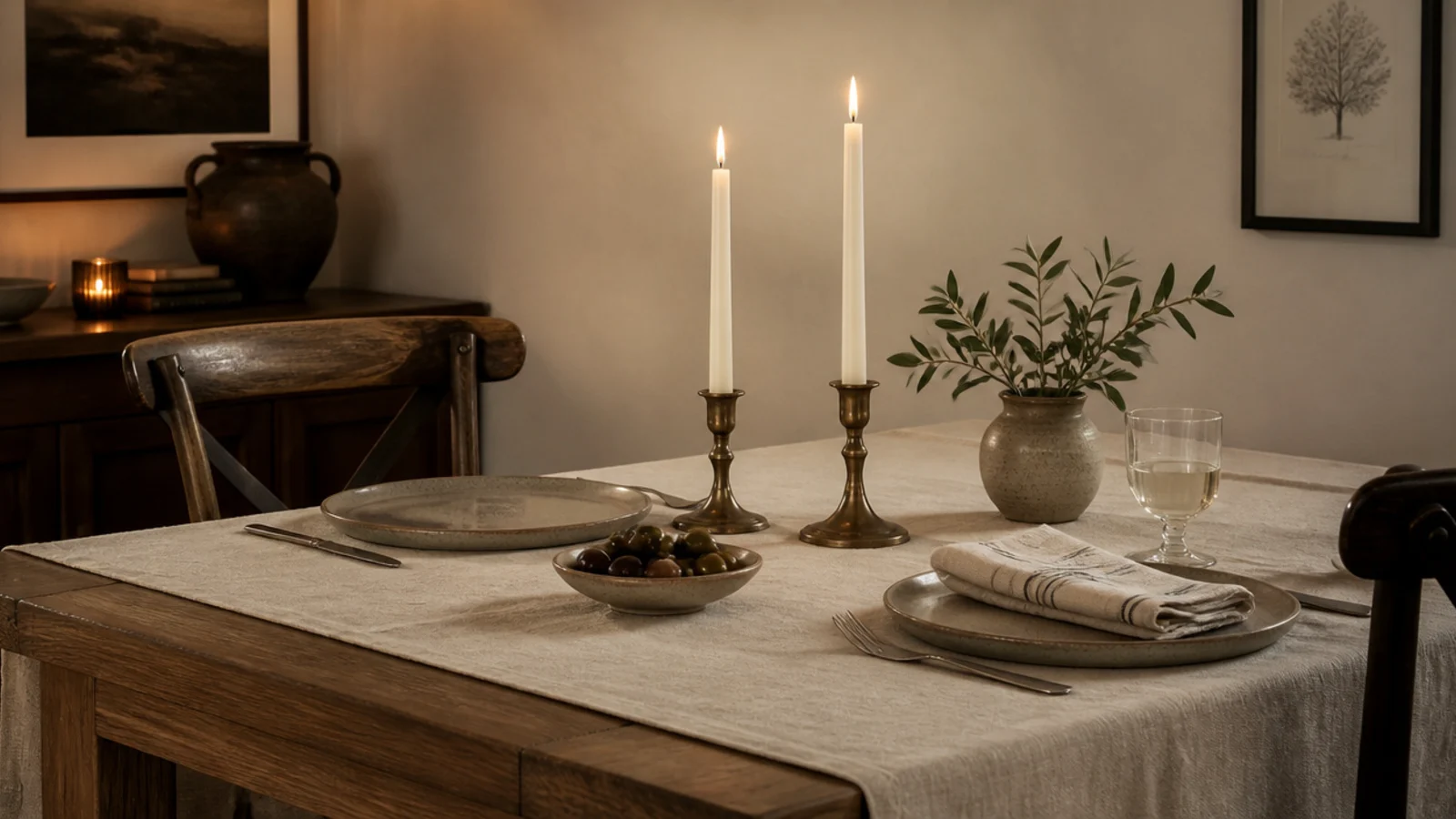
3. Unscented tapers down the dining table
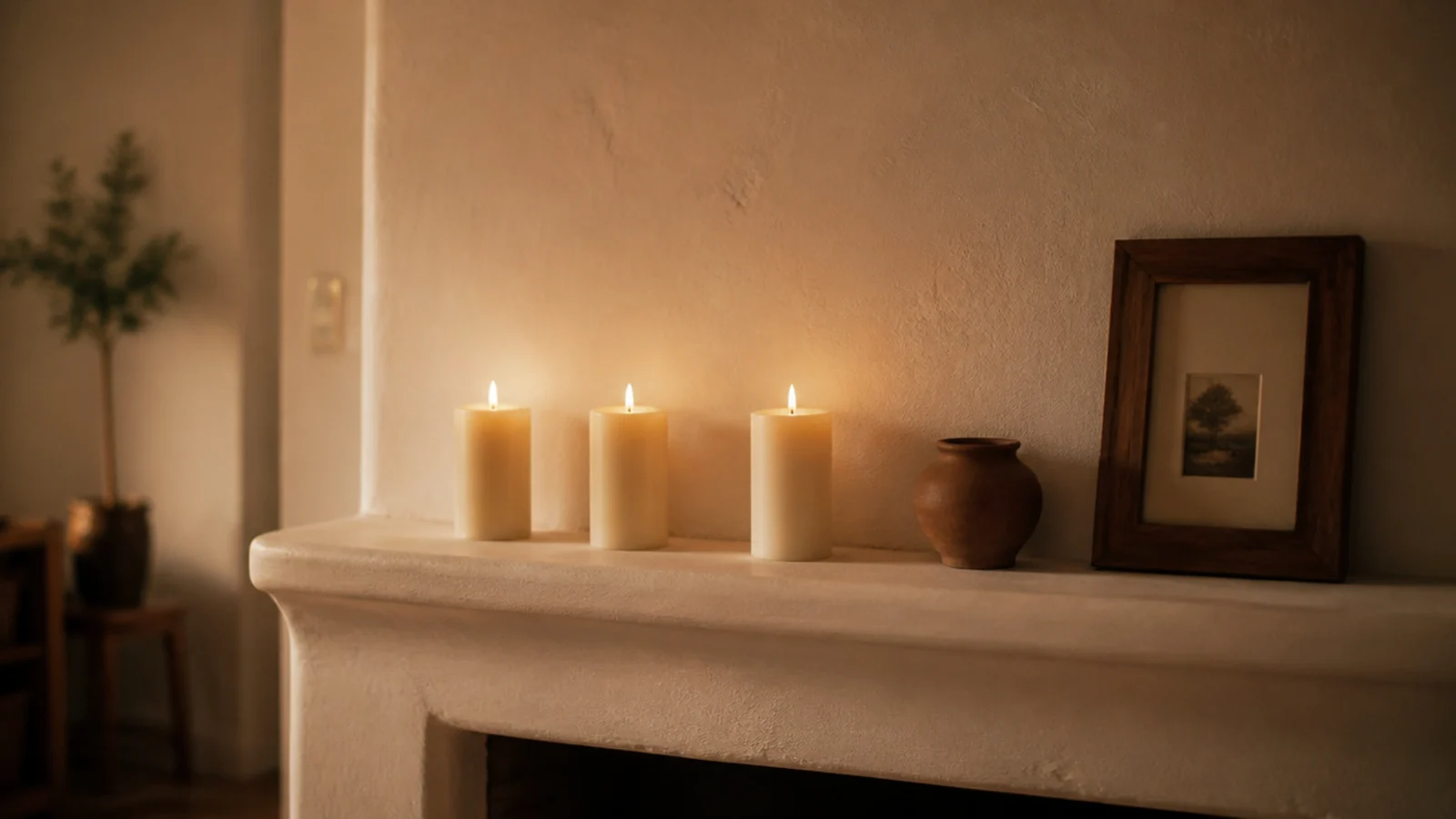
Tapers are the fastest way to make a weeknight table feel deliberate, and they should always be unscented. A fragrance burning eighteen inches from a plate fights whatever you cooked, every time.
Keep the total height of the lit taper under twelve inches so people can see each other across the table. Use heavy brass or stoneware holders — the lightweight ones tip when someone reaches for the salt. If a taper leans as it burns, it is in a draught, and a leaning taper drips hot wax sideways onto the table.
Snuff them when the meal ends rather than leaving them burning through coffee in the next room.
4. A hurricane glass for the draughty spot
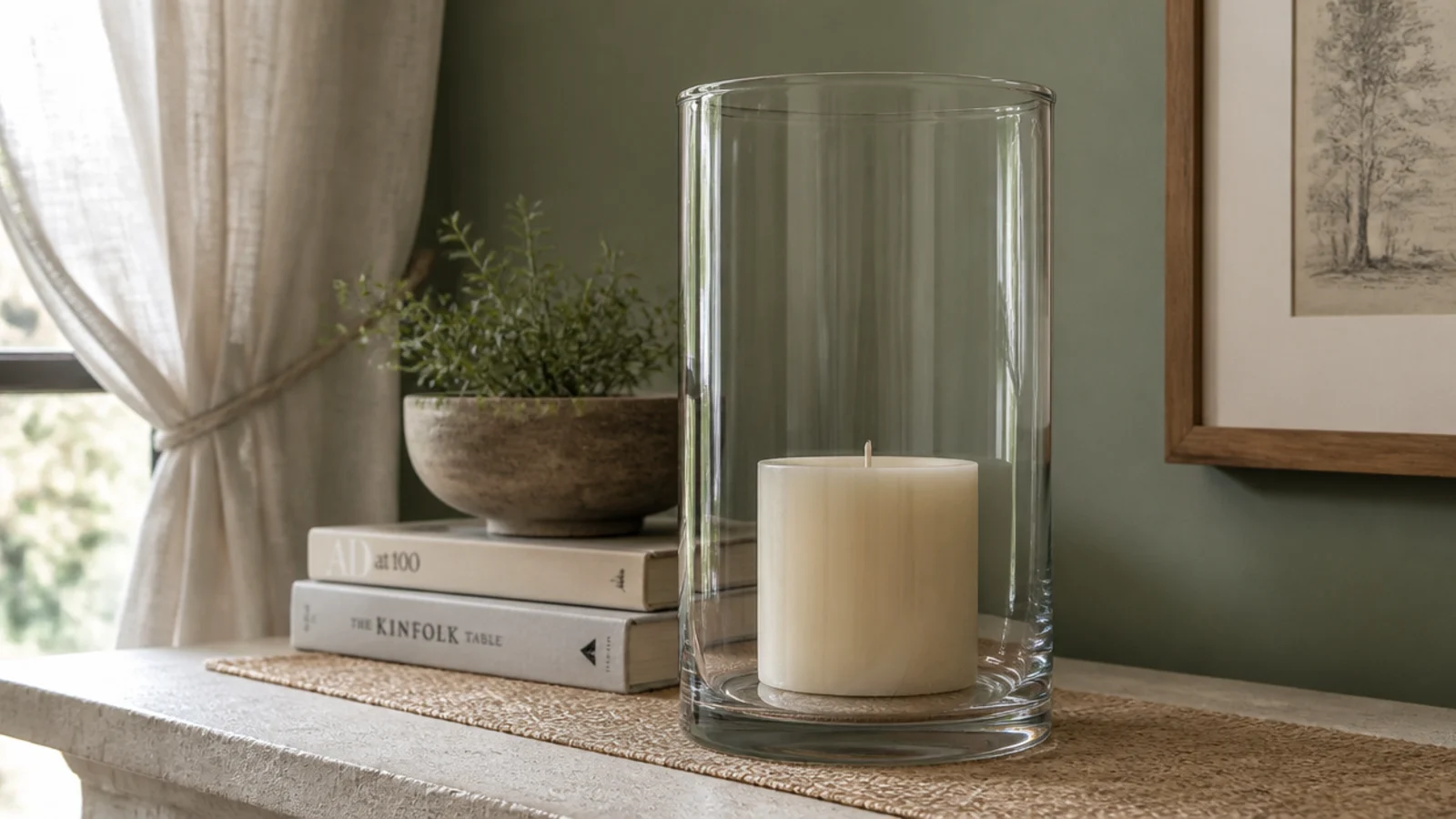
Every home has one spot with a moving current of air — near a hallway, a stairwell, an open window. A flame in a draught flickers, smokes, tunnels and throws soot up the wall.
A hurricane glass, which is an open-topped cylinder about four inches taller than the flame, solves it. The chimney blocks side air and lets heat escape upward. This is the important difference from a closed lantern: an enclosed flame starves, smokes and heats the glass to the point where it can crack.
Even shielded, the same rules hold. Twelve inches of clearance, a stone or metal surface underneath, and out before you leave the room.
5. Pillars in the empty fireplace
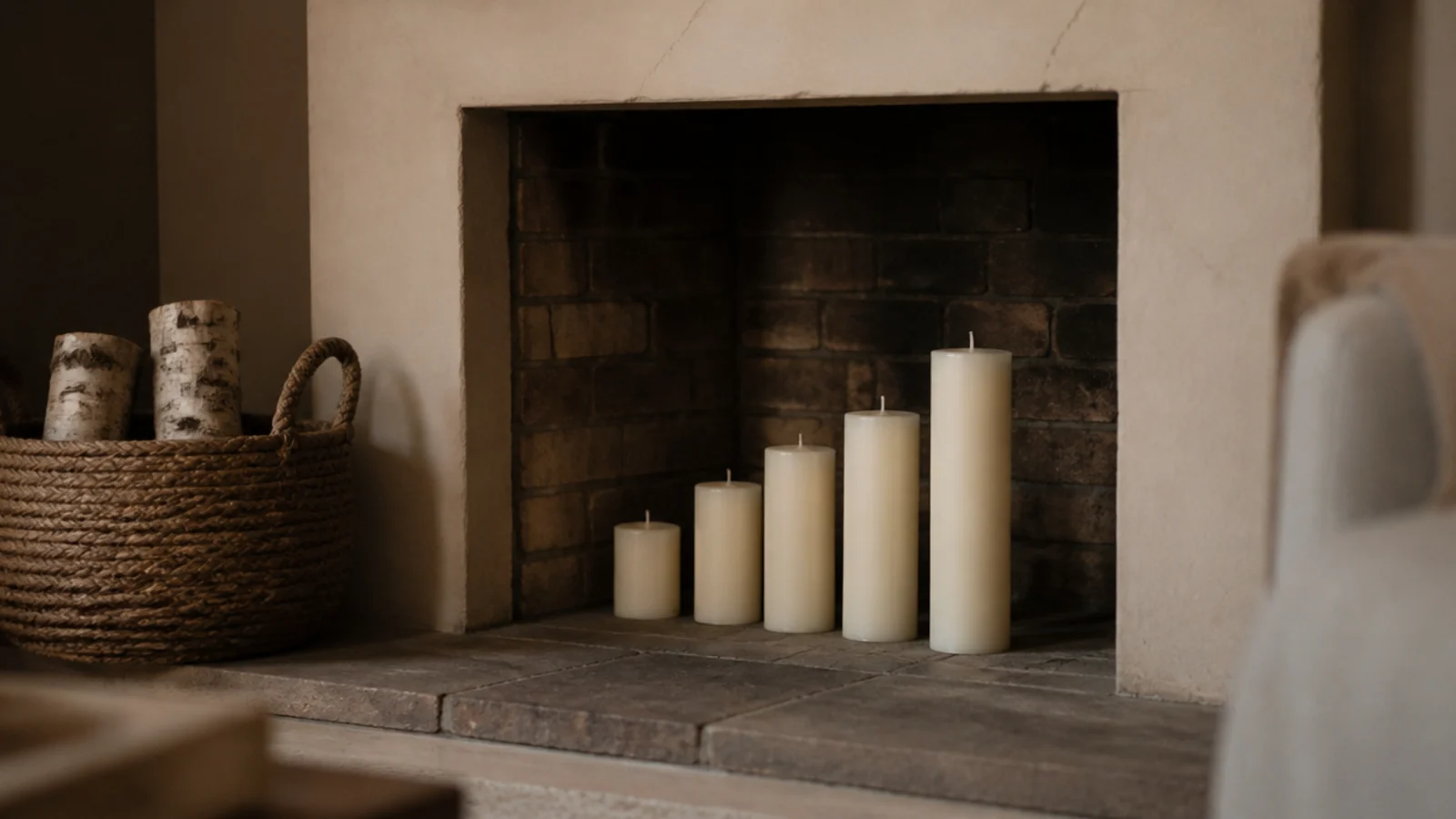
An unused firebox is the one spot in the house that was purpose-built to contain a flame, and it is the best-value candle idea in this guide because the fireplace does the styling for you.
Stand five pillars of graduated height directly on the stone or brick hearth floor, tallest at the back. Five reads generously in a wide opening where three looks sparse. Keep everything else out of the opening — no logs stacked around them, no dried hydrangea, no basket.
If small children or pets share the room, swap to flameless. A firebox is at exactly toddler height and there is nothing between them and the wick.
6. Votives on a tiled bathroom ledge
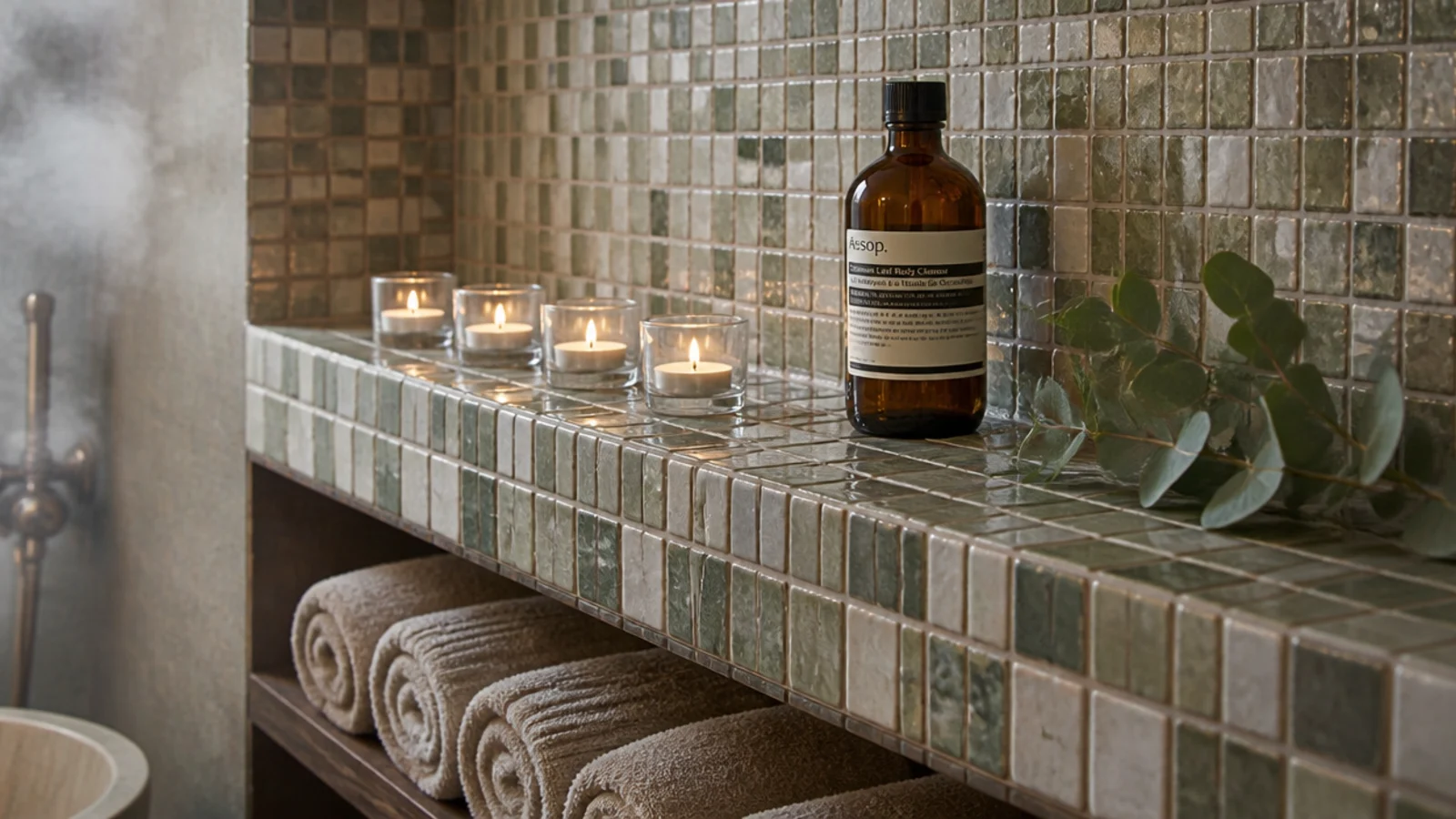
Tile, stone and porcelain are the safest surfaces in the house, and a bathroom is where a scented candle earns its money.
Line up three or four small glass votives along a ledge, with at least twelve inches between the nearest flame and the towel stack, the shower curtain and the toilet roll. That last one gets forgotten constantly. Glass votives contain the wax entirely, so nothing runs onto the tile grout.
Light them while you are in the room and snuff them on the way out. A bathroom door left closed on a burning candle is a small room filling with heat and soot.
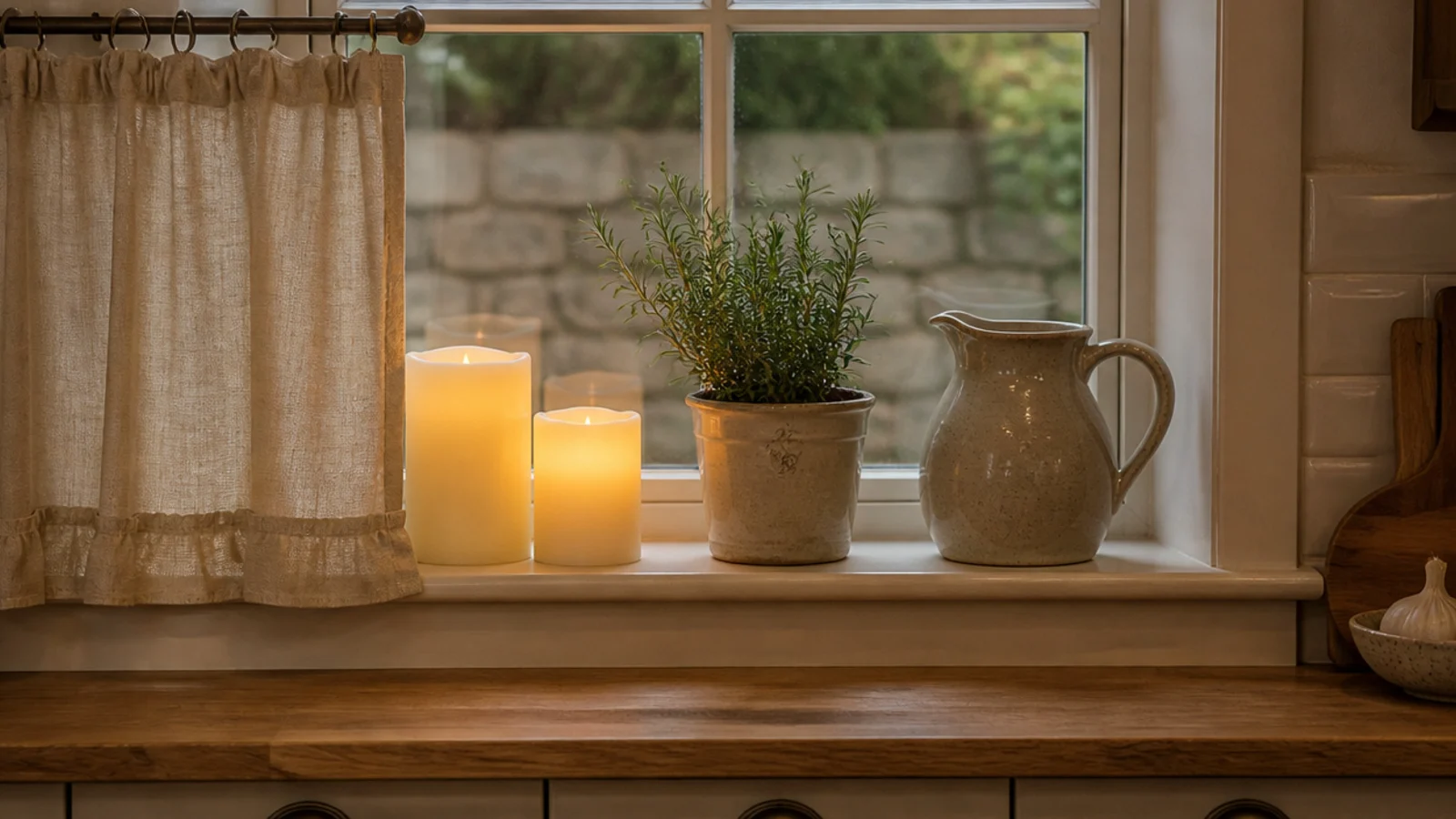
7. A flameless candle on the kitchen sill
A kitchen windowsill is beautiful at dusk and genuinely hazardous. Cafe curtains hang inches away, the window gets opened, and there is usually a roll of paper towels within reach.
This is a flameless placement, full stop. Two real wax LED pillars with a six-hour timer give you the same glow behind the sink at 6pm without anyone standing there. Sets of three run $18 to $35 and they take AA batteries that last a whole season on a timer cycle.
If your sill is bare stone with no curtain and the window stays shut, a single wide pillar in a hurricane is the only real-flame version I would use.
8. Battery pillars on the nightstand
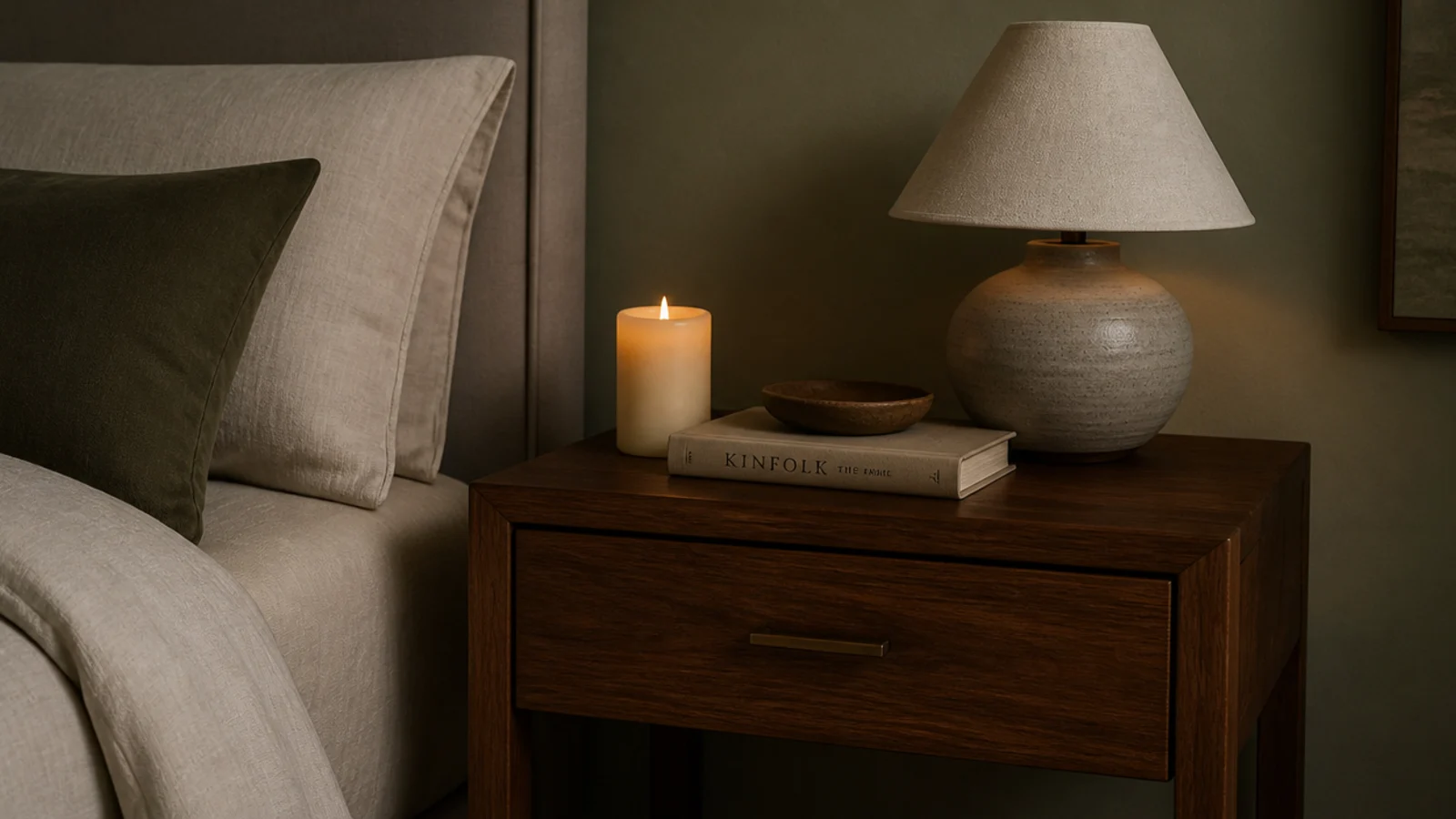
Nothing burning goes on a nightstand. Bedding, a book, a phone cable and a lampshade all sit within a foot of that surface, and anyone who has fallen asleep reading knows exactly how this goes wrong.
Battery pillars in real wax, with a warm flicker and a timer set for two hours, give a bedroom the same low glow with none of it. Set the timer so it switches itself off after you are asleep.
If you want a real flame in a bedroom at all, it burns on a dresser across the room, while you are awake and standing, and it is out before anyone gets into bed. The bedroom candle guide goes through every safe placement in detail.
9. A snuffer tray on the entry console
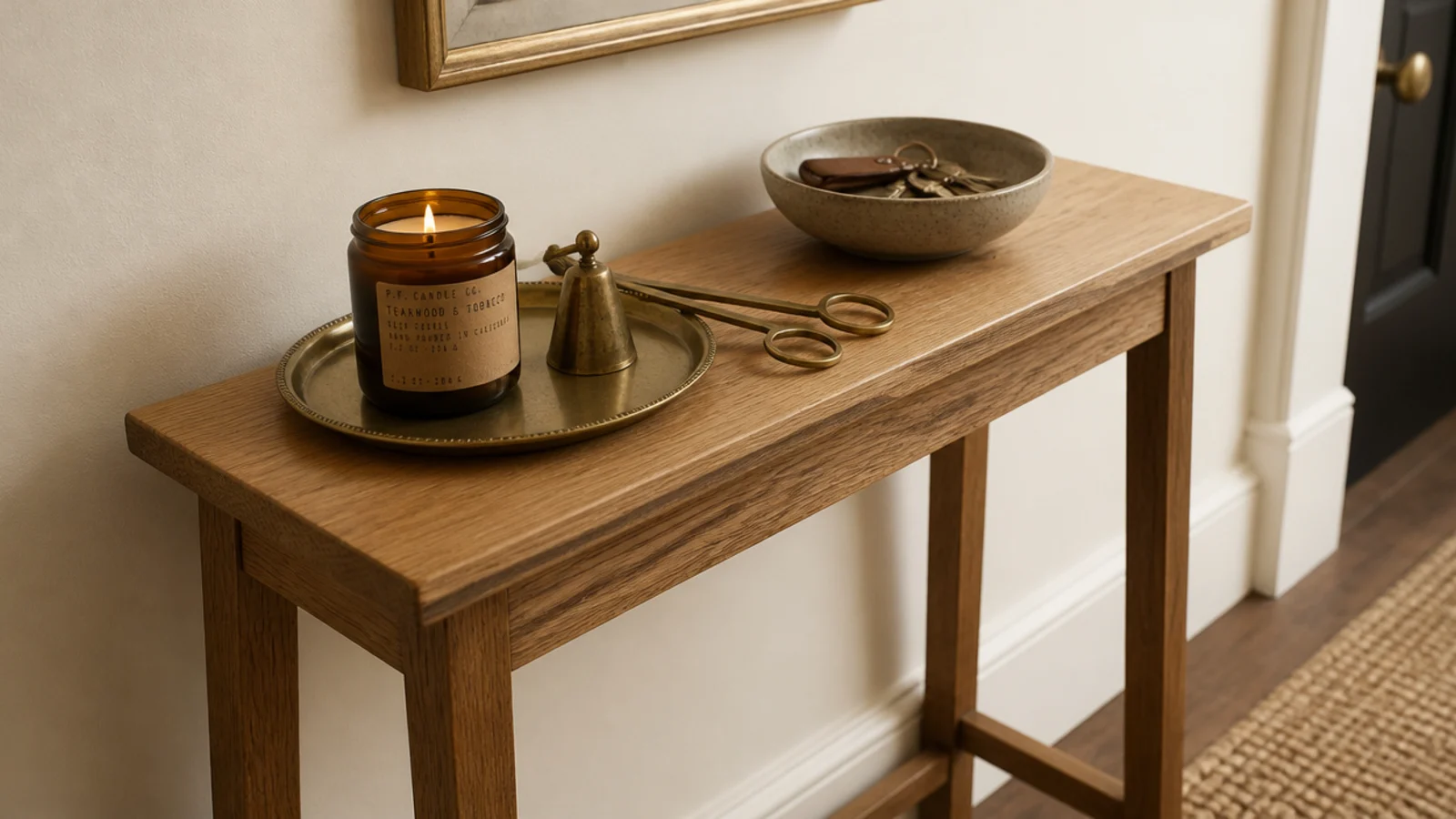
An entryway candle is the first thing people smell, so this is where a good scented jar belongs — $18 to $40 buys one that actually throws scent across a hall.
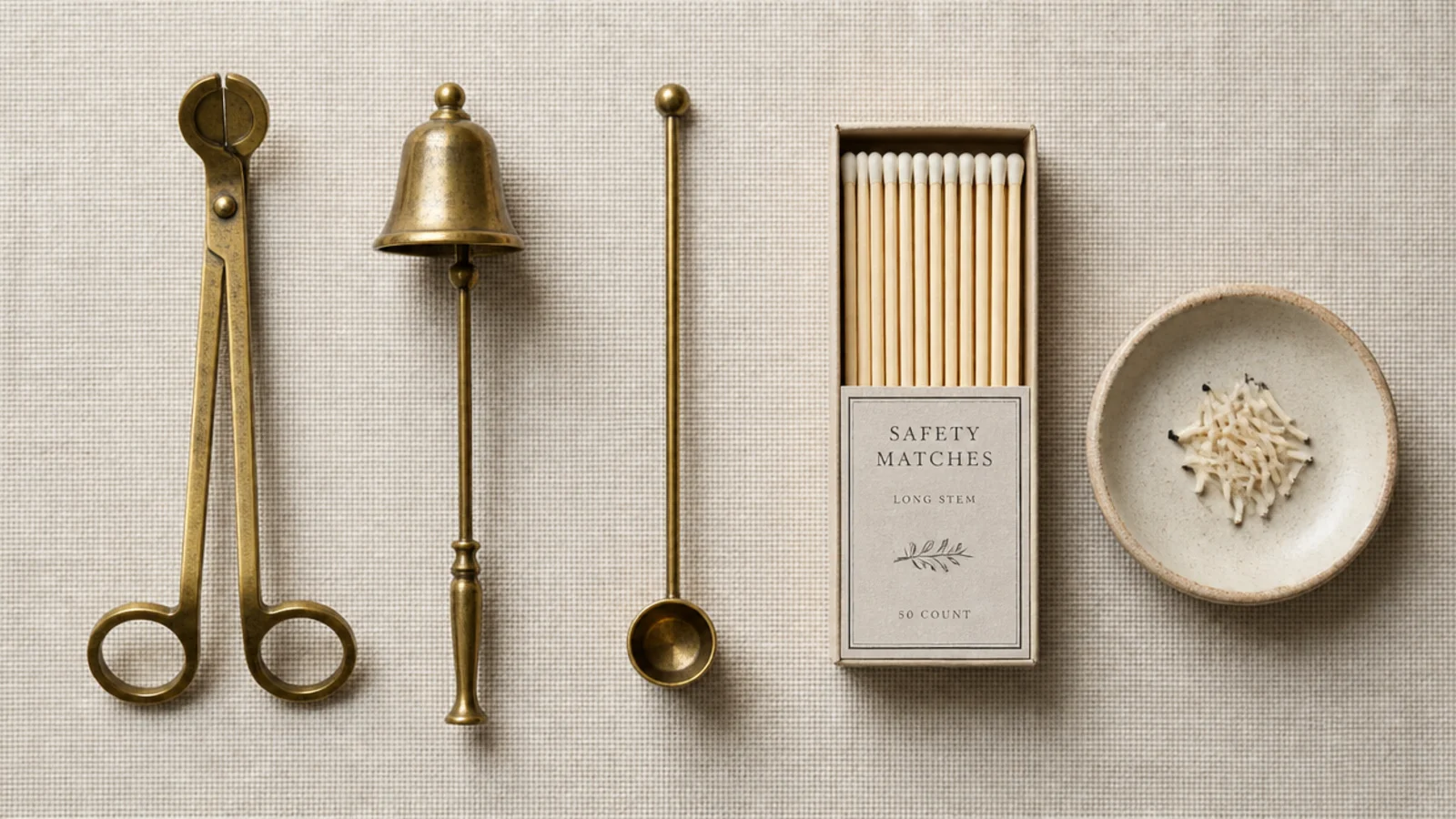
Put it on a small brass or ceramic tray with a snuffer and a wick trimmer beside it. Tools that live where you light are tools you actually use, and the whole reason candles get blown out instead of snuffed is that the snuffer is in a drawer in another room.
Keep the tray at least twelve inches from hanging coats, mail piles and the umbrella stand. Consoles collect paper faster than any other surface.
10. A low coffee table group under five inches
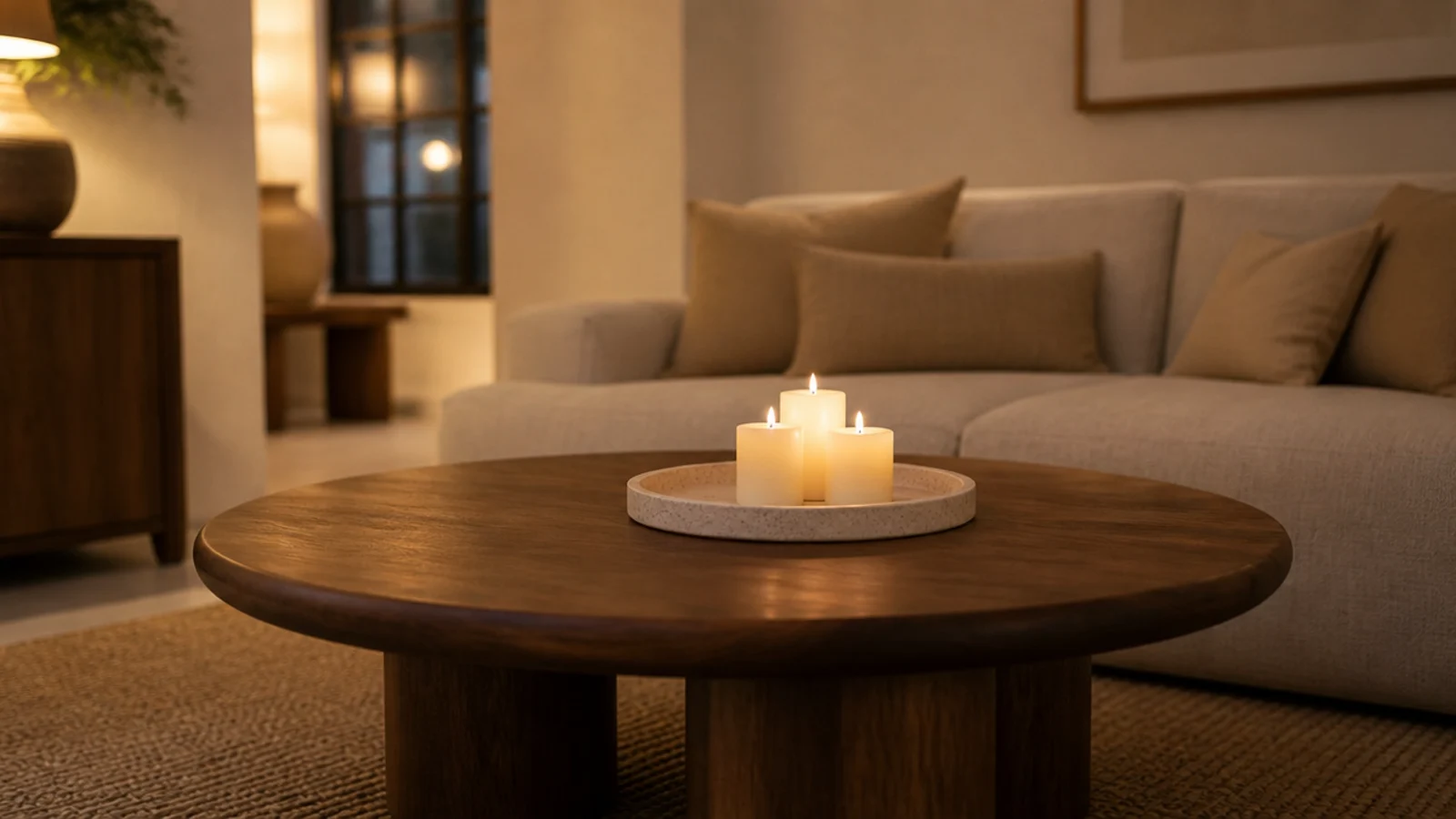
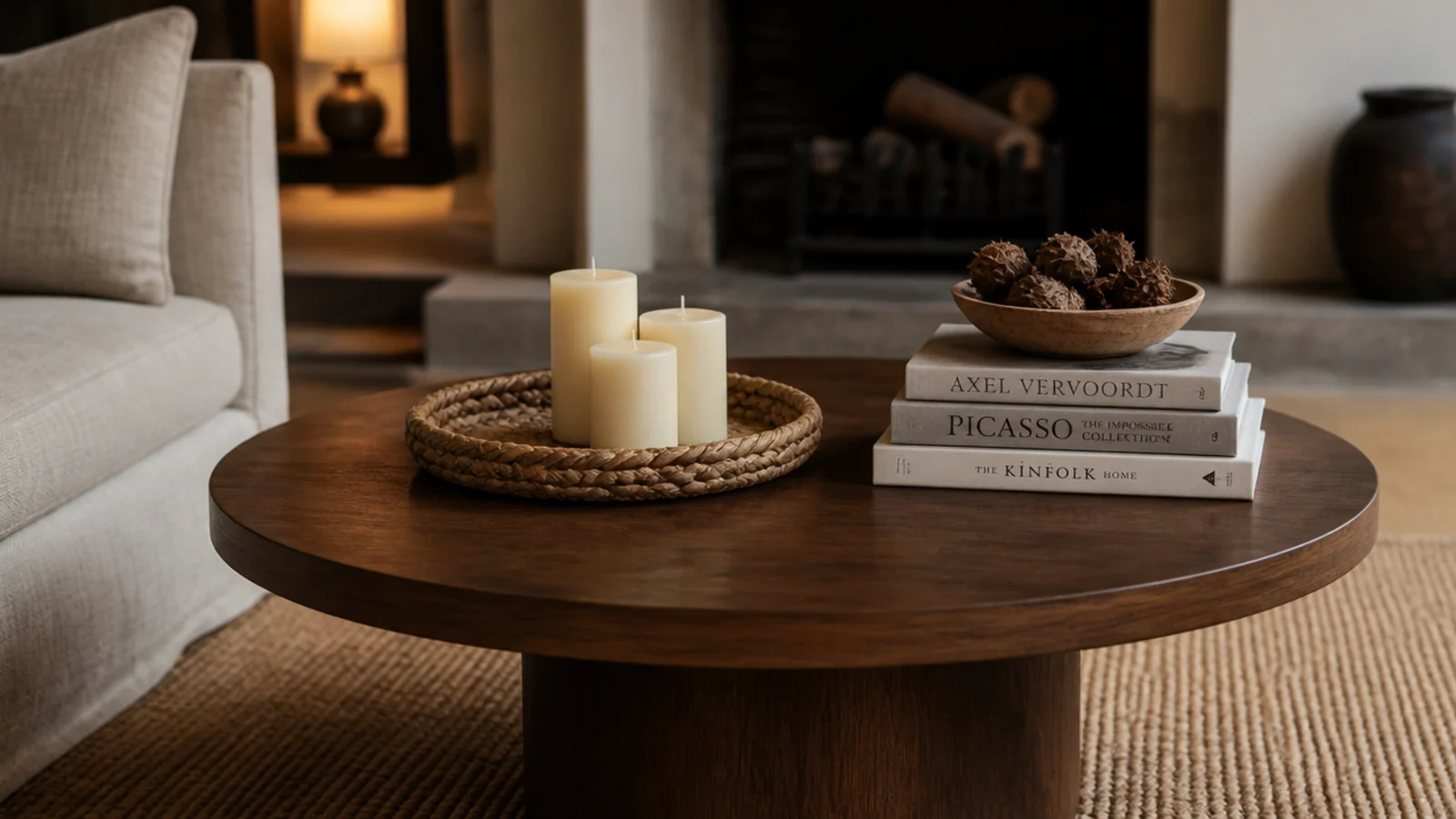
Coffee table candles have one job: to sit below eye level so people can talk across them. Cap the tallest at five inches.
Three squat pillars on a woven or stoneware tray, with a stack of two books alongside as a low anchor, is the whole formula. Nothing overhangs the flames — pull the trailing plant and the dried stems to the far end of the table, twelve inches clear.
A tray matters more here than anywhere. Coffee tables get knocked, and a tray with a lip catches a tipped candle before it rolls onto a rug. There is more on this in candle styling ideas.
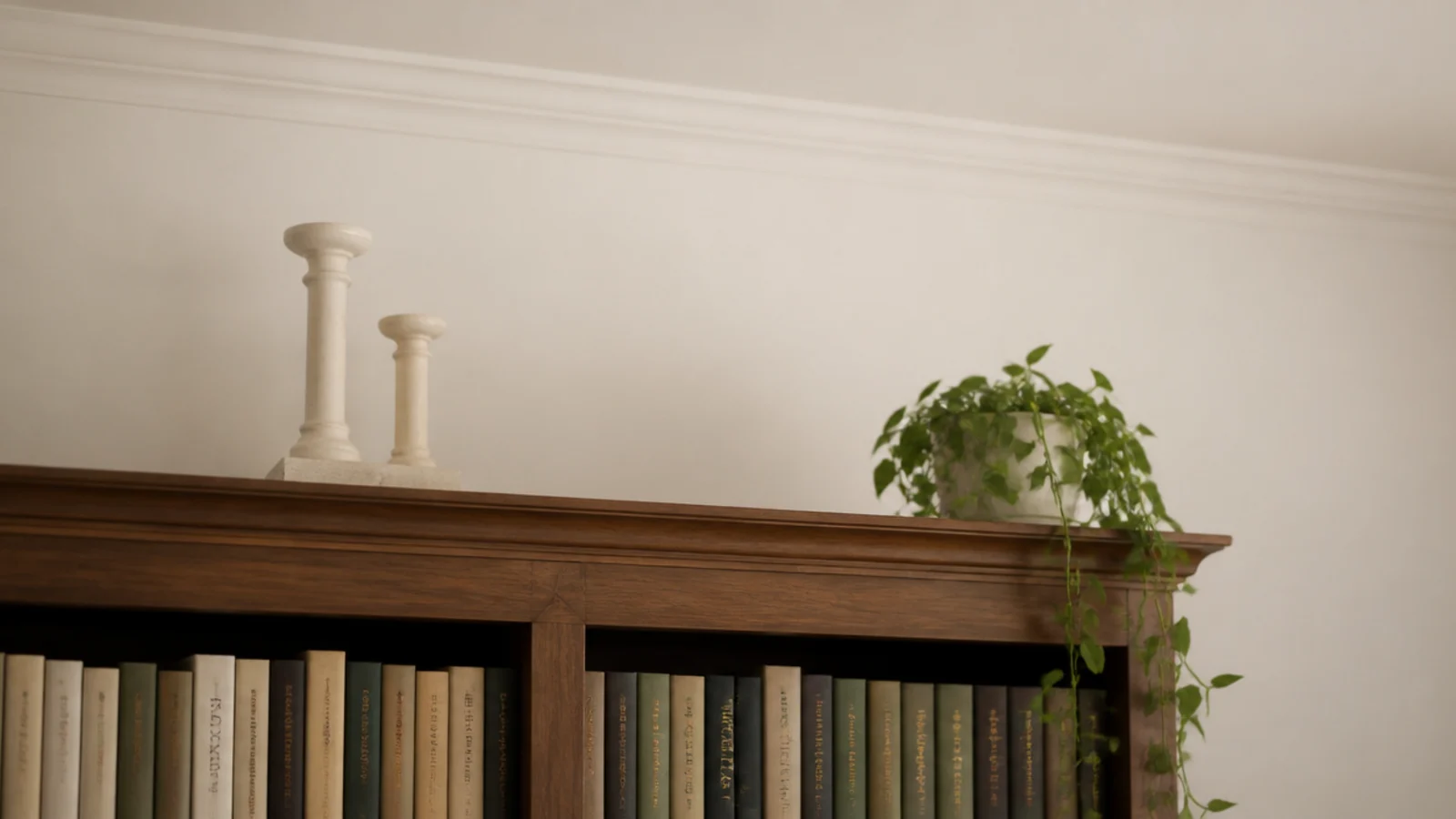
11. The top of the bookcase, never under it
The top surface of a bookcase, with three feet of open air to the ceiling, is a lovely place for two pillars. The shelves below it are not.
A flame under any shelf is trapped heat. It scorches the underside, yellows paint and can char wood within one long burn, and paper spines sitting eight inches away are the fuel. So the rule is simple: burning candles on the top only, flameless everywhere else on the unit.
Flameless pillars tucked between books look right all day and cost nothing to run. See the candle shelf guide for the full layout.
12. Wall sconces with timer LED pillars
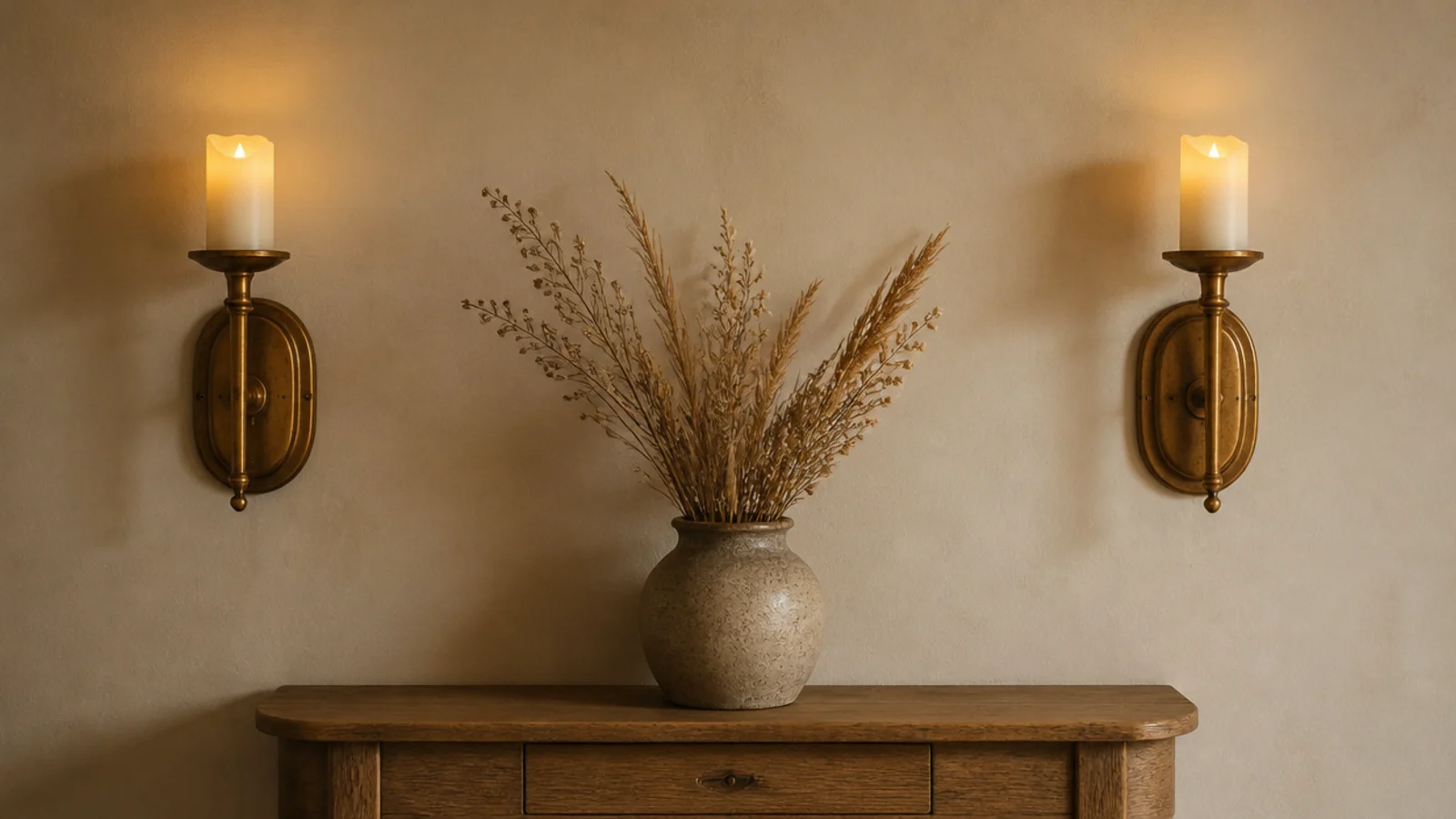
Candle wall sconces give a room the height that table candles cannot, and they are also the placement where a real flame is hardest to justify: it burns near a wall, often under art, usually out of easy reach for snuffing.
Fit them with real wax flameless pillars on a timer. From across a room the flicker is indistinguishable, and the sconce can glow every evening without anyone monitoring it.
A pair mounted 60 to 66 inches off the floor, spaced 30 to 36 inches apart, frames a console beautifully. Renters can use adhesive-mounted sconces rated 5 pounds instead of drilling.
13. A cloche vignette you never light
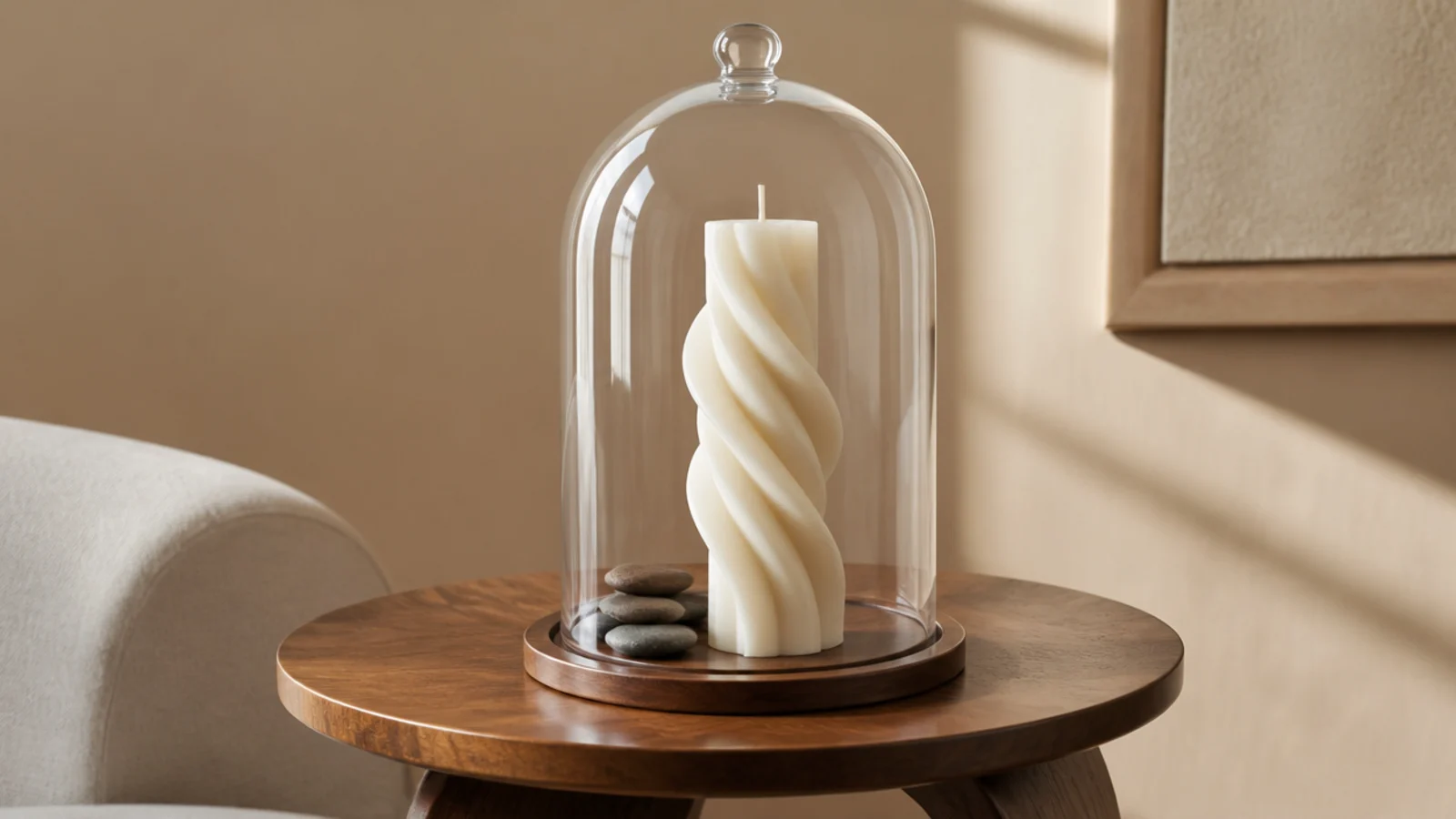
A sculptural candle — a twisted taper, a ribbed pillar, a hand-poured bubble shape — is genuinely beautiful as an object. Under a glass cloche on a side table, it becomes small sculpture.
The point is that it stays unlit. A closed glass dome over a burning candle is the classic fire hazard: no oxygen, rising heat, and glass that can crack from thermal shock. If a shape is pretty enough to display, display it cold with a clean untrimmed wick.
Sculptural candles run $12 to $28, and treating them as decor rather than fuel is the only way you keep them.
14. A weighted lantern on the balcony
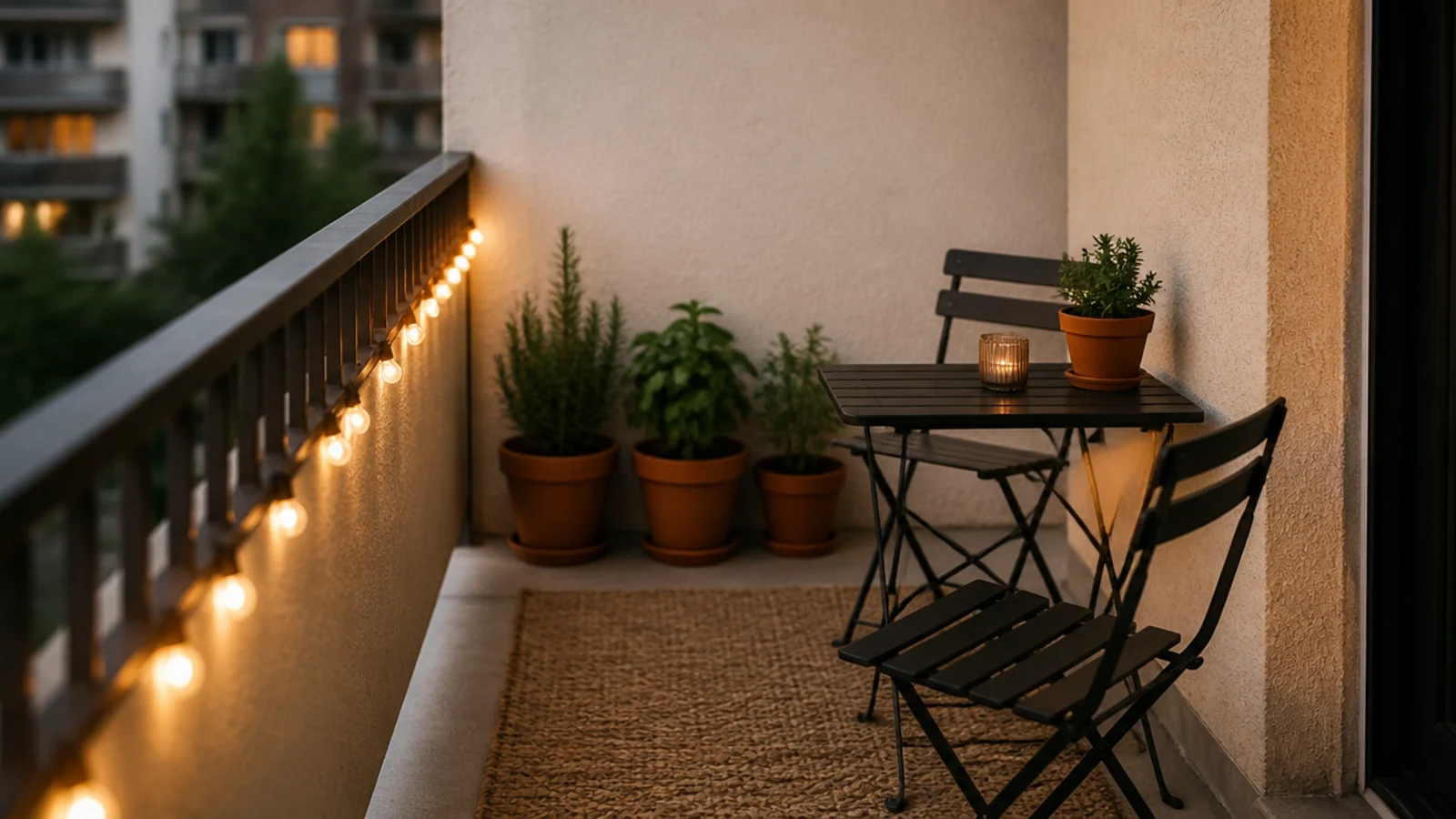
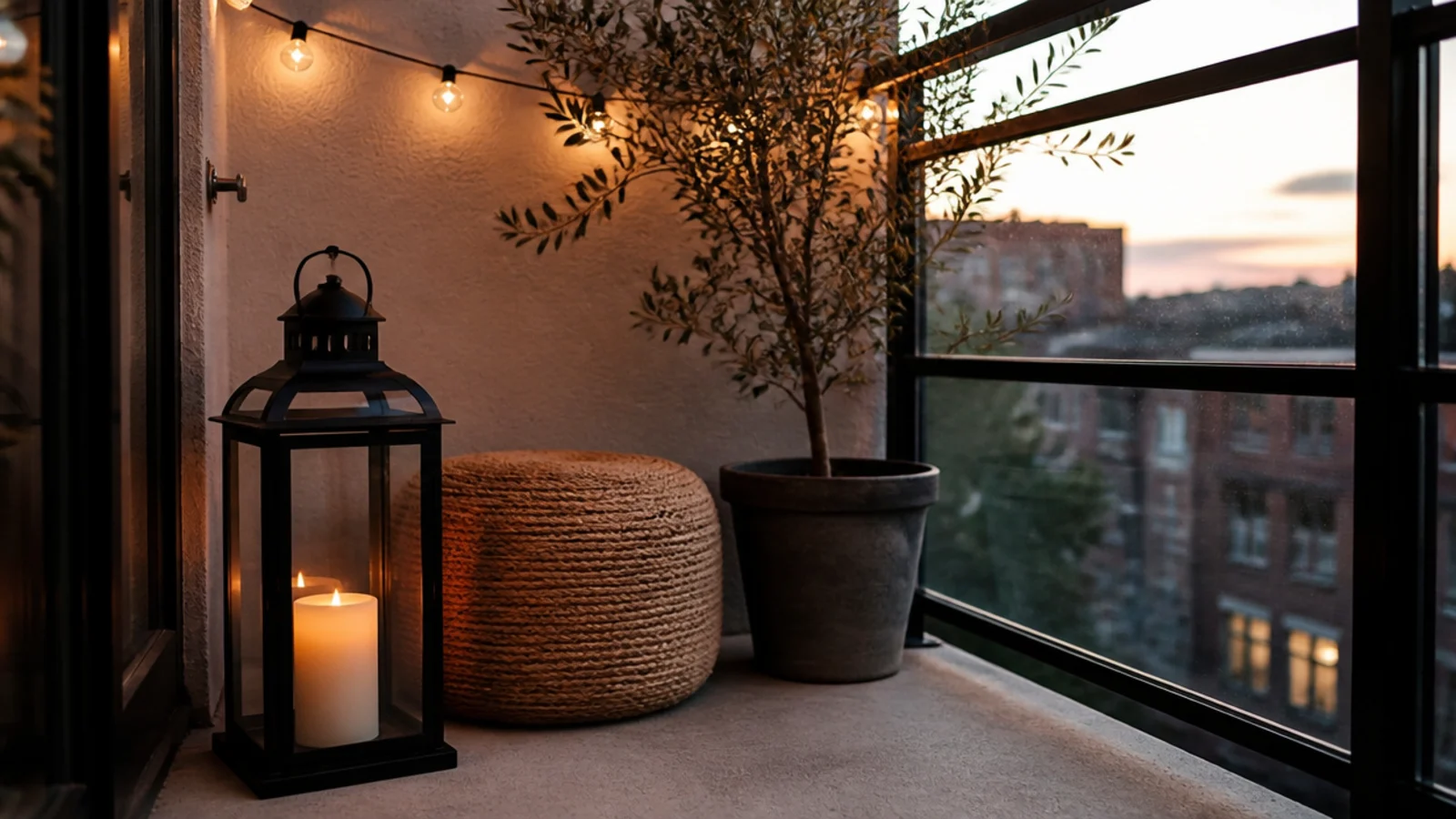
Outdoors, wind is the whole problem. A tealight in a light glass jar goes out in the first gust, or worse, blows over.
Use a heavy metal-and-glass lantern with a weighted base and an open or vented top, holding one wide pillar. Set it on a concrete floor or a stone paver, never on decking boards or a jute mat, and keep it twelve inches from the railing fabric, the outdoor cushions and any plants.
Take it in when you go in — outdoor candles are the easiest ones to forget. There is more on this in balcony lighting that works after dark.
15. A candle care corner with the trimmer
The unglamorous idea that improves every other one. A small dish holding a wick trimmer, a snuffer, a wick dipper and long matches costs about $20 total and changes how your candles look and burn.
Trim every wick to a quarter inch before every burn. A long wick makes a tall flame, and a tall flame means soot on the jar, soot on your ceiling and wax burning twice as fast.
Keep the dish near where you light. Snuffing rather than blowing avoids the smoke plume and stops hot wax spattering across a styled tray.
Mistakes to Skip
- Tucking a burning candle under a shelf, in a closed lantern or beside a curtain. Heat has nowhere to go, and twelve inches of clear air is the number that keeps all three safe.
- Skipping the wick trim. An untrimmed wick gives a tall, smoky flame, a black ring on the glass and a candle that burns out in half the hours you paid for.
- Blowing a candle out from six inches away. It splatters wax across the tray and pushes a soot plume up a wall. A $9 snuffer fixes it permanently.
Frequently asked questions
How do you make candles look aesthetic without spending much?
Group them instead of buying better ones. Three plain unscented pillars at three different heights, standing on one stoneware tray, look more considered than a single expensive jar sitting alone. The tray is the trick: it contains wax, gives the group an edge, and makes several small objects read as one deliberate arrangement. Total cost is usually under $25.
Is it safe to put a burning candle on a shelf?
Only on the top surface, never on a shelf with another shelf above it. A flame needs twelve inches of clear air, and a shelf overhead traps heat and scorches the underside within one long burn. For shelving with tiers, use flameless LED or battery pillars, which look identical from six feet away and can stay in place all day.
Why does my candle burn a hole down the middle?
That is tunneling, and it happens because the first burn was cut short. Wax has a memory: whatever diameter melted the first time is the diameter it will melt forever. Let the first burn run until the melt pool reaches the full width of the container, roughly one hour per inch of container width, then snuff it.
How far should candles be from curtains or greenery?
Twelve inches minimum, in every direction, and more if a draught can move the fabric. That includes dried stems, eucalyptus garlands, lampshades, books and the paper edge of a stacked magazine. Dried botanicals catch faster than fresh ones and are the single most common cause of a styled vignette going wrong. If you cannot clear twelve inches, go flameless.
Are flameless candles worth it for decor?
The good ones are, and they solve the placements a real flame cannot have. Look for real wax shells with a soft flickering warm LED and a built-in timer, not the hard plastic tealights. They cost $15 to $35 for a set of three and belong on shelves, bedside tables, mantels under a TV, and anywhere children or pets pass by.
Should decorative candles be scented?
It depends on the room. Scented jars belong in living rooms, entryways and bathrooms where the smell is the point. Keep unscented pillars and tapers on the dining table, because a fragrance sitting eighteen inches from a plate fights whatever you cooked. Never burn more than one scent in a room either, or they cancel each other out.
Start with one tray, three pillars and a snuffer — that single grouping teaches you more about candle styling than any amount of buying. Once it feels natural, build a cozy candle corner around a chair you already sit in, and check the shelf rules before you put anything with a wick on a tiered unit. Save the pin below so the clearances are with you next time you are rearranging a table.
Want more like this? Browse all 15 aesthetic candle decor guides — they all use the same measurements and budget tiers.
Pin it for later
Save this to your Aesthetic Candle Decor board
Pin it now so it is waiting for you when the tape measure comes out — and so the next person hunting for this idea can find it too.
Save this pinKeep going
More ideas worth saving while you have the tape measure out.