Aesthetic Candle Decor · Listicle
15 Cozy Aesthetic Candle Ideas That Look Pricey

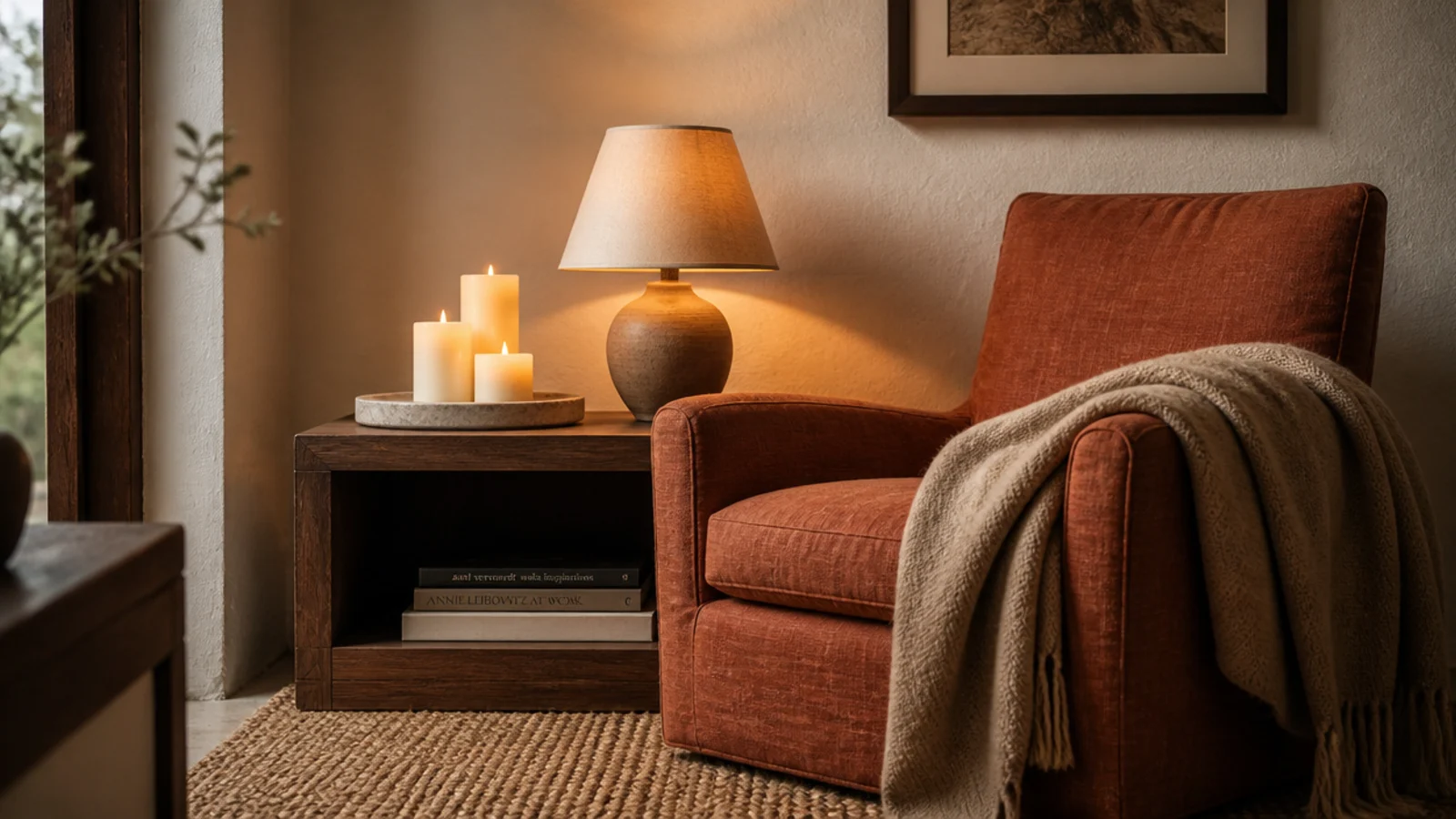
A cozy candle corner is the cheapest room upgrade I know, and the reason most of them look thrown together is that people start with the candles. Start with the chair. Everything after that — the tray, the lamp, the three textures, the brass repeated three times — is what turns a $60 corner into one that photographs like it cost ten times that.
In this guide17 sections — tap to openHide
- 1.What makes a cozy candle corner look expensive
- 2.Start with the chair, not the candle
- 3.A weighted floor lantern beside it
- 4.A side table tray at three heights
- 5.A rug layer that stops short of the flame
- 6.The low bookcase top as a candle ledge
- 7.Flameless sconces to lift the light
- 8.A hurricane glass for the window corner
- 9.One warm lamp doing the real work
- 10.Three textures, then stop
- 11.Brass repeated three times
- 12.A leaning mirror to double the glow
- 13.A tall dried branch, a foot clear
- 14.A small drinks or tea tray moment
- 15.Curtains handled properly
- 16.The nightly ritual that keeps it cozy
- 17.Mistakes to Skip
What makes a cozy candle corner look expensive
Three things, in this order. Layered light, layered texture, and one repeated metal.
Layered light means a real light source plus a flame. A warm 2700K bulb in a small lamp does the reading; the candle does the movement. A corner lit only by candles looks moody in a photograph and unusable in life, and a corner lit only by an overhead bulb never looks cozy at any budget.
Layered texture means three materials and no more: linen on the chair, wool in the throw, stoneware or terracotta on the table. Add jute underfoot from the rug and you already have four. A fifth texture starts reading as noise.
The repeated metal is the trick nobody talks about. One brass object looks like it wandered in. The same brass appearing three times, at three different heights — lamp base, candlestick, picture frame — reads as a designed scheme.
Then there is the part that keeps it standing. Corners collect soft things: throws, curtains, rugs, cushions. Every one of those is fuel, so a flame in this corner needs twelve inches of clear air on every side, a hard tray on a hard table, and a person in the room. Never on a chair arm, never on an ottoman, and always out before you go to bed.
Budget tiers: thrifted brass, unscented pillars and a warm bulb run $20 to $45 ($). A stone tray, a wool throw and a jute rug layer land at $50 to $120 ($$). A weighted floor lantern and a good armchair are the $150-plus end ($$$). Nothing here needs a drill.
1. Start with the chair, not the candle
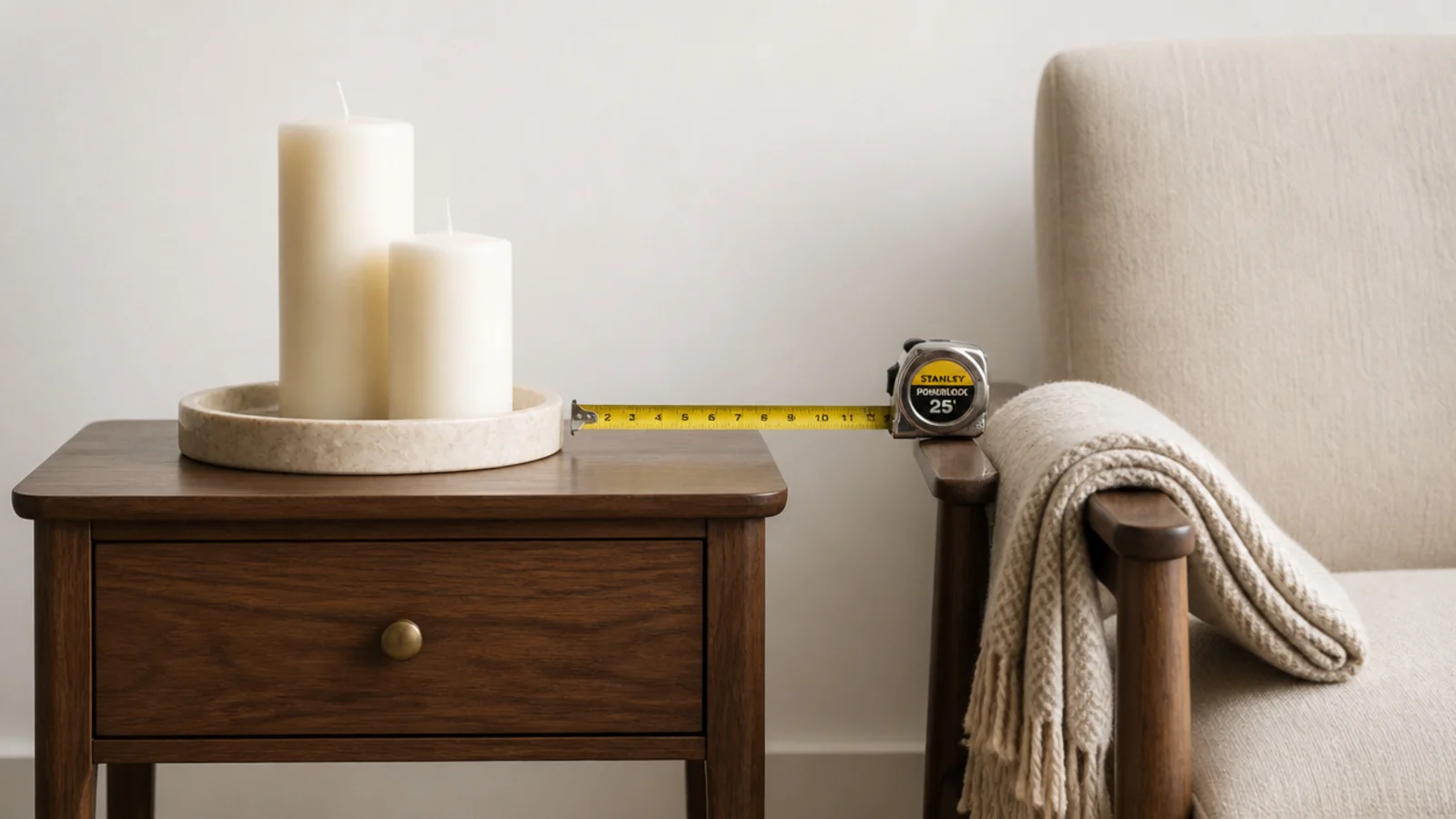
A corner becomes a corner because there is somewhere to sit. Angle the chair at roughly 45 degrees to the walls rather than shoving it flat into the point — the angle leaves a triangle of space behind it for a lamp or a floor vessel, and it makes the corner read as chosen.
Leave 24 to 30 inches of walkway in front. Anything tighter and you edge past it every day, which is how corners quietly stop getting used. A secondhand linen armchair runs $80 to $250; the angle is free.
2. A weighted floor lantern beside it
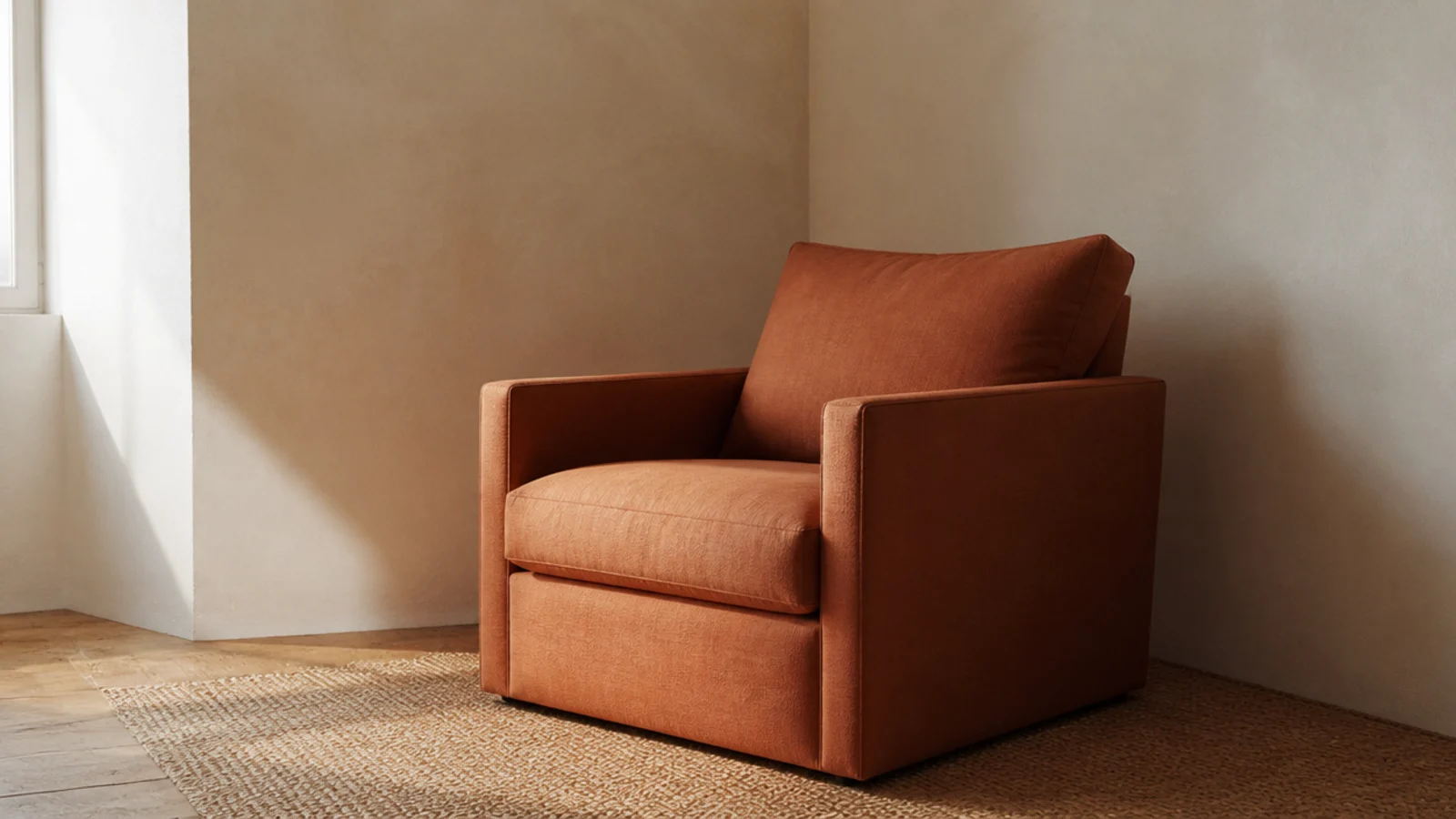
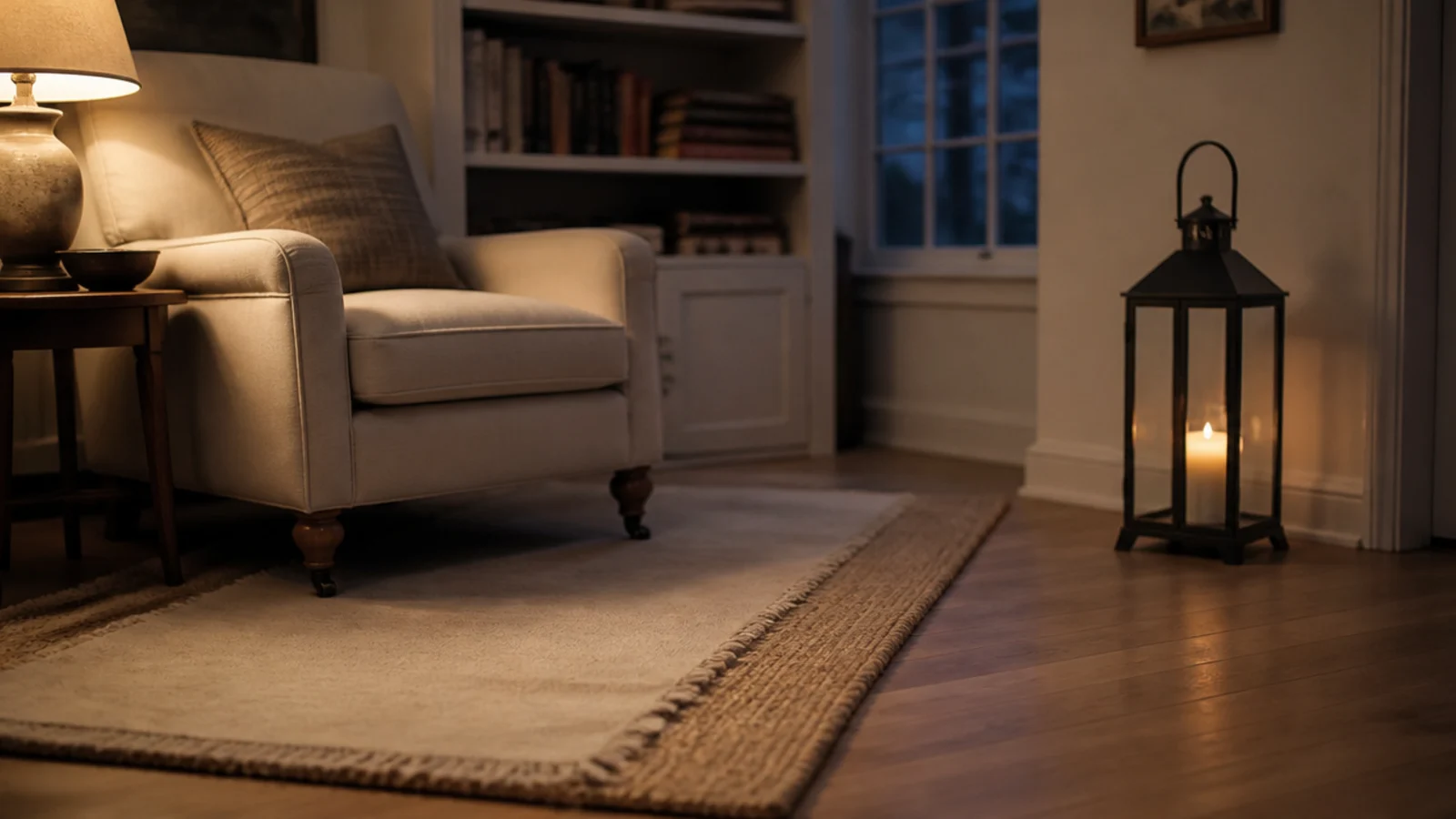
Floor-level light is what makes a corner feel enclosed rather than lit from above. A heavy metal-and-glass lantern with an open or vented top holds one wide pillar and does exactly that.
Stand it on bare floor rather than on the rug — fibers are fuel and a lantern on a soft base tips more easily. Keep it a foot clear of the chair, the throw and any curtain, and lift it out of the walkway so nobody catches it with a foot. $25 to $45.
3. A side table tray at three heights
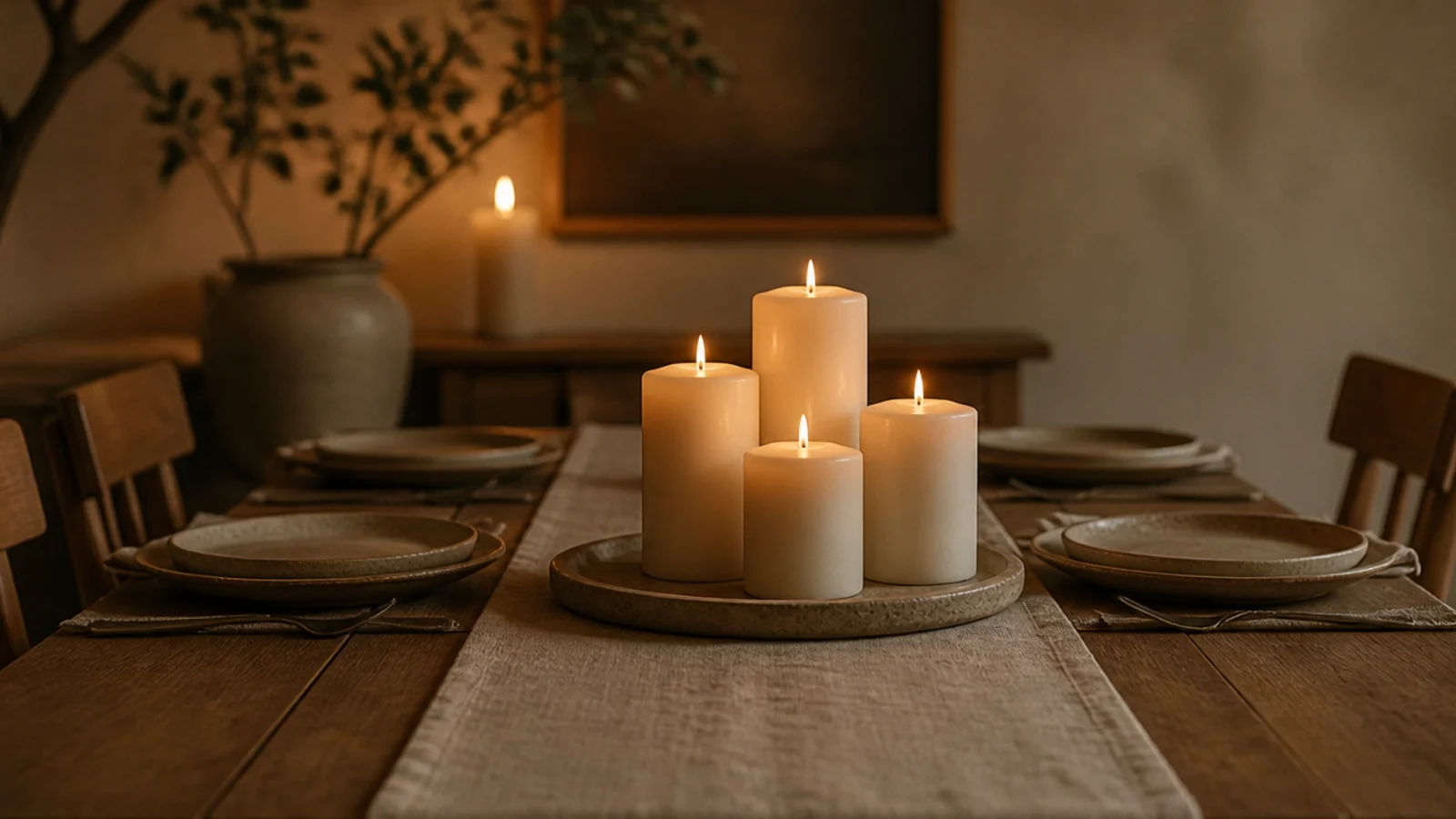
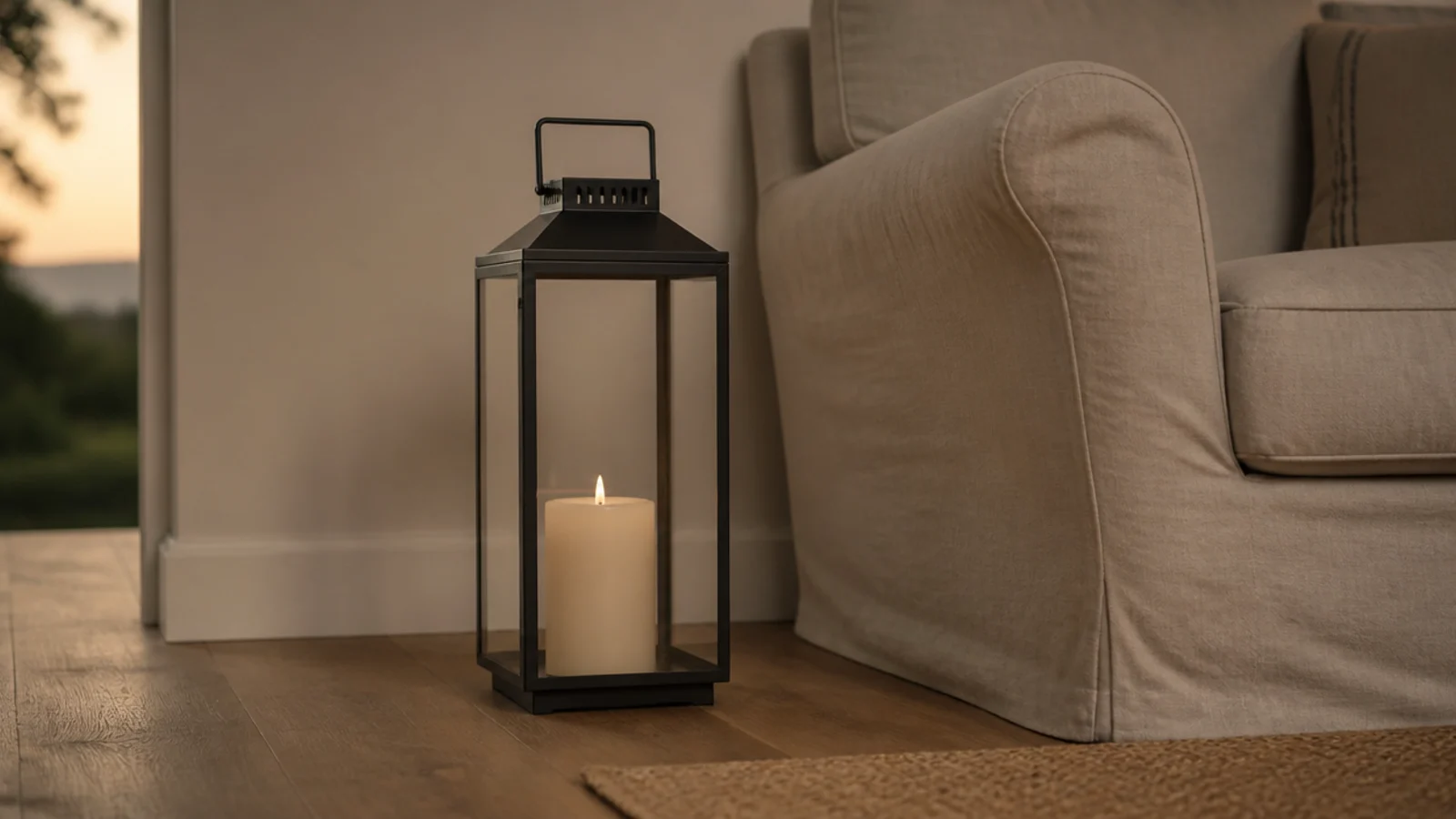
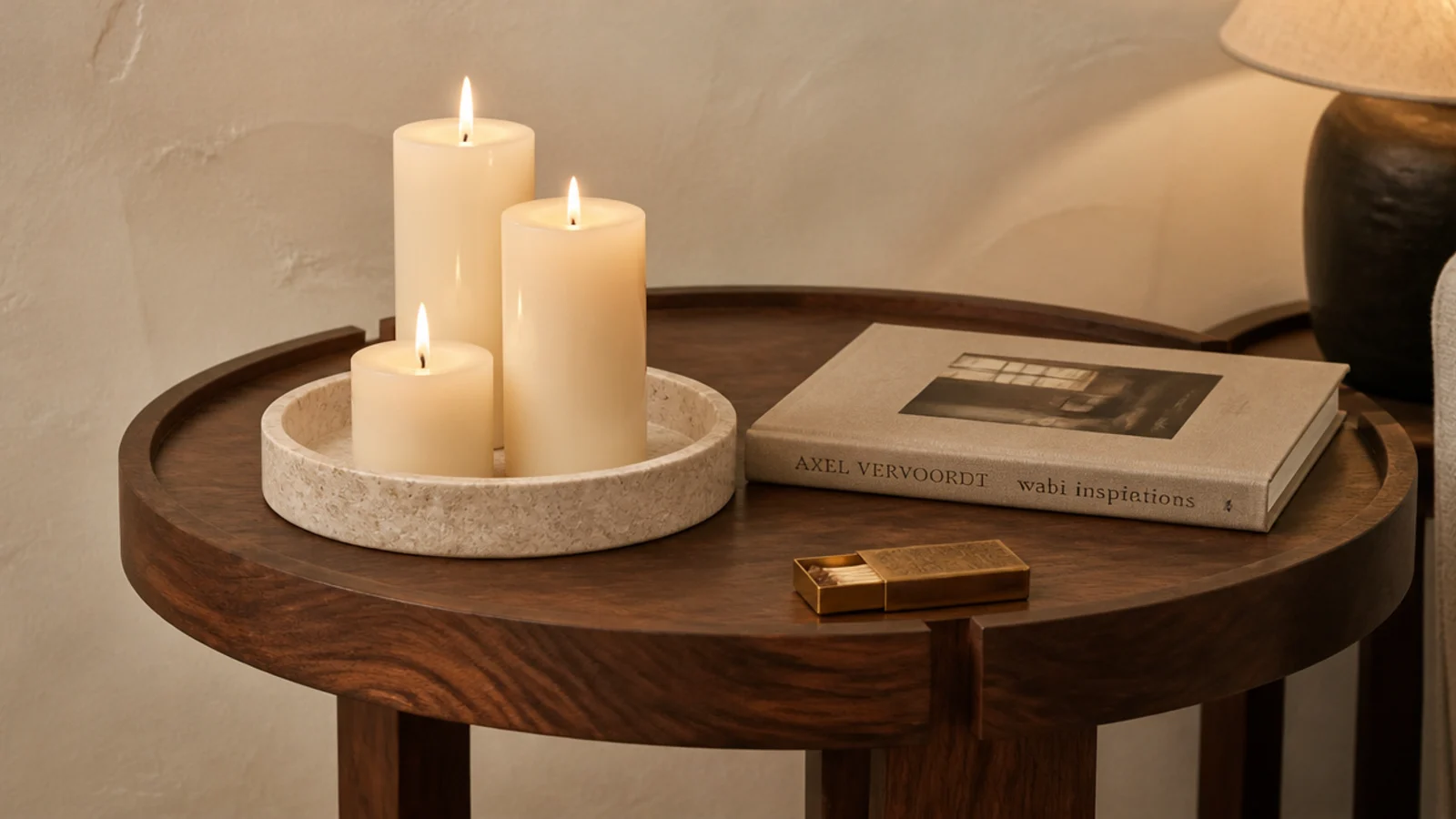
The side table is where the corner earns its keep. One stone or ceramic tray, three unscented pillars at roughly six, four and three inches, and a single hardback lying flat as a low anchor.
Keep the tray to about 10 inches so there is still room for a mug. The tray catches wax, protects the wood and lets you lift the whole group off in one hand. Pillars three inches wide or more burn evenly instead of tunneling. Around $30 for the set.
4. A rug layer that stops short of the flame
Two rugs make a corner feel finished: a big jute base and a smaller wool or sheepskin layer over it, offset rather than centered.
The safety half matters as much as the look. Keep any floor candle on the bare boards, a foot clear of the fibers, and never set a lantern down on the wool layer even for a minute. A $12 jute mat and a thrifted wool runner do more for the temperature of a corner than a new chair. Renters, this is the cheapest way to warm up bad flooring.
5. The low bookcase top as a candle ledge
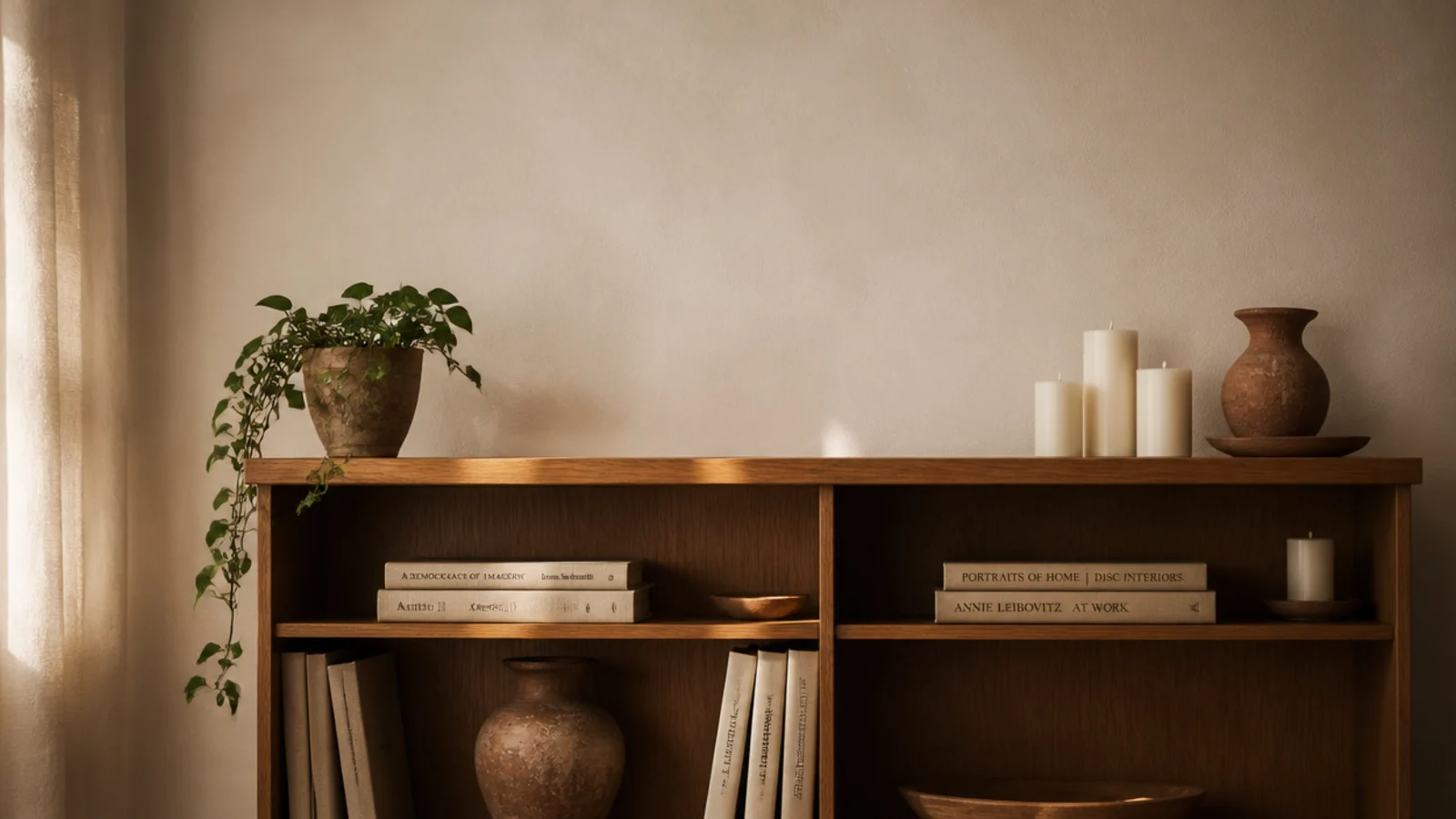
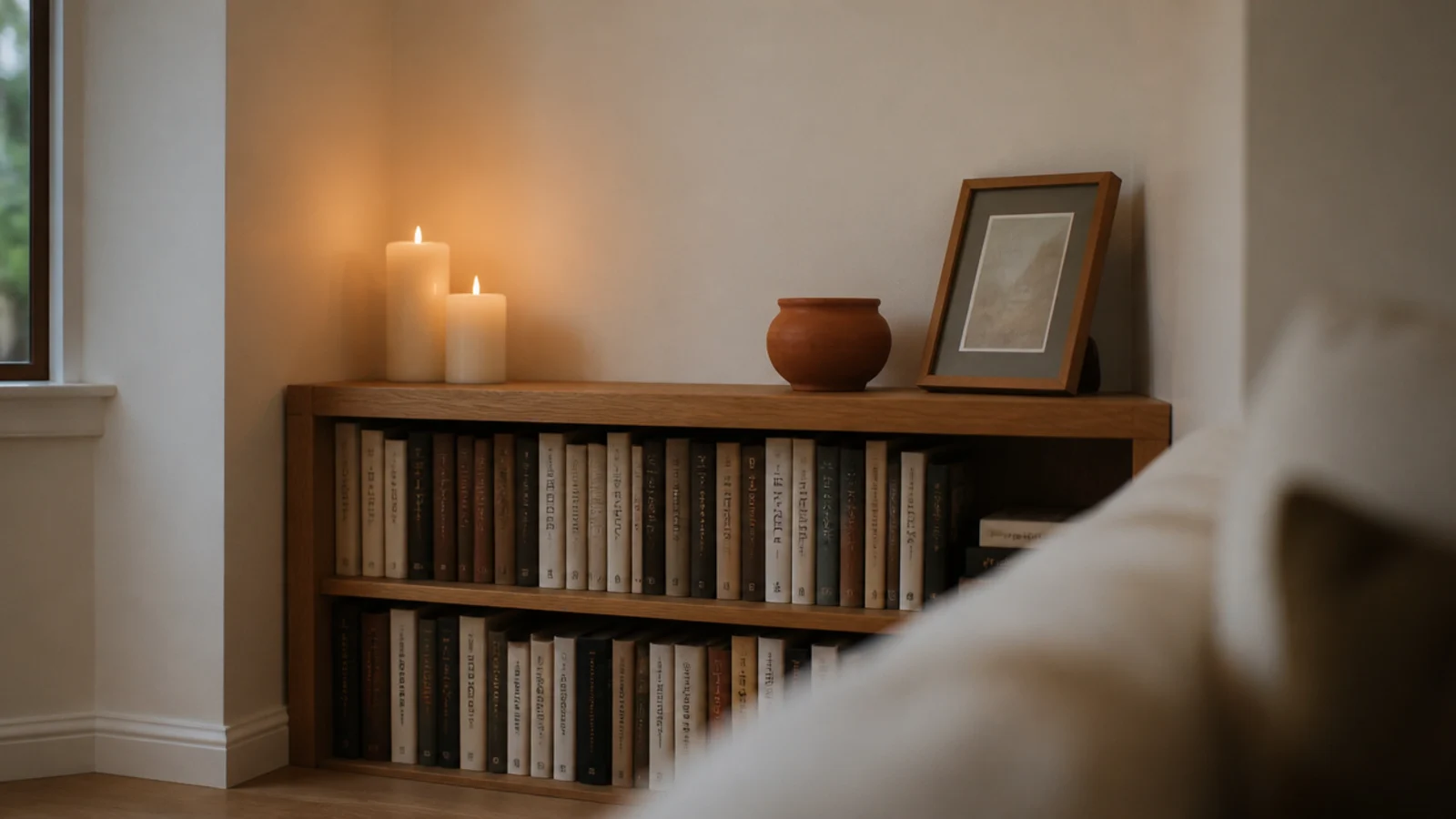
A low bookcase pushed into a corner gives you a second surface at 30 to 36 inches, which is exactly the height that reads well from a seated position.
Use the open top for two real pillars, a terracotta bowl and a leaning frame. The shelves below get flameless candles — anything burning under a shelf traps heat against the underside and sits inches from paper. The candle shelf guide has the full layout.
6. Flameless sconces to lift the light
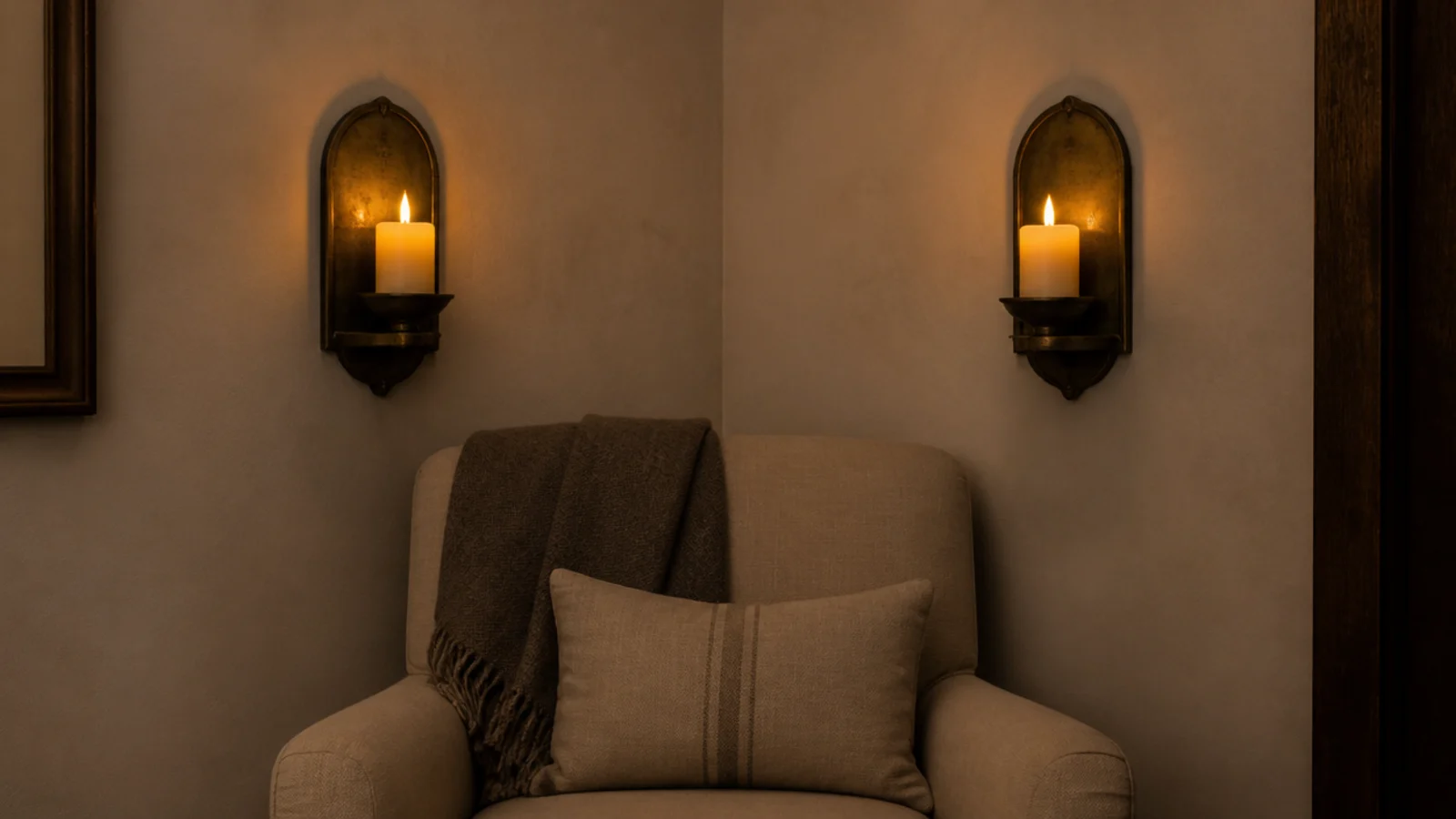
Everything in a corner tends to sit below waist height, which is why so many of them feel bottom-heavy. A pair of sconces at 60 to 66 inches fixes it instantly.
Fit them with real wax flameless pillars on a timer. A sconce puts a flame near a wall, often under art, and out of easy reach for snuffing — all three are reasons to keep it battery-powered. Adhesive sconces rated to 5 pounds mean no holes at all. $30 to $70 a pair.
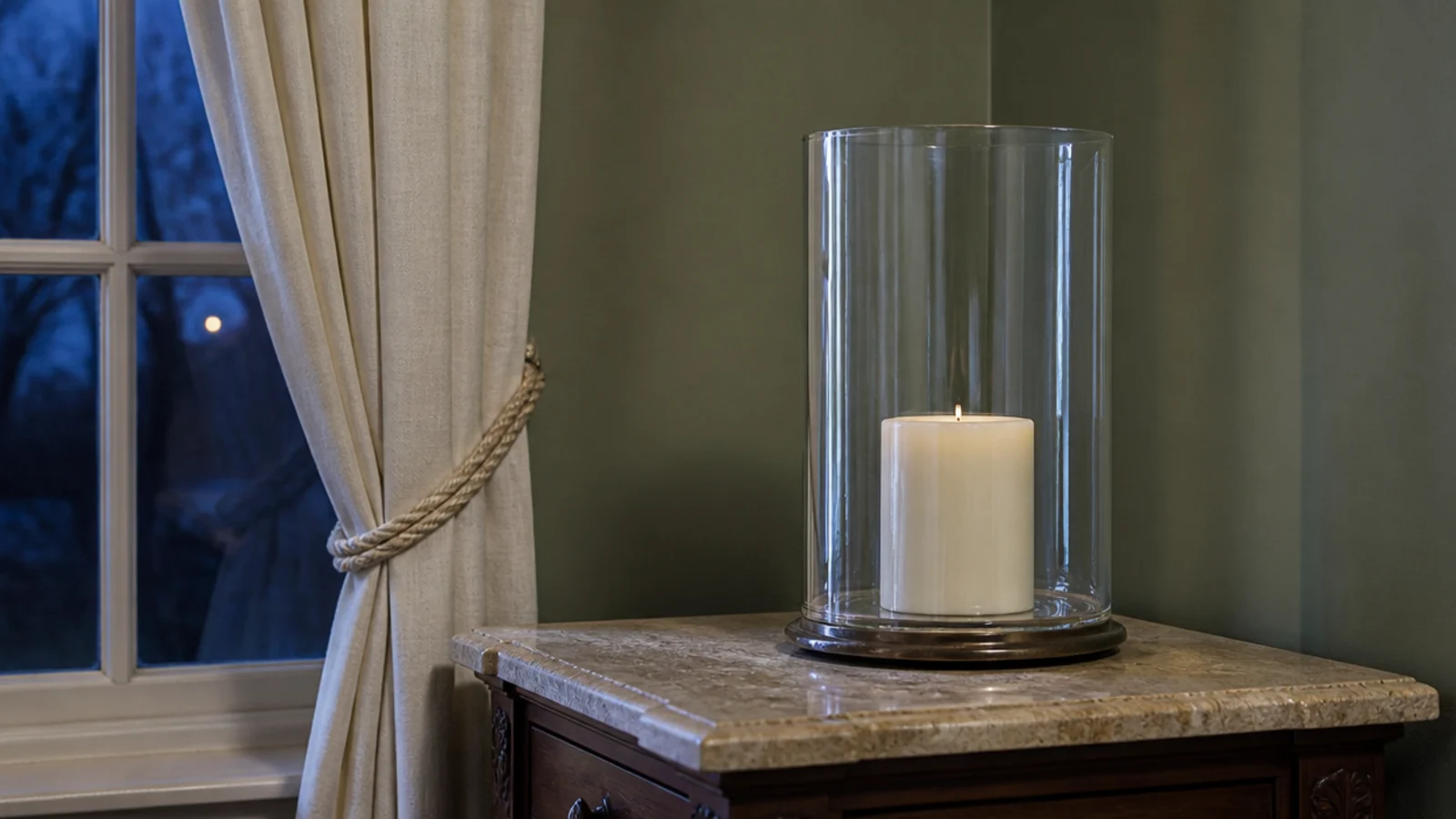
7. A hurricane glass for the window corner
Corners next to windows move air, especially in older buildings. A flame in a draught leans, flickers, tunnels and throws soot up the wall behind it.
An open-topped hurricane glass about four inches taller than the flame blocks side air while heat escapes upward. Do not substitute a closed lantern: an enclosed flame starves, smokes heavily and can crack the glass. Tie any curtain back properly first, because a shielded flame still needs twelve inches of clear air.
8. One warm lamp doing the real work
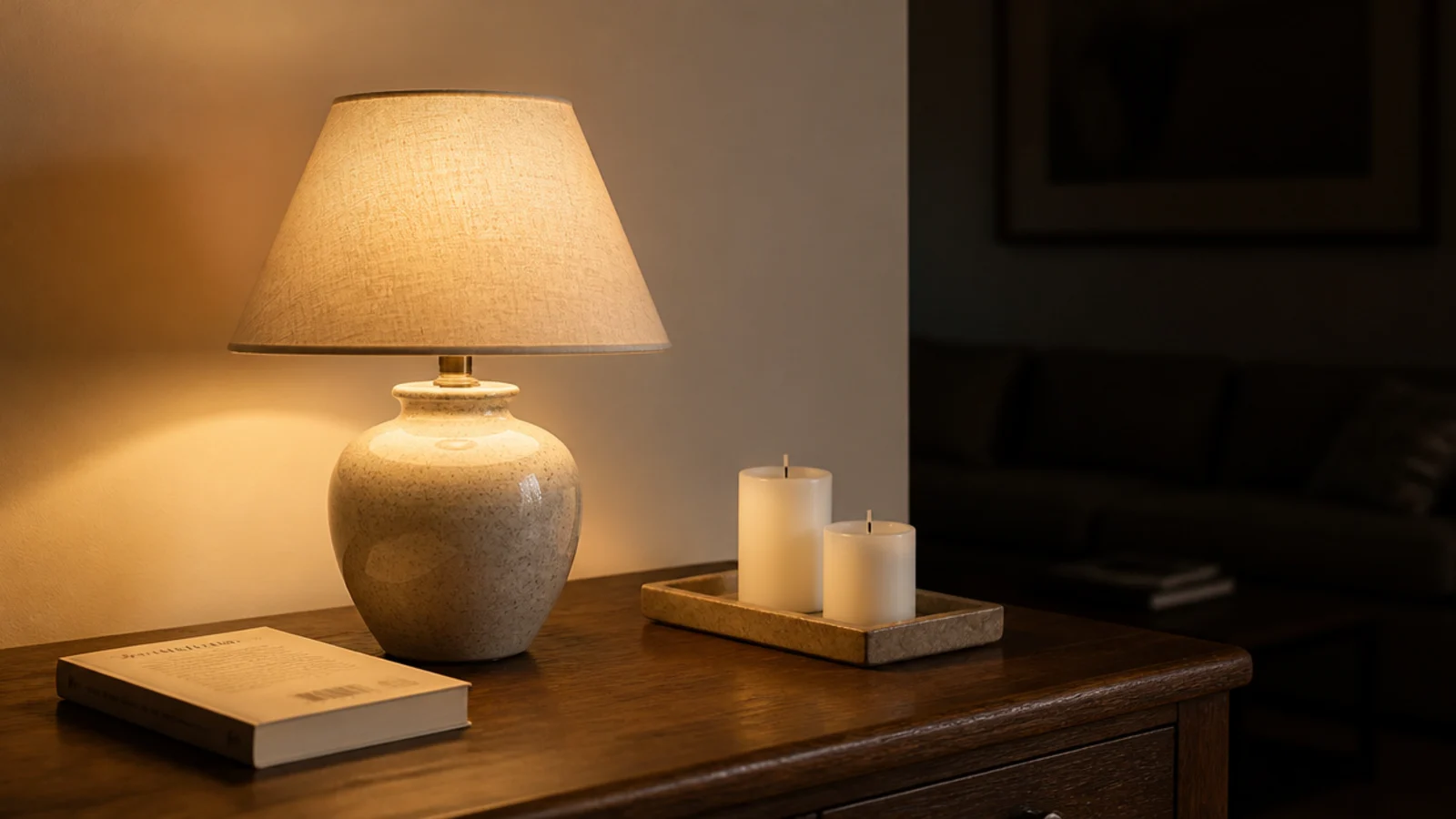
Buy a 2700K bulb and put it in a small ceramic or brass lamp on the side table. That single change does more than any candle in this list.
Candlelight sits around 1800K, so a warm bulb sits close enough to it that the two blend instead of competing. A cool white bulb next to a flame makes the flame look yellow and dirty. Bulbs cost $4. A thrifted lamp base costs $10 to $25.
9. Three textures, then stop
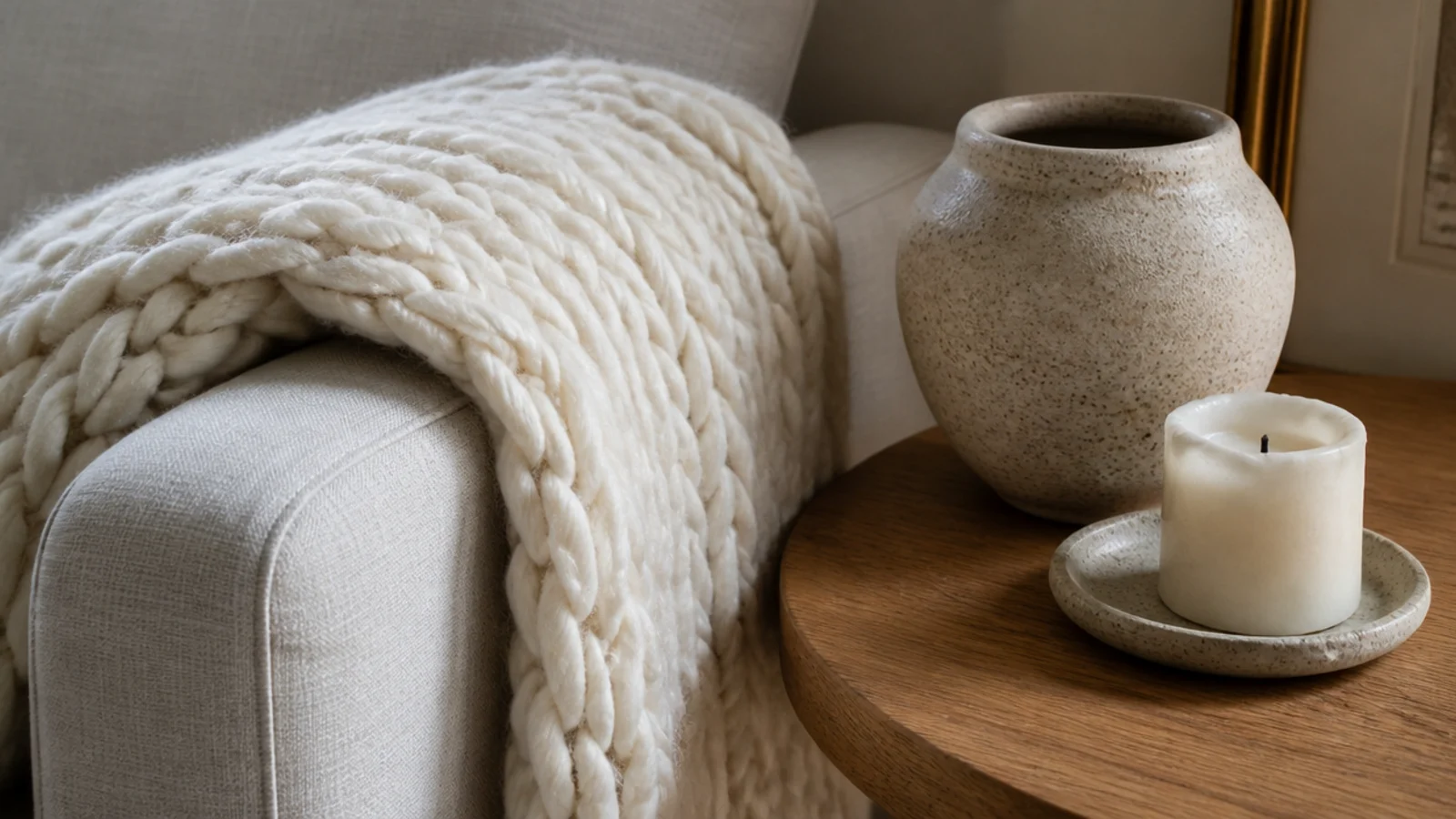
Linen on the chair, wool in the throw, stoneware on the table. That is the whole palette, and it is why hotel corners feel calm.
Vary the weight rather than the material: a fine linen cushion against a chunky knit throw against a rough clay vessel. If you want to add something, swap something out. Restraint is the reason a corner looks expensive, and it is free.
10. Brass repeated three times
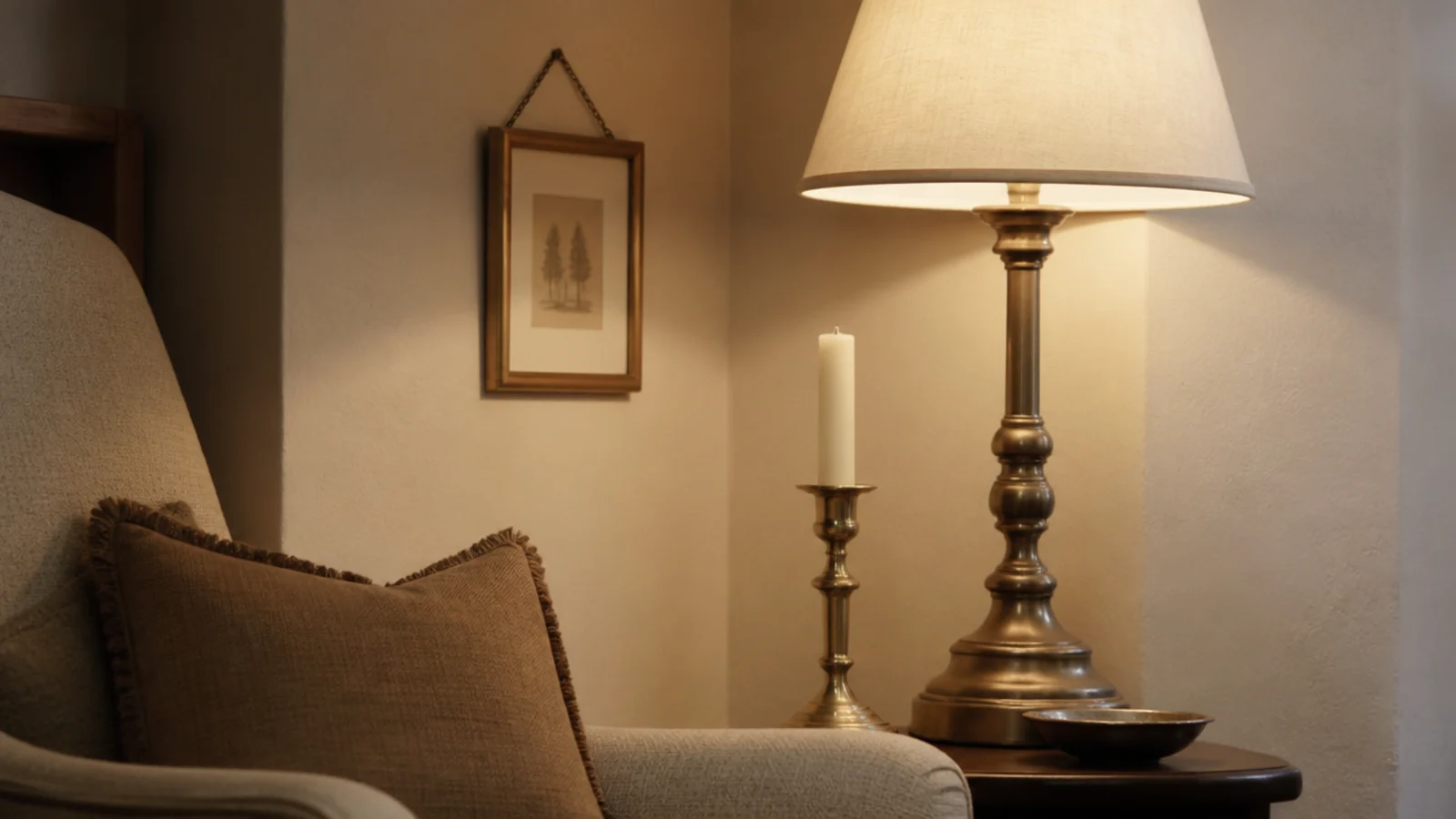
Pick one metal and use it three times at three different heights. A brass lamp base at 20 inches, a brass candlestick at 28, a small brass frame on the wall at 55.
Repetition is what your eye reads as intention. Mixed metals can work, but they need confidence and usually more furniture than a corner has. Thrifted brass at $3 to $6 a piece is the highest-value buy in this entire guide.
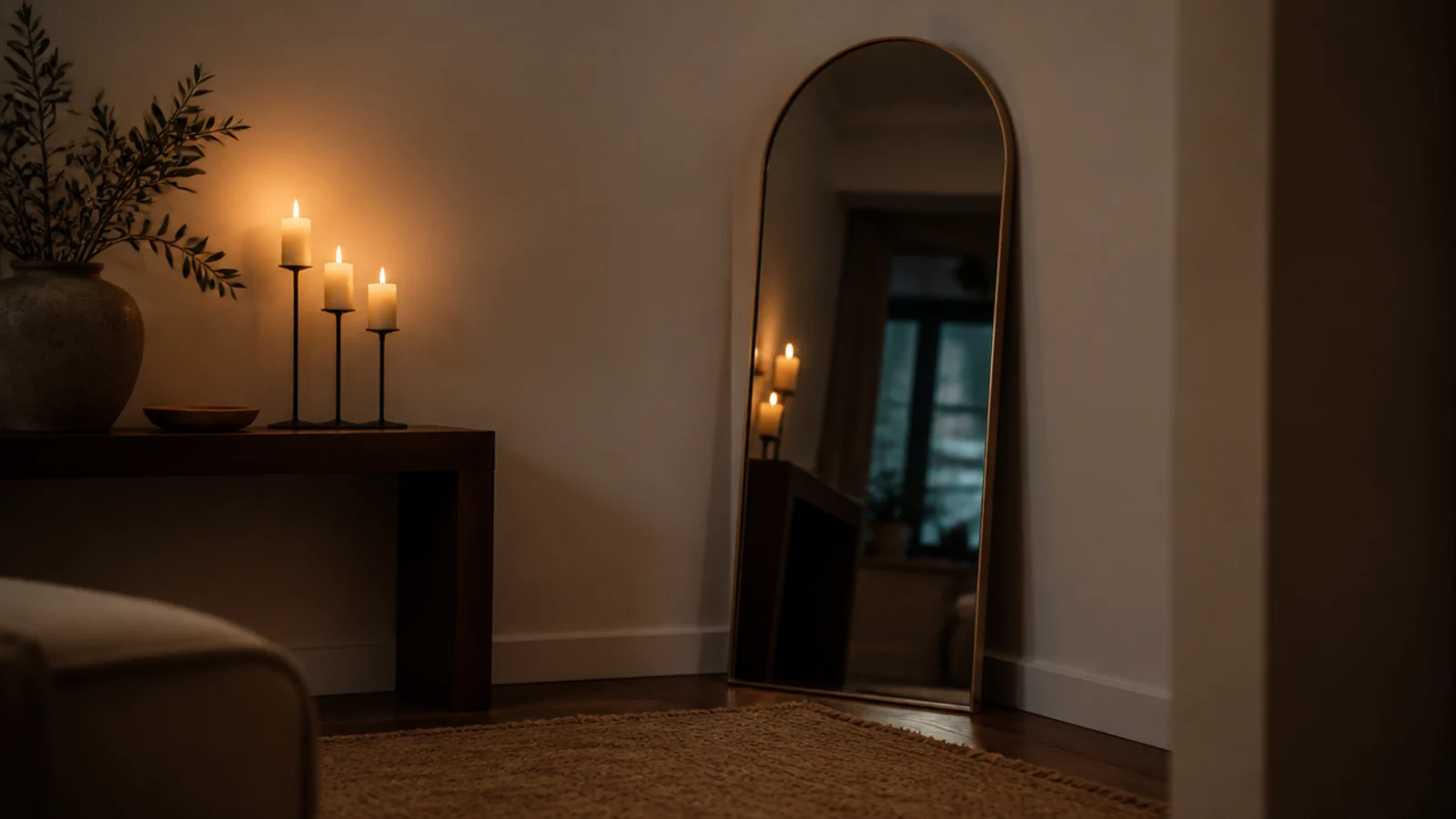
11. A leaning mirror to double the glow
A tall mirror leaning against the wall behind or beside the chair reflects the flames and bounces light back into a dark corner. Three candles suddenly read as six.
Keep the candles at least six inches off the glass. Heat against a mirror hazes the silvering over time, and a leaning mirror needs a wall strap or a heavy base if there are children or pets in the house. Thrifted arch mirrors run $30 to $80.
12. A tall dried branch, a foot clear
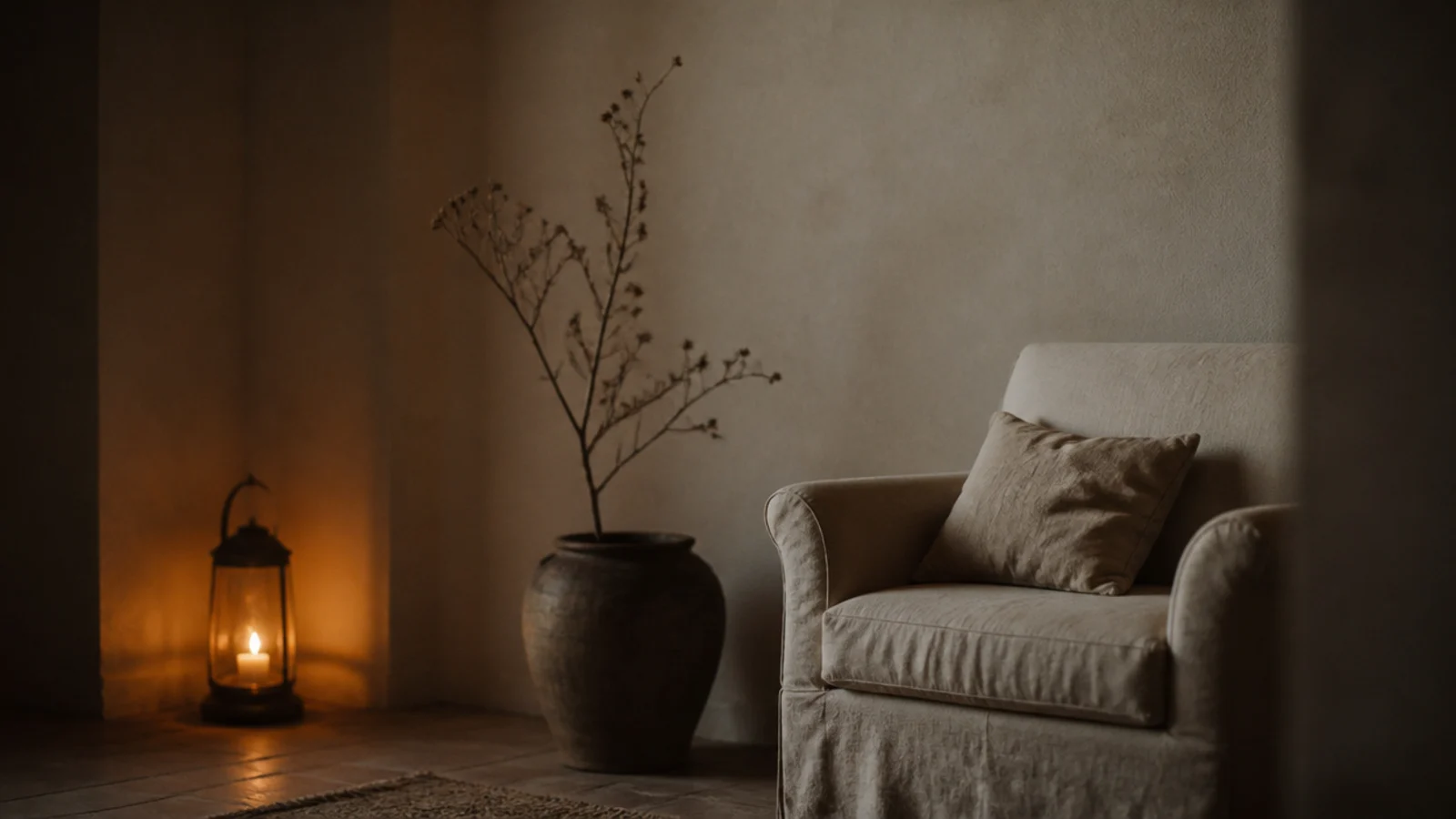
Corners need one vertical element or they sit low and heavy. A bare dried branch in a heavy clay floor vessel gives you five feet of height for under $20, and the shadow it throws is half the point.
Place it a full foot from any flame, and check it again after you light — dried stems catch faster than fresh greenery and they shift as they dry. Height near the glow, never in it.
13. A small drinks or tea tray moment
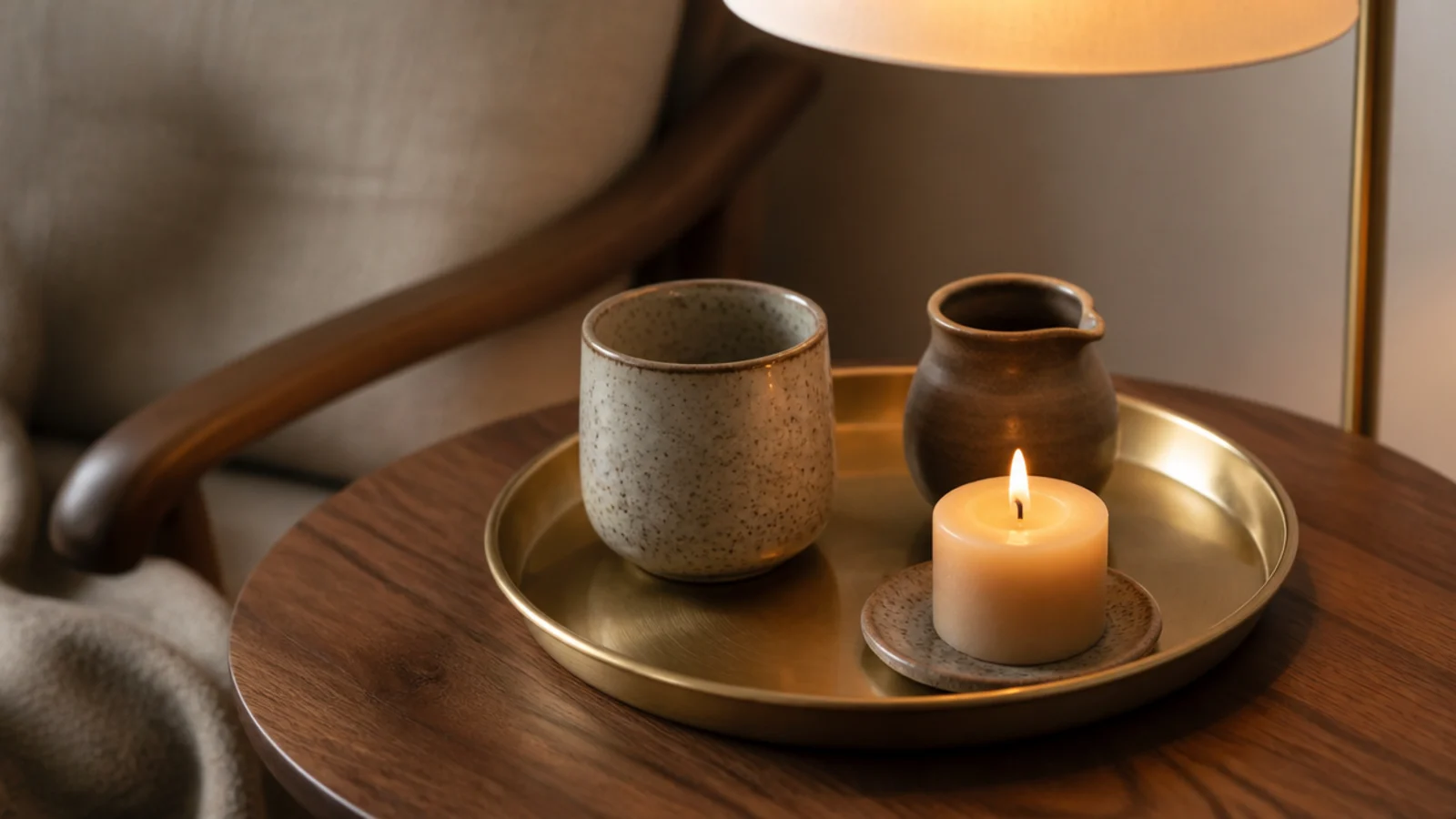
A tiny brass tray with one stoneware cup, a small jug and one short candle on a coaster turns a side table into a scene rather than a surface.
Keep it to three objects and lift the whole thing away when you need the table. This is the detail that makes a corner look inhabited rather than staged, and everything on it can come from a charity shop for about $15. There is more on grouping in candle tray styling.
14. Curtains handled properly
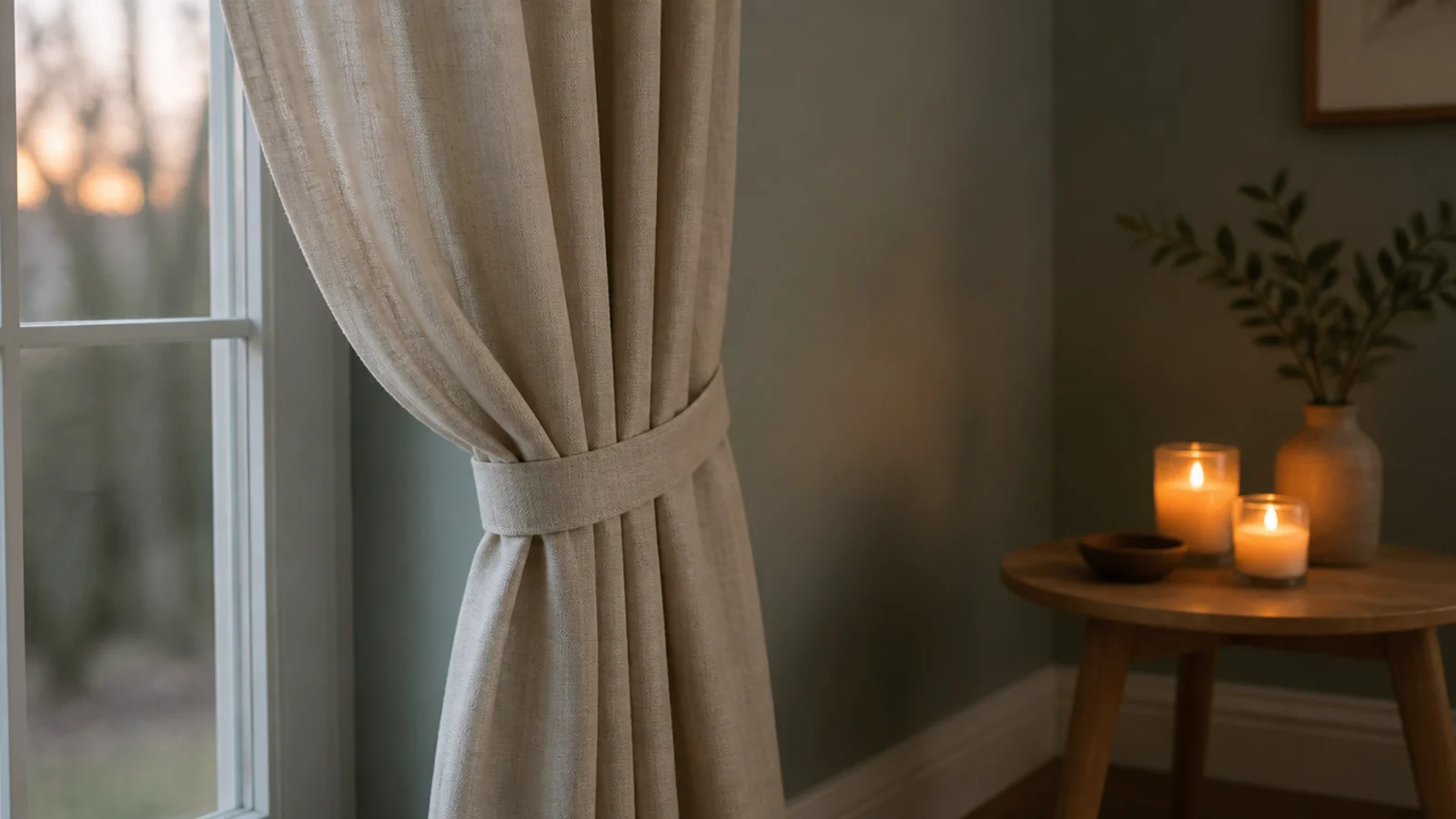
The single biggest hazard in a cozy corner is a long curtain moving in a draught near a flame. Tie it back with a proper fabric tieback rather than tucking it behind furniture, and measure the distance while the window is open.
Twelve inches of clear air, minimum, with the curtain at its fullest swing. If you cannot get that, the candle moves or goes flameless. Ties cost $6 and this is not a rule worth bending for a photograph.
15. The nightly ritual that keeps it cozy
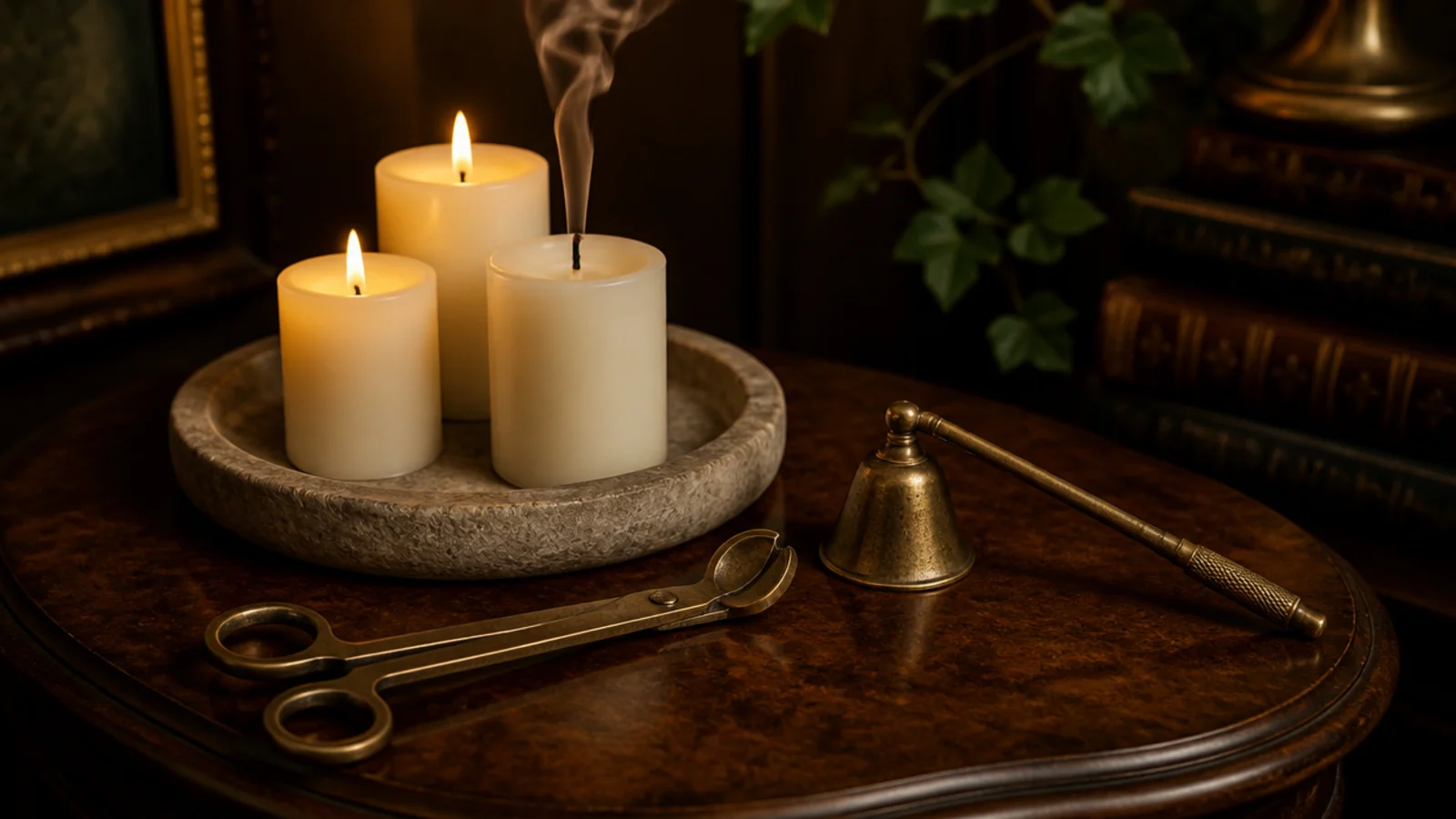
Light at dusk, snuff on your way to bed. Keep the snuffer and the wick trimmer in the corner itself, on the tray, rather than in a kitchen drawer.
Trim to a quarter inch before every burn so flames stay low and the glass stays clean. A candle is never left burning while anyone sleeps, and never left in a corner you have walked away from — the whole ritual takes ten seconds and it is what keeps this corner enjoyable for years. See the before and after guide for what a year of this looks like.
Mistakes to Skip
- Putting a candle on a chair arm, an ottoman or a stack of blankets. Soft surfaces move, sleeves catch, and there is nothing rigid to stop a tipped candle. Hard table, rigid tray, always.
- Lighting the corner with candles alone. It photographs beautifully and is unusable for reading. One warm 2700K bulb does the work; the flame does the atmosphere.
- Letting a curtain hang within a foot of a flame because it looks softer that way. Tie it back or move the candle, and check the distance with the window open.
Frequently asked questions
How do you make a candle corner look expensive?
Layer three textures and repeat one metal. Linen, wool and stoneware around a chair, with brass appearing three times at three different heights, reads as designed even when every piece was thrifted. The other half is restraint: one lamp, one candle group, and a third of every surface left empty.
What do you need for a cozy reading corner with candles?
A chair, a warm light source you can read by, a hard-surfaced side table, and one candle group on a tray. The candle is atmosphere, not lighting. A 2700K bulb in a small lamp does the actual work, and the flame adds the movement that a bulb cannot.
Is it safe to have candles near a blanket or throw?
Only with twelve inches of clear air between the flame and any fabric, and only while you are in the room. Throws slide, sleeves catch, and a knocked candle on a soft surface is the worst case. Keep candles on a rigid tray on a hard table, never on an ottoman or an arm rest.
How many candles should a corner have?
One group of three, sometimes five if the corner is wide. Scattering single candles around a corner reads as clutter within a week, while one cluster on a tray at three heights reads as a decision. Light two of the three on a normal evening and save the full set for company.
What is the cheapest way to make a corner feel cozy?
A warm 2700K bulb, a $12 jute rug layer and three unscented pillars on a thrifted tray. That whole list runs under $45 and changes a corner more than any piece of furniture at the same price. Add a $9 wick trimmer and the candles will look better for months.
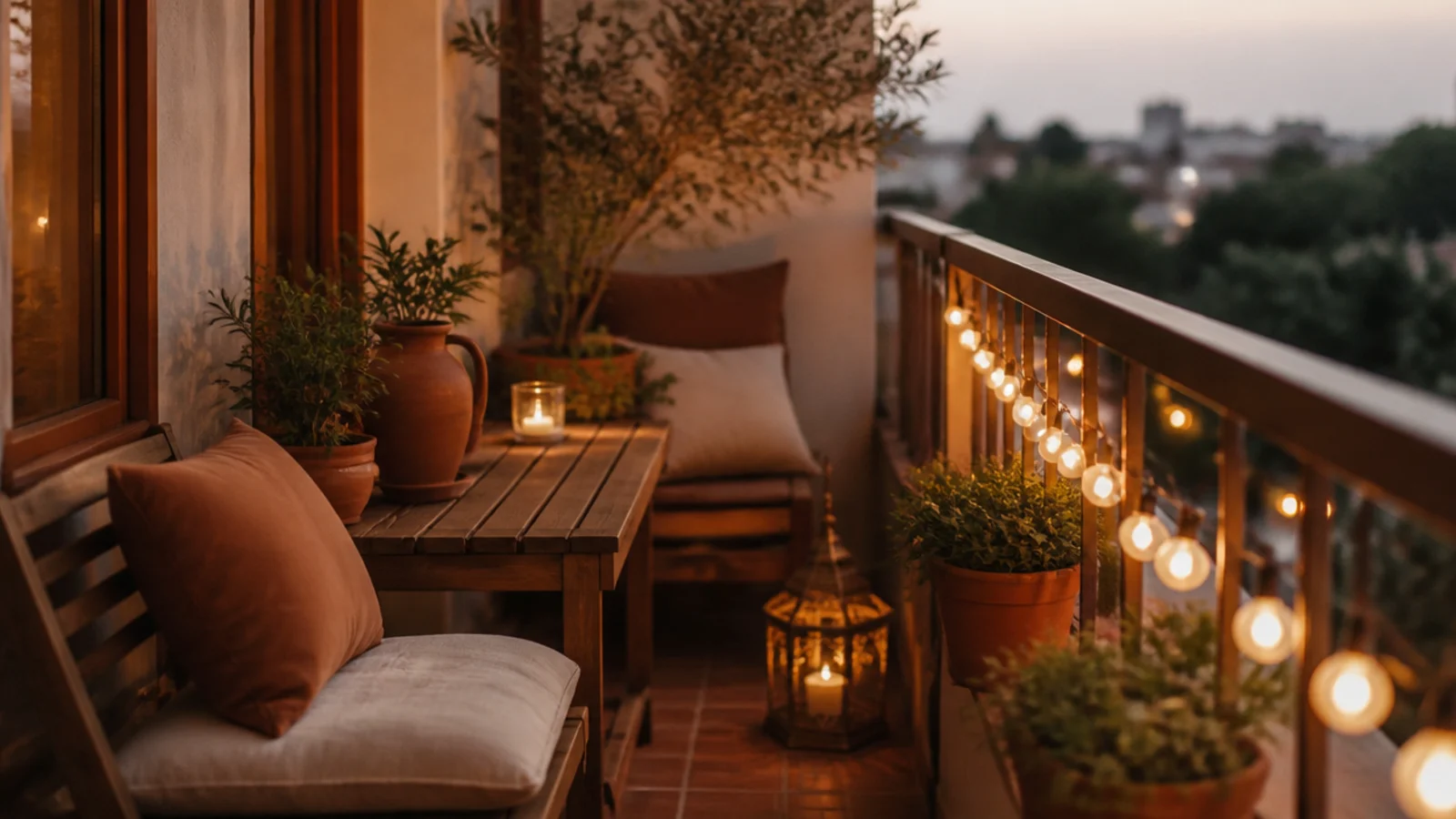
Build it in the order above and the corner works from the first evening: chair, lamp, tray, then the flame last. If you want the full room version, fifteen aesthetic candle groupings covers mantels, hearths and tables with the same clearances, and a cozy balcony setup applies the same layering outdoors. Save the pin below and start with the chair you already own.
Want more like this? Browse all 15 aesthetic candle decor guides — they all use the same measurements and budget tiers.
Pin it for later
Save this to your Aesthetic Candle Decor board
Pin it now so it is waiting for you when the tape measure comes out — and so the next person hunting for this idea can find it too.
Save this pinKeep going
More ideas worth saving while you have the tape measure out.