Apartment Balcony Ideas · Listicle
25 Budget-Friendly Apartment Balcony Ideas for Small Spaces

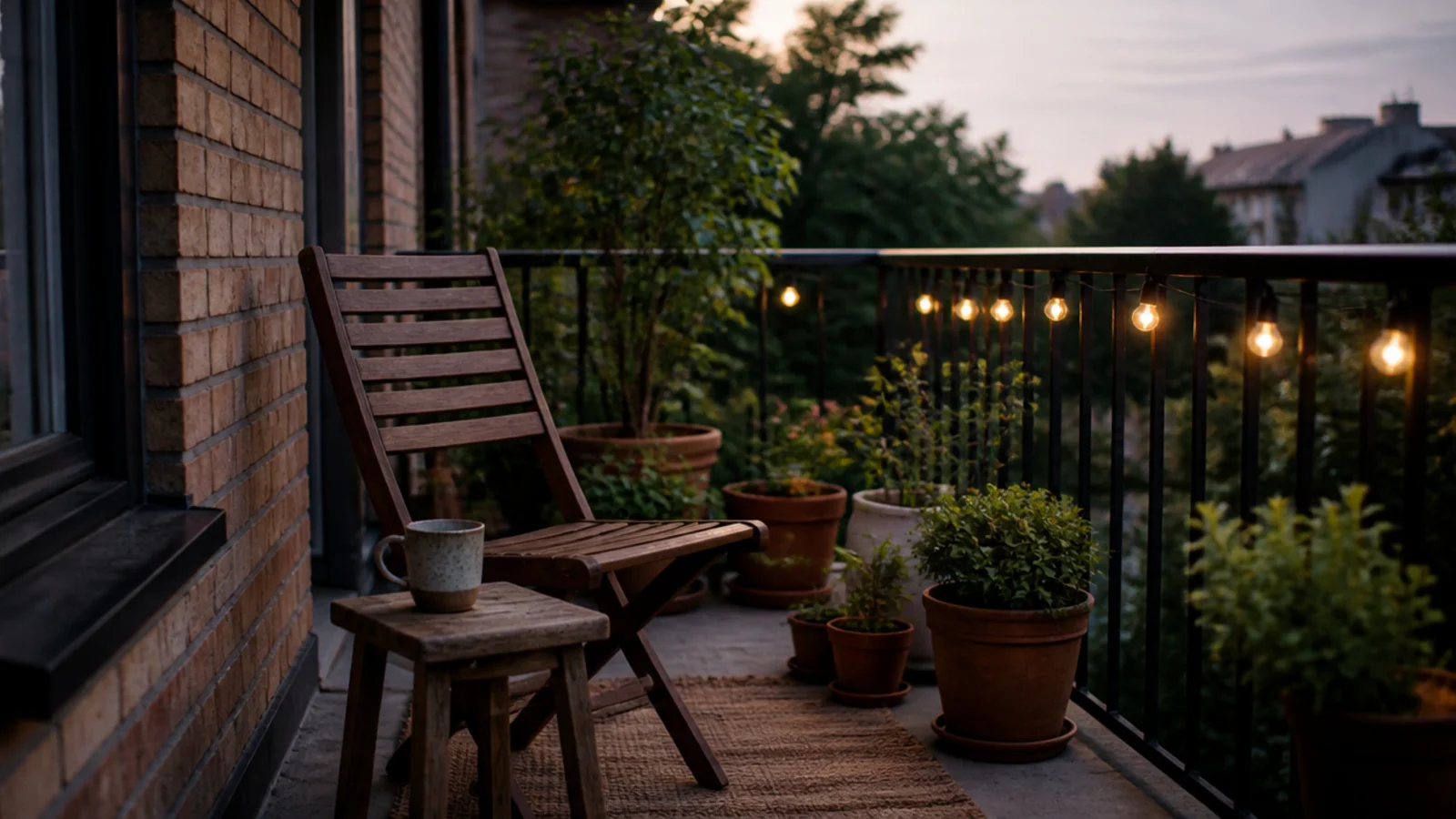
A cozy apartment balcony is one of the few upgrades where a small budget is genuinely not the limitation — the slab, the wind and the lease are. I have furnished one for under $150 that people asked about, and spent triple that on another that never got used. These 25 ideas mostly land under $30, and every one of them works on a slab you are not allowed to drill into.
In this guide27 sections — tap to openHide
- 1.How to plan a cozy apartment balcony on a small budget
- 2.Cover the concrete before you buy furniture
- 3.Buy one chair you love, not a cheap two-seat set
- 4.Thrift a wooden stool as the side table
- 5.Lay deck tiles only where you stand
- 6.Run a fifteen dollar solar string inside the rail
- 7.Flameless tea lights in sand-weighted jars
- 8.A lidded basket for blankets by the door
- 9.Repot nursery plastic into three dollar terracotta
- 10.Propagate cuttings in jars for free greenery
- 11.Start herbs from seed in yogurt pots
- 12.Split a supermarket herb pot into three
- 13.A reed fencing roll for one screened corner
- 14.A canvas drop cloth as an outdoor curtain
- 15.Wooden crates as stacking storage and plant stands
- 16.Tile offcuts as pot feet above the saucer
- 17.Group pots in threes at three heights
- 18.Hide ballast in the bottom of light pots
- 19.A wooden tray turns any stool into a table
- 20.Shop end-of-season in late August
- 21.A runner instead of a full rug
- 22.One large pot instead of five small ones
- 23.A weighted floor lantern as the anchor object
- 24.Recover old cushions in outdoor fabric
- 25.A doormat at the threshold
- 26.Point one chair at the best thing you can see
- 27.Mistakes to Skip
How to plan a cozy apartment balcony on a small budget
Spend where it shows and thrift the rest. On a balcony, the two things that change the space most are the floor and the light, and together they cost about $45. Everything after that is furniture you can find secondhand at the end of summer for half price.
Before buying anything, do the three checks that stop wasted money. Measure the slab and the door swing. Read the balcony clause in your lease — most buildings prohibit drilling, prohibit attaching anything to the railing, and ban open flame including candles and fire pits. Then note how many hours of direct sun you get, because balconies tend to be either brutally sunny or almost fully shaded, and that decides your plant list.
Two rules apply no matter what you spend. Nothing goes on the outside face of the railing, because a falling pot is a fatal accident rather than a broken pot. And every container gets a saucer, so watering does not rain down onto the balcony below.
Above the third floor, add weight to the list. Anything light — a folded chair, a lantern, a screen panel — needs ballast or it eventually goes over the edge.
Budget tiers below: $ under $10, $$ $10–$30, $$$ $30–$60.
1. Cover the concrete before you buy furniture
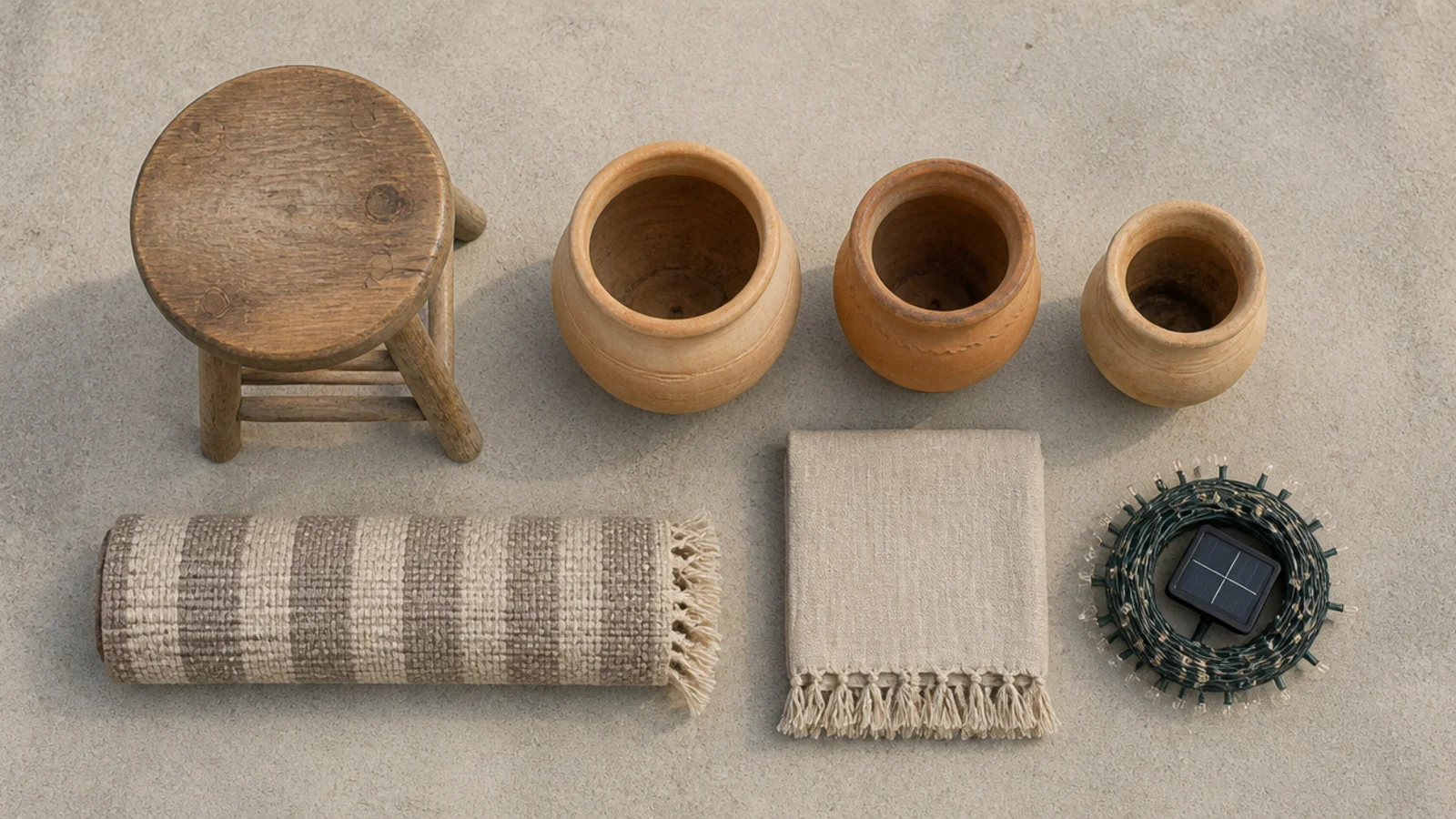
A bare grey slab makes everything on it look temporary. An open-weave flatwoven rug at roughly 4 by 6 feet costs $25 to $40 and does more than a chair upgrade.
It has to be the kind you can see light through. Dense pile traps water, stains the concrete and smells within a month. Leave 4 inches of bare slab at the edges so water still reaches the drain. $$$
2. Buy one chair you love, not a cheap two-seat set
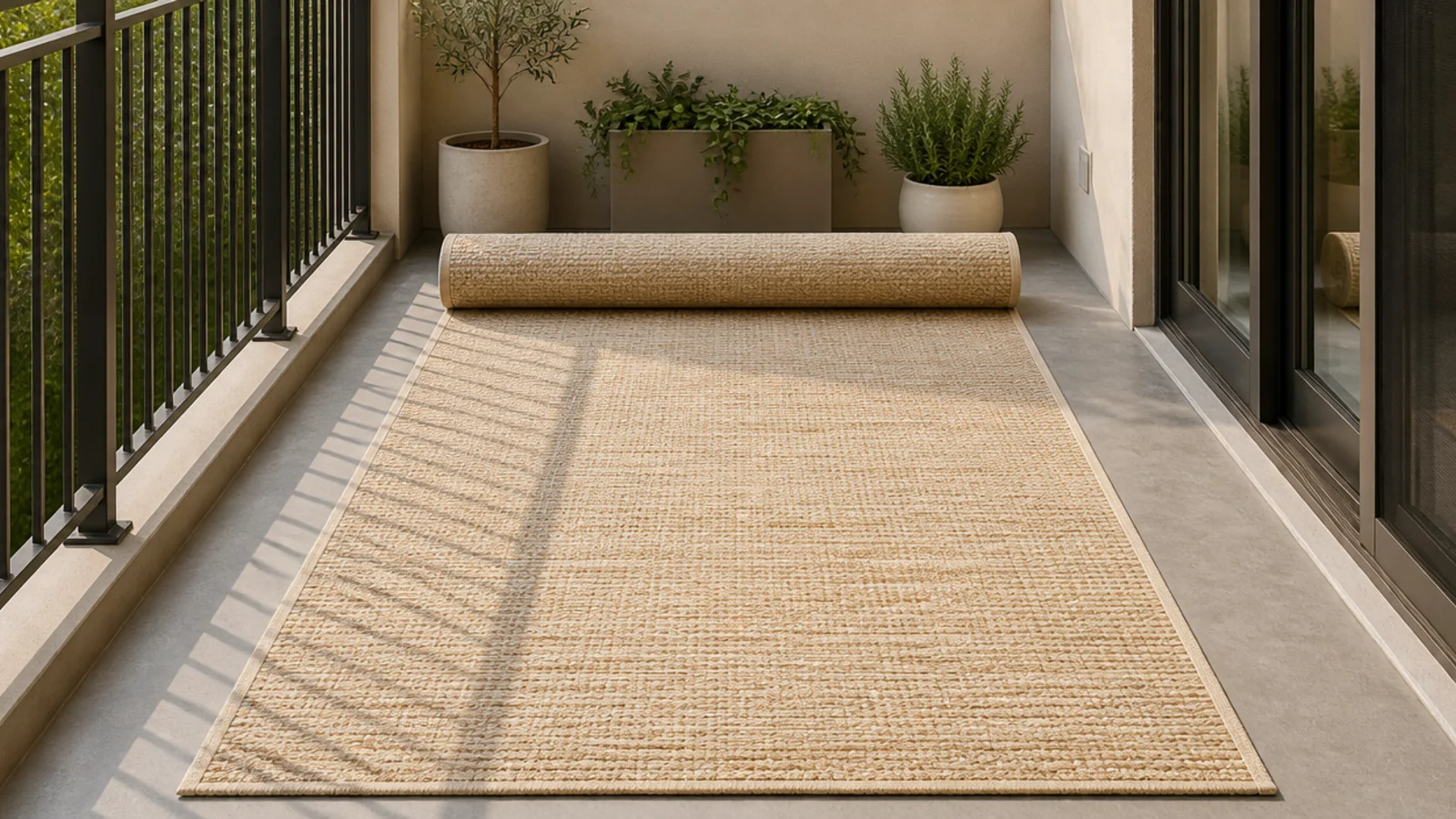
A $50 two-seat set is usually two chairs nobody wants to sit in. One well-made folding chair, secondhand for $20 to $30, will get used every day.
You can always add the second chair later. On a slab under 30 square feet, one chair plus a stool is often the honest capacity anyway. $$–$$$
3. Thrift a wooden stool as the side table
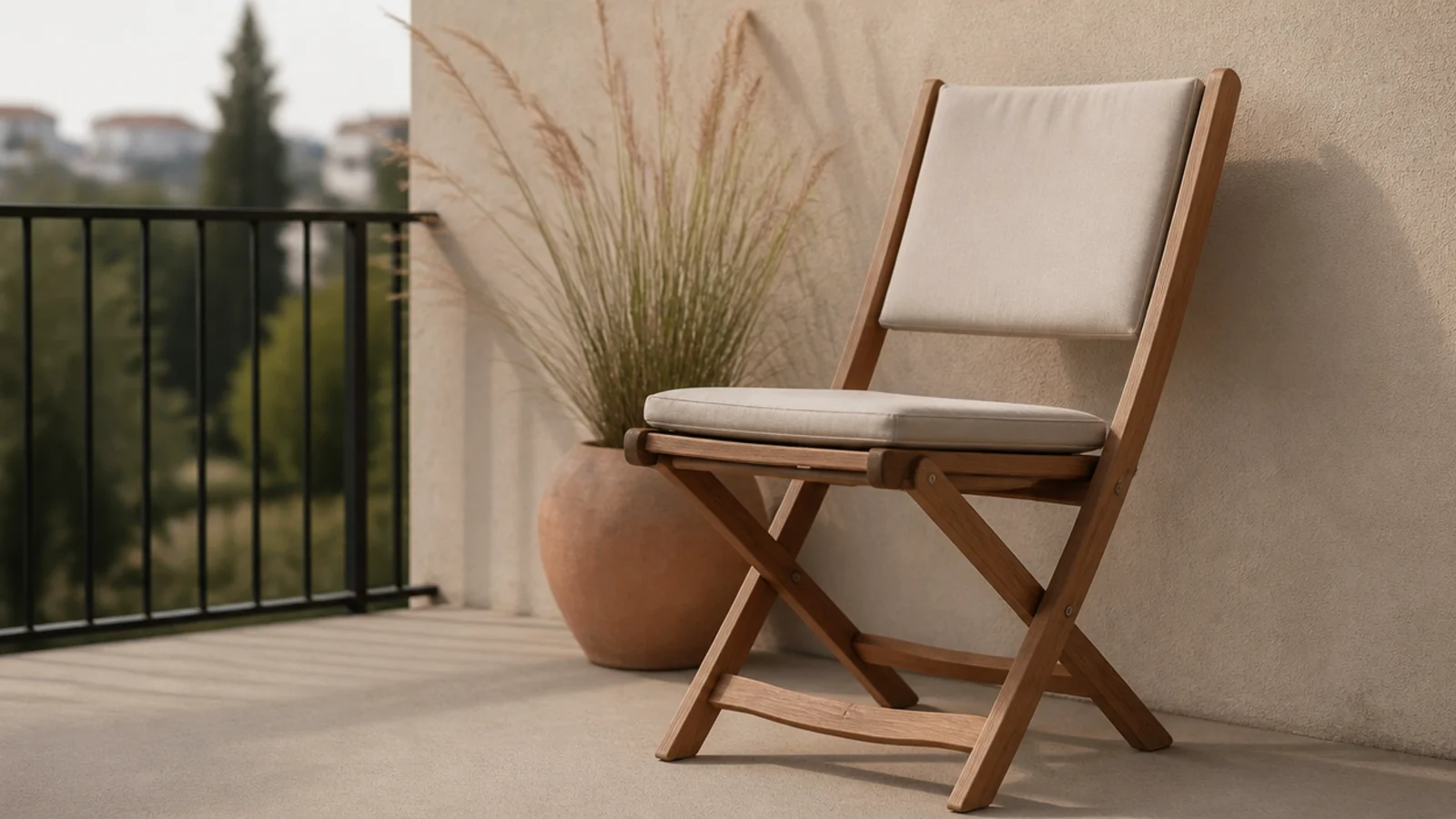
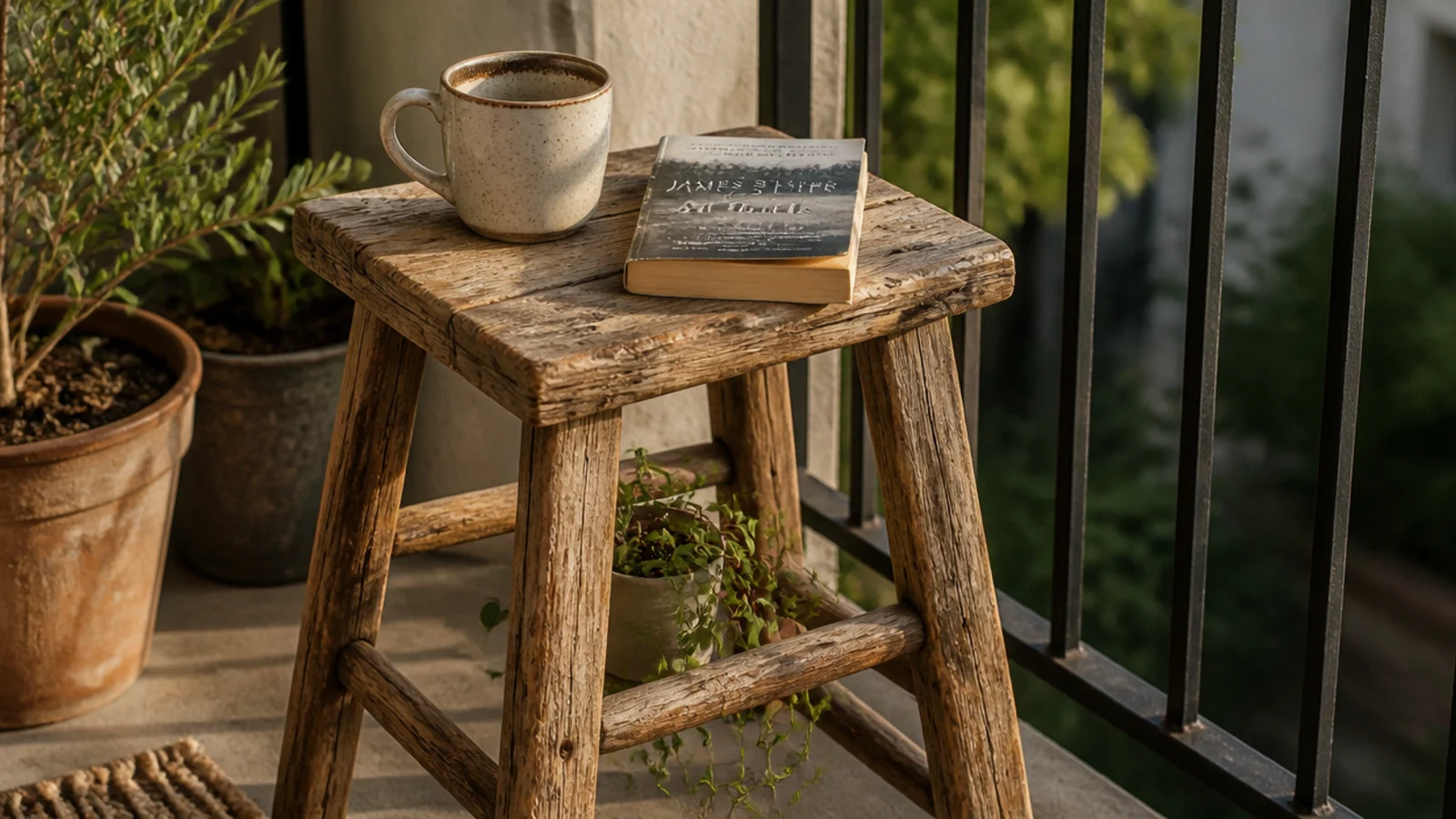
Small outdoor side tables are wildly overpriced. A solid wood stool from a thrift store runs $4 to $10, holds a mug and a book, and doubles as a plant stand when you need the floor.
Give it a coat of exterior oil so it survives rain. Look for one around 18 inches tall, which is the right height beside a low chair. $
4. Lay deck tiles only where you stand
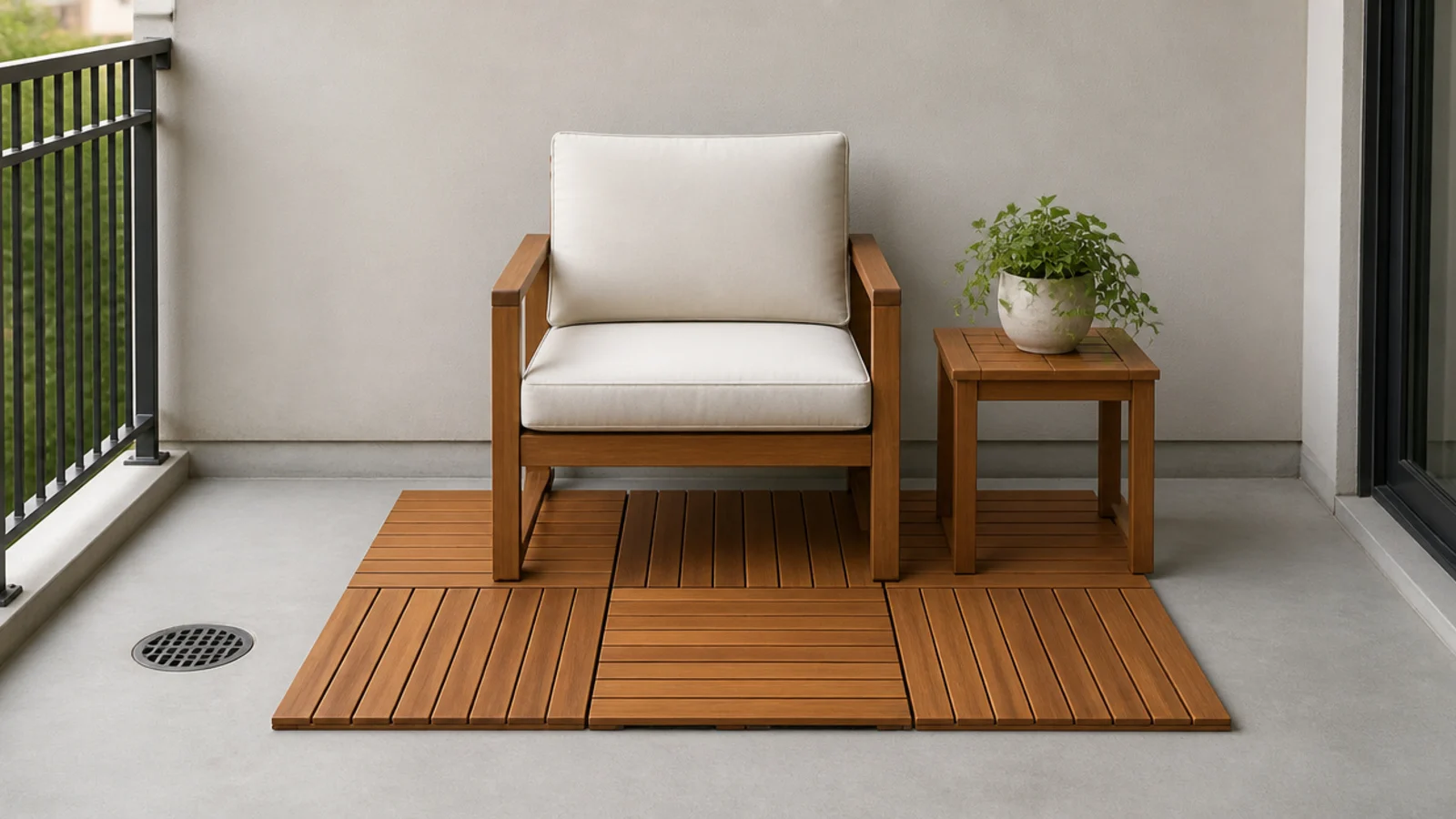
Interlocking deck tiles run $2 to $4 each, so tiling a whole balcony gets expensive fast. Tiling just the seating zone — six to nine tiles — costs under $30 and gives you the warm underfoot moment where it matters.
Leave the drain uncovered, and lift the tiles twice a year to sweep out the grit that collects underneath. $$$
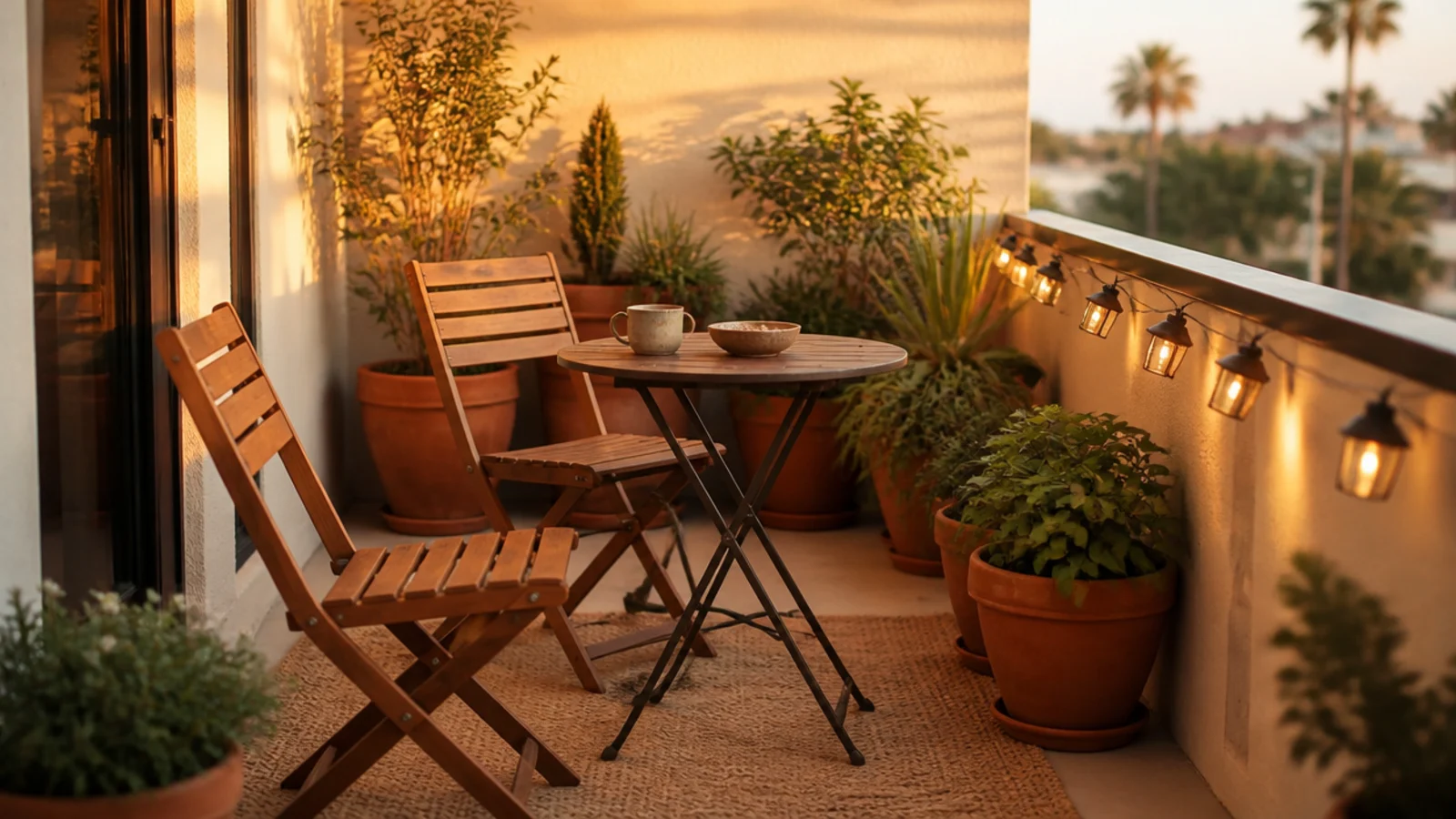
5. Run a fifteen dollar solar string inside the rail
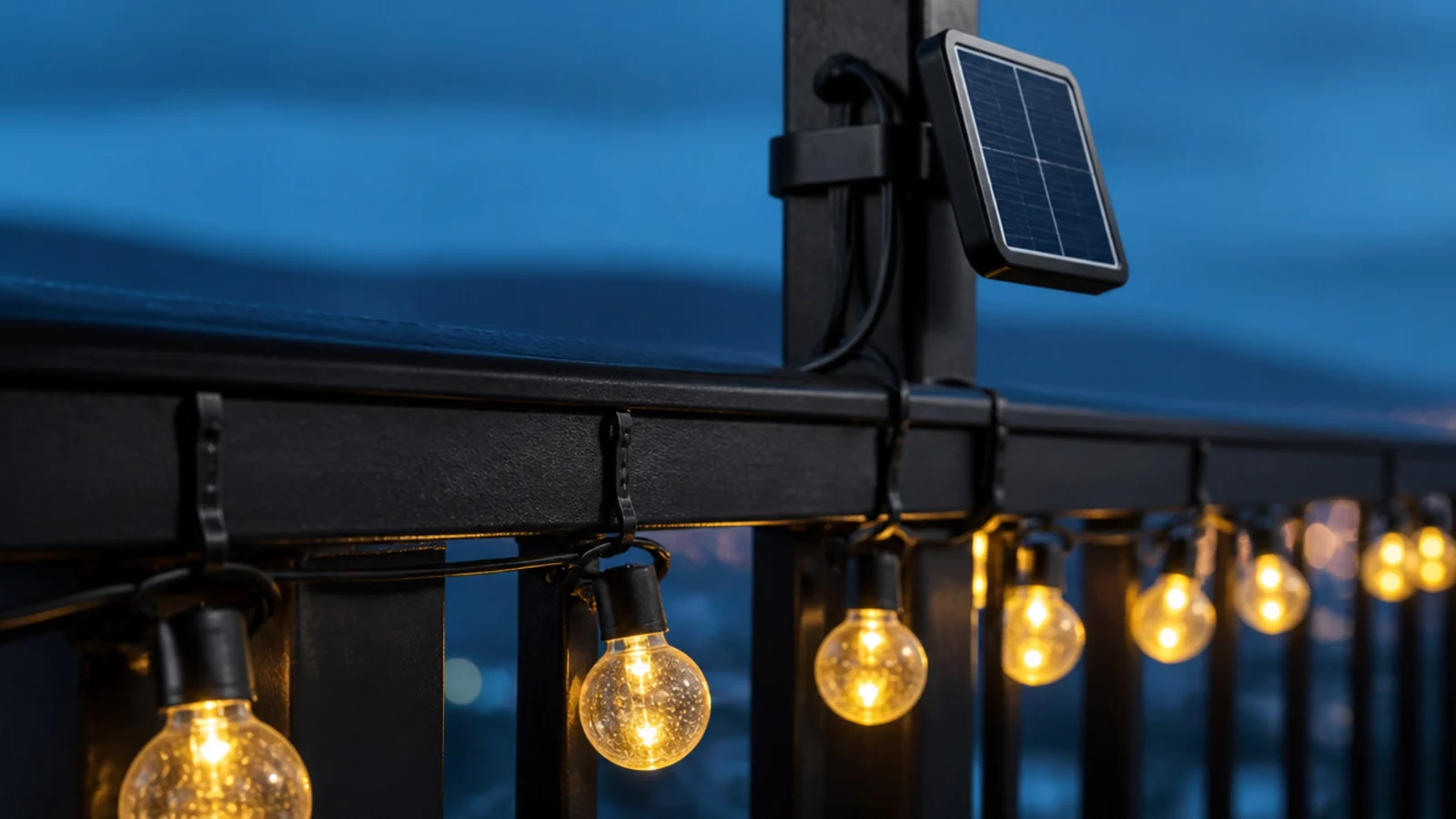
Nothing else transforms a balcony after dark for less. A 30-foot solar strand covers a typical railing and needs no outlet and no drilling.
Zip-tie it to the inside face every 12 to 18 inches so wind cannot whip it loose, and clip the panel high where nothing shades it. Buy warm white around 2700K — cool white makes terracotta look grey. $$
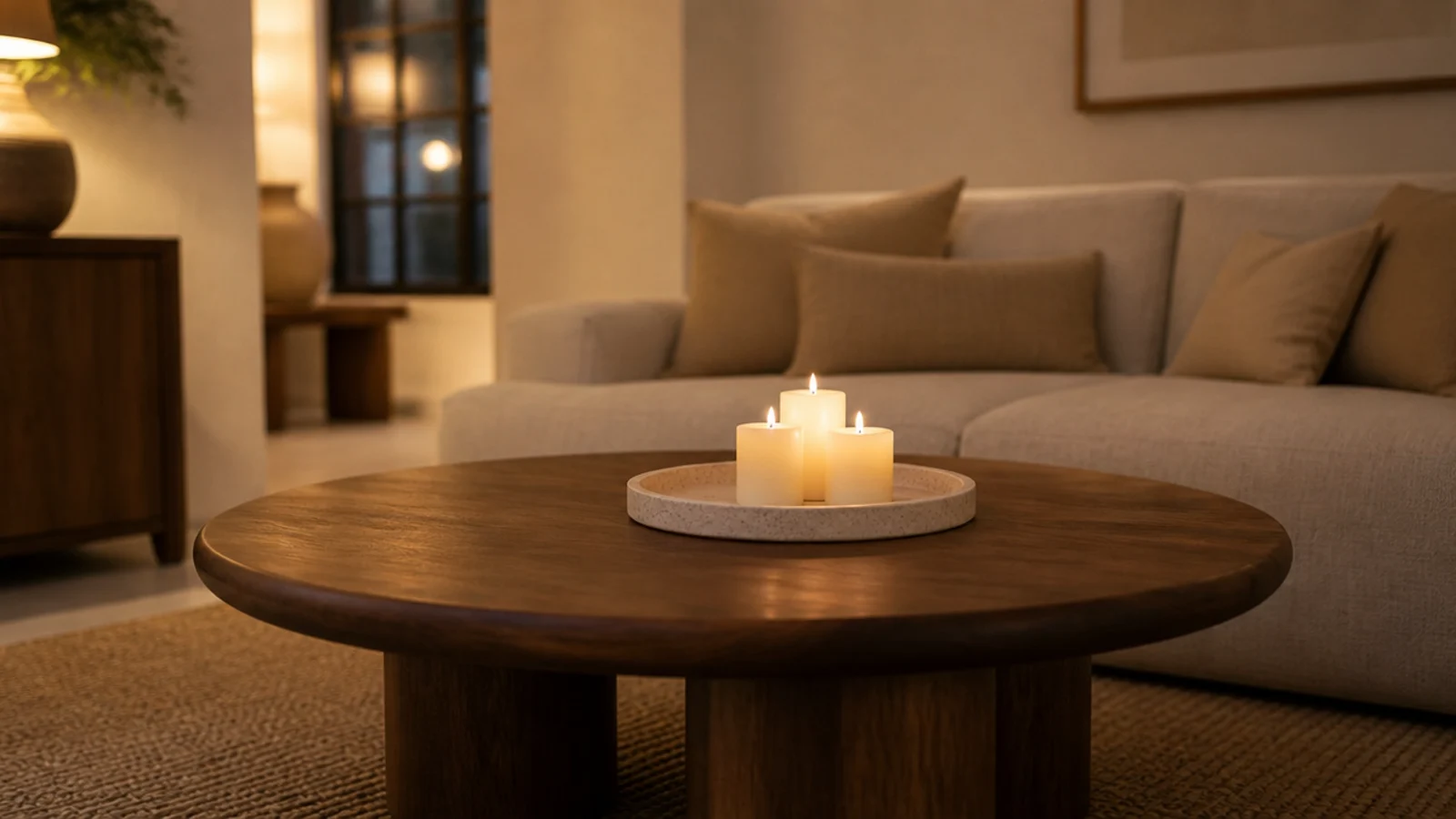
6. Flameless tea lights in sand-weighted jars
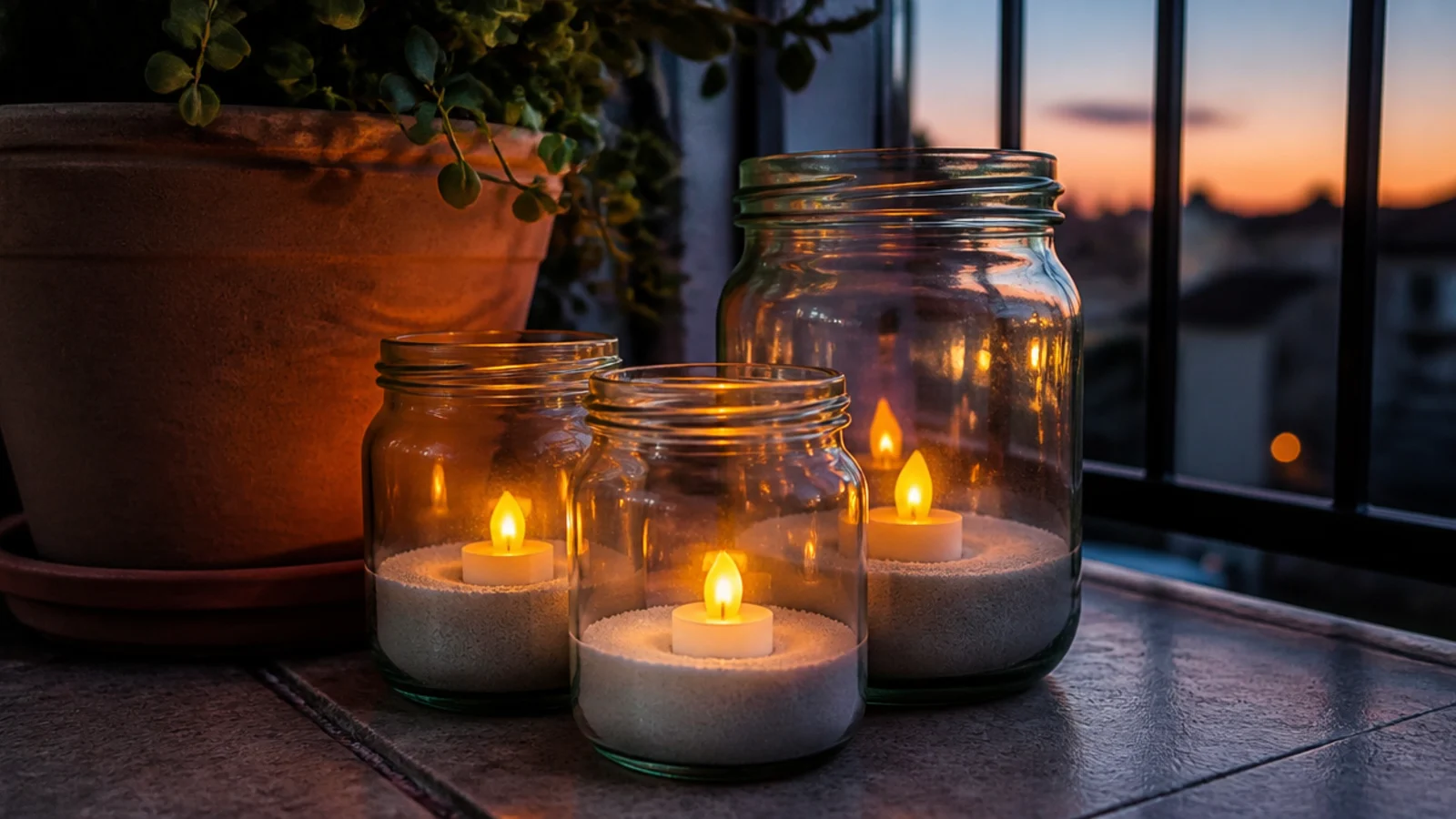
Open flame is banned on most balconies, and a candle in wind next to fabric is a bad idea regardless. Flameless LED tea lights cost about $1 each and read exactly like the real thing from three feet away.
Fill recycled jars an inch deep with sand. The weight stops them travelling in a gust and the sand diffuses the light. $
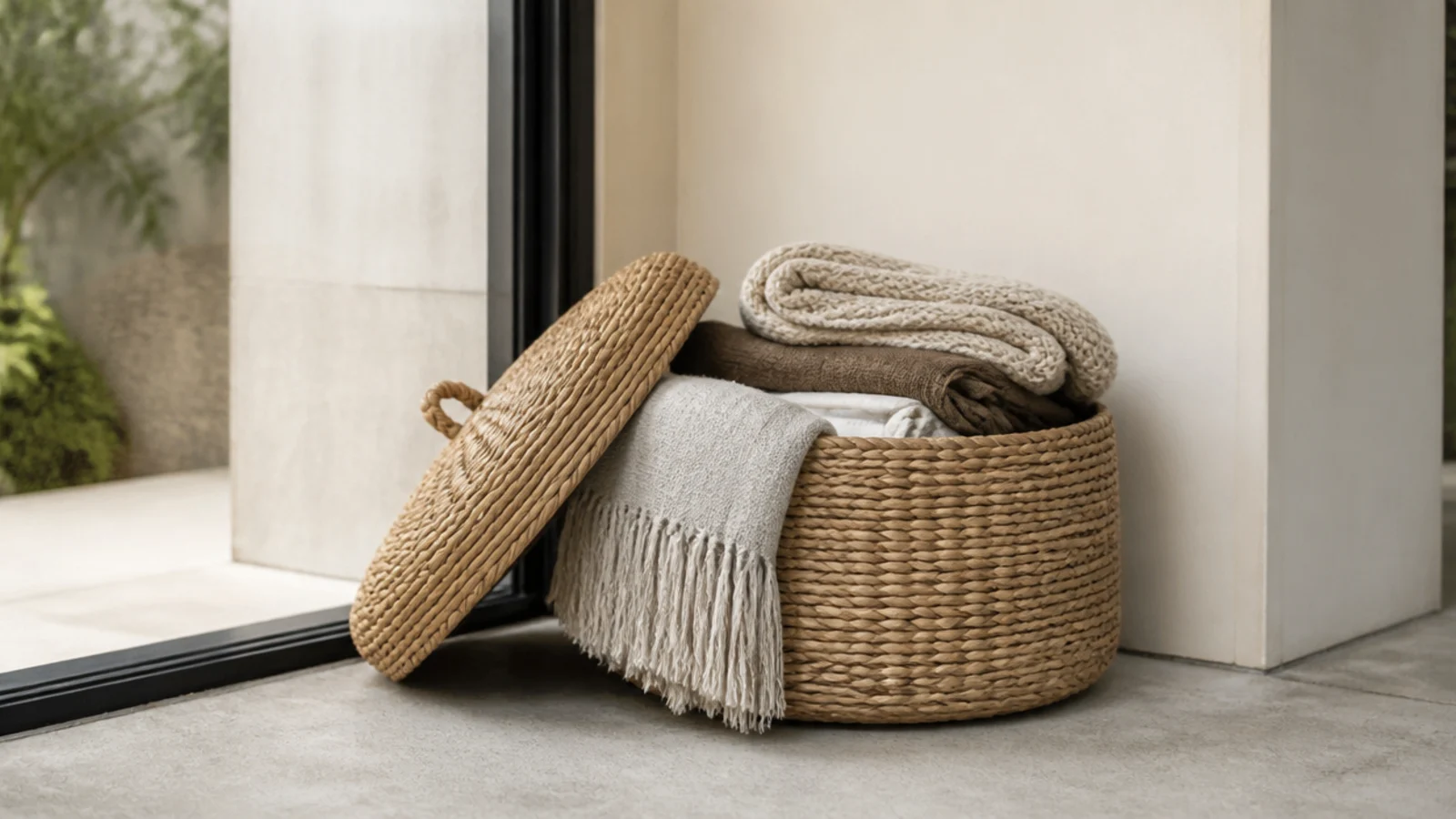
7. A lidded basket for blankets by the door
Soft goods are what make a balcony cozy, and rain is what destroys them. The fix is not better fabric, it is faster retrieval.
A lidded basket just inside or outside the door means throws and cushions are rescued in one trip. Anything that takes a minute to put away will eventually sit through a storm. $$
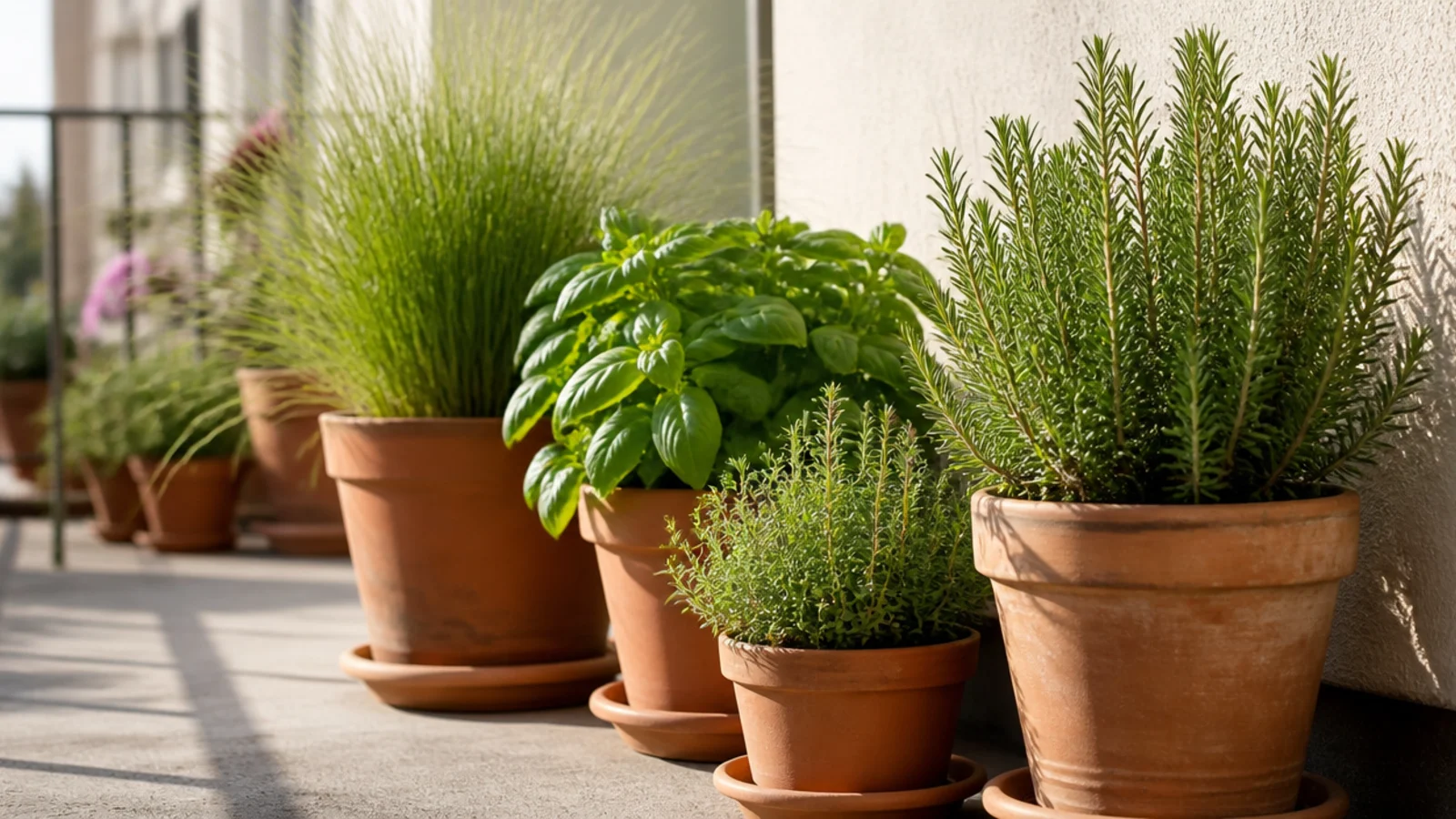
8. Repot nursery plastic into three dollar terracotta
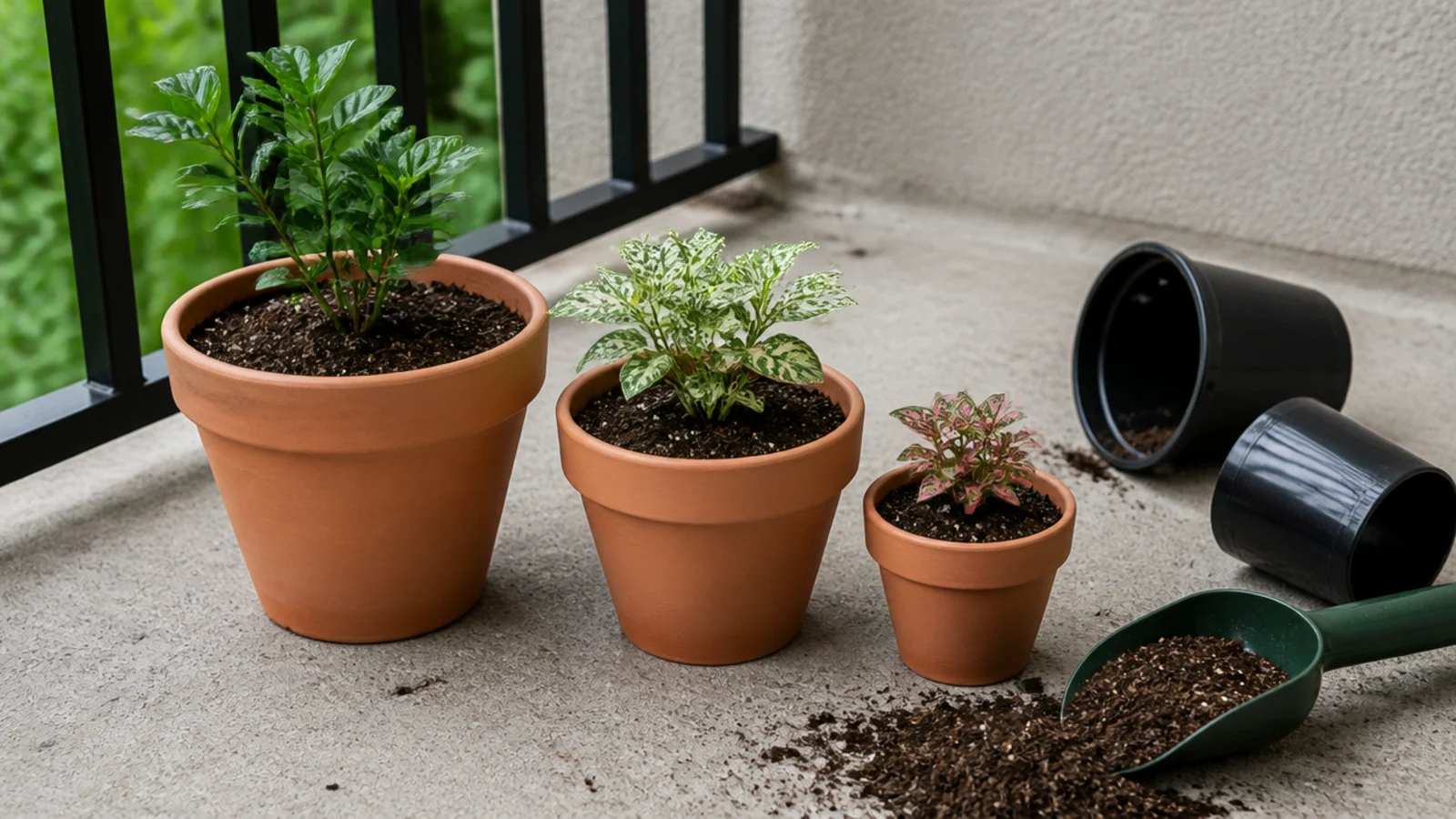
Black plastic nursery pots cheapen a balcony faster than anything else out there. Plain unglazed terracotta costs $3 to $6, breathes better for the roots, and weathers to a chalky patina in one season.
Buy three in graduated sizes rather than a matching pair. And buy the saucer at the same time — it is not optional above the ground floor. $–$$
9. Propagate cuttings in jars for free greenery
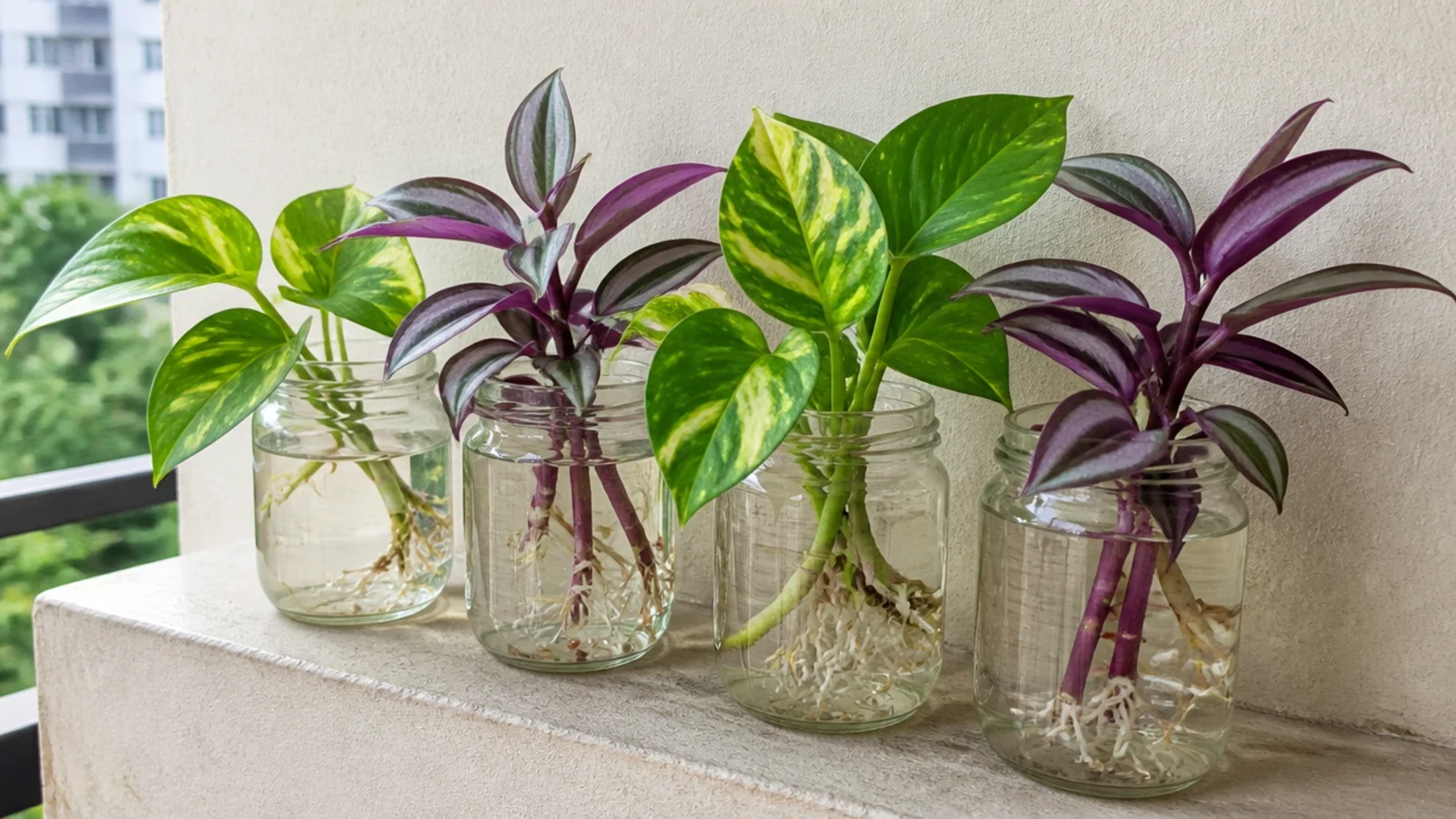
Pothos, tradescantia, rosemary and mint all root in a jar of tap water within two to three weeks. Ask a friend with an overgrown plant and you have a balcony full of greenery for the price of nothing.
Keep the jars in bright indirect light rather than baking sun, change the water weekly, and pot them into terracotta once the roots hit two inches. Free
10. Start herbs from seed in yogurt pots
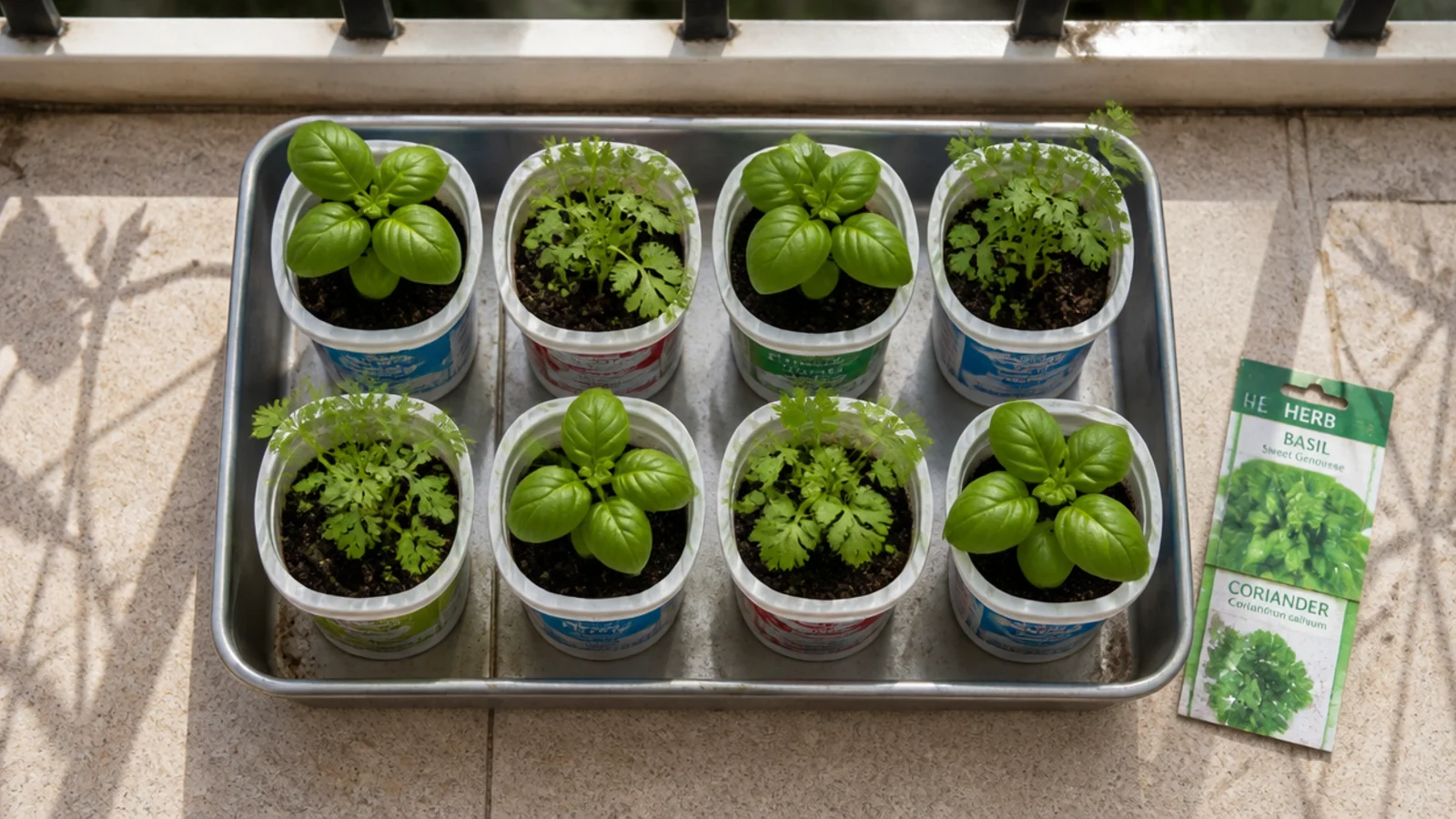
A seed packet costs less than one nursery plant and gives you twenty. Punch drainage holes in yogurt pots, fill with container mix, and start basil, coriander and salad leaves on a sunny sill.
Move them out once they have four true leaves. Balcony containers dry out several times faster than beds, so keep them in a tray until the roots fill the pot. $
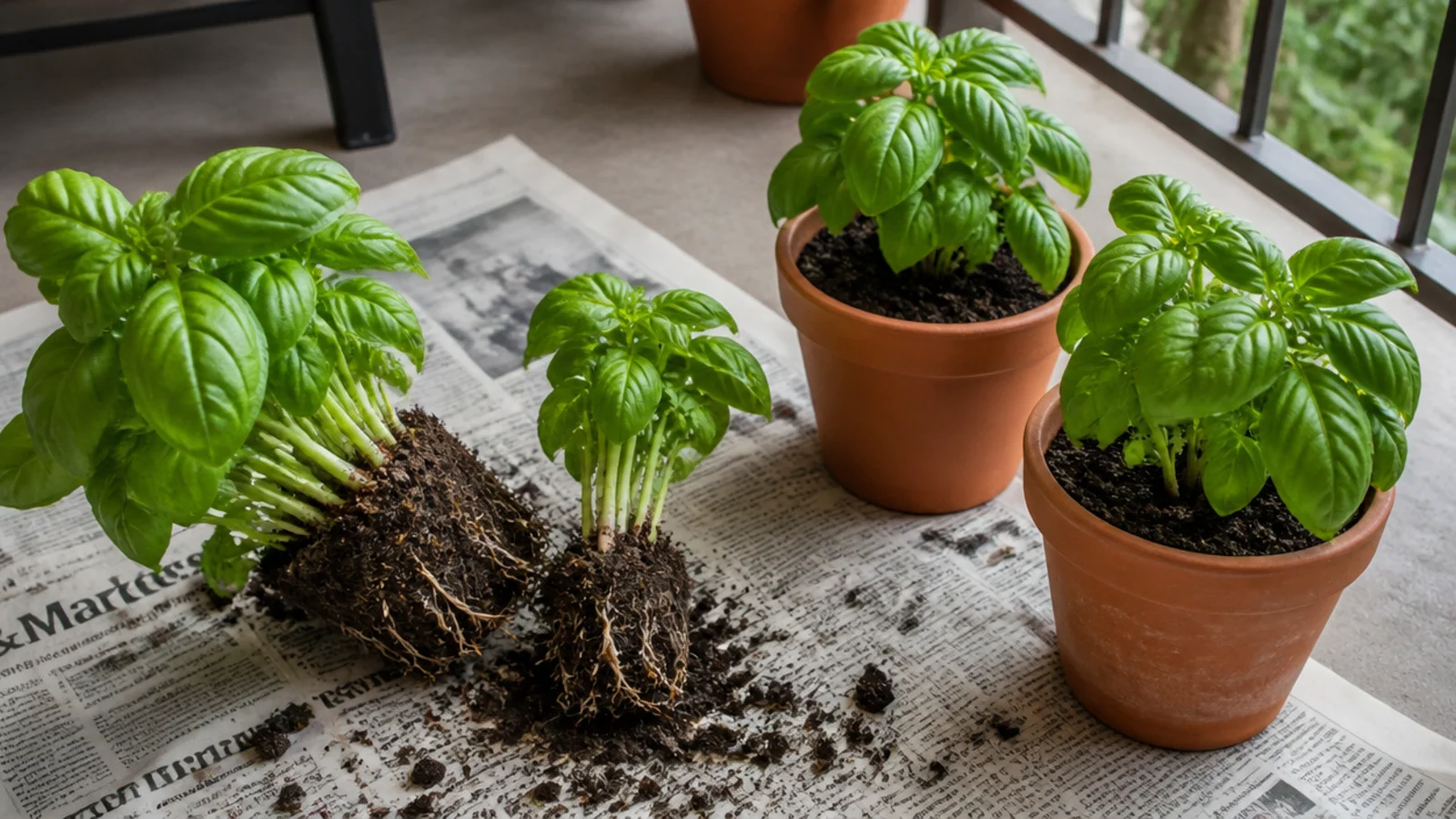
11. Split a supermarket herb pot into three
A $3 supermarket basil is not one plant — it is a dozen seedlings crammed into a plug. Tease the root ball into three clumps and pot each one separately.
Each clump grows into a proper bushy plant within a month, which is the difference between a herb you cut and a herb that collapses after one meal. Works for parsley, coriander and mint too. $
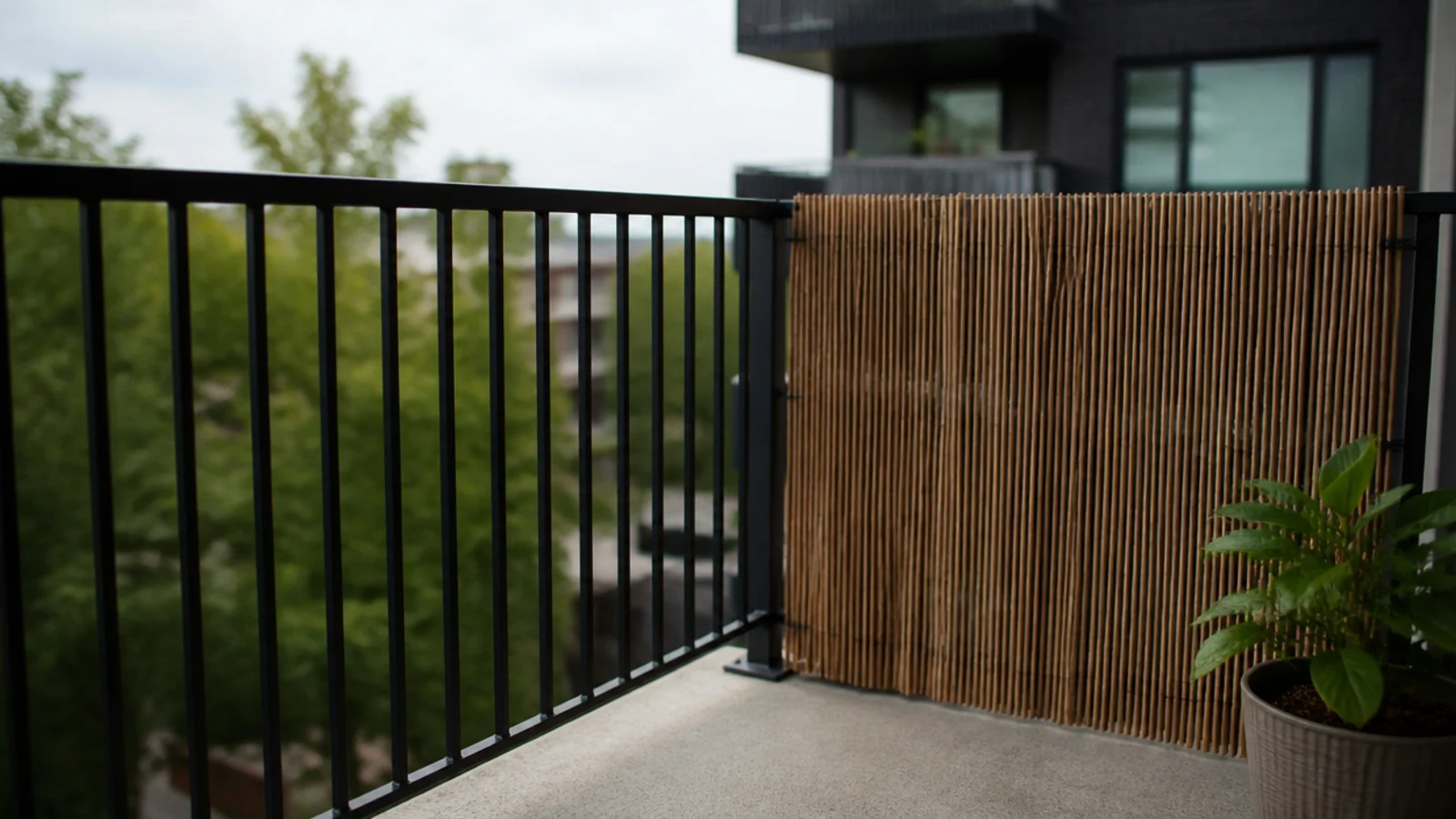
12. A reed fencing roll for one screened corner
Reed or bamboo fencing costs about $20 for a 16-foot roll and is the cheapest privacy that does not look cheap. Cut a section and cable-tie it to the inside face of the railing where the sight line bothers you.
Screen one section, not the whole rail — solid screening acts as a sail and stresses the fixings. Confirm your building allows it first. $$
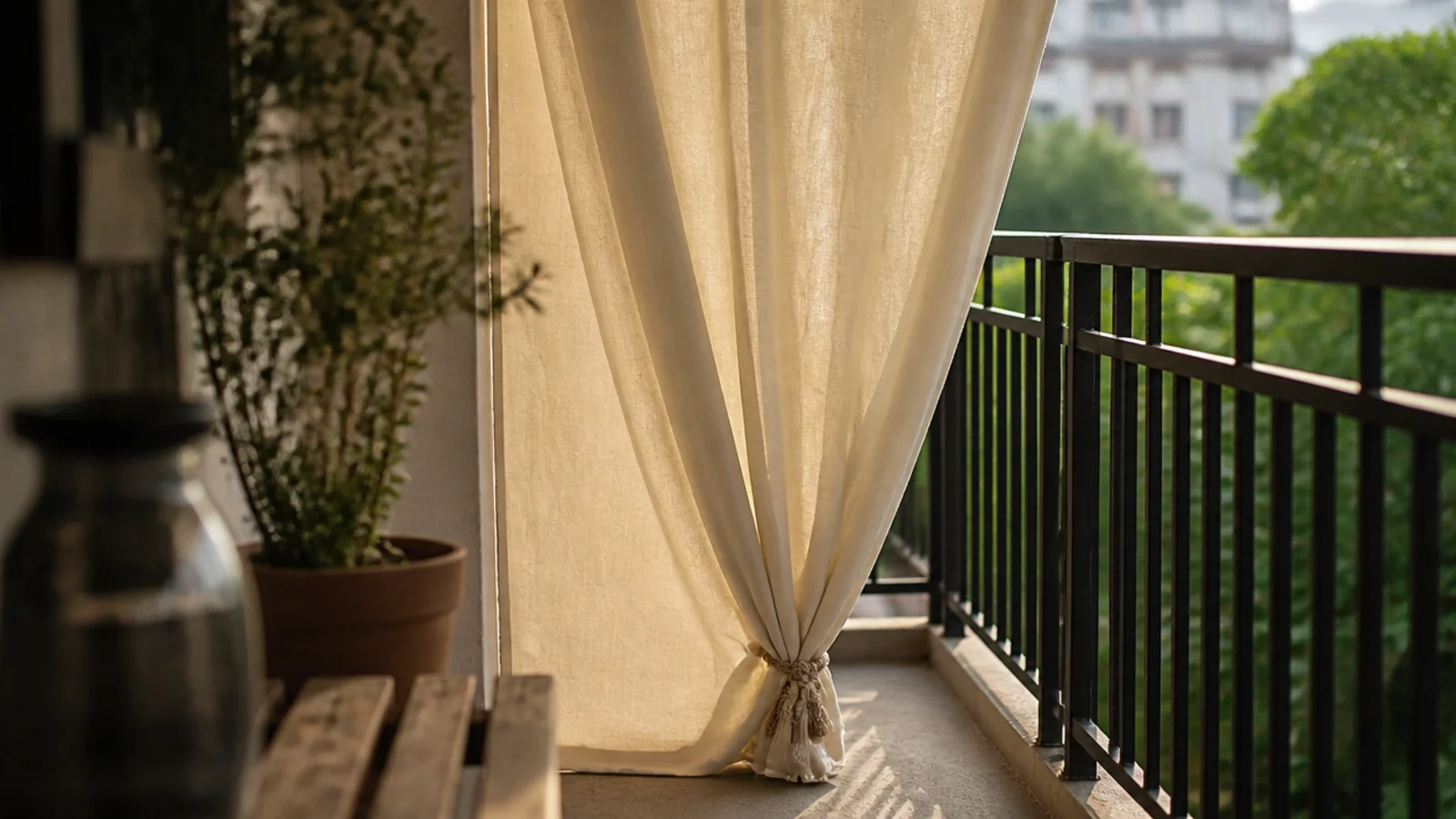
13. A canvas drop cloth as an outdoor curtain
A cotton drop cloth from the paint aisle costs $12 and makes a soft panel at one end of a balcony that reads far more expensive than it is.
Hang it from a freestanding frame or an existing overhead rail if the lease permits, and tie the hem down with jute cord. An untied panel in wind is a sail, and on a high floor it will take whatever it is attached to with it. $$
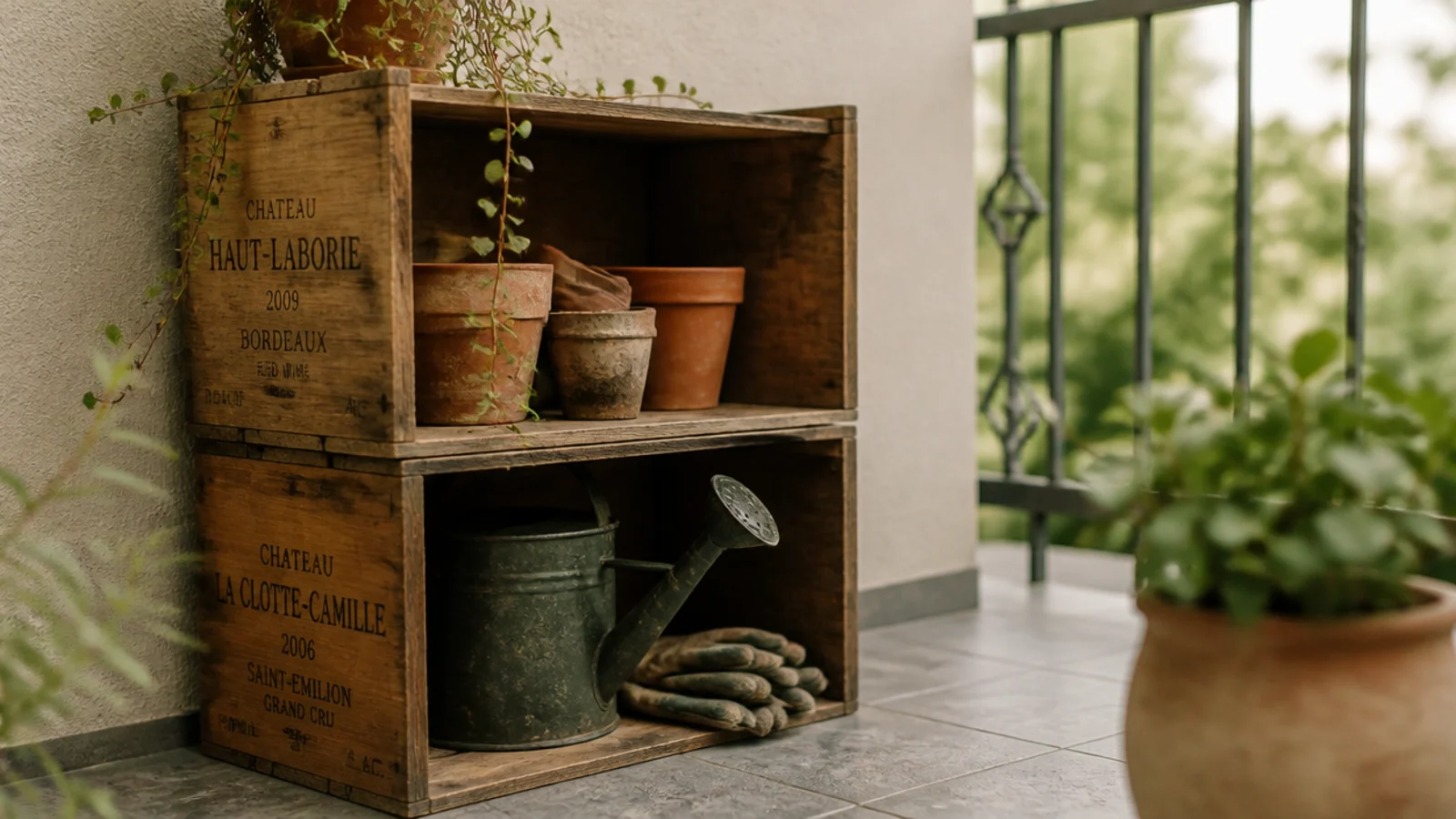
14. Wooden crates as stacking storage and plant stands
Wine or produce crates cost $3 to $5 and stack into open shelving that holds pots, tools and a watering can. Stand them against the building wall where the weight is best supported.
Two coats of exterior oil, and keep the stack no more than two high on a windy floor. Anything taller wants strapping to something solid. $–$$
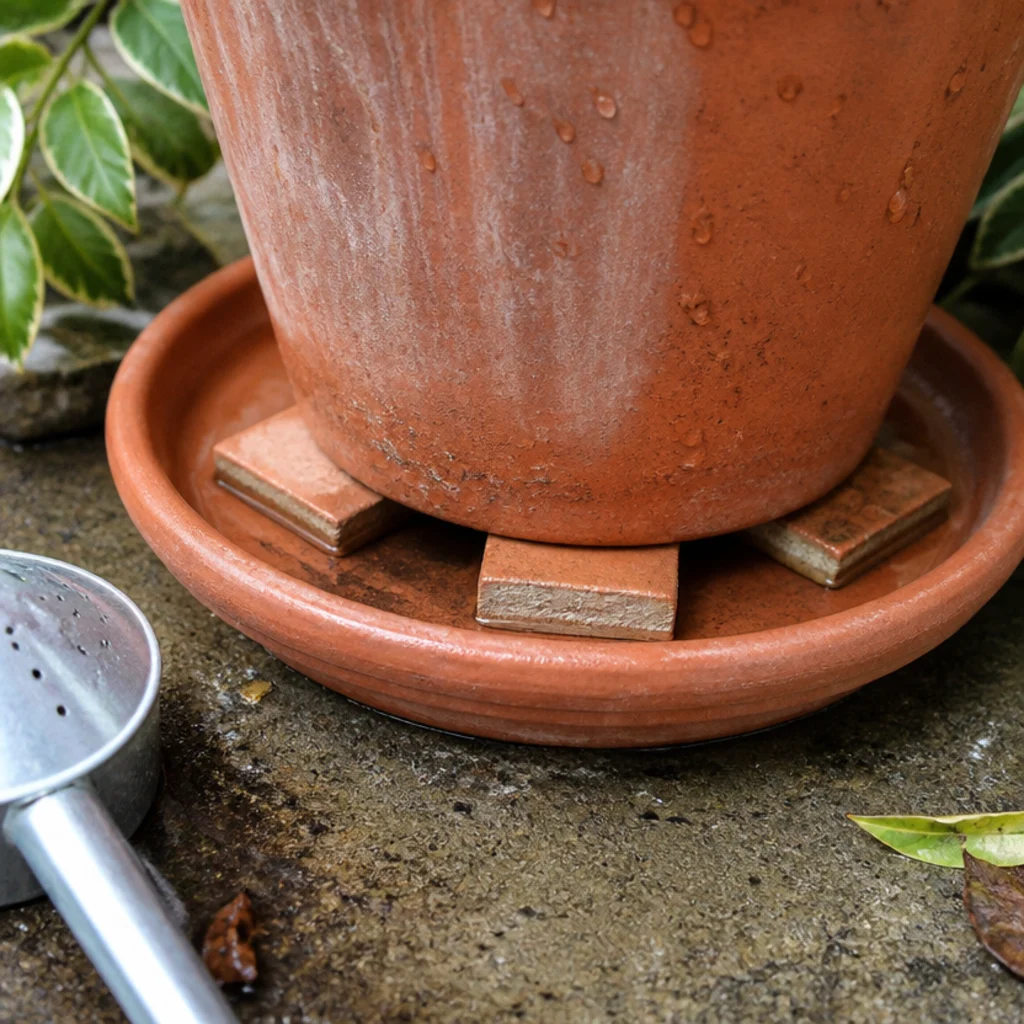
15. Tile offcuts as pot feet above the saucer
Hardware stores hand out tile samples, and three small offcuts under a pot rim lift it clear of standing water inside the saucer.
That air gap stops the dark rings that concrete keeps forever, and it stops roots sitting in water after rain. It is free, it takes a minute, and it is the reason my slab still looks clean. Free
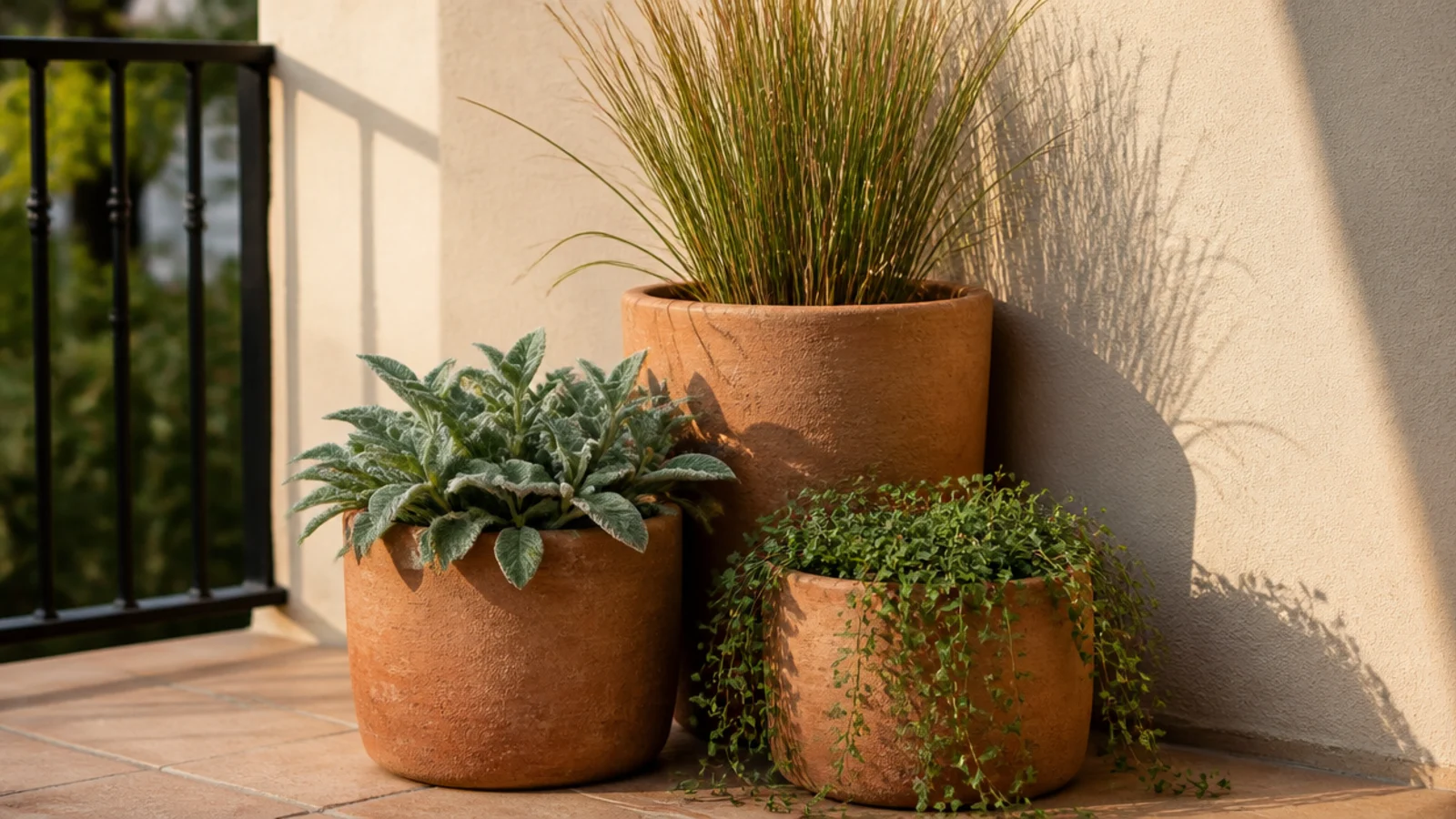
16. Group pots in threes at three heights
Scattering pots evenly along a balcony makes it look like a nursery aisle. Grouping them tightly in odd numbers makes it look styled.
Three heights in one grouping: something tall like a grass, something mid like sage or lavender, something low and trailing. Keep the pot material consistent even when the plants are not. Free
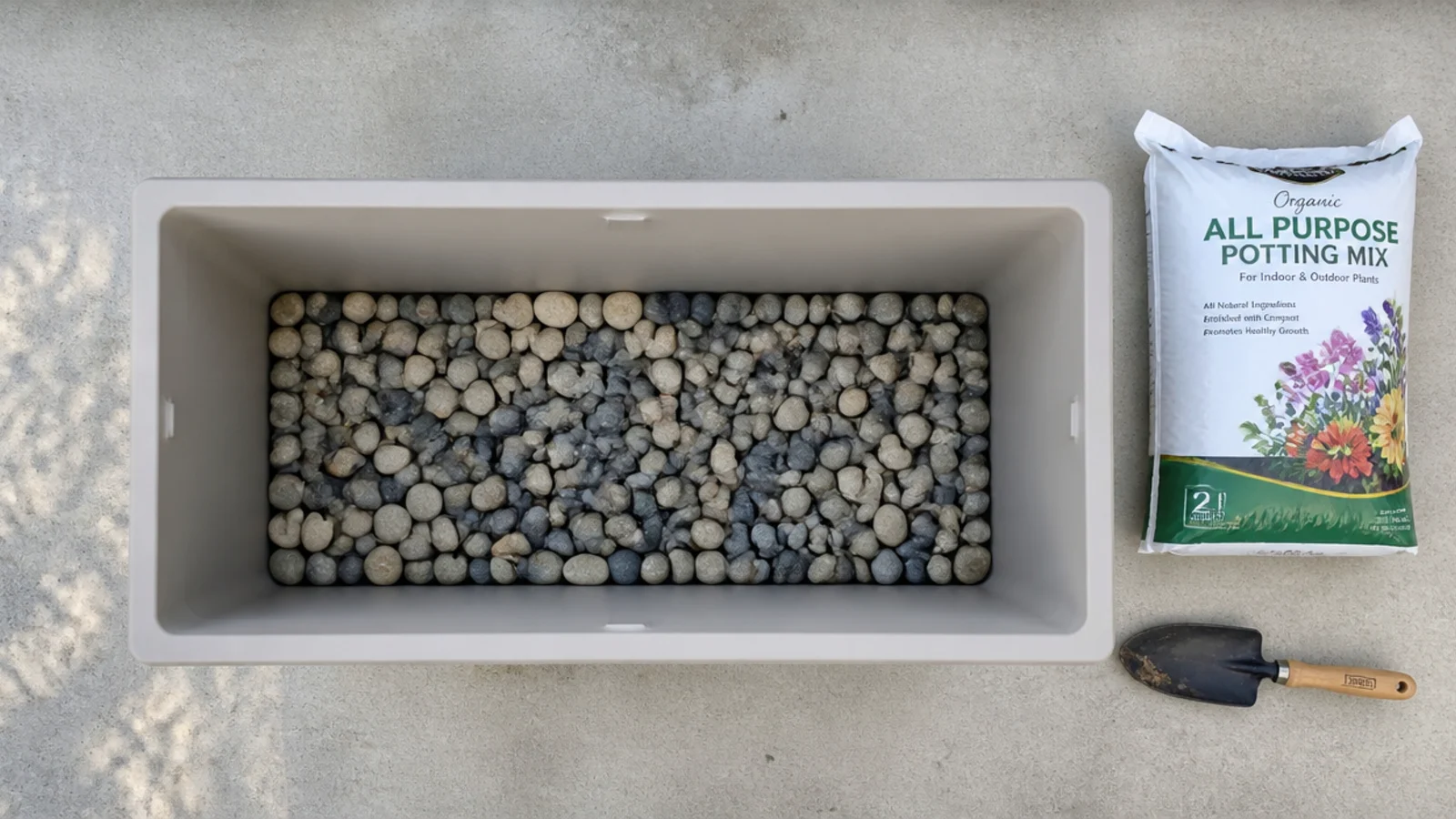
17. Hide ballast in the bottom of light pots
Lightweight resin and fiberglass planters blow over on a high floor and take the plant with them. A few inches of flat stones or a paver in the base fixes it for nothing.
Add the weight first, then a layer of drainage material, then mix. Keep total weight sensible — heavy pots belong against the building wall, not massed at the outer rail. Free–$
18. A wooden tray turns any stool into a table
A $6 tray gives a stool a flat top and a raised edge, which is what stops a mug going over when someone knocks it.
It also makes the whole balcony pack away in one movement — lift the tray, everything comes inside together. Look for solid wood or bamboo rather than laminate, which delaminates outdoors in a season. $

19. Shop end-of-season in late August
Balcony furniture drops 40 to 60 percent from mid-August as stores clear floor space. That is when a folding bistro set becomes affordable.
Buy the frame quality you want and ignore the cushions, which fade in one summer anyway. Secondhand listings spike at the same time as people move out of apartments — the same set for $25. $$$
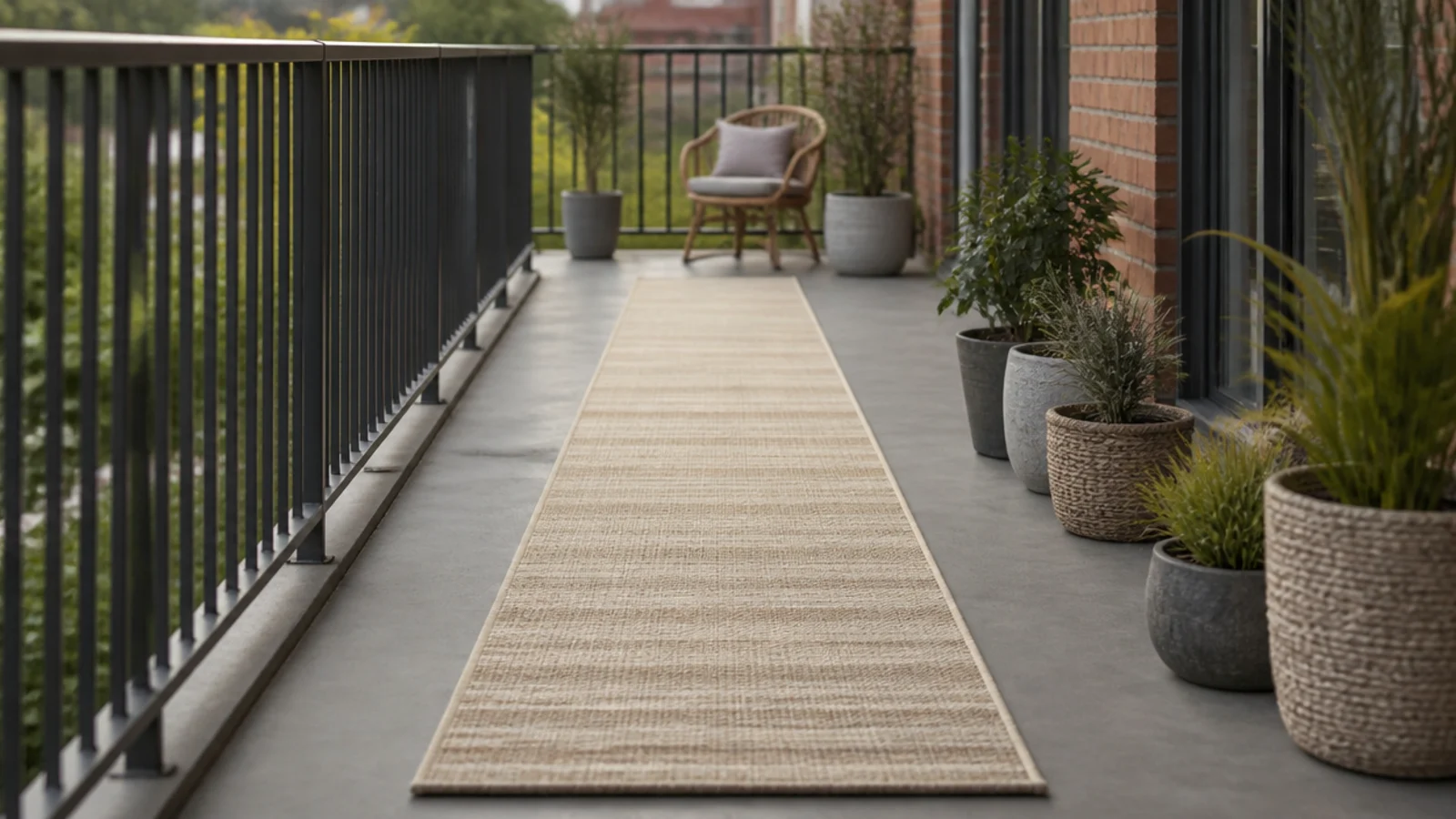
20. A runner instead of a full rug
Most apartment balconies are long and narrow, and a runner suits that shape better than a rectangle. It is also half the price.
A 2 by 6 foot flatwoven runner covers the walking strip while leaving the concrete margins clear for drainage. Keep the 24-inch walkway to the door on top of it rather than around it. $$
21. One large pot instead of five small ones
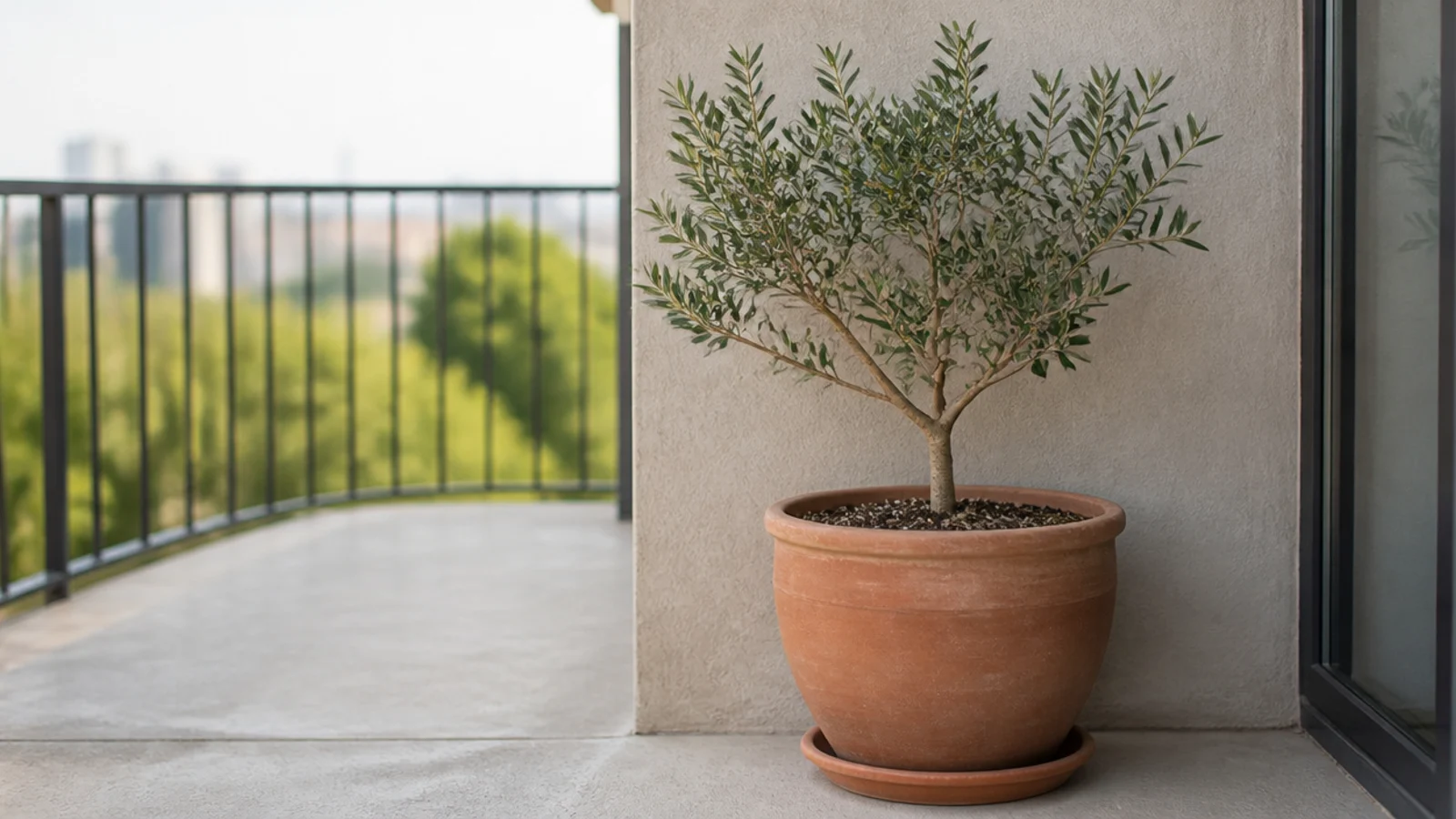
Five small pots cost more, dry out faster and read as clutter. One 16-inch planter costs about $25, holds moisture through a hot day, and anchors a corner.
Put it against the building wall — filled and watered it can pass 100 pounds, and that weight belongs where the slab is strongest, not out at the rail. $$$
22. A weighted floor lantern as the anchor object
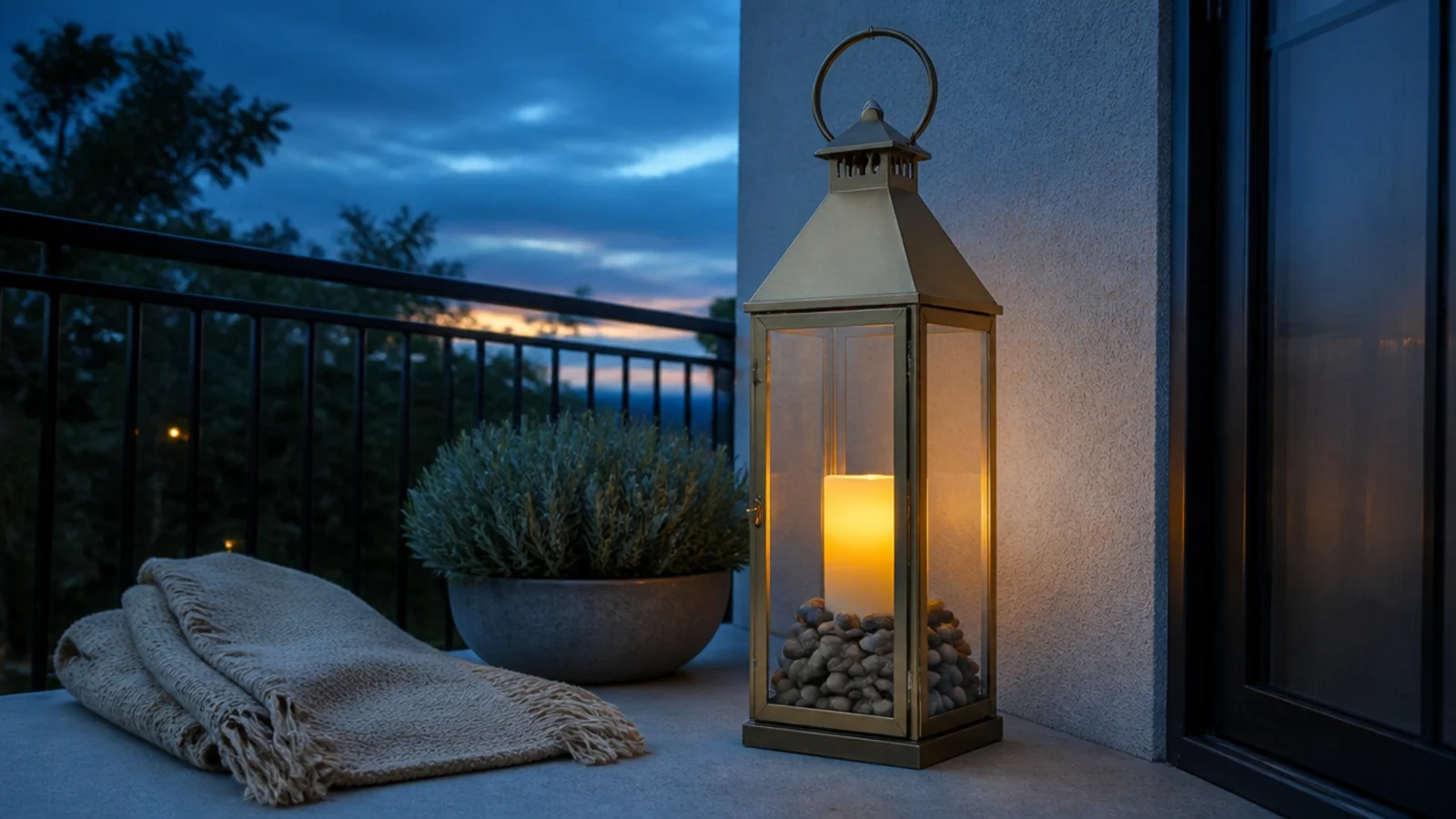
Buy one thing with real mass. A floor lantern with stones in the base stops a balcony full of folding, foldable, lightweight pieces feeling temporary.
Fill it with a flameless LED pillar and it also survives wind. Thrift stores are full of brass and iron lanterns at $8 to $15, and they photograph like the $80 version. $–$$
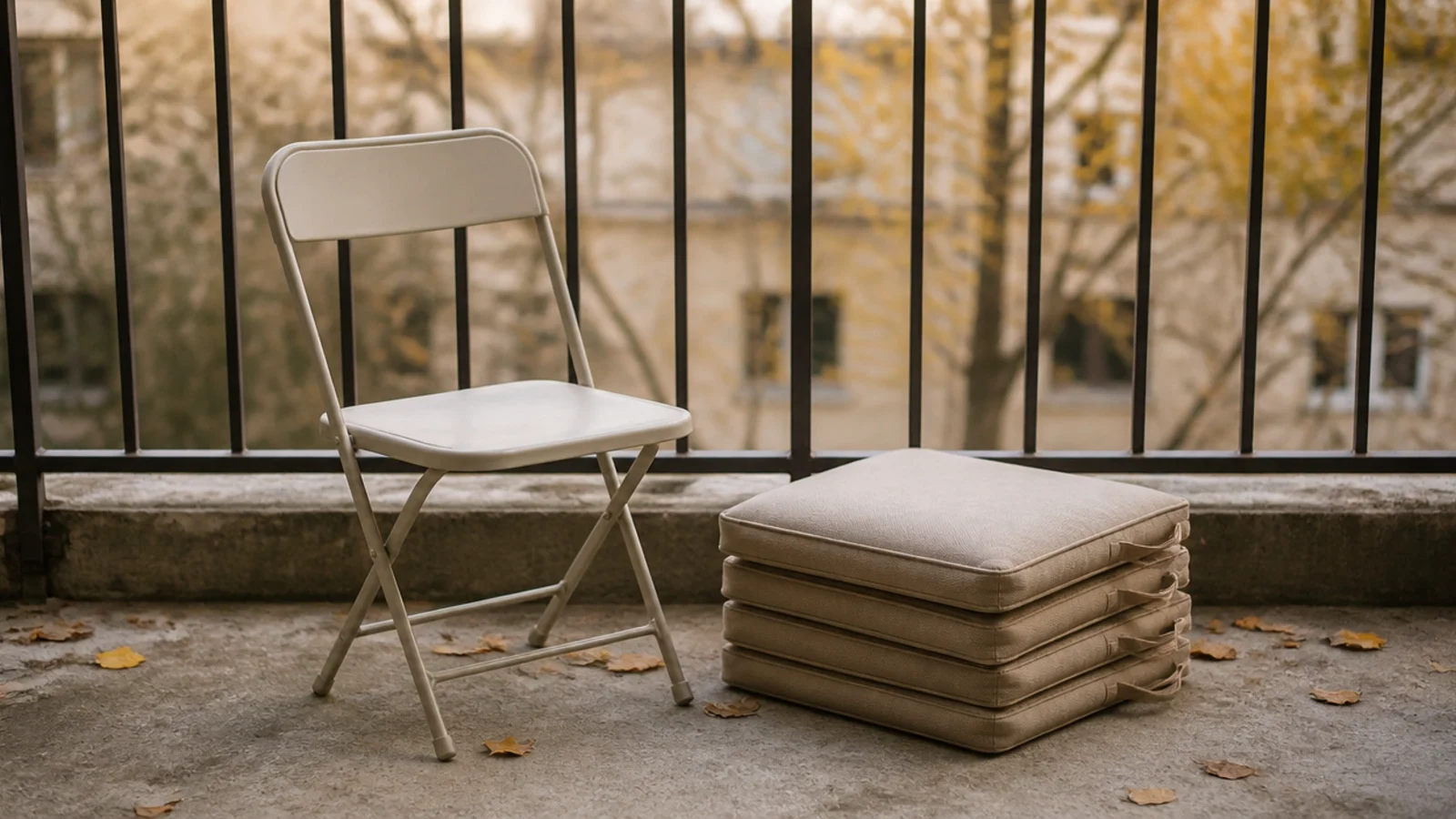
23. Recover old cushions in outdoor fabric
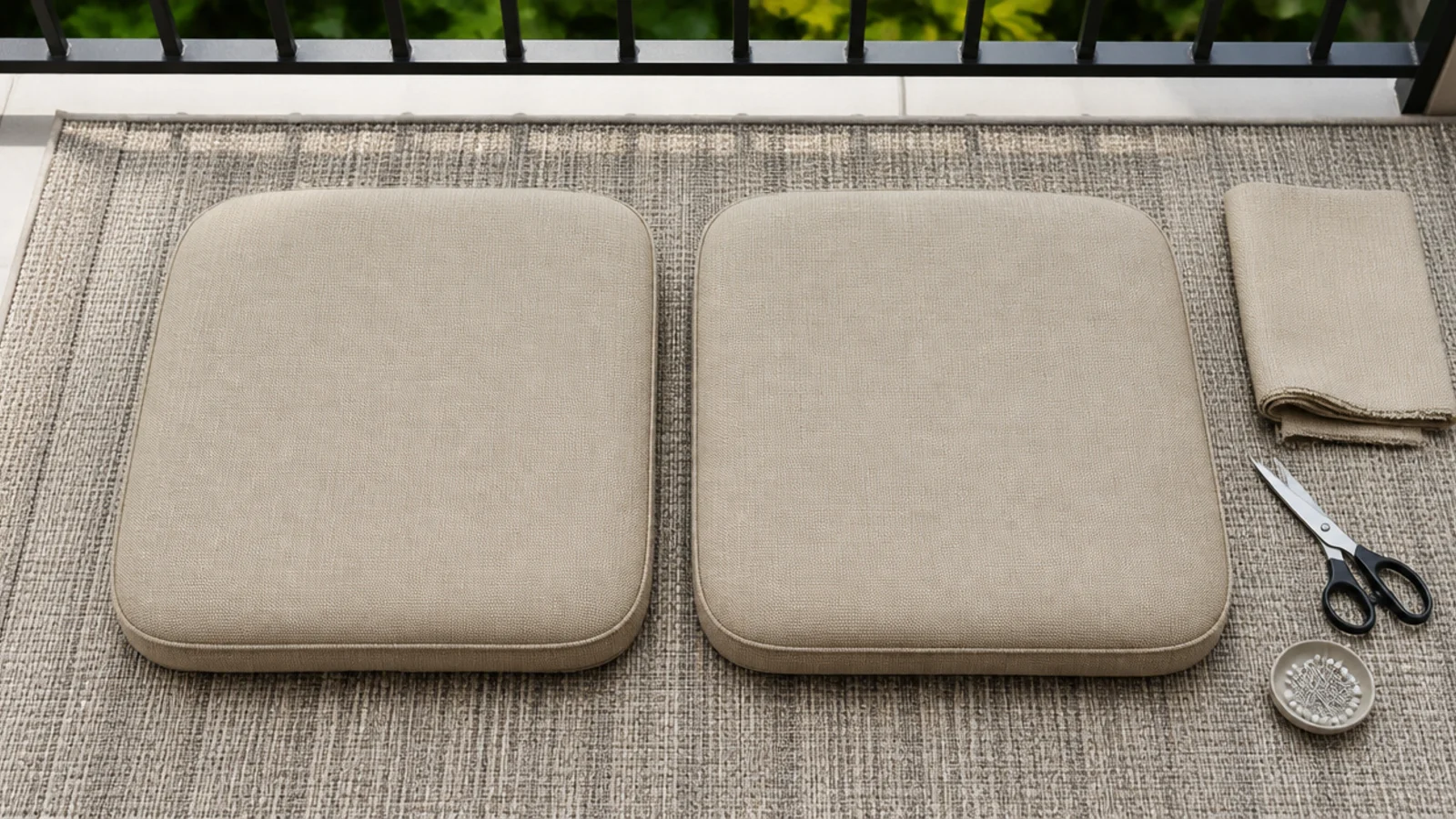
A yard of solution-dyed acrylic remnant costs $10 to $15 and saves a cushion pad you already own. Sun destroys printed polyester in one summer; solution-dyed holds color for years.
Sew simple envelope covers so you can pull them off and wash them. Keep the palette to two neutrals and let the plants supply the color. $$
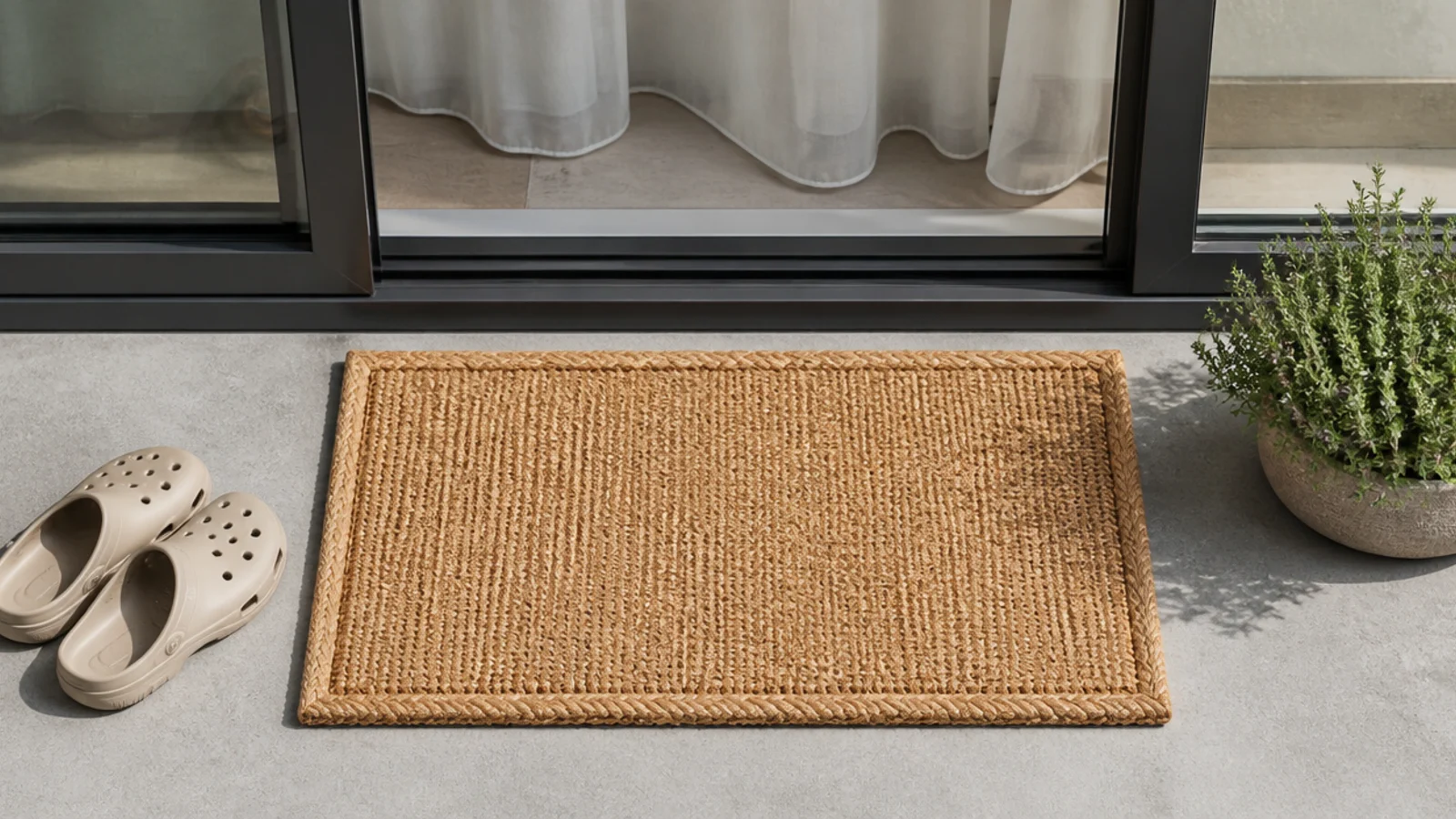
24. A doormat at the threshold
A small coir or jute-look mat at the sliding door does two things: it stops grit and potting mix tracking into the apartment, and it makes the balcony read as a room you enter.
Choose one that dries fast and shake it out weekly. Under $15, and it is the detail people notice without knowing why. $$
25. Point one chair at the best thing you can see
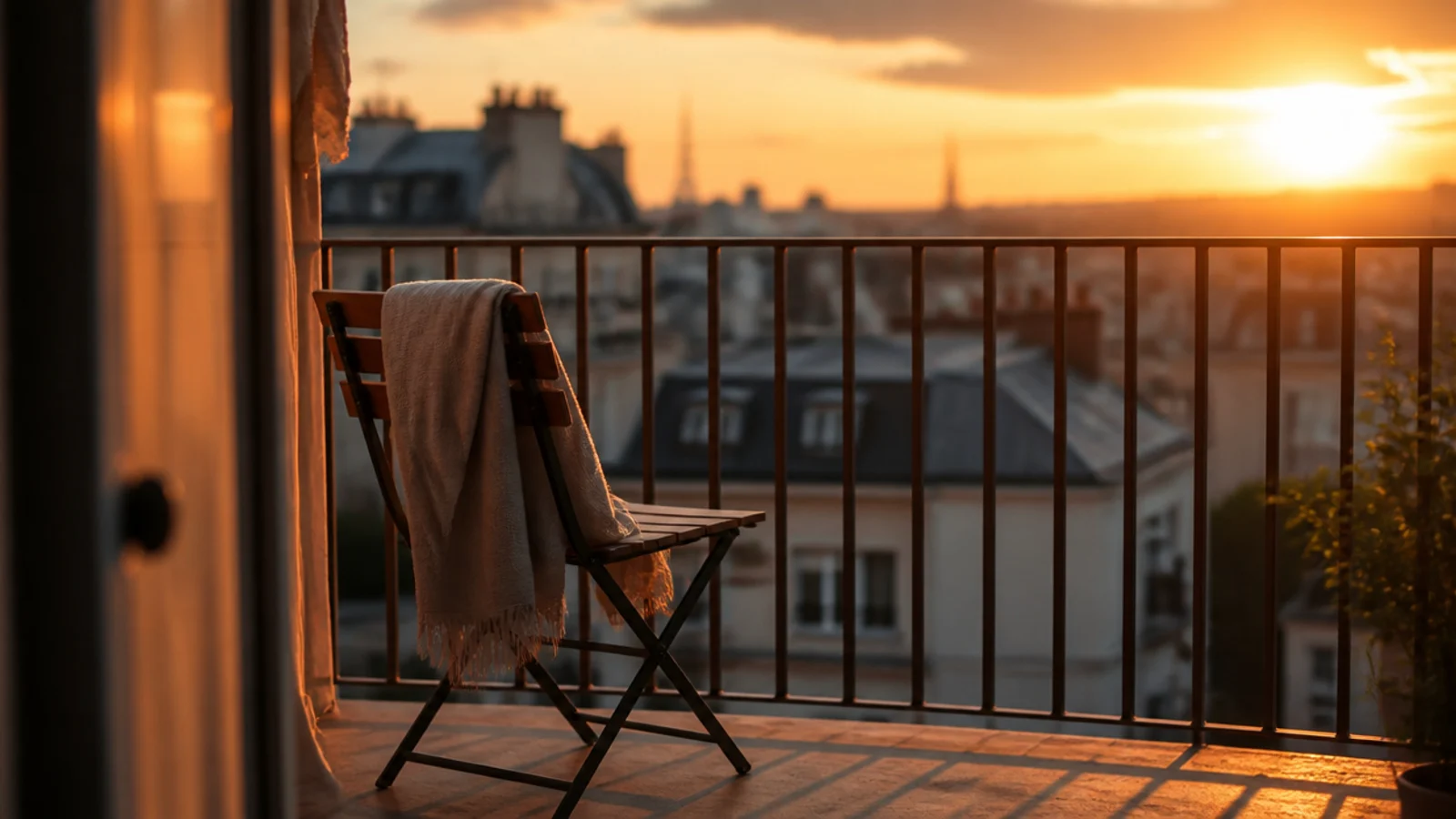
Most balcony chairs end up facing the sliding door because that is how they came out of the box. Turn one to face whatever is actually worth looking at — a rooftop line, a tree, the west sky.
It costs nothing and it is the reason the chair gets used. If the best view is also the most overlooked spot, screen the sight line beside it rather than the view itself. Free
Mistakes to Skip
- Hanging pots on the outside face of the railing to save floor space. A planter that works loose several floors up is a fatal accident, and almost every lease bans it outright.
- Buying a cheap dense-pile outdoor rug. It holds water against the slab, leaves a permanent dark stain, and turns musty within weeks in shade.
- Filling a small balcony with small things. Six tiny pots and three tiny tables cost more than one large planter and one good chair, and the slab ends up feeling half the size.
Frequently asked questions
How can I make my balcony cozy on a budget?
Spend on the floor and the light, and thrift everything else. An open-weave rug and a warm solar string cost about $45 together and change the space more than any furniture purchase. Then add one comfortable chair, a stool with a tray on it, and three plants grouped against the wall. Total under $150 if you shop secondhand at the end of summer.
What is the cheapest way to get plants on a balcony?
Propagate and split. Cuttings of pothos, tradescantia and rosemary root in a jar of water on the rail side of the doorway in two to three weeks. A supermarket herb pot is usually several seedlings crammed together and splits into three plants. Then buy plain terracotta at $3 a pot, which breathes better than plastic and looks far more expensive.
Can I use an indoor rug on a balcony?
No, and it is an expensive mistake. Indoor rugs and dense-pile outdoor rugs with a solid backing hold water against the concrete, stay damp for days, and leave a dark rectangular stain that comes out of your deposit. Use a flatwoven open-weave polypropylene rug you can see light through, and lift it after heavy rain.
How do I get a cozy glow without candles?
Layer two flameless sources at different heights. A warm white solar string at 2700K along the inside of the railing gives the wash, and a rechargeable LED lantern on the floor or a stool gives the pool of light your eye reads as candlelight. Open flame is banned on most balconies anyway, and wind makes it genuinely unsafe.
What can renters change on a balcony without permission?
Anything that lifts out. Interlocking deck tiles, open-weave rugs, freestanding plant stands, folding furniture, solar lights zip-tied to the inside of the railing, and pots on saucers all leave no trace. Drilling, painting, attaching to the railing and fixing screens above rail height usually need written approval, so read the balcony clause before you commit.
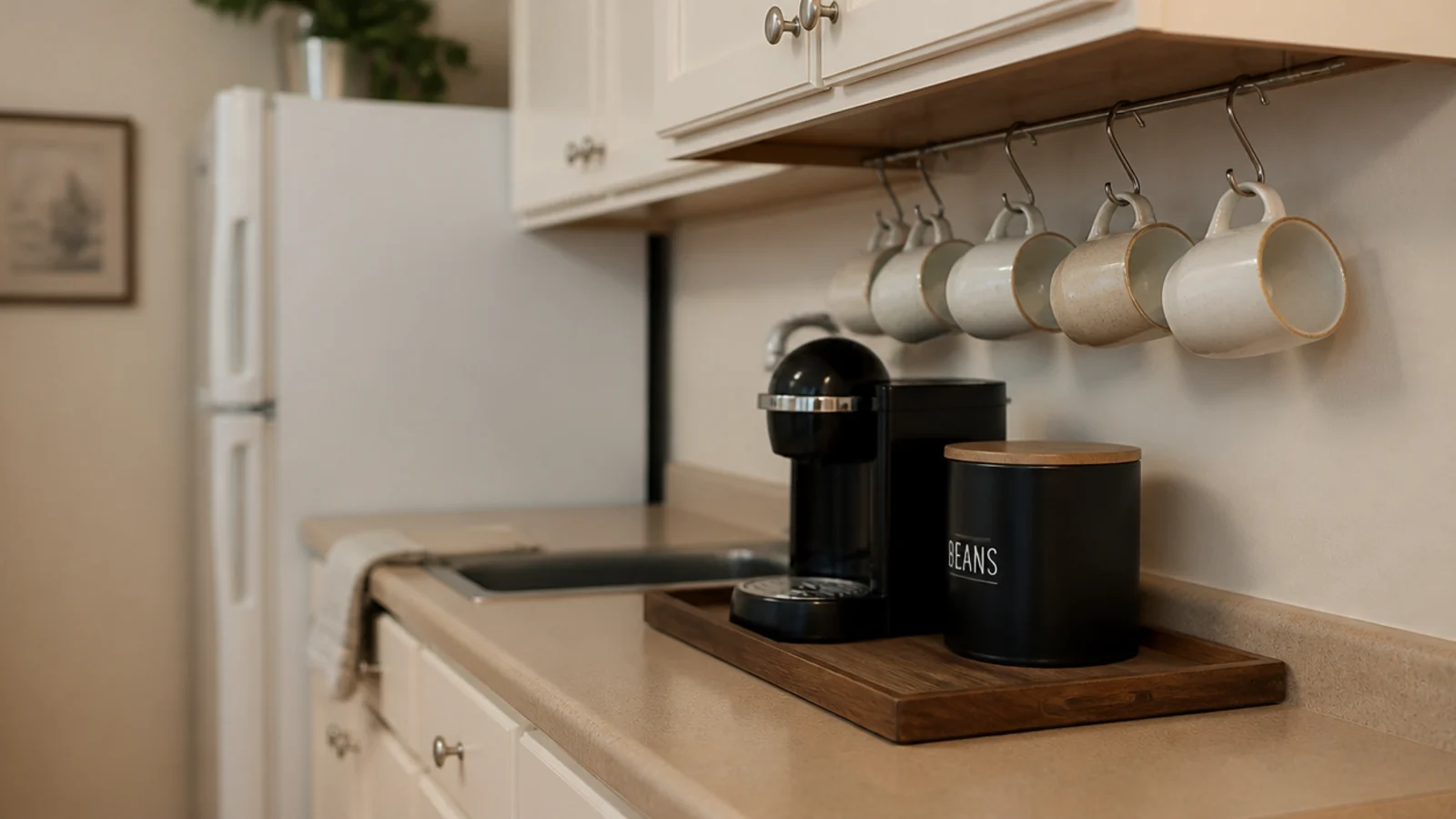
Do the floor and the lighting first, live with it for a week, and only then decide what you actually need to buy. For the full walkthrough in order, follow styling a small apartment balcony, and for tricks that make cheap pieces read as expensive, apartment balcony ideas on a budget goes further. If your balcony morning starts with coffee, the setup rules in a small coffee corner work just inside the door. Save the pin for your next thrift run.
Want more like this? Browse all 15 apartment balcony ideas guides — they all use the same measurements and budget tiers.

Pin it for later
Save this to your Apartment Balcony Ideas board
Pin it now so it is waiting for you when the tape measure comes out — and so the next person hunting for this idea can find it too.
Save this pinKeep going
More ideas worth saving while you have the tape measure out.