Apartment Balcony Ideas · Listicle
30 Simple Apartment Balcony Ideas on a Budget

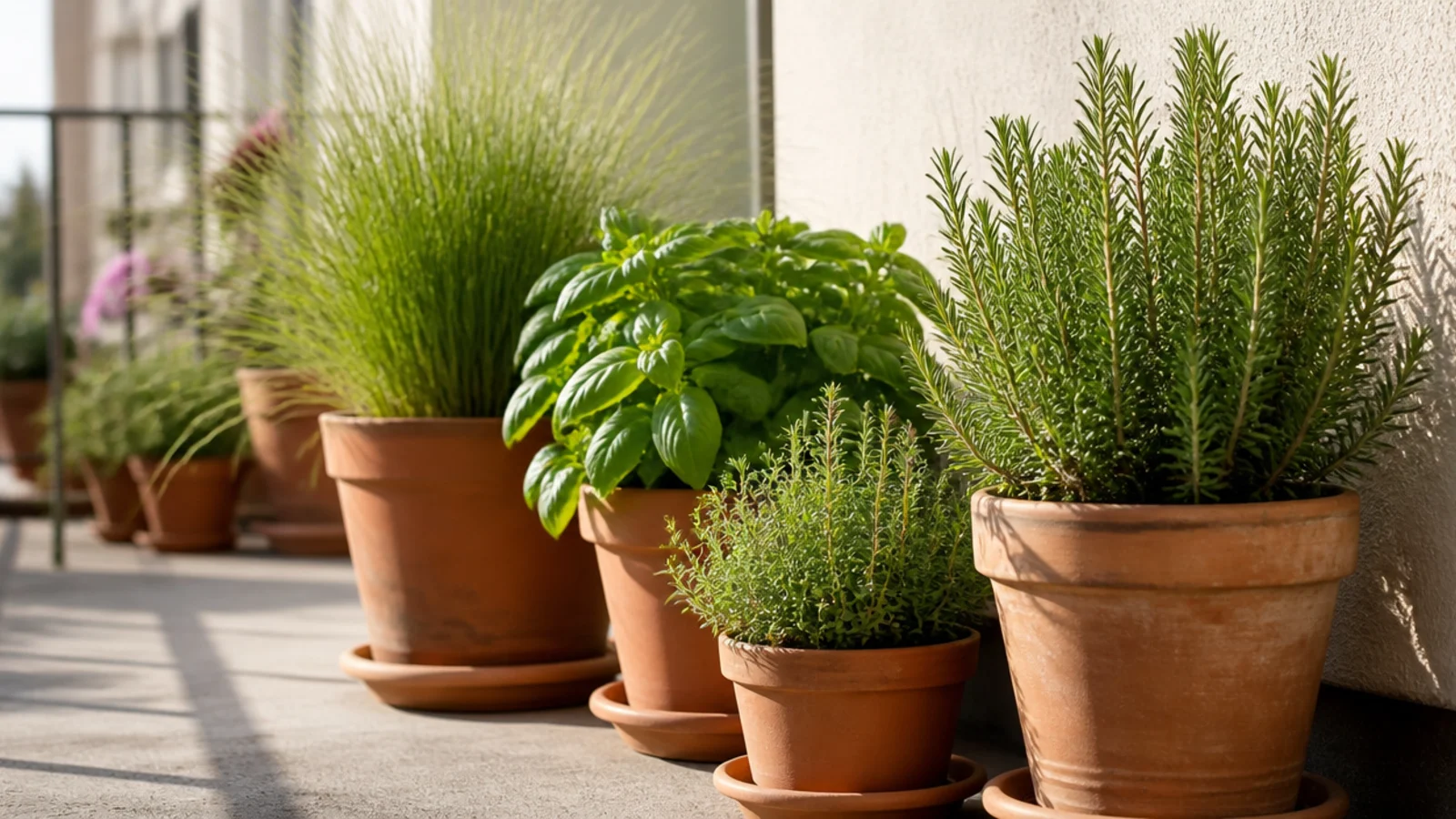
An apartment balcony garden fails for three reasons, and none of them is a lack of talent: the pots are too small, the sun was never measured, and the weight ended up in the wrong place. I have grown tomatoes eleven floors up and killed a lot of basil learning how fast concrete dries a container out. These 30 ideas are the cheap, practical version that survives a real slab.
In this guide32 sections — tap to openHide
- 1.How to plan an apartment balcony garden on a budget
- 2.Time the sun before you buy a single plant
- 3.Weigh the plan before you fill the pots
- 4.Choose big pots over lots of small ones
- 5.Use container mix, never garden soil
- 6.Self-watering planters for the sun trap end
- 7.Fabric grow bags for tomatoes and potatoes
- 8.A saucer under every single container
- 9.Lift pots off the saucer with risers
- 10.Mulch the surface and halve your watering
- 11.Plant only the herbs you actually cook with
- 12.Cut-and-come-again salad in a shallow trough
- 13.Cherry tomatoes in a five gallon bucket
- 14.Strawberries in a stacked or tiered pot
- 15.One dwarf citrus for a hot south-facing slab
- 16.Lavender and rosemary for full sun and wind
- 17.Ferns and hosta for a balcony in deep shade
- 18.Ornamental grasses for a windy high floor
- 19.Climbers on a freestanding weighted trellis
- 20.Hook-over troughs on the inside face only
- 21.Stack the garden upward on a plant ladder
- 22.Vertical pockets on a freestanding frame
- 23.Group pots so they shelter each other
- 24.Water in two slow passes, early morning
- 25.A bottle drip for the weekend away
- 26.Repot from plastic into terracotta
- 27.Pinch and deadhead once a week
- 28.Feed every two weeks in the growing season
- 29.Keep the tall things low and heavy
- 30.Plan the winter shape before autumn
- 31.Swap cuttings instead of buying plants
- 32.Mistakes to Skip
How to plan an apartment balcony garden on a budget
Start with two numbers. How many hours of direct sun the slab gets, and how deep it is from wall to railing. Balconies tend to be extremes — brutal all-day sun bouncing off concrete, or near-total shade under the balcony above — and the plant list is completely different for each.
Then think about weight, because this is where a garden becomes a structural question. Balconies are engineered for distributed load, and a 16-inch pot full of wet mix can pass 100 pounds. Keep the biggest containers against the building wall or over the structural edges, and step down in size as you move toward the rail.
Two rules I will not soften. Nothing mounts on the outside face of the railing, because a pot that works loose several storeys up can kill someone below, and almost every lease bans it. And every container gets a saucer, so your watering does not rain down onto the balcony underneath.
Check the balcony clause before you build anything permanent — most buildings prohibit drilling into the wall or slab and prohibit attaching anything to the railing. Above the third floor, add wind to the list: low, wide, heavy pots and small-leaved plants.
Budget tiers below: $ under $10, $$ $10–$30, $$$ $30–$60.
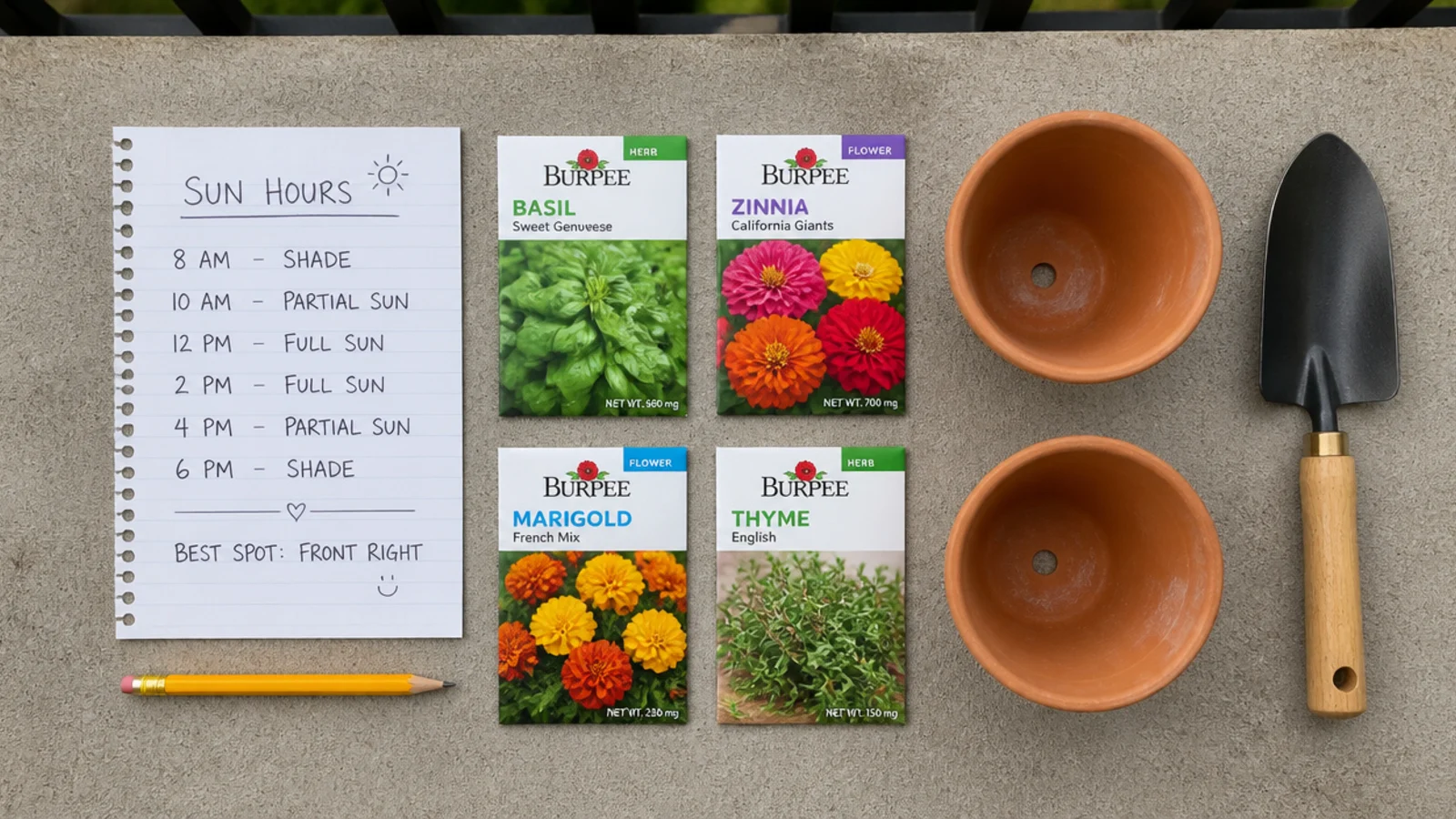
1. Time the sun before you buy a single plant
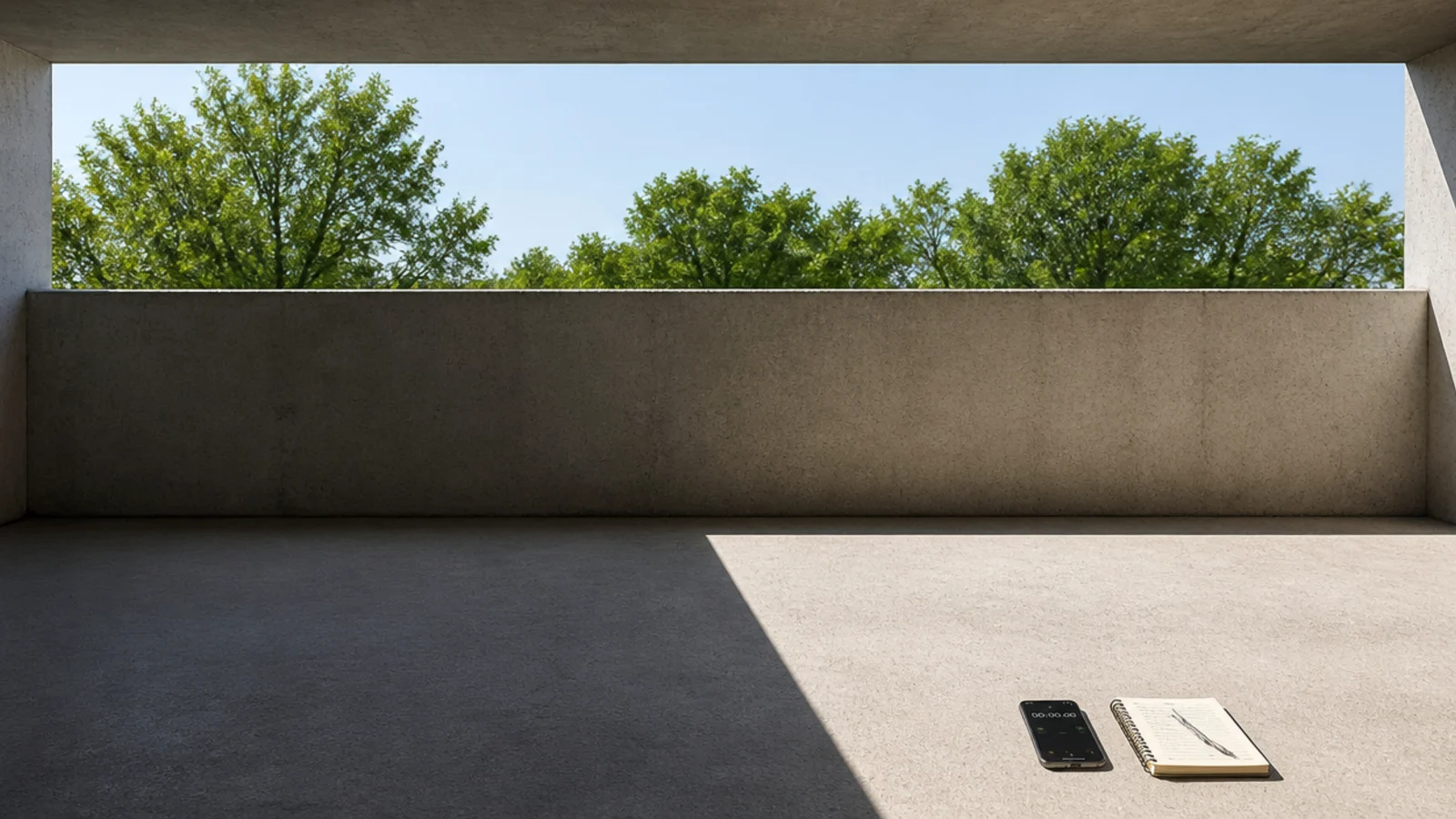
Spend one clear Saturday noting when direct sun arrives and when it leaves. Six-plus hours is full sun; three to six is part shade; under three is shade.
That single number saves more money than any other decision here, because most dead balcony plants were simply in the wrong light. Free
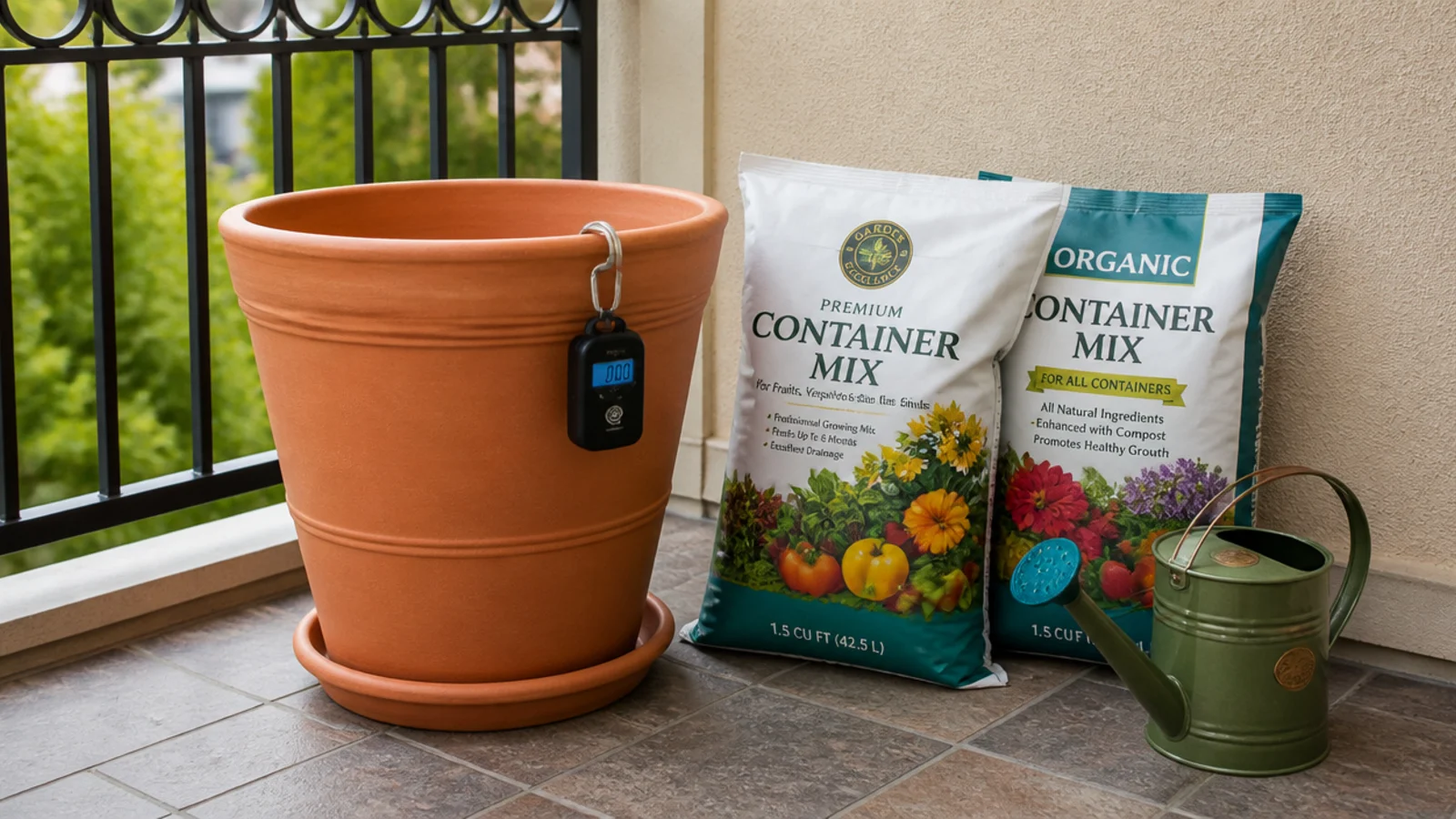
2. Weigh the plan before you fill the pots
Dry mix is light and wet mix is not. A 16-inch planter can go from 25 pounds to over 100 once watered through.
Spread that load: heavy containers against the building wall, lighter ones outward. Never build a solid row of large pots along the outer rail. Free
3. Choose big pots over lots of small ones
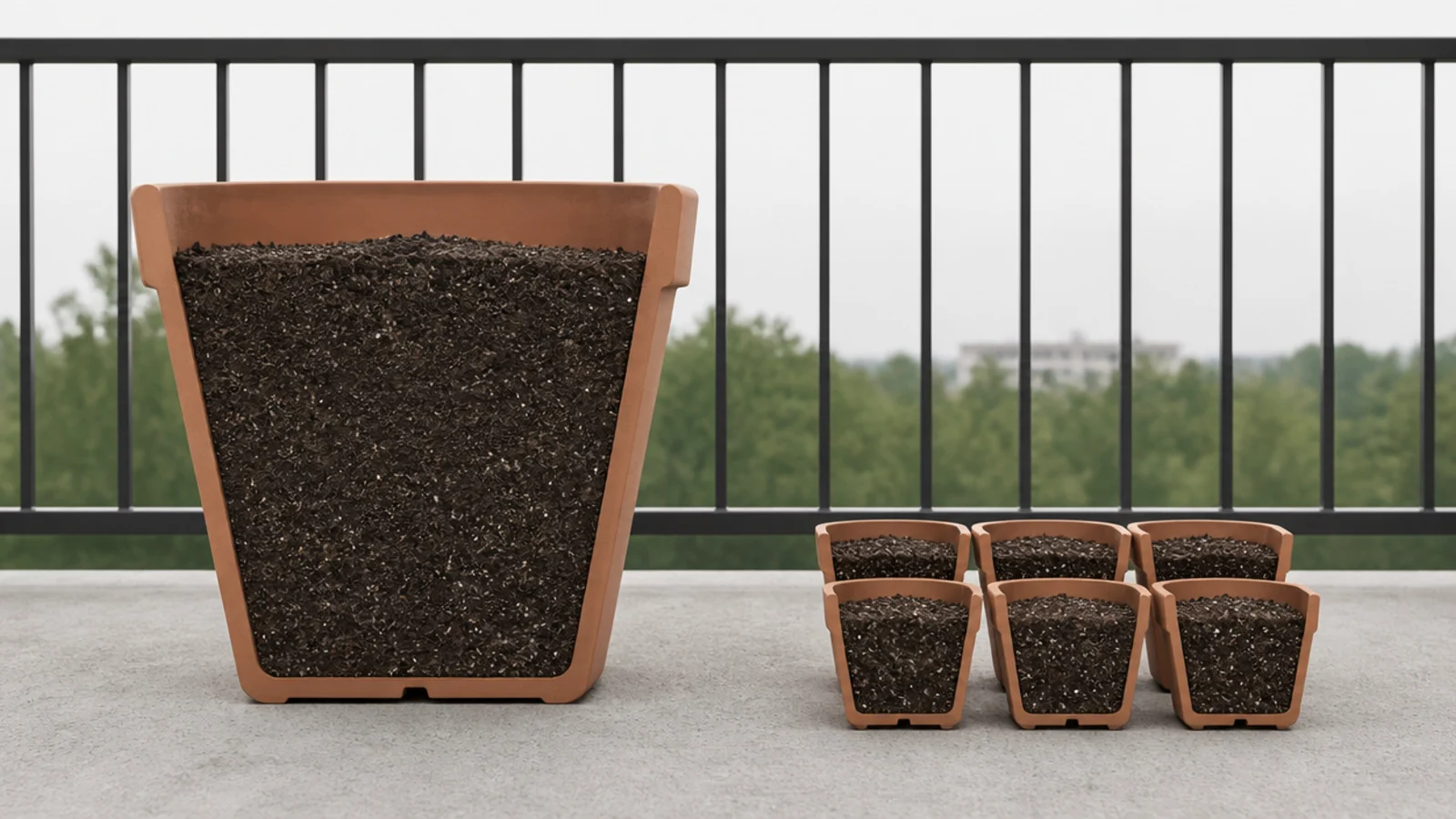
A 12-inch pot holds roughly four times the soil volume of a 6-inch one, which means four times the moisture buffer on a hot day.
Small pots on concrete dry out by lunchtime in July. Three good containers will always outperform ten little ones, and cost less to fill. $$
4. Use container mix, never garden soil
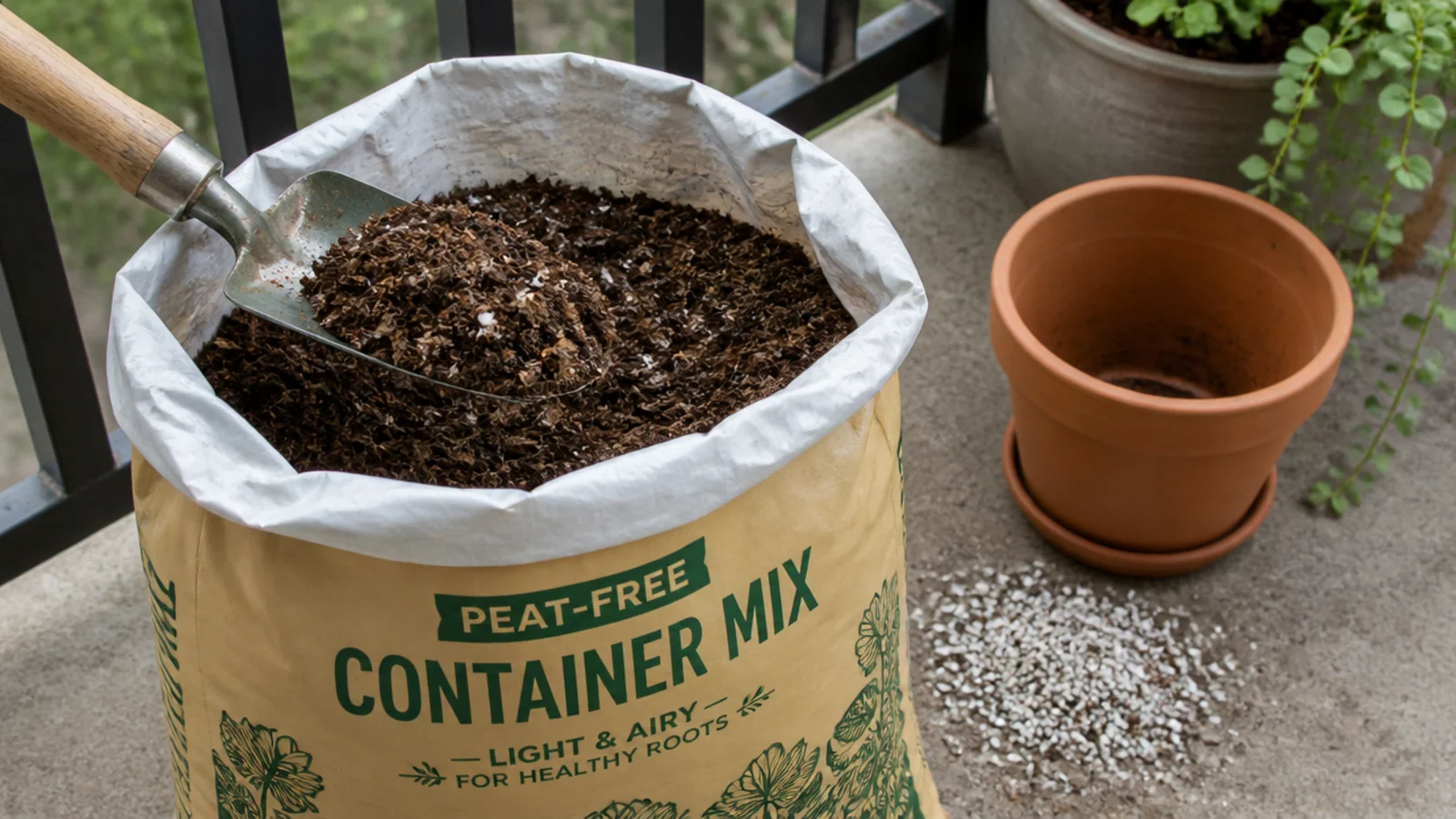
Garden soil compacts into a solid brick in a pot and drowns roots. Container mix stays open and drains.
A bag of peat-free mix runs $10 to $18 and fills two large pots. Refresh the top few inches each spring rather than replacing everything. $$
5. Self-watering planters for the sun trap end
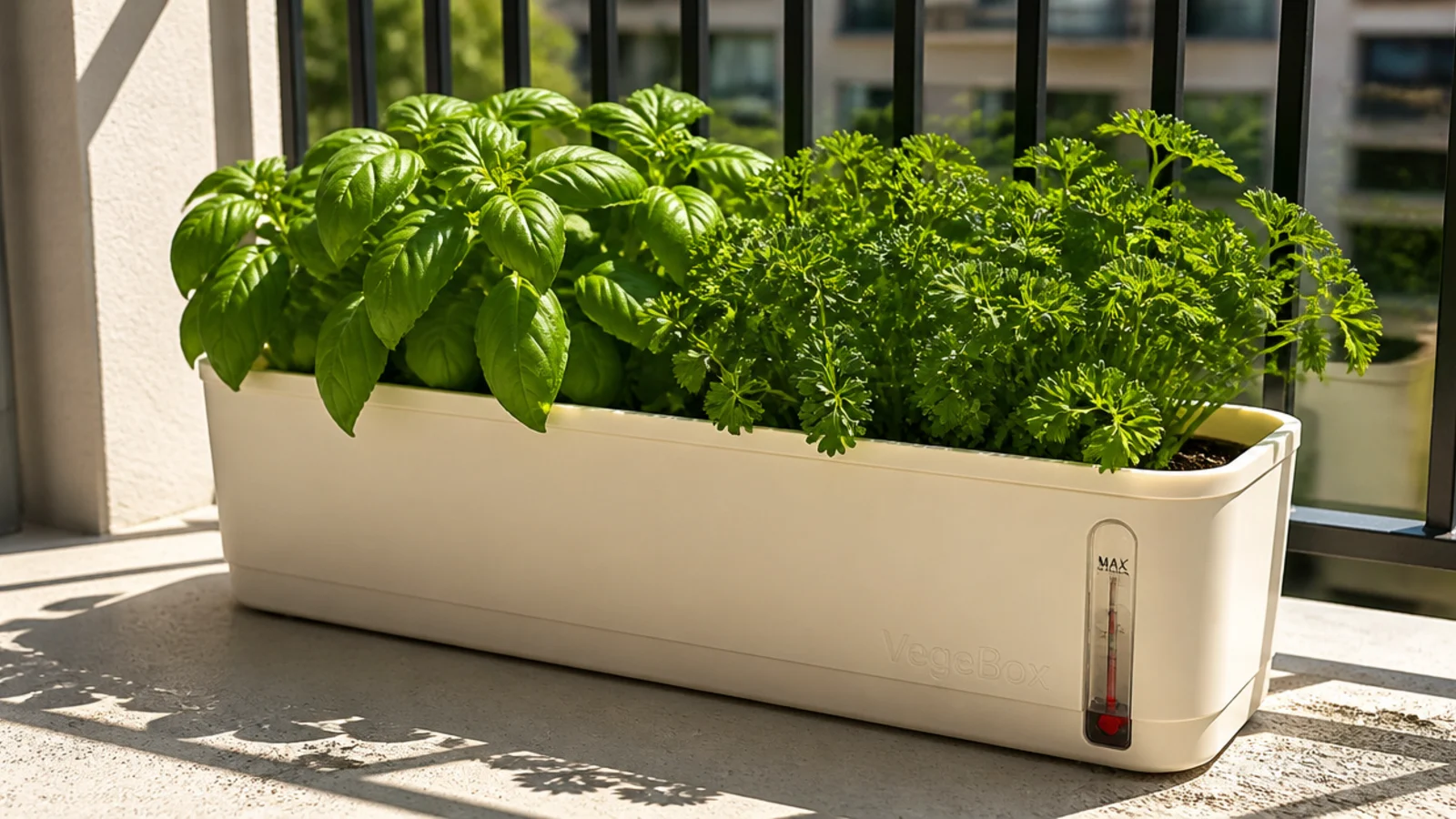
A reservoir planter buys you two days in high summer, which is the difference between herbs and dead herbs when you travel.
Use them at the hottest end of the balcony and keep them for thirsty plants. They are wasted on rosemary and lavender, which resent wet feet. $$$
6. Fabric grow bags for tomatoes and potatoes
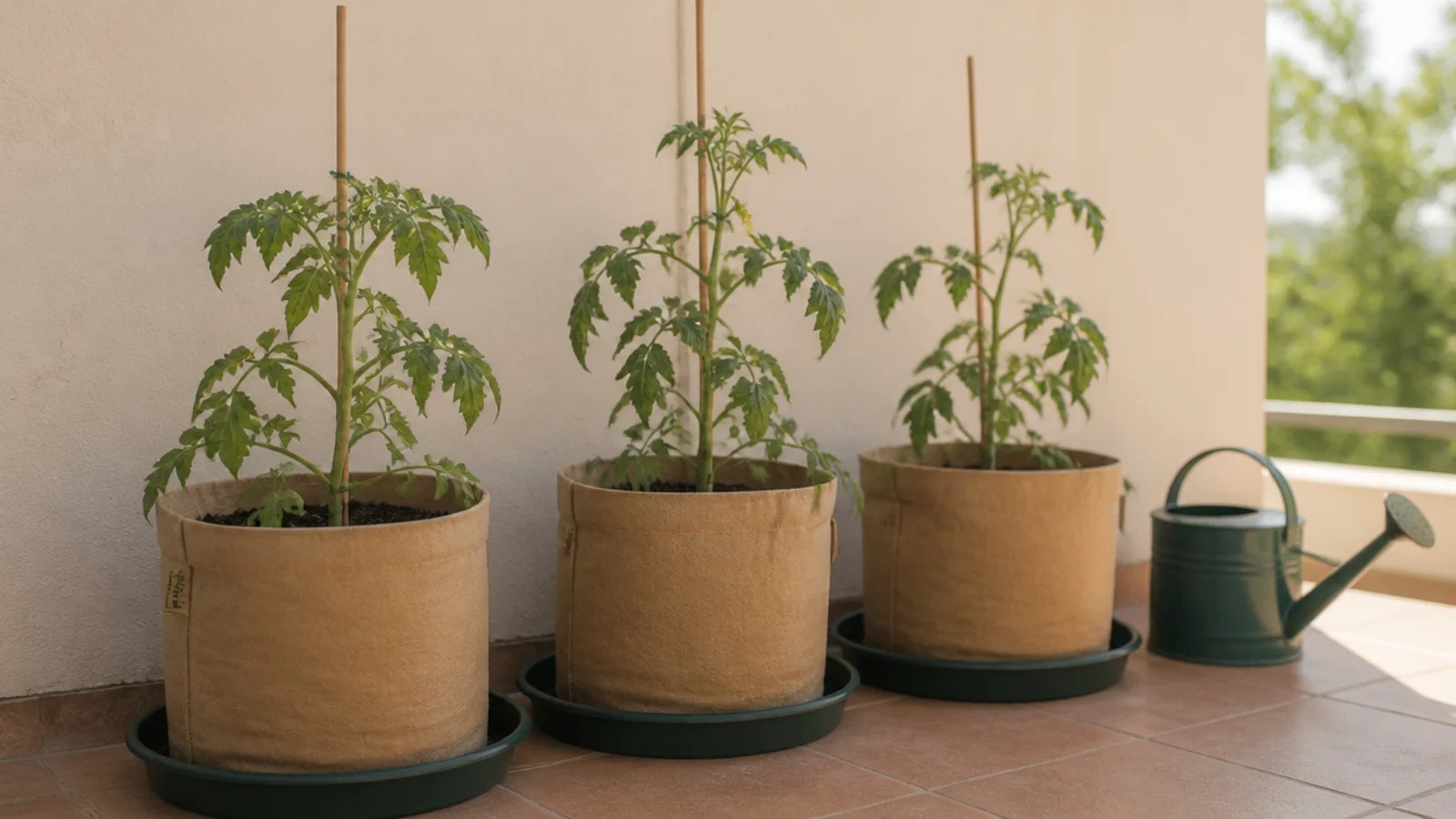
Fabric bags cost $3 to $6, drain well, air-prune the roots, and fold flat for winter storage. For anything big and hungry, they beat a plastic pot.
Stand them on saucers or trays, because they weep water through the sides as well as the base. $
7. A saucer under every single container
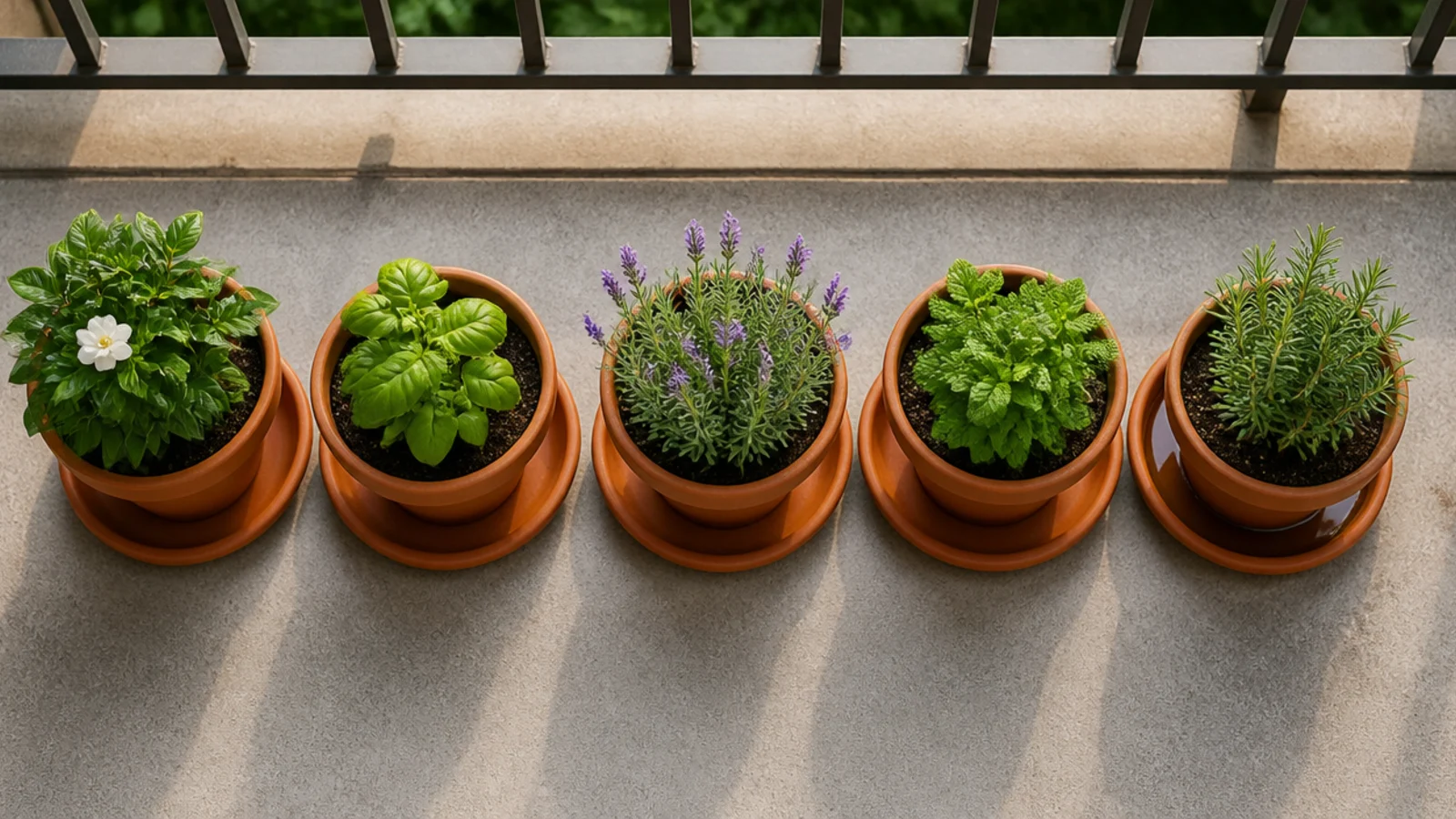
This is the non-negotiable one. Without saucers, every watering drains through the pot, across the slab, and off the edge onto the balcony below.
Buy the saucer with the pot — it is the thing nobody comes back for. Size it wider than the pot base so it catches runoff. $
8. Lift pots off the saucer with risers
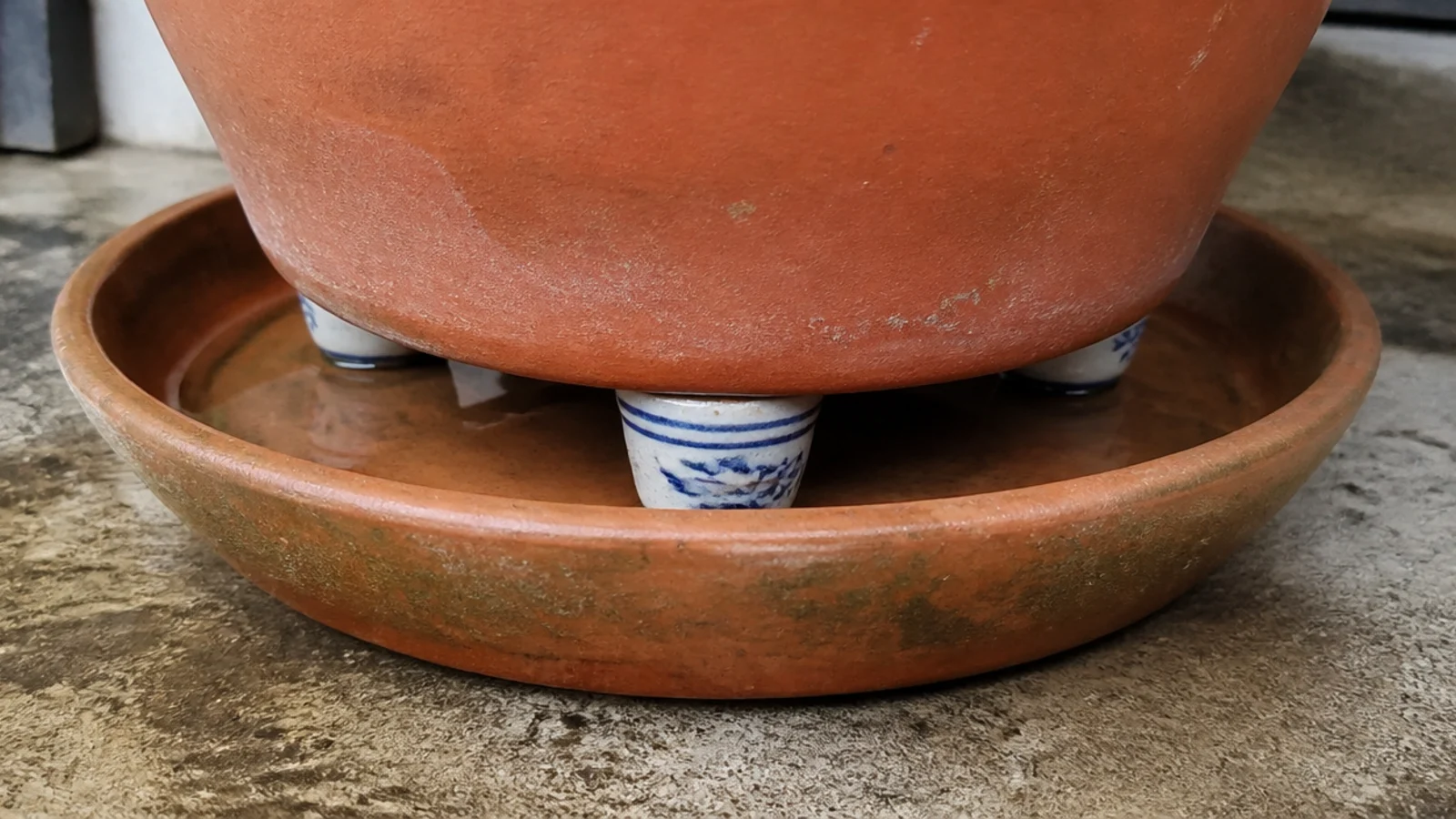
Sitting a pot directly in its own runoff drowns roots and leaves dark rings that concrete keeps forever.
Three tile offcuts, ceramic feet or even bottle caps create the air gap. Free from the tile aisle, and it protects both the plant and your deposit. Free–$
9. Mulch the surface and halve your watering
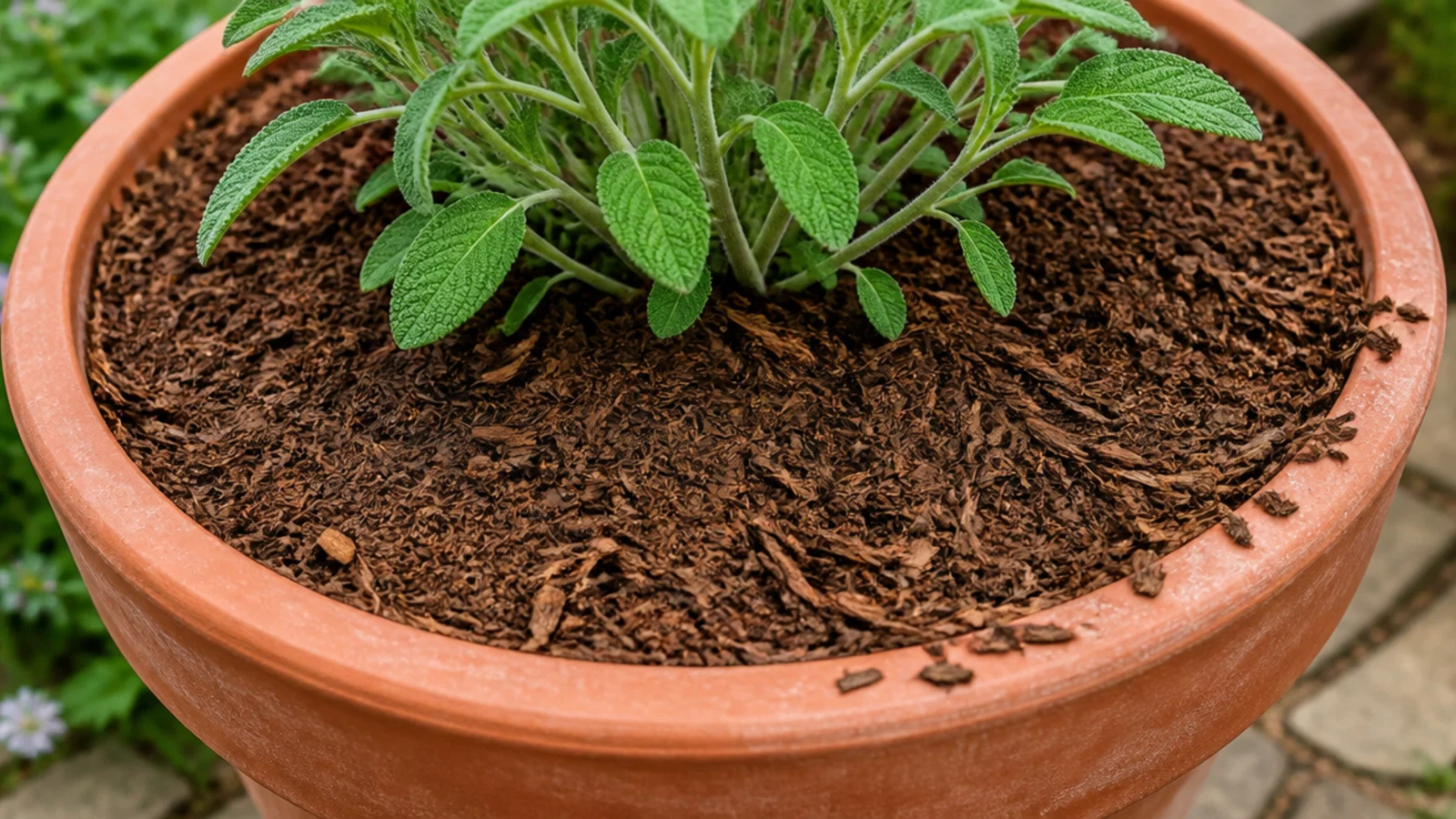
An inch of fine bark, gravel or even shredded leaves over the mix slows evaporation dramatically on an exposed slab.
Keep it clear of the stems. On a windy floor use gravel rather than bark, which blows across the balcony and into the drain. $
10. Plant only the herbs you actually cook with
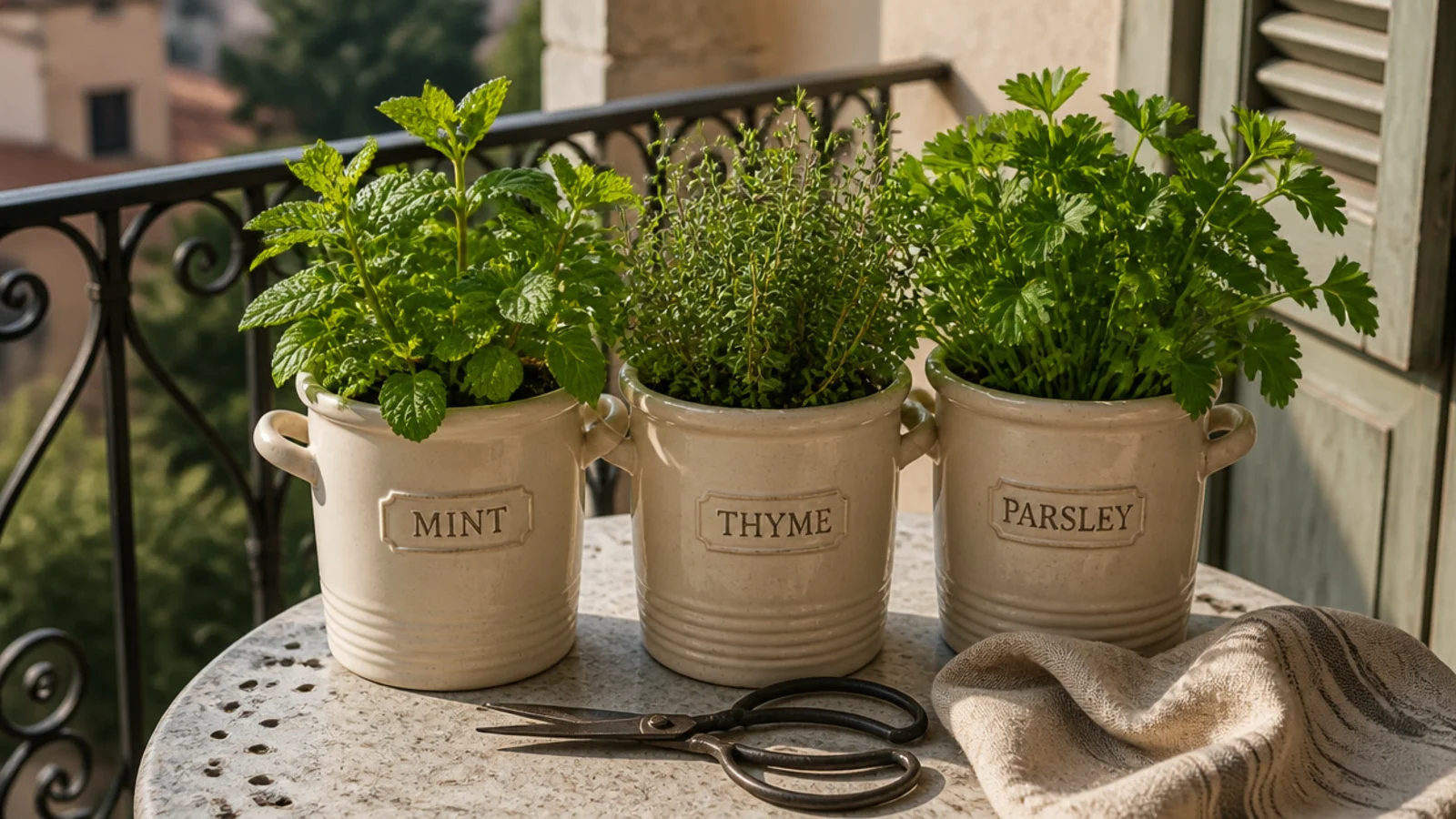
Three herbs you use weekly are worth more than a dozen you water out of guilt. Mint, thyme and parsley are the reliable trio for most balconies.
Give each an 8 to 10 inch pot. Mint always goes in its own container or it takes over everything. $
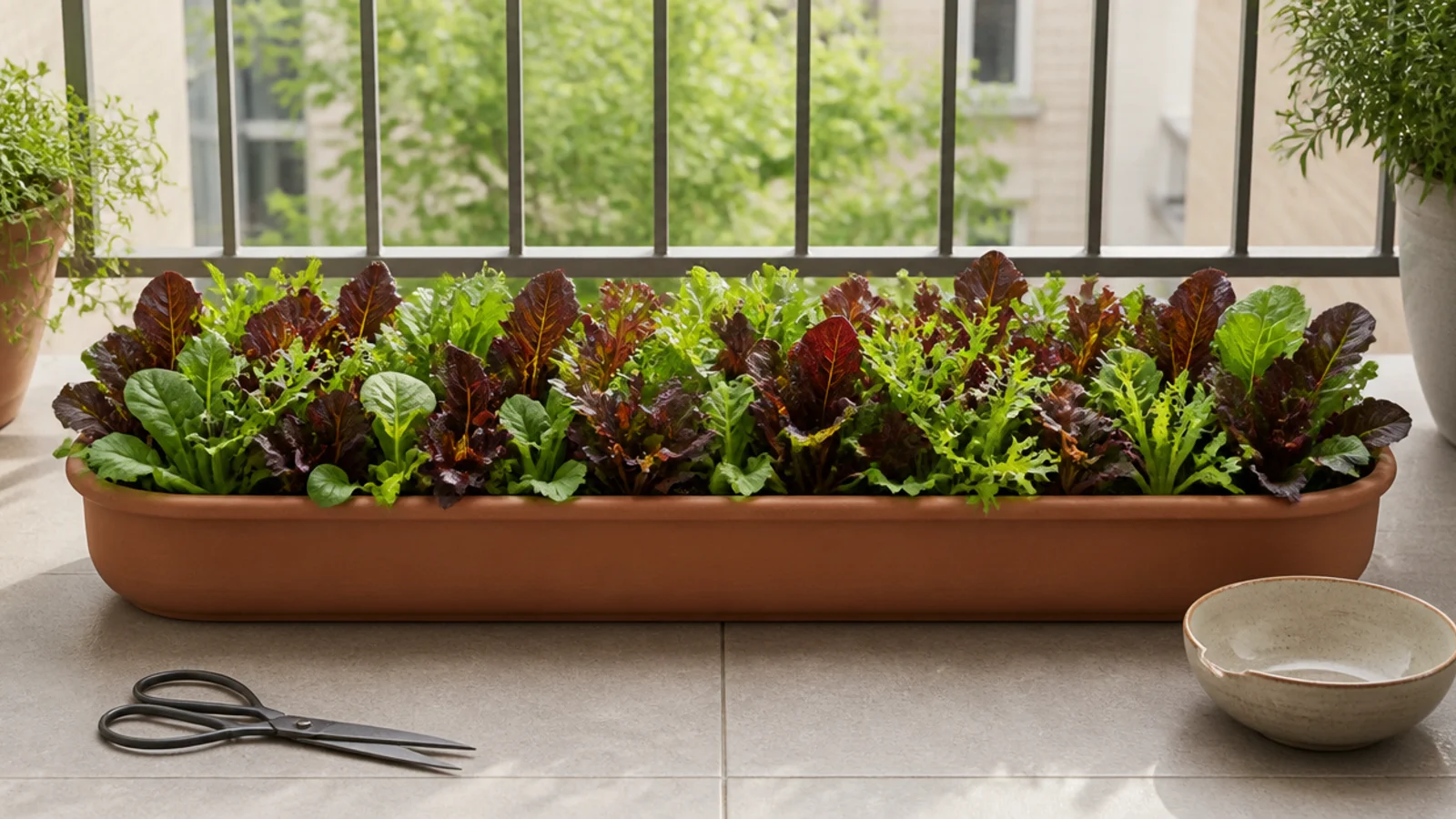
11. Cut-and-come-again salad in a shallow trough
Salad leaves are the highest-value crop on a small balcony: shallow roots, fast growth, and a $3 seed packet replaces months of bagged leaves.
A trough 6 inches deep is plenty. Cut an inch above the crown and the same plants regrow three or four times. $
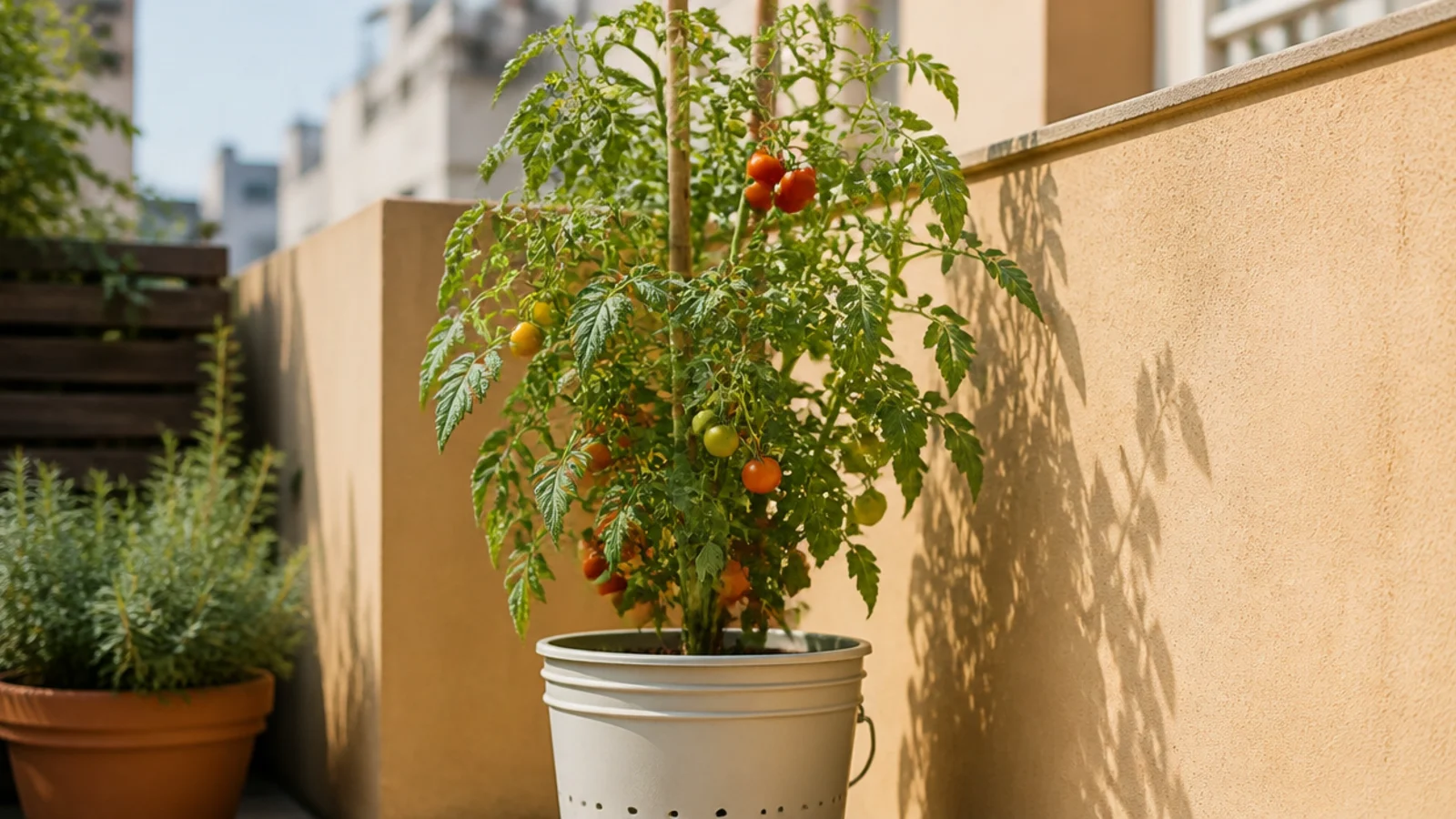
12. Cherry tomatoes in a five gallon bucket
Cherry tomatoes crop reliably in containers where full-size varieties sulk. One plant per five gallons of mix, in six-plus hours of sun.
Drill four drainage holes, stake at planting time, and expect to water daily in July. Buckets cost a few dollars and hold enough soil to matter. $–$$
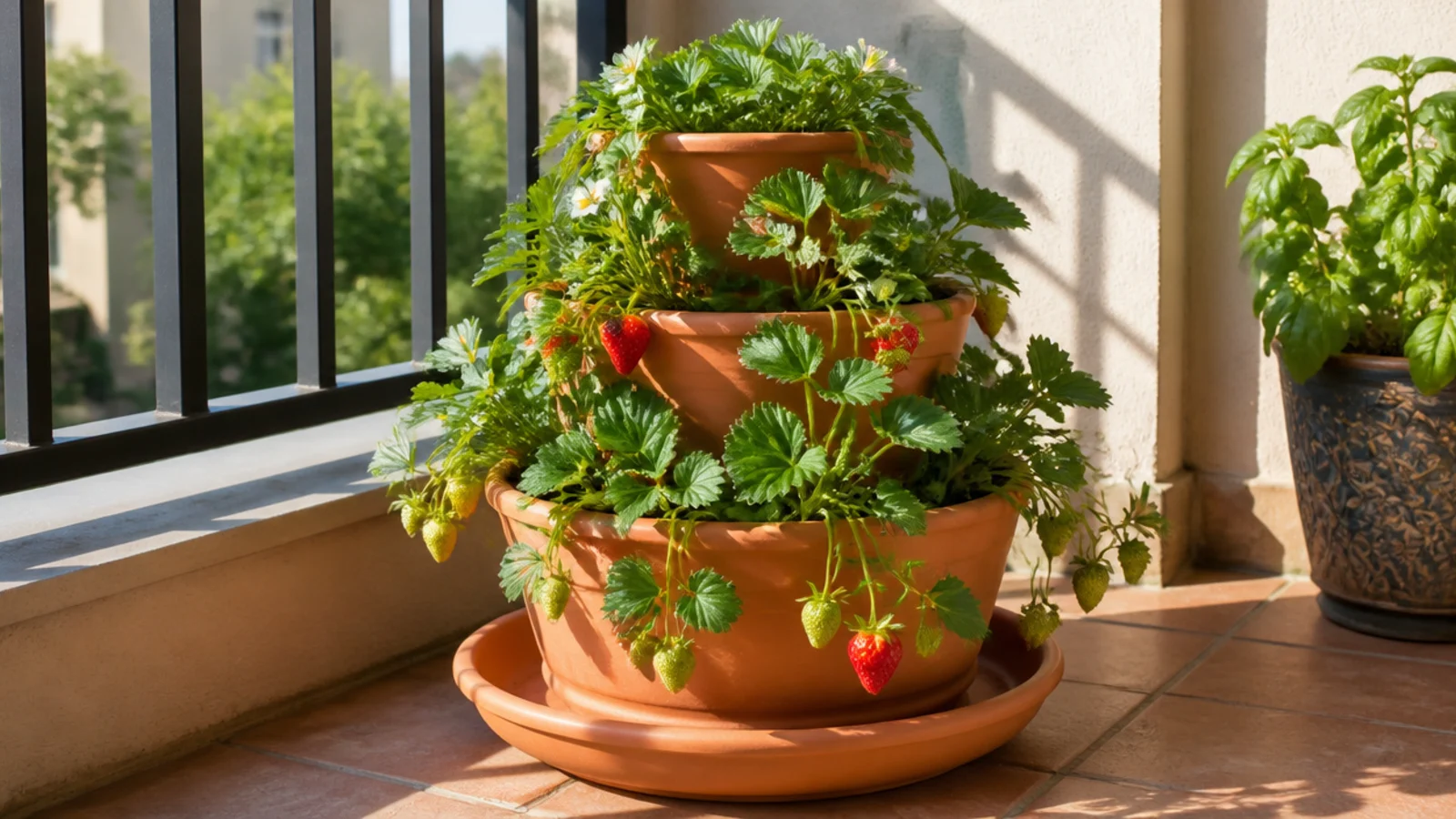
13. Strawberries in a stacked or tiered pot
A tiered planter gives you three times the planting area on one footprint, which is exactly what a balcony needs.
Strawberries want full sun and consistent water. Runners root into any spare pot, so one $6 plant becomes six by the following spring. $$
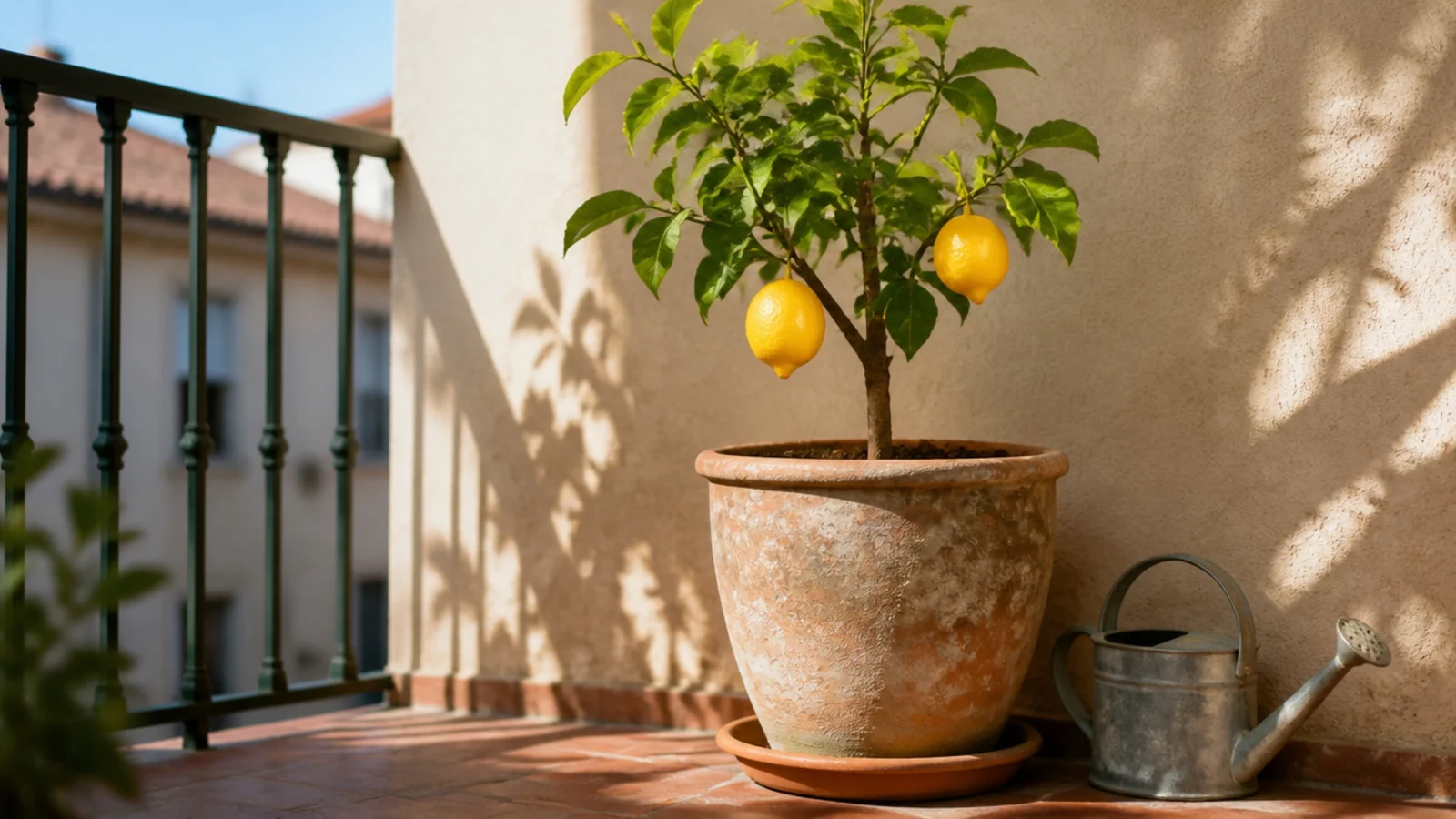
14. One dwarf citrus for a hot south-facing slab
A dwarf lemon in a 14-inch pot turns a hot balcony into somewhere you want to sit. It is also thirsty, heavy and needs to come inside below 40°F.
Buy it only if you have a winter plan and a way to move it. Otherwise it is an expensive annual. $$$
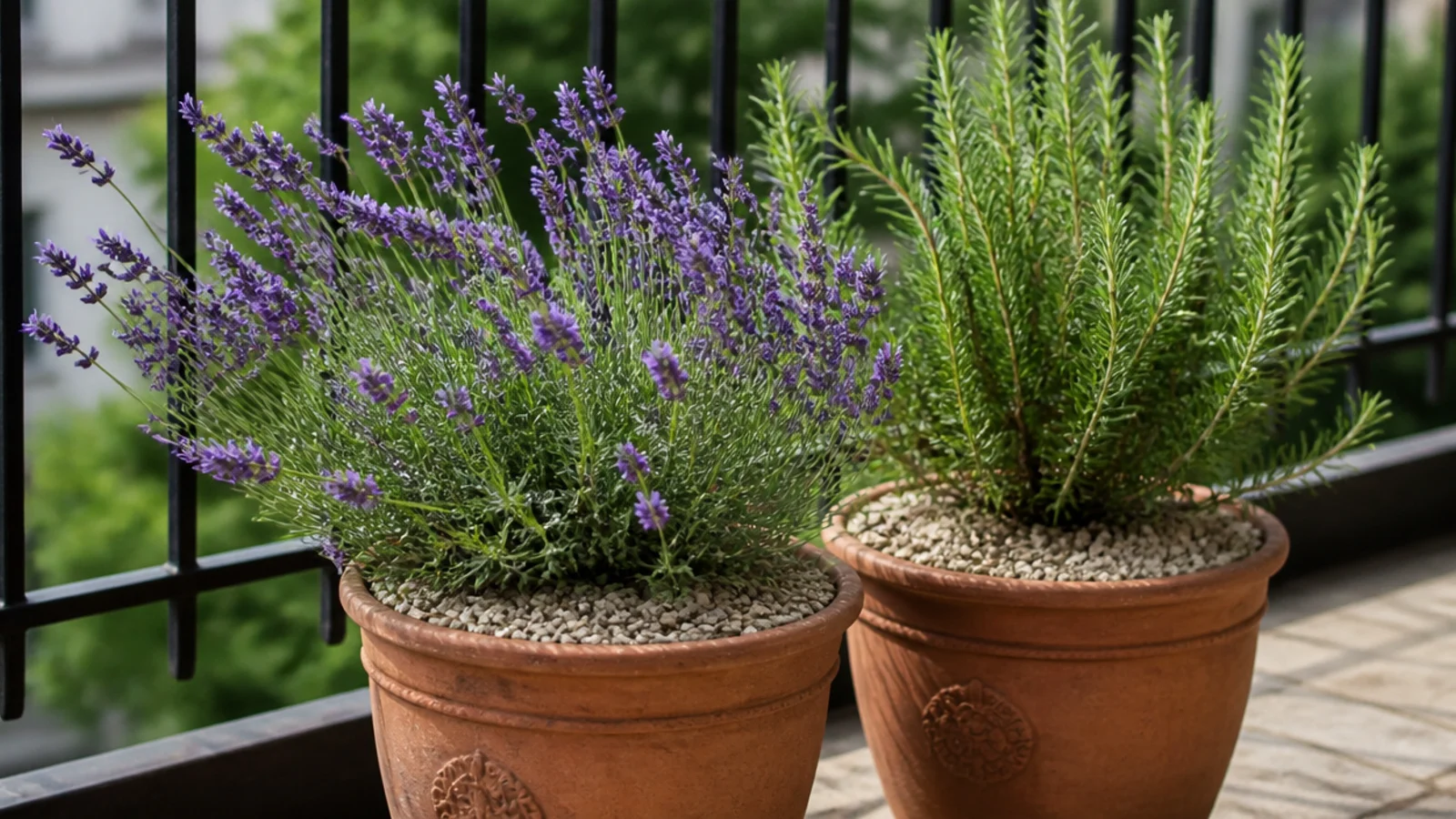
15. Lavender and rosemary for full sun and wind
Both are Mediterranean, both prefer being forgotten, and both survive the heat that bounces off a concrete slab.
Use a gritty mix and a clay pot so they dry between waterings. Overwatering kills far more balcony lavender than cold ever does. $$
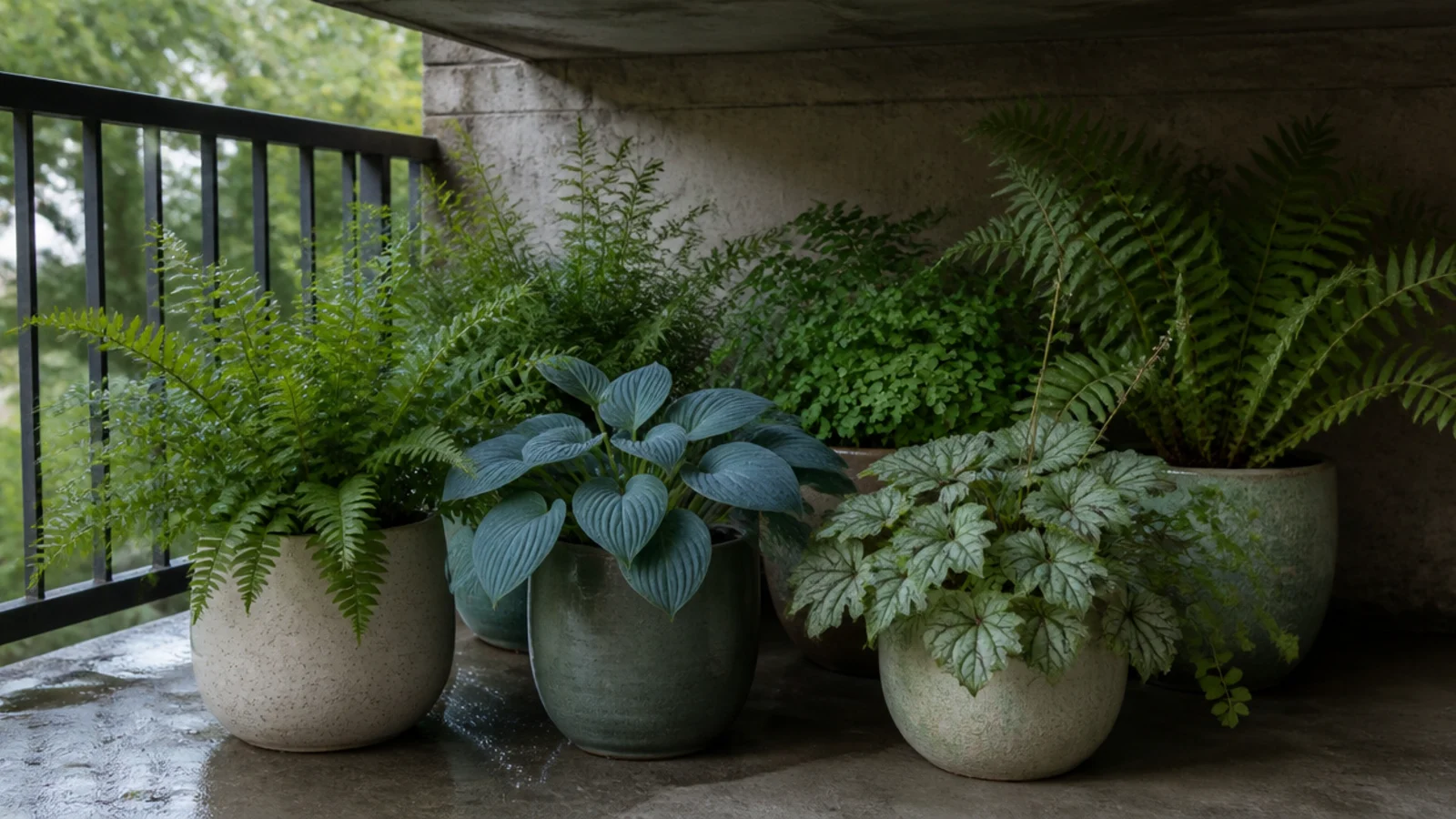
16. Ferns and hosta for a balcony in deep shade
If the slab above blocks your light, stop fighting it. Ferns, hosta, heuchera, begonia and ivy all thrive in the conditions that kill herbs.
Shade balconies also stay damp, so choose free-draining mix and space pots slightly apart for airflow. $$
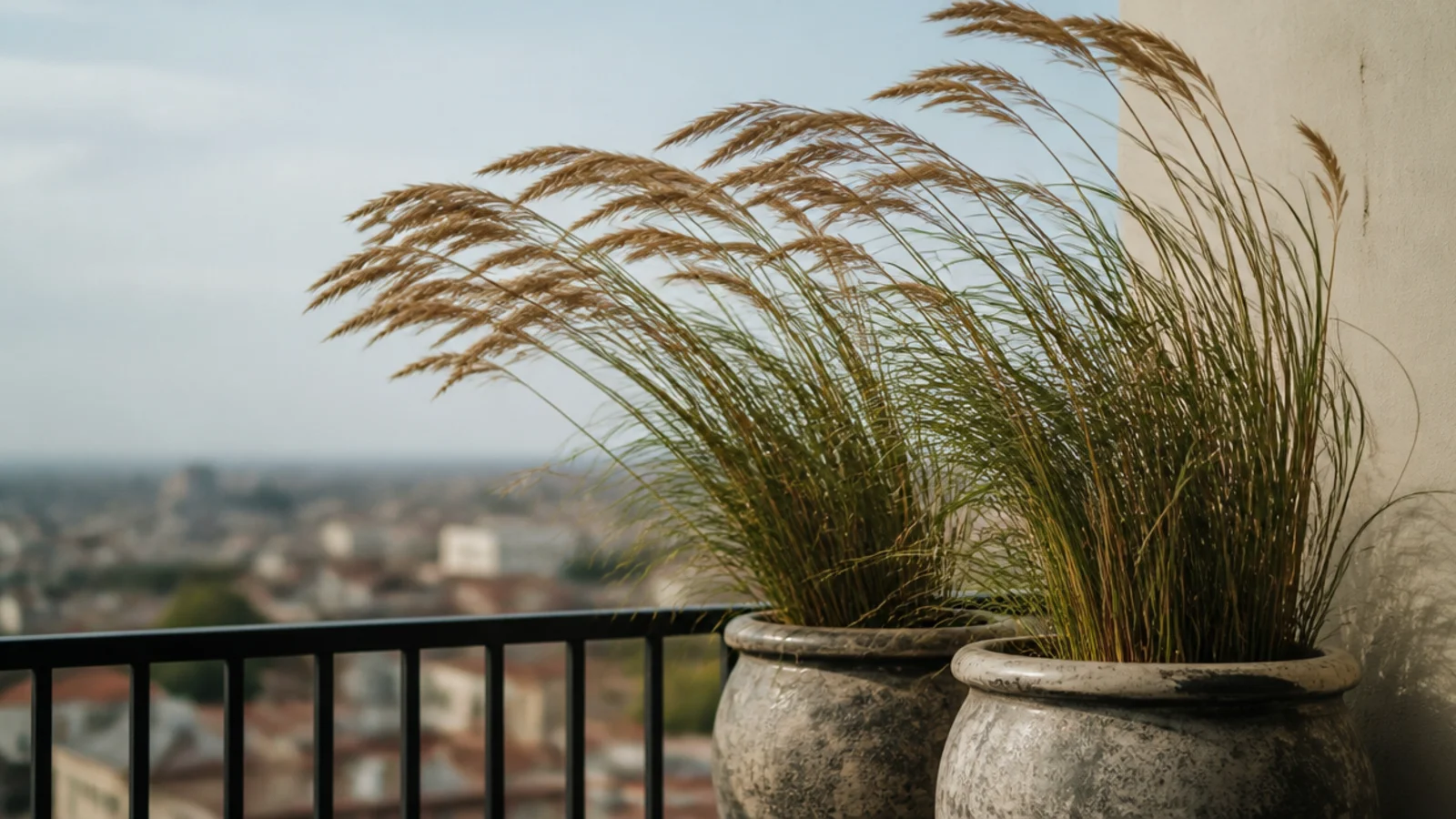
17. Ornamental grasses for a windy high floor
Grasses move with wind instead of shredding, and they add the height that most balcony gardens lack.
Use a heavy pot with a wide base, and keep them below rail height if your building has rules about what is visible from the street. $$
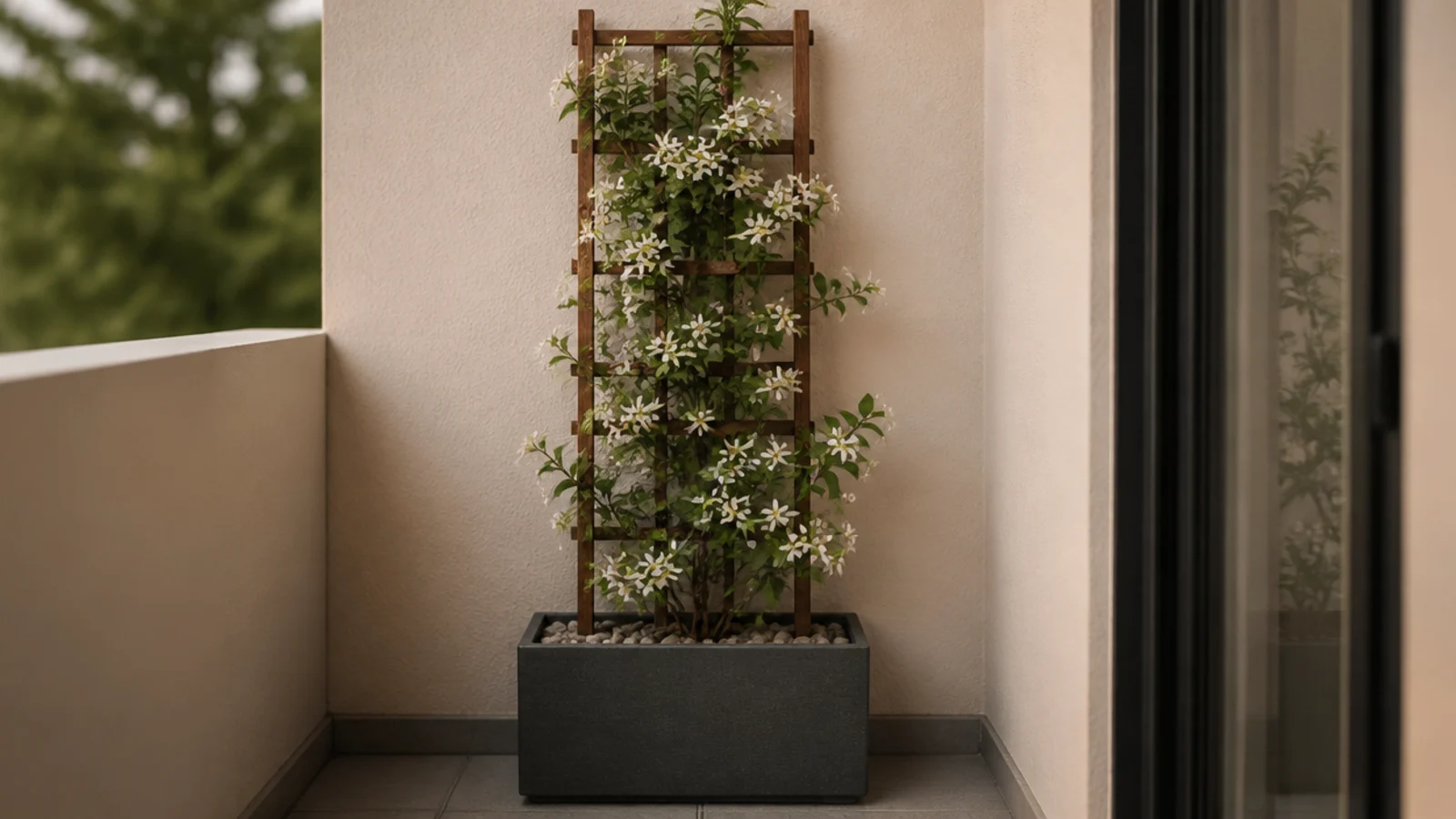
18. Climbers on a freestanding weighted trellis
Jasmine, clematis and sweet peas give you a green wall without touching the building. The key is that the trellis rises from a heavy planter rather than being fixed to anything.
Most leases prohibit attaching structures to the railing or wall, and a trellis tied to a rail is a sail in a storm. $$$
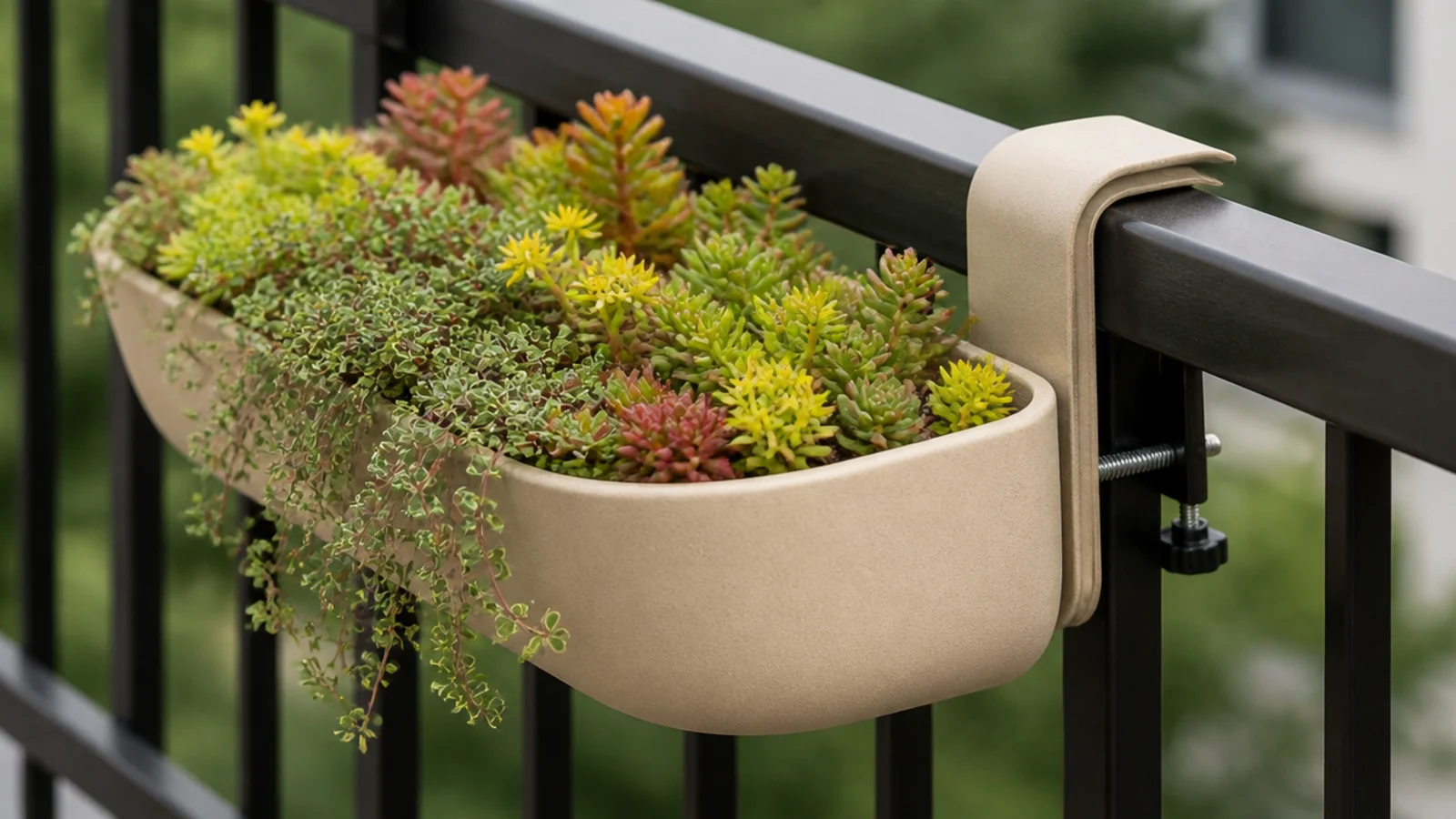
19. Hook-over troughs on the inside face only
Rail troughs free up floor space, but only in the inboard version with a bracket that clamps over the top rail.
Nothing goes on the outside face — that is how planters end up on a sidewalk. Plant shallow with sedum, thyme or trailing herbs to keep them light, and check the fixings monthly. $–$$
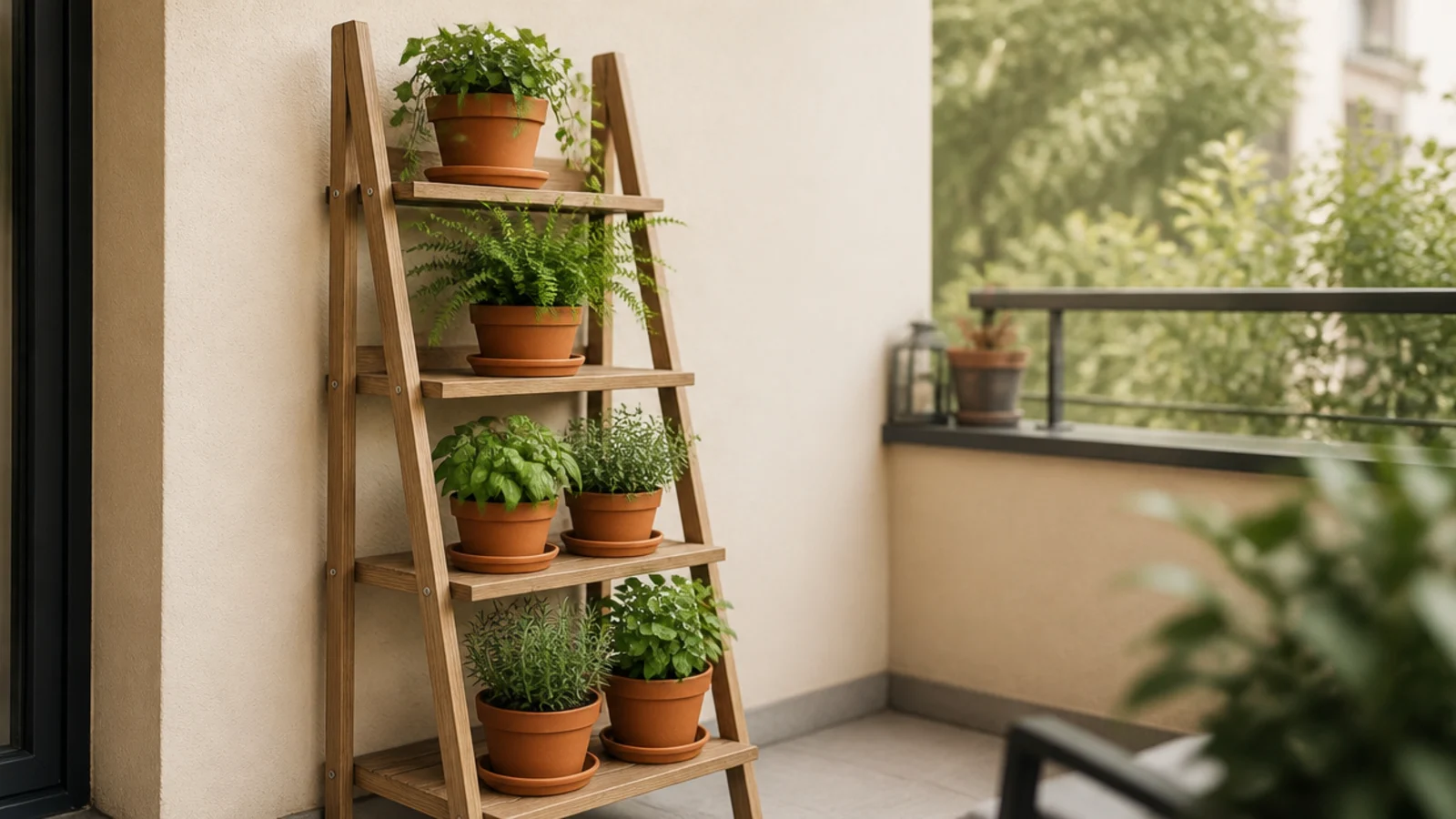
20. Stack the garden upward on a plant ladder
An A-frame ladder stand holds six to eight pots on the footprint of one, which is the best floor-space trade on a balcony.
Stand it against the building wall and load the heaviest pots on the bottom rung. Top-heavy stands go over in the first real gust. $$
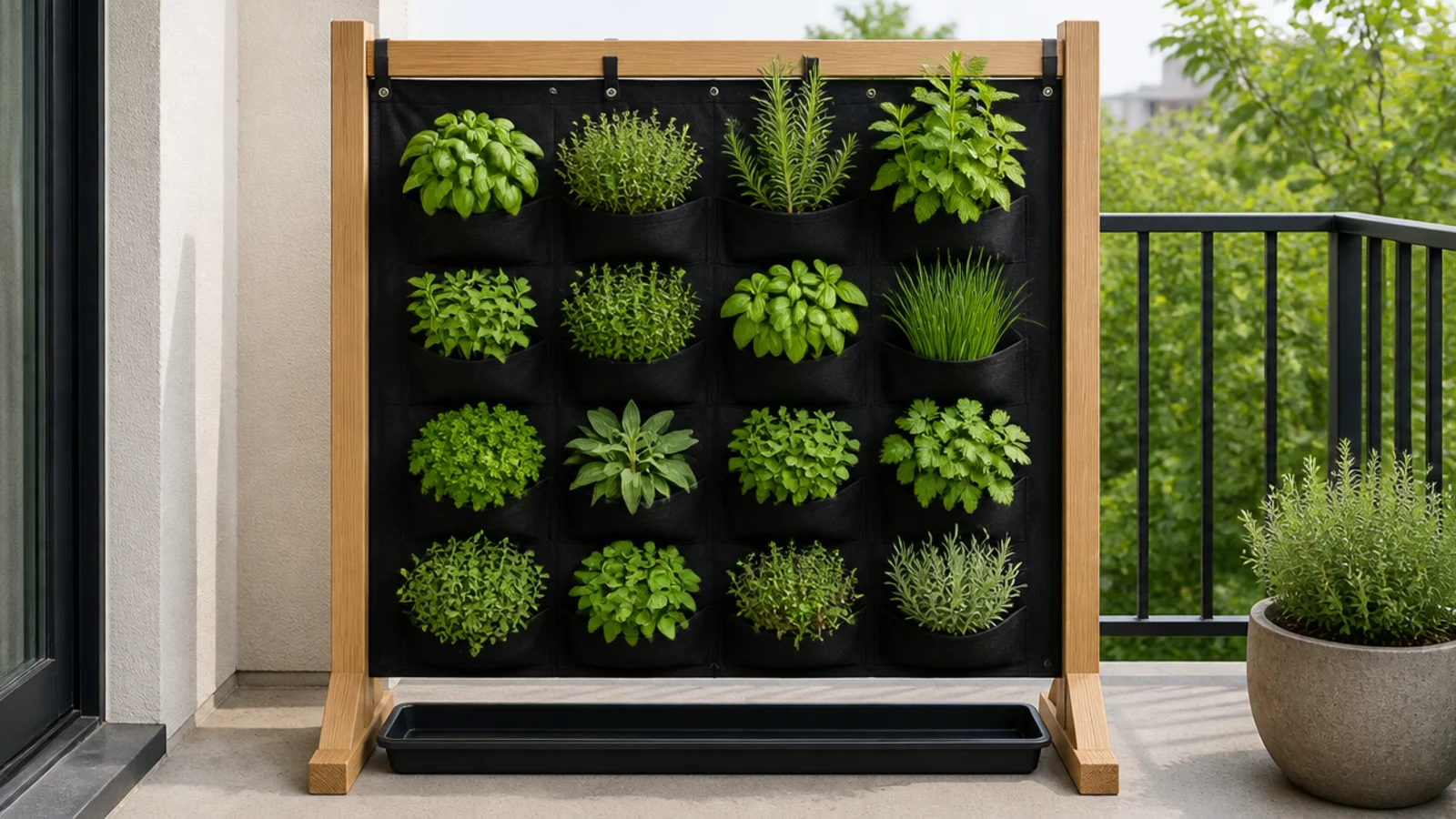
21. Vertical pockets on a freestanding frame
Fabric pocket planters hold a surprising number of herbs and lettuces on a narrow frame. They also dry out fastest of anything here.
Stand a long drip tray underneath, because vertical planting drains straight down onto the slab and over the edge otherwise. $$
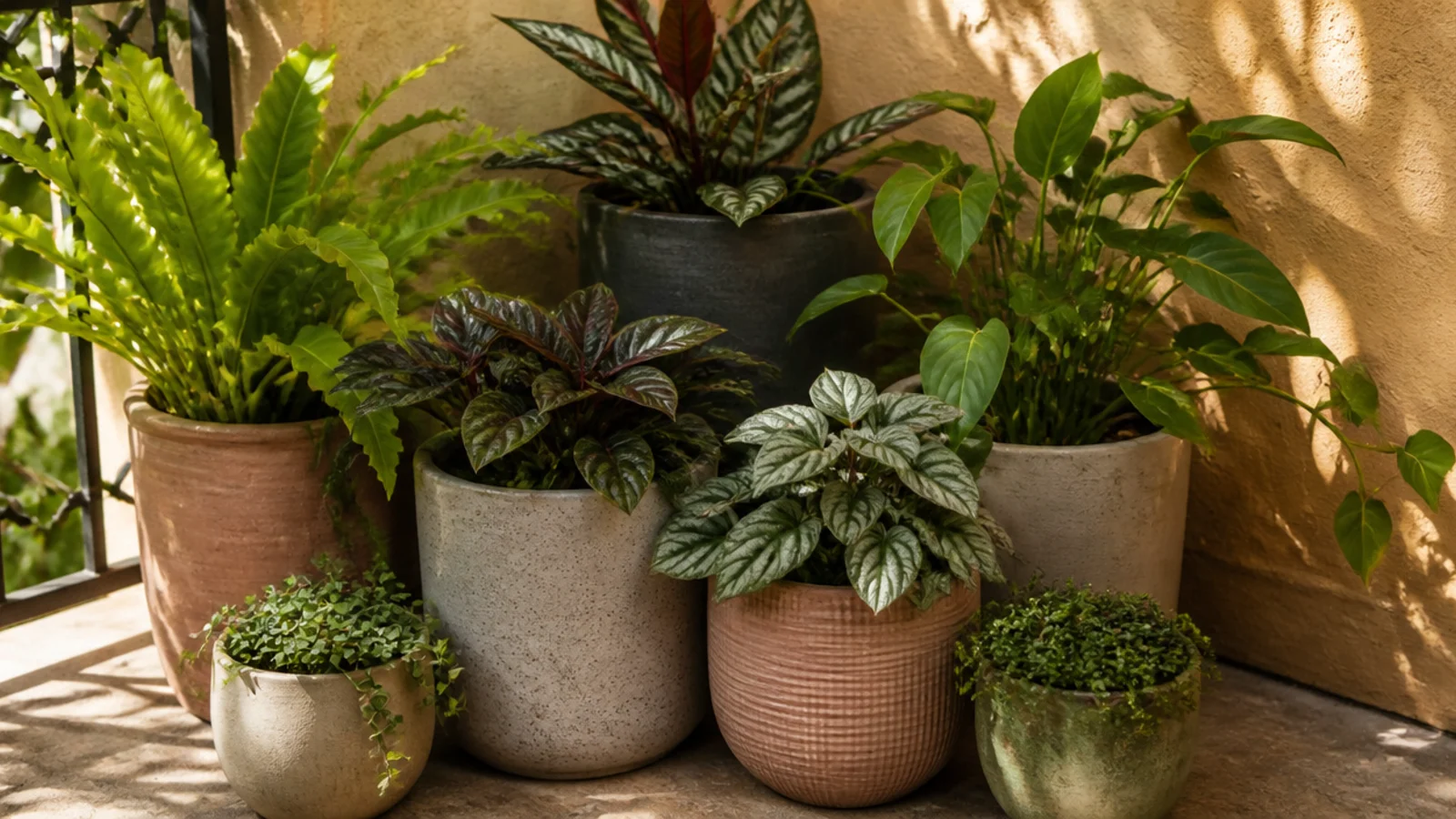
22. Group pots so they shelter each other
Plants pushed together create their own humid microclimate and shade each other's soil surfaces, which cuts watering noticeably.
It also looks better. Odd numbers, varied heights, one pot material, all tucked against the wall rather than spread thin along the rail. Free
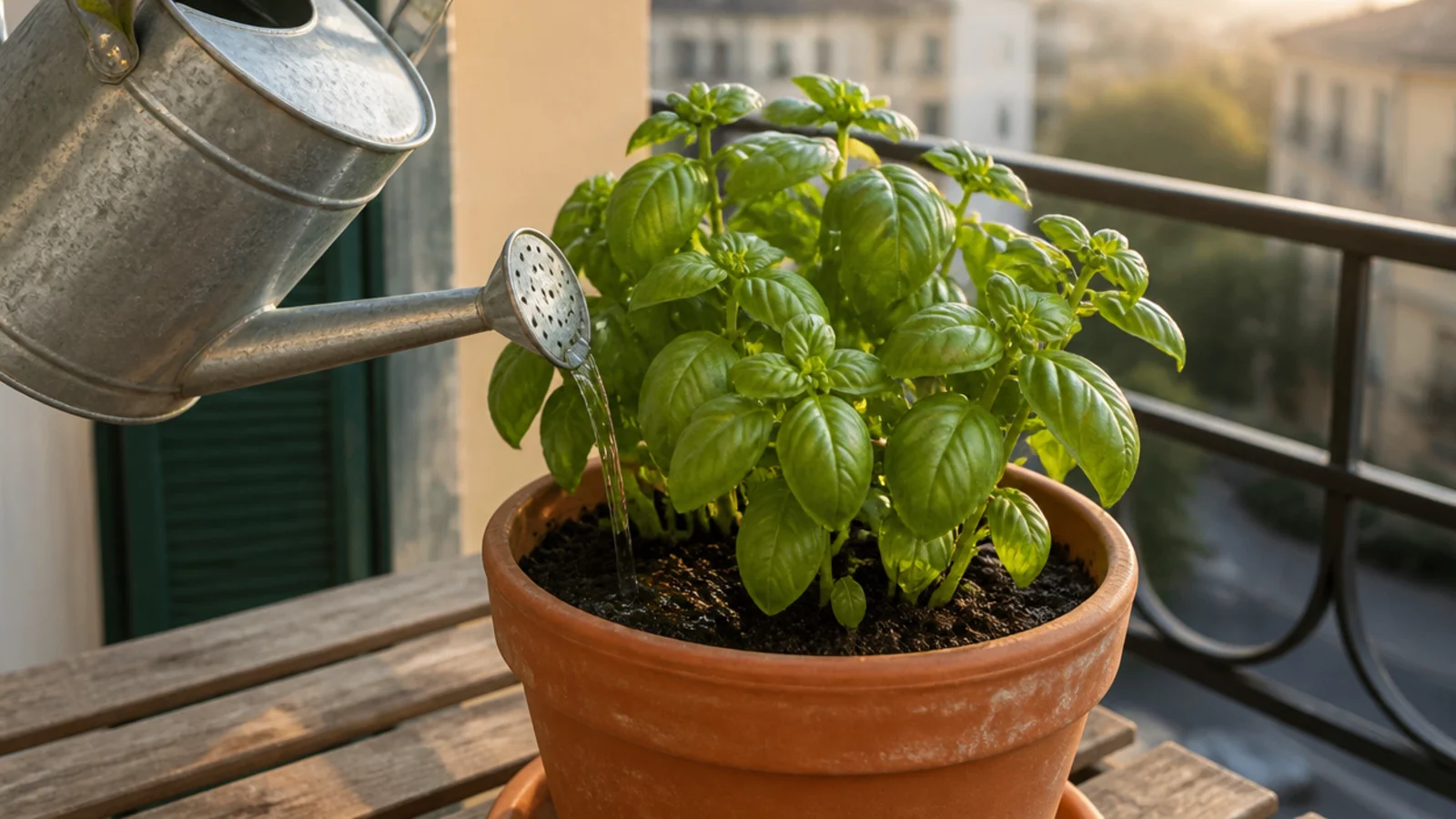
23. Water in two slow passes, early morning
Container mix that has dried out repels water and sends it straight down the inside of the pot. Two slow passes a minute apart let it absorb.
Water early so foliage dries before the heat, and check by weight — a light pot is a thirsty pot. Free
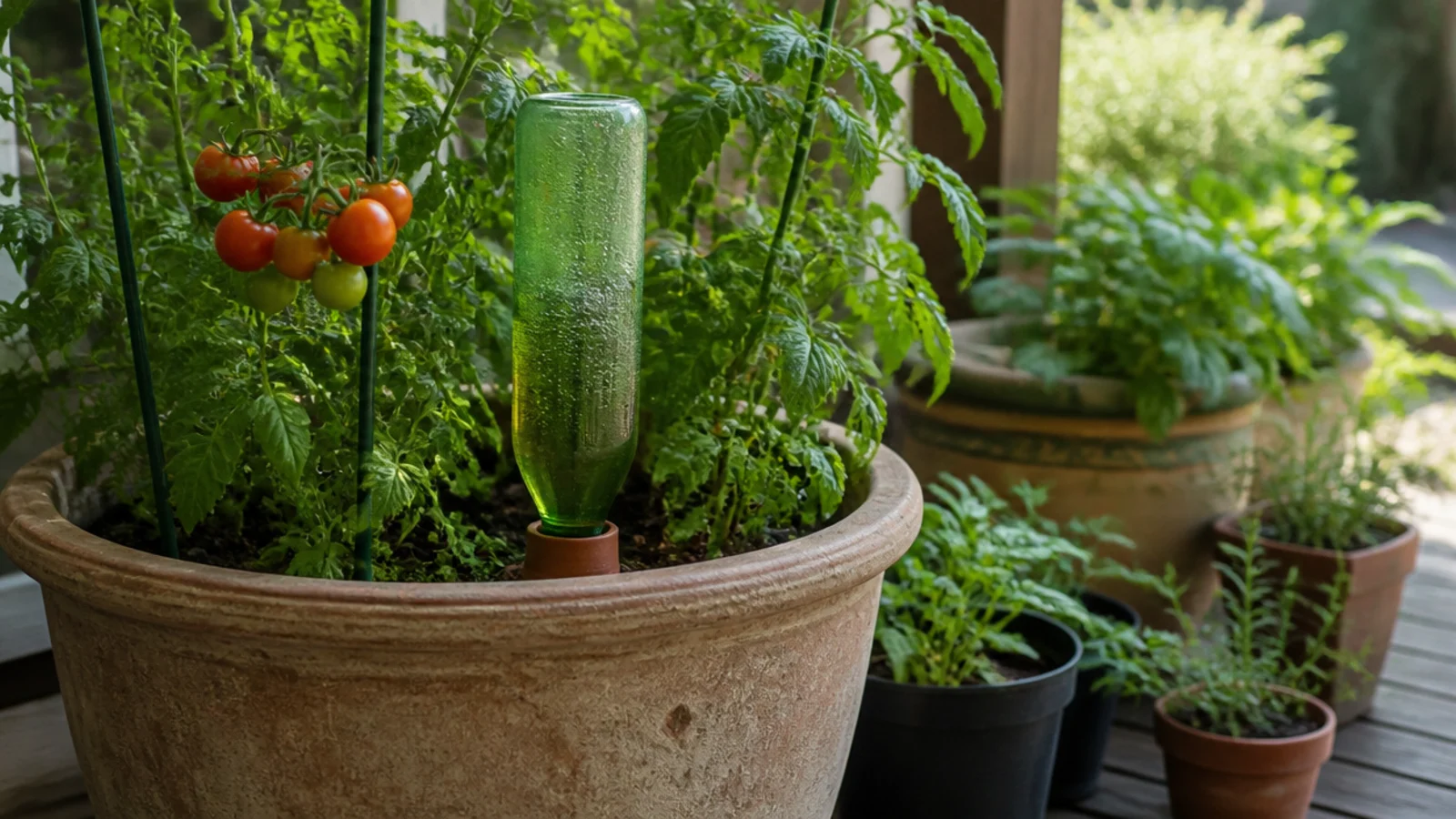
24. A bottle drip for the weekend away
An inverted bottle pushed into the mix releases water slowly and buys about three days for a large pot.
Move everything into shade before you leave and group the pots together. Both tricks are free and they save more plants than any gadget. Free
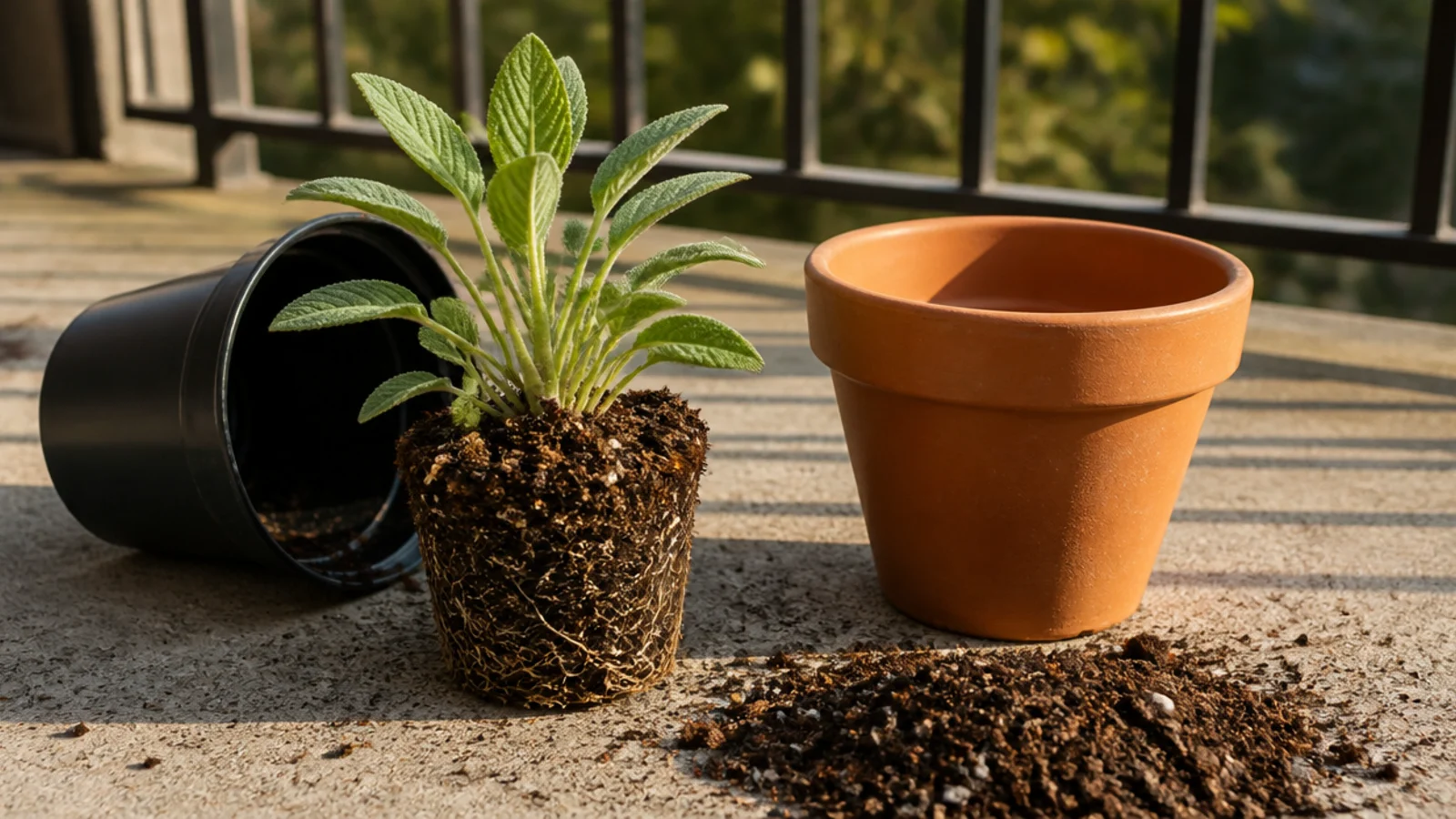
25. Repot from plastic into terracotta
Unglazed clay breathes, keeps roots cooler in heat, and weathers to a chalky patina that looks far more expensive than $4.
The catch is that clay dries faster, so pair it with mulch and go one size up. Plastic nursery pots are the fastest way to make a garden look temporary. $
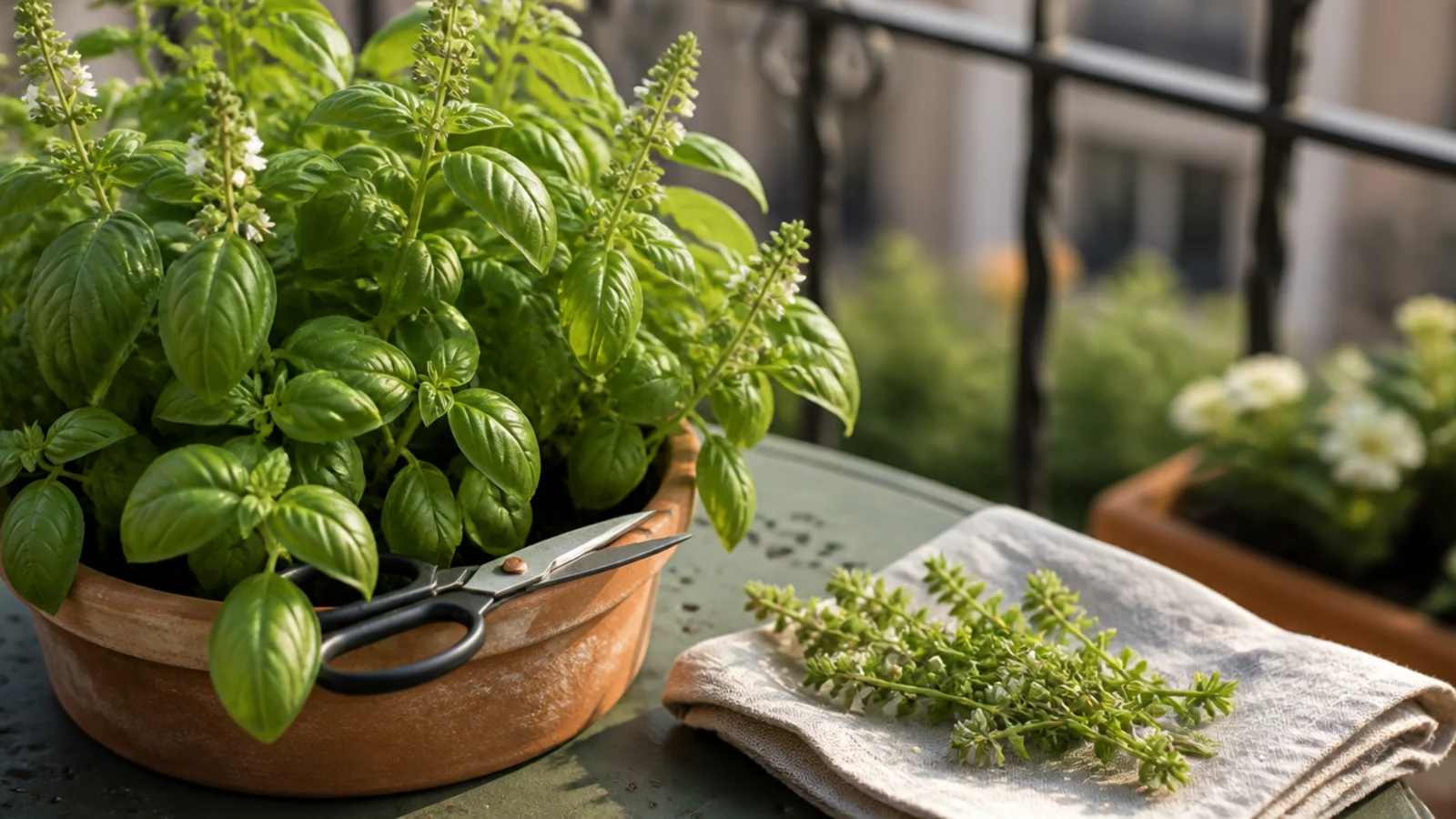
26. Pinch and deadhead once a week
Pinching the growing tip of basil, mint and coleus makes them bush out instead of bolting. Removing spent flowers keeps pelargoniums and petunias producing.
Ten minutes a week roughly doubles what a balcony gives you, and it costs nothing but attention. Free
27. Feed every two weeks in the growing season
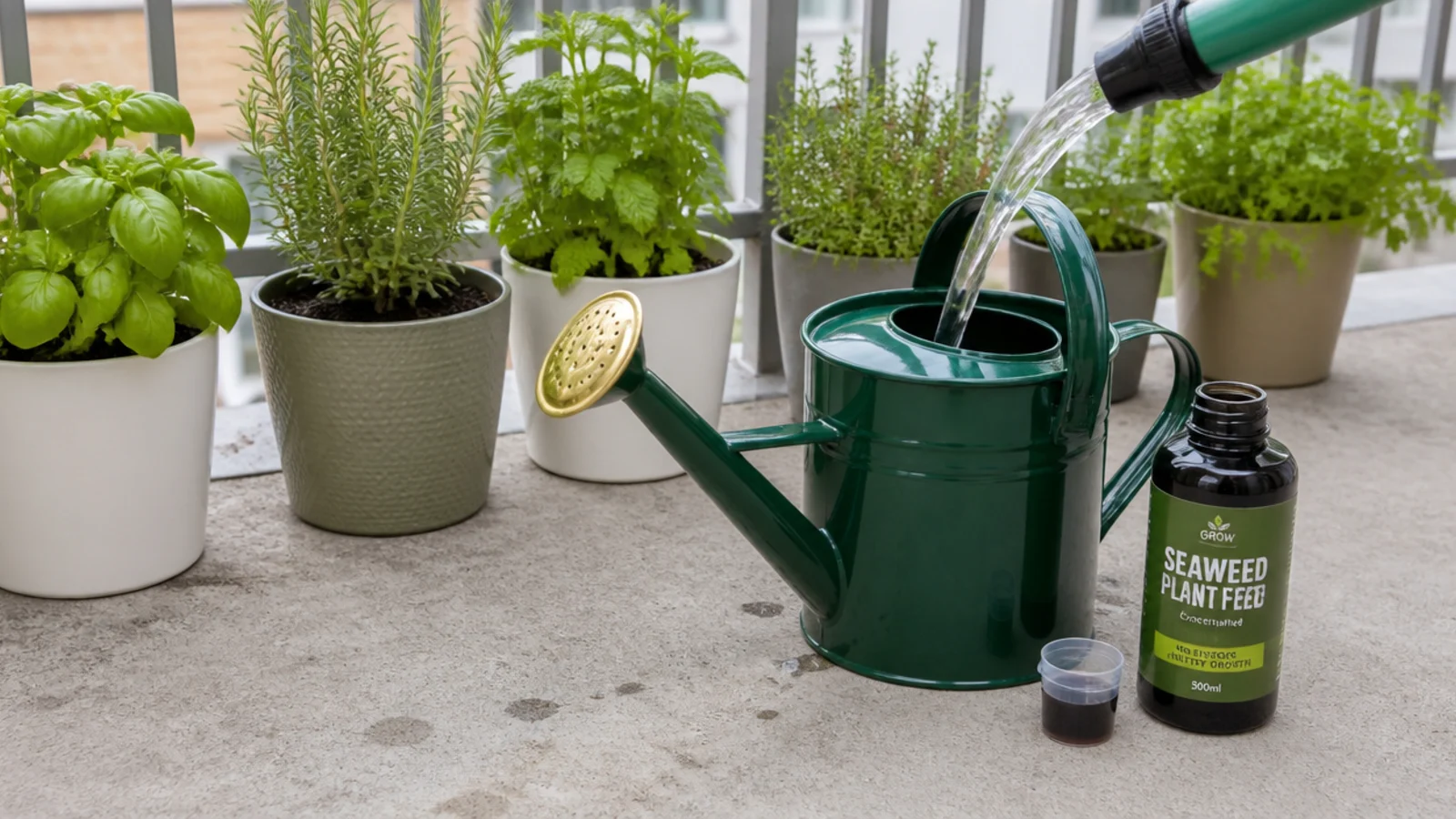
Container mix carries four to six weeks of nutrients, and every watering flushes more out of the drainage holes.
Liquid feed at half strength every fortnight, or slow-release granules stirred into the top inch in spring. Hungry containers stall long before they look sick. $–$$
28. Keep the tall things low and heavy
Wind is the thing that undoes balcony gardens above the third floor. A tall plant in a light pot on a stand is a tipping hazard.
Wide bases, low positions, stones layered on the mix surface as ballast. If a pot rocks when you nudge it, it will go over eventually. Free
29. Plan the winter shape before autumn
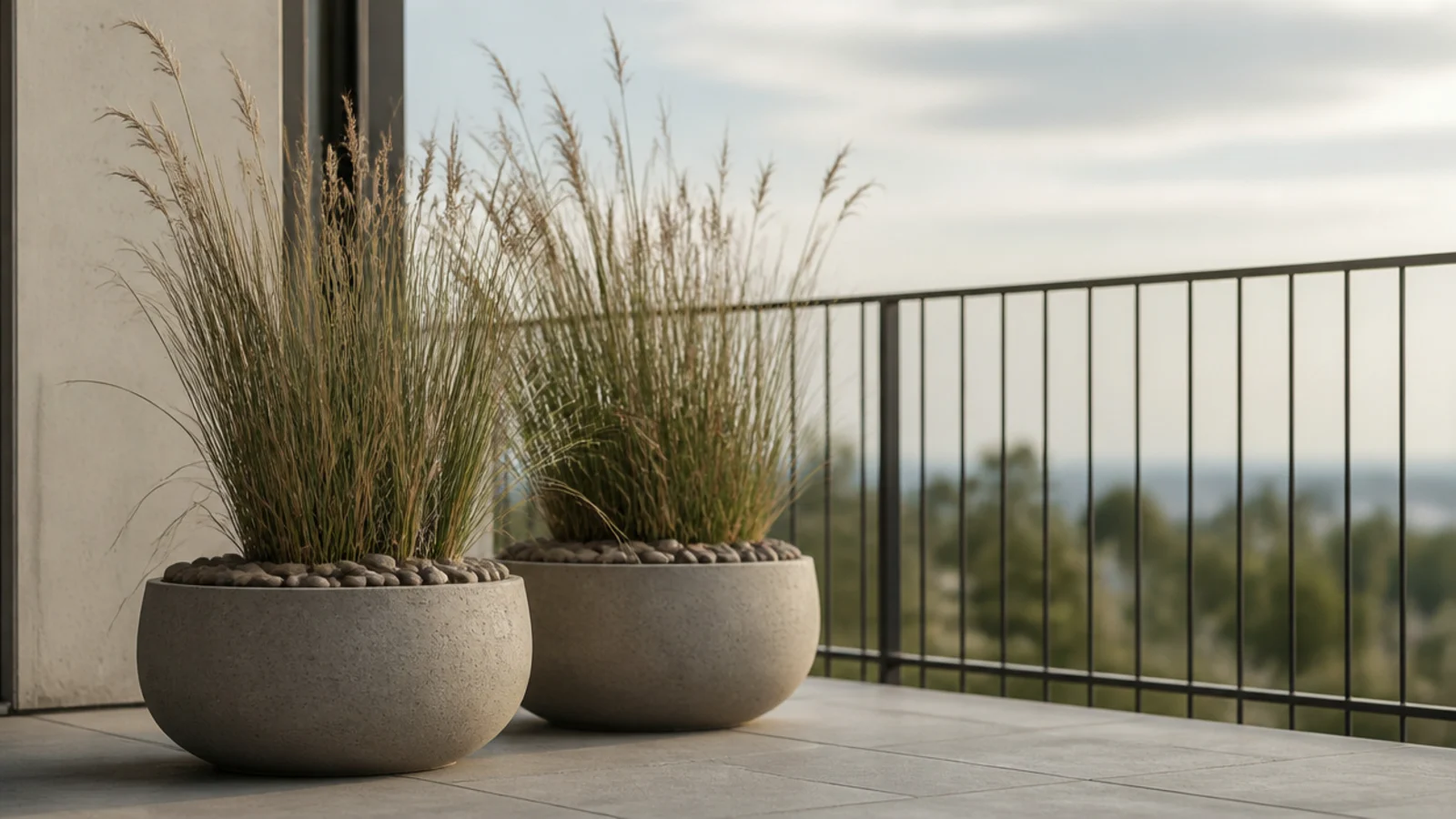
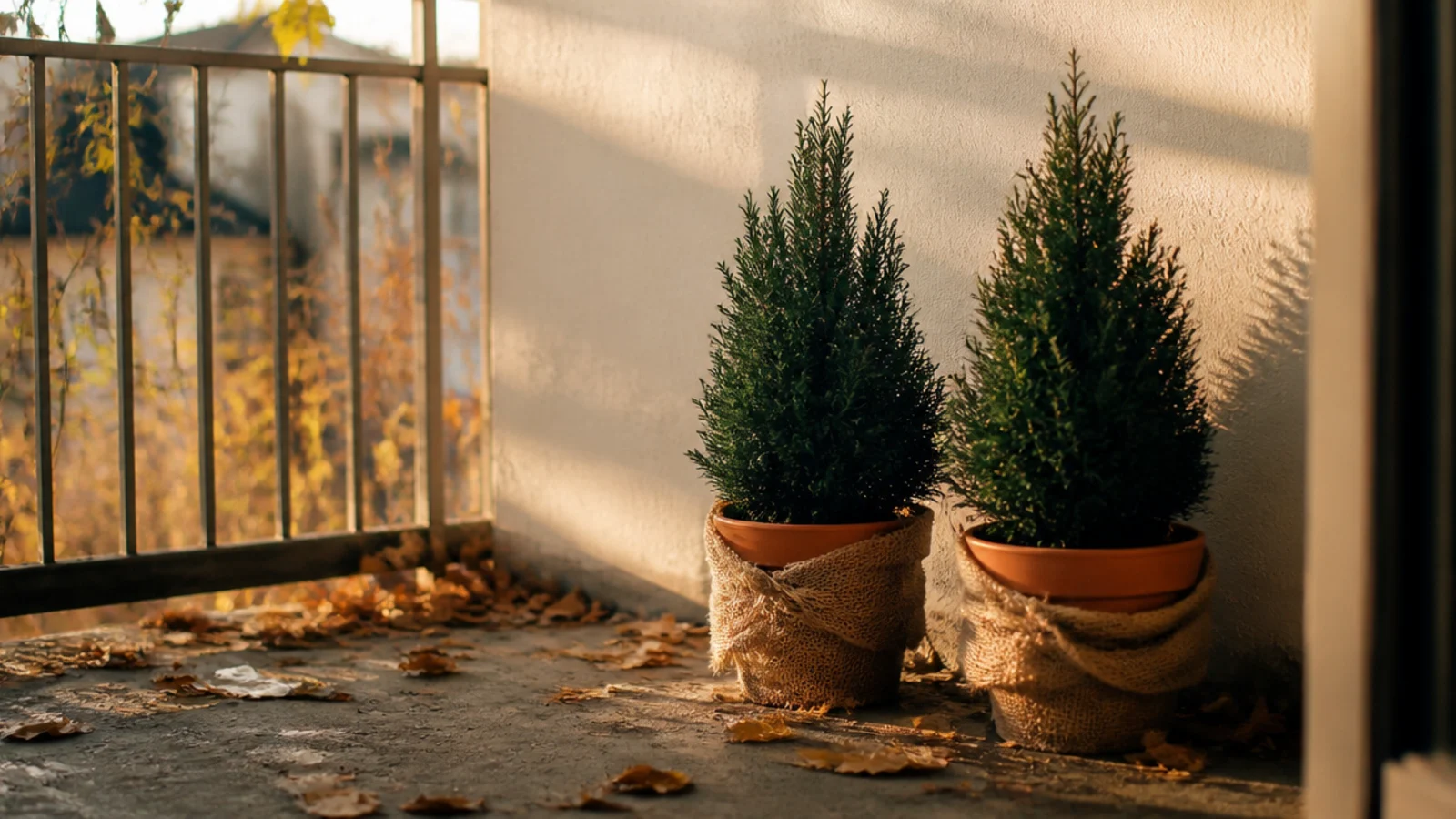
Two small evergreens — a dwarf pine, a boxwood, a hardy grass left uncut — keep the balcony from becoming a row of empty pots in January.
Wrap clay pots in hessian where it freezes, since terracotta cracks when wet mix expands. Move what you can against the wall. $$
30. Swap cuttings instead of buying plants
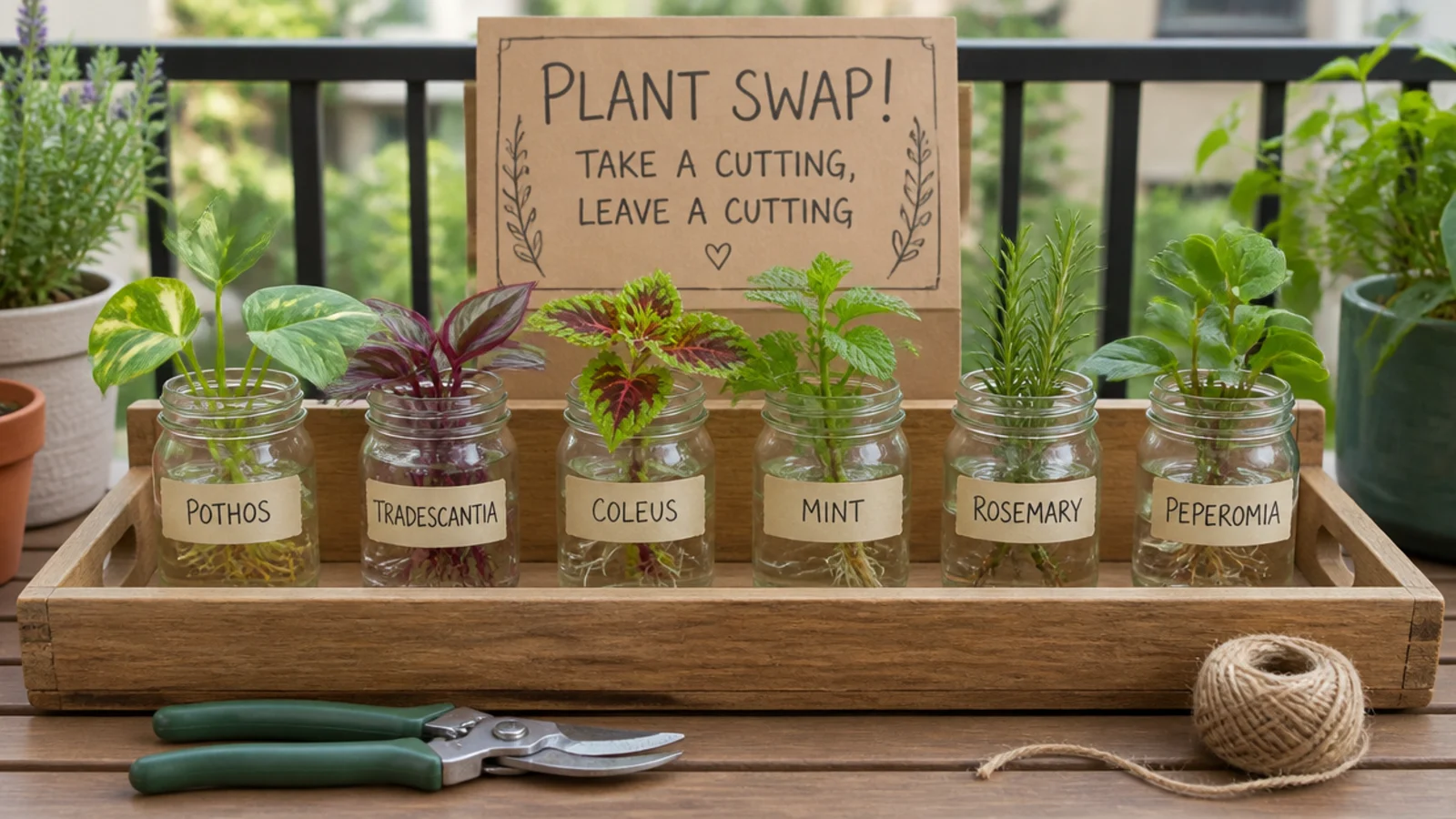
The cheapest garden is the one grown from other people's overgrowth. Rosemary, mint, pothos, sedum and pelargonium all root from cuttings.
Local plant swaps and neighbourhood groups are full of them. For a full plant-by-plant guide, see apartment balcony plants. Free
Mistakes to Skip
- Hanging troughs on the outside face of the railing. A planter that shakes loose several floors up is a fatal accident, and it is prohibited in almost every lease for that reason.
- Massing every heavy pot along the outer rail. That is the worst place to concentrate load on a slab designed for distributed weight — keep the big containers near the building wall.
- Watering without saucers. It soaks the neighbour below, stains the slab, and it is the single most common reason a building writes to you about your balcony.
Frequently asked questions
What plants grow best on an apartment balcony?
Match the plant to your sun hours, not to the photo you liked. Six or more hours of direct sun suits rosemary, thyme, lavender, pelargonium, cherry tomatoes and ornamental grasses. Under three hours means ferns, hosta, begonia, heuchera and ivy. Everything in a container also needs to tolerate drying out, because concrete radiates heat from below as well.
How heavy can balcony planters be?
Heavier than most people realise. A 16-inch pot filled with wet mix can pass 100 pounds, and three of those in a row is a serious concentrated load. Balconies are engineered for distributed weight, so keep the biggest containers against the building wall or over structural edges and step down in size as you move toward the railing.
How do I water balcony plants without annoying my neighbours?
Put a saucer wider than the pot base under every container and water in two slow passes so the mix absorbs rather than channels straight through. Water early in the morning, empty saucers after heavy rain, and never hose the slab down. Runoff from a balcony lands on someone else furniture, which is how most complaints start.
Can I hang planters from my balcony railing?
Only on the inside face, and only if the lease permits it. Anything hung on the outer face can fall several storeys onto a sidewalk, so most buildings prohibit it. Hook-over troughs that sit inboard with the bracket clamped against the top rail are the safe version. Plant them shallow with herbs or sedum so they stay light.
How often do containers need feeding?
Every two weeks through the growing season, at half the strength on the label. Container mix carries only four to six weeks of nutrients, and every watering flushes more of it out through the drainage holes. Slow-release granules stirred into the top inch in spring cover the basics, with a liquid feed for anything fruiting.
What survives on a windy high-floor balcony?
Small leaves and flexible stems. Ornamental grasses, rosemary, thyme, lavender, sedum and dwarf pines all bend rather than shred. Avoid large soft leaves like hosta, banana and canna on an exposed high floor — they tear within a week. Keep pots low and wide, add stones as ballast, and group plants so they shelter each other.
Buy the pots and the mix properly, then be cheap about everything else — cuttings, seed and split supermarket herbs will fill a balcony for the price of one nursery plant. If you are starting from an empty slab, styling a small apartment balcony sets the furniture and floor first so the plants have somewhere to sit. And for the evening version, the low warm glow rules in aesthetic candle decor translate directly to flameless LED out here. Save the pin before your next trip to the garden centre.
Want more like this? Browse all 15 apartment balcony ideas guides — they all use the same measurements and budget tiers.

Pin it for later
Save this to your Apartment Balcony Ideas board
Pin it now so it is waiting for you when the tape measure comes out — and so the next person hunting for this idea can find it too.
Save this pinKeep going
More ideas worth saving while you have the tape measure out.