Apartment Balcony Ideas · Listicle
25 Dreamy Apartment Balcony Ideas for Any Home

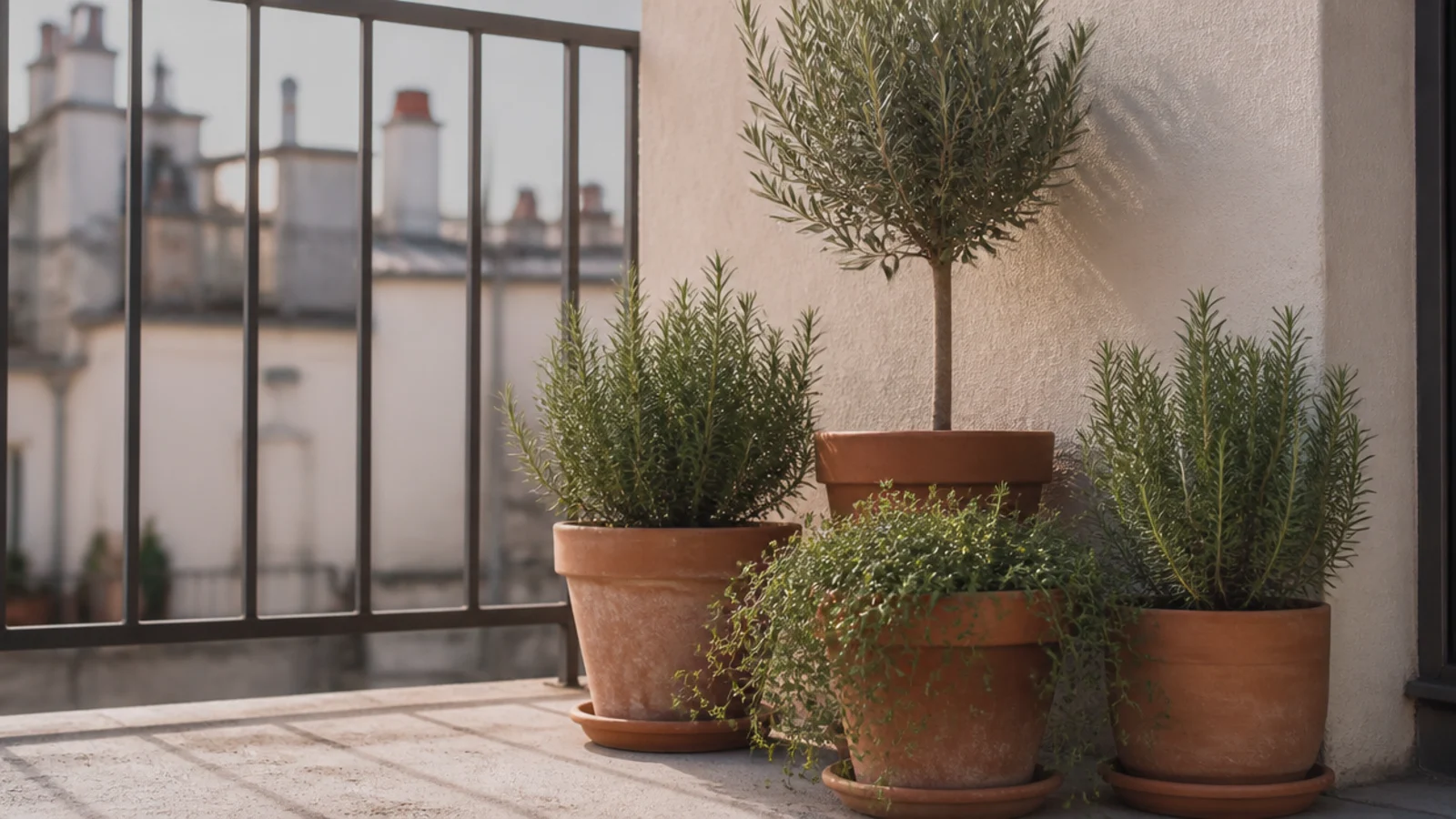
Apartment balcony plants fail for one of three reasons, and none of them is bad luck. Wrong aspect, pot too small, or a gust that took the whole thing over the edge. Get those three right and a balcony grows more than most people expect from 25 square feet of concrete. Here are the plants worth your money, sorted by the light you actually have, and the container rules that keep them alive through August.
In this guide27 sections — tap to openHide
- 1.Choosing apartment balcony plants for your aspect and your wind
- 2.Log your sun hours before you buy a single plant
- 3.Full-sun heroes: rosemary, lavender, sedum and thyme
- 4.Deep-shade survivors: ferns, heuchera, ivy and begonias
- 5.Part-sun middle ground: mint, chives, hosta and hydrangea
- 6.Small leaves beat big leaves in wind
- 7.Ornamental grasses that bend instead of break
- 8.One evergreen anchor so winter is not bare
- 9.Dwarf citrus in the warmest corner you have
- 10.Cherry tomatoes in a five-gallon container
- 11.Salad leaves as a four-week crop in a shallow trough
- 12.Strawberries in a stacked planter
- 13.Trailing plants for the inside-rail box
- 14.Nasturtium and calendula for colour that forgives neglect
- 15.Succulents only where the drainage is genuinely fast
- 16.Cut herbs weekly so they keep coming back
- 17.Size the pot to the plant, then go one size up
- 18.Terracotta, glazed or fiberstone, and what each costs you
- 19.Potting mix, never garden soil
- 20.A saucer under every single pot
- 21.Self-watering containers for the sun trap
- 22.Mulch the surface and halve your watering
- 23.Group the pots so they shade each other
- 24.Feed containers monthly, because the nutrients wash out
- 25.Keep the heaviest containers against the building wall
- 26.Write the winter plan in September, not December
- 27.Mistakes to Skip
Choosing apartment balcony plants for your aspect and your wind
Balconies are extremes. Yours is either a sun trap taking direct light off the concrete all day, or it sits in near-total shade under the slab above. Very few are in between, and the difference decides everything you can grow.
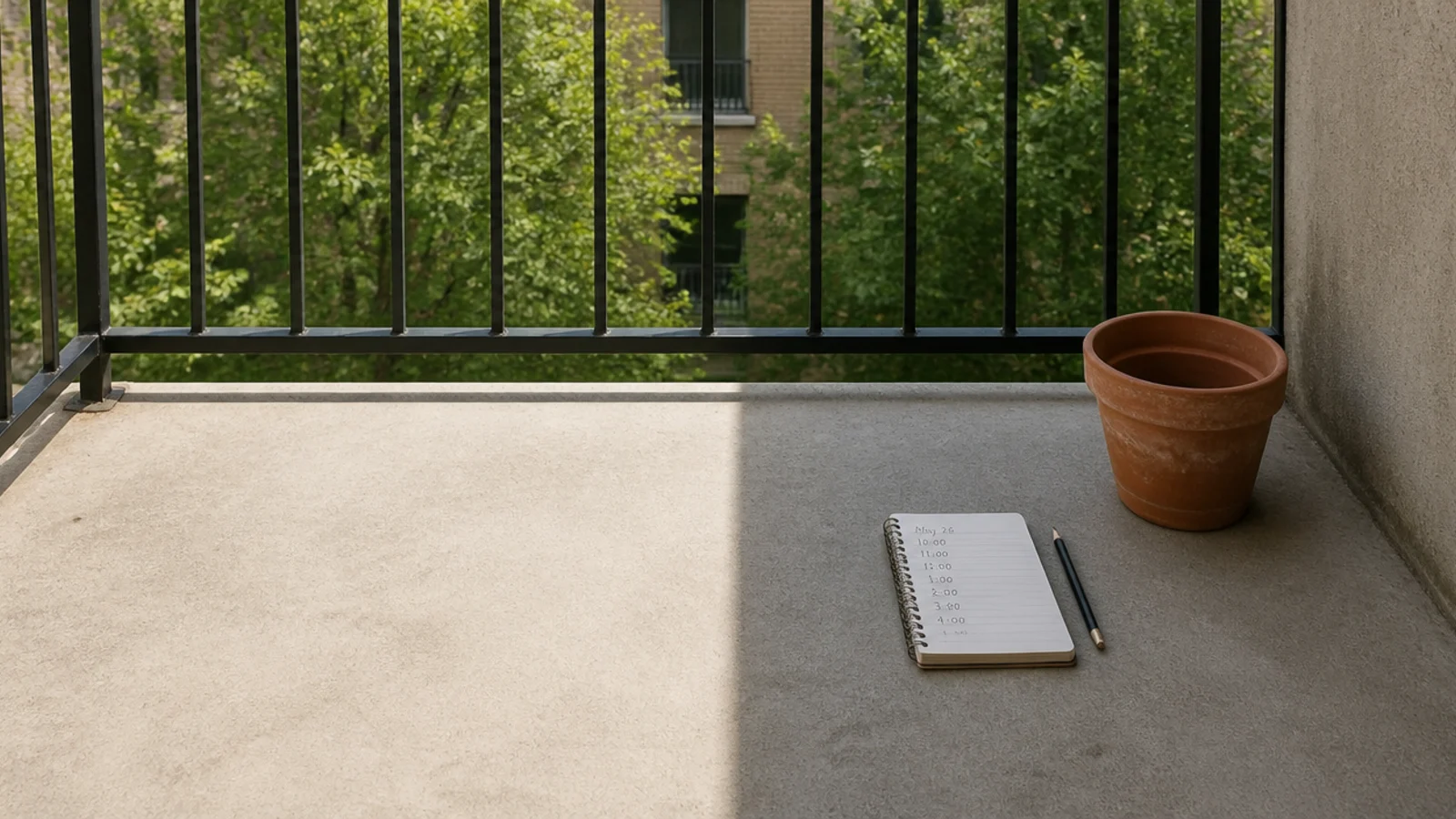
Spend one Saturday noting when direct sun arrives and when it leaves. Six hours or more is full sun. Two to four is part sun. Under two is shade, and that is a real category with real plants in it, not a consolation prize.
Then account for wind. Above the third floor, gusts dry foliage faster than sun does and shred anything with a large soft leaf. Fine-leaved and grey-leaved plants handle it; big-leaved tropicals do not. Nothing goes on the outside face of the railing, ever, and tall light pots get gravel in the bottom third.
Two more rules run through this whole list. Containers dry out several times faster than garden beds, so pot size is a watering decision as much as a design one. And every pot needs a saucer, because runoff through a balcony drainage gap lands on someone else's furniture.
Budget tiers: $ under $15 a plant, $$ $15 to $40, $$$ $40 and up for specimens and large containers.
1. Log your sun hours before you buy a single plant
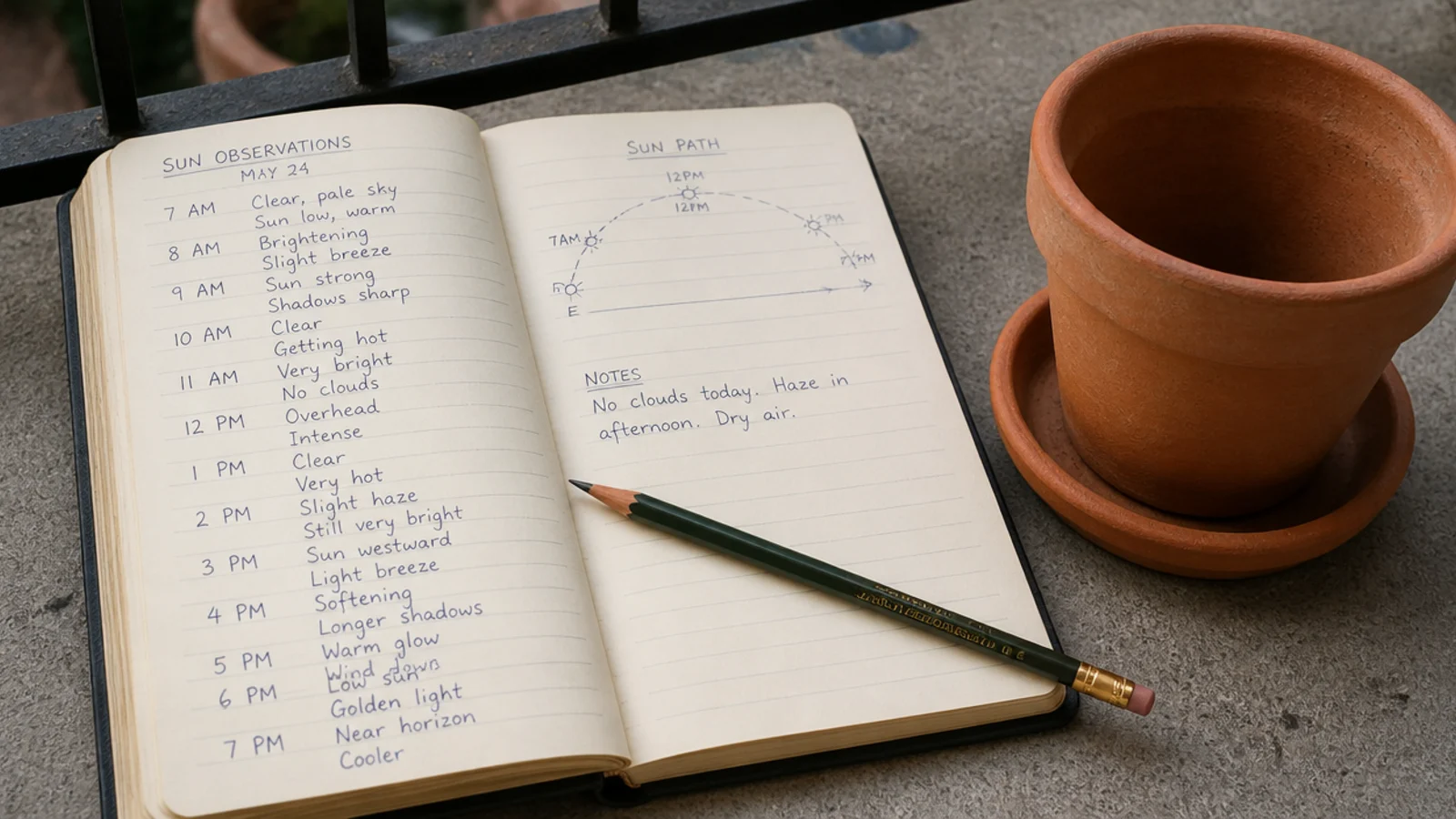
Set a phone alarm for every hour on a free Saturday and write down whether direct sun is hitting the slab. It takes almost no effort and it saves you from the single most expensive mistake out there.
The number you get replaces every guess. Six hours means the Mediterranean list. Two means ferns and heuchera. Four means you can have both, in the right corners. Free
2. Full-sun heroes: rosemary, lavender, sedum and thyme
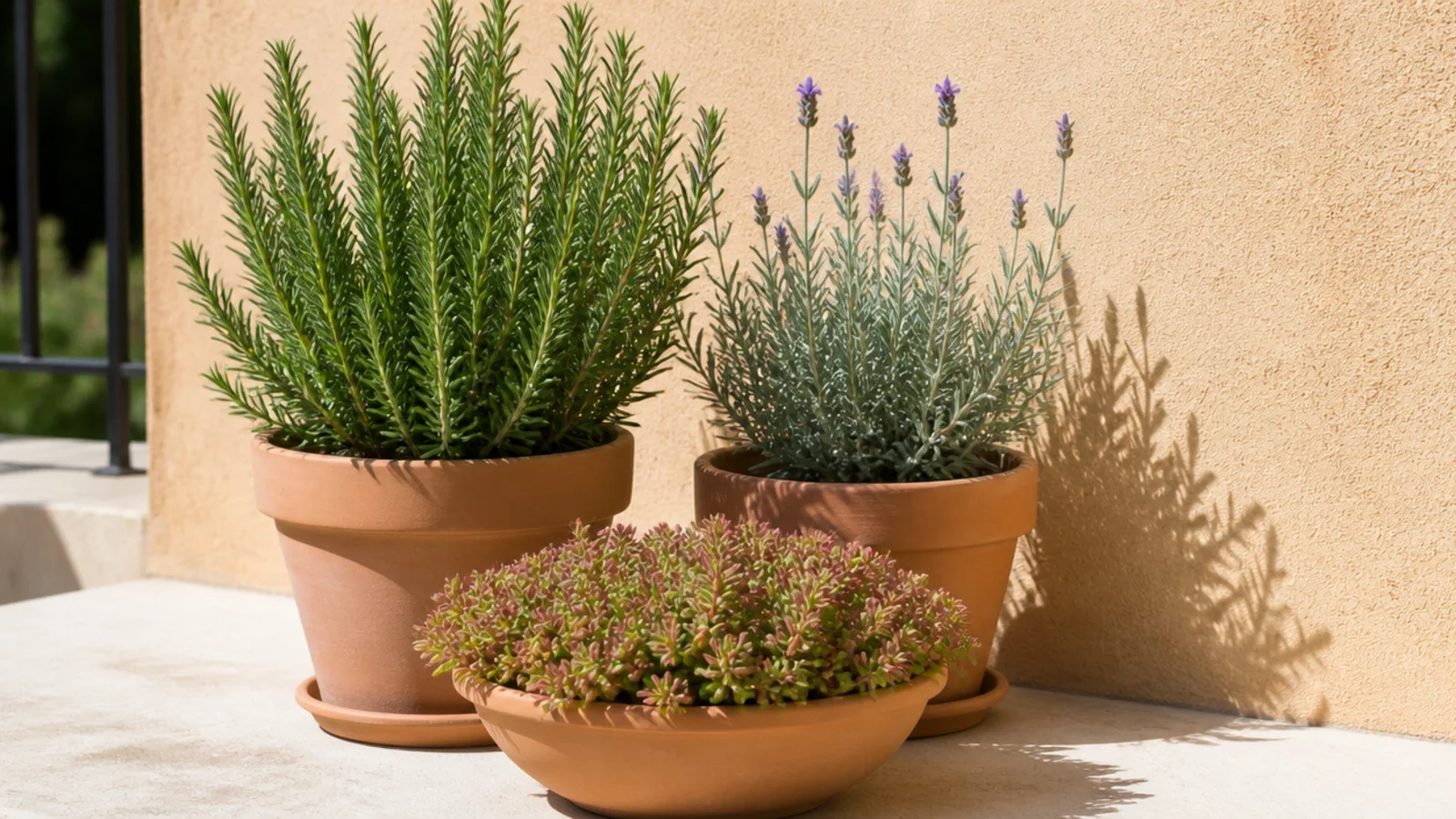
Grey or silvery leaves are nature's label for drought tolerance, and they are exactly what a hot concrete slab wants.
Rosemary in a 12-inch pot, lavender in 10, thyme and sedum in wide shallow bowls. All four forgive a missed watering, all four survive wind, and rosemary and lavender both carry structure through winter. Free-draining gritty compost, and never let them sit in a full saucer. $–$$
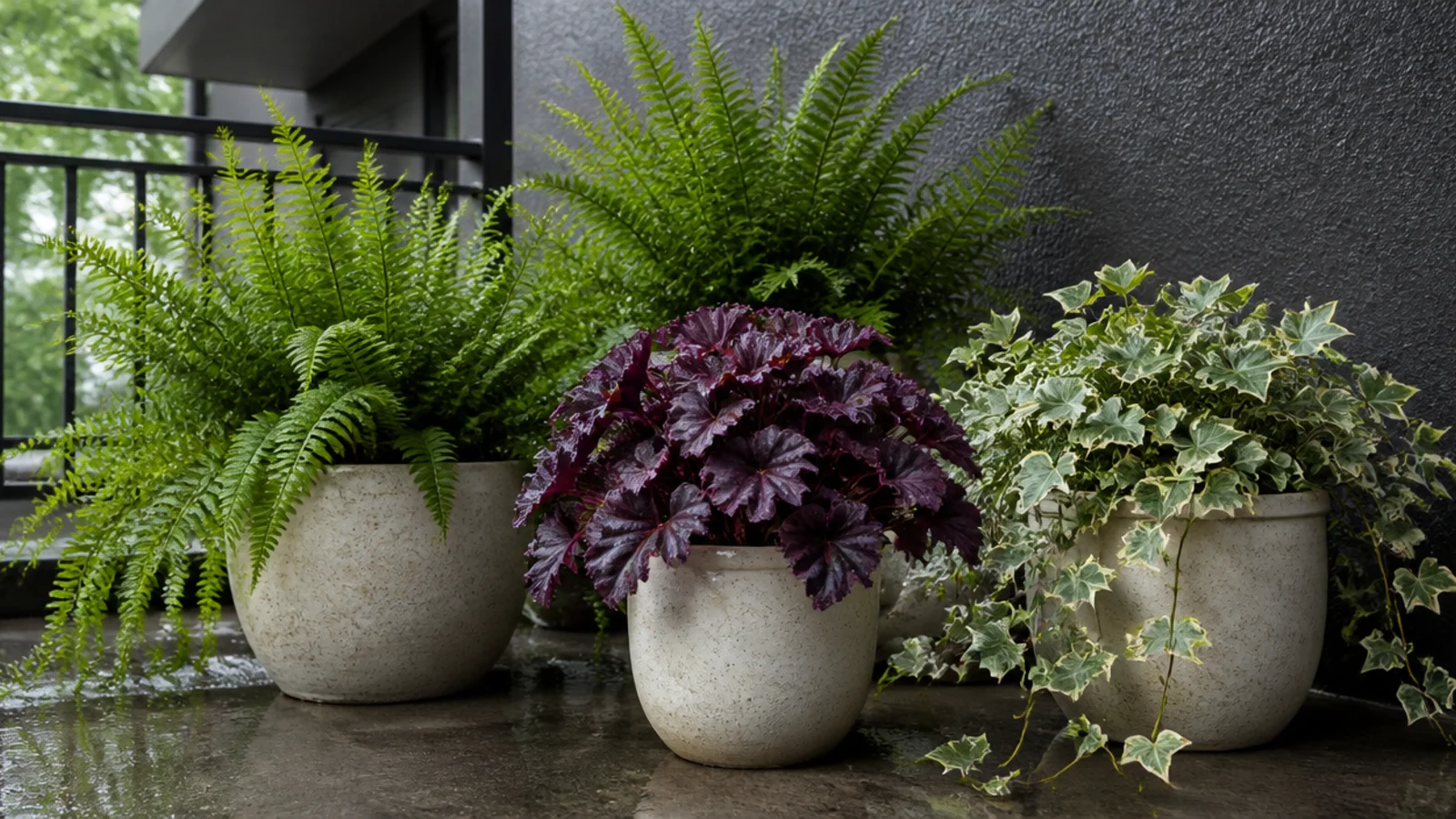
3. Deep-shade survivors: ferns, heuchera, ivy and begonias
A balcony under the slab above gets bright indirect light, which is genuinely good growing conditions for a long list of plants.
Ferns for texture, heuchera for plum and lime foliage that reads brighter than flowers, ivy to trail, begonias for actual colour. Keep them evenly moist rather than soaked, and use white and pale foliage near the back — in shade, pale advances and dark disappears. $–$$
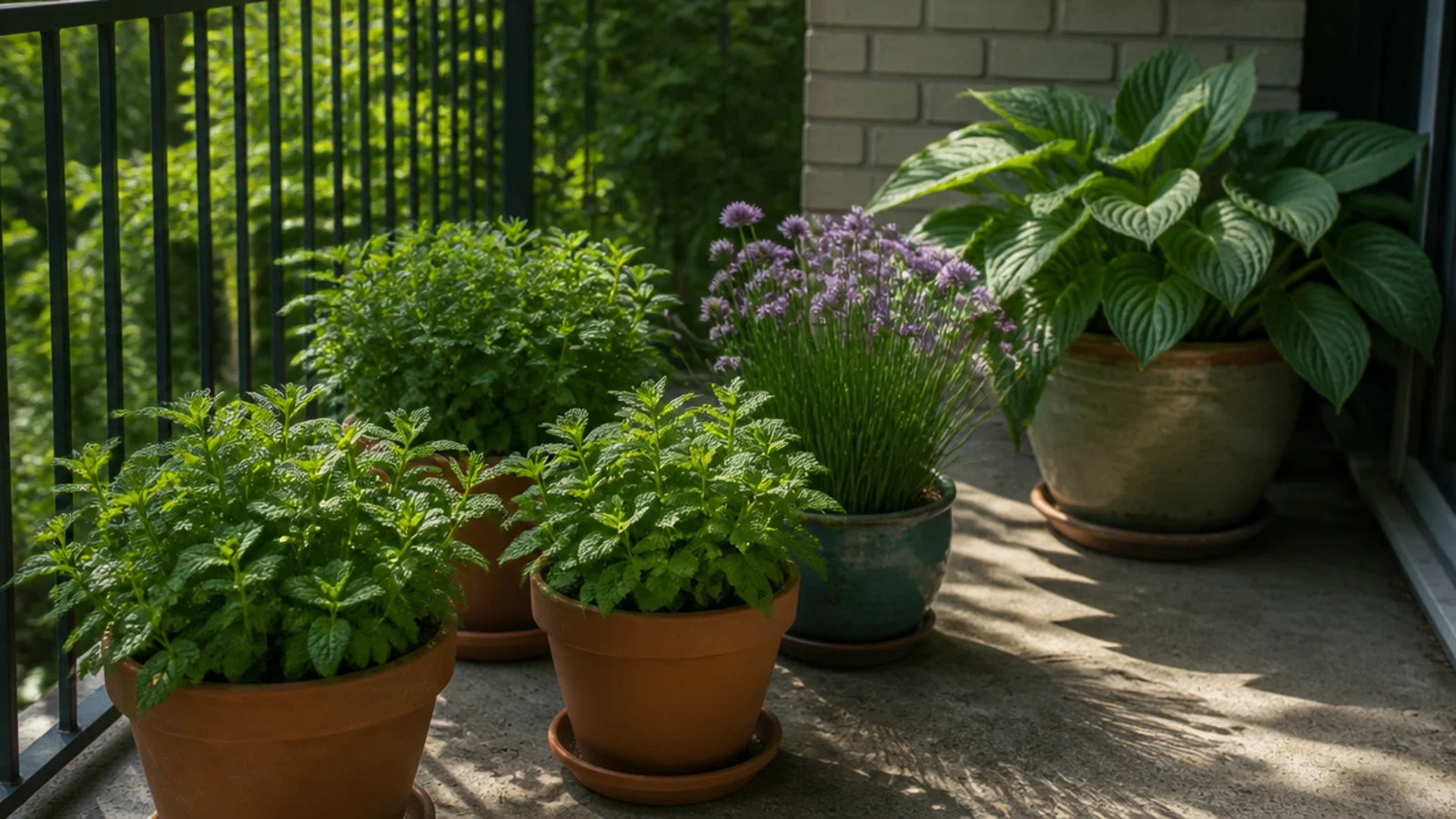
4. Part-sun middle ground: mint, chives, hosta and hydrangea
Four hours of direct sun is its own category, and it is the most productive one.
Mint grows so vigorously it must stay in its own pot or it eats everything. Chives crop for months. Hosta gives you broad leaves without a scorch risk. A compact hydrangea in a 14-inch pot flowers for weeks but drinks heavily — check it daily in July. $–$$
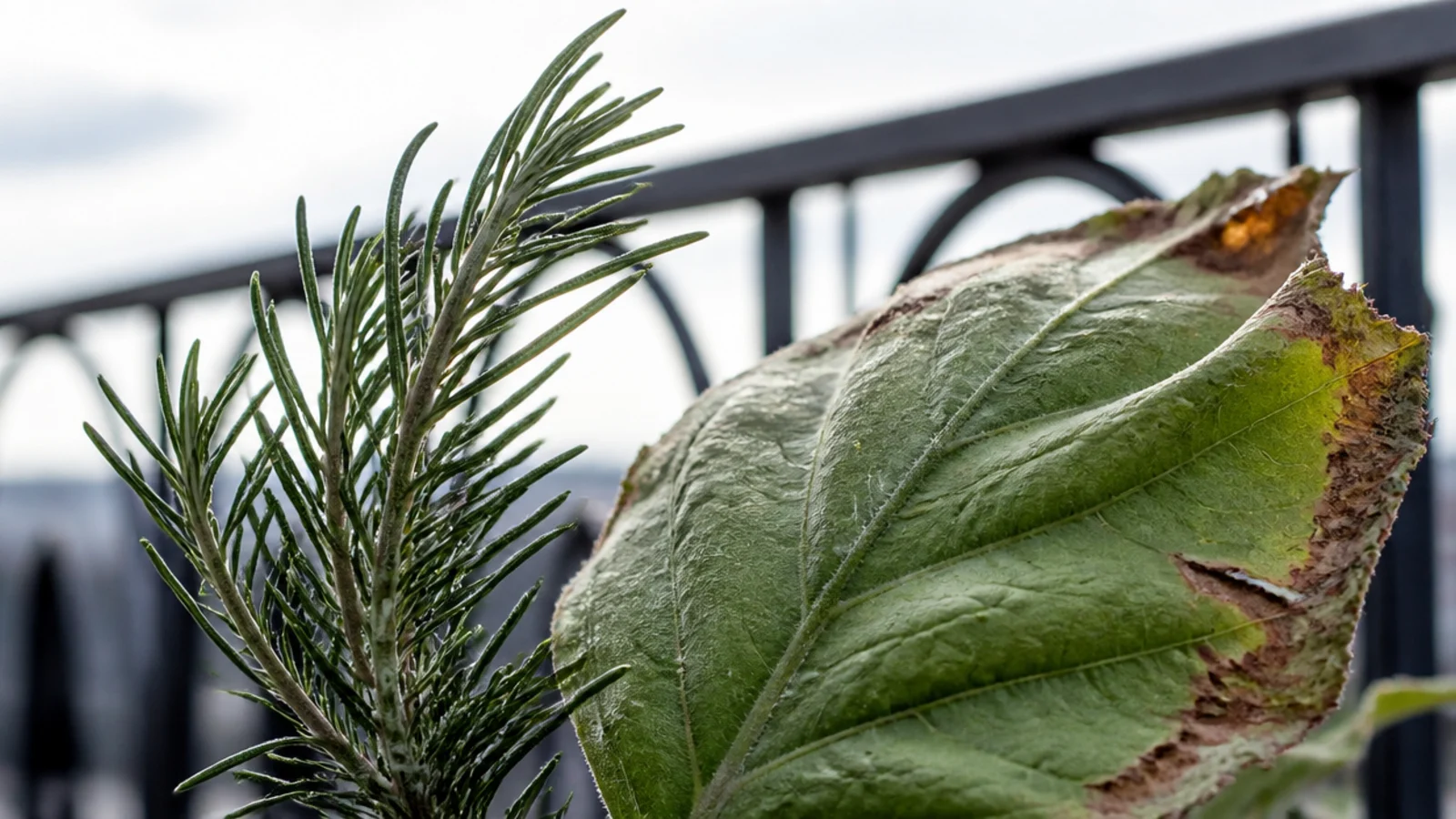
5. Small leaves beat big leaves in wind
This is the rule that separates a balcony plant list from a garden one. Wind at height tears large soft leaves along the margins, and the brown edges never grow out.
Choose fine, needled, leathery or divided foliage: rosemary, pine, grasses, thyme, boxwood, small-leaved ivy. Save the big paddle leaves for a sheltered ground-floor patio or an indoor corner. Free
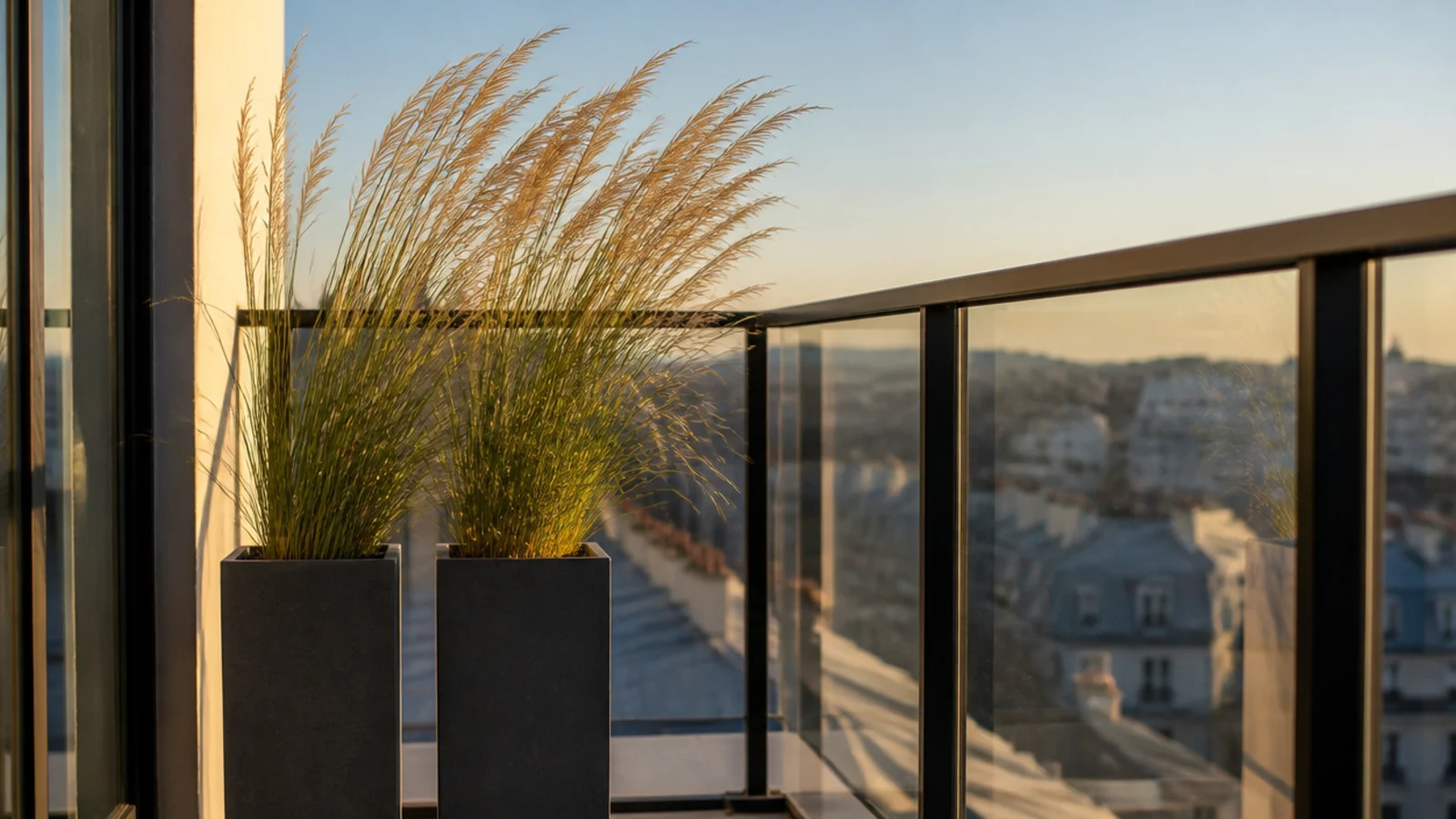
6. Ornamental grasses that bend instead of break
Grasses are the most underused balcony plant. They move in wind rather than fighting it, they catch low sun beautifully, and they need almost nothing from you.
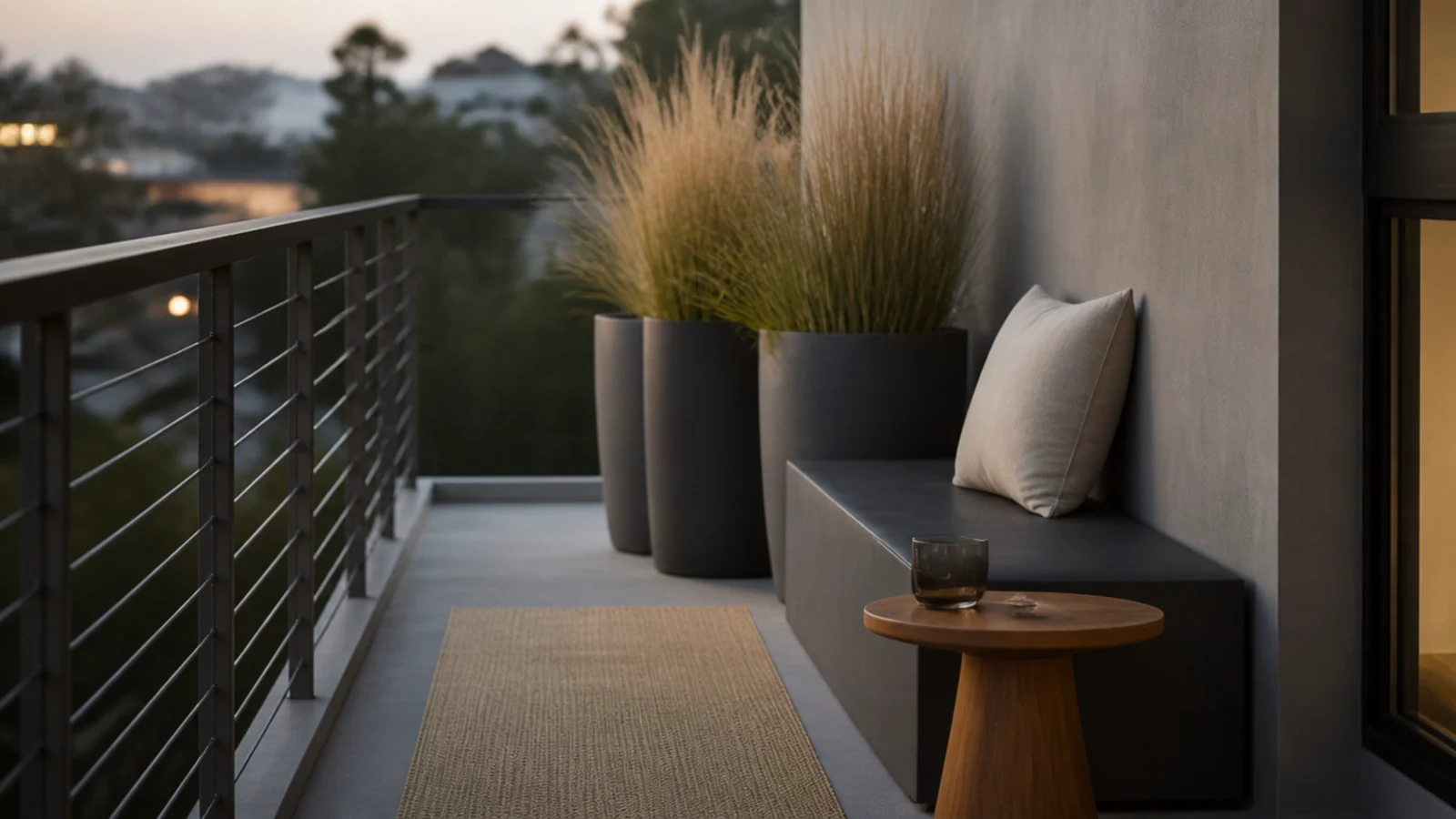
Try a compact feather grass or a blue fescue in a tall narrow planter. Cut back hard once a year and that is the entire maintenance schedule. Two matching planters flanking a doorway will carry a whole balcony visually. $$
7. One evergreen anchor so winter is not bare
Everything on a balcony looks good in June. The test is February, and one evergreen is what gets you through it.
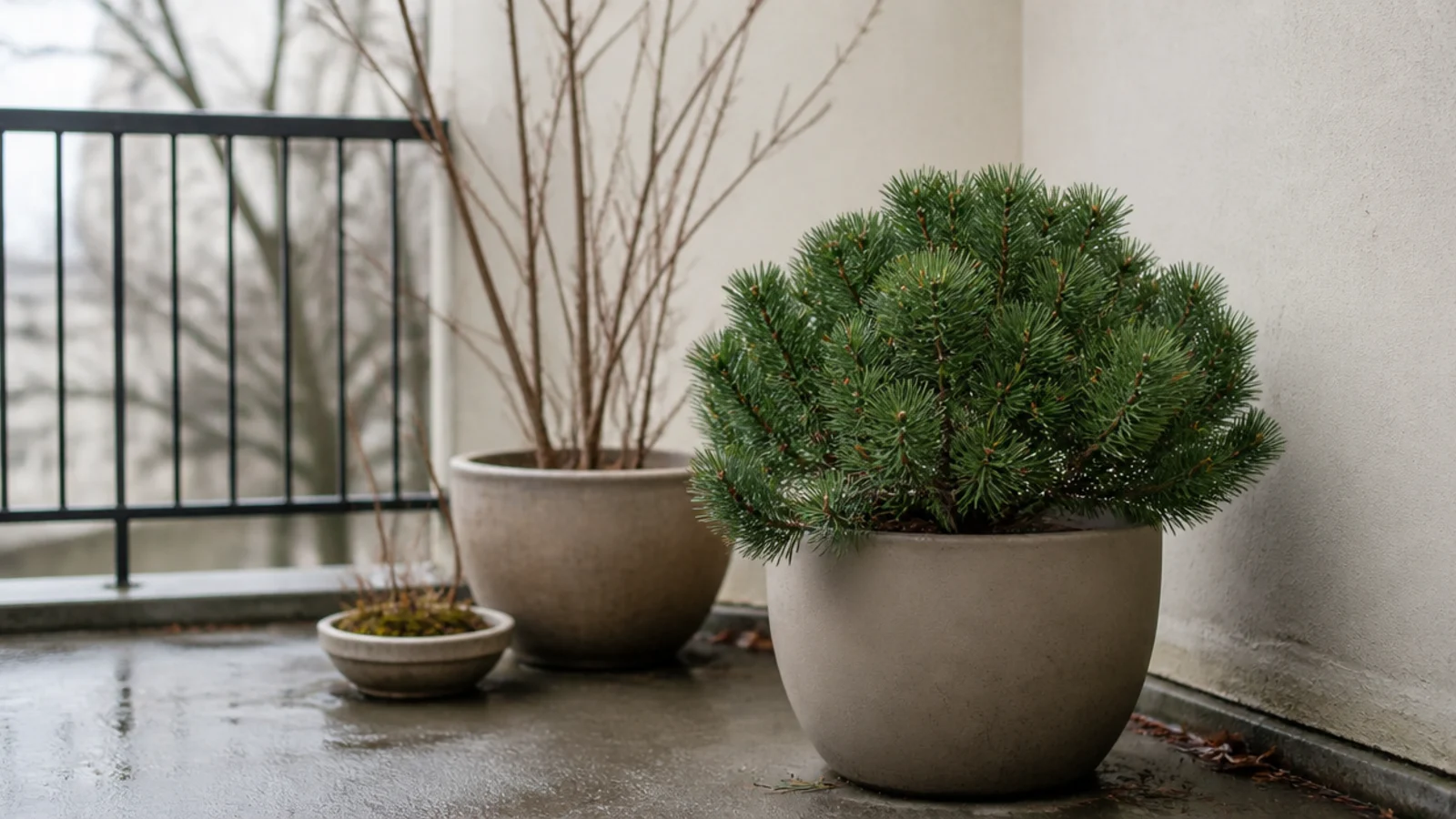
A dwarf pine, a compact boxwood or a small olive in a 14 to 16 inch pot holds the composition when everything else is stems. Put it in the corner you see from inside the glass, and pick the pot carefully — you will look at it for five months. $$–$$$
8. Dwarf citrus in the warmest corner you have
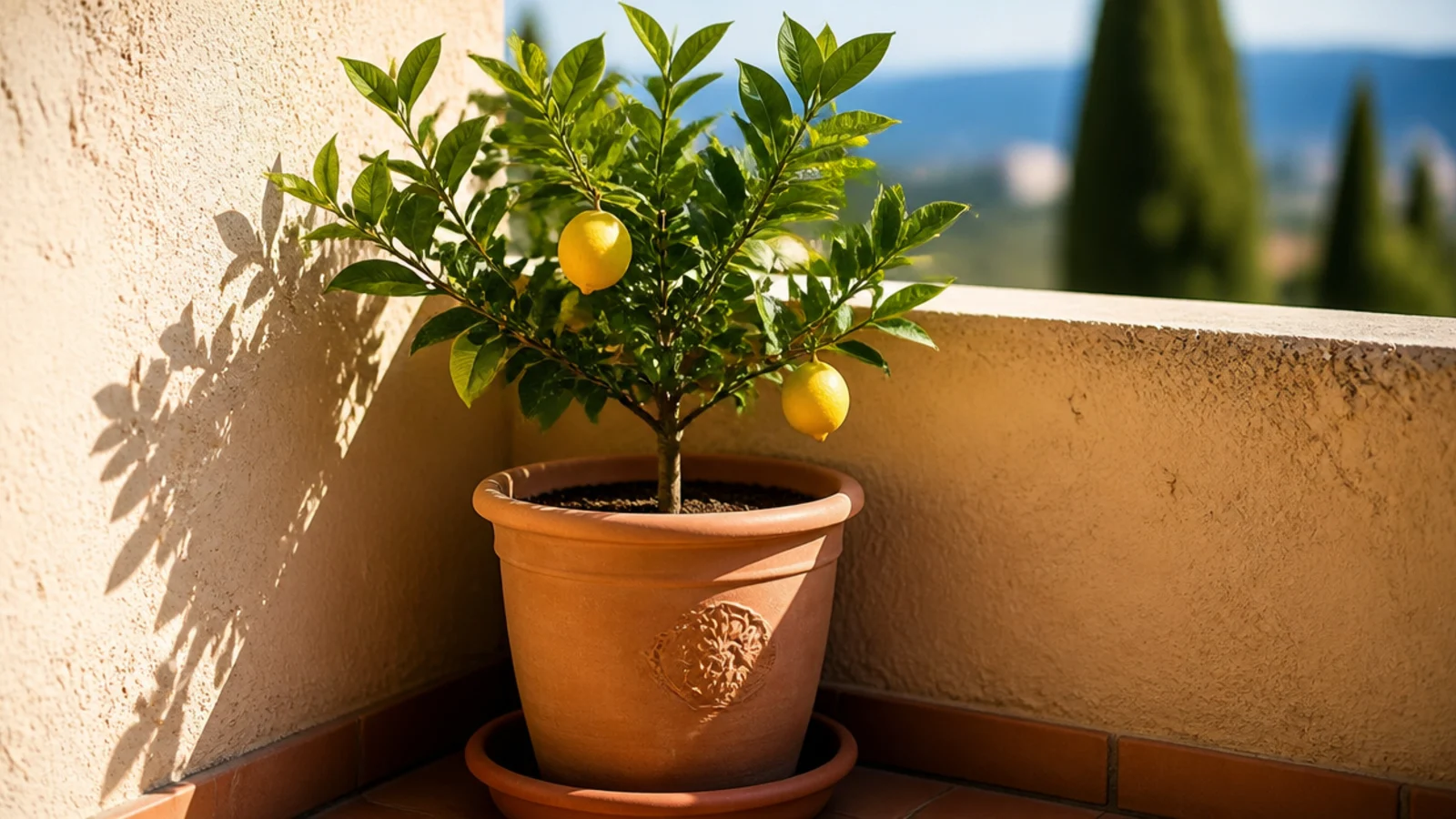
A potted lemon is a real thing on a balcony, but only if you have six hours of sun and a sheltered corner where two walls meet.
Use a 16-inch container, a gritty citrus mix, and feed fortnightly through summer. Cold is the limit, not light — below about 40 degrees it comes inside to a bright cool room. Treat it as a project plant rather than a starter one. $$$
9. Cherry tomatoes in a five-gallon container
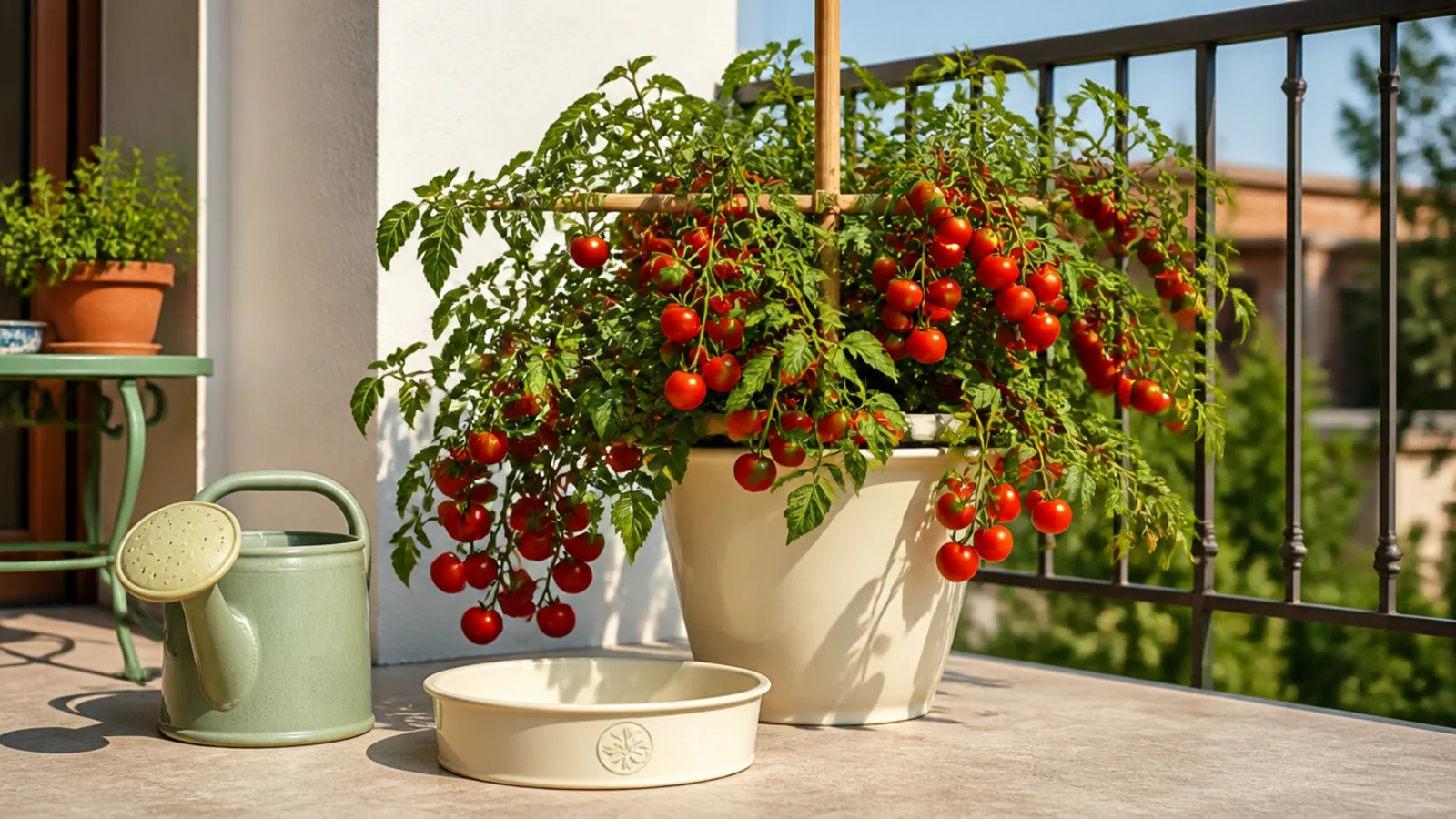
Cherry and tumbling varieties are the ones that work on a balcony, and container size is the whole game. Five gallons minimum, and bigger is genuinely better.
Anything smaller needs watering twice a day in July and splits the fruit when you miss. Give it a cane, feed weekly once flowers set, and pick every couple of days. Full sun only. $$
10. Salad leaves as a four-week crop in a shallow trough
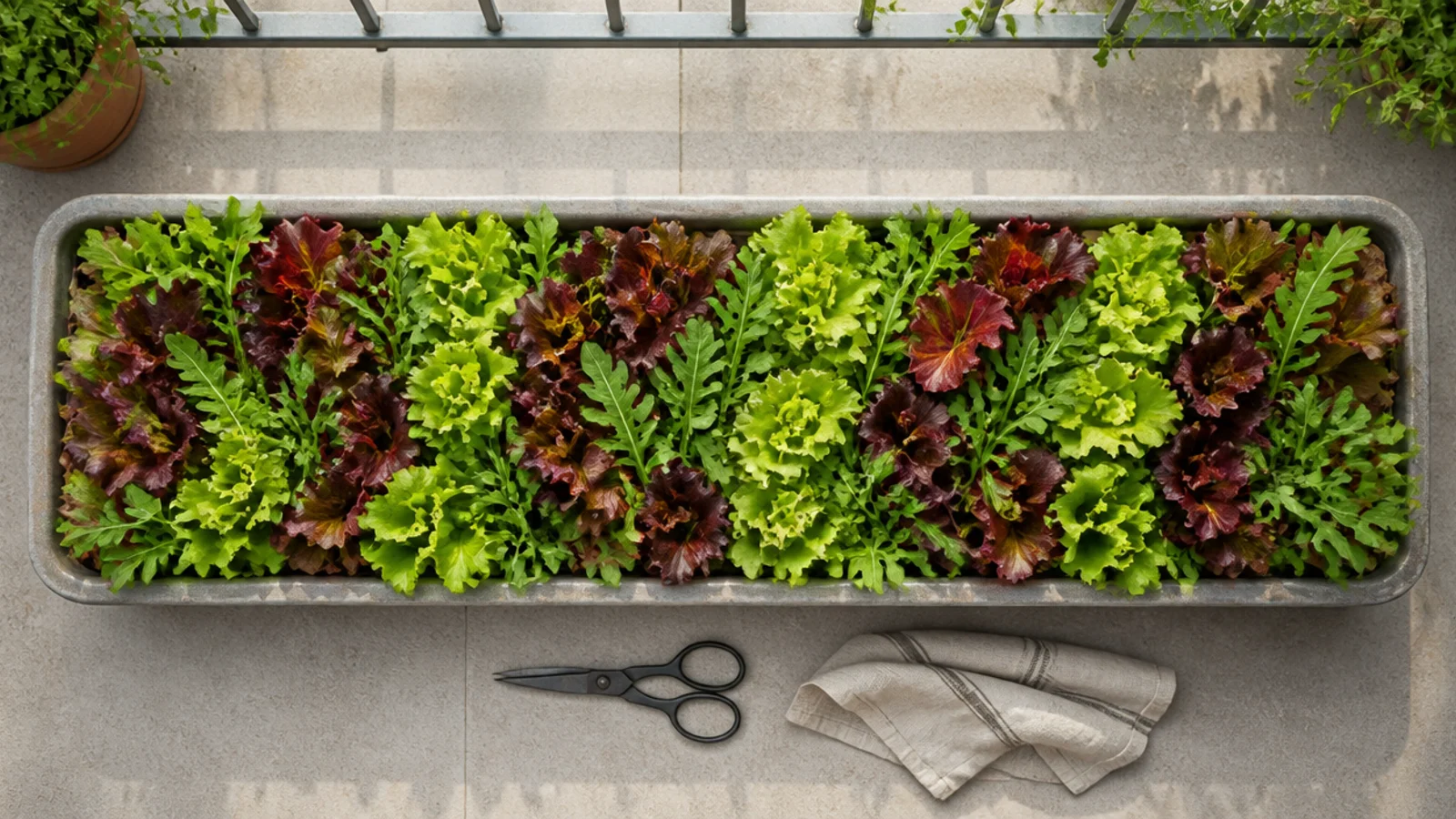
Loose-leaf lettuce, rocket and mizuna go from seed to first cut in about four weeks and are content in only 6 inches of soil, which makes a shallow trough the most productive square foot on a balcony.
Sow a short row every fortnight from spring so you always have something coming. Cut leaves rather than pulling plants and each sowing gives you three harvests. Part shade suits them better than blazing sun. $
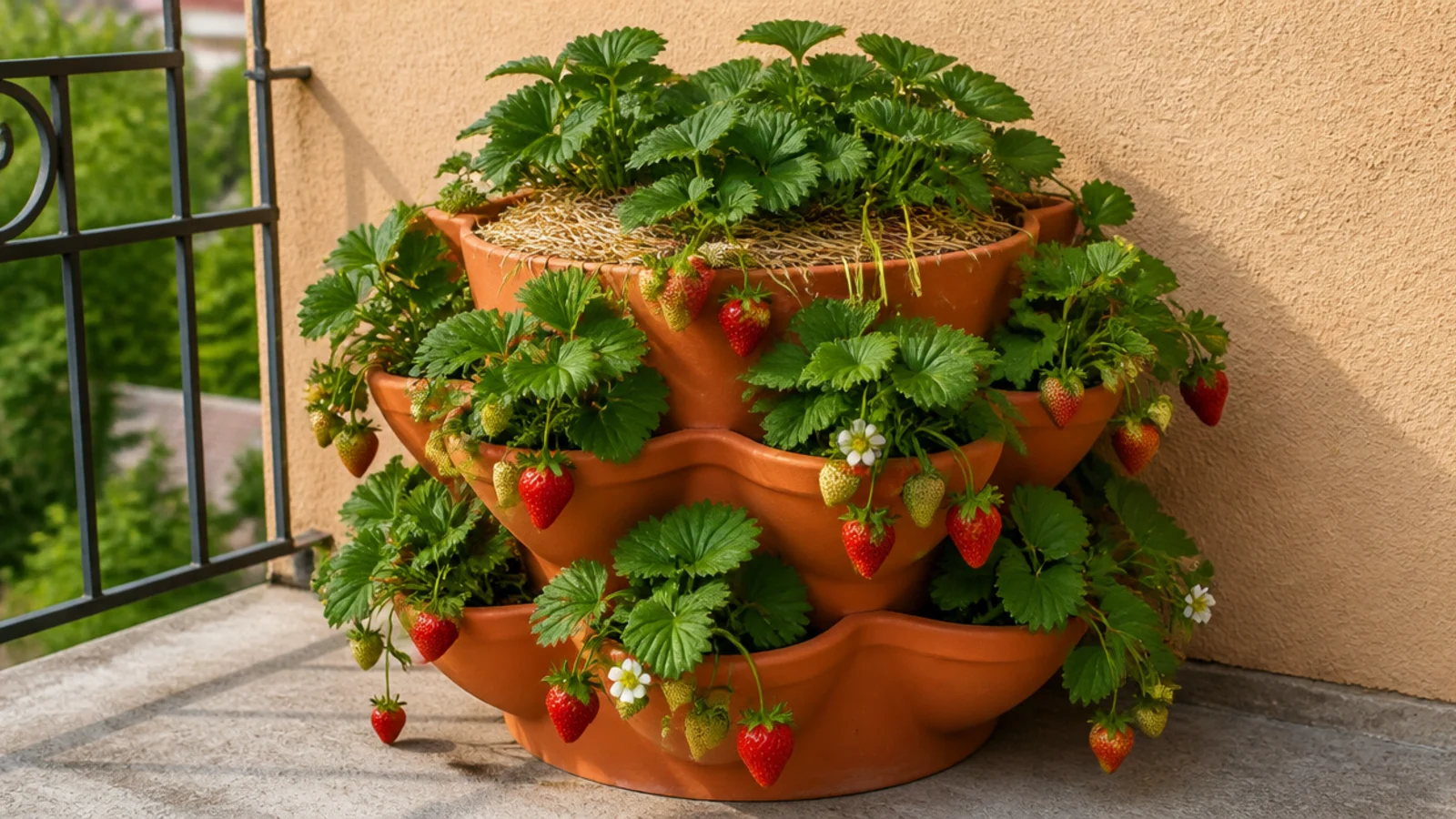
11. Strawberries in a stacked planter
A tiered strawberry planter gives three growing levels on one pot footprint, which is exactly the trade a small balcony wants.
Everbearing varieties fruit in flushes from June to September. Keep the compost evenly moist, tuck straw or gravel under the fruit so it does not sit on wet soil, and expect the top tier to dry fastest. Full or part sun. $$
12. Trailing plants for the inside-rail box
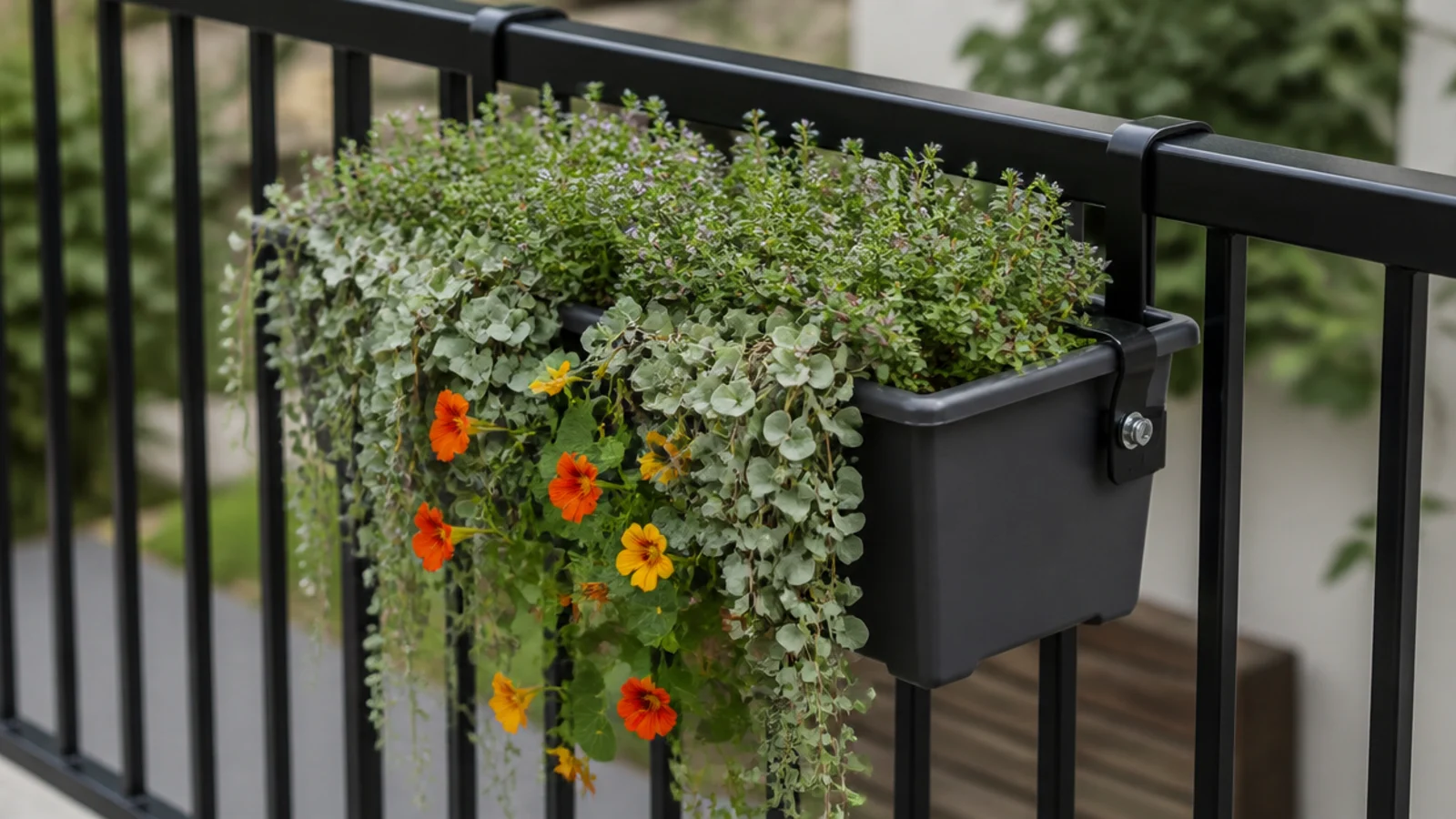
A rail box planted with trailing thyme, silver dichondra or small-flowered nasturtium softens the hard line of a balustrade better than anything else.
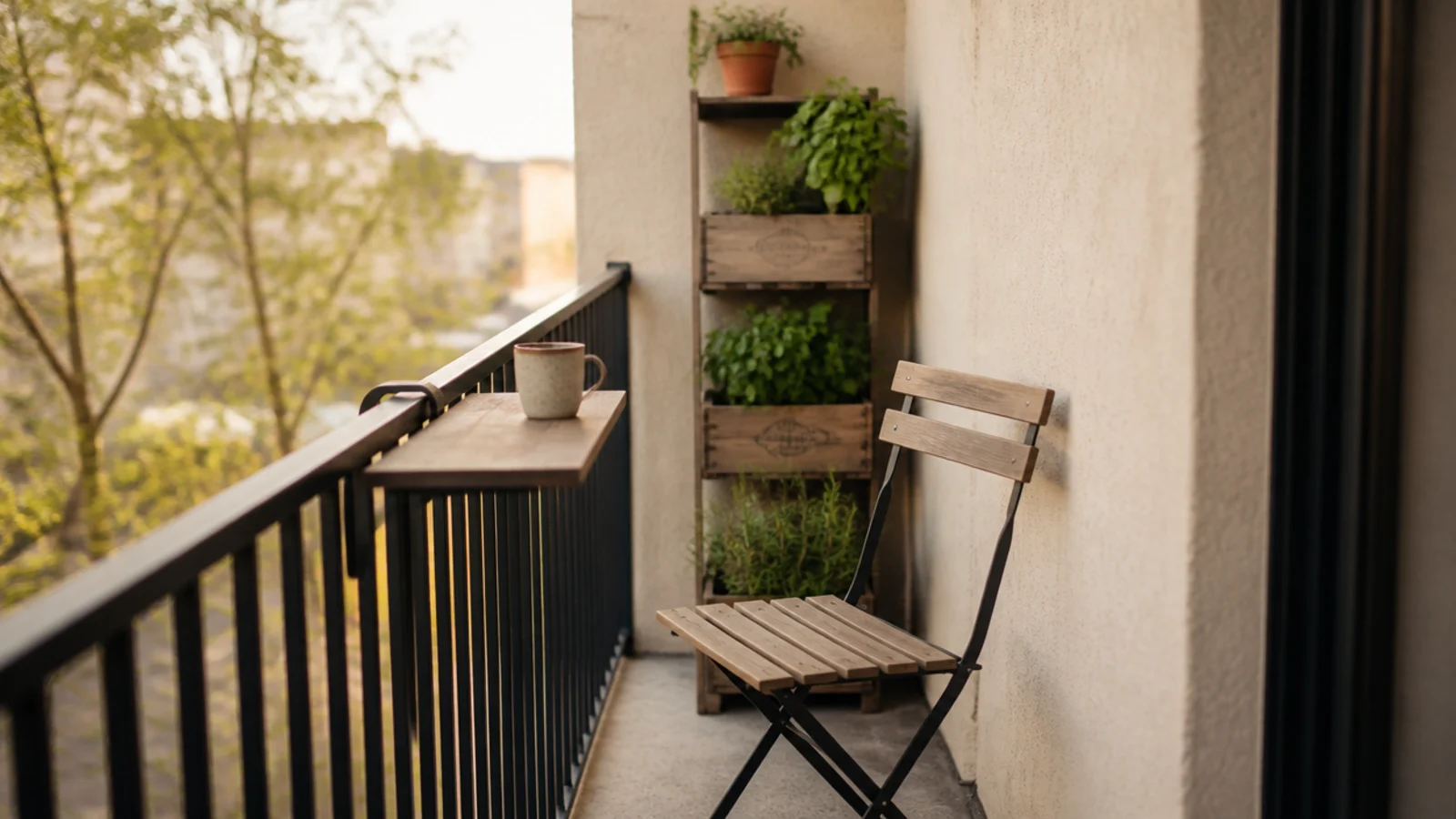
Hook-over boxes must sit on the inner face with the bracket tightened down against the top rail. Check the tightness monthly. Keep the planting shallow and light — a soaked rail box is heavy, and mass on a railing is exactly what you do not want. $–$$
13. Nasturtium and calendula for colour that forgives neglect
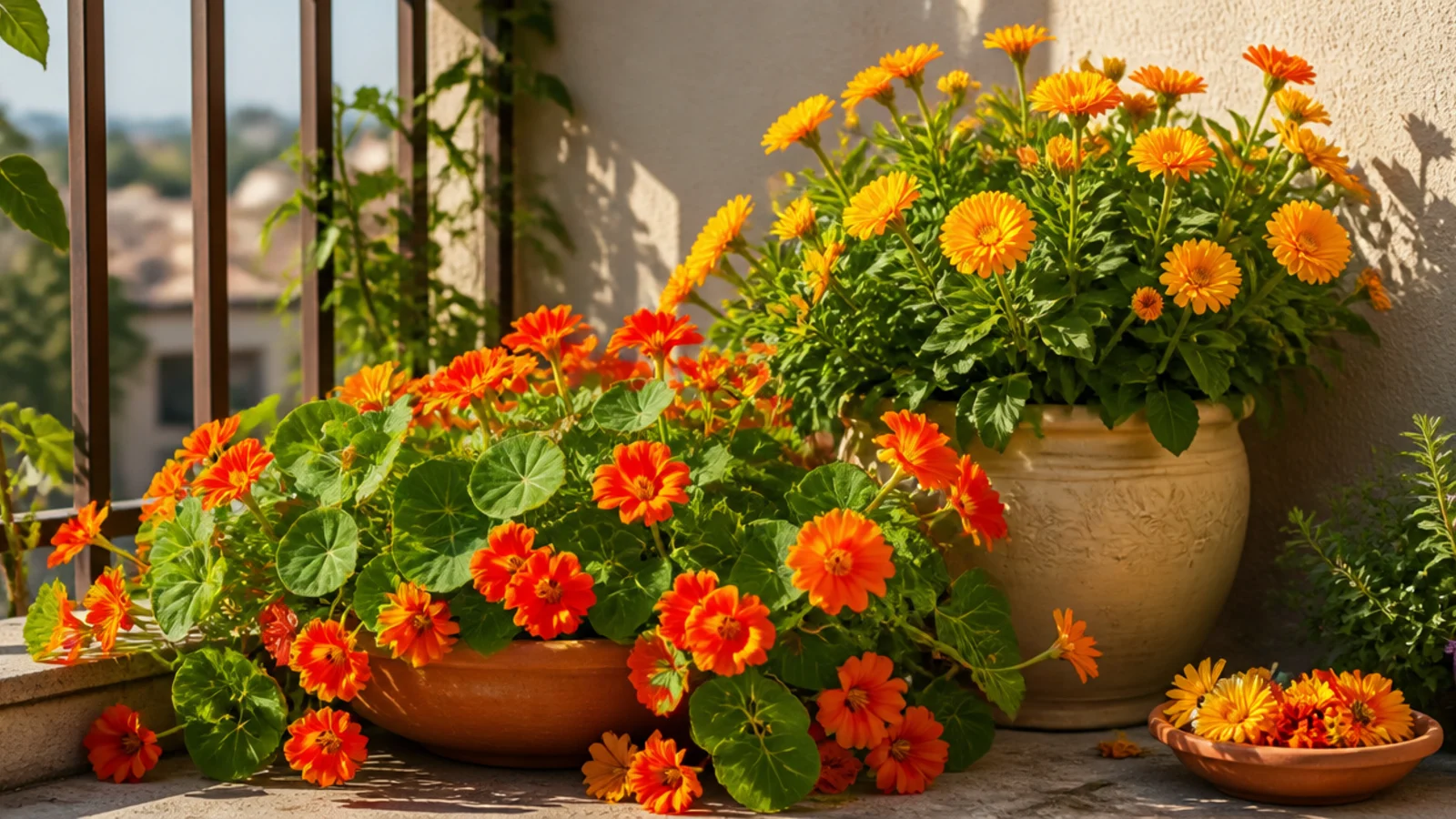
Both grow from cheap seed, flower for months, tolerate poor soil, and actually flower better when you underfeed them.
Nasturtium tumbles from a low bowl or a rail box; calendula stands upright in a 10-inch pot. Leaves and petals are both edible, which makes them the rare balcony plant that earns its space twice. Deadhead weekly and they run to October. $
14. Succulents only where the drainage is genuinely fast
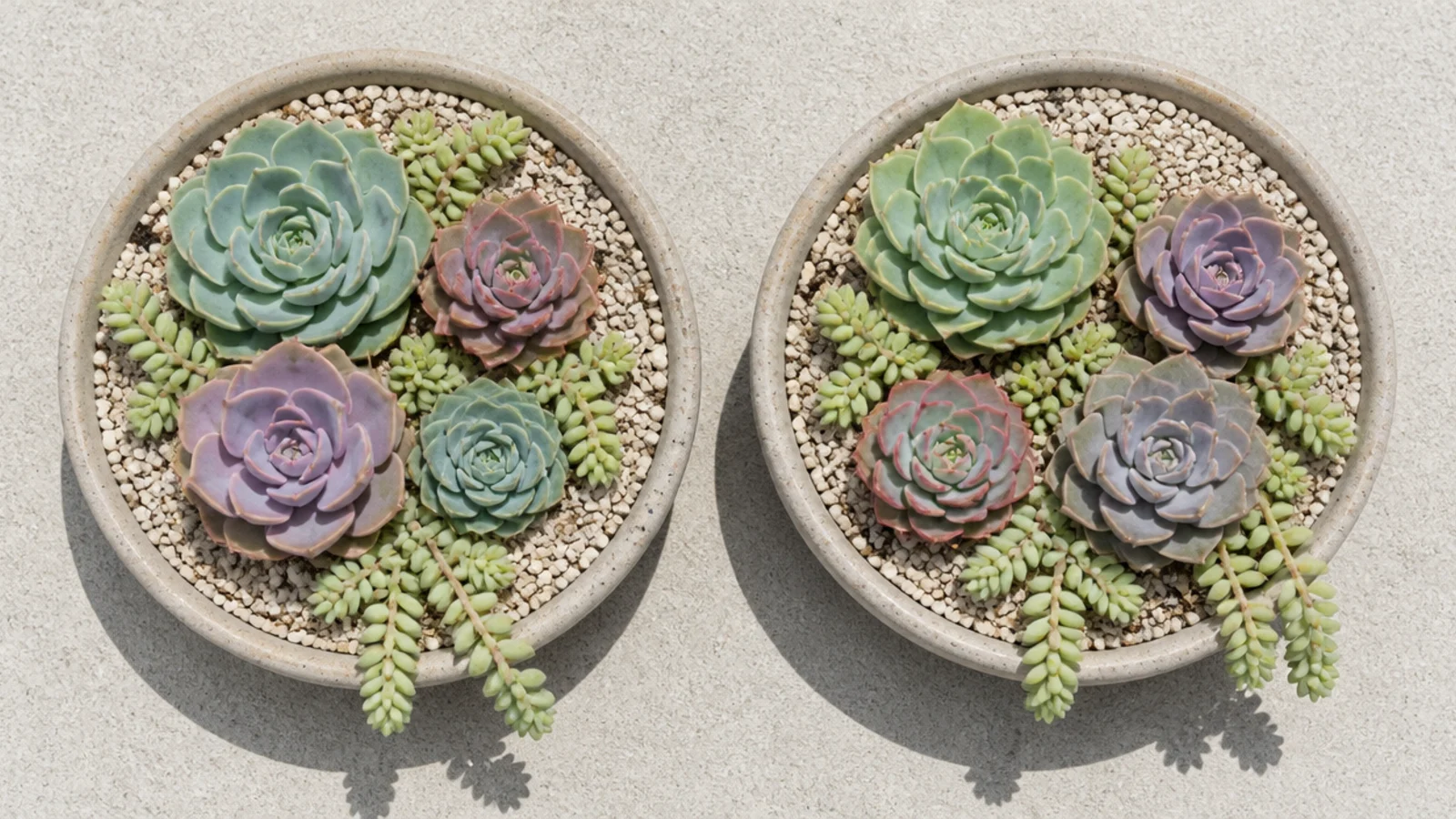
Succulents look like the obvious balcony answer and then rot over a wet fortnight, because a saucer of standing water is exactly what kills them.
If you want them, use wide shallow bowls, compost cut half and half with grit, a gravel top dressing, and pot feet so the base never sits in water. Move them under cover in prolonged rain. Full sun, sharp drainage, nothing else. $–$$
15. Cut herbs weekly so they keep coming back
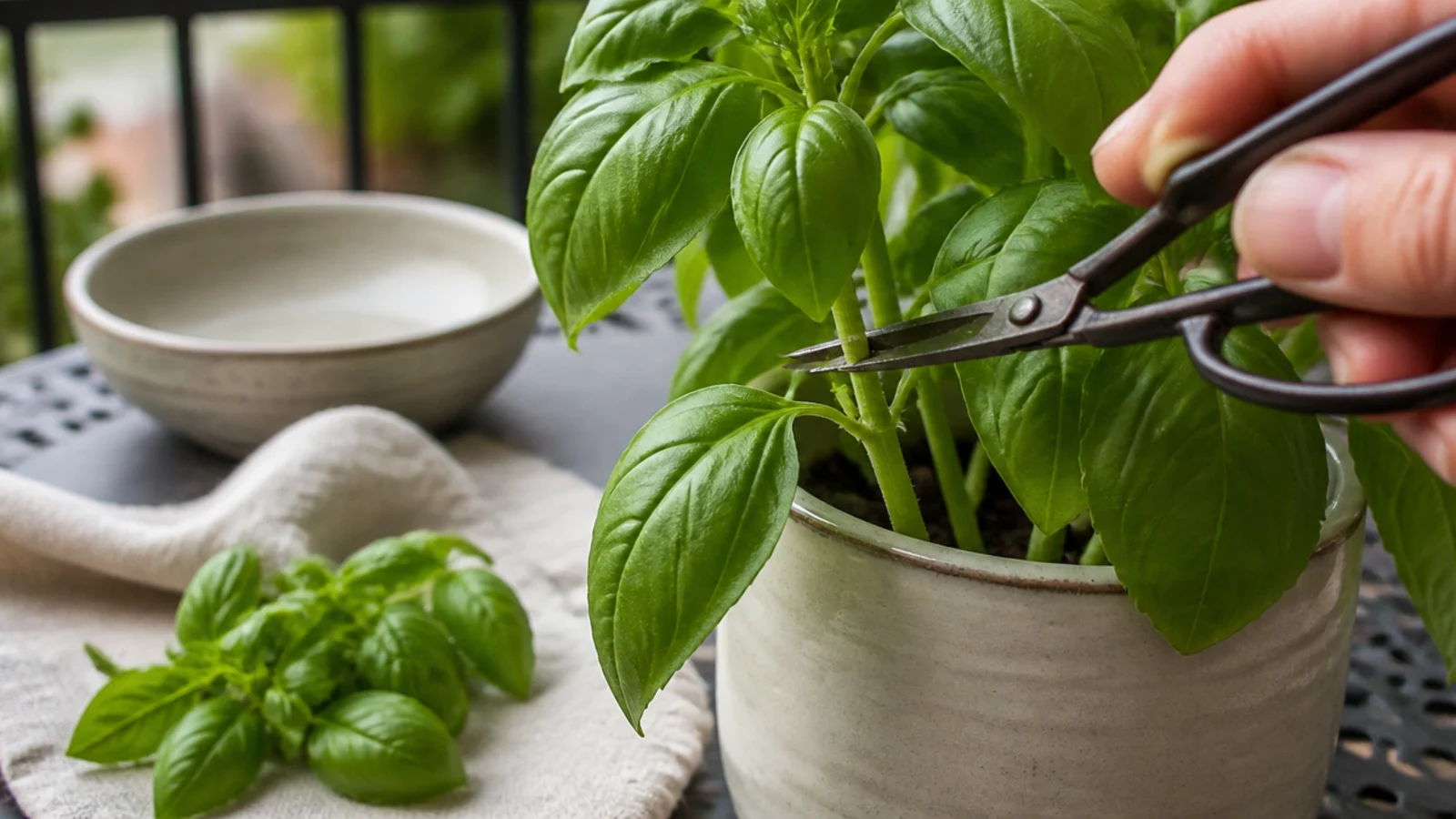
Most balcony herbs die of politeness. Cutting is what keeps basil, mint and oregano bushy rather than leggy.
Cut stems just above a pair of leaves and the plant branches into two. Take about a third at a time, weekly, from early summer. A plant you harvest properly gives you three times what a plant you admire does — and it is the difference between a herb pot and a herb display. $
16. Size the pot to the plant, then go one size up
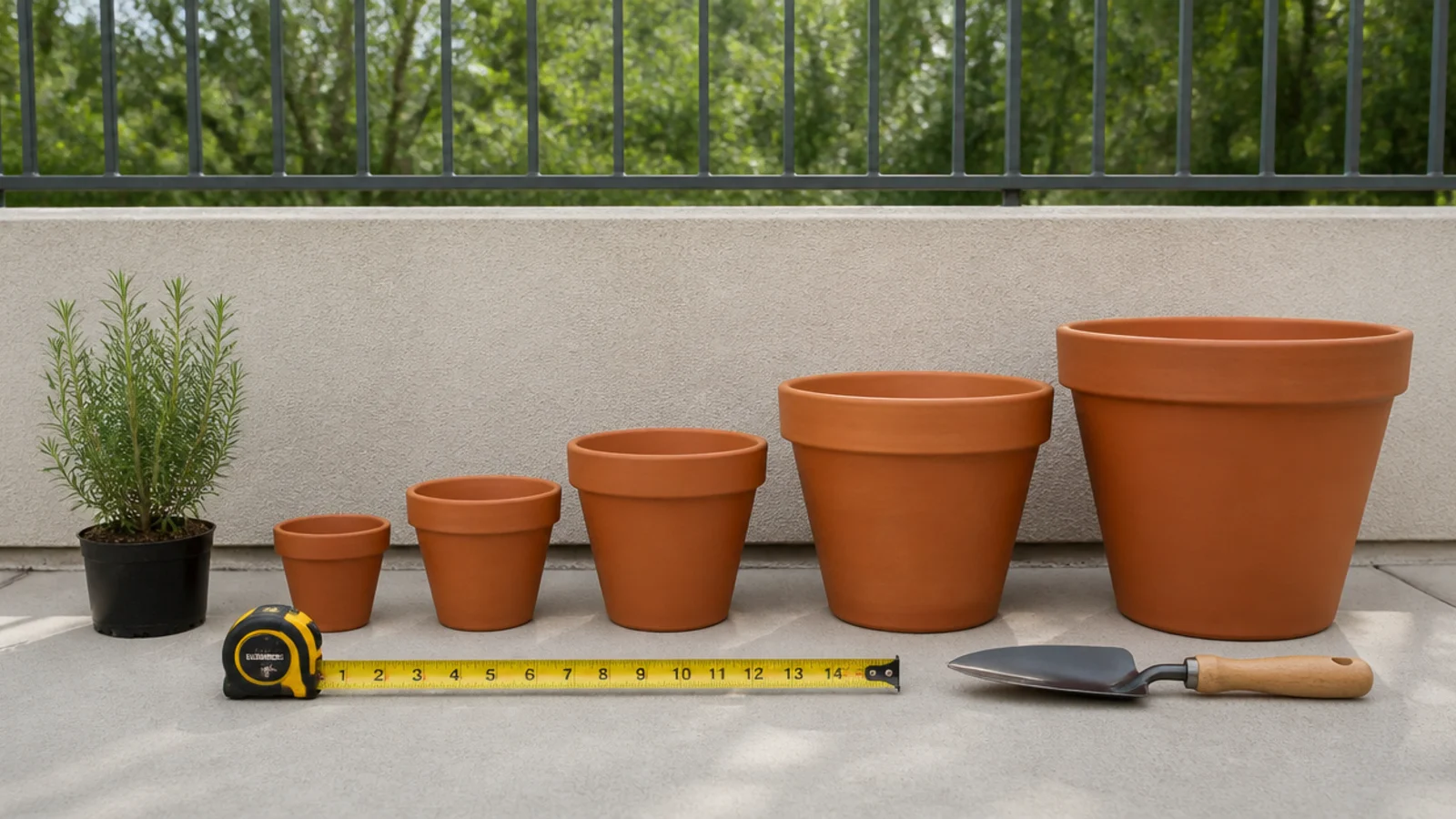
On a balcony, pot volume is water storage. Anything under 8 inches across will be bone dry by lunchtime on a sunny slab in July.
Use 10 to 12 inches for herbs and small shrubs, 14 to 16 for a dwarf tree, and 5 gallons for tomatoes. Fewer, bigger pots beat many small ones on every measure except the first day's shopping bill. $$
17. Terracotta, glazed or fiberstone, and what each costs you
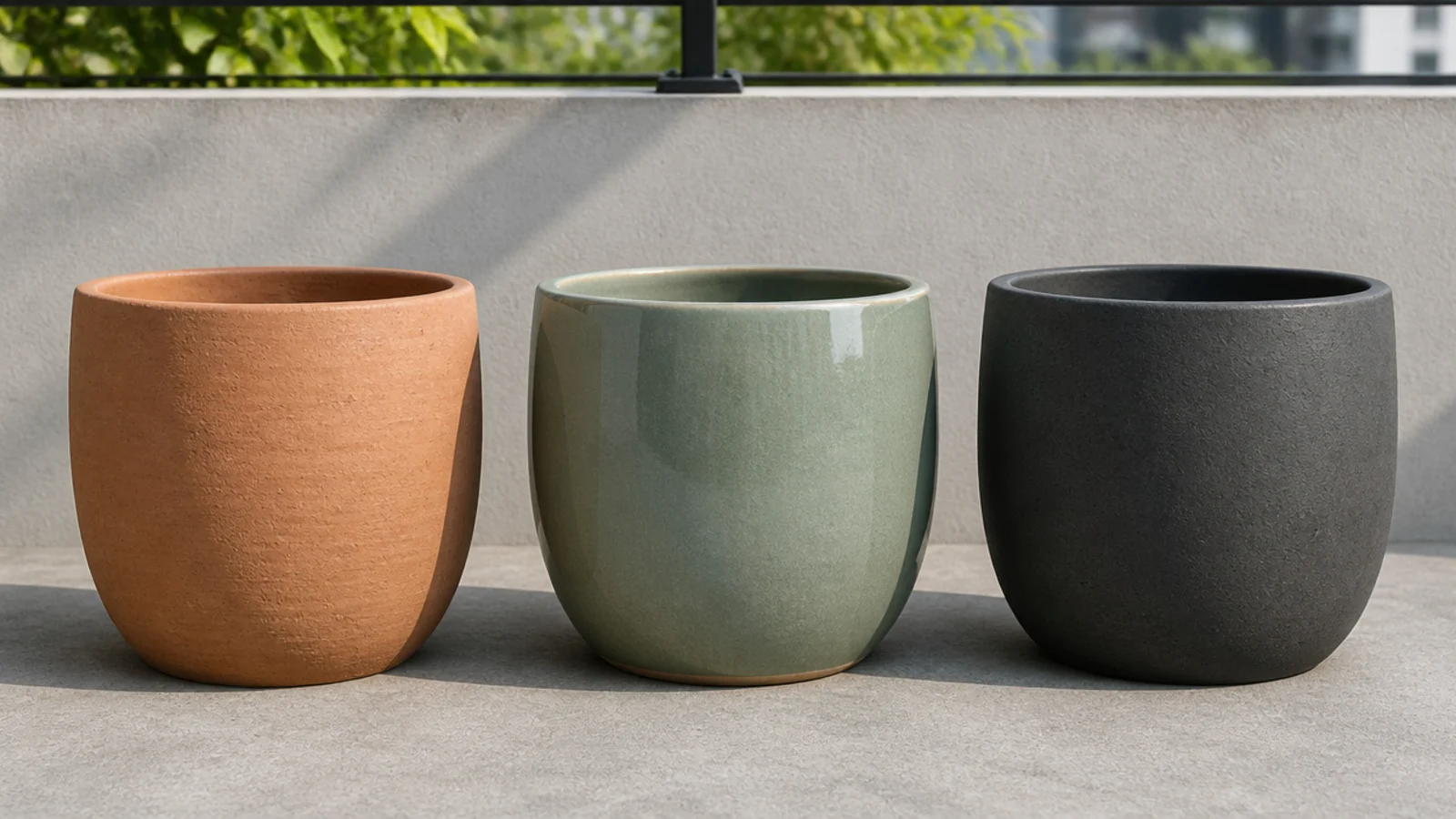
Unglazed terracotta breathes, which plants like and your watering schedule does not — it dries fastest of the three.
Glazed ceramic holds moisture much longer and suits anything thirsty, but it is heavy. Fiberstone and resin weigh a fraction of both, which genuinely matters on a slab with a load limit. Repeat one material across the balcony and a mixed plant collection instantly looks composed. $$
18. Potting mix, never garden soil
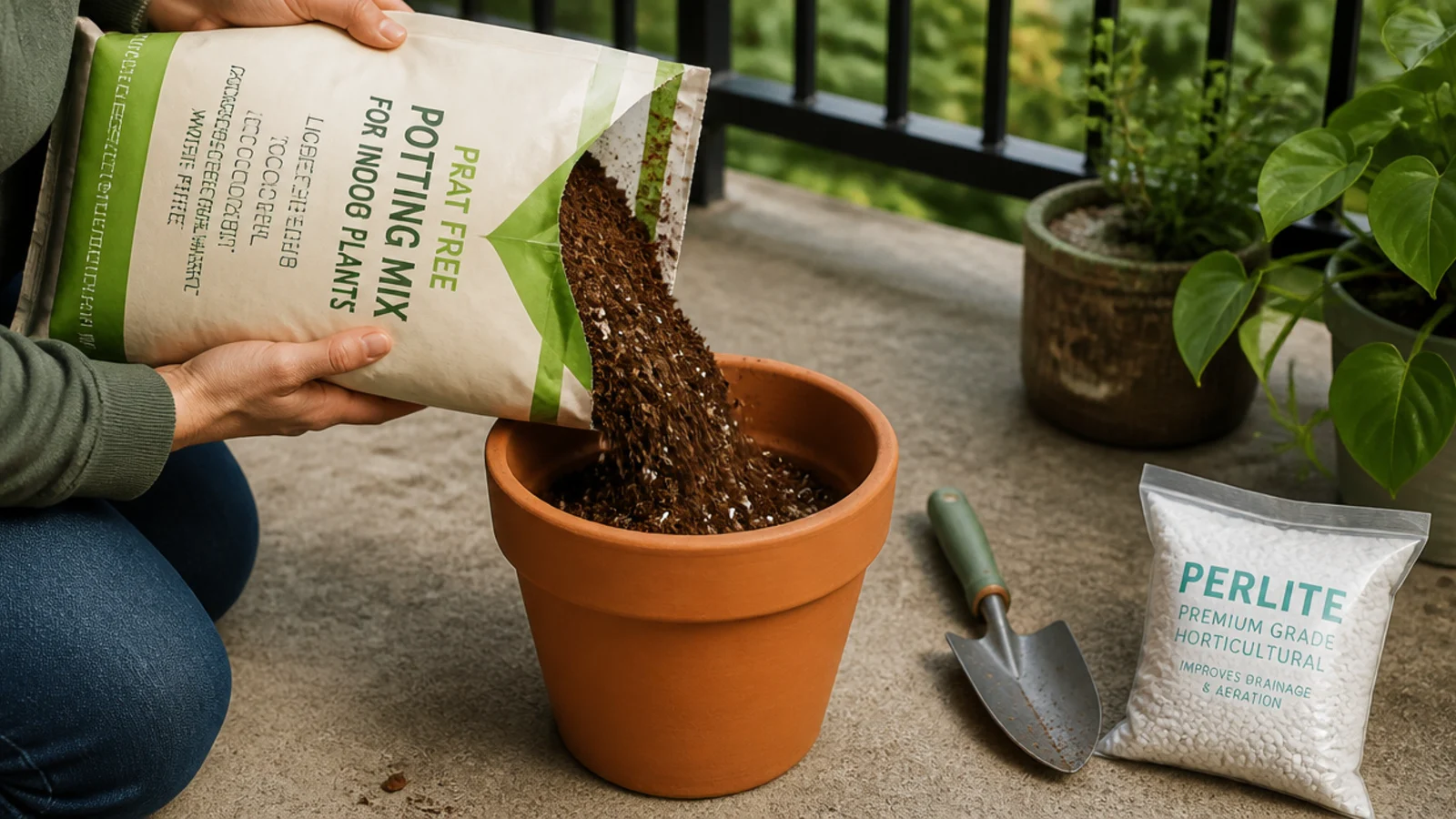
Garden soil in a container compacts into a solid block within weeks, waterlogs at the bottom and stays bone dry on top.
Use a proper peat-free potting mix, and add perlite or grit for anything Mediterranean. Refresh the top 2 inches each spring and repot fully every second year. This one costs $12 and prevents about half of all container failures. $
19. A saucer under every single pot
Watering without saucers means watering the balcony below, and it is one of the most common complaints buildings get.
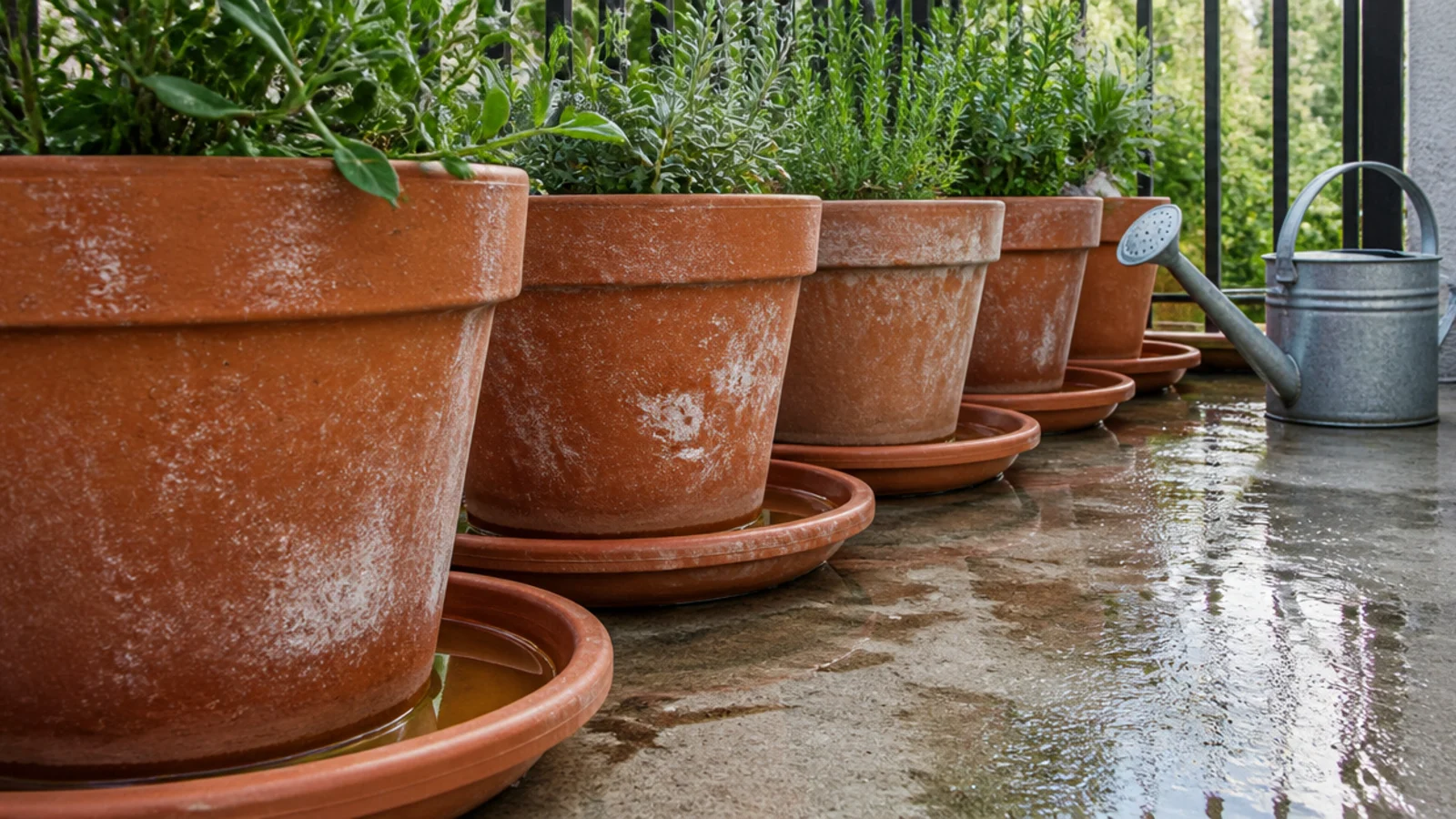
Choose saucers wider than the pot base so they catch runoff rather than overflow. Water slowly in two passes, thirty seconds apart, so the mix absorbs rather than channels. Empty the saucers after heavy rain — standing water rots roots faster than drought kills them. $
20. Self-watering containers for the sun trap
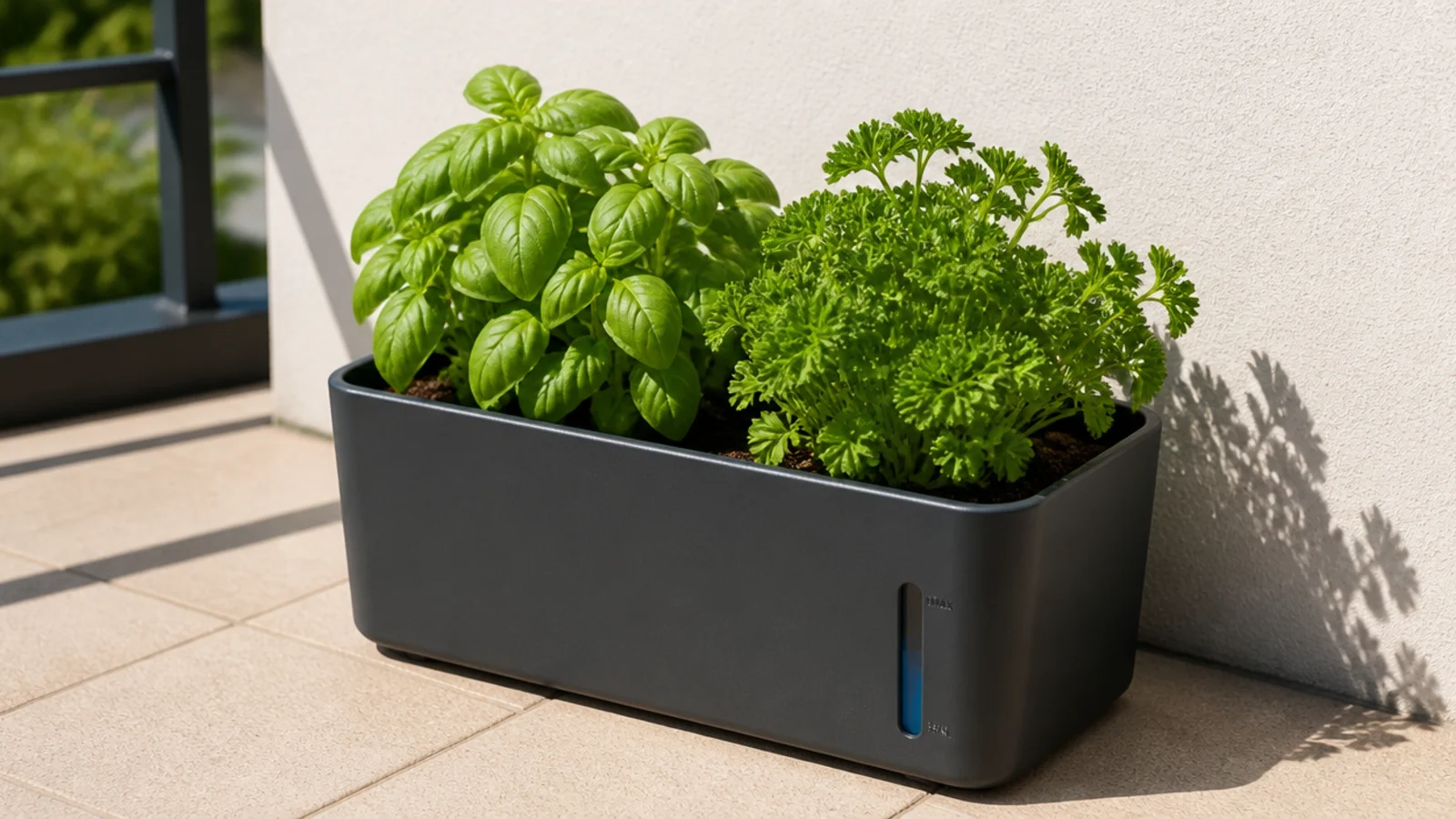
A self-watering planter with a 2 to 3 litre reservoir is the difference between a balcony you can leave for a weekend and one you cannot.
They suit thirsty plants — tomatoes, basil, hydrangea — and actively harm Mediterranean herbs that want to dry out. Fill the reservoir, not the surface, and check the level indicator rather than guessing. $$
21. Mulch the surface and halve your watering
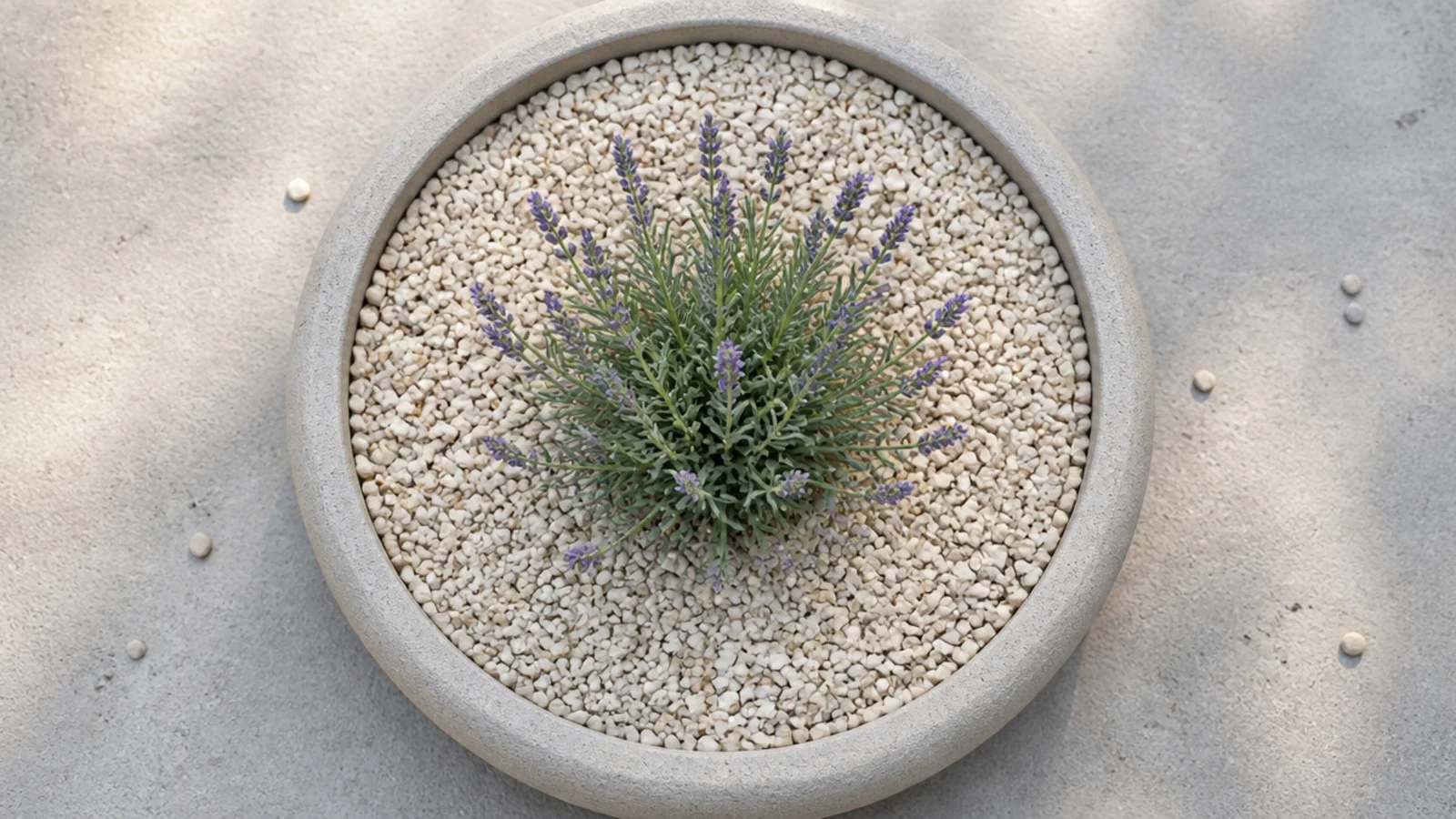
An inch of pale gravel, bark or even broken terracotta over the compost cuts evaporation substantially and stops the surface crusting.
Pale gravel also reflects heat away from the root ball, which on a sunny slab is worth as much as the moisture saving. Keep the mulch just clear of the stem, and top it up each spring. Cheapest useful upgrade in this list. $
22. Group the pots so they shade each other
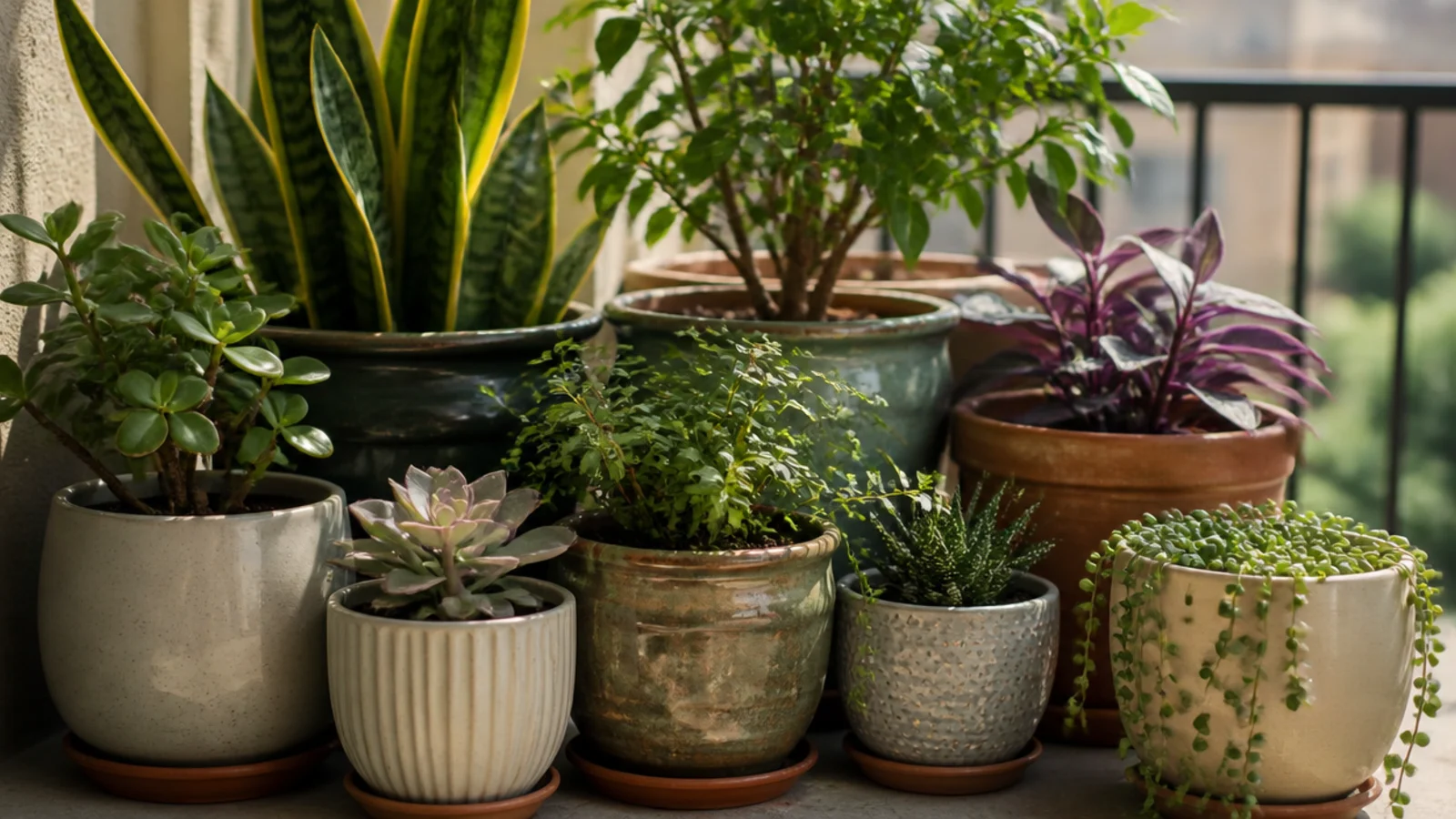
Plants massed together create a small humid pocket and shade each other's containers, which is why a tight cluster survives a heatwave that kills scattered single pots.
Put the tallest at the back against the wall, step heights down toward the front, and let the leaves touch. It looks better too — a group reads as planting, while a line of separate pots reads as inventory. Free
23. Feed containers monthly, because the nutrients wash out
Every time you water a pot, some of its nutrients run straight out of the drainage holes. Compost is exhausted within about six weeks.
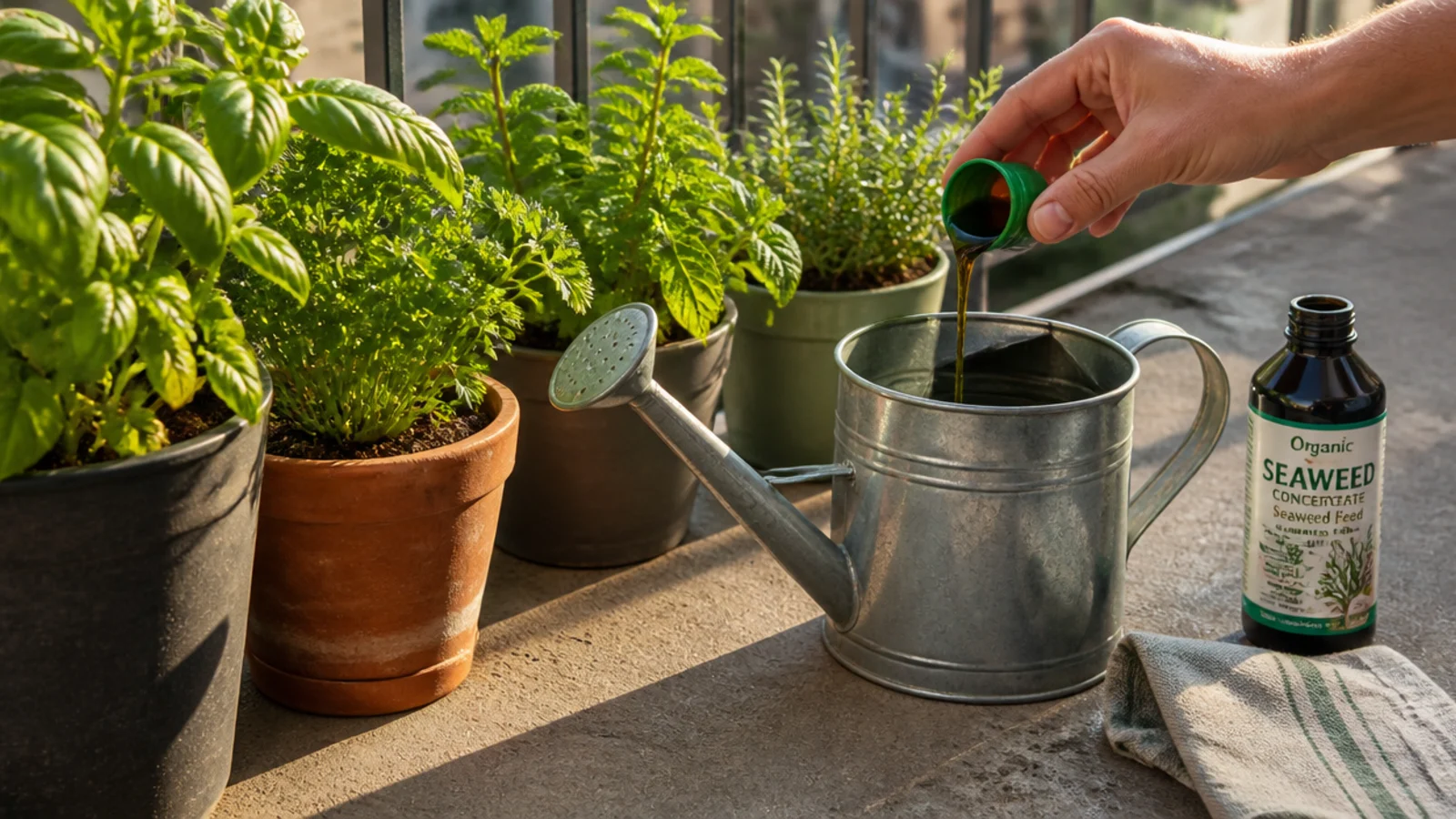
A liquid seaweed or tomato feed once a fortnight through the growing season fixes it for a few dollars a summer. Yellowing lower leaves on a well-watered plant almost always means hunger, not thirst. $
24. Keep the heaviest containers against the building wall
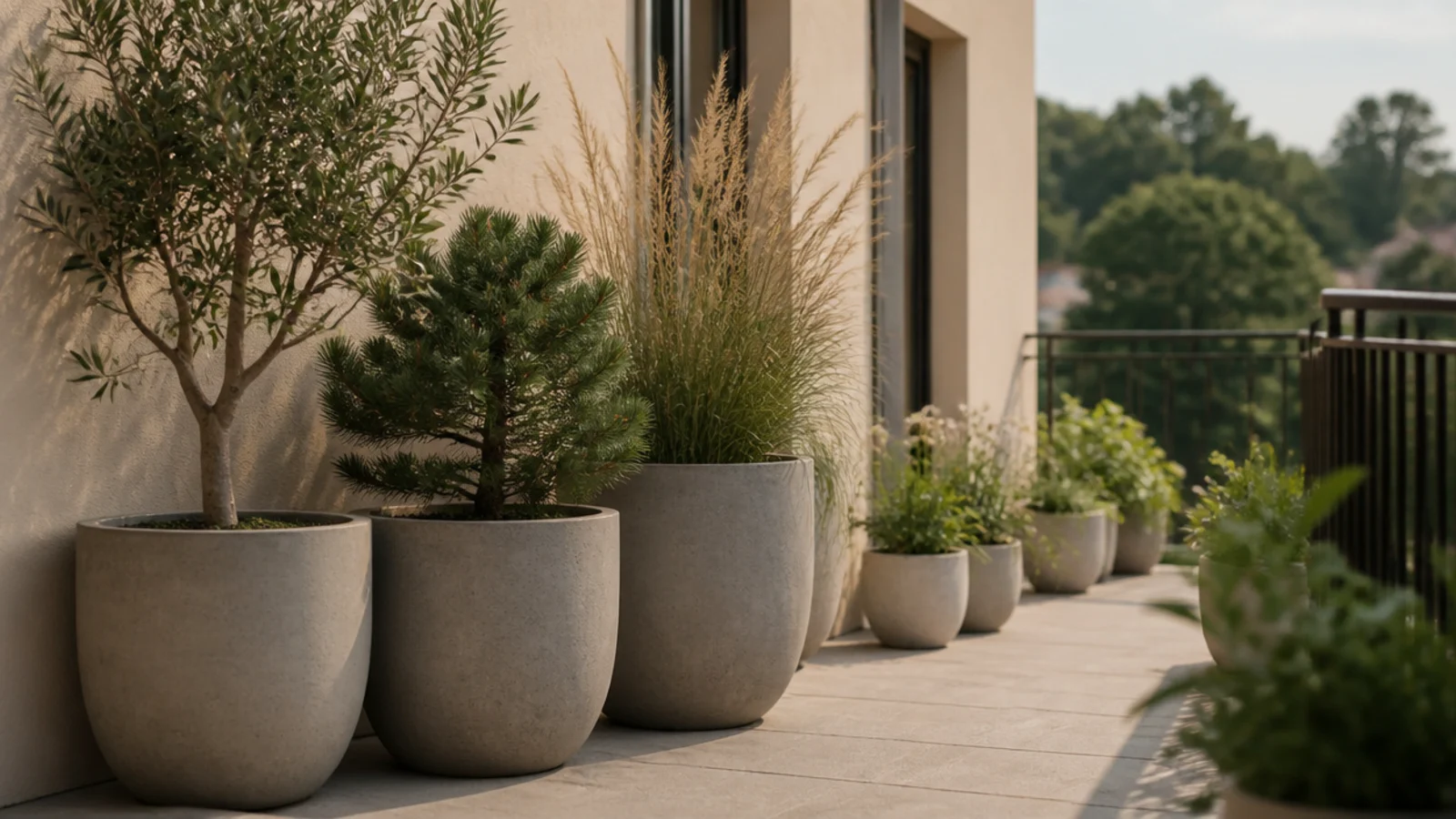
A 16-inch planter full of wet compost can pass 100 pounds. Balconies are engineered for distributed load, not for a row of heavy pots massed along the outer edge.
Put the big containers against the building wall where the slab is strongest and step down in size as you move outward. It is also the better composition: height at the back, low at the front, and a slab that still feels open. Free
25. Write the winter plan in September, not December
Containers freeze from all sides, which is why plants that survive winter in the ground die in a pot on a balcony.
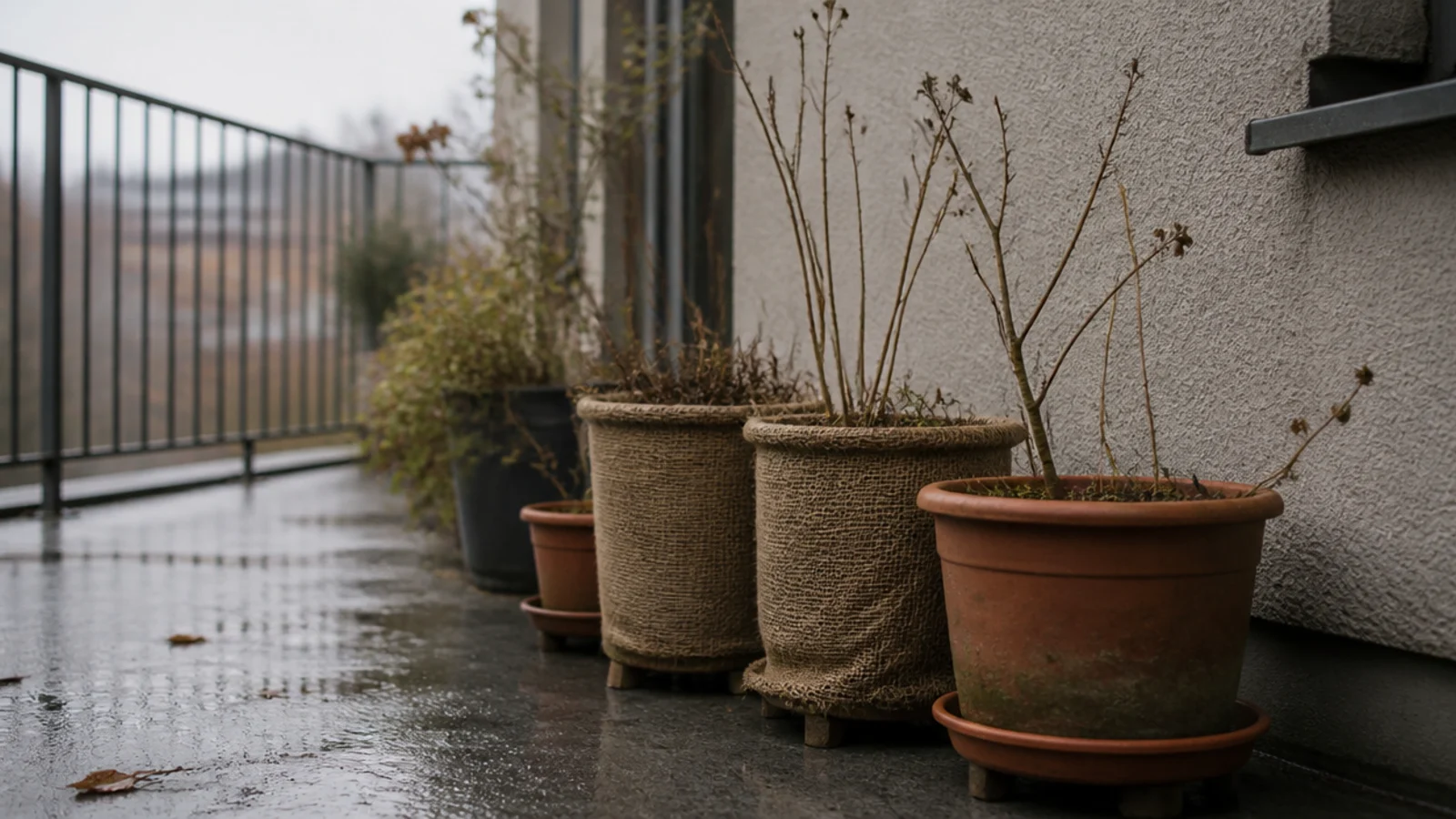
Group everything against the wall, raise pots on feet so they are not sitting in ice, and wrap terracotta in hessian to stop it cracking. Treat tender things as annuals rather than pretending. The full seasonal routine lives in the apartment balcony garden guide. $
Mistakes to Skip
- Buying plants for the photo instead of the aspect. A lavender on a north-facing balcony will sulk for a season and then die, no matter how carefully you water it.
- Hanging pots on the outside face of the railing. Wet soil is heavy, brackets loosen, and a falling planter from height is lethal to whoever is below.
- Skipping saucers to save $2 each. Runoff lands on the neighbour below, stains their furniture and is the single most common reason balcony gardening gets banned in a building.
Frequently asked questions
What plants survive best on an apartment balcony?
Small-leaved, wind-tolerant, drought-forgiving plants: rosemary, lavender, sedum, thyme, ornamental grasses and dwarf pines in full sun, and ferns, heuchera, ivy and begonias in deep shade. Large soft leaves shred in wind and wilt on concrete. Match the plant to the aspect first and the look second, because no amount of care fixes the wrong light.
How often do balcony plants need watering?
Far more often than beds. In full summer sun on a concrete slab, most containers need water daily, and small terracotta pots can need it twice. Push a finger in to the second knuckle before you water — if it is damp, wait. Water slowly in two passes so the soil absorbs it rather than channeling straight through.
Can plants blow off a balcony?
Yes, and that is the whole reason for the rules here. Above the third floor a gust will move any pot that is tall, light or perched on a ledge. Keep containers on the floor or inside the railing, never on the outer face, fill the bottom third of tall pots with gravel and group them so they shelter each other.
What size pots do balcony plants need?
Bigger than you think. Anything under 8 inches across dries out within hours on a sunny slab. Use 10 to 12 inches for herbs and small shrubs, 14 to 16 inches for a dwarf tree, and a 5-gallon container for tomatoes. Larger pots hold moisture longer, which on a balcony matters more than any other single factor.
Do I really need saucers under balcony pots?
Yes, under every single one. Without a saucer, runoff pours through the slab drainage gap and onto the balcony below, which is one of the most common complaints buildings receive. Choose saucers wider than the pot base, empty them after heavy rain so roots do not sit in water, and set pot feet under the rim if you want airflow.
What can I grow on a balcony that gets no direct sun?
More than people expect. Ferns, heuchera, hostas, ivy, begonias, impatiens and mint all do well in bright indirect light under the slab above. Skip anything fruiting or Mediterranean — tomatoes, lavender and rosemary need six hours of direct sun and will simply sulk. Pale foliage and white flowers read best in shade.
Start with the sun log, buy three plants rather than ten, and put every one of them in a bigger pot than feels necessary. That combination survives the first summer, which is the only test that matters. For the structure around the planting, 15 apartment balcony ideas covers furniture and floor, and if you want the same terracotta-and-greenery palette carried indoors after dark, a cozy candle corner uses the identical grouping rules. Save the pin for your next nursery trip.
Want more like this? Browse all 15 apartment balcony ideas guides — they all use the same measurements and budget tiers.

Pin it for later
Save this to your Apartment Balcony Ideas board
Pin it now so it is waiting for you when the tape measure comes out — and so the next person hunting for this idea can find it too.
Save this pinKeep going
More ideas worth saving while you have the tape measure out.