Apartment Balcony Ideas · Listicle
15 Cozy Apartment Balcony Ideas That Look Pricey

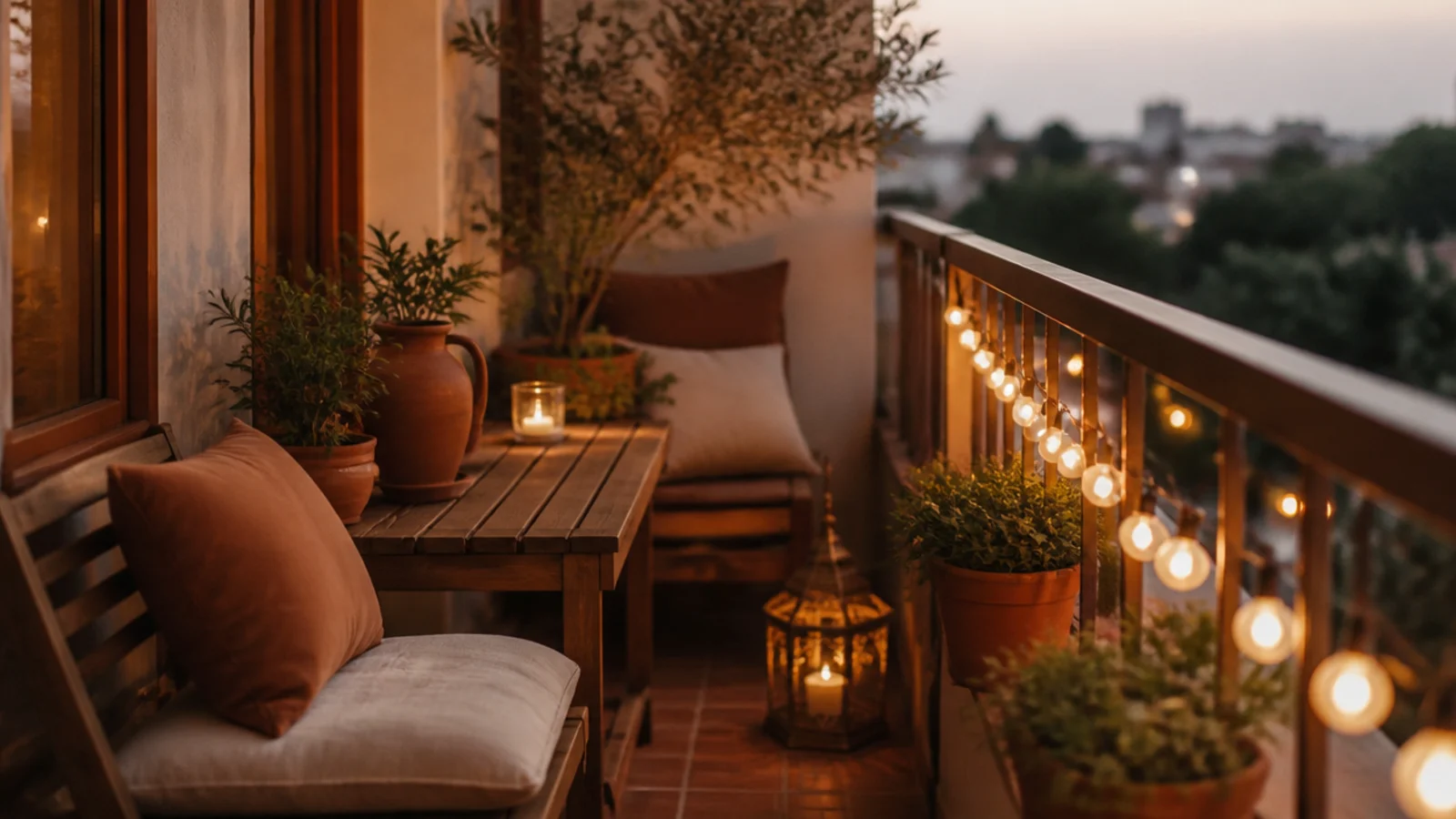
Styling an apartment balcony on a budget is not about finding cheaper versions of expensive things. It is about reducing how many decisions are visible at once, because visual noise is what reads as cheap — not price. My best-looking balcony cost about $180 in total, and most of what made it work was subtraction. These 15 rules do the heavy lifting, and every one of them survives wind, a lease and a slab you cannot drill.
In this guide17 sections — tap to openHide
- 1.What makes an apartment balcony on a budget read as expensive
- 2.Pick three materials and stop
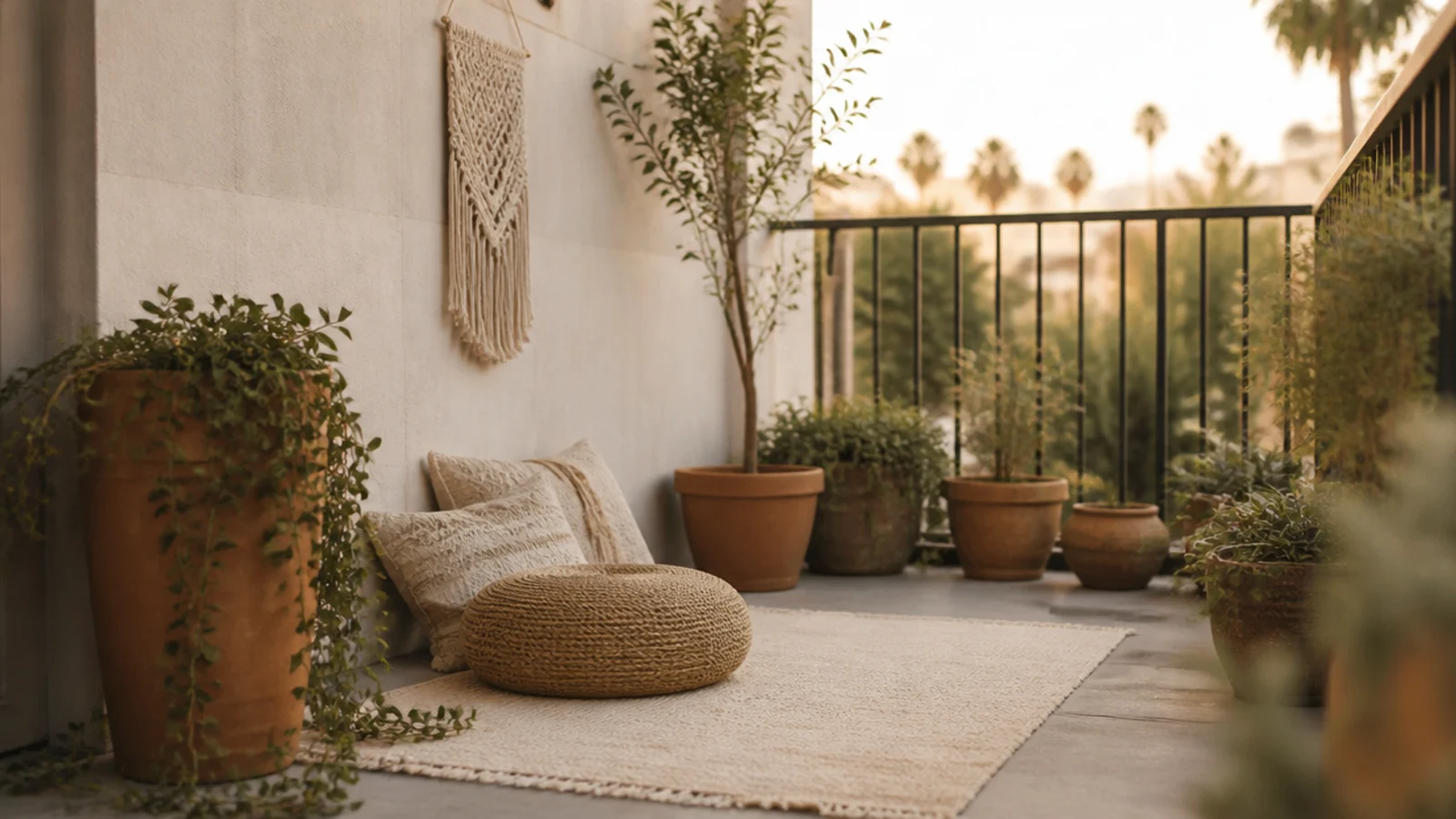
- 3.One oversized planter instead of six small pots
- 4.Match every pot, even when the plants differ
- 5.Cover the floor properly, edge to edge
- 6.Buy one object with real weight
- 7.Light at three heights, all at 2700K
- 8.Hide the utility corner
- 9.Screen one sight line neatly, not the whole rail
- 10.Bring thrifted wood back with oil
- 11.Upgrade the cushions, ignore the frames
- 12.Use symmetry, because it costs nothing
- 13.Give every seat a surface at the right height
- 14.Repeat one shape three times
- 15.Keep everything below rail height except one thing
- 16.Clean the railing and the glass
- 17.Mistakes to Skip
What makes an apartment balcony on a budget read as expensive
Expensive spaces are consistent, not costly. Out on a slab you already have three loud elements you did not choose — a metal railing, grey concrete and the whole sky — so everything you add has to calm that down rather than add to it.
Three rules cover most of it. Limit the materials to three. Repeat things rather than varying them. And give the floor a proper treatment, because bare concrete is the single biggest tell.
The practical constraints stay the same whatever you spend. Read the balcony clause first — most buildings prohibit drilling into the wall or slab, prohibit attaching anything to the railing, and ban open flame including candles and fire pits. Nothing ever mounts on the outside face of the railing, because a falling pot from height is a fatal accident rather than a broken pot. Every container gets a saucer so watering does not land on the balcony below.
And above the third floor, buy weight. Wind finds lightweight furniture, lanterns and screens, and expensive-looking pieces that blow over are neither.
Budget tiers below: $ under $20, $$ $20–$60, $$$ $60–$150.
1. Pick three materials and stop
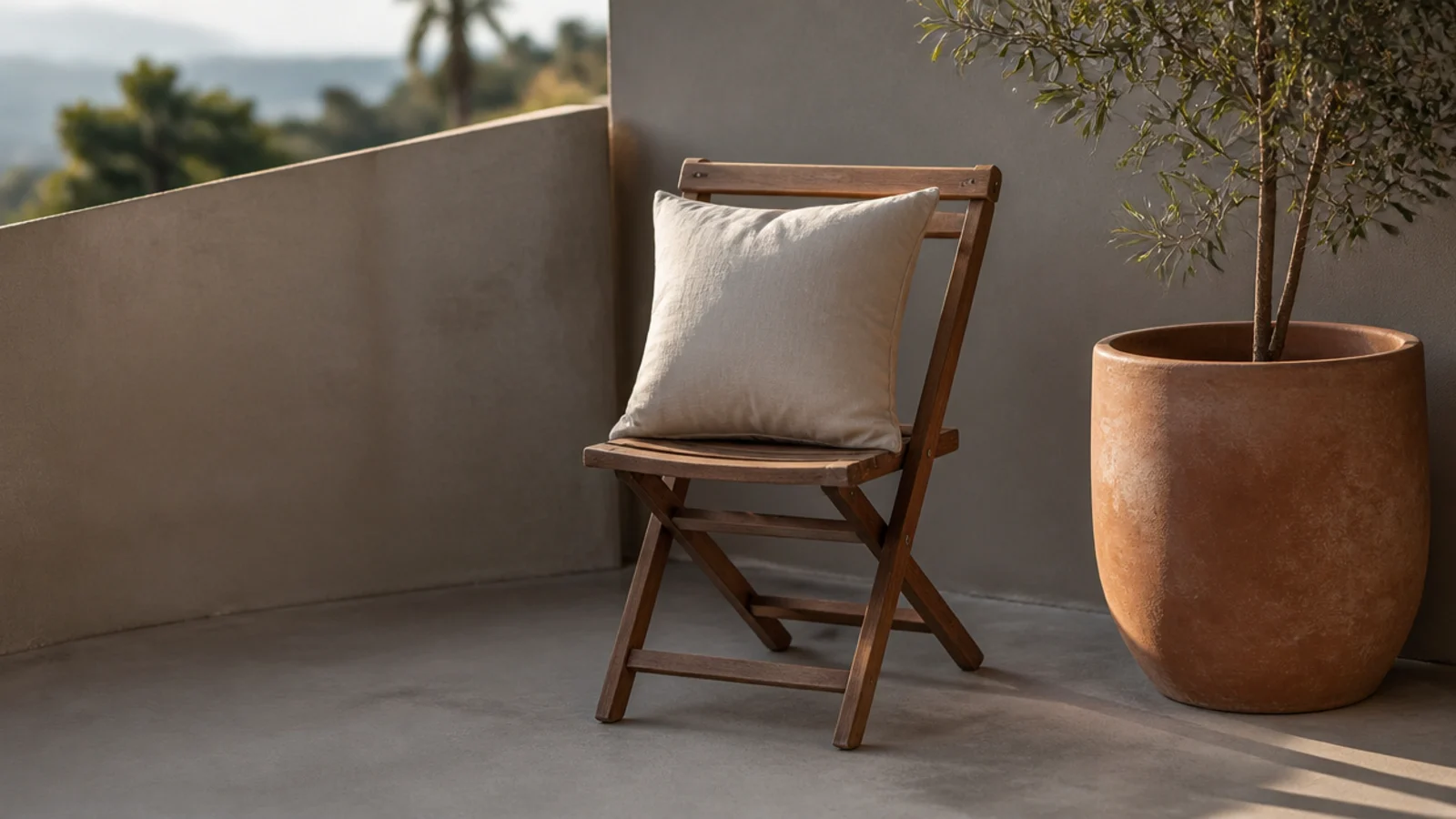
Choose three and refuse the fourth. Terracotta, warm wood and cream linen is the combination I come back to, because all three sit comfortably next to concrete and none of them fights the sky.
The discipline is in the small things: the tray, the pot feet, the lantern, the cushion piping. One stray finish — chrome, glossy black plastic, cool grey — is enough to make the whole balcony look assembled from clearance bins.
If you already own pieces in four materials, spray-painting the odd one out in a warm neutral costs $8 and pulls it into line. Free–$
2. One oversized planter instead of six small pots
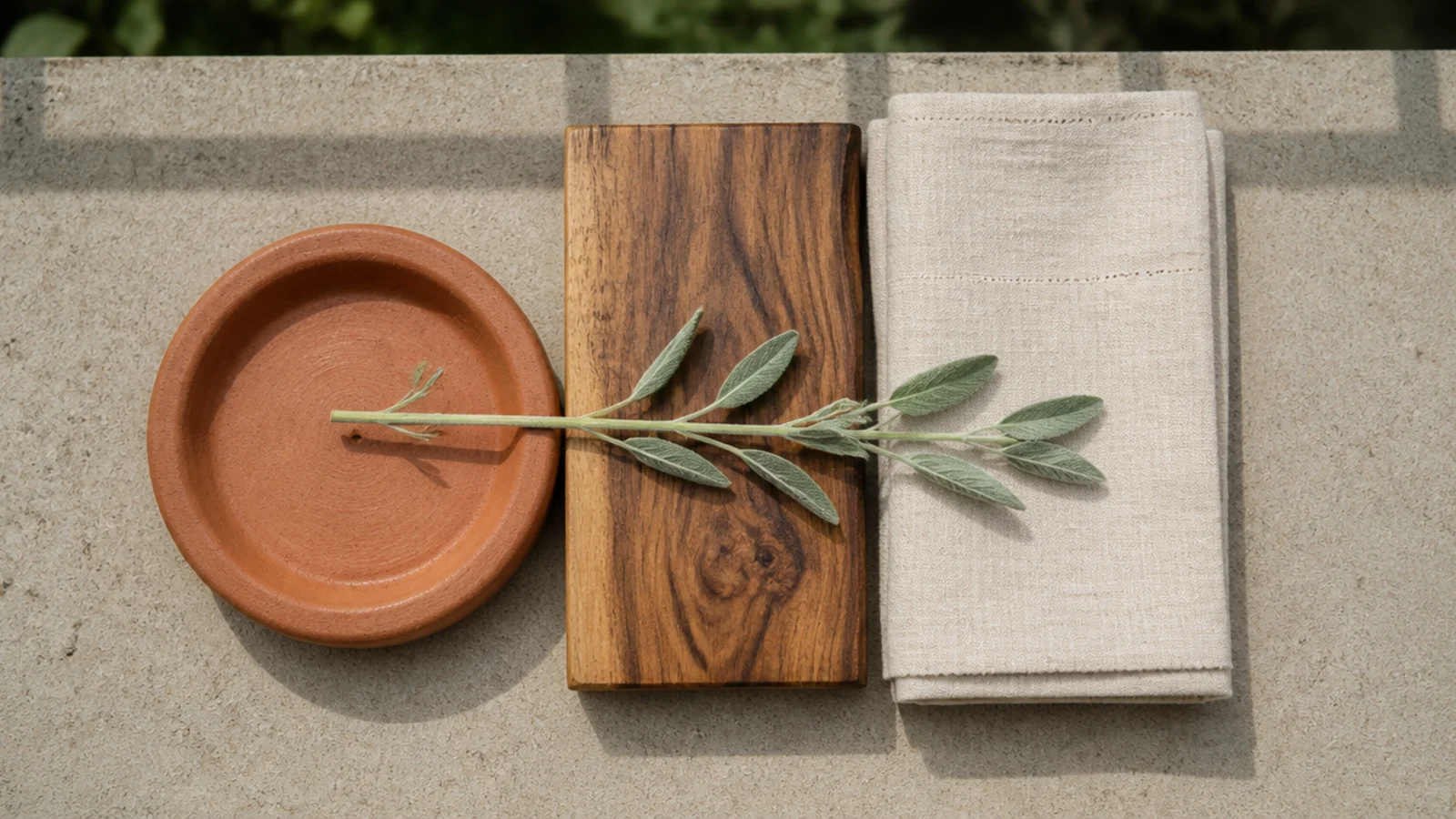
Six 6-inch pots cost more than one 16-inch planter, dry out three times faster, and read as clutter from the doorway. One large container reads as a decision.
Put it against the building wall where the slab is strongest, since a 16-inch pot full of wet mix can pass 100 pounds. Fill it with one substantial plant — an olive, a dwarf pine, a big grass — rather than a mixed arrangement.
Plain terracotta at that size runs $20 to $35, and it ages better than anything glazed. $$
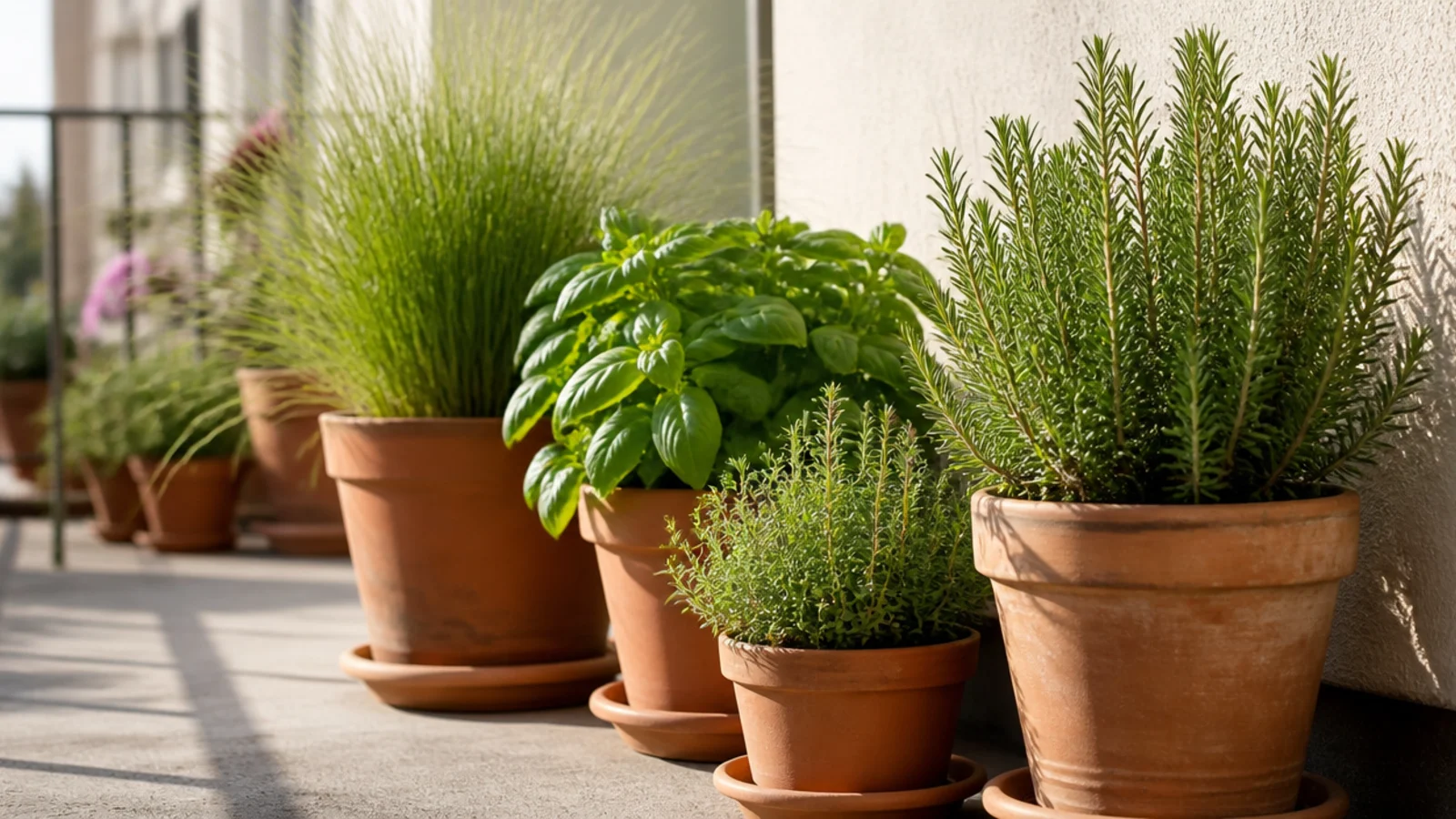
3. Match every pot, even when the plants differ
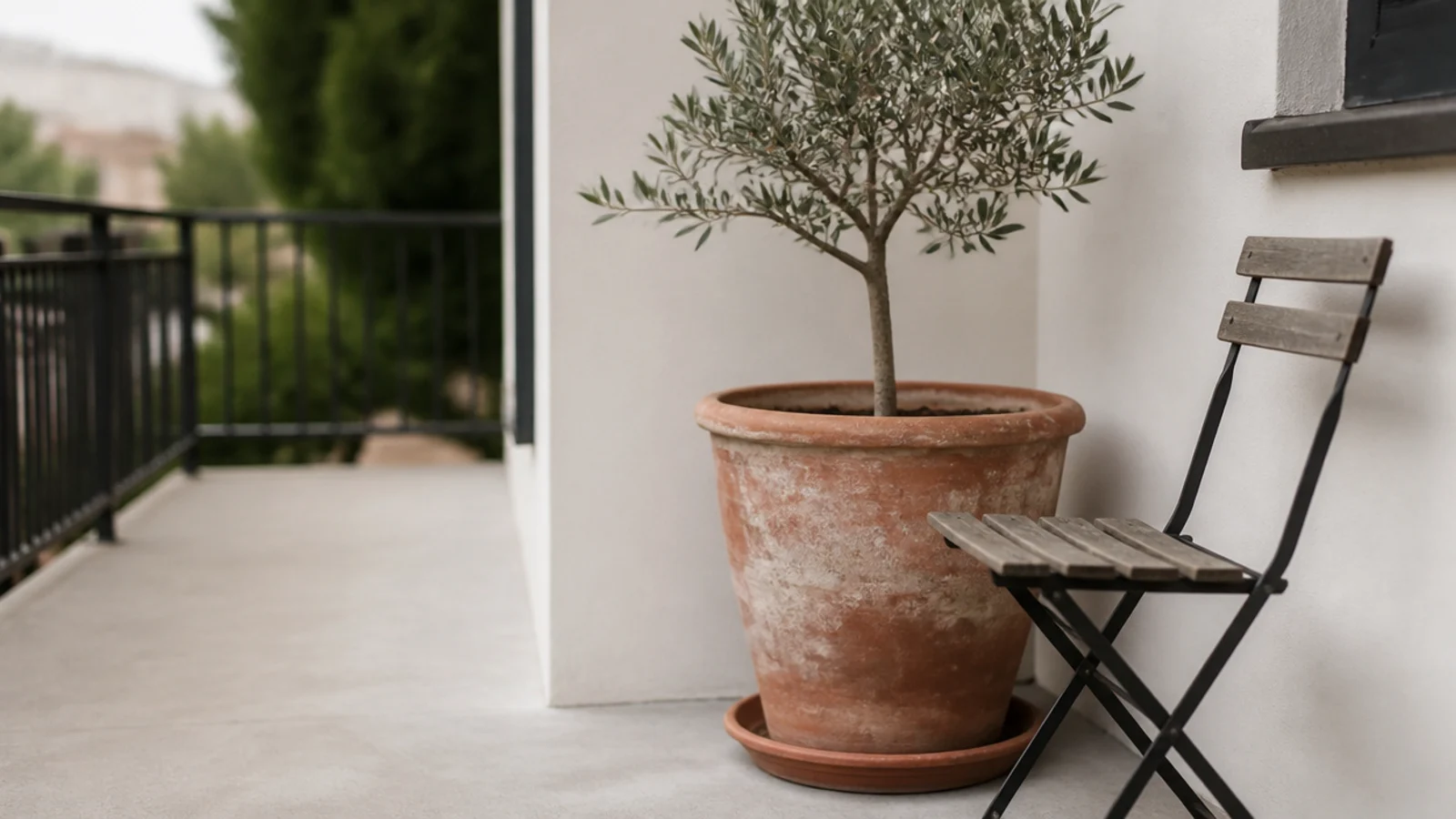
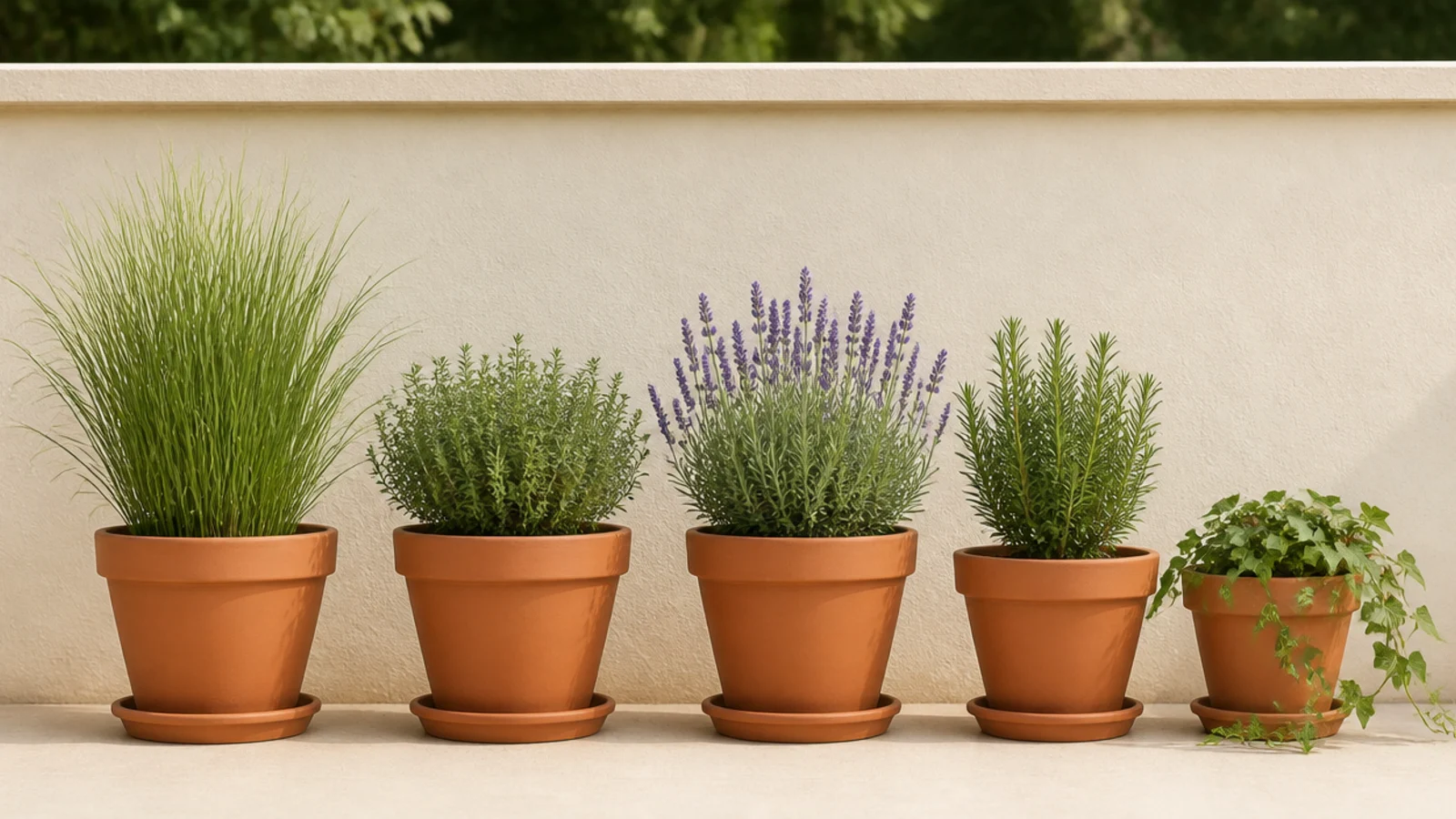
This is the highest-value cheap trick out here. A row of identical pots in three graduated sizes makes wildly different plants look like one collection.
Unglazed terracotta at $3 to $6 each is the easiest match to find and the most forgiving as it weathers. If you already own mismatched pots, a single can of matte terracotta-toned masonry paint unifies them for about $10.
Black plastic nursery pots are the exception with no fix. Repot them or hide them inside a cachepot. $
4. Cover the floor properly, edge to edge
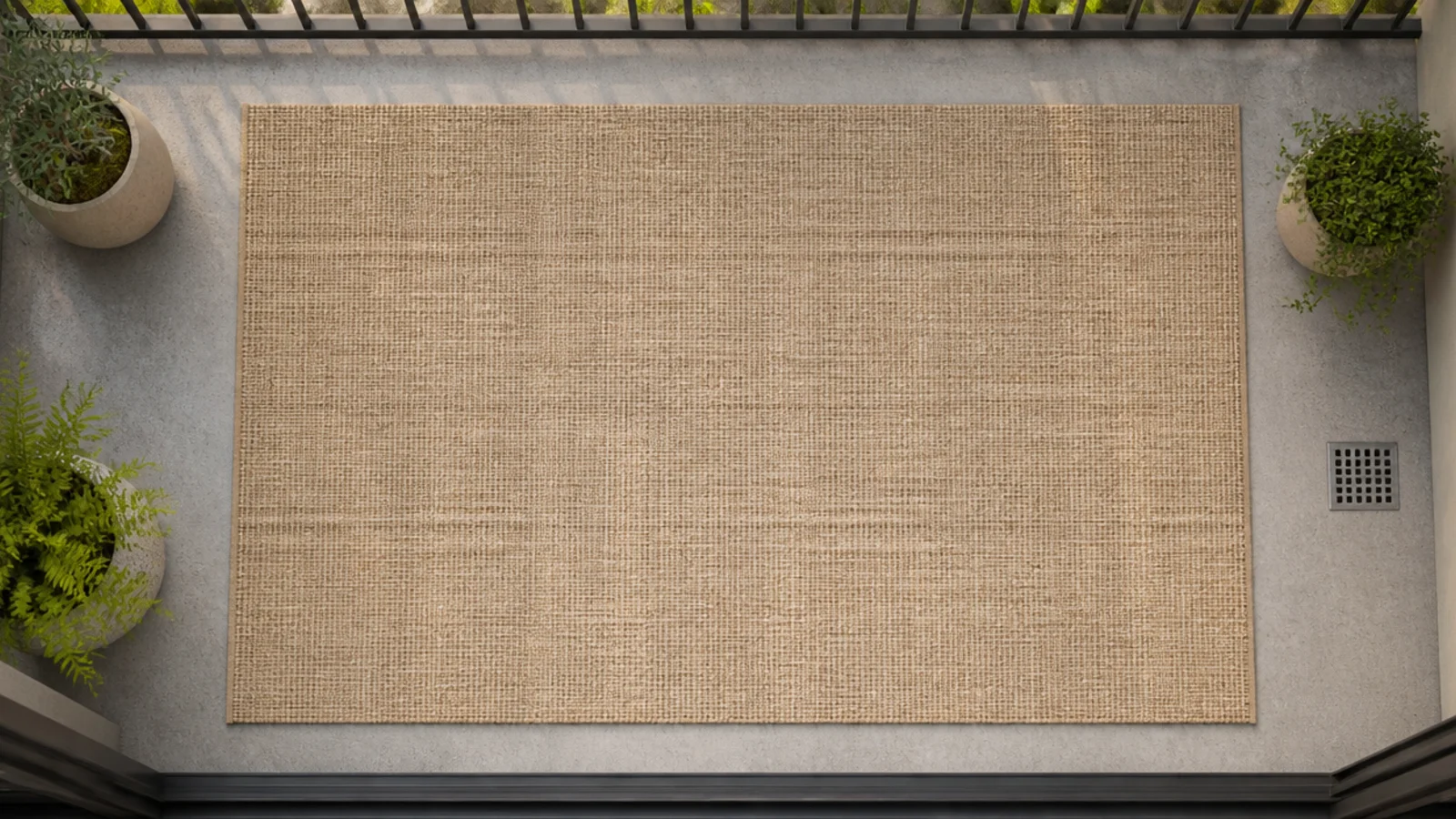
Half-covering a balcony floor is worse than leaving it bare. A small rug floating in the middle of a slab makes the space look like a waiting room.
Size the rug to leave an even 4 to 6 inch margin of concrete on every side, which is what drainage needs anyway. Open-weave flatweave only — dense pile traps water, stains the slab and smells within a month.
Interlocking deck tiles are the alternative at $2 to $4 each, and both options lift straight out at move-out. $$–$$$
5. Buy one object with real weight
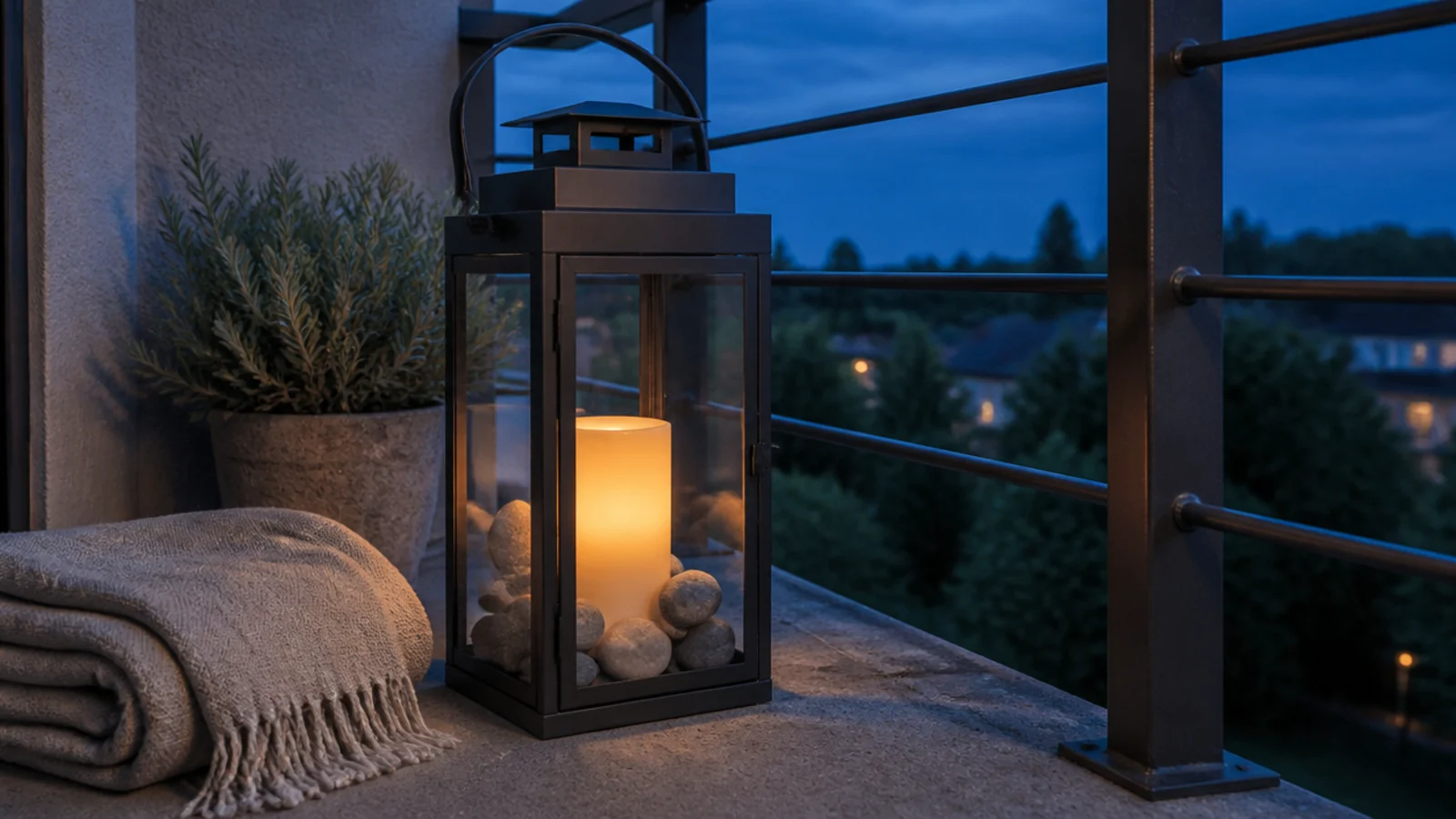
A balcony full of folding, stacking, packable pieces feels temporary because everything on it is light. One heavy object fixes that instantly.
A cast iron or stone-based floor lantern, a solid stoneware planter, a thick wooden stool — anything that takes two hands to move. Thrift stores sell iron and brass lanterns at $8 to $15 that photograph like the $90 version.
It also solves wind. Weight is the one thing a high balcony genuinely needs to buy. $–$$
6. Light at three heights, all at 2700K
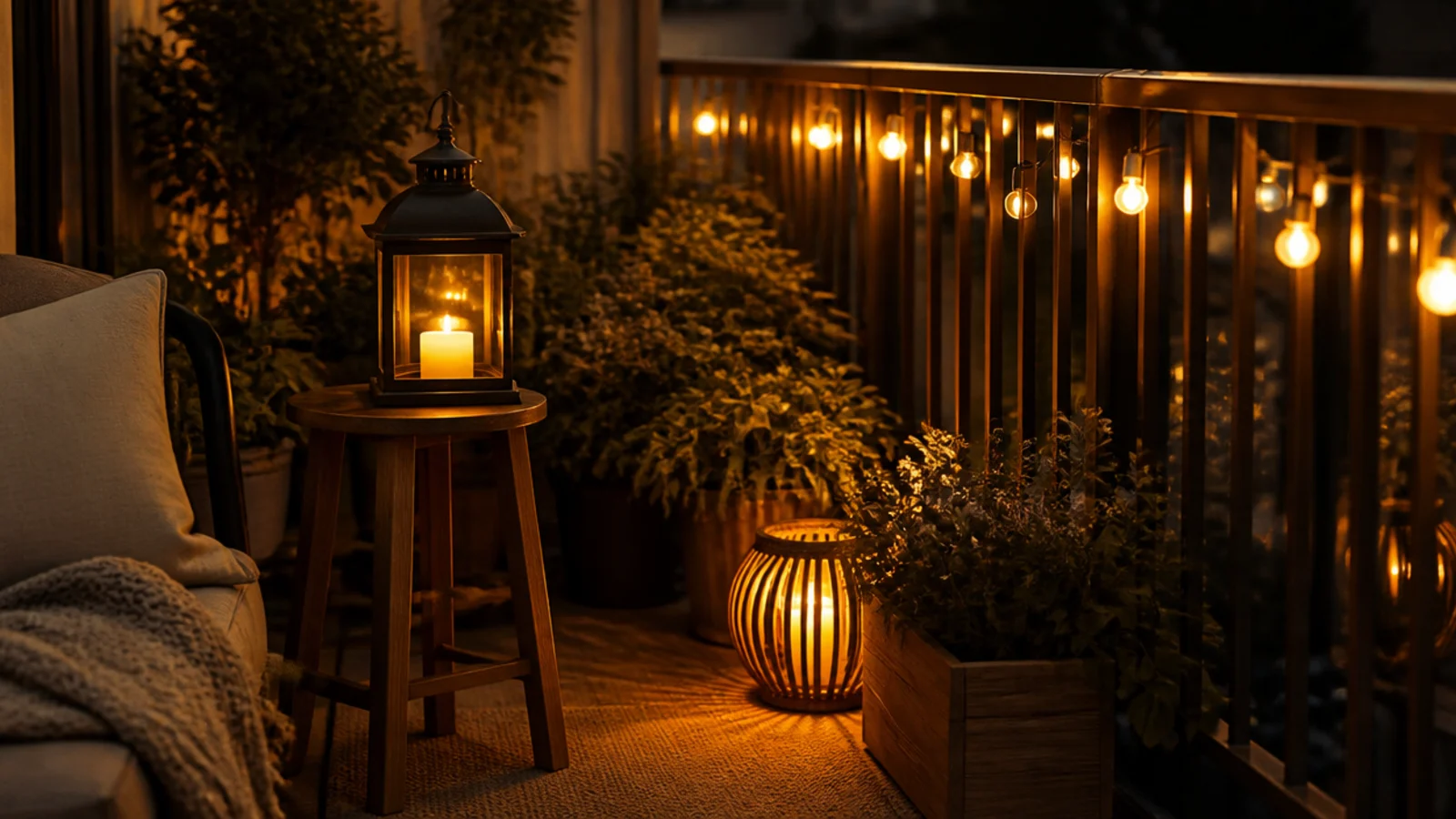
Cheap lighting looks cheap when it is one strand at one height in the wrong color. Warm it up and layer it and the same $30 of lights reads as a designed scheme.
Three heights: a solar string along the inside of the rail, a lantern at table height, one low light beside a planter. Every source at roughly 2700K, because mixing warm and cool is what makes outdoor lighting look like a rental.
Flameless LED and solar throughout — open flame is banned on most balconies and dangerous in wind regardless. $$
7. Hide the utility corner
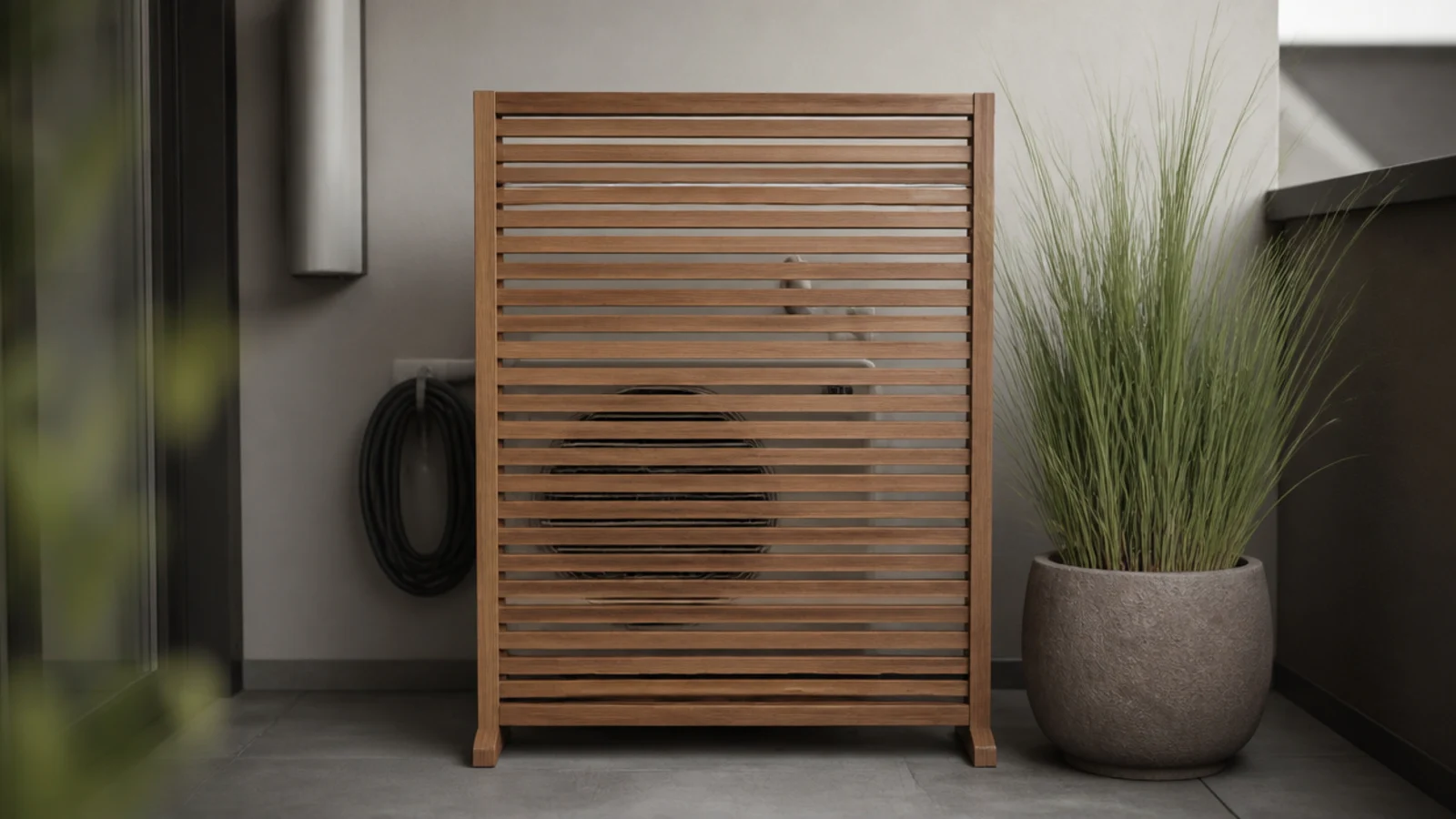
Almost every balcony has one bad third: an air handler, a hose bib, a drain, a mop that lives outside. Screening it is worth more than anything you add to the good two-thirds.
A freestanding slatted screen or a tall grass in a heavy pot does it without touching the building. Keep the screen freestanding and weighted rather than fixed, since most leases prohibit attaching anything to walls or railings.
Never block a drain or the walkway to do it. $$
8. Screen one sight line neatly, not the whole rail
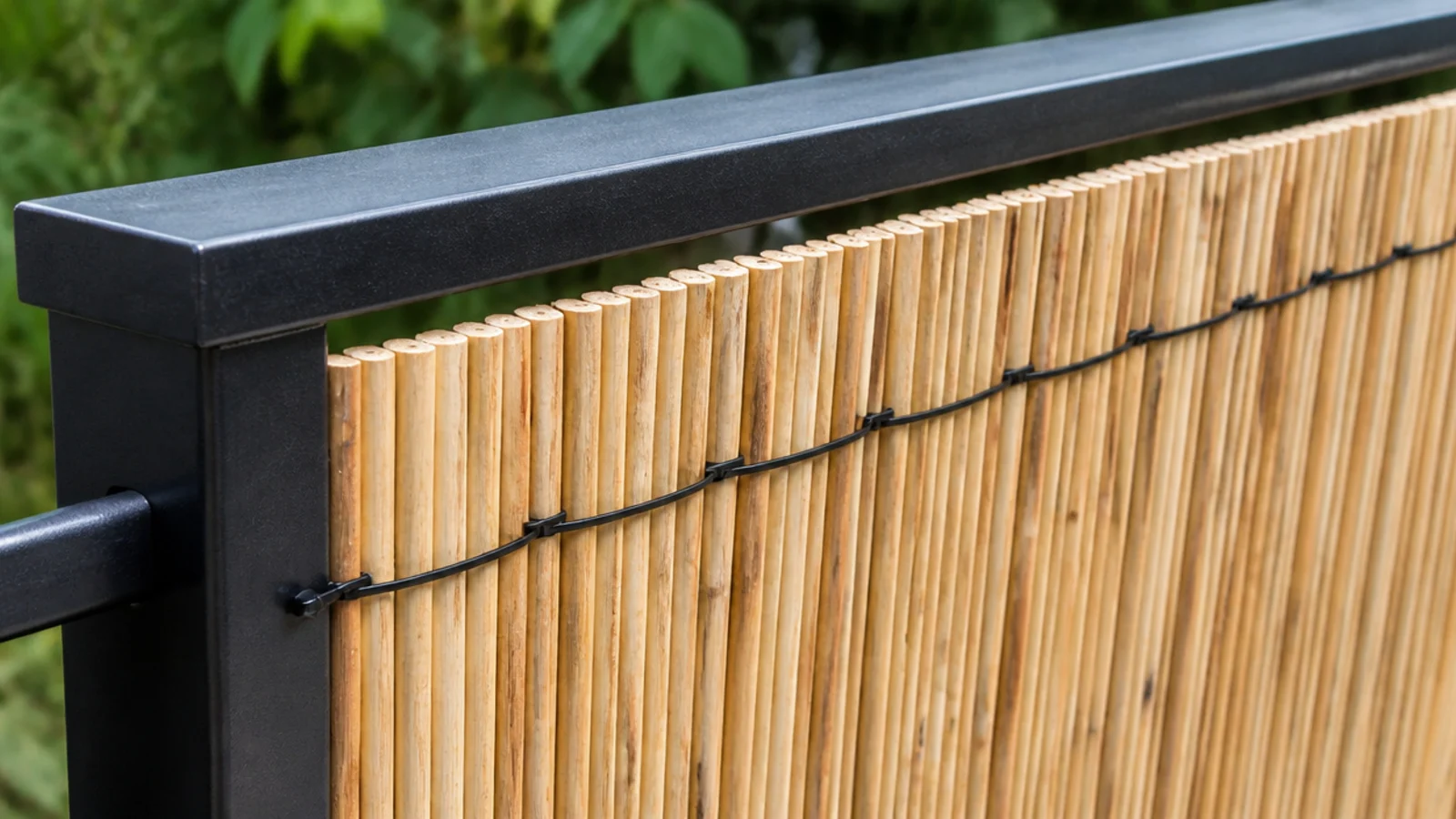
Wrapping an entire railing in reed reads as a construction hoarding. Screening one 4 to 6 foot section reads as a deliberate privacy panel.
The detail that makes it look expensive is the edge: cut the reed cleanly to length, keep the top line dead level at 40 to 48 inches, and space the ties evenly on the inside face.
Slatted or reed rather than solid, so wind passes through instead of loading the railing. Confirm your building permits screening first. $$
9. Bring thrifted wood back with oil
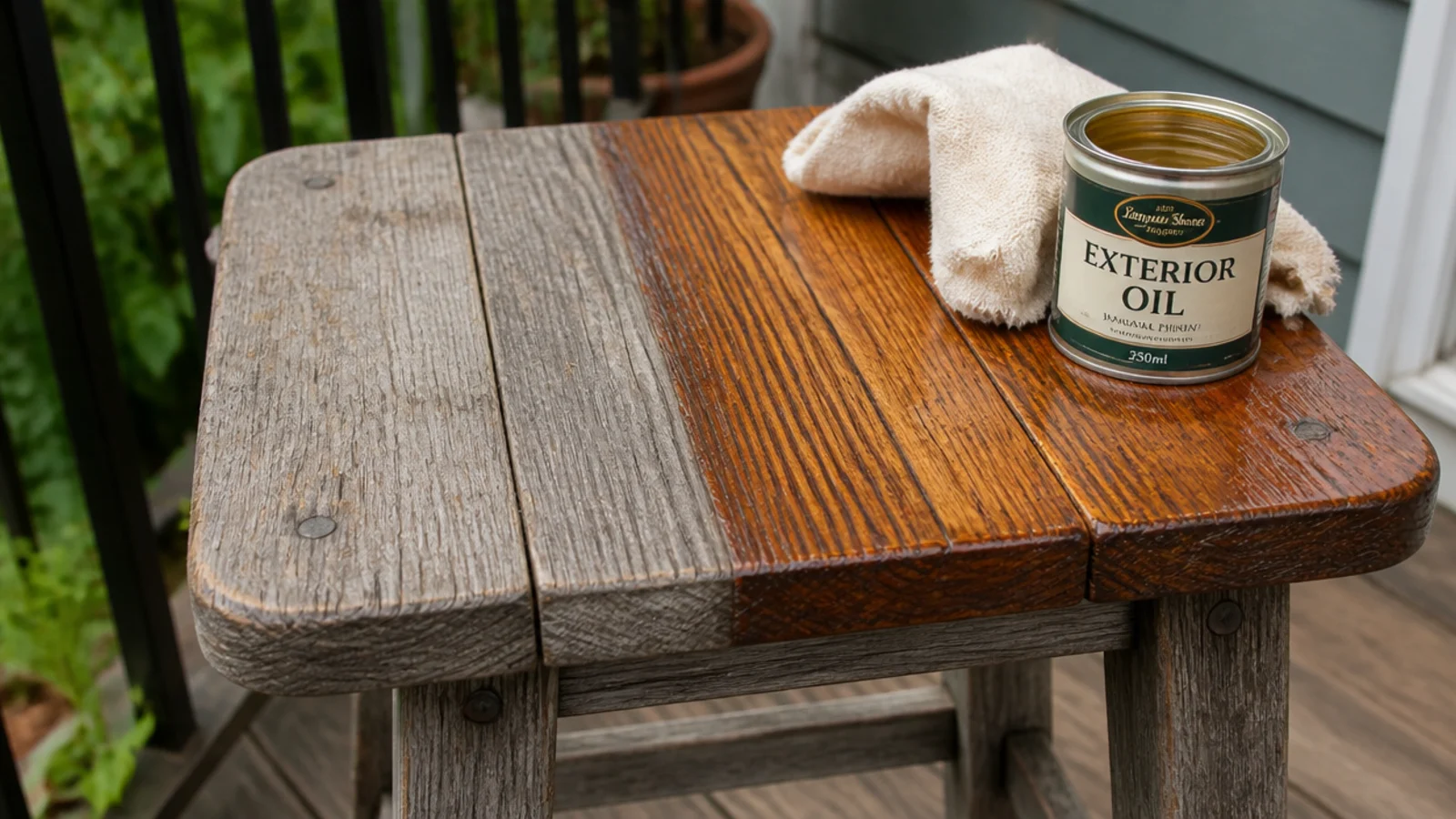
Grey, dried-out secondhand wood is the cheapest furniture available and it looks like it — until you oil it. A $9 tin of exterior teak or danish oil brings the grain back in one coat.
Clean it, let it dry fully, then two thin coats a day apart. A weathered stool bought for $5 comes out looking like a considered piece.
Re-oil once a season on a sunny balcony. It takes ten minutes and it is why cheap wood outdoors either ages well or falls apart. $
10. Upgrade the cushions, ignore the frames
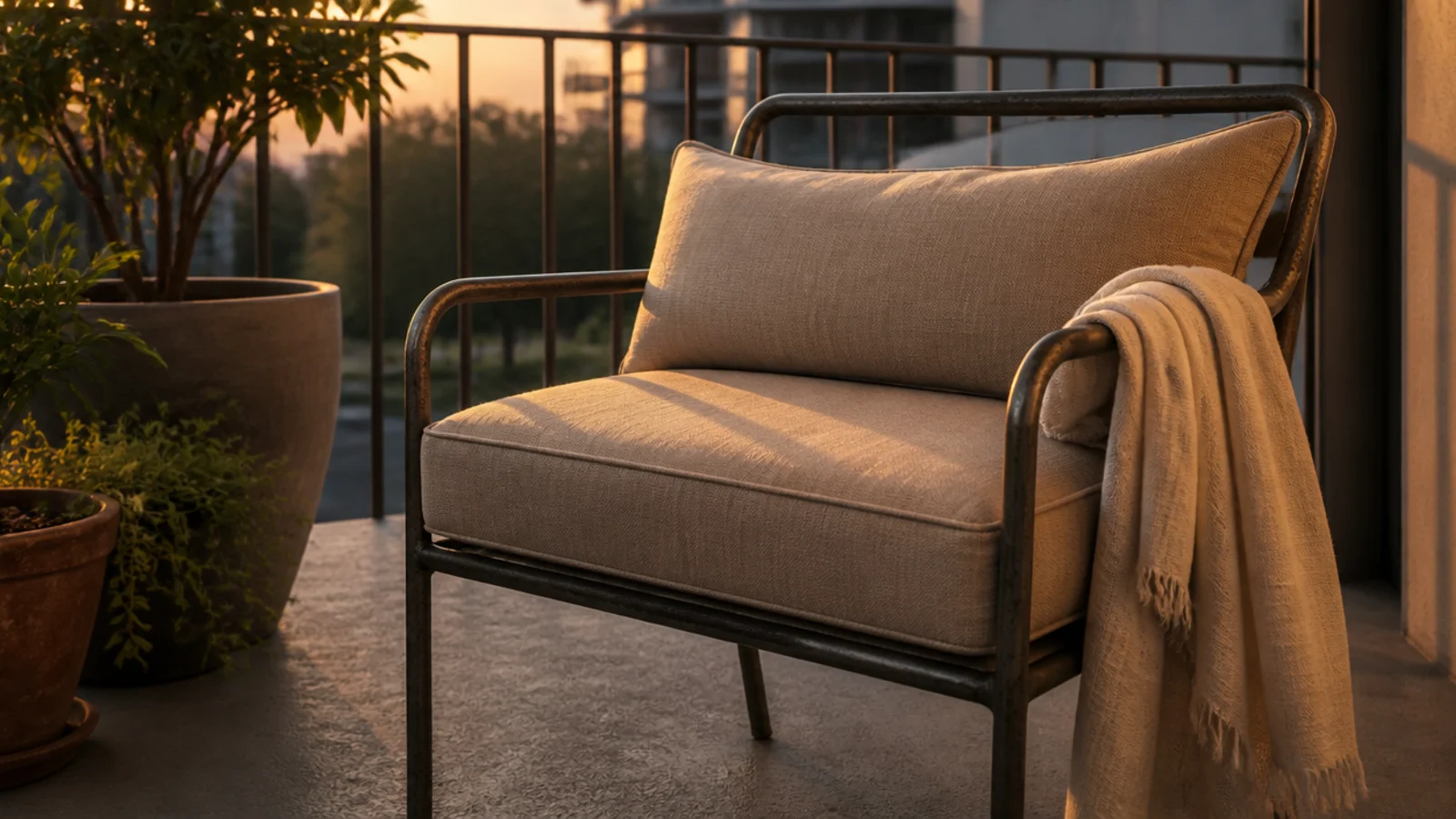
Frames are what secondhand does well; fabric is what it does badly. Buy the frame for $10 and put $40 of good cushions on it.
Solution-dyed acrylic holds its color for years and sheds water; printed polyester fades in one summer and holds damp like a sponge. Two seat pads and one throw is the right quantity for a two-chair balcony.
Store them in a lidded bench or a basket by the door, because soft goods you cannot rescue in ten seconds will not survive their first storm. $$–$$$
11. Use symmetry, because it costs nothing
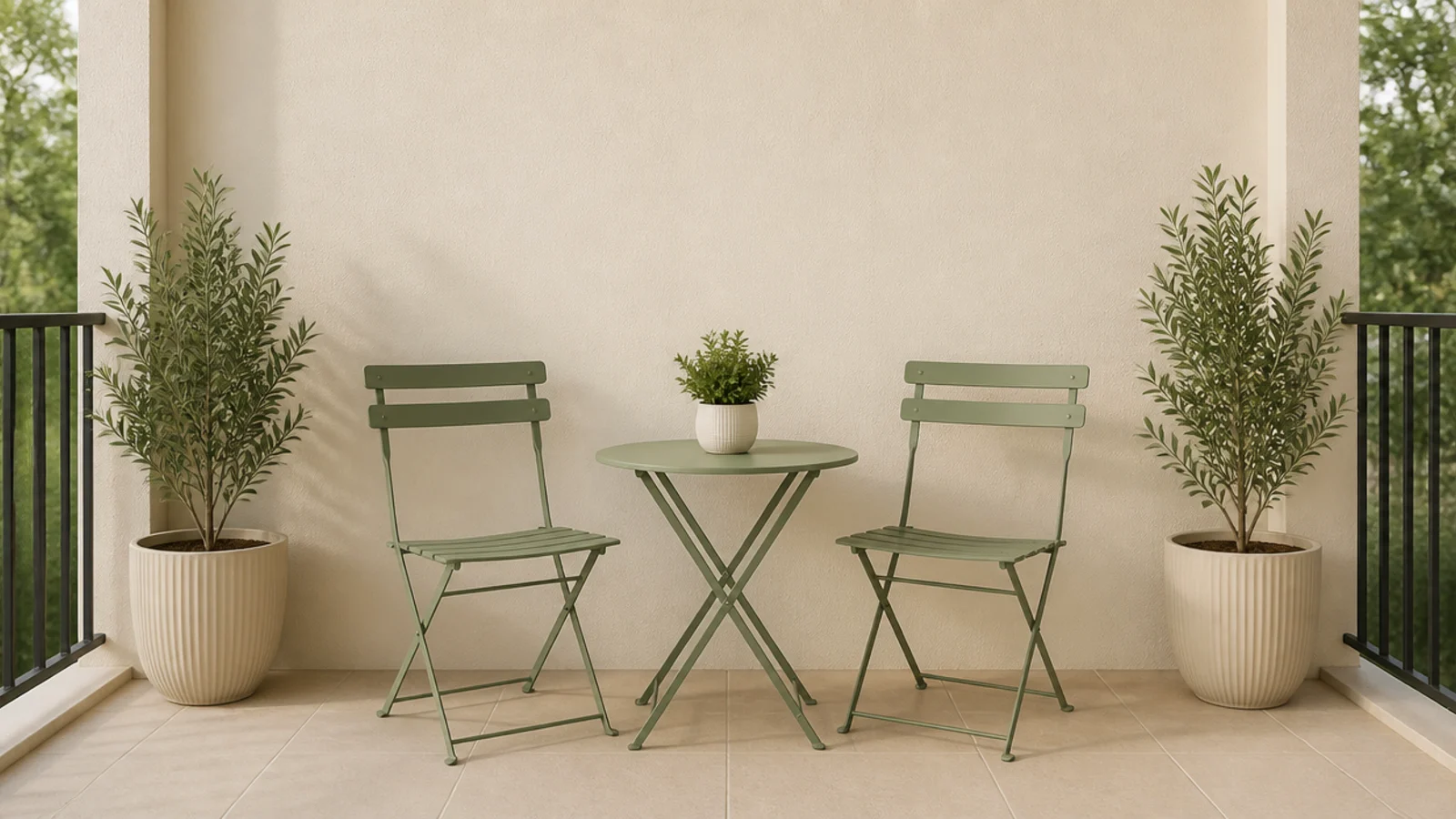
Two matching chairs either side of a small table read as furnished. One chair, one stool and a crate read as in-progress, even if they cost the same.
Symmetry is free and it is the fastest shortcut to looking deliberate outdoors, where the backdrop is chaotic. Pair the planters at either end of the rail, match the cushions, centre the table.
If you only have one good chair, centre it and flank it with two identical planters instead. The eye reads the arrangement, not the count. Free
12. Give every seat a surface at the right height
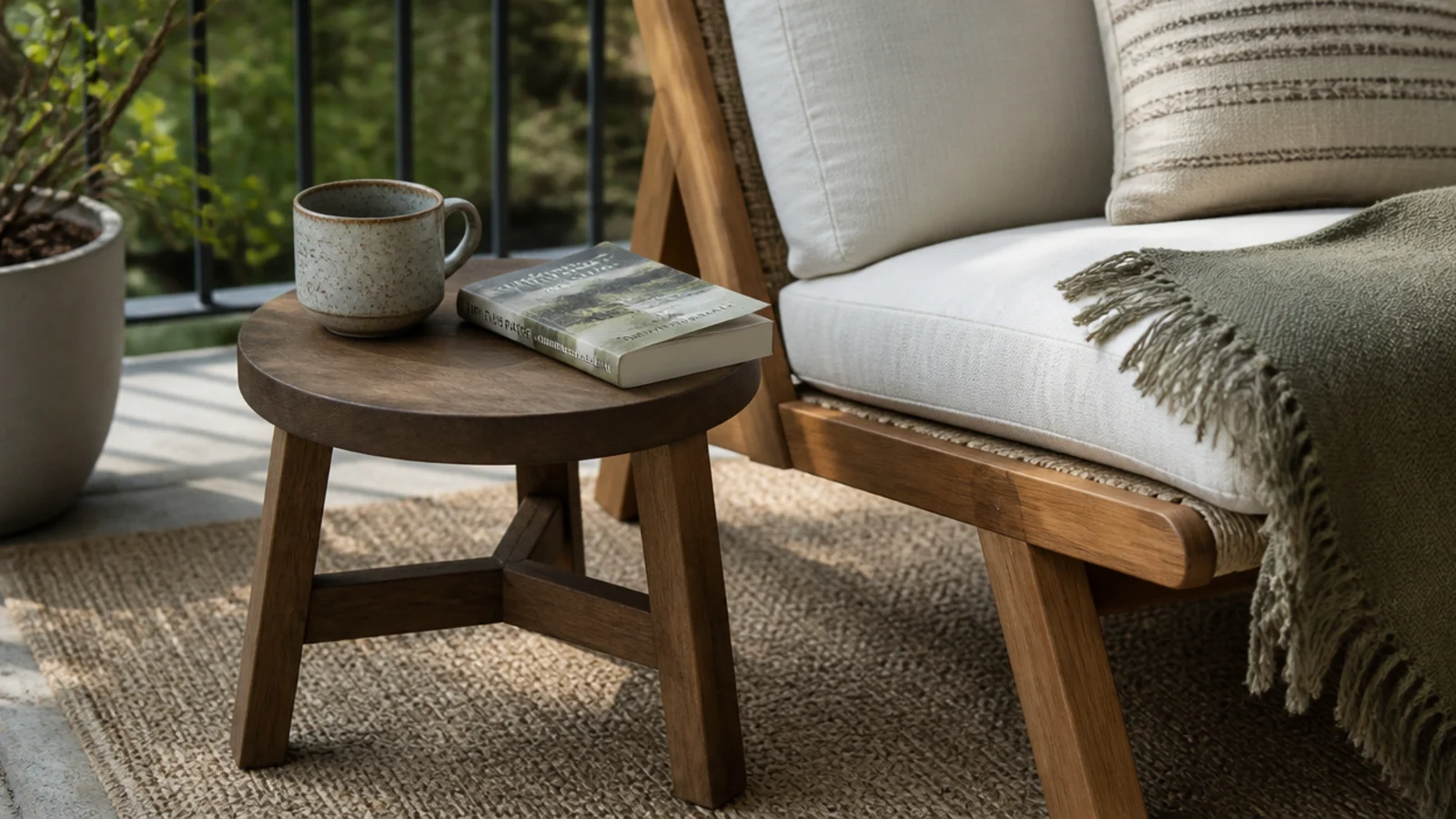
Nothing makes outdoor furniture feel cheap like nowhere to put a cup. The heights matter: about 18 to 20 inches beside a low lounge chair, 28 to 30 inches for a table you eat at.
A stool with a wooden tray on top does both jobs for under $15, and the tray means the whole setup comes inside in one movement.
Solid wood or bamboo rather than laminate, which delaminates outdoors within a season. $–$$
13. Repeat one shape three times
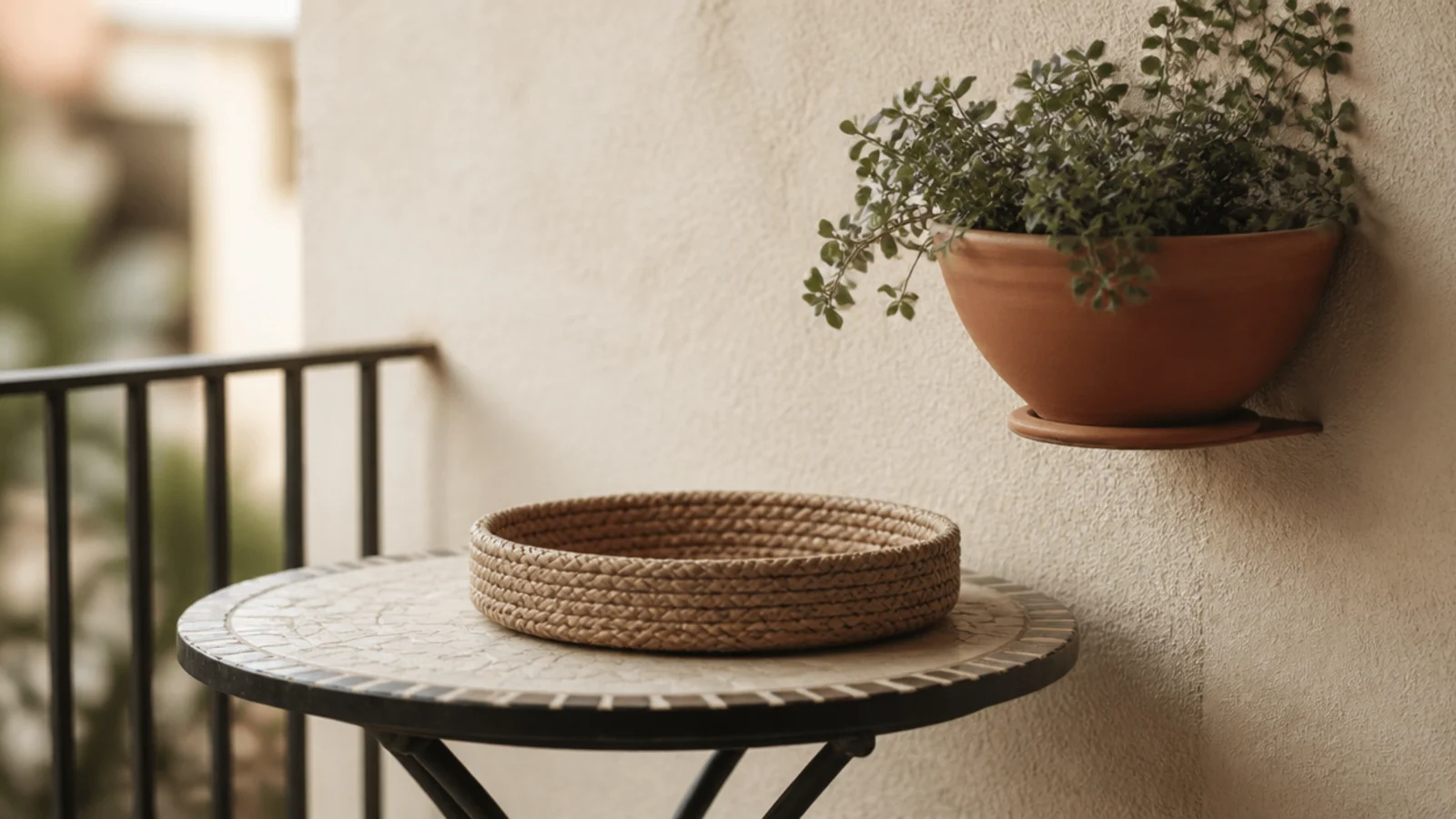
Designed spaces feel calm because forms repeat. Pick one — round is easiest — and echo it three times at different heights.
A round bistro table top, a round basket, a round bowl planter. Or three squares: a cushion, a tray, a low crate. The eye follows the rhythm and stops noticing that nothing matched originally.
This costs nothing if you shop your own apartment first, which is where most of my balcony objects came from anyway. Free
14. Keep everything below rail height except one thing
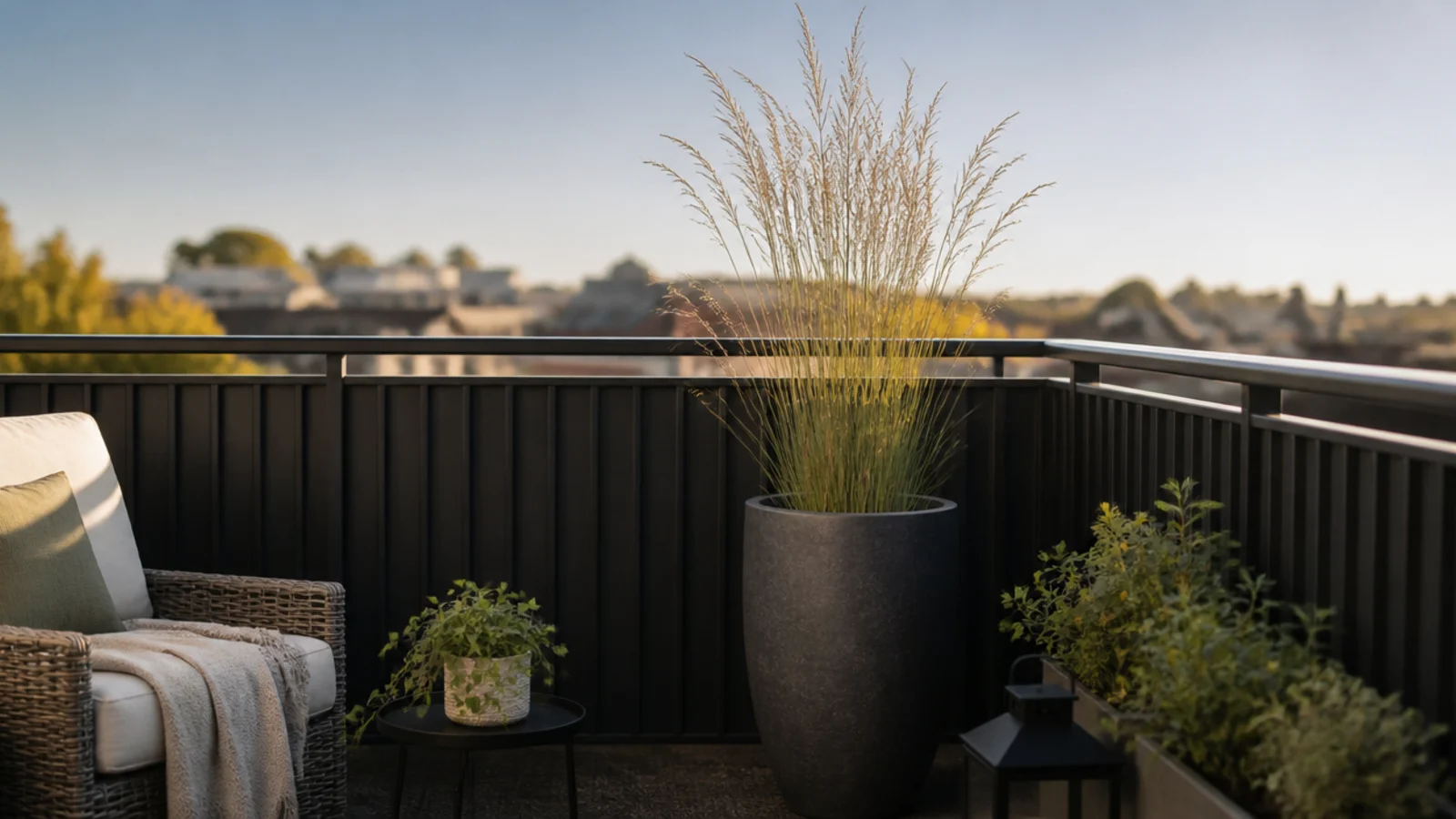
Balconies look cluttered when objects break the horizon line in five different places. Keep furniture and pots below the top of the railing, then allow exactly one thing to rise above it.
A tall grass, a slim olive, a lantern on a stand. That single vertical gives the composition a focal point and keeps the view you pay rent for.
It is also a wind decision: low profiles stay put, and the one tall thing goes in your heaviest pot. Free
15. Clean the railing and the glass
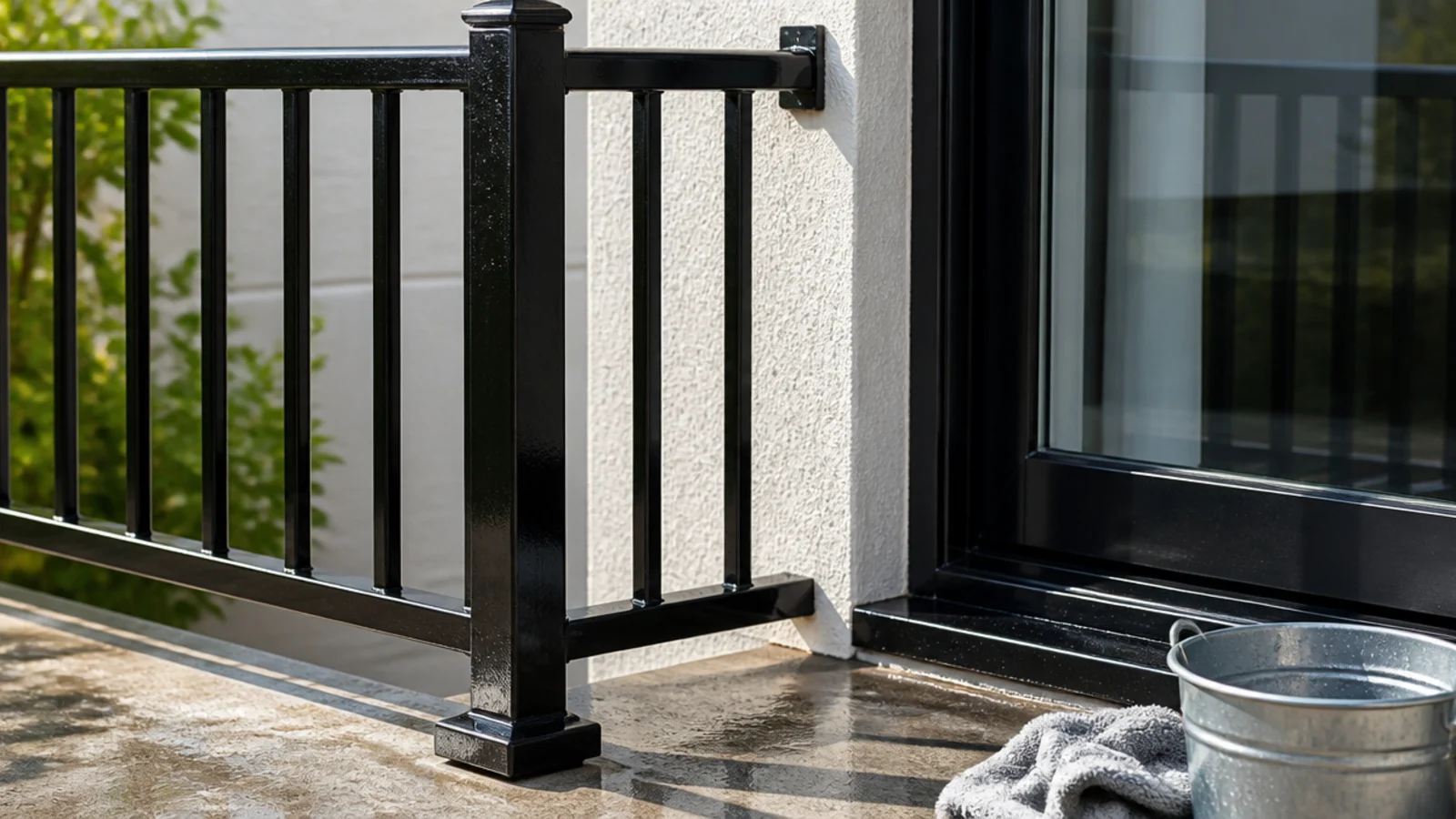
The cheapest upgrade out here is a bucket of warm water. City balconies collect a grey film on the railing, the glass and the underside of the slab above that quietly flattens everything you have added.
Wash the railing, the door glass and the wall, and sweep the concrete corners. Twenty minutes, no cost, and it does more for photographs than any purchase on this list.
Do it before you buy anything else — half the time the balcony was not tired, it was dirty. Free
Mistakes to Skip
- Buying a matching outdoor set to look finished. Sets read as a display in a store and flat on a slab, because nothing in them varies in height, weight or texture.
- Mounting anything on the outside face of the railing to free up floor space. It is banned in most leases, and a planter falling from height is a fatal accident.
- Mixing cool white and warm white lighting. It is free to fix and it is the single most common reason a carefully styled balcony still looks like a rental at night.
Frequently asked questions
How do I make a cheap balcony look expensive?
Reduce the number of decisions the eye has to process. Three materials, one pot finish, one metal, and warm light at a single color temperature will make thrifted pieces read as a scheme. After that, cover the floor properly and add one object with real weight. Restraint is free and it outperforms almost anything you can buy.
What is the cheapest high-impact balcony upgrade?
Flooring, then lighting. An open-weave outdoor rug or a partial run of deck tiles costs $30 to $60 and turns a grey slab into a room. A warm white solar string at around 2700K adds another $15 and doubles the hours the balcony gets used. Together they cost less than one cheap chair and change far more.
Do matching pots really matter?
More than the plants do. A mixed set of black plastic, glazed blue and terracotta pots reads as clutter no matter how healthy the planting is. One finish in three sizes reads as intentional. Plain unglazed terracotta at $3 to $6 a pot is the cheapest way to get there, and it weathers to a patina that looks aged rather than cheap.
Can I paint my balcony walls or floor?
Usually not without written permission. Most leases treat the wall, ceiling, slab and railing as building fabric that tenants may not alter, and balcony floor paint fails quickly on concrete that stays damp. Removable interlocking deck tiles give you the same visual change, lift out at move-out, and do not risk your deposit.
Is secondhand outdoor furniture worth buying?
Yes, if you buy frames rather than cushions. Powder-coated steel, aluminium and hardwoods like acacia or teak clean up with soap and a coat of oil, and they hold value for years. Fabric is what dies — sun-faded printed polyester is not worth carrying home. Late August is when both stores and neighbours start giving frames away.
Spend on the floor, the cushions and one heavy object, and be ruthlessly cheap about everything else. For the thrift-first version with 25 more ideas, work through cozy apartment balcony ideas, and match the furniture properly with apartment balcony seating. The same restraint rules apply indoors — a cozy candle corner uses them on a shelf instead of a slab. Save the pin before your next clearance browse.
Want more like this? Browse all 15 apartment balcony ideas guides — they all use the same measurements and budget tiers.
Pin it for later
Save this to your Apartment Balcony Ideas board
Pin it now so it is waiting for you when the tape measure comes out — and so the next person hunting for this idea can find it too.
Save this pinKeep going
More ideas worth saving while you have the tape measure out.