Apartment Balcony Ideas · Listicle
30 Beautiful Apartment Balcony Ideas to Steal Today

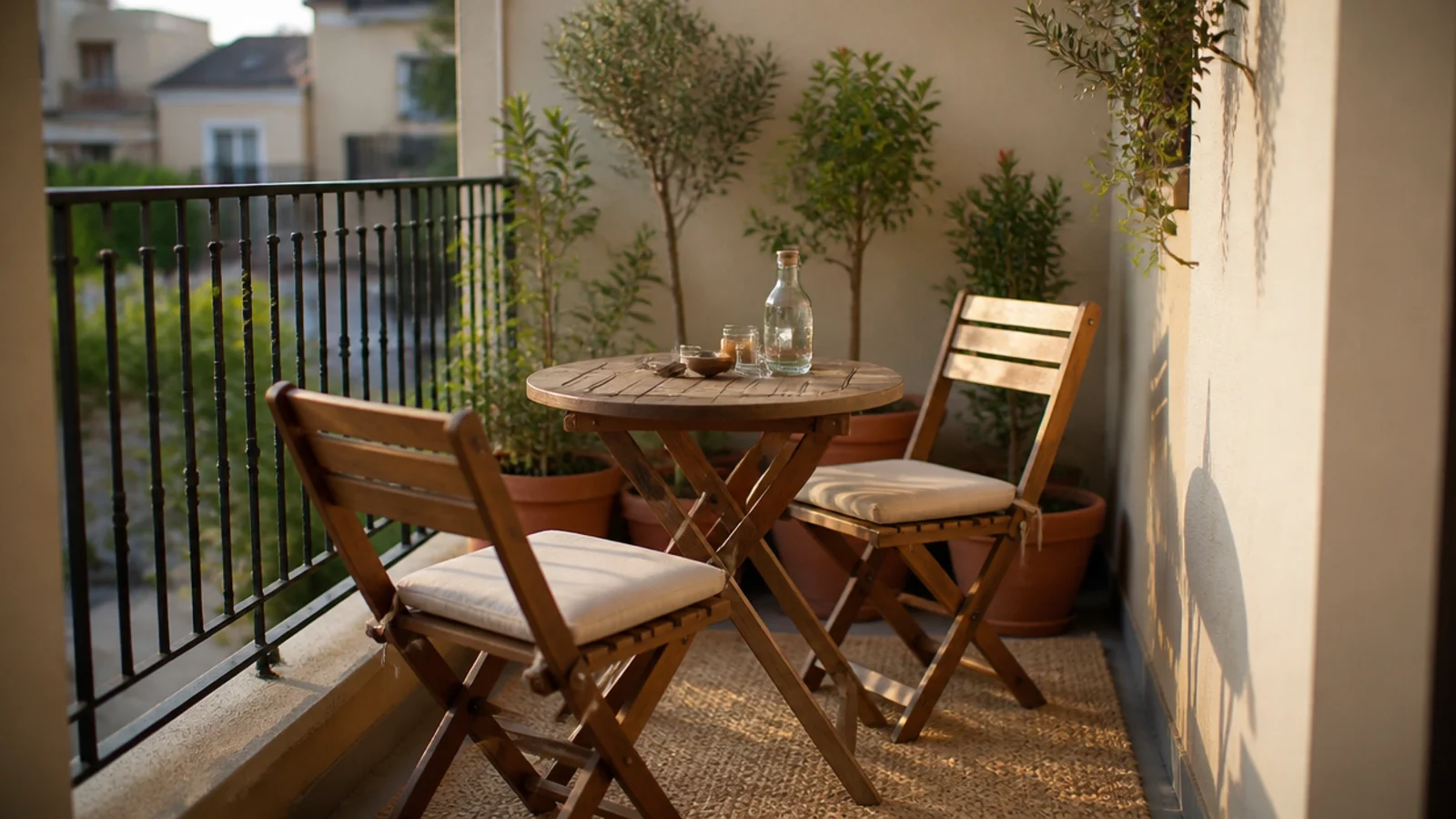
Apartment balcony seating is the purchase people get wrong most often, and it is almost always a measuring problem rather than a taste problem. A set that looks compact online arrives 6 inches wider than the space left for it, the door stops opening, and the whole slab becomes storage. I have made that mistake twice. These 30 ideas are the measurements, materials and layouts that stop it happening.
In this guide32 sections — tap to openHide
- 1.How to choose apartment balcony seating that actually fits
- 2.Start with the 4 by 4 foot seating zone
- 3.Get the seat and table heights right
- 4.A 24-inch round table is the honest maximum
- 5.Folding chairs that store in five inches
- 6.Stacking stools that tuck under the table
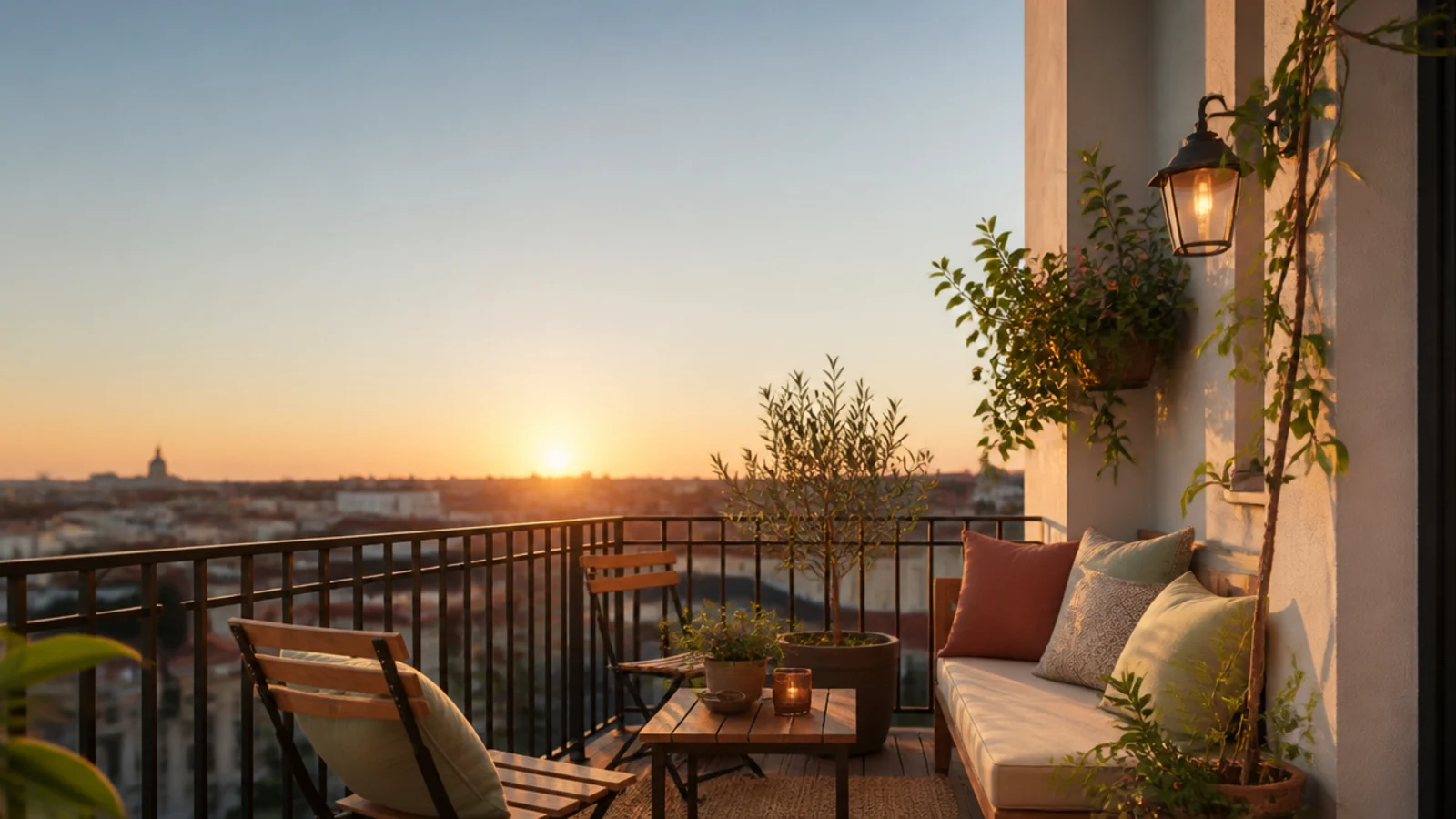
- 7.A bench along the building wall
- 8.A lidded storage bench for cushions and ballast
- 9.An L-bench for the awkward corner
- 10.Two chairs or one lounger, not both
- 11.A folding lounger for a sun balcony
- 12.A weighted pouf as the flexible extra seat
- 13.Floor cushions with a real storage plan
- 14.A hanging chair on a freestanding frame
- 15.A deck box that doubles as a seat
- 16.Nesting side tables that separate when needed
- 17.A stool and a tray instead of a table
- 18.A drop-leaf table on the wall, if you can drill
- 19.A folding rail table on the inside face
- 20.Keep every seat below rail height
- 21.A swivel chair for a balcony with a view
- 22.Rockers and gliders need rear clearance
- 23.Choose frames that hold up outdoors
- 24.Skip hollow resin above the third floor
- 25.Fold, weight or tether before you leave
- 26.Solution-dyed acrylic for every cushion
- 27.Give cushions a ten-second home
- 28.Protect the 24-inch walkway
- 29.Aim the seating at the best thing you can see
- 30.Be honest about two-seat capacity
- 31.Test with cardboard before you buy
- 32.Mistakes to Skip
How to choose apartment balcony seating that actually fits
Three numbers decide everything. The depth of your slab from the building wall to the railing, usually 4 to 6 feet. The width. And the arc the sliding door needs to open fully.
From those, the layout follows. A bistro table with two chairs pulled out needs roughly 4 feet by 4 feet, so a slab under 4 feet deep is a bench-and-folding-table balcony rather than a dining one. Whatever you choose, a 24-inch clear walkway to the door has to survive, because the balcony is an egress route in most buildings.
Then the constraints that indoor furniture never has. Wind above the third floor will move anything light — hollow resin chairs, thin folding frames, unweighted loungers — so buy low, wide and heavy, and fold or tether what you leave out. Check the lease before anything mounts to the wall or the railing, since most buildings prohibit both. Nothing at all goes on the outside face of the railing.
Weight matters underfoot too. Concentrate benches and heavy pieces against the building wall rather than massing everything at the outer rail, and keep the load spread.
Budget tiers below: $ under $40, $$ $40–$120, $$$ $120–$300.
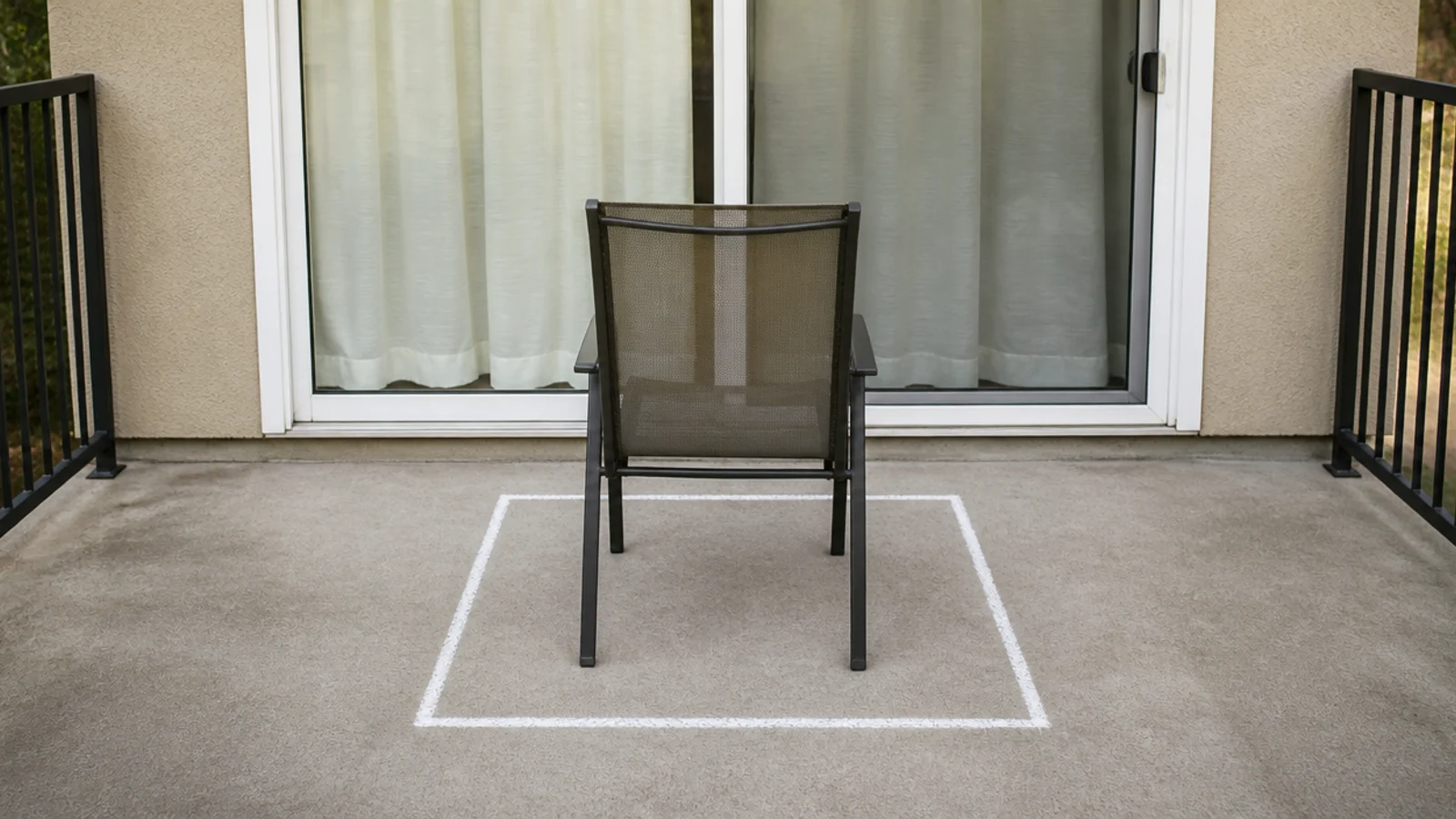
1. Start with the 4 by 4 foot seating zone
Chalk or tape a 4-foot square on the slab and sit in it. That is what a two-person bistro setup genuinely occupies once the chairs are pulled back.
If the square only fits in one place, your layout is already decided. If it does not fit at all, skip to the bench ideas. Free
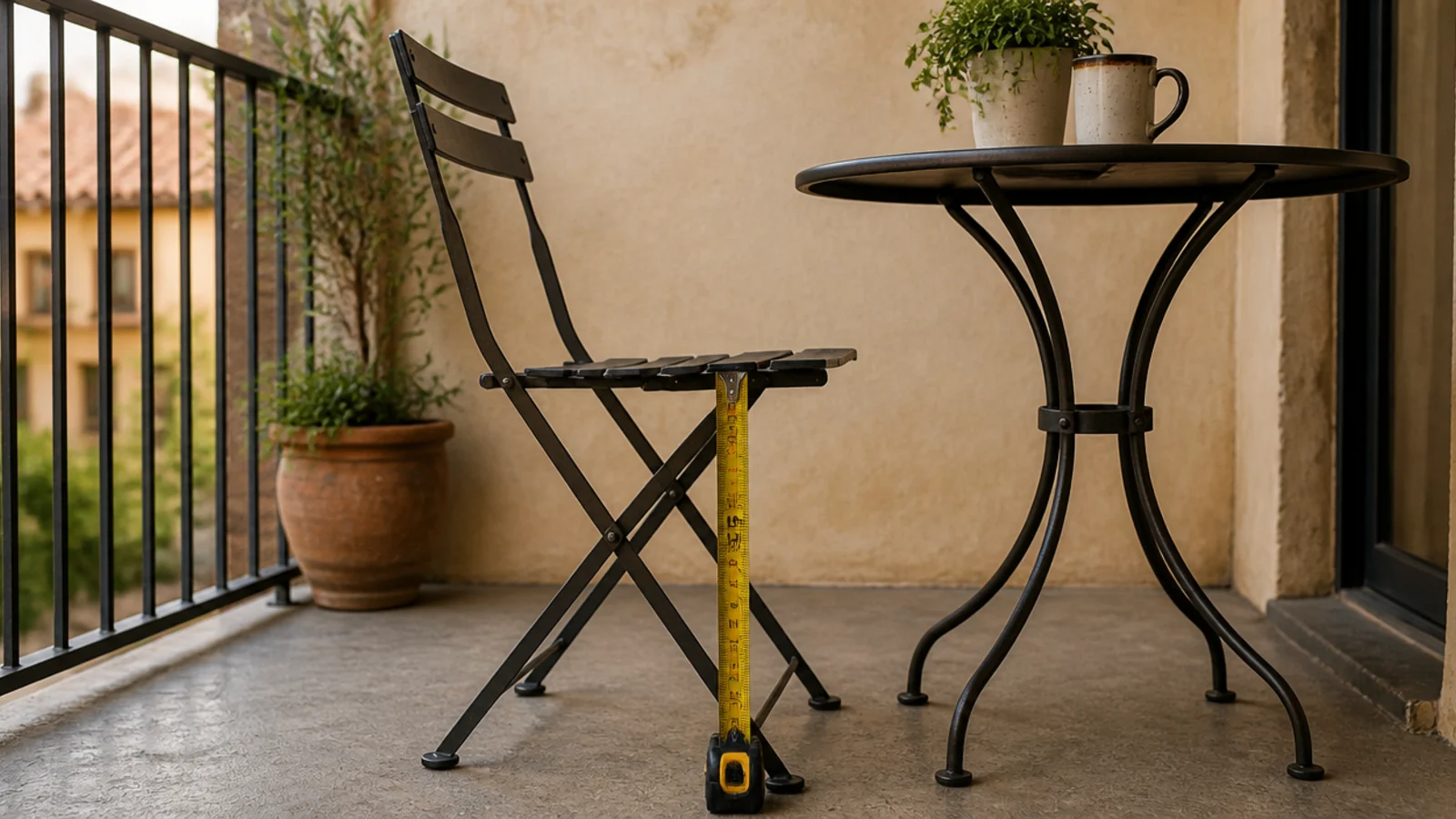
2. Get the seat and table heights right
Dining seats sit 17 to 19 inches off the floor and pair with a table at 28 to 30 inches. Lounge seats sit lower at 14 to 16 inches with a side table at 18 to 20.
Mismatching them is the most common balcony error — a low chair at a dining table means eating with your chin near the plate. Free
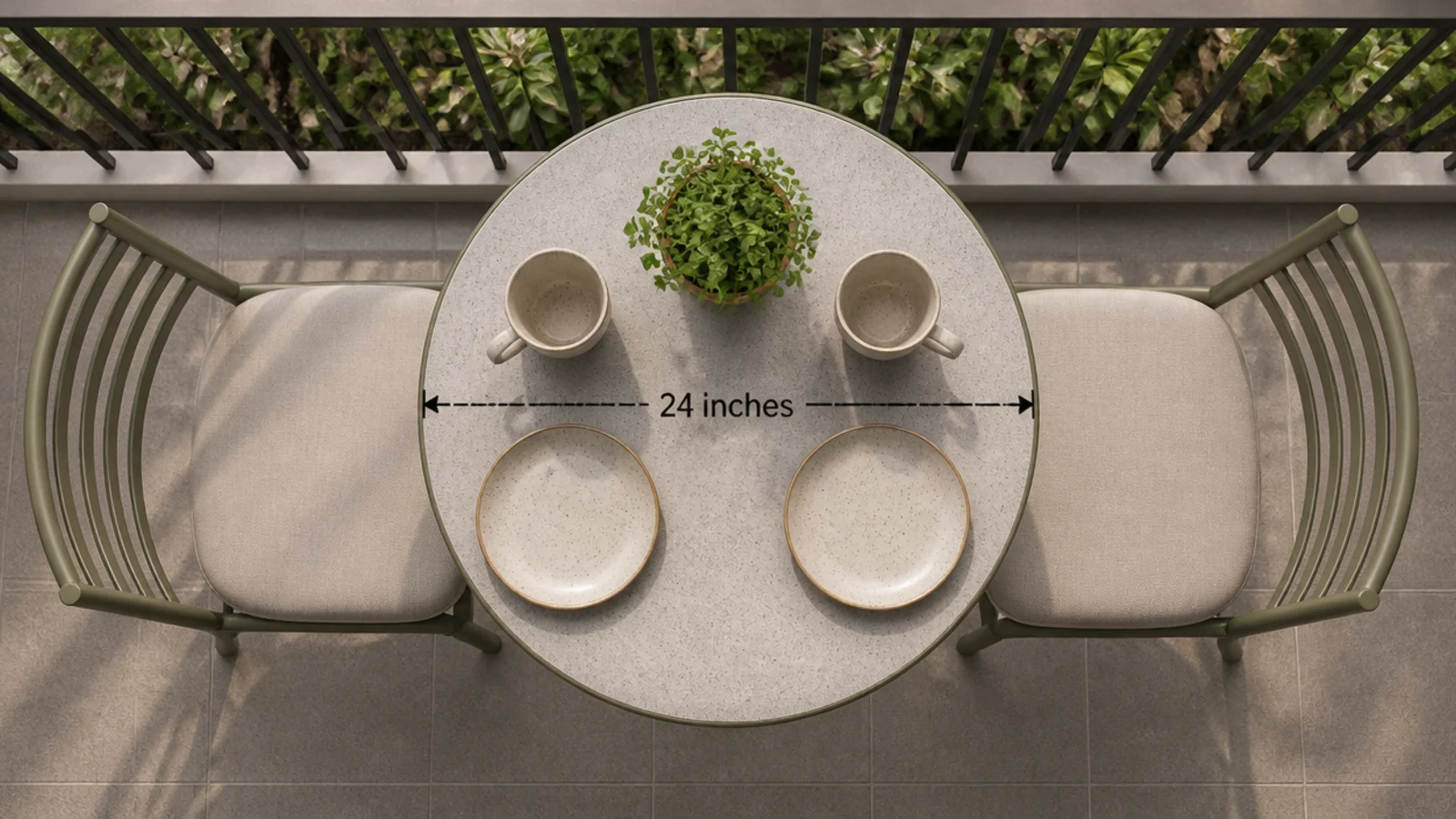
3. A 24-inch round table is the honest maximum
On a typical balcony, 24 inches across is the largest round table that still leaves room to walk past. It holds two plates, two glasses and a small plant.
Round beats square out here because there are no corners to catch a hip on as you squeeze by. $$
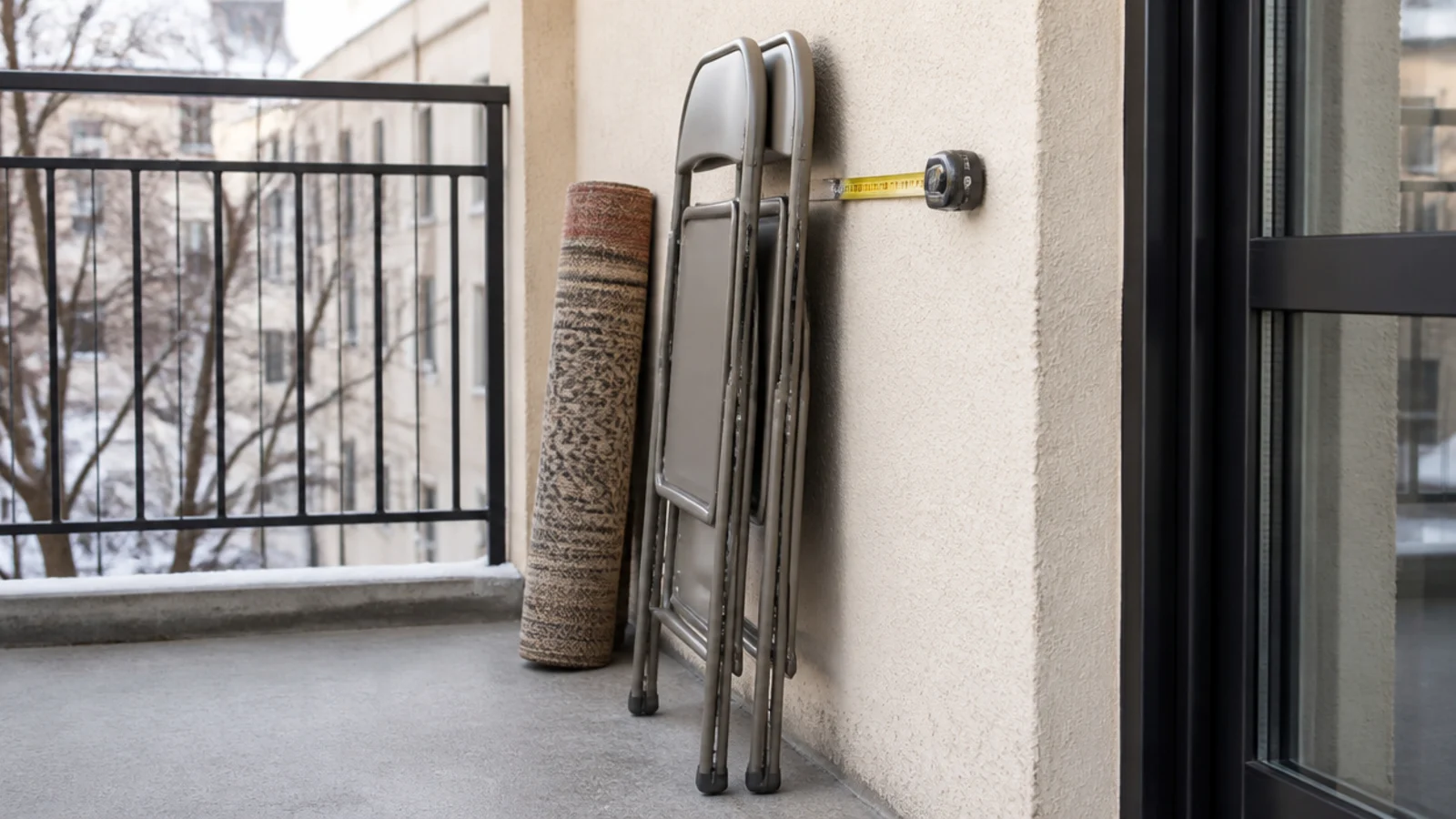
4. Folding chairs that store in five inches
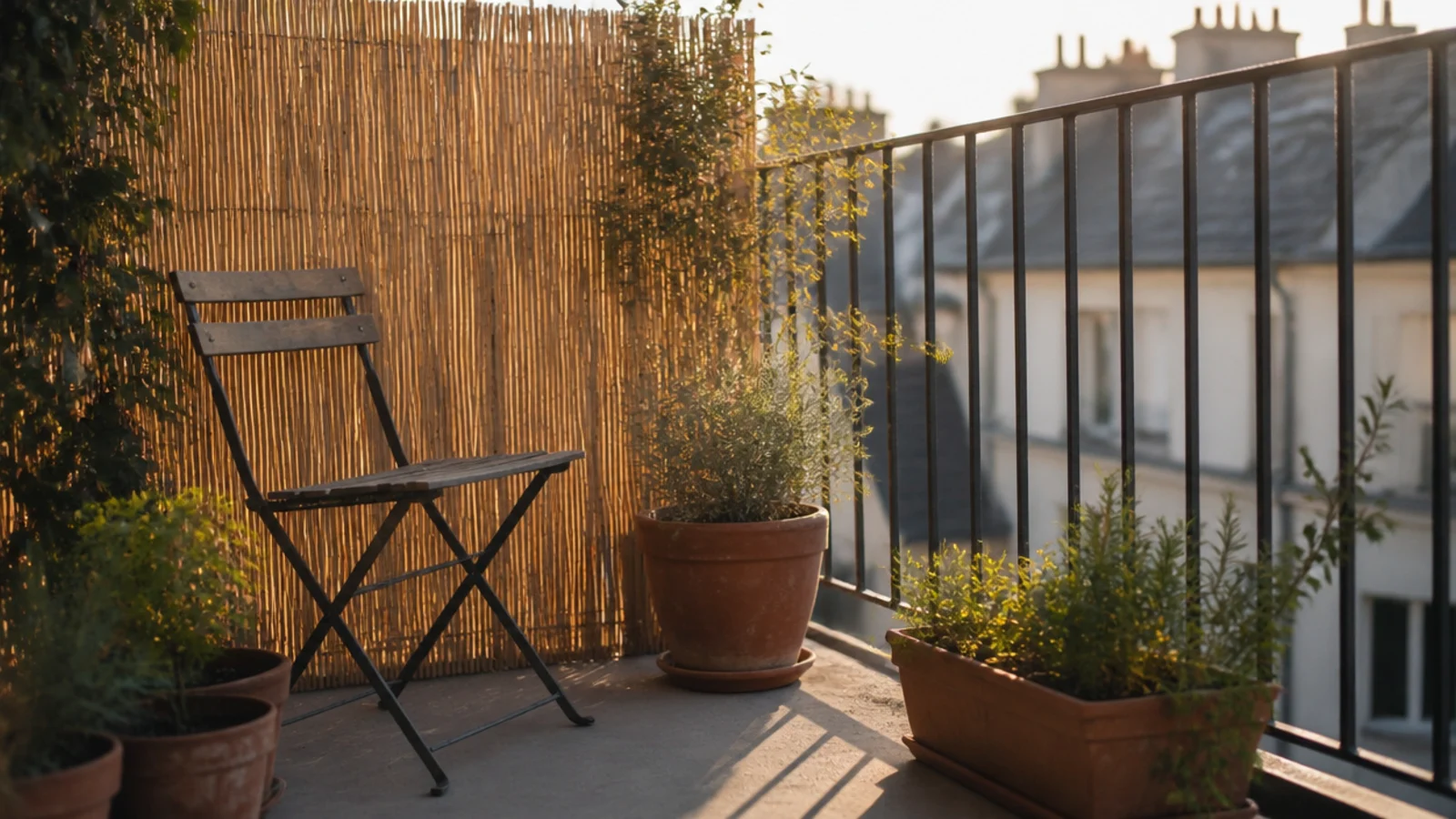
Folding and stacking is what makes a small balcony work year round. Two folding chairs collapse to about 5 inches deep and store flat against the wall all winter.
Check the folded dimension before buying, not just the open one. Some folding chairs are barely slimmer folded, which defeats the point entirely. $$
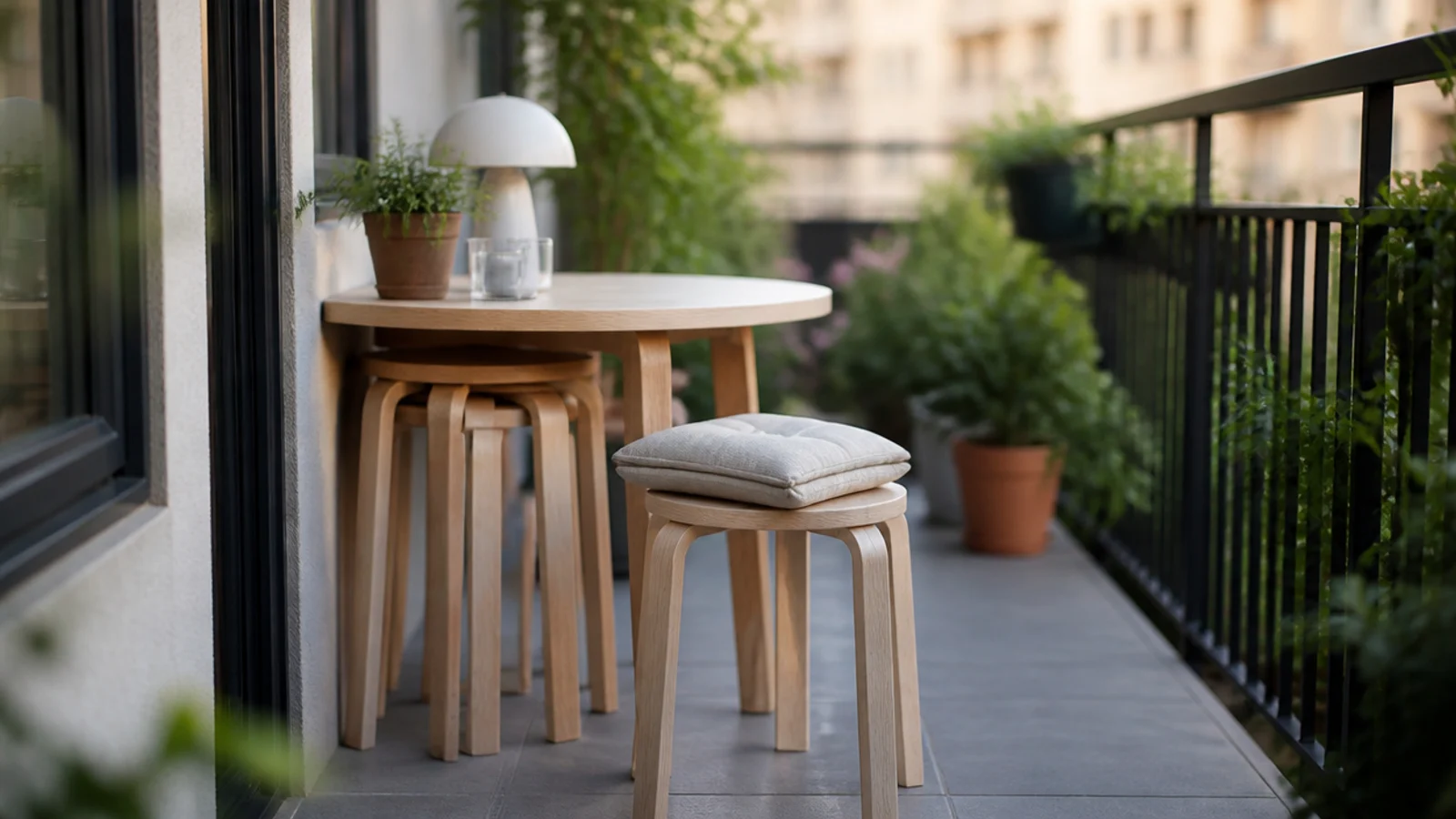
5. Stacking stools that tuck under the table
Stools push fully under a table in a way chairs never do, which gives back a foot of walkway every time you are not sitting down.
Look for stackable versions around 17 inches tall. Three stacked take the floor space of one, and a cushion on top makes them comfortable enough for a long coffee. $–$$
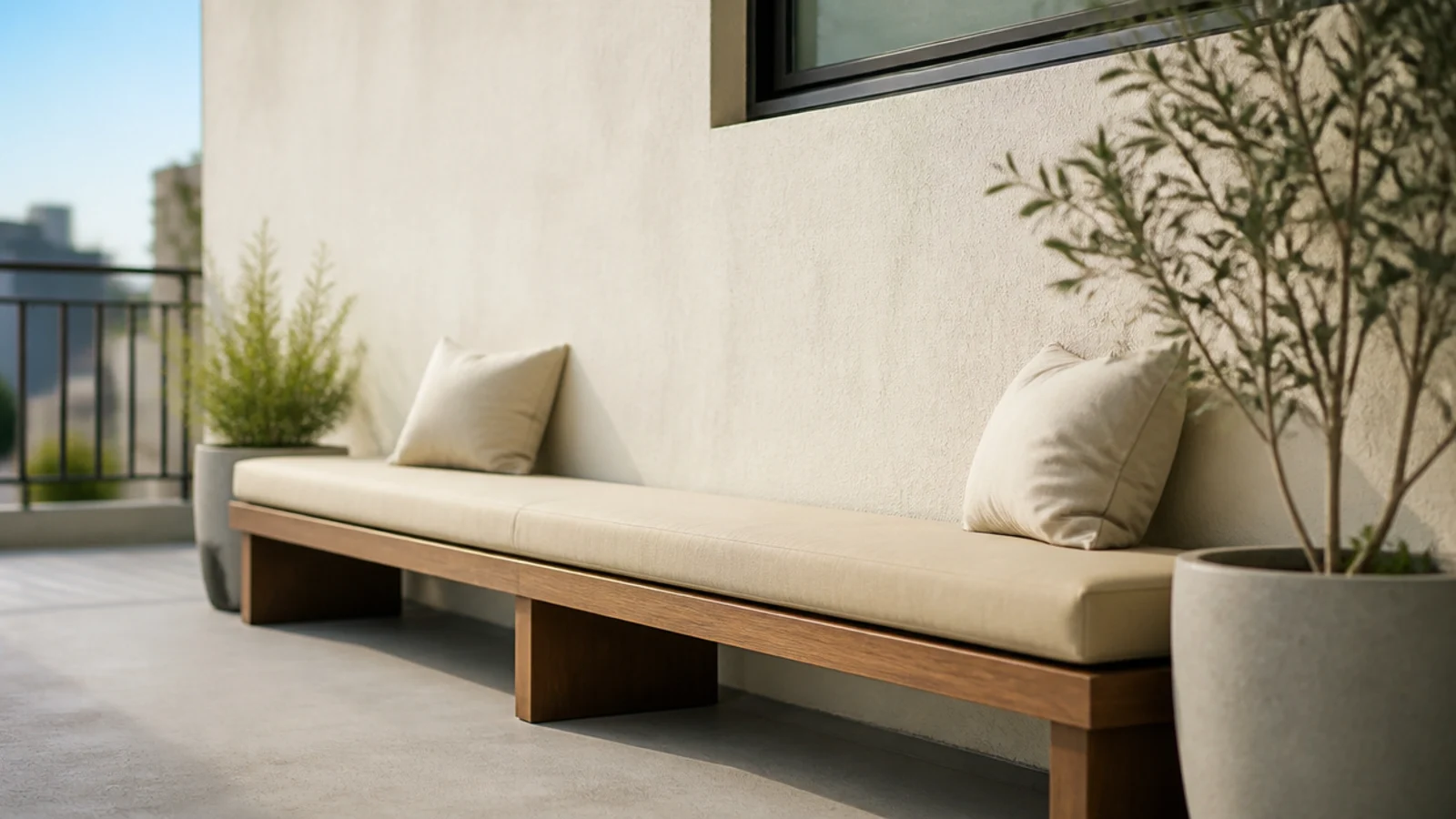
6. A bench along the building wall
A 40 to 48 inch bench against the wall seats two in the footprint of one chair, keeps the weight where the slab is strongest, and leaves the middle of the balcony open.
It also reads as built-in when you dress it with a full-length seat pad, which is exactly the look most leases will not let you build. $$$
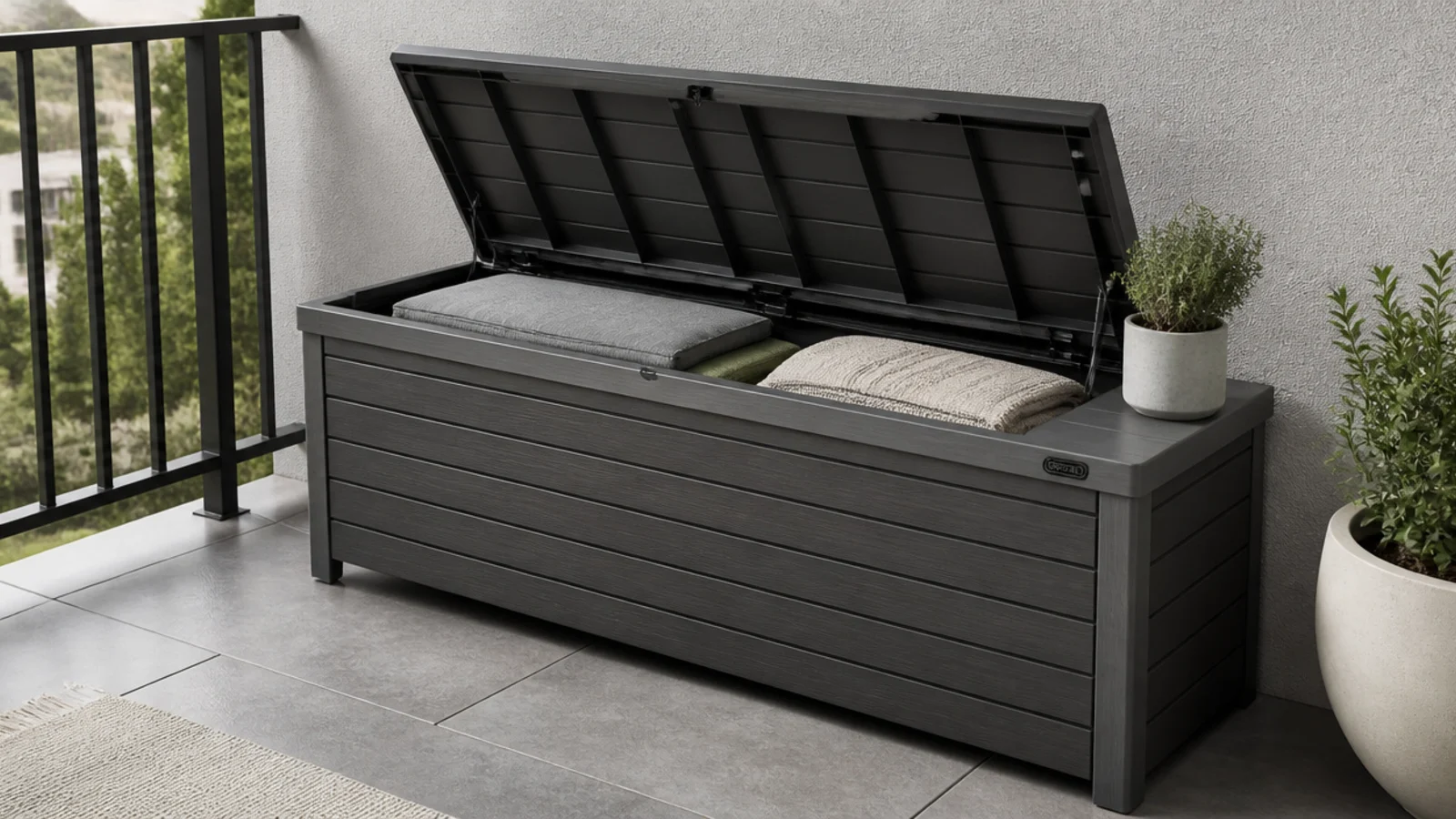
7. A lidded storage bench for cushions and ballast
The most useful single piece on a small balcony: a seat, a cushion store and ballast against the wall in one object.
Look for 40 to 48 inches long, 16 inches deep, with a hinge stay so the lid does not slam in wind. Add two silica packs inside and it stays dry. $$$
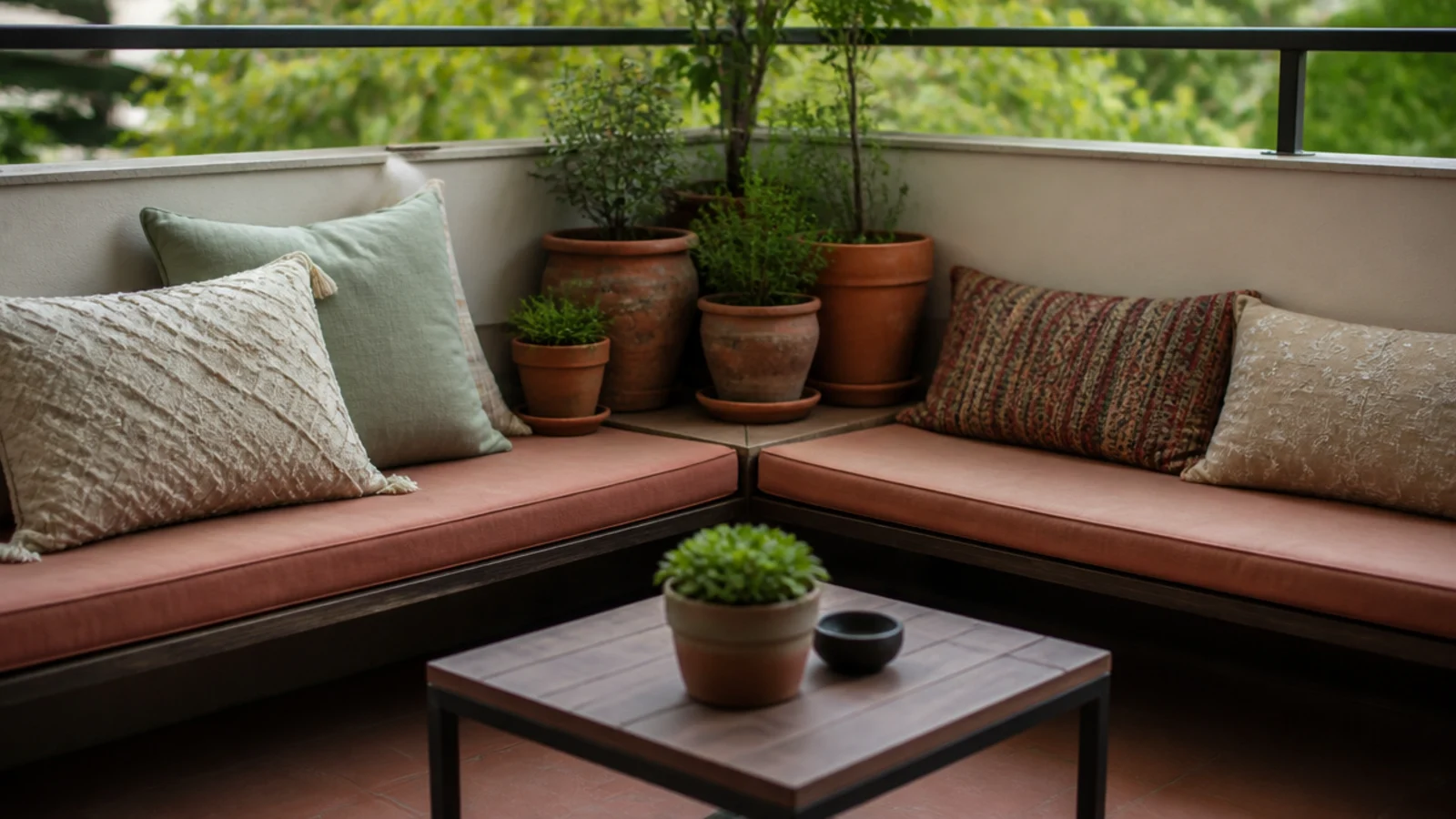
8. An L-bench for the awkward corner
Corners are where chairs waste the most space. Two low benches meeting at right angles turn that dead triangle into the best seat on the balcony.
Keep the seat depth to 16 to 18 inches so it does not eat the walkway, and use the space behind the corner joint for your tallest planter. $$$
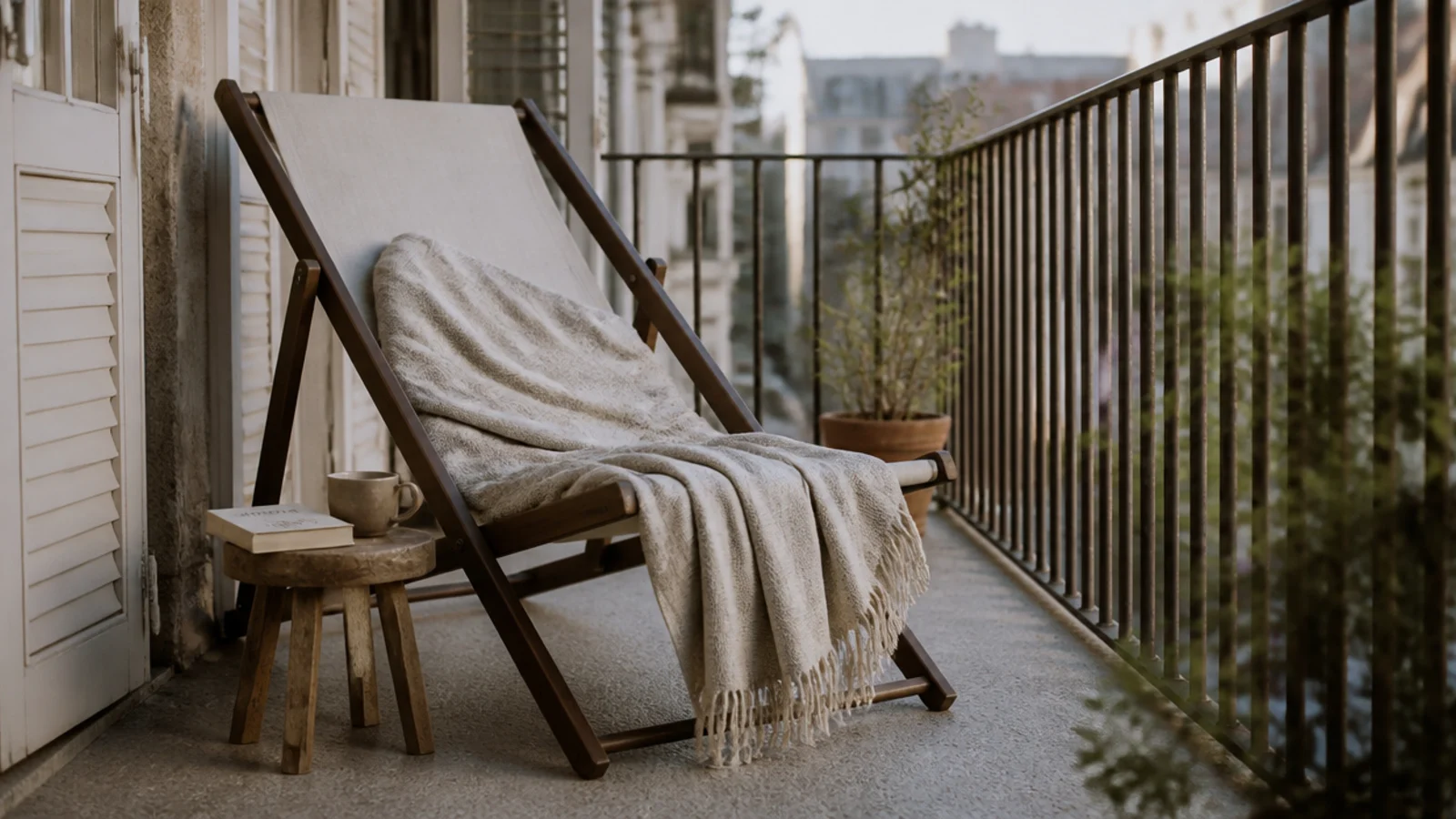
9. Two chairs or one lounger, not both
Most balconies genuinely fit one or the other. Decide honestly how you use the space — coffee and conversation, or lying down in the sun — and commit.
Trying to fit both is how a slab ends up with three pieces of furniture and nowhere to stand. Free
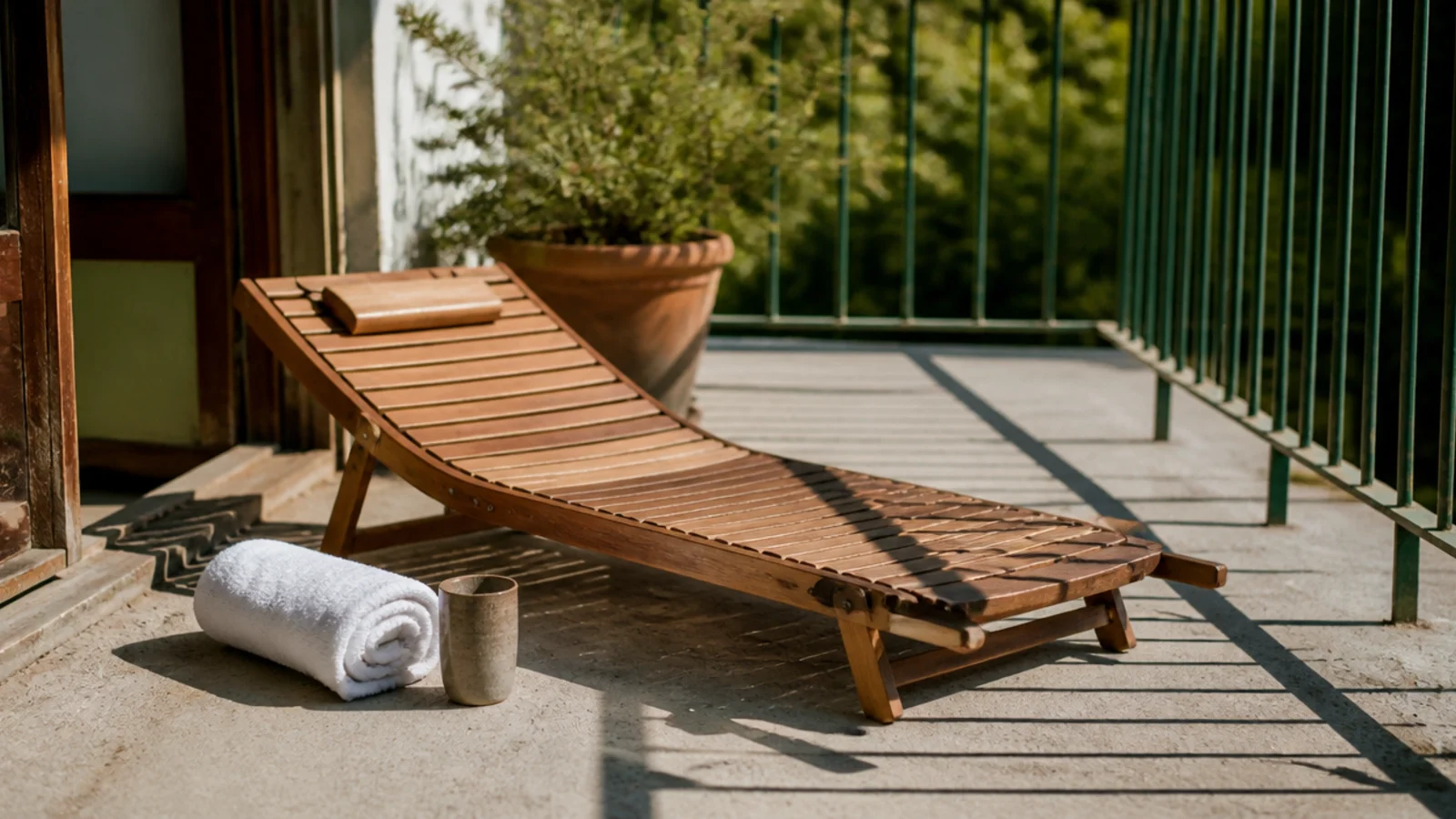
10. A folding lounger for a sun balcony
If yours gets several hours of direct sun, a folding lounger is worth the whole slab. Slatted wood or a sling frame folds to about 4 inches and hangs on a wall hook indoors.
Skip it entirely for a shaded balcony — a lounger nobody lies on is the biggest possible waste of a small floor. $$$
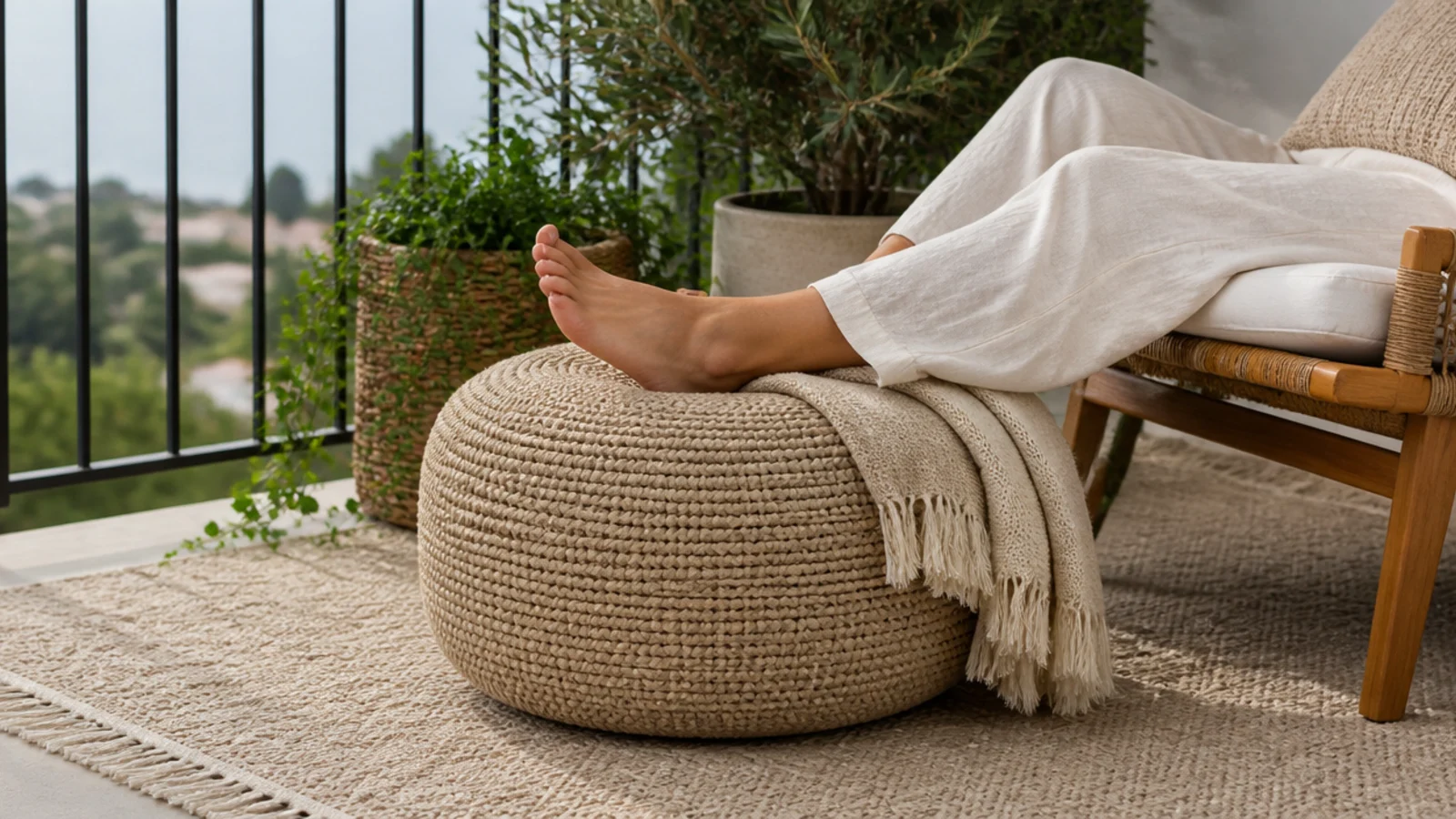
11. A weighted pouf as the flexible extra seat
An outdoor pouf works as a footrest most days and a second seat when someone visits, which is the best value per square foot out here.
Choose poly weave that sheds water, around 16 to 18 inches across, with the option to add ballast at the base so it does not skate around in wind. $$
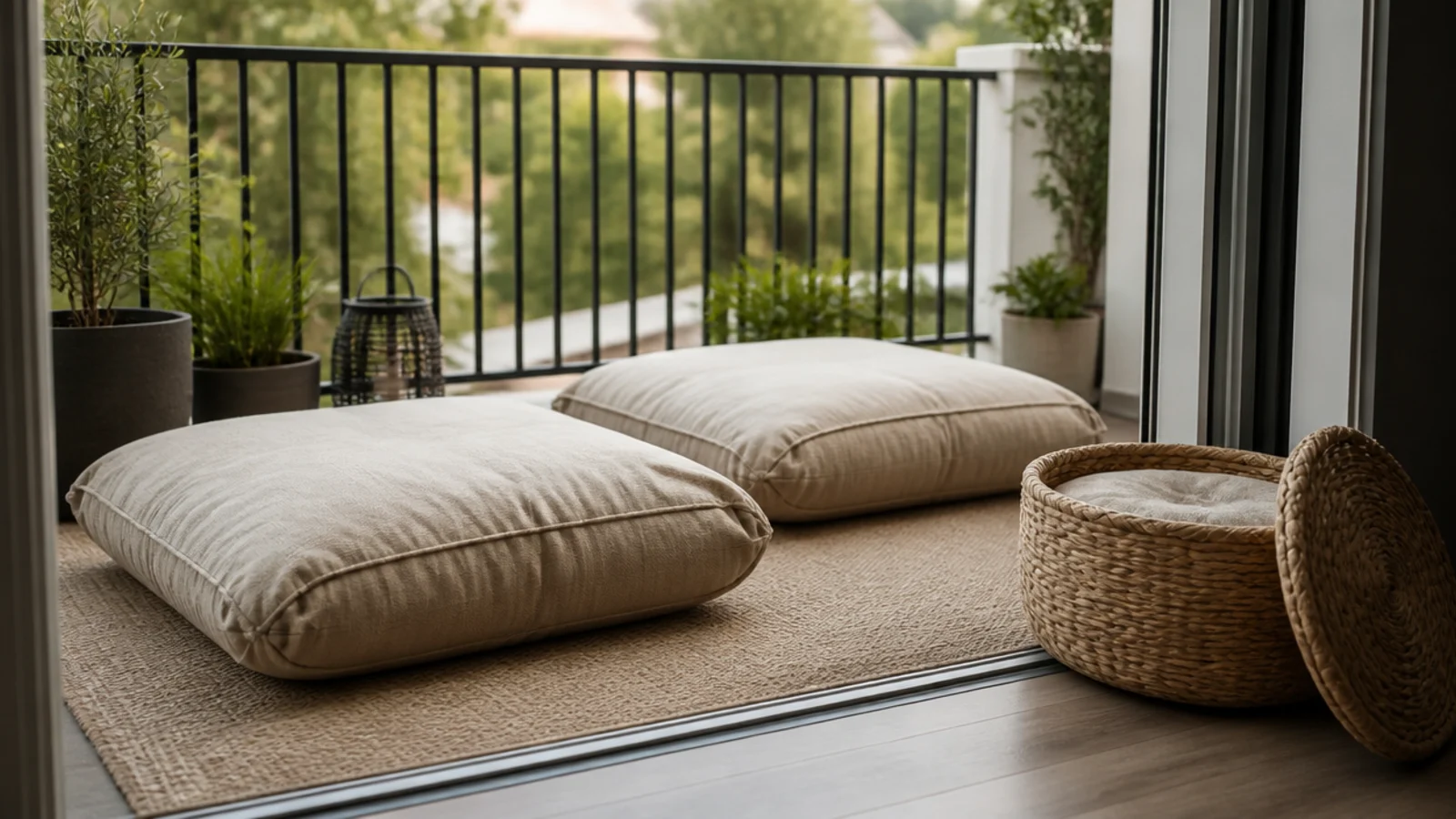
12. Floor cushions with a real storage plan
Floor seating turns a balcony into a lounge, and it dies the first time it rains while you are out.
Two large cushions maximum, with a lidded basket by the door so they are inside in one trip. Anything that takes longer than ten seconds to rescue will eventually be left out. $$
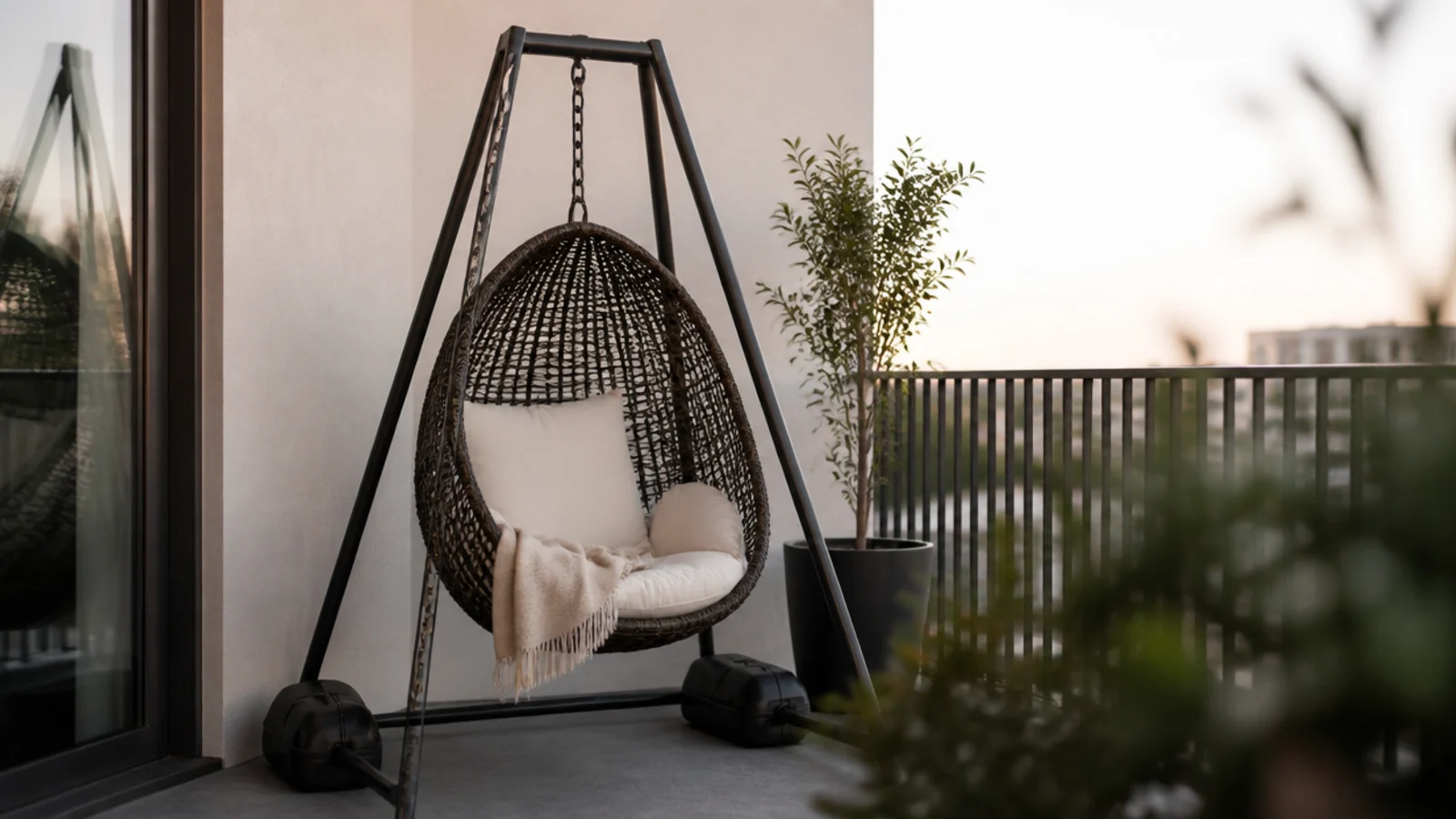
13. A hanging chair on a freestanding frame
Hanging anything from a balcony ceiling means drilling into structure, which almost every lease prohibits. A weighted A-frame gives the same look with no fixings.
Measure first: most frames need about 40 by 40 inches of floor, which is a serious share of a small balcony. Add ballast bags on a high floor. $$$
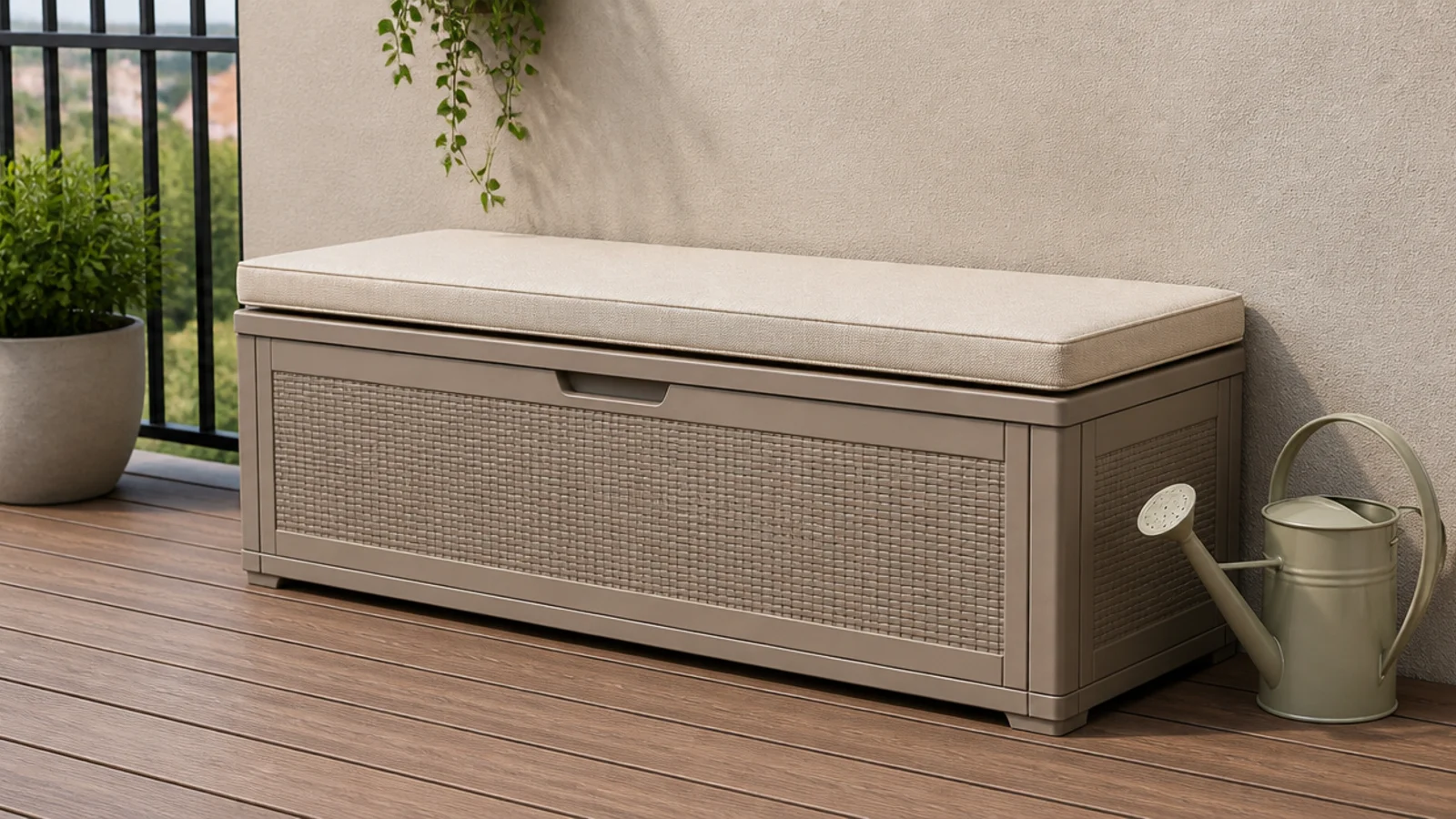
14. A deck box that doubles as a seat
A low deck storage box with a cushion on top is seating and storage for the price of one item — but only if the lid is rated to sit on.
Check the stated seat load. Boxes that are not rated flex, crack at the hinge and fail after a season of being used as a bench. $$–$$$
15. Nesting side tables that separate when needed
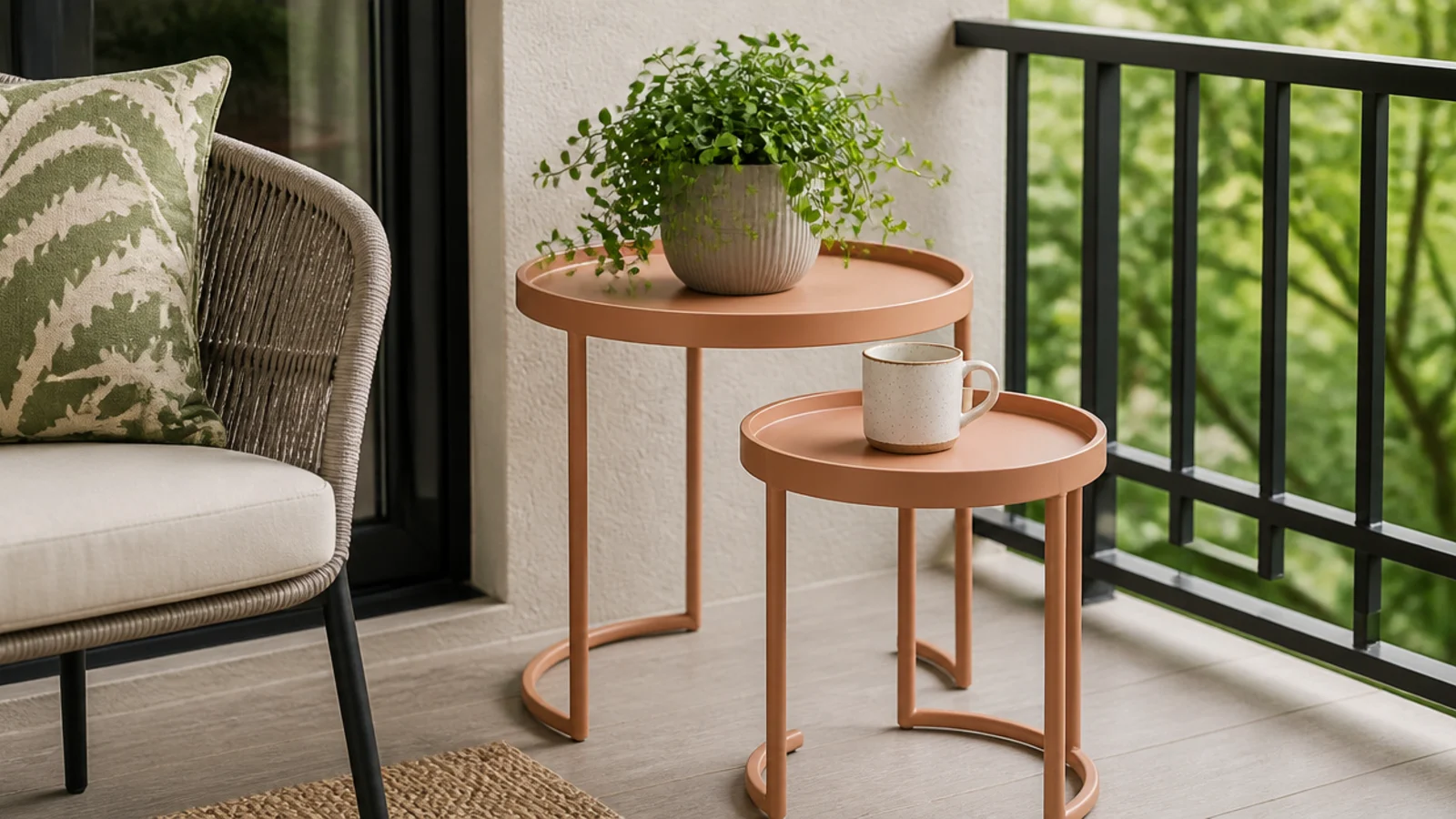
Nesting tables occupy one footprint most days and become two surfaces when someone comes over, which is precisely the flexibility a small balcony needs.
Powder-coated metal survives outdoors better than anything with a veneer top, which lifts and bubbles within a summer. $$
16. A stool and a tray instead of a table
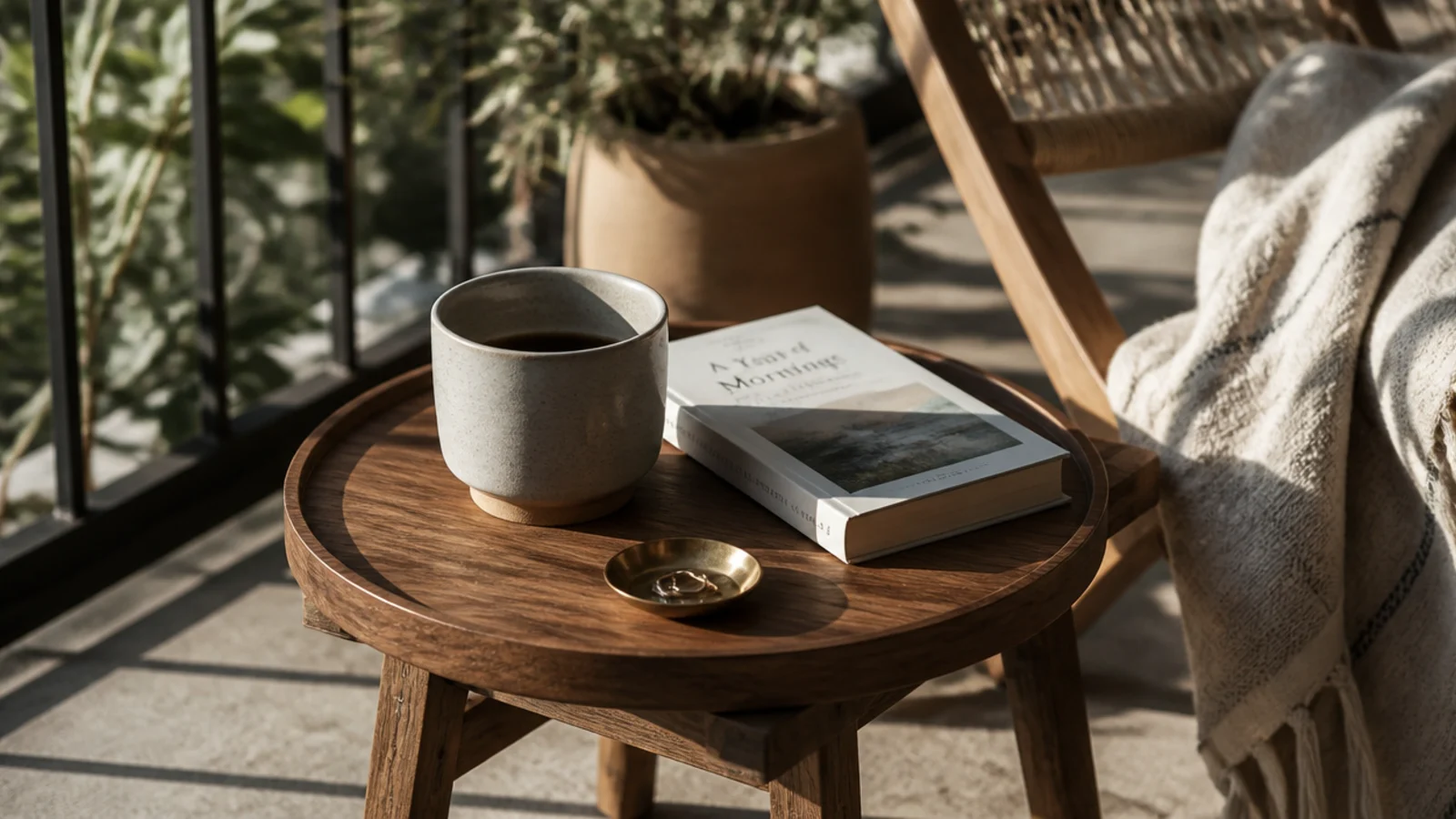
The cheapest and most flexible surface out here: a solid wood stool with a tray on top. About $15 for both secondhand.
The tray gives a raised edge so nothing rolls off, and it means the entire coffee setup comes inside in one movement when the weather turns. $
17. A drop-leaf table on the wall, if you can drill
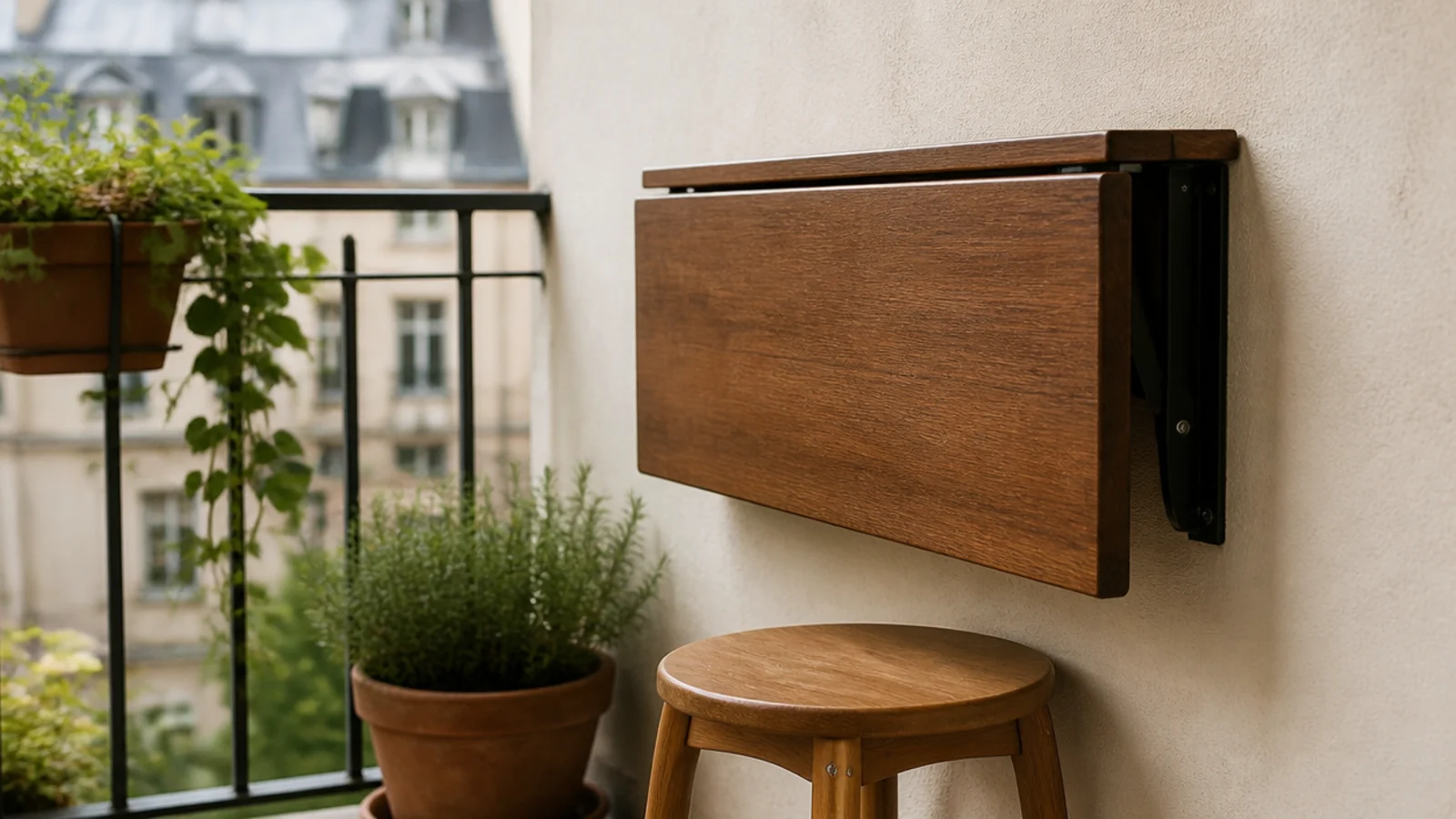
A wall-mounted drop-leaf folds to about 2 inches and gives you a proper 14-inch deep surface when it is down. It is the best space saver available.
It also means drilling into the building wall, which most leases prohibit without written permission. Ask before you buy — the renter version is a freestanding folding table instead. $$$
18. A folding rail table on the inside face
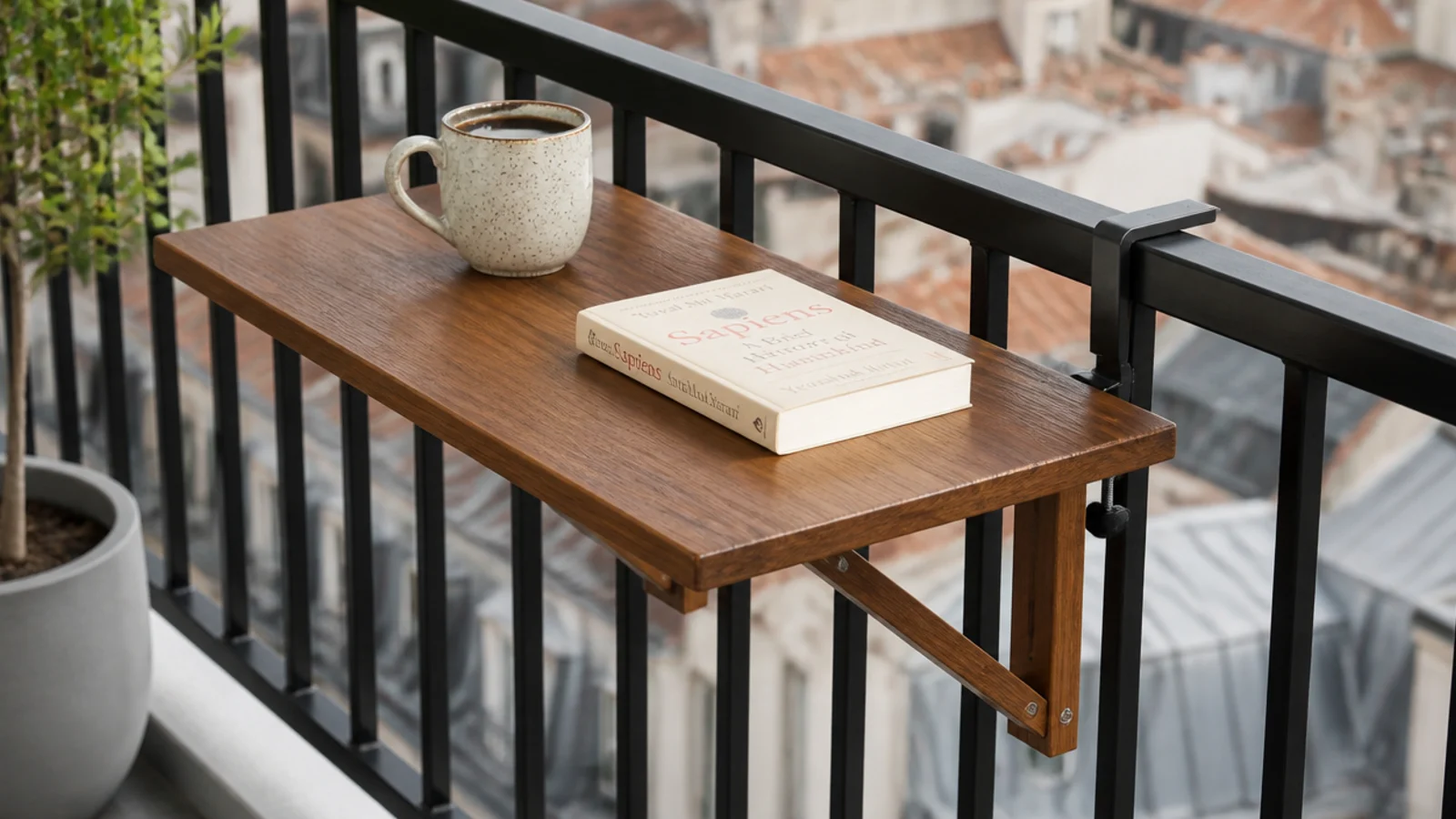
Hook-over rail tables clamp onto the inner side of the railing and fold down flat, which suits a balcony too narrow for anything freestanding.
Inboard only, tightened properly, and checked monthly. Nothing ever mounts on the outside face of a railing, where a failure drops onto a public sidewalk. $$
19. Keep every seat below rail height
Never introduce seating that raises you to sit above the railing — bar stools at a rail-height counter, a chair on a platform, a stool on a deck box.
Railing heights are set by code for people standing on the slab, and anything that lifts your centre of gravity above them removes the protection. This matters most in homes with children. Free
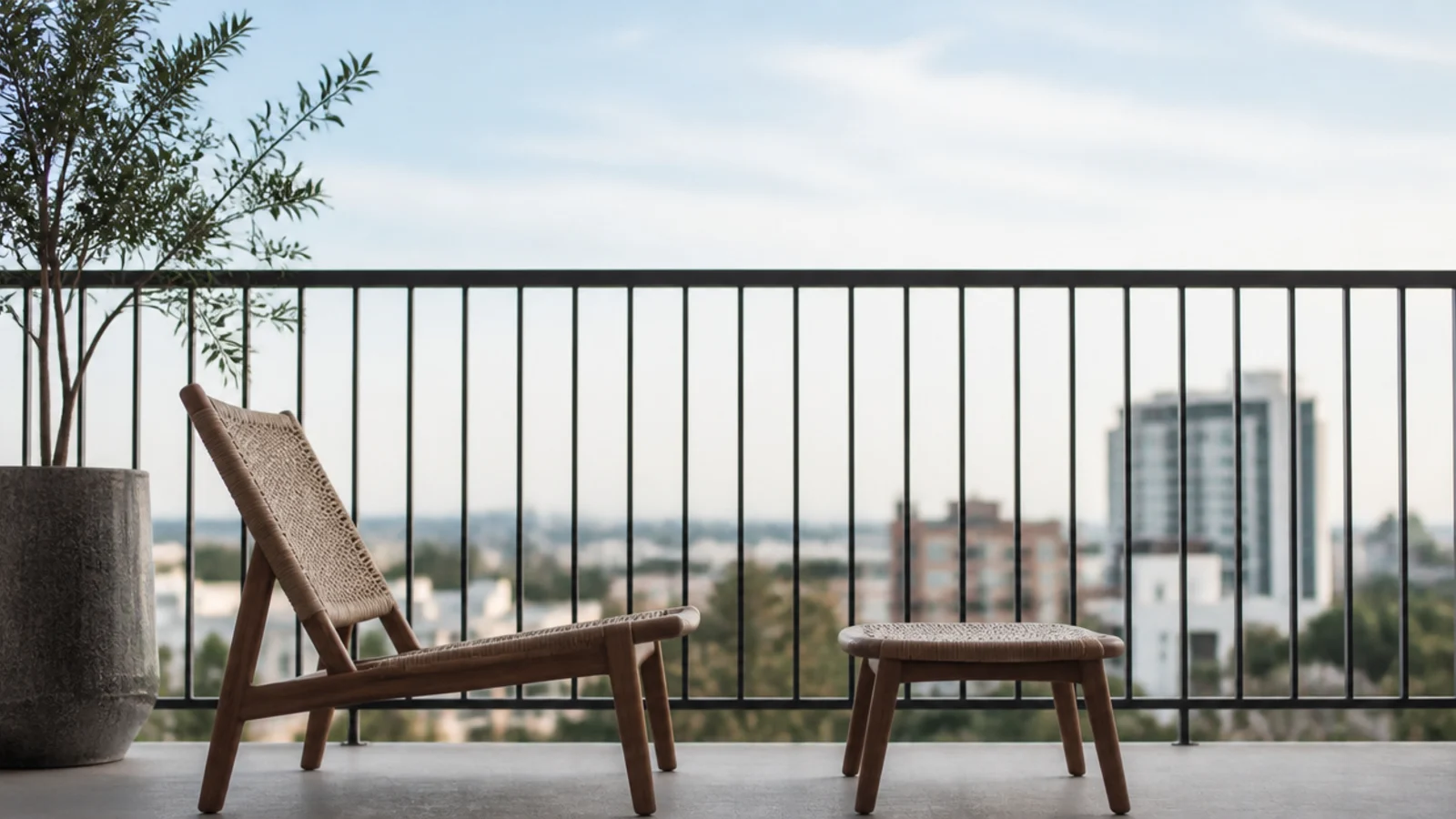
20. A swivel chair for a balcony with a view
One swivel chair serves two directions: turned out for the view, turned in for conversation through the door.
Choose a low-profile base with a wide stance rather than a tall pedestal, which is unstable in wind and awkward on a slightly sloped slab. $$$
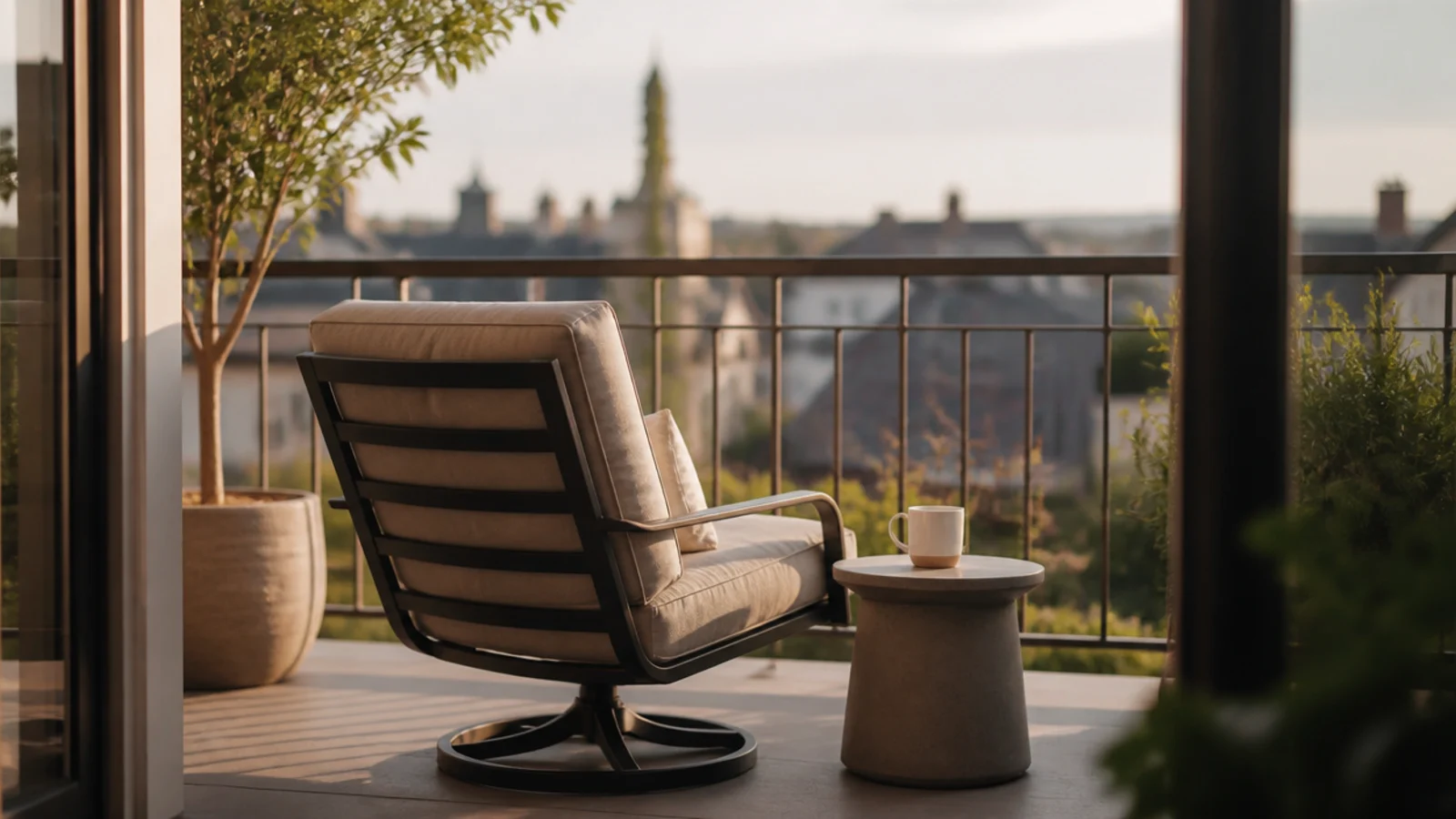
21. Rockers and gliders need rear clearance
A rocker needs about 18 inches of clear space behind it, which most balconies simply cannot give without pushing the chair into the walkway.
If you love the motion, a glider with a fixed frame moves within its own footprint and works where a rocker will not. $$$
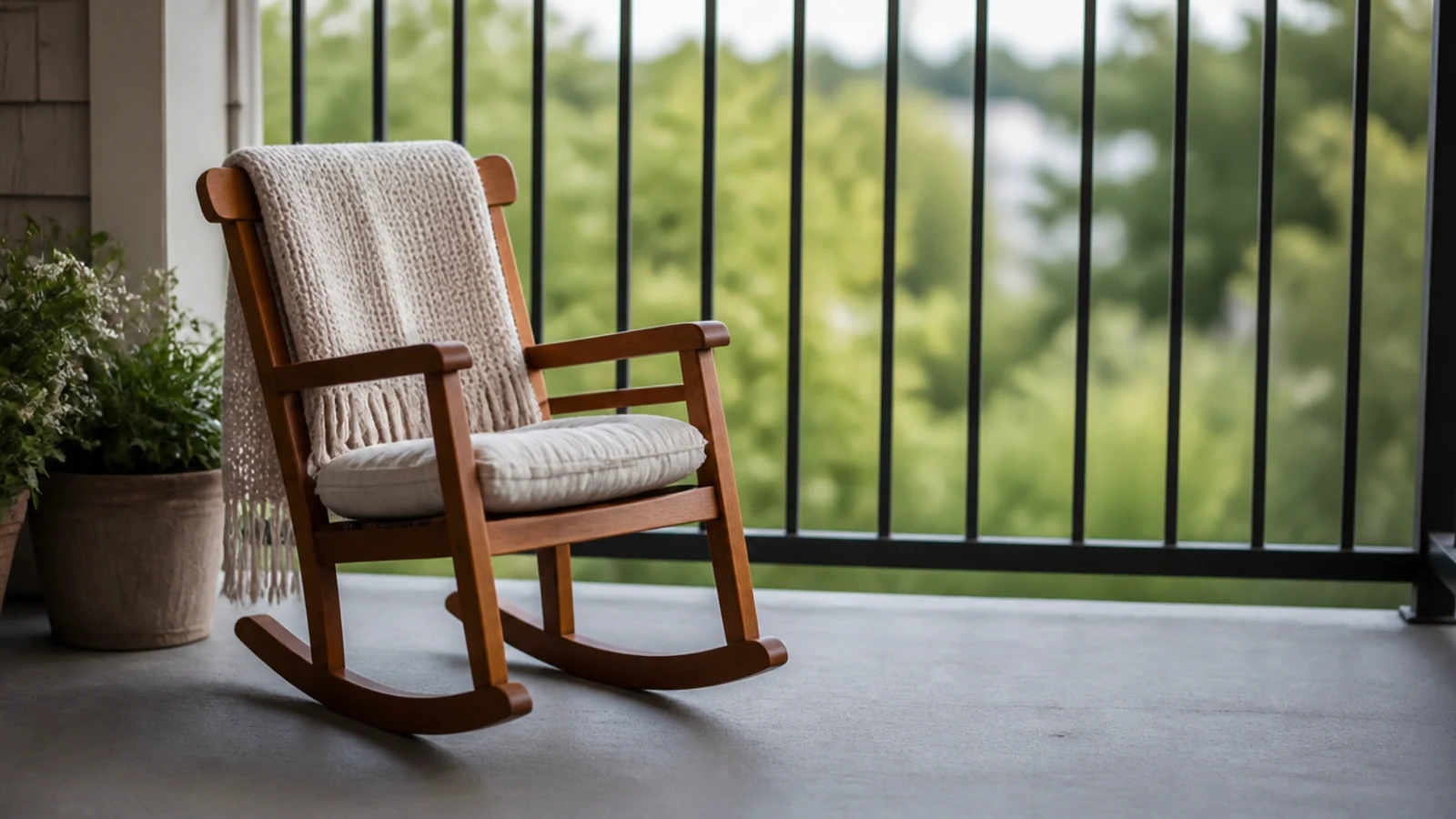
22. Choose frames that hold up outdoors
Powder-coated steel, cast aluminium, solid acacia or teak, and PE wicker over a metal frame are the four that survive. All of them clean up with soap and a seasonal coat of oil where relevant.
Untreated softwood greys and splits, and veneered anything delaminates within a summer. $$–$$$
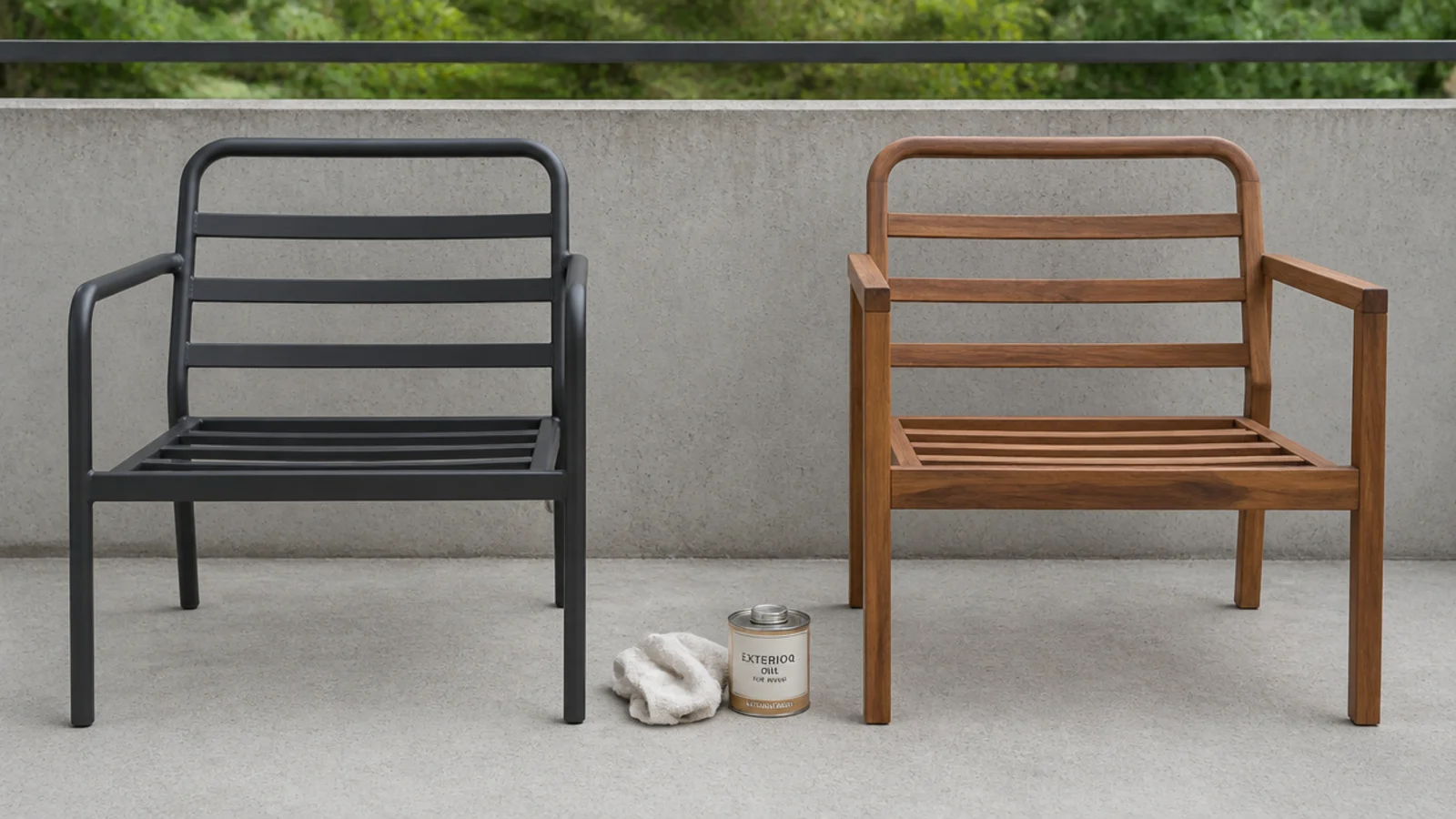
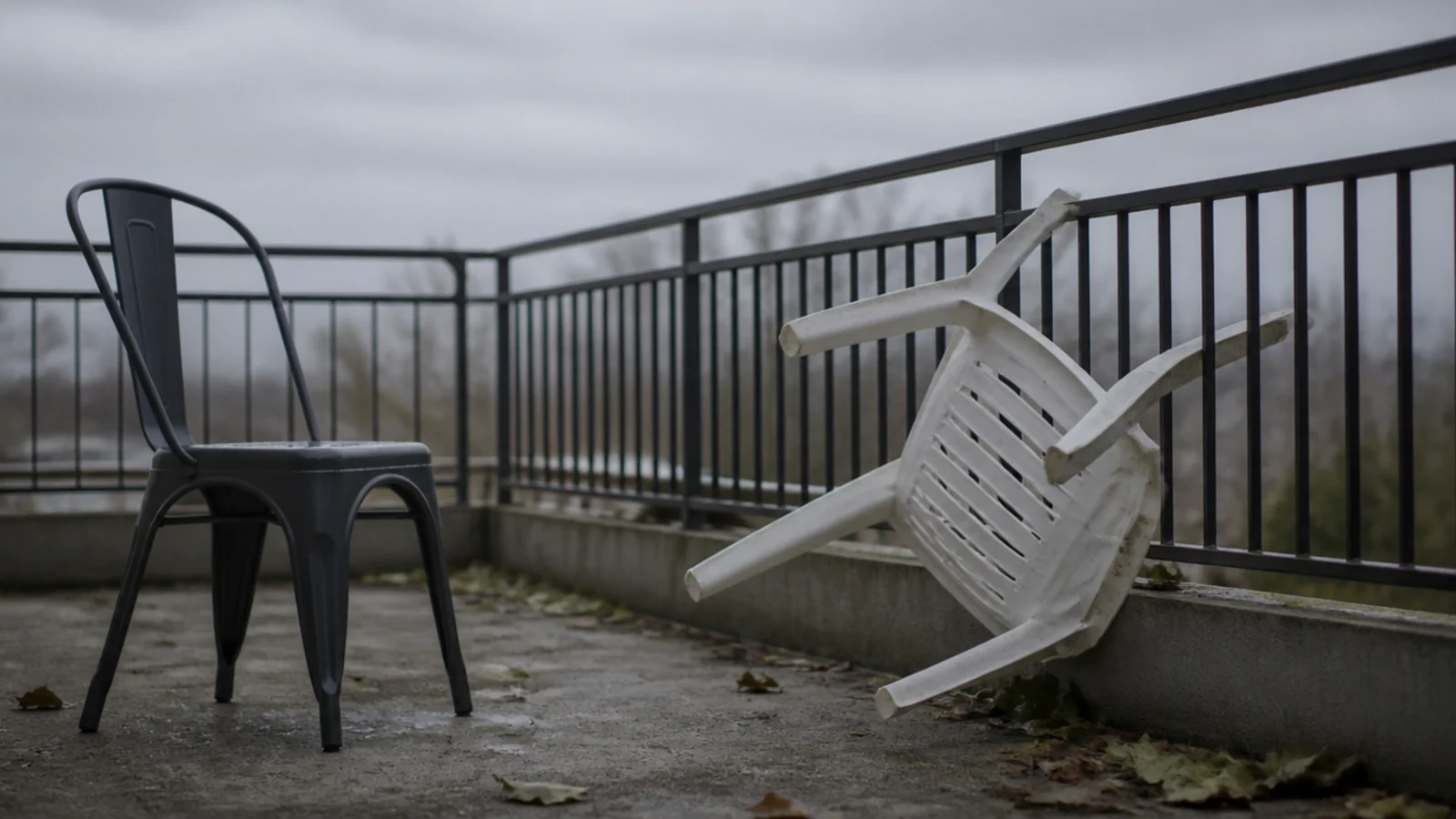
23. Skip hollow resin above the third floor
Lightweight plastic chairs are the cheapest option and the ones that end up in someone else's balcony after a storm.
Above the third floor, weight is a safety spec rather than a luxury. If you can lift a chair easily with one finger under the seat, wind can move it further than you can. Free
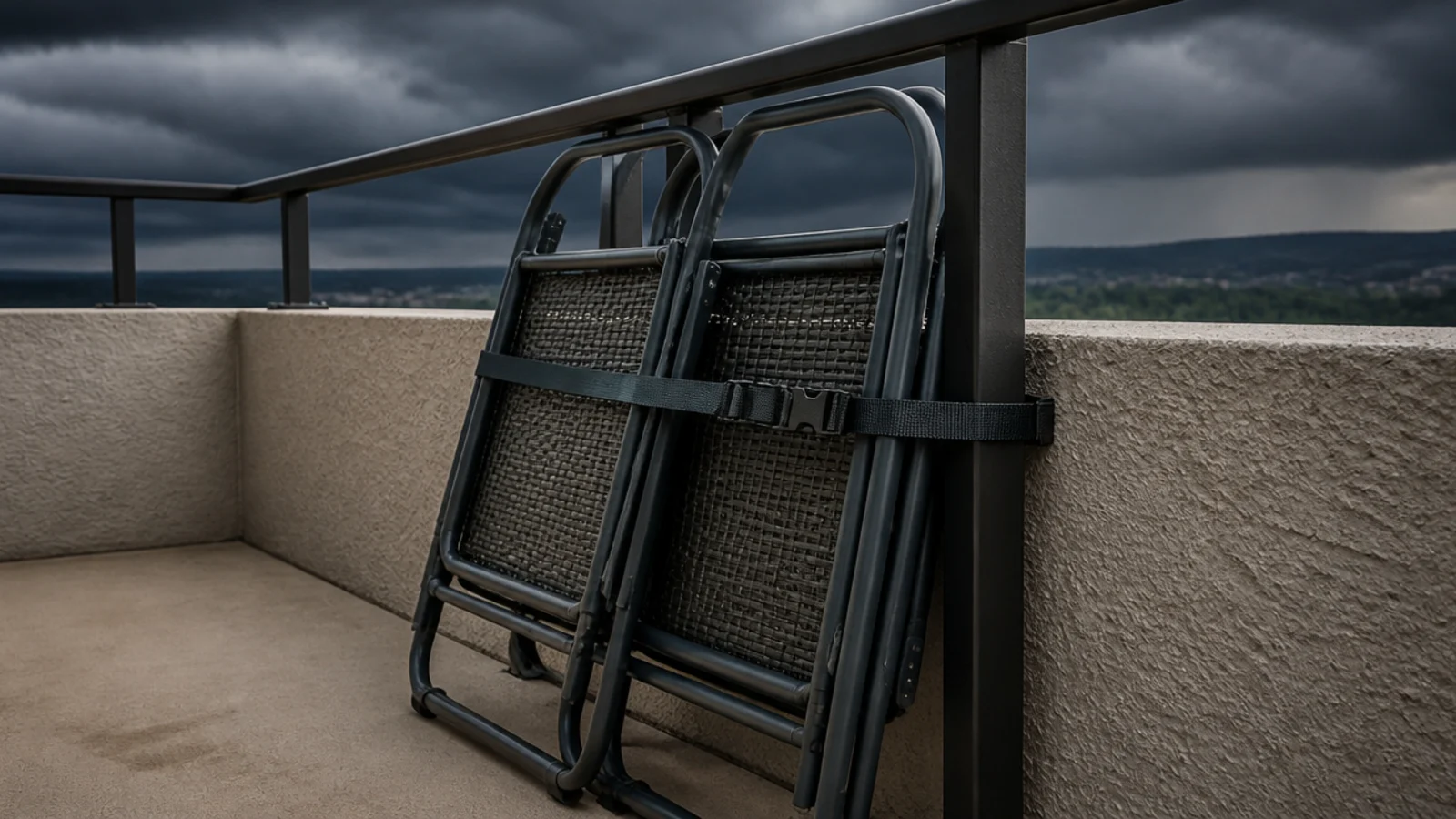
24. Fold, weight or tether before you leave
Build the habit: cushions in, chairs folded against the wall or strapped to a post, umbrella down, lightweight tables inside.
Two minutes before a storm is the whole safety routine, and it is what stops your furniture becoming somebody else's emergency several floors below. Free
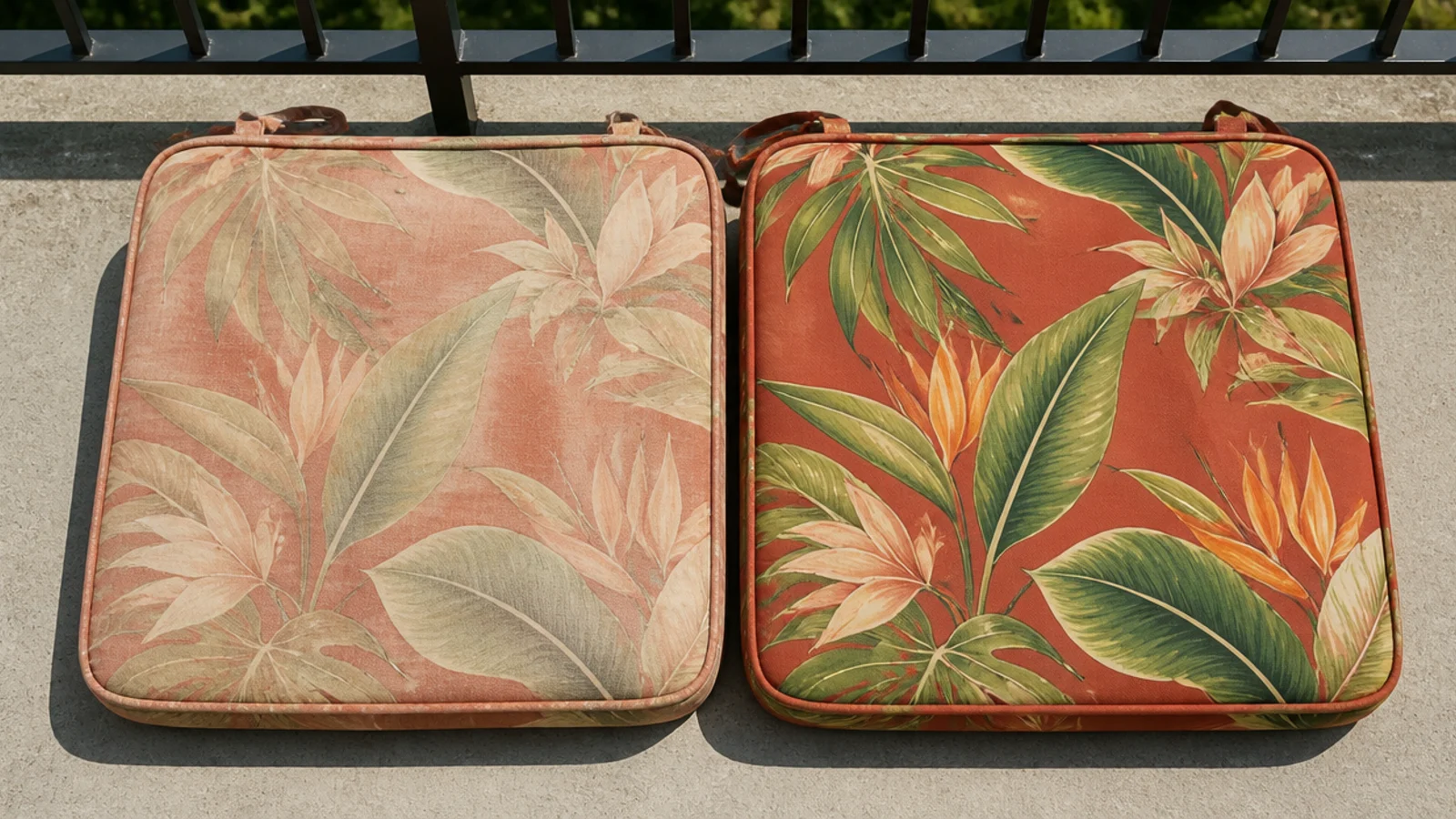
25. Solution-dyed acrylic for every cushion
Solution-dyed acrylic holds color through years of direct sun and sheds water; printed polyester fades in one summer and holds damp like a sponge.
The price gap is real — often double — and it is the one place on a balcony where the expensive version genuinely lasts four times as long. $$$
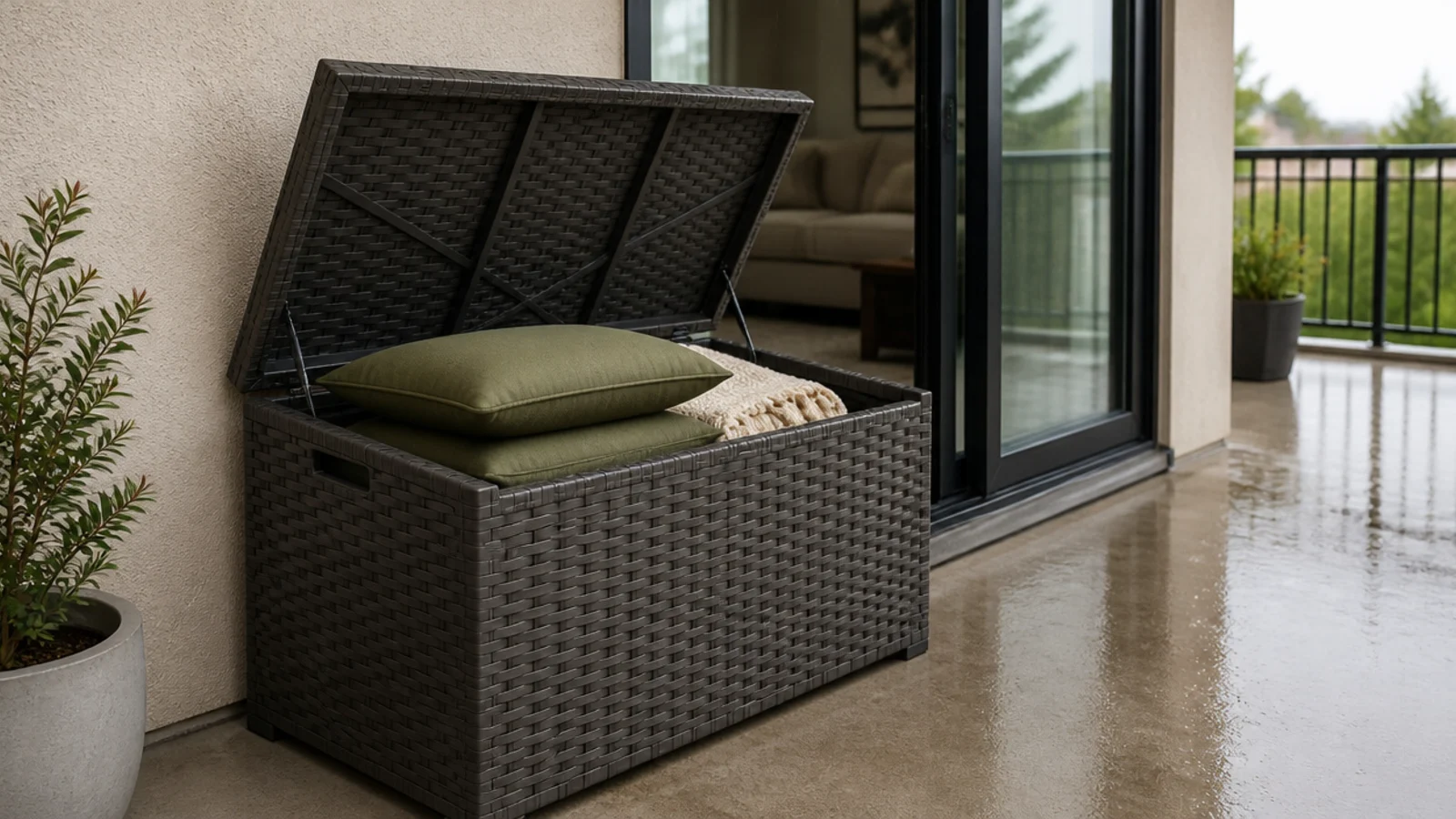
26. Give cushions a ten-second home
The bench, a lidded basket, or a hook just inside the door. Whichever it is, it has to be one trip.
Damp cushions left out grow mould in the foam, not just the cover, and no amount of washing brings them back. This single habit doubles the life of the fabric you just paid for. $–$$
27. Protect the 24-inch walkway
Once the furniture is placed, walk the balcony as though you were leaving in a hurry. The route from the door to the far end must stay at least 24 inches wide and clear.
It is a fire code requirement in most buildings and the reason a well-furnished balcony still feels usable rather than crowded. Free
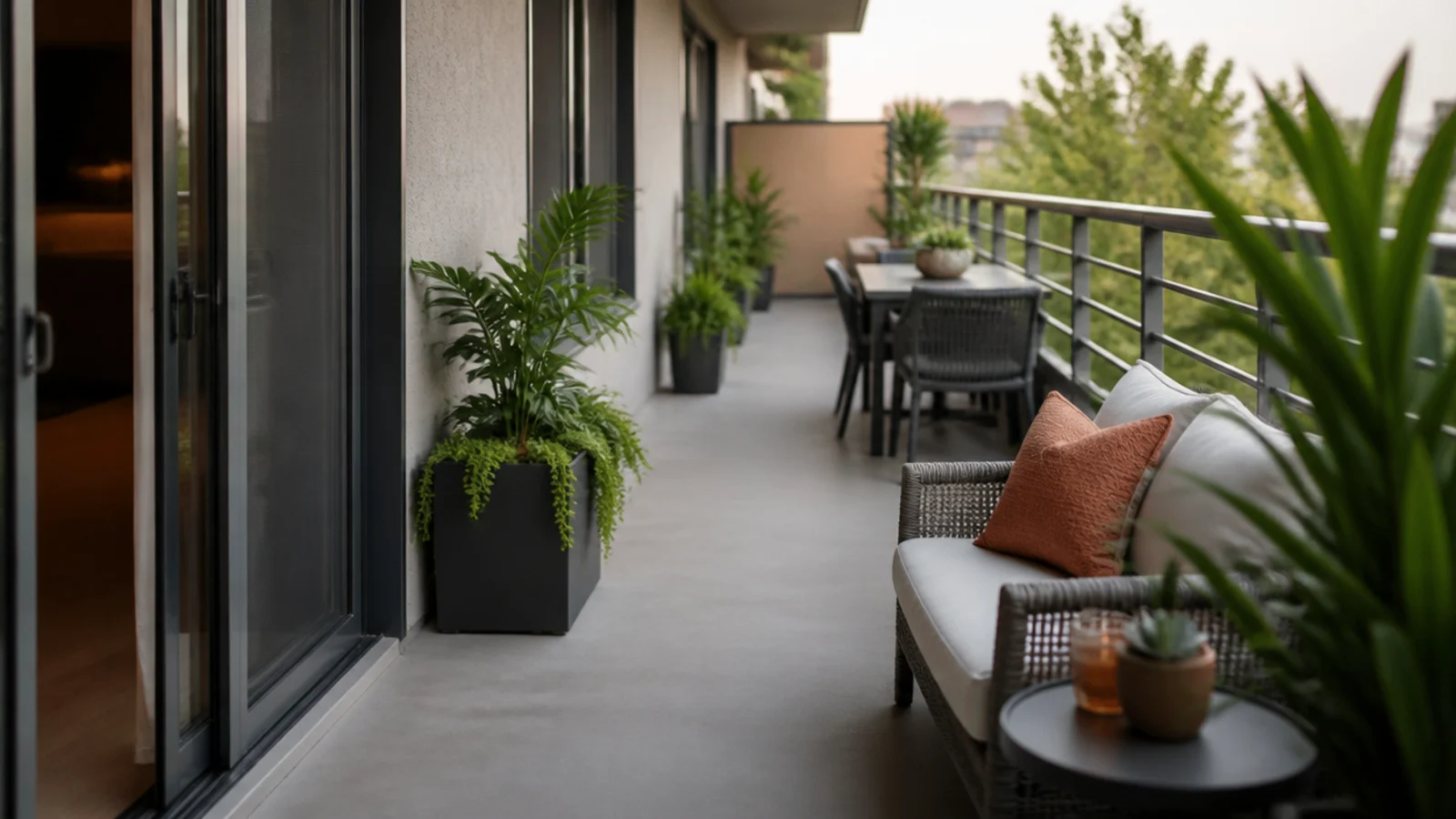
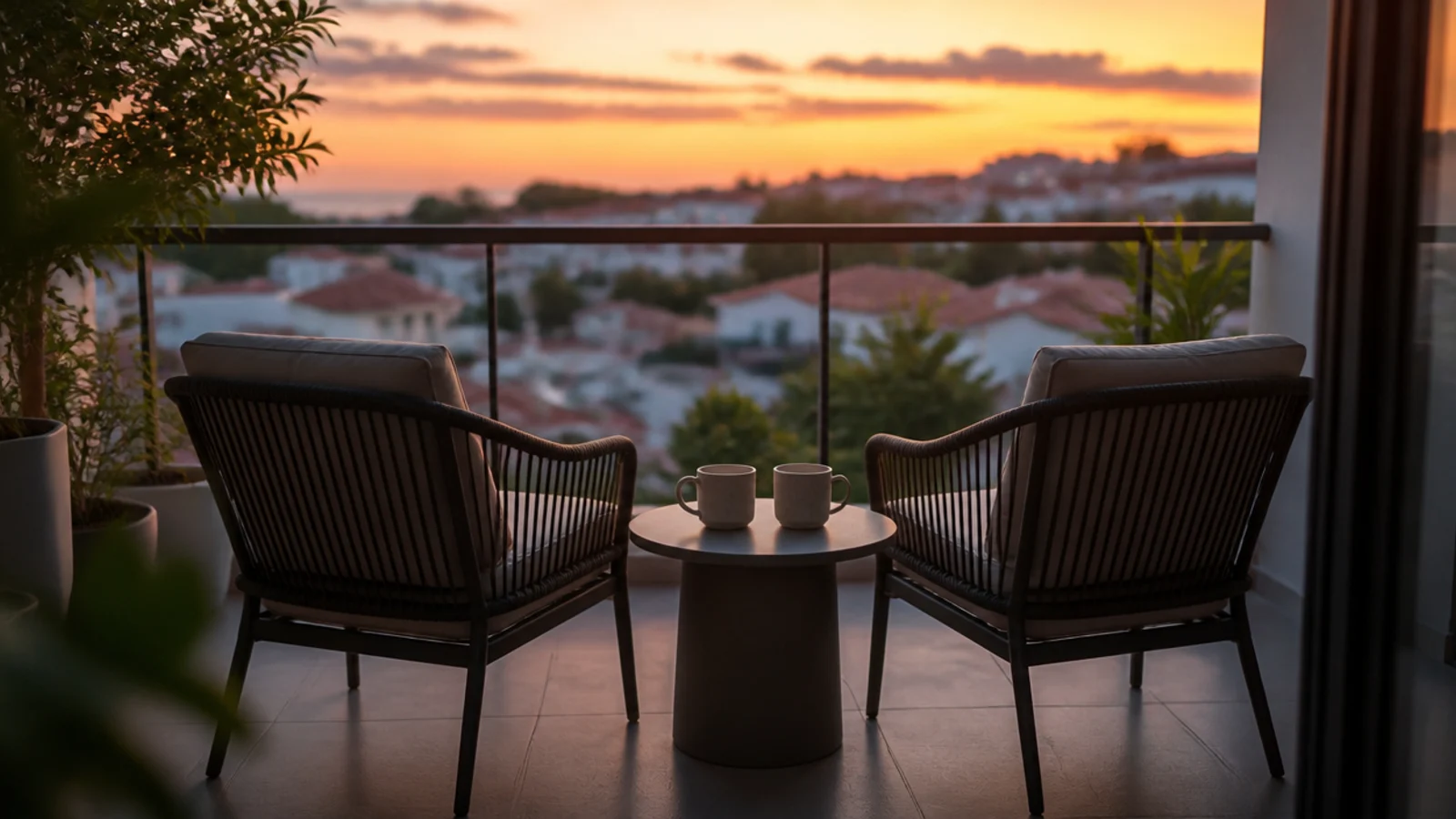
28. Aim the seating at the best thing you can see
Most chairs end up facing the sliding door because that is the direction they were carried out in. Turn them toward the rooftop line, the tree, the west sky.
If the good view is also the overlooked direction, screen the sight line beside it rather than turning your back on it — apartment balcony privacy ideas covers how. Free
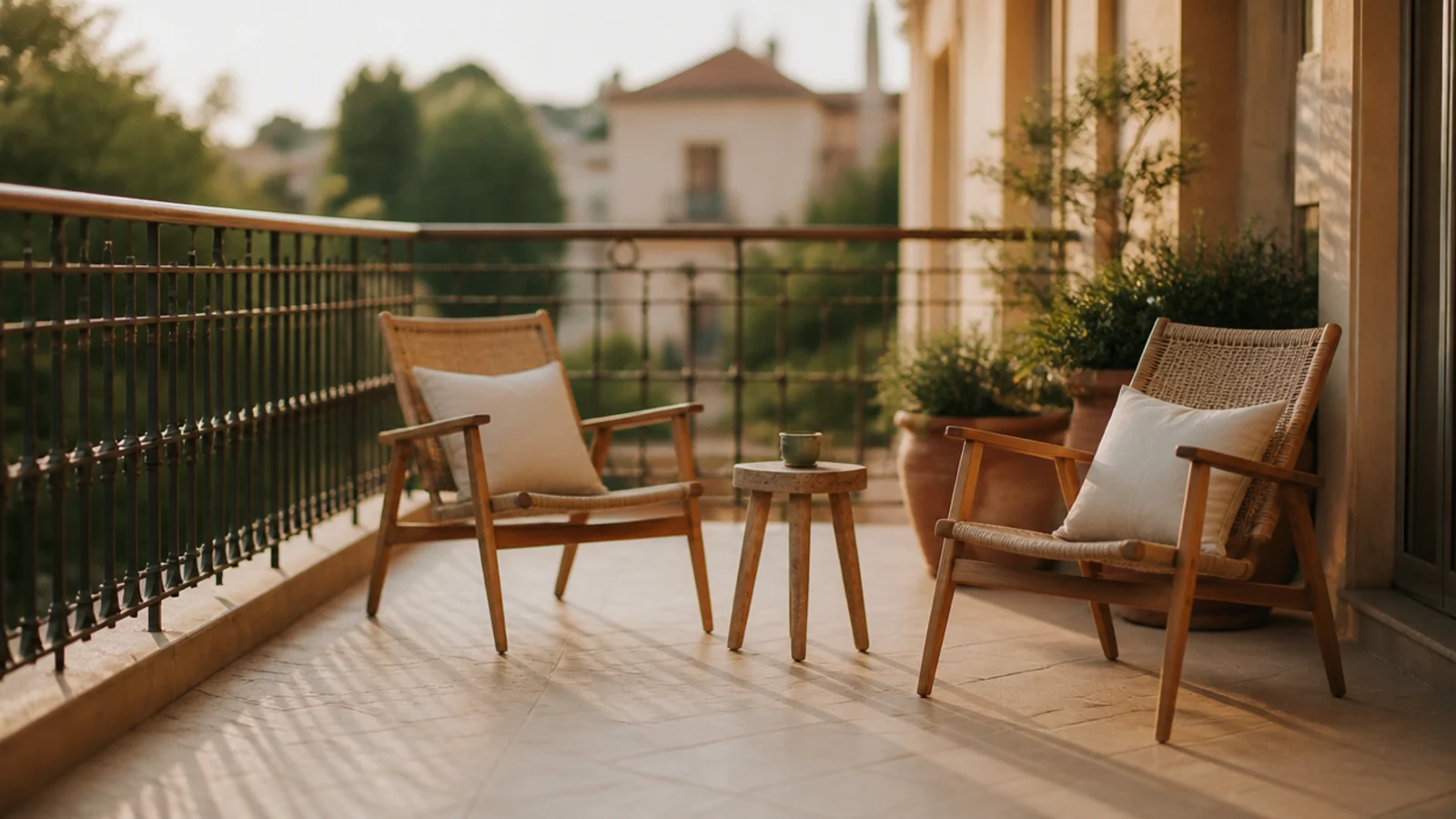
29. Be honest about two-seat capacity
Most apartment balconies seat two people comfortably and four badly. Furnishing for the four-person evening you host twice a year ruins it for the 300 mornings you use it alone.
Two seats and a stool is the realistic target. Extra guests can borrow a folding chair from inside. Free
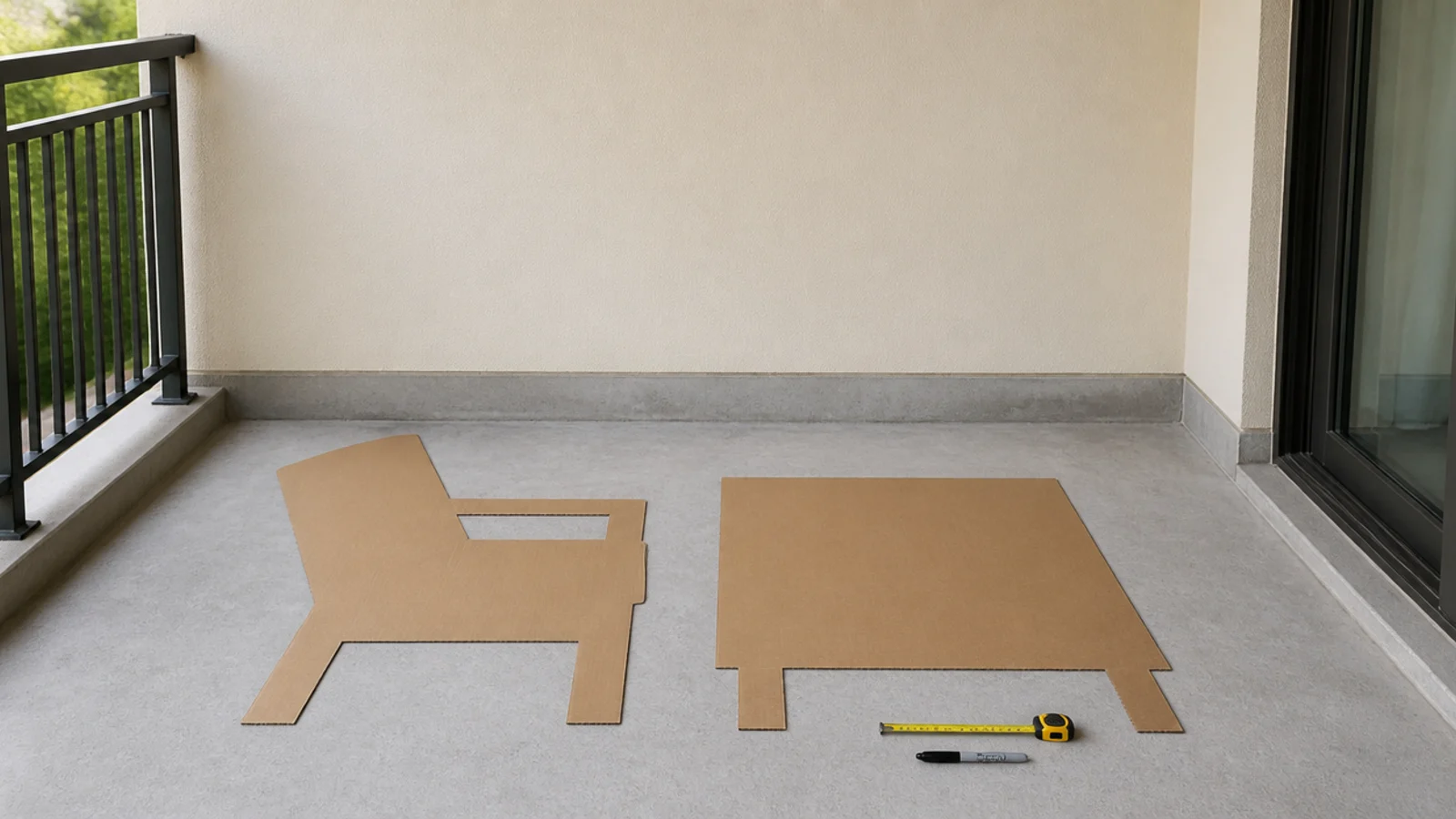
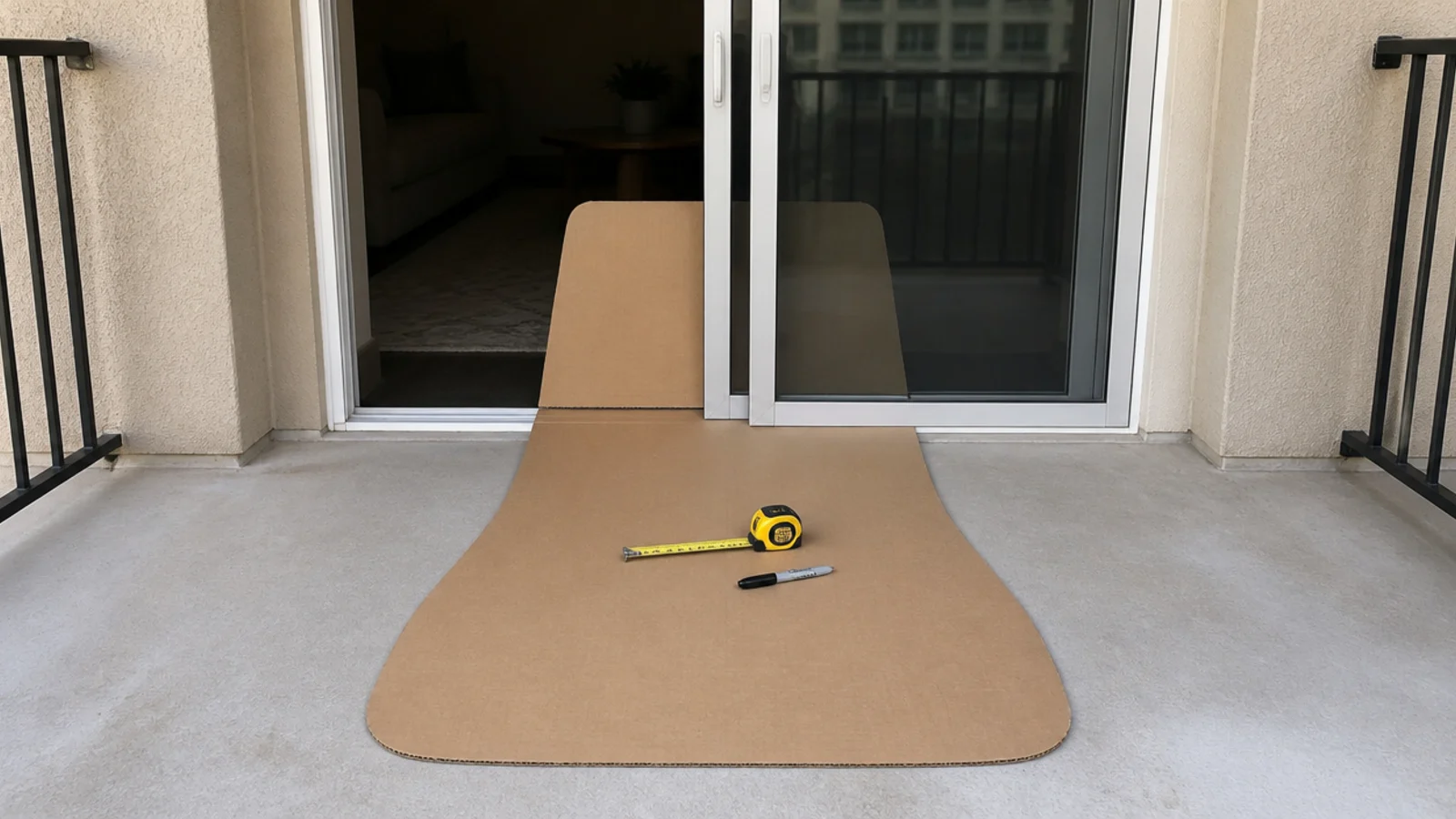
30. Test with cardboard before you buy
Cut cardboard to the exact footprint in the listing, including the depth when a chair is pulled out, and live with it on the slab for a day.
You will discover the door catches, or the walkway vanishes, or it fits perfectly — all for free, and before anything needs returning. It is the step that separates a balcony that gets used from one that gets photographed once. Free
Mistakes to Skip
- Buying a set before measuring the door swing. A chair wedged against the glass makes the entire balcony unusable, and outdoor furniture is miserable to return.
- Adding seating that puts you above rail height. Railing heights are set by code for someone standing on the slab, and a raised seat removes the protection they provide.
- Leaving lightweight furniture out above the third floor. Hollow resin chairs and unweighted loungers travel in a gust, and whatever they hit on the way down is not yours.
Frequently asked questions
How much space does balcony seating need?
A bistro table with two chairs pulled out needs roughly 4 feet by 4 feet to be usable, plus a 24-inch walkway to the door that stays clear as an egress route. On a slab under 4 feet deep, drop the table and use one chair with a stool, or a bench against the building wall with a folding table in front of it.
What is the right seat height for a balcony?
Seventeen to nineteen inches from the floor for a dining chair, paired with a table at 28 to 30 inches. Lounge seating sits lower at 14 to 16 inches, with a side table around 18 to 20 inches beside it. Getting the pairing right matters more than the style — a low chair at a dining table is the most common balcony mismatch.
What balcony furniture survives wind on a high floor?
Low, wide and heavy. Powder-coated steel, cast aluminium and solid acacia all stay put; hollow resin and thin folding plastic do not. Above the third floor, choose chairs under 32 inches tall with a wide stance, fold and store anything light when you leave, and tether umbrellas or take them down entirely.
Can I put a hanging chair on an apartment balcony?
Only on a freestanding frame. Hanging anything from the balcony ceiling or slab requires written building approval and is prohibited in most leases, since it means drilling into structure you do not own. A weighted A-frame needs a footprint of roughly 40 by 40 inches, which is a large share of a small balcony, so measure before you fall in love.
How do I store balcony cushions?
In a lidded storage bench against the building wall, or a lidded basket just inside the door. The deciding factor is speed — if putting them away takes more than ten seconds you will leave them out through a storm. Solution-dyed acrylic covers survive years of sun, while printed polyester fades in a single summer.
Is built-in balcony seating allowed in a rental?
Almost never. Building anything fixed to the wall, railing or slab counts as altering the structure, and most leases prohibit it outright. The convincing alternative is a freestanding bench pushed tight against the building wall with matching cushions, which reads as built-in and leaves with you at the end of the lease.
Measure, cut cardboard, then buy once — the seating decision sets everything else on the balcony. For the full setup around it, styling a small apartment balcony runs the whole process in order, and cozy apartment balcony ideas covers the secondhand route if the budget is tight. If the chair is where your morning cup happens, an apartment coffee bar just inside the door completes it. Save the pin before you order a single chair.
Want more like this? Browse all 15 apartment balcony ideas guides — they all use the same measurements and budget tiers.
Pin it for later
Save this to your Apartment Balcony Ideas board
Pin it now so it is waiting for you when the tape measure comes out — and so the next person hunting for this idea can find it too.
Save this pinKeep going
More ideas worth saving while you have the tape measure out.