Apartment Balcony Ideas · Listicle
25 Gorgeous Apartment Balcony Ideas Worth Trying

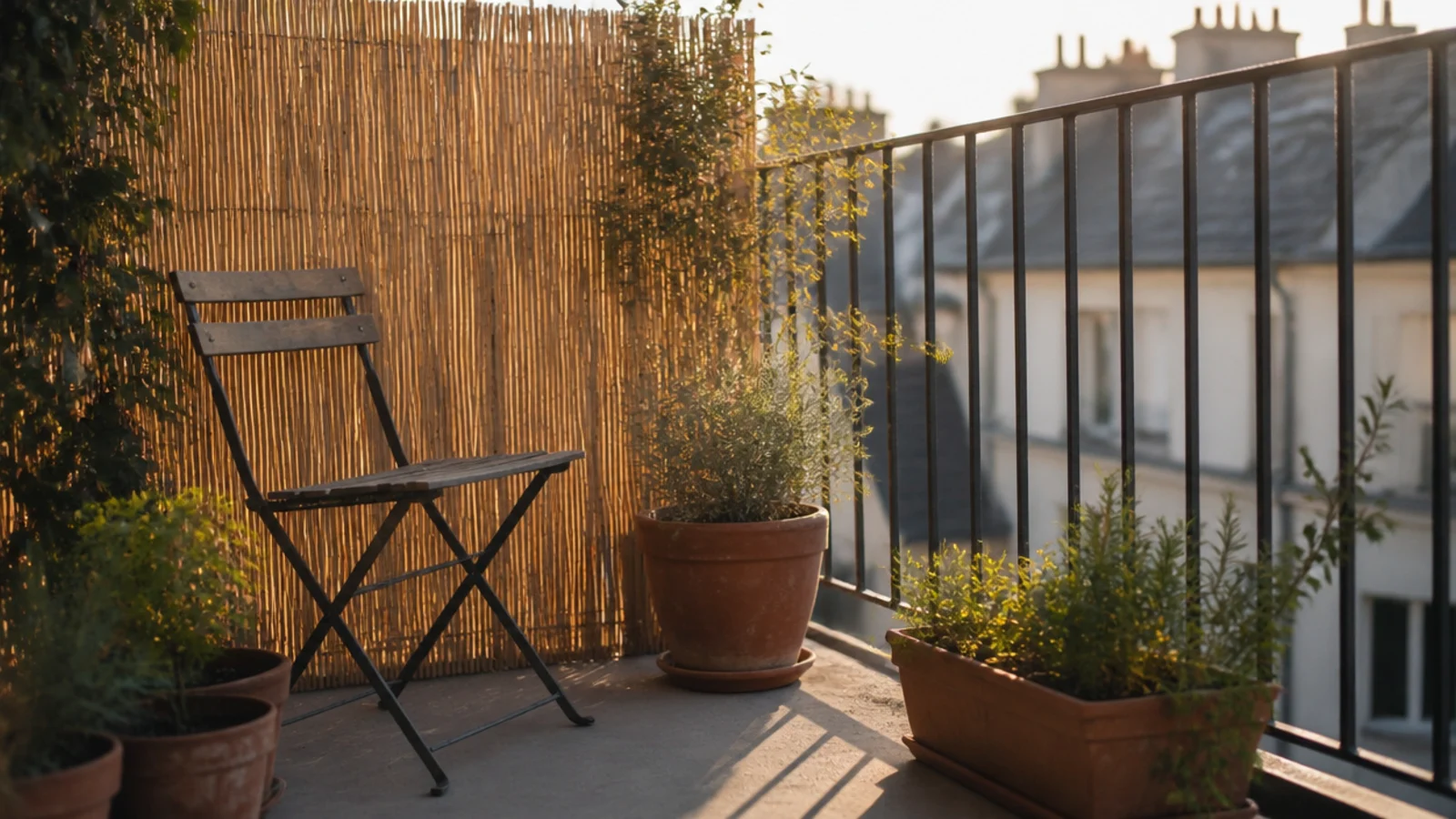
Apartment balcony privacy ideas usually get sold as one product: a roll of screening long enough to wrap the whole railing. That is almost always the wrong answer — it costs more, loads the rail in wind, blocks your light and makes the balcony feel like a box. In four apartments I have never needed more than a 6-foot run of screening. These 25 fixes start with the sight line and work outward.
In this guide27 sections — tap to openHide
- 1.How apartment balcony privacy ideas work without breaking the lease
- 2.Find the real sight line before you buy anything
- 3.Screen to 40 to 48 inches, not full height
- 4.A reed roll cable-tied to the inside face
- 5.A freestanding slatted panel with weighted feet
- 6.Artificial hedge panels, fixed inboard
- 7.A planter with a trellis back
- 8.Tall grasses in heavy pots as a soft screen
- 9.Columnar evergreens for year-round cover
- 10.Curtain panels on a freestanding frame
- 11.Screen the corner at an angle, not the run
- 12.Reeded film on a glass balustrade
- 13.A shade sail for the view from above
- 14.Angle the umbrella toward the overlooked side
- 15.Move the chair before you buy a screen
- 16.Let a storage cabinet do the screening
- 17.Screen the doorway, not the balcony
- 18.Layer a low screen with a tall plant behind
- 19.Choose slats over solid for wind loading
- 20.Never fix anything to the outside face
- 21.Check what is visible from the street below
- 22.Light low and warm so you are not on stage
- 23.A freestanding lattice with climbers
- 24.Bamboo in a big pot, with the weight in mind
- 25.Soften the echo with textiles and plants
- 26.Plan for winter, when the leaves are gone
- 27.Mistakes to Skip
How apartment balcony privacy ideas work without breaking the lease
Sit in the chair before you buy anything. Standing up, you can see everything and everything can see you; sitting down, the exposure is usually one neighbouring balcony or one window. Screen that, and the job is done.
The rules matter here more than anywhere else on a balcony. Most leases prohibit attaching anything to the railing, prohibit drilling into the wall or slab, and many specifically ban screens above rail height because buildings care about a uniform street appearance. Read the clause, and ask in writing if it is ambiguous.
Wind is the second constraint. A solid panel across a full railing becomes a sail, and every gust loads fixings never designed for it. Slatted, reed and lattice screens let air through, which is why they survive and why buildings tolerate them.
Nothing ever fastens to the outside face of the railing — panels, planters, hooks, none of it. Anything that works loose from height lands on a sidewalk. And keep the egress path clear: 24 inches of clear walkway to the door is a fire code requirement in most buildings, so screens go along the rail, not across the route.
Budget tiers below: $ under $25, $$ $25–$75, $$$ $75–$200.
1. Find the real sight line before you buy anything
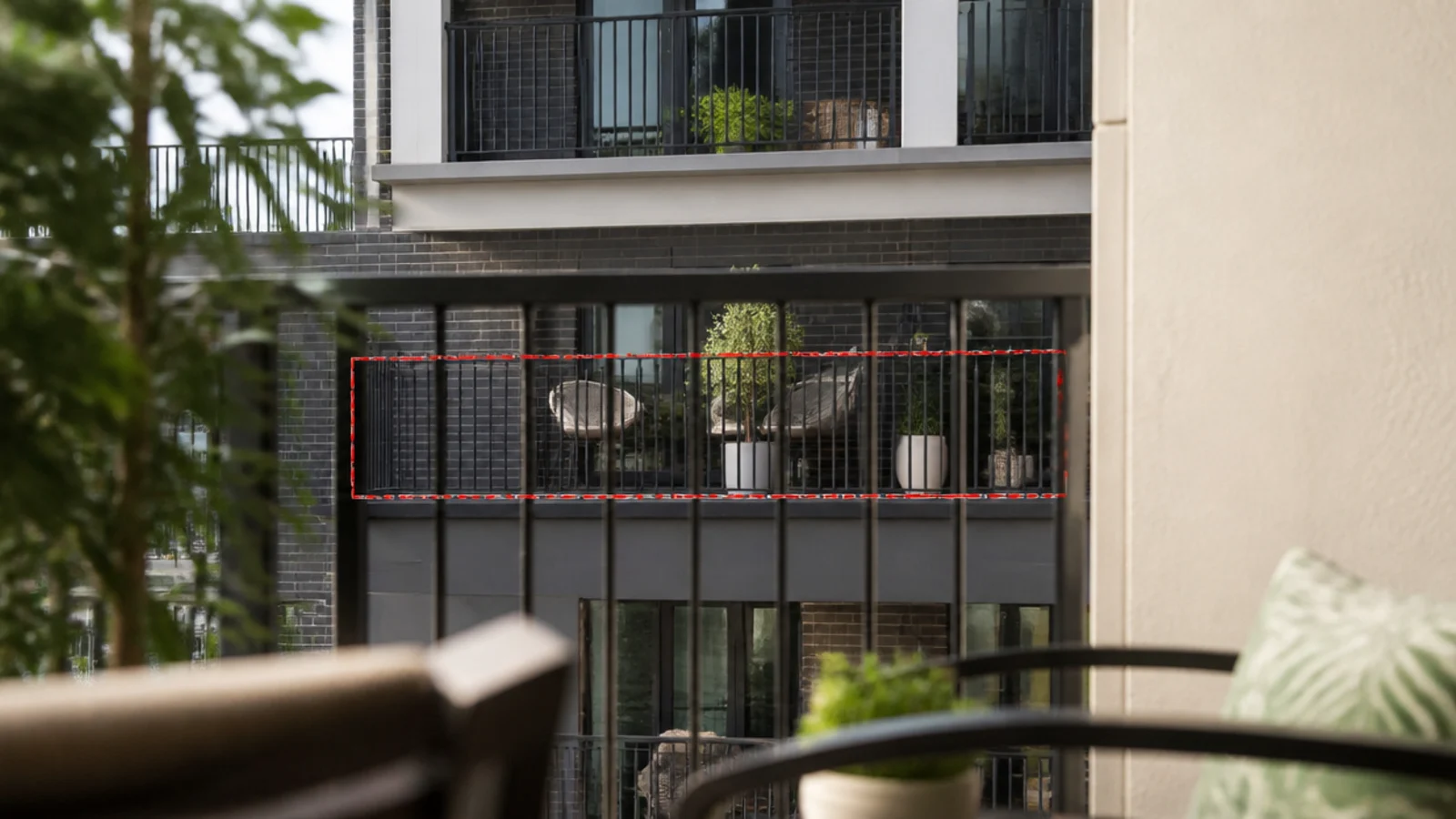
Sit down at the height you actually use, and look. Mark where the exposure starts and stops with two strips of painter's tape on the railing.
Nine times out of ten it is a 4 to 6 foot run, not the whole balcony. That measurement is the difference between $20 of reed and $120 of screening you did not need. Free
2. Screen to 40 to 48 inches, not full height
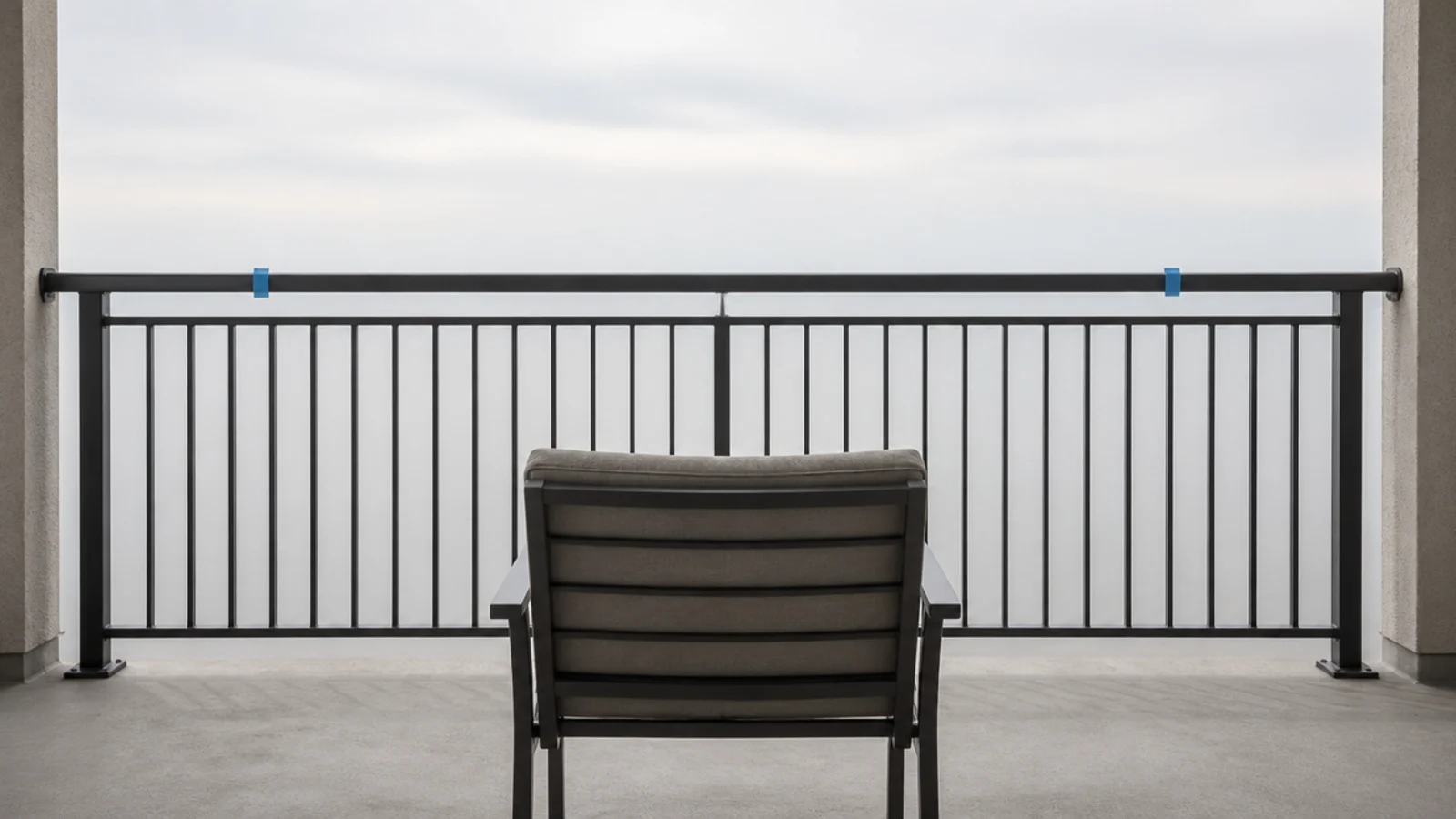
Privacy while seated needs roughly chest height from the floor, which lands between 40 and 48 inches for most people in a low chair.
Anything taller blocks your own view and sky, adds wind load, and is exactly what building rules tend to prohibit. Measure from the slab, sitting down, before you cut. Free
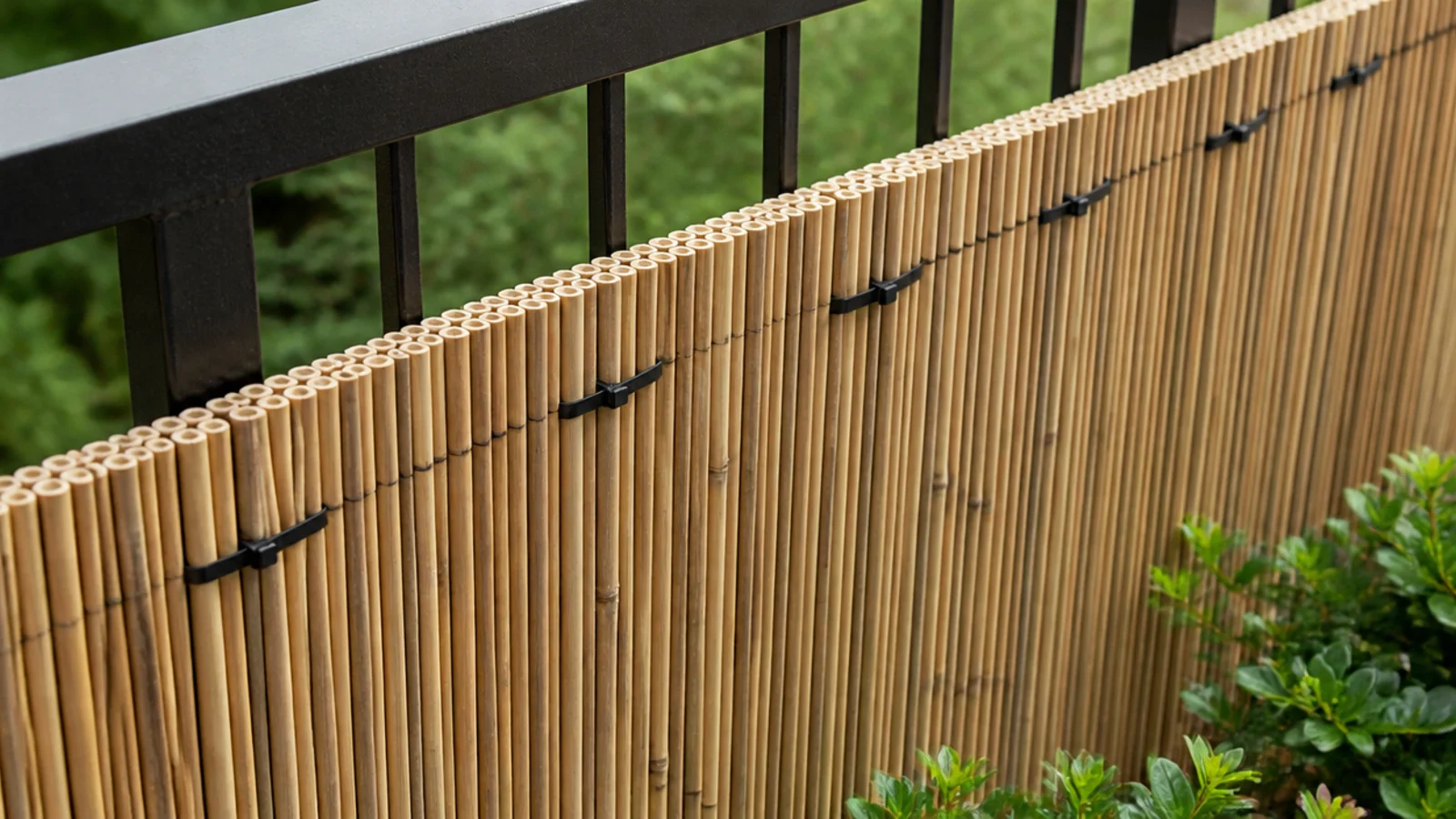
3. A reed roll cable-tied to the inside face
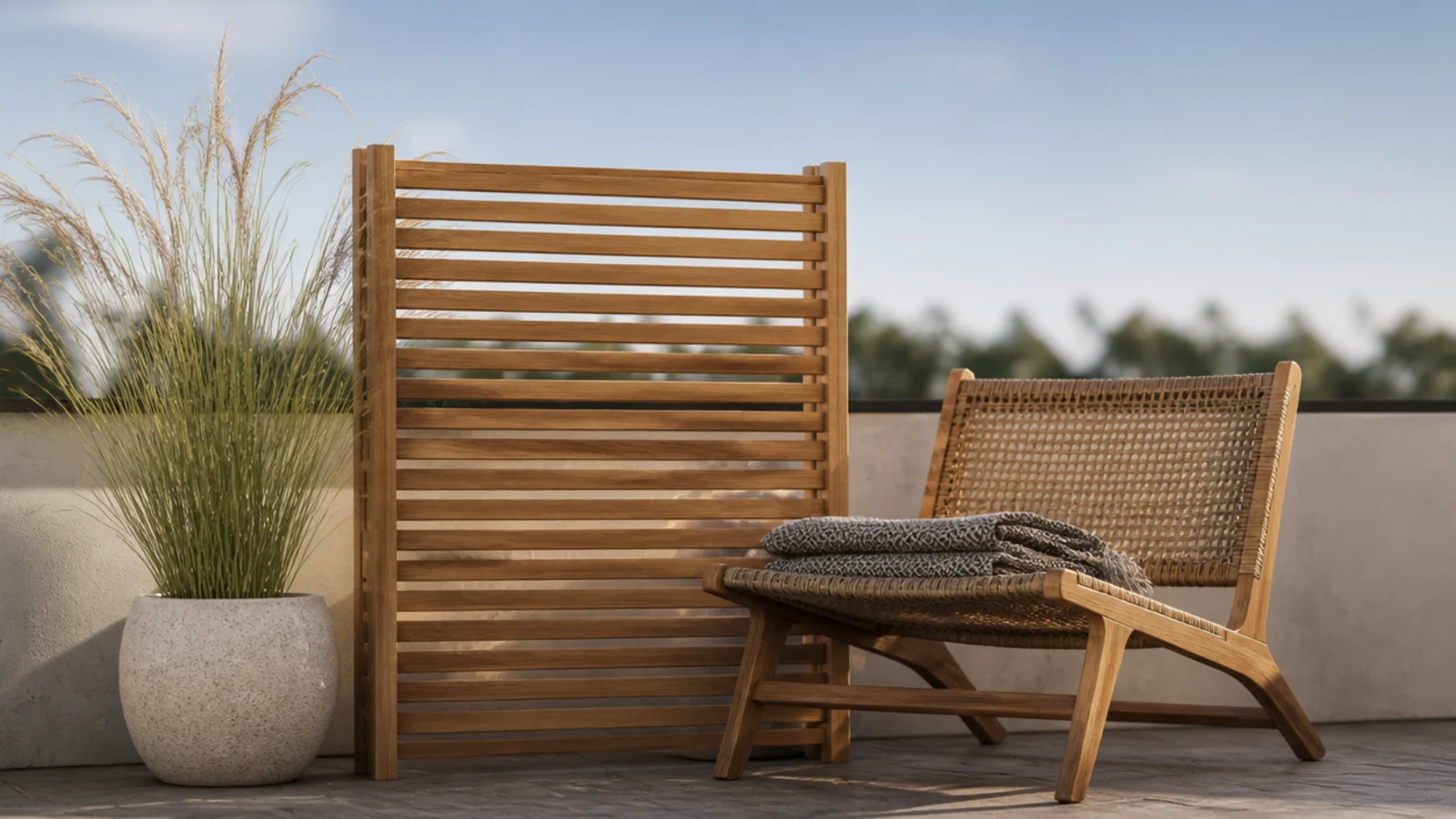
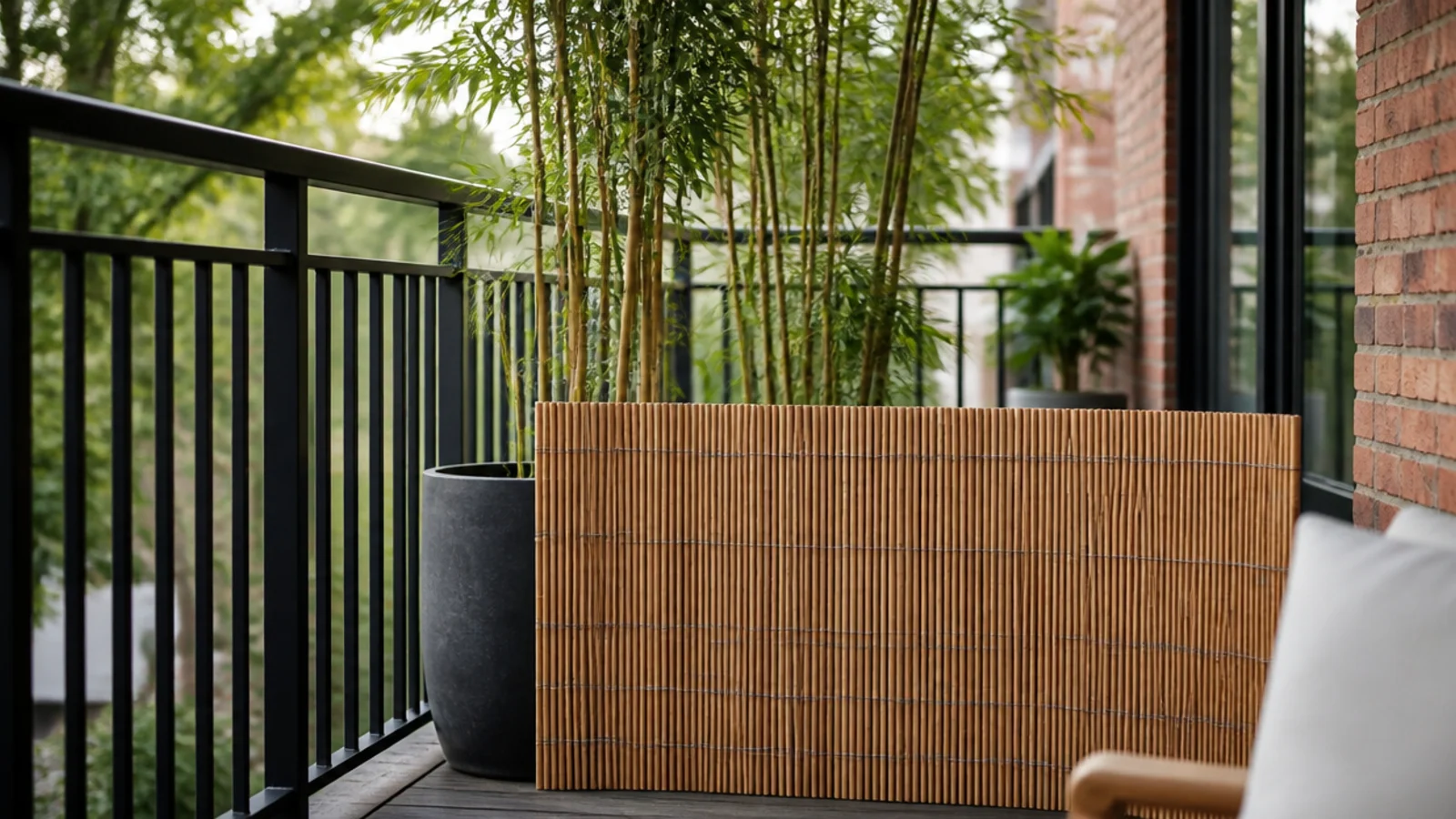
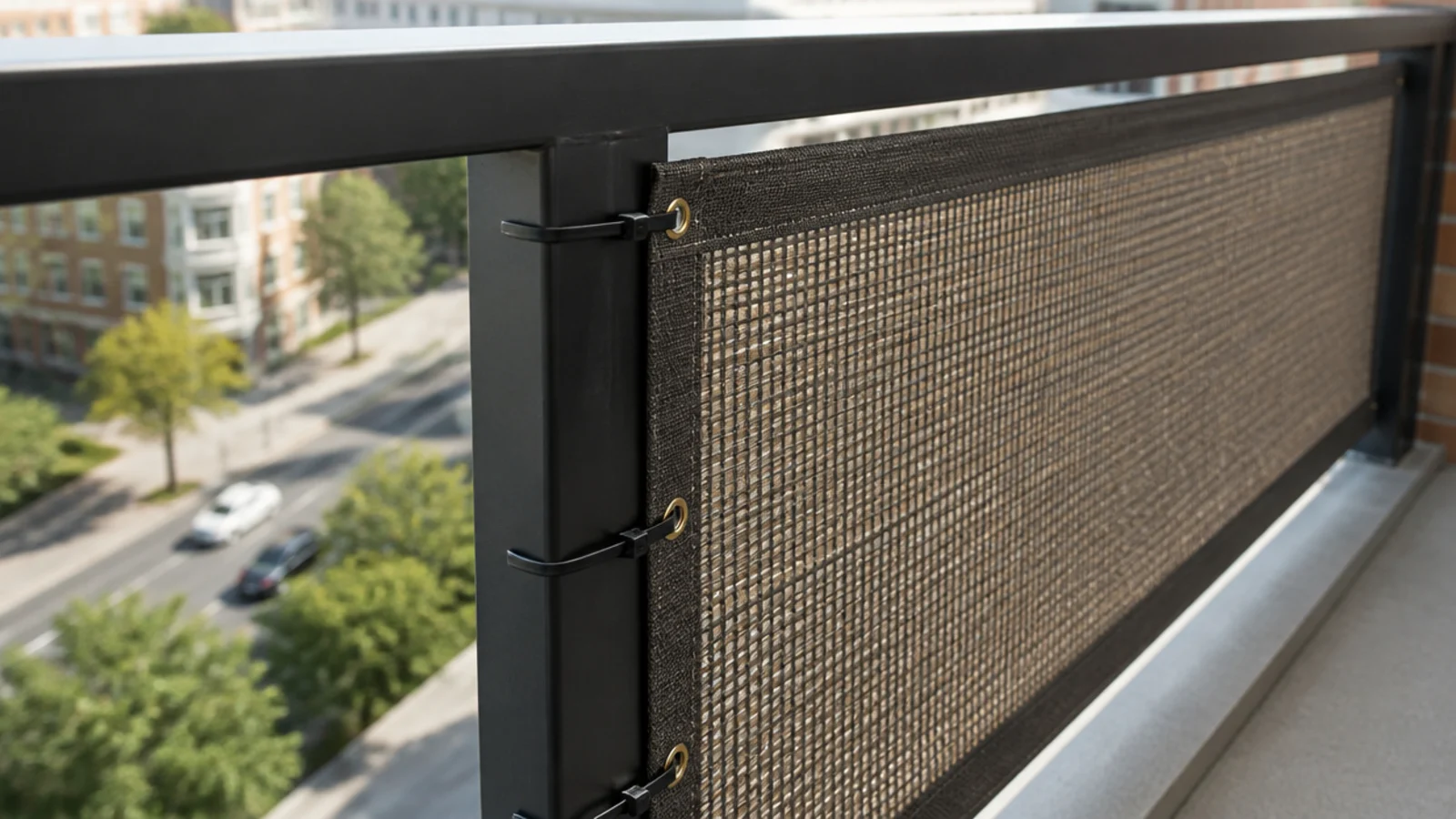
Natural reed or bamboo fencing is the cheapest screening that still looks good: around $20 for a 16-foot roll, cut cleanly with secateurs.
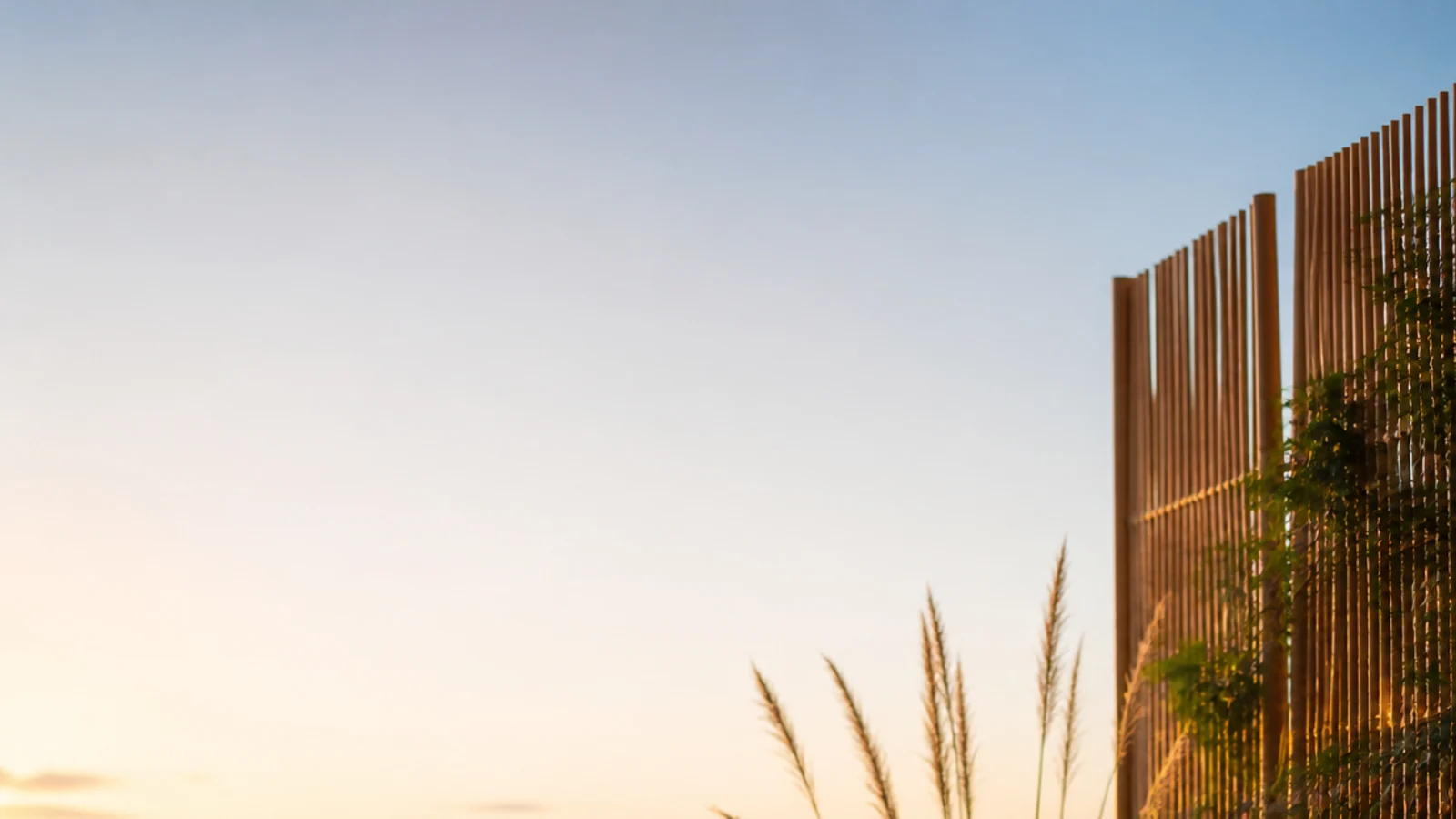
Fasten it to the inside face of the railing with UV-stable cable ties every 12 inches, and trim the top edge dead level. The neat cut line is the difference between screening and site hoarding. $$
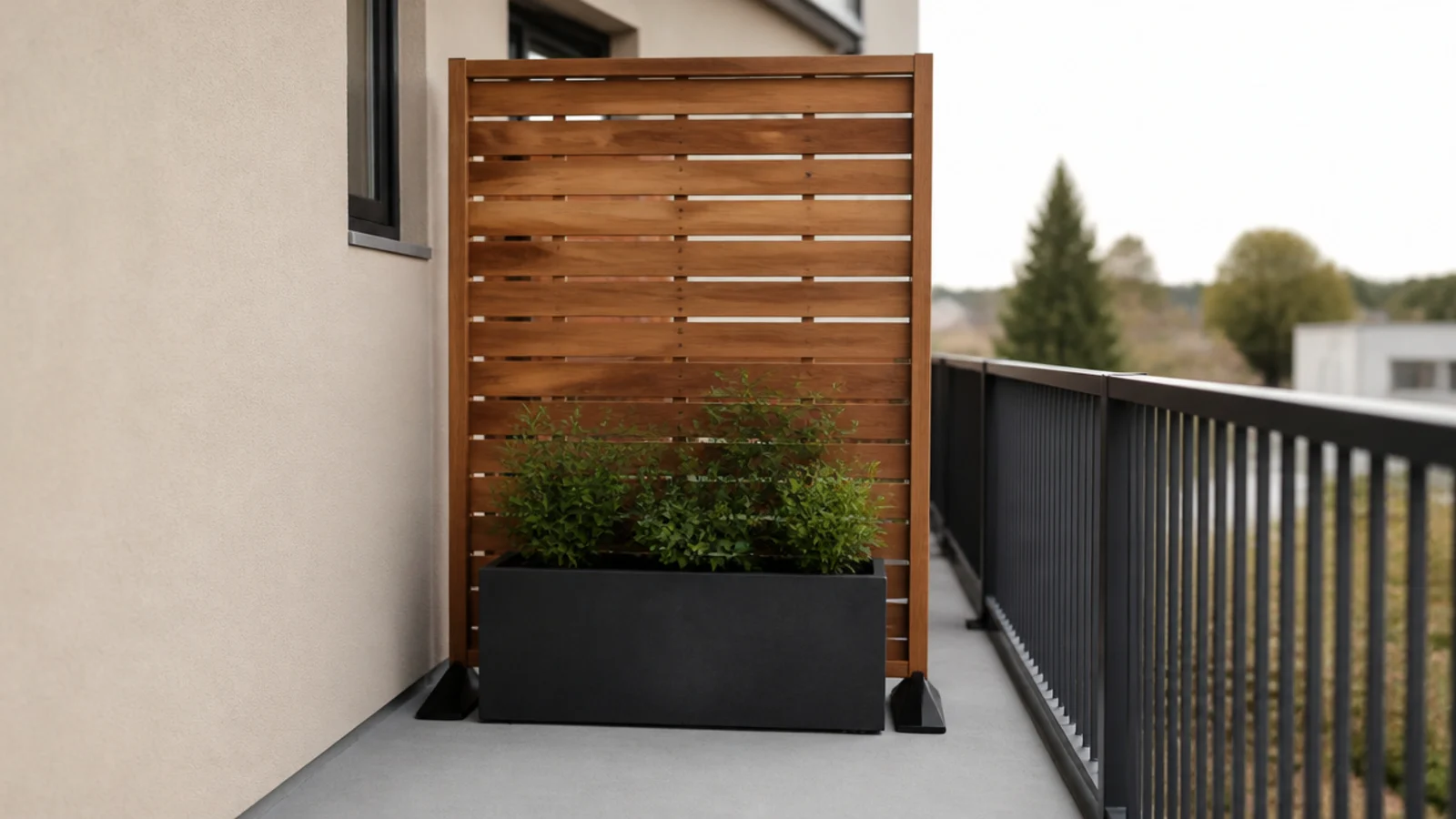
4. A freestanding slatted panel with weighted feet
If your building prohibits attaching anything to the railing, a freestanding panel solves it without a single fixing.
Look for weighted metal feet, or push a heavy planter against the base. Slats rather than solid boards, and keep the panel under 5 feet so it stays stable. This is the renter-safe default. $$$
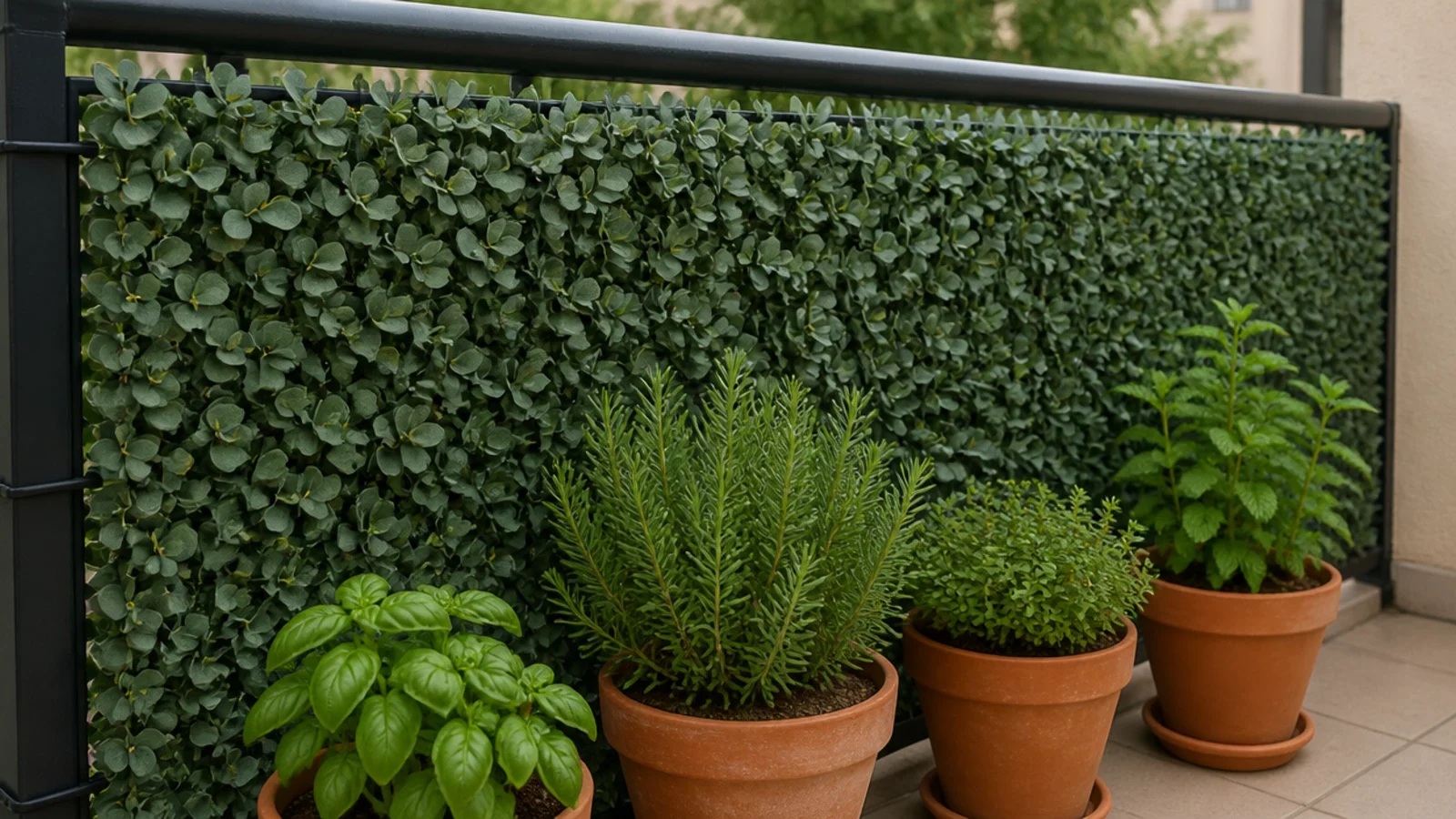
5. Artificial hedge panels, fixed inboard
Faux hedge panels give instant green cover, need no watering and weigh nothing. The failure mode is color — cheap versions go blue-green and glossy within a season.
Buy matte, UV-stable panels in a muted tone, tie them to the inner rail face, and put two or three real plants in front so the eye reads living material first. $$–$$$
6. A planter with a trellis back
The elegant version of a screen: a rectangular planter with a slatted trellis rising from its back edge, so the soil provides the ballast.
Nothing fixes to the building, it screens to about 5 feet with a climber on it, and it moves. Stand it against the building wall — filled and watered it is heavy, and that weight belongs where the slab is strongest. $$$
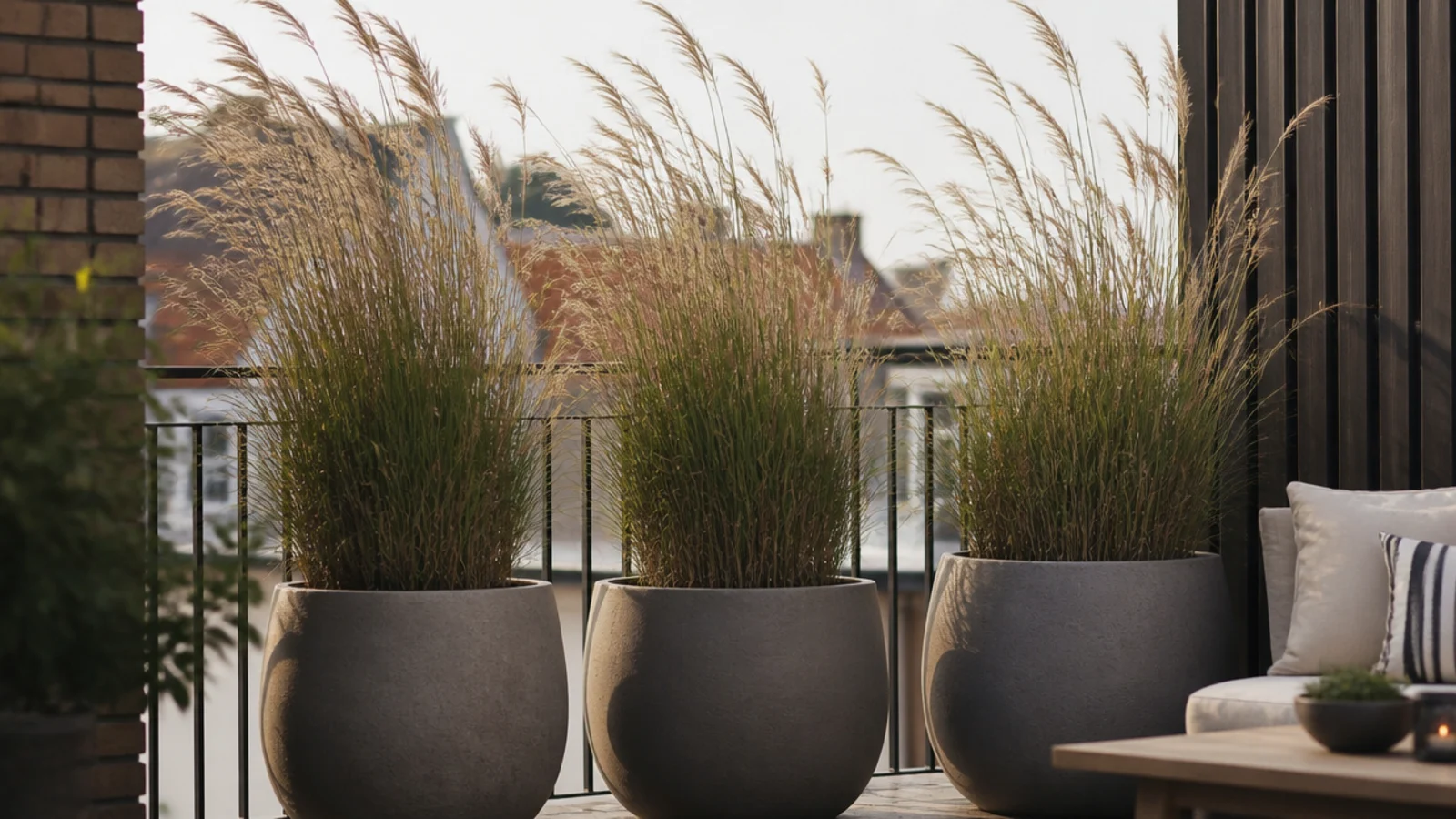
7. Tall grasses in heavy pots as a soft screen
Grasses break a sight line without announcing that you are hiding, and they move, which makes a small balcony feel alive.
Use wide, heavy pots — a tall plant in a light container tips over in the first real gust. Three pots spaced along the exposed run gives dappled cover that reads as planting rather than fencing. $$
8. Columnar evergreens for year-round cover
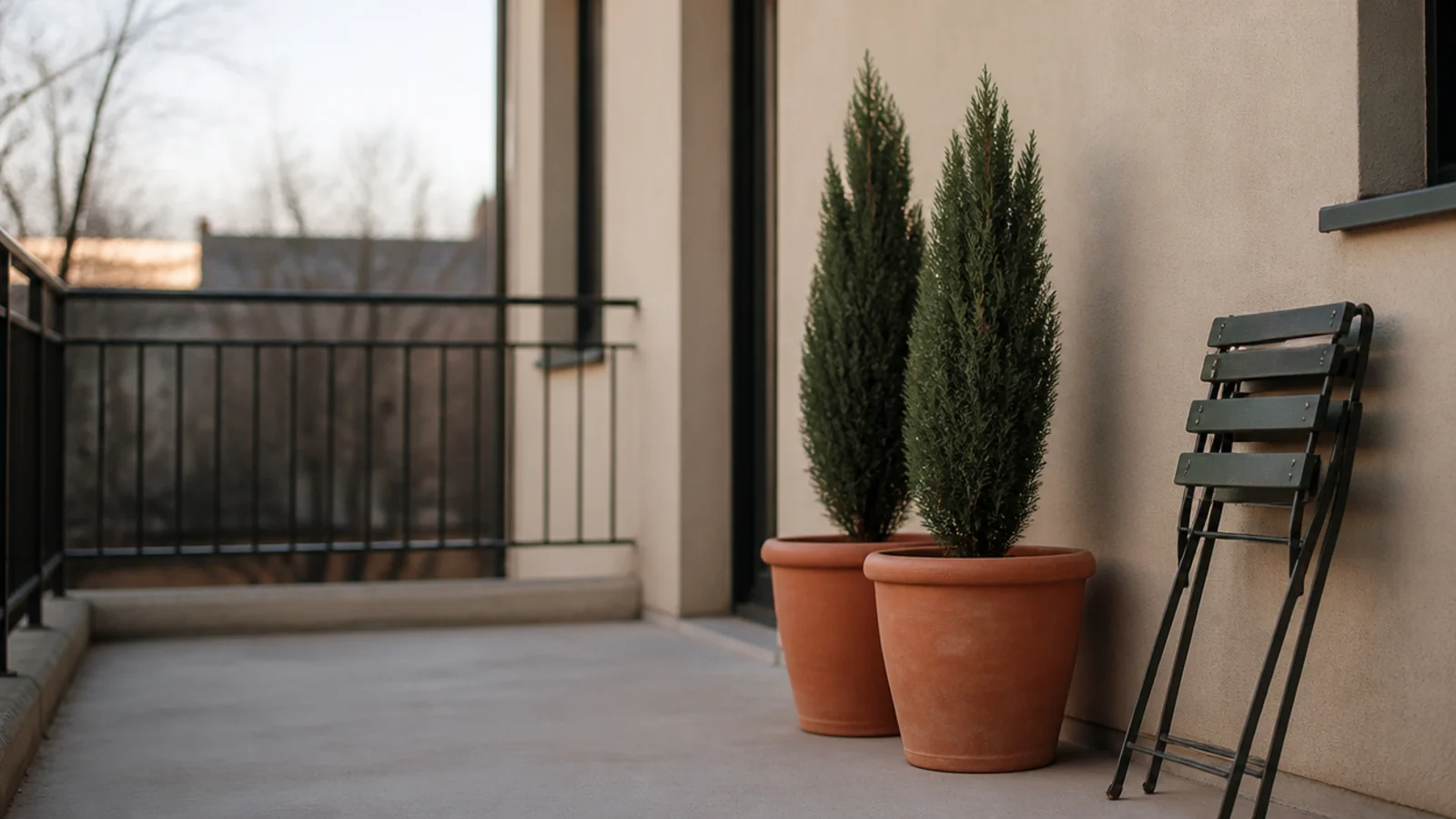
Deciduous screening disappears in November, exactly when the leaves come off the trees between you and everyone else.
A narrow columnar evergreen — dwarf juniper, boxwood, a small conifer — holds the screen through winter. Keep them in your two heaviest pots, against the wall, and expect to water even in cold dry spells. $$$
9. Curtain panels on a freestanding frame
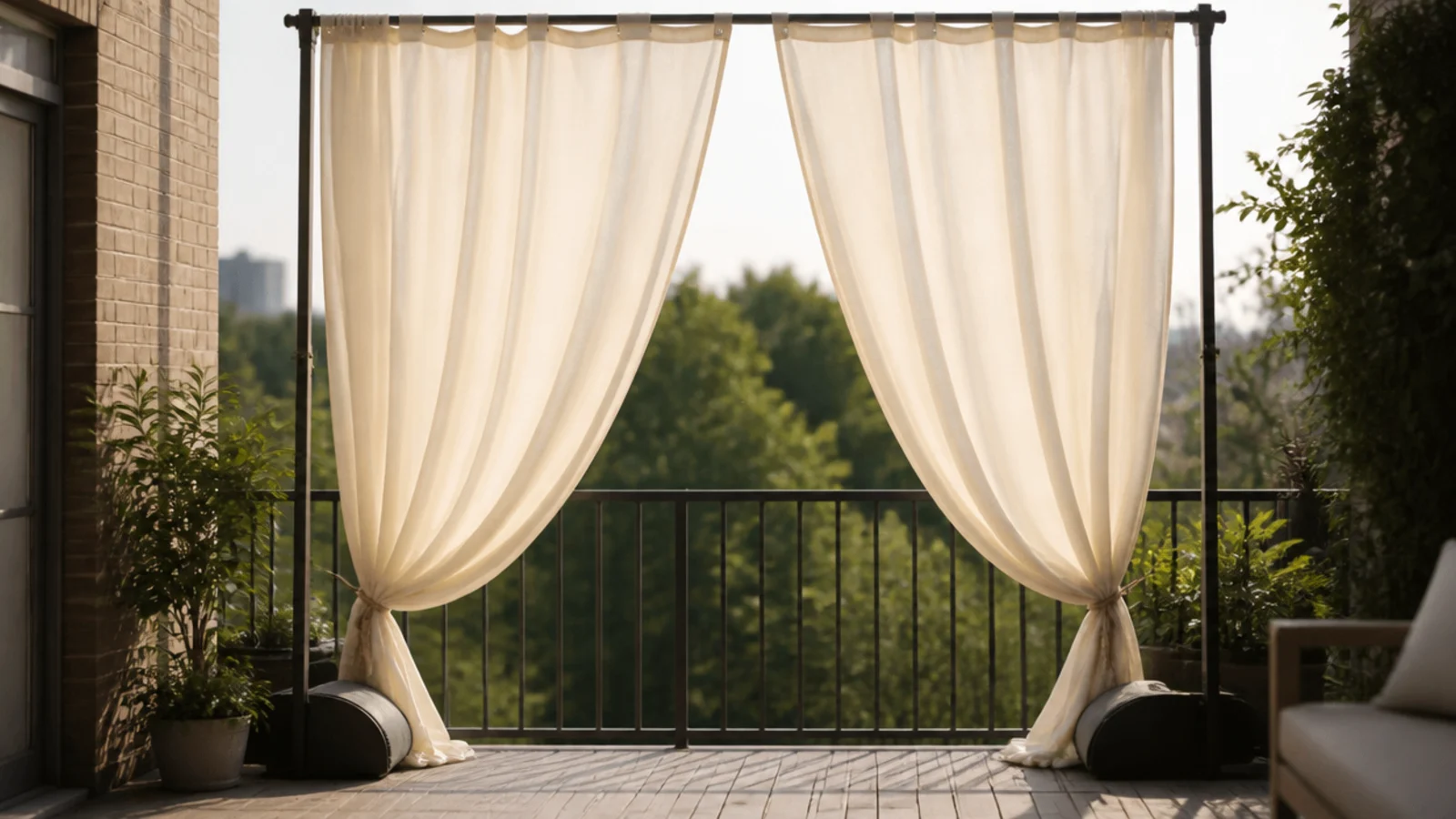
Outdoor curtains give a soft, resort-like screen you can open when you want the view back. Almost no lease allows fixing a track to the wall or ceiling, so use a freestanding weighted frame.
Tie the hems down at the base. An untethered panel is a sail, and above the third floor it will take the frame with it. $$$
10. Screen the corner at an angle, not the run
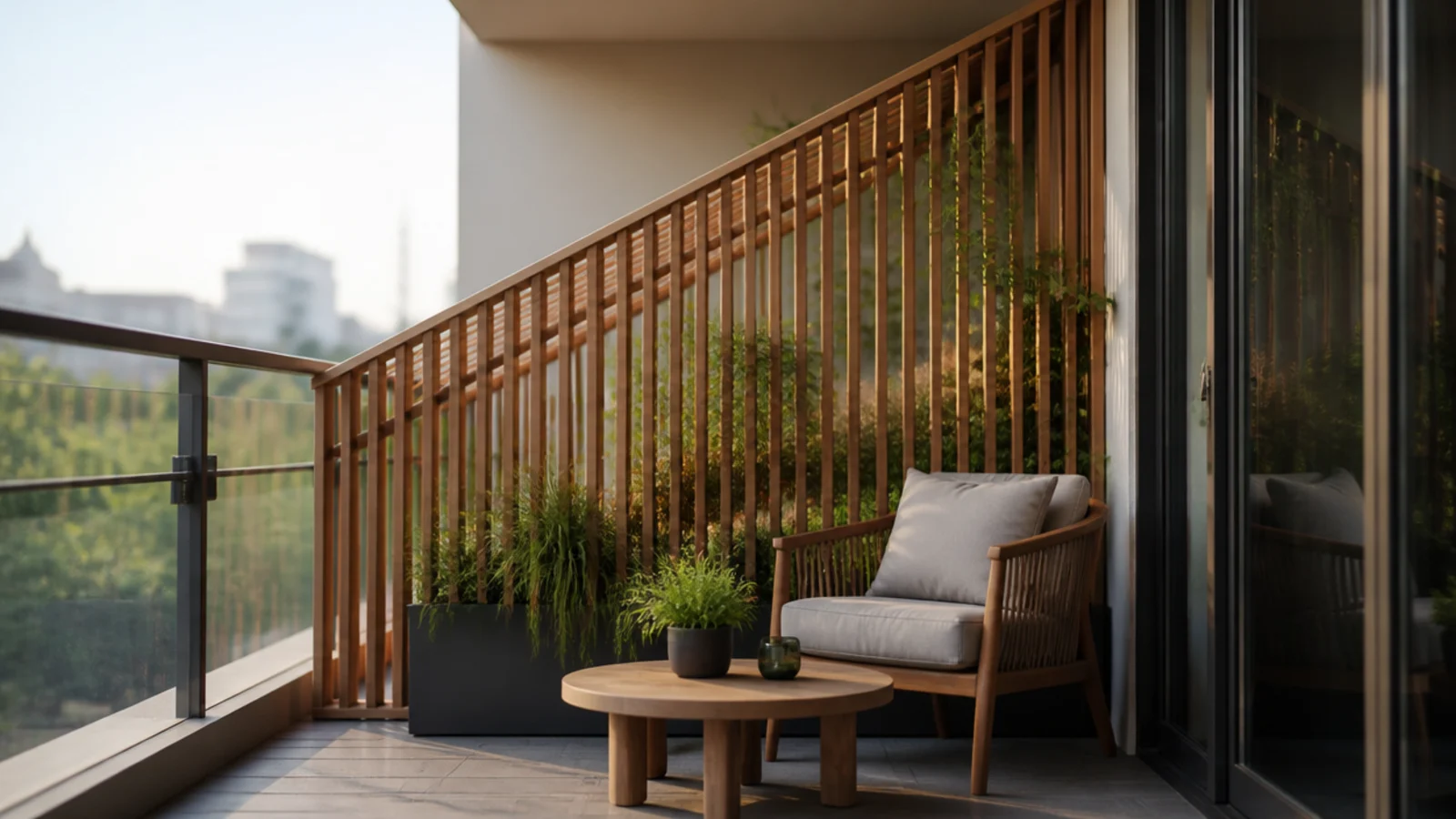
A panel set diagonally across a corner blocks two sight lines at once and creates a sheltered nook for a chair.
It also uses less material than screening two railing runs, and the triangle behind it is perfect for the pots you were going to line up along the rail anyway. $$
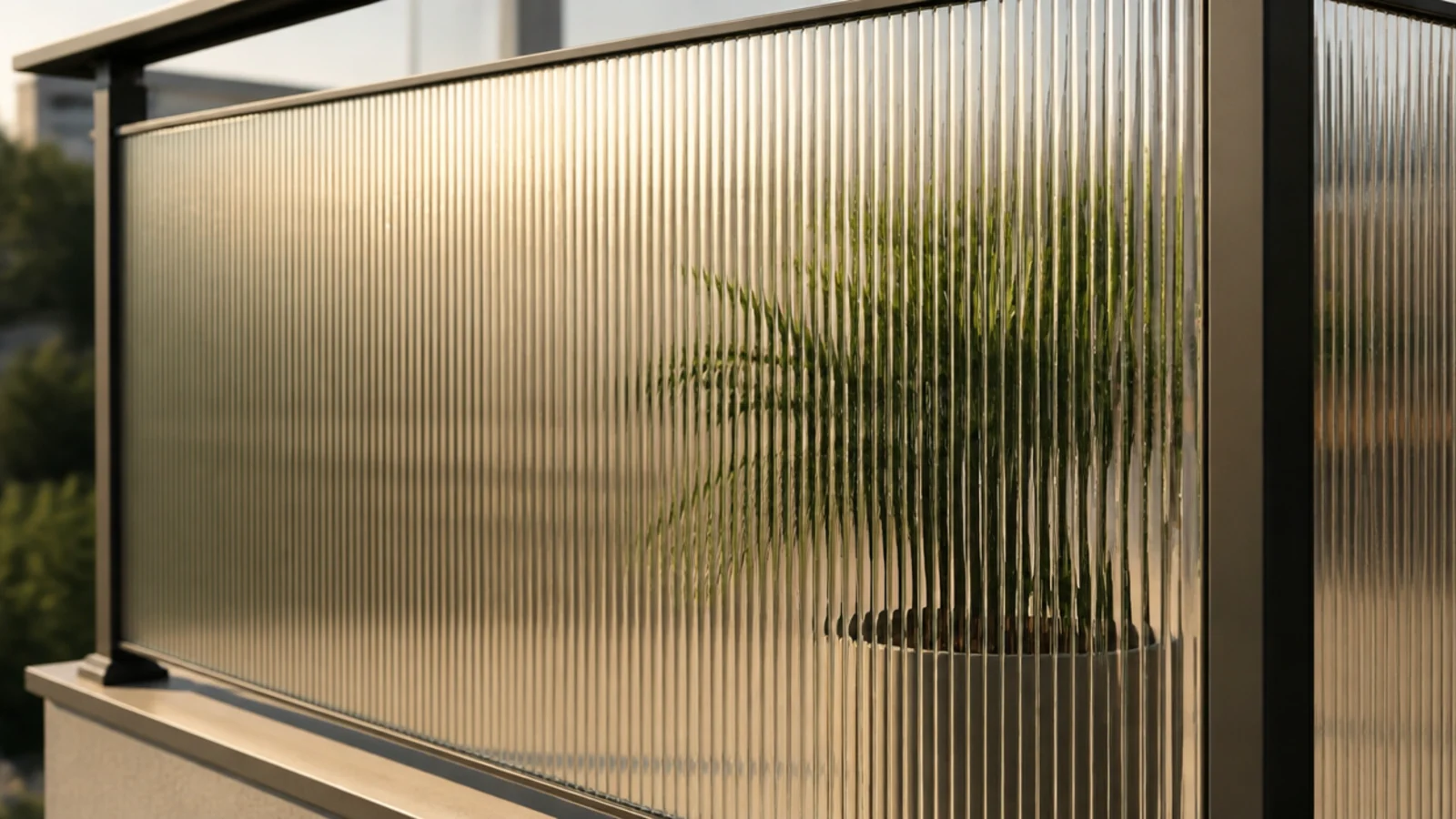
11. Reeded film on a glass balustrade
Glass balustrades look great and expose everything below your waist. Static-cling reeded or frosted film applies in half an hour with soapy water and peels off cleanly at move-out.
Apply it to the lower two-thirds and leave a clear band at the top so you keep the view. Around $15 to $30 a roll, and completely reversible. $$
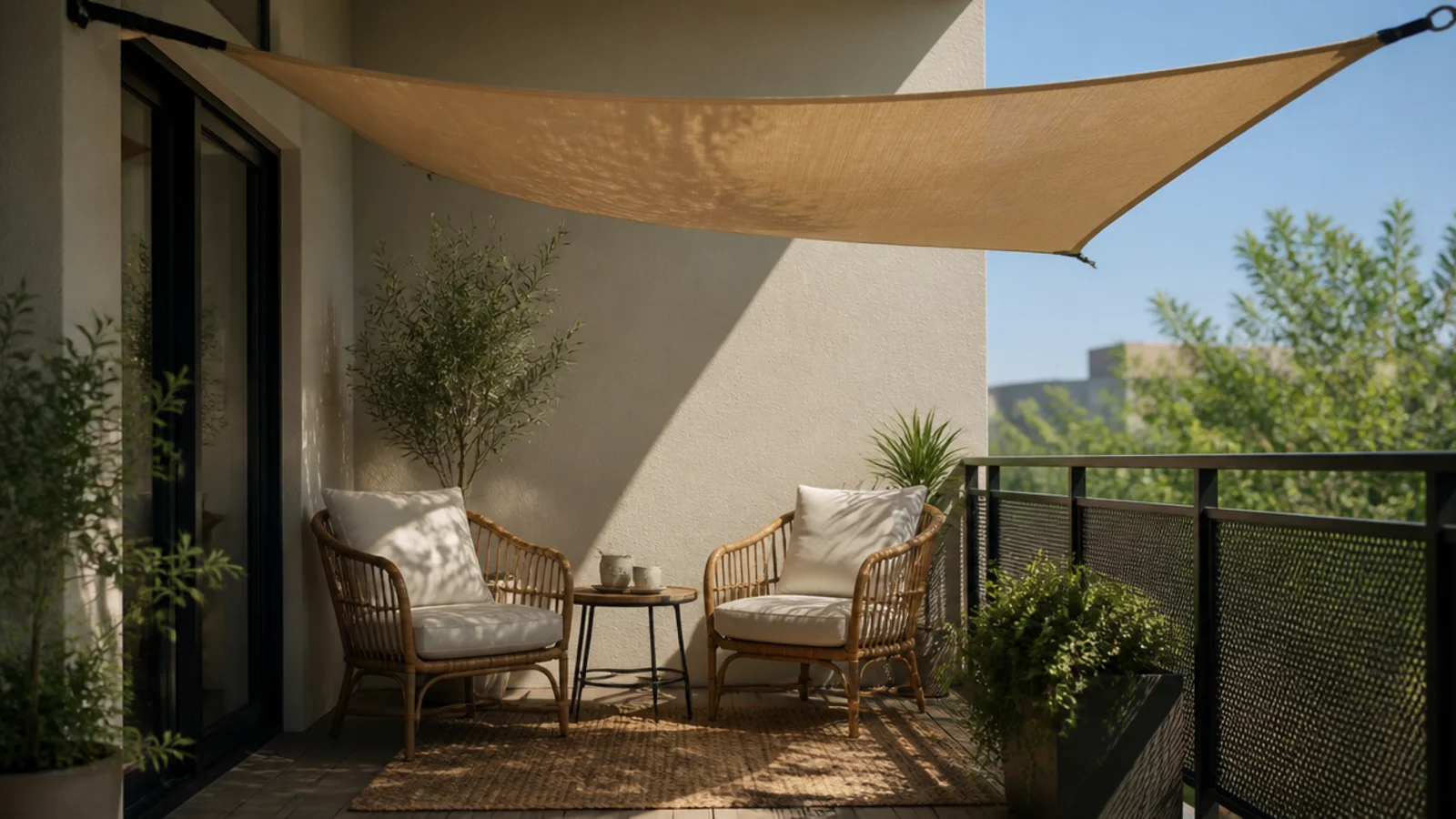
12. A shade sail for the view from above
Screening sideways does nothing about the balcony overhead. A tensioned shade sail is the only real fix, and it needs building permission because it usually requires fixing points.
If yours allows it, tension it properly — a slack sail flaps, wears its stitching and drums all night in wind. Take it down before storms. $$$
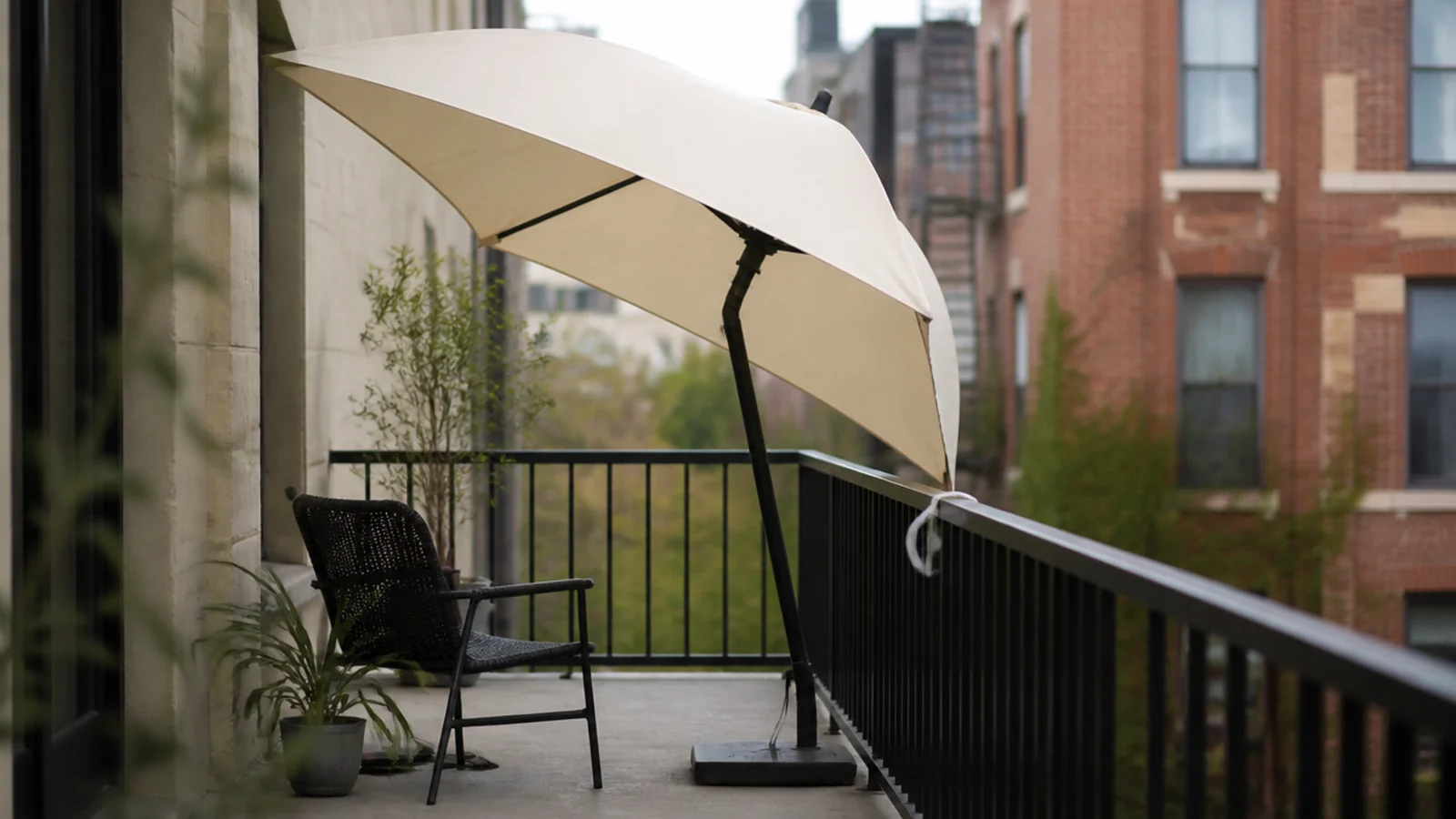
13. Angle the umbrella toward the overlooked side
A tilting half-canopy umbrella is a portable privacy screen that also solves sun. Angle the canopy toward the window that overlooks you and it blocks the line completely.
It needs a base of at least 20 pounds plus a strap to the railing, and it comes down whenever you leave. Umbrellas are the number one thing that goes over the edge. $$$
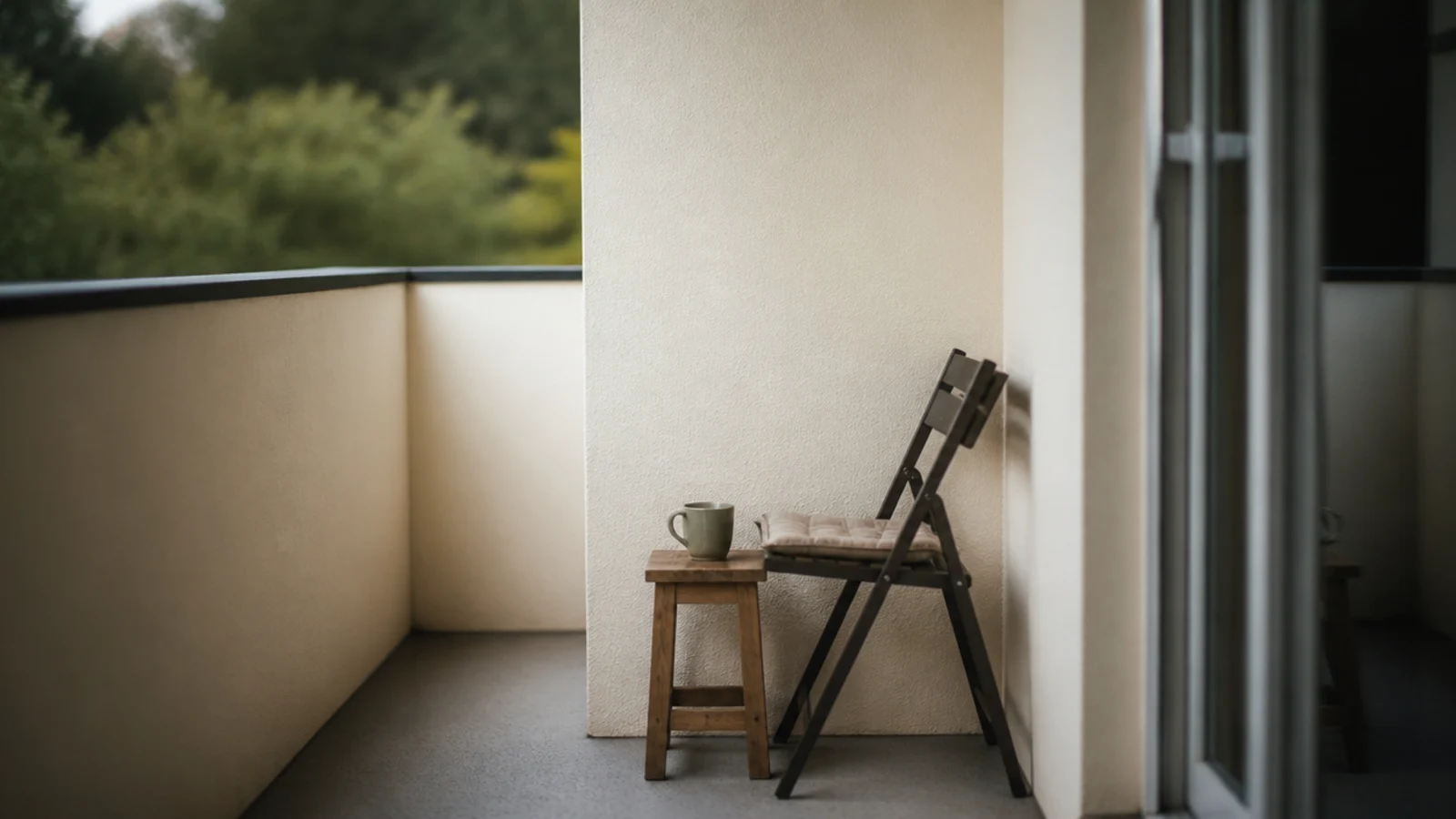
14. Move the chair before you buy a screen
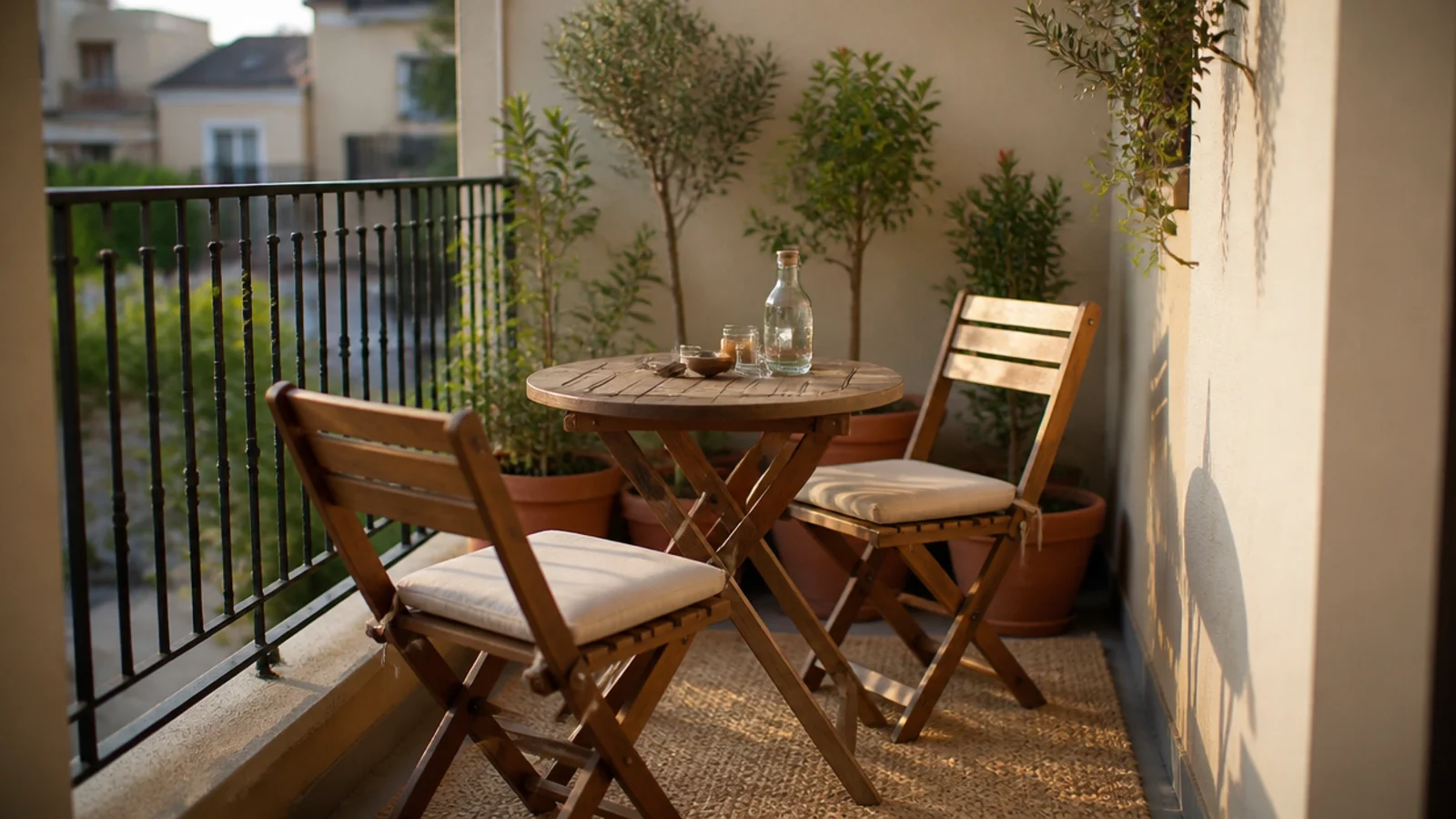
The free fix works more often than anyone expects. The spot tight against the building wall is invisible from the balcony above and usually from the neighbours as well.
Turn the seating to face the open end rather than the overlooked side, and half the problem disappears without a single purchase. Free
15. Let a storage cabinet do the screening
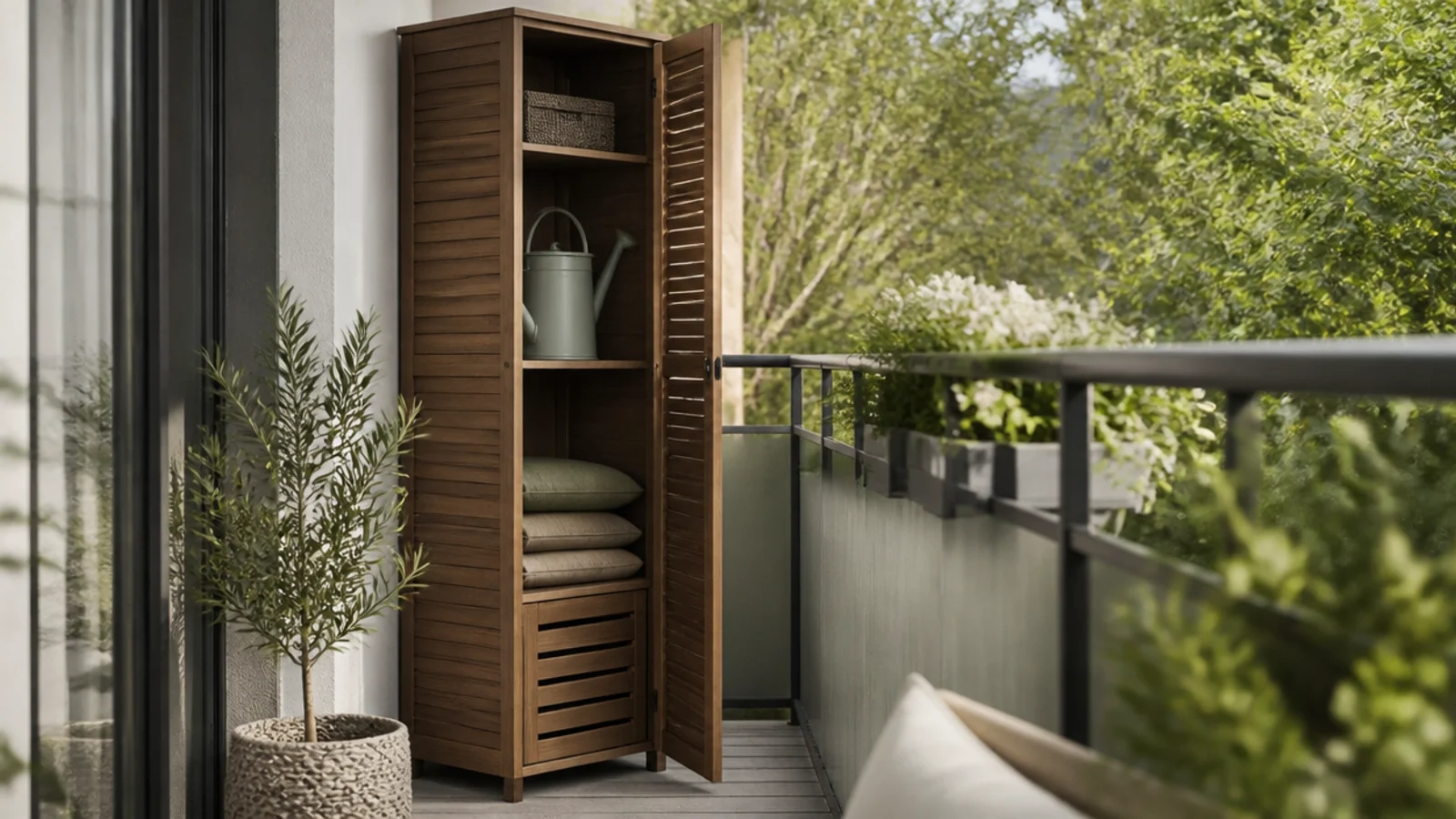
A tall narrow outdoor cabinet — 16 to 20 inches deep, 5 feet high — screens one end of a balcony while swallowing cushions, tools and the mop.
Stand it against the building wall for weight and wind stability, and check it does not narrow the walkway below 24 inches. Two jobs, one footprint. $$$
16. Screen the doorway, not the balcony
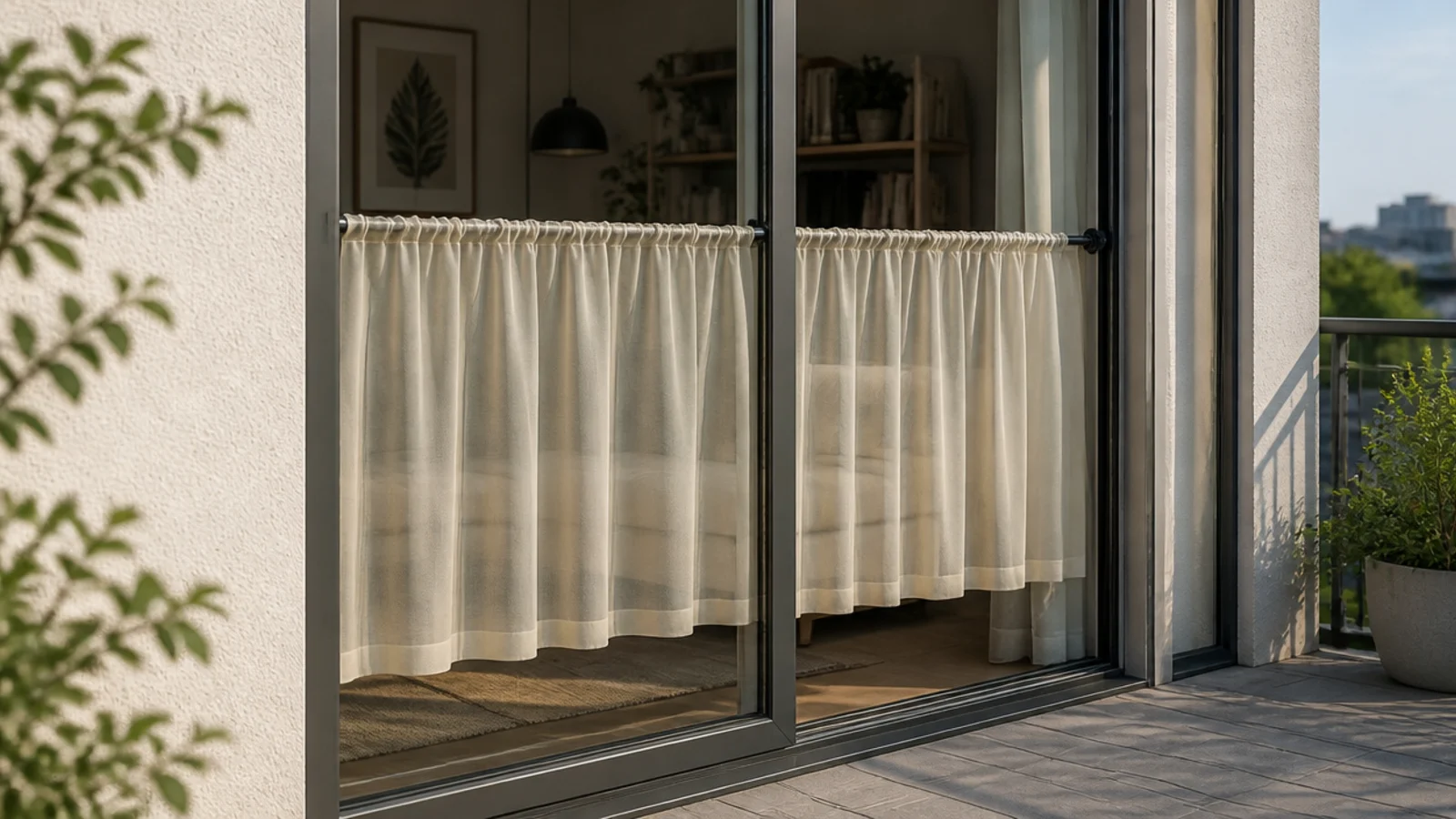
Sometimes what feels exposed is the living room behind the glass, not the balcony itself. A café curtain or sheer panel on a tension rod inside the sliding door fixes it for under $20.
It also keeps the balcony itself completely open, which is usually what you wanted in the first place. $$
17. Layer a low screen with a tall plant behind
A single tall barrier reads as defensive. A low panel at 36 inches with a taller plant rising behind it reads as a garden, and the overlap breaks the sight line just as effectively.
It also spreads the wind load between two elements instead of concentrating it in one tall panel. $$
18. Choose slats over solid for wind loading
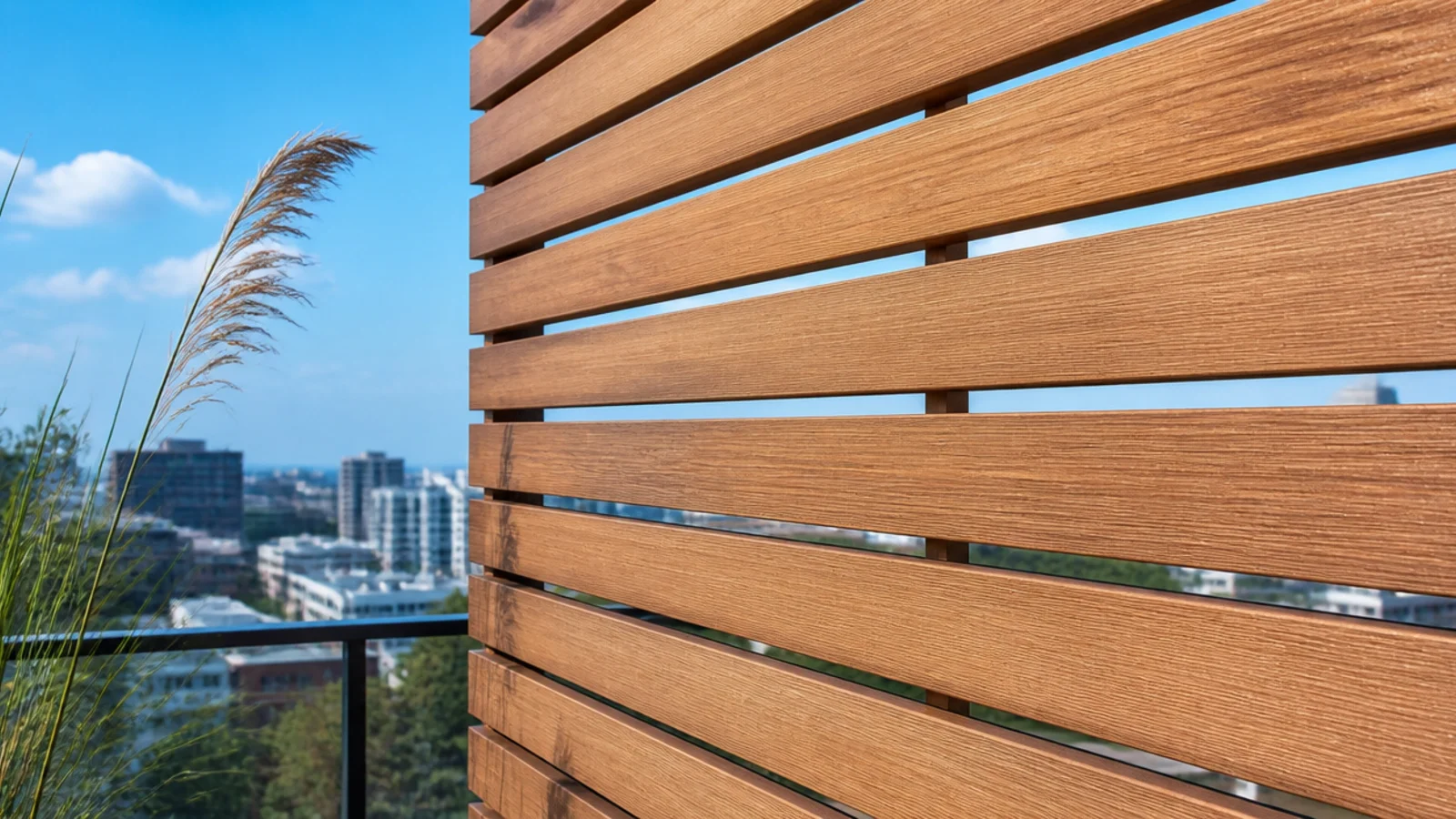
This is the technical rule that decides whether screening survives. Solid panels catch every gust and transfer that force to the railing and its fixings.
Slats with quarter-inch gaps, lattice, and reed all bleed pressure through. Above the third floor treat it as non-negotiable — it is the difference between a screen and a kite. $$
19. Never fix anything to the outside face
Everything mounts inboard. No screen, planter, hook, bracket or light goes on the outer face of a railing, and nothing overhangs the drop.
A panel that works loose four floors up is not a repair job, it is somebody on a sidewalk. Almost every lease bans it for this exact reason, and the rule is worth keeping even when nobody is checking. Free
20. Check what is visible from the street below
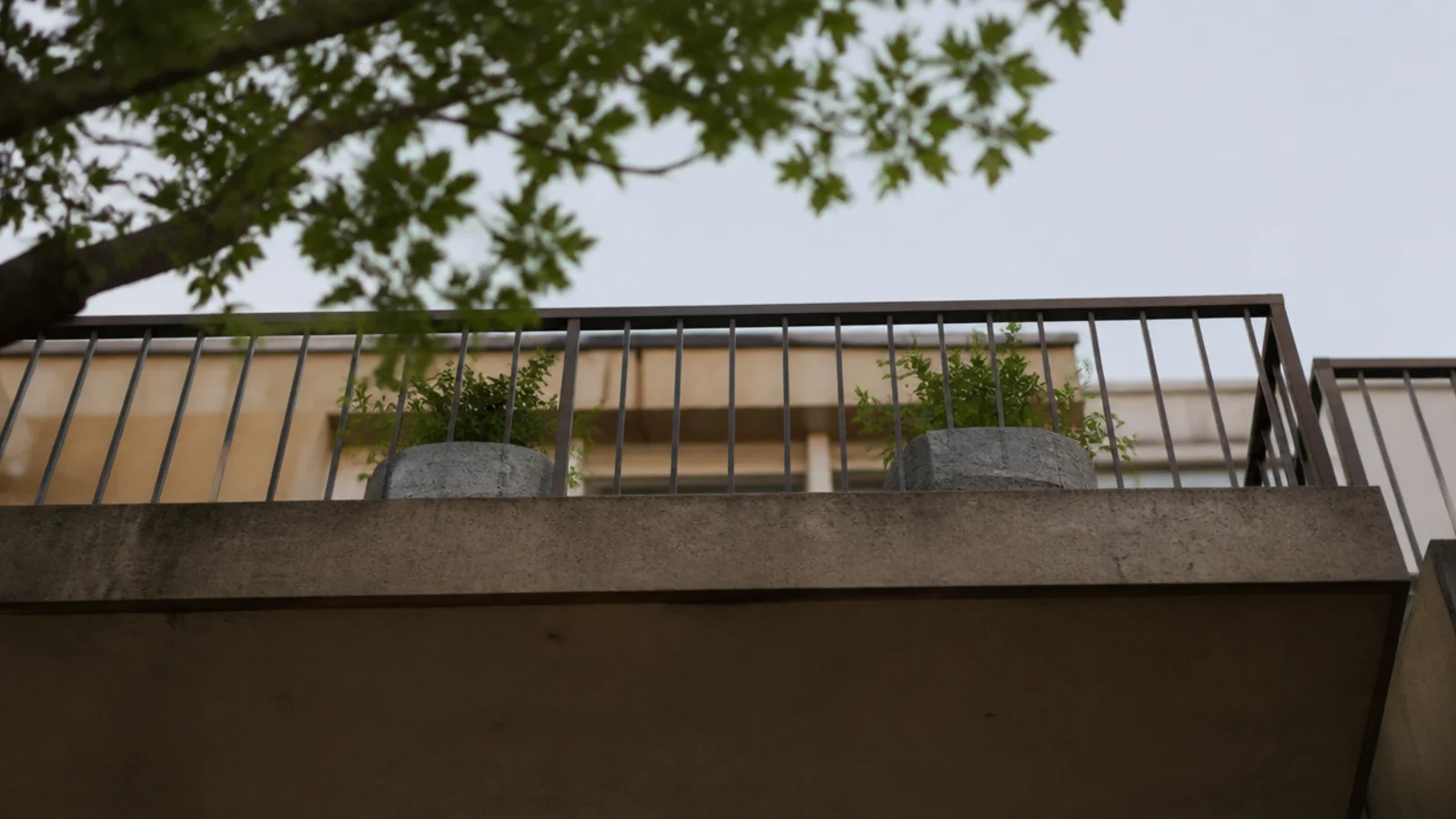
Before committing to anything, walk down and look up at your balcony from the sidewalk. It tells you two things: what strangers actually see, and whether your screening will breach a building rule about street appearance.
Most people discover the exposure is far lower than they feared, and the fix is a low planter rather than a panel. Free
21. Light low and warm so you are not on stage
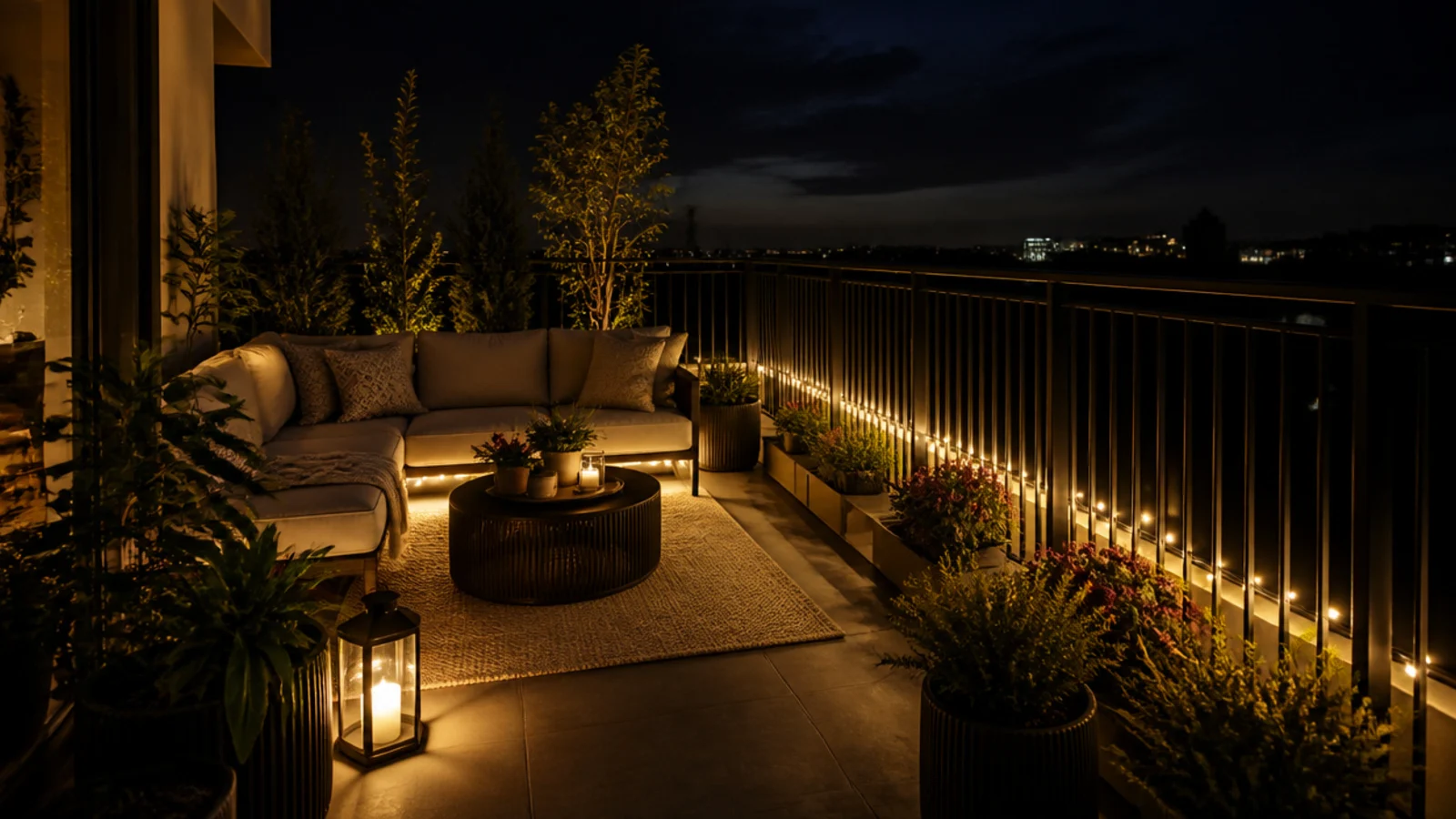
A brightly lit balcony at night is a stage set for everyone opposite. Low warm pools of light keep you comfortable and much less visible.
Use a floor lantern and a string on the inner rail at 2700K, with nothing overhead. Flameless LED and solar only — open flame is prohibited on most balconies. See apartment balcony lighting for the full layering. $$
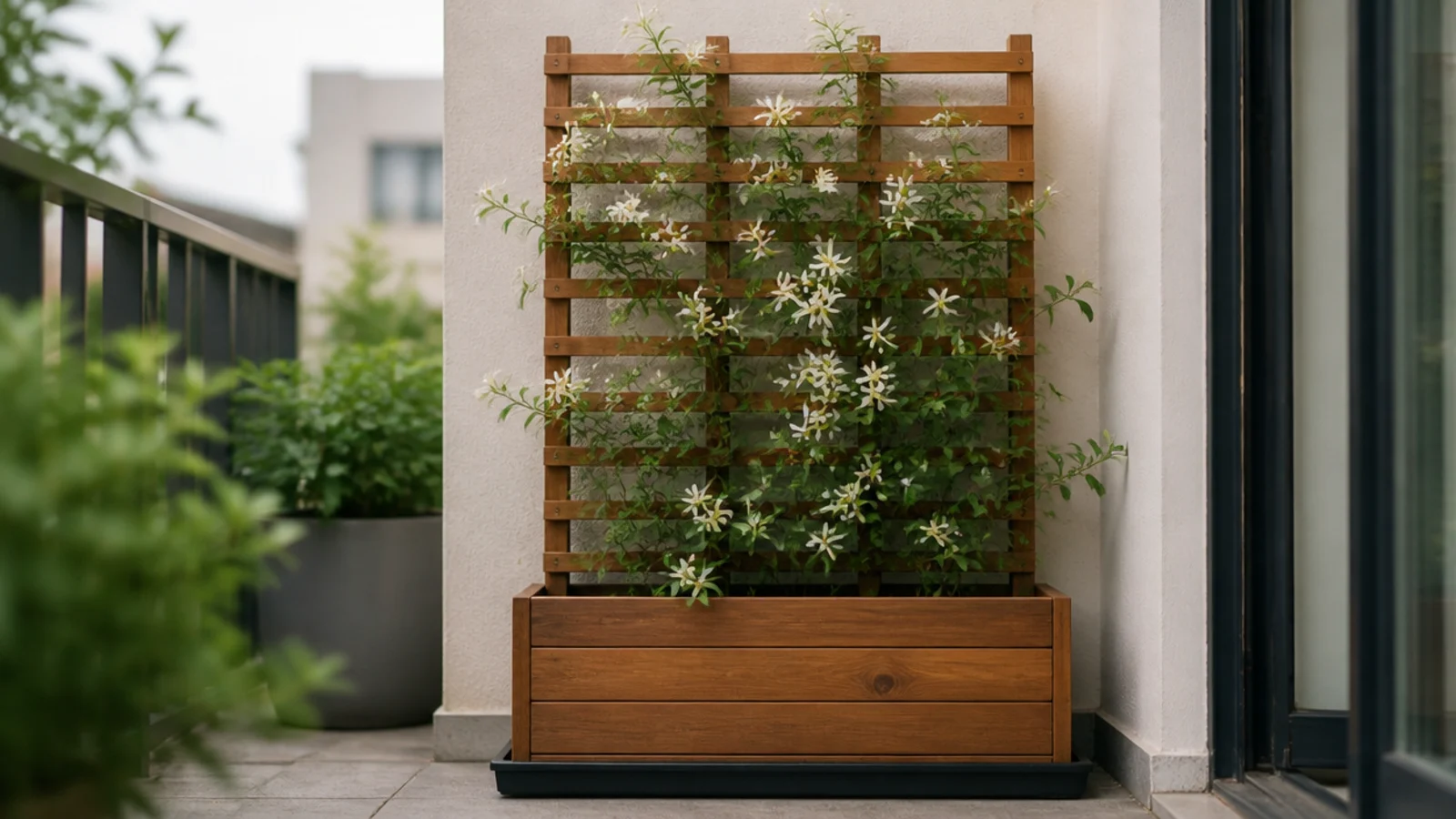
22. A freestanding lattice with climbers
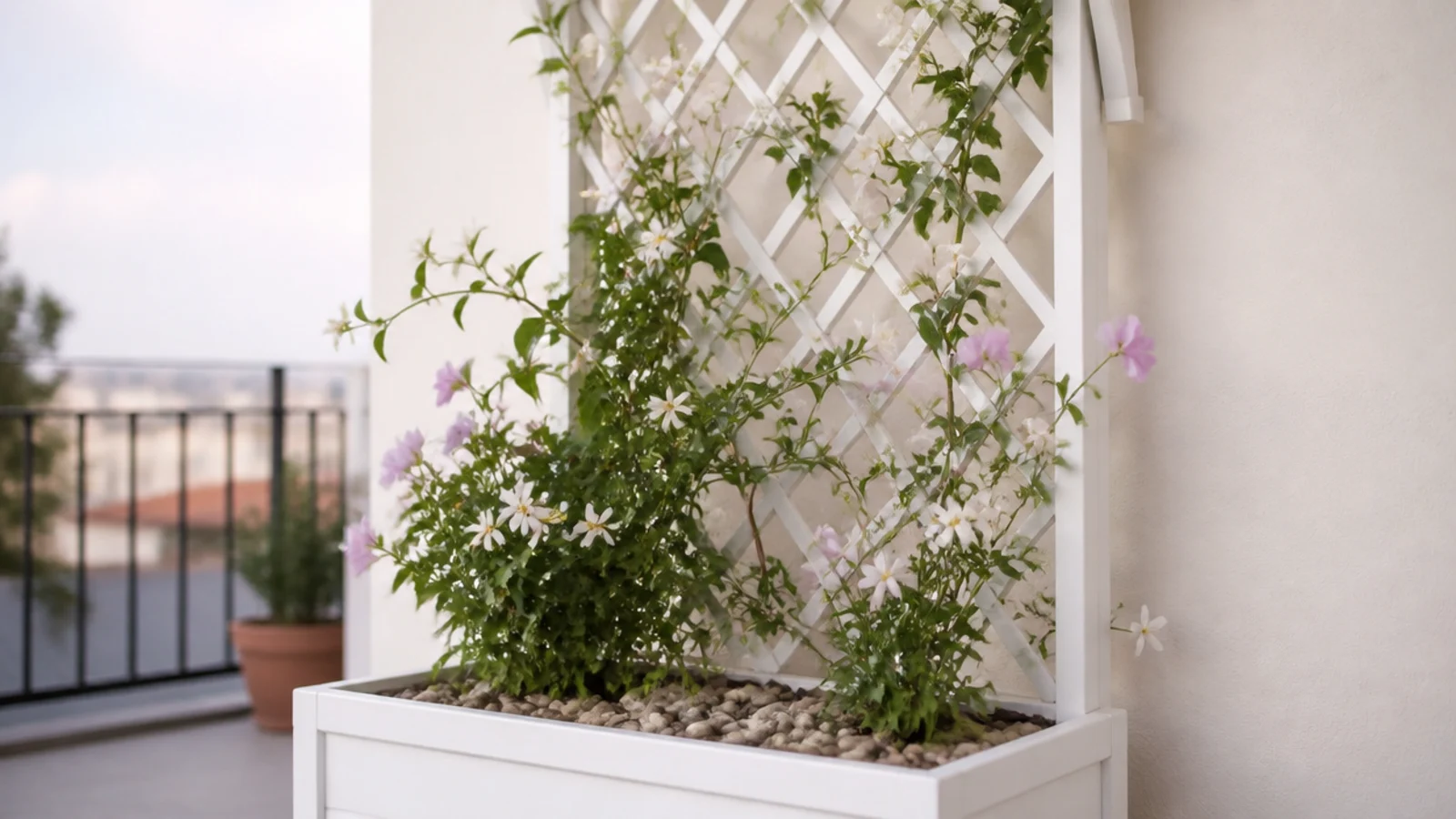
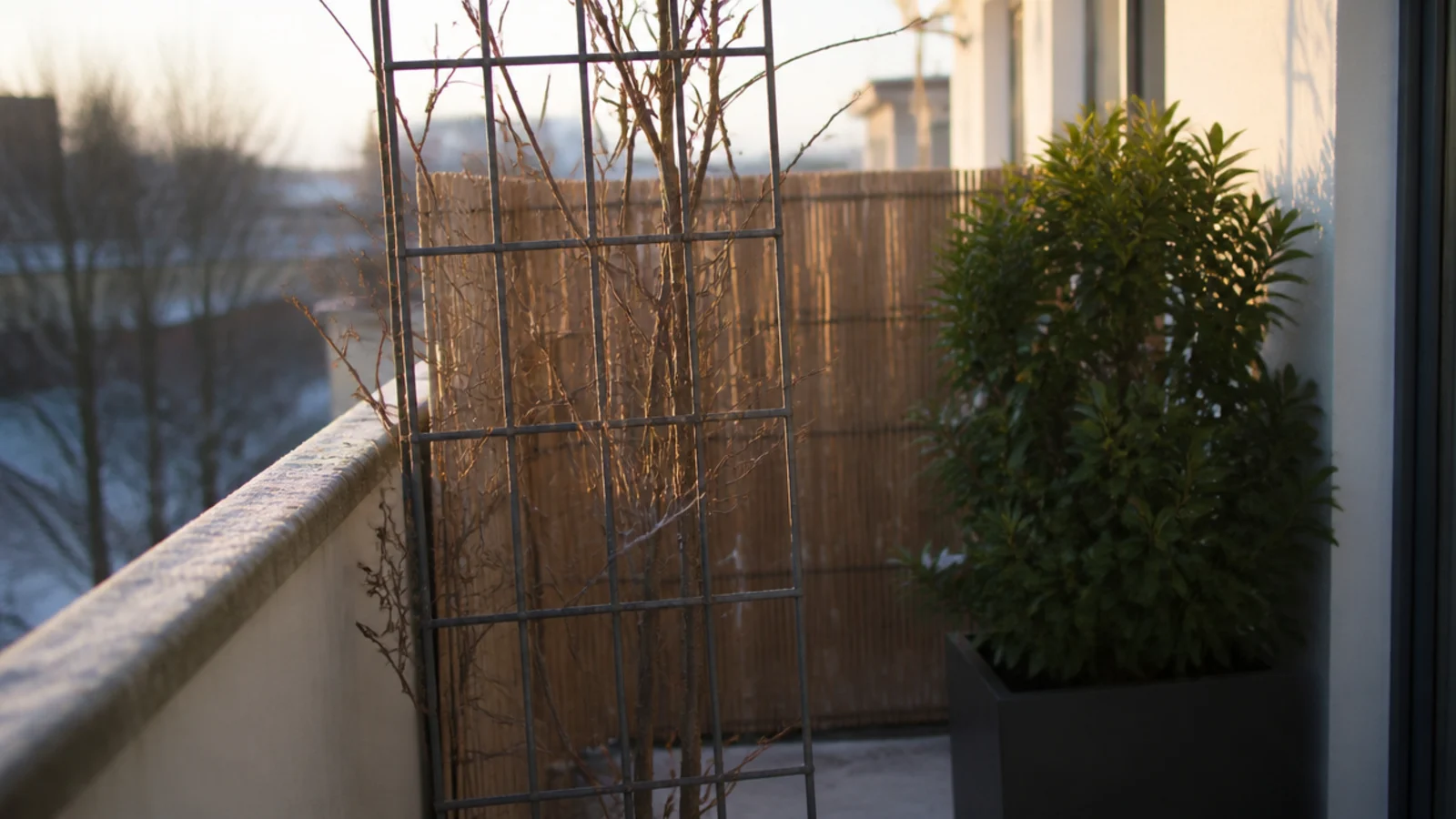
Jasmine, clematis or sweet peas on a lattice give a living screen in one season, and the planter base means nothing attaches to the building.
Add stones on the soil surface as ballast, keep the panel under 5 feet, and remember it will be bare in winter unless you pair it with something evergreen. $$$
23. Bamboo in a big pot, with the weight in mind
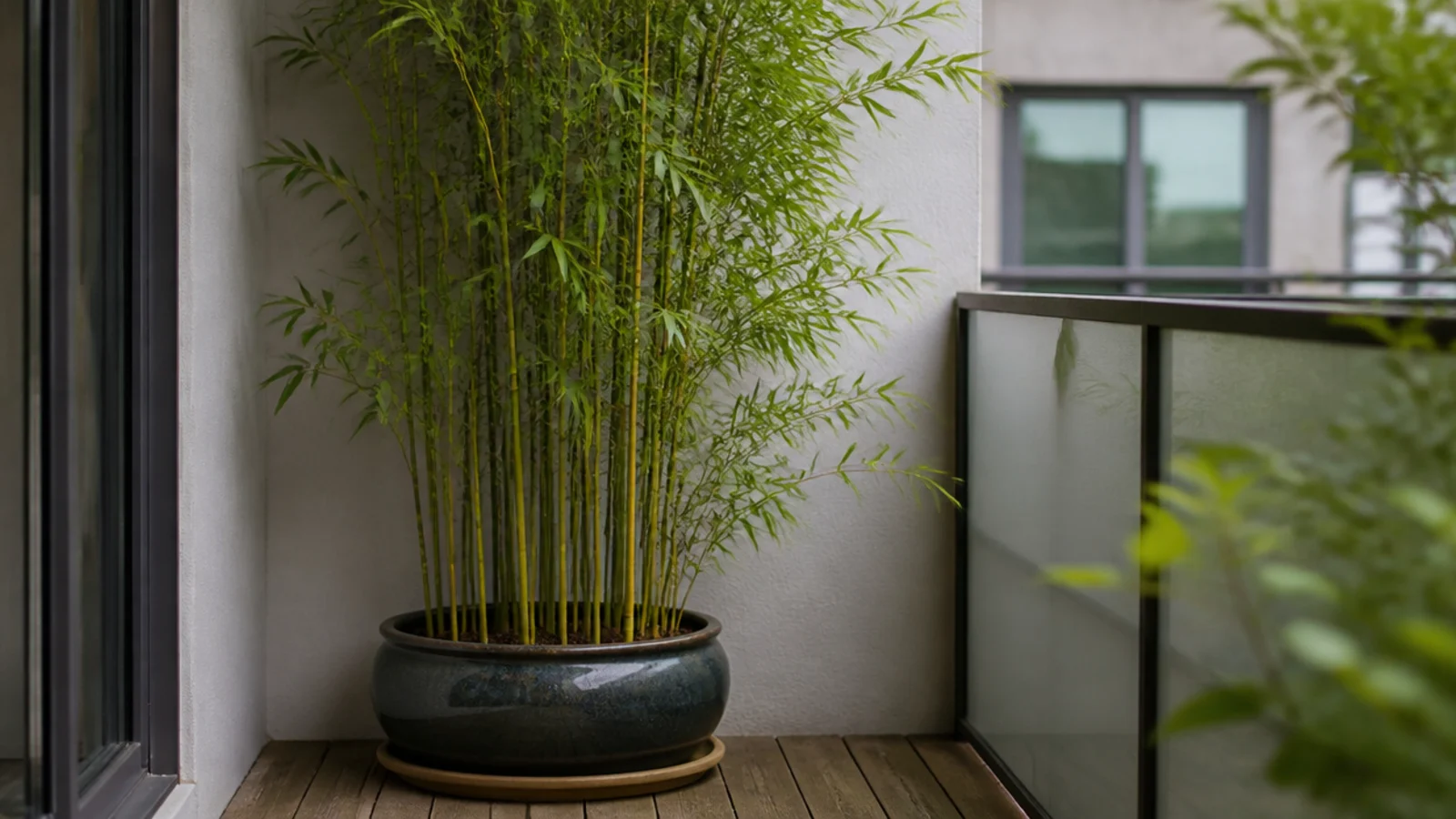
Clumping bamboo — never running types, even in a container — gives tall, fine-textured cover that suits a balcony beautifully.
The honest caveat is weight: a large container of wet mix can pass 100 pounds, so it belongs against the building wall rather than out at the rail, and you will not be moving it once planted. $$$
24. Soften the echo with textiles and plants
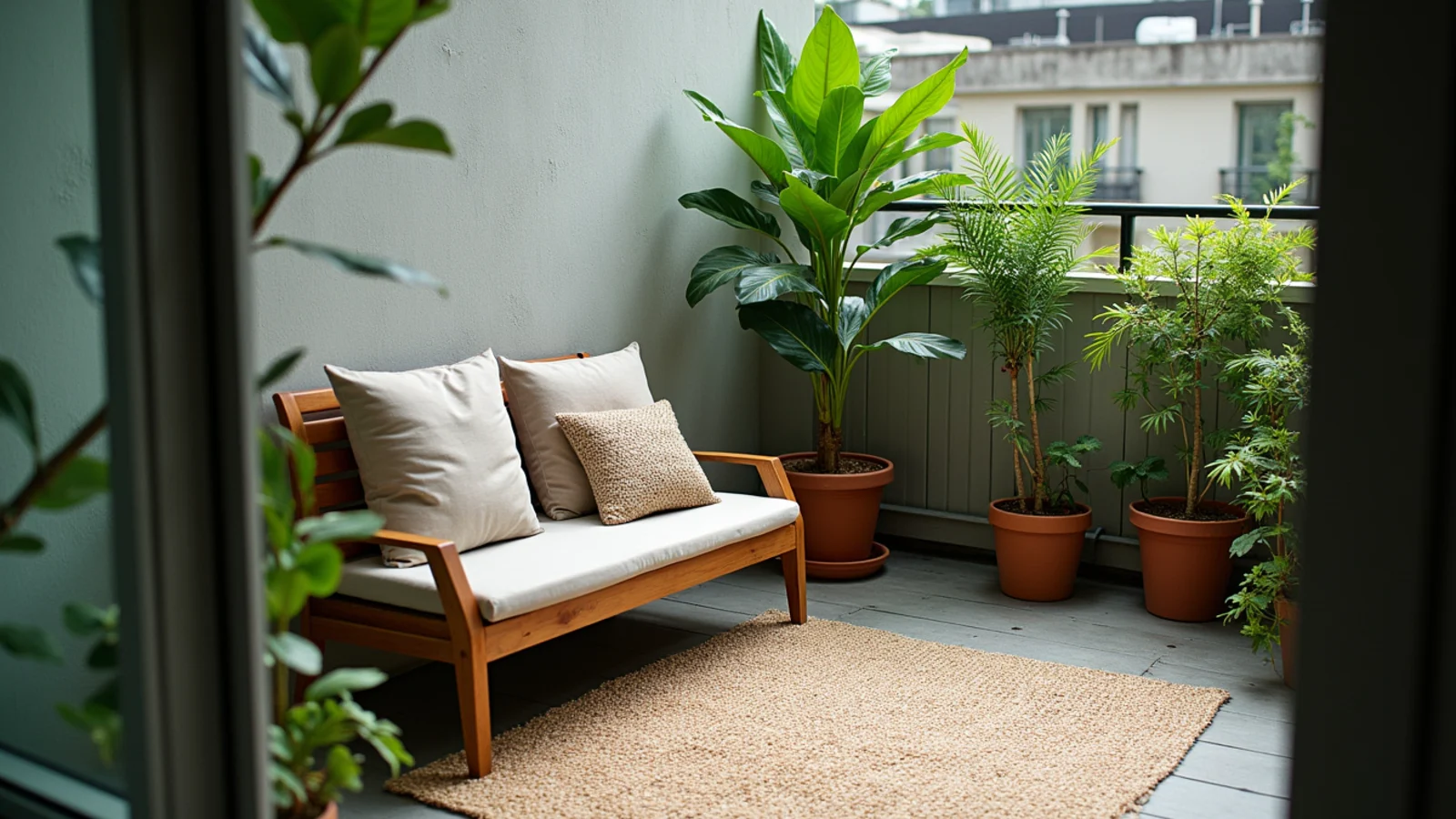
Privacy is partly acoustic. A concrete box with a glass door and a metal rail bounces every word back at the neighbours.
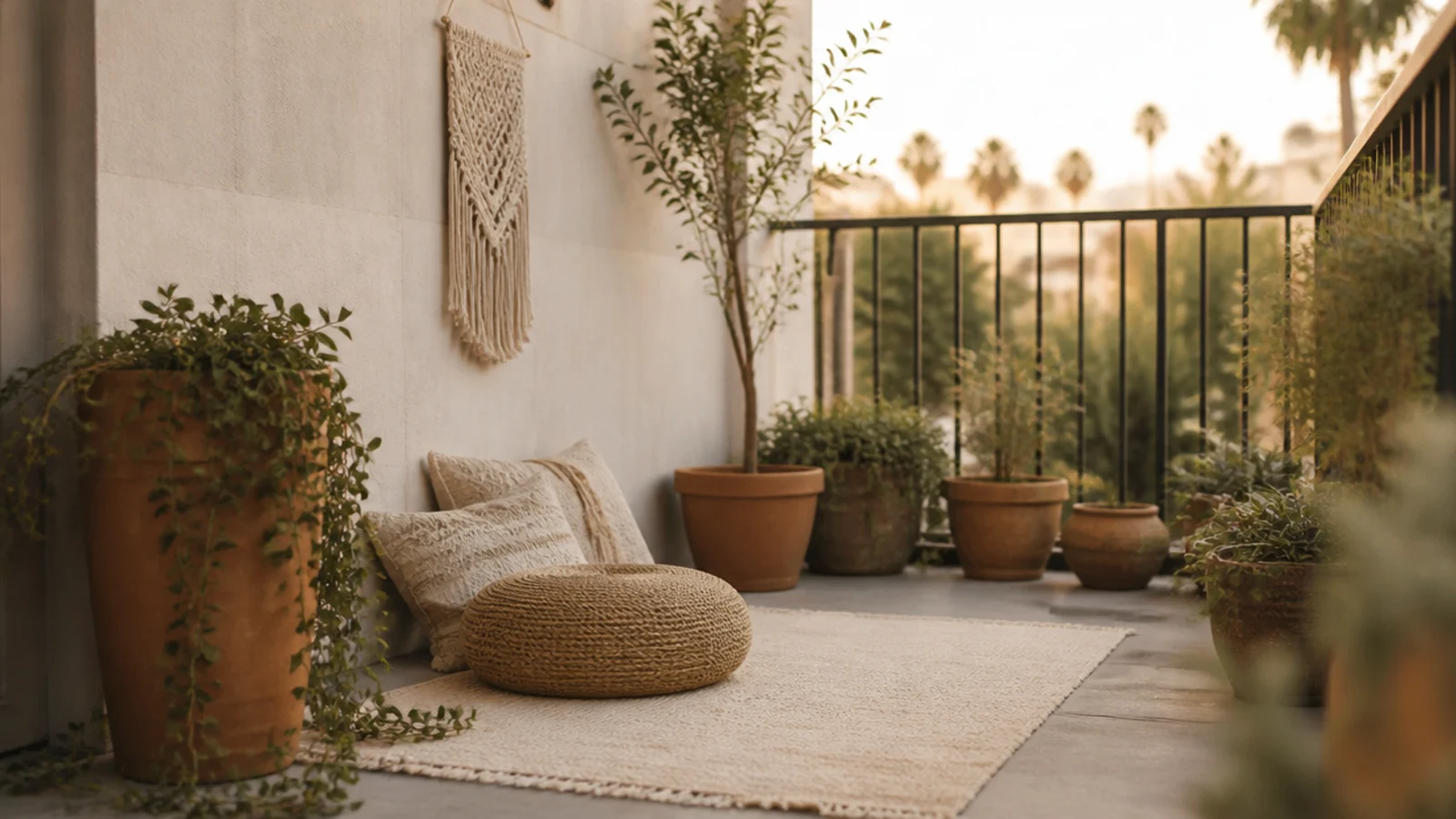
A flatweave rug, two cushions and a dense group of leafy plants take the hard edge off conversation and make the space feel enclosed without screening anything. Quick-dry materials only, so nothing traps water on the slab. $$
25. Plan for winter, when the leaves are gone
Everything green you rely on for cover halves in November. Decide now whether that matters, because winter is when balconies opposite each other see the most of one another.
Keep one permanent element — a reed panel, an evergreen, a storage cabinet — and let the seasonal planting layer on top. There is more on the plant side in apartment balcony plants. $$
Mistakes to Skip
- Wrapping the entire railing in solid screening. It turns the rail into a sail, loads fixings that were never designed for it, and is banned in a lot of buildings for exactly that reason.
- Fastening screens or planters to the outside face of the railing. Anything that works loose falls into a public space, and that risk is why the rule exists in nearly every lease.
- Screening at full height so you lose your own light. Privacy while seated needs 40 to 48 inches, and everything above that costs you sky, airflow and the reason you wanted a balcony.
Frequently asked questions
What is the best privacy screen for an apartment balcony?
A slatted or reed panel fitted to the inside face of the railing across the section that actually overlooks you. Slatted beats solid because wind passes through instead of loading the railing, and partial beats full-width because it keeps your view and your light. Reed rolls cost about $20 for 16 feet and cut cleanly to length.
How tall does a balcony privacy screen need to be?
Between 40 and 48 inches measured from the floor, if the goal is privacy while you are sitting down. That is roughly chest height in a chair and it blocks the sight lines that bother you without walling off the sky. Screening the full height of a railing usually creates more wind load and less light for no real gain.
Can renters add privacy screens to a balcony?
Sometimes, and you have to check first. Many leases prohibit attaching anything to a railing or wall and prohibit screens that rise above rail height, and some buildings enforce a uniform street appearance. Freestanding weighted screens, planters with trellis backs and curtain panels on their own frames need no fixings and are the safest route.
How do I get privacy from the balcony above me?
Overhead cover, or a change of position. A tensioned shade sail or a canopy on a freestanding frame blocks the downward view if your building permits it, and an angled umbrella does the same on a smaller scale. Otherwise move the seating tight against the building wall, which is the one spot the balcony above cannot see into.
Do plants work as a privacy screen on a balcony?
They soften sight lines rather than blocking them, which is often enough. Tall ornamental grasses, bamboo in a heavy container and columnar evergreens give dappled cover that reads as deliberate rather than defensive. Remember the weight: a large planter full of wet mix can pass 100 pounds, so keep it near the building wall.
Will a privacy screen damage my balcony railing?
A solid panel can, in wind. Fully wrapping a railing turns it into a sail and puts continuous load on fixings that were never designed for it, which is why many buildings ban it. Slatted screening across a partial run, tied at intervals on the inside face, spreads the load and lets gusts pass through.
Start with the tape, the chair and a level cut, and most balconies need one short run of screening rather than a wrap. For the wider setup around it, fifteen apartment balcony ideas covers floor, furniture and light in order. If your privacy corner is where the morning cup happens, the same enclosed feeling works inside the door in a cozy coffee corner. Save the pin before you order any screening.
Want more like this? Browse all 15 apartment balcony ideas guides — they all use the same measurements and budget tiers.
Pin it for later
Save this to your Apartment Balcony Ideas board
Pin it now so it is waiting for you when the tape measure comes out — and so the next person hunting for this idea can find it too.
Save this pinKeep going
More ideas worth saving while you have the tape measure out.