Coffee Corner Ideas · Listicle
30 Beautiful Coffee Corner Ideas to Steal Today

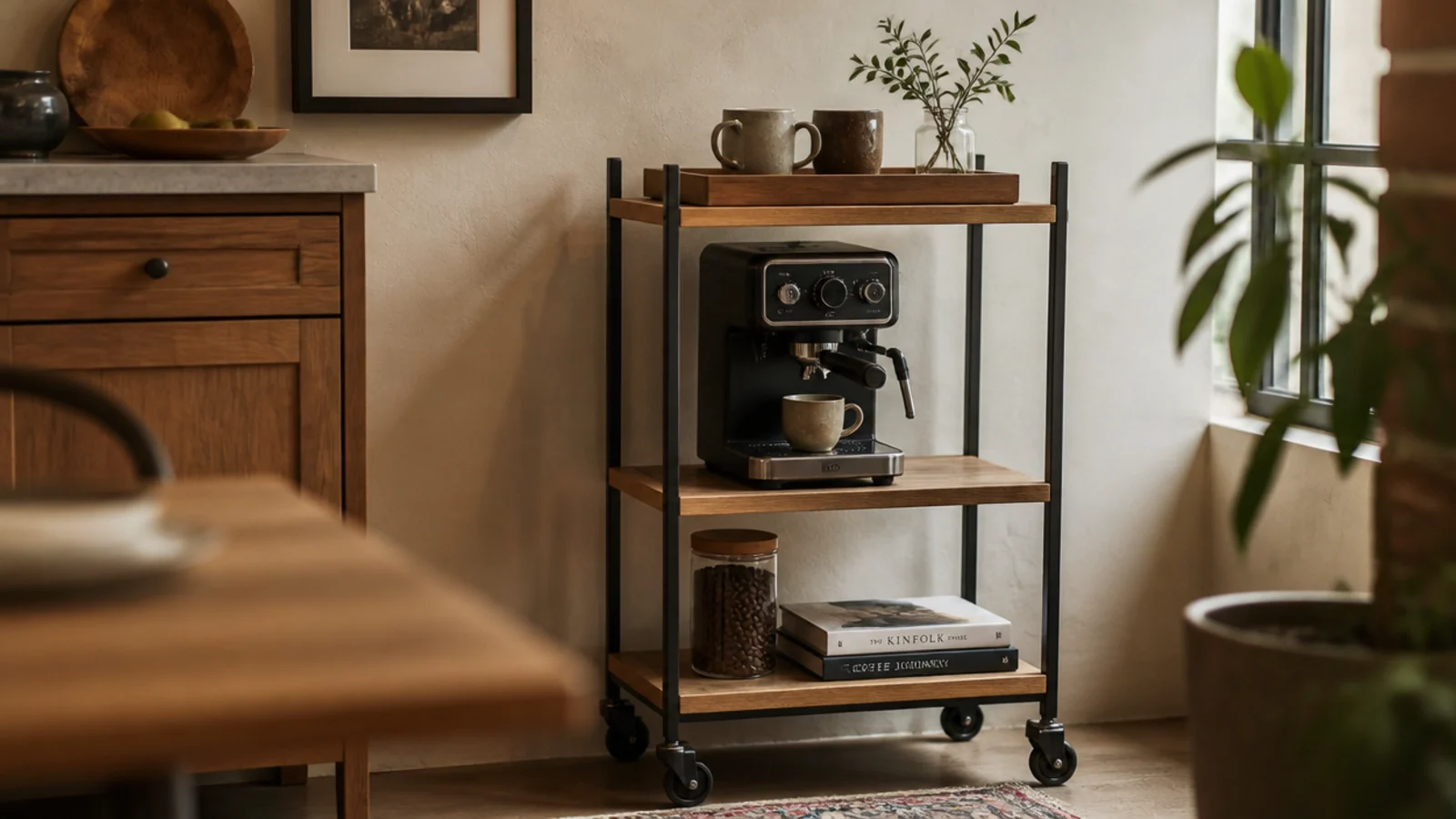
Coffee bar cart ideas look effortless in a photograph and go wrong in three predictable ways: the cart does not fit through the door, the wheels slide when you lean on it, and the cable ends up trailing across a walkway. Fix those three and a cart genuinely outperforms a built-in station, because it rolls out and you can clean behind it. Here are 30 setups that survive a real weekday morning.
In this guide32 sections — tap to openHide
- 1.What coffee bar cart ideas get wrong before the styling starts
- 2.Size the cart to the narrowest doorway it must pass
- 3.Three tiers is the working number
- 4.Give every tier one job and defend it
- 5.Put the machine on the middle tier
- 6.Buy locking casters, or swap them
- 7.Choose rubber tyres on a hard floor
- 8.Solid top, never open wire
- 9.Upgrade a wire cart with a cut board
- 10.Powder-coated steel over chrome plating
- 11.A raised lip on the top tier
- 12.Park it where its own outlet is
- 13.Clip the cable to the frame
- 14.A lift-out tray on the top tier
- 15.A towel rail on the cart side
- 16.S-hooks along the frame for mugs
- 17.A small bin slung underneath
- 18.A cart that parks under the counter overhang
- 19.Cane or rattan panels to soften the frame
- 20.Paint a flat-pack cart the wall color
- 21.A fourteen-inch cart for a galley kitchen
- 22.Weight low, always
- 23.Non-slip liner on every shelf
- 24.A drawer for the small tools
- 25.A fold-out side leaf for weekends
- 26.Against a wall, not floating in the room
- 27.One cart, two rooms, on a schedule
- 28.A cart as the bedroom coffee station
- 29.Leave the top third of the cart empty
- 30.Style it with three objects, no more
- 31.Roll it out and wipe behind it weekly
- 32.Mistakes to Skip
What coffee bar cart ideas get wrong before the styling starts
Three numbers decide whether a cart works, and none of them are about styling.
Width, measured at the doorway. Thirty inches by sixteen deep is the sweet spot — it matches the 30-inch reach zone your arm actually covers, and it still passes through a standard door. But measure the narrowest opening the cart must pass through, not the corner it will live in. A cart that cannot leave the room it was assembled in has given up its one real advantage.
Height, measured against the outlet. Park the cart where its own outlet is, and choose the spot from the outlet rather than the view. An extension cord across a walkway near a water source is the wrong answer to a bad parking spot.
Weight, measured from the bottom up. Beans, backup mugs and anything heavy live on the lowest tier. A loaded cart with the mass up top will tip going over a threshold strip, and that is a hot machine coming down.
Then the tier rule that keeps a cart from silently becoming three shelves of clutter: top tier is working surface, middle tier is the machine, bottom tier is stock. Budget tiers below: $ under $80, $$ $80–$250, $$$ $250+.
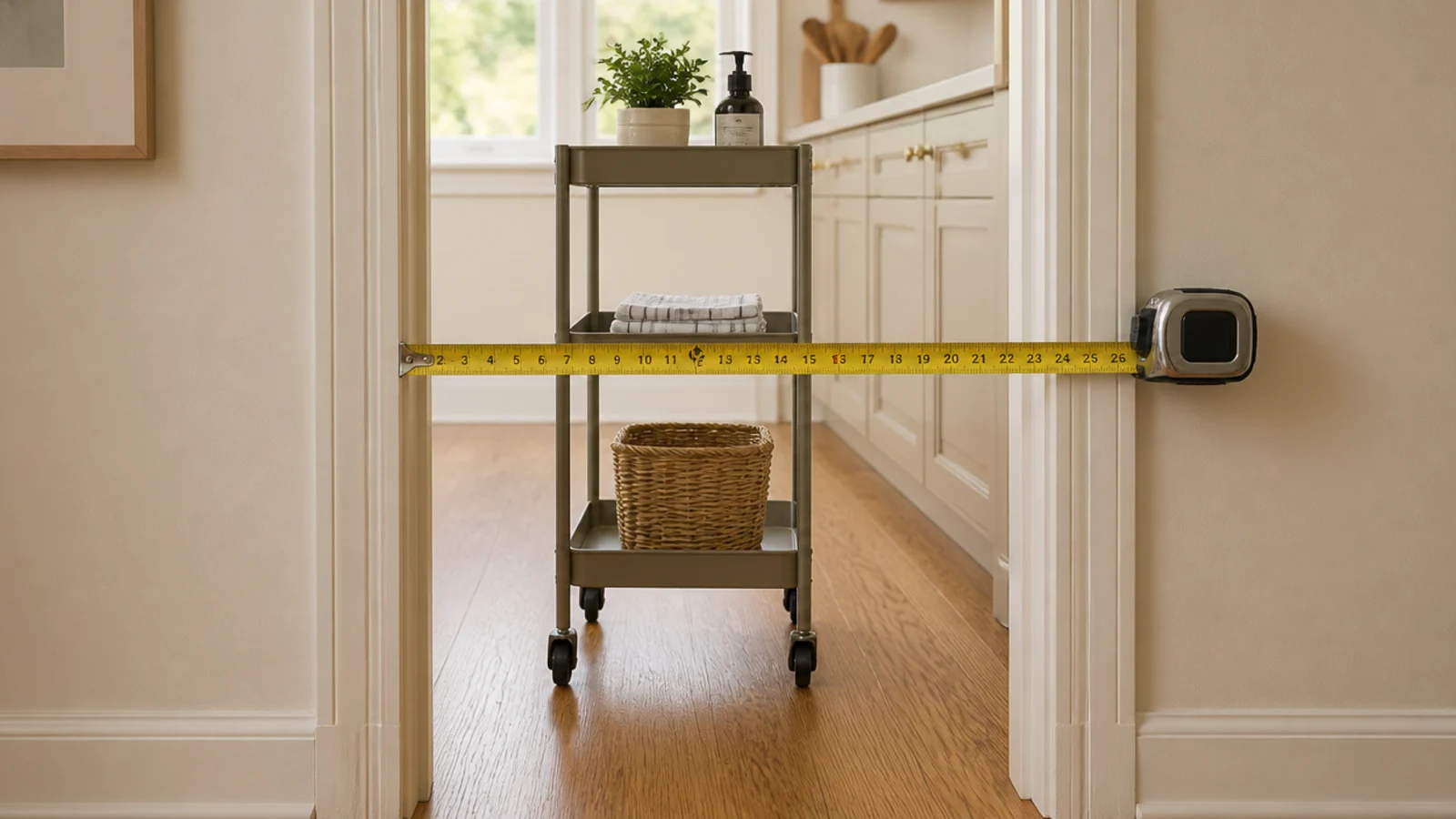
1. Size the cart to the narrowest doorway it must pass
Measure the door frame, subtract four inches, and that is your maximum cart width. Two inches of clearance each side is what lets you steer it through without scraping knuckles or paintwork.
If it will never leave one room, ignore this and buy the widest cart the wall takes. But be honest about which of those is true. —
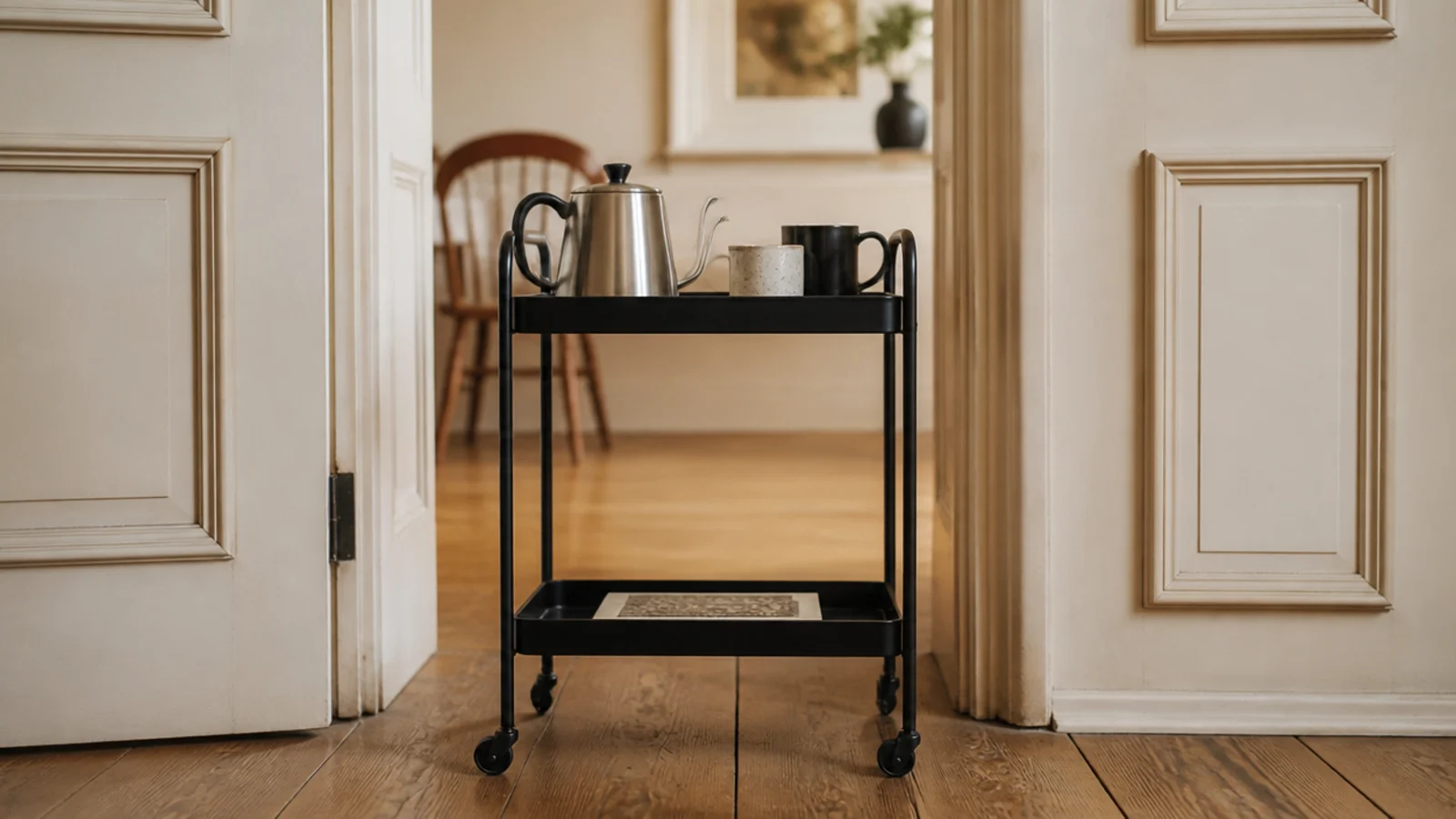
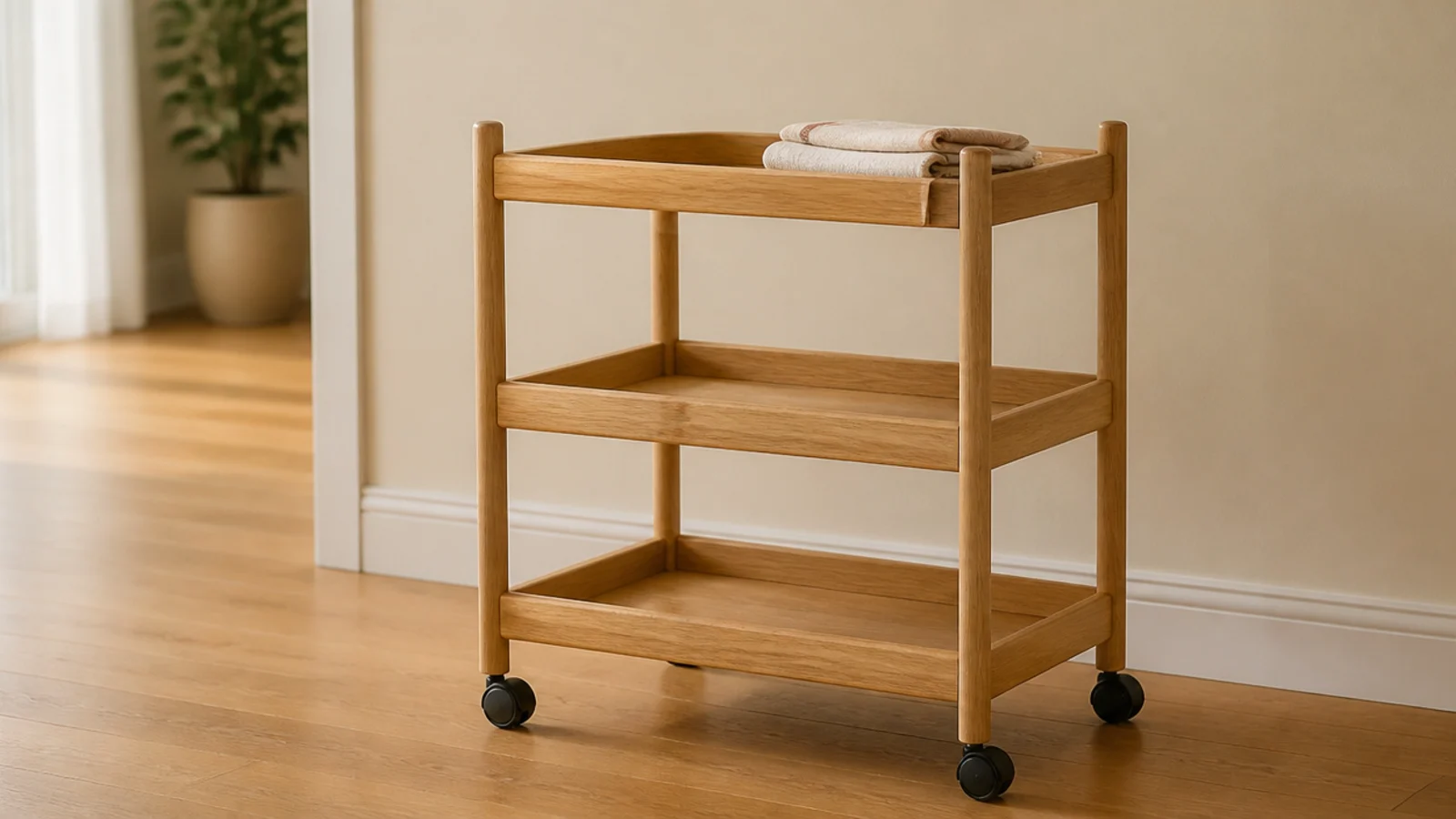
2. Three tiers is the working number
Two tiers is a side table with a machine on it. Four tiers puts the top shelf above comfortable working height and makes the whole thing top-heavy.
Three gives you a surface, a machine level and a stock level, which maps exactly onto how a morning actually goes. $$
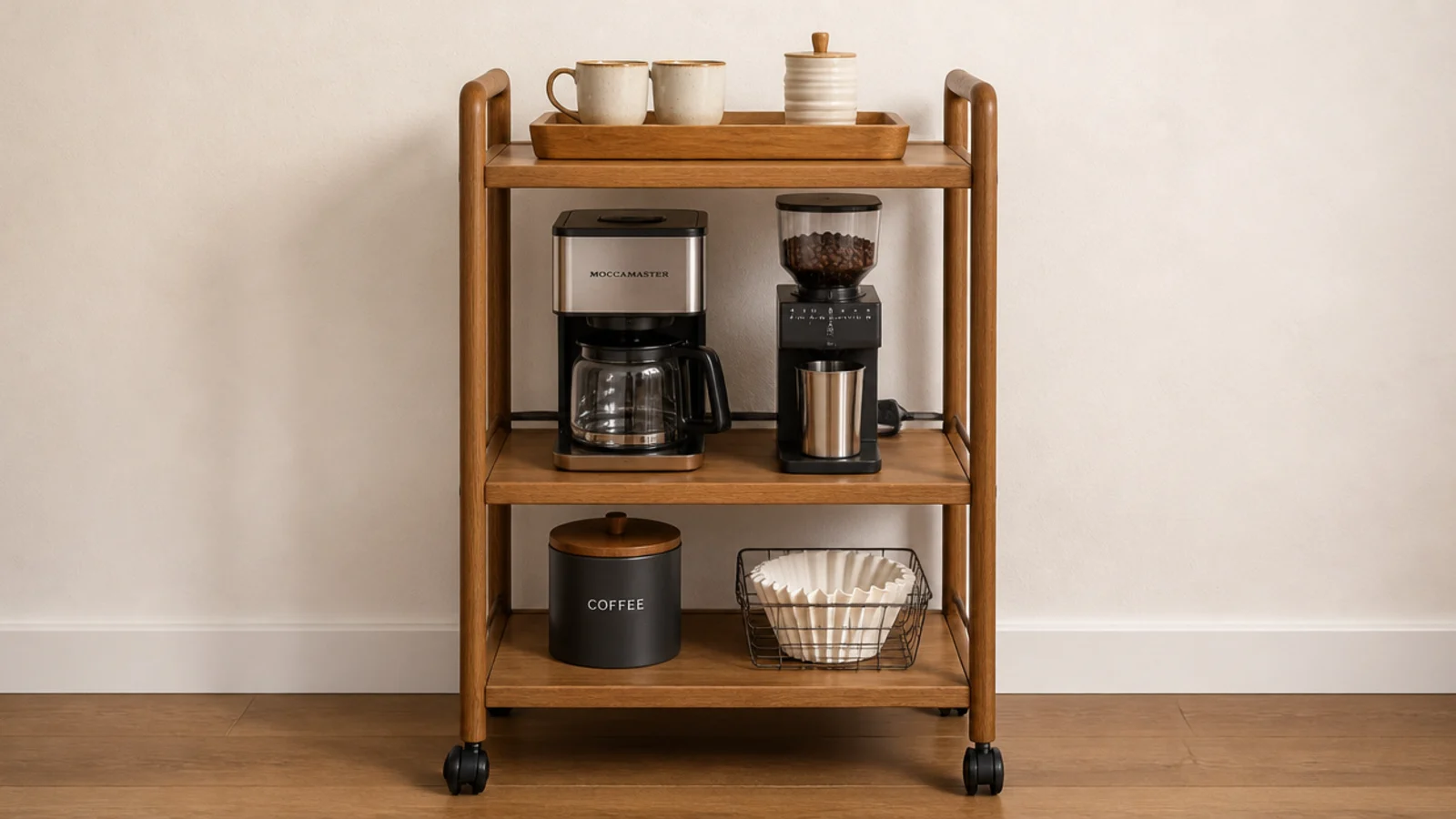
3. Give every tier one job and defend it
Write it down if you have to. Top: tray, cups in use, nothing else. Middle: machine and grinder. Bottom: beans, filters, spare mugs.
The moment a stray item lands on the wrong tier the system starts to erode, and within a month the cart is holding post and a phone charger. Free
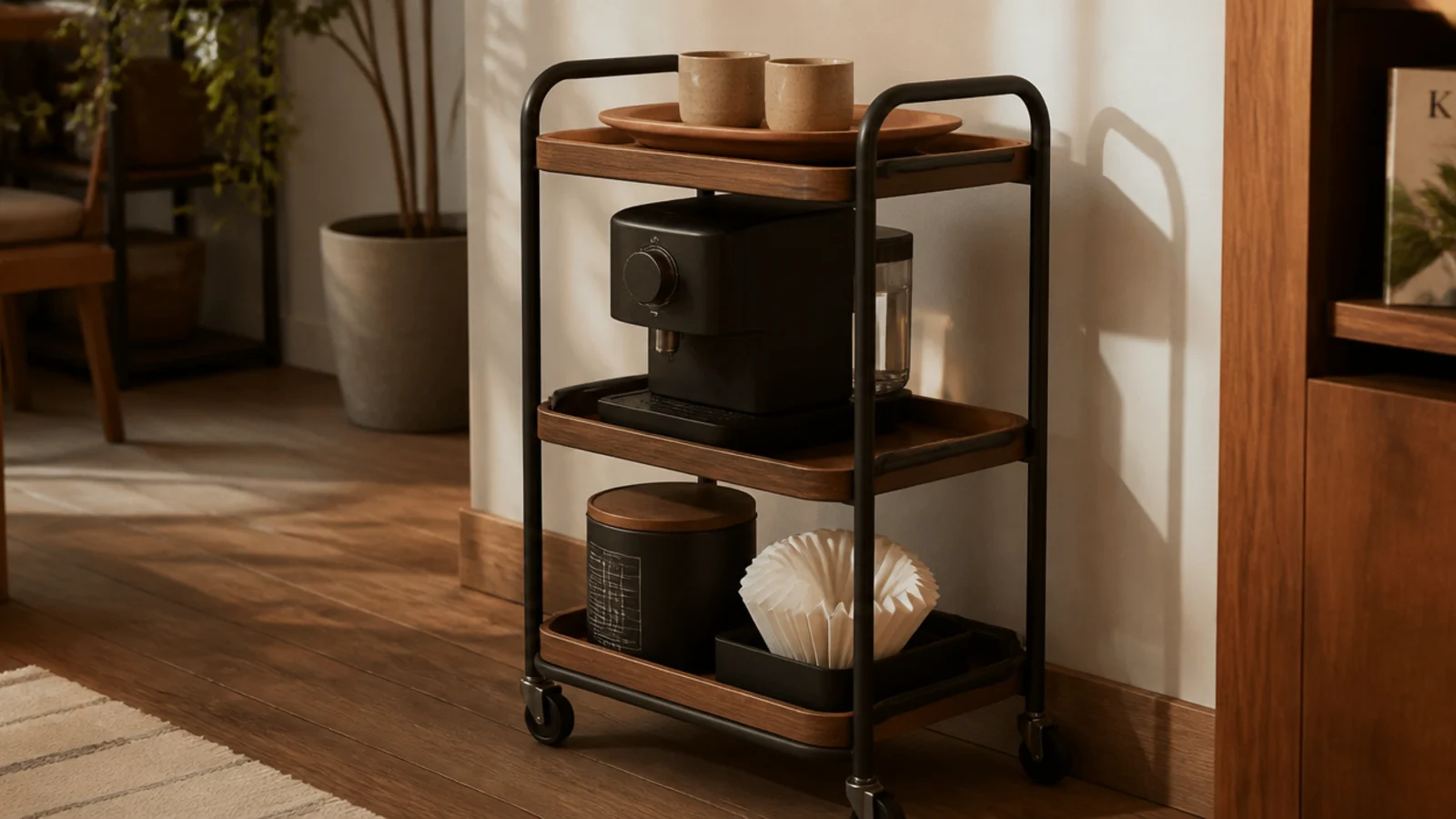
4. Put the machine on the middle tier
Roughly counter height, which puts the drip spout where you can see the cup fill without stooping.
It also keeps the heaviest single object low enough that the cart stays planted. A machine on the top tier makes a loaded cart genuinely tippy and puts steam right under your face. —
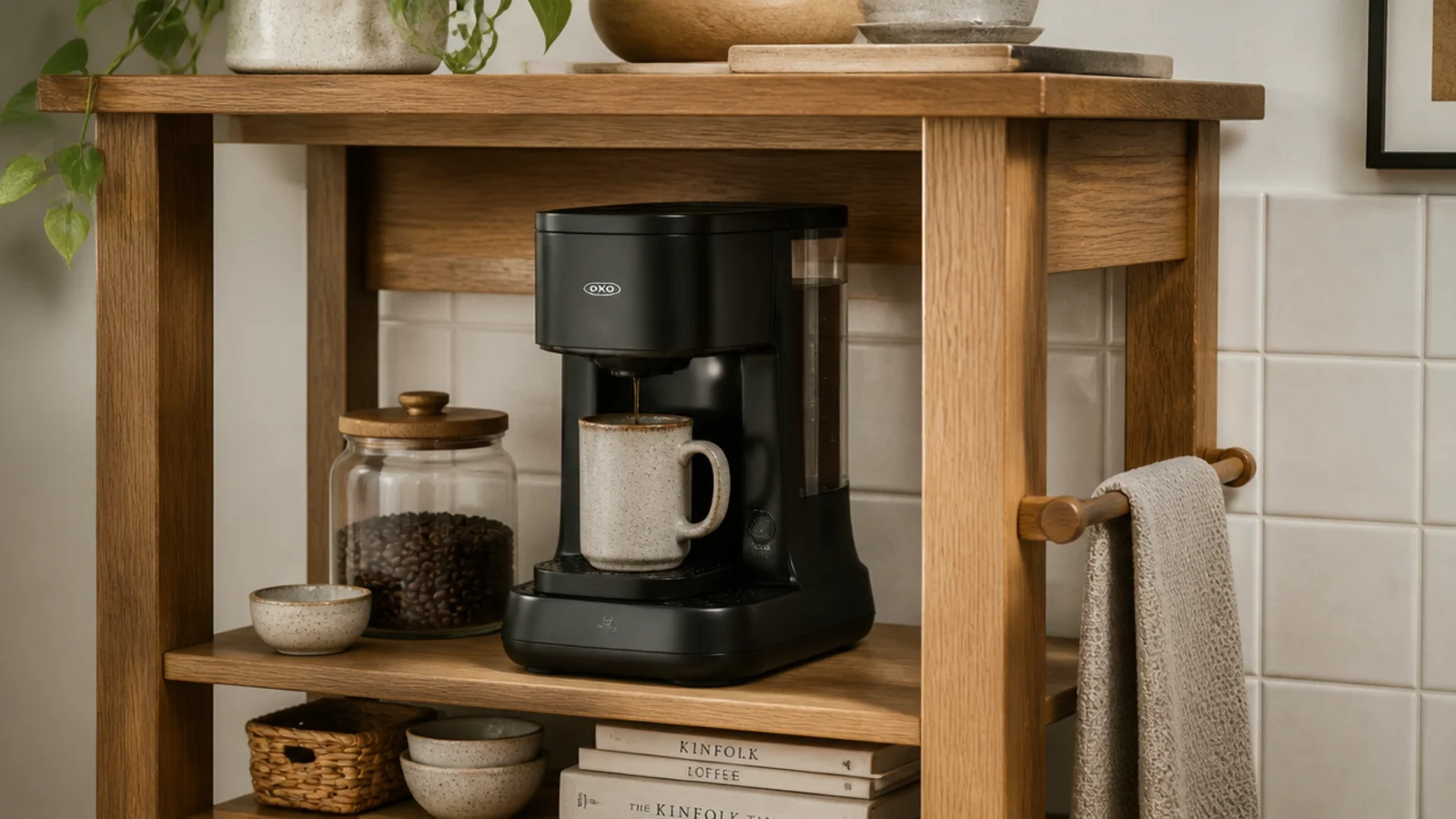
5. Buy locking casters, or swap them
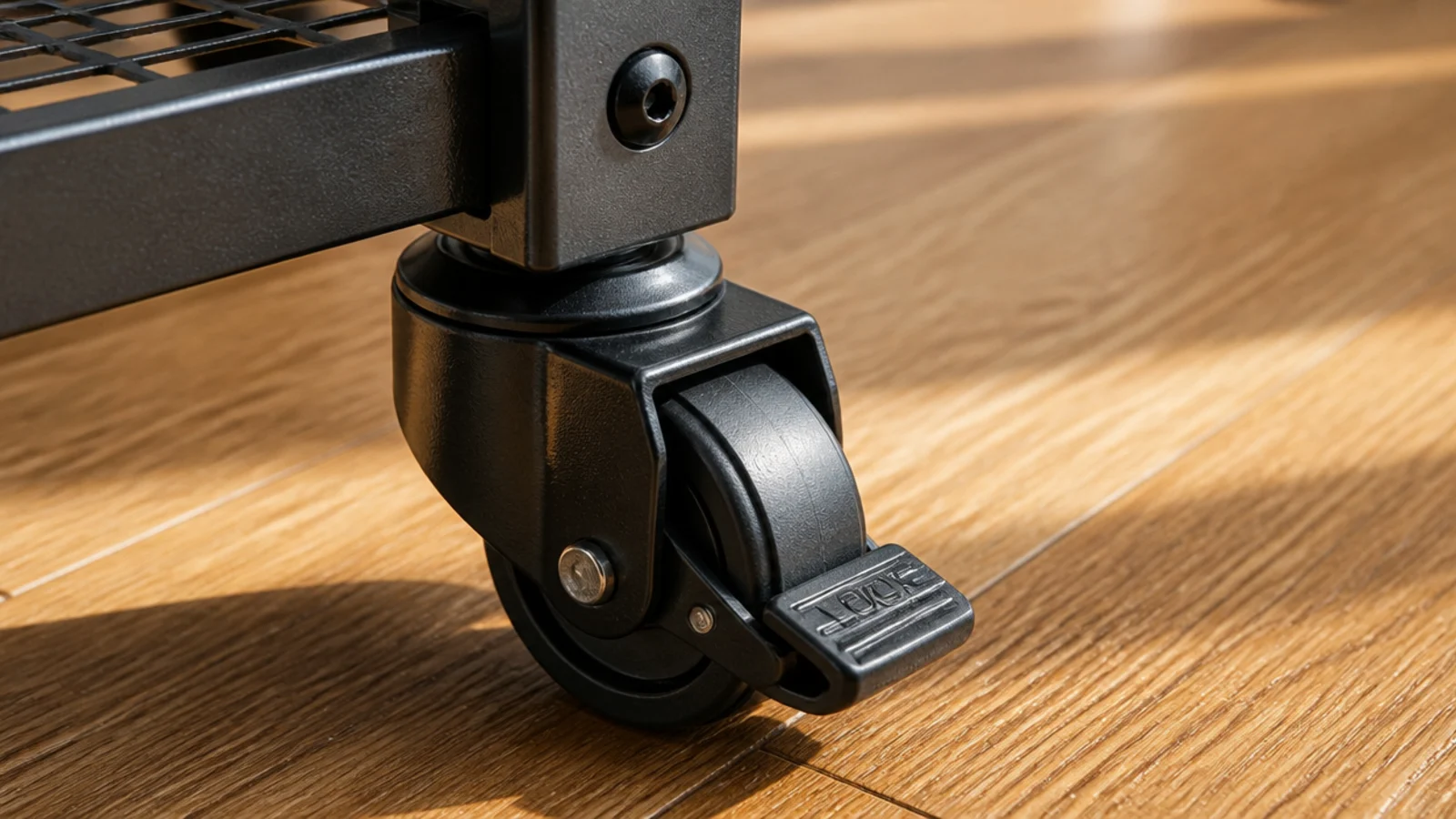
The detail most people skip and every one of them regrets. A cart on free-spinning wheels slides away exactly when you lean on it.
Locks on two wheels is the minimum. A full set of four locking replacement casters costs about $15 and takes fifteen minutes with a screwdriver. $
6. Choose rubber tyres on a hard floor
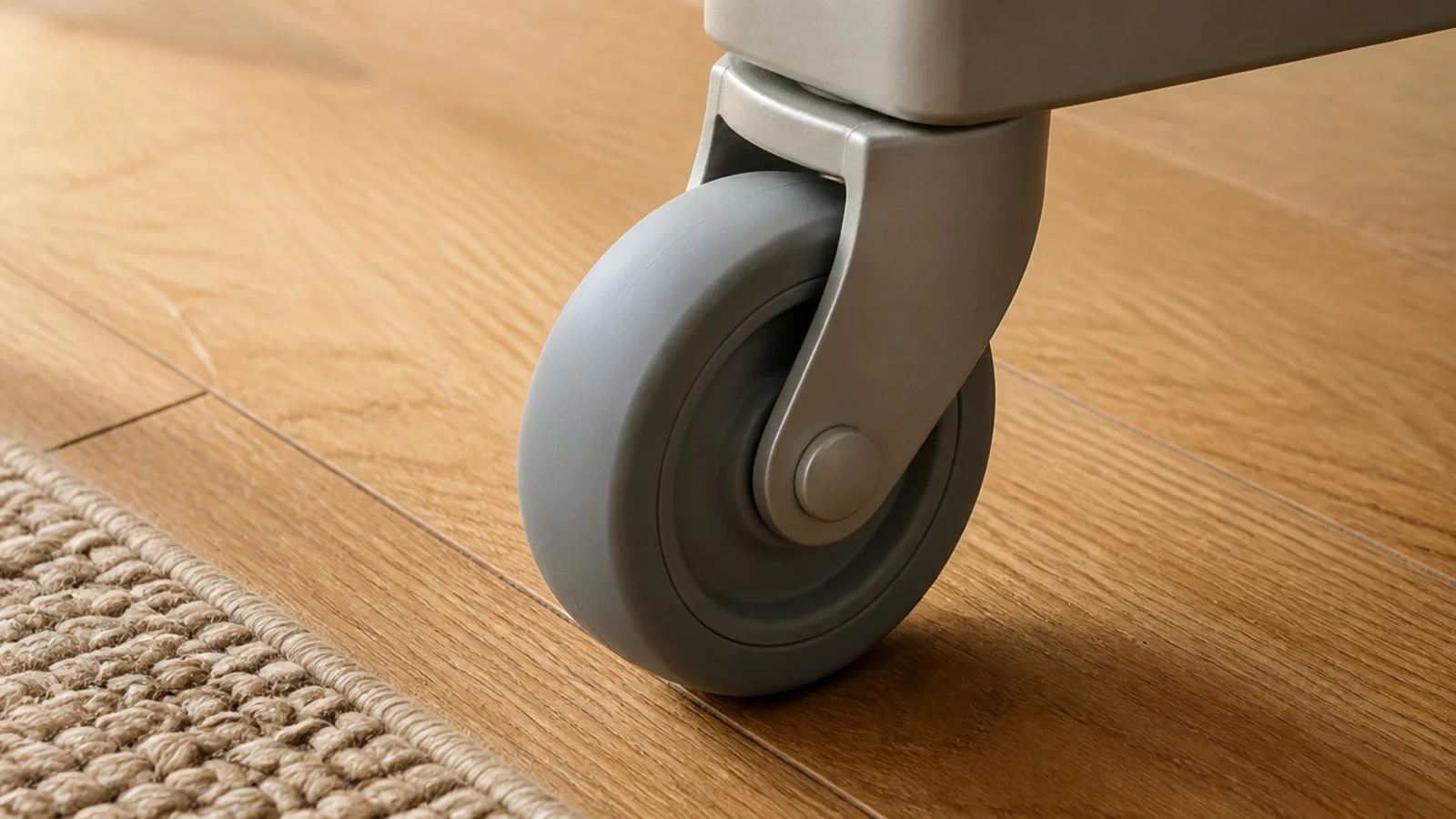
Hard plastic wheels score wood and vinyl within months, and they transmit every threshold strip straight into a full cup.
Soft rubber or polyurethane tyres roll quietly and leave nothing behind. On carpet, larger diameter matters more than material. $
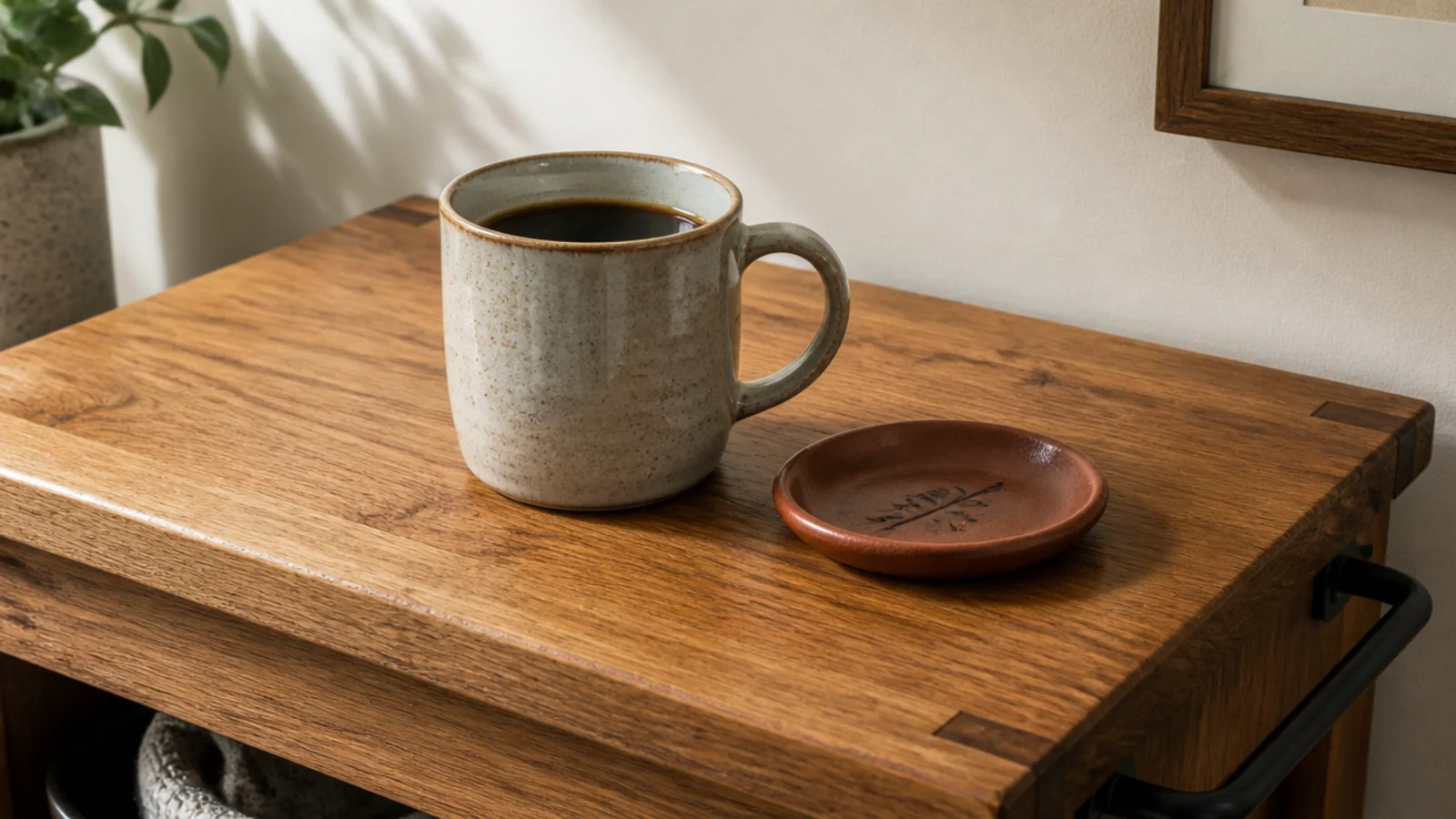
7. Solid top, never open wire
A mug base spans almost nothing on an open wire grid, so it rocks and it drips through onto the tier below.
If the cart is otherwise right, this is fixable. If you are choosing new, a solid top is worth more than an extra tier. $$
8. Upgrade a wire cart with a cut board
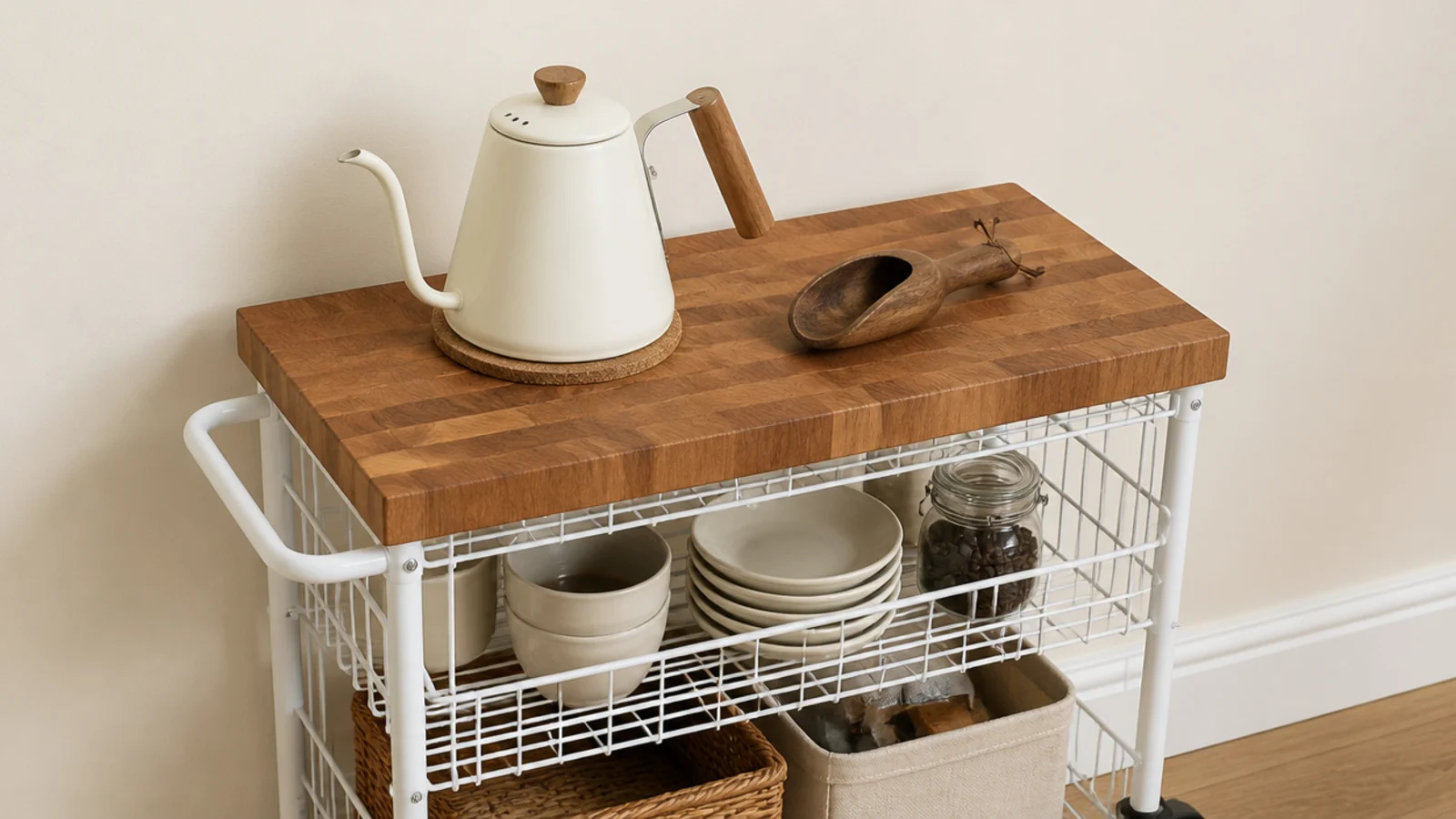
A butcher block or plywood offcut cut to the shelf size turns the cheapest cart into a usable one for about $20.
Oil it on every face before it goes on, and add small stick-on bumpers underneath so it grips the wire rather than sliding. $
9. Powder-coated steel over chrome plating
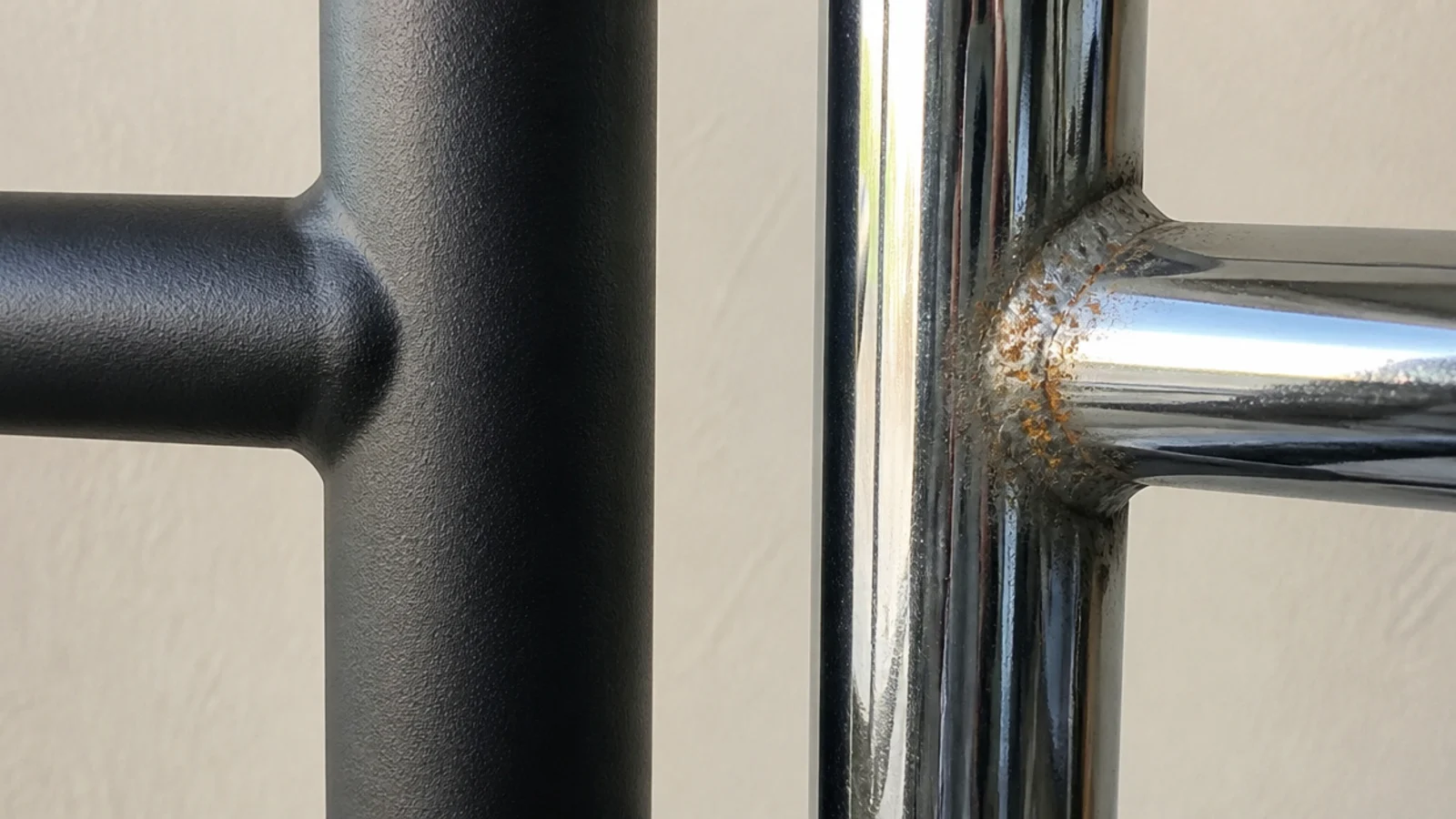
Steam and chrome do not get on. Plating pits at the welds within a couple of years in a spot that gets steamed daily, and pitting cannot be fixed.
Powder coat takes the same steam indefinitely. Matte black and warm white both disappear more easily into a kitchen than bright chrome does. $$
10. A raised lip on the top tier
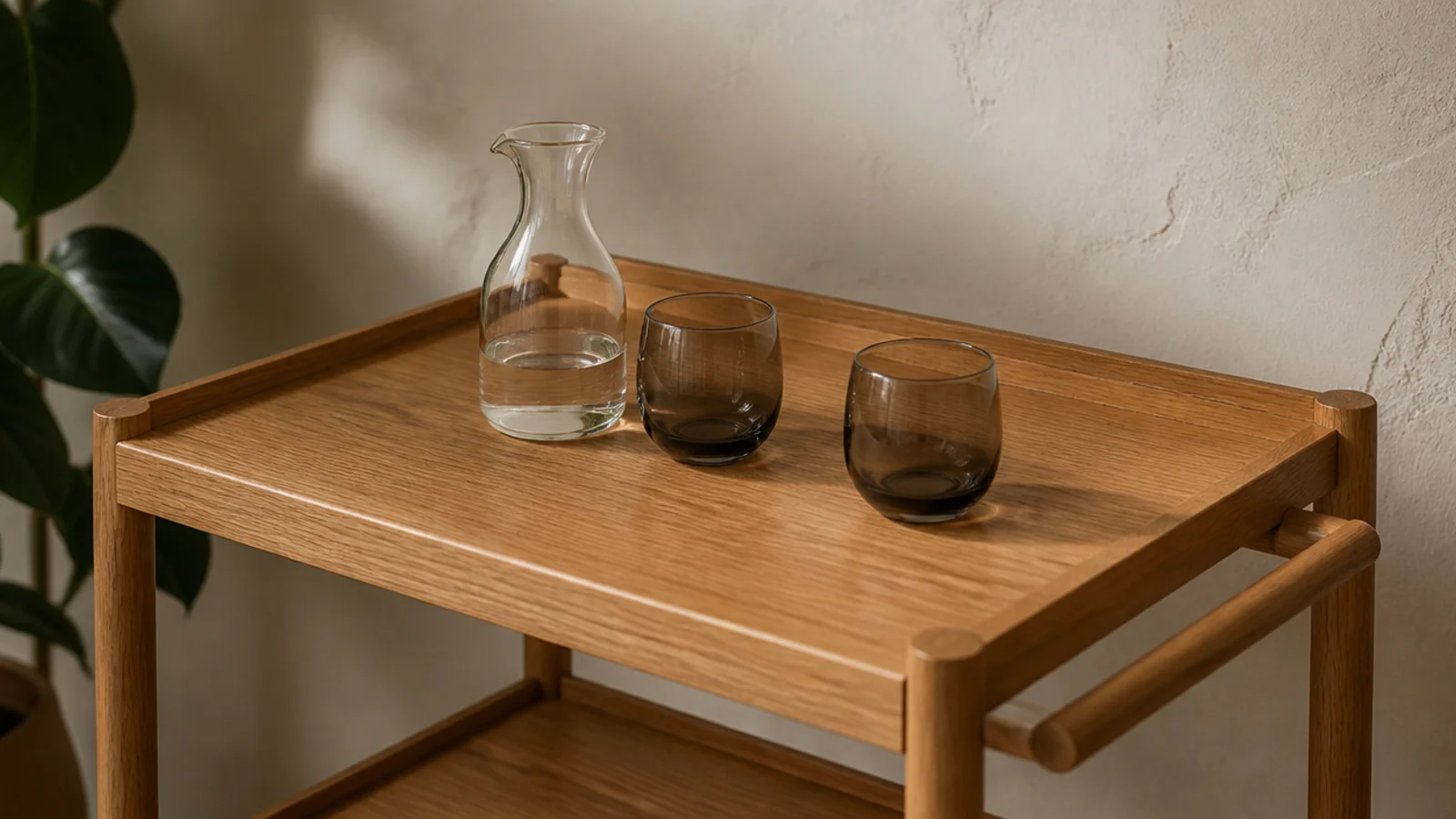
Half an inch of lip around three edges is the difference between a cart you can move loaded and one you have to unload first.
It also catches the small spill before it reaches the shelf edge and runs down onto whatever is below. —
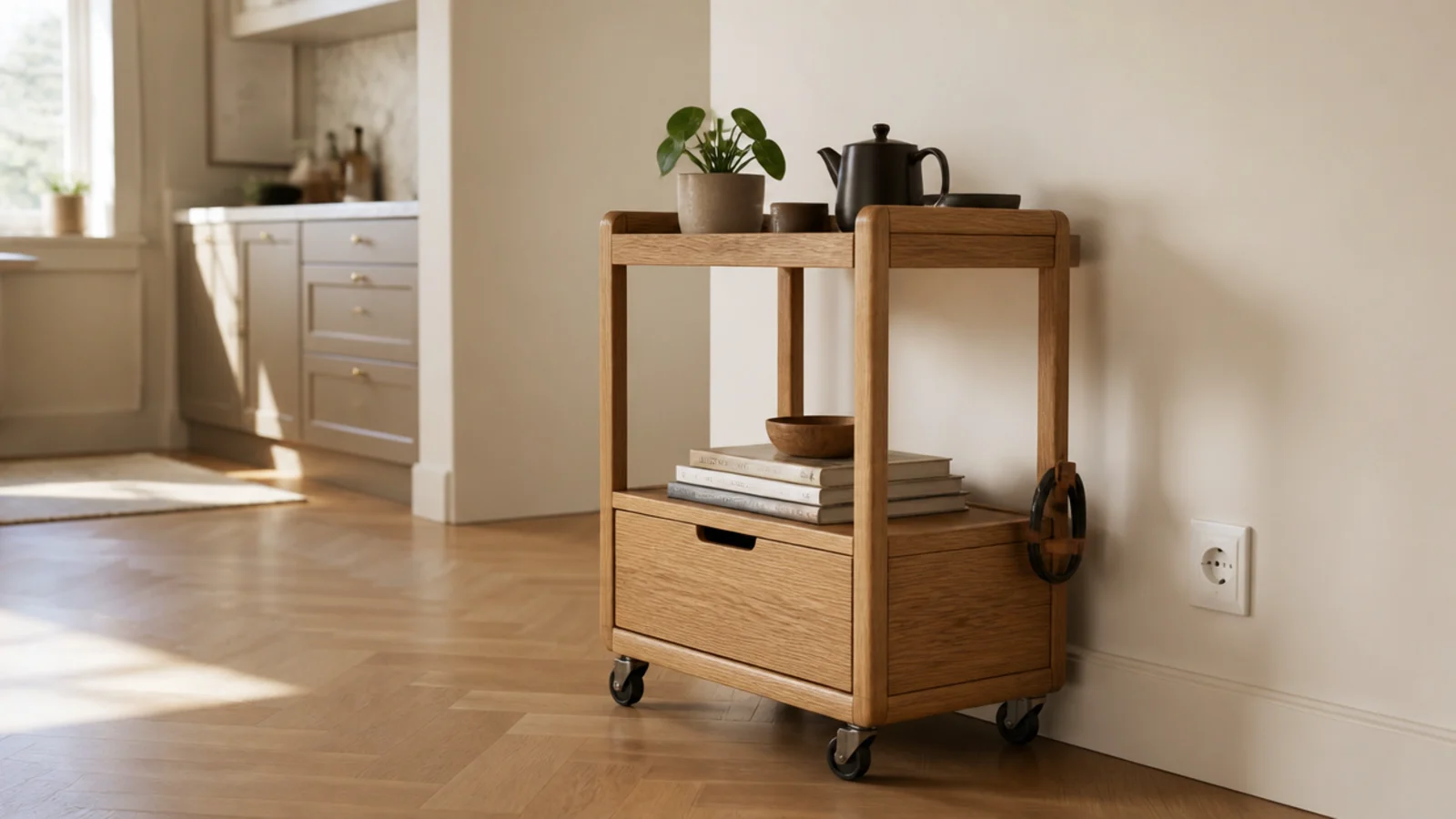
11. Park it where its own outlet is
Decide the parking spot from the outlet, then style around it. Nearly every bad cart setup starts with choosing a corner and solving the power afterwards.
If the only outlet is genuinely awkward, accept the cart is stationary and pick a fixed home. There is more on this in coffee corner ideas. Free
12. Clip the cable to the frame
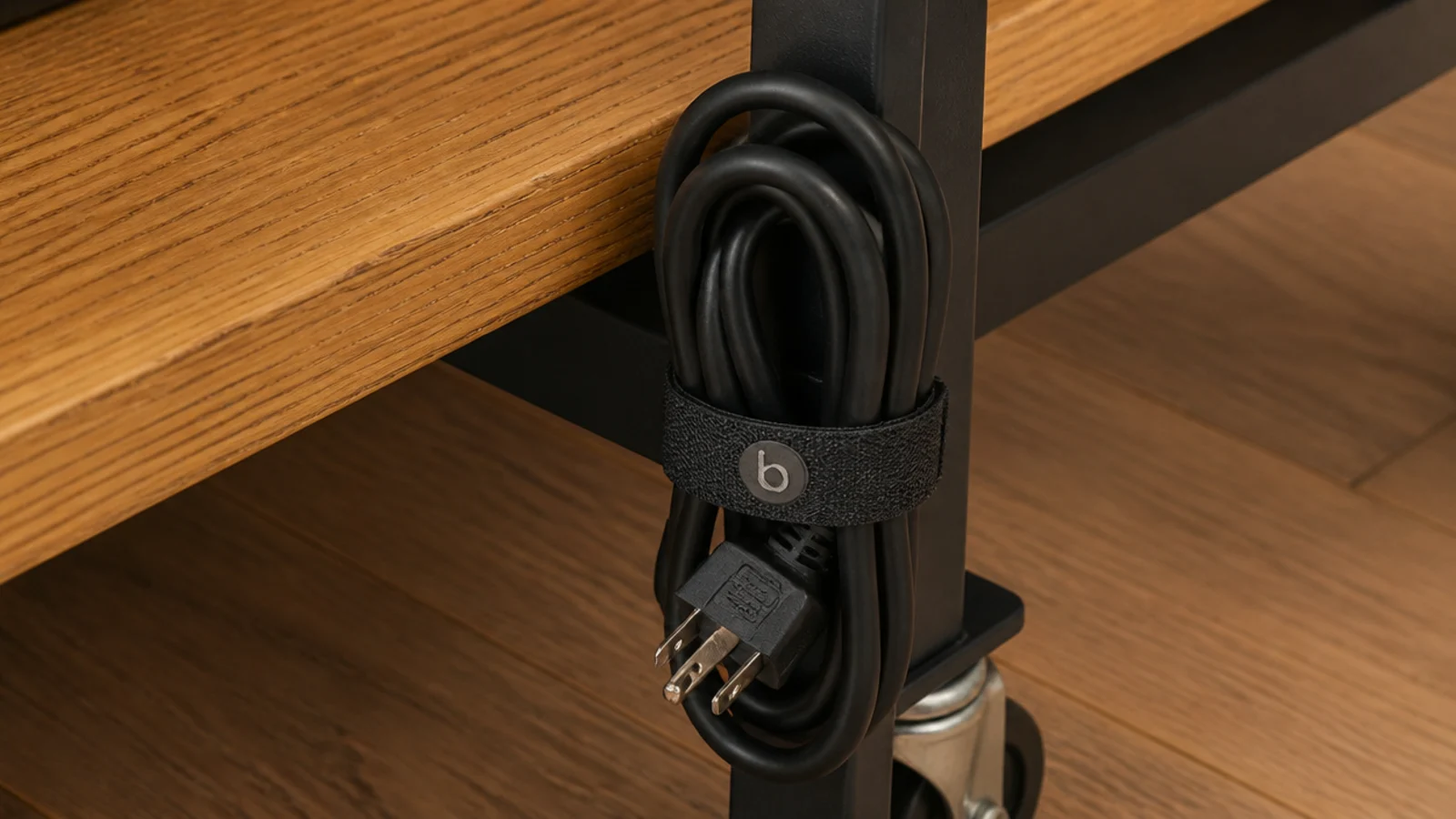
Coil the excess and hold it to an upright with a fabric tie or a small clip. A trailing cable is what catches a foot at 6am and pulls a hot machine sideways.
Never run a cord across a walkway, and never near the sink. $
13. A lift-out tray on the top tier
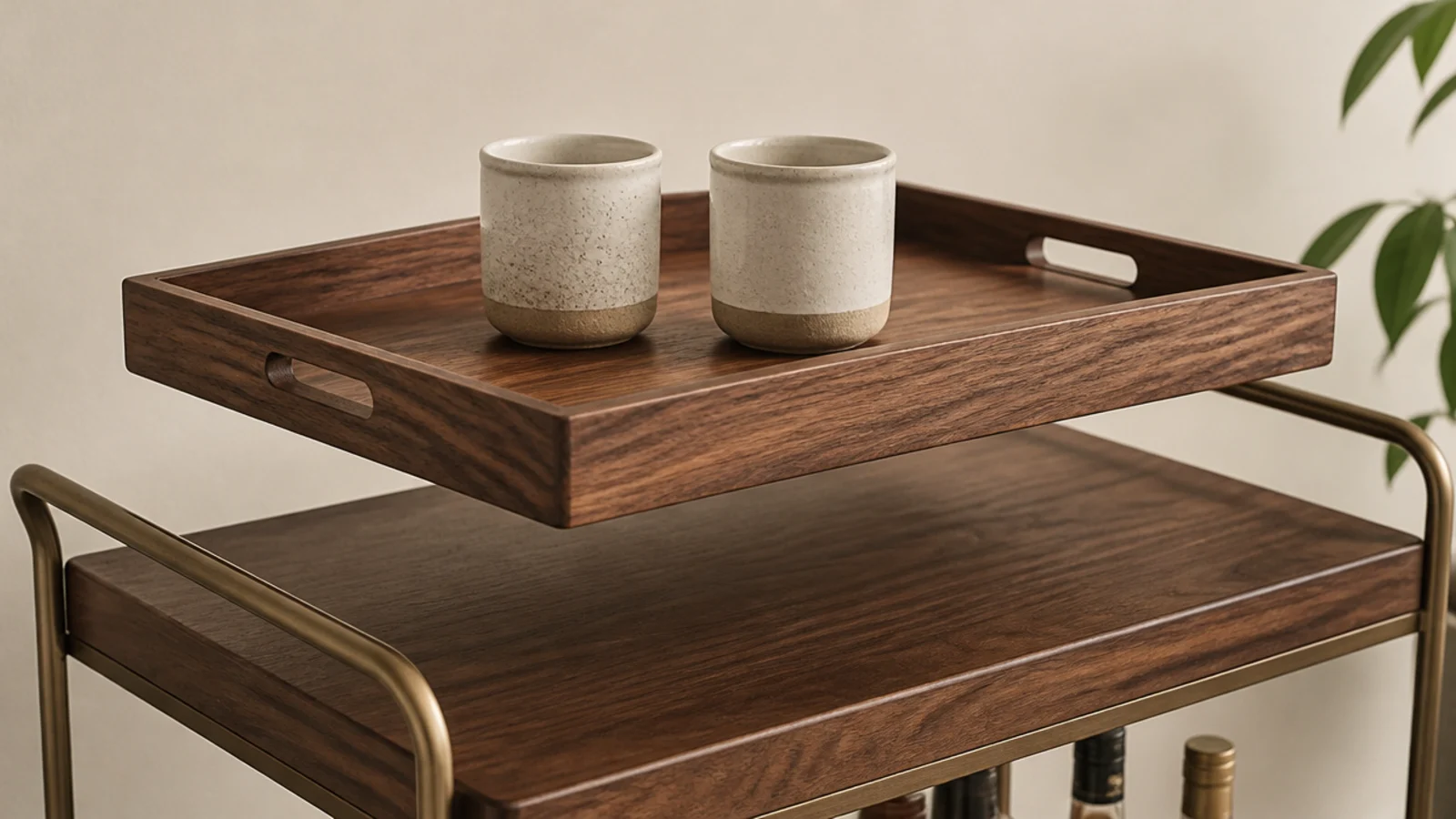
The tray is what makes the whole thing resettable. Lift it, wipe the shelf, put it back, and the cart looks new in twenty seconds.
Choose one with a lip and real handles. A flat board reads as a chopping board and never gets lifted. $$
14. A towel rail on the cart side
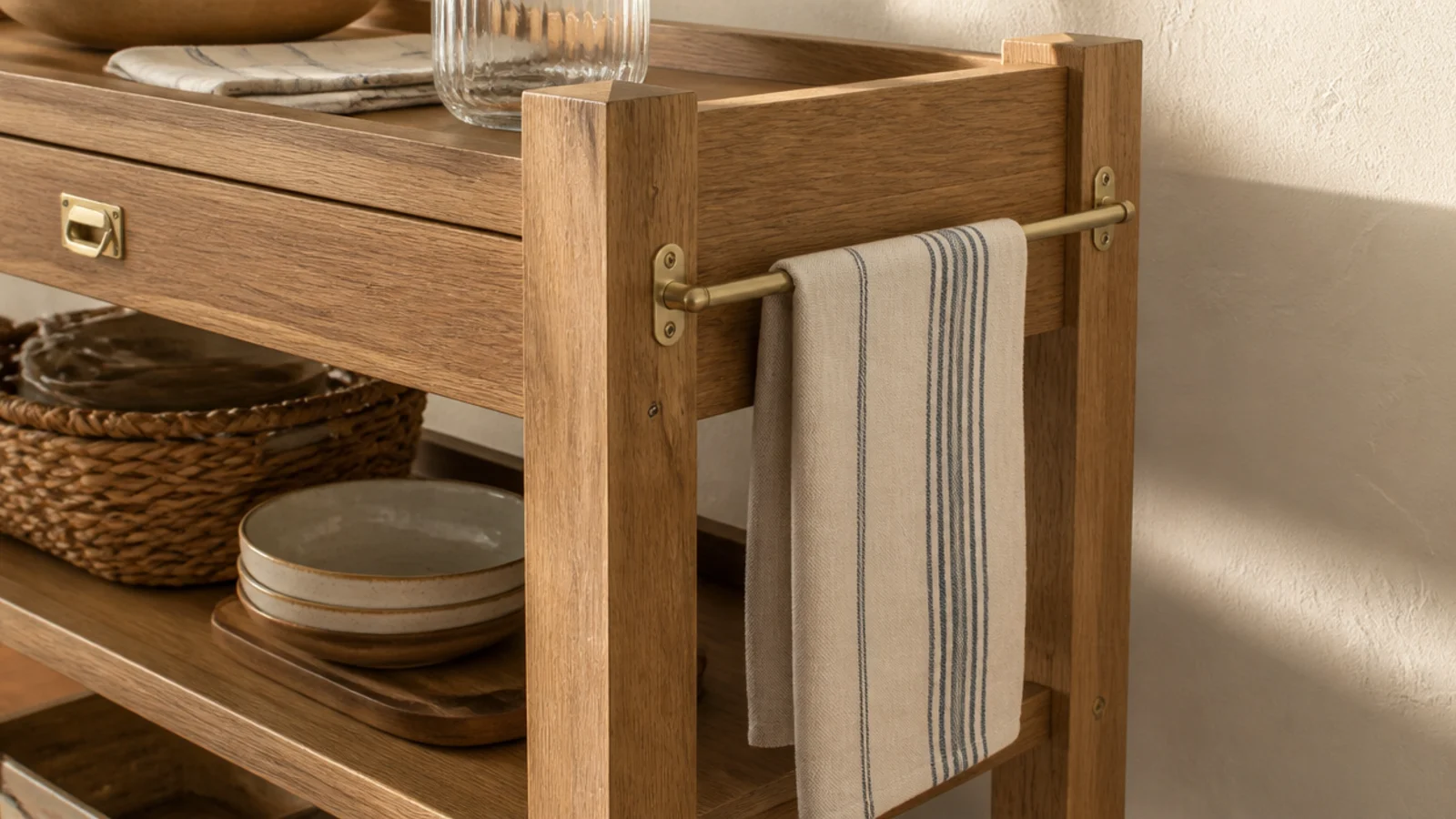
A damp cloth needs somewhere that is not a shelf, or it sits in a puddle and marks the wood.
A slim rail on the side upright costs a few dollars and dries the cloth properly. One towel, changed often. $
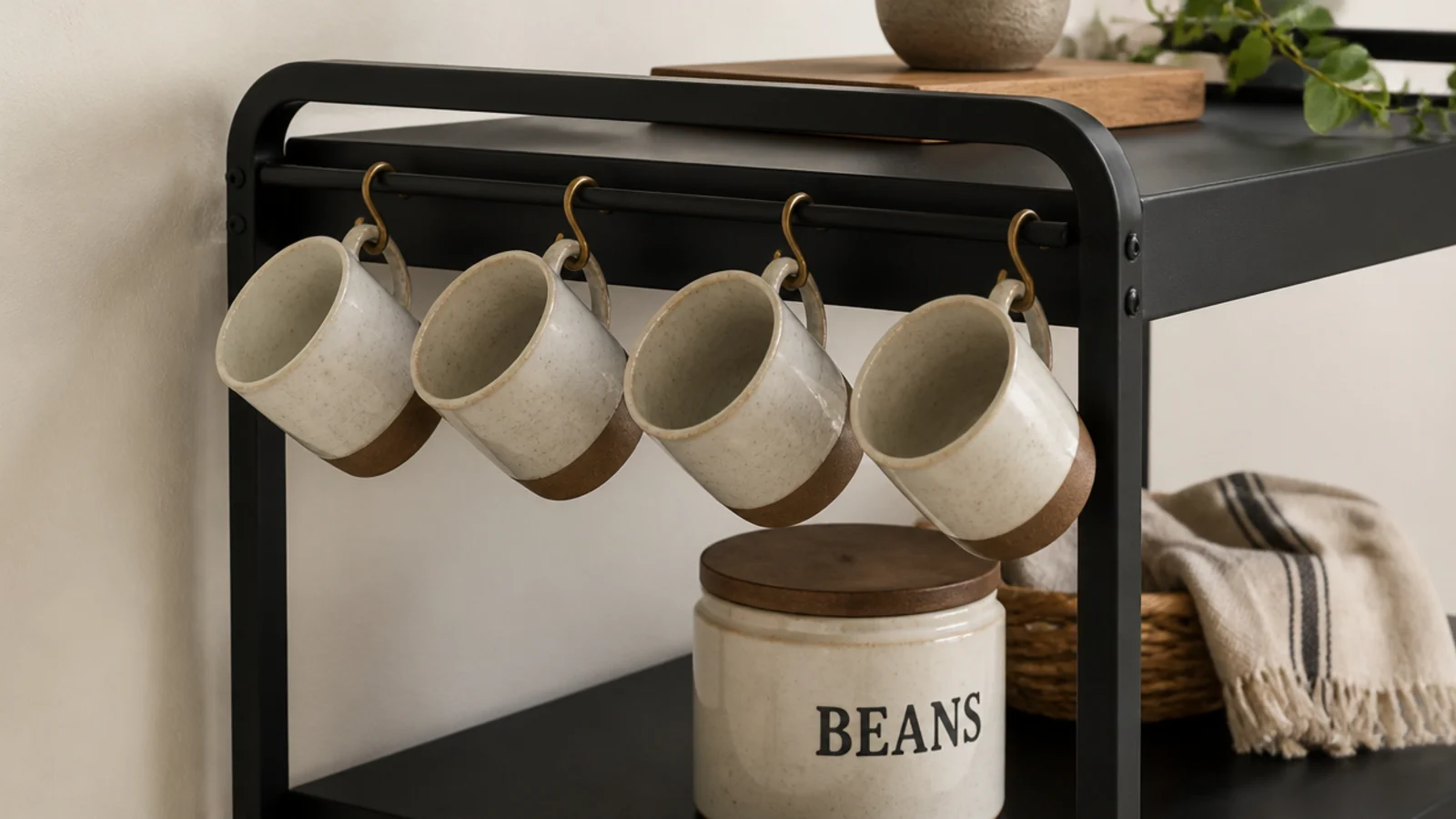
15. S-hooks along the frame for mugs
Six mugs hanging off the side rail take no shelf space at all, and a row of mismatched stoneware is one of the better things you can look at first thing.
Check the rail diameter before buying hooks, and hang only mugs you actually use. $
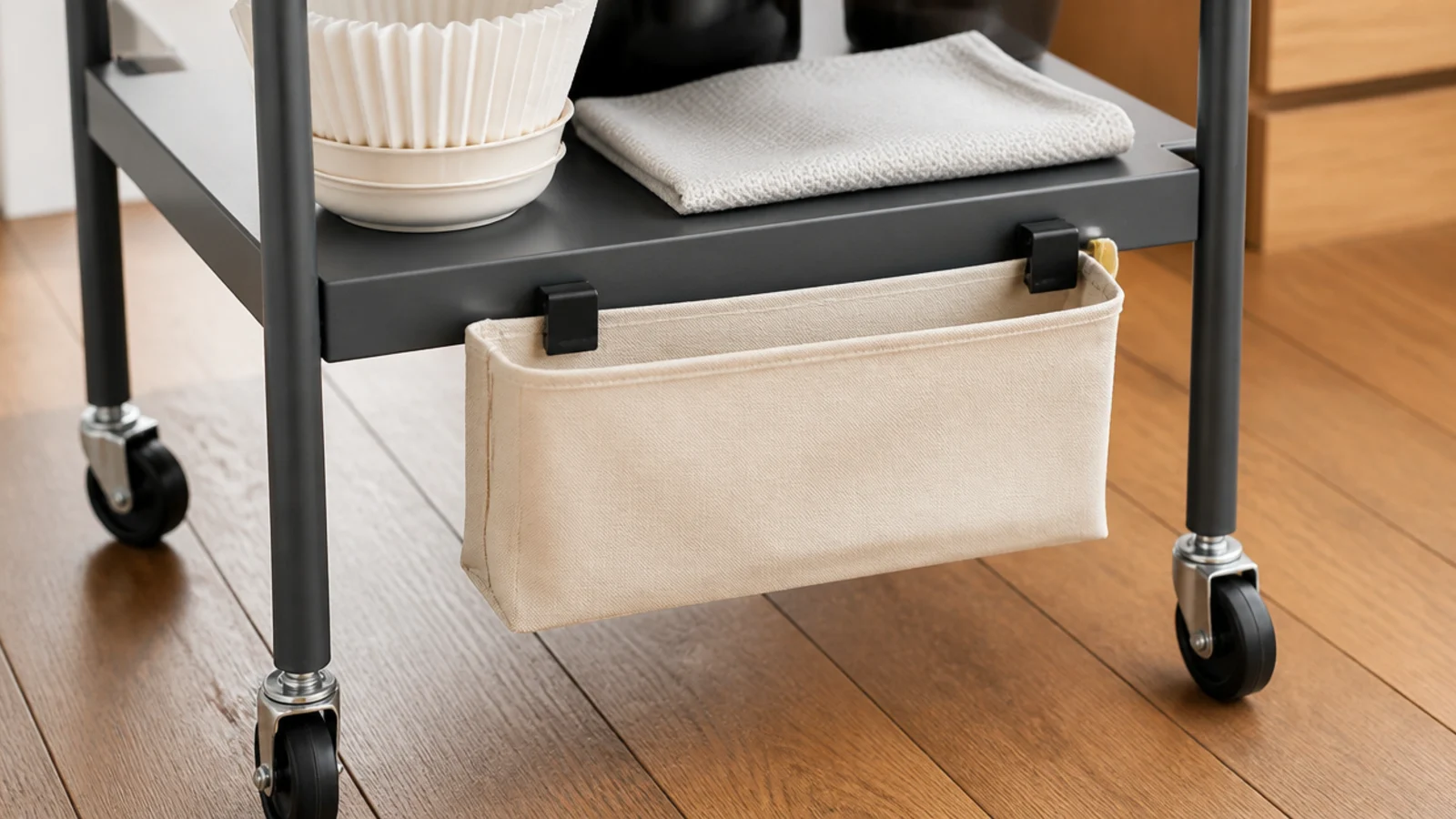
16. A small bin slung underneath
Filters, pods and the cloth belong under the cart rather than on it. A small canvas bin clipped to the underside of the lowest shelf holds all of it.
It also keeps paper filters away from steam, which is what makes them curl and stop seating properly. $
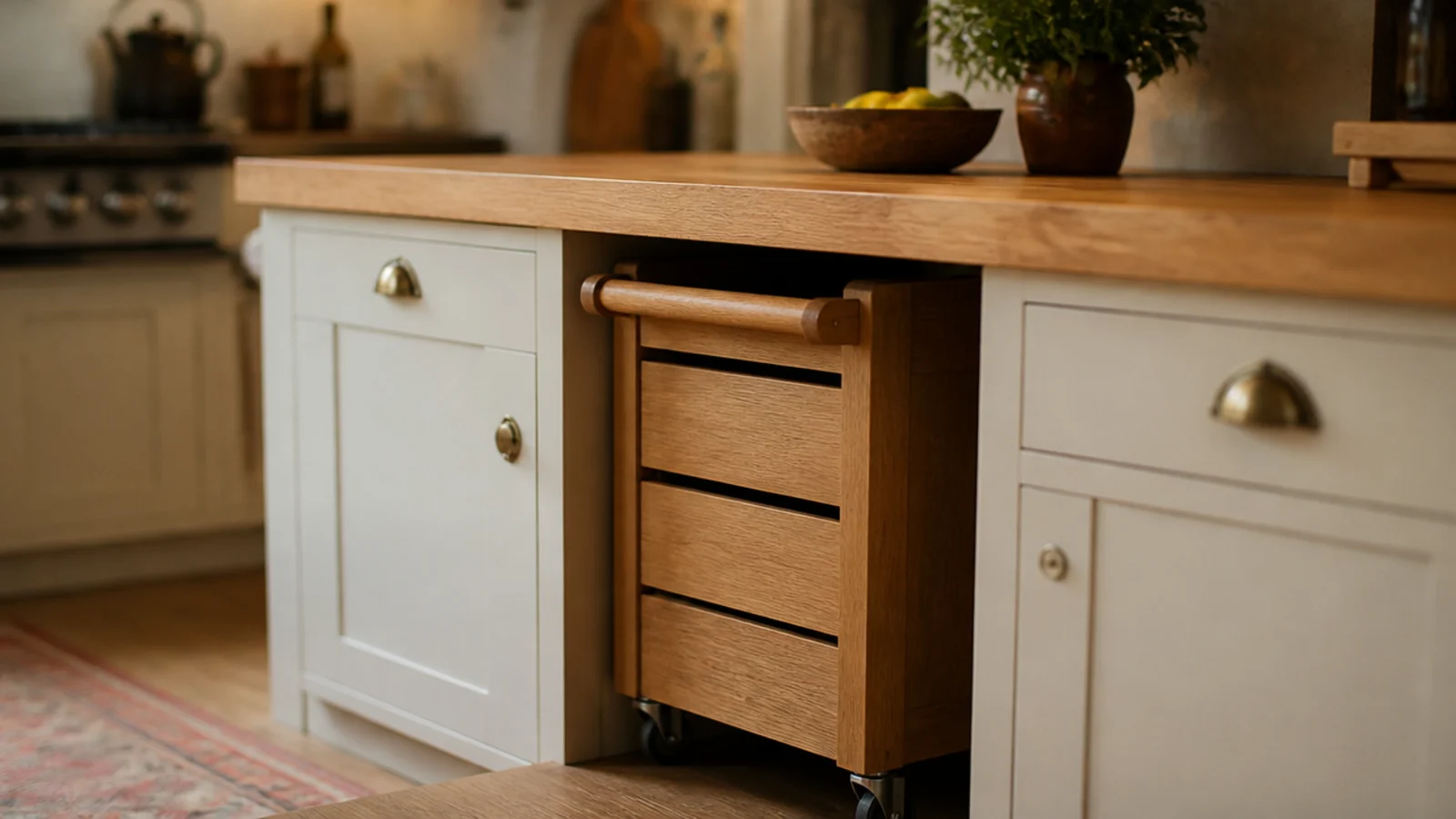
17. A cart that parks under the counter overhang
If your counter has a lipped overhang, a low cart can live entirely underneath it and roll out only when used.
Measure the clear height under the overhang first — it is usually 30 to 34 inches, and cart heights cluster right around there, so an inch decides it. $$
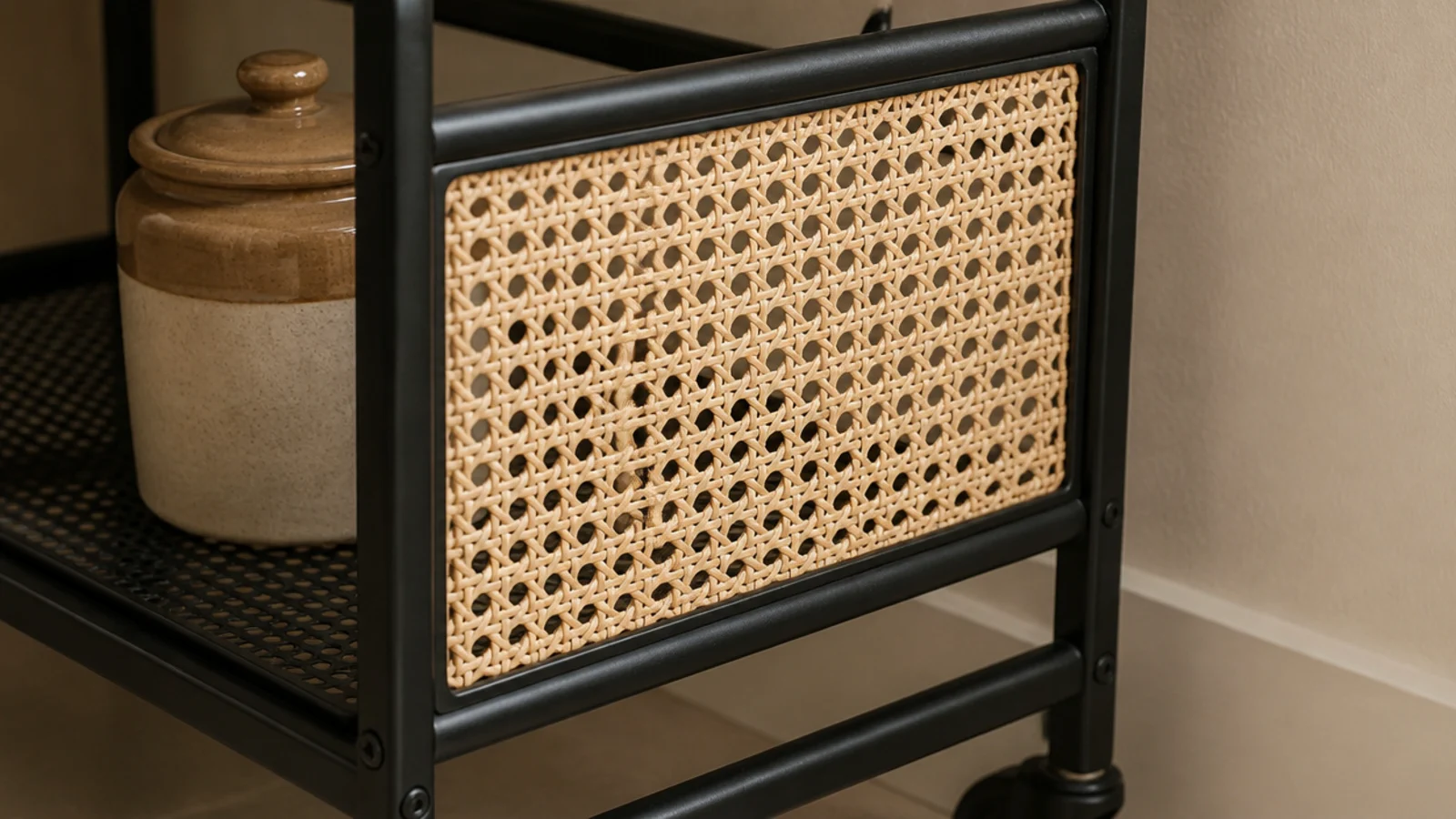
18. Cane or rattan panels to soften the frame
An open metal frame reads as hardware. A woven cane panel fitted into one side takes that edge off instantly and hides whatever is stored behind it.
Pre-woven cane webbing is sold by the foot and fits into a frame with a length of spline or a few small clips. $
19. Paint a flat-pack cart the wall color
The cheapest way to make an inexpensive cart read as furniture rather than as a purchase. A matched cart recedes and the objects on it come forward.
Light sand, a metal or multi-surface primer, then two thin coats in satin. Satin wipes; matte marks where wet cups land. $
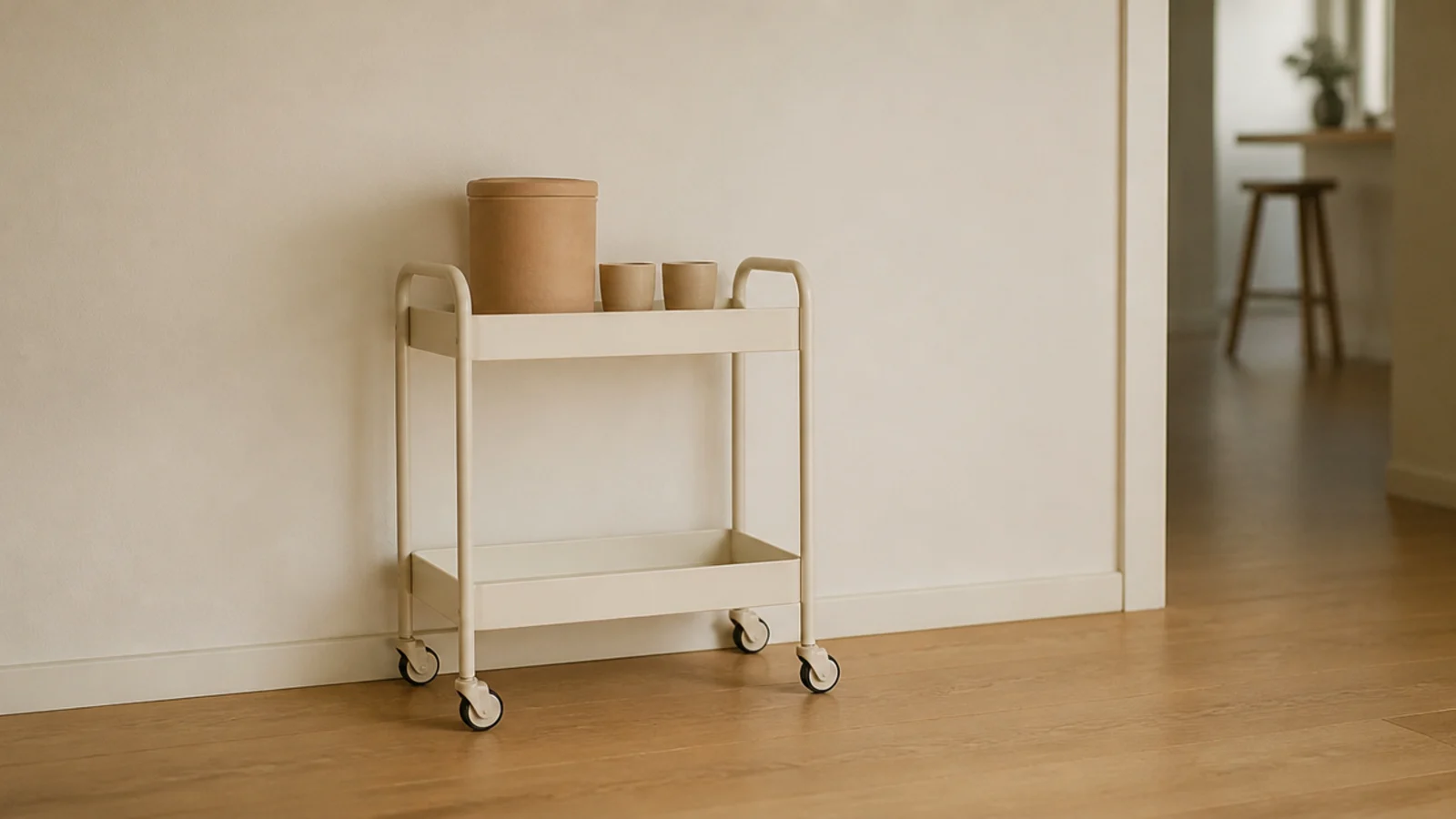
20. A fourteen-inch cart for a galley kitchen
In a galley you cannot give up walkway, and fourteen inches is enough for a kettle, a press and one mug.
It will not take a full machine and grinder, so be honest about the brew method before buying. Fourteen inches of the right thing beats thirty inches you edge past. $
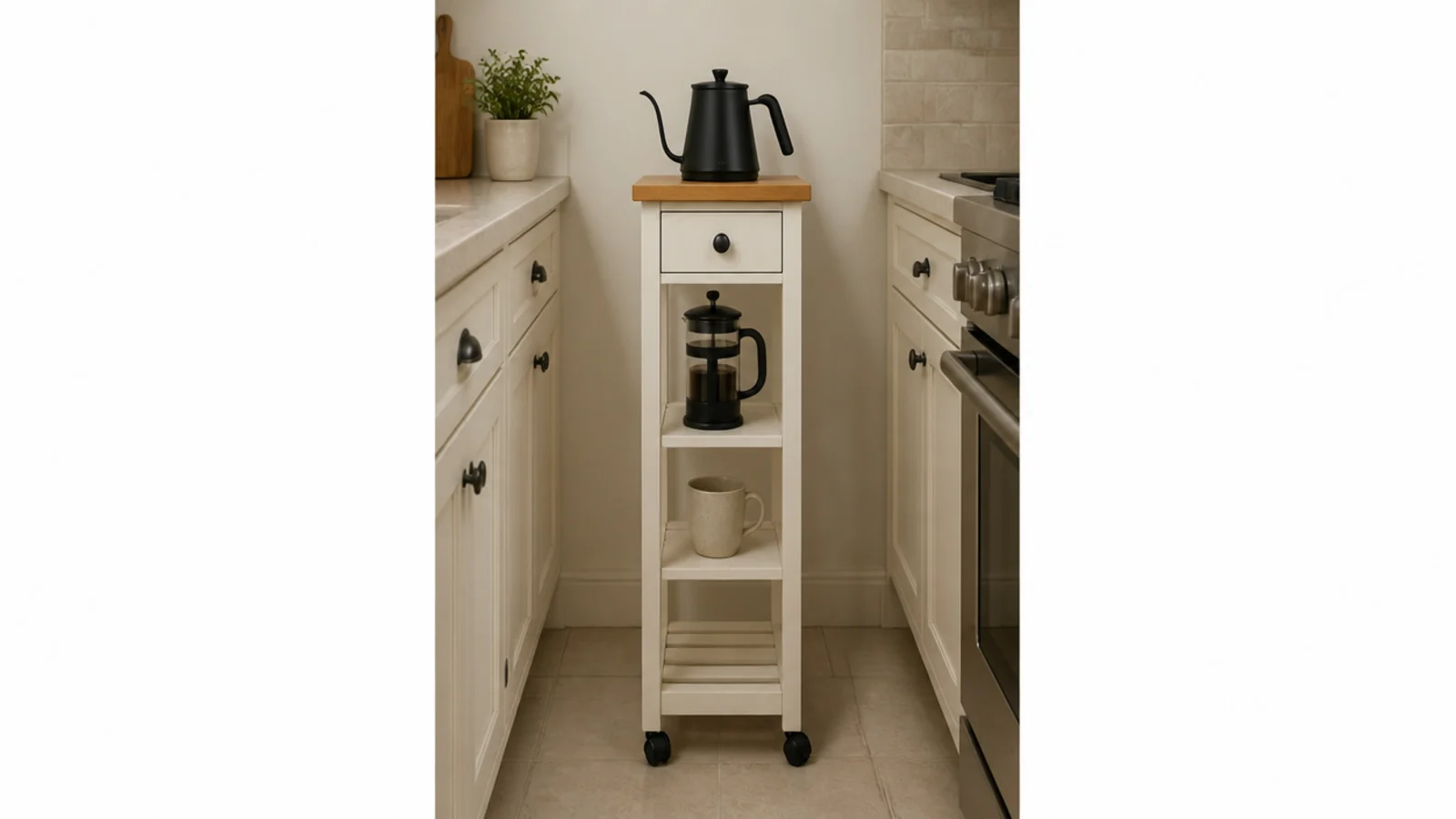
21. Weight low, always
Beans, backup mugs, spare filters and any tin go on the bottom tier. This is a stability rule before it is a styling one.
A cart with the mass up top will tip going over a door threshold, and there is a full machine on it. Free
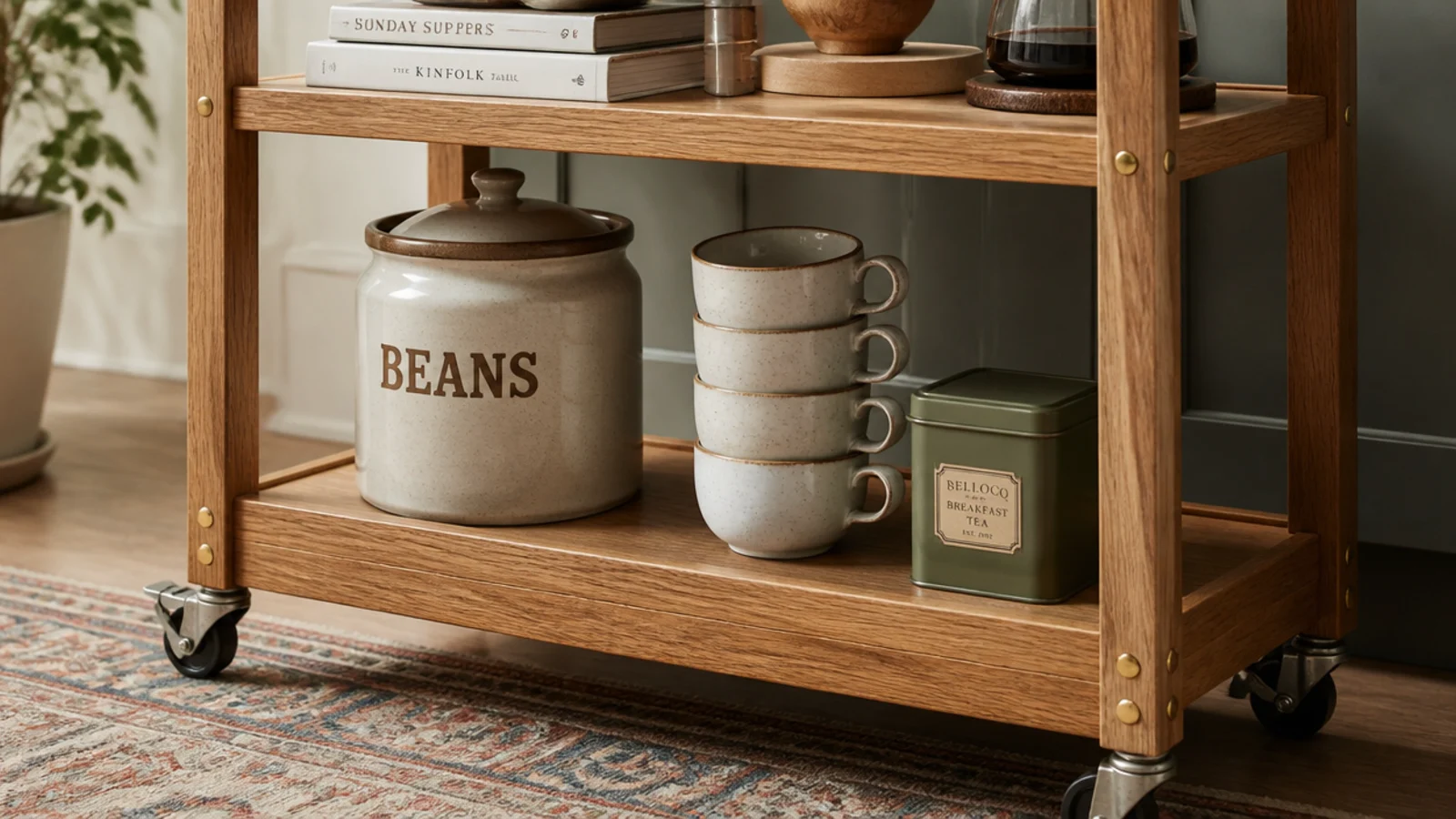
22. Non-slip liner on every shelf
A hand grinder walks across a bare shelf every time it runs, and a machine creeps forward with each pump cycle.
Thin cork or rubber liner cut to each shelf stops all of it, protects the wood from drips, and costs almost nothing. $
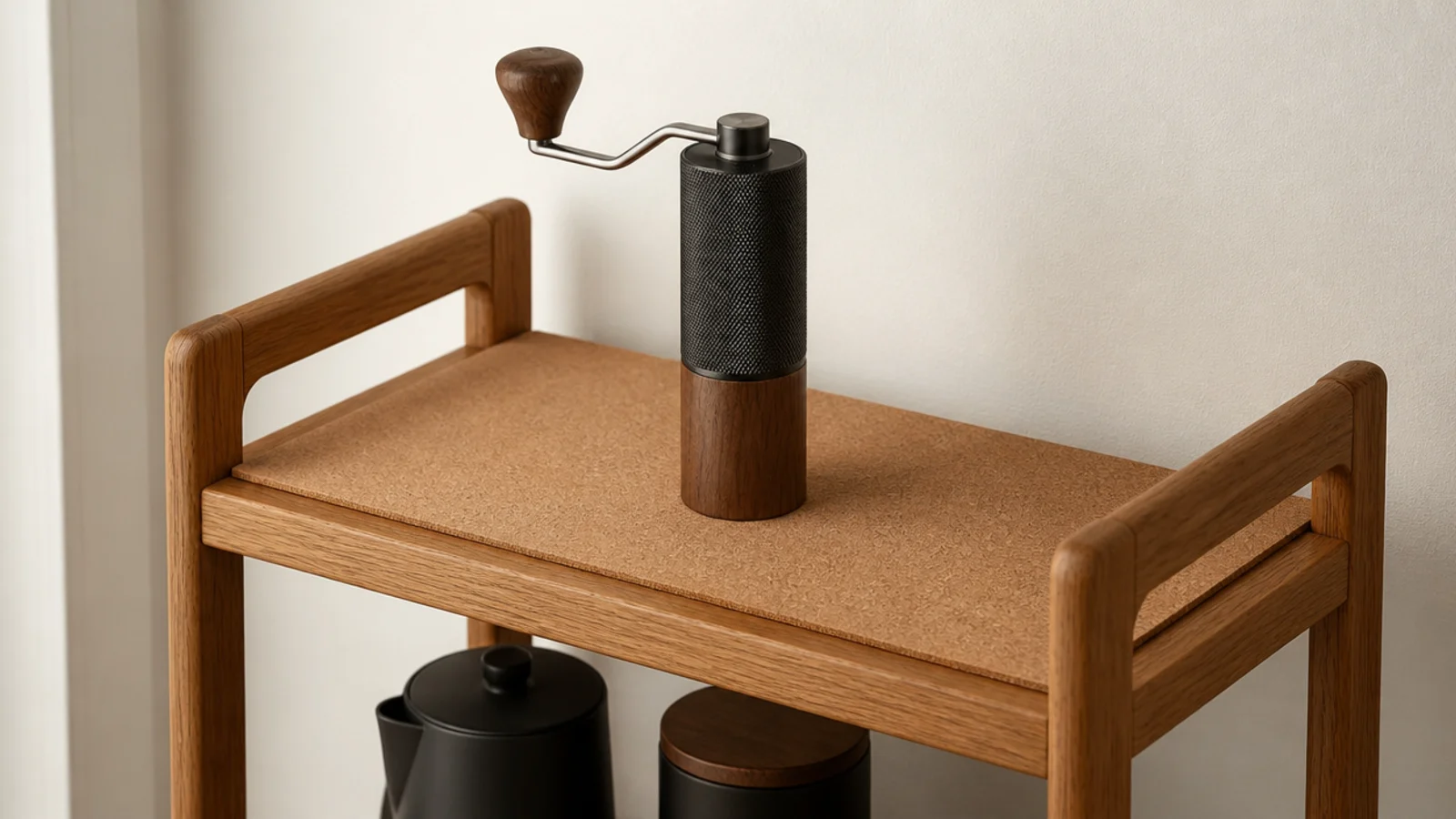
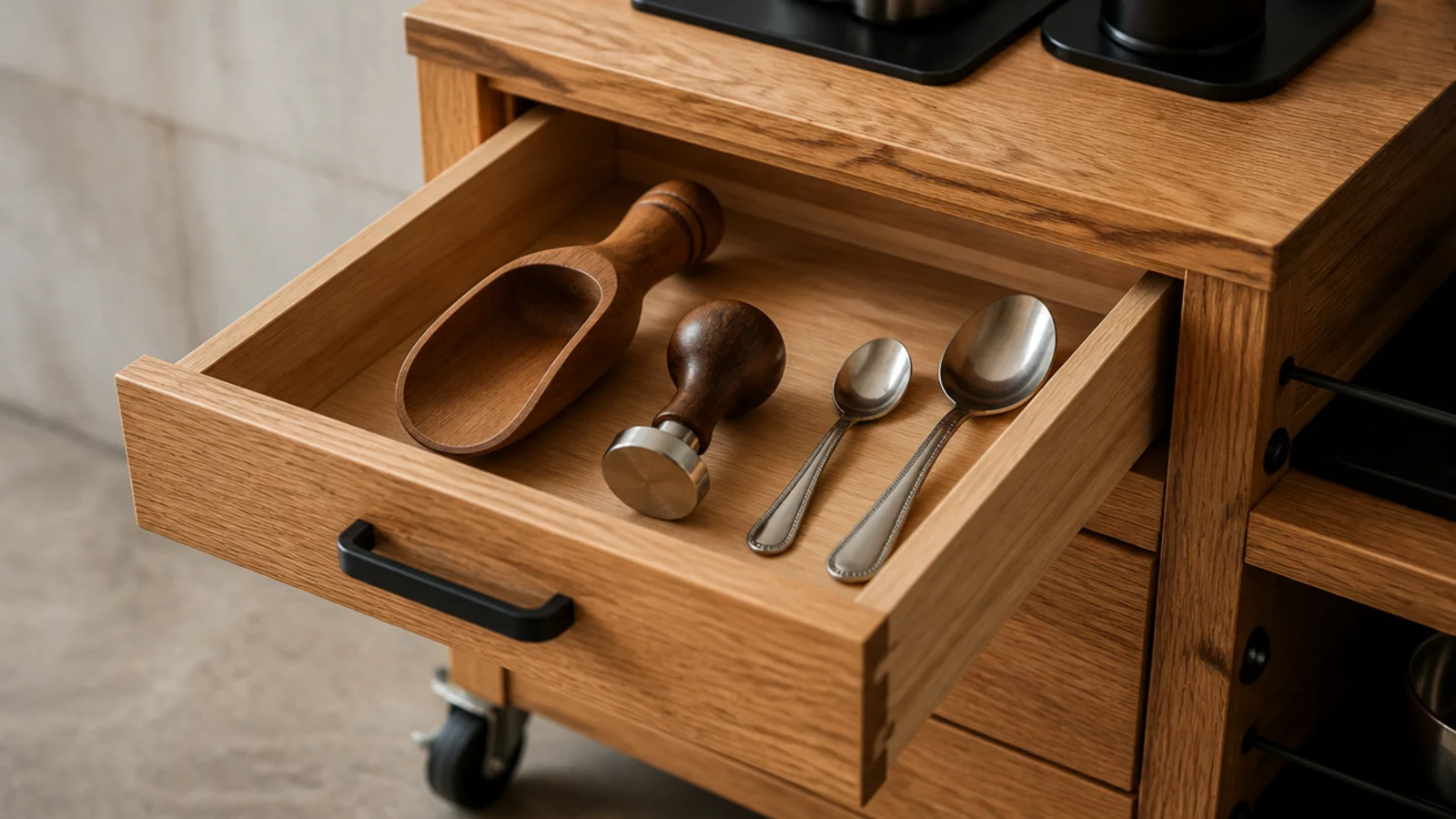
23. A drawer for the small tools
Scoops, spoons and a tamper in a jar look busy and fall over. In a shallow drawer they disappear.
If the cart has no drawer, a slim lidded box on the bottom tier does the same job. Small metal things on an open shelf are what make a cart look cluttered. $$
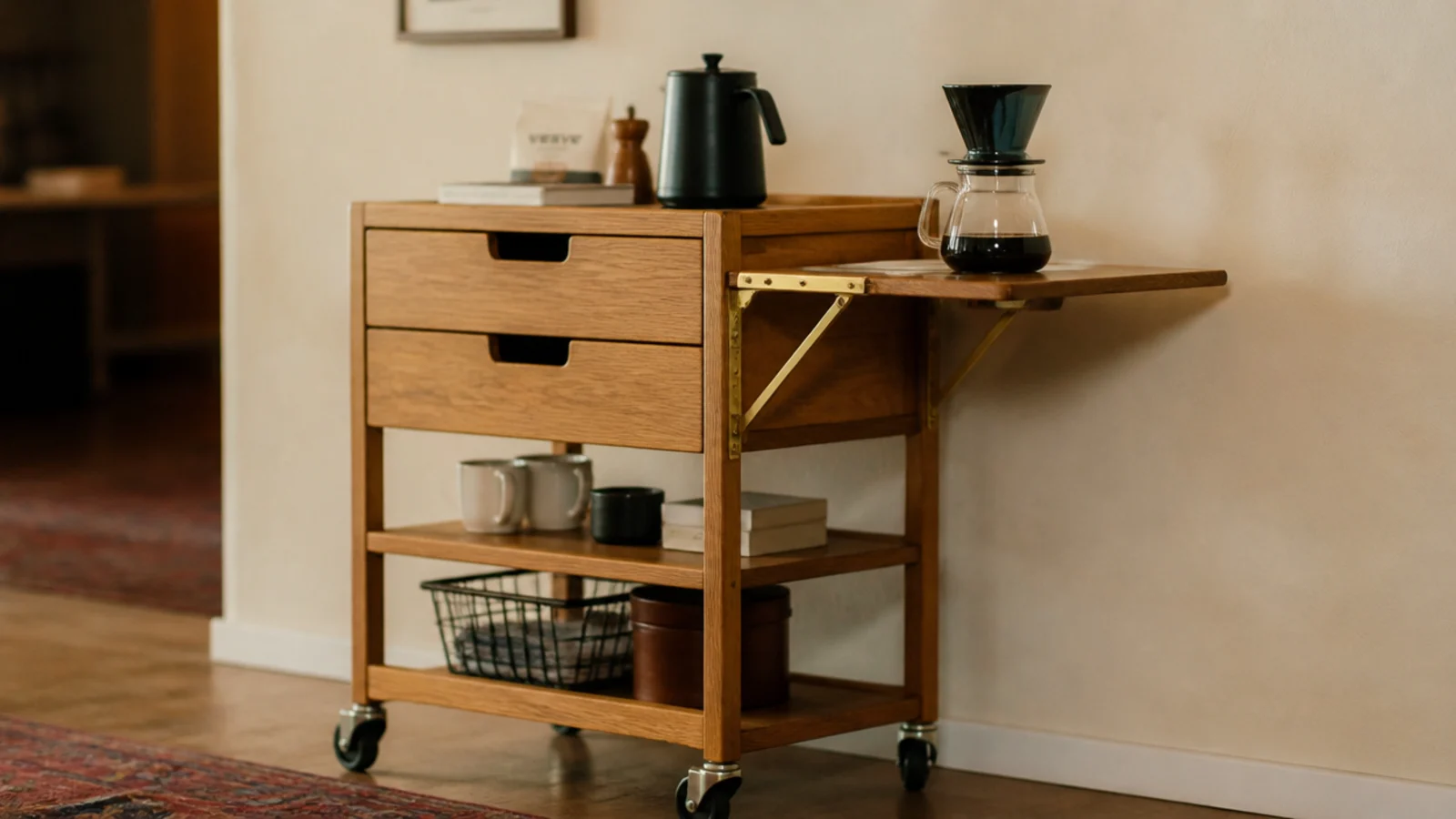
24. A fold-out side leaf for weekends
A hinged leaf gives you an extra 10 to 12 inches of surface for pour-over on a Saturday and folds flat the rest of the week.
Check the leaf is supported by a bracket rather than the hinge alone. A leaf that flexes under a full carafe is worse than no leaf. $$$
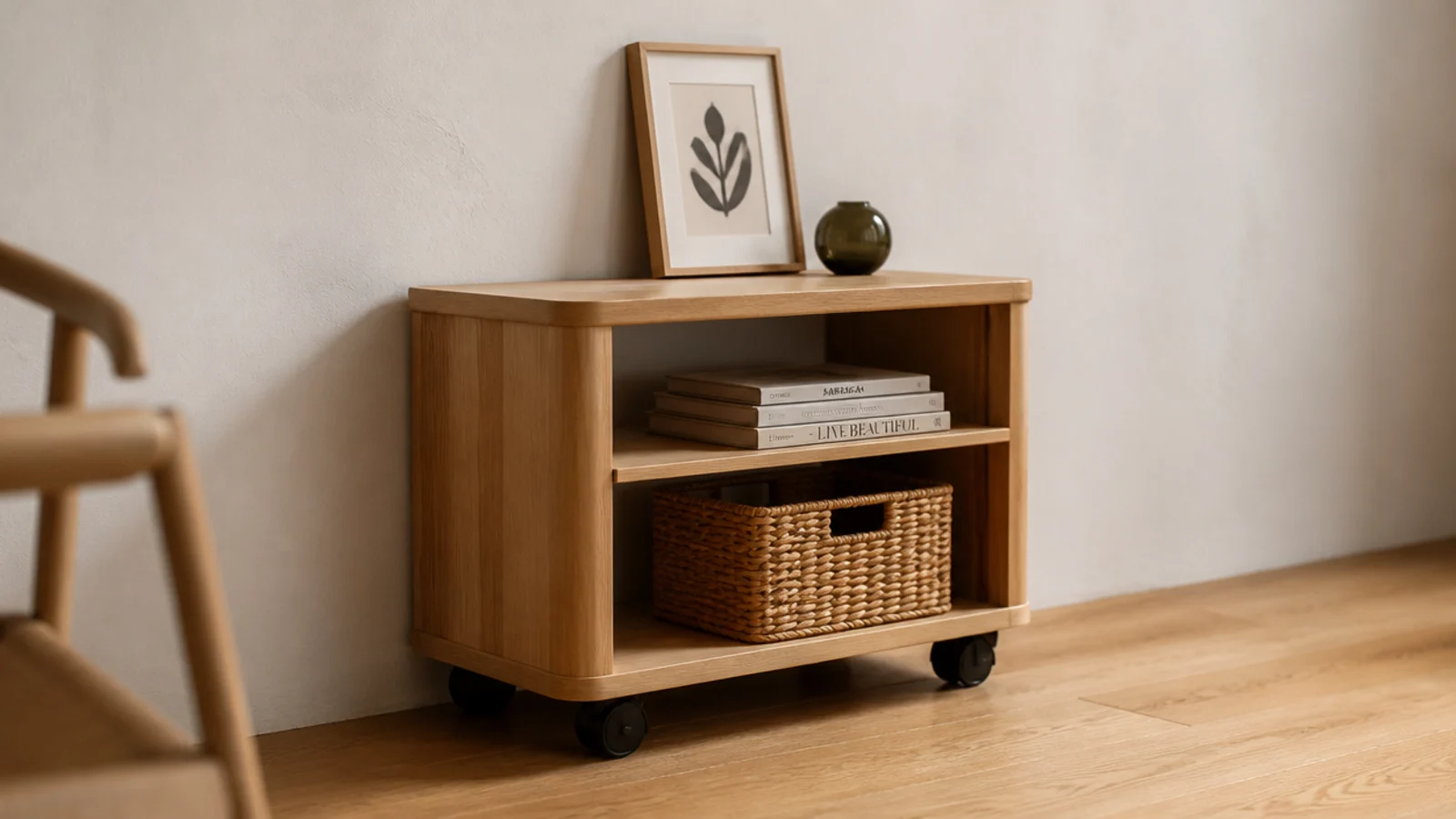
25. Against a wall, not floating in the room
A cart pushed flat to a wall reads as a considered piece. The same cart floating mid-room reads as something waiting to be put away.
It also hides the cable behind it and stops the cart being knocked from both sides. Free
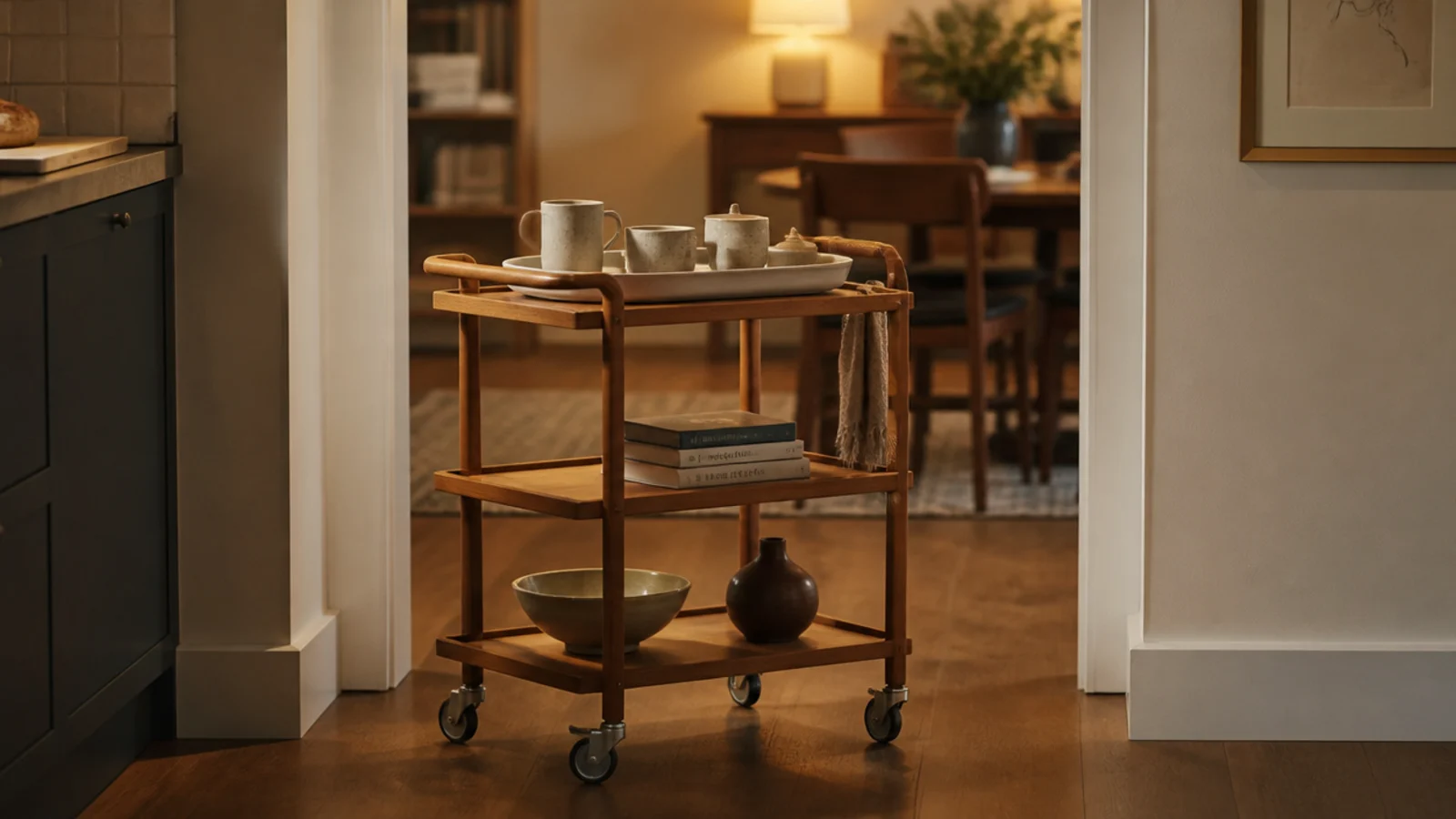
26. One cart, two rooms, on a schedule
Coffee in the kitchen through the morning, wheeled to the dining room by evening. The mobility is the whole point of a cart and most people never use it.
Keep the load light enough that moving it is genuinely a ten-second job, or it will stop happening by week two. —
27. A cart as the bedroom coffee station
A small cart beside the bed with a kettle, a press and two cups turns a slow morning into a good one.
No grinder — nobody wants a burr grinder at 6am beside a sleeping person. Pre-ground in an opaque airtight canister is the right compromise here. $$
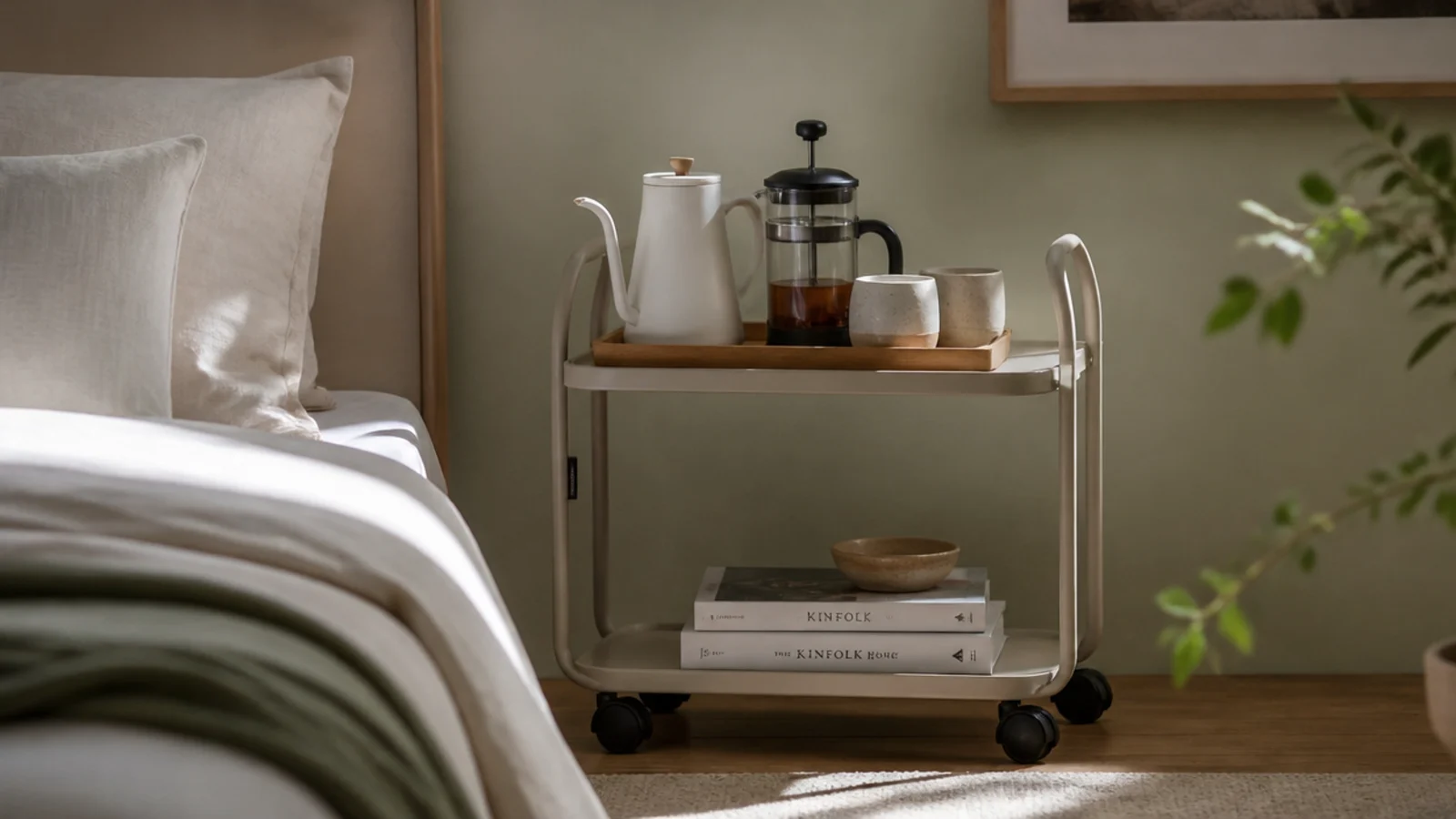
28. Leave the top third of the cart empty
The empty part of the top tier is the working surface. It is where the cup goes down, where the bag gets opened, where the spoon rests.
Fill it and you have a display rather than a station, and you will end up making coffee on the counter anyway. Free
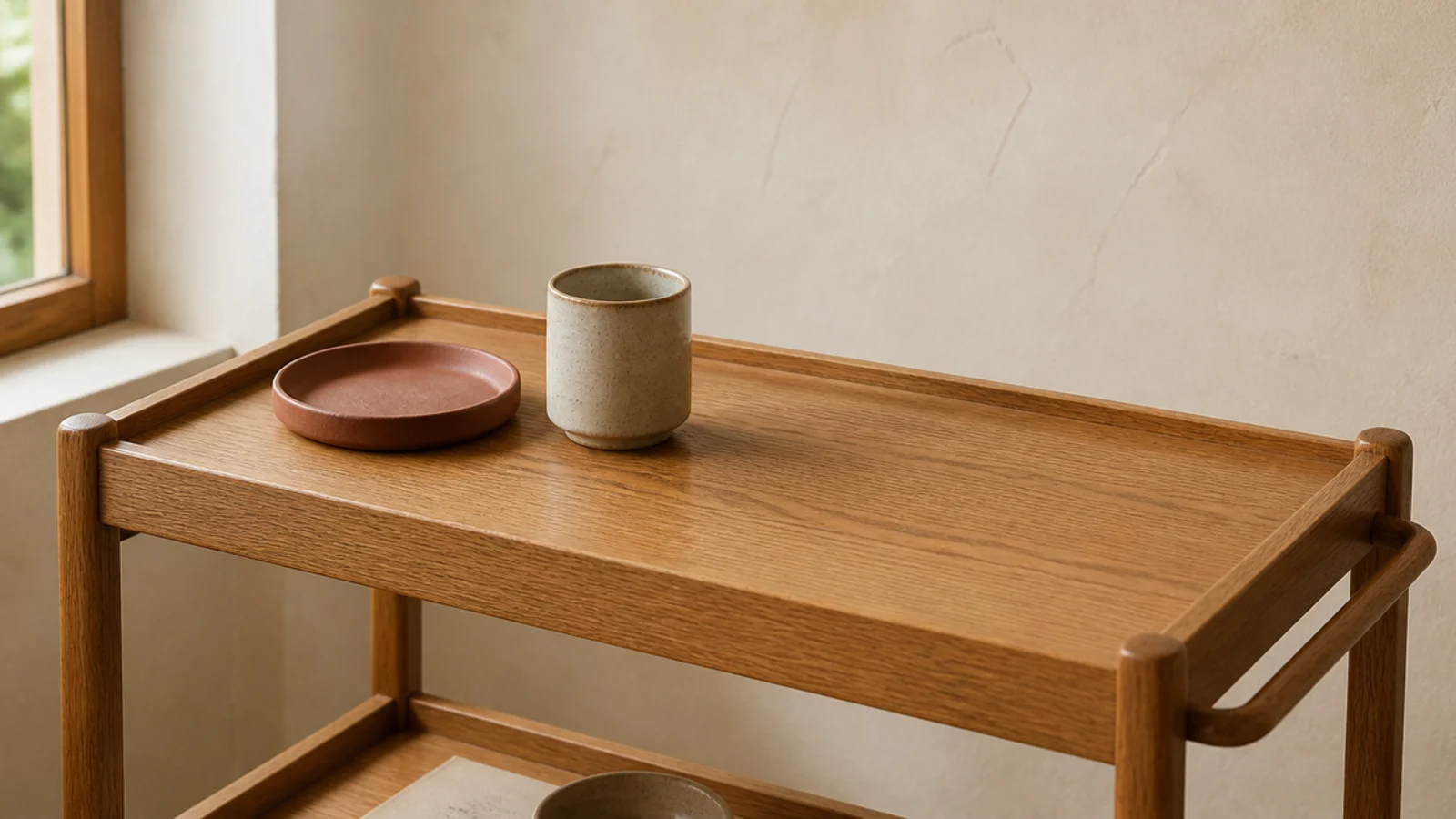
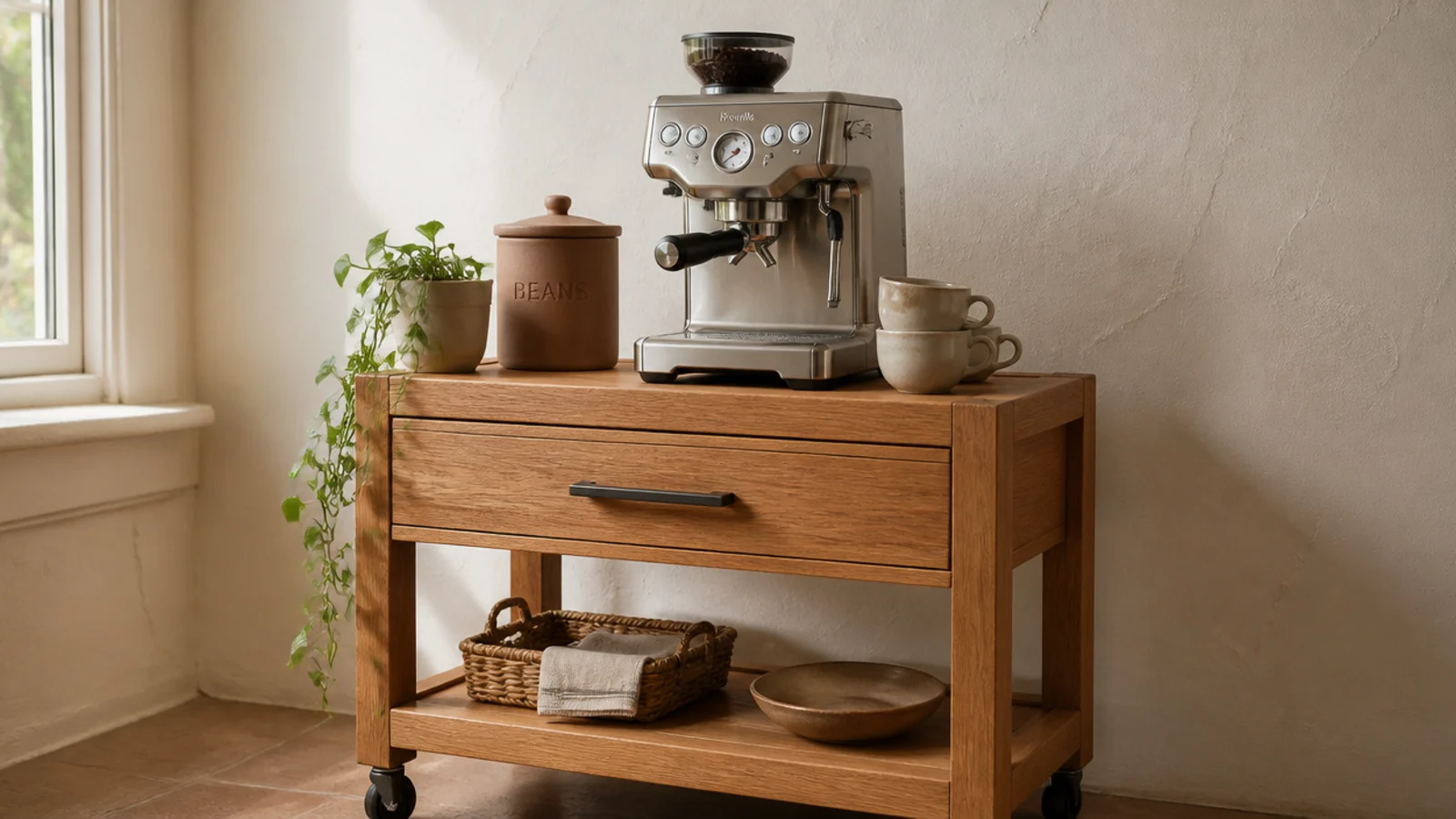
29. Style it with three objects, no more
Beyond the working kit, three things: something living, something in clay, something with height. A trailing plant, a bean canister, a stack of cups.
Any more and the cart stops reading as a working station. The equipment is already doing most of the visual work — see coffee corner decor for the renter-friendly version. $
30. Roll it out and wipe behind it weekly
This is the thing a cart does that a built-in never will, and it is the reason to choose one.
Pull it forward, wipe the floor and the skirting, wipe the shelves, roll it back. Two minutes a week, and the corner never develops the grimy halo that fixed coffee stations always do. Free
Mistakes to Skip
- Buying the cart before measuring the doorway. A cart that cannot leave the room has surrendered the only advantage it had over a built-in station.
- Free-spinning casters under a machine you lean on. It slides at exactly the wrong moment, and there is hot water involved.
- Running an extension cord across a walkway to reach a nicer corner. Choose the parking spot from the outlet instead — this one is a genuine hazard, not an aesthetic preference.
Frequently asked questions
What size cart works best for a coffee bar?
Thirty inches wide by sixteen deep is the sweet spot, because it matches the 30-inch reach zone your arm actually covers and still passes through a standard doorway. In a galley kitchen drop to fourteen or eighteen inches wide. Measure the narrowest doorway the cart has to pass through before you buy, not the space it will live in.
Which tier should the coffee machine sit on?
The middle tier, at roughly counter height. It puts the drip spout at a comfortable pouring level, keeps the weight low enough that the cart stays stable, and leaves the top tier free as a working surface. A machine on the top tier makes a loaded cart genuinely tippy and puts the steam right under your face.
Do coffee carts need locking wheels?
Yes, and it is the detail most people skip. A cart on free-spinning casters slides away exactly when you lean on it to tamp or pour. Buy one with locks on at least two wheels, or swap all four casters for locking ones — replacements cost about $15 a set and take fifteen minutes with a screwdriver.
How do I handle the cable on a rolling cart?
Coil the excess and clip it to the cart frame so nothing trails, and park the cart within reach of its own outlet. Never run an extension cord across a walkway or near a water source. If the only outlet is awkward, treat the cart as stationary and choose a fixed spot rather than pretending it will move.
Can a bar cart really replace a built-in coffee station?
For one or two people, comfortably. A three-tier cart gives you about as much usable surface and storage as three feet of counter, and it moves out to be cleaned behind, which no built-in does. Where it falls short is heavy espresso equipment, which wants a solid immovable surface and a stable outlet.
What goes on each tier of a coffee cart?
Top tier: the tray, the cups in use, and nothing else. Middle tier: the machine and the grinder. Bottom tier: beans, filters, backup mugs and anything heavy. Weight low keeps the cart stable, and reserving the top for working surface is what stops a cart silently turning into three shelves of clutter.
Measure the doorway, check the casters lock, and sort the cable before you put a single object on it — those three take ten minutes and decide whether the cart still gets used in six months. For the fixed-station version see coffee corner ideas, for tight kitchens see small coffee corner, and if the wall above the cart needs work, kitchen shelf ideas covers what goes up there. Save the pin before you buy a cart that will not fit.
Want more like this? Browse all 15 coffee corner ideas guides — they all use the same measurements and budget tiers.

Pin it for later
Save this to your Coffee Corner Ideas board
Pin it now so it is waiting for you when the tape measure comes out — and so the next person hunting for this idea can find it too.
Save this pinKeep going
More ideas worth saving while you have the tape measure out.