Aesthetic Candle Decor · Listicle
20 Genius Aesthetic Candle Ideas for a Cozy Home

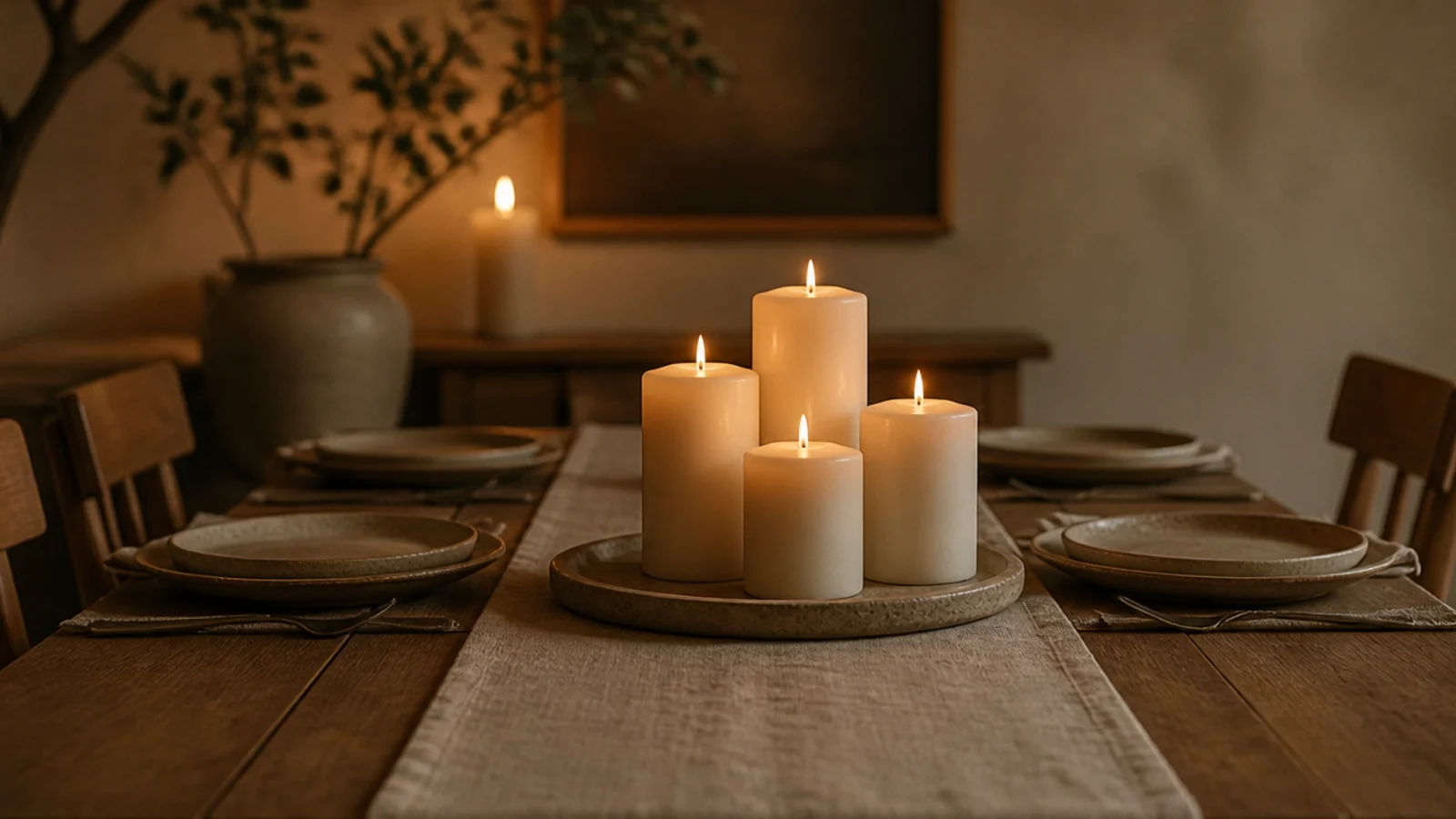
Candle centerpiece ideas fail for one boring reason: height. A beautiful arrangement that lands between twelve and eighteen inches sits exactly in the sight line between two seated faces, and everyone spends dinner leaning around it. Fix that number first and the rest is easy. Twenty setups follow, for round tables, long tables, coffee tables and outdoors.
In this guide22 sections — tap to openHide
- 1.How candle centerpiece ideas work on a real table
- 2.Start with the shape of the table
- 3.The runner and three formula
- 4.Unscented only at the table
- 5.Keep the whole group under twelve inches
- 6.Taper pairs down a long table
- 7.A low bowl of pillars for a round table
- 8.A slate or marble board as the base
- 9.Tealights in glass down the center line
- 10.Brass candlesticks at mixed heights
- 11.Greenery placed, never draped
- 12.A hurricane trio for a draughty dining room
- 13.Fruit and foraged elements at a distance
- 14.One statement candle for a two-seater
- 15.The coffee table version, under five inches
- 16.Buffet and console centerpieces
- 17.Outdoor table lanterns that survive wind
- 18.Napkins, menus and the paper problem
- 19.A flameless centerpiece for long dinners
- 20.Seasonal color swaps in the same holders
- 21.Snuff before you clear the table
- 22.Mistakes to Skip
How candle centerpiece ideas work on a real table
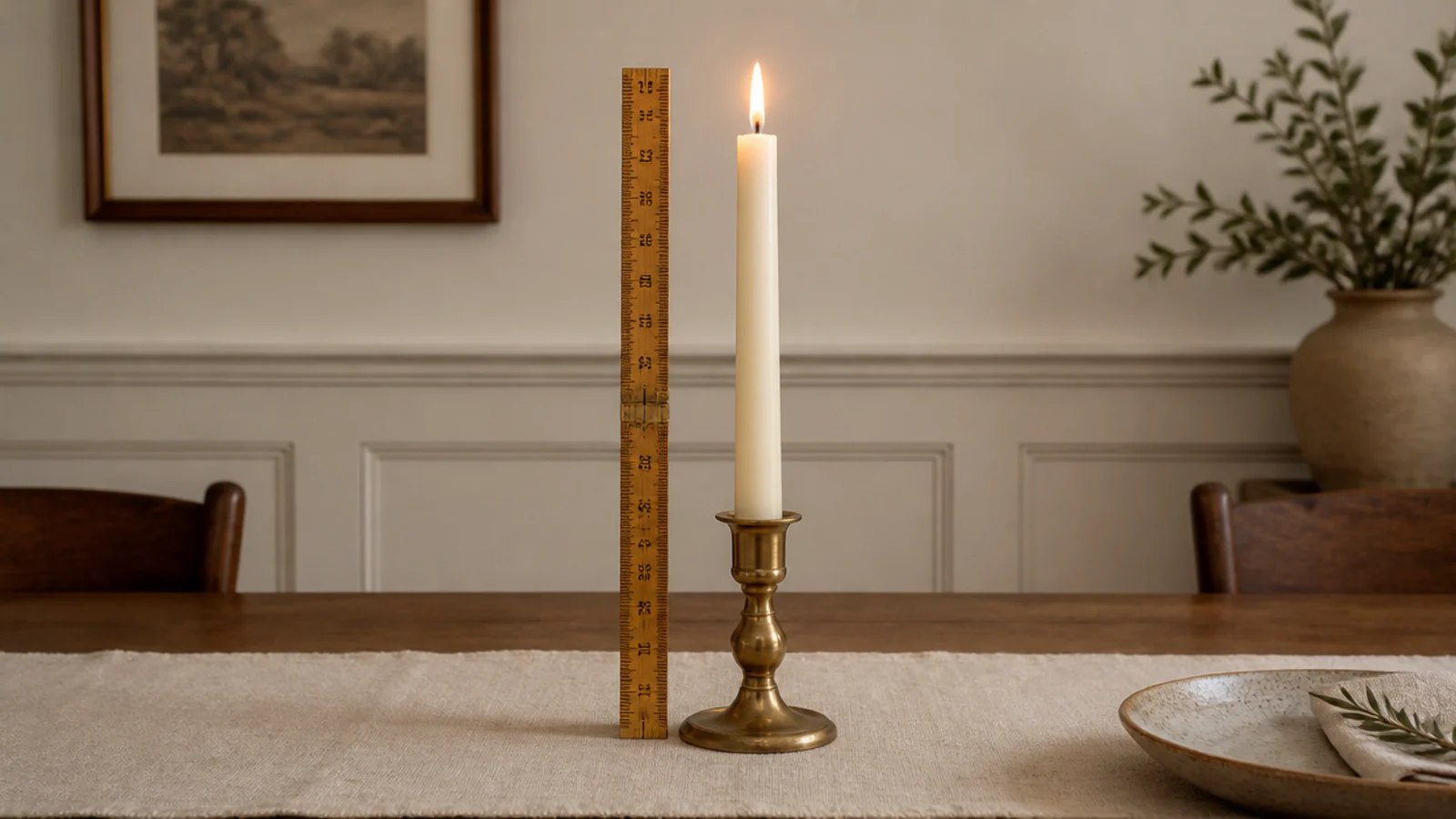
Measure from the tabletop to the top of the lit wick, not to the top of the holder. Under twelve inches and people see over it. Above eighteen and people see under it. Everything between is the zone that ruins conversations.
Second rule: unscented, always. A fragrance burning eighteen inches from a plate argues with the food, and your guests will notice without knowing why. Keep the scented jar in the hallway or on a console, lit before people arrive and snuffed once you sit down.
Third: the surface. Stone, ceramic, glass, metal or a lipped tray made from one of them. Linen runners and woven mats are fuel and they slide when somebody reaches across a table. A tray also catches taper drips and lets you lift the whole centerpiece away when you serve.
Then the clearances. Twelve inches between every flame and any greenery, dried stems, paper napkin, menu card or basket. Greenery gets placed beside the candles, never draped between them, and a garland running through a line of flames is the single most common table mistake I see.
Budget tiers: tealights, thrifted brass and a slate board you already own run $8 to $25 ($). Unscented pillars, a stone tray and glass hurricanes land at $30 to $70 ($$). Weighted outdoor lanterns and real wax flameless sets run $70 and up ($$$).
1. Start with the shape of the table
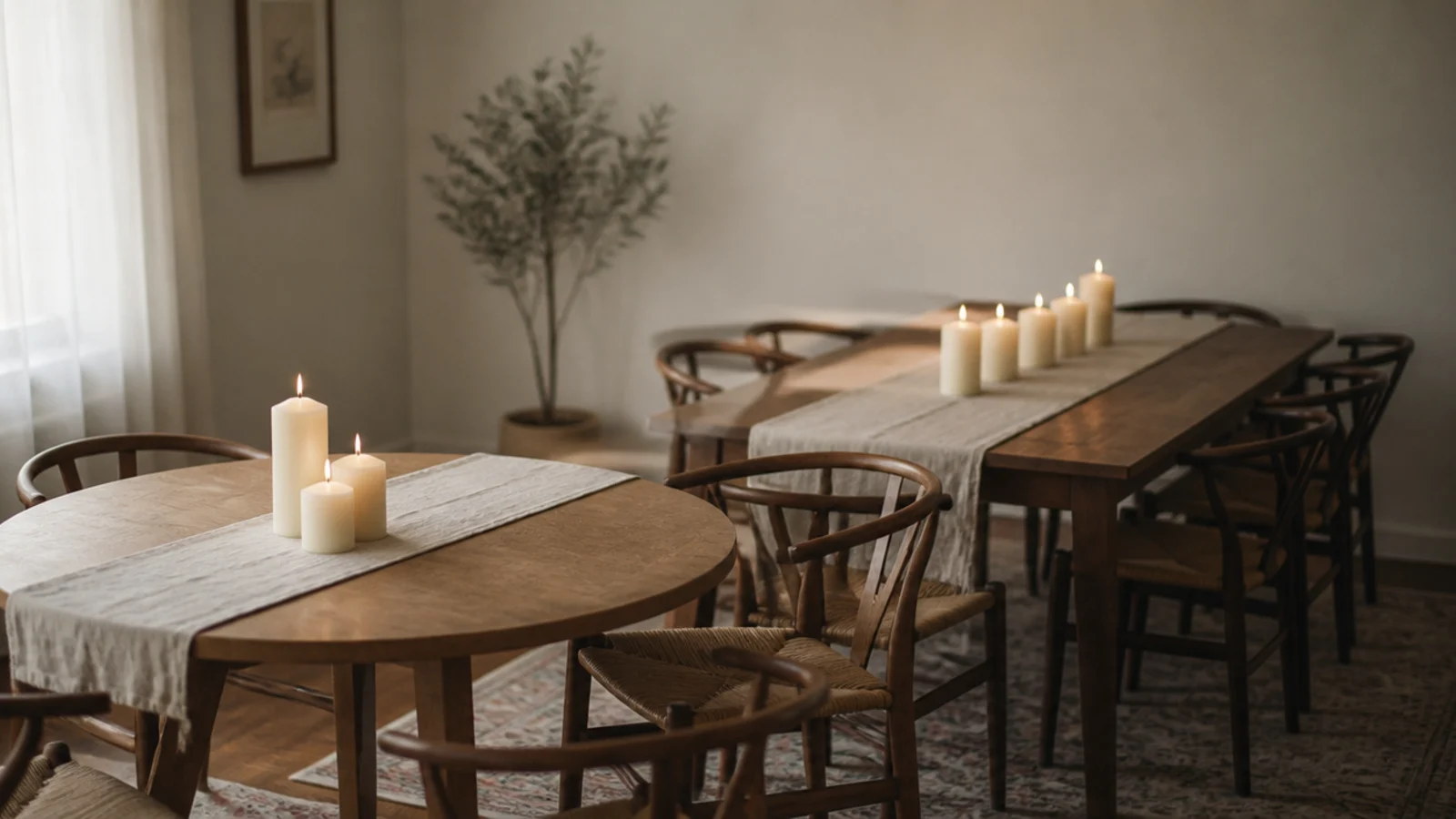
A round table wants a round arrangement: one tight cluster in the middle, three or five candles, nothing longer than a third of the diameter.
A rectangular table wants a line: candles spaced evenly down the center, running about two thirds of the length. Fill the whole table and there is nowhere to put a serving dish, which is how centerpieces end up on the floor by the main course.
2. The runner and three formula
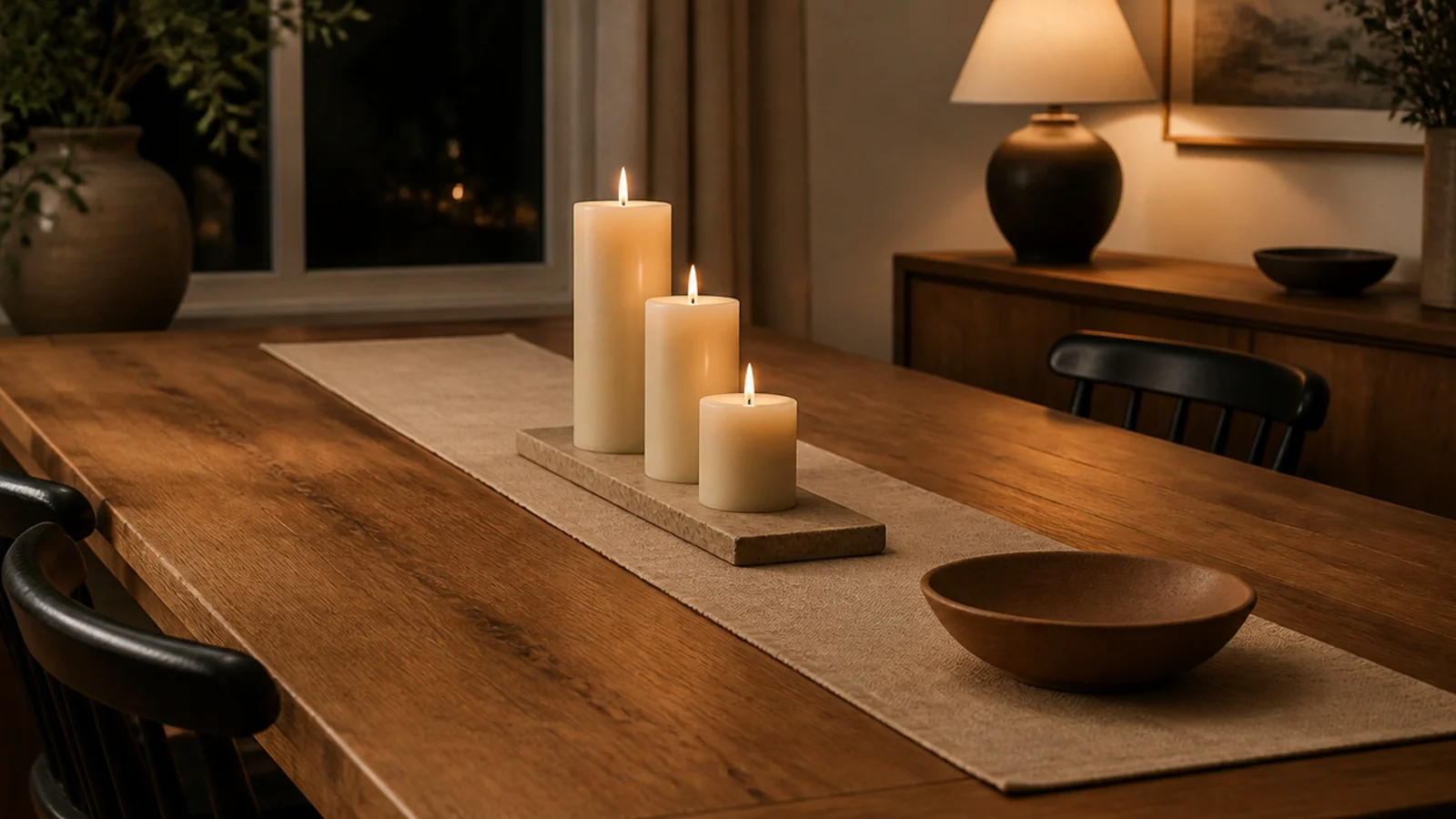
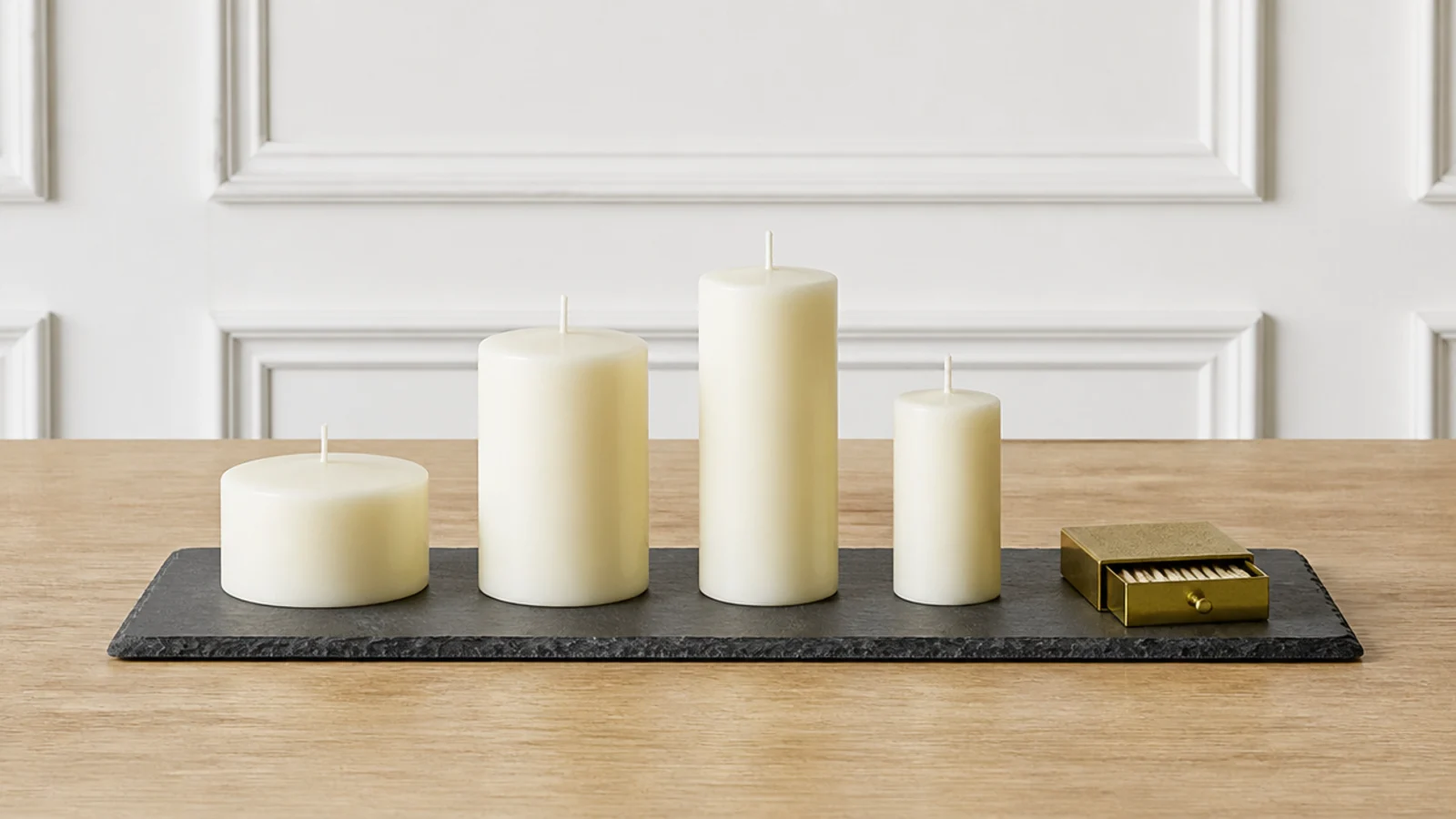
The setup I use most: a narrow linen runner, a slim stone board on top of it, three unscented pillars at six, four and three inches, and one shallow clay bowl at the end.
The board is what makes it safe — wax and heat never touch the linen. Total cost around $30, and it works for a weeknight or a dinner party with no changes.
3. Unscented only at the table
Plain wax at the table, every time. Unscented pillars also cost less, which is a rare piece of good news.
If you want fragrance in the room, put one scented jar on a console eight feet away and light it an hour before guests arrive so the scent has settled rather than sitting sharp in the air. Snuff it as you sit down.
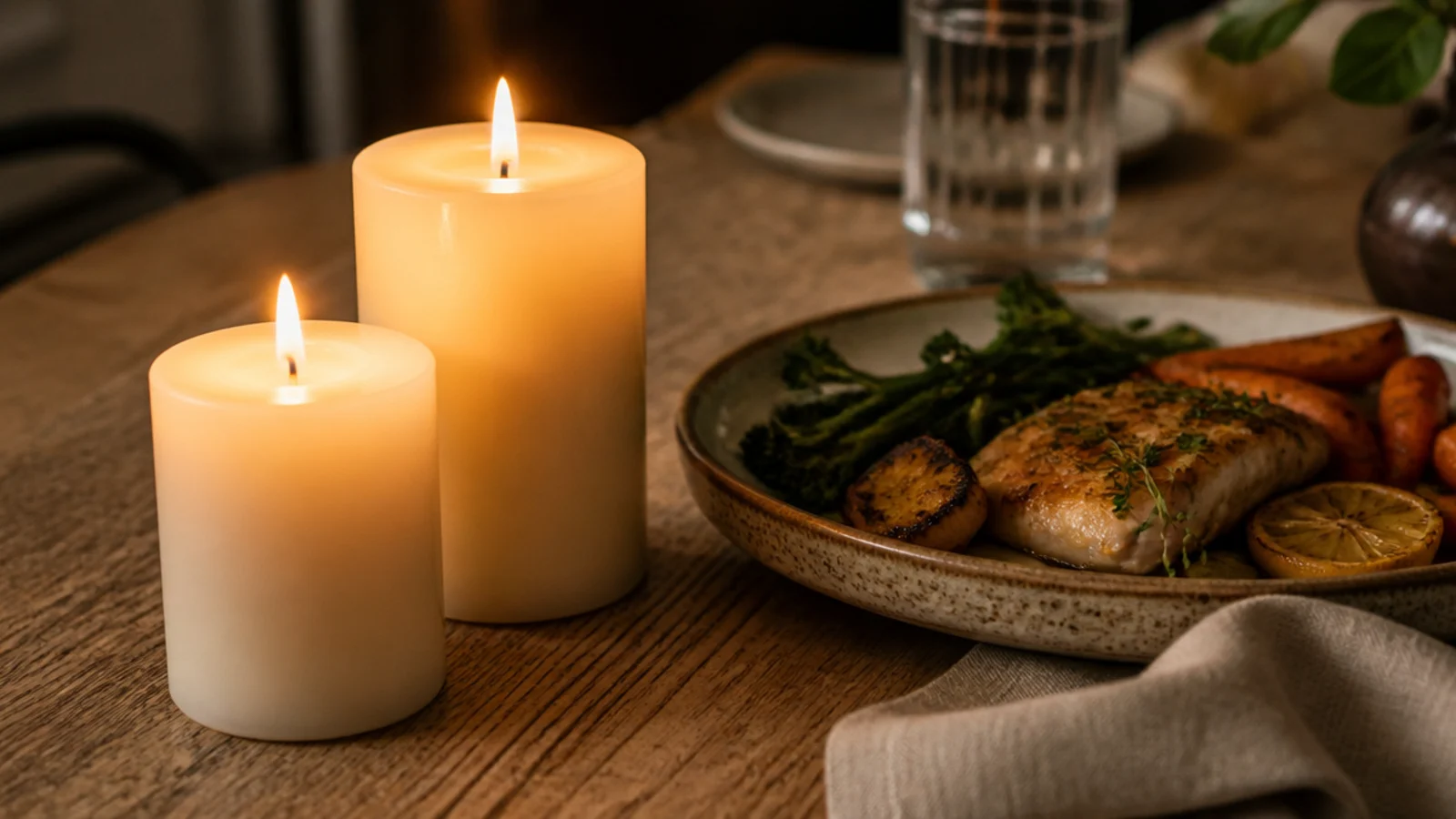
4. Keep the whole group under twelve inches
Before guests arrive, sit down in a chair and look across. That single check catches every sight-line problem in ten seconds.
Short pillars, votives and low bowls all stay comfortably under. Tapers are the risk: a 10-inch taper in a 4-inch brass holder is already 14 inches before you light it, which is exactly the wrong zone.
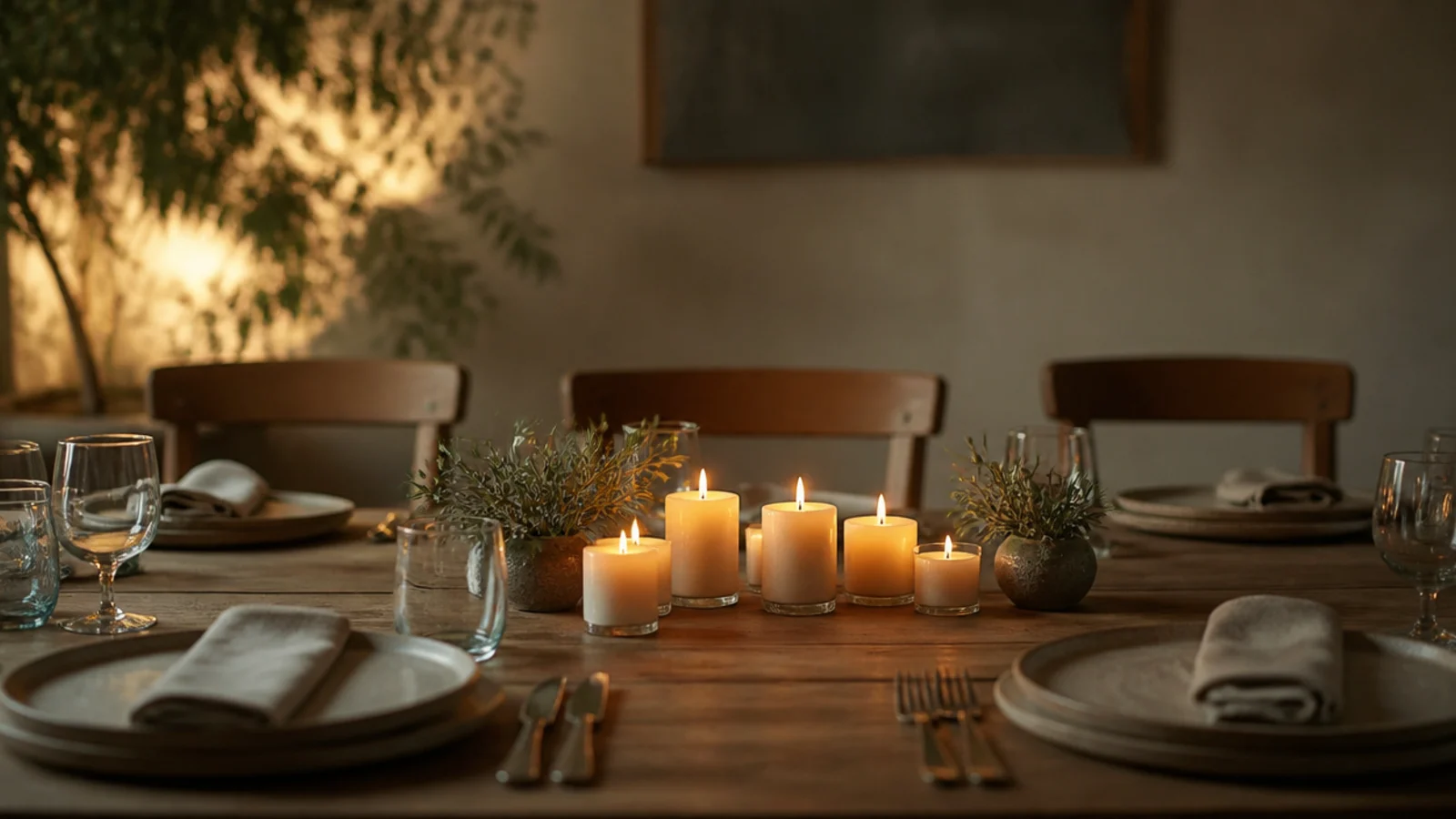
5. Taper pairs down a long table
For a table seating six or more, run pairs of tapers about every 30 inches down the center line, all at the same height.
Use heavy brass or stoneware holders — light ones tip when someone reaches for the salt. If a taper starts leaning as it burns, it is sitting in a draught, and a leaning taper drips hot wax sideways onto the table.
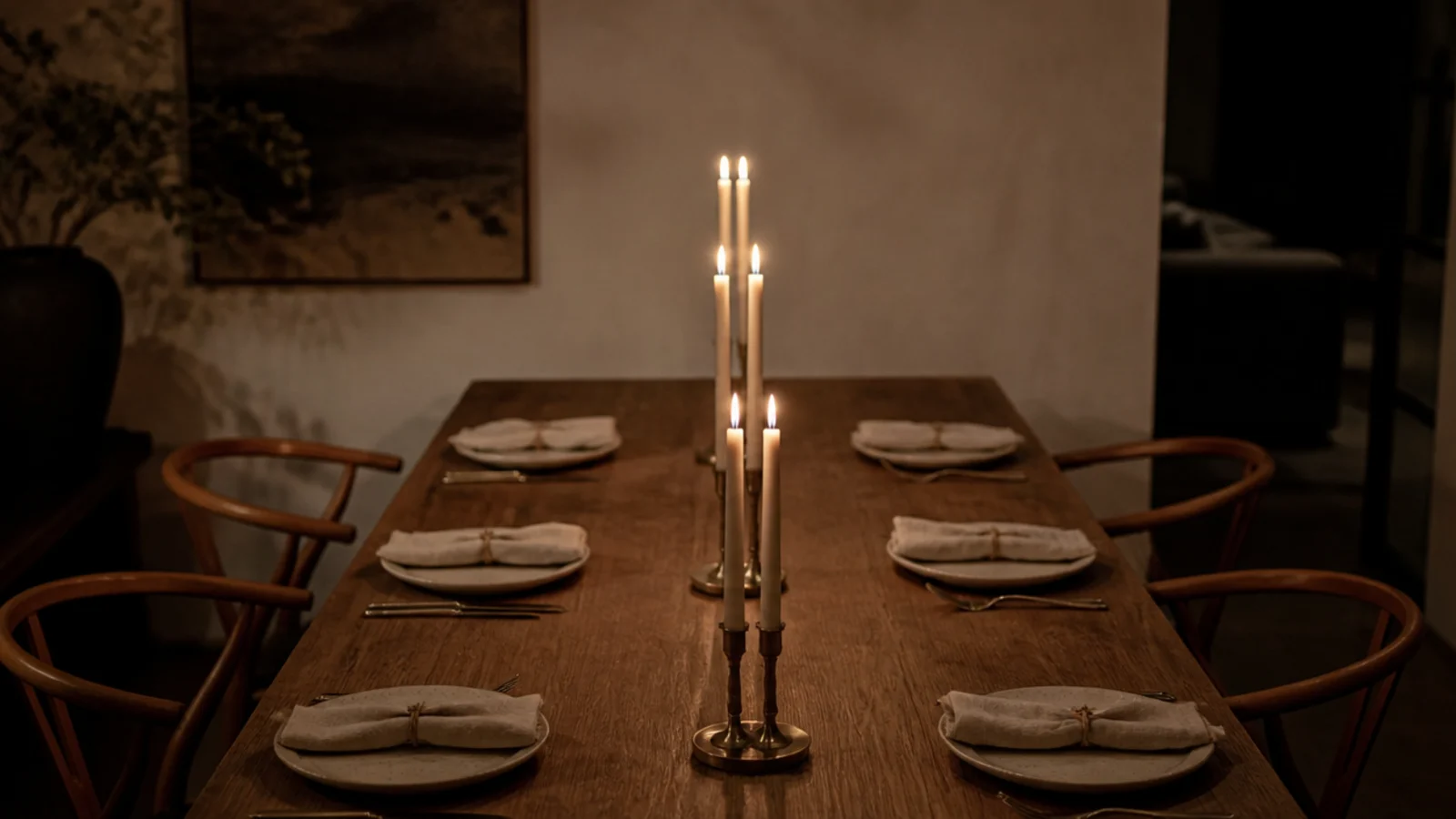
6. A low bowl of pillars for a round table
A wide shallow stoneware bowl holding three short pillars, with flat river stones packed between them, is the round-table answer.
The bowl contains everything, sits under six inches, and reads as one object from every seat. Stones or sand between the candles stop them sliding together, which matters because two flames set close soften each other and lean.
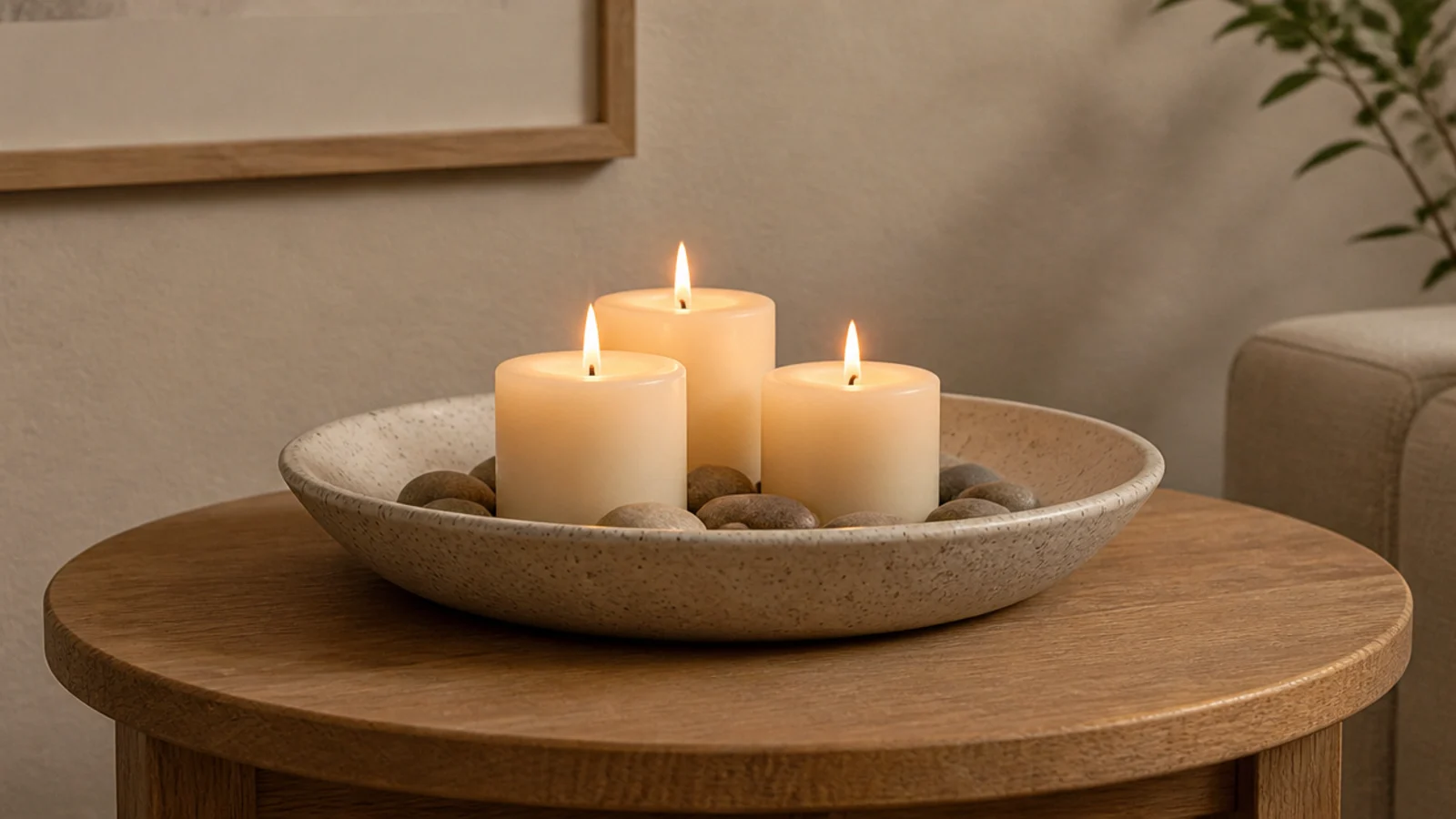
7. A slate or marble board as the base
The cheese board in your cupboard is already a heatproof tray. A dark slate board under a line of pillars looks deliberate and costs nothing extra.
Stick felt pads underneath so it does not scratch the table. Tile shops also sell stone offcuts at $2 to $6 if you want a longer one cut to your table width.
8. Tealights in glass down the center line
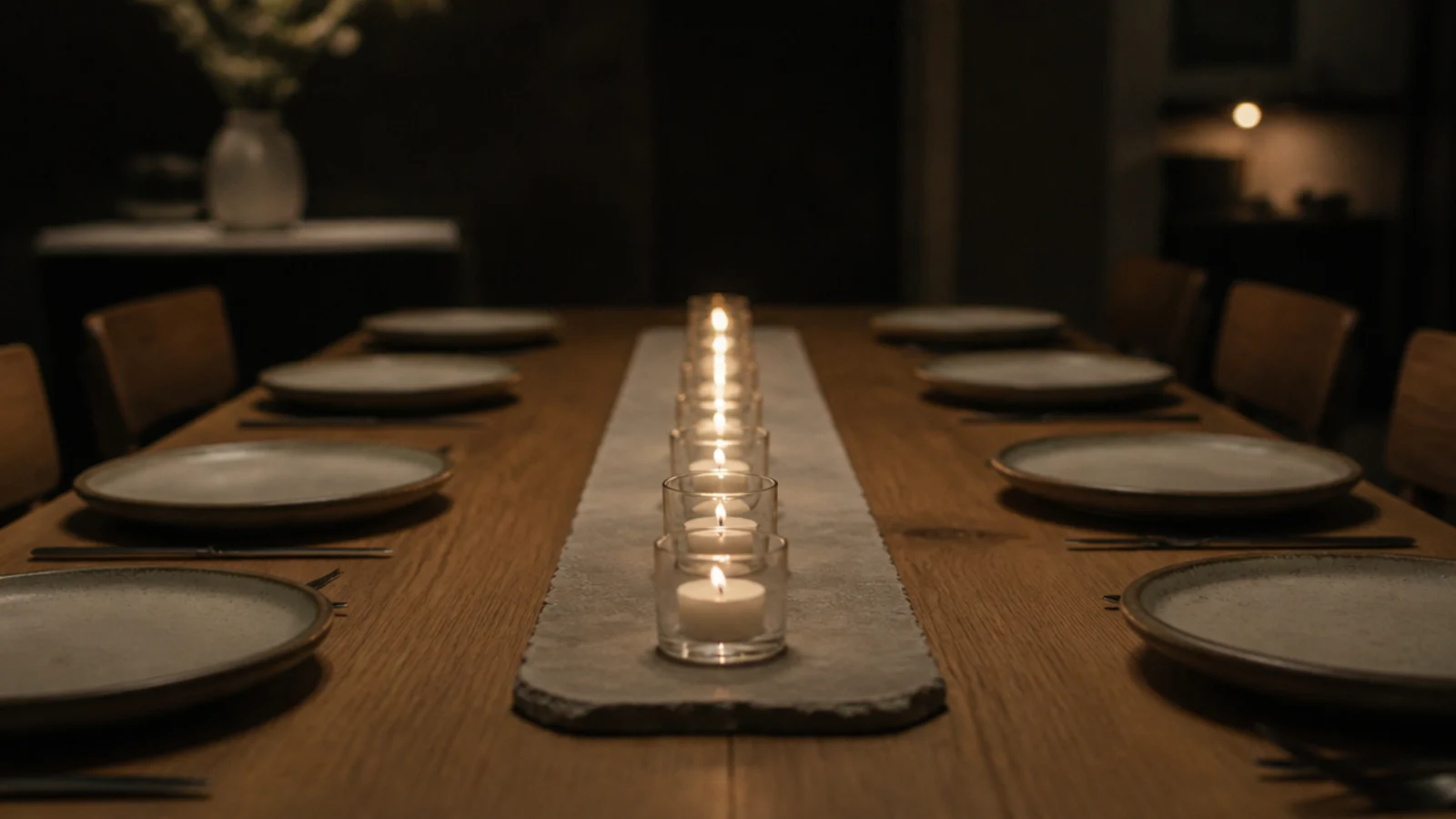
A dozen tealights costs about $5, and small glass holders cost a dollar each. Eight of them running down a table throw more light than one expensive centerpiece.
Keep an inch or two between the glasses so heat does not build, and set them on a stone runner rather than straight on wood — tealight cups get hot enough to mark a finish.
9. Brass candlesticks at mixed heights
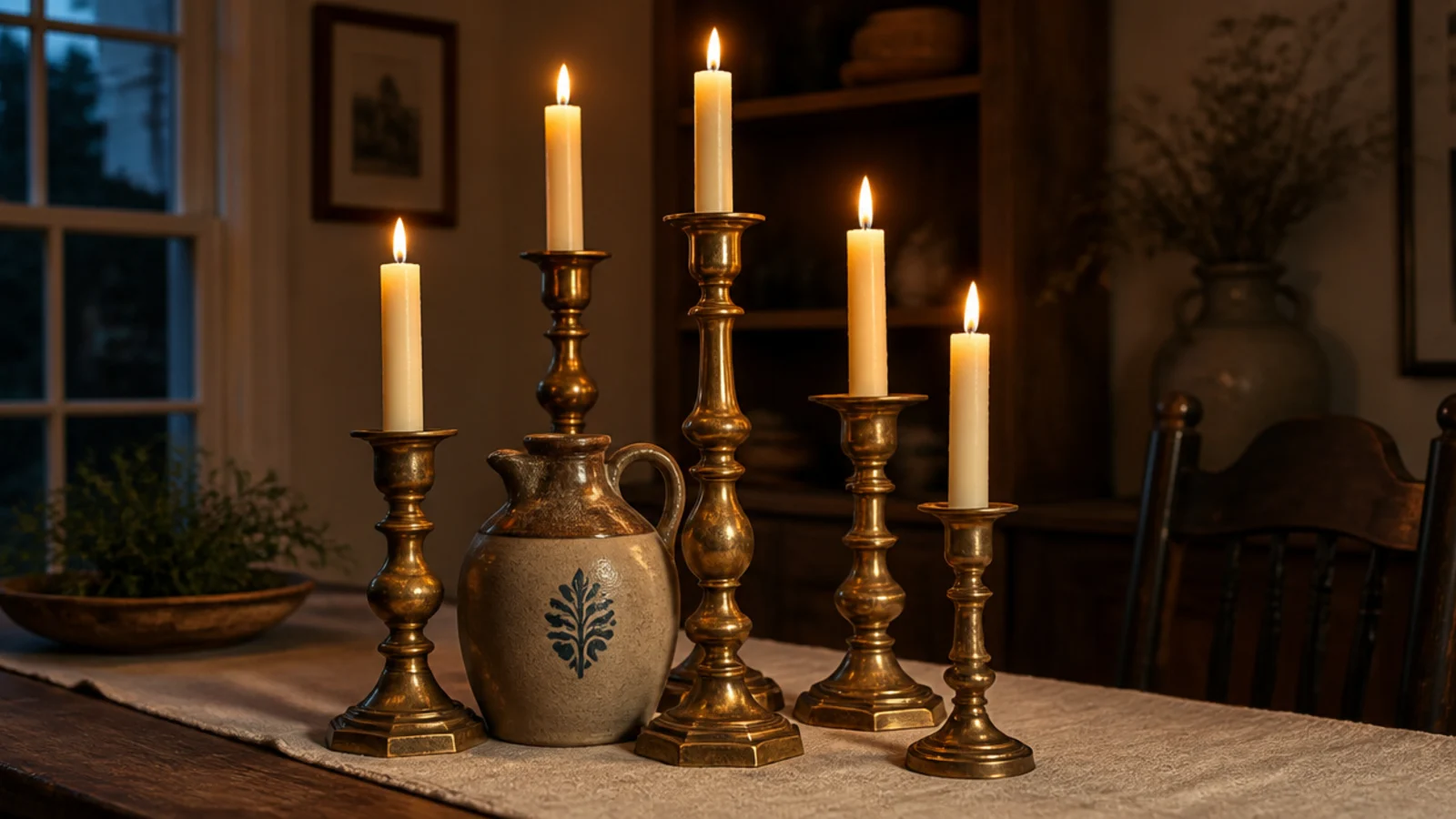
Five mismatched thrifted brass candlesticks, at $3 to $6 each, clustered rather than lined up. Different heights, one metal, one wax color.
Add a heavy stoneware jug at the base as an anchor so the group does not look spindly. This is the cheapest centerpiece here that reads as genuinely expensive. More on the sizing in pillar candle decor.
10. Greenery placed, never draped
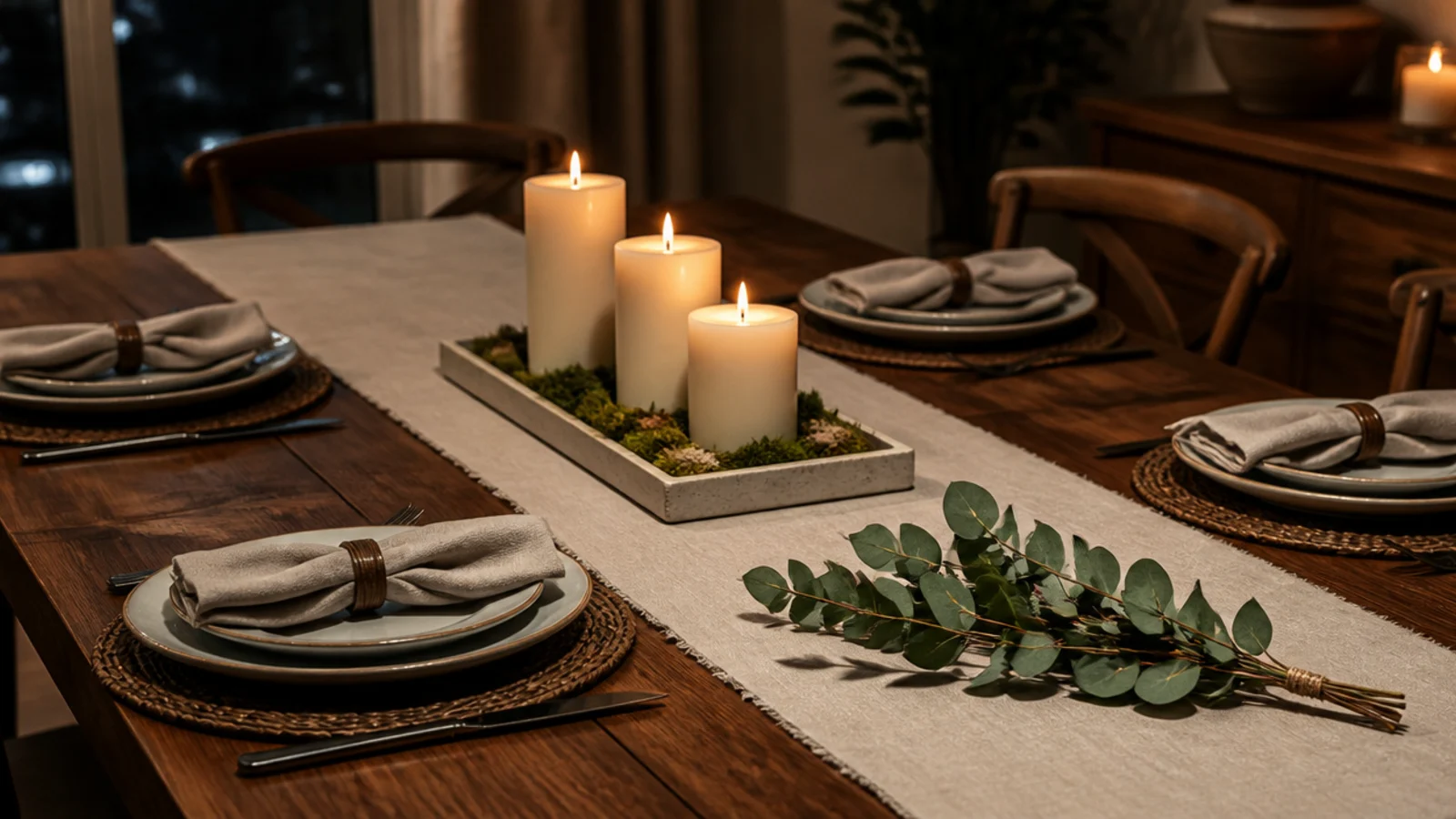
Fresh eucalyptus, olive branches and dried stems all belong on a table with candles, and all of them belong at least twelve inches from any flame.
Lay a bundle at one end of the runner rather than weaving it between candles. Dried botanicals catch faster than fresh ones. If you want the draped garland look, use flameless pillars nestled into it instead.
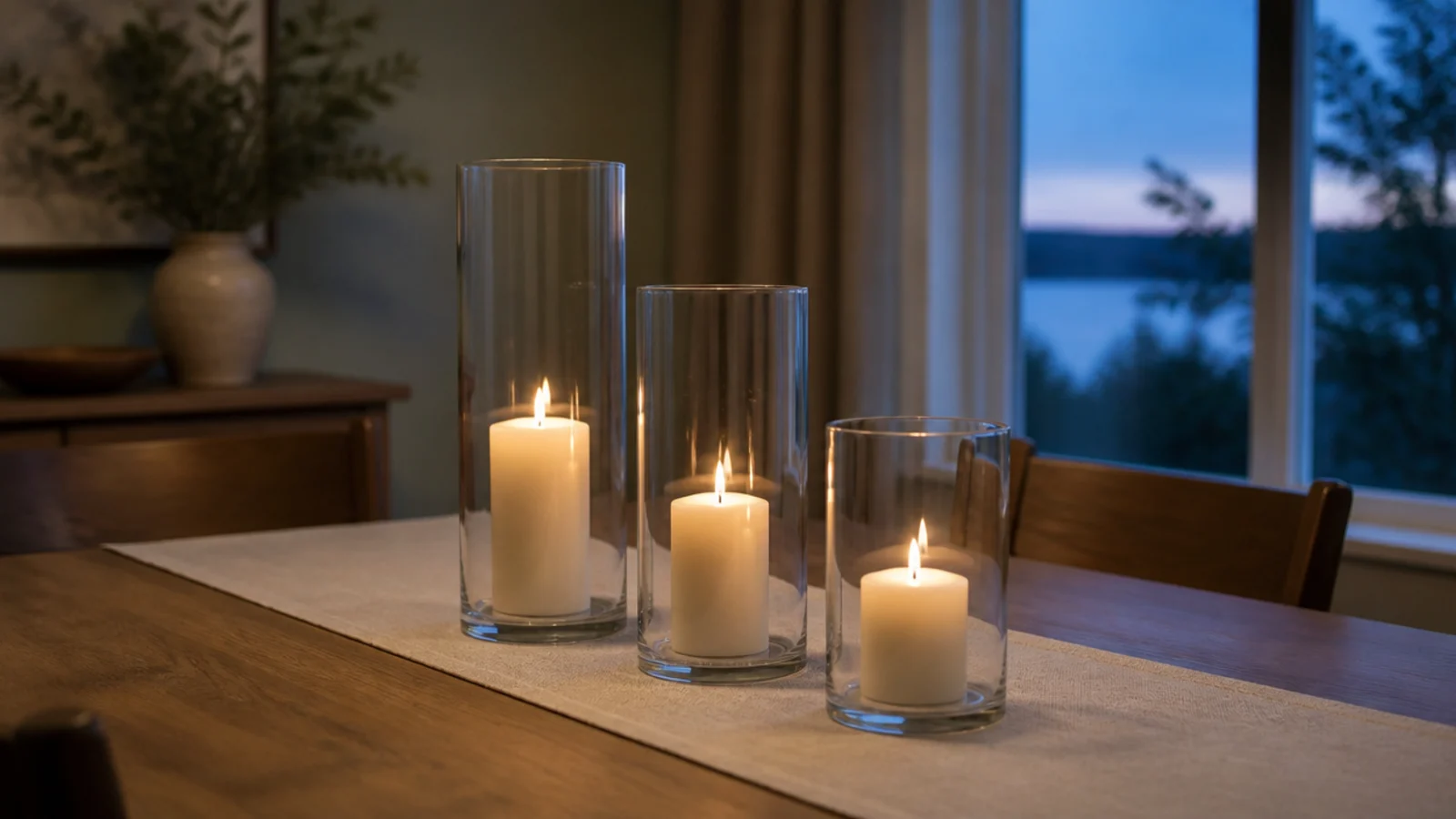
11. A hurricane trio for a draughty dining room
If your dining room has a door, a stairwell or a window that moves air, flames will lean and soot the glass all evening.
Three open-topped hurricanes at graduated heights fix it and look intentional. Never a closed lantern instead — an enclosed flame starves for oxygen, smokes heavily and can crack the glass from the heat.
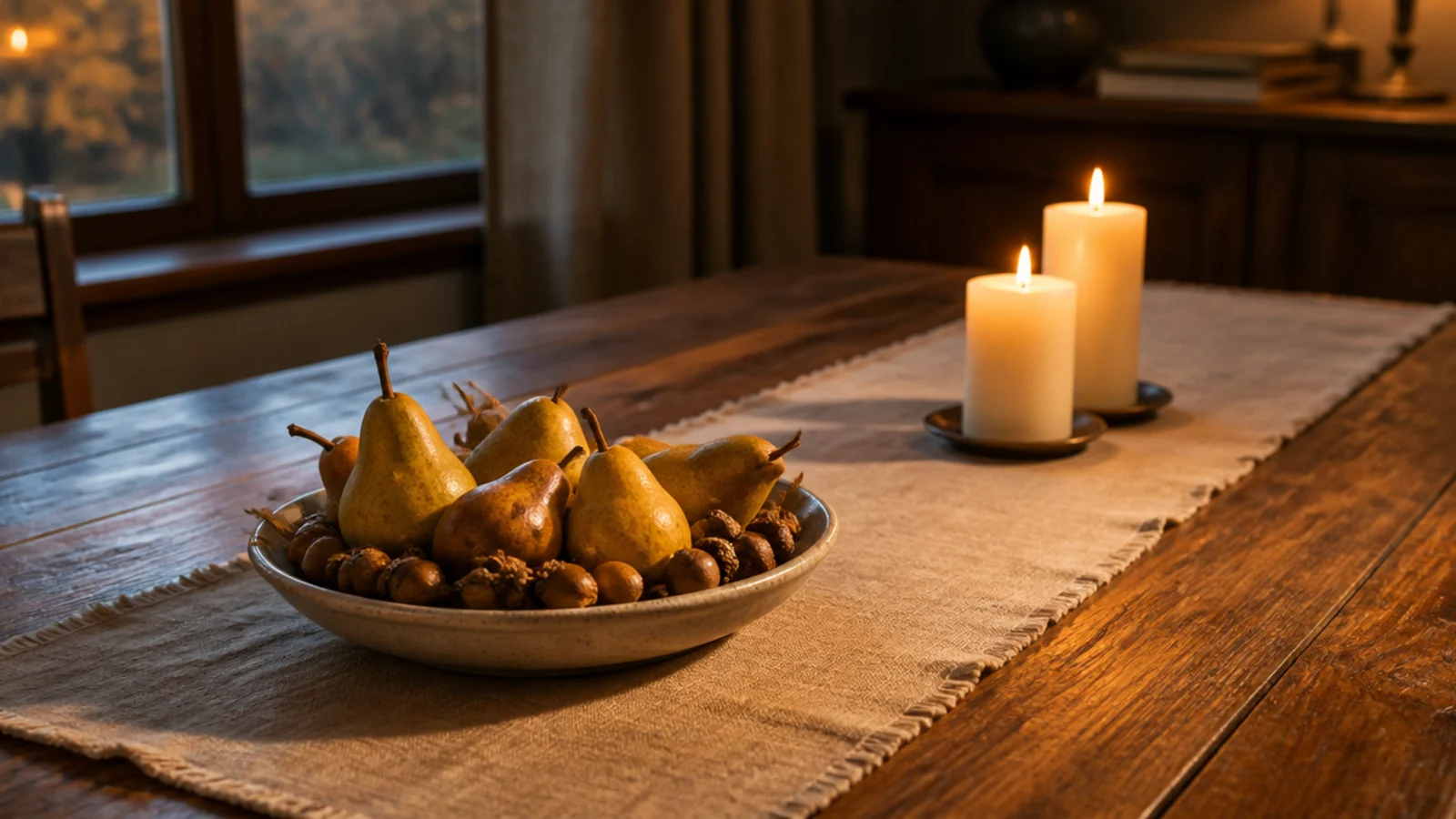
12. Fruit and foraged elements at a distance
A shallow bowl of pears, quinces or gathered acorns brings seasonal color for the price of the fruit. Keep it at the opposite end of the runner from the flames.
Dry leaves, pine cones and cinnamon sticks are all fuel, so they get the same twelve inches as greenery. The look survives the distance perfectly well.
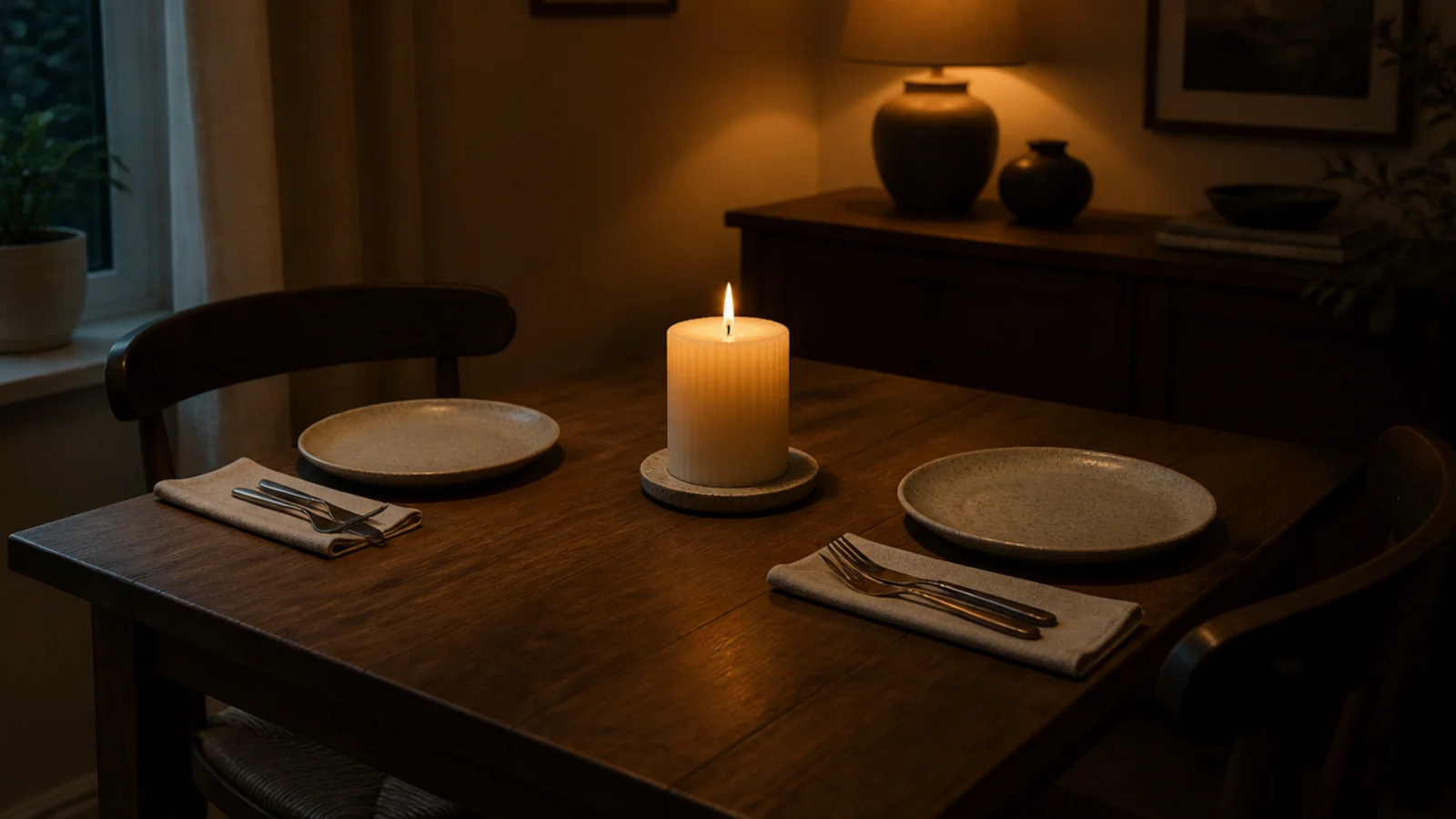
13. One statement candle for a two-seater
On a small table, three candles crowd the plates. One wide ribbed pillar, four inches across on a stone coaster, does more.
Pillars three inches wide and up burn down evenly instead of tunneling, so a wide one also lasts far longer. Around $10 to $18, and it looks like the centerpiece was the plan rather than an afterthought.
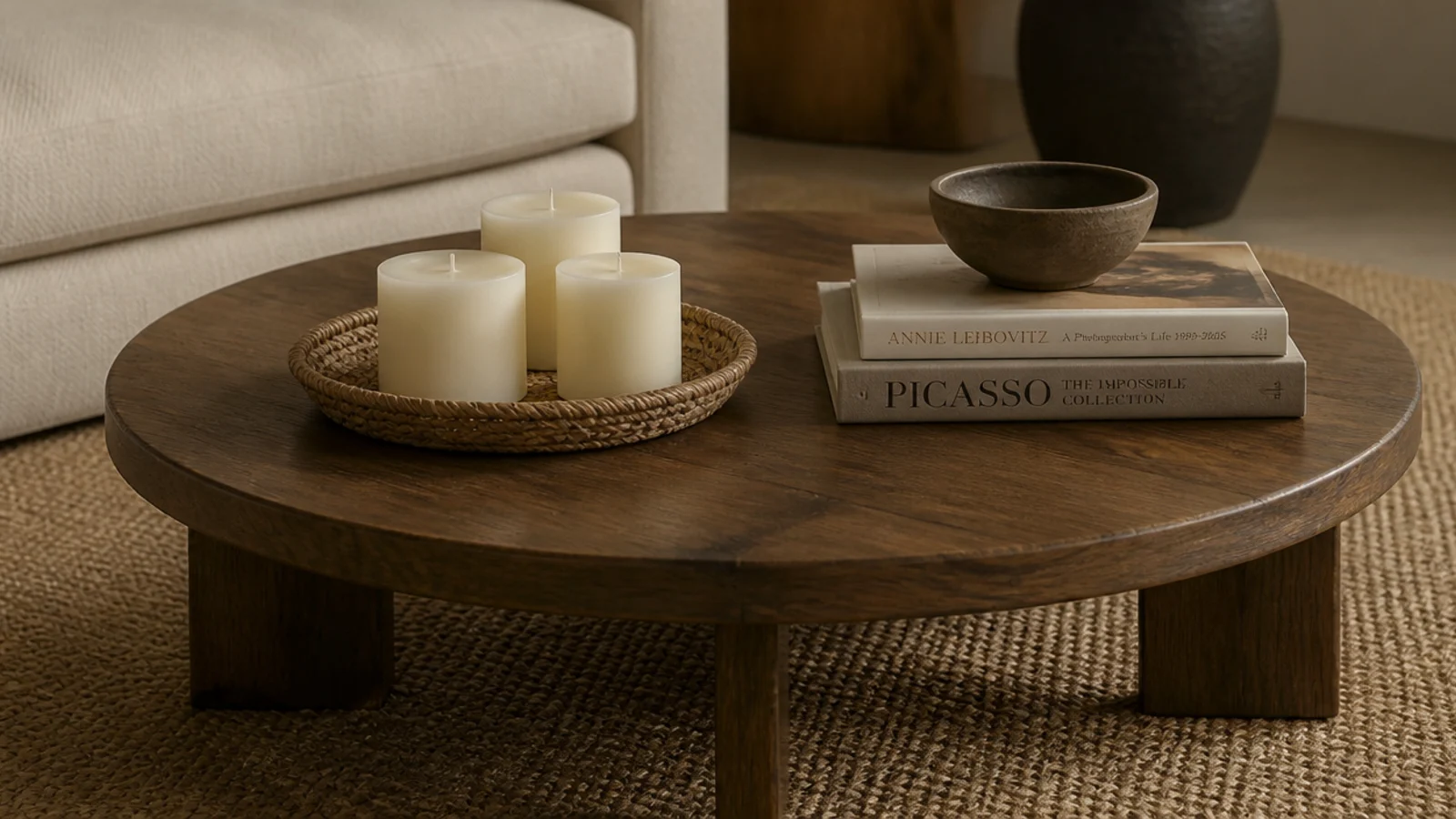
14. The coffee table version, under five inches
Coffee tables need the same rule with a lower number, because people talk across them from sofas.
Three squat pillars on a lipped tray, two stacked art books alongside as a low anchor, nothing overhanging. The lip matters here: coffee tables get knocked, and a tray catches a tipped candle before it reaches the rug. See candle decor for a coffee table.
15. Buffet and console centerpieces
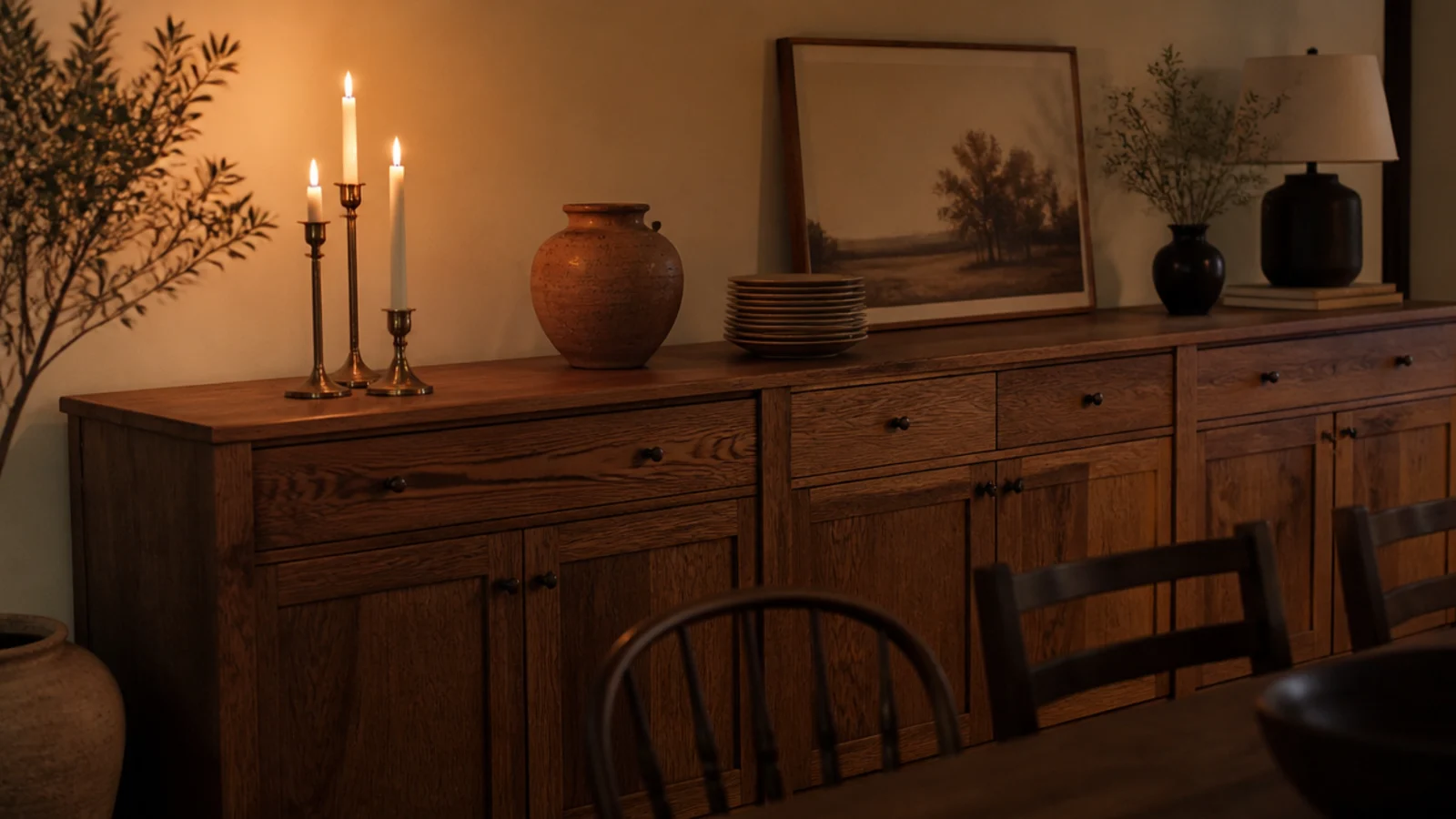
The one place height is welcome. Nobody sits opposite a buffet, so tall tapers at 16 to 20 inches look generous rather than obstructive.
Group them at one end rather than centering, and let a terracotta vessel or a stack of plates balance the other. Keep the group a foot from any wall art and from the curtain at the end of the run.
16. Outdoor table lanterns that survive wind
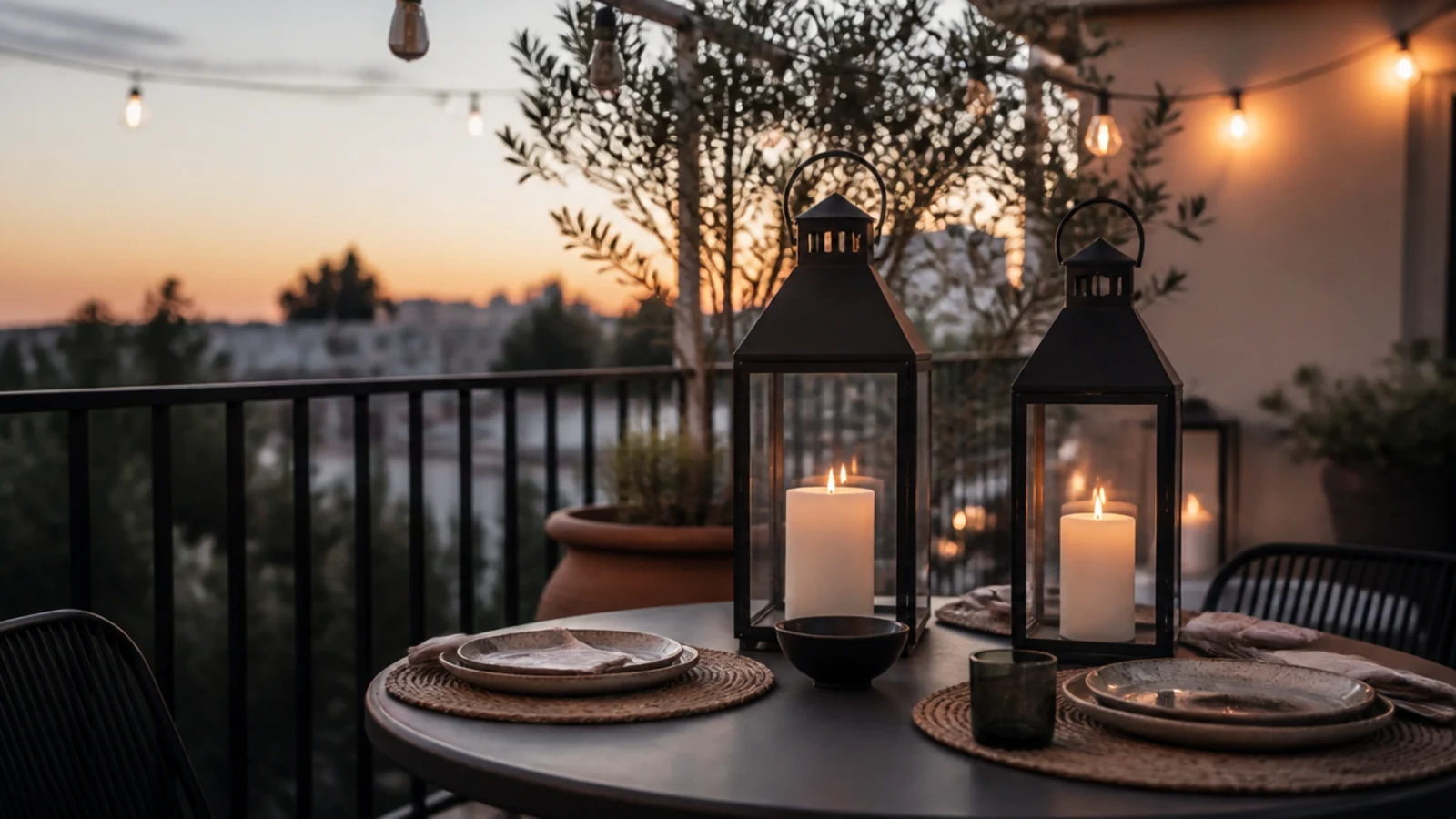
Bare tealights blow out in the first gust and a light glass holder blows over. Use heavy metal-and-glass lanterns with weighted bases and open or vented tops.
Set them on the table or on stone, never on a jute placemat, and bring them in when you go in. Outdoor candles are the easiest ones to forget. There is more in balcony seating setups.
17. Napkins, menus and the paper problem
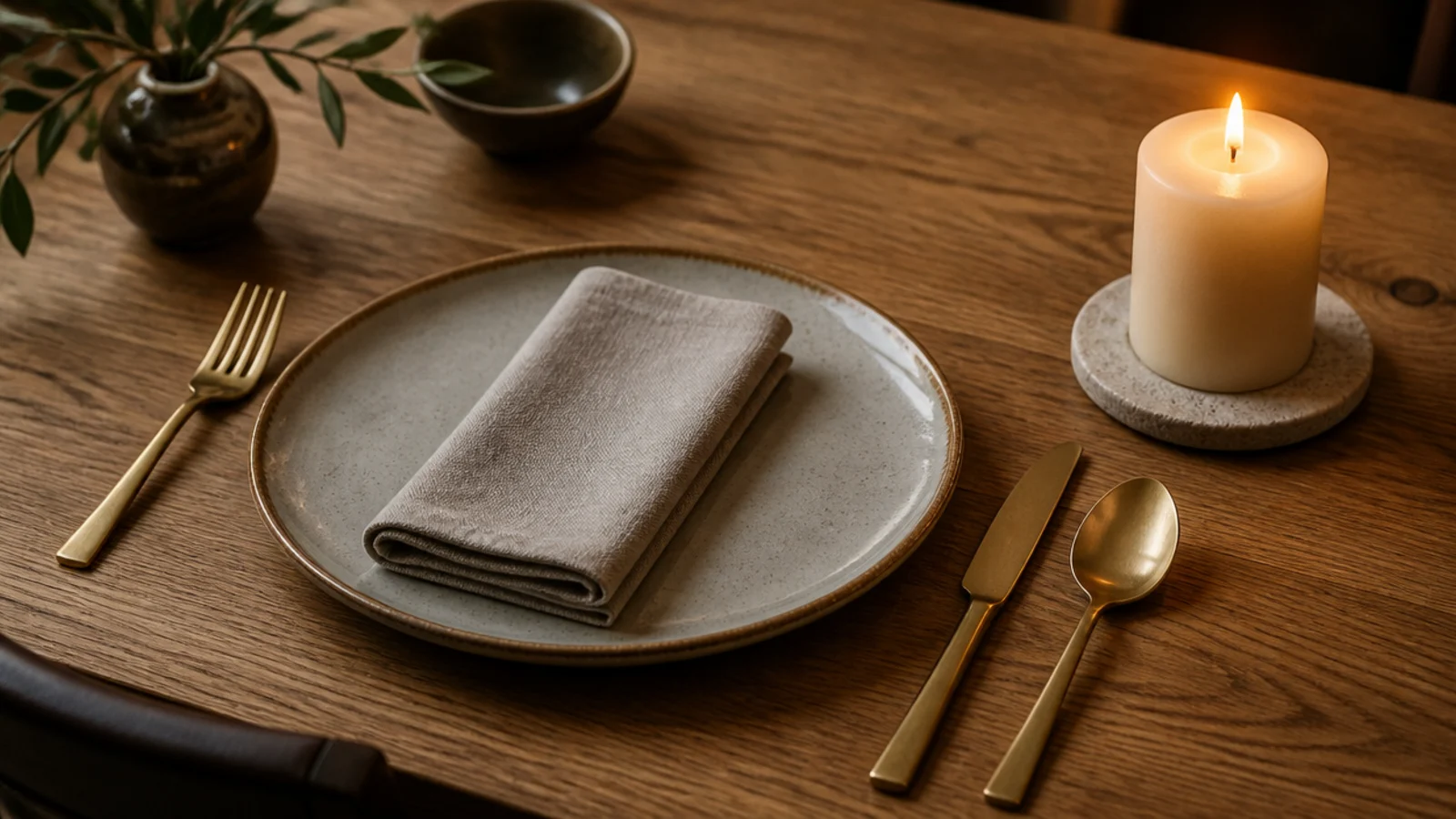
Every table has paper on it at some point: napkins, a menu card, a takeaway box, a birthday card propped up.
All of it needs a foot of clearance from a flame, and a paper napkin left folded beside a taper is the most common near-miss in a styled dining room. Linen napkins are safer, reusable and about $4 each secondhand.
18. A flameless centerpiece for long dinners
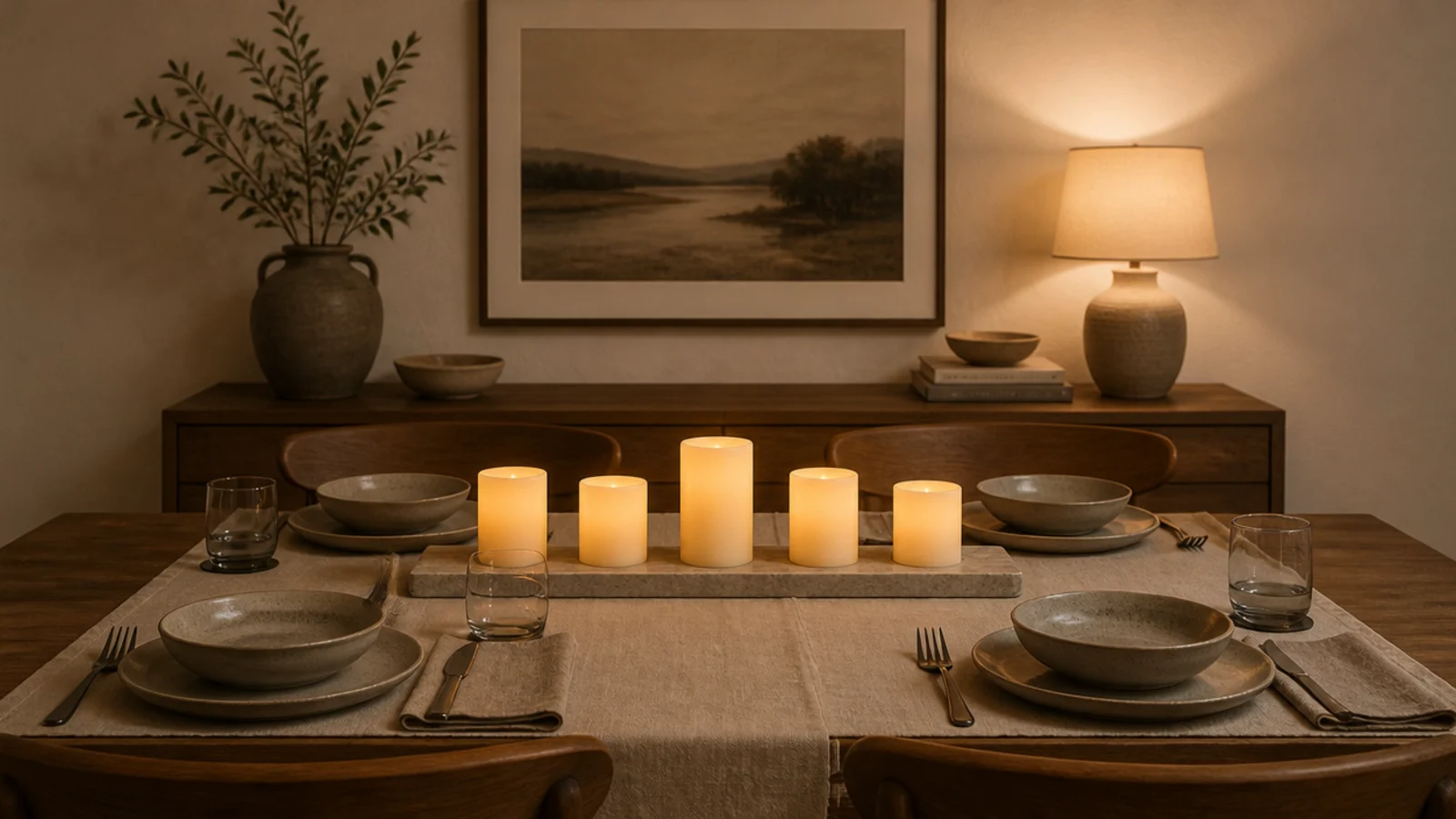
A dinner that runs four hours is longer than any candle should burn unattended in a room full of moving arms and refills.
Five real wax flameless pillars on a stone tray look identical down a table and never need watching. They are also the right answer for a table with children at it, or a buffet you walk away from. Sets of three run $18 to $35.
19. Seasonal color swaps in the same holders
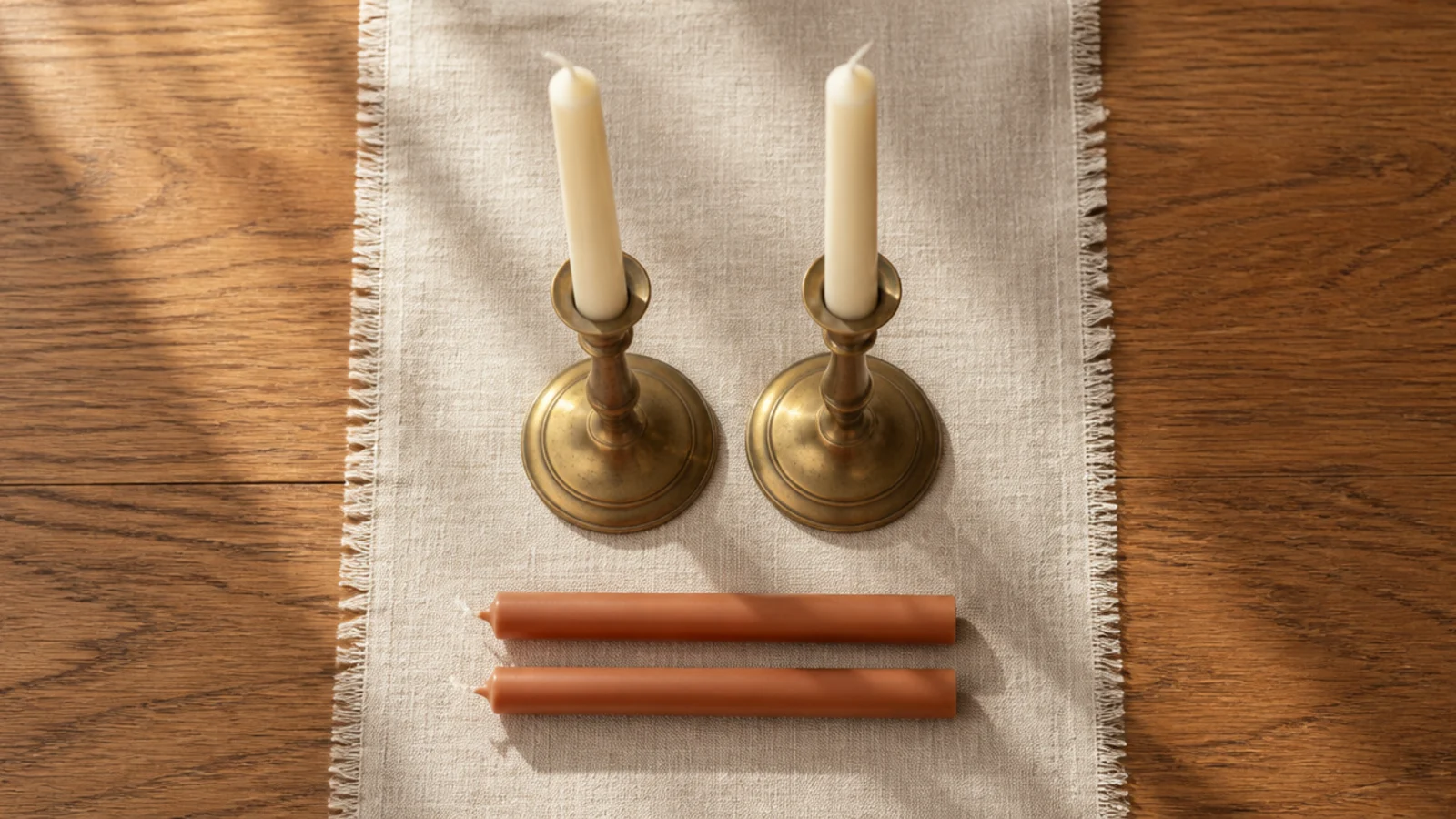
Keep the holders, change the wax. Cream tapers through spring and summer, terracotta and clay tones for autumn, deep olive for winter.
About $6 a pair, no new storage, and the table reads as different from the doorway. This is how to have a seasonal table without a cupboard full of props.
20. Snuff before you clear the table
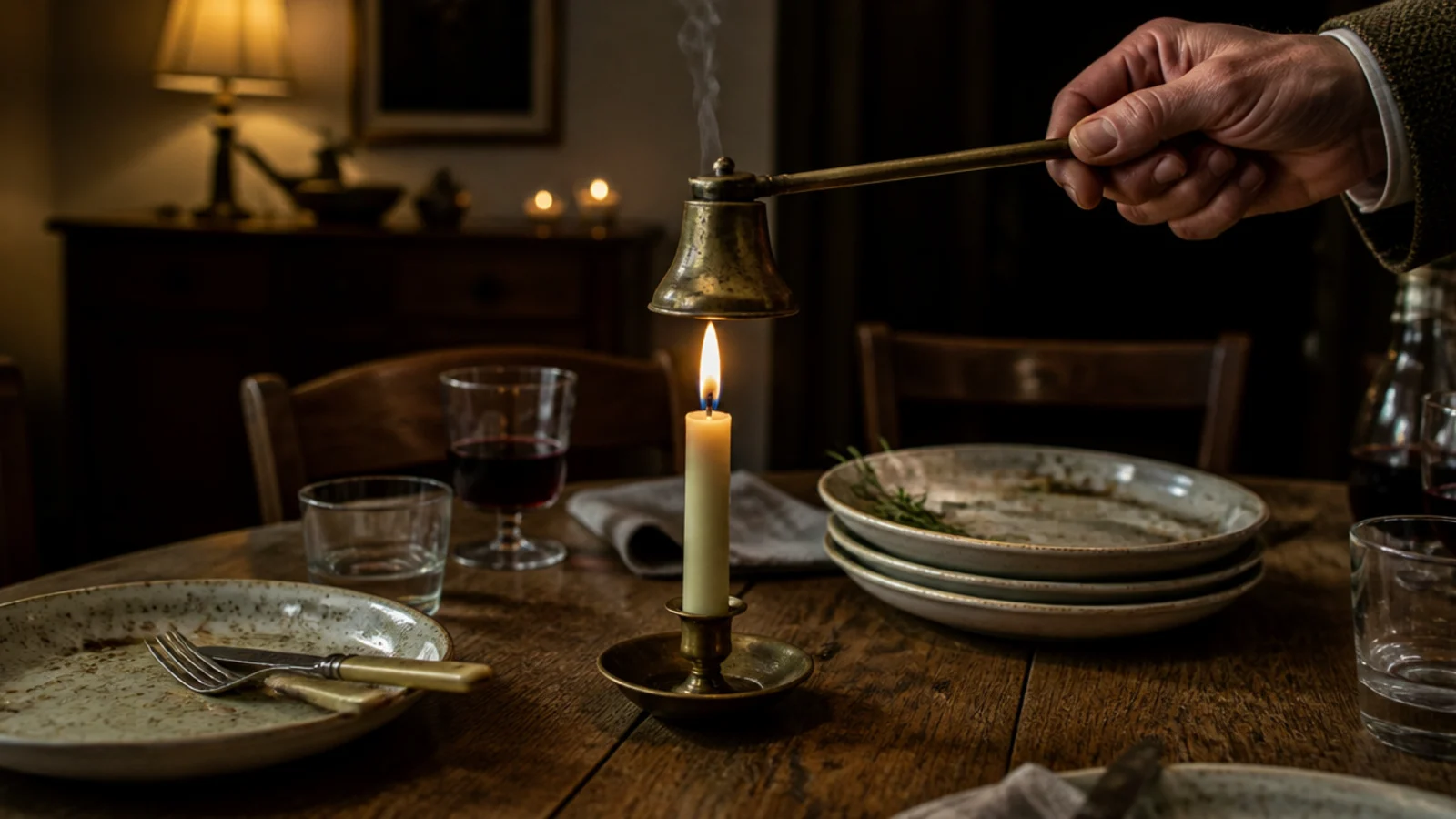
The meal ends, everyone moves to the sofa, and the candles keep burning in an empty room. That is the moment worth changing.
Snuff as you clear, with a bell snuffer rather than blowing — blowing sprays wax across the runner and pushes soot up the wall. Keep the snuffer on the buffet where you can reach it without leaving the room.
Mistakes to Skip
- Running a greenery garland between lit candles. Dried and fresh stems both catch, and the flames sit inches from them all evening. Place greenery a foot away, or go flameless inside the garland.
- Using scented candles on a dining table. They fight the food every time, and two competing fragrances in one room cancel each other out completely.
- Leaving candles burning after everyone moves to another room. Nothing burns in an empty room, and a snuffer on the buffet makes it a two-second habit.
Frequently asked questions
How tall should a candle centerpiece be?
Under twelve inches measured from the tabletop to the top of the lit wick, or above eighteen inches so people look underneath. The zone between those two numbers lands exactly in the sight line between seated faces. Low pillar groups and short votives are the easiest way to stay in the safe range.
Should table candles be scented or unscented?
Unscented, always. A fragrance burning eighteen inches from a plate competes with whatever you cooked, and guests notice without being able to say why. Save the scented jar for the entryway or a side console in the same room, lit an hour before people arrive and snuffed before you sit down.
How many candles should a dining table centerpiece have?
Odd numbers work best: three for a small round table, five spread along a table for six, seven for a long dining table. Space them evenly along the center line and vary the heights. Even numbers read as matched pairs rather than one arrangement, which is fine for tapers flanking a bowl.
Is greenery safe around candles on a table?
Only when it is placed, not draped. Keep any greenery, dried stems or eucalyptus at least twelve inches from every flame and never run a garland between candles. Dried botanicals catch far faster than fresh ones. If you want the draped look, use flameless pillars nestled into the greenery instead.
What do you put under candles on a dining table?
A stone, ceramic, glass or metal tray, or individual coasters of the same. Linen runners and woven placemats are fuel and they slide when someone reaches across. A lipped tray also catches drips, which matters on tapers, and lets you lift the whole centerpiece off when you serve.
Pick the height rule, the unscented rule and the tray, and your table is already better than most restaurant ones. From there, twenty steps of candle styling covers the grouping method in detail, and the coffee table guide handles the lower version. Save the pin below so the twelve-inch number is with you the next time you set a table.
Want more like this? Browse all 15 aesthetic candle decor guides — they all use the same measurements and budget tiers.

Pin it for later
Save this to your Aesthetic Candle Decor board
Pin it now so it is waiting for you when the tape measure comes out — and so the next person hunting for this idea can find it too.
Save this pinKeep going
More ideas worth saving while you have the tape measure out.