Aesthetic Candle Decor · Listicle
20 Creative Aesthetic Candle Ideas Anyone Can Do

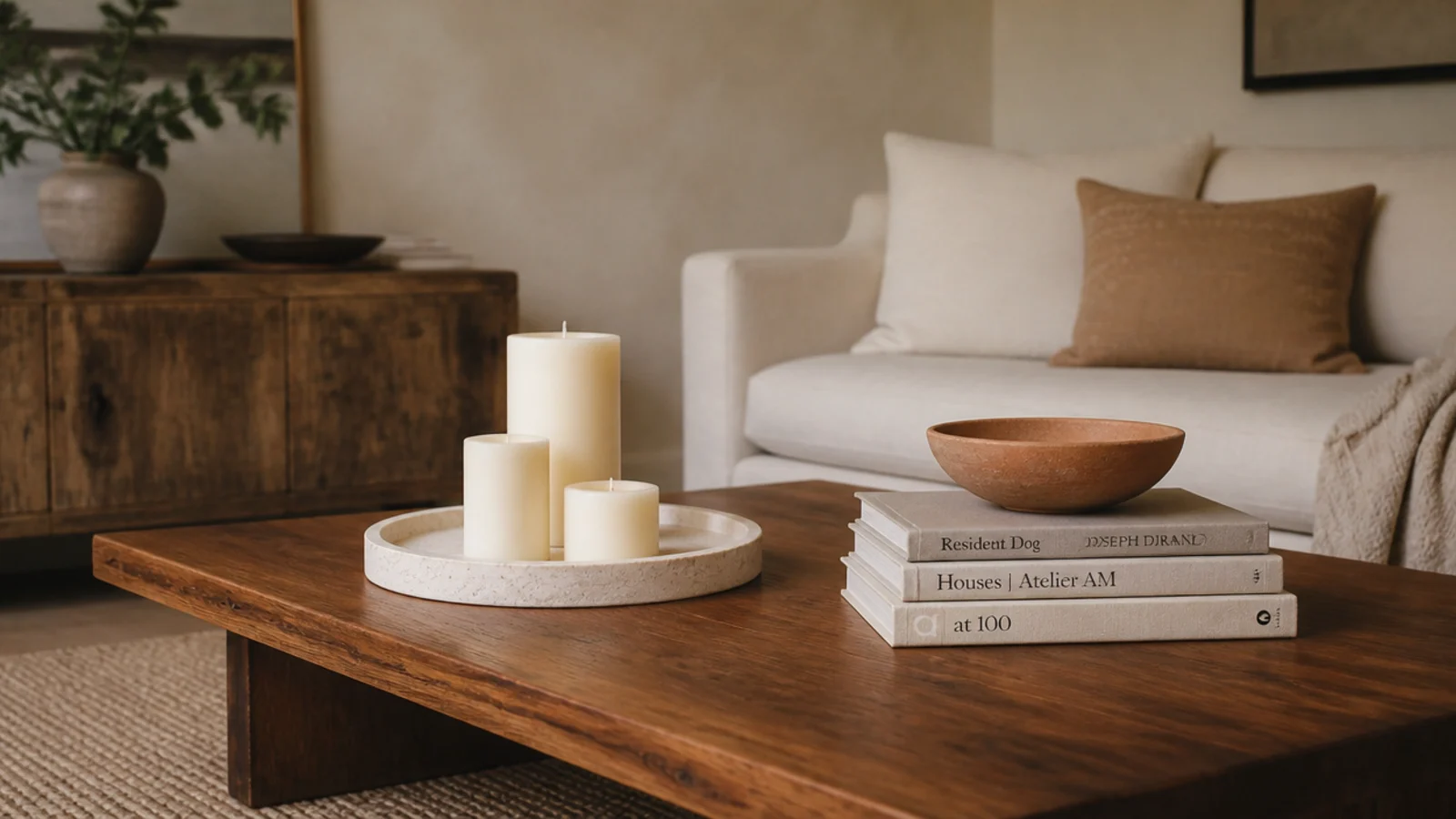
Candle decor for coffee table surfaces has one constraint nothing else in the room has: everyone looks across it while sitting down. Get the height wrong and you have built a wall between two people on a sofa. Get it right and the lowest surface in the room becomes the warmest. These twenty setups all work on a real table that also holds mugs, remotes and somebody's feet.
In this guide22 sections — tap to openHide
- 1.What candle decor for coffee table surfaces actually needs
- 2.Anchor everything to one tray
- 3.Cap the tallest piece at twelve inches
- 4.Build a plinth from books, then cap it with stone
- 5.Let one wide three-wick jar do the work
- 6.Group in odd numbers at three heights
- 7.Put a hurricane over anything within reach of a tail
- 8.Keep it unscented if you eat there
- 9.Float three candles in a shallow bowl
- 10.Run a tealight line down a long table
- 11.Pair wax with something round and low
- 12.Stand a pillar trio on a stone slab
- 13.Swap the greenery, never the clearance
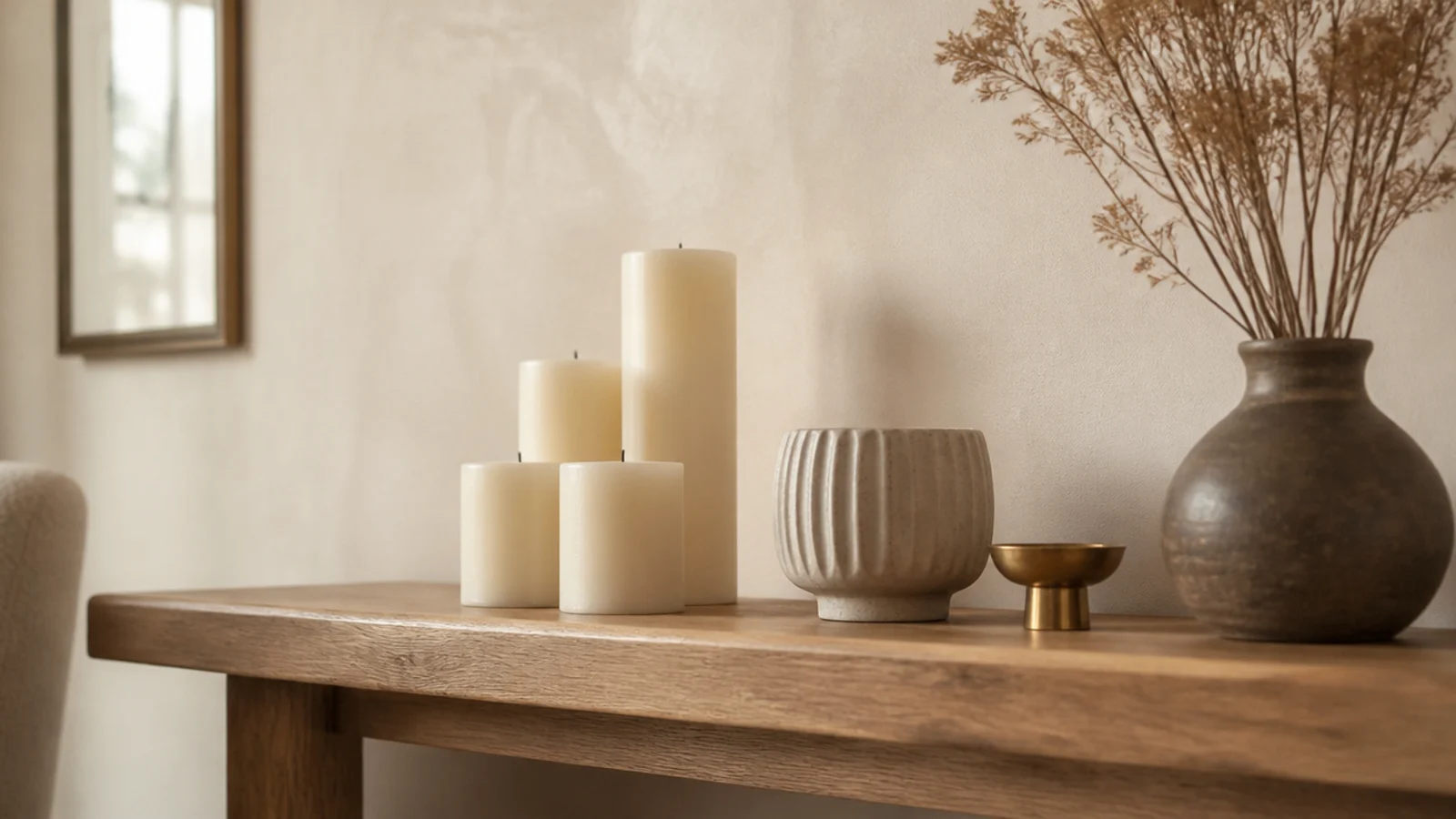
- 14.Light one candle and one warm lamp
- 15.Push the arrangement off the walkway edge
- 16.Use a marble or slate offcut as a base
- 17.Go flameless where small hands reach
- 18.Choose one textured vessel for interest
- 19.Match the wax to your neutrals
- 20.Keep the snuffer on the tray
- 21.Build a tray you can carry away
- 22.Mistakes to Skip
What candle decor for coffee table surfaces actually needs
Three decisions do almost all the work here, and none of them cost much.
Height. Keep the tallest element under twelve inches. Seated eye level across a low table is around thirty inches from the floor, and a coffee table sits at sixteen to eighteen, so a twelve-inch candle is already at the edge of blocking a face. Tapers belong on a dining table.
Base. Every flame needs a heat-resistant, non-flammable surface under it. Stone, ceramic, glazed tile, thick glass and solid metal are fine. Bare wood, laminate, painted finishes, acrylic and any paper or fabric runner are not. A tray gives you protection and composition at the same time.
Clearance. Twelve inches minimum between a flame and anything that can burn — dried stems, books, a throw draped over the sofa arm, magazines. A coffee table is also exactly toddler height and exactly tail height, so a hurricane glass or a flameless candle is often the right call rather than the timid one.
Budget tiers here: tealights, thrifted plates and tile offcuts run $2 to $10 ($), good unscented pillars and a stone tray run $15 to $40 ($$), and a big three-wick vessel or a marble slab runs $45 and up ($$$).
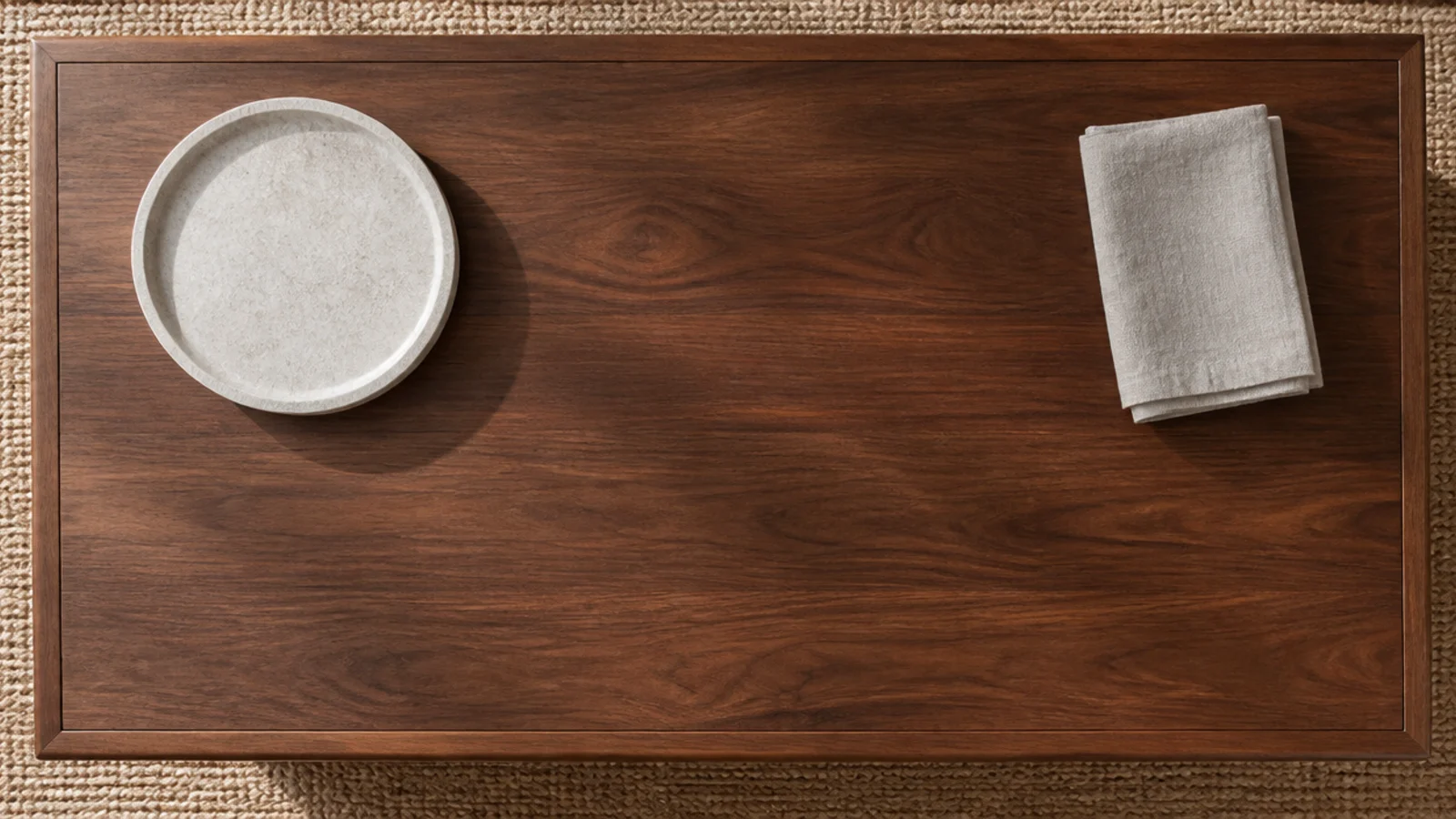
1. Anchor everything to one tray
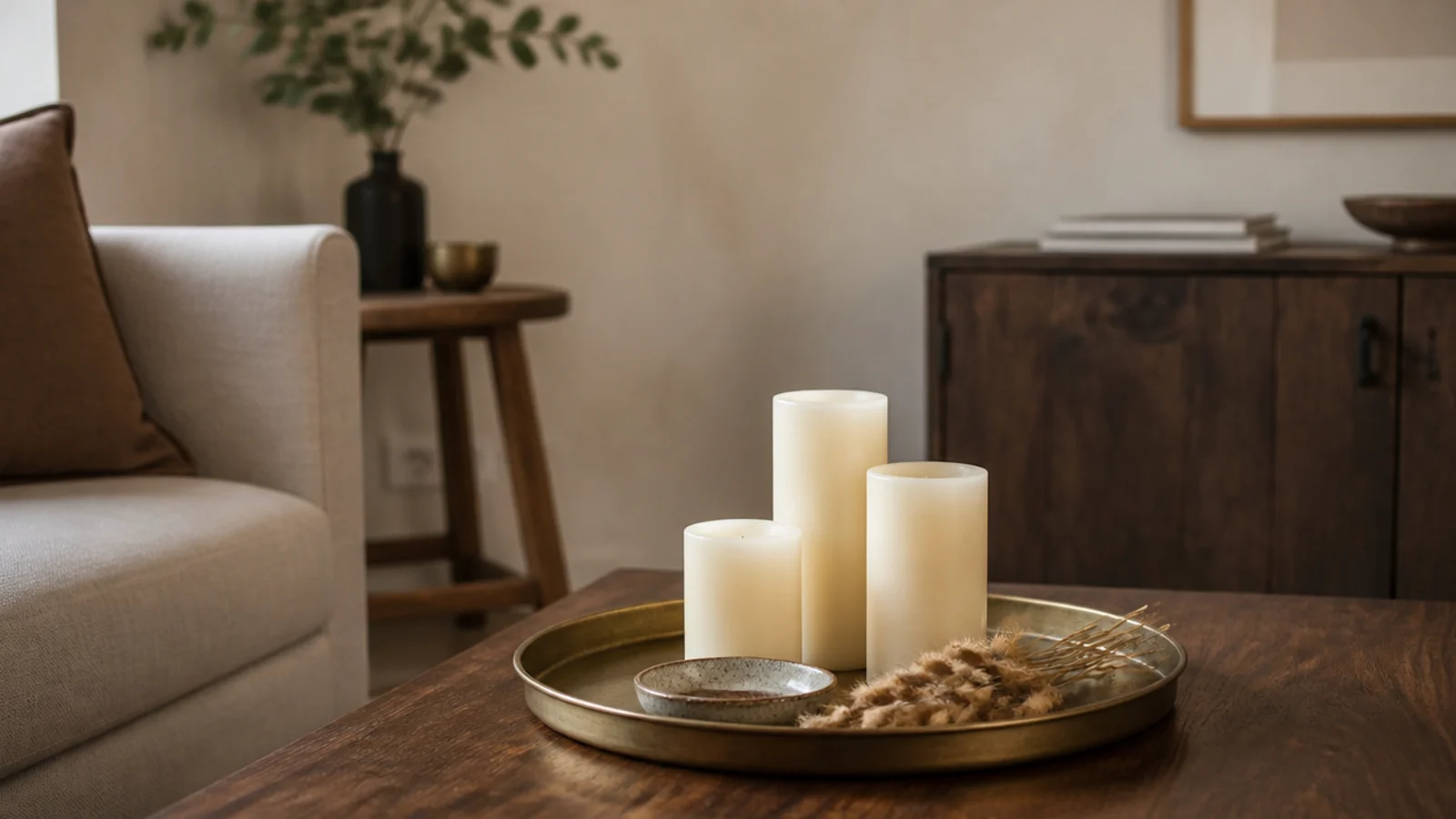
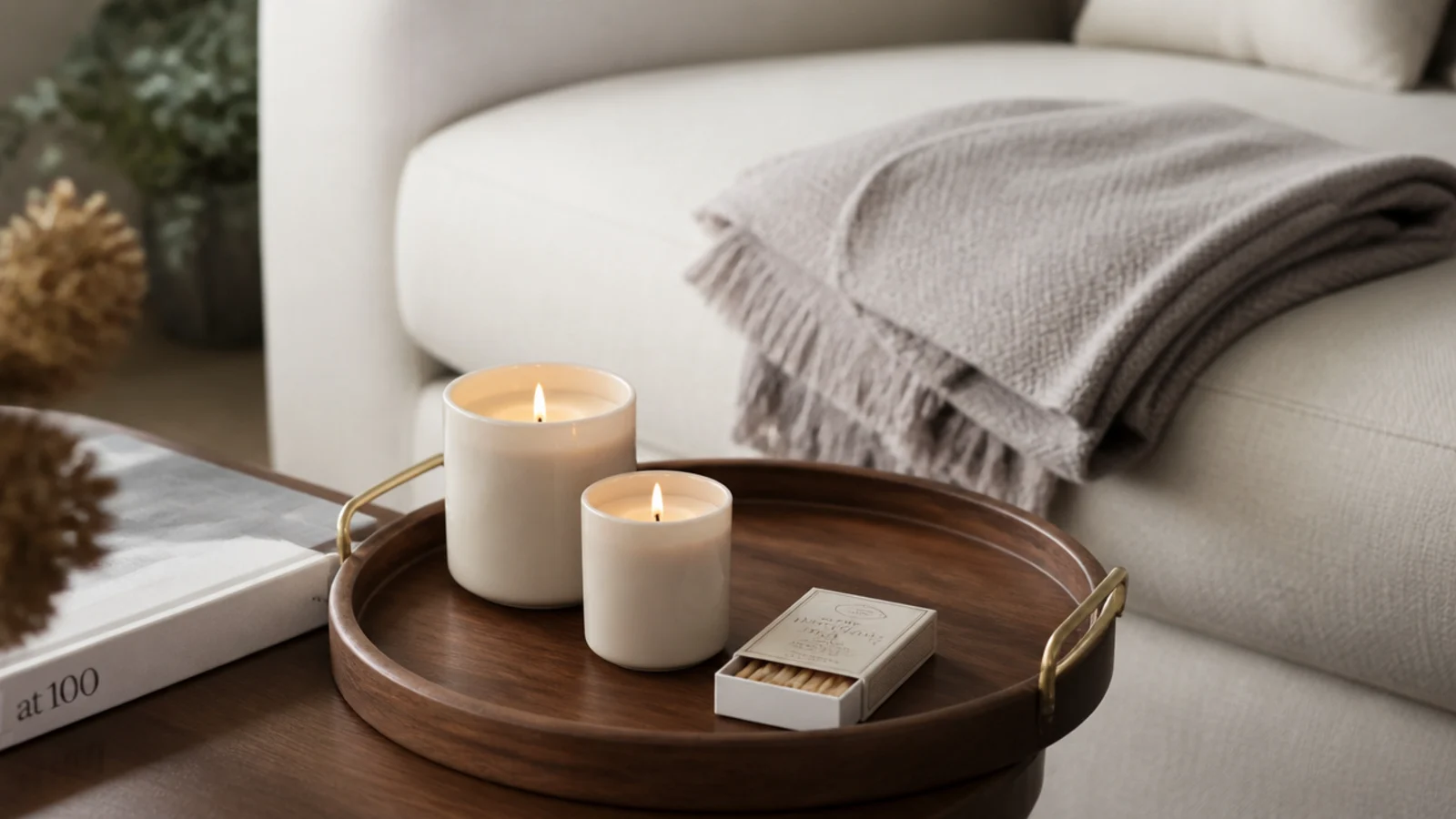
Start here every single time. A tray eleven to fourteen inches across gathers loose objects into one composition, catches drips and gives you a heat-safe base in a single move.
Without one, five objects on a big table read as five pieces of clutter. With one, the exact same objects read as an arrangement, because the tray edge draws a border around them.
Look for a shallow lip. It contains wax, stops a knocked candle rolling and survives someone setting a glass down too fast.
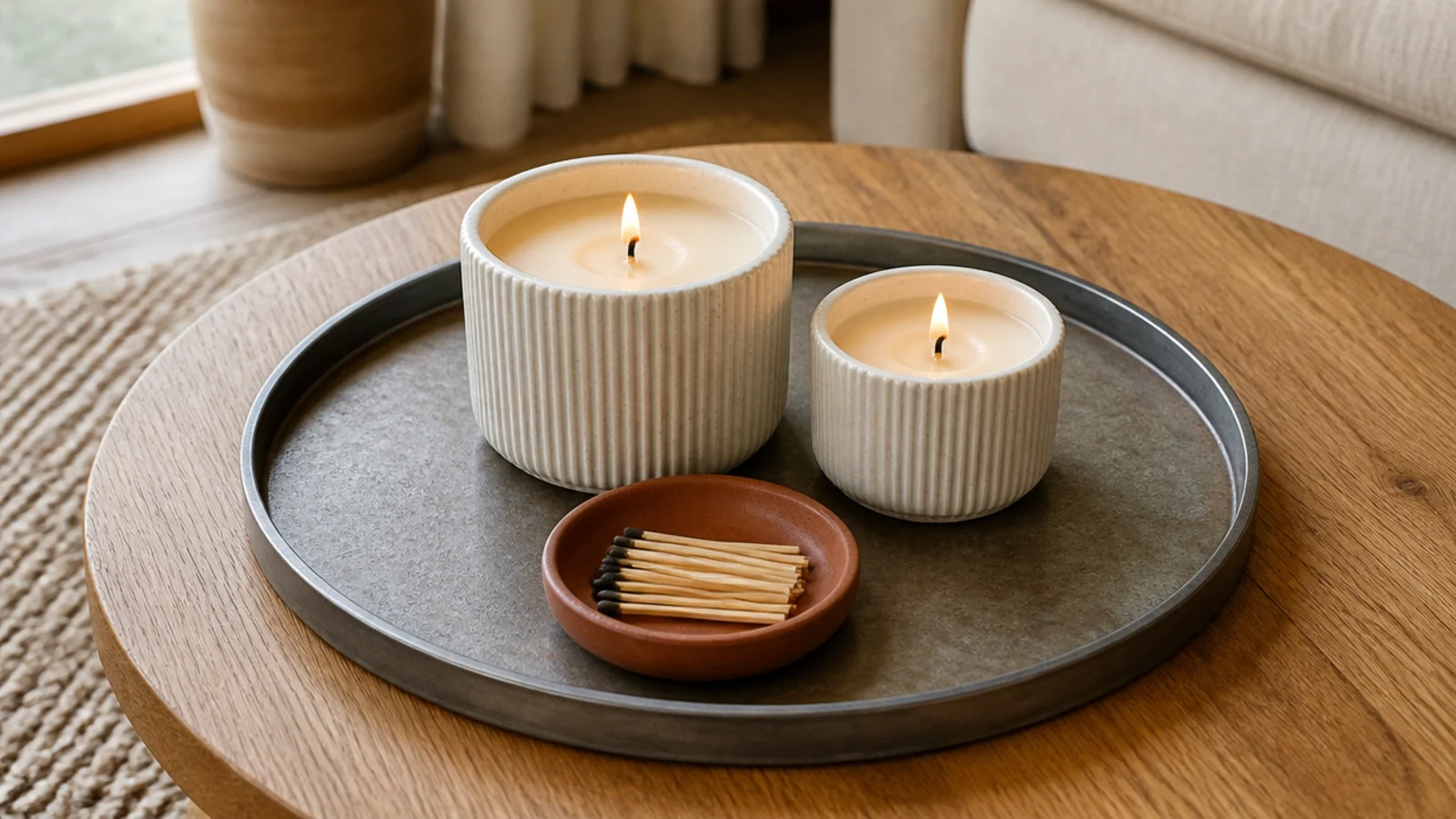
2. Cap the tallest piece at twelve inches
Measure your tallest candle against the back of the sofa. If it interrupts the sightline between two seats, it is too tall for this table regardless of how good it looks empty.
Six-inch pillars, squat vessel candles and short tapers in low brass holders all sit comfortably under the line. Save the tall dramatic tapers for a console against a wall, where nobody needs to see past them.
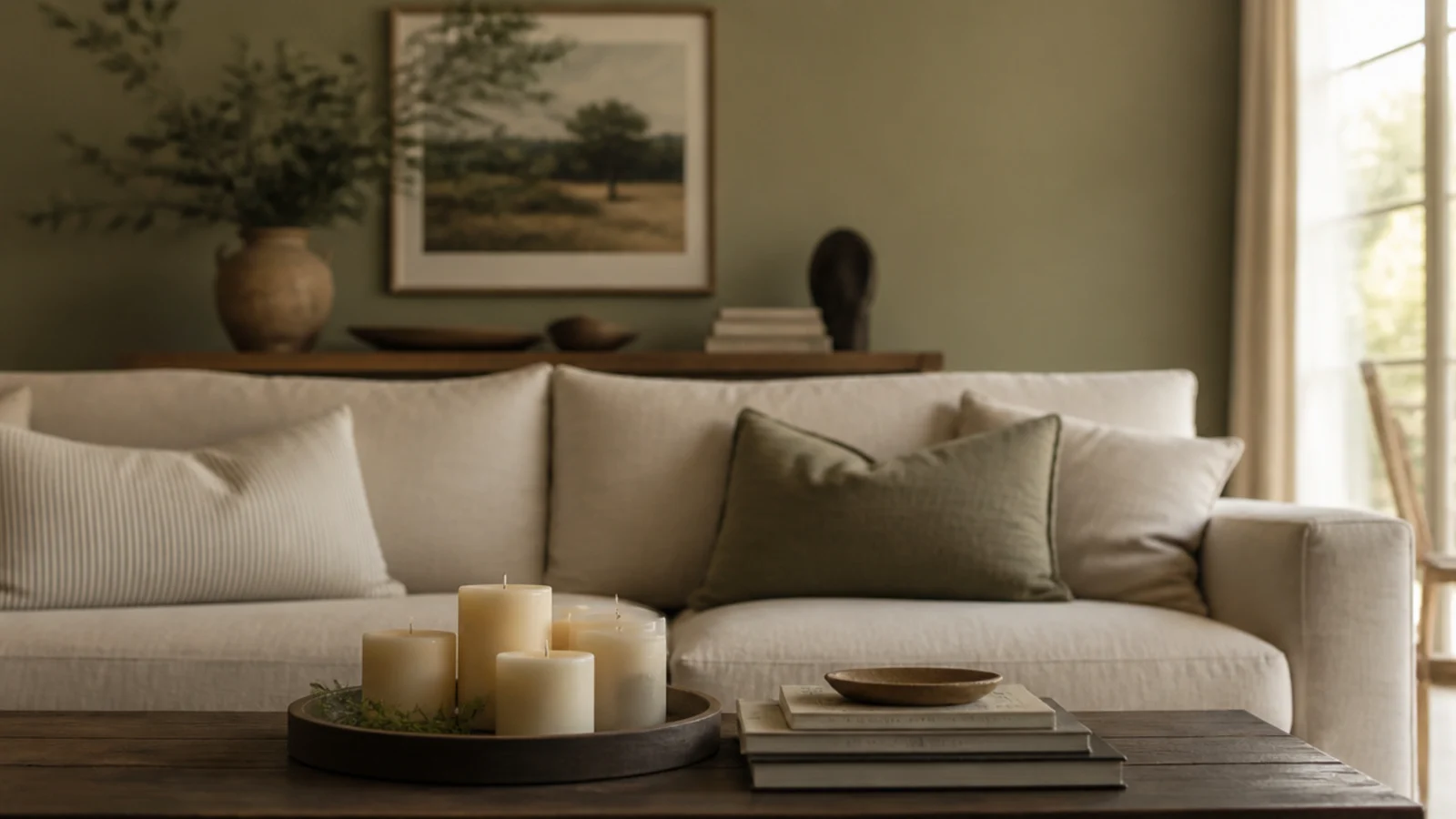
3. Build a plinth from books, then cap it with stone
Two large books give you an instant three-inch riser, which is the easiest way to create the height difference a good grouping needs.
But never set a flame directly on paper. Lay a slate tile, a ceramic plate or a small stone offcut on top of the stack, then the candle on that. It costs a dollar or two, it protects the book, and the stone edge peeking out actually makes the stack look intentional.
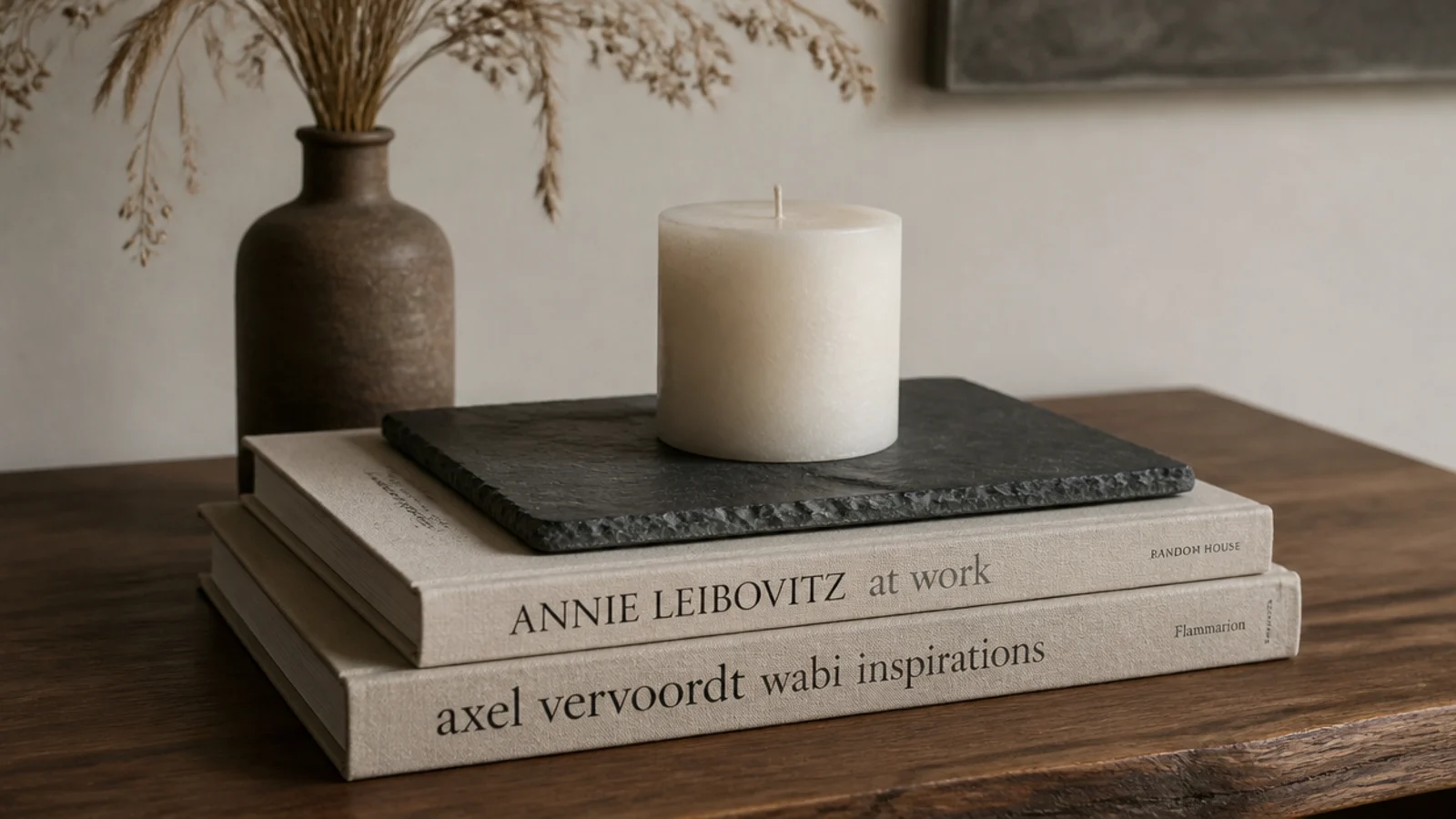
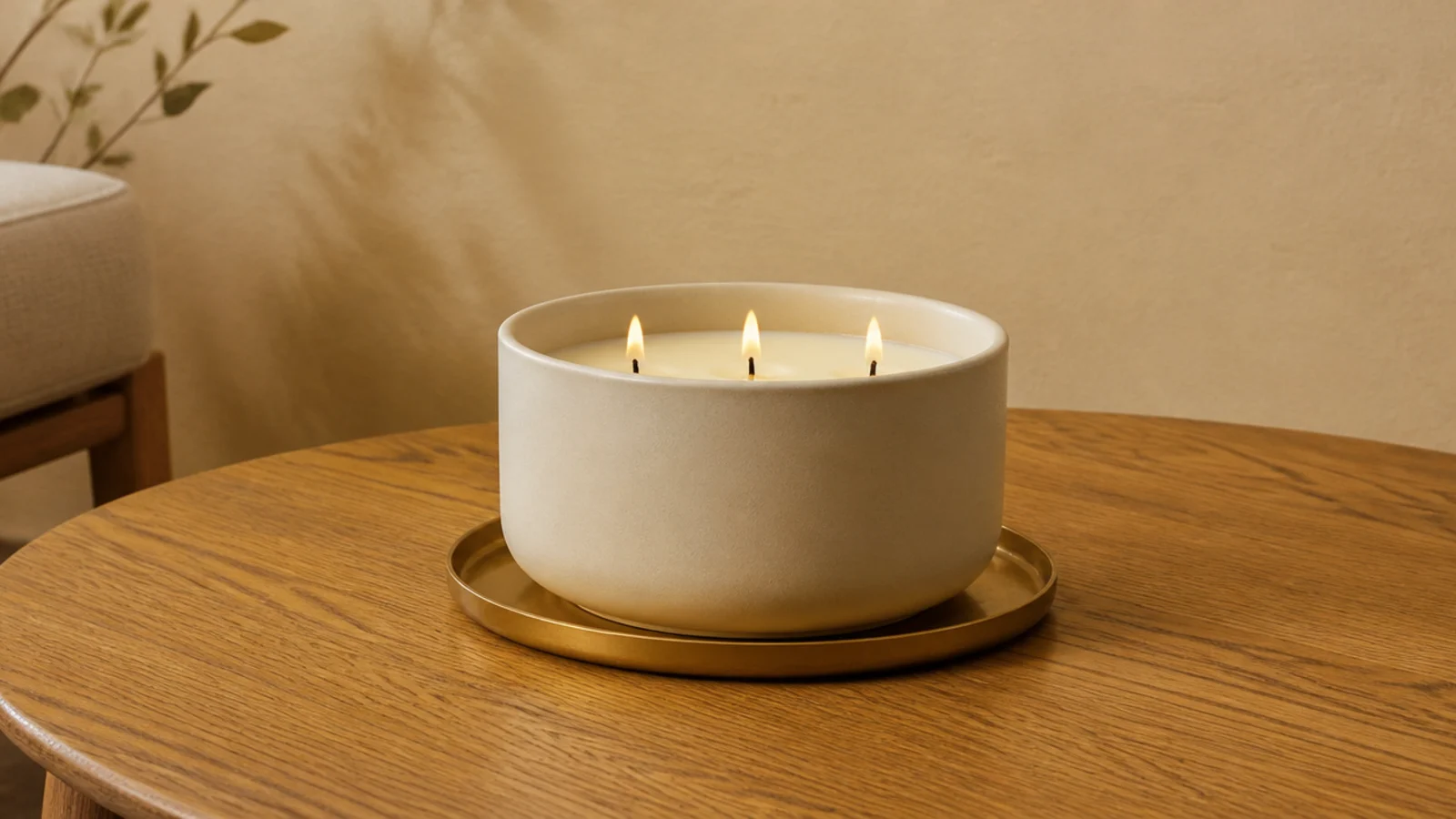
4. Let one wide three-wick jar do the work
A single generous candle looks more confident than a scattering of small ones, especially on a table under thirty-six inches.
Wide three-wick vessels melt evenly across their full width, which is exactly the reason to buy one — the wax stays level instead of tunneling around a single wick. Give it a first burn of about one hour per inch of container width so the melt pool reaches the glass all the way round.
Expect $25 to $50. It is the one candle purchase I would spend real money on.
5. Group in odd numbers at three heights
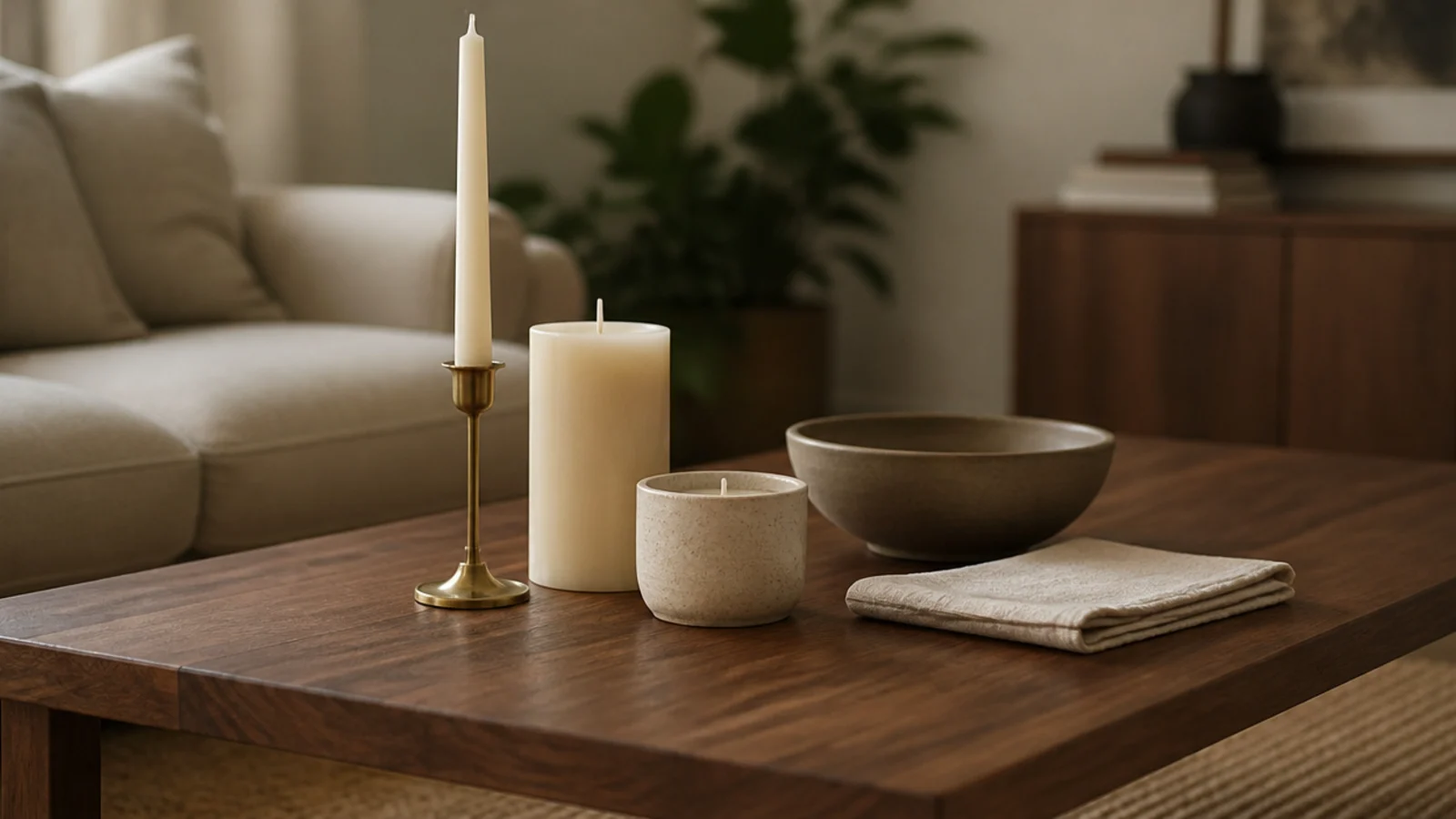
Three objects on a small tray, five on a larger one. Never four, never six.
Give the group three clear heights: something tall, something low and wide, something small that bridges them. Keep at least two inches between wicks so flames never warm each other or soften the neighboring wax.
The full method, sized for smaller surfaces, is in candle tray styling.
6. Put a hurricane over anything within reach of a tail
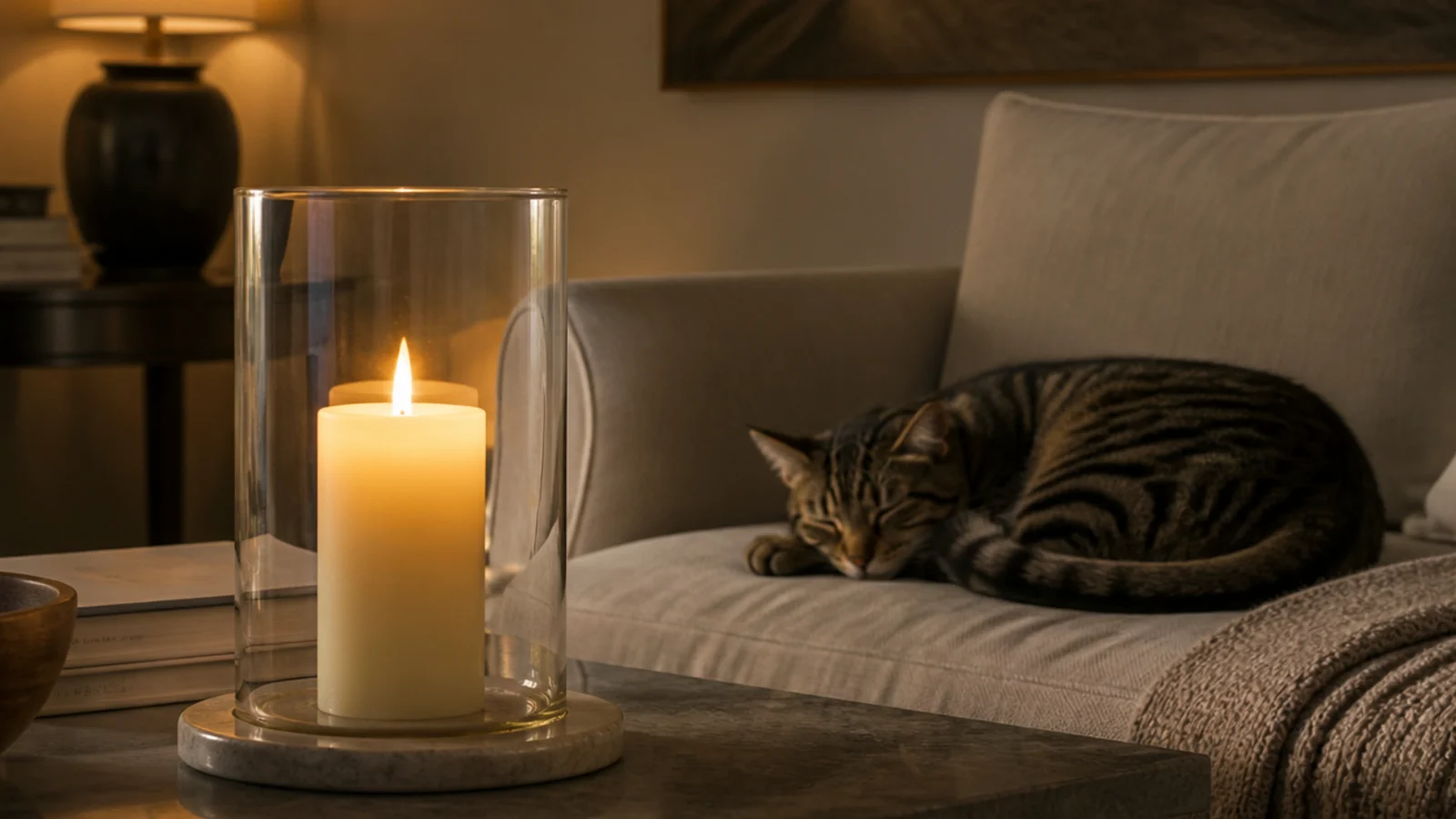
A coffee table is at exactly the wrong height for cats, dogs and toddlers. Glass fixes it.
A hurricane cylinder two inches taller and two inches wider than the candle lets heat escape while making the flame genuinely hard to reach. It also steadies the flame in a draft, which stops soot marks appearing on the ceiling above.
Under $20, and the single best safety purchase in this article.
7. Keep it unscented if you eat there
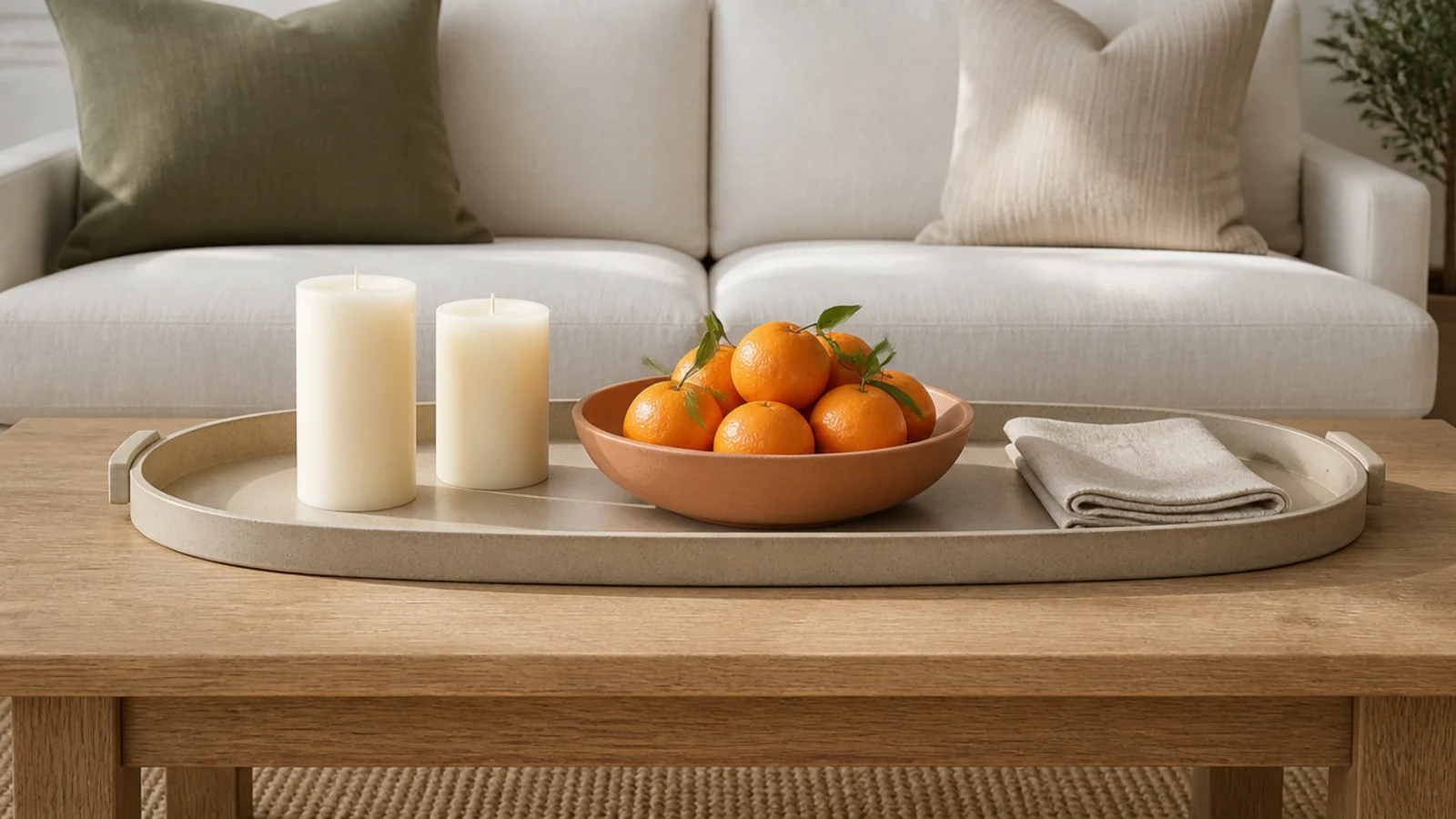
Most of us eat at the coffee table more often than the dining table. Fragrance and food fight each other, and a strong scent at close range flattens everything you cooked.
Unscented ivory or cream pillars give you the same glow without the argument. If you want scent in the room, put one scented candle on a shelf across the space and leave the table itself neutral.
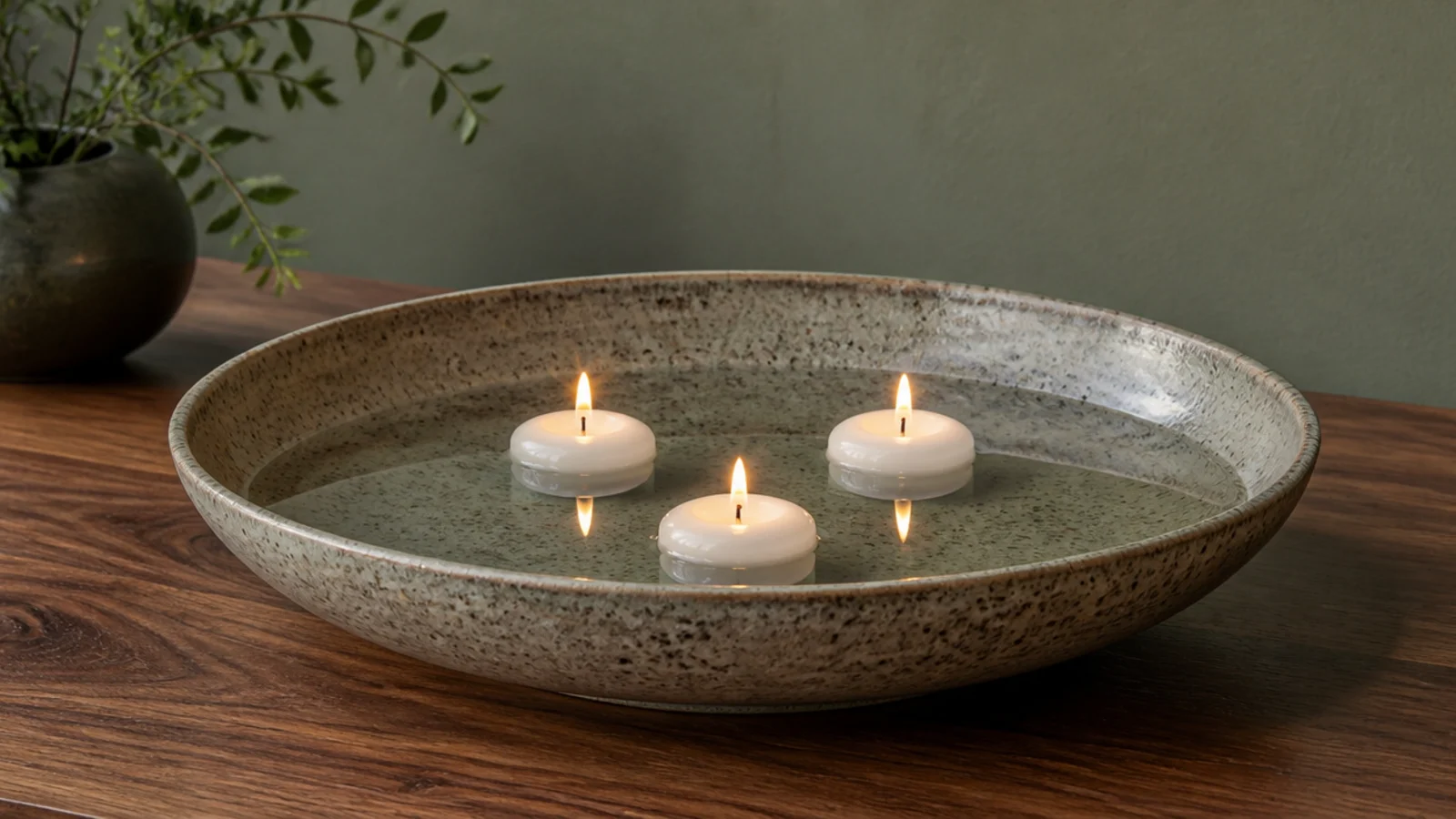
8. Float three candles in a shallow bowl
Water under a flame is as safe as candlelight gets, and floating candles cost a few dollars for a bag.
Use a wide, shallow stoneware or glass bowl, fill it two-thirds with water, and float three small discs. They drift slowly, they self-extinguish when they reach the water, and there is no wax to clean off anything.
Keep the bowl on a tray anyway, because water rings on a wooden table are their own kind of damage.
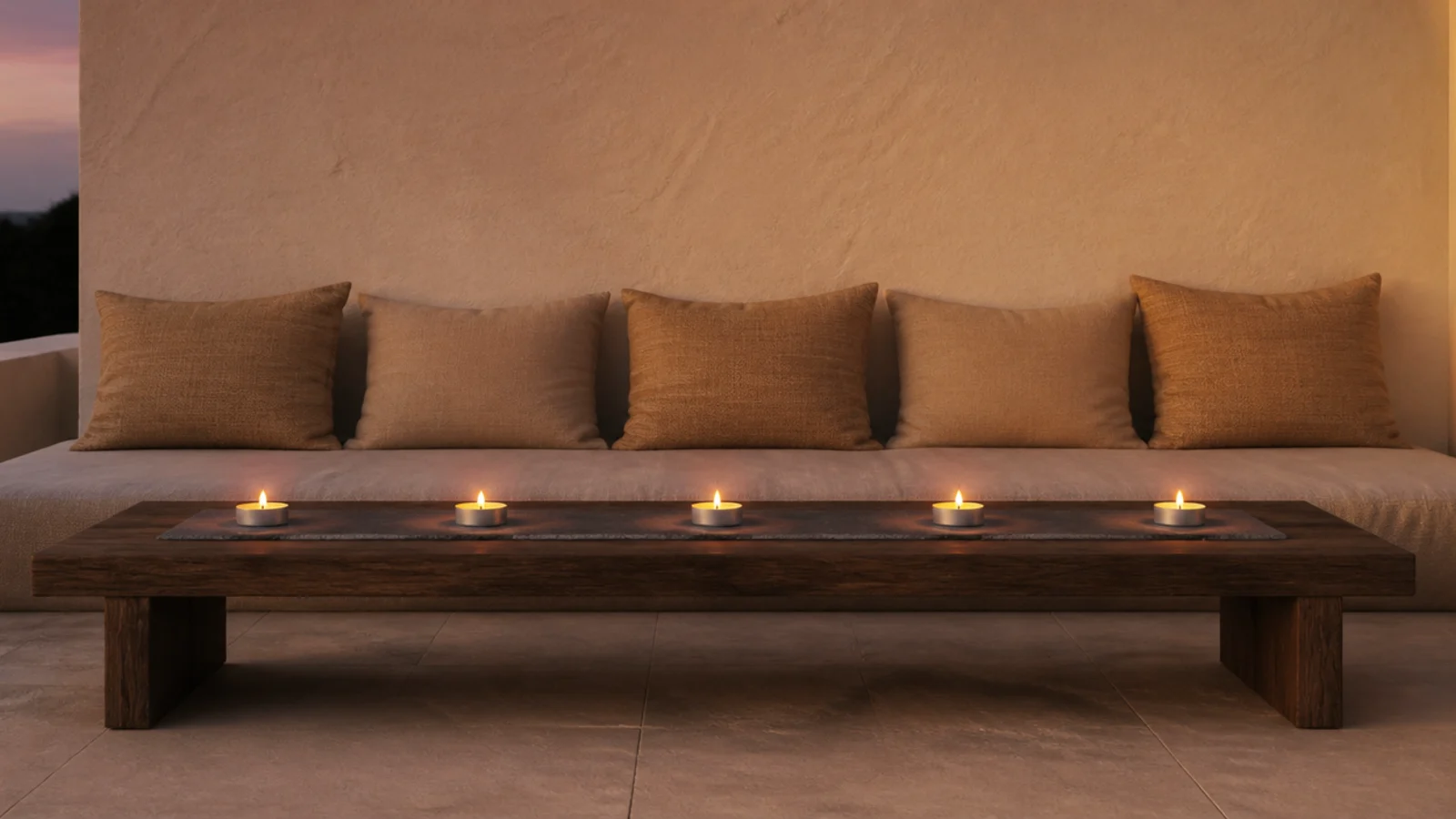
9. Run a tealight line down a long table
On a rectangular table over forty inches, a line reads better than a cluster. Five tealights spaced along a narrow slate or metal runner make the table feel intentional.
Leave an inch and a half of clear space between metal cups. Tealights crowded together warm each other, melt too fast and can flare. And keep them in their cups, on stone or metal — never straight onto wood.
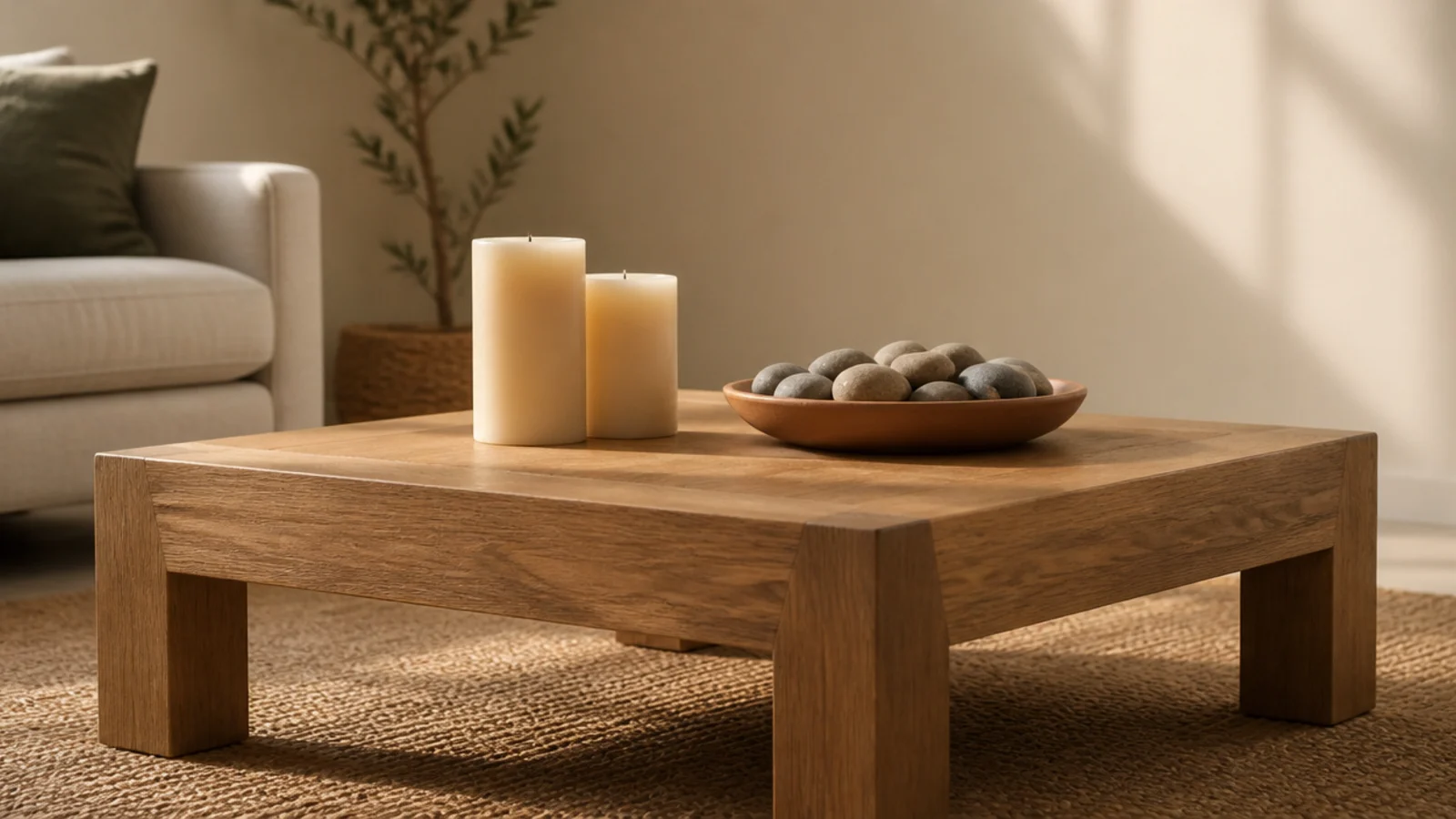
10. Pair wax with something round and low
Candles are all vertical lines, and a table full of vertical lines gets rigid. One round low object — a shallow terracotta bowl, a smooth stone, a coiled linen napkin — settles the whole group.
Put it slightly off center rather than in the middle. The asymmetry is what stops the arrangement looking like a shop display.
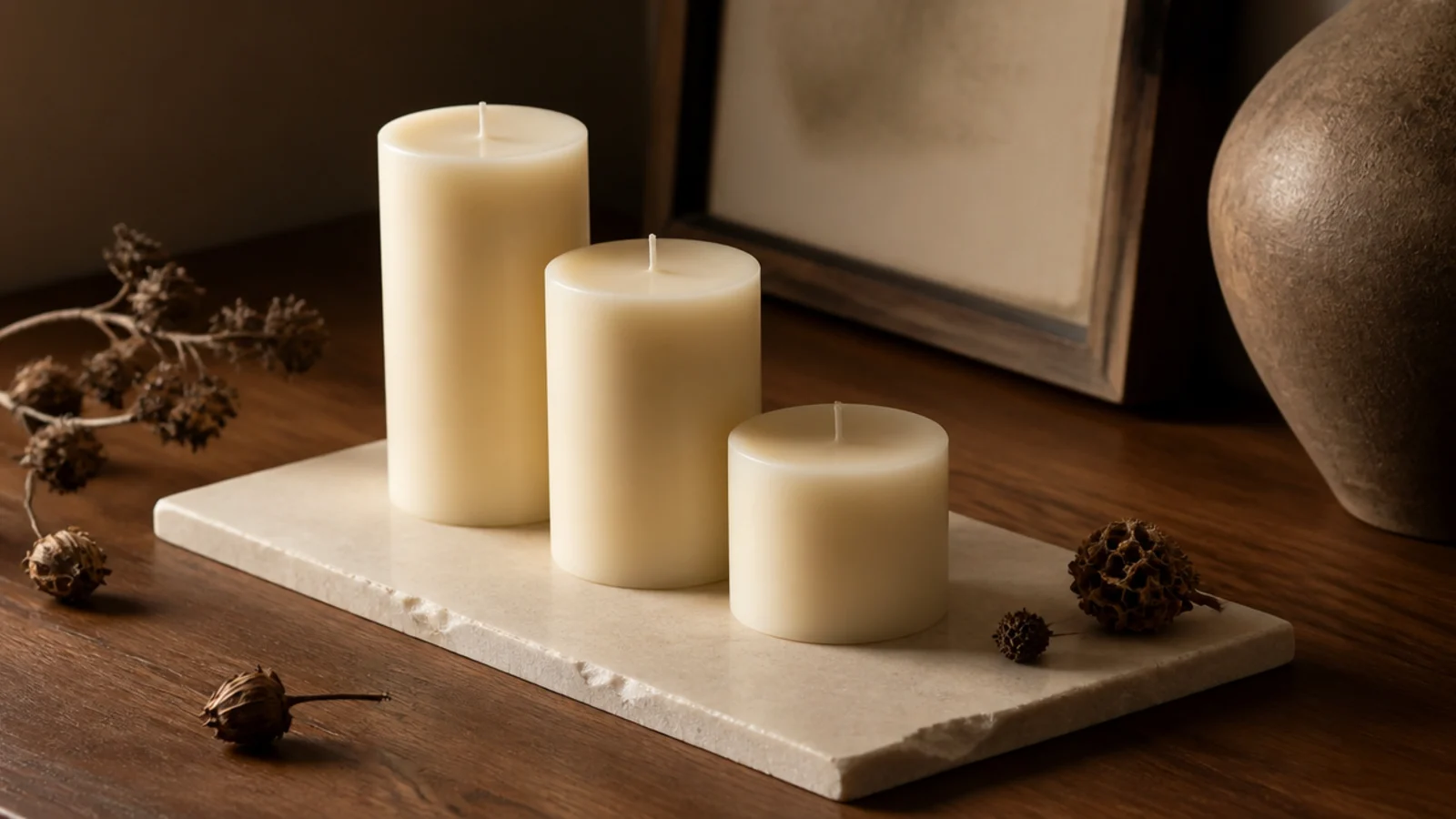
11. Stand a pillar trio on a stone slab
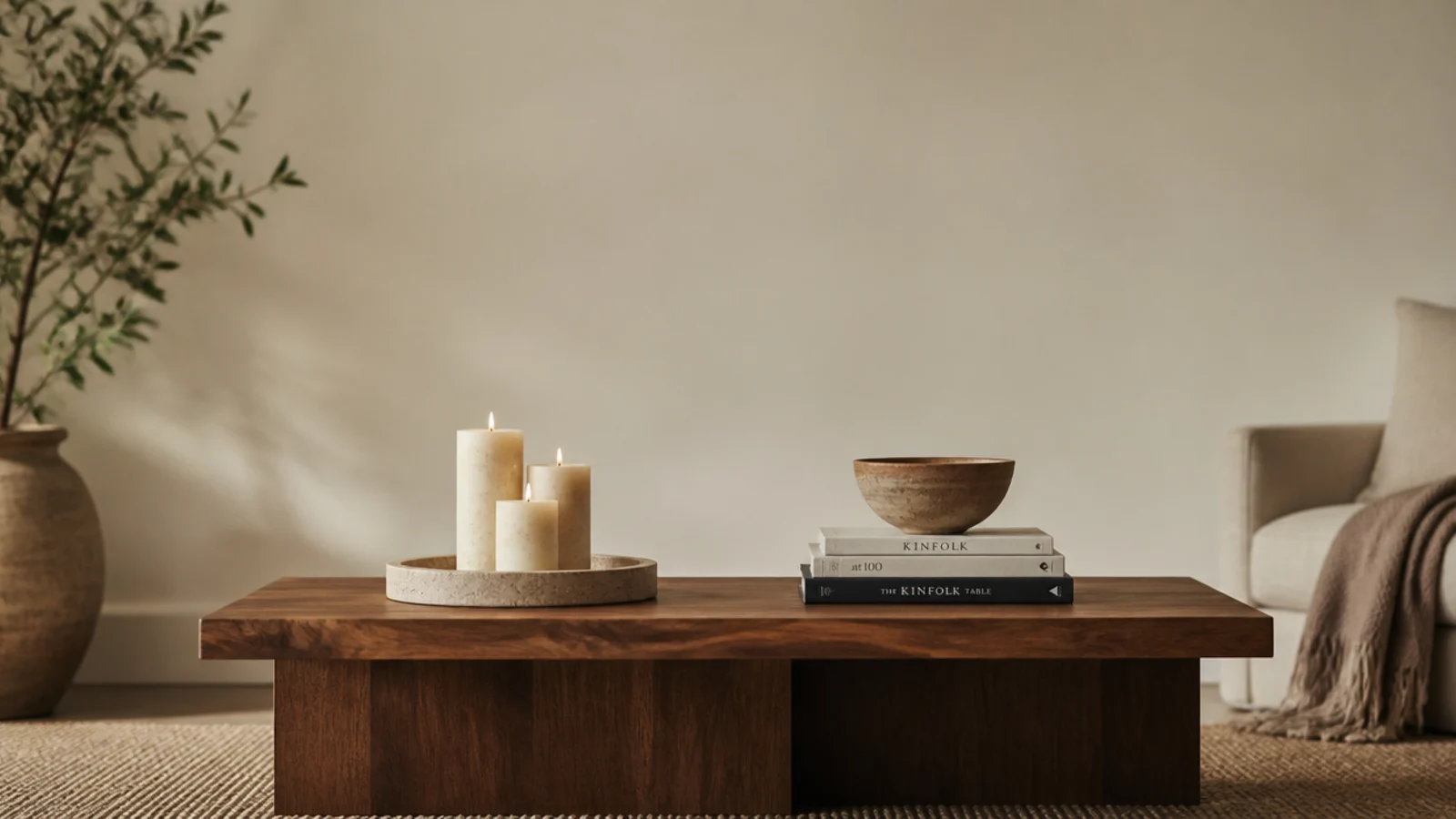
Three pillars grouped on a rectangular slab of stone read as a single sculptural object instead of three separate candles.
Look for offcuts at a stone yard or a tile store; a honed twelve-by-six piece often costs $10 to $25 and weighs enough to feel permanent. Pillars three inches wide or more burn most evenly on a flat base like this, staying straight instead of collapsing down one side.
12. Swap the greenery, never the clearance
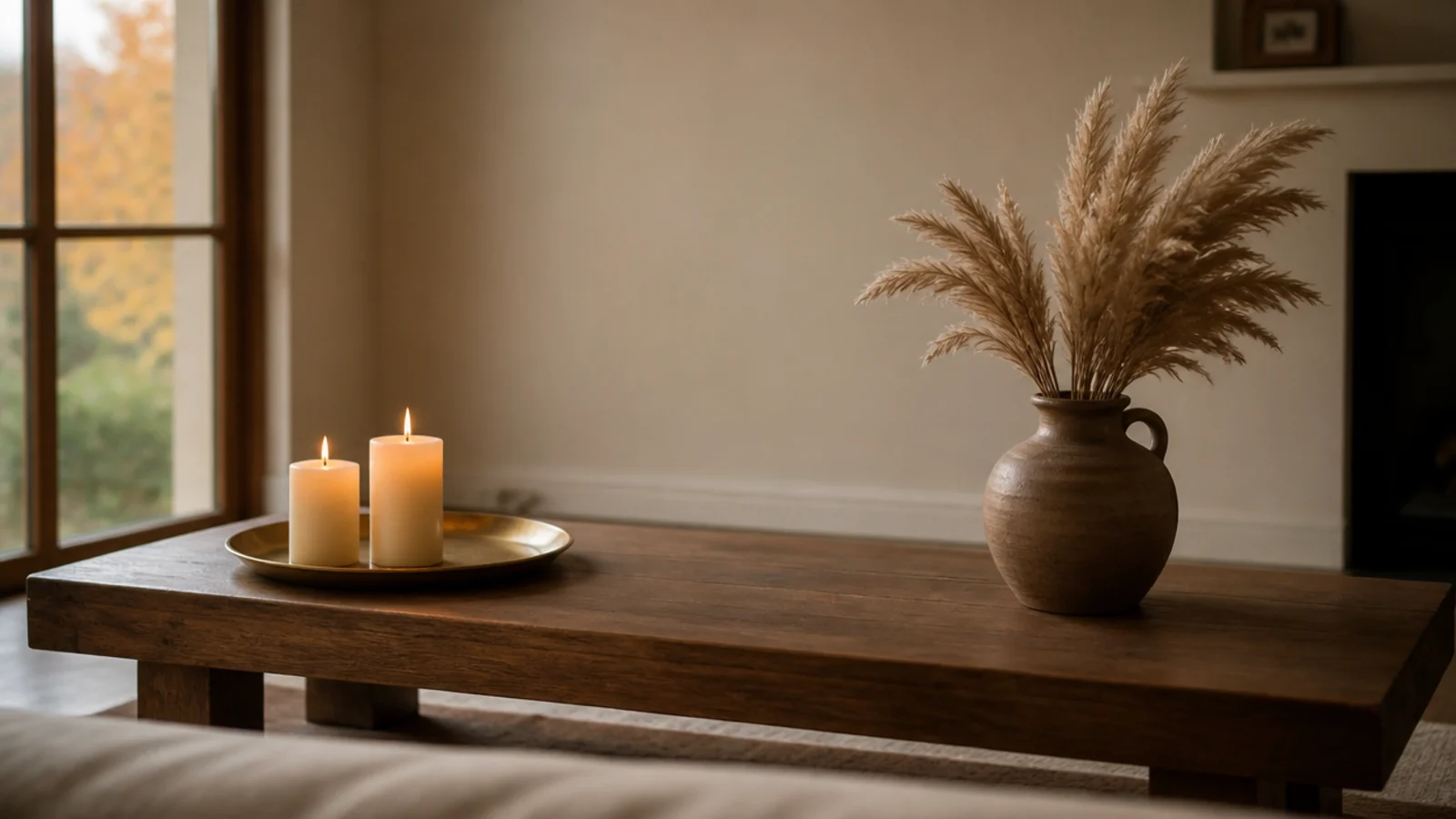
Seasonal stems next to candlelight look wonderful in photographs and cause real problems in life. Dried grasses, eucalyptus and evergreen are all extremely flammable.
Keep any stems a full twelve inches from every flame, and put them at the opposite end of the table rather than tucked around the candles. Swap the stems as often as you like — the distance stays the same in January and July.
13. Light one candle and one warm lamp
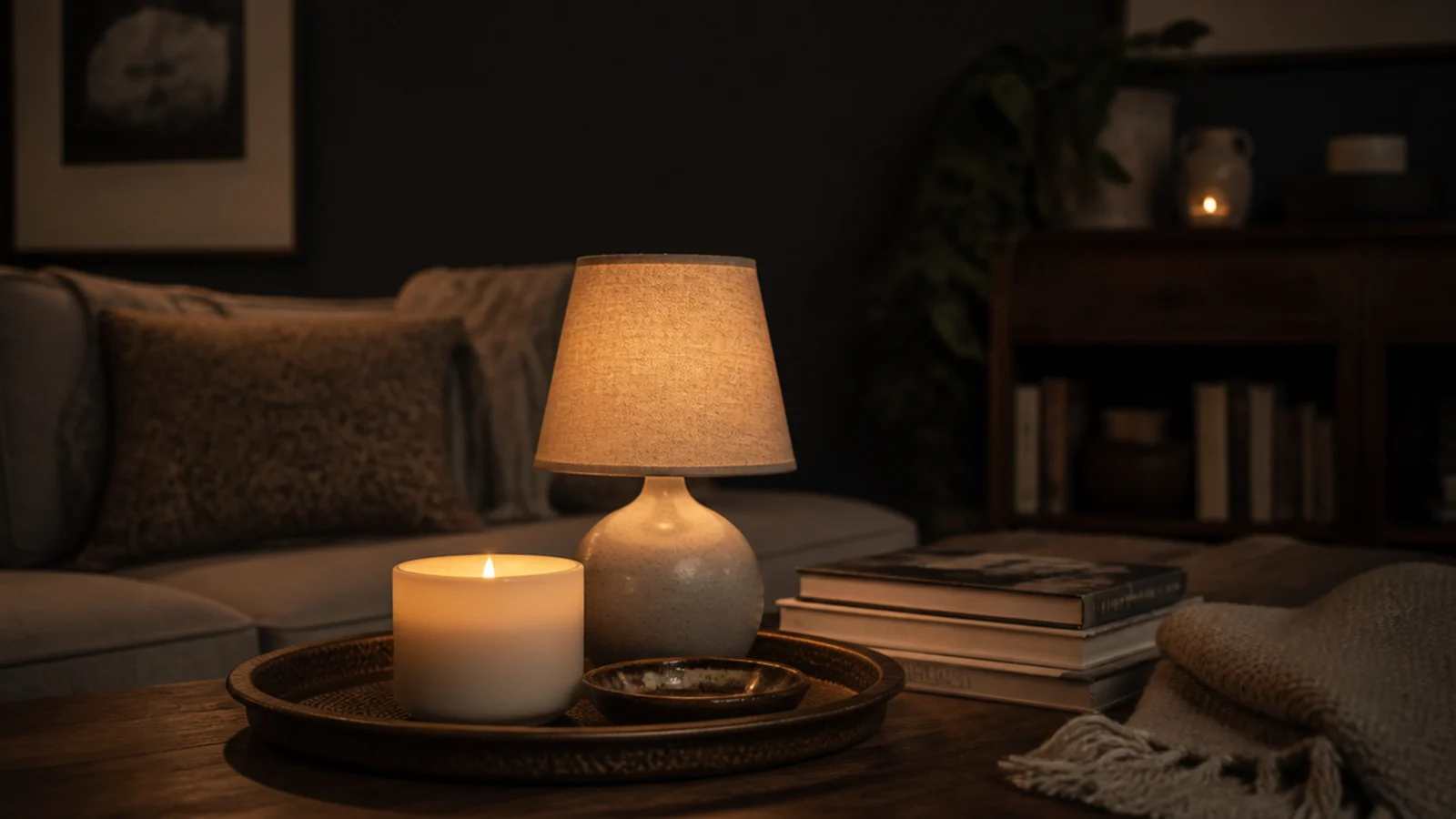
Candles do not light a room, they warm it. The combination that actually works at night is one flame on the coffee table plus one small lamp with a 2700K bulb.
Overhead lighting cancels candlelight completely. Switch the ceiling light off, and a single candle suddenly looks like it is doing something. This is the cheapest atmosphere upgrade in any living room, and there is more on it in candle decor for the living room.
14. Push the arrangement off the walkway edge
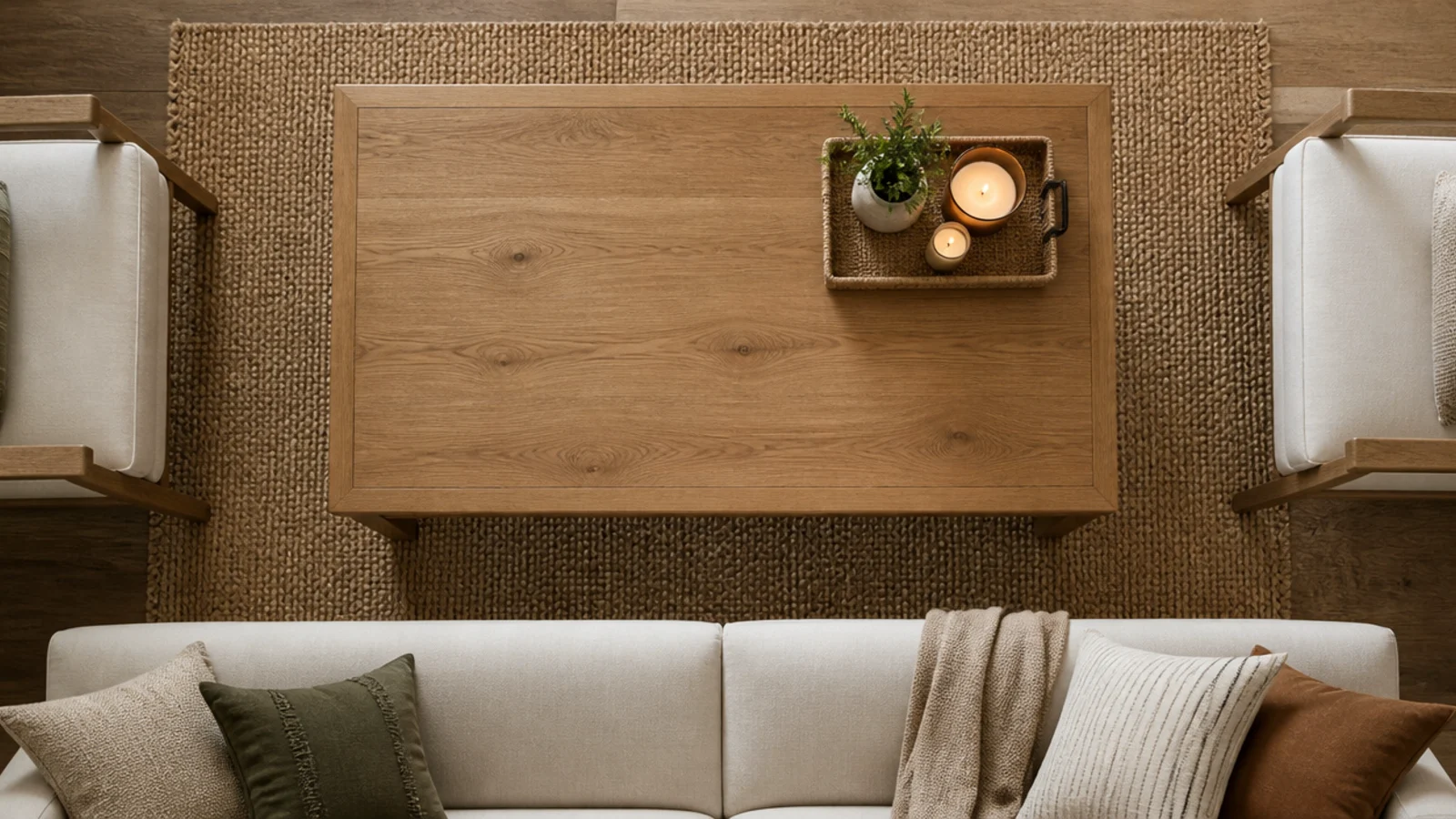
Candles at the near edge of a coffee table get caught by knees, sleeves and feet on their way to the sofa.
Set the tray two to three inches in from the far edge, on the side away from the main walking route. It reads better in the room too, because the empty near edge gives people somewhere to put a mug without disturbing anything.
15. Use a marble or slate offcut as a base
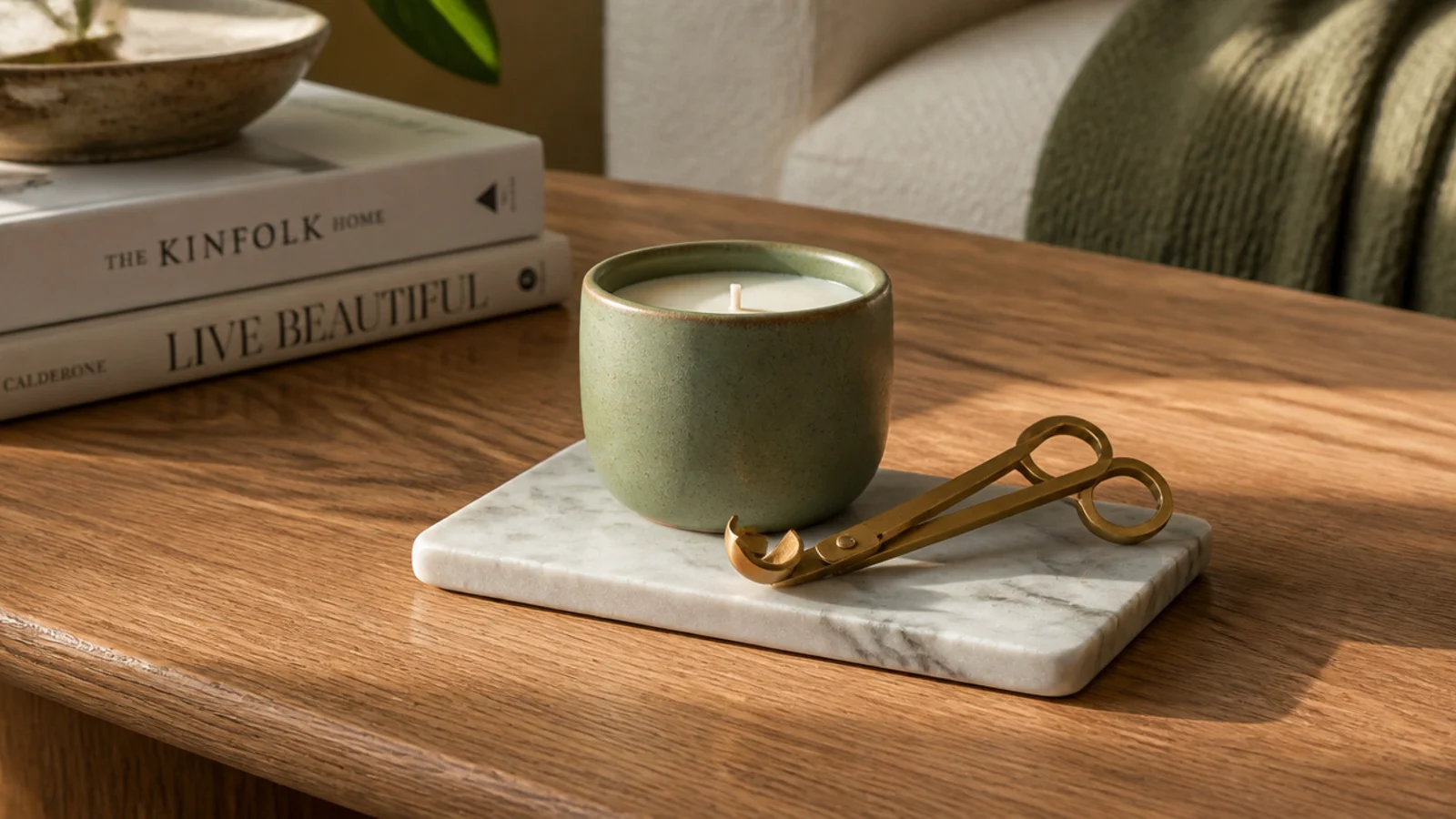
If you own one nice wooden table, protect it properly. A marble, slate or granite offcut is heat-resistant, non-flammable and immovable.
Stone yards sell remnants for $10 to $30, often with the edges eased for a few dollars more. Stick felt pads underneath so the stone does not scratch the very surface it is protecting, and let it live on the table permanently rather than appearing only when candles do.
16. Go flameless where small hands reach
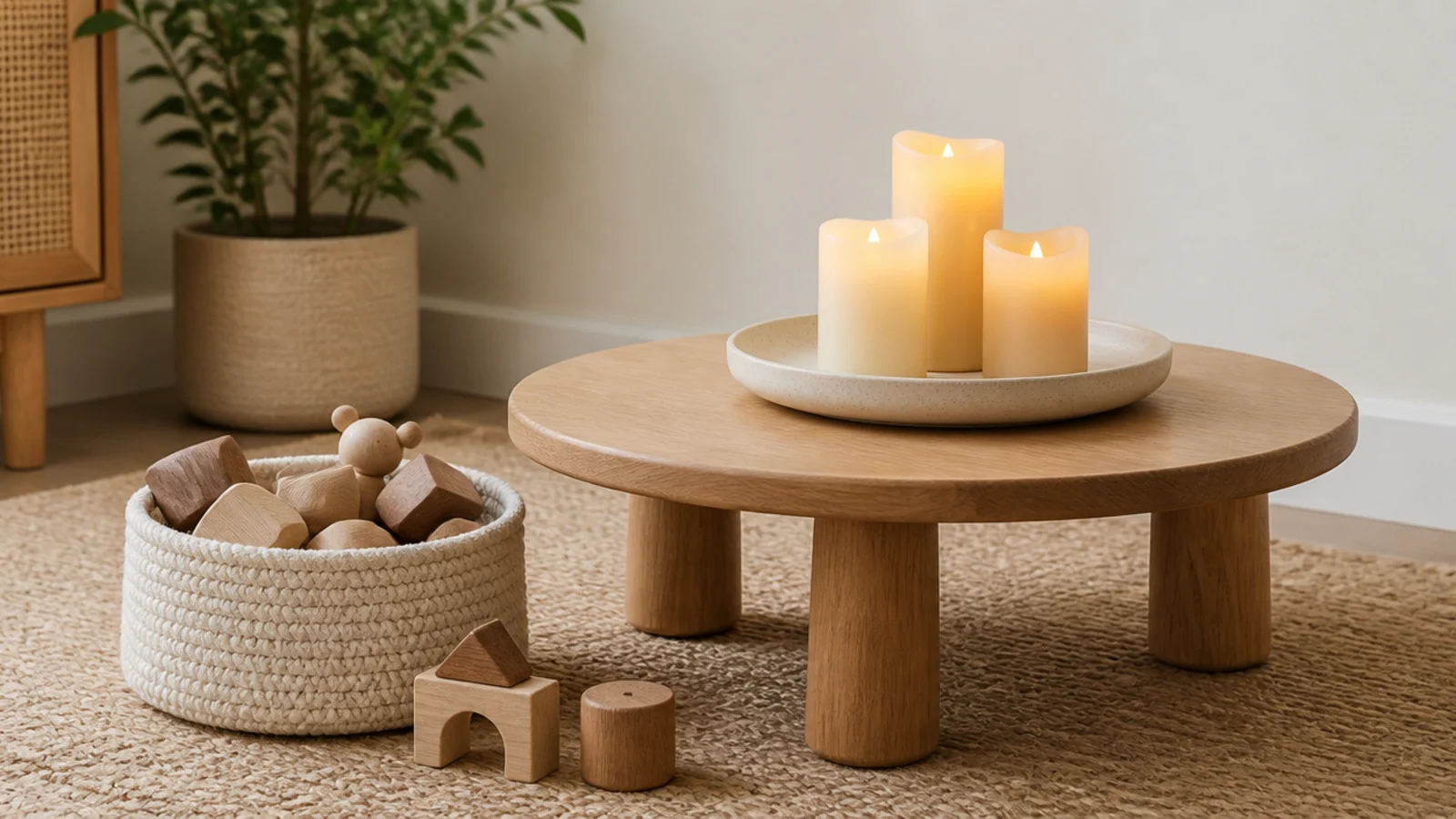
In a house with a crawling baby or a determined cat, the coffee table is the wrong place for an open flame, and no amount of care changes that.
Flameless wax candles with a moving flame tip and a warm-white glow look convincing at conversational distance, and a set of three runs $12 to $30. Put them on a tray exactly as you would real ones, and light real candles somewhere higher and out of reach.
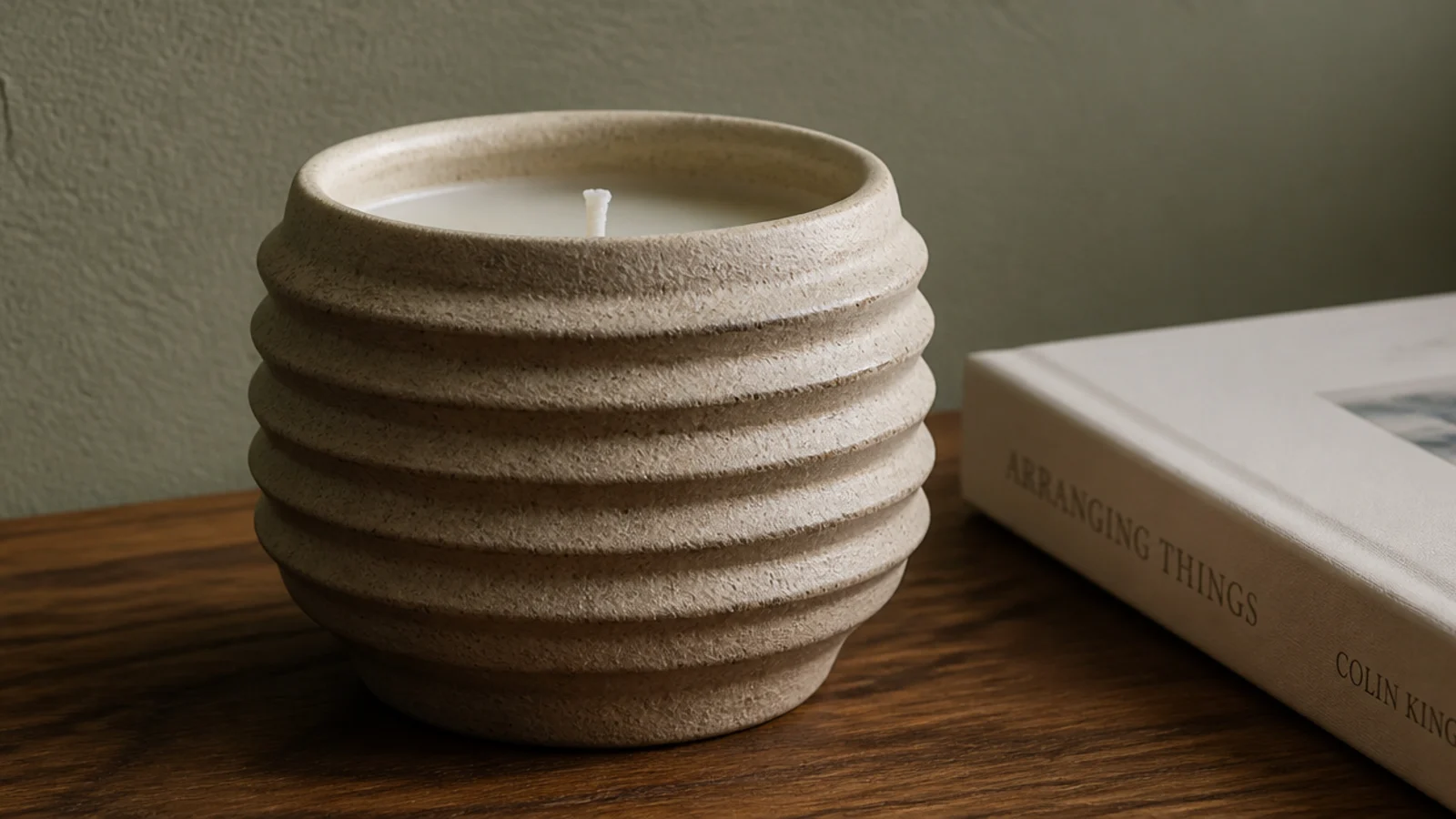
17. Choose one textured vessel for interest
In a neutral room, texture is what stops everything reading flat. One heavily ribbed or hand-thrown stoneware vessel among plain candles adds shadow without adding color.
Keep it to one textured piece per grouping. Two competing textures on the same tray cancel each other out, and the ribs stop being the thing you notice.
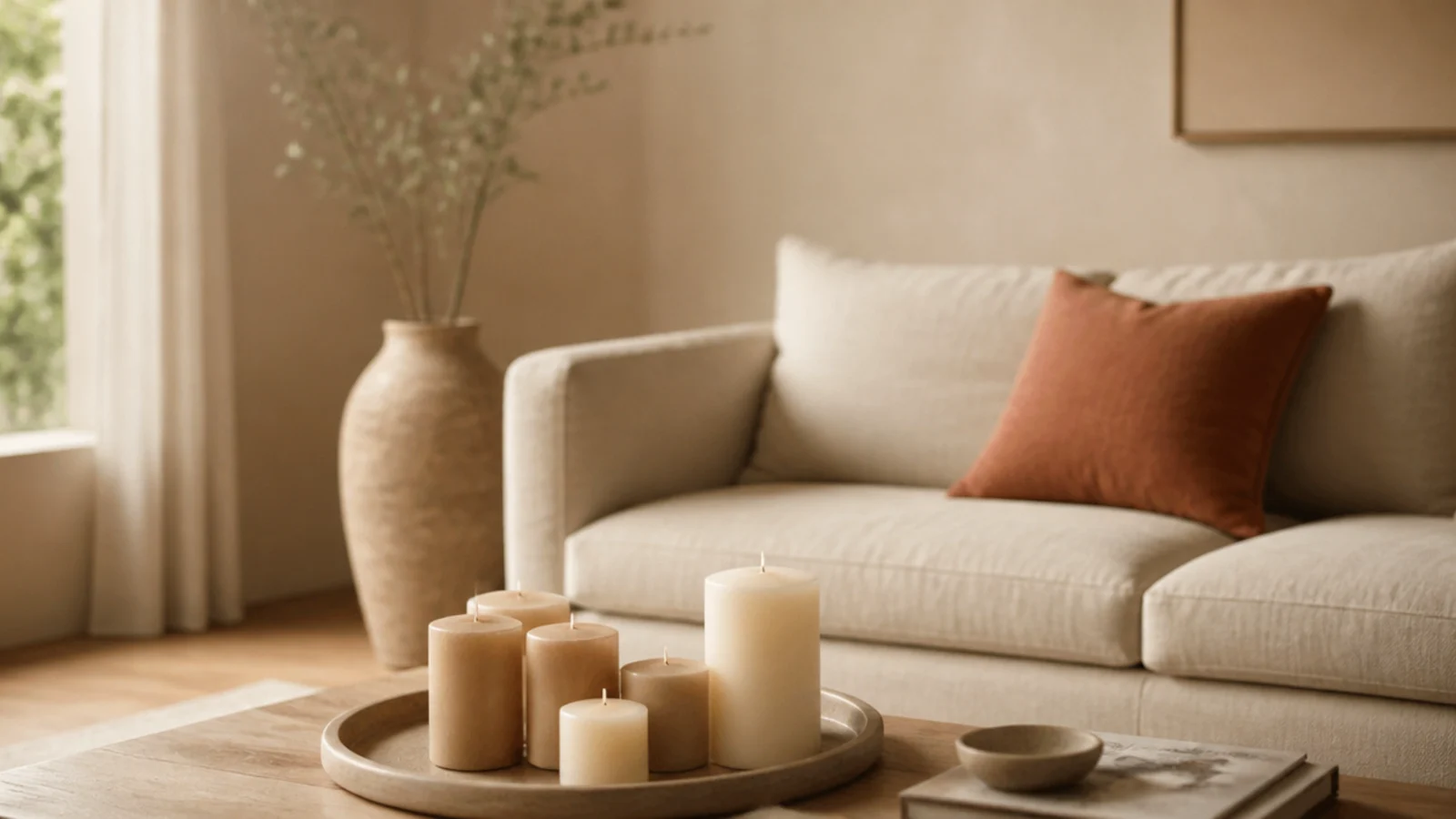
18. Match the wax to your neutrals
Cream wax against cream walls, sand wax against oak, chalky white against plaster. Matching the candle to the room makes a cheap candle read as expensive.
Colored wax dates fast and rarely matches anything you already own. If you want a color moment, put it in the vessel — a terracotta or sage stoneware holder — and keep the wax itself neutral.
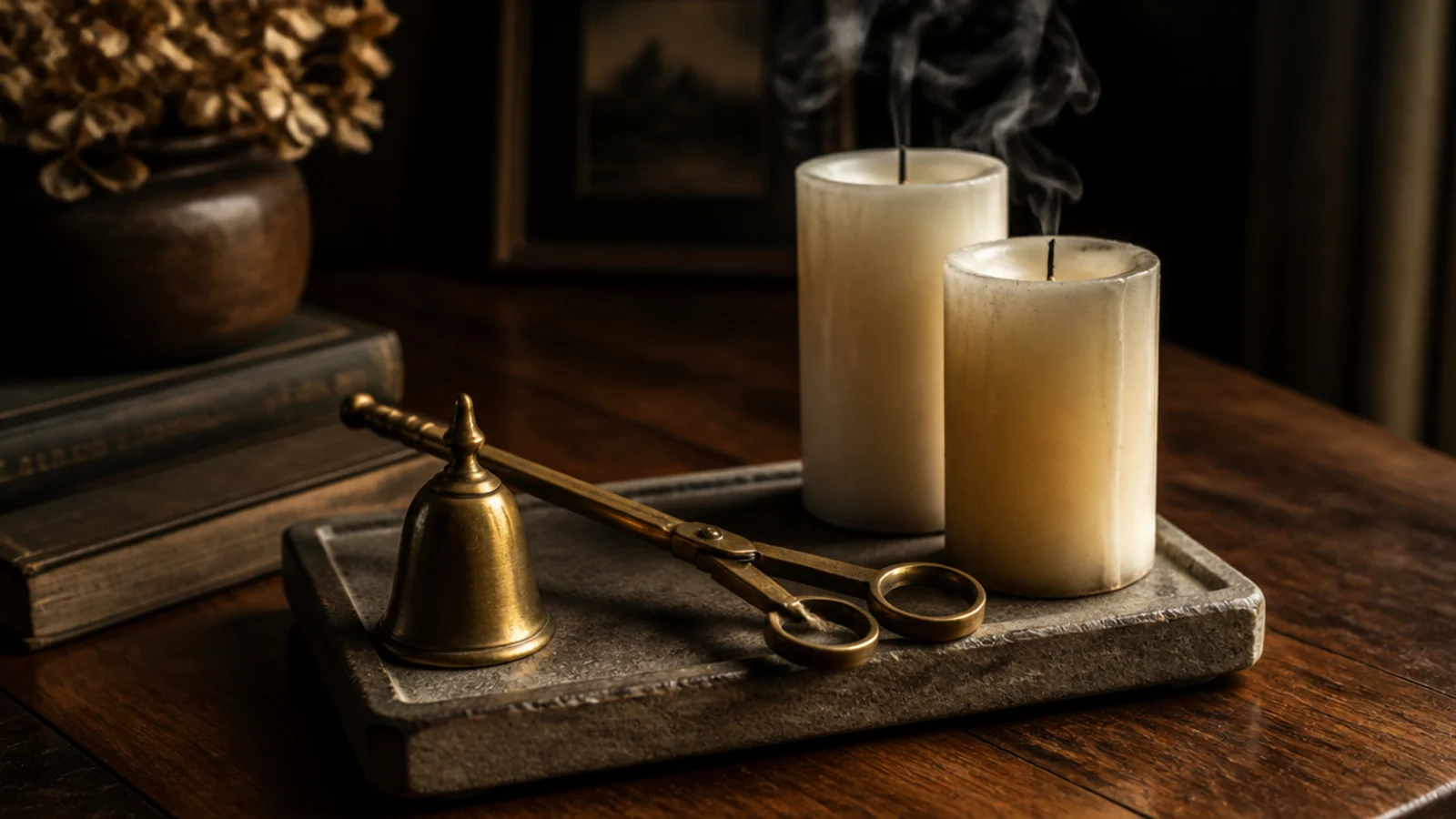
19. Keep the snuffer on the tray
Blowing a candle out sends a plume of smoke across the room and up the wall, and over months that plume marks paint.
A brass snuffer or a wick dipper costs $8 to $15 and kills the flame cleanly. Keep it on the tray, not in a drawer — the tool you can see is the tool you use, and it doubles as one of the small objects in the grouping.
20. Build a tray you can carry away
The last idea is a habit rather than a purchase. If everything lives on one handled tray, the end of the evening is a single action: snuff each wick, check every flame is out, and carry the tray to a heat-safe surface out of the way.
Nothing gets forgotten in a dark room, nothing keeps burning after you have gone up to bed, and the table is clear again for tomorrow.
Mistakes to Skip
- Putting a jar candle straight onto the table. Glass gets hot near the base and leaves a permanent ring in wood or laminate. A tile, stone offcut or lined tray costs a few dollars.
- Building the arrangement around a paper or fabric runner. Runners slide, and a sliding runner under a lit candle is how a flame ends up on its side.
- Leaving the room with candles lit, or falling asleep on the sofa with one burning. Snuff every flame before you go, even if you are only stepping out for a minute.
Frequently asked questions
How tall should candles be on a coffee table?
Keep the tallest element under about twelve inches so people can see across the table while sitting. Six-inch pillars, short tapers in low holders and squat vessel candles all clear that easily. Tall tapers belong on a dining table where everyone is seated higher, or on a console against a wall where nothing has to be seen over.
How many candles should go on a coffee table?
Three or five, never four or six. Odd numbers group naturally because your eye reads them as one shape instead of matched pairs. On a small table three is plenty; on anything over forty inches long, five arranged at three different heights fills the surface without crowding the drinks and remotes that also live there.
What do I put under candles to protect a wooden coffee table?
Something heat-resistant and non-flammable: a stone or metal-lined tray, a glazed tile, a ceramic plate or a slate coaster. A burning jar transfers real heat down into whatever it stands on, and wood, laminate and painted finishes all mark. A tray solves protection and composition in one purchase for about fifteen dollars.
Should coffee table candles be scented?
One scented candle at a time in an average living room is plenty, and none at all if you eat at the coffee table. Two or three different fragrances burning together turn muddy and give people headaches. I keep the scented one on the coffee table and every other candle in the room unscented.
How do I keep candles safe around pets and kids?
Put every flame behind glass or use flameless. A hurricane cylinder or a cloche stops a wagging tail and a curious hand, and a low table is exactly toddler height. Keep flames twelve inches from anything flammable, never leave a burning candle unattended, and put everything out before you leave the room.
Why does my coffee table candle burn down one side?
Usually a draft. An air vent, an open window or a ceiling fan pushes the flame sideways, so the wax melts unevenly and the wick starts to lean. Move the candle, close the vent or drop a hurricane glass over it. Trimming the wick to a quarter inch before every burn also keeps the flame small and upright.
Start with a tray, cap the height at twelve inches, and put stone or ceramic under everything that burns — the styling gets easy after that. Candle centerpiece ideas covers the dining table version with taller tapers, and the mistakes I made covers what happens when the clearance slips. If your evening spot is outside, cozy apartment balcony has the wind-proof approach. Save the pin below for the next reset.
Want more like this? Browse all 15 aesthetic candle decor guides — they all use the same measurements and budget tiers.
Pin it for later
Save this to your Aesthetic Candle Decor board
Pin it now so it is waiting for you when the tape measure comes out — and so the next person hunting for this idea can find it too.
Save this pinKeep going
More ideas worth saving while you have the tape measure out.