Headboard Ideas · Listicle
20 Genius Headboard Ideas for a Cozy Home

Headboard alternatives exist for a simple reason: a panel is expensive, heavy, and awkward to hang in a place you do not own. I have furnished four rentals without ever buying an actual headboard, and the bedrooms still read as finished. What a bed needs is a top line — something that frames the pillows — and twenty things below do that job.
In this guide22 sections — tap to openHide
- 1.When headboard alternatives beat an actual headboard
- 2.A painted arch straight onto the wall
- 3.A painted rectangle one shade deeper
- 4.A horizontal painted band across the wall
- 5.A peel-and-stick paper panel
- 6.Picture-frame moulding on the plaster
- 7.A flat-weave rug hung behind the bed
- 8.A quilt folded over a rod
- 9.A full-width linen curtain
- 10.A woven or macrame wall hanging
- 11.A gallery wall in a headboard shape
- 12.A grid of nine identical frames
- 13.An oversized leaning mirror
- 14.A folding screen behind the bed
- 15.A salvaged door on a barn track
- 16.A long floating ledge at pillow height
- 17.A pair of tall shutters
- 18.A wall-mounted bolster on a rail
- 19.Euro pillows standing against the wall
- 20.Two narrow bookcases flanking the bed
- 21.A leaning slatted screen
- 22.Mistakes to Skip
When headboard alternatives beat an actual headboard
Three situations. You rent and the lease frowns on fixings. The room is too small to give up an inch of wall. Or the bed sits under a window, in a corner, or somewhere a rectangular panel simply cannot go.
The heights stay the same regardless of material. Low profile means the top edge lands 24 to 28 inches above the mattress. A statement version — a painted arch, a tall hanging, a leaning mirror — wants 40 to 50 inches. Between those bands, shapes look accidental.
Width follows the mattress: twin 38 inches, full 54, queen 60, king 76, plus up to 4 inches each side. This matters most with paint and wallpaper, where it is tempting to keep going and end up with a shape that has no relationship to the bed at all.
For anything hung, remember that a real headboard takes lateral load every night, and these do not — nobody leans on a painted arch. That means light fixings are genuinely fine here. A slim rod on two drywall anchors carries a quilt; only mirrors and screens need studs or an anti-tip strap.
Budget tiers: paint, moulding and stacked pillows run $12 to $50 ($). Hung textiles, ledges and shutters land at $40 to $140 ($$). Large mirrors, folding screens and barn-track doors start near $200 ($$$).
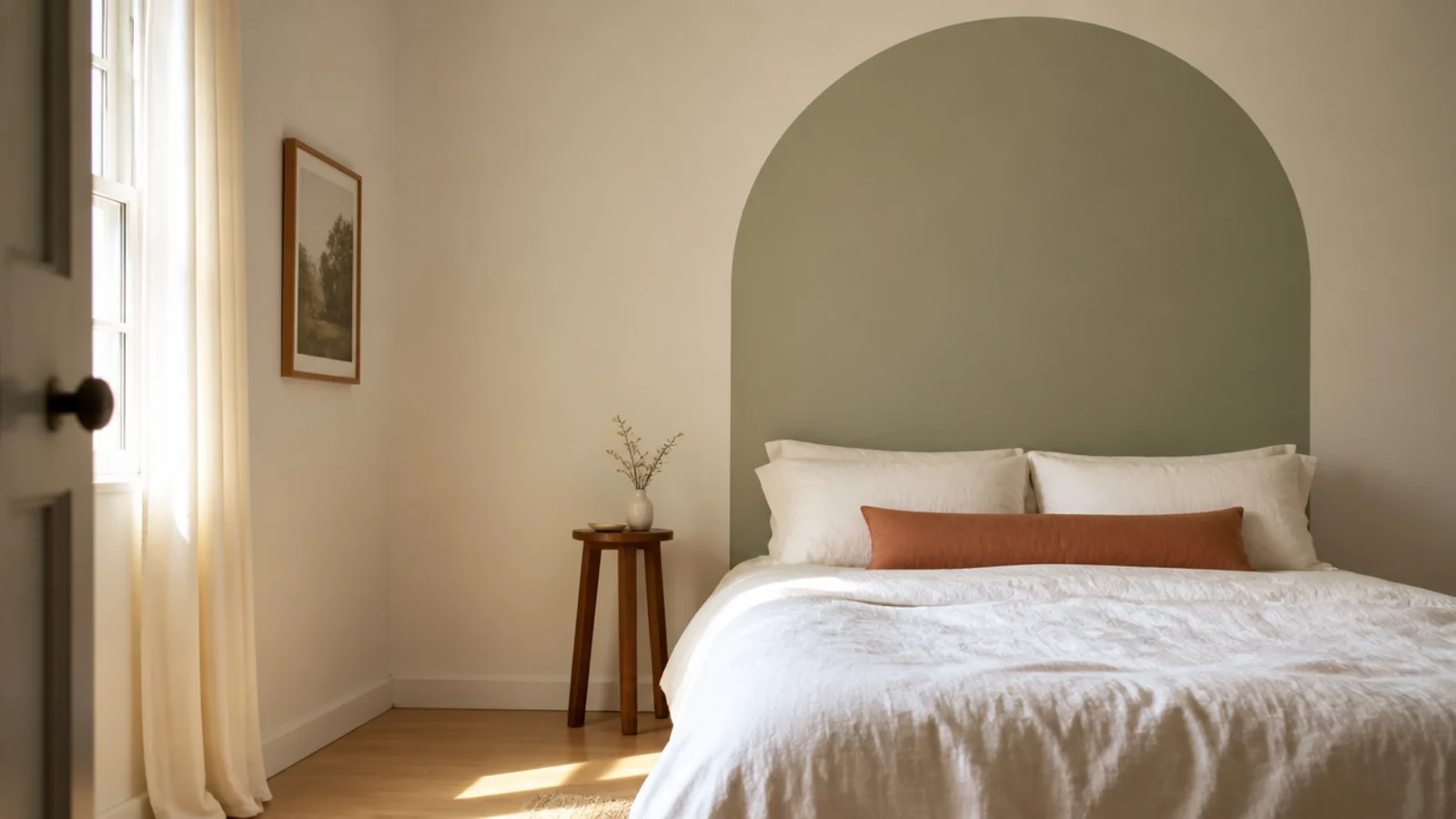
1. A painted arch straight onto the wall
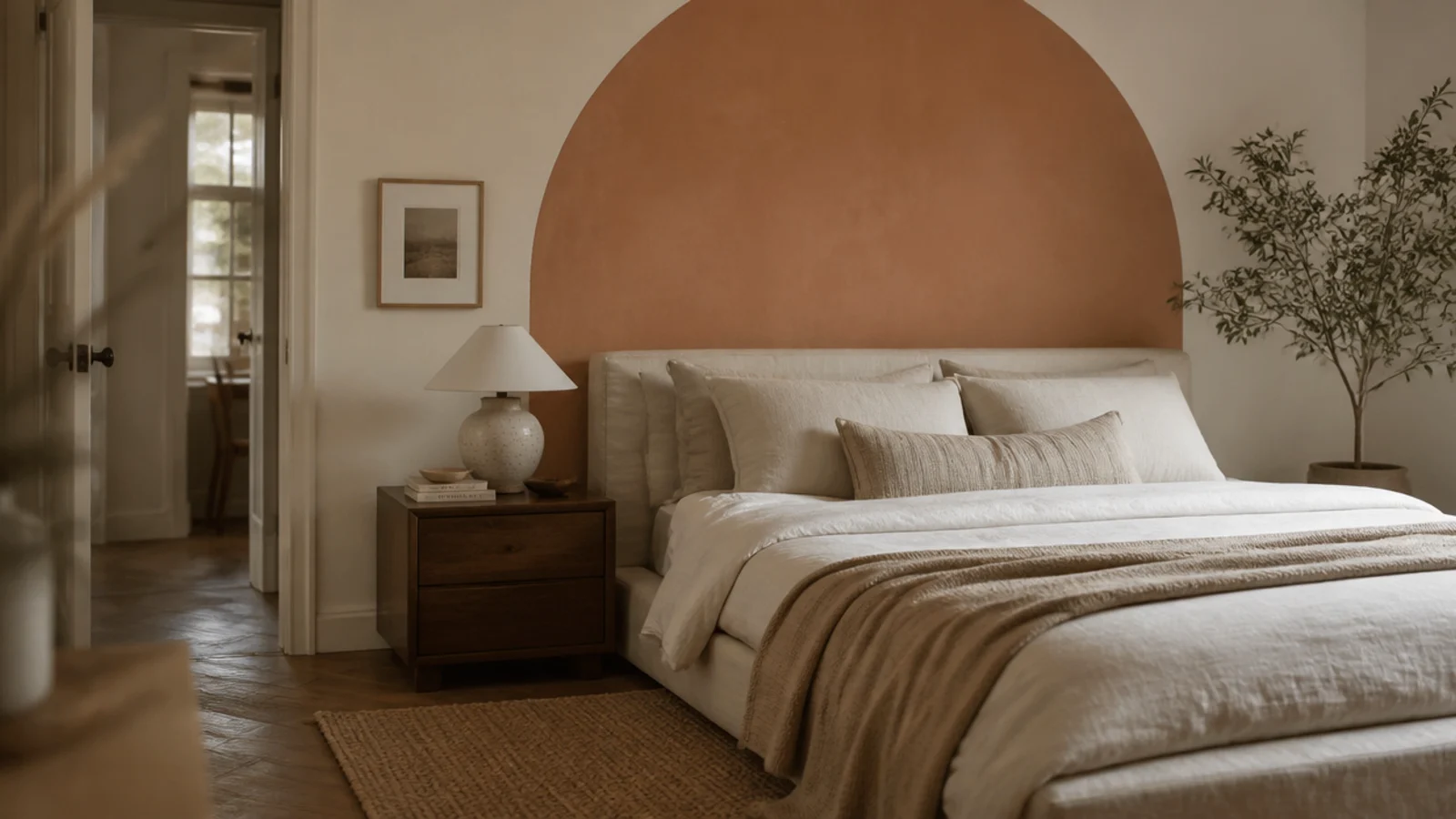
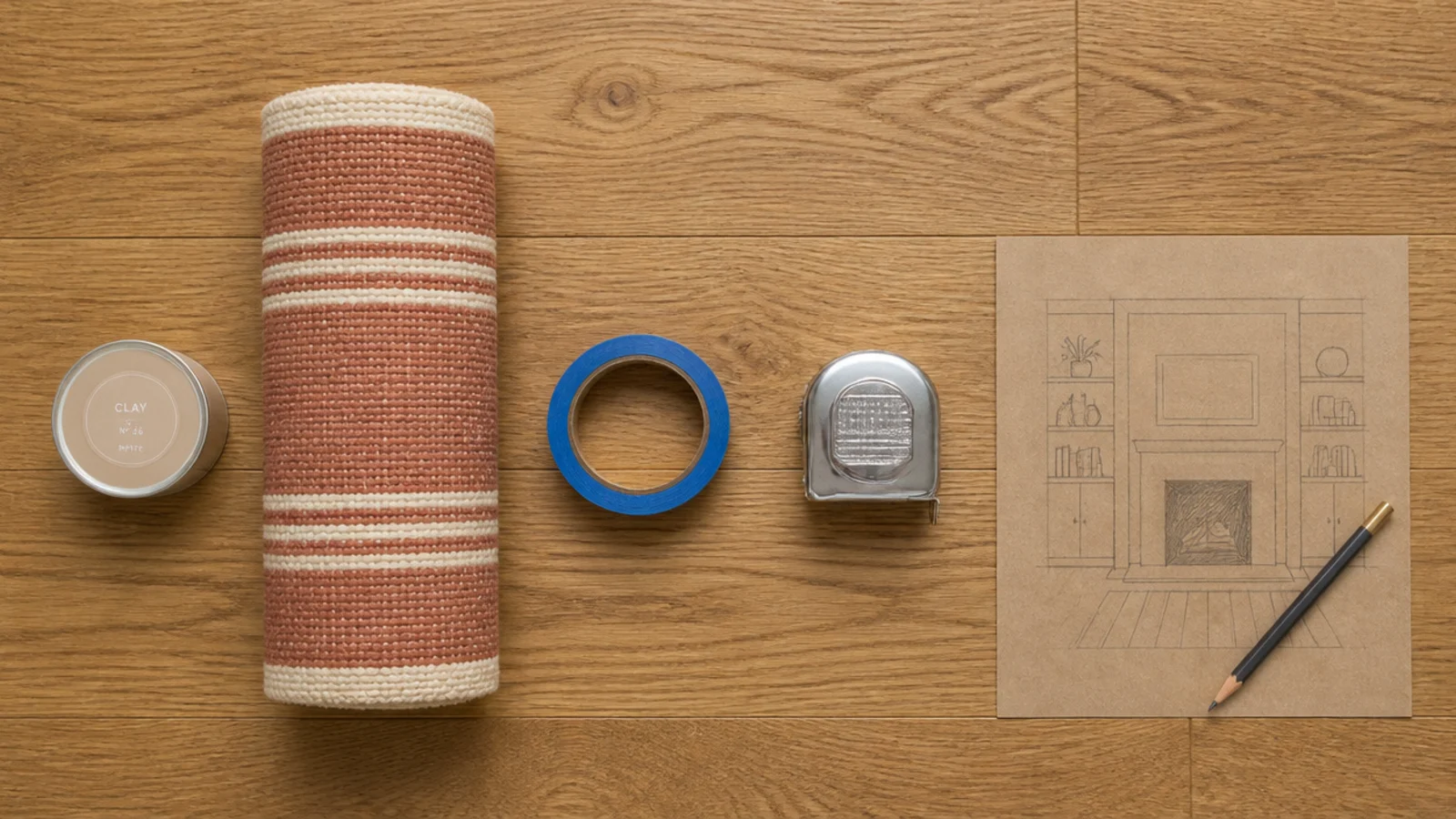
The best cheap idea in this list. A soft arch in clay, sage or warm sand, rising to roughly 48 inches above the mattress, painted directly onto the plaster.
Pin a string at the center point, tie a pencil at the radius you want, and swing the arc. Tape the straight sides, cut the curve in freehand with a 1-inch angled brush, two coats. Keep the width to the mattress plus 2 inches each side. Twelve dollars and one hour, and it reverses with the original wall color whenever you like.
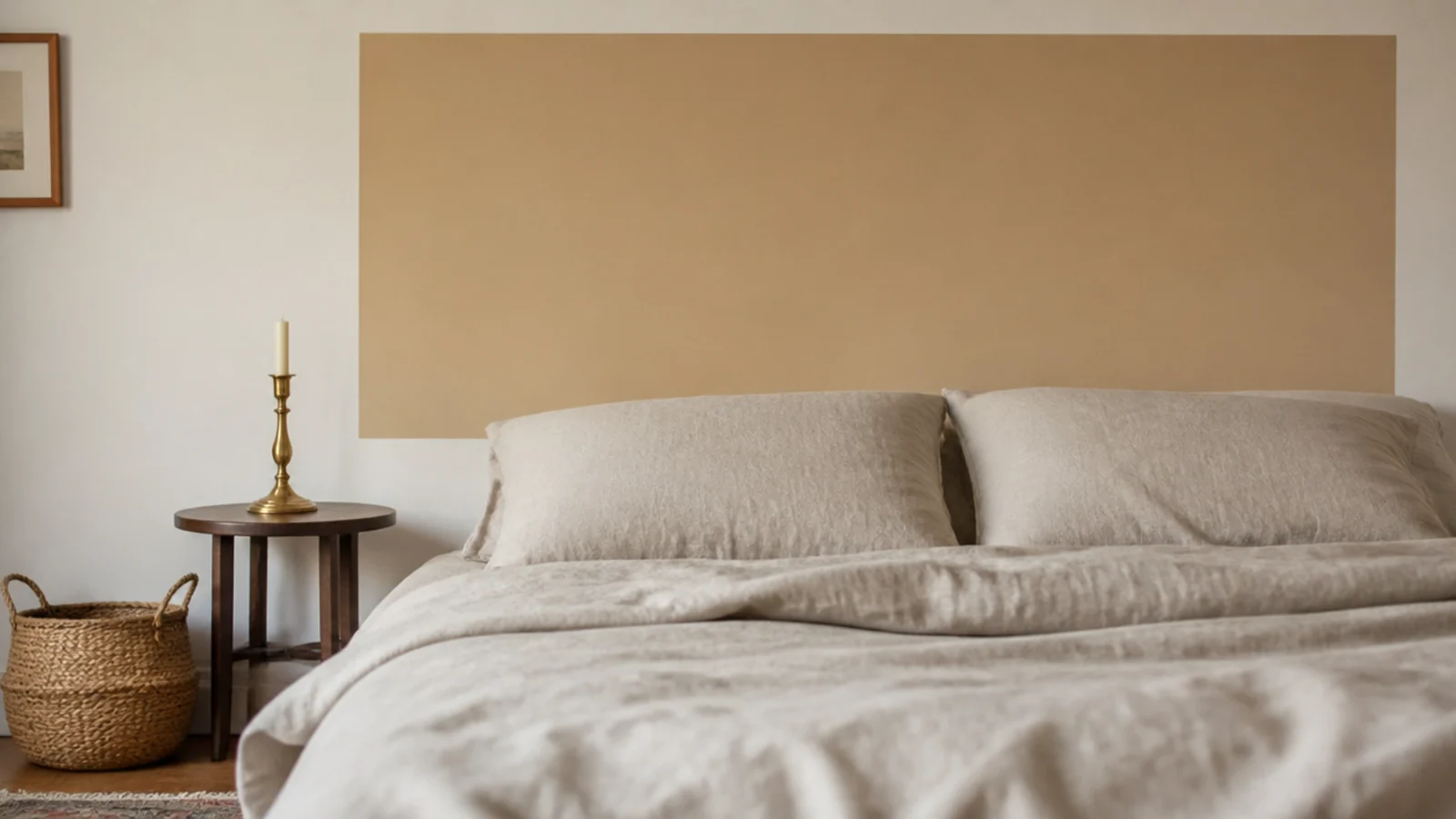
2. A painted rectangle one shade deeper
If an arch feels too soft for the room, a rectangle in a color one or two steps deeper than the wall does the same job with a harder edge.
Sixty inches wide by 40 tall behind a queen. Level the top line with a laser or a long spirit level, because a crooked painted edge is far more obvious than a crooked panel — there is no shadow to hide it. Keep the color in the same family as the wall so the shape reads as depth rather than as a poster.
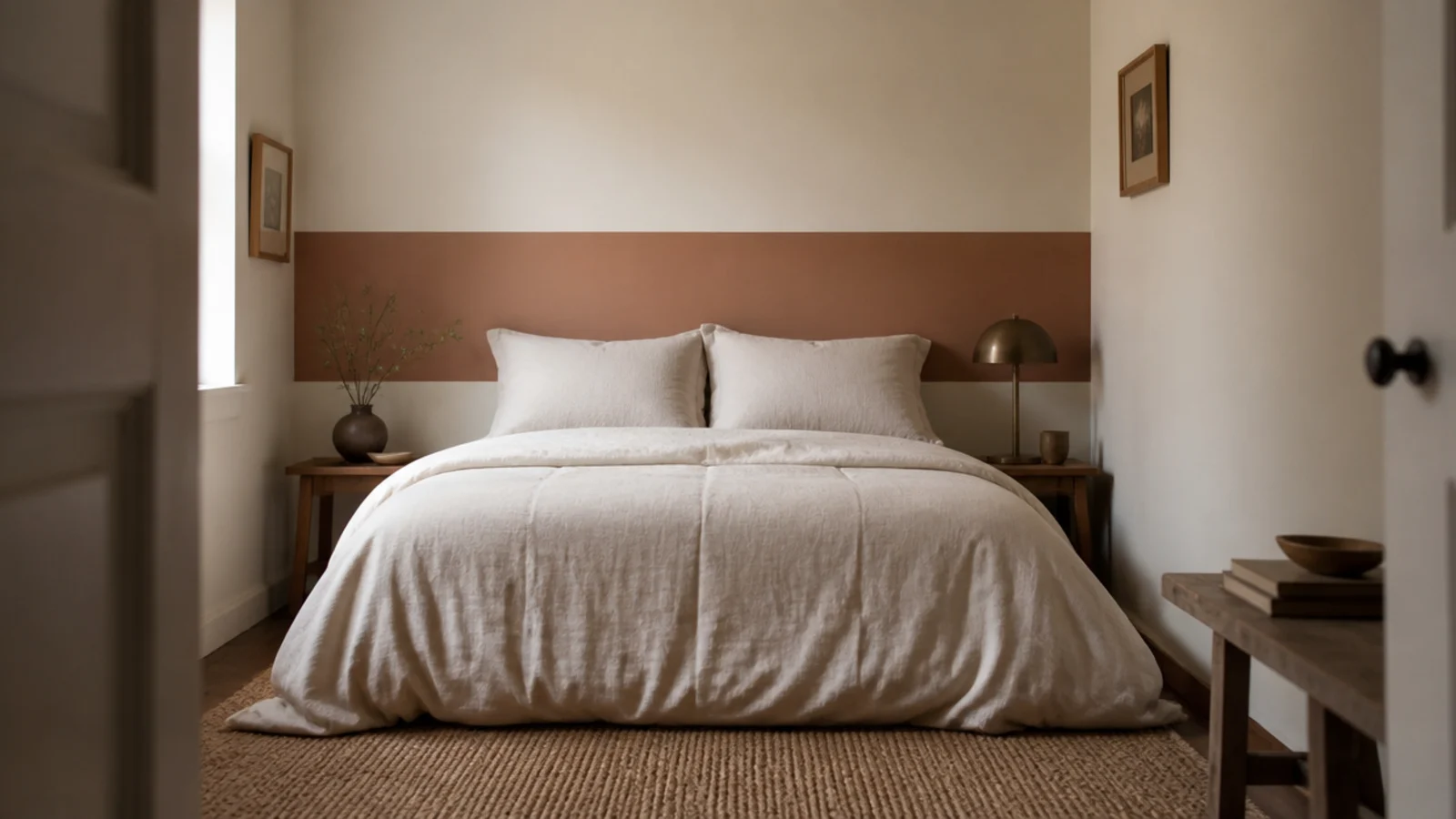
3. A horizontal painted band across the wall
Instead of a shape sized to the bed, run a broad band of color across the entire wall at pillow height, 30 to 36 inches tall.
It reads as a wainscot line and it visibly widens a narrow room, which makes it the version I recommend most for long thin bedrooms. Keep the top edge of the band 6 to 8 inches above the pillow tops so the bed sits inside it rather than cutting across it. One quart covers most walls ($).
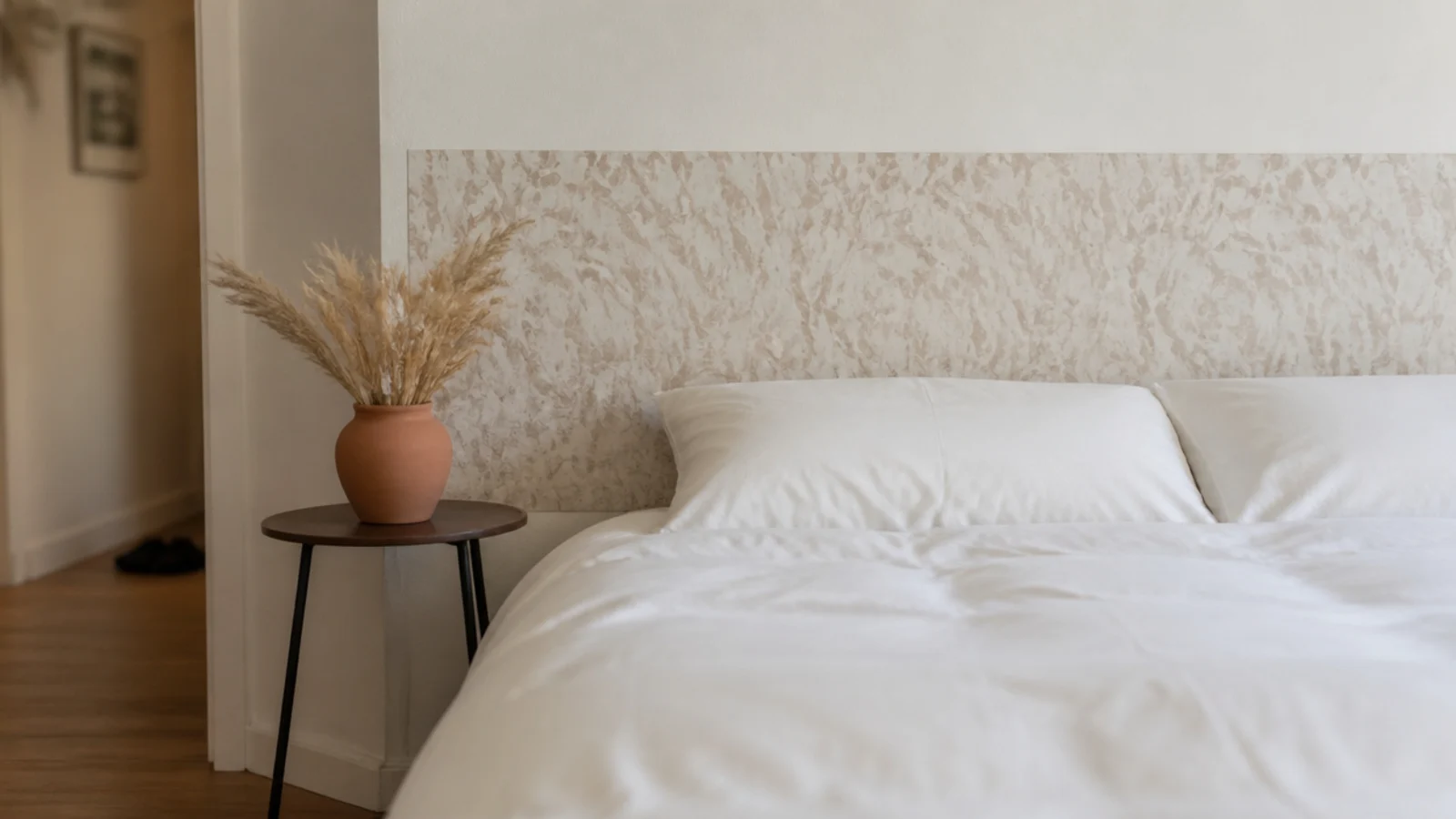
4. A peel-and-stick paper panel
A crisp rectangle of removable paper behind the bed, cut to headboard proportions, optionally edged with a slim batten to sharpen the outline.
Around $30 for a queen-size panel. Test a small square on your wall first, because removable papers lift flat builder-grade emulsion and take the paint with them. On decent eggshell they come off cleanly for years. Choose a small-scale pattern; large repeats need more wall than a headboard shape gives them.
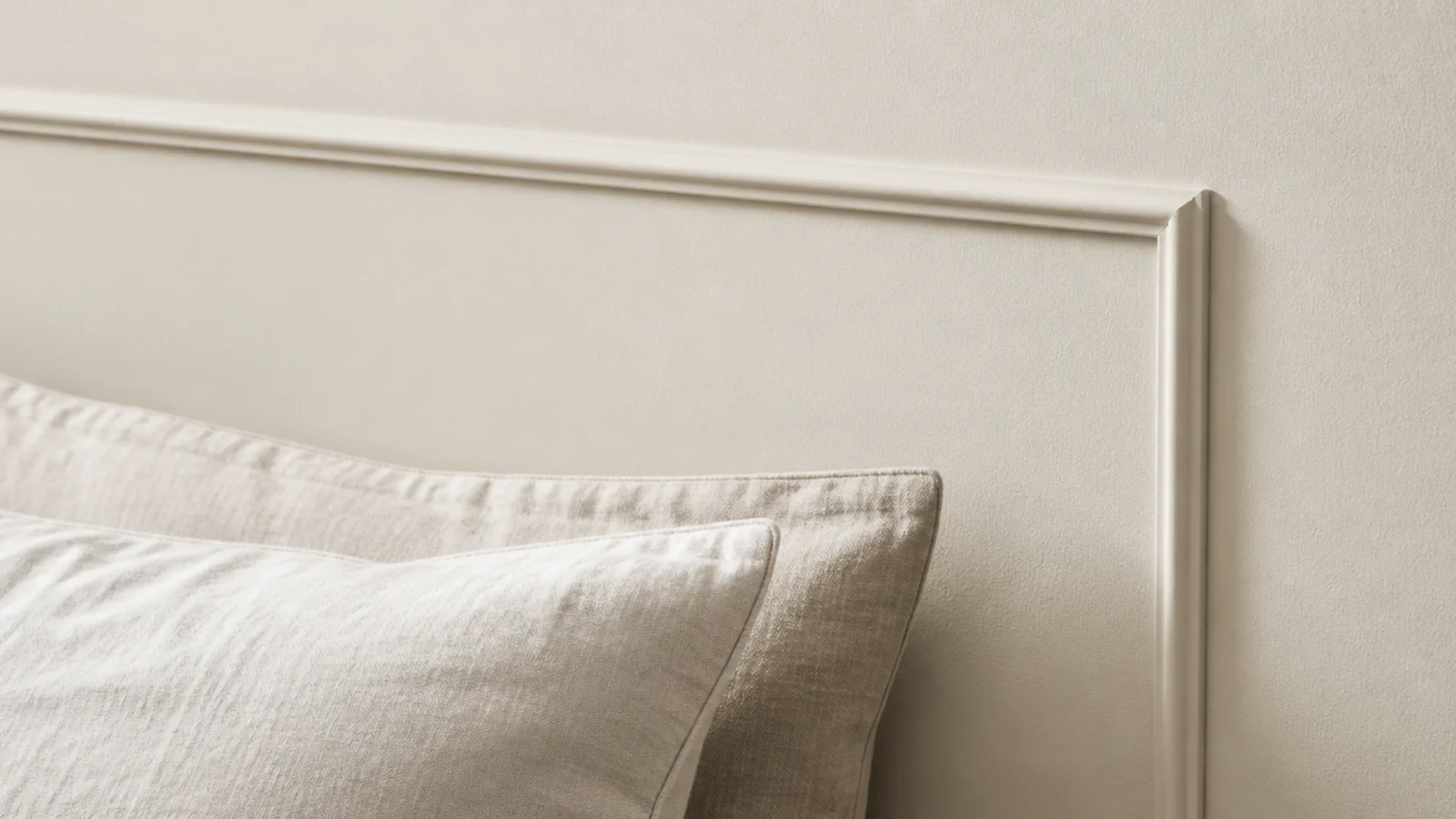
5. Picture-frame moulding on the plaster
Slim applied moulding forming a rectangle behind the bed, painted the same color as the wall so only the shadow lines define it.
This is the trick that makes plain rooms look older and better. Use 1.5-inch profile, miter the corners, glue and pin. Keep 4 inches of clear wall inside the rectangle around the bed outline. About $35 in primed pine moulding ($), and it survives repainting indefinitely.
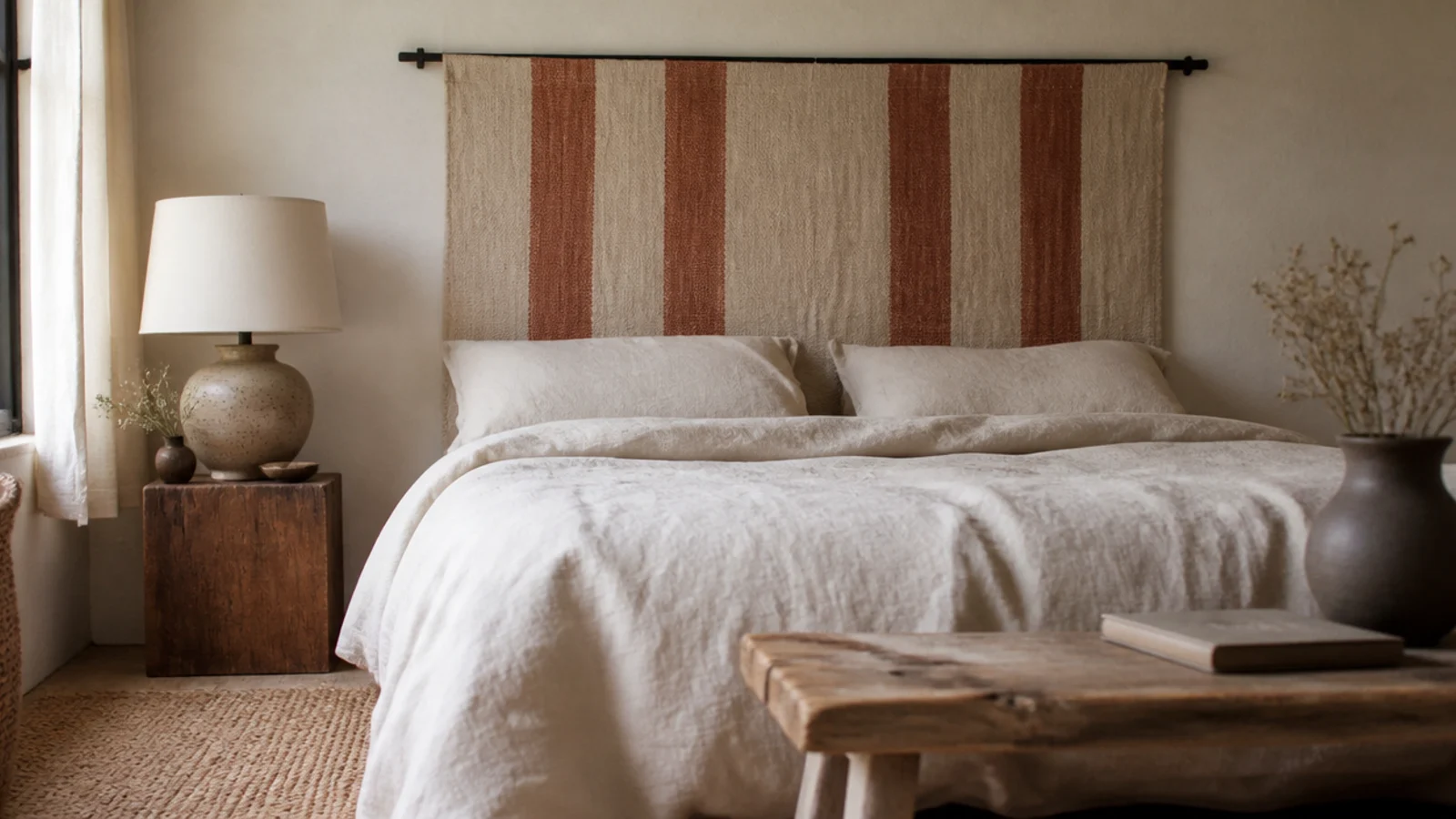
6. A flat-weave rug hung behind the bed
A kilim, dhurrie or striped wool flat-weave hung from a slim rod 6 inches above the pillow tops gives softness, pattern and real sound absorption.
Flat-weave only. Pile rugs shed and collect dust exactly where your head goes. Hang with a sleeve sewn along the back or with rug clips, and take it down to shake out twice a year. A 3 by 5 foot rug covers a full-size bed and costs $50 to $140 ($$).
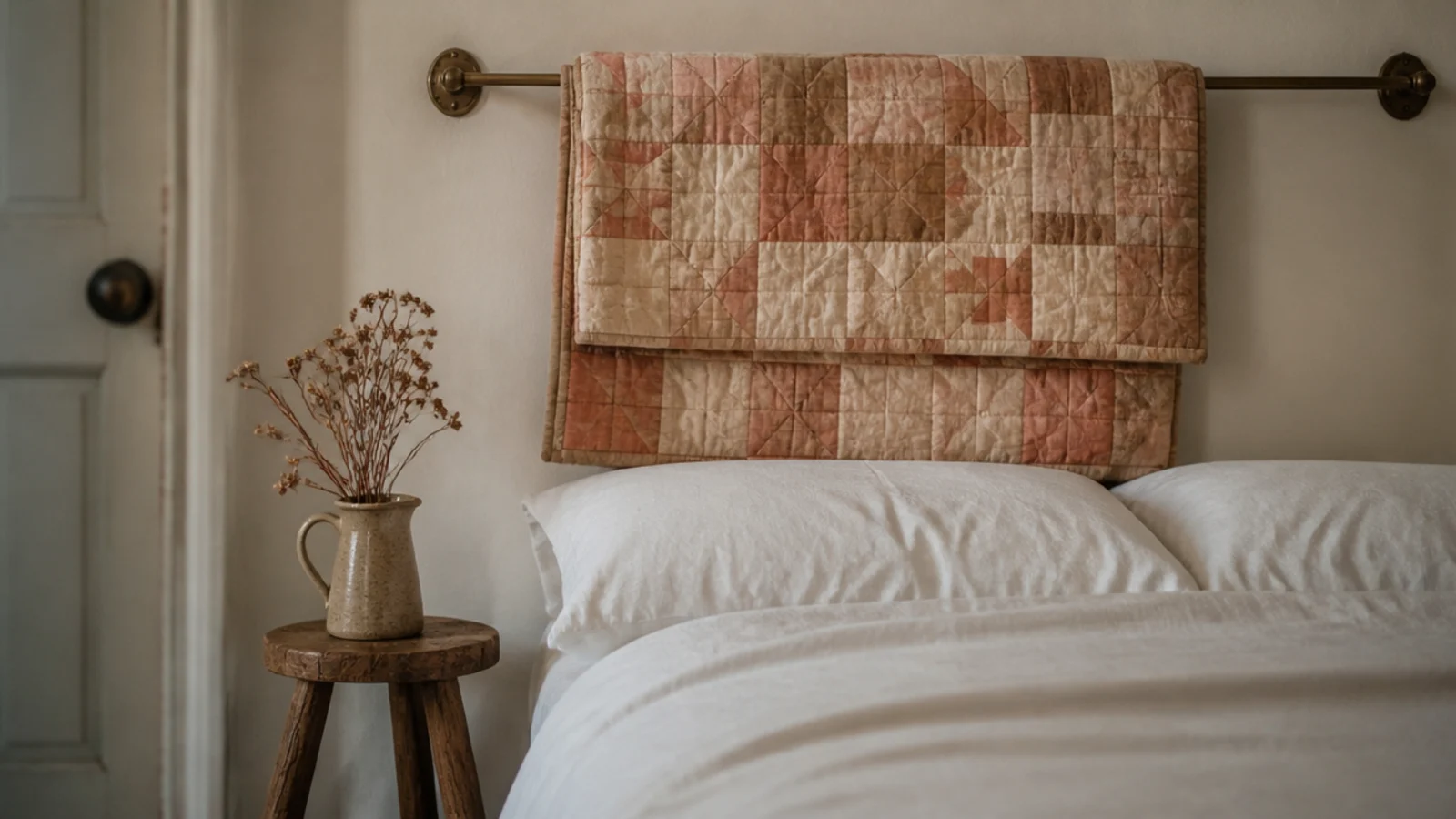
7. A quilt folded over a rod
An old quilt folded double over a black or brass rod gives you warmth and pattern for whatever the quilt cost, and it washes.
Fold rather than hang flat, so the doubled fabric holds a straight bottom edge and some weight. Mount the rod 8 inches above the pillow tops. Vintage quilts turn up at $25 to $60, and a faded one sits better against modern bedding than a bright new one does.
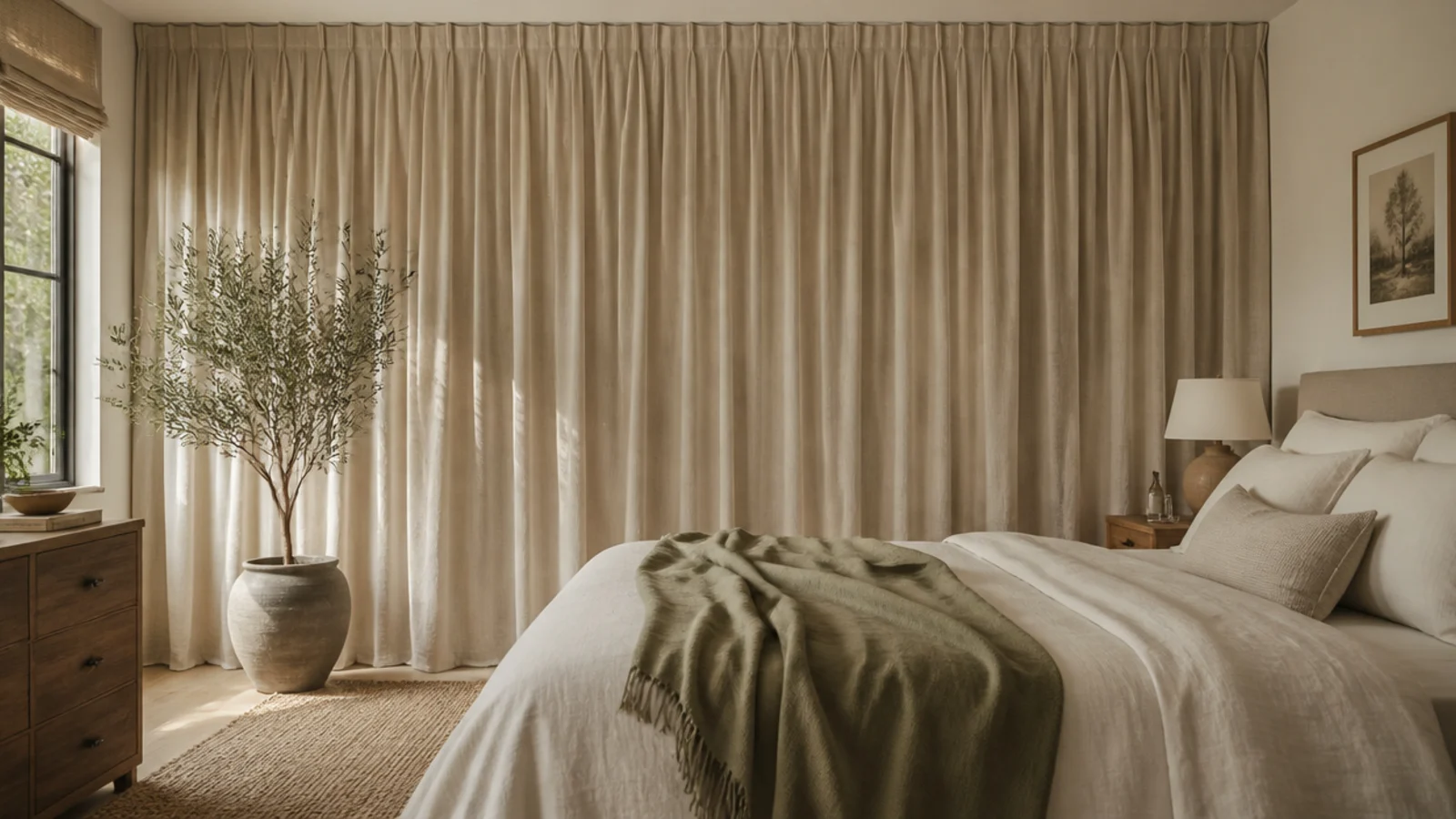
8. A full-width linen curtain
Ceiling track across the entire bed wall with a heavyweight linen curtain gathered along it. It is a hotel move and it works in a home.
Use a fabric heavy enough to hang flat rather than flutter, and stop the hem 1 inch above the floor. In a narrow bedroom this reads as the wall receding, which is why it makes small rooms feel wider. Around $90 including track ($$).
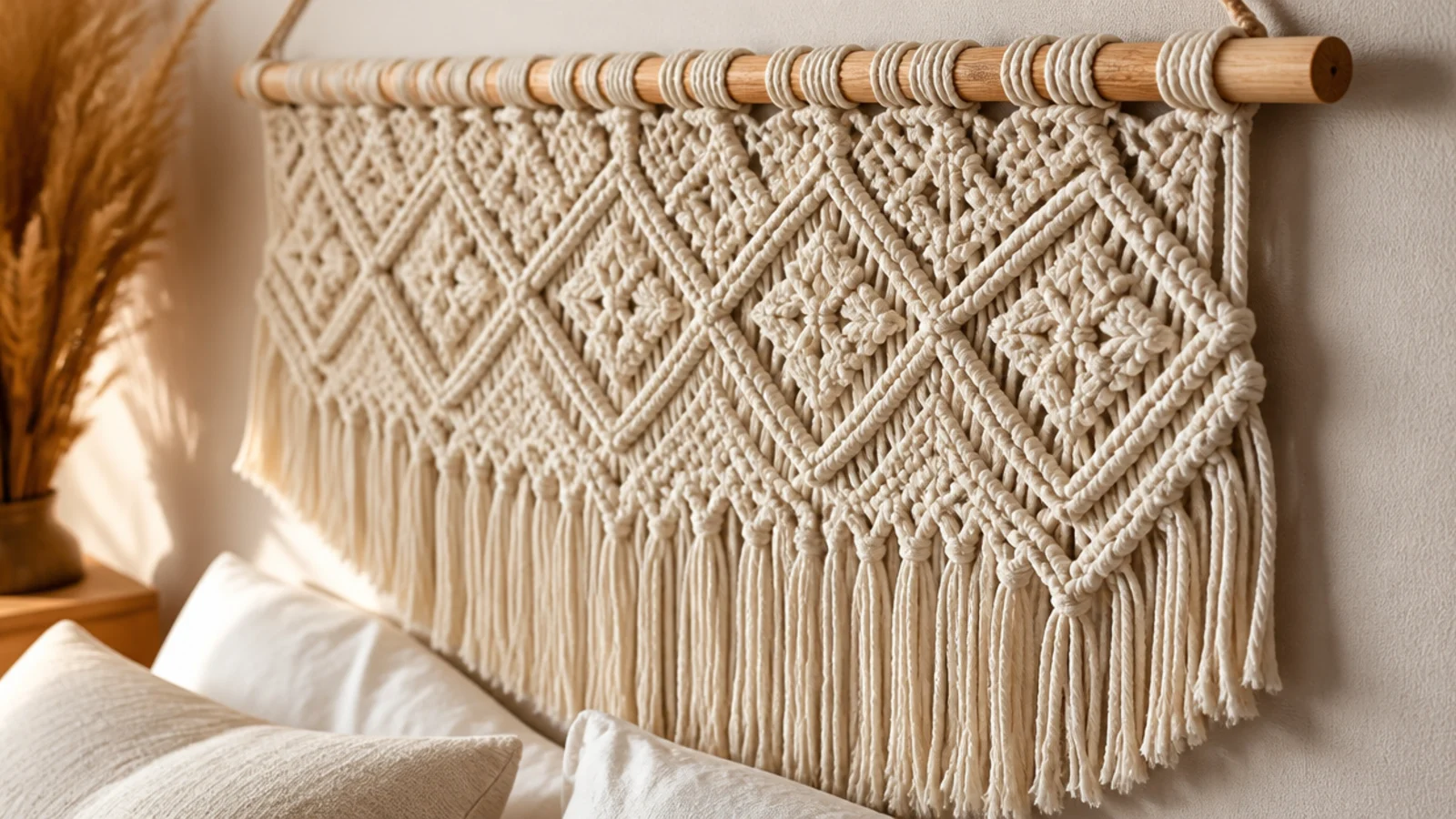
9. A woven or macrame wall hanging
Knotted cotton on a timber dowel, hung so the lowest fringe stops around 8 inches above the pillows.
Keep it within the mattress width. Hangings that sprawl wider than the bed lose their relationship to it and start to look like a separate decision. Natural undyed cotton against cream plaster is the safe version; there is more on this look in boho headboard ideas if you want to build the whole room around it.
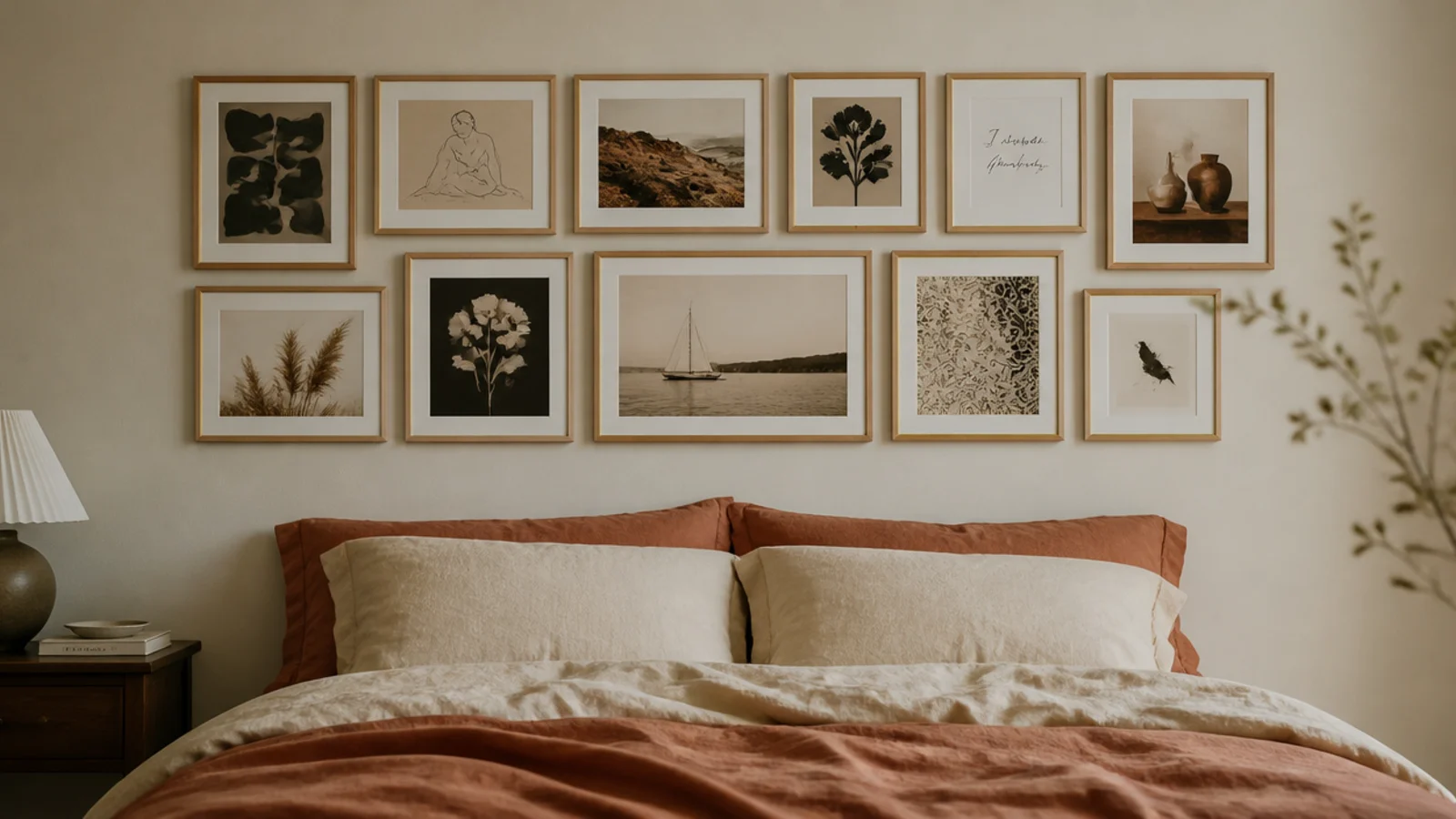
10. A gallery wall in a headboard shape
Frames arranged into a defined rectangle above the bed, rather than the usual organic cloud, give the bed the top line it needs.
Lay the arrangement out on the floor first and photograph it. Keep gaps at a consistent 2 inches and hold the whole group inside the mattress width plus 4 inches each side. Mixed frame sizes are fine; mixed frame finishes are not — stick to two at most.
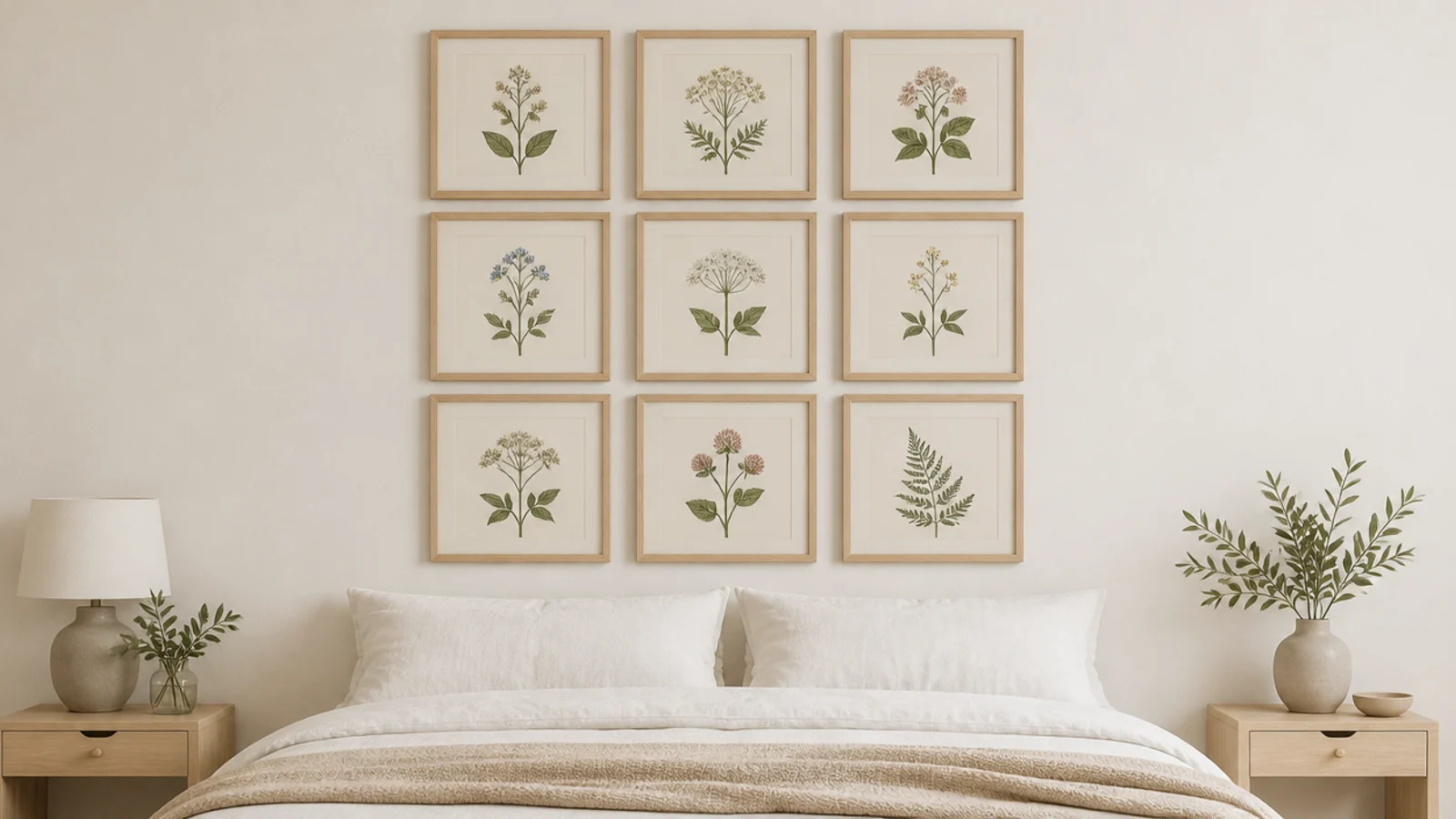
11. A grid of nine identical frames
The disciplined version of the gallery wall, and easier to get right. Nine matching frames in a 3 by 3 grid, identical gaps, one level line.
Botanical prints, textile swatches or even nine sheets of the same handmade paper all work. IKEA and Target both sell frame multipacks that make this cost about $60 total ($). Measure the grid on paper first and mark every hook position before a single nail goes in.
12. An oversized leaning mirror
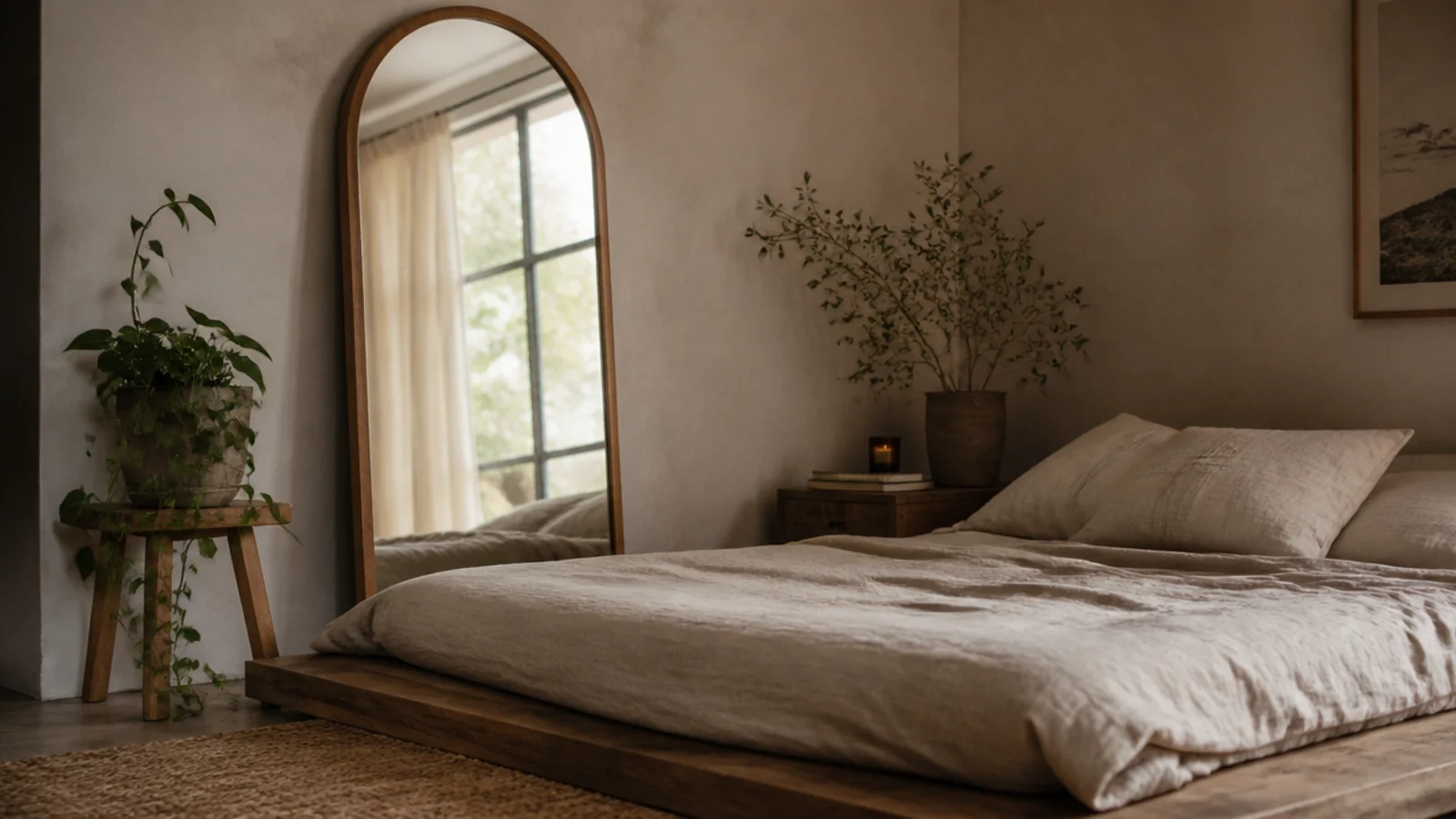
A tall arched or rectangular mirror leaning against the wall behind a low bed bounces daylight around the room and needs no fixings at all.
Get one at least 60 inches tall so it clears the mattress and still reads as full height. Felt pads under the base, lean under 5 degrees, and an anti-tip strap into a stud if children or pets come through the room. Around $180 to $350 ($$$).
13. A folding screen behind the bed
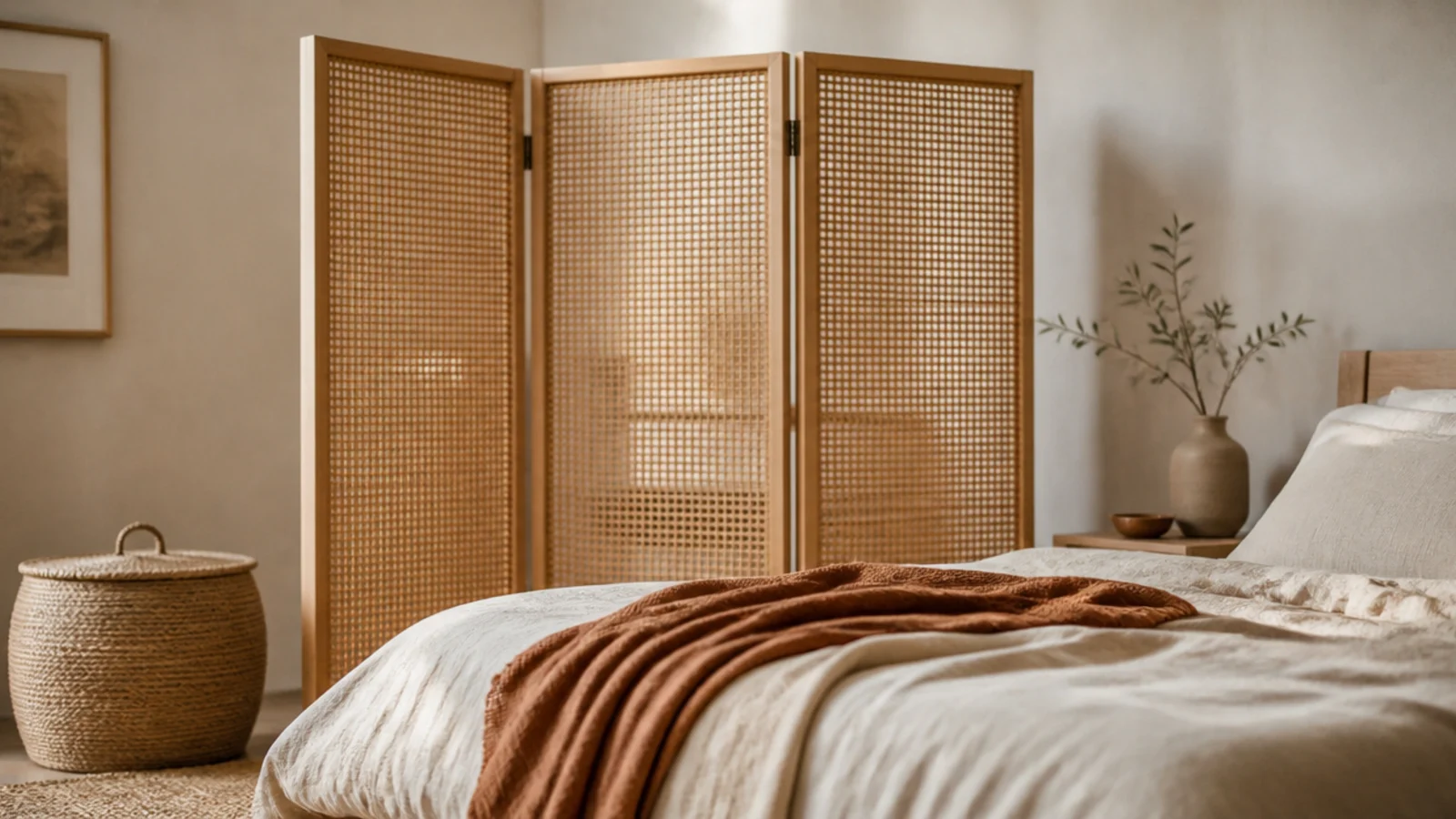
A three-panel screen in timber, cane or fabric stands on its own, needs no wall, and moves in ten seconds.
Angle each hinge slightly rather than standing the panels flat, which is what keeps it stable. It works especially well when the bed cannot sit centered on the wall, because a screen has no obligation to line up with anything. Vintage screens run $80 to $250 ($$).
14. A salvaged door on a barn track
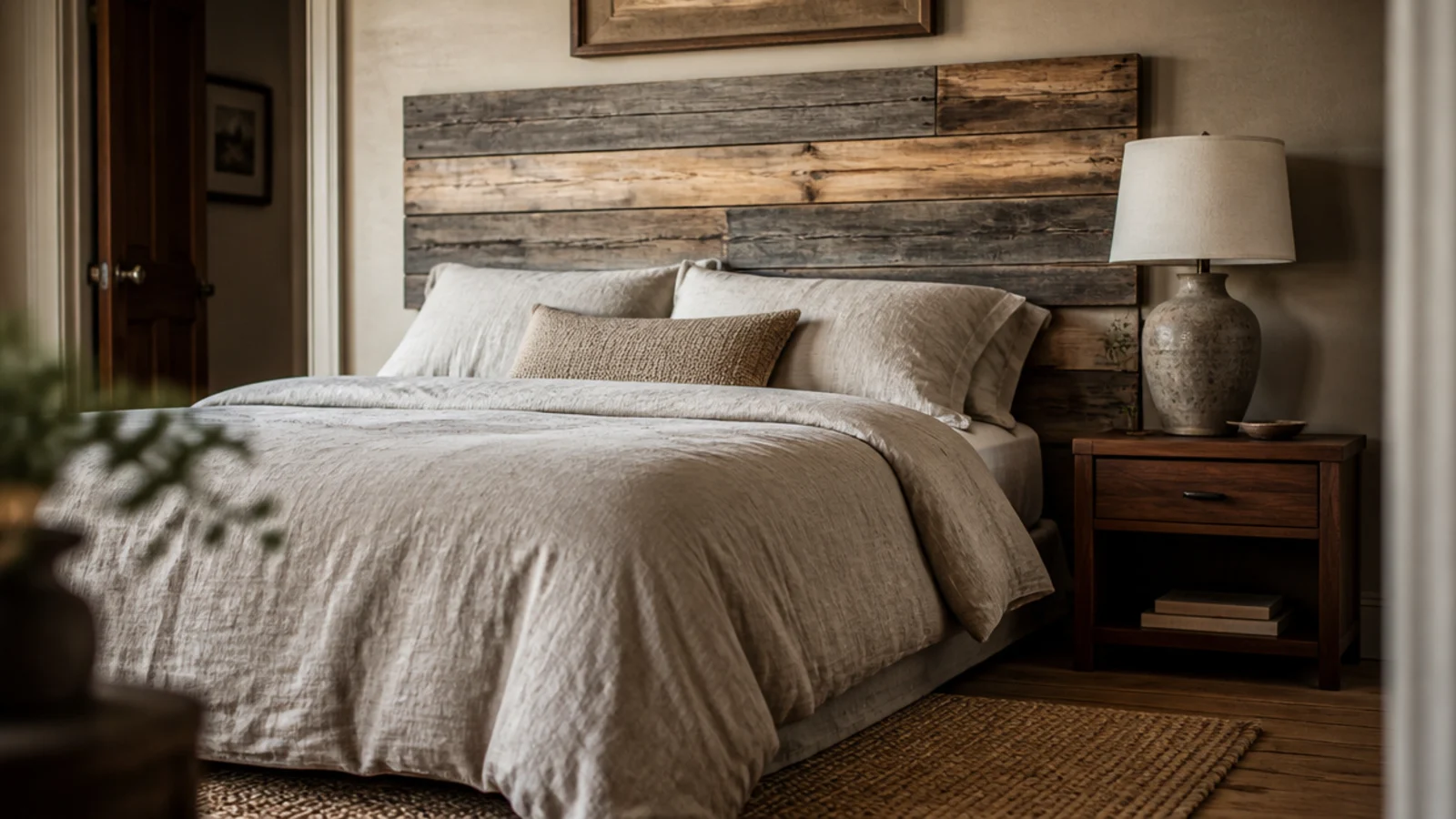
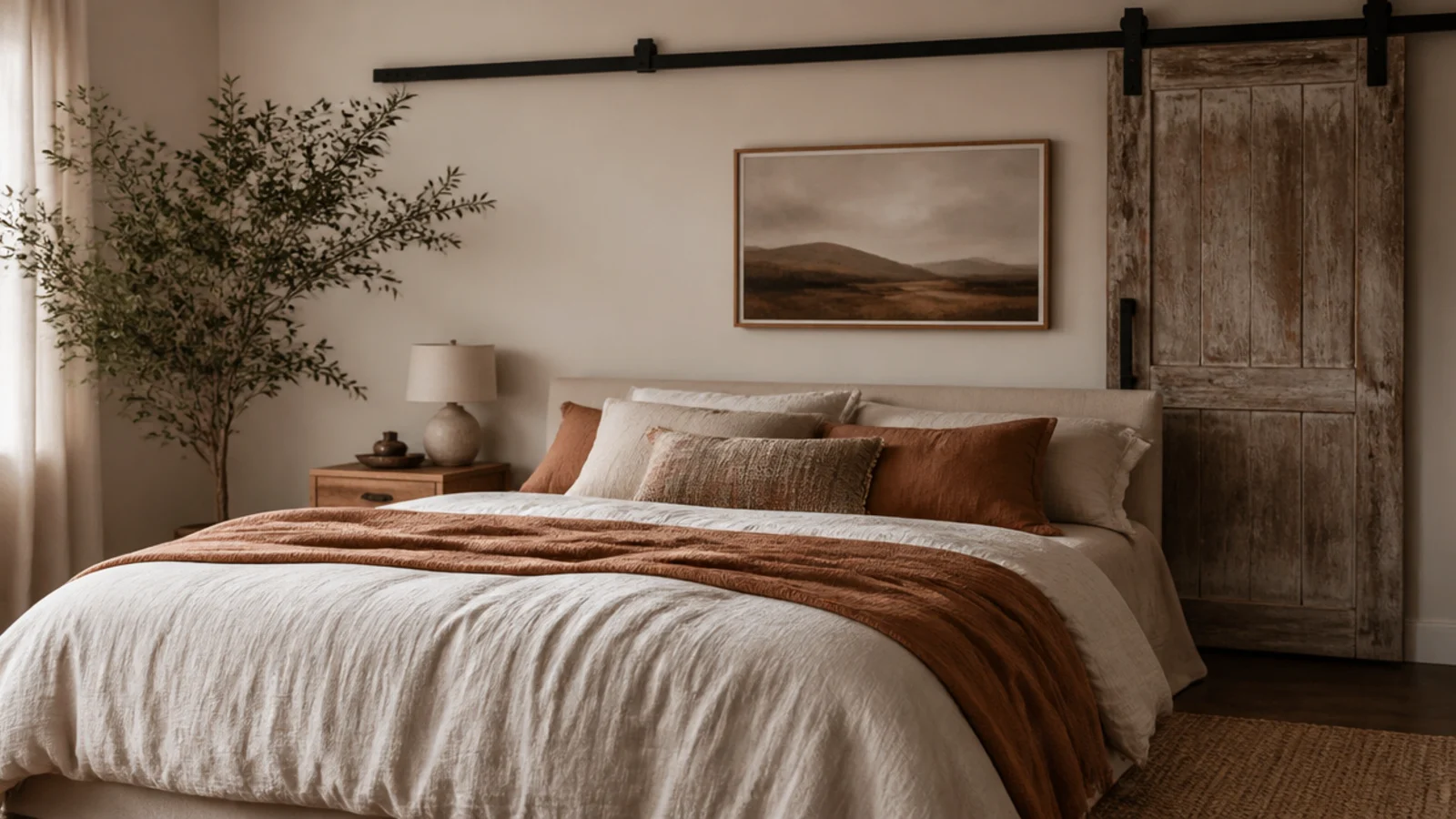
A weathered plank door hung on a matte black track above the bed slides sideways, which turns out to be genuinely useful: push it over to reach a window, or center it behind the pillows.
Track kits run $60 to $120 and mount into studs with a header board. Total weight with a solid door approaches 70 pounds, so this is one of the few alternatives here that needs proper structural fixing.
15. A long floating ledge at pillow height
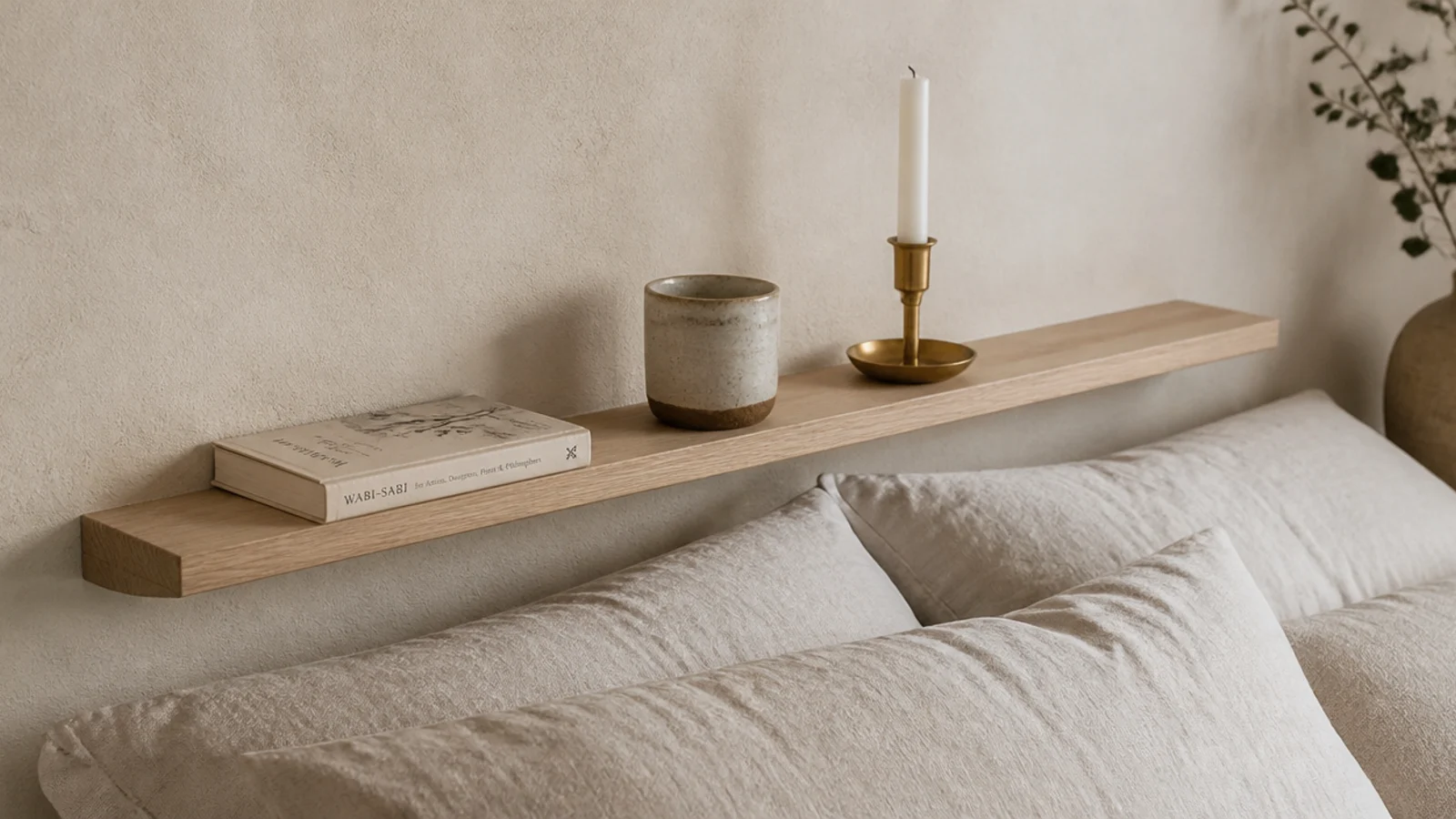
One 4-inch deep board mounted so its top sits level with the pillow tops gives the bed a horizontal line and a surface at the same time.
It holds a glass, a book and a candle, which means a bedroom too tight for nightstands suddenly has somewhere to put things. Run it the mattress width, brackets into two studs, about $45 ($). Style it with candles rather than a lamp and the whole wall softens after dark.
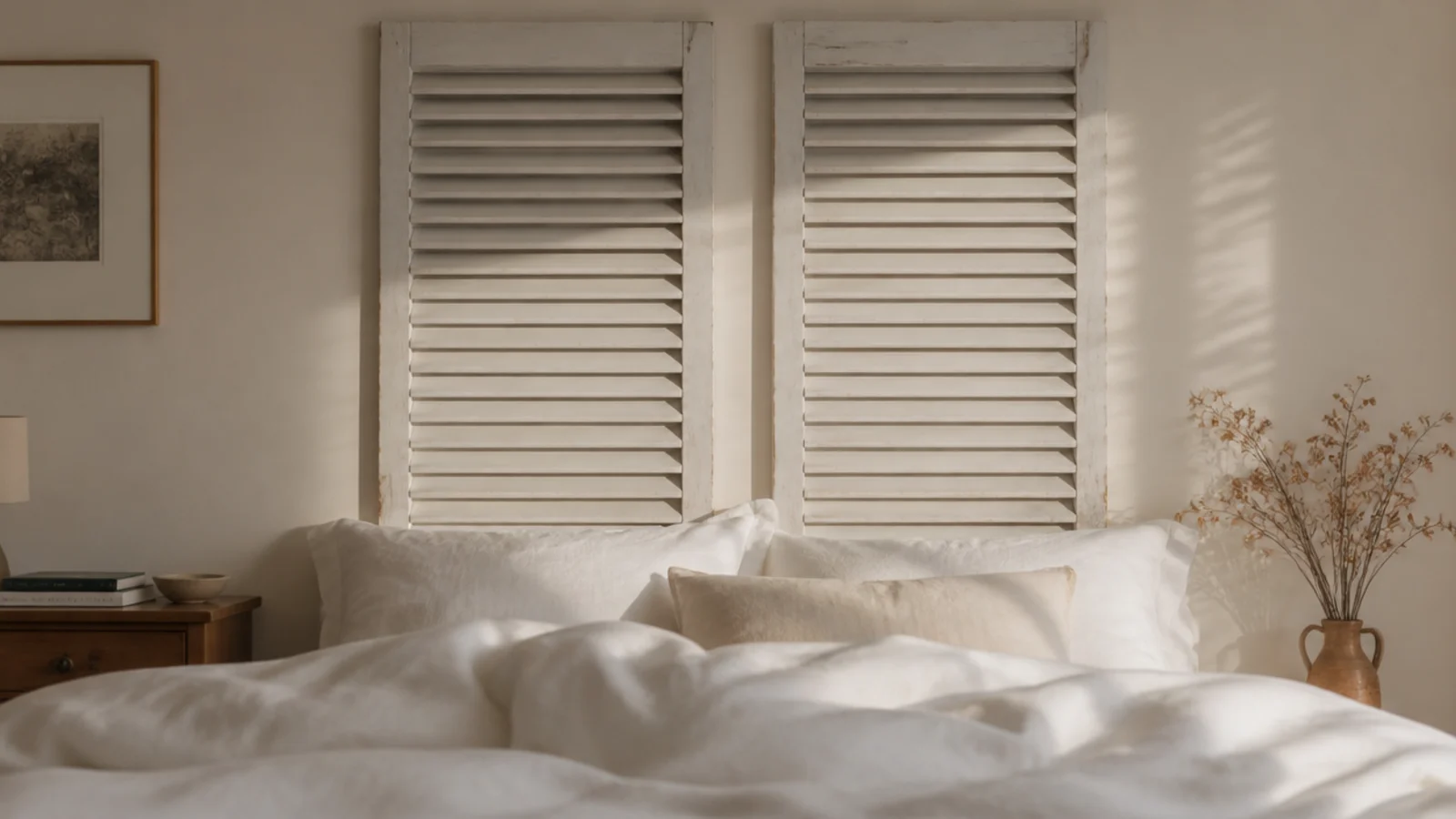
16. A pair of tall shutters
Two salvaged louvered shutters standing behind the bed, either leaned or hung, give texture with almost no visual mass.
Look for 60 to 72 inch panels rather than short ones. Chalky original paint beats a refinished surface every time. Seal flaking layers with a matte clear coat so nothing sheds onto the bedding. Pairs turn up at $25 to $60 at salvage yards ($).
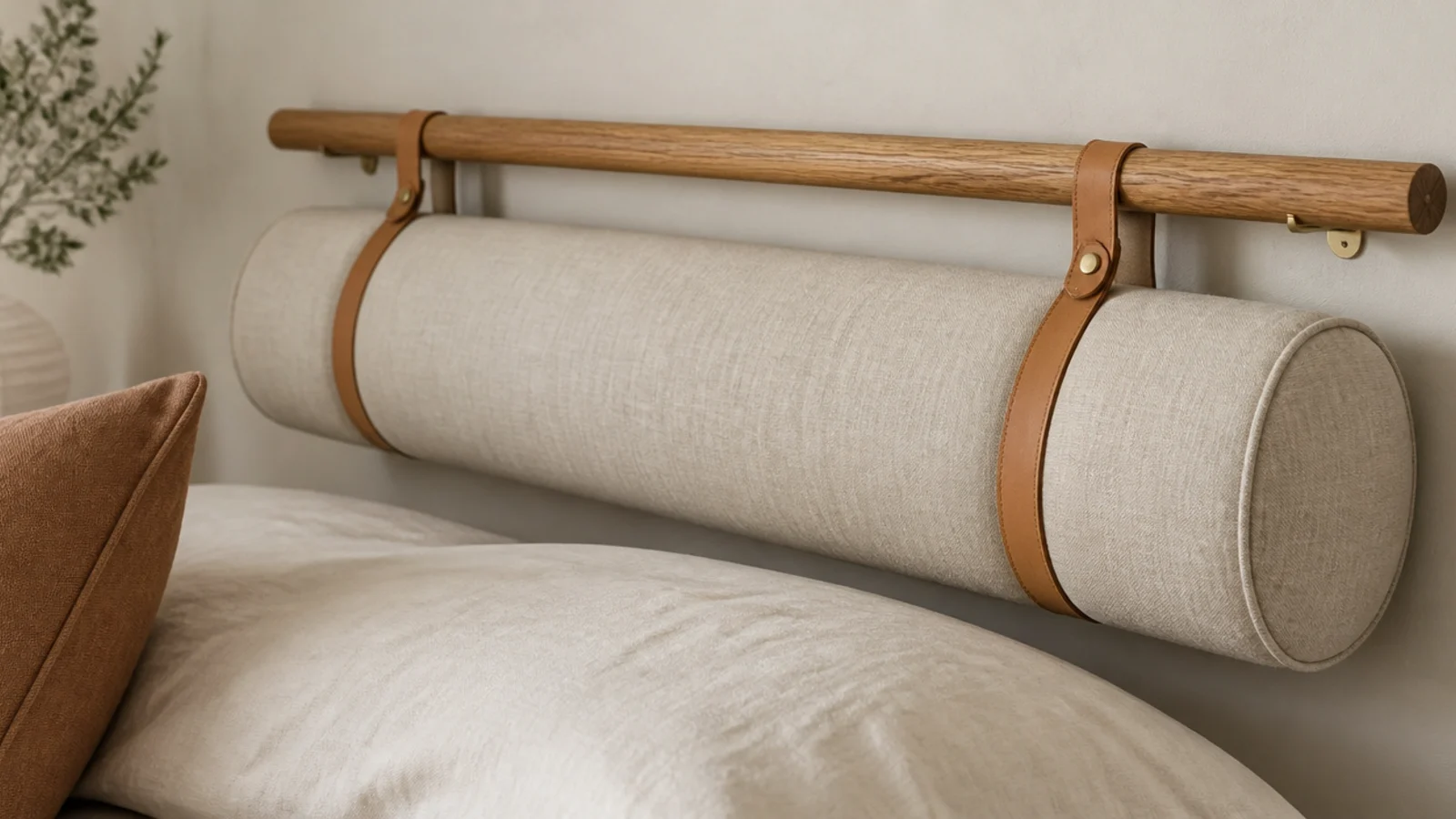
17. A wall-mounted bolster on a rail
A slim rail 30 inches above the mattress with a long linen bolster hung from it on leather straps. Soft to lean on, easy to remove, and it fills the gap behind the mattress.
Have the bolster made at mattress length and 9 inches in diameter, in washable linen. Two straps at the quarter points hold it level. This is the closest an alternative gets to the comfort of a real upholstered panel.
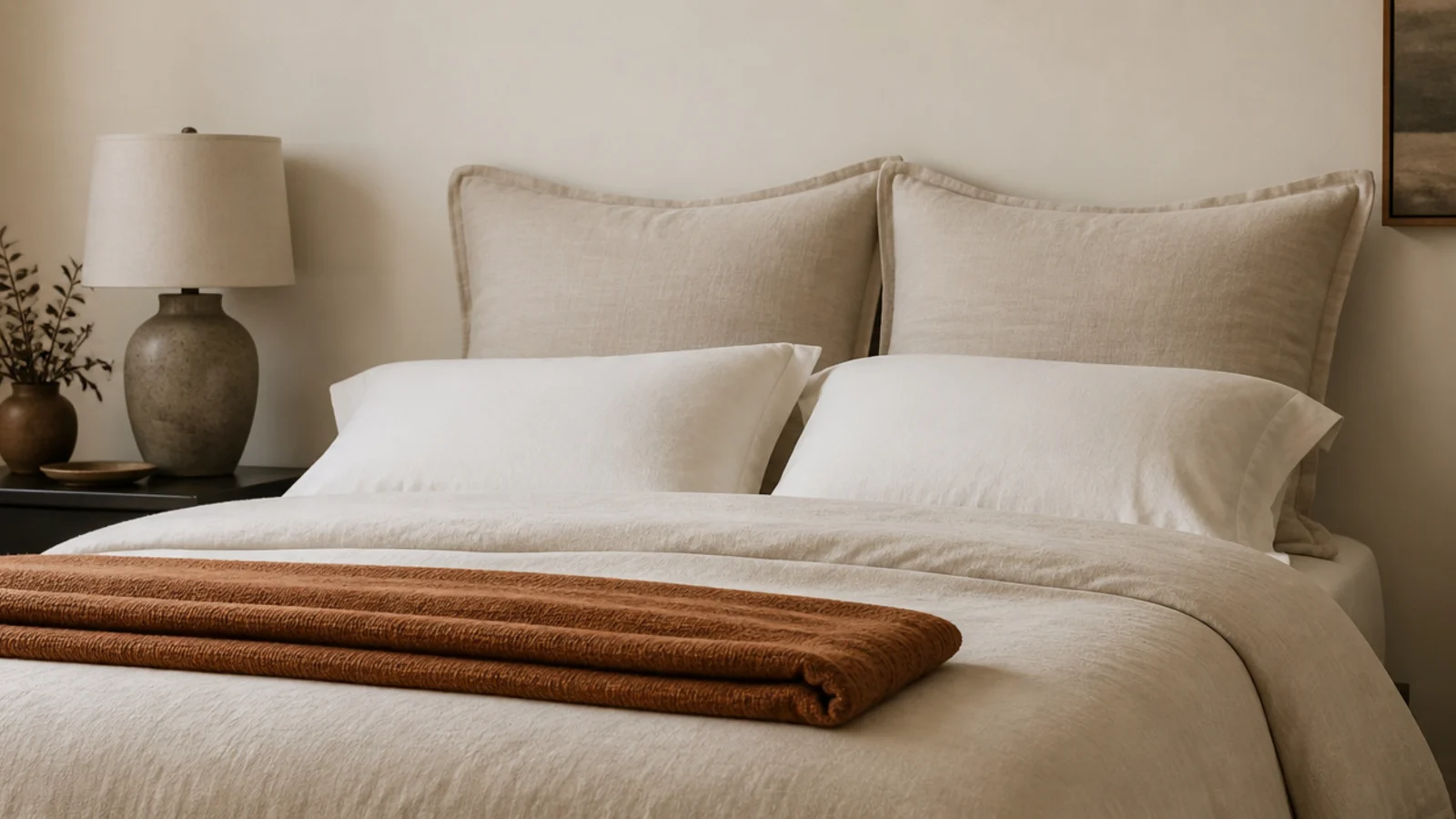
18. Euro pillows standing against the wall
The simplest entry here. Two 26-inch euro shams standing upright against the plaster behind the sleeping pillows.
They fill the gap, give you something to lean on, and cost $40 to $70 for the pair with inserts ($). Choose a firm feather-down or high-loft synthetic insert, because soft inserts slump within a week and the whole effect collapses. Restyle by swapping covers seasonally.
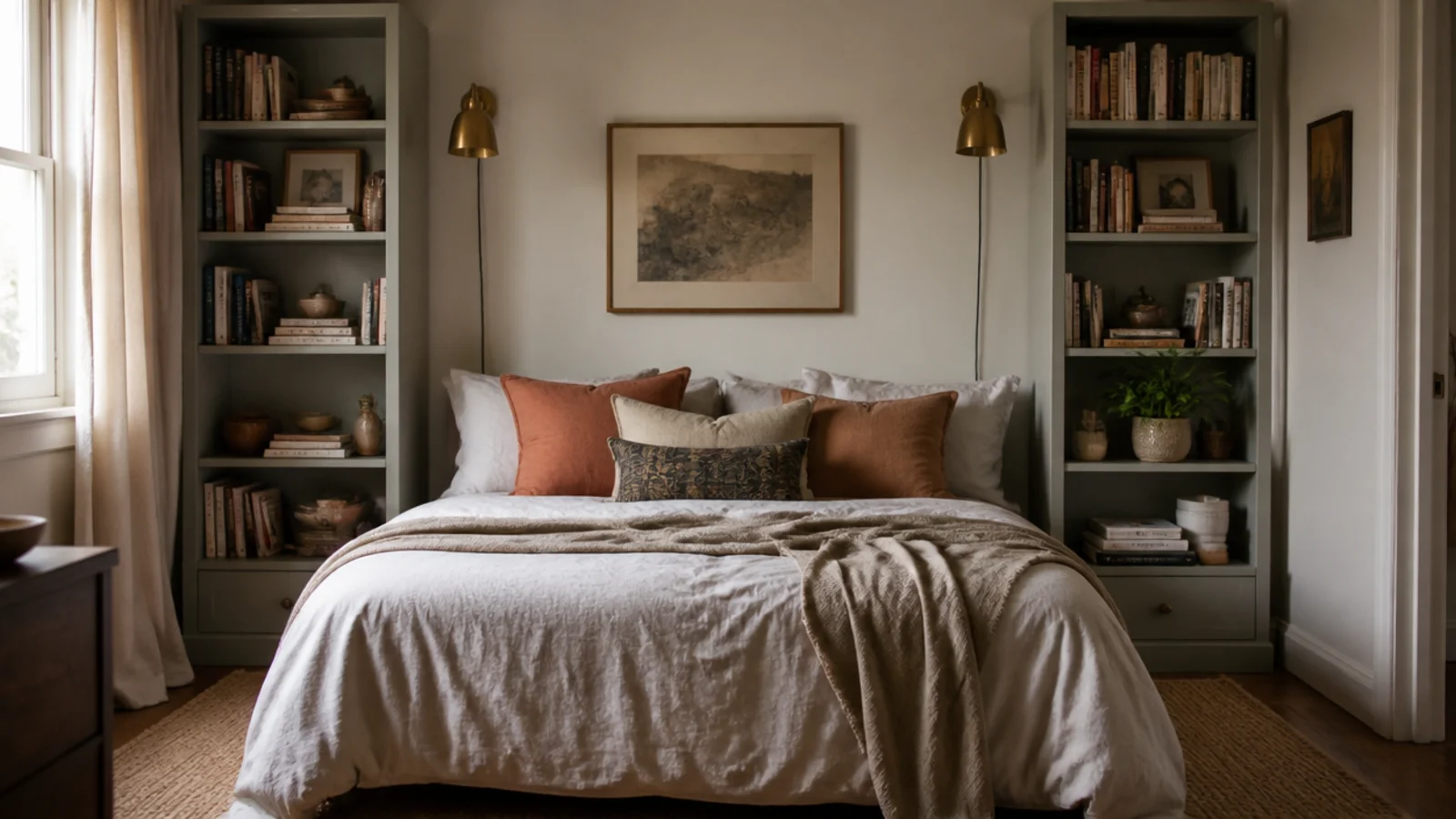
19. Two narrow bookcases flanking the bed
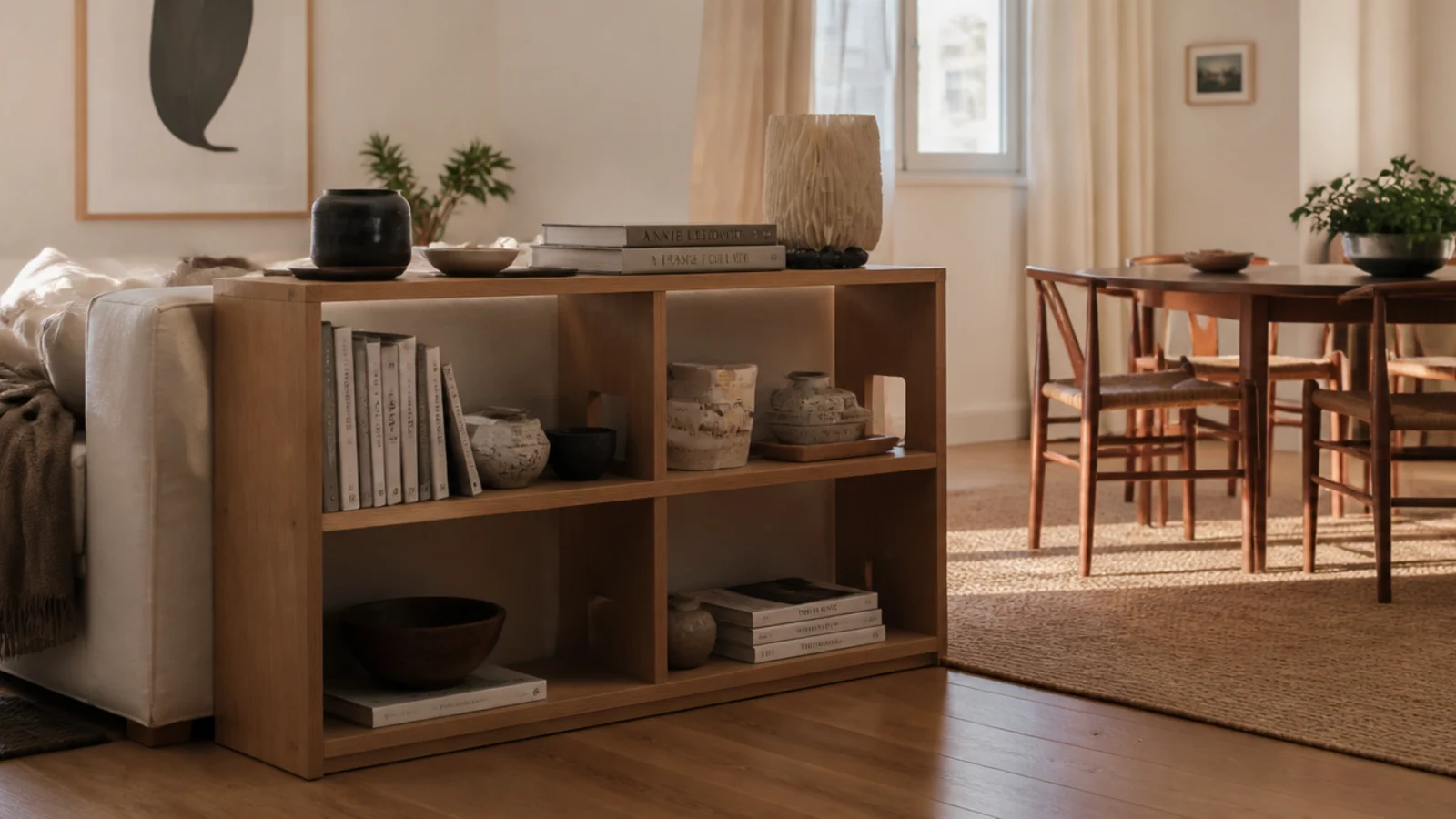
Slim bookcases either side of the bedhead turn the bed into an alcove, and the alcove does what a headboard does — it frames the sleeping position.
Use units 10 to 12 inches deep and 60 to 72 inches tall, anchored to the wall with anti-tip brackets. Keep the shelves loosely filled rather than packed. There is a full guide to bookshelf wall arrangements if this becomes the whole wall.
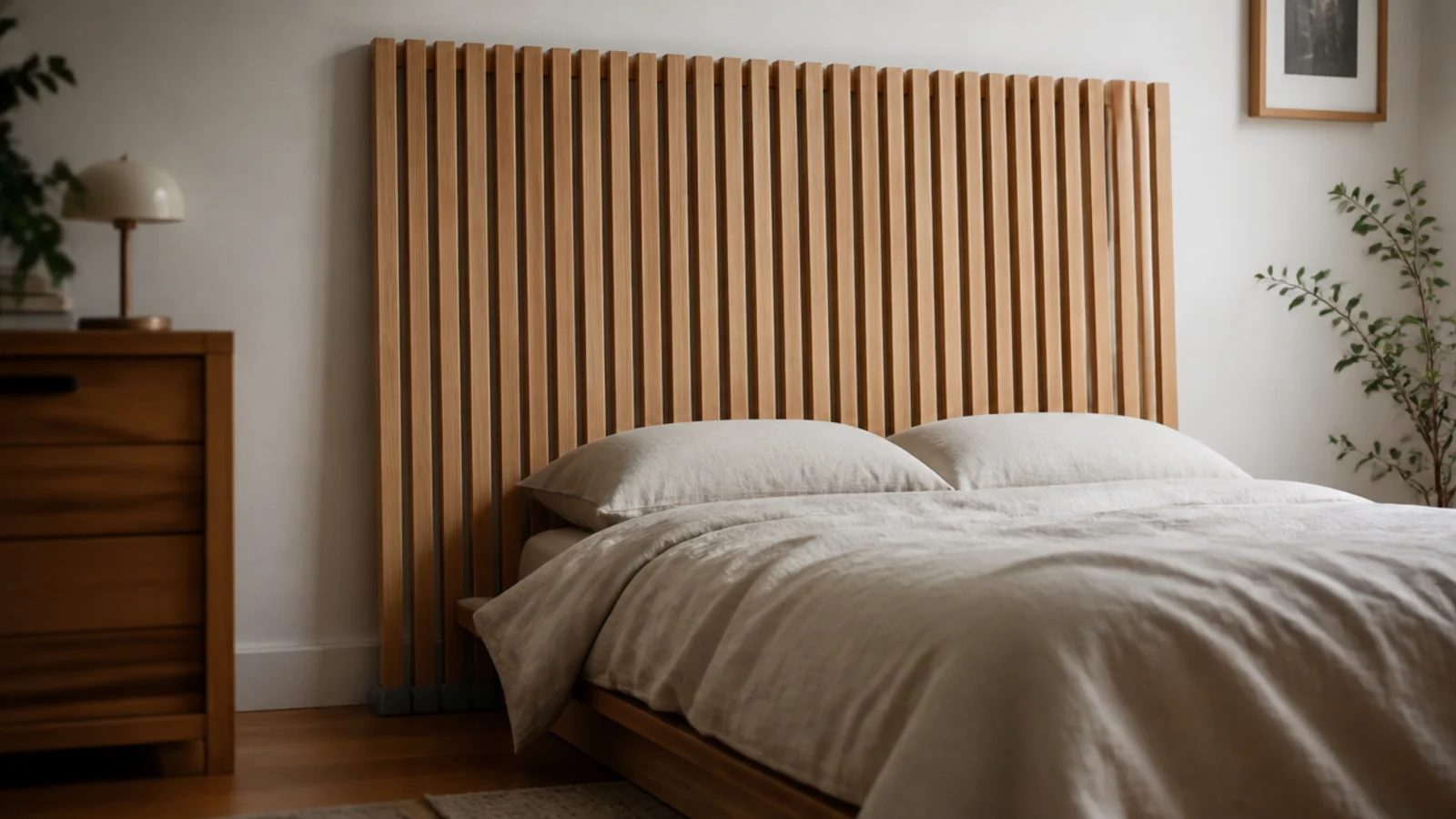
20. A leaning slatted screen
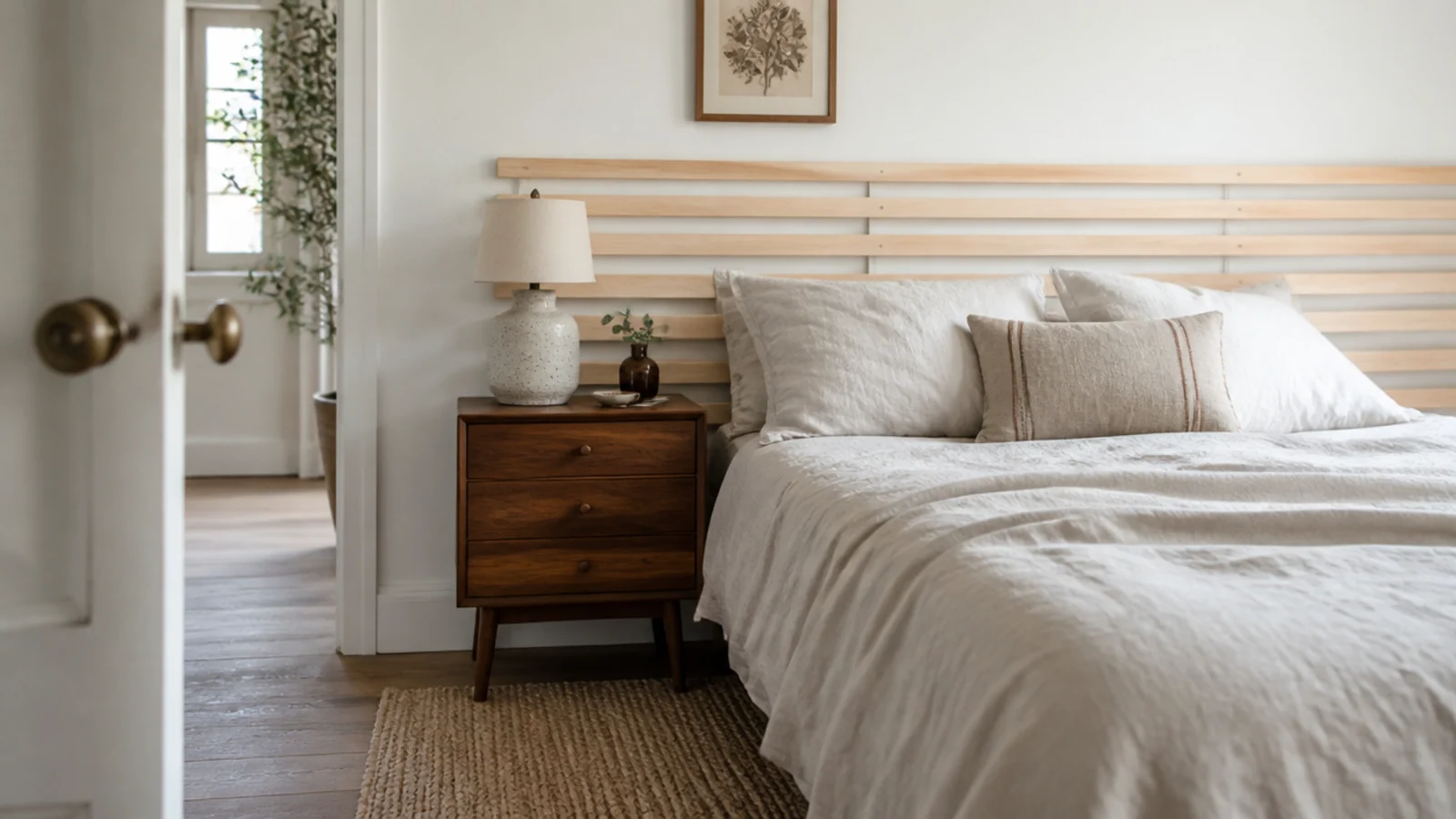
The renter favorite. A slatted timber screen leaned against the wall behind a low bed, held upright by the frame, with the plaster visible through the gaps.
Build or buy at 60 inches tall with 1-inch gaps between slats. Felt pads along the top back edge stop it marking the paint. Because the wall shows through, it adds a top line without any of the visual weight a solid panel brings. Around $70 ($$).
Mistakes to Skip
- Painting a shape wider than the bed plus 4 inches each side. It stops reading as a headboard and starts reading as an unfinished accent wall.
- Hanging a heavy mirror or a framed piece above the pillows on a single small anchor. Two fixings into studs, or lean it on the floor instead.
- Choosing a pile rug or shaggy hanging for the bed wall. It sheds directly onto the bedding and collects dust exactly where your head rests.
Frequently asked questions
What can I use instead of a headboard?
Paint, textiles, mirrors, screens and shelves all work. A painted arch or rectangle behind the bed costs a sample pot and takes an hour. A hung flat-weave rug or quilt adds softness and sound absorption. A leaning mirror or folding screen needs no fixings at all. The rule is to keep whatever you choose within the mattress width plus 4 inches each side.
How high should a headboard alternative go above the mattress?
The same heights that govern real headboards apply. Anything low profile should top out 24 to 28 inches above the mattress. Anything meant as a statement, like a painted arch or a tall hanging, wants 40 to 50 inches. Between those two bands the shape tends to look accidental rather than chosen, whatever material you use.
Do headboard alternatives work in a rental?
Most of them are designed for exactly that. Paint reverses with a sample pot of the original color. Peel-and-stick paper removes cleanly from sound paint. Leaning mirrors, folding screens and stacked pillows need no fixings whatsoever. For anything hung, a slim rod on two anchors leaves holes you can fill in ten minutes on move-out day.
Is it okay to have no headboard at all?
It is, provided something else gives the bed a top line. A bed against bare plaster reads as unfinished because nothing frames the pillows. Sconces, a low ledge, a painted band or a pair of tall plants either side all supply that line. What matters is the horizontal edge, not whether a physical panel exists.
How do I stop pillows falling behind the bed without a headboard?
Push the bed frame to within an inch of the wall and add a long bolster or two euro pillows standing upright against the plaster. That upright layer fills the gap and gives you something to lean on. If the frame sits further out, a wall-mounted rail with a padded bolster tied to it closes the gap permanently.
Pick by constraint rather than by taste: what your lease allows usually narrows this list to three options, and any of those three will look good. If you decide a real panel is worth it after all, the step-by-step headboard build covers the whole process, and cheap headboard ideas collects the versions under $60. Save the pin so the heights are with you when you tape out the shape.
Want more like this? Browse all 15 headboard ideas guides — they all use the same measurements and budget tiers.
Pin it for later
Save this to your Headboard Ideas board
Pin it now so it is waiting for you when the tape measure comes out — and so the next person hunting for this idea can find it too.
Save this pinKeep going
More ideas worth saving while you have the tape measure out.