Headboard Ideas · Listicle
15 Cozy Headboard Ideas That Look Pricey

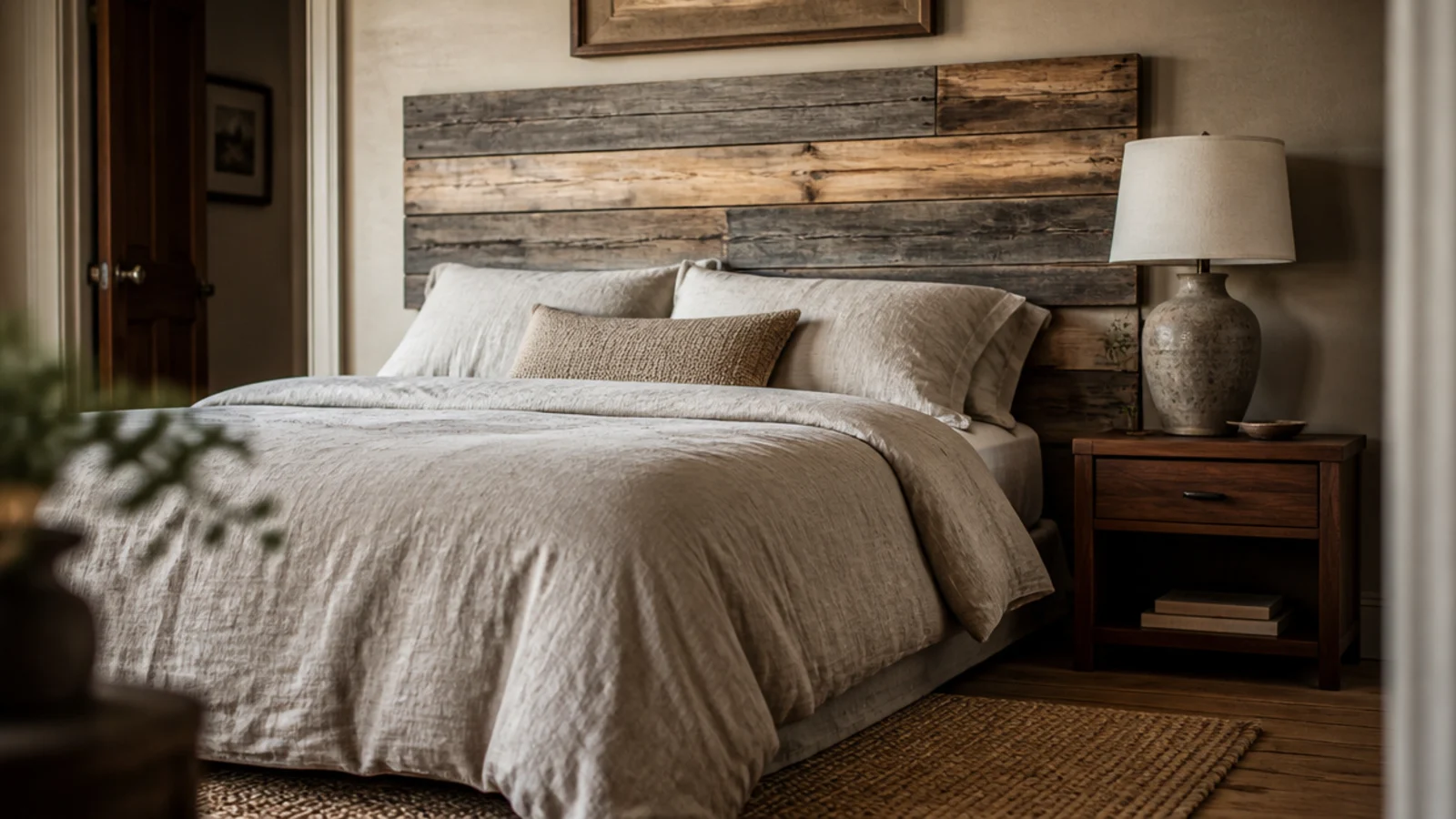
Rustic headboard ideas are the cheapest route to a bedroom that looks like it has been there for decades. A single weathered panel does more than a whole room of new furniture. I have hung six of these, including one salvaged door that cost $28, and the difference between the ones that look collected and the ones that look scavenged always came down to three details.
In this guide17 sections — tap to openHide
- 1.Where rustic headboard ideas go right and where they go wrong
- 2.A reclaimed barn board panel
- 3.A live-edge slab with the bark line intact
- 4.Weathered pine with a dry-brushed finish
- 5.A salvaged door with its original paint
- 6.A single reclaimed beam on brackets
- 7.An old mantel used as a headboard ledge
- 8.Whitewashed shiplap for a cottage room
- 9.Half-round split logs
- 10.Iron and wood together
- 11.A chunky frame with a linen inset
- 12.Old shutters with the paint left alone
- 13.A driftwood or branch assembly
- 14.A salvaged iron gate hung flat
- 15.A blanket ladder turned sideways
- 16.A leaning reclaimed plank panel
- 17.Mistakes to Skip
Where rustic headboard ideas go right and where they go wrong
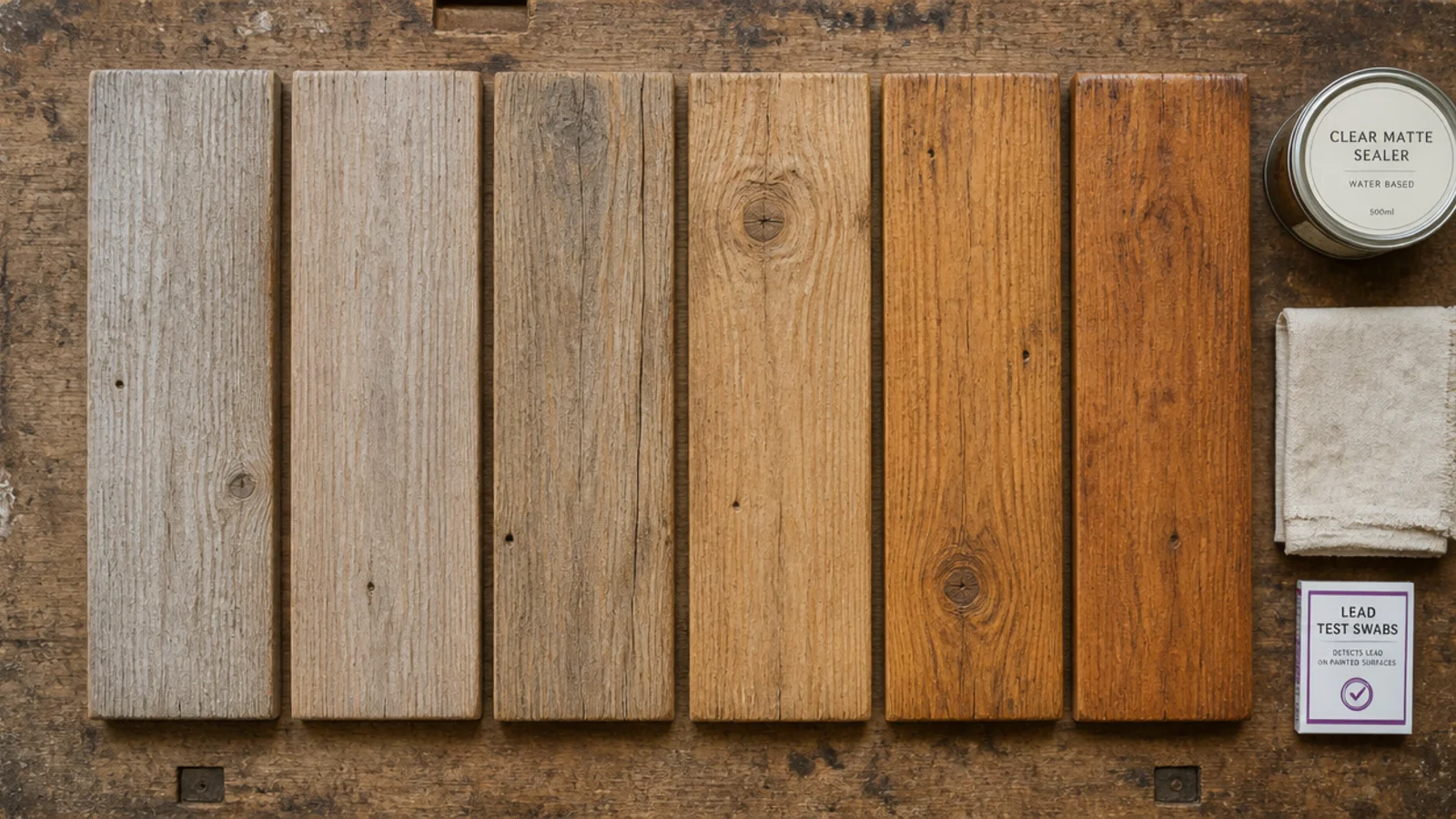
Seal everything. Old timber sheds fine dust, the occasional splinter and sometimes worse, and it does it directly behind your pillows. Two coats of clear water-based matte finish on every face, including the back, solves it permanently and does not change the color. Test anything painted before 1978 for lead with a $12 swab kit first.
Sort by tone before you build. Reclaimed boards look like a random pile until you lay them out and shuffle them, and the panels that read as expensive always mix at least three tones — grey, honey and mid brown — spread evenly rather than clustered.
Back everything with plywood. Old boards move as humidity changes, so screwing them to a half-inch backer keeps the panel flat and lets you hang the whole thing on one French cleat. Two studs, 3-inch screws, because a headboard takes lateral load every night as people sit up and lean back against it.
Then size it. Match the mattress width or add up to 4 inches each side — twin 38 inches, full 54, queen 60, king 76 — and set the height at 24 to 28 inches above the mattress for a low panel, or 40 to 50 for a statement piece.
Budget tiers: pallets, pickets and marketplace salvage run $15 to $50 ($). Barn board, old doors and shutters land at $60 to $180 ($$). Live-edge slabs and antique mantels start around $250 ($$$).
1. A reclaimed barn board panel
The archetype, and still the best value. Genuine barn siding runs $3 to $8 a board foot, and a queen panel takes about 20 board feet.
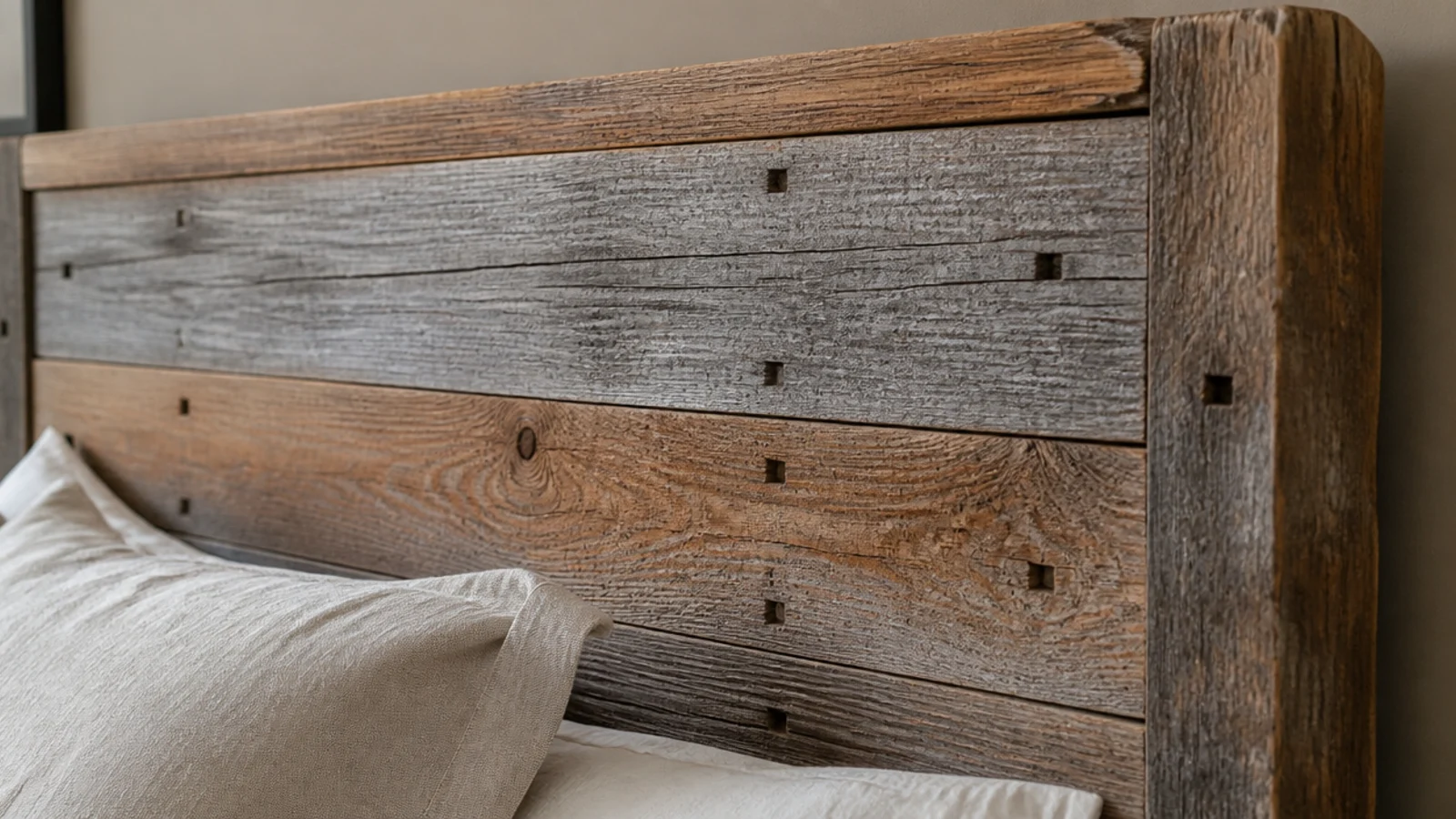
What makes it work is what most people sand off: square nail holes, old circular saw kerf, weathered grey faces that never saw paint. Screw the boards to a plywood backer from behind so no new fixings show on the face, alternate the tones, and leave the edges ragged rather than trimming them to a perfect rectangle. Seal it matte, hang it at 30 inches above the mattress, and put plain white bedding underneath so the timber does all the talking.
2. A live-edge slab with the bark line intact
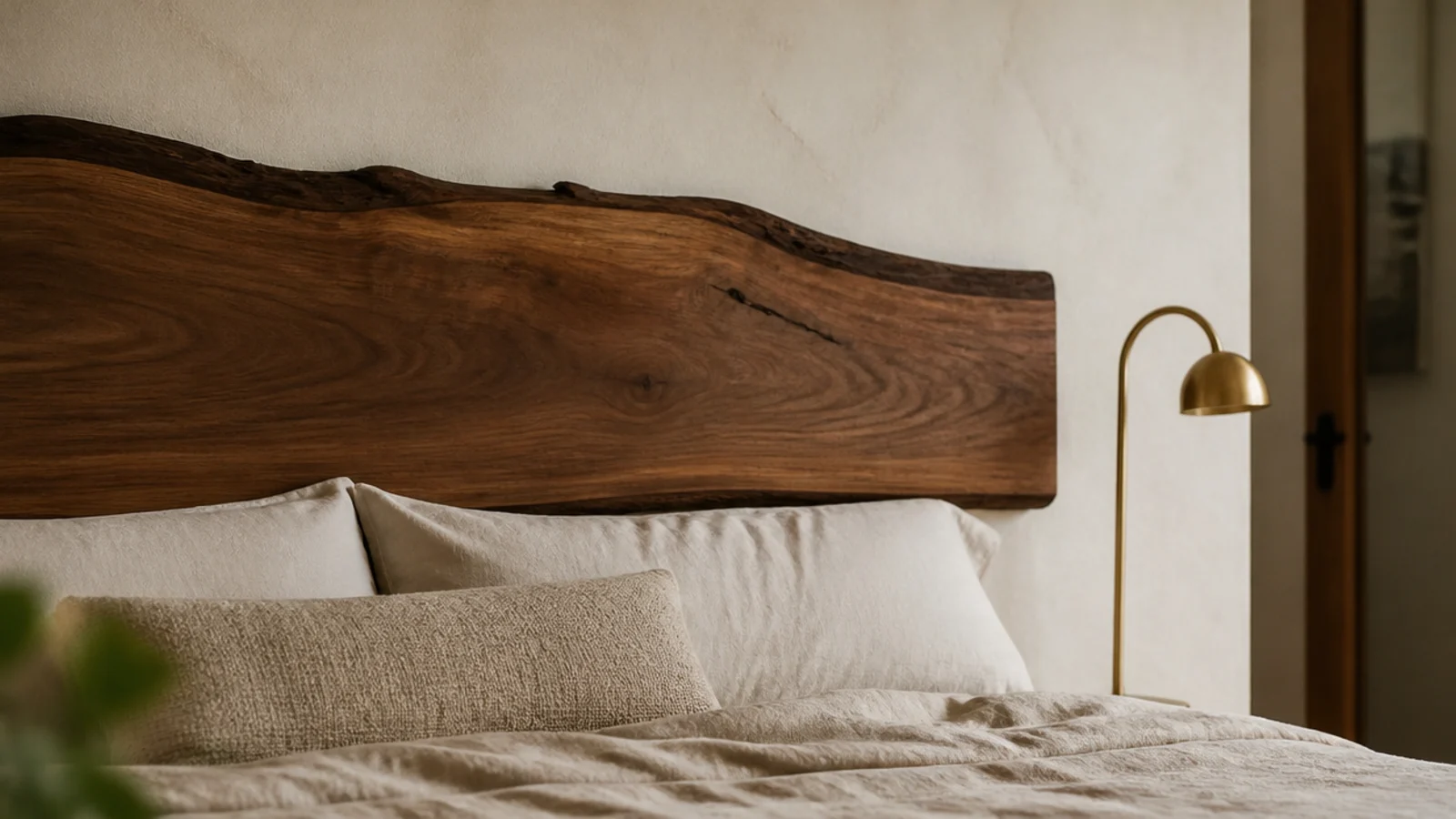
The most expensive idea here and the one that needs the least work from you. A 2-inch walnut, maple or elm slab, 60 to 68 inches long, hung with the natural edge facing up.
Ask specifically for kiln-dried stock. Air-dried slabs keep moving and will eventually twist off a cleat, taking the drywall with them. Expect $250 to $600 depending on species and figure ($$$). Finish in hardwax oil rather than polyurethane so the surface stays matte and repairable. A slab this good needs nothing else on the wall — no art, no sconces, nothing.
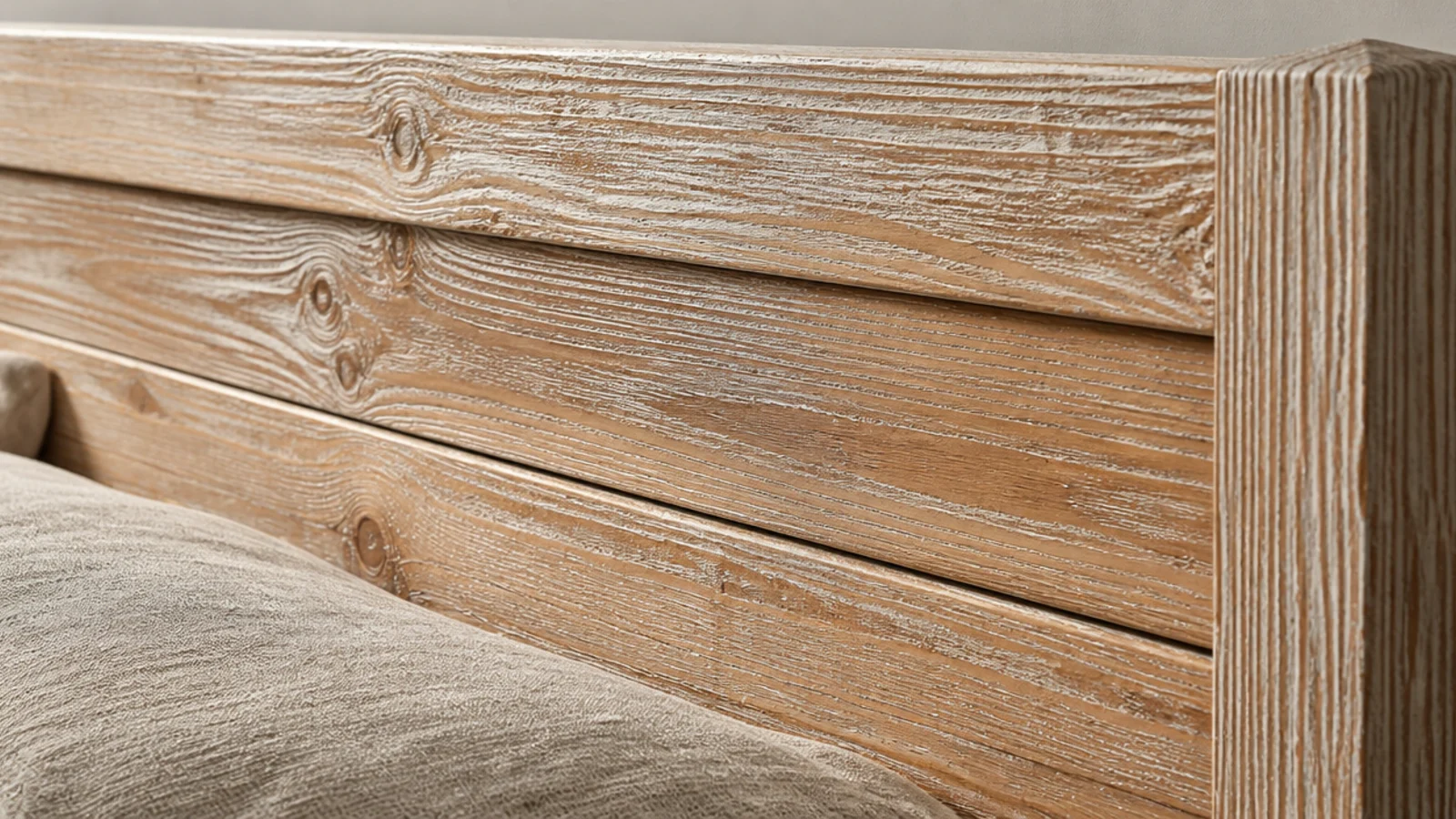
3. Weathered pine with a dry-brushed finish
If you cannot find genuine salvage, new pine plus a dry brush gets you 80 percent of the way for about $50.
Load almost no paint on the brush, wipe most of it off on a rag, then drag it across the boards so the color catches only in the raised grain. Chalky cream over honey pine reads as decades of sun. Distress the edges with 80 grit first and drive a few clusters of nail holes in at random. Finish in matte wax. Gloss anywhere on this idea kills it instantly.
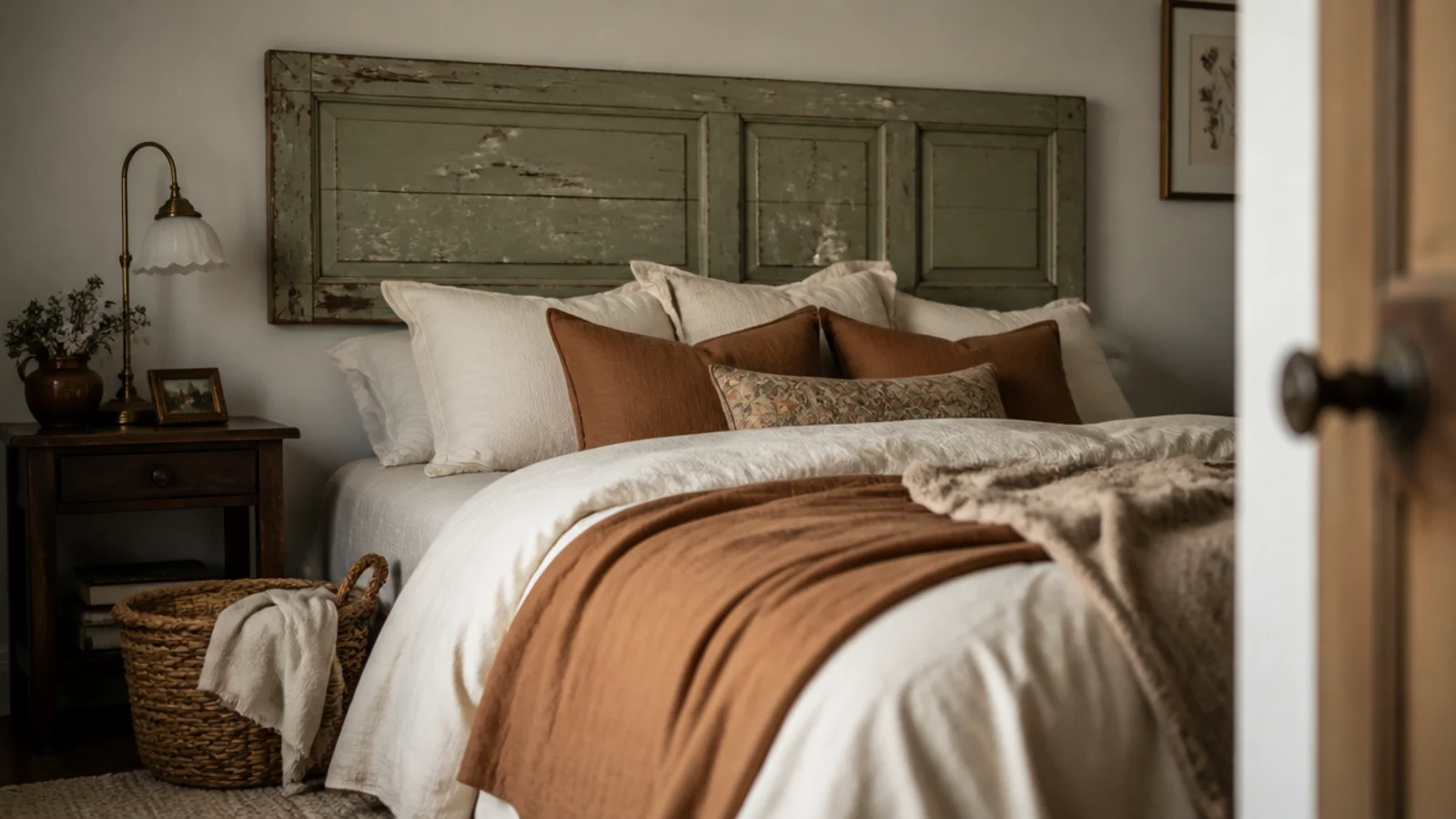
4. A salvaged door with its original paint
A standard 30-inch interior door laid horizontally is 80 inches long. Trim it to 64 and it covers a queen almost exactly, with its panel moldings doing all the decoration for you.
Salvage yards price these at $20 to $50, and the worn paint is the entire reason to use one. Stabilize flaking layers with a matte clear sealer so nothing sheds onto the bed, and check for lead first. Hang it from two heavy D-rings into studs. Doors are heavier than they look — a solid one runs 45 to 60 pounds.
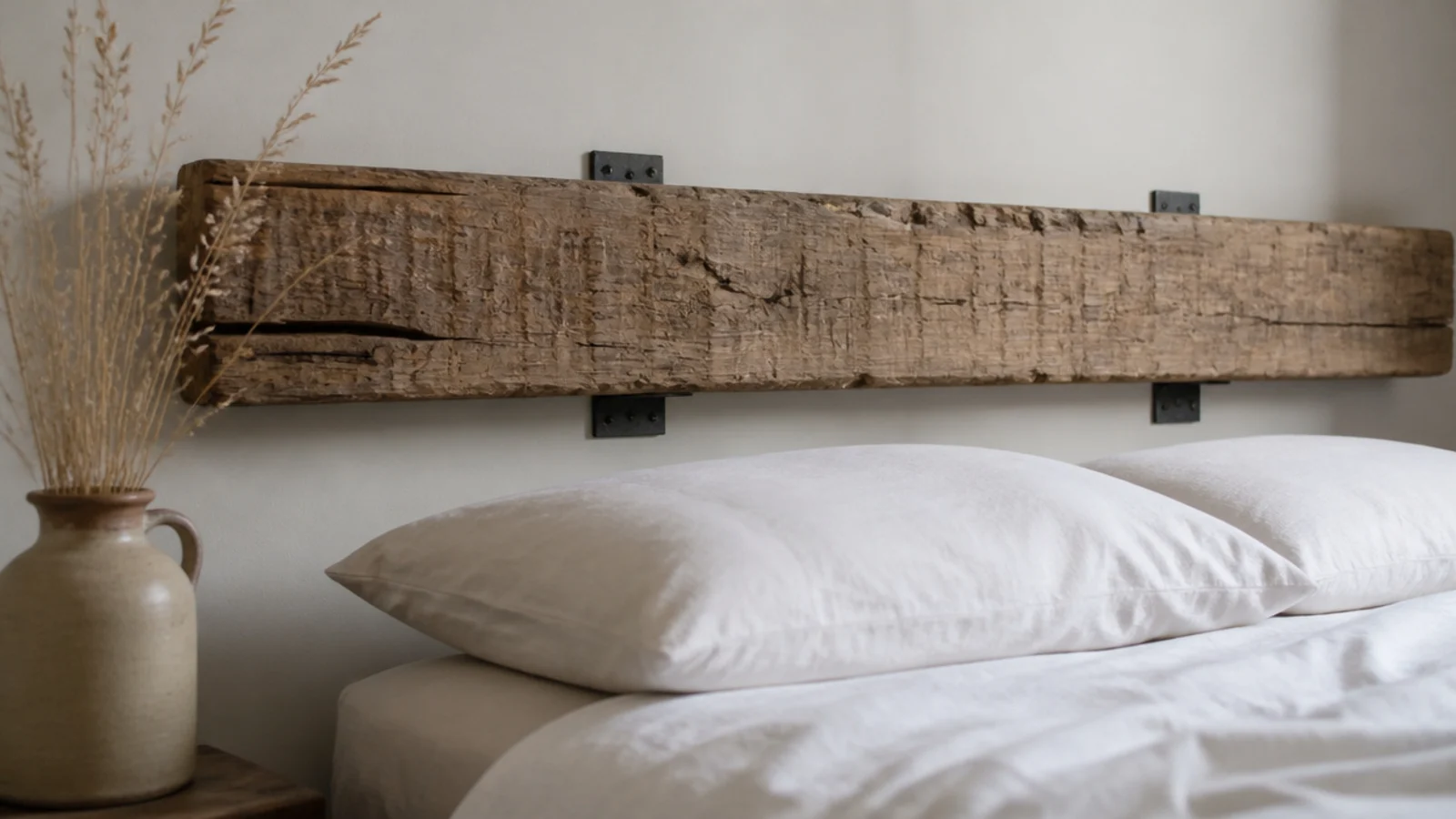
5. A single reclaimed beam on brackets
Sometimes one piece of timber is the whole headboard. A reclaimed beam, 6 by 8 inches in section, mounted horizontally on black iron brackets at pillow-top height.
It reads as architecture rather than furniture, and it suits a room where the bedding is already doing a lot. Adze marks, mortise pockets and old bolt holes all add to it. A beam this size weighs 40 pounds or more, so use lag screws into two studs, not anchors. Around $80 to $150 from a demolition yard ($$).
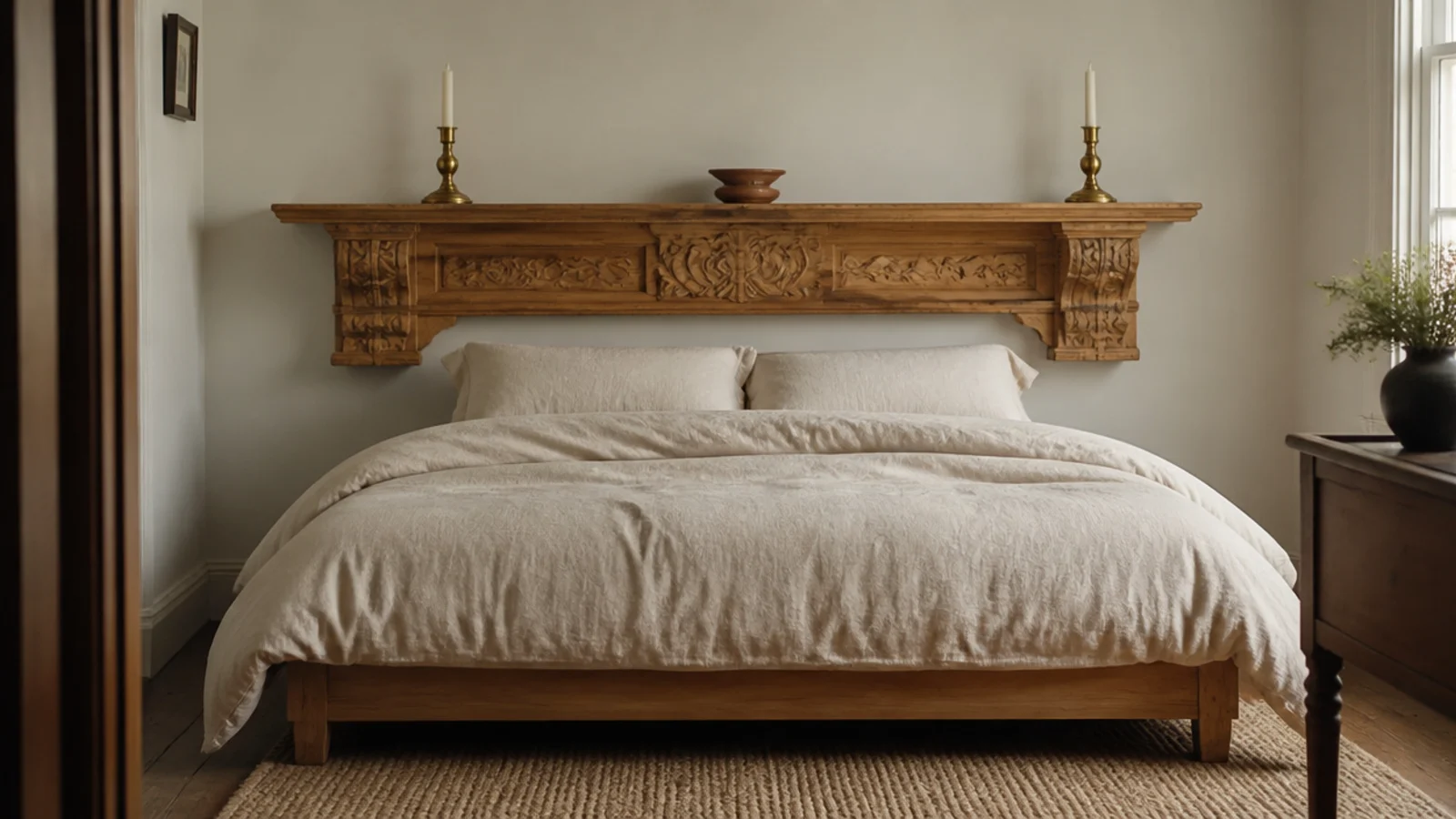
6. An old mantel used as a headboard ledge
An antique fireplace surround mounted behind the bed gives you a headboard and a shelf in one piece, which is genuinely useful in a room short on nightstand space.
Set the shelf 6 to 8 inches above the pillow line so nothing gets knocked in the night. Carved pine mantels turn up at salvage yards for $60 to $200 ($$). Support the shelf with two hidden brackets into studs rather than relying on the surround itself, since these were built to lean on masonry rather than to cantilever.
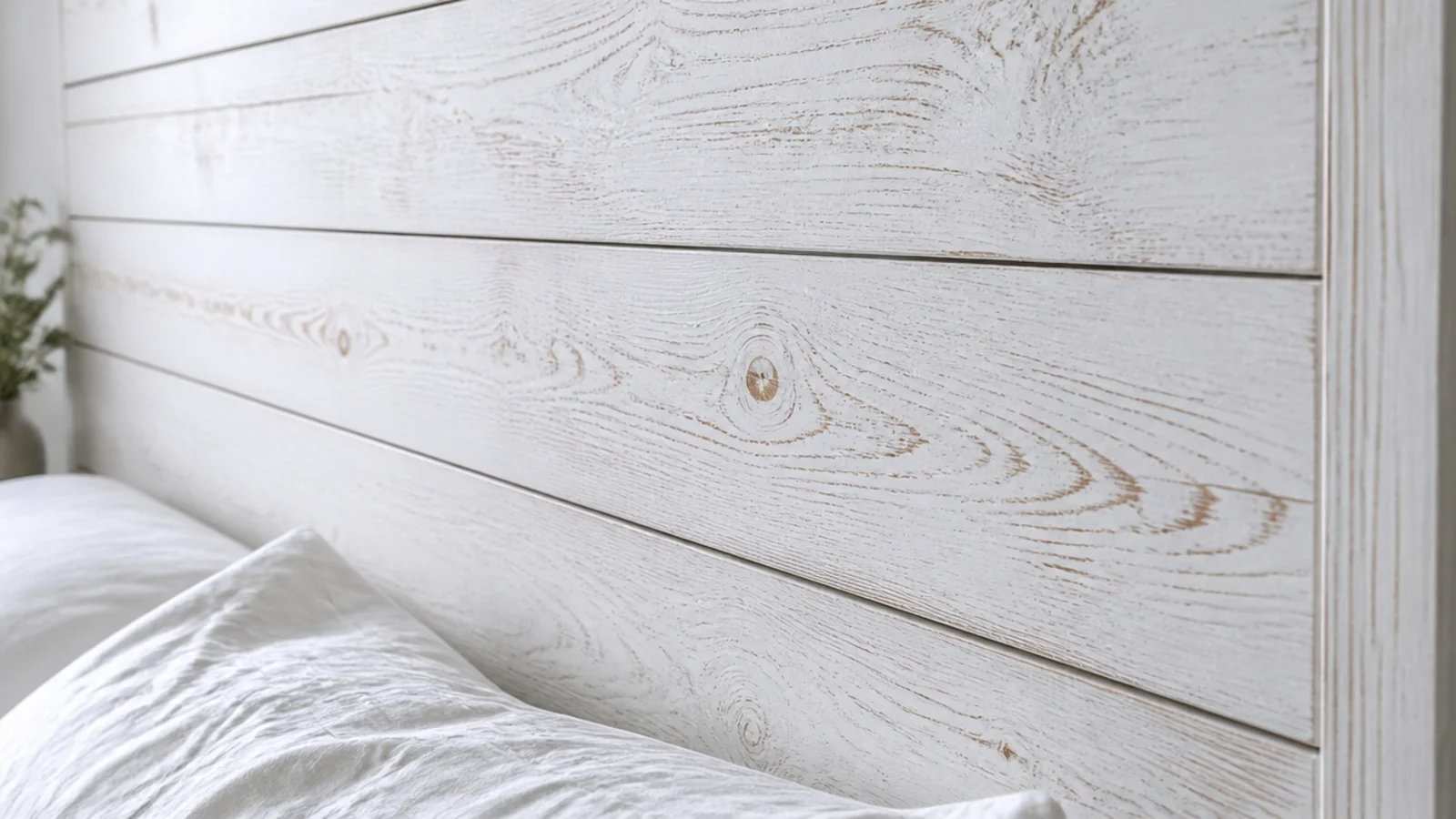
7. Whitewashed shiplap for a cottage room
Six-inch boards with a quarter-inch shadow gap, finished with paint thinned roughly one part water to two parts paint so the grain reads straight through.
The thinned wash is what separates this from a painted panel. Brush it on and wipe back within a minute, working one board at a time. Cottage rooms take this well; so do coastal ones. Around $55 in primed pine ($). Run it a little wider than the mattress here, up to 4 inches each side, because the horizontal lines want somewhere to travel.
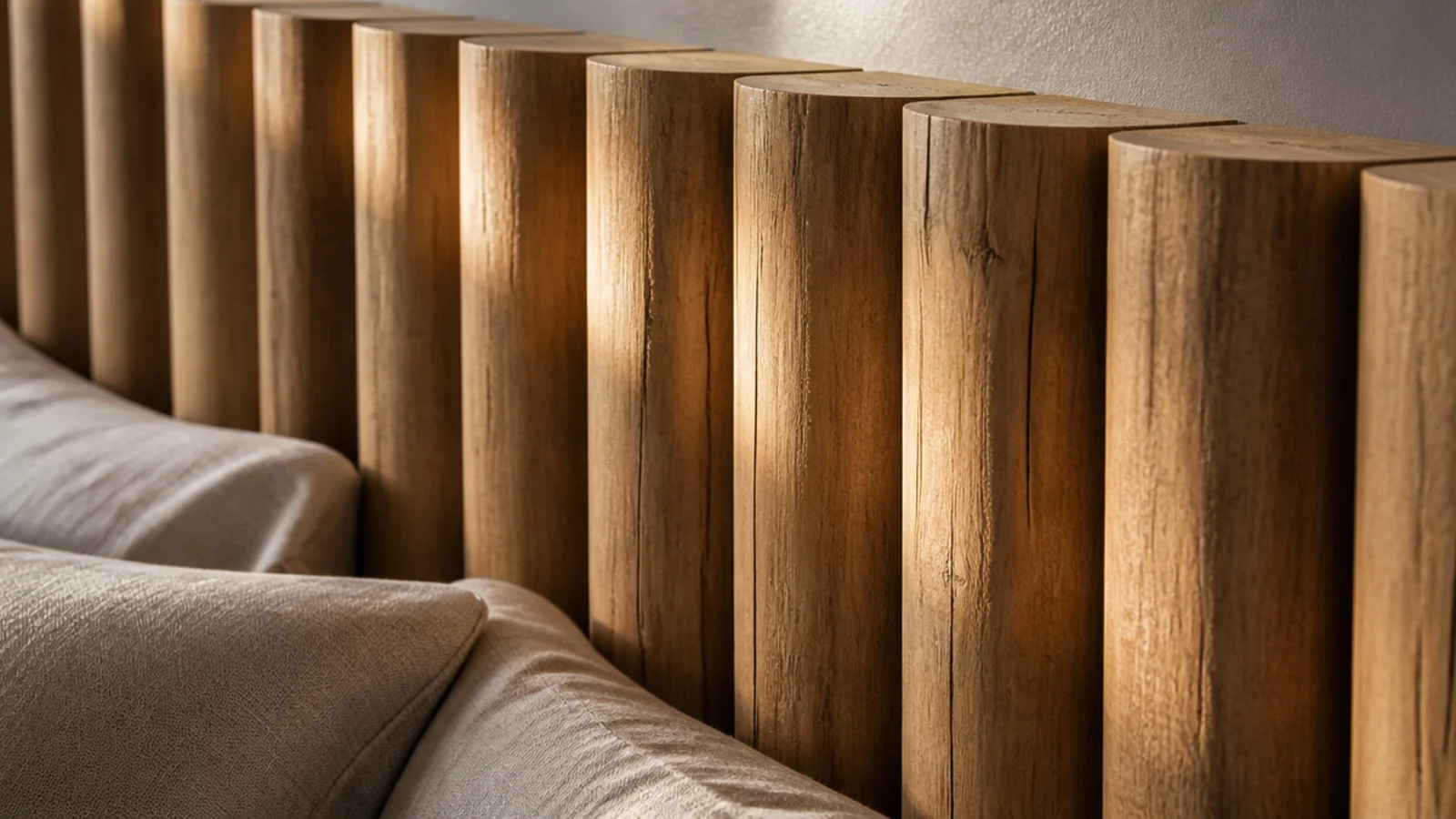
8. Half-round split logs
Split logs mounted vertically side by side give a headboard real depth, and depth is what reads as expensive from across a room.
Use 3 to 4 inch diameter logs split down the middle, faces sanded smooth, backs screwed to a plywood backer. The rounded profiles throw soft shadows that change through the day. Sand the sawn faces properly, because anything within reach of bare shoulders needs to be genuinely smooth. Firewood suppliers sell suitable rounds for very little if you split them yourself.
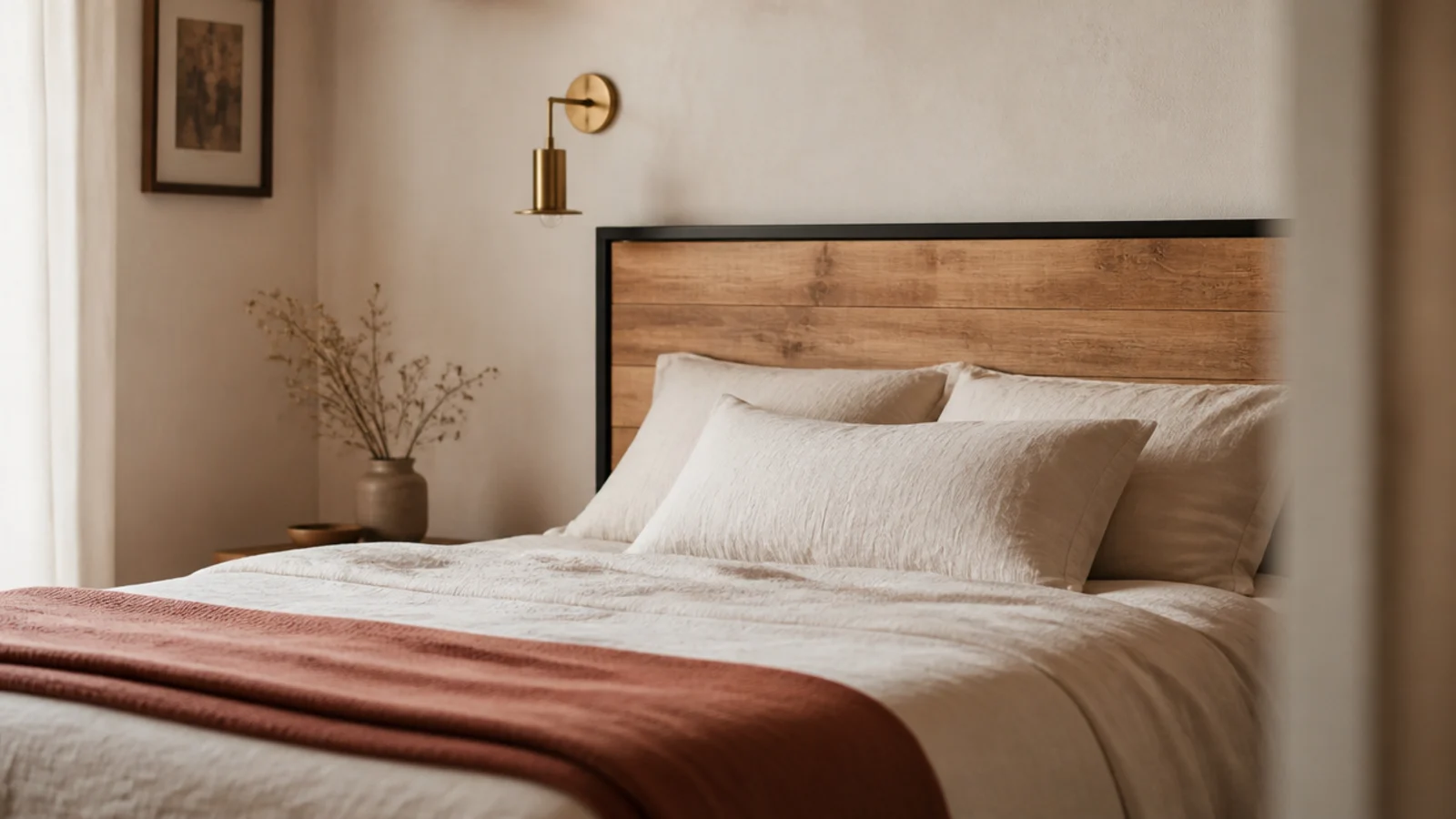
9. Iron and wood together
A slim matte black iron frame infilled with reclaimed boards keeps the warmth of timber but adds a hard line, which stops a rustic room drifting toward country kitsch.
Any local metal fabricator will weld a simple rectangular frame from 1-inch flat bar for $80 to $150. Have them add two tabs for a cleat. Fill it with honey-toned boards rather than grey ones so the contrast against black stays warm. This is the version that works best in a modern house.
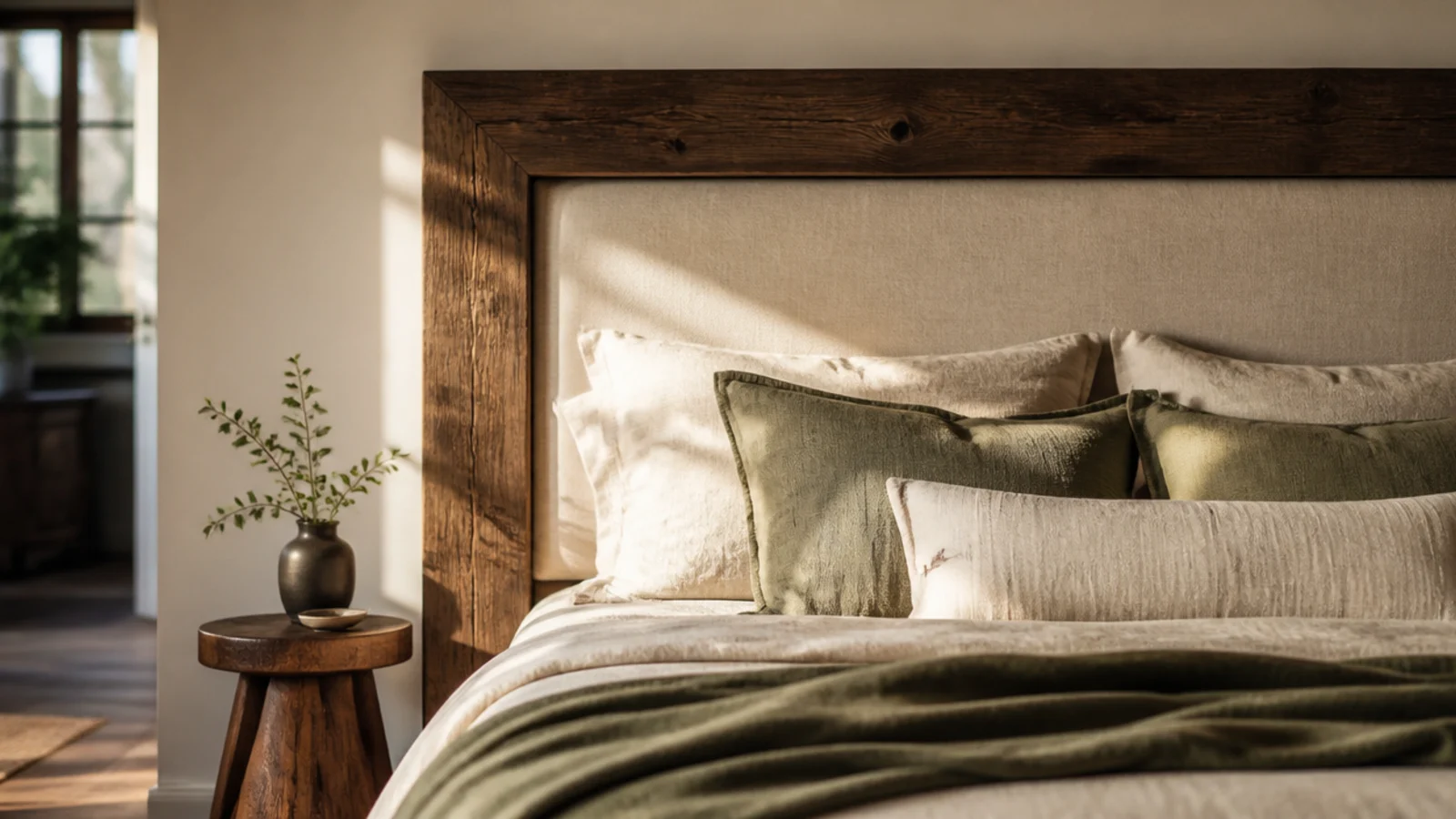
10. A chunky frame with a linen inset
Rustic timber is beautiful and it is not comfortable to lean on. A heavy reclaimed frame around a padded natural linen inset solves both.
Build the frame from 4-inch salvaged stock and set a plywood panel with 2-inch high-density foam and washed linen inside it. Choose performance linen if anyone reads in bed nightly. The step-by-step build covers the upholstered center in detail, and this frame simply captures it.
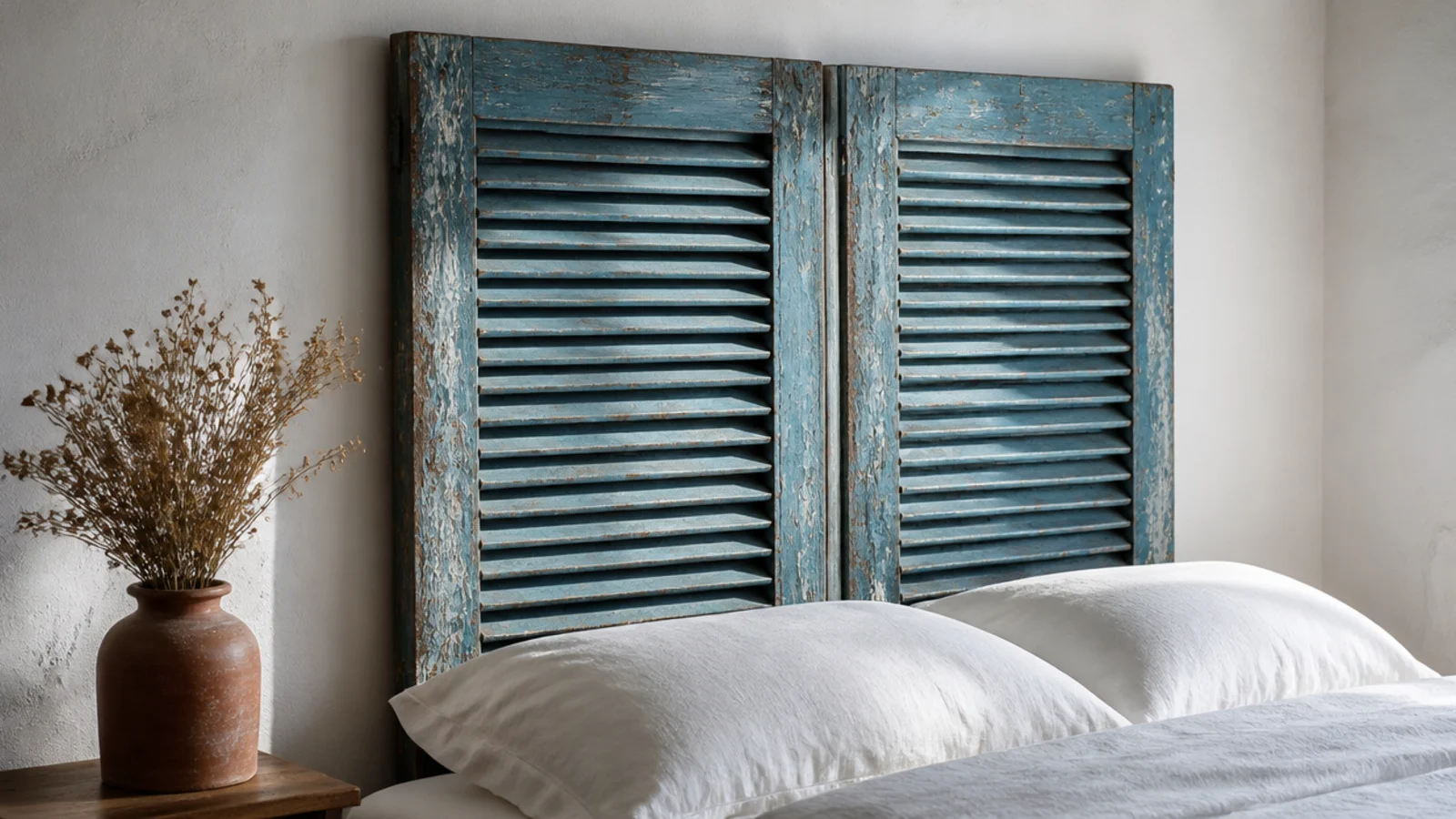
11. Old shutters with the paint left alone
Two salvaged louvered shutters butted together cover a full or queen bed and cost $25 to $50 a pair.
Peeling chalky paint is the appeal, and a matte clear sealer locks it in place so nothing flakes onto the bedding. Hang both from one shared cleat so the pair stays aligned. Louvers collect dust faster than a flat panel, so run a vacuum brush over them twice a year. Blue, sage and bone-white shutters all sit well against warm linen.
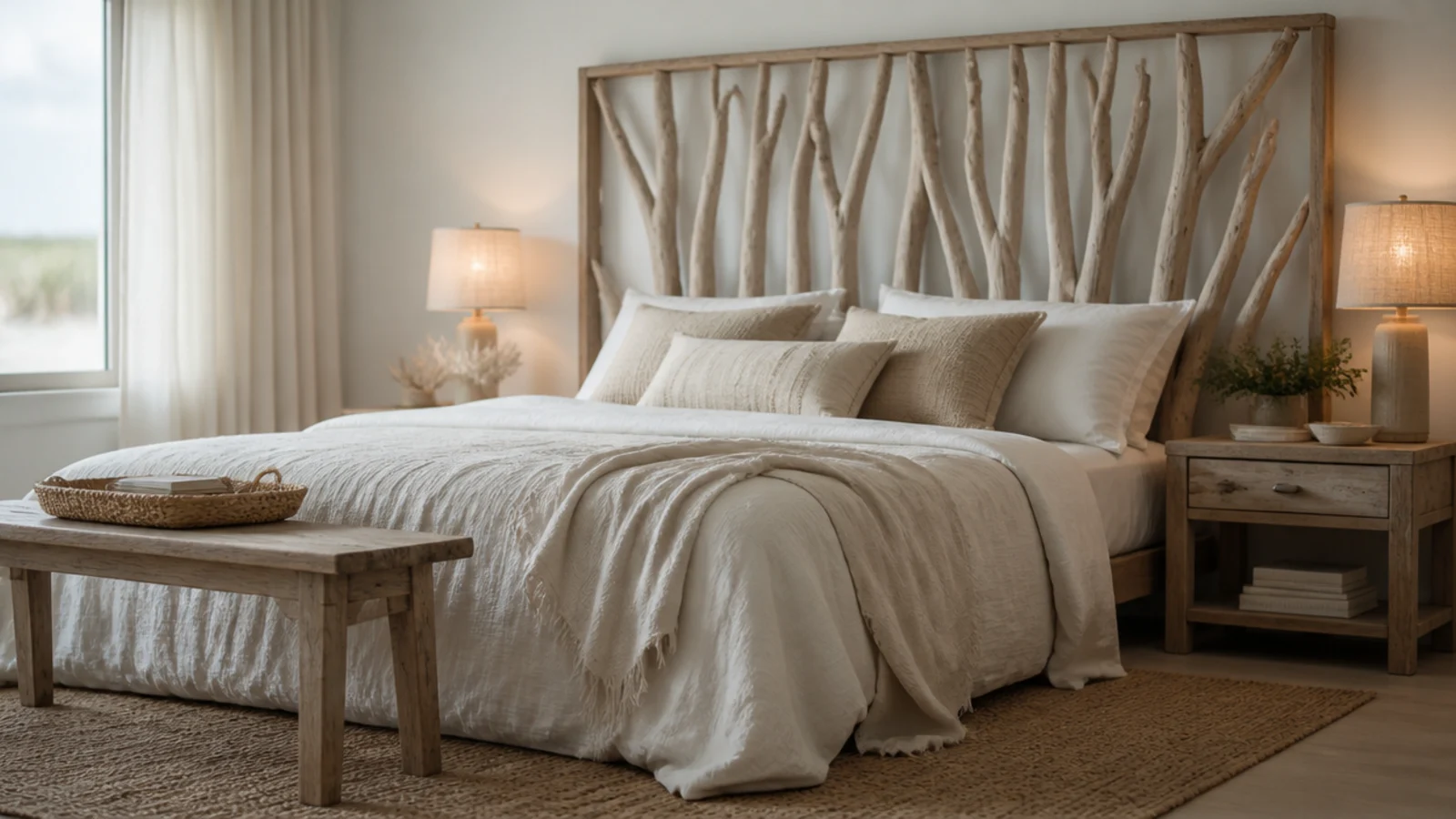
12. A driftwood or branch assembly
Pale driftwood or straight birch branches set vertically in a slim frame give a coastal room texture without weight.
Bake collected wood at 200 degrees for an hour before it comes near a bedroom — that drives out anything living in it, and it is not optional. Space the pieces unevenly rather than in a rhythm, since regular spacing makes natural material look manufactured. Keep the whole panel under 30 inches tall so it stays light. Effectively free, plus a $20 frame ($).
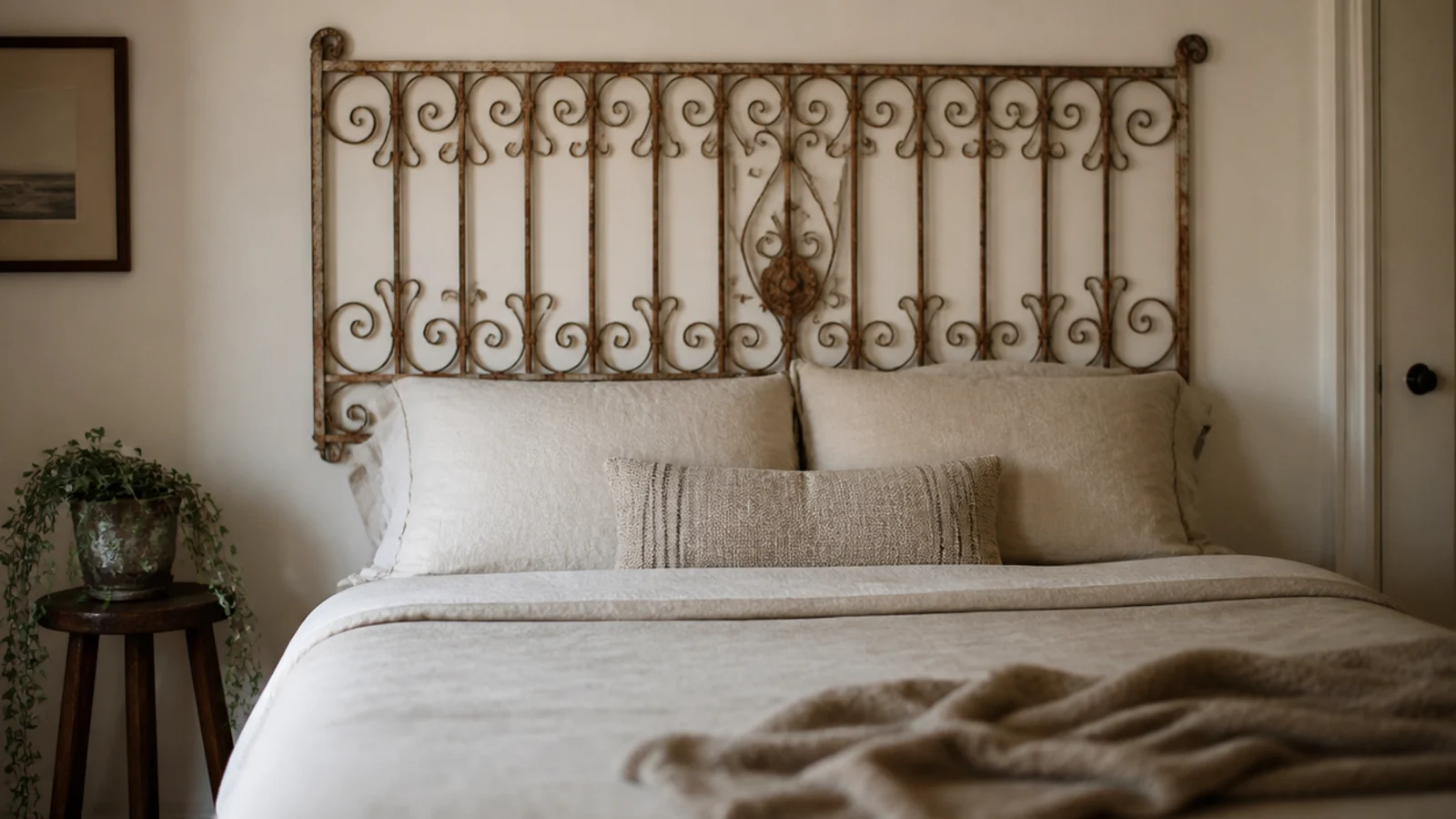
13. A salvaged iron gate hung flat
An old garden gate mounted flat on the wall gives you pattern and age with almost no visual mass, because the plaster shows straight through the scrollwork.
Wire-brush loose rust, then seal with a matte clear lacquer so nothing transfers to bedding. Hang from two D-rings into studs and check the gate is not racked before you set a level line. Salvage yards price these at $40 to $120 ($$). Pair it with candlelight on the nightstand and the room turns genuinely atmospheric after dark.
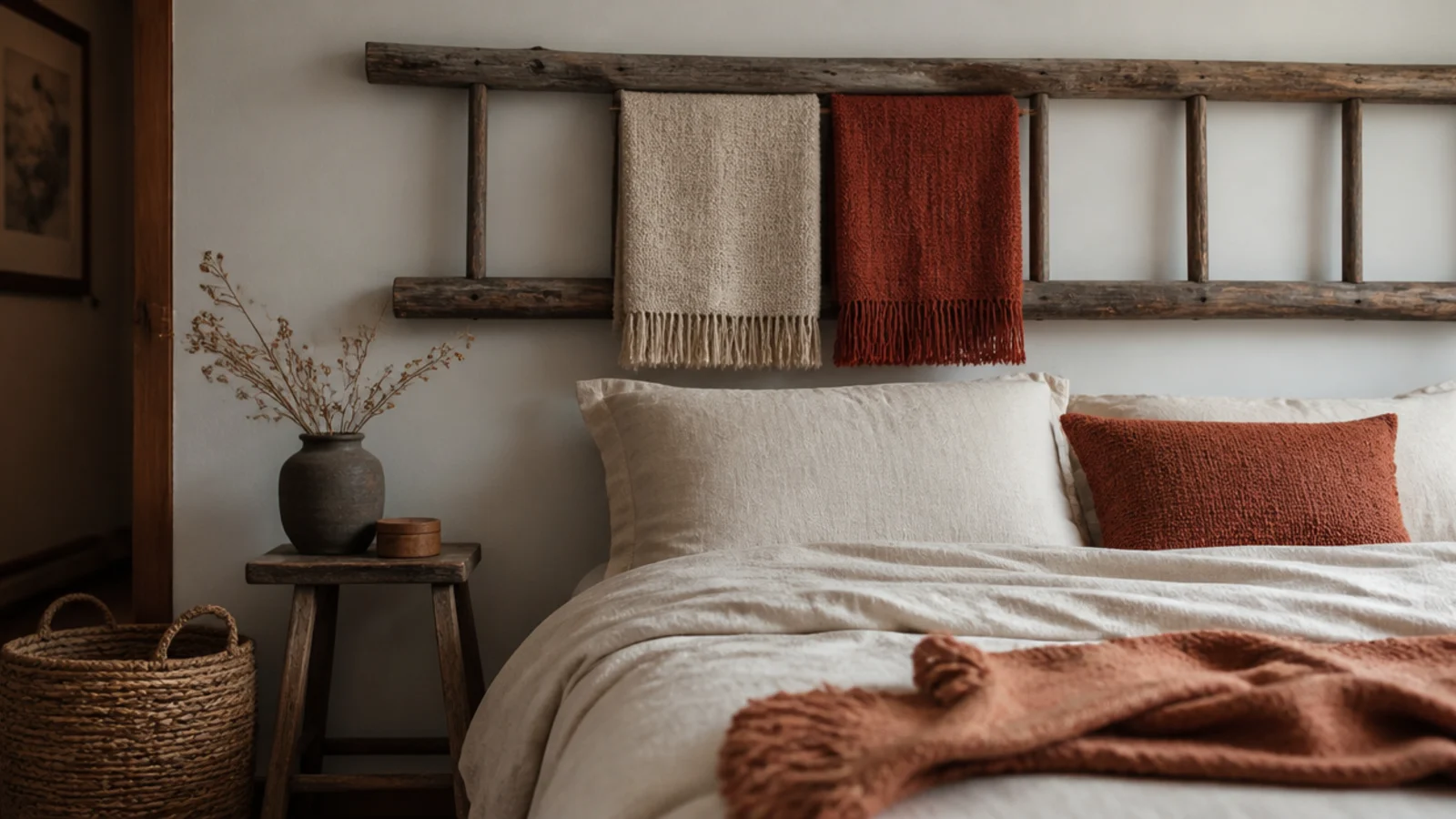
14. A blanket ladder turned sideways
A weathered timber ladder mounted horizontally behind the bed doubles as a headboard and as blanket storage, which matters in an old house with no linen closet.
Use two rungs for folded wool throws and leave the rest empty, or it turns into a drying rack. Rungs at 8-inch centers, total height about 36 inches. Old orchard ladders and salvaged loft ladders both work; expect $30 to $70 ($). Mount it with pipe straps into studs so the whole thing sits an inch off the wall.
15. A leaning reclaimed plank panel
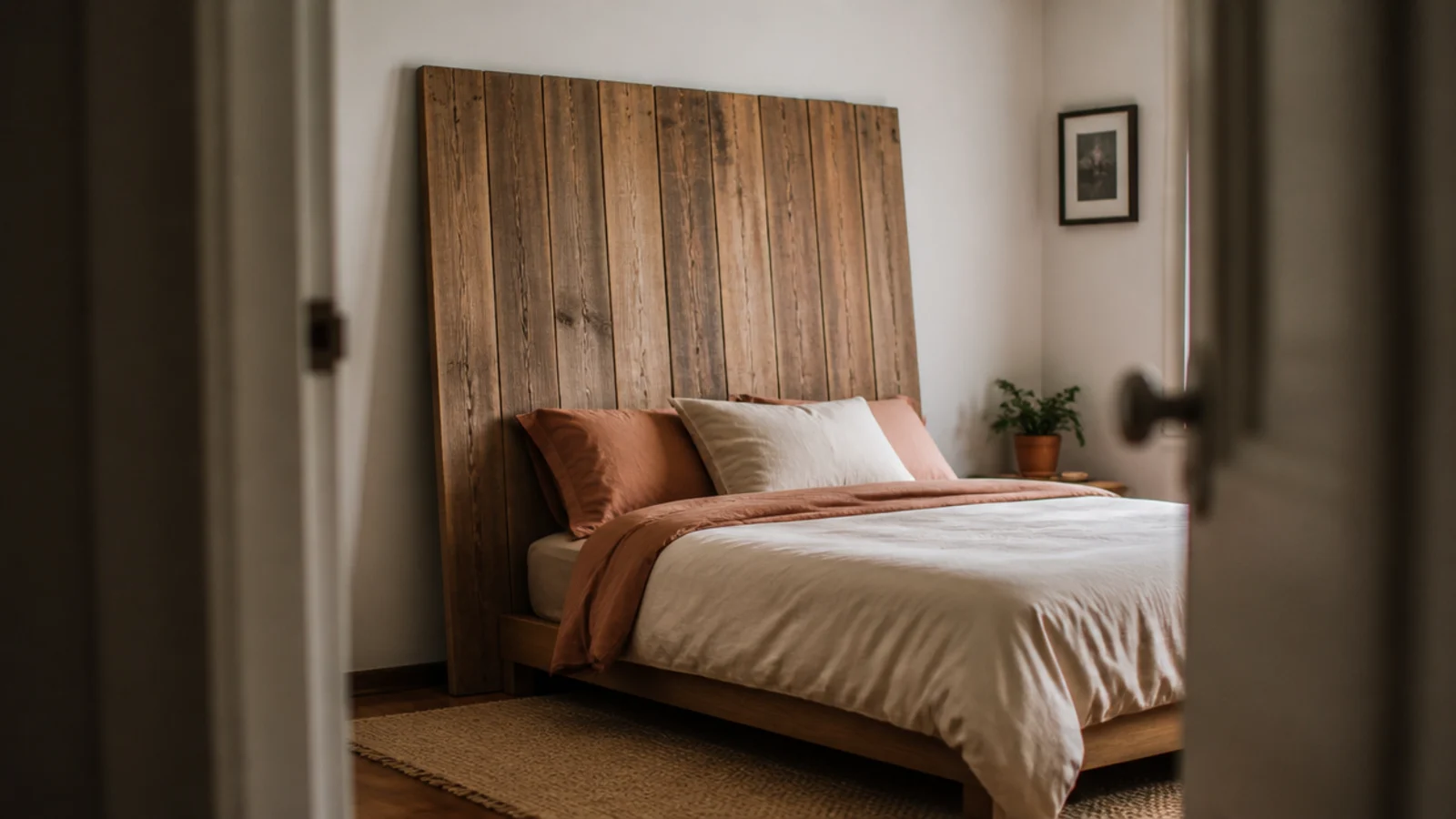
The renter version, and the one I have used most. Joined reclaimed planks on a light backer, leaned against the wall and pinned in place by the bed pushed against it.
Build it 4 inches taller than a hung panel, because the bottom edge starts at the floor rather than at mattress height. Felt pads along the top back edge protect the paint and stop it sliding. Keep the lean under 5 degrees. No holes, no patching, and it comes with you. Roughly $50 from marketplace salvage ($).
Mistakes to Skip
- Skipping the sealer. Unsealed reclaimed timber sheds dust and splinters directly onto your pillows, and two coats of clear matte finish takes twenty minutes.
- Joining old boards edge to edge with no plywood backer. Salvaged timber twists as humidity shifts, and by spring the panel has gaps you cannot close.
- Sanding everything smooth and even. The nail holes, saw marks and color variation are exactly what you paid for, and sanding them out leaves you with plain brown boards.
Frequently asked questions
Is reclaimed wood safe to use as a headboard?
It is, with two checks. Anything painted before 1978 may carry lead, so test it with a $12 swab kit or seal it under two coats of clear water-based finish. Then seal every face regardless of paint, because old timber sheds fine dust and the occasional splinter directly behind your pillows. Kiln-dried reclaimed stock also avoids bringing insects indoors.
Where do you find reclaimed wood for a headboard?
Architectural salvage yards, Habitat for Humanity ReStores, local demolition contractors and marketplace listings for barn teardowns are the usual sources. Expect $3 to $8 a board foot for genuine barn siding. Fence pickets, old scaffold boards and shipping pallets stamped HT give a similar look for far less if you are willing to do the sanding.
How do you make new wood look rustic?
Distress it before finishing. Beat the surface with a length of chain, drive a few nail holes in random clusters, then round the edges with 80 grit. A wash of dilute grey stain followed by a warm walnut coat wiped back hard gives the aged tone. Finish in matte wax, never gloss, which instantly reads as new timber pretending.
How high should a rustic wood headboard sit?
Measure from the top of the mattress. A low reclaimed panel at 24 to 28 inches suits cottage and farmhouse rooms and keeps the timber from dominating. A tall salvage piece at 40 to 50 inches becomes the focal point and works best in a room with plain bedding. Set the bottom edge 2 to 3 inches below the mattress top.
Do rustic headboards work in a modern bedroom?
Yes, and often better than in a fully rustic one. One weathered panel against plain white bedding and clean-lined furniture reads as deliberate contrast. The rule is to keep it as the only rough texture in the room. Add a second distressed piece and the pair starts to look like a theme rather than a choice.
Go to a salvage yard before you decide which of these to build — the piece you find usually chooses the project for you. For construction detail, wood headboard ideas covers slat gaps, species and finishes, and cheap headboard ideas collects the versions that land under $60 including several salvage routes. Save the pin so the sealing steps are with you when you find the right board.
Want more like this? Browse all 15 headboard ideas guides — they all use the same measurements and budget tiers.
Pin it for later
Save this to your Headboard Ideas board
Pin it now so it is waiting for you when the tape measure comes out — and so the next person hunting for this idea can find it too.
Save this pinKeep going
More ideas worth saving while you have the tape measure out.