Headboard Ideas · Listicle
30 Simple Headboard Ideas on a Budget

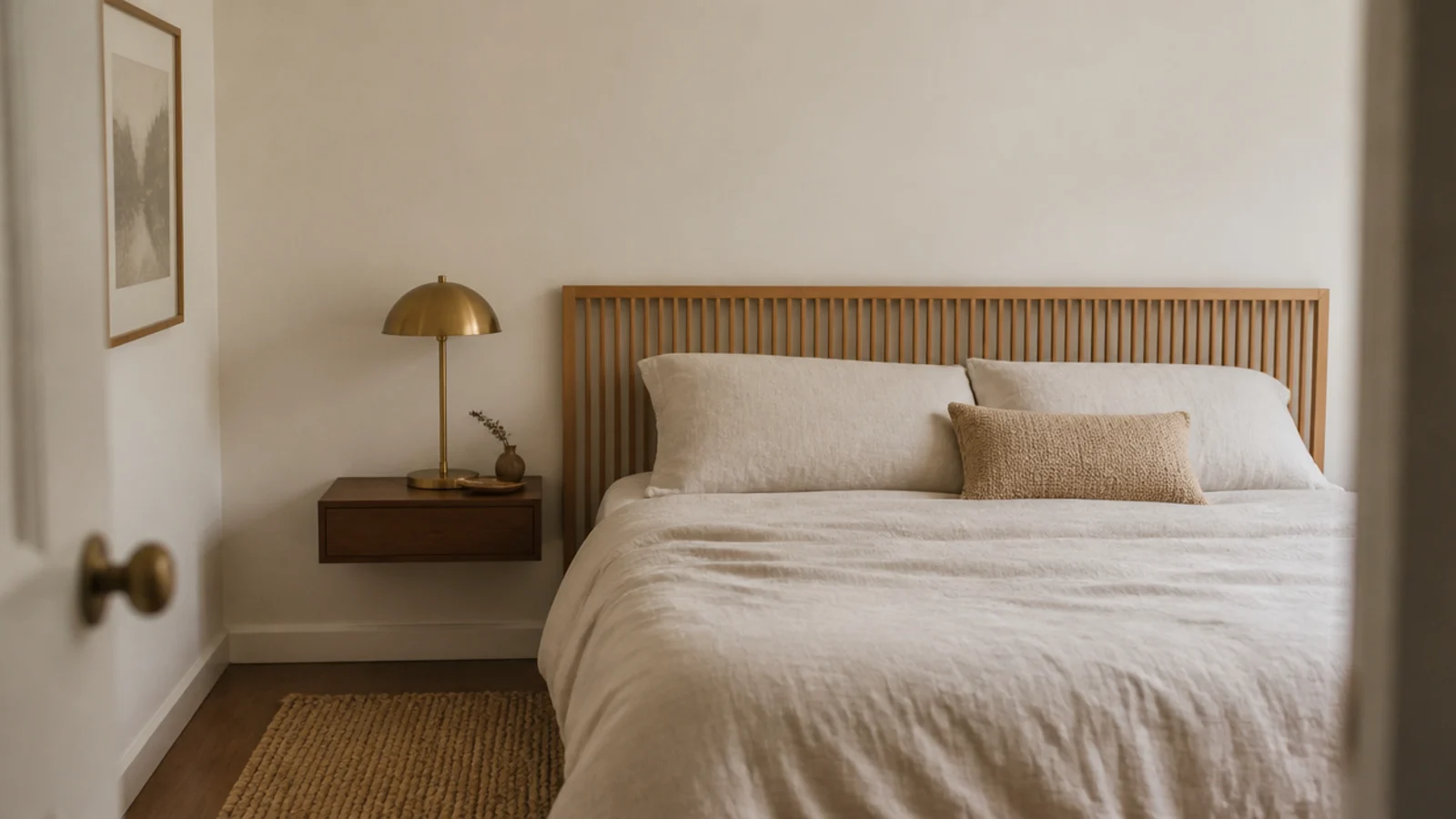
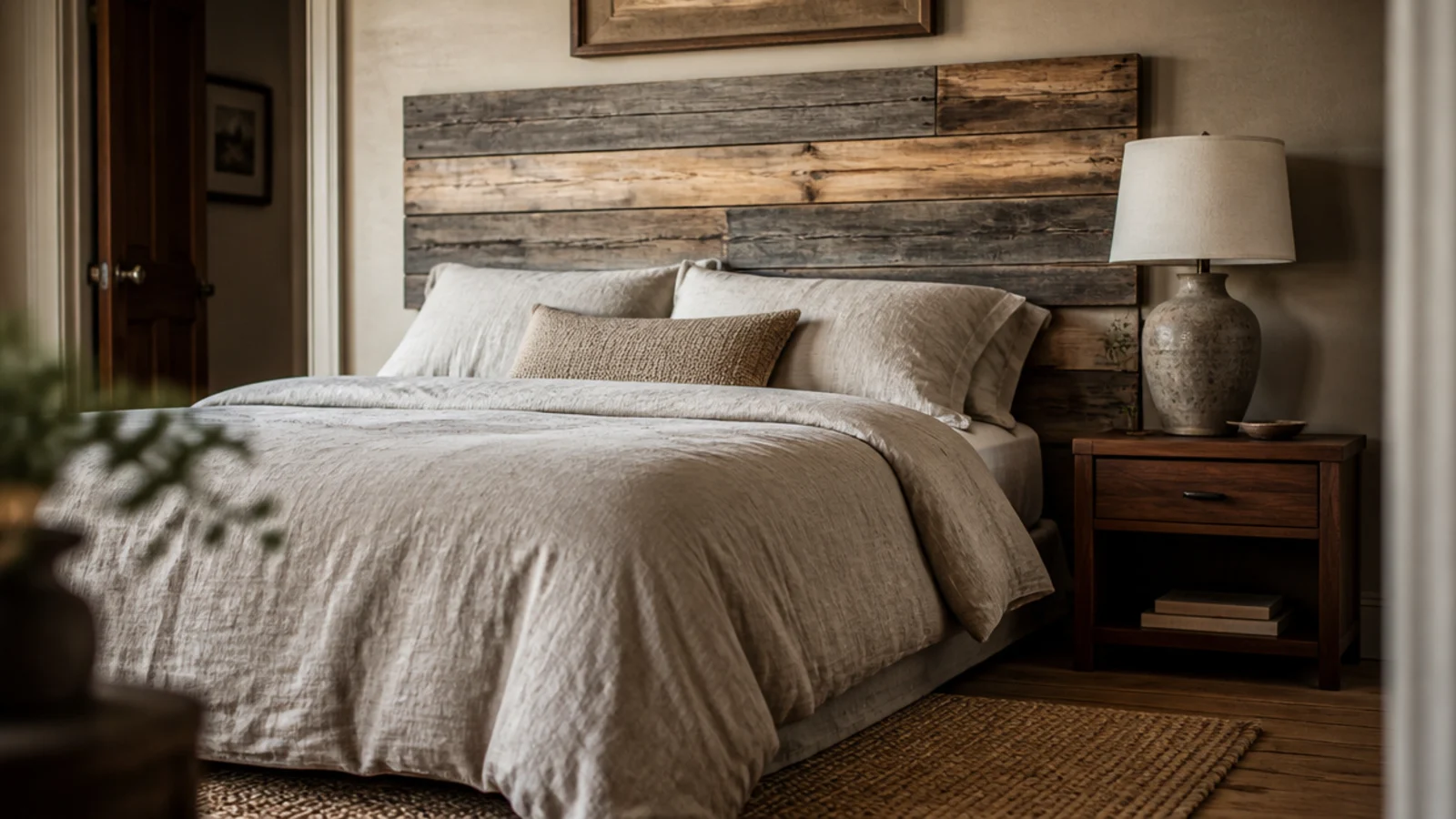
Headboard ideas for small bedrooms have one job that big-room versions do not: frame the bed without eating the wall. I have styled bedrooms as narrow as 8 by 10 feet, and the pattern is consistent — the panels that worked were sized to the mattress, kept low, and mounted so the bed could still slide out. Thirty versions below, most under $60.
In this guide32 sections — tap to openHide
- 1.What actually works among headboard ideas for small bedrooms
- 2.A panel sized exactly to the mattress
- 3.Low profile at 24 inches
- 4.Wall-mounted so the bed can still move
- 5.Slats that let the wall show through
- 6.An arch painted straight onto the wall
- 7.A peel-and-stick paper panel
- 8.A hung textile instead of a panel
- 9.A picture ledge at pillow height
- 10.Floating nightstands either side of a narrow panel
- 11.Swing-arm sconces instead of table lamps
- 12.A panel with a built-in four-inch ledge
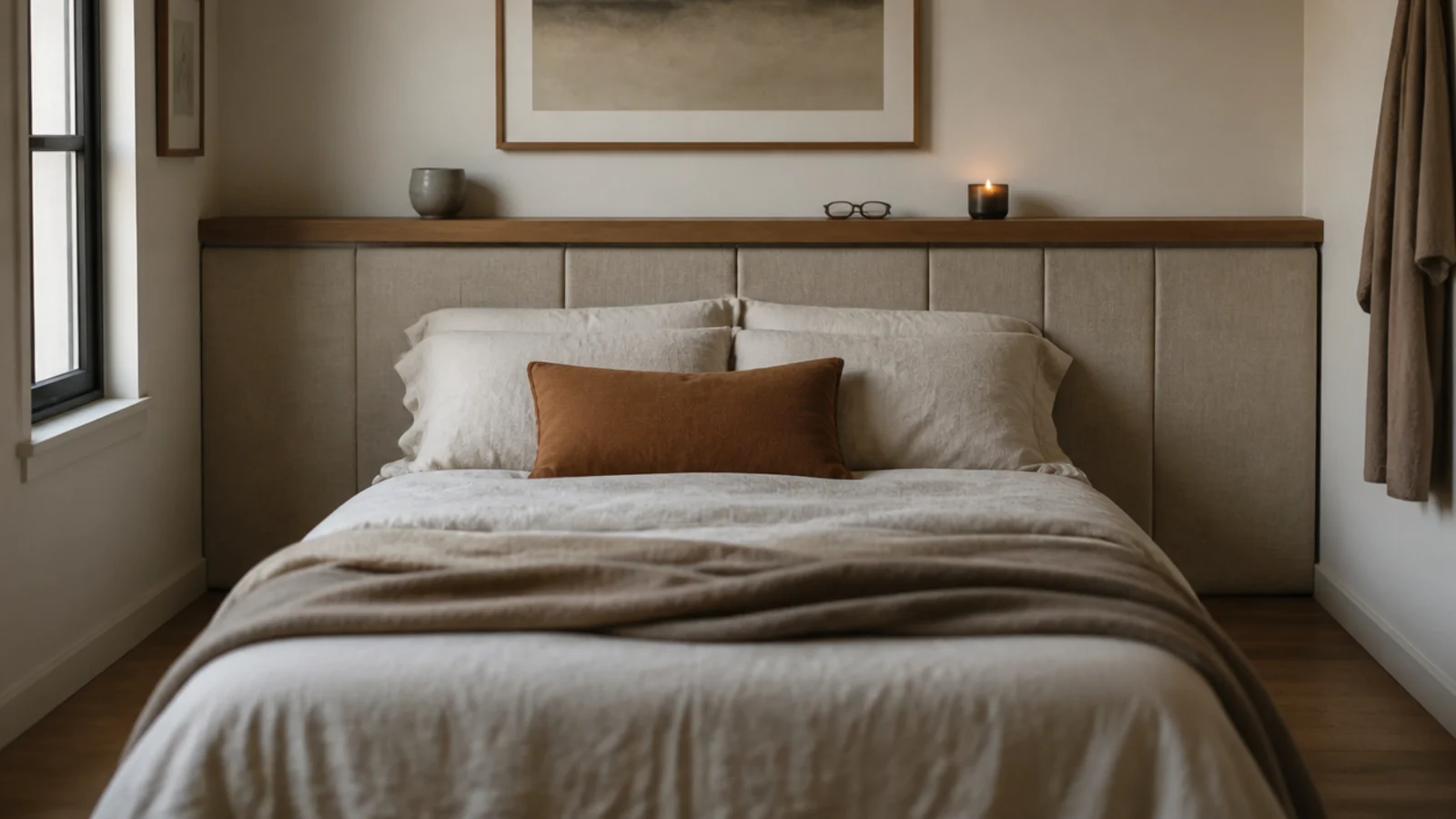
- 13.A wraparound panel for a bed in a corner
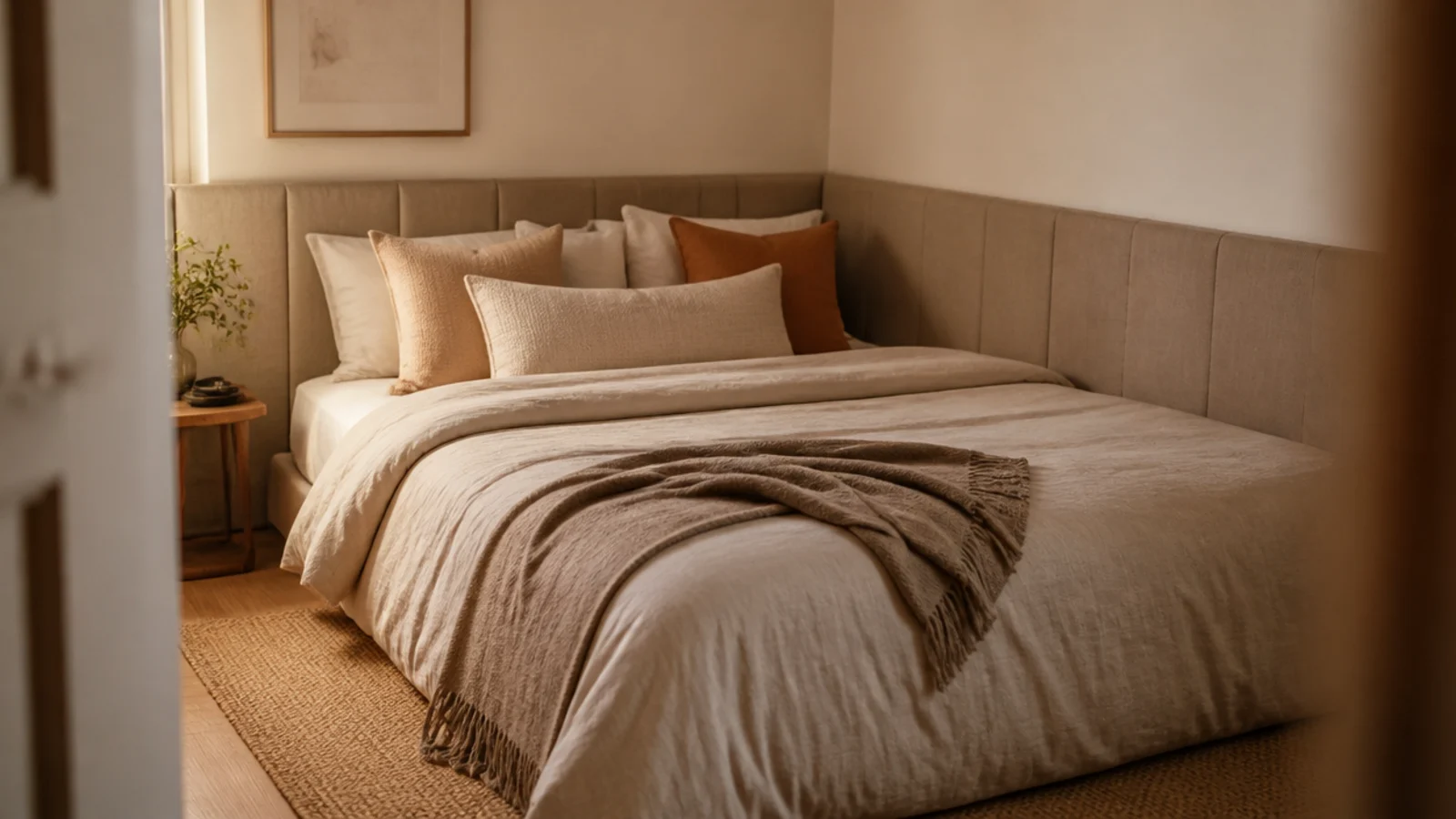
- 14.An antiqued mirror panel
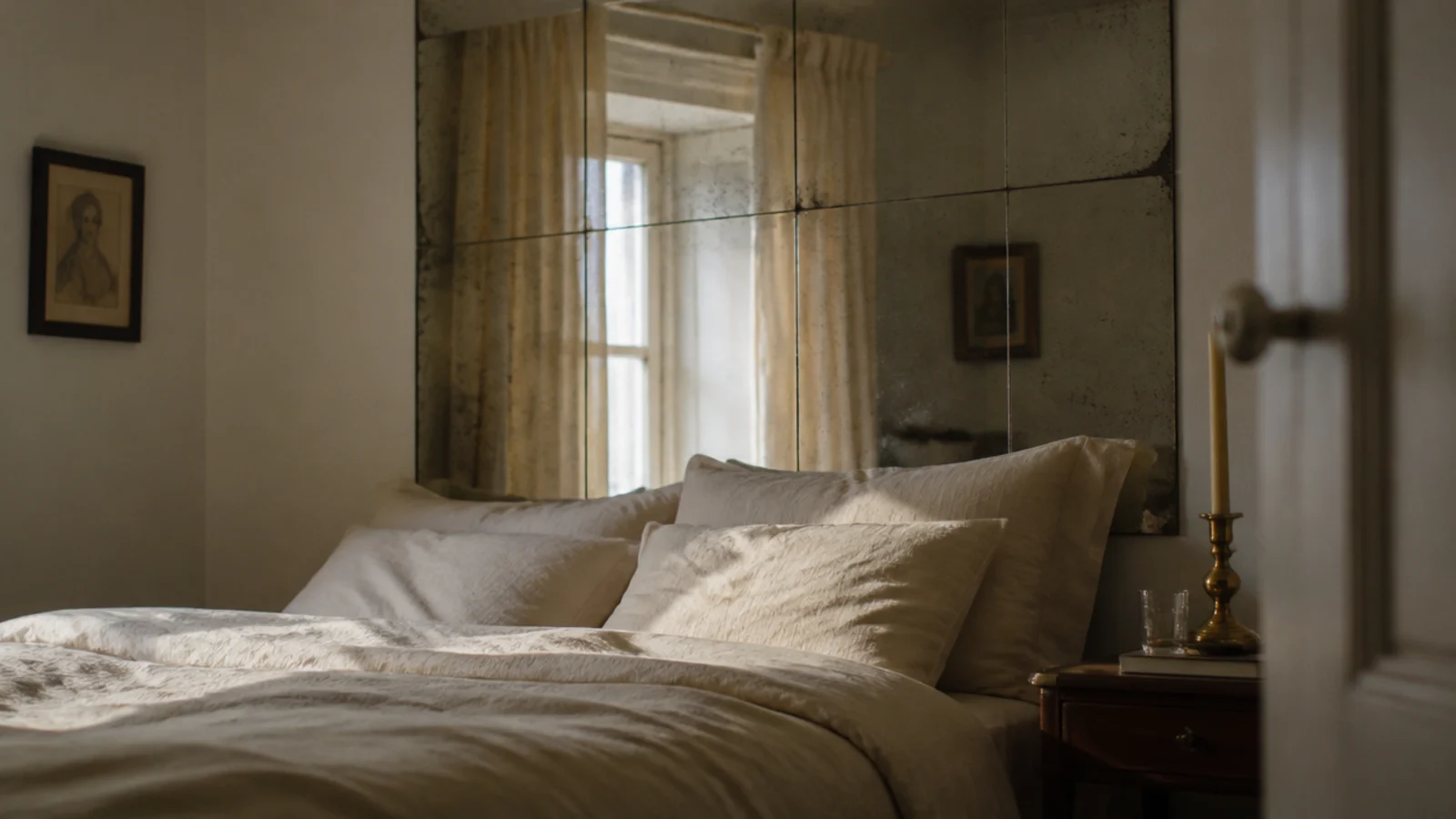
- 15.A panel that stops under a low window
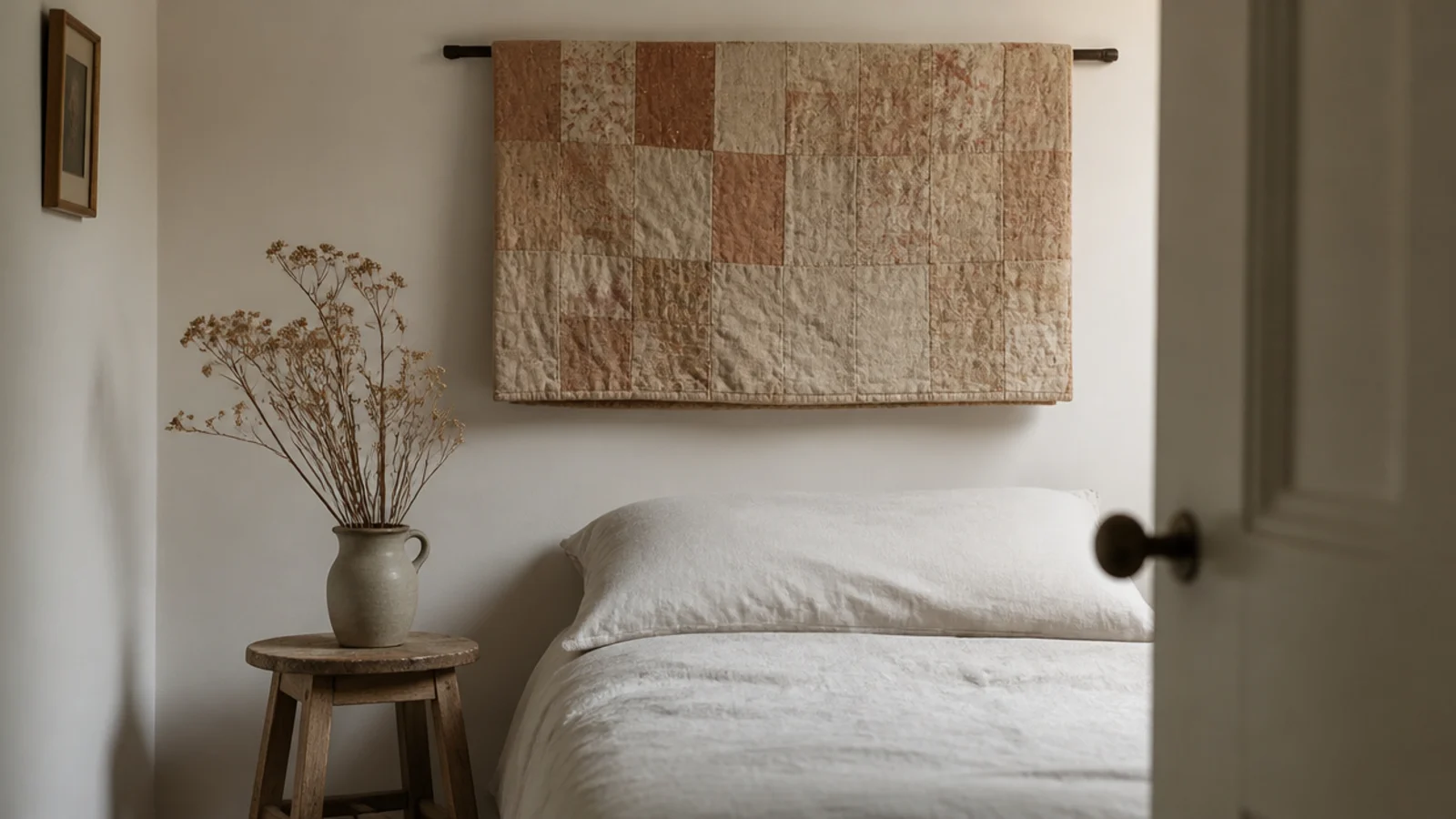
- 16.A quilt hung over a slim rod
- 17.A shallow bookcase headboard
- 18.Cane webbing in a slim frame
- 19.A curtain panel run wall to wall
- 20.Two narrow shutters
- 21.A fluted half-height panel
- 22.A painted color block rectangle
- 23.Rope laced across a slim frame
- 24.A pegboard headboard that stores things
- 25.A leaning panel with no fixings
- 26.Horizontal slats under a sloped ceiling
- 27.A padded rail on a loft or bunk bed
- 28.A long bolster instead of a headboard
- 29.Twin beds sharing one long low panel
- 30.A pillow ledge with hidden charging
- 31.A tall narrow panel that lifts the eye
- 32.Mistakes to Skip
What actually works among headboard ideas for small bedrooms
Width comes first, and small rooms invert the usual advice. A larger bedroom can carry a panel 4 inches wider than the mattress on each side; a small one should match the mattress exactly. Twin is 38 inches, full 54, queen 60, king 76. Every extra inch of panel is an inch of wall you lose.
Height second, measured from the top of the mattress. Stay at 24 to 28 inches for a low profile, which leaves visible wall above the bed and that visible wall is what your eye reads as room. A 40 to 50 inch statement panel only works in a tight room if it is slatted, caned or painted, so the wall shows through it.
Third, mount it to the wall rather than the frame. A French cleat into two studs carries the lateral load a headboard takes every night, and it leaves the bed free to slide out — which in a small room is the difference between cleaning behind the bed and never cleaning behind the bed.
Budget tiers: paint, peel-and-stick and hung textiles run $12 to $40 ($). Slat panels, ledges and shallow bookcases land at $45 to $120 ($$). Made-to-size upholstered panels start near $180 ($$$).
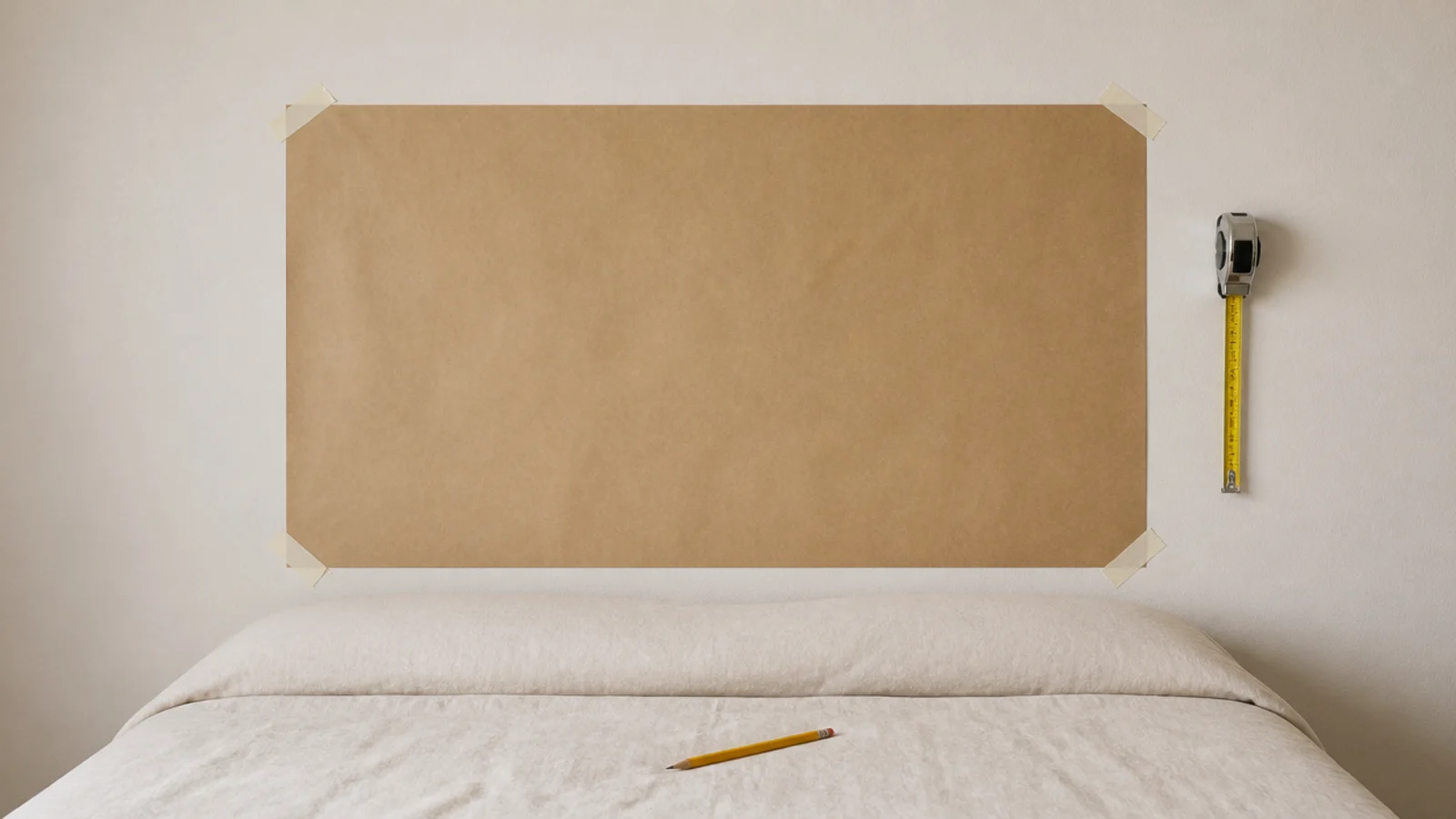
1. A panel sized exactly to the mattress
The default that most small bedrooms should start from. A flat panel at 60 inches for a queen, 54 for a full, hung so the bottom edge sits 2 inches below the mattress top.
Clear wall either side gives the bed breathing room and makes the whole wall read wider. Overhanging panels do the opposite in a tight space.
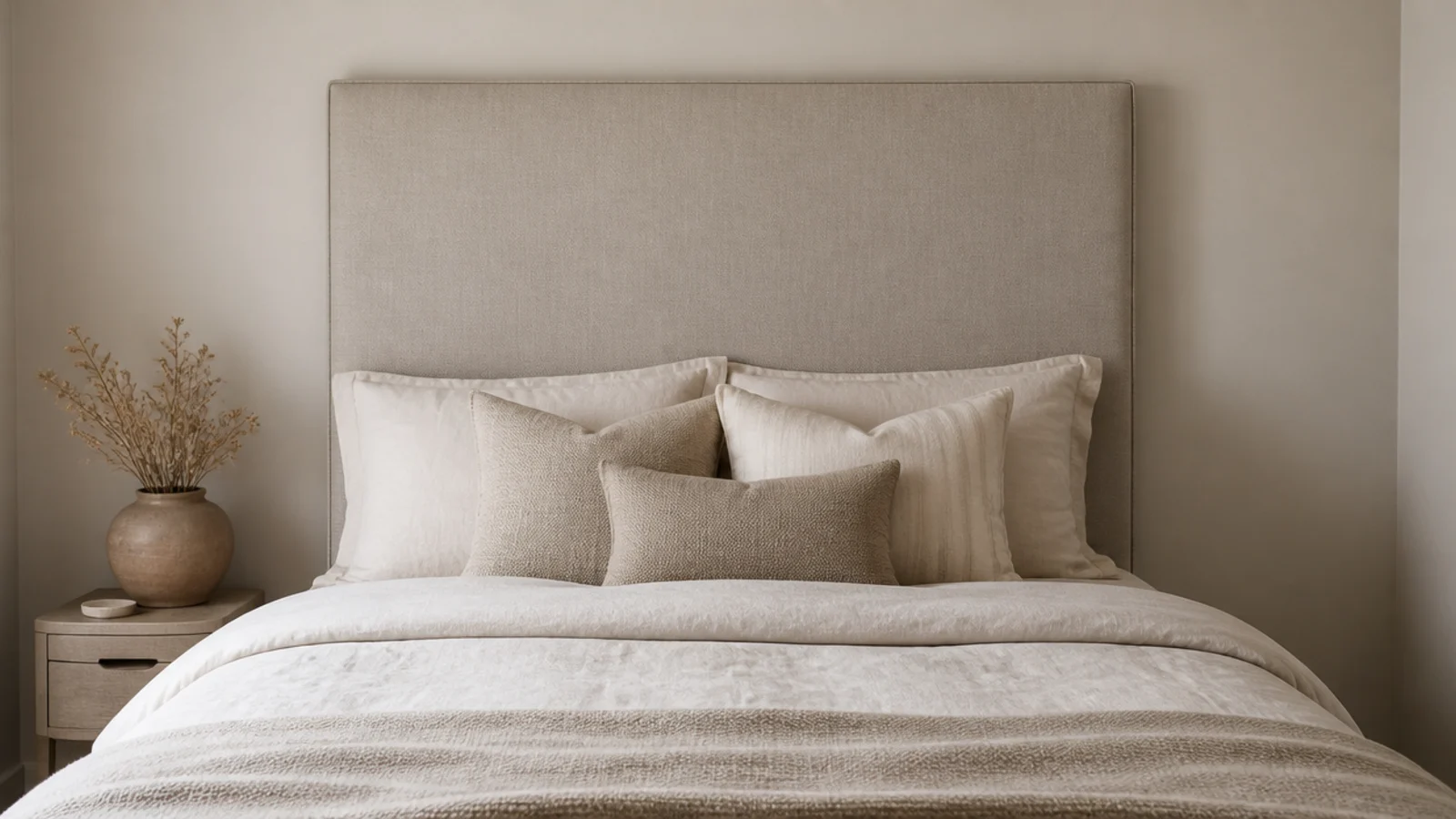
2. Low profile at 24 inches
Twenty-four to 28 inches above the mattress is the low-profile range, and it is almost always the right call under an 8-foot ceiling.
The panel still frames the pillows, but two-thirds of the wall stays visible. In a room under 100 square feet that visible plaster is doing more for the sense of space than any furniture choice you make.
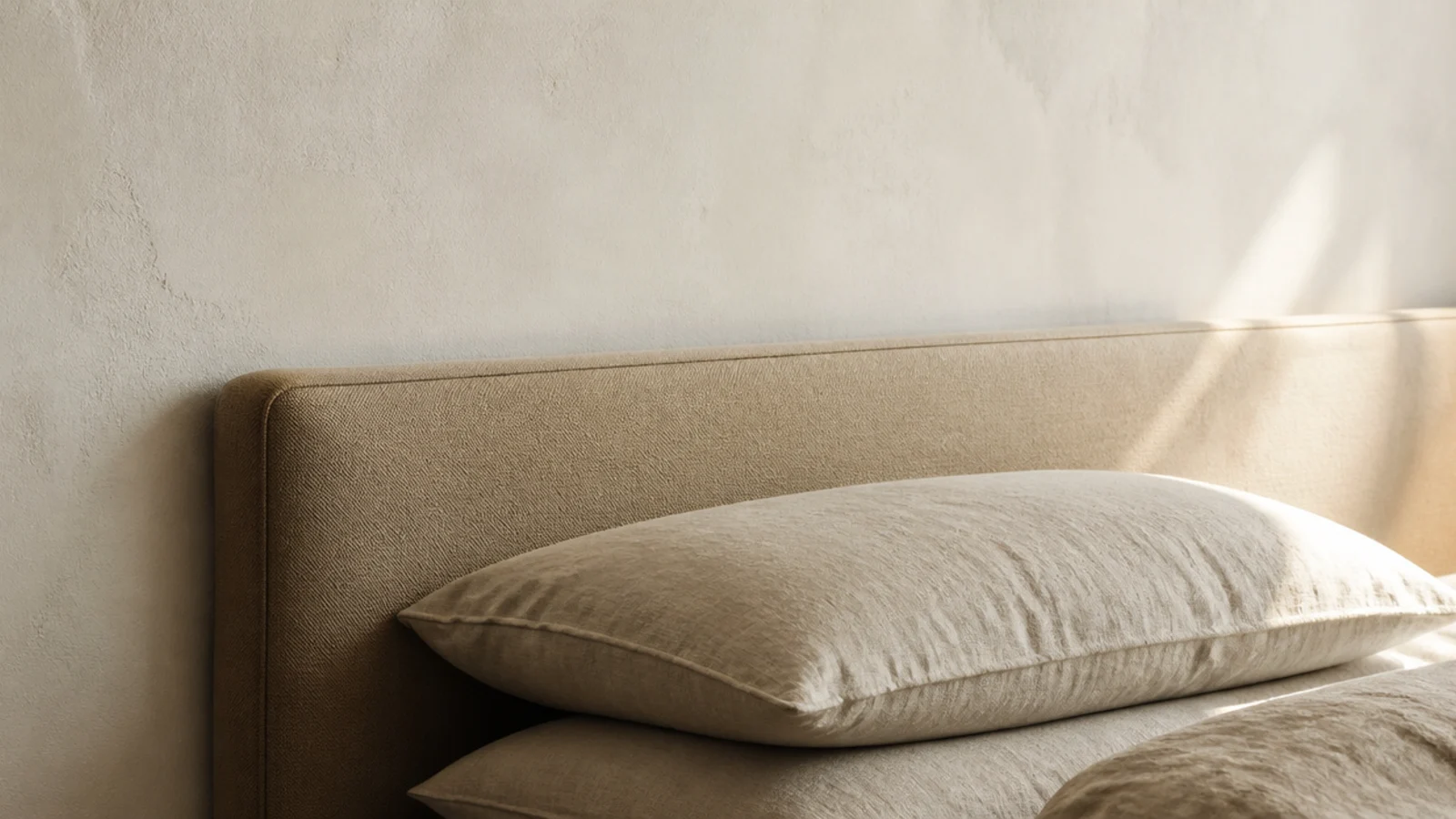
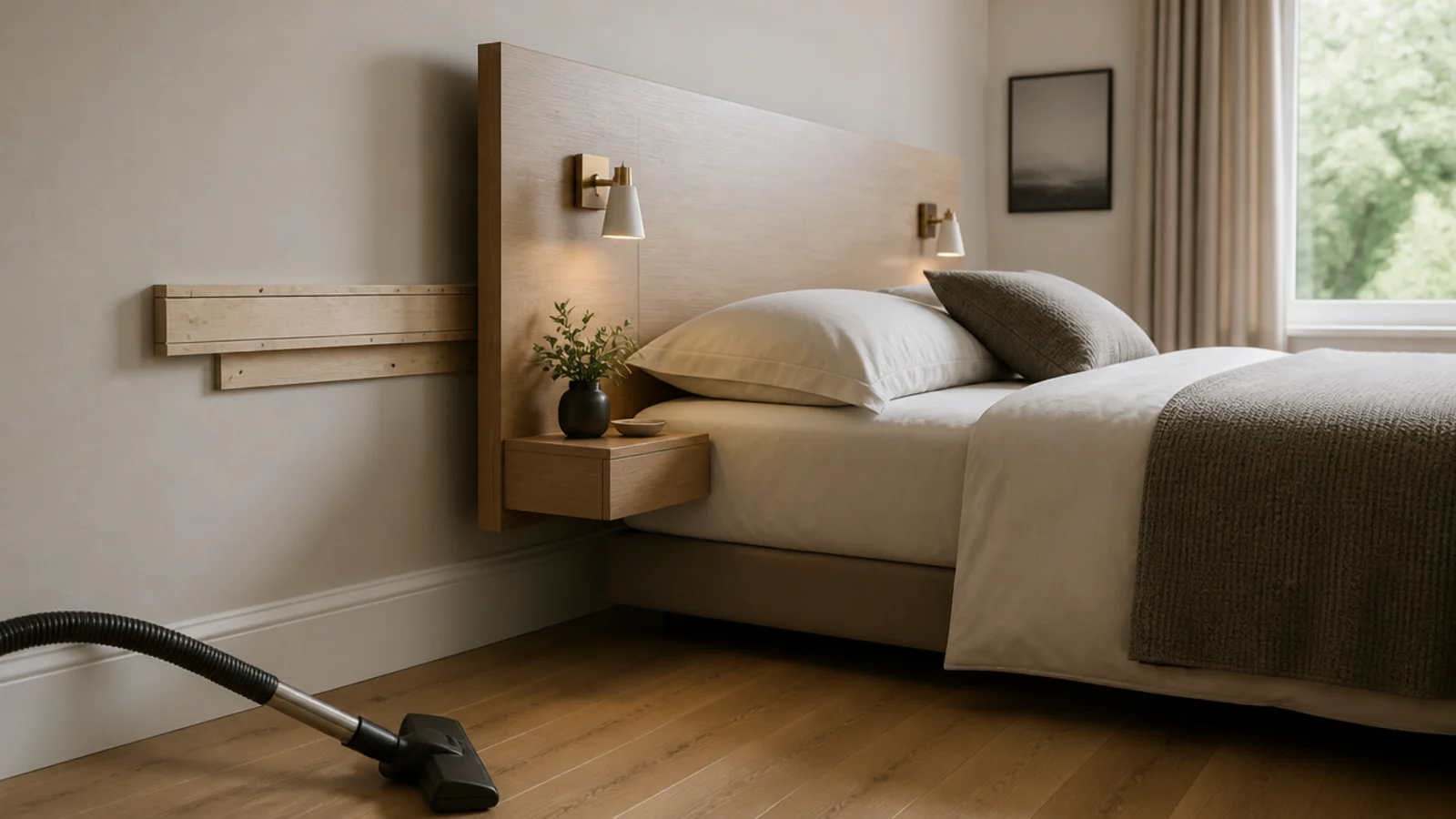
3. Wall-mounted so the bed can still move
Bolt a headboard to a bed frame in a small room and you have created a piece of furniture that can never be pulled away from the wall.
Hang the panel on a cleat instead. The bed slides out for vacuuming, for retrieving everything that falls behind it, and for repainting. Four screw holes, filled in ten minutes when you move.
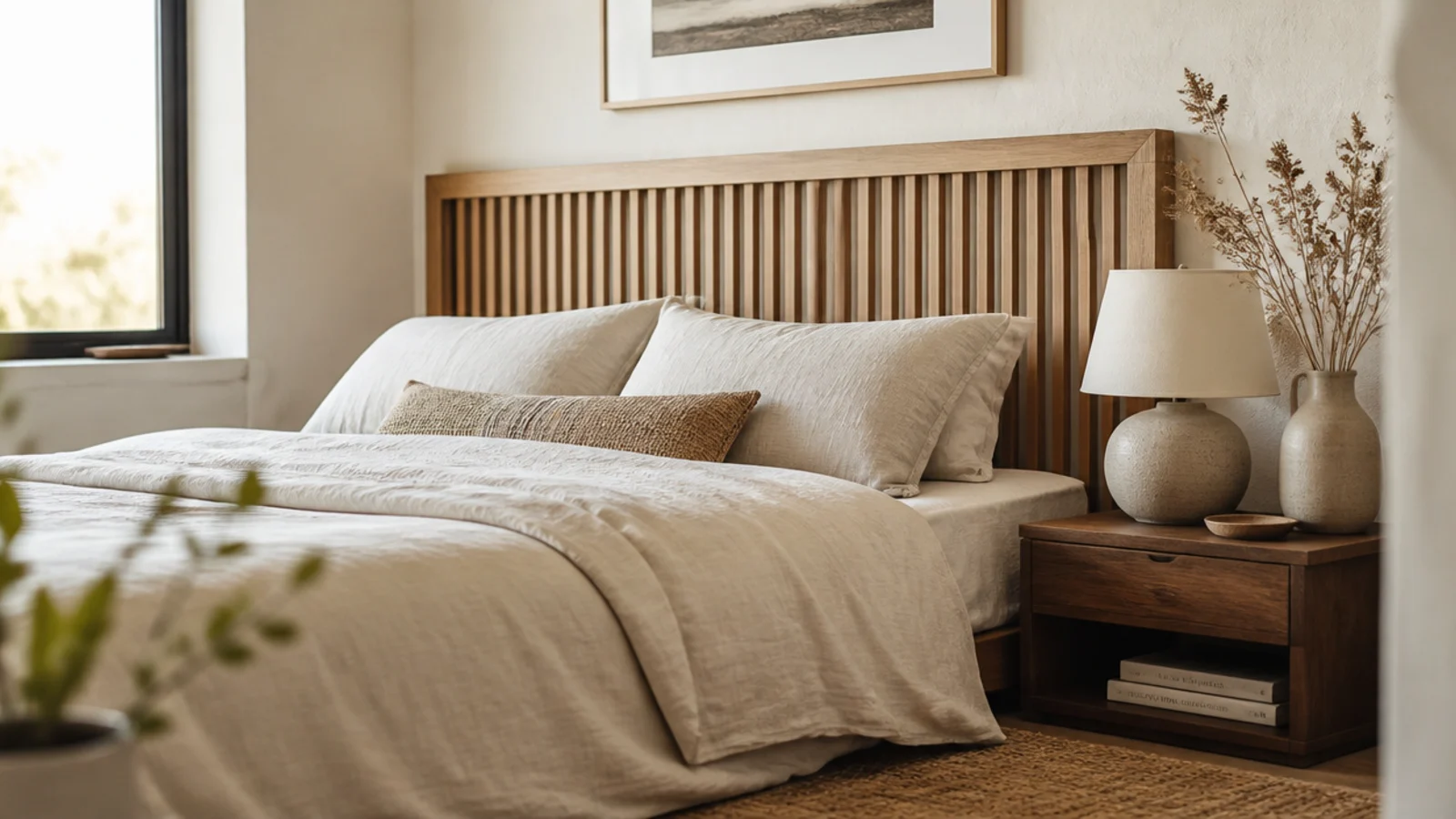
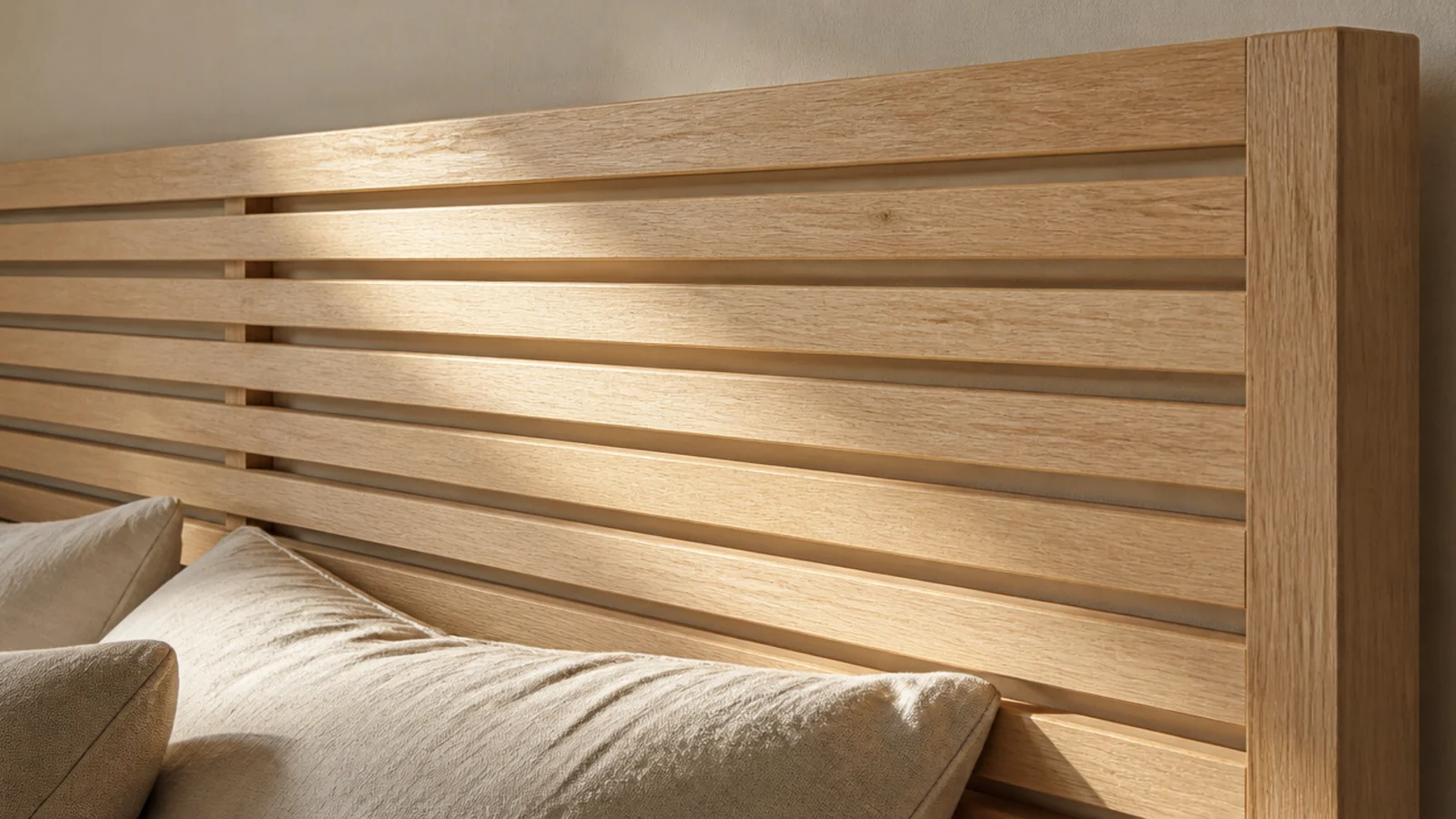
4. Slats that let the wall show through
An open slatted panel gives you the presence of a headboard with roughly half the visual mass. Keep the gaps at 1 inch and the slats at 1.5 inches wide.
Paint the wall behind the slats the same color as the wall beside them, never a contrast, or the gaps turn into stripes and the panel doubles in weight.
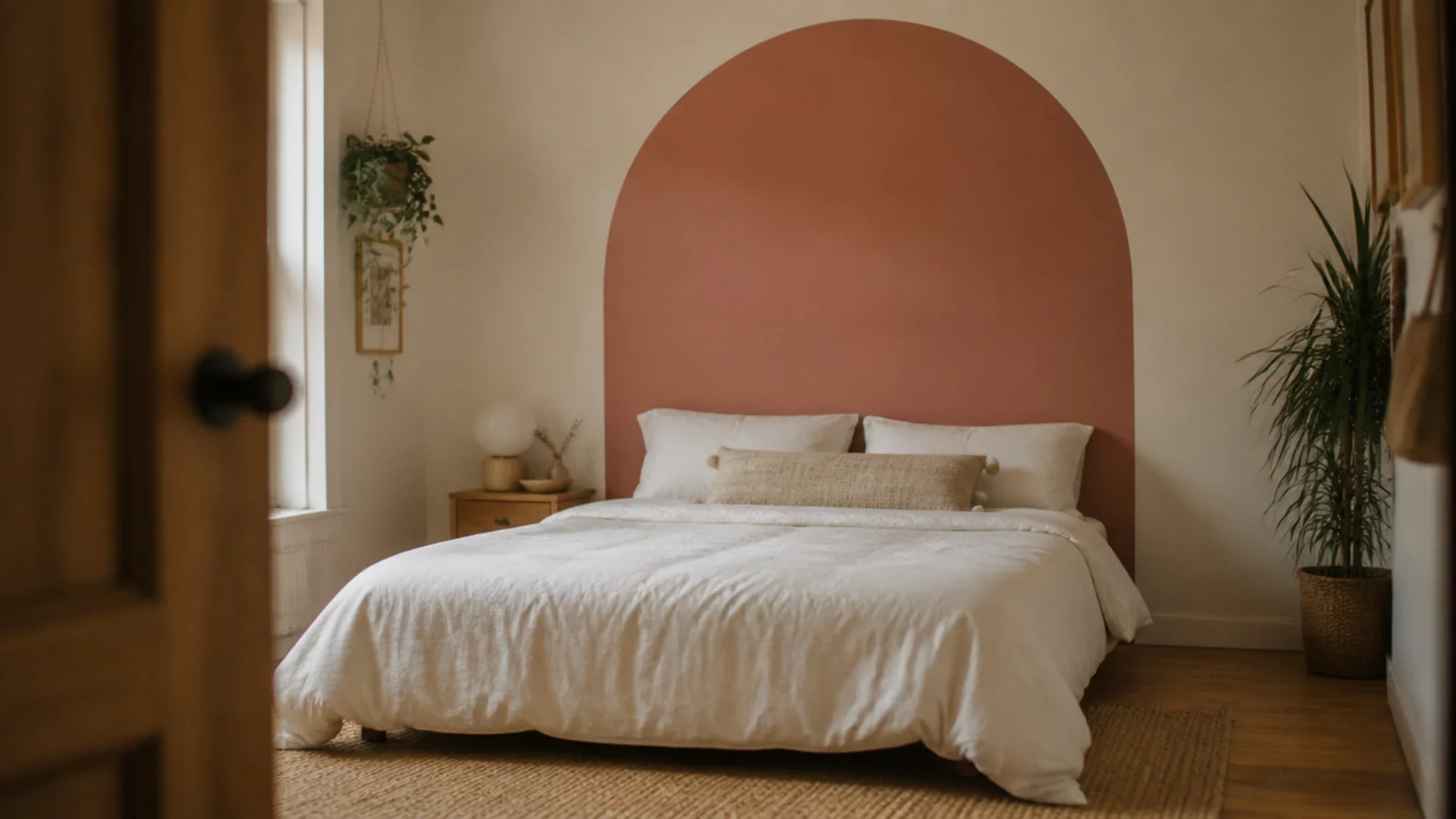
5. An arch painted straight onto the wall
The cheapest genuinely good-looking option in this list. A soft arch in a clay or sage sample pot, rising to about 48 inches above the mattress, painted directly on the wall.
Mark the curve with a pencil on a string pinned at the center, tape the straight sides, and cut in the arc freehand with a 1-inch angled brush. Twelve dollars, one hour.
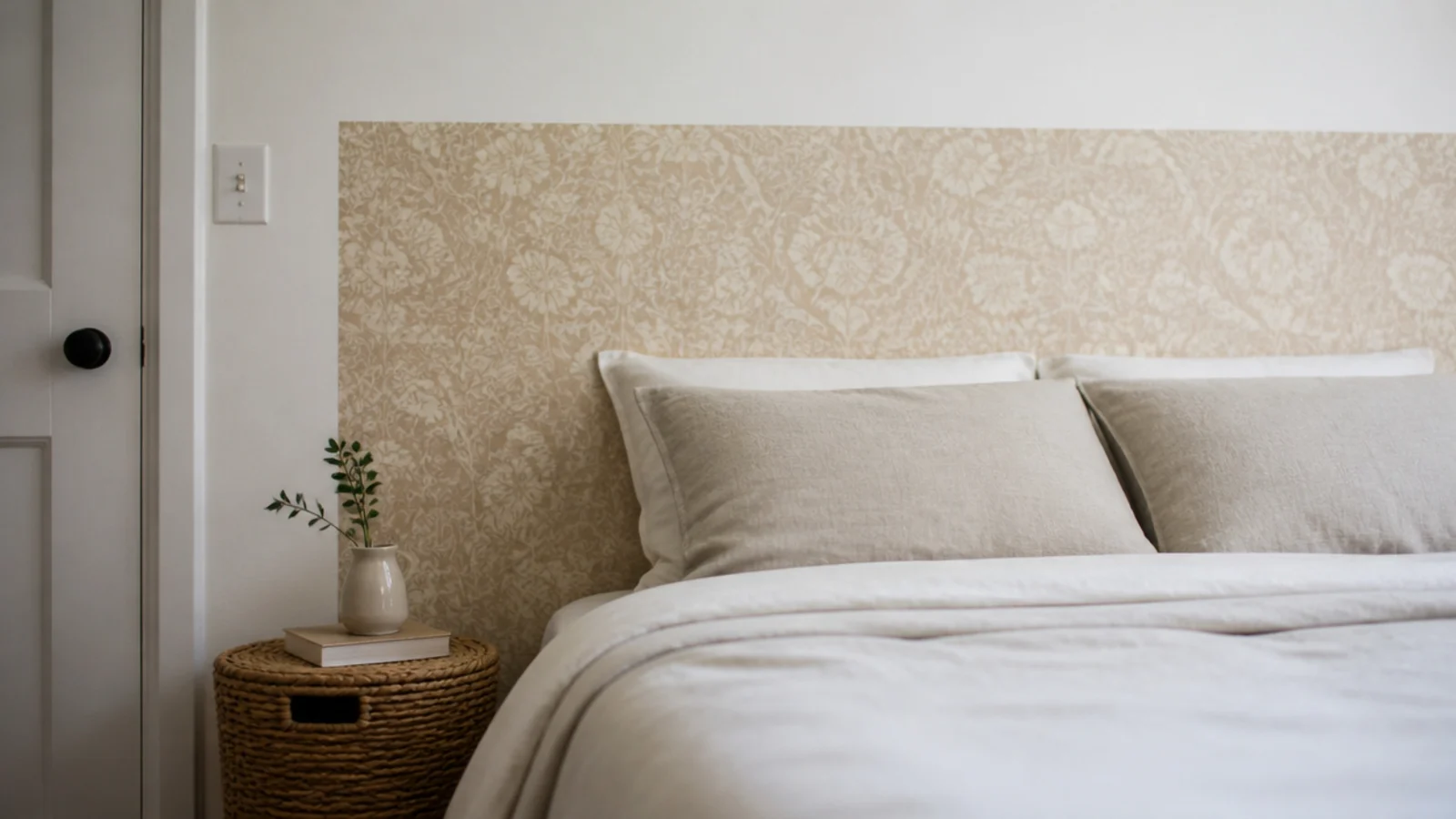
6. A peel-and-stick paper panel
A crisp rectangle of removable paper behind the bed, cut to headboard proportions and edged with a slim timber batten if you want the outline sharper.
Around $30 for the paper. Test a small square on your wall paint first — removable papers lift flat builder-grade emulsion, and that is a deposit conversation nobody wants.
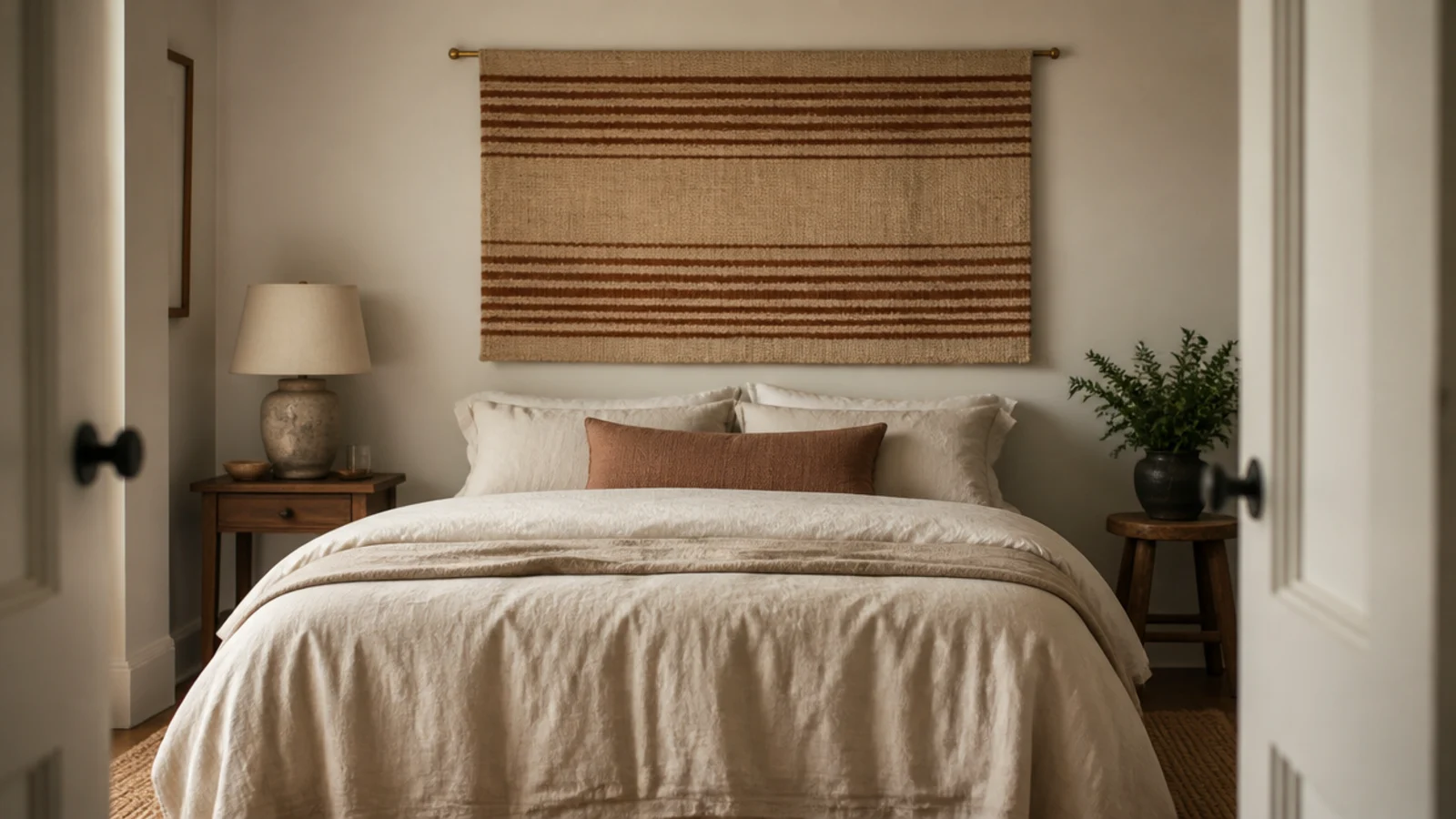
7. A hung textile instead of a panel
A flat-weave rug, a length of hand-loomed cloth or a small kilim, hung from a slim rod 6 inches above the mattress top.
Textiles absorb sound, which matters in a small hard-floored room, and they weigh almost nothing on the wall. Keep it flat-woven rather than pile, because pile collects dust exactly where your head goes.
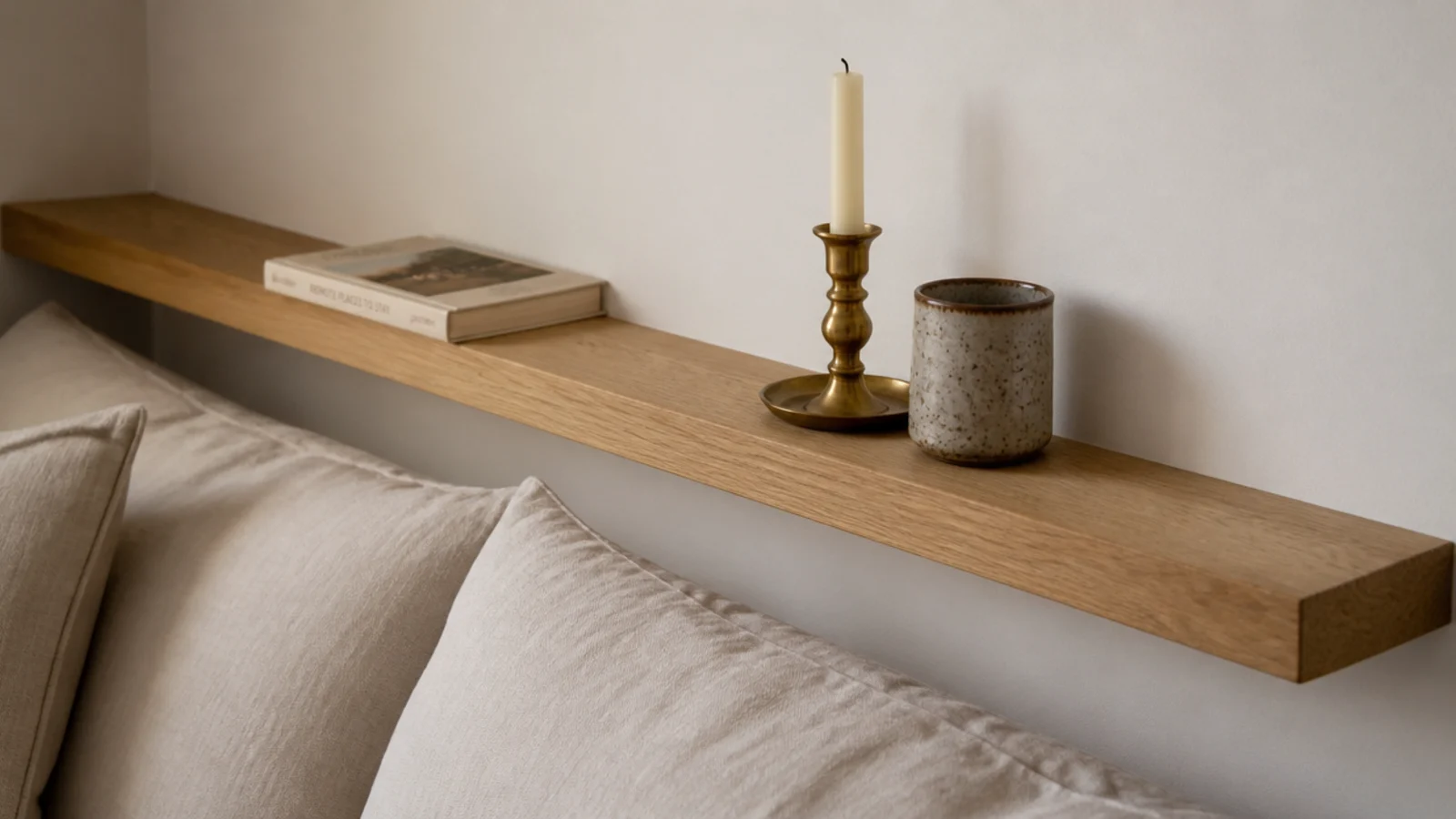
8. A picture ledge at pillow height
One 4-inch deep ledge, mounted so its top surface sits level with the top of the pillows, gives the bed a defined line and a surface at once.
It holds a glass, a phone and a book without a nightstand, which in a room where the bed nearly touches both walls is genuinely the only option available.
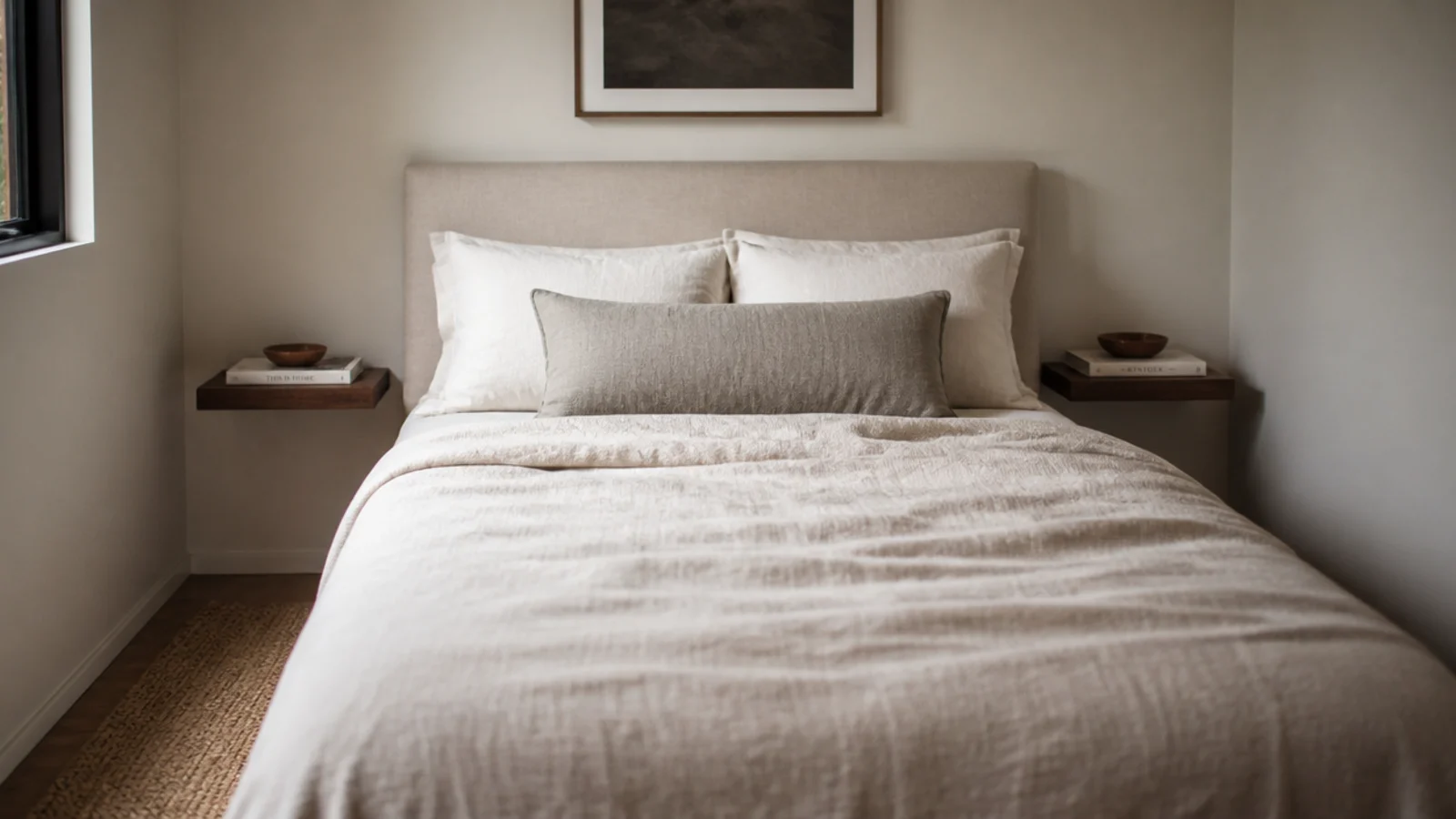
9. Floating nightstands either side of a narrow panel
Two small wall-mounted shelves flanking a mattress-width panel keep the floor completely clear, and clear floor is what a small room reads as space.
Mount them so the top sits 2 to 4 inches above the mattress. Ten inches deep is plenty. Together they cost less than one bedside table and take up no footprint.
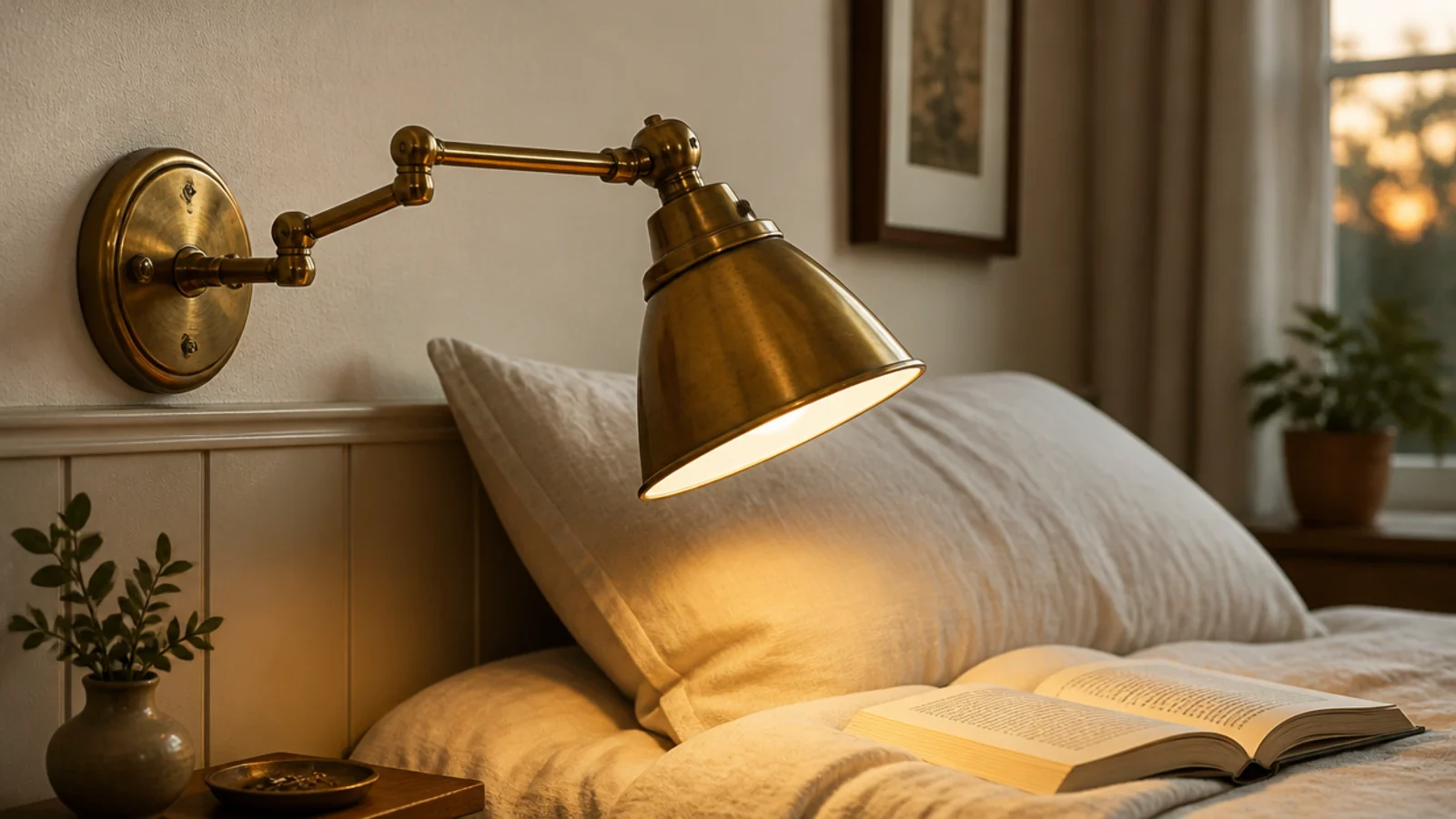
10. Swing-arm sconces instead of table lamps
Wall lights at 30 inches above the mattress on each side remove two lamps, two bases and two cords from a room that has no space for any of them.
Plug-in swing-arm styles need no electrician and cost $40 to $80 a pair. Run the cord down behind the headboard panel and it disappears entirely.
11. A panel with a built-in four-inch ledge
Cap a low panel with a narrow shelf and the headboard becomes the nightstand. The surface sits above the pillows rather than beside the bed, where the floor space actually is.
Add a shallow lip so nothing rolls off in the night. In a bedroom under 10 by 10 feet this single detail buys back both bedside footprints.
12. A wraparound panel for a bed in a corner
Small rooms often force a bed into a corner. Run a low panel along both walls rather than one, and the arrangement reads as a decision instead of a compromise.
Add two or three firm cushions along the side run so the bed works as a sofa during the day. Keep the whole thing at 26 inches.
13. An antiqued mirror panel
Mirror behind a bed doubles whatever daylight the room gets, which is the single biggest change you can make to a dark small bedroom.
Use antiqued or fluted glass rather than plain — plain mirror at pillow height is unsettling to sleep against. Fix it to a plywood backer first, then hang the backer on a cleat.
14. A panel that stops under a low window
When the bed has to go under a window, measure from the mattress top to the underside of the sill and subtract 2 inches. That is your maximum panel height, usually 18 to 24 inches.
A low upholstered panel here also stops pillows sliding into the gap behind the mattress, which is the real irritation of a bed under a window.

15. A quilt hung over a slim rod
An old quilt folded over a black or brass rod above the bed gives softness, pattern and warmth for whatever the quilt cost you.
Fold rather than hang flat, so the doubled fabric holds its shape. Take it down and wash it twice a year. This is the softest option in the list that also survives a washing machine.
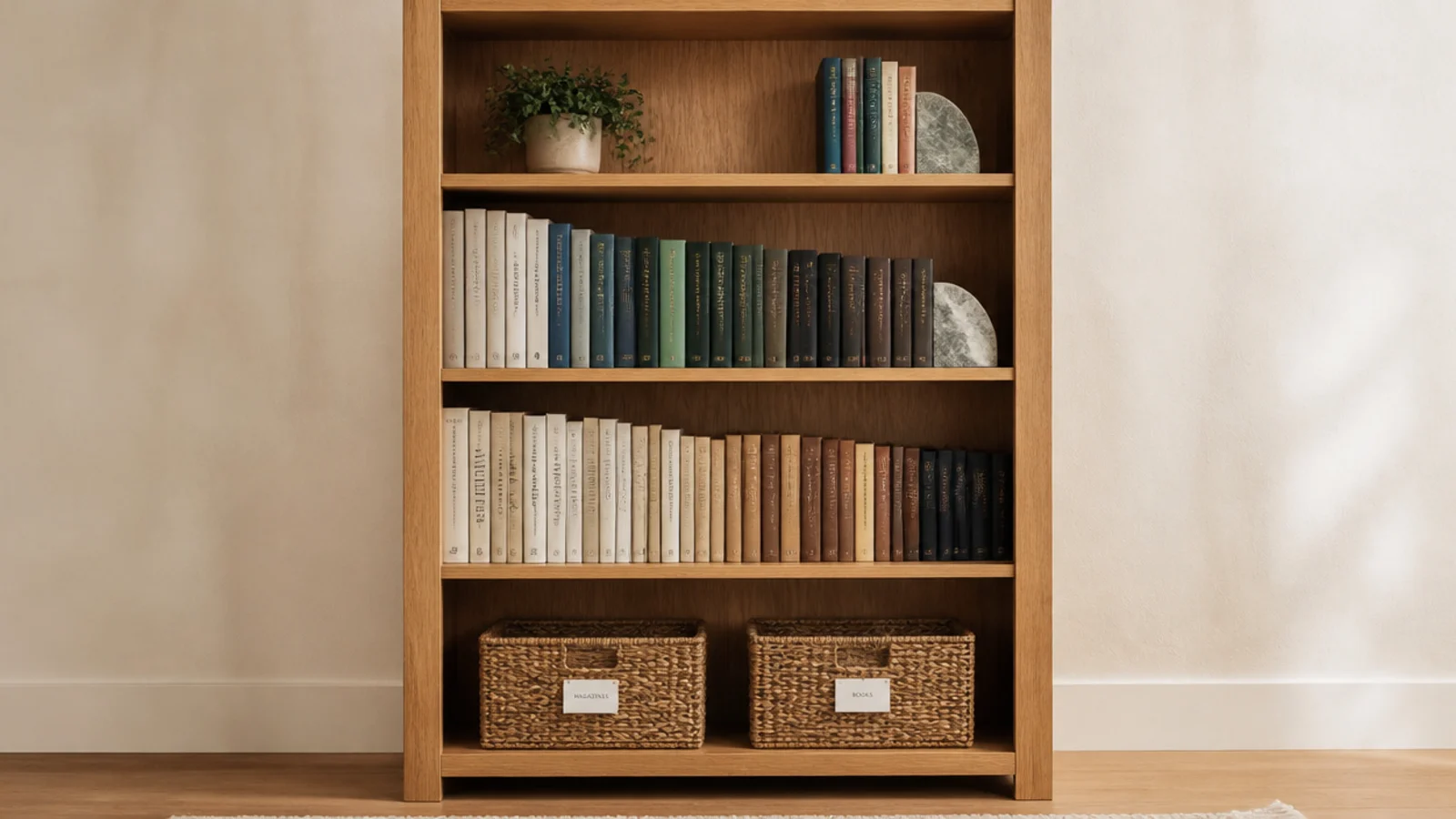
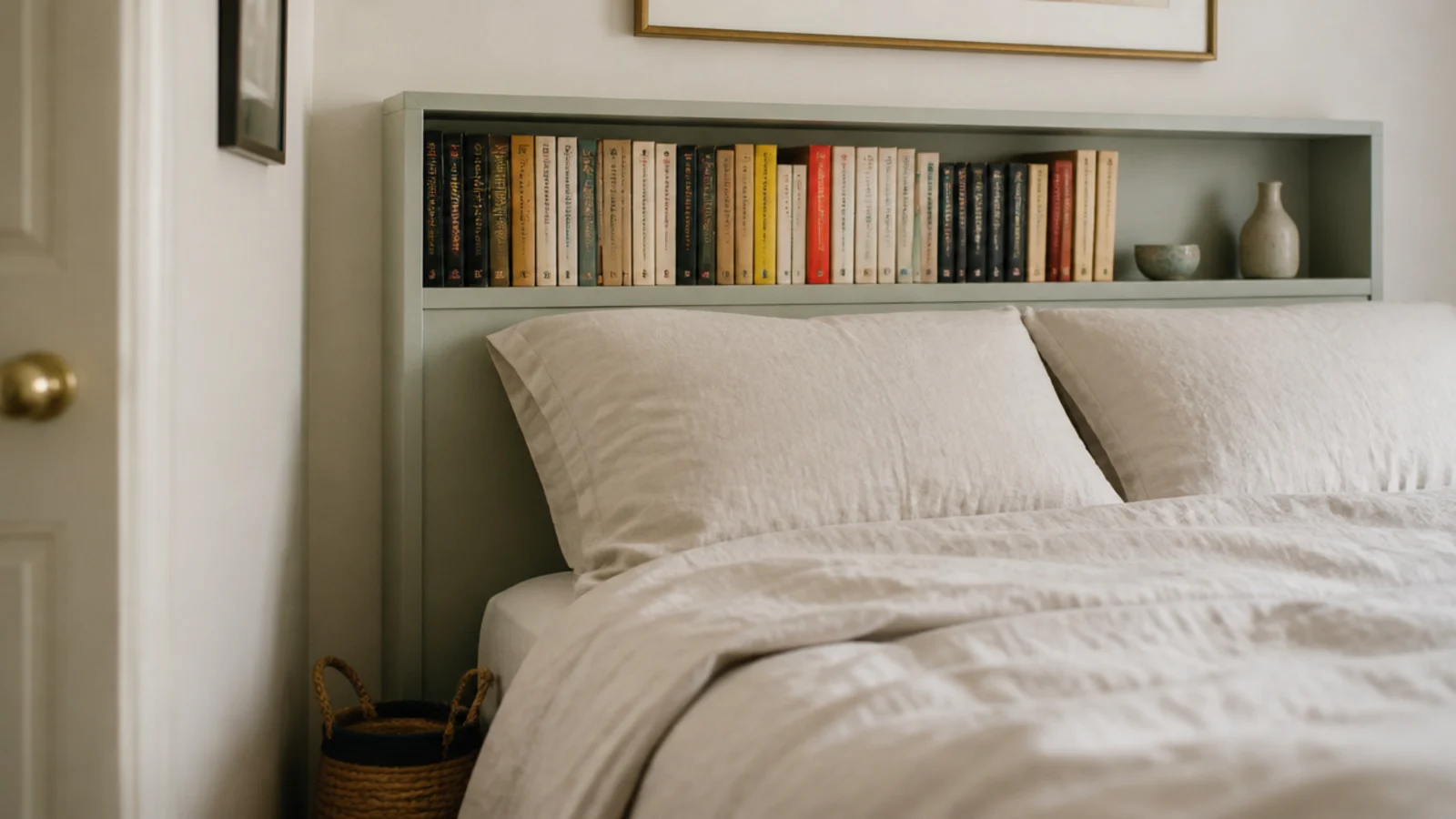
16. A shallow bookcase headboard
Six inches deep, no more. That holds paperbacks, a small speaker and two ceramics without protruding into the space you walk through.
Deeper units are the classic small-room mistake: at 10 inches you clip the corner every time you make the bed. Paint it the wall color so it recedes. About $70 in primed pine ($$).
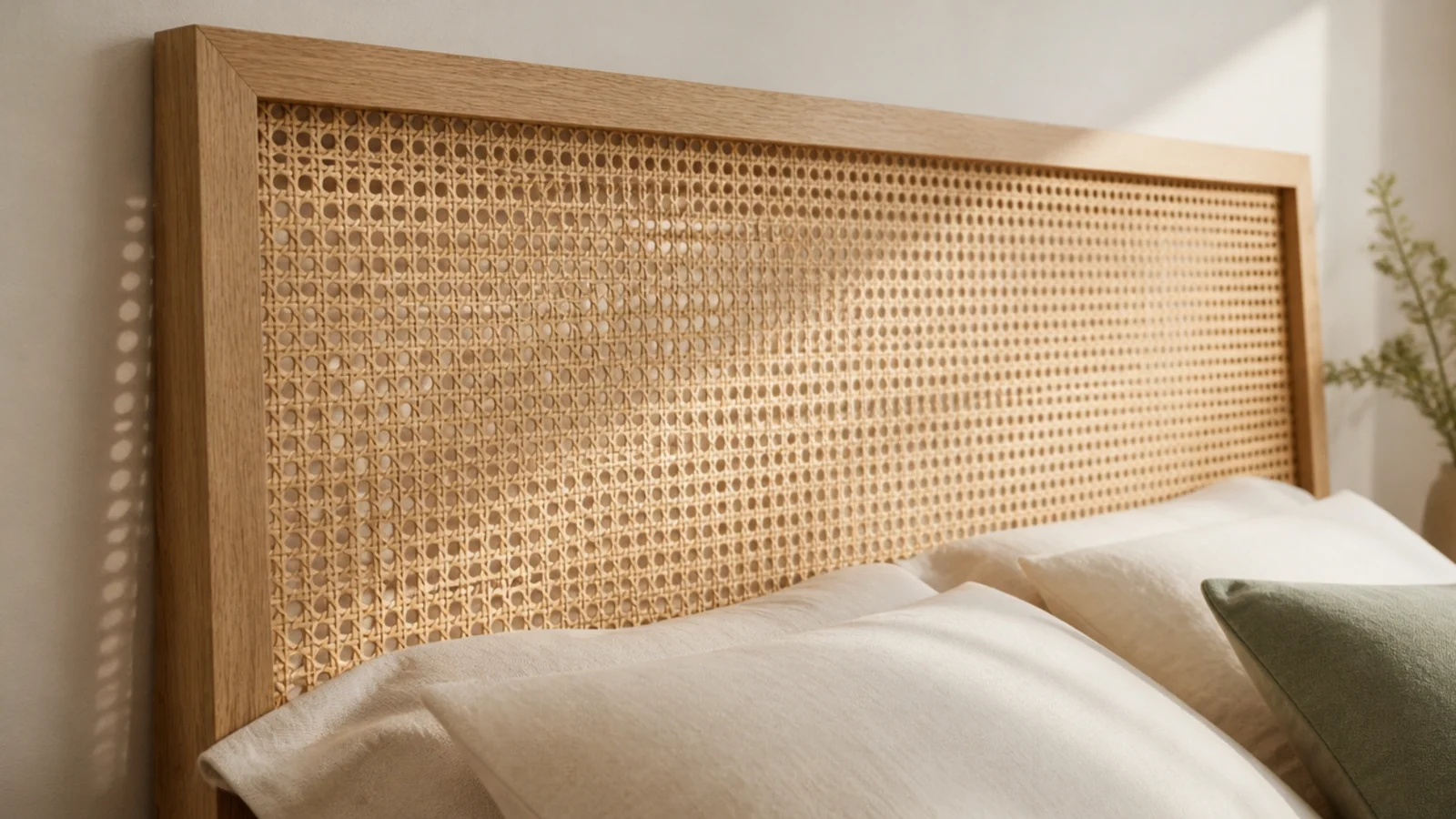
17. Cane webbing in a slim frame
Natural cane in a 3-inch oak frame lets you see the wall straight through the panel, so it occupies almost no visual space at all.
Soak the webbing for an hour before fitting and it dries drum tight. Keep it out of direct afternoon sun, which dries and cracks cane over a couple of summers.
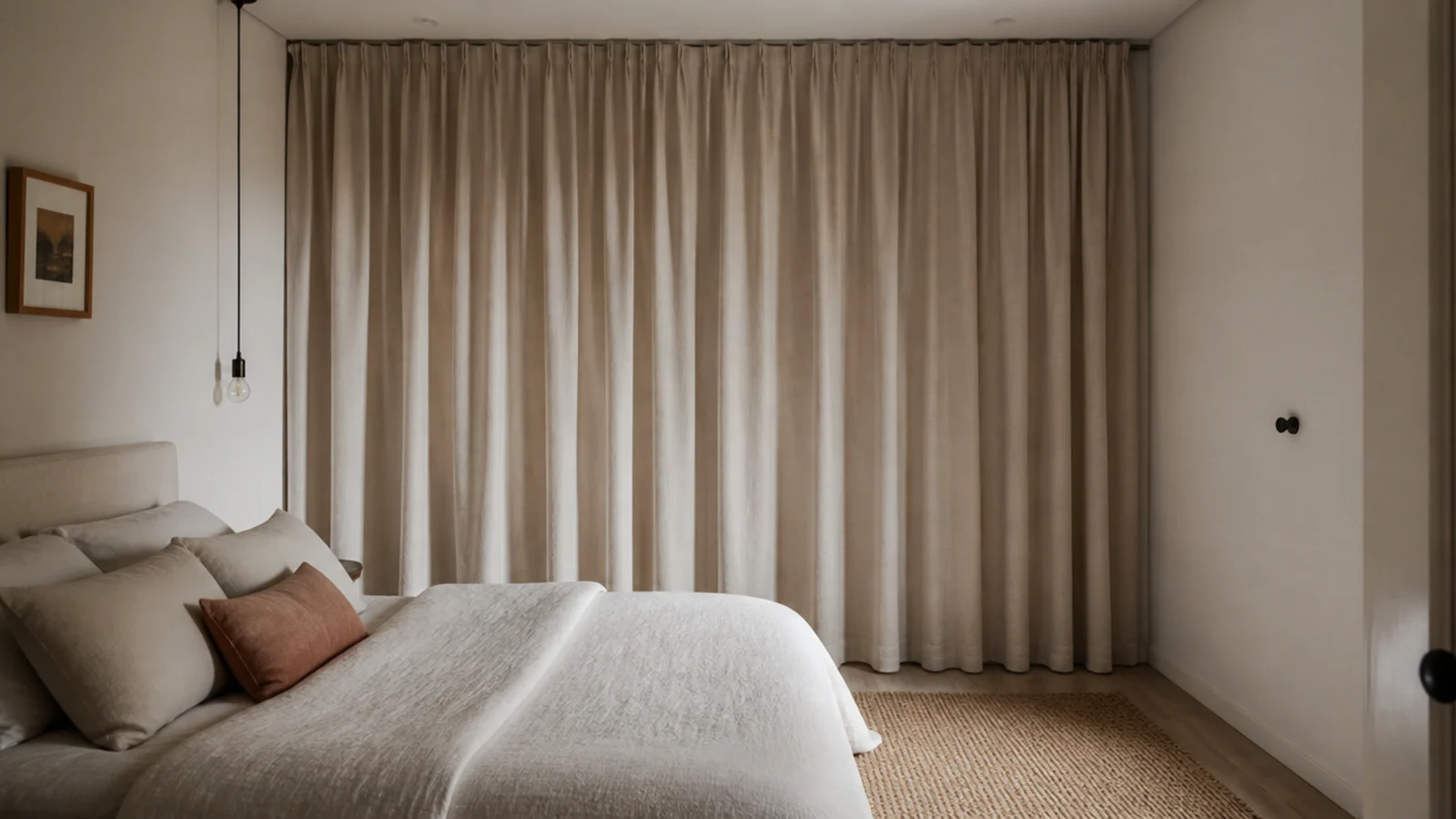
18. A curtain panel run wall to wall
Hang a full-width linen curtain from ceiling track across the bed wall. It reads as a hotel detail and it makes a narrow room feel considerably wider.
Use a heavier weight so it hangs flat rather than fluttering, and keep it 1 inch clear of the floor. Around $90 including track ($$).
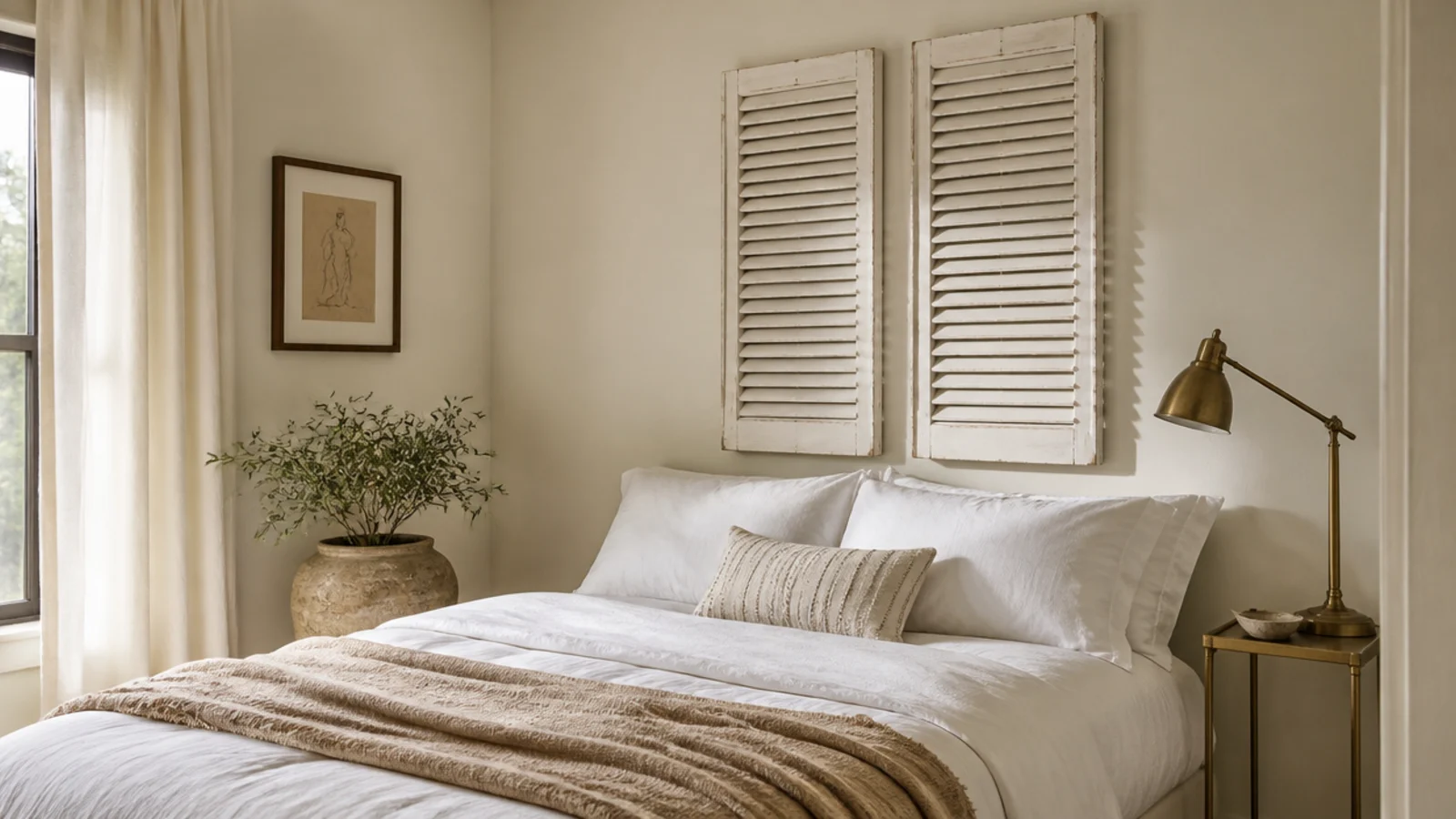
19. Two narrow shutters
Two 24-inch louvered shutters butted together cover a full-size bed and give you texture with almost no mass. Salvage yards sell pairs for $25 to $50.
Hang both from one shared cleat so they stay perfectly aligned. Vacuum the louvers twice a year with a brush attachment.
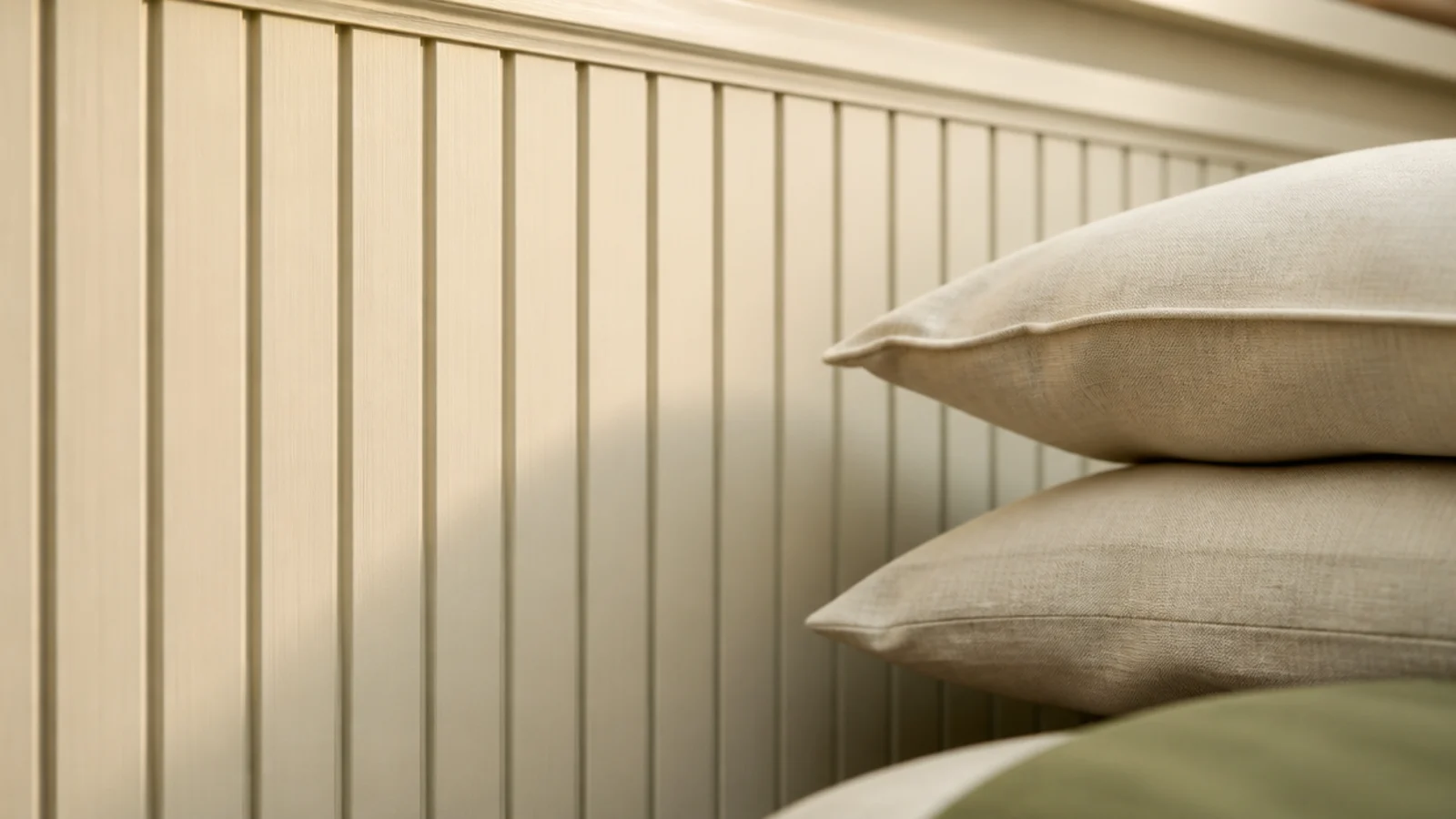
20. A fluted half-height panel
Vertical flutes routed into a low panel draw the eye upward, which is exactly the trick a room with a low ceiling needs.
Half-inch grooves at 1-inch centers, panel height 26 inches above the mattress. Paint it the wall color and only the shadows read. Roughly $80 in veneered ply ($$).
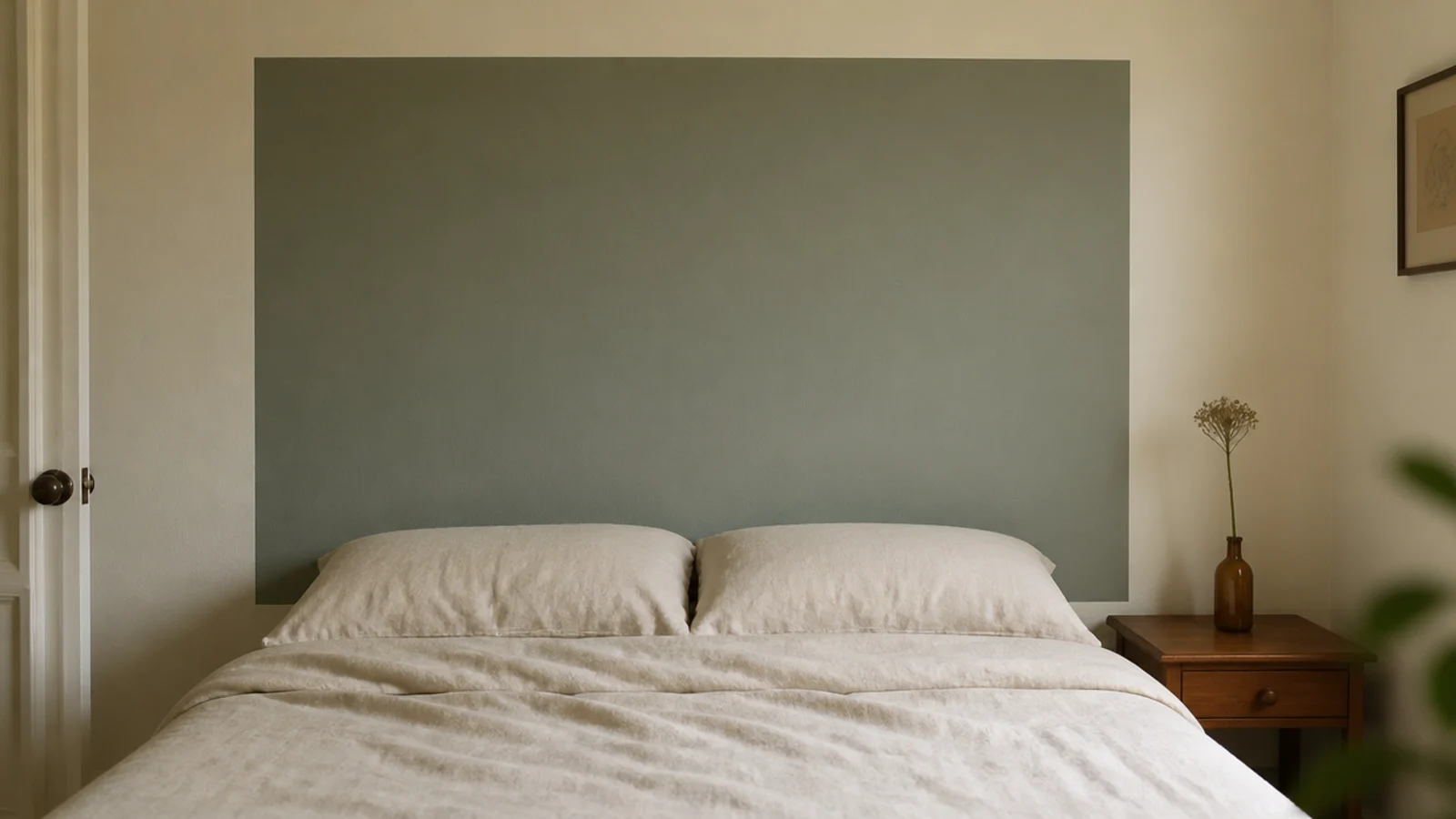
21. A painted color block rectangle
A flat rectangle in a shade one or two steps deeper than the wall, 60 inches wide and 40 tall for a queen, painted straight onto the plaster.
Level the top line with a laser or a long spirit level, because a crooked painted edge is far more obvious than a crooked panel. A sample pot covers it ($).
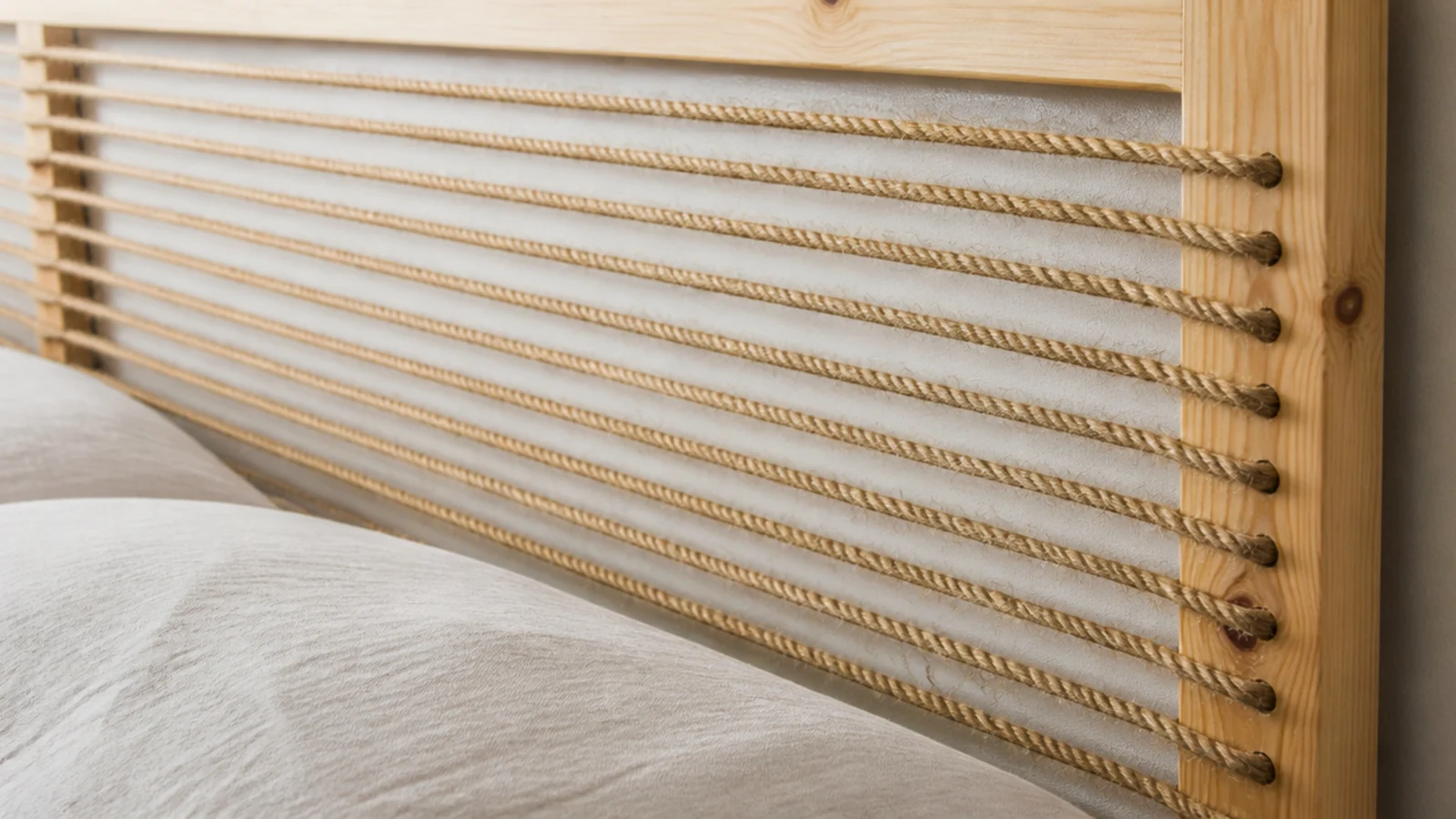
22. Rope laced across a slim frame
Jute rope laced in taut horizontal rows across a slim pine frame. Open, textural and about $12 of rope over a $25 frame.
Lace it tighter than feels right, because jute relaxes over the first month. Re-tension once and it stays. The gaps keep the wall visible, which is why it suits a tight room.
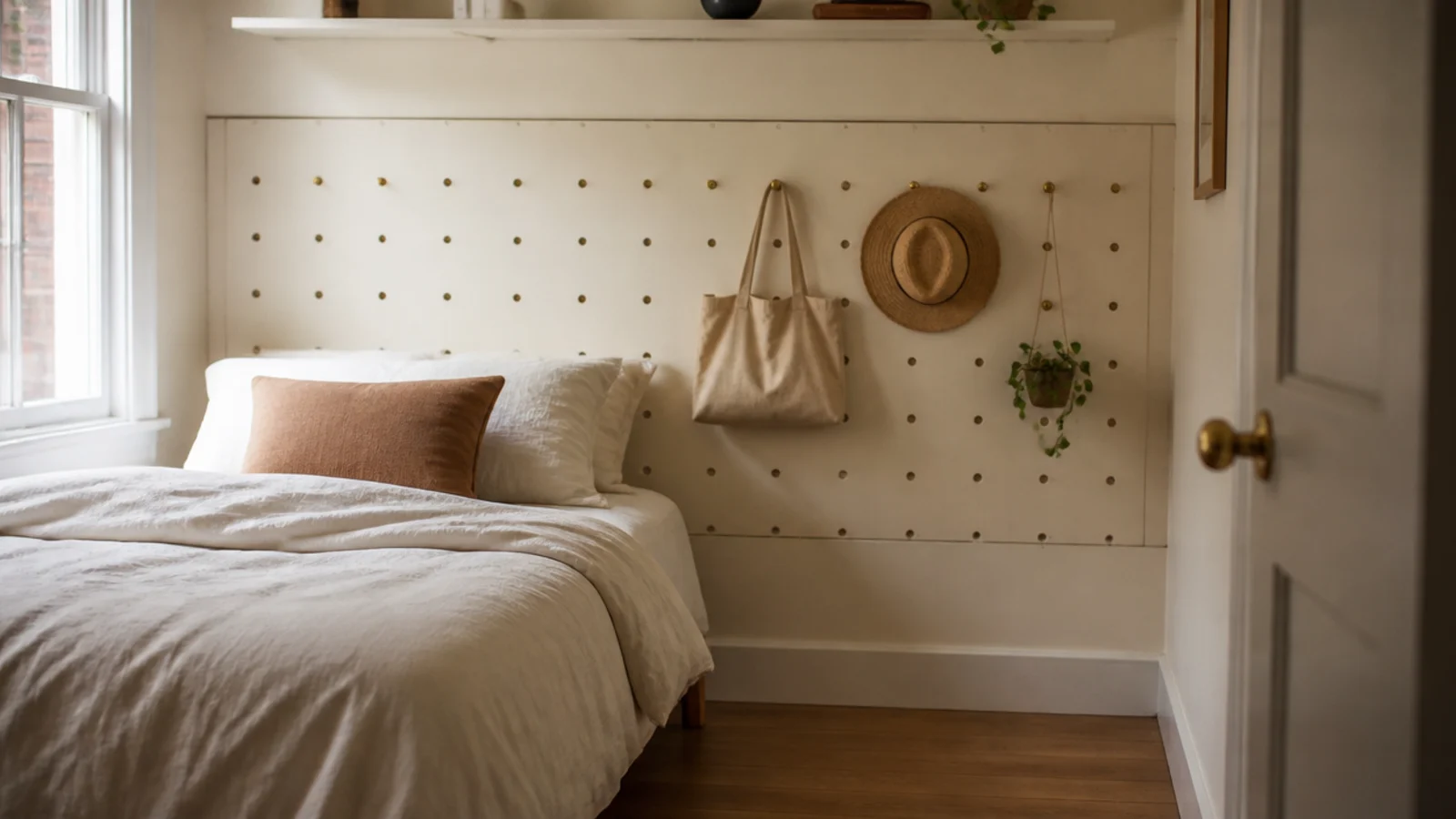
23. A pegboard headboard that stores things
In a bedroom with no closet to spare, a painted pegboard panel behind the bed carries a bag, a hat, a hanging plant and a set of keys.
Keep the hooks above shoulder height so nothing catches on bedding. Paint it the wall color and it reads as a panel rather than as a workshop wall.
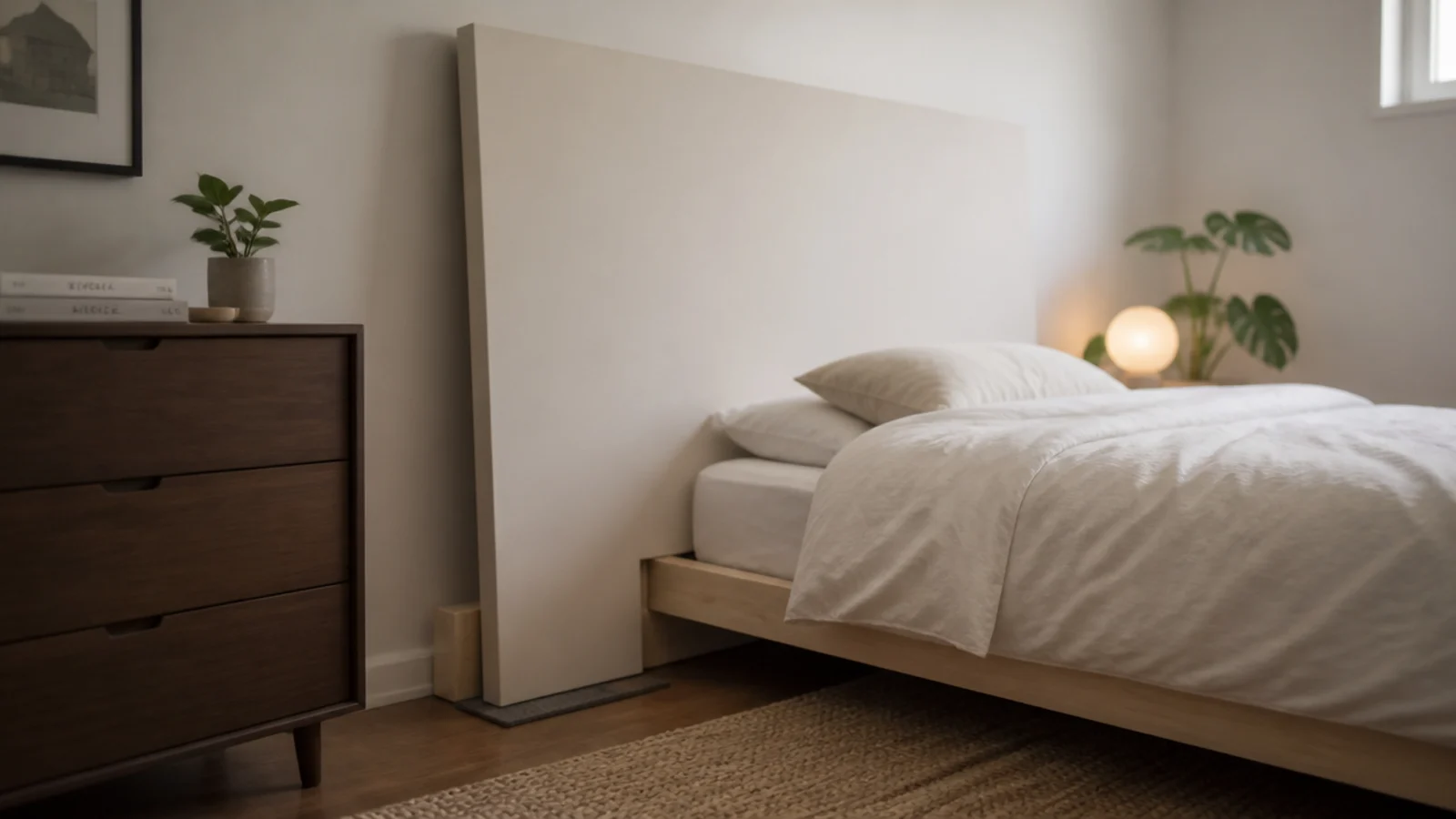
24. A leaning panel with no fixings
The purest renter option. A plain panel leaned against the wall and held upright by the bed pushed against it, 4 inches taller than a hung version because it starts at the floor.
Felt pads along the back edge protect the paint. Keep the lean under 5 degrees. Zero holes and zero patching.
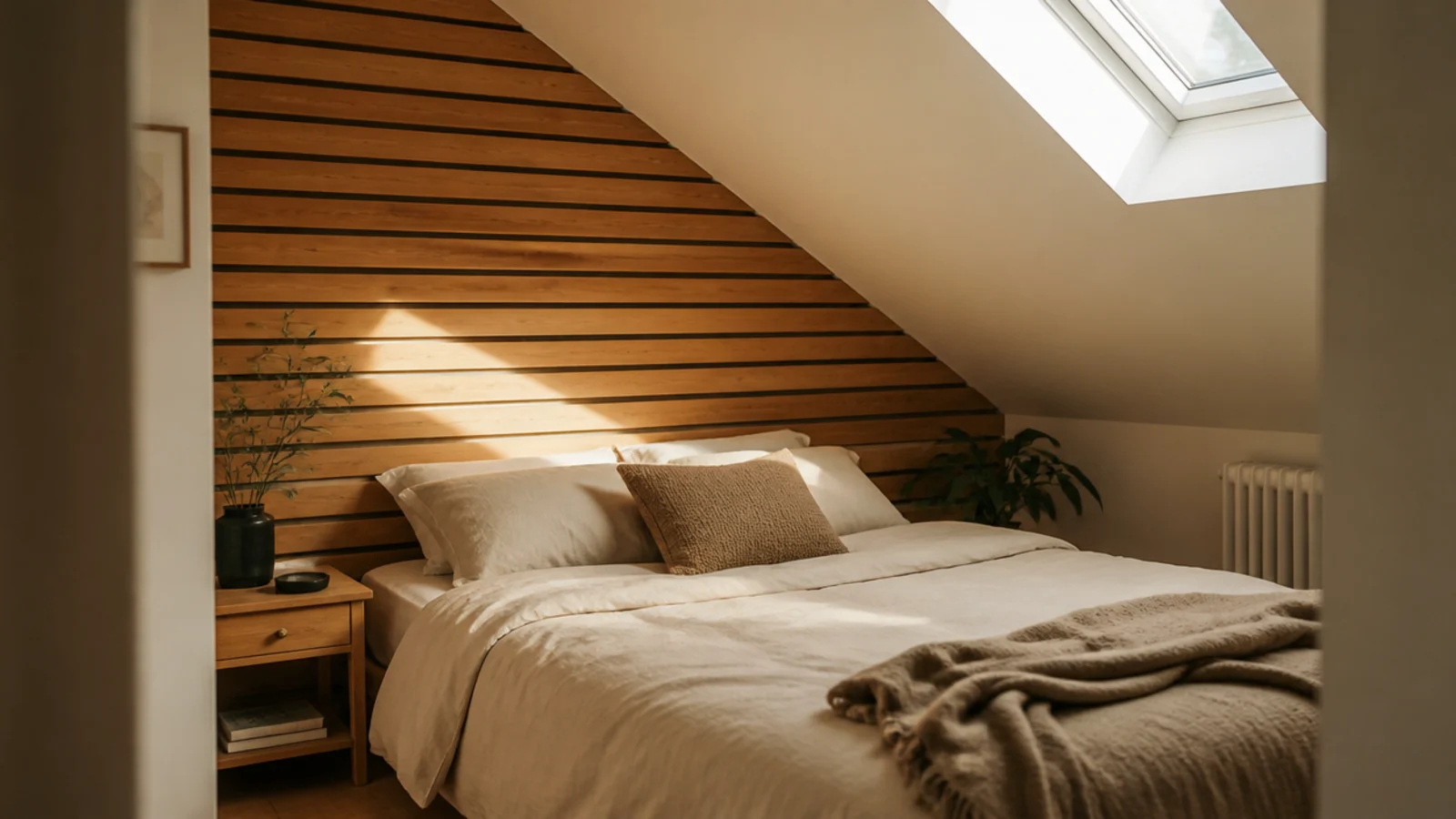
25. Horizontal slats under a sloped ceiling
Attic bedrooms usually have a knee wall behind the bed with barely 40 inches of vertical space. Horizontal slats fit that band perfectly.
Run them to within 4 inches of where the slope begins, and stop. Chasing the pitch with an angled cut looks fussy, and the flat top line reads far calmer.
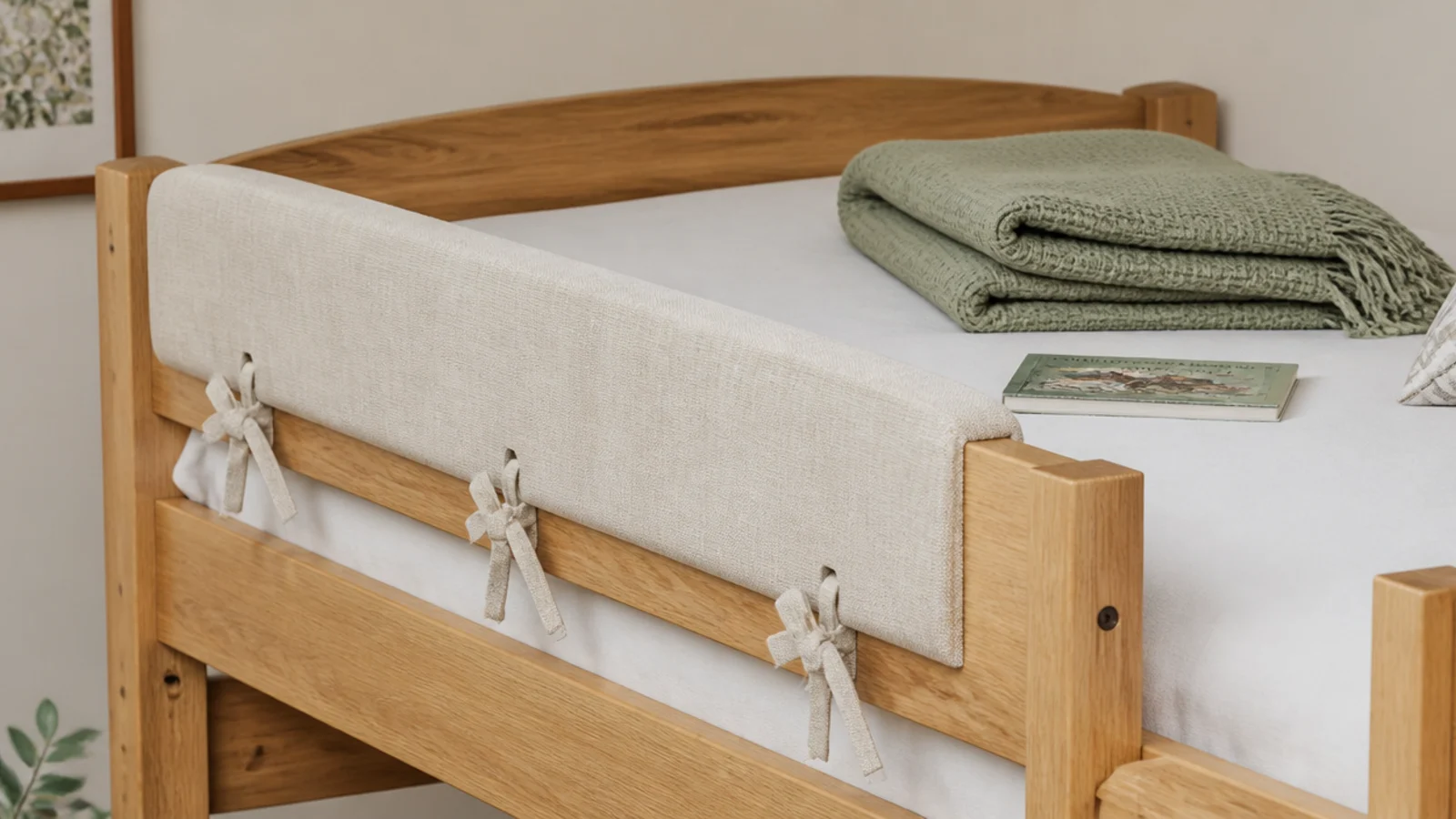
26. A padded rail on a loft or bunk bed
Loft and bunk beds cannot take a panel, but they can take a padded rail. A 6-inch foam-filled fabric sleeve tied through the head-end frame with linen ties.
It stops heads knocking timber and it removes in seconds for washing. About $30 in fabric and foam ($), and it suits a shared kids room particularly well.
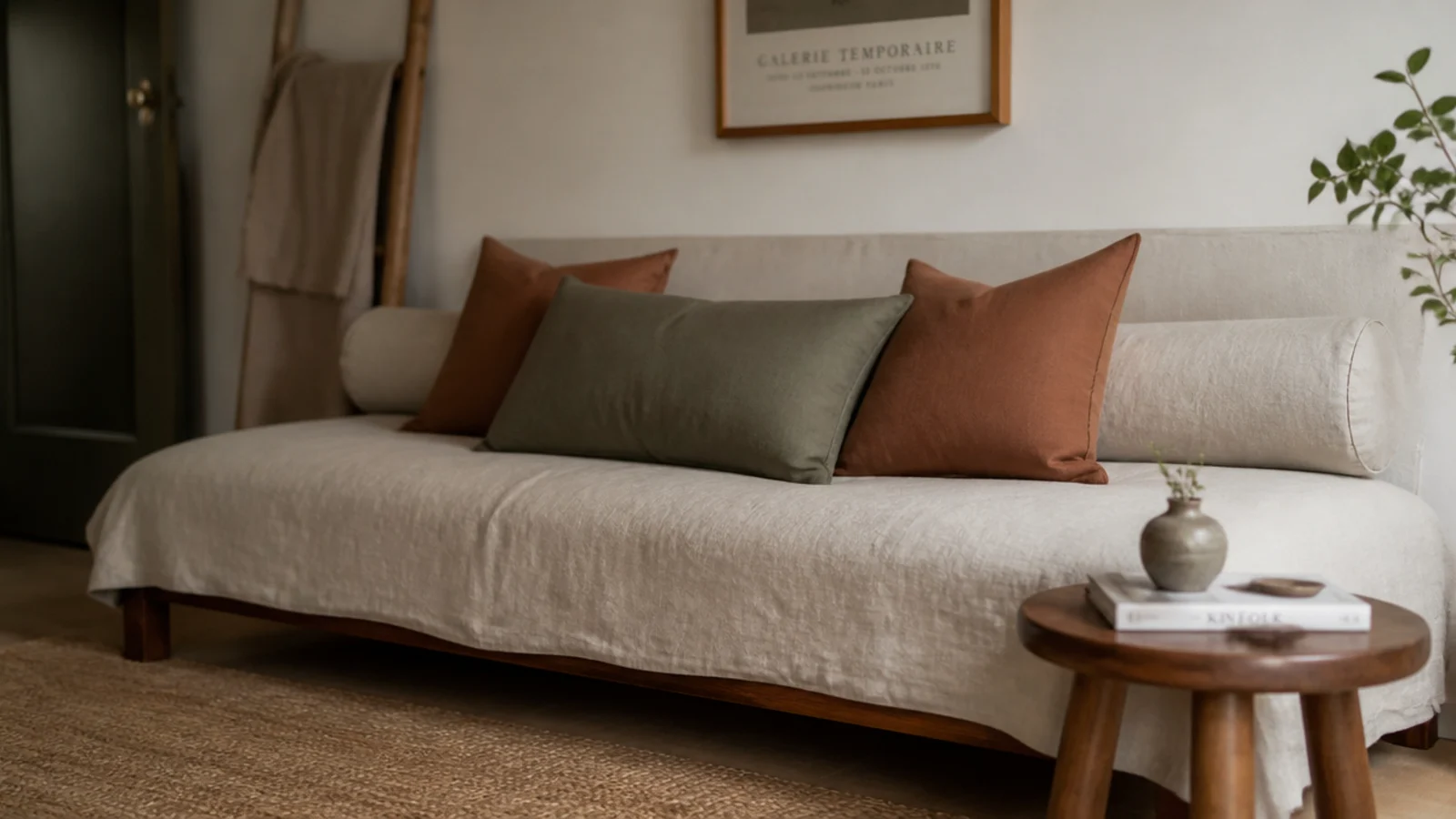
27. A long bolster instead of a headboard
For a daybed or a bed used as seating, a full-length bolster propped along the wall does everything a headboard does and turns the bed into a sofa by day.
Have one made at mattress length, 9 inches in diameter, in a washable linen. Add two lumbar cushions in front. Nothing is fixed to the wall at all.
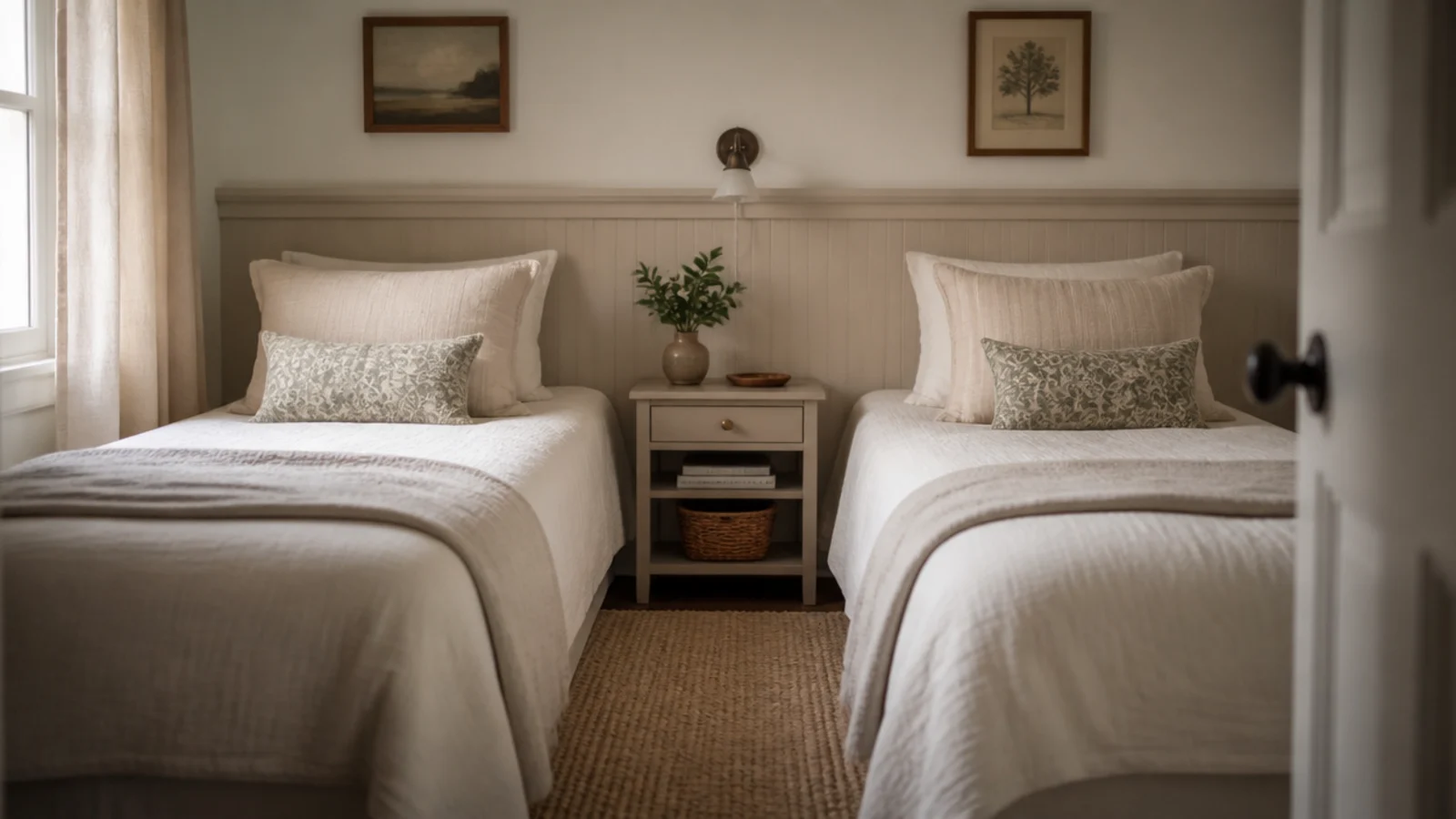
28. Twin beds sharing one long low panel
In a shared room, one continuous low panel behind both beds reads far calmer than two separate headboards competing across a narrow wall.
Run it the full width including the gap between the beds, 26 inches high. A single narrow nightstand between them completes it. There is more on this layout in the master bedroom guide.
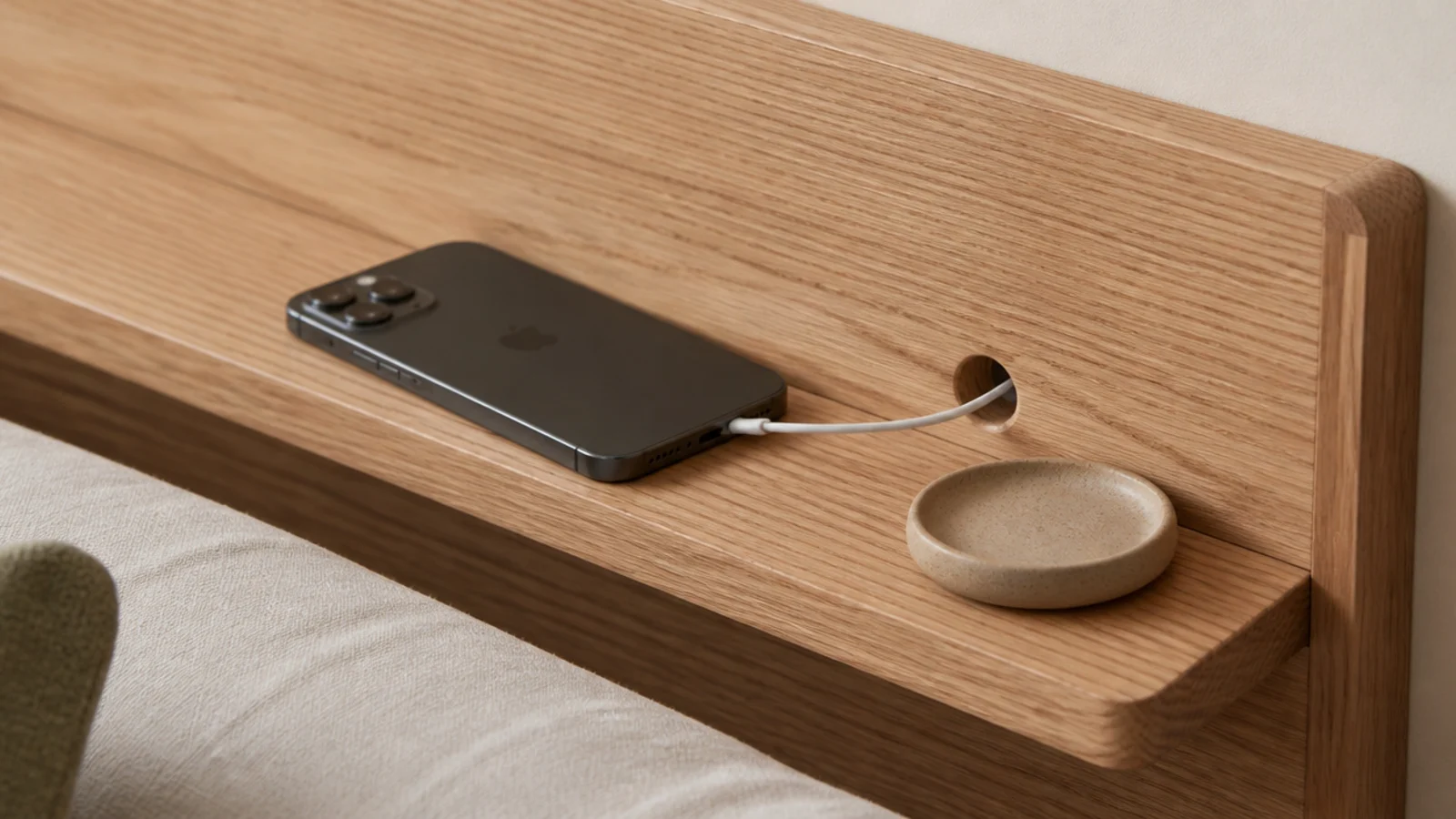
29. A pillow ledge with hidden charging
Drill a single grommet hole through a headboard ledge and route one charging cable behind the panel. The phone charges on the shelf and no cable crosses the room.
A 1.5-inch brass grommet costs about $6 and makes the whole thing look built in. It is the detail people notice last and appreciate most.
30. A tall narrow panel that lifts the eye
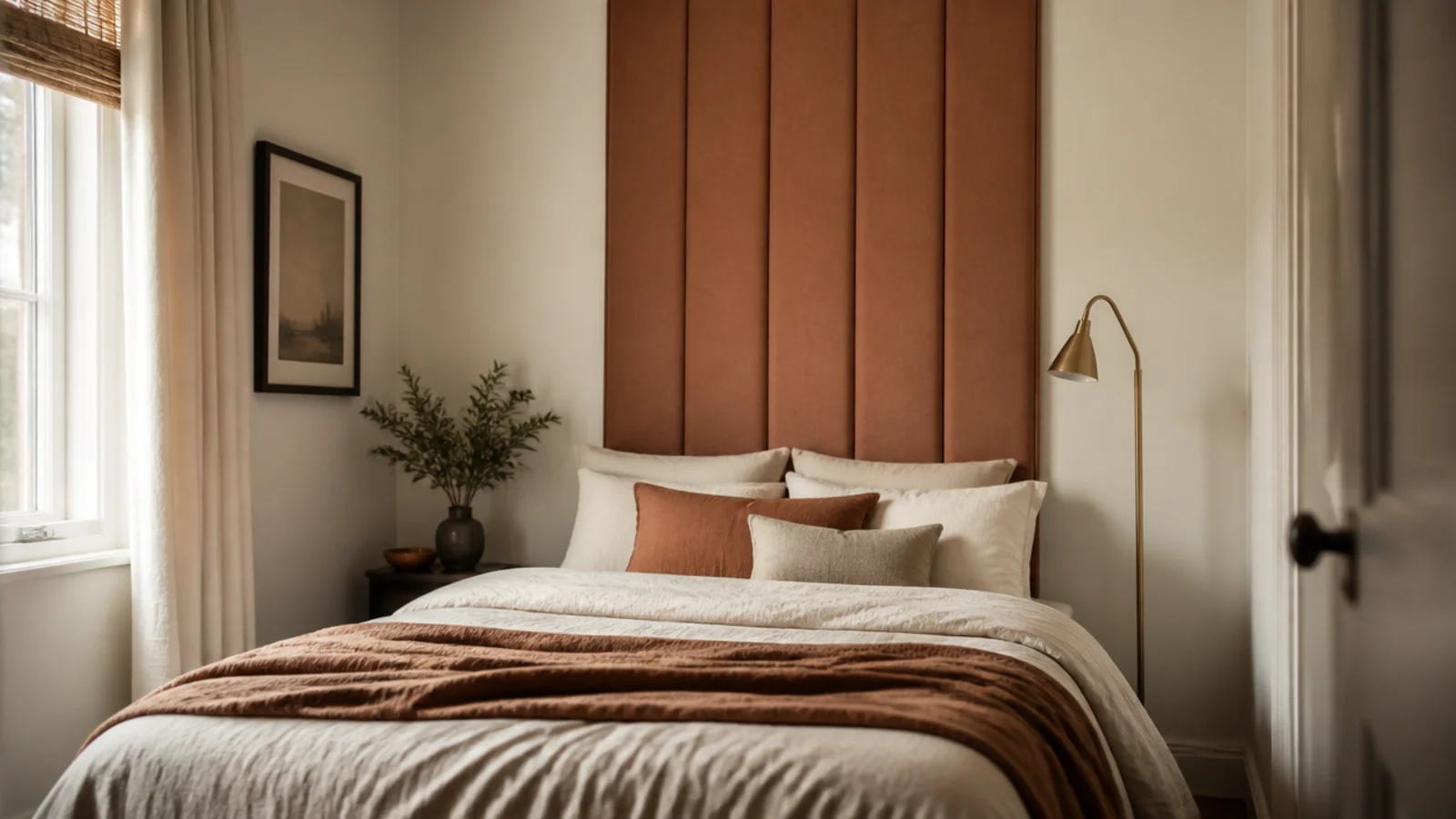
Counterintuitively, a panel narrower than the mattress but taller than usual can work in a low room, because vertical emphasis makes a ceiling read higher.
Try 48 inches wide by 50 tall behind a full-size bed, centered. Keep everything else in the room low. Pair it with a slim stack of books nearby rather than a bulky nightstand.
Mistakes to Skip
- Buying a headboard wider than the mattress in a room under 10 feet across. The overhang eats wall on both sides and the bed ends up looking wedged in.
- Choosing a bookcase headboard deeper than 6 inches. You will clip the corner every time you make the bed, and keep clipping it for years.
- Bolting the panel to the bed frame. The bed can never be pulled out again, and in a small room that is exactly the space you need to reach.
Frequently asked questions
What size headboard suits a small bedroom?
Match the mattress width exactly rather than adding the 4 inches per side a larger room can carry. That means 38 inches for a twin, 54 for a full and 60 for a queen. Keep the height to 24 to 28 inches above the mattress, since a low panel leaves more visible wall and a small room reads larger when the wall is not covered.
Does a headboard make a small bedroom look smaller?
A solid dark panel can, because it blocks wall and adds visual weight at eye level. An open or pale one does the opposite: slats, cane, painted shapes and picture ledges all frame the bed while letting the wall show through. If the room is genuinely tight, choose something you can see past rather than something you look at.
Can you have a headboard when the bed is under a window?
Yes, as long as the panel stops below the sill. Measure from the mattress top to the underside of the sill and subtract 2 inches for clearance, which usually leaves 18 to 24 inches of panel. A low upholstered or slatted piece works well here, and it stops pillows falling into the gap behind the mattress.
What is the cheapest headboard for a small room?
Paint. A rectangle or arch painted directly onto the wall behind the bed costs a $12 sample pot, takes an hour with painters tape, and occupies exactly zero inches of floor. After that, a hung textile on a slim rod at $25 to $40, or a peel-and-stick paper panel at around $30, are the cheapest options that read as deliberate.
How do I add a headboard without drilling into the wall?
Lean a panel against the wall and let the bed hold it upright, with felt pads along the back edge to protect the paint. Paint or peel-and-stick treatments need no fixings at all. For hanging textiles, a tension rod in an alcove or removable adhesive hooks rated over 5 pounds will carry a light quilt or flat-weave rug.
Measure your mattress and your ceiling height before you fall for any particular look — those two numbers eliminate most of this list for you. If money is the constraint rather than space, cheap headboard ideas collects the versions under $60, and headboard alternatives covers everything that is not a panel at all. Save the pin so the heights and widths are with you when you shop.
Want more like this? Browse all 15 headboard ideas guides — they all use the same measurements and budget tiers.
Pin it for later
Save this to your Headboard Ideas board
Pin it now so it is waiting for you when the tape measure comes out — and so the next person hunting for this idea can find it too.
Save this pinKeep going
More ideas worth saving while you have the tape measure out.