Bookshelf Ideas · Listicle
25 Budget-Friendly Bookshelf Ideas for Small Spaces

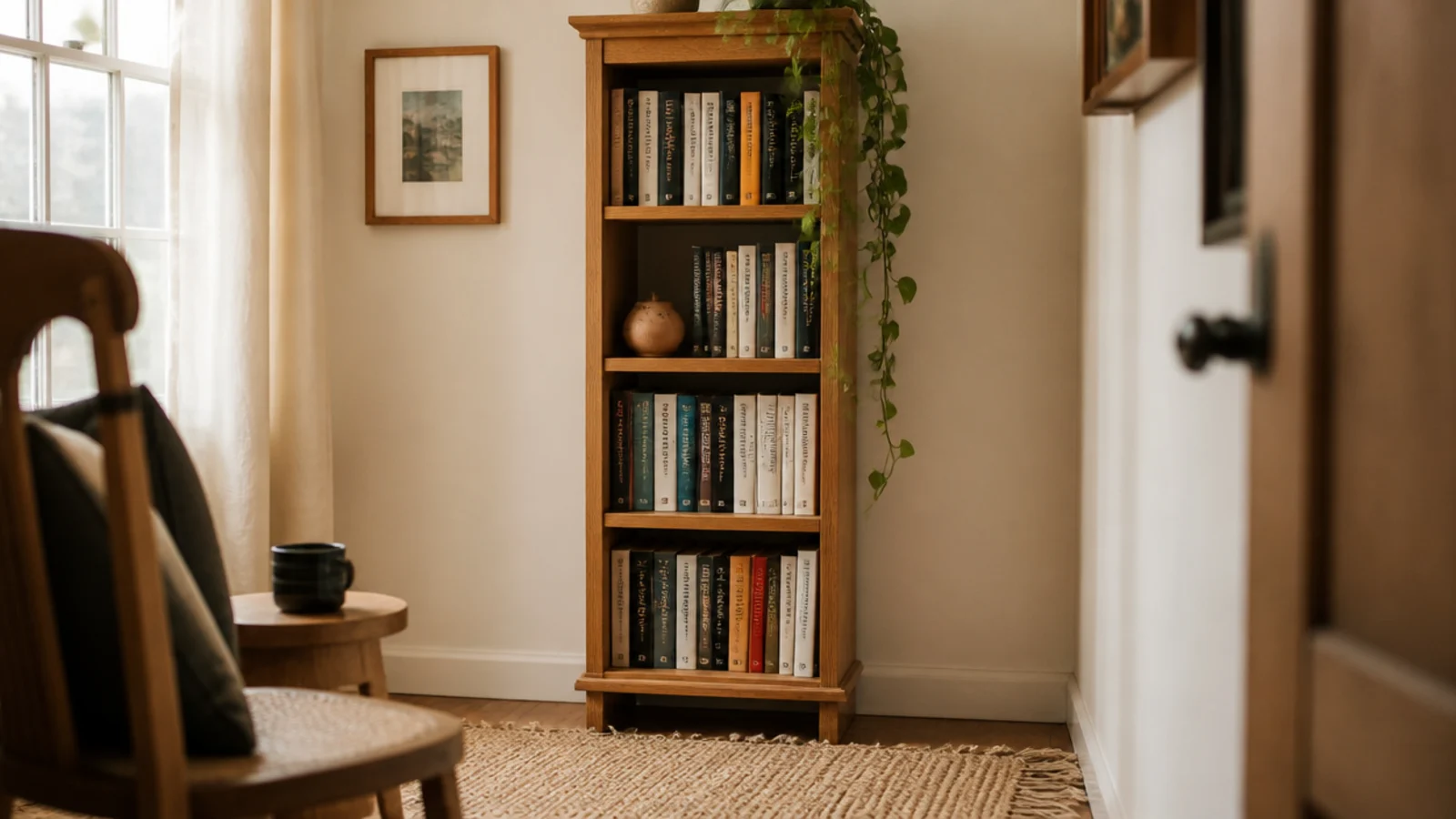
A bookcase is one of the few pieces of furniture whose footprint you can cut in half with no real loss. Most small bookshelf ideas below take back a foot of floor, a foot of wall, or both — and 19 of the 25 come in under $60. Every one has a width, a depth and a mounting note attached.
In this guide27 sections — tap to openHide
- 1.How small bookshelf ideas earn their footprint
- 2.The 24-inch paperback tower
- 3.Four-inch picture ledges
- 4.The over-the-door shelf
- 5.Two cube units stacked into a column
- 6.A corner tower with 11-inch faces
- 7.The under-window run at 30 inches
- 8.The behind-the-door wall shelf
- 9.Bracket and board over a desk
- 10.The leaning ladder shelf
- 11.A stack of wooden crates
- 12.A thrifted nightstand on its side
- 13.The slim hallway shelf
- 14.A rolling cart as a mobile bookshelf
- 15.Alcove infill beside a chimney breast
- 16.The stair-side eight-inch run
- 17.A rail and dowel display for kids
- 18.The radiator-top shelf
- 19.An under-bed rolling book drawer
- 20.A half-height bookcase as a side table
- 21.A trio of floating cubes
- 22.A shelf that wraps above the doorway
- 23.The cookbook shelf at the kitchen end
- 24.A spice rack for small paperbacks
- 25.A pipe and board vertical tower
- 26.The tension-rod closet shelf
- 27.Mistakes to Skip
How small bookshelf ideas earn their footprint
Three numbers do most of the work in a tight room, and they are worth committing to memory before you buy anything.
Depth. Nine to ten inches holds paperbacks and trade fiction comfortably. Eleven to twelve inches is what hardbacks and art books actually need. That two-inch difference sounds trivial and is not: across a 6-foot wall it is a whole square foot of floor, and in a bedroom it is the difference between walking past the bed and turning sideways.
Clear height. Hardbacks want 11 to 13 inches between shelves; paperbacks are fine at 9 to 10. Set a paperback-only unit at 10 inches and you fit five shelves in the height most bookcases give you four.
Weight. This is the one people skip. A linear foot of hardbacks weighs 20 to 25 pounds, so even a modest 24-inch shelf can be carrying 40 to 50 pounds. That means studs or heavy toggles, never the plastic plugs in the bracket box, which are rated around 10 pounds. Adhesive strips and tension systems belong under 15 pounds and hold paperbacks only.
Two more rules for tight rooms. Go tall and narrow rather than wide and low — height is cheap in a small space and floor area is not. And strap anything over about four feet to a stud with an anti-tip kit, without exception, in any home with children.
Budget tiers below: $ is under $40, $$ is $40 to $120, and $$$ is $120 to $300 for a fitted or built-in solution.
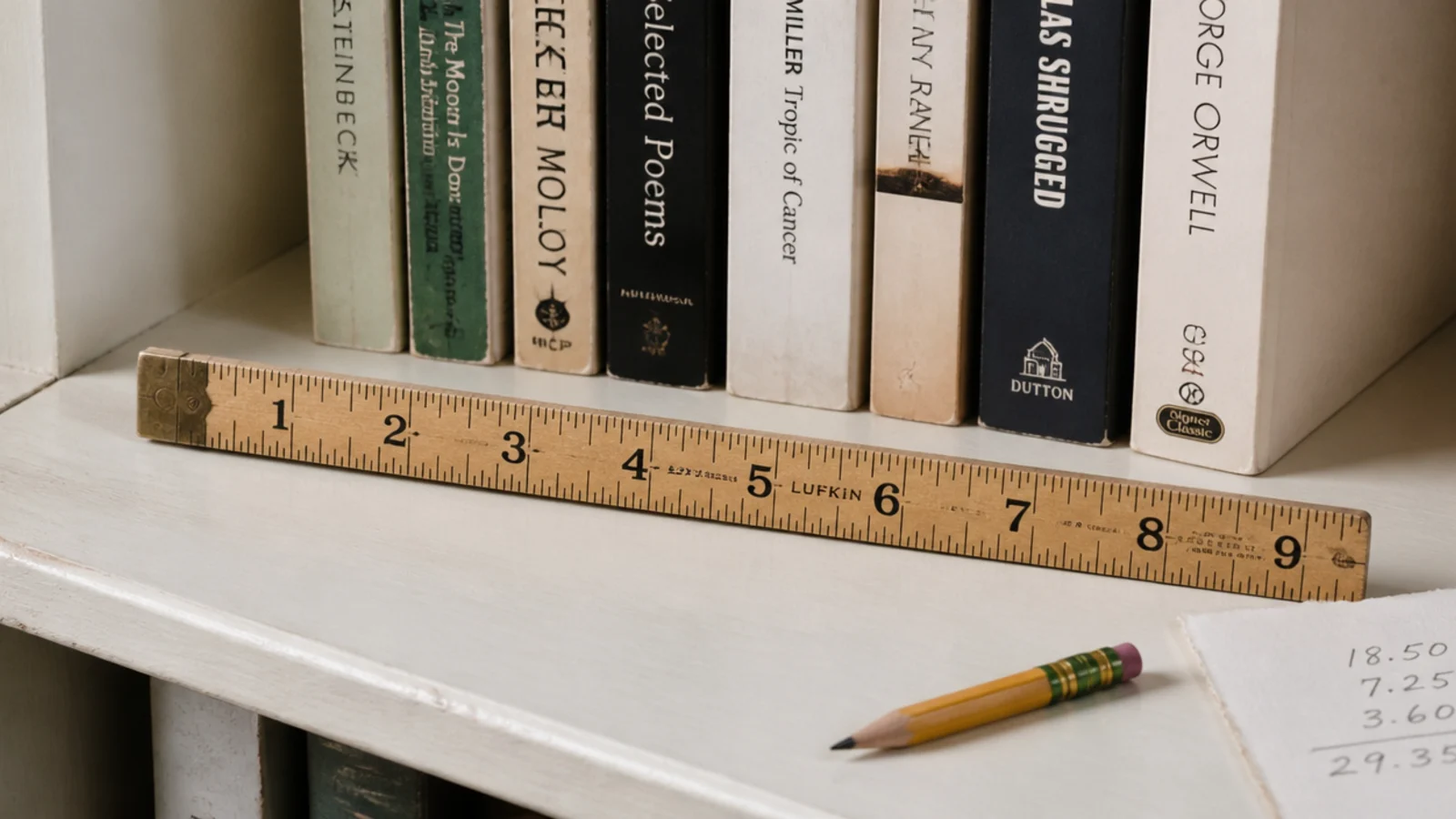
1. The 24-inch paperback tower
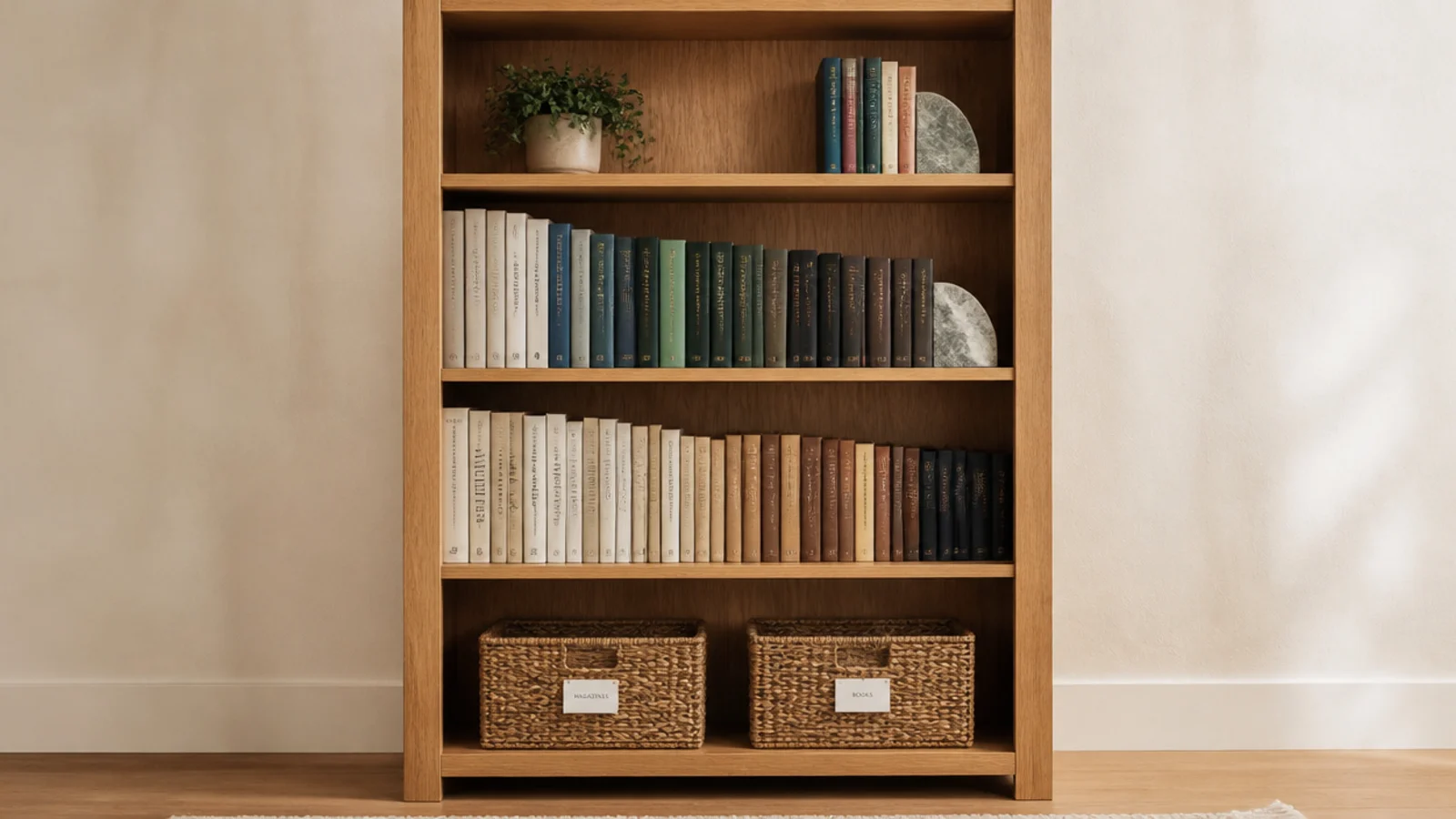
A tower 24 inches wide and 9 inches deep holds about as many paperbacks as a 36-inch bookcase while giving you a full foot of wall back.
Set the shelves at 10 inches of clear height and you get five or six tiers instead of four. Flat-pack versions run $35 to $70. Strap the top rail to a stud. $$
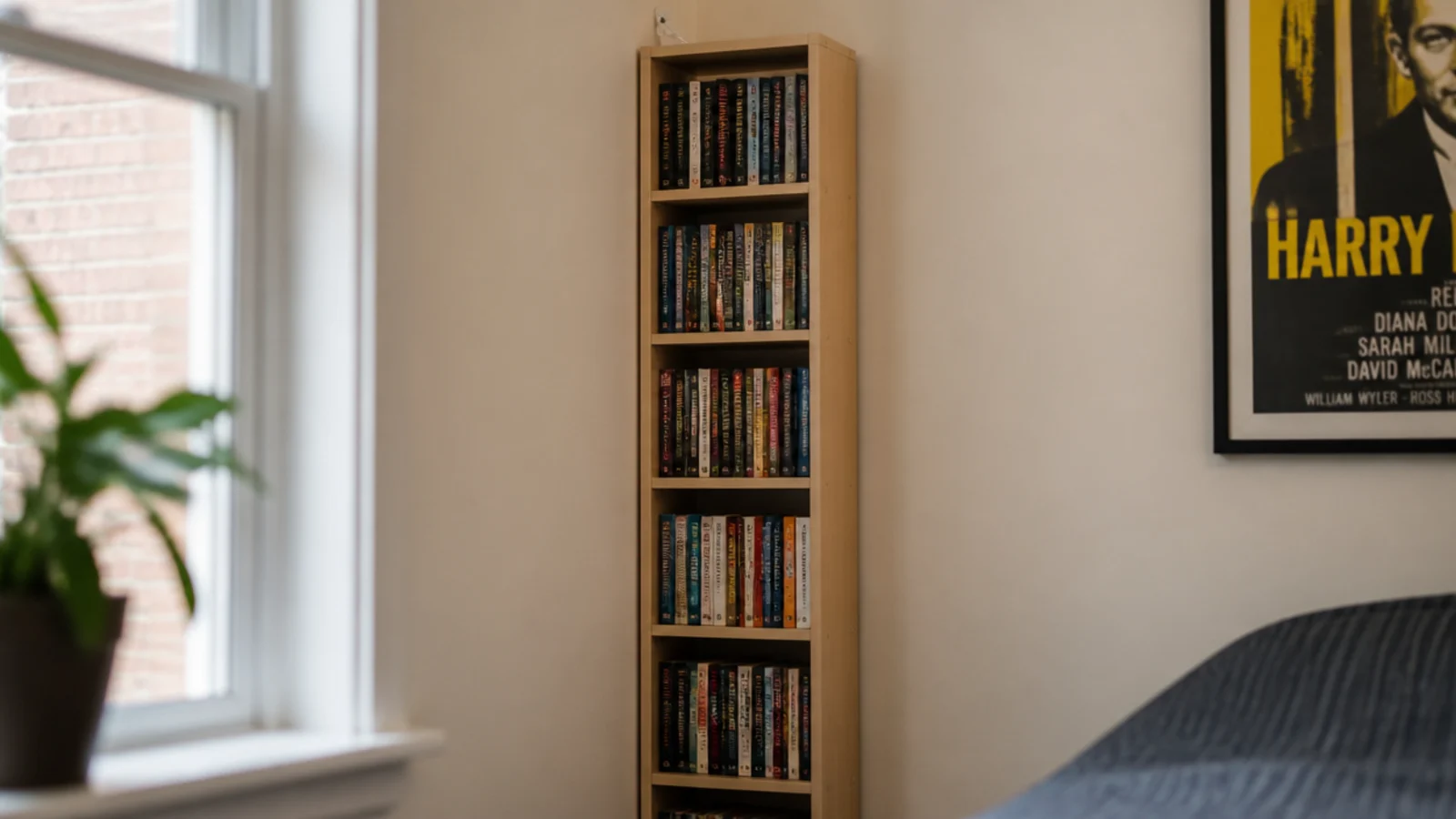
2. Four-inch picture ledges
A ledge only 4 inches deep will not hold a standing row, but it holds paperbacks and thin art books cover-out beautifully.
Treat these as display rather than storage — about 12 books per 3-foot ledge. Two screws into studs each, or heavy toggles. Ready-made ledges are $15 to $25; a ripped 1x4 with a front lip costs about $8. $
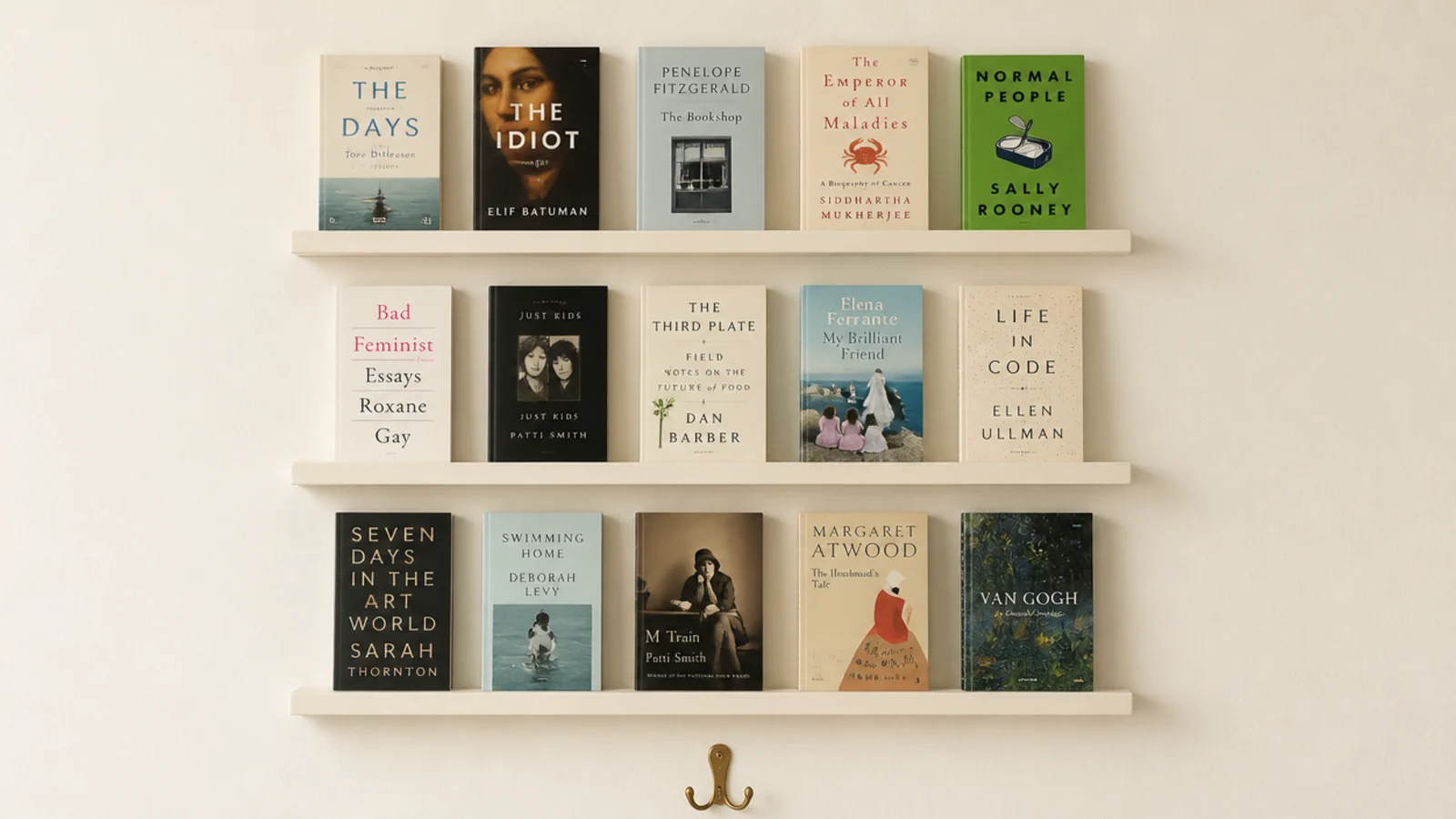
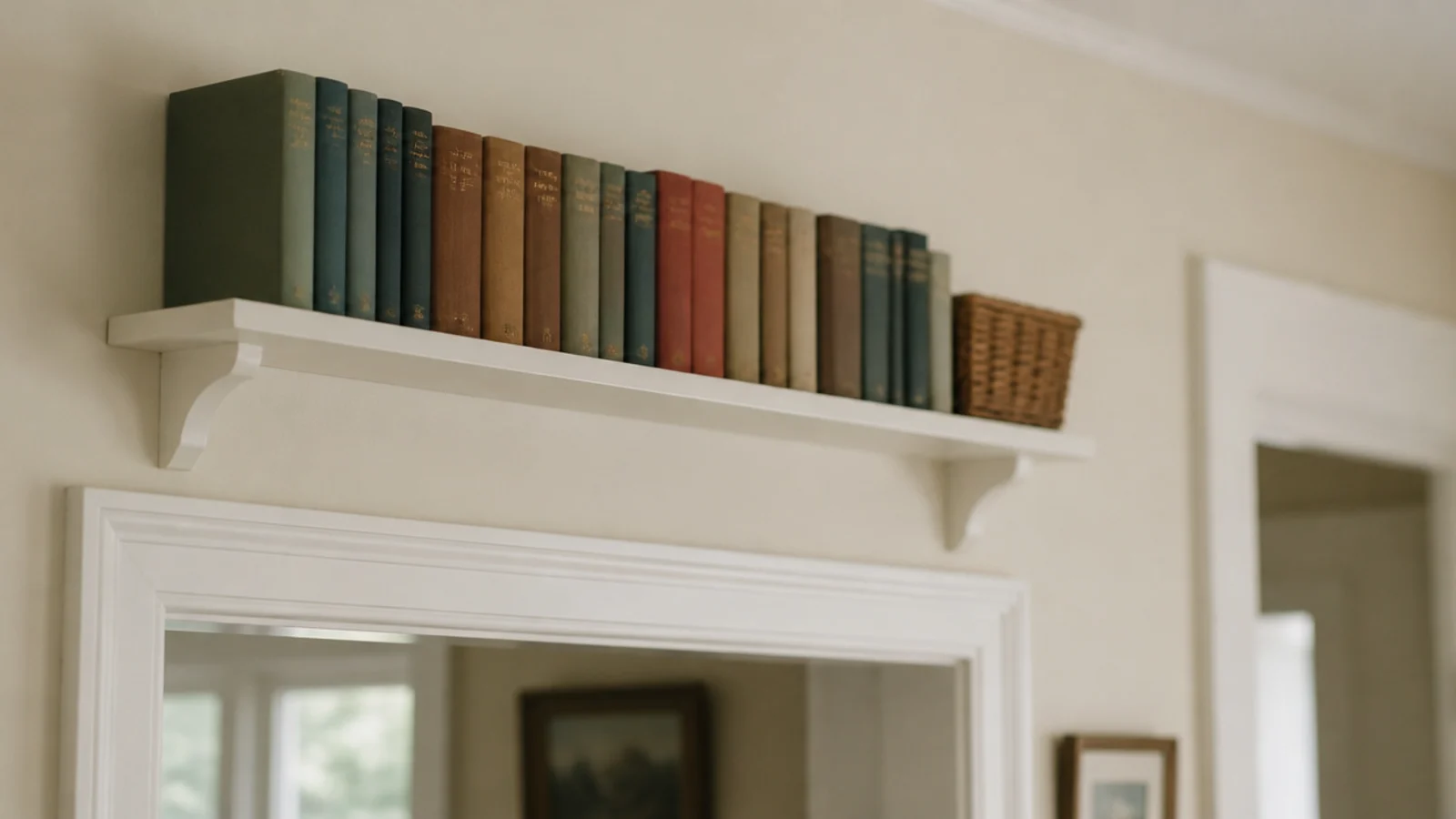
3. The over-the-door shelf
The band of wall above an interior door is the one square foot nobody in the house is using, and it fits a full row of hardbacks.
Mount the shelf about 12 inches above the frame so the books clear the ceiling line visually. Anchor into the header framing above the door, which is solid timber and takes a screw properly. $
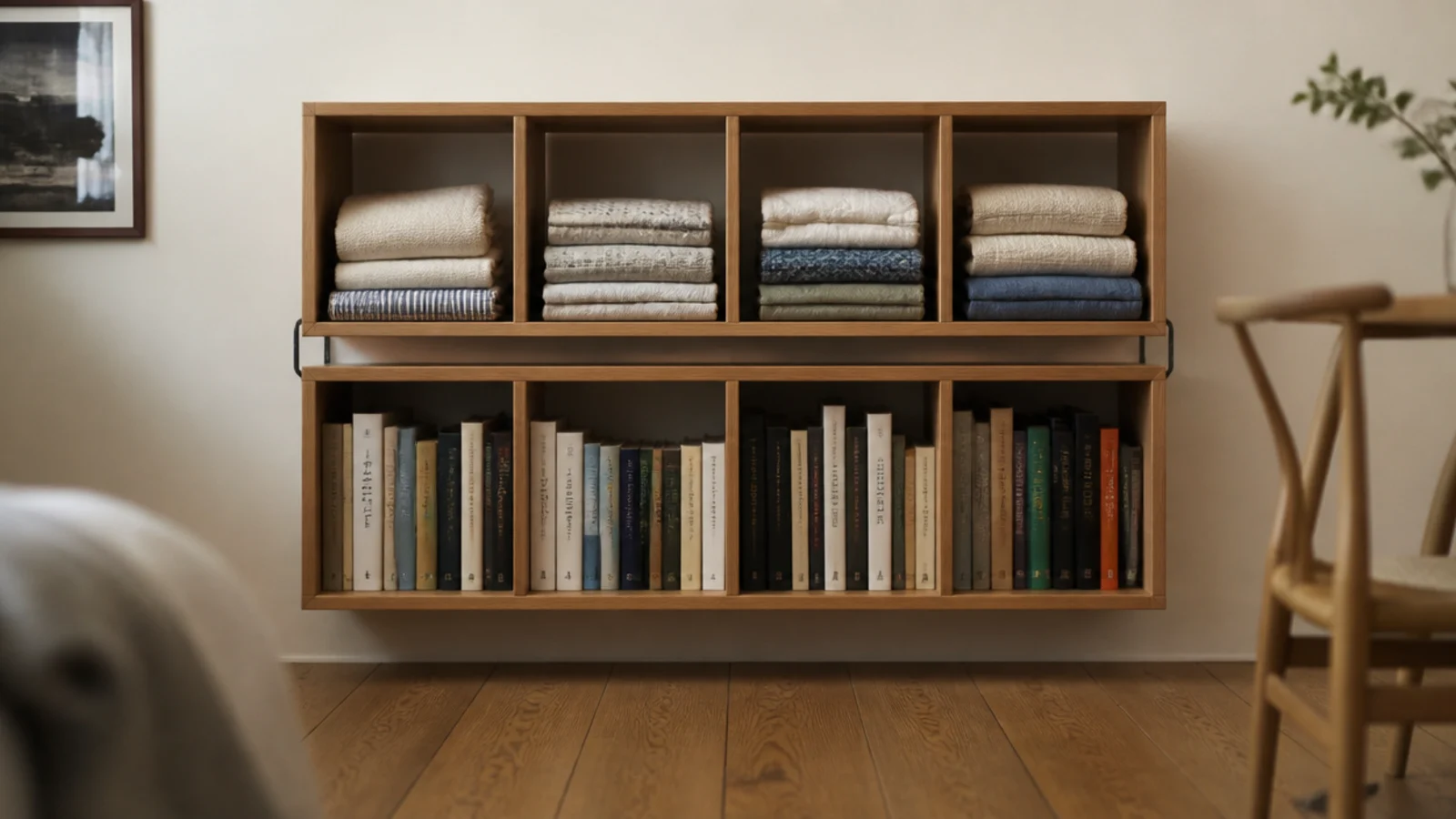
4. Two cube units stacked into a column
Two four-cube units bolted together give you a tower roughly 30 inches wide and 60 inches tall for about $60 total.
Screw a length of plywood or a metal plate across the joint at the back so the two behave as one unit, then strap it. Cube depth is usually 11 to 12 inches, which suits hardbacks. $$
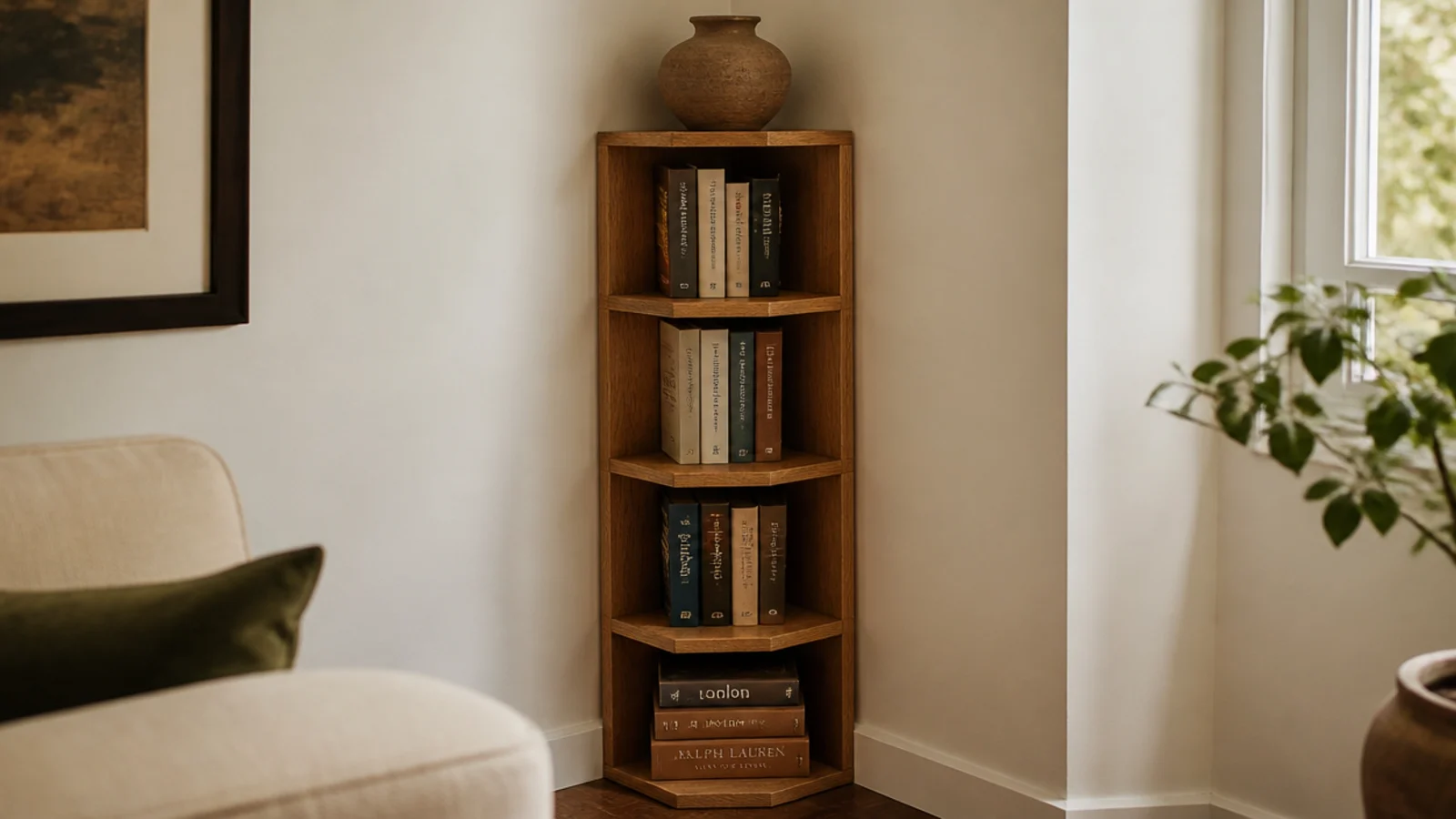
5. A corner tower with 11-inch faces
Corners are dead square footage in almost every room, and an 11-inch face on each wall gives you real hardback depth without projecting into the walkway.
Five tiers at 12 inches of clear height hits about 60 inches tall. Ready-made corner units run $50 to $110, and the shape is naturally stable — though it still gets a strap. $$
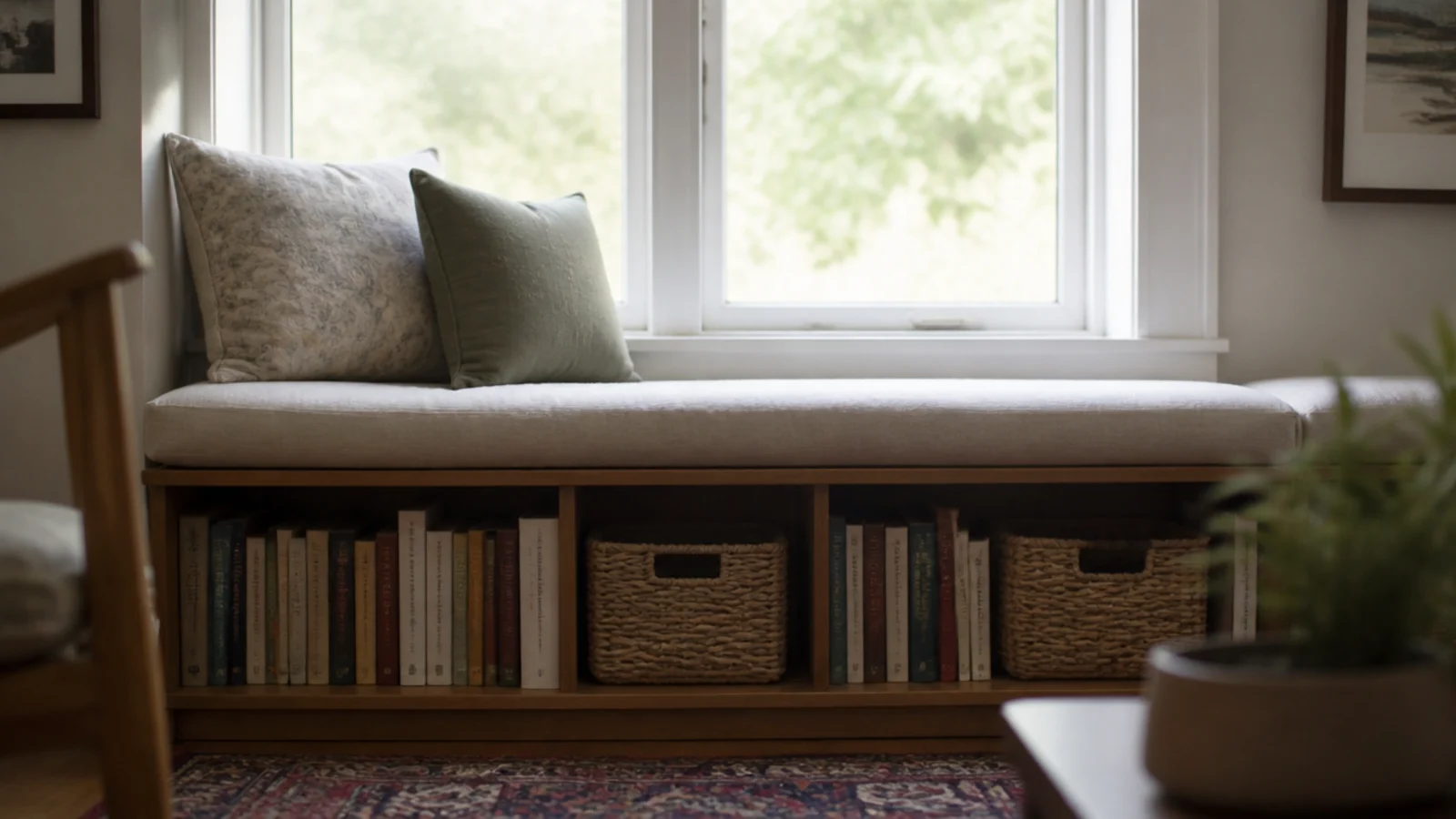
6. The under-window run at 30 inches
Stop the shelving at sill height, around 30 inches, and the window keeps doing its job while you gain 4 to 6 linear feet of book storage.
Keep the run under 32 inches per bay or add a vertical divider, because 3/4-inch shelving sags past that span under books. The top surface becomes a bench or a landing spot. $$
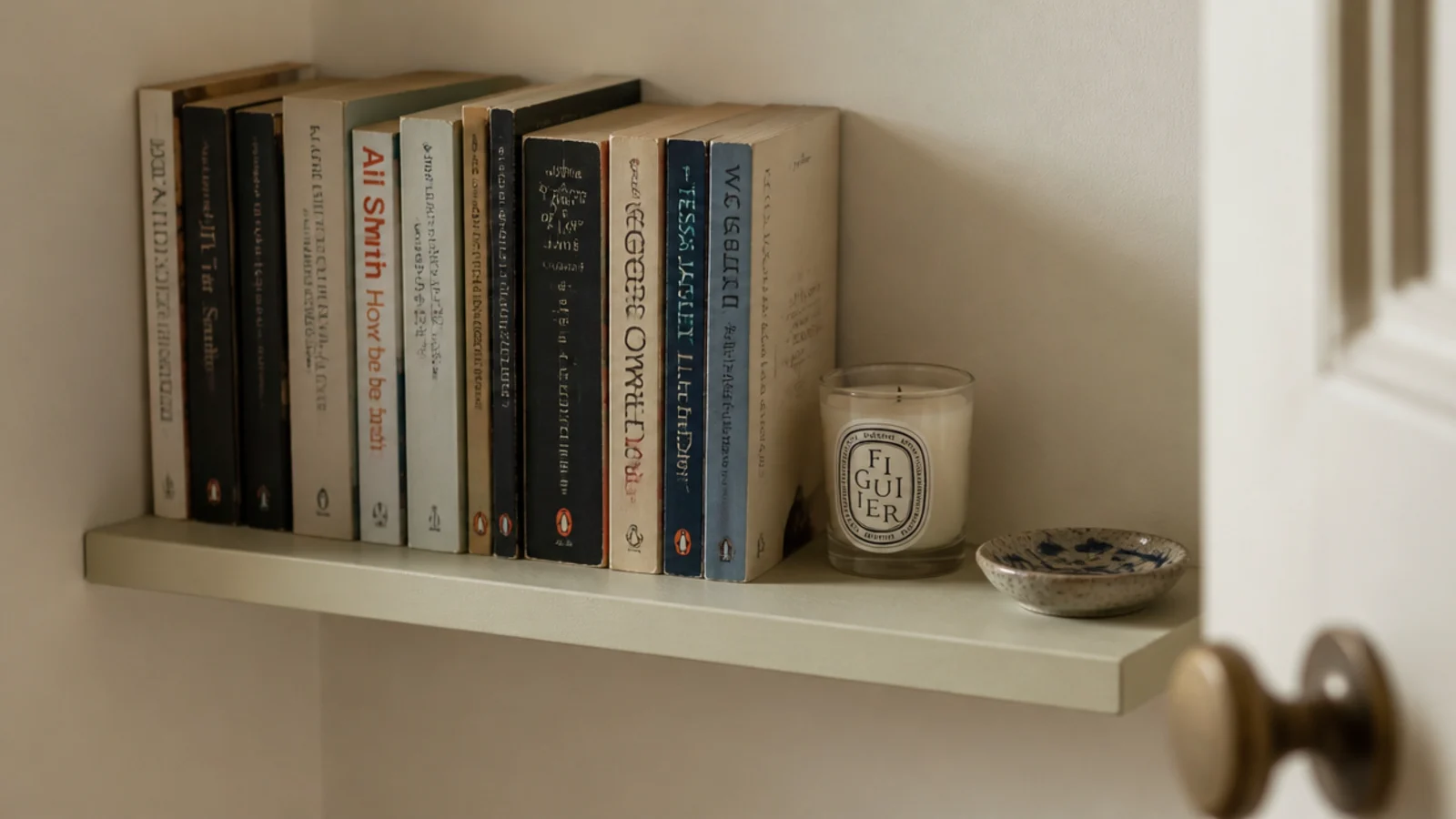
7. The behind-the-door wall shelf
The wall a door swings against is usually completely bare. A shelf 6 inches deep sits comfortably clear of the door face.
Six inches holds paperbacks upright and hardbacks lying flat. Check the door handle clearance first, then mount at least 4 inches above the handle arc. Two brackets and a board, about $20. $
8. Bracket and board over a desk
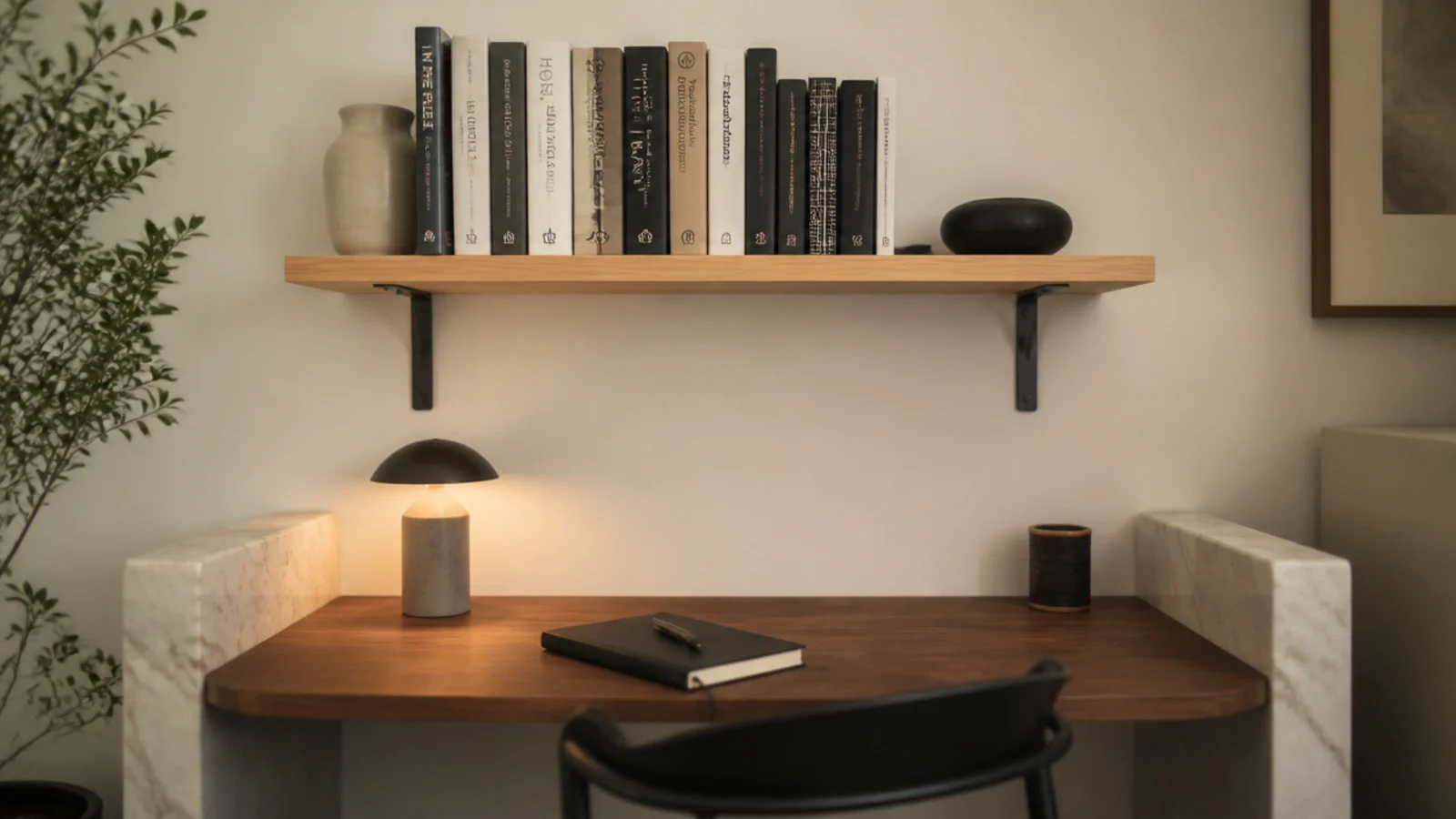
One 1-inch pine board on two black steel brackets, spanning 32 inches between studs, is the cheapest real shelf there is.
One inch of thickness rather than three-quarters is what lets you hit the full 32 inches without a bow. Reference books between heavy ends, nothing else. Board and brackets together run $25 to $35. $
9. The leaning ladder shelf
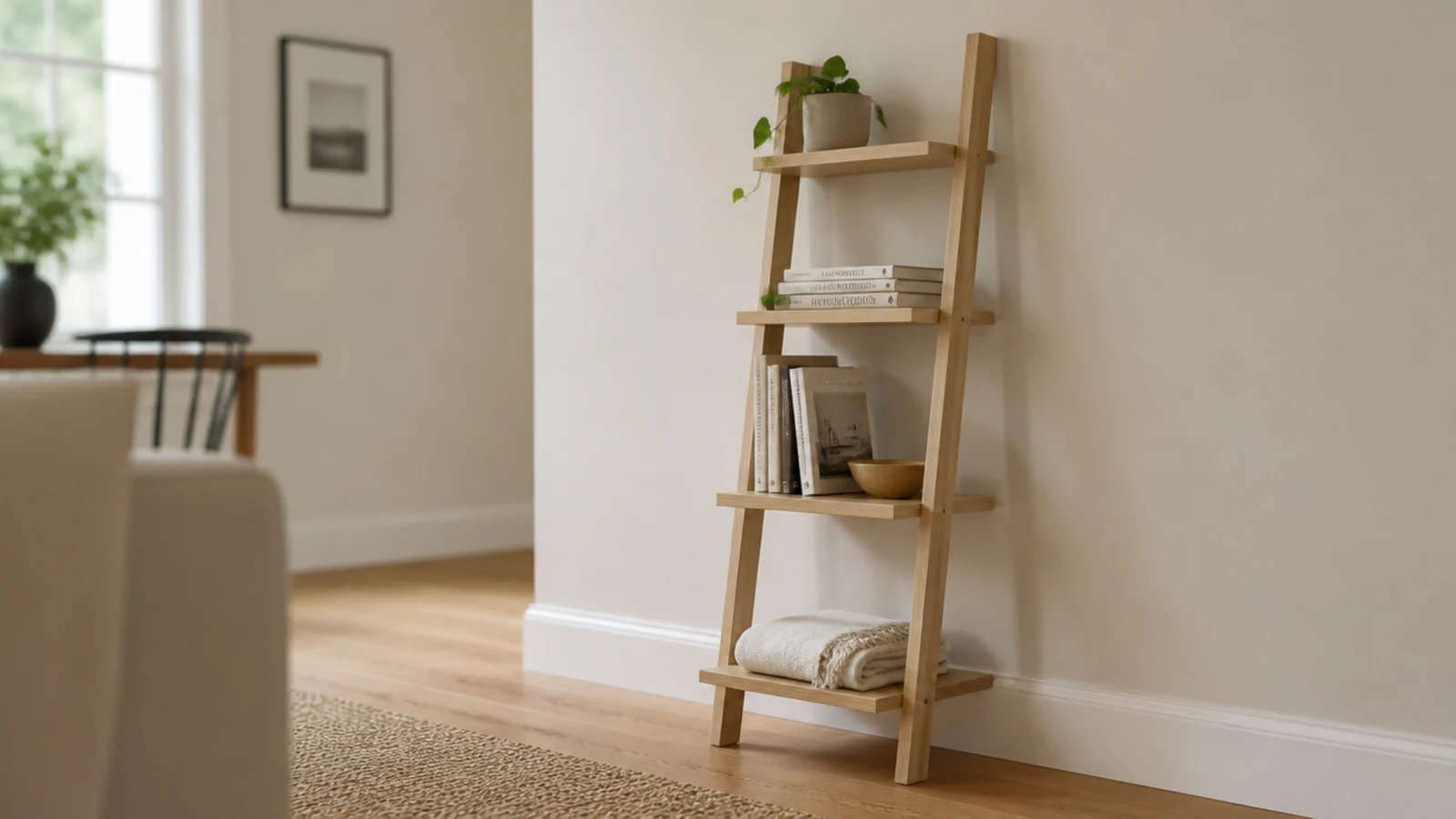
Graduated tiers, no wall fixing to install, and easy to take when the lease ends. Depth runs from about 12 inches at the base to 6 at the top.
Load heavy books on the bottom two tiers only. And despite the lean, run a strap or two small L-brackets into the wall at the top — leaning units tip forward when a child pulls on them. $$
10. A stack of wooden crates
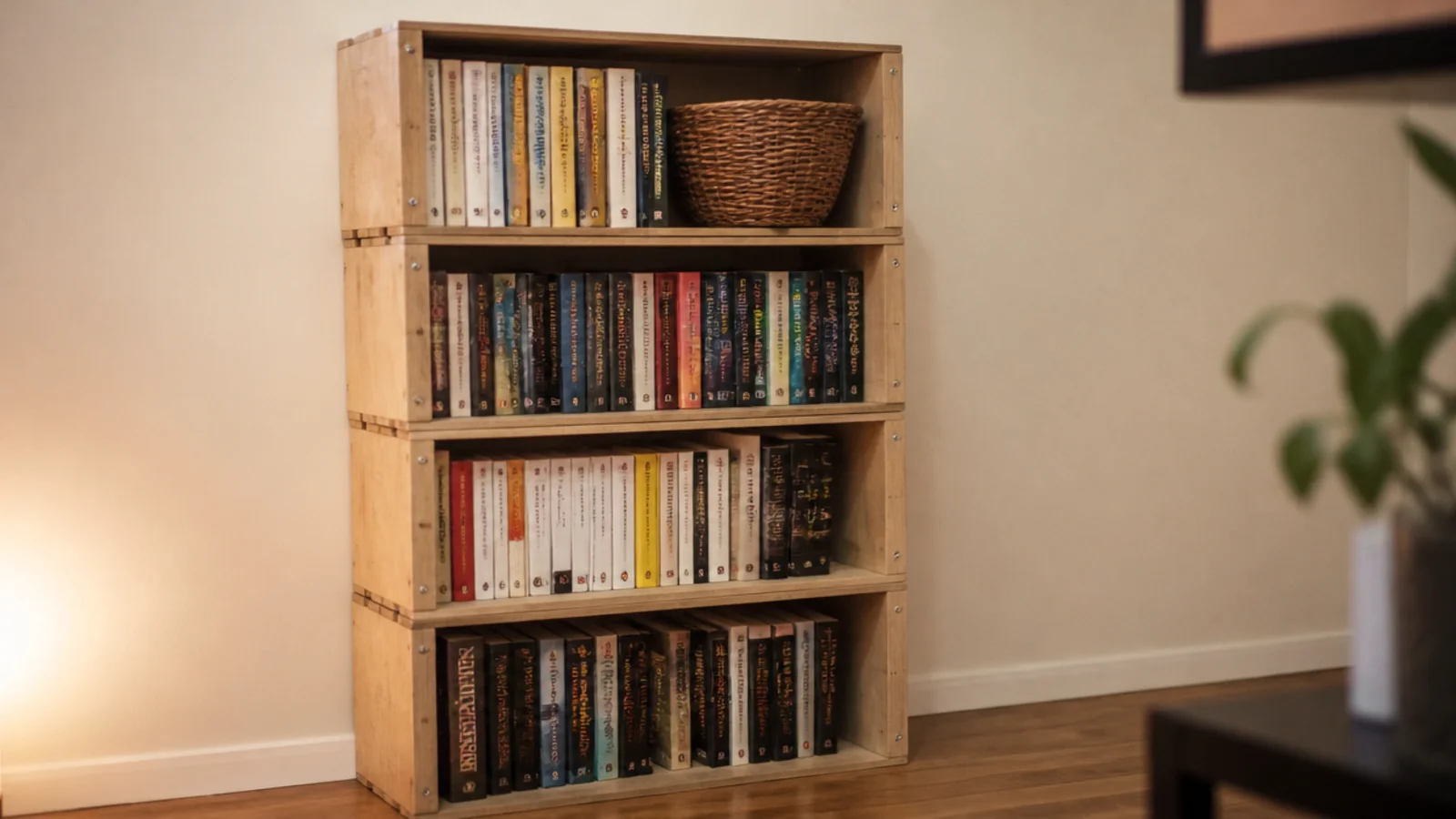
Four crates at roughly 18 by 12 inches, screwed to each other and stacked two wide by two high, cost about $40 and read as intentional rather than improvised.
Screw them together rather than just stacking, sand the edges, and finish with clear wax. Fix the top row to the wall. Crate depth suits hardbacks; the openings suit vertical rows of about ten. $
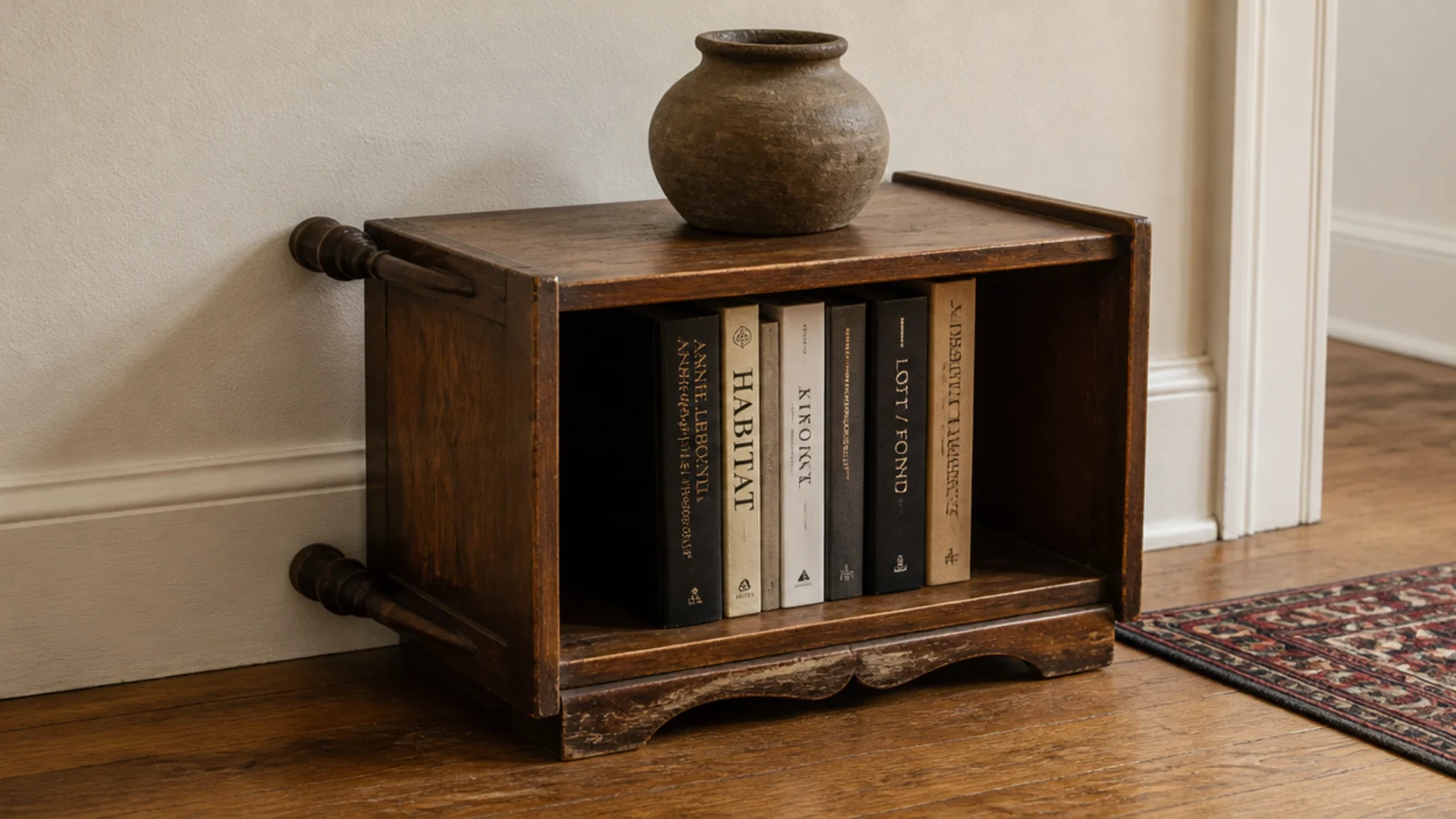
11. A thrifted nightstand on its side
Turn a small nightstand on its side and the drawer cavity becomes a book compartment about 14 inches wide.
Secondhand nightstands run $8 to $25 and there are always three at any thrift store. Remove the drawer, add felt pads to the new bottom face, and paint it out. Low enough to double as a side table. $
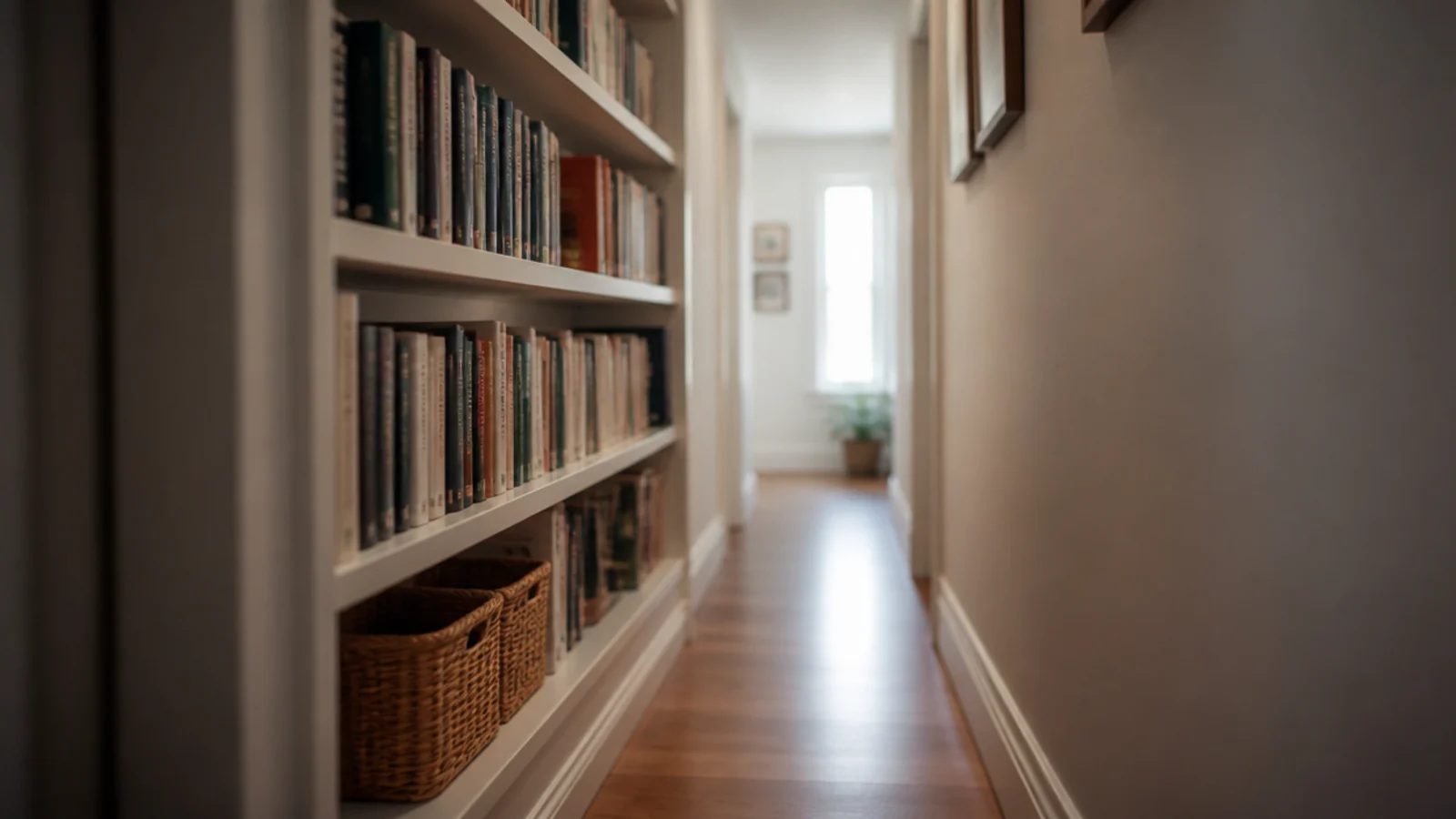
12. The slim hallway shelf
A bookcase 10 inches deep leaves a 30-inch hallway with 26 inches of clear passage, which is walkable.
Measure the walkway before the shelf. Under 36 inches of hallway width, drop to a 6-inch picture ledge instead. Hallways are also the least-used wall area in most homes, which makes them the best value. $$
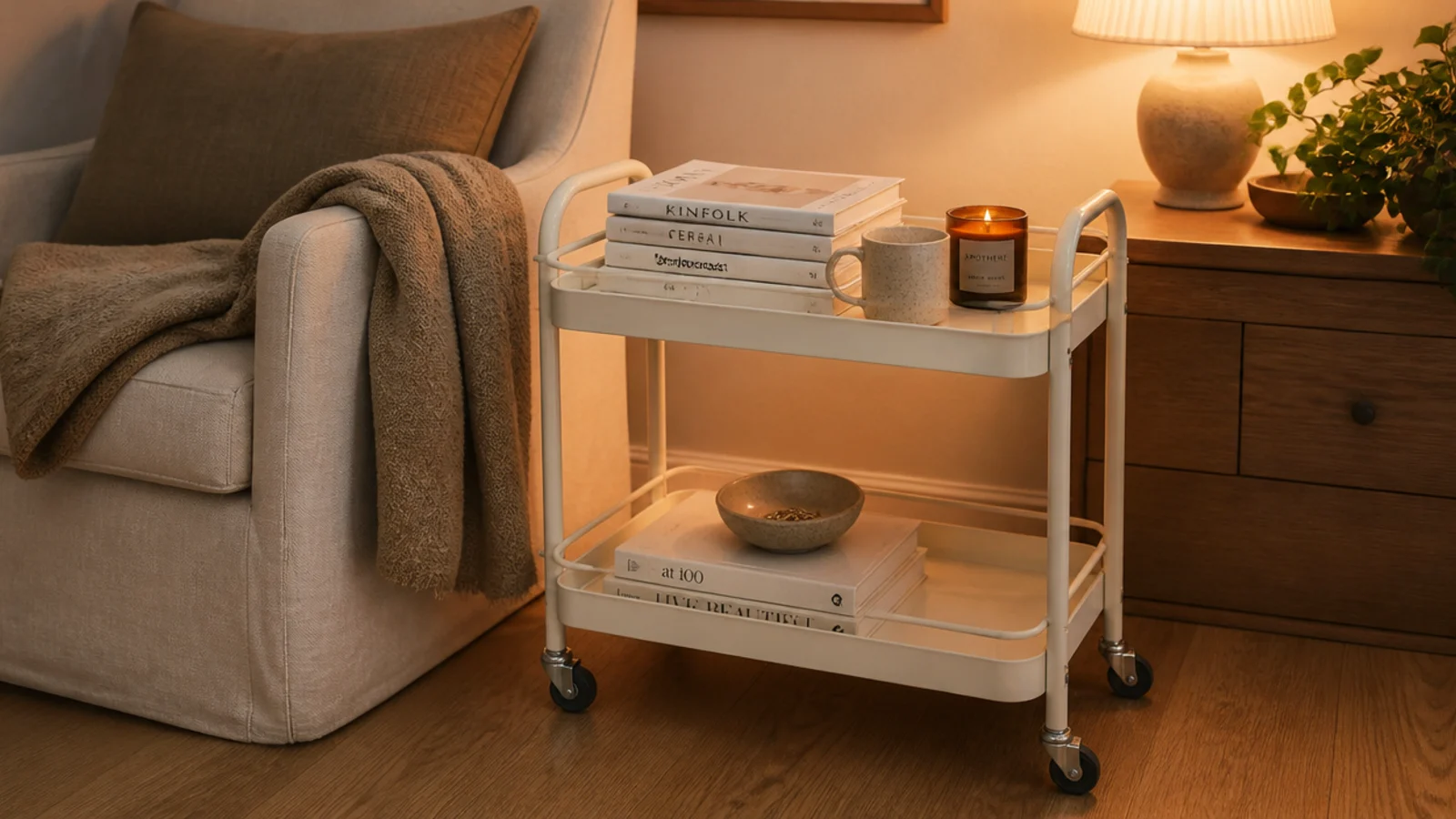
13. A rolling cart as a mobile bookshelf
A two-tier cart holds about 25 paperbacks and follows you from the armchair to the bed, which is genuinely how most people read.
It also solves the "current reads" pile that otherwise colonises a nightstand. Carts run $25 to $50. Keep the load light — most rate at 20 to 30 pounds per tier. $
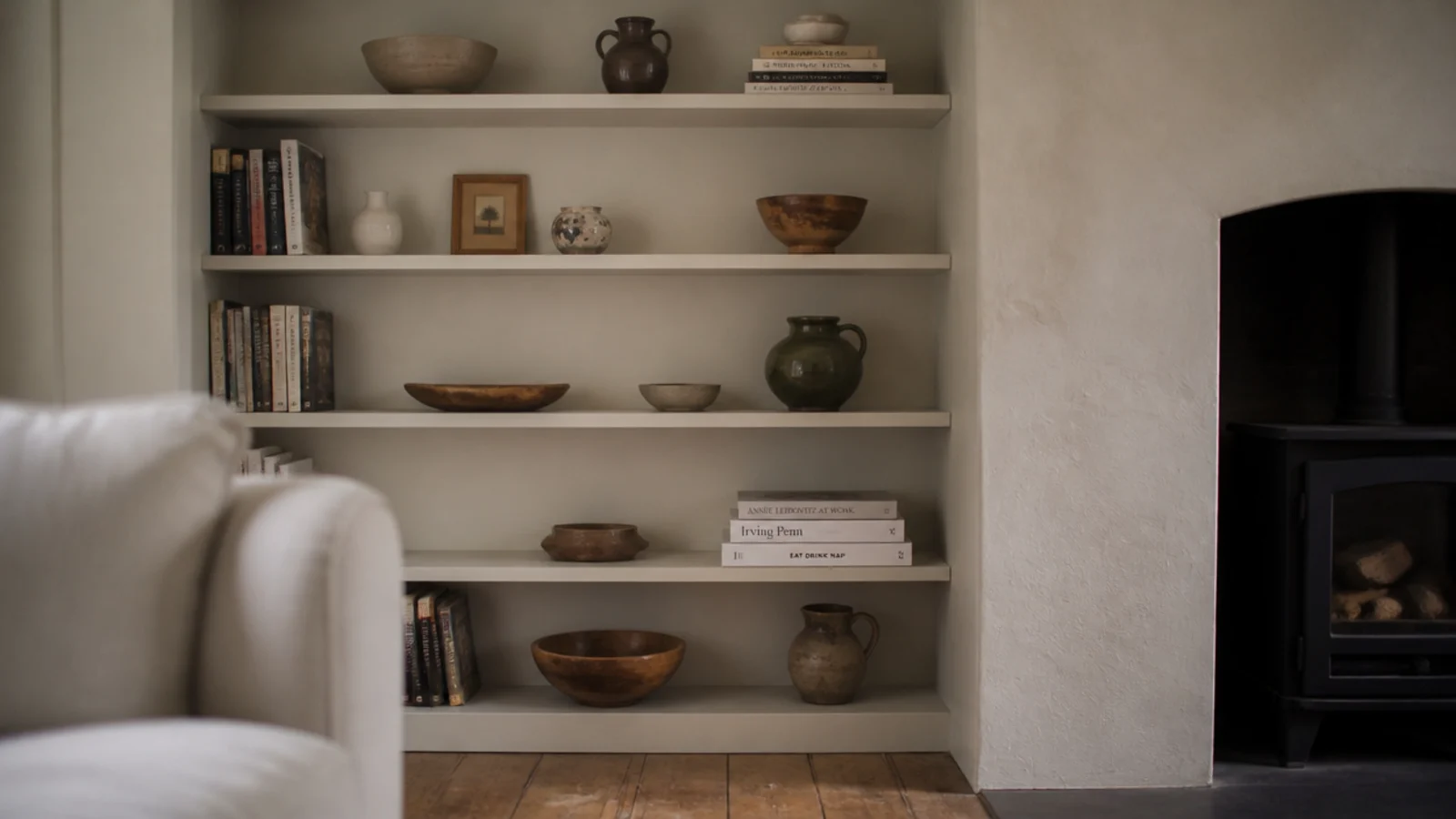
14. Alcove infill beside a chimney breast
Chimney alcoves are usually 28 to 34 inches wide and 10 to 14 inches deep, which is almost exactly bookshelf geometry already.
Cut shelves to a snug fit and rest them on cleats screwed to the side walls — no brackets, no visible hardware, no sag if the span stays under 32 inches. Materials run $80 to $200 for a full alcove. $$$
15. The stair-side eight-inch run
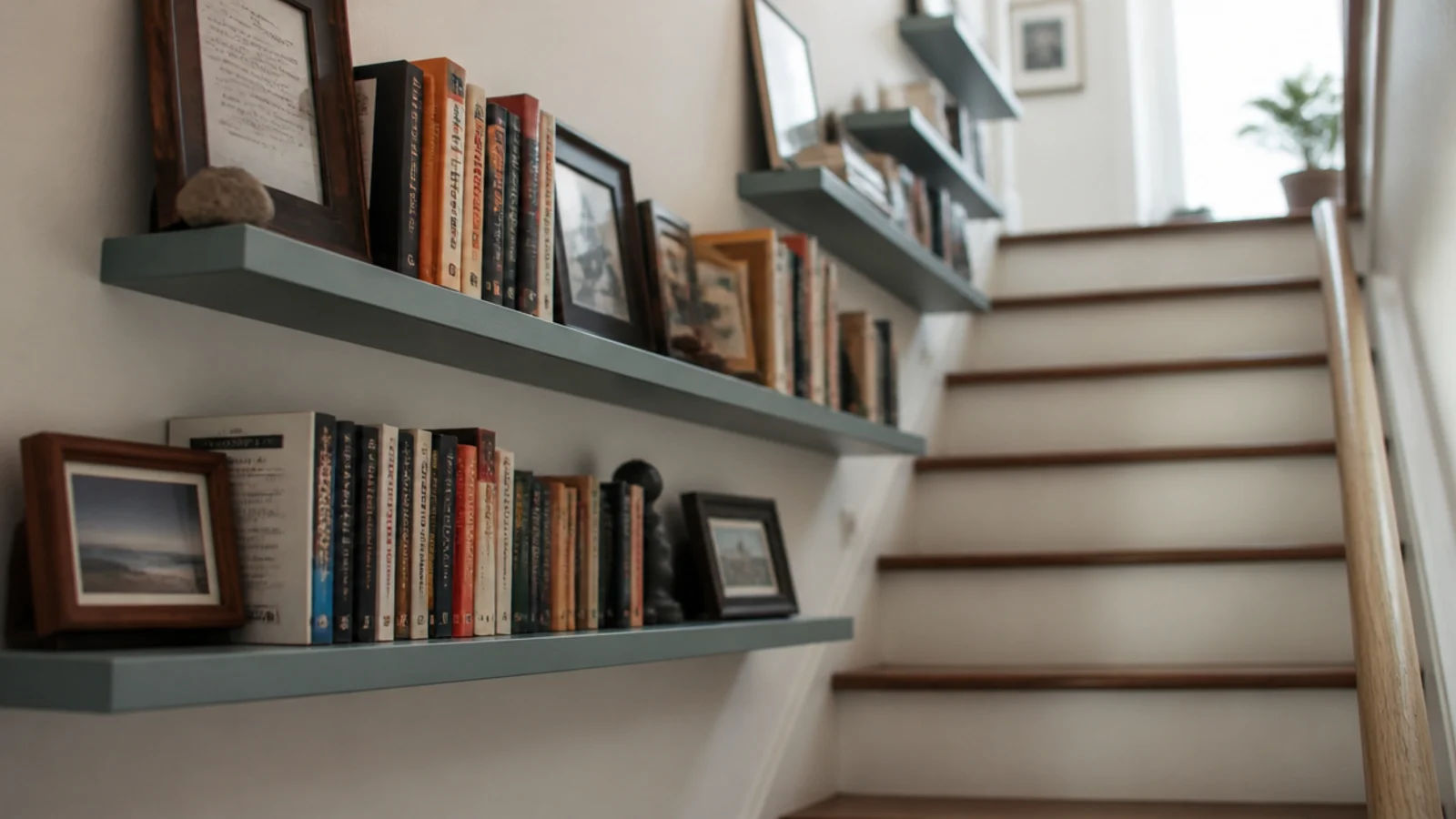
The wall beside a staircase is tall, unused and lit from above. An 8-inch depth keeps shoulders clear on the way past.
Step the shelves to follow the stair rise, mounting each into studs. Keep the lowest shelf above handrail height so nothing sits where a hand travels. Paperbacks only at this depth. $$
16. A rail and dowel display for kids
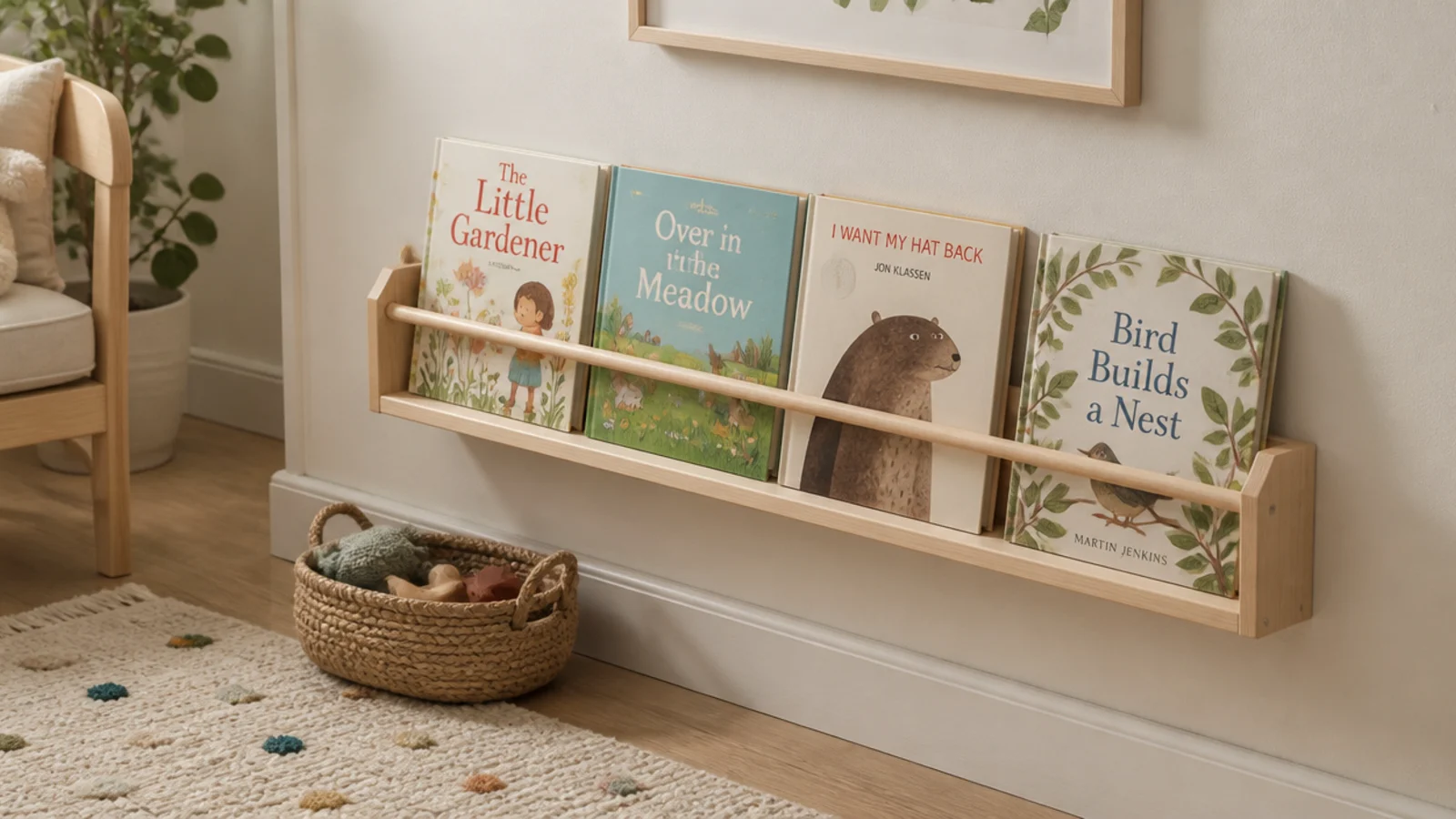
A shallow ledge with a dowel rail across the front holds picture books cover-out, and cover-out is the only way small children actually find a book.
Mount it at 30 inches so it is reachable from standing. Depth of 3 to 4 inches is plenty. Anchor into studs — children pull down on these, hard. $
17. The radiator-top shelf
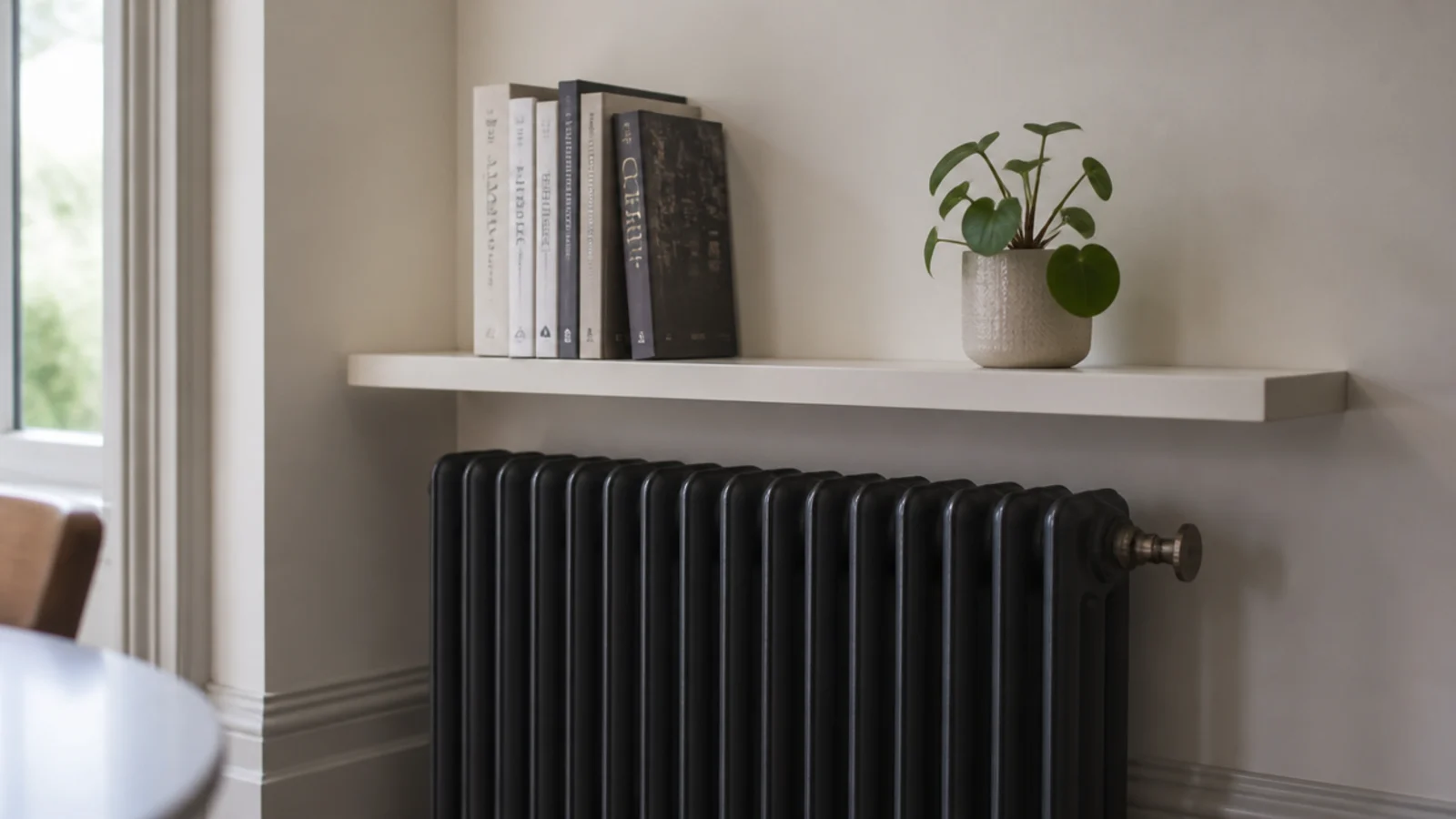
A shelf above a radiator reclaims a whole wall zone, but leave at least a 4-inch air gap above the fins or you are heating the underside of a board.
Keep books off the lowest shelf if the radiator runs hot, since sustained heat dries bindings and warps covers. Best used for objects with books above them. $$
18. An under-bed rolling book drawer
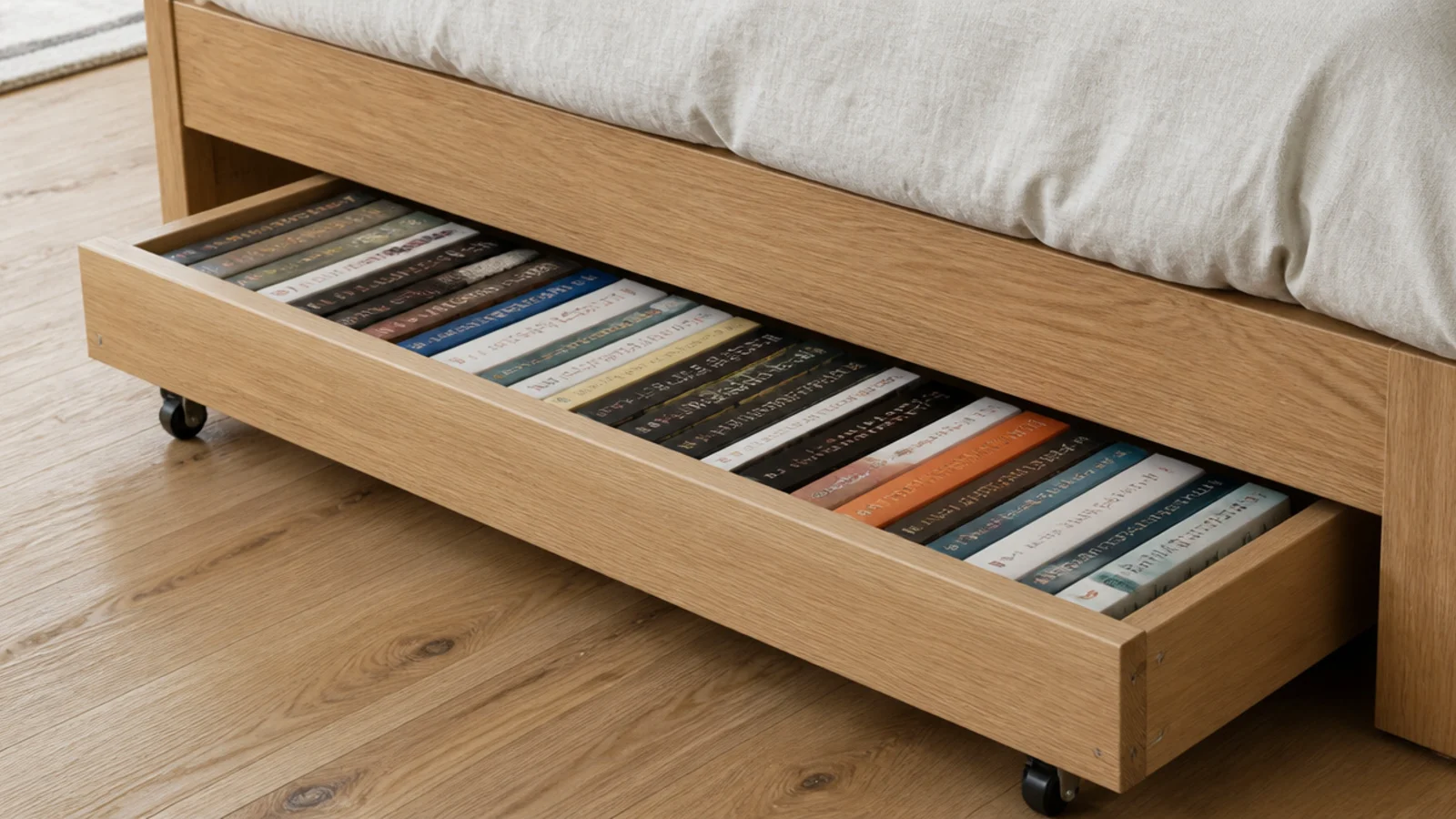
Most bed frames give 6 to 9 inches of clear height underneath, which is enough for paperbacks stored spine-up in rows.
A shallow wooden box on four casters costs about $30 to build and is the least visible book storage in any bedroom. Label the front edge, or you will forget what is in there entirely. $
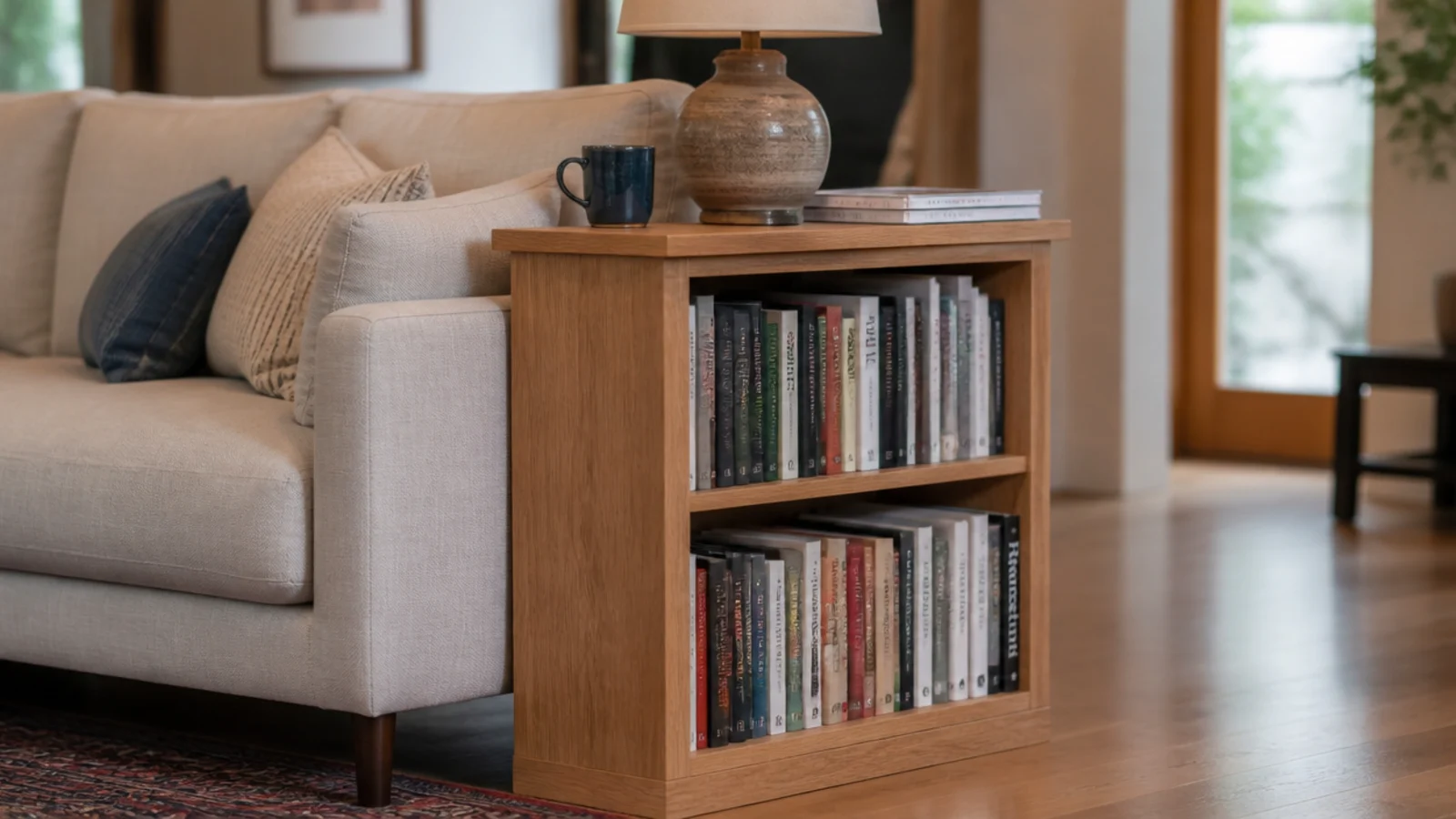
19. A half-height bookcase as a side table
A bookcase 30 inches tall sits at sofa-arm height, so it holds books on the shelves and a lamp on the top.
Two jobs from one footprint is exactly what a small room needs. Look for 11-inch depth so hardbacks fit. Secondhand units run $20 to $60 and take paint well. $$
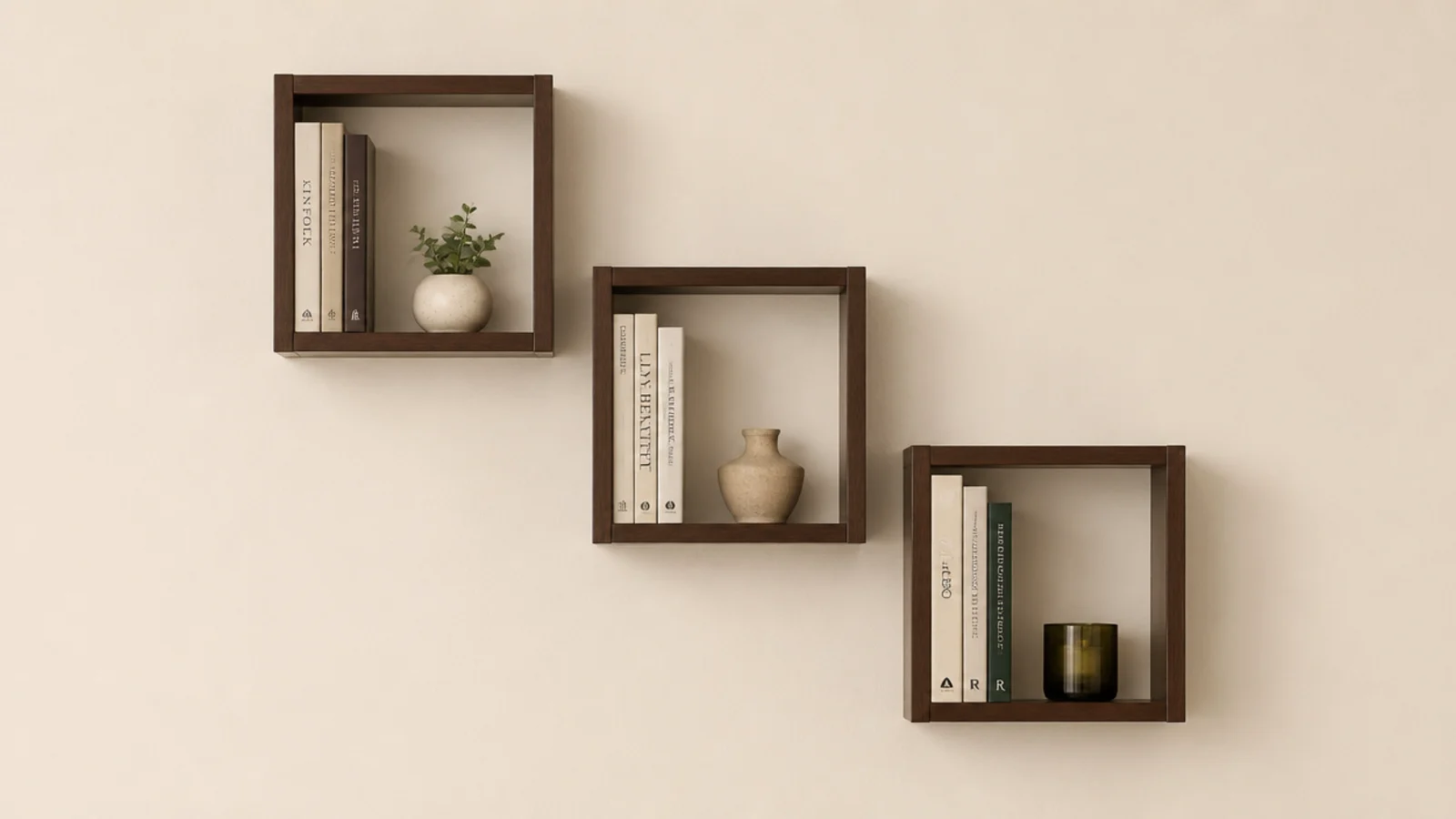
20. A trio of floating cubes
Three 12-inch box shelves in a stepped arrangement give you about 6 linear feet of book space and take zero floor.
Each cube needs one stud or two heavy toggles, and each holds roughly 15 to 20 pounds safely — meaning paperbacks and a few hardbacks, not a full run. Cubes cost $12 to $25 each. $$
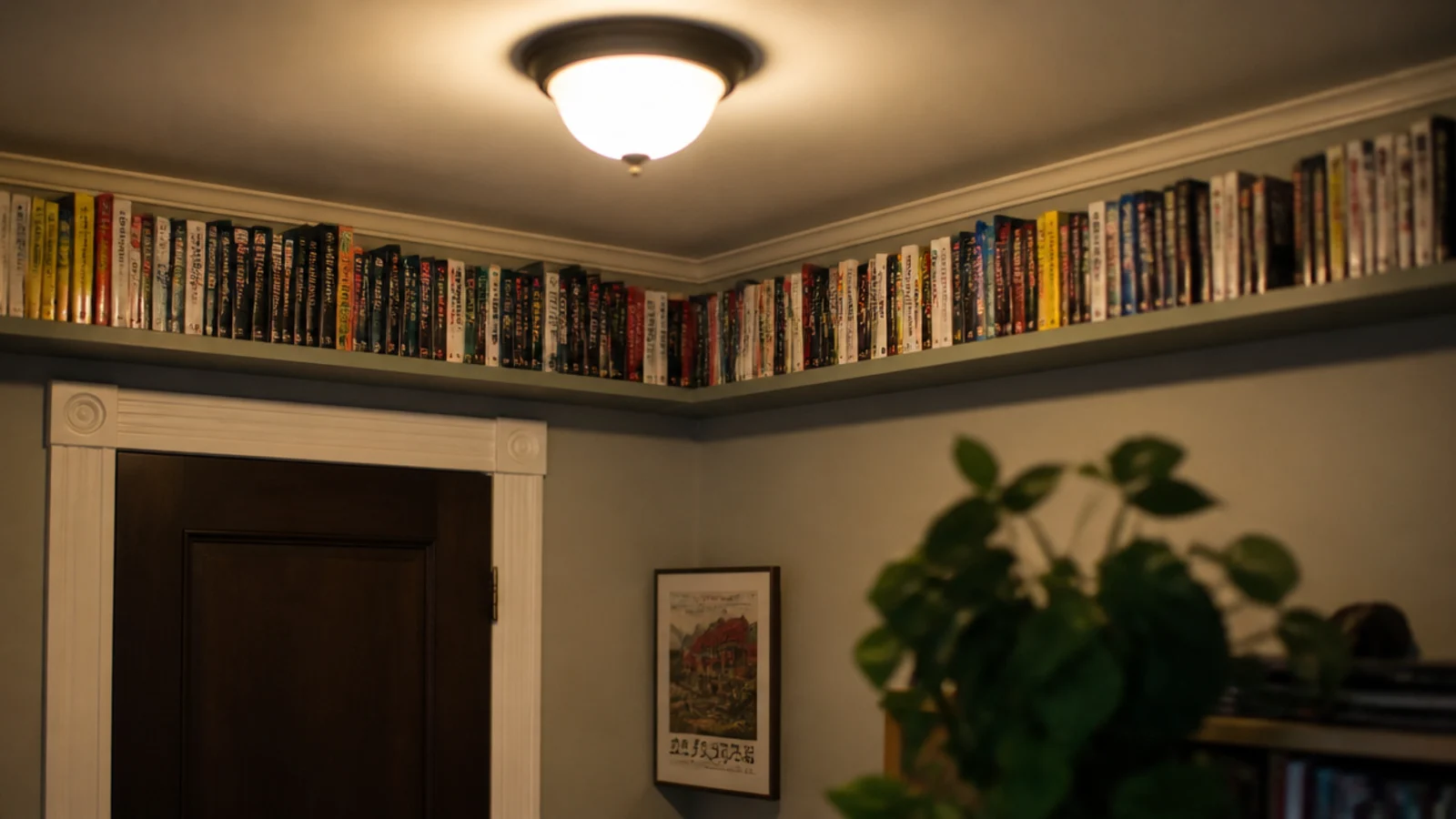
21. A shelf that wraps above the doorway
A continuous shelf at about 72 inches, running around two walls and passing over the door, adds 10 or more linear feet of storage and makes the room read taller.
Anchor into every stud along the run. Keep it to lighter books, use a front lip, and accept that you will need a step stool to reach anything. $$
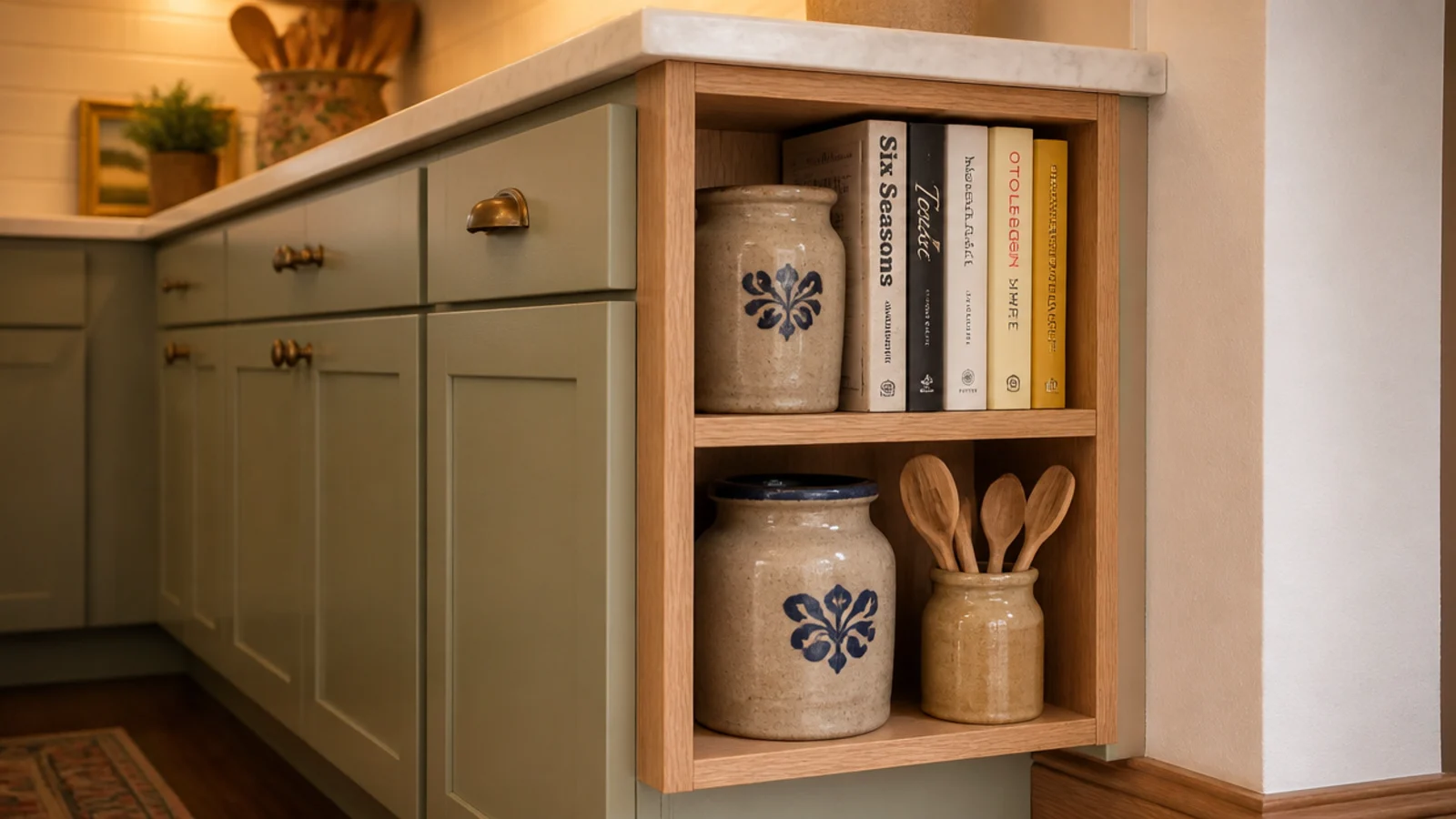
22. The cookbook shelf at the kitchen end
Ten inches of open shelf at the end of a cabinet run holds a dozen cookbooks and keeps them out of the drawer where they go to die.
Stay clear of the splash zone and the range — grease and steam both damage bindings. Bookend with a stoneware crock so the row cannot slump. $
23. A spice rack for small paperbacks
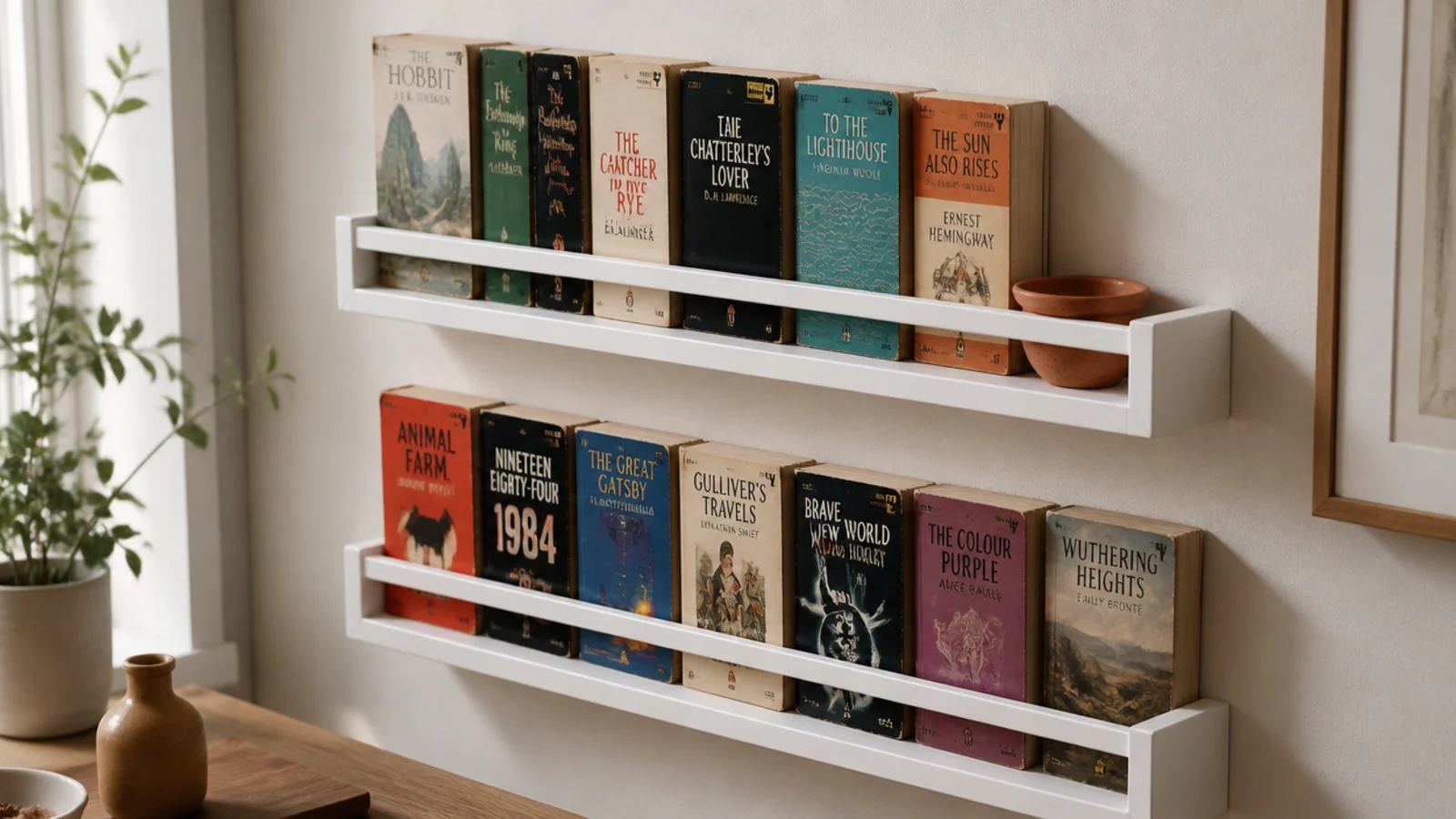
A narrow spice rack is about 3 inches deep, which is exactly a pocket paperback, and costs $3 to $6.
Mount two or three in a stack for a wall of small books in a hallway, bathroom or a child's room. They hold almost no weight, so keep it to genuinely small books and screw into a stud where you can. $
24. A pipe and board vertical tower
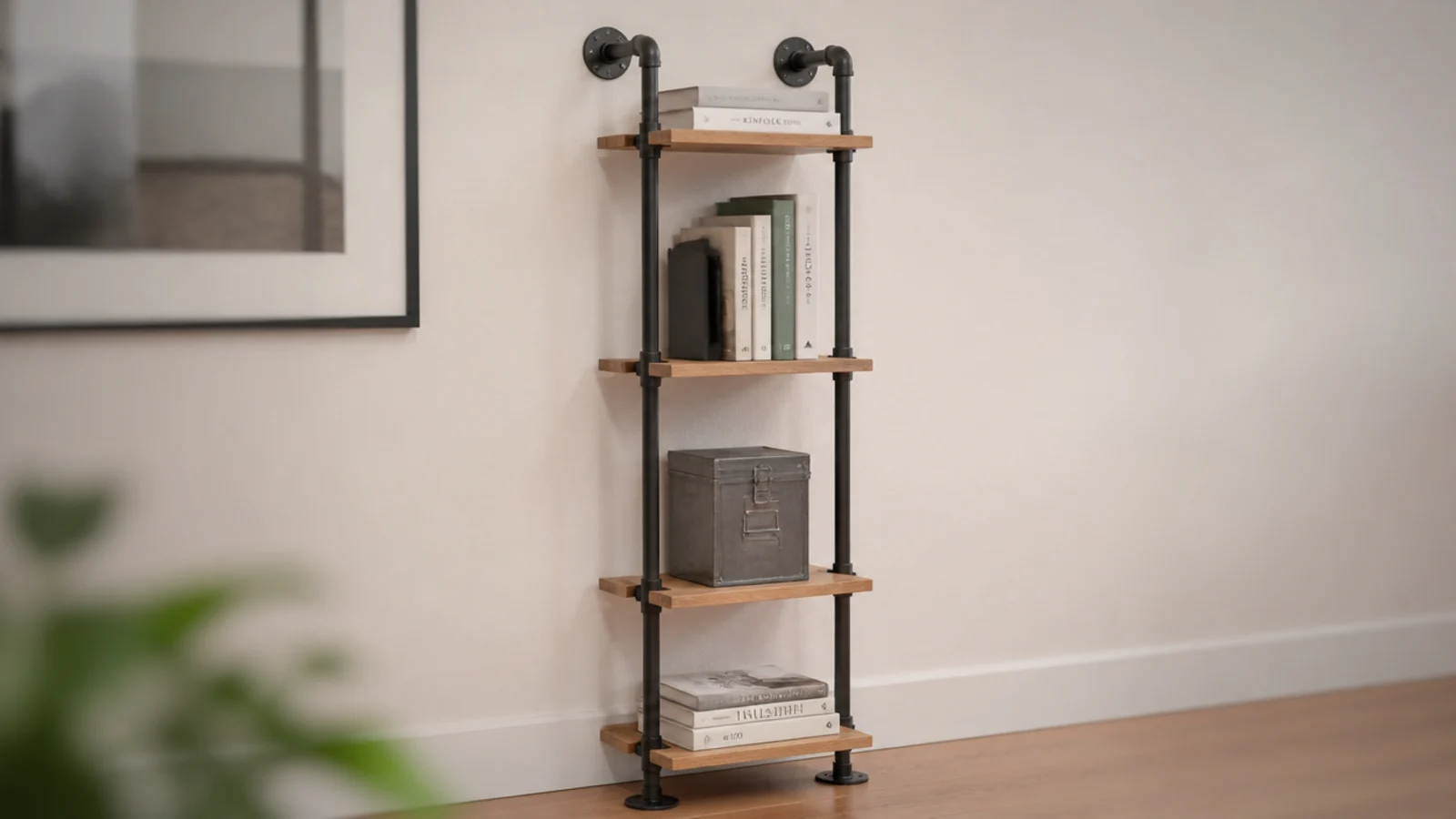
Black threaded pipe uprights with four pine boards makes a tower about 30 inches wide with no cabinetry skills involved.
Bolt the base flanges to the floor or the baseboard and the top flange to a stud. Keep board spans under 32 inches and use 1-inch stock. Fittings and boards run $90 to $150. $$
25. The tension-rod closet shelf
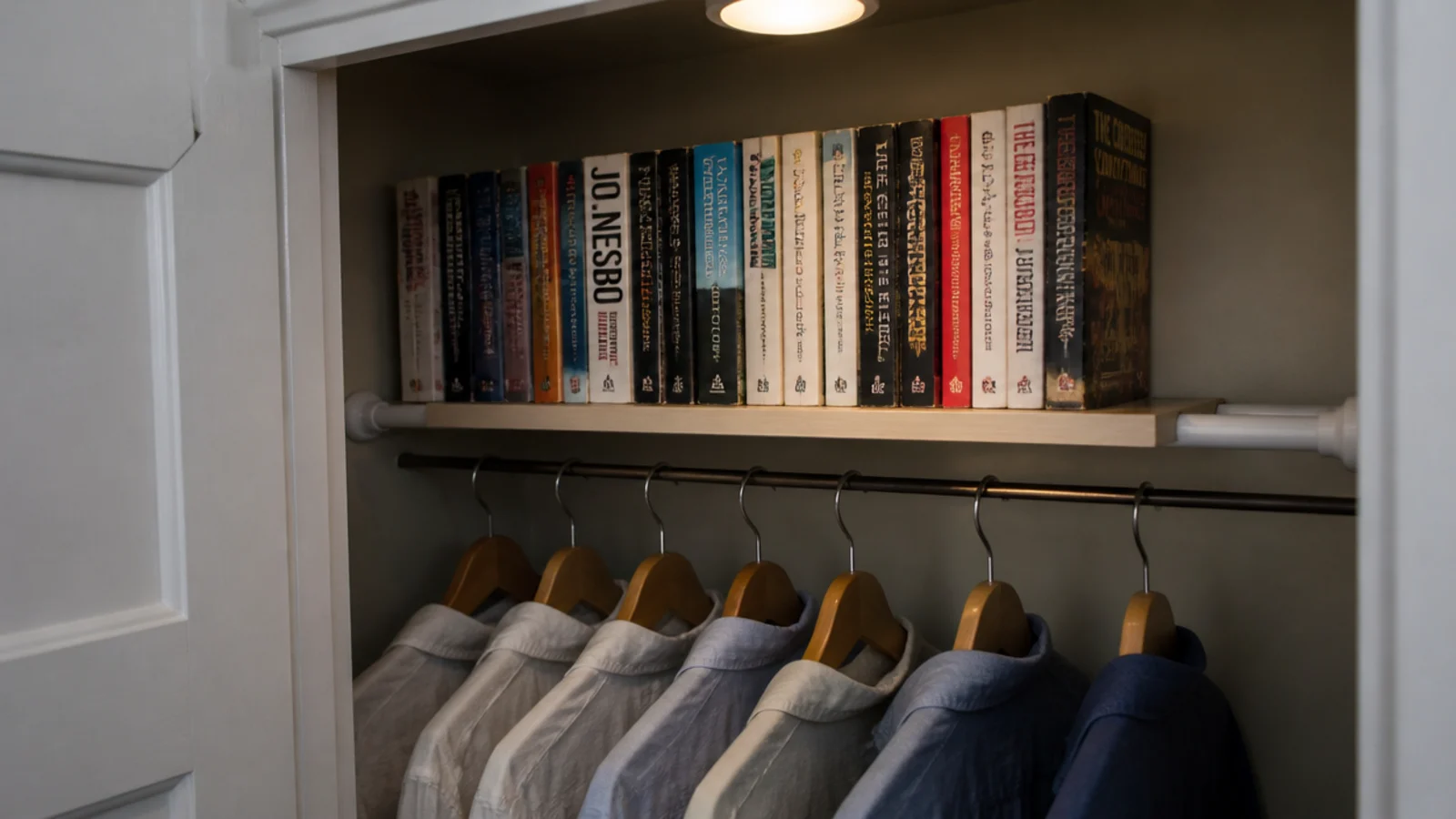
Inside a shallow closet, a tension rod supporting a light board gives you a single row of paperbacks with no fixings at all.
Strictly paperbacks and strictly one row — tension systems fail without warning past about 15 pounds. It is the most genuinely renter-safe idea here, and it costs under $20. $
Mistakes to Skip
- Trusting adhesive strips with hardbacks. They hold about 15 pounds at best, and a 24-inch run of hardbacks is closer to 45.
- Buying a wide low bookcase for a narrow room. It eats the wall you needed for furniture and holds no more than a tall narrow tower.
- Skipping the anti-tip strap on a small unit because it looks light. Loaded, it is not light, and a tower is easier to pull over than a wide bookcase.
Frequently asked questions
How deep does a small bookshelf need to be?
Nine to ten inches handles paperbacks and most trade fiction comfortably, and it saves two to three inches of floor depth against a standard bookcase. Go to 11 or 12 inches only if you own hardbacks and art books. A 4-inch picture ledge holds paperbacks cover-out but will not take a standing row, so treat it as display rather than storage.
What is the best bookshelf for a very small room?
A tall narrow unit rather than a wide low one. A 24-inch-wide tower at 9 inches deep holds roughly the same number of paperbacks as a 36-inch bookcase while giving back a foot of wall. Height is cheap in a small room, floor area is not — just strap anything over about four feet to a stud.
How much weight can a small wall shelf hold?
Books run 20 to 25 pounds per linear foot in hardback, so even a modest 24-inch shelf may carry 40 to 50 pounds. That means studs or heavy-duty toggles, never the plastic plugs in the bracket box, which are rated around 10 pounds each. Adhesive and tension systems should stay under 15 pounds and hold paperbacks only.
Can renters put up bookshelves without drilling?
Yes, within limits. Leaning ladder shelves, freestanding towers, rolling carts, crate stacks and over-door racks all avoid the wall entirely. Command-style strips and tension rods work for paperbacks under about 15 pounds total. Anything holding a real run of hardbacks needs a mechanical fixing, so save the drilling budget for one good shelf rather than five weak ones.
How do I fit books into a small apartment without clutter?
Use vertical space nobody else uses: above the door, along the top of a hallway at 72 inches, in the alcoves beside a chimney breast, or the 8-inch strip beside a staircase. Then hold the line with one-in-one-out. Storage that grows sideways eats a small room, while storage that grows upward barely registers.
Start by measuring one wall and one walkway, then pick the idea that fits both — that ordering saves more returns than any other habit. For double-duty furniture in the same footprint see bookshelf for small spaces, and for wall-mounted options that take no floor at all see floating bookshelf ideas. In a tight bedroom, pair one of these with a headboard for a small bedroom. Save the pin before your next measure-up.
Want more like this? Browse all 15 bookshelf ideas guides — they all use the same measurements and budget tiers.
Pin it for later
Save this to your Bookshelf Ideas board
Pin it now so it is waiting for you when the tape measure comes out — and so the next person hunting for this idea can find it too.
Save this pinKeep going
More ideas worth saving while you have the tape measure out.