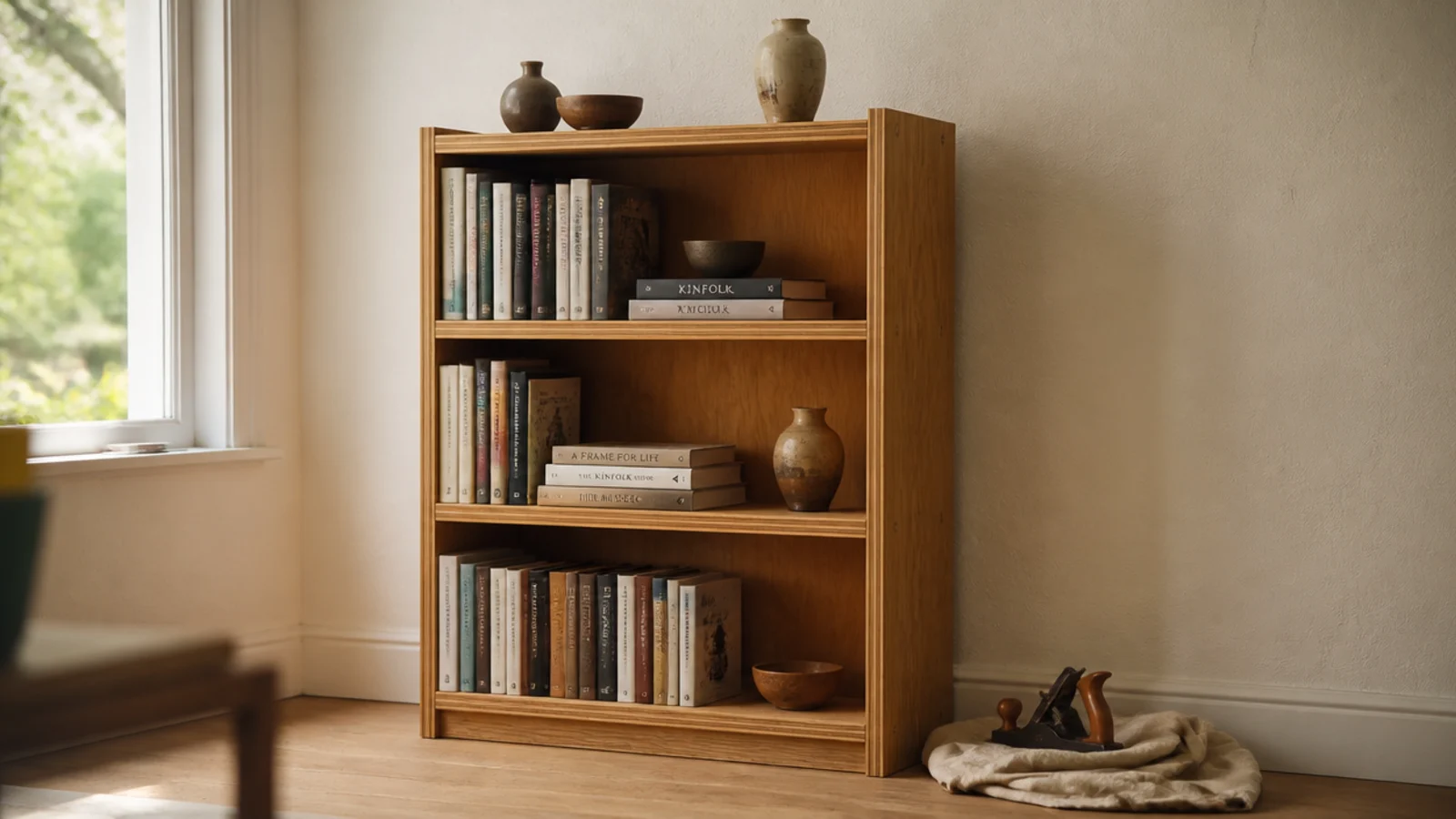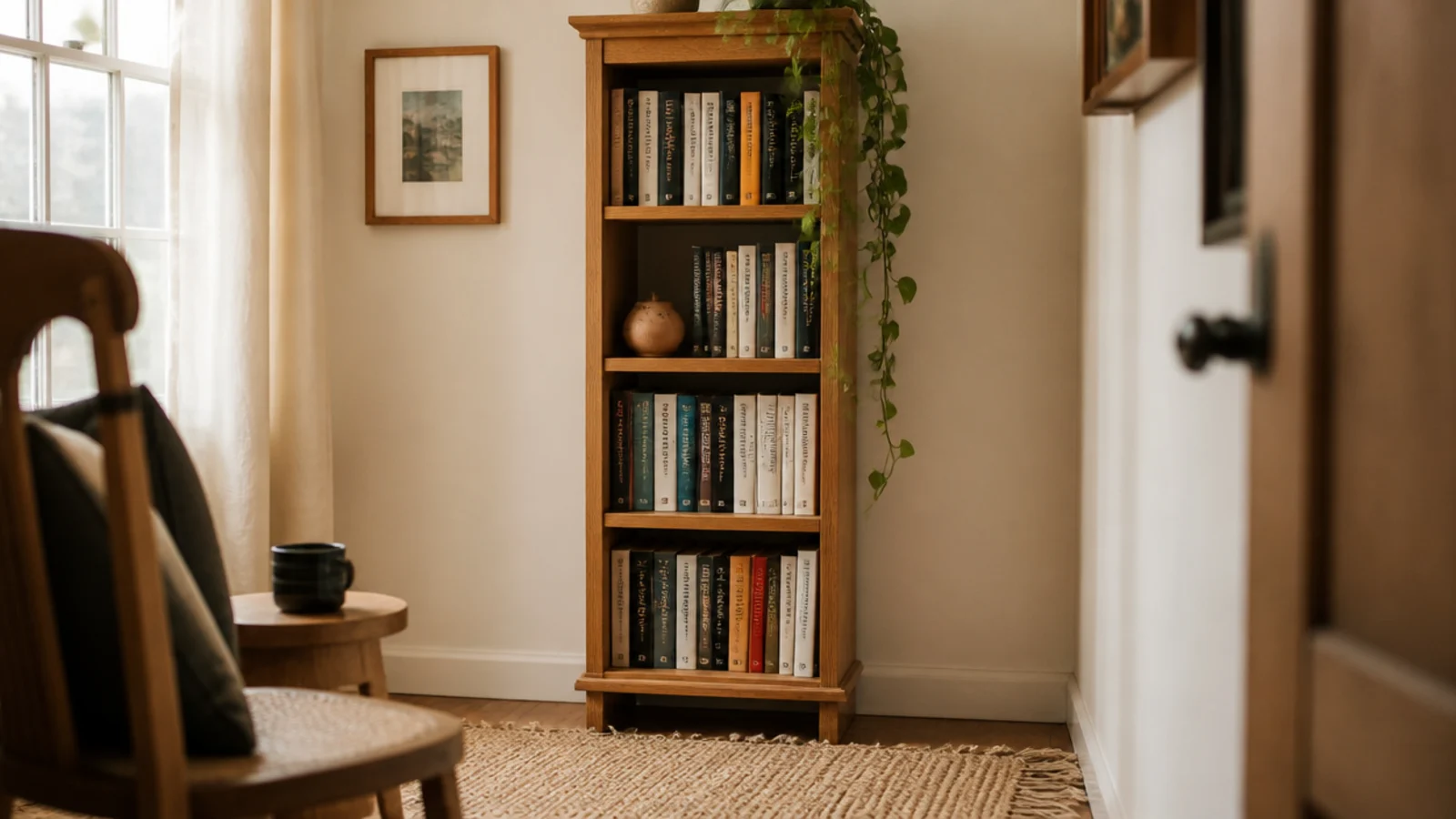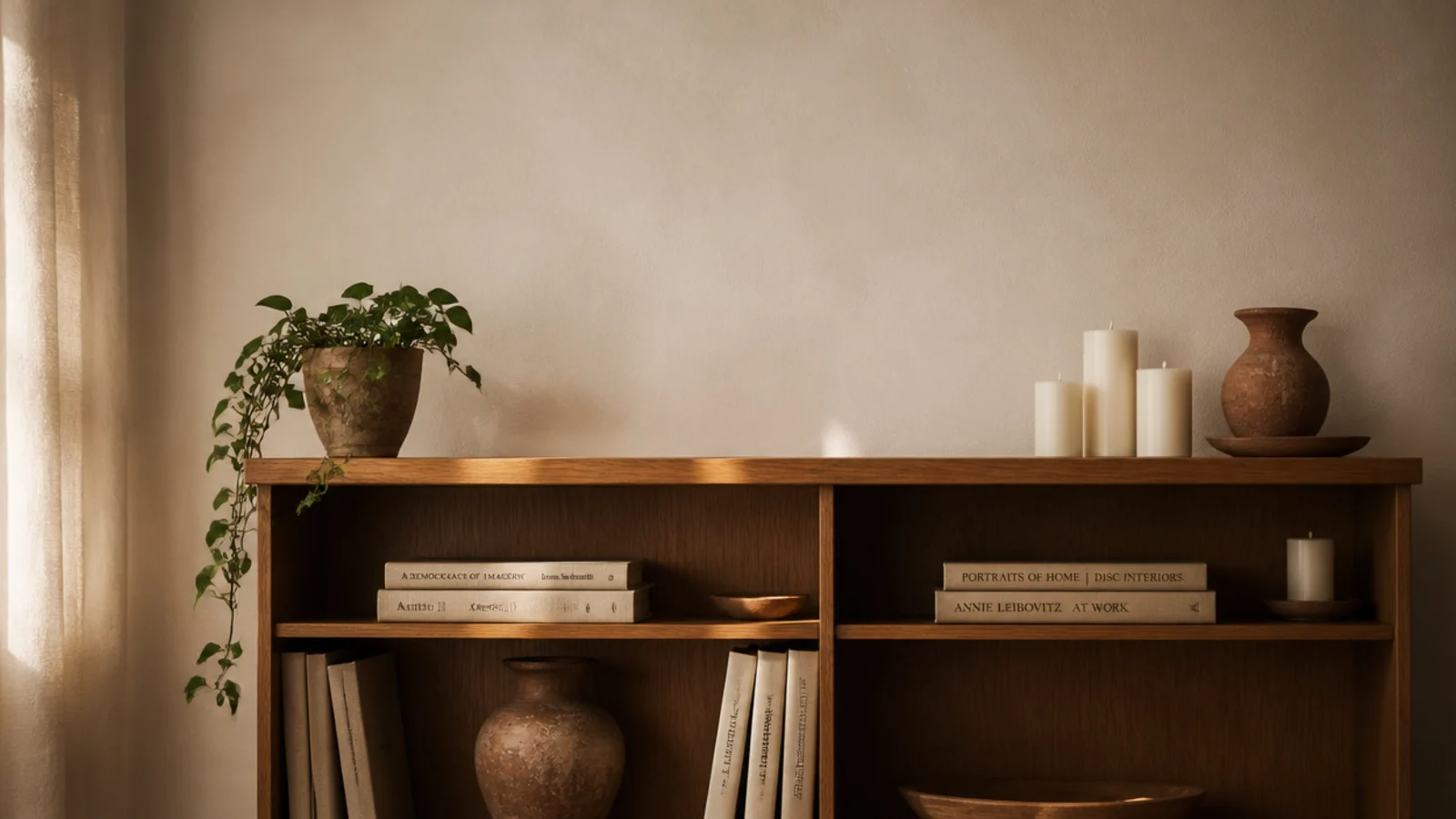
Bookshelf Ideas · Listicle
30 Simple Bookshelf Ideas on a Budget

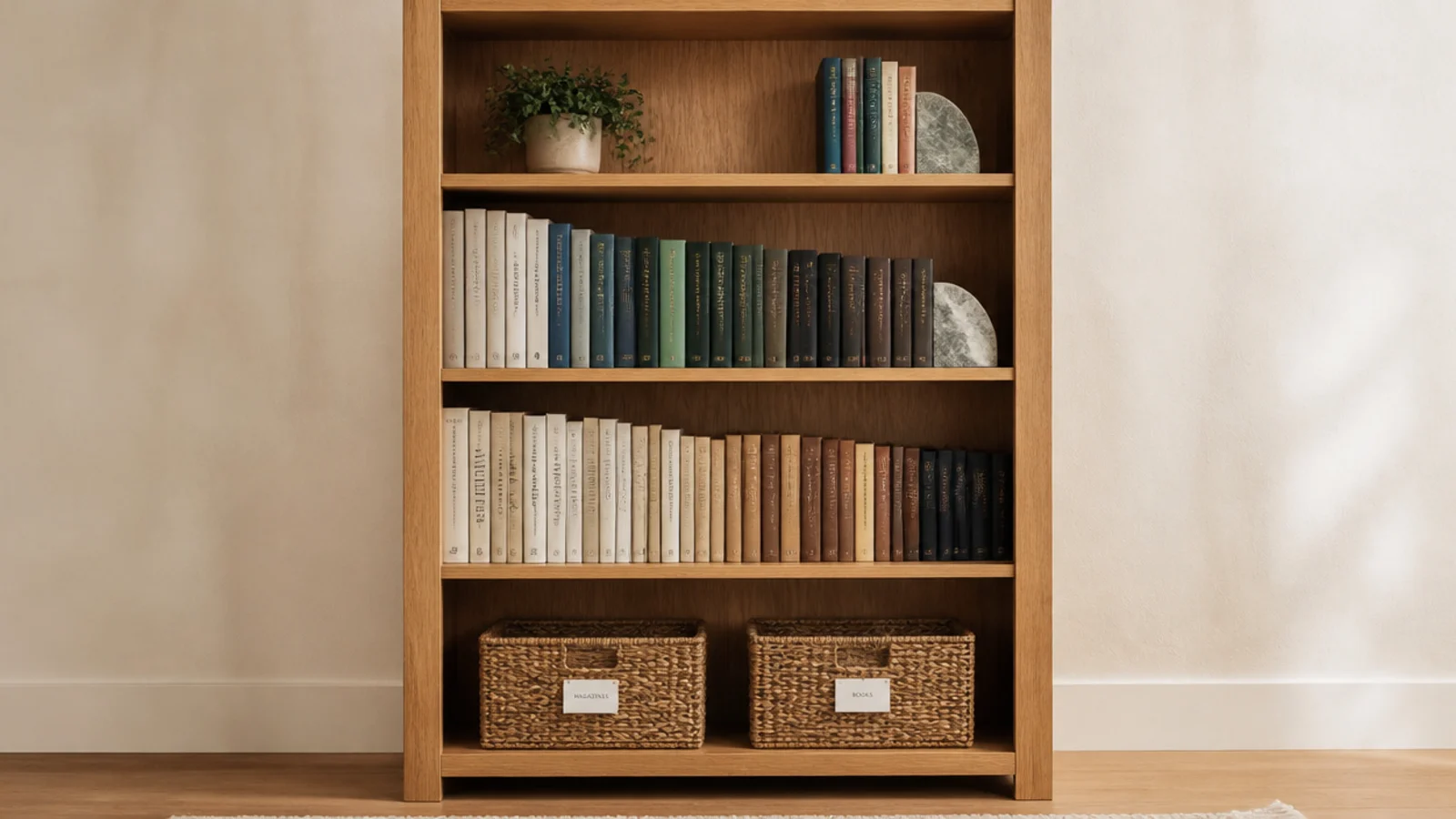
Shelves rarely fail in one afternoon. They fail slowly, over about eighteen months, as books arrive and nothing ever leaves. The bookshelf organization ideas below are the systems I use to stop that drift, and almost all of them cost under $20. Several cost nothing at all and take five minutes.
In this guide32 sections — tap to openHide
- 1.The bookshelf organization ideas that actually hold up
- 2.Sort by height before anything else
- 3.Group by subject inside each height band
- 4.Give the top shelf to the twice-a-year books
- 5.Put the to-read stack at eye level
- 6.Send the heavy art books to the bottom
- 7.Keep one paperback zone at 10 inches
- 8.Put a bookend every 12 to 16 inches
- 9.Use flat stacks as dividers
- 10.Turn the picture books cover out
- 11.Corral floppy things in magazine files
- 12.Keep one basket as the returns bin
- 13.Label the shelf edge, not the book
- 14.Keep every series together
- 15.Avoid storing two rows deep
- 16.Leave a third of every shelf empty
- 17.Hide cables in one lidded box
- 18.Keep a tray for bookmarks and glasses
- 19.Run one in, one out permanently
- 20.Do a 20-minute cull once a year
- 21.Keep a donation bag on the bottom shelf
- 22.Alphabetize reference only
- 23.Give cookbooks a shelf near the kitchen
- 24.Set shelf pins for two heights, not five
- 25.Keep a step stool in the room
- 26.Log borrowed books on one card
- 27.Keep a current-reads tray by the chair
- 28.Rotate seasonal books into a box
- 29.Store oversized books flat, never leaning
- 30.Vacuum the top edges twice a year
- 31.Weigh the shelf before you fill it
- 32.Mistakes to Skip
The bookshelf organization ideas that actually hold up
Any system survives or dies on three numbers, so start with these before you touch a single book.
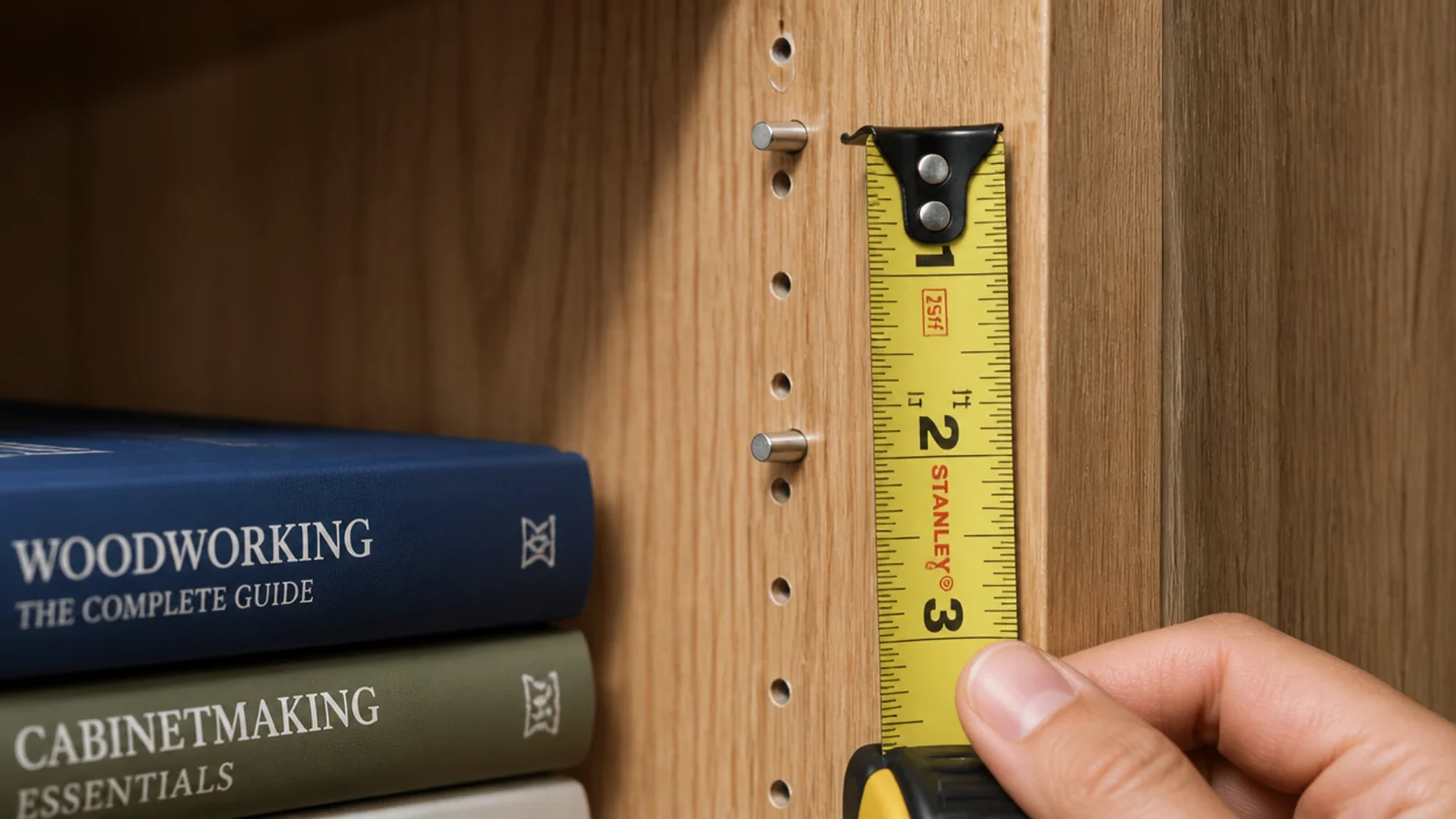
Clear height. Hardbacks need 11 to 13 inches between shelves; paperbacks are comfortable at 9 to 10. Set adjustable pins for just two heights rather than five — one hardback band, one paperback band. Fewer, better-chosen spacings make the whole unit easier to reshuffle later.
Depth. Eleven to twelve inches suits hardbacks and art books, 9 to 10 suits paperbacks. Deeper than twelve and you gain a second invisible row, which is where books go to be forgotten.
Weight. A linear foot of hardbacks runs 20 to 25 pounds. That makes a full 36-inch shelf 60 to 75 pounds, and 3/4-inch shelving sags past a 32-inch span under that load. Shorten the span, glue a solid front lip on, or move to 1-inch stock. And every freestanding bookcase gets an anti-tip strap into a stud, without exception, in any home with children.
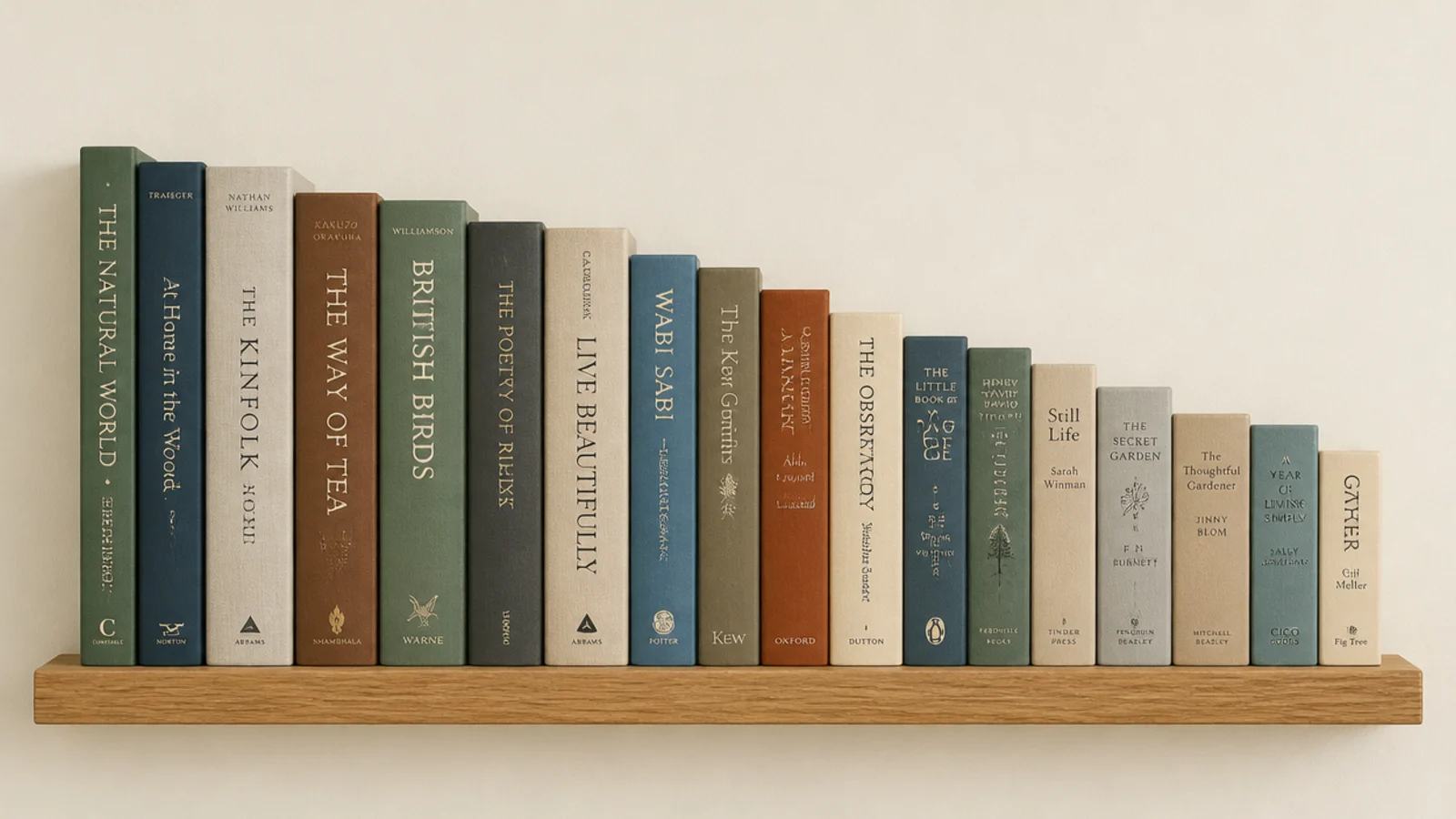
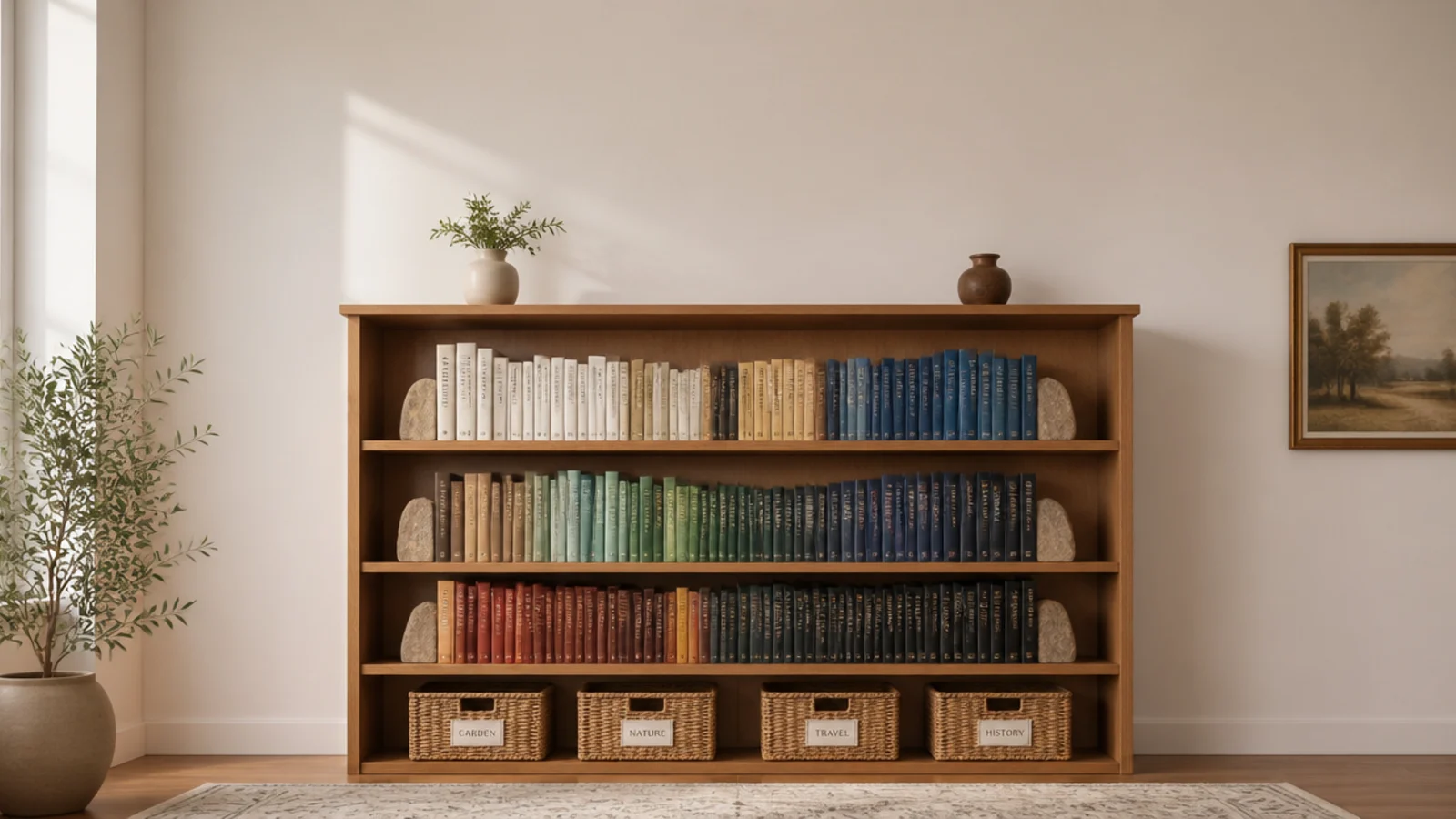
Beyond the numbers, one habit matters more than any of the thirty ideas: sort by height rather than color. Color blocking photographs well and scatters series across six shelves. Height grading reads calm from the doorway and still lets you find things.
Budget tiers below: $ is free or under $20, $$ is $20 to $60, $$$ is $60 to $150.
1. Sort by height before anything else
Pull everything off and make three floor piles: over 10 inches, medium hardback, paperback. Reshelve in that order.
Height grading is what gives a unit its calm stepped line. It takes about forty minutes for a full bookcase and it is the foundation every other idea here sits on. $
2. Group by subject inside each height band
Once the heights are set, order each band by subject: cooking together, novels together, work references together.
You get the visual calm of height sorting and the findability of a real system. This two-layer approach is why height sorting sticks where color sorting gets abandoned. $
3. Give the top shelf to the twice-a-year books
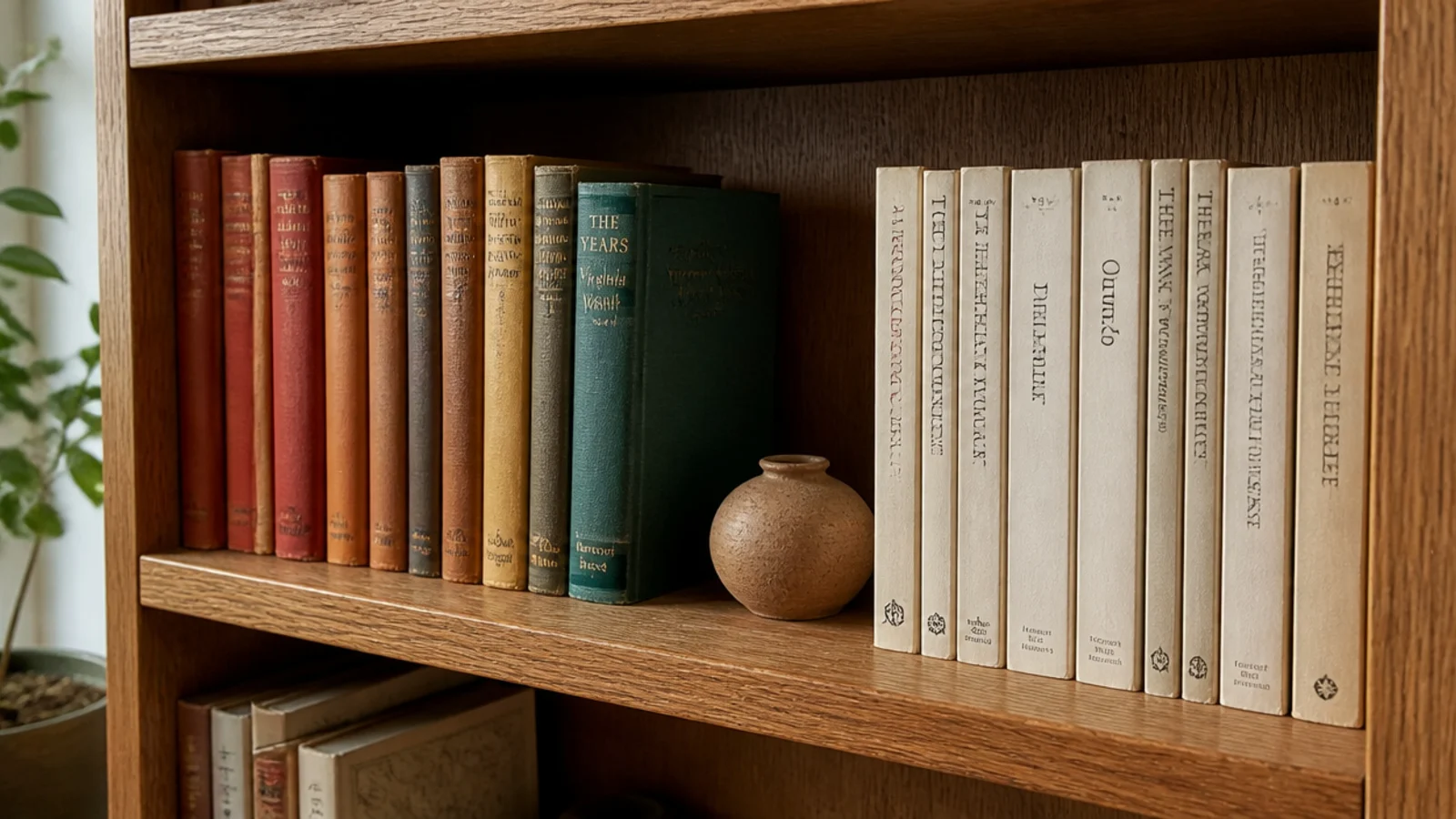
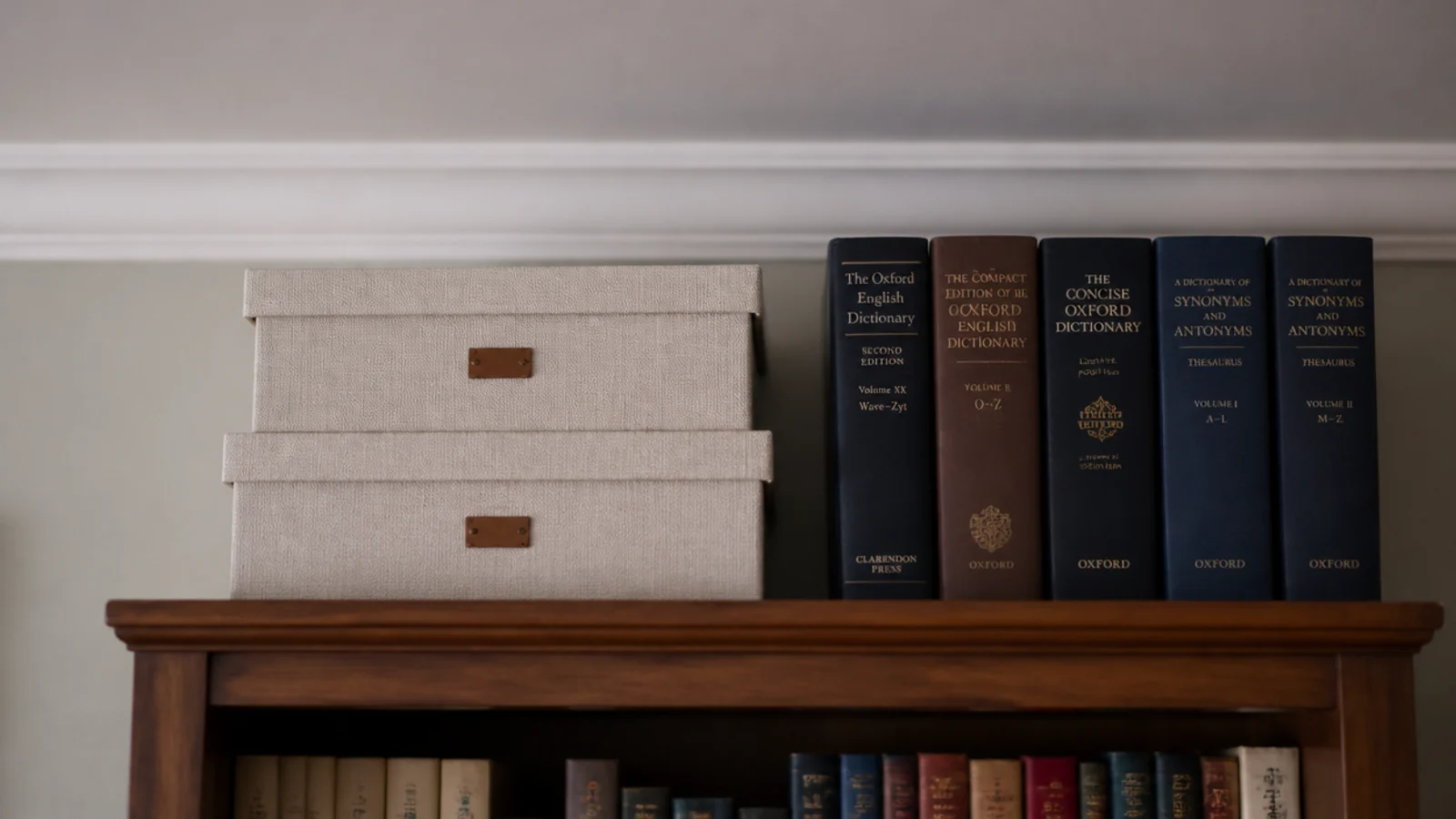
Anything above shoulder height should be archive. Yearbooks, tax records in a lidded box, the reference set you open in January.
Nothing heavy goes up there either, both for safety and because reaching for a five-pound book at full stretch is how shelves get pulled forward. $
4. Put the to-read stack at eye level
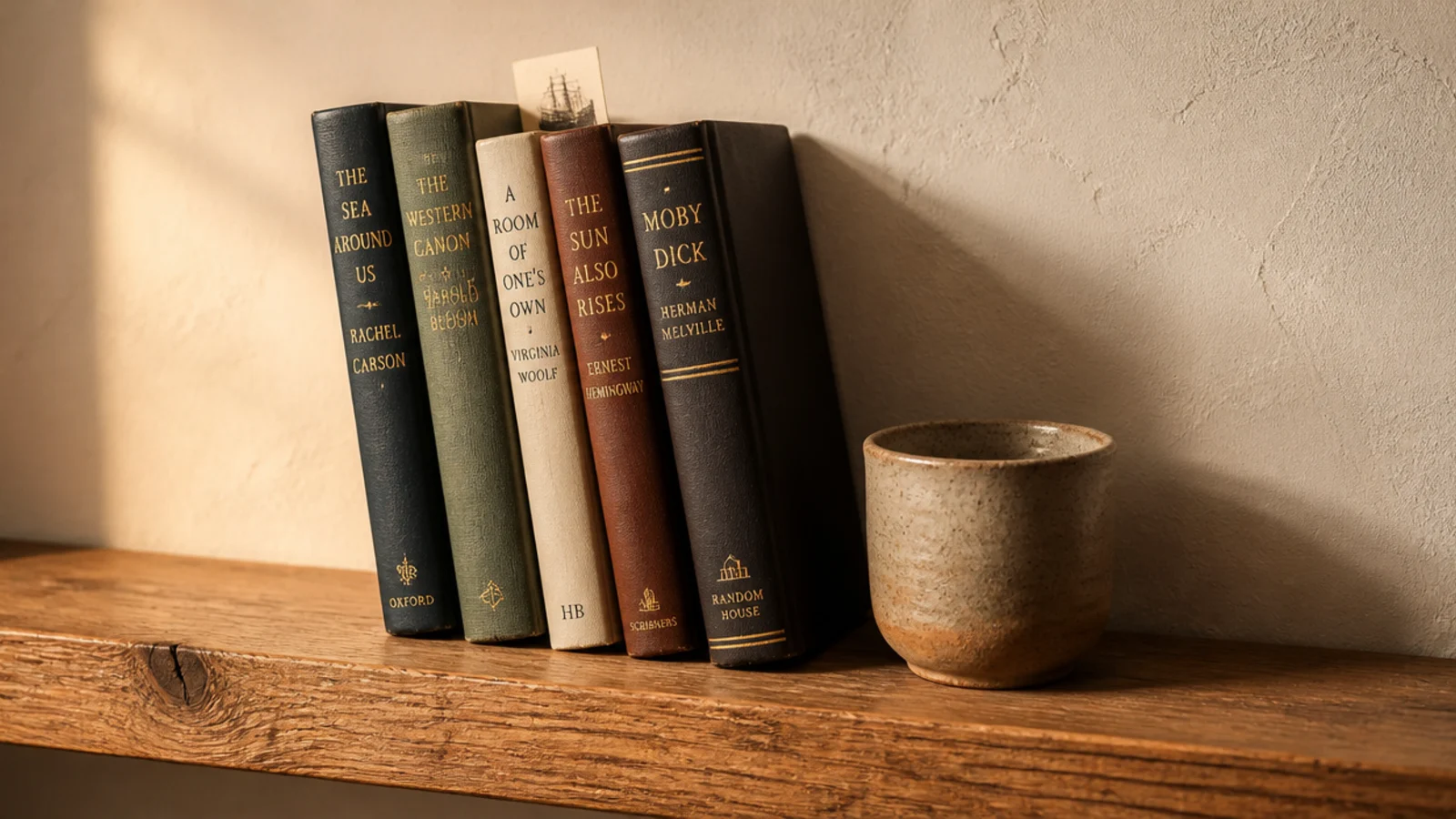
The shelf at standing or seated eye level should hold what is next, not what is finished.
Keep it to five or six books leaning together. A visible to-read group is the difference between owning books and reading them, and it costs nothing to set up. $
5. Send the heavy art books to the bottom
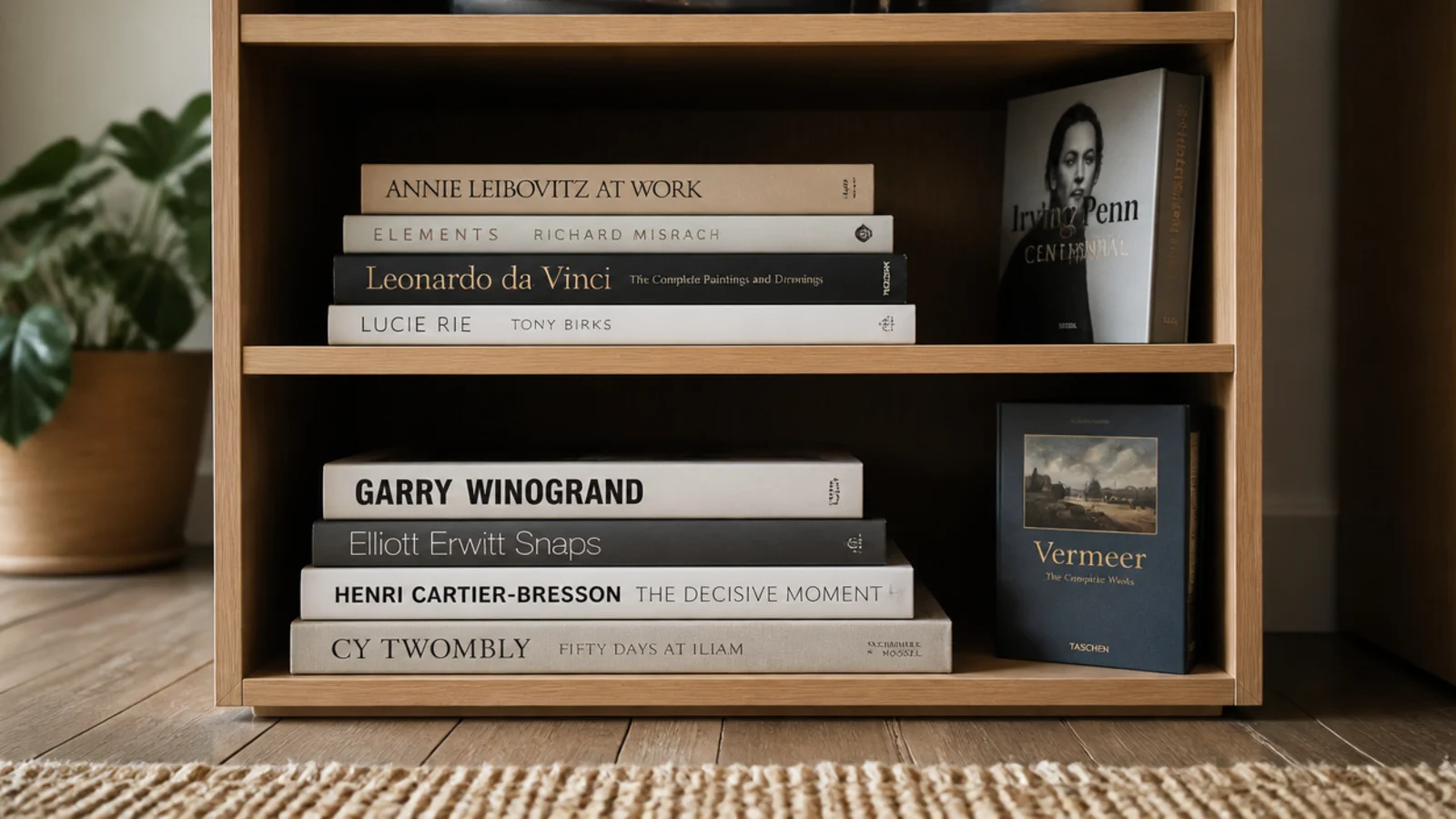
Large format volumes, atlases and anything over four pounds live on the lowest two shelves, mostly stacked flat.
Low weight steadies a freestanding unit — your second line of defense after the strap — and makes a tall bookcase look grounded rather than top-heavy. $
6. Keep one paperback zone at 10 inches
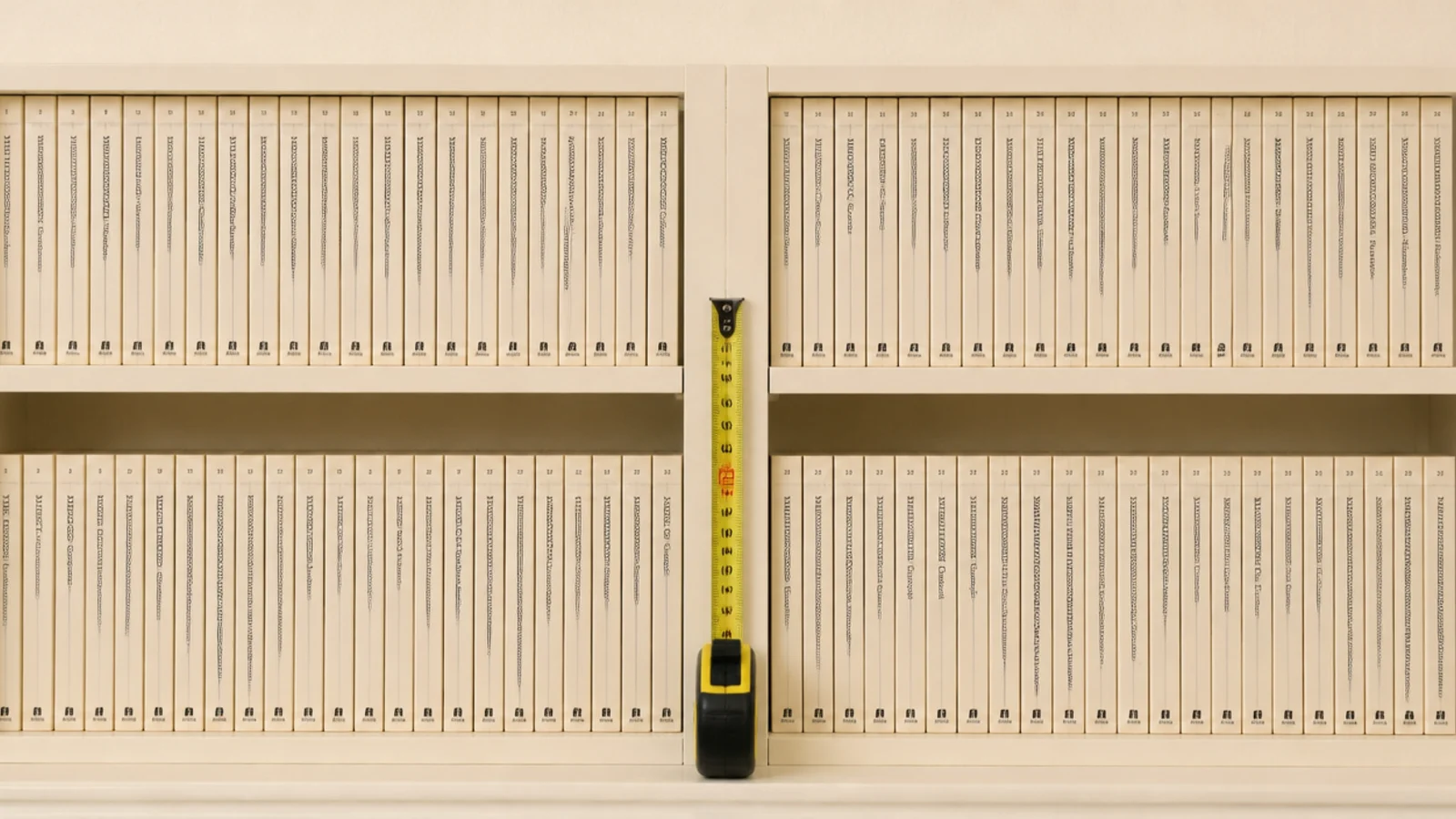
Dedicate two shelves to paperbacks at 10 inches of clear height instead of the 12 or 13 the rest of the unit uses.
At 10 inches you fit an extra shelf into the same run of upright, which is roughly 30 more paperbacks in the same bookcase. $
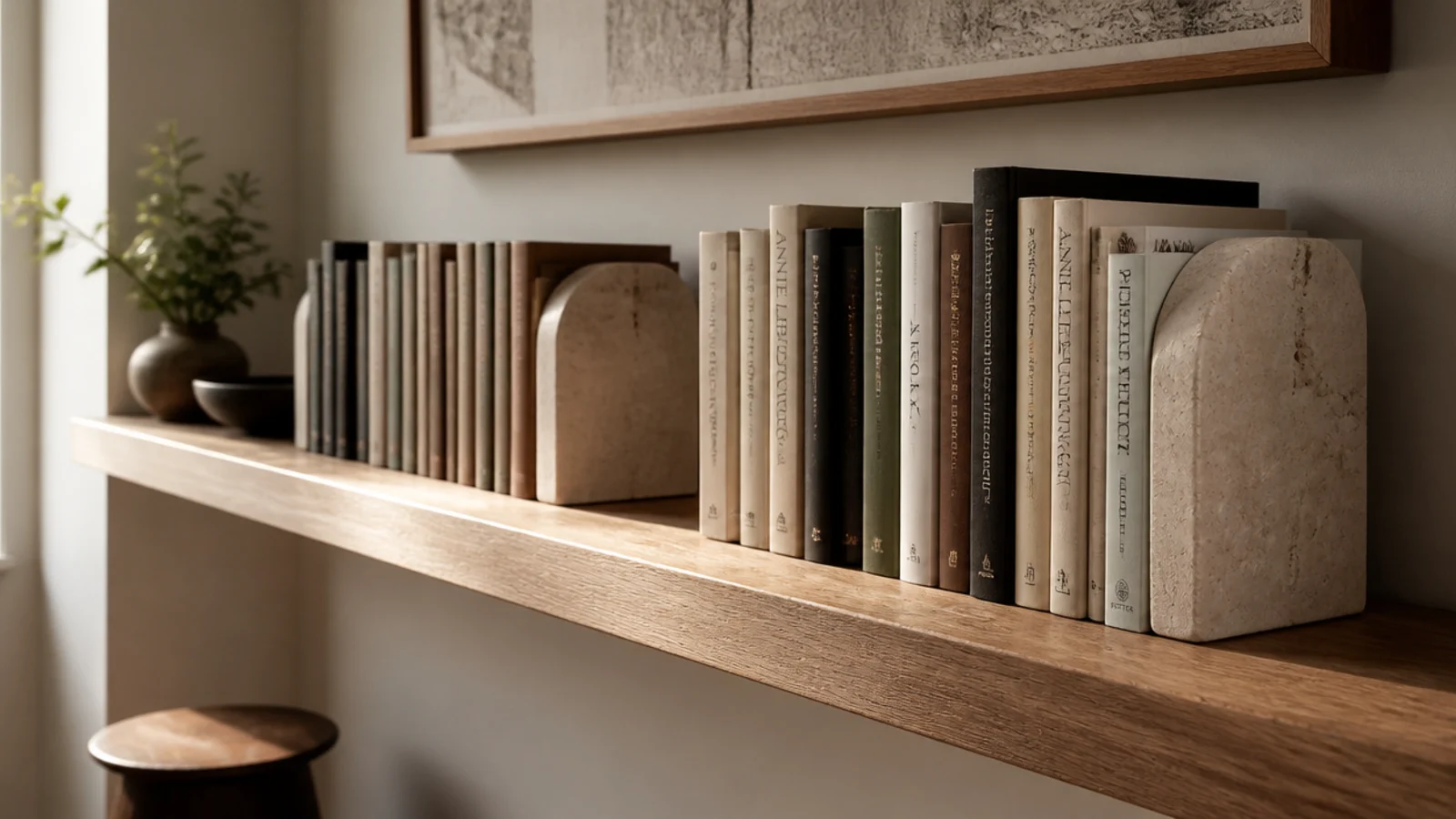
7. Put a bookend every 12 to 16 inches
Long unsupported runs slump within a week, and a slumped row is what makes an organized shelf look neglected.
Use heavy ends — marble, cast iron, stone — at two pounds or more each. Anything lighter slides under a run of hardbacks. Pairs run $12 to $40. $$
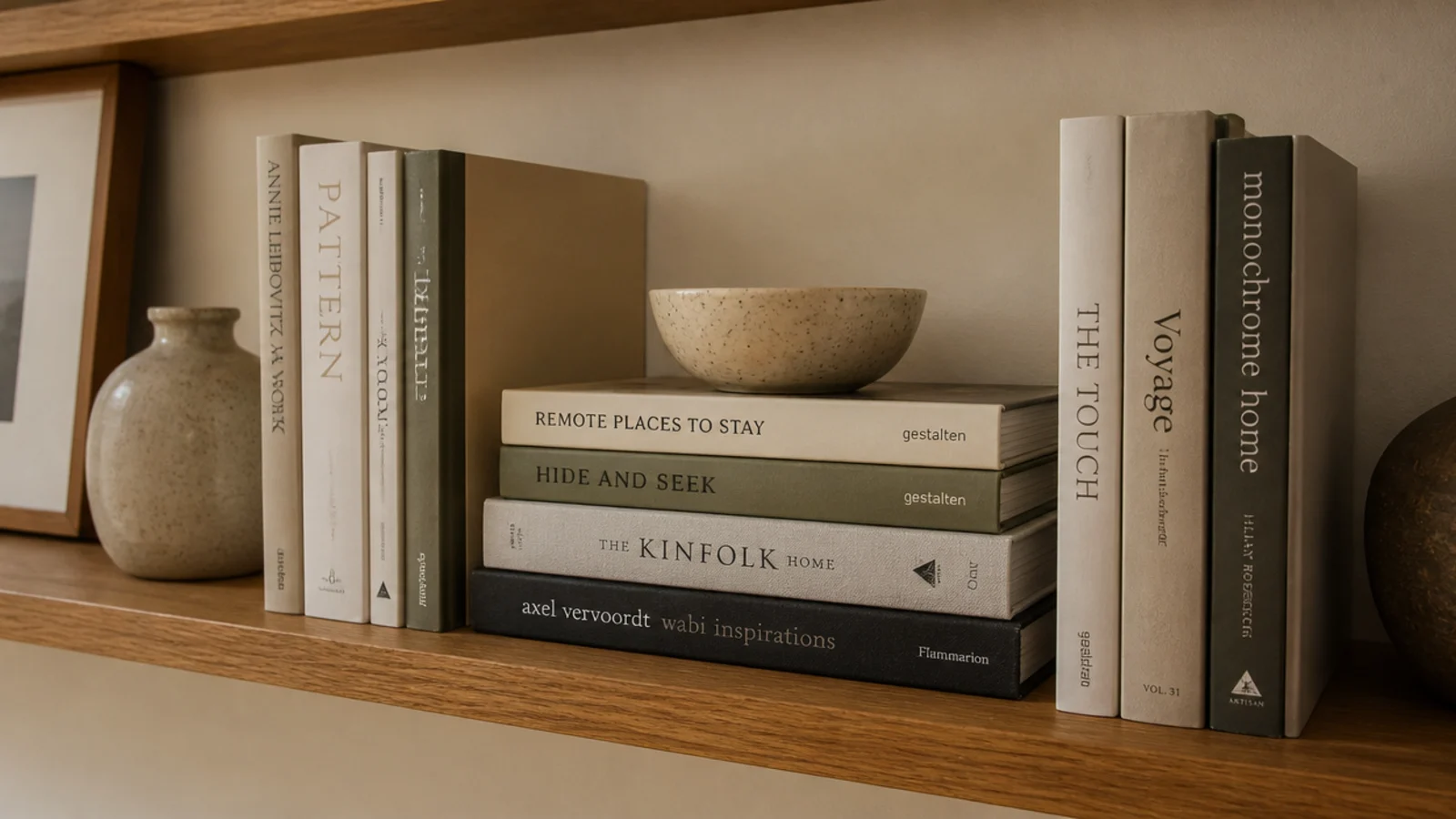
8. Use flat stacks as dividers
A horizontal stack of three or four books between two upright runs does the job of a bookend at zero cost.
It also gives you a three-inch plinth for a small object, which is the easiest way to add a second height to an otherwise flat shelf. $
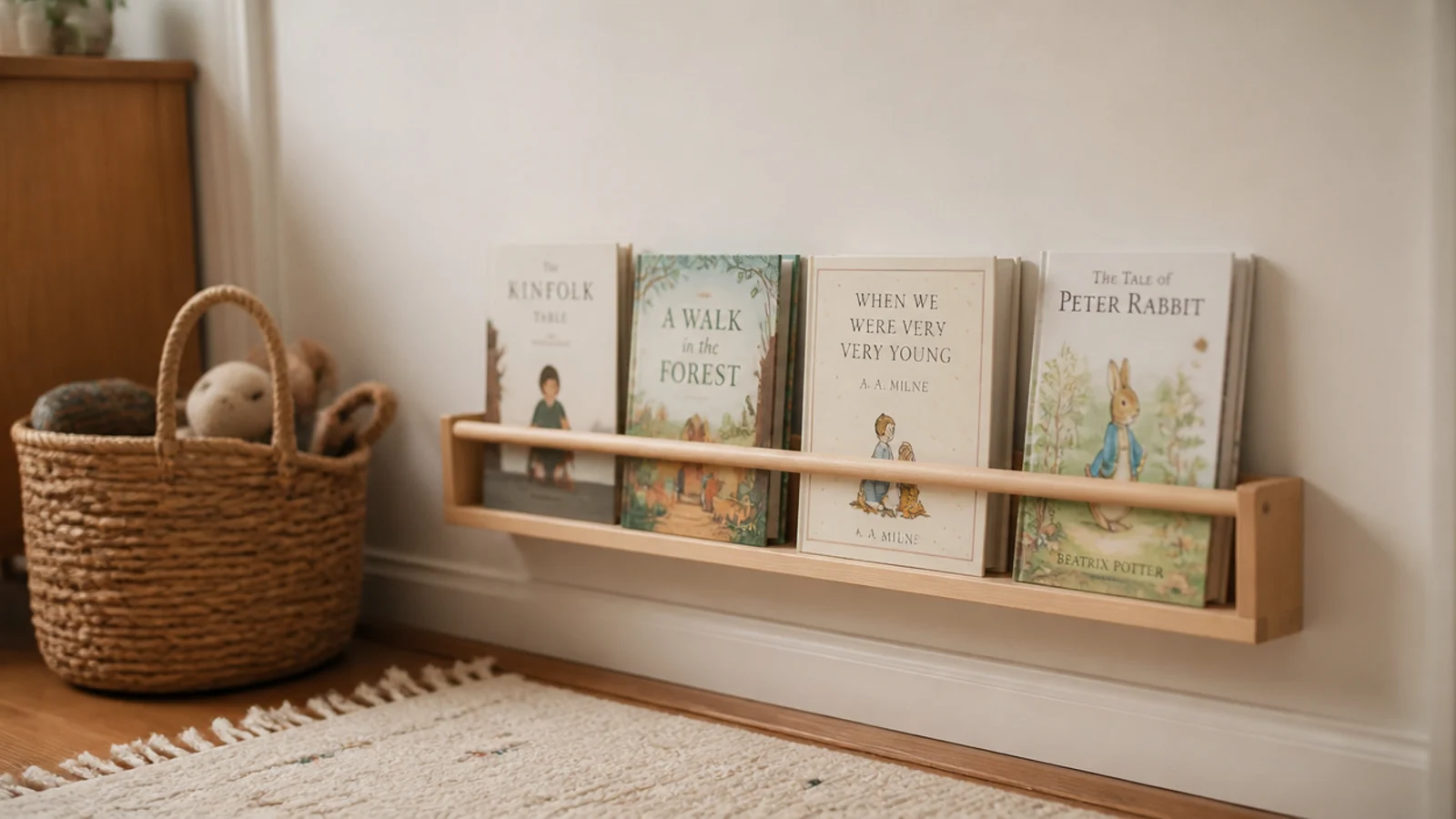
9. Turn the picture books cover out
Small children find books by cover, not spine, so a spine-out shelf is functionally invisible to them.
Mount a shallow rail at 30 inches so it is reachable from standing. Anchor it into studs — children pull down on these hard, with their full weight. $$
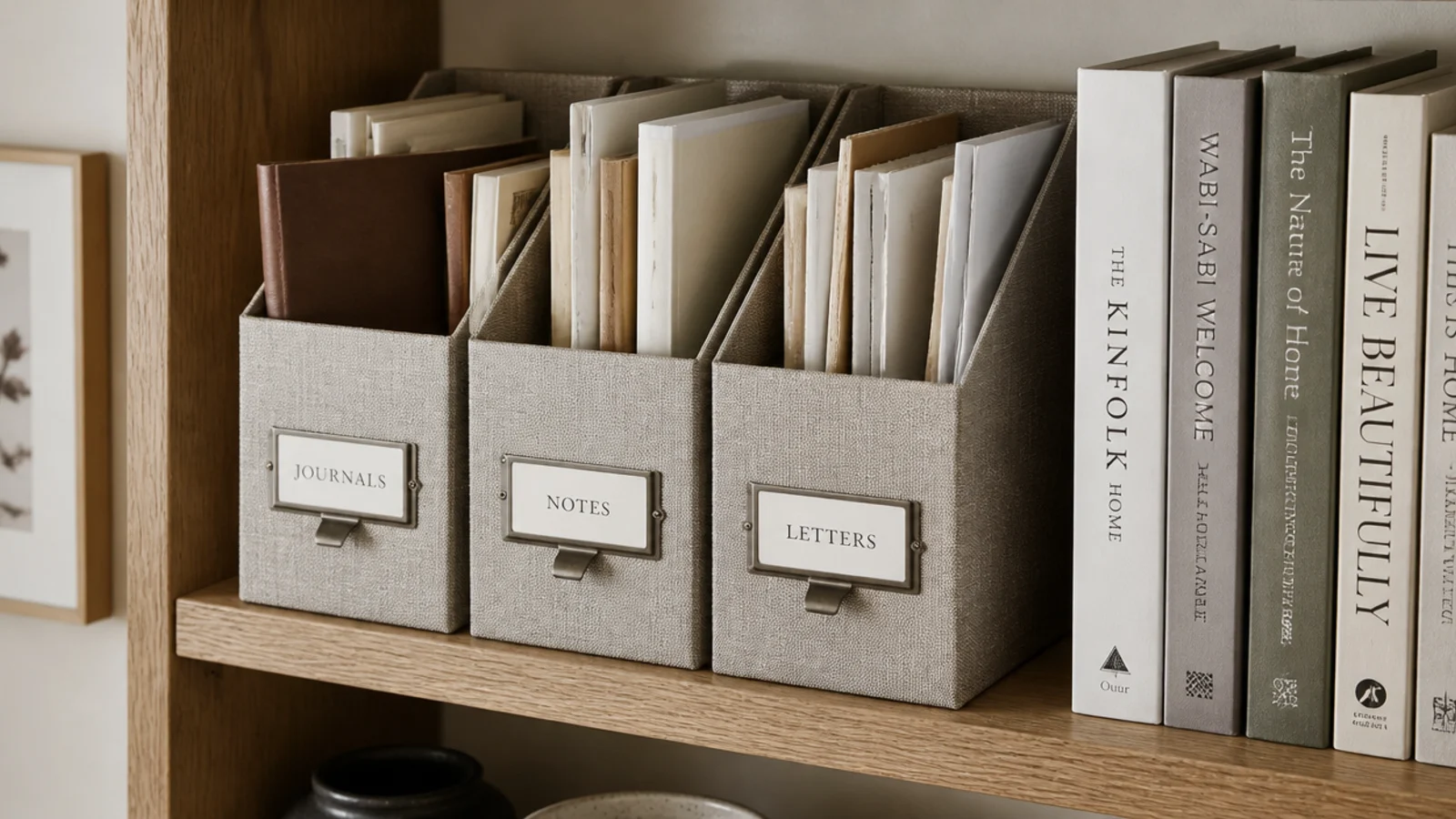
10. Corral floppy things in magazine files
Anything without a rigid spine — journals, catalogues, sheet music, thin exhibition booklets — collapses and takes its neighbors with it.
Magazine files cost $4 to $10 each, hold about two inches of loose material and give you a flat vertical face. Three across a shelf reads as tidy rather than stored. $
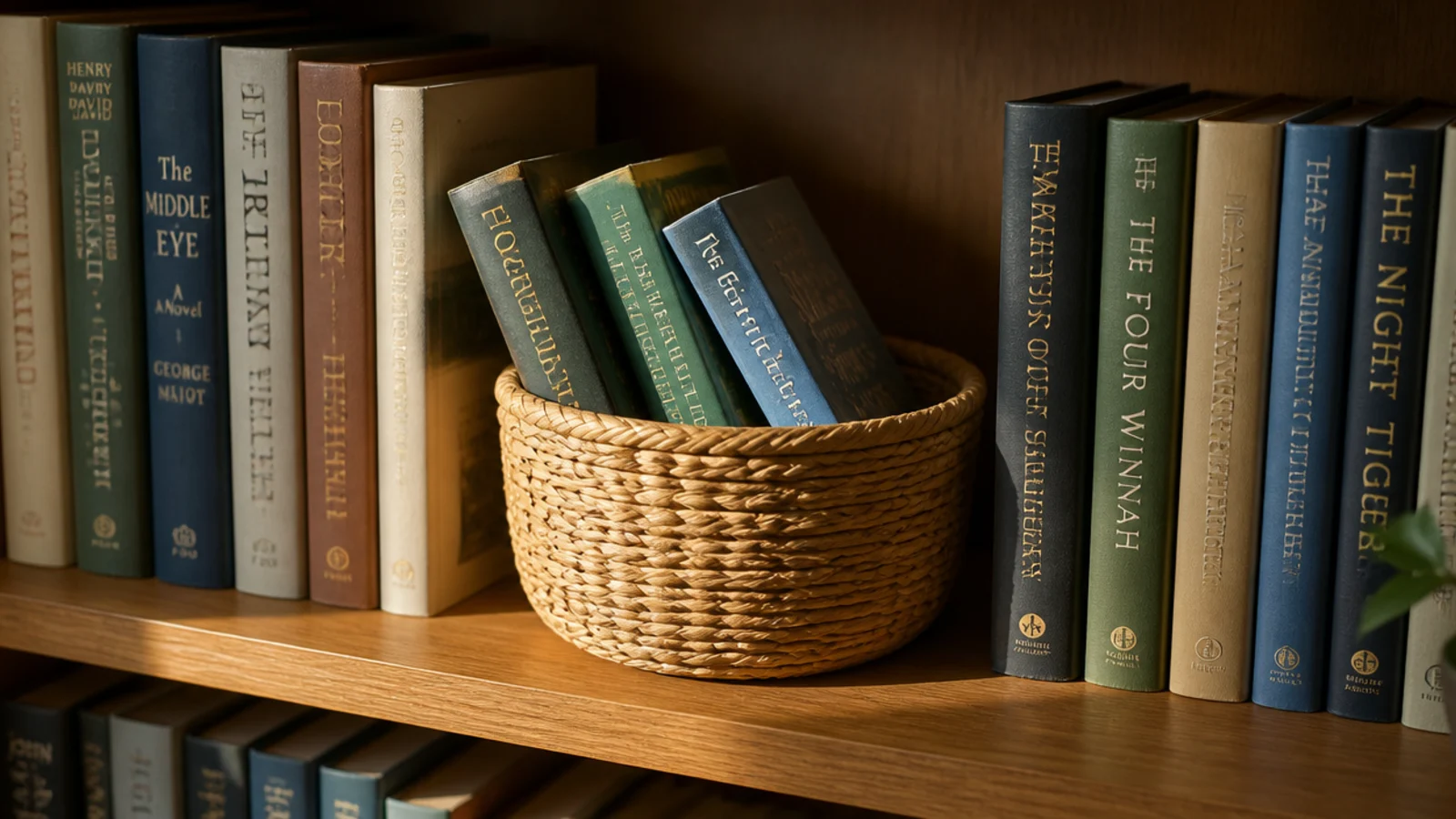
11. Keep one basket as the returns bin
One small basket on a low shelf catches every book in transit, so they stop landing on the coffee table and the stairs.
Reshelve it once a week. This single container is the difference between a system that holds and one that quietly degrades. $
12. Label the shelf edge, not the book
A small clip-on label on the front edge — "cookbooks", "work", "kids" — tells everyone else in the house where things return to.
Stickers on spines look institutional and damage covers. A kraft card in a brass clip costs about $2 and reads as deliberate. $

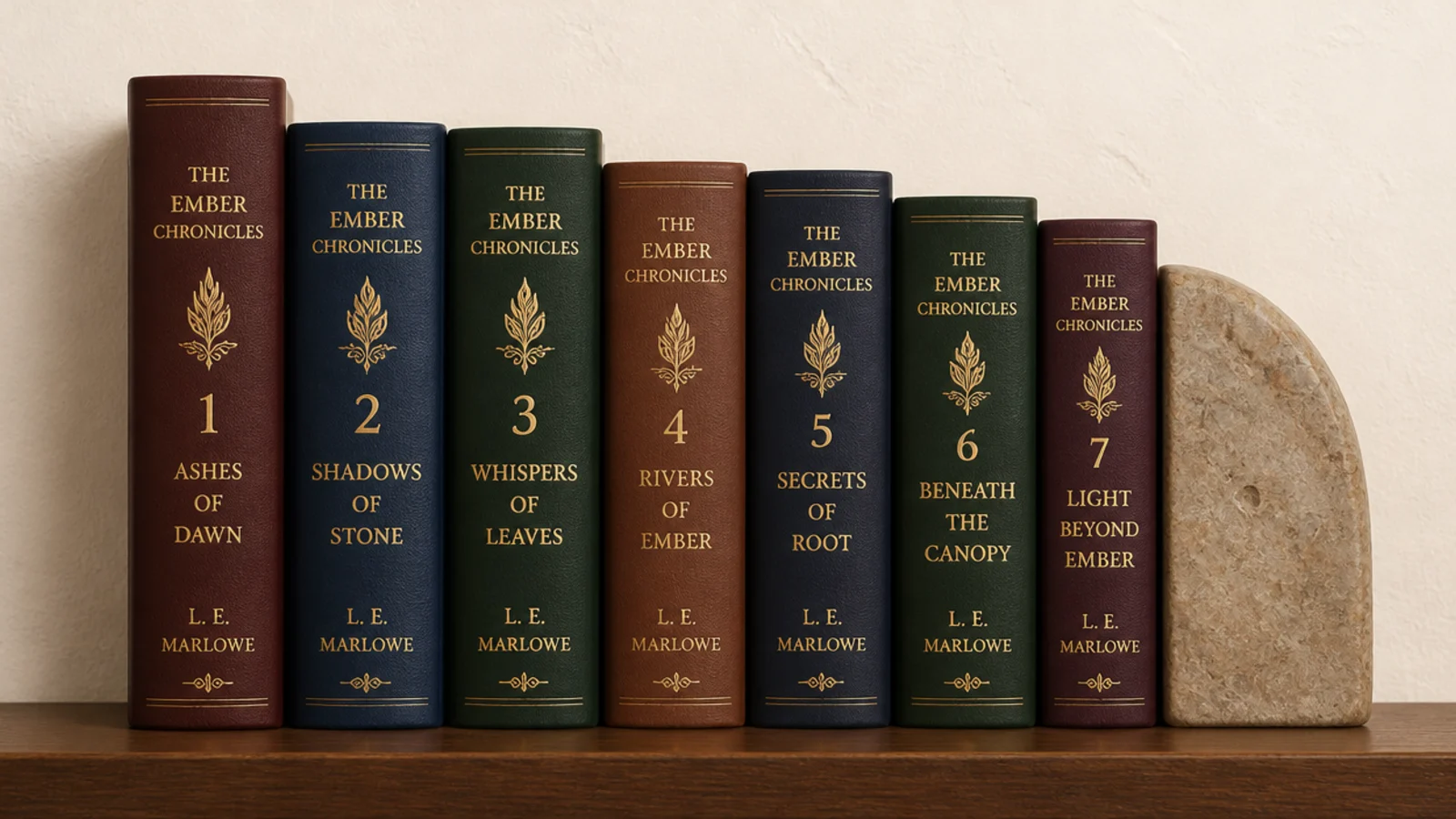
13. Keep every series together
Series stay together even when their heights disagree slightly. Breaking a set across two shelves to preserve a perfect line is a false economy.
If the height mismatch bothers you, put the set on its own shelf and let that shelf be the exception. $
14. Avoid storing two rows deep
A back row is invisible, so it becomes an archive by accident, and it doubles the load on a shelf already carrying 20 to 25 pounds per foot.
If you must, raise the back row on a narrow 2-inch riser so the spines show above the front. Reserve it for books you genuinely never open. $
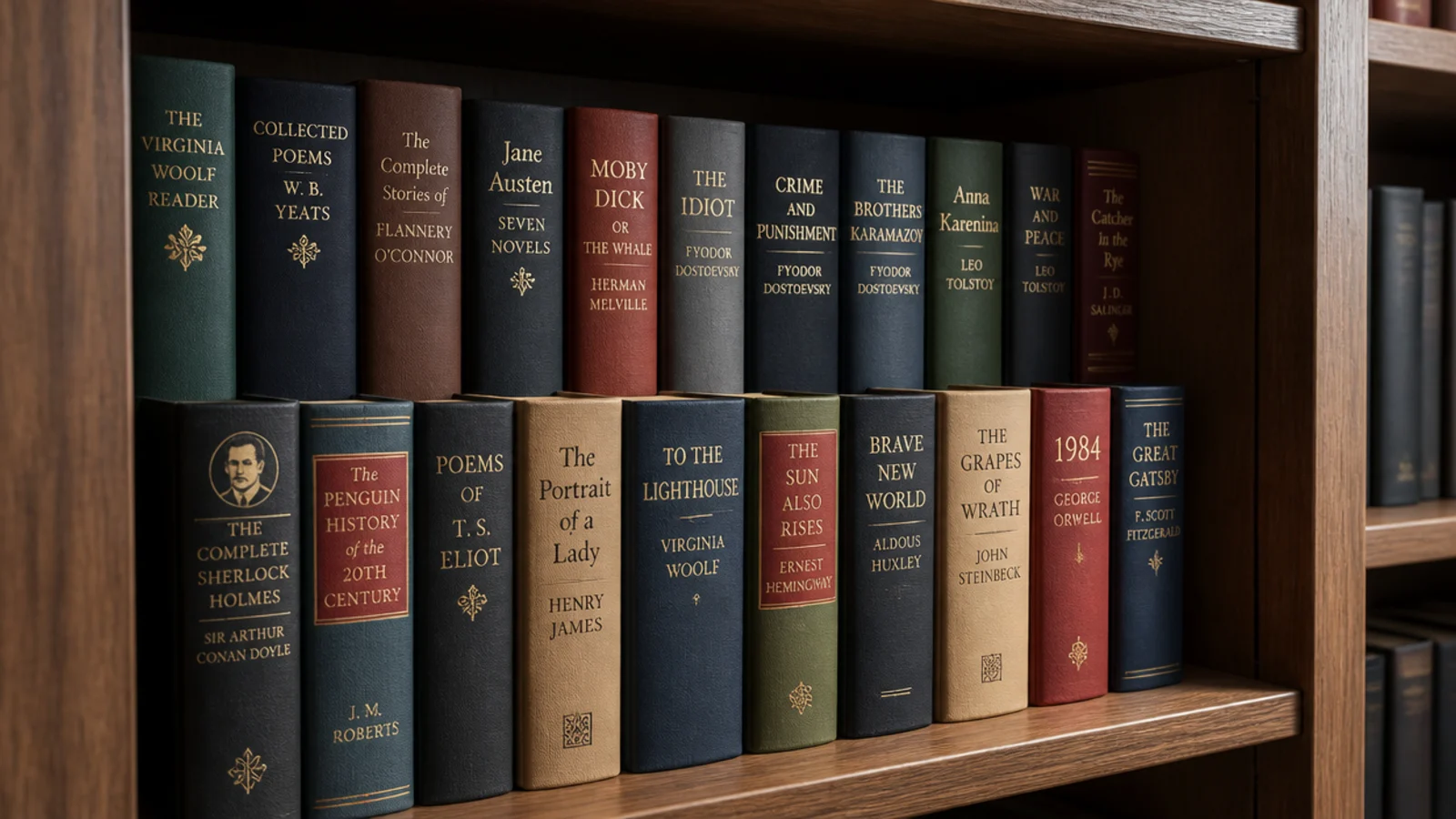
15. Leave a third of every shelf empty
Two-thirds books, one-third clear. Not a polite gap — six inches or more on a 30-inch shelf.
It is what tells a visitor the books were chosen rather than stored, it makes reshelving painless, and it costs nothing. In a small room push closer to half. $
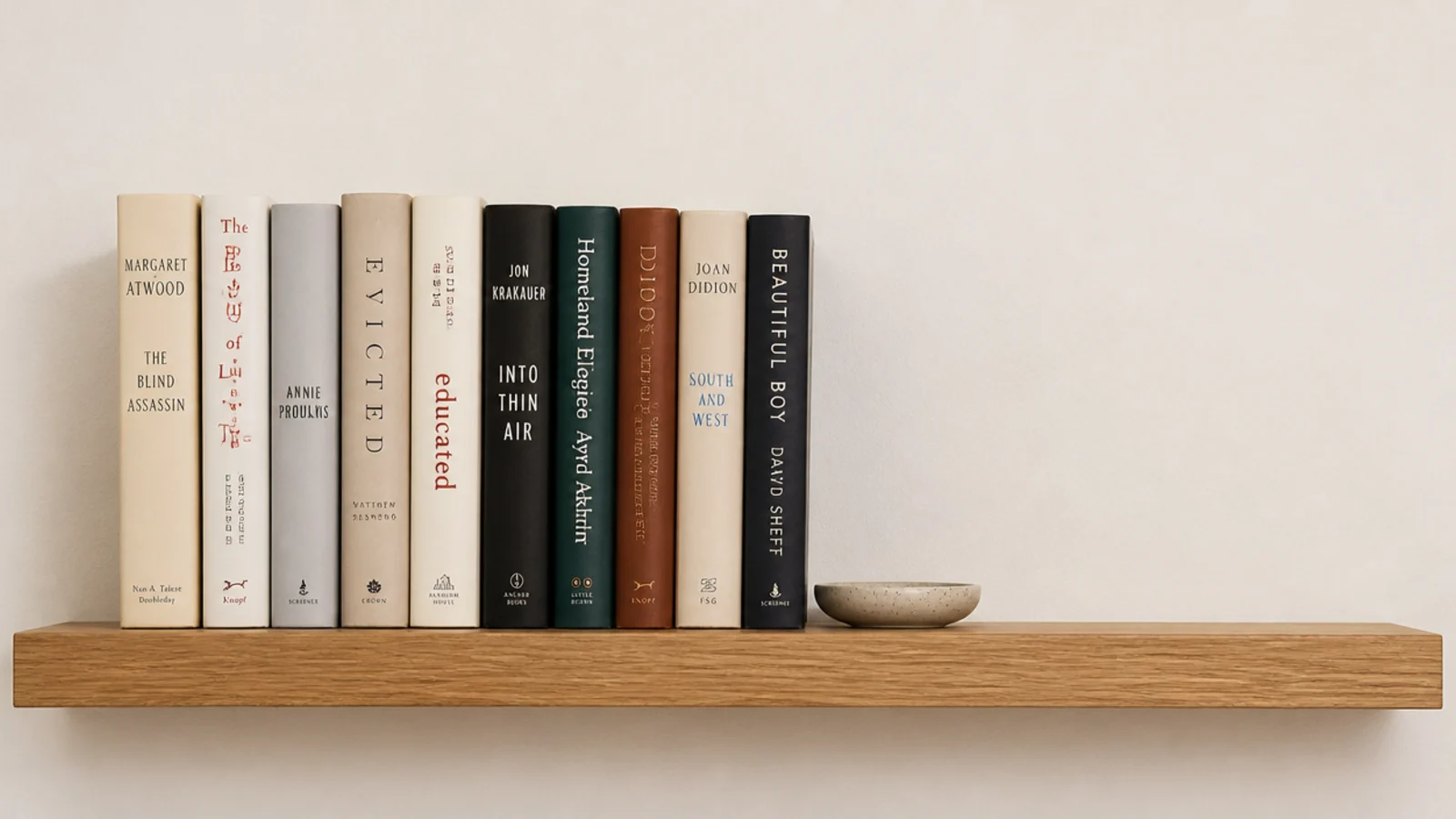
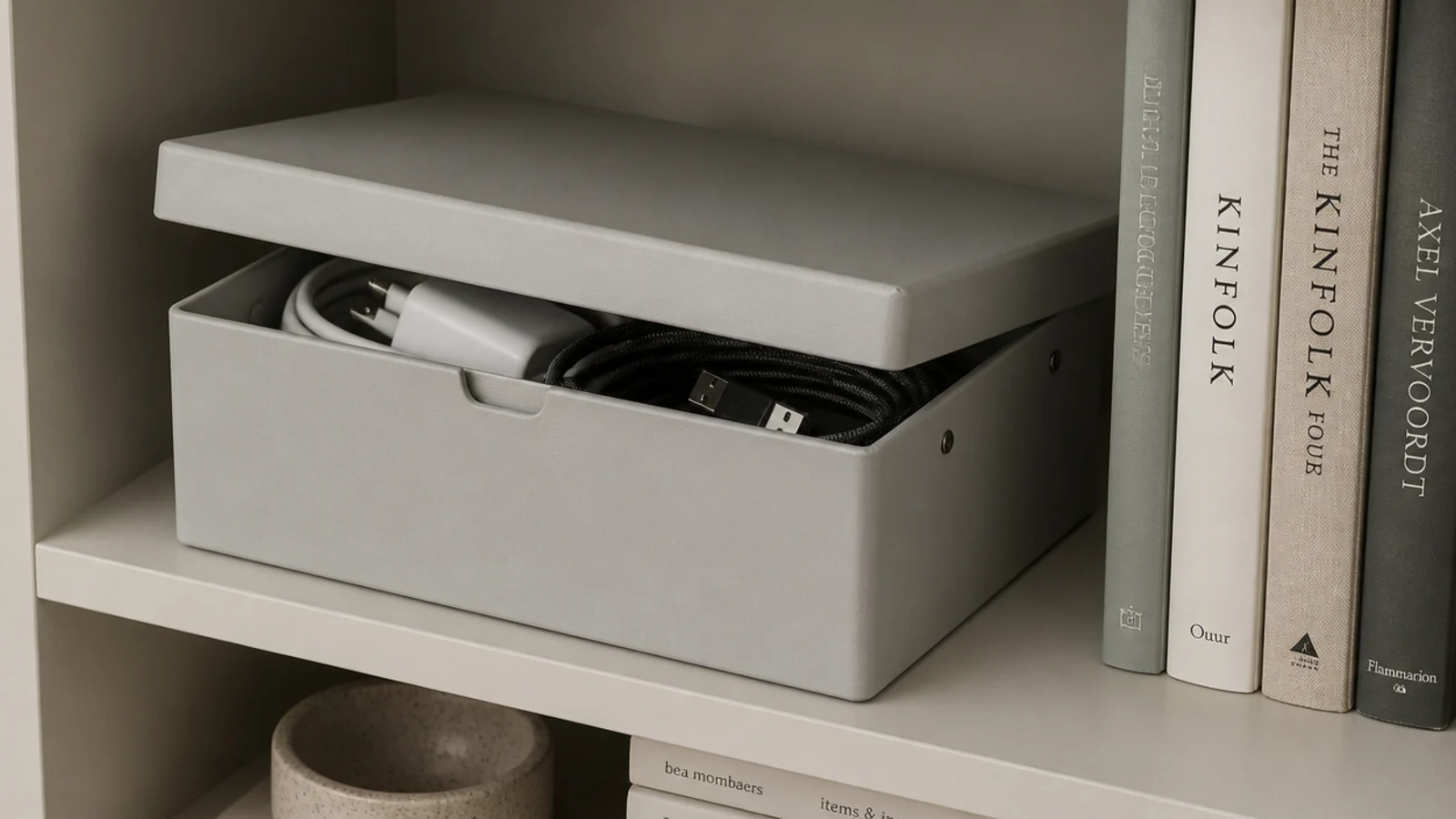
16. Hide cables in one lidded box
Routers, chargers and controllers end up on bookshelves in every home. One opaque lidded box on a low shelf absorbs all of it.
Choose something in the palette — pale linen, grey board, woven — and cut a small notch in the back for the cable run. Boxes cost $10 to $25. $$
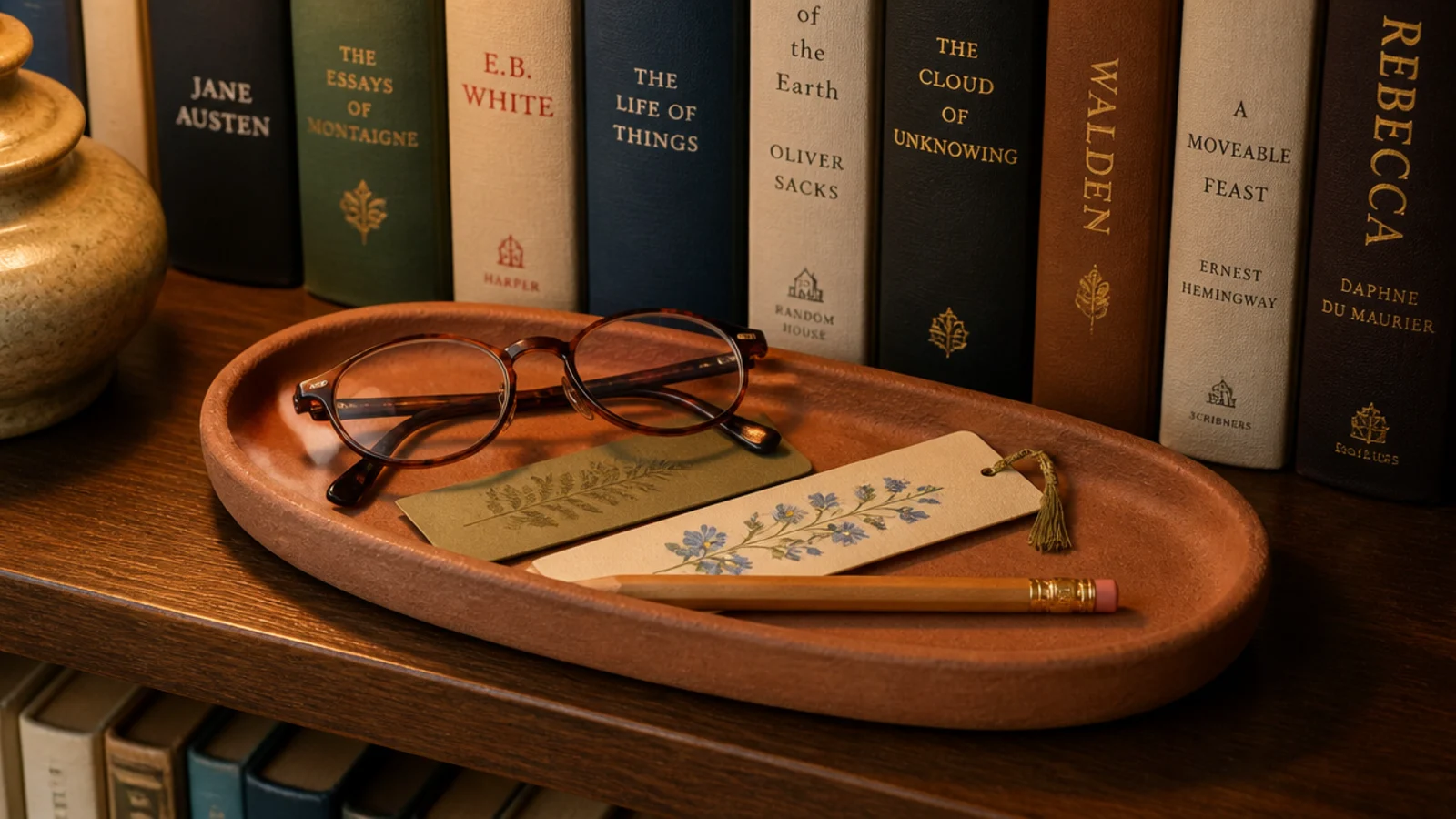
17. Keep a tray for bookmarks and glasses
Reading glasses, pencils, paper bookmarks and receipts migrate across a whole unit unless something contains them.
A shallow clay saucer at about 8 inches costs $6 and reads as styling while doing real work. One per bookcase is enough. $
18. Run one in, one out permanently
For every book that arrives, one leaves. Applied consistently, this is the only rule that keeps a shelf at the same fullness for years.
It also makes you decide at the moment of arrival, which is much easier than deciding in bulk at the end of a year. $
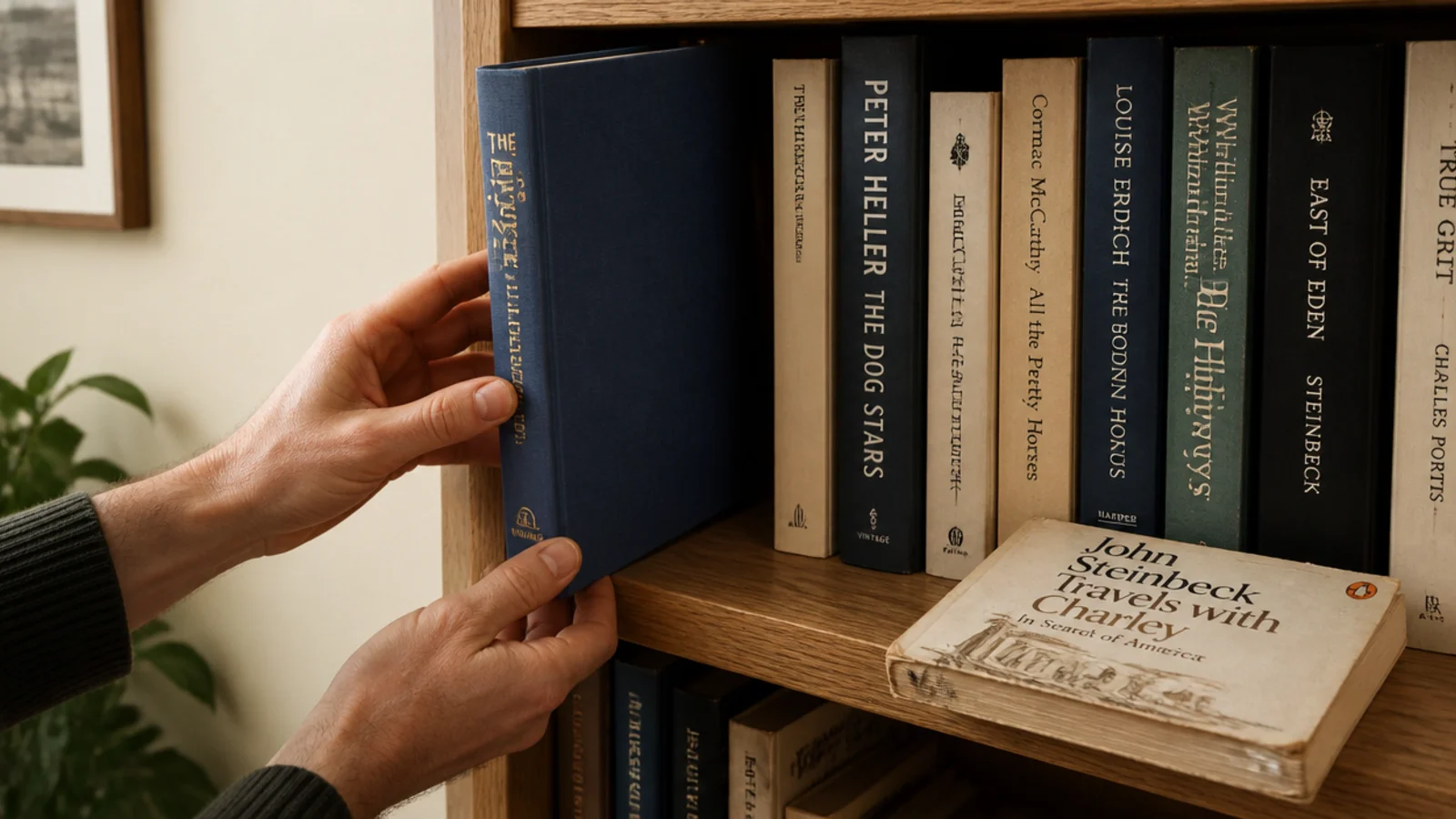
19. Do a 20-minute cull once a year
Set a timer, start at the top left and work along. Anything you hesitate over stays; anything that gets an immediate no goes.
Twenty minutes is short enough that you will actually do it, and short enough that you never reach decision fatigue. $
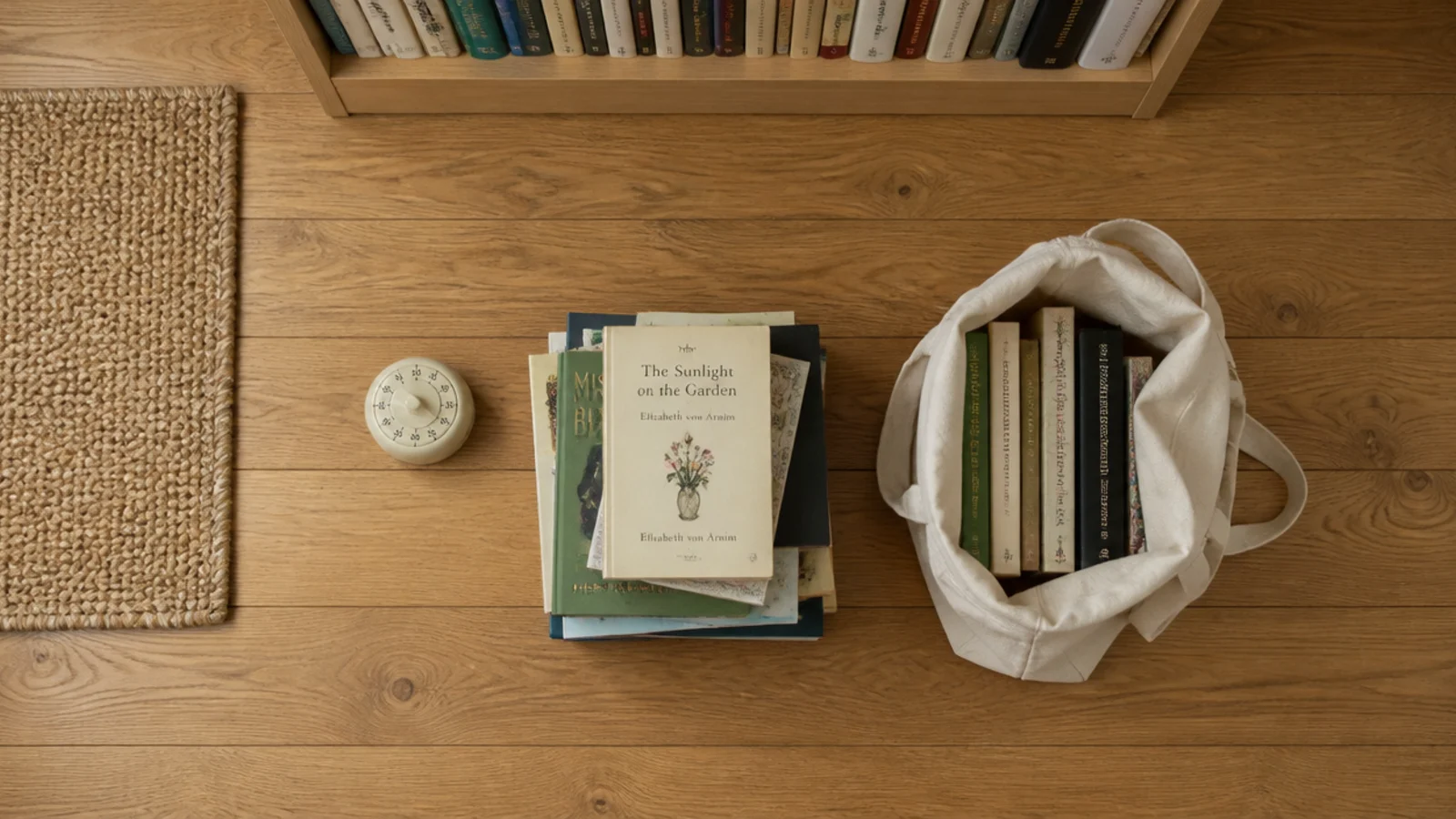
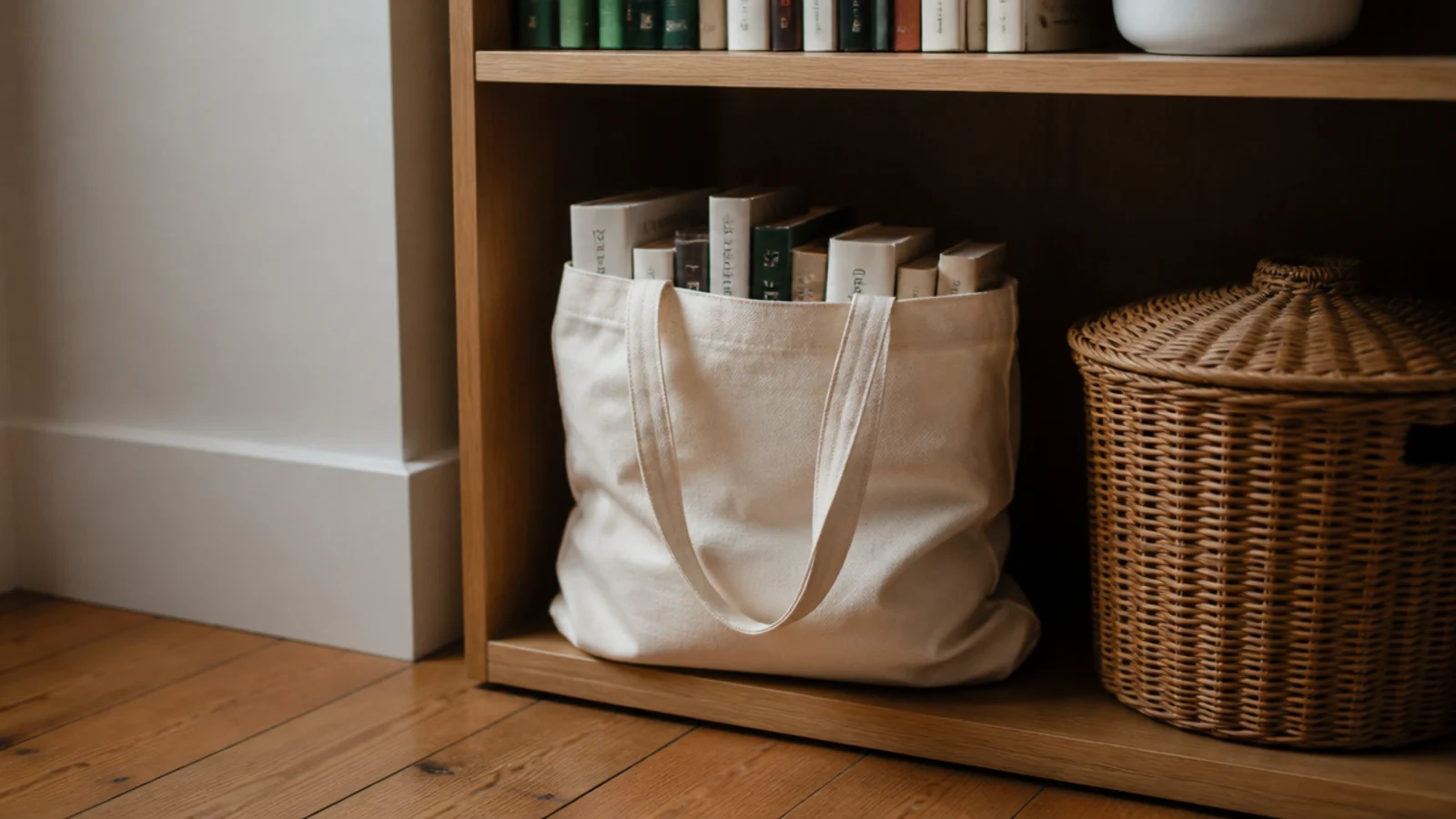
20. Keep a donation bag on the bottom shelf
A canvas tote living on the lowest shelf means a book can leave the second you decide it is finished.
Books that wait for "the next trip" go back on the shelf and stay four more years. Drop the bag off whenever it is full. $
21. Alphabetize reference only
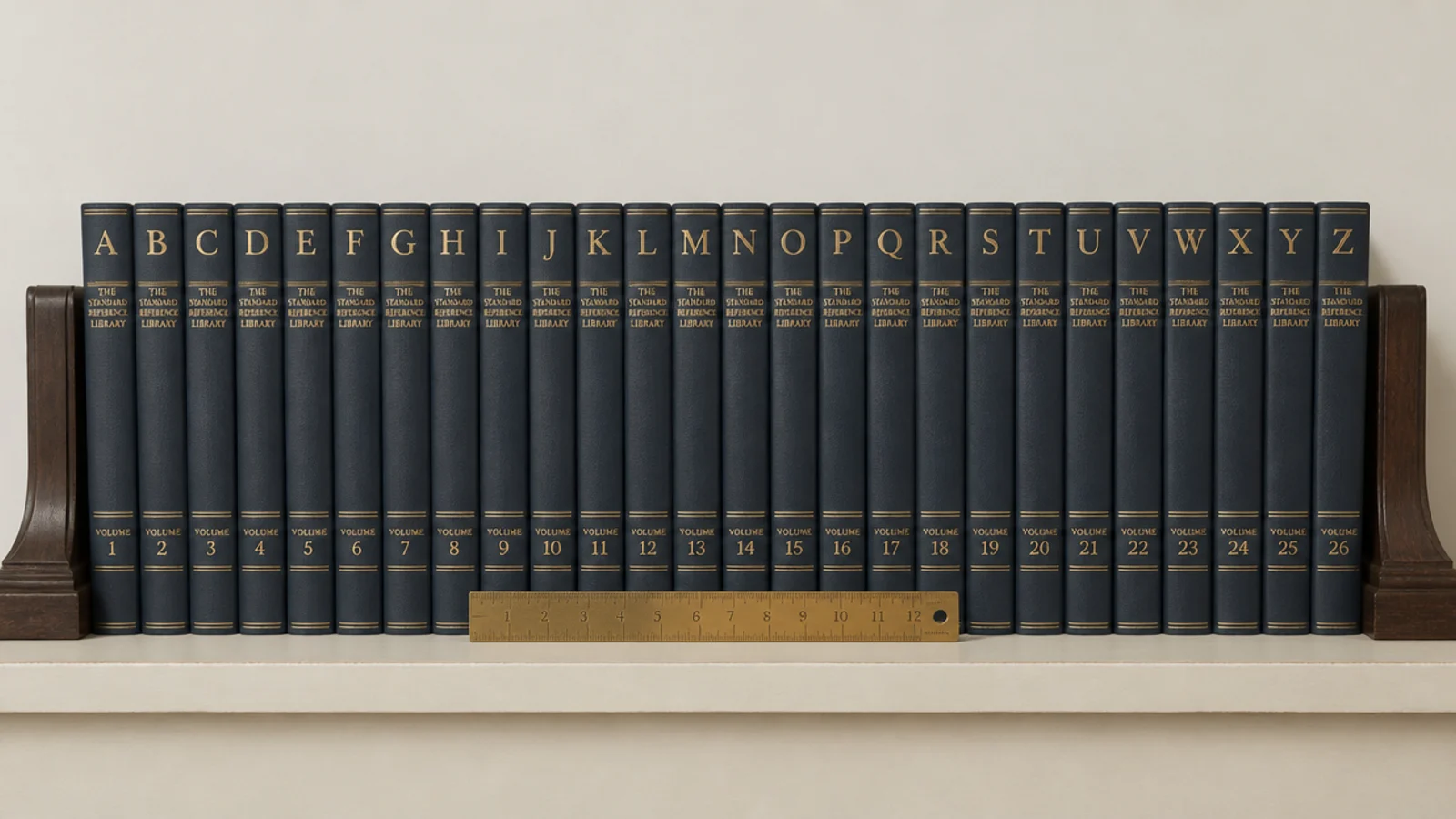
Alphabetical order helps when you know exactly what you are looking for, which is true of dictionaries, field guides and technical manuals.
For everything else it fights height sorting and subject grouping without giving anything back. Keep it to one shelf. $
22. Give cookbooks a shelf near the kitchen
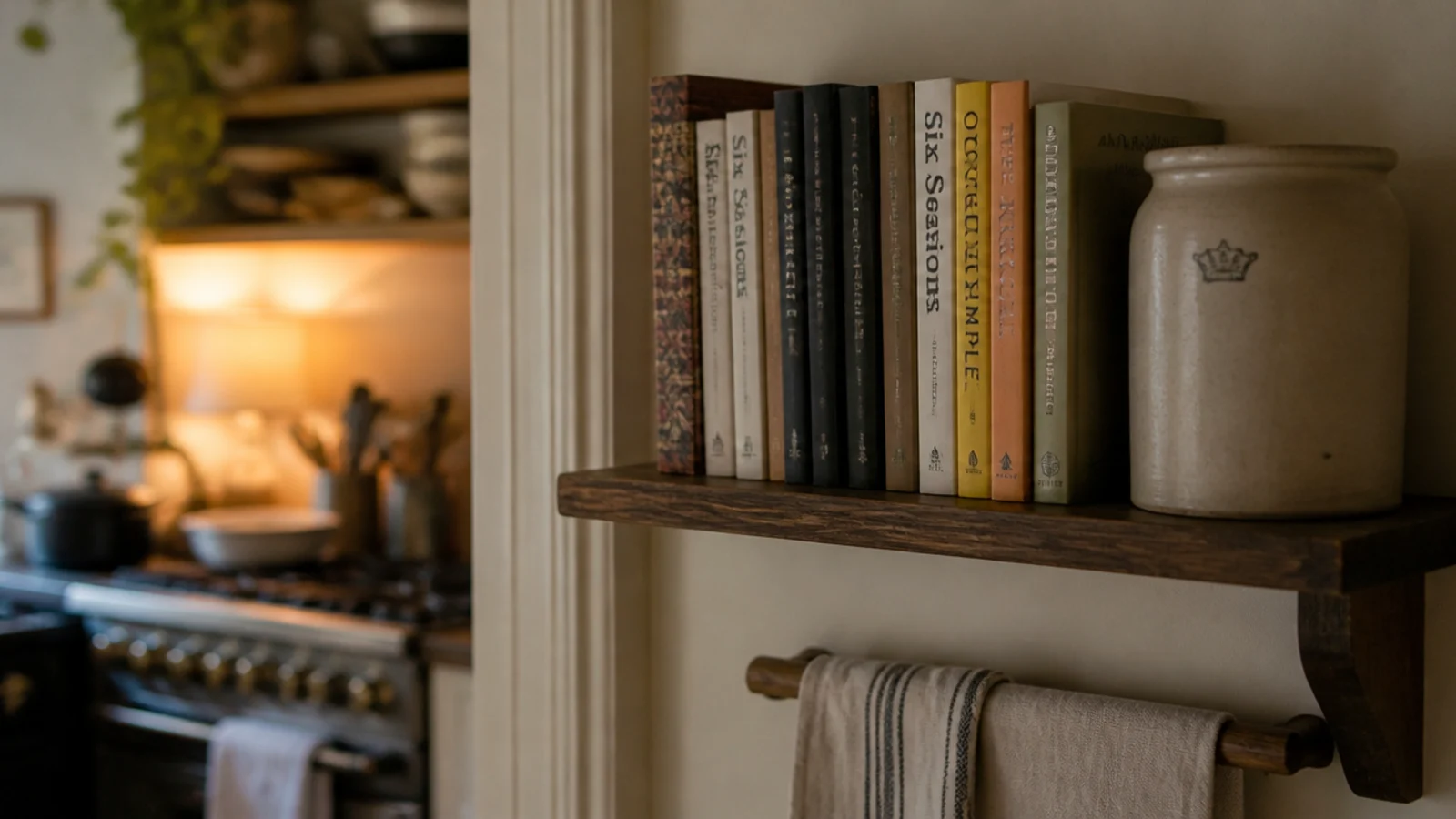
Cookbooks used two rooms away never get used. A shelf just outside the kitchen doorway is enough.
Stay clear of the range and the sink — grease and steam both damage bindings. End the row with a heavy stoneware crock so it cannot slump. $$
23. Set shelf pins for two heights, not five
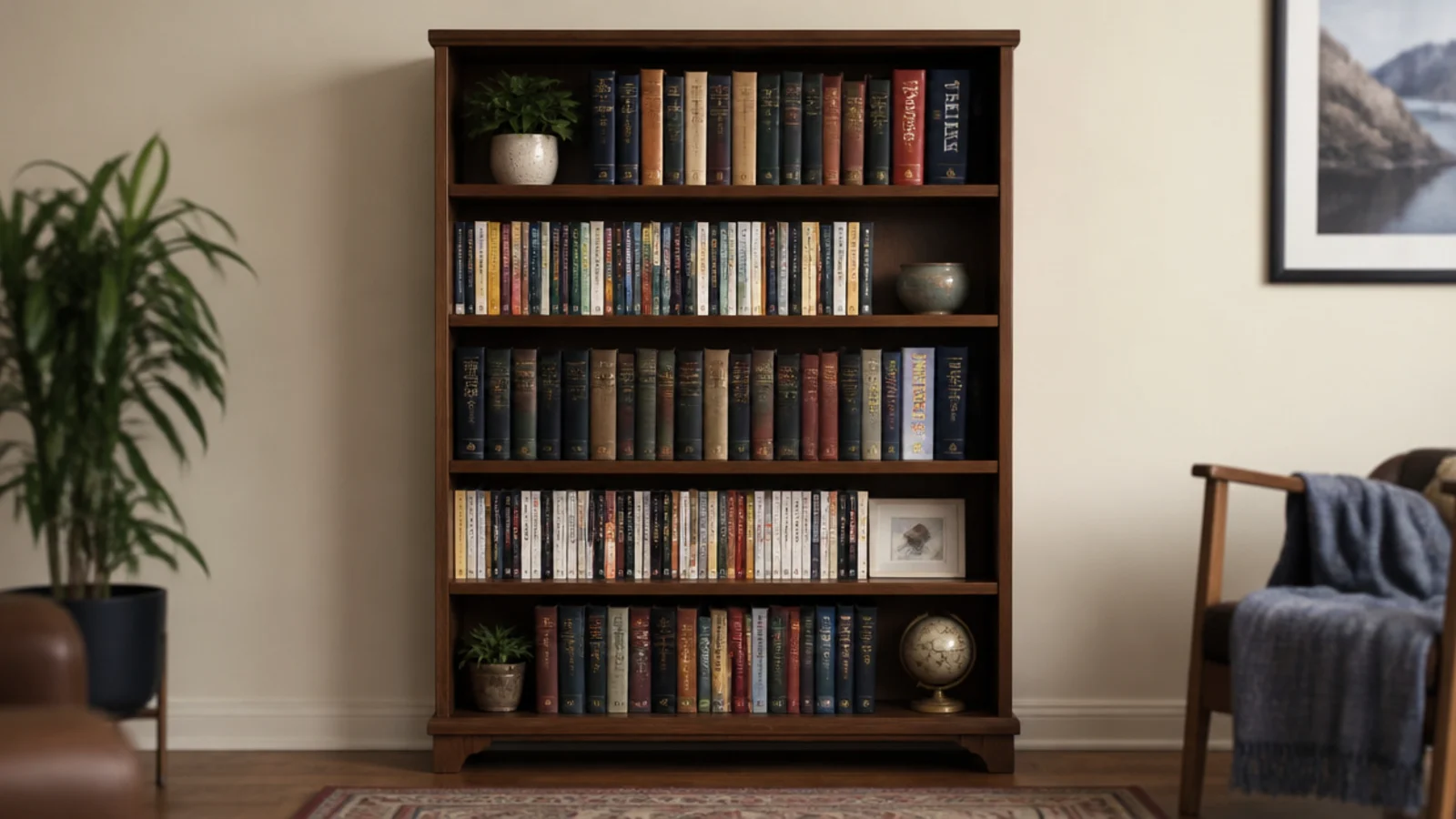
Five different spacings look busy and make every future reshuffle a puzzle. Two spacings repeat cleanly up the unit.
Set them once, with a tape measure, before anything goes back on. Moving a pin later means unloading three shelves to reach it. $
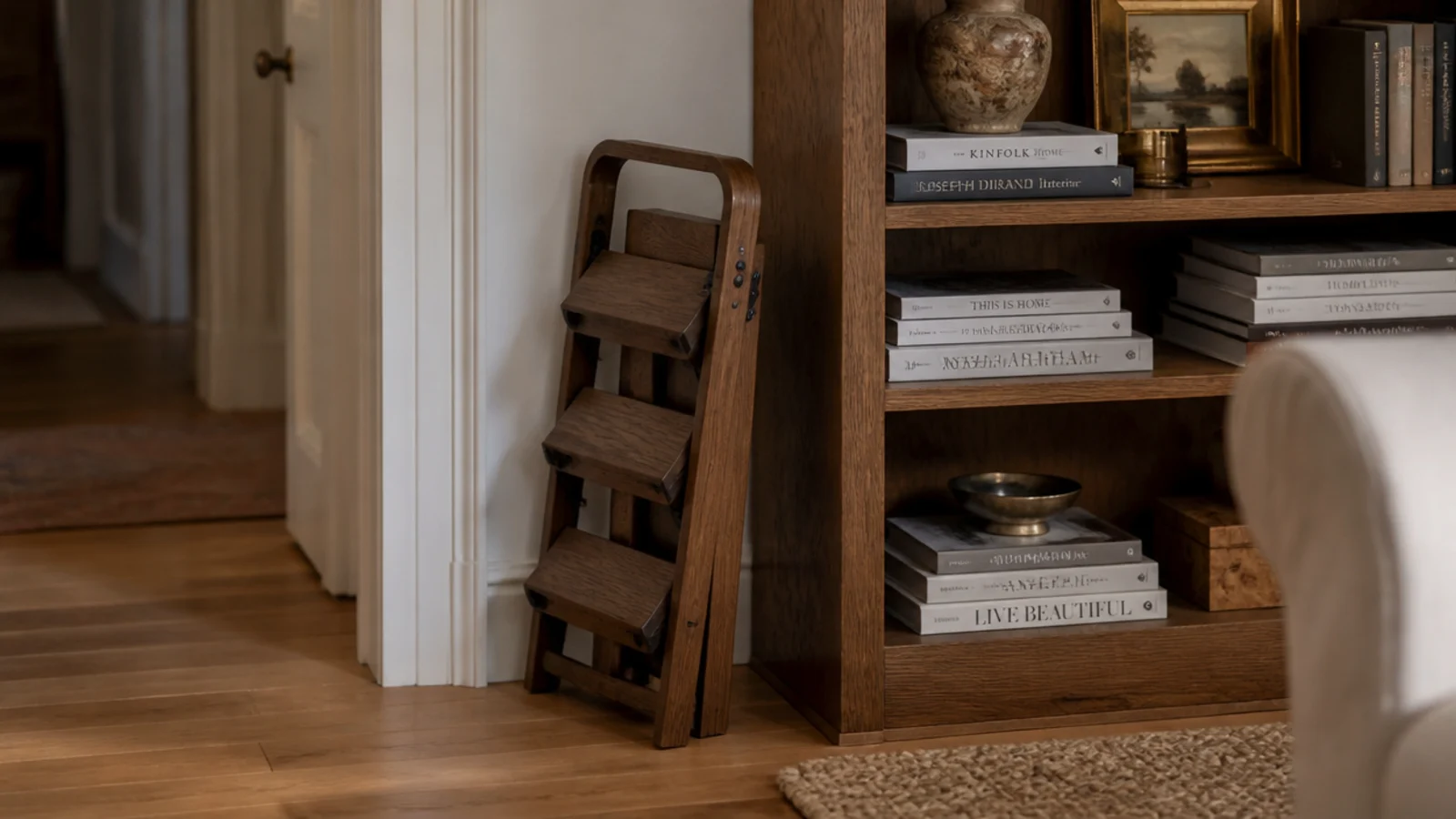
24. Keep a step stool in the room
A top shelf you cannot reach is a top shelf you do not use, which wastes about a fifth of the unit.
A folding wooden stool costs $25 to $50, tucks against the side of the bookcase and doubles as a plant stand. $$
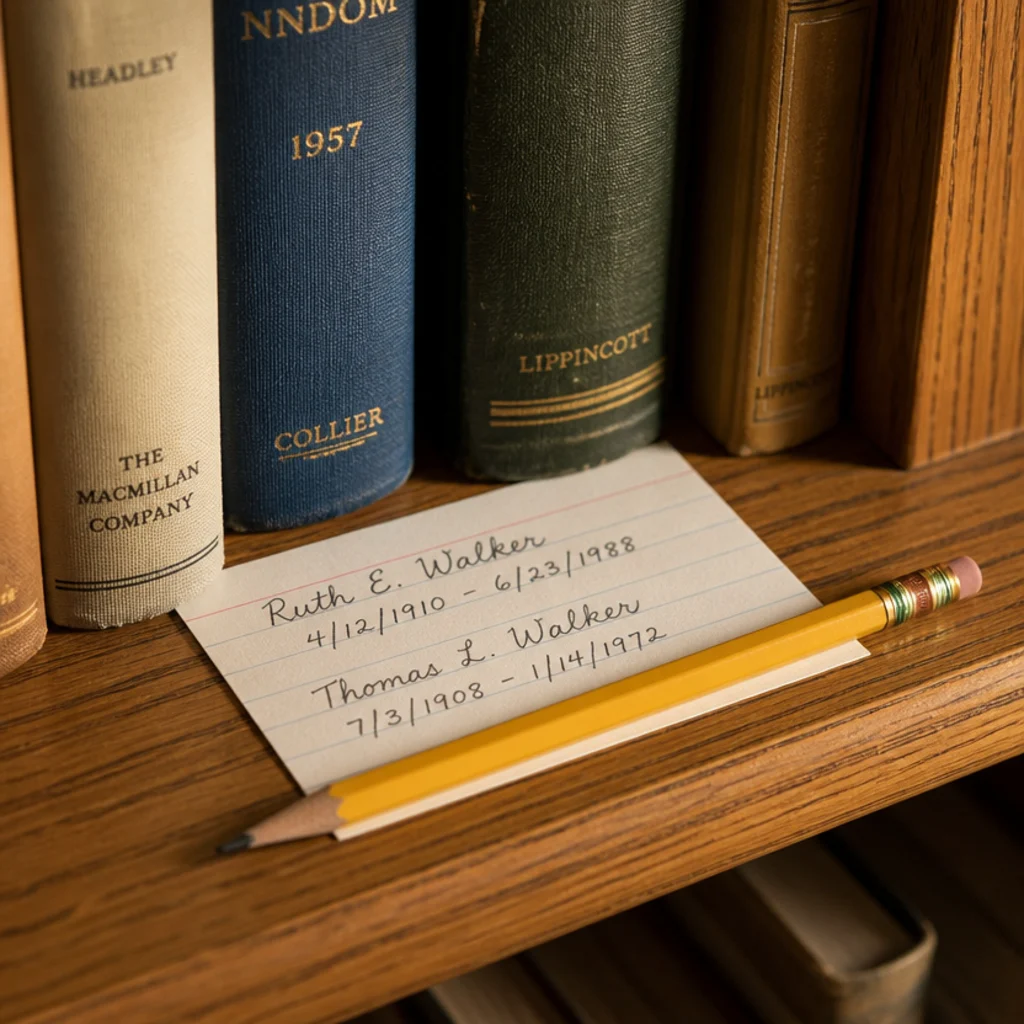
25. Log borrowed books on one card
A single index card tucked into the shelf with a name and a date ends the annual hunt for the book you lent to someone.
It takes ten seconds at the door and it is far less awkward than the alternative conversation a year later. $
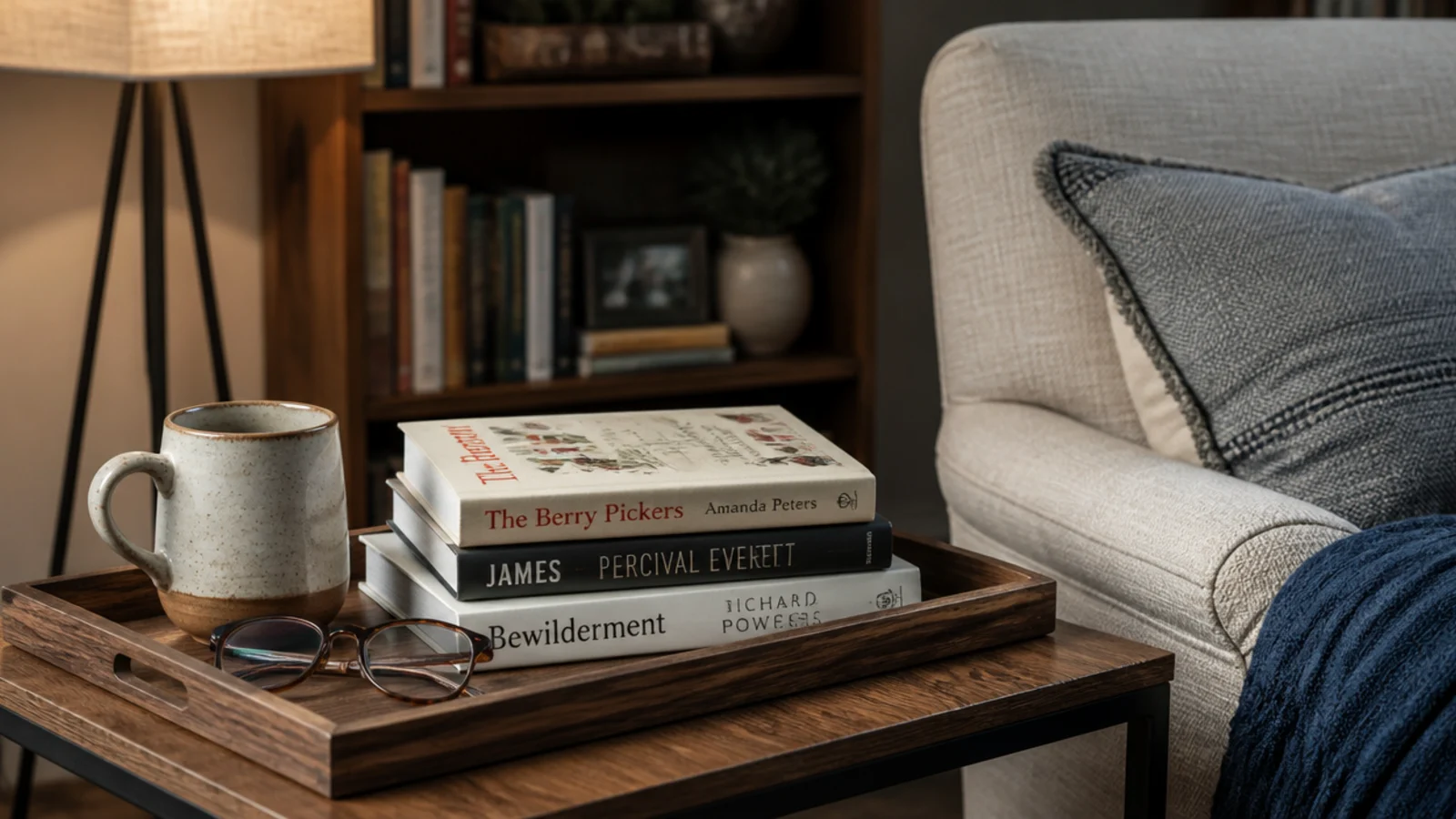
26. Keep a current-reads tray by the chair
The stack beside the armchair is not a failure of organization, it is a different function. Give it a tray and it stops being clutter.
Three books maximum. When a fourth arrives, one goes back to the shelf. $
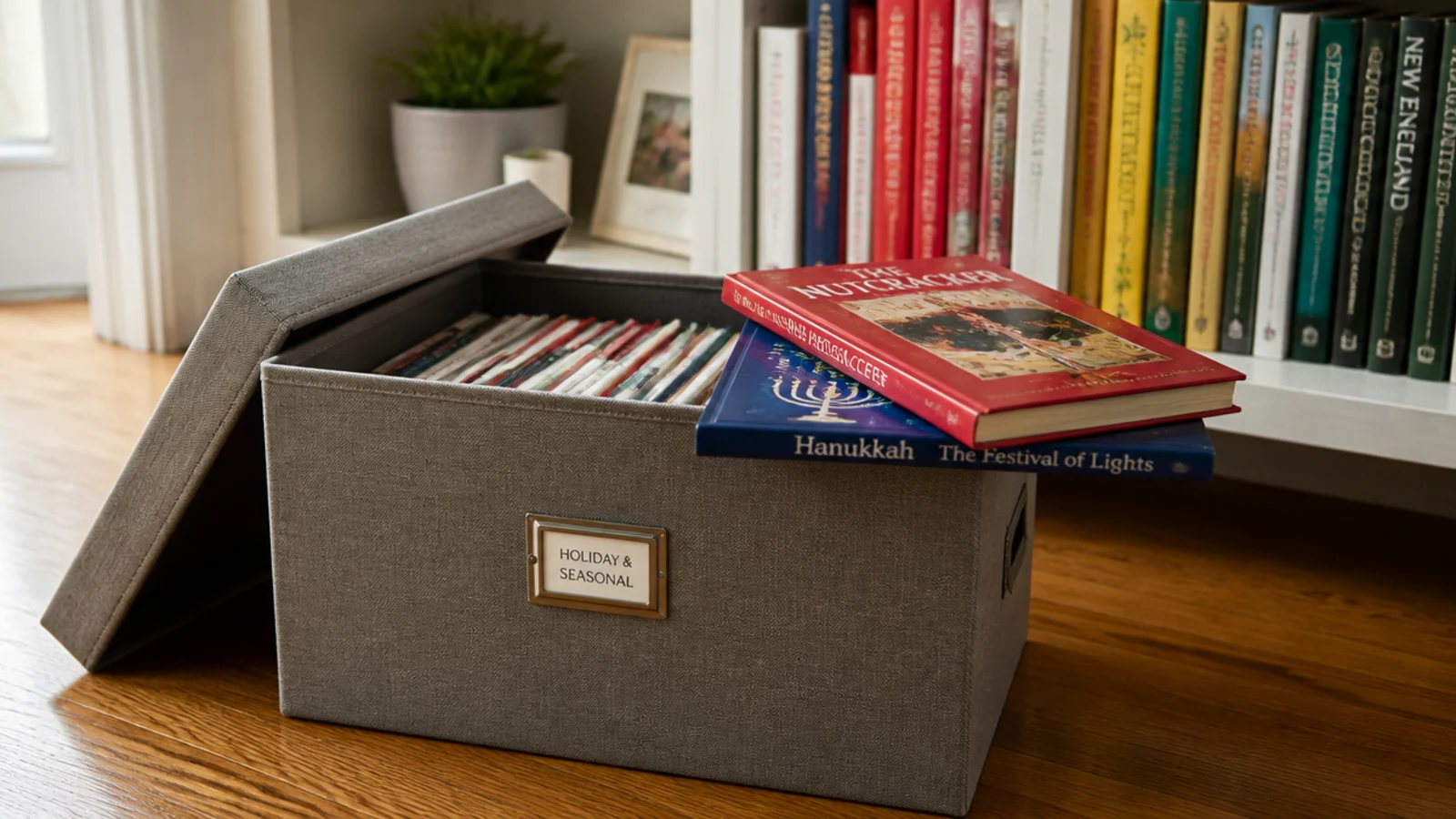
27. Rotate seasonal books into a box
Holiday titles, summer paperbacks and children's seasonal picture books do not need shelf space eleven months a year.
One lidded box in a closet frees up half a shelf and makes the swap feel like an occasion. Label the box on the end you can see. $
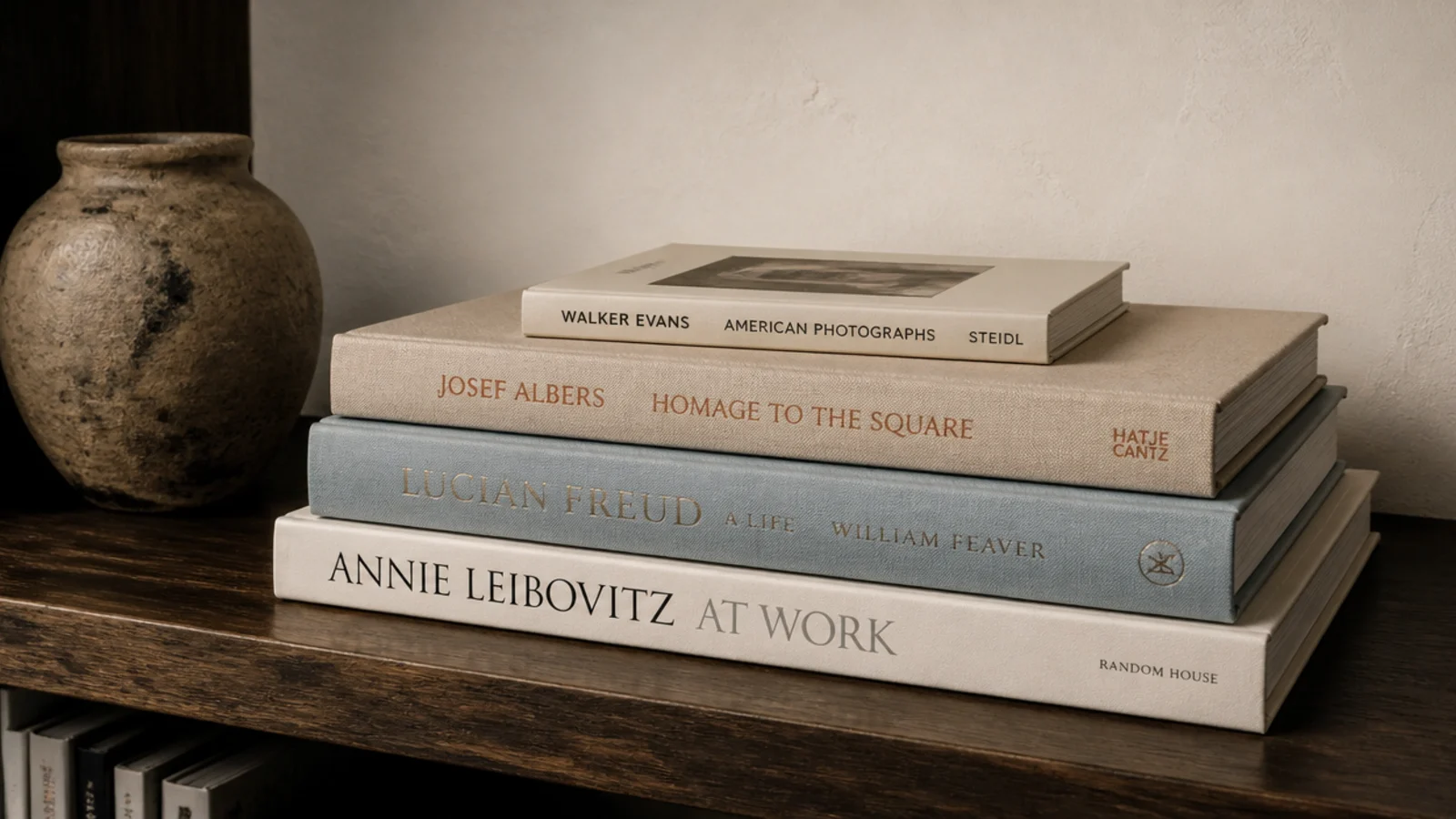
28. Store oversized books flat, never leaning
An oversized volume standing at an angle warps its own spine within months, and the damage is permanent.
Lay them flat in stacks of three or four on a deep bottom shelf. If they must stand, they need a full-height neighbor or a bookend on both sides. $
29. Vacuum the top edges twice a year
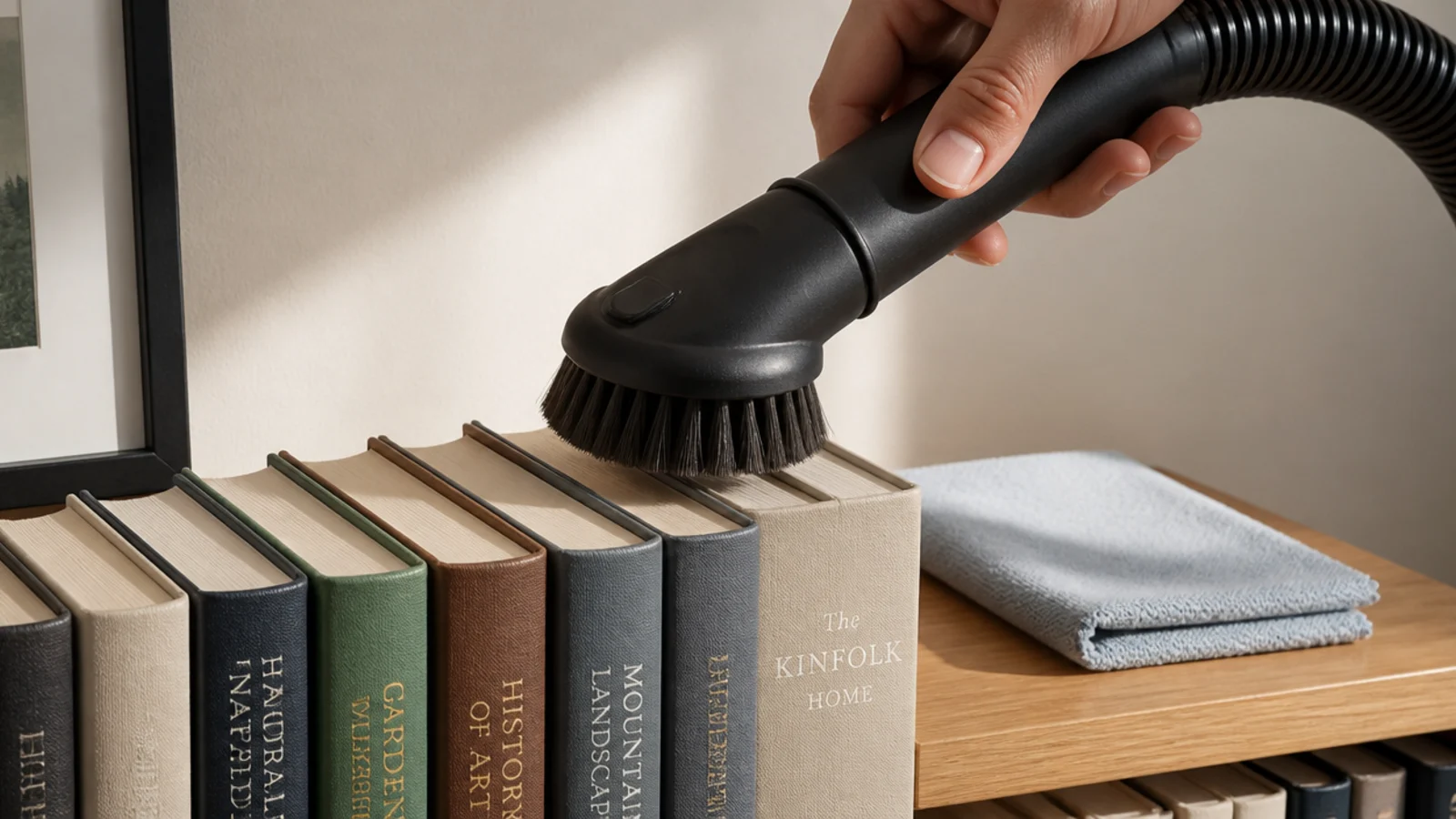
Dust settles on the top edges of closed books first, and on paper it eventually leaves a grey line that does not brush off.
A soft brush attachment on low suction, working left to right, does a full bookcase in about ten minutes. $
30. Weigh the shelf before you fill it
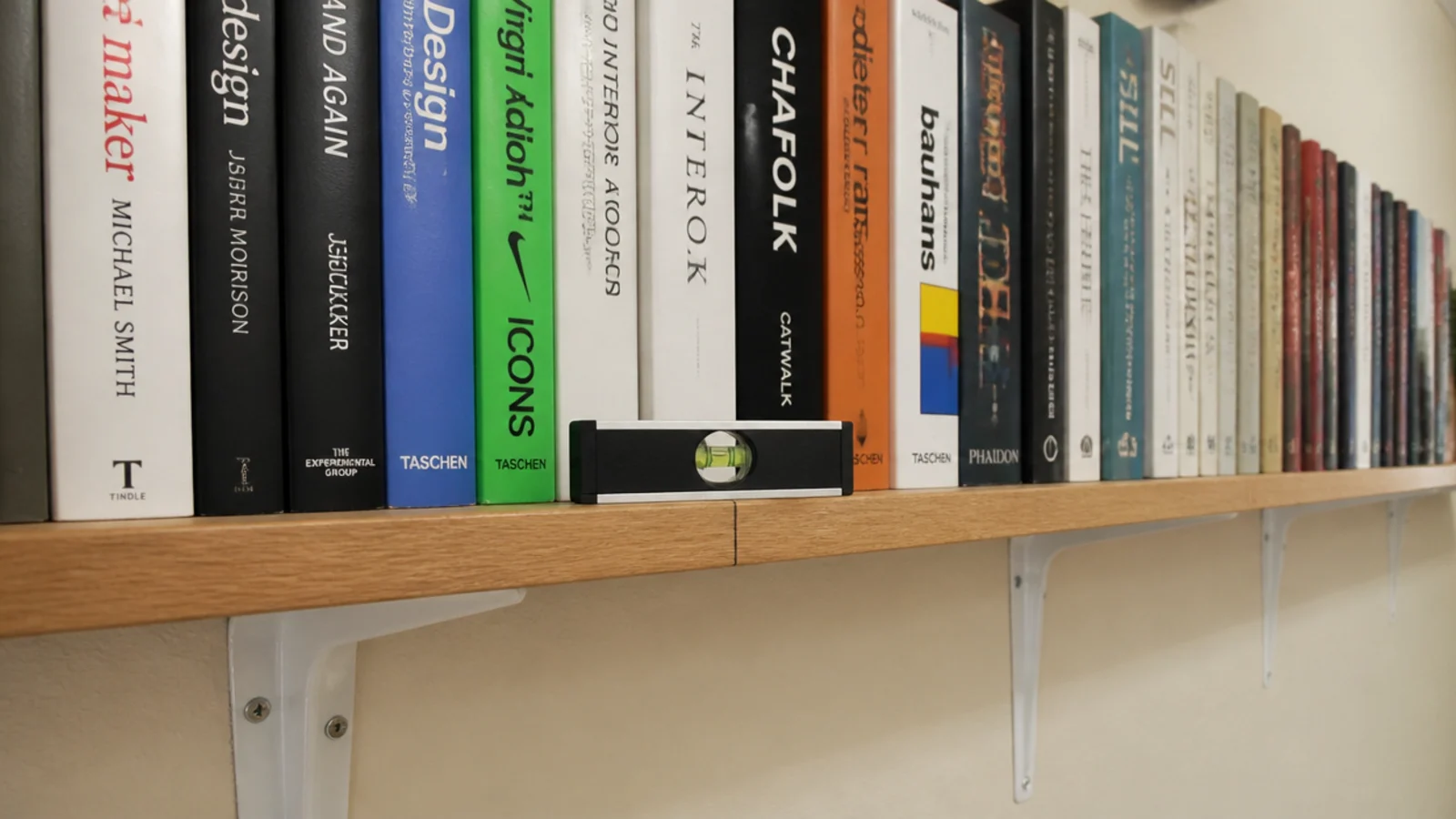
Before the last shelf goes back, do the arithmetic: 20 to 25 pounds per linear foot of hardbacks, so 60 to 75 pounds on a 36-inch run.
If the span is over 32 inches on 3/4-inch stock, add a mid support or a solid front lip now. Retrofitting one under a loaded shelf is a much worse afternoon. $$
Mistakes to Skip
- Sorting by color and hoping to keep it. It scatters series and reference, and almost everyone reverts within a year of doing it.
- Filling every shelf to the edges. A packed unit has nowhere for new books to land, so they pile on furniture instead.
- Organizing before strapping. An anti-tip kit into a stud costs about $10 and is the only step here that is genuinely about safety.
Frequently asked questions
What is the best way to organize a bookshelf?
Sort by height first, then by subject inside each height band. Height grading gives you a calm stepped line you read from across the room, and subject grouping means you can still find things. Color sorting looks striking in a photograph but scatters series and reference books across the whole unit, which is why most people abandon it within a year.
How much space should I leave between shelves?
Eleven to thirteen inches of clear height for hardbacks and nine to ten for paperbacks. If your shelves sit on adjustable pins, set them for just two heights rather than five — a hardback band and a paperback band. Fewer, better-chosen heights make the unit easier to reorganize later and look far calmer from the doorway.
Should I store books two rows deep?
Only for archives you genuinely never open. A back row is invisible, so it becomes the place books go to be forgotten, and it doubles the load on a shelf already carrying 20 to 25 pounds per linear foot. If you need double depth, raise the back row on a narrow riser so at least the spines show above the front row.
How often should I cull a bookshelf?
Once a year, with a timer set to twenty minutes, plus a permanent one-in-one-out rule between culls. Keep a donation bag on the bottom shelf so a book leaves the moment you decide it is done rather than waiting for a purge. Shelves fail from slow accumulation, not from a single bad decision.
How do I keep a bookshelf tidy with children in the house?
Give them a cover-out rail at 30 inches so books are visible and reachable, keep a single labelled basket as the returns bin, and accept that a child-height shelf will look lived in. Strap the unit to a stud with an anti-tip kit first, without exception. Tidiness is negotiable; the strap is not.
Pick three: sort by height, add a returns basket, and start one-in-one-out this week. That combination holds a shelf steady for years without any further effort. Once it is sorted, bookshelf styling ideas covers the arranging, and minimalist bookshelf ideas helps if you want to go further with less. The same edit-first thinking works on a wall in headboard decor ideas. Save the pin for your next reset.
Want more like this? Browse all 15 bookshelf ideas guides — they all use the same measurements and budget tiers.
Pin it for later
Save this to your Bookshelf Ideas board
Pin it now so it is waiting for you when the tape measure comes out — and so the next person hunting for this idea can find it too.
Save this pinKeep going
More ideas worth saving while you have the tape measure out.