Bookshelf Ideas · Listicle
30 Stylish Bookshelf Ideas to Copy Now

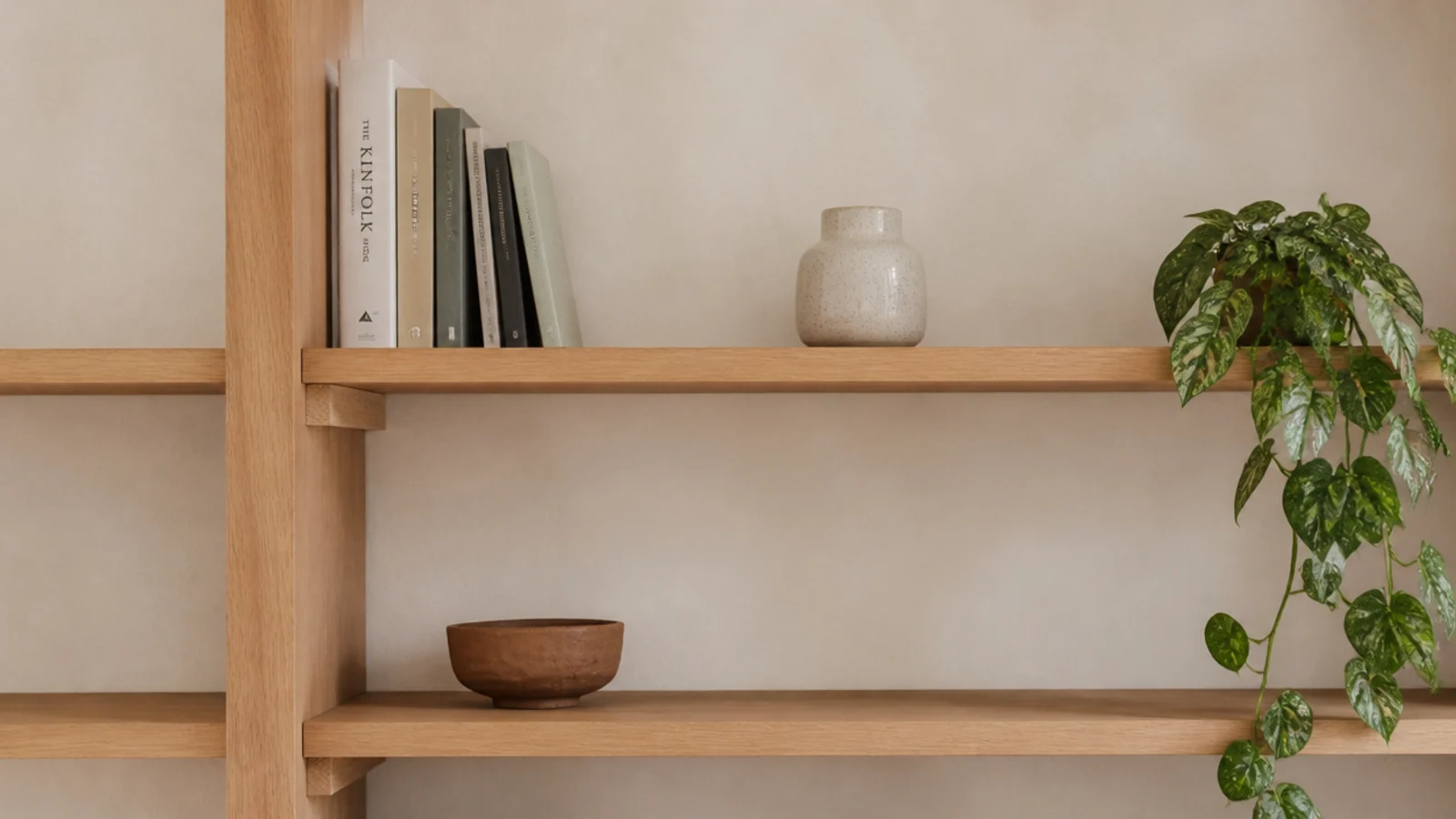
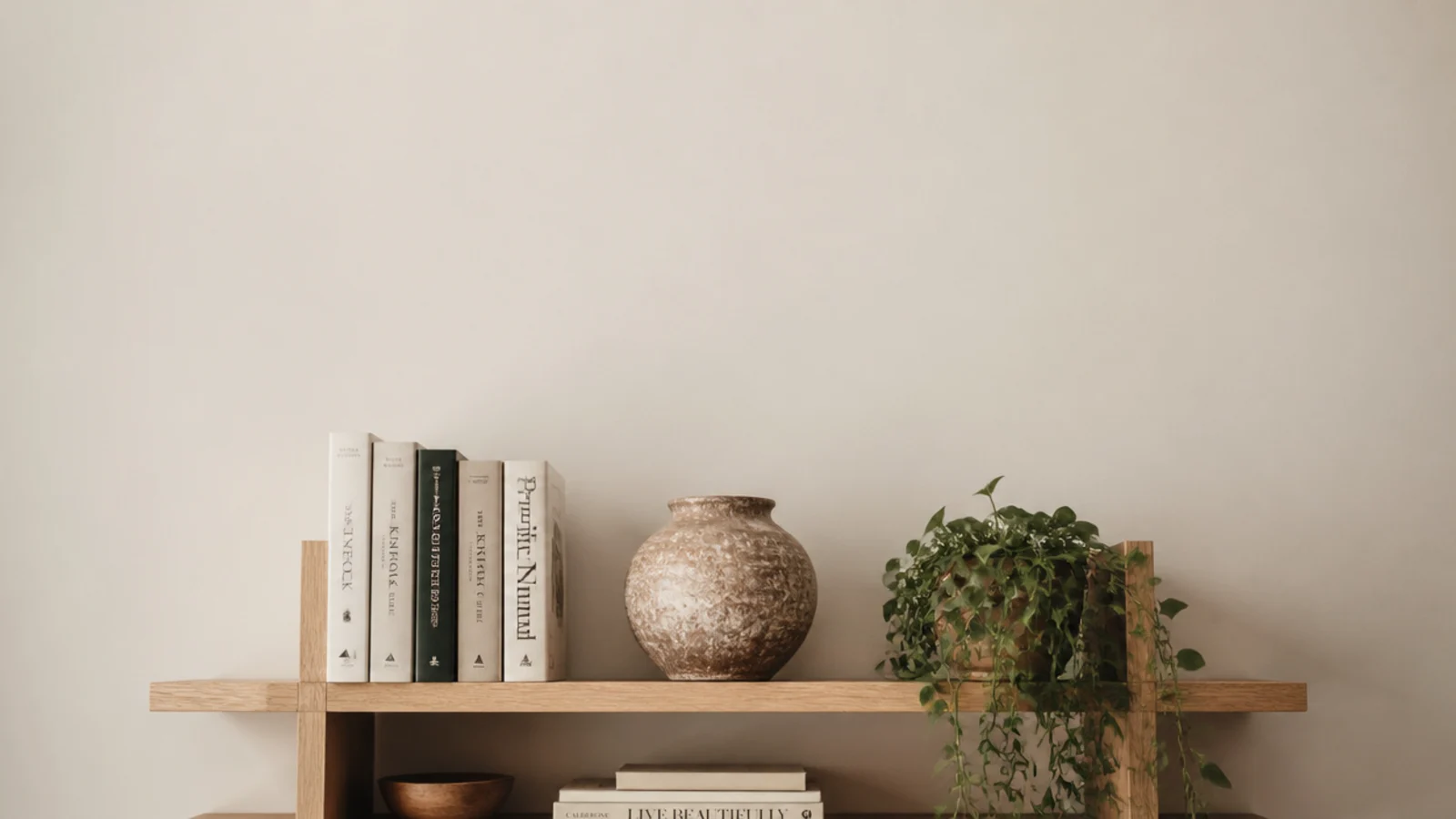
Minimalist bookshelf ideas are almost never about buying anything. They are about deciding what comes off, and then having the discipline to leave the gap where it lands. The version that goes wrong is the cold one — bare boards, gray objects, nothing to touch. The version that works is warm: oak, clay, linen and air, with a small number of things arranged so you can see each of them. Here are thirty ways to get there.
In this guide32 sections — tap to openHide
- 1.What minimalist bookshelf ideas actually require
- 2.Cut the collection by a third before you style anything
- 3.Let one shelf hold exactly one object
- 4.Keep a third of every shelf genuinely empty
- 5.Group by height, never by color
- 6.Alternate one horizontal stack with two vertical rows
- 7.Paint the case the color of the wall
- 8.Choose a backless unit so the wall shows through
- 9.Drop the depth to nine inches
- 10.Set clear height at eleven to thirteen inches
- 11.Hide the awkward third in two matching boxes
- 12.Pick one storage material and repeat it
- 13.Take the jackets off
- 14.Align every book to the front edge
- 15.Leave the top shelf almost bare
- 16.Allow yourself one plant
- 17.Choose one metal and stay there
- 18.Lean one artwork instead of hanging six
- 19.Hide the brackets completely
- 20.Go long and low instead of tall
- 21.Recess the shelving into an alcove
- 22.Hold the palette to three tones
- 23.Deal with the cables properly
- 24.Use one warm light source, not three
- 25.Give the case one oversized anchor
- 26.Use symmetry only where the wall is symmetrical
- 27.Store the overflow somewhere that is not the shelf
- 28.Wipe it down once a month
- 29.Stiffen the board with a lip, not more thickness
- 30.Respect the span and the weight
- 31.Strap it to the wall and stop thinking about it
- 32.Mistakes to Skip
What minimalist bookshelf ideas actually require
Three things, in order: less stuff, warmer materials, and honest structure.
Less stuff means roughly two-thirds full. On a 30-inch shelf that is about 20 inches of books and 10 inches of nothing. Take everything off first — nudging an existing arrangement relocates the problem rather than solving it.
Warmer materials are what separate calm from clinical. Oak, walnut, linen, jute, unglazed terracotta, stoneware and brass all read soft even in very small quantities. Chrome, glass and plastic in the same arrangement read like a showroom.
Honest structure keeps it looking clean over time. Shelf depth 11 to 12 inches for hardbacks and 9 to 10 for paperbacks, clear height 11 to 13 inches, and no span over 32 inches in 3/4-inch stock or it will bow. A linear foot of hardbacks is 20 to 25 pounds, so a 36-inch shelf carries 60 to 75 and wants studs or a mid support. And every freestanding case gets an anti-tip strap, without exception, in a home with children.
Budget tiers below: $ under $50, $$ $50 to $150, $$$ $150 and up. Most of this list is free.
1. Cut the collection by a third before you style anything
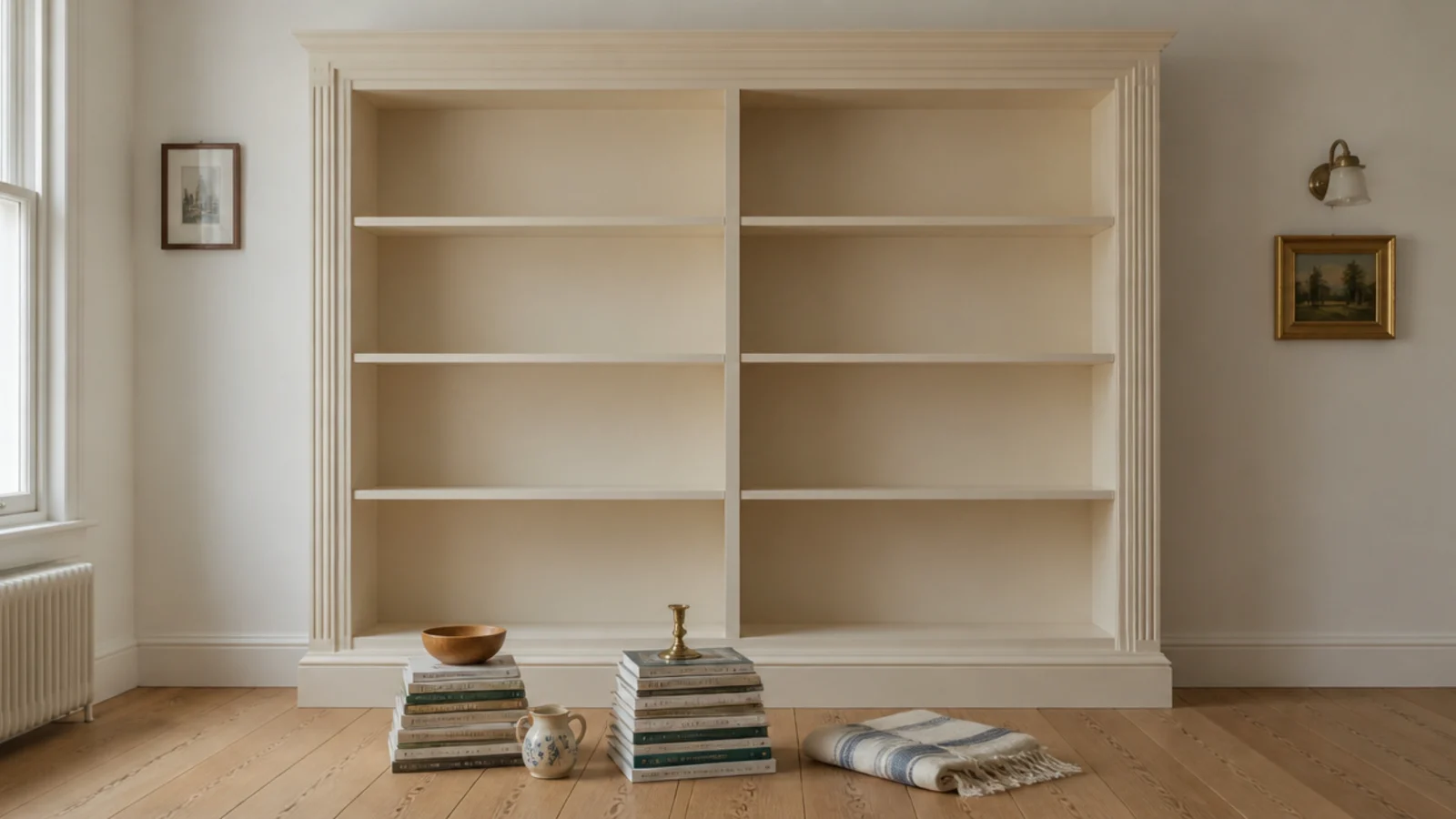
Nothing on this list works on a full shelf. Pull everything off, put back two-thirds, and box the rest.
You are not throwing books away — you are choosing what is out this season. A 30-inch board with 20 inches of books and 10 inches of clear air looks composed before you have added a single object.
2. Let one shelf hold exactly one object
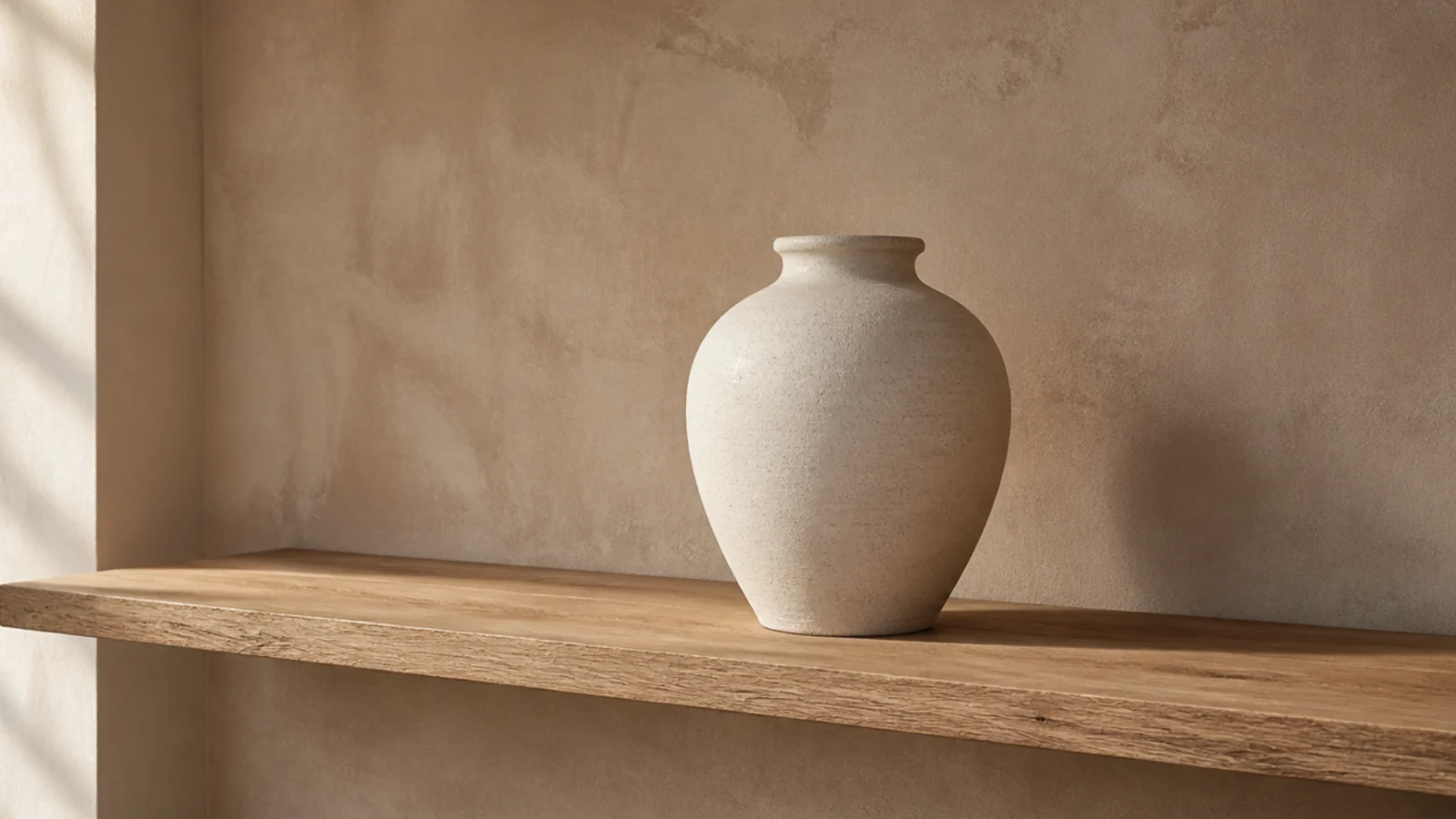
Somewhere in the case, give a whole board to one thing. A large matte stoneware vessel, off center, and nothing else.
It feels wasteful for about a day and then becomes the shelf everyone looks at. Scale is what makes it work: the object should be at least half the clear height, so 6 to 7 inches tall in a 12-inch gap.
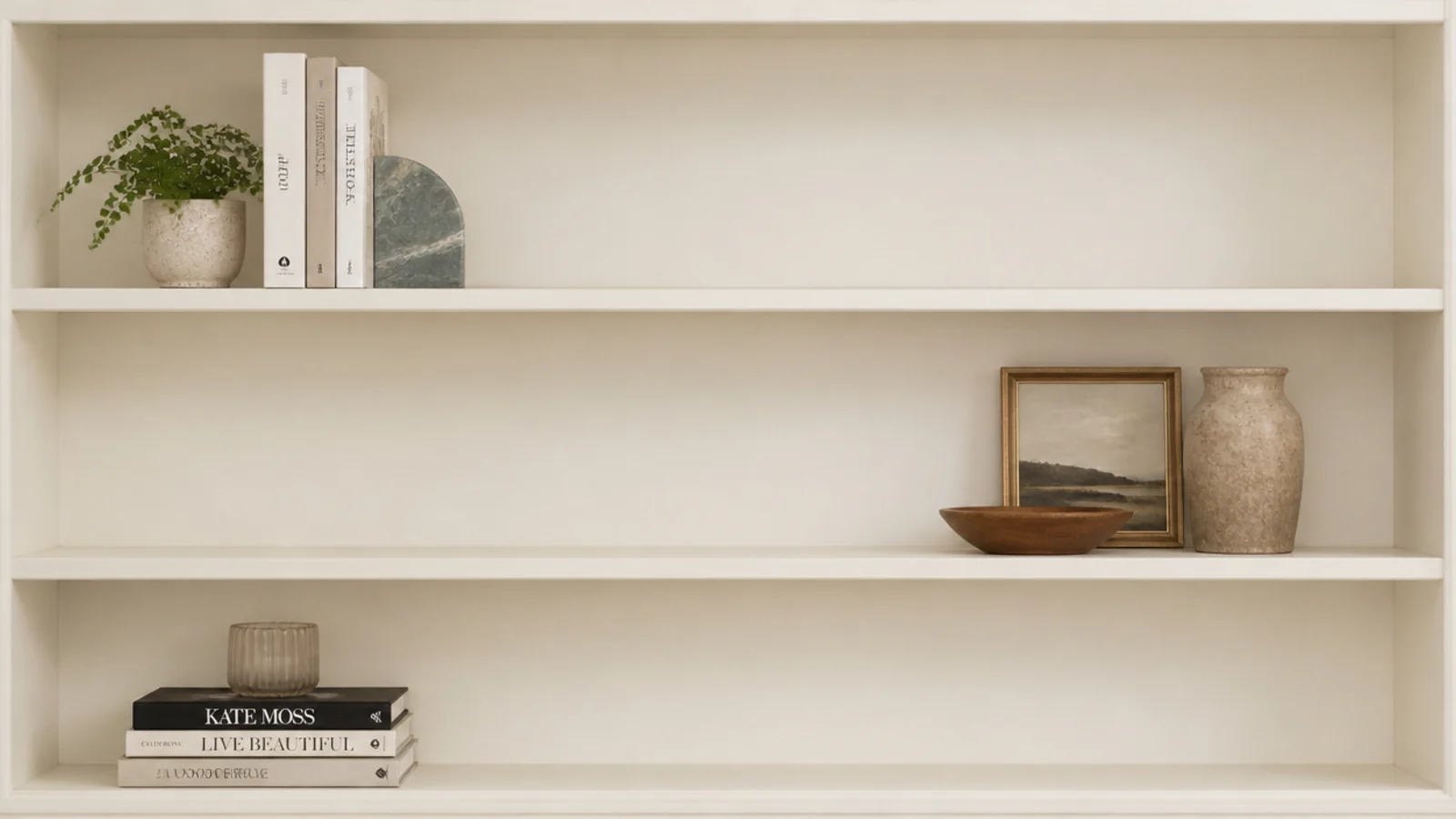
3. Keep a third of every shelf genuinely empty
The single most reliable rule in this article. About a third of each board stays bare, and you push each grouping to one side rather than spreading it.
Alternate which side you push toward as you climb. That zigzag of empty space is what makes an edited case look intentional instead of underfurnished.
4. Group by height, never by color
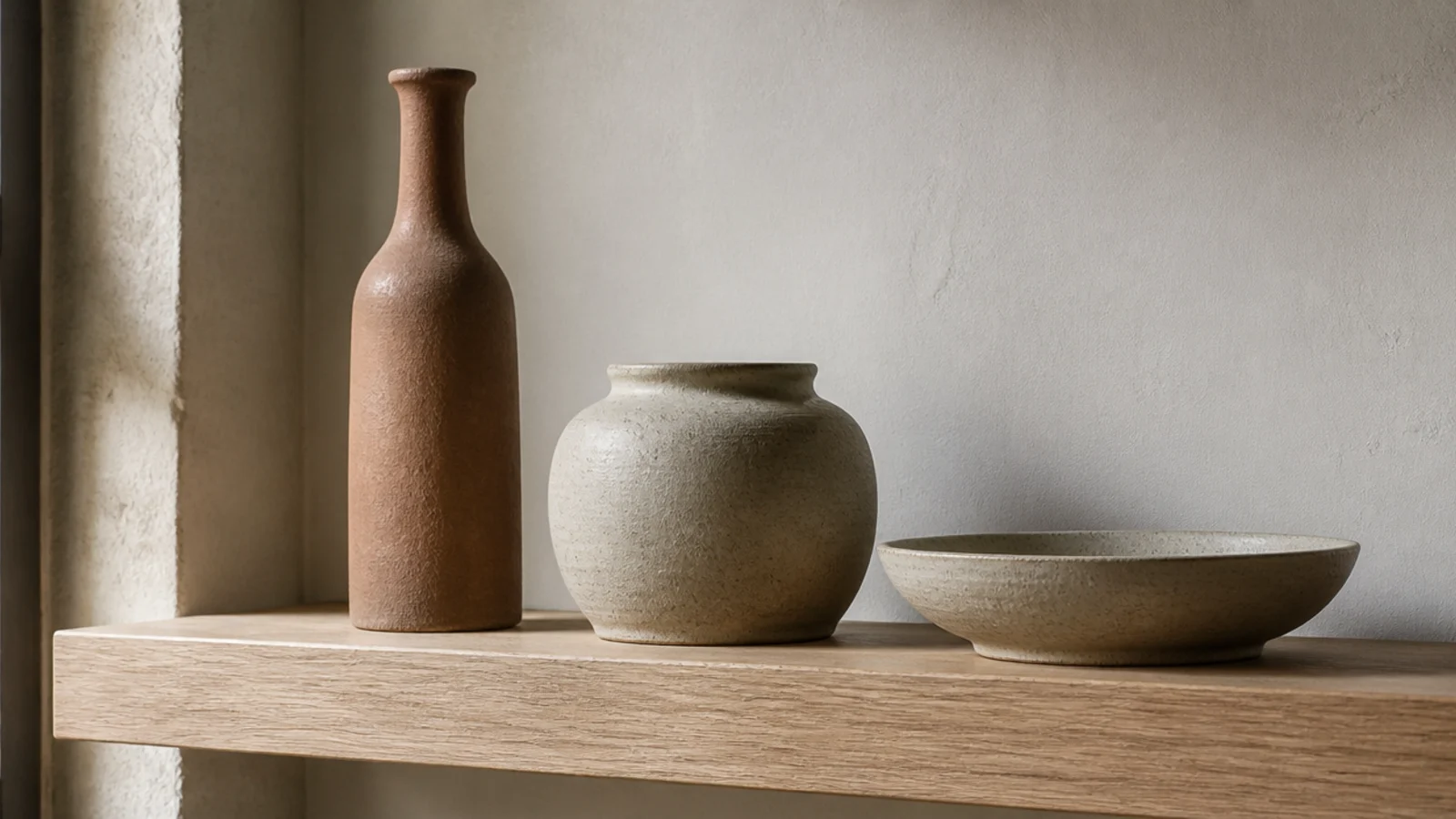
Color-sorting strips out the height variation your eye uses to move along a shelf, which is exactly the information a minimal arrangement needs most.
Work in descending steps: tall, medium, low. One 12-inch bottle, one 7-inch jar, one 3-inch bowl is a finished shelf. Nothing else is required, and nothing else should be added.
5. Alternate one horizontal stack with two vertical rows
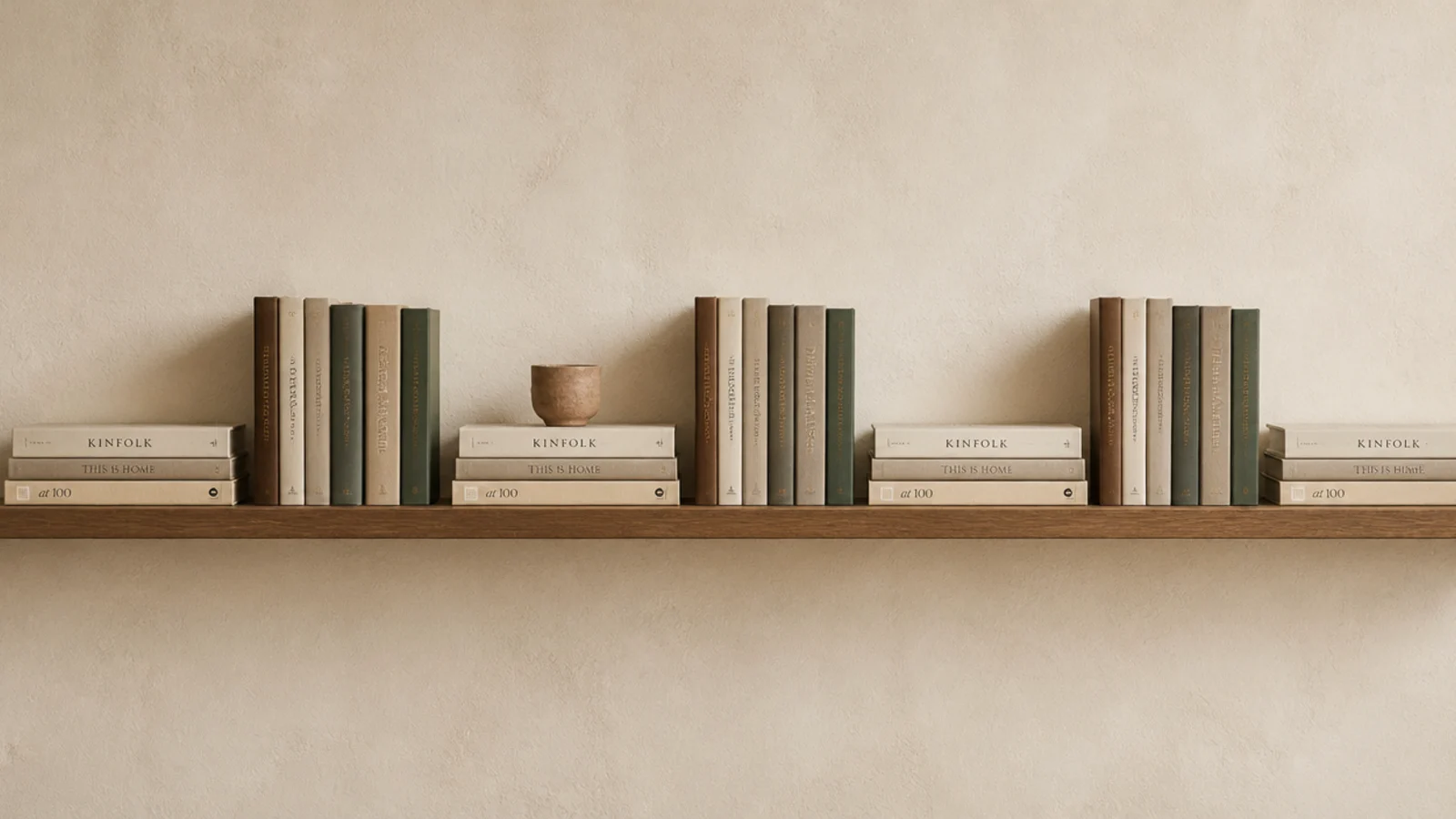
A run of nothing but upright spines is a wall of noise. A run of nothing but flat stacks is a filing cabinet.
Alternating gives you rhythm: two vertical rows, one flat stack of three books, repeat. Put a small object on the flat stack so it earns its place as a pedestal rather than reading as an unfinished pile.
6. Paint the case the color of the wall
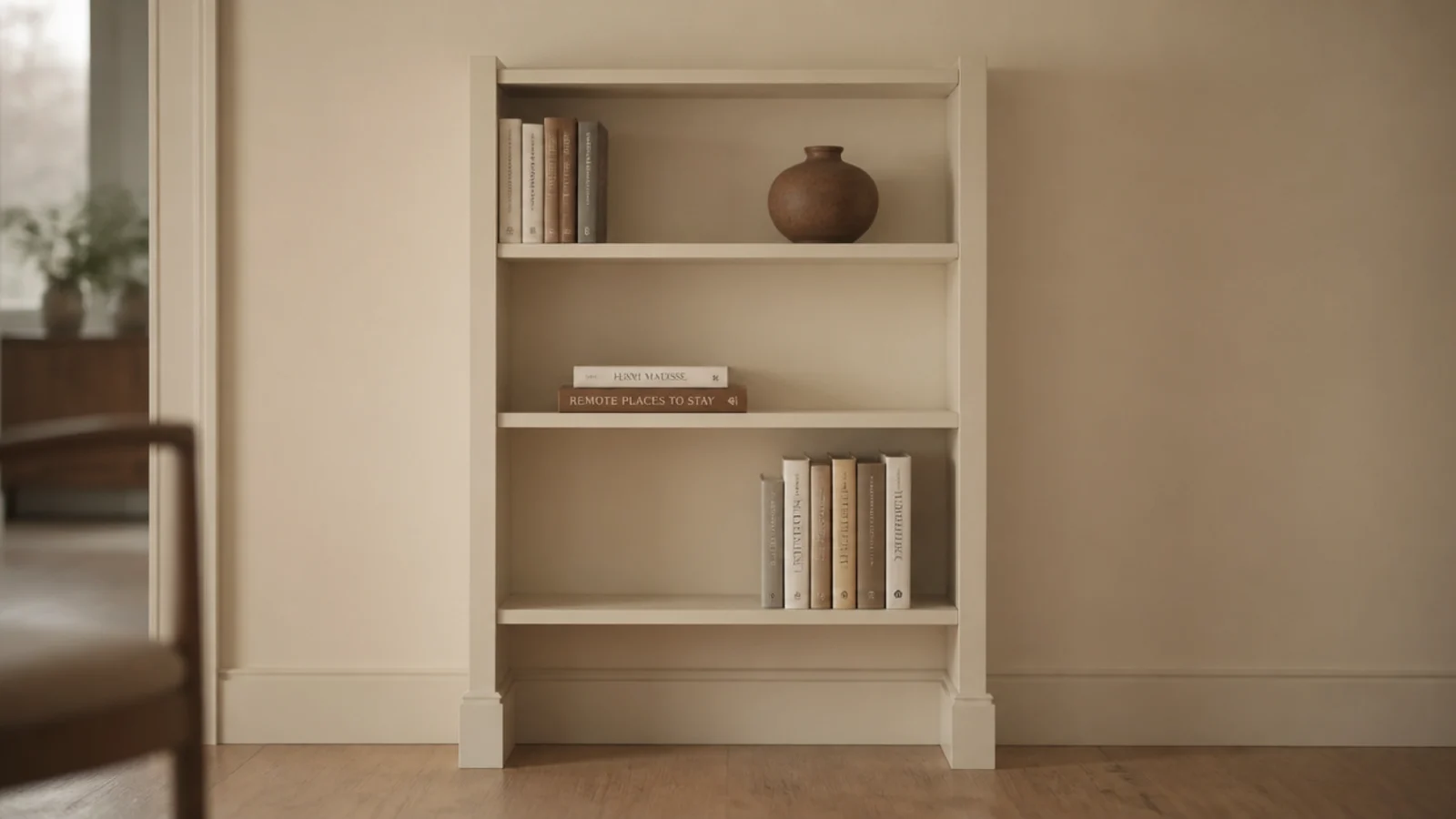
The highest-impact minimal move there is. Case, wall and trim in the same tone, eggshell on the joinery and matte on the plaster.
A matched case reads as architecture and lets four objects carry the whole room. A contrasting one becomes the focal point itself. One tin of paint, roughly $35 ($), and an afternoon.
7. Choose a backless unit so the wall shows through
Without a back panel, the plaster becomes the backdrop and the shelf stops reading as a box. In a small room this genuinely buys visual space.
Backless units need more care about weight, since the frame is doing everything. Keep bays under 32 inches, load the bottom heaviest, and strap the top to the wall.
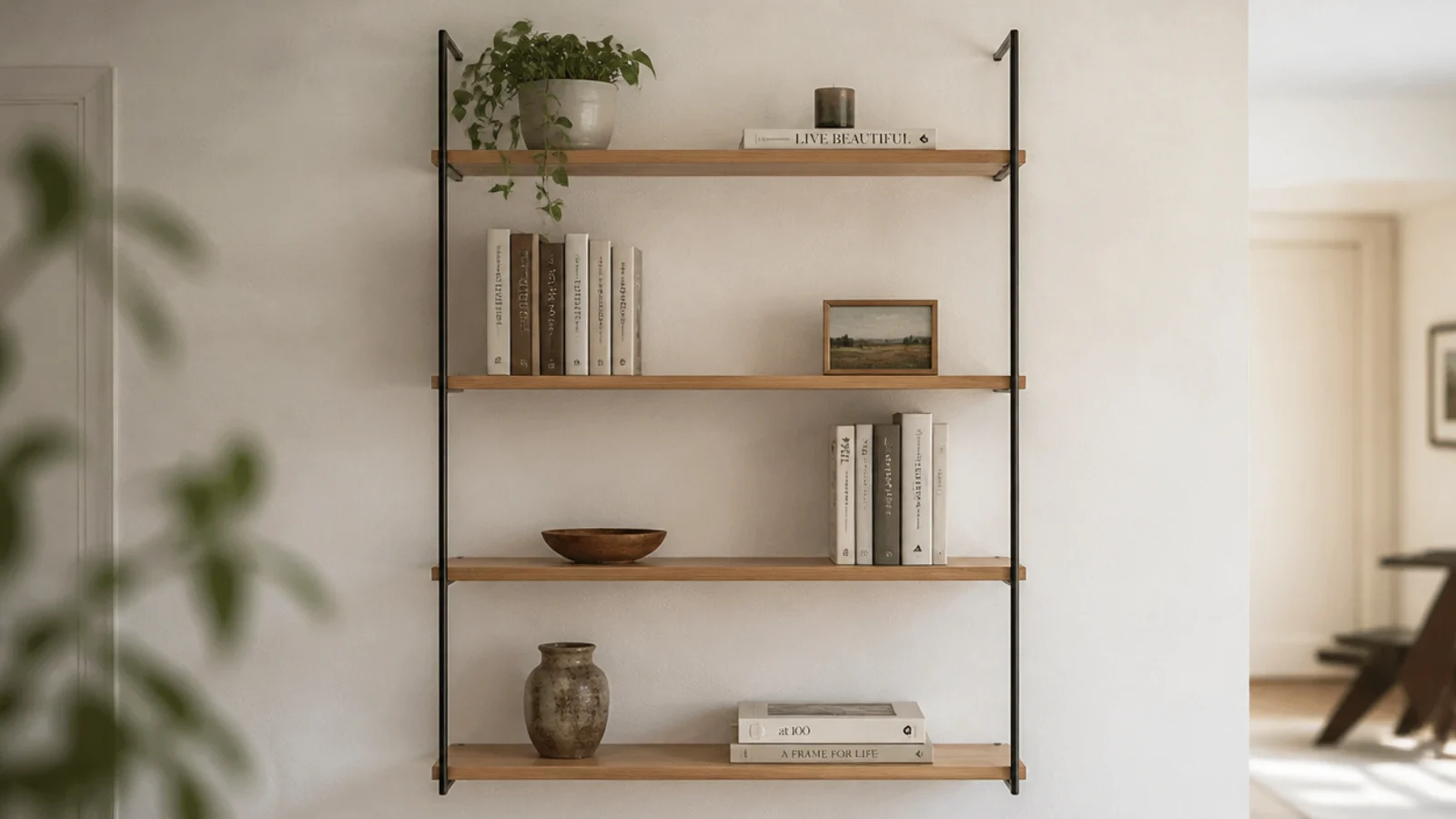
8. Drop the depth to nine inches
Twelve-inch shelves invite a second row hiding behind the first. Nine inches physically prevents it, and paperbacks sit flush at the front edge with nothing lurking behind.
It also gives you back three inches of floor in a small room, which matters more than the storage you lose. Save 11 to 12 inches only for a case that genuinely holds hardbacks.
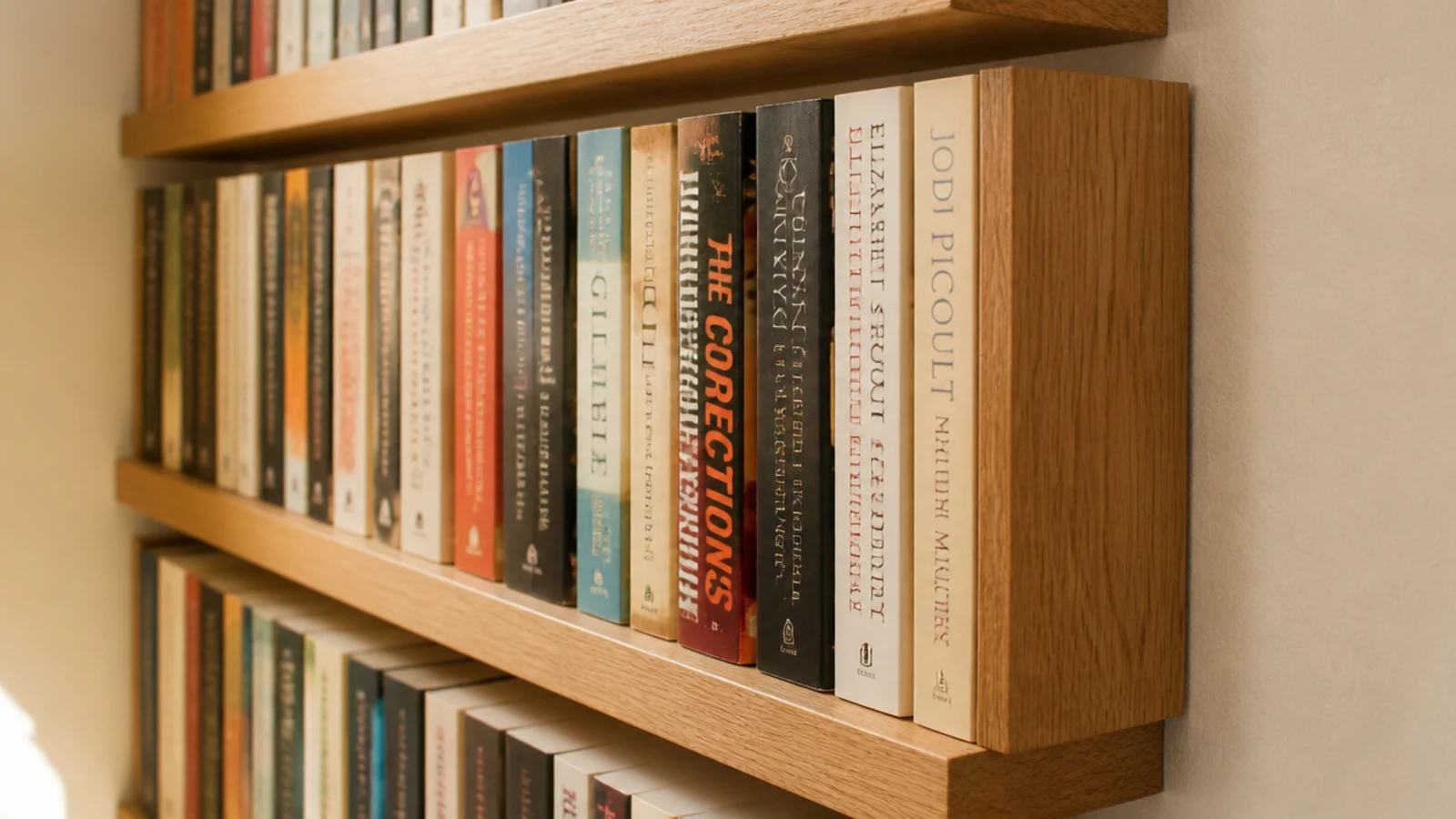
9. Set clear height at eleven to thirteen inches
Eleven to 13 inches lets a hardback stand upright with a hand's width of air above it. Under 10 and books lie down permanently, which reads as storage.
Resist adding an extra shelf to use up the space. Fewer, taller gaps is the whole look, and it costs you almost nothing in capacity once the collection is edited.
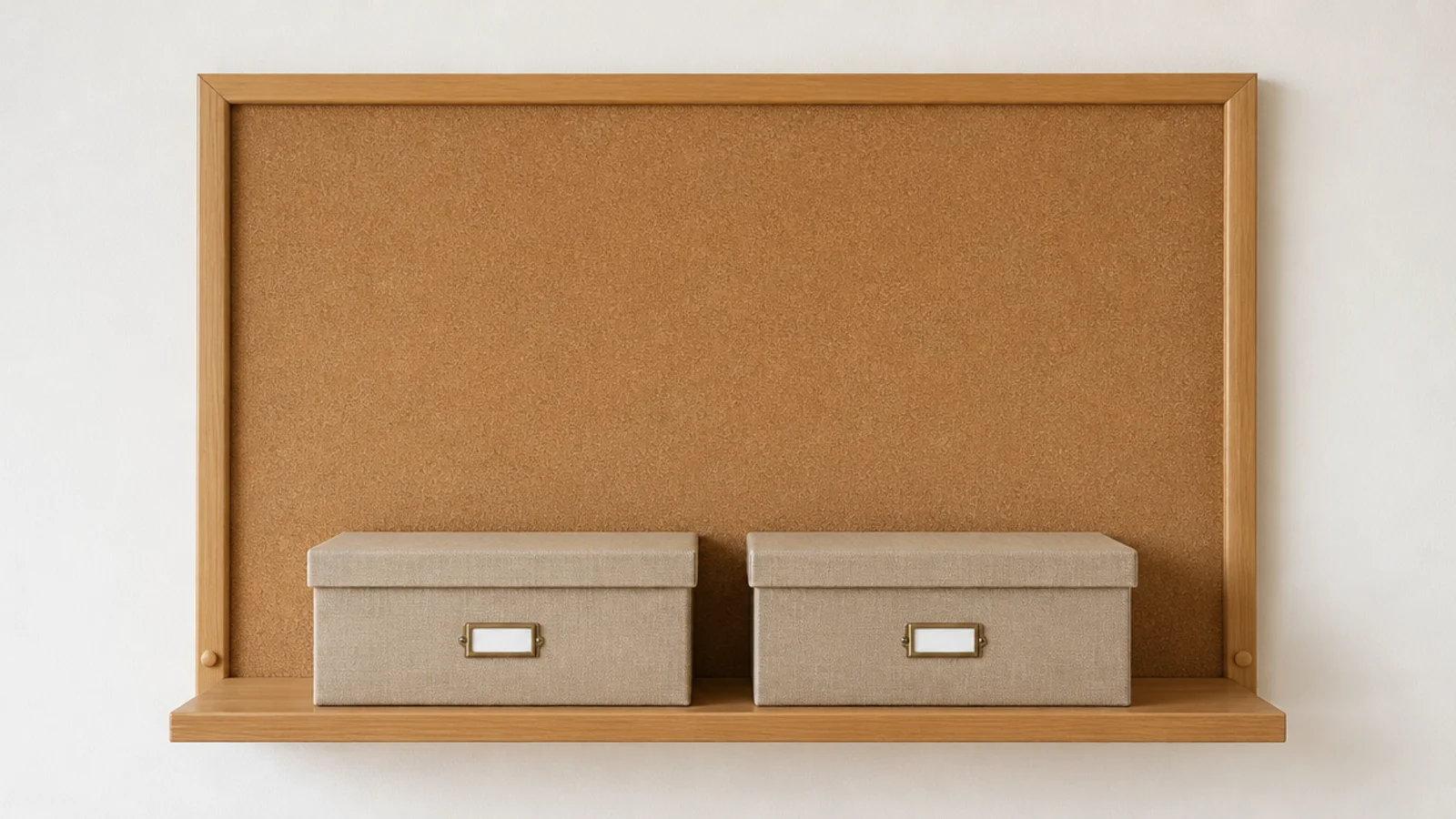
10. Hide the awkward third in two matching boxes
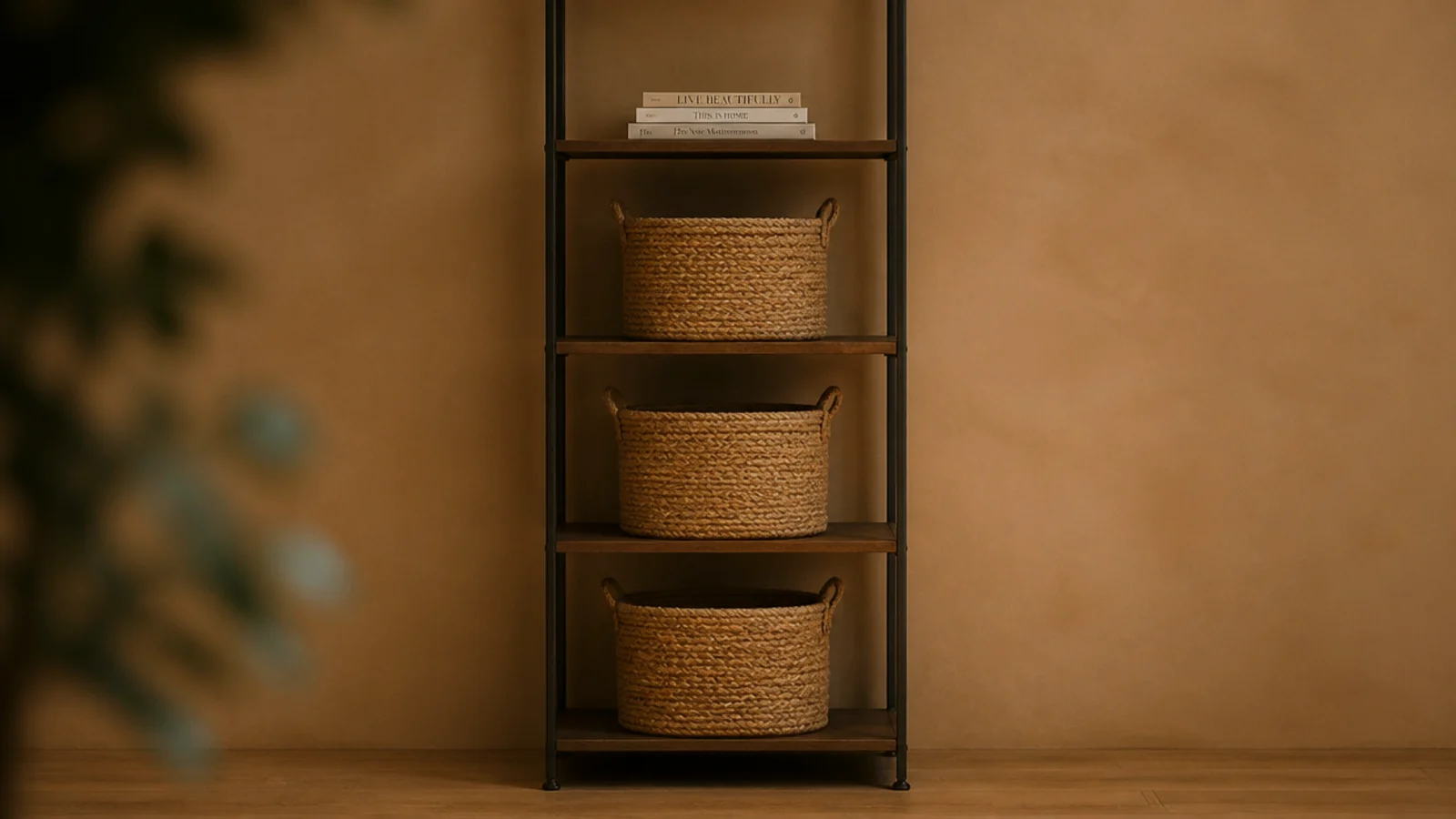
Every household has objects with no dignity: cables, batteries, spare keys, warranty paperwork. Two identical lidded boxes on a lower shelf absorb all of it.
Identical is the operative word. Two matching linen boxes read as a design decision; six mismatched containers read as a drawer that escaped. Budget $12 to $25 each ($).
11. Pick one storage material and repeat it
All jute, or all linen, or all painted wood. One material repeated three times across a case looks deliberate in a way that three good but different materials never will.
Repetition is doing the work that decoration usually does. It is also the cheapest way to make an assortment of flat-pack shelving read as a set.
12. Take the jackets off
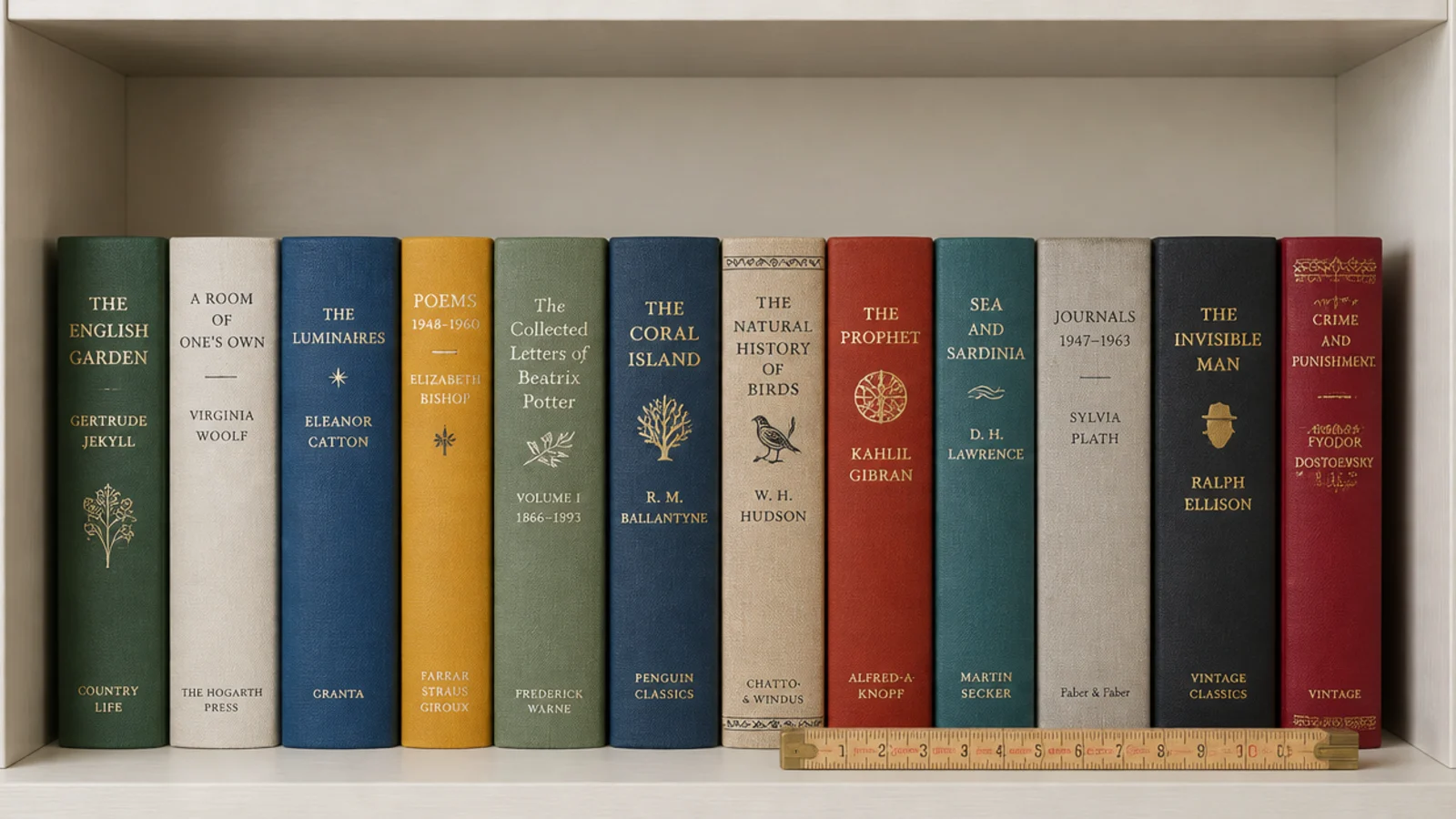
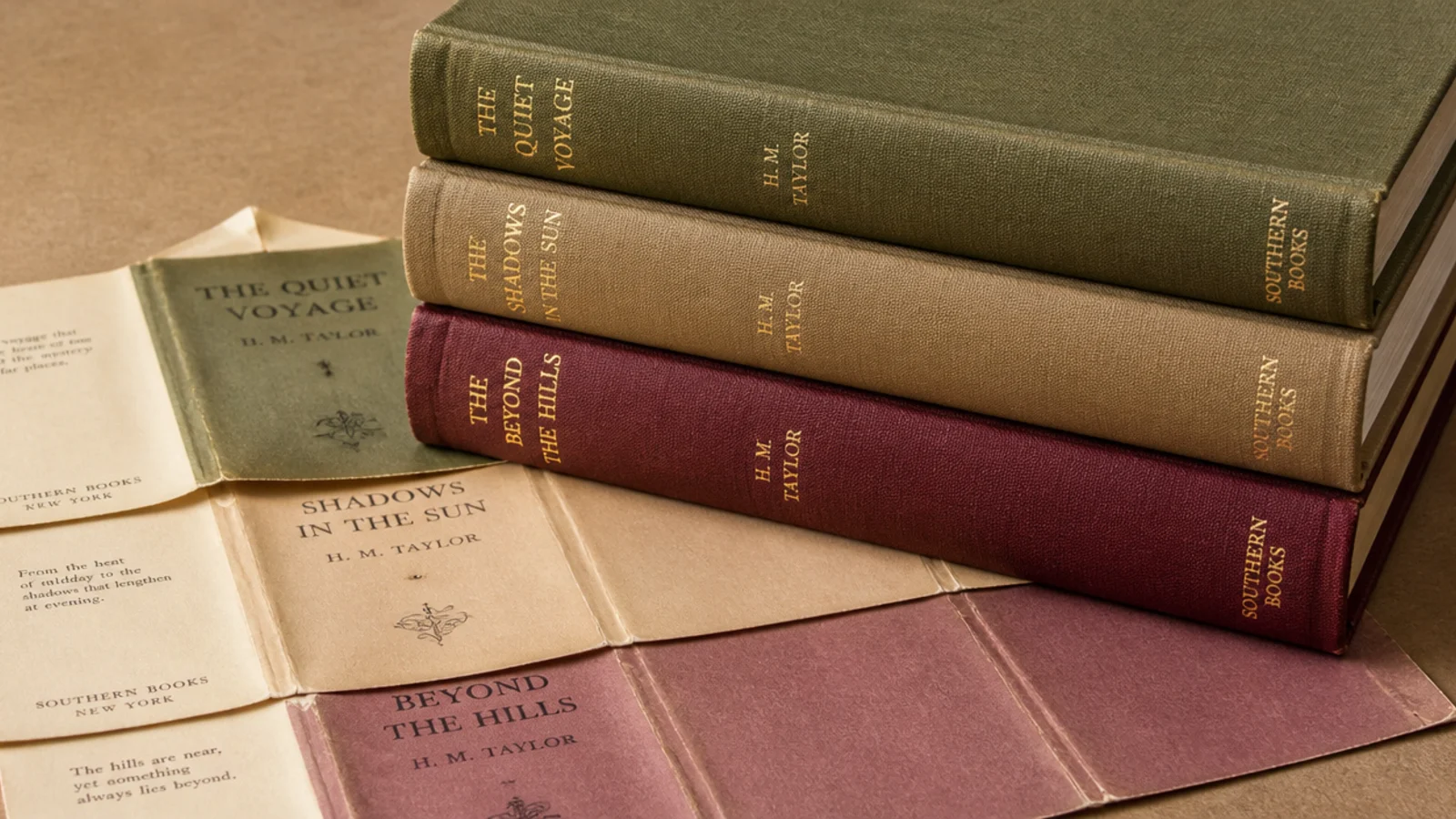
Printed dust jackets are the loudest thing on most shelves. The cloth bindings underneath are usually a muted olive, sand or oxblood with small gold lettering.
Twenty minutes, no money, and the temperature of the whole case drops. Keep the jackets flat in a box if the books have any value, since they matter to collectors.
13. Align every book to the front edge
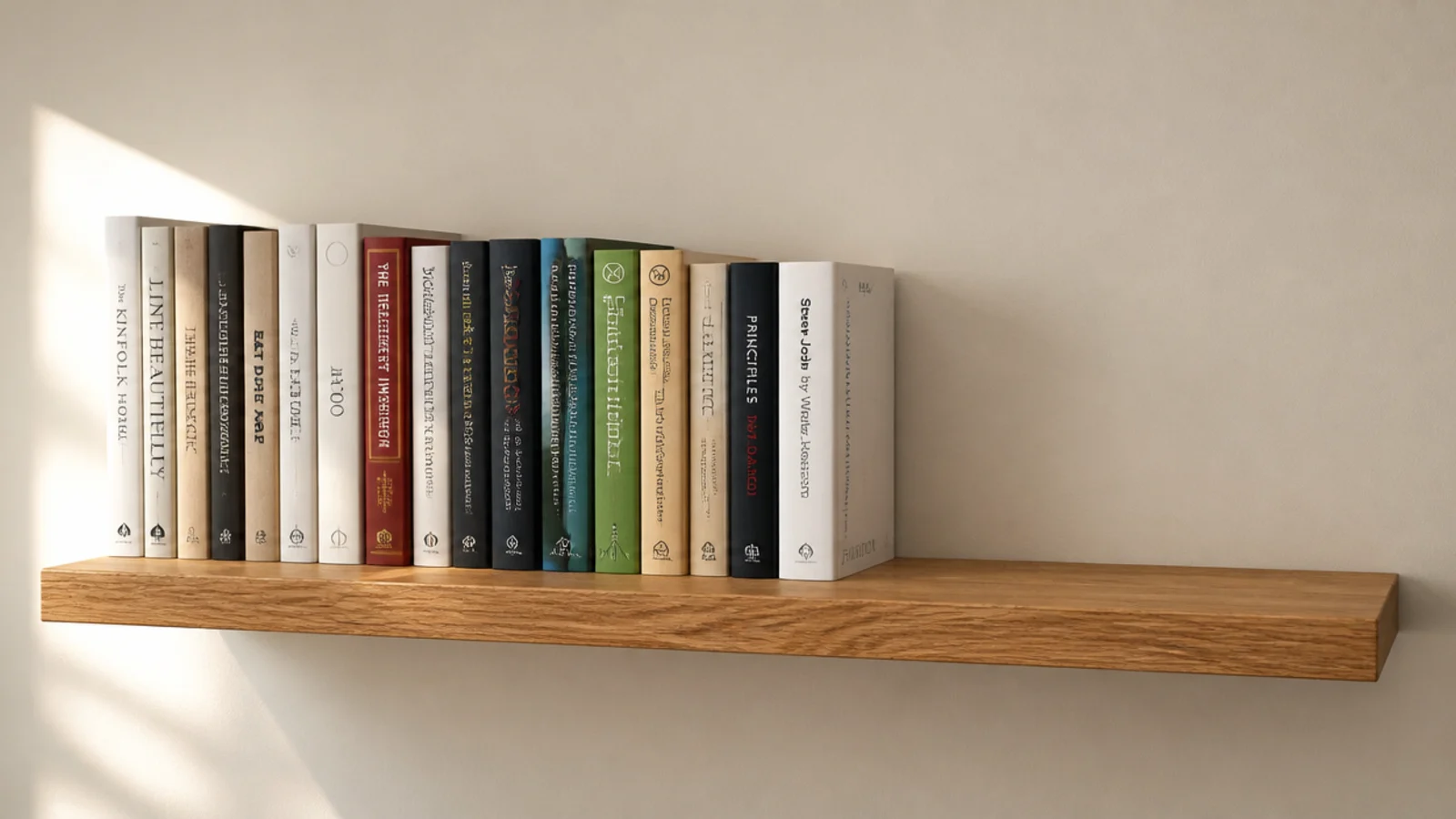
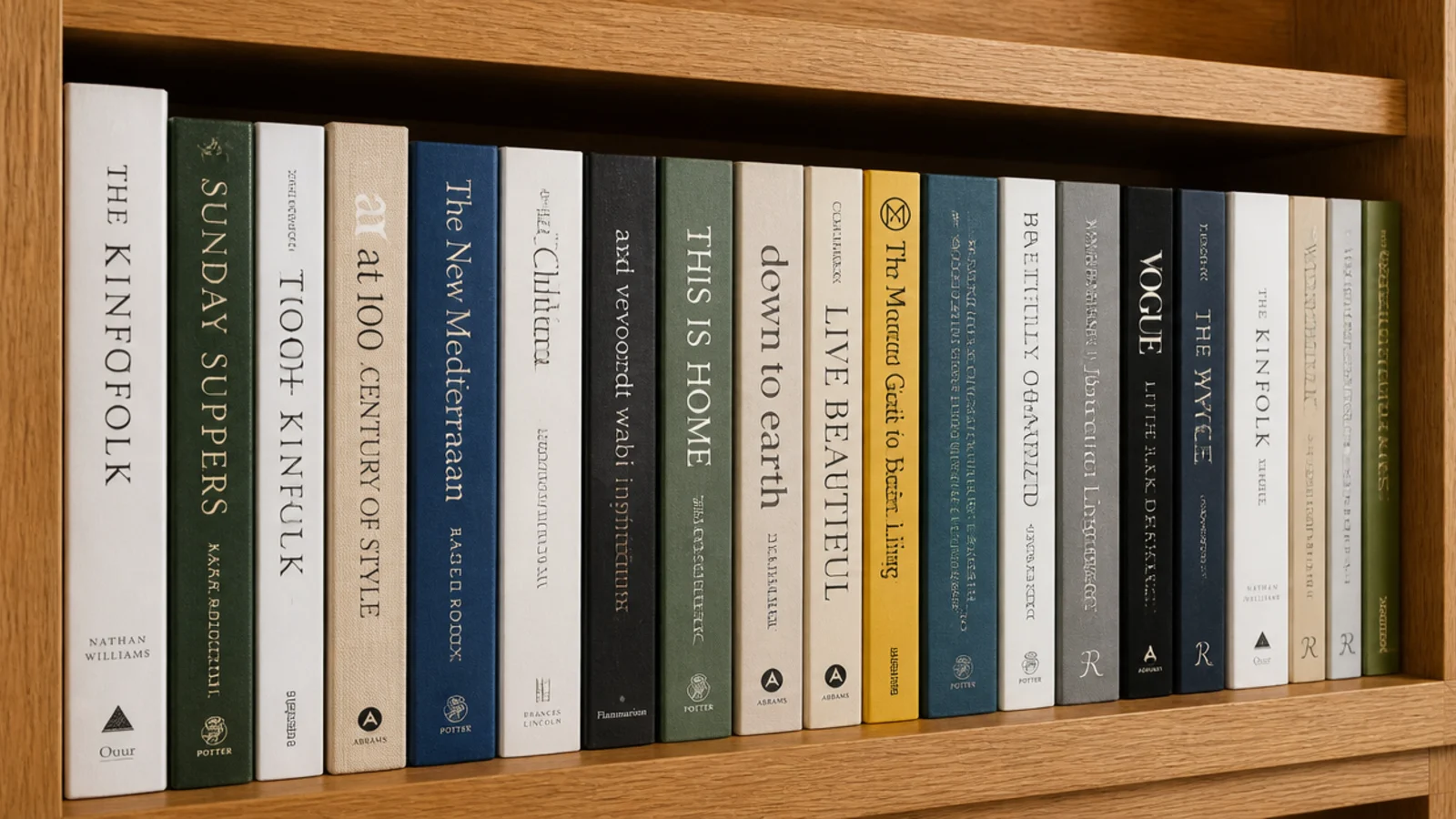
Push each row forward so all the spines sit flush at the front of the board, regardless of how deep the books are.
That single straight line is what your eye reads as tidiness, and the shadow gap left behind the books adds depth. It takes four minutes per shelf and costs nothing at all.
14. Leave the top shelf almost bare
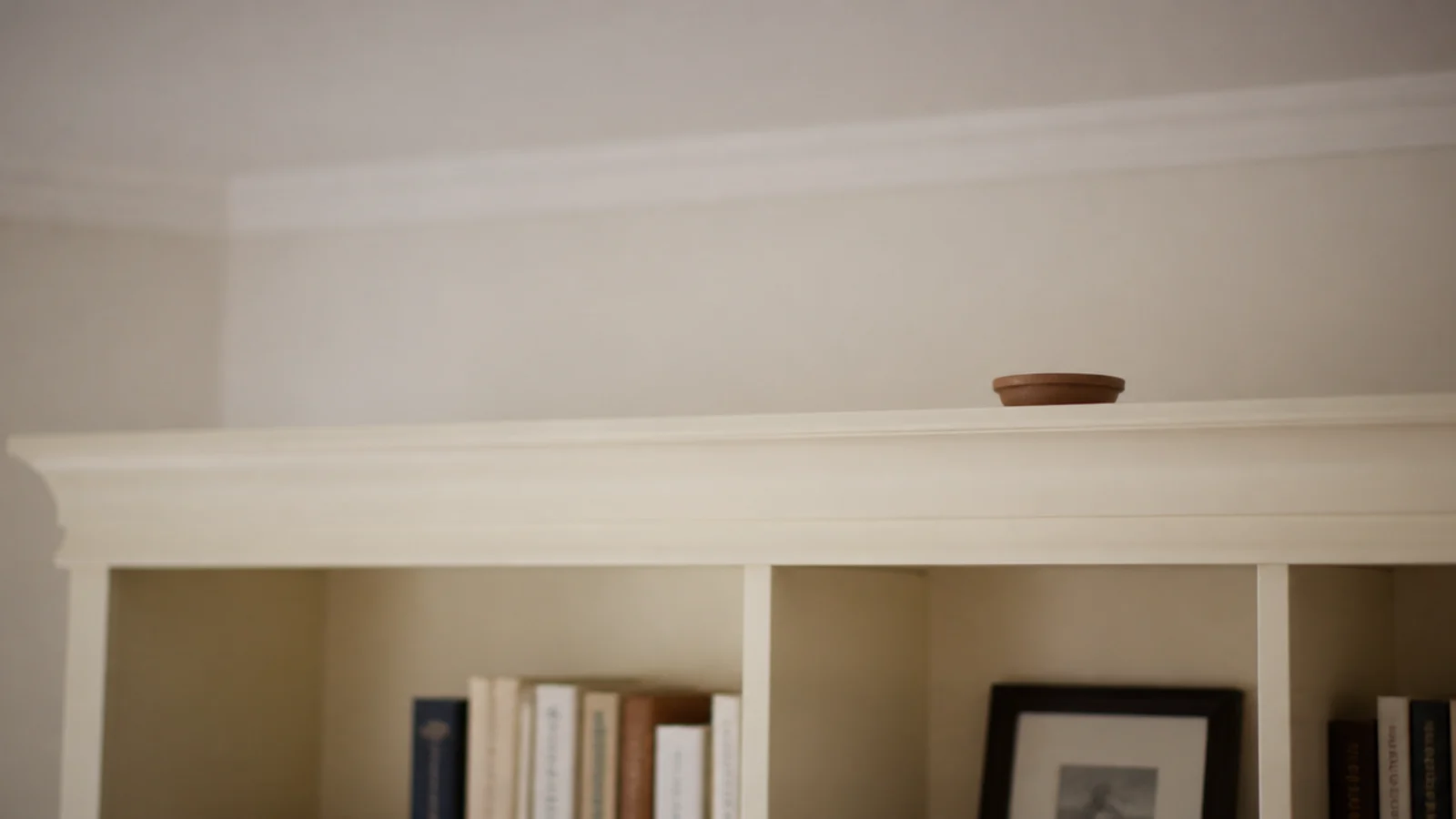
Whatever sits on the highest board is seen from below against the ceiling, where anything busy reads as heavy.
One small object up there, or nothing. In a room under nine feet this is what stops a tall case pressing down on you, and it is the shelf you reach least anyway.
15. Allow yourself one plant
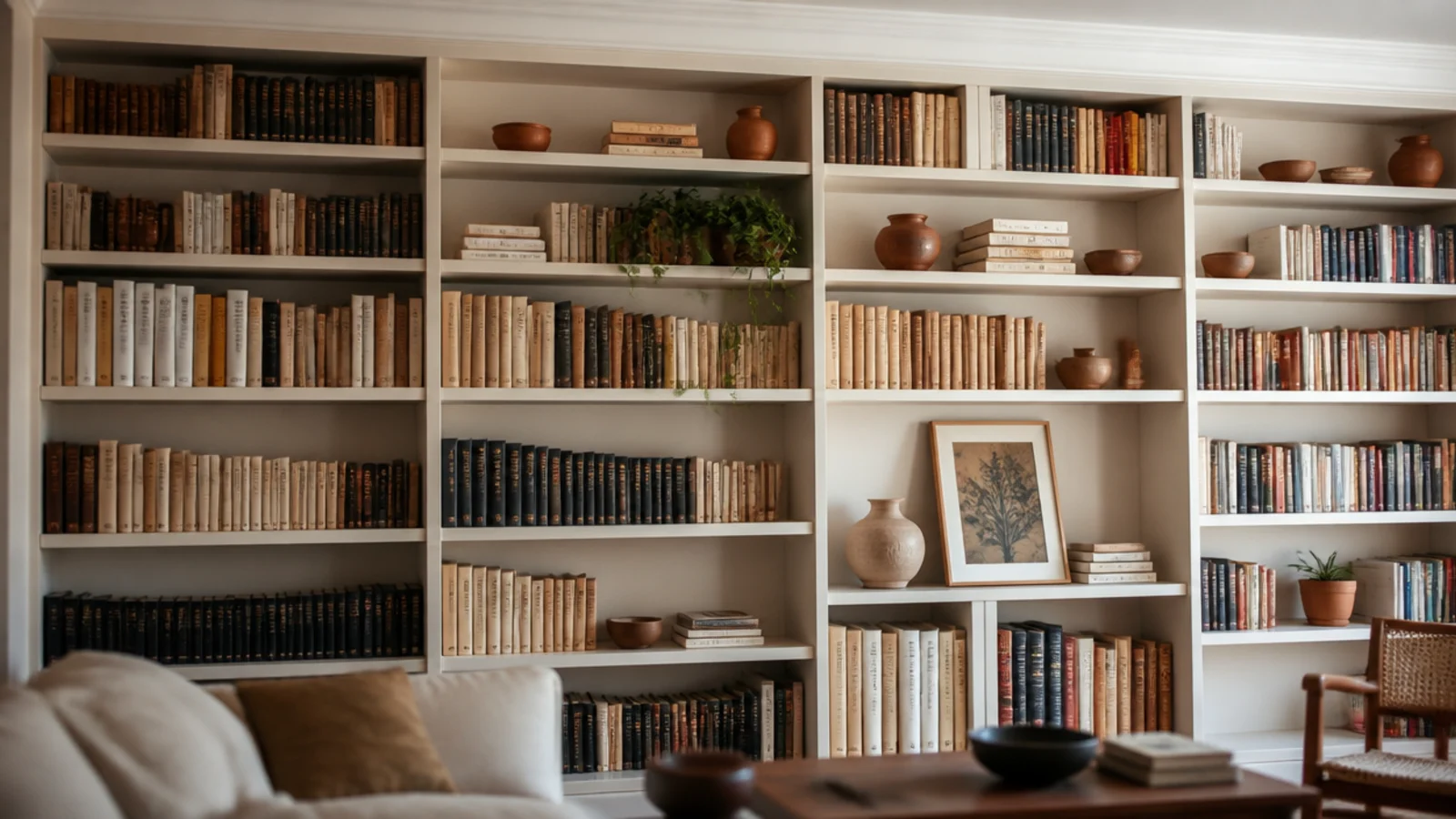
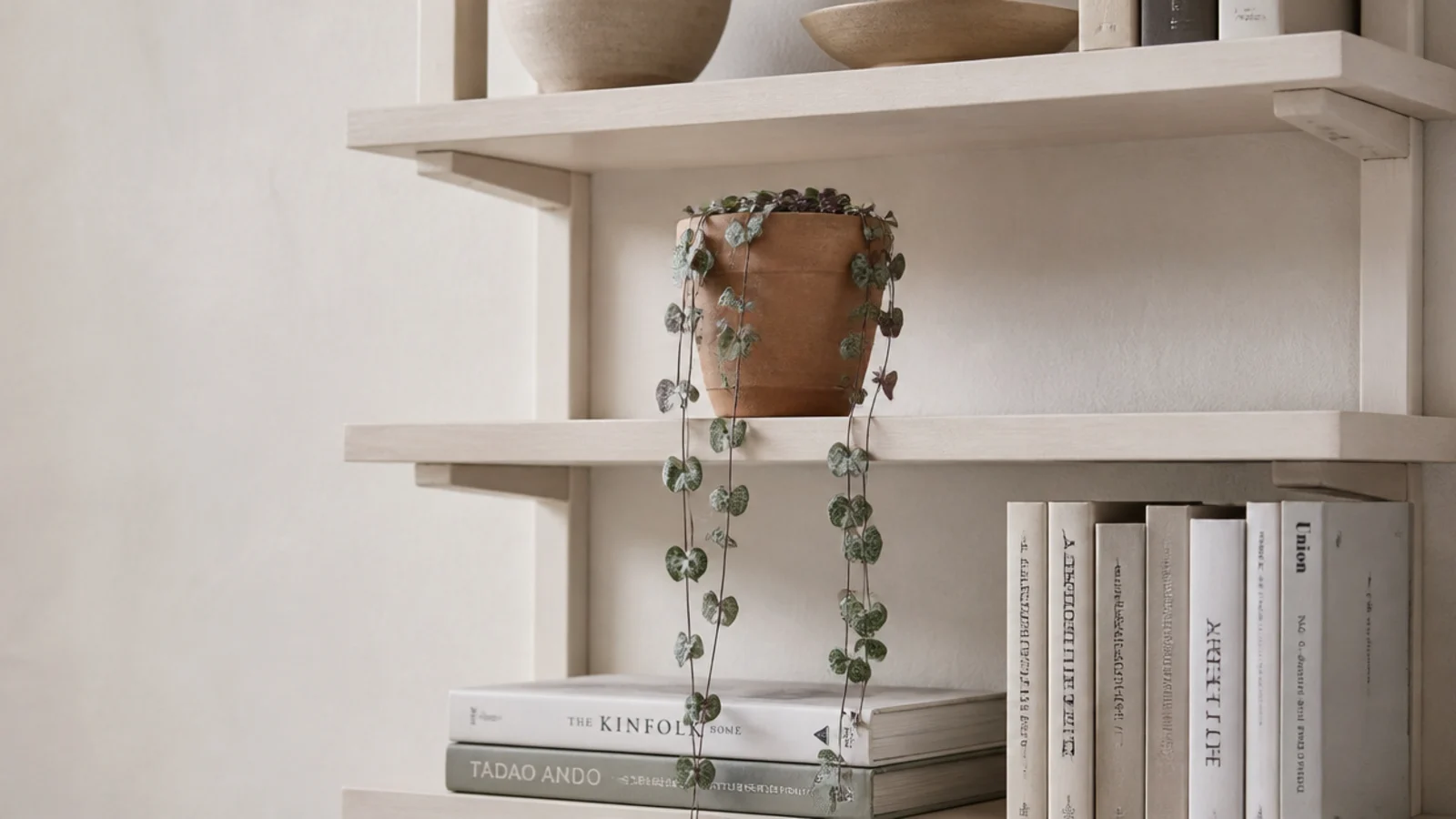
One trailing plant in the whole case, on the second shelf from the top, with vines falling into the shelf below to connect two levels.
Any more and you have a plant display with books in it. Use a plain unglazed terracotta pot rather than the black nursery pot — about $3, and clay breathes so the plant prefers it too.
16. Choose one metal and stay there
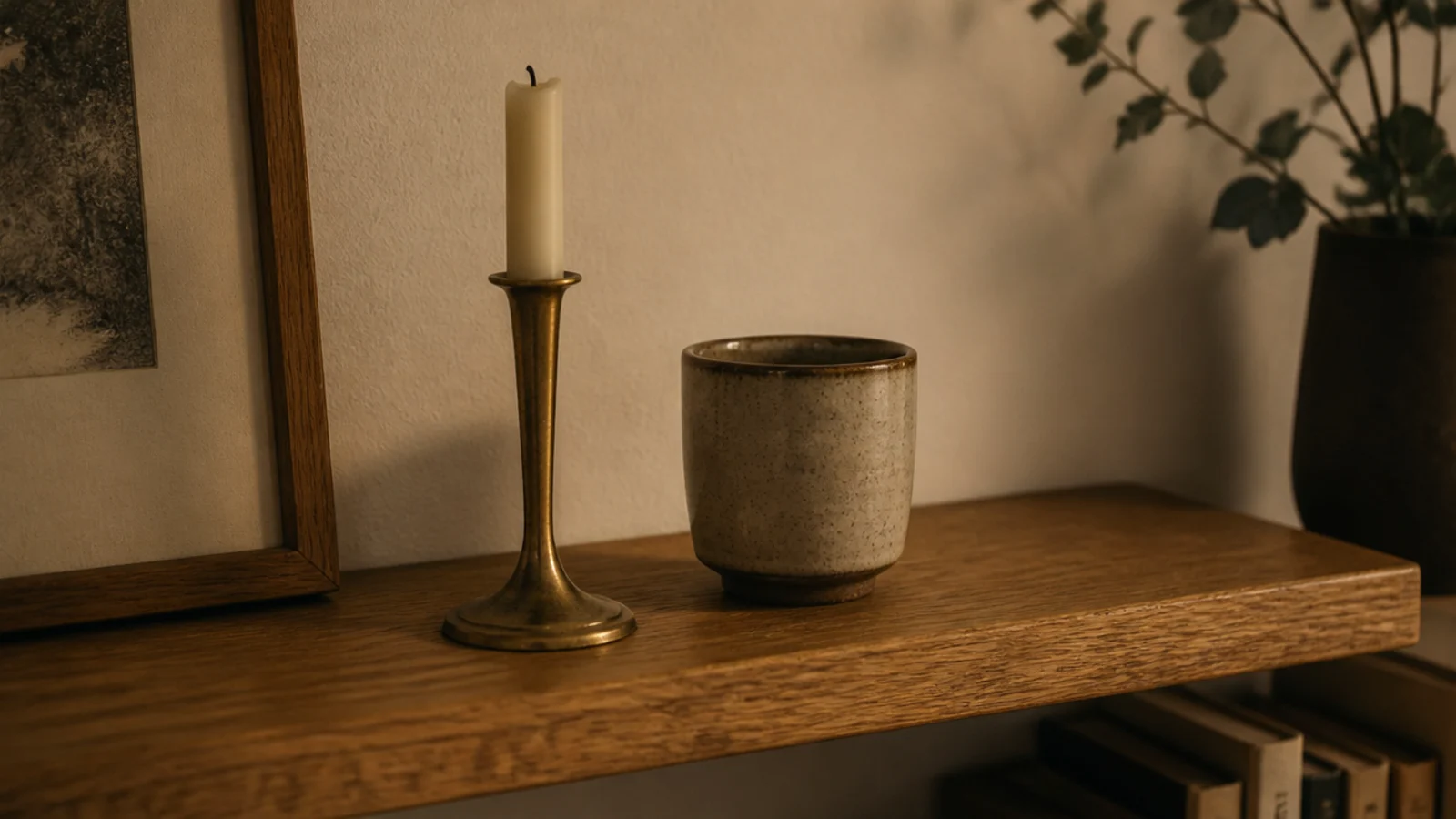
Brass, or black, or nothing. Two metals on the same case is the detail that quietly undoes an otherwise careful arrangement.
Brass is the warm choice and works with oak, clay and linen. Repeat it exactly twice across the whole unit — a candlestick and a small frame, say — and let everything else be matte.
17. Lean one artwork instead of hanging six
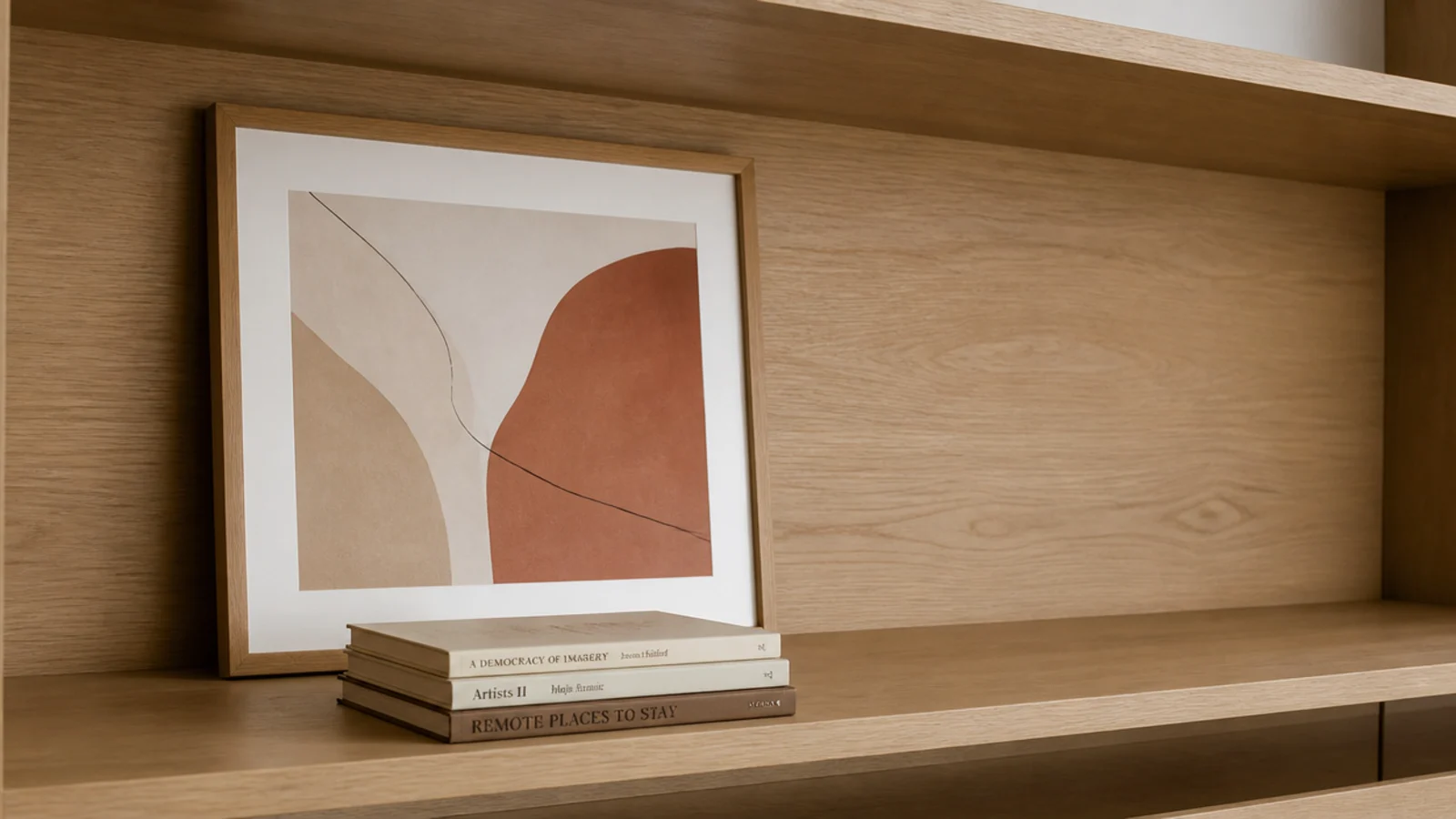
A single large framed piece leaning at the back of a shelf gives depth and a focal point, and replaces a whole gallery wall.
Size it to at least two-thirds of the clear height. Overlap its front edge slightly with a book stack so it sits within the composition. Thrifted frames run $3 to $10 ($).
18. Hide the brackets completely
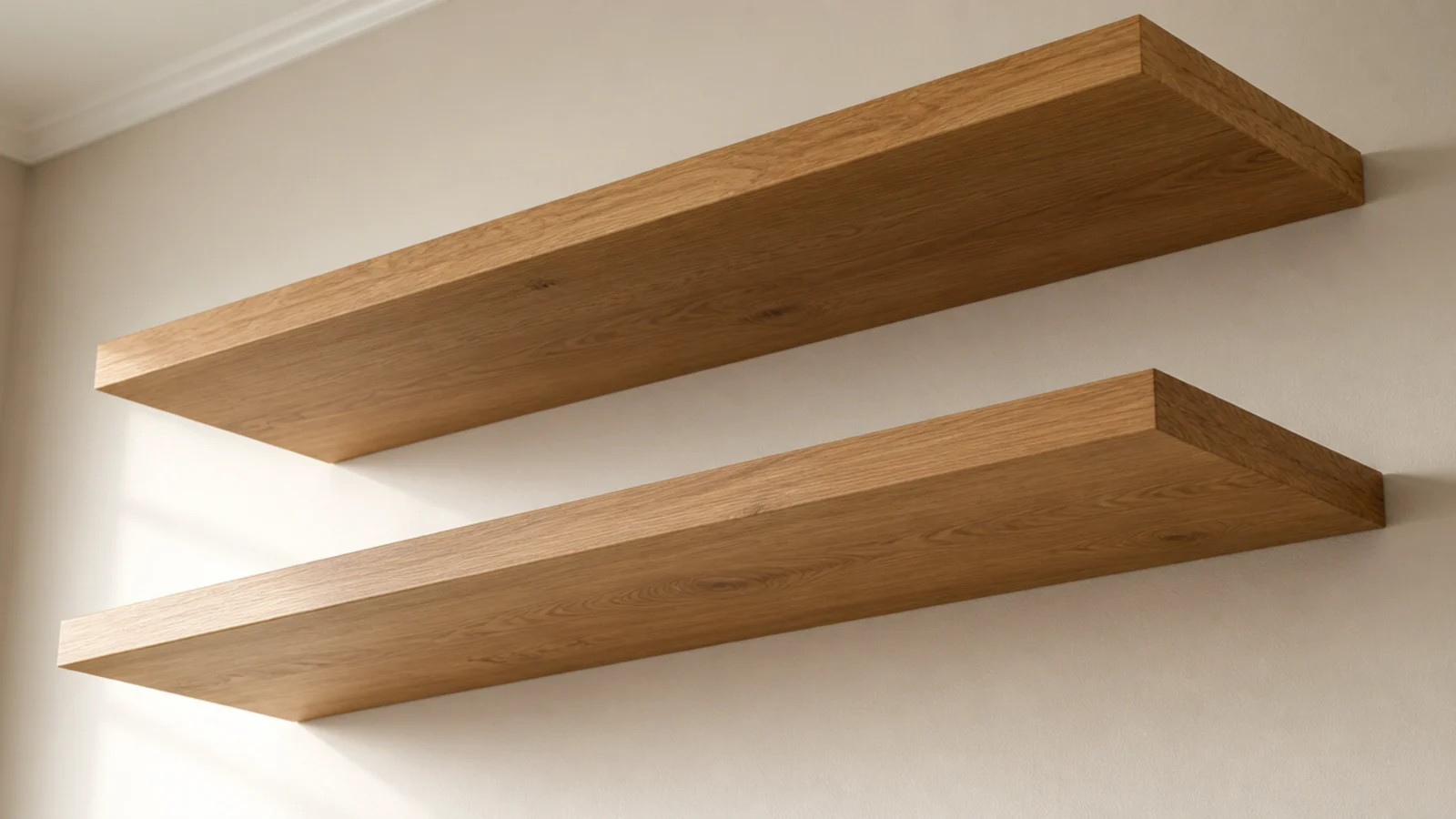
Visible hardware is the single detail that breaks a minimal shelf. Concealed rod fixings, a recessed cleat or a routed keyhole all give you a board that appears to grow from the wall.
If the brackets have to show, paint them the wall color. It costs $4 in sample paint and works from every normal viewing angle.
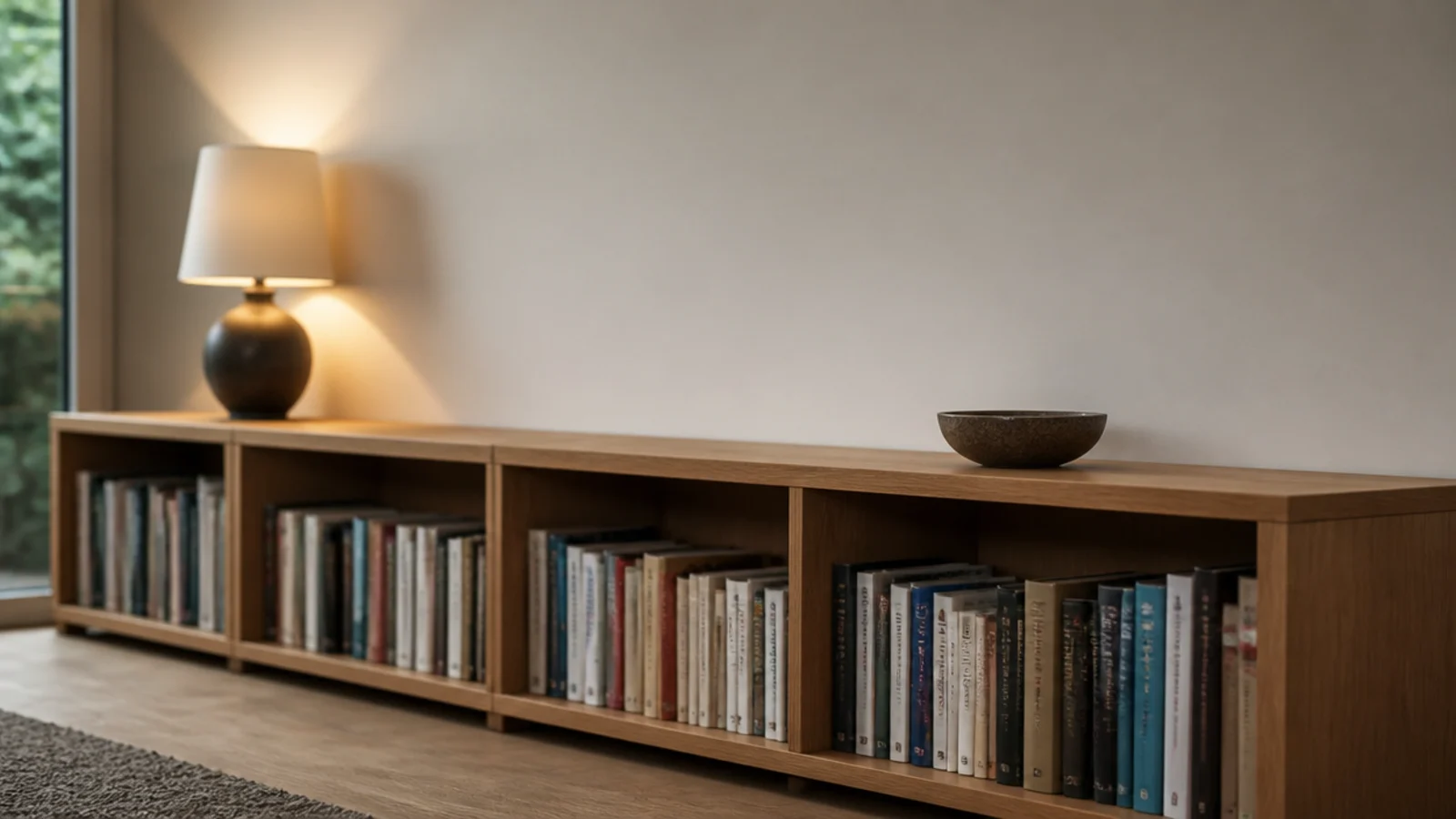
19. Go long and low instead of tall
A run capped at 30 inches leaves the entire wall above it empty, and that emptiness is the effect you are after.
You lose storage and gain a long uninterrupted surface for a lamp and one bowl. In a low-ceilinged apartment, a long low run makes the room read wider than any tall case can.
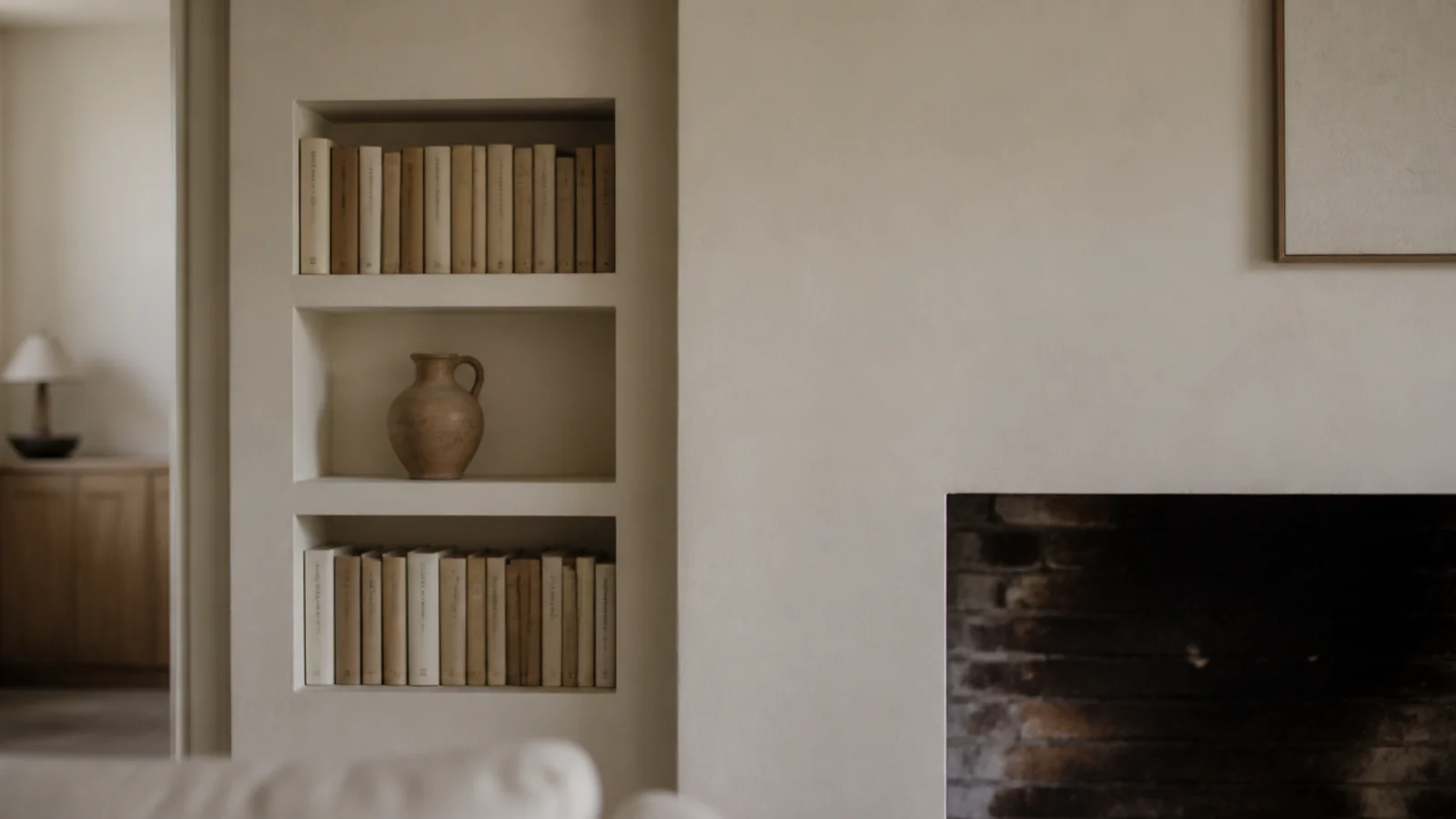
20. Recess the shelving into an alcove
Shelving set flush with the face of the wall removes every protruding edge from the room. Nothing sticks out, nothing casts a hard shadow.
Alcoves are usually 10 to 13 inches deep already, which is exactly right for books. Painting the recess the wall color finishes it. This is the version most worth spending on ($$$ in joinery).
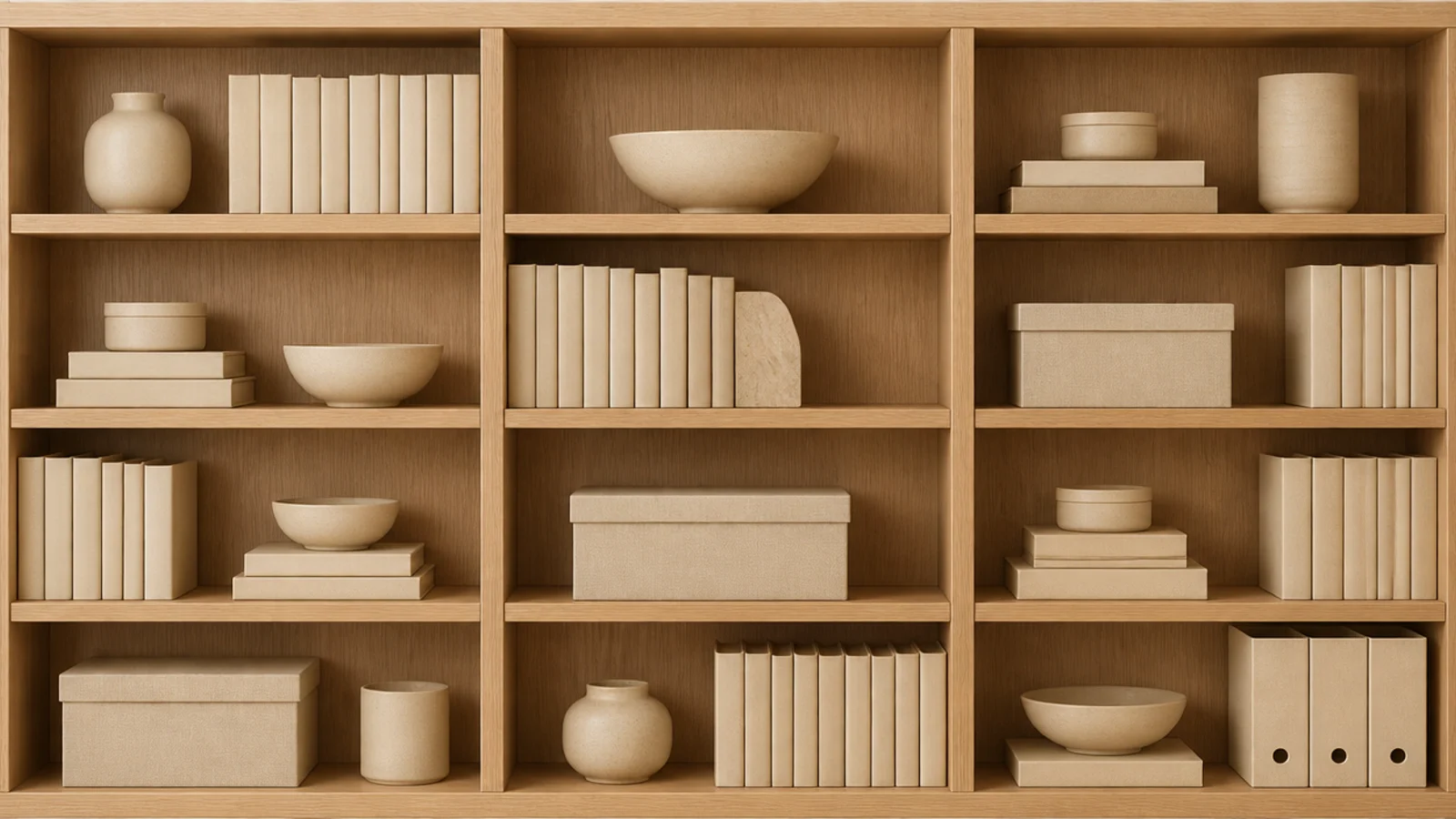
21. Hold the palette to three tones
Count the colors on the whole case, not per shelf. Cream, clay and oak is a complete palette, and a fourth tone is usually what starts the drift back toward clutter.
Objects that fall outside those three go in the rotation box. Bookshelf decor ideas has more combinations if you want a slightly richer palette than this.
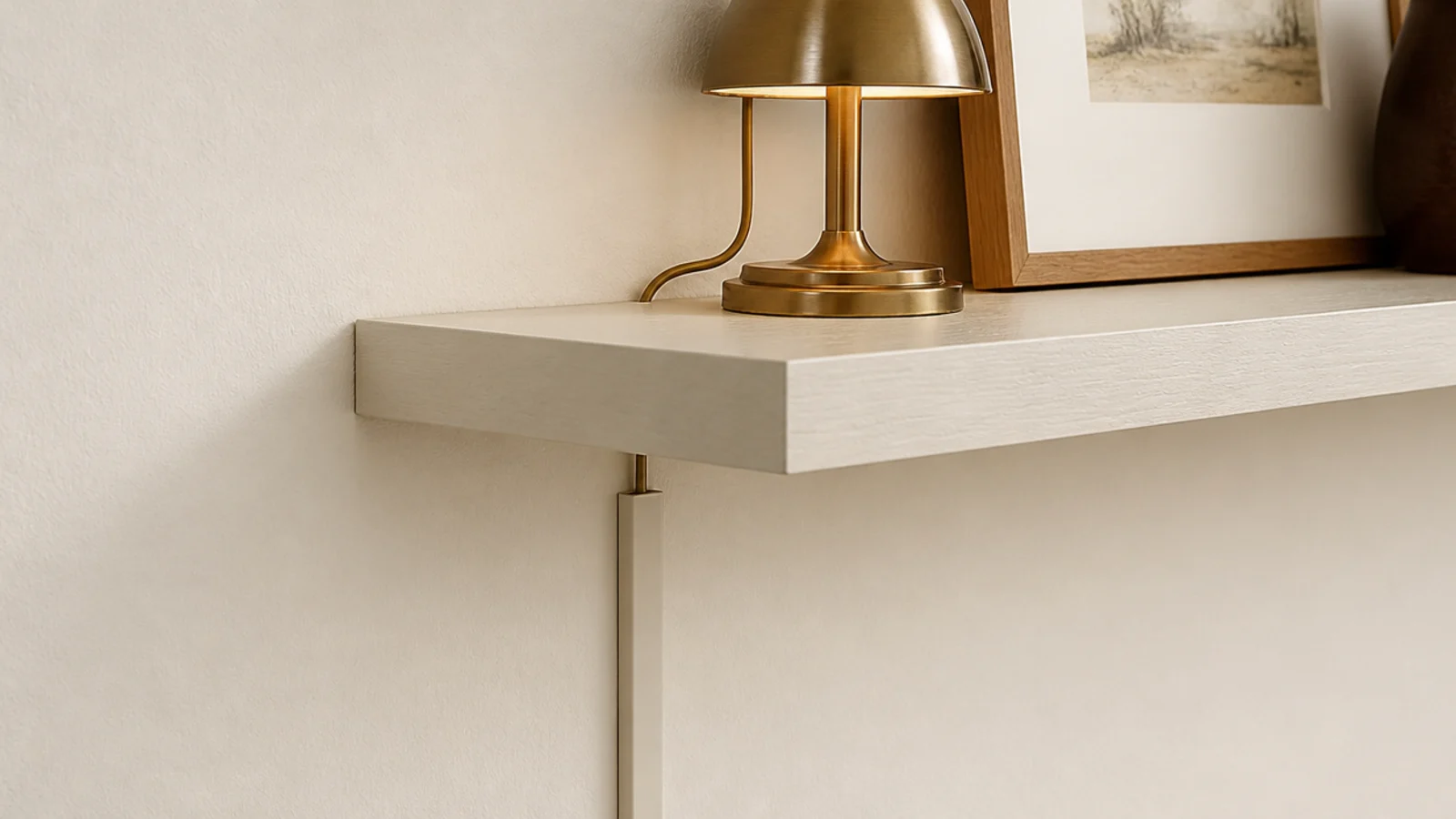
22. Deal with the cables properly
A perfectly edited shelf with a lamp cord hanging down the wall is not an edited shelf. This is the detail people leave until last and then never do.
An adhesive cable channel painted the wall color costs about $8 ($) and takes ten minutes. Run it down a corner or a case upright where the eye already expects a vertical line.
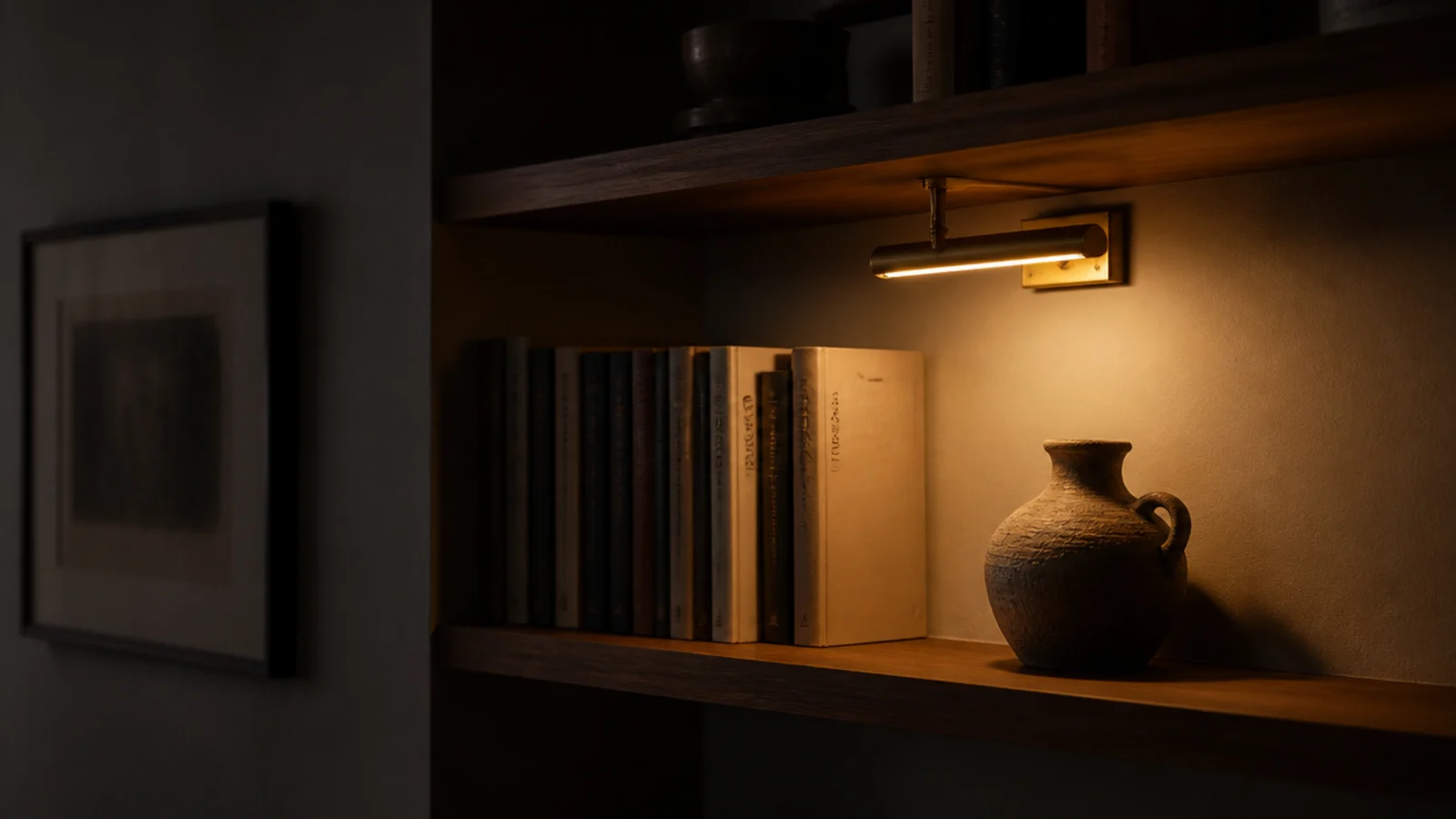
23. Use one warm light source, not three
Multiple light sources create competing shadows, and shadow is what a spare shelf uses to describe its objects.
One small picture light or one puck at 2700K, positioned to graze across the shelf rather than flood it. Cool 4000K light drains oak and terracotta of everything warm about them.
24. Give the case one oversized anchor
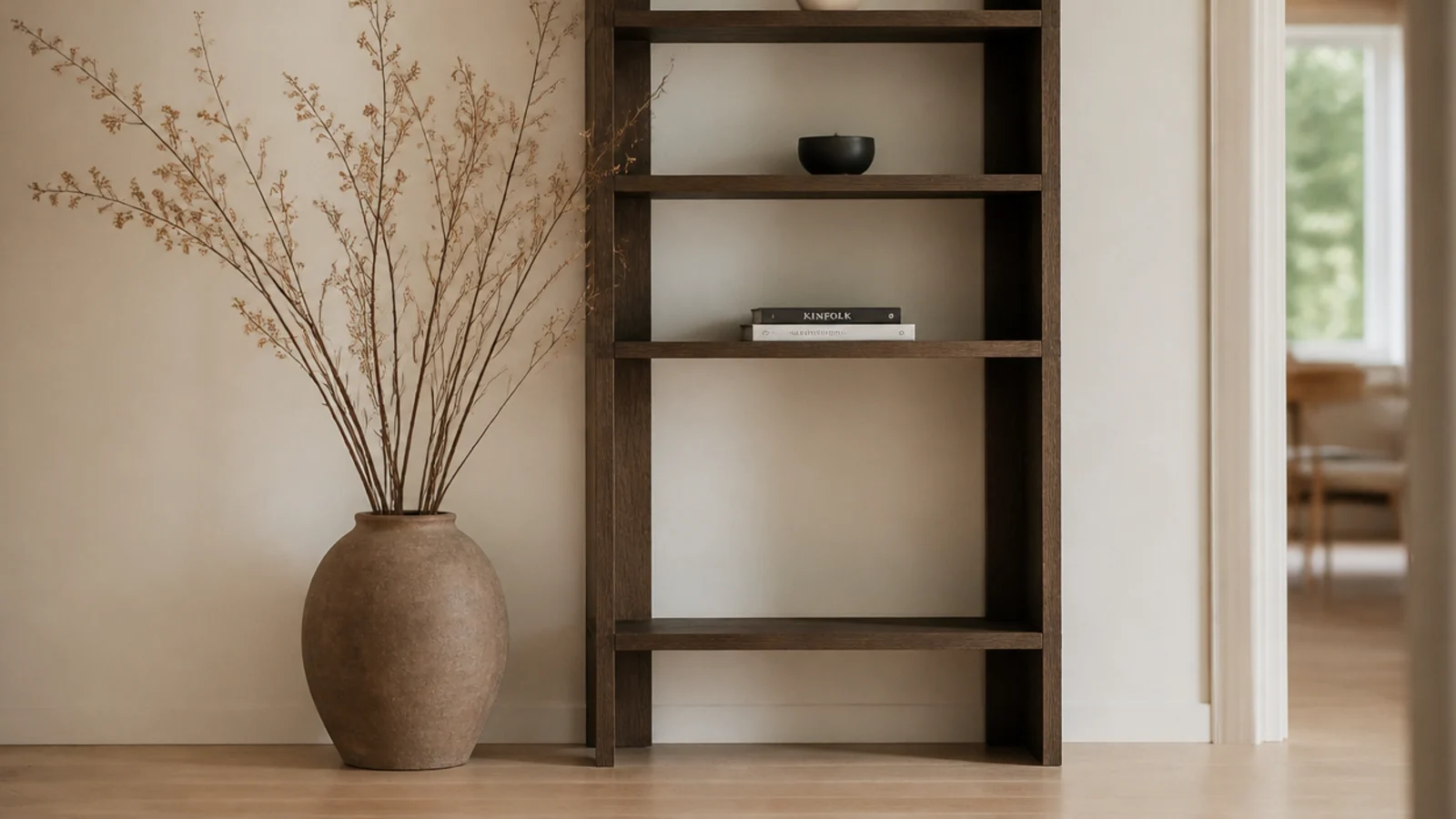
A pared-back unit can start to look like it is floating. One large object at the base — a floor-standing clay vessel with dried branches — holds it down.
Choose something at least 16 inches tall. Placing it at the base rather than on a shelf also keeps the weight low, which is where weight belongs on any freestanding case.
25. Use symmetry only where the wall is symmetrical
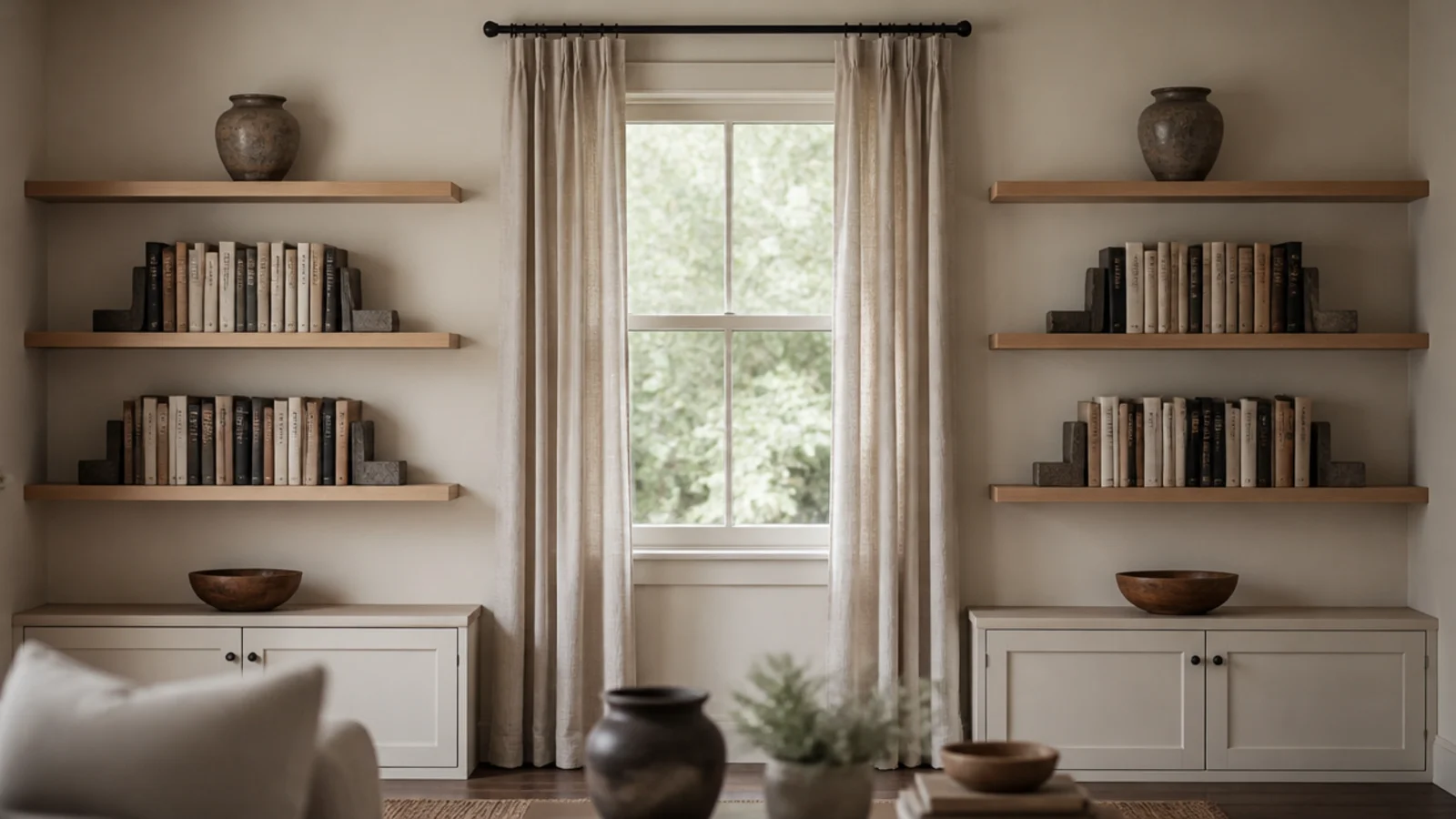
Matched pairs of shelves either side of a centerd window look serene. The same pair on a wall with an off-center door looks like a mistake you are defending.
Read the wall first. Where the architecture is asymmetric, use one long run and let the balance come from the empty space rather than from mirroring.
26. Store the overflow somewhere that is not the shelf
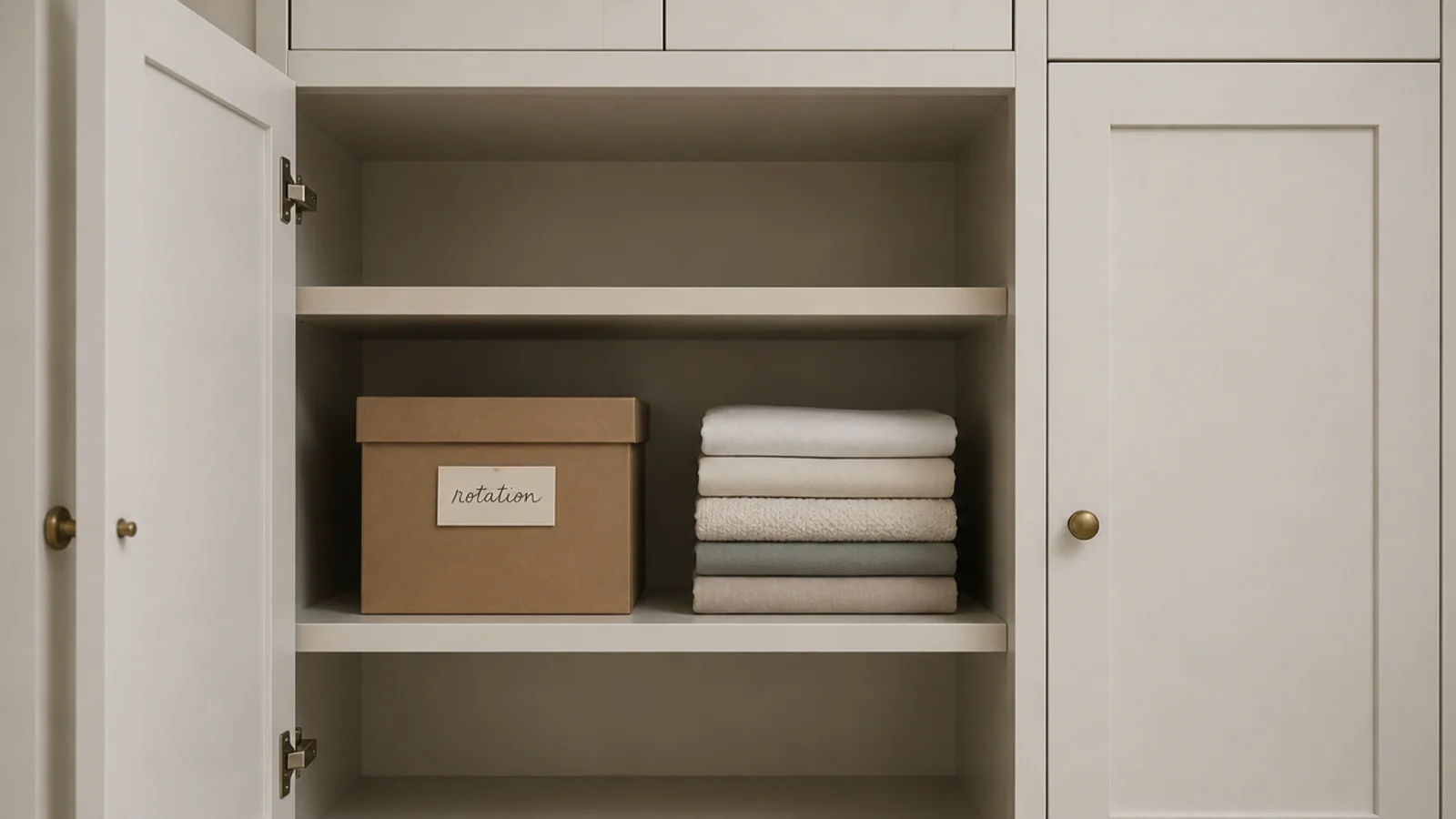
Shelves refill because the extra things have nowhere else to go. One labeled box in a cupboard fixes that permanently.
Swap the contents seasonally. Same possessions, completely different room, and nothing has to be given away — which is why this survives contact with real life better than most decluttering advice.
27. Wipe it down once a month
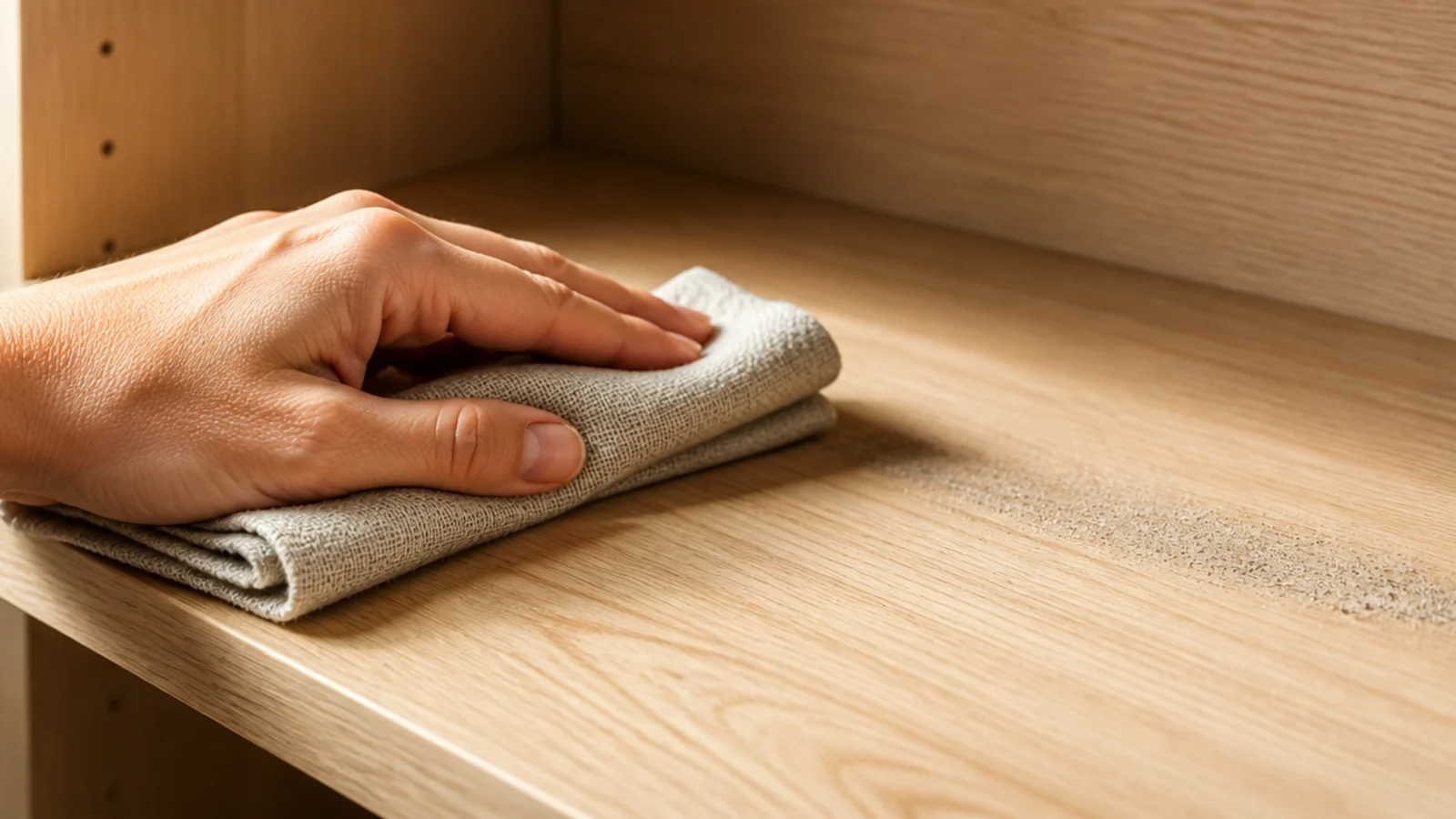
Bare board shows dust in a way a packed shelf never does. A minimal case that has not been wiped reads as neglected rather than edited.
Ten minutes with a slightly damp linen cloth, once a month. It sounds trivial and it is the difference between the look holding and quietly falling apart.
28. Stiffen the board with a lip, not more thickness
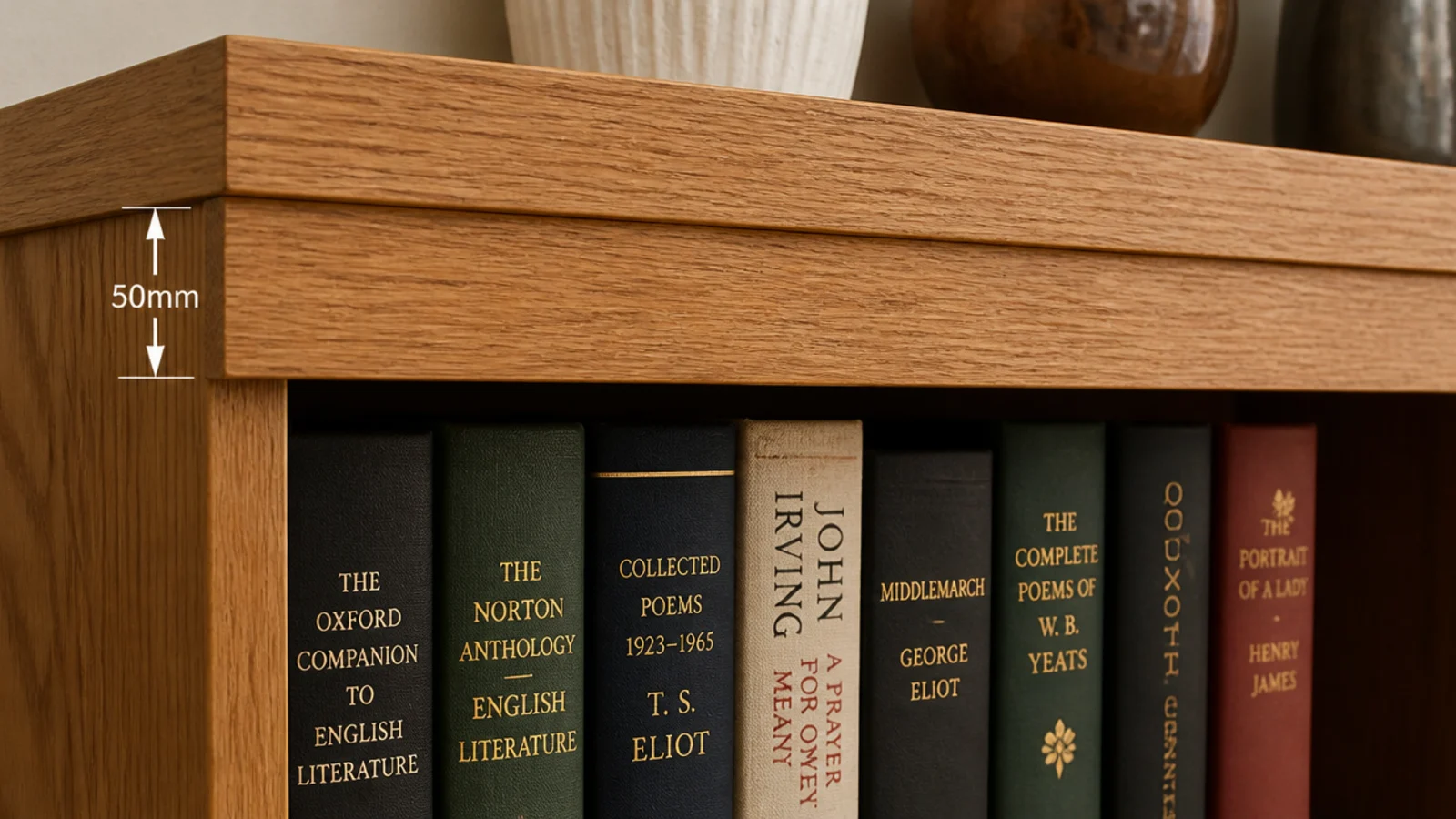
Thick chunky shelves read heavy. If a 3/4-inch board is sagging, glue a narrow strip under the front edge instead of buying a thicker one.
The lip doubles the apparent depth at the edge and stiffens the whole span, while the shelf still looks slim from the front. A few dollars and an hour, including clamping.
29. Respect the span and the weight
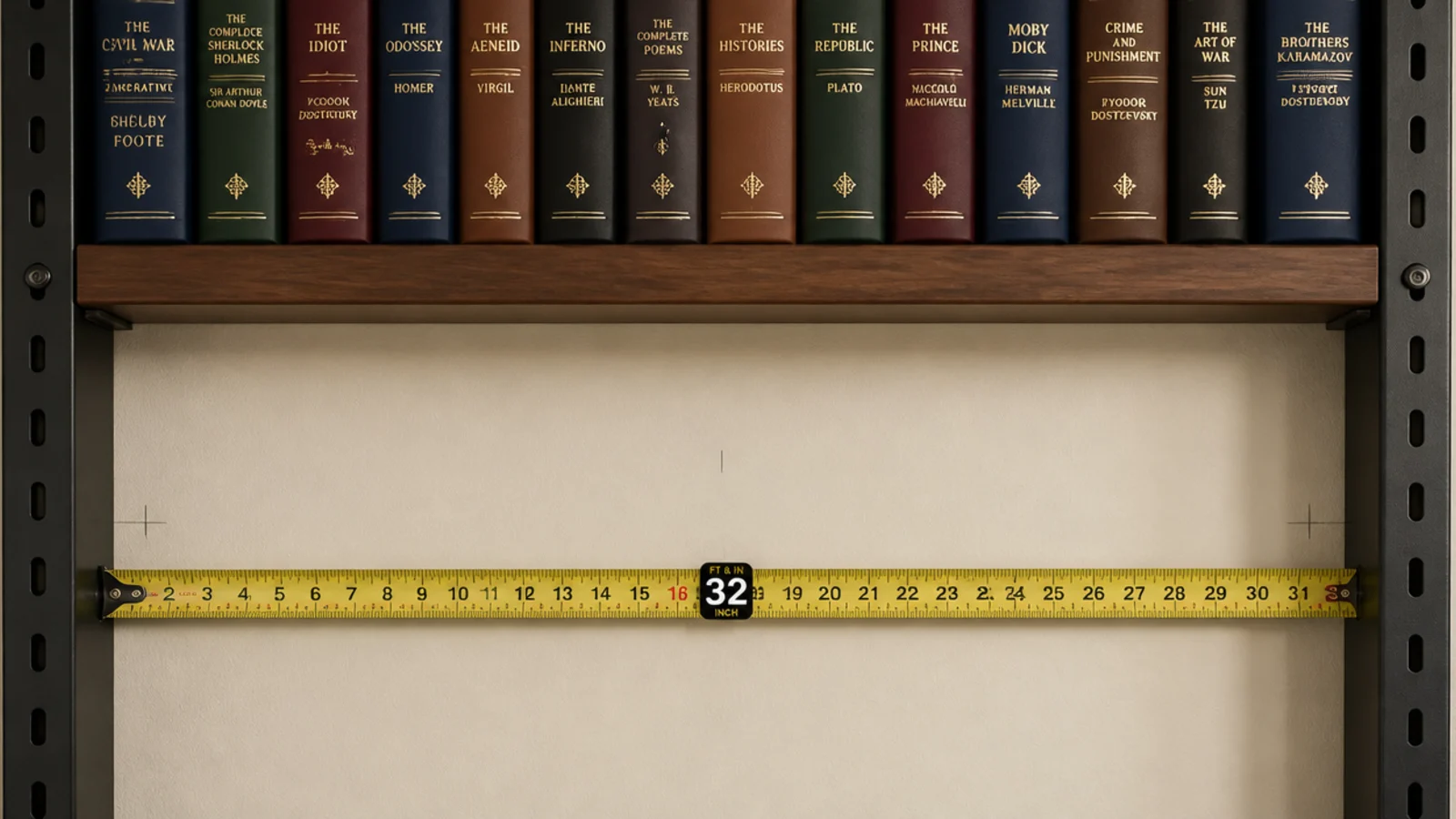
A bowed shelf ruins a minimal look faster than any amount of clutter, because the eye reads the curve immediately against all that straight empty board.
Keep spans at or under 32 inches in 3/4-inch stock. A 36-inch shelf of hardbacks is 60 to 75 pounds, so plan for studs or a mid support before you plan the styling.
30. Strap it to the wall and stop thinking about it
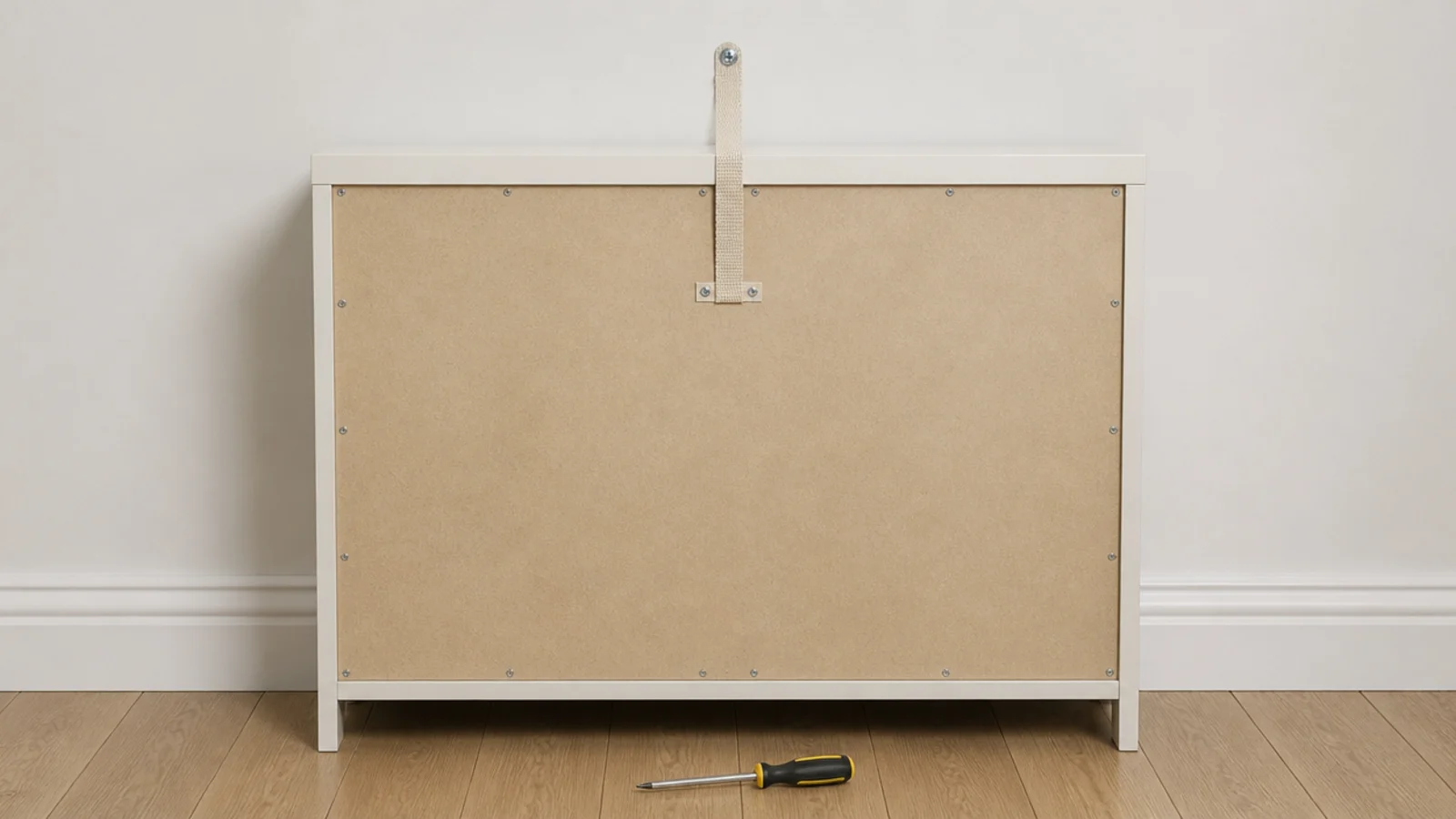
Every freestanding bookcase gets an anti-tip strap, without exception, in any home with children. A pared-back case is often lighter and taller, which makes it easier to climb and easier to tip.
One screw, one small hole, thirty seconds of spackle on move-out day. It is the only piece of hardware on this list I insist on.
Mistakes to Skip
- Confusing minimal with cold. Strip the quantity, keep the warmth — oak, linen, clay and brass in small numbers, never chrome and glass in the same small numbers.
- Spreading the few remaining objects evenly across each board. Even spacing reads as a shop display; tight grouping with real empty space beside it reads as a home.
- Adding an extra shelf because there is vertical room. Fewer, taller gaps is the entire look, and every additional board is a surface that will fill up.
Frequently asked questions
How do you make a bookshelf look minimalist without it feeling cold?
Keep the editing strict and the materials warm. Pare the objects back hard, then make sure what remains is oak, linen, jute, clay and brass rather than glass, chrome and plastic. A shelf with four objects on it reads calm when those objects have texture, and clinical when they do not. Light at 2700K finishes the job.
How many books should a minimalist bookshelf hold?
Aim for roughly two-thirds full and stop counting titles. On a standard 30-inch shelf that is about 20 inches of books and 10 inches of air. The point is not owning fewer books, it is not putting all of them out at once. Box the rest and rotate seasonally, and the shelf stays calm without anything being thrown away.
Should minimalist shelves be floating or freestanding?
Floating shelves suit a minimalist look because there is no visible frame, but they need studs and a 3/4-inch board that does not span past 32 inches. A freestanding case works equally well once you paint it the wall color. Whichever you choose, hide the hardware, since visible brackets are the detail that breaks the effect.
What color works best for a minimalist bookshelf?
The color already on your wall. A case painted to match reads as architecture and lets a small number of objects carry all the interest. Contrasting cases become the focal point themselves, which is the opposite of what a pared-back shelf is for. Keep the objects to three tones and one metal.
How do I keep a minimalist shelf from filling back up?
Give the overflow a home that is not the shelf. One labeled box in a cupboard for the rotation, one basket on the lowest shelf for the daily strays, and a two-minute reset every Sunday. Shelves refill because there is nowhere else for things to go, not because anyone decided to clutter them.
Take one shelf, empty it completely, and put back a book stack, one object and nothing else. Live with it for a week before you touch the rest of the case. For the overflow, bookshelf organization ideas covers sorting systems that survive real life, and if the same room needs softer evening light, neutral candle aesthetic pairs with this palette exactly. Save the pin for the next tidy-up.
Want more like this? Browse all 15 bookshelf ideas guides — they all use the same measurements and budget tiers.
Pin it for later
Save this to your Bookshelf Ideas board
Pin it now so it is waiting for you when the tape measure comes out — and so the next person hunting for this idea can find it too.
Save this pinKeep going
More ideas worth saving while you have the tape measure out.