Bookshelf Ideas · Listicle
20 Stunning Bookshelf Ideas to Copy Now

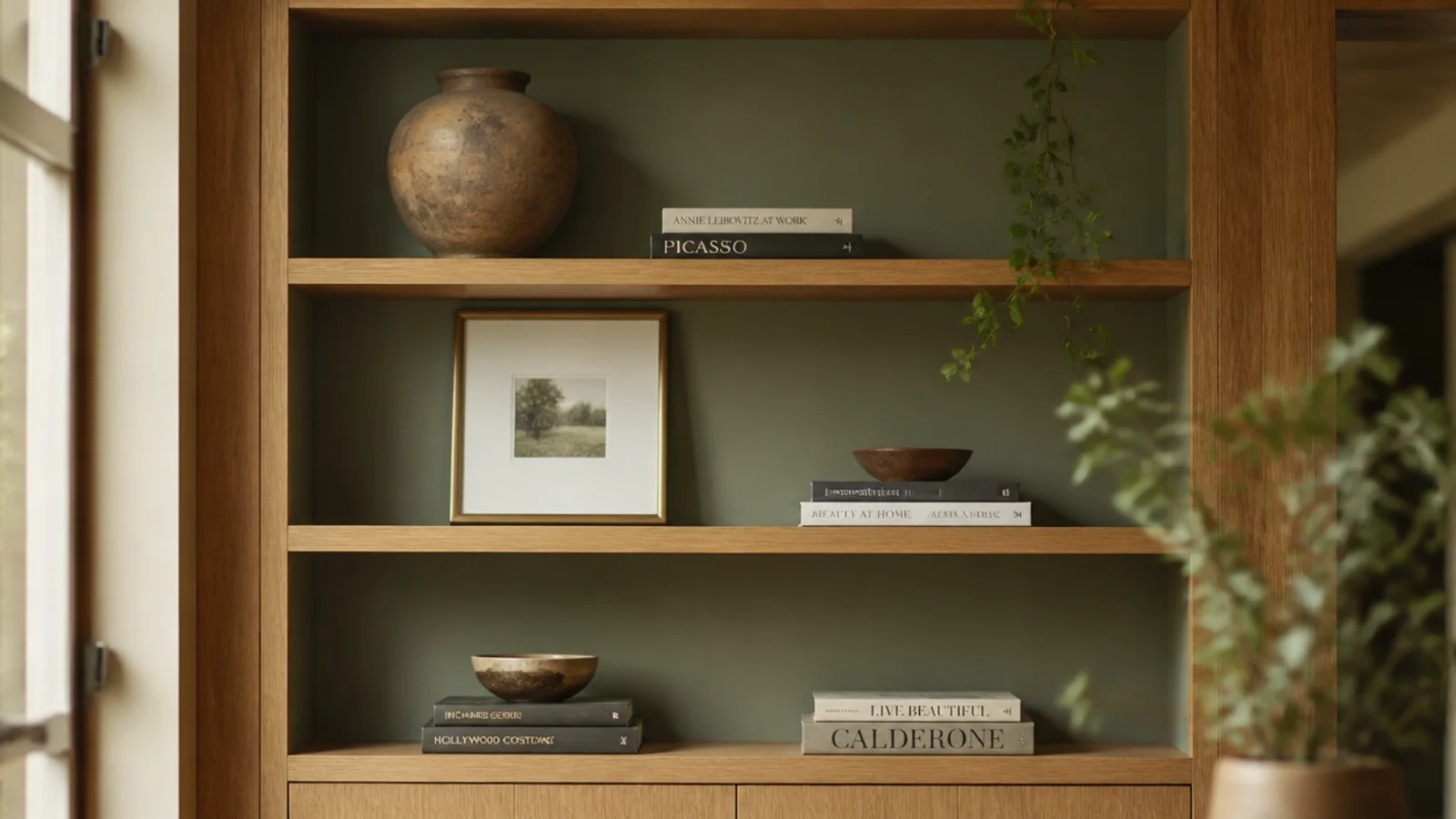
The difference between a shelf that looks collected and one that looks crowded is usually five objects and one gap. Good bookshelf decor ideas are less about shopping than editing — every technique below works with things you probably already own, and the ones that need buying run $6 to $30 from a thrift store. Nothing here takes longer than ten minutes to try.
In this guide22 sections — tap to openHide
- 1.What separates real bookshelf decor ideas from clutter
- 2.Give every unit one oversized ceramic anchor
- 3.Turn three flat books into a plinth
- 4.Corral small things on one shallow tray
- 5.Lean one framed piece at the back
- 6.Repeat one metal exactly three times
- 7.Hang a trailing plant on the second shelf down
- 8.Add one small light to the top shelf
- 9.Take the dust jackets off
- 10.Turn one book cover out as a landing point
- 11.Choose bookends you would display anyway
- 12.Bring in one woven texture low down
- 13.Paint the back panel a deep muted shade
- 14.Build a small candle vignette at eye level
- 15.Group the books by height, not by color
- 16.Interrupt a run of spines with one low bowl
- 17.Add height with dried stems in a tall vase
- 18.Move the empty gap as you go up
- 19.Slip in one genuinely old object
- 20.Tuck a small mirror into a dark shelf
- 21.Give the bottom shelf to baskets, not books
- 22.Mistakes to Skip
What separates real bookshelf decor ideas from clutter
Three rules carry every vignette in this list, and if you only take those, the shelves will still be fine.
Vary the height. Three objects at three clearly different heights: something tall, something low and wide, something soft. If two pieces read within an inch of each other, one of them is wrong. Squint at the shelf and the answer is obvious in about two seconds.
Leave a third empty. A shelf that is two-thirds full and one-third clear reads as chosen. A shelf packed edge to edge reads as stored, regardless of how good the objects are. In a small room push closer to half.
Repeat, do not match. One material appearing exactly three times across the unit creates a rhythm your eye reads as deliberate while the objects stay mixed. Buying a matched decor set does the opposite, because nothing in it varies in height, age or texture.
Two practical notes before the list. Books should still do about seventy percent of the visible work — a bookcase full of objects becomes a display case, and it loses the warmth that made you want shelves in the first place. And remember the weight: a linear foot of hardbacks is 20 to 25 pounds, so if you are moving heavy stacks around while you style, keep them on the lower shelves where they belong.
Budget tiers below: $ is free and uses what you own, $$ is $20 to $60, and $$$ is $100 to $250 for lamps, real stone and large pottery.
1. Give every unit one oversized ceramic anchor
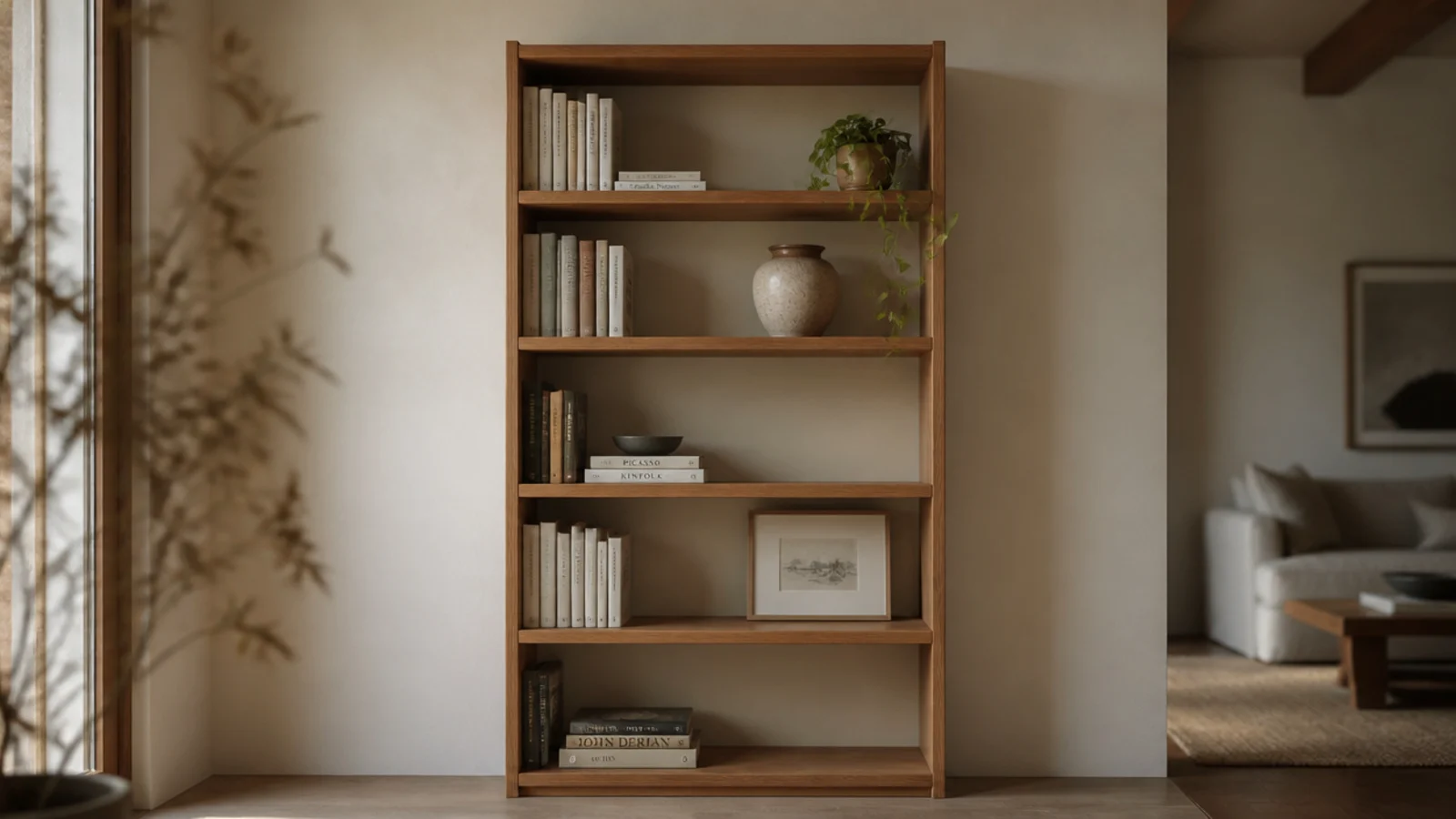
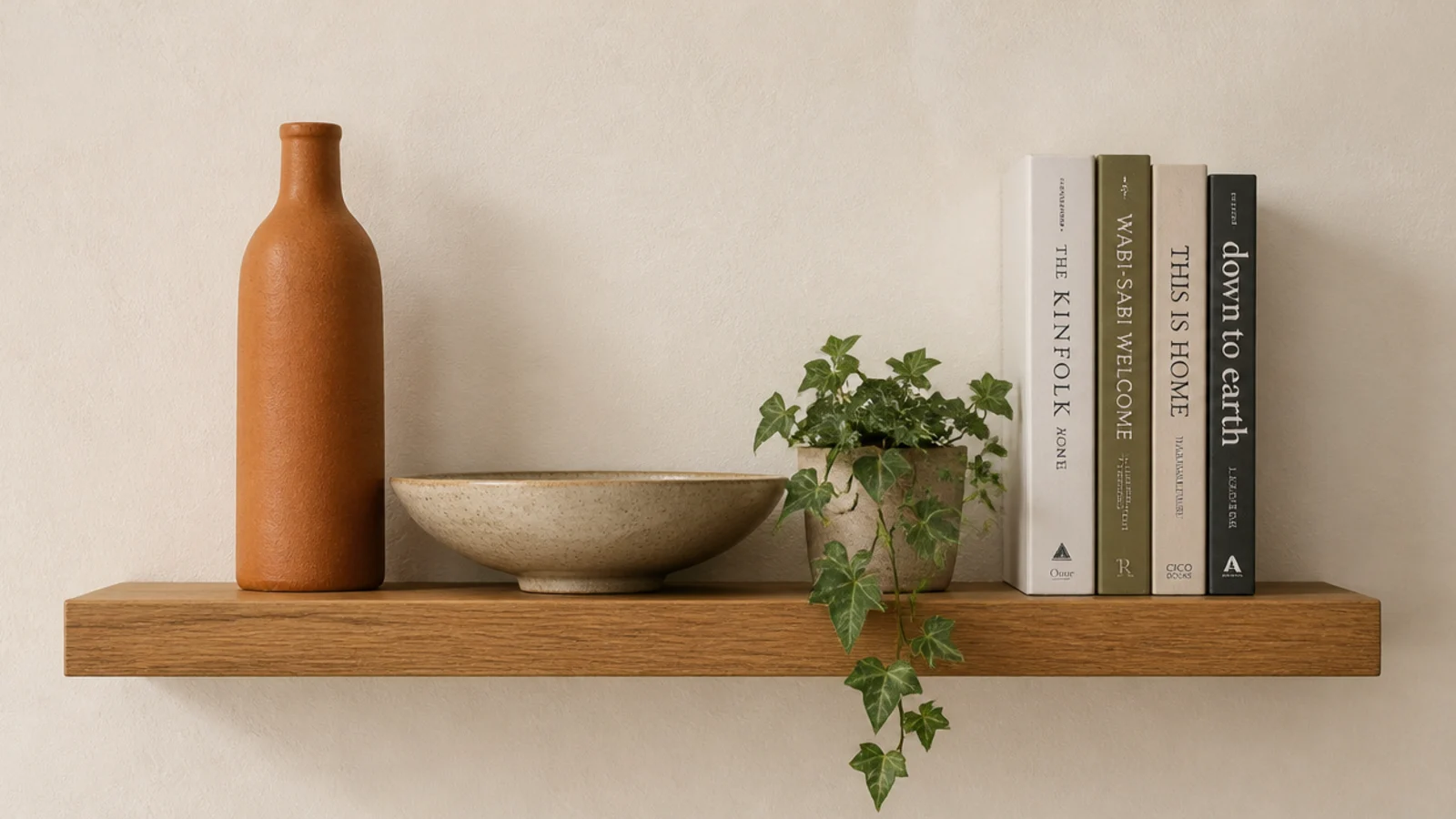
One piece noticeably larger than feels comfortable — 10 to 14 inches tall on a 12-inch-deep shelf. A big stoneware vessel, a lidded jar, a substantial bowl.
One per bookcase, placed slightly off-center near eye level, and everything else styled outward from it. Large pottery is the best value in any thrift store at $8 to $30, because most homes have nowhere to put it. $$
2. Turn three flat books into a plinth
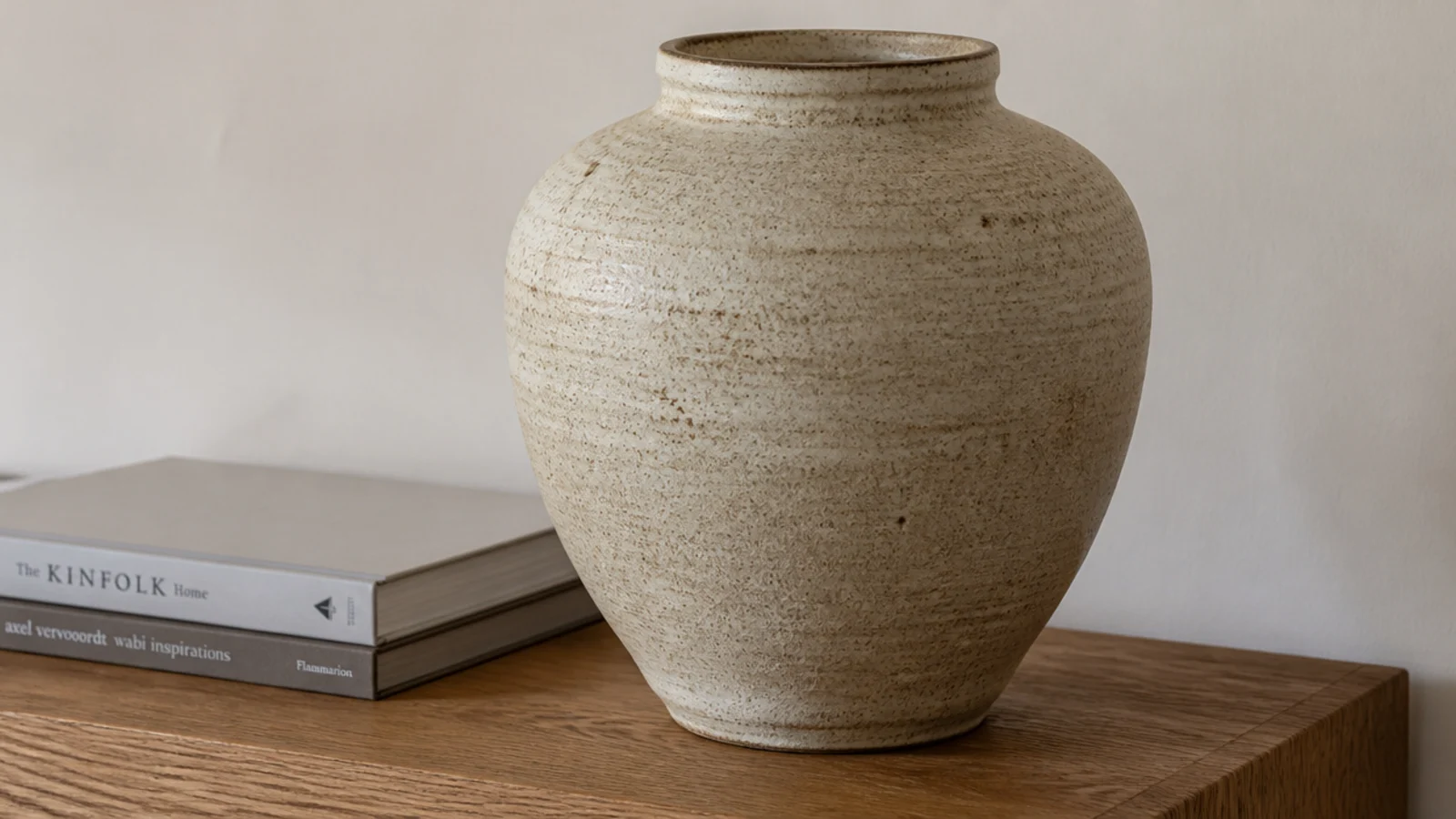
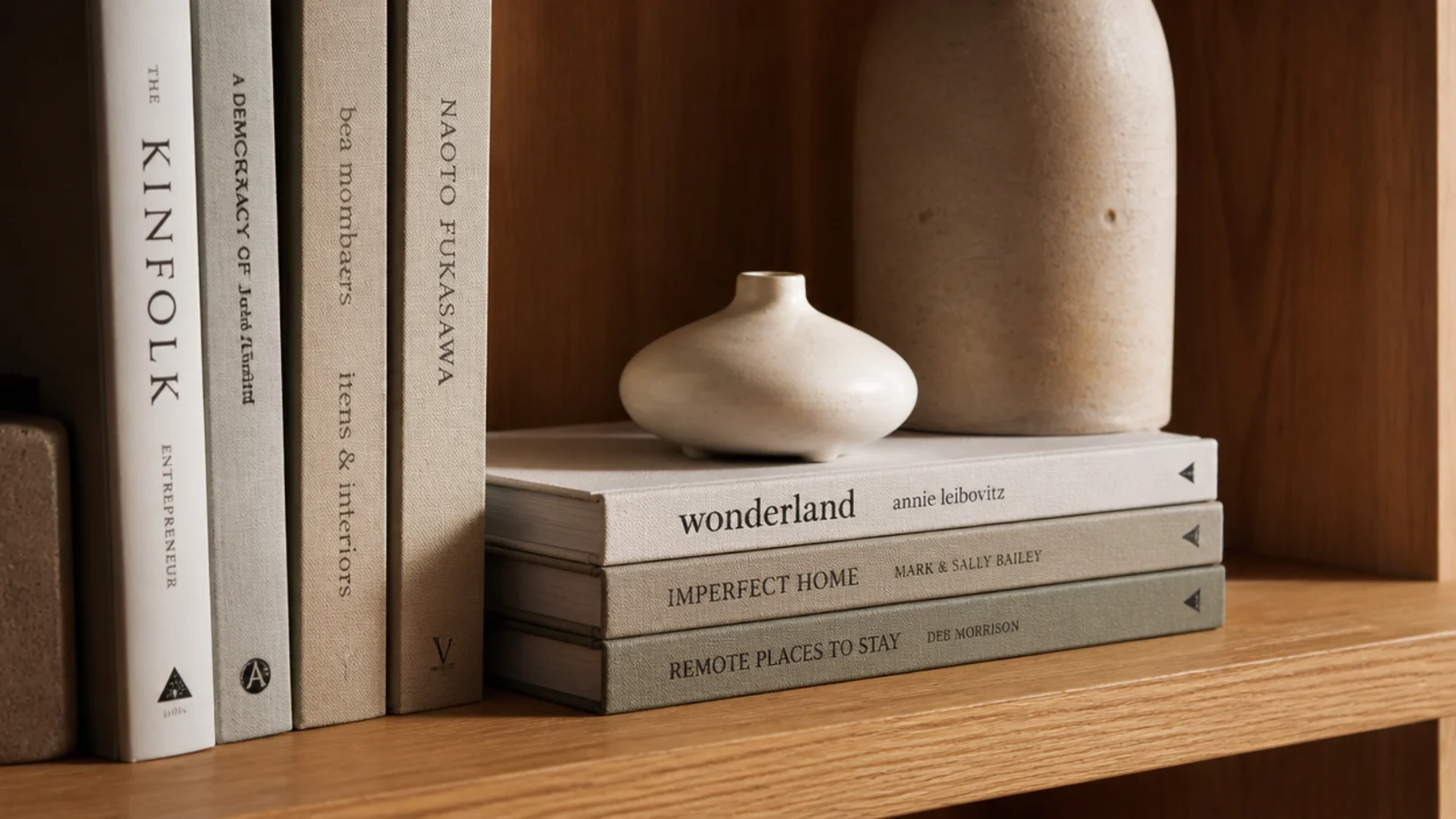
Three hardbacks lying flat lift a small object about three inches and change it from a trinket into a focal point.
Choose books whose bindings suit the palette, jackets off. The stack does double duty: it breaks a run of vertical spines and it gives you a third height on a shelf that would otherwise be all uprights. Free, and it works on every shelf in the house. $
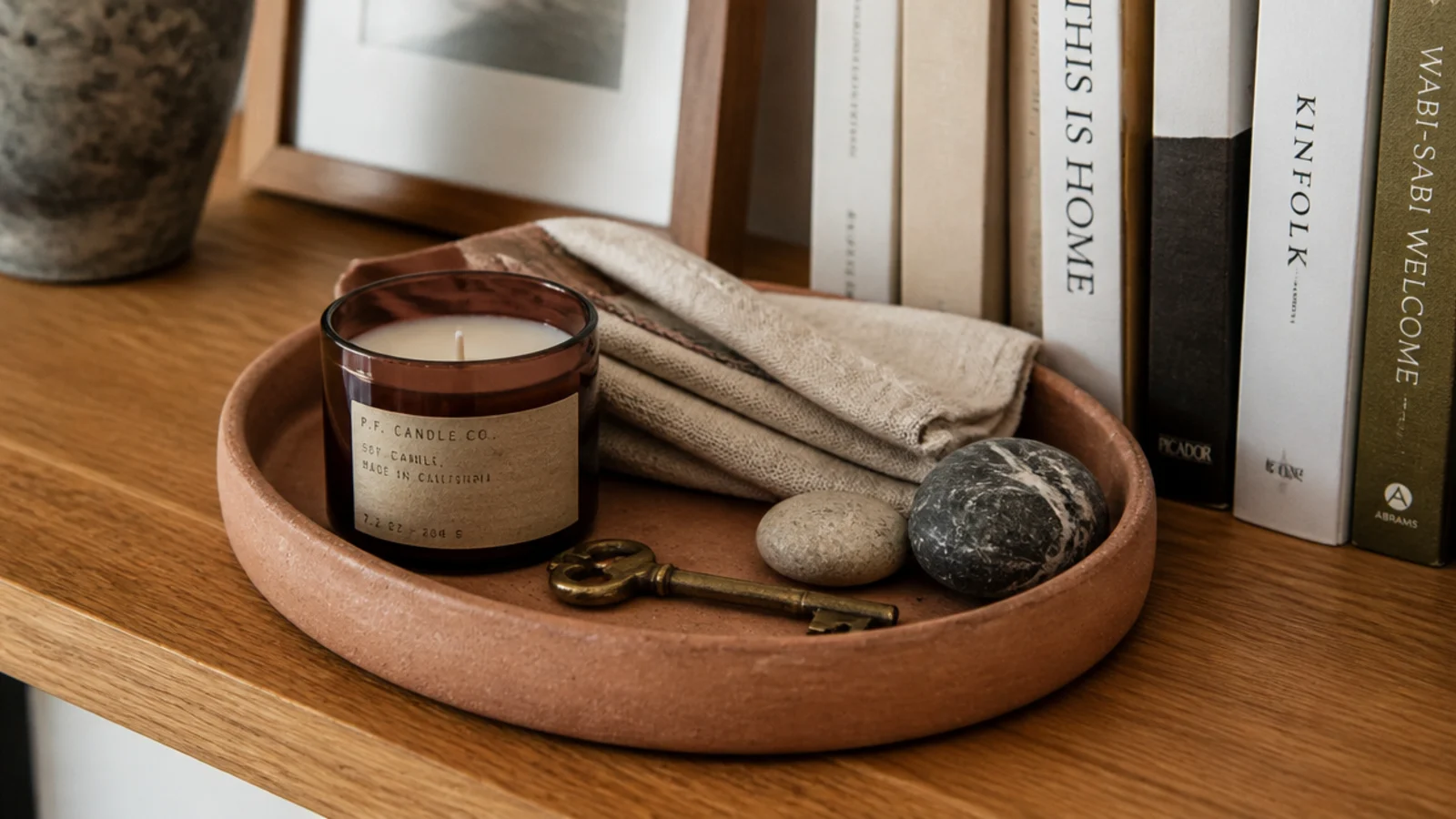
3. Corral small things on one shallow tray
Five small objects scattered across a shelf read as clutter. The same five gathered onto an 8 to 10 inch tray read as one composed piece.
A clay plant saucer costs about $6 and is the best small tray available anywhere. Any shelf that collects keys, matches or reading glasses needs one, or the contents migrate across the whole unit within a week. $
4. Lean one framed piece at the back
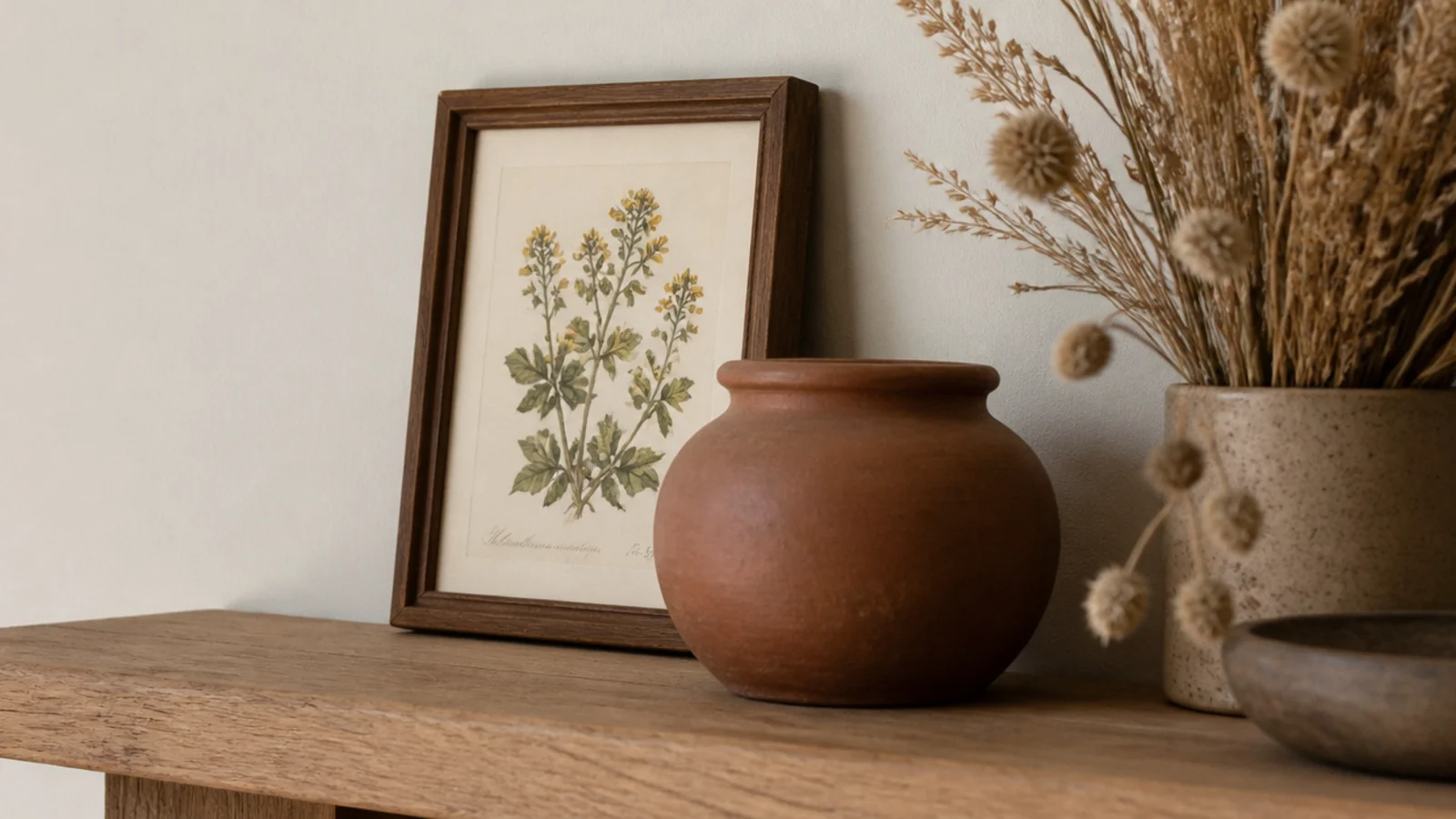
Rest a small framed print or a flat wooden board against the back of a shelf, then stand a pot partly in front of it so the two overlap.
Depth is what photographs as designed. A shelf styled in layers looks deeper than it measures; the same shelf in one flat row looks like a ledge. Two leaning pieces per unit is the ceiling — more and it reads as a mantel. $
5. Repeat one metal exactly three times
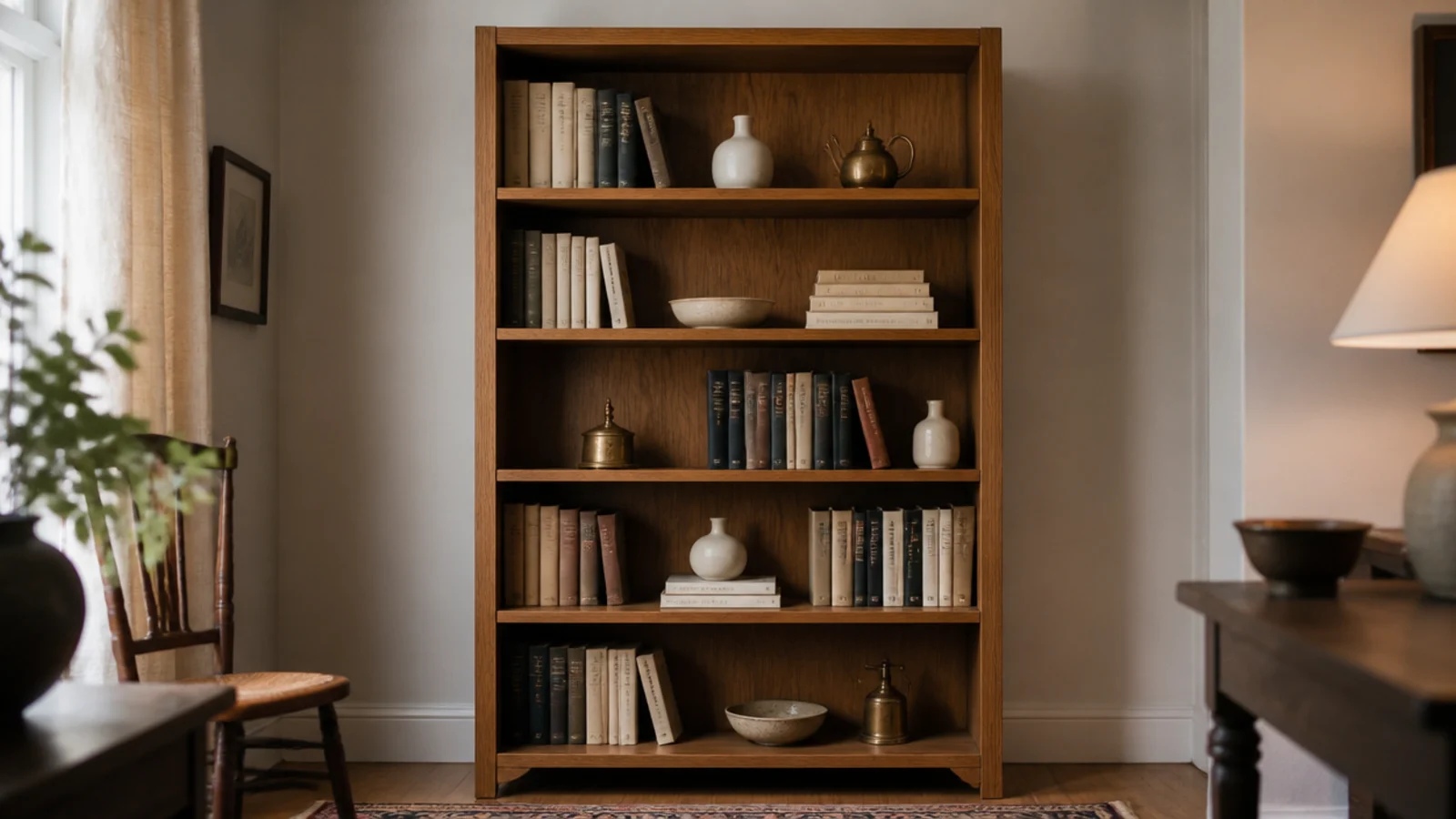
Pick brass, blackened steel or aged nickel and let it appear three times, spread widely across different shelves.
Three is the number. Twice reads as coincidence and four times becomes a matched set. This is why professionally styled shelves look composed while containing nothing that actually matches — the rhythm does the work, not the objects. $
6. Hang a trailing plant on the second shelf down
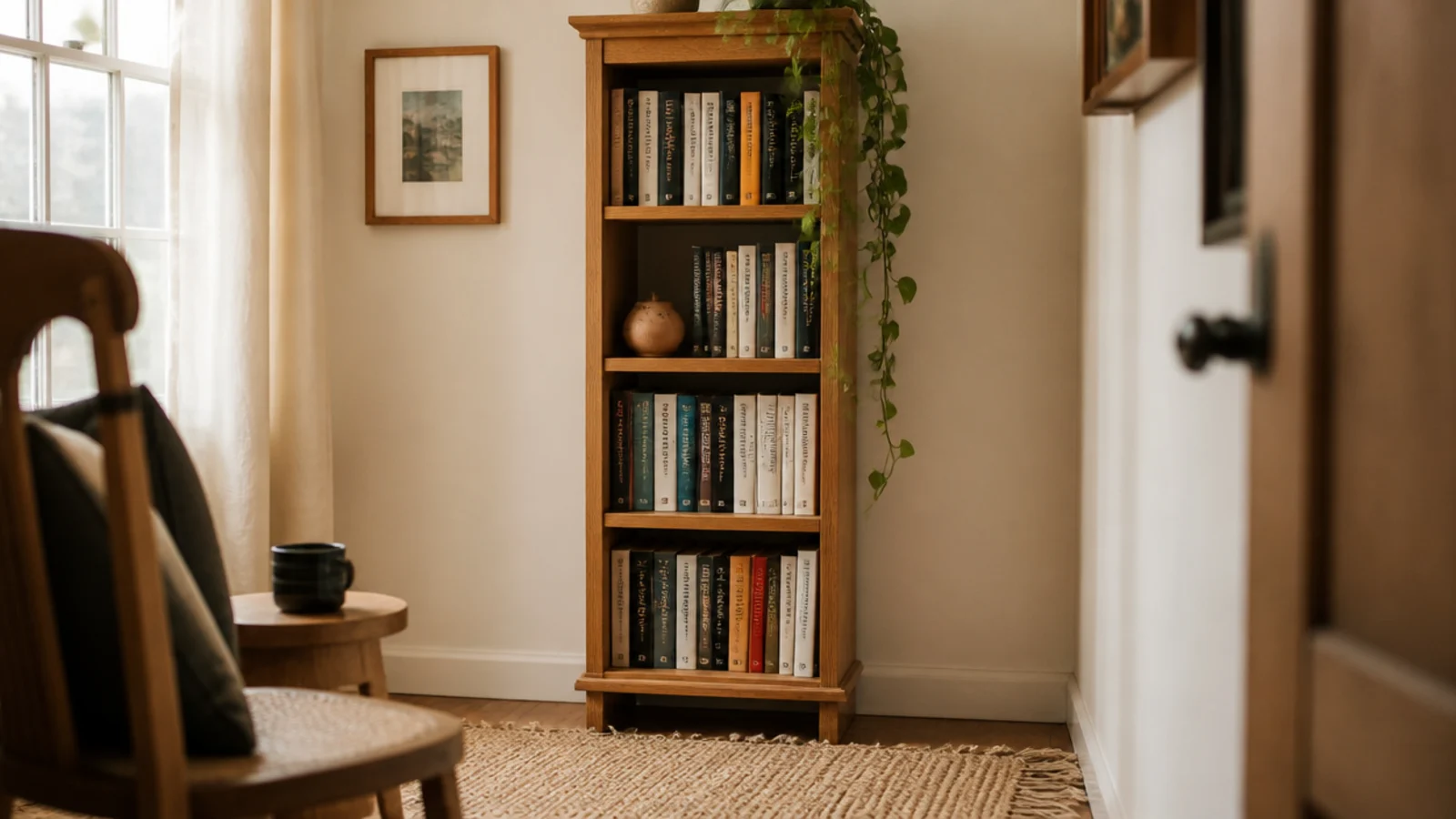
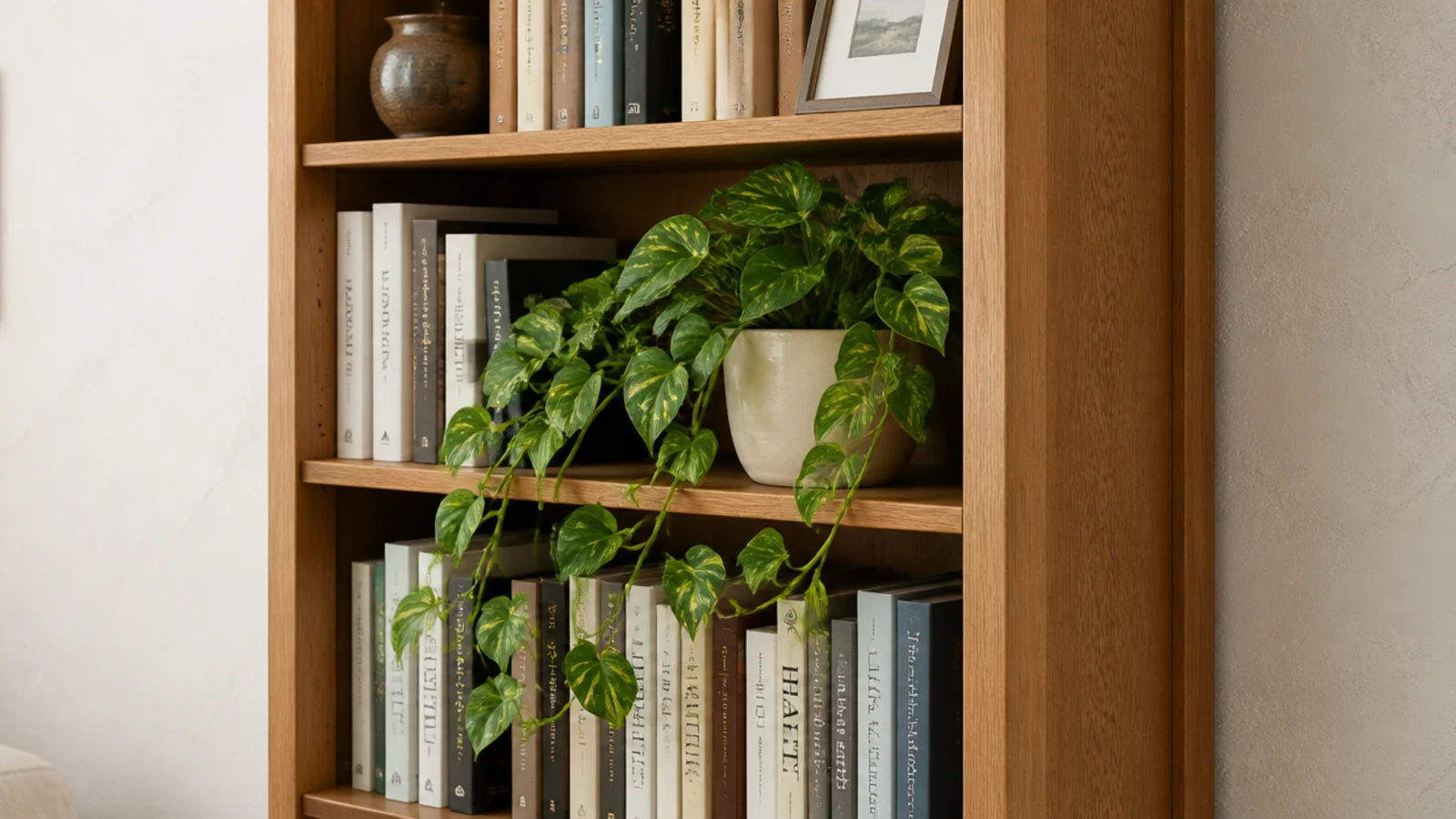
Every unit needs one soft thing that interrupts a hard horizontal edge. A pothos or string-of-hearts on the second shelf from the top spills across the spines below and softens the whole grid.
Second shelf down, not the top — the vines get more light there and you avoid watering above head height. About $12 for a small plant in a 4-inch pot. $
7. Add one small light to the top shelf
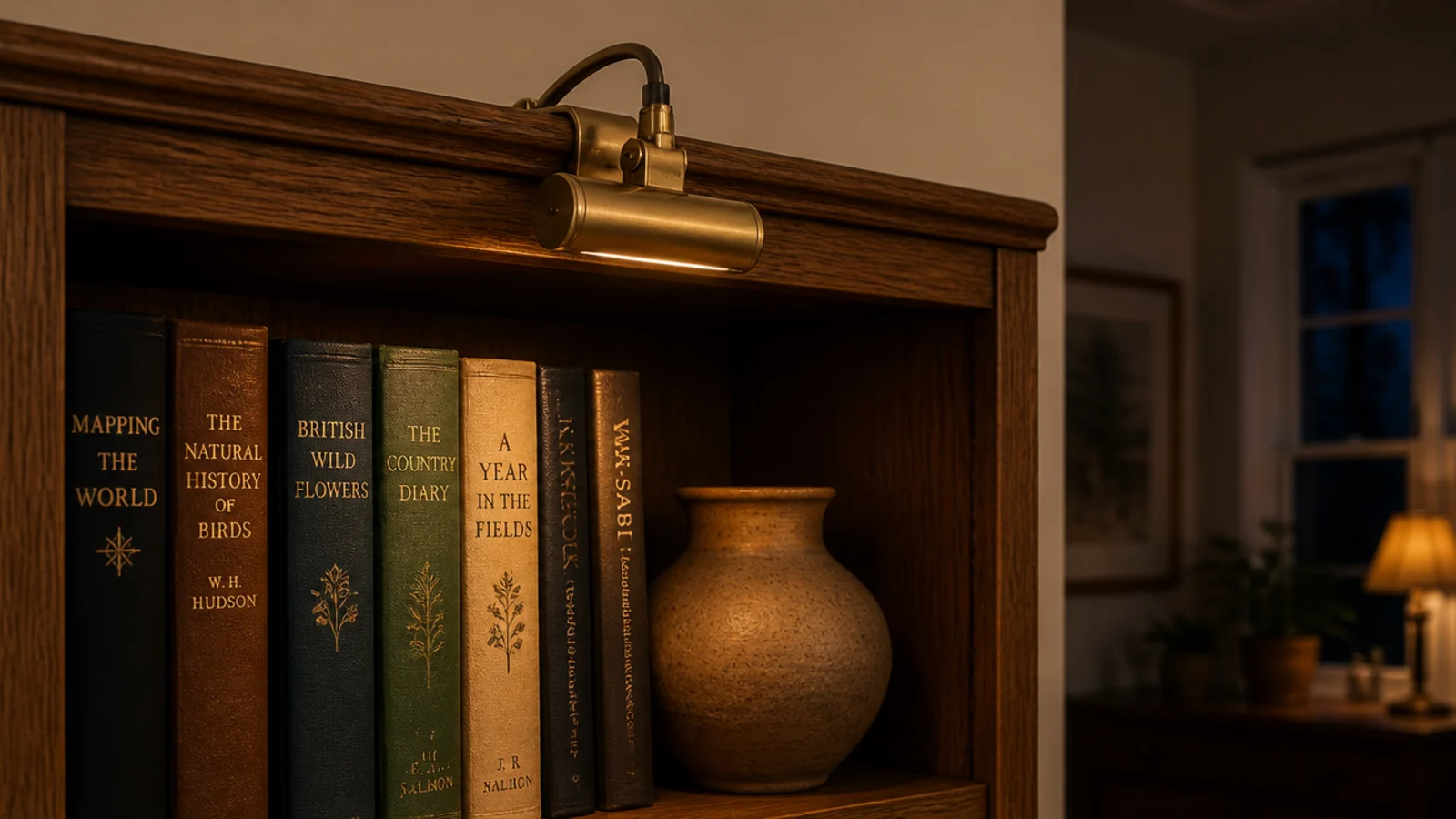
A clip-on picture lamp or a battery puck under the top shelf changes a bookcase more at night than any object you could add.
Rechargeable pucks run $15 for a pair and stick on with adhesive, so renters get the effect with no wiring. Aim the light down across the spines rather than out into the room, and keep the color temperature warm, around 2700K. $$
8. Take the dust jackets off
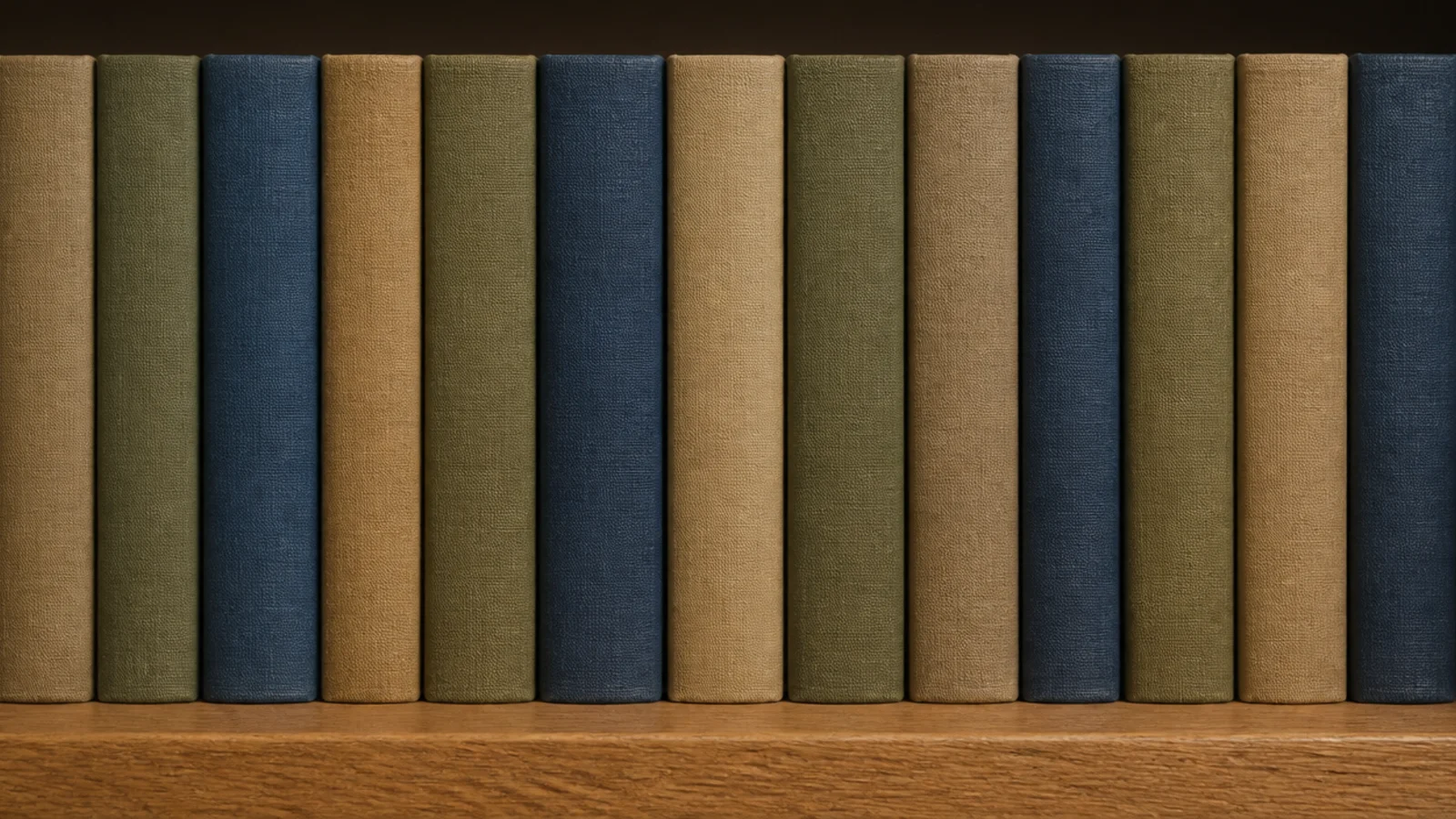
The cloth or printed paper binding underneath is almost always a quieter, better neutral than the glossy jacket, and it costs nothing to test on one shelf.
Keep the jackets in a box if the books have any resale value. On a shelf of mixed modern hardbacks this single change does more for the palette than repainting the room, and it takes about fifteen minutes. $
9. Turn one book cover out as a landing point
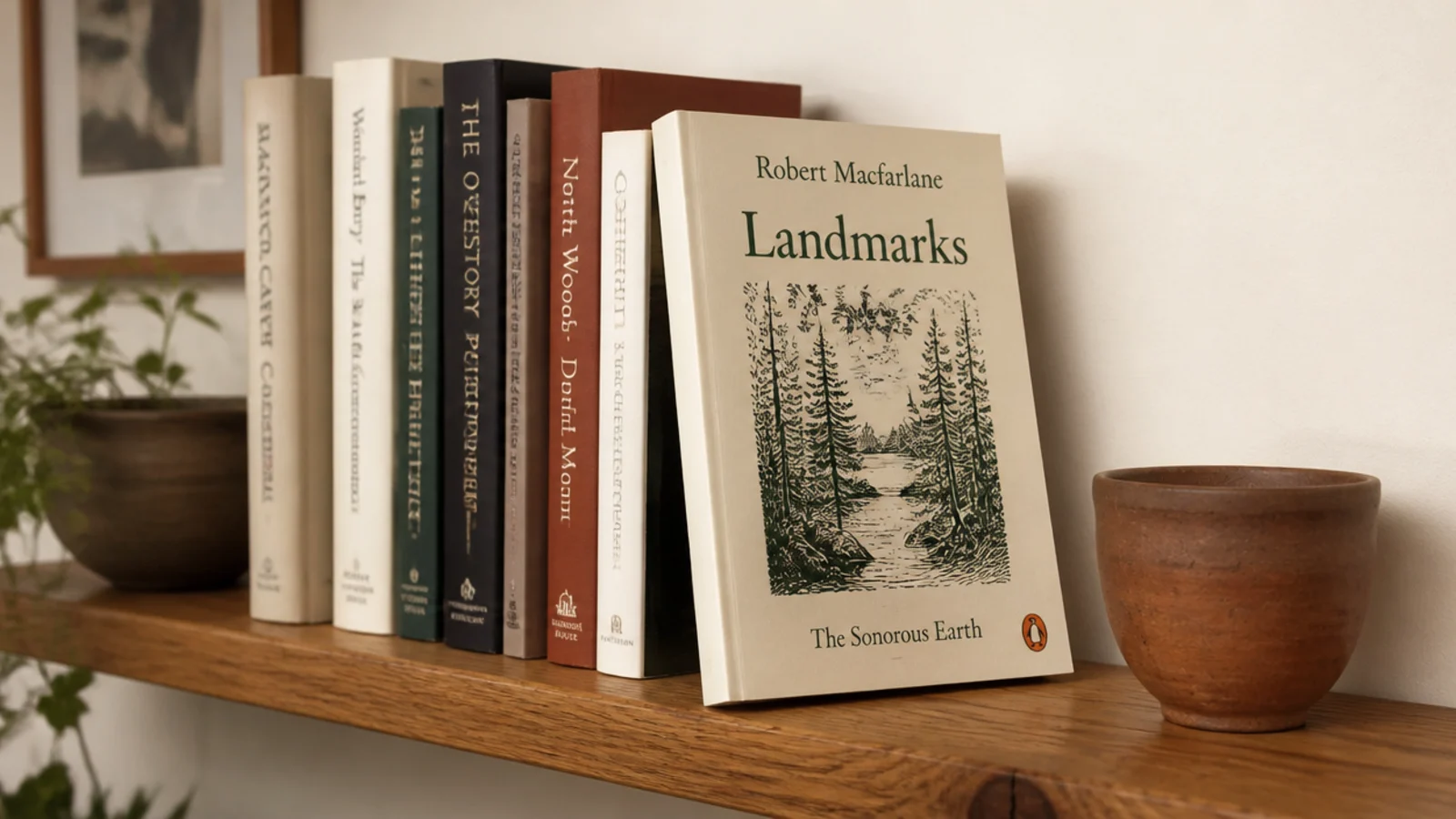
In a row of spines, turn a single book cover-out and lean it slightly forward against its neighbors.
It gives the eye somewhere to land and breaks up the visual noise of mixed spine colors. Choose one with a quiet cover — a busy one solves the old problem and creates a new one. One per unit, two at most. $
10. Choose bookends you would display anyway
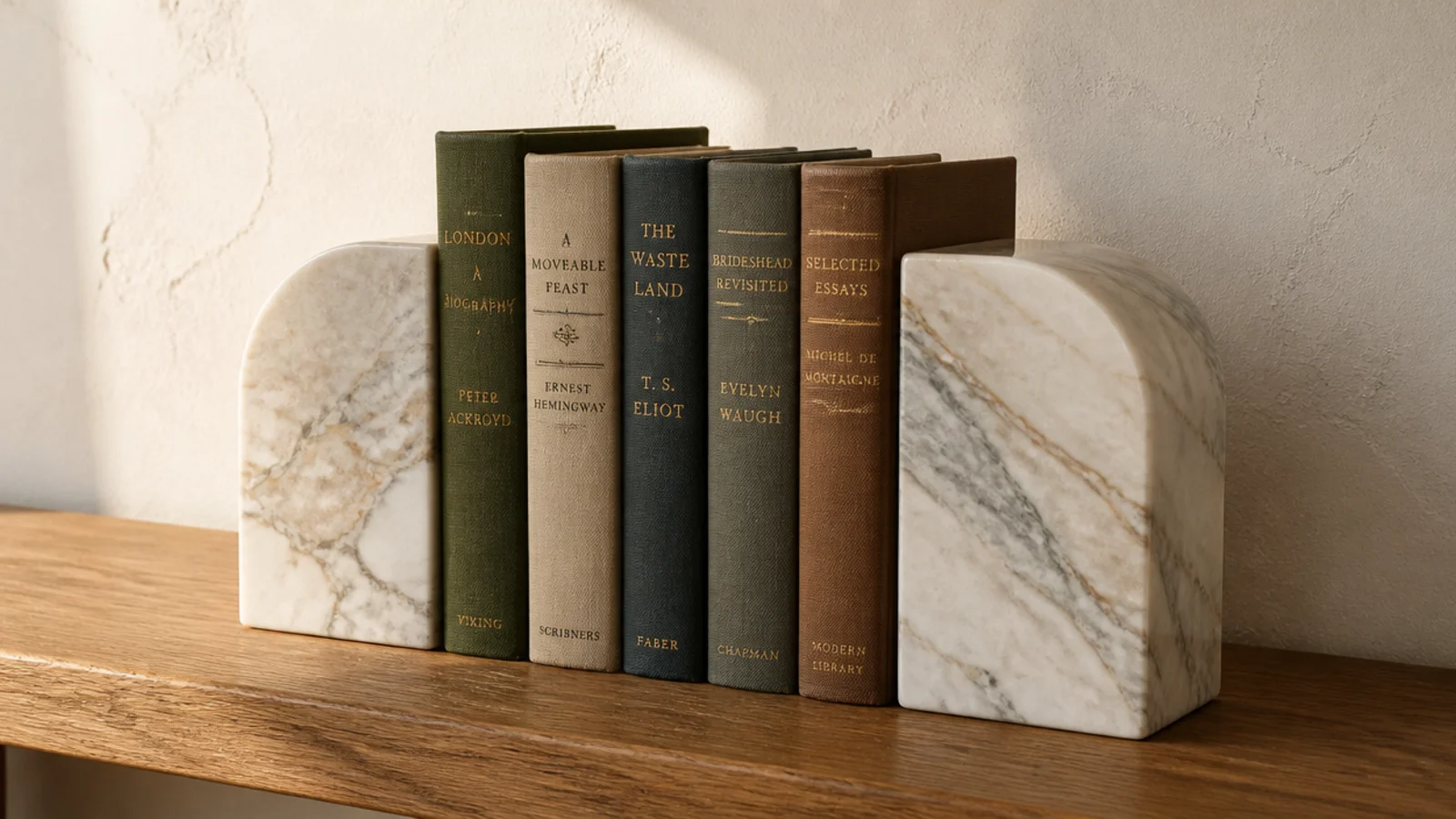
Bookends are on show permanently, so buy them as sculpture: marble, cast iron, carved wood, a heavy stone.
Weight is the functional part. Anything under about two pounds per end slides under a run of hardbacks and lets the row slump. Marble pairs run $18 to $40 new and turn up constantly secondhand for under $15. $$
11. Bring in one woven texture low down
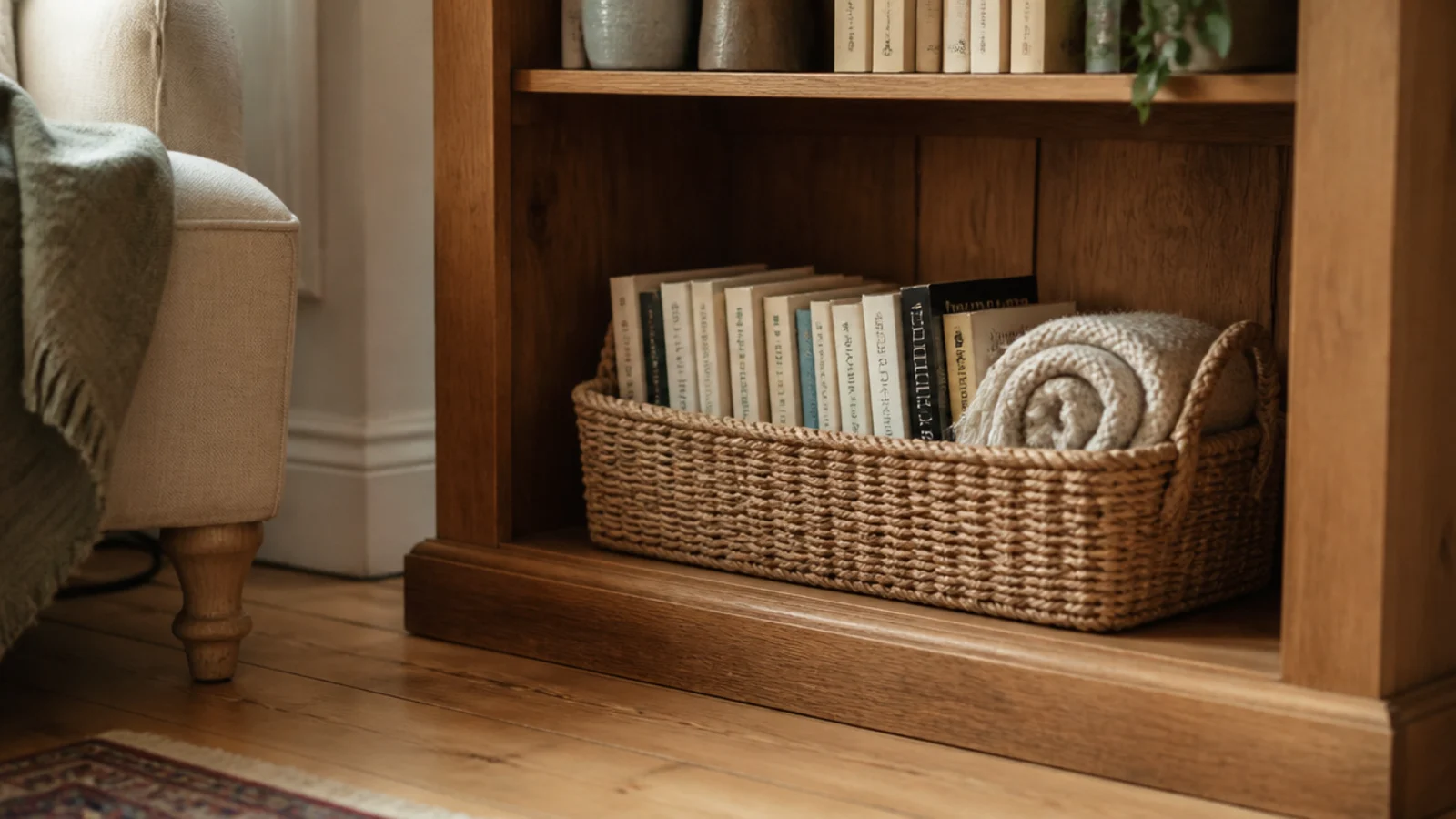
A jute or seagrass basket on the bottom shelf warms a unit made entirely of wood, paper and ceramic.
Low down is where it belongs, both because texture reads as weight and because a basket at floor level hides the things nobody wants to style — cables, spare throws, the pile of magazines. Baskets run $15 to $35. $$
12. Paint the back panel a deep muted shade
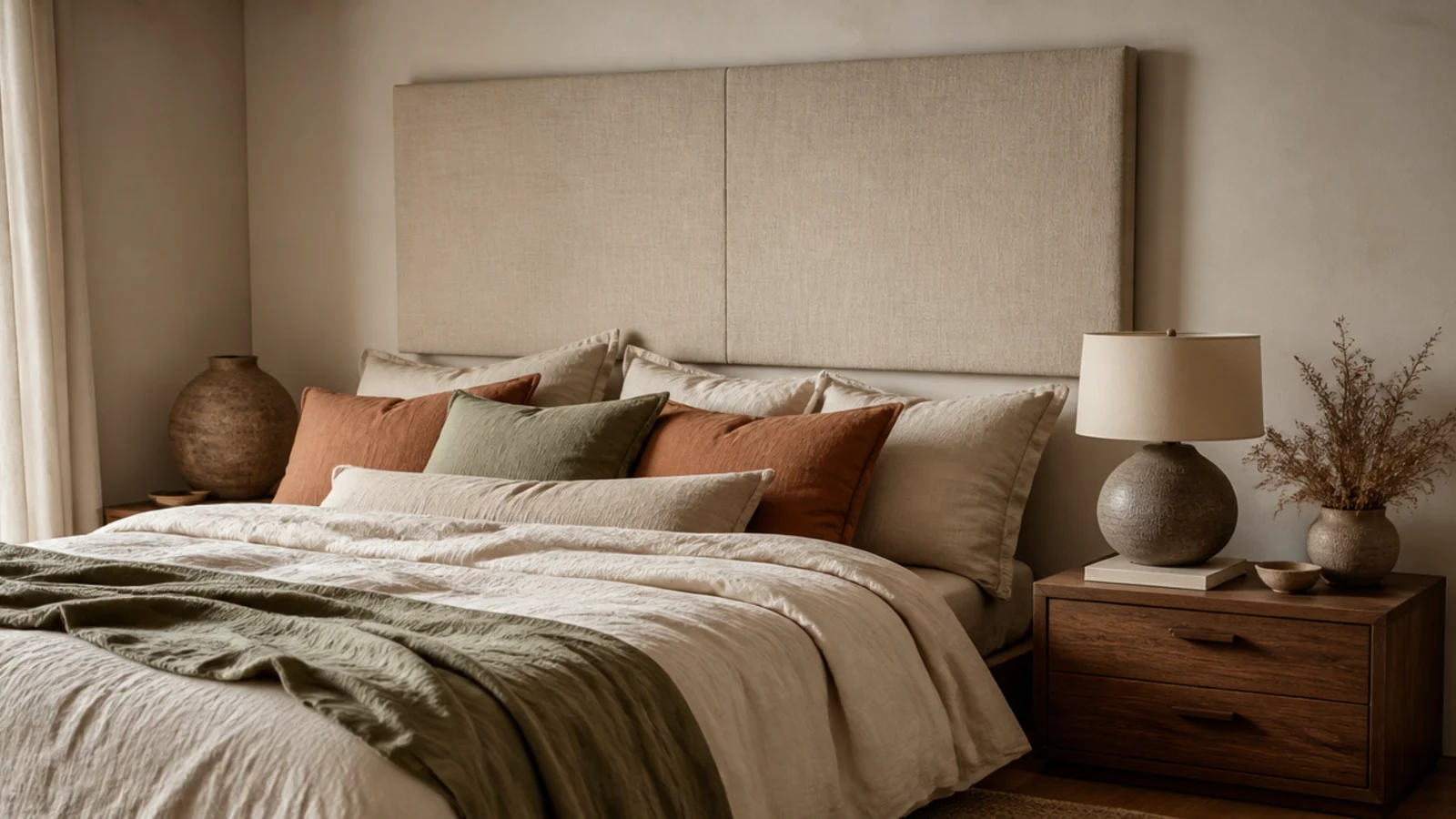
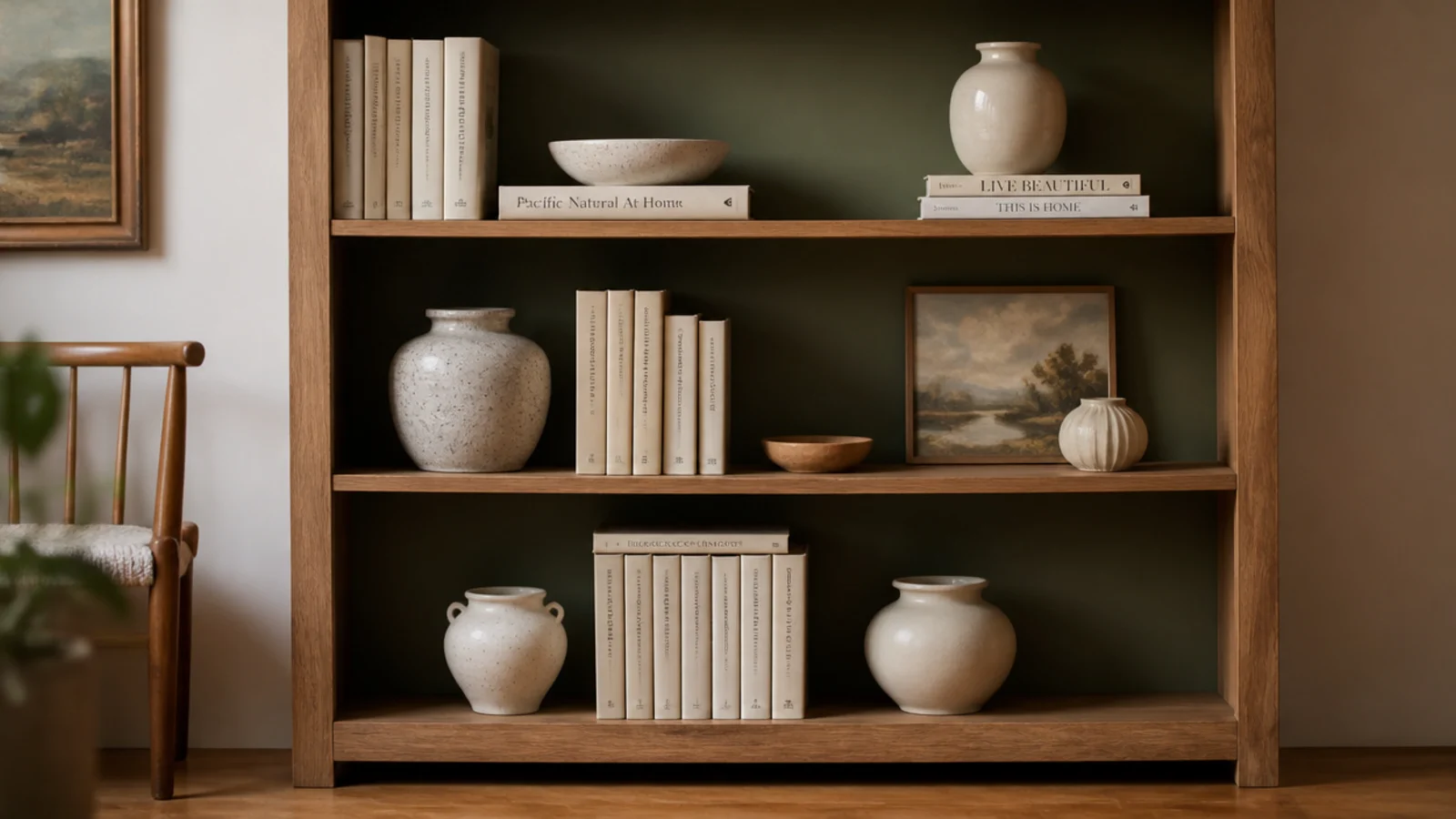
Deep sage, clay brown, charcoal or a smoky blue behind the shelves pushes the books forward and turns pale objects into silhouettes.
A quart covers a standard bookcase back for about $25. Renters get the same effect from peel-and-stick wallpaper or a fabric panel taped to the back board, both fully removable. This is the highest-impact change on the list. $$
13. Build a small candle vignette at eye level
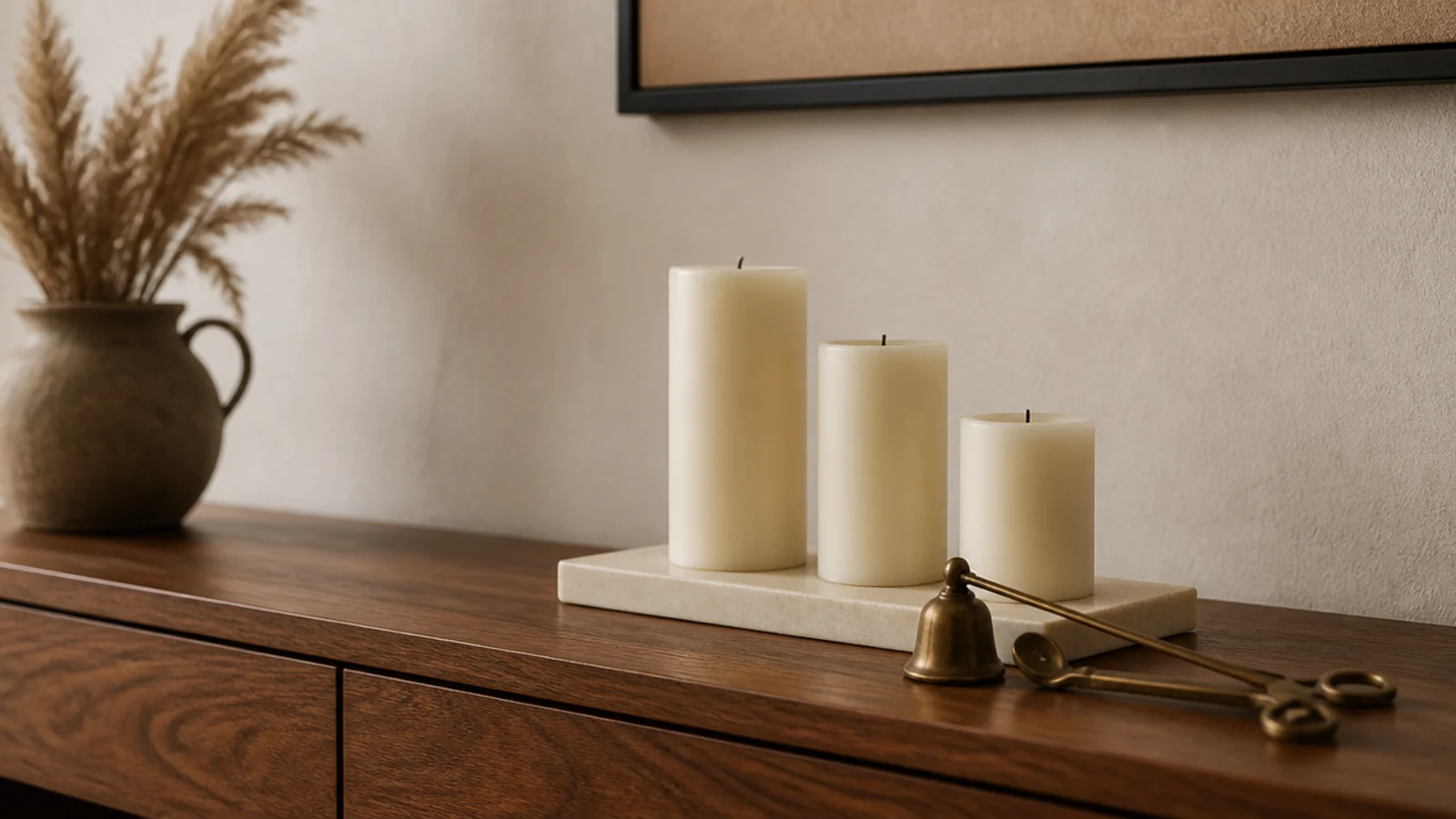
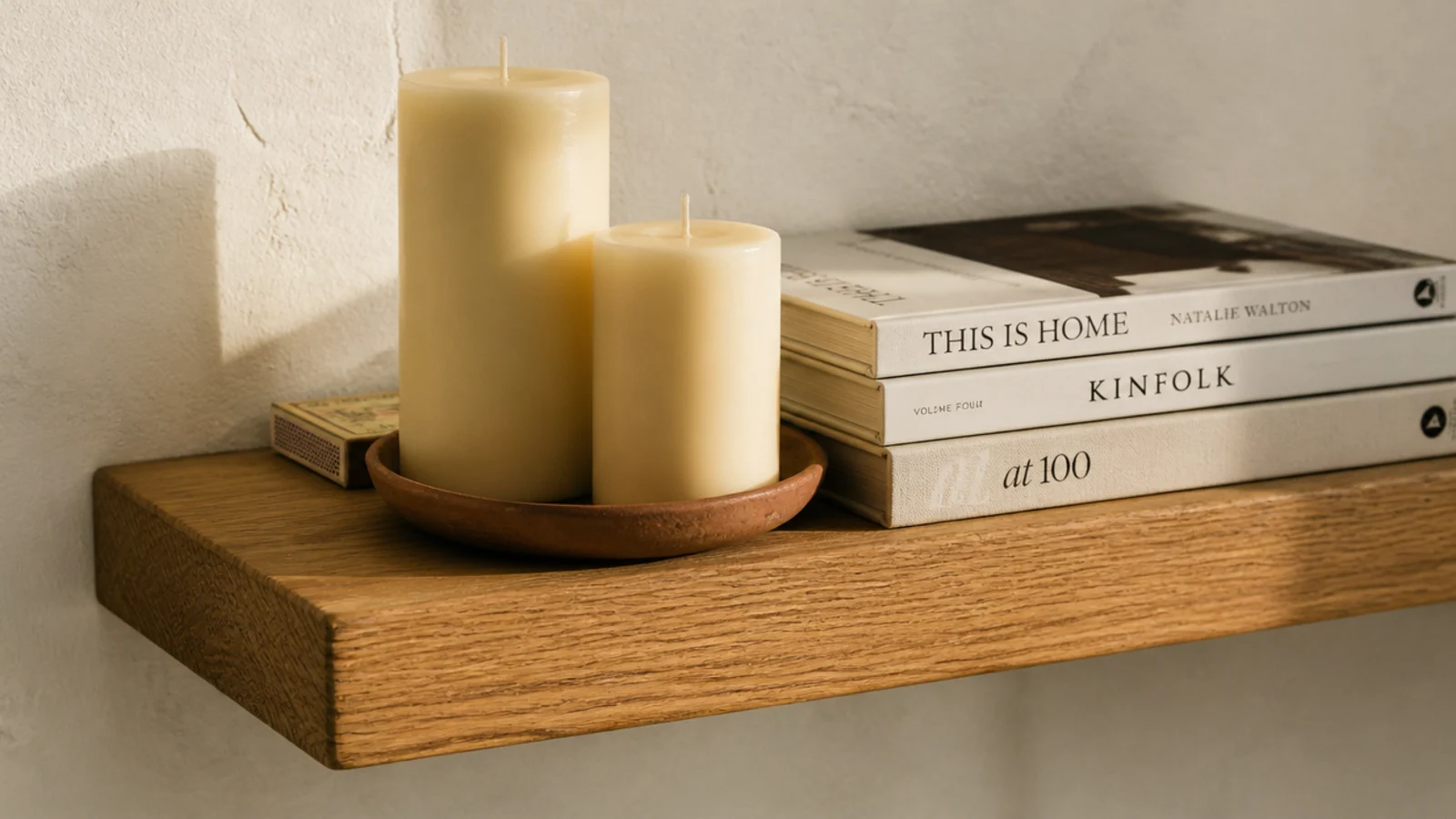
Two pillar candles at different heights on a small dish, with three flat books beside them, is a complete vignette in thirty seconds.
Unlit candles still read as warmth in daylight, which is most of what they are doing on a shelf. Keep flame at least 12 inches clear of the shelf above, or use LED pillars near paper — there is more on placement in the candle guides. $
14. Group the books by height, not by color
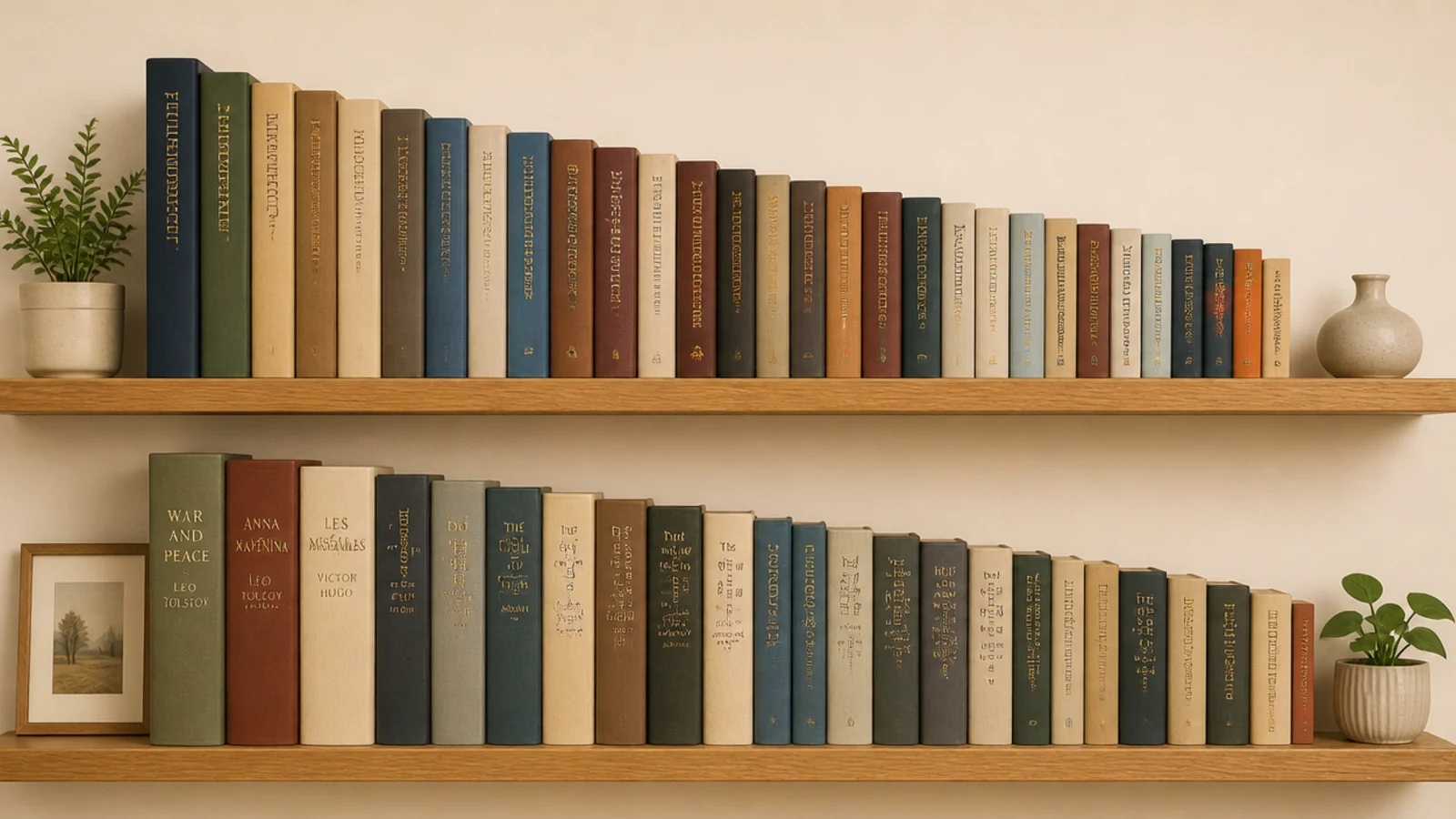
Height grading gives you a calm stepped line you read from the doorway. Color blocking gives you a photograph and a room that feels loud.
It also keeps series and reference books together instead of scattering them across six shelves by cover design. Sort by height first, then let subject decide the order inside each group. $
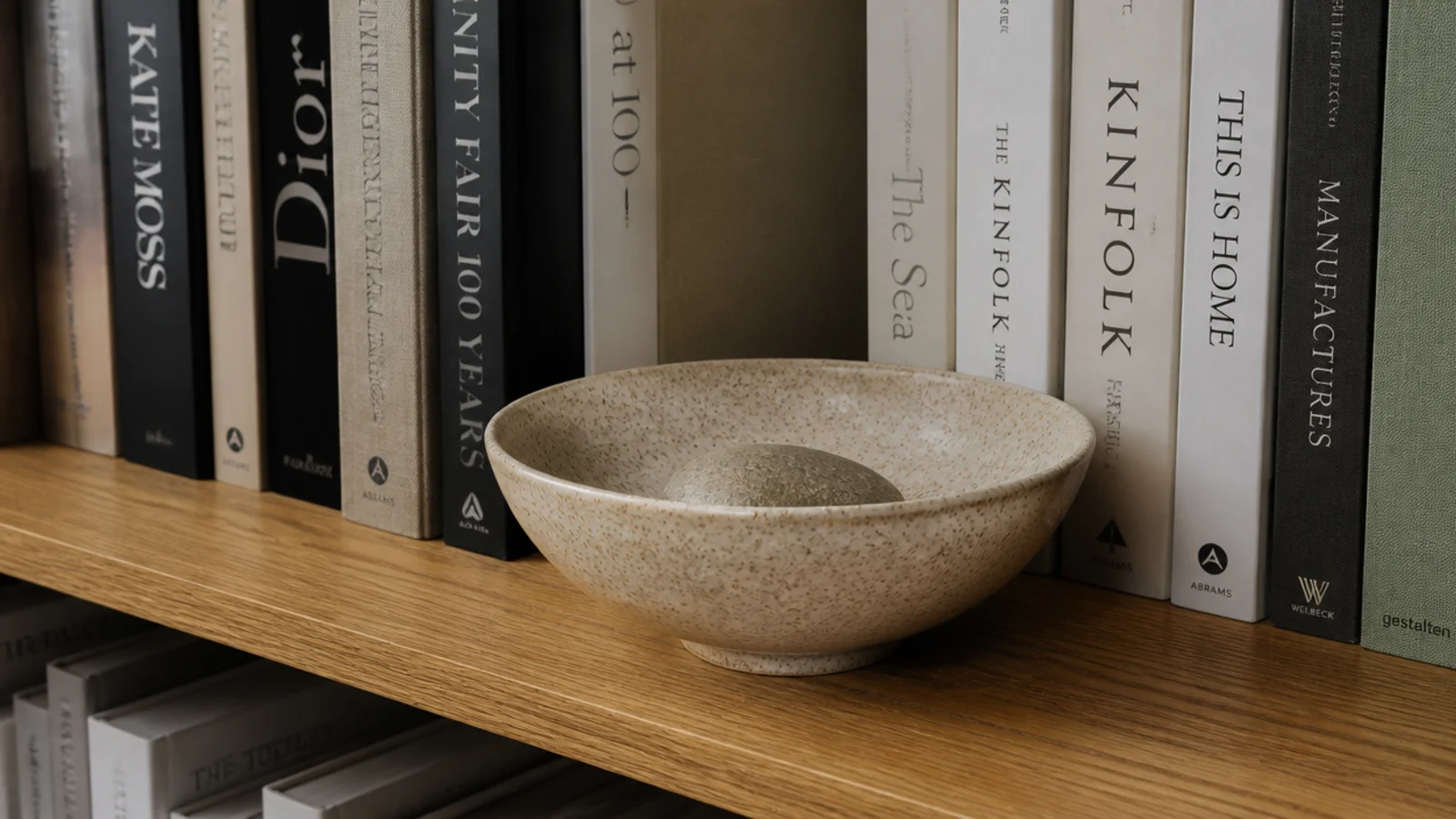
15. Interrupt a run of spines with one low bowl
A wide shallow bowl set into the middle of a long row of upright books stops the row reading as pure storage.
Look for something 8 to 12 inches across and no more than 4 inches tall, so it sits below the book height and creates a dip rather than a lump. Speckled stoneware and unglazed terracotta both work. $$
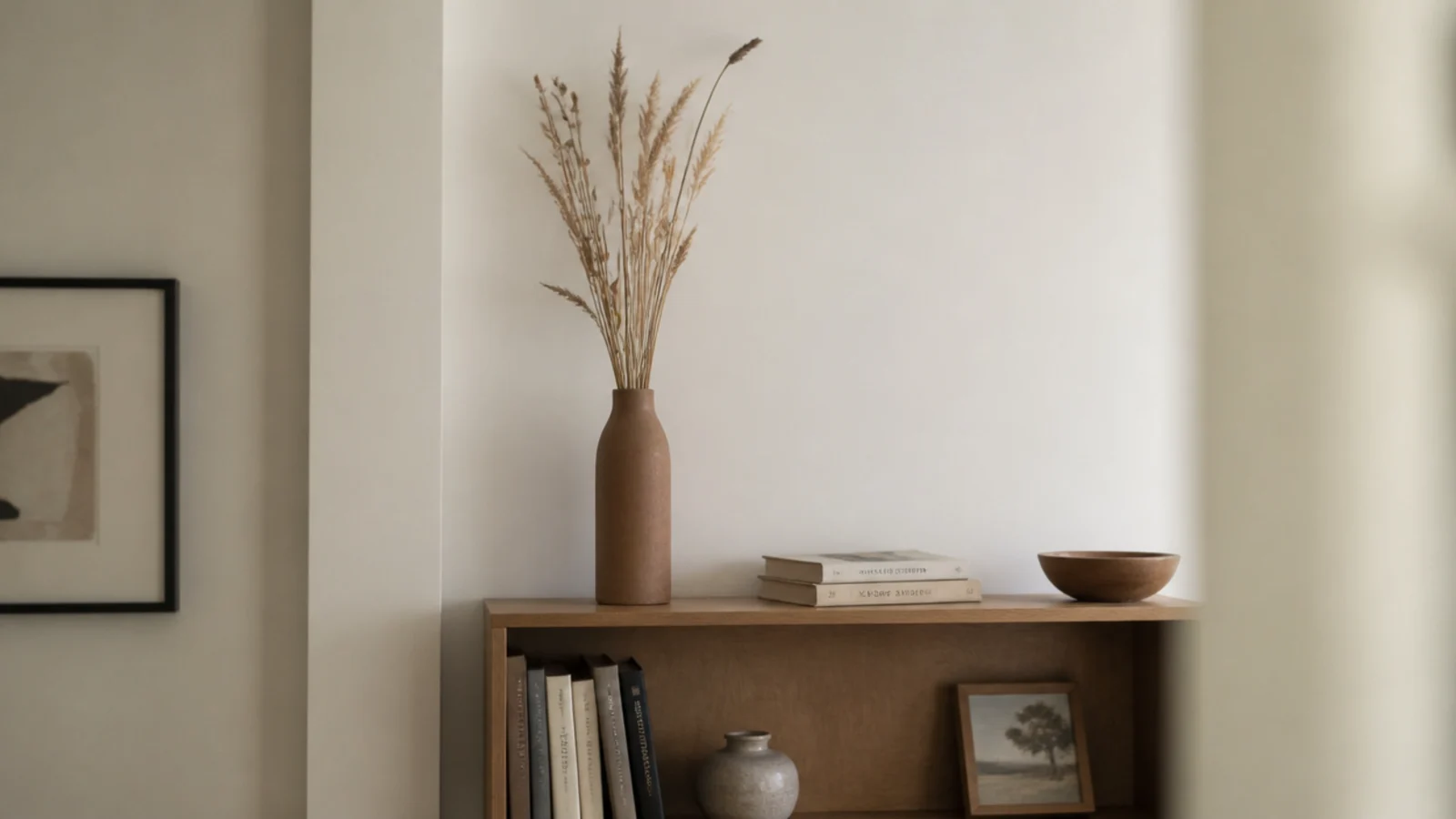
16. Add height with dried stems in a tall vase
One tall element rising above the top shelf stops the unit reading as a closed box. Dried grasses, pampas, eucalyptus or bare branches in a slim 12-inch vase.
Keep it to one. Two tall elements up top makes the whole bookcase feel front-heavy under an eight-foot ceiling. Dried stems last years and cost $10 to $20 a bunch. $$
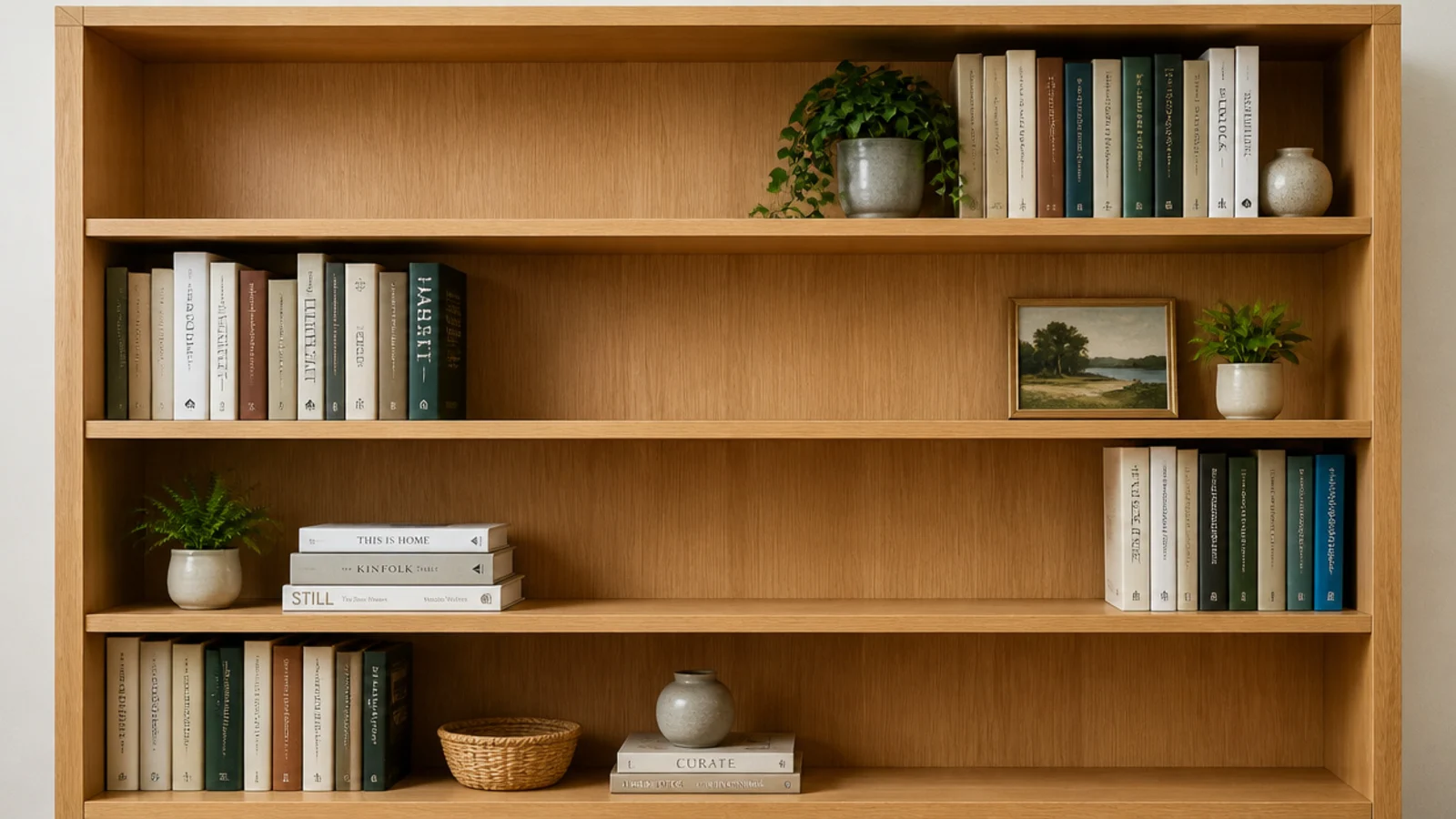
17. Move the empty gap as you go up
Put the clear space on the left of the top shelf, in the centre of the next, on the right of the one below. The negative space itself now runs on a diagonal.
It sounds fussy and takes thirty seconds. It is the most reliable way I know to give a static rectangular unit a sense of movement. $
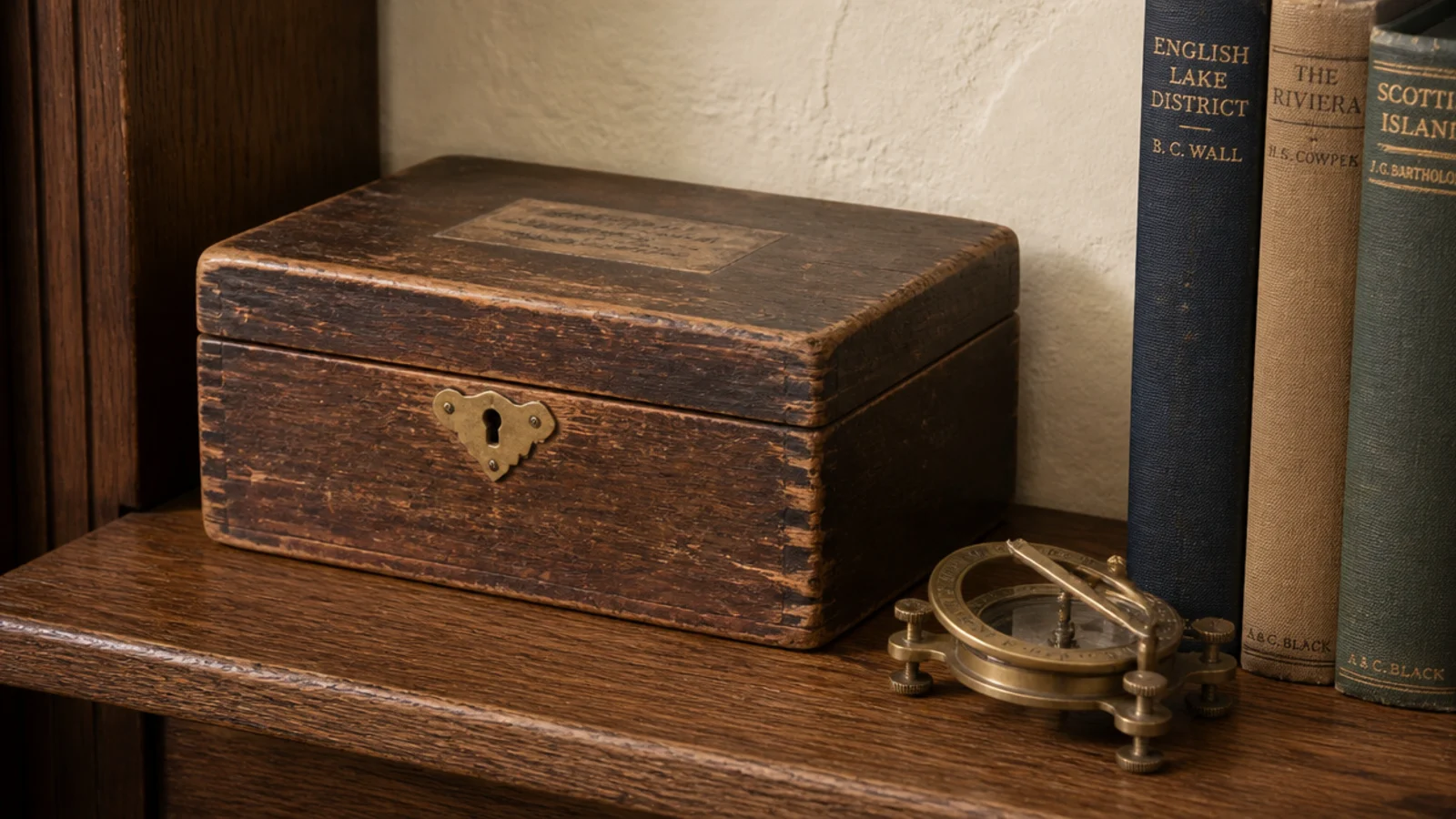
18. Slip in one genuinely old object
A worn wooden box, a tarnished brass instrument, a chipped stoneware jug. One object with real patina keeps a new bookcase from looking like it arrived last week.
Flea markets and estate sales price these at $5 to $25, and nothing manufactured to look old ever quite reads the same. One per unit is enough. $$
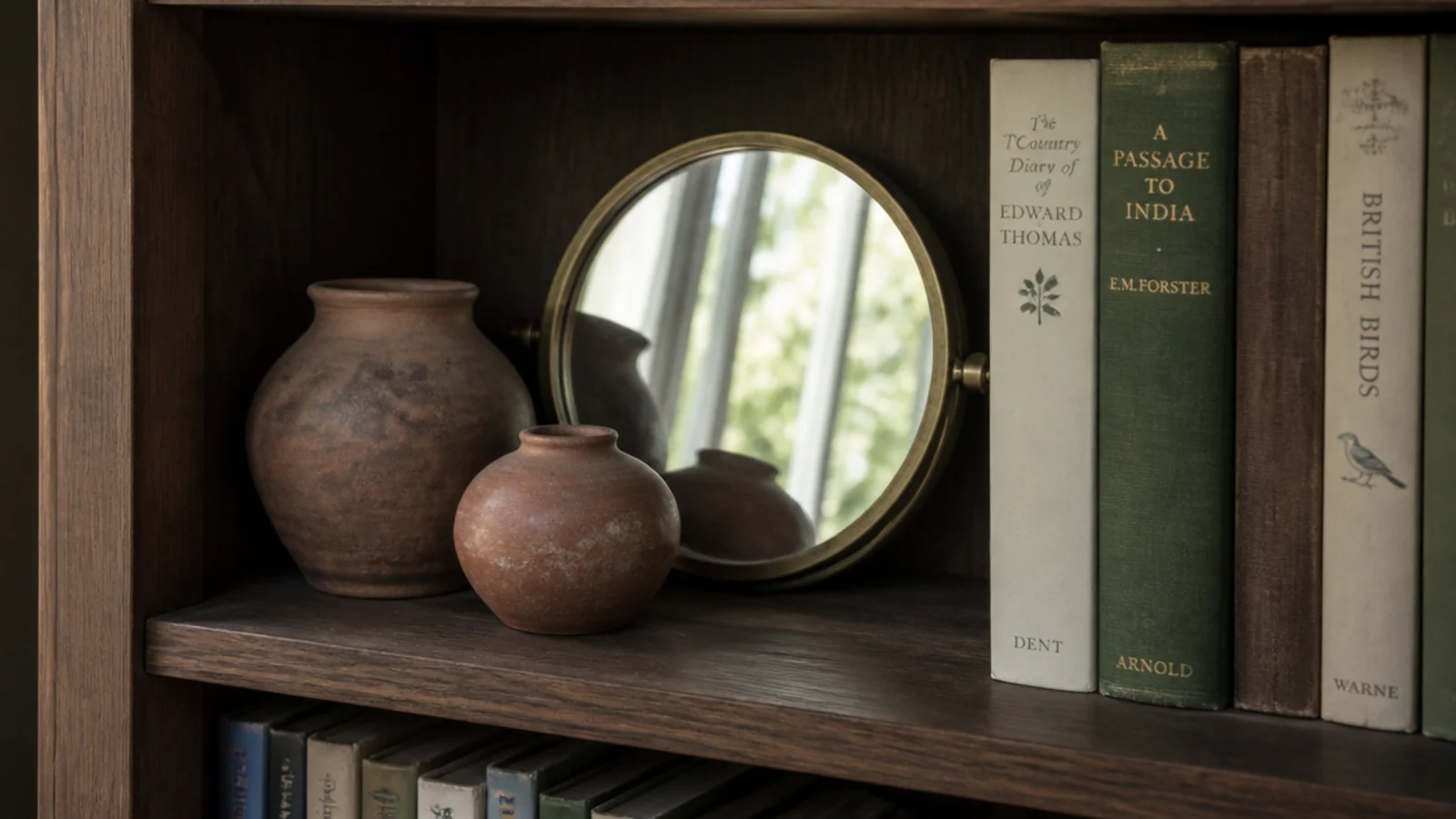
19. Tuck a small mirror into a dark shelf
Every bookcase has one shelf that never gets light. Lean a small round mirror, 6 to 10 inches, against the back panel there.
It bounces whatever daylight reaches that corner and gives the shaded shelf some depth. Keep it small and low-key — a large mirror in a bookcase starts competing with the books. $$
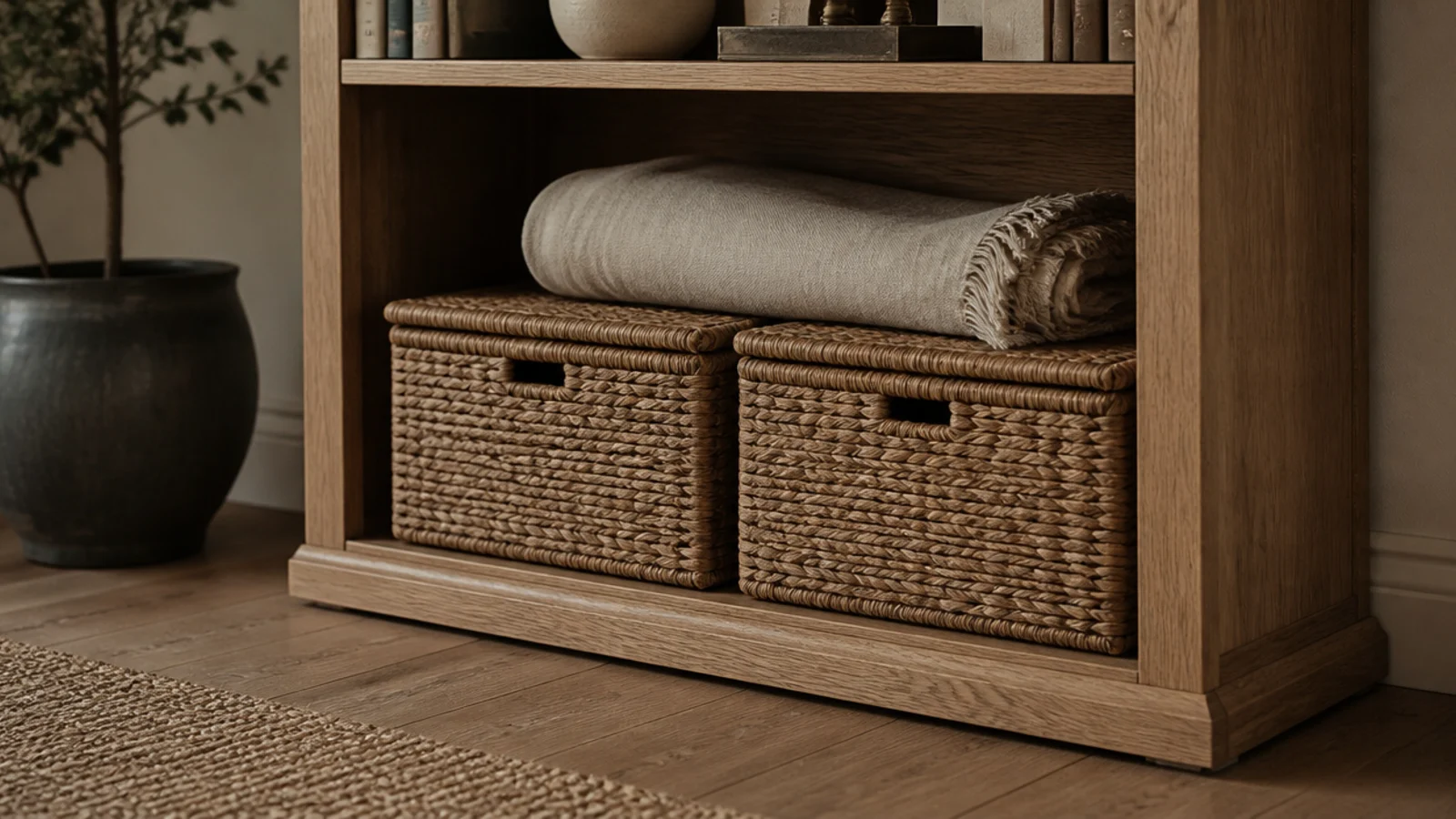
20. Give the bottom shelf to baskets, not books
The lowest shelf is hard to see into, awkward to reach and collects dust fastest. Two lidded baskets solve all three problems at once.
It also keeps heavy things low, which matters on a freestanding unit — and every freestanding bookcase should be strapped to a stud anyway, without exception in any home with children. $$
Mistakes to Skip
- Buying a matching decor set. Nothing in a set varies in height, texture or age, which removes every tool this list depends on.
- Spreading objects evenly across each shelf. Even spacing reads as inventory; a tight group beside a real gap reads as styled.
- Adding one more thing to fix a shelf that feels off. The fix is almost always removal, and it is free.
Frequently asked questions
What should I put on a bookshelf besides books?
One oversized vessel per unit, a shallow tray for small things, one leaning frame for depth, one woven basket and something soft that trails. Five categories, spread across the whole unit rather than repeated on every shelf. Books should still do about seventy percent of the work, because a shelf of pure objects reads as a display case rather than a room.
How many decorative objects should go on each shelf?
Two or three, in one tight group, with the rest of the shelf holding books or nothing at all. Five small objects scattered across a shelf read as clutter, while the same five gathered on a tray read as one composed piece. If a shelf feels wrong, remove rather than rearrange — that fixes it about nine times in ten.
Should bookshelf decor match my furniture?
It should share a palette, not a set. Pick two or three tones already in the room — walnut, cream, terracotta — and let materials vary widely inside them. Matching sets look lifeless because nothing differs in height, age or texture. Repetition is what you want: one material appearing exactly three times across the unit.
How do I decorate a bookshelf on a budget?
Thrift the large pieces and buy nothing small. A substantial stoneware vessel runs $8 to $30 secondhand against $90 new, because most homes have nowhere to put big pottery. Then take the dust jackets off your books, add one $12 trailing plant, and stop. That combination costs under $50 and does most of the visible work.
Does painting the back of a bookcase actually help?
It helps more than almost anything else you can do for $25. A deep muted shade behind the shelves pushes the books forward and makes the objects read as silhouettes instead of blending into the wall. Peel-and-stick wallpaper or a taped-in fabric panel gives renters the same effect with no paint and no deposit risk.
Try numbers 1, 5 and 12 this weekend — one big anchor, one material repeated three times, and a painted back panel — and see how far that gets you before buying anything else. If the shelves themselves need sorting first, work through bookshelf styling ideas, and for spines you actually want on show see colorful bookshelf ideas. The candle vignette in number 13 has its own full guide in candle tray styling. Save the pin for your next restyle.
Want more like this? Browse all 15 bookshelf ideas guides — they all use the same measurements and budget tiers.
Pin it for later
Save this to your Bookshelf Ideas board
Pin it now so it is waiting for you when the tape measure comes out — and so the next person hunting for this idea can find it too.
Save this pinKeep going
More ideas worth saving while you have the tape measure out.