Bookshelf Ideas · Listicle
25 Gorgeous Bookshelf Ideas Worth Trying

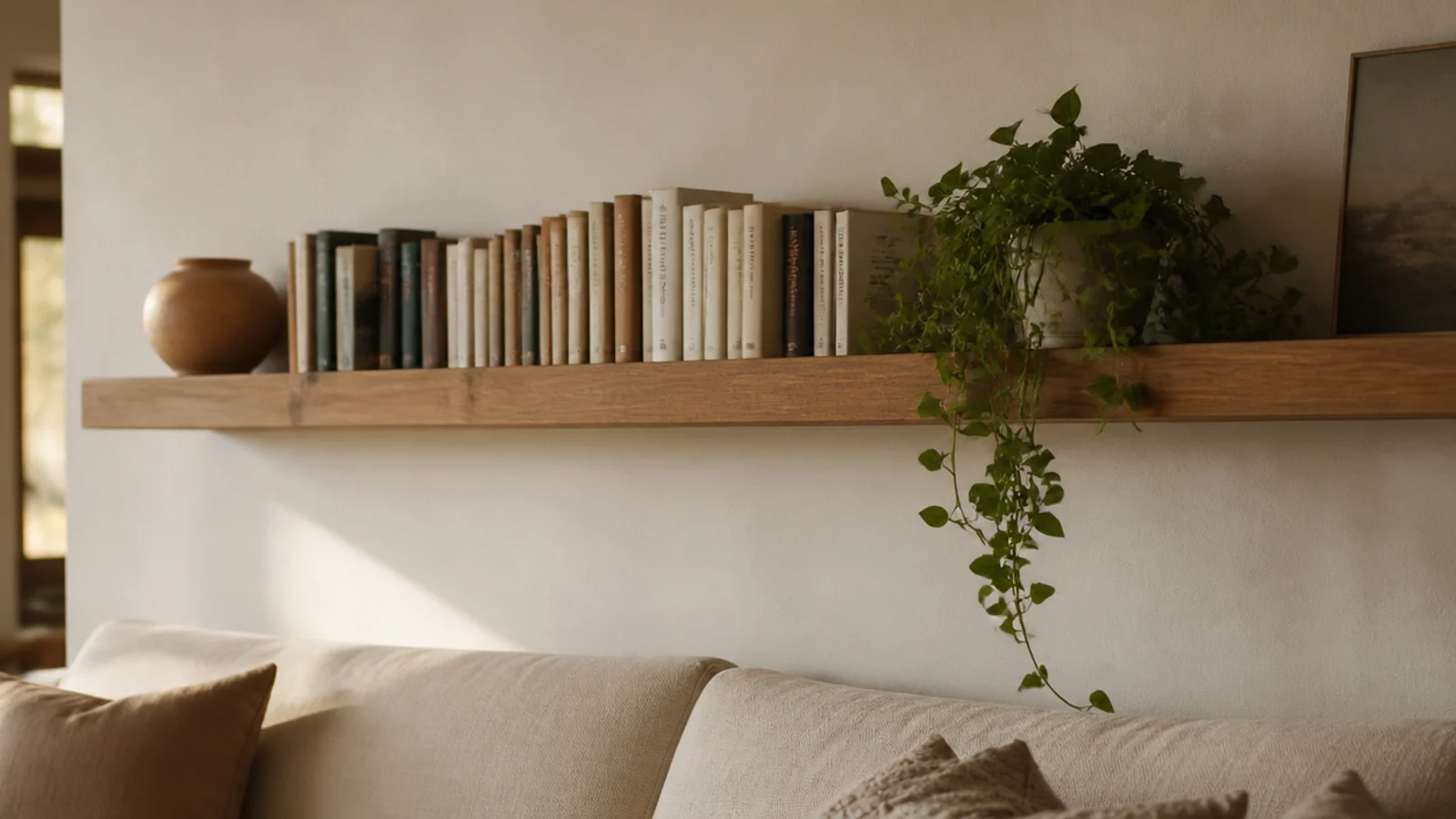
Nothing looks lighter on a wall and asks more of it. Floating bookshelf ideas live or die on two numbers most people never check: 32 inches of span, and 20 to 25 pounds per linear foot of hardbacks. Get those right and the rest is styling. Get them wrong and you will be patching drywall in a year.
In this guide27 sections — tap to openHide
- 1.What floating bookshelf ideas demand from your wall
- 2.A single 32-inch shelf above a desk
- 3.A stacked trio at 13-inch spacing
- 4.Concealed-rod invisible brackets
- 5.A grid of four-inch picture ledges
- 6.A full-wall run, stud to stud
- 7.A solid one-inch front lip
- 8.Two-tone black bracket and oak board
- 9.A floating corner return
- 10.Shelves framing a window
- 11.A 60-inch pair above the sofa
- 12.A staggered asymmetric cluster
- 13.An LED strip under the shelf
- 14.Blackened steel angle brackets
- 15.A two-inch thick box shelf
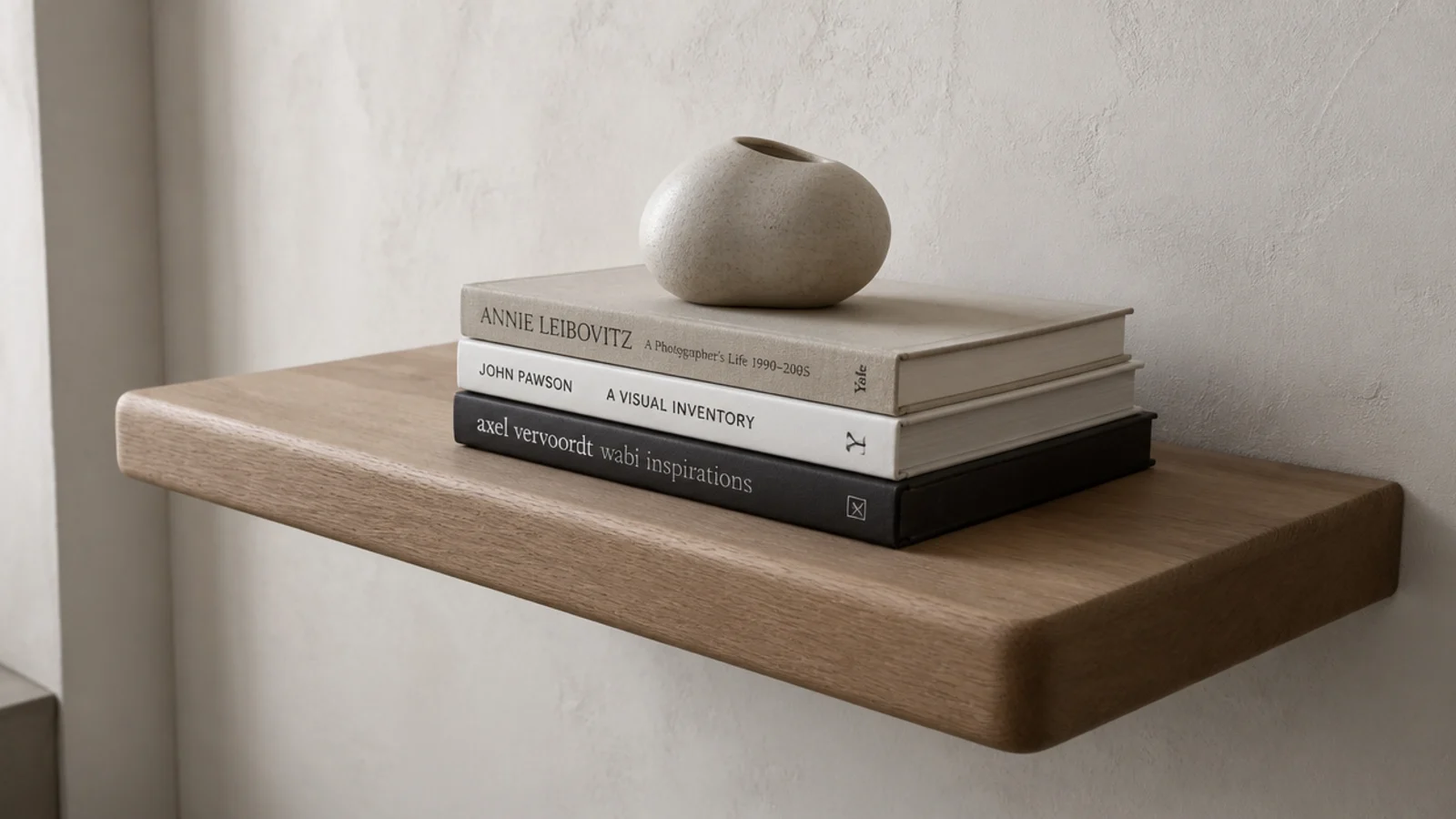
- 16.A deep 12-inch shelf for art books
- 17.A narrow six-inch hallway ledge
- 18.French cleat mounting
- 19.A floating shelf with a hidden drawer
- 20.Pipe and board industrial shelves
- 21.A dowel book rail on a shallow ledge
- 22.A shallow ledge above the bed
- 23.The honest renter no-drill ledge
- 24.A floating ladder of staggered shelves
- 25.Shelves flanking a doorway
- 26.A painted-in shelf that matches the wall
- 27.Mistakes to Skip
What floating bookshelf ideas demand from your wall
Before you look at a single shelf, understand what you are asking the wall to hold.
The load. A linear foot of hardbacks weighs 20 to 25 pounds. A 32-inch shelf packed with them is carrying 50 to 65 pounds — comparable to a large dog hanging off your drywall.
The fixing. Studs sit at 16 inches on center in most homes and they are the only fixing that reliably takes that load. If a stud lands in the wrong place, heavy-duty toggle bolts in half-inch drywall carry 25 to 35 pounds each. The plastic plugs supplied in the bracket box are rated near 10 pounds, and they are the single most common reason a shelf ends up on the floor.
The span. Three-quarter-inch stock sags past 32 inches under books. Glue a solid 1-inch lip along the front edge, move up to 1-inch material, or add a bracket at every stud — one every 16 inches.
Two more practical notes. Depth of 11 to 12 inches suits hardbacks and art books while 9 to 10 handles paperbacks, and vertical spacing wants 11 to 13 inches for hardbacks and 9 to 10 for paperbacks. And style the finished run the calm way: books grouped by height, about a third of each shelf left empty, horizontal stacks breaking the vertical rows.
Budget tiers below: $ is under $40 per shelf, $$ is $40 to $120, $$$ is $120 and up per run.
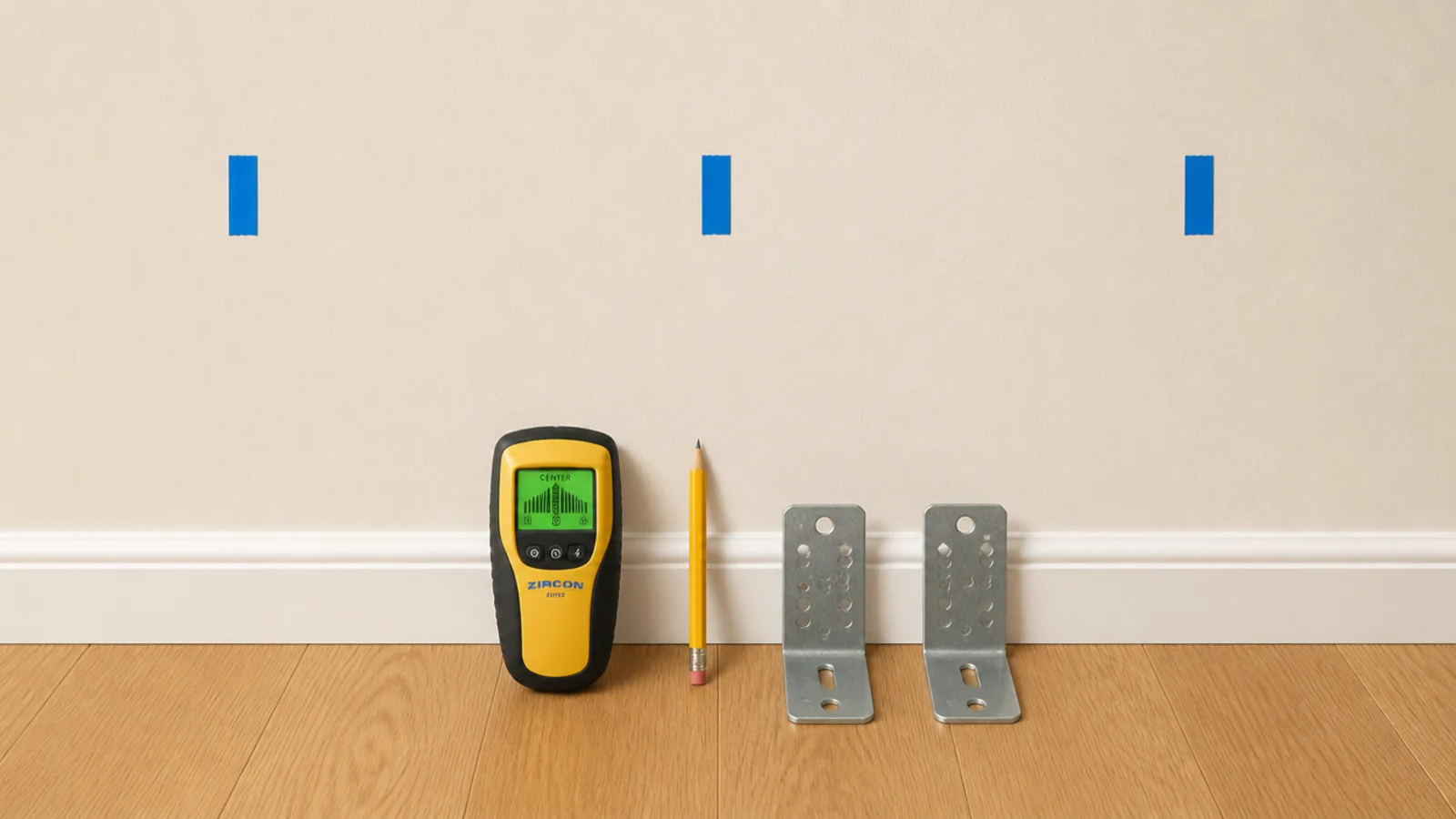
1. A single 32-inch shelf above a desk
The simplest floating shelf there is, and the one that fits the most homes. Thirty-two inches lands on two studs at 16-inch centers.
Mount it 10 to 12 inches above the desk so a monitor and your hands clear it. One inch of board thickness rather than three-quarters removes any bow. Board and brackets together run $25 to $40. $
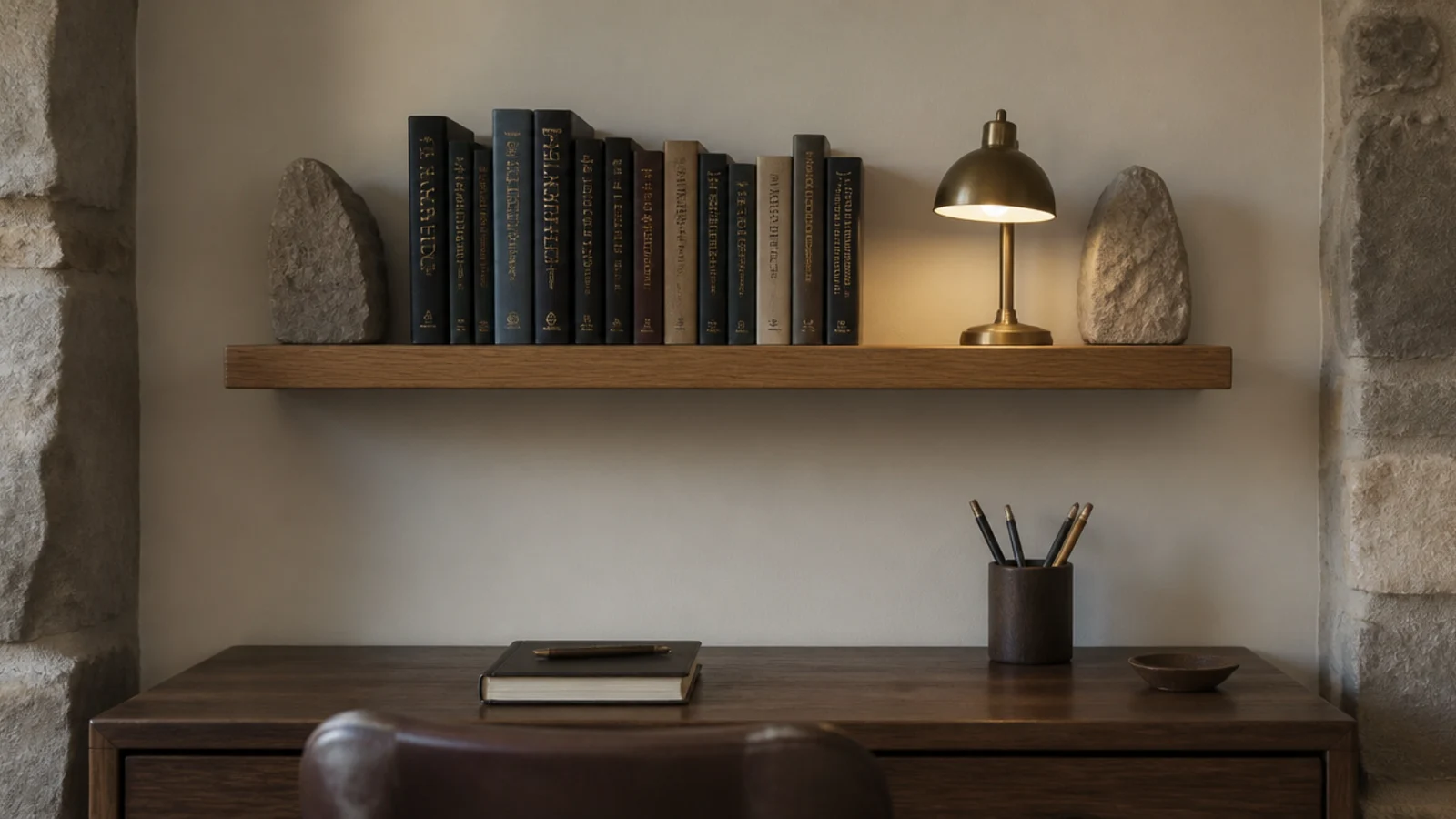
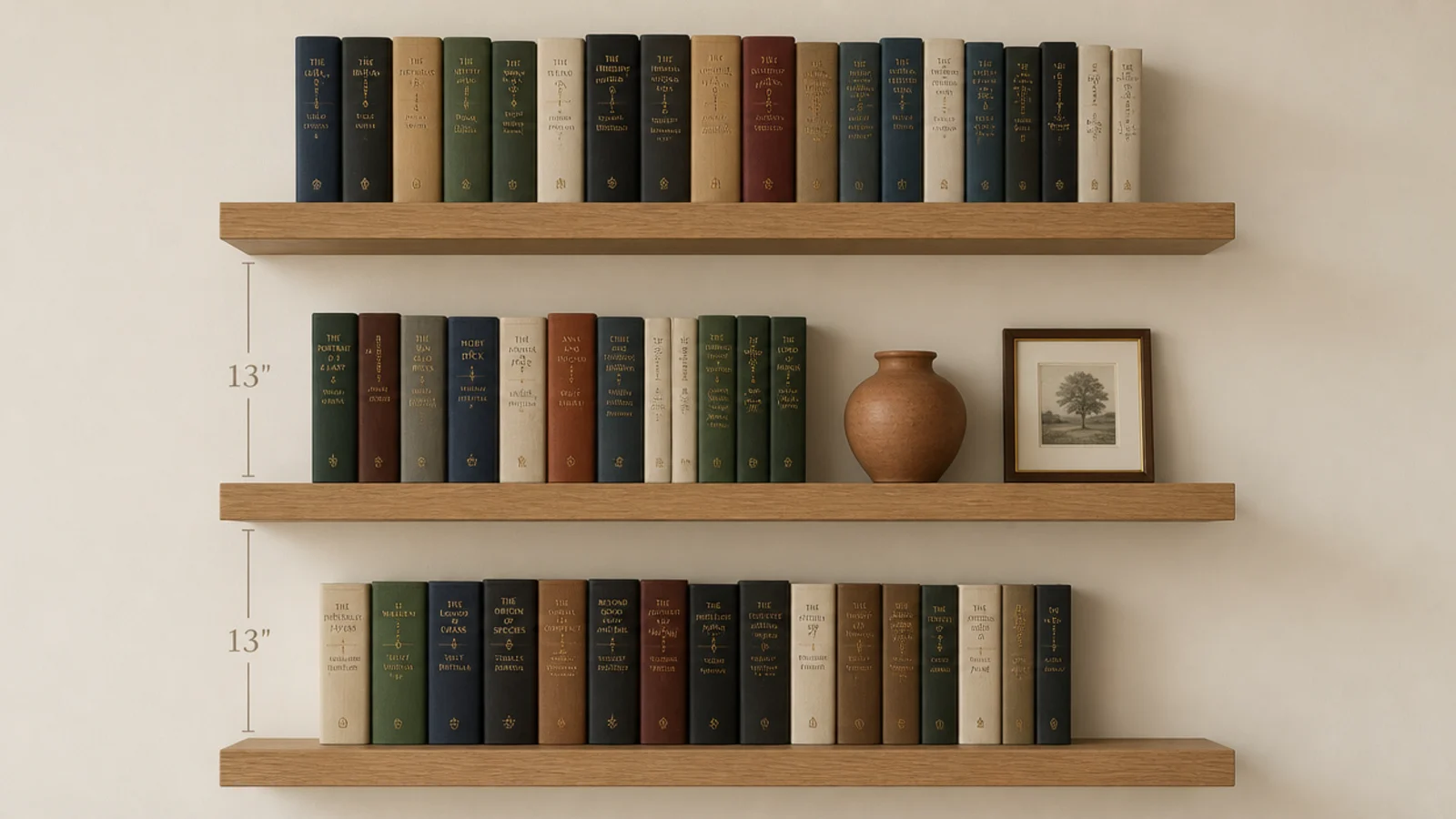
2. A stacked trio at 13-inch spacing
Three shelves stacked with 13 inches of clear height between them takes hardbacks standing upright with room to lift them out.
Drop to 10 inches if you are shelving paperbacks and you gain a fourth shelf in the same wall height. Mark all the bracket positions from a single level line before drilling anything. $$
3. Concealed-rod invisible brackets
A steel plate screwed into studs with rods that slide into holes bored in the back of a thick board. Nothing shows at all, which is the whole appeal.
The board needs to be at least 1 1/2 inches thick to take the rods, and the boring has to be dead straight. Kits run $25 to $50 and carry 40 to 60 pounds into studs. $$
4. A grid of four-inch picture ledges
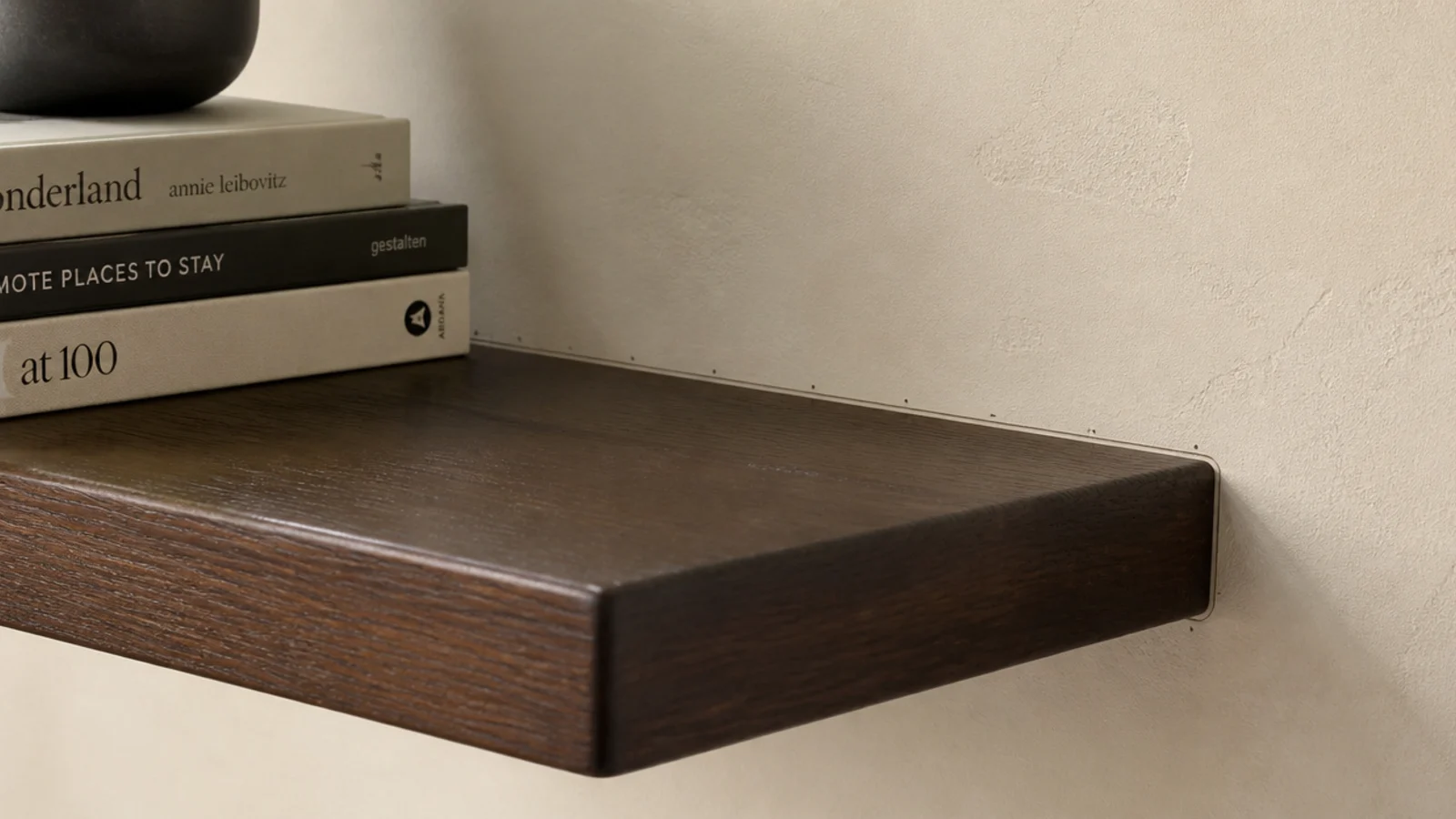
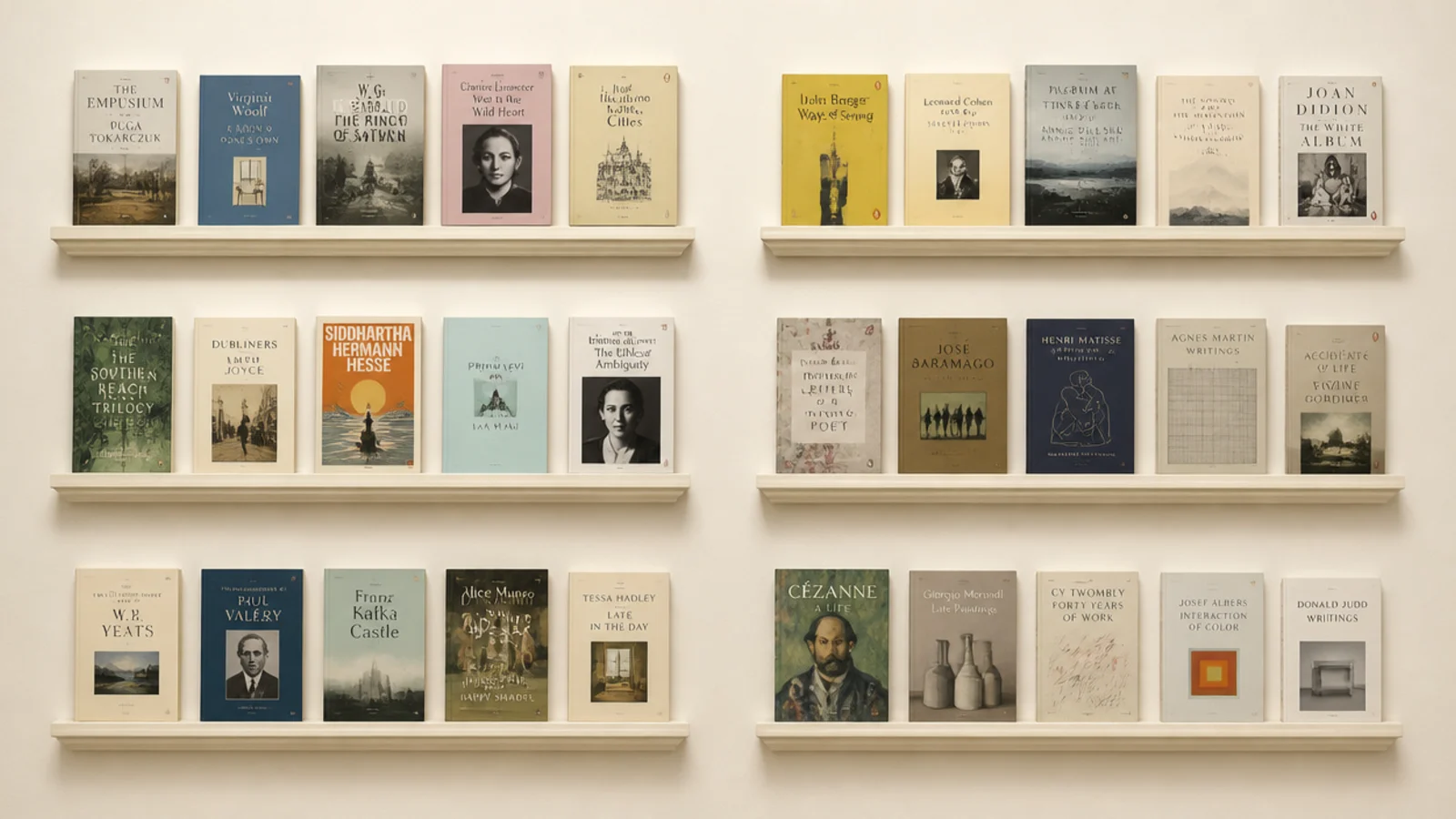
Four inches will not hold a standing row, but it displays paperbacks and thin art books cover-out beautifully.
Think of it as a gallery wall you can change weekly. Roughly 12 books per 3-foot ledge. Ready-made ledges cost $15 to $25 each; a ripped 1x4 with a small front lip is about $8. $
5. A full-wall run, stud to stud
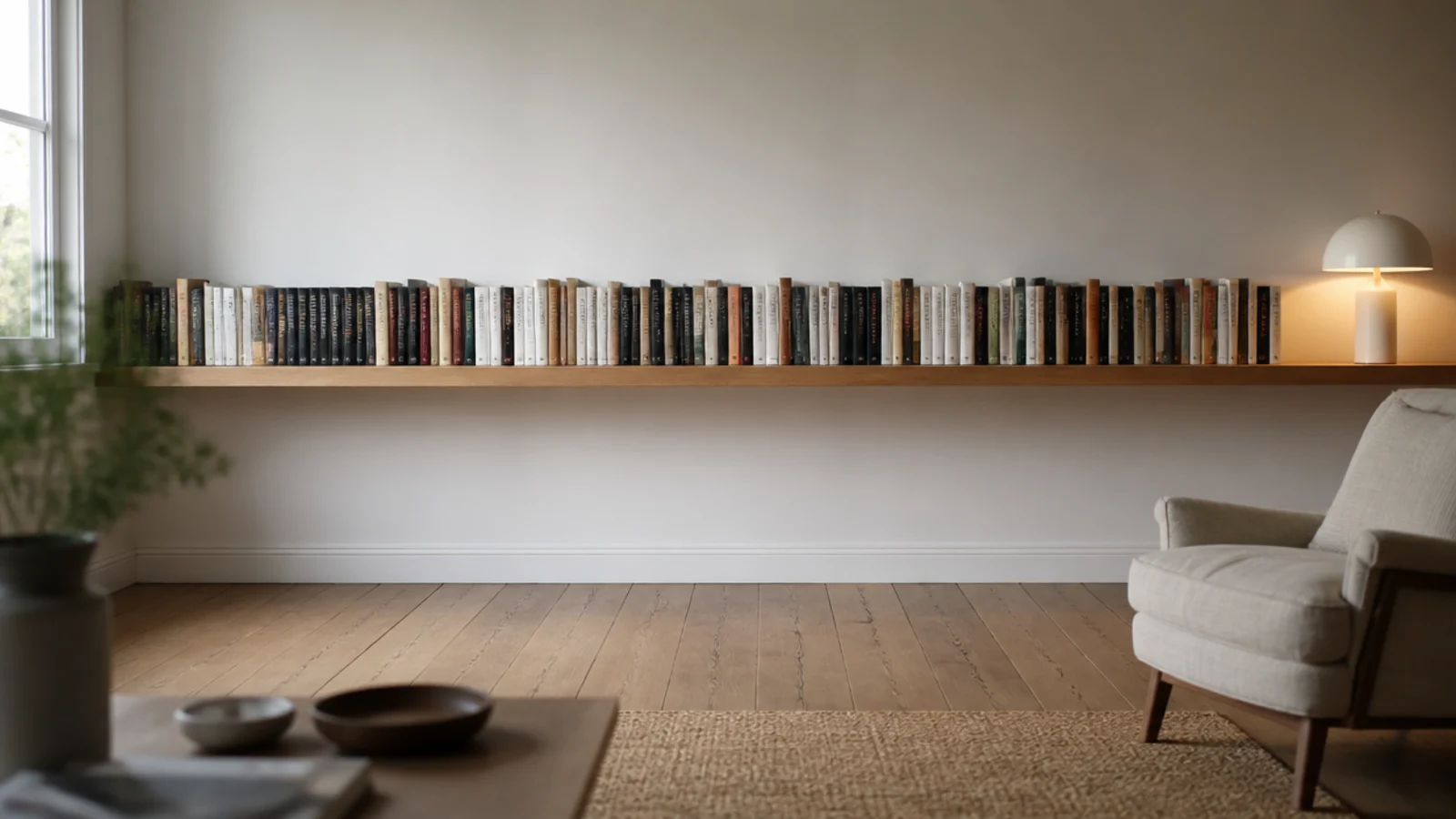
One long shelf spanning an entire wall reads as architecture rather than furniture, and it is the cheapest way to make a room look considered.
Put a bracket at every stud, not just at the ends. Use 1-inch stock and add a front lip. Chest height, around 48 to 54 inches, keeps it usable and out of head range. $$
6. A solid one-inch front lip
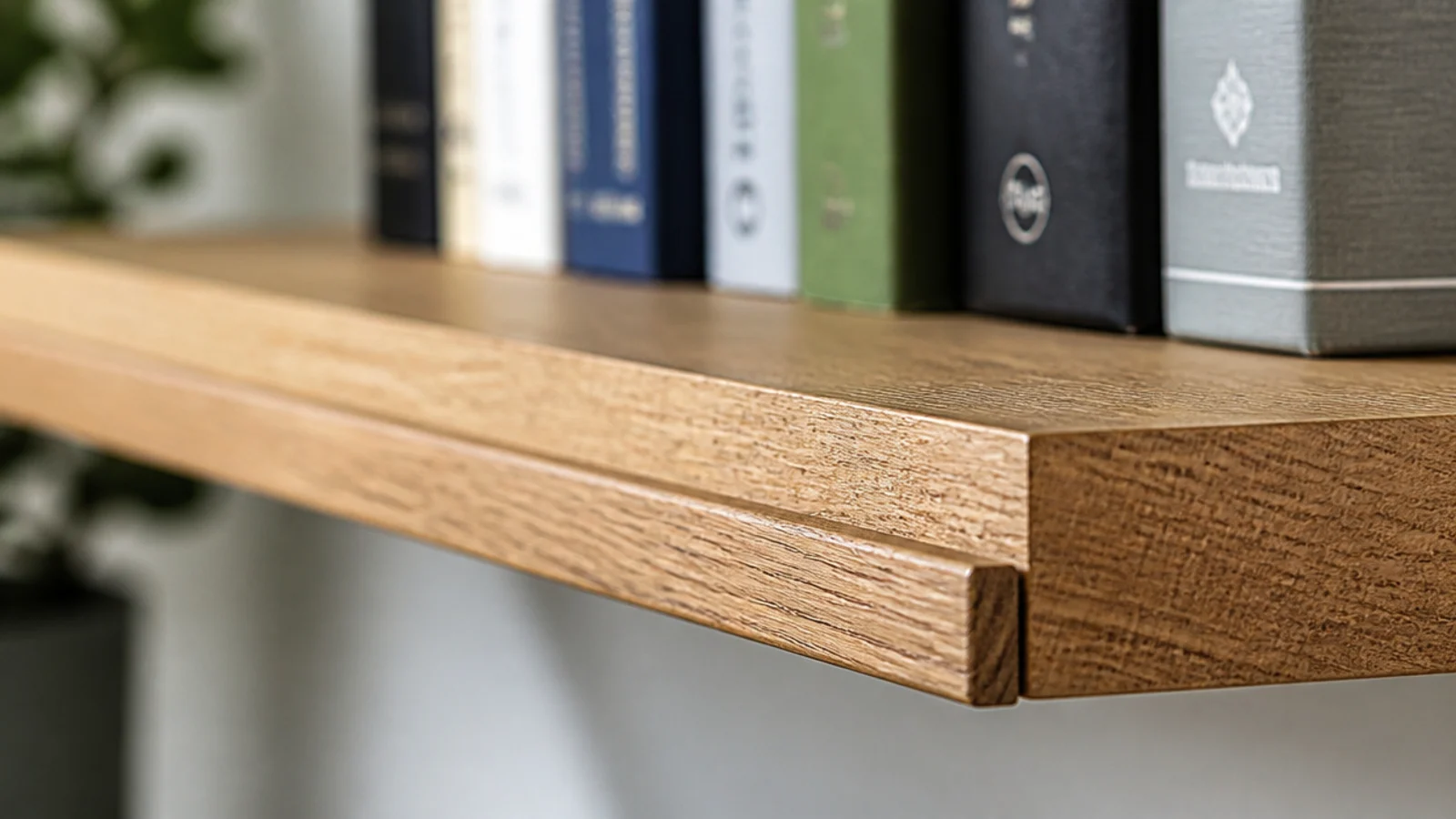
Not a look so much as a fix, but it changes what the other 24 ideas can do. A 3/4 by 1-inch hardwood strip glued under the front edge stiffens a shelf substantially.
It also hides plywood laminations and gives the board a chunkier shadow line. Clamp every 8 inches and wipe the glue squeeze-out immediately. About $12 of stock per shelf. $
7. Two-tone black bracket and oak board
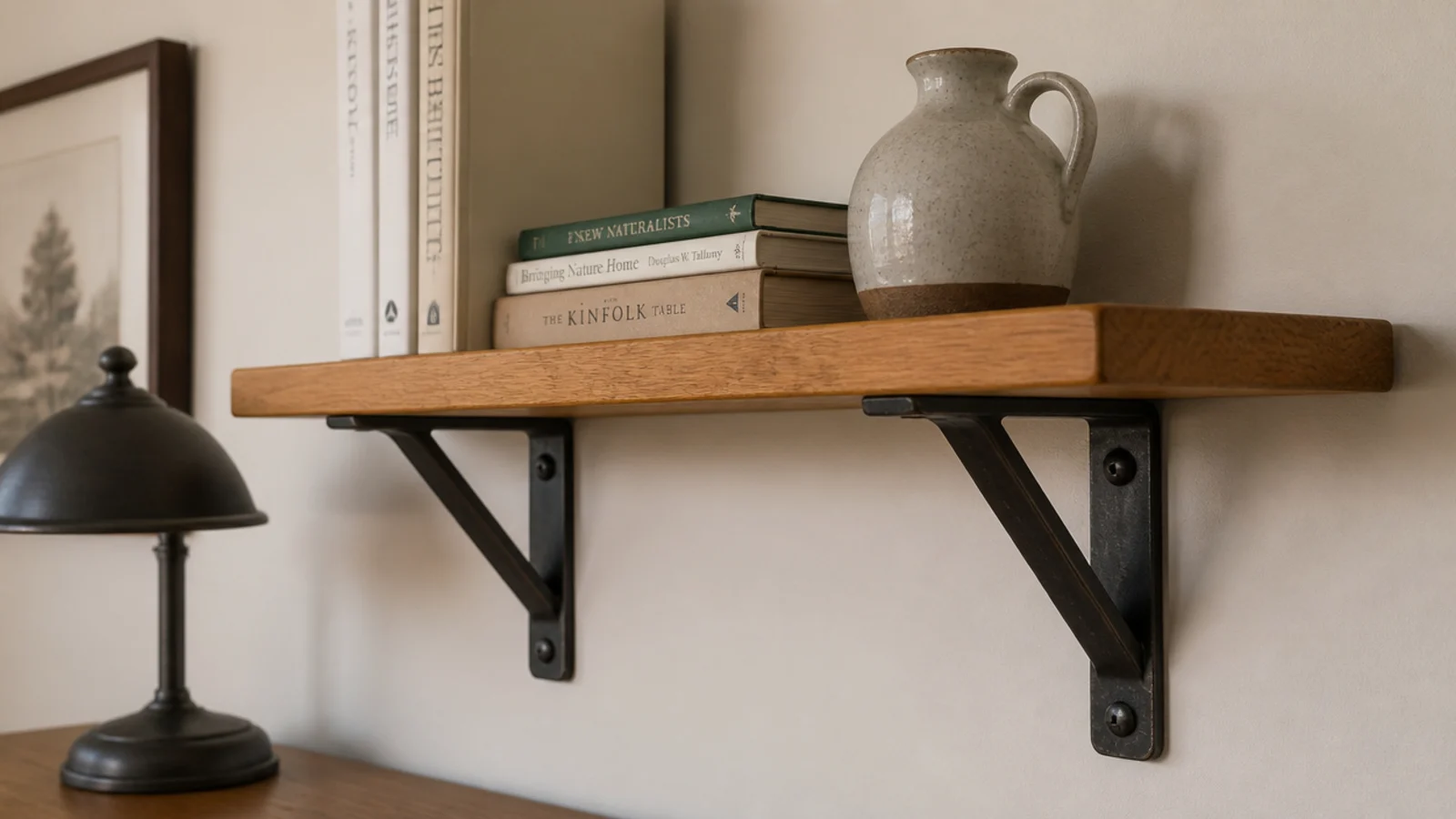
Hardware you can see is fine as long as it looks intentional. Blackened steel under warm oak is the pairing that never looks cheap.
The trick is matching the black to something else in the room — a lamp base, a window frame, a picture frame. One repeated finish reads as a scheme; one orphan black object reads as an accident. $$
8. A floating corner return
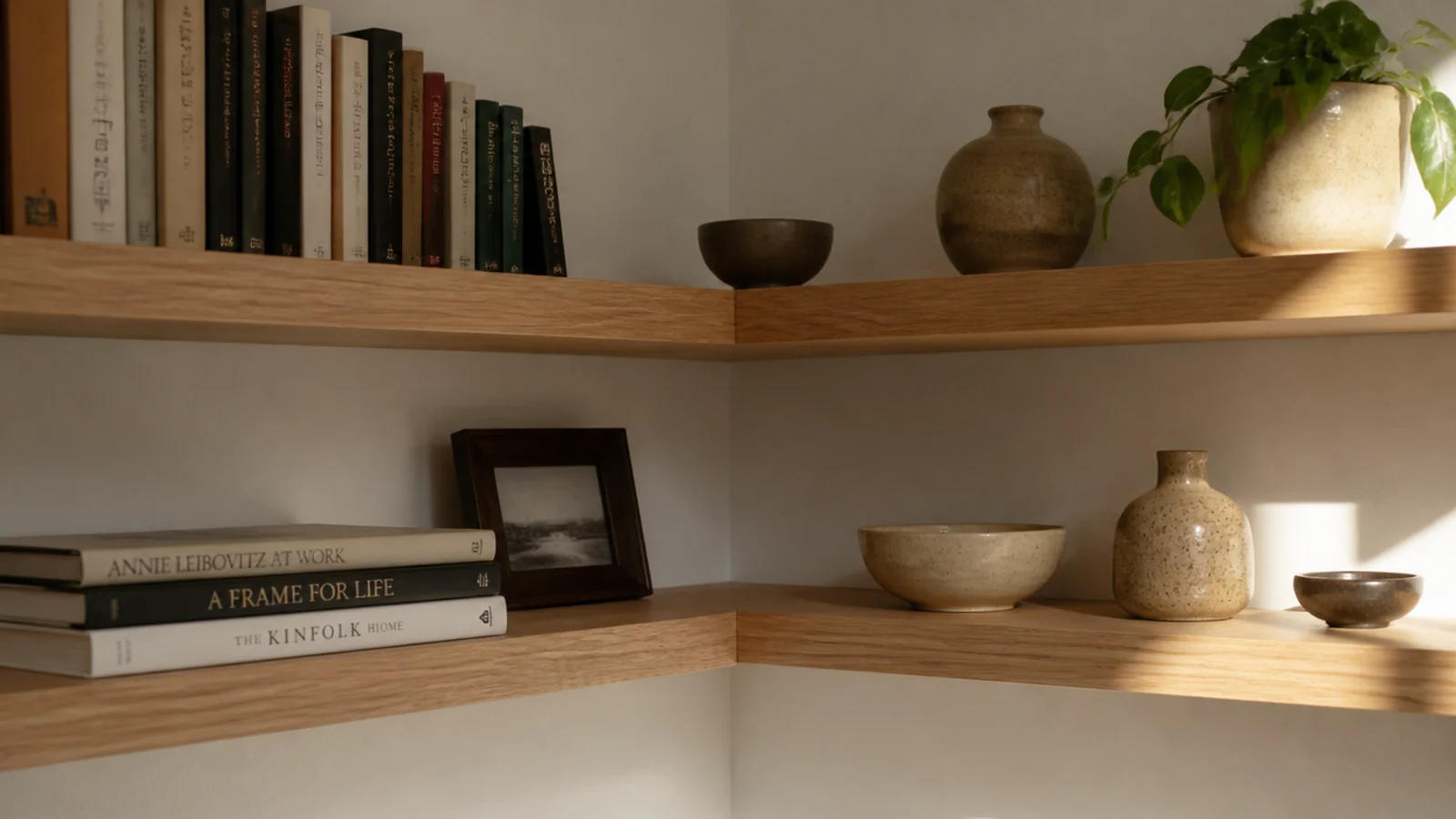
Two shelves meeting cleanly at an interior corner so the top surfaces run continuously around it. Miter the front edges at 45 degrees for a seamless joint.
Almost no wall corner is truly 90 degrees, so cut one leg, hold it in place, and only then cut the second to match. Bracket both legs into studs near the corner. $$
9. Shelves framing a window
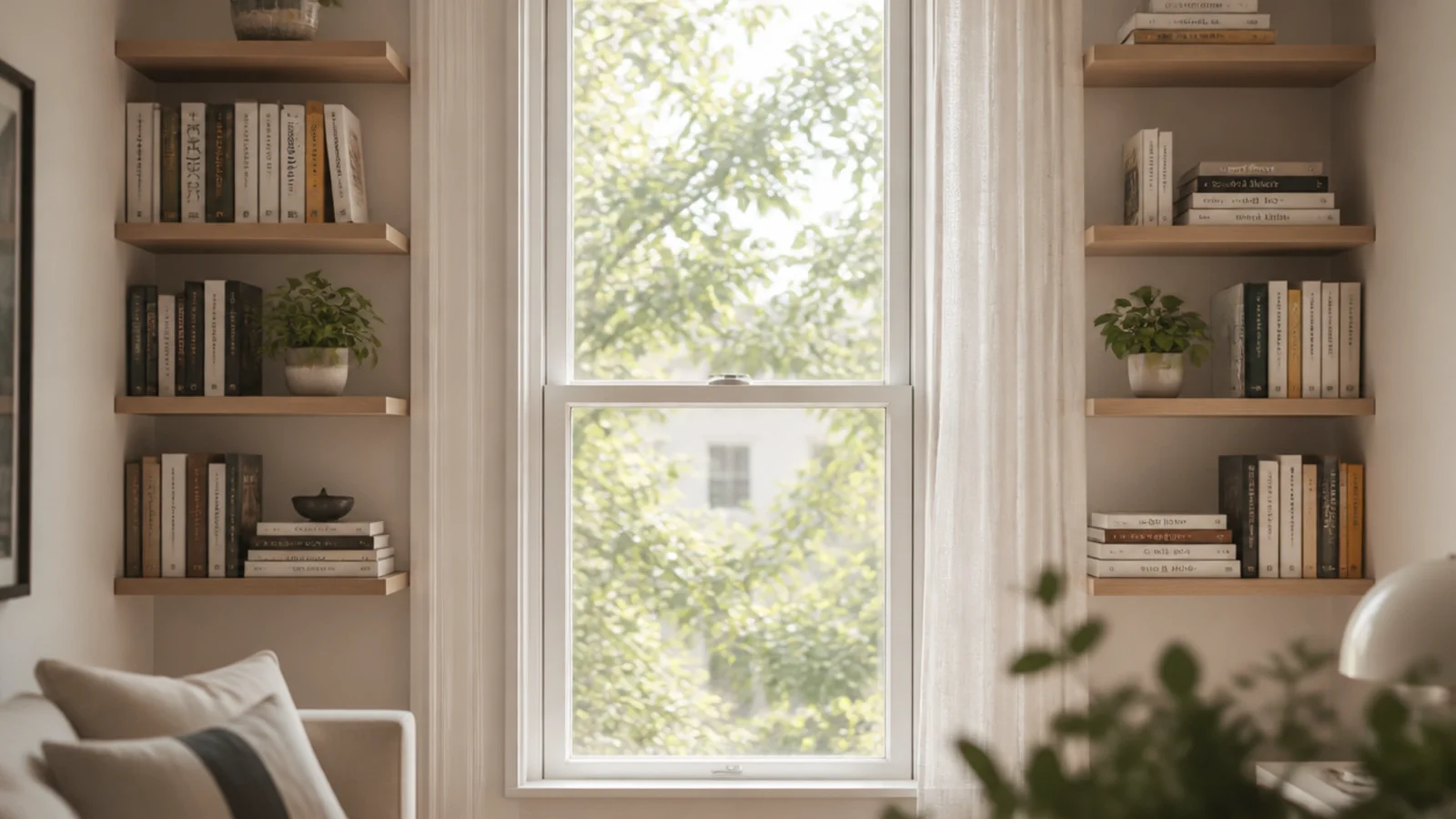
Stacked shelves up both sides of a window keep every inch of glass clear while giving the opening a proper frame.
Keep the stacks the same height on both sides even if the wall strips differ in width — symmetry does the work here. Depth of 8 to 10 inches stops the shelves cutting into the daylight. $$
10. A 60-inch pair above the sofa
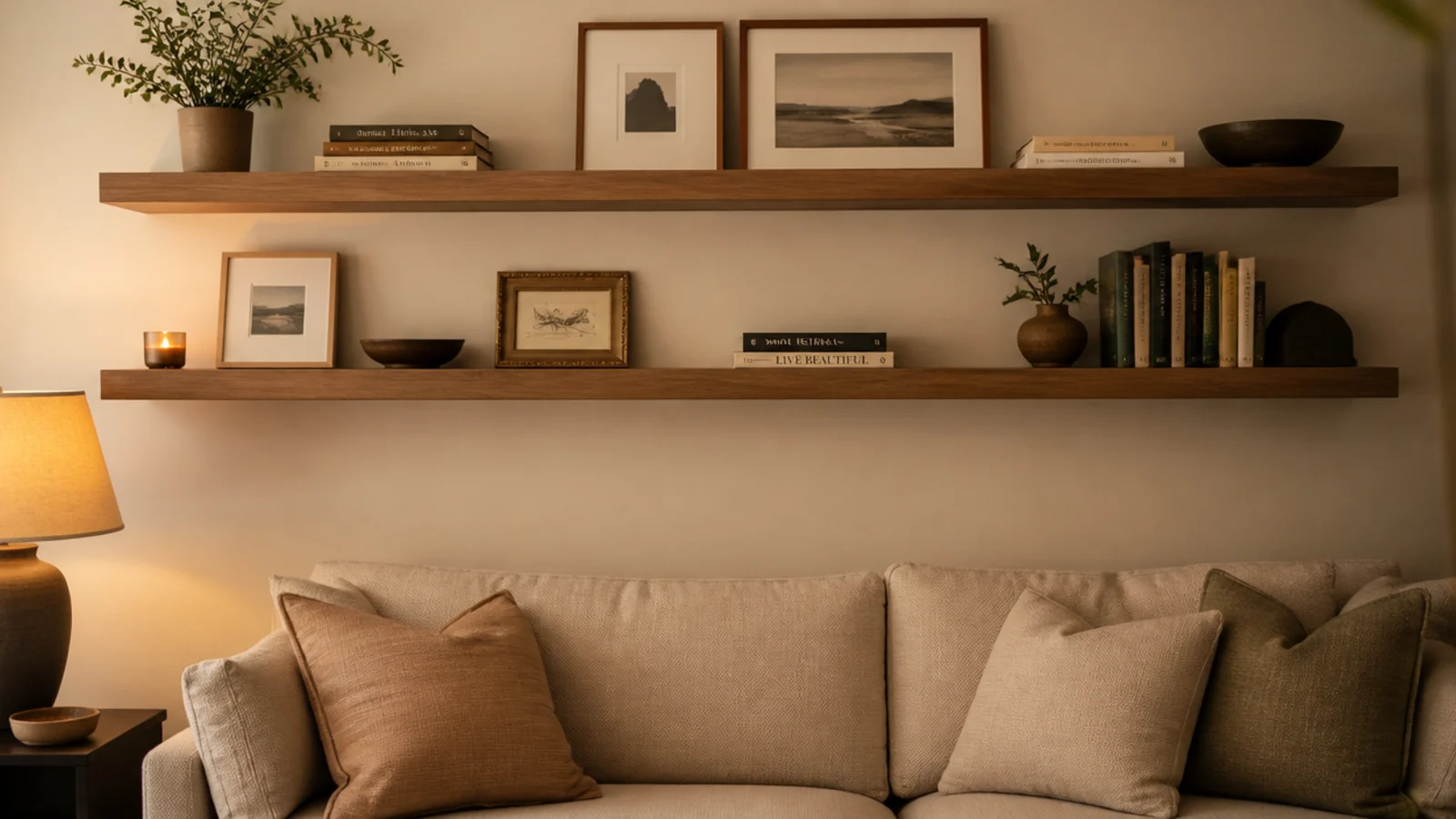
Two long shelves above a sofa fill the hardest wall in most living rooms without the commitment of a bookcase.
Leave at least 10 inches above the back cushion so nobody knocks their head, and keep the lower shelf shallow at 8 inches where people lean back. Nothing heavy goes above seating, ever. $$
11. A staggered asymmetric cluster
Short shelves at deliberately uneven heights and offsets, each holding two or three books and one object.
The discipline is that every individual shelf must be dead level even though the group is not aligned. Sketch the arrangement on the wall in painter's tape first — it costs nothing and saves four wrong holes. $$
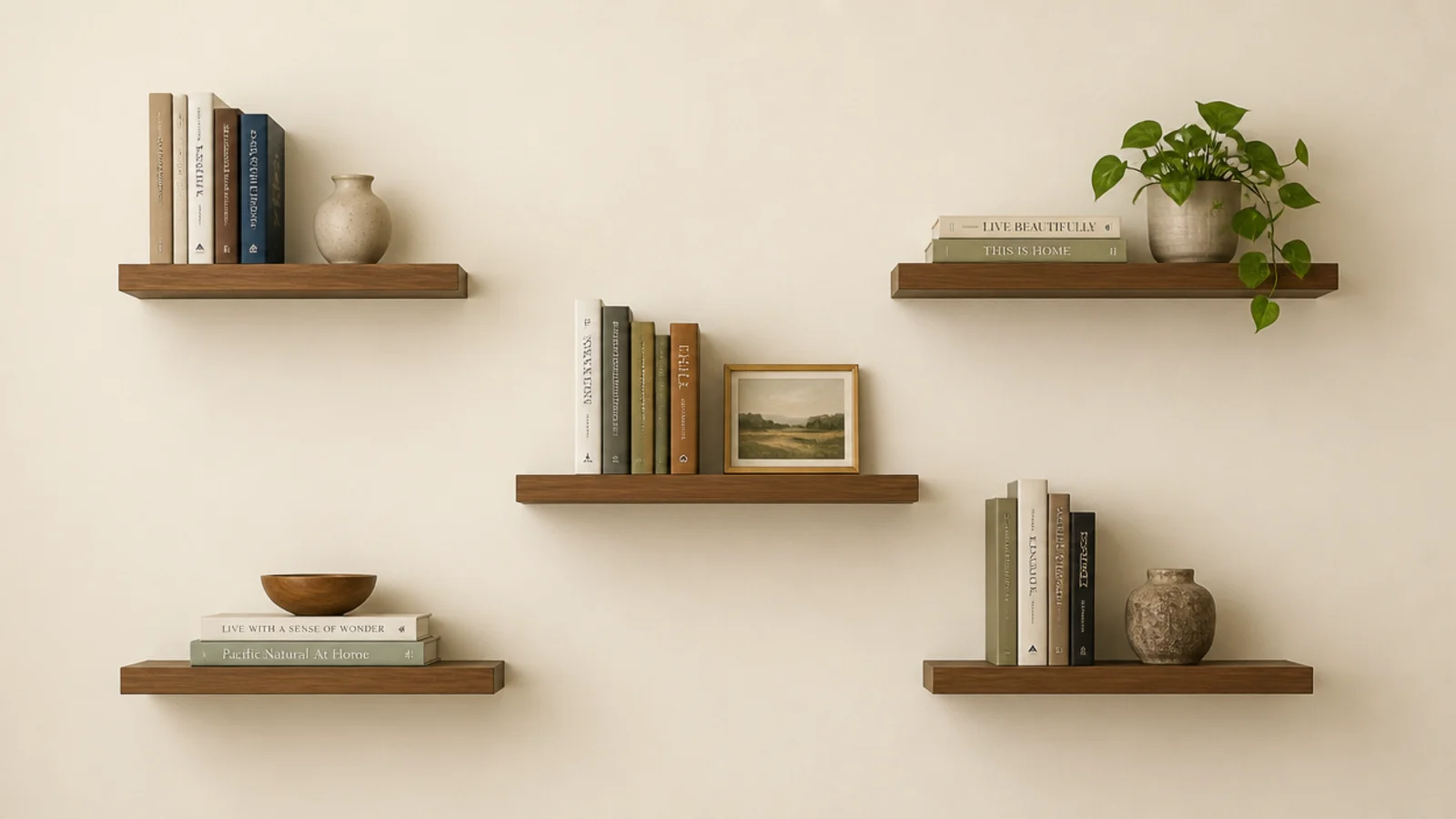
12. An LED strip under the shelf
A warm strip fixed to the underside washes light down over the books below and turns a shelf into a light source at night.
Stay at 2700K. Anything cooler turns warm wood grey and makes paper look clinical. Rechargeable stick-on strips cost $15 to $30 and need no wiring, which suits renters. $$
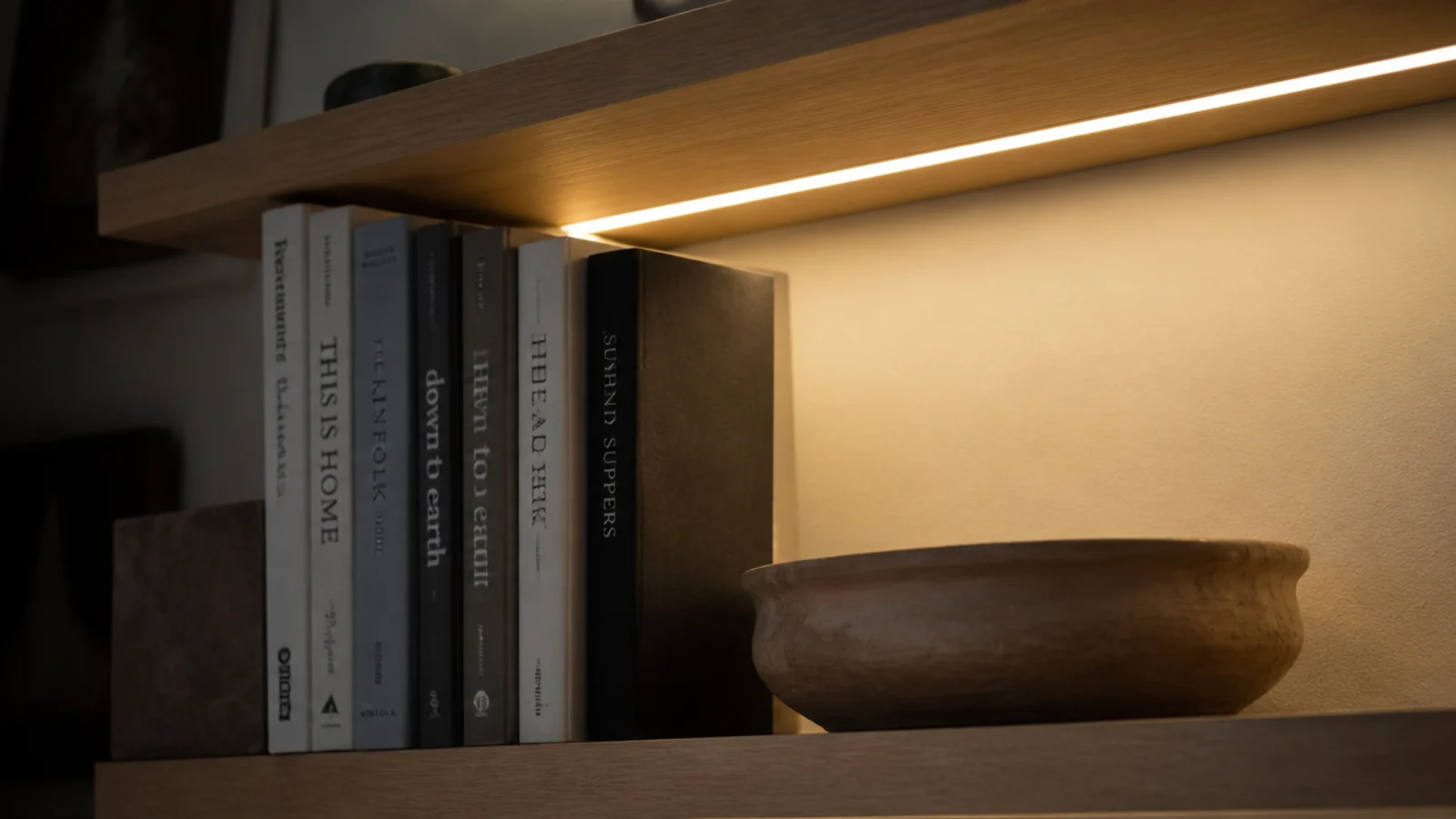
13. Blackened steel angle brackets
Heavy visible angle brackets, bolted rather than screwed, carrying a thick board. The look only works when the hardware is genuinely substantial.
Thin folded brackets read as budget; 1/4-inch flat bar reads as structural. Pairs rated for 100 pounds run $20 to $45 and are worth it if the shelf is holding a real run of books. $$
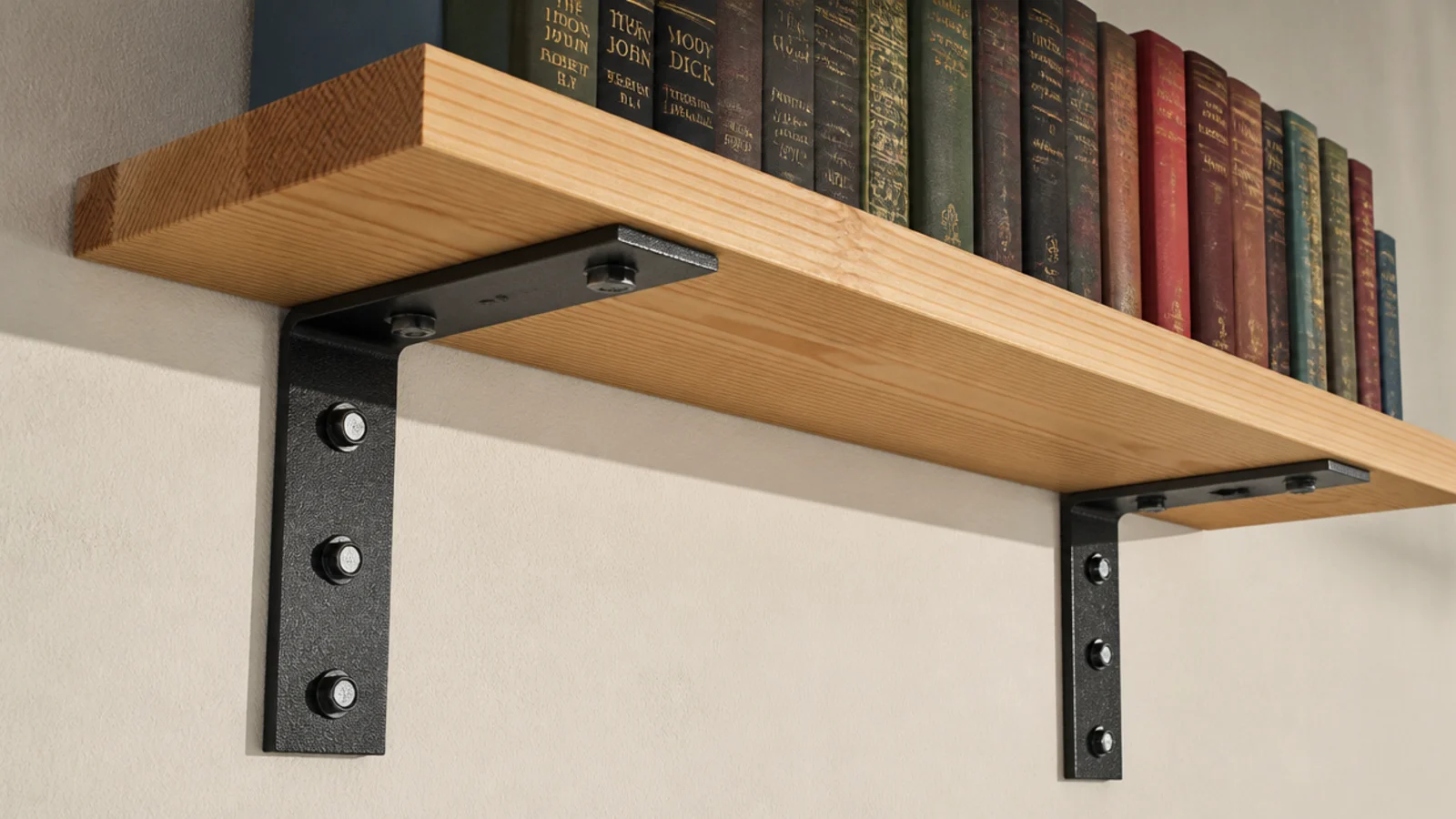
14. A two-inch thick box shelf
A hollow box built around a plywood core gives you the chunky look of solid timber at a fraction of the weight and cost.
Two inches of visible thickness reads as substantial and hides the internal frame that does the actual work. This is also the shelf shape that handles a long span best. $$
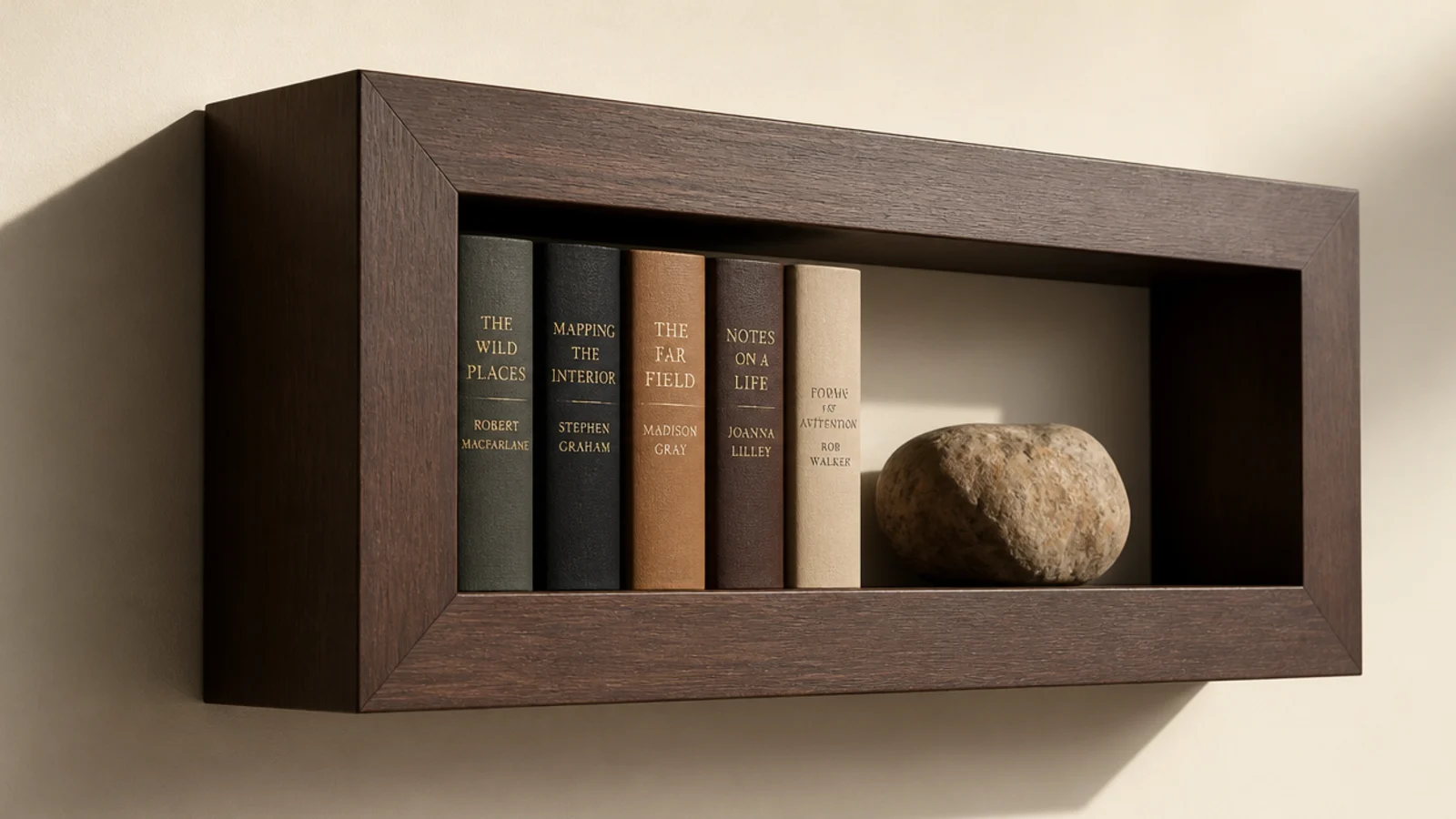
15. A deep 12-inch shelf for art books
Oversized volumes need 12 inches of depth and they belong lying flat, not leaning, because a leaning oversized book warps its own spine within months.
One deep shelf low on the wall, holding three or four stacked flat, doubles as a plinth for a large object. Bracket at every stud — this is the heaviest shelf in any room. $$
16. A narrow six-inch hallway ledge
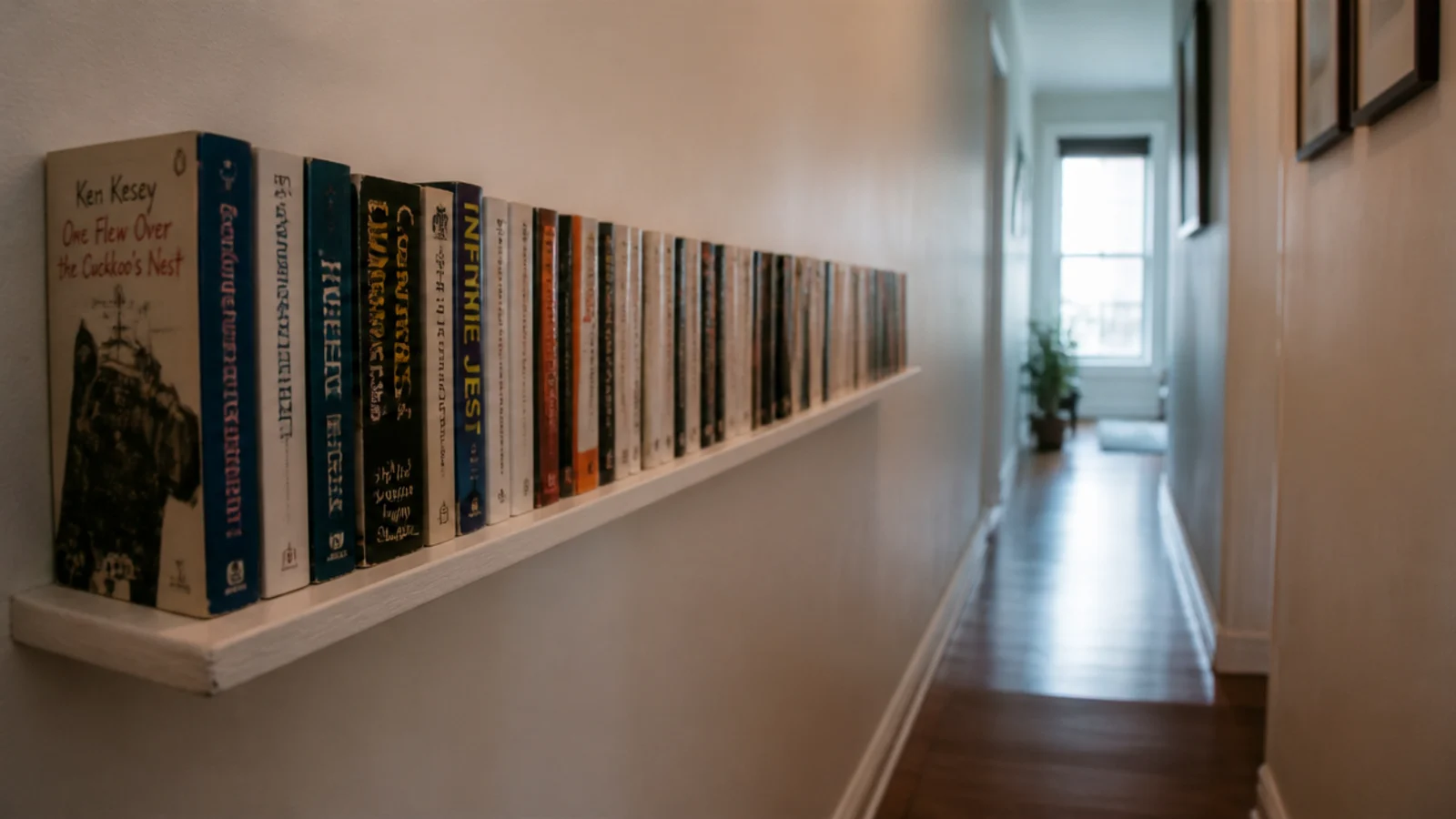
Six inches holds paperbacks upright and keeps a tight corridor walkable, which is the whole point.
Measure the hallway first: under 36 inches of width, go shallower still. Hallways are the least-used wall area in most homes, which makes them the best value per linear foot. $
17. French cleat mounting
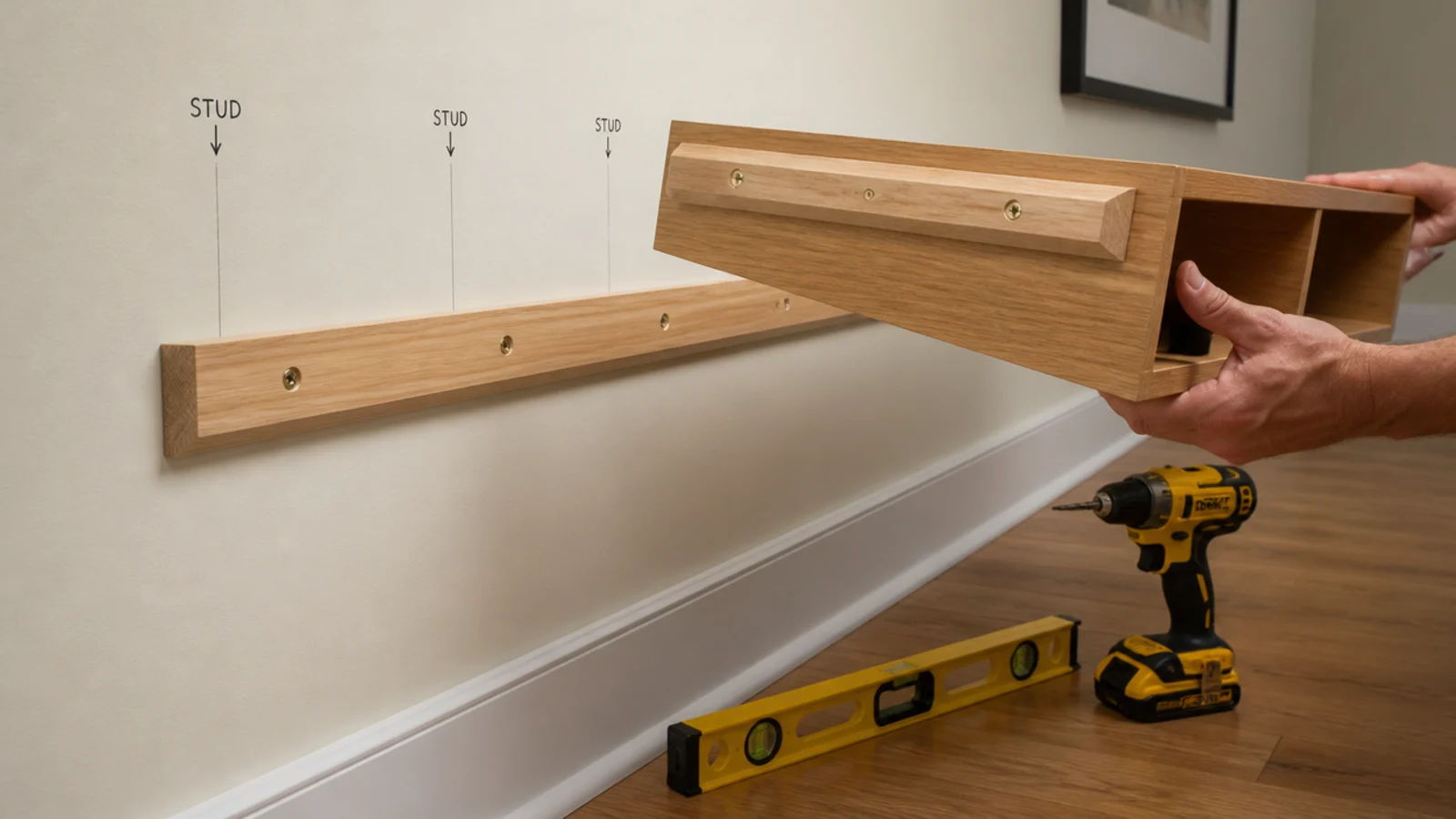
An angled strip screwed into every stud along the run, with a matching angle on the back of the shelf that simply drops on.
The cleat spreads the load across the whole length rather than concentrating it at two brackets, so it is the strongest option here for long runs. It also lets you lift the shelf off to paint. $$
18. A floating shelf with a hidden drawer
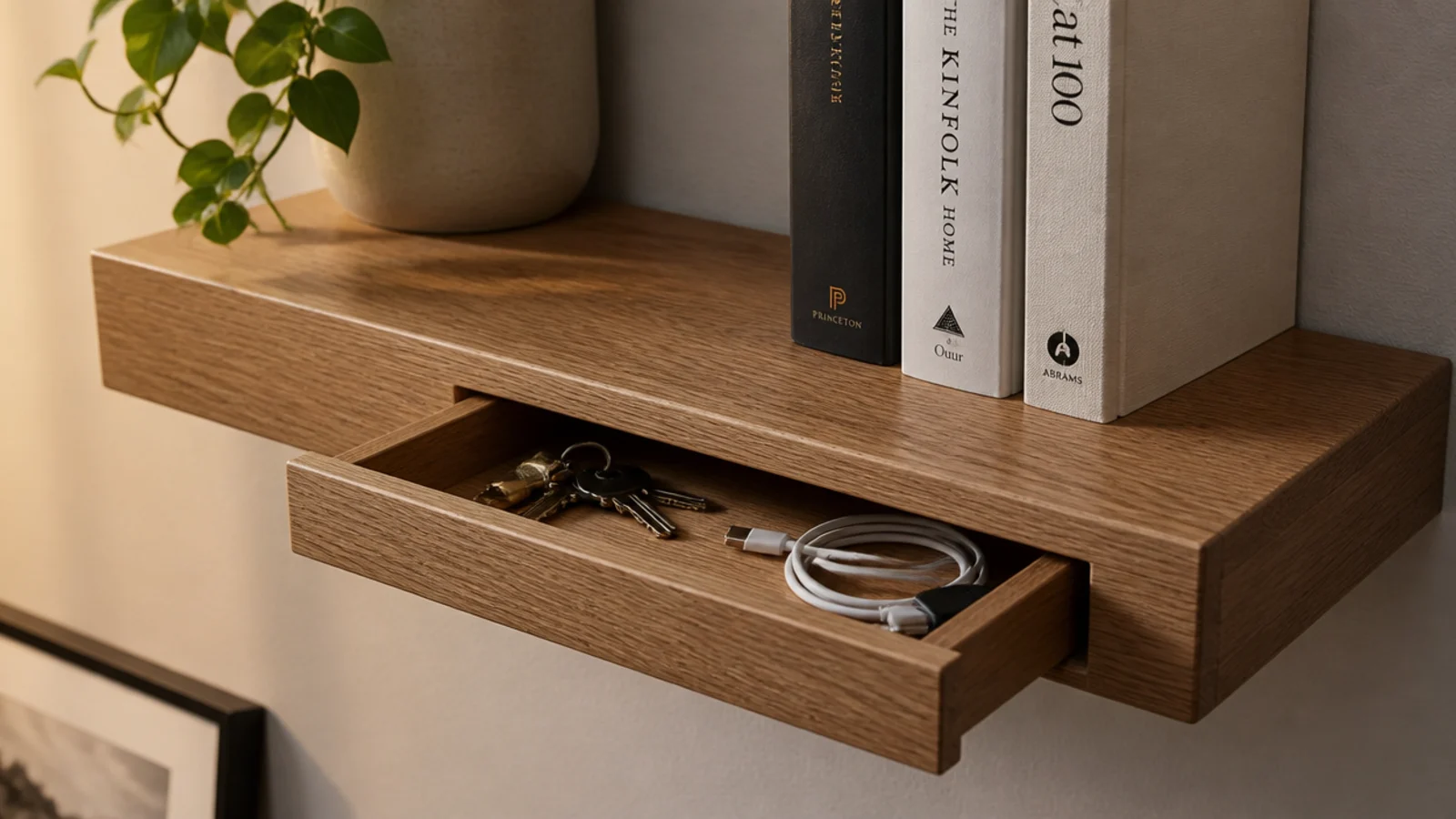
A slim drawer inside a box shelf swallows keys, chargers and the remote, which is most of what makes a living room look untidy.
Keep the drawer to 2 inches deep so the shelf still reads as a shelf. Ready-made versions run $50 to $90; built into a box shelf it costs the price of a pair of slides. $$
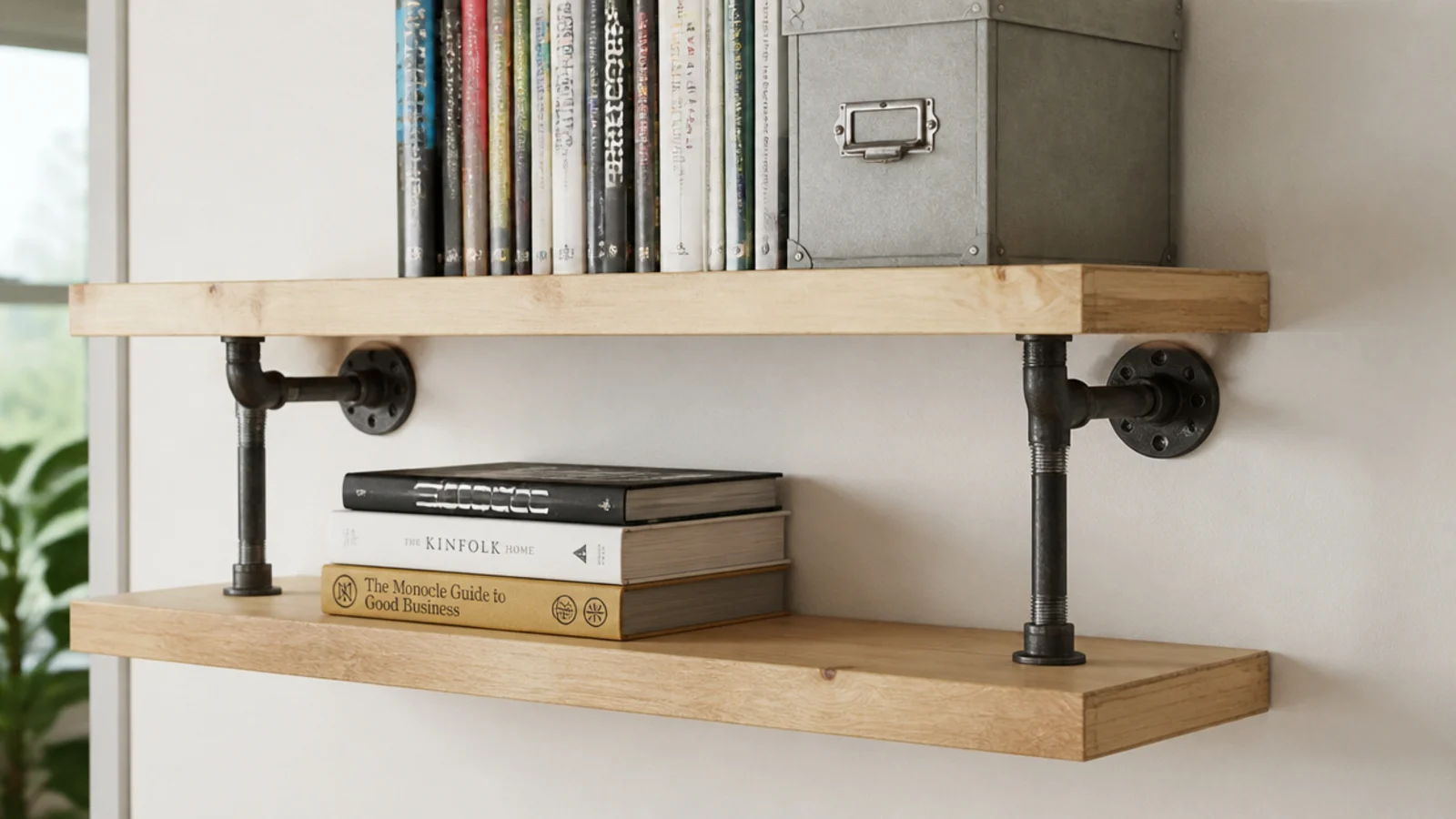
19. Pipe and board industrial shelves
Black threaded pipe flanges bolted into studs with pine boards resting on them. No woodworking, no bracket shopping, and it carries real weight.
Use 3/4-inch pipe rather than 1/2-inch for anything holding books, and bolt every flange into a stud. Fittings and boards for a three-shelf run come to $90 to $150. $$
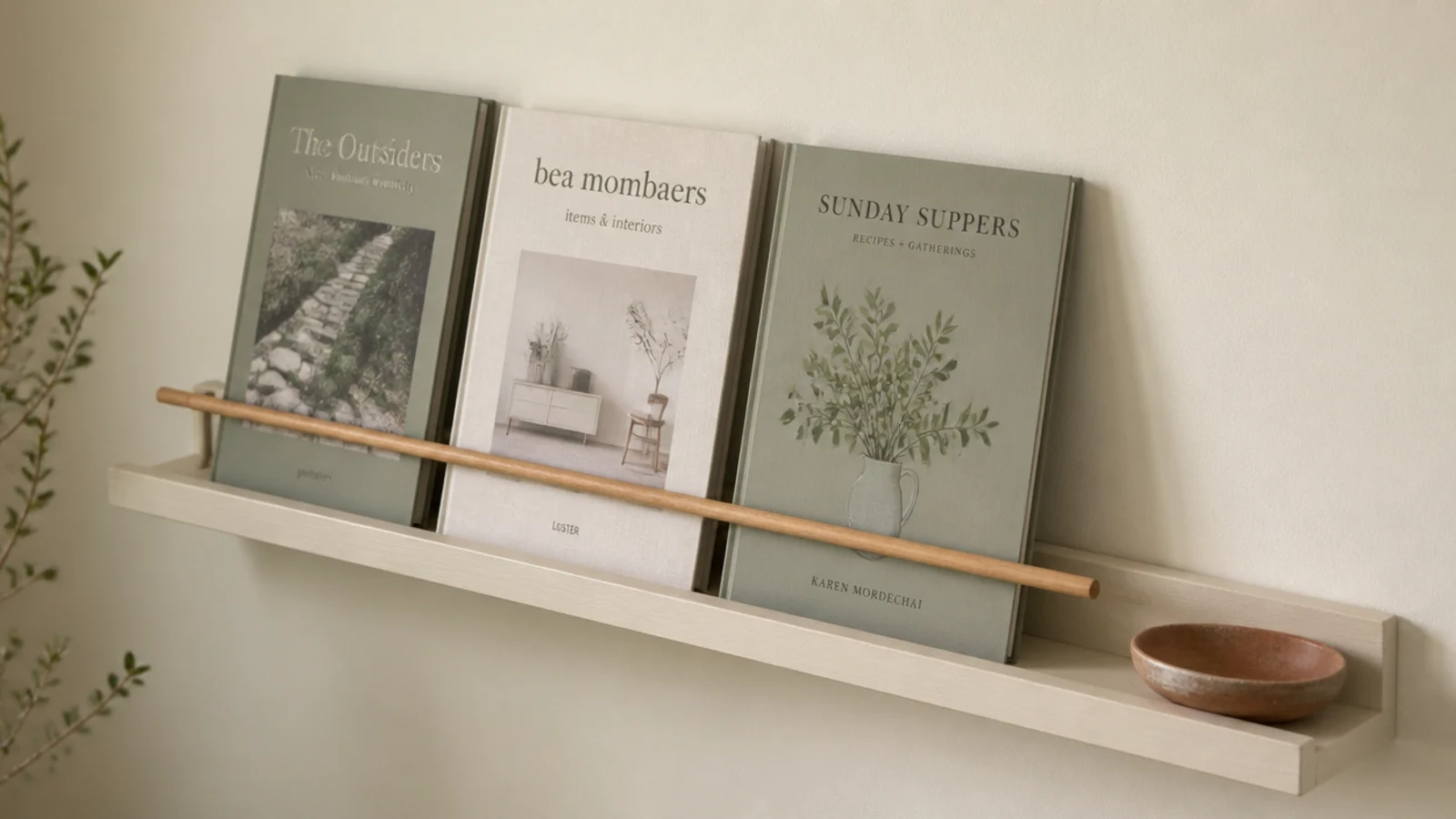
20. A dowel book rail on a shallow ledge
A 1/2-inch dowel running across the front of a shallow ledge lets books tilt forward cover-out without falling.
It is the classic children's book display and it works just as well for cookbooks or art monographs in an adult room. Total cost under $20, and it makes a 4-inch ledge genuinely useful. $
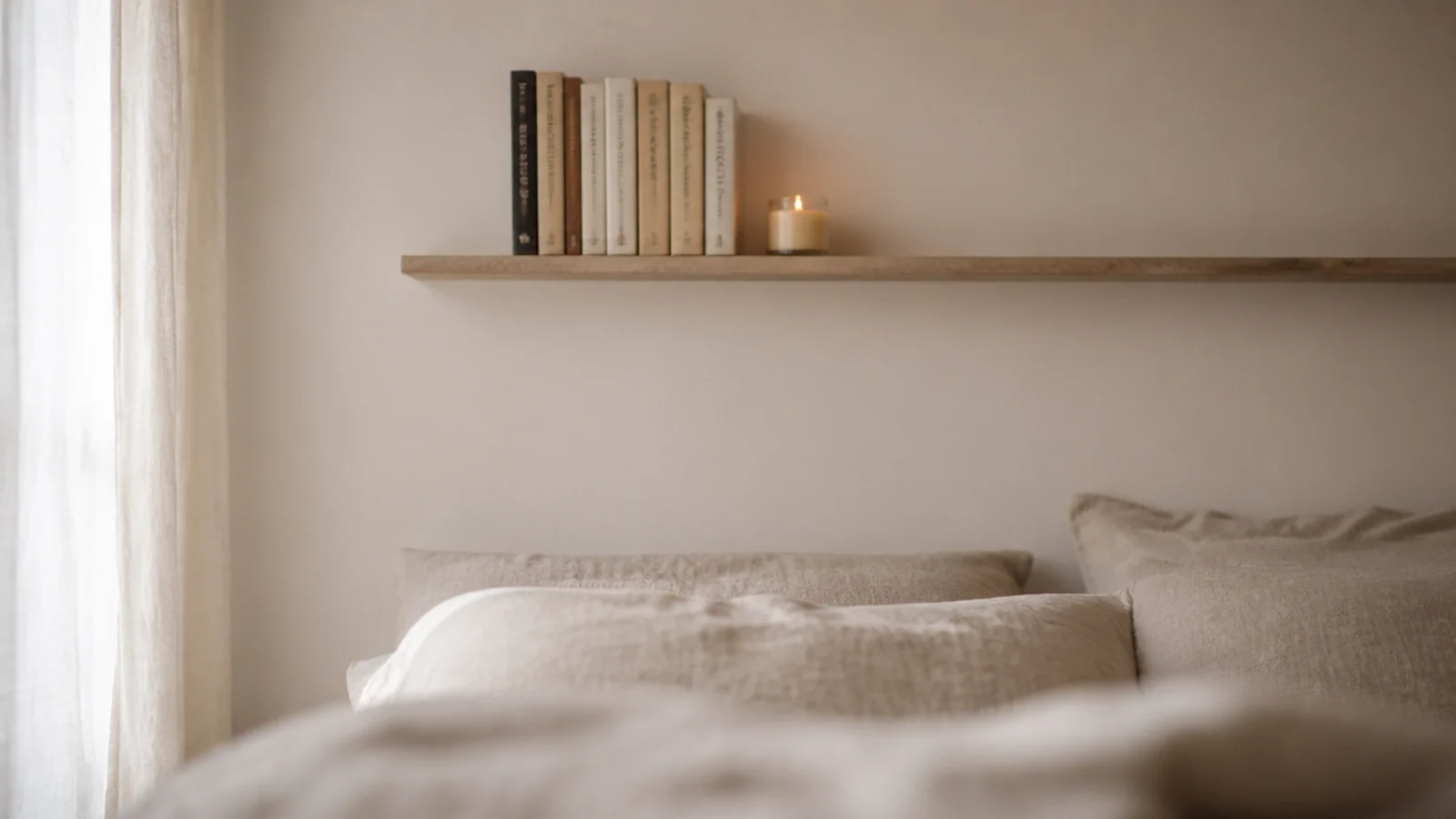
21. A shallow ledge above the bed
This one comes with rules. Keep it to a 4 to 6 inch lipped ledge holding paperbacks only, mount it at least 24 inches above the mattress, and fix it into studs.
Skip it entirely in earthquake country or with young children. A headboard with built-in storage does the same job with none of the risk. $
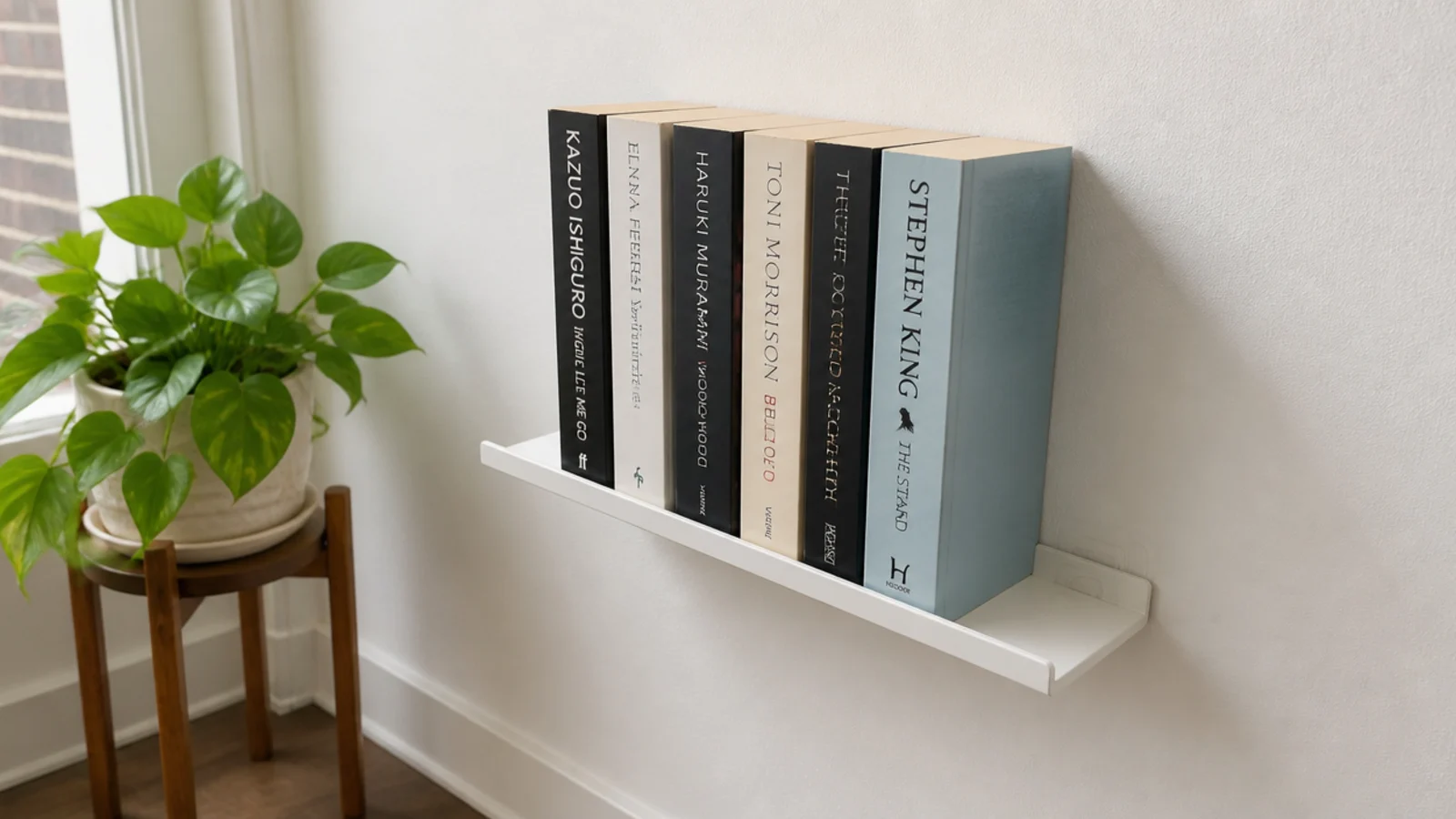
22. The honest renter no-drill ledge
Adhesive strips and tension systems top out around 15 pounds, which is roughly eight paperbacks. Anyone telling you otherwise is selling something.
Use them for display, not storage. The better renter move is two small holes into a stud and a $4 tube of spackle at move-out, which most leases treat as ordinary wear. $
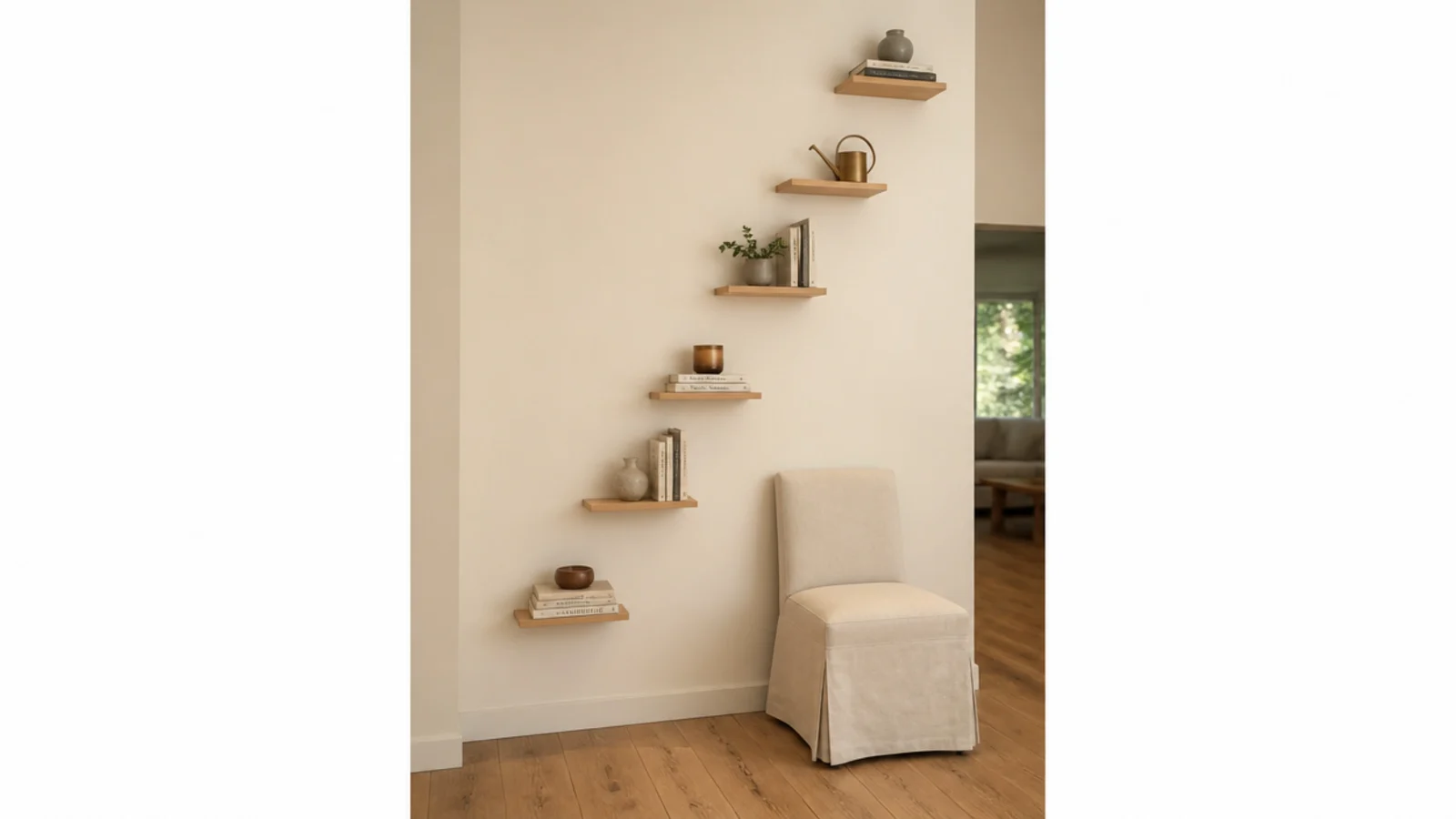
23. A floating ladder of staggered shelves
Six short shelves stepping diagonally up a tall wall draws the eye upward and makes a low ceiling feel higher.
Keep each shelf to 18 to 24 inches so a single stud plus one toggle carries it. Two or three books and one object per shelf — this arrangement fails immediately if you overfill it. $$
24. Shelves flanking a doorway
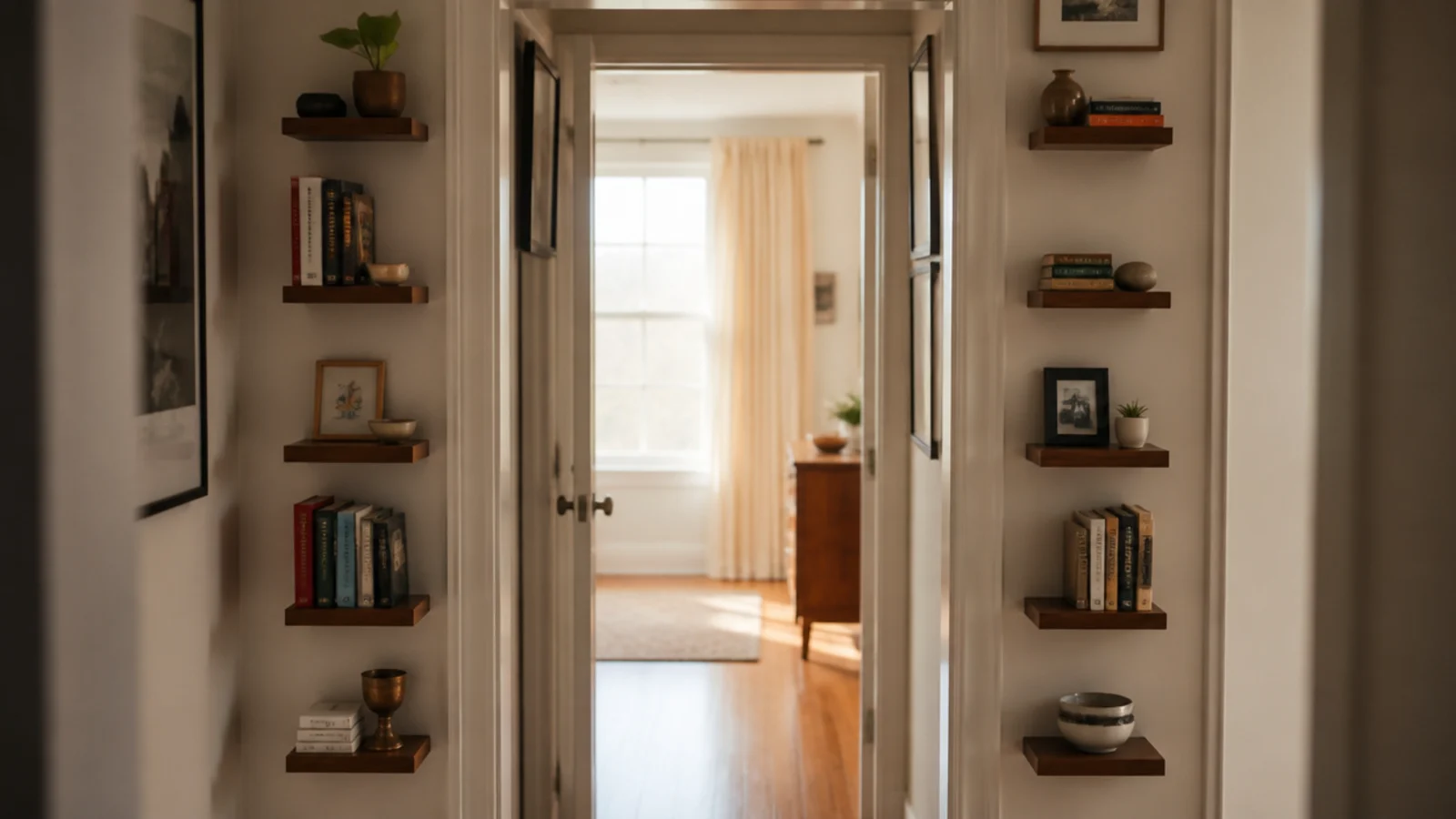
The narrow strips of wall either side of a door are dead space in almost every house, and they usually take three or four short shelves each.
Keep them shallow at 6 to 8 inches so nothing catches a shoulder on the way through, and match the heights on both sides. Anchor into the door framing where you can. $$
25. A painted-in shelf that matches the wall
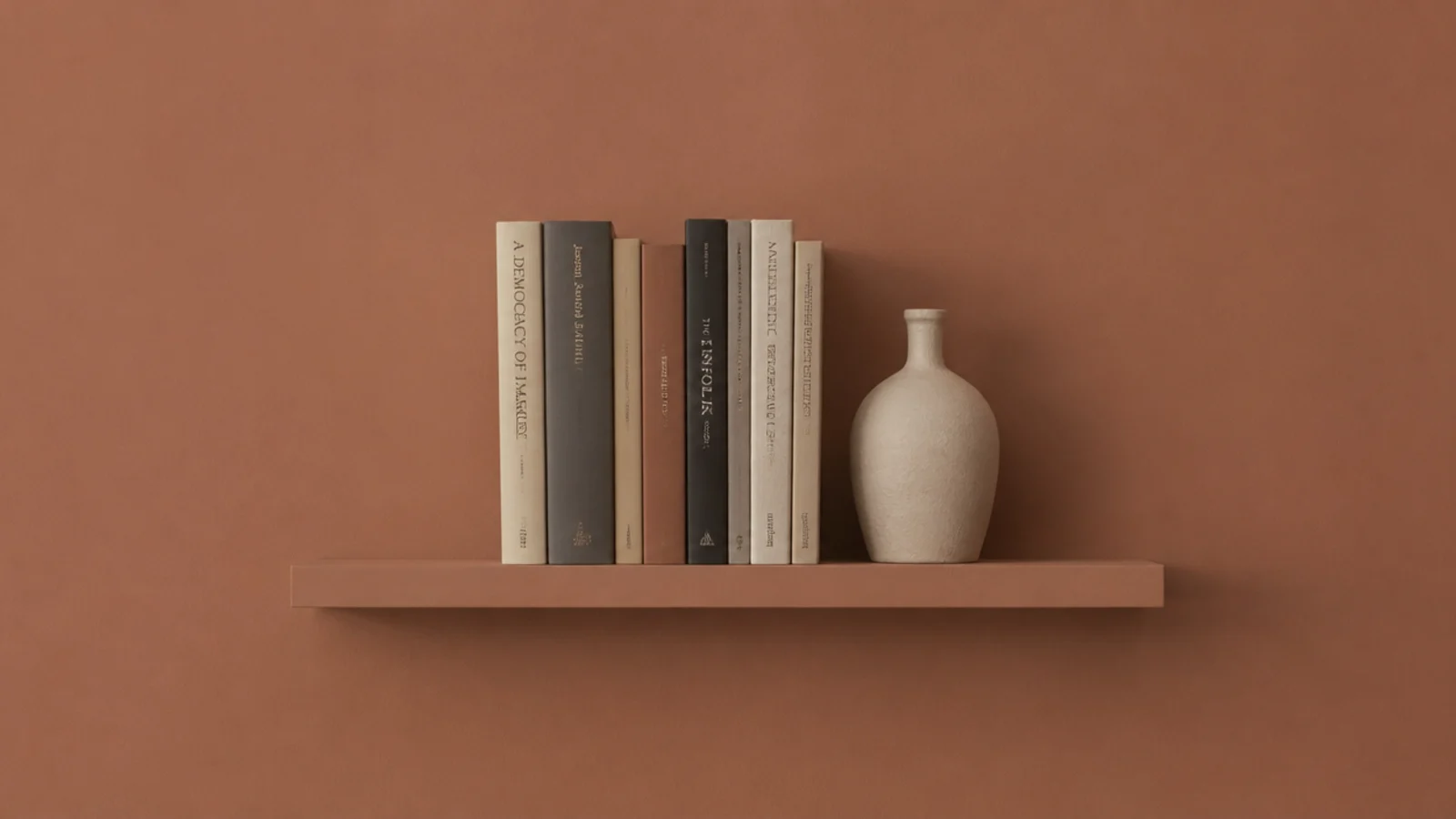
Paint the shelf and its brackets exactly the same shade as the wall and the hardware vanishes, leaving only the books and objects reading.
It is the cheapest way to make budget shelving look deliberate, and in a small room it keeps the wall visually unbroken. A sample pot covers three shelves for about $8. $
Mistakes to Skip
- Using the plastic plugs from the bracket box. They are rated near 10 pounds and a 32-inch run of hardbacks is 50 to 65.
- Spanning 40 inches in 3/4-inch stock because the wall looked right. Add a lip, add a bracket, or accept a permanent bow within a year.
- Finishing only the top face of a wooden shelf. Sealed on one side, the board cups upward within a season, and by then it is loaded and mounted.
Frequently asked questions
How much weight can a floating shelf hold?
Into two studs with proper hardware, a well-built floating shelf carries 40 to 60 pounds comfortably. Into bare drywall with the plastic plugs supplied in the bracket box, it carries about 20 pounds total before the anchors start to pull. Books run 20 to 25 pounds per linear foot in hardback, so a 32-inch shelf of them is already 50 to 65 pounds.
How long can a floating bookshelf be without sagging?
Thirty-two inches in three-quarter-inch stock is the practical limit under books. Beyond that, glue a solid one-inch lip along the front edge, step up to one-inch material, or add a third bracket. Longer runs are perfectly possible, but they need a bracket at every stud rather than only at each end, which means one every 16 inches.
Do floating shelves need to hit studs?
For books, yes. Studs are the only fixing that reliably carries a real load, and they sit at 16 inches on center in most homes. If a stud lands in the wrong place, heavy-duty toggle bolts in half-inch drywall carry 25 to 35 pounds each and are the honest second choice. The plugs in the box are rated near 10 pounds.
Can renters install floating bookshelves?
Adhesive and tension systems top out around 15 pounds, which is roughly eight paperbacks, so treat them as display rather than storage. The better renter move is to drill two small holes into a stud, fill them at move-out with a $4 tube of spackle, and have a shelf that actually works. Most leases treat that as normal wear.
How high should a floating shelf go above a sofa or desk?
Ten to twelve inches above a desk keeps a monitor and your hands clear. Above a sofa, leave at least 10 inches above the back cushion so nobody knocks their head sitting down, and keep the shelf shallow — 8 inches or less — where people lean back into it.
Find your studs before you fall in love with a layout — the framing decides the shelf lengths, not the other way round. If you would rather build the boards yourself, diy bookshelf ideas covers cutting and finishing, and bookshelf wall ideas takes the same hardware across a whole wall. The identical bracket rules apply to candle wall decor if you are mixing the two. Save the pin for the hardware aisle.
Want more like this? Browse all 15 bookshelf ideas guides — they all use the same measurements and budget tiers.
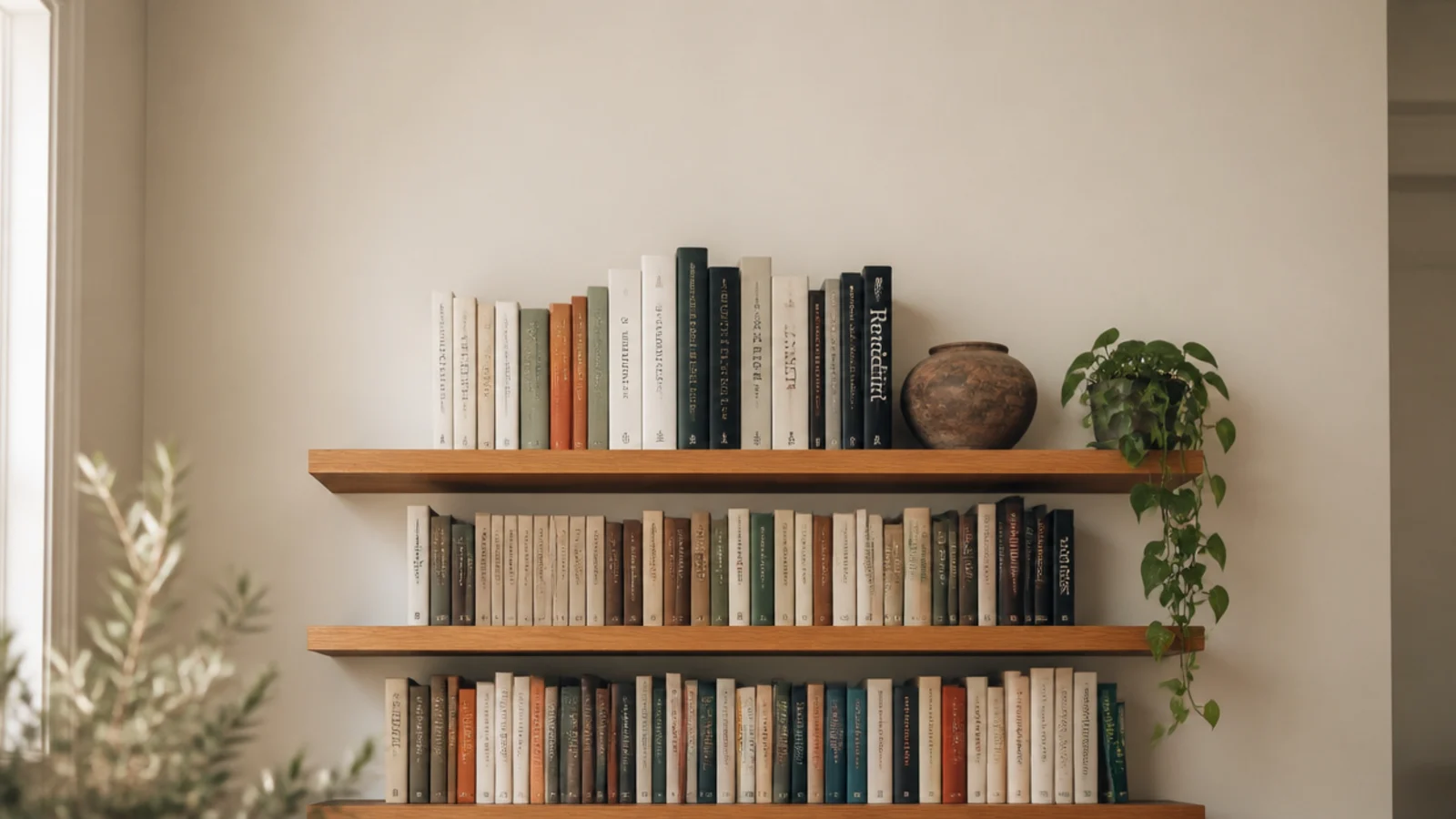
Pin it for later
Save this to your Bookshelf Ideas board
Pin it now so it is waiting for you when the tape measure comes out — and so the next person hunting for this idea can find it too.
Save this pinKeep going
More ideas worth saving while you have the tape measure out.