Center Table Living Room · Listicle
20 Center Table Living Room Luxury Looks On A Budget

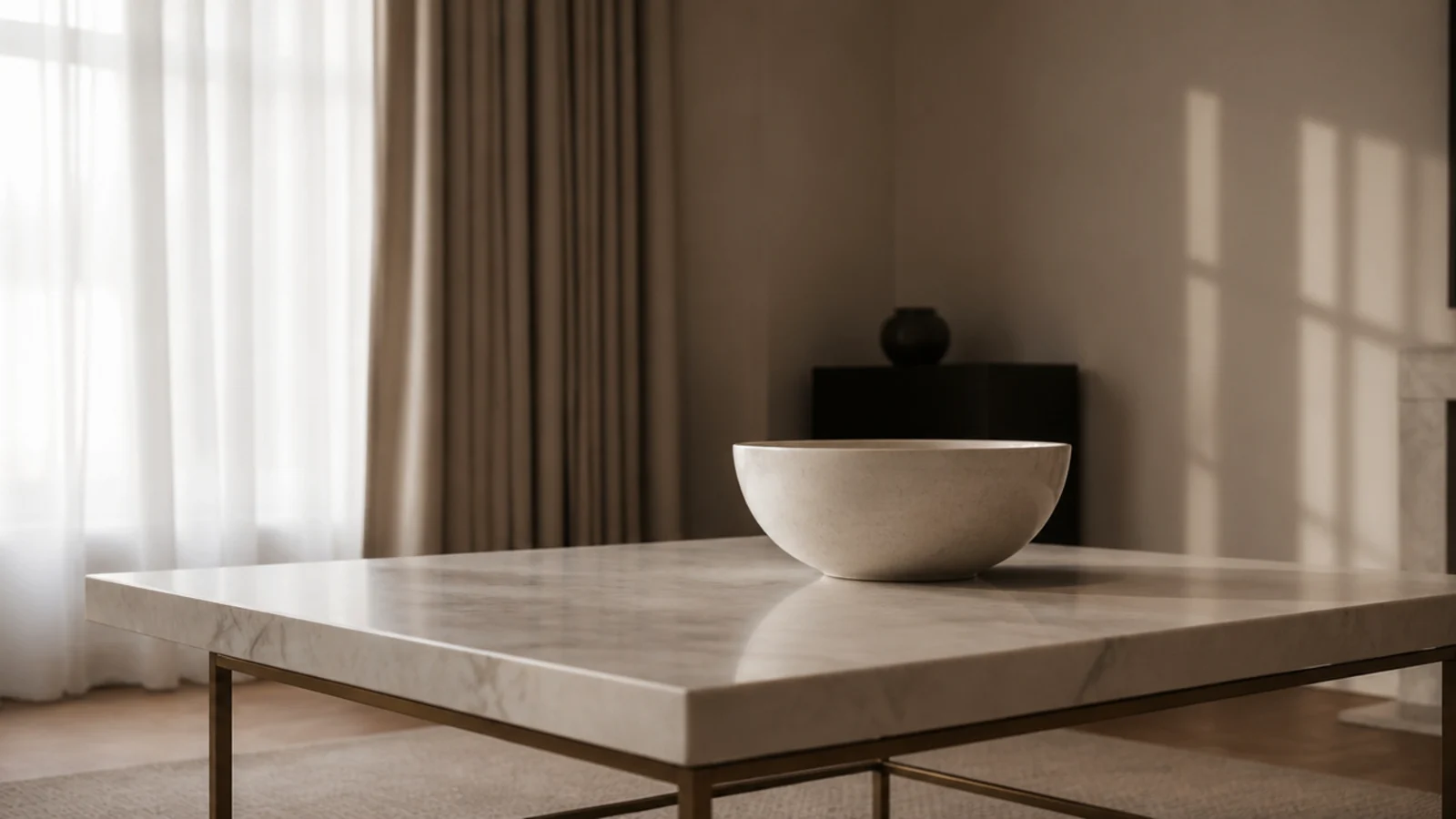
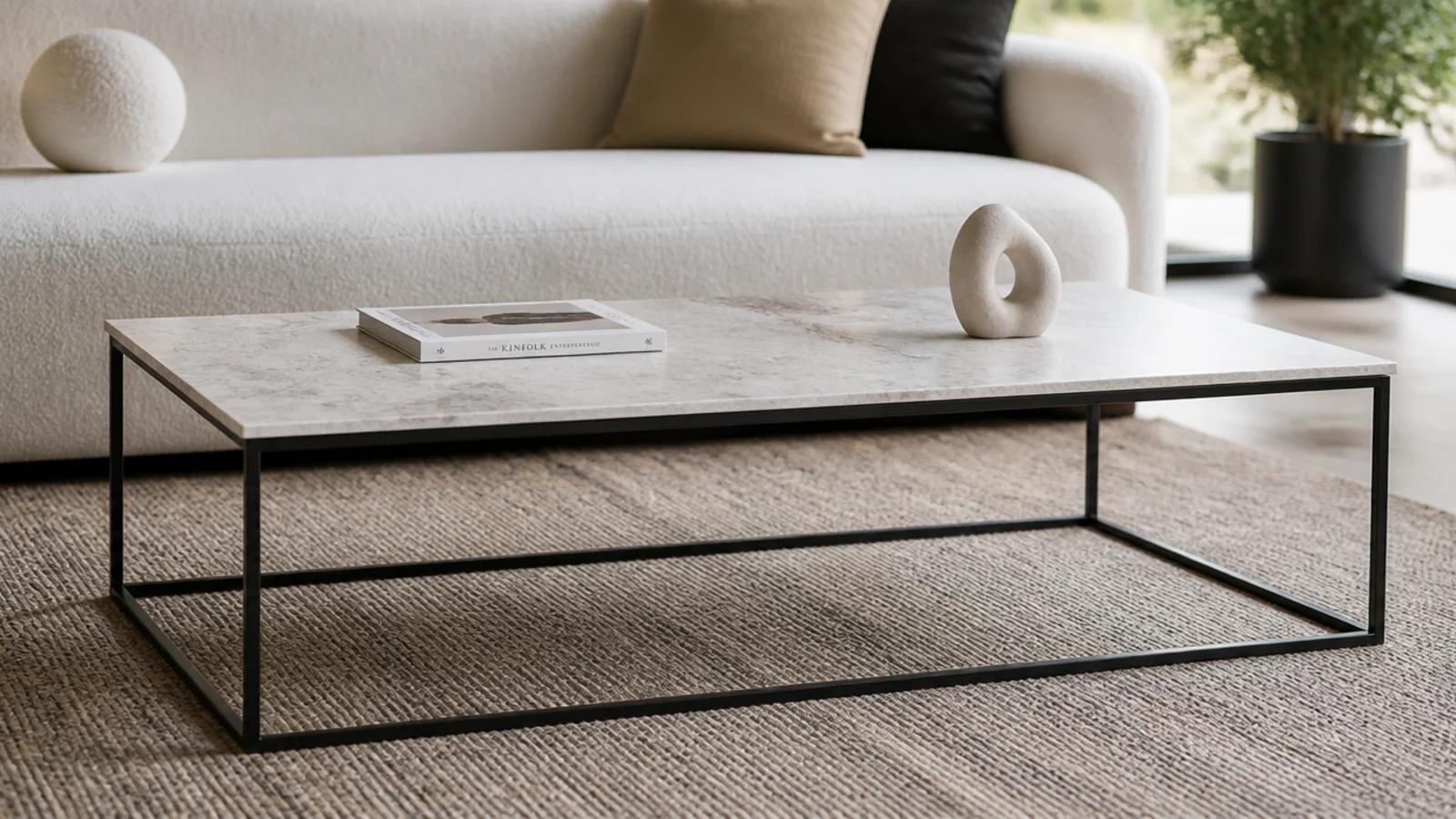
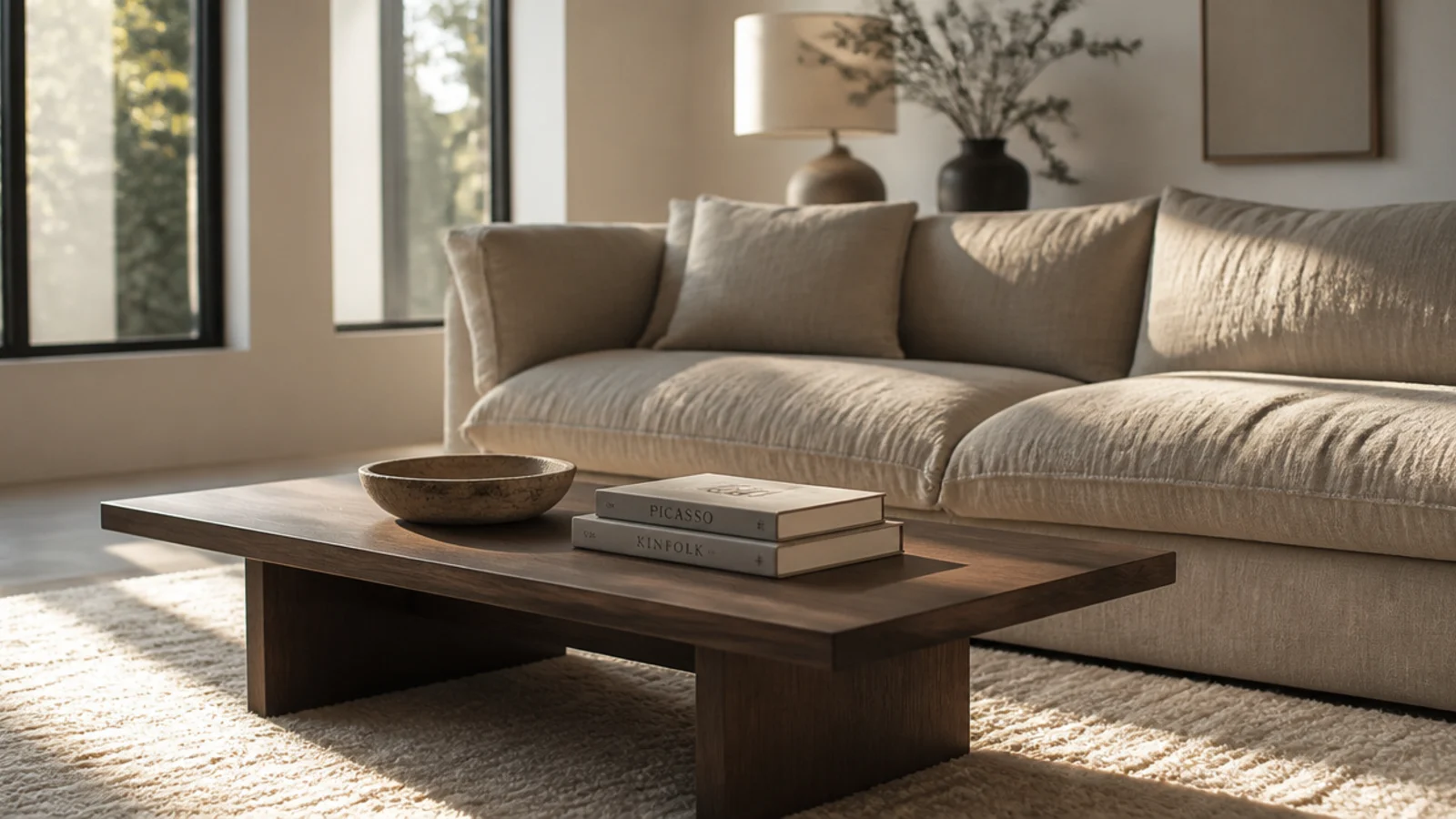
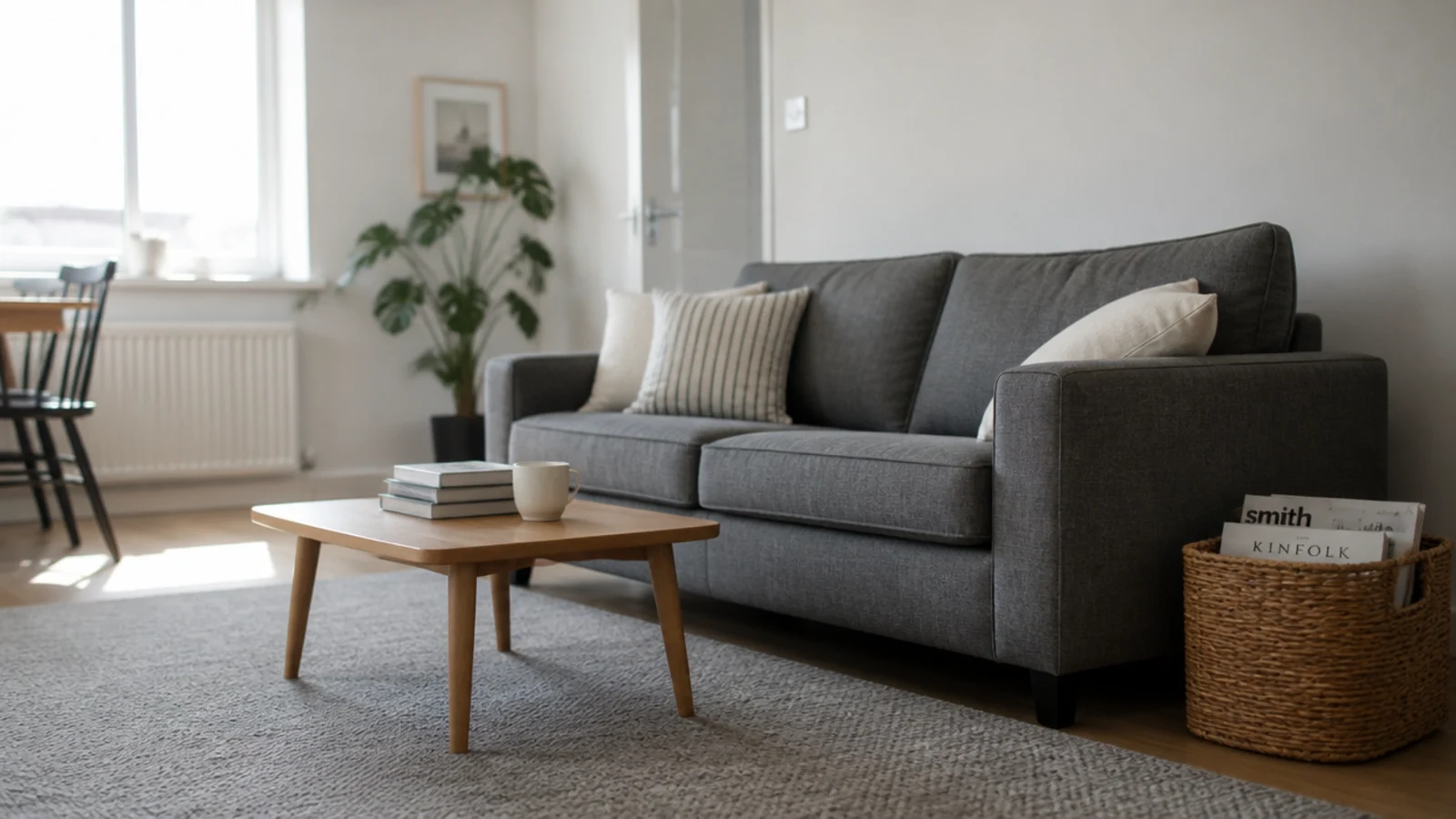
Expensive-looking rooms are rarely built from expensive furniture. They are built from three or four decisions that cost almost nothing and one purchase that cost real money in the right place. Center table living room luxury is unusually easy to fake because the piece sits low, is looked at from above, and is judged almost entirely on two things: how thick the edge appears and how quiet the finish is. Here are twenty ways to buy both without a designer budget.
In this guide22 sections — tap to openHide
- 1.What center table living room luxury actually costs to fake well
- 2.Buy a fabricator remnant instead of a finished table
- 3.Build the edge down to two inches
- 4.Choose travertine over the famous marbles
- 5.Lacquer a plywood plinth in a deep colour
- 6.Use solid brass where hands actually touch
- 7.Veneer one burl panel onto a plain box
- 8.Keep it to one material and one form
- 9.Add fluting with half-round trim
- 10.Run the grain the long way and match it
- 11.Hunt a vintage brass or silver tray
- 12.Plaster the base and leave the top honest
- 13.Buy one object far bigger than feels sensible
- 14.Choose honed over polished for daily use
- 15.Hide every fixing you can
- 16.Order glass cut to your own dimensions
- 17.Use a matched pair instead of one table
- 18.Light the table, not just the room
- 19.Sand to 220 and finish thin
- 20.Keep the base visually lighter than the top
- 21.Spend the money on the one thing you touch
- 22.Mistakes to Skip
What center table living room luxury actually costs to fake well
Three numbers decide whether a low table reads costly. The first is edge thickness. Anything under an inch reads as flatpack, no matter what the surface is; anything at or over two inches reads as solid. That edge does not have to be solid, and section two below explains how to fake it on a plywood core for about $40 in material.
The second is weight, because heavy things feel expensive under the hand. A three-quarter inch stone slab runs roughly 10 pounds per square foot, so a 44 by 26 inch top lands near 80 pounds. You feel that the first time you nudge it. Chipboard at the same size weighs a quarter of it and announces the fact.
The third is finish sheen. In a room used every evening, matte and satin surfaces hold up. Polished stone shows every hairline scratch under a lamp, high-gloss timber shows every fingerprint, and both look worse at two years than they did on day one. Honed stone and hardwax-oiled timber both age in the right direction.
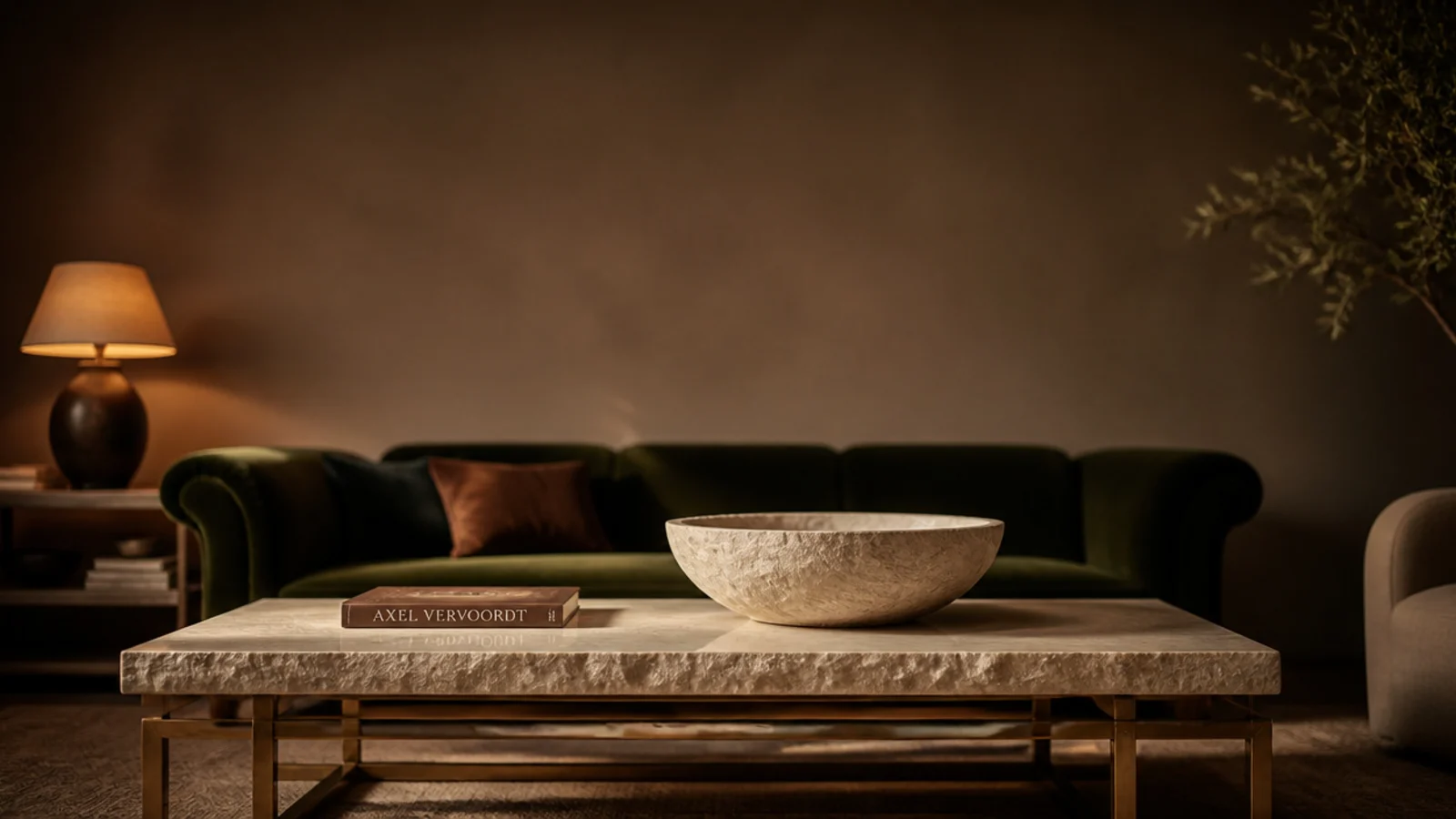
On budget: a stone remnant top runs $40 to $80 per square foot, cut and eased, against $150 or more retail. Solid brass legs cost $120 to $260 a set against $50 for plated steel that wears through. A lacquered plywood plinth costs $60 to $110 in materials. Sizing stays the same whatever you spend — top within an inch or two of the sofa seat, length near two-thirds of the sofa, 16 to 18 inches of gap. The main center table guide has those measurements in full.
1. Buy a fabricator remnant instead of a finished table
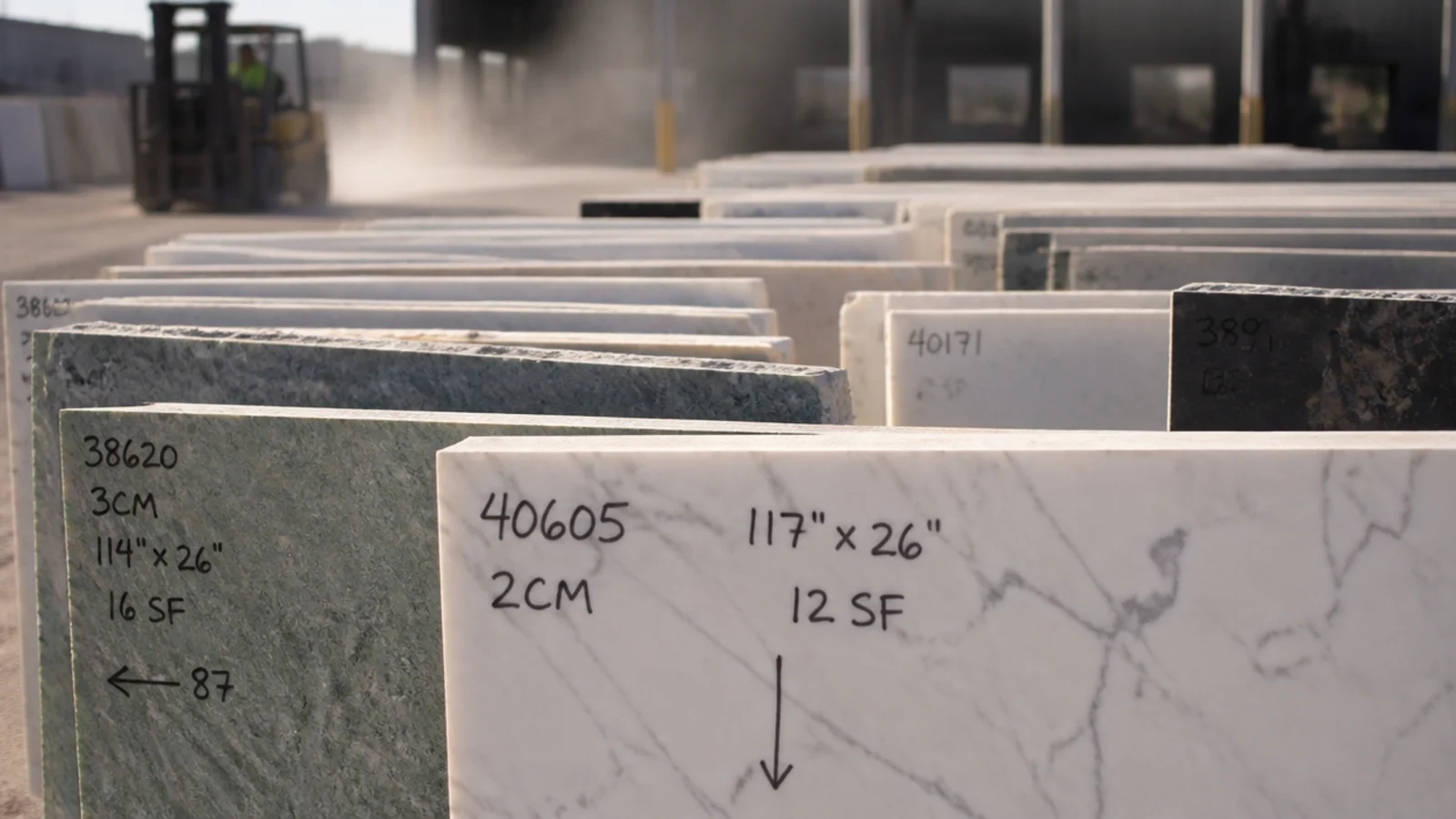
Countertop shops stack their kitchen offcuts outside, and a coffee table top comes out of a piece far too small to sell as a counter. Expect $40 to $80 per square foot including a cut and an eased edge, against $150 to $300 for the same stone in a finished table. Take your two dimensions and a photograph of your room, and ask for honed rather than polished.
2. Build the edge down to two inches
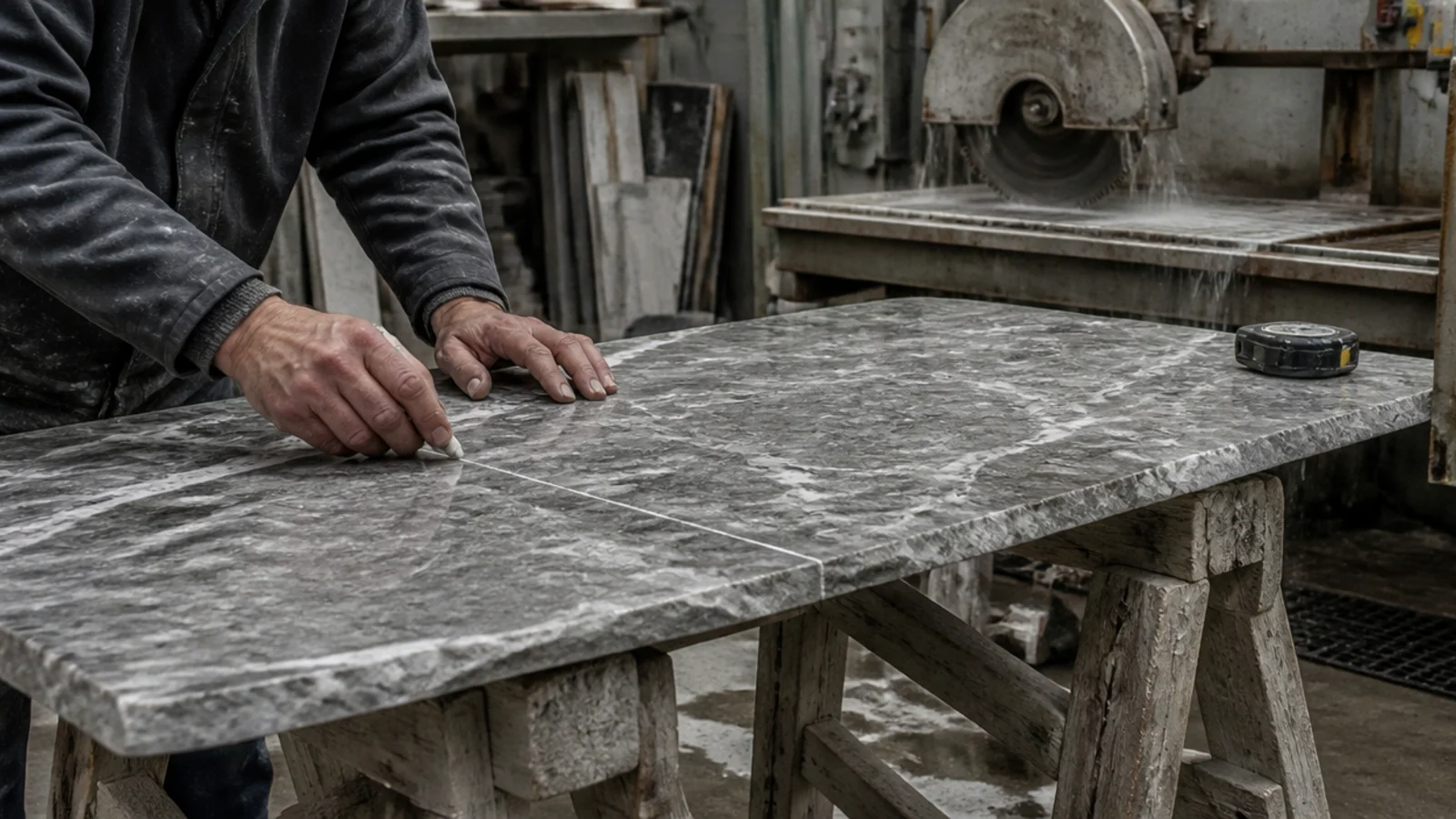
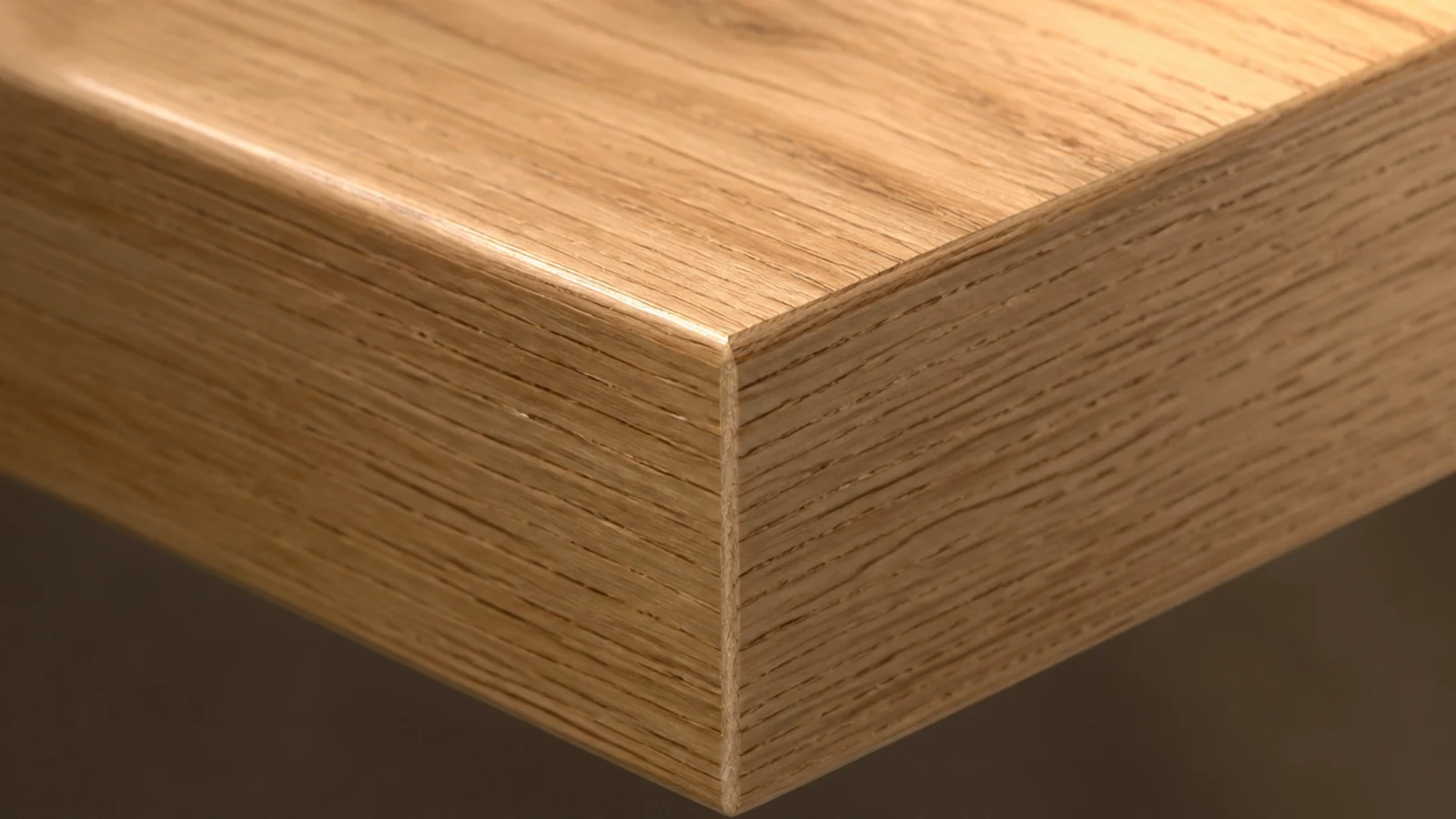
A mitred build-down is the single highest-return trick in furniture. You cut a strip of the same material, mitre both meeting faces at 45 degrees, and glue it under the perimeter so the edge appears two inches thick while the top stays three-quarters. It adds maybe $40 to a plywood build and removes every visual clue that the piece is hollow.
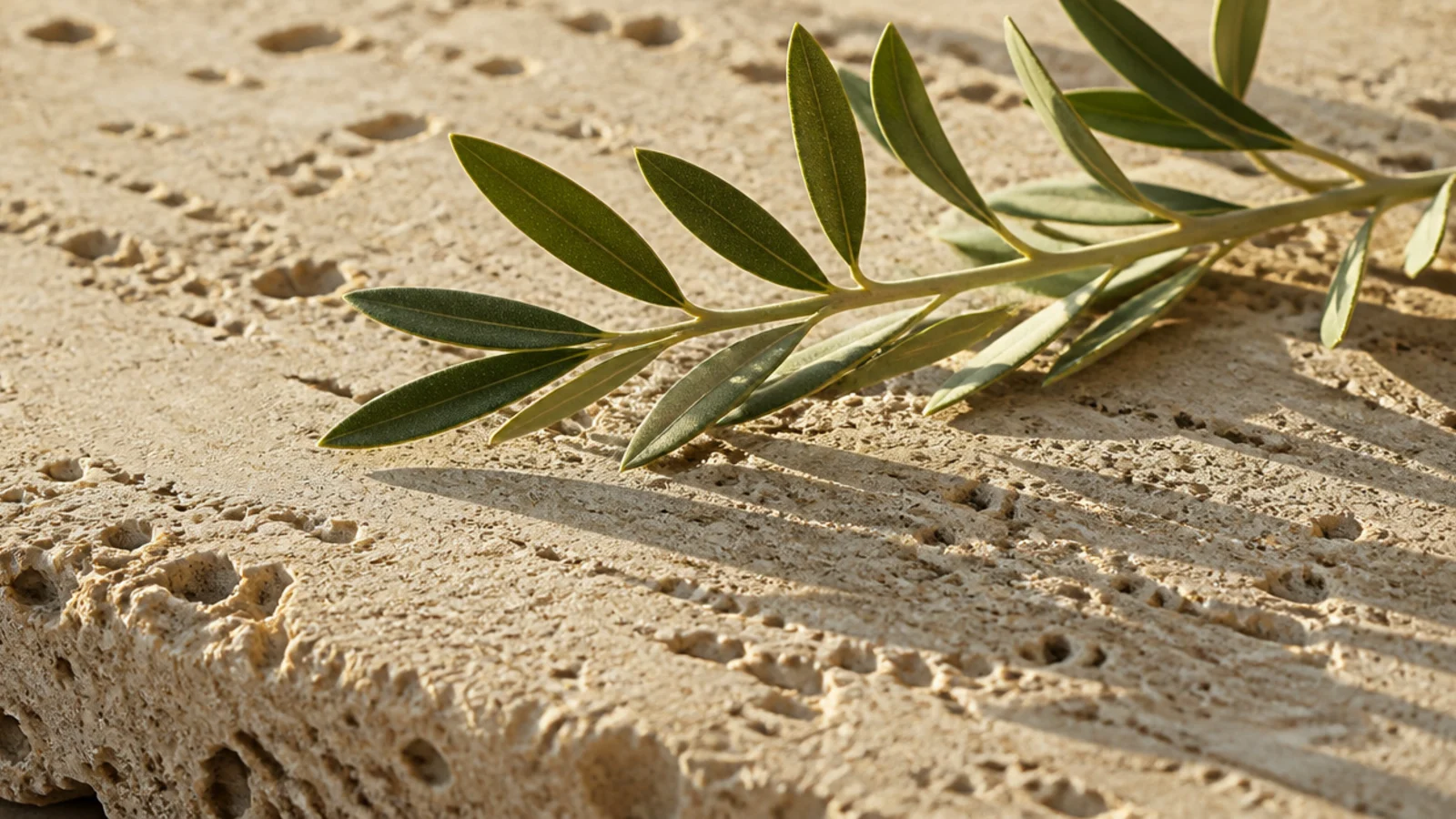
3. Choose travertine over the famous marbles
Travertine costs roughly half of a named white marble and photographs warmer. The open pores read as age rather than as a defect, and filled travertine wipes clean like any other stone. Cross-cut slabs give you cloudy, calm figuring; vein-cut gives linear stripes. Either way, seal it on the same six to twelve month cycle marble needs.
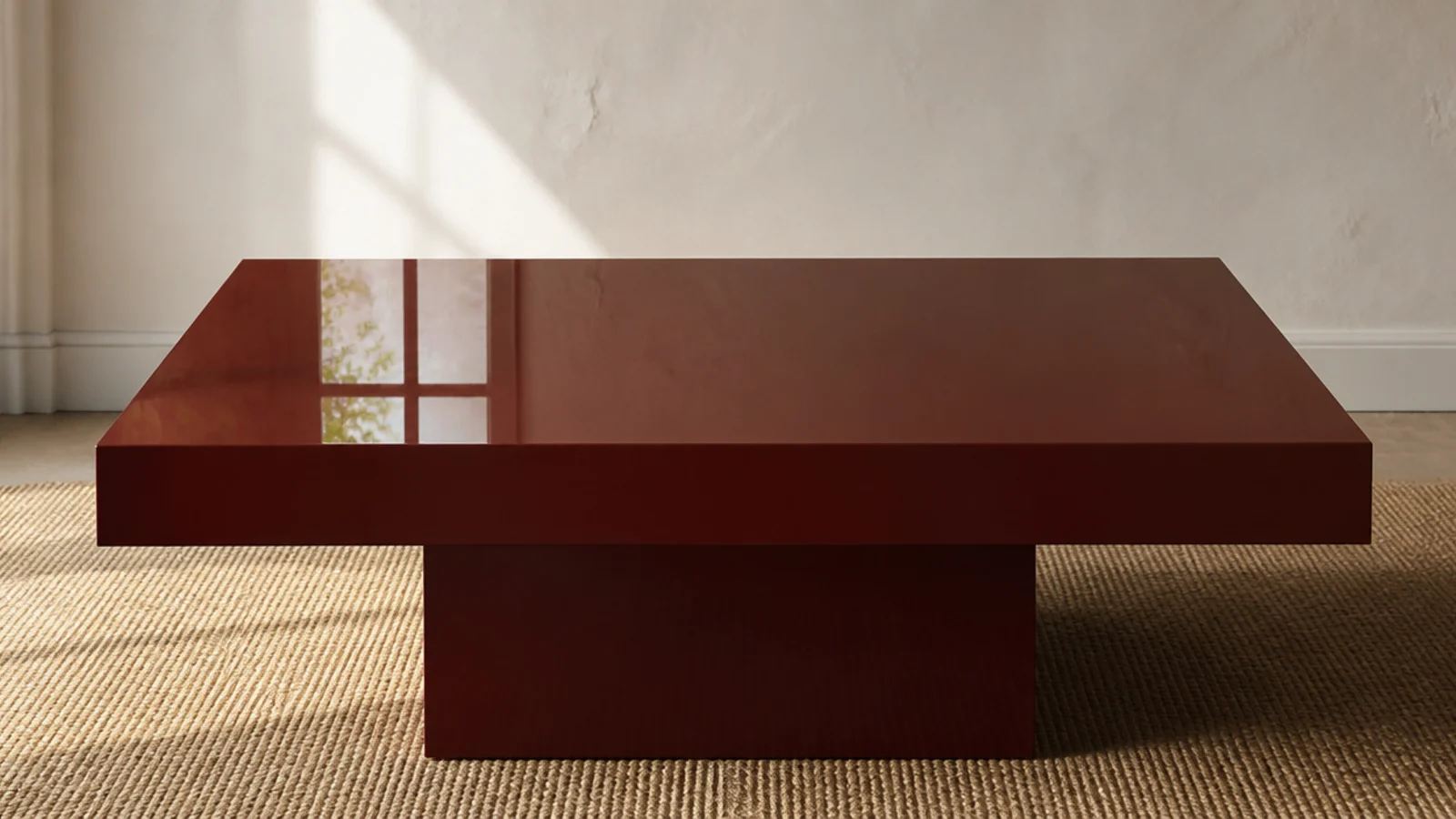
4. Lacquer a plywood plinth in a deep colour
Birch ply, a mitred box, grain filler, and five or six thin coats of tinted lacquer sanded at 320 between each. Deep colours — oxblood, ink, olive — hide the substrate best and reflect lamplight like stone. Budget $60 to $110 and a weekend, mostly waiting for coats to flash off between passes.
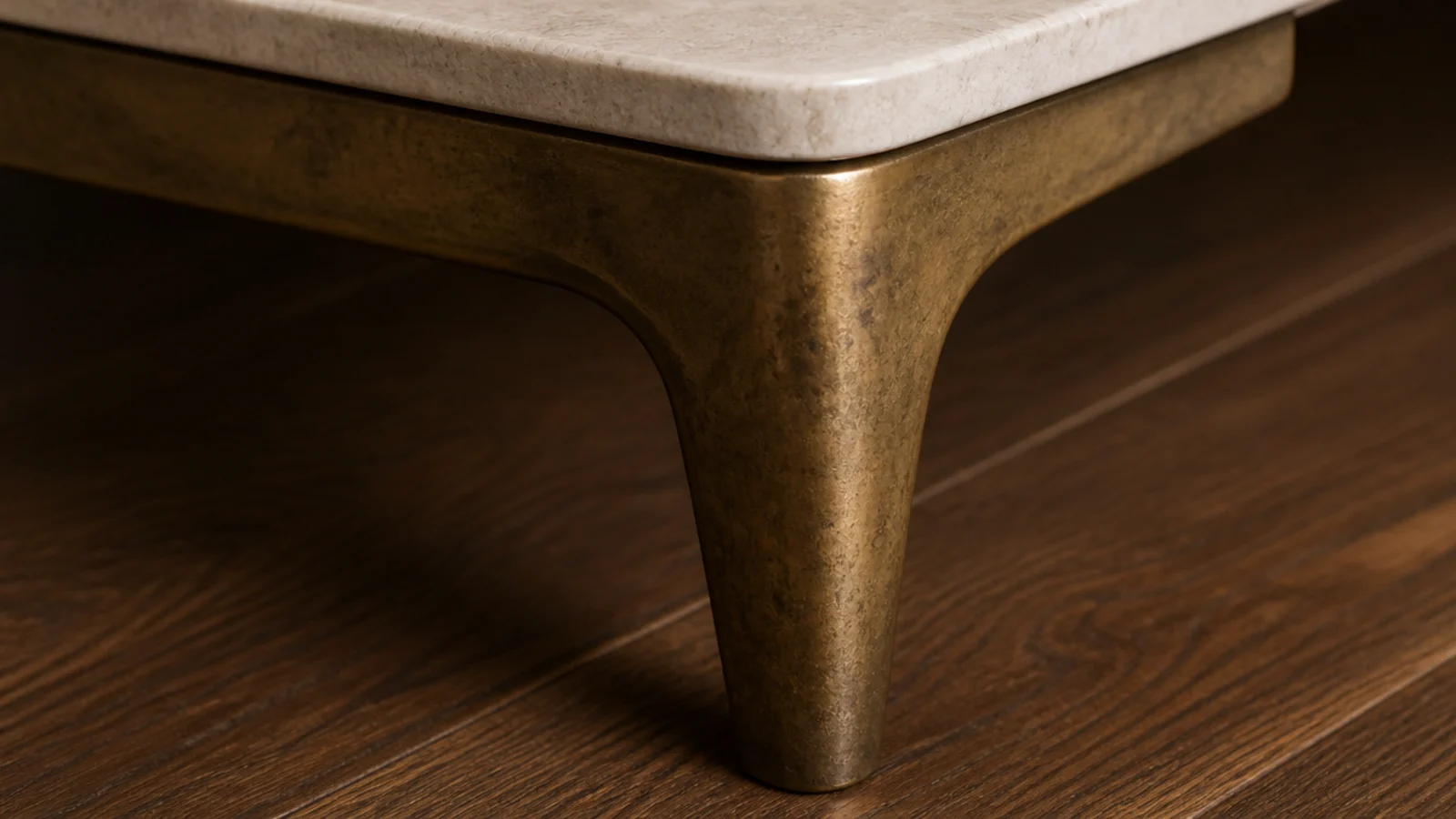
5. Use solid brass where hands actually touch
Brass-plated steel wears through at exactly the corners you grab, usually inside two years, and there is no repairing it. Solid unlacquered brass costs two to three times more and gets better instead, darkening unevenly where fingers land. If the budget only stretches to one brass element, make it the legs rather than a tray.
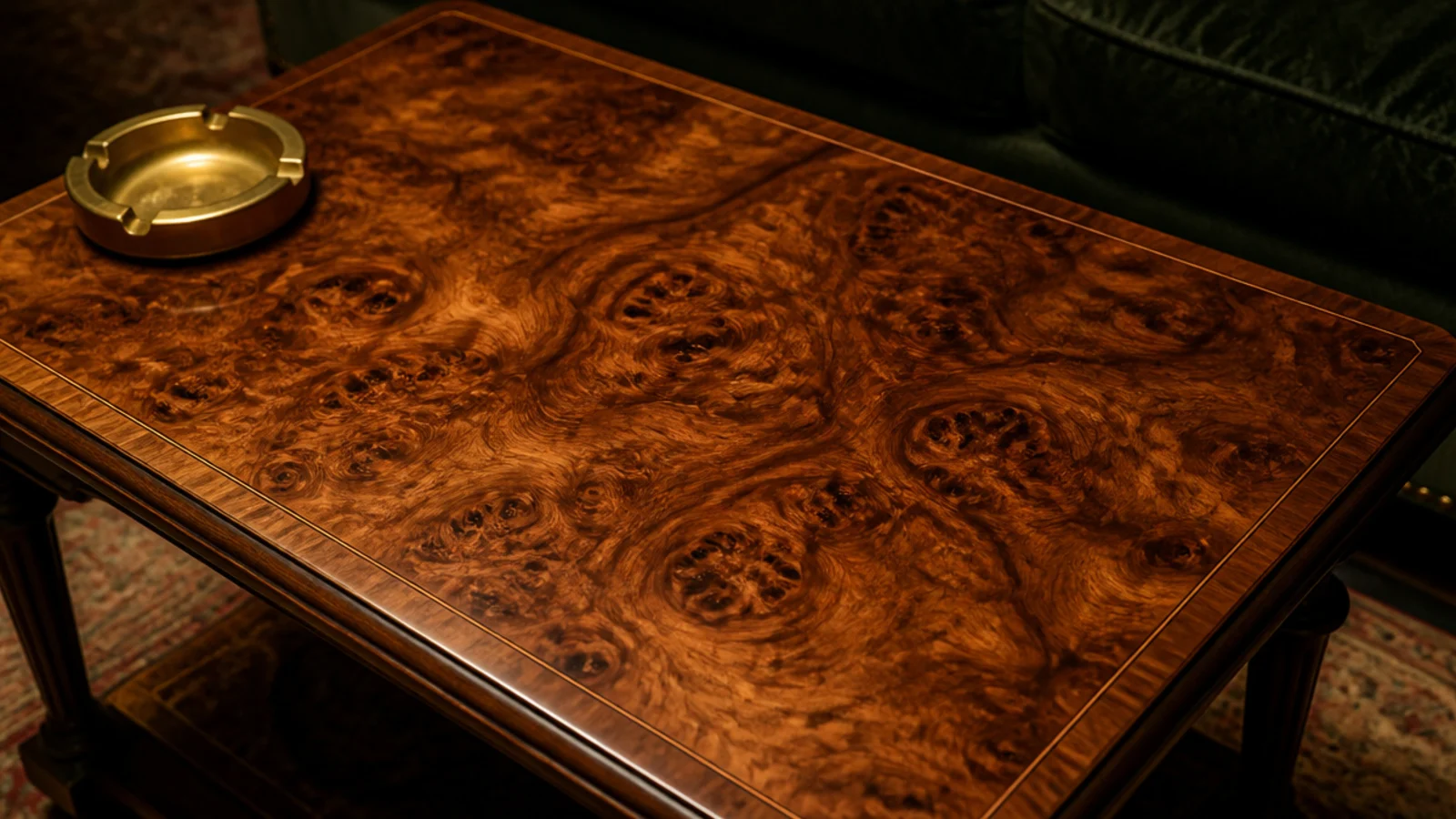
6. Veneer one burl panel onto a plain box
A single sheet of burl or crotch-figured veneer runs $60 to $150 and covers a coffee table top with room to spare. Glued to an MDF core with contact adhesive, sanded to 180 and oiled, it reads as a piece from a furniture house. Keep the base plain — figured timber needs somewhere for the eye to rest.
7. Keep it to one material and one form
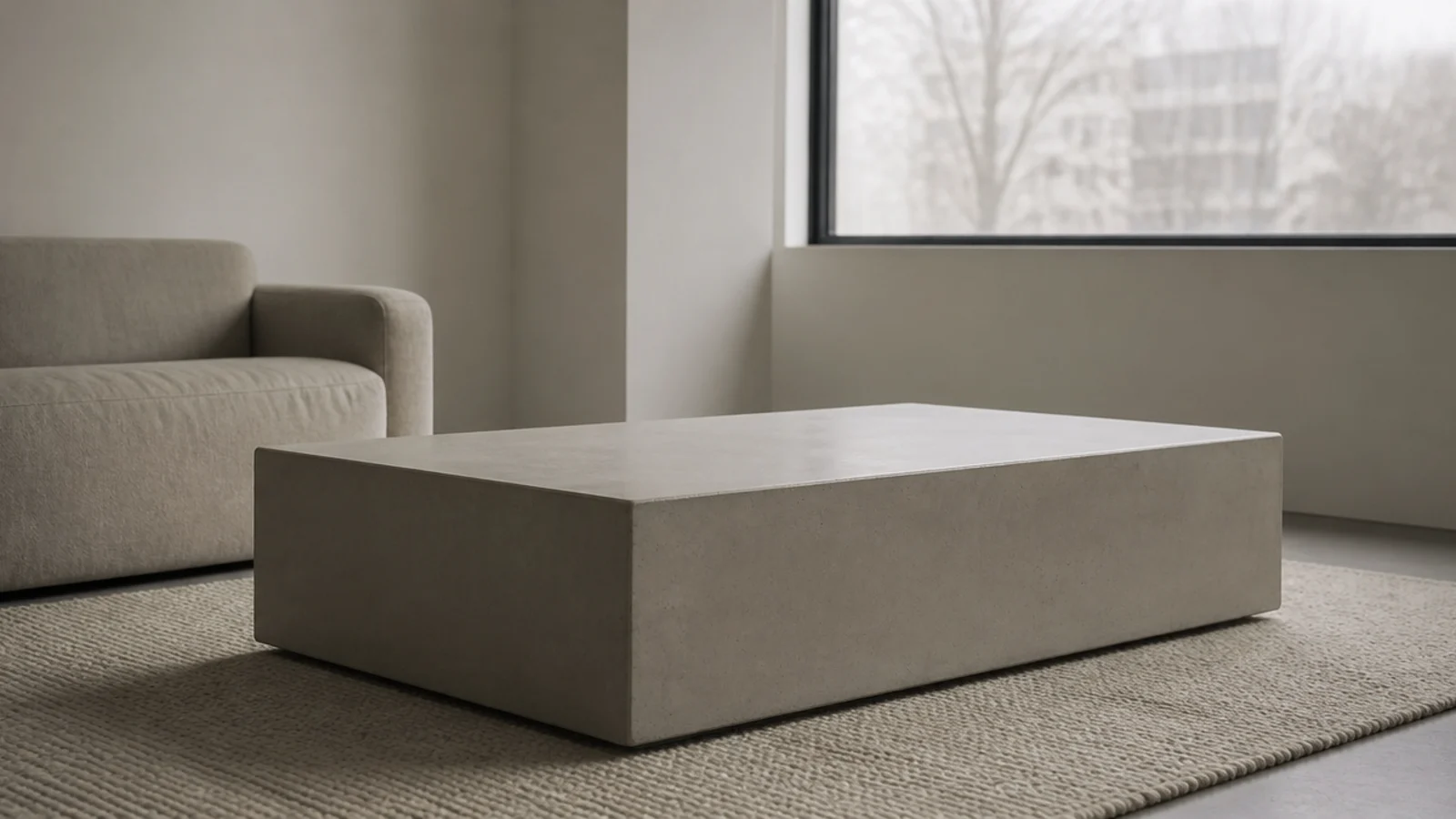
Mixed-material tables date fast because they date at the speed of the cheapest component. A single-material monolith — one timber, one stone, one plaster block — has nothing to come apart and nothing to argue with. It is also the easiest thing to build badly and get away with, since there are no joints on display.
8. Add fluting with half-round trim
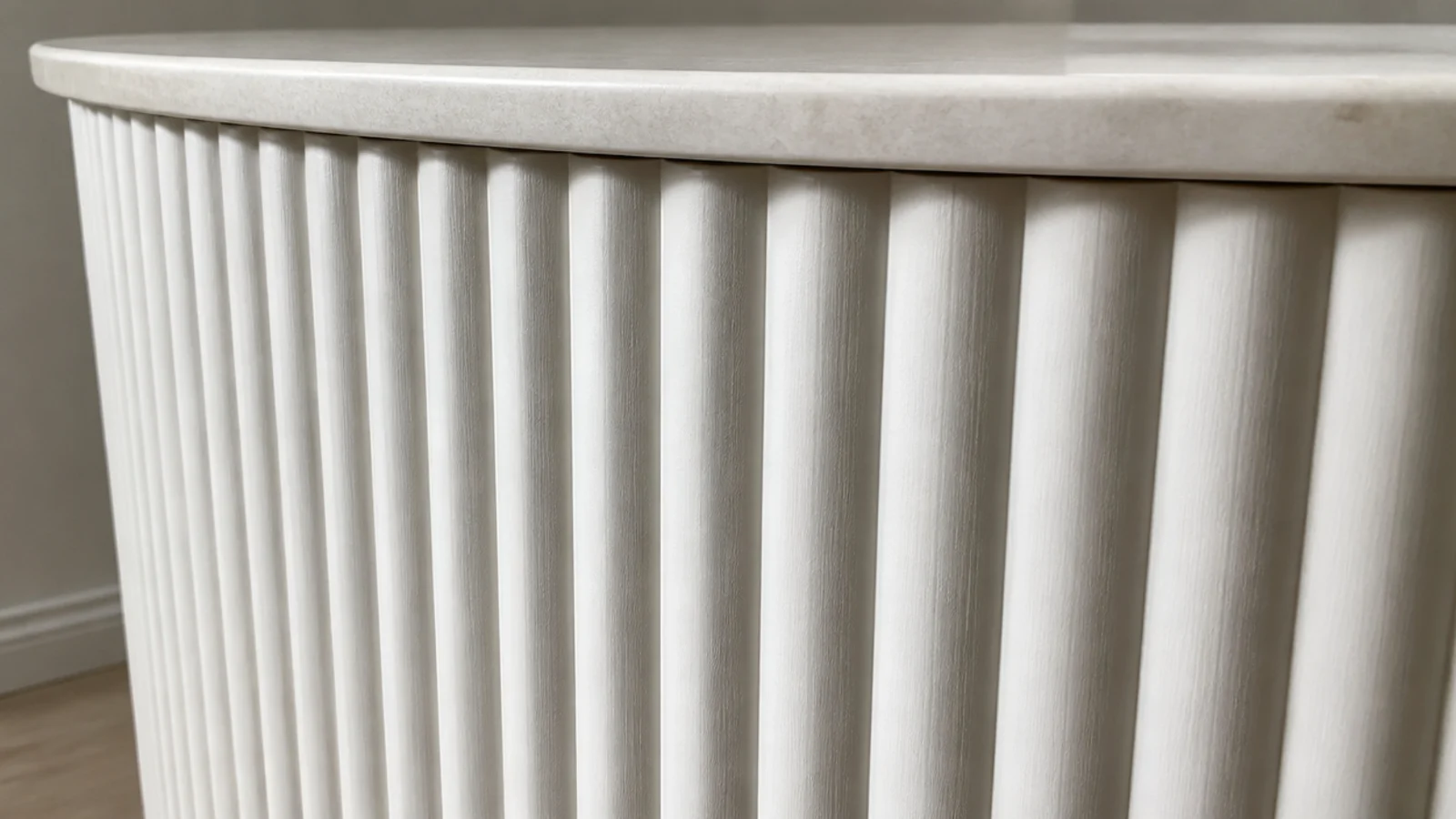
Half-round beading costs $2 to $4 per metre and turns a flat painted side into a detail worth looking at. Set the strips at consistent spacing — 20mm beads at 25mm centres is a reliable rhythm — glue and pin them, then fill and paint the whole side one colour so the shadow does the work.
9. Run the grain the long way and match it
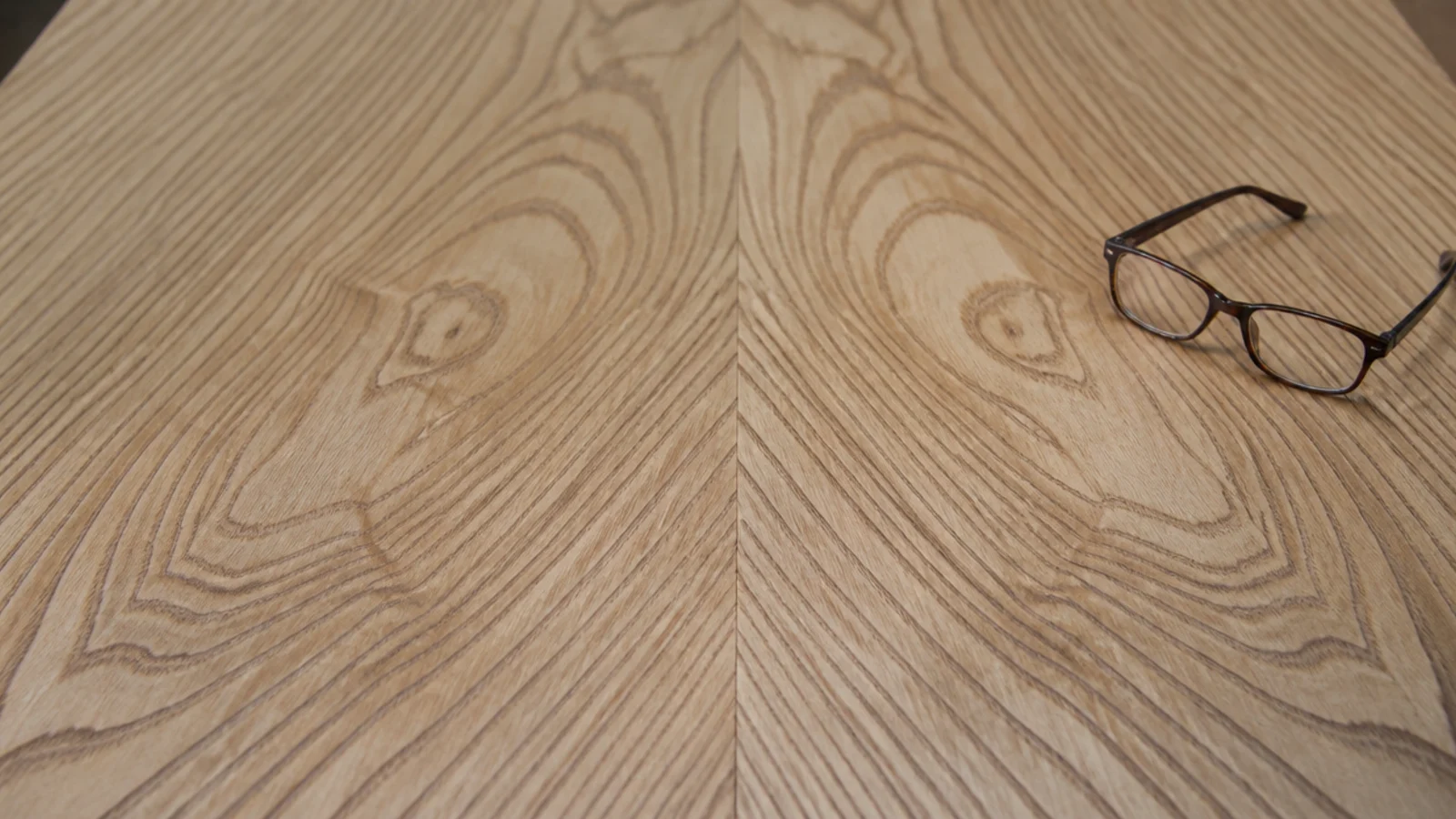
Grain direction is a tell. On a rectangular top the grain should run the long way, and where two boards meet they should be book-matched so the figure mirrors across the joint. Cheap tables run grain in random directions because the boards were whatever the line had. It costs nothing to get right and it is instantly visible.
10. Hunt a vintage brass or silver tray
An engraved tray with a worn rim brings age into a room full of new things, which is the quality most budget interiors lack. Flea market prices run $15 to $60 for something genuinely old. Sized at 16 to 20 inches it also does the practical job of grouping the small objects on the surface.

11. Plaster the base and leave the top honest
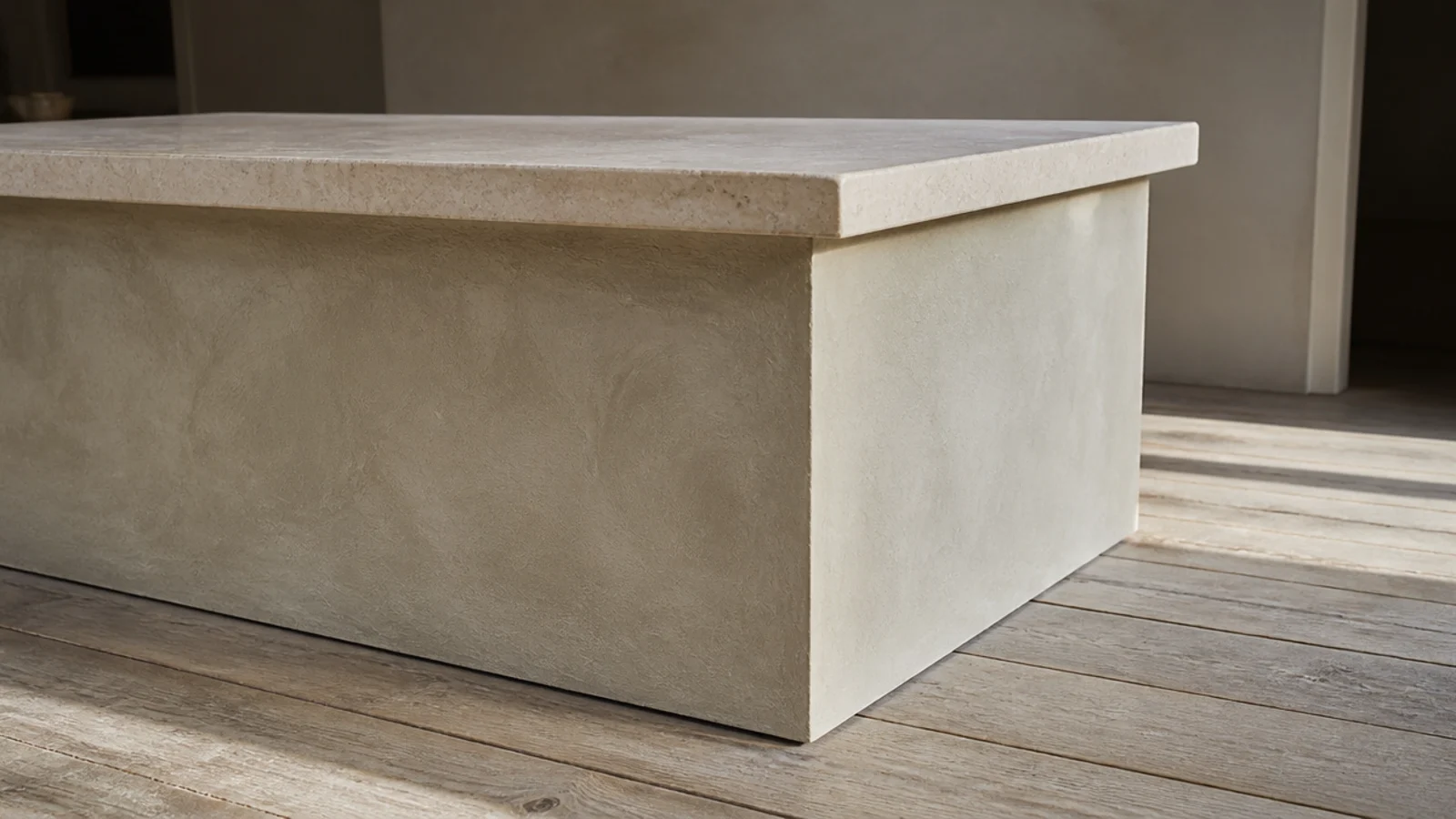
A textured clay or limewash plaster over an MDF base gives you depth that paint cannot, for about $35 a tub. Apply two thin coats with a flexible trowel, leave the sweep marks visible, and seal it. Pair the rough base with a plain honed slab so one element is quiet.
12. Buy one object far bigger than feels sensible
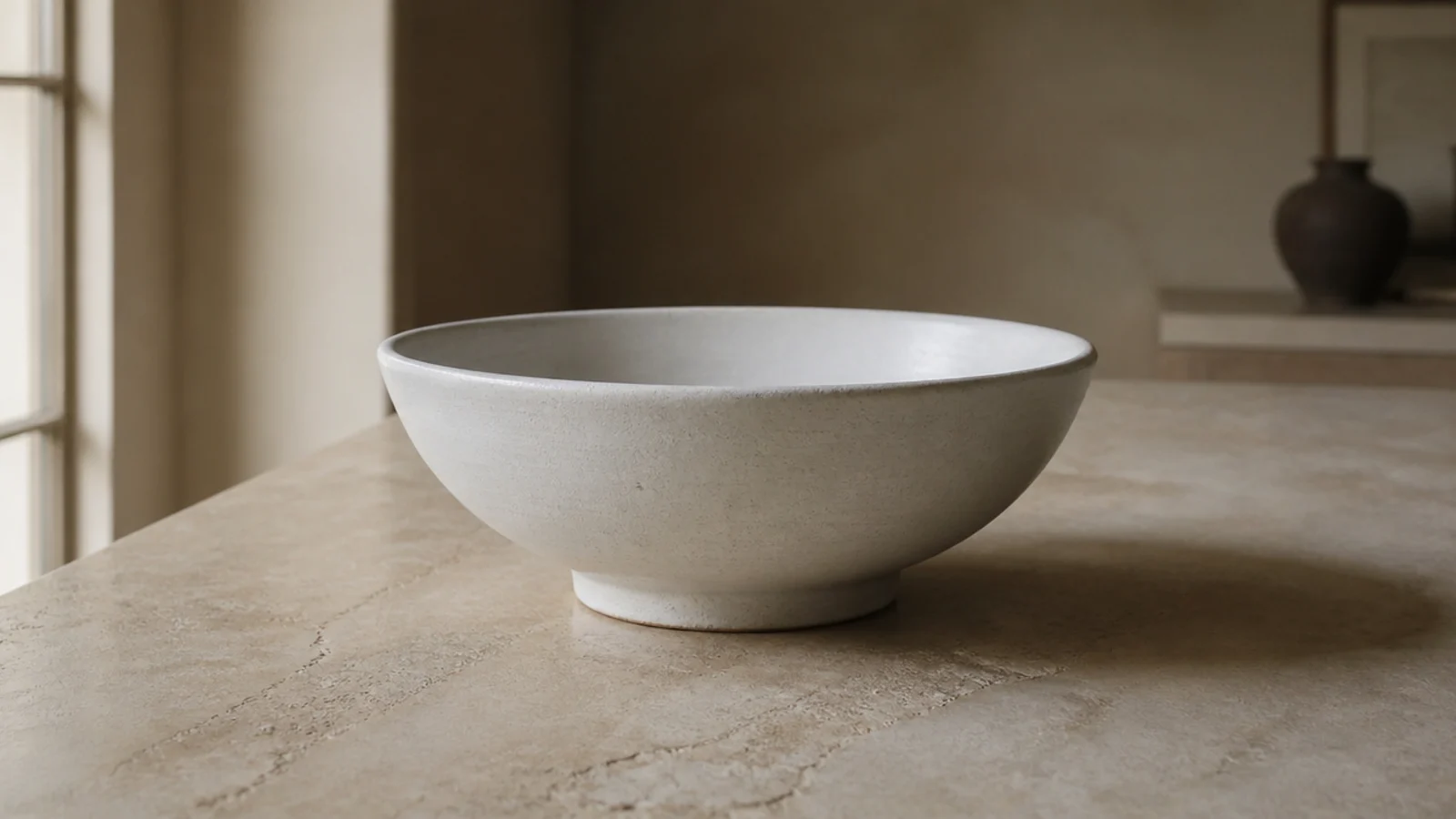
The most common styling error is six small objects where one large one belongs. A 14 to 18 inch bowl or a single tall vessel gives the surface a proper focal point and leaves the rest of the top clear. It also costs less than the six small things it replaces.
13. Choose honed over polished for daily use
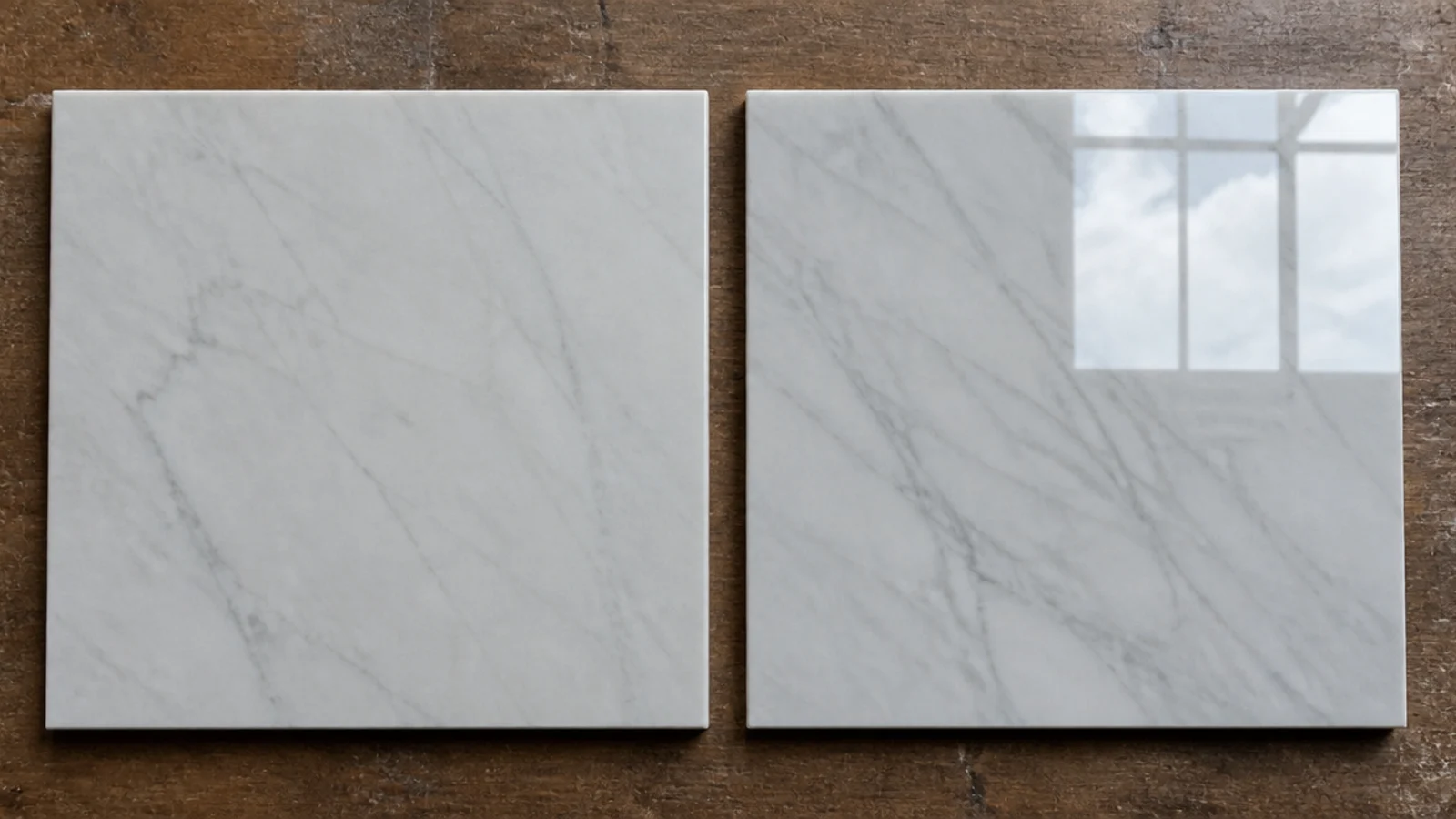
Polished stone acts as a mirror and every fine scratch reads as a white line under a lamp. Honed stone diffuses instead, so wear disappears into the surface. The trade is absorbency — honed takes a stain faster, so blot spills inside 60 seconds and keep the sealing schedule.
14. Hide every fixing you can
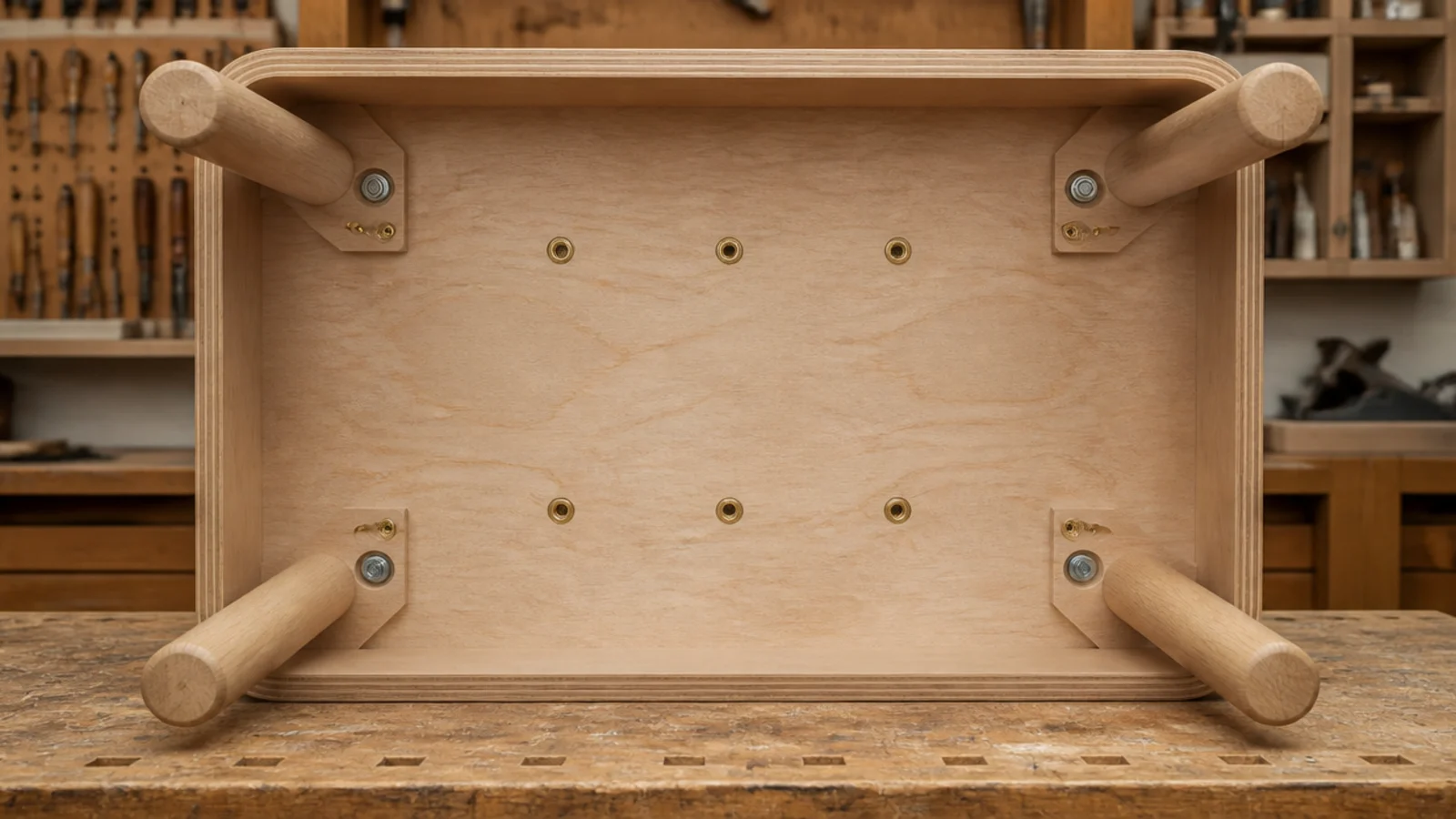
Visible screw heads are the loudest budget signal on a piece of furniture. Use threaded inserts and machine bolts from underneath, pocket screws hidden in the frame, or a French cleat inside a plinth. Nothing should break the top surface, and nothing should be visible from standing height.
15. Order glass cut to your own dimensions
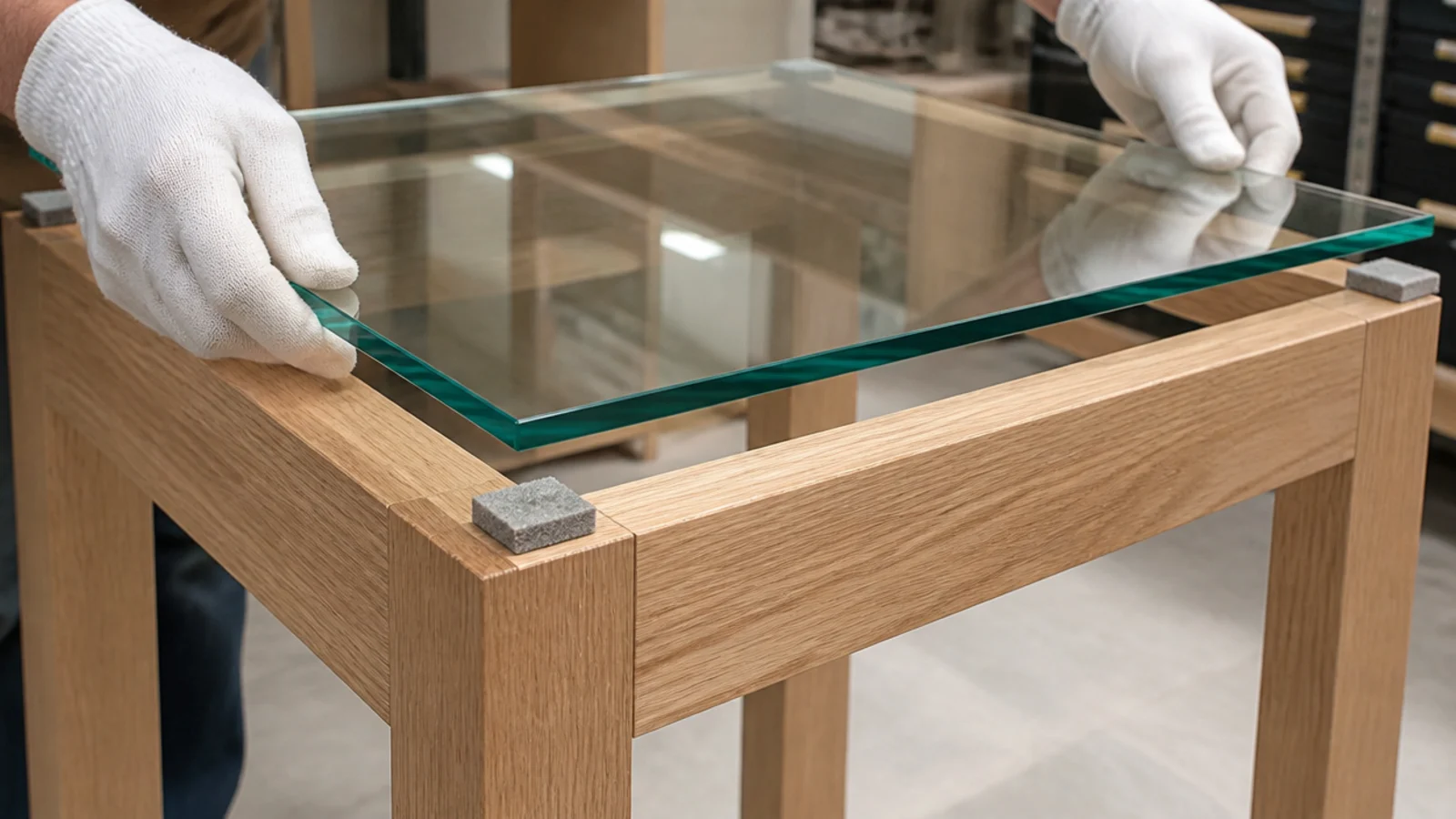
A glazier will cut, temper and polish a top to any size for roughly $18 to $30 per square foot, plus about $15 a running foot for a flat polished edge. That beats hunting for a stock size that nearly fits, and it lets you sit a proper half-inch top on a base you already own.
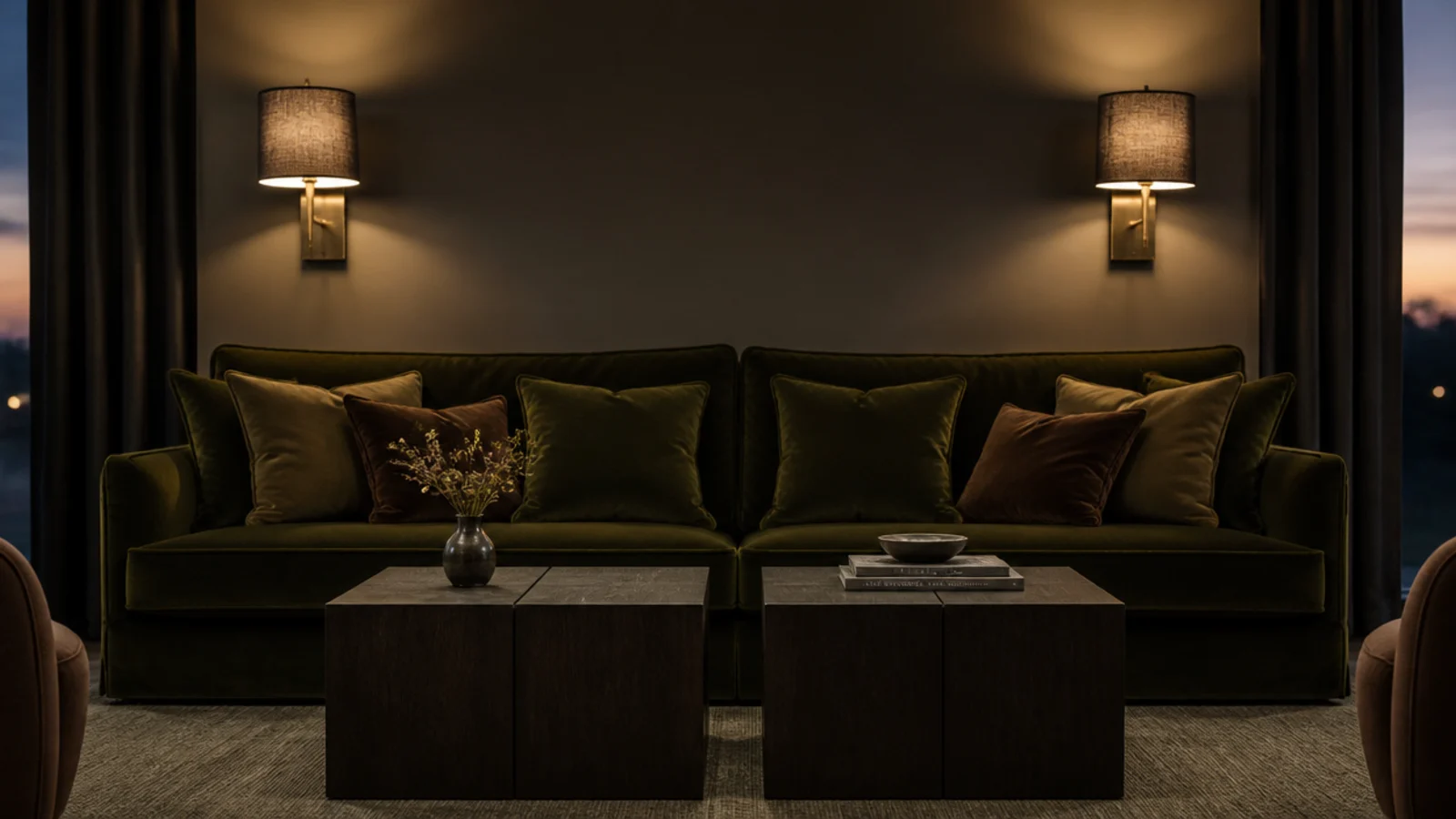
16. Use a matched pair instead of one table
Two identical cubes read as a deliberate composition where one odd table reads as whatever was available. Symmetry is the oldest formal device there is and it costs nothing. Set them with a hand-width gap and keep both tops styled the same way, or the effect collapses.
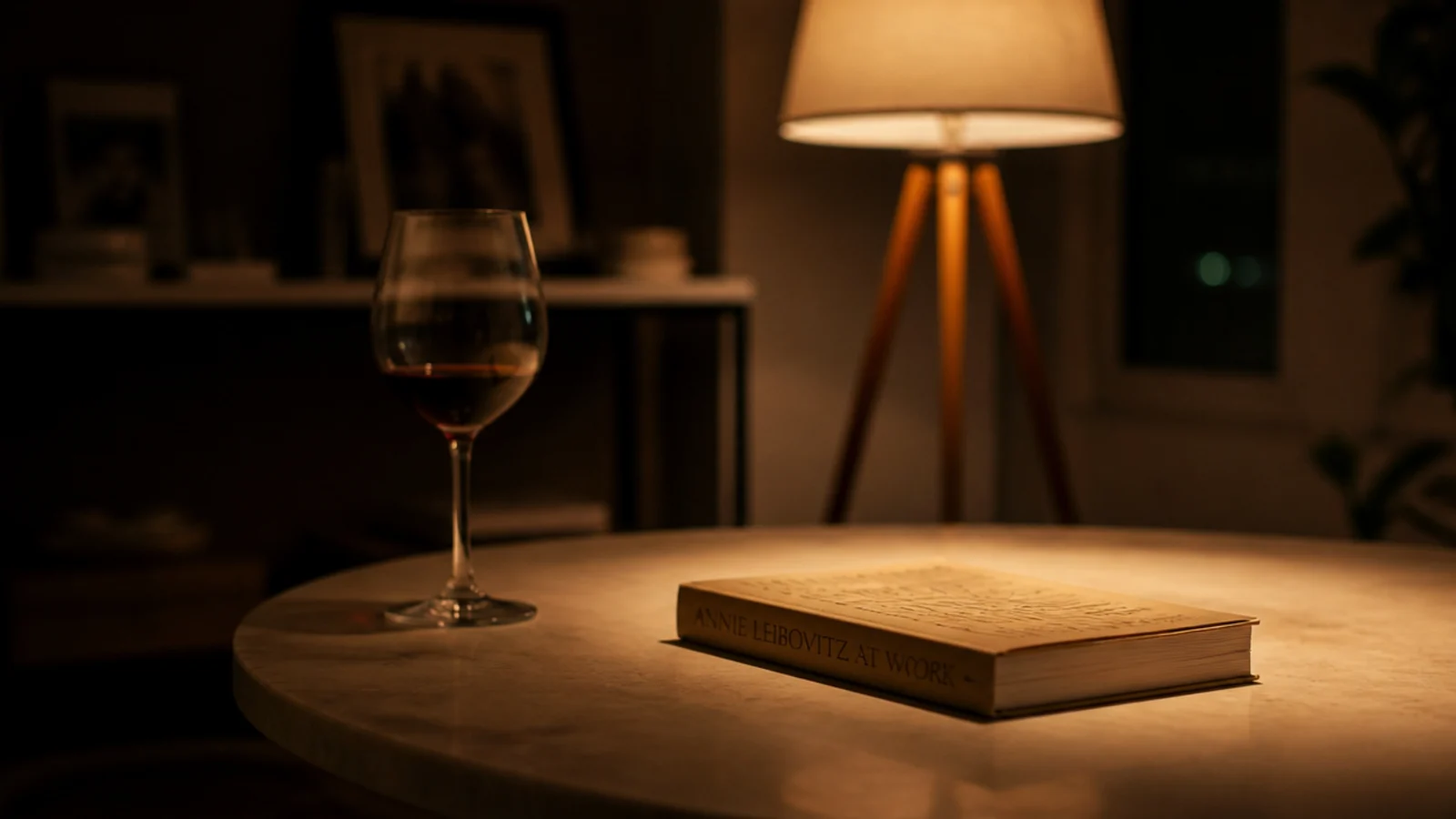
17. Light the table, not just the room
A low table lit only by a ceiling fixture looks flat. Put a floor lamp within three or four feet so light rakes across the surface at an angle, and use a warm 2700K bulb around 400 to 600 lumens. Grazing light is what makes stone grain and timber figure visible after dark.
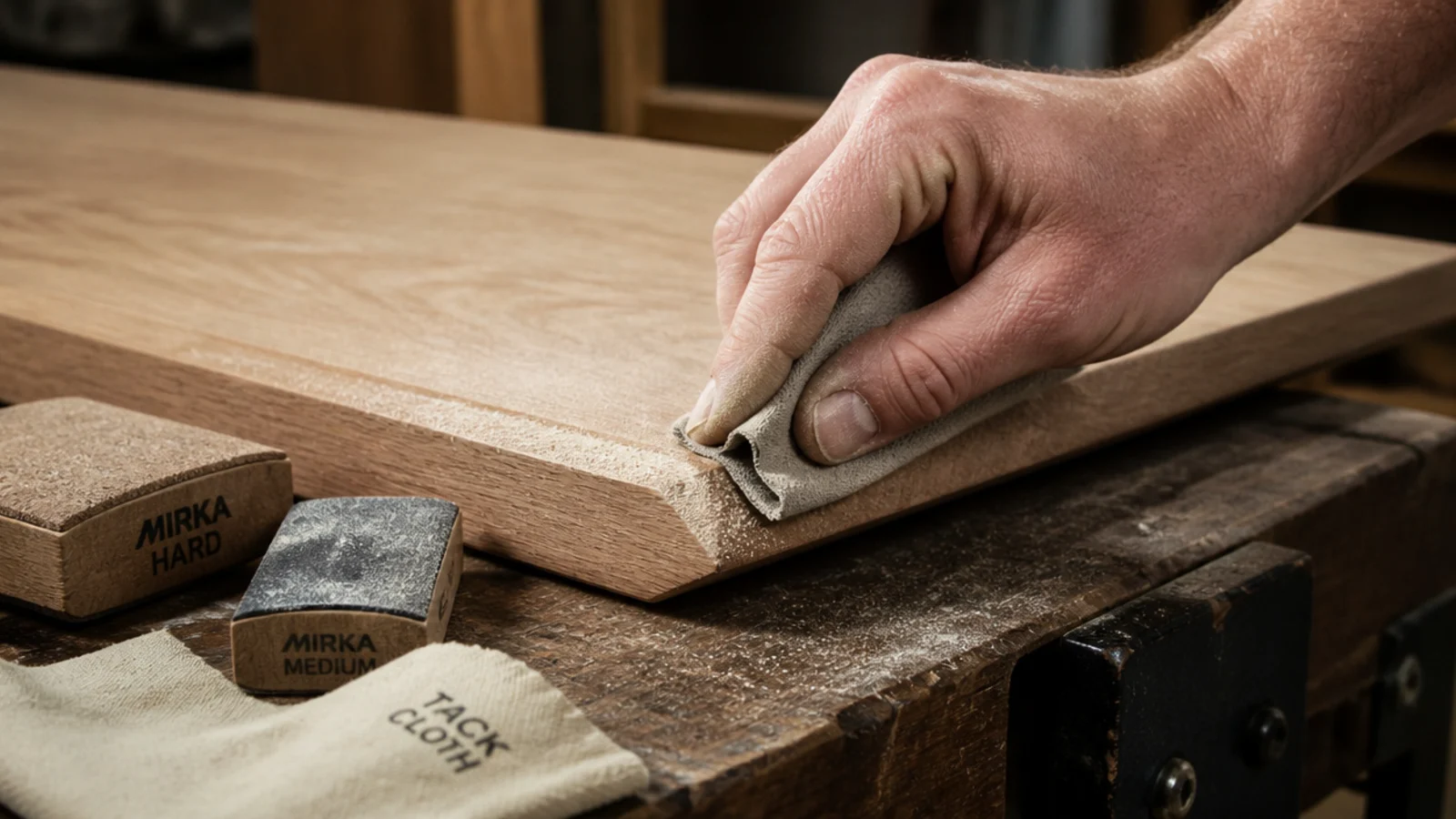
18. Sand to 220 and finish thin
Furniture feels expensive under the fingers before it looks expensive to the eye. Work through 80, 120, 180 and finish at 220 for an oil finish, then apply thin coats rather than thick ones. Three thin passes of hardwax oil, buffed off after 15 minutes each, beats one heavy pour every time.
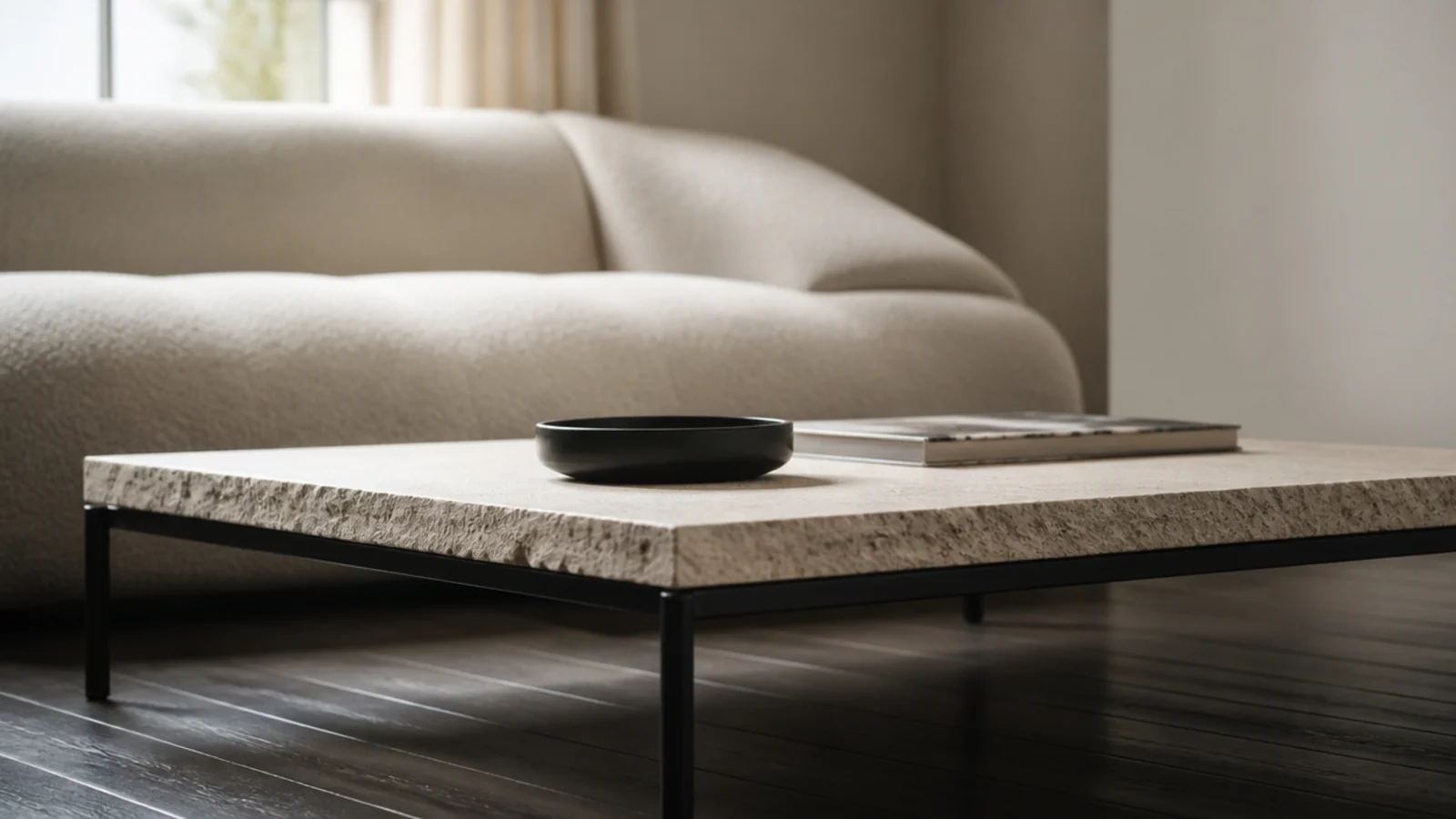
19. Keep the base visually lighter than the top
A thick top on a slim base looks like it is floating; a thick top on a thick base looks like a crate. Aim for a base whose visible material is a quarter the apparent thickness of the top, in a darker tone. It is the same trick that makes hotel lobby tables look costly.
20. Spend the money on the one thing you touch
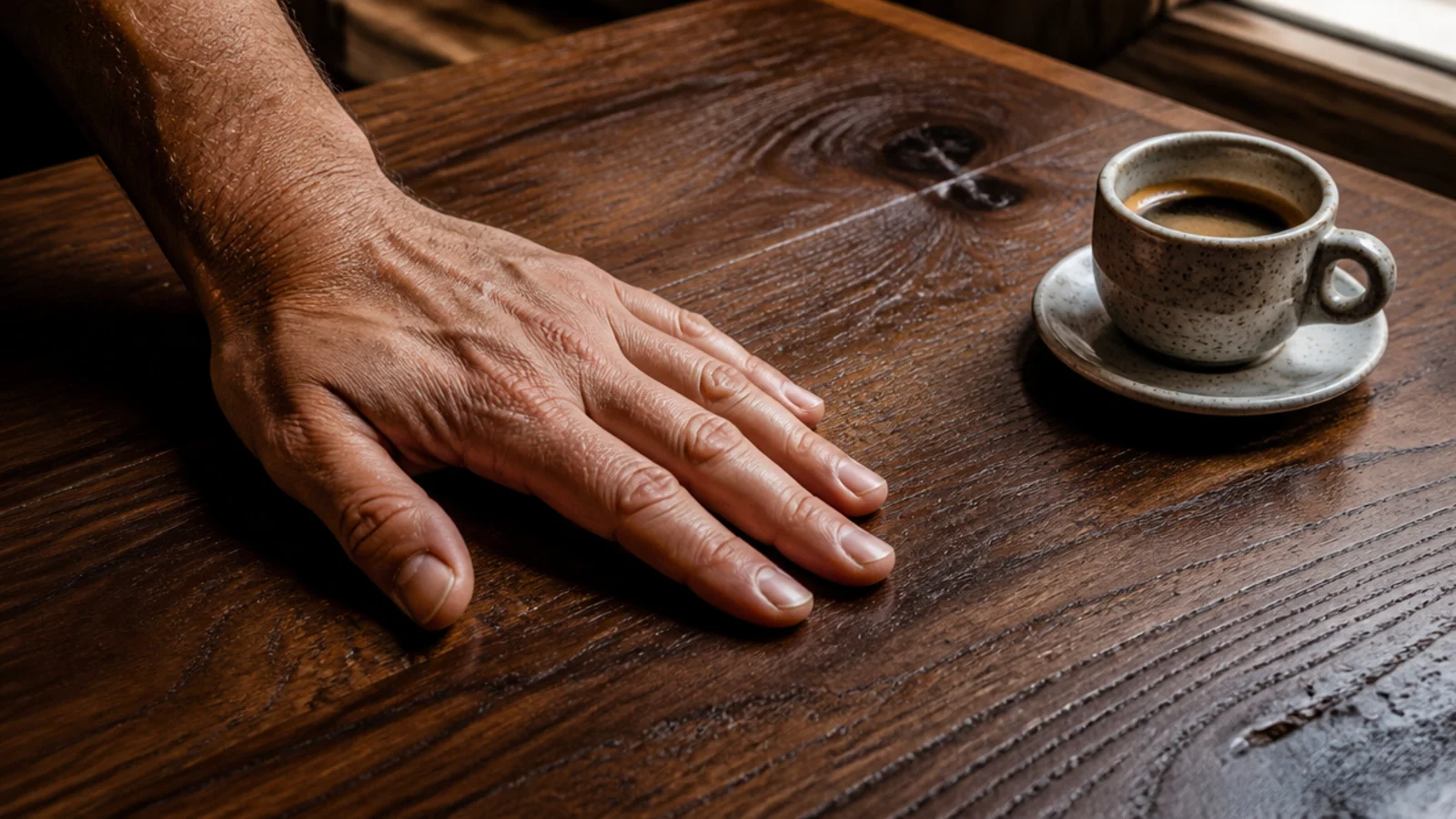
Every budget has one place worth spending: the surface your hand rests on all evening. A properly oiled hardwood or a real stone top is felt every day, while the frame underneath is only ever seen. Buy the top honestly and build or salvage the base. The modern table guide covers which bases actually survive a decade.
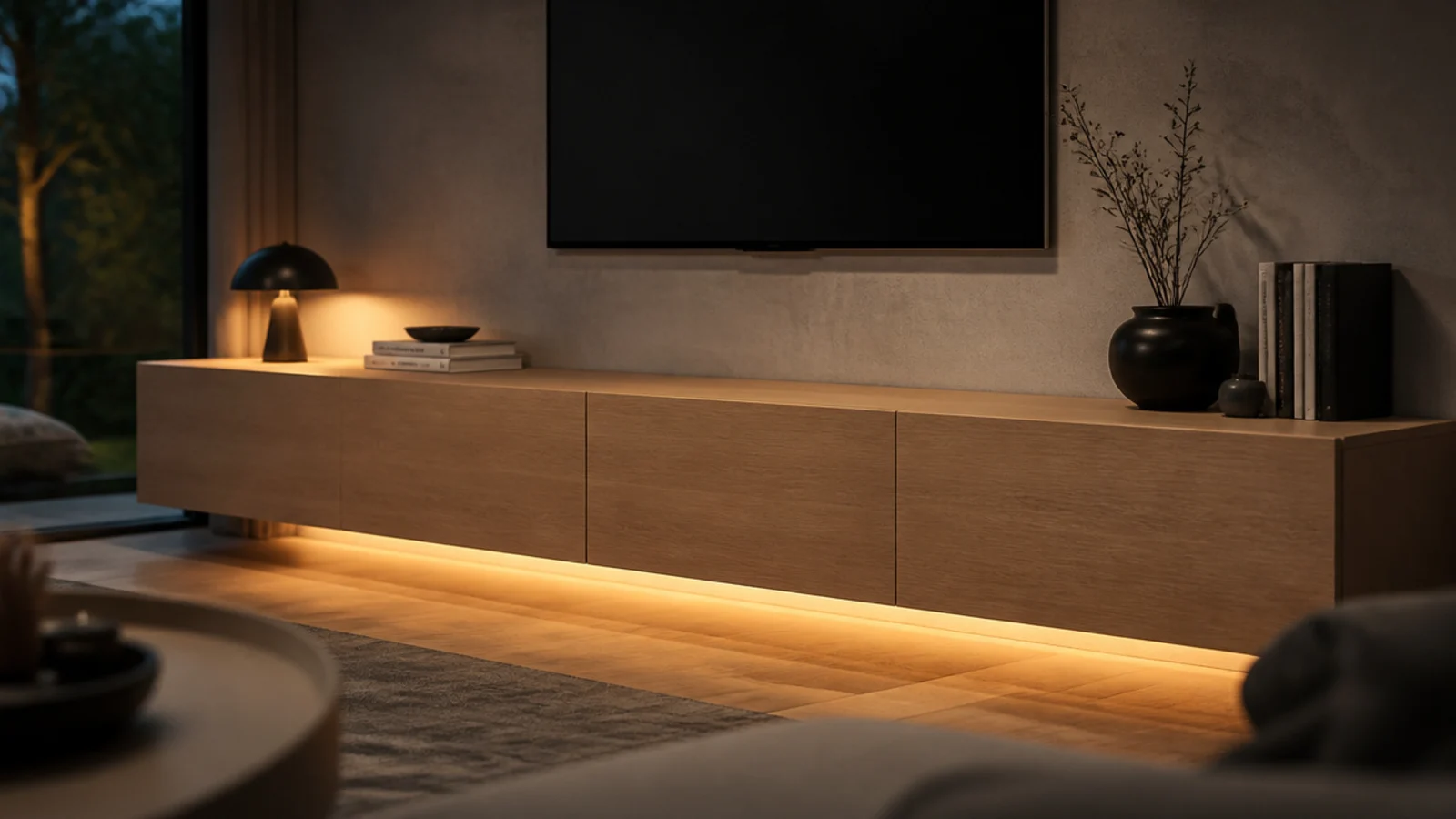
For the shine without the stone budget, the glass table guide has thicknesses and edge finishes. If the whole wall opposite is the real project, the built-in shelving guide covers the joinery details that make a room look commissioned, and modern TV unit decor handles the surface everybody actually looks at.
Mistakes to Skip
- Buying brass-tone plated legs to save $100. They wear through at the corners inside two years, cannot be refinished, and the exposed steel underneath is the most obvious budget tell in a room.
- Choosing polished stone because it looks brighter in the showroom. Showrooms are lit flat. At home, under a lamp at an angle, every fine scratch on a polished slab shows as a white line.
- Adding a second and third material to make the piece interesting. Mixed materials date at the speed of the weakest one, and a single-material form is both cheaper to make and quieter to live with.
- Skipping the sealer on a remnant top because it looked dense in the yard. One glass of red wine left overnight on unsealed marble is a permanent shadow, and a poultice takes 48 hours to lift only part of it.
Frequently asked questions
What makes a cheap center table look expensive?
Edge thickness, weight and a quiet finish, in that order. A two-inch apparent edge on a plywood core reads as solid stone or timber from six feet away, while a three-quarter inch edge always reads as flatpack no matter what the surface is made of.
Where do you buy stone remnants for a table top?
Countertop fabricators sell offcuts left over from kitchen jobs, usually stacked outside the shop. Coffee table tops come out of pieces too small for a counter, so expect to pay roughly forty to eighty dollars a square foot for material that retailed at three times that.
Is honed or polished marble better for a living room?
Honed for a room in daily use. The matte surface hides the fine scratches that show instantly on a polished slab, and it reads softer and more expensive under lamplight. Honed stone is slightly more absorbent, so it wants sealing every six to twelve months.
Does real brass cost much more than brass-tone metal?
Solid brass costs roughly two to three times more than brass-plated steel, but plating wears through at the corners within a couple of years and cannot be repaired. Unlacquered solid brass darkens instead, which is the patina people pay for in the first place.
How thick should a luxury-look glass top be?
Half an inch of tempered glass on anything over forty inches long, three-eighths below that. Thin glass flexes visibly under a stack of books and the edge looks mean. A polished flat-ground edge costs about fifteen dollars more per running foot and is worth every cent.
Want more like this? Browse all 15 center table living room guides — they all use the same measurements and budget tiers.
Pin it for later
Save this to your Center Table Living Room board
Pin it now so it is waiting for you when the tape measure comes out — and so the next person hunting for this idea can find it too.
Save this pinKeep going
More ideas worth saving while you have the tape measure out.