Rugs In Living Room · Listicle
30 Area Rugs In Living Room Picks On A Budget

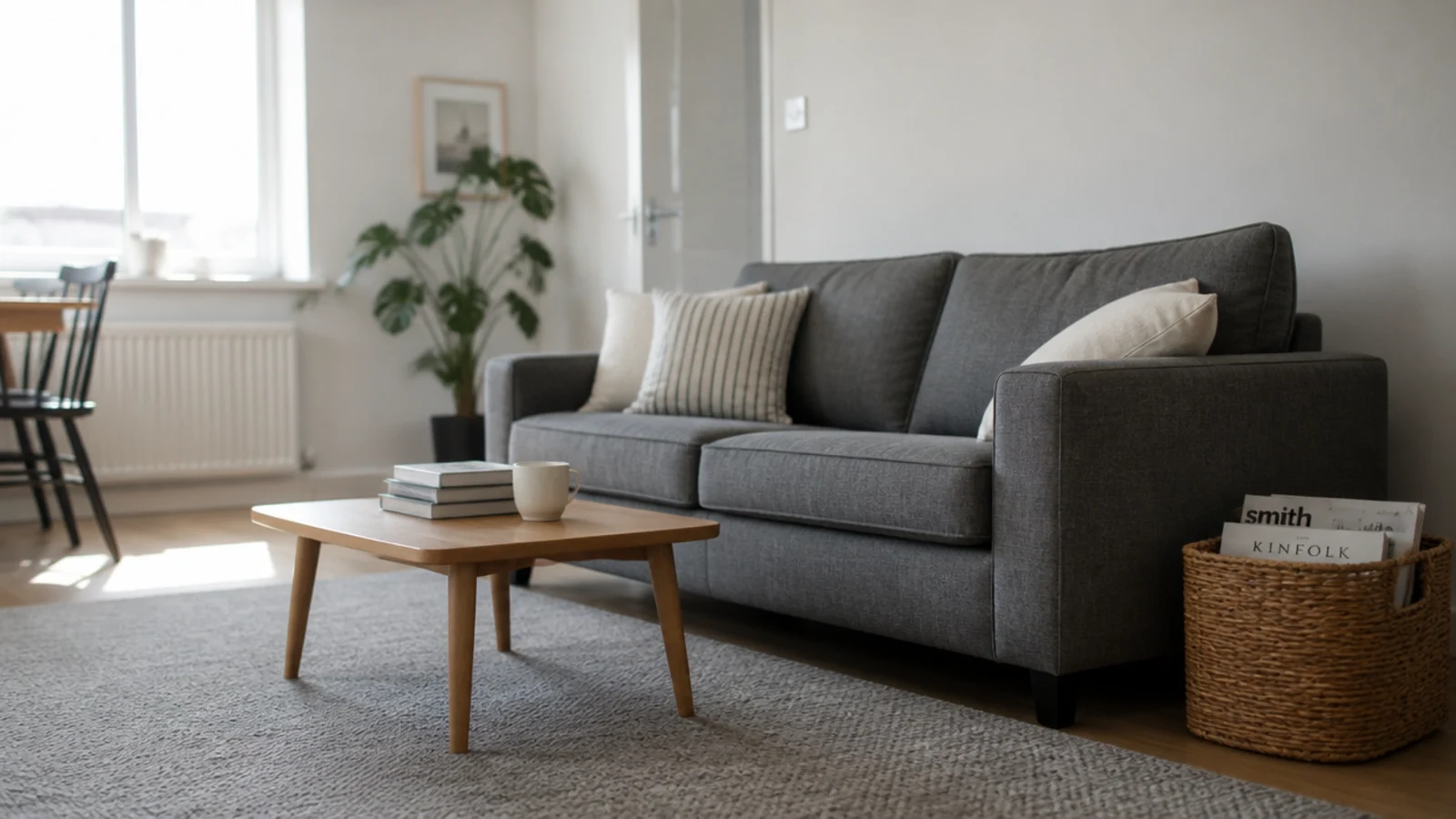
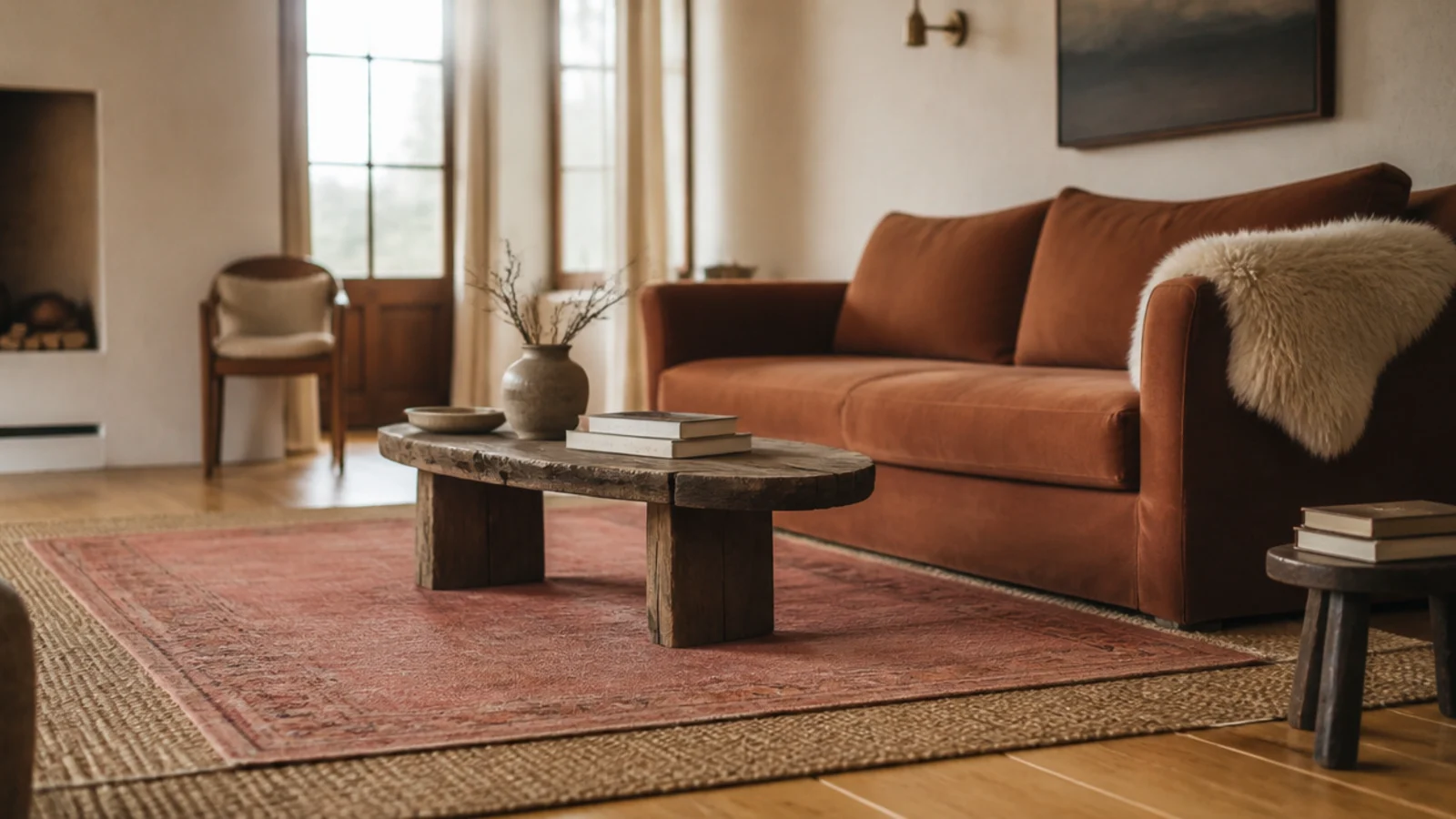
Area rugs in living room budgets get spent in the wrong places more often than they get spent badly. People pay for a pattern and then skip the pad, or buy a beautiful 5x8 for a room that needed a 9x12. I have furnished two rentals and a first flat on very little, and the rugs that worked were rarely the ones that cost most. Below are thirty ways to floor a living room for less, with the fibre prices, the construction tells and the two places where saving money reliably costs more.
In this guide32 sections — tap to openHide
- 1.What area rugs in living room budgets really buy
- 2.Work out your price per square foot first
- 3.Set a hard ceiling of $400 for an 8x10 with the pad
- 4.Solution-dyed polypropylene at the bottom of the range
- 5.Flat-woven cotton for under $150
- 6.Jute at $200 to $450 and where it lets you down
- 7.Polyester for saturated colour on a small budget
- 8.Wool blends where the wool content is honest
- 9.Buy last season colourways at 30 to 50 percent off
- 10.Take the discontinued size nobody else wants
- 11.Open-box and returned rugs at a real discount
- 12.Secondhand hand-knotted beats new machine-made
- 13.Estate sales and the 6x9 nobody bids on
- 14.Two runners side by side in a narrow room
- 15.Bind a broadloom remnant to size
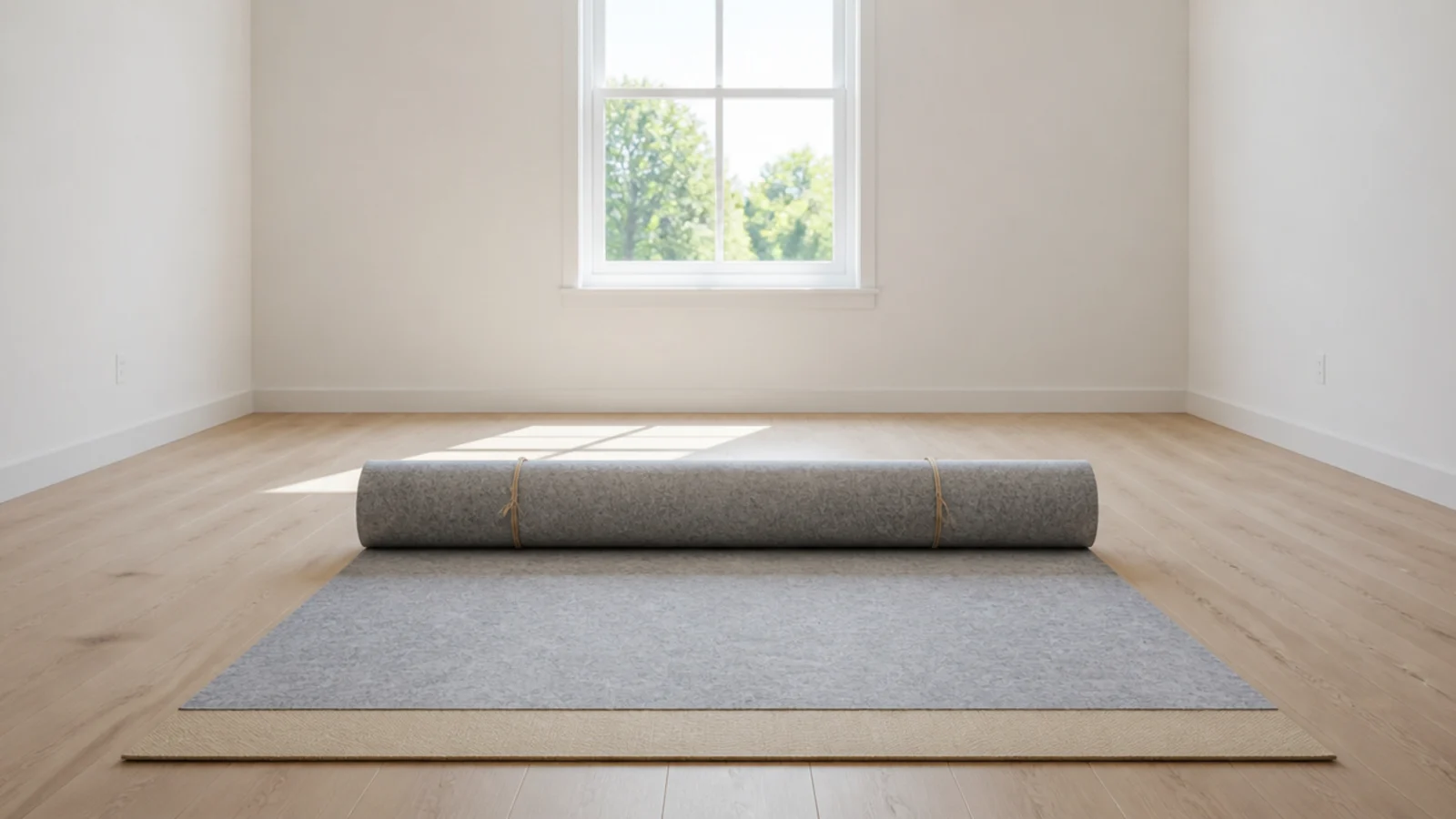
- 16.Never take the pad out of the budget
- 17.Buy pad by the roll and cut it yourself
- 18.Count shipping and return freight into the price
- 19.Order swatches before an 8x10, always
- 20.Read the fibre content for hidden viscose
- 21.Beware rugs where the pattern is only printed on
- 22.Face weight tells you more than the price tag
- 23.Expect a budget wool to shed for months
- 24.Air a new synthetic rug for 48 hours
- 25.Check whether the backing is latex or woven
- 26.Compare serged edges against bound edges
- 27.Buy the bigger size in the cheaper fibre
- 28.Layer one small good rug over a big cheap base
- 29.Wash a $120 rug rather than replace a $400 one
- 30.Rotate it twice a year and get another season
- 31.Know the point where cheap becomes expensive
- 32.Mistakes to Skip
What area rugs in living room budgets really buy
Work in price per square foot and the comparisons get honest fast. An 8x10 is 80 square feet. At $150 that is $1.88 a foot; at $400 it is $5. Under about $1.20 a square foot you are almost certainly looking at a printed rug where the pattern sits on the surface and the fibre underneath is undyed.
The fibre bands are fairly consistent. Solution-dyed polypropylene runs $100 to $250 for an 8x10 and gives five to ten years. Polyester sits at $150 to $300, softer and quicker to mat. Jute lands at $200 to $450 and stains permanently with water. Machine-woven wool blends start around $350. Add $40 to $120 for a quarter-inch felt and natural rubber pad, and treat that as part of the rug price rather than an extra, because a rug that slides on a hard floor is a trip hazard with lifted corners waiting to catch a foot.
Two savings are always false. Buying a rug two sizes down leaves a room looking unresolved no matter what the weaving is like, and skipping the pad shortens the life of the pile from underneath while making the whole thing unsafe. Everything else is negotiable.
If you want the same maths applied to rugs that survive a washing machine, the washable rug comparison breaks the types down. For quiet colours that hide daily wear, see the neutral rug setups.
1. Work out your price per square foot first
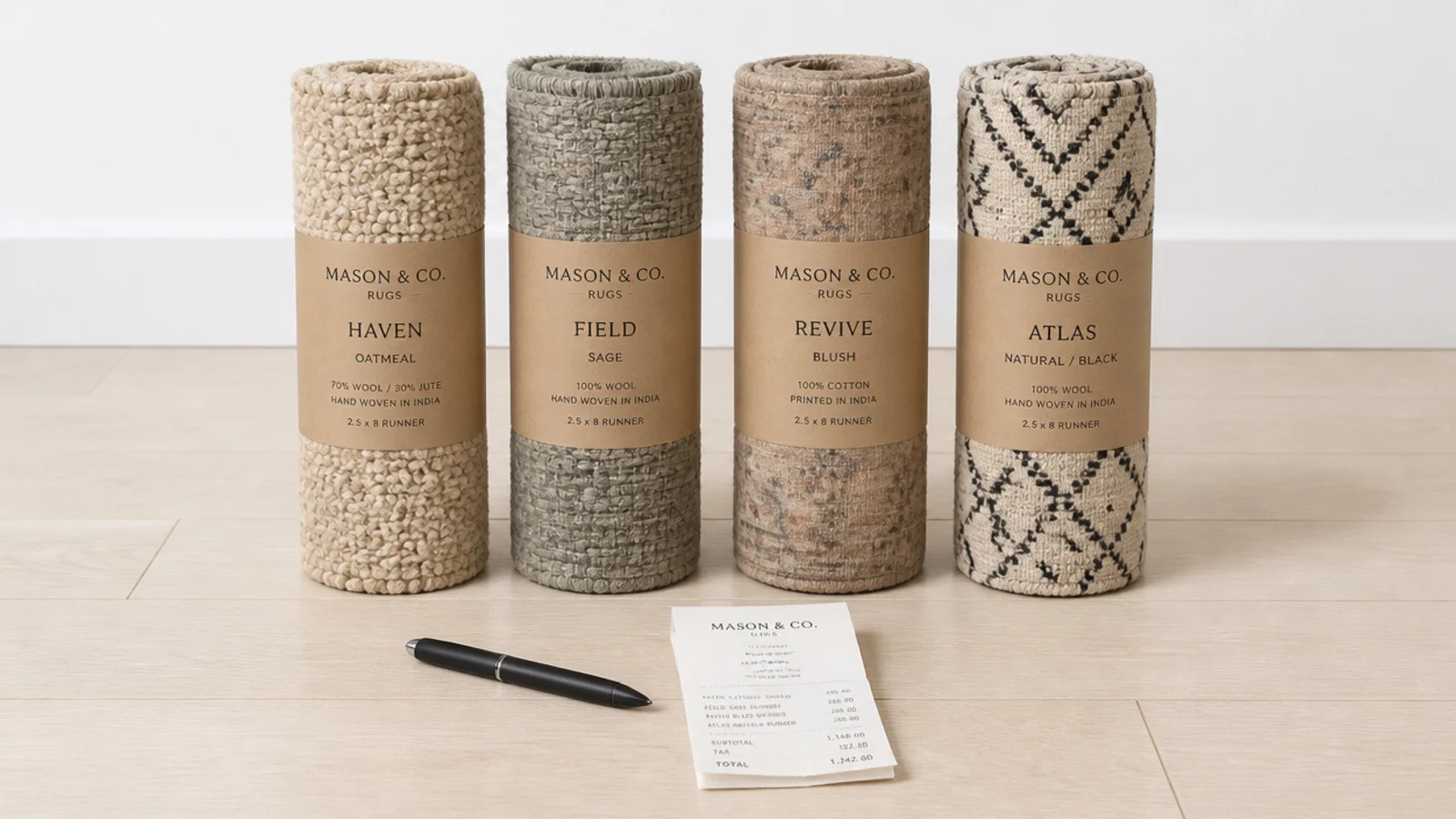
Multiply the dimensions, divide the price, and suddenly a $299 6x9 and a $359 8x10 stop looking like similar purchases. The first is $5.54 a square foot, the second $4.49 for a rug that will actually reach the furniture. This one calculation reorders most shortlists within about a minute.
2. Set a hard ceiling of $400 for an 8x10 with the pad
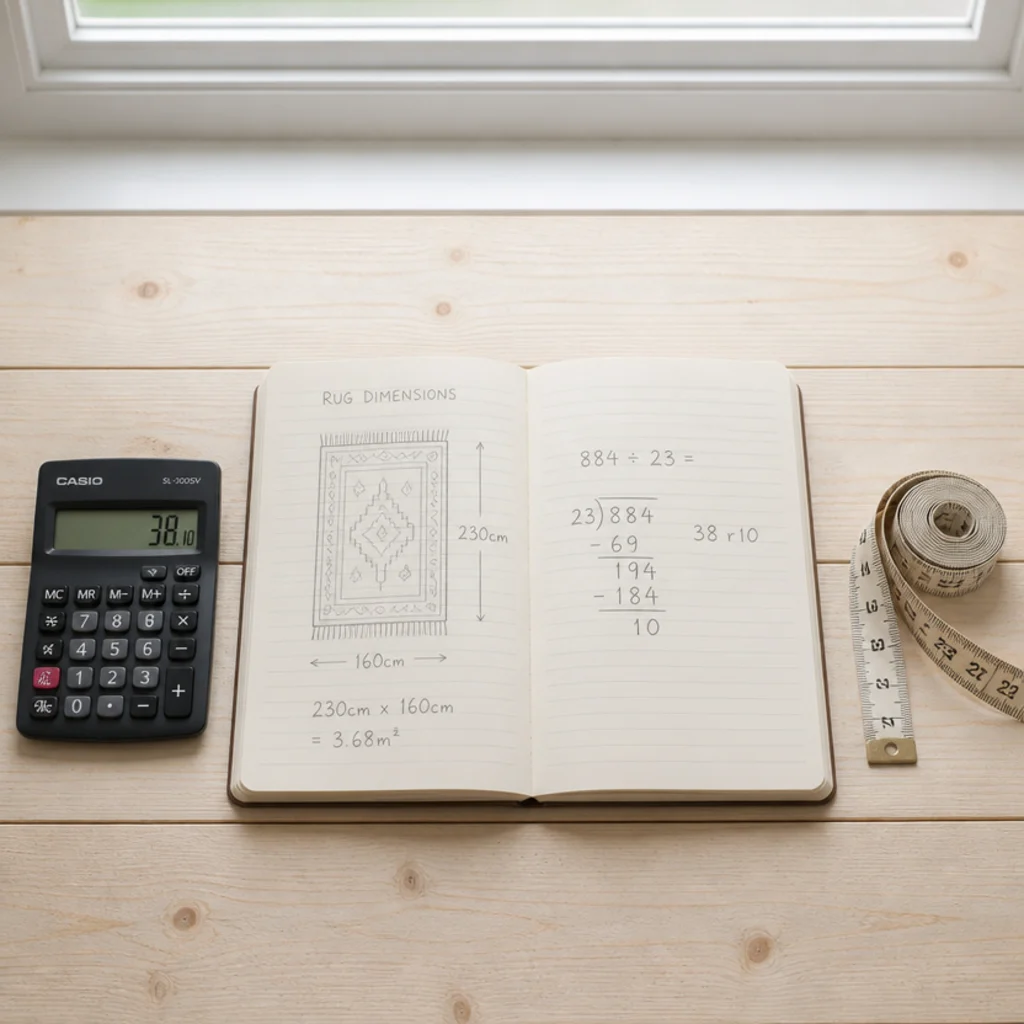
Deciding the total before you shop stops the slow creep from $250 to $600 that happens to everybody. Four hundred dollars buys a solution-dyed polypropylene or a decent jute in the right size with a proper felt and rubber pad underneath. That is a complete, working floor, and it is genuinely enough.
3. Solution-dyed polypropylene at the bottom of the range
The colour is mixed into the polymer before the fibre is extruded, so a diluted bleach solution cleans a stain without lifting the shade. That is a real advantage no piece-dyed rug has. It crushes under a heavy sofa leg and glazes where feet drag, and for $100 to $250 across five to ten years it remains the best value on this list.
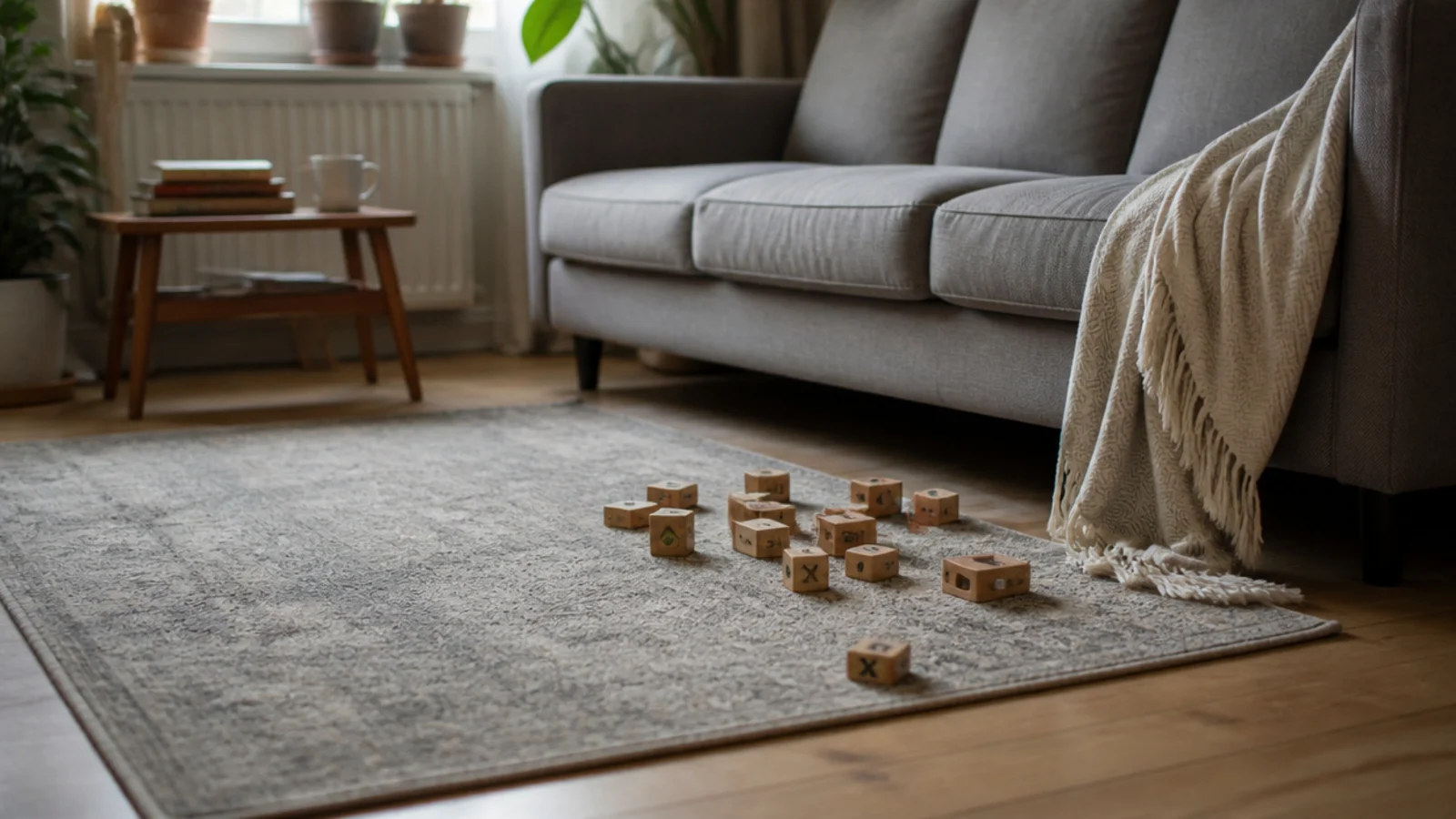
4. Flat-woven cotton for under $150
Cotton flatweaves are thin, reversible and honest about it. Sizes up to about 5x7 fit a standard 3.5 cubic foot domestic washer on a cold gentle cycle. They wrinkle, they creep without a pad, and at $80 to $150 they are the right rug for a room whose purpose you have not settled yet.
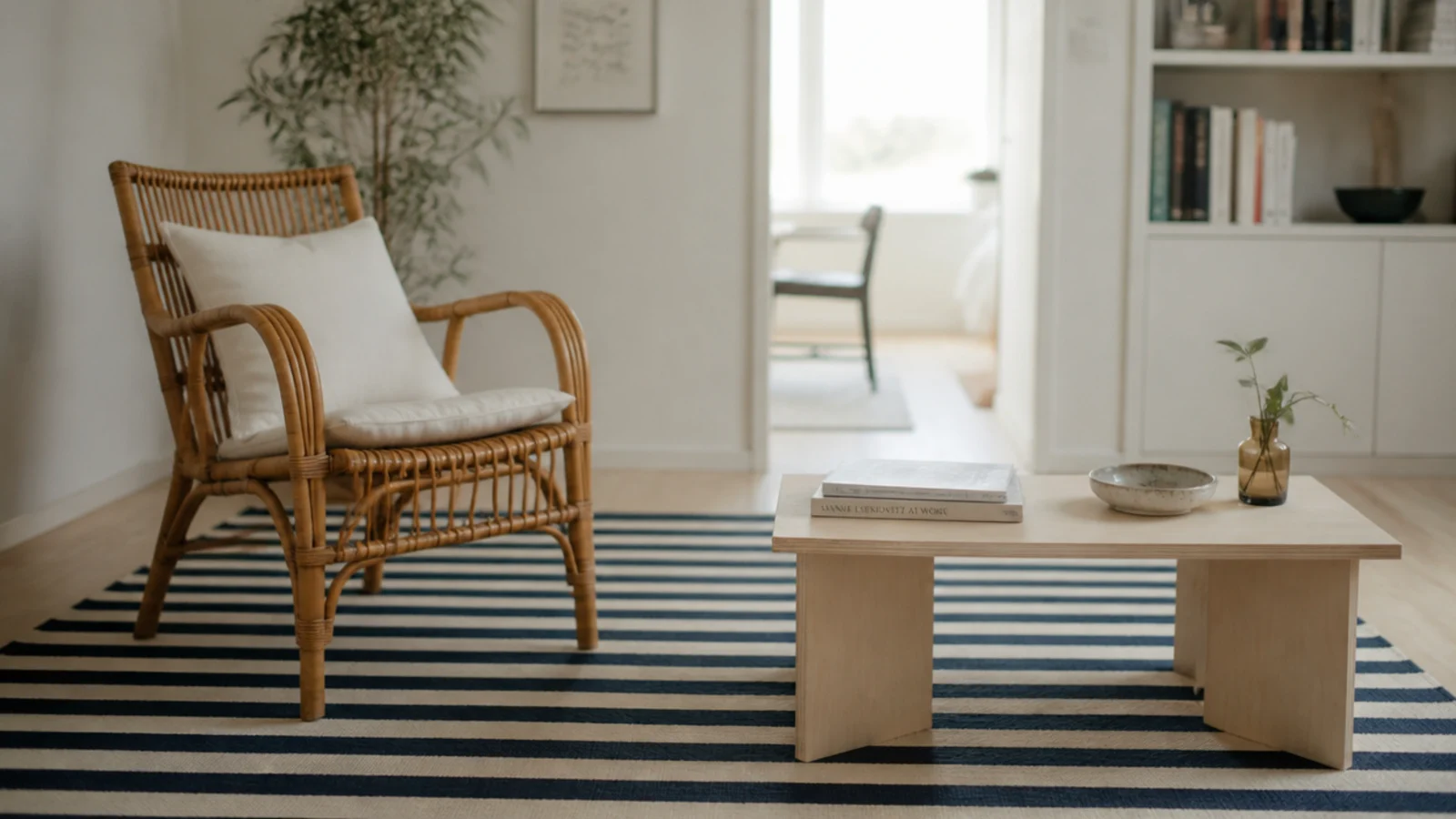
5. Jute at $200 to $450 and where it lets you down
Jute is warm underfoot, softer than sisal and reads far more expensive than it is. It also sheds fine fibres for months and takes a permanent brown ring from a spilled glass of water. Put it under a reading chair, not under a coffee table, and vacuum it with suction only rather than a rotating brush.
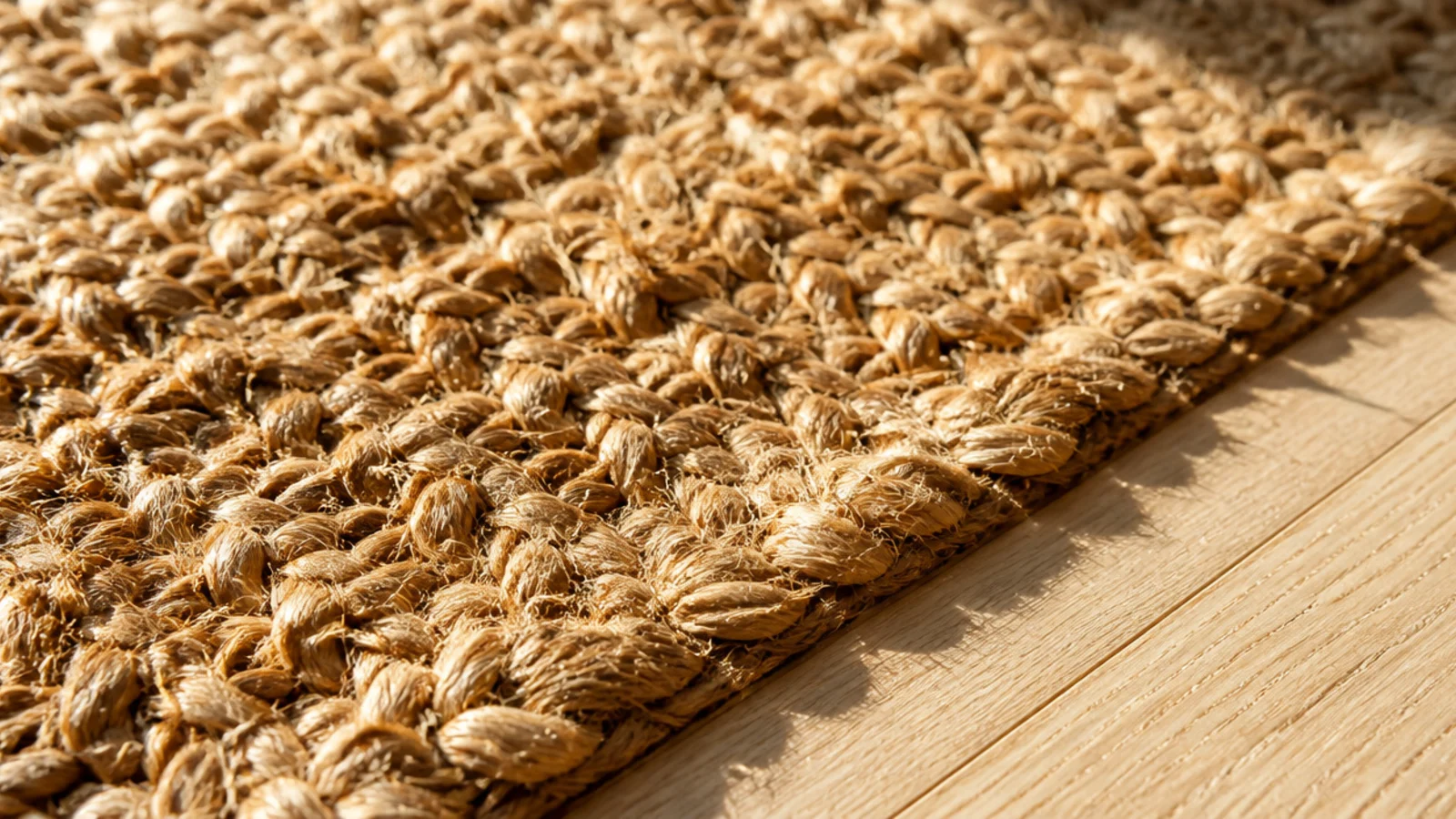
6. Polyester for saturated colour on a small budget
Polyester holds deep dye better than any other budget fibre, which is why the strongest colours at low prices are almost always polyester. It is soft, it costs $150 to $300 for an 8x10, and it mats faster than wool in a walking route. Choose it for a room where colour matters more than the traffic does.
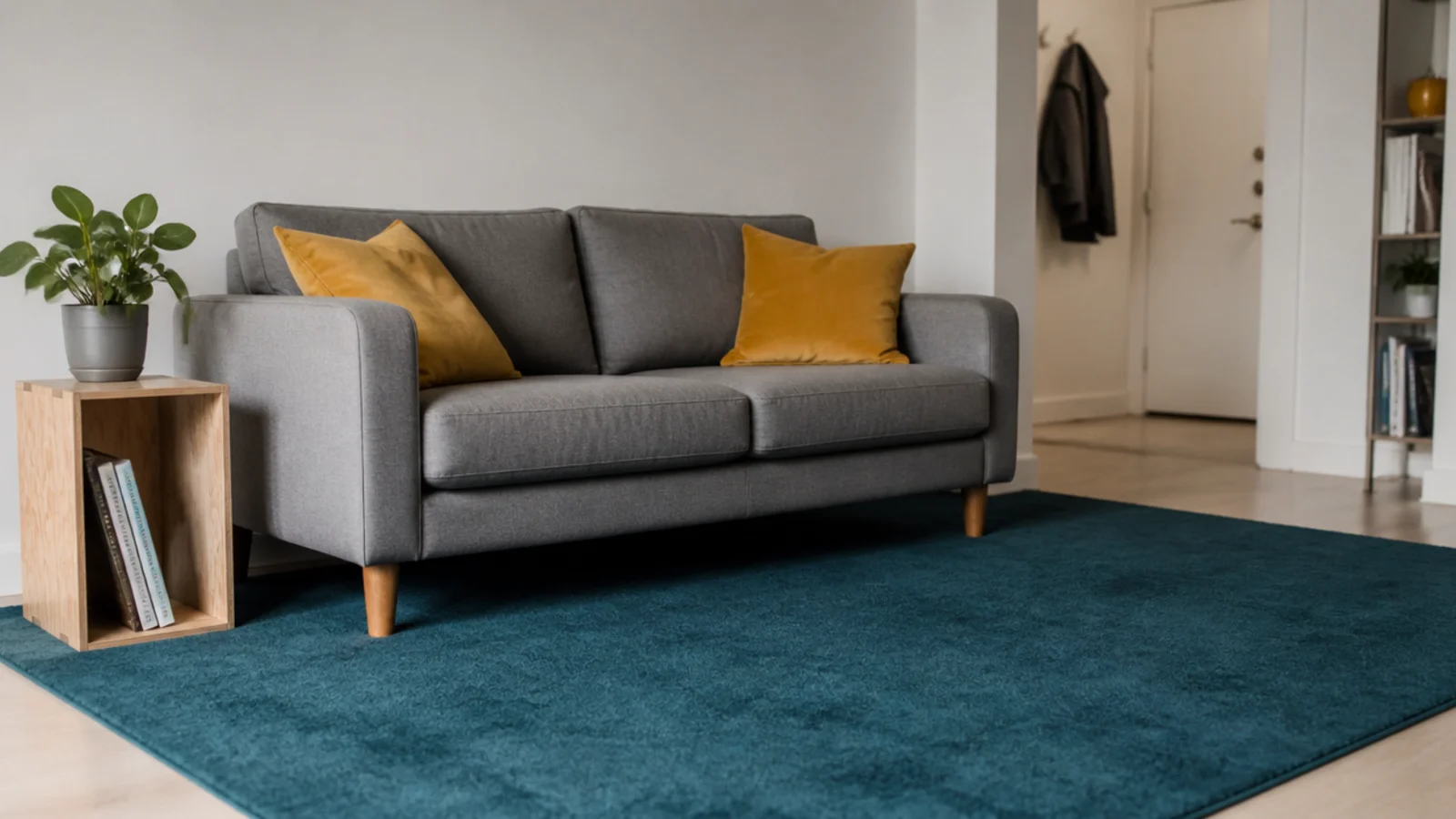
7. Wool blends where the wool content is honest
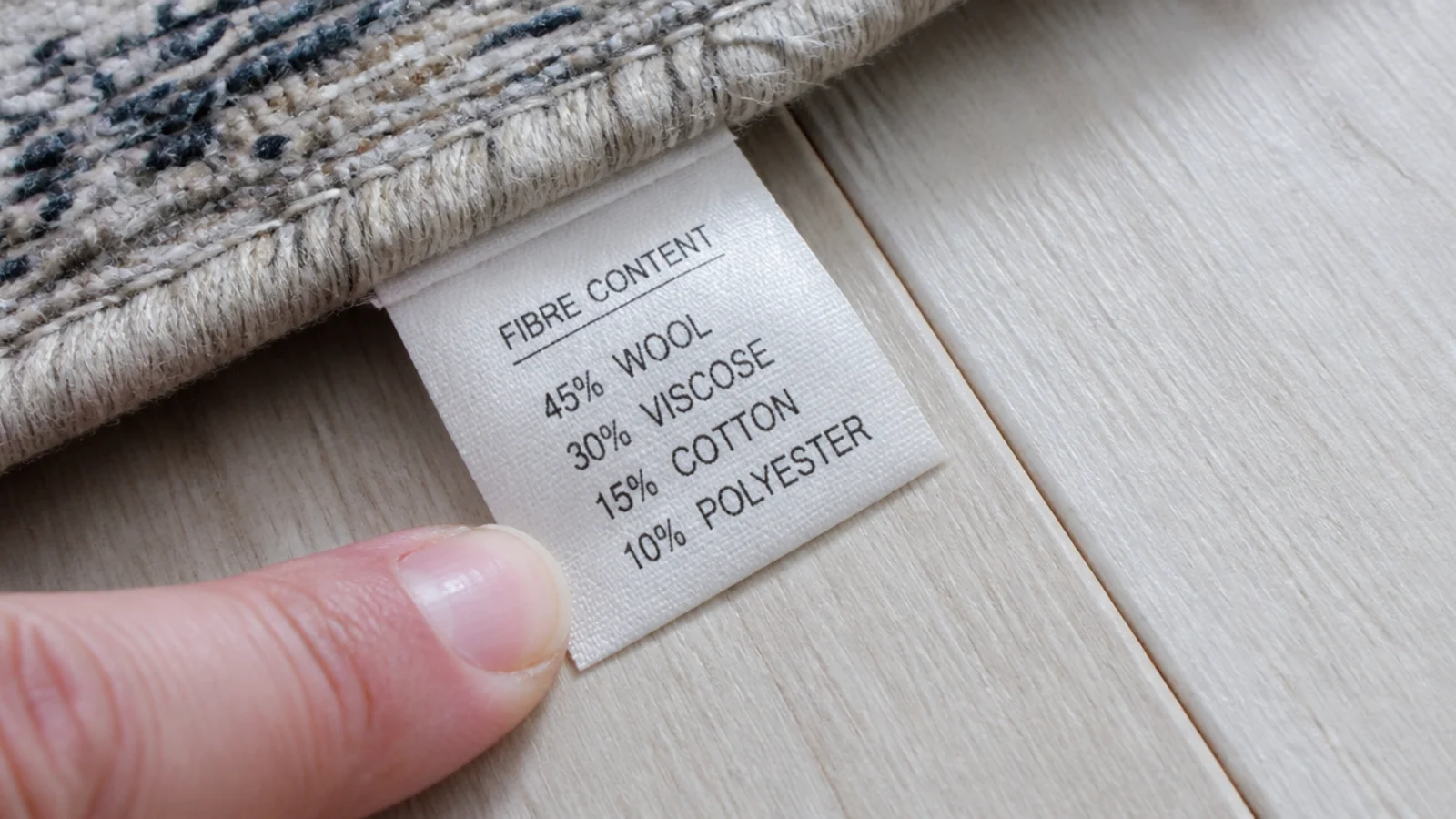
A rug described as a wool blend can legally contain 20 percent wool and 80 percent polypropylene. That is not a bad rug, but it is not a wool rug and should not carry a wool price. Find the sewn-in fibre content label, read the percentages, and price it against the synthetic it mostly is.
8. Buy last season colourways at 30 to 50 percent off
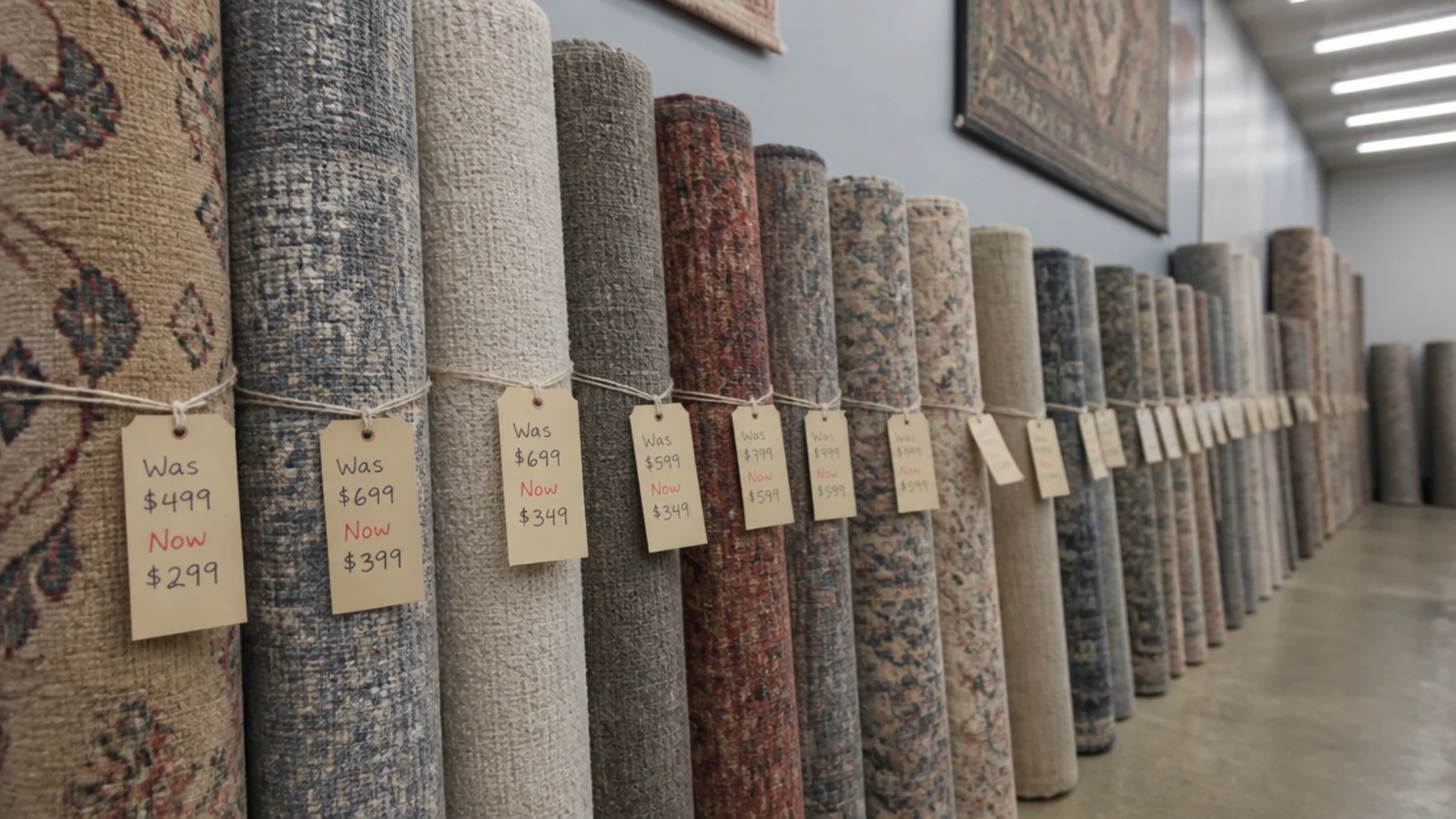
Rug ranges get recoloured far more often than they get rewoven. The discontinued shade is the identical construction, the identical face weight and the identical warranty at a third off. Ask a showroom directly what is being cleared; the discounts are often deeper in store than they ever appear online.
9. Take the discontinued size nobody else wants
Odd sizes such as 7x10 or 6x8 sit unsold because they do not match the standard shortlist, and they are frequently discounted hardest. Real rooms are rarely standard either. Measure your seating group first, and an awkward size may well fit better than the popular one it sits next to.
10. Open-box and returned rugs at a real discount
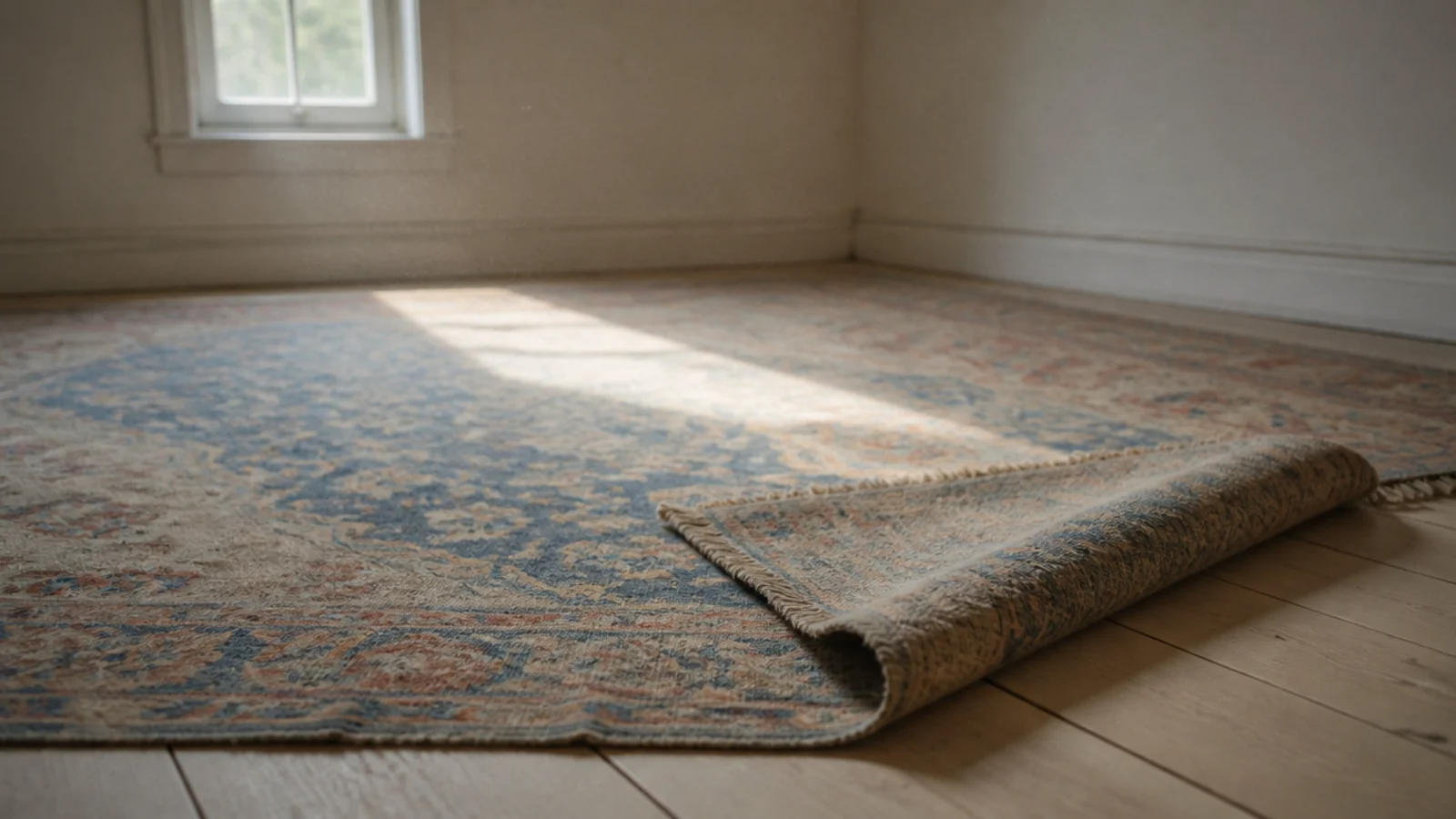
A rug returned because the buyer changed their mind is sold as open-box at 20 to 40 percent off. Ask why it came back and check the photographs for a crease line or a folded corner. Creases relax in 48 hours flat. Odour and pet damage do not, so ask about both before paying.
11. Secondhand hand-knotted beats new machine-made
An old hand-knotted wool rug with an honest worn pile, bought for $250 to $600, is a better floor than anything new at that money. It has no adhesive to fail, the low pile suits furniture, and it will still be usable in fifteen years. Budget $3 to $6 a square foot to have it professionally washed first.
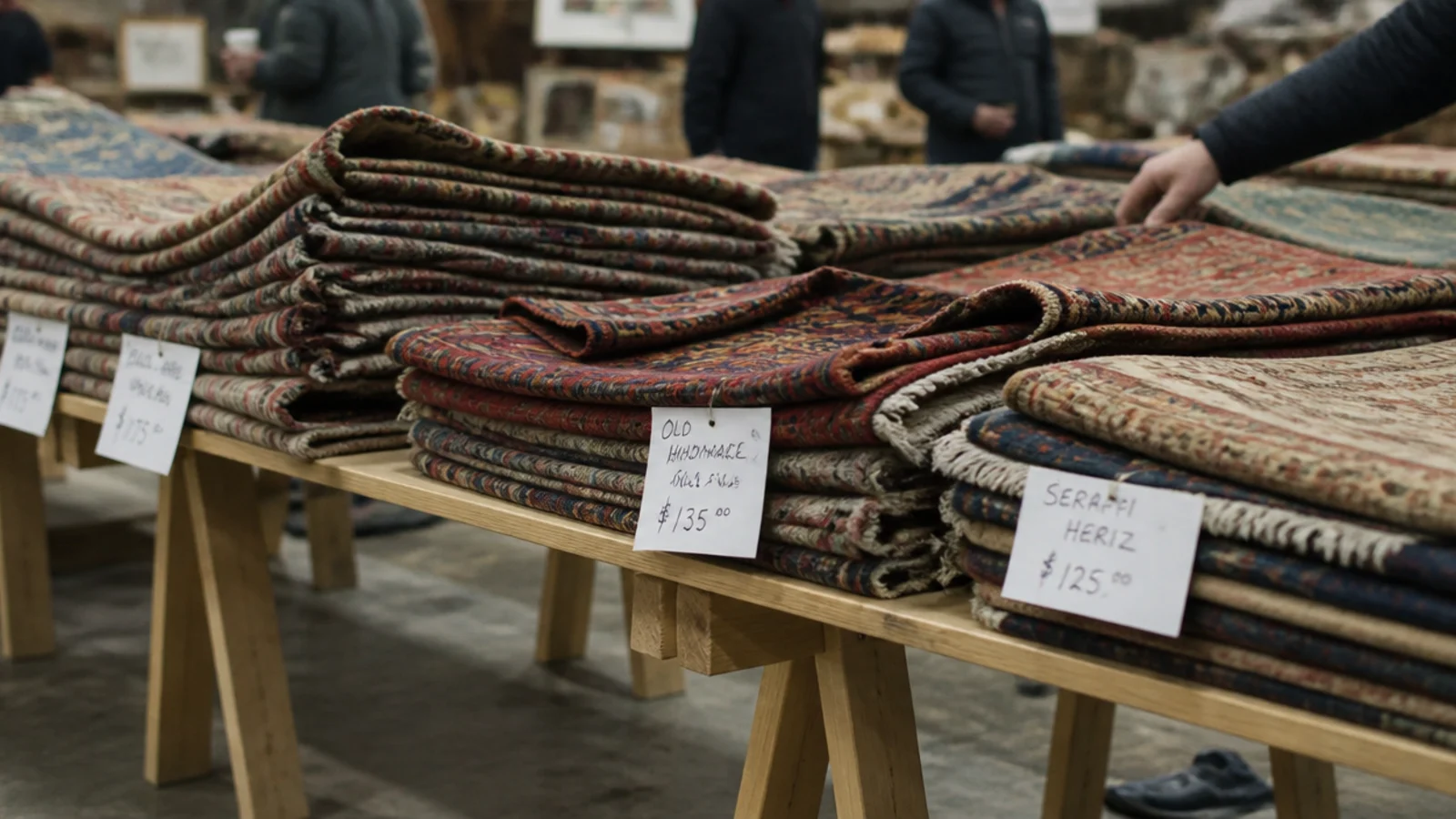
12. Estate sales and the 6x9 nobody bids on
Large rugs are hard to transport and hard to store, so they sell cheaply at house clearances. Take a torch, fold the rug pile-side out and listen: a dry crackling sound is dry rot in the foundation and means walk away. Check the back for moth grazing along the edges, which is common and often invisible from the front.
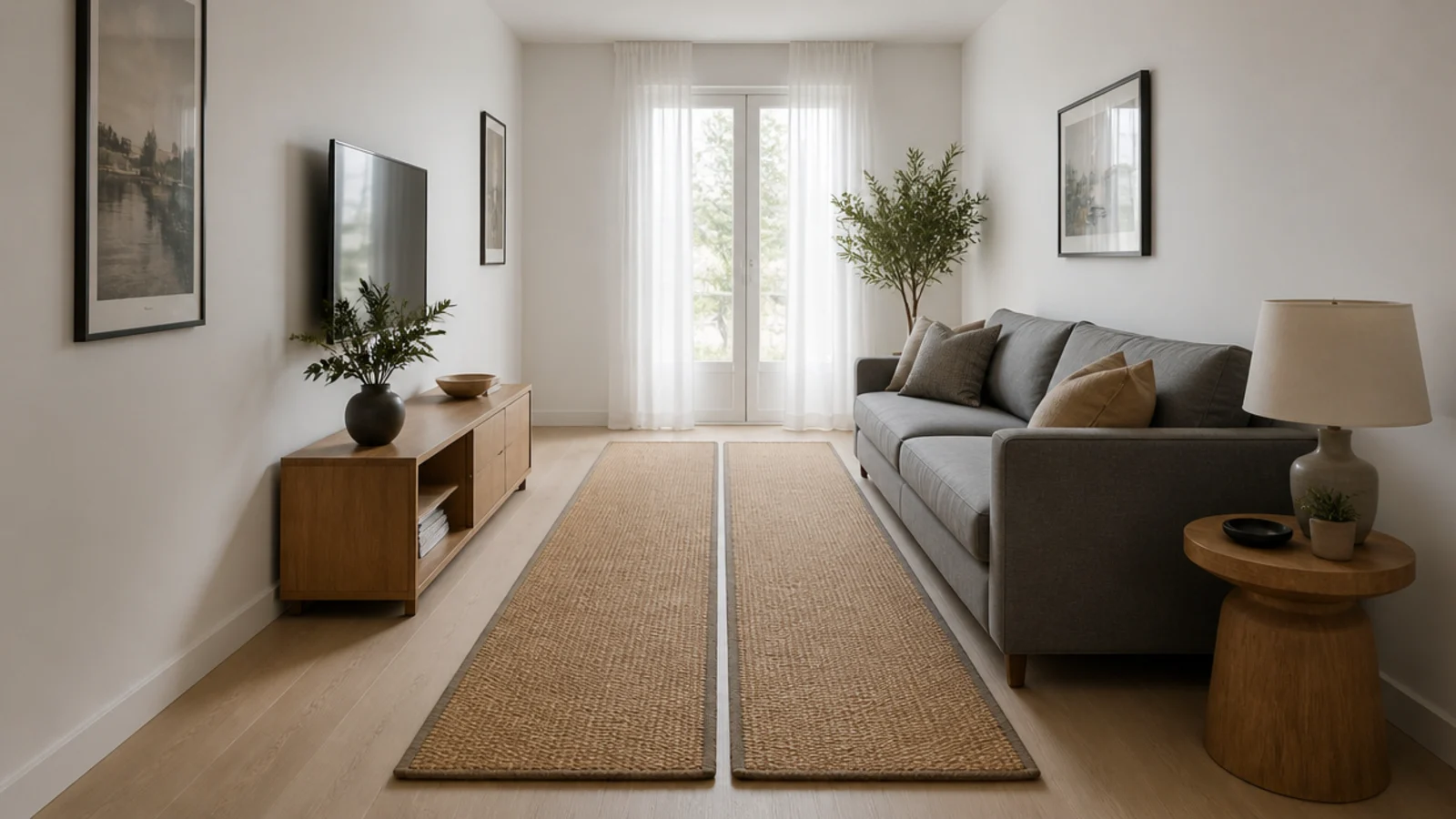
13. Two runners side by side in a narrow room
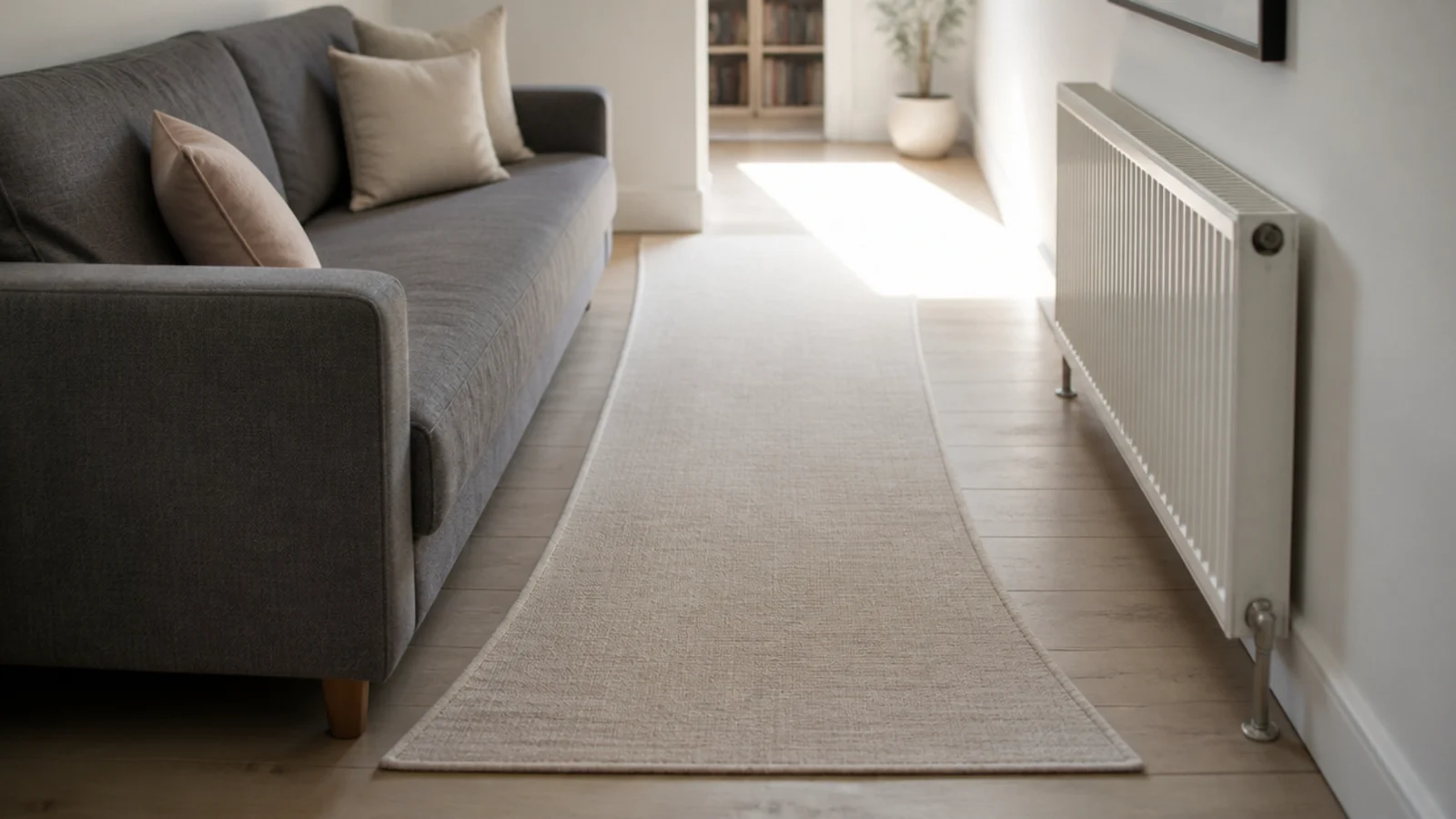
Two 2.5x8 runners laid touching give you a 5x8 of coverage for runner prices, which are usually far lower per square foot. It works when the pattern is a simple stripe or a plain field so the join reads as a seam rather than a mismatch. Pad both, or the two will drift apart within a week.
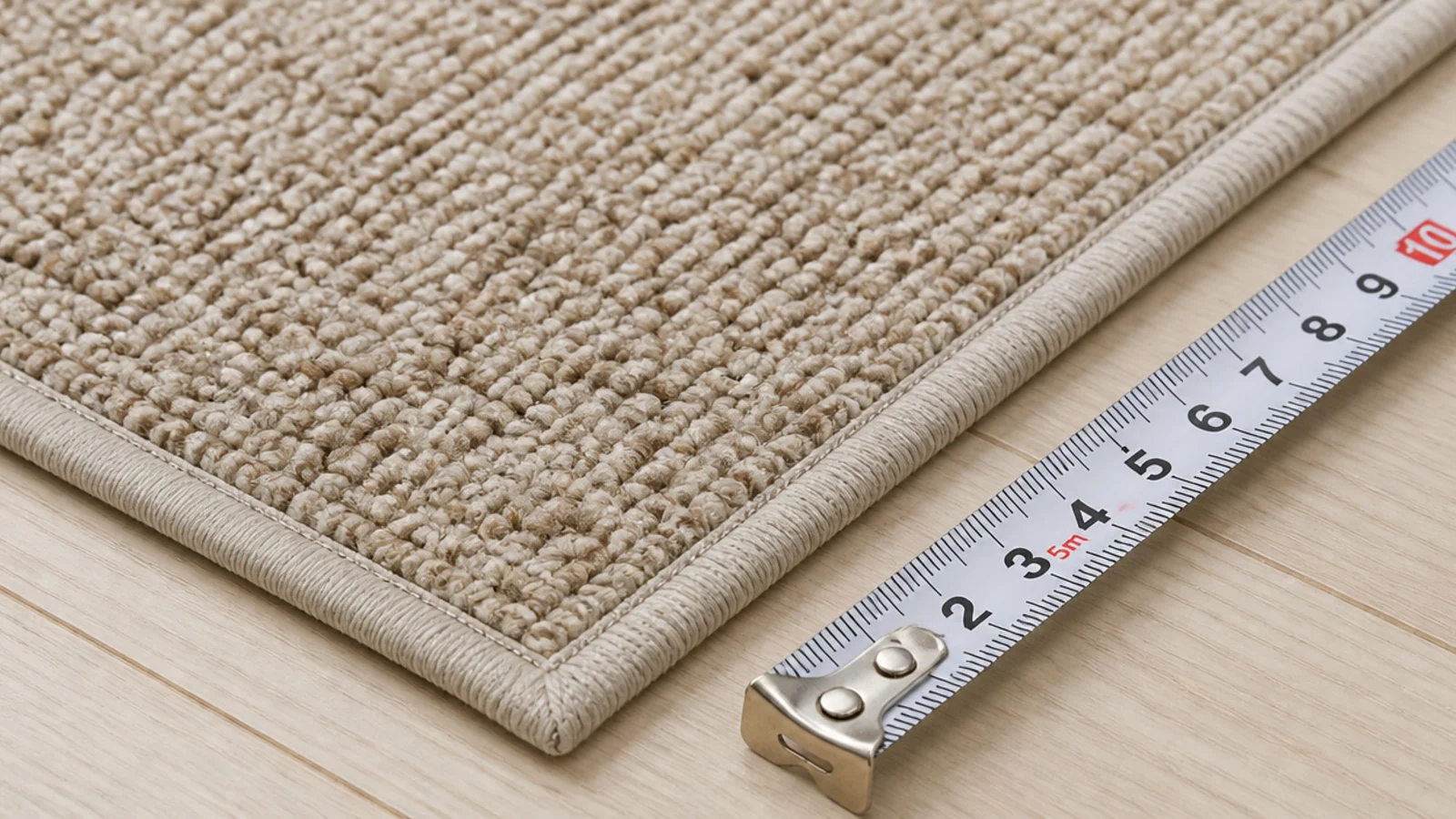
14. Bind a broadloom remnant to size
Carpet shops sell end-of-roll remnants for a fraction of rug prices, and binding costs roughly $2 to $4 a linear foot. A 9x12 cut from a remnant with a stitched cotton tape edge can land well under $250. Choose a low loop pile rather than a plush, because cut pile shows every footprint under raking light.
15. Never take the pad out of the budget
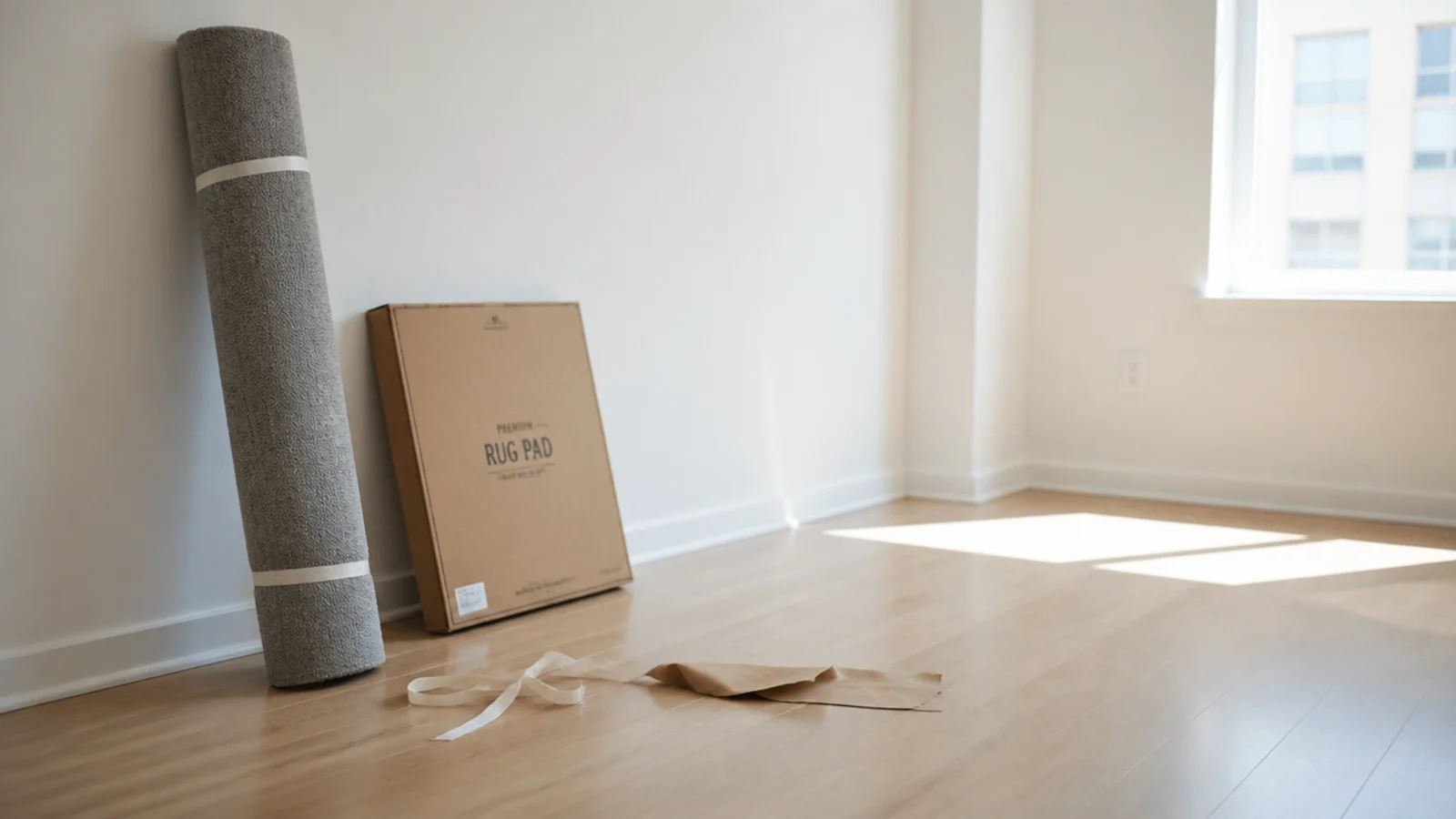
This is the one line item that is not optional. An unpadded rug slides on hardwood, tile or vinyl, the corners curl upward, and somebody eventually catches a foot on one. A quarter-inch felt and natural rubber pad also stops grit grinding the pile away from below. Forty dollars is cheap insurance for both problems.
16. Buy pad by the roll and cut it yourself
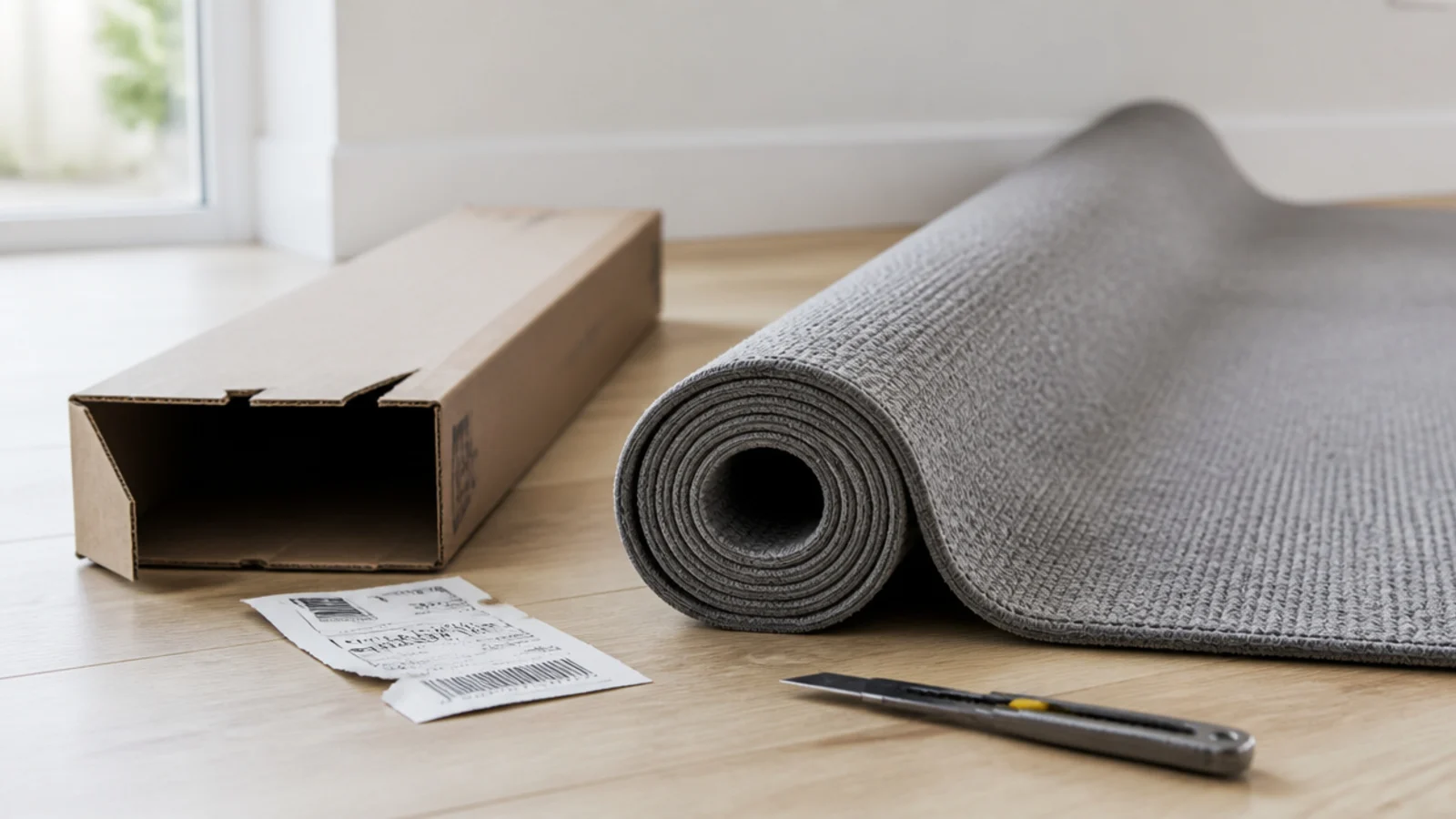
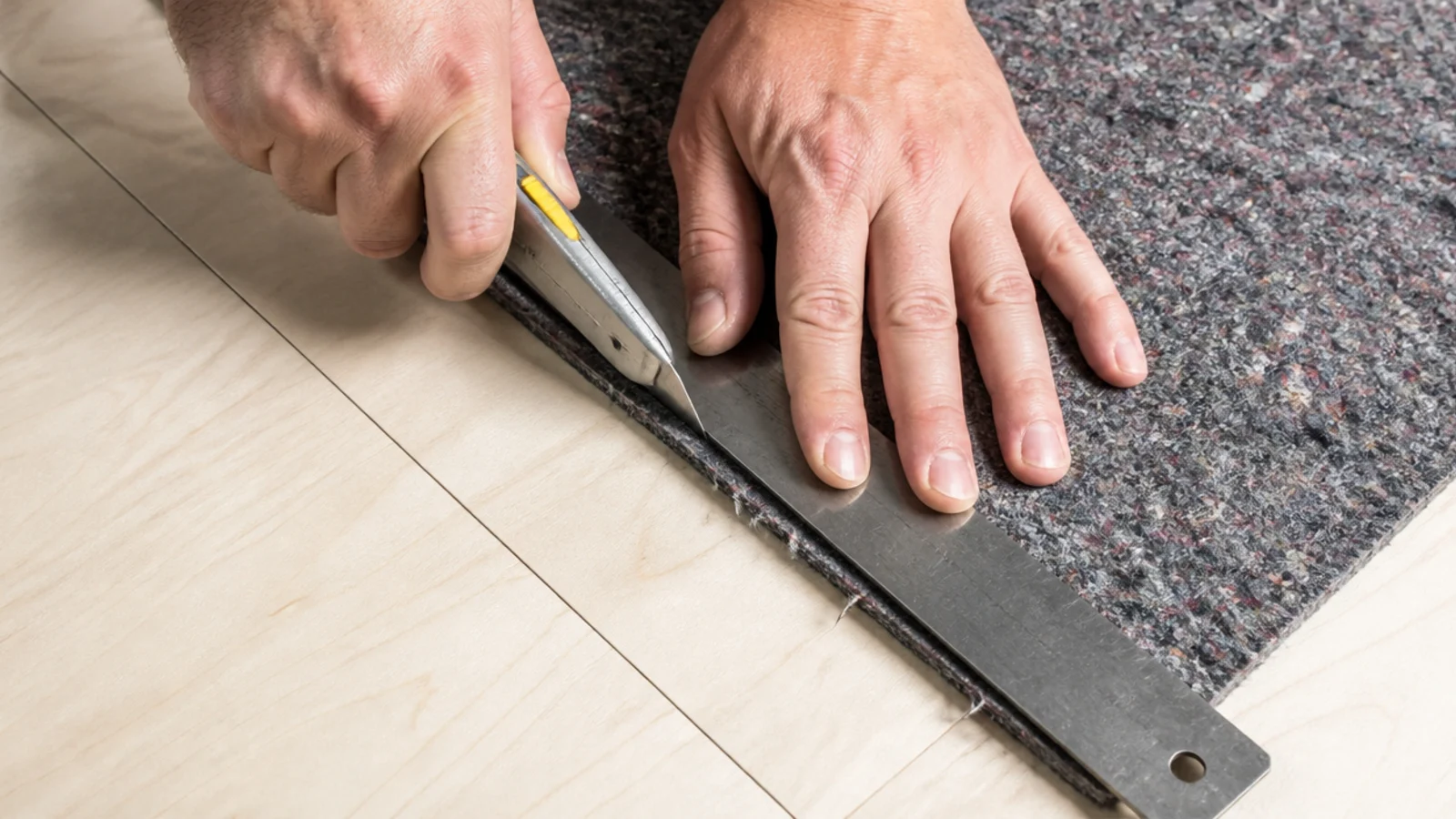
Pre-cut pads sold alongside rugs carry a large markup. A roll of quarter-inch felt and rubber costs noticeably less per square foot, and trimming it with a straightedge and a utility knife takes ten minutes. Cut it 1 inch smaller than the rug on every side so it never shows at the edge.
17. Count shipping and return freight into the price
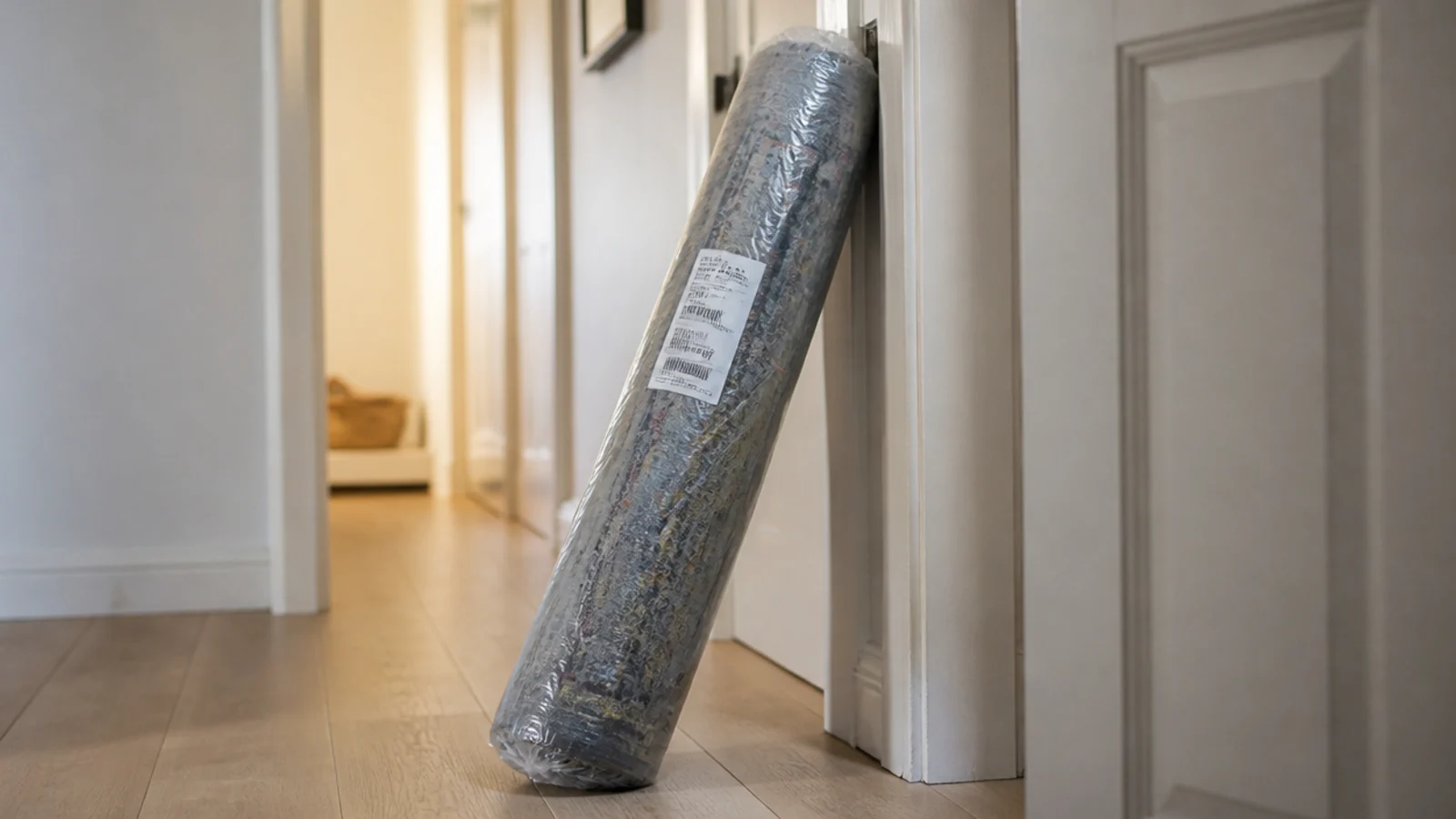
A free-shipping rug that costs $120 to send back is not free shipping. On anything over 6x9 the return freight is genuinely expensive, so confirm who pays it before ordering. Ask whether the return window starts at the order date or at delivery; on a slow shipment those two dates can be three weeks apart.
18. Order swatches before an 8x10, always
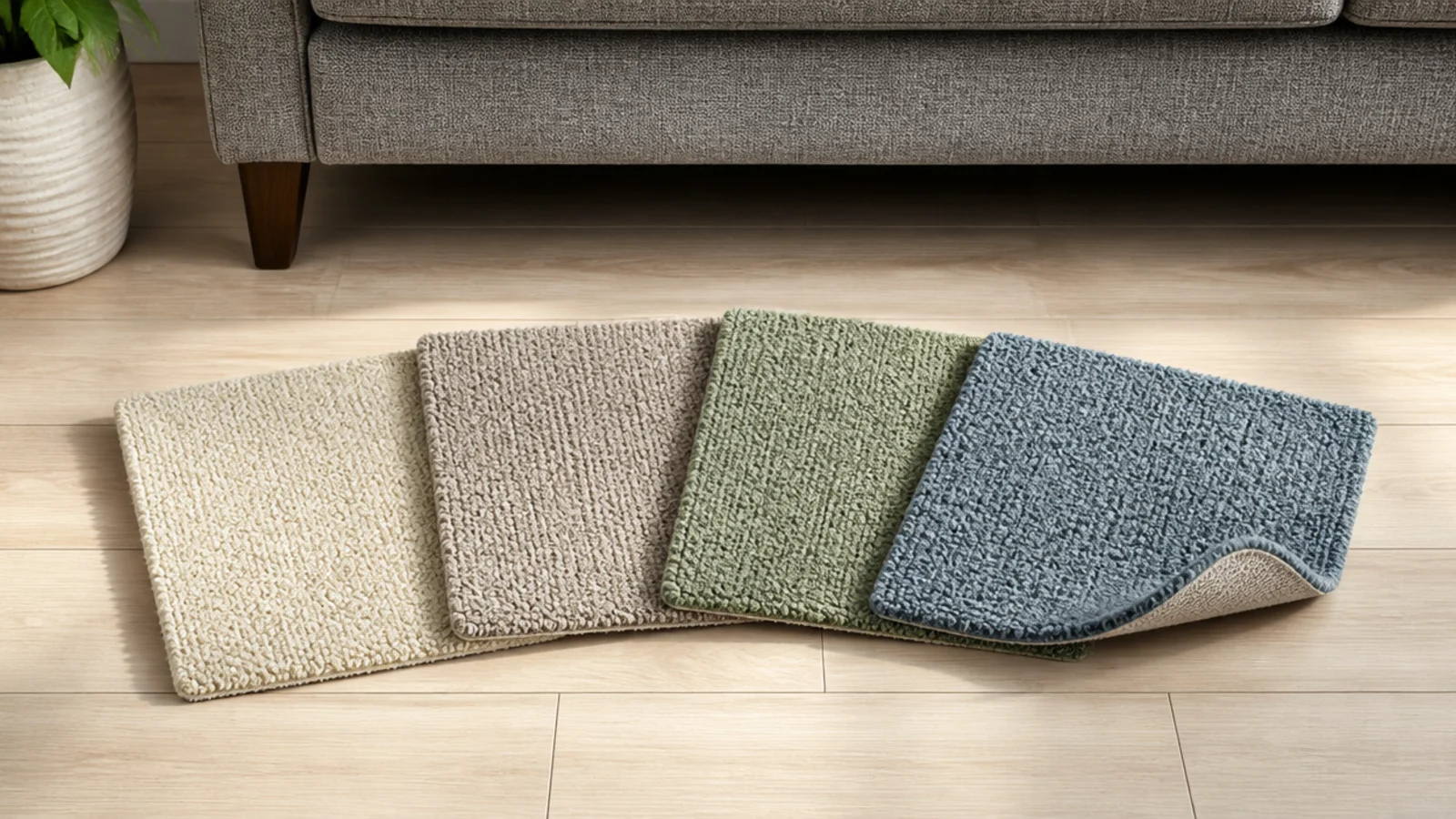
Most sellers post a 6 to 8 inch sample for the cost of postage. Put it on your own floor and look at it at nine in the morning and again at nine at night under lamps. Undertone is what photographs distort most, and a swatch settles it for a couple of dollars.
19. Read the fibre content for hidden viscose
Viscose, rayon and art silk are cheap to blend in and add a sheen that photographs beautifully. They also mark permanently the first time water touches them, leaving a dull yellow-brown ring nothing lifts. Any percentage of viscose in a living room rug is a liability, and it appears in blends far more often than people expect.
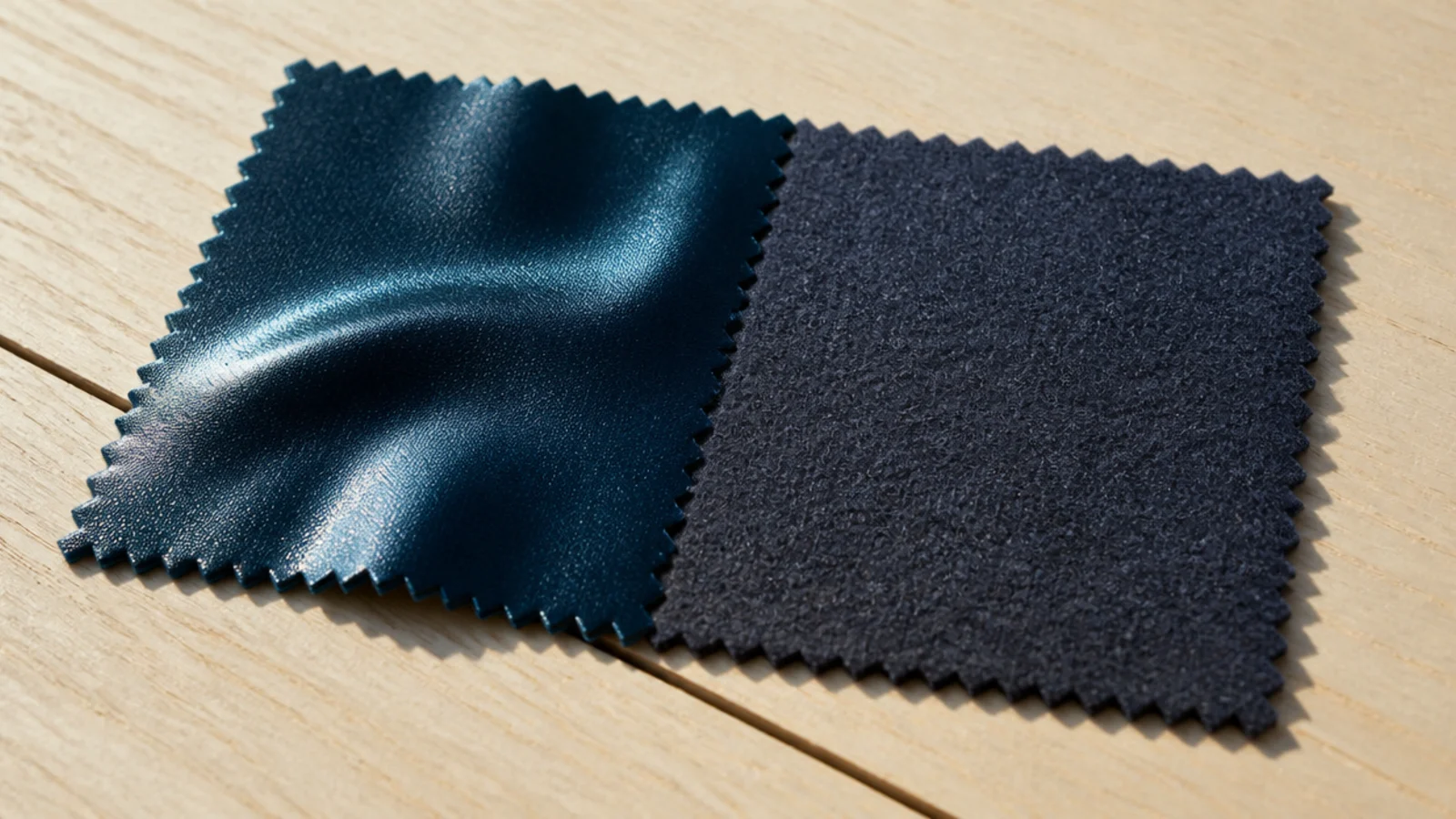
20. Beware rugs where the pattern is only printed on
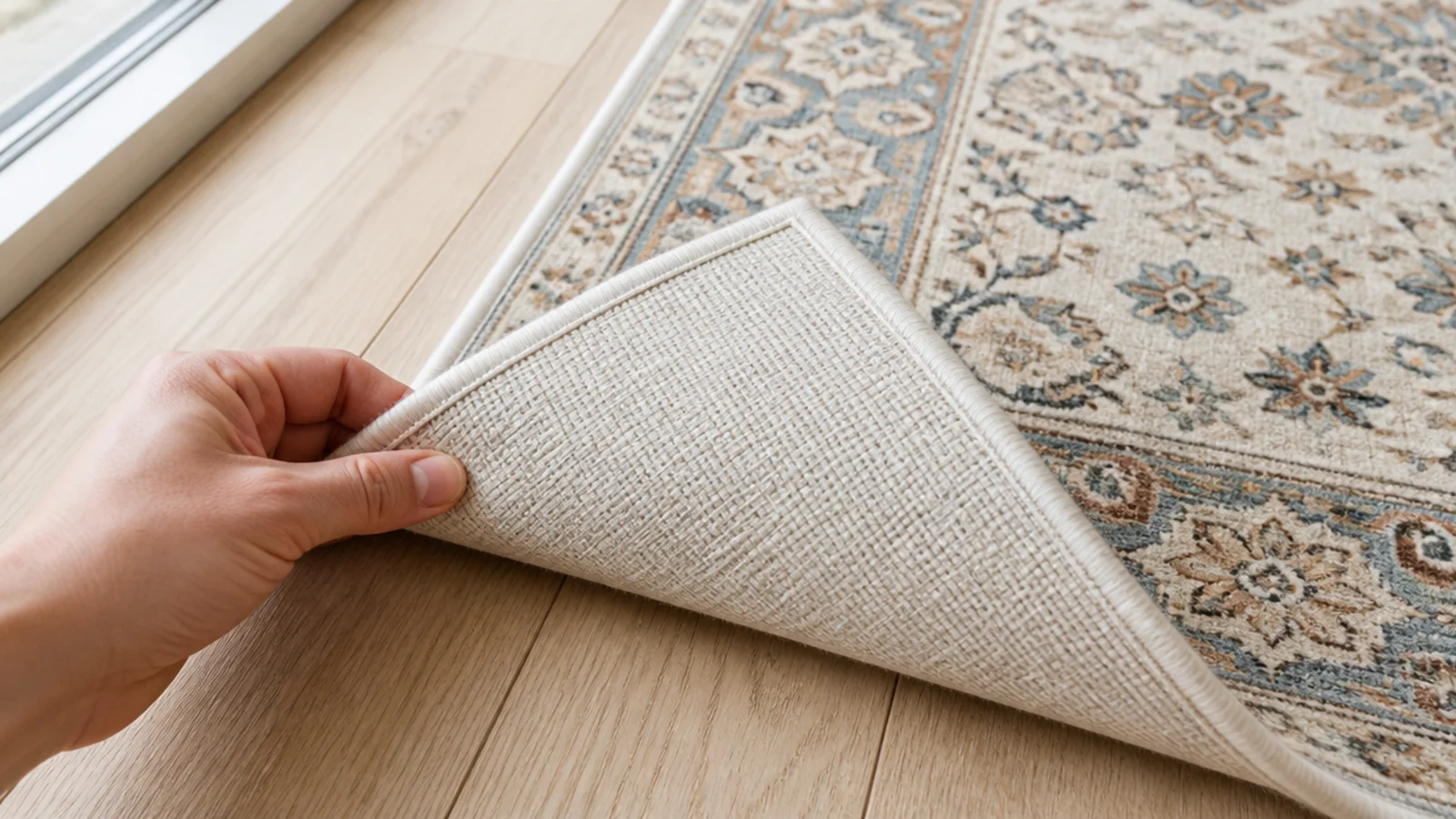
Fold a corner back and look at the base of the pile. On a woven rug the colour runs all the way down the fibre; on a printed rug the pattern sits on the tips and white shows underneath. Printed rugs fade to a ghost of themselves within about two years of vacuuming.
21. Face weight tells you more than the price tag
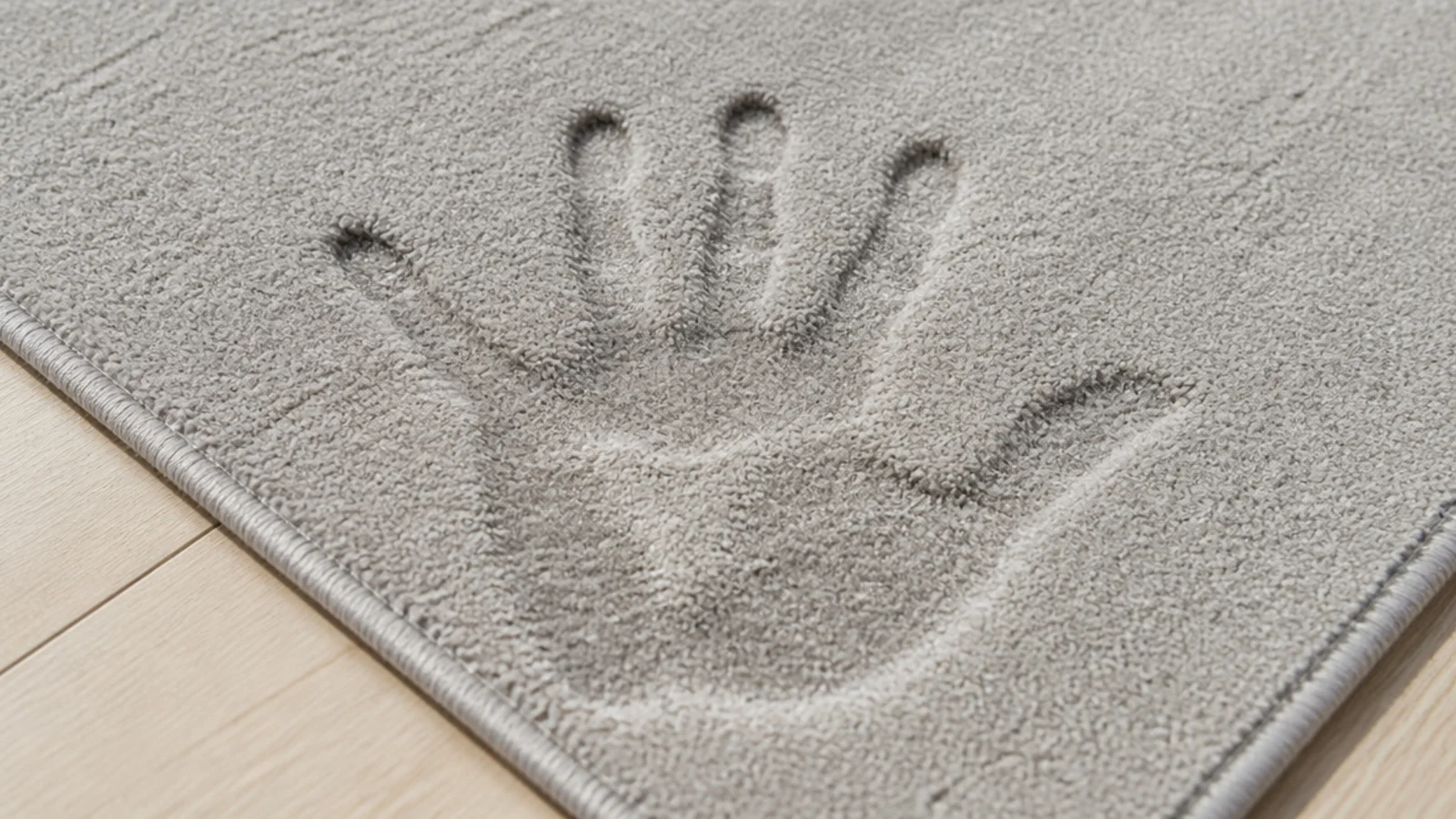
Press your palm into the pile and lift it away. Dense pile closes over your hand and springs back; thin pile keeps the print. On synthetics the equivalent test is to part the fibres and see how much backing shows. Visible backing means the rug will develop a shiny lane exactly where people walk.
22. Expect a budget wool to shed for months
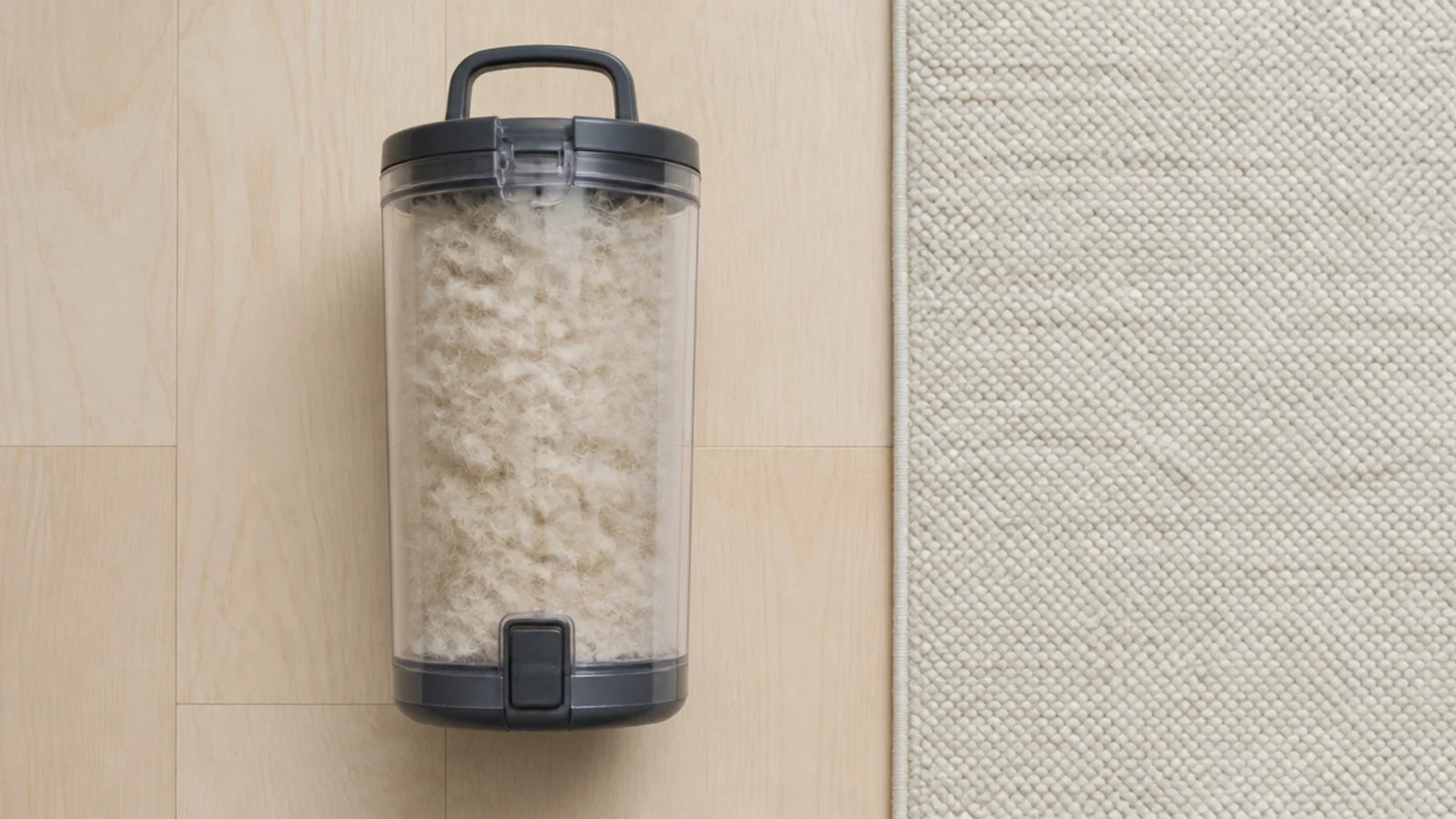
Loose fibre from spinning and shearing works out of the pile for three to six months on wool, less on a tufted synthetic. Vacuum twice a week with the rotating brush switched off and it settles. Shedding that is still heavy after a year usually means a latex backing that has begun to break down.
23. Air a new synthetic rug for 48 hours
The chemical smell on a new machine-made rug comes from the latex adhesive and the sealed packaging. Unroll it in a well-ventilated room or outdoors for two days before it goes into the living room. Most of it clears in 48 hours; anything still noticeable after two weeks is worth returning rather than living with.
24. Check whether the backing is latex or woven
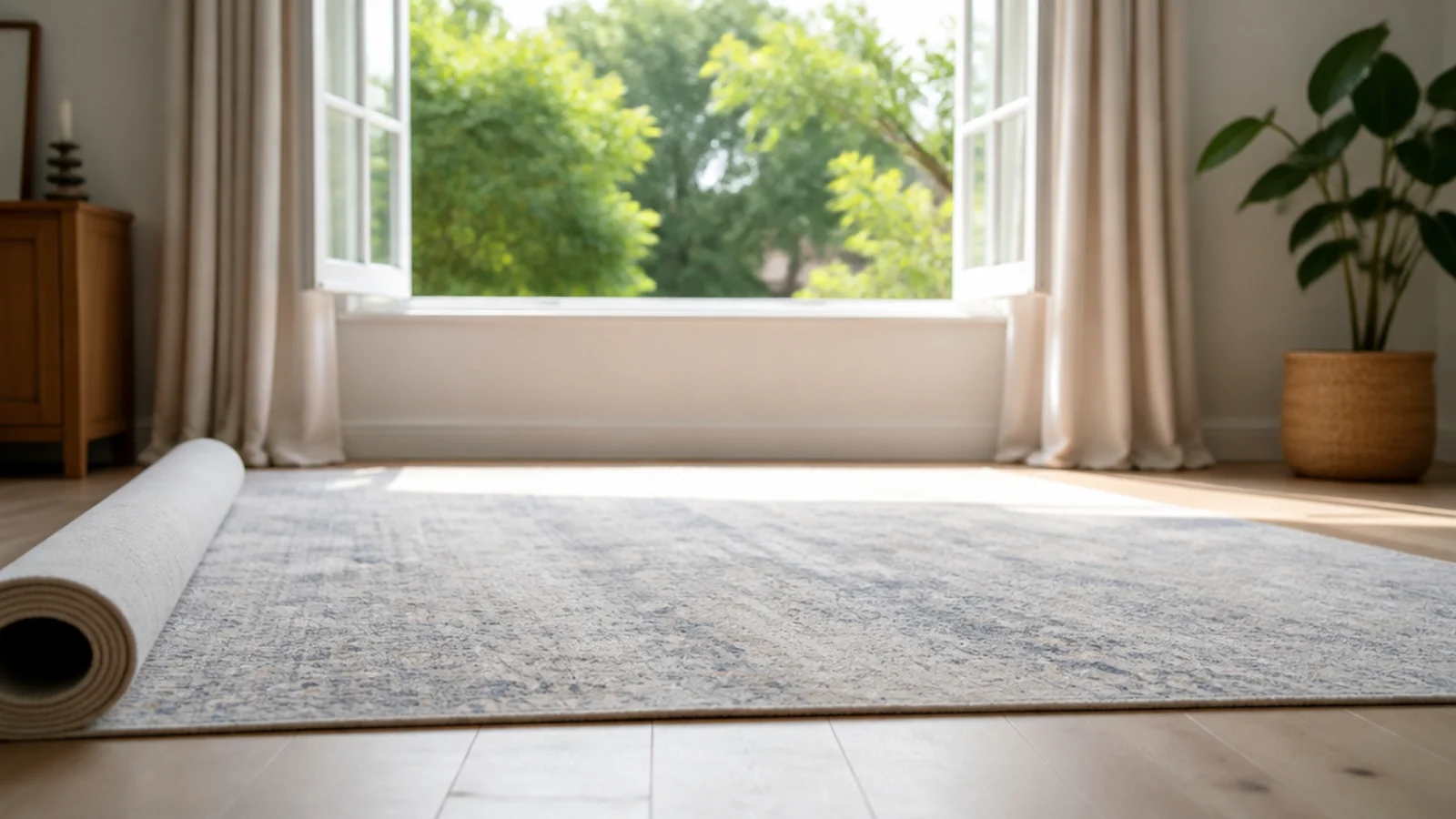
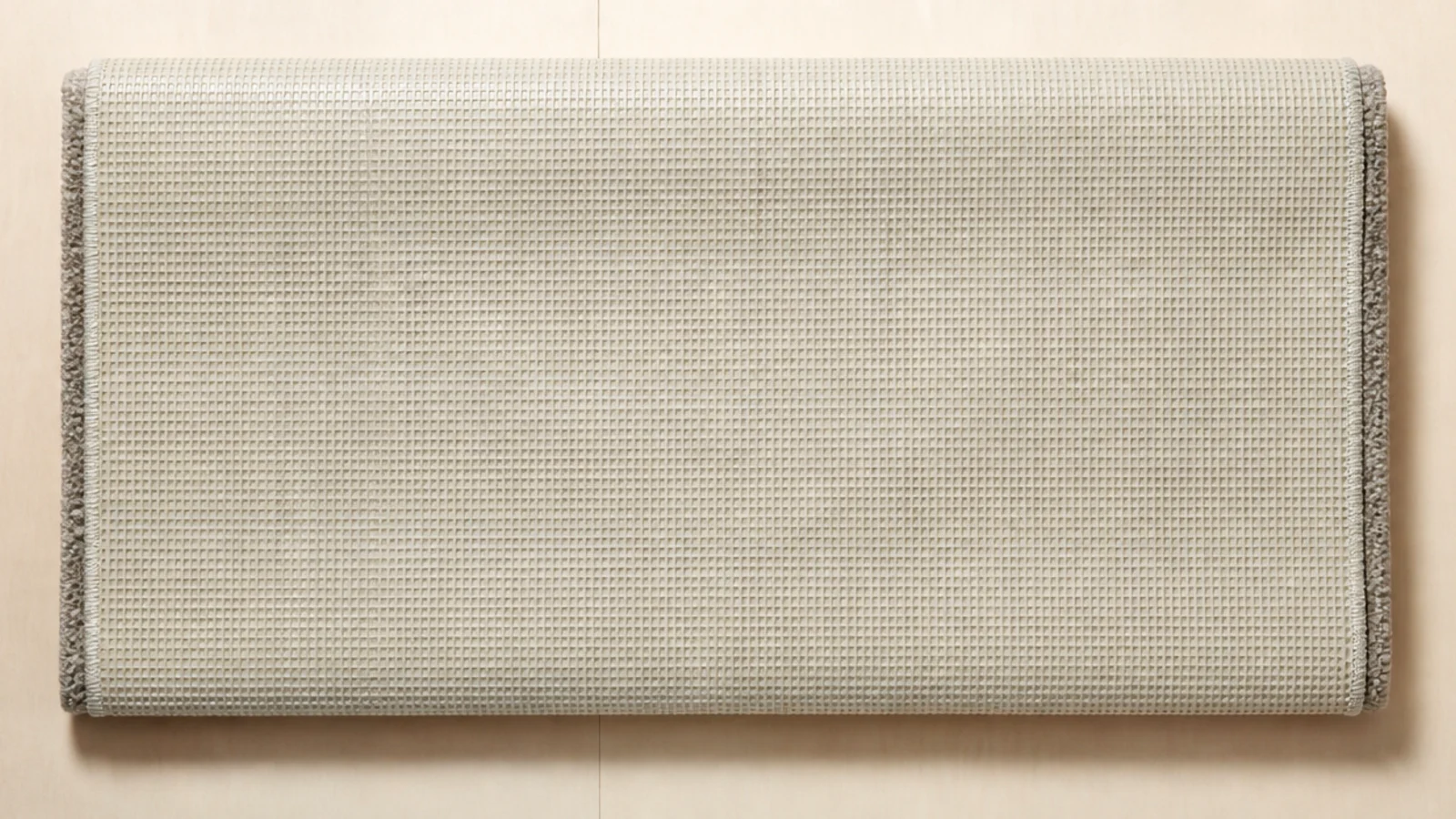
Turn a corner over. A woven or double-woven back means the rug is structurally one piece. A stiff pale coating means latex, which dries out and powders somewhere around eight to twelve years, at which point the rug sheds constantly and cannot be repaired. Either is fine to buy, as long as you know which you bought.
25. Compare serged edges against bound edges
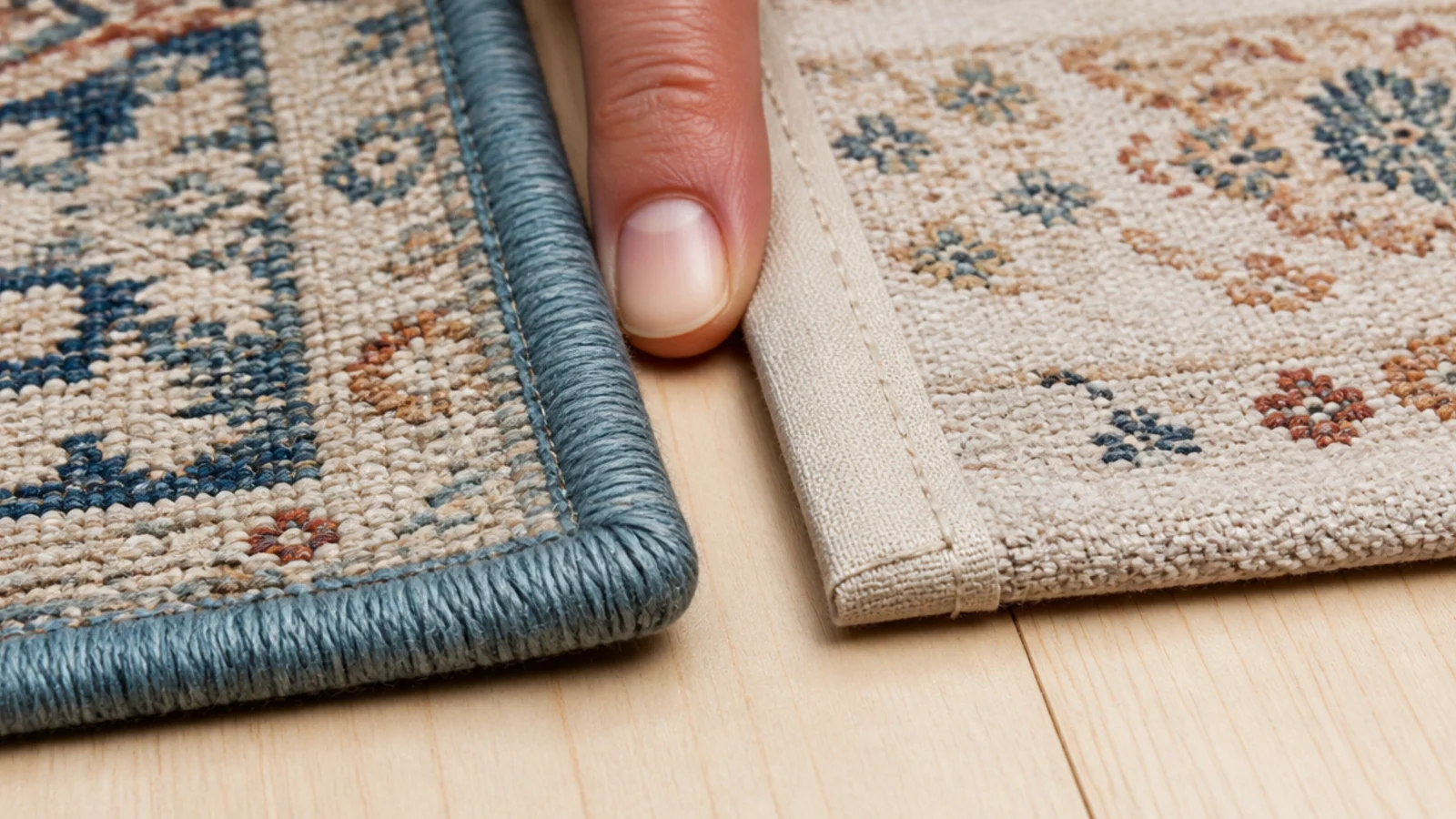
Serged edges are yarn wrapped tightly round the rug edge; bound edges are a tape stitched through the foundation. Both work when done densely. Run a thumb along the whole length looking for gaps or loose loops, because edges are where cheap rugs unravel first, and rebinding costs $8 to $15 a linear foot.
26. Buy the bigger size in the cheaper fibre
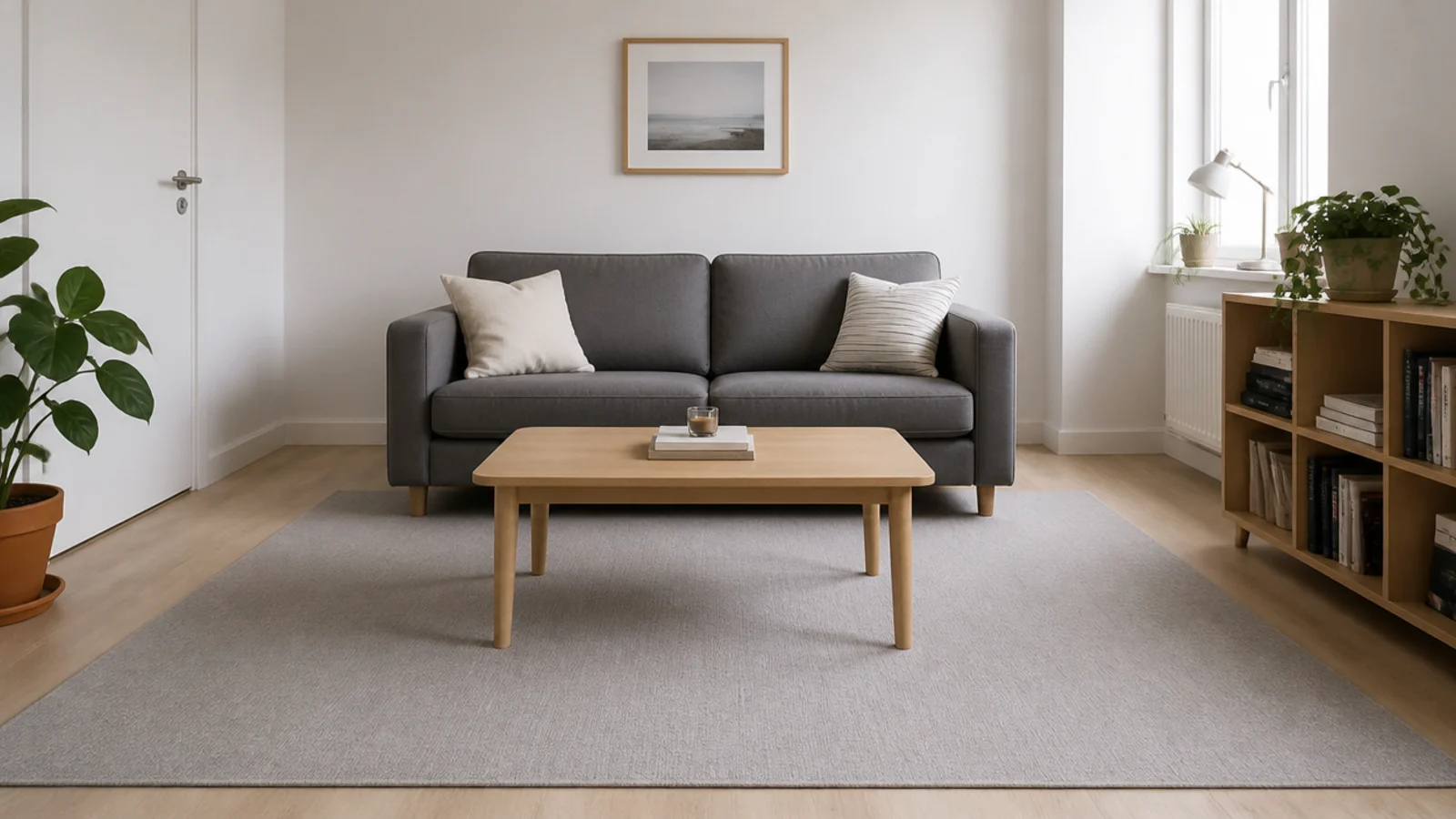
Given $350, a polypropylene 9x12 will make a room look better than a wool 5x8 will. Proportion is the thing people register from the doorway. Size the rug to the seating group with 6 to 8 inches past every front leg, then spend whatever remains on fibre quality rather than the other way round.
27. Layer one small good rug over a big cheap base
A plain inexpensive base in the correct size, with a small piece of proper weaving centred on top, gives you both proportion and quality. Leave 12 to 18 inches of base showing on every side, and pick a top rug at least a quarter inch thicker so the stack reads as deliberate.
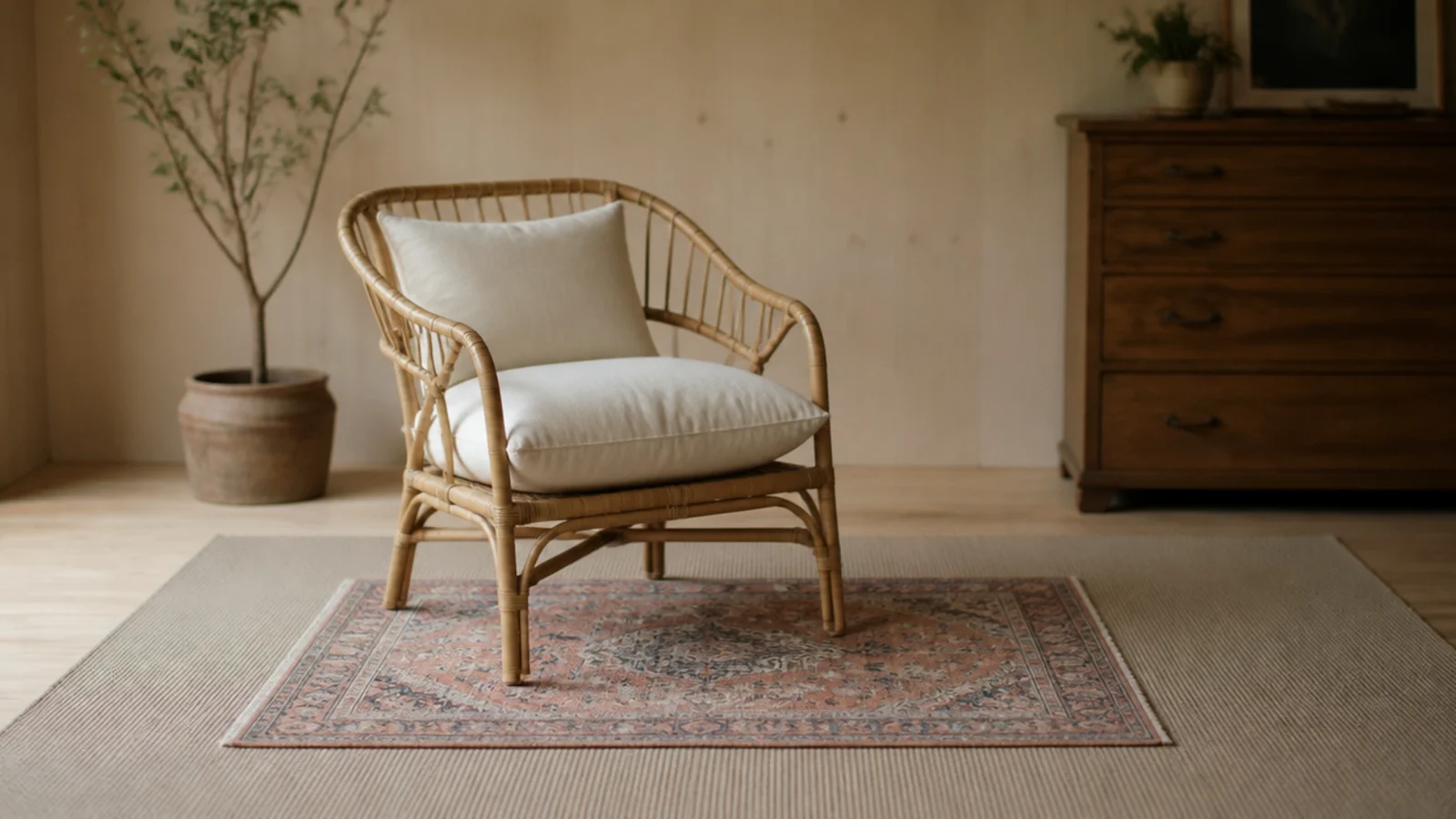
28. Wash a $120 rug rather than replace a $400 one
Small washable rugs and cotton flatweaves up to about 5x7 go into a domestic machine on cold, gentle, no fabric softener, and air dry flat. Doing that twice a year keeps a cheap rug looking new for far longer than a professional clean would ever be worth on a rug at that price.
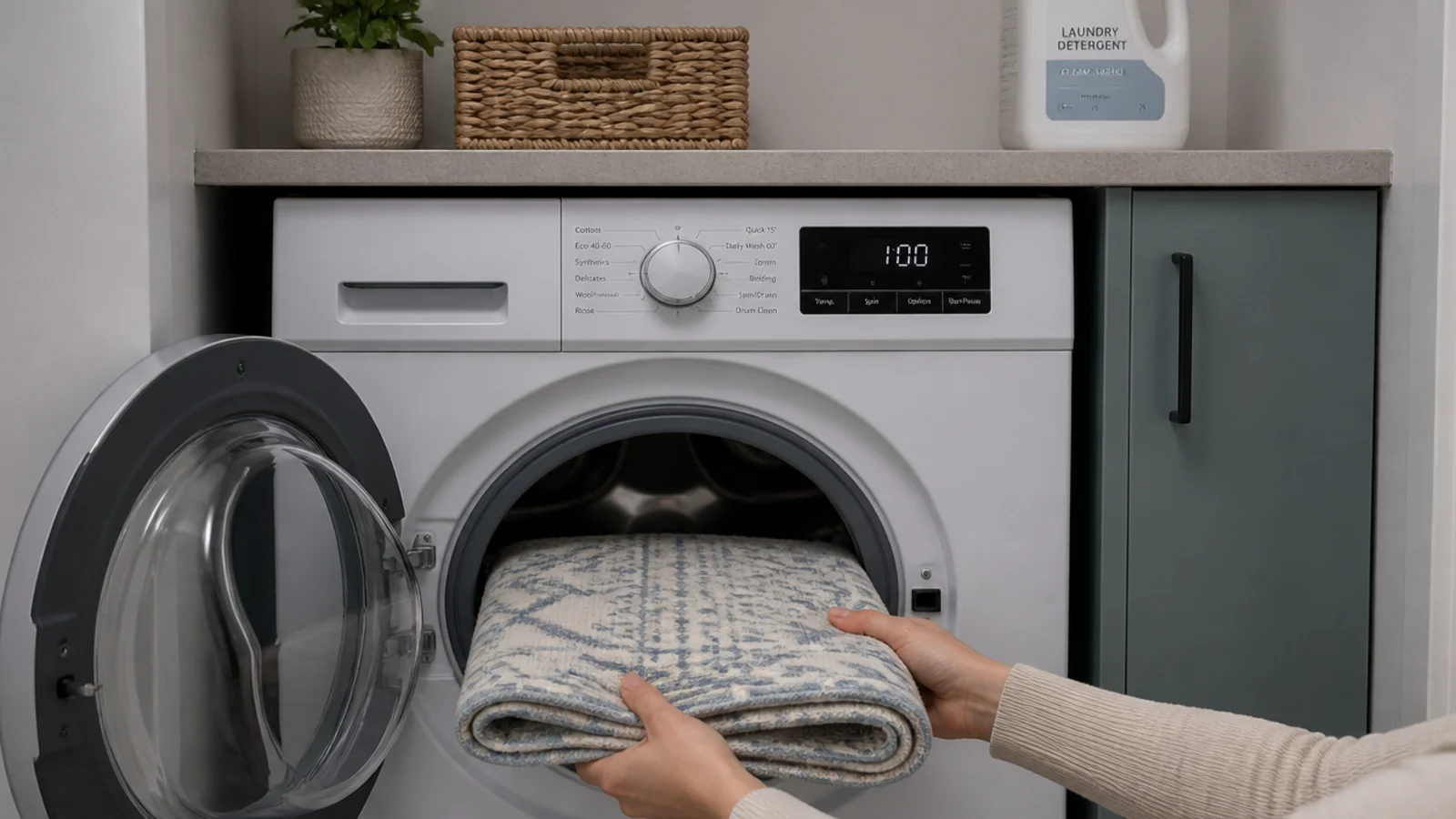
29. Rotate it twice a year and get another season
Half a turn every six months puts the traffic lane and the sun line onto fresh pile. On a low-cost rug this matters more, not less, because thin pile crushes faster. Four minutes of work twice a year visibly extends the life of a rug that would otherwise develop a worn path by its second winter.
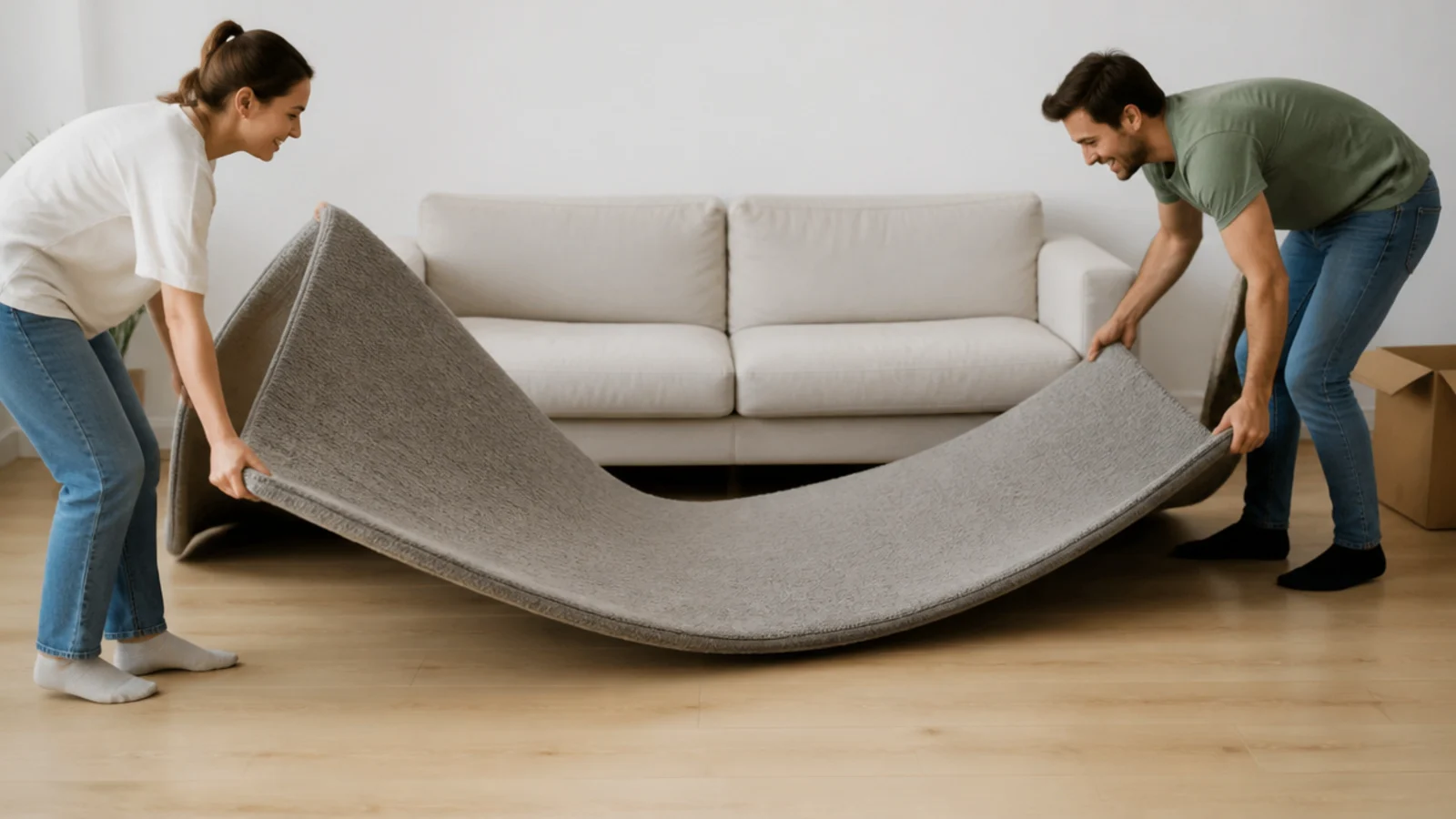
30. Know the point where cheap becomes expensive
If you replace a $180 rug every three years for a decade, you have spent $600 and thrown away three rugs. In a room you have settled in, a single machine-woven wool at $450 is the cheaper decision. Buy cheap for uncertainty and for mess, and buy properly for rooms that are not changing.
Once the floor is sorted, the center table guide covers what sits in the middle of it and how much clearance to leave, and the floating shelf ideas handle storage that costs nothing in floor space.
Mistakes to Skip
- Spending the whole budget on the rug and none on the pad. The pad is what stops it sliding on a hard floor and what keeps grit from wearing the pile out from the underside.
- Buying a printed rug because the pattern looked sharp online. Fold a corner: if white backing shows under the design, that pattern will be a faded ghost inside two years.
- Choosing a 5x8 because it was the affordable size. A rug that does not reach the furniture reads as an error from the doorway regardless of how good the fibre is.
- Ignoring the fibre percentages on a blend. Twenty percent wool priced as a wool rug is the commonest misdirection in the budget market.
Frequently asked questions
How much does a decent living room rug actually cost?
A solution-dyed polypropylene 8x10 runs $100 to $250, a jute of the same size $200 to $450, and a machine-woven wool blend $350 to $700. Add $40 to $120 for a felt and rubber pad. Under about $1.20 per square foot you are almost always buying a printed rug with a very short life.
Are cheap rugs worth buying at all?
For a rental, a room you are still working out, or a house with a puppy in it, absolutely. A $180 polypropylene rug that survives five years of genuine mess costs $36 a year. The mistake is buying cheap for a room you have settled in, then replacing it four times at the same money.
Why does my new rug shed so much?
Loose fibre left over from the spinning and shearing process works its way out for the first three to six months on wool and up to eight weeks on a tufted synthetic. Vacuum with the beater bar off, twice a week, and it stops. Shedding that continues past a year usually means the latex backing is breaking down.
Does a new rug smell, and how long does it last?
Machine-made rugs with latex backing often arrive with a distinct chemical smell from the adhesive and the packaging. Unroll the rug outdoors or in a well-ventilated room for 48 hours before it goes down. Most of it clears in two to three days; a smell still present after two weeks is worth a return.
Where should I not save money on a rug?
The pad and the size. A rug without a pad slides on a hard floor and the corners lift into a genuine trip hazard, and the pile also wears out faster from underneath. And a rug two sizes too small looks wrong no matter how good the weaving is, so buy a cheaper fibre in the correct dimensions.
Want more like this? Browse all 15 rugs in living room guides — they all use the same measurements and budget tiers.
Pin it for later
Save this to your Rugs In Living Room board
Pin it now so it is waiting for you when the tape measure comes out — and so the next person hunting for this idea can find it too.
Save this pinKeep going
More ideas worth saving while you have the tape measure out.