Rugs In Living Room · Review
15 Washable Rugs In Living Room Brands Compared

Some links on this page may become affiliate links in future. I only recommend pieces I would put in my own home — see the affiliate disclosure.
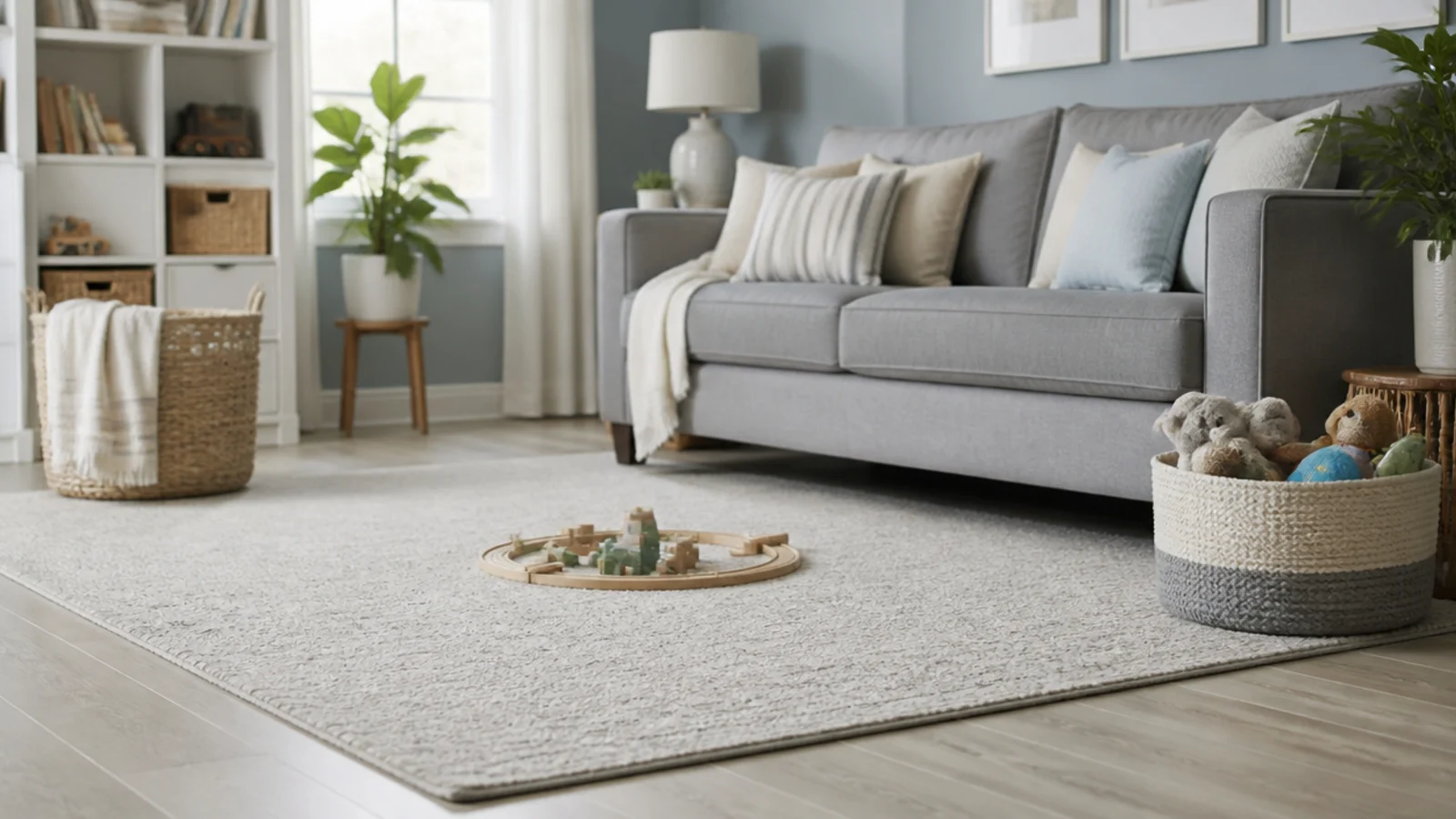
Washable rugs in living room sizes are the category where the marketing and the laundry room disagree most. A rug can be genuinely washable and still be impossible to wash, because a soaked 8x10 weighs more than most domestic drums will turn. I have put six of these through my own machine and one through a laundromat, and the differences that matter are drum capacity, whether the cover separates from the pad, and how the edges behave in heat. Below is every construction worth considering, compared on those terms, plus seven I would buy again.
In this guide10 sections — tap to openHide
- 1.How I Chose These Washable Rugs In Living Room Picks
- 2.The Full Comparison: 15 Washable Rug Types
- 3.The two-piece woven chenille cover and pad system
- 4.The two-piece printed cover system
- 5.The one-piece low-profile chenille
- 6.The cotton flatweave dhurrie
- 7.The machine-washable wool blend
- 8.The recycled PET flatweave
- 9.The indoor-outdoor rug you hose instead
- 10.What to Check Before You Buy
How I Chose These Washable Rugs In Living Room Picks
I judged each type on five things, in this order.
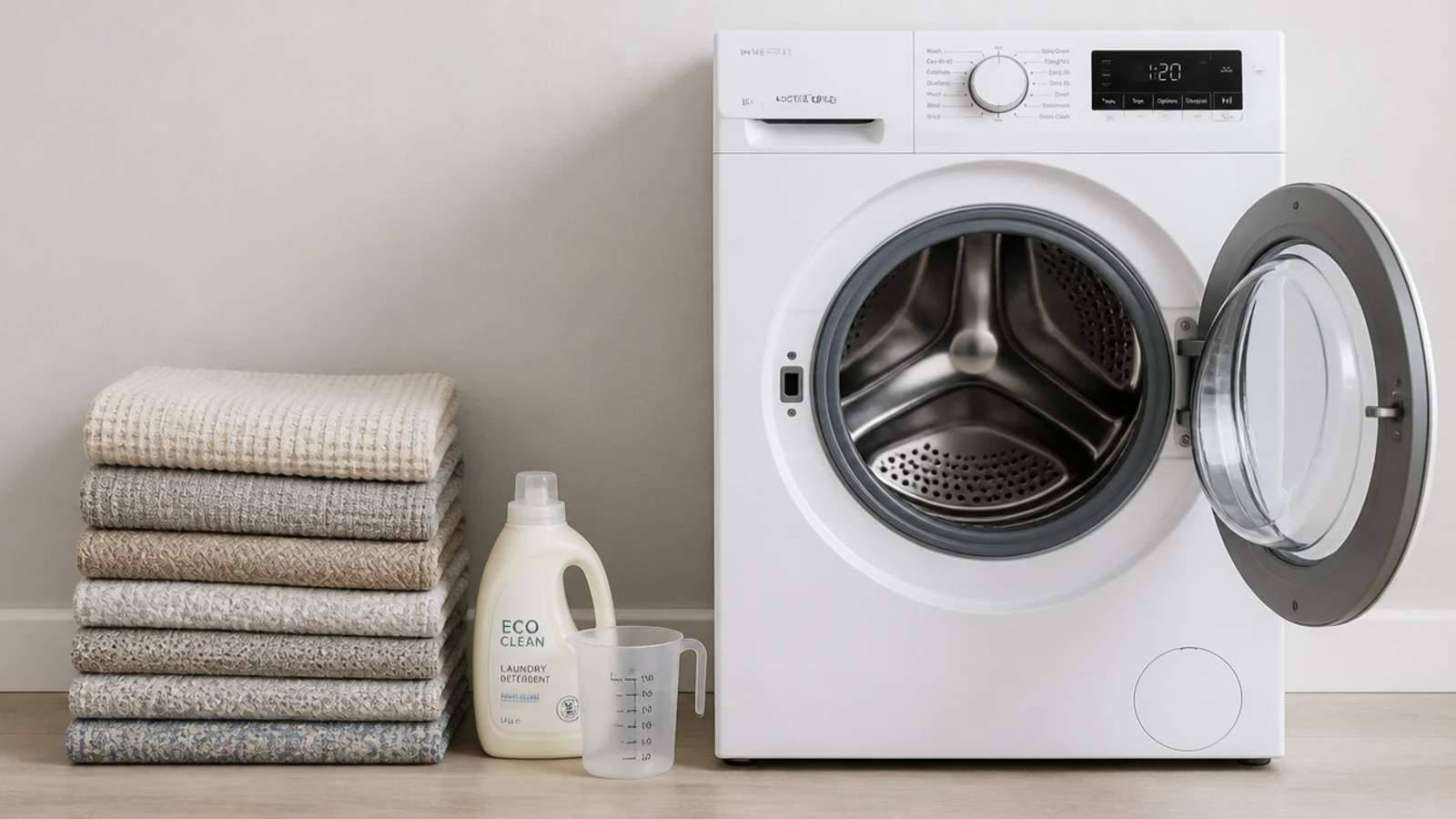
- Drum capacity needed. The single most useful number, and the one almost nobody publishes. A 3x5 fits a standard 3.5 cubic foot machine. A 5x7 needs roughly 4.5 cubic feet. Anything 6x9 and up is a laundromat job unless the cover separates.
- Whether the cover washes separately. Two-piece systems put a thin printed or woven cover over a cushion pad, and only the cover goes in. That is the difference between washing a large rug twice a year and never washing it at all.
- Heat behaviour. Washable rugs fail at the edges, because the backing shrinks faster than the face and the corners curl permanently. I judged each type on how it came out of a low tumble and a flat air dry.
- Wear at the traffic line. Printed covers show a visible path after two to three years of a used living room. Woven constructions last longer. This is where cheap washable rugs actually end.
- Grip and safety on a hard floor. Most washable rugs are thin and light, so unpadded they slide and the corners lift, which is a real trip hazard. I weighted anything that came with a proper cushion pad heavily.
I did not weight print designs, seasonal colours, or how a rug photographs empty. Everything below is described by construction rather than by a product name, because the same build shows up under a dozen different labels and the construction is what you are actually buying. For how these behave specifically on wood, the hardwood rug guide has the pad detail.
The Full Comparison: 15 Washable Rug Types
Price tiers: $ under $150 · $$ $150–$350 · $$$ $350+. All figures assume an 8x10 unless the type only exists small.
| Type | Best for | Washes in | Price | Why it earns a place |
|---|---|---|---|---|
| Two-piece woven chenille cover and pad | Large living rooms | Domestic drum | $$$ | Cover washes alone, pad stays down |
| Two-piece printed cover and pad | Changing your mind often | Domestic drum | $$ | Swap covers seasonally for far less |
| One-piece low-profile chenille | Medium rooms, simple life | 4.5 cu ft plus | $$ | Nothing to align, nothing to shift |
| One-piece printed polyester, rubber back | Rentals and short stays | 4.5 cu ft plus | $ | Cheapest genuine washable option |
| Cotton flatweave dhurrie | Small seating zones | Standard drum | $ | Reversible, fades gracefully |
| Cotton rag rug | Kids and pets | Standard drum | $ | Launders like a bedsheet |
| Machine-washable wool blend | Comfort without dry cleaning | Wool cycle, cold | $$$ | Real wool handle, real laundry label |
| Recycled PET flatweave | Traffic routes | 4.5 cu ft plus | $$ | Flat, tough, dries very fast |
| Braided cotton | Cottage-scale rooms | Standard drum to 4x6 | $ | Braiding hides soil between washes |
| Washable tufted, latex-free back | Softness underfoot | Laundromat drum | $$ | Pile depth most washables lack |
| Indoor-outdoor polypropylene | Hose instead of wash | No machine needed | $ | Bleach cleanable, dries in hours |
| Washable runner | Doorways and walkways | Standard drum | $ | Catches most of the dirt in the house |
| Washable round | Nooks and bay windows | Standard drum to 5 ft | $ | Fits curved corners nothing else suits |
| Play mat style washable | Floor-level toddlers | Standard drum | $ | Thicker cushion, wipes as well as washes |
| Washable top over a jute base | Texture plus practicality | Cover only | $$ | Natural look, launderable surface |
Seven of those are the ones I keep coming back to.
1. The two-piece woven chenille cover and pad system
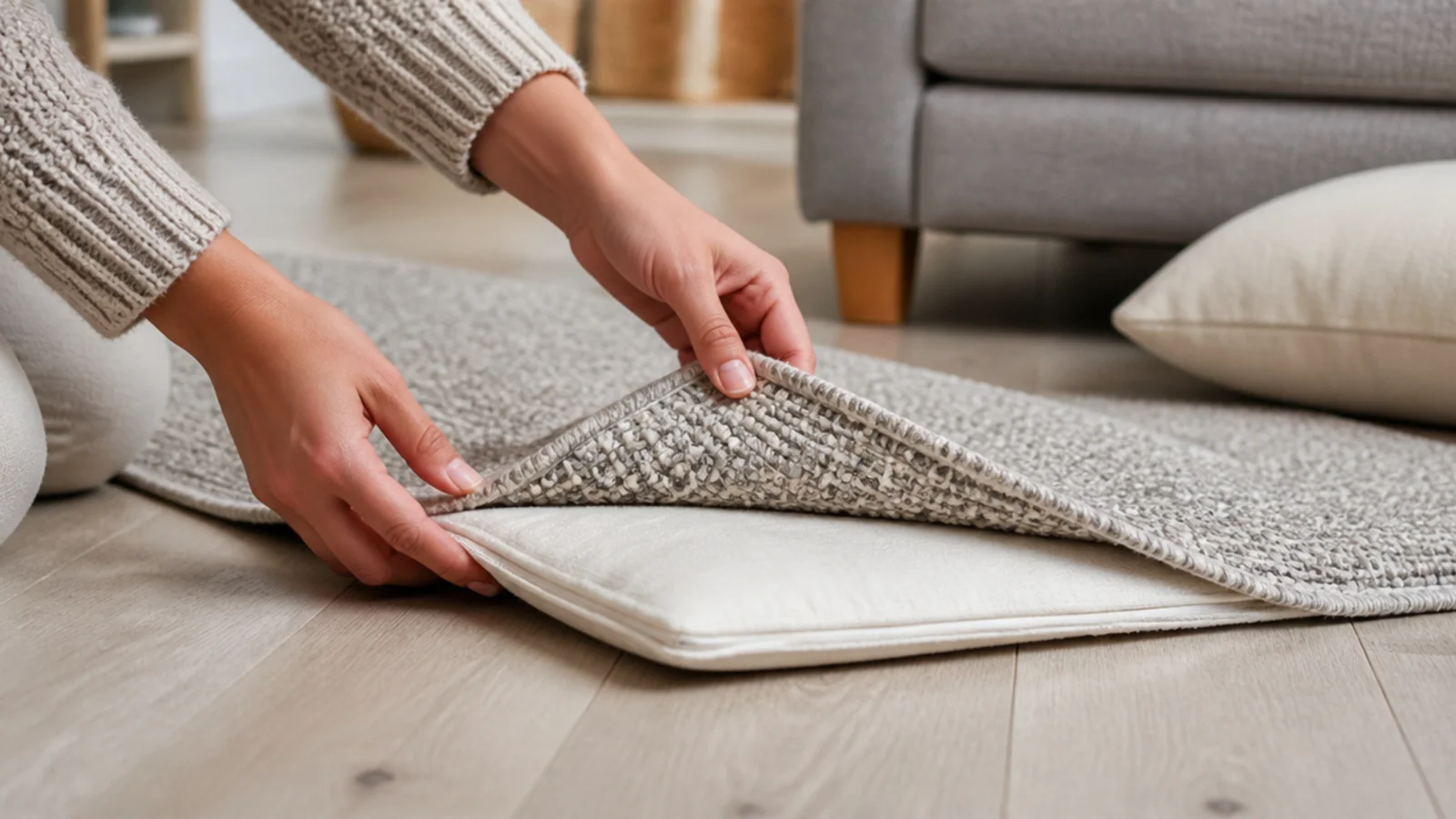
The most practical washable floor available at 8x10 and above, and the type I would buy for a family living room without hesitating. A woven chenille polyester cover sits over a separate cushion pad, and only the cover goes in the machine. Folded, an 8x10 cover packs down to roughly the bulk of a duvet cover and washes in a 4.5 cubic foot drum.
Woven chenille holds up considerably better than a printed face — expect four to five years before the traffic line becomes obvious, against two to three for print. It is also the heaviest of the covers to handle wet, so plan on air drying flat rather than wrestling it into a dryer. Check that the cover has corner grips or hook fastenings, because a loose cover creeps across the pad within a week. Expect $350 to $600 for the pair at 8x10.
2. The two-piece printed cover system
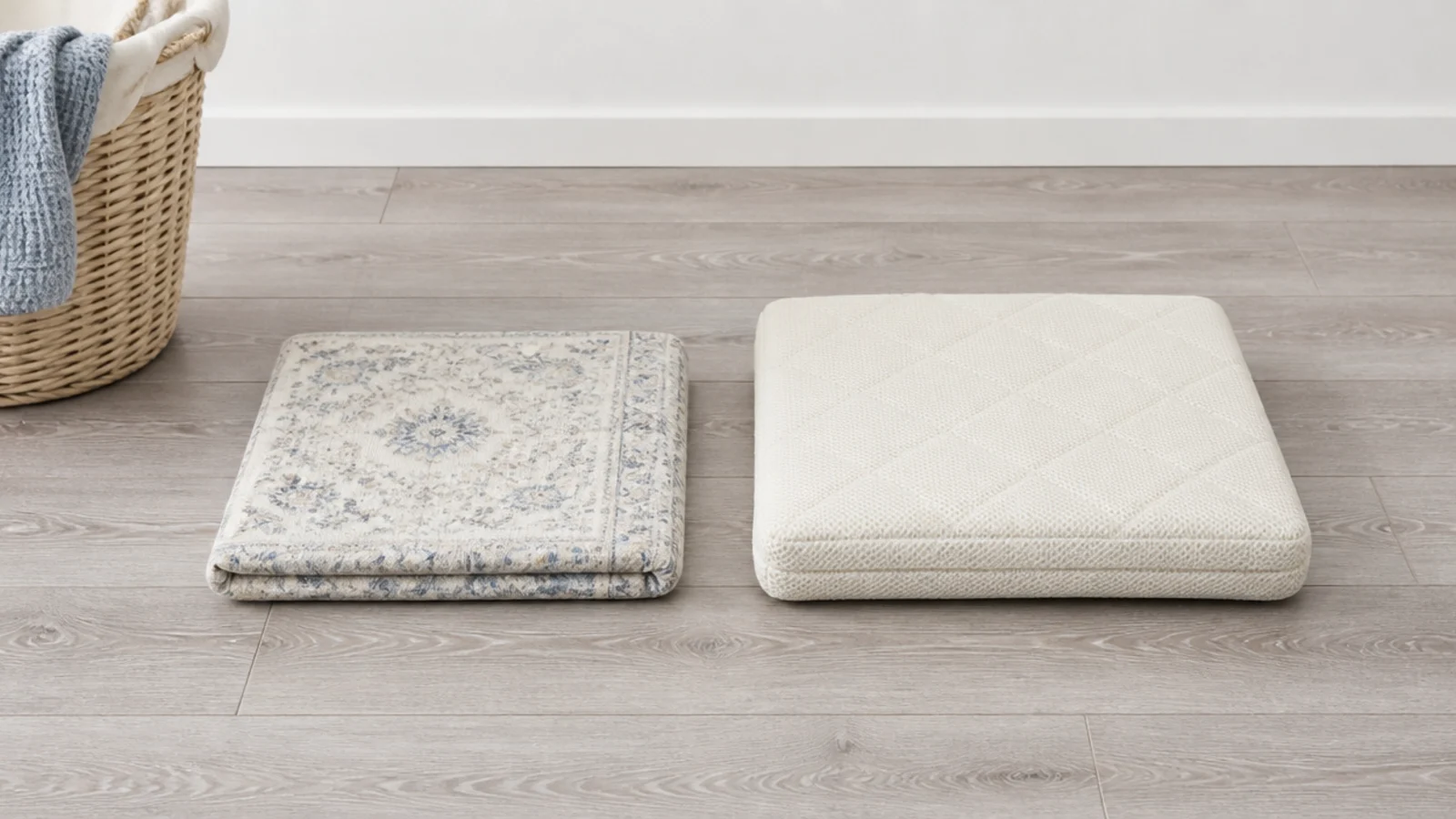
Same architecture, thinner cover, much lower price. A printed polyester face over a separate pad, at roughly $200 to $350 for an 8x10 set, with replacement covers commonly $120 to $220 on their own.
The genuine advantage here is not washing but changing: one pad, several covers, and a completely different floor for the price of a large cushion. The trade-off is durability. The pattern sits on the surface of a flat woven face and a busy walkway will show a visible path within two to three years. That is fine if you treat the cover as consumable, which is how it is priced. Wash cold, gentle, no fabric softener, and hang it over two lines rather than one so the weight does not stretch a crease into it.
3. The one-piece low-profile chenille
No alignment, no shifting cover, nothing to fasten. A single thin chenille rug with an integrated non-slip underside, usually around 1/4 inch total, at $180 to $320 for an 8x10.
It is the easiest of these to live with day to day and the hardest to actually wash, because an 8x10 soaked weighs upward of 25 pounds and needs a 4.5 cubic foot drum minimum. In practice most people wash the 5x7 and take the 8x10 to a laundromat once a year. The integrated rubberised underside also means you should put a thin felt layer between it and a finished wood floor rather than laying it directly on the boards.
4. The cotton flatweave dhurrie
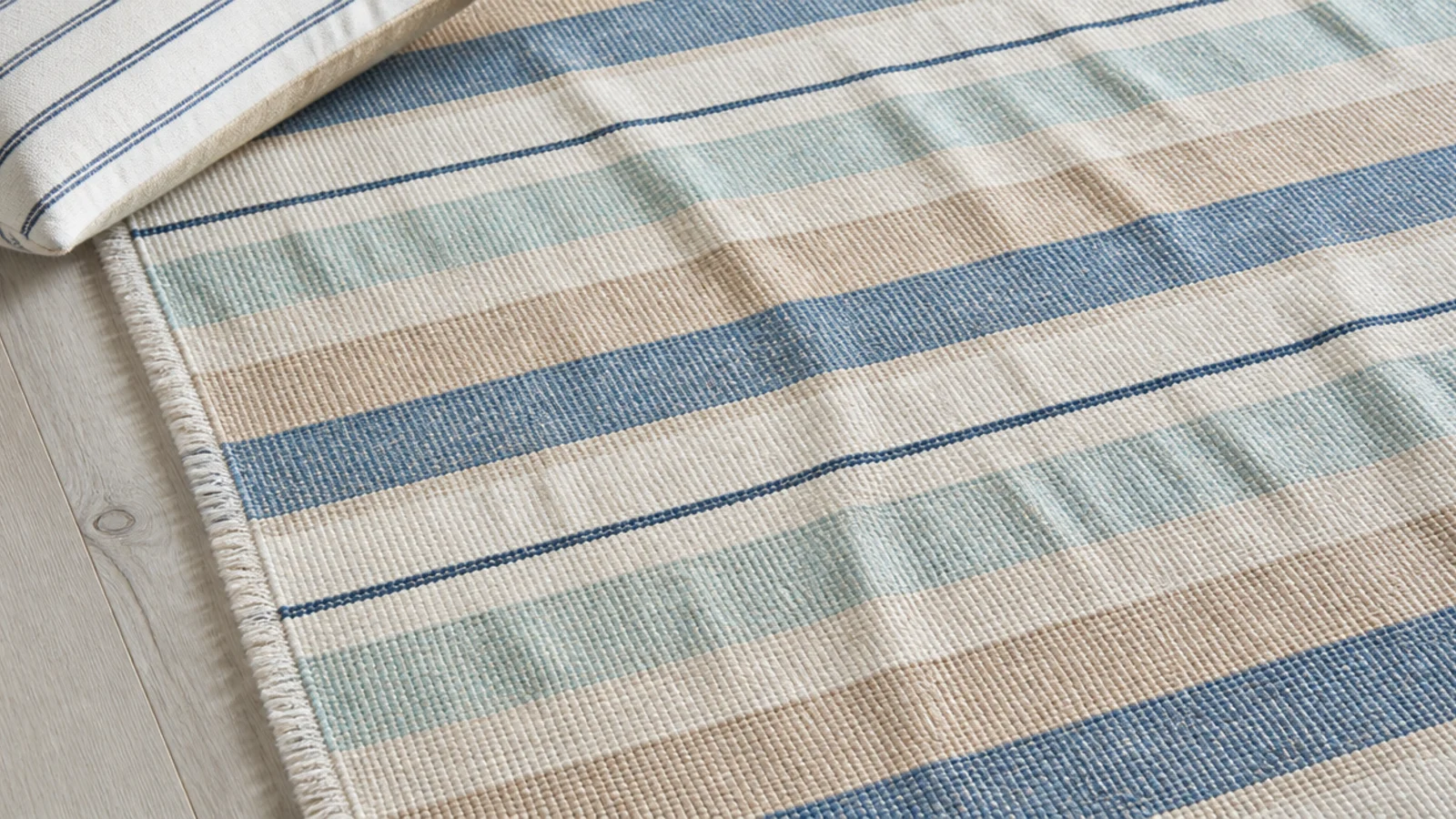
The oldest washable rug there is and still one of the best in a small seating zone. Flat woven cotton, reversible, $80 to $180 up to 5x7, and it fits a standard 3.5 cubic foot machine without argument.
It wrinkles, it fades, and it creeps on a hard floor without a pad — all true, and none of it stops it being the rug I recommend for a first flat or a room whose purpose is still unsettled. Cotton fades rather than wearing out, so after a dozen washes it looks softer instead of tired. Wash cold, skip the softener entirely because it flattens cotton, and dry flat rather than over a rail so the weight does not stretch one edge.
5. The machine-washable wool blend
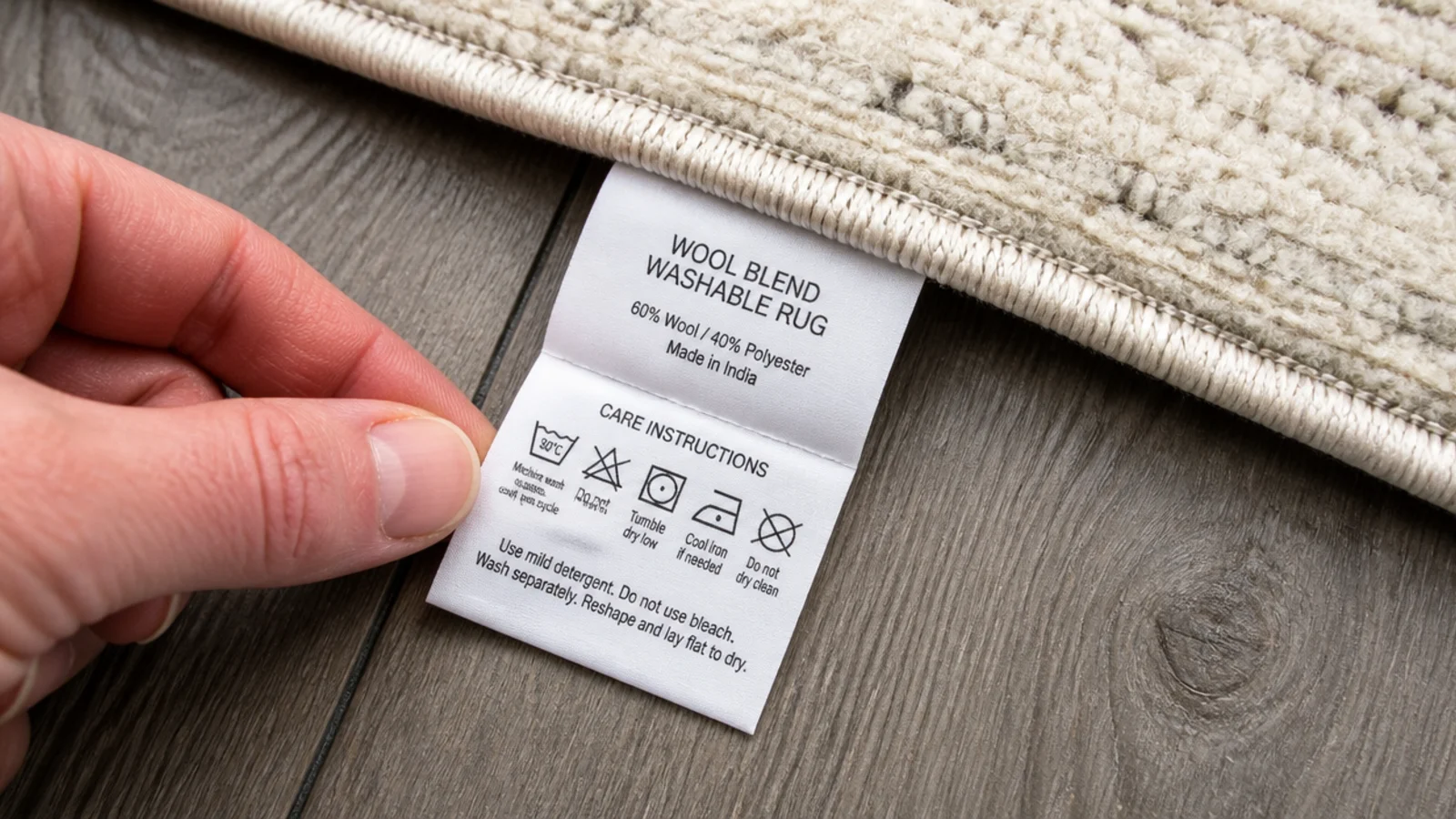
The newest category here and the most interesting. A wool-rich blend engineered to survive a cold wool cycle, giving you actual wool handle and warmth with a laundry label attached. Expect $400 to $800 for an 8x10, which is close to ordinary wool prices.
It is worth the money in a room you sit in every evening, because no synthetic washable comes close to wool underfoot. The conditions are strict: cold water only, wool cycle, no bleach, no softener, and air dry flat away from direct heat. Wool shrinks irreversibly from heat and agitation, so a hot wash ruins it in one cycle. Check the label allows machine washing at your rug's size before assuming a small sample rule applies.
6. The recycled PET flatweave
Flat, tough and quick drying, woven from recycled bottle fibre. It is the type I would put on a traffic route between rooms, at $150 to $300 for an 8x10.
Polyester made this way is dimensionally stable, so it comes out of a wash the same size it went in, and it dries far faster than cotton or chenille — usually a few hours flat. The surface is harder underfoot than chenille and it needs a felt and rubber pad for both comfort and grip. Colour is generally solution-dyed, which means diluted bleach on a stain will not lift the shade. Check the weave is tight rather than open, since loose PET flatweaves fray at the binding.
7. The indoor-outdoor rug you hose instead
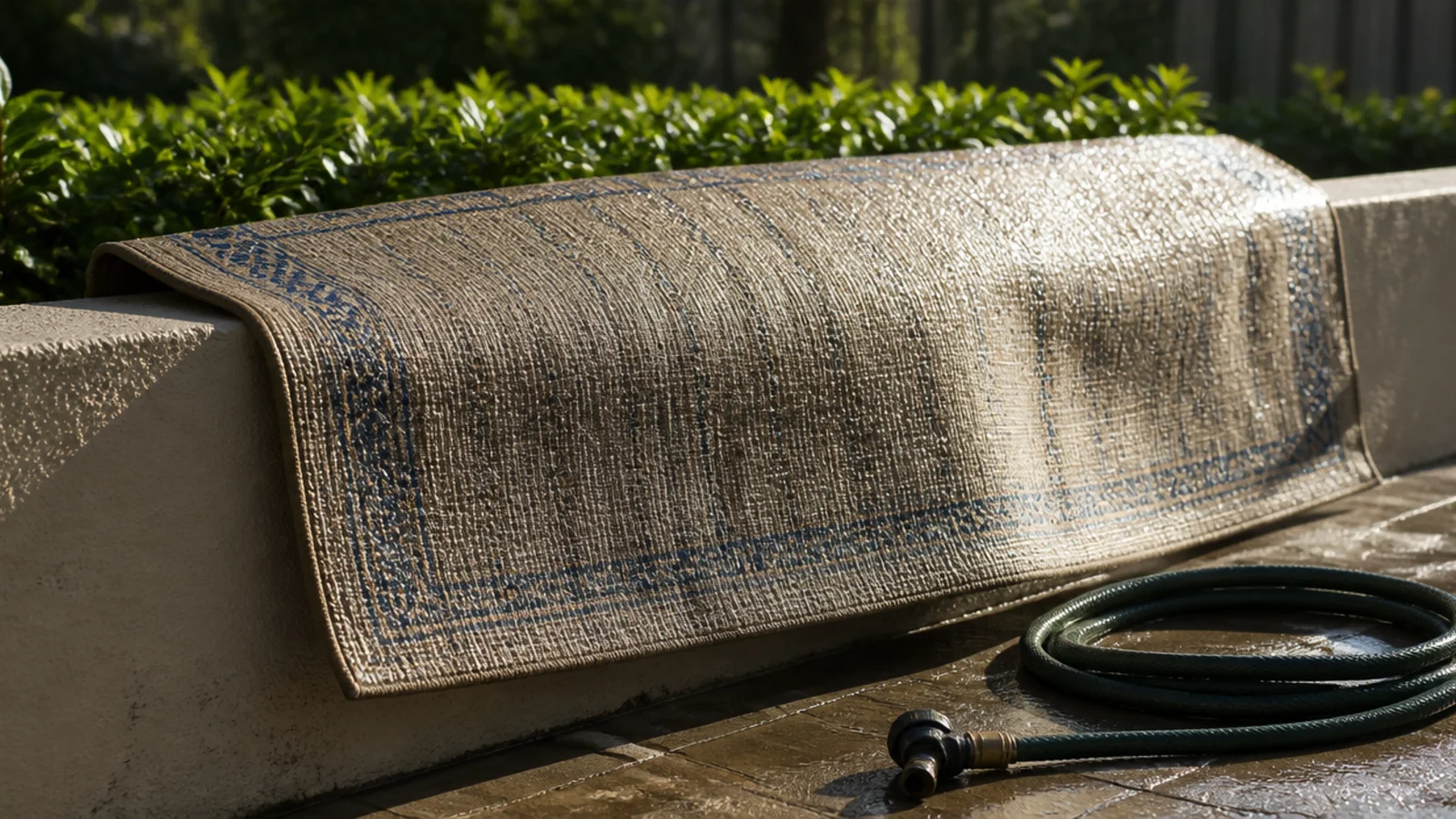
Not a washing machine rug at all, and often the better answer. Flat woven polypropylene rated for outdoor use, $120 to $280 for an 8x10, taken outside, hosed, scrubbed with diluted bleach and dried flat in an afternoon.
It solves the size problem completely, because nothing has to fit in a drum. It is the least soft option here, so pair it with a quarter-inch felt and natural rubber pad, which brings it close to a low pile rug underfoot. Solution-dyed fibre means it holds colour in a sunny room where a printed washable would fade in two summers. For entryway-adjacent living rooms this is the type I would choose first.
What to Check Before You Buy
Measure your drum, not your room. Look up your machine's capacity in cubic feet before you look at rugs. Under 3.5 and you are limited to 3x5 and small runners. At 4.5 you can handle a 5x7 and most two-piece covers. This one number rules out more of the market than any other consideration.
Ask whether the cover separates. At 6x9 and above, a two-piece system is the difference between a rug that gets washed and a rug that gets promised a wash. If a large rug is one piece, be honest about whether you will really carry it to a laundromat twice a year.
Read the drying instructions before the wash instructions. Heat is what ruins these rugs. Almost every curled edge and shrunken backing I have seen came out of a hot dryer rather than a hot wash. Low tumble or flat air drying, always, and never over a radiator.
Plan for grip. A thin washable rug on a hard floor slides underfoot and the corners lift, and that is a genuine trip hazard rather than an untidy detail. Either buy the system with a cushion pad included or budget $40 to $120 for a felt and natural rubber pad cut 1 inch smaller than the rug on every side.
Look at the binding, not the pattern. Washable rugs live or die at the edge. Look for a stitched binding that passes through the whole thickness rather than a bonded tape, because a bonded edge lifts after a handful of cycles and cannot be repaired at home.
For the colour side of the same decision, the dark rug ideas cover what a washable rug can hide between cycles. The wooden tile flooring guide explains the surfaces underneath, and the entryway ideas stop most of the dirt before it ever reaches the living room floor.
Frequently asked questions
What size washable rug fits a home washing machine?
A 3x5 fits a standard 3.5 cubic foot drum comfortably. A 5x7 needs about 4.5 cubic feet, which is a large domestic machine. Anything from 6x9 upward realistically needs a commercial laundromat drum, which is why two-piece systems that wash only the thin cover are so much more practical at large sizes.
Do washable rugs shrink?
They shrink from heat, not from water. Wash cold on a gentle cycle and either air dry flat or tumble on low, and a well made washable rug returns to size. A hot wash or a hot dryer is what shrinks the backing faster than the face, which is exactly what makes the edges curl permanently.
Are two-piece washable rug systems better?
For anything above 5x7, yes. Only the thin printed or woven cover goes in the machine while the cushion pad stays on the floor, so a 8x10 becomes a manageable wash rather than an impossible one. The trade-off is that the cover can shift on the pad and usually needs a grip strip at the corners.
How long does a washable rug last?
A printed polyester cover shows visible wear at the traffic line after about two to three years of a busy living room. Woven chenille polyester holds up longer, closer to four or five, and washes heavier and wetter. Cotton flatweaves fade rather than wear, and often look better for it after ten or twelve washes.
Do washable rugs need a rug pad?
Nearly all of them do. Most one-piece washable rugs are thin and light, so on a hard floor they slide and the corners lift, which is a genuine trip hazard rather than a tidiness problem. Use a felt and natural rubber pad, or buy a two-piece system where the cushion pad is part of the design.
Want more like this? Browse all 15 rugs in living room guides — they all use the same measurements and budget tiers.
Pin it for later
Save this to your Rugs In Living Room board
Pin it now so it is waiting for you when the tape measure comes out — and so the next person hunting for this idea can find it too.
Save this pinKeep going
More ideas worth saving while you have the tape measure out.