Rugs In Living Room · Listicle
20 Living Room Rugs On Hardwood That Stay Put

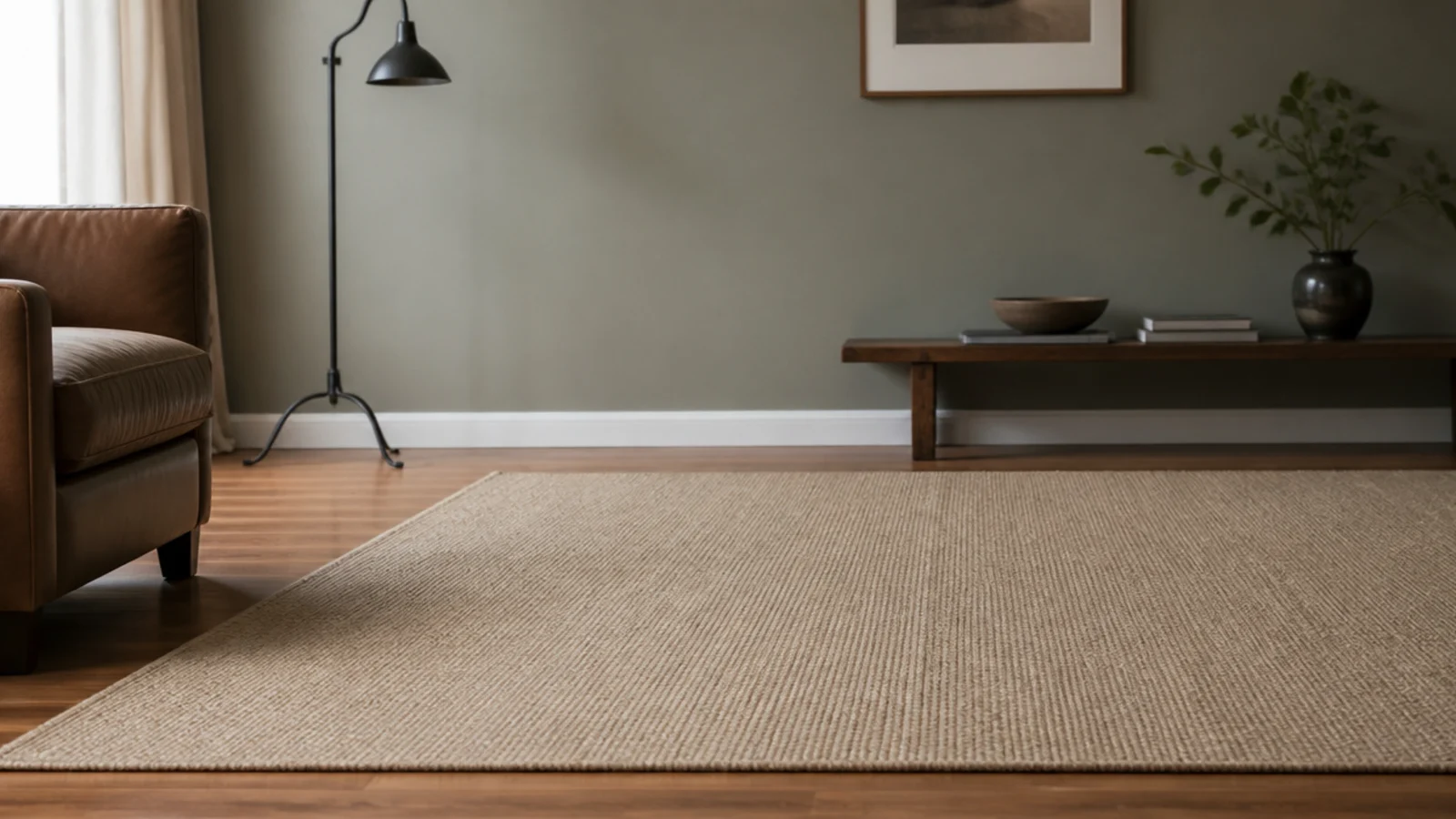
Living room rugs on hardwood fail in ways that have nothing to do with how the rug looks. They slide. They print a mark into the finish. They shade the boards into two different colours. They stop the door closing. I have laid rugs over three wood floors, including one I refinished myself and then very nearly ruined by covering too soon. Every idea below is about the interface between rug and board — the pad, the backing, the clearance and the maintenance that keeps both in good condition.
In this guide22 sections — tap to openHide
- 1.What living room rugs on hardwood actually need underneath
- 2.Start with a quarter inch felt and natural rubber pad
- 3.Cut the pad one inch smaller on every side
- 4.Keep PVC and plastic mesh off a finished floor
- 5.Skip latex and adhesive-backed rugs entirely
- 6.Wait 30 days after refinishing before anything goes down
- 7.Vacuum and wipe the boards before the pad goes down
- 8.Check the door swing before you commit
- 9.Low pile in the doorway zone
- 10.Weight the corners with furniture, not tape
- 11.Use grip tape only where the pad cannot reach
- 12.Rotate 180 degrees every six months
- 13.Shift the rug two inches a year on an oiled floor
- 14.Wool over hardwood is the classic pairing
- 15.Flatweave when the floor is the feature
- 16.Jute over hardwood is warm and risky near drinks
- 17.Keep rubber-backed washable rugs off bare wood
- 18.Pad the runner in a walk-through route
- 19.Keep the build thin over radiant heat
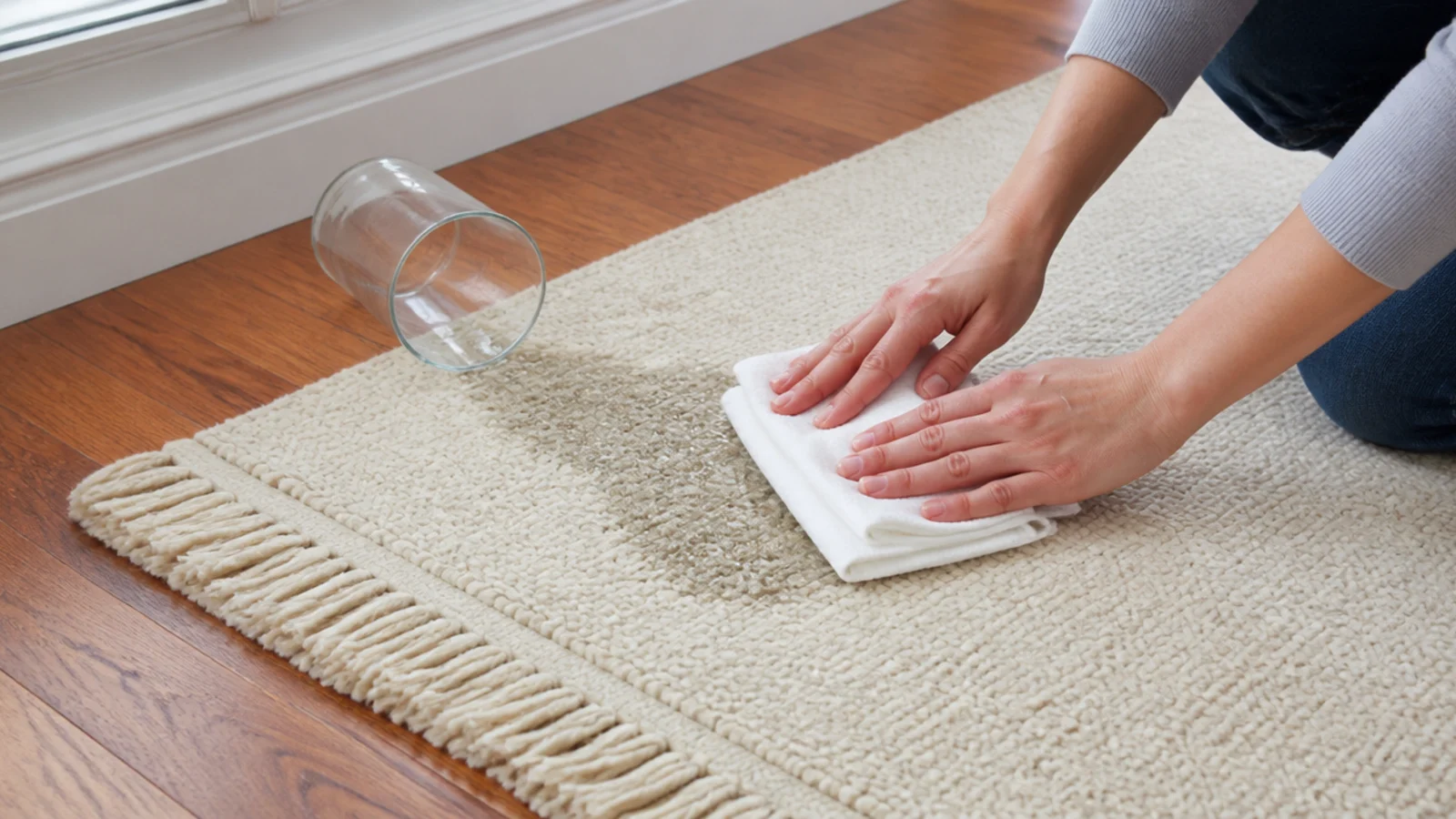
- 20.Blot spills fast because the floor is what is at risk
- 21.Lift and air the rug twice a year
- 22.Mistakes to Skip
What living room rugs on hardwood actually need underneath
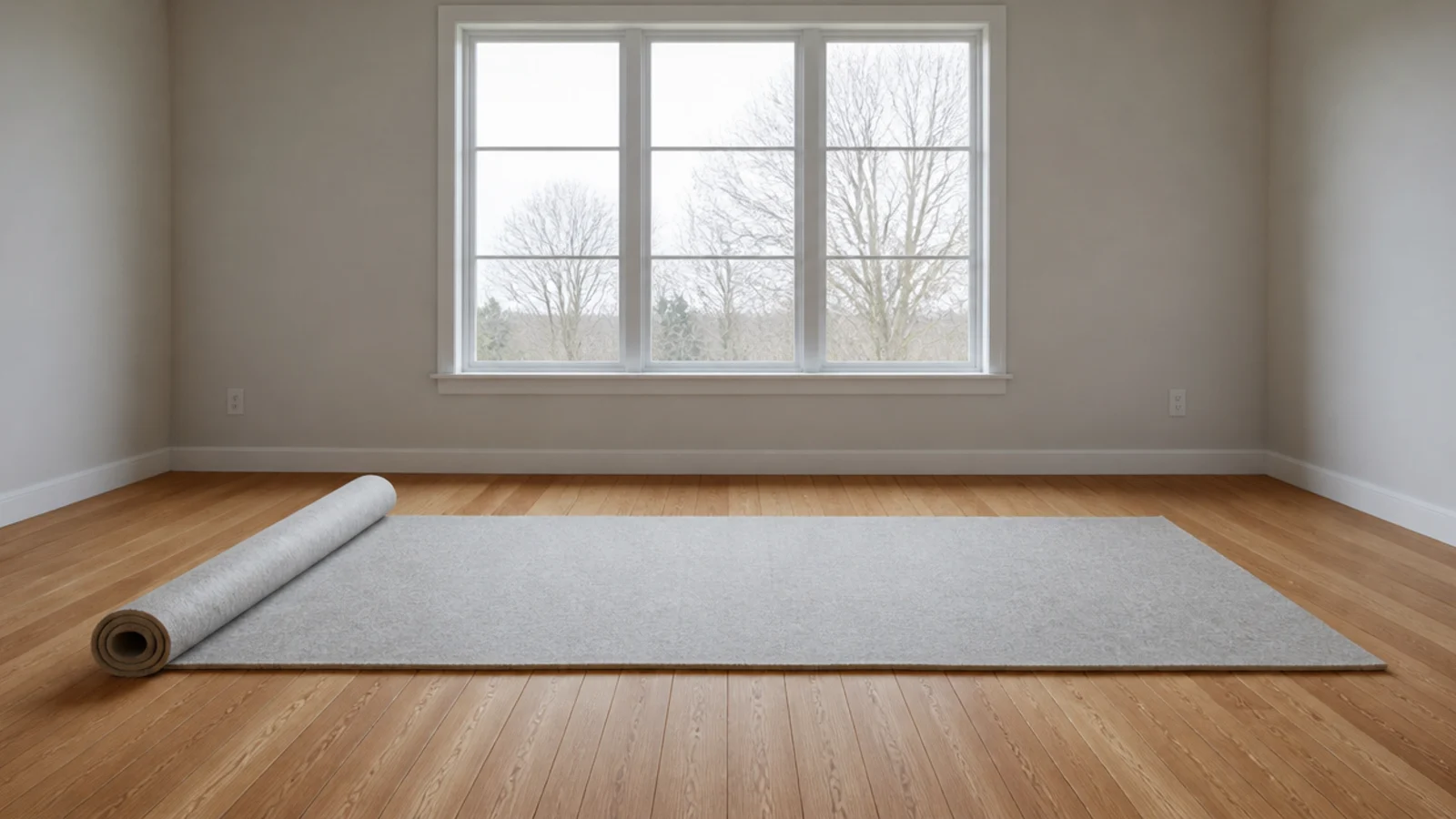
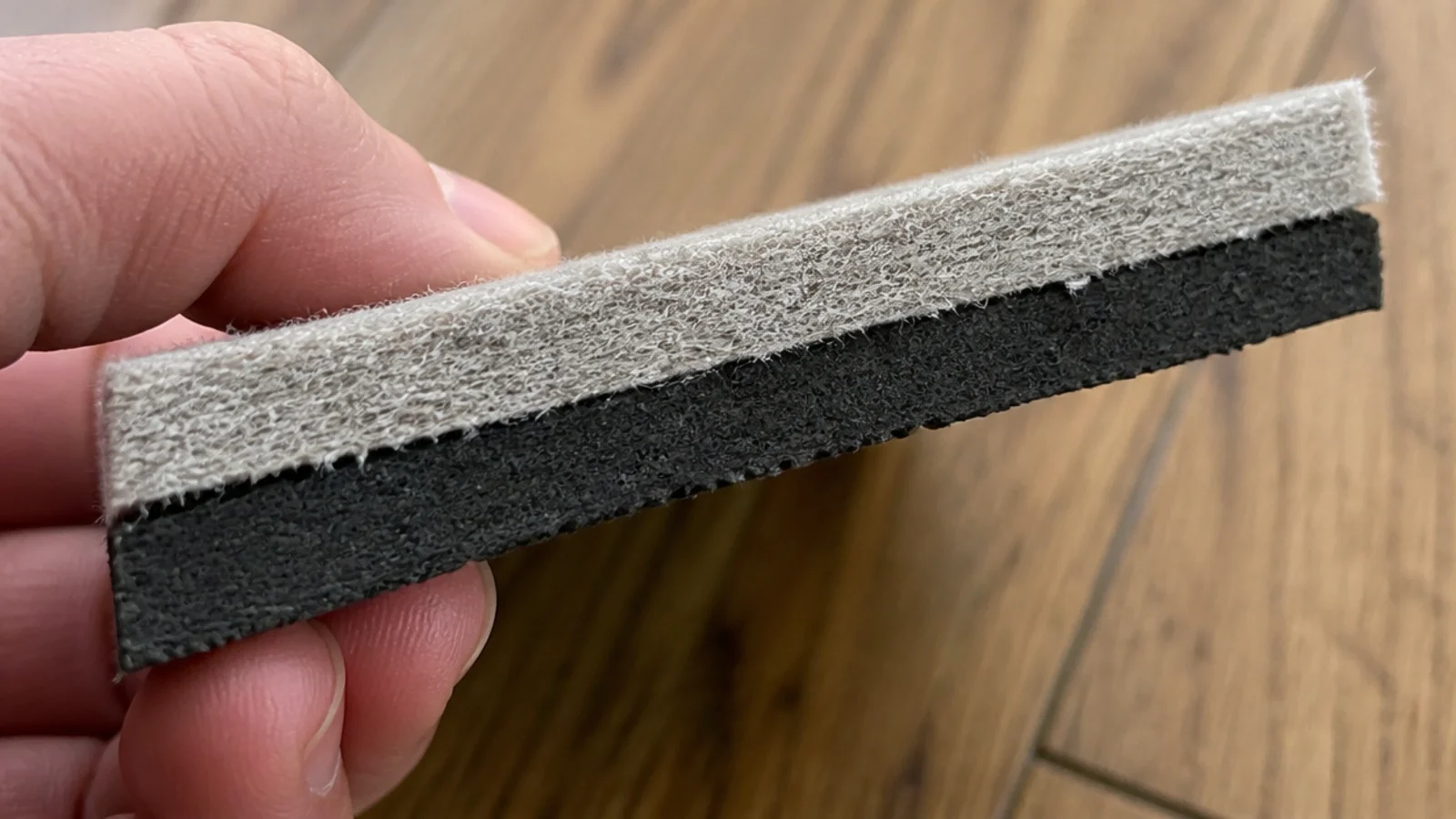
The pad is the whole answer to most of it. A quarter-inch pad of needle-punch felt bonded to natural rubber grips the floor, cushions the pile and absorbs the abrasion that would otherwise grind grit into the finish from above and wear the rug from below. Expect $40 to $120 for an 8x10, and cut it 1 inch smaller than the rug on every side so no edge shows.
What goes against the wood matters as much as what goes on top. Avoid PVC, vinyl and plastic mesh pads, and avoid latex or adhesive-backed rugs altogether. The plasticisers in cheap backings can soften a polyurethane finish and leave a cloudy print that only refinishing removes. On a floor you have just had done, wait about 30 days: oil-based polyurethane feels dry in days and keeps curing for a month.
Then check two clearances. Most interior doors leave half to three-quarters of an inch under the leaf, so a thick rug plus a thick pad will jam. And leave 18 inches of bare board at the perimeter, because the wood showing around the rug is doing real visual work on a floor you paid for.
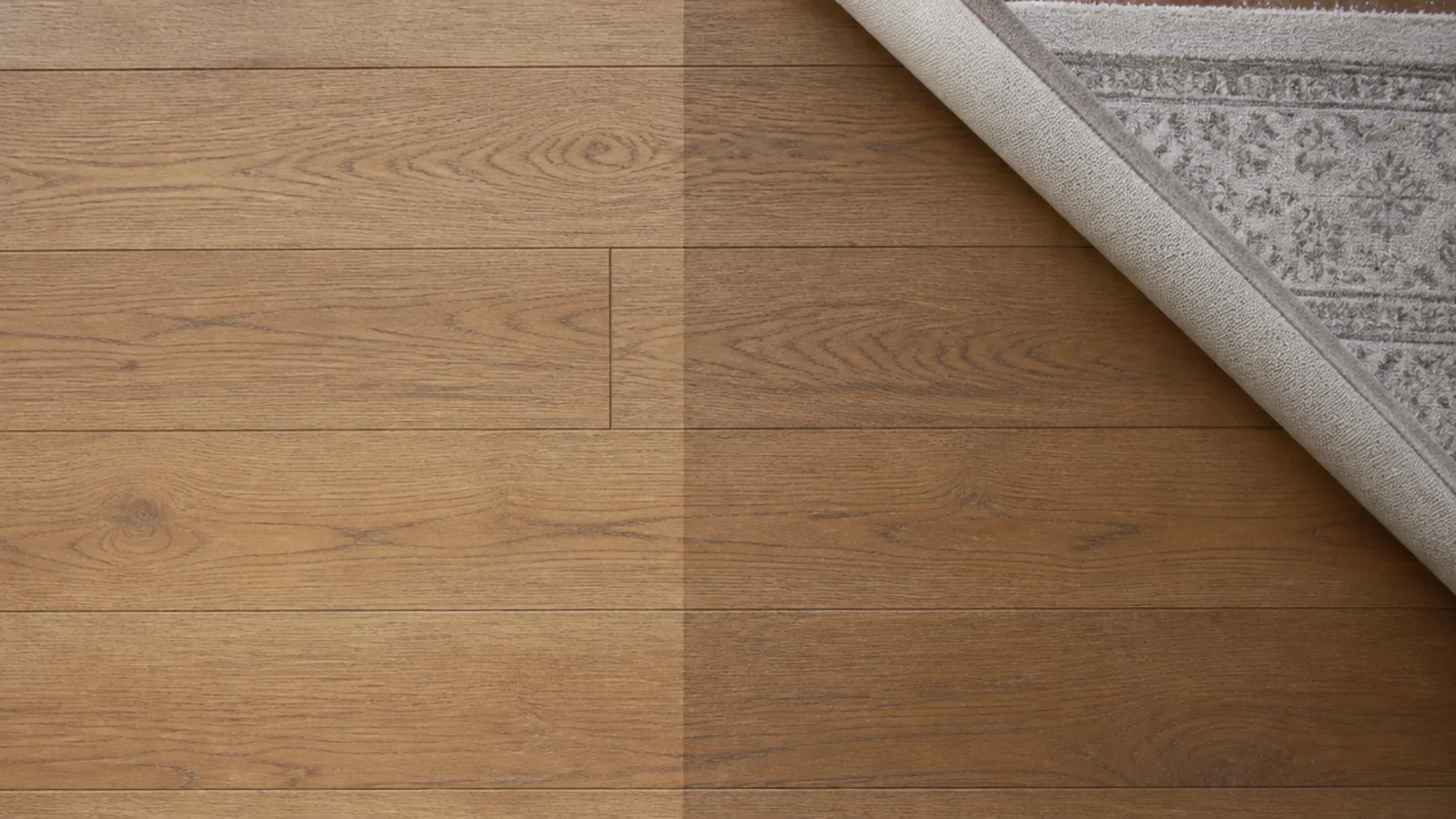
The last one is invisible until you move the rug. Wood shifts colour under UV, so a rug that never moves eventually leaves a hard tonal line. Rotate it 180 degrees every six months. For the sizing that comes before all this, the rug fundamentals guide has the room dimensions.
1. Start with a quarter inch felt and natural rubber pad
Felt on top for cushion, natural rubber underneath for grip. That specific construction is the standard for hard floors, and it does three jobs at once: stops movement, adds softness underfoot, and takes the abrasion that otherwise happens directly between rug backing and finish. Drop to an eighth of an inch only where a door swing forces it.
2. Cut the pad one inch smaller on every side
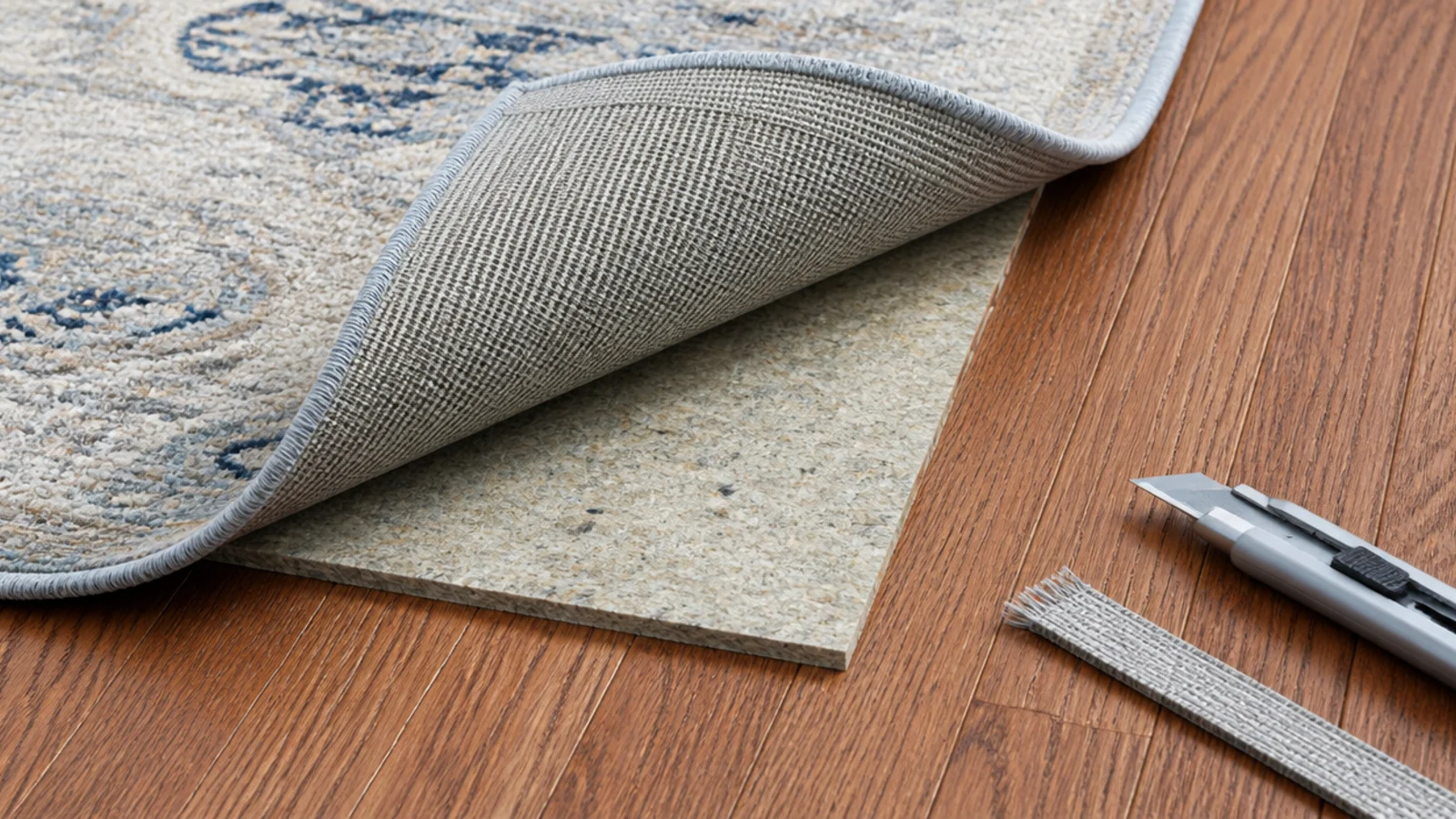
A pad that reaches the rug edge shows as a pale lip and creates a ridge people catch a toe on. An inch short on all four sides keeps the rug edge lying flat against the boards. Cut it with a utility knife against a steel straightedge — felt cuts cleanly and takes about ten minutes for an 8x10.
3. Keep PVC and plastic mesh off a finished floor
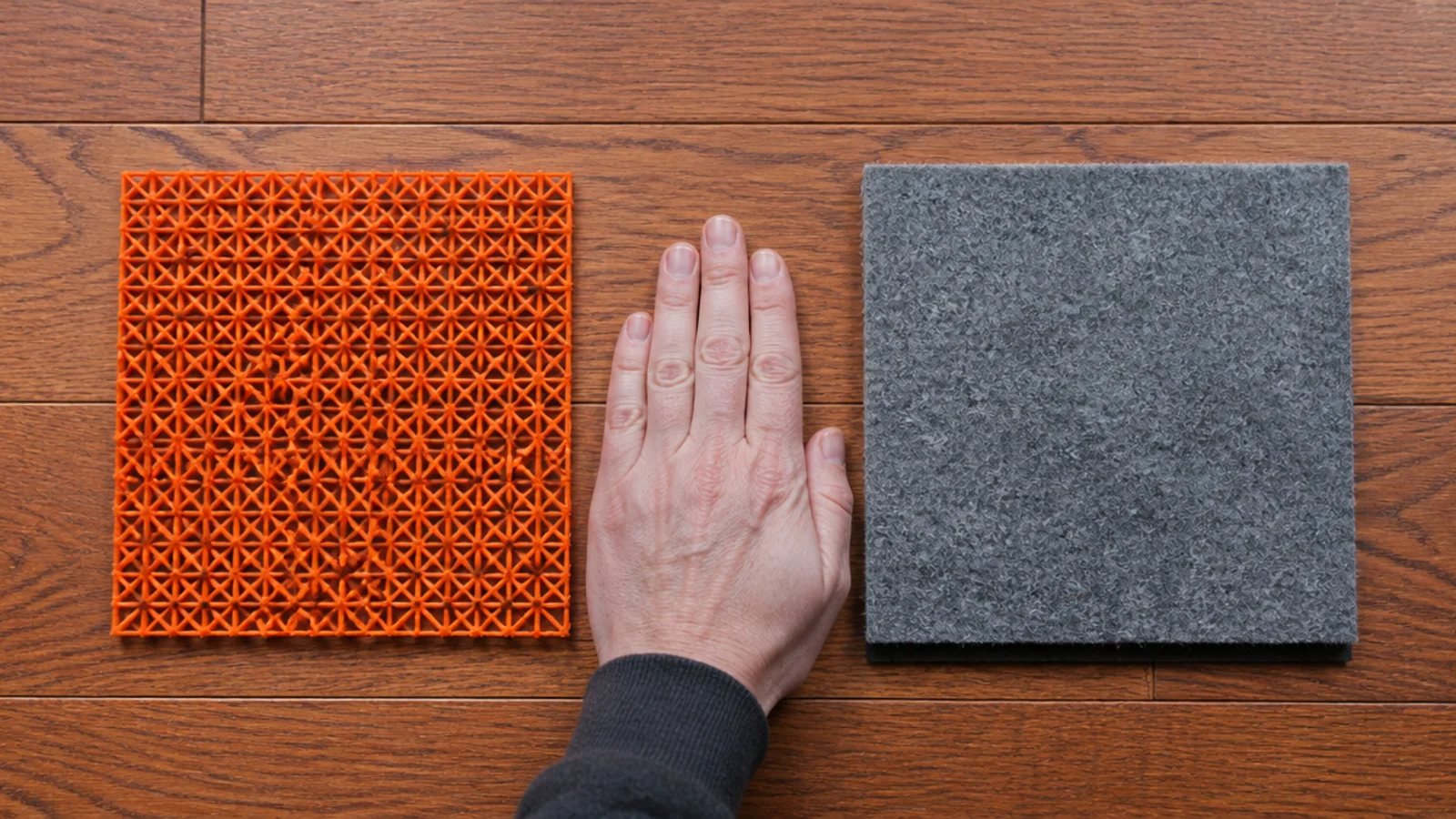
The open orange mesh pads sold cheaply everywhere are the ones that cause trouble. Plasticisers migrate out of the vinyl over months, soften a polyurethane finish and leave a mesh-patterned haze in the surface. It is not reversible with cleaning. Felt and natural rubber costs perhaps $30 more and avoids the whole problem.
4. Skip latex and adhesive-backed rugs entirely
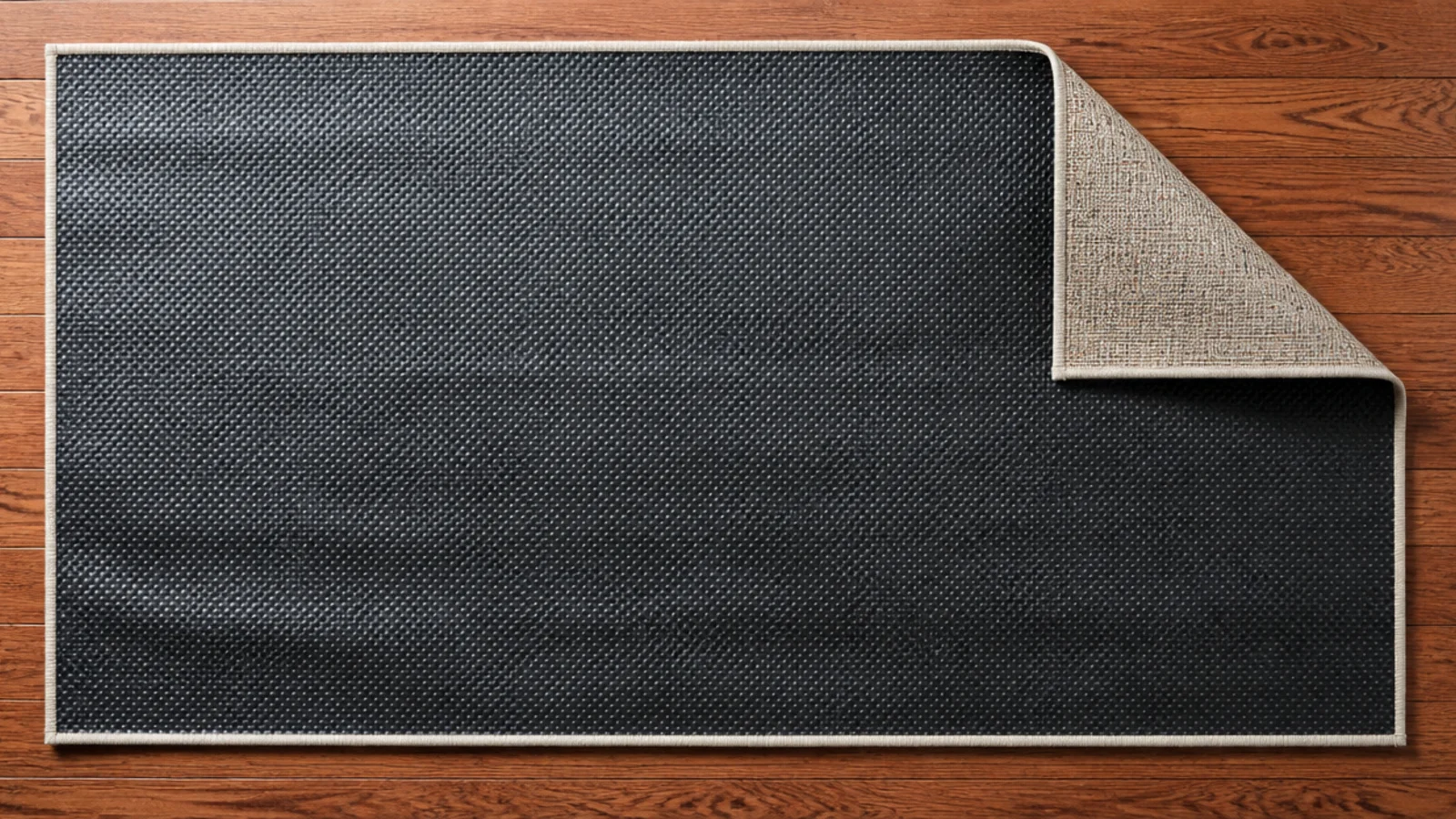
Any rug sold with a built-in non-slip backing is putting a rubberised compound in permanent contact with your finish, usually with no felt in between. Over a couple of years the backing hardens, crumbles and can bond in patches. If you already own one, put a thin felt underlay between it and the boards.
5. Wait 30 days after refinishing before anything goes down
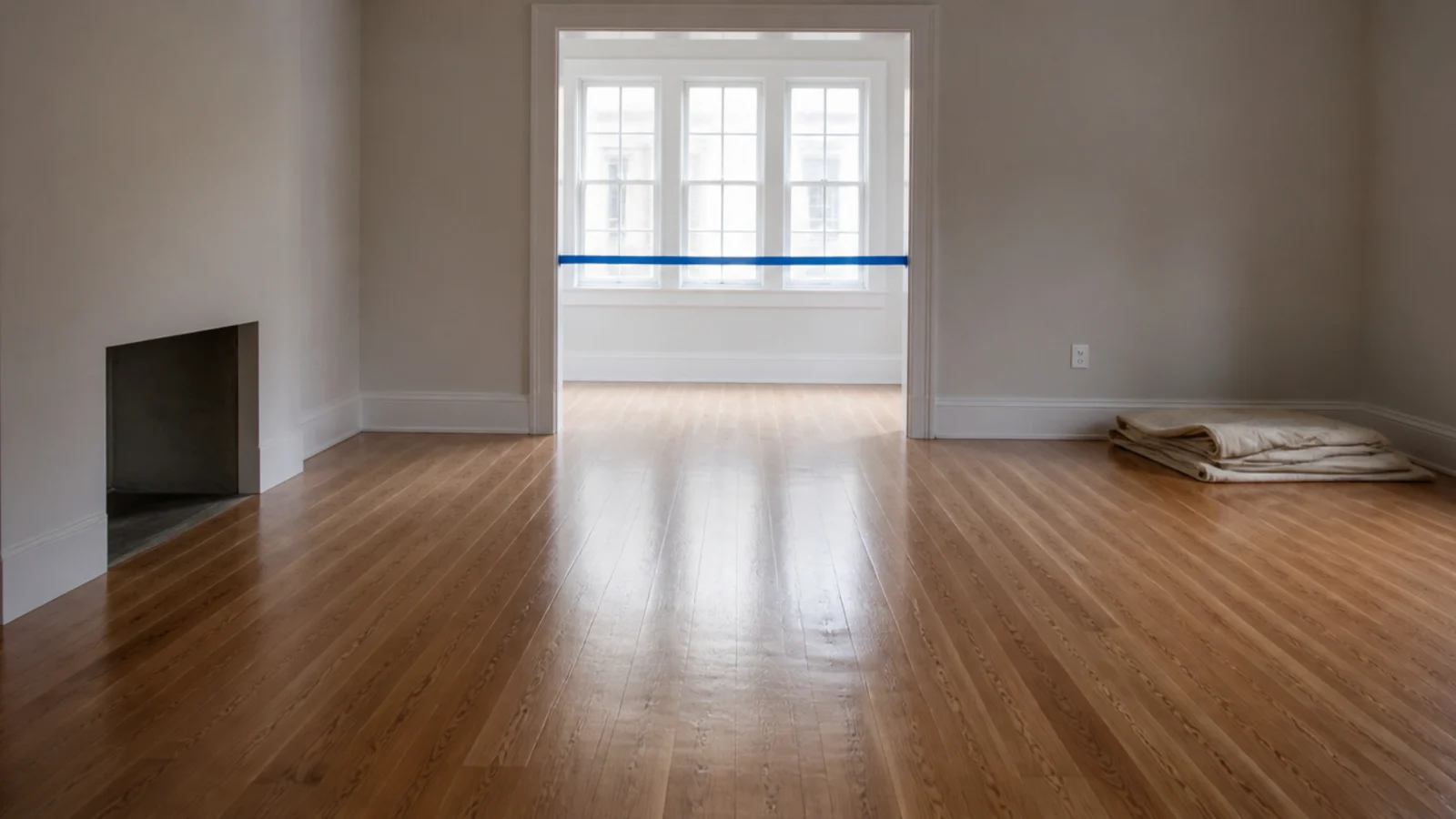
Oil-based polyurethane is walkable in two or three days and fully cured at about a month. Anything laid on it in between can trap solvent, imprint a texture, or cloud the surface permanently. Water-based finishes cure faster but two weeks is still sensible. This is the single most expensive mistake on the list.
6. Vacuum and wipe the boards before the pad goes down
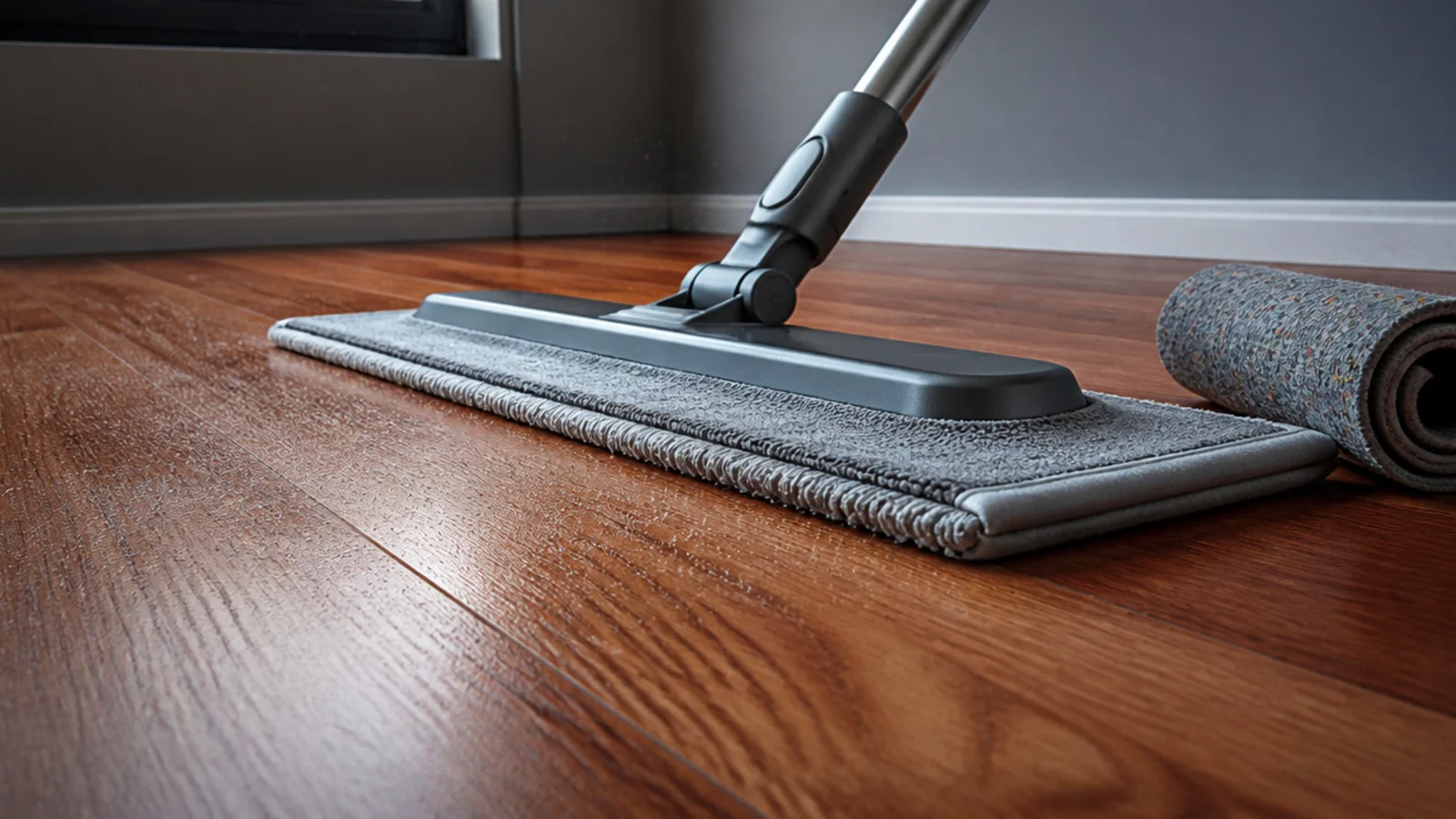
Grit trapped between felt and finish behaves exactly like sandpaper every time somebody crosses the room, and it scratches from underneath where nobody looks. Vacuum, damp mop with a wood-safe cleaner, and let the boards dry fully. Five minutes of preparation protects the floor for as long as the rug is there.
7. Check the door swing before you commit
Measure the gap under any door that opens over the rug. Standard interior doors clear half to three-quarters of an inch. Add the rug pile and the pad thickness together: a half-inch wool on a quarter-inch pad is three-quarters before it compresses, which is already marginal. Measure first, not after delivery.
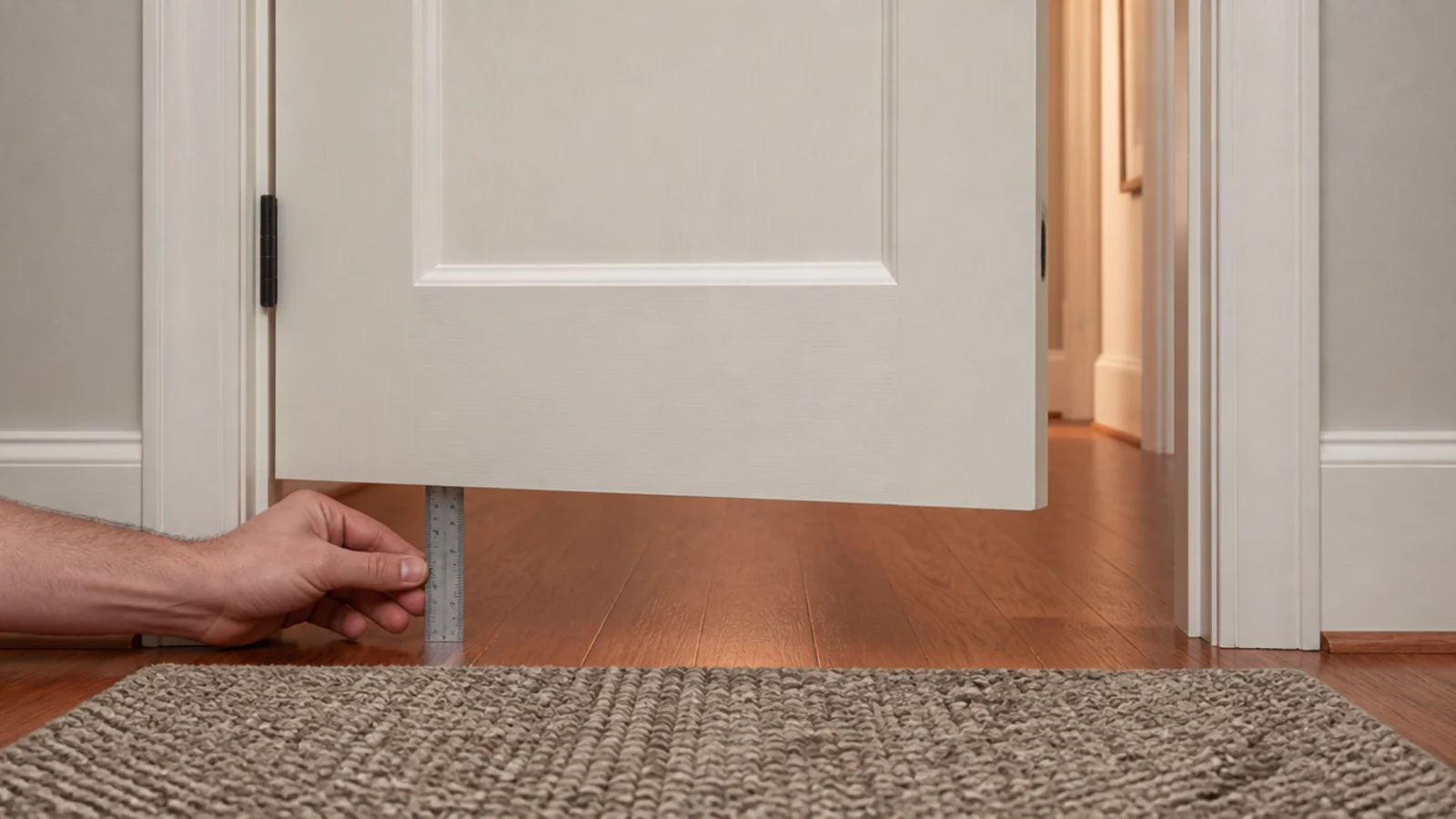
8. Low pile in the doorway zone
Anywhere people pivot — the doorway, the corner by the sofa arm, the route to the kitchen — keep the pile under a quarter inch. Deep pile at a turning point rucks up, and a rucked edge on a hard floor is what catches a foot. Flatweaves and low loop constructions handle those zones best.
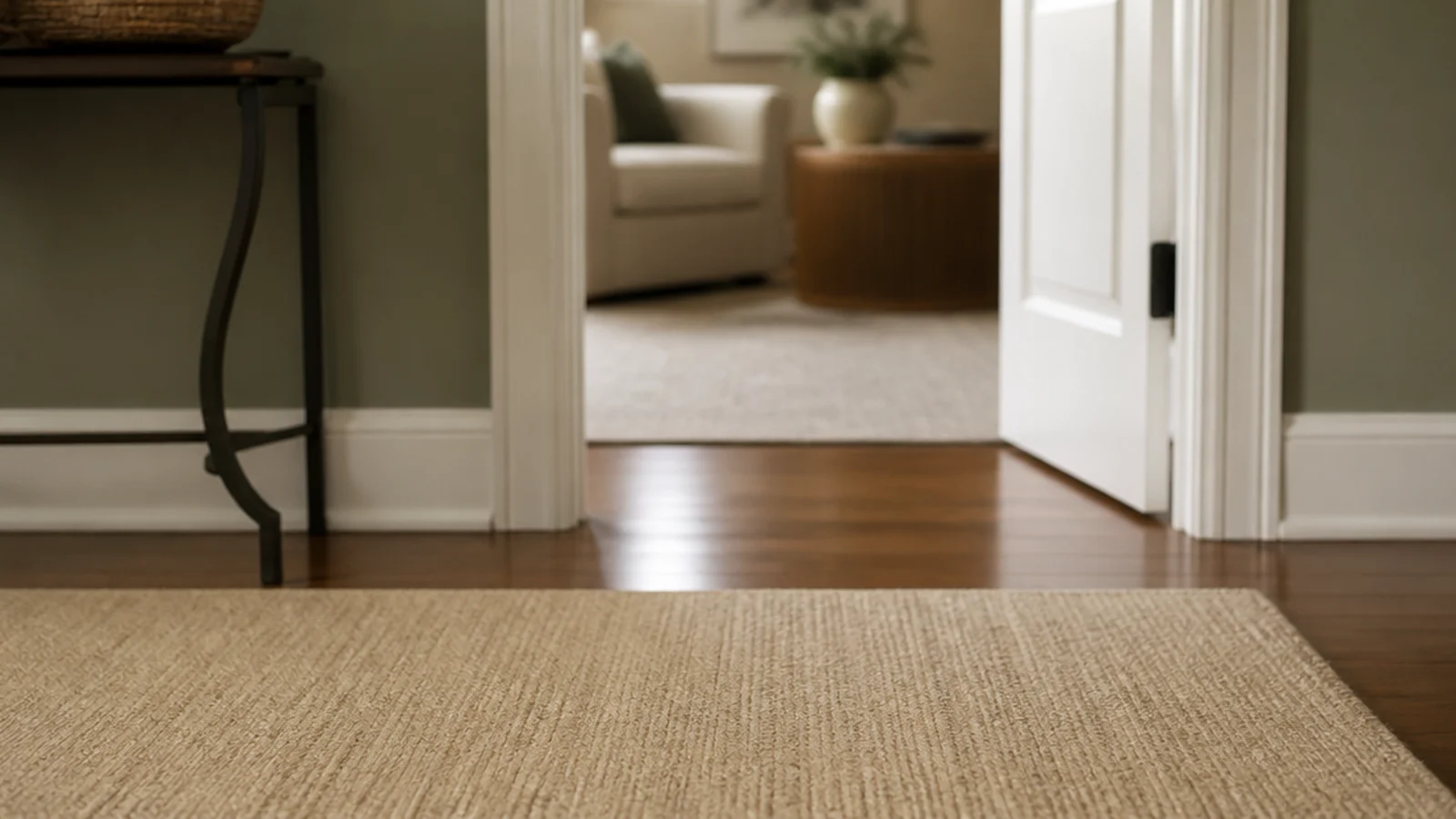
9. Weight the corners with furniture, not tape
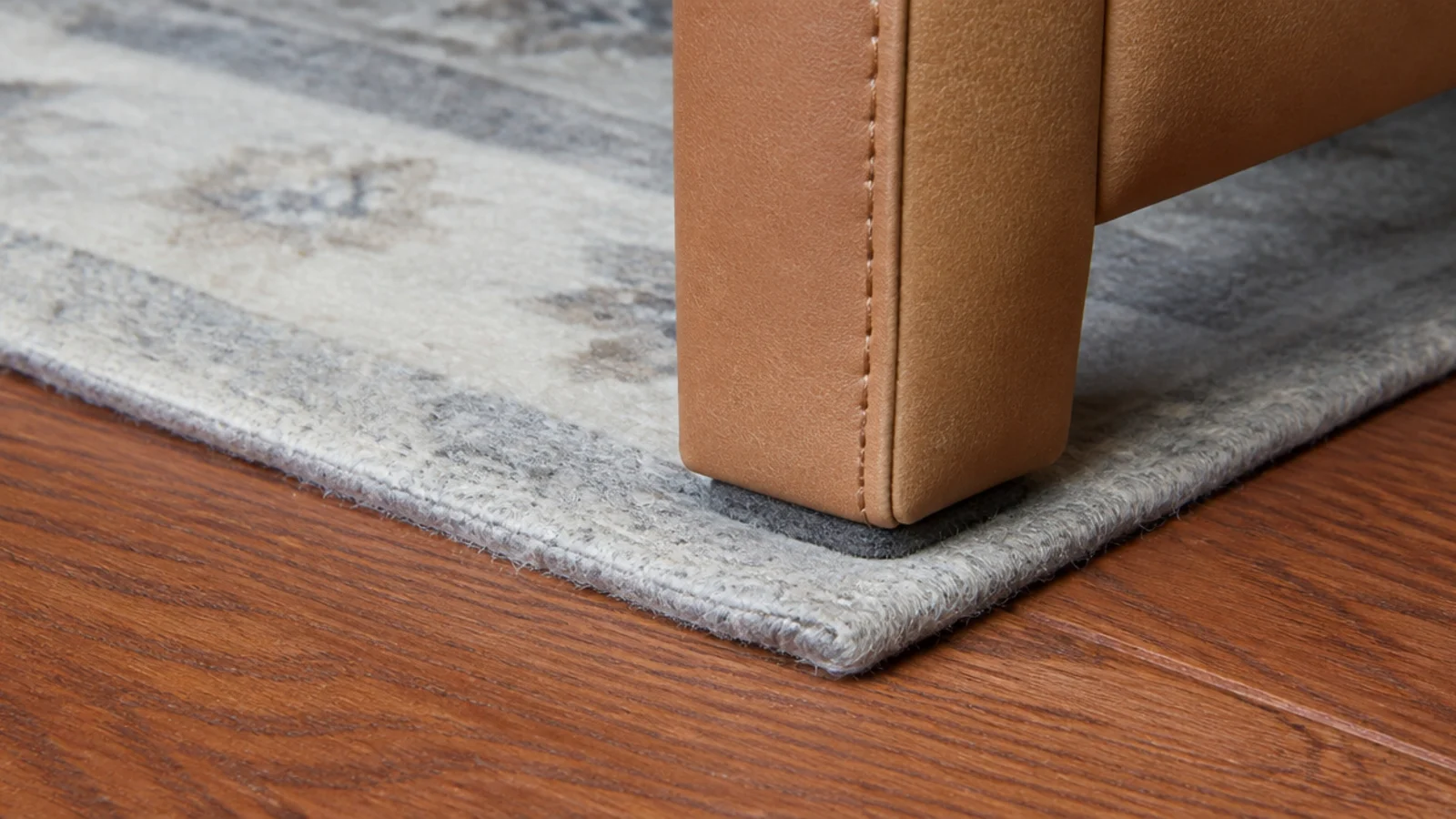
The corner that curls is almost always the one with nothing on it. Move a chair, a floor lamp base or the end of a sofa so it stands on that corner. Add felt glides under the furniture feet so nothing indents the pile permanently. Weight holds a corner flat for years; tape gives up in a season.
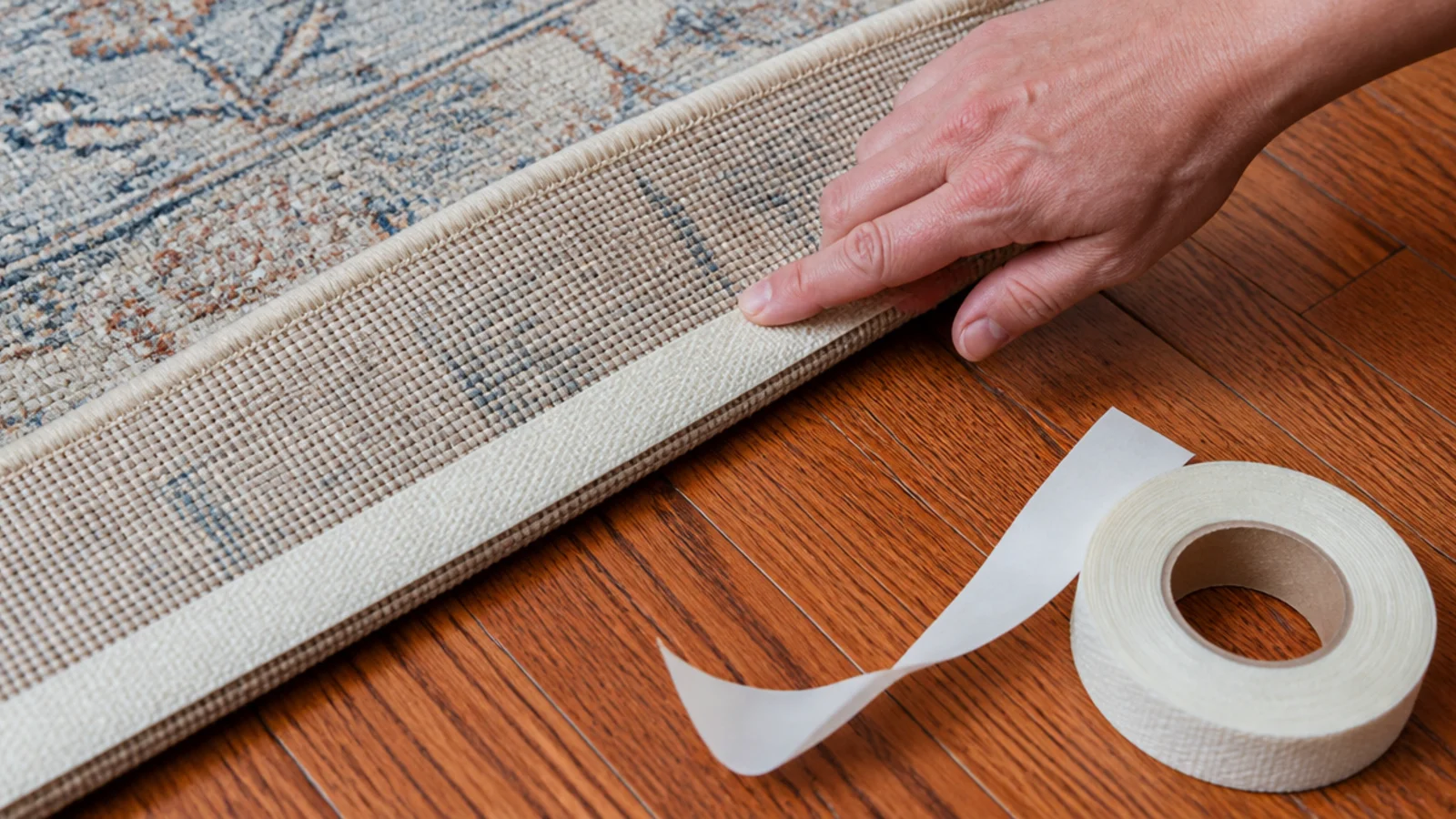
10. Use grip tape only where the pad cannot reach
Low-tack rug grip tape is fine on a small edge that keeps lifting, and it is not a replacement for a pad. Test any adhesive on a hidden patch of finish first and leave it a week. Remove it slowly at a shallow angle, warming it gently if it resists, rather than pulling it straight up.
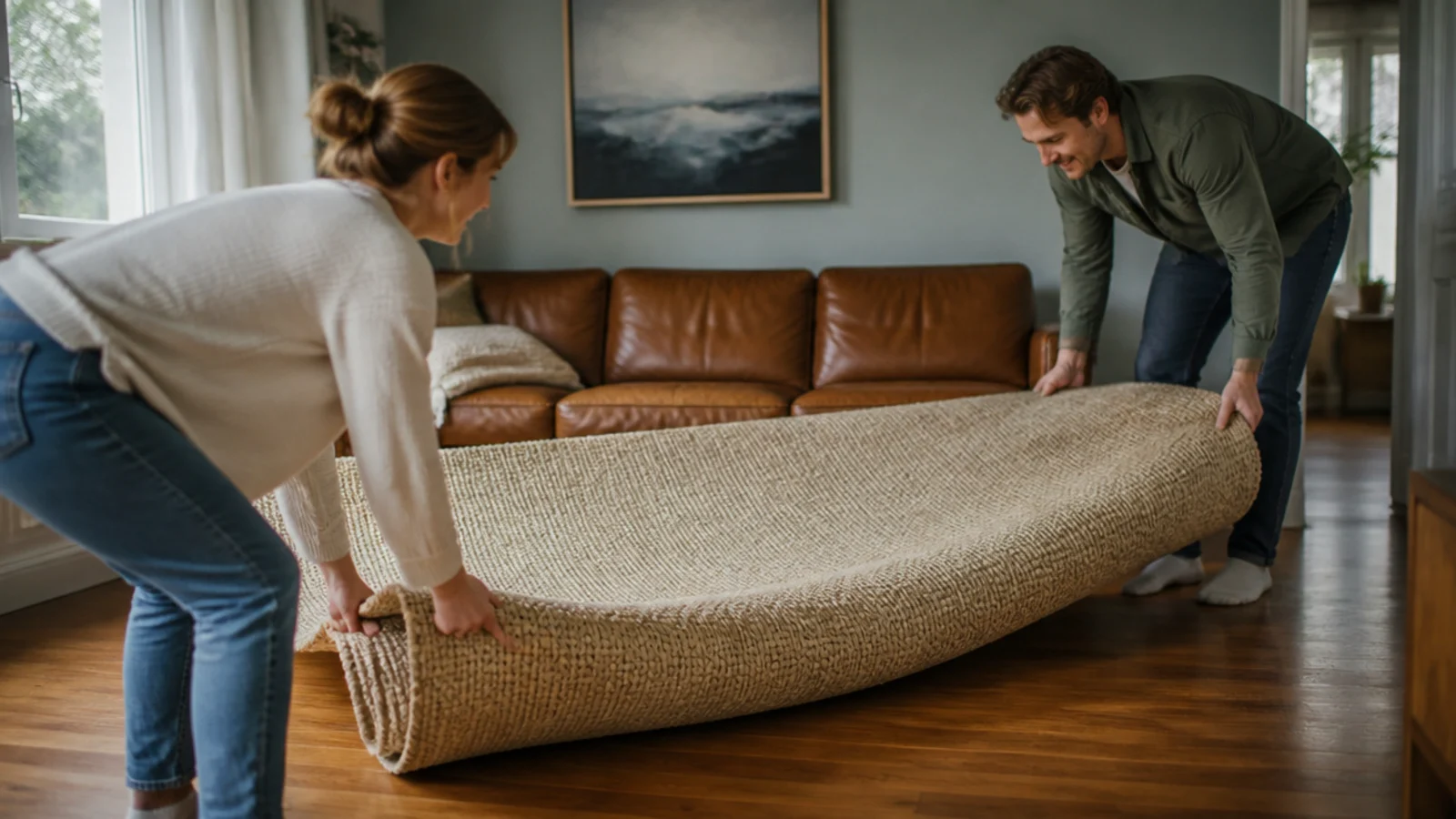
11. Rotate 180 degrees every six months
Half a turn twice a year moves the traffic lane and the sun line onto fresh pile, and it also evens out how much light reaches the boards below. It takes two people four minutes. Set a reminder alongside the smoke alarm batteries, because nobody remembers this one on their own.
12. Shift the rug two inches a year on an oiled floor
Oiled and unfinished boards change colour with light far faster than a polyurethane finish does. Moving the whole rug two or three inches once a year turns what would be a hard tonal edge into a soft gradient. On a floor you plan to keep uncovered one day, this is worth doing from the start.
13. Wool over hardwood is the classic pairing
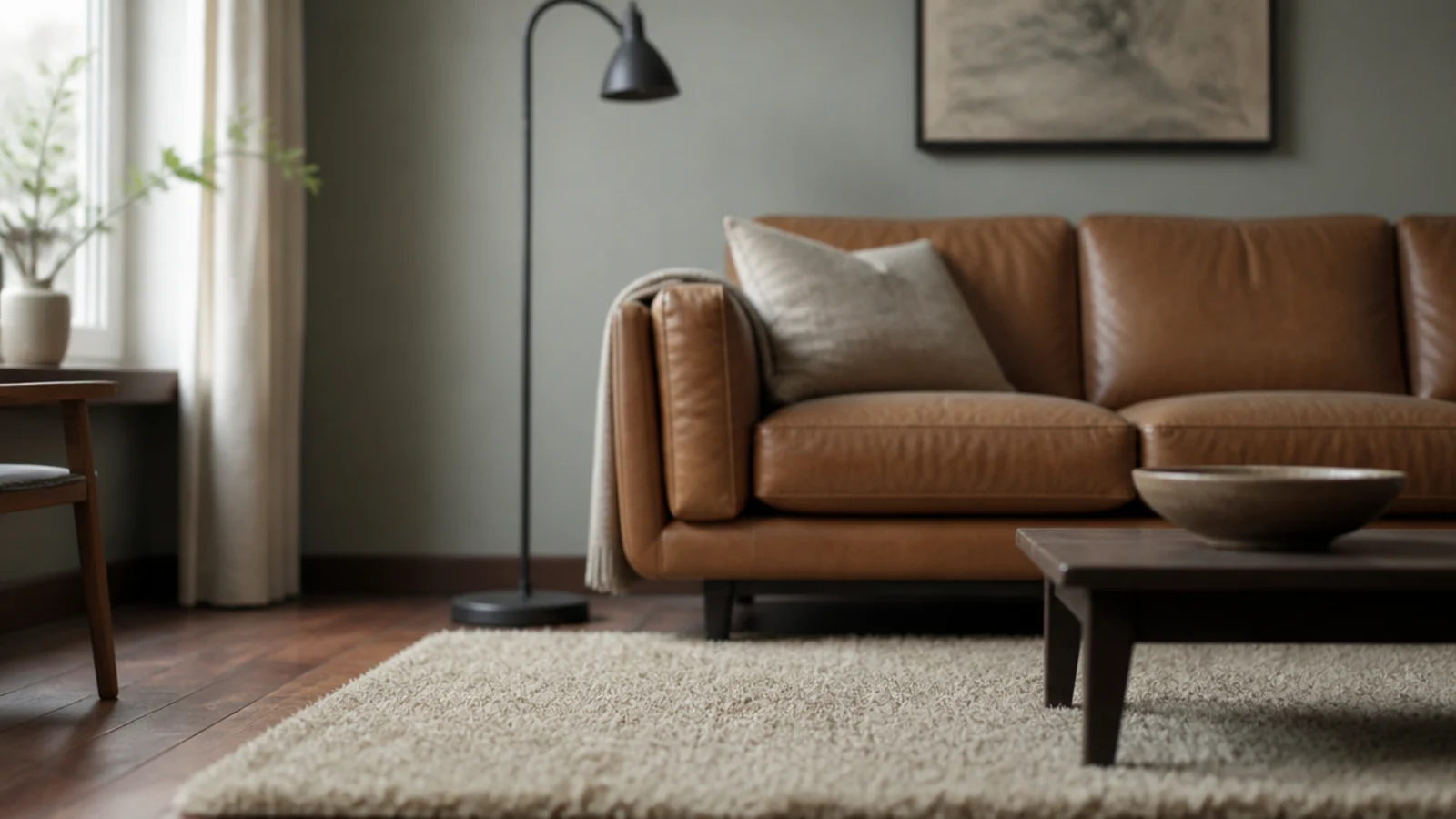
Wool is dense enough to protect boards from dropped objects, breathable enough not to trap moisture against the finish, and it holds its shape on a hard surface where a soft synthetic ripples. An 8x10 runs $600 to $2,000 and gives fifteen to twenty-five years. On a floor you value, it is the sensible fibre.
14. Flatweave when the floor is the feature
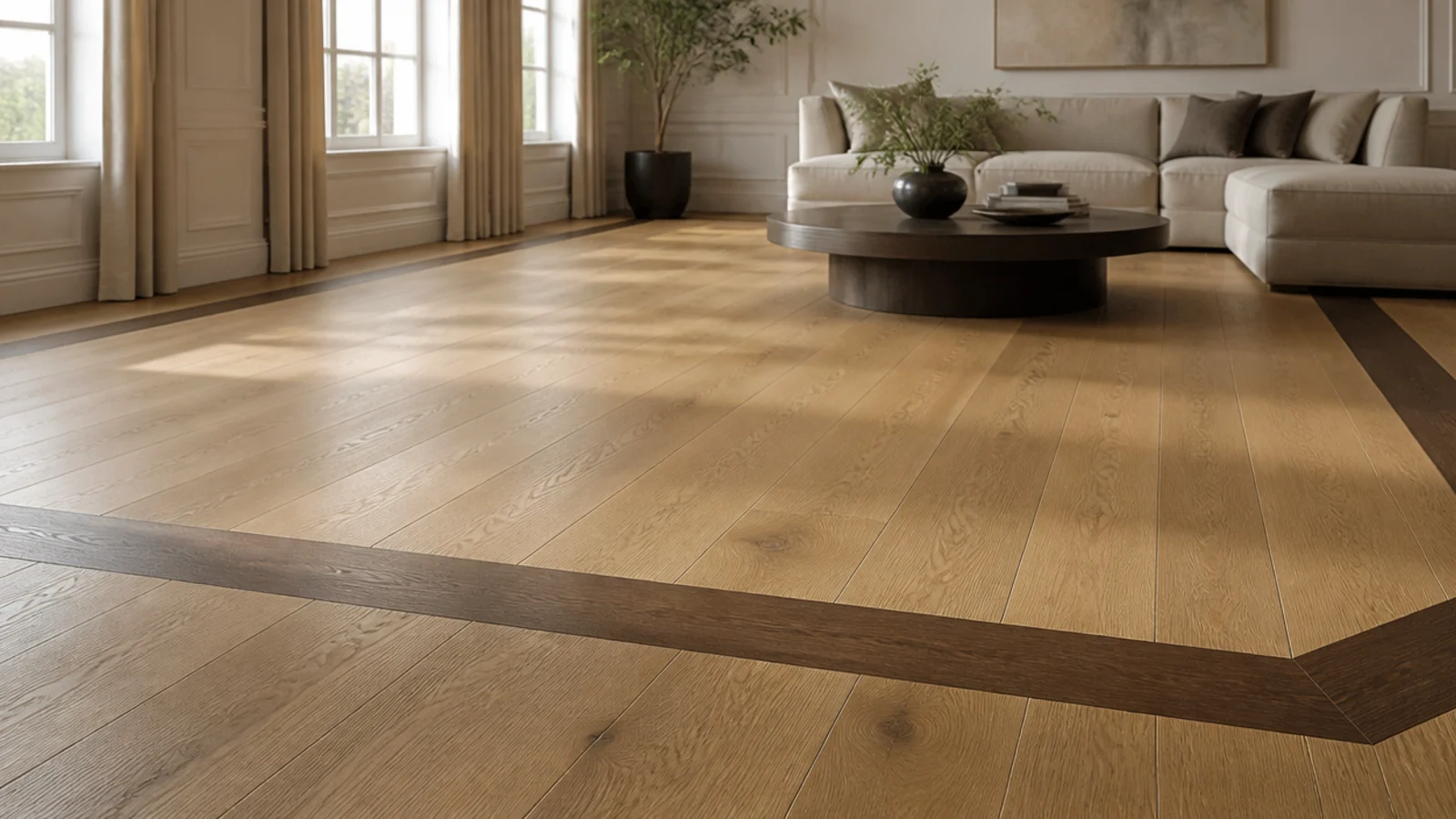
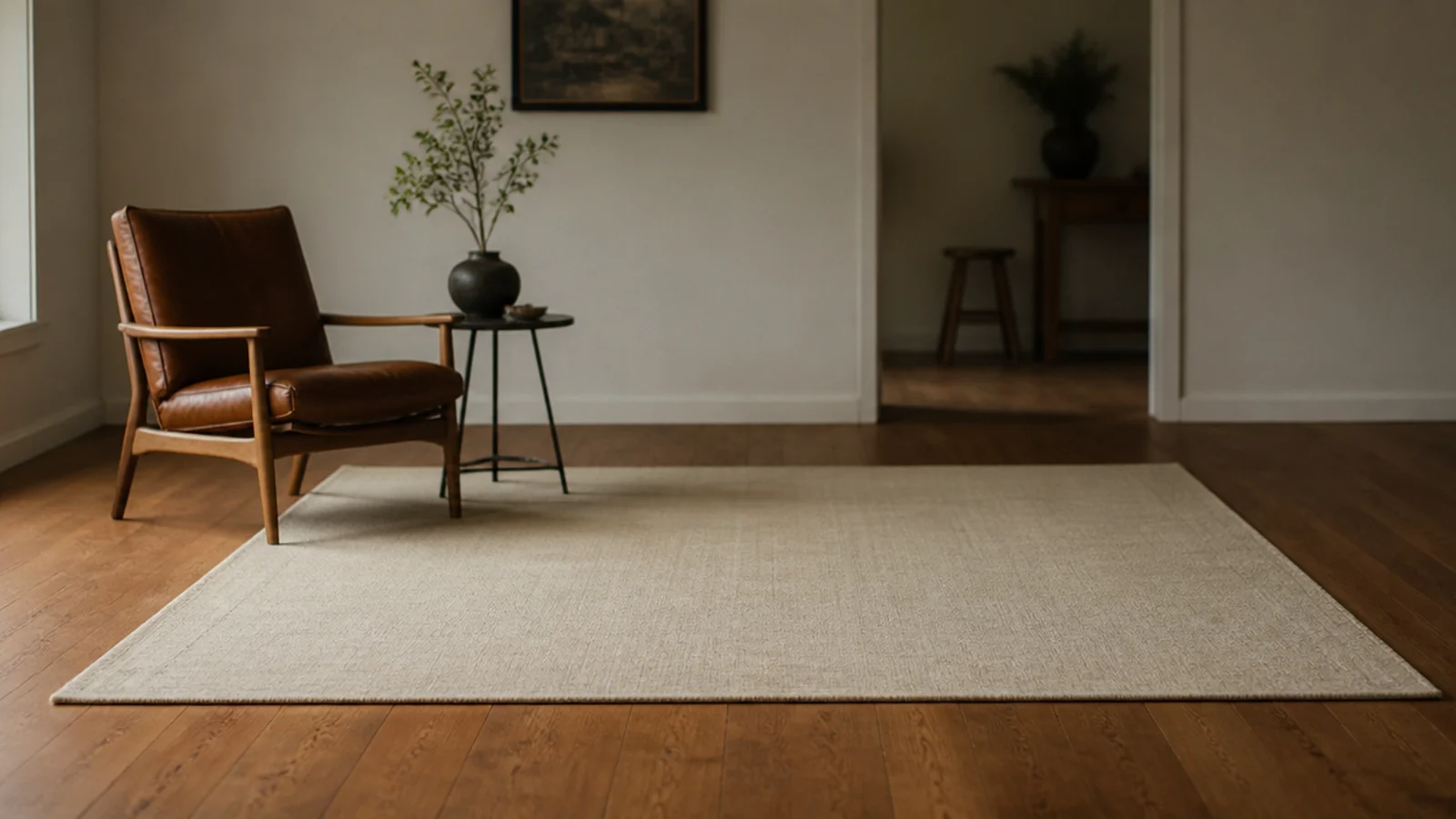
If you have wide boards or a parquet pattern worth seeing, a flatweave at 1/8 inch covers the seating zone without hiding the floor's character. It also clears every door, layers easily, and reverses when one face tires. Wool flatweaves run $250 to $600 for an 8x10 and need a pad more than any other construction.
15. Jute over hardwood is warm and risky near drinks
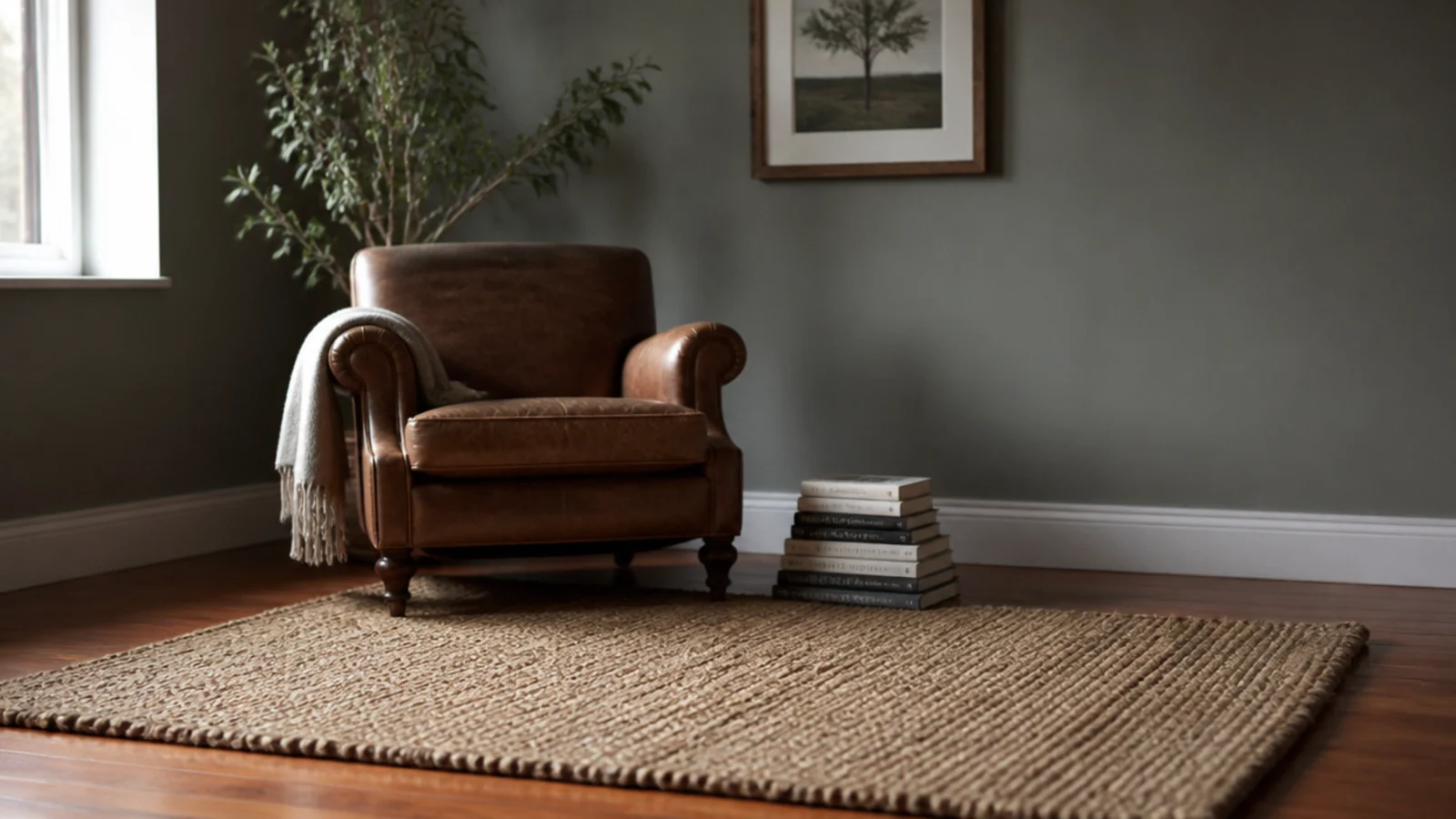
Jute looks superb against warm boards and costs $200 to $450 for an 8x10, but water leaves a permanent brown ring and the fibres shed for months. Use it in a reading corner rather than under a coffee table, and blot any spill immediately — the moisture reaches the wood below faster than it does on a wool pile.
16. Keep rubber-backed washable rugs off bare wood
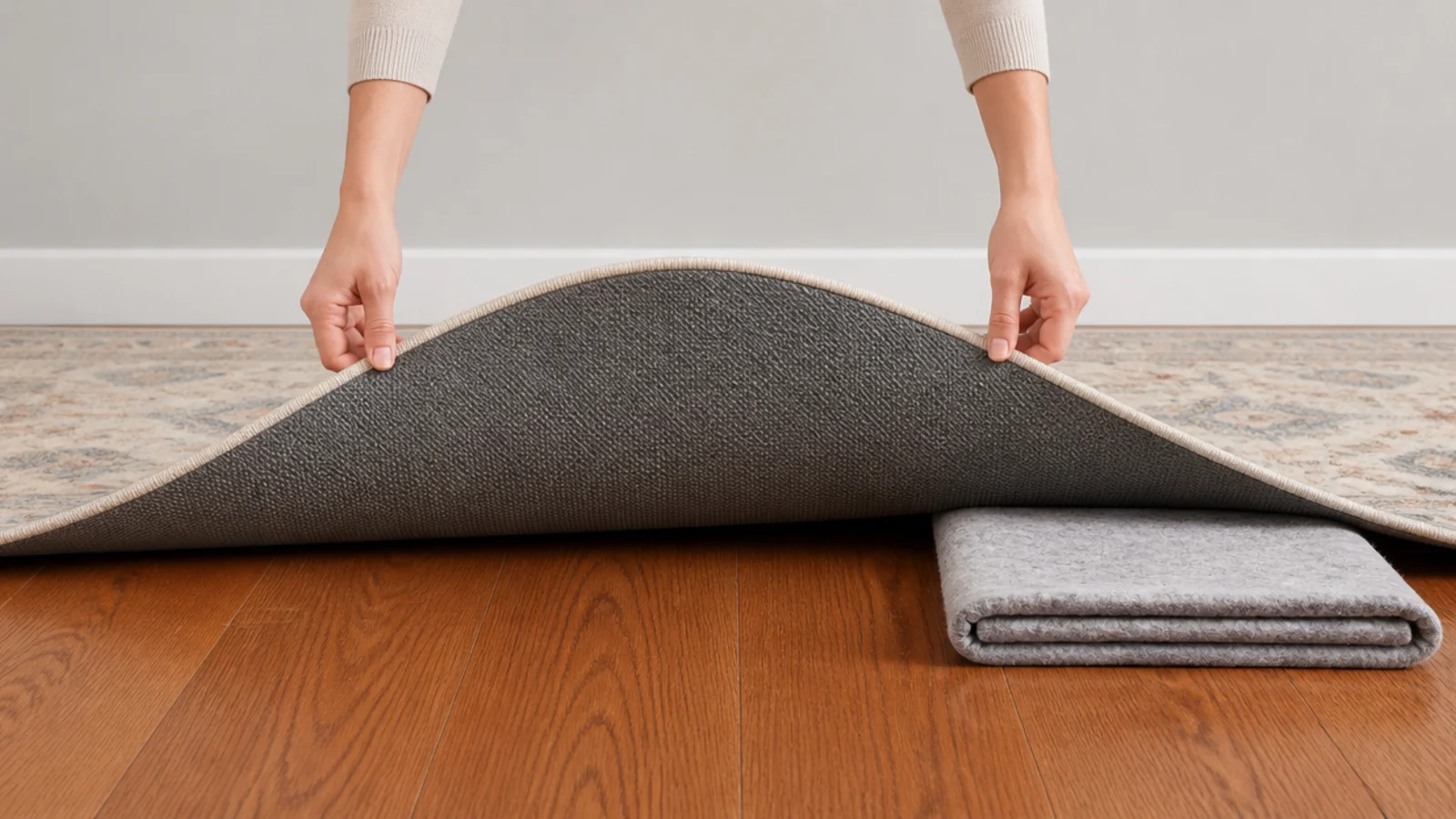
Most one-piece washable rugs come with a thin rubberised underside so they grip without a pad. That is convenient on tile and a bad idea against a wood finish. Put a thin felt underlay between the two, or choose a two-piece system where a separate cushion pad sits under a washable cover.
17. Pad the runner in a walk-through route
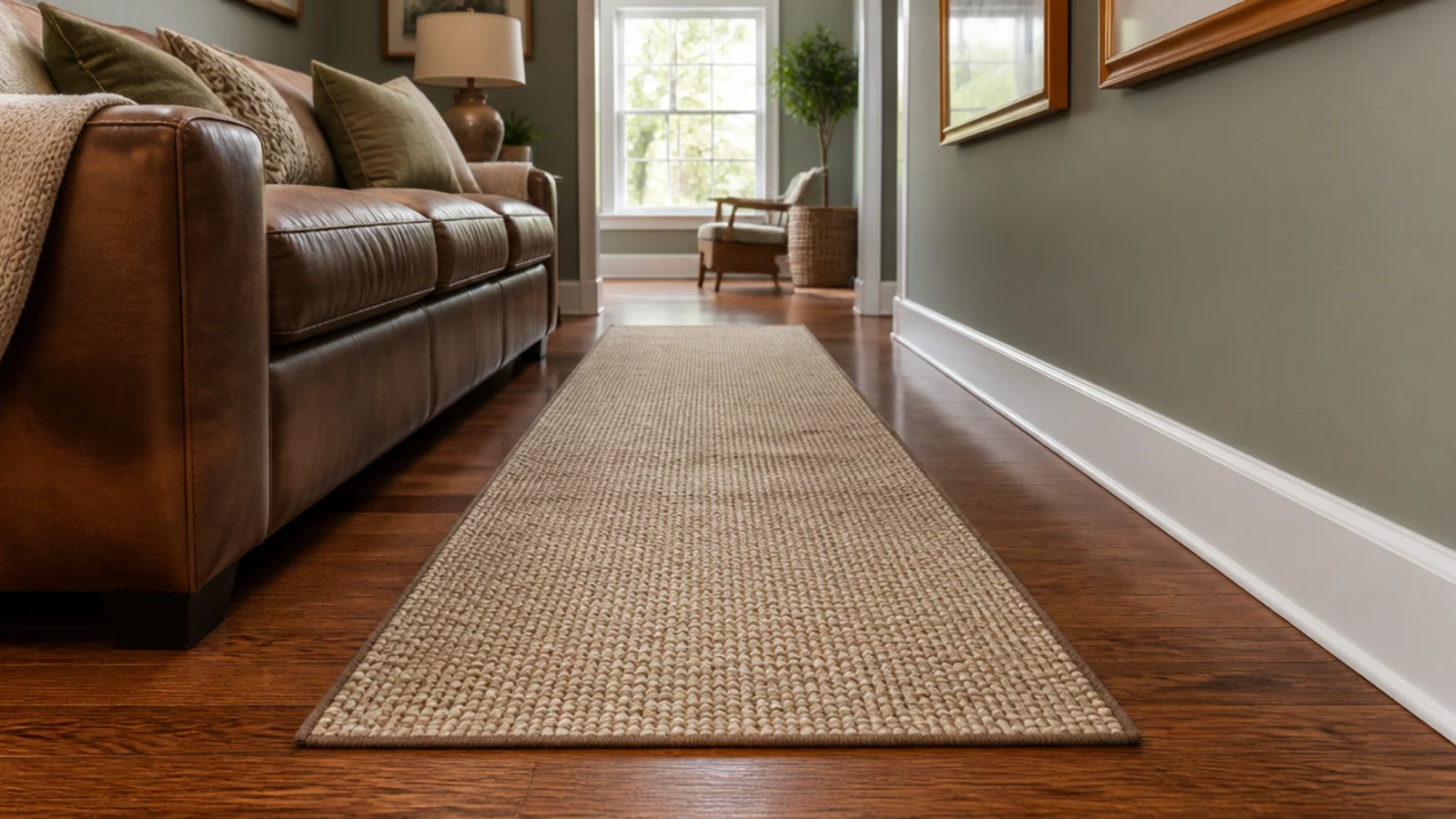
A runner behind the sofa or between two doors takes the most concentrated wear in the room and moves more than any other rug. Use a full-length grip pad, keep the runner 4 to 6 inches clear of the furniture so it cannot bunch against a leg, and replace it rather than the floor when it wears.
18. Keep the build thin over radiant heat
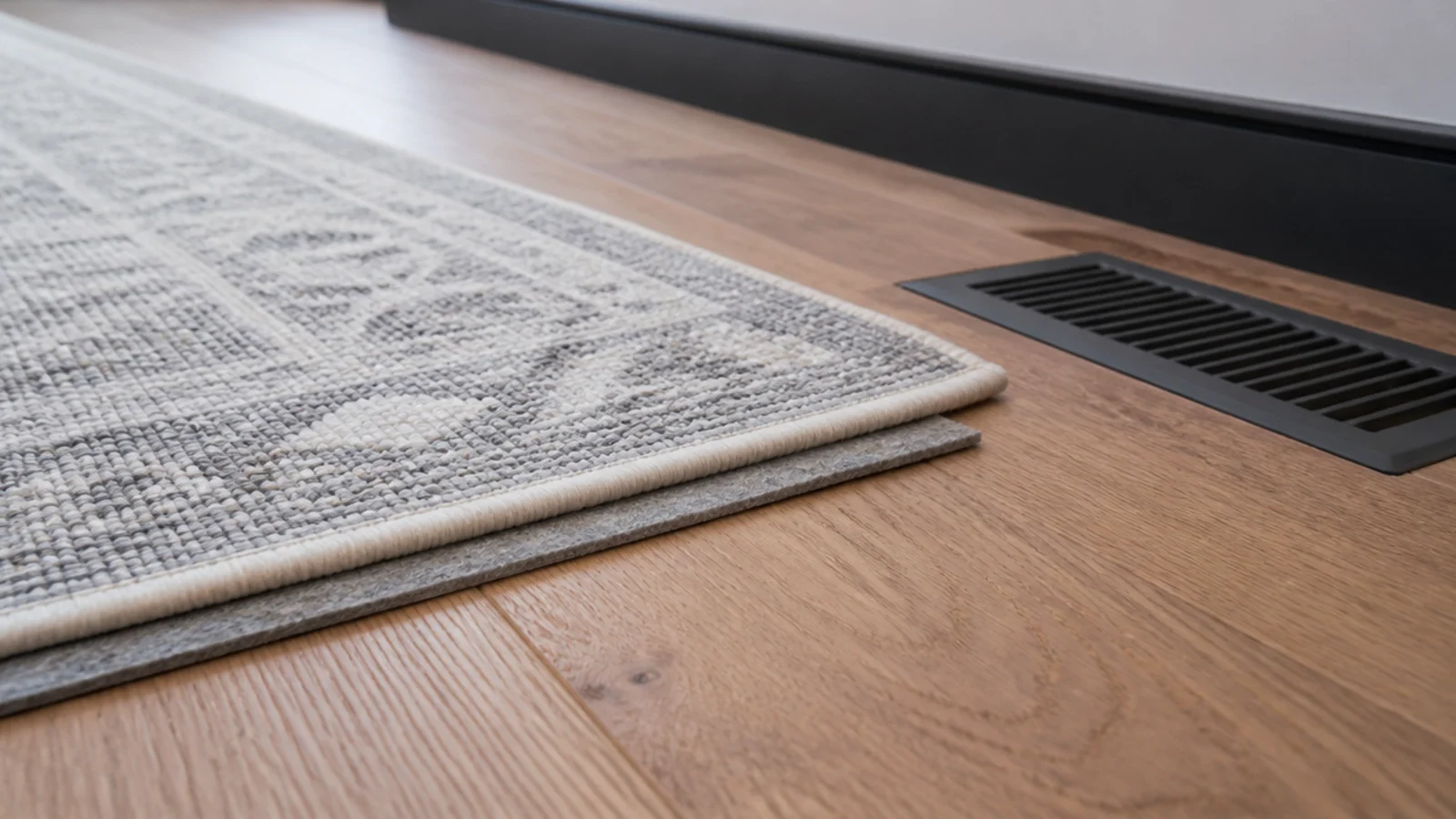
Engineered boards over underfloor heating need to release warmth into the room. A thick wool and a quarter-inch felt pad together insulate enough to make the system work harder and can push the board surface temperature up. A flatweave on an eighth-inch pad is the usual compromise, and it still grips.
19. Blot spills fast because the floor is what is at risk
A spill on a rug over concrete is a rug problem. A spill on a rug over hardwood is a floor problem, because liquid passes through the pile, sits on the pad and reaches the boards. Blot from the outside in, lift the rug corner, dry the boards, and leave the rug propped up until everything underneath is dry.
20. Lift and air the rug twice a year
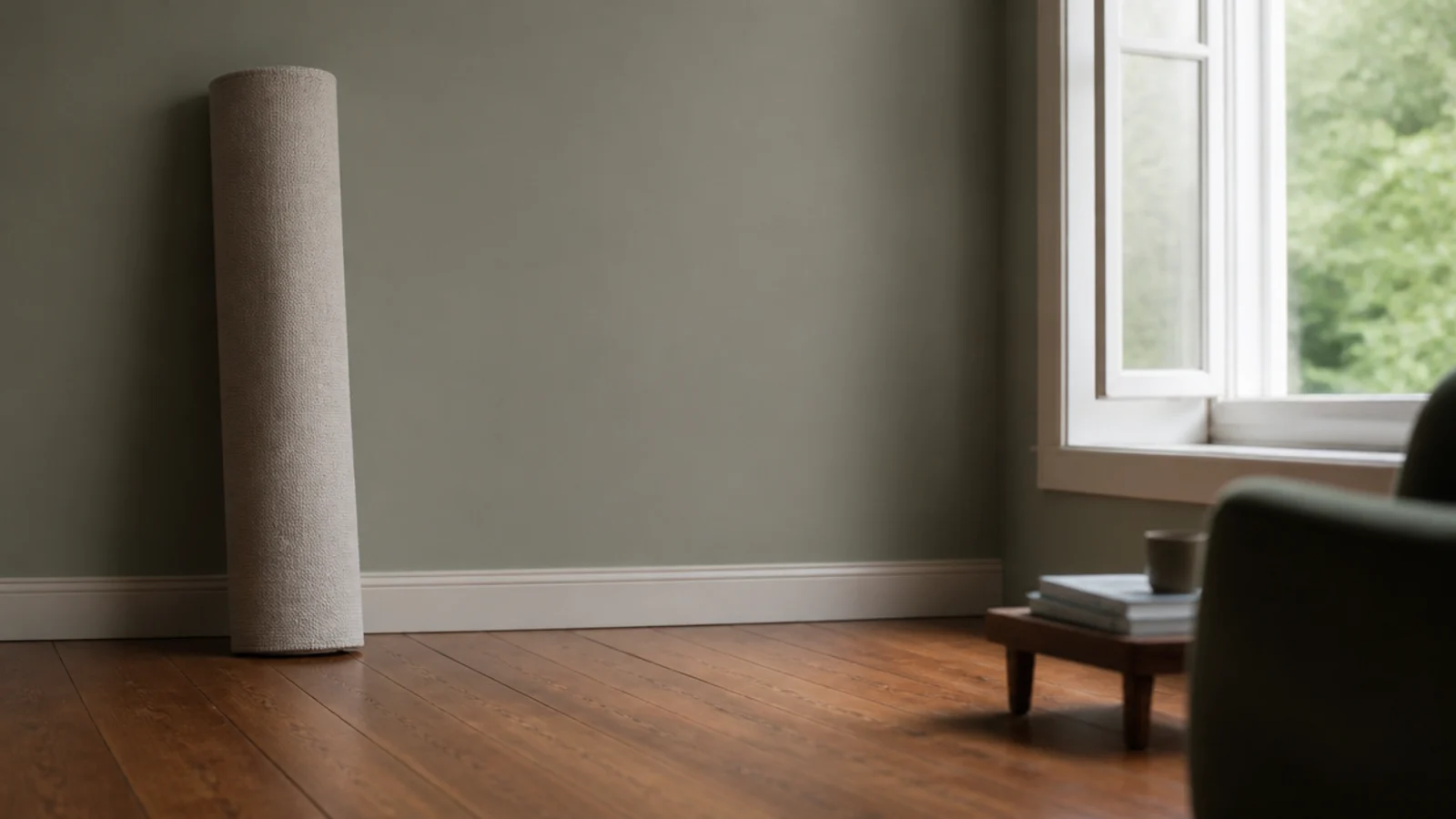
Roll the rug back, take the pad up and let the boards breathe for a few hours whenever you rotate. It clears any trapped moisture, lets you see the condition of the finish underneath, and gives you the chance to vacuum grit before it does another six months of quiet damage.
If the room needs something that can go in a machine rather than to a cleaner, the washable rug comparison covers what survives a wash. For the boards themselves, the wooden tile flooring guide explains the alternatives, and the corner shelf ideas handle the storage that keeps floor space clear.
Mistakes to Skip
- Laying a rug straight onto boards with nothing underneath. It slides, the corners lift into a trip hazard, and the rug backing abrades the finish every time somebody walks across it.
- Buying the cheap orange mesh pad. It costs a fraction of felt and rubber and it is the one product most likely to leave a permanent haze printed into a polyurethane finish.
- Covering a newly refinished floor within the first month. The surface is still curing under a skin that feels perfectly hard, and anything laid on it can imprint permanently.
- Never moving the rug. Six months of one position is fine; six years is a hard tonal line in the boards that only sanding the whole floor will even out.
Frequently asked questions
What kind of rug pad is safe on hardwood?
A quarter-inch pad made of needle-punch felt bonded to natural rubber. Felt gives cushion and absorbs abrasion, natural rubber grips without reacting with the finish. Avoid anything described as PVC, vinyl or plastic mesh, because the plasticisers in those can soften a polyurethane finish and leave a cloudy print behind.
Will a rug damage a hardwood floor?
Only through three things: grit trapped underneath, an unsuitable backing against the finish, and uneven UV exposure. Vacuum the boards before the pad goes down, use felt and natural rubber, and rotate the rug 180 degrees twice a year. Do all three and the floor under a rug ages better than the floor around it.
How do I stop a rug sliding on wood floors?
A felt and natural rubber pad cut 1 inch smaller than the rug on every side solves it in almost every case. Add furniture weight on the corner that lifts first. A rug that slides on a hard floor is a genuine trip hazard, so treat this as a safety fix rather than a tidiness one.
How long after refinishing can I put a rug down?
About 30 days for an oil-based polyurethane. The finish feels dry within days but keeps curing for roughly a month, and anything laid on it before then can imprint or trap solvent and cloud the surface. Water-based finishes cure faster, but two weeks is still the sensible minimum.
Why is the floor a different colour when I move the rug?
Wood darkens or lightens with UV exposure and the rug has been shading it. On an oiled or unfinished floor the difference can appear within a year. Rotating the rug 180 degrees every six months and shifting its position two or three inches annually keeps the transition soft rather than a hard line.
Want more like this? Browse all 15 rugs in living room guides — they all use the same measurements and budget tiers.
Pin it for later
Save this to your Rugs In Living Room board
Pin it now so it is waiting for you when the tape measure comes out — and so the next person hunting for this idea can find it too.
Save this pinKeep going
More ideas worth saving while you have the tape measure out.