Wooden Flooring · Review
15 Oak Wooden Flooring Finishes Compared By Price

Some links on this page may become affiliate links in future. I only recommend pieces I would put in my own home — see the affiliate disclosure.
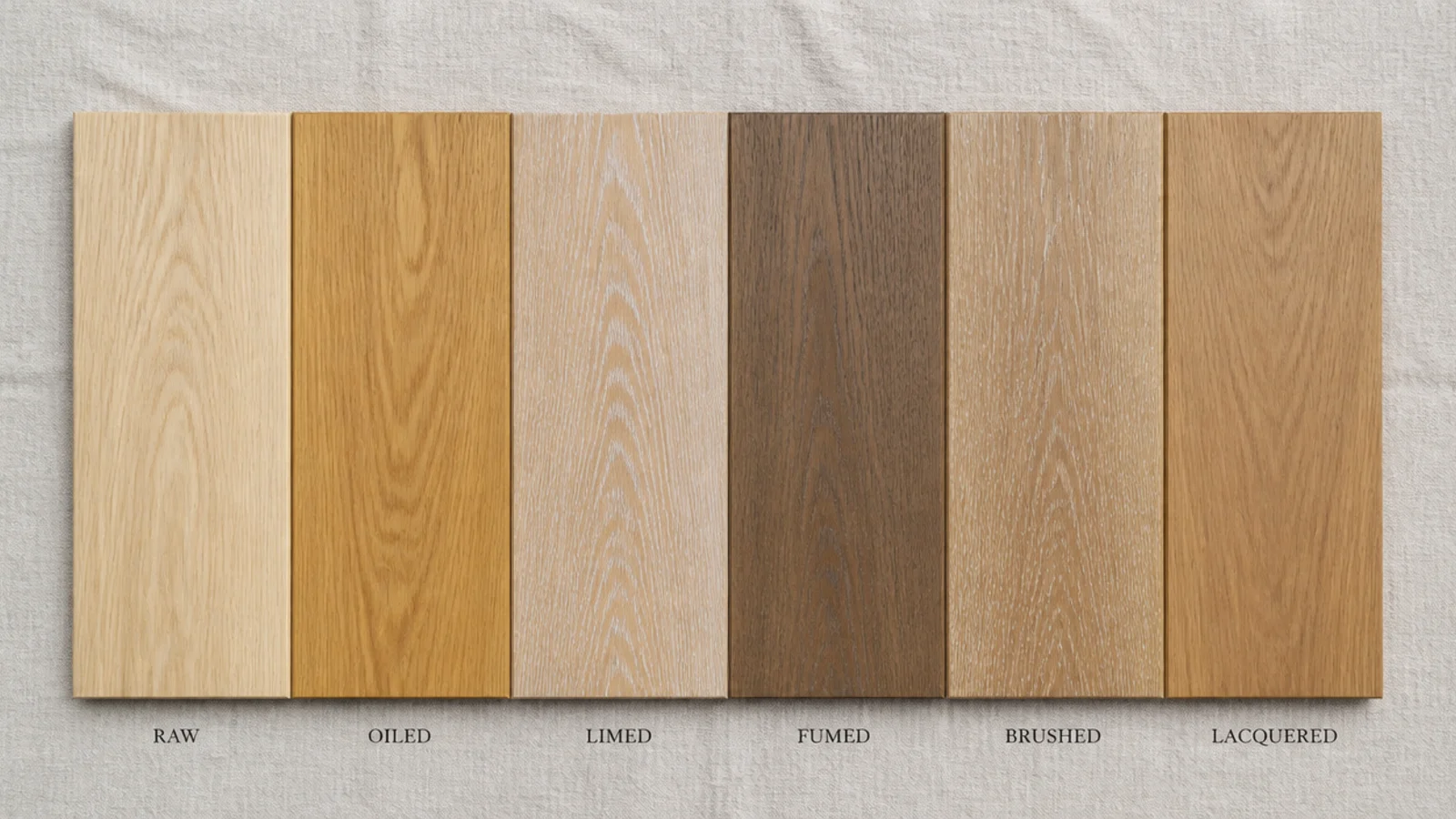
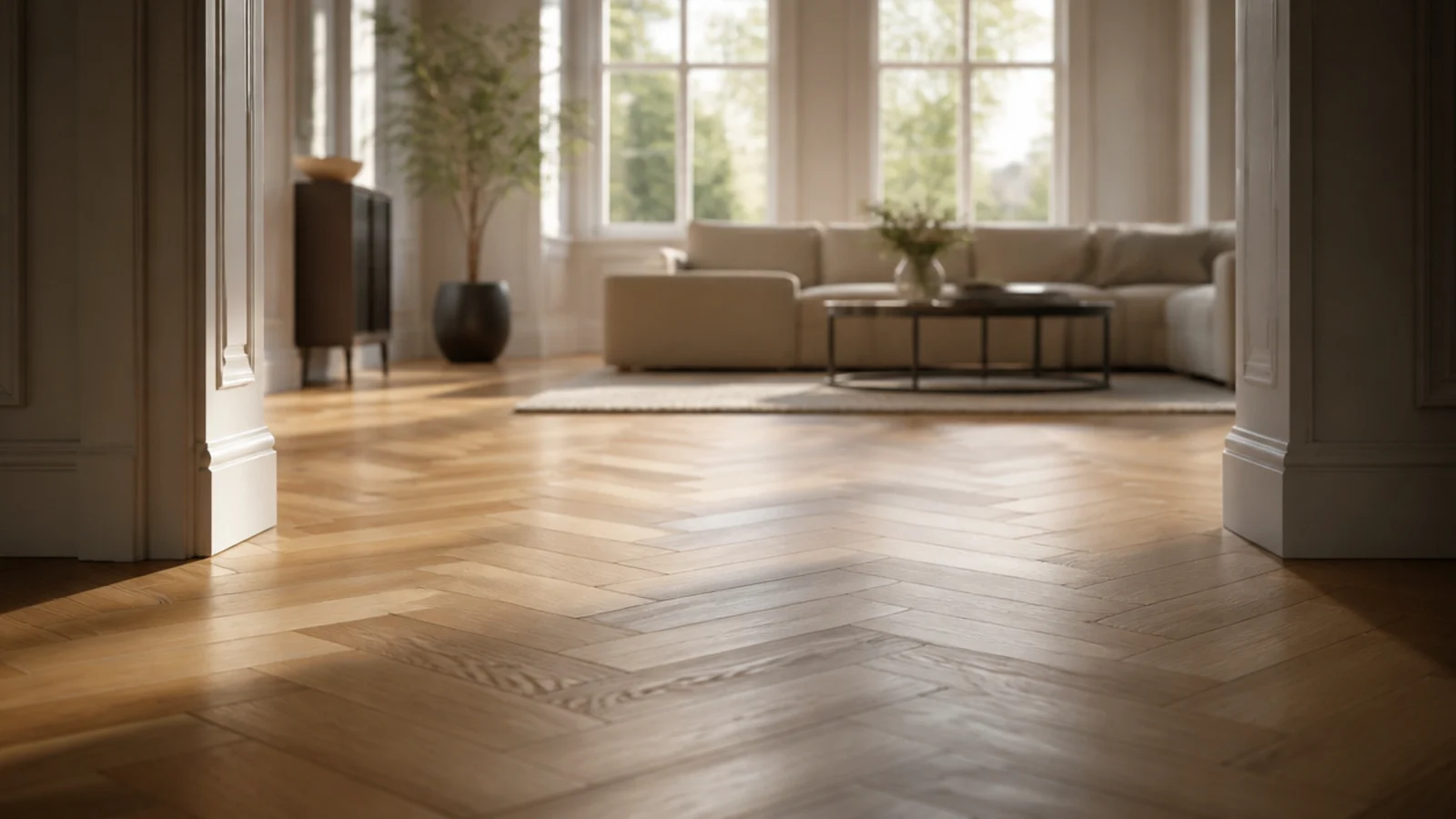
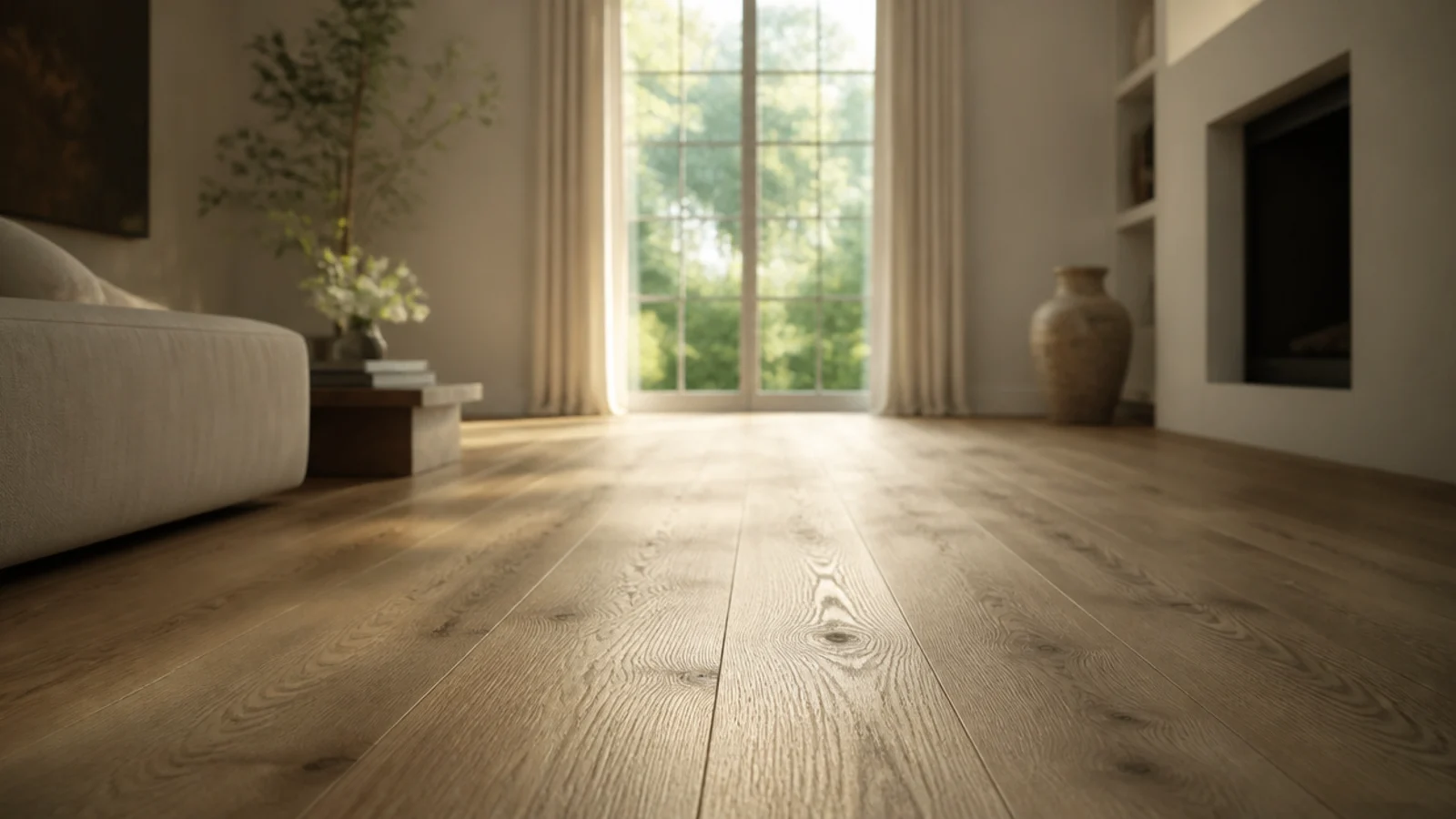
Two floors cut from the same log can behave completely differently for fifteen years, and the difference is almost never the timber. Oak wooden flooring is sold on species and grade, but the finish is what you actually live with — how it looks in evening light, whether a scratch can be repaired without resanding a room, and what it costs to keep. I have specified all fifteen of the finishes below, lived with four, and been back to see most of them years later. Here they are, compared honestly on price and on repairability.
In this guide10 sections — tap to openHide
How I Chose These Oak Wooden Flooring Finishes
I judged every finish on five things, in this order.
- Repairability. The single most important quality and the one nobody asks about in a showroom. A penetrating finish lets you fix one scuffed square metre in an afternoon. A film finish means the repair always shows as a halo, so the honest answer is to sand the whole room. Over fifteen years this decides the real cost more than the price per square metre does.
- How it ages, not how it looks new. Surface colour applied over pale oak wears through in traffic lanes. Colour developed in the timber — fuming, smoking, reactive treatments — shows the same tone at the bottom of a scratch. I weighted through-colour heavily and marked film stains down hard.
- Maintenance interval and effort. An oiled floor asks for a morning every two to five years, annually in a hallway. A lacquered floor asks for nothing for eight to twelve years and then asks for everything at once. Neither is wrong, but people should choose knowing which pattern suits them.
- Sheen behaviour in real light. Floors are judged in low raking daylight and by lamps 400 to 600mm off the ground, not under showroom spots. Matte at 5 to 10 gloss units hides scratches; semi-gloss at 55 shows every one. Texture and sheen have to be chosen together.
- Cost across fifteen years. Purchase price, fitting, refresh coats and the eventual sand, added up. The cheapest finish to buy is rarely the cheapest to own.
Everything below is described by type and construction rather than by product name, because the same formulation appears under many labels and the chemistry is what you are actually buying.
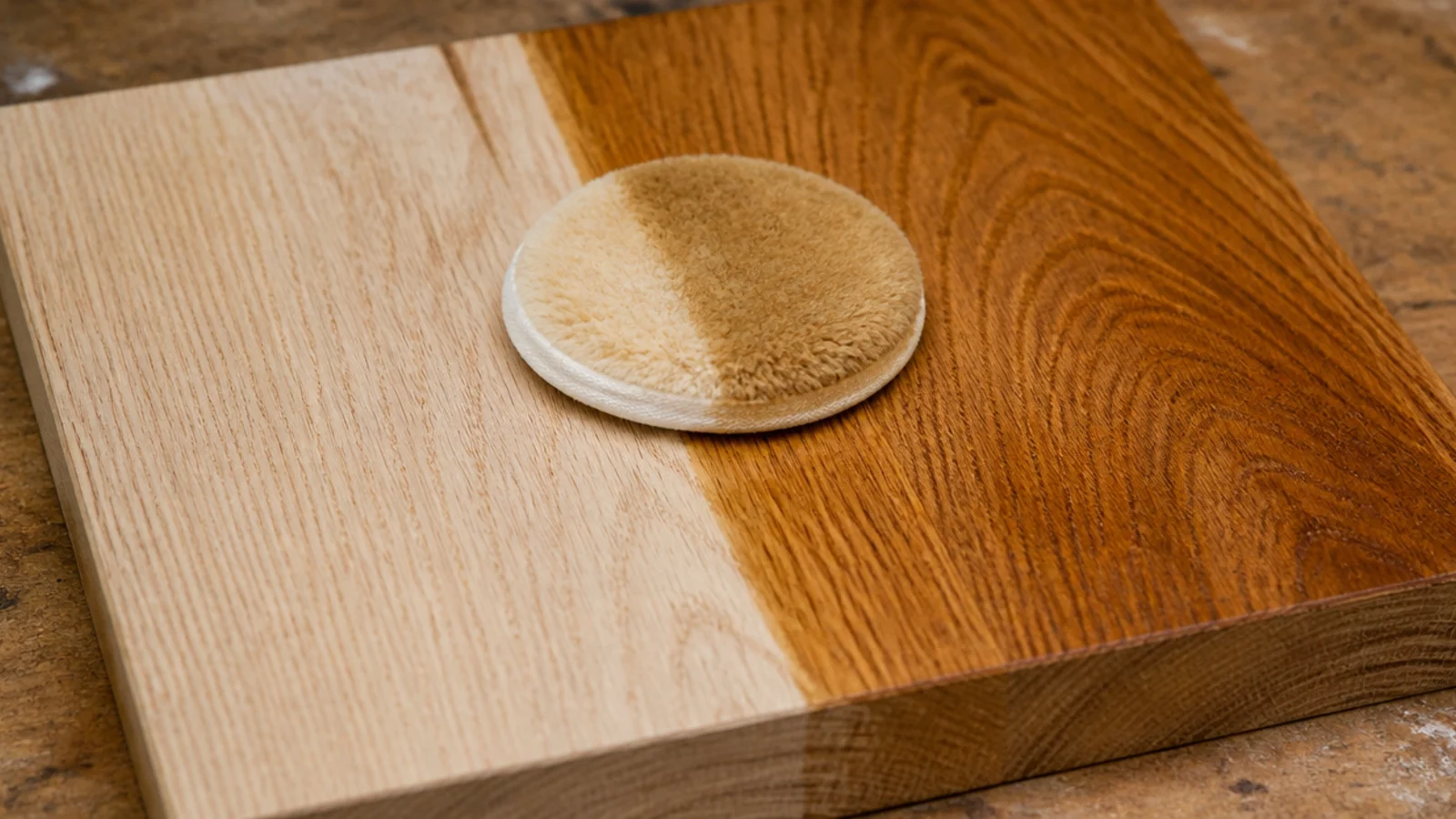
The Full Comparison: 15 Oak Finishes
Price bands are for the finish itself, applied: £ under £25 per square metre · ££ £25 to £45 · £££ over £45. Factory finishes are shown as the premium over an unfinished board of the same grade.
| Finish | Coats | Best for | Refresh interval | Price |
|---|---|---|---|---|
| Raw unfinished oak | 0 | Full control on site | Finish before use | £ |
| Natural hardwax oil | 2 | Family homes, repairability | 2 to 5 years | ££ |
| Lye plus white oil | 2 plus 2 | The palest floor that lasts | 12 to 18 months | £££ |
| Factory UV-cured matte lacquer | 7 or more | No sanding, no disruption | 8 to 12 years | ££ |
| Site water-based lacquer | 3 to 4 | Clear tone over pale oak | 6 to 10 years | ££ |
| Oil-modified polyurethane | 3 | Warm amber tone, low cost | 6 to 10 years | £ |
| Brushed and oiled | 2 over brushing | Dogs, children, grit | 2 to 5 years | ££ |
| Fumed oak | Through colour | Sunny rooms, deep brown | 2 to 5 years | £££ |
| Smoked and brushed | Through colour | Depth without stain | 2 to 5 years | £££ |
| Reactive stain | 1 plus topcoat | Cloudy, aged character | 3 to 5 years | ££ |
| Pigmented grey hardwax oil | 2 | Cool tones with grain visible | 2 to 4 years | ££ |
| Limed oak | 1 plus topcoat | Pale grain against warm field | 3 to 5 years | ££ |
| Antiqued and distressed | 2 | Instant age, hides movement | 3 to 5 years | £££ |
| Two-pack polyurethane | 3 | Heavy traffic, hard surface | 10 to 15 years | ££ |
| Aluminium-oxide factory finish | 7 or more | Hallways, rentals, longevity | 12 to 20 years | £££ |
Seven of those are the ones I specify again and again.
1. Natural hardwax oil
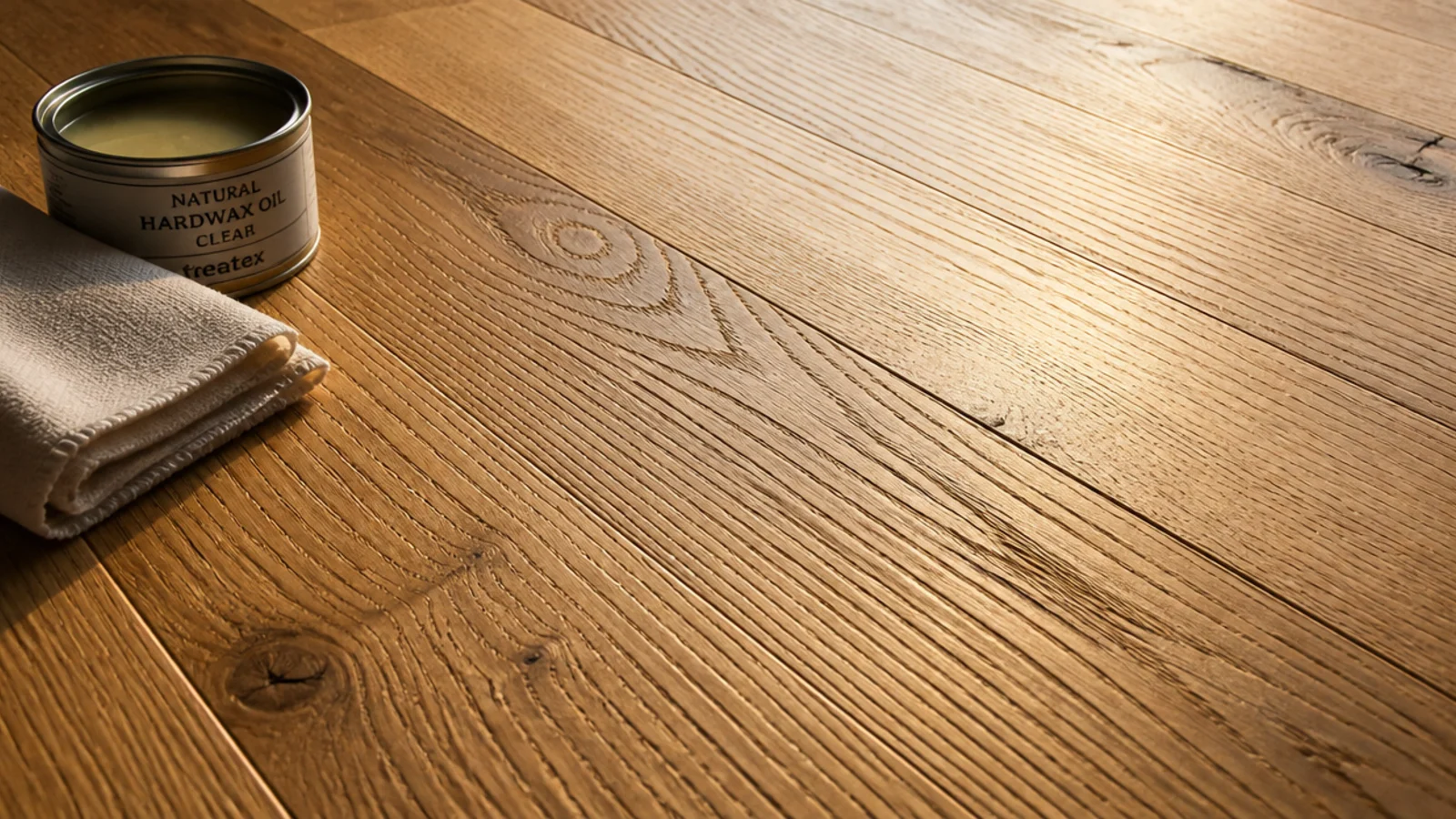
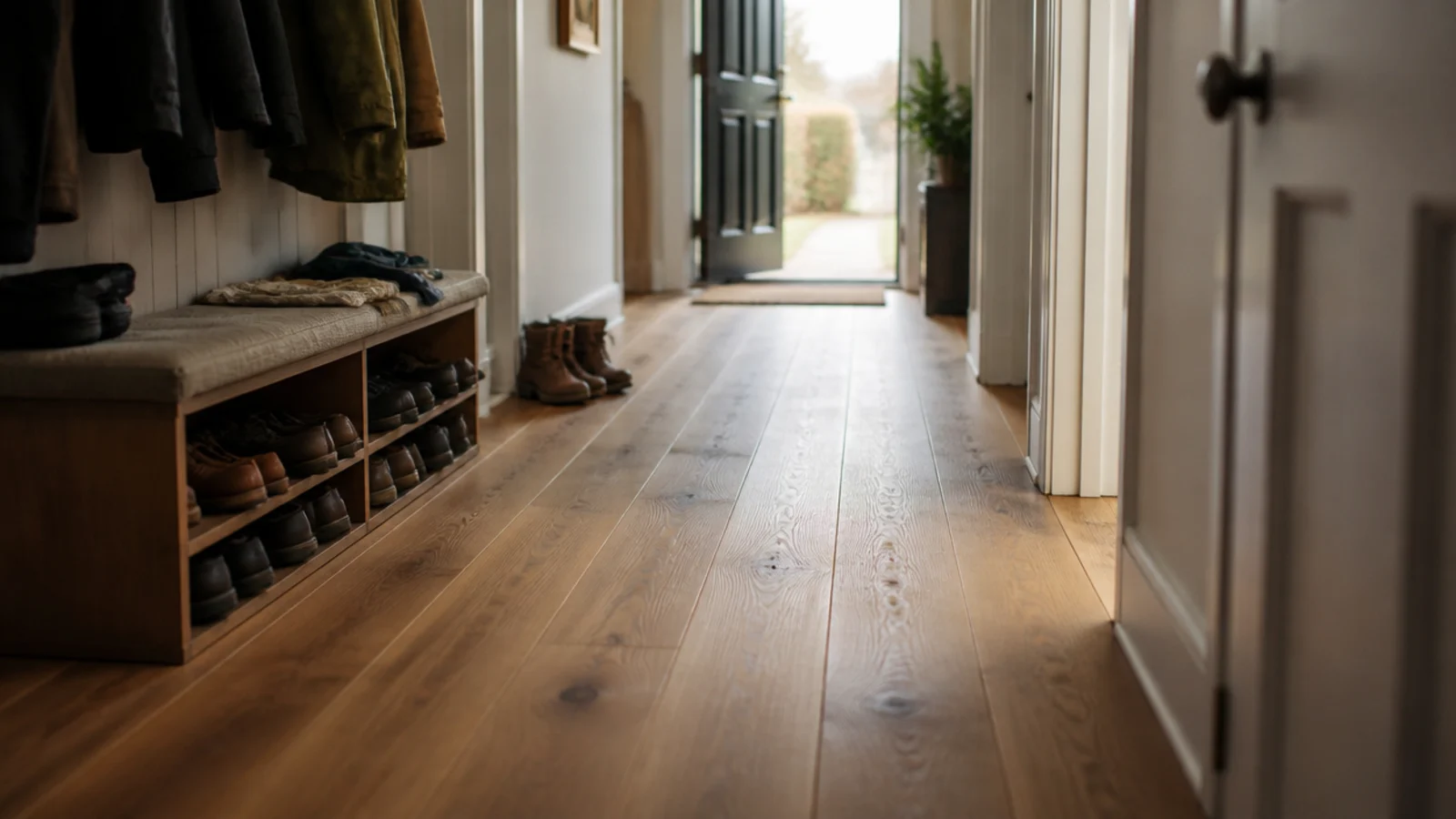
The default recommendation for a family home, and the finish I have in my own. Two coats of a hardwax oil penetrate the timber and leave a low sheen at roughly 5 to 10 gloss units, so the floor still feels like wood underfoot rather than like a coated surface.
It earns its place on repairability. A scuffed metre gets cleaned, abraded with a fine pad and re-oiled in an afternoon, and the repair disappears rather than ringing. Refresh coats run every two to five years in a living room, annually in a hallway. Expect around £25 to £40 per square metre applied on site, and a litre tin for each subsequent refresh.
2. Factory UV-cured matte lacquer
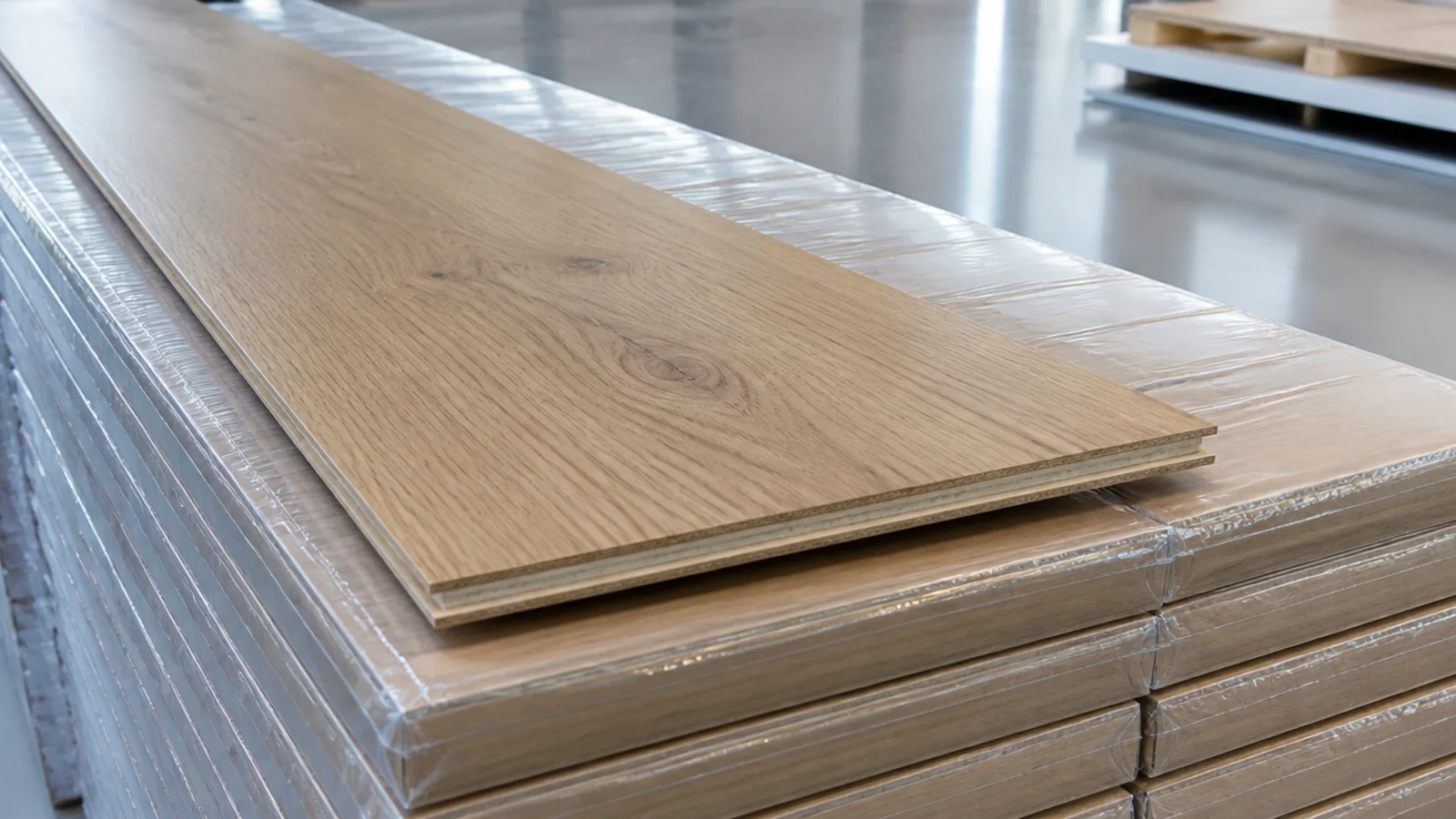
The practical choice when you cannot lose a week to sanding and finishing. Boards arrive with seven or more coats cured under ultraviolet lamps, which is far harder than anything achievable on site, and the floor takes furniture the same day it is laid.
The catch is repair. A deep scratch through the lacquer cannot be spot-fixed; you either live with it or sand the room and start again. Choose matte rather than satin — factory sheen is uniform and unforgiving, and matte hides far more. Expect a premium of roughly £8 to £18 per square metre over an unfinished board.
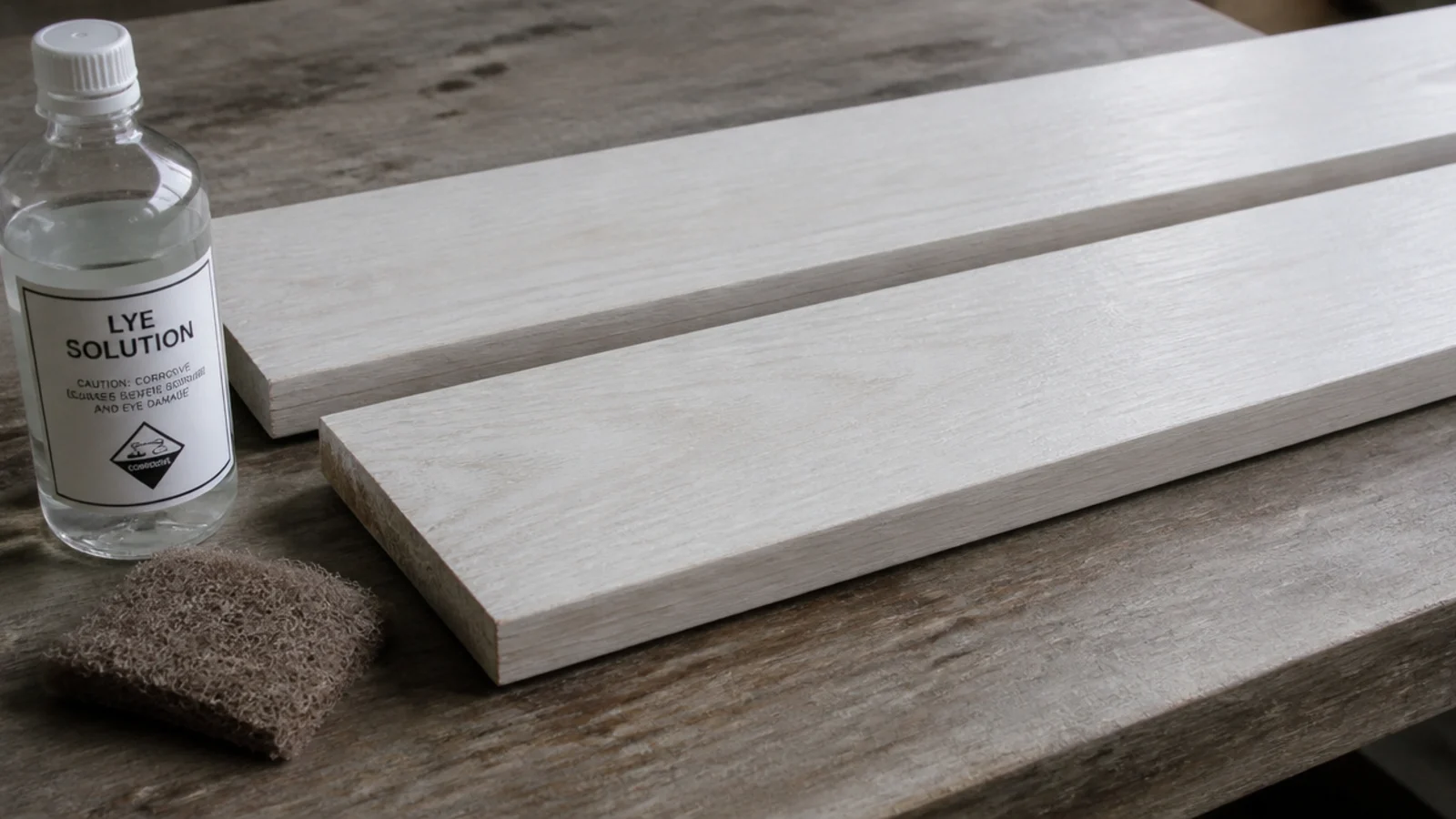
3. Lye and white oil
The palest oak floor that genuinely stays pale. Lye neutralises the tannin that makes oak amber over time, and a white-pigmented hardwax oil sits in the grain over the top. Two coats of each, applied in sequence, and the result reads close to raw sawn timber.
It is the highest-maintenance finish here, wanting a refresh every twelve to eighteen months in a busy room. That is the honest cost of a floor this pale. It is also the finish most damaged by a wet mop, so budget for good habits alongside it. Around £45 to £70 per square metre applied.
4. Brushed and oiled
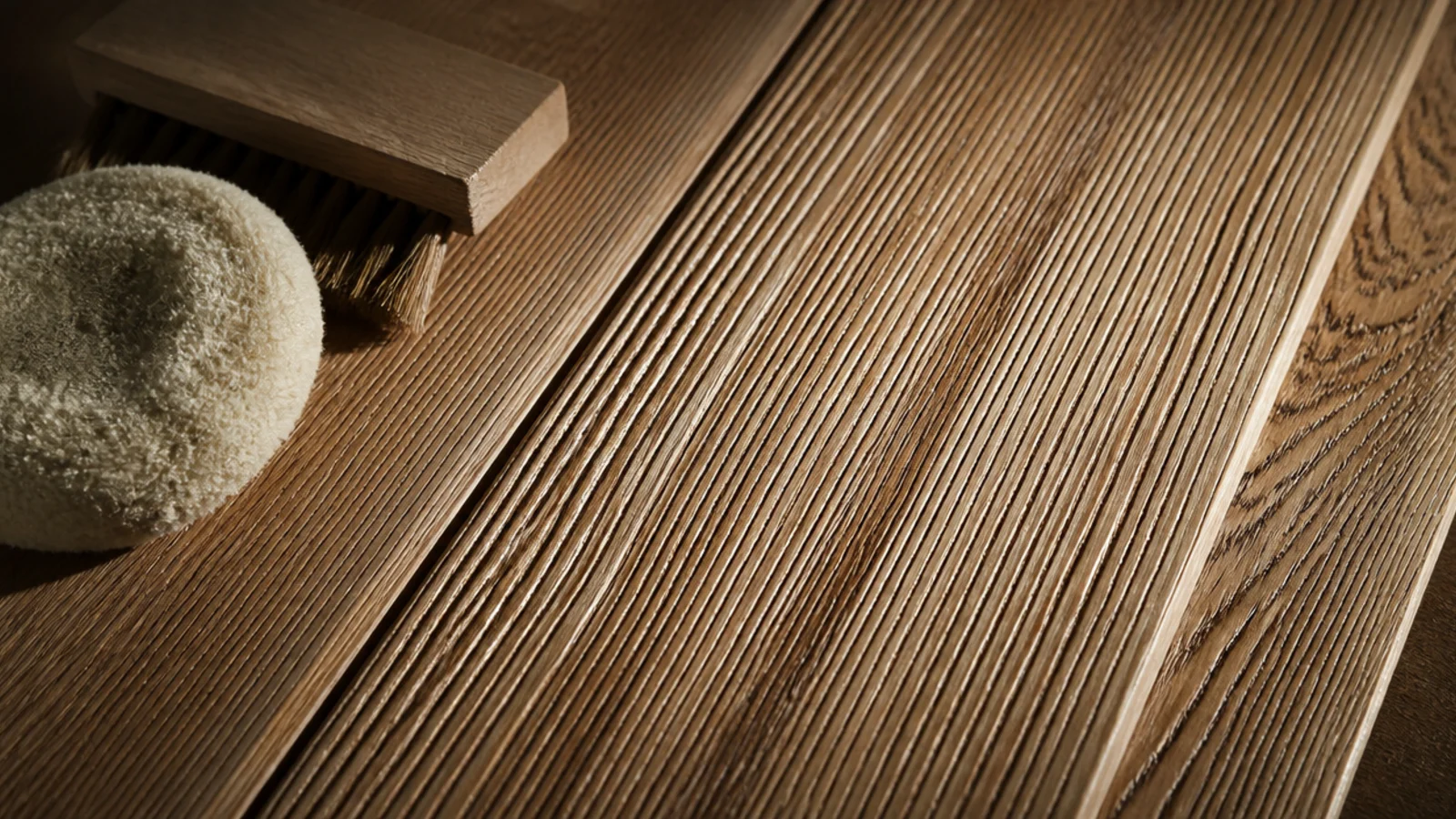
Not a finish on its own so much as a preparation that changes everything after it. Wire brushing removes the soft early wood to leave 0.3 to 0.6mm of grain relief, and the oil settles into those grooves.
Scratches fall into the texture instead of crossing a flat plane, which makes this the most forgiving surface in a house with dogs or children. It also grips better underfoot than a smooth floor. Brushing adds roughly 10 to 20 percent to the board cost, and it needs 4mm or more of wear layer to be viable at all. The wooden flooring texture guide covers relief depths in more detail.
5. Fumed and smoked oak
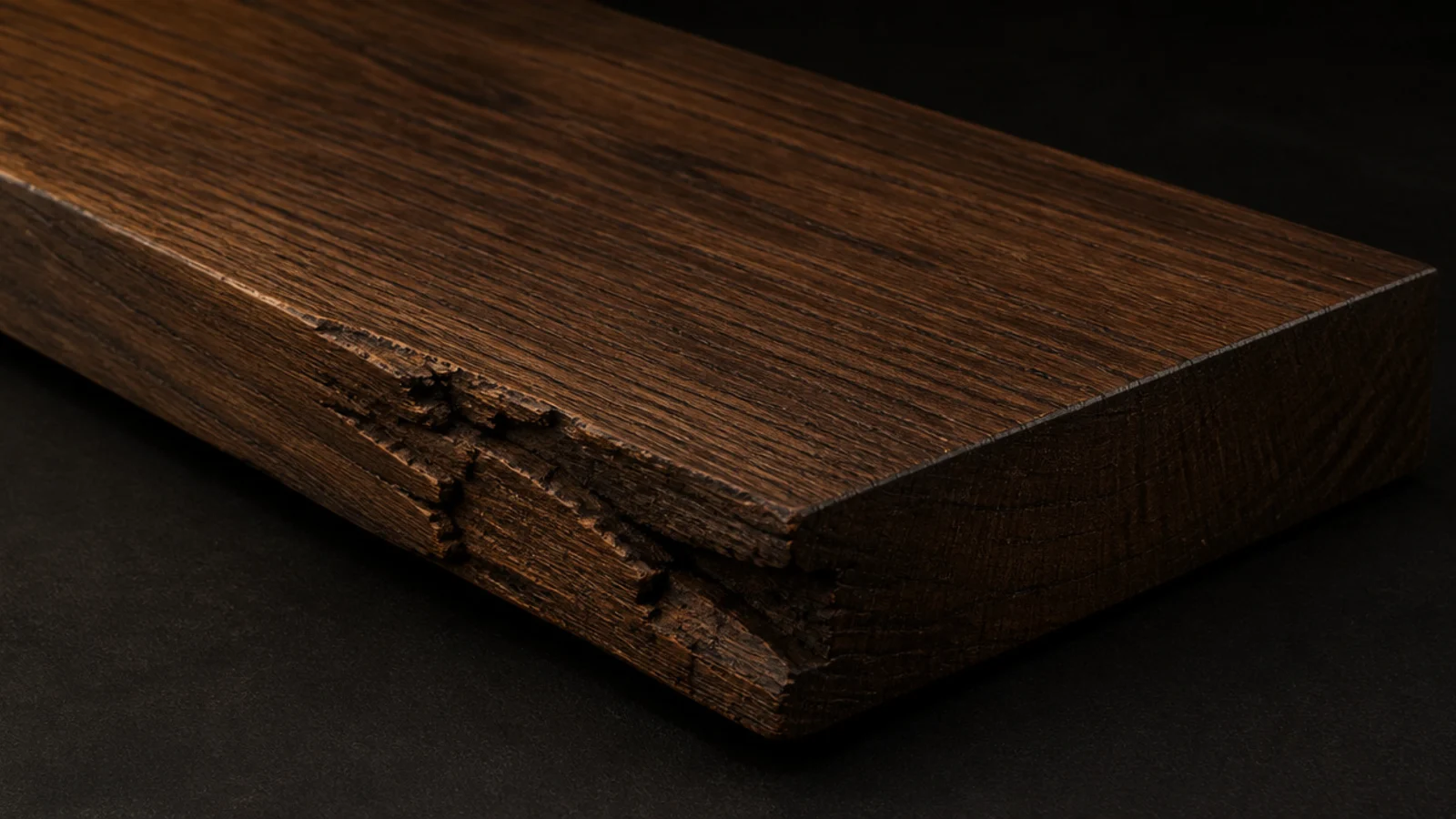
Colour developed rather than applied. Ammonia vapour reacts with the tannin in oak and darkens it right through the wear layer, so a chip shows the same tone underneath instead of raw pale wood.
It is the only way I would specify a dark or grey-brown oak floor in a sunny room, because ultraviolet light keeps working on timber under a surface stain and shifts it within two or three summers. Tannin varies board to board, so expect real colour variation across a pack — that unevenness is the character, not a defect. Around £50 to £90 per square metre for the treated board.
6. Site-applied water-based lacquer
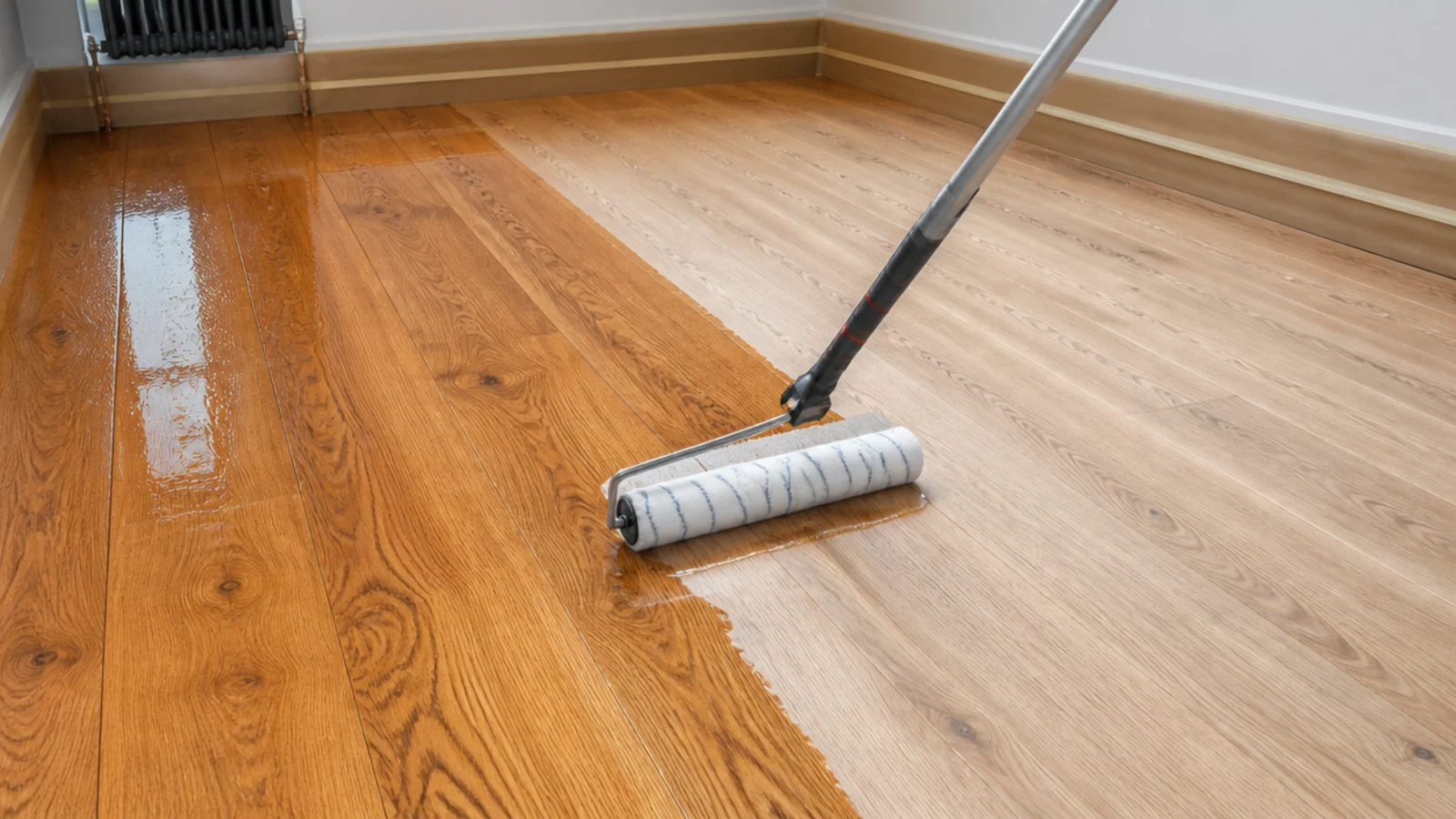
The right answer when you want a lacquered floor over pale oak. Water-based formulations are non-yellowing, where an oil-modified polyurethane ambers noticeably within two or three years and shows it most on light timber.
Three coats is standard, four in a hallway or kitchen, and it is touch dry in hours but keeps curing for seven to fourteen days — keep rugs and heavy furniture off for a full week. It costs roughly 20 to 30 percent more per litre than oil-modified and smells far less while it cures. Around £25 to £45 per square metre applied.
7. Aluminium-oxide factory finish
The hardest wearing surface available on an oak floor, with aluminium-oxide particles suspended in a factory-cured lacquer. Long wear warranties are common, and in a rental or a busy entrance hall it will outlast everything else on this list without attention.
Understand the trade before choosing it. When it eventually wears through, there is no in-place repair and no partial recoat — the aggregate makes the surface difficult to key for a new coat, so the route back is a full sand. It is the finish I recommend for hallways and lettings, and rarely for a home someone intends to keep for decades. A premium of roughly £12 to £25 per square metre.
What to Check Before You Buy
Ask what the finish is made of, not what it is called. Marketing names tell you nothing. The useful questions are whether it is penetrating or film-forming, whether it is water-based or oil-modified, and how many coats have actually been applied. A supplier who cannot answer those three is guessing.
Check the wear layer if the board is engineered. Two millimetres allows one sand across the floor's life, three allows two, and four to six allows three or more. Brushing and texturing consume around half a millimetre before the floor is even laid, so a textured board on a 2mm wear layer has no future sand in it.
Look at a full-size sample in the actual room for a week. Oak changes more between daylight and lamplight than people expect, and a board that reads warm at 4pm can read grey at 9am. Judge it at both ends of the day, on the floor, not held up against a wall.
Confirm the sheen number. Matte at 5 to 10 gloss units, satin at 25 to 35, semi-gloss at 55 and above. Ask for the figure rather than the adjective, because one supplier's satin is another's matte and the difference is visible in every low-angle beam of light.
Work out the fifteen-year cost, not the delivery cost. An oiled floor is cheaper to buy and asks for a morning's work every few years. A factory-lacquered floor costs more up front, asks for nothing, and then asks for a full sand. Both are reasonable; choose knowing which one you will actually do.
Ask whether knots come open or resin-filled. In character-grade oak this is the single largest visual difference between two boards sold under the same name, and it is rarely stated in the listing. Black filler in a pale board is the detail people most often dislike after the fact.
Buy a spare pack from the same batch. Tone varies between production runs, and a board bought two years later will never match. One extra pack stored flat and dry is what lets you cut out a water-damaged board rather than relay a room.
Frequently asked questions
Which oak floor finish lasts longest?
A factory-applied aluminium-oxide lacquer is the hardest surface you can buy and often carries a long wear warranty. It lasts longest before it needs anything, but when it does fail the only route back is a full sand, which is why I still specify oil in most homes.
Is oiled or lacquered oak better for a family home?
Oiled, in almost every case. A lacquer is a film across the surface and damage means resanding a whole room. Hardwax oil penetrates, so a scuffed area is cleaned, abraded and re-oiled in an afternoon for the price of a tin, without a halo where the repair meets the old finish.
How much does finishing an oak floor cost?
Site sanding and finishing typically runs twenty-five to forty-five pounds per square metre depending on the number of coats and the condition of the boards. A factory-finished board costs more per square metre up front but removes the sanding stage and the days of disruption entirely.
What is the difference between white oak and red oak?
White oak is slightly harder, has tighter closed pores and a cooler brown tone that takes grey and smoked treatments well. Red oak is a little softer with open pores and a pink undertone that fights cool stains. For a modern floor, white oak is the safer choice.
How often does an oiled oak floor need recoating?
Every two to five years in a living room or bedroom, and annually in a hallway or kitchen where grit and traffic are constant. A refresh coat takes a morning, needs no sanding and costs the price of a litre tin, which is what makes oiled floors cheap to own.
Choose the finish for how you want to maintain the floor rather than for how it photographs on delivery day — that single reframing gets people to the right answer nine times out of ten. For the surface treatments underneath these finishes, the wooden flooring ideas guide covers species, width and grade, corner shelving keeps furniture off a floor you have just paid to finish, and area rug sizing decides how much of that oak stays visible.
Want more like this? Browse all 15 wooden flooring guides — they all use the same measurements and budget tiers.
Pin it for later
Save this to your Wooden Flooring board
Pin it now so it is waiting for you when the tape measure comes out — and so the next person hunting for this idea can find it too.
Save this pinKeep going
More ideas worth saving while you have the tape measure out.