Wooden Flooring · Listicle
20 Wooden Flooring Texture Looks Designers Love

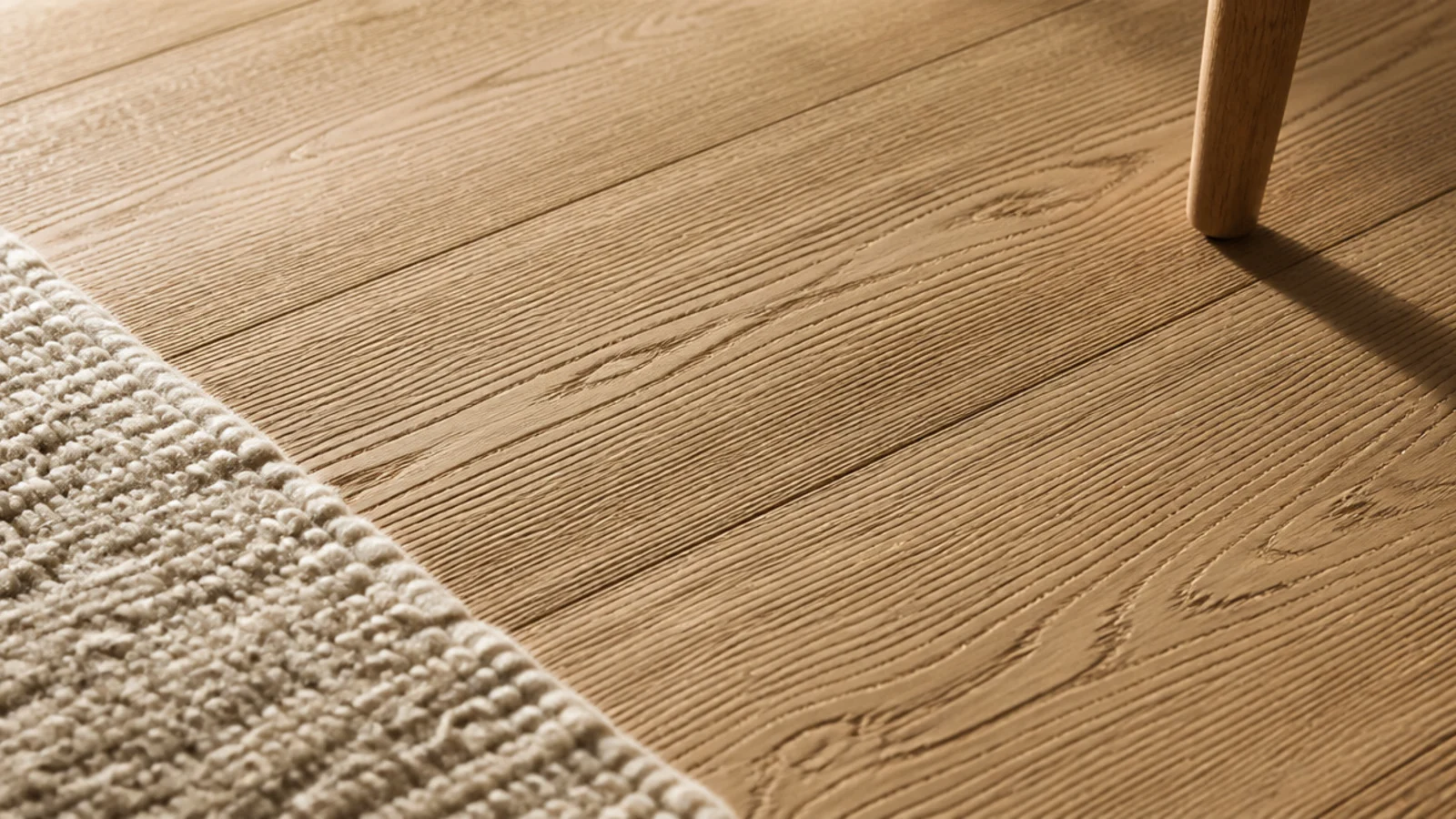
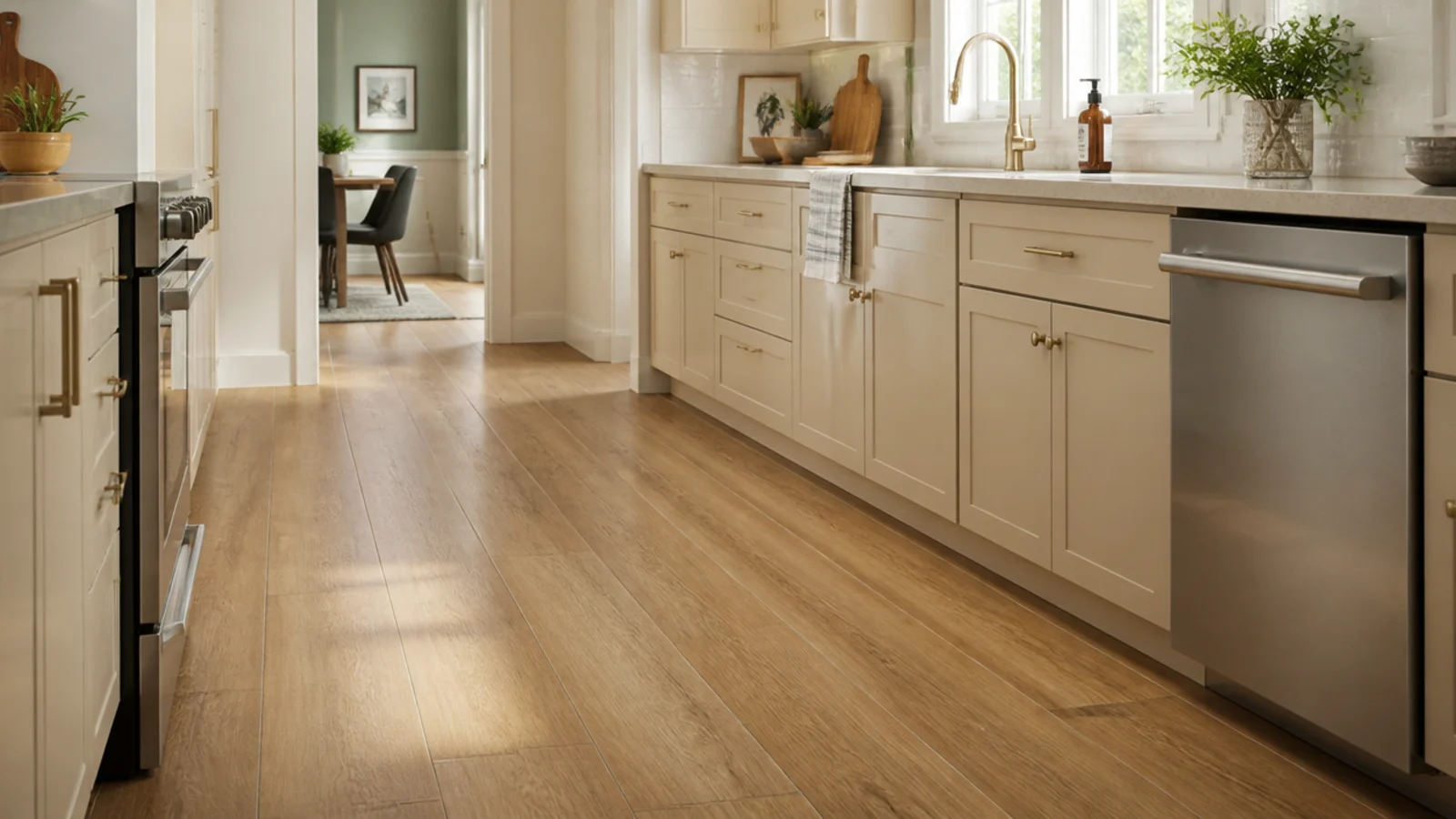
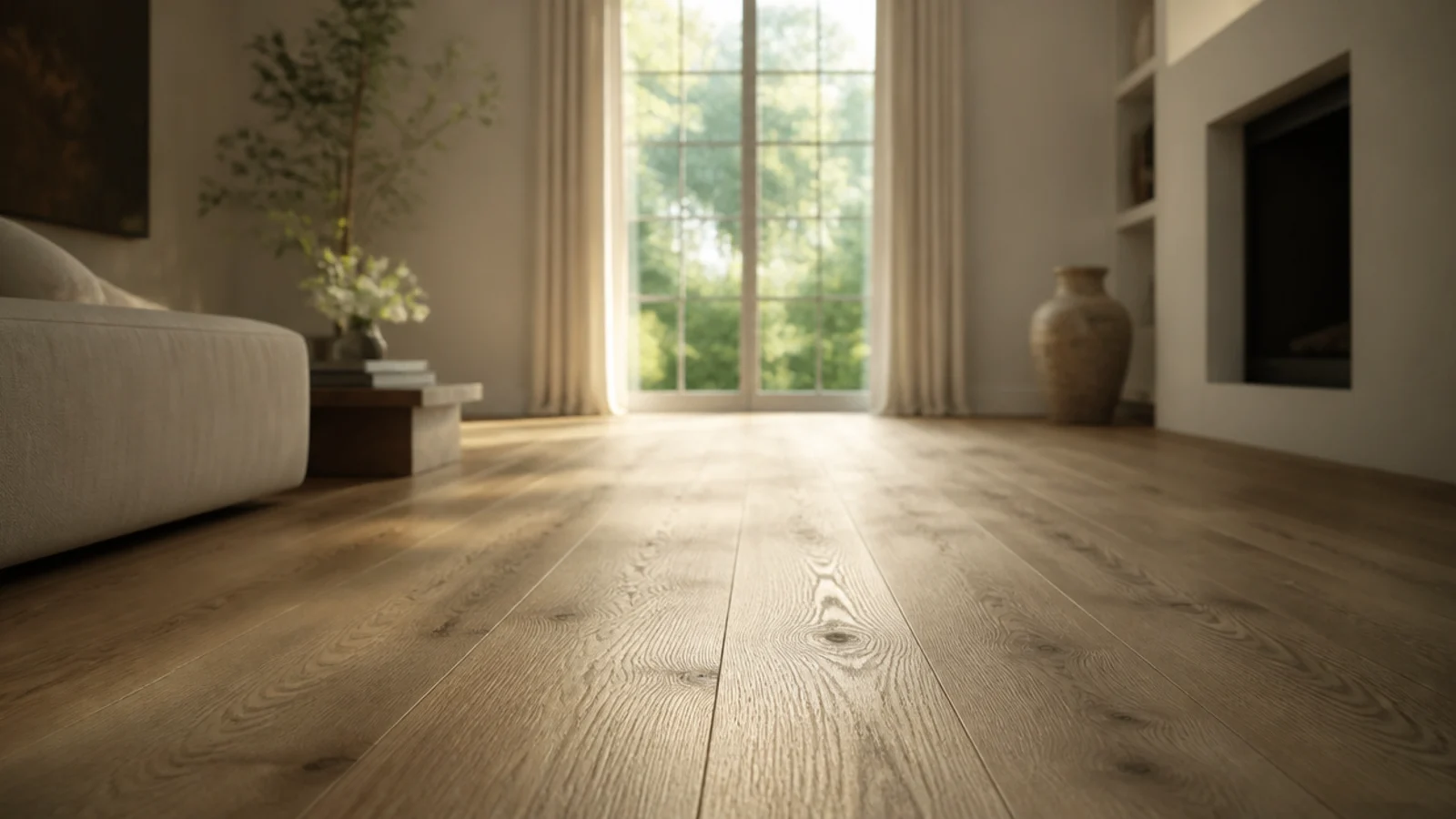
Colour is what people choose a floor by and texture is what they live with. A smooth, high-sheen board looks immaculate in a showroom and then spends a decade collecting every scuff at eye-catching angles. Wooden flooring texture changes that: brushing, scraping, sawing or liming a surface gives light somewhere to break up, and damage somewhere to hide. It also changes how the floor feels barefoot, how much grit it holds, and how slippery it is at the bottom of a staircase. These twenty surfaces are the ones I keep specifying, with the numbers that separate them.
In this guide22 sections — tap to openHide
- 1.What wooden flooring texture actually does underfoot
- 2.Wire-brushed grain with half a millimetre of relief
- 3.Hand-scraped scallops across the board face
- 4.A bandsawn face left deliberately unsanded
- 5.Limed grain with white pigment in the pores
- 6.Smoked and brushed for depth without stain
- 7.Matte at five to ten gloss units
- 8.Satin at twenty-five to thirty-five for family rooms
- 9.Micro-bevel shadow lines versus a square edge
- 10.Rift and quartered grain for a quiet floor
- 11.Plainsawn cathedral figure as the pattern
- 12.Live-sawn boards that mix every grain in one plank
- 13.Tumbled and antiqued edges for an aged floor
- 14.Open knots left visible instead of resin filled
- 15.End-grain blocks for a workshop floor
- 16.Hand-planed undulation you feel barefoot
- 17.Reactive stain that colours the grain unevenly
- 18.Embossed-in-register texture on wood-look planks
- 19.Brushed grain under a pigmented hardwax oil
- 20.A wide chamfer for a barn conversion floor
- 21.Silk-matte lacquer over underfloor heating
- 22.Mistakes to Skip
What wooden flooring texture actually does underfoot
Texture is measured in three ways, and each one predicts a different part of how the floor ages.
Relief depth. Brushing removes soft early wood to leave 0.3 to 0.6mm of grain standing proud. Hand-scraping cuts shallow scallops of 1 to 2mm. A sawn face keeps blade marks around 0.2mm deep. The deeper the relief, the better it hides a scratch and the more dust it holds.
Sheen. Matte sits at 5 to 10 gloss units, satin at 25 to 35, semi-gloss at 55 and up. Sheen and texture work together: a brushed floor in semi-gloss looks wet, and a smooth floor in dead matte marks with every rubber sole.
Wear layer left over. Texturing costs thickness. Brushing needs at least 4mm of wear layer if you want a future sand, which rules it out on a 2mm engineered board or a solid floor already sanded twice.
Cost band is narrow: brushing and liming add roughly 10 to 20 percent to a board, hand-scraping 25 to 40. For how texture reads at different plank sizes, the wooden plank flooring steps cover width and length together.
1. Wire-brushed grain with half a millimetre of relief
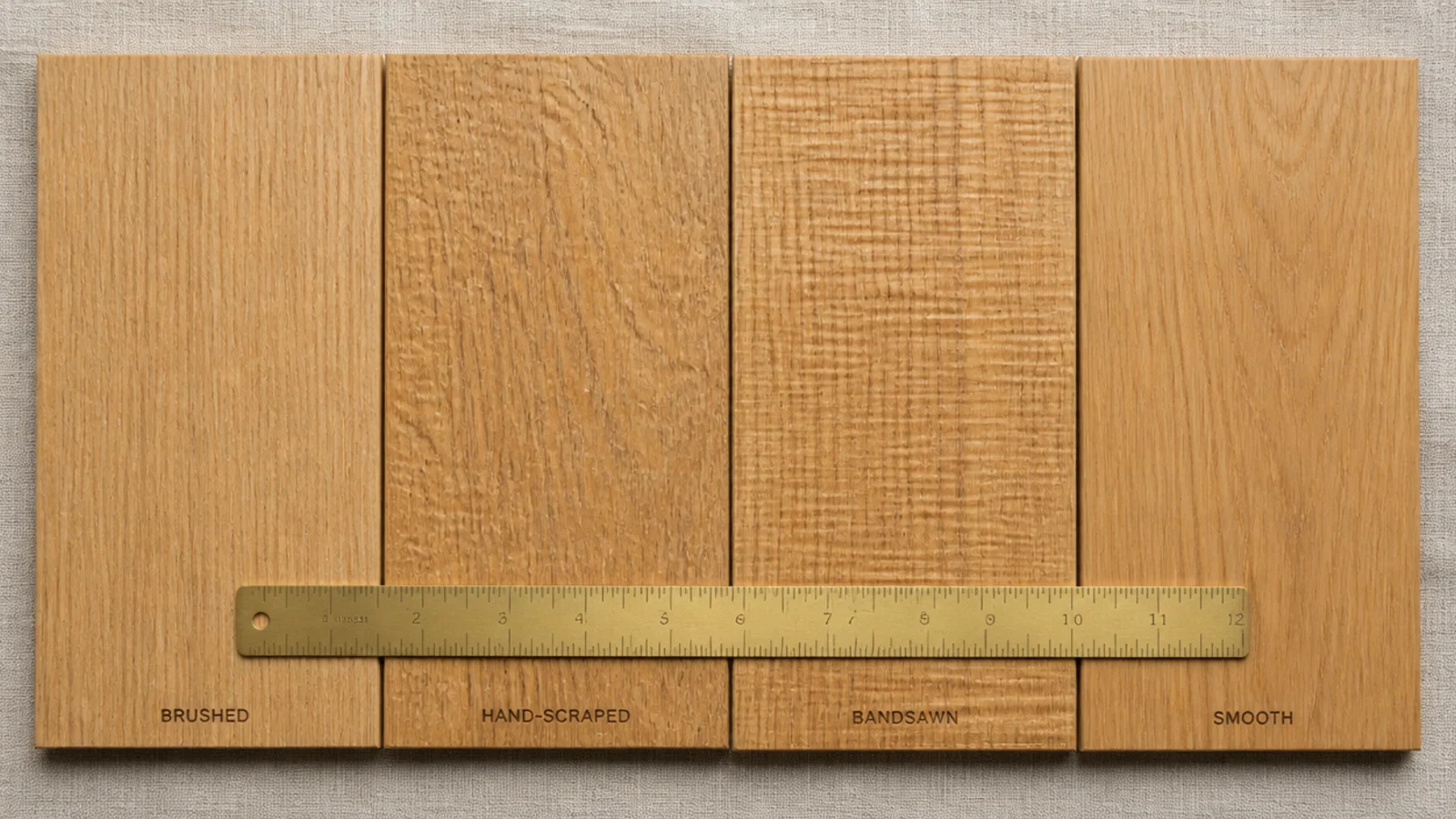
The default textured surface, and the one I would choose in a house with dogs or children. Steel or nylon brushes scrub out the soft spring growth and leave the dense grain proud by 0.3 to 0.6mm. Scratches drop into the grooves rather than crossing a flat plane, so the floor stays readable rather than looking damaged. It suits oak best, because oak has the pore structure to respond.
2. Hand-scraped scallops across the board face
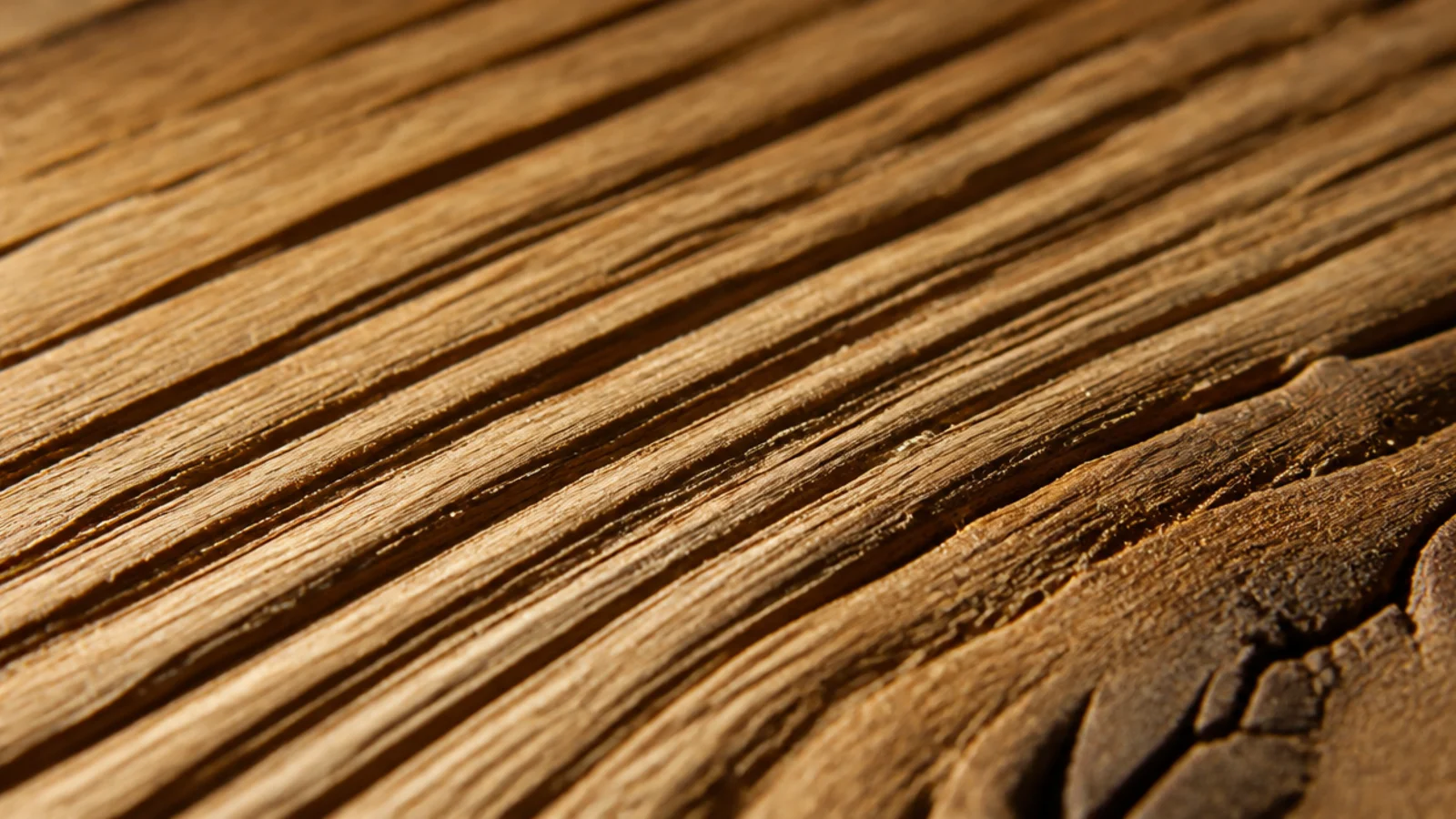
Scraping cuts shallow dishes 1 to 2mm deep along the length of the board with a drawknife or scraper. The result breaks reflection into soft ripples, which is why a scraped floor photographs so well in low light. Genuine hand-scraping adds 25 to 40 percent to the board price; machine-scraped versions repeat a pattern every metre or so, and once you spot the repeat you cannot unsee it.
3. A bandsawn face left deliberately unsanded
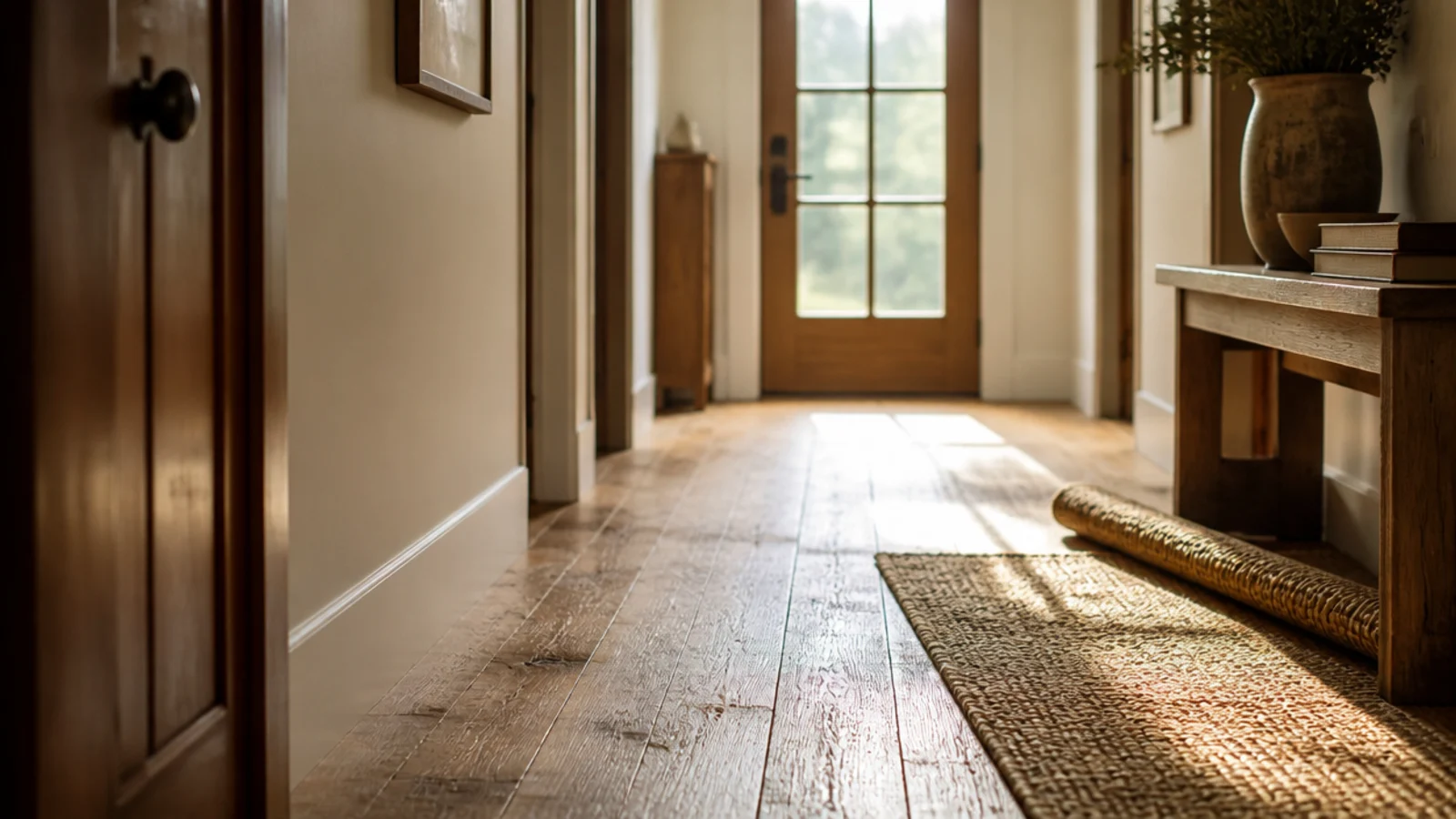
Instead of sanding the board flat, the sawn face is left as it comes off the blade and finished over. The faint parallel marks are around 0.2mm deep and read as workshop rather than accident. It is a quiet texture — you feel it before you see it — and it works beautifully under a matte oil in a room with plaster walls and a lot of daylight.
4. Limed grain with white pigment in the pores
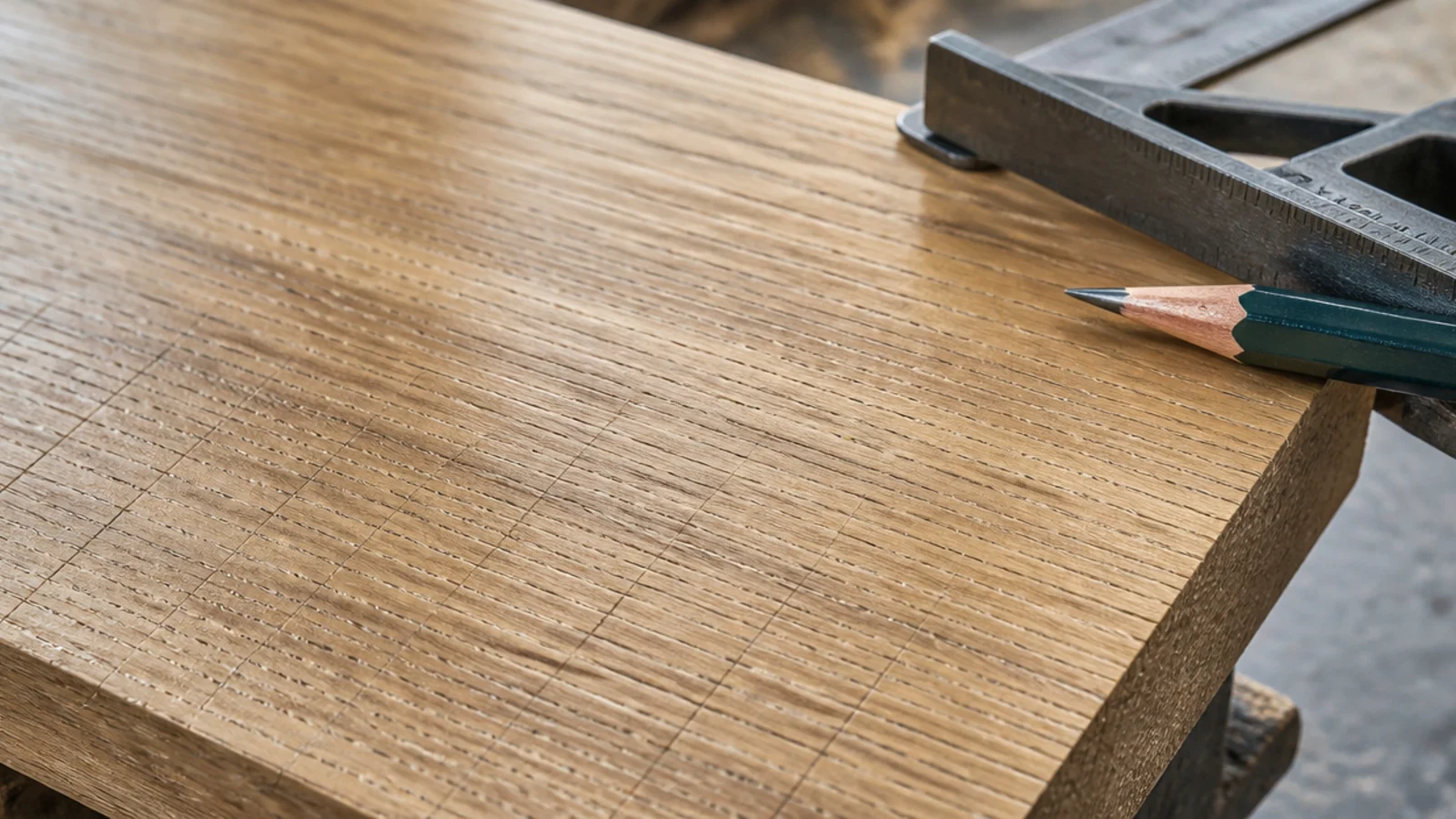
Liming pushes white pigment into the open grain and wipes it back off the surface, so you get pale lines against a warmer field. On oak the contrast is strong, on ash softer, and on maple it barely registers because the pores are too small. Best applied over a brushed face, where the pigment has somewhere to sit. Expect it to lift a room by roughly a full shade without going white.
5. Smoked and brushed for depth without stain
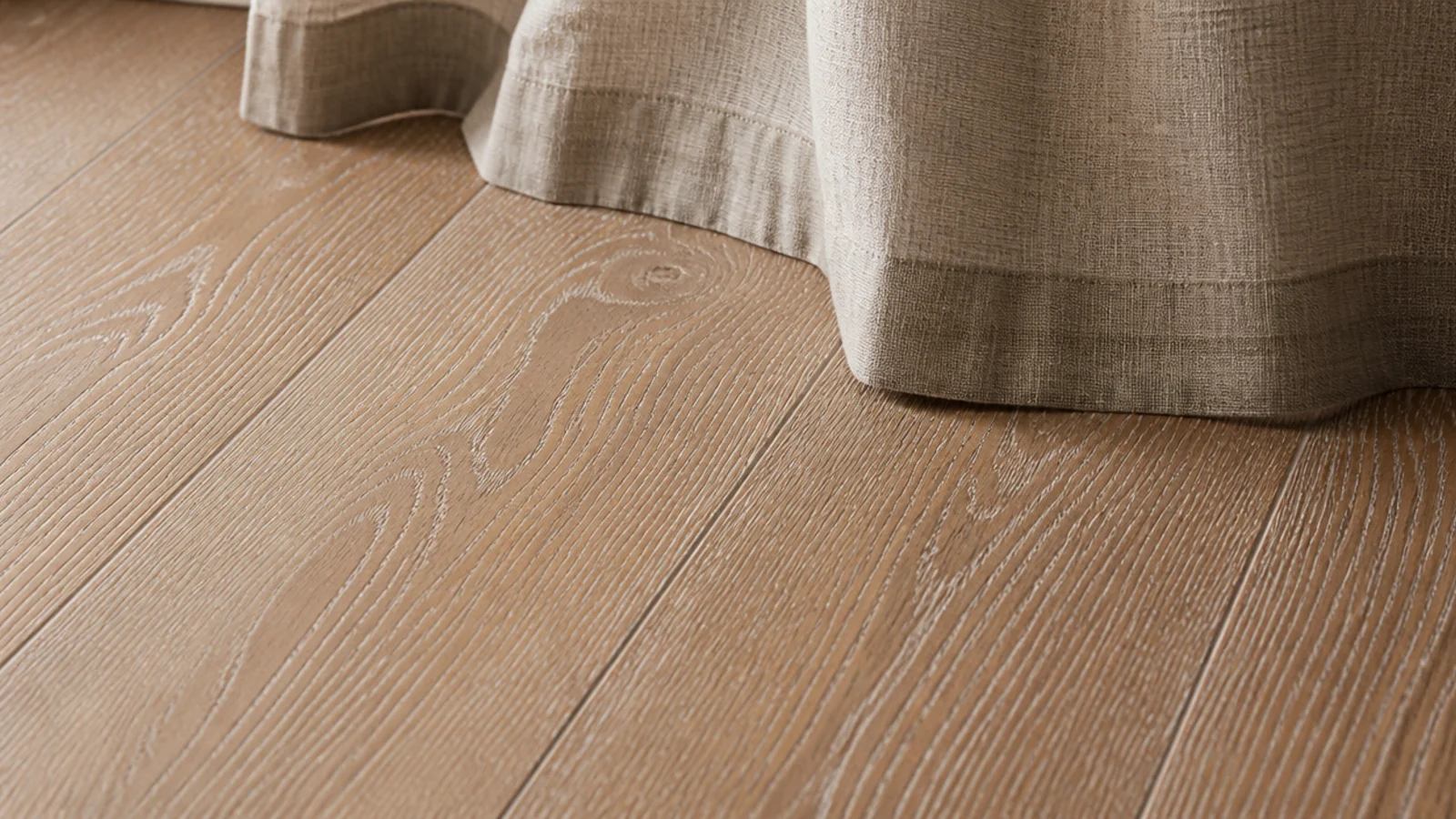
Smoking reacts ammonia with the tannin in oak so the colour develops in the timber, then brushing opens the grain over the top. The result is a deep brown that shows the same tone at the bottom of a scratch as on the surface. Tannin content varies board to board, so expect real colour variation across a pack — that unevenness is the point, not a fault.
6. Matte at five to ten gloss units
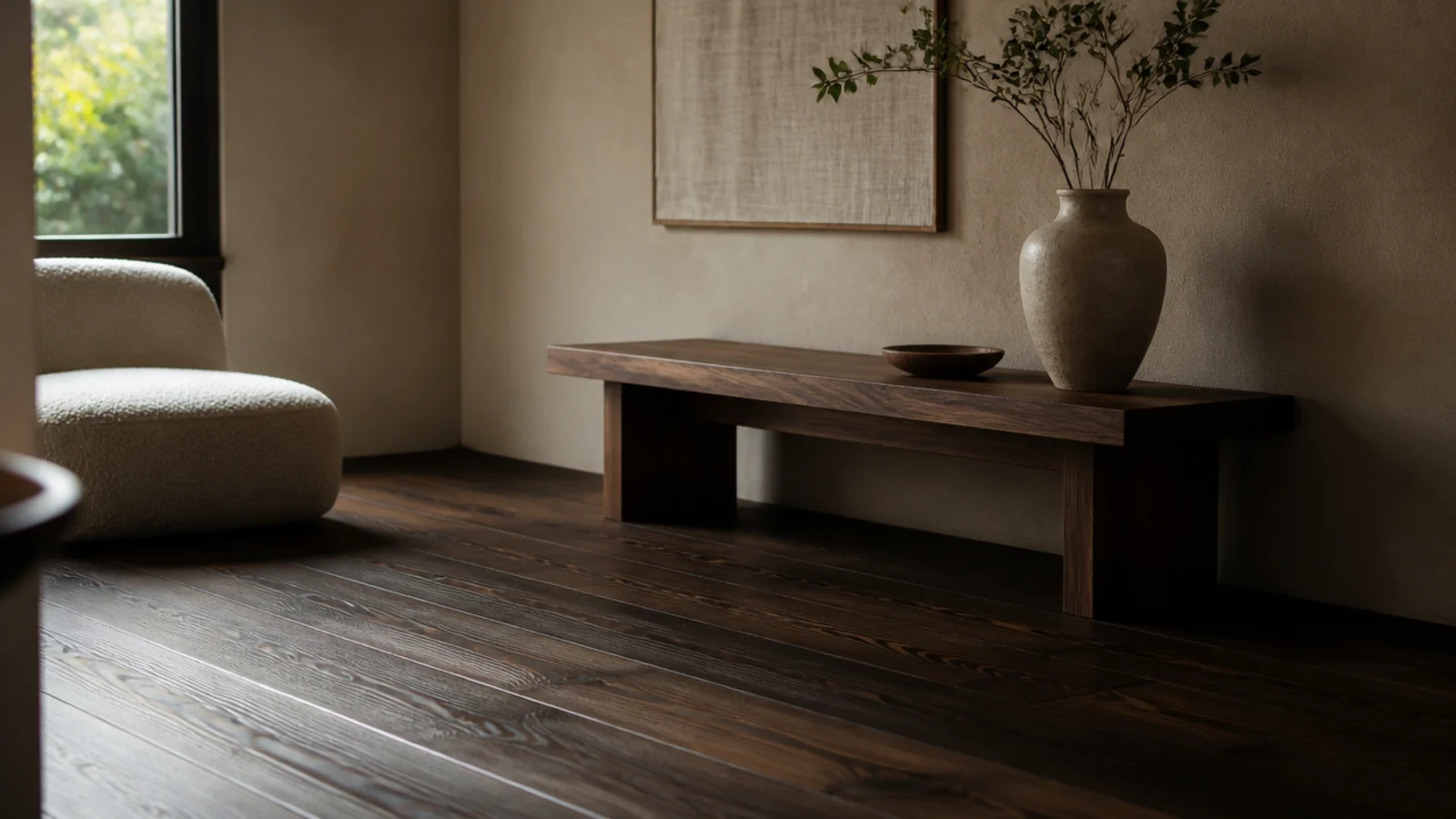
Matte is the finish that lets texture do its job. At 5 to 10 gloss units the surface scatters light instead of mirroring it, so the window never appears in the floor and a scratch has no bright line to catch. The trade is that dead matte on a smooth board shows rubber marks, so pair the lowest sheens with a brushed or scraped face.
7. Satin at twenty-five to thirty-five for family rooms
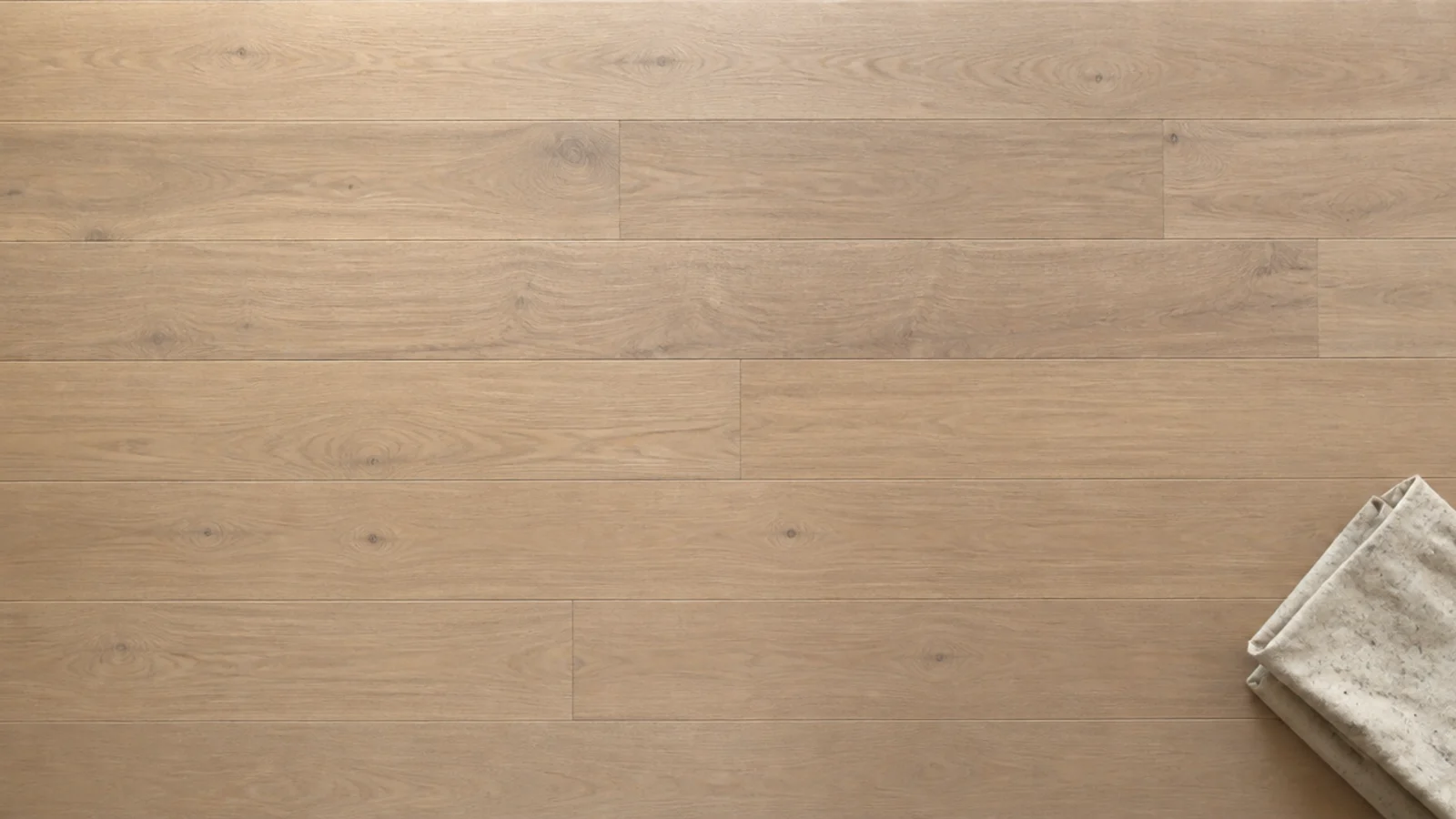
Satin is the practical middle. Enough sheen to wipe clean and to keep a warm glow in evening light, not so much that every mark reads. It is the standard for site-applied polyurethane and the sensible default for a smooth board in a busy room. Put three coats down, four if the room connects to a front door or a kitchen.
8. Micro-bevel shadow lines versus a square edge
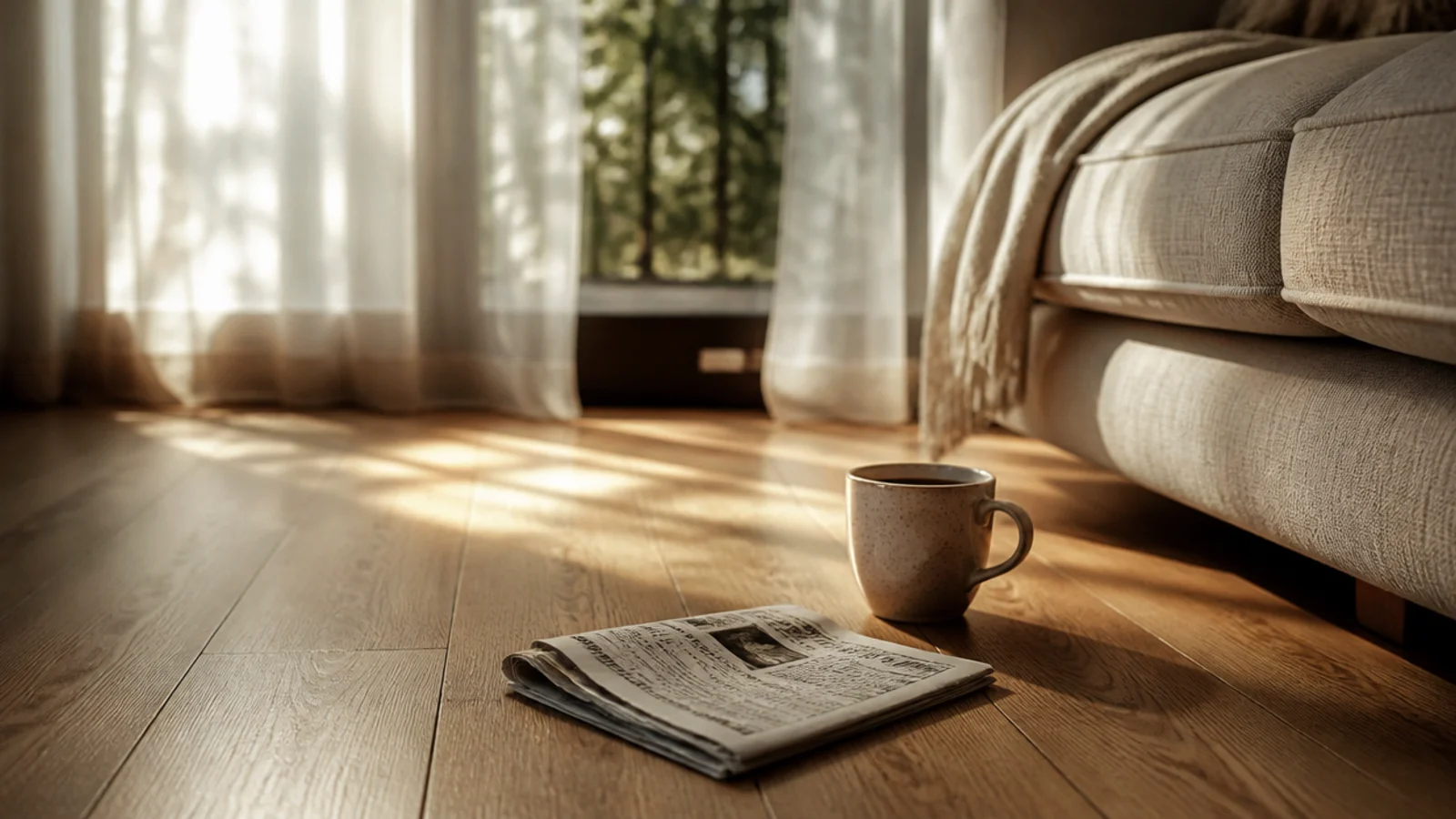
The edge is texture too. A 1 to 2mm micro-bevel draws a fine shadow line around every board, which suits rustic grades and forgives a subfloor that is not flat to 3mm over 2 metres. A square edge gives one continuous plane and looks contemporary, but it needs a genuinely flat substrate or the joints will show as ridges you feel underfoot.
9. Rift and quartered grain for a quiet floor
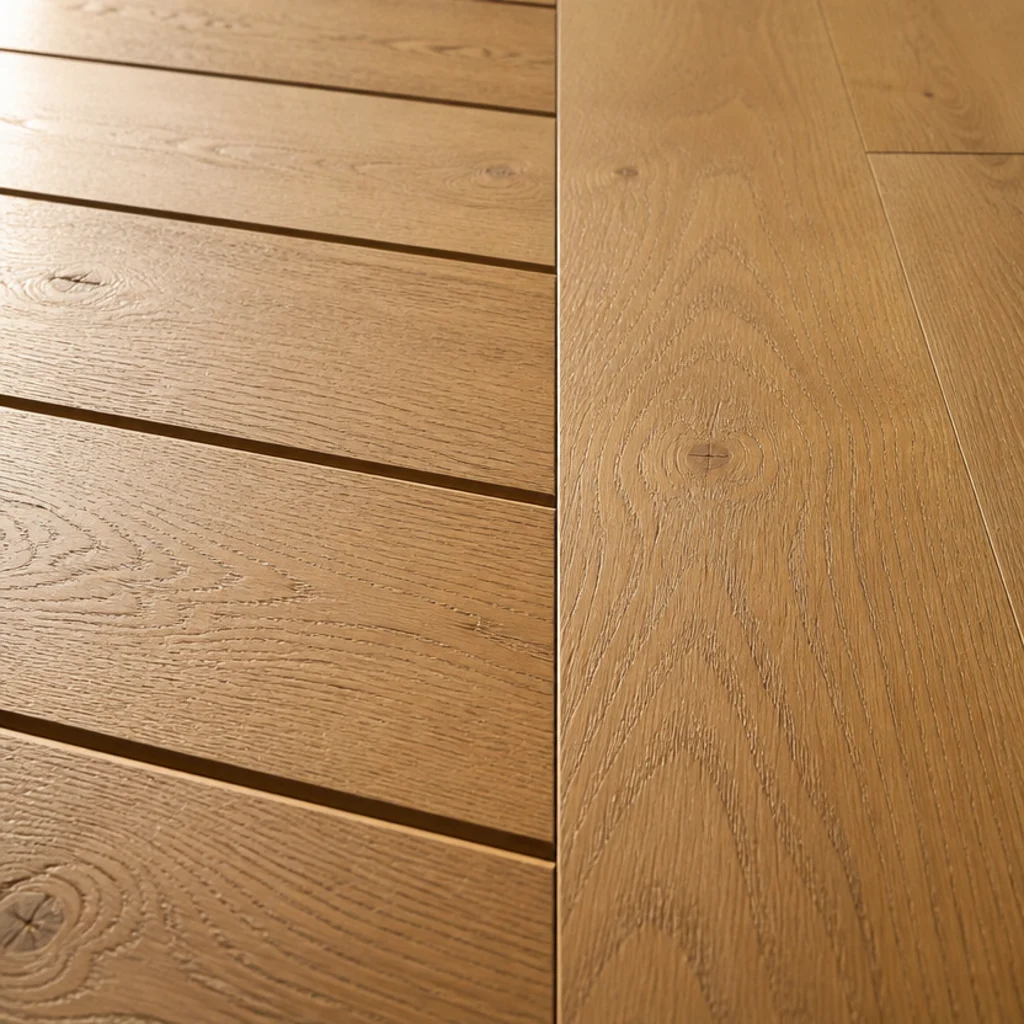
Rift and quartered boards show tight, straight, parallel grain with no cathedral arches, because the growth rings meet the face at 60 to 90 degrees. The look is calm and expensive, and the boards move about half as much across their width as plainsawn stock. Yield from a log is low, so expect a 20 to 30 percent premium over the same species in a mixed grade.
10. Plainsawn cathedral figure as the pattern
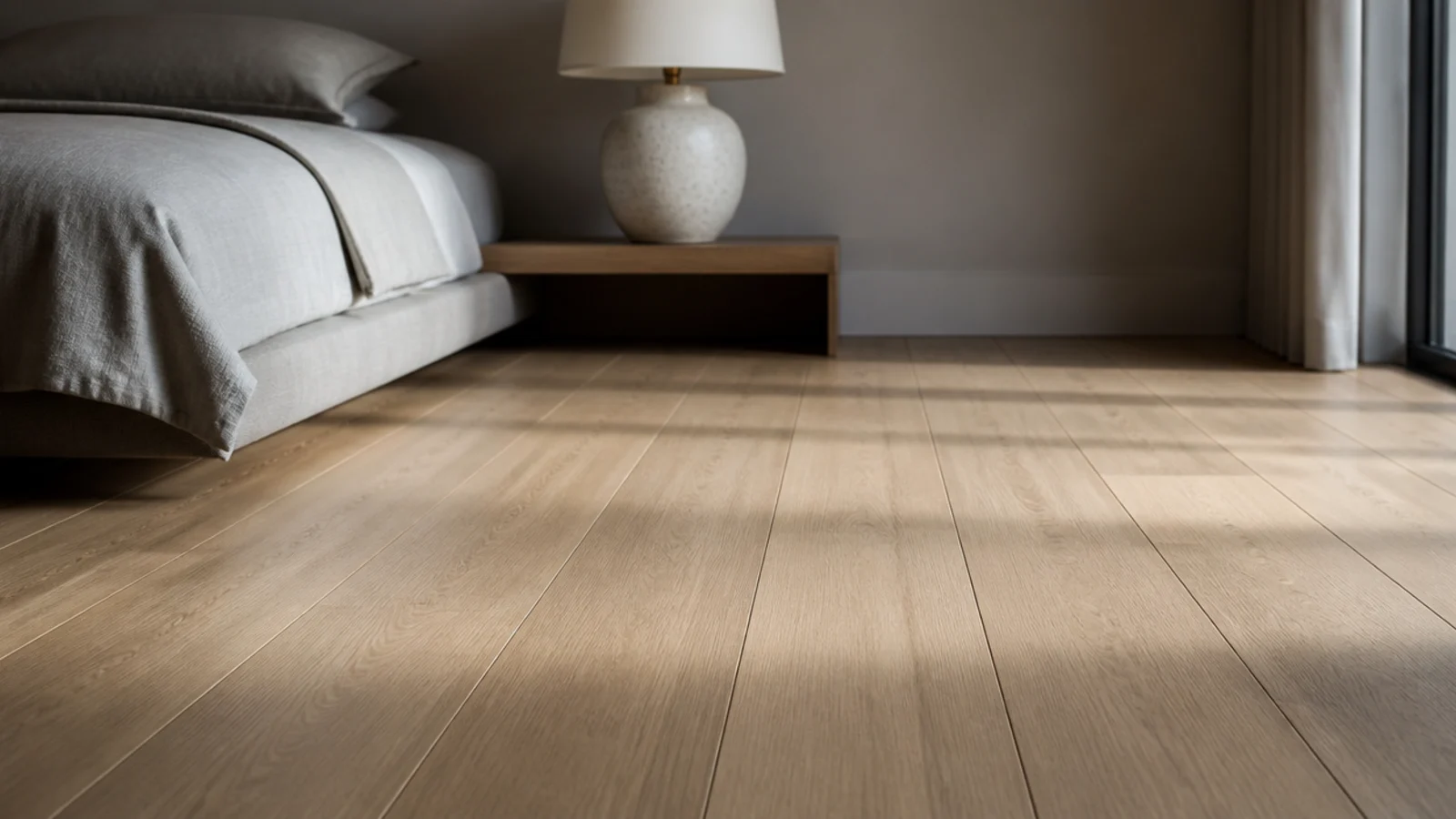
Plainsawn is the cheapest cut and the most expressive, with sweeping arched figure running up each board. In a wide plank at 190mm and above, that figure becomes the floor's pattern and you need nothing else on it. Just be aware plainsawn boards cup more readily, so the moisture rules matter twice as much: subfloor at or under 12 percent, room at 35 to 55 percent humidity.
11. Live-sawn boards that mix every grain in one plank
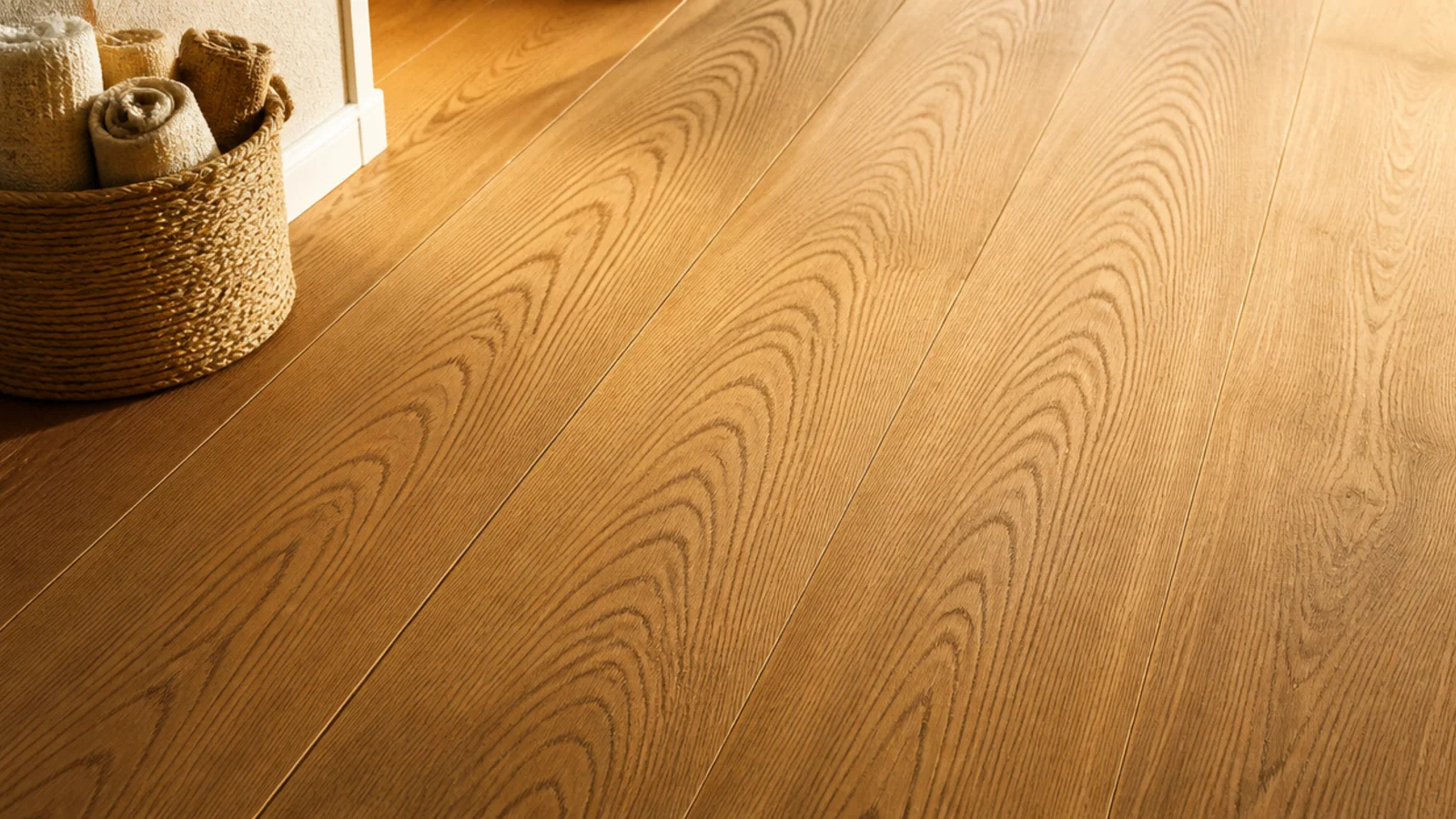
Live-sawn, sometimes sold as full-sawn, slices straight through the log so a single plank carries rift grain at one edge and cathedral figure at the other. It gives enormous character and very long, wide boards from one tree. Because grain direction changes across the width, these want a full-spread glue-down rather than a float, and they are best in engineered form.
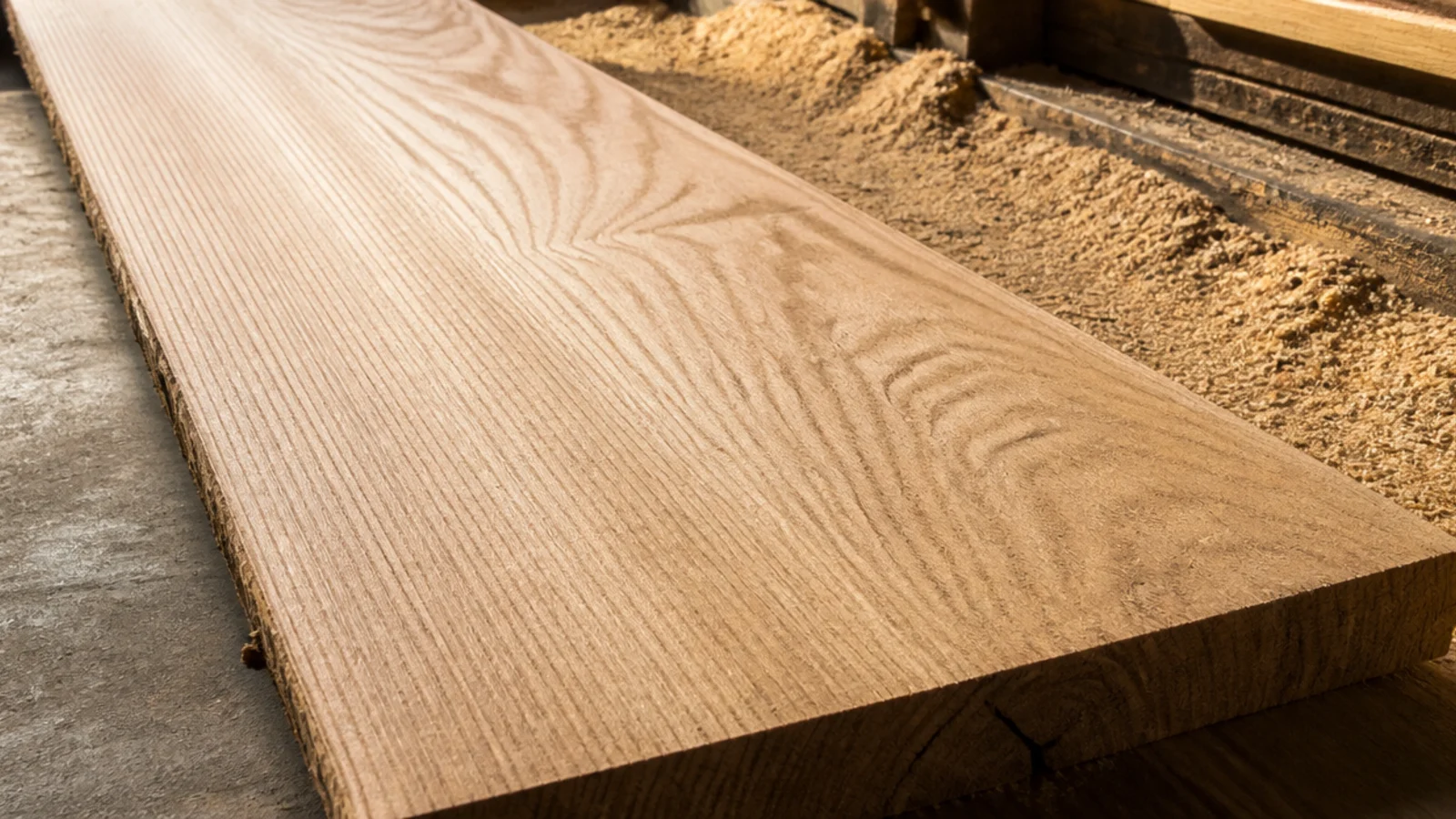
12. Tumbled and antiqued edges for an aged floor
Antiquing rounds and lightly dents the edges and ends so boards look walked-on before anyone walks on them. It is the most honest way to get an old floor in a new building, and it hides the tiny height differences between boards that a square edge would broadcast. Keep it subtle — heavily distressed boards date faster than any other texture on this list.
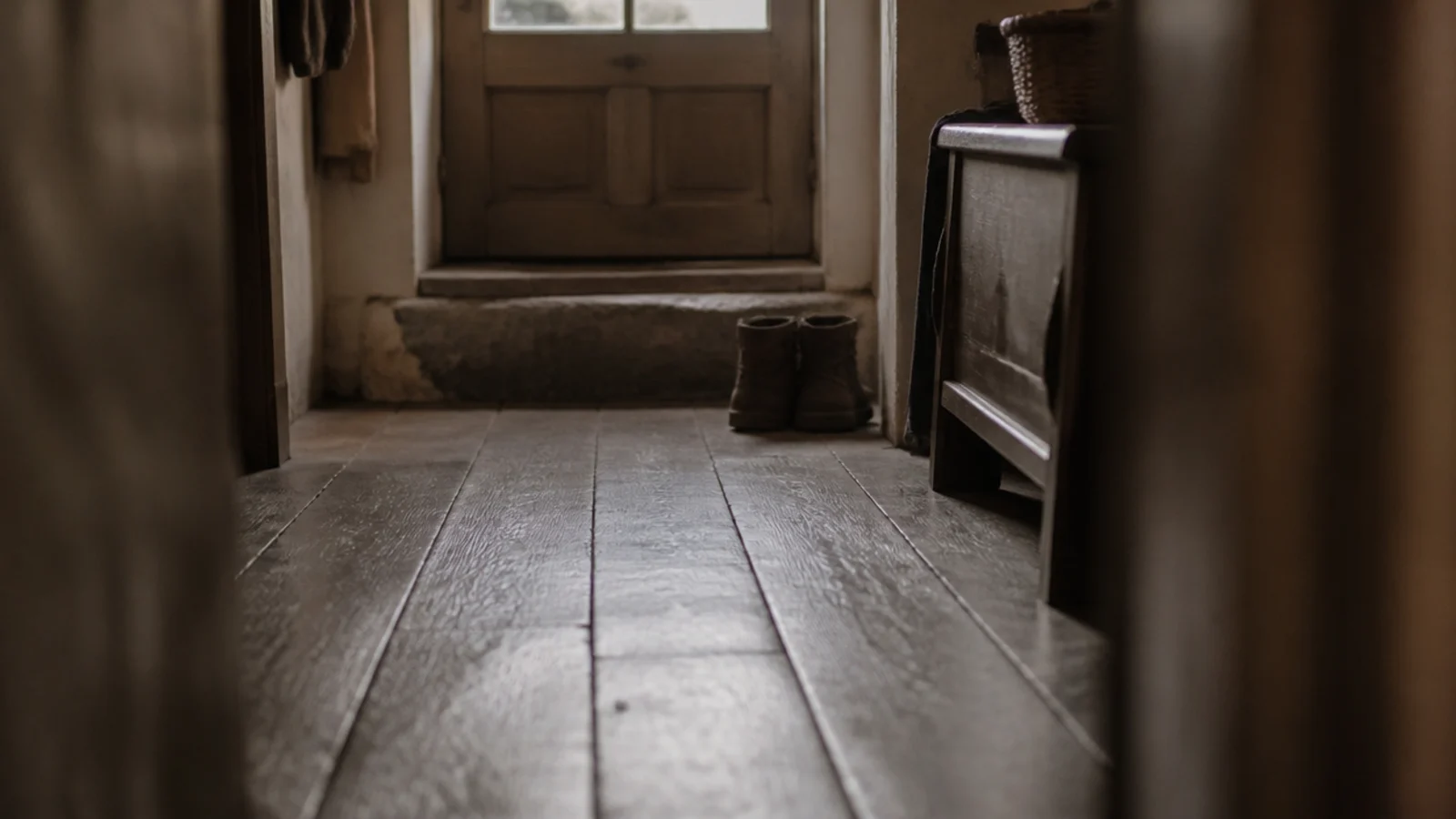
13. Open knots left visible instead of resin filled
Character-grade boards arrive with knots either open, filled with clear resin, or plugged black. Left open and simply finished over, a sound knot reads as timber. Filled black, it reads as a repair. Ask the supplier which they do before ordering, because it is the single biggest visual difference between two boards sold under the same rustic grade name.
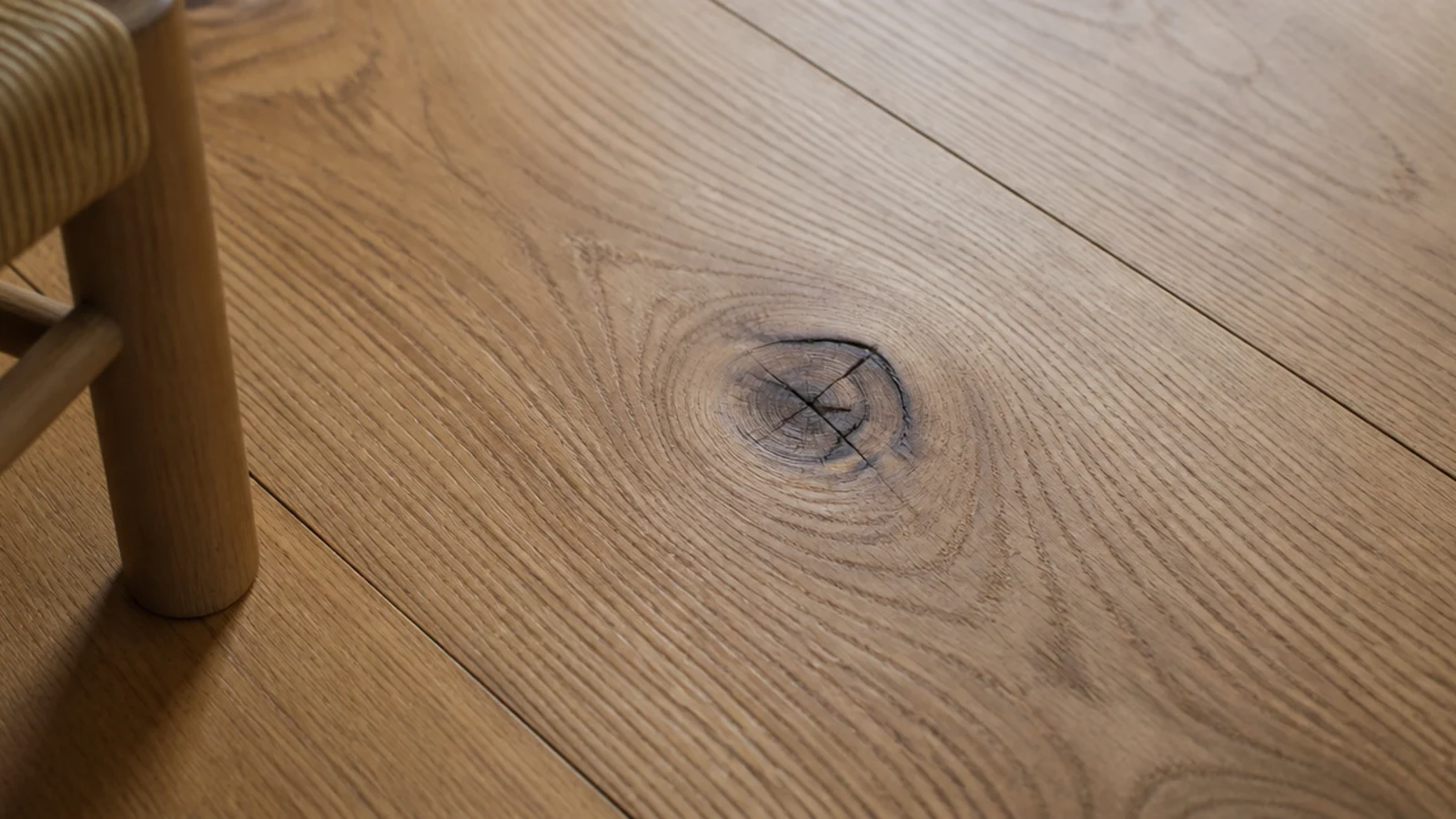
14. End-grain blocks for a workshop floor
End-grain blocks stand the timber on end so you walk on the growth rings. It is roughly three times harder-wearing than the same species laid flat, which is why old factories used it. Blocks come 50 to 100mm deep, get bedded in adhesive, and need a very flat, very dry base. Reserve it for a utility room, a boot room or a studio.
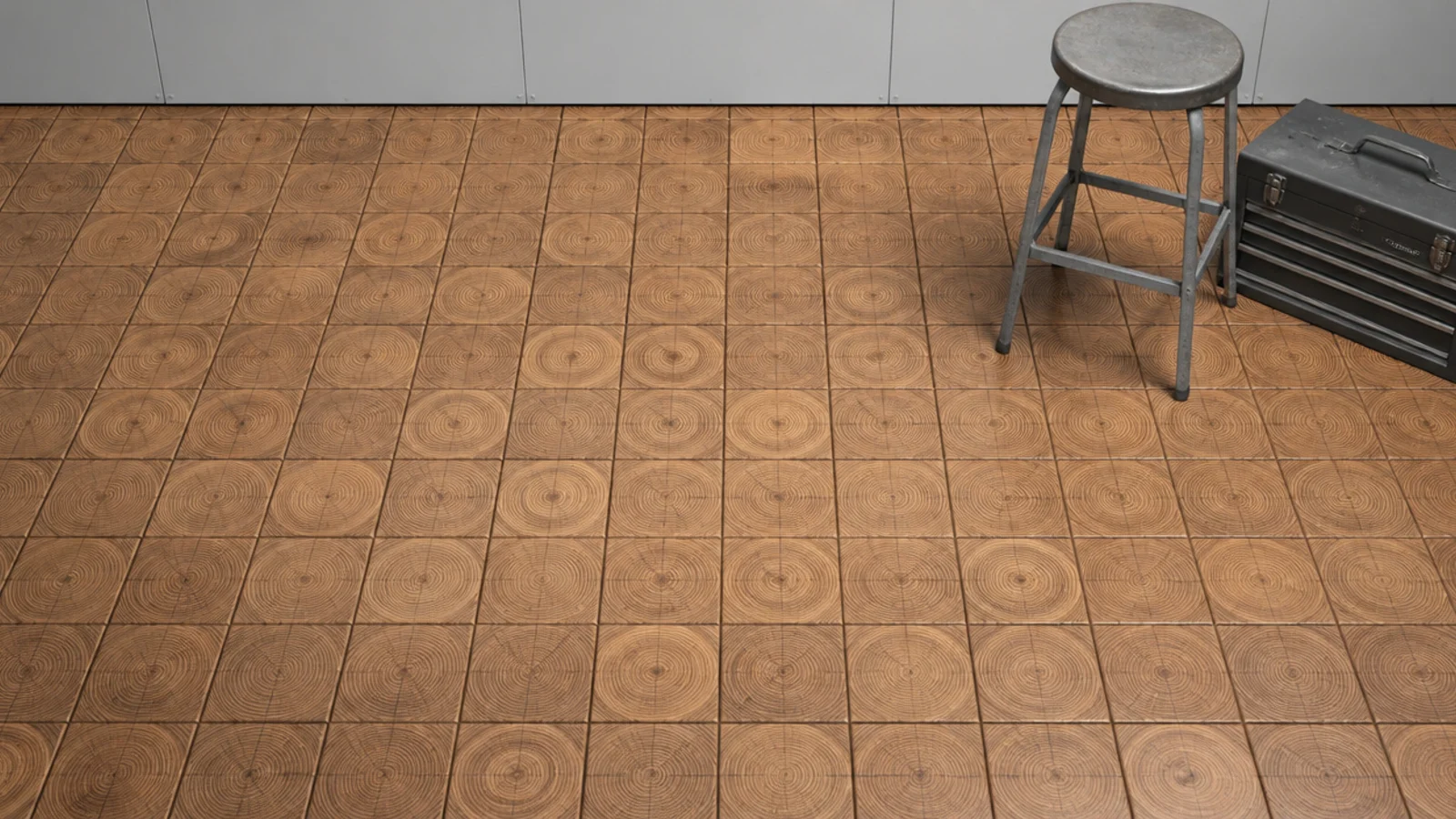
15. Hand-planed undulation you feel barefoot
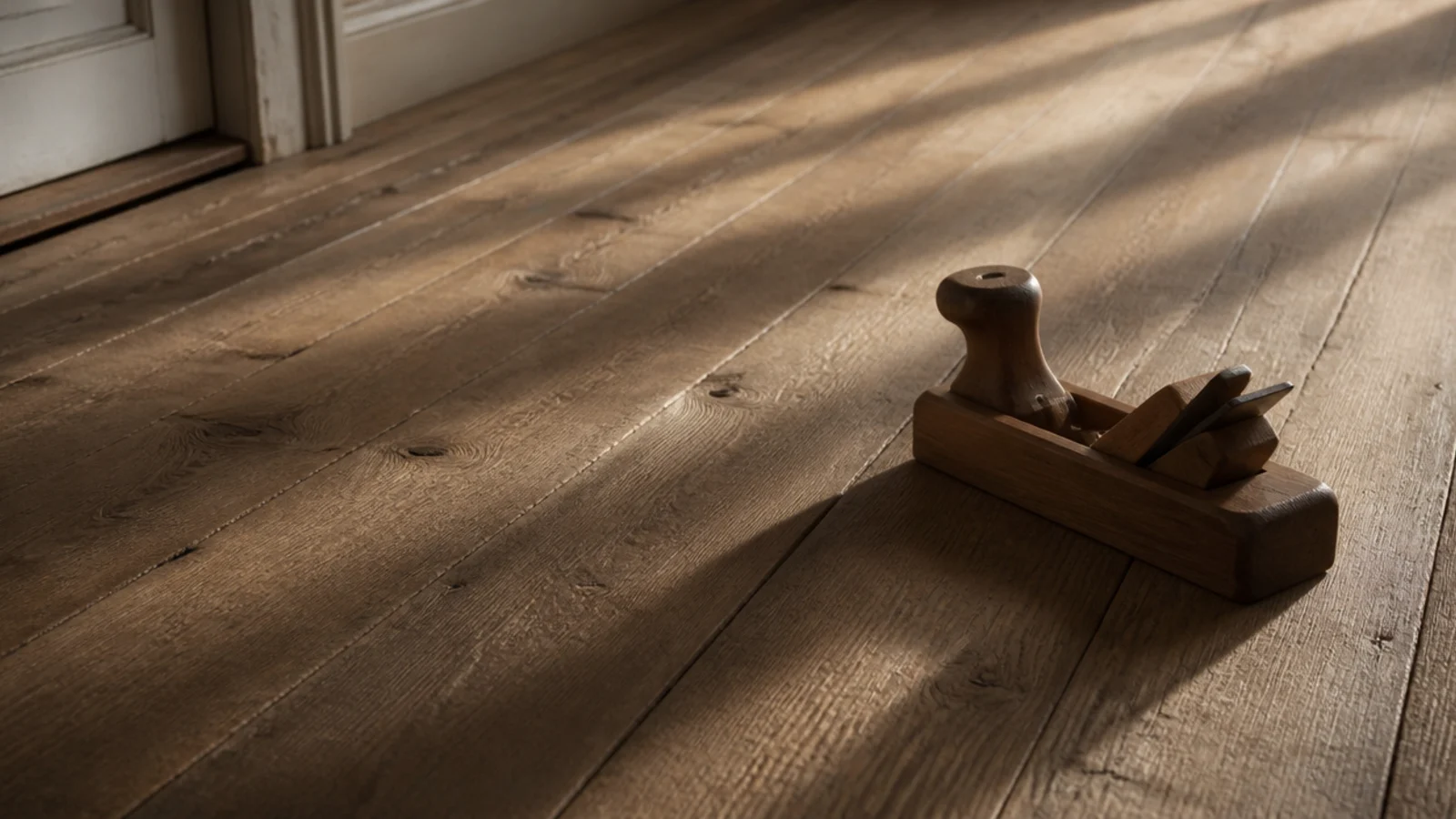
A hand-planed board keeps gentle waves left by the plane iron, usually 1 to 3mm across the width. You notice it through the soles of your feet before you see it, and in long low light the floor develops soft bands. It is expensive and slow, so most people use it in one room — a bedroom or a study — rather than throughout.
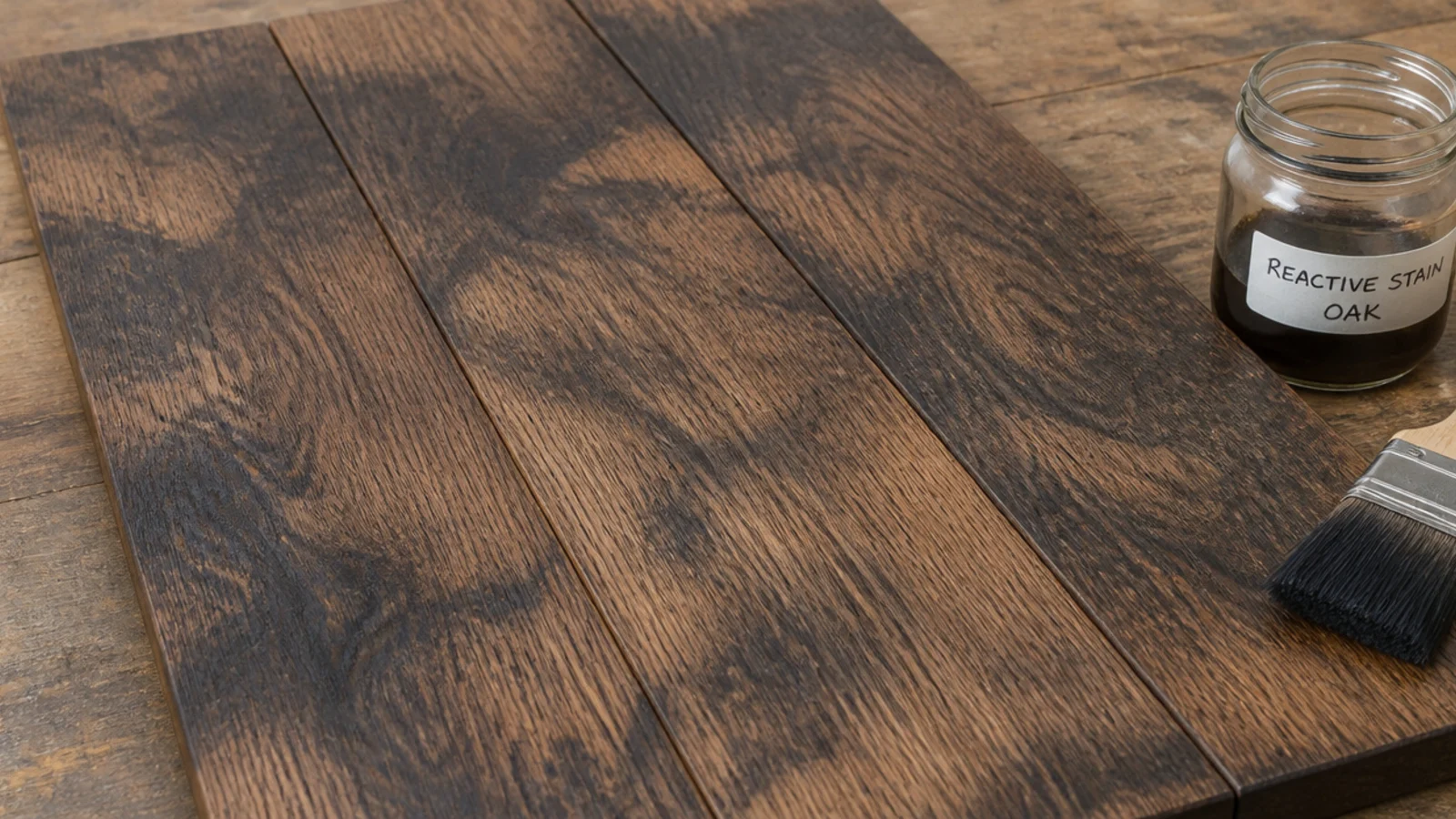
16. Reactive stain that colours the grain unevenly
Reactive stains work with the tannin rather than covering the wood, so colour develops in cloudy, uneven patches that follow the grain. It gives depth no pigment stain achieves. The catch is unpredictability: test on three boards from three different packs, because tannin varies enough to shift the finished tone by a full shade between them.
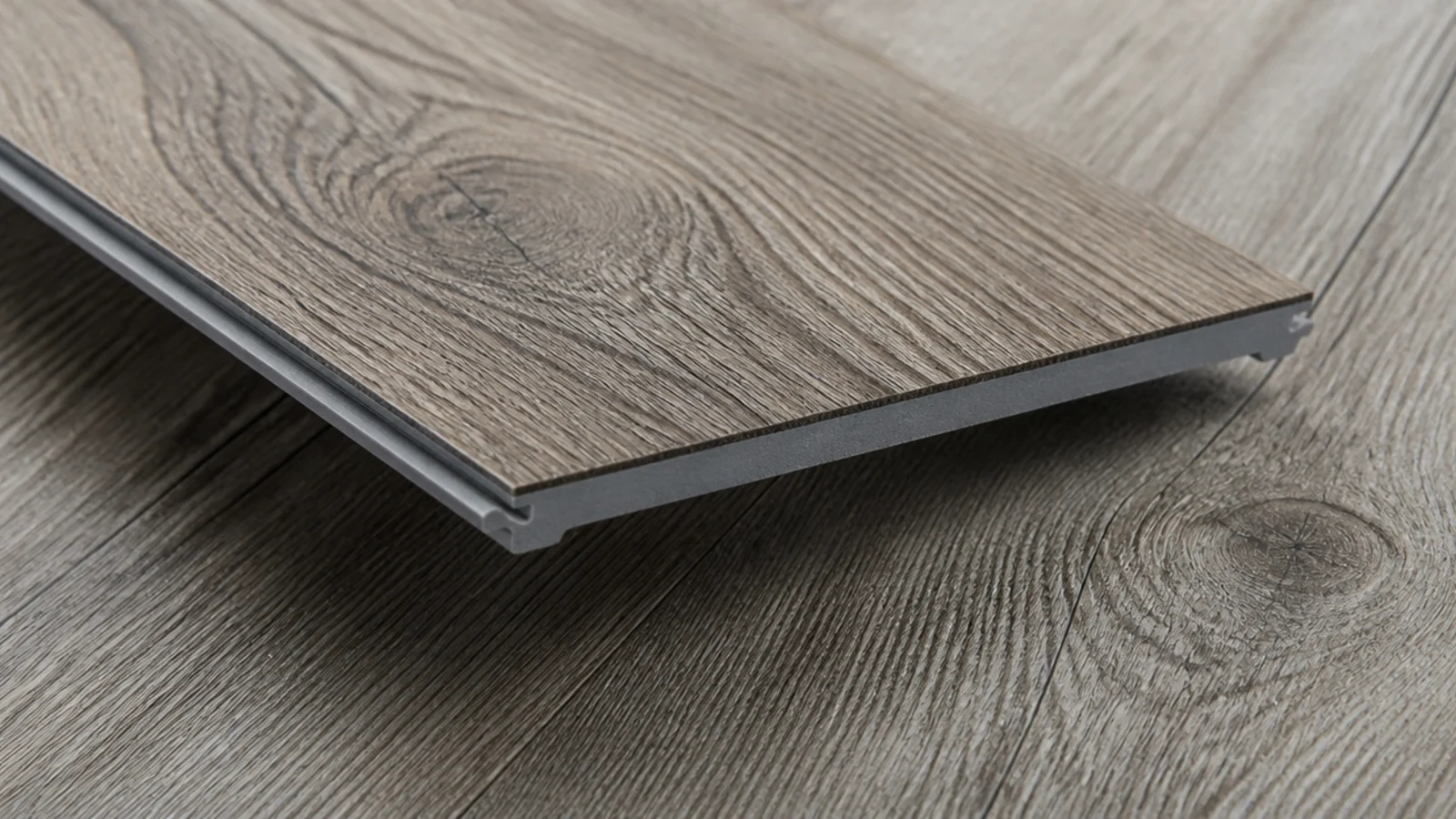
17. Embossed-in-register texture on wood-look planks
On vinyl and laminate planks, embossed-in-register means the surface texture is aligned to the printed grain rather than repeating at random. Run a hand across it: the grooves should land exactly on the dark grain lines. It is the difference between a plank that passes at close range and one that reads as plastic. Compare the wooden tiles flooring options before committing.
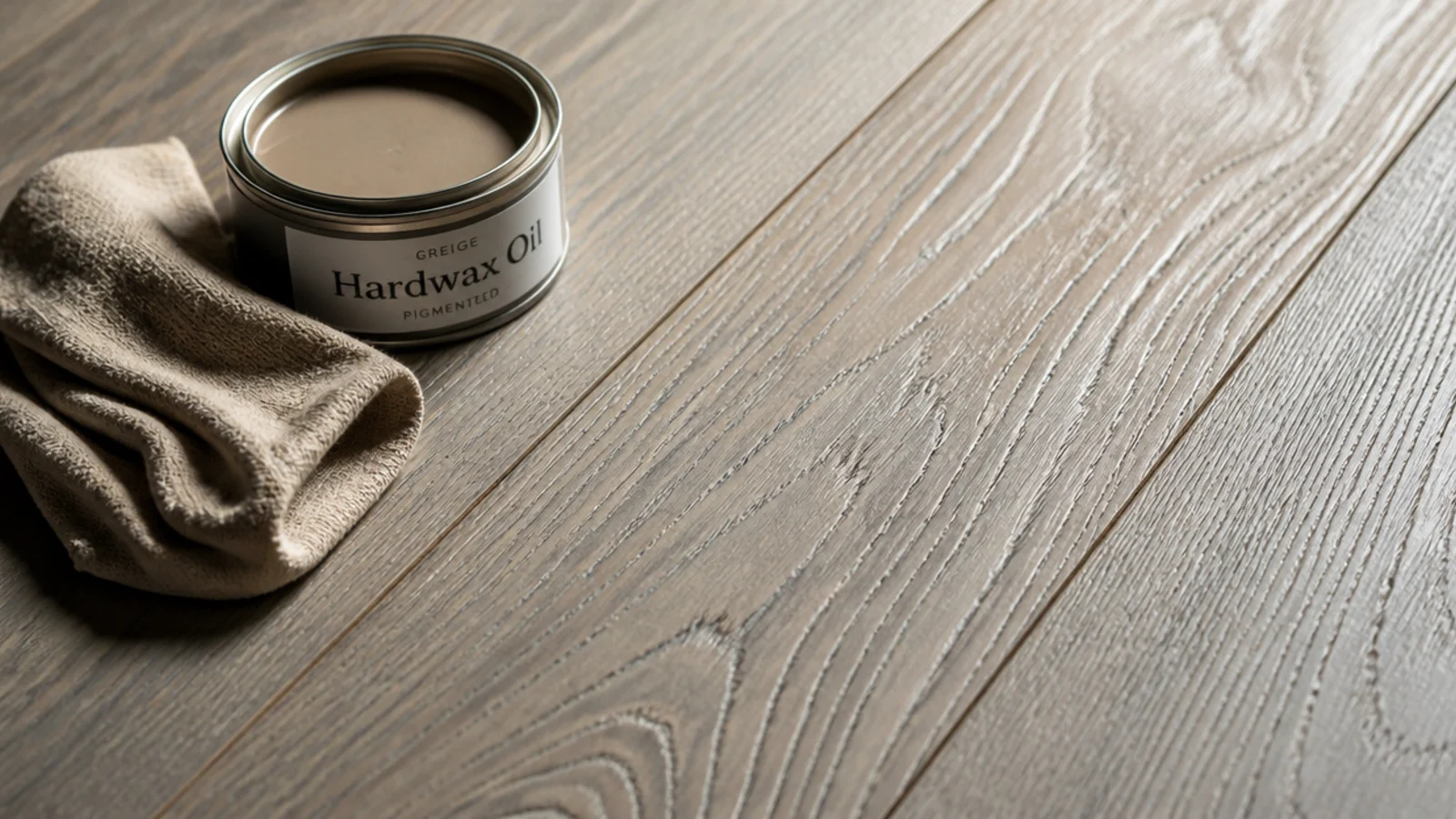
18. Brushed grain under a pigmented hardwax oil
Put a coloured hardwax oil over a brushed surface and the pigment collects in the grooves while the ridges stay lighter. You get two tones from one product and a floor with real depth. Greige, smoke and pale grey all work this way. Reapply a maintenance coat every two to five years and the colour stays even, because it lives in the texture rather than on a film.
19. A wide chamfer for a barn conversion floor
Where a micro-bevel is 1 to 2mm, a full chamfer is 3 to 5mm and turns each board into a distinct plank with a deep groove either side. It suits high ceilings, exposed beams and wide boards over 200mm. In a low modern room the same chamfer looks heavy and traps dust, so keep it to buildings with the volume to carry it.
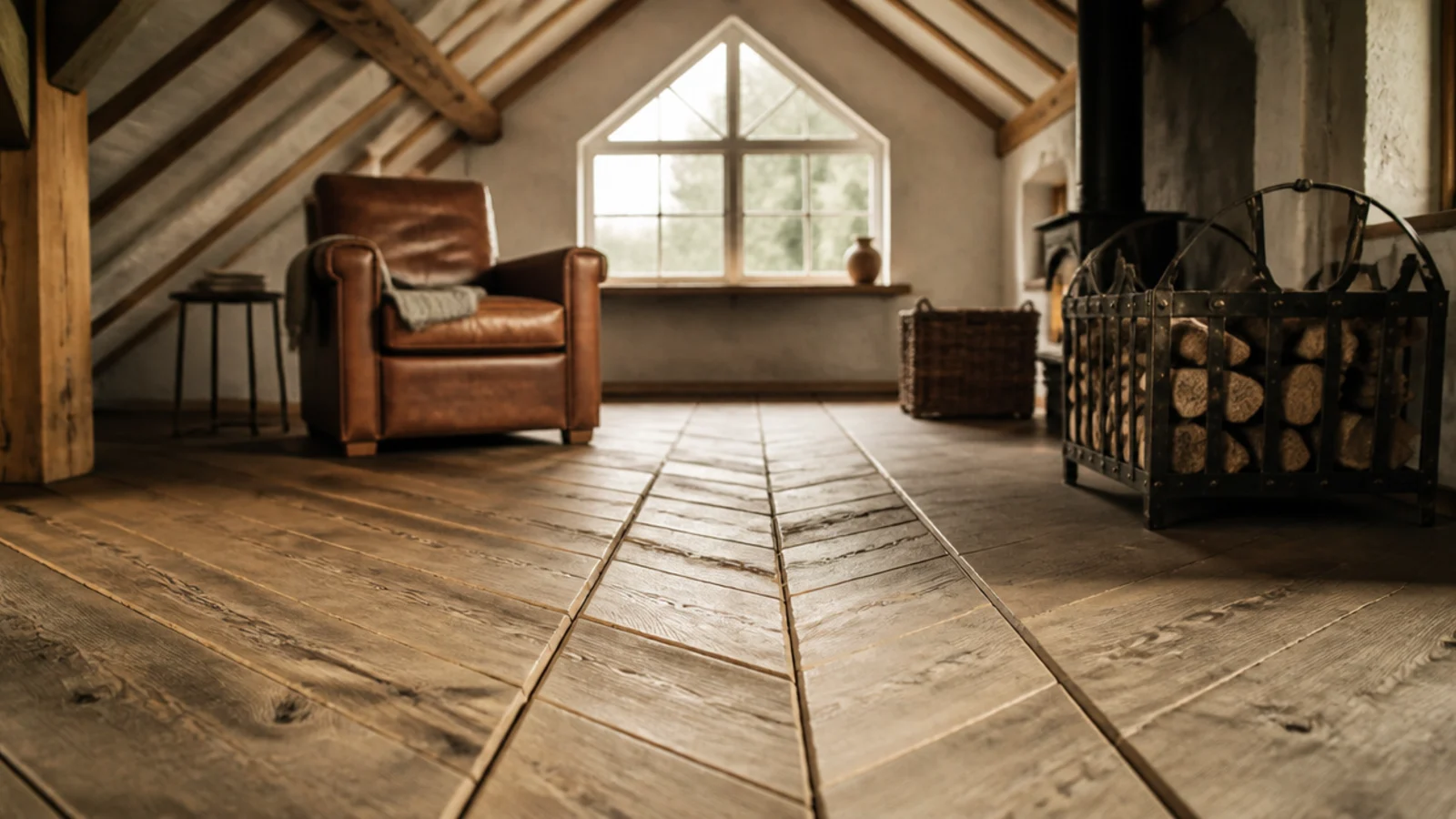
20. Silk-matte lacquer over underfloor heating
Over a heated screed, choose an engineered board with a silk-matte factory lacquer. The cured lacquer handles the daily heat cycle better than a fresh site finish, and the low sheen hides the slight movement that any heated floor shows at board edges. Keep the surface under 27 degrees Celsius and keep rugs thin, or you build a hot spot underneath.
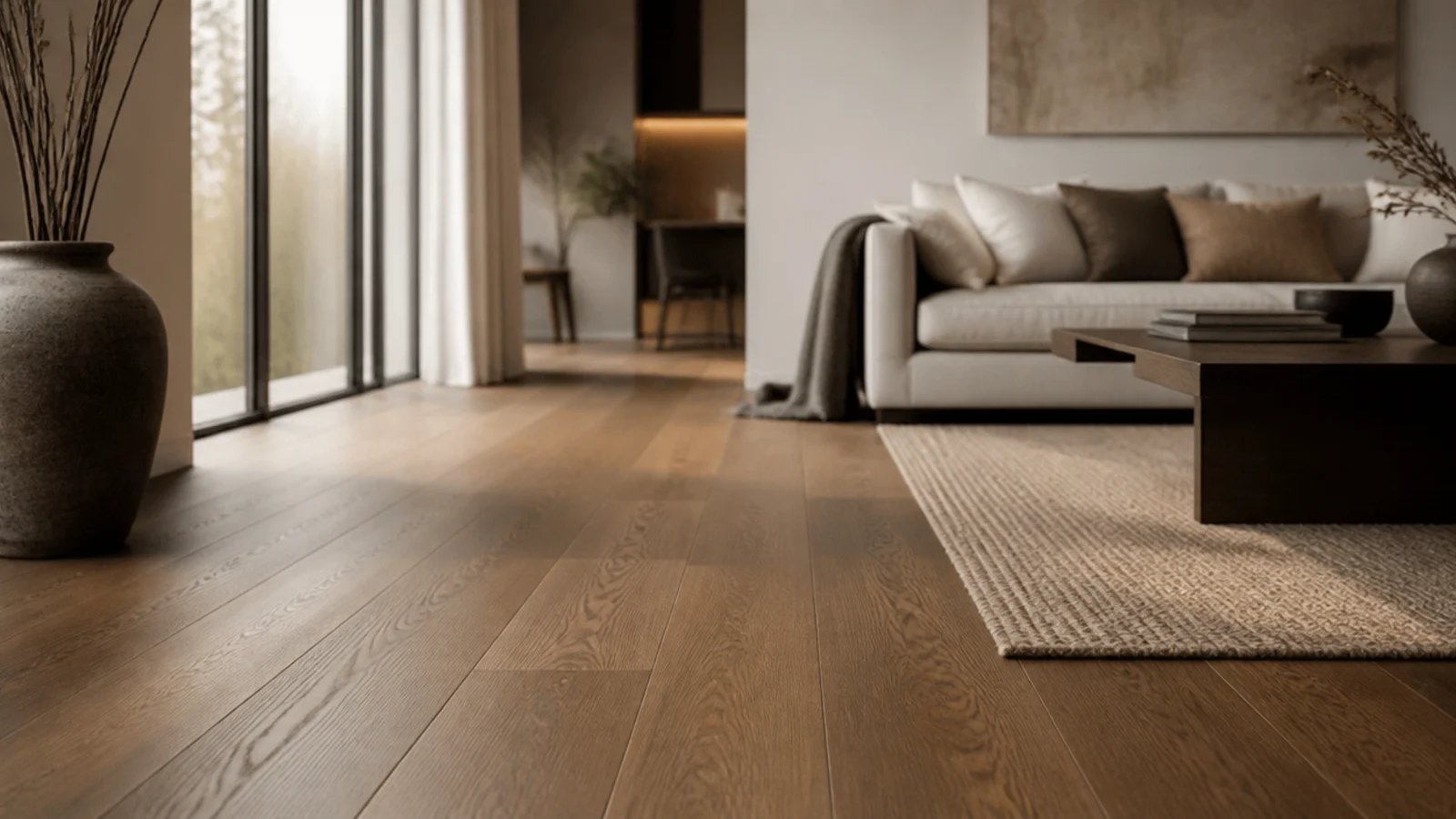
Texture and softness work as a pair: a rough floor wants one generous soft island rather than several small ones, which area rug placement covers in detail. Low warm light also reads texture far better than an overhead fitting, and candle styling is the cheapest way to get it.
Mistakes to Skip
- Brushing a floor with under 4mm of wear layer. You lose half a millimetre to the brush and give up your only future sand, which turns a repairable floor into a disposable one.
- Choosing texture from a 100mm sample chip. Scraping and antiquing repeat on a cycle, and the repeat only shows across two or three metres of laid floor.
- Putting a deeply textured board in a kitchen and then mopping it wet. Water pools in the grain grooves and lifts the finish at the edges within a couple of years.
- Mixing textures between connecting rooms. A brushed floor meeting a smooth one at a doorway looks like two jobs by two fitters, even when the species and colour match.
Frequently asked questions
Which wood floor texture hides scratches best?
A wire-brushed surface with 0.3 to 0.6mm of grain relief, finished matte at five to ten gloss units. Scratches fall into the open grain instead of crossing a smooth plane, and the low sheen refuses to catch light along the mark. Hand-scraped runs a close second.
Is a textured wood floor harder to clean?
Slightly, and only in one direction. Grit sits in the brushed grain, so vacuum along the boards rather than across them and use a barely damp microfibre mop. A heavily scraped or sawn surface holds more dust than a smooth one, which is worth knowing before you choose it for a kitchen.
What sheen level should a wood floor have?
Matte at five to ten gloss units for a textured floor, satin at twenty-five to thirty-five for a smooth one in a family room. Semi-gloss at fifty-five and above shows every scuff, every footprint and every dust mote, and it makes a hallway look permanently dirty.
Does texture make a wood floor less slippery?
A little. Brushed and scraped surfaces with a matte finish typically test around R10 for slip resistance where a high-gloss smooth floor sits nearer R9. That difference matters on a landing or at the bottom of stairs, though no interior wood floor should be treated as a wet-area surface.
Can you add texture to an existing wood floor?
Only with real thickness to spare. Brushing removes roughly half a millimetre of softwood grain, so you need at least four millimetres of wear layer left. On a solid board that has already been sanded twice, leave it smooth and change the finish instead of the surface.
Want more like this? Browse all 15 wooden flooring guides — they all use the same measurements and budget tiers.
Pin it for later
Save this to your Wooden Flooring board
Pin it now so it is waiting for you when the tape measure comes out — and so the next person hunting for this idea can find it too.
Save this pinKeep going
More ideas worth saving while you have the tape measure out.