Wooden Flooring · Listicle
20 Beautiful Wooden Parquet Flooring Patterns

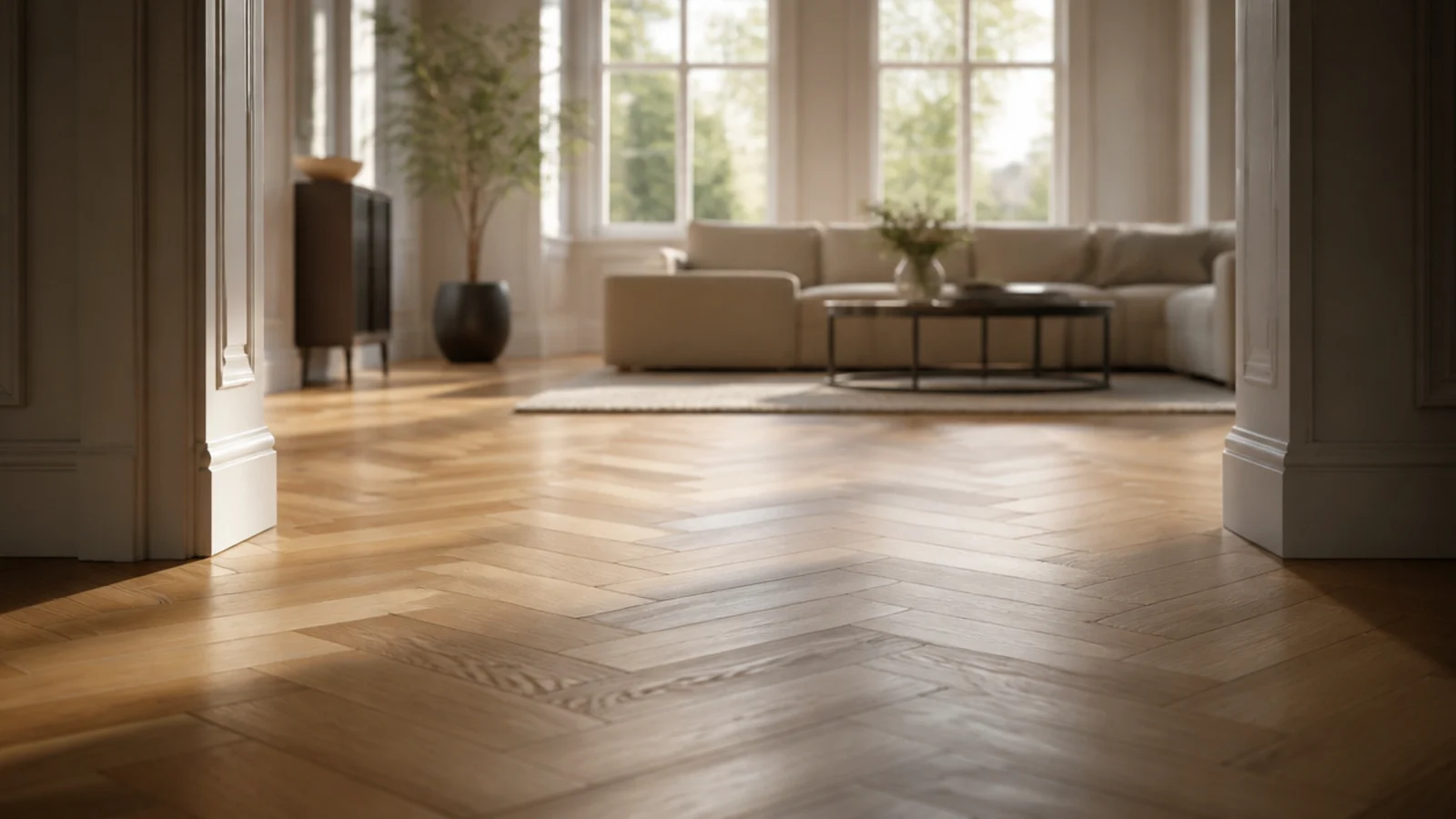
Parquet is the only floor most people notice from the doorway. It is also the one with the most ways to go wrong, because a block floor is a bonded floor: every piece is glued to a substrate that has to be flat, dry and stable before a single block is opened. Wooden parquet flooring rewards that preparation with something that lasts a century and can be sanded two or three times along the way. These twenty patterns cover the classics and the practicalities — block sizes, adhesives, waste and what restoring an old floor actually involves.
In this guide22 sections — tap to openHide
- 1.What wooden parquet flooring demands before it goes down
- 2.Solid blocks in classic herringbone
- 3.Engineered parquet in a larger format
- 4.Chevron with mitred ends
- 5.Double herringbone for a bigger room
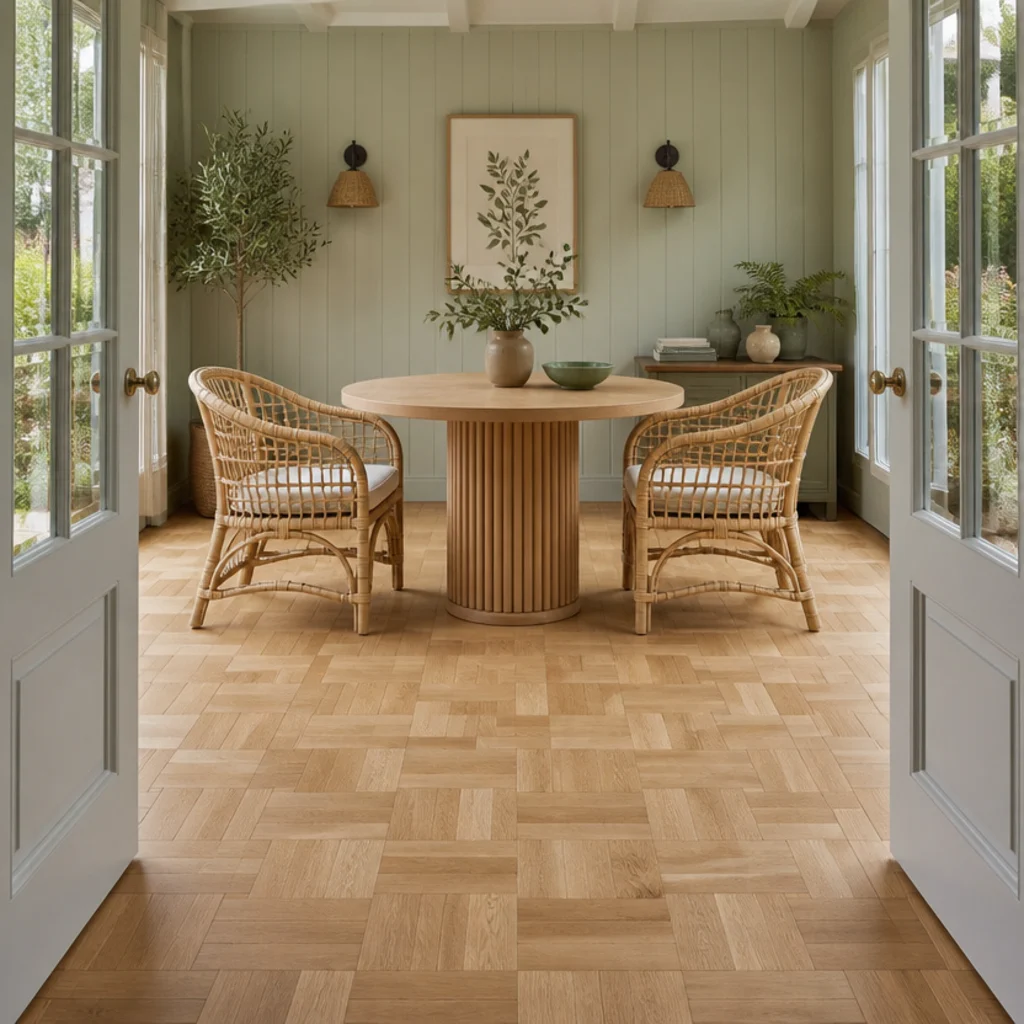
- 6.Basketweave in a square room
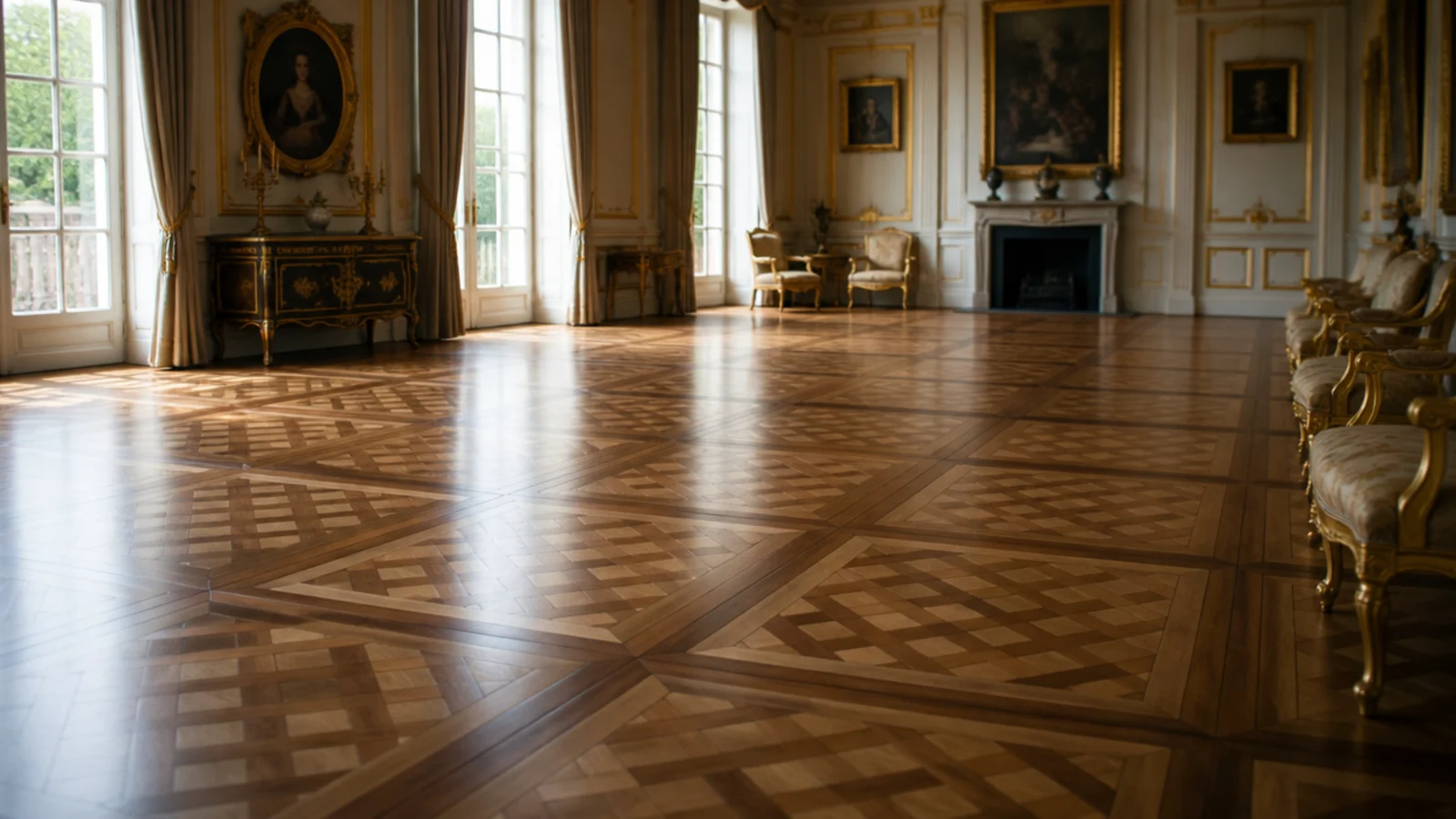
- 7.Versailles panels in a formal room
- 8.Brick bond blocks for a quieter floor
- 9.A double border with a fine stringer
- 10.Reclaimed blocks with bitumen backs
- 11.Sanding an existing parquet floor back
- 12.Levelling the subfloor before anything else
- 13.The right adhesive for a bonded floor
- 14.Expansion gaps around a bonded parquet field
- 15.Choosing the species for the traffic
- 16.Parquet over underfloor heating
- 17.Hardwax oil rather than lacquer on parquet
- 18.Small finger parquet in a compact room
- 19.Parquet in a hallway with a wide border
- 20.Waste, labour and what parquet really costs
- 21.Keeping a restored parquet floor alive
- 22.Mistakes to Skip
What wooden parquet flooring demands before it goes down
Four requirements, none of them optional.
A flat, dry substrate. Flat within 3mm over a 2-metre straightedge. Concrete at or under 75 percent relative humidity on an in-slab probe, timber at or under 12 percent moisture content. Levelling compound and a moisture meter are part of the job, not extras.
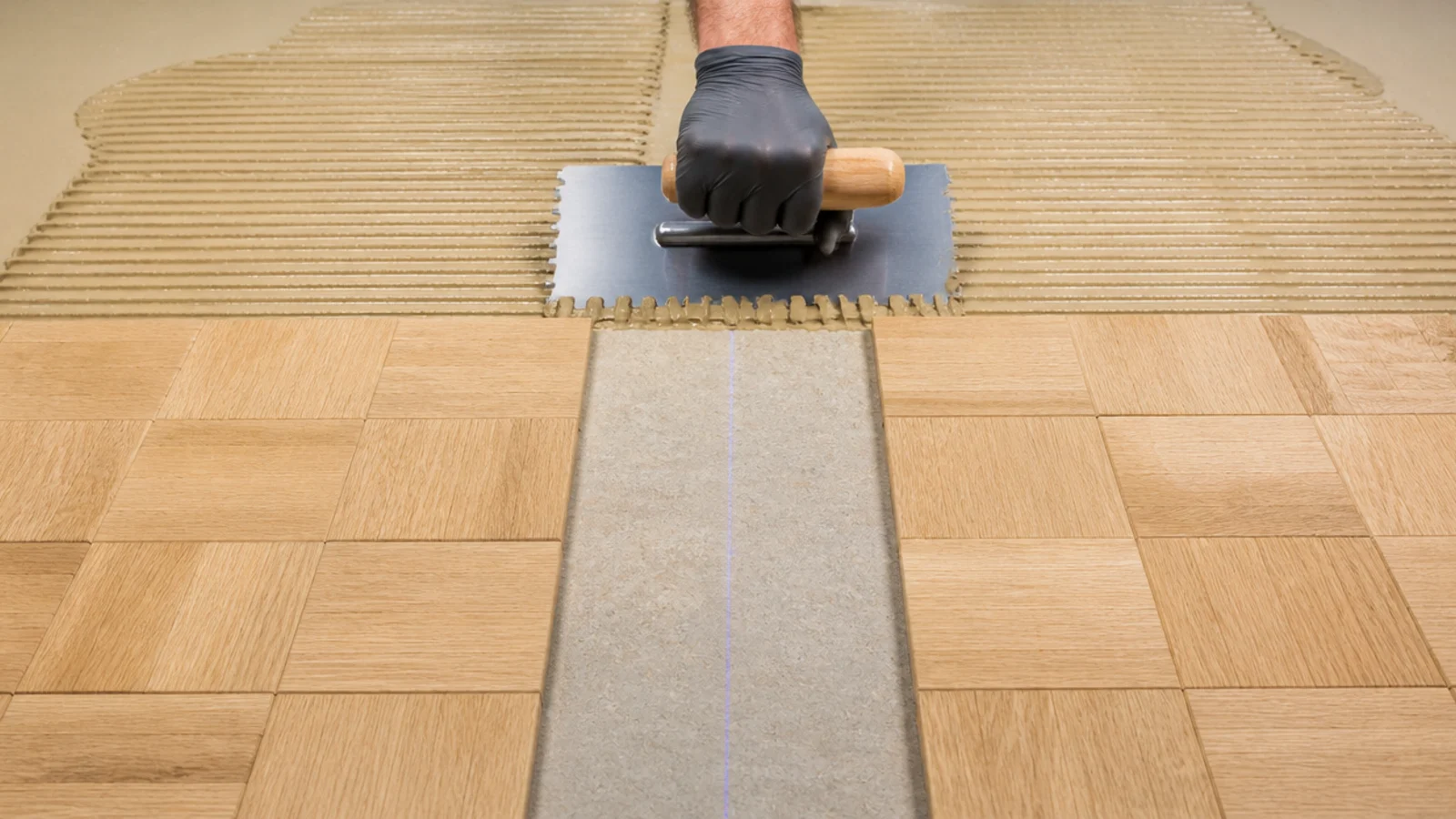
Full-spread adhesive. Parquet has joints in two directions and cannot float. A flexible parquet adhesive, combed with the correct notch, is what keeps the points closed. Solvent-free flexible adhesives also tolerate the small seasonal movement blocks make.
Block size matched to room size. 70 by 230mm and 70 by 280mm suit rooms under about four metres. 90 by 450mm and 100 by 500mm need a bigger floor or they read as slabs.
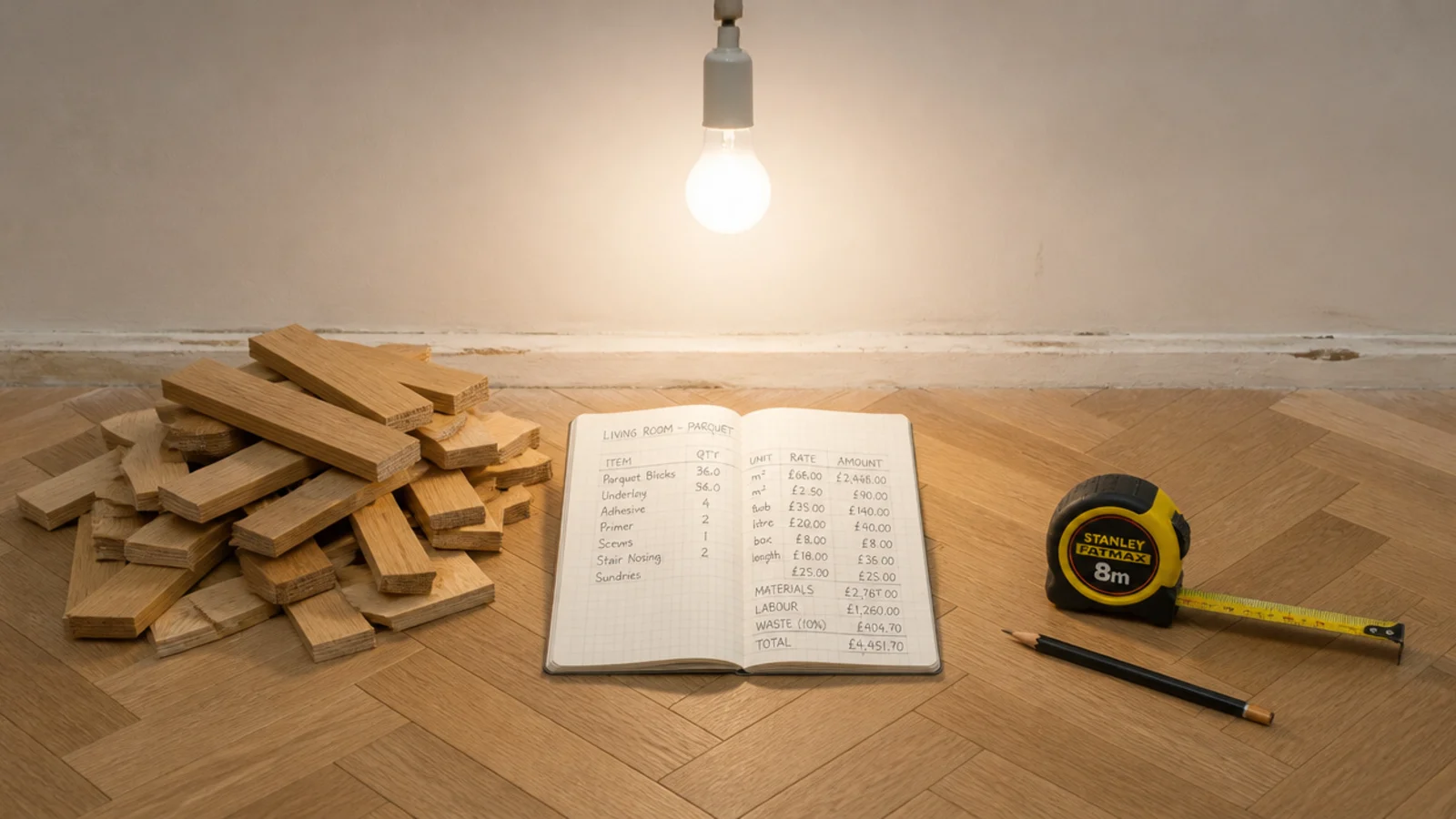
Waste and labour. Allow 15 percent for herringbone and chevron, up to 20 for panels, against 5 for a straight-laid board floor. Fitting costs roughly double a plain lay. Budget £45 to £120 per square metre for engineered parquet supplied. For the wider geometry of layouts, the wooden flooring pattern guide sets out the full range.
1. Solid blocks in classic herringbone
The original and still the best value over a lifetime. Solid oak blocks of 70 by 280mm, bonded down and sanded on site, giving a seamless surface with no factory bevels. At 9 to 22mm thick they take two or three sandings across fifty years. The trade is a longer, dustier installation and a floor that cannot be laid over underfloor heating.
2. Engineered parquet in a larger format
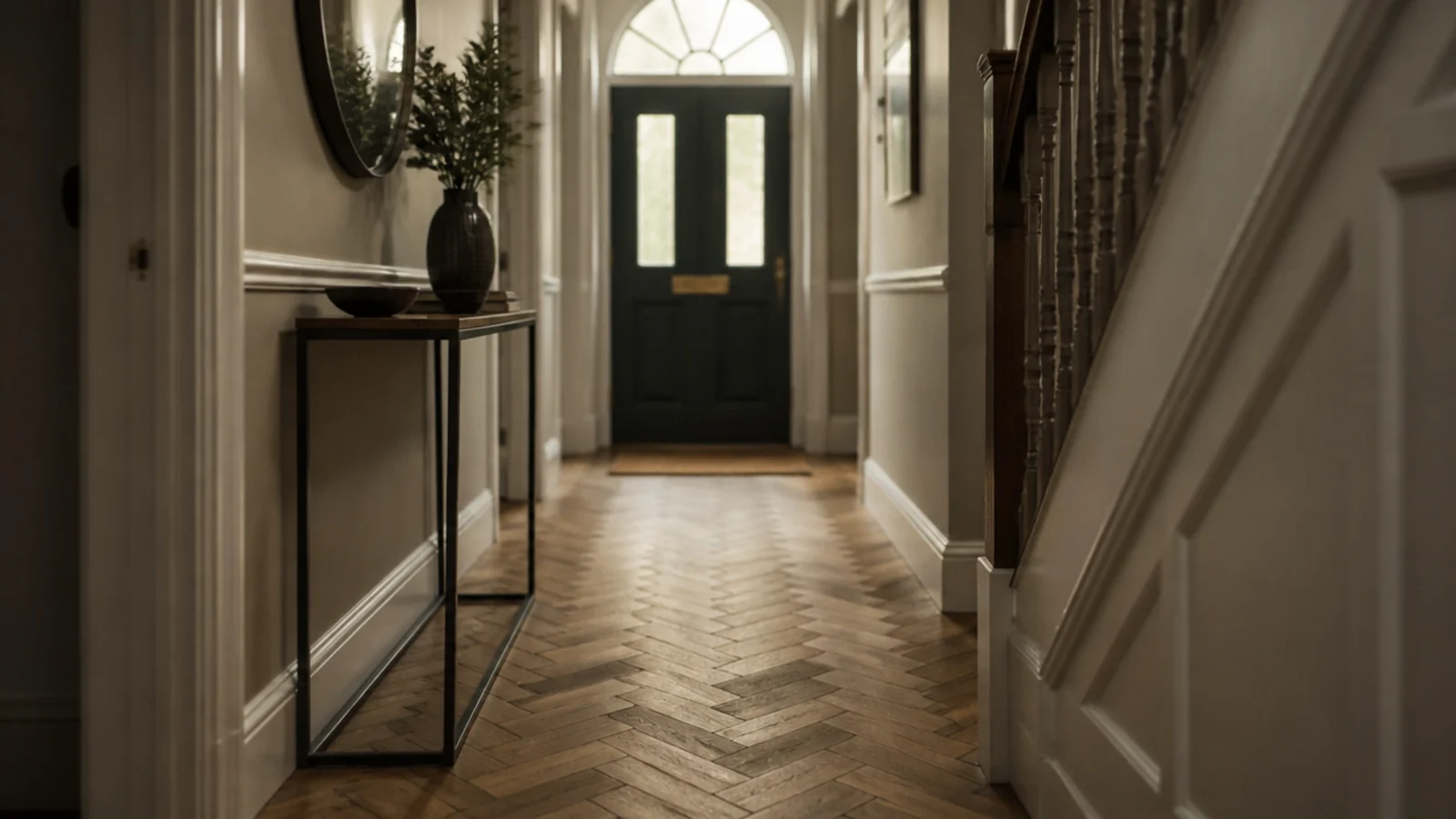
Engineered blocks put a 3 to 6mm hardwood wear layer over a cross-plied core, so they move far less and can go over heated screeds. They come pre-finished, which removes the sanding stage entirely, and they are made in larger formats — 90 by 450mm upward — for rooms that would swallow a classic block.
3. Chevron with mitred ends
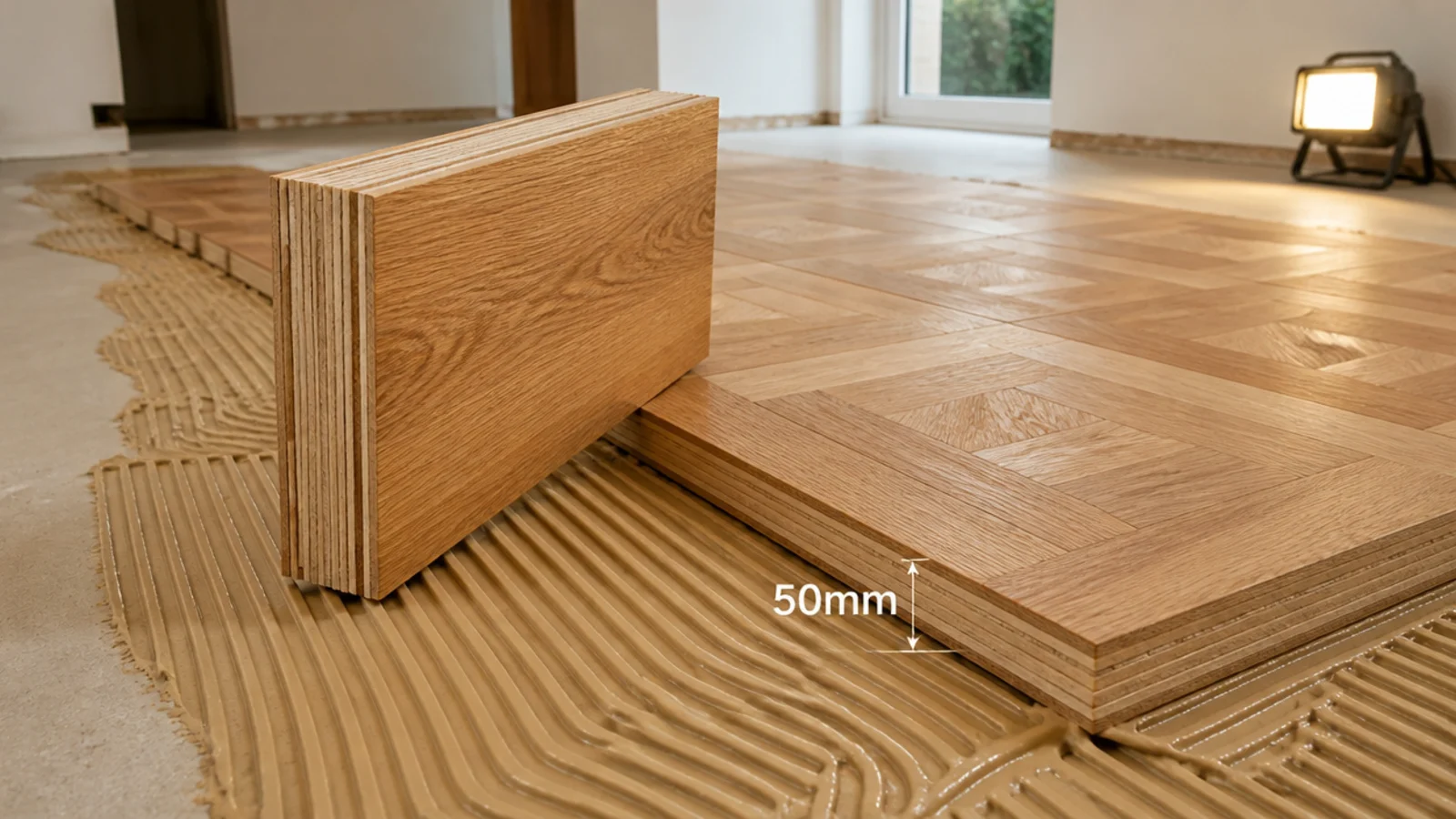
Chevron blocks are cut at 45 or 60 degrees on both ends so they meet point to point in a single unbroken zigzag rather than the stepped joint herringbone gives. It is crisper, more formal and roughly 10 to 20 percent dearer, because the mitres waste timber at the mill. Every row hangs off a dead-accurate centre line.
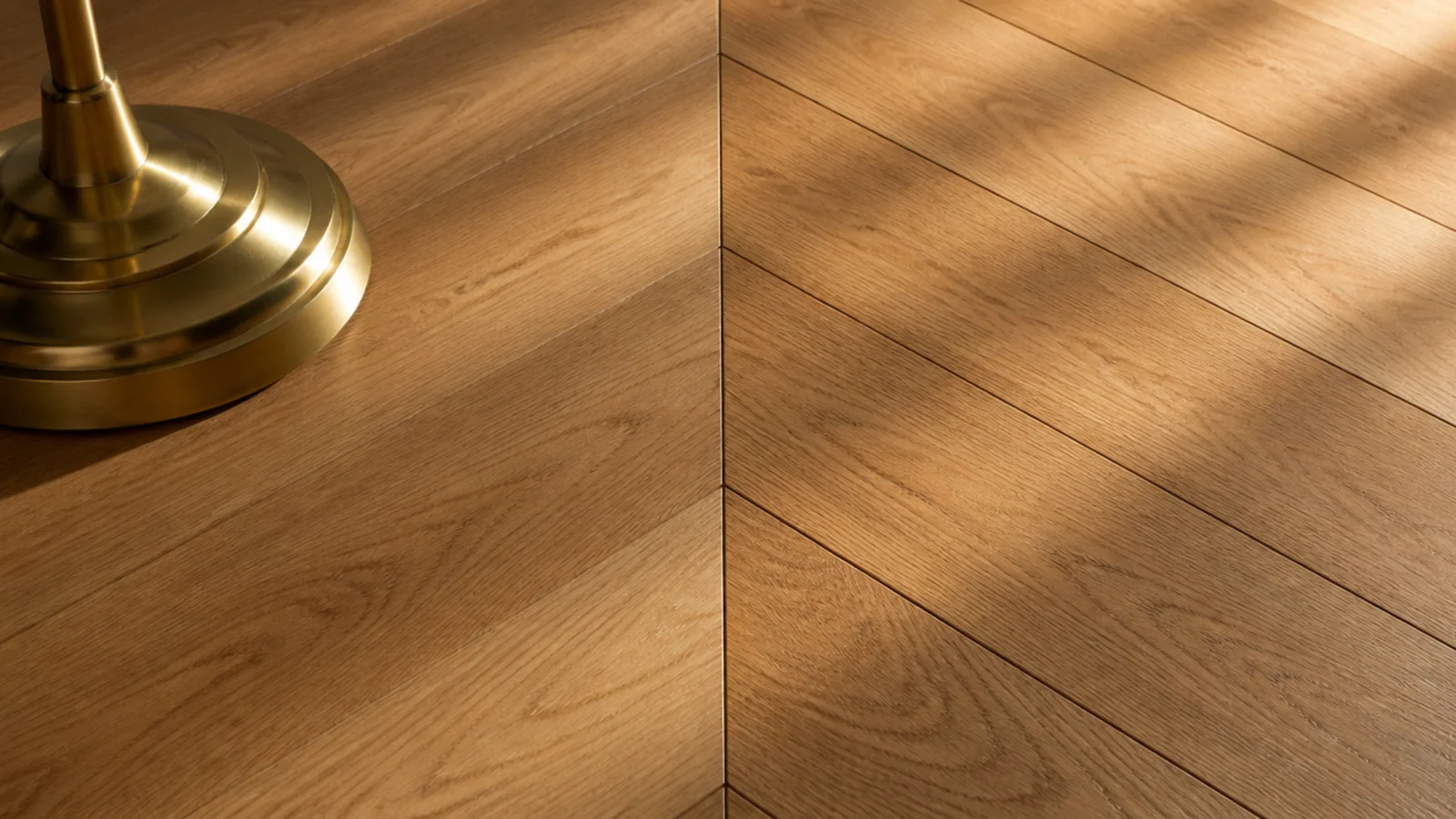
4. Double herringbone for a bigger room
Laying two blocks together as one unit before the pattern turns scales herringbone up for rooms over about five metres across. Material cost is unchanged; you simply need blocks long enough — 450mm and up — for the doubled unit to read as deliberate rather than as a fitting error.
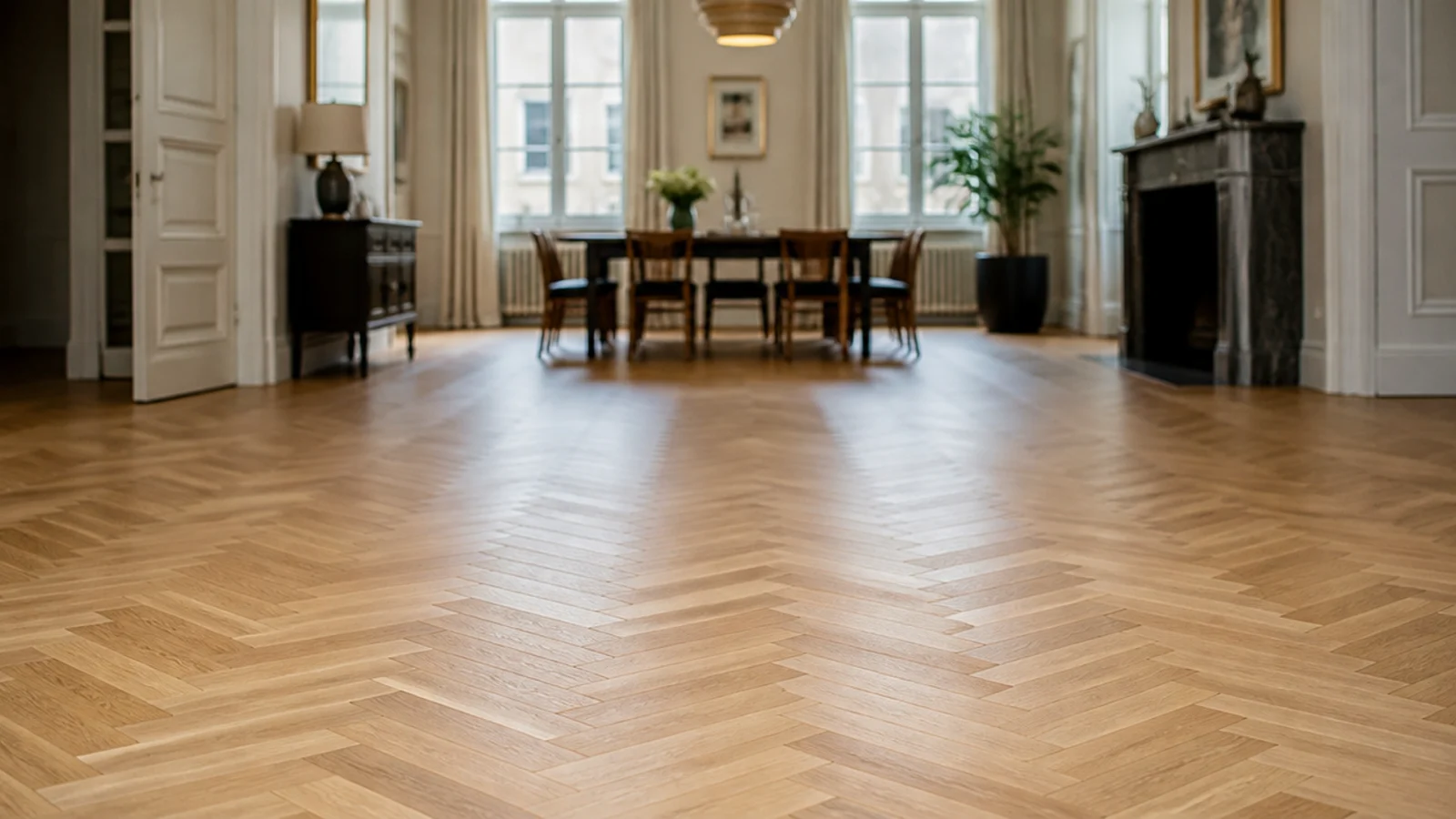
5. Basketweave in a square room
Pairs of blocks alternating direction to form squares. Basketweave has no direction, so it suits rooms with four roughly equal walls where a herringbone would look like it was pointing somewhere for no reason. It also uses short blocks efficiently, which makes it a sensible pattern for reclaimed material.
6. Versailles panels in a formal room
Prefabricated panels of 600 to 900mm square, carrying a diagonal lattice inside a square frame, bonded down as complete units. They need floor area — below about four metres across you see cut panels rather than a pattern. Because they arrive glued up, the substrate must be finished and dry before delivery day.
7. Brick bond blocks for a quieter floor
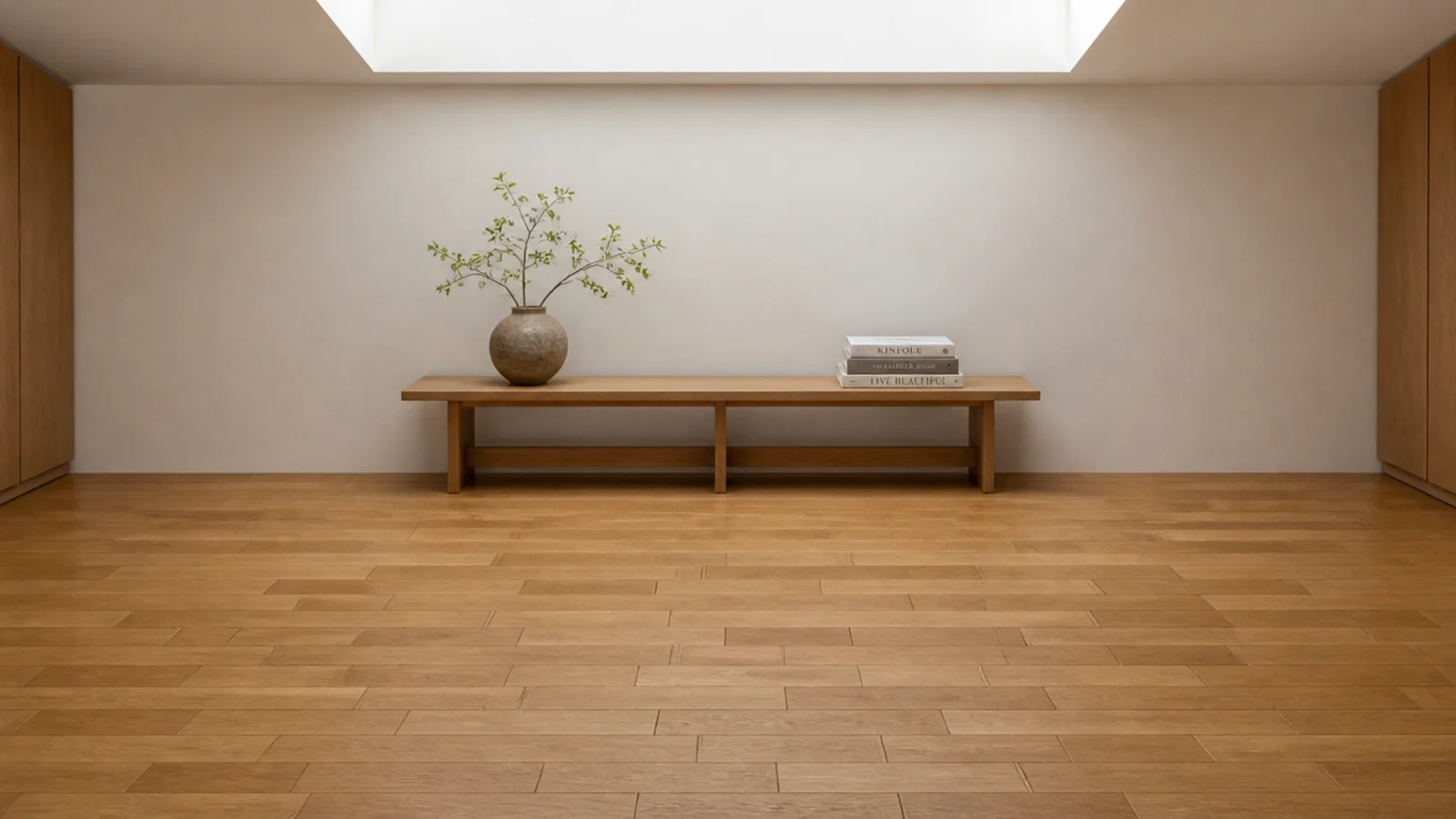
Parquet does not have to zigzag. Blocks laid in a simple half offset give the density and the fine joint pattern of parquet with none of the drama, which suits a modern room with a lot going on above floor level. It also wastes less, at around 8 to 10 percent rather than 15.
8. A double border with a fine stringer
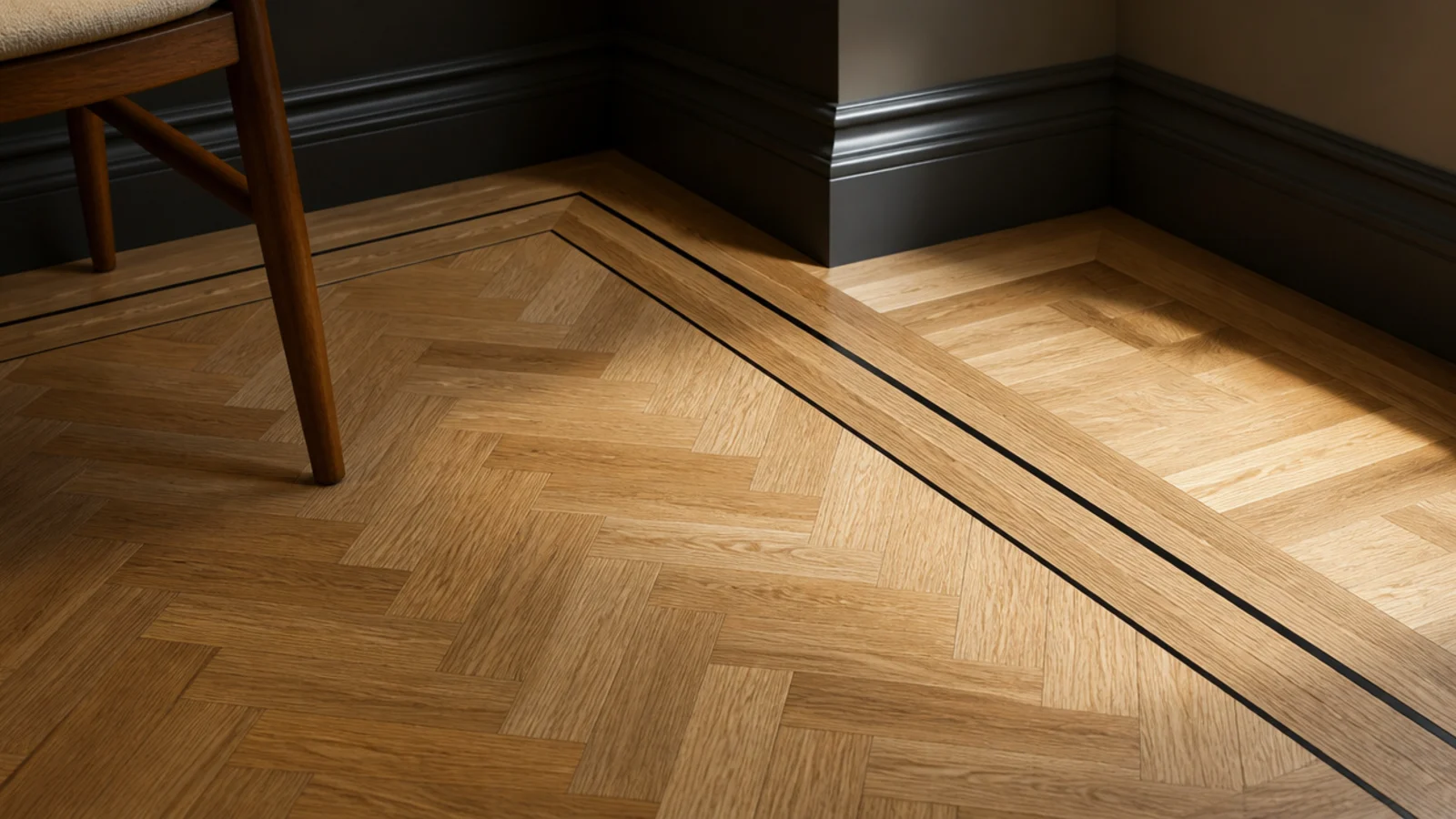
Herringbone and chevron have ragged edges by nature, and a border is how you finish them honestly. Two bands of 70 to 120mm with a 10 to 20mm dark stringer between them gives the field a clean stop and absorbs the awkward perimeter cuts. Keep the expansion gap outside the border.
9. Reclaimed blocks with bitumen backs
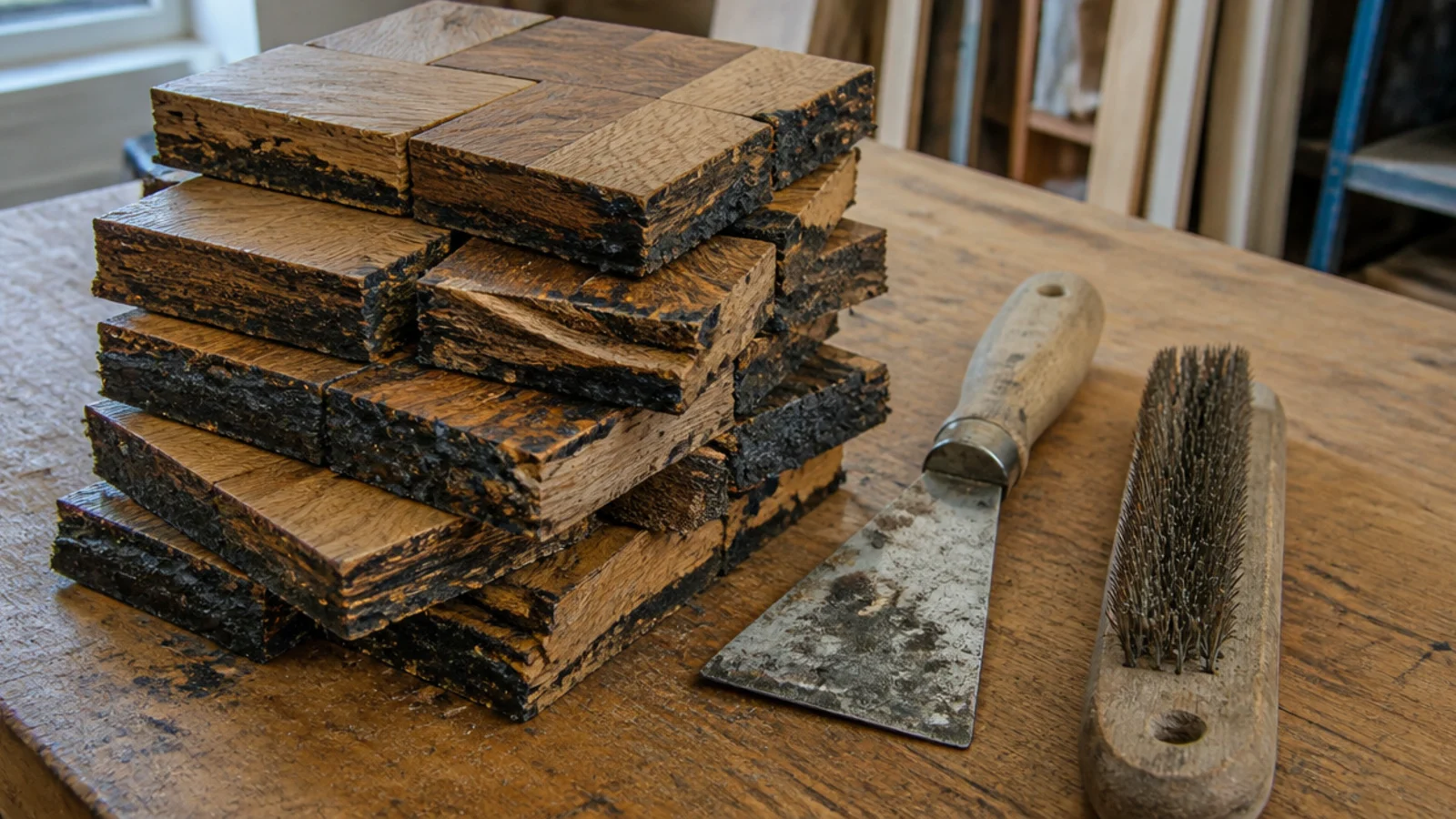
Salvaged parquet from schools and civic buildings is superb material at a fraction of new prices, and it arrives with black bitumen still stuck to the backs. It has to come off before the blocks can be bonded — scraping, wire brushing, and patience. Budget 20 to 30 percent wastage and check every block for embedded metal.
10. Sanding an existing parquet floor back
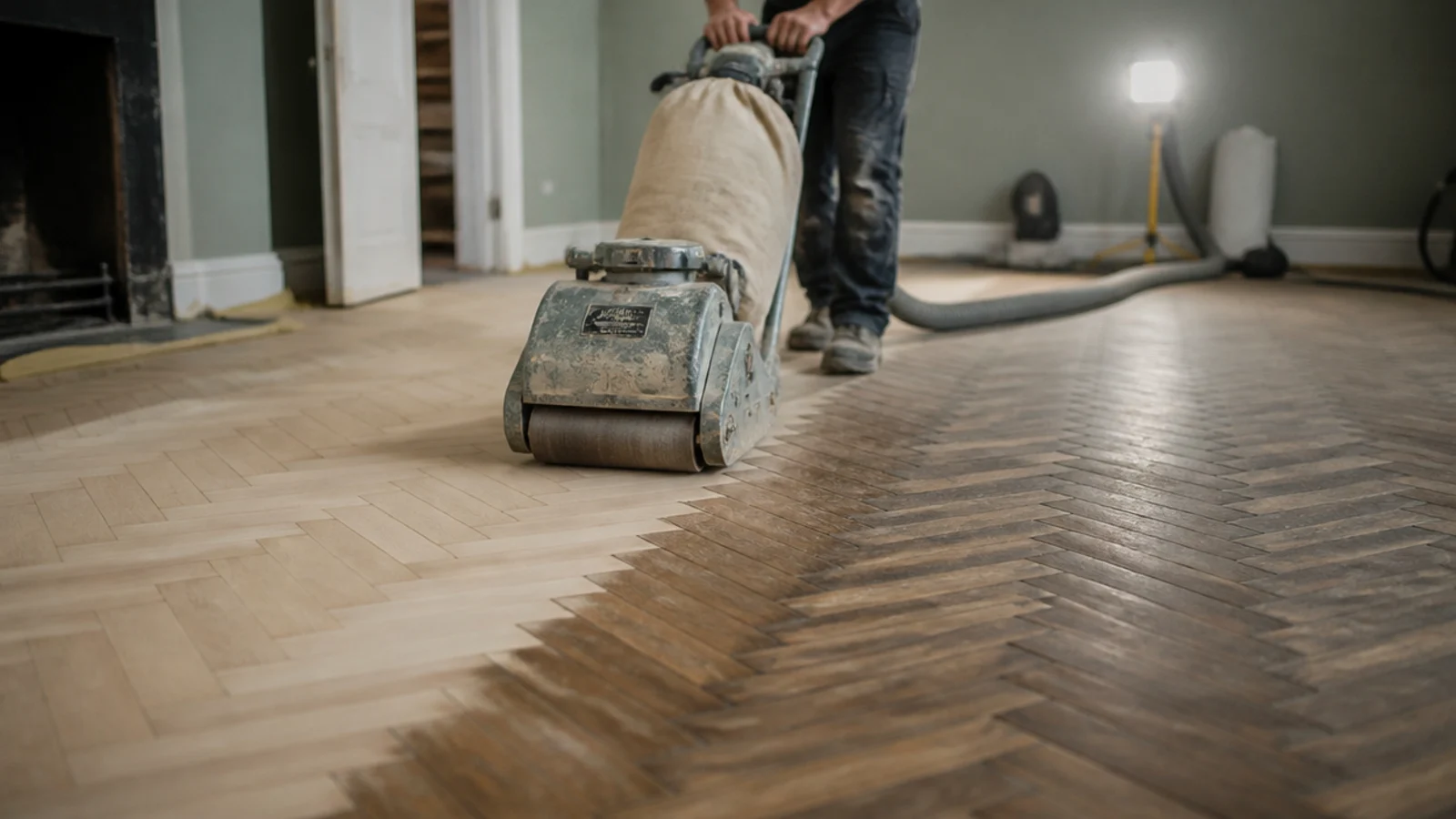
An old parquet floor under decades of varnish is usually restorable. Start coarse at 36 or 40 grit, work through 60 and 80, and finish at 100 or 120, sanding diagonally across the pattern rather than along one direction so no block gets dished. Bitumen residue clogs belts fast, so buy more abrasive than you think you need.
11. Levelling the subfloor before anything else
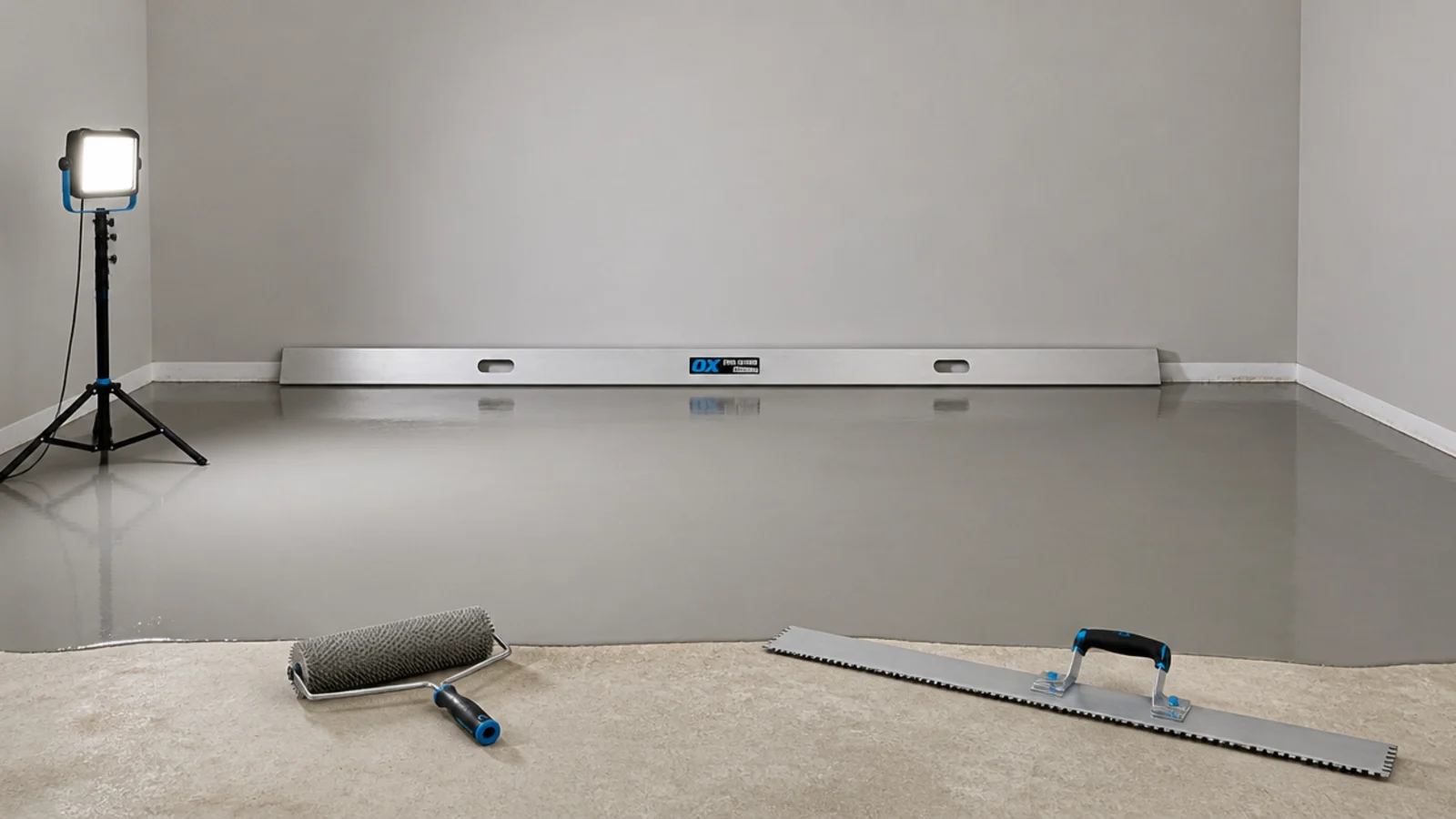
Parquet exposes every dip because there are so many joints per square metre. Pour a self-levelling compound over a primed substrate, spike-roll it, and let it cure fully — usually 24 to 72 hours depending on depth. It is the least visible part of the job and the one that decides how the finished floor feels underfoot.
12. The right adhesive for a bonded floor
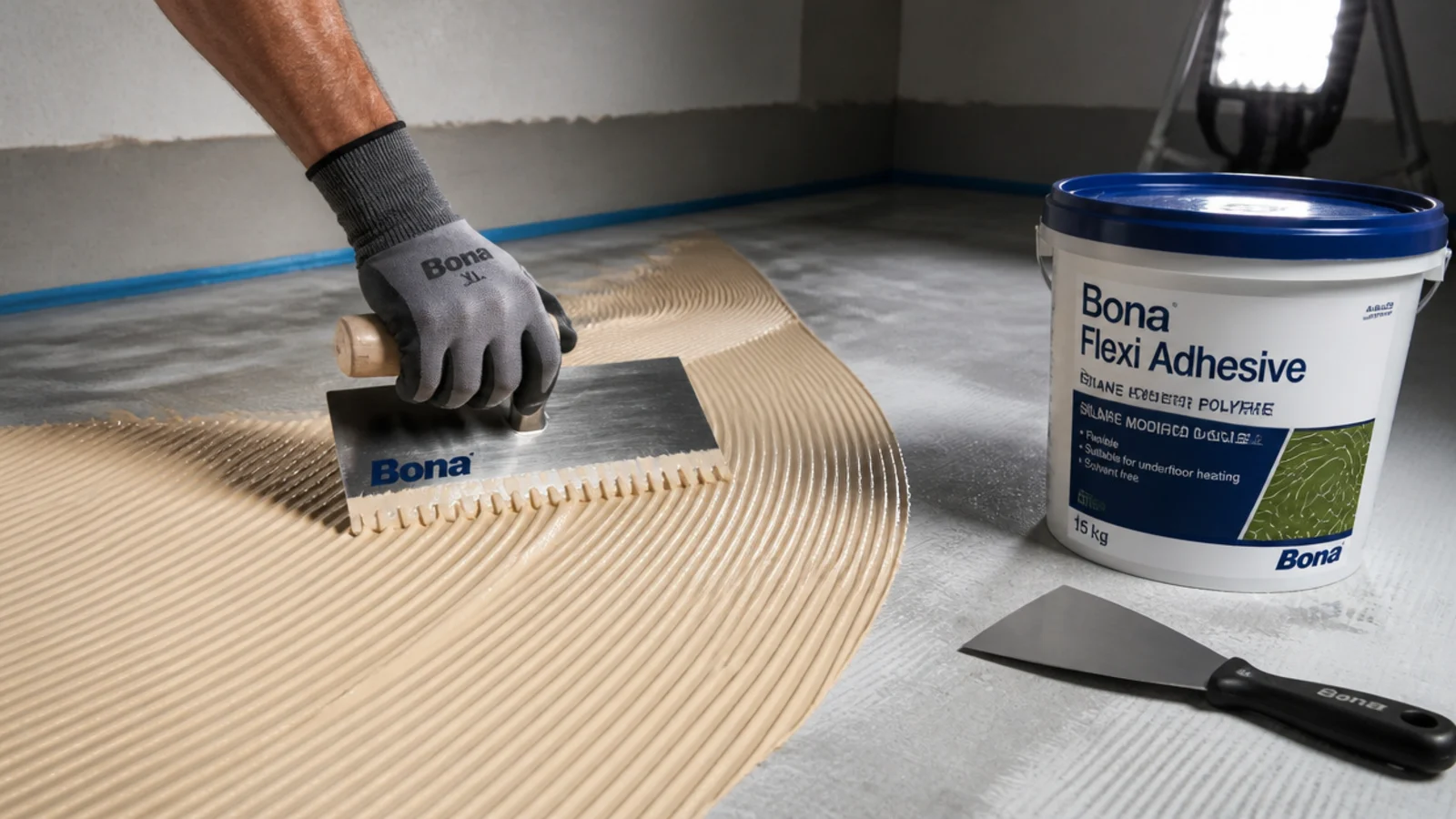
Use a flexible, solvent-free parquet adhesive rather than a rigid tile adhesive, and match the trowel notch to the manufacturer's specification. Flexible adhesive lets each block make its small seasonal movement without shearing. Working time is short, so lay in manageable bays rather than spreading half a room at once.
13. Expansion gaps around a bonded parquet field
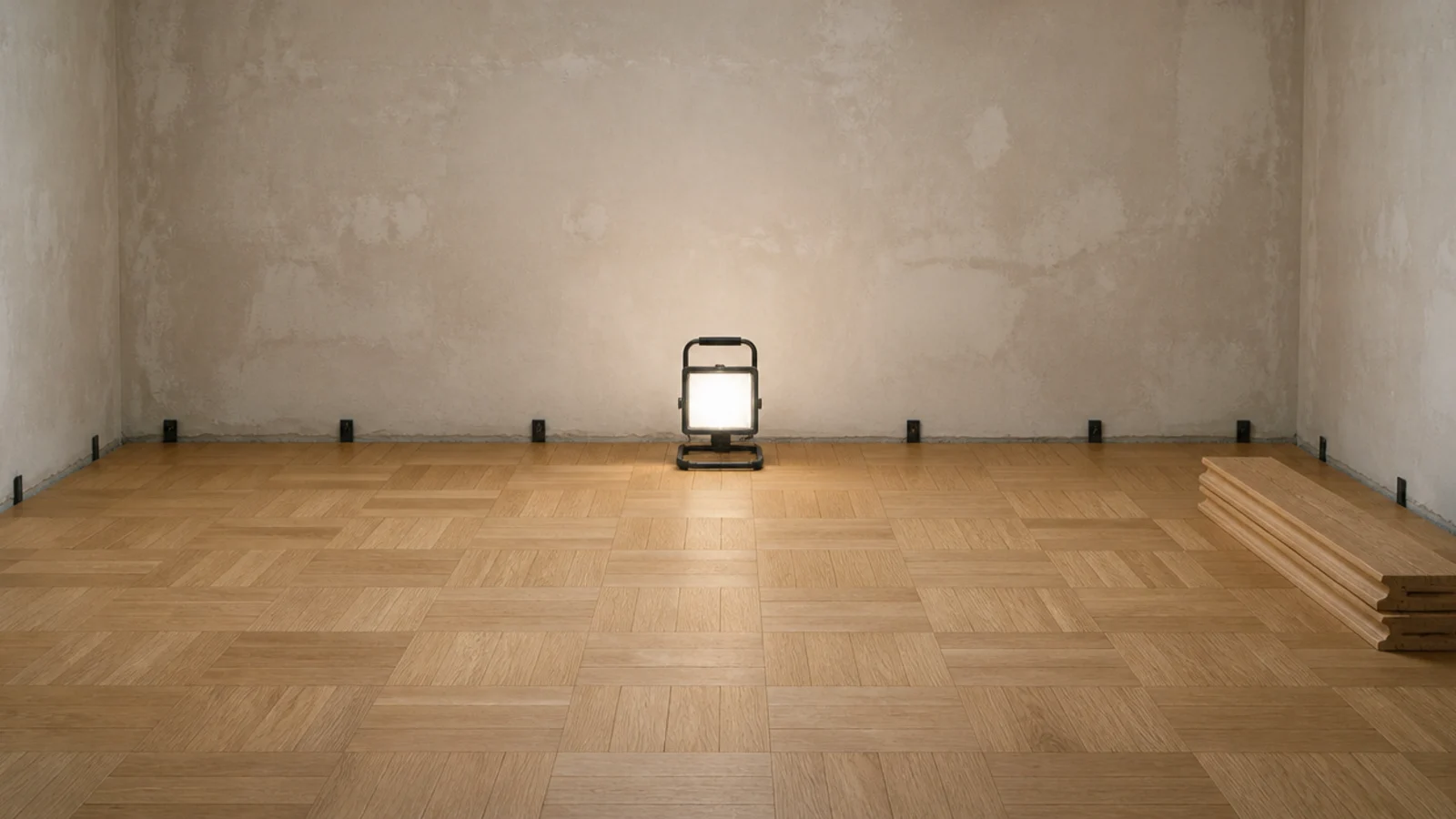
A glued floor still moves as a whole. Leave 10 to 15mm at every wall, doorframe and hearth, hidden behind skirting or a border, and never let a block touch plaster. On a very large floor, an expansion joint through the field itself may be needed — worth asking the supplier about anything over about 10 metres in one direction.
14. Choosing the species for the traffic
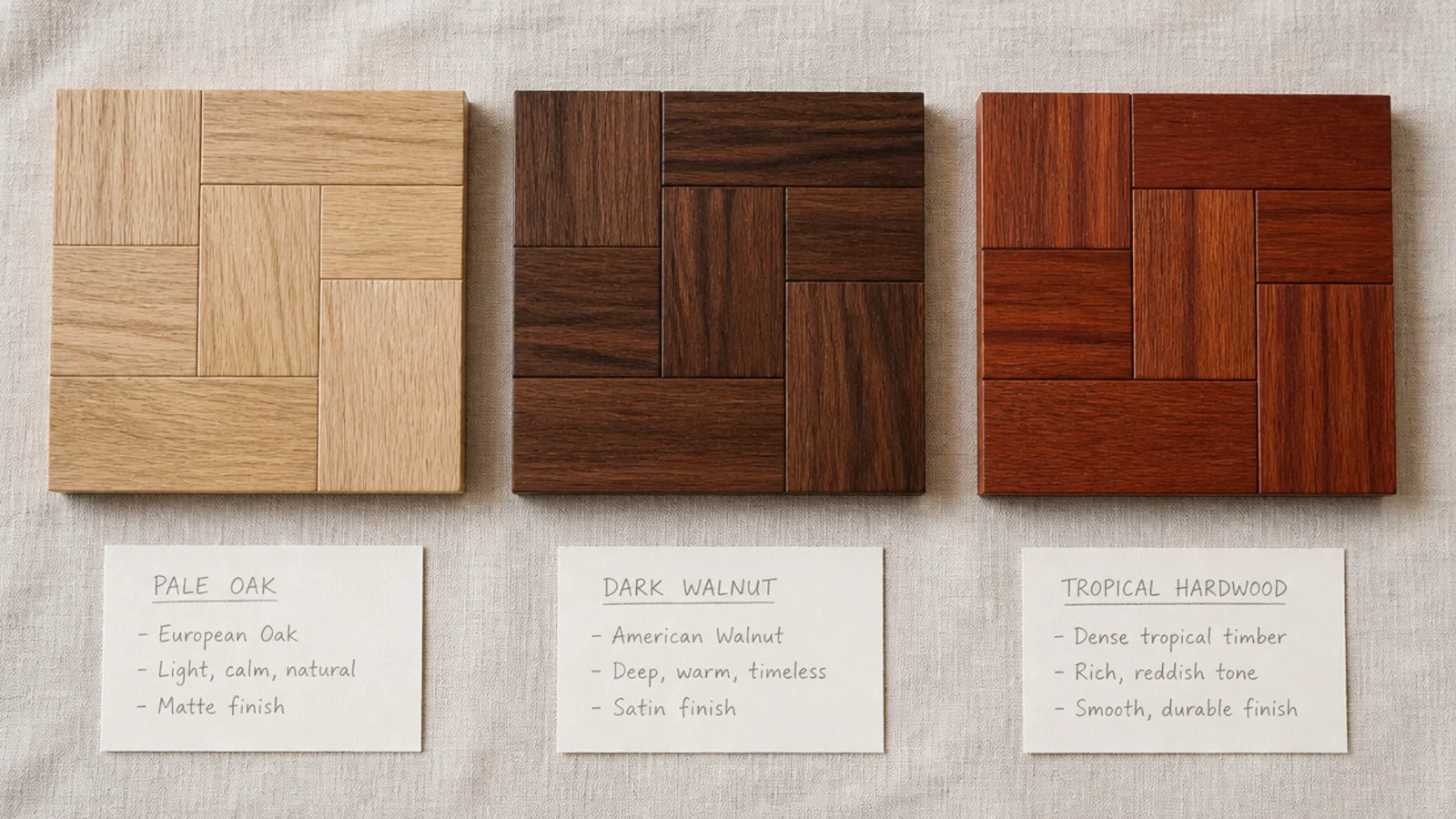
Oak is the default for good reason: hard enough for a hallway, stable, and it takes any finish. Walnut is softer and darker, better in a sitting room than an entrance. Dense tropical species are harder still but move more with humidity. Match the species to where the floor actually goes rather than to a photograph.
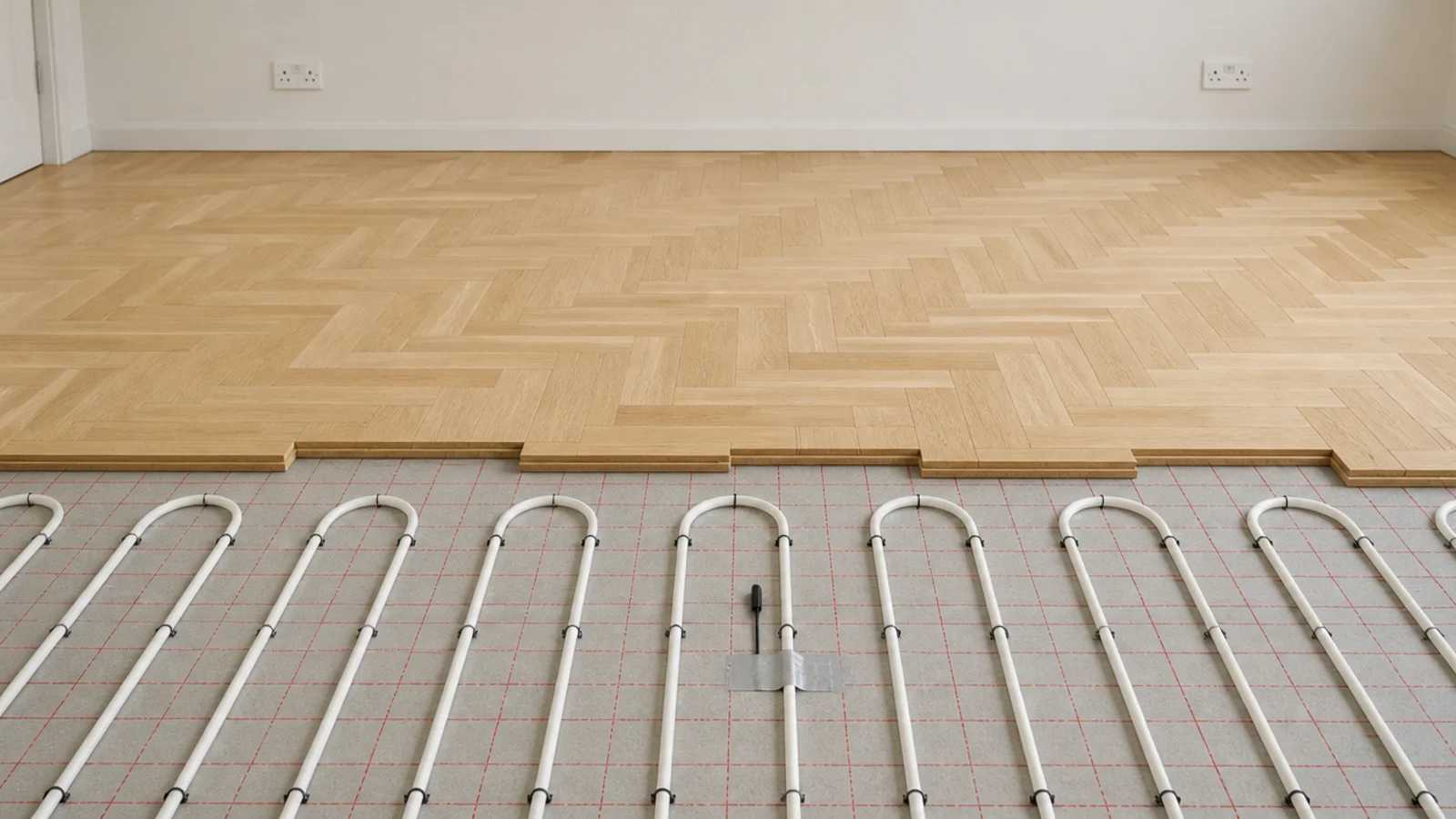
15. Parquet over underfloor heating
Engineered parquet only. Commission the heating before laying, then ramp it up 2 degrees Celsius per day once the floor is down, and cap the floor surface at 27 degrees. Keep rugs thin and few, because a thick rug over a heated parquet floor traps heat and dries the blocks beneath it unevenly.
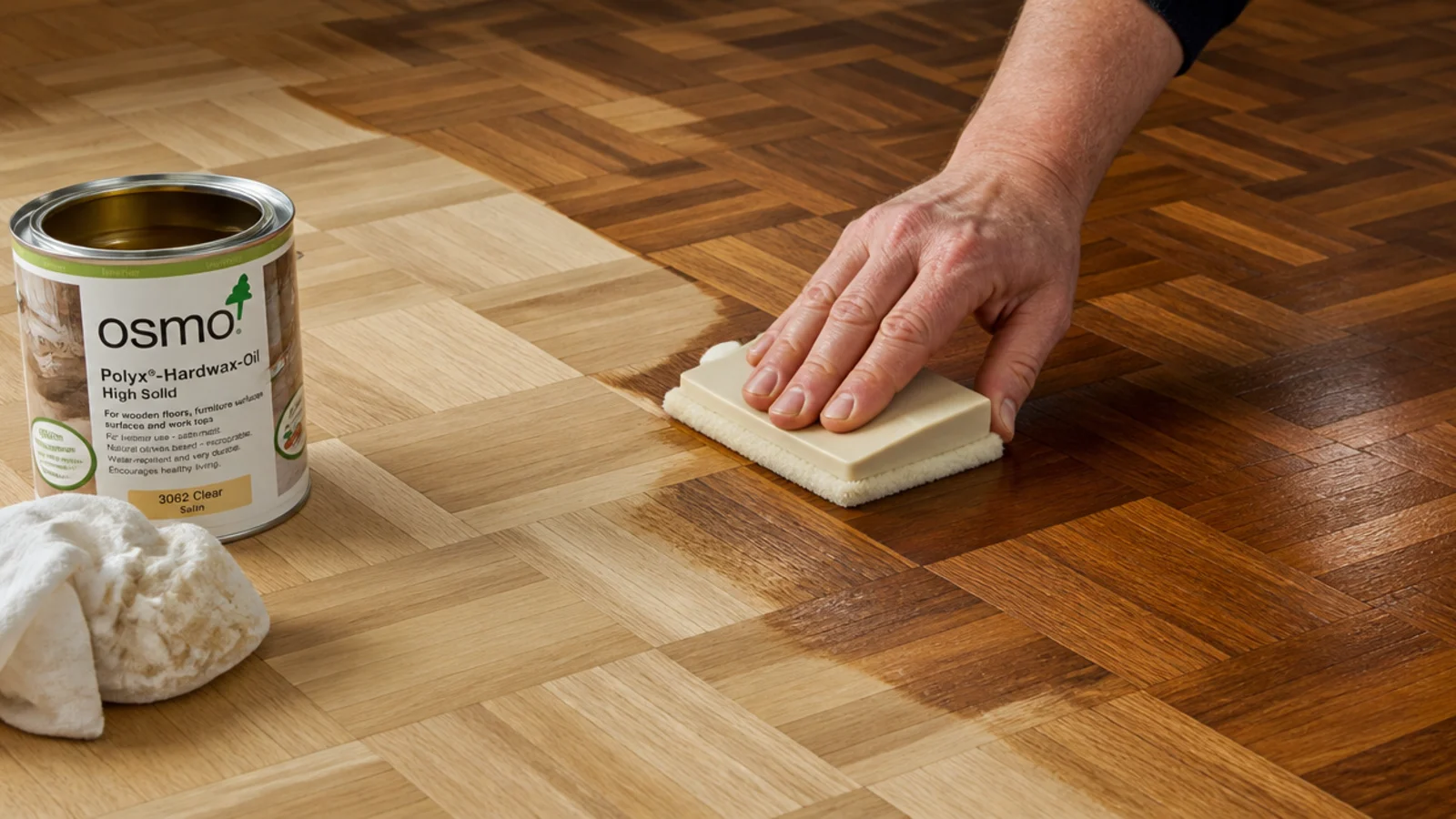
16. Hardwax oil rather than lacquer on parquet
Parquet has a great many joints, and a lacquer film bridges every one of them. When it fails, the repair is a full sand. Hardwax oil penetrates instead, so a worn area can be cleaned, abraded and re-oiled in an afternoon. On a floor meant to last a century, repairability matters more than initial hardness.
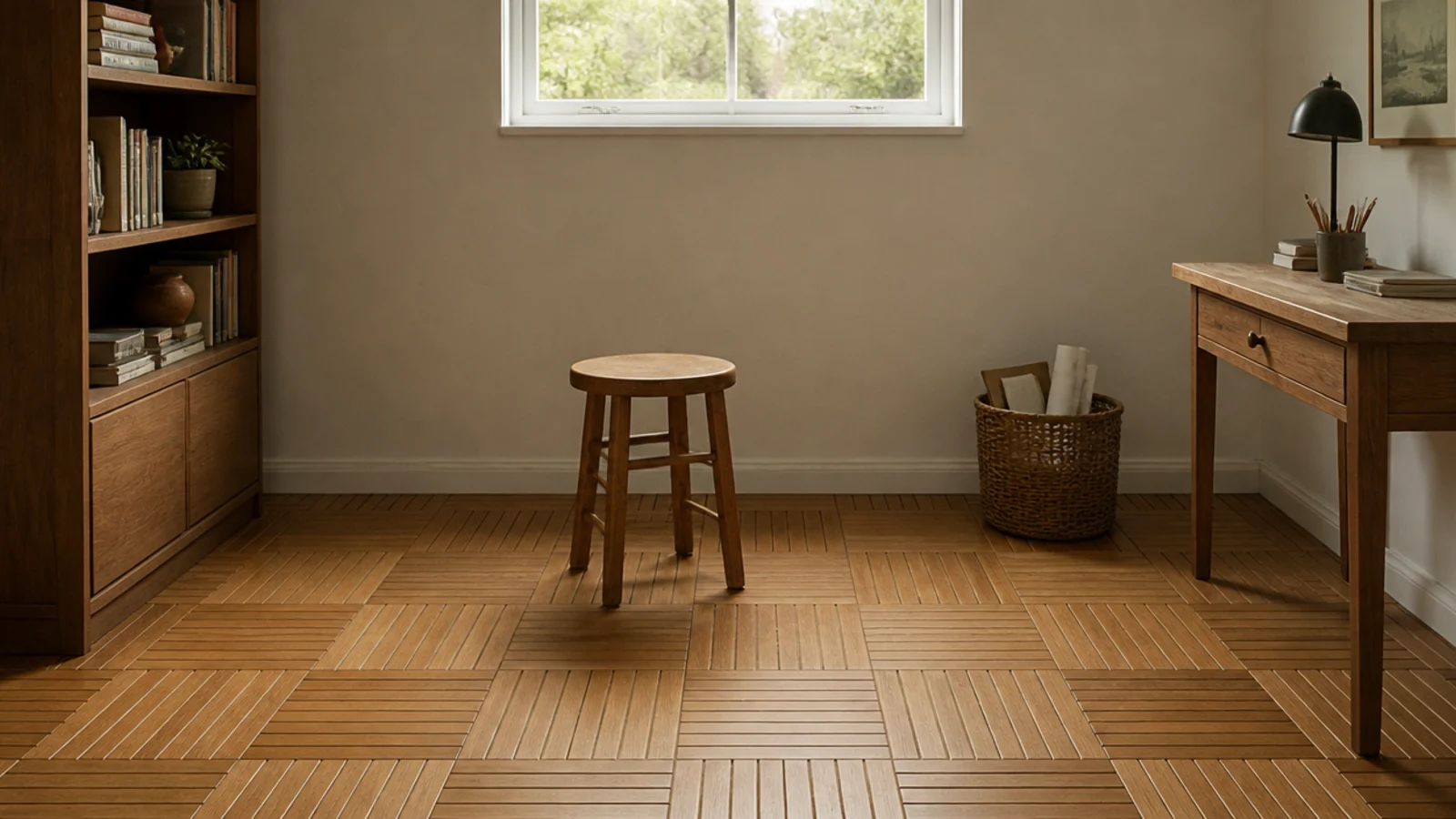
17. Small finger parquet in a compact room
Fingers of 20 to 30mm wide grouped into squares, with alternate squares turned 90 degrees. It is the cheapest genuine parquet because it uses short lengths that would otherwise be waste, and it packs a lot of pattern into a small floor. It suits a study, a cloakroom or a boot room.
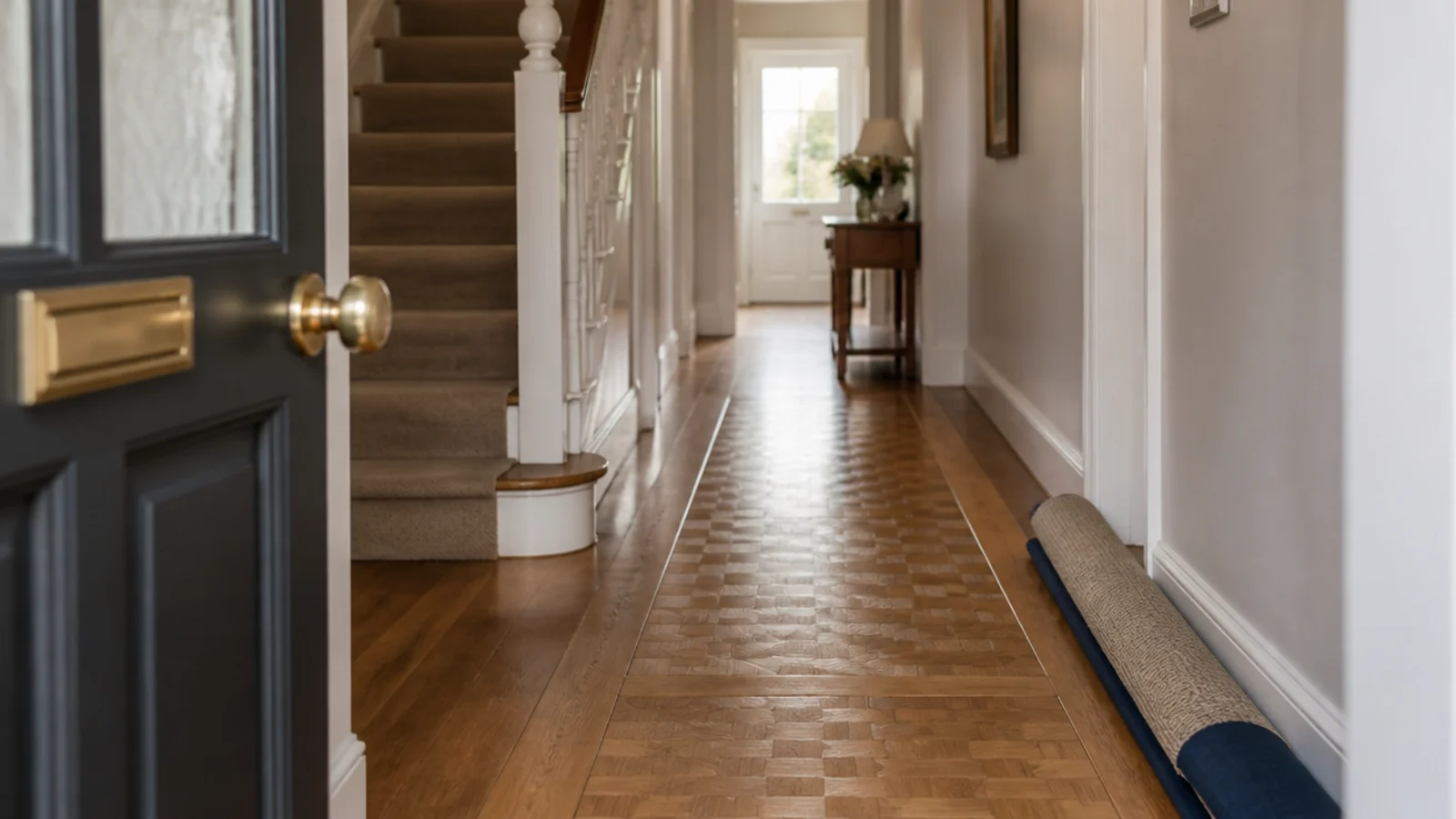
18. Parquet in a hallway with a wide border
Hallways are where parquet earns its reputation, and also where the cuts are worst — doorways, stair strings, meter cupboards. A wide border of 120 to 200mm takes all of them and gives the field something square to meet. The entryway planning guide covers keeping that floor visible once coats and shoes arrive.
19. Waste, labour and what parquet really costs
Add 15 percent for herringbone or chevron, up to 20 for panels, plus 3 to 5 percent for a border. Fitting typically runs at double a straight-laid board floor, and the substrate preparation is often the largest single line. Order everything in one batch: block tone varies enough between production runs to show.
20. Keeping a restored parquet floor alive
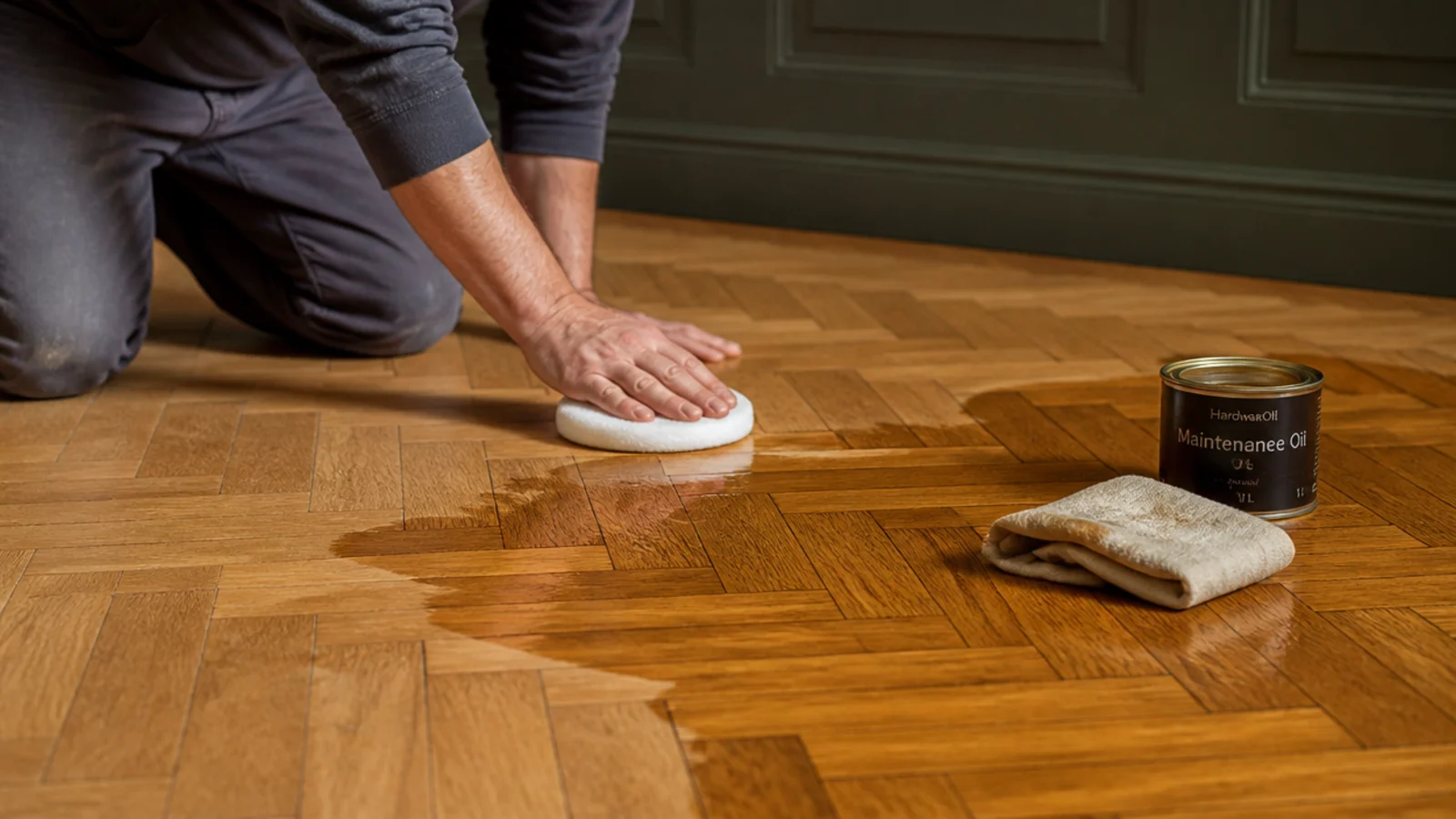
An oiled parquet floor wants a maintenance coat every two to five years in a living room and annually in a hallway — a morning's work with a pad and a litre tin. Keep the house at 35 to 55 percent relative humidity, use a barely damp mop, and the floor will outlast several sets of furniture. The luxury centre table options are worth pairing carefully, since a heavy table on a patterned floor needs a wide base rather than four thin legs.
If you are still deciding between a block floor and a plain board, the wooden flooring design ideas cover borders, inlays and thresholds that give a straight lay much of the same considered quality for a fraction of the labour.
Mistakes to Skip
- Attempting to float a parquet floor. Blocks have joints in two directions and need a full adhesive bond; a floated pattern opens at the points within the first heating season.
- Laying over a substrate you never levelled. Every dip shows as lippage between blocks, and unlike a plank floor there is no long board to bridge across it.
- Buying reclaimed blocks without factoring in the bitumen. Cleaning the backs is slow, dirty work, and it is the reason cheap reclaimed parquet often costs more overall.
- Sanding an old parquet floor in one direction. Working along the blocks dishes the softer ones; go diagonally across the pattern and change direction between grits.
Frequently asked questions
What size are parquet blocks?
Classic solid blocks run around seventy by two hundred and thirty millimetres or seventy by two hundred and eighty. Engineered parquet is usually larger, at ninety by four hundred and fifty or one hundred by five hundred, which suits bigger rooms where a small block would read as busy texture.
Can you lay parquet as a floating floor?
No. Parquet has joints in two directions and needs the stability of a full-spread adhesive bond to a flat, dry substrate. Floated parquet opens at the points within a season. That bonded requirement is why subfloor preparation is the largest part of most parquet jobs.
How flat does the subfloor need to be for parquet?
Flat within three millimetres over a two metre straightedge, and dry — under seventy-five percent relative humidity in a concrete slab, under twelve percent moisture content in timber. Levelling compound and a moisture meter are not optional extras on a parquet installation.
Can old parquet be sanded and reused?
Usually yes. Solid blocks are typically nine to twenty-two millimetres thick, so most take two or three sandings across their life. Old blocks are often bitumen-backed, which clogs abrasive belts, so budget for extra paper and a slower first pass through the coarse grit.
Is parquet suitable over underfloor heating?
Engineered parquet is, solid blocks generally are not. Keep the floor surface at or below twenty-seven degrees Celsius, commission the system before laying, and ramp the temperature up by about two degrees a day rather than in a single jump once the floor is down.
Want more like this? Browse all 15 wooden flooring guides — they all use the same measurements and budget tiers.
Pin it for later
Save this to your Wooden Flooring board
Pin it now so it is waiting for you when the tape measure comes out — and so the next person hunting for this idea can find it too.
Save this pinKeep going
More ideas worth saving while you have the tape measure out.