Rugs In Living Room · Listicle
30 Modern Rugs In Living Room Picks That Last

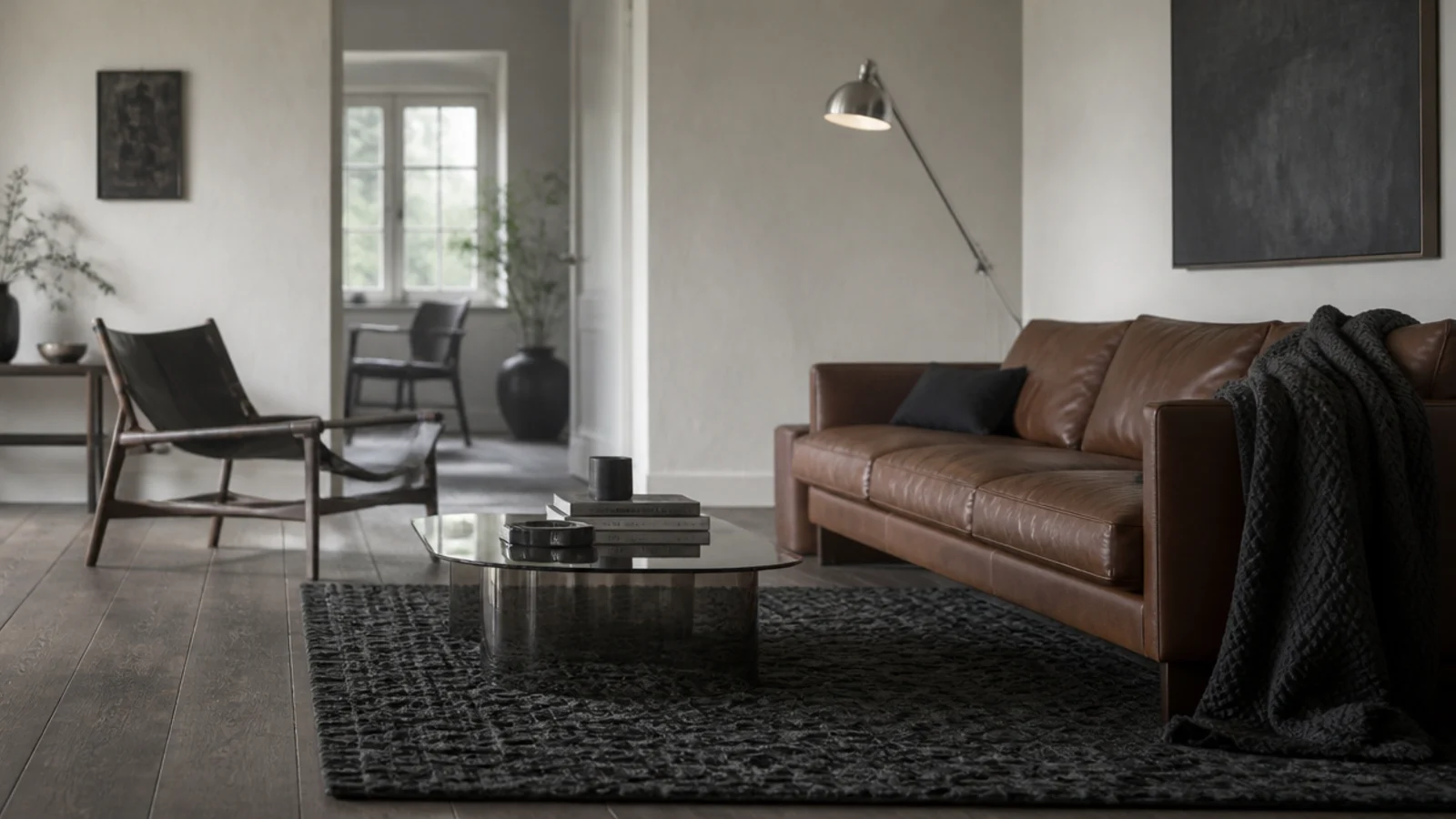
Modern rugs in living room schemes are usually judged on how they photograph the week they arrive. The better test is how they look in year ten, and that comes down to three unglamorous things: pattern scale, pile density and what the rug is actually made of. I have specified contemporary rugs for clients and bought them for myself, and the ones still working after a decade share a short list of properties. Thirty picks below, each with the number, fibre or construction detail that decides whether it lasts.
In this guide32 sections — tap to openHide
- 1.What modern rugs in living room schemes need to last
- 2.Scale the pattern to the room, not the swatch
- 3.A solid field with a genuinely textural weave
- 4.High-low carving instead of a printed pattern
- 5.Abrash: subtle tonal banding across the field
- 6.Asymmetric grids rather than repeating tiles
- 7.One oversized motif in an open field
- 8.Fine line drawings at very low contrast
- 9.Two-tone colour blocking
- 10.Gradient fields that shift across the room
- 11.Monochrome with a single accent line
- 12.Boiled and felted wool surfaces
- 13.Mixed cut and loop pile in one field
- 14.Hand-loomed blends: read the percentage
- 15.Treat any viscose content as a liability
- 16.New Zealand wool and why it gets specified
- 17.Hold out for 50 to 60 ounce face weight
- 18.Flatweave for a genuinely minimal room
- 19.Check the binding is tone-matched and dense
- 20.Prefer a woven back to a latex-coated one
- 21.Overtufted texture and what it costs you
- 22.Charcoal instead of true black
- 23.Warm greys on warm floors, cool greys on cool
- 24.Rust and terracotta as the durable accent
- 25.Muted sage as a modern neutral
- 26.Know which colours date fastest
- 27.Custom sizes and cut-to-size broadloom
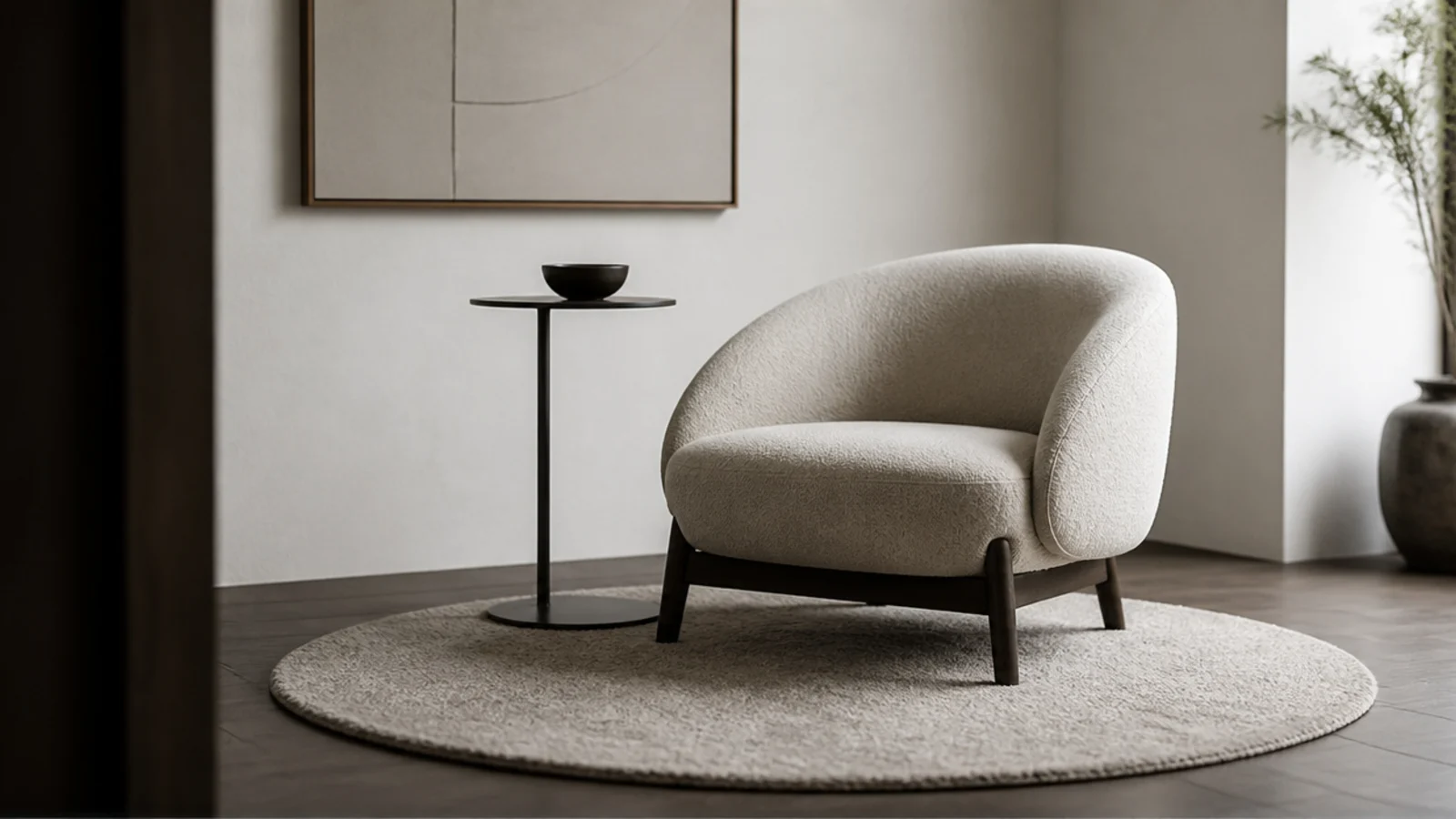
- 28.Round rugs only where something else curves
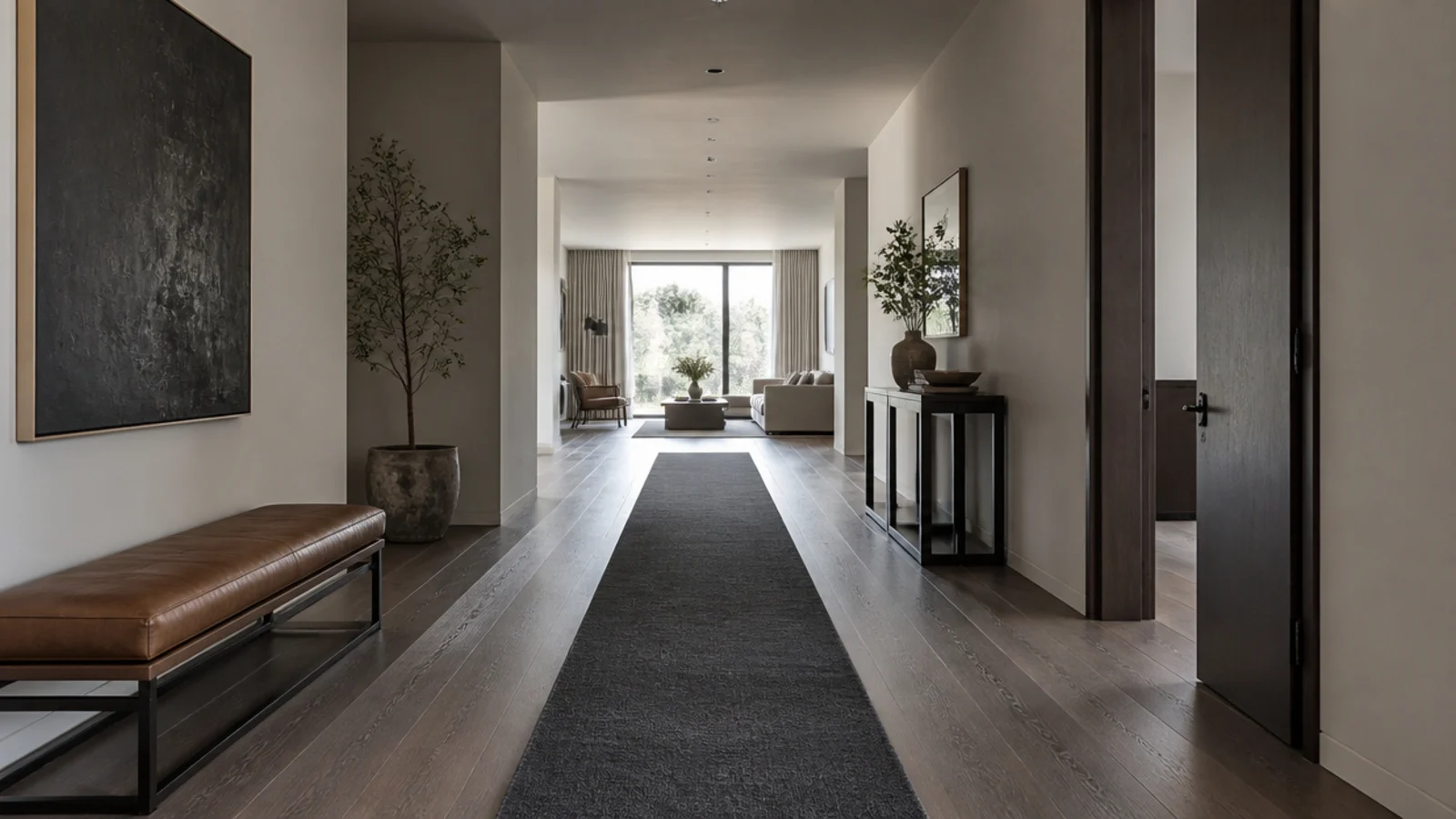
- 29.A runner used as a graphic line
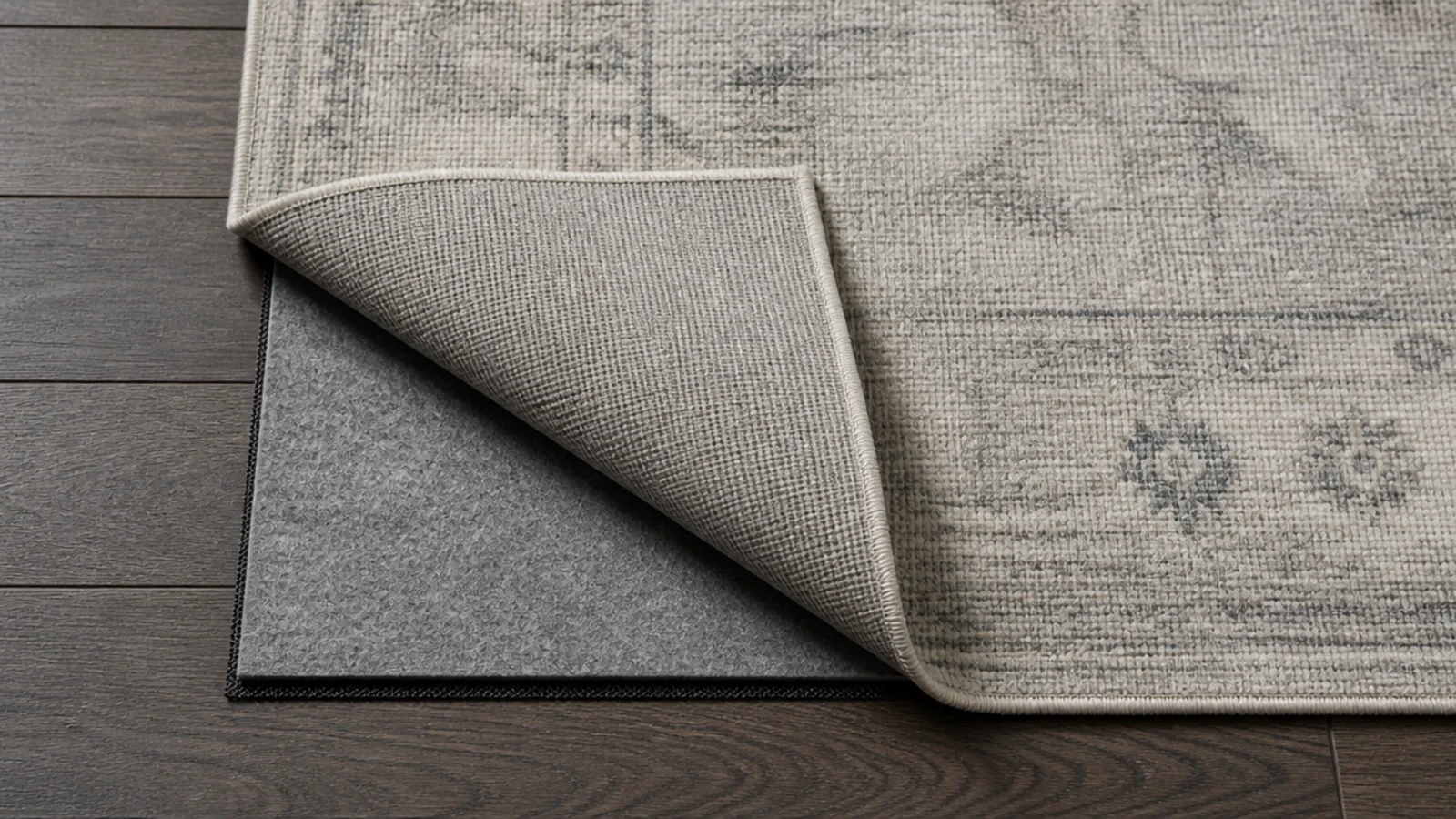
- 30.Choose the pad for a low profile finish
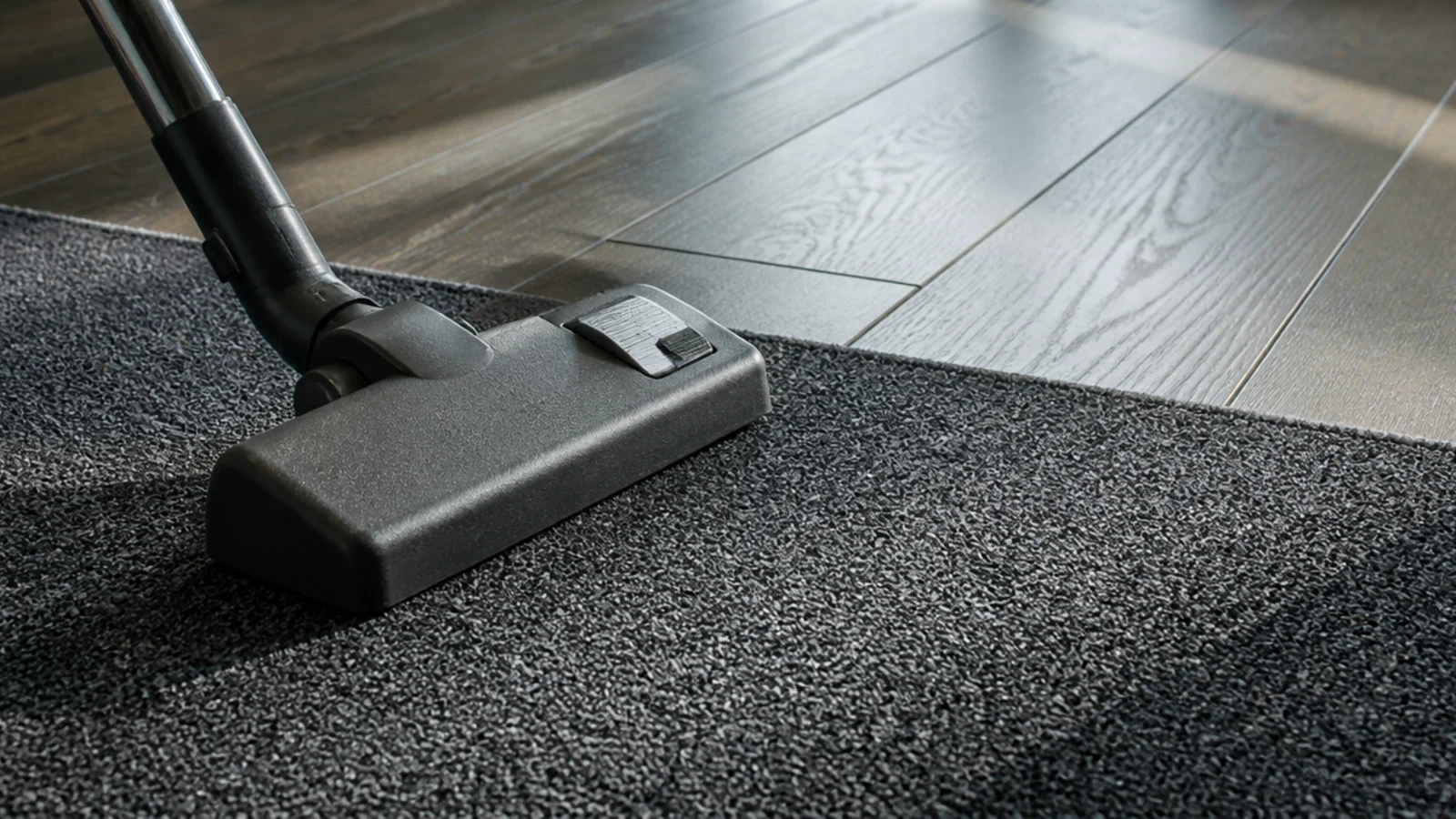
- 31.Set a care schedule a low pile can handle
- 32.Mistakes to Skip
What modern rugs in living room schemes need to last
Pattern scale dates a rug faster than colour does. A small busy geometric belongs to a specific few years; a large simple form or a solid textured field does not. Whatever the swatch looks like in your hand, the pattern will read roughly ten times smaller across 80 square feet, so scale up rather than down.
Density is the durability number. Ask for face weight in ounces per square yard: 40 is entry level and holds furniture dents, 50 to 60 springs back within a day of moving a sofa. On machine-woven modern rugs this matters far more than knot count, which describes fineness rather than life.
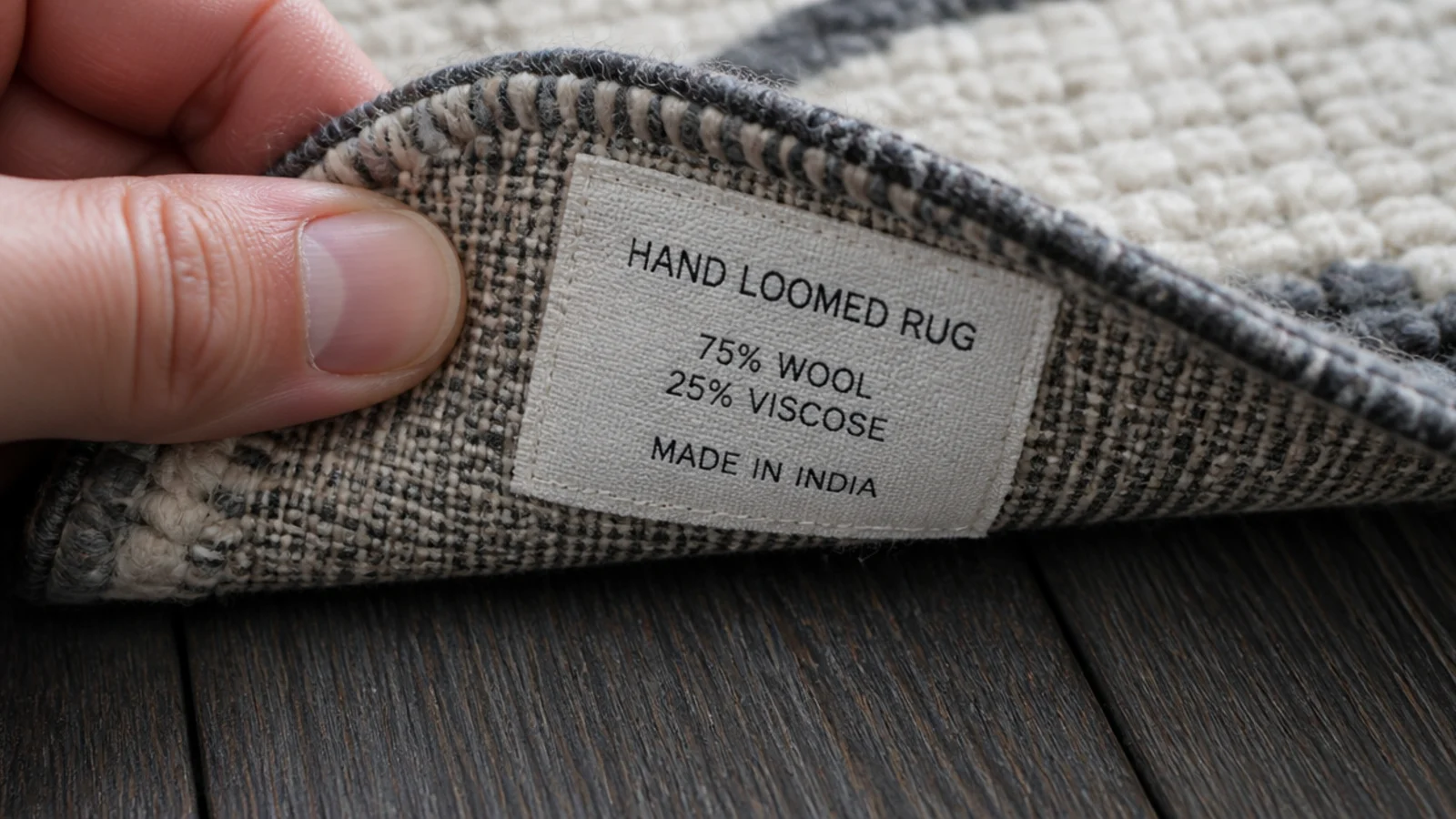
Then the fibre content, and one rule with no exceptions. Hand-loomed rugs often blend wool with 20 to 40 percent viscose because it adds sheen cheaply, and viscose marks permanently the first time water touches it. In a room where drinks get put on the floor, any viscose percentage is a liability. Choose the all-wool version, accept the flatter sheen, and it will still be there in fifteen years.
Finally, check the edges and the back. Dense, tone-matched serged binding and a woven back beat a pale binding on a dark rug and a stiff latex coating that powders at about the decade mark. For the cost-per-year maths behind all of this, the rug value guide sets it out.
1. Scale the pattern to the room, not the swatch
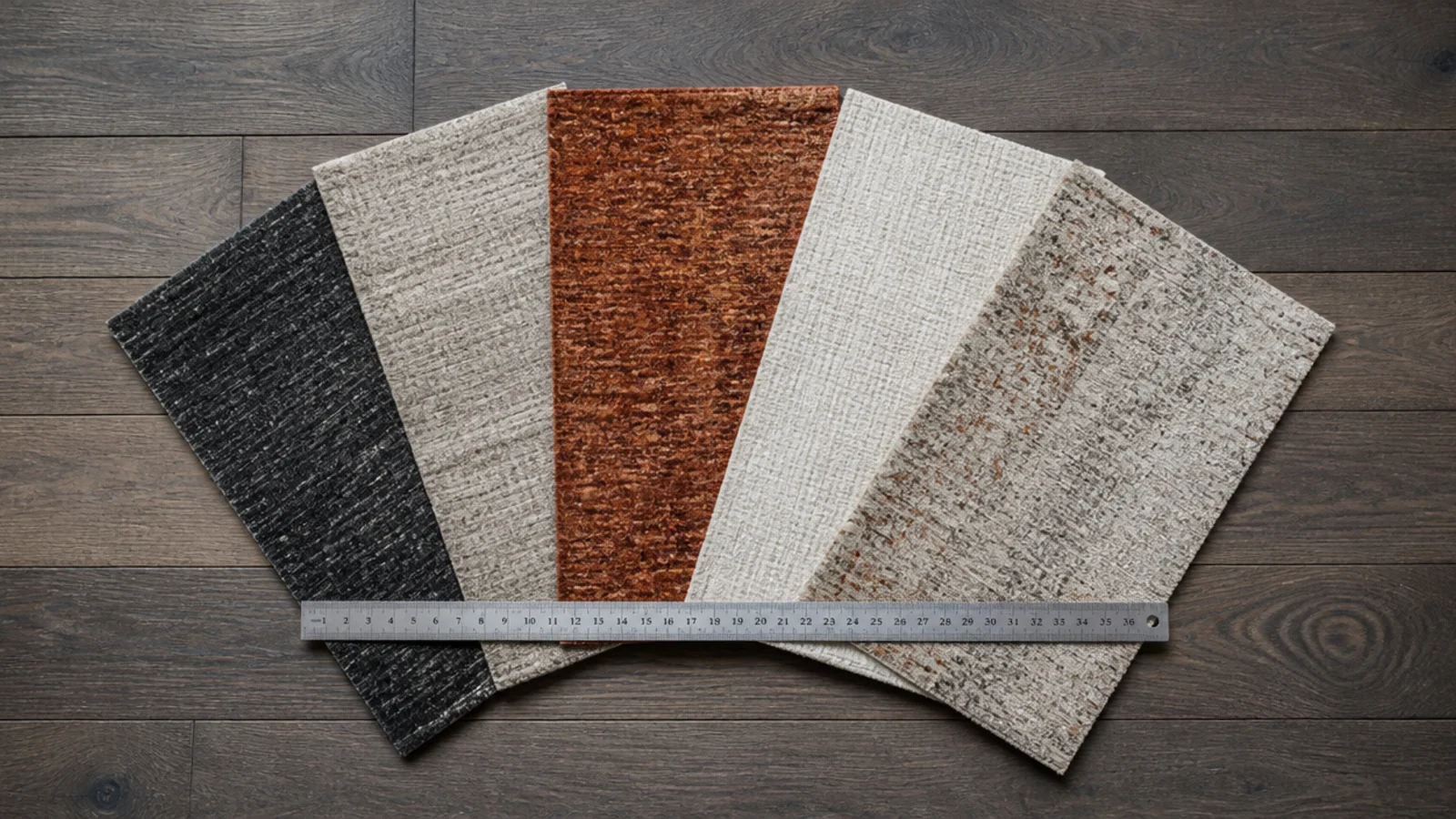
Hold the swatch at arm's length and imagine it repeated across a rectangle the size of your sofa arrangement. Most patterns lose half their impact at full size. In a 13x16 room, a motif under about 6 inches turns into visual noise. Err large — an oversized pattern reads as confident; an undersized one reads as busy.
2. A solid field with a genuinely textural weave
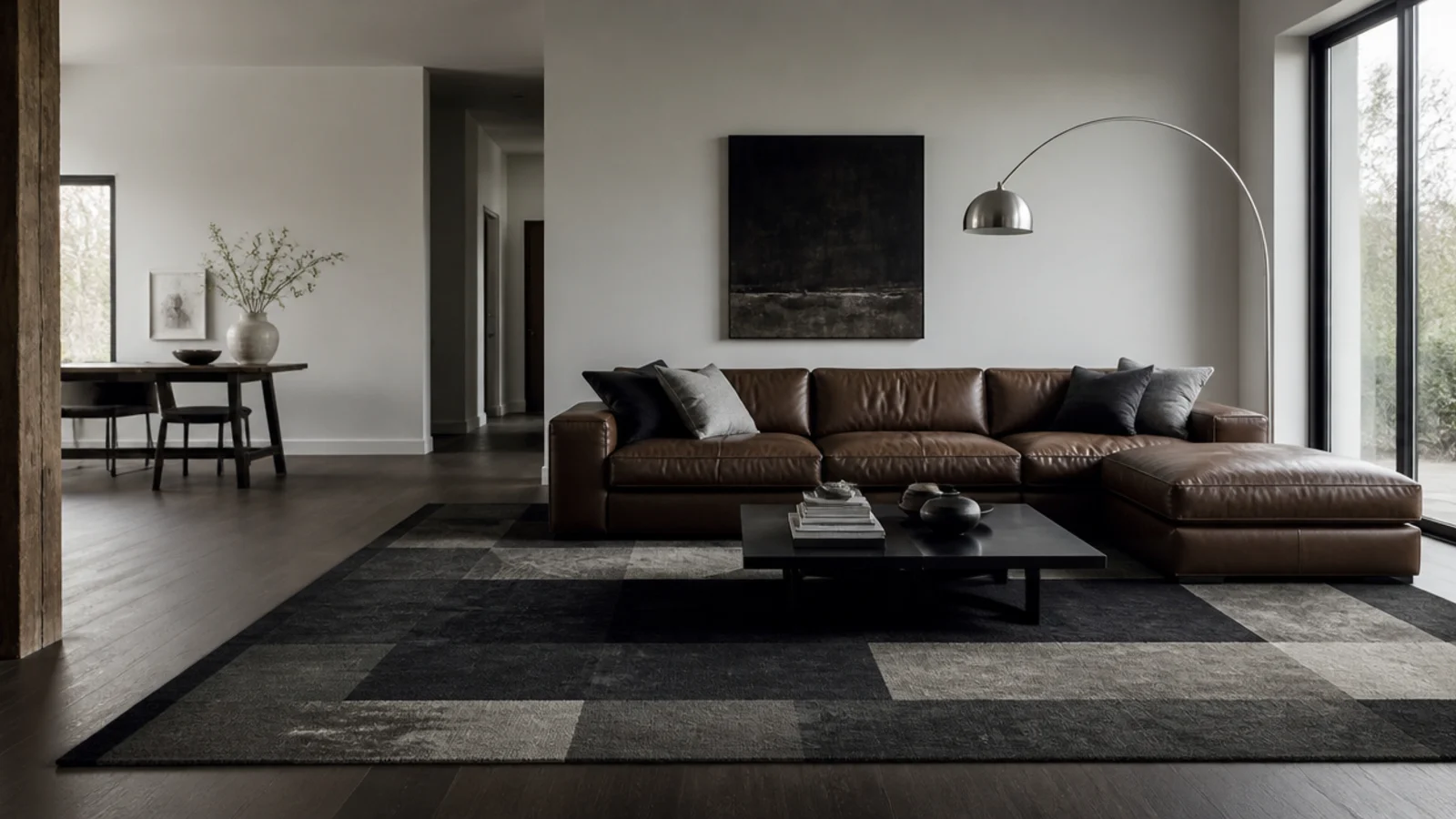
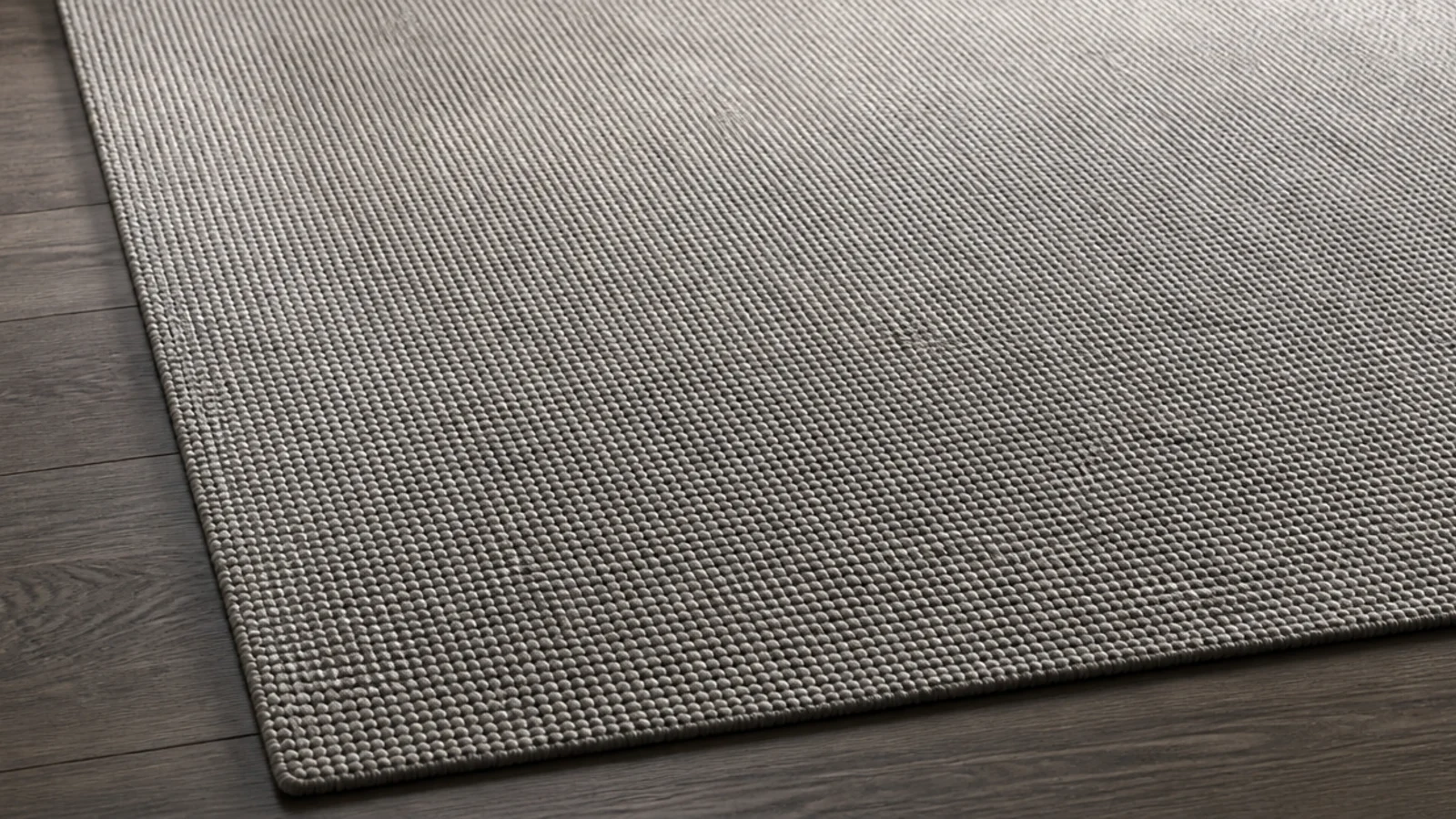
The most durable modern choice there is. One colour, one interesting surface, nothing to date. Look for a weave with visible structure — a rib, a basket, a fine boucle loop — because a flat solid in a used room shows every mark. Expect $400 to $900 for a wool 8x10 at a decent face weight.
3. High-low carving instead of a printed pattern
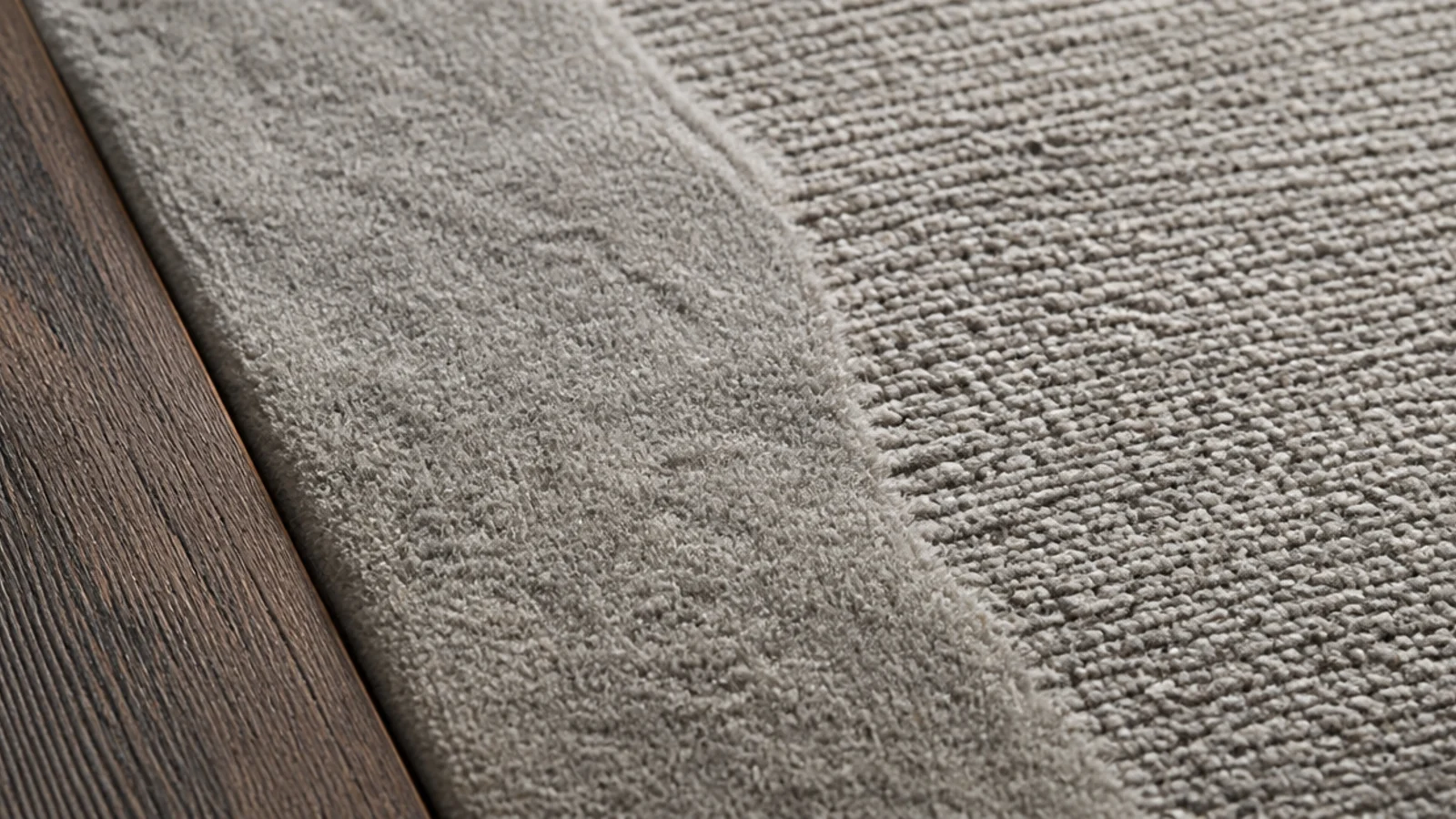
Carving sets cut pile and loop pile at different heights, so the pattern is physical rather than printed and cannot fade or wear off. It also hides crumbs and traffic marks better than any flat surface. Expect to pay 20 to 30 percent more than a flat wool of the same weight, and to get it back in appearance.
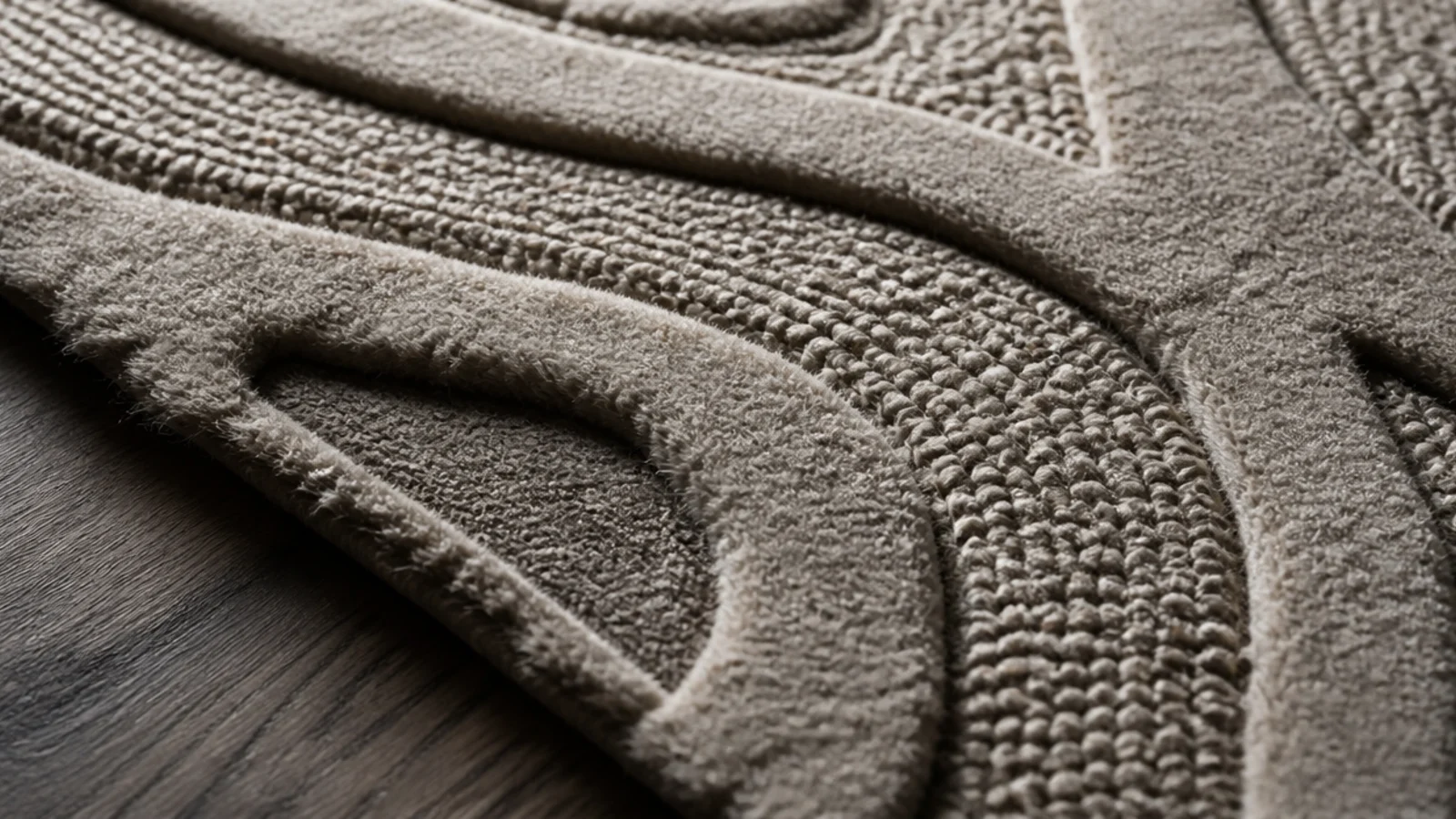
4. Abrash: subtle tonal banding across the field
Abrash is the faint horizontal variation left by slightly different dye batches across a weave. On a modern solid it stops the colour reading as printed vinyl. Some mills reproduce it deliberately, which is fine. What matters is that flat single-tone colour looks dead across a large area and banded colour does not.
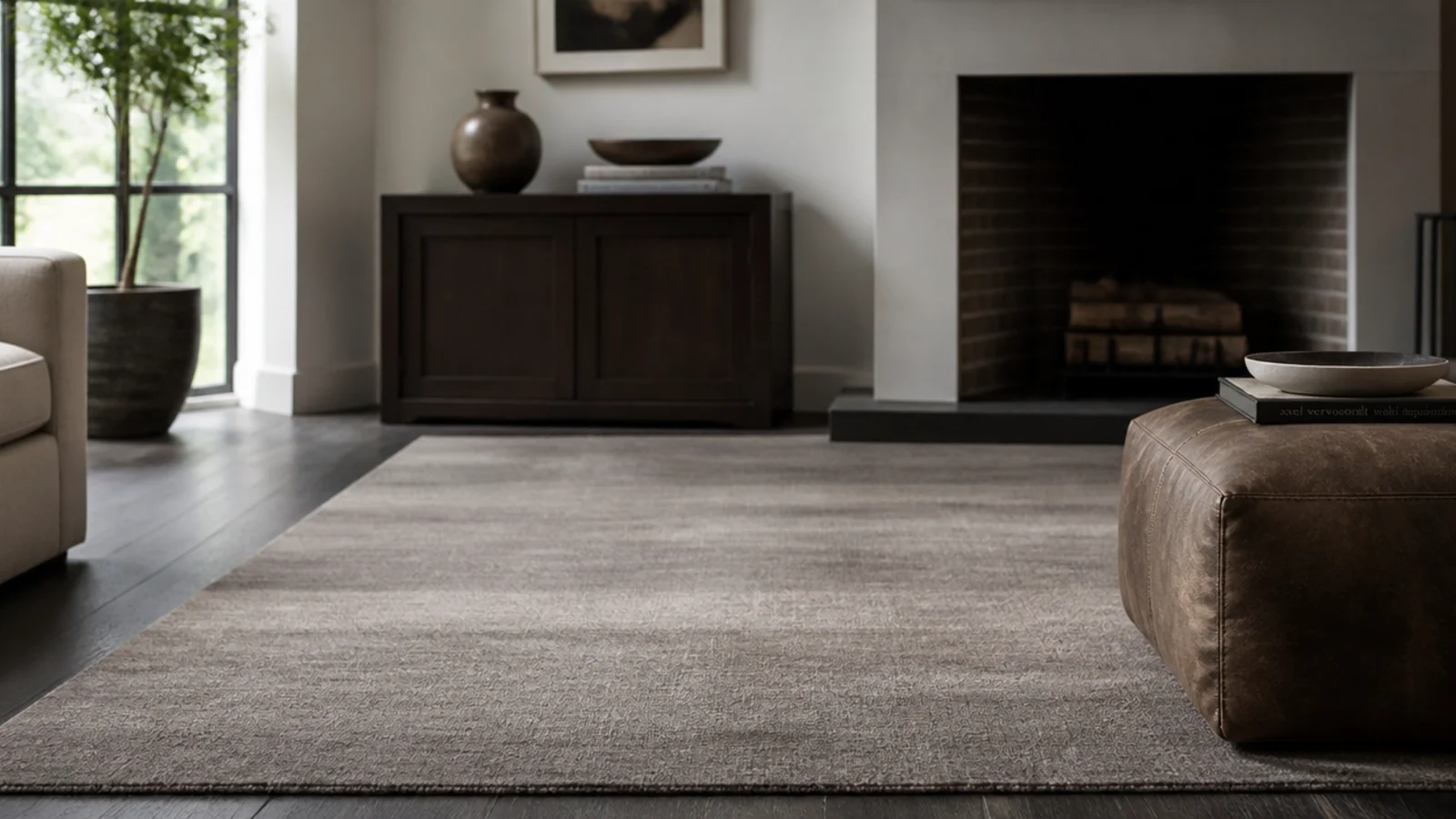
5. Asymmetric grids rather than repeating tiles
An irregular grid, where the lines are not evenly spaced, ages far better than a tidy repeat. Regular repeats read as wallpaper on the floor and pin themselves to the year they were made. Irregularity also disguises the inevitable slight misalignment between rug edge and furniture line.
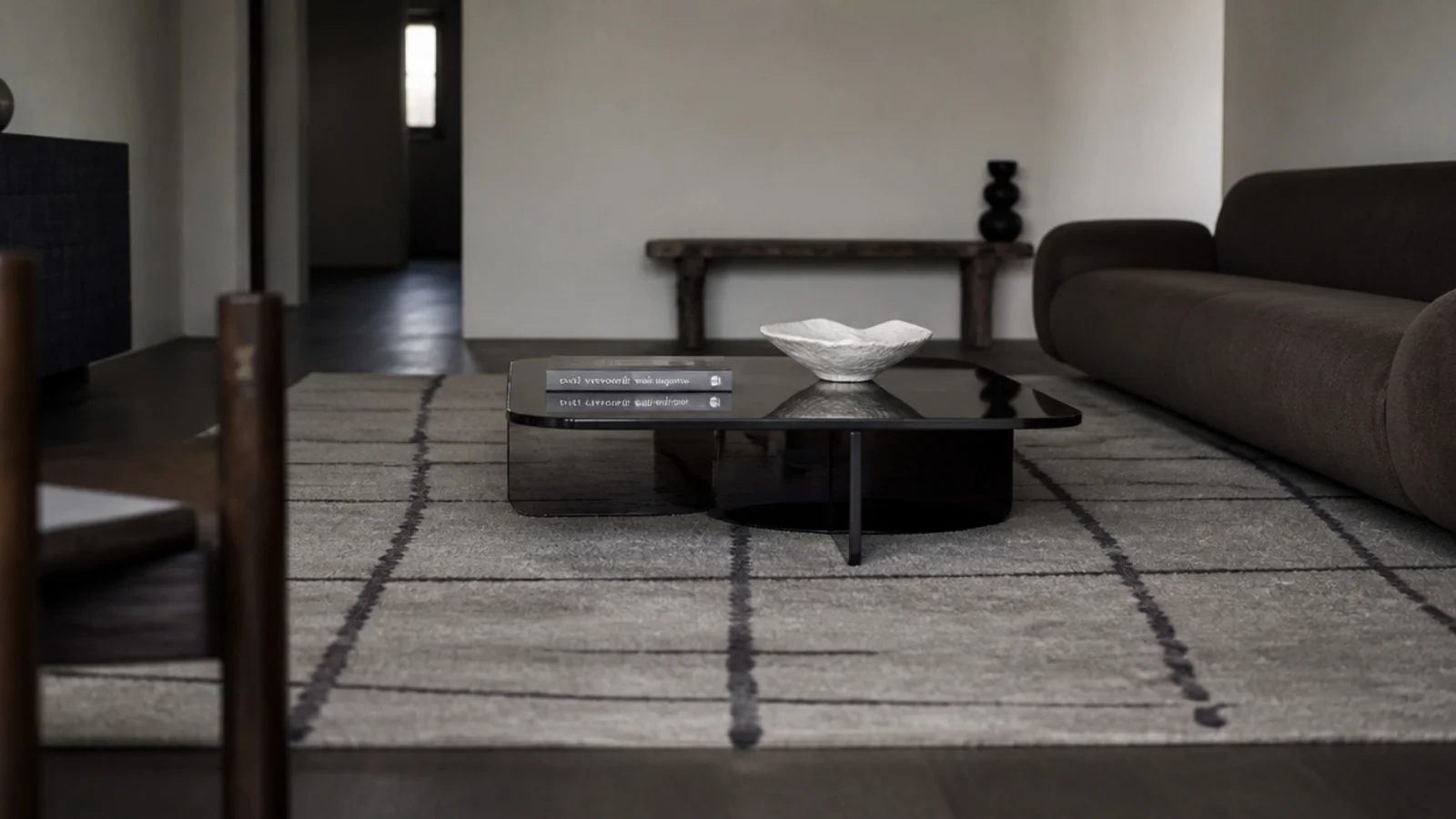
6. One oversized motif in an open field
A single large soft-edged form on an otherwise empty ground works beautifully in a minimal room. Place it so the motif sits in the open floor between the sofa and the coffee table rather than under furniture, where two-thirds of it would disappear. Empty ground is the point, so resist adding a border.
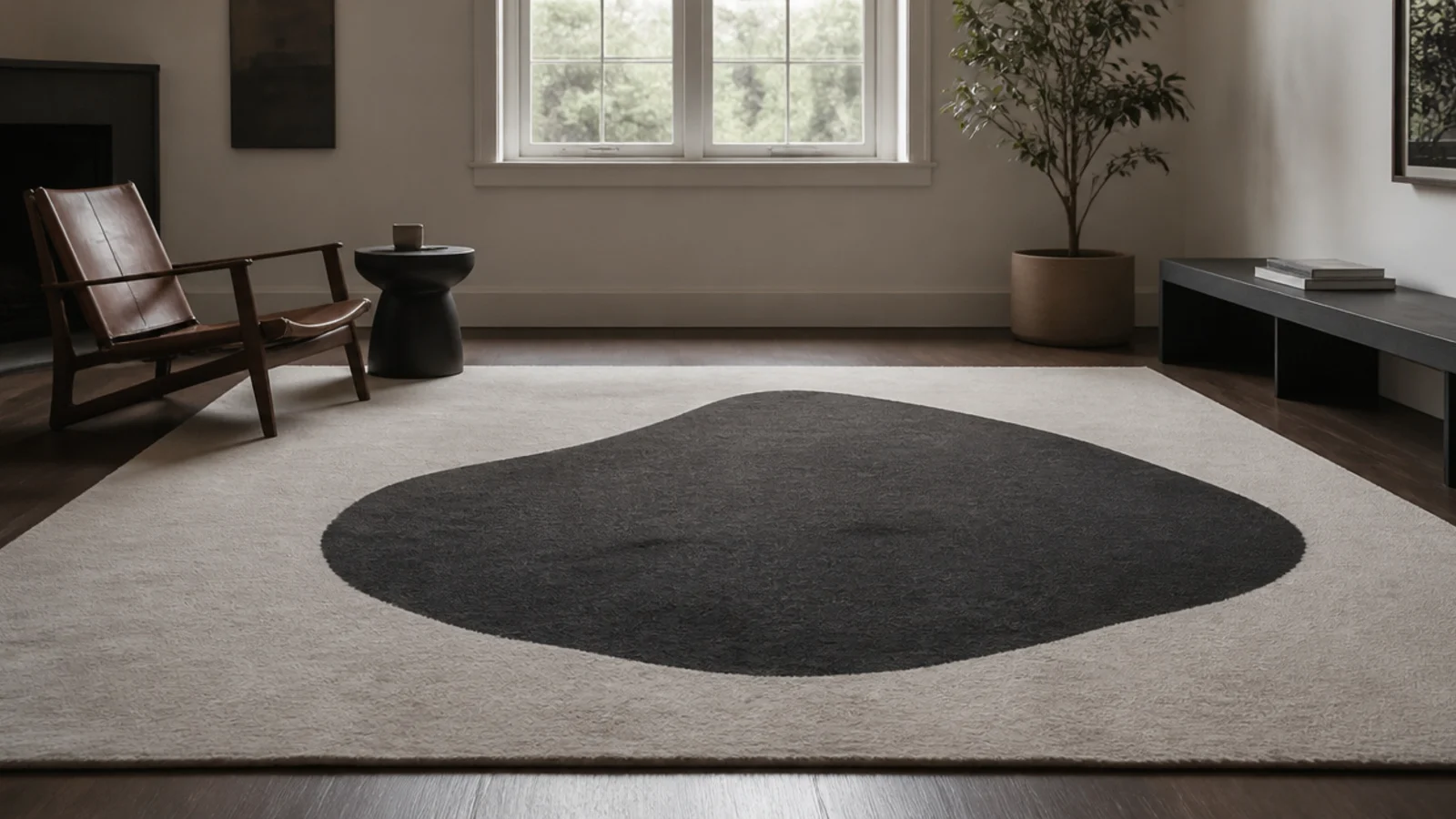
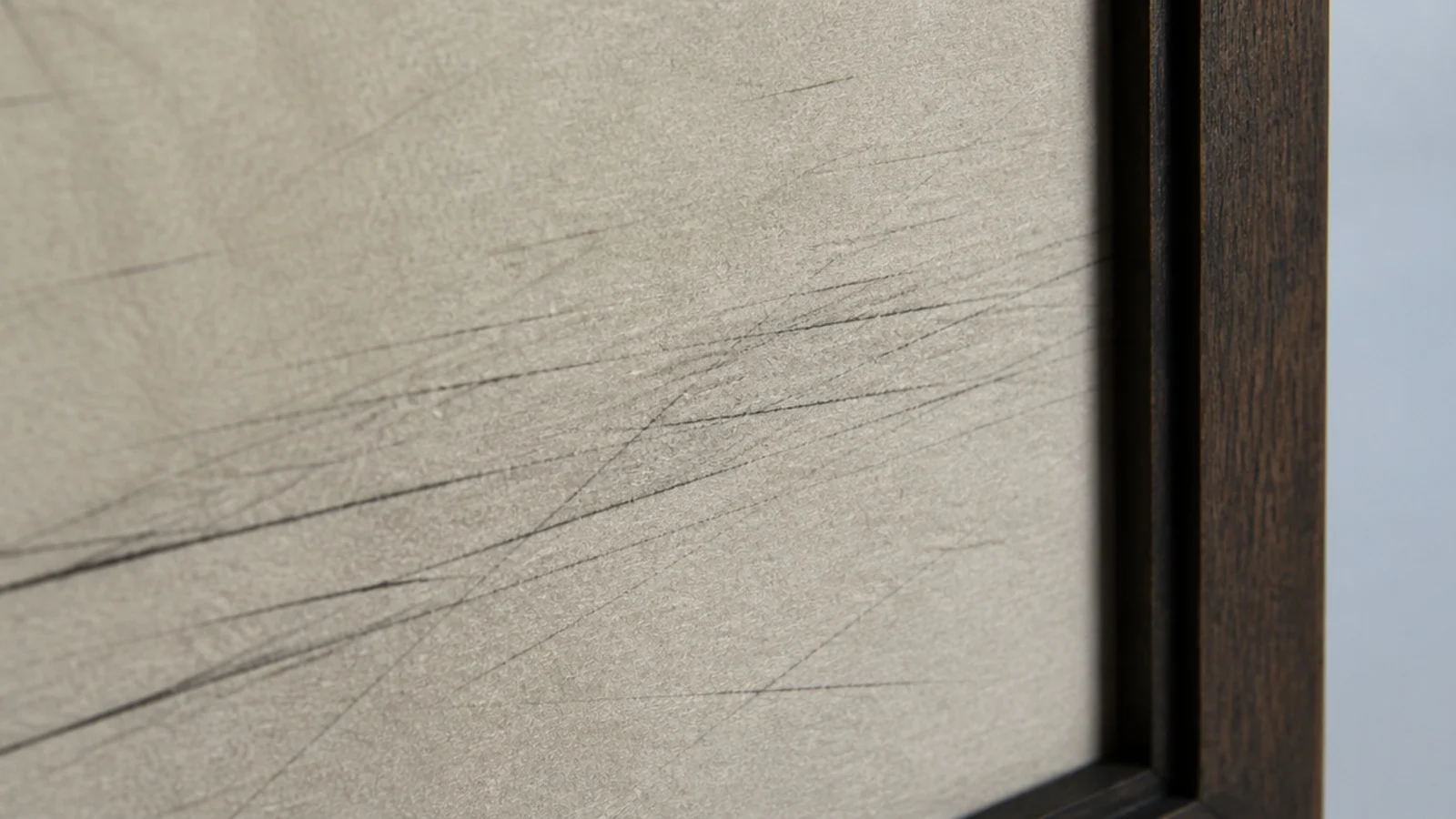
7. Fine line drawings at very low contrast
Thin lines a shade or two off the ground colour give a rug detail up close and quiet from across the room. It is the safest way to have pattern in a room that already has art or strong curtains. Check the lines are woven rather than printed by folding a corner and looking at the pile base.
8. Two-tone colour blocking
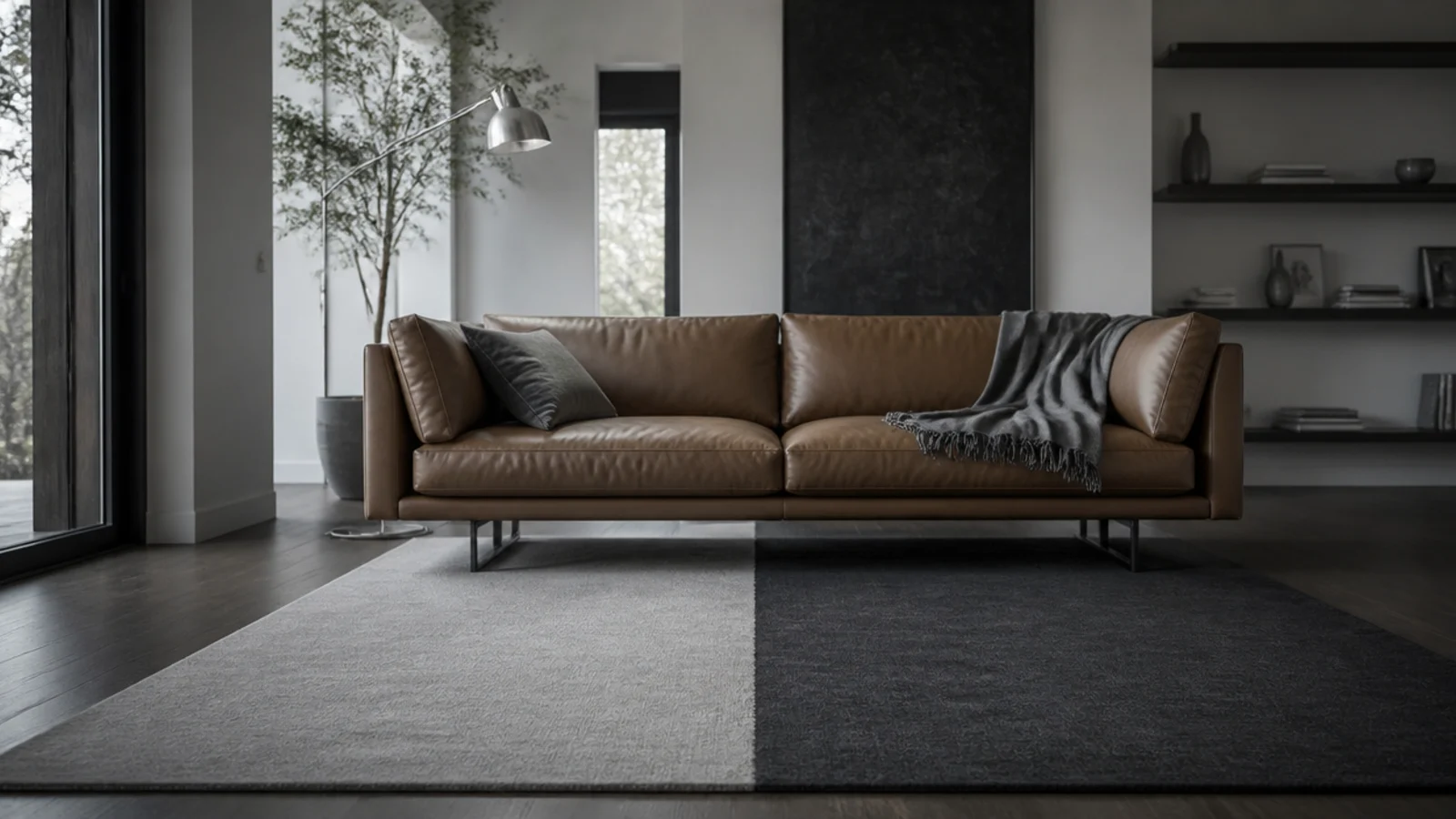
Two clean fields meeting on one straight line is about as modern as a rug gets, and it is remarkably durable as an idea. Place the join so it runs under the coffee table rather than under a sofa leg, and keep the two tones at least three values apart so the split reads intentional.
9. Gradient fields that shift across the room
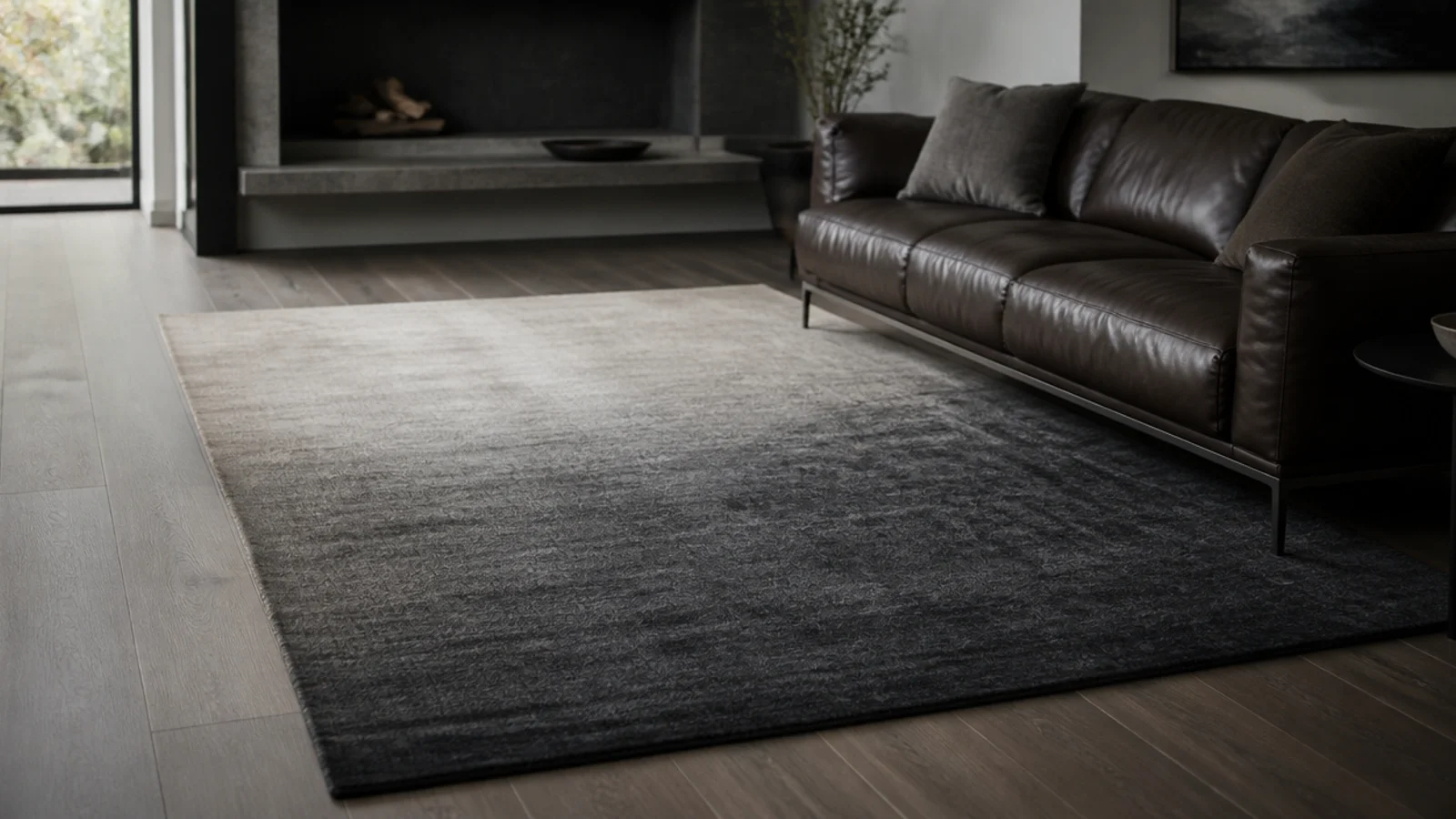
A slow fade from pale to dark across the length of a rug adds depth without pattern. Orient it so the darker end sits at the busier side of the room — near the door or the walkway — and the traffic marks land where the colour can absorb them. Gradients also hide uneven sun fading well.
10. Monochrome with a single accent line
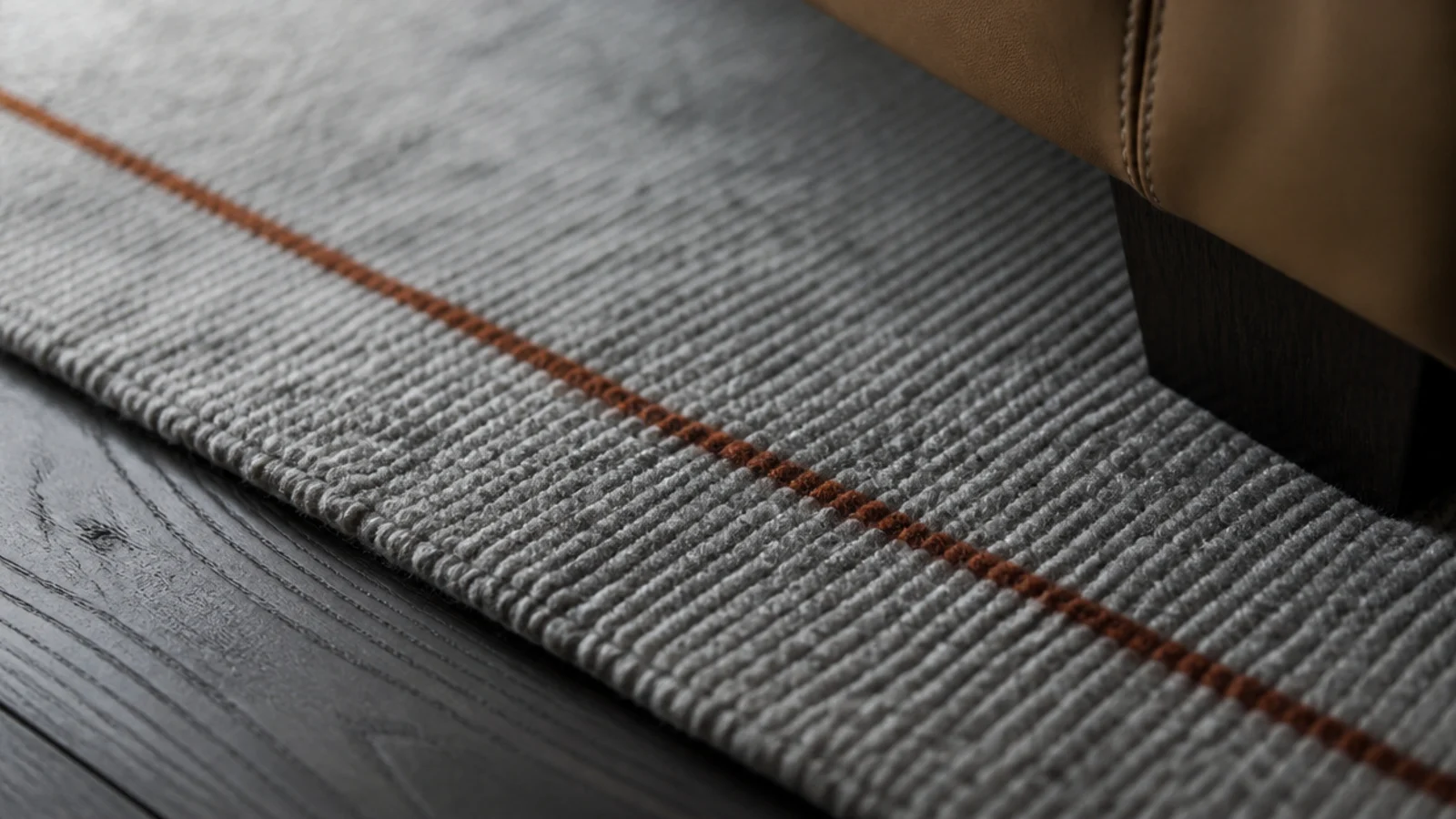
One narrow line of colour across 80 square feet of grey is enough to tie a rug to a cushion, a lampshade or a piece of art. It also survives redecoration, because a single line is easy to work around where a whole field of a trend colour is not.
11. Boiled and felted wool surfaces
Boiled wool is compacted rather than piled, so it holds a firm shape, resists crushing and gives a rug a slightly architectural edge. It is dense, heavy and hard-wearing, and it does not shed the way a cut pile does. Expect a higher price per square foot and a much longer service life.
12. Mixed cut and loop pile in one field
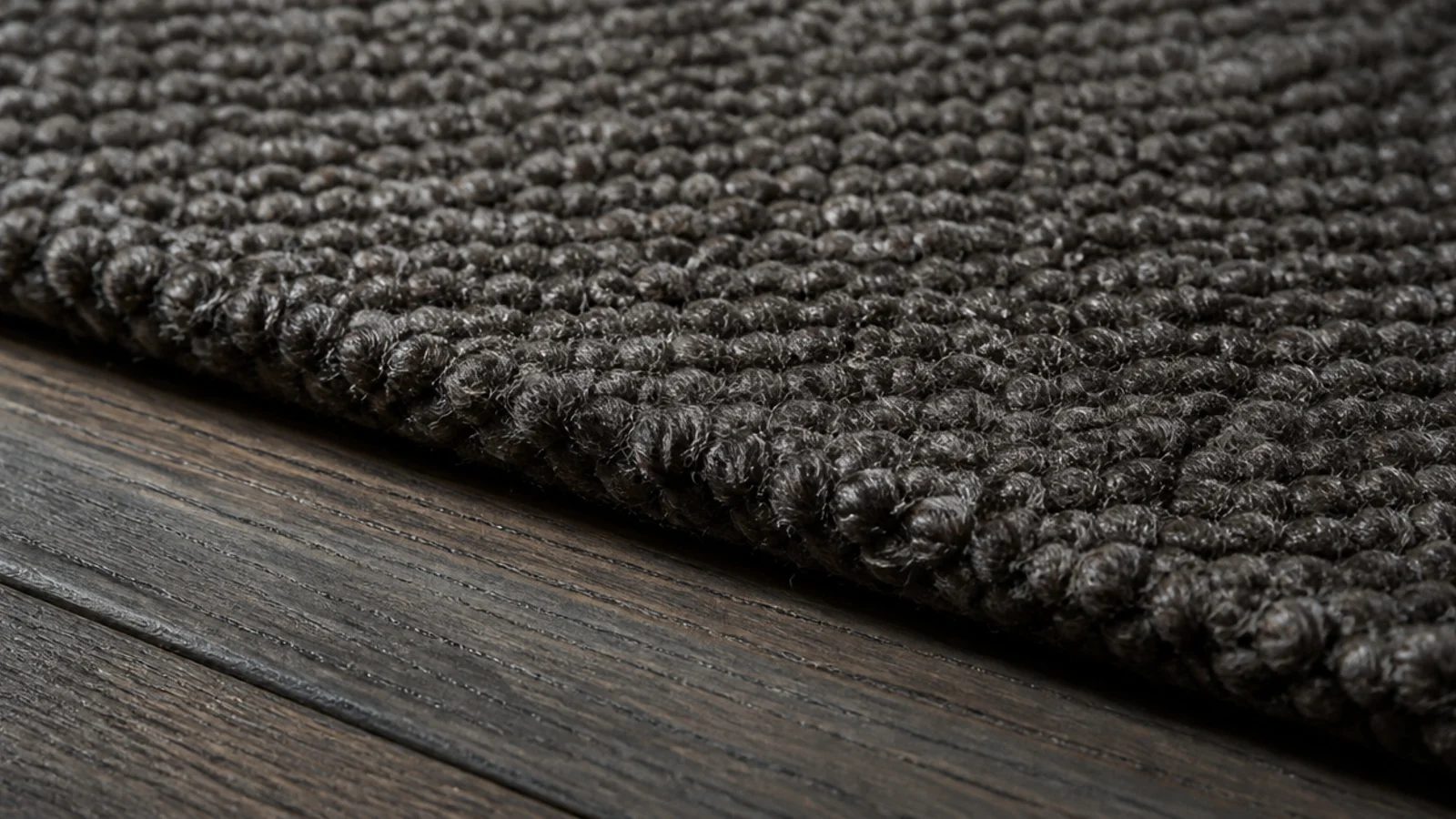
Combining sheared and looped areas in a single colour gives shadow and pattern with no colour contrast at all. Keep the loops tight if there are pets, because claws pull runs from long loops. This is the construction I would choose for a modern room that has to survive daily use.
13. Hand-loomed blends: read the percentage
Hand-loomed rugs are often sold on the word "wool" with the blend buried in the specification. Find the sewn-in label and read the numbers. A 60/40 wool-viscose rug should be priced and judged as a viscose rug, because the viscose is the part that will fail first and fail visibly.
14. Treat any viscose content as a liability
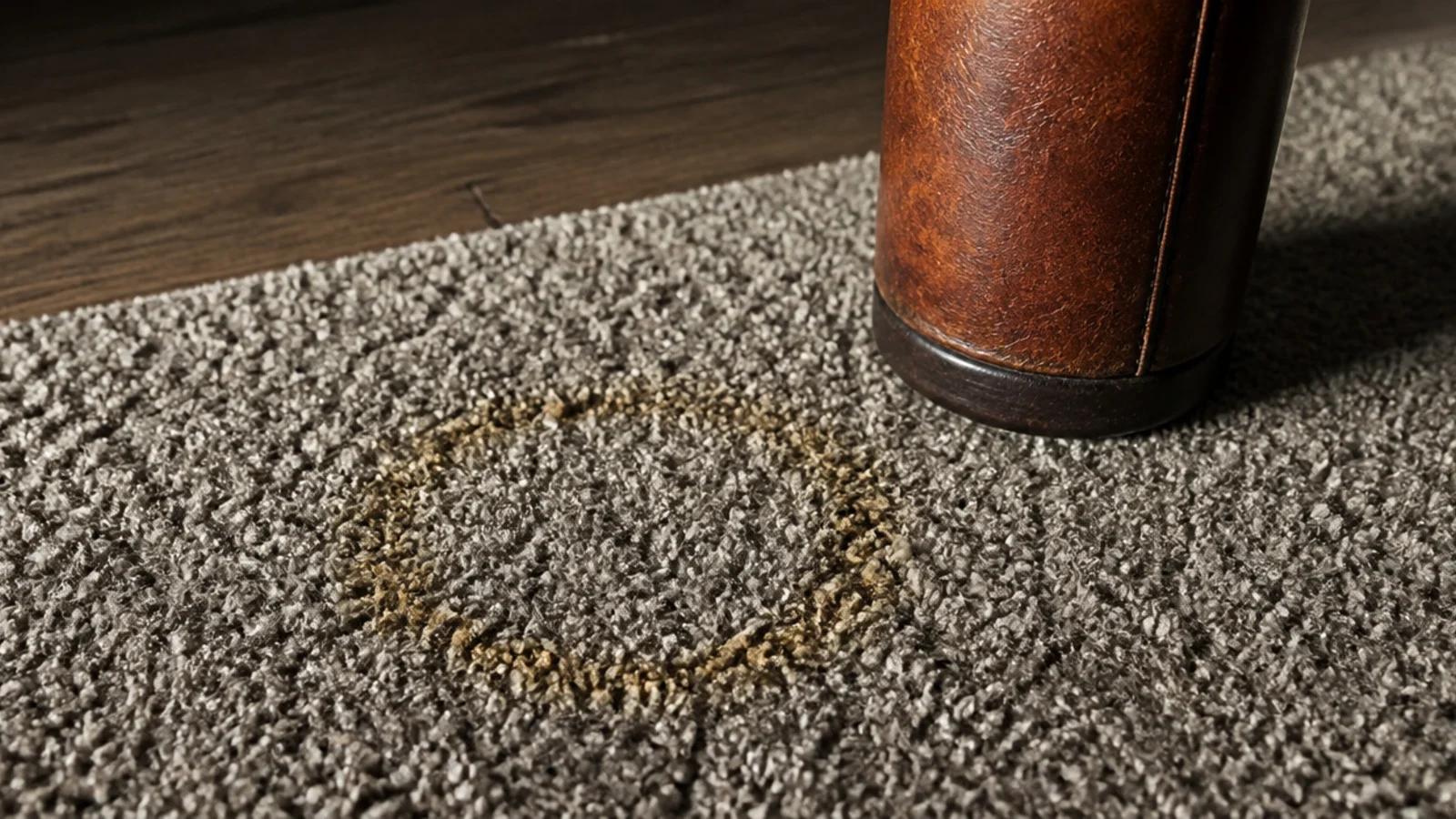
Water alone leaves a dull yellow-brown mark on viscose that no domestic cleaning lifts, and professional correction is expensive and imperfect. The sheen that makes it attractive under showroom lighting is the exact property that fails. In a living room it is not a compromise worth making at any percentage.
15. New Zealand wool and why it gets specified
New Zealand wool is naturally whiter than most, so it takes clean modern colours without the muddying a creamier fleece causes. That is why it appears in specifications for pale greys and clear brights. It is not automatically more durable — density still decides that — but the colour holds truer.
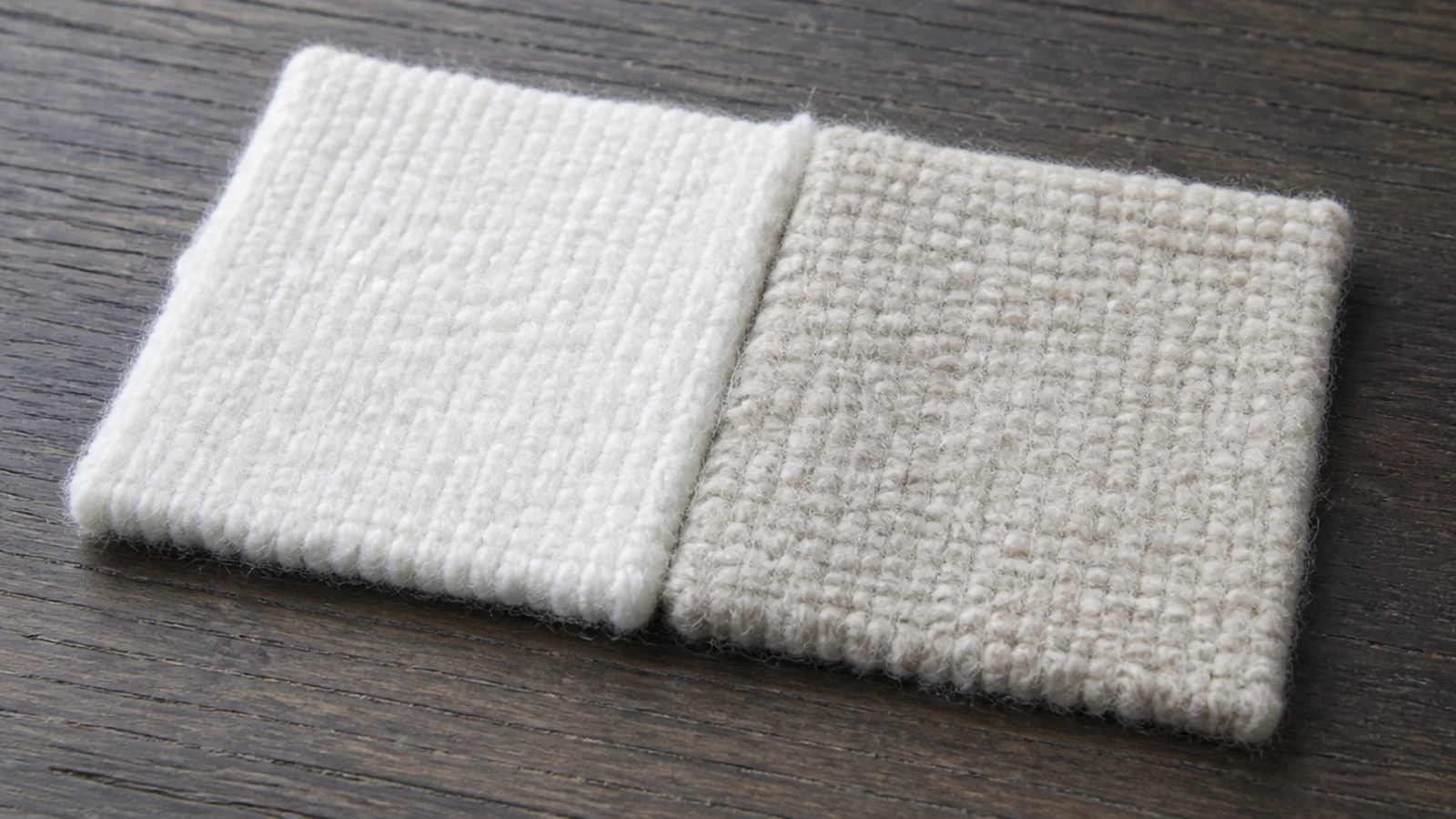
16. Hold out for 50 to 60 ounce face weight
Press your palm into the pile in the showroom and lift it away. Dense pile closes over your hand and springs back; light pile keeps the print. That single test is a reliable proxy for face weight, and it predicts whether the rug will show a permanent shiny lane where people walk.
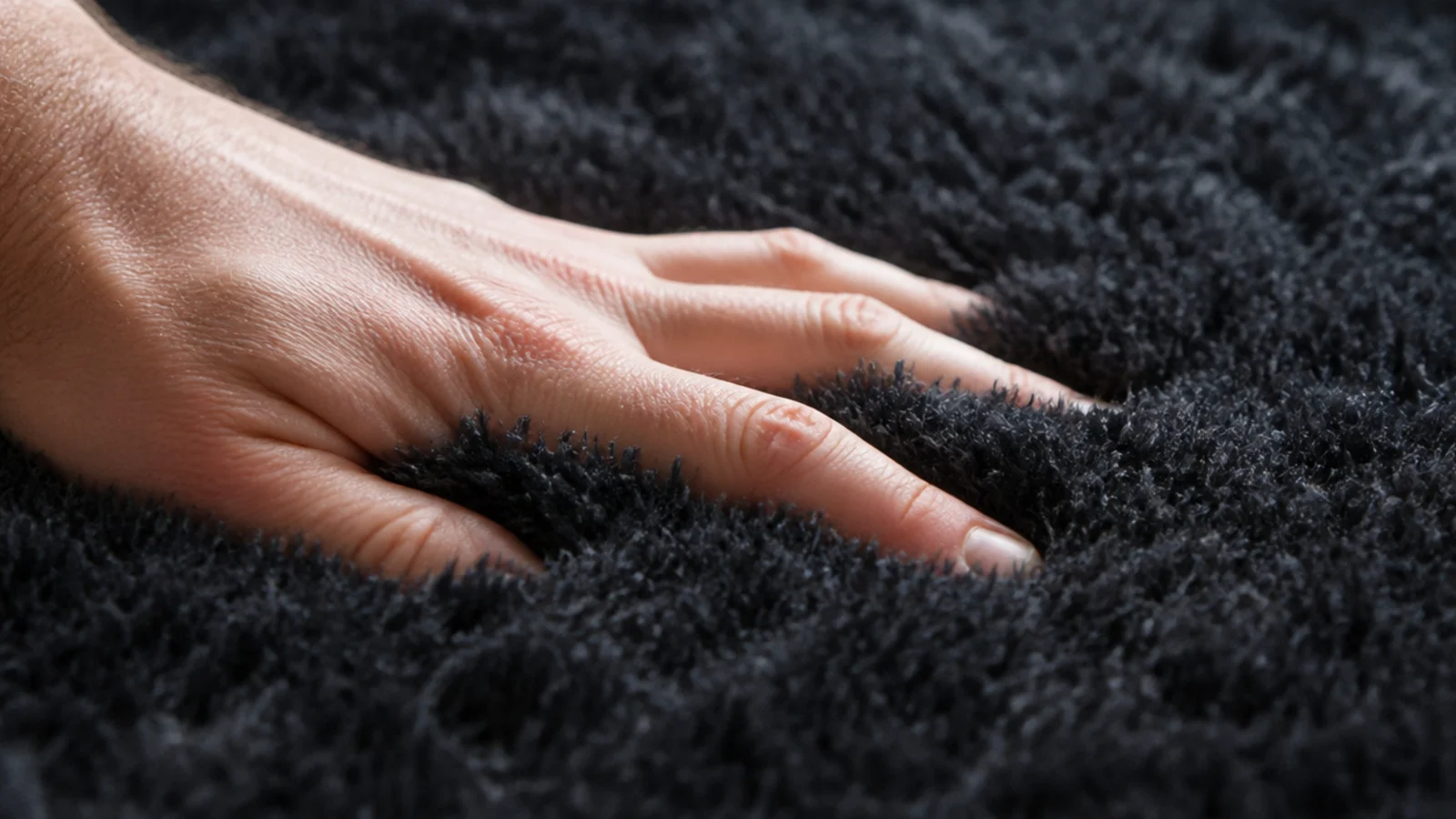
17. Flatweave for a genuinely minimal room
At roughly 1/8 inch a flatweave keeps the floor plane almost unbroken, clears every door, and layers cleanly. Wool flatweaves run $250 to $600 for an 8x10. They show their construction honestly, which suits a spare room, and they need a pad more than any other type because there is no weight holding them down.
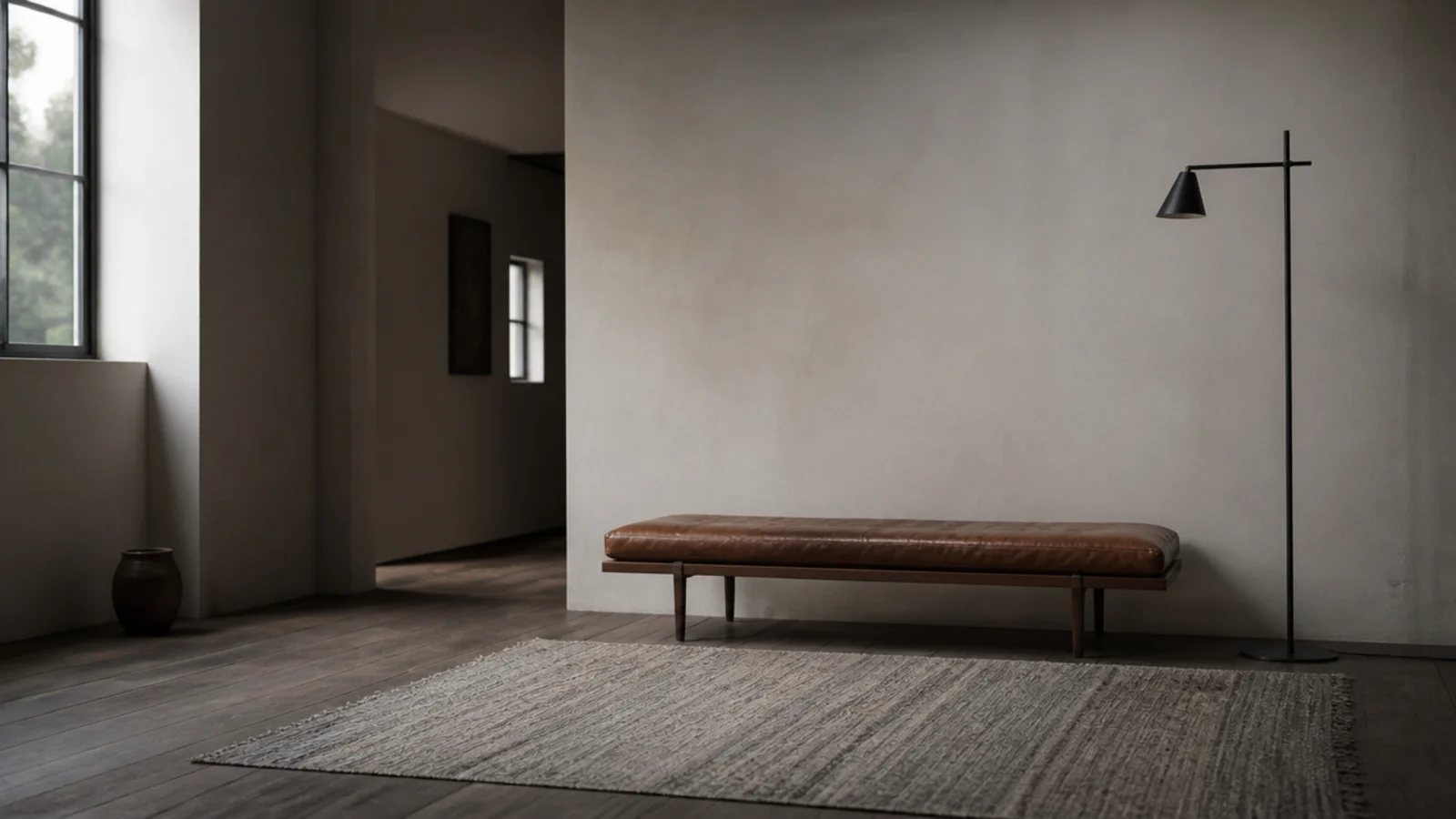
18. Check the binding is tone-matched and dense
Run a thumb along the whole edge. Look for dense serging with no gaps and a thread colour that matches the field. A pale binding on a dark modern rug reads as a mistake within a year as it picks up soil. Rebinding costs $8 to $15 a linear foot, so it is worth checking before purchase.
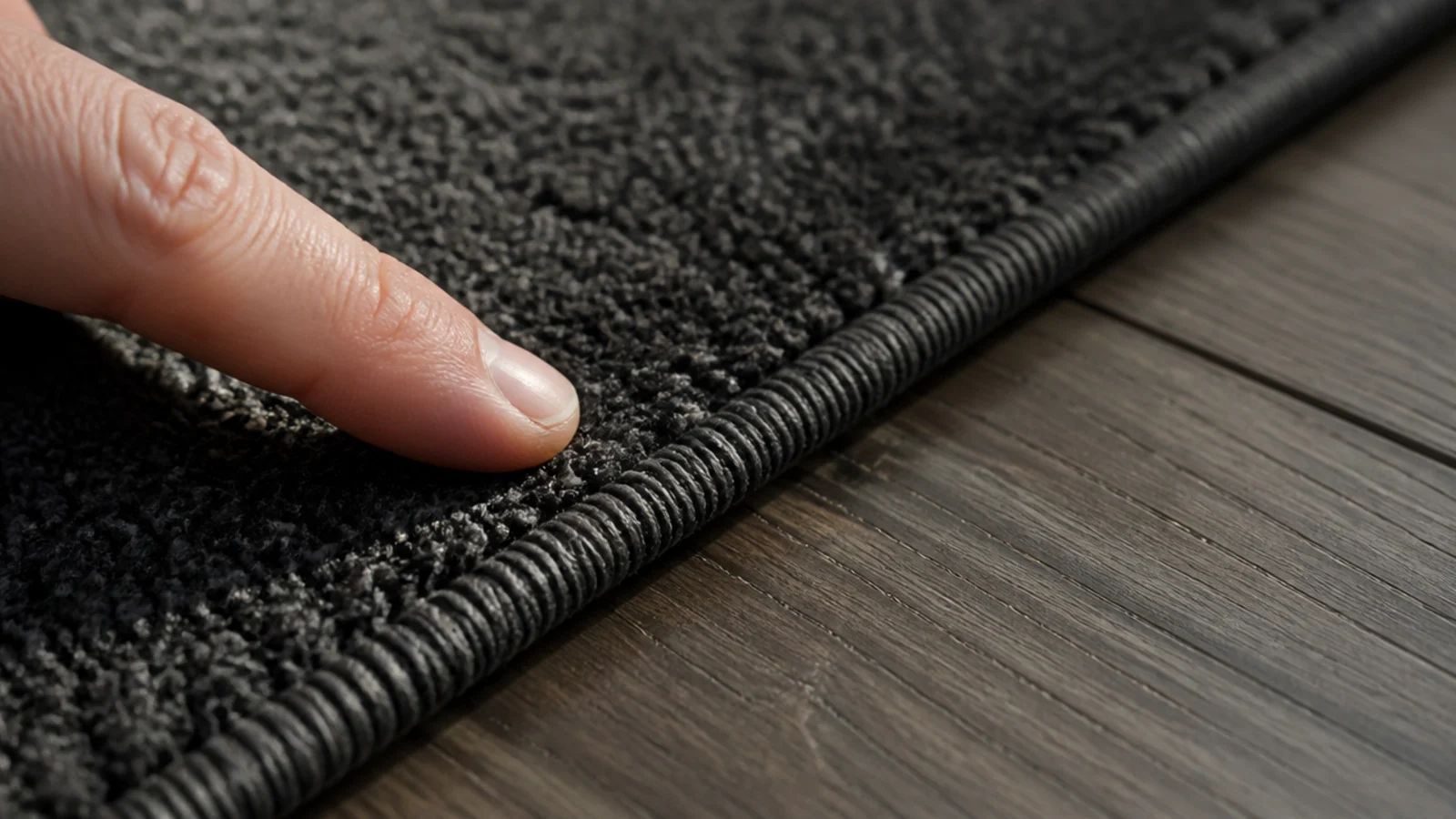
19. Prefer a woven back to a latex-coated one
Turn a corner over. A soft woven back means the rug is structurally one piece. A stiff pale coating means latex, which dries out and powders somewhere around eight to twelve years, after which the rug sheds constantly. Both are common in modern rugs; only one is worth a long-term price.
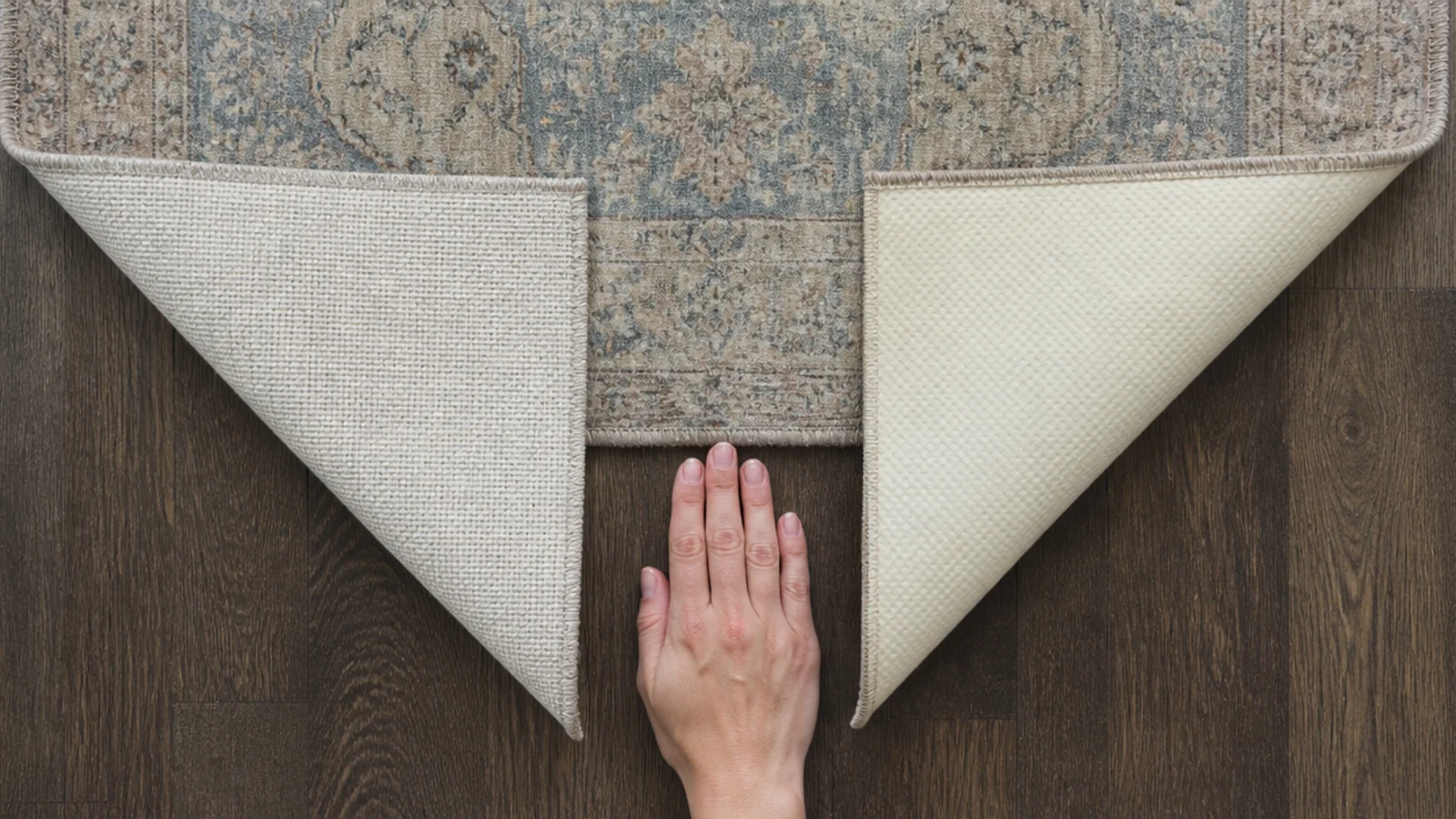
20. Overtufted texture and what it costs you
Raised motifs tufted above a flat ground look superb in a photograph and crush first under a sofa leg, because they carry all the load. If you like the effect, place the raised areas in open floor rather than under furniture, and accept that they will be the first part to look tired.
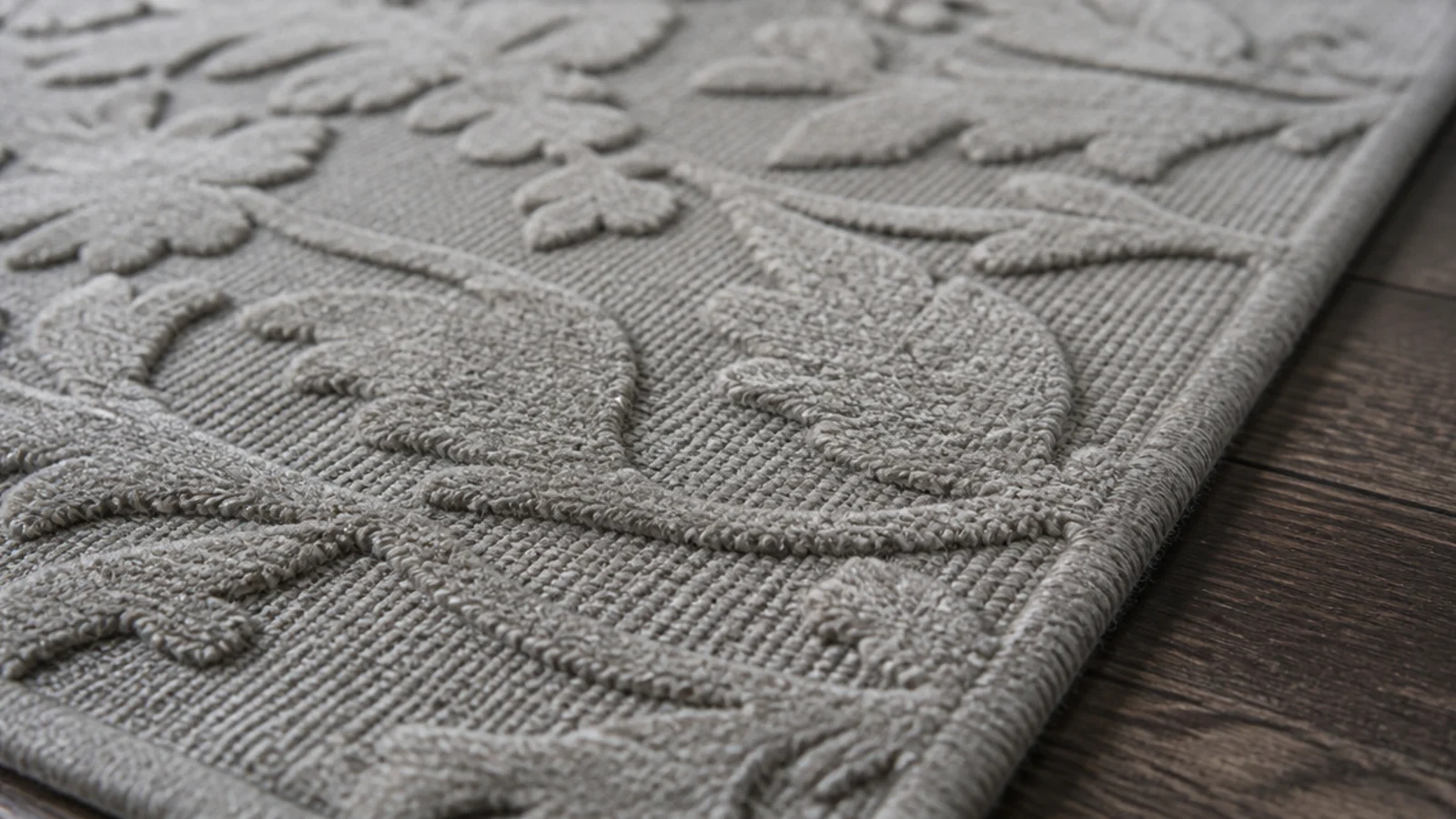
21. Charcoal instead of true black
True black shows every speck of lint and dust and reads grey within a week of normal life. A deep charcoal with a slight warm or cool cast gives the same graphic weight and stays looking clean between vacuums. It also photographs better, because black fields lose all their texture on camera.
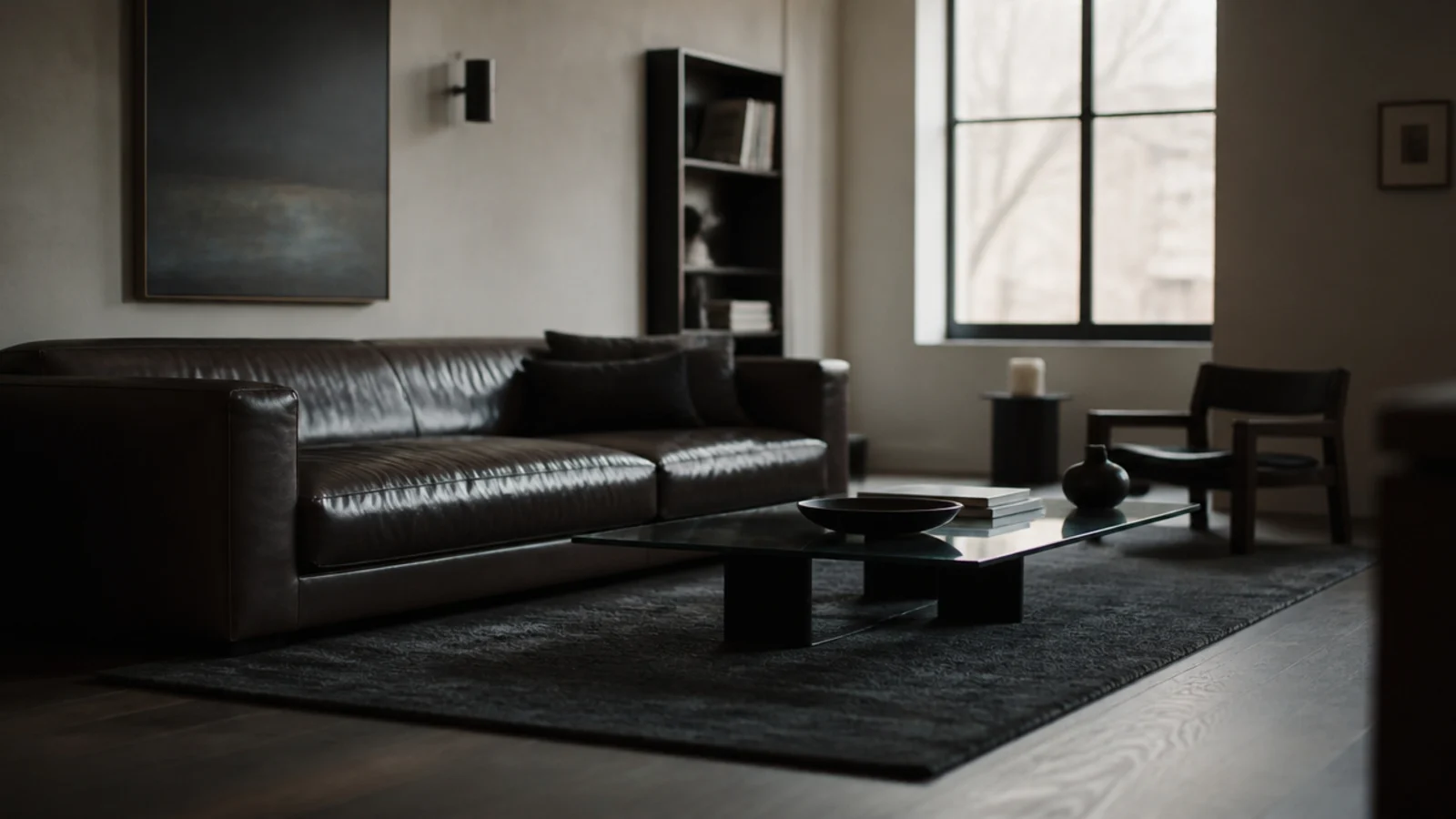
22. Warm greys on warm floors, cool greys on cool
Grey is not neutral. A blue-based grey on warm fumed oak makes both surfaces look slightly wrong, and it is a mismatch nothing in the room corrects. Lay the swatch on the boards, step back six feet, and look at it in daylight and again under lamps before committing.
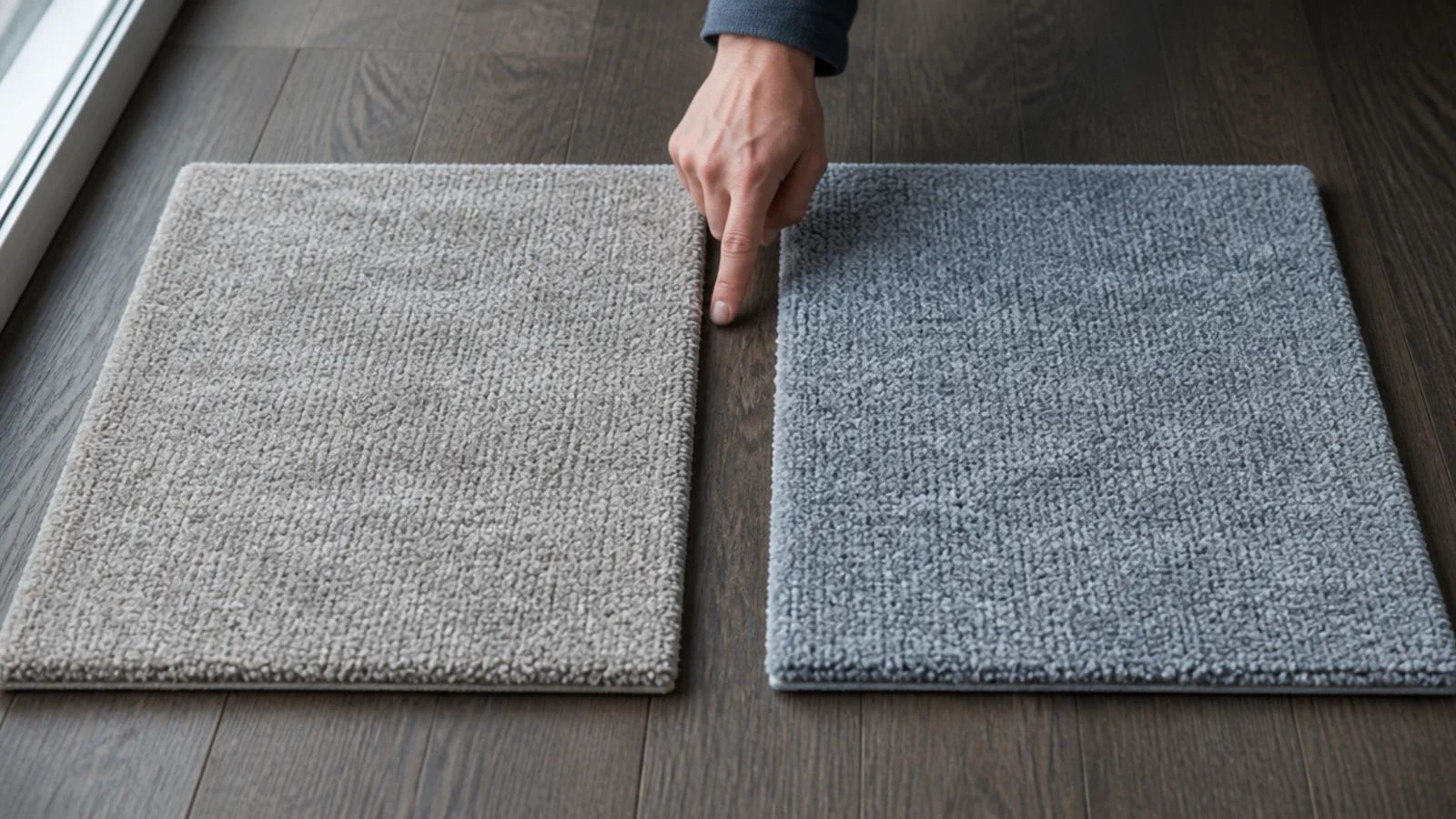
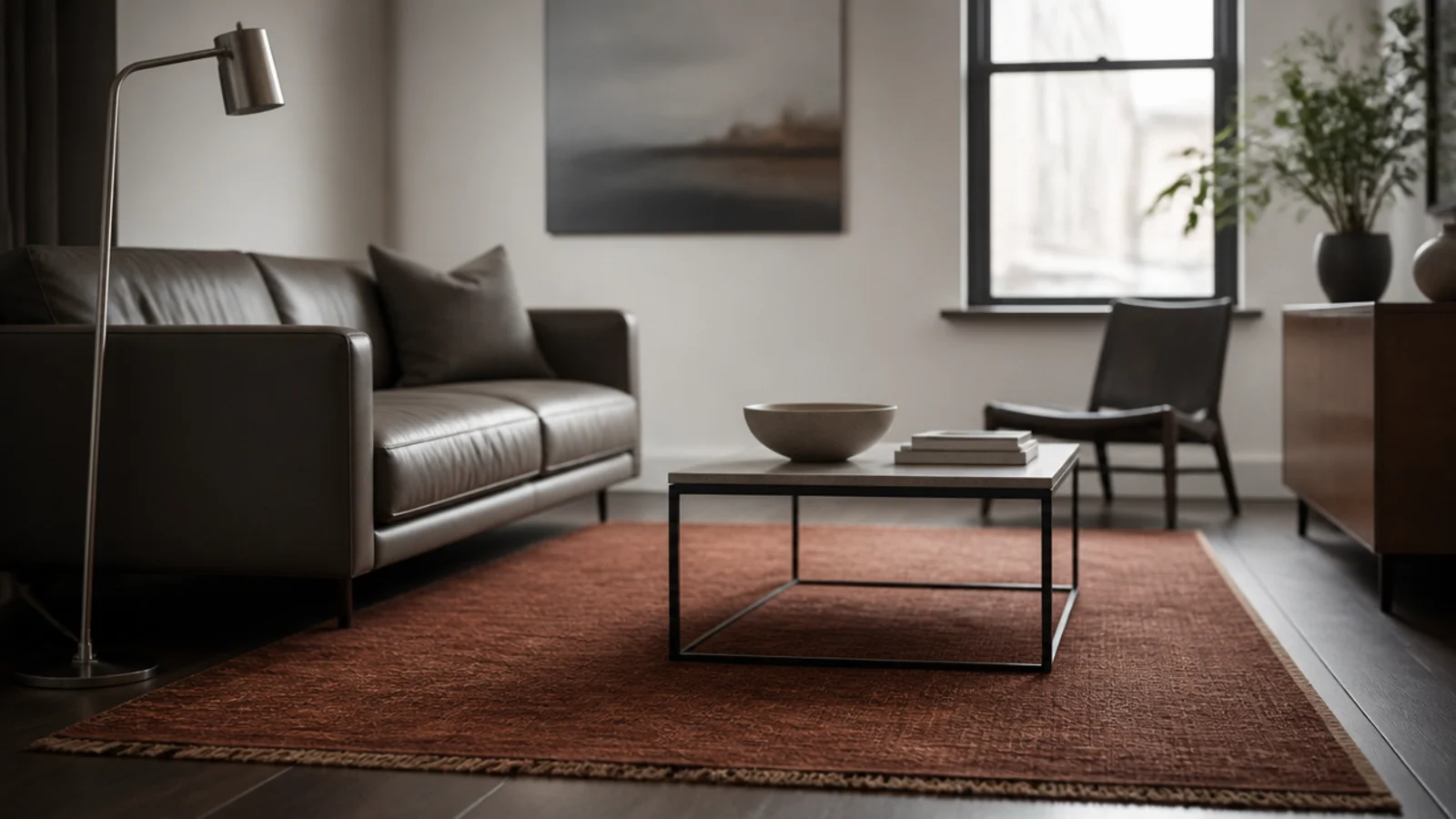
23. Rust and terracotta as the durable accent
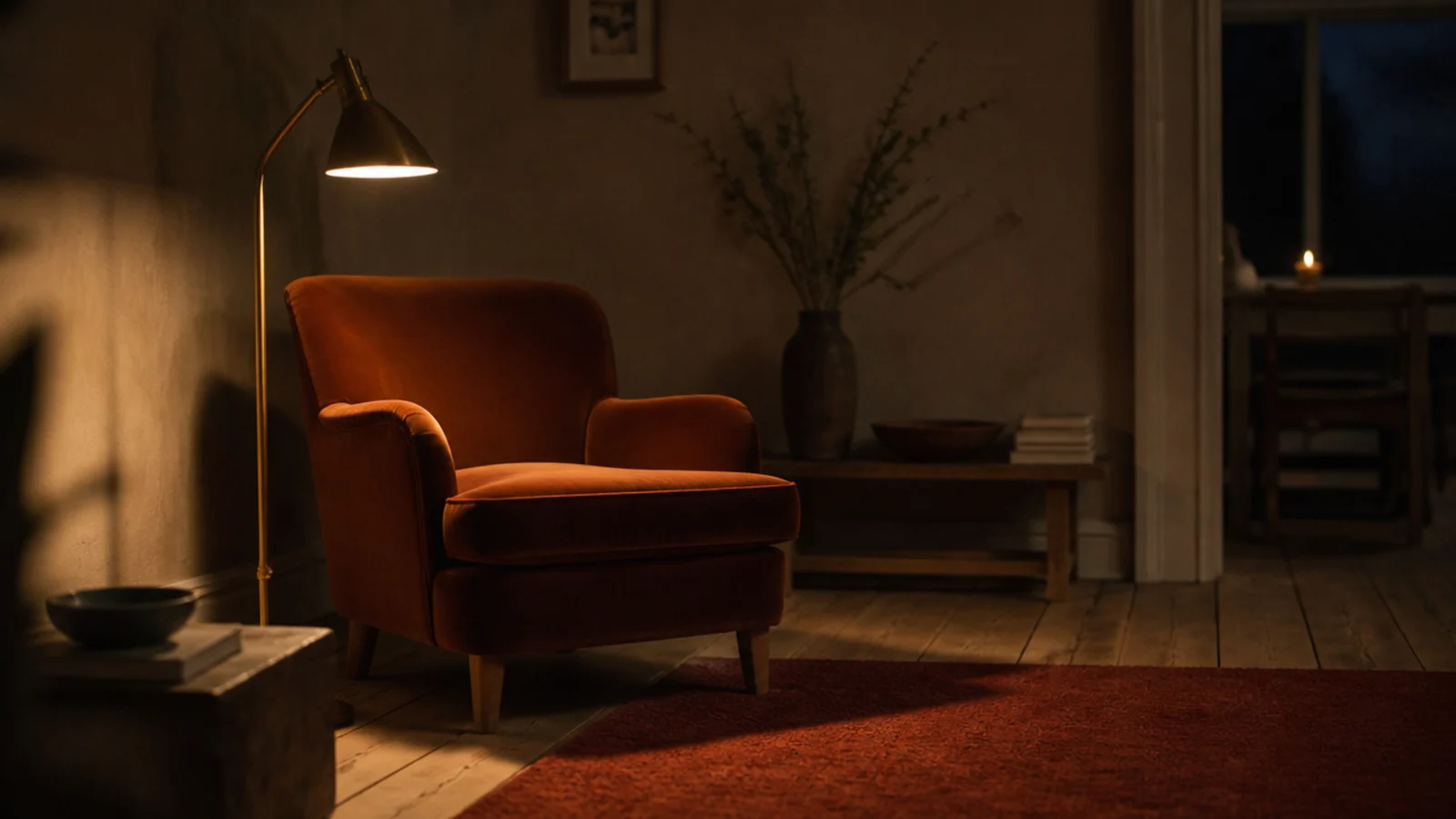
Earth tones survive fashion cycles that brights do not, and they sit comfortably against grey, charcoal and natural wood alike. A muted rust field also disguises the marks of daily use far better than a pale neutral. It is the strong colour I would pick if the rug has to last a decade.
24. Muted sage as a modern neutral
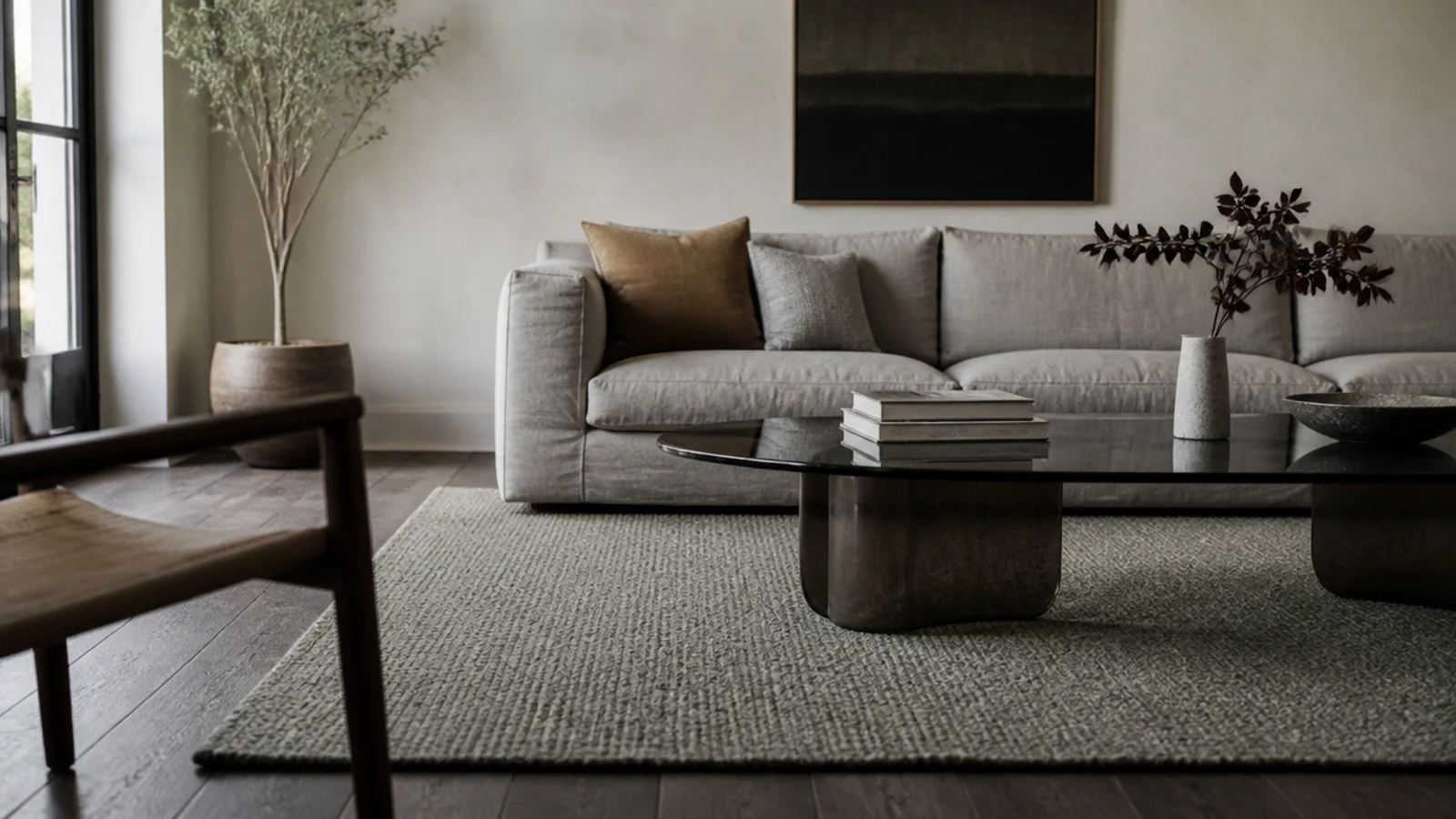
Green desaturated far enough behaves like a neutral: it recedes, it sits alongside stone and charcoal, and it does not compete with art. Keep it grey-based rather than yellow-based in a cool room. It reads as a considered choice where a saturated green would read as a decision made in one particular year.
25. Know which colours date fastest
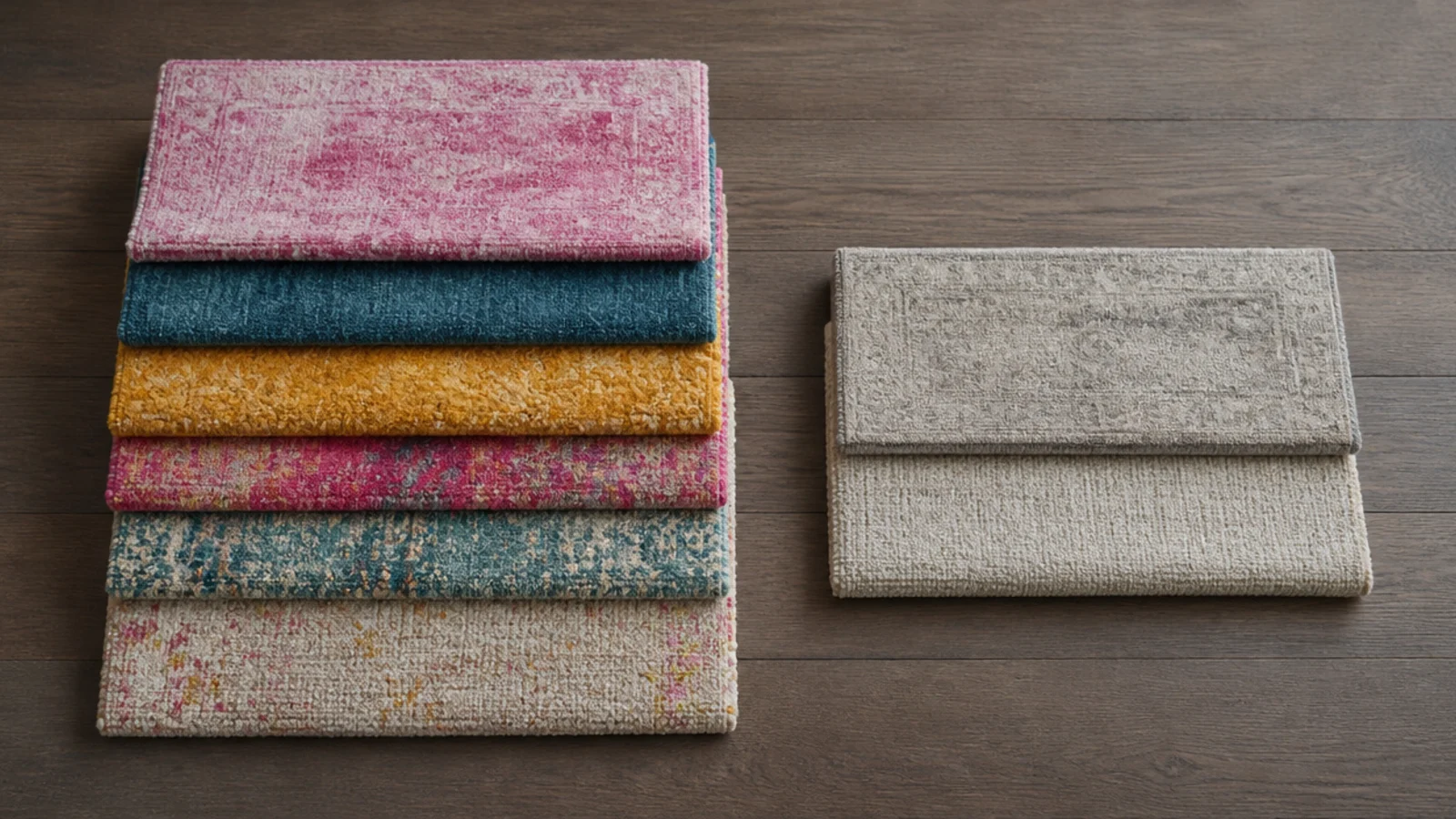
Highly saturated pinks, teals and mustards across an entire field are the fastest to look of their moment, because they are tied to a specific palette cycle. Nothing is wrong with them — just know you are buying a five-year rug rather than a fifteen-year one, and price the decision accordingly.
26. Custom sizes and cut-to-size broadloom
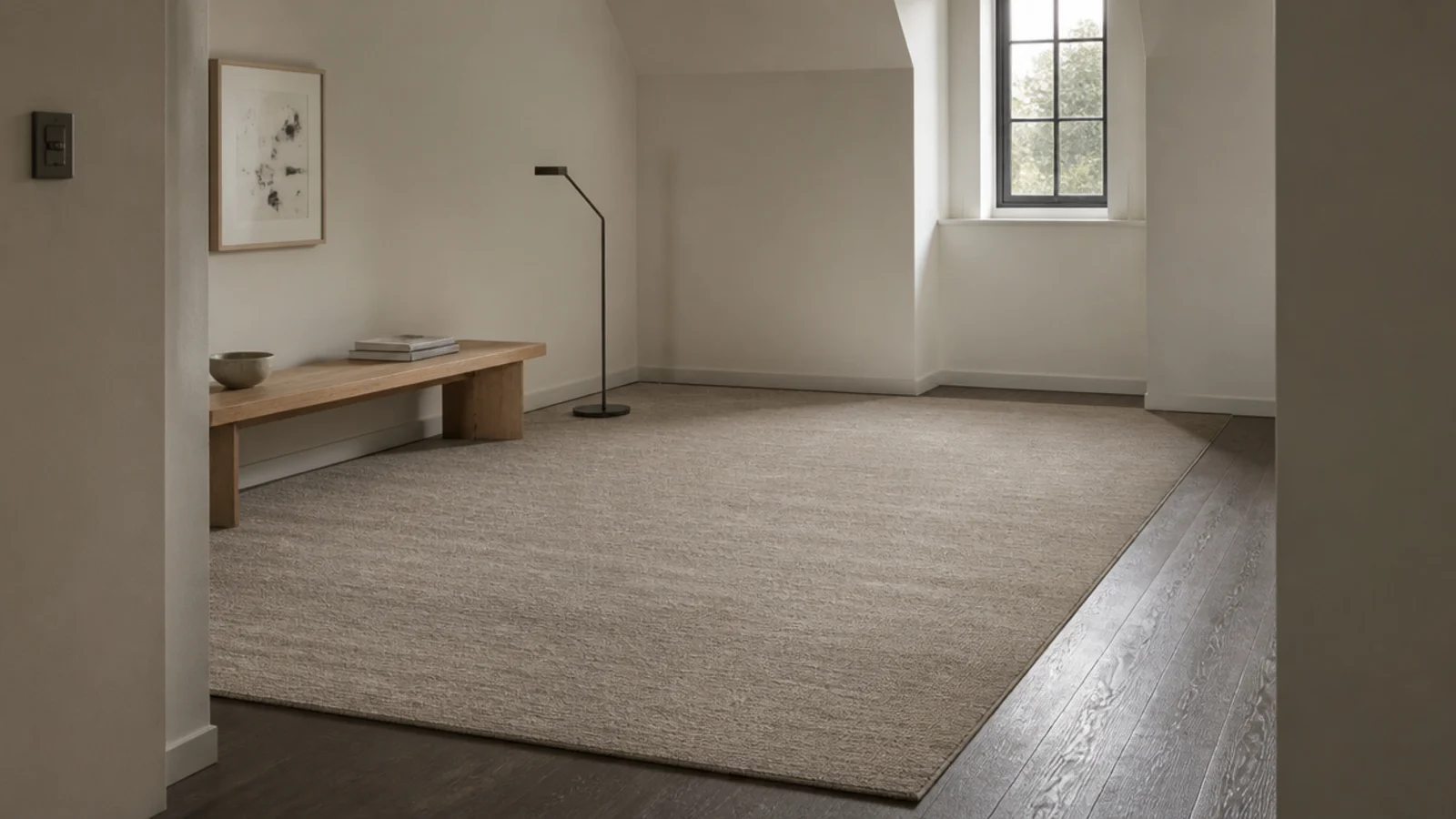
If the room is an awkward shape, a broadloom carpet cut to size and bound gives exact dimensions for one binding charge of roughly $2 to $4 a linear foot. It is the cheapest route to a genuinely large modern rug, and the only route to a non-standard rectangle that fits properly.
27. Round rugs only where something else curves
A round rug in a rectangular arrangement floats. Give it a curved chair, a round table or a bay to answer and it works. Measure the reveal at four compass points rather than four sides, and remember that a 6-foot round covers far less floor than people expect.
28. A runner used as a graphic line
In a wide open plan space, a 2.5x10 runner can draw a deliberate line between two zones instead of filling either. Pad it — a runner on a circulation route moves more than any other rug and a rucked edge on a hard floor is what catches a foot.
29. Choose the pad for a low profile finish
Modern rugs look best when the edge sits almost flush with the floor. A low-profile quarter-inch felt and rubber pad grips without lifting the rug into a visible step, and it stops the sliding that makes a thin rug unsafe on a hard floor. Cut it 1 inch smaller than the rug on every side.
30. Set a care schedule a low pile can handle
Vacuum the traffic lane twice a week and the whole rug weekly, brush off on loop and hand-loomed constructions. Rotate 180 degrees every six months. Blot spills from the outside in. Book a professional wash every three to five years at $3 to $6 a square foot and a modern wool rug stays modern.
For the table that anchors a contemporary seating group, the modern center table guide covers proportion and materials, the dark rug ideas handle rooms with real traffic, and the built-in shelf guide deals with the walls behind it all.
Mistakes to Skip
- Buying a hand-loomed blend without reading the fibre percentages. Viscose is added for sheen and it marks permanently from plain water, which is the last thing a living room floor needs.
- Choosing pattern scale from a swatch. A motif that looks bold in your hand reads as busy background noise across 80 square feet, and there is no fixing it afterwards.
- Taking true black for a graphic look. It shows lint, dust and every pale fibre in the house, and it loses all its surface texture in photographs and in low light.
- Skipping the pad because the rug is thin. A low pile rug is the one most likely to slide on a hard floor, and a sliding rug with lifting corners is a genuine trip hazard.
Frequently asked questions
What makes a modern rug look dated?
Pattern scale more than colour. A small busy geometric reads as a specific year, while a large simple form or a solid textured field does not. The second culprit is a trend colour used across the whole field. Keep strong colour to an accent line and the rug survives several changes of sofa.
Is viscose ever acceptable in a living room rug?
No. Viscose, rayon and art silk mark permanently the first time water touches them, leaving a dull yellow-brown ring that no cleaner reliably removes. It appears in hand-loomed blends at 20 to 40 percent because it adds sheen cheaply. Read the fibre content label and choose the all-wool version instead.
How dense should a modern wool rug be?
Ask for the face weight in ounces per square yard. Forty is entry level and will hold furniture dents. Fifty to sixty is dense enough that the pile springs back within a day of moving a sofa and stays upright in a walking route. Density matters more than knot count on a machine-woven rug.
What is high-low carving and is it worth it?
It mixes cut and loop pile at different heights so the surface throws its own shadows and the pattern is structural rather than printed. It costs roughly 20 to 30 percent more than a flat wool of the same weight, and it hides crumbs and traffic marks noticeably better, so in a used room it earns the premium.
How do I stop a low pile rug looking flat?
Give it texture rather than pattern. A boiled wool, a chunky loop or a mixed cut-and-loop surface has depth even in a solid colour. Then use a pad — a quarter-inch felt and rubber pad under a low pile rug adds the softness the pile itself does not have, and stops it sliding.
Want more like this? Browse all 15 rugs in living room guides — they all use the same measurements and budget tiers.
Pin it for later
Save this to your Rugs In Living Room board
Pin it now so it is waiting for you when the tape measure comes out — and so the next person hunting for this idea can find it too.
Save this pinKeep going
More ideas worth saving while you have the tape measure out.