Wooden Flooring · Listicle
25 Light Wooden Flooring Ideas That Open A Room

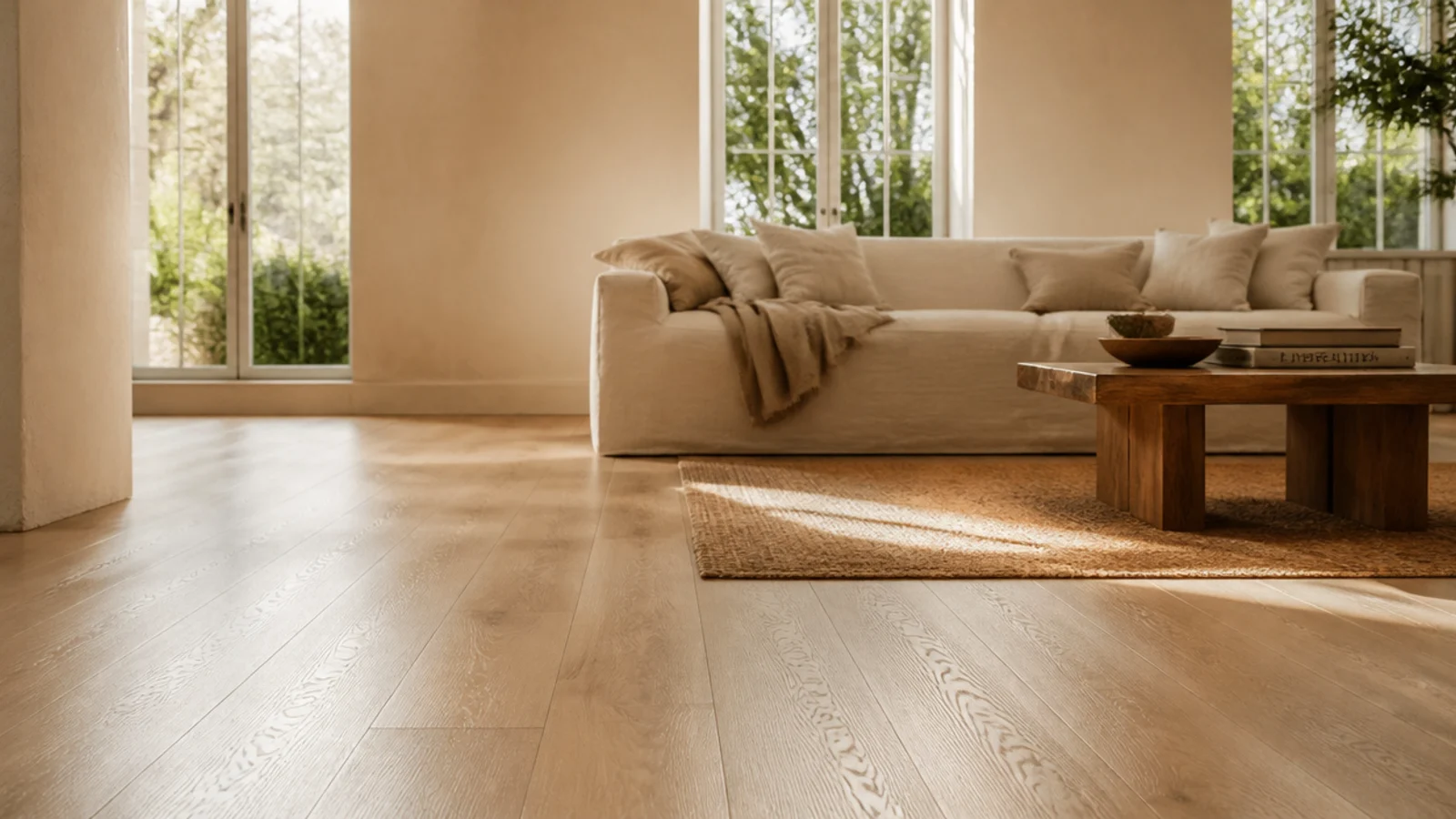
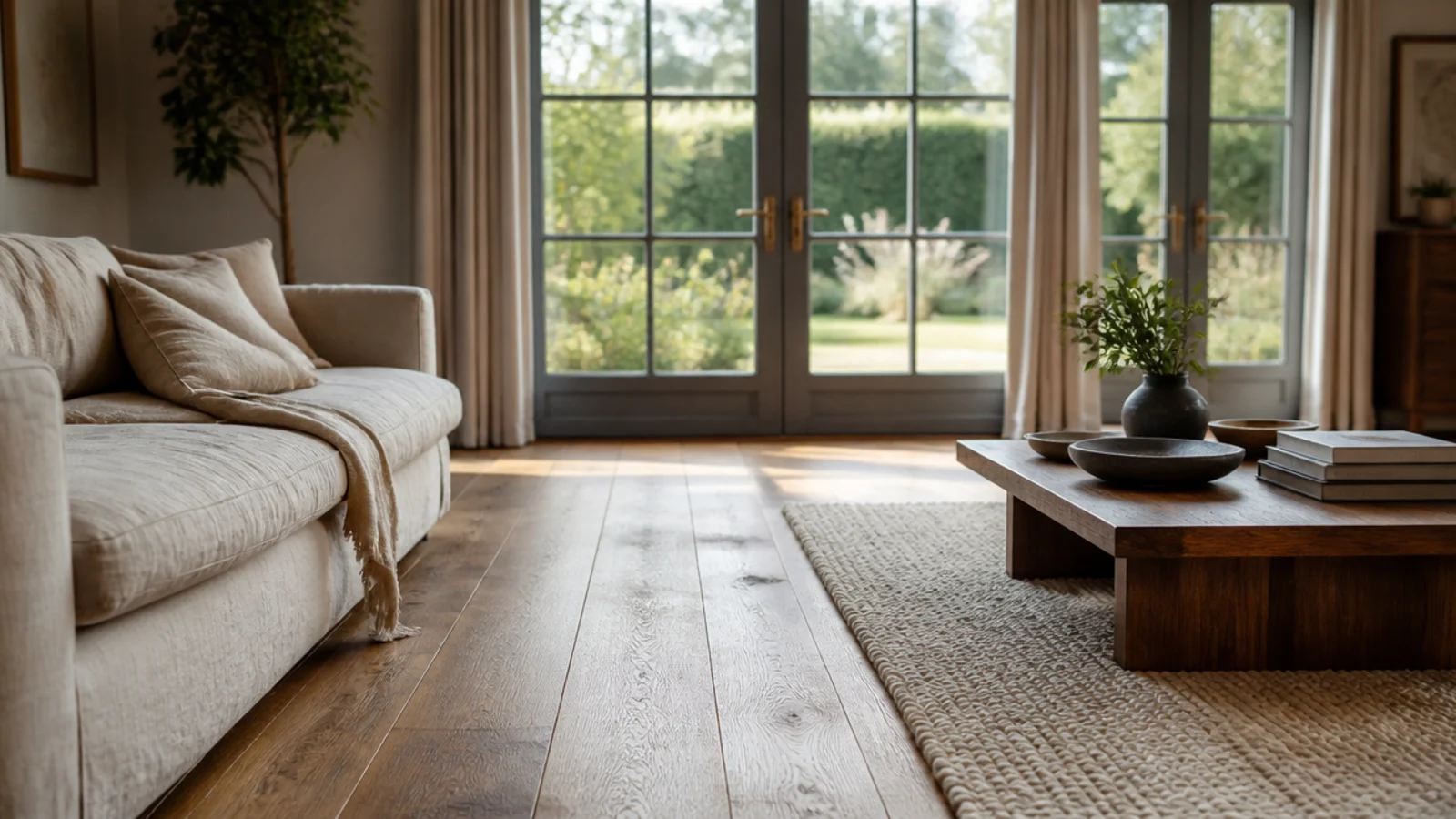
A pale floor is the cheapest brightness you can buy. It works because a floor is the largest uninterrupted surface in most rooms and it sits directly opposite the ceiling, so whatever light falls on it gets thrown back up. Light wooden flooring returns roughly half of that light where a dark walnut gives back perhaps fifteen percent, and in a room with one window that gap is the difference between dim and calm. The catch is that pale floors have to stay pale, and most of them do not. Here are twenty-five that hold up, with the finishes that keep them honest.
In this guide27 sections — tap to openHide
- 1.What light wooden flooring does to a small room
- 2.Lye-treated oak with a white oil finish
- 3.A non-yellowing water-based lacquer
- 4.European ash for a genuinely neutral floor
- 5.Hard maple where the grain should disappear
- 6.Wide pale planks in a room over four metres
- 7.Skirting painted the wall colour, not the floor
- 8.A pale floor with one dark anchor
- 9.Whitewashed pine for a cottage bedroom
- 10.Pale herringbone in a small hall
- 11.Matte sheen so the floor does not glare
- 12.Pale boards with warm textiles above
- 13.Engineered pale oak over underfloor heating
- 14.A mid-tone floor where shoes arrive
- 15.Pale floors in a basement with warm bulbs
- 16.Natural jute over pale boards
- 17.Pale boards running the length of a narrow room
- 18.Character grade in a pale tone
- 19.Pale flooring with black window frames
- 20.A brushed surface to hide the scuffs
- 21.Pale floors and a warm white ceiling
- 22.A white-oiled floor and a yearly refresh
- 23.Pale wood-look plank in a wet room
- 24.Pale floors under a low ceiling
- 25.Keep the rug border generous
- 26.Test the sample at night, not at noon
- 27.Mistakes to Skip
What light wooden flooring does to a small room
Three numbers explain the effect, and one explains the disappointment.
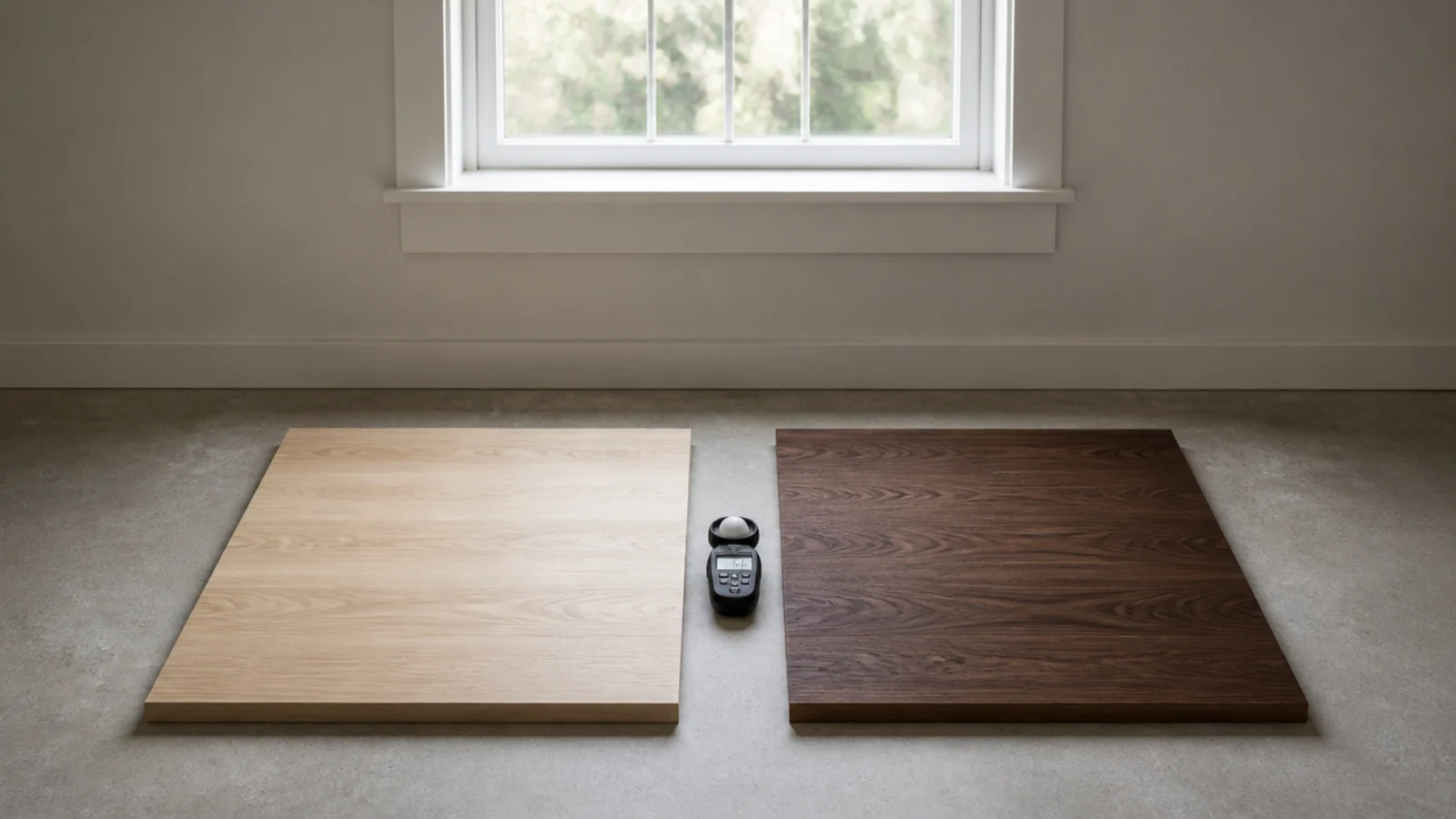
Reflectance. Pale oak and ash sit around 50 to 60 percent light reflectance; mid brown oak nearer 30; dark walnut around 15. Double the reflected light and a north-facing room stops feeling like a basement.
Yellowing. This is the disappointment. Oil-modified polyurethane ambers within two or three years and it is most obvious on pale wood. Specify a water-based non-yellowing lacquer, or a white-pigmented hardwax oil, and the floor holds its tone.
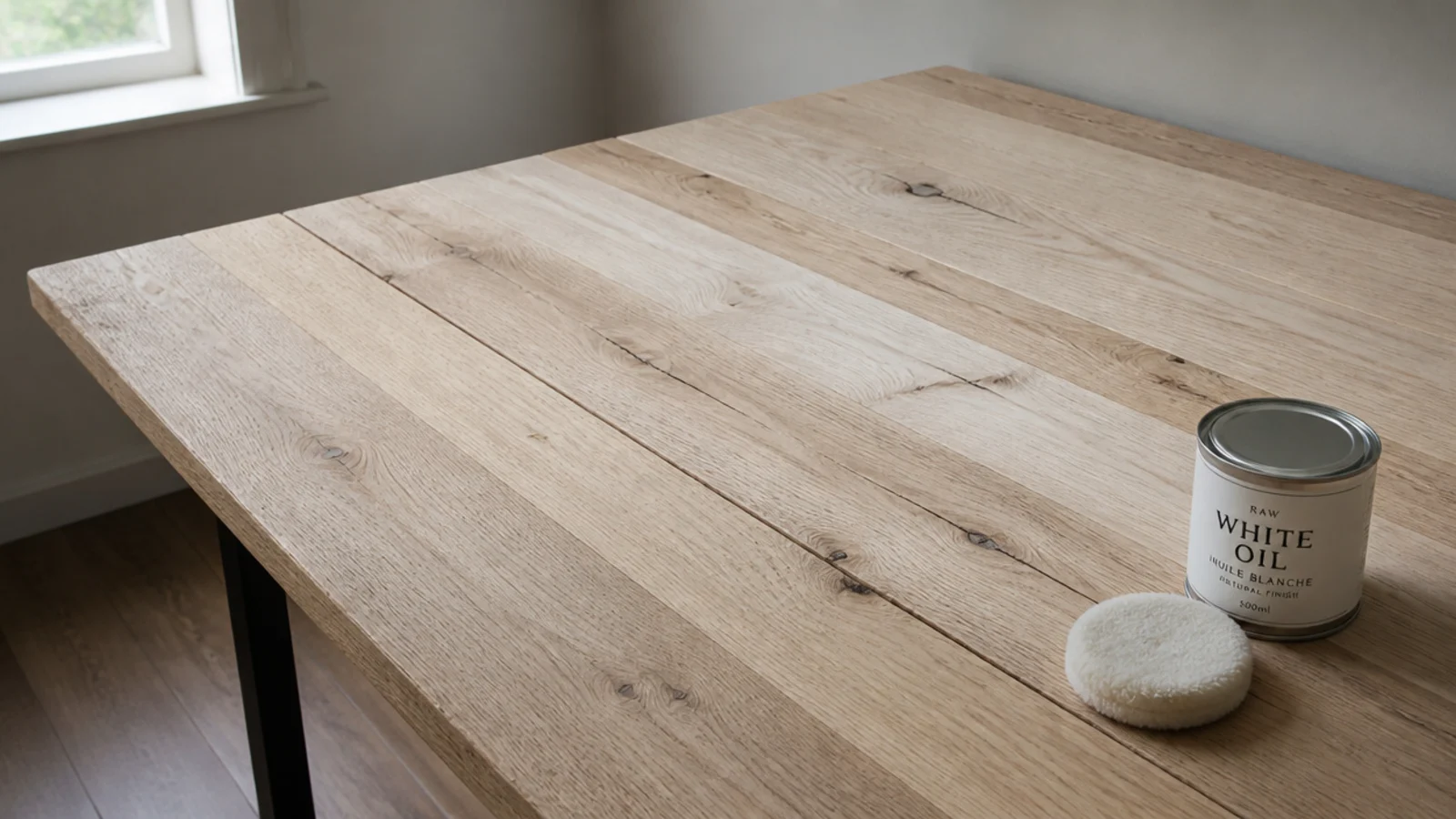
Maintenance. A white-oiled floor wants a refresh coat every twelve to eighteen months in a busy room, roughly a morning's work and a litre of oil. A lacquered pale floor needs nothing for years and then needs everything at once.
Where it fails. Pale floors hide dust and hair brilliantly and show dark scuffs and mud badly. Keep the palest boards out of hallways. Budget £35 to £80 per square metre for a good lye-and-white-oil engineered oak. For the cooler end of this palette, the grey wooden flooring rooms cover what happens when pale tips into cold.
1. Lye-treated oak with a white oil finish
The palest floor that genuinely lasts. Lye neutralises the tannin that makes oak amber, and a white-pigmented hardwax oil on top holds the raw-timber colour. Two coats of lye, two of white oil, then a maintenance coat annually in a busy room. It is the Scandinavian standard and it looks like nothing else.
2. A non-yellowing water-based lacquer
If you want a lacquered floor rather than an oiled one, the specification is the whole decision. Oil-modified polyurethane will turn pale oak golden within a few years. A water-based non-yellowing lacquer at three coats stays clear, dries faster and smells far less, at roughly 20 to 30 percent more per litre.
3. European ash for a genuinely neutral floor
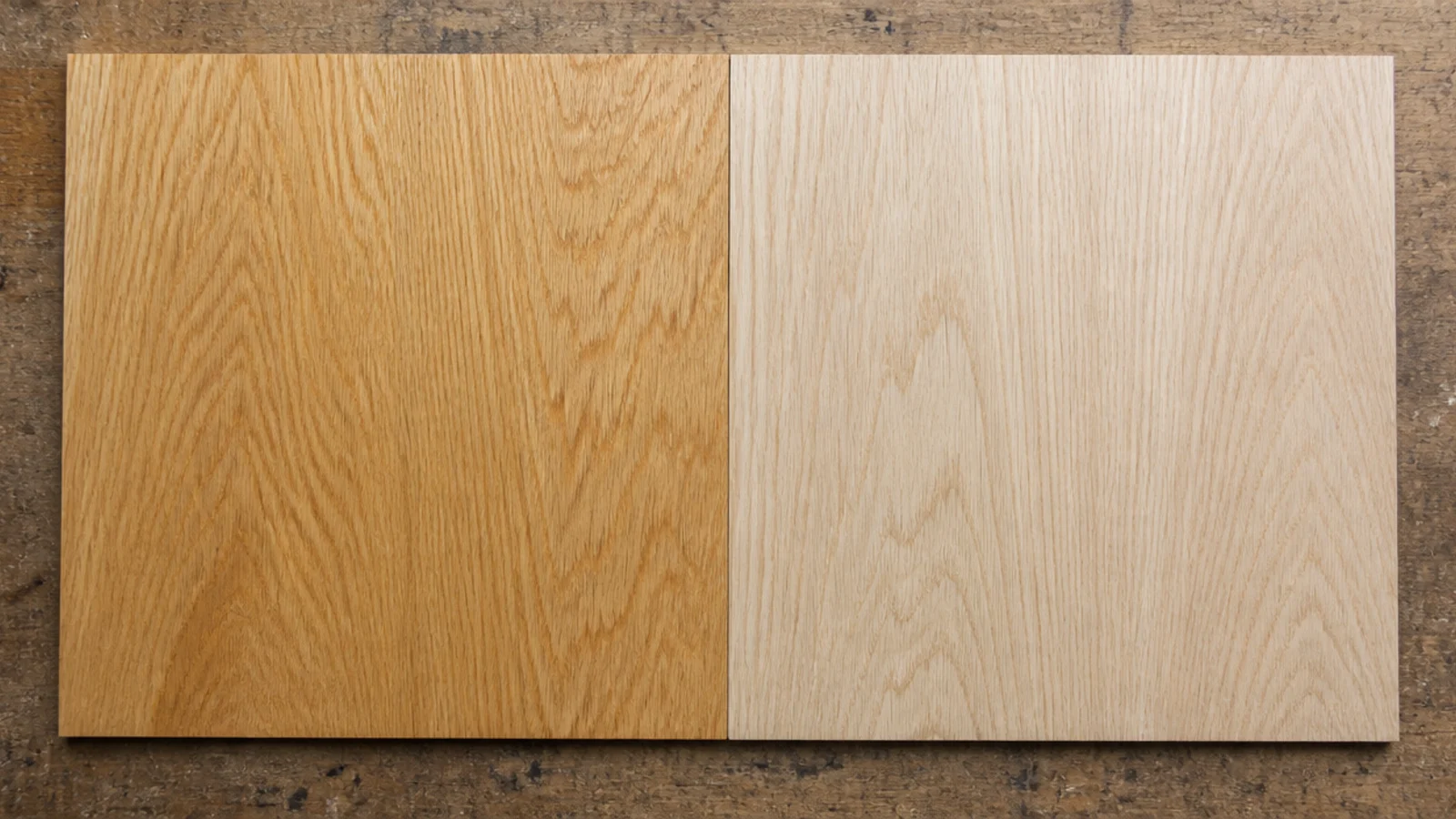
Ash is slightly harder than red oak, takes a clear finish without going yellow, and stays neutral where oak drifts golden. The grain is straight and quiet. It is the timber I reach for when a client wants pale but not white, and it costs roughly the same as a mid-grade oak.
4. Hard maple where the grain should disappear
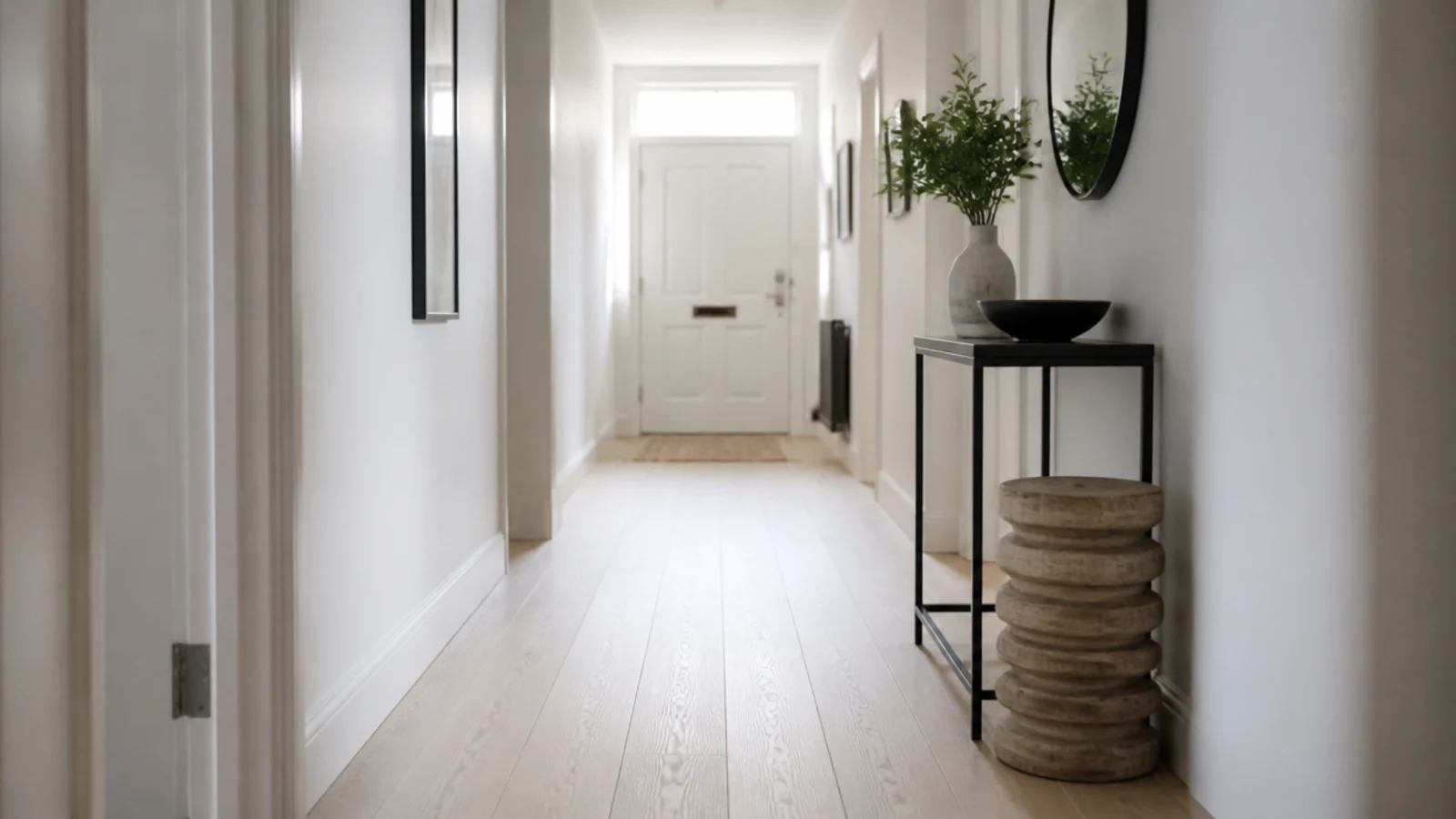
Maple has such fine pores that a floor reads as one continuous pale surface rather than as boards. It is hard — noticeably harder than oak — so it takes traffic well, but it also stains unevenly and is unforgiving of a poor sanding job. Leave it clear-finished and let it be plain.
5. Wide pale planks in a room over four metres
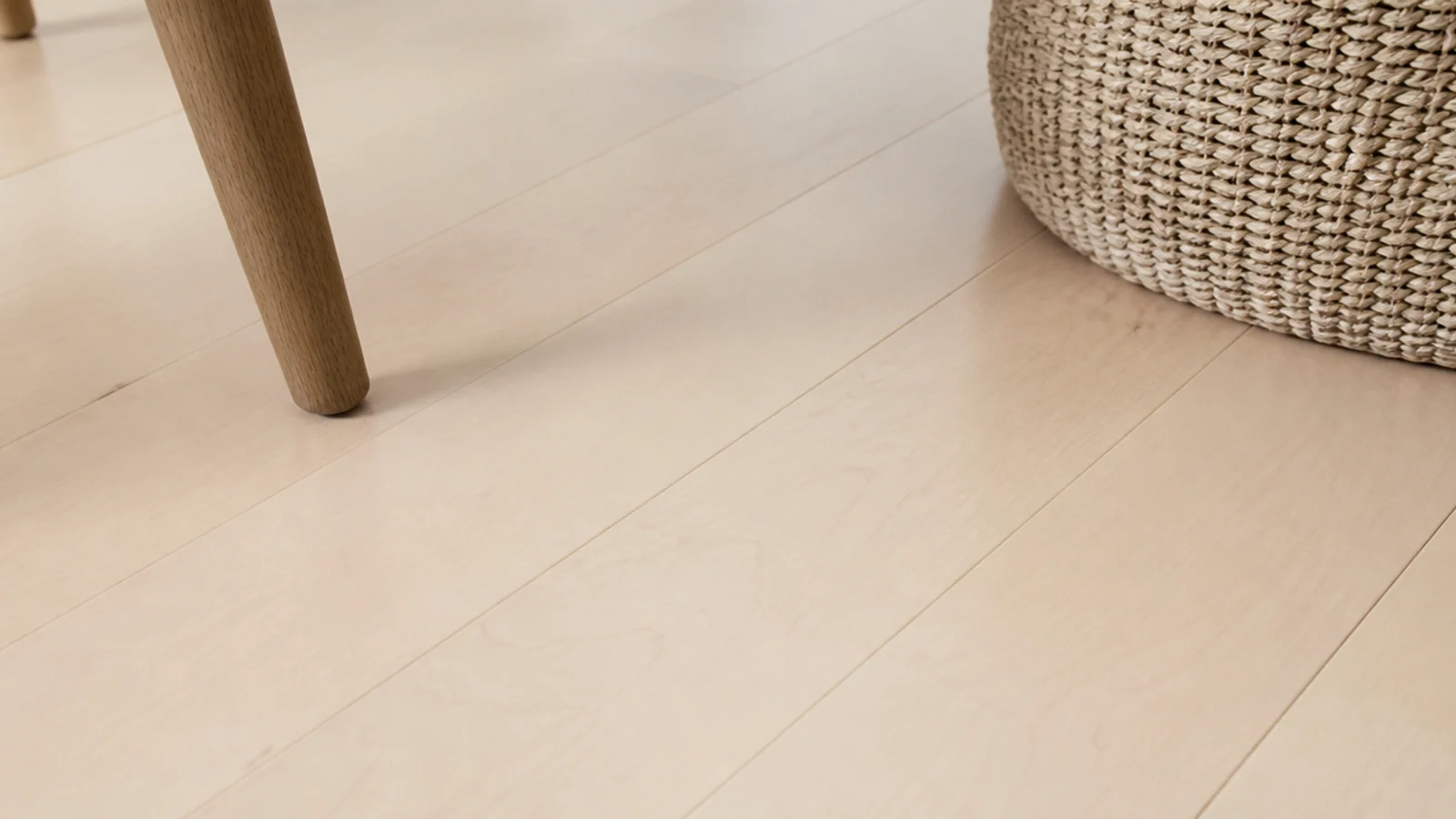
Pale and wide compound each other: fewer board lines, more uninterrupted reflective surface. In a room over four metres across, 190 to 220mm boards in a pale tone make the floor read almost as a single plane. In a small room the same board does the opposite, so keep this for the large space.
6. Skirting painted the wall colour, not the floor
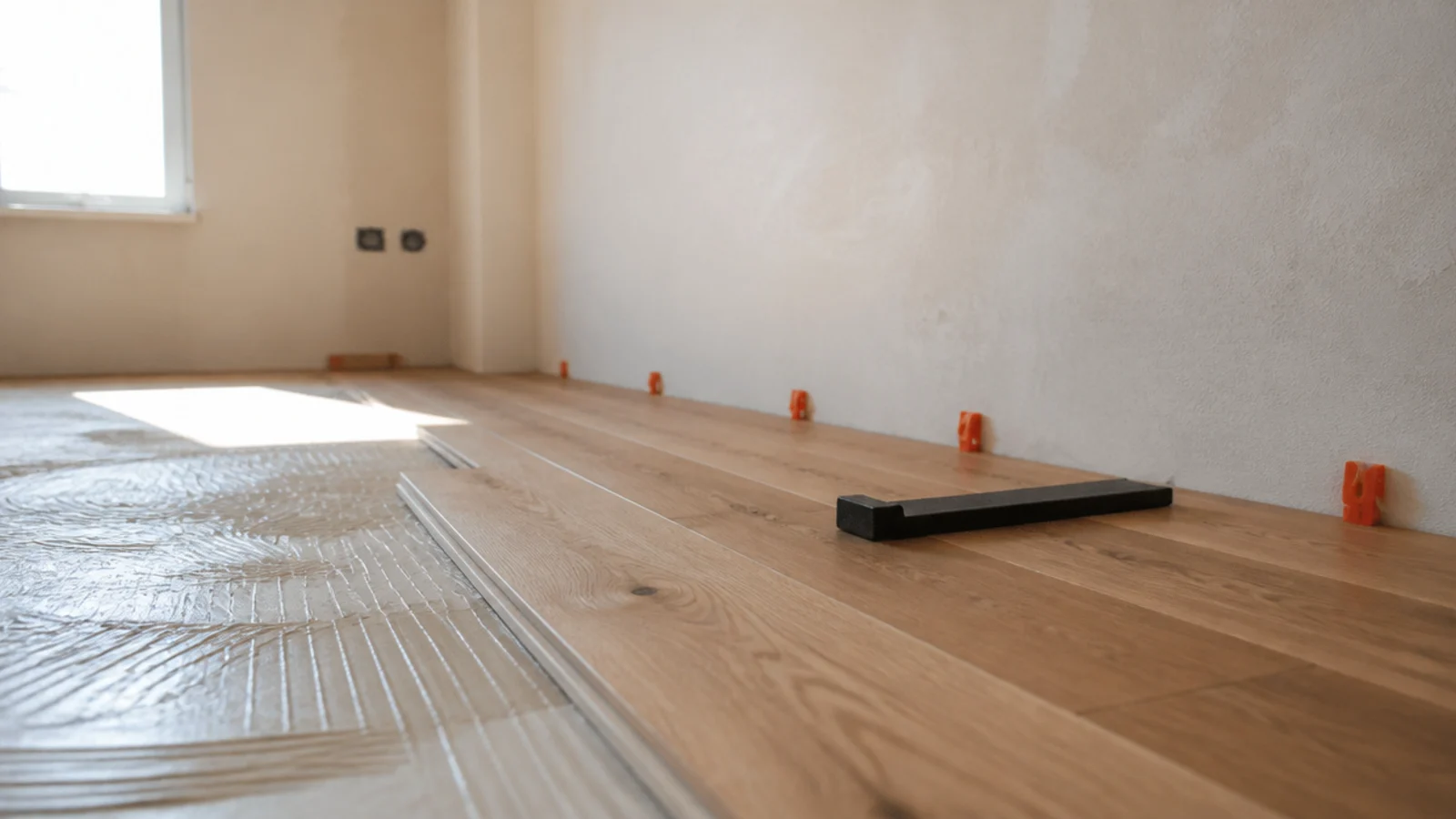
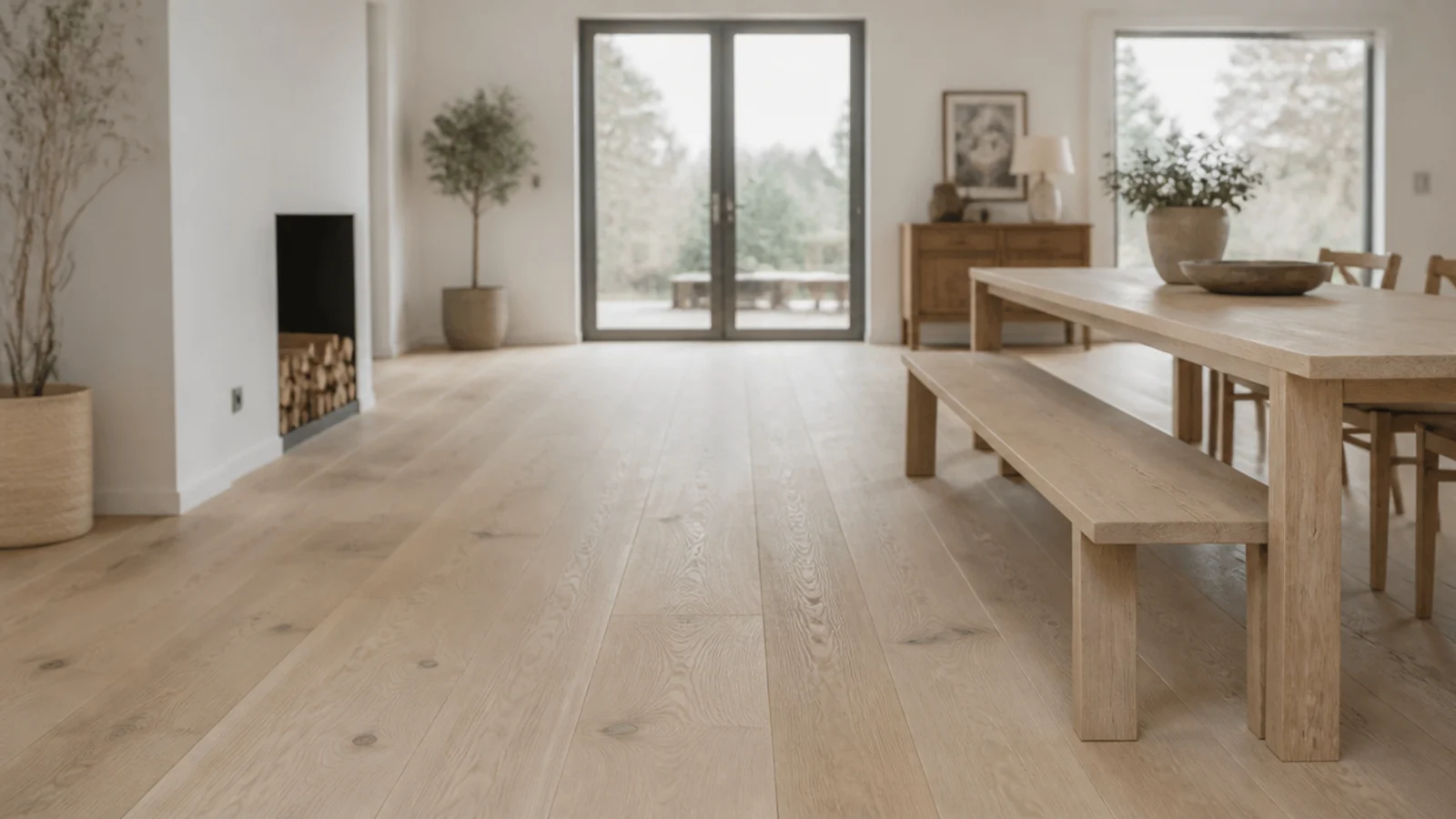
A dark skirting draws a hard line around a pale floor and shrinks the room back to its actual dimensions. Painted the wall colour, the line dissolves and the floor appears to run under the walls. Use the same sheen as the wall, and keep the skirting tall enough to cover the 12mm expansion gap.
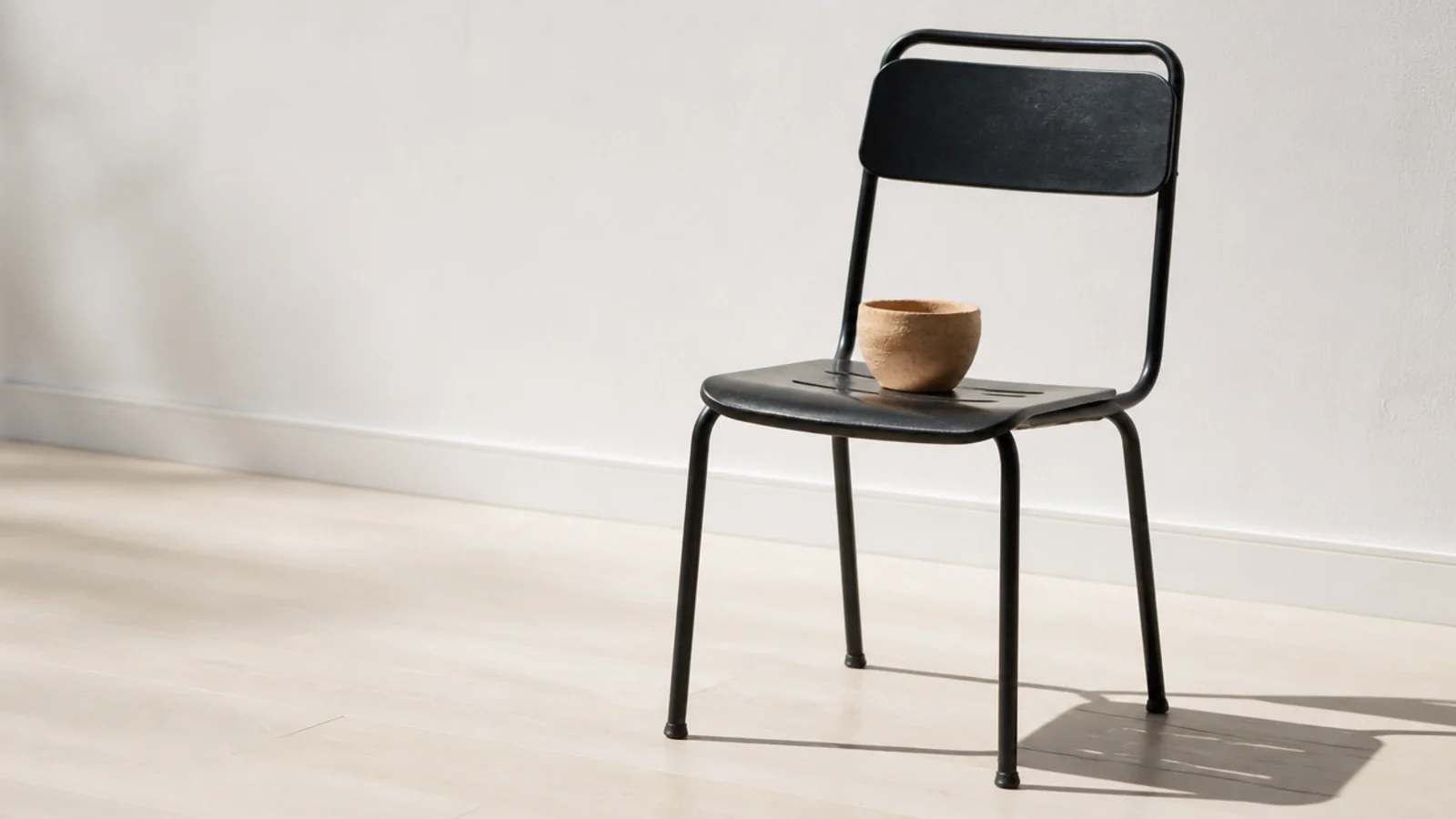
7. A pale floor with one dark anchor
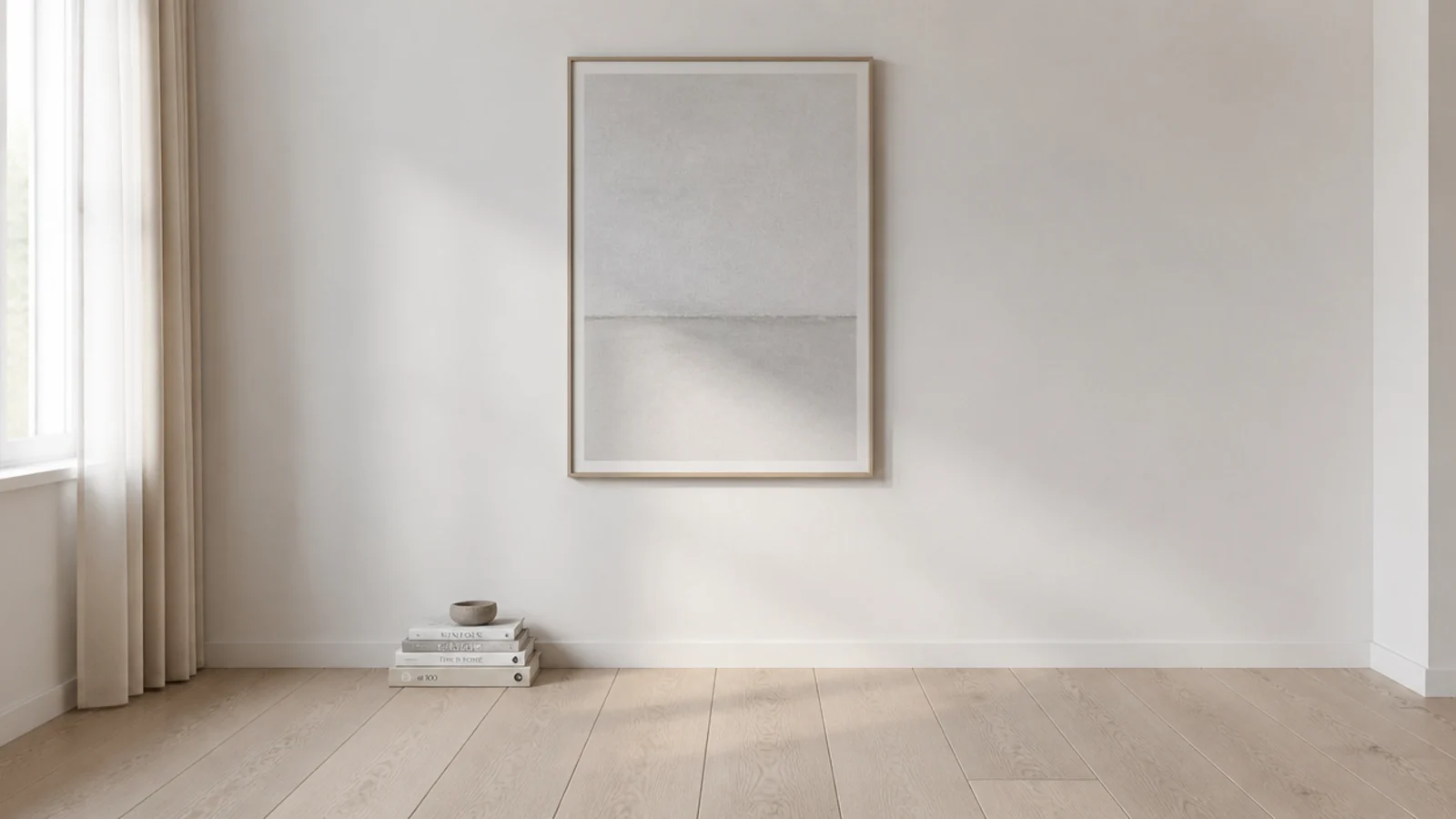
Very pale rooms lose their structure without a dark note somewhere. One black metal chair, a dark timber table, a charcoal lampshade — a single object is enough to give the eye a reference point. Without it, pale floors photograph beautifully and feel oddly flat in person.
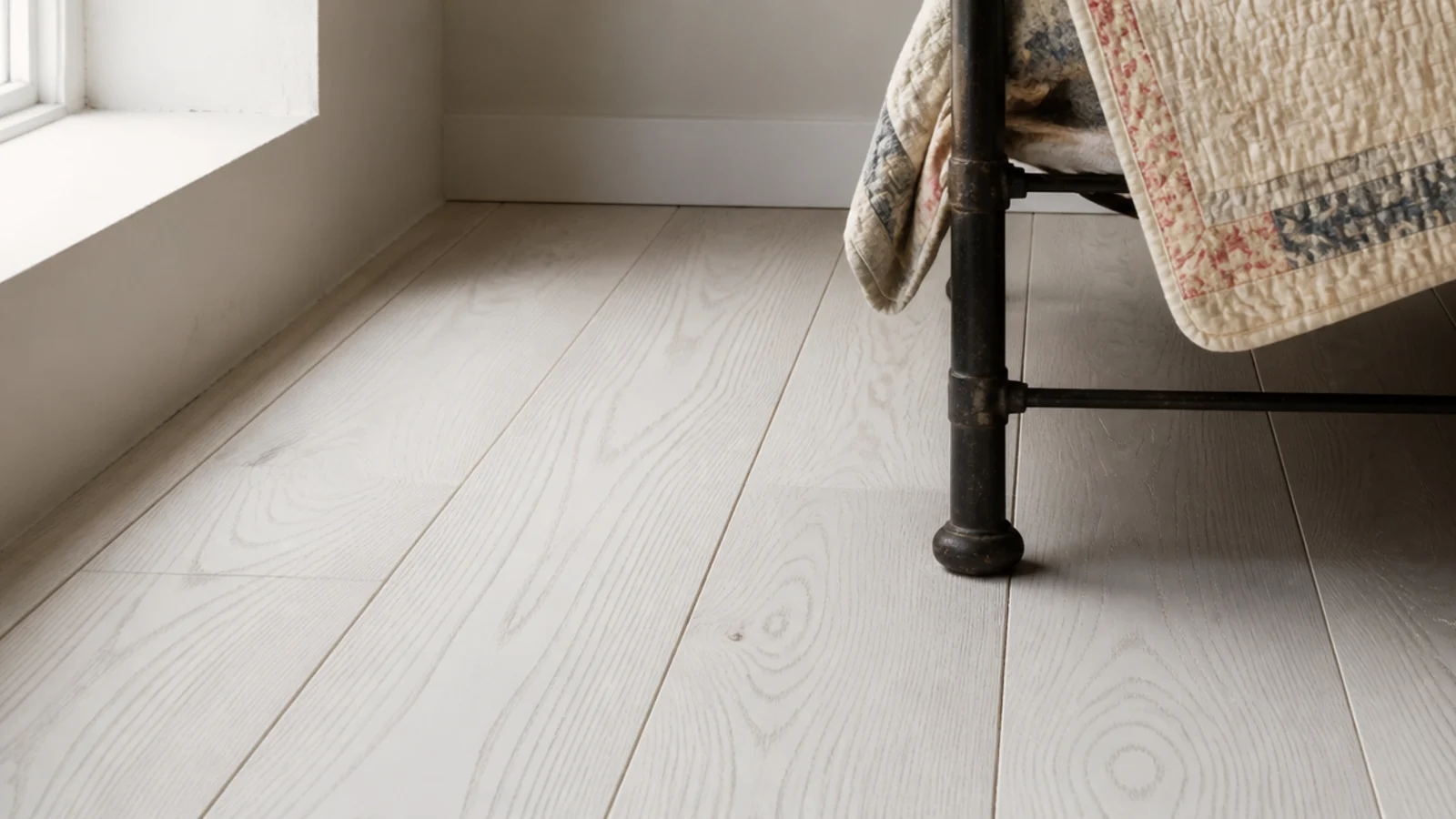
8. Whitewashed pine for a cottage bedroom
Pine takes a thinned white pigment beautifully, and because pine is soft the grain stays visible through it. Two coats of a diluted white stain, then a clear matte finish. It costs a fraction of engineered oak and it suits a bedroom, where the softness of pine will never be tested. The wooden flooring bedroom guide has the rug and underlay detail.
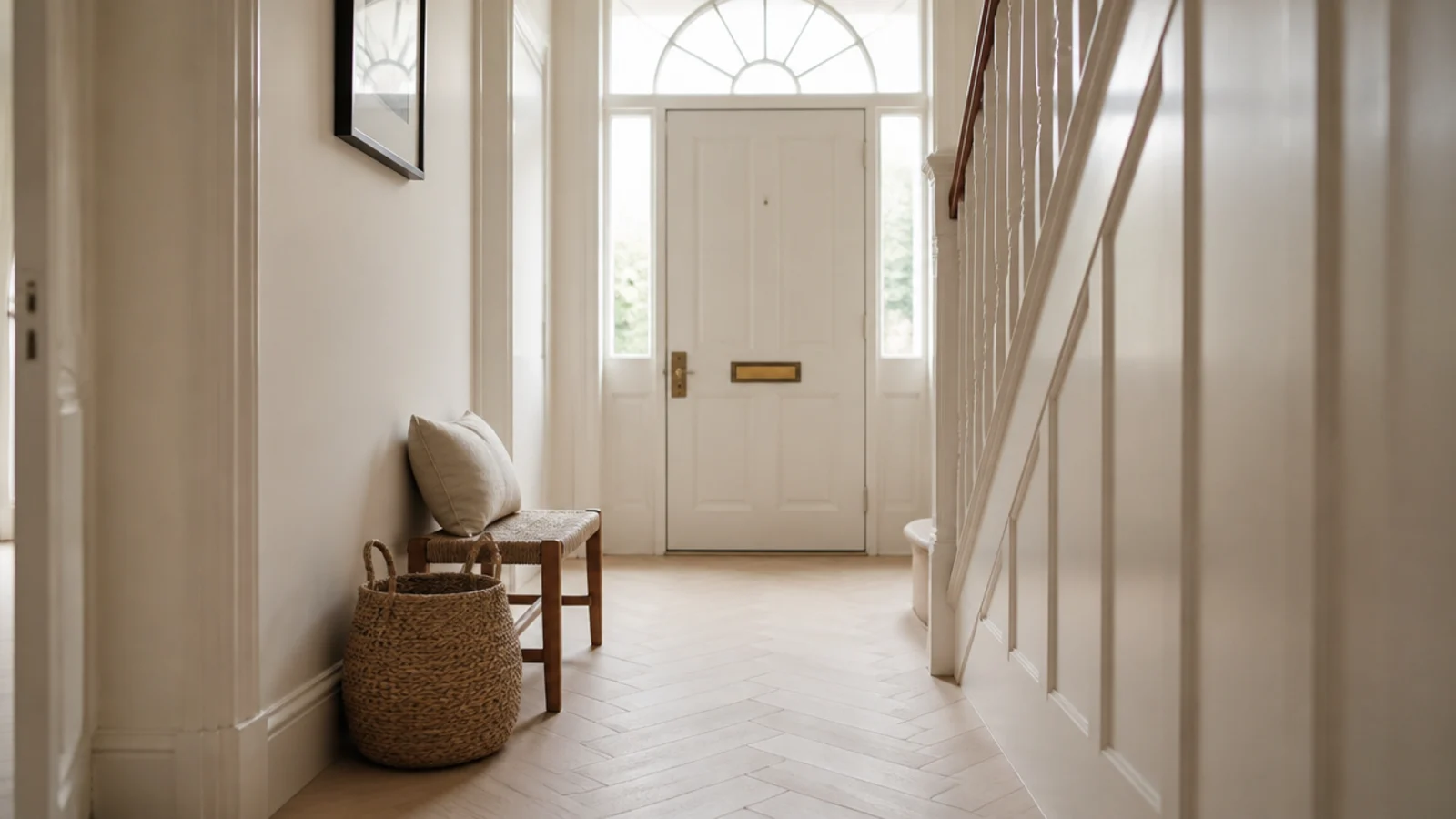
9. Pale herringbone in a small hall
Pattern usually adds visual weight, but in a pale tone it adds interest without darkness. Use short blocks around 70 by 280mm so the pattern repeats enough times across a narrow hall. Expect fitting at roughly double a straight lay, which in a four square metre hall is not much money.
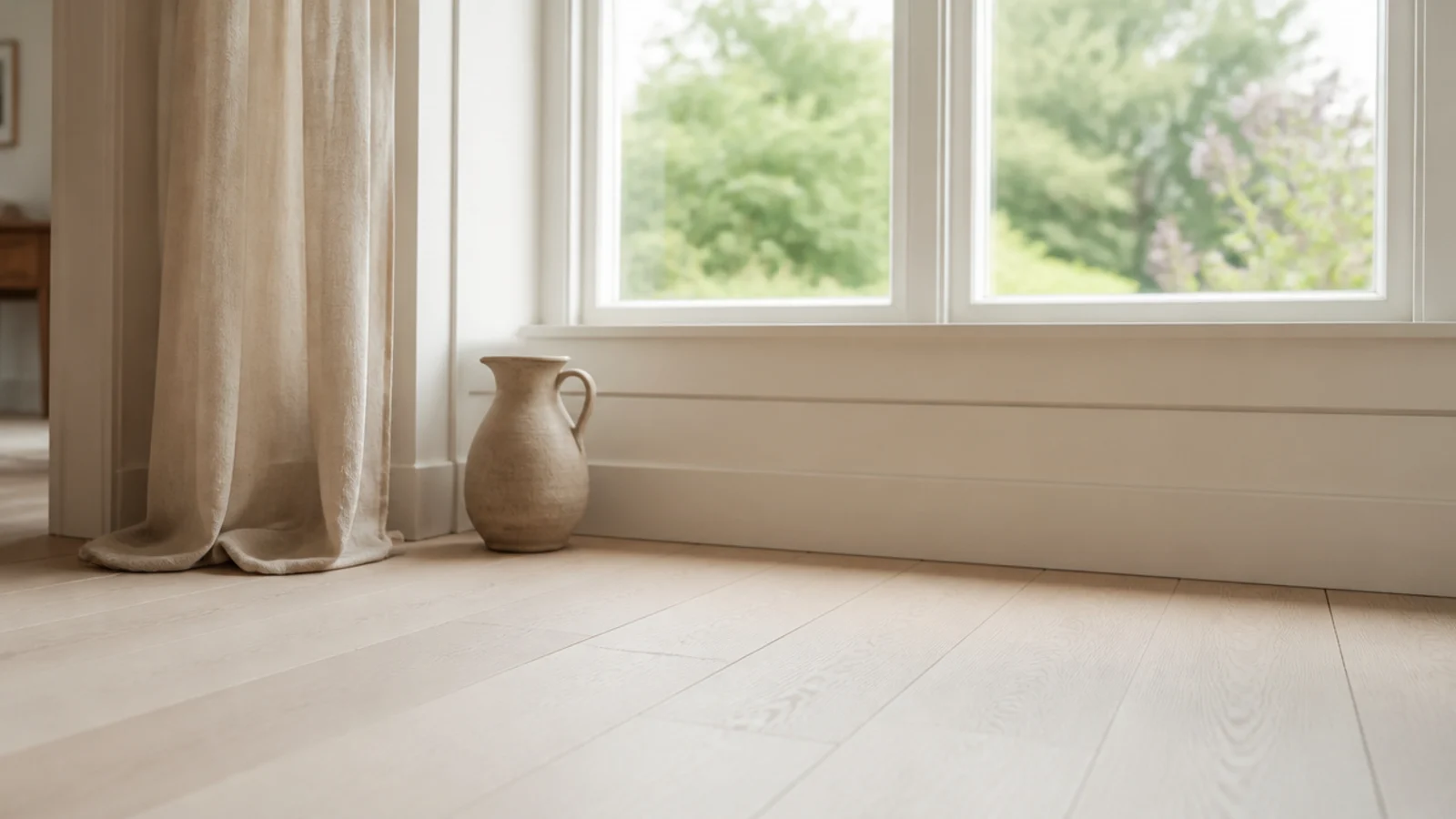
10. Matte sheen so the floor does not glare
A pale floor in semi-gloss creates a bright reflected hotspot under every window, which is uncomfortable rather than bright. Matte at 5 to 10 gloss units scatters the same light evenly across the room. It is the difference between a floor that lights a space and one that dazzles you at 3pm.
11. Pale boards with warm textiles above
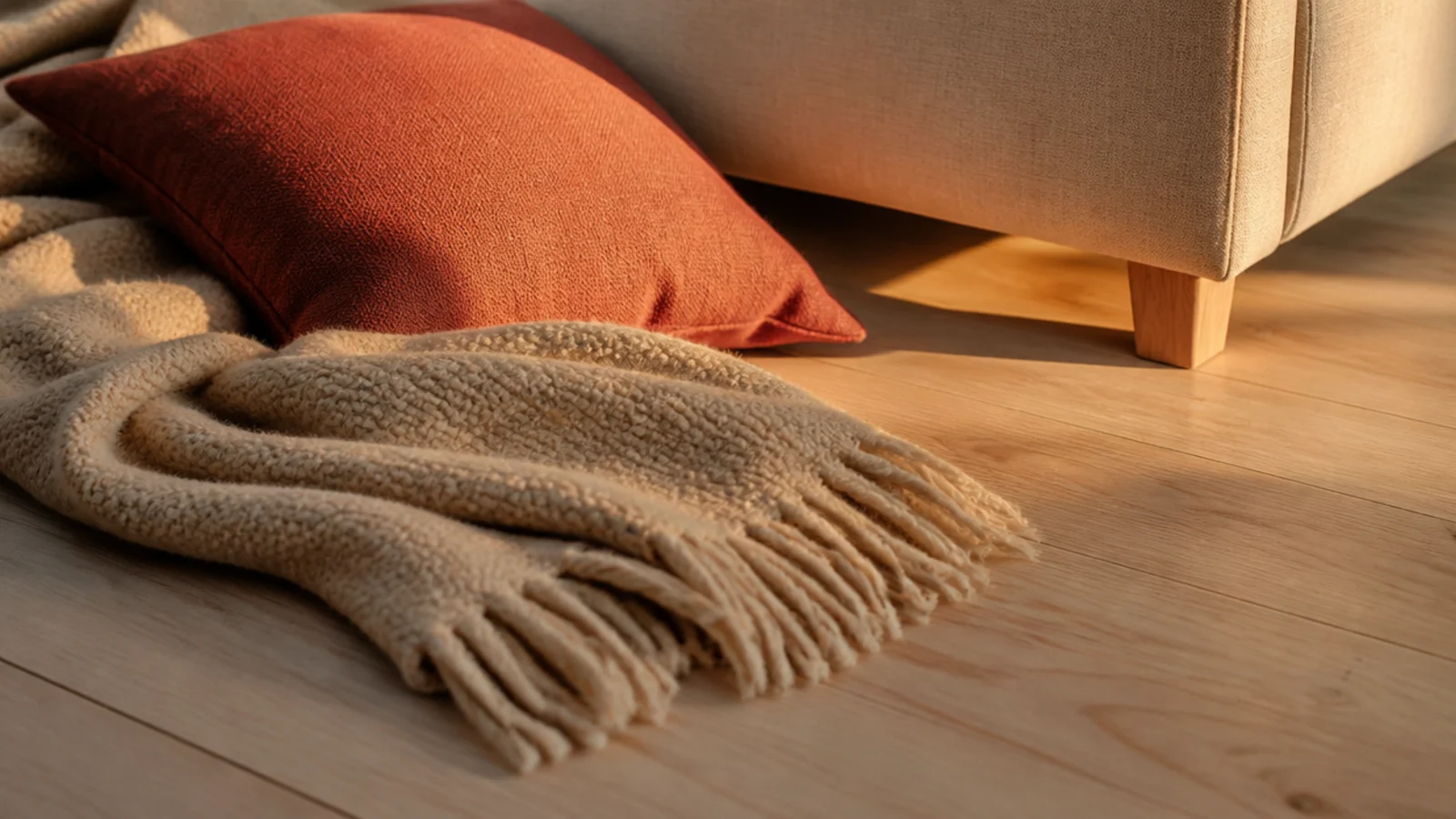
Pale timber is cool by nature, so the warmth has to come from what sits on it. Oatmeal wool, undyed linen, leather, terracotta. Get this wrong — pale floor, white walls, grey sofa — and the room reads as a rendering rather than a home.
12. Engineered pale oak over underfloor heating
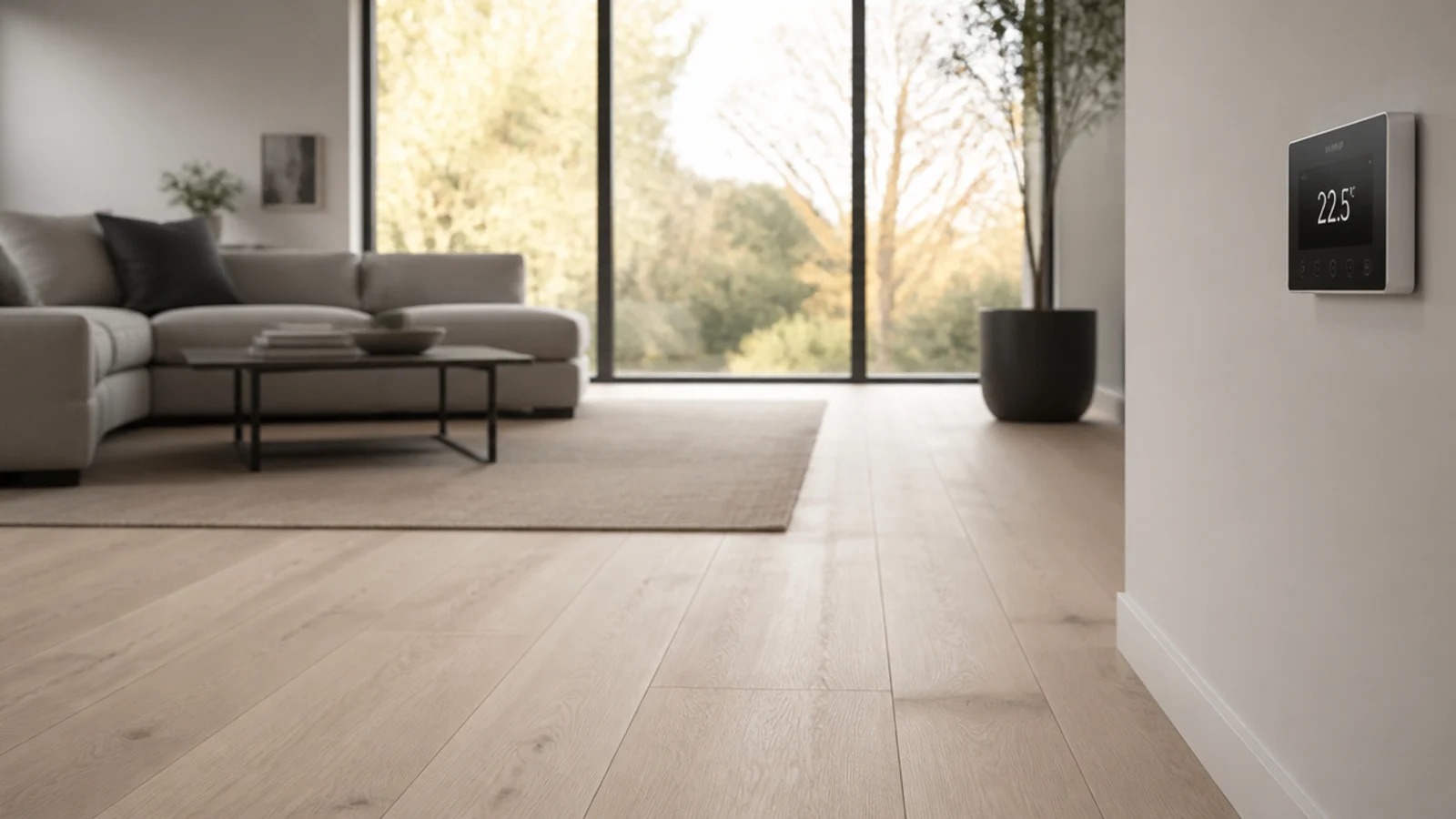
Pale boards work well over heating because the fine edge gaps that every heated floor develops are less visible on a light tone. Use engineered construction, keep the board at 14 to 15mm, cap the surface temperature at 27 degrees Celsius, and ramp the system up 2 degrees a day rather than in one jump.
13. A mid-tone floor where shoes arrive
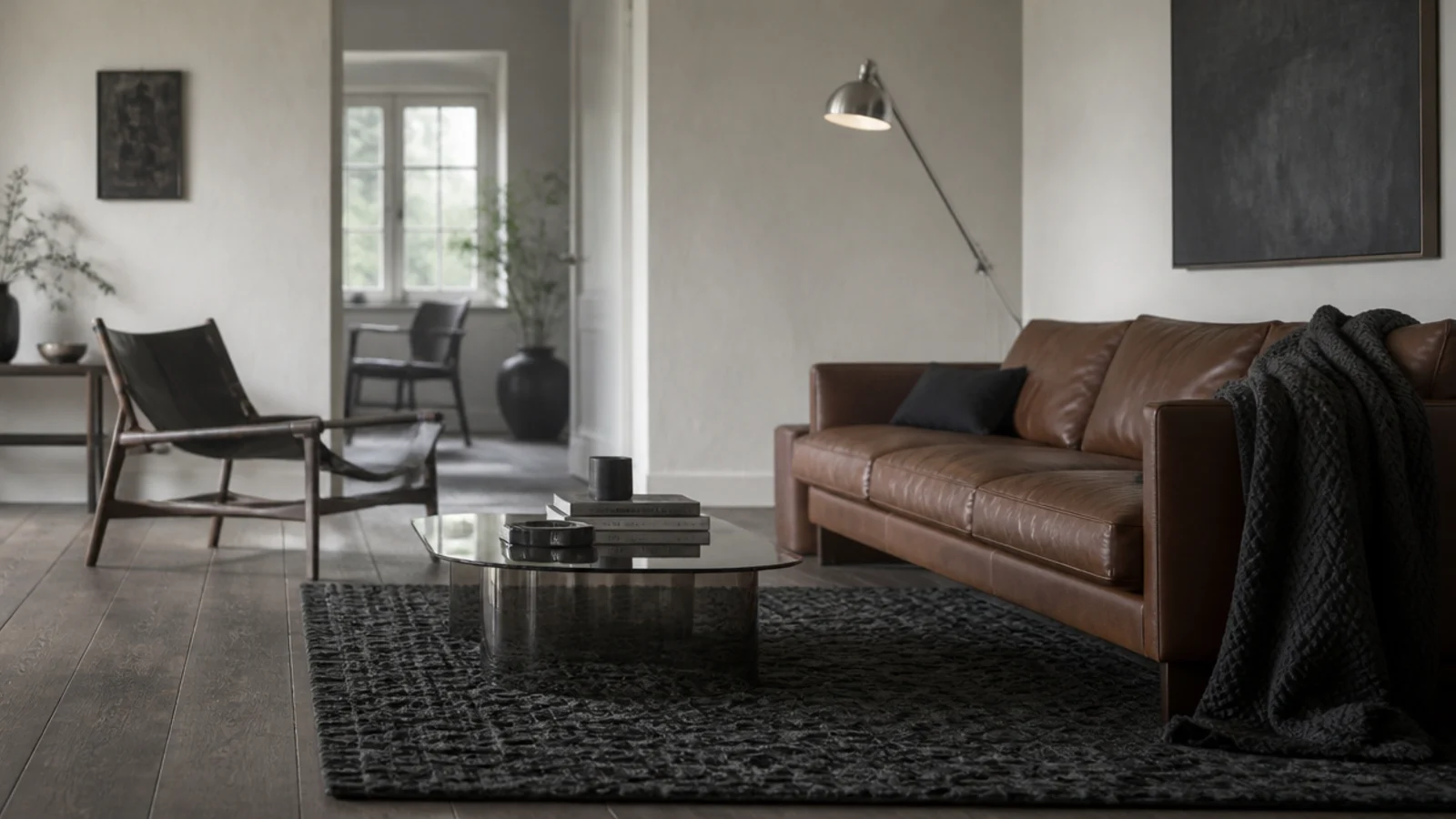
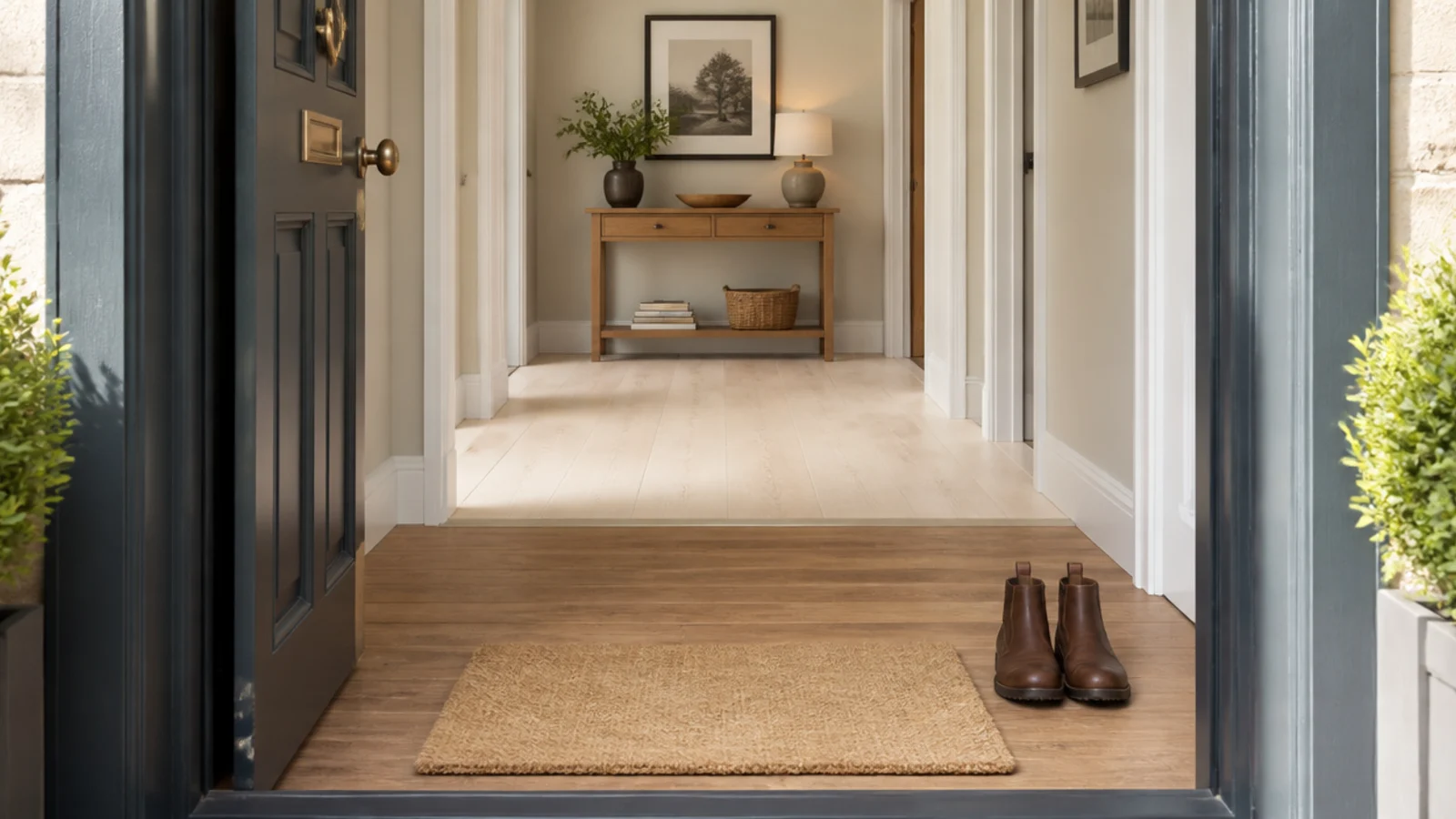
Pale floors hide dust and show mud, and a hallway delivers mud. Run a mid tone from the front door for the first metre or two, or through the hall entirely, and save the palest boards for rooms where shoes come off. It is a practical compromise that reads as a deliberate design move.
14. Pale floors in a basement with warm bulbs
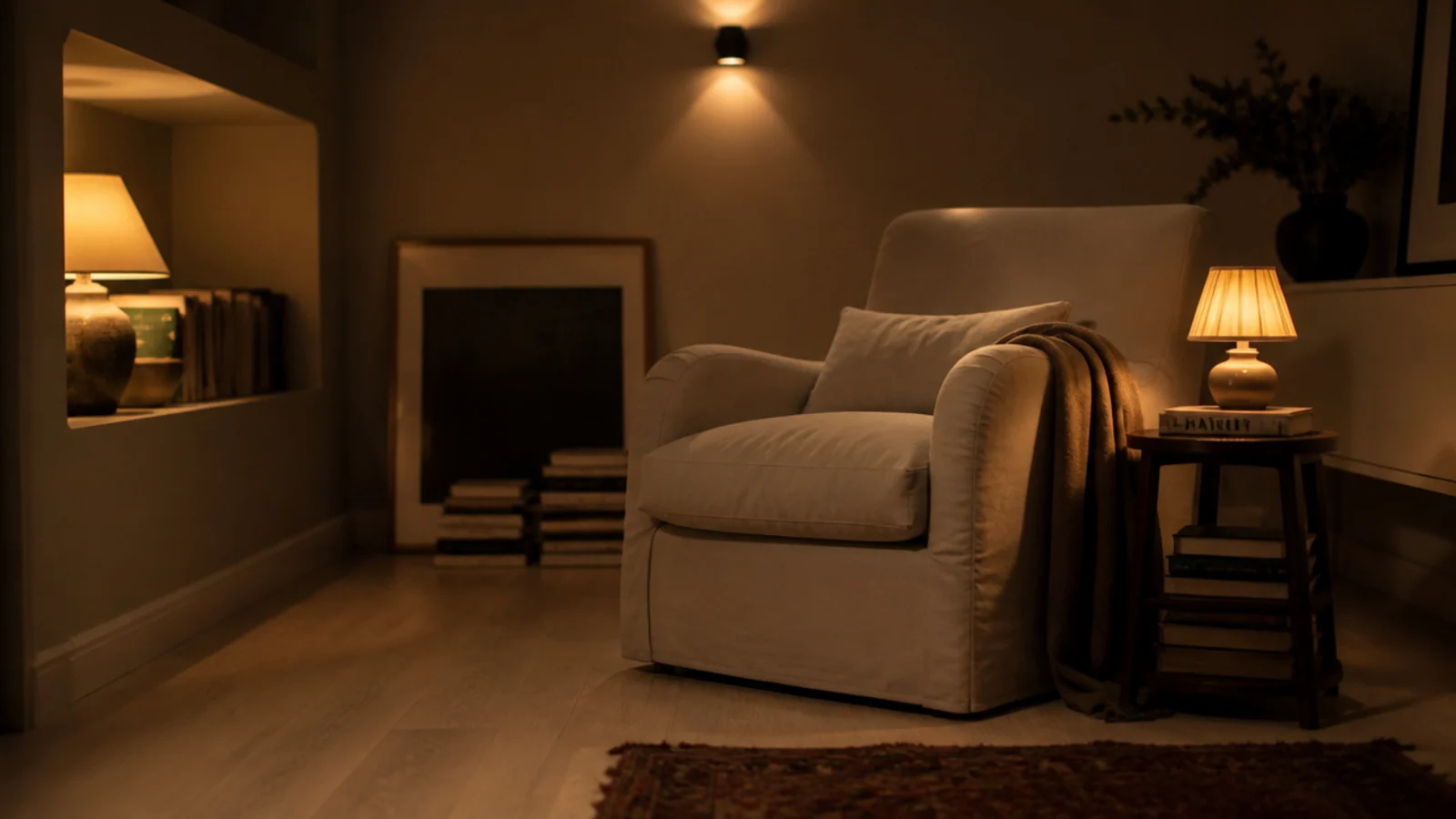
In a room with no daylight, a pale floor still helps, but only under warm light. At 2700K the timber reads soft and warm; at 4000K it reads grey and institutional. Specify the bulb temperature at the same time as the floor, because artificial light is all this room will ever have.
15. Natural jute over pale boards
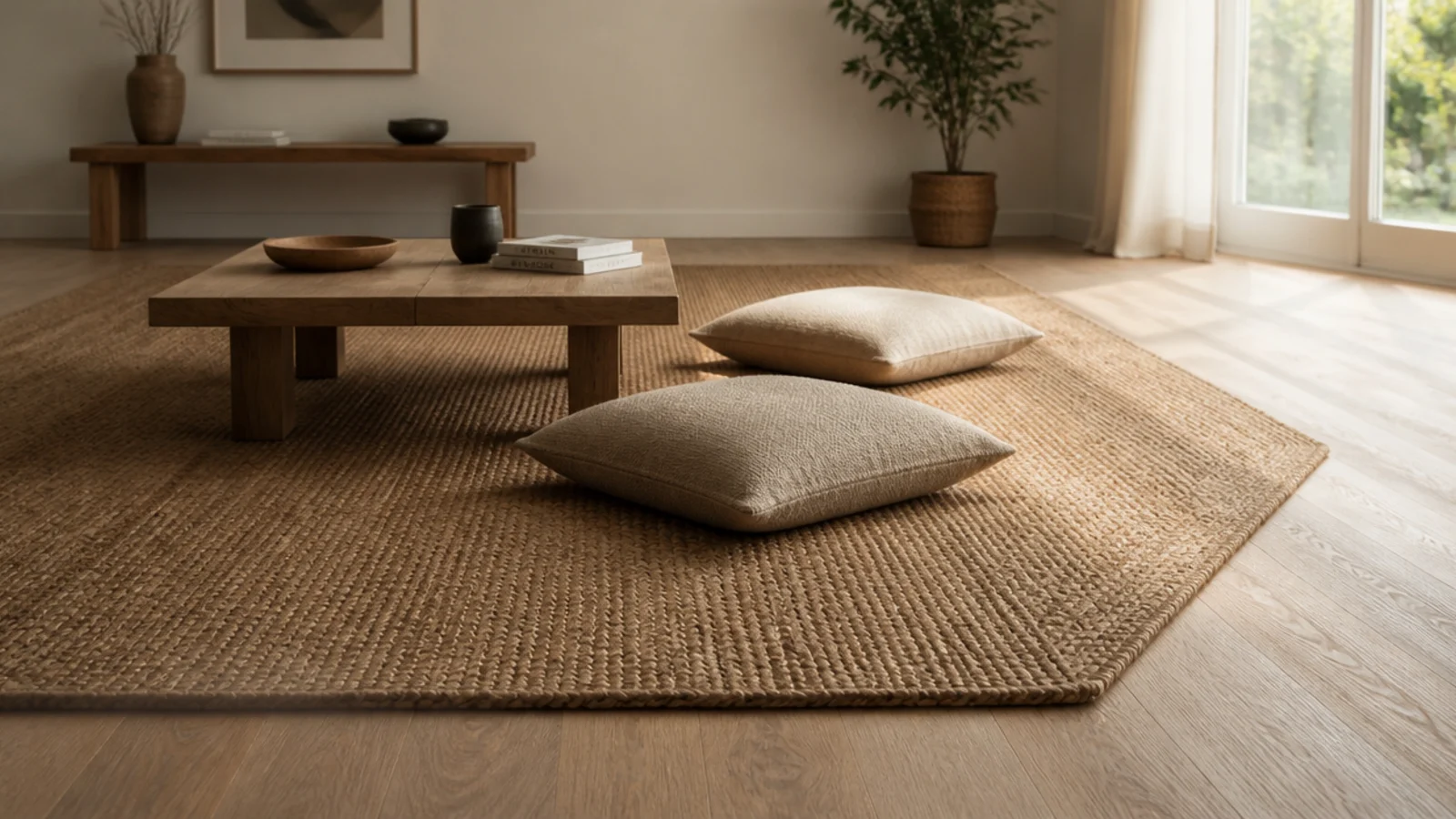
Jute and sisal add texture without adding tone, which is exactly what a pale floor needs. A large jute rug with 200 to 300mm of bare timber showing at every edge gives a room warmth underfoot and keeps the brightness. It is also among the cheapest large rugs available.
16. Pale boards running the length of a narrow room
Direction does as much as tone. In a narrow room, boards running away from the door lengthen the space, and a pale tone stops that length feeling like a corridor. Combine the two and a 2.4 metre wide room reads considerably more generous than it measures.
17. Character grade in a pale tone
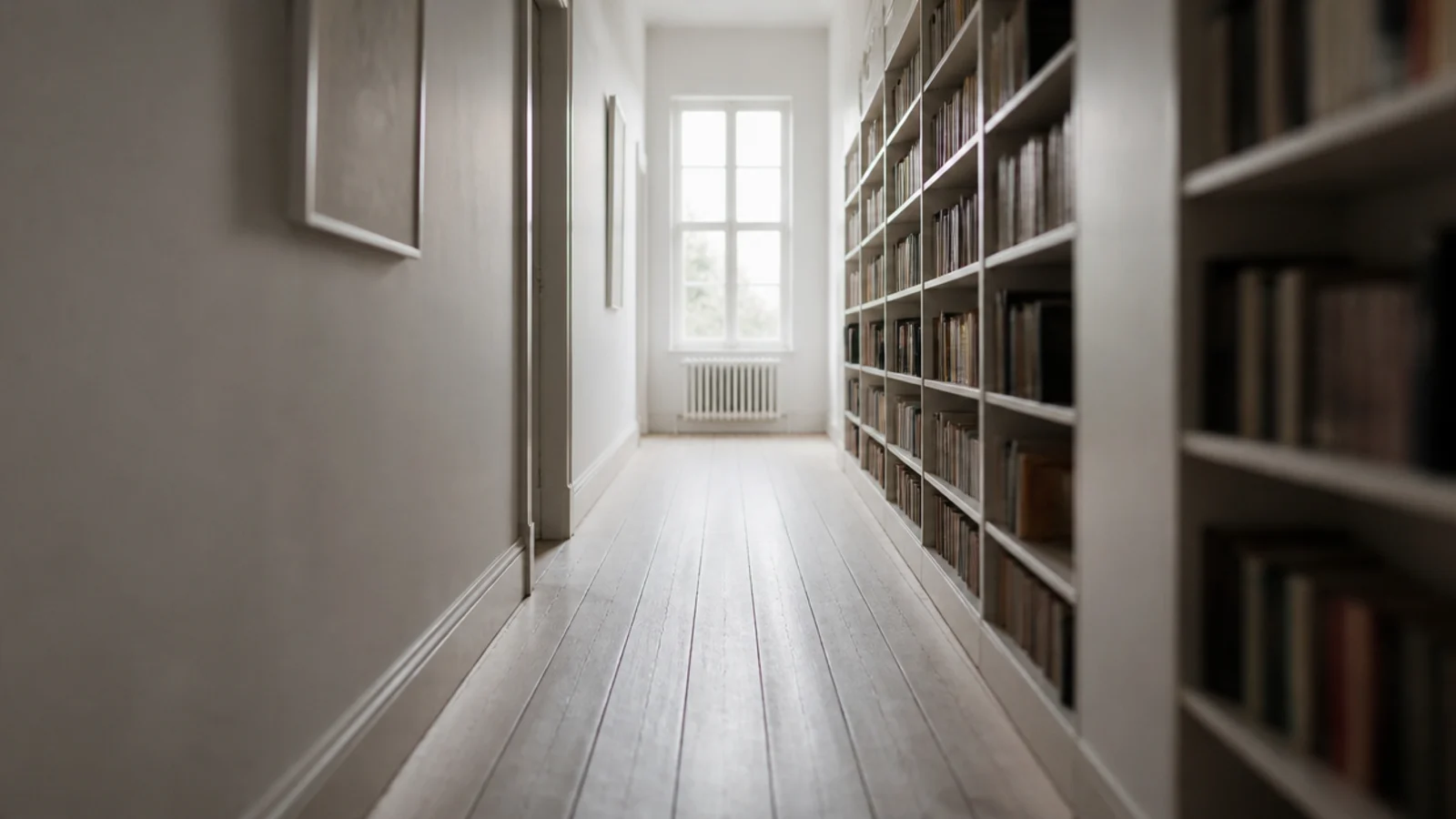
Prime grade pale oak can look clinical, especially in a new build. Character grade — sound knots, sapwood, colour swing — keeps the brightness while giving the floor something to look at, and it costs 15 to 30 percent less. Ask whether knots come open or resin-filled, because black filler in a pale board is jarring.
18. Pale flooring with black window frames
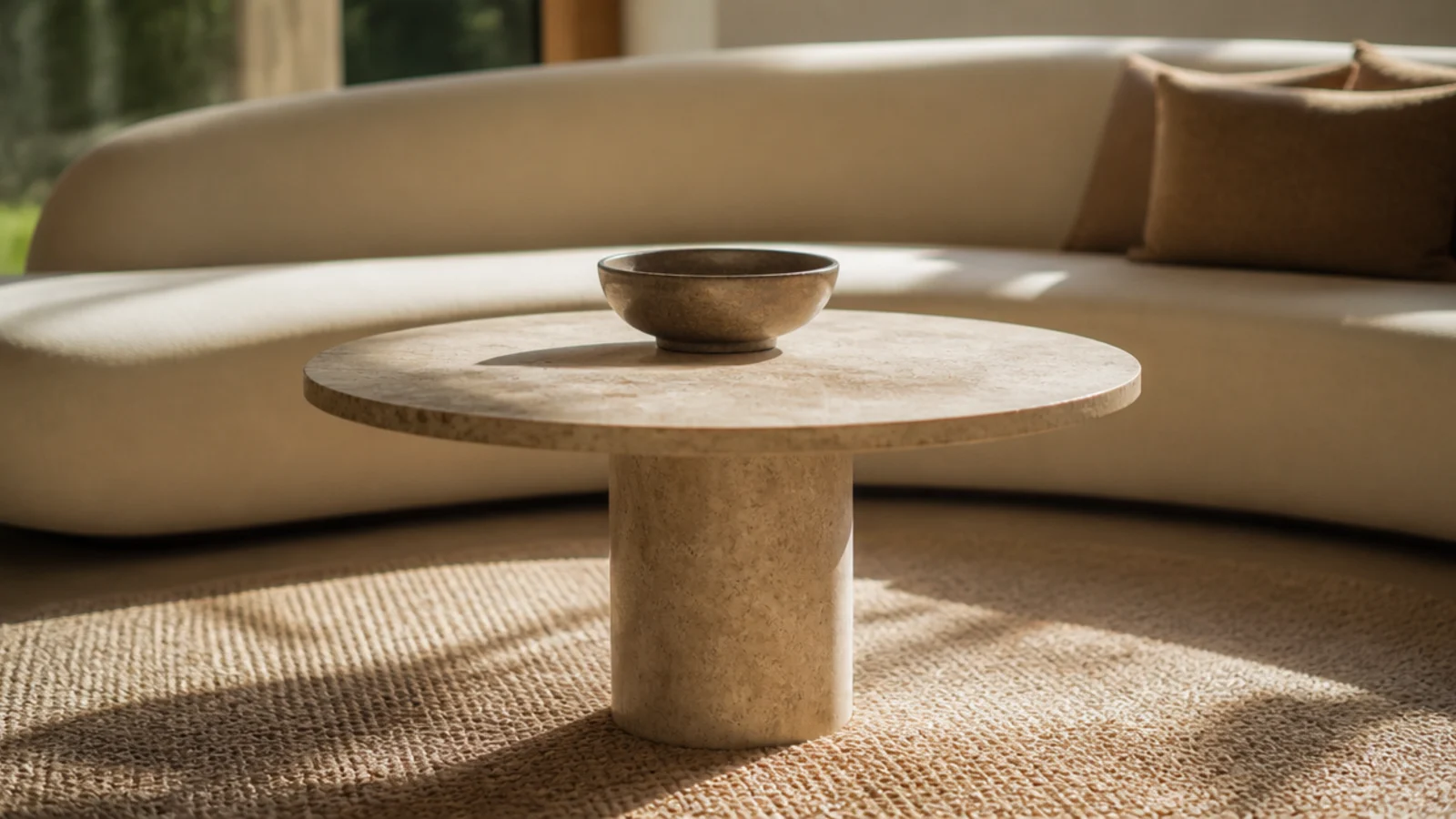
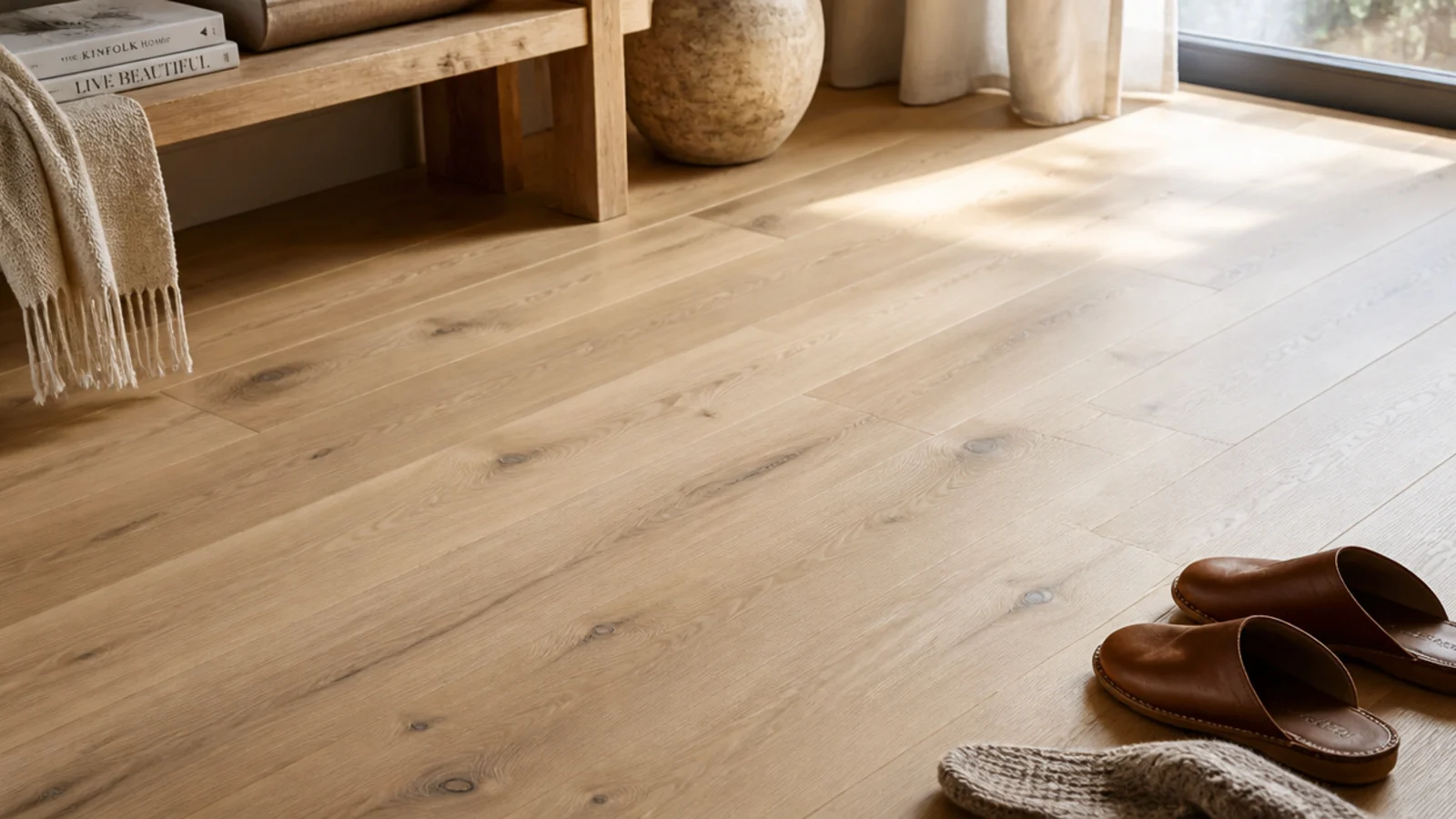
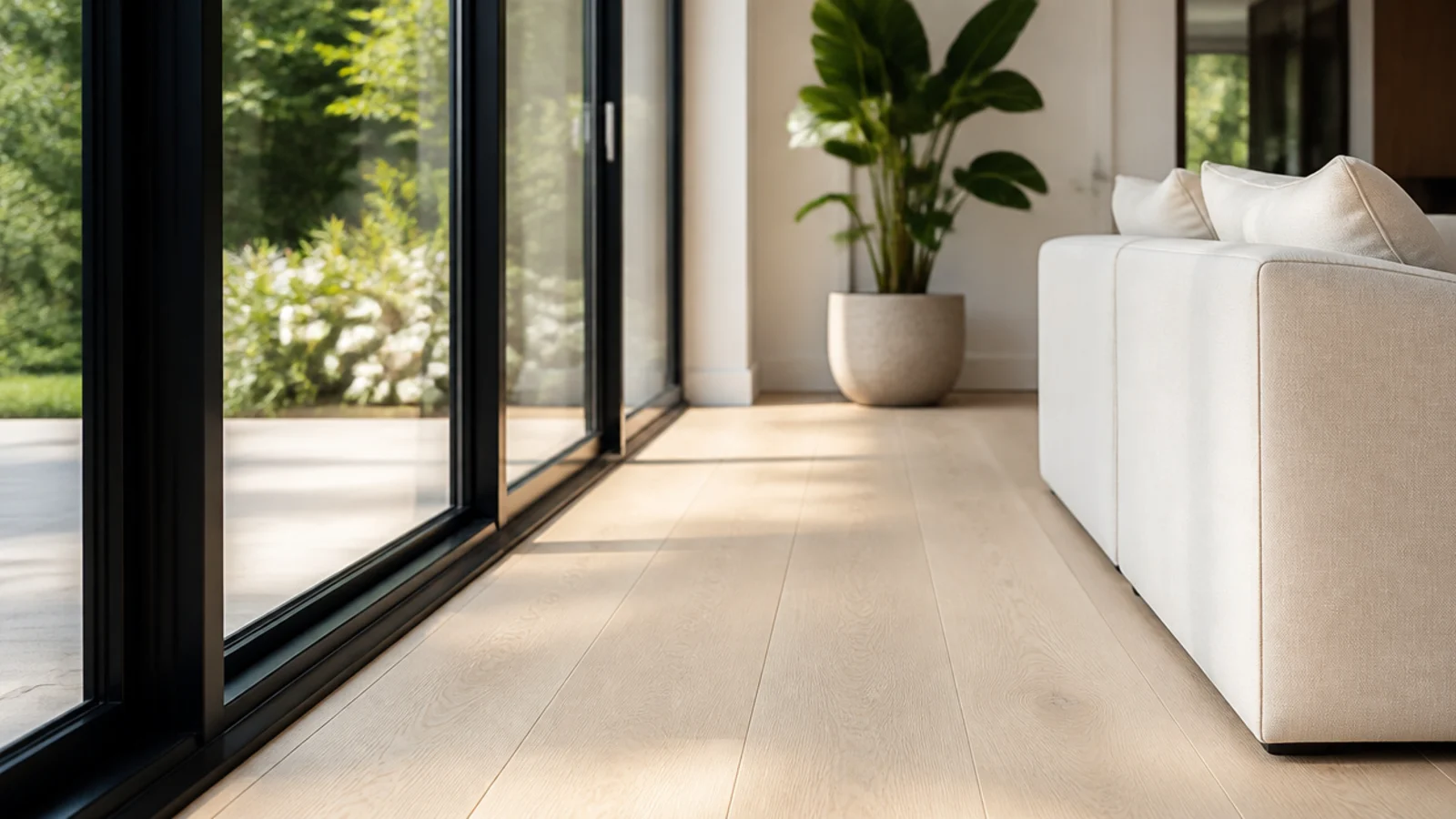
Slim black frames give a pale floor an outline and stop a bright room reading as blank. It is the pairing that makes modern extensions work. Keep everything in between soft — plaster, linen, wool — so the contrast is structural rather than harsh. The luxury centre table options show how a single strong piece can do the same job.
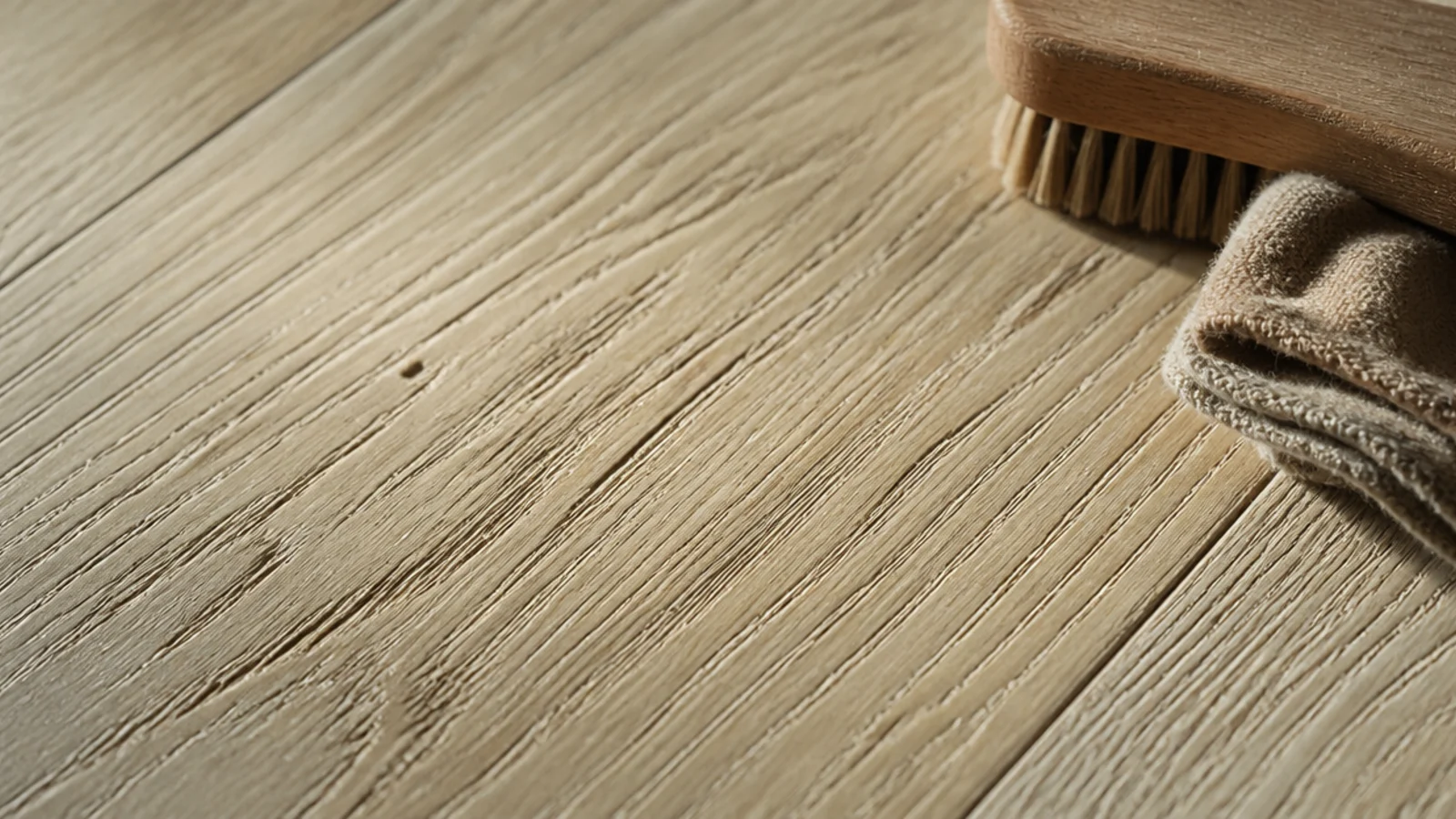
19. A brushed surface to hide the scuffs
Pale floors show dark marks, and a brushed surface with 0.3 to 0.6mm of grain relief gives those marks somewhere to fall. It is the single most useful specification for a pale floor in a family house, and it costs perhaps 10 to 20 percent more than a smooth board.
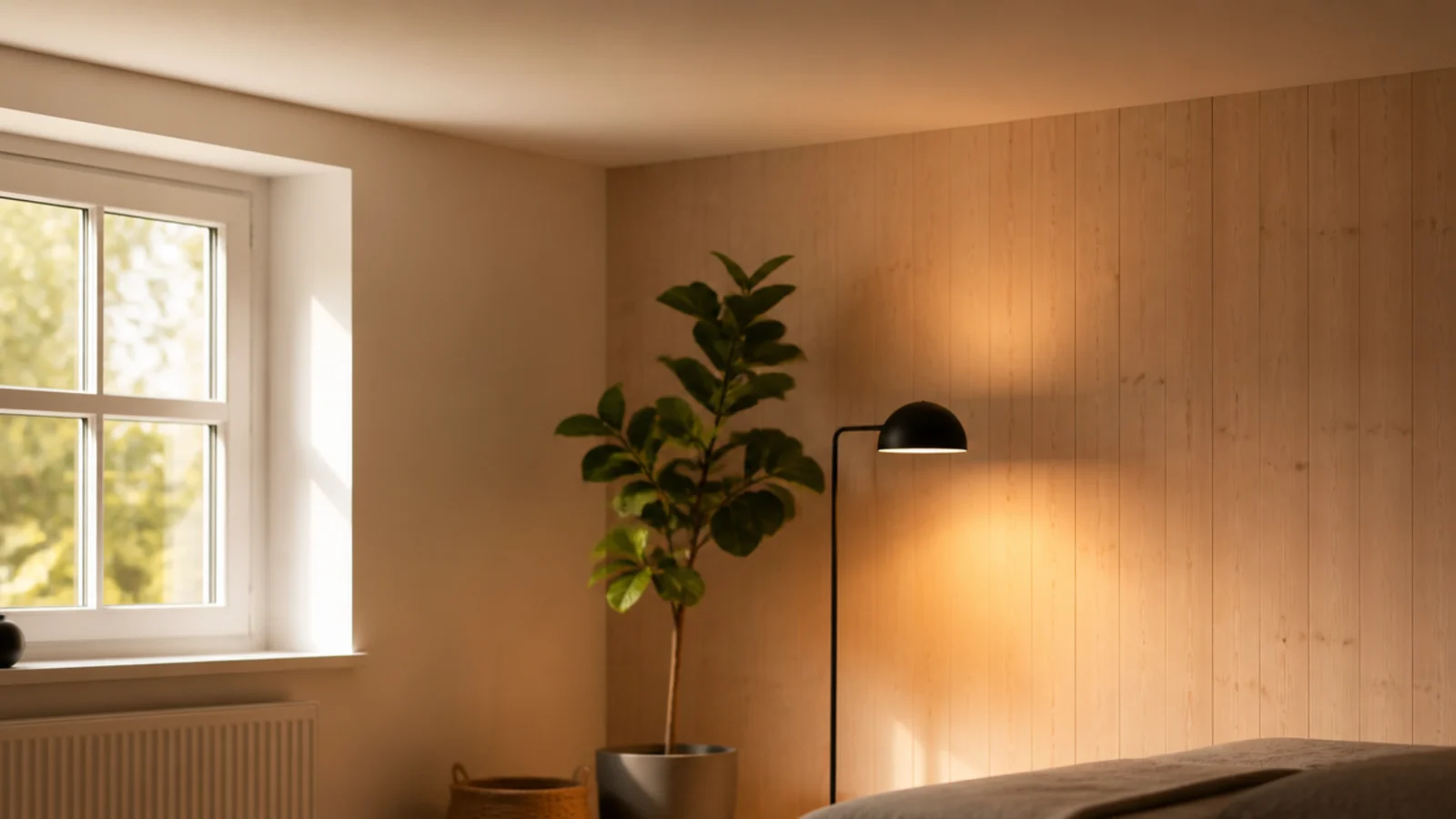
20. Pale floors and a warm white ceiling
The floor and the ceiling are the two largest surfaces in a room and they face each other. A pale floor under a warm white ceiling bounces light twice; the same floor under a cool white or a dark ceiling loses most of the advantage. Paint the ceiling before you judge the floor.
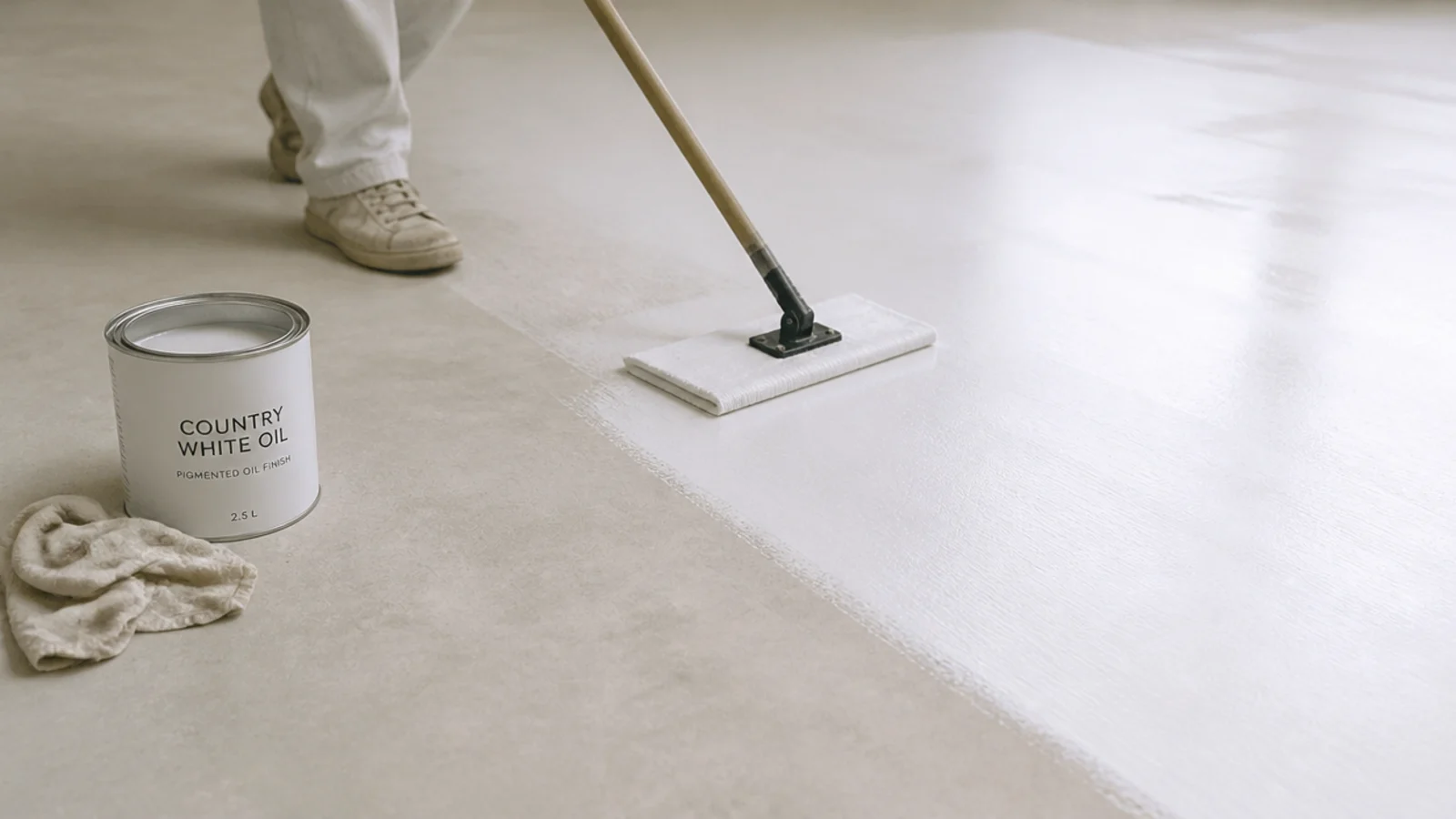
21. A white-oiled floor and a yearly refresh
The real cost of the palest floors is maintenance. A white-pigmented oil needs a refresh coat every twelve to eighteen months in a hallway or kitchen, every three to five years in a bedroom. It takes a morning, costs the price of a tin, and it is why these floors still look right at year ten.
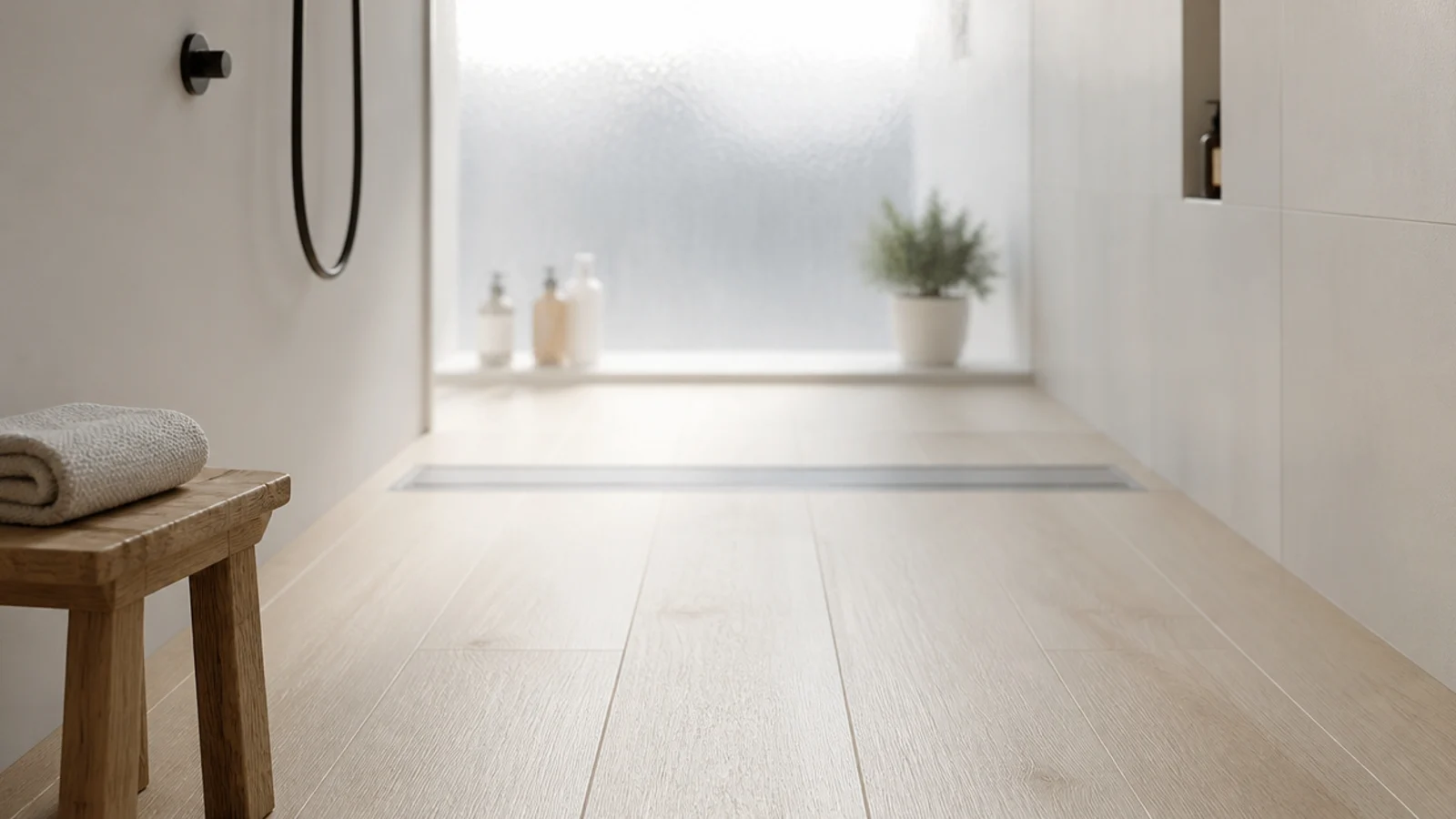
22. Pale wood-look plank in a wet room
Where you want pale timber in a shower room or a utility, use a rigid core plank or a wood-effect porcelain rather than real boards. Look for a wet slip rating of 0.42 or higher and a wear layer of 20 mil. Pale tones hide limescale marks that dark ones show immediately.
23. Pale floors under a low ceiling
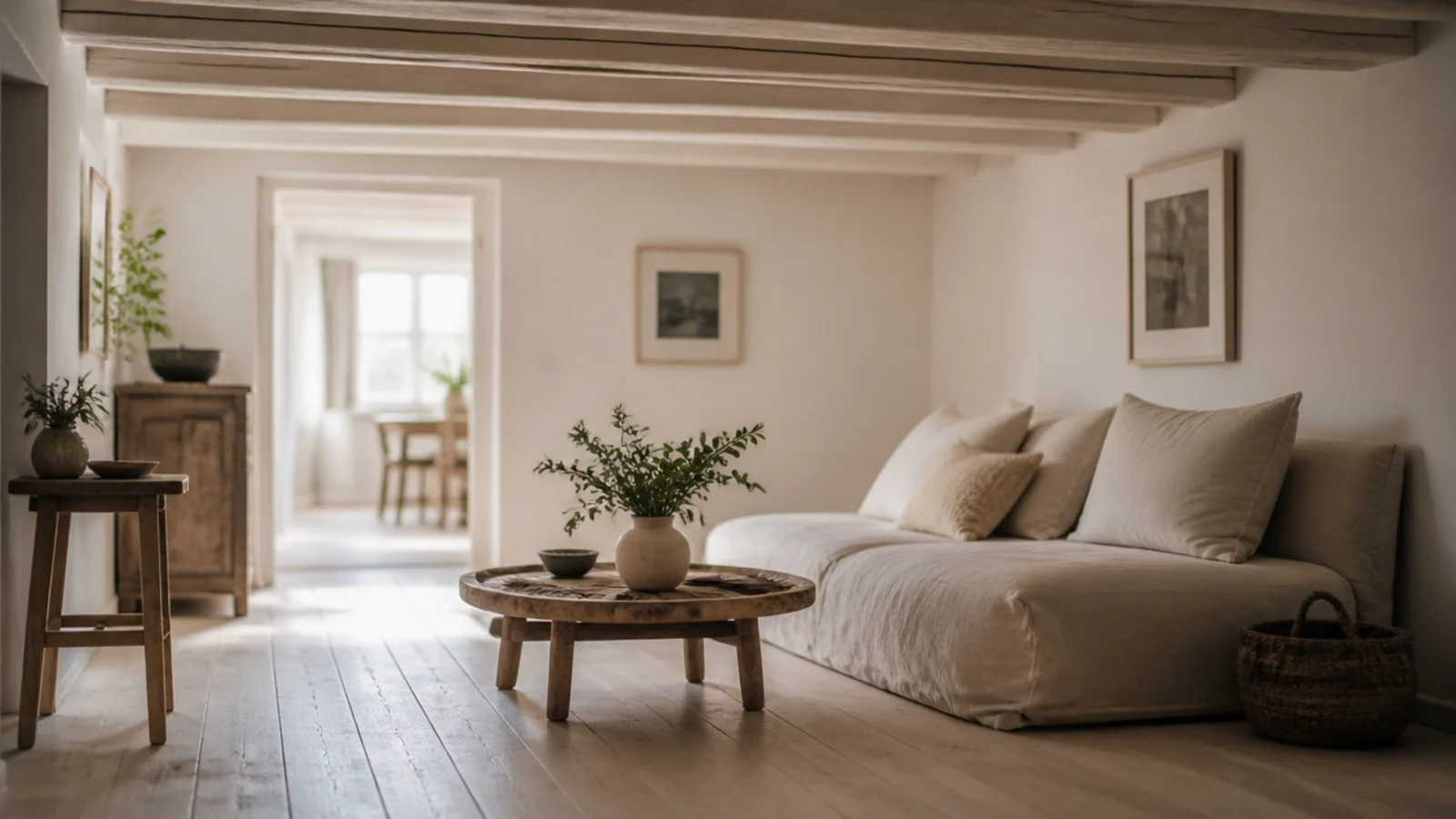
In a cottage room with beams at 2.2 metres, a dark floor closes the space down completely. A pale floor pushes the light back up and makes the ceiling read higher than it measures. Keep the boards matte so the beams do not reflect into them, which shortens the room again.
24. Keep the rug border generous
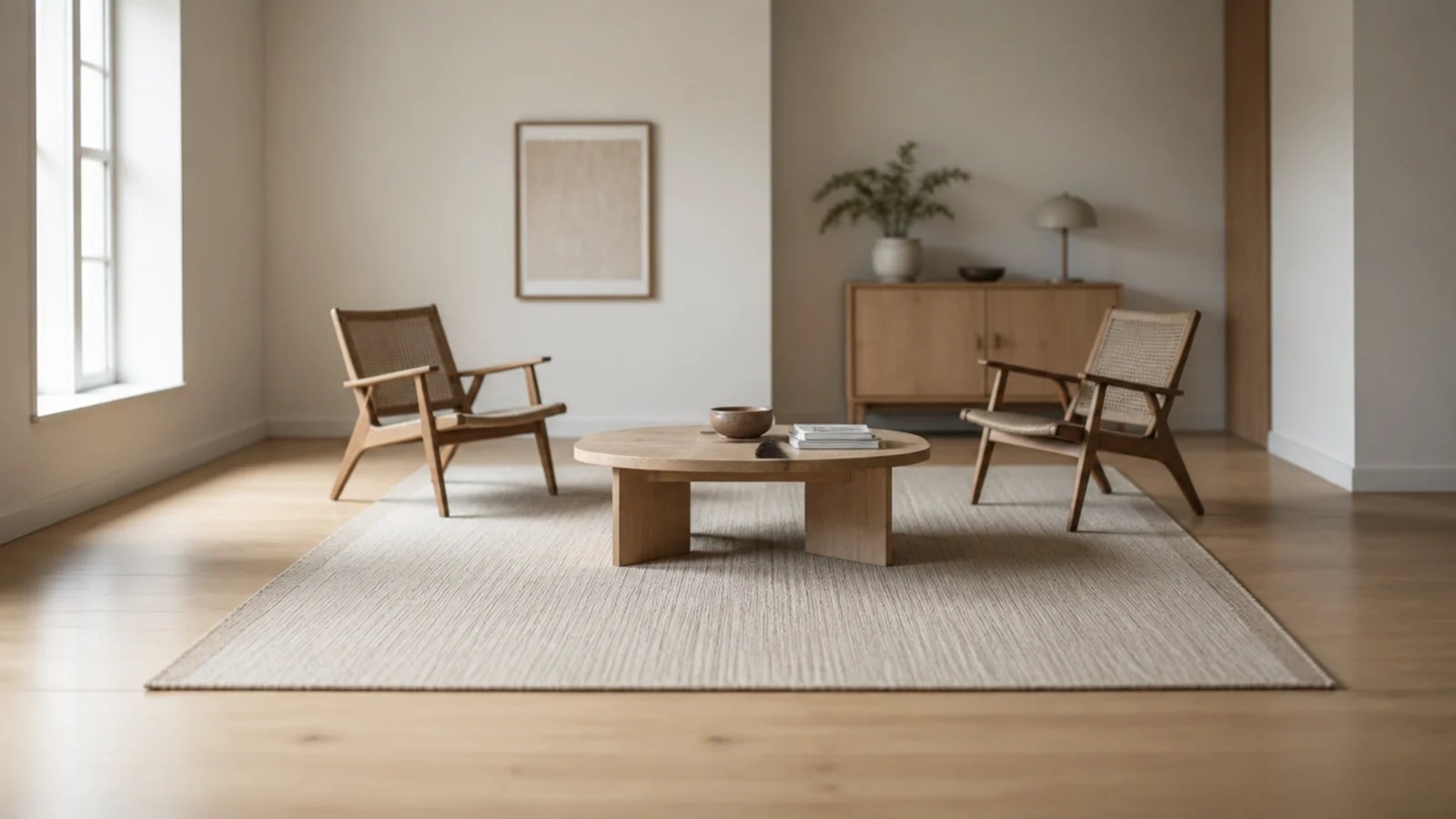
A rug that covers most of a pale floor throws away the reason you chose it. Leave 200 to 300mm of bare timber at every edge on the main sight line. The margin is what tells the eye there is a bright floor under everything, and it is the detail people forget when they size a rug to a room.
25. Test the sample at night, not at noon
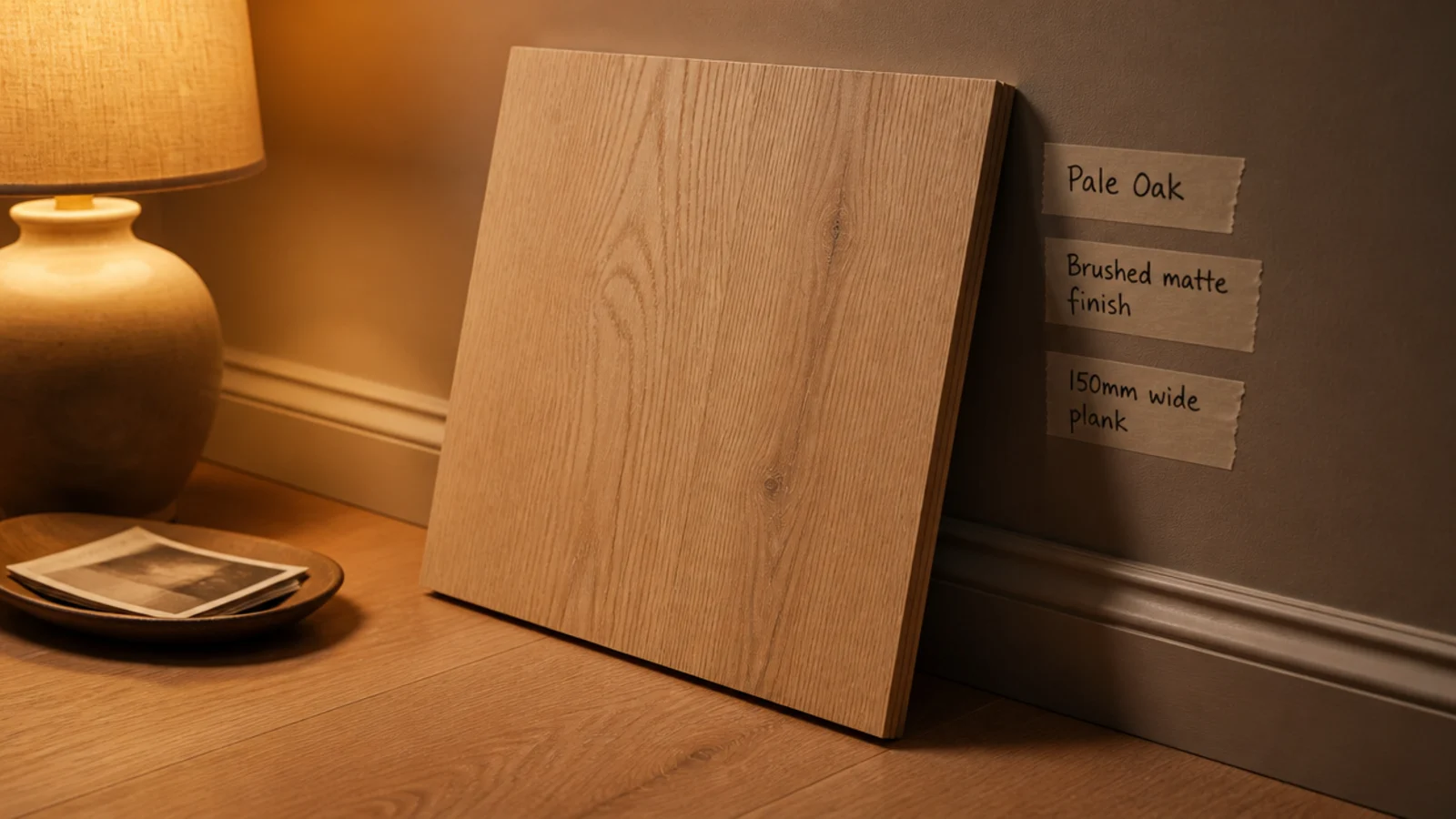
Pale floors change more than any other tone between daylight and lamplight. A board that reads cool and grey at 11am can read warm and creamy under a 2700K lamp at 8pm. Leave the sample down for a week and look at it at both ends of the day before ordering.
Pale floors make small rooms work harder, which is why they turn up so often in compact spaces. If you are planning storage in one, the small walk-in closet layouts assume exactly this kind of bright, tight footprint.
Mistakes to Skip
- Finishing pale oak with an oil-modified polyurethane. It ambers within two or three years and there is no fix short of sanding the whole floor back and starting again.
- Running the palest board straight through a hallway. Mud and dark scuffs are the two things a pale floor cannot hide, and a front door delivers both daily.
- Pairing pale floors with cool grey walls and a grey sofa. Without one warm material and one dark object the room reads flat, however good the flooring is.
- Covering the floor with an oversized rug. If only a hand's width of timber shows at the edges, you have paid for a pale floor and are looking at a rug instead.
Frequently asked questions
Does light flooring make a room look bigger?
It makes a room look brighter, which reads as bigger. A pale timber floor bounces back roughly half the light that falls on it where a dark walnut returns perhaps fifteen percent. In a small room with one window that difference is genuinely visible rather than theoretical.
Why does pale oak turn yellow over time?
Usually the finish rather than the timber. Oil-modified polyurethane ambers noticeably within a couple of years, and the effect is strongest on pale wood. A water-based non-yellowing lacquer or a white-pigmented hardwax oil keeps a pale floor pale for far longer.
Is light flooring harder to keep clean?
It hides dust, crumbs and pet hair far better than dark floors, and shows dark scuffs and mud more. In a hallway that trade goes the wrong way, which is why I keep the palest floors in bedrooms and living rooms and use a mid tone where shoes arrive.
What is the palest wood floor that lasts?
Lye-treated and white-oiled European oak. The lye neutralises the natural ambering and the white pigment sits in the grain, so the floor stays close to raw timber colour. It needs a refresh coat every twelve to eighteen months in a busy room, which is the real cost.
Should skirting match a light wood floor?
Paint the skirting the wall colour rather than matching the floor. A pale floor meeting a pale wall with no dark line between them removes the visual edge of the room, which is exactly the effect that makes the space read larger from the doorway.
Want more like this? Browse all 15 wooden flooring guides — they all use the same measurements and budget tiers.
Pin it for later
Save this to your Wooden Flooring board
Pin it now so it is waiting for you when the tape measure comes out — and so the next person hunting for this idea can find it too.
Save this pinKeep going
More ideas worth saving while you have the tape measure out.