Wooden Flooring · UGC
20 Grey Wooden Flooring Rooms I Wish I Saw Sooner

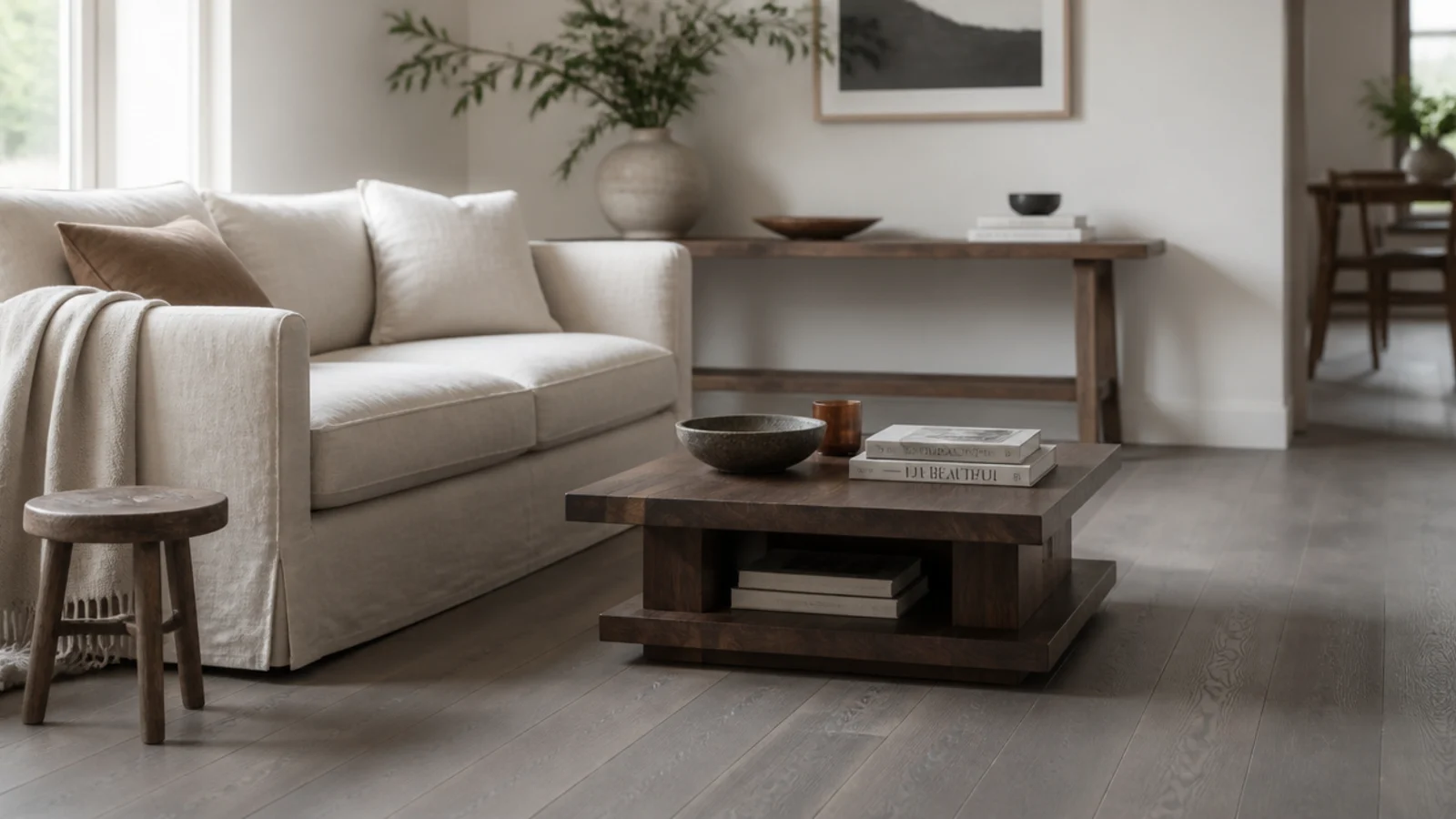
I have specified a lot of cool-toned floors over the last decade, lived with two of them myself, and been back to see most of the rest three or four years later. Grey wooden flooring is the tone people ask for most often and the one that most often disappoints, almost always for the same reason: the grey was painted on rather than developed in the timber. These twenty rooms are the ones that changed how I quote for it, including three that did not work and one I still think about.
In this guide22 sections — tap to openHide
- 1.How I judge grey wooden flooring now
- 2.Fumed oak in a south-facing sitting room
- 3.The pale grey-washed bedroom that went cold
- 4.Grey-stained pine that wore through in two years
- 5.Smoked oak warmed by a single wool rug
- 6.Driftwood grey engineered board in a coastal cottage
- 7.Cool grey vinyl plank in a busy kitchen
- 8.Grey herringbone in a two metre hallway
- 9.Reactive stain that came out beautifully uneven
- 10.Limed grey with the grain left pale
- 11.Charcoal boards in a room with windows on two sides
- 12.Greige, which is what most people actually want
- 13.Brass hardware instead of chrome above a grey floor
- 14.Wire-brushed grey with the hard grain left proud
- 15.Warm white walls, never a cool brilliant white
- 16.Grey engineered board over underfloor heating
- 17.Grey floors with black window frames
- 18.The floor that faded in a bay window
- 19.Grey plank in a utility with a floor drain
- 20.Grey oak against deep green cabinetry
- 21.The room where I would choose brown instead
- 22.What I'd Do Differently Now
How I judge grey wooden flooring now
I ask four questions before anyone chooses a board, and they are all about longevity rather than looks.
Is the colour in the timber or on it? Fumed, smoked and reactive-stained boards carry tone through the wear layer. A surface stain under lacquer is a film, and films wear through in traffic lanes — I have watched a hall floor go pale down the middle in under two years.
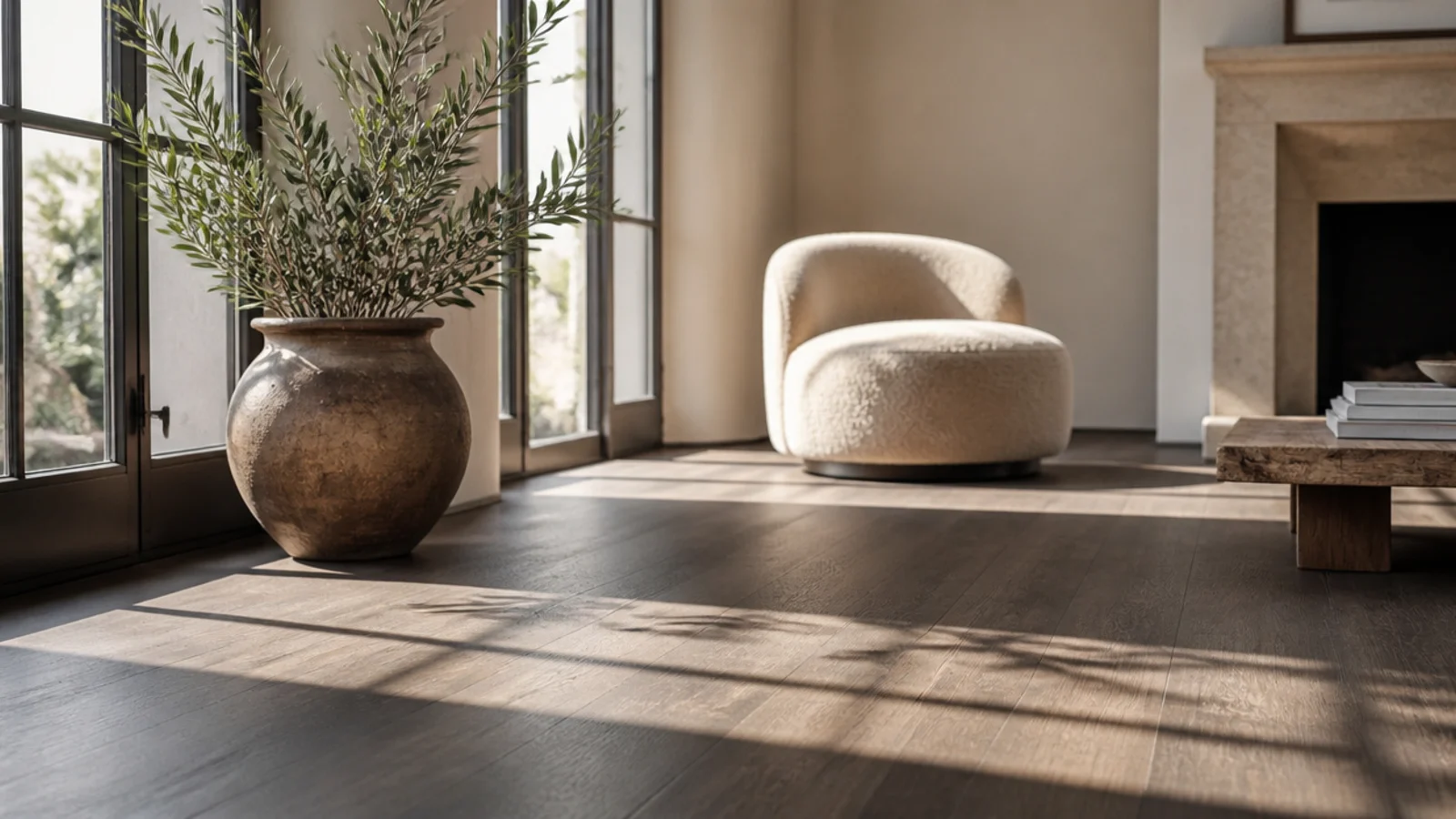
How much direct sun does the room get? Ultraviolet keeps working on the wood beneath a stain. In a south-facing bay I have seen a visible tone shift within two summers, and the strip nearest the glass is always the giveaway.
What white is going on the walls? Grey floors supply the cool note already. Pair them with a blue-based brilliant white and the room reads institutional. Warm off-whites and soft clays are what keep them liveable.
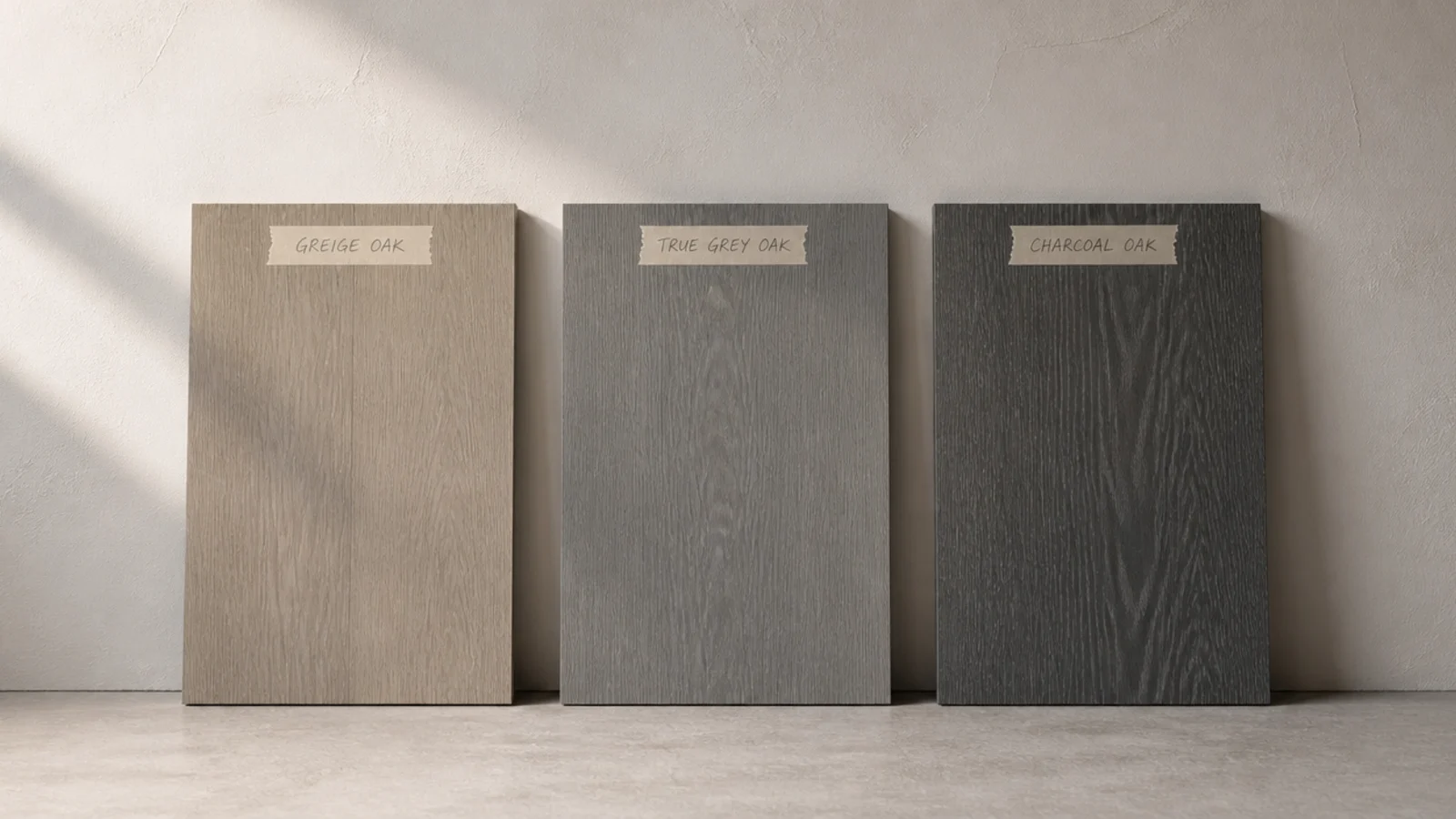
Is it actually greige? Nine times out of ten what people want is grey over a warm brown base, not true grey. Budget roughly £35 to £75 per square metre for a good fumed or pigmented engineered oak. If the goal is brightness rather than coolness, the light wooden flooring ideas are the better starting point.
1. Fumed oak in a south-facing sitting room
The best grey floor I have specified. Ammonia fuming reacted with the tannin so the greyed brown runs right through the 4mm wear layer. Four years on, in a room that gets six hours of direct sun, the tone has moved perhaps half a shade. A stained floor in that room would have been two-tone by then.
2. The pale grey-washed bedroom that went cold
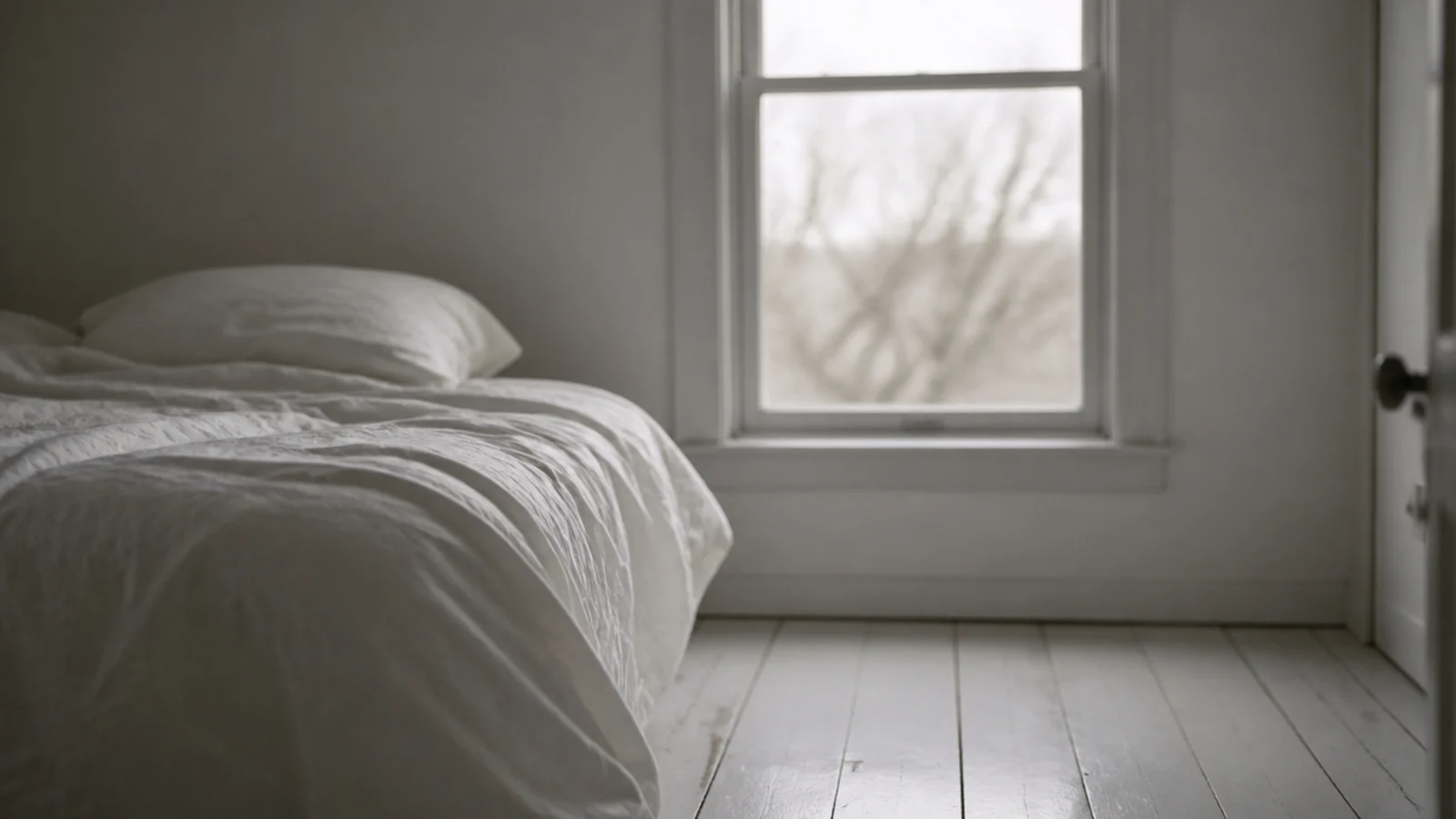
My own, and a mistake. A very pale grey wash in a north-facing bedroom with one window. The room never felt warm at any hour, and no amount of linen and wool fixed it, because the floor was reflecting cool light back up. I relaid it in a natural oiled oak three years later and the room changed completely.
3. Grey-stained pine that wore through in two years
A rental hallway, done on a budget: pine boards, grey stain, two coats of lacquer. By the second winter there was a pale lane down the middle where the stain had gone and the lacquer with it. If you are staining a softwood floor in a traffic route, four coats is the minimum and even then it is a five-year answer, not a fifteen-year one.
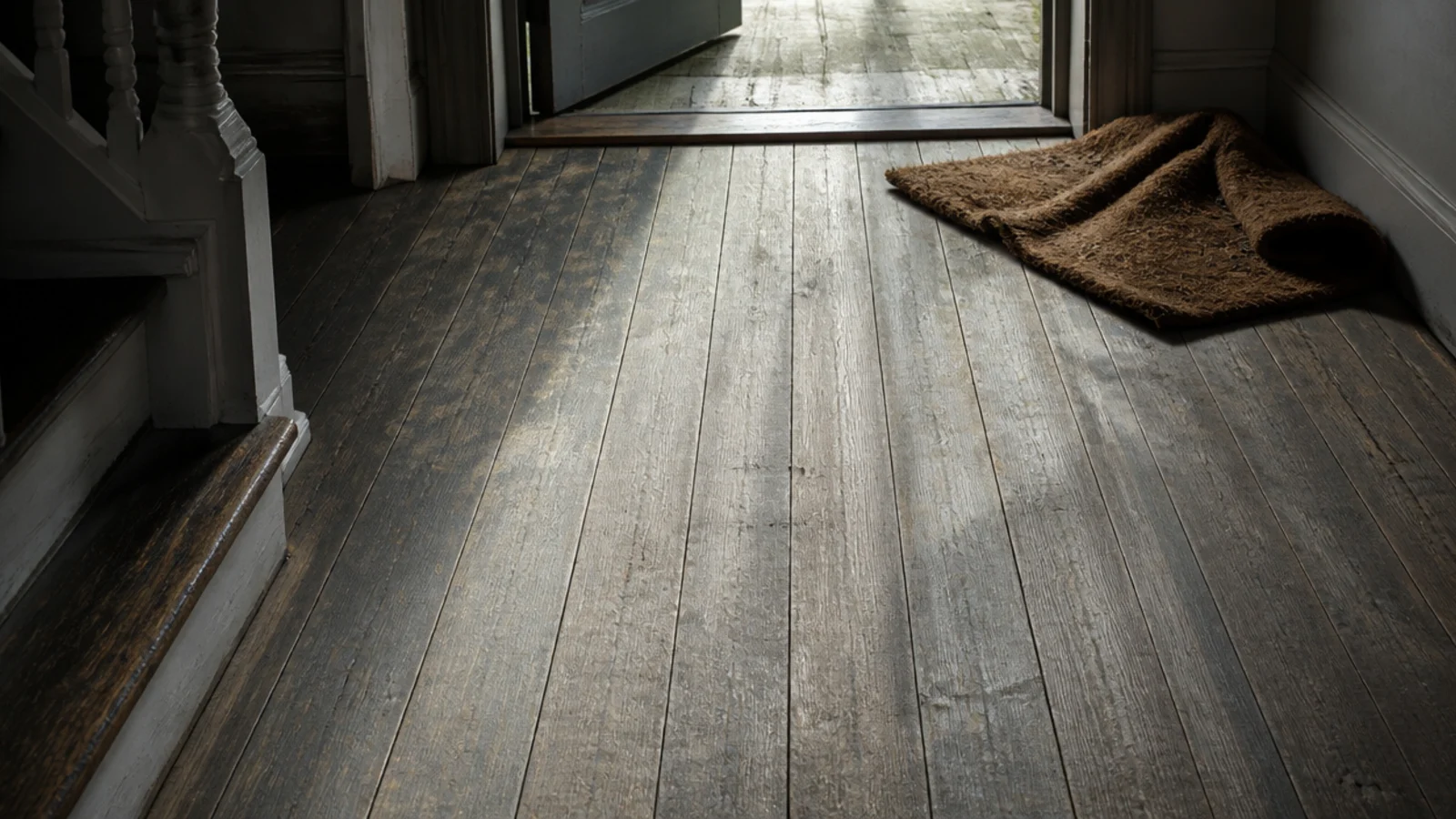
4. Smoked oak warmed by a single wool rug
A client's sitting room where the floor was genuinely cool-toned and the fix was one 240 by 340cm oatmeal wool rug, plus terracotta cushions. The floor still reads grey at the perimeter, where you want it, and the middle of the room is warm. Cheaper than changing a floor, and the effect is immediate.
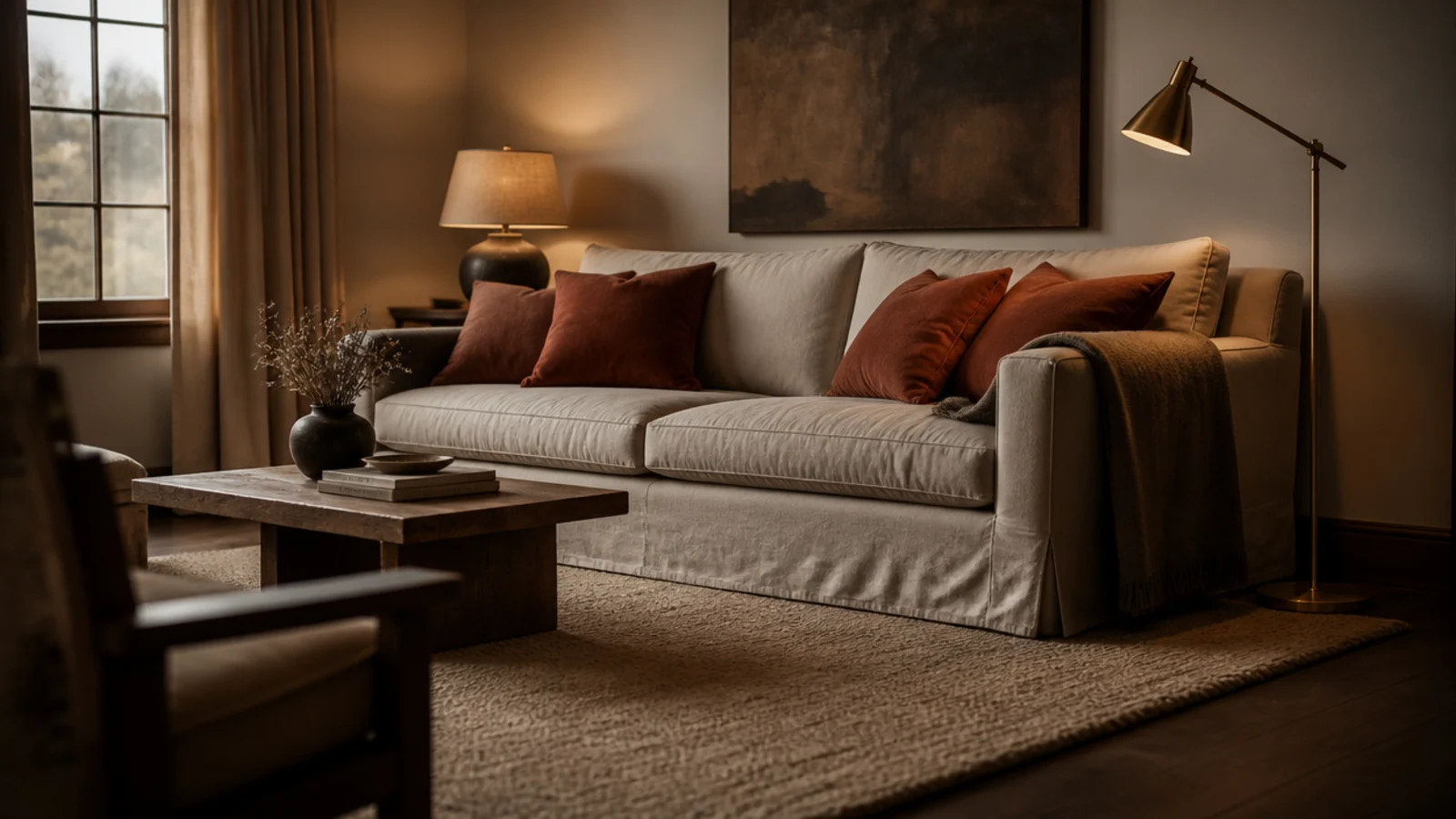
5. Driftwood grey engineered board in a coastal cottage
Weathered grey belongs near the sea in a way it does not in a city flat. This was a brushed engineered oak in a soft driftwood tone against whitewashed walls, and the salt-air light made it look right rather than fashionable. Engineered was essential — the cottage swung between damp winters and dry summers.
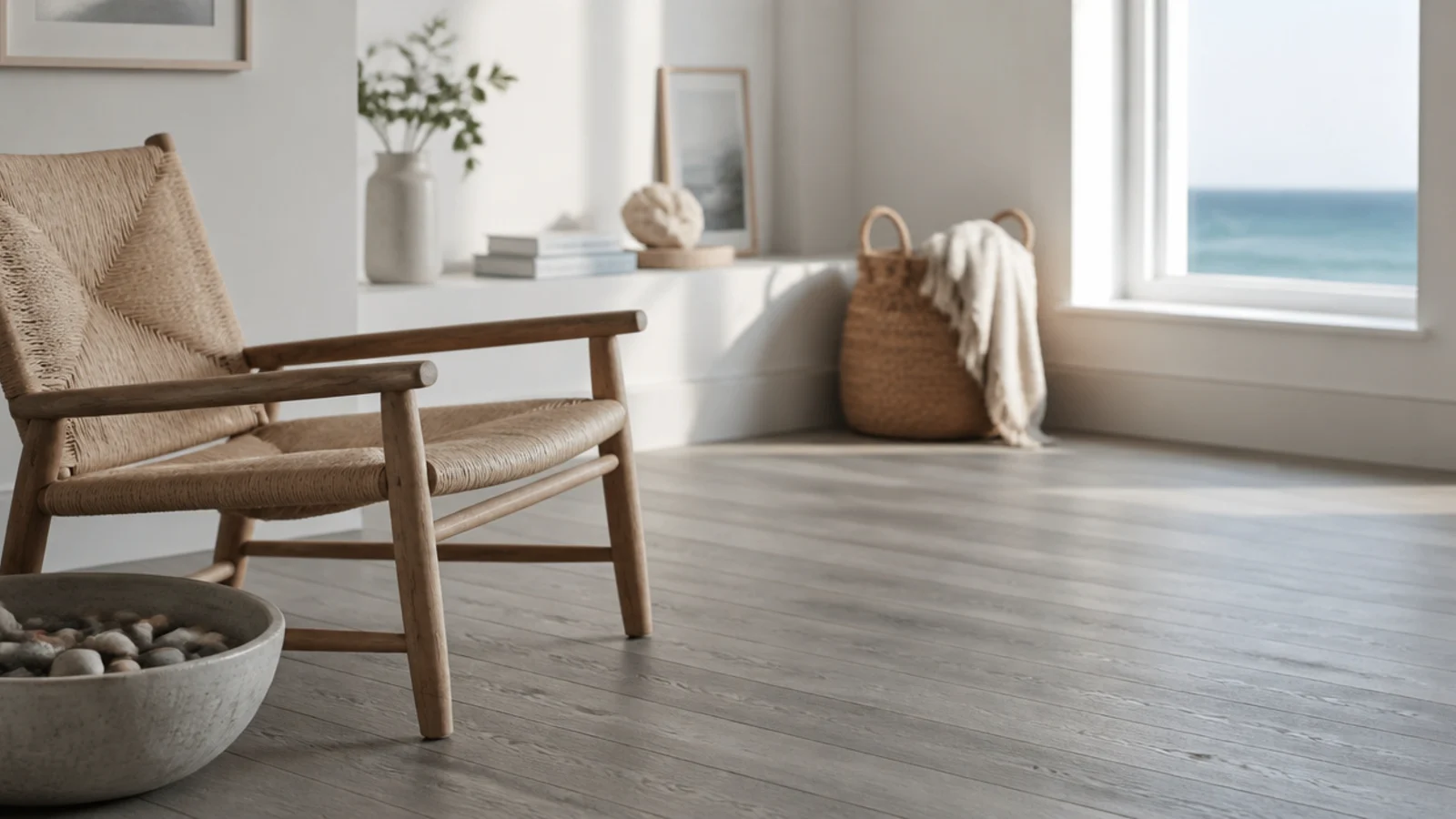
6. Cool grey vinyl plank in a busy kitchen
The most practical grey floor on this list and the one I recommend most. A 20 mil wear layer rigid core plank in a mid grey, clicked over a levelled slab. Mid grey sits between the pale dust and the dark crumbs, so it hides both. The kitchen has since survived a dishwasher leak with no damage at all.
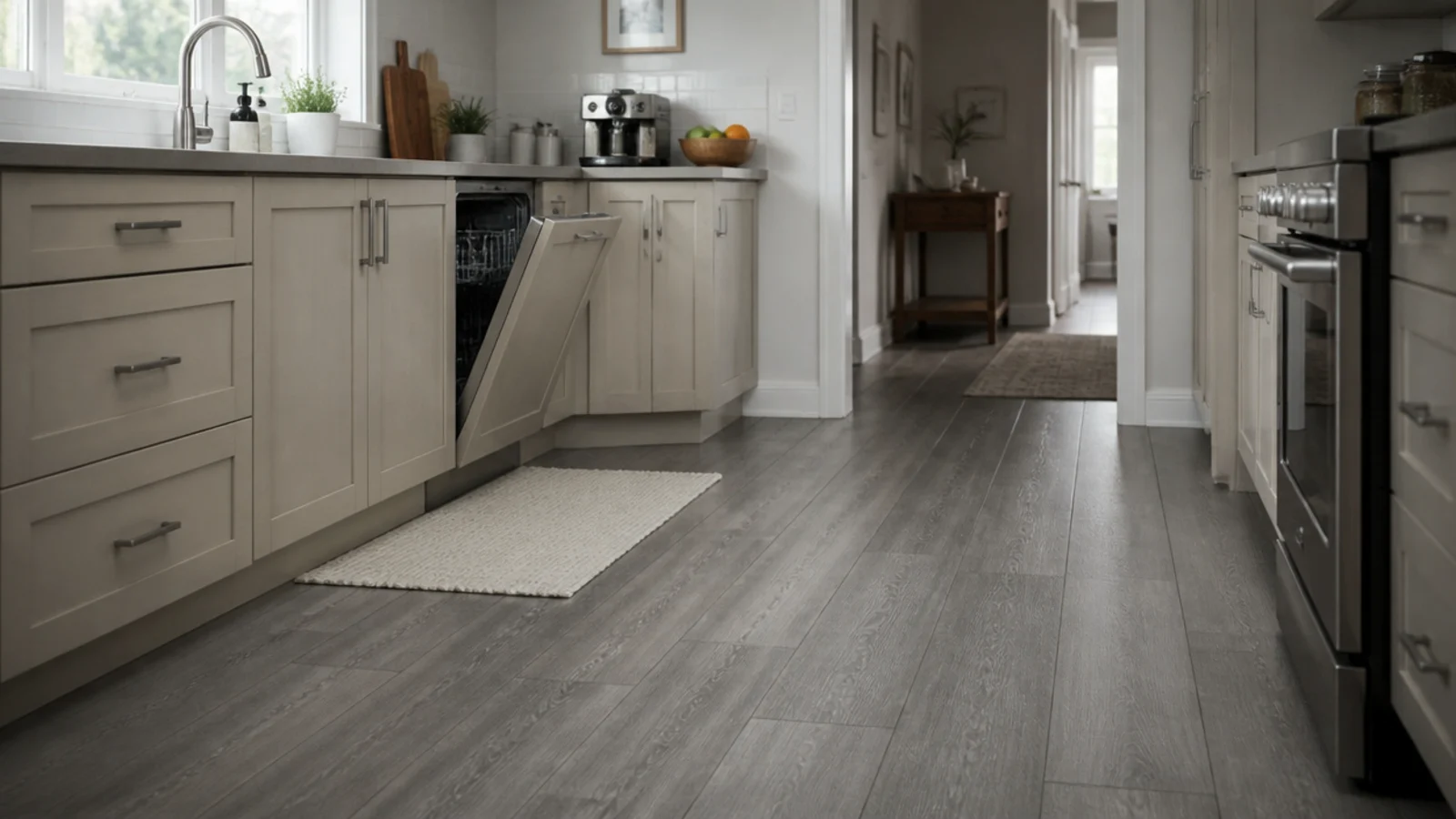
7. Grey herringbone in a two metre hallway
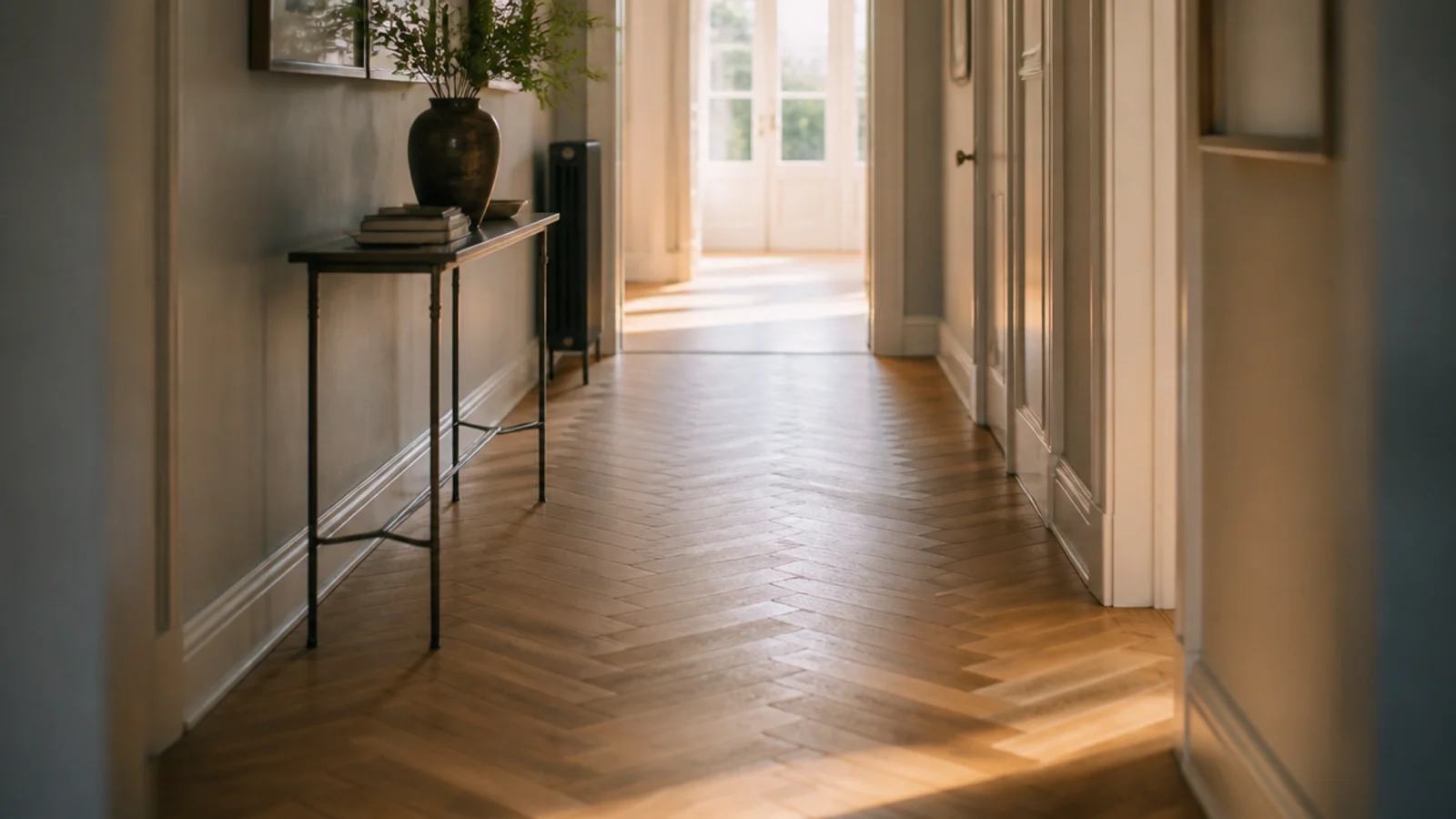
Small hallway, small blocks: 70 by 280mm in a soft grey oak. The pattern repeats enough times across two metres to read properly, which longer blocks would not have done. Fitting cost about double a straight lay, but the hall is four square metres, so double was not much money.
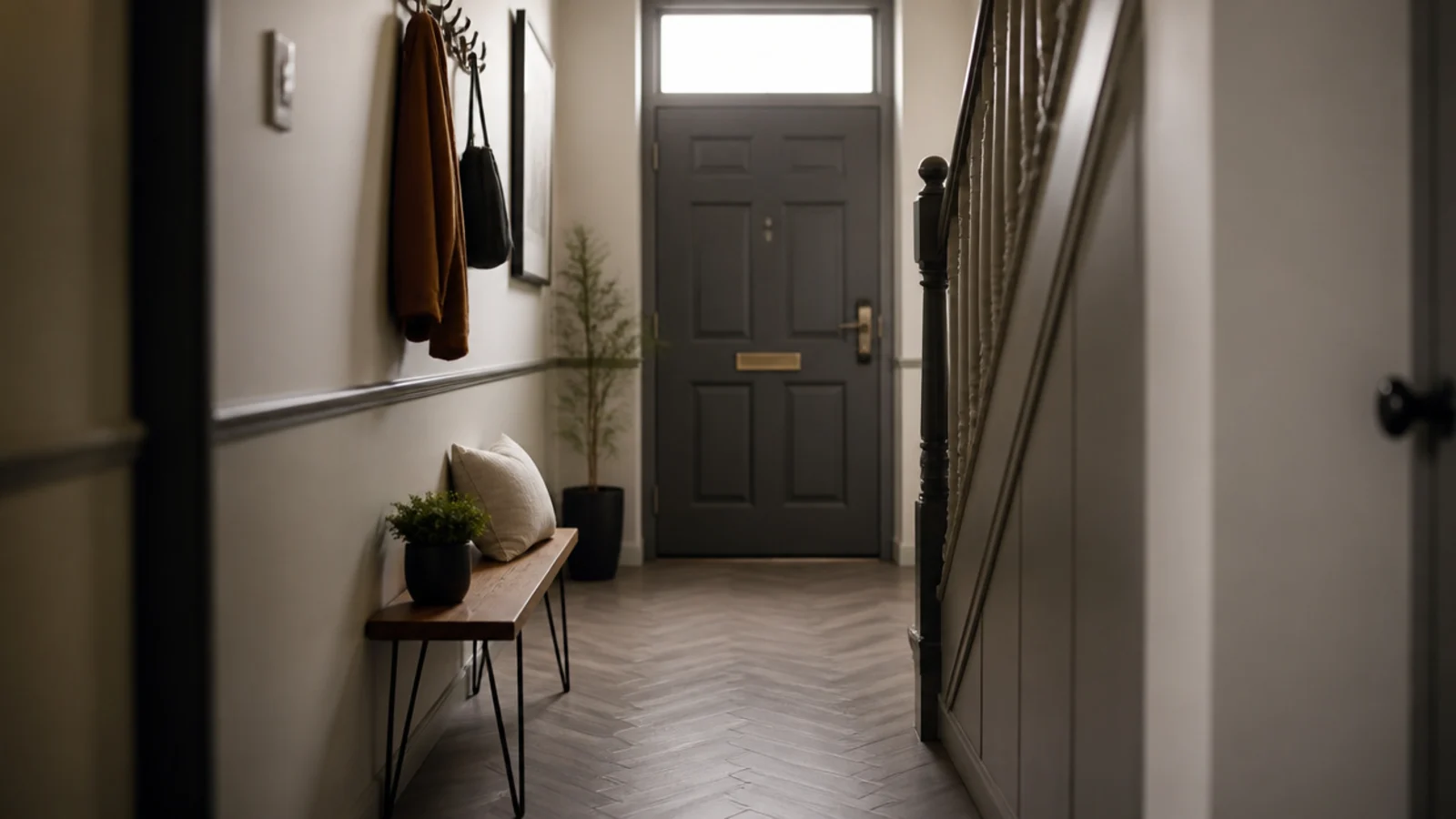
8. Reactive stain that came out beautifully uneven
Reactive stains work on the tannin, and tannin varies board to board. The client was nervous about the samples and delighted with the floor, because the cloudy variation reads as age rather than error. Test three boards from three packs before committing — the range between them is genuinely wide.
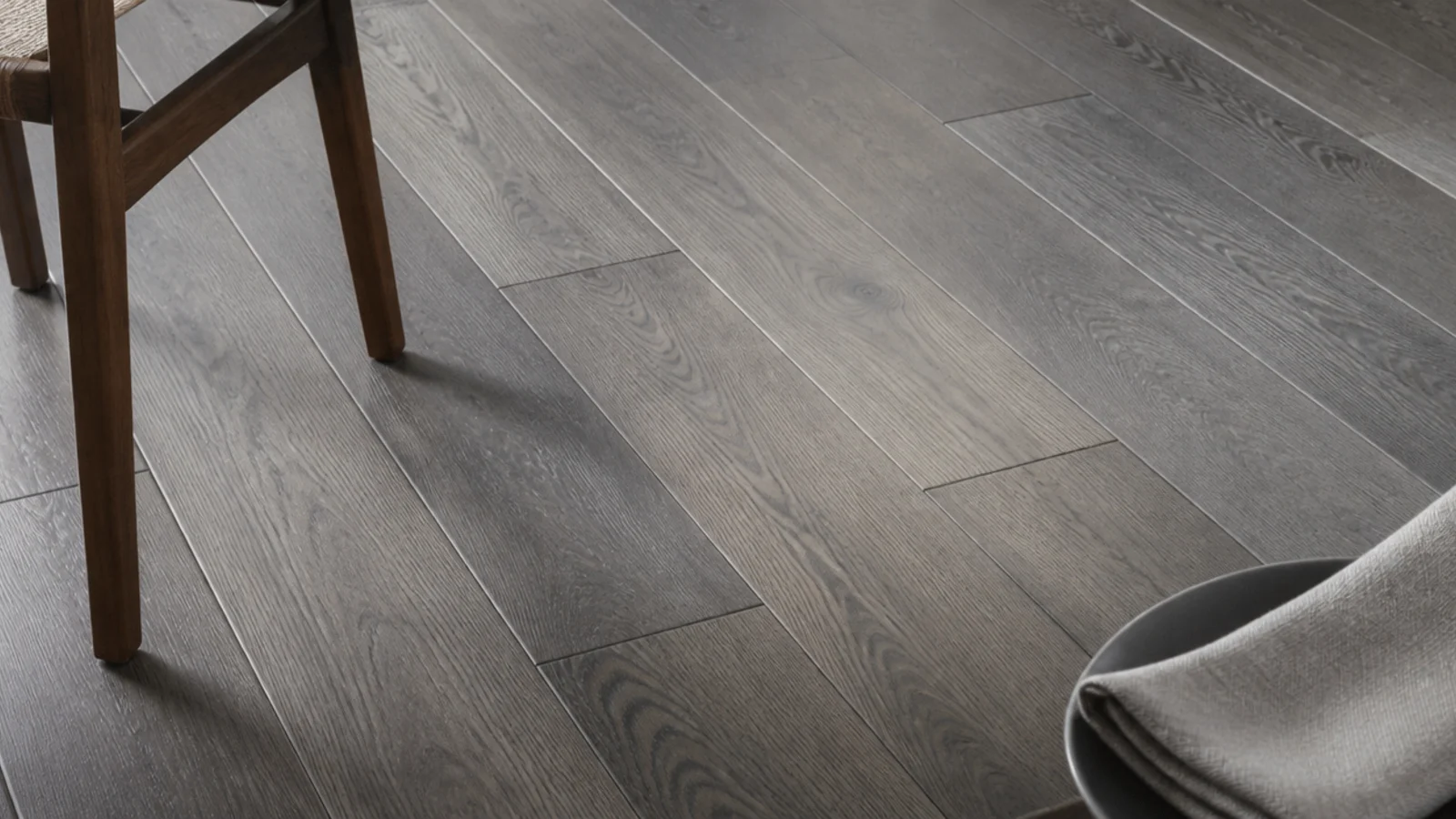
9. Limed grey with the grain left pale
Liming pushes white pigment into the open pores over a grey base, so you get pale lines running through the tone. It stops flat grey looking like paint, and it works best on brushed oak where the pores are open enough to hold pigment. On maple it barely registers.
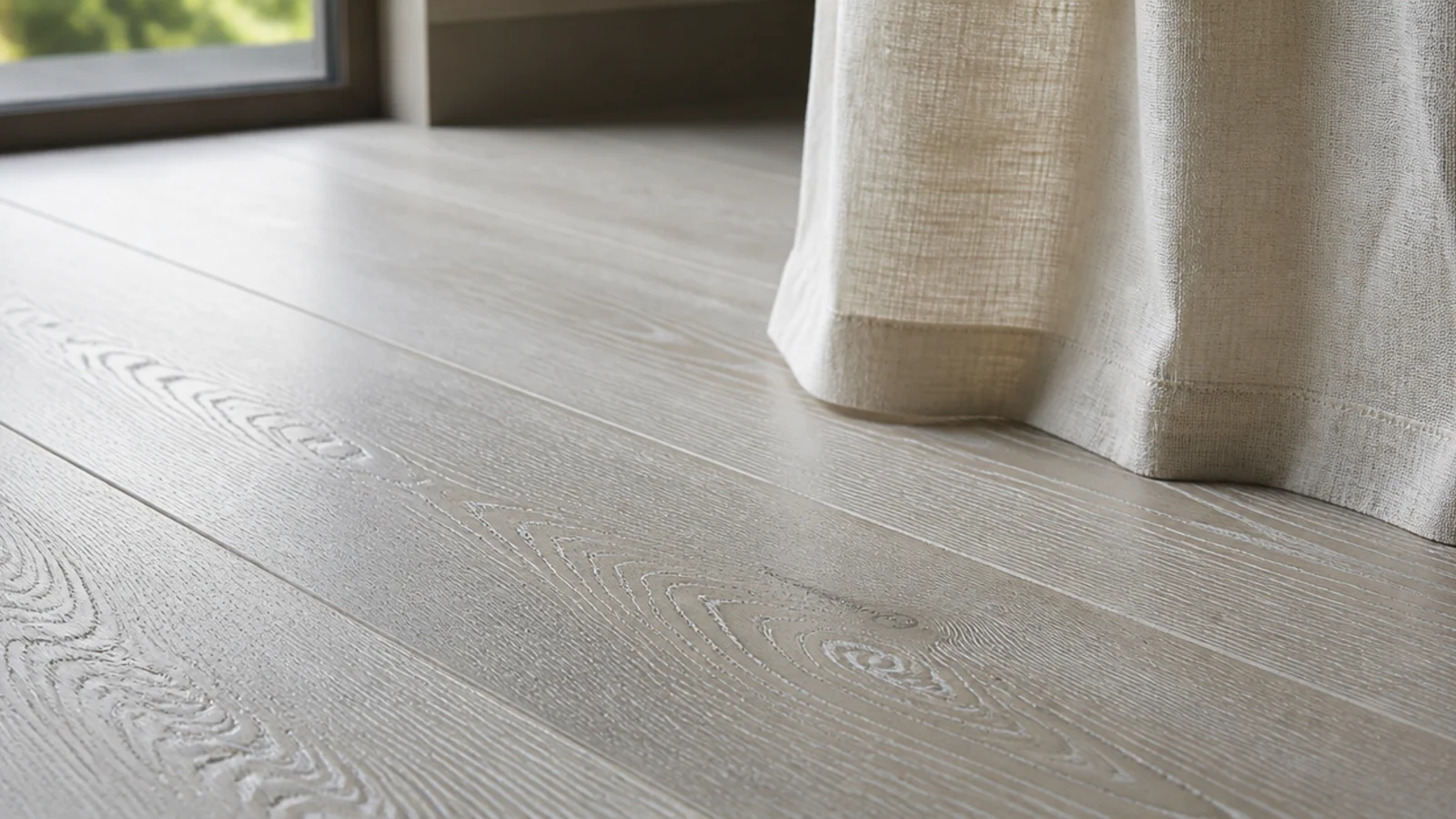
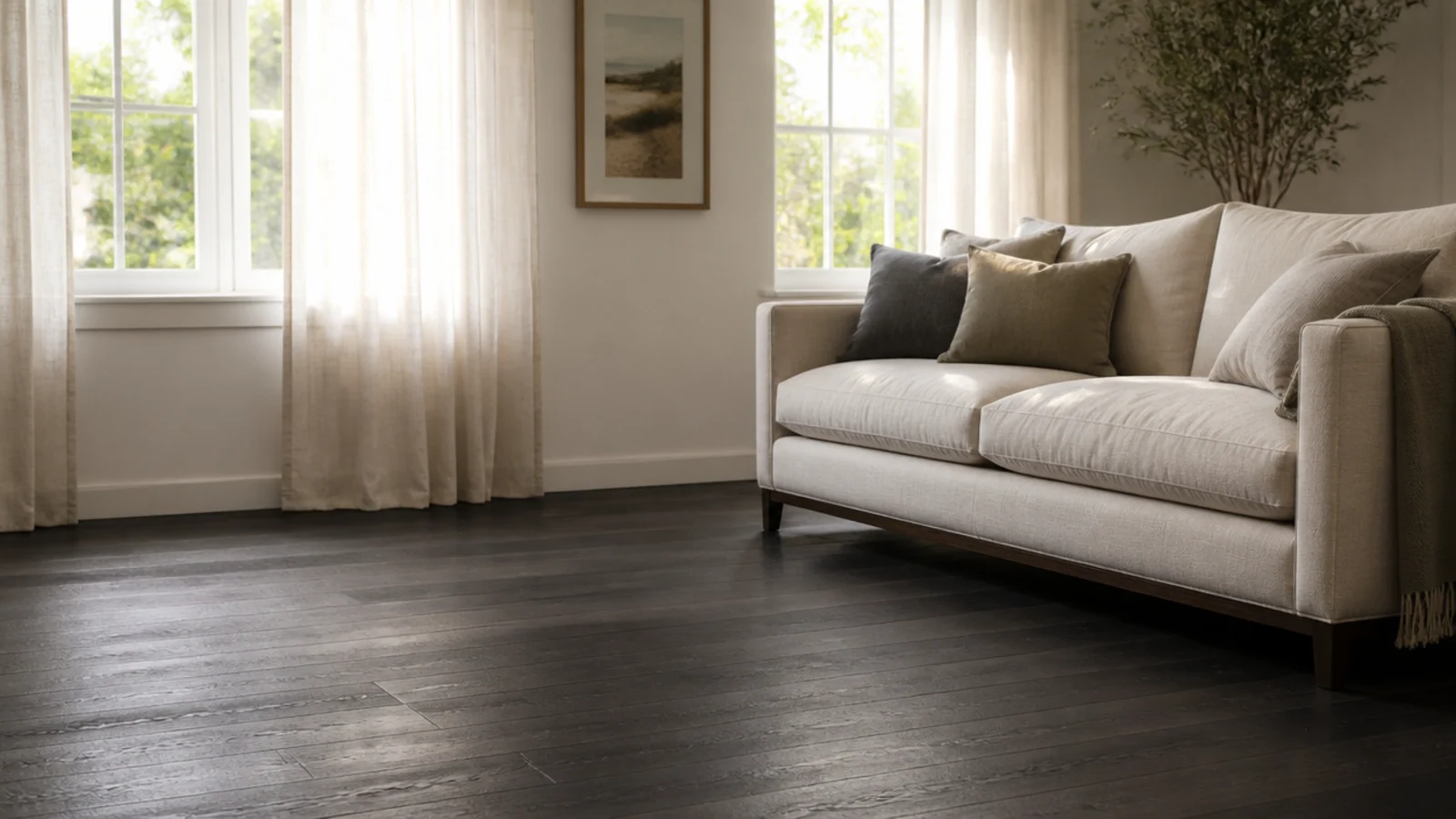
10. Charcoal boards in a room with windows on two sides
Charcoal is the most dramatic version and the least forgiving. This room had windows on two walls, pale curtains and a cream sofa, and the floor read as depth rather than gloom. In a single-aspect room, the same board would have swallowed the space and shown every crumb.
11. Greige, which is what most people actually want
Nine clients out of ten describe grey and choose greige when the samples are on the floor. Grey pigment over a warm brown base keeps the coolness without the chill, and it has aged far better than true grey in every room I have revisited. It also sits comfortably with brown leather, which pure grey does not.
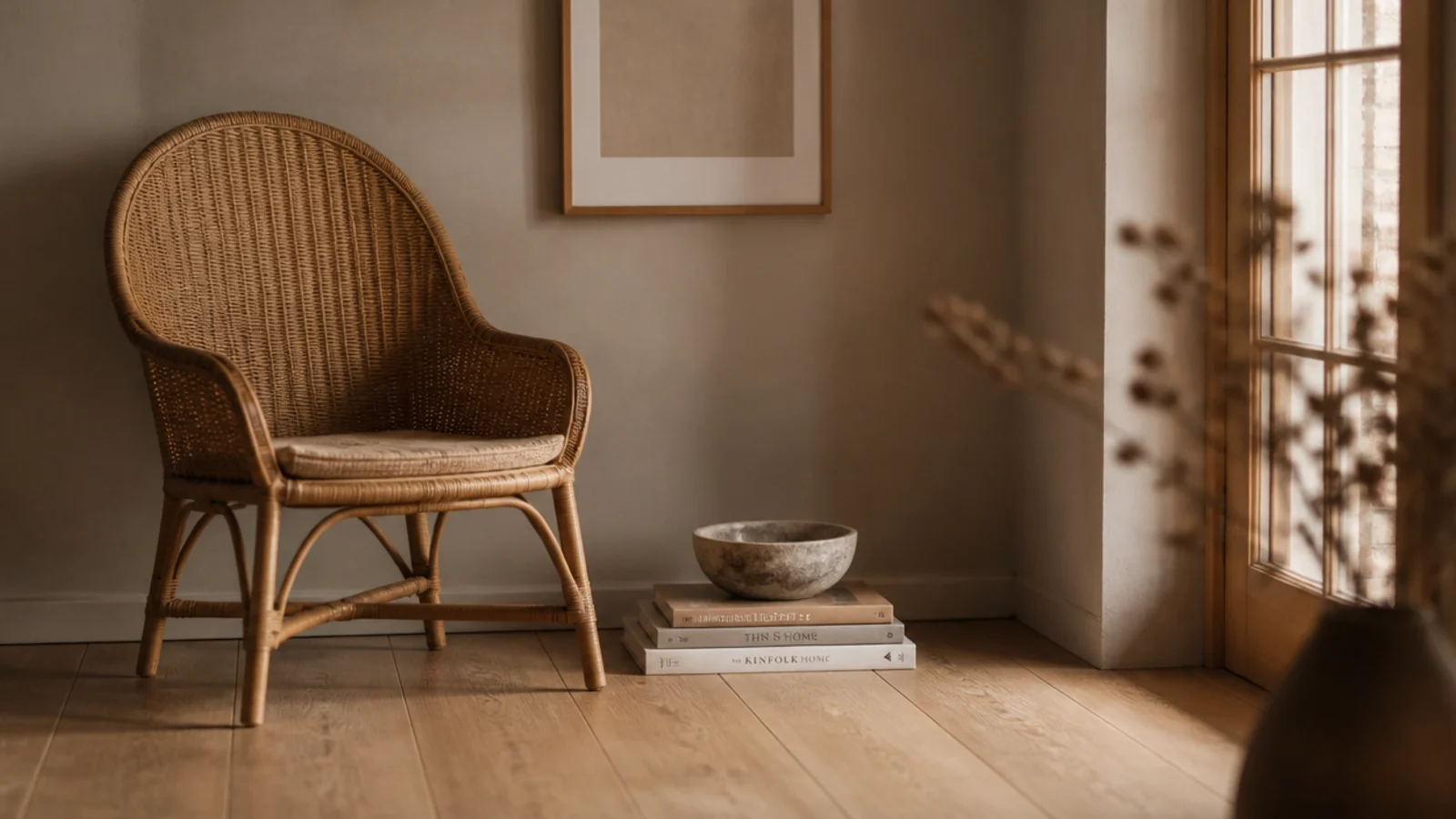
12. Brass hardware instead of chrome above a grey floor
A small change with a big effect. Chrome and brushed steel push a grey floor toward office; brass, bronze and blackened iron pull it back toward home. I now specify the metal finish and the floor together, because the two decide each other more than either decides the walls.
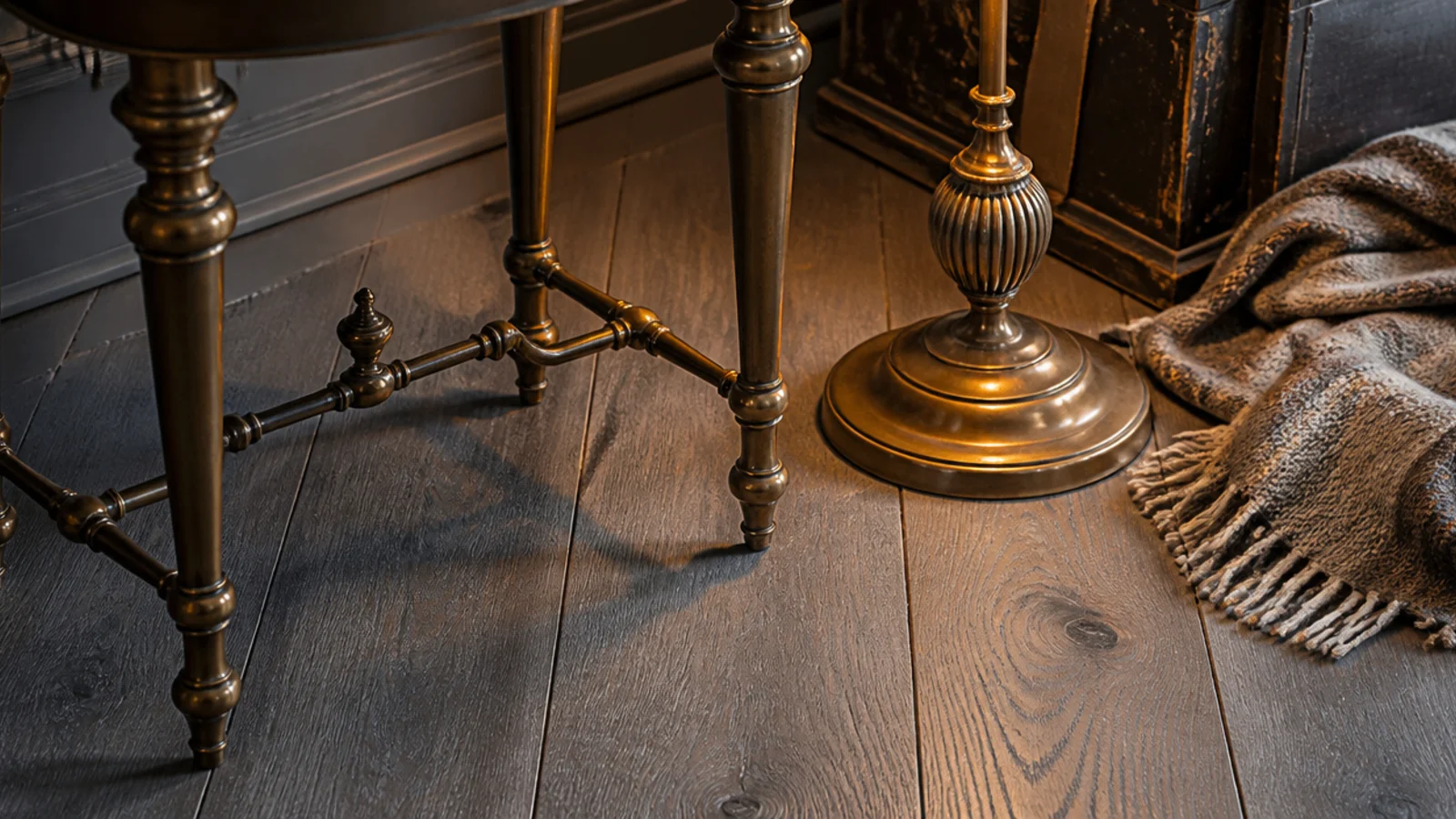
13. Wire-brushed grey with the hard grain left proud
Brushing before pigmenting gives 0.3 to 0.6mm of relief for the colour to sit in, so the grooves read darker and the ridges lighter. The floor gains depth and hides scratches, because a scratch lands in a groove rather than across a flat plane. It is the finish I would choose for a family house.
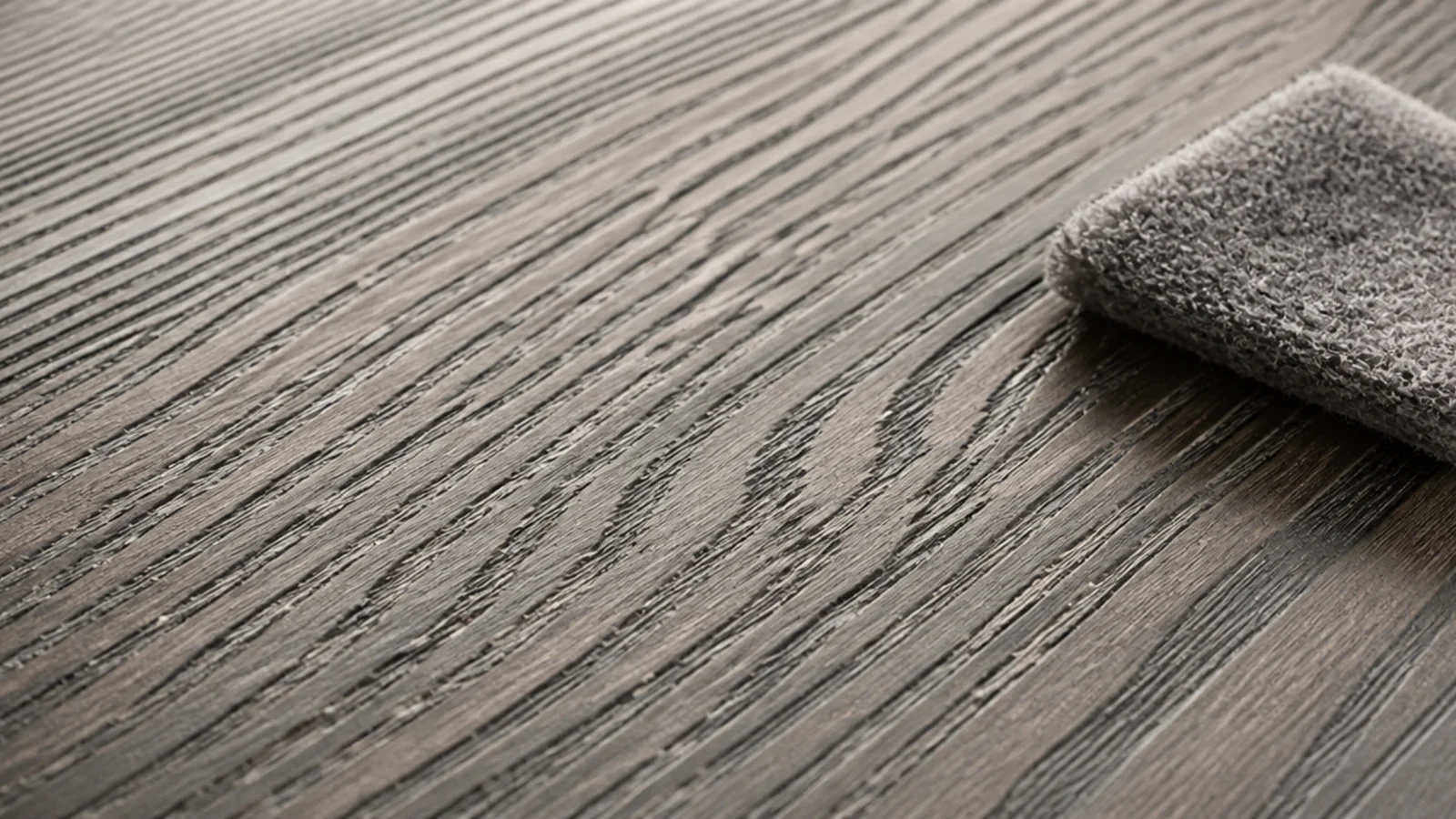
14. Warm white walls, never a cool brilliant white
The single cheapest fix on this list. Grey floors under a blue-based white look like a showroom; under a warm off-white with a hint of yellow or pink they look like a home. If a grey floor already exists and feels cold, repaint before you consider relaying. The bookshelf styling guide is worth a look too, since warm-spined books do a surprising amount of the same work.
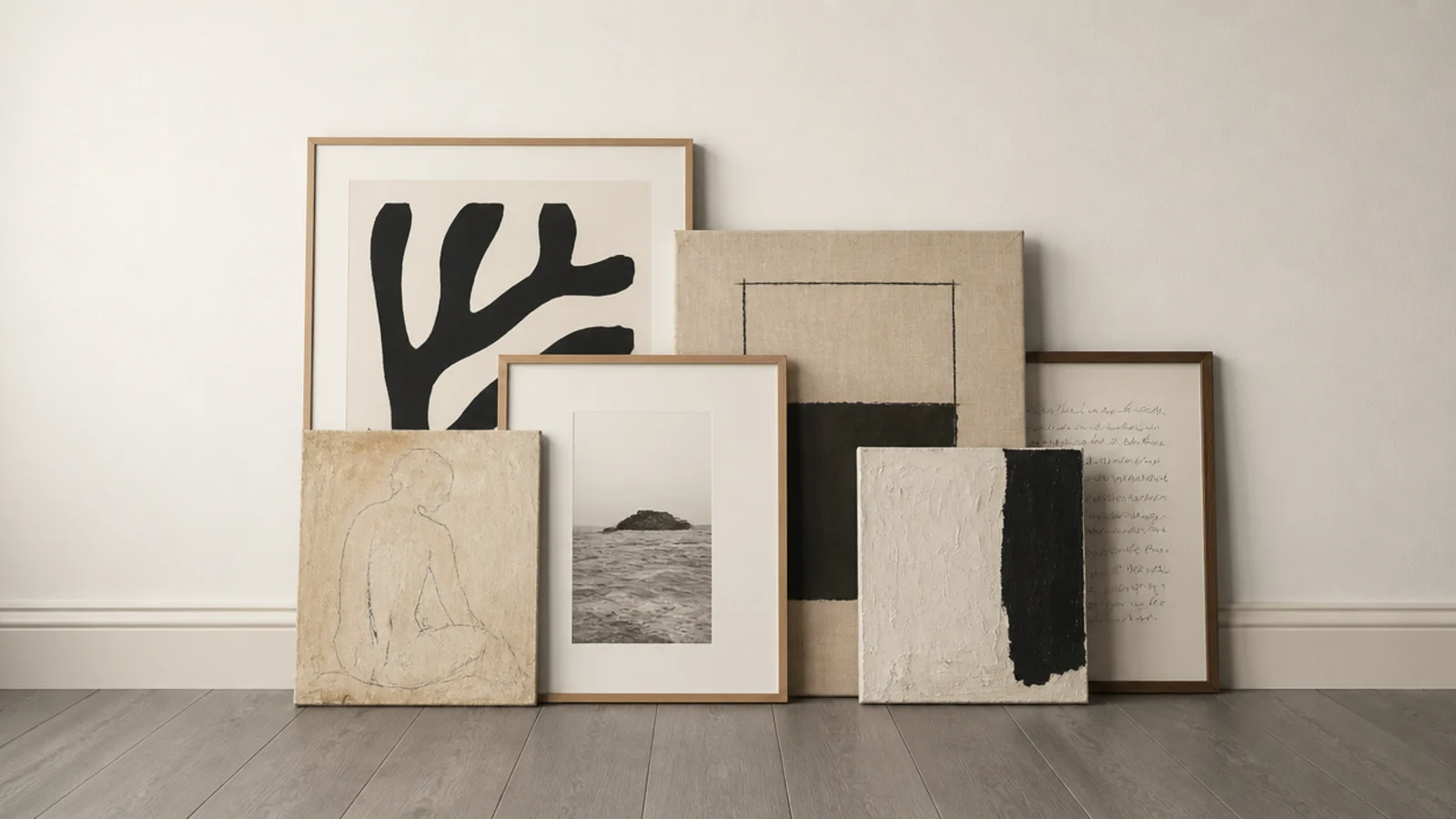
15. Grey engineered board over underfloor heating
Engineered only, thickness around 14 to 15mm, surface temperature capped at 27 degrees Celsius. Grey shows the fine edge gaps that any heated floor develops less than a dark brown does, which is a small practical argument in its favour. Keep rugs thin so you do not trap heat under them.
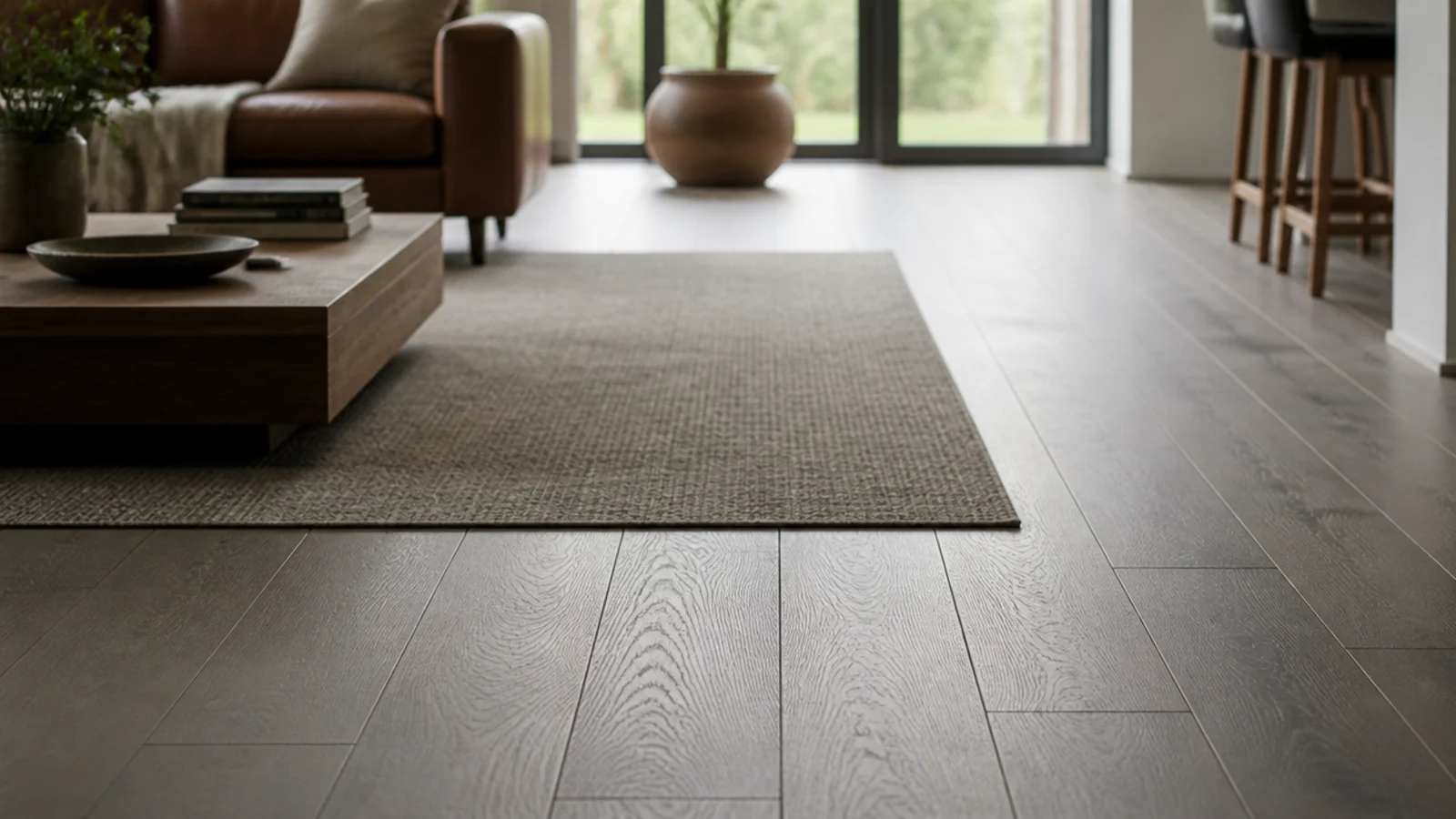
16. Grey floors with black window frames
Black frames and a grey floor give a room a graphic structure that warm timber cannot. It suits new-build extensions and glazed rear walls. The trick is to keep everything between them soft — plaster walls, linen, wool — or the room becomes all edges and no comfort.
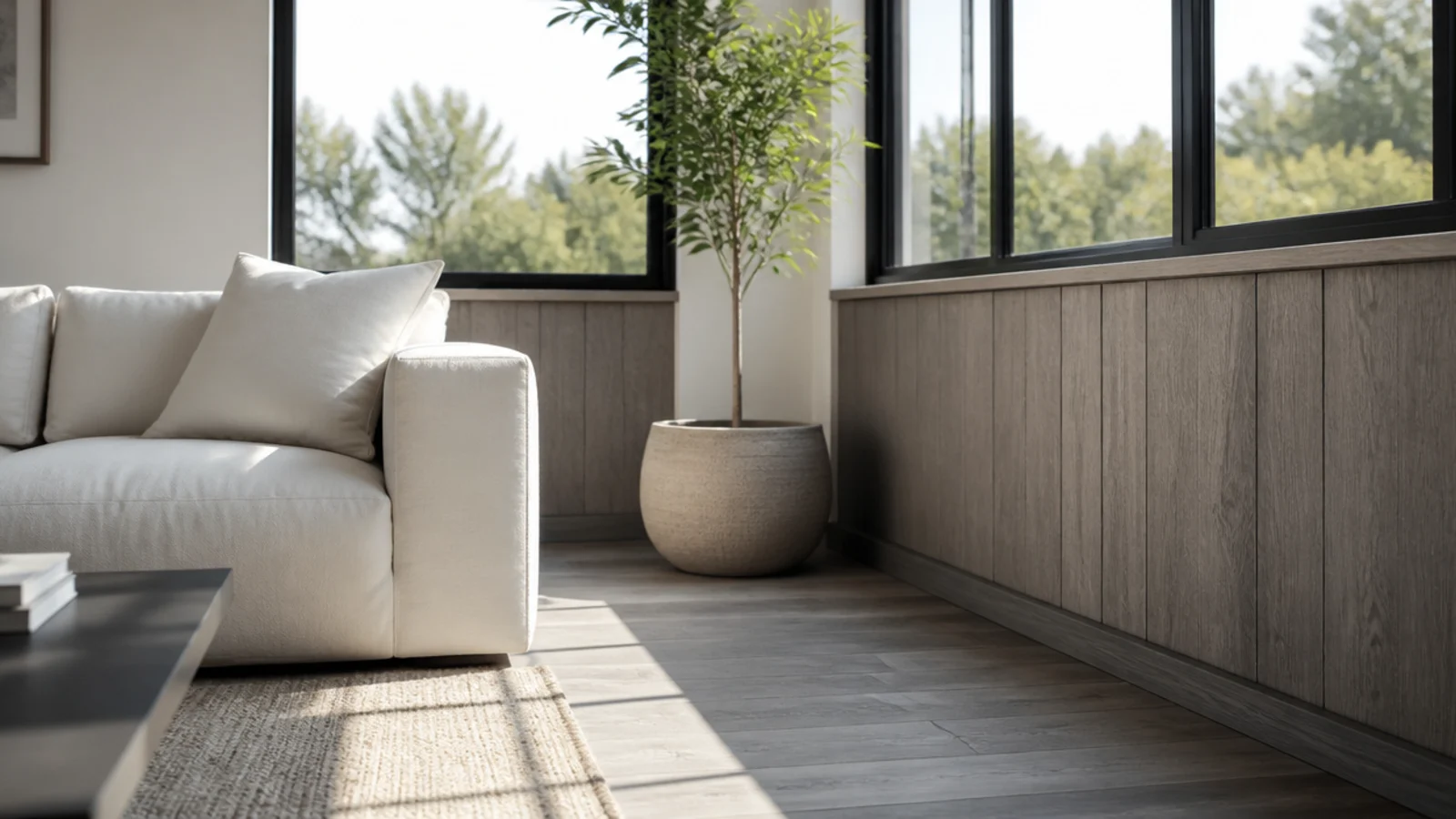
17. The floor that faded in a bay window
A stained grey oak in a south-facing bay, two summers old, visibly lighter in the strip the sun reached. Nothing was defective; ultraviolet simply kept working on the timber under the film. If a room has an unshaded bay, choose a fumed or through-coloured board, or accept that furniture will need moving to even the tone.
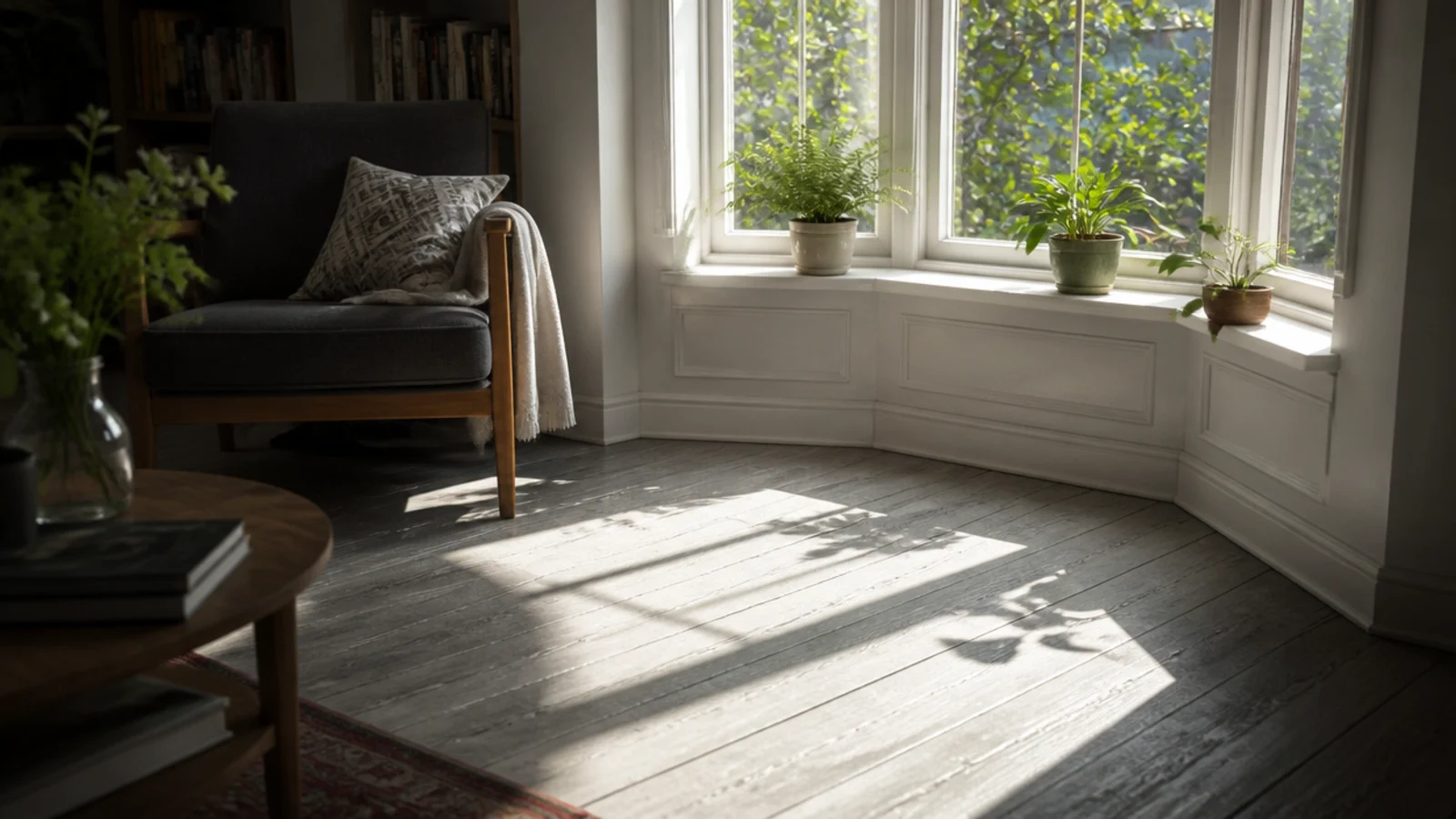
18. Grey plank in a utility with a floor drain
A rigid core grey plank, perimeter sealed with a flexible bead, laid with a slight fall to a drain beside the washing machine. Two years and one burst hose later it is unchanged. This is the room where grey wood-effect flooring is not a compromise but simply the right specification.
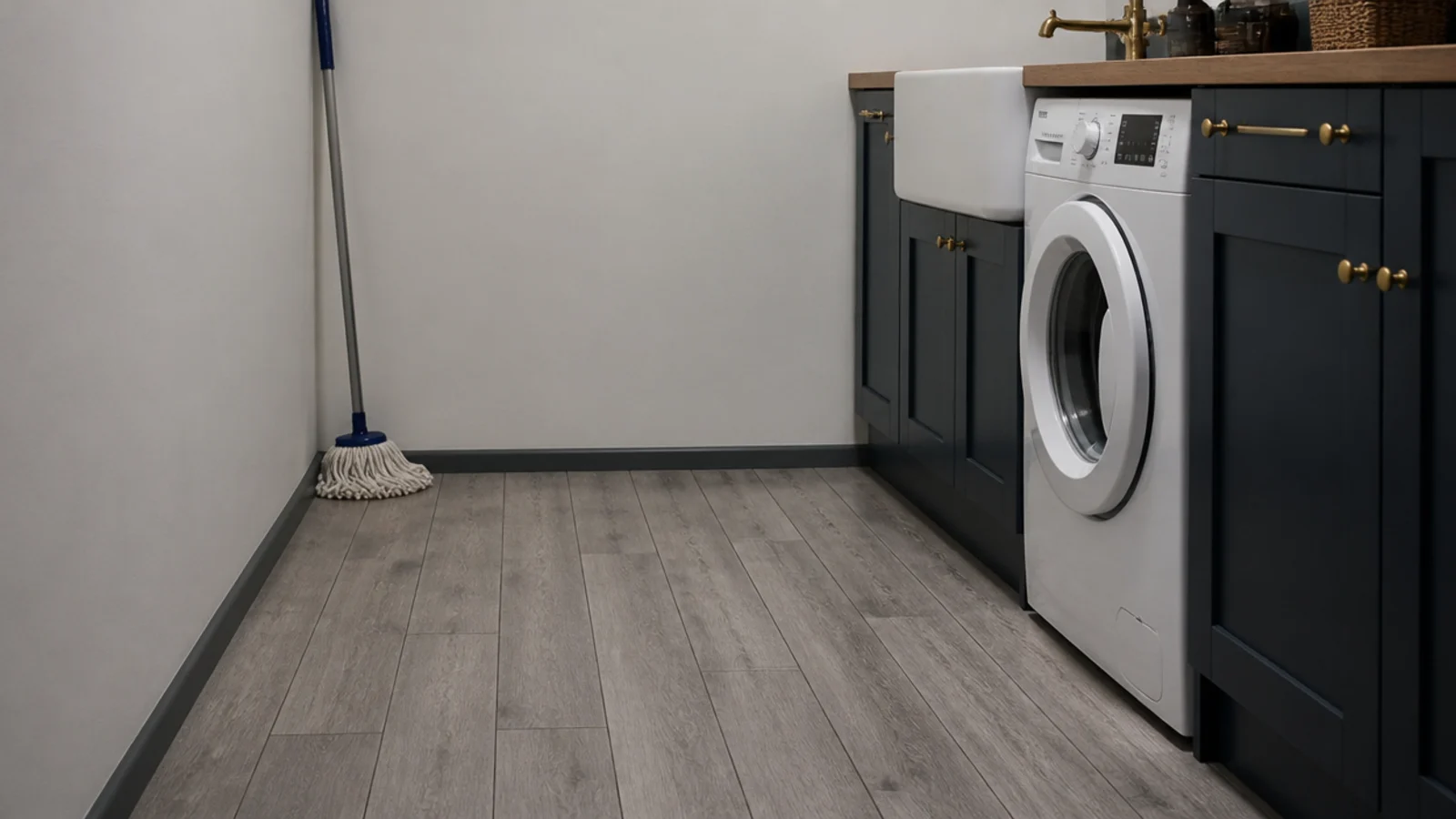
19. Grey oak against deep green cabinetry
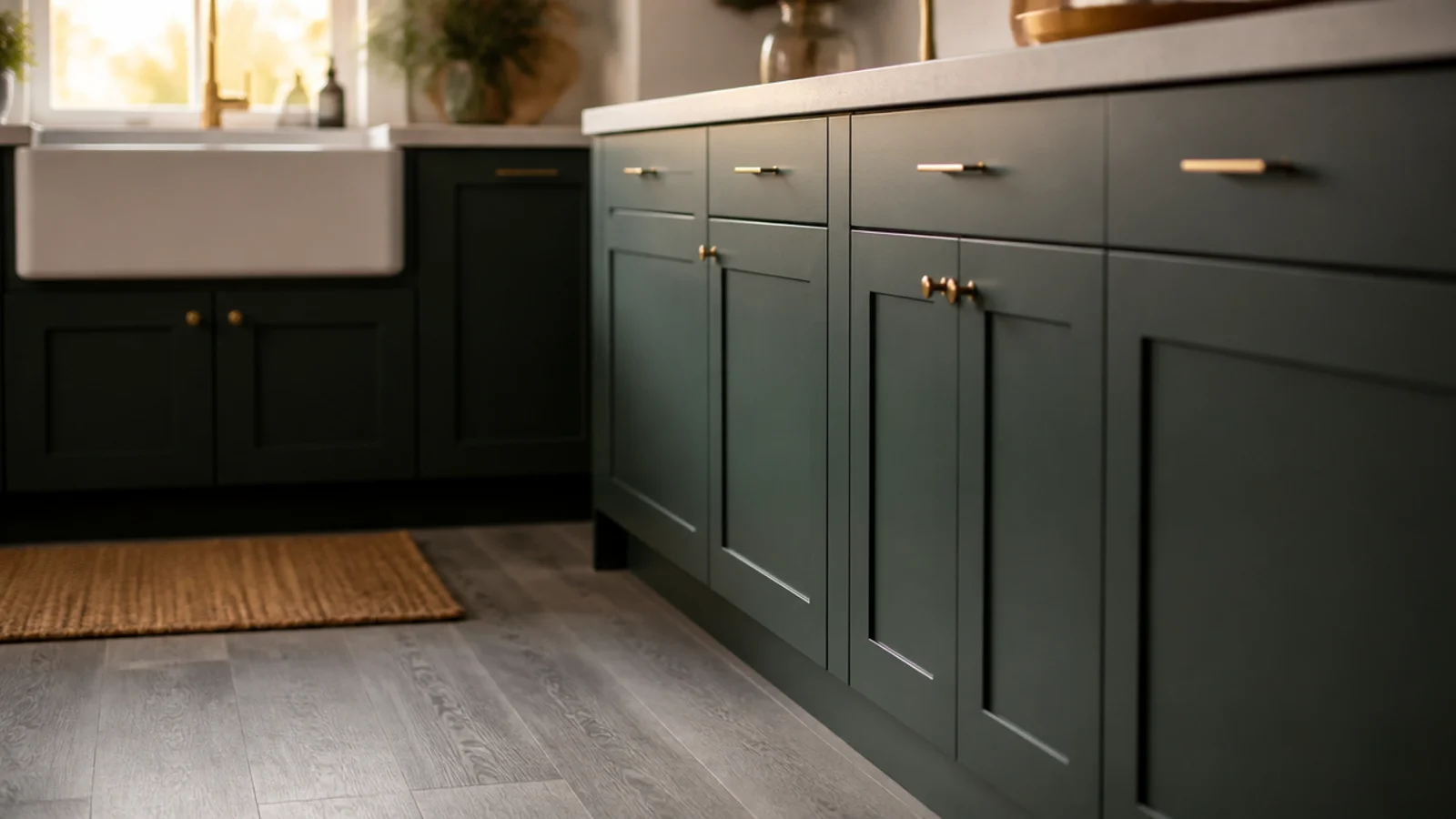
Deep green kitchen units above a grey oak floor is the pairing I have repeated most. Green carries enough yellow to warm the grey without fighting it, and brass handles finish the argument. If the cabinetry is white or pale grey, the room needs its warmth from timber worktops or open shelving instead.
20. The room where I would choose brown instead
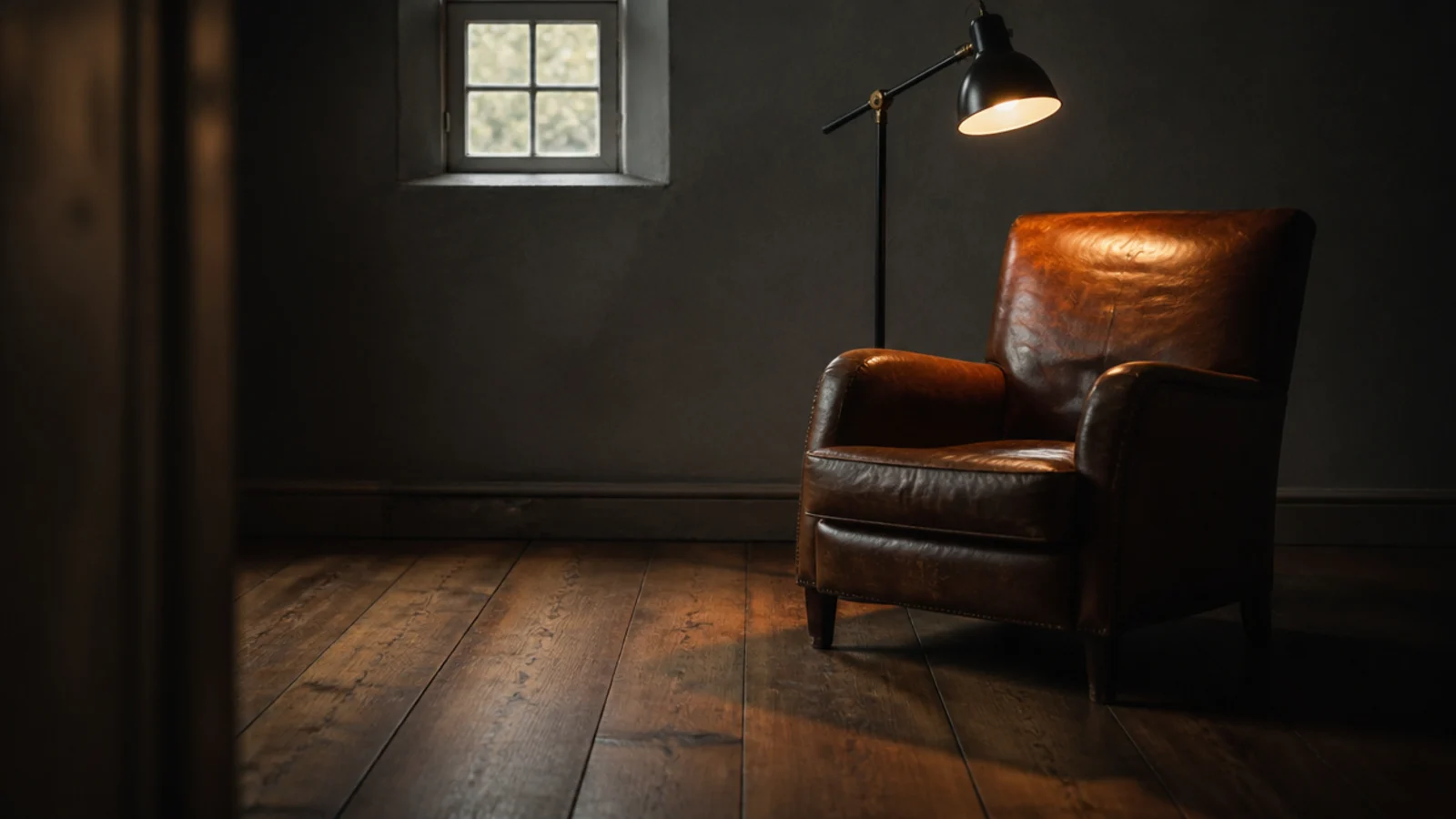
A small snug with one small window and a leather chair. The client wanted grey; I laid a warm brown oak sample down and they changed their mind in the room. Dim spaces need their warmth from somewhere, and the floor is usually the largest surface available to supply it.
What I'd Do Differently Now
I would stop quoting stained floors in traffic routes altogether. Every grey floor I have seen fail was a film of colour over pale timber, and every one that held up had the tone developed in the wood — fumed, smoked, reactive or a pigmented hardwax oil sitting in brushed grain. The price difference is roughly 15 to 25 percent, and it decides whether the floor lasts three years or fifteen.
I would also test in the actual room for a full week rather than a day. Grey is the tone most affected by the light around it: the same board reads warm at 4pm in a west-facing room and clinical at 9am in a north one. I now leave three samples on the floor, unwrapped, and ask people to look at them at breakfast and again in the evening.
The other thing I would change is the order of decisions. I used to pick the floor and then the walls. Now I choose the white first, because a warm off-white makes almost any grey work and a cool white ruins most of them.
If you want the pattern side of this rather than the colour side, the wooden flooring living room setups show how these floors behave under real furniture, and centre table proportions matter more on grey than on brown, because a cool floor shows an undersized table immediately.
Frequently asked questions
Does grey wood flooring go out of style?
True cool grey dates faster than any other floor tone because it belongs to a specific decade of interiors. Greige and smoked oak, where the grey sits over a warm brown base, have aged far better in every room I have revisited five or more years later.
Why did my grey floor turn brown or yellow?
Because the grey was a surface stain over oak, and ultraviolet light kept working on the timber underneath. Direct sun through an uncovered window can shift a stained floor noticeably within two or three summers, most visibly in the strip nearest the glass.
What wall colour works with grey wood floors?
A warm white or a soft clay tone rather than a cool brilliant white. Grey floors already supply the cool note, and pairing them with a blue-based white makes a room read like a waiting area. I use warm off-whites with a hint of yellow or pink in almost every case.
Is grey flooring harder to keep clean?
Mid greys are the most forgiving floor colour there is, because they sit between the pale dust and the dark hair and crumbs that show on extremes. Very pale grey shows dark marks and very dark charcoal shows everything, especially in a matte finish near a door.
Can you get grey without staining the wood?
Yes, and it lasts better. Fuming or smoking reacts with the tannin in oak so the tone develops through the board, and a grey pigmented hardwax oil sits in the brushed grain rather than on the surface. Both survive a scratch far better than a film stain.
Want more like this? Browse all 15 wooden flooring guides — they all use the same measurements and budget tiers.
Pin it for later
Save this to your Wooden Flooring board
Pin it now so it is waiting for you when the tape measure comes out — and so the next person hunting for this idea can find it too.
Save this pinKeep going
More ideas worth saving while you have the tape measure out.