Hanging Lights · Listicle
20 Rustic Hanging Lights That Warm Up A Room

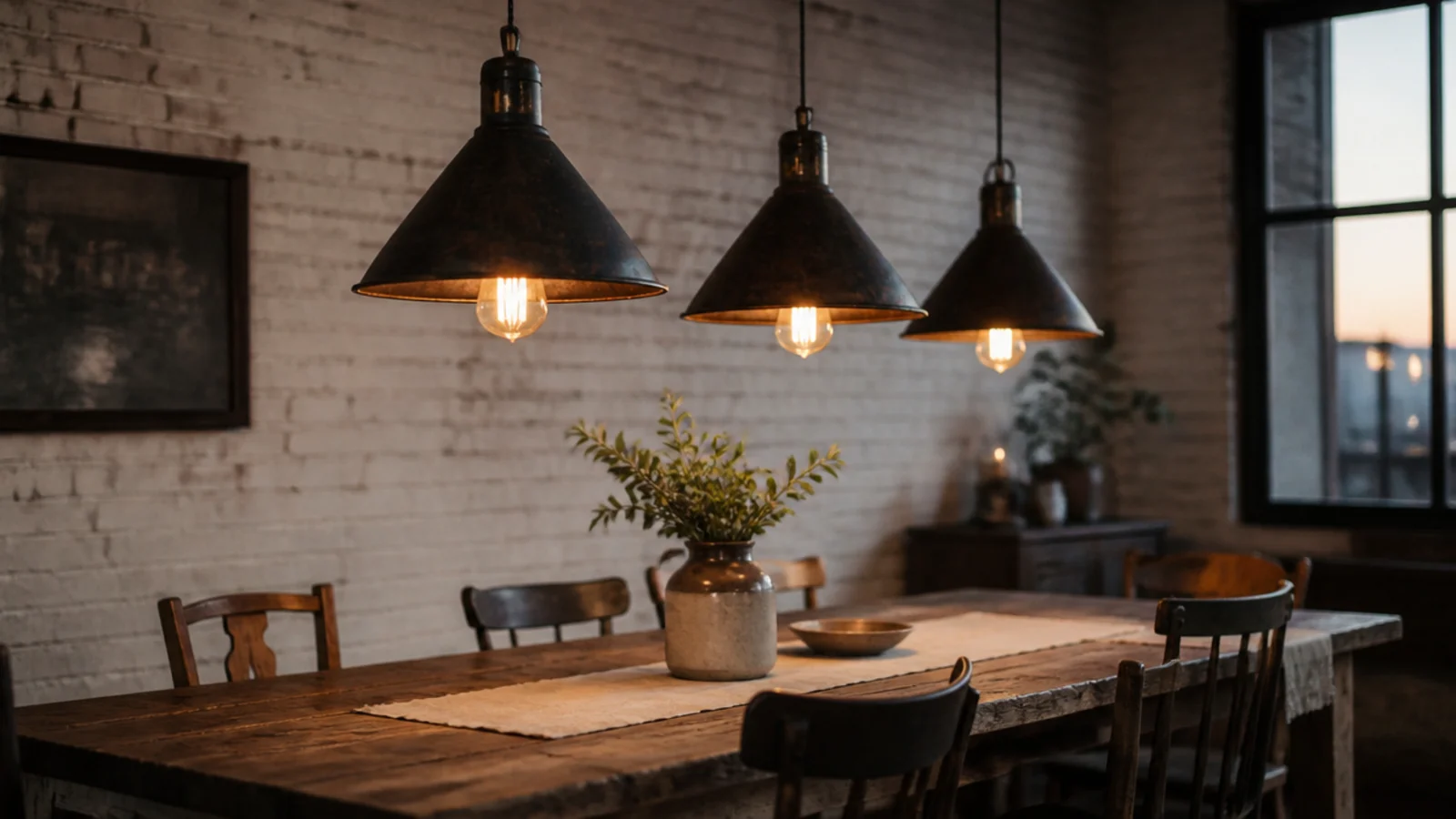
Rustic lighting fails when it tries too hard. A moulded plastic lantern with fake rust reads as a costume from across a room, while a plain enamel shade off a salvage shelf reads as real because it is. The materials that actually warm a space are heavy, honest and usually older than the house they end up in. Rustic hanging lights also weigh two or three times what modern fixtures do, which is where most of the practical trouble comes from. Below are twenty that hold up, with the weights, drops and bulb choices each one needs to look right rather than staged.
In this guide22 sections — tap to openHide
- 1.What rustic hanging lights get right and wrong
- 2.A salvaged enamel factory shade
- 3.A black iron cage with an amber bulb
- 4.A reclaimed beam fixture over a long table
- 5.A rope wrapped cord and a plain shade
- 6.A woven willow basket shade
- 7.A hammered copper dome
- 8.A wheel style fixture over a wide table
- 9.A cluster of glass jar shades
- 10.A forged hook and a length of chain
- 11.A turned wood shade over a work table
- 12.Aged brass with a long filament bulb
- 13.A linen wrapped shade for softer light
- 14.A rise and fall pulley over a farmhouse table
- 15.A galvanised steel cone in a utility space
- 16.Warm 2200 kelvin bulbs for firelight tone
- 17.Chain instead of cord for weight and looks
- 18.A deliberately uneven cluster over a kitchen table
- 19.Rewiring a salvage find properly
- 20.A single big shade in a low beamed room
- 21.The ceiling box under an old plaster rose
- 22.Mistakes to Skip
What rustic hanging lights get right and wrong
Three things separate a genuinely warm fixture from a decorative one.
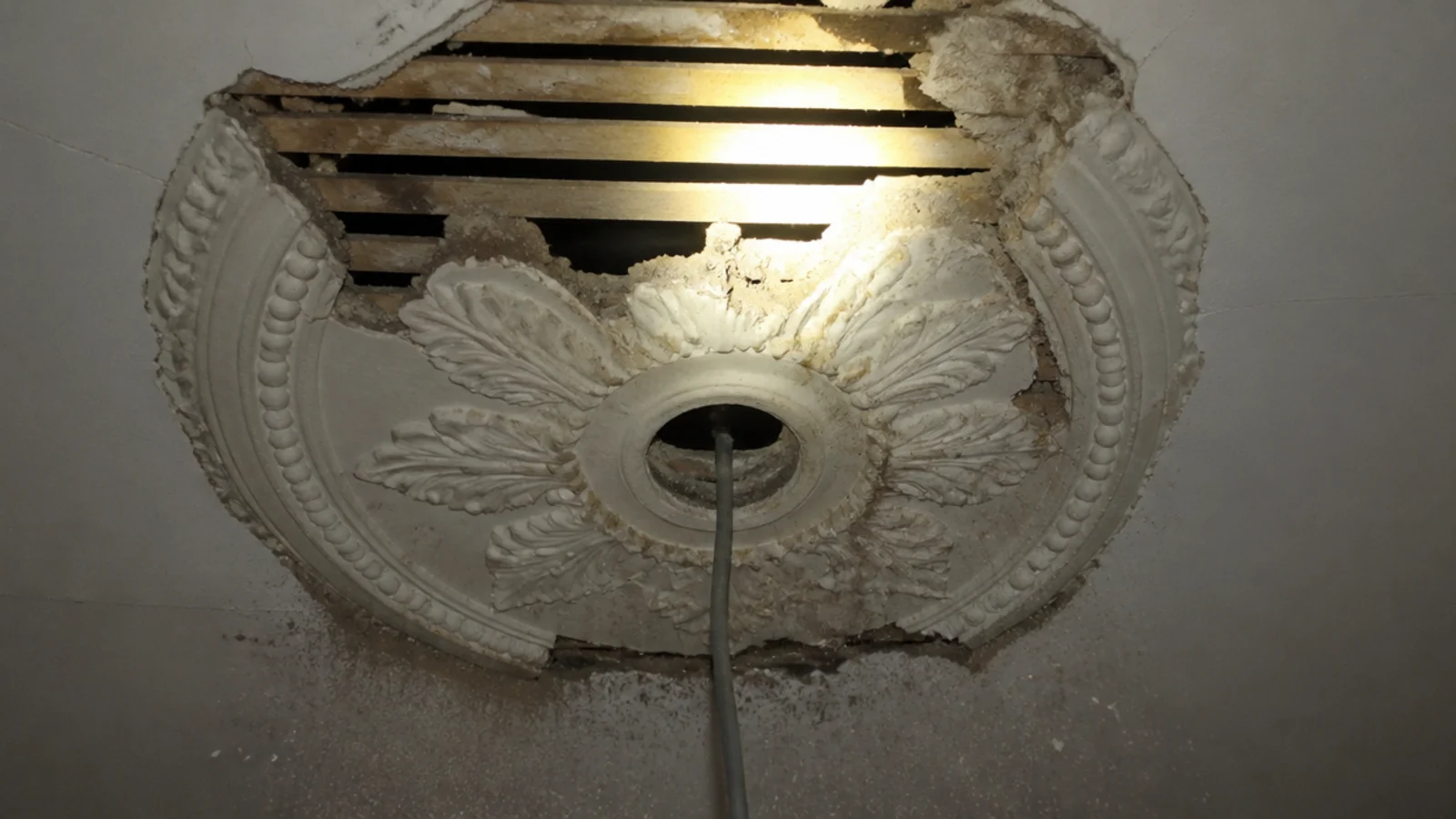
Weight, first. Iron, cast metal and salvaged timber are heavy. A black iron pipe pendant runs 6 to 14 pounds before the shade, a cast cage 8 to 20, and a reclaimed beam fixture 20 to 40. A rated ceiling box carries the fixture weight — standard lighting boxes are listed for 50 pounds — and an old plaster rose is decoration, not a fixing. Weigh anything cast or salvaged on a kitchen scale before ordering.
Bulbs, second. Rustic shades are usually open, dark or both, so the bulb is visible and the light is dim. Use 2200K to 2700K, dimmable, at 300 to 600 lumens. Filament-style LEDs give the look of an old bulb at a fraction of the heat, at $8 to $18 each.
Honesty, third. Buy shapes that had a job — factory shades, cages, cones, jars, pulleys. Skip anything with moulded detailing pretending to be forged.
Drops are the same as everywhere else: 30 to 34 inches above a table, 30 to 36 above a counter, 7 feet in a walkway. Salvage shades cost $20 to $80, rewiring parts about $15, and the connection itself is an electrician's job in most jurisdictions.
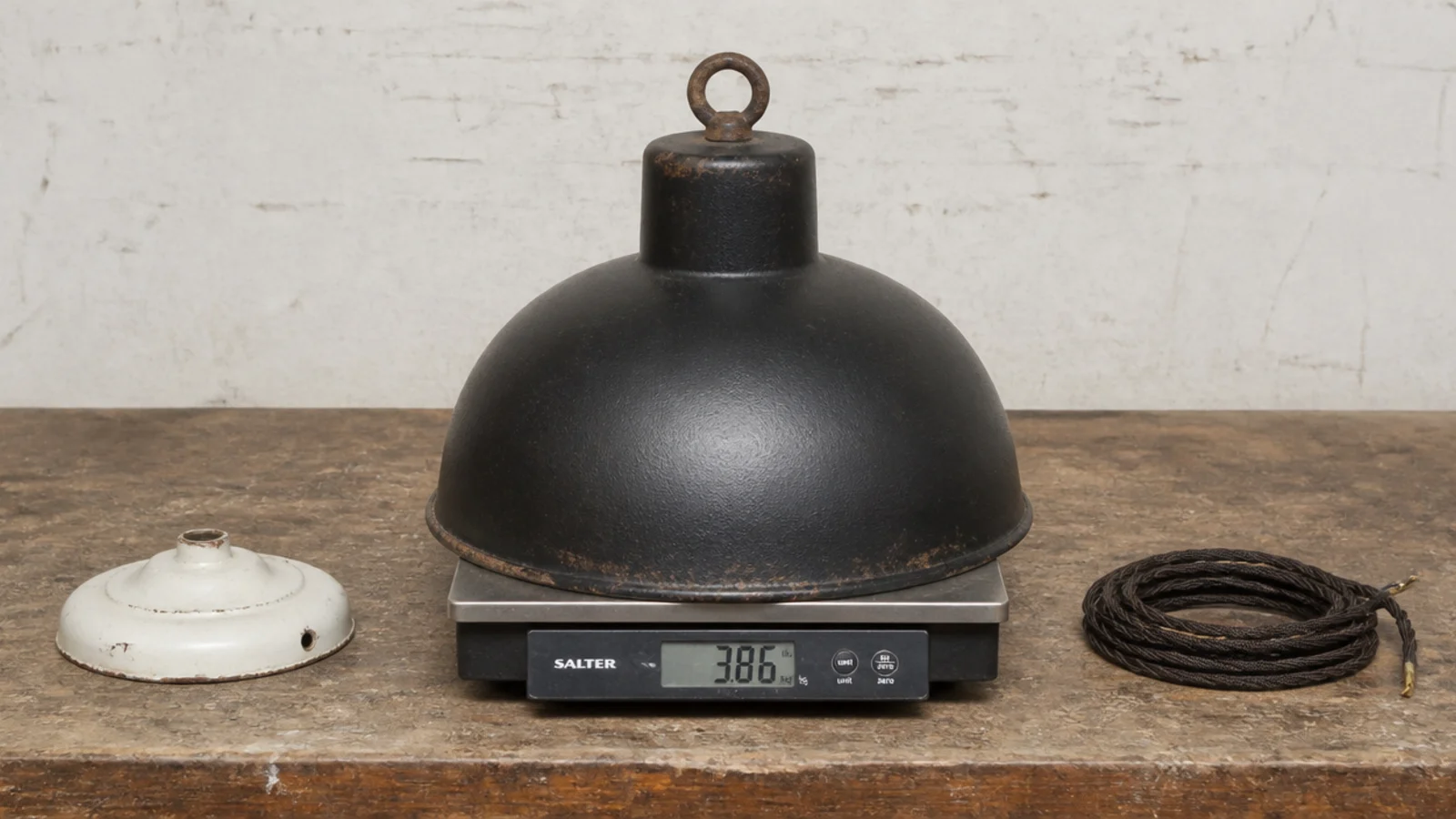
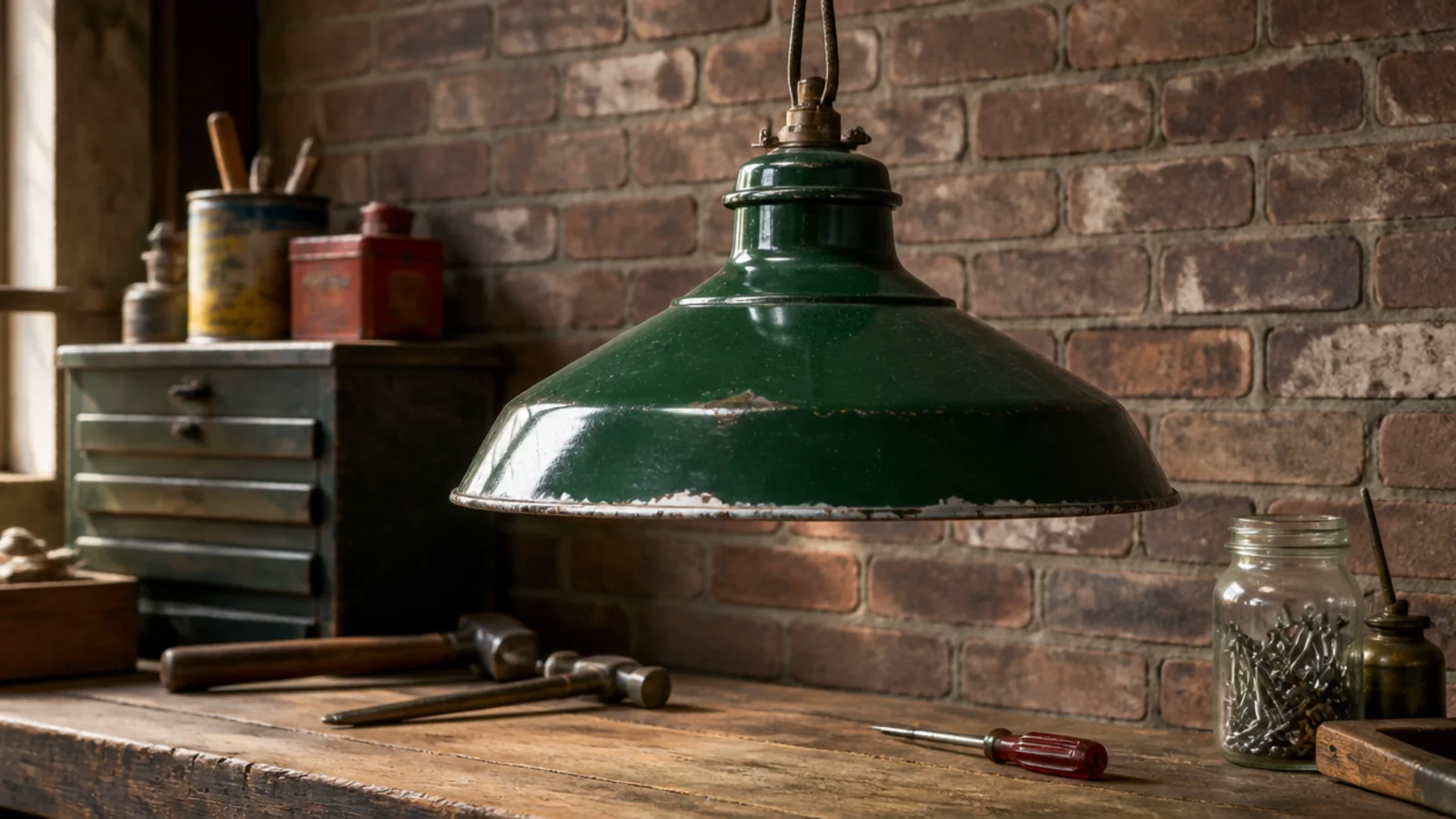
1. A salvaged enamel factory shade
The best value in this whole category. A 12 to 16 inch enamel shade costs $20 to $60 at a salvage yard and has a chipped rim no manufacturer can imitate. They weigh 2 to 5 pounds, so the box is rarely an issue, and the white interior throws far more light down than the colour outside suggests. Check the rim for splits rather than chips, because a cracked enamel edge will keep flaking every time the shade is cleaned.
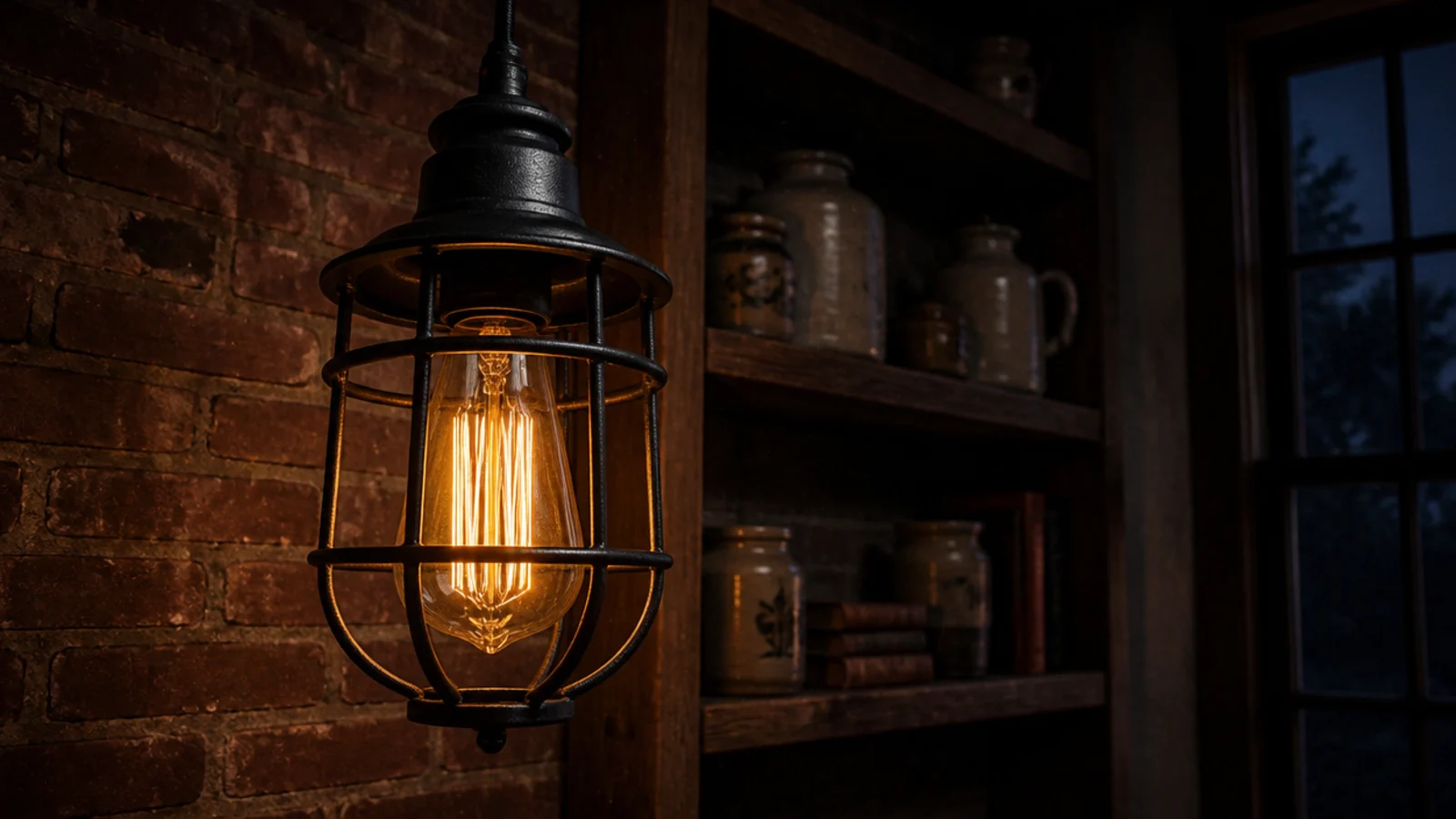
2. A black iron cage with an amber bulb
Cages only work above eye level, which means a ceiling over 9 feet or a spot nobody sits beneath. Use an amber or opaque-tipped bulb under 300 lumens so the naked source stays comfortable. Cast cages weigh 8 to 20 pounds, which is far more than the look implies.
3. A reclaimed beam fixture over a long table
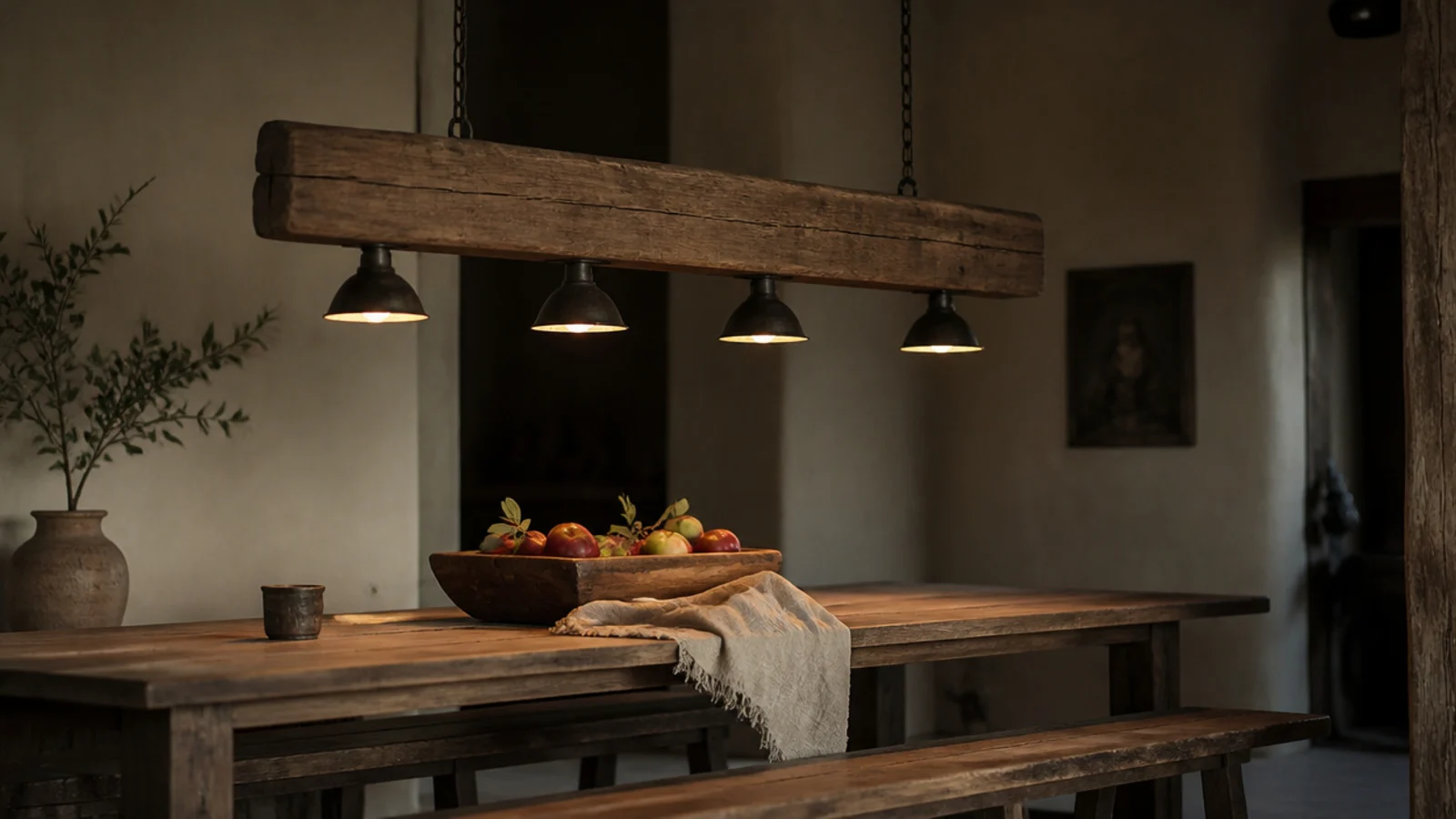
A timber beam fitted with three or four lamps covers an 8 foot table with one fixing line. It is also the heaviest thing in this article at 20 to 40 pounds, so it needs a brace bar between joists or two separate fixings into timber. Hang it 32 inches above the table.
4. A rope wrapped cord and a plain shade
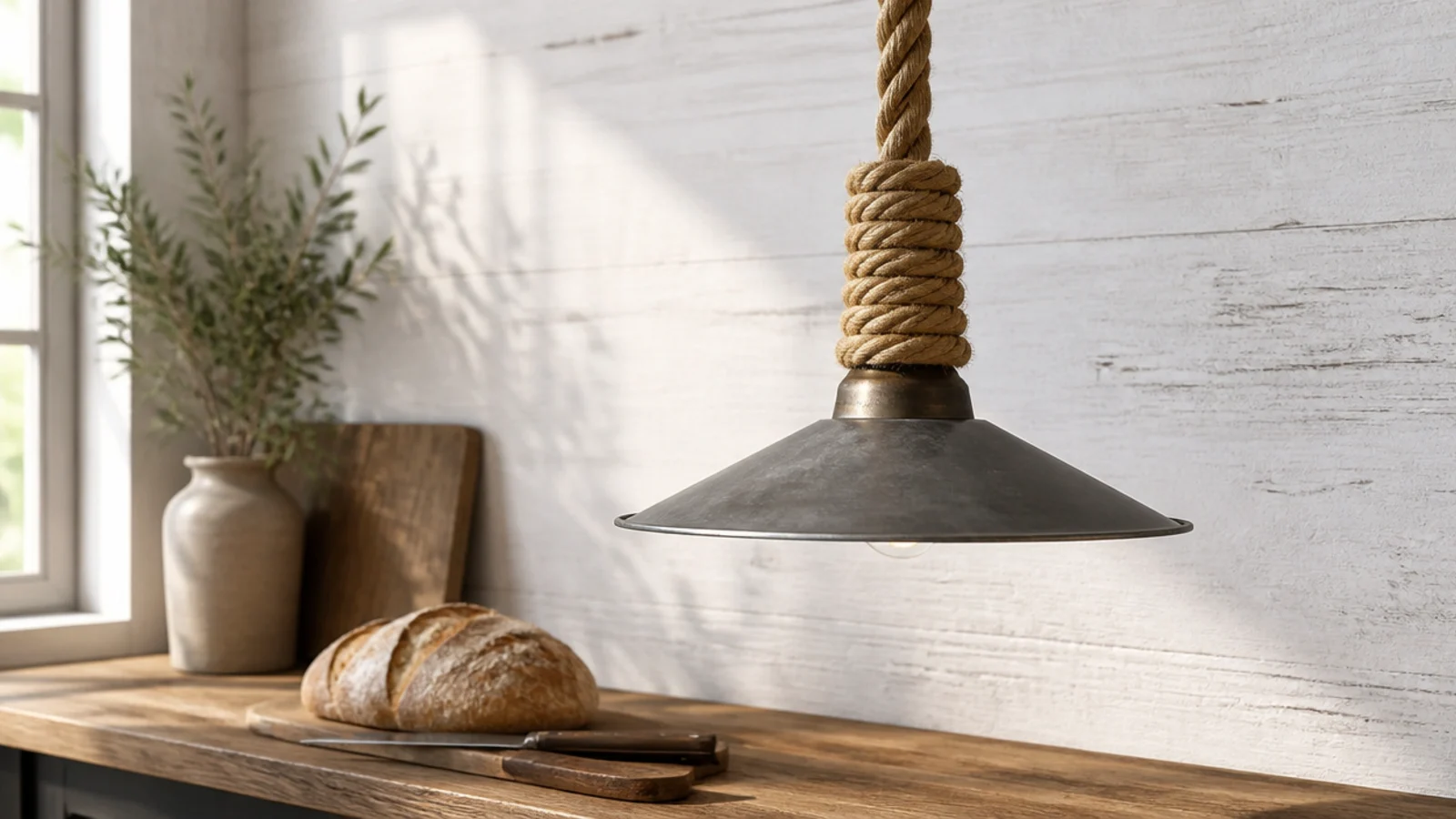
Wrapping a plain flex in jute or hemp rope turns a $30 fixture into something with texture, for about $10 of rope. Keep the wrap clear of the lampholder by at least 3 inches, use LED so there is no meaningful heat, and glue only at the ends.
5. A woven willow basket shade
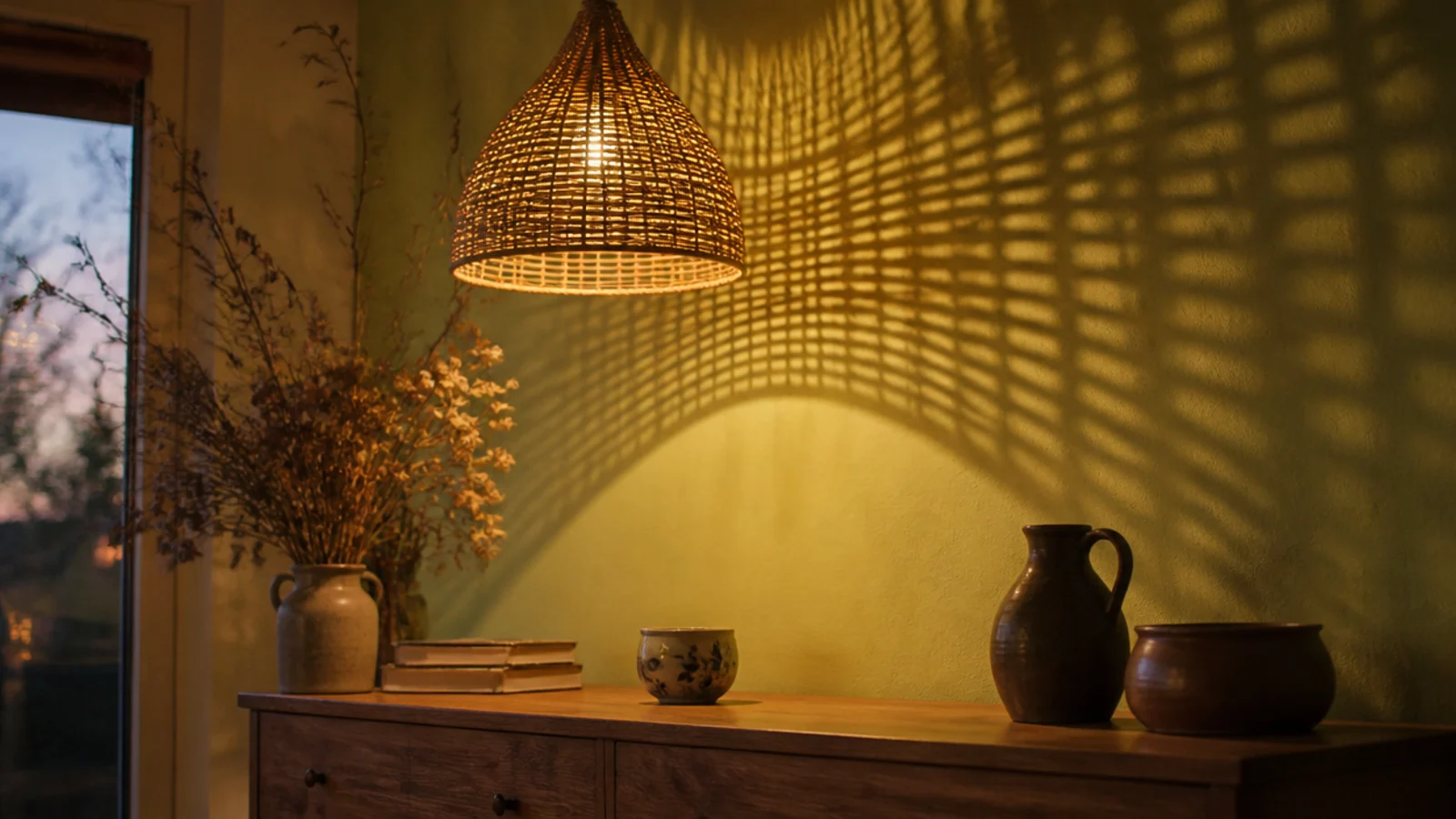
Willow and wicker throw a shadow pattern across the ceiling that is half the point. At 16 to 22 inches across they weigh only 3 to 6 pounds. Keep them well away from a hob, because airborne grease settles into a weave permanently and cannot be washed out.
6. A hammered copper dome
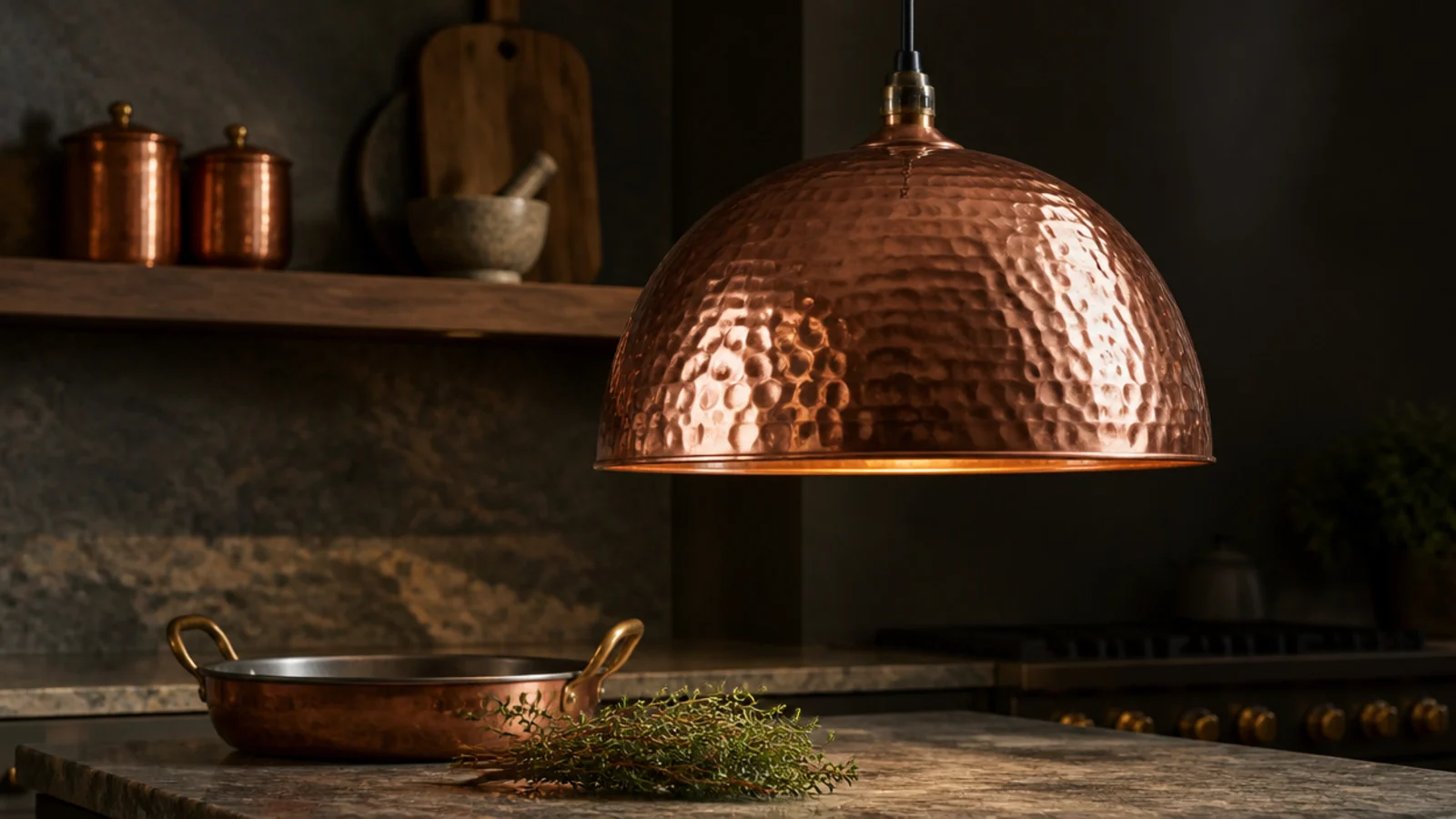
Hammered copper catches light across every dimple, so a single 400 lumen bulb reads as much richer than the same bulb in a smooth shade. Copper darkens over years unless lacquered. Expect $120 to $300 for genuine hand-raised work, and 4 to 8 pounds.
7. A wheel style fixture over a wide table
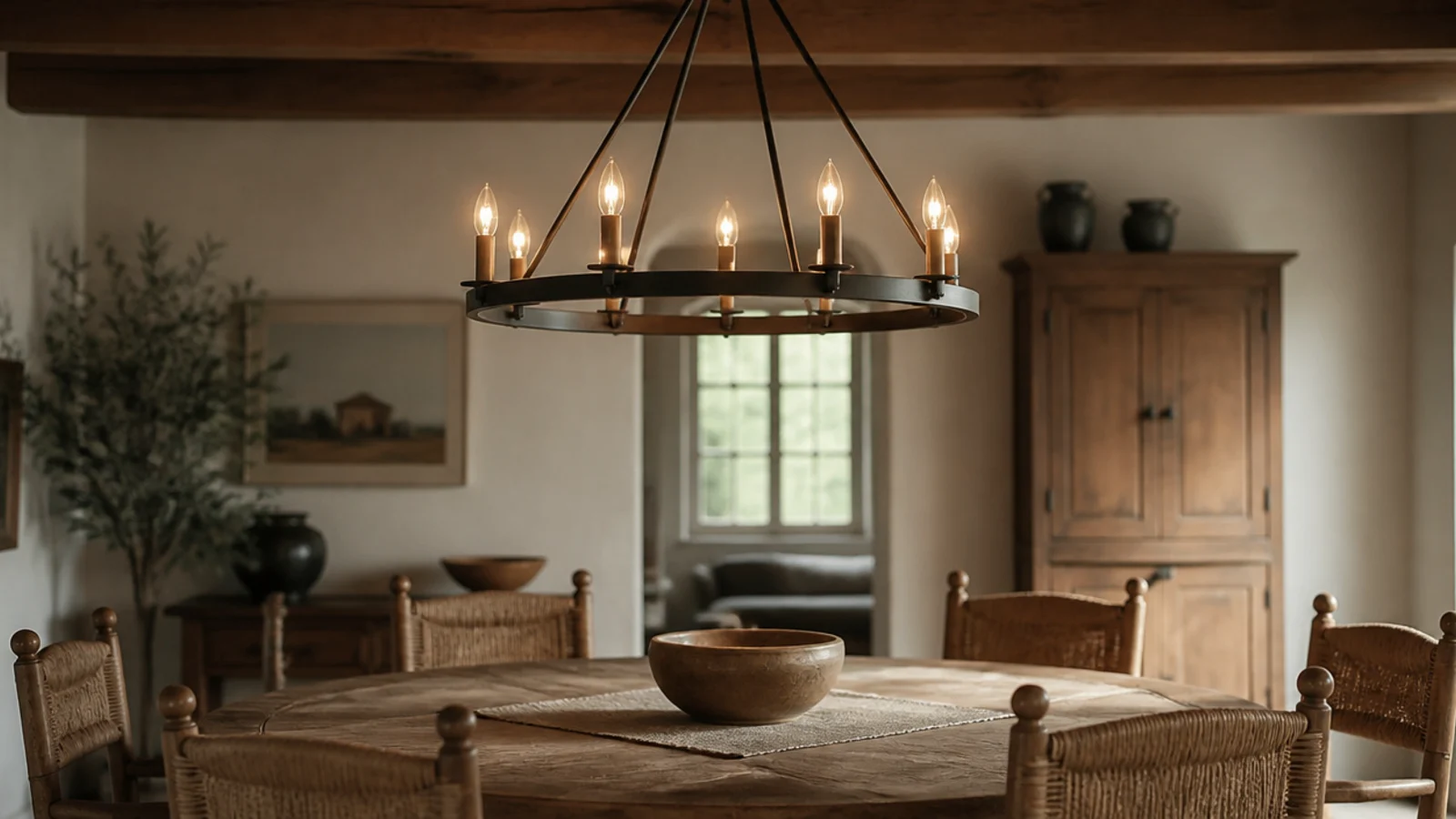
A wide iron ring holding small candle bulbs is the one fixture that suits a round farmhouse table over 54 inches across. Size the ring to about half the table diameter, hang it at 32 inches, and use six 200 lumen bulbs rather than two bright ones.
8. A cluster of glass jar shades
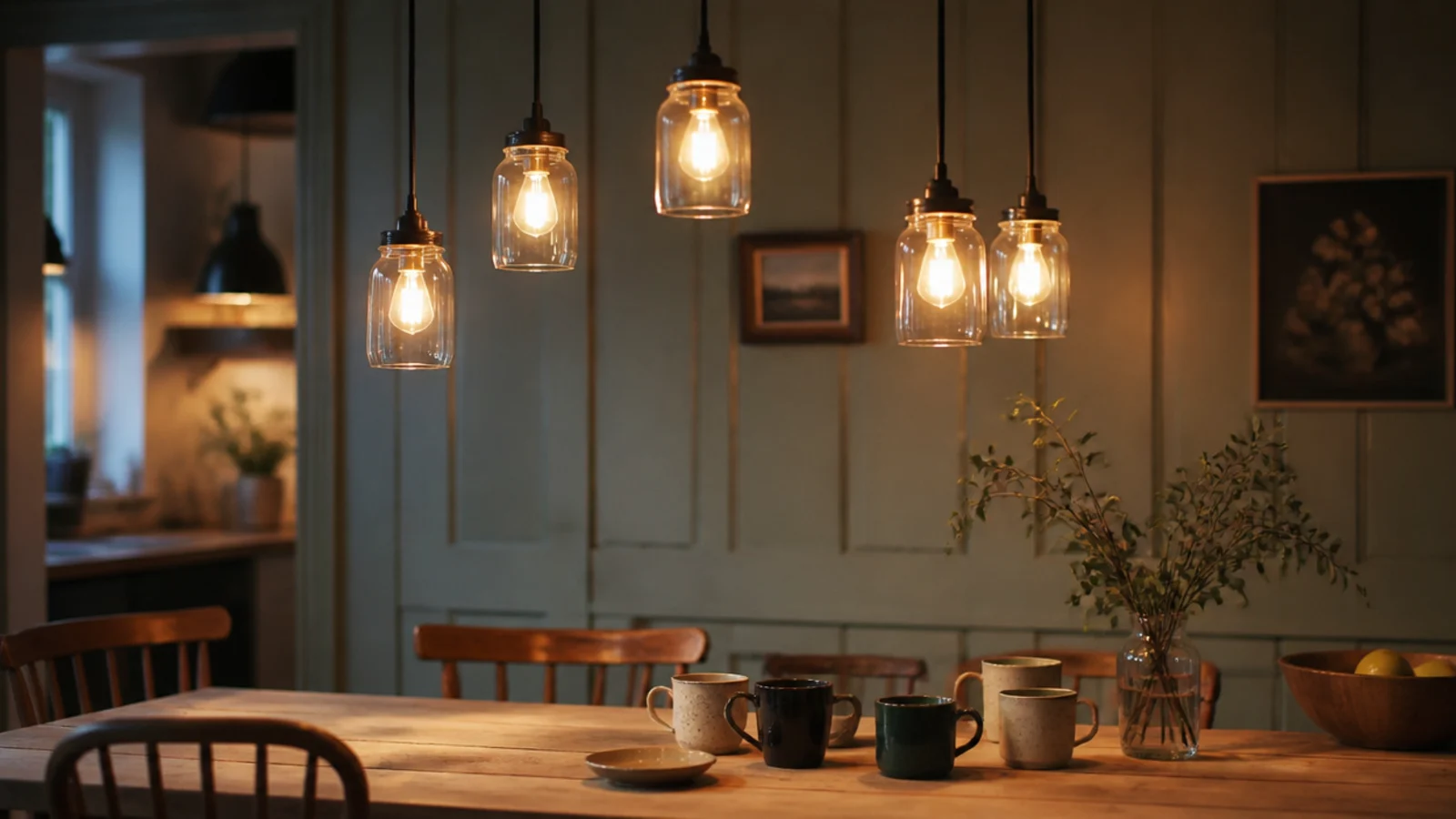
Jar shades on a multi-port canopy cost $60 to $140 for a set of five and look gathered rather than bought when the drops are uneven. Stagger them by 6 to 12 inches, keep the lowest above head height, and use the same bulb in every one.
9. A forged hook and a length of chain
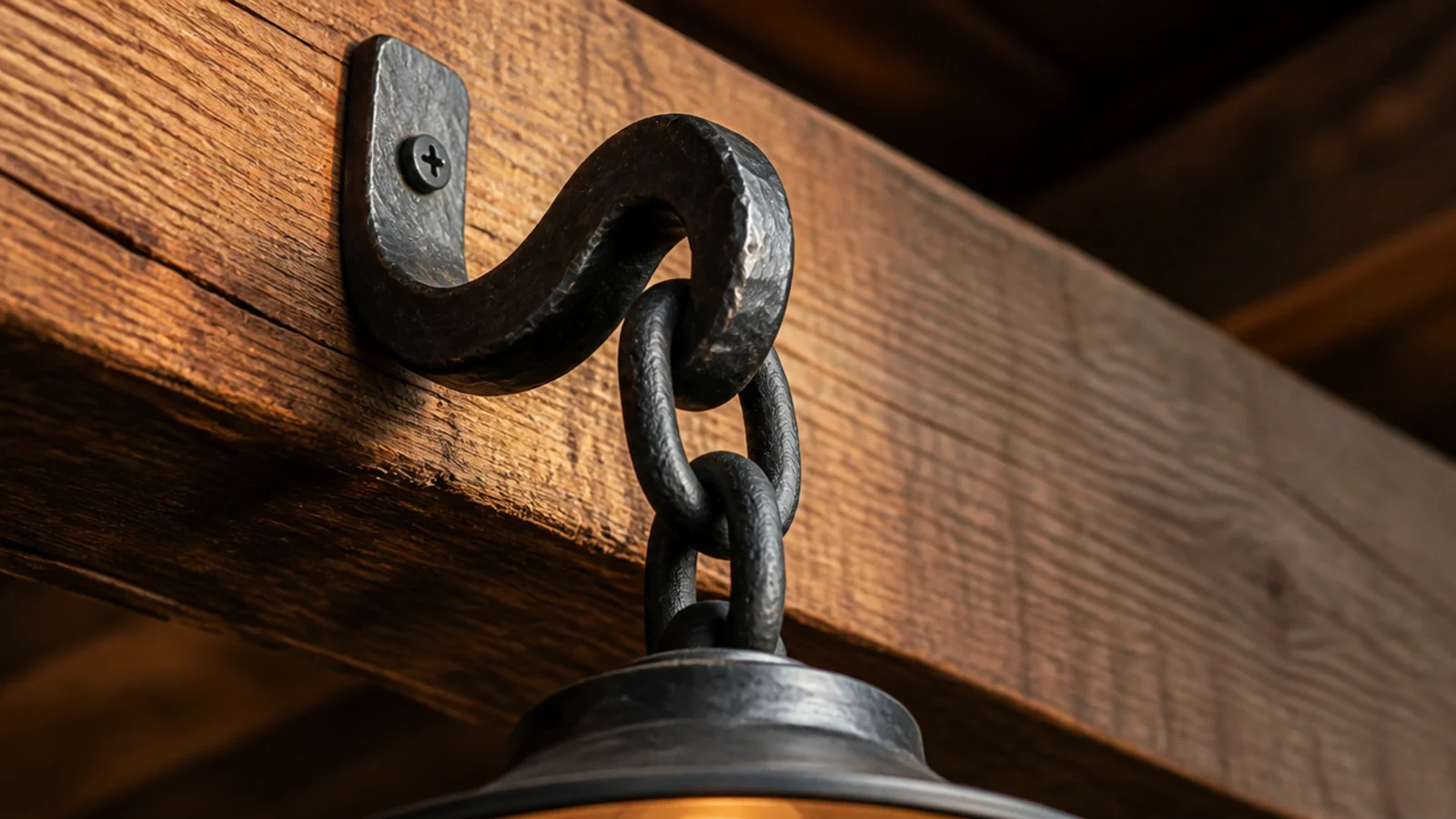
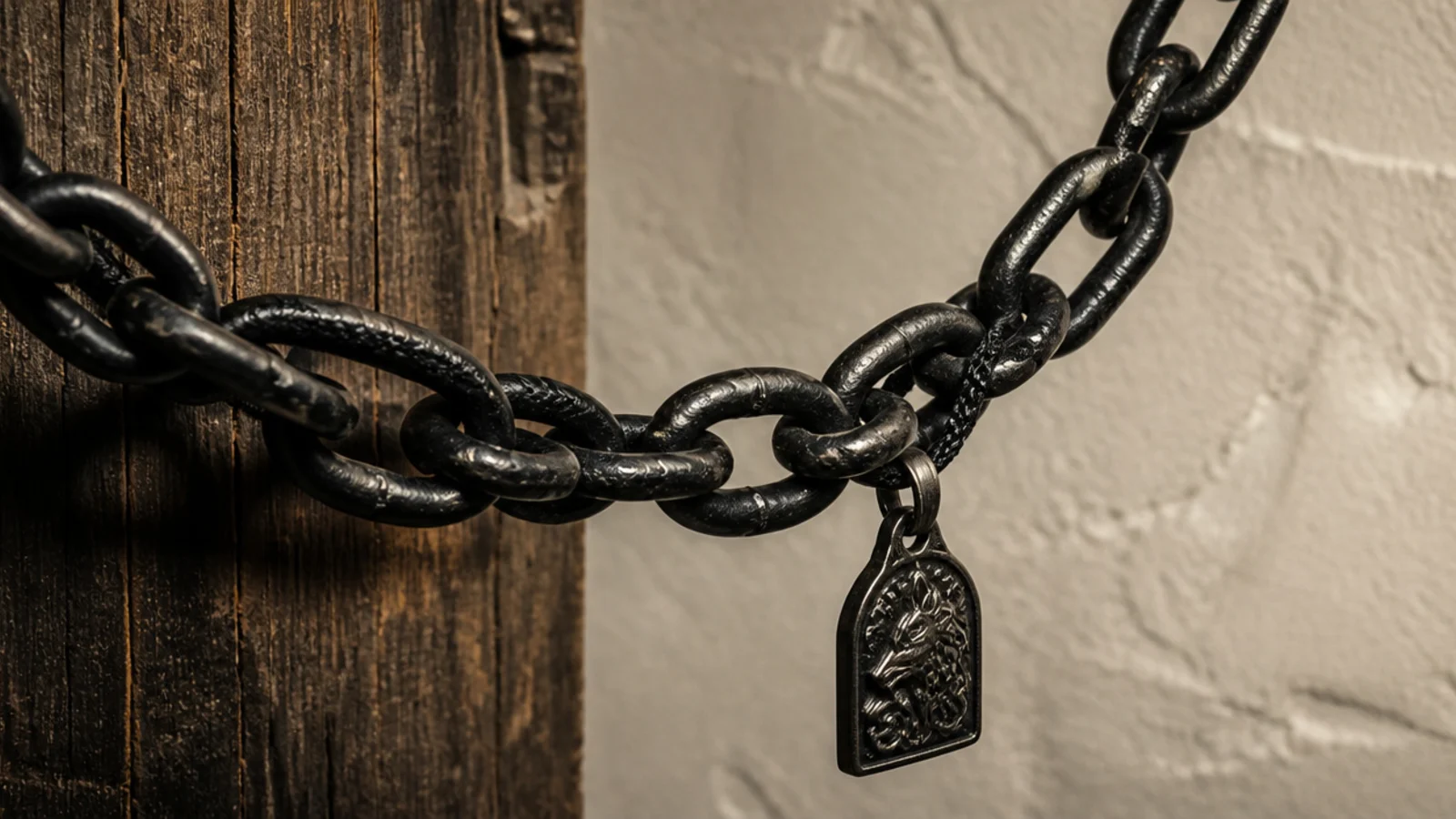
Half the character of a rustic fixture is in the hardware above the shade. A hand-forged hook into a beam and a heavy blackened chain make a plain shade look considered. Fix the hook into solid timber, never plaster, and let the chain carry the load rather than the flex.
10. A turned wood shade over a work table
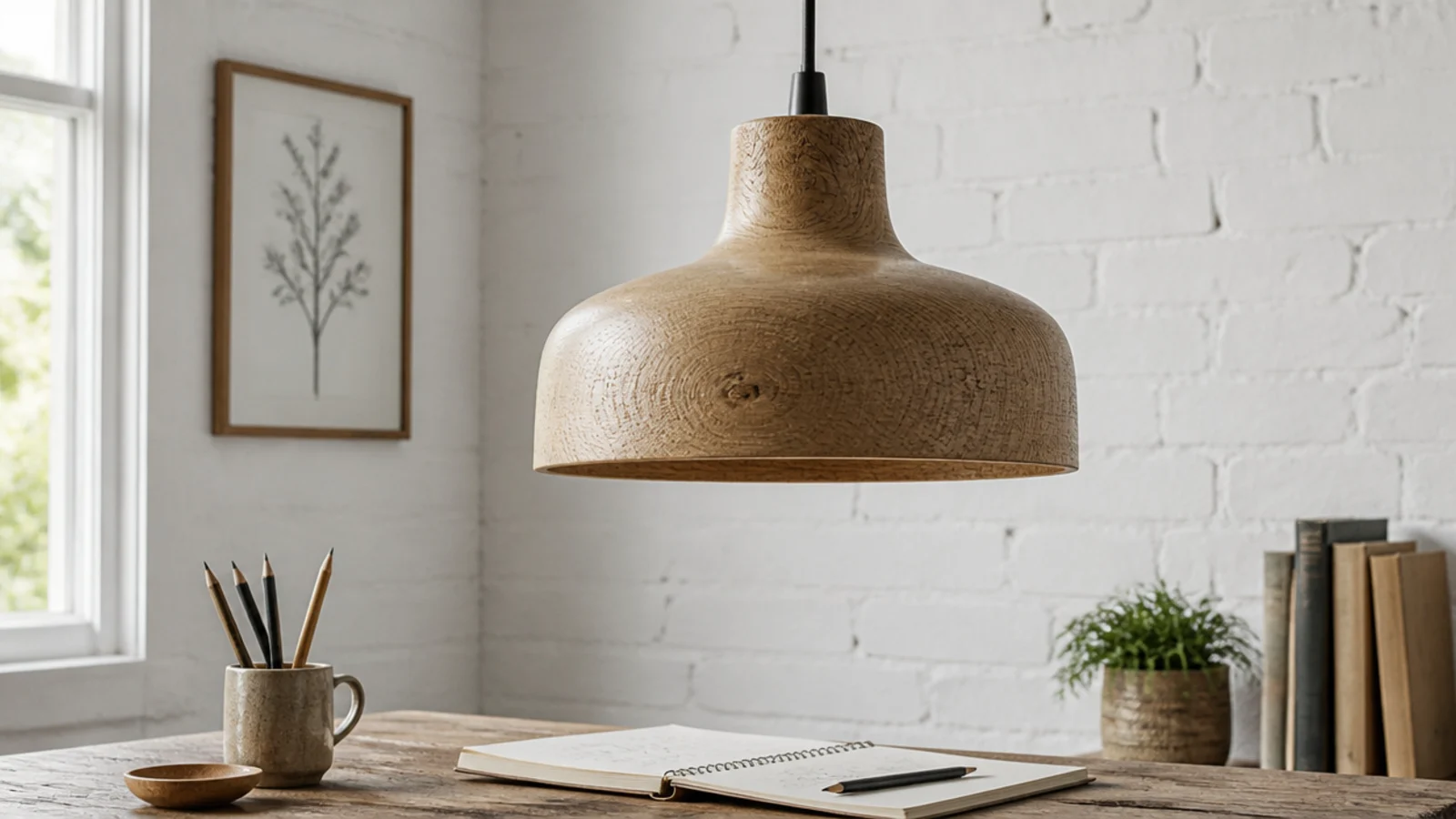
Solid turned timber shows growth rings and tool marks that veneered shades cannot. They weigh 3 to 7 pounds and cost $90 to $250. Keep them out of steam, because unsealed timber above a kettle will move within a season. The wooden fixture comparison covers which species cope.
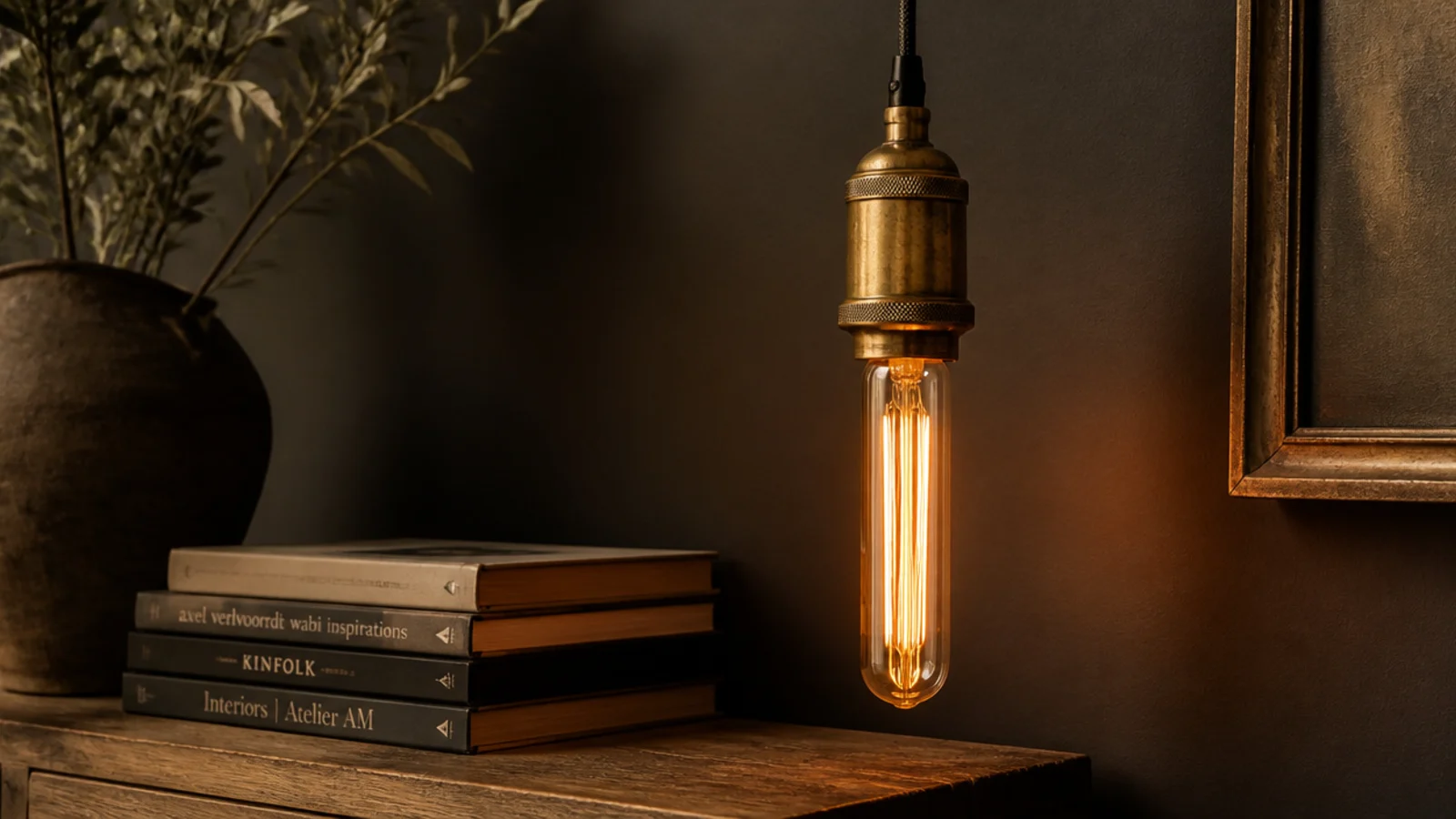
11. Aged brass with a long filament bulb
A bare aged brass holder and a long tubular filament bulb is the cheapest honest fixture there is, around $40 all in. It only works if the parts are genuinely good — a machined collar and proper cloth flex — because there is nothing else to look at.
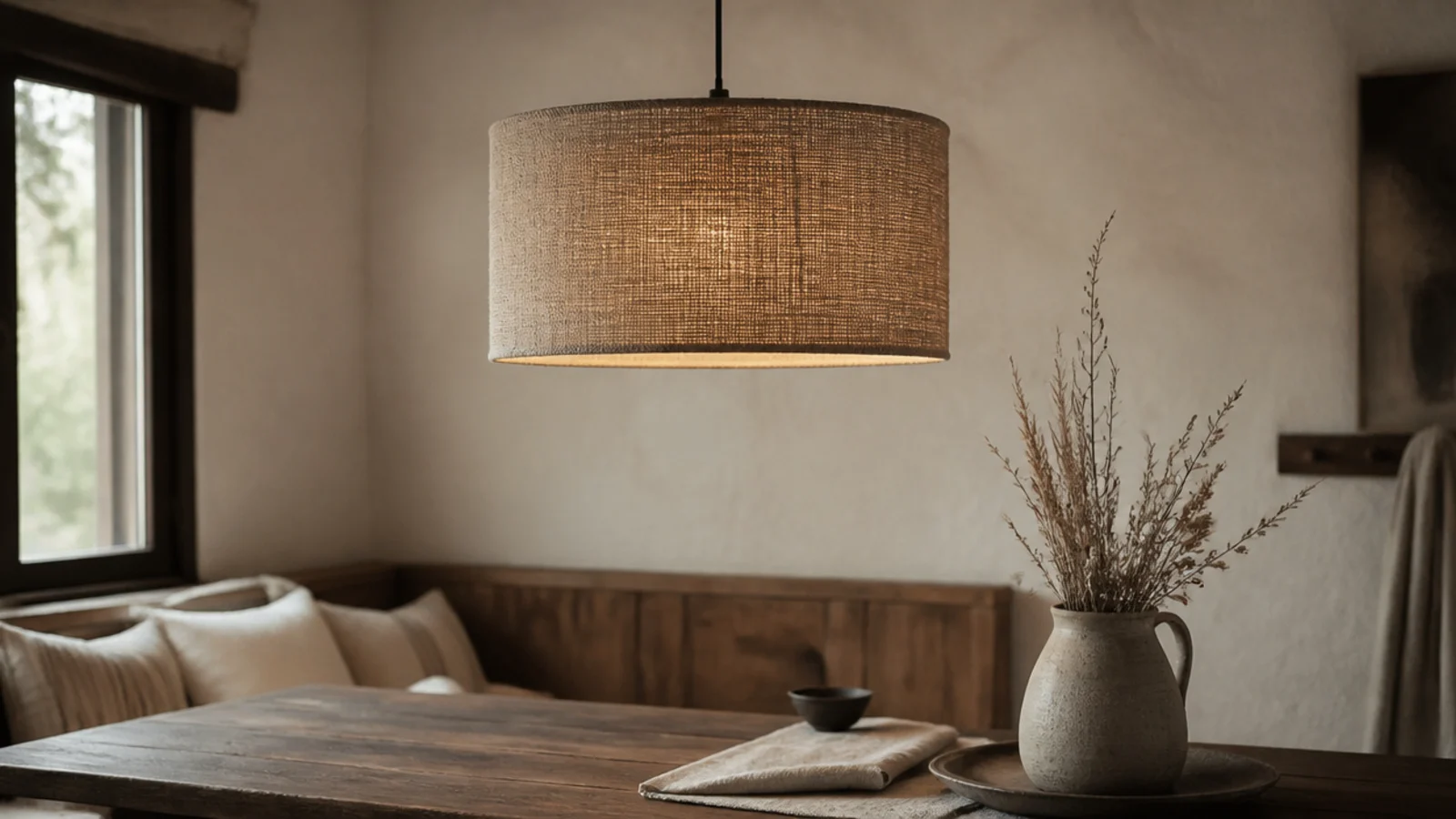
12. A linen wrapped shade for softer light
Where a room is already full of hard materials, a coarse linen drum softens the light without adding pattern. Check the maximum wattage printed inside the rim and run LED, which produces a fraction of the heat the label assumes. Around $60 to $150.
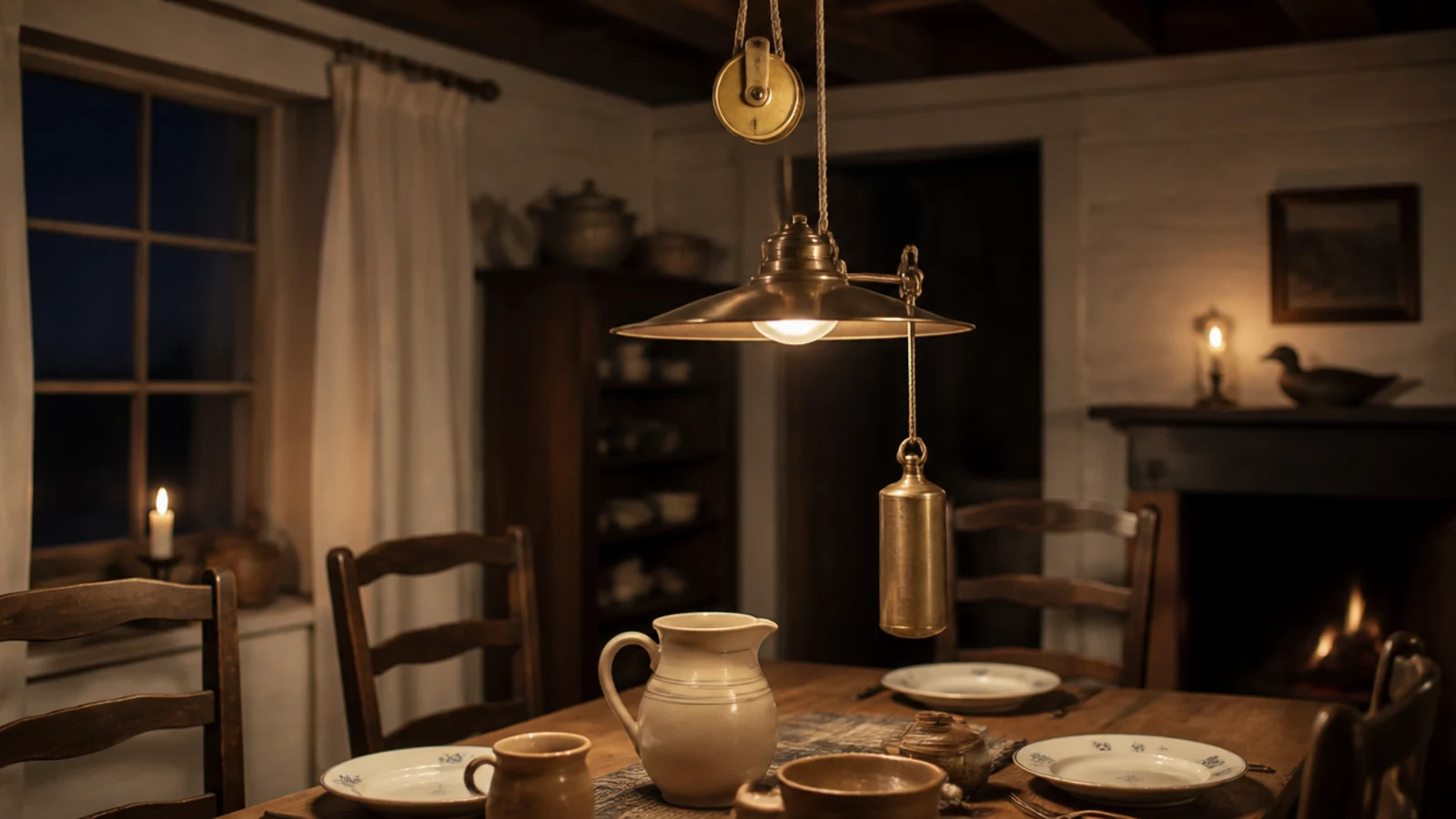
13. A rise and fall pulley over a farmhouse table
A counterweighted pulley pulls the shade down to 30 inches for dinner and lifts it to 48 afterwards, which is genuinely useful in a room where the table is also a work surface. They cost $80 to $200 and are the most practical rustic fixture on this list.
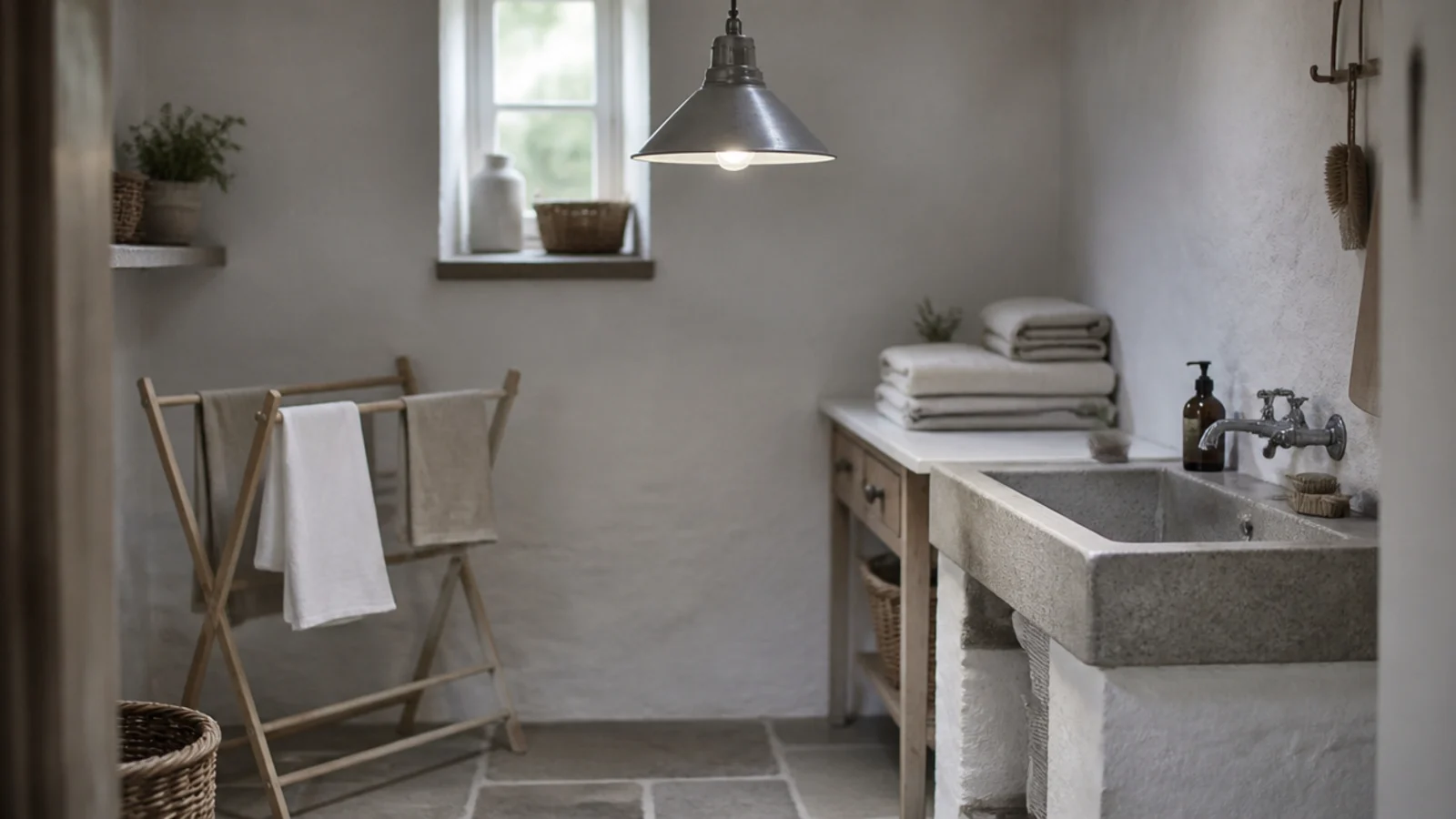
14. A galvanised steel cone in a utility space
Galvanised steel takes damp, knocks and cold better than any painted finish, and costs $30 to $70. In a boot room, pantry or utility area it is the right fixture rather than a compromise. Check it is rated for damp locations if the room gets condensation.
15. Warm 2200 kelvin bulbs for firelight tone
2200K is the colour of a candle flame and 2700K is warm white. In a room of lime plaster, old timber and iron, the lower number is what makes the materials look right. Buy dimmable versions and put the whole room on one dimmer. Layering with candlelight at the same warmth is what finishes the effect.
16. Chain instead of cord for weight and looks
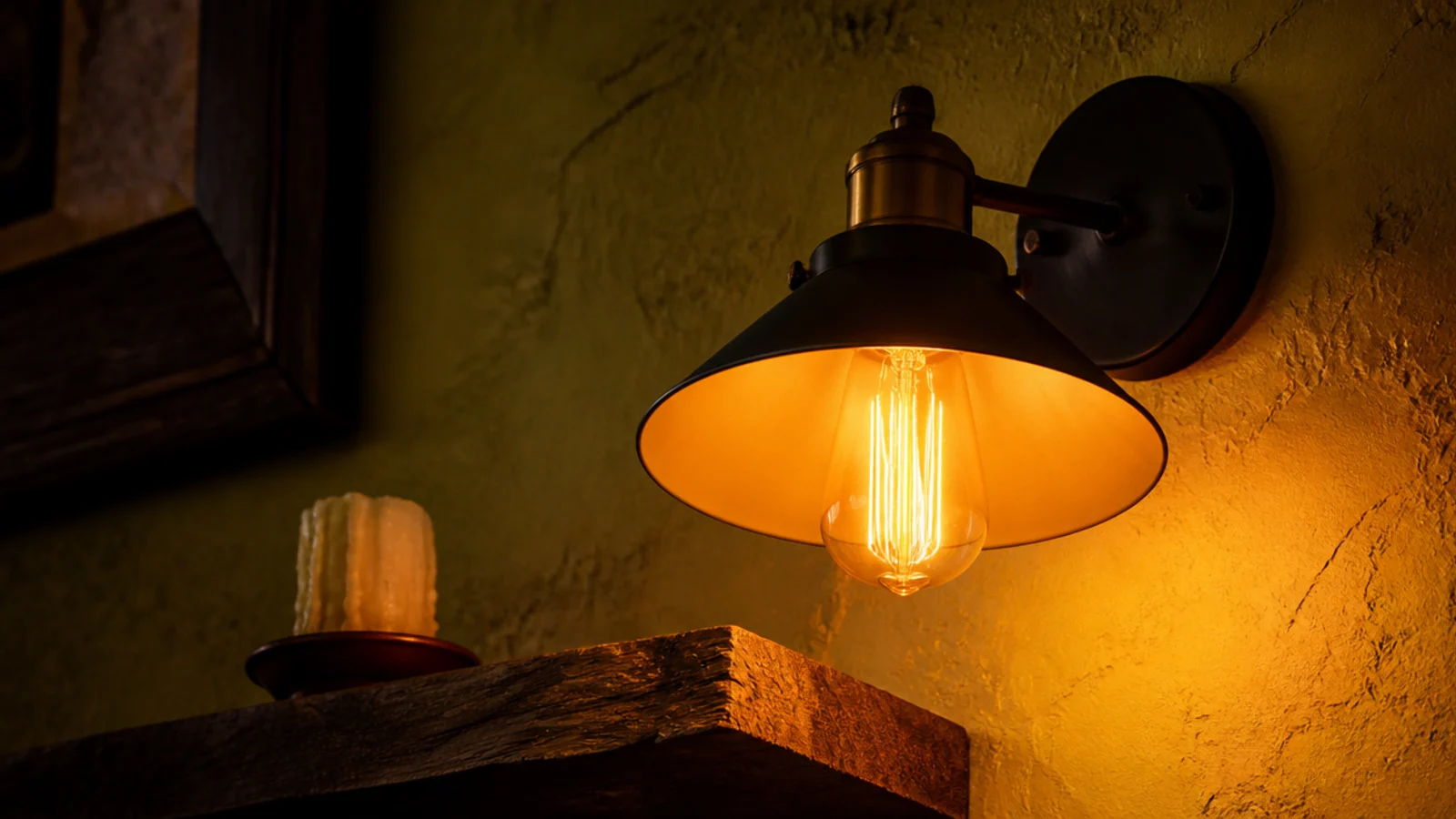
Chain suits heavy shades and hides the flex woven through it. It also transfers the load to the hook rather than the cable, which matters on anything over about 8 pounds. Buy a chain with removable links so the drop is cut to your ceiling. Removing links takes five minutes with pliers, and a fixture hanging four inches too high is something you notice every day for years.
17. A deliberately uneven cluster over a kitchen table
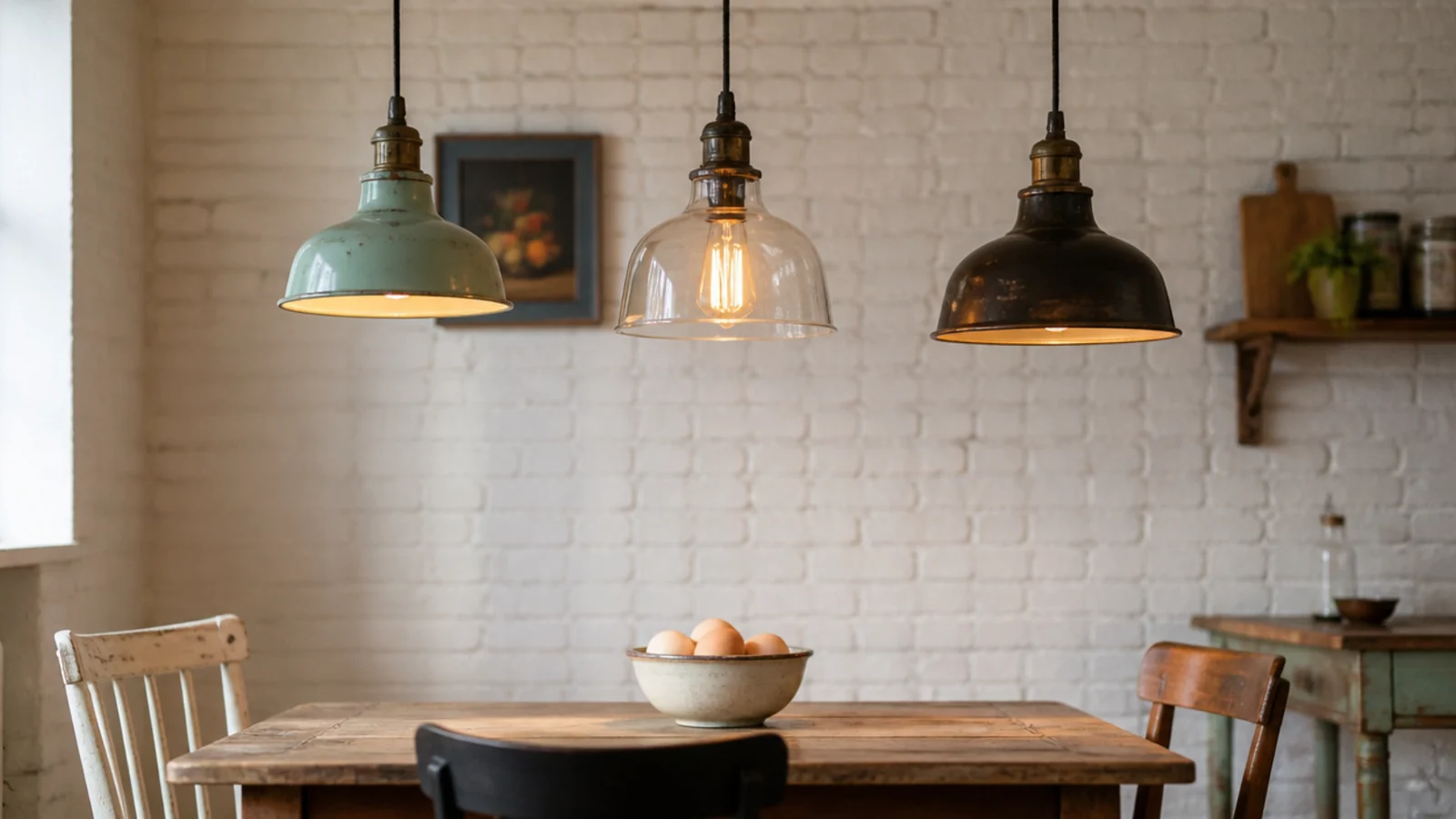
Three different shades work together if they share one metal and one bulb type. Vary the shape and the size; hold the finish and the colour temperature constant. That is the rule that separates a collected look from a jumble.
18. Rewiring a salvage find properly
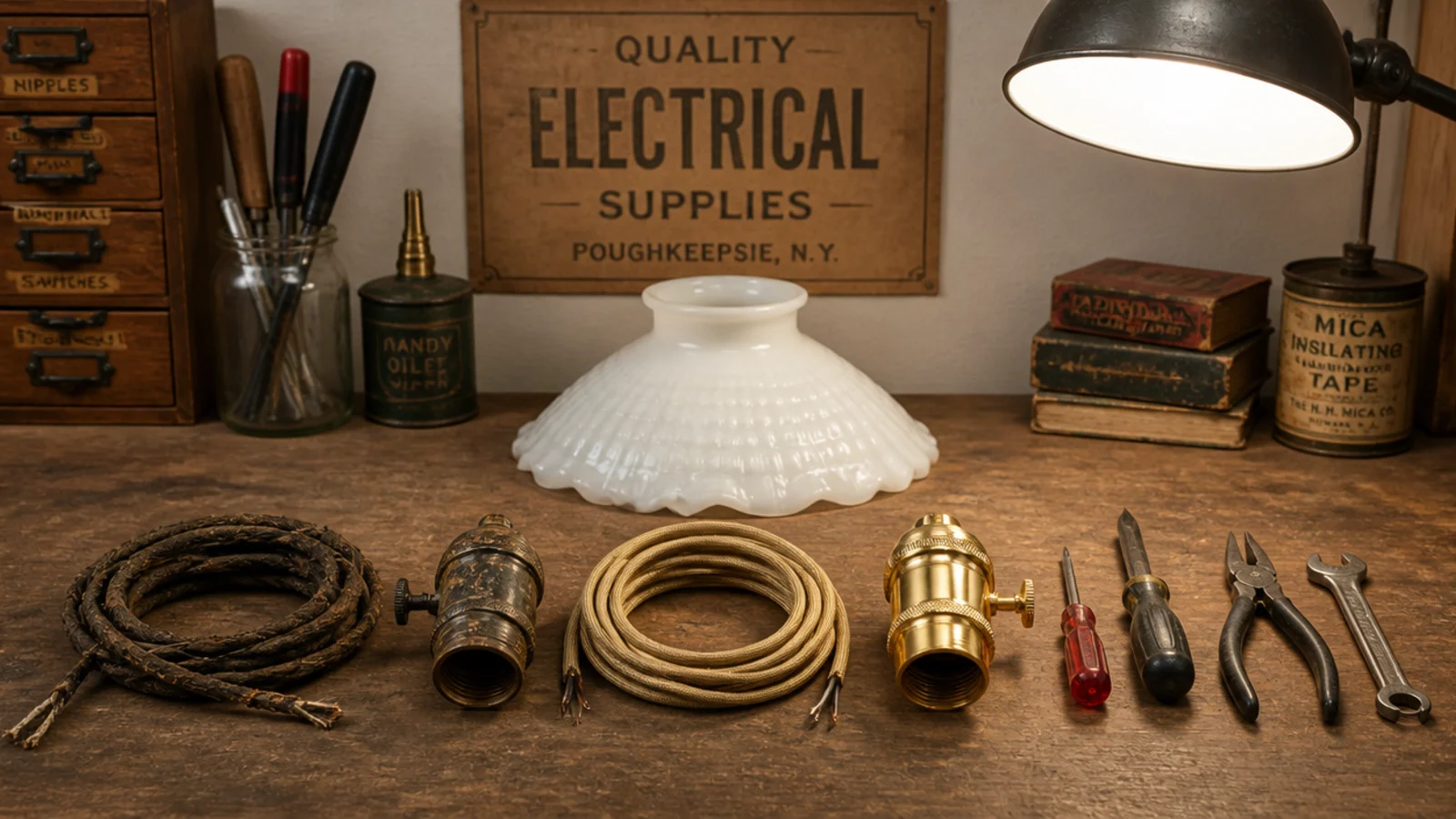
Buy the shade for the patina and replace everything electrical inside it. Old cloth-covered flex goes brittle, old lampholders crack, and pre-war fixtures often have no earth connection at all. Parts cost around $15, and the connection should be signed off by an electrician in most jurisdictions.
19. A single big shade in a low beamed room
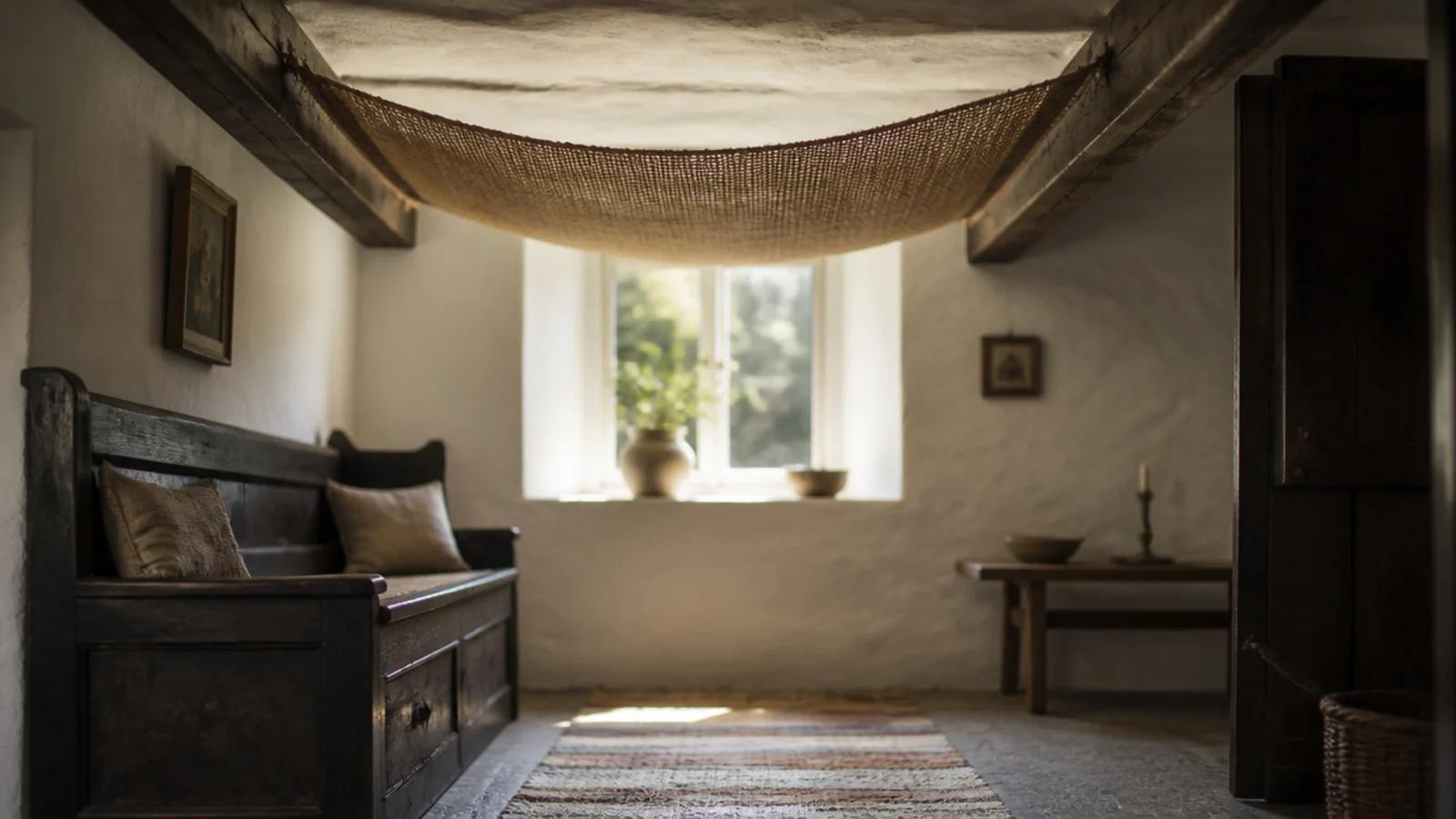
Old rooms with 7 foot beams cannot take a row of pendants. One wide shade hung in the gap between two beams, with the bottom above the lowest beam line, lights the room without anything to walk into. Measure the beam soffit, not the ceiling.
20. The ceiling box under an old plaster rose
Period ceilings often have a cable emerging through a decorative rose fixed to lath, with no rated box behind it at all. That arrangement holds a light bulb, not an iron fixture. Have a rated box or brace bar fitted before anything heavy goes up. A dining table fixture is usually the heaviest thing in an old room.
For the same warmth in the room where clocks and mantels do the work at eye level, wall clock decor for a living room covers the pieces that pair with a low, warm fixture.
Mistakes to Skip
- Hanging cast iron from a plaster rose. The rose is decorative moulding on lath; a rated ceiling box carries the fixture weight and a brace bar spreads it.
- Leaving original flex in a salvaged fixture because it looks authentic. Buy the shade for the patina and replace every electrical part inside it.
- Putting a woven or basket shade near a hob. Grease settles into the weave in months and there is no cleaning it out afterwards.
- Choosing a bright bulb for an open fixture. A cage or jar at 800 lumens is a glare source, and the same fixture at 300 lumens is a warm one.
Frequently asked questions
What bulb suits a rustic fixture?
A warm 2200K to 2700K bulb, dimmable, at 300 to 600 lumens per fixture. Rustic shades are usually open or made of dark material, so a bright bulb reads as a hotspot rather than a glow. Filament-style LEDs give the look of an old bulb at a fraction of the heat and running cost.
How heavy are iron and salvaged fixtures?
Far heavier than modern equivalents. A black iron pipe pendant runs 6 to 14 pounds before the shade, a cast iron cage 8 to 20, and a reclaimed beam fixture 20 to 40. Standard lighting boxes are listed for 50 pounds, so weigh anything cast or salvaged before ordering rather than after.
Can I rewire an old salvaged light?
The shade is worth buying for the patina, but every electrical part inside should be replaced. Old cloth-covered flex, brittle lampholders and missing earth connections are all common in salvage. Rewiring parts cost around 15 dollars, and the work should be signed off by an electrician in most jurisdictions.
Do rustic fixtures work in a modern house?
They do when the fixture is genuinely simple. A plain enamel shade or a black iron cone sits happily in a new-build kitchen because both are honest shapes. What jars is a decorative faux-antique fixture with moulded plastic detailing, which reads as a costume rather than a light.
How high should a rustic pendant hang over a farmhouse table?
Thirty to 34 inches between the tabletop and the bottom of the shade, the same as any other fixture. Rustic shades are often wide and heavy, so also keep the diameter to about half the table width and at least 12 inches narrower than the table top itself.
Want more like this? Browse all 15 hanging lights guides — they all use the same measurements and budget tiers.

Pin it for later
Save this to your Hanging Lights board
Pin it now so it is waiting for you when the tape measure comes out — and so the next person hunting for this idea can find it too.
Save this pinKeep going
More ideas worth saving while you have the tape measure out.