Hanging Lights · Listicle
25 Dreamy Dining Table Hanging Lights To Steal

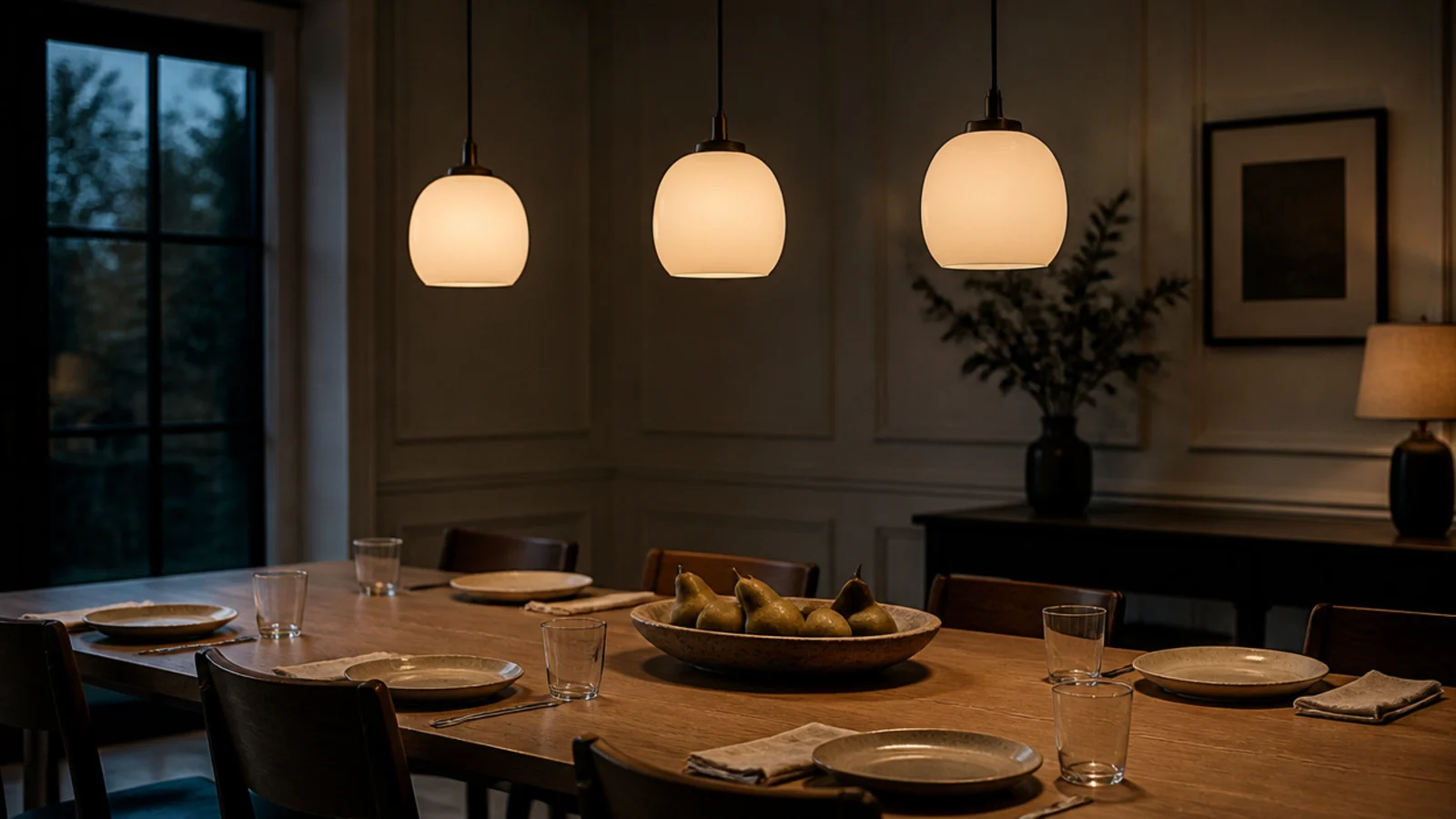
The dining fixture is the one people study for two hours at a stretch, which is why the mistakes show. It hangs at eye level, over the surface everybody is looking at, in the room where nobody is moving around. Dining table hanging lights are also the easiest to size correctly, because the rules are arithmetic rather than taste — half the table width, 30 to 34 inches above the top, dimmed to a level that makes the table the brightest thing in the room. I have hung eleven of these. Below are twenty-five, with the numbers each one runs on.
In this guide27 sections — tap to openHide
- 1.What dining table hanging lights get wrong
- 2.Centre the fixture on the table, not the room
- 3.Thirty to thirty four inches above the top
- 4.A diameter about half the table width
- 5.A linear bar over a rectangular table
- 6.Three pendants over a long table
- 7.A single globe over a round table
- 8.Keep the shade twelve inches inside the table
- 9.Add three inches of drop per foot of ceiling
- 10.A dimmer that reaches twenty per cent
- 11.Warm 2700 kelvin with high colour rendering
- 12.Small candle bulbs in a compact chandelier
- 13.A drum shade for even diffuse light
- 14.Rattan above a timber table
- 15.Alabaster that glows over the table
- 16.A cluster over a square table
- 17.Planning for an extending table
- 18.Protecting the sightline across the table
- 19.A downlight on the table as well
- 20.Swagging the light onto the table
- 21.The shade interior decides the table light
- 22.A wide shade over a bench seat table
- 23.Two small fixtures instead of one large
- 24.Weight of a chandelier and the ceiling box
- 25.Reaching the bulbs over a table
- 26.Matching the fixture to the table shape
- 27.Mistakes to Skip
What dining table hanging lights get wrong
Everything here is measured from the table, not the room or the ceiling.
Drop. 30 to 34 inches from the tabletop to the bottom of the shade on an 8 foot ceiling, plus about 3 inches per extra foot of ceiling above that. Nobody walks across a table, so the 7 foot clearance rule does not apply and the fixture can sit far lower than anywhere else in the house.
Diameter. About half the table width, and never wider than the table minus 12 inches. A 40 inch wide table takes a shade around 20 inches; a 36 inch table takes 16 to 18. On a long rectangular table, use a linear fixture at half to two thirds of the table length instead.
Number and spacing. One fixture centred on a round or square table. Two or three on a rectangular table over 72 inches, spaced 24 to 30 inches apart on centre with at least 12 inches clear at each end.
Light level. 400 to 600 lumens at 2700K, CRI 90 or above, on a dimmer that genuinely reaches 20 per cent. And a rated ceiling box carries the fixture weight, which matters here because chandeliers pass 20 pounds easily — hard-wiring is an electrician's job in most jurisdictions.
1. Centre the fixture on the table, not the room
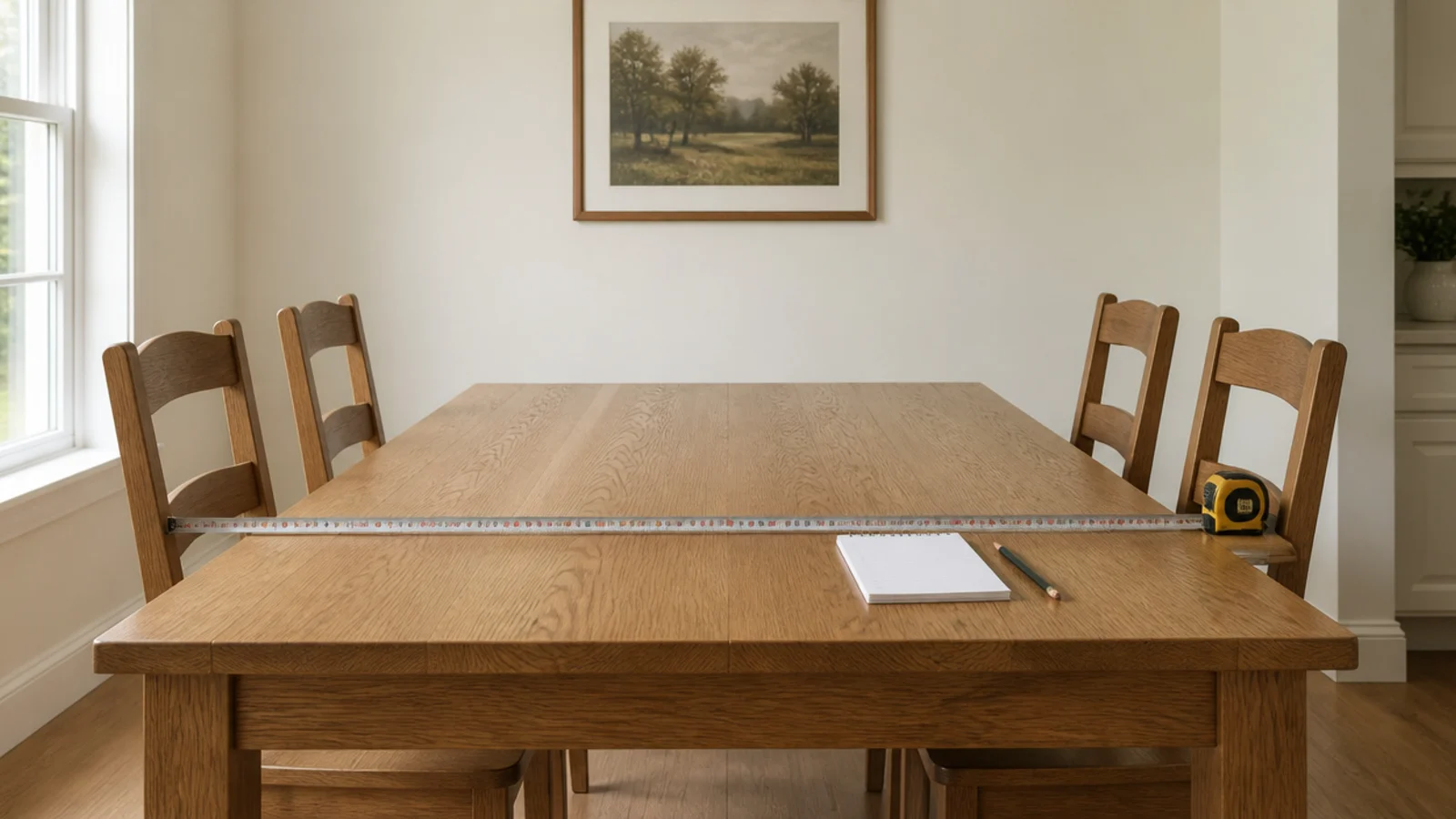
Ceiling roses land where the builder put them. Tables land where the room works. If the two are more than a few inches apart, move the light with a swag hook or a ceiling plate for under $30 rather than moving the table to suit the wiring.
2. Thirty to thirty four inches above the top
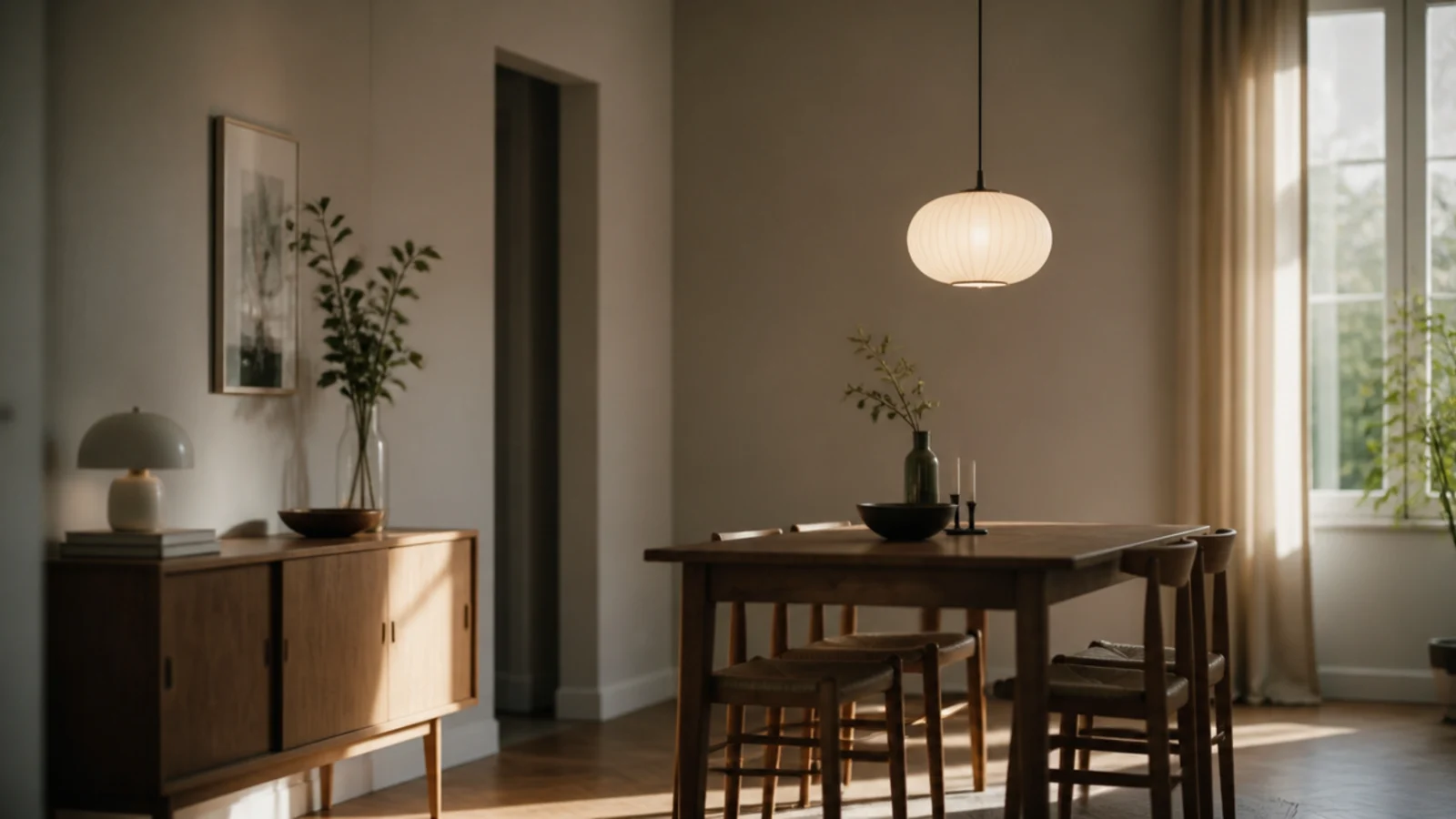
Thirty-two inches is the figure most rooms land on. It keeps the shade below the level where it disappears from the composition and above the level where it blocks the person opposite. Measure from the tabletop with a folding rule before shortening a cord.
3. A diameter about half the table width
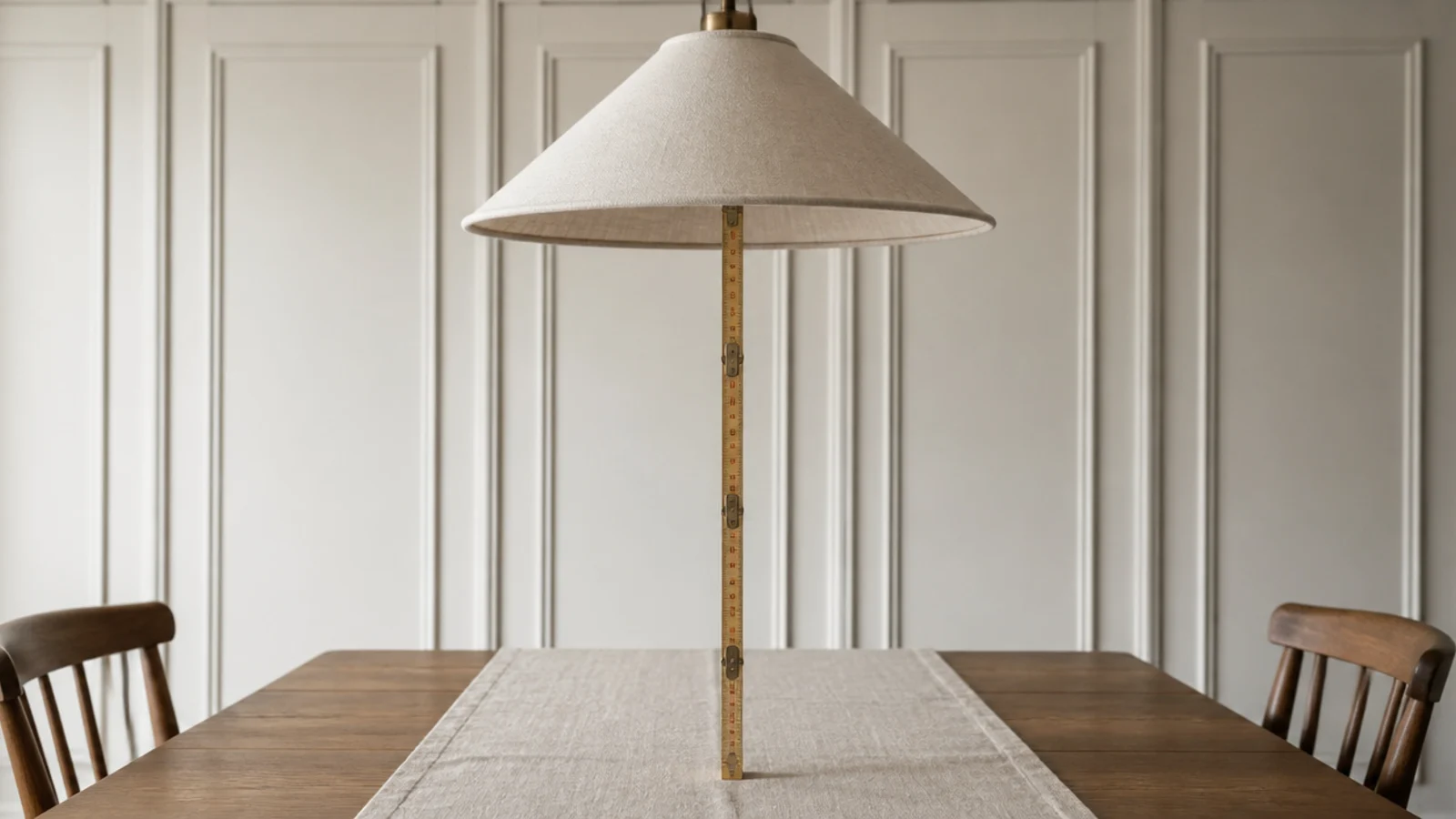
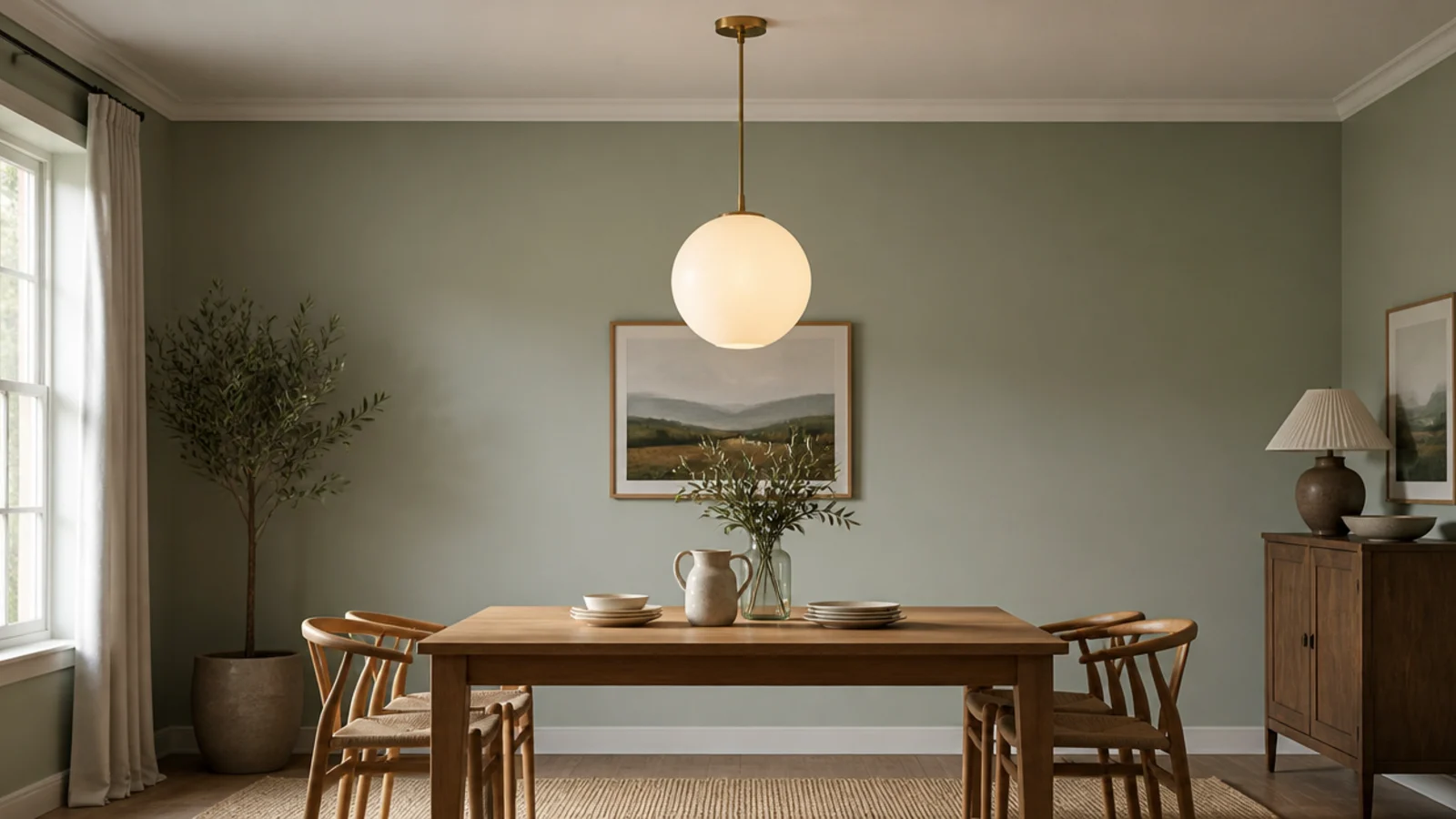
Half the width is the rule that never fails. It gives the fixture presence without crowding the surface, and it leaves the table reading as the larger object, which is what makes a dining room feel generous.
4. A linear bar over a rectangular table
Past 84 inches of table, one bar beats three pendants. Size it to half or two thirds of the table length, hang it at 32 inches, and centre it on the table. Painted steel versions start near $200; solid brass runs $400 to $900.
5. Three pendants over a long table
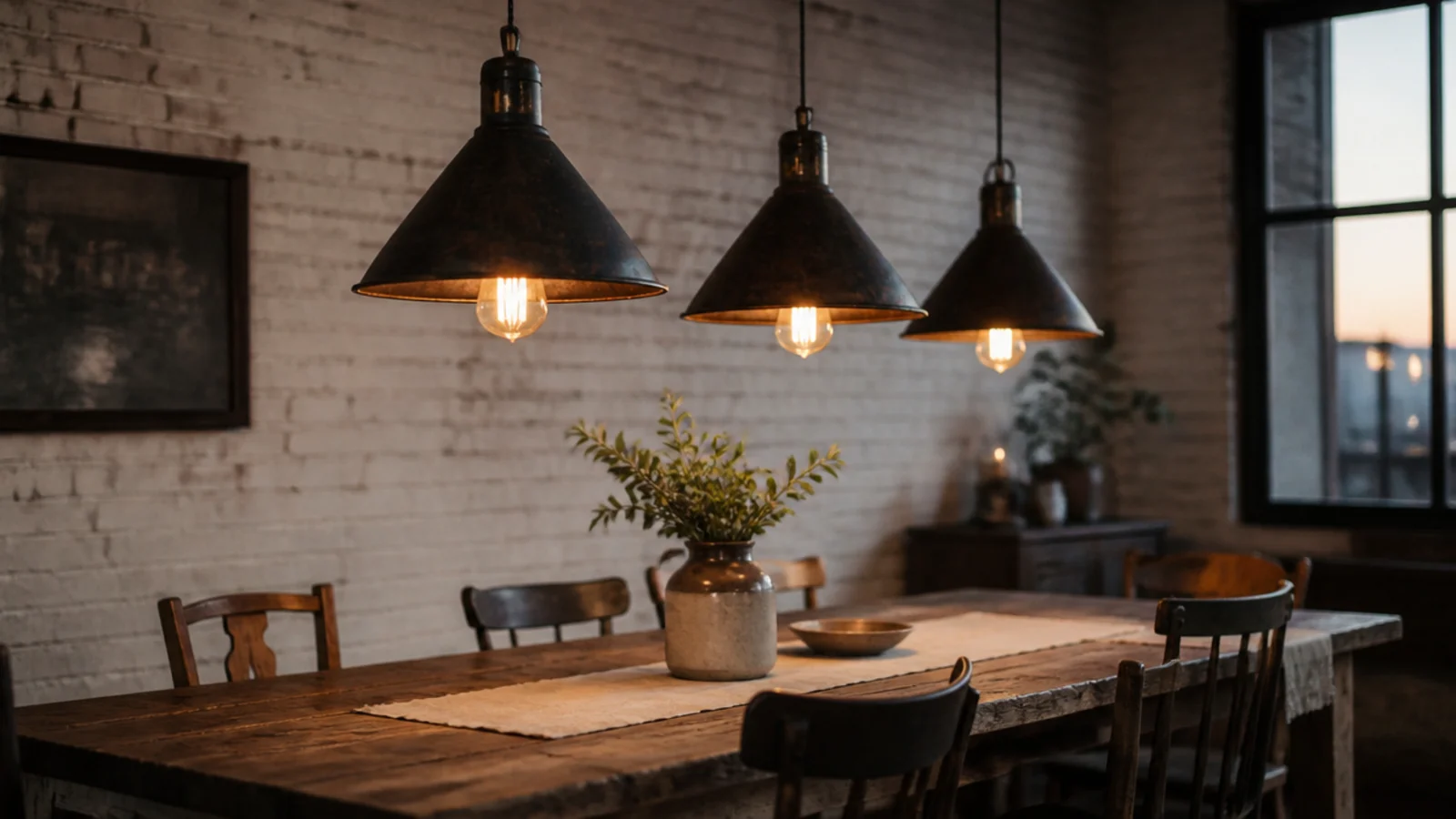
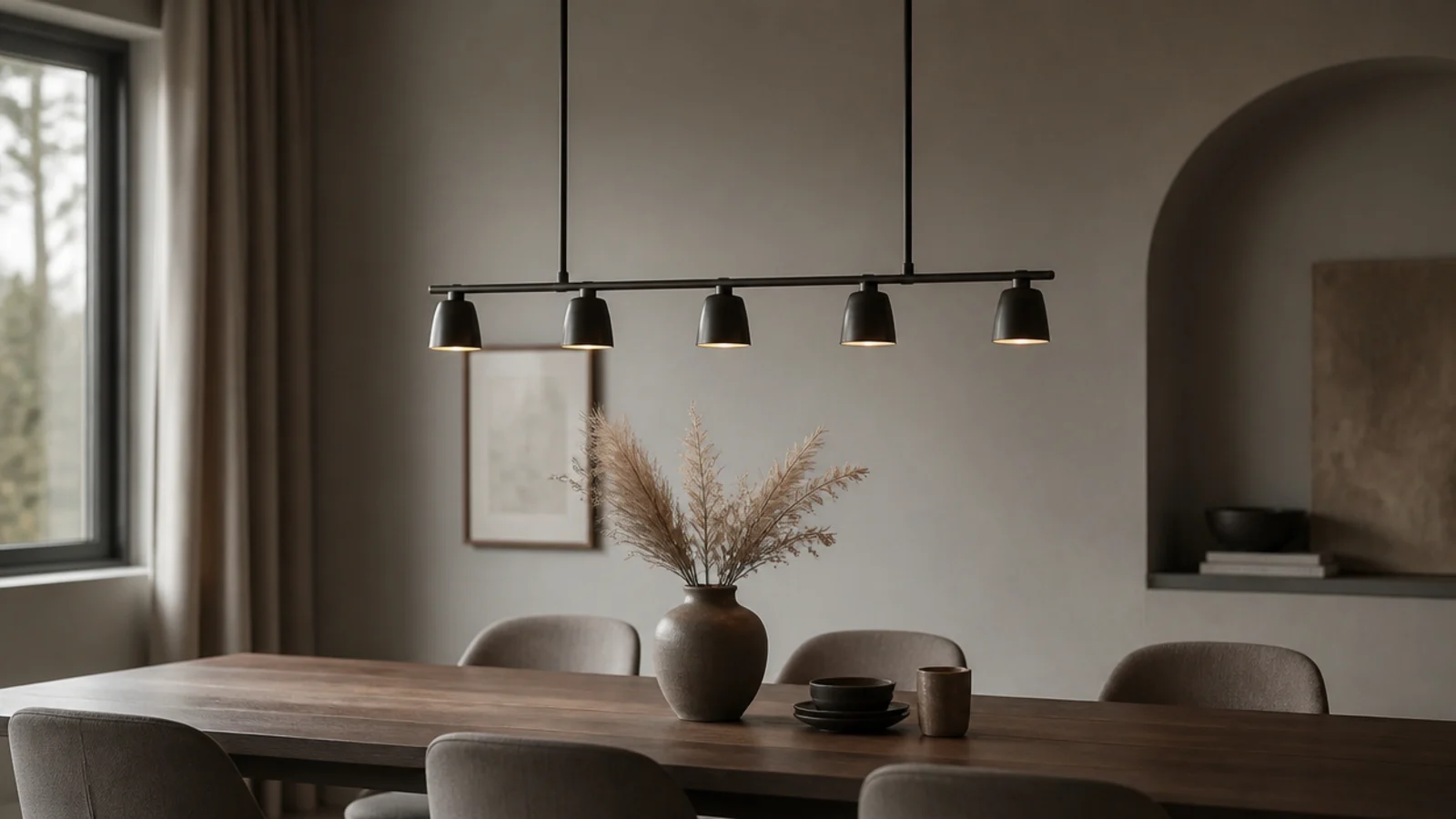
Three shades at 24 to 30 inch centres suit a table of 84 inches or more. Keep at least 12 inches between the outer shade and the table end, and use identical bulbs from one box so the three read as a single fixture rather than three lights.
6. A single globe over a round table
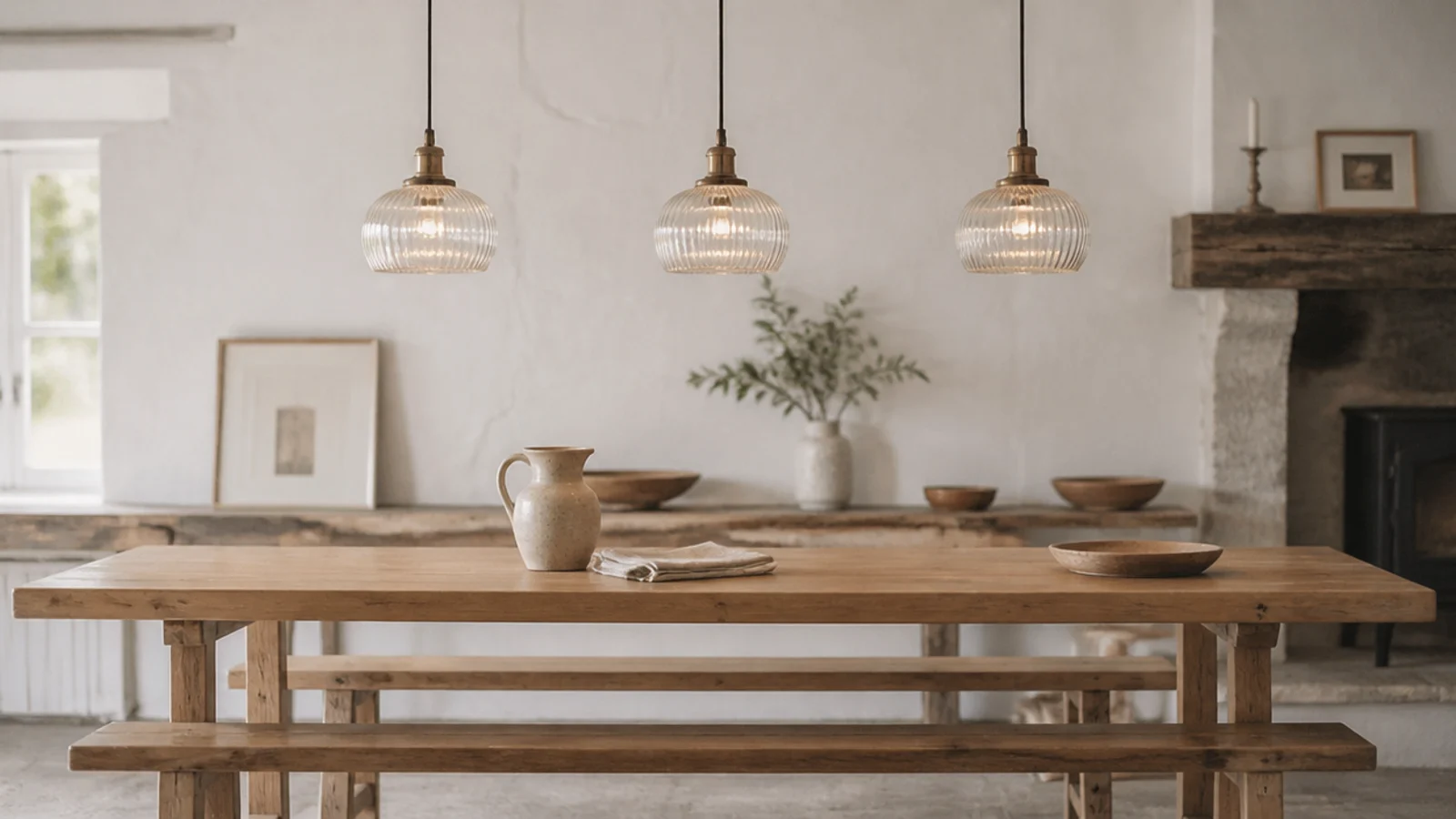
A round table takes one fixture, centred. A 42 inch round table suits a 16 to 20 inch opal globe at 32 inches above the top. Opal rather than clear, because everybody at a round table looks slightly upward across it.
7. Keep the shade twelve inches inside the table
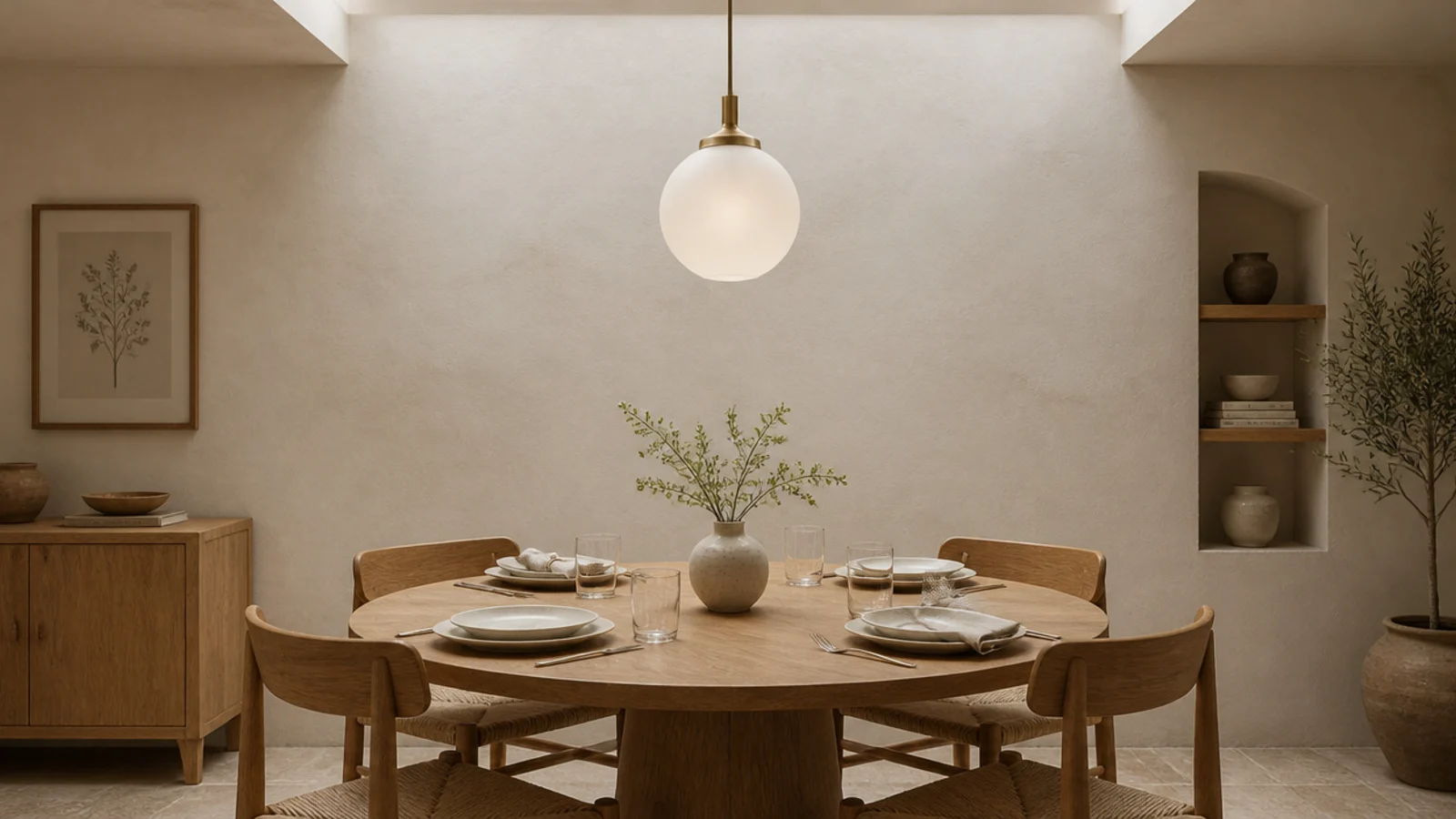
The fixture should be at least 12 inches narrower than the table on every side that people stand up from. This is the measurement that stops somebody catching a shade with their head as they push back a chair, and it is worth checking with a chair actually pulled out.
8. Add three inches of drop per foot of ceiling
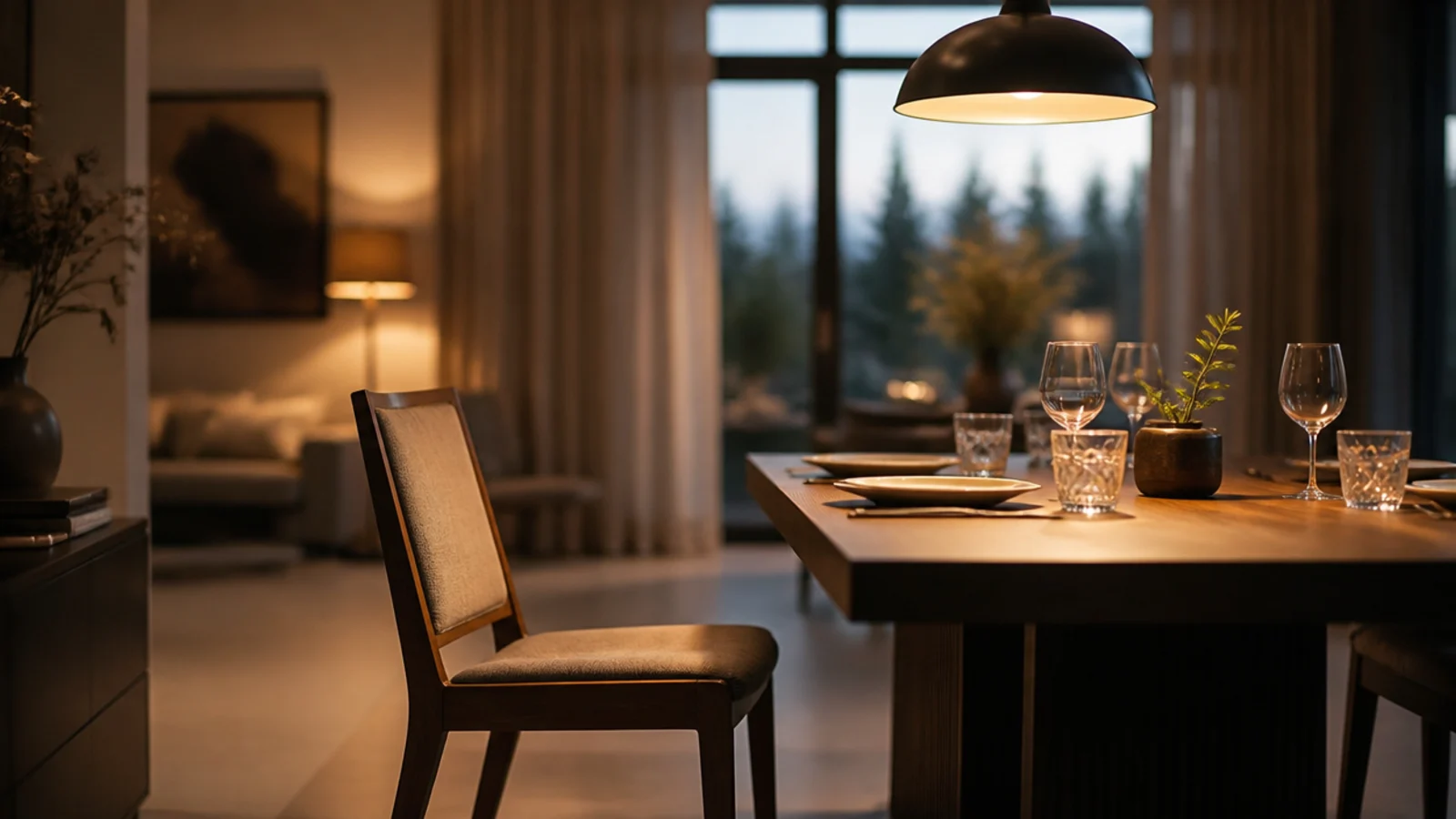
On a 10 foot ceiling, add about 6 inches to the standard drop so the fixture still relates to the table rather than floating near the plaster. Check the supplied cord or chain covers it — most cord kits ship at 72 inches, which is tight on a 10 foot ceiling.
9. A dimmer that reaches twenty per cent
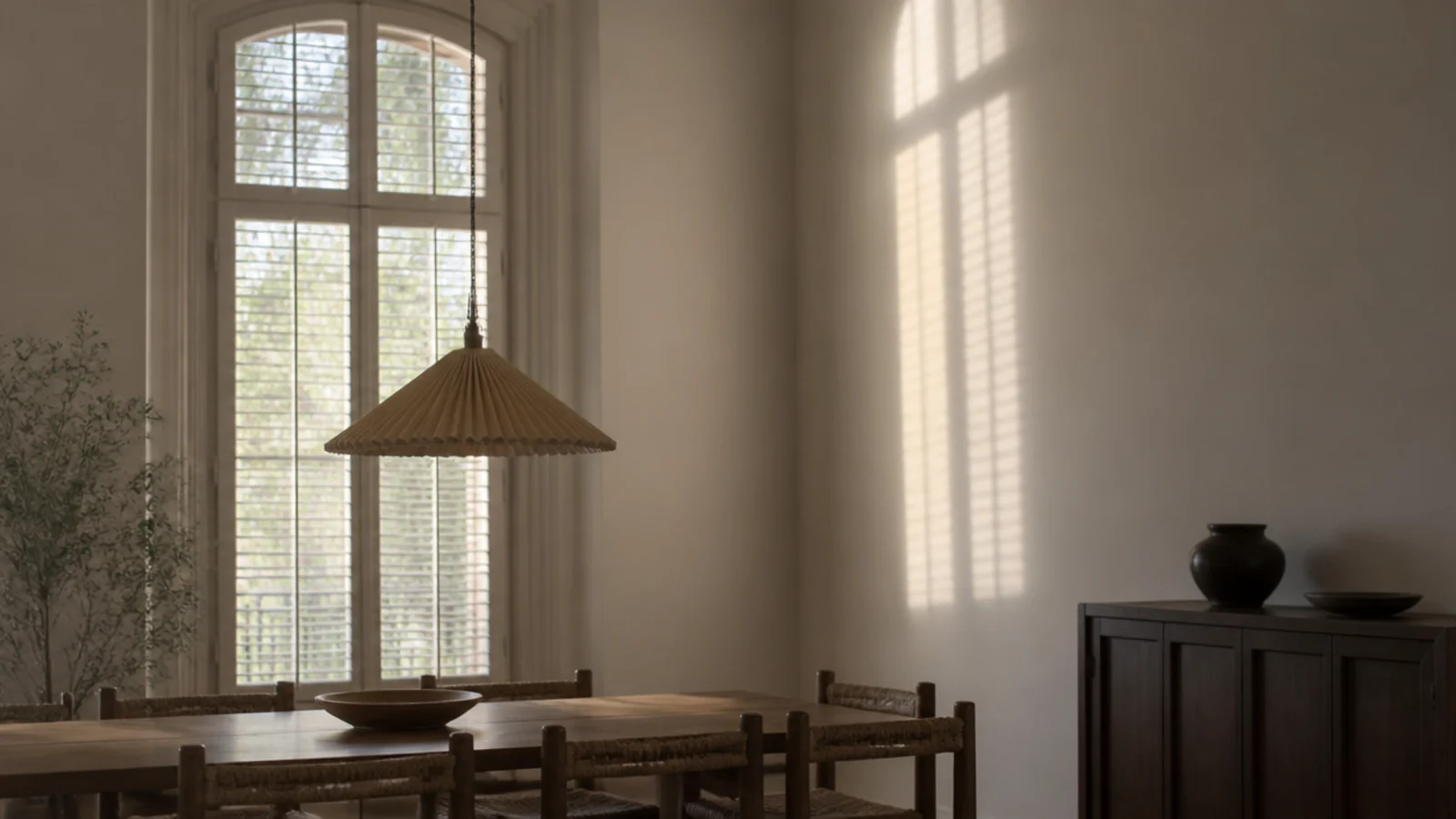
Dining light is judged at night with food on the table. A trailing-edge LED dimmer at $20 to $35 is the difference between a room you eat in and a room you linger in. Check the driver dims to 20 per cent or lower before buying an expensive fixture.
10. Warm 2700 kelvin with high colour rendering
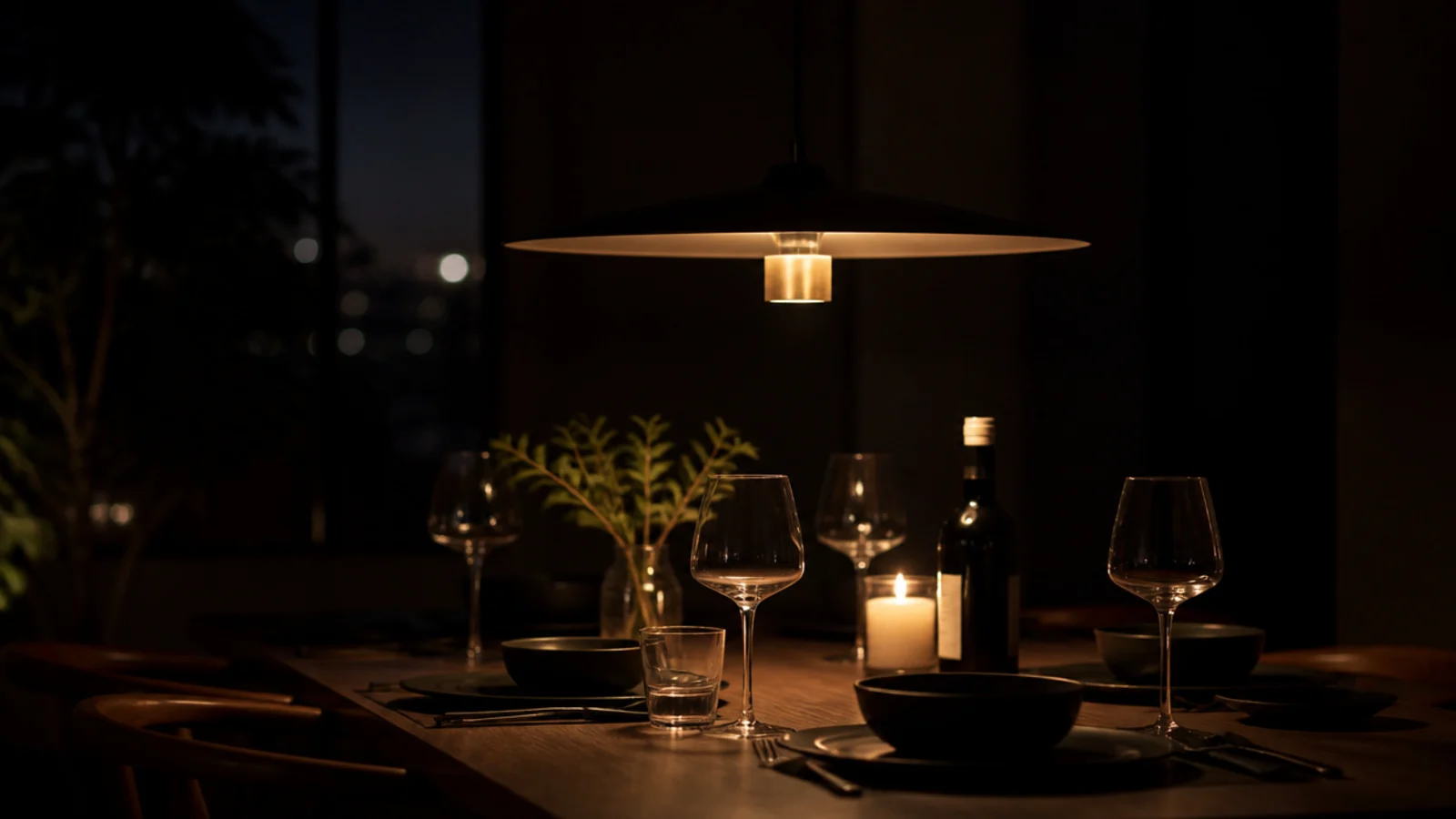
2700K with CRI 90 or above renders food and skin properly. Under CRI 80 a roast looks grey and everyone at the table looks tired. Good bulbs are $10 to $20 each, which is trivial next to the fixture and the meal.
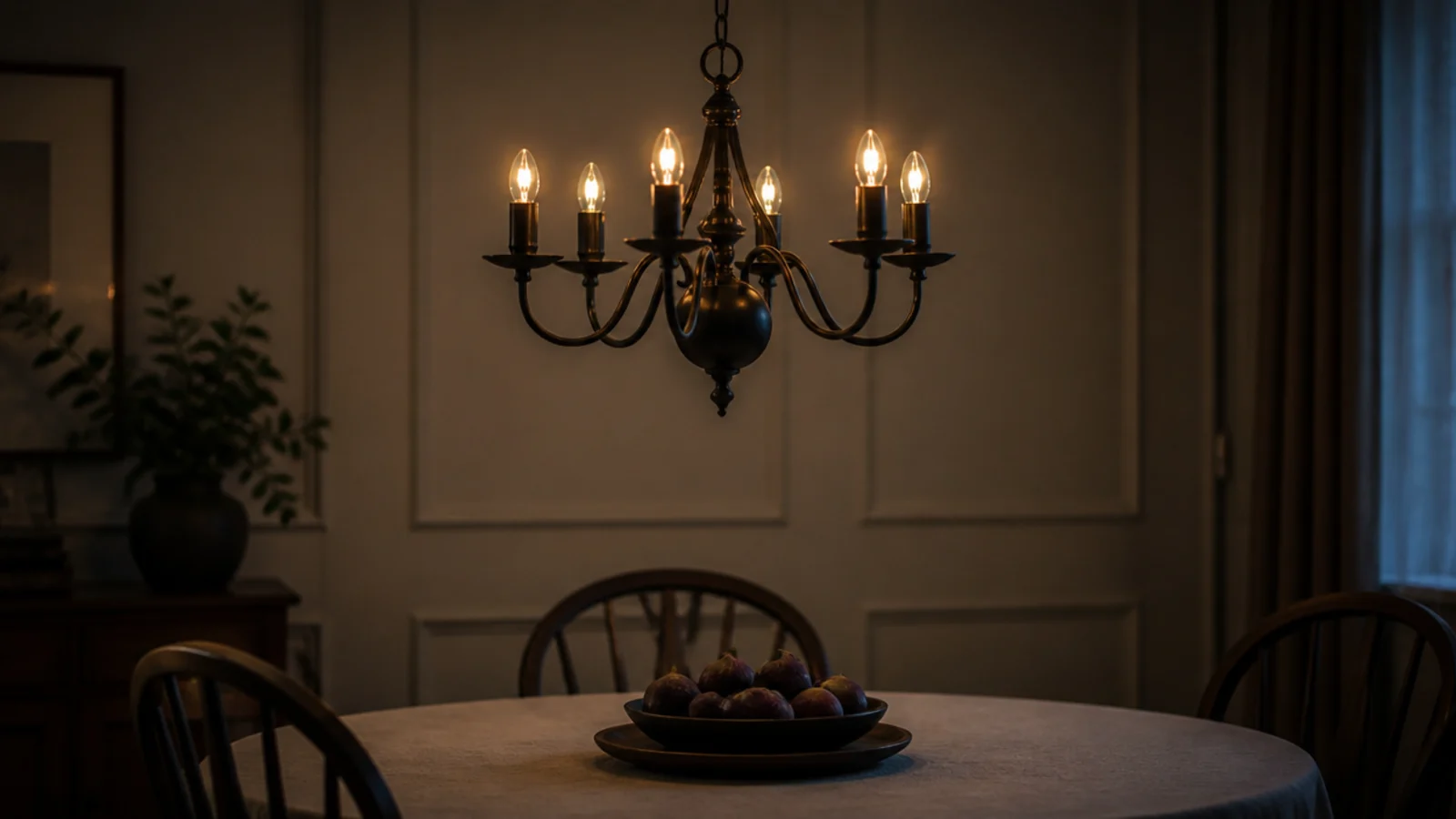
11. Small candle bulbs in a compact chandelier
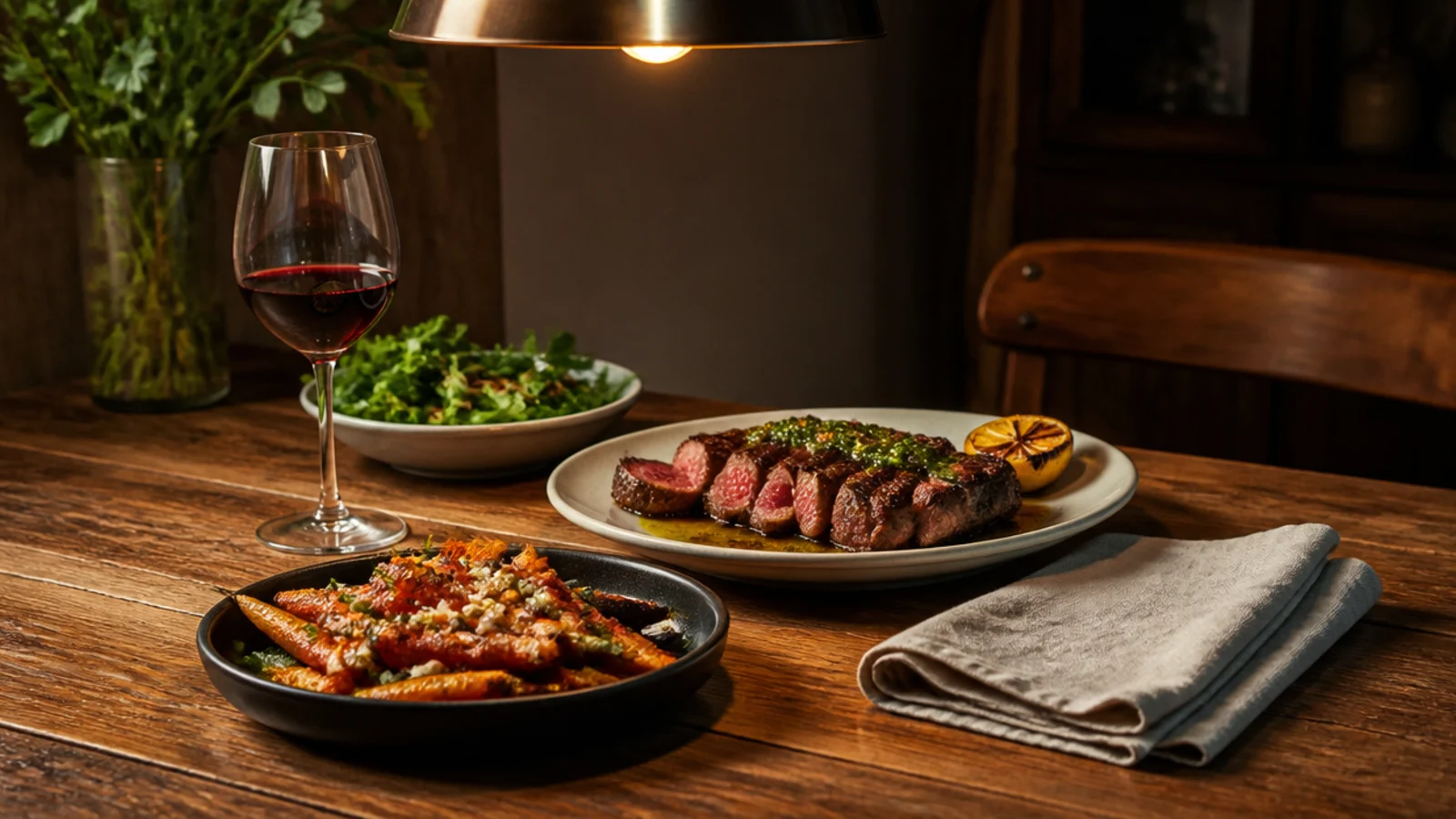
Six 200 lumen candle bulbs read far better over a table than one 1,200 lumen source, because the eye has several points to settle on and none of them is harsh. Buy dimmable candle LEDs and run the whole fixture at half.
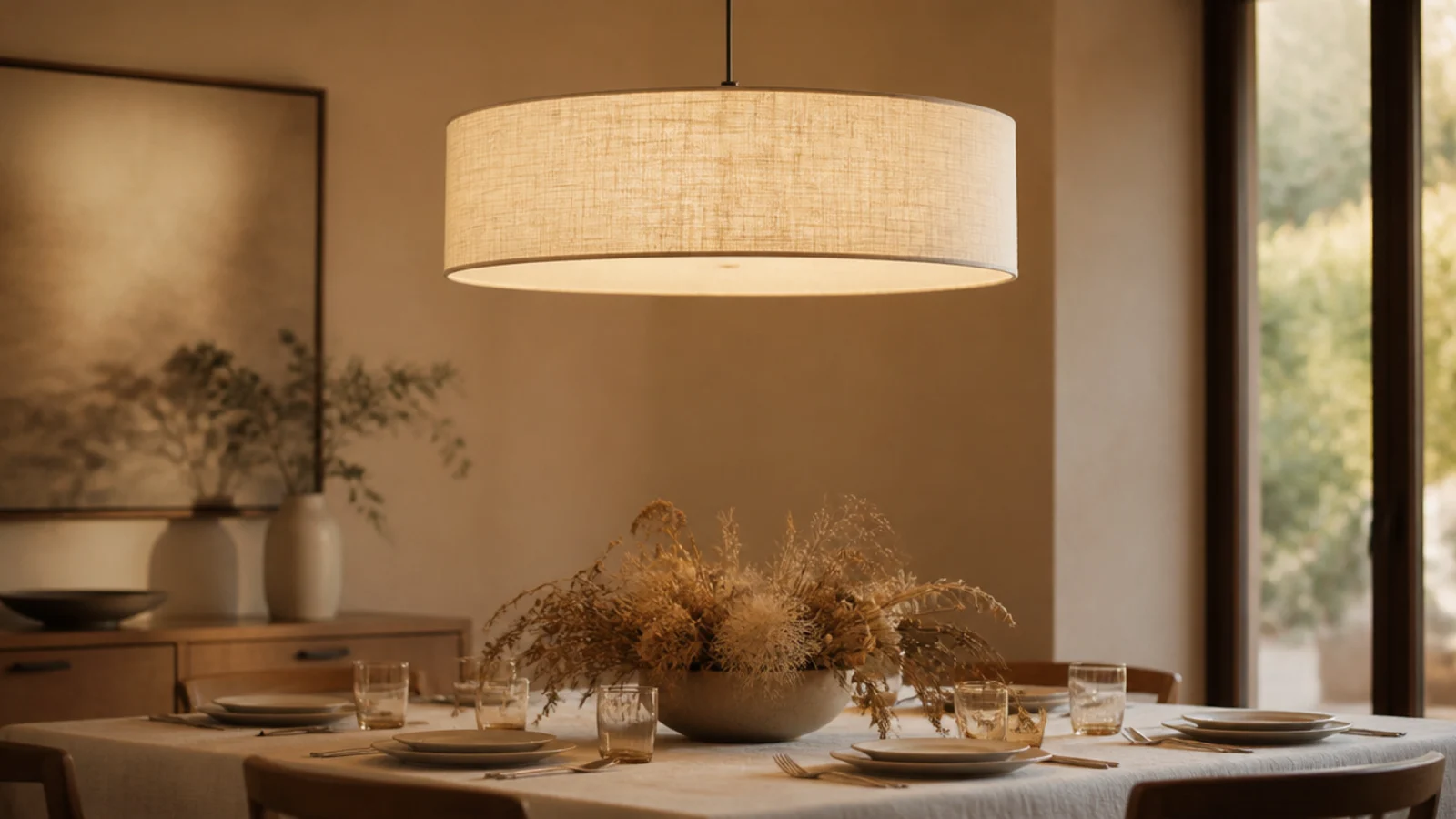
12. A drum shade for even diffuse light
Where a table seats six or more, a 20 to 24 inch fabric drum spreads light more evenly than any focused shade. It also throws light up onto the ceiling, which stops the room going black above the table. Check the wattage limit inside the rim.
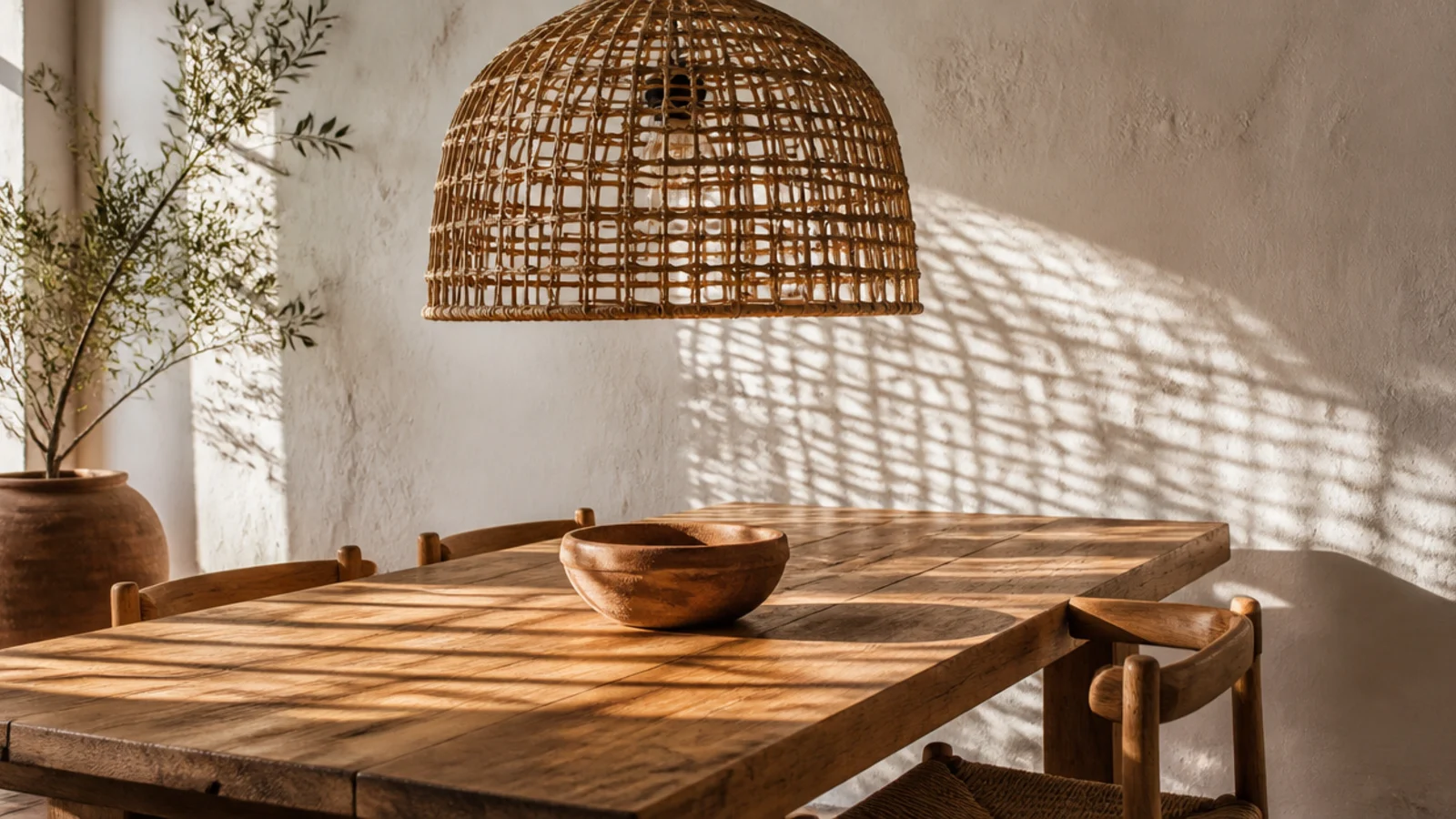
13. Rattan above a timber table
A woven shade over solid timber is the most forgiving combination in this article. It weighs 3 to 6 pounds, costs $50 to $130 and casts a lattice across the table that does half the styling. Keep it away from any adjacent hob. The rustic guide covers the material family.
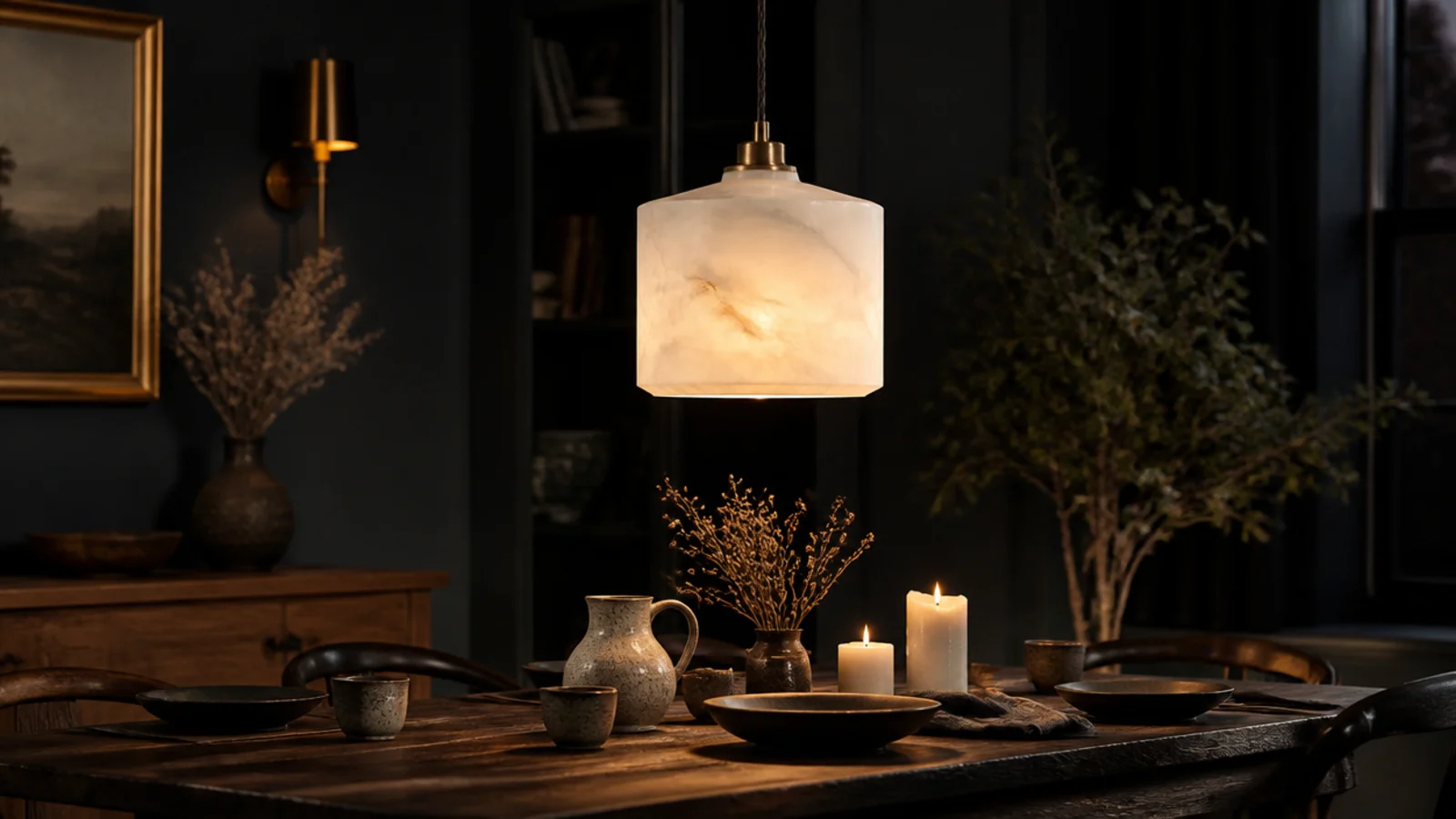
14. Alabaster that glows over the table
Translucent stone transmits light rather than reflecting it, which is the warmest thing you can hang over a dinner table. Keep the bulb at 500 lumens or under. Alabaster shades weigh 8 to 25 pounds, so this is a fixture that needs the box rating checked first.
15. A cluster over a square table
A square table wants a group rather than a row. Three shades on a cluster canopy, staggered by 6 to 10 inches and grouped within a 20 inch footprint, fill the space above a 48 inch square table without any of them landing over a place setting.
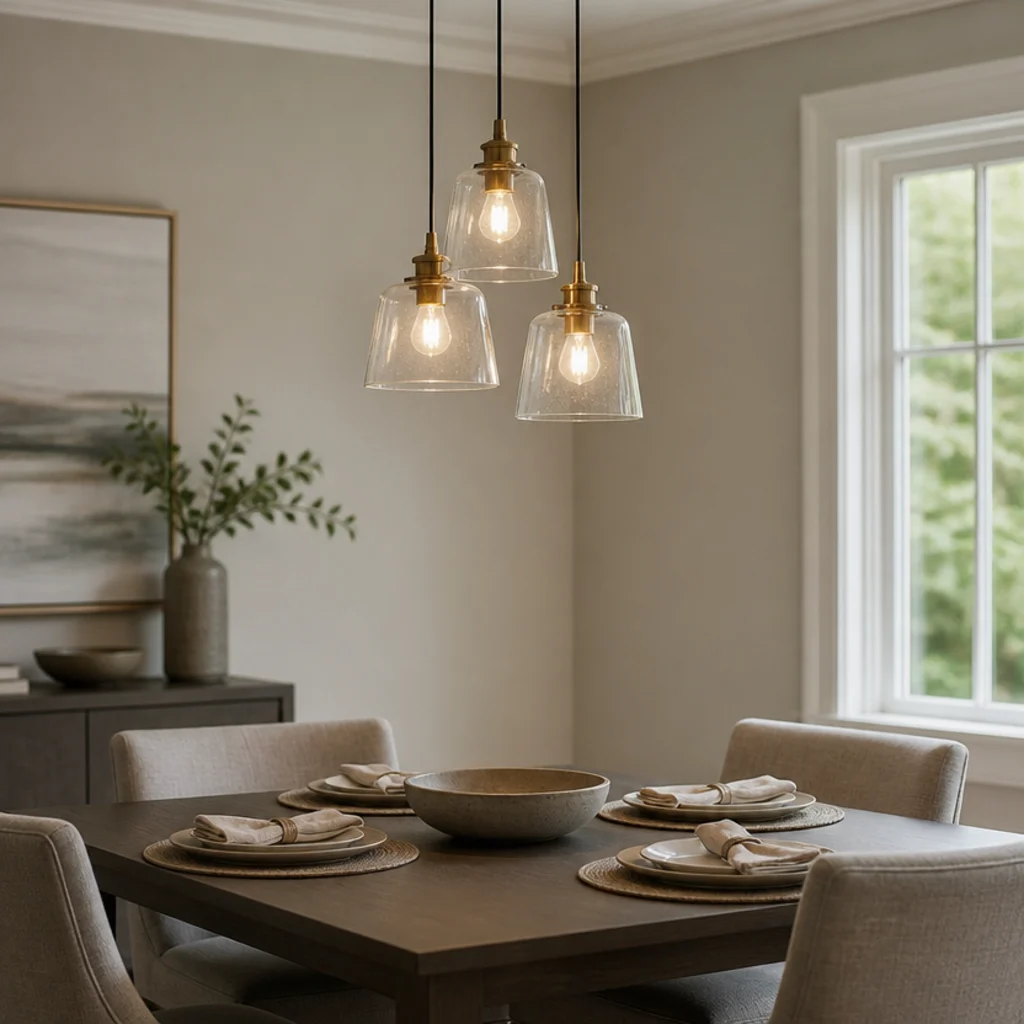
16. Planning for an extending table
Size the fixture for the table extended, not folded. A single shade centred on a 60 inch table looks lost the moment it opens to 96 for a dinner party. A linear fixture or a pair handles both states, which a single round shade never will.
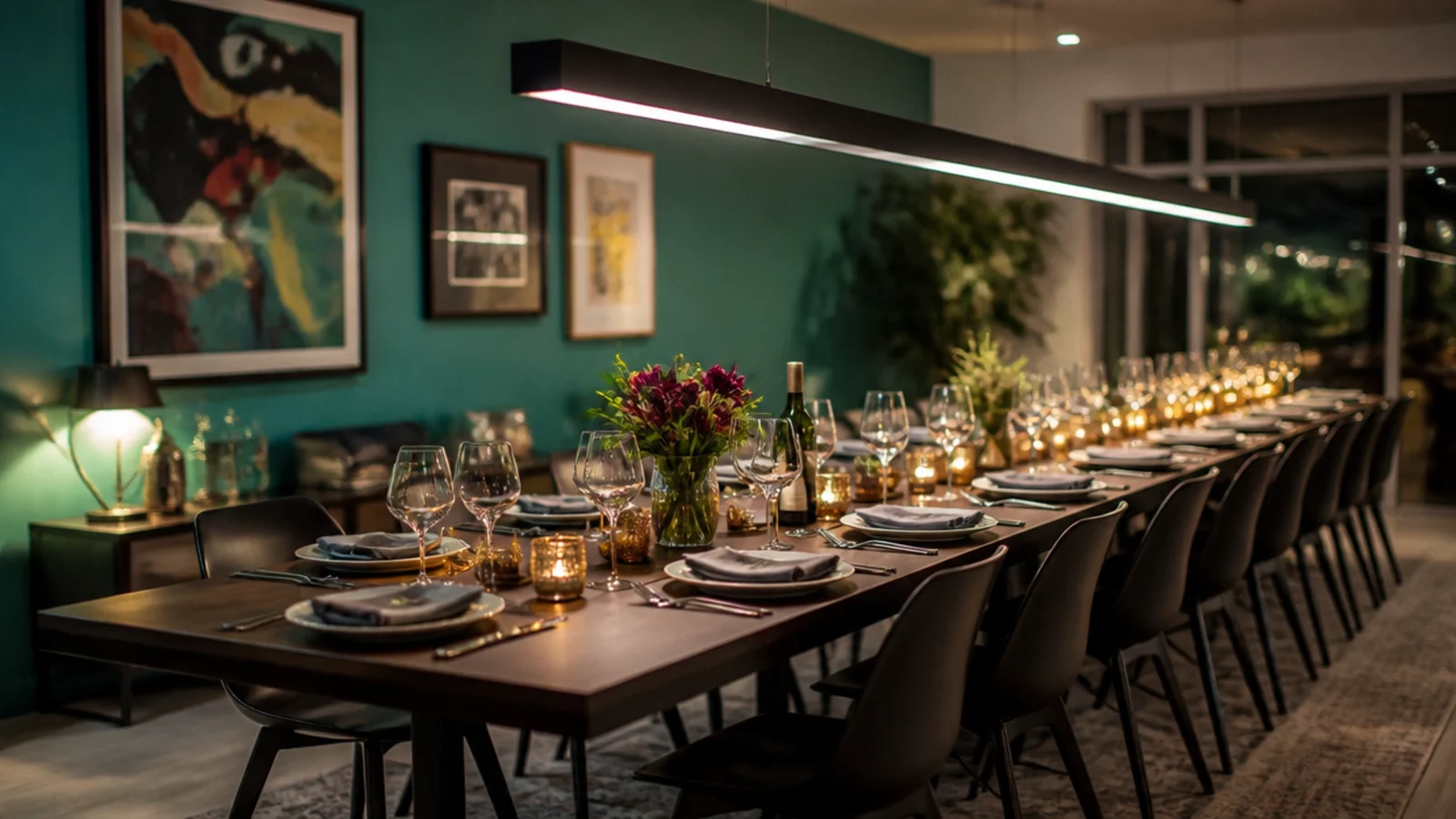
17. Protecting the sightline across the table
Sit down and look across before you commit. You should see the face of the person opposite without the shade cutting through it. If the fixture is in the way, raise it to 34 inches or choose a narrower profile rather than accepting it.
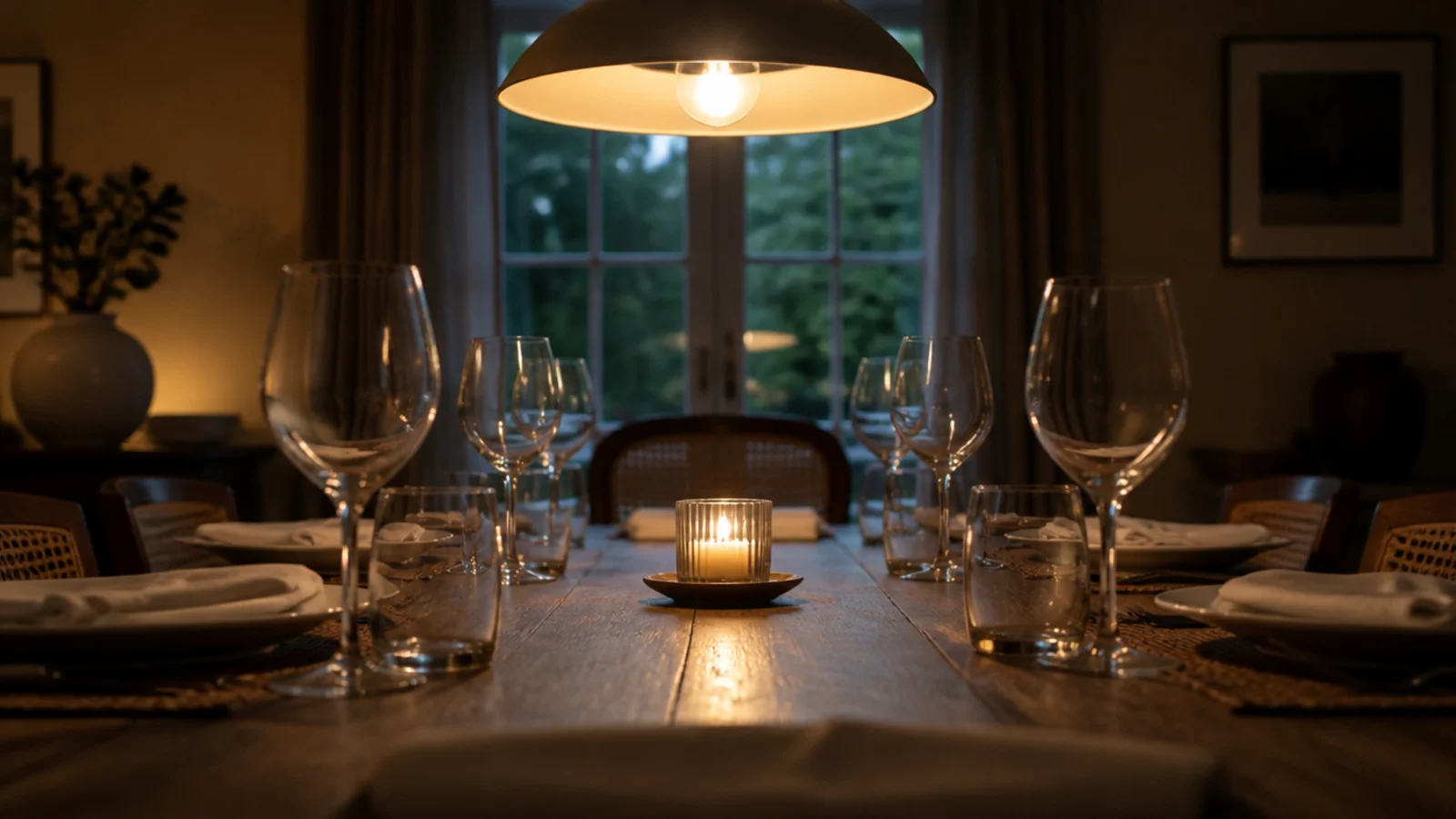
18. A downlight on the table as well
A single narrow-beam downlight aimed at the table adds sparkle to glassware that a diffuse pendant cannot. Use a 25 to 40 degree beam at low output, on the same dimmer circuit, and aim it at the centre of the table rather than the fixture.
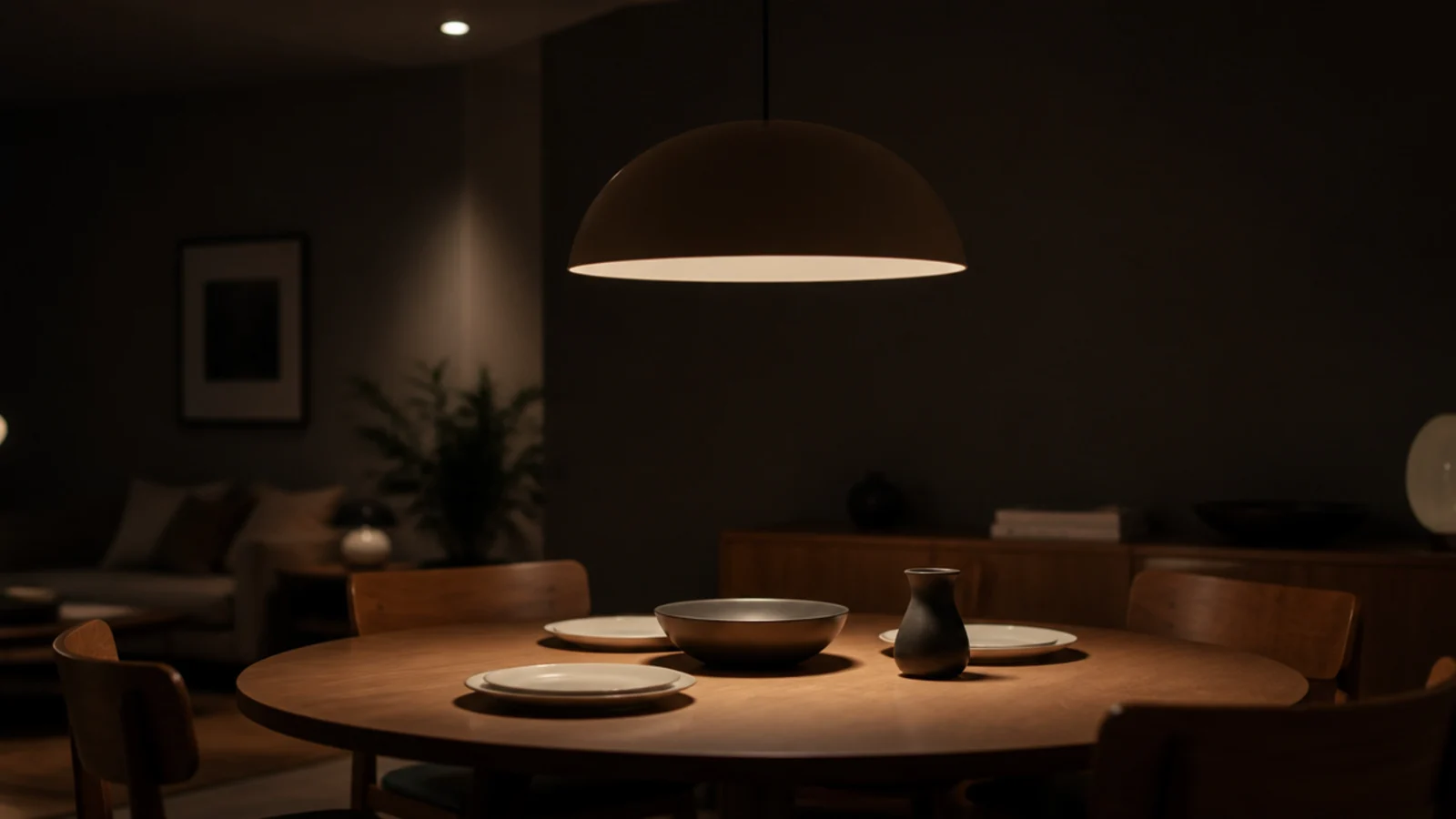
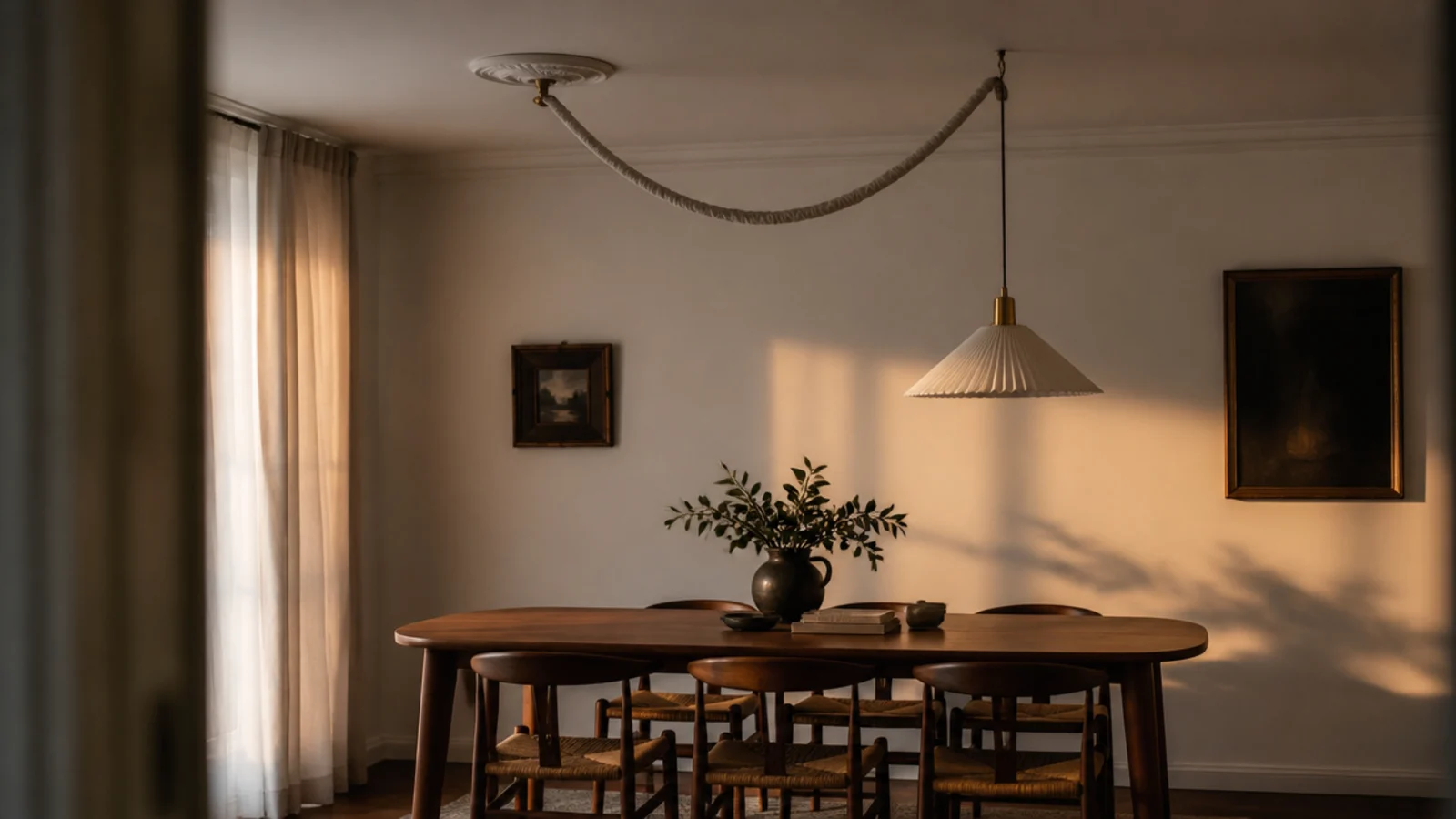
19. Swagging the light onto the table
Two hooks and a 15 foot cord move a fixture 3 to 6 feet for around $30. Screw the hook into a joist, or use a toggle rated 30 pounds and up, and run the cord along a ceiling line rather than diagonally across open plaster.
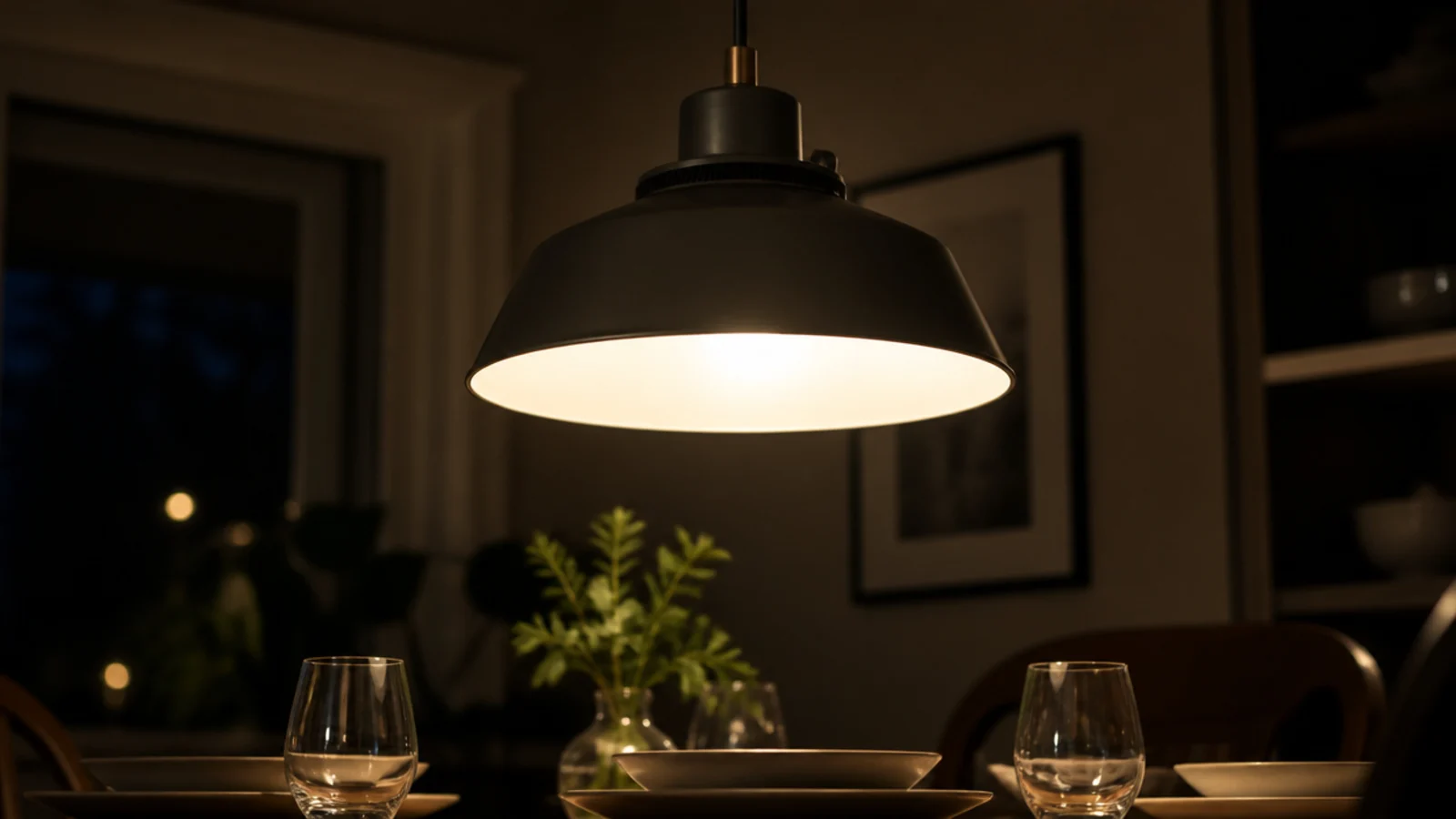
20. The shade interior decides the table light
A white or brass lining delivers noticeably more light onto the food than a dark one on the same bulb. Look up into any shade before buying it — the outside finish tells you how it looks and the inside tells you how it works.
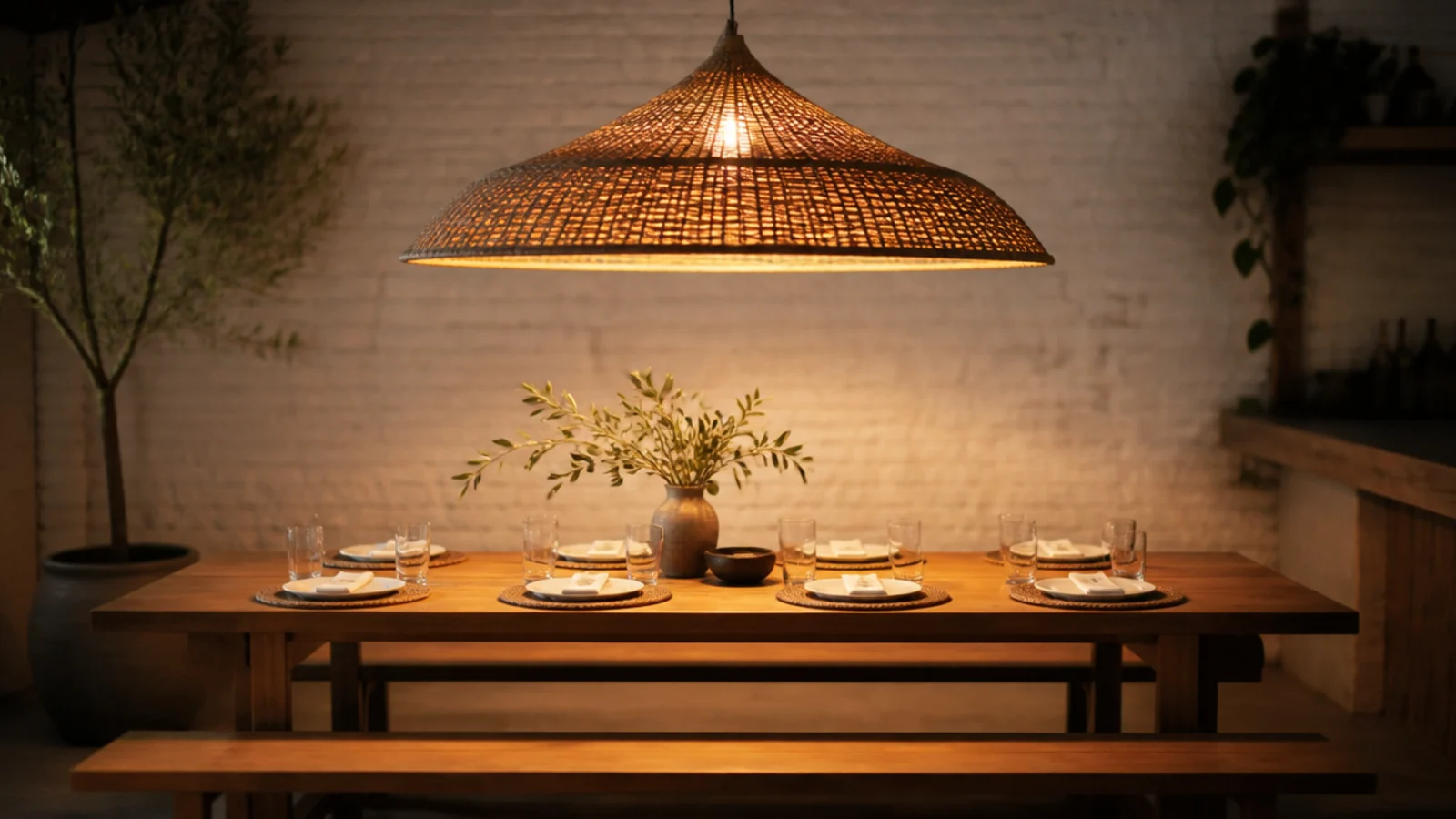
21. A wide shade over a bench seat table
Benches put people further from the table edge and closer together, so light needs to cover the full width rather than a central pool. A 24 inch drum or a linear bar suits a bench table where a 16 inch shade would leave the ends dim.
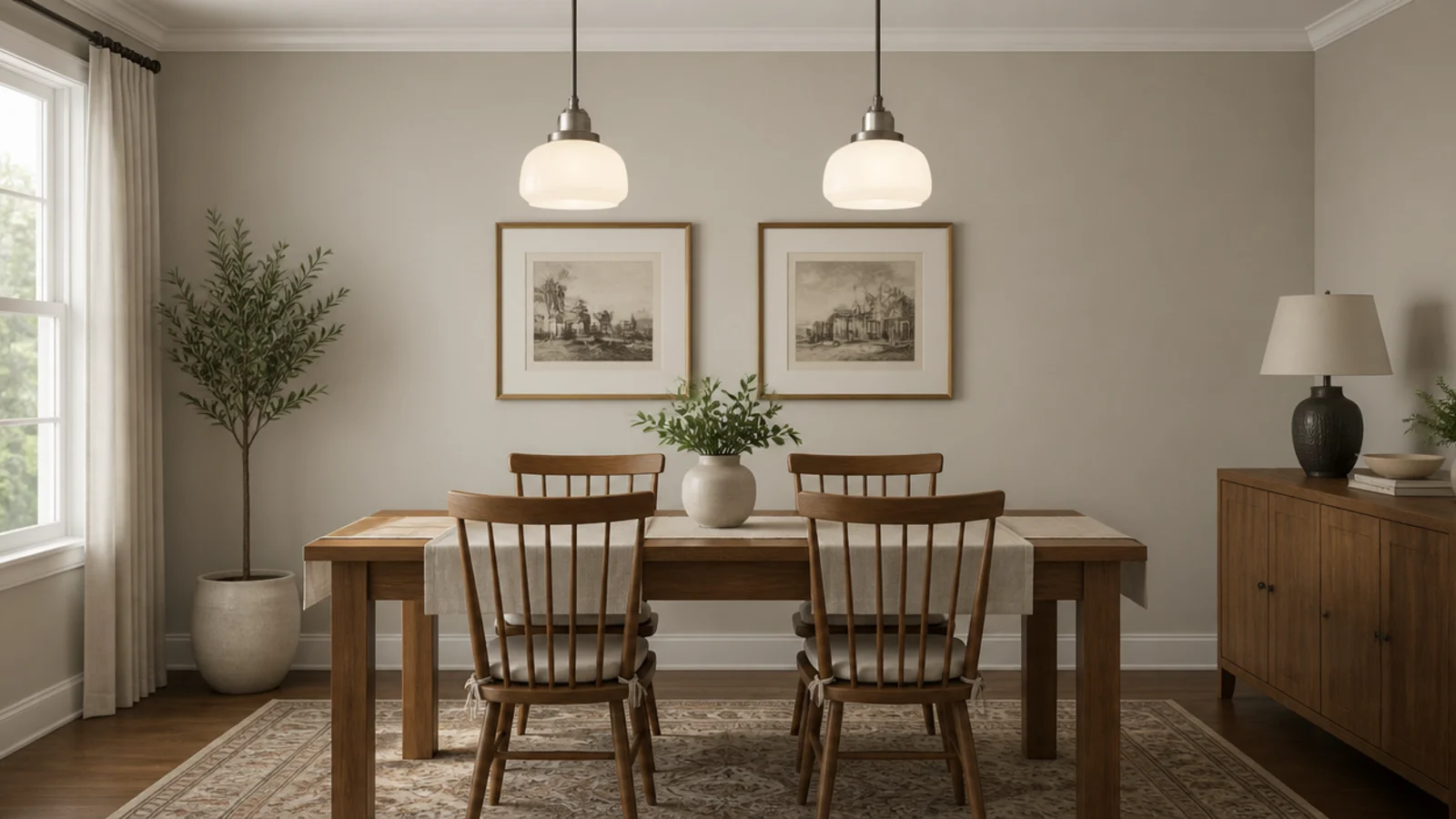
22. Two small fixtures instead of one large
Where a big fixture would overwhelm a modest room, two 12 inch shades at 30 inch centres give the same coverage with far less visual weight. It is also cheaper, and it makes an off-centre ceiling rose much easier to work around.
23. Weight of a chandelier and the ceiling box
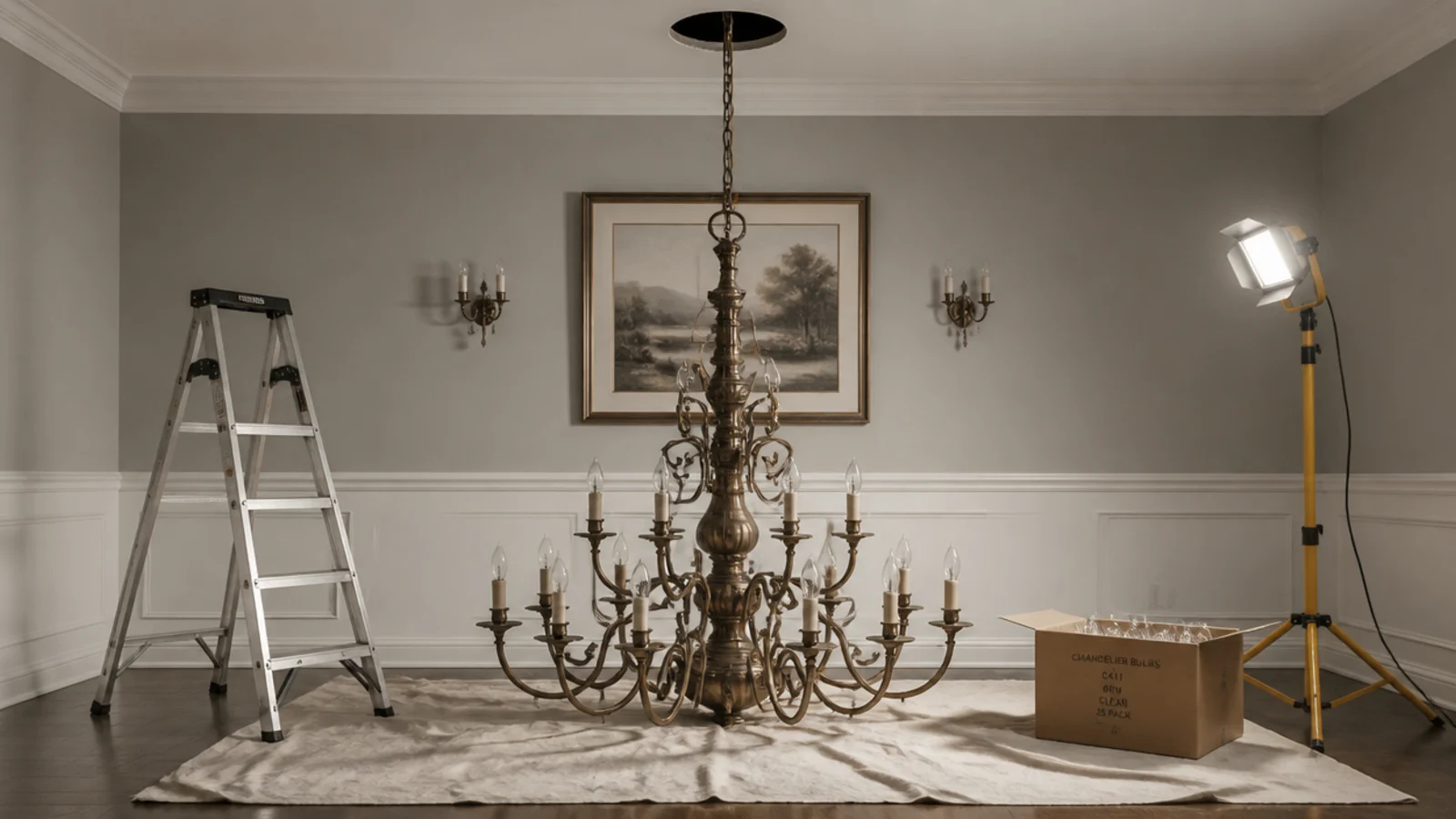
Multi-arm fixtures pass 20 pounds easily once the arms and bulbs are counted. A rated ceiling box carries the fixture weight and standard lighting boxes are listed for 50 pounds, so weigh the whole assembly and have a brace bar fitted between joists if the number is close.
24. Reaching the bulbs over a table
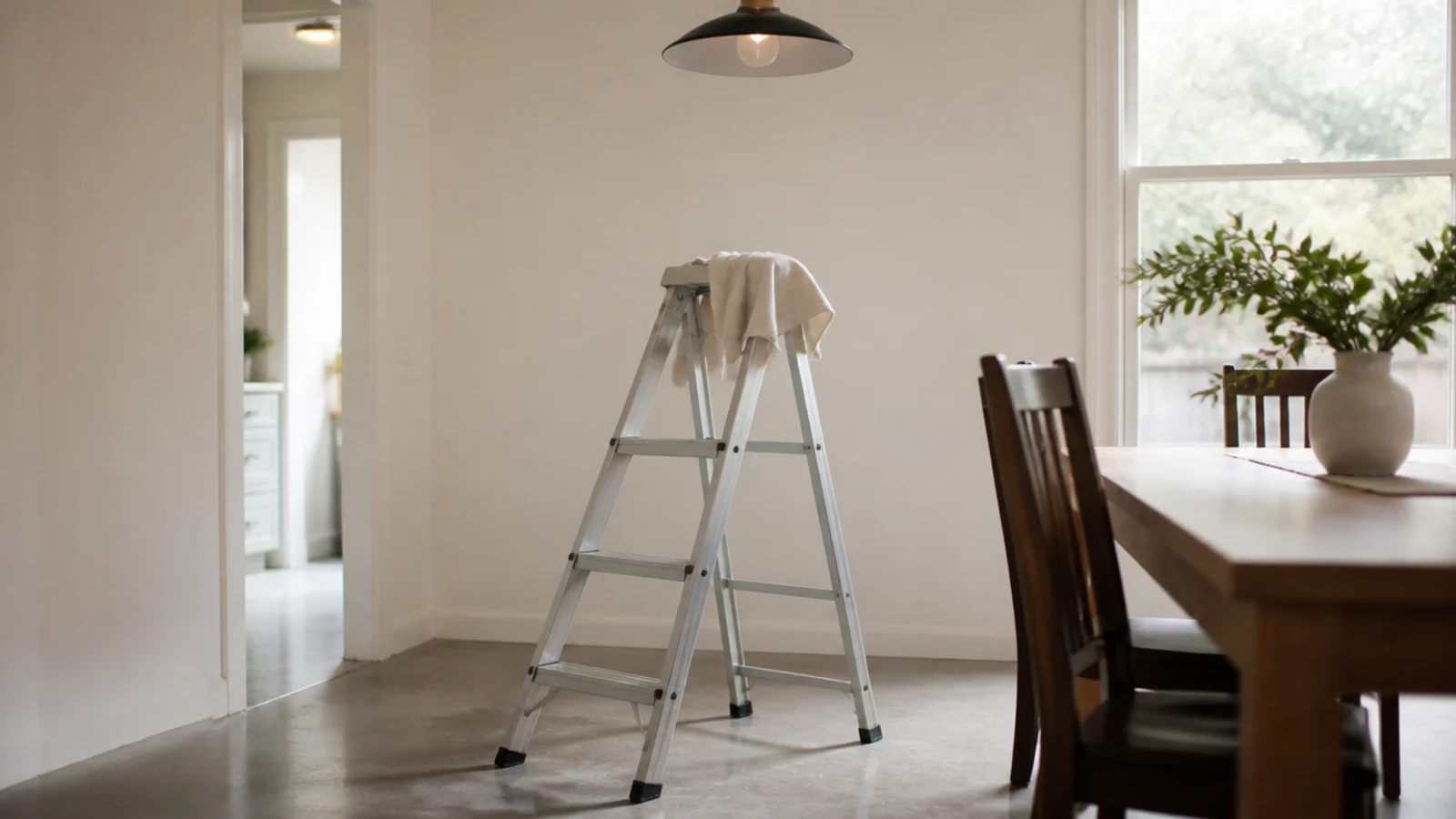
A fixture over a table is the hardest one in the house to reach, because the table is in the way of the ladder. Choose a fixture whose bulbs you can change with the table pushed a foot sideways, or accept that you will not change them often.
25. Matching the fixture to the table shape
Long fixtures over long tables, round over round, clusters over square. It sounds obvious and it is the mistake I correct most, usually where a beautiful round shade has been bought for a 96 inch rectangular table. A mirror on the dining wall doubles whichever one you choose, so choose the right one first. The main guide covers the rest of the house on the same principles.
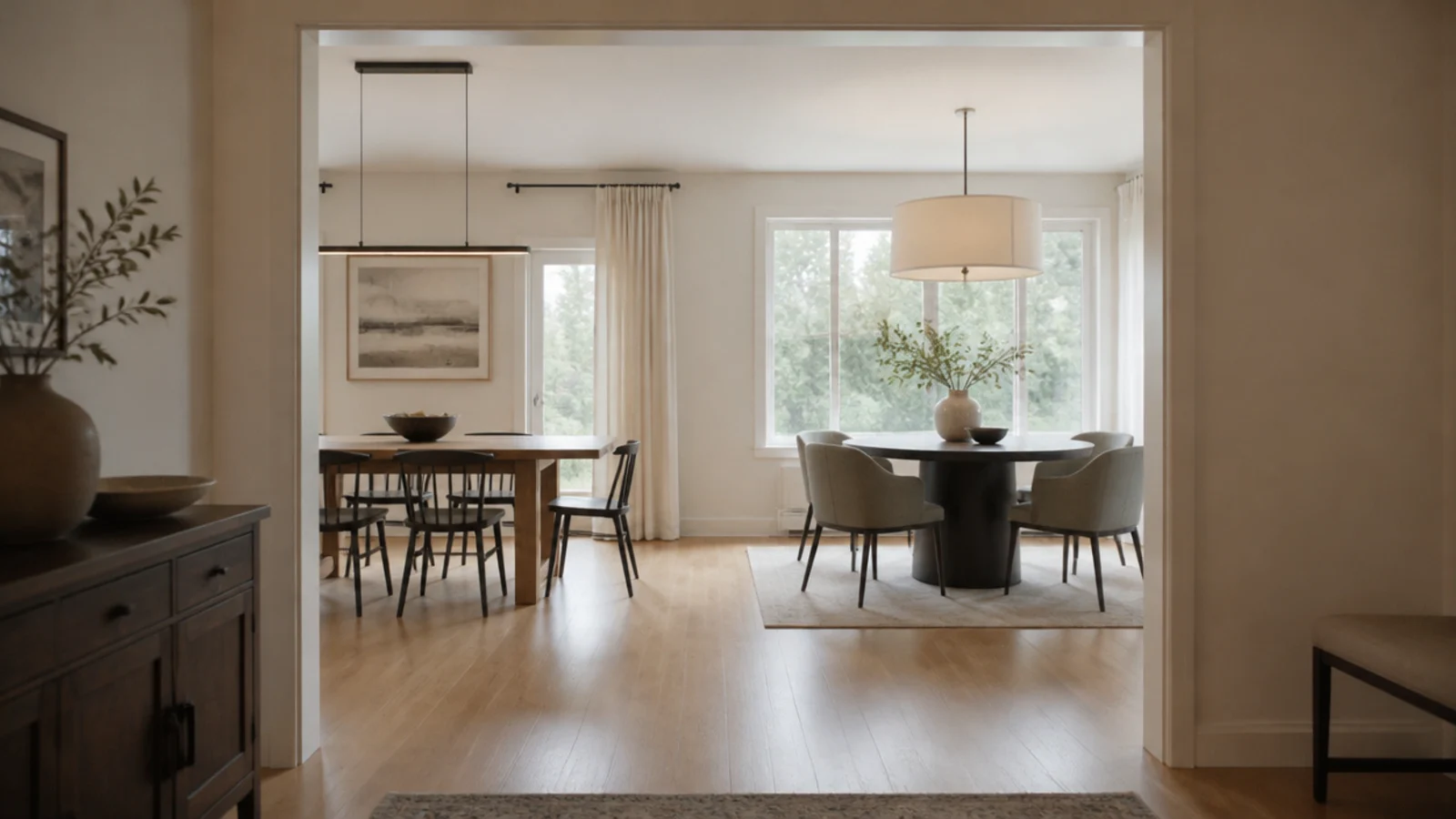
Where the dining table doubles as the main surface in a living space, the living room centre table guide covers the lower fixture heights that suit a seating group.
Mistakes to Skip
- Centring the fixture on the ceiling rose. The table is what the light is read against, and moving the fixture costs about thirty dollars.
- Buying a round shade for a long rectangular table. One shade over a 96 inch table leaves both ends in shadow, and no amount of brightness fixes the proportion.
- Hanging it high because the ceiling is high. The drop is measured from the tabletop, and a fixture at 48 inches above a table has stopped belonging to it.
- Skipping the dimmer. A dining fixture at full output is a work light, and every dining room I have improved most cheaply was improved by a $25 dimmer.
Frequently asked questions
How low should a light hang over a dining table?
Between 30 and 34 inches from the tabletop to the bottom of the shade on a standard eight foot ceiling. Nobody walks across a table, so the fixture can sit far lower than anywhere else in the house. Add roughly three inches of drop for each extra foot of ceiling height above eight feet.
What size fixture suits my dining table?
Aim for a diameter of about half the table width, and never wider than the table minus twelve inches. A 40 inch wide table takes a shade around 20 inches across. For a long rectangular table, a linear fixture at half to two thirds of the table length works better than a single round shade.
How many pendants over a dining table?
One centred fixture for a round or square table, and two or three evenly spaced for a rectangular table over 72 inches. Space multiple pendants 24 to 30 inches apart on centre and keep at least 12 inches between the outer shade and the end of the table.
How bright should a dining fixture be?
Around 400 to 600 lumens at full output in a 2700K bulb with a CRI of 90 or above, on a dimmer that genuinely reaches twenty per cent. Dinner light should be low enough that the table is the brightest thing in the room and the walls fall away into shadow.
Should the light be centred on the table or the room?
On the table, always. Ceiling roses land where the builder put them, which is rarely the middle of where a table ends up. A swag hook or a ceiling plate moves the fixture for under thirty dollars, and a light centred on nothing is the most common dining room mistake there is.
Want more like this? Browse all 15 hanging lights guides — they all use the same measurements and budget tiers.
Pin it for later
Save this to your Hanging Lights board
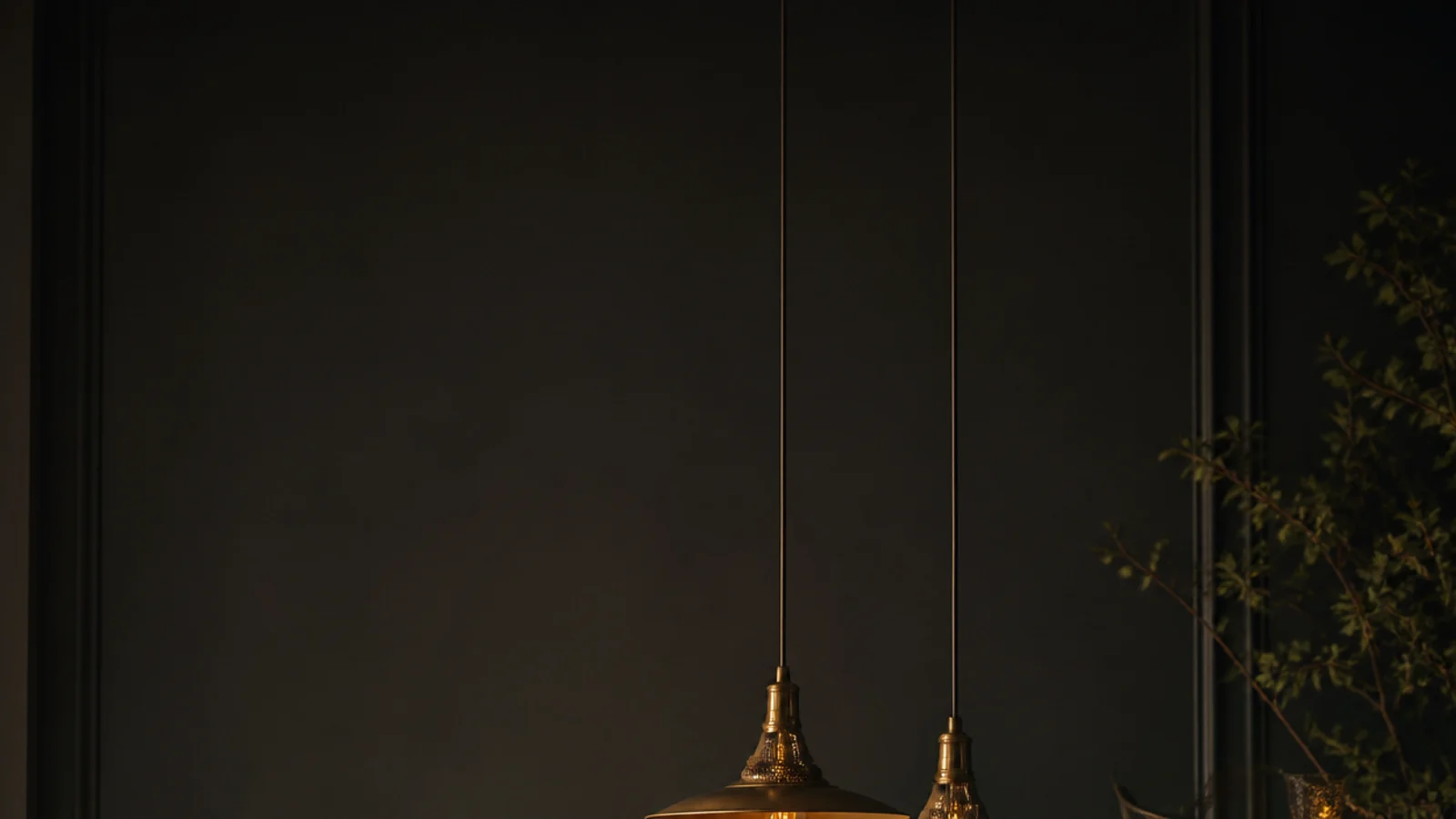
Pin it now so it is waiting for you when the tape measure comes out — and so the next person hunting for this idea can find it too.
Save this pinKeep going
More ideas worth saving while you have the tape measure out.