Hanging Lights · Review
15 Wooden Hanging Lights Compared By Bulb Type

Some links on this page may become affiliate links in future. I only recommend pieces I would put in my own home — see the affiliate disclosure.
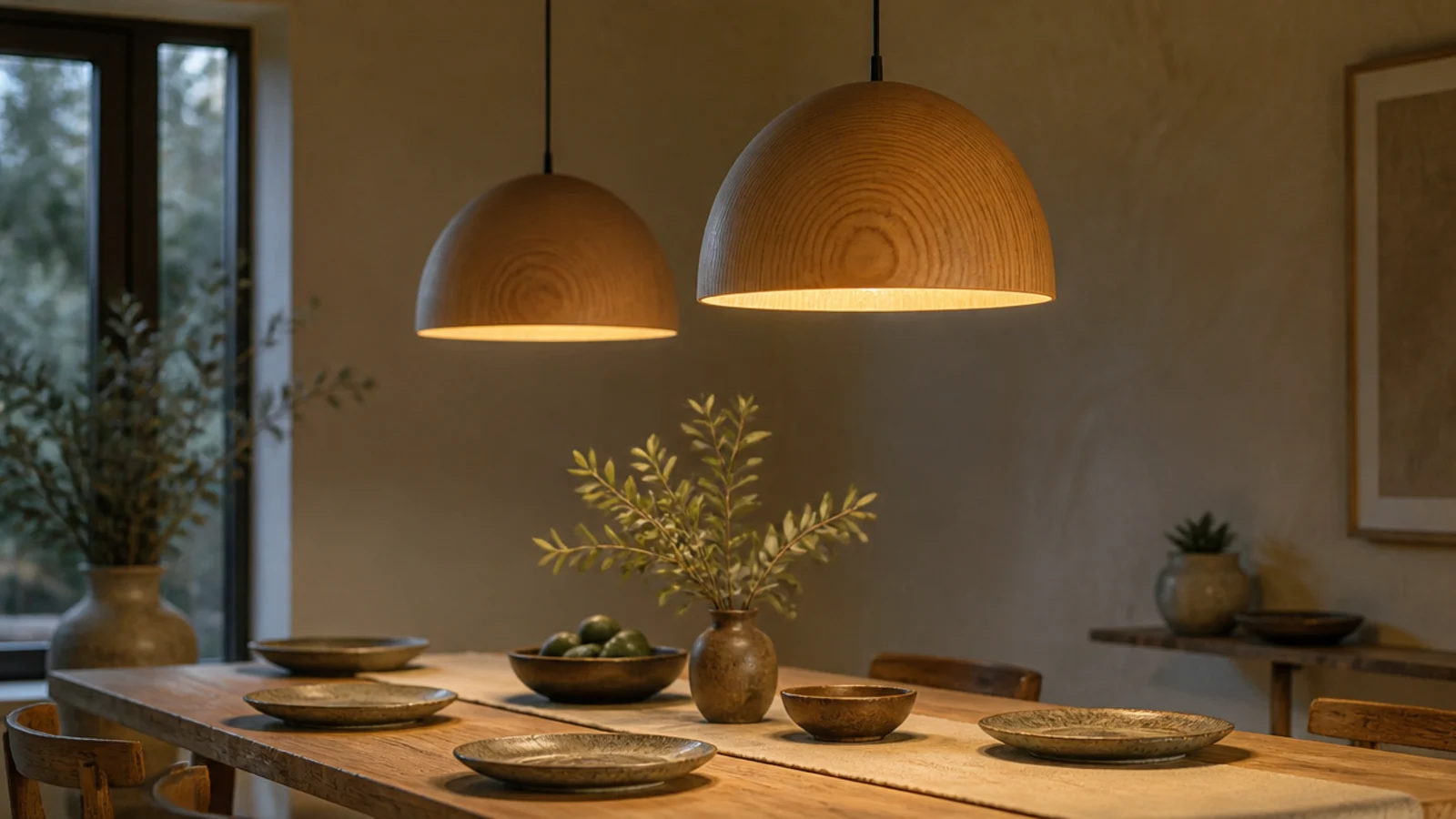
Timber shades are sold on grain and bought on faith. Almost no listing tells you the socket, the maximum wattage or what the shade weighs, and those three numbers decide whether the fixture works in your room and survives your kitchen. So this comparison is organised by bulb type first and looks second. Fifteen wooden hanging lights, every one rated on socket, lumen ceiling, weight and how the material copes with heat and steam, plus the seven I keep specifying.
In this guide10 sections — tap to openHide
- 1.How I Chose These Wooden Hanging Lights
- 2.The Full Comparison: 15 Wooden Hanging Light Types
- 3.The turned solid oak dome
- 4.The bent plywood shade
- 5.The reclaimed beam bar
- 6.The timber and glass hybrid
- 7.The slatted timber drum
- 8.The wooden pulley rise and fall
- 9.The sealed teak shade for a damp room
- 10.What to Check Before You Buy
How I Chose These Wooden Hanging Lights
Five criteria, weighted in this order.
- Socket and serviceability. A standard medium screw socket takes any bulb made for the next thirty years. A proprietary lamp or a bonded LED board turns a $200 timber shade into a consumable with a fixed lifespan, usually somewhere between year eight and year fifteen.
- Lumen ceiling. Timber absorbs light rather than bouncing it, so a wooden shade delivers noticeably less downward output than a white-lined metal one on the same bulb. I have listed the practical ceiling for each type — the point beyond which extra lumens go into the shade rather than the room.
- Heat clearance. Every shade carries a maximum wattage inside the rim, written for incandescent bulbs. LED makes it easy: a 9 watt LED gives the 800 lumens a 60 watt bulb used to. I still want 2 inches of air between bulb and timber, which rules out several tight shades.
- Weight against the ceiling box. A rated ceiling box carries the fixture weight, and standard lighting outlet boxes are listed for 50 pounds. Solid shades are fine; reclaimed beam fixtures at 20 to 40 pounds need a brace bar between joists, and hard-wiring is an electrician's job in most jurisdictions.
- Behaviour in humidity. This is where timber fixtures actually fail. Sealed hardwood and laminated plywood cope; raw pine, untreated bamboo and unfinished veneer swell, lift and delaminate above a hob or in a bathroom without extraction.
I did not weight brand, finish trends or how a shade photographs against a white wall. Everything below is described by construction and species, because the same shade appears under a dozen different labels and construction is what you are actually buying.
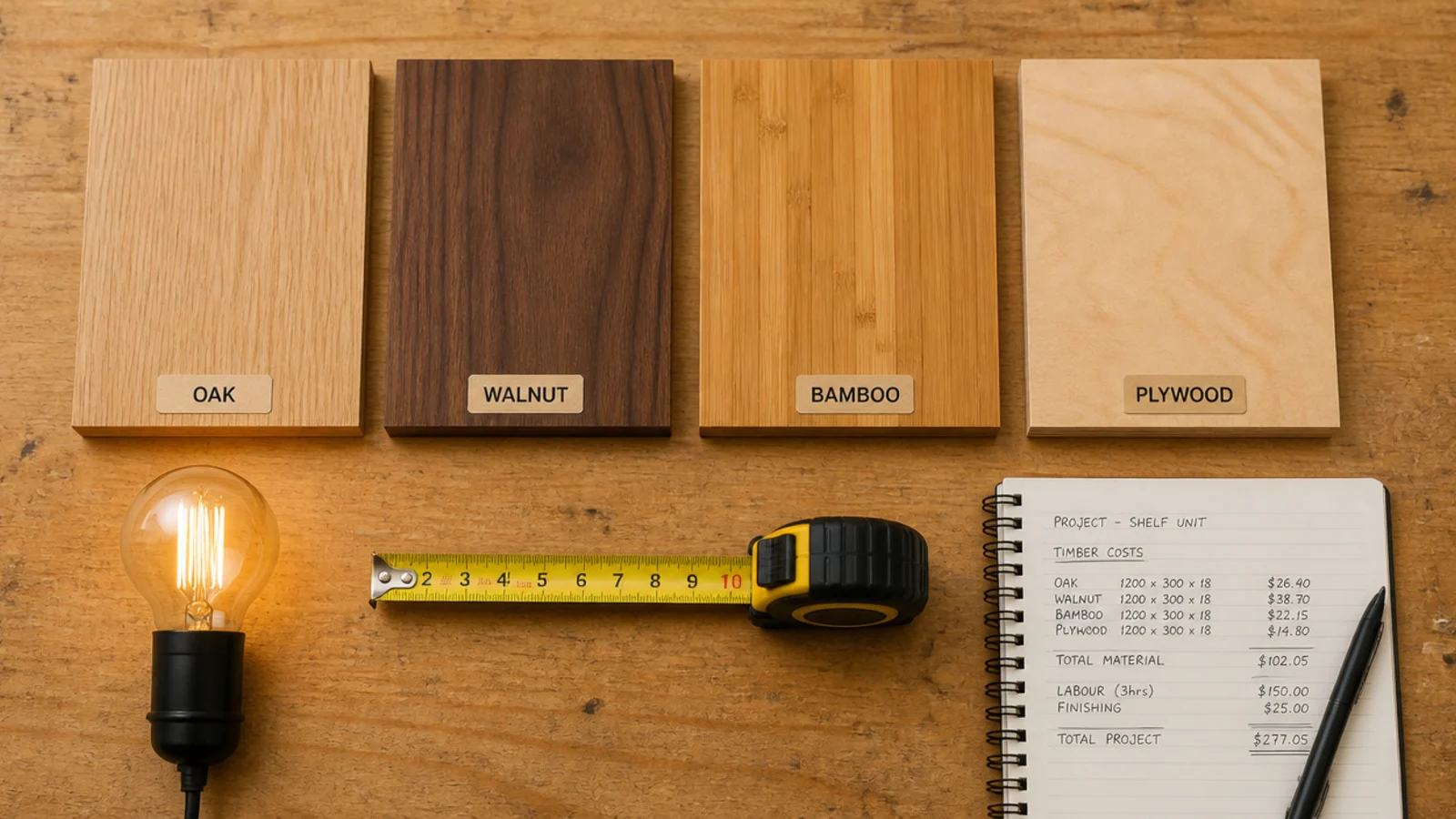
The Full Comparison: 15 Wooden Hanging Light Types
Price tiers: $ under $80 · $$ $80–$200 · $$$ over $200. Lumen figures are the practical ceiling for the shade, not the bulb maximum.
| Type | Socket | Lumen ceiling | Weight | Best room |
|---|---|---|---|---|
| Turned solid oak dome | Medium screw | 800 lm | 4–7 lb | Dining table or sideboard |
| Bent plywood shade | Medium screw | 600 lm | 2–4 lb | Living room or desk |
| Woven bamboo lantern | Medium screw | 600 lm | 2–4 lb | Bedroom away from steam |
| Solid walnut cylinder | Medium screw | 500 lm | 5–8 lb | Hallway or entry |
| Reclaimed beam bar | Four candelabra | 4 × 200 lm | 20–40 lb | Long dining table |
| Timber and glass hybrid | Medium screw | 800 lm | 4–8 lb | Kitchen island |
| Slatted timber drum | Medium screw | 500 lm | 3–6 lb | Bedroom or landing |
| Wooden bead cluster | Candelabra | 300 lm | 3–5 lb | Reading nook |
| Timber ring with candle lamps | Six candelabra | 6 × 150 lm | 6–10 lb | Wide round table |
| Veneer laminate globe | Medium screw | 700 lm | 2–3 lb | Living room |
| Wooden pulley rise and fall | Medium screw | 600 lm | 8–14 lb | Farmhouse kitchen table |
| Carved mango wood dome | Medium screw | 500 lm | 6–12 lb | Entry or stair landing |
| Ash tripod spot pendant | Twist-lock spot | 400 lm | 3–5 lb | Desk or artwork |
| Cork shade | Medium screw | 500 lm | 1–3 lb | Nursery or bedroom |
| Sealed teak shade | Medium screw | 600 lm | 4–7 lb | Bathroom outside the zones |
Seven of those are the ones I keep coming back to.
1. The turned solid oak dome
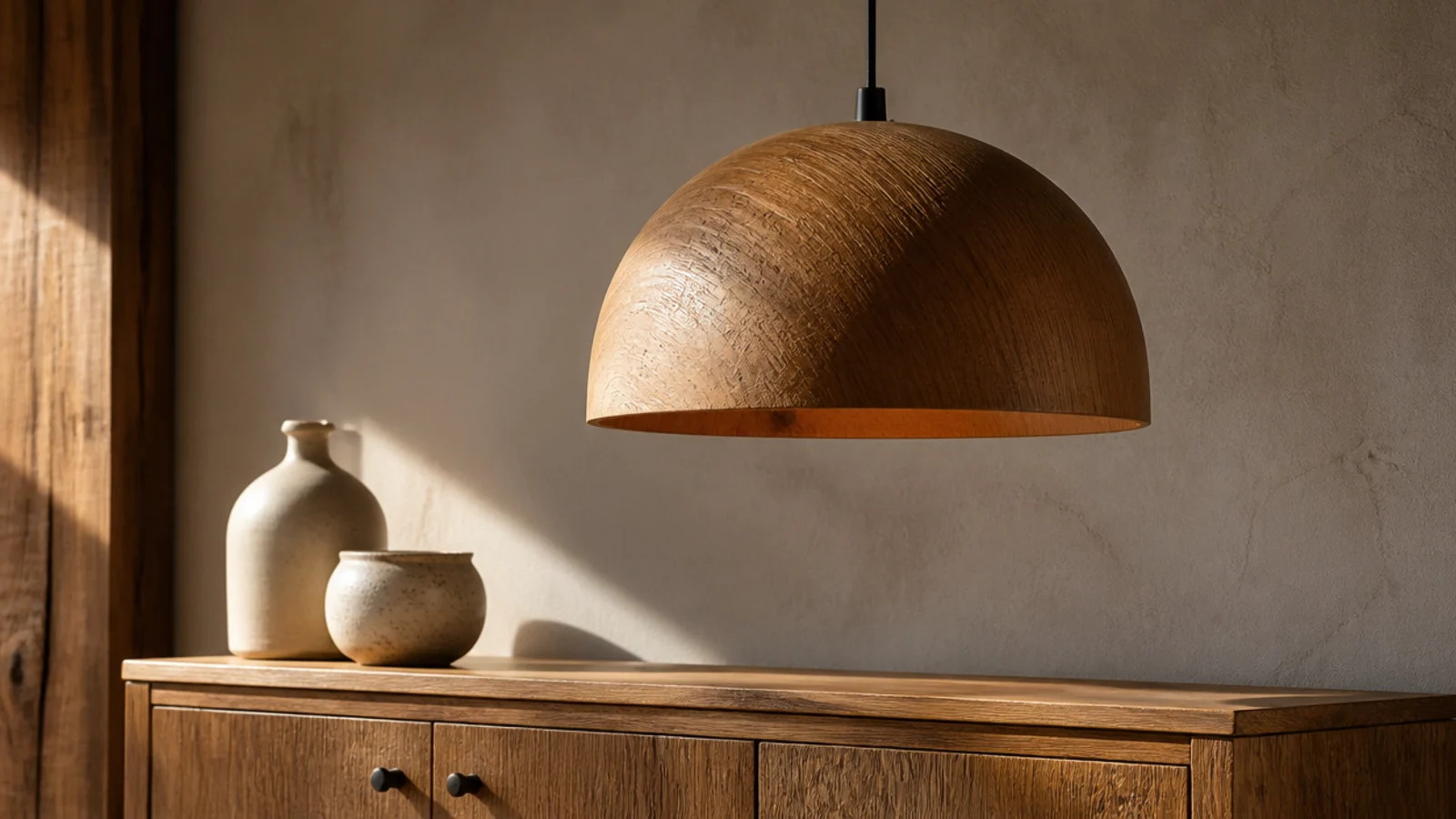
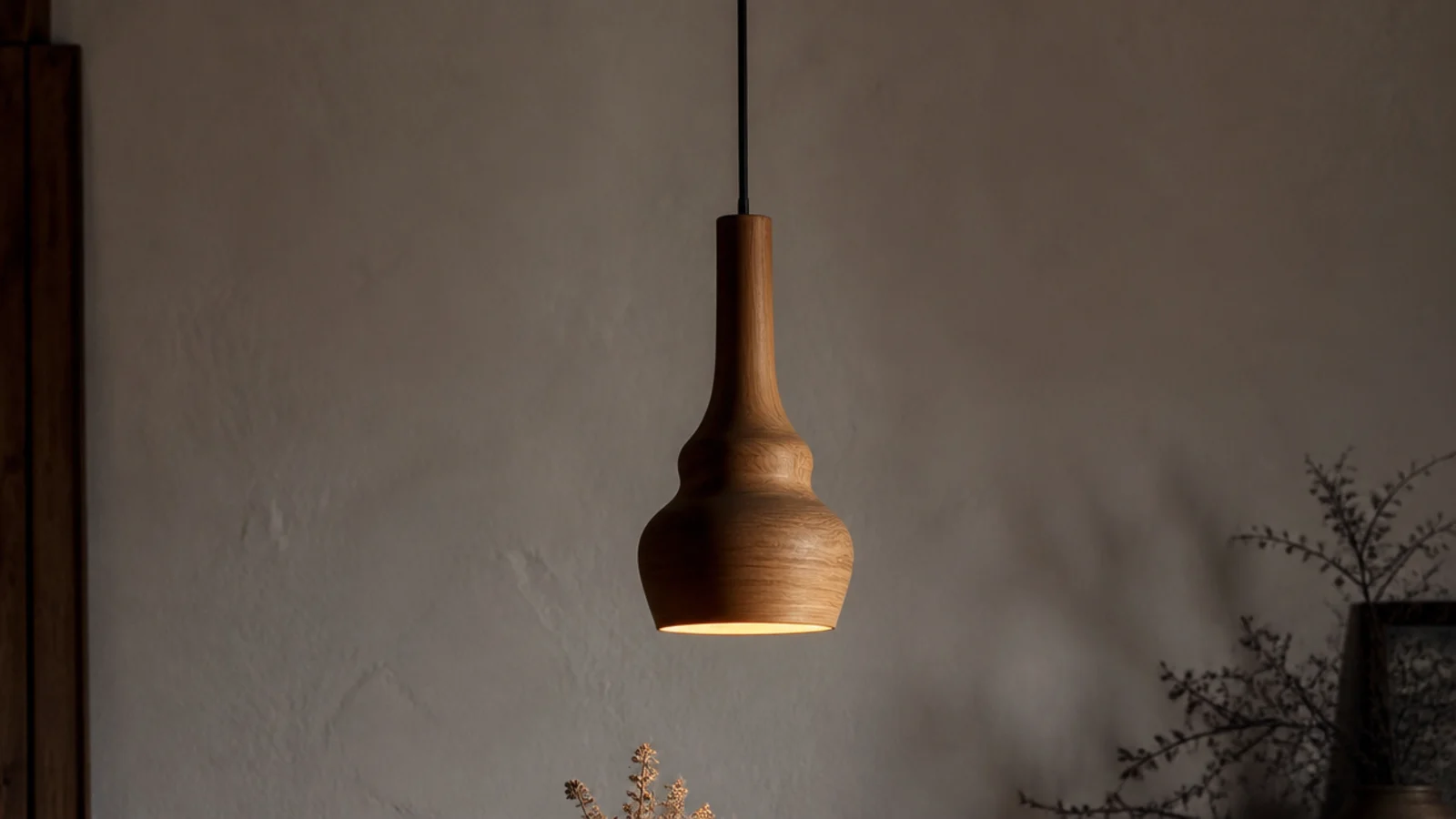
The benchmark. A single piece of oak turned to a dome, 10 to 14 inches across, showing growth rings and faint tool marks that no printed veneer imitates. It takes a standard medium screw socket, which is the specification that matters most here.
Weight runs 4 to 7 pounds, so any rated box carries it. The practical lumen ceiling is around 800: past that the extra output is absorbed by the timber rather than reaching the table. Hang it 32 inches above a dining top. Expect $$ to $$$, and check the inside face is finished — an unsealed interior is where movement starts. Kiln dried stock moves less than air dried, and a shade that arrives with a faint split at the rim will open further in a heated room.
2. The bent plywood shade
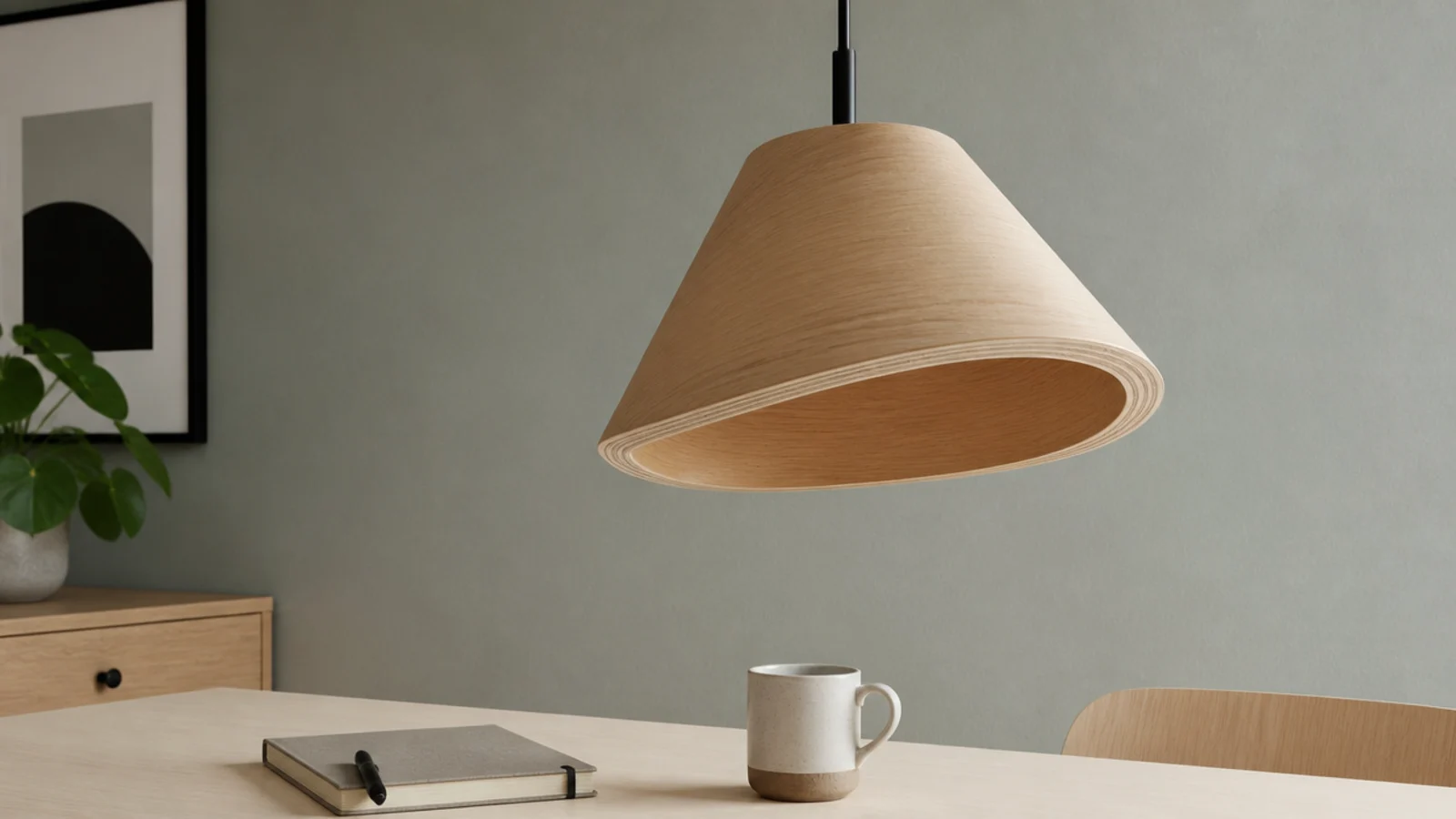
Laminated plywood bent over a form gives you a shade at 2 to 4 pounds that a solid version could never match, and the layered rim is honest about what it is. It also handles humidity better than solid timber because the cross-laminated grain resists movement.
The trade is delamination if it ever gets genuinely wet, and there is no repair once layers lift. Keep it out of bathrooms and away from a hob. Around $ to $$, standard socket, and a practical ceiling near 600 lumens.
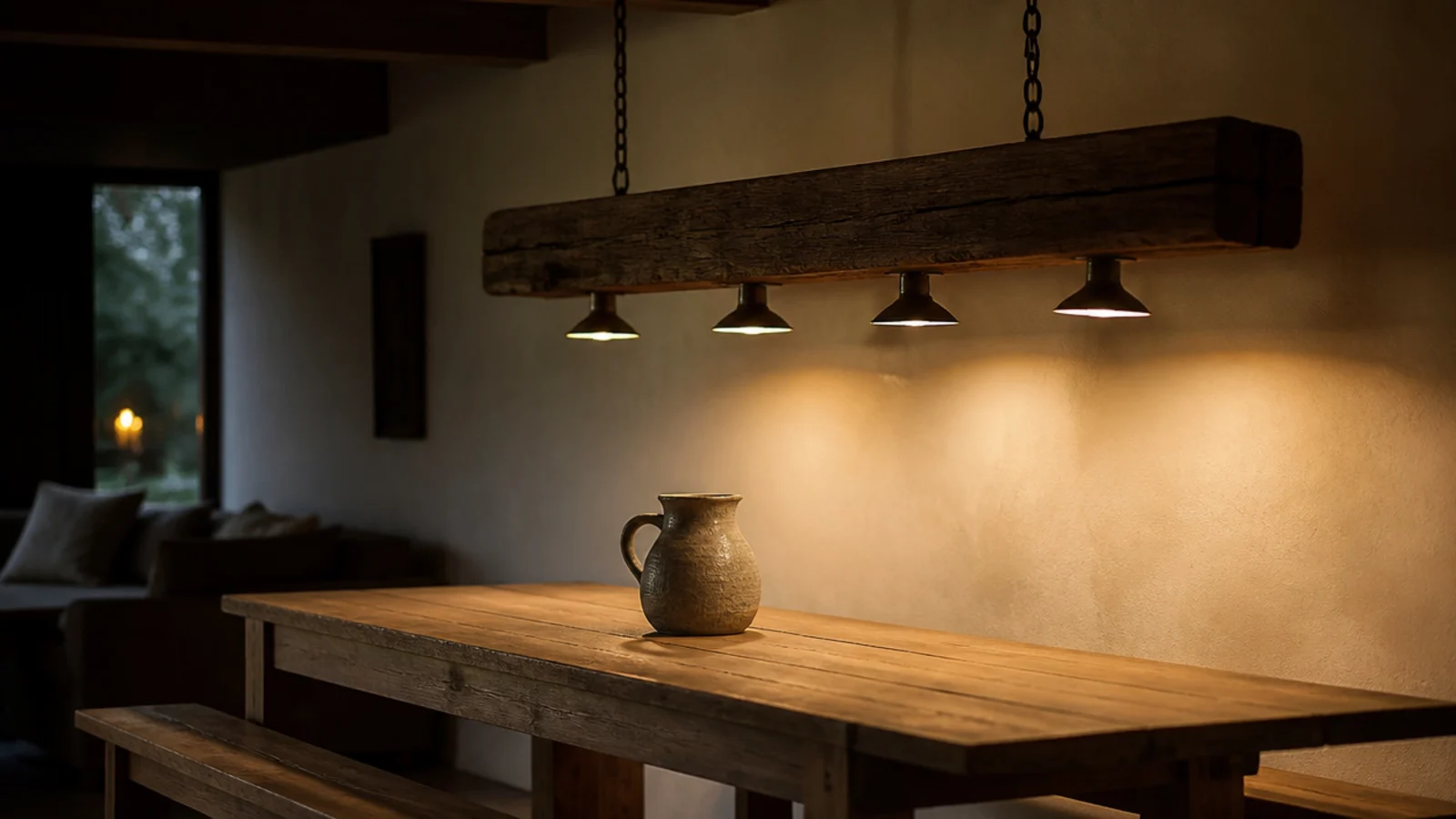
3. The reclaimed beam bar
A rough beam fitted with four downward lamps covers an 8 foot table from one fixing line, which no round shade does. It is also the heaviest fixture in this article at 20 to 40 pounds.
That weight is the whole story. A rated ceiling box carries the fixture weight, standard boxes are listed for 50 pounds, and a beam fixture needs an adjustable brace bar fixed between joists at $15 to $30 rather than a single point fixing. Four candelabra lamps at 200 lumens each read far better over a table than one bright source. There is more on this material family in the rustic guide.
4. The timber and glass hybrid
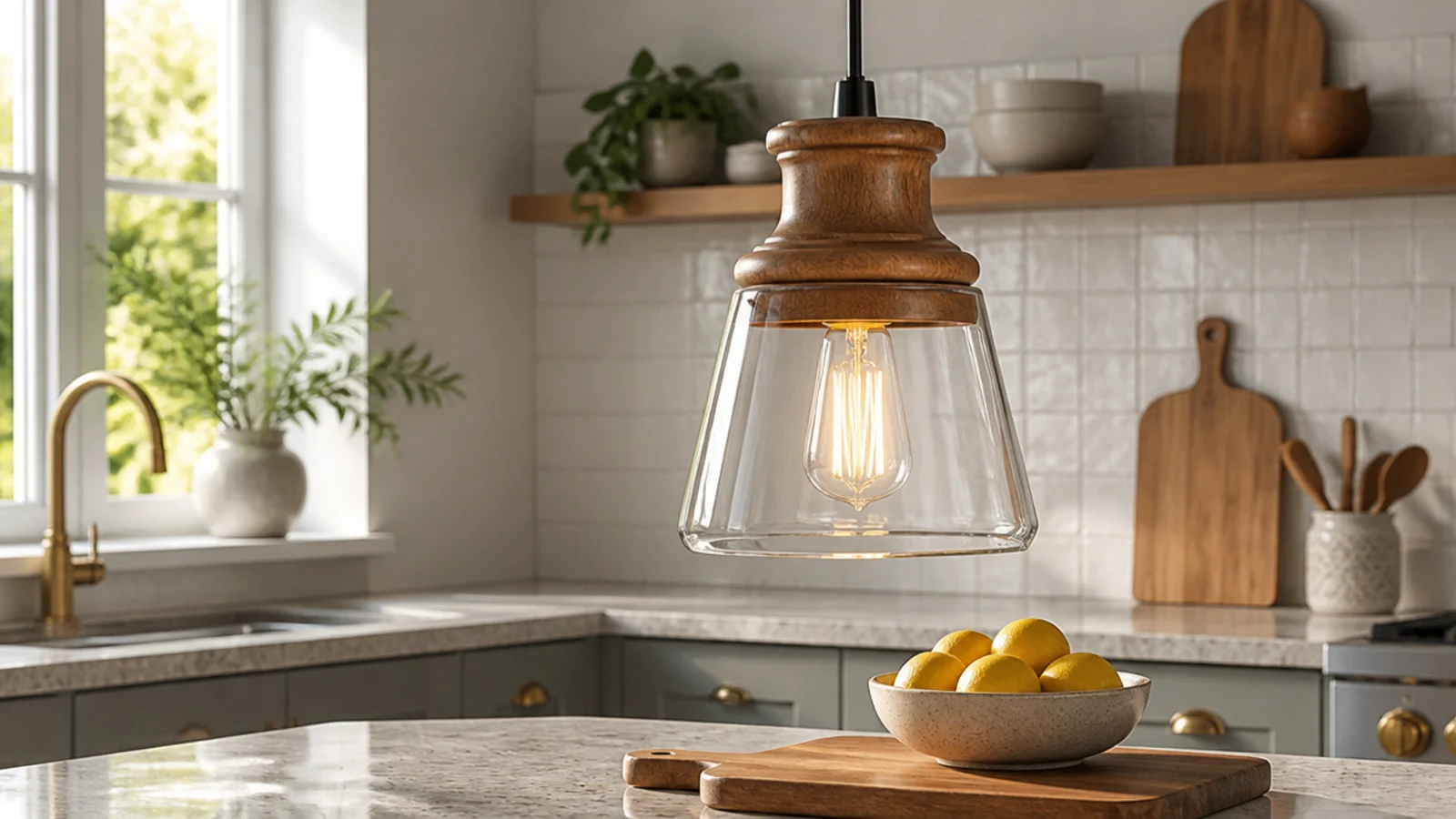
Timber collar, glass shade. It is the only wooden-looking fixture I specify over a kitchen island, because the light comes out through glass that wipes clean while the timber stays above the grease line.
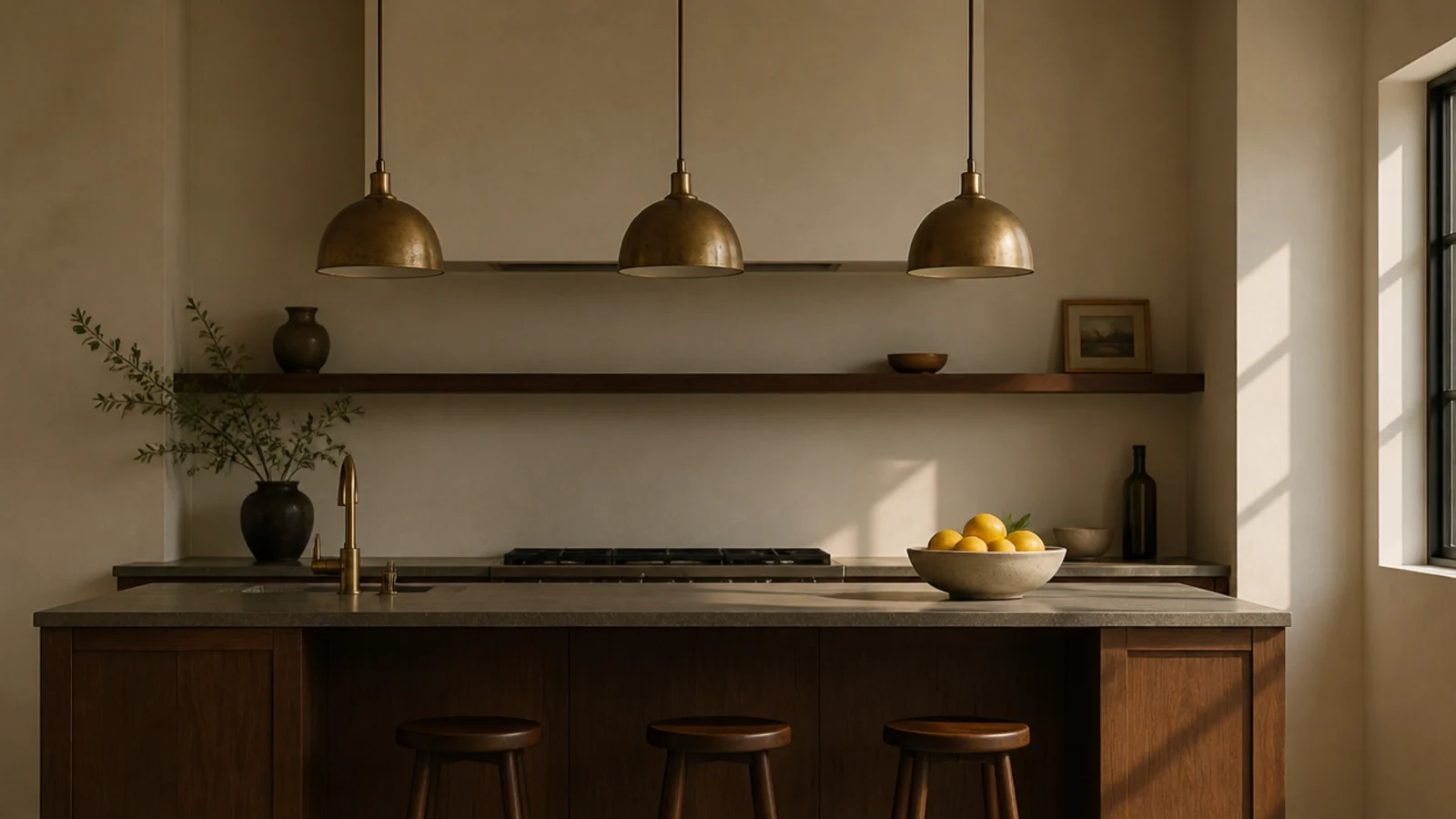
Standard socket, 4 to 8 pounds, and a genuine 800 lumen ceiling because the glass is doing the transmitting. Hang it 30 to 36 inches above the counter. Check the timber is sealed on the underside as well as the visible face, since that is the surface facing the steam. The kitchen guide covers the rest of the room.
5. The slatted timber drum
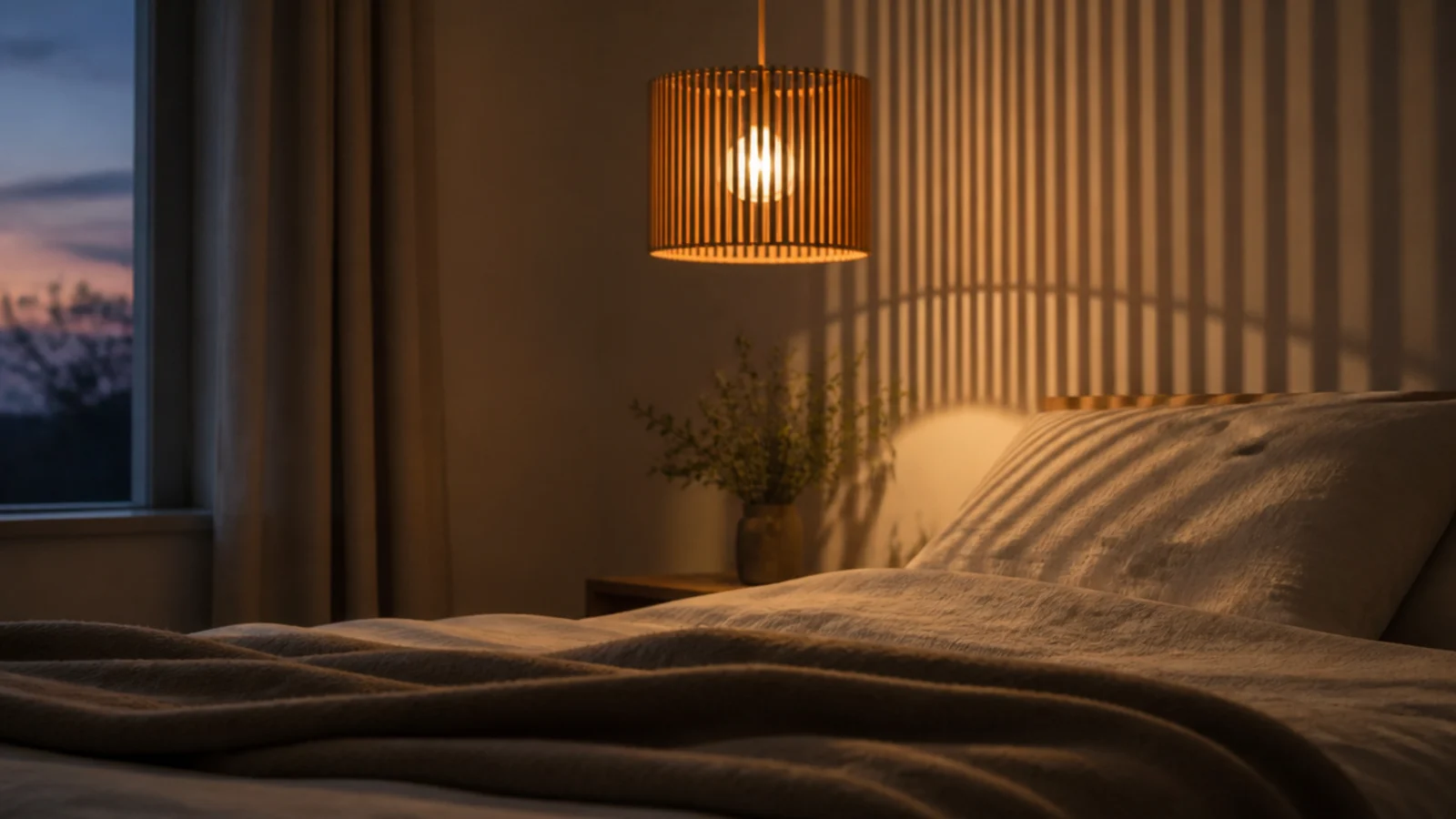
Slats throw a striped shadow across the ceiling that is either the reason you buy it or the reason you do not. In a bedroom or on a landing it is lovely; over a desk it is distracting.
At 3 to 6 pounds it hangs anywhere, takes a standard socket and sits at a practical 500 lumens. Use a frosted bulb rather than a clear filament, because every gap between slats becomes a small bright image of the source otherwise. Around $$.
6. The wooden pulley rise and fall
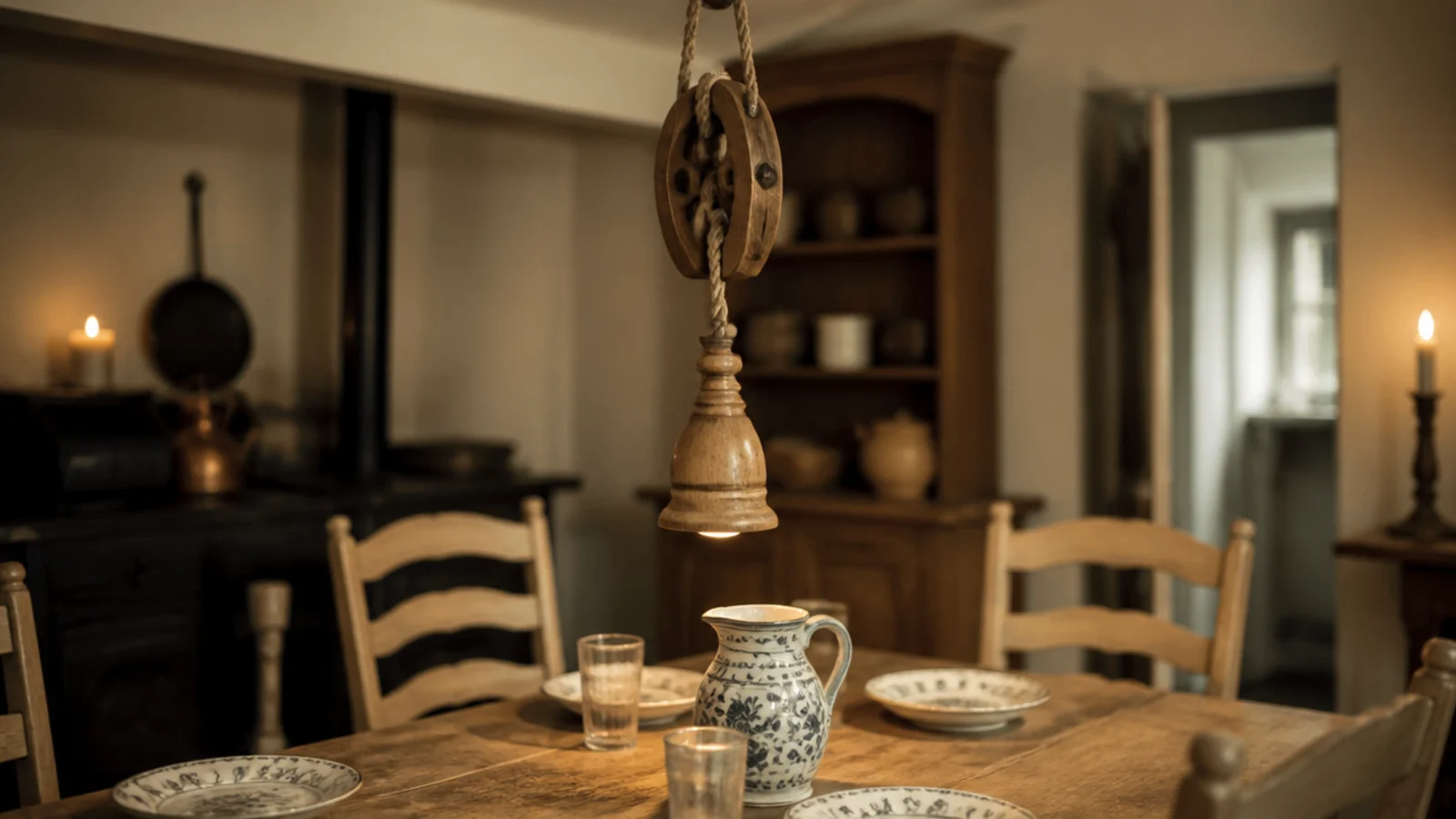
A counterweighted timber pulley lowers the shade to 30 inches above a table for dinner and lifts it to 48 afterwards. In a kitchen where the table is also a work surface, that is genuinely useful rather than decorative.
Weight runs 8 to 14 pounds including the counterweight, still well inside a standard box rating. Standard socket, 600 lumen ceiling. Check the cord runs freely through the pulley before it goes up, because a stiff mechanism is the one fault that cannot be adjusted from below. Expect $$ to $$$.
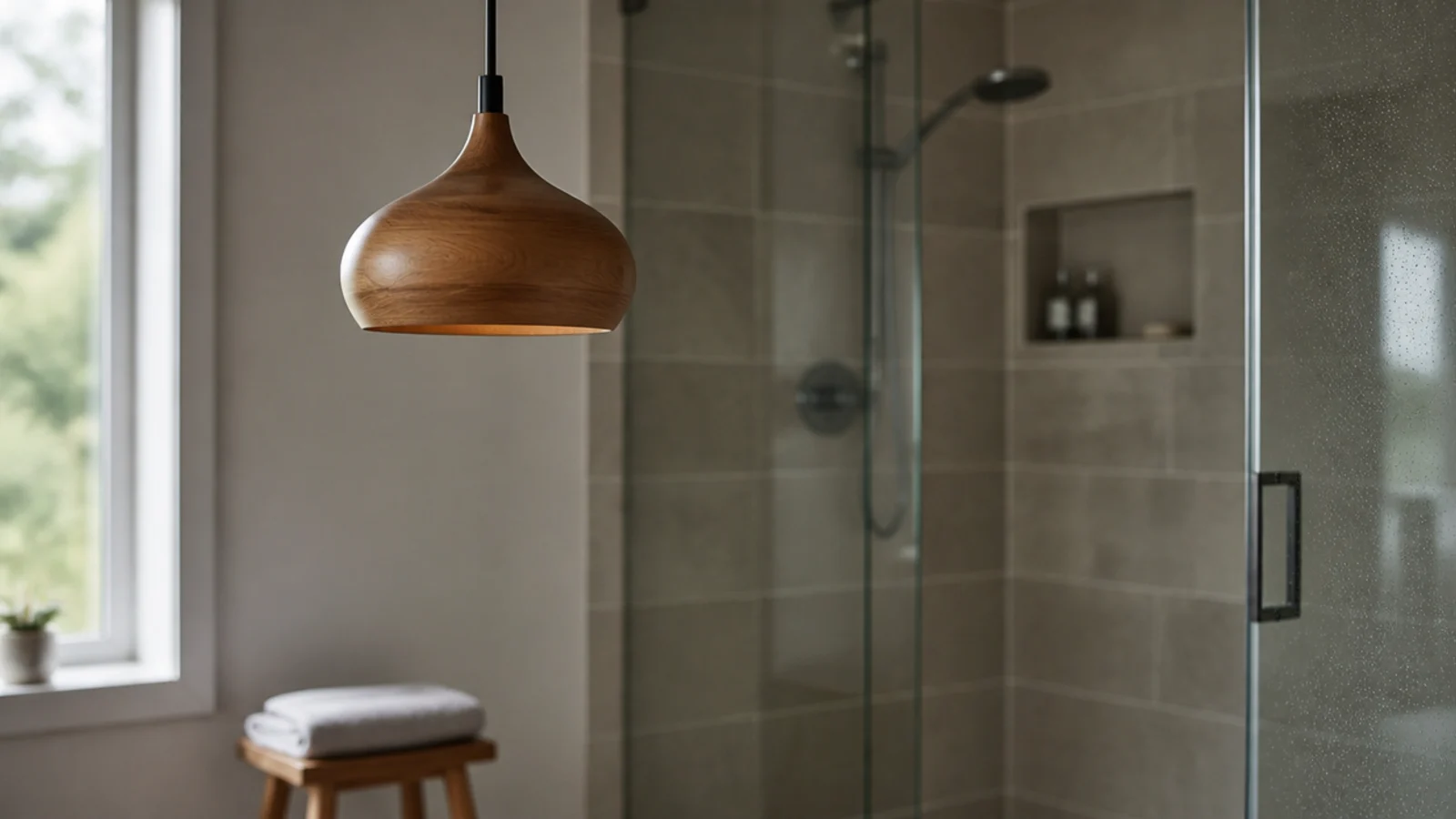
7. The sealed teak shade for a damp room
Teak is the one timber I will specify in a bathroom, and only outside the zones around the water, only sealed on every face and only where extraction actually works. Its natural oil content is why it survives where oak and pine do not.
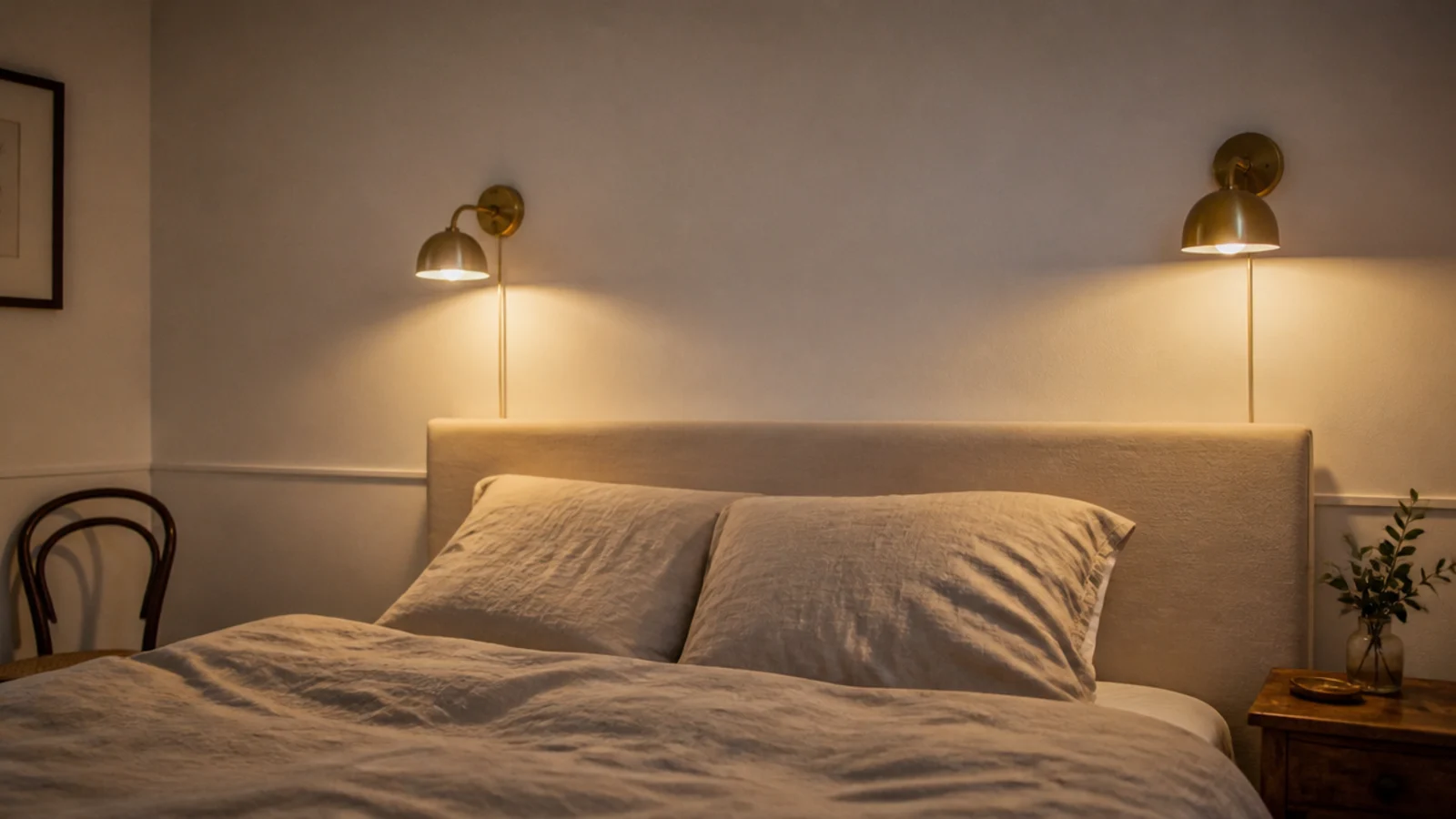
Bathroom fixtures must match the IP zone for their distance from water, and a plain timber shade carries no rating at all, so this belongs well away from a bath or shower and never within 3 feet horizontally and 8 feet vertically of a tub rim. Standard socket, 4 to 7 pounds, 600 lumens, $$$. A timber headboard in the same species ties a scheme together elsewhere in the house.
What to Check Before You Buy
Find the socket type in the listing, or ask. A standard medium screw socket keeps the fixture serviceable indefinitely. A bonded LED board or a proprietary lamp gives it a fixed lifespan, and on a timber shade that will outlive the electronics by decades, that is the wrong trade.
Read the maximum wattage inside the rim. It is written for incandescent bulbs, which is why LED makes it a non-issue: 9 watts of LED gives what 60 watts of filament used to. Keep 2 inches of air between bulb and timber regardless.
Weigh it against the box rating. Solid shades at 4 to 8 pounds are fine on any rated box. Reclaimed beams at 20 to 40 pounds need a brace bar between joists, and no amount of enthusiasm substitutes for the stamp inside the box.
Check the inside face is finished. An unsealed interior is where cupping and splitting start, because one face is absorbing moisture and the other is not. Run a finger inside the rim: if it feels raw, it is. A single coat of hardwax oil on the inside face costs almost nothing and buys the shade years.
Match the timber to the humidity, not the mood board. Sealed hardwood and plywood cope with kitchens; raw pine, untreated bamboo and unfinished veneer do not. Above a hob, expect any unsealed shade to move within a season.
Expect less light than the bulb promises. Timber absorbs where a white-lined metal shade reflects, so plan on the practical ceilings in the table above rather than the bulb output. Where you need real task light, choose the glass hybrid.
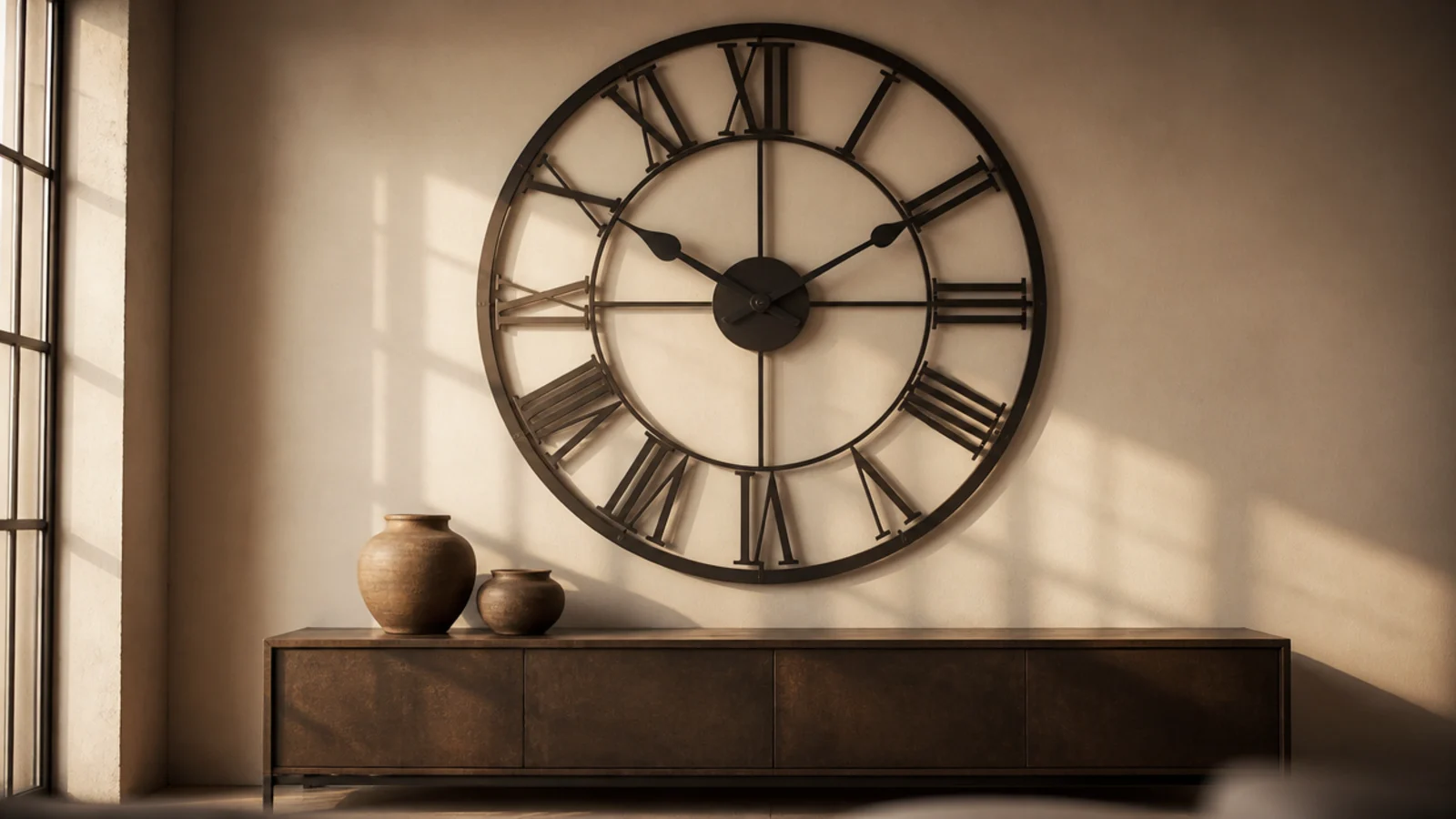
Buy the drop with the fixture. Cord kits usually ship at 72 inches, which covers a 10 foot ceiling with trimming room. Rod-hung timber fixtures need the rod length calculated before ordering, and a statement wall clock in matching timber makes the same drop and scale decisions easier to judge across a room.
Frequently asked questions
Do wooden light shades get hot?
Not with LED. A 9 watt LED giving 800 lumens produces a fraction of the heat of the 60 watt incandescent bulb most shades were designed around. Keep at least 2 inches between the bulb and any timber surface, and check the maximum wattage marked inside the shade before fitting anything.
Which wood copes best with a kitchen?
Sealed hardwoods and laminated plywood, both finished on every face including the inside. Oak, ash and teak all handle warm humid air well once sealed. Raw pine, untreated bamboo and unfinished veneer swell and lift within a season above a hob, and there is no repairing a delaminated shade.
Can a wooden pendant go in a bathroom?
Only outside the zone around the water, only if sealed on every face, and only in a bathroom with working extraction. Sealed teak is the one timber I would specify there. Fixtures near a bath or shower must match the IP zone for their distance from water, which almost no timber shade does.
What bulb suits a wooden shade?
A warm 2700K LED at 400 to 800 lumens depending on shade size, in whatever socket the fixture uses. Timber absorbs rather than reflects light, so a wooden shade delivers noticeably less downward output than a metal one with a white lining on exactly the same bulb.
How heavy are wooden light fixtures?
Solid turned shades run 4 to 8 pounds, veneer and plywood 2 to 4, and a reclaimed beam fixture 20 to 40 pounds. Standard lighting outlet boxes are listed for 50 pounds, so everything except the beam fixtures is straightforward, and beams need a brace bar fixed between joists.
Choose the socket and the seal first, and the species becomes the easy part of the decision. Timber shades age better than almost anything else you can hang, as long as the electrical parts inside them can be replaced when the time comes.
Want more like this? Browse all 15 hanging lights guides — they all use the same measurements and budget tiers.
Pin it for later
Save this to your Hanging Lights board
Pin it now so it is waiting for you when the tape measure comes out — and so the next person hunting for this idea can find it too.
Save this pinKeep going
More ideas worth saving while you have the tape measure out.