Hanging Lights · Listicle
25 Kitchen Hanging Lights That Look Custom Made

A kitchen is the hardest room to light and the easiest to get half right. Most look fine at noon and go flat the moment the sun drops, because everything is coming from one ring of downlights that puts your own shadow on the chopping board. Kitchen hanging lights fix that by moving the source in front of you rather than behind, and they are the detail that makes a modest kitchen read as fitted. I have lit two of my own and a dozen for clients. Below are twenty-five, with the clearances, lumen counts and finishes that survive real cooking.
In this guide27 sections — tap to openHide
- 1.What kitchen hanging lights have to survive
- 2.Two pendants at thirty two inches above the island
- 3.Three small shades over a longer island
- 4.A single dome over the sink
- 5.Under cabinet strips doing the real work
- 6.A linear bar over a peninsula
- 7.Matching the shade metal to the tap
- 8.A shade with a white or brass interior
- 9.Three thousand kelvin at CRI ninety
- 10.Seven hundred lumens in every pendant
- 11.Clear glass over a breakfast bar
- 12.Wipeable finishes near the hob
- 13.A pendant over the kitchen table end
- 14.Clearance from a range hood
- 15.Semi flush fixtures in a low galley
- 16.Pendants and downlights on separate switches
- 17.A rail of adjustable spots over the counter
- 18.A conversion kit in a rented kitchen
- 19.Cord grips that keep grease off the flex
- 20.A pendant above open kitchen shelving
- 21.Unlacquered brass that ages in the steam
- 22.Matte black shades and the fingerprint problem
- 23.A dimmer for the evening kitchen
- 24.Height for a raised forty two inch bar
- 25.Choosing a shade you will actually clean
- 26.The ceiling box above a kitchen
- 27.Mistakes to Skip
What kitchen hanging lights have to survive
Kitchens punish fixtures in ways other rooms do not, so three decisions matter more here than anywhere.
Task light, measured properly. Working counters want 70 to 80 lumens per square foot, which means 700 to 800 lumens per pendant over an island plus under-cabinet strips along the runs. Ambient ceiling light sits lower at 30 to 40 lumens per square foot, so the surfaces read as the bright zone rather than the floor.
Colour, not just brightness. 3000K with a CRI of 90 or above. At 2700K food looks muddy; at 4000K the room looks clinical. Good bulbs cost $10 to $20 each against $4 for standard ones and it is the cheapest visible upgrade in the room.
Finish against grease. Airborne fat settles on everything within a few feet of a hob. Glass, glazed ceramic, powder-coated steel and sealed brass all wipe clean. Rattan, paper and open weave do not, so keep porous materials at the dining end.
Clearance is 30 to 36 inches above any counter, measured from the surface, and 7 feet in a walkway. A rated ceiling box carries the fixture weight — standard lighting boxes are listed for 50 pounds — and new ceiling points are an electrician's job in most jurisdictions, at $100 to $300 each.
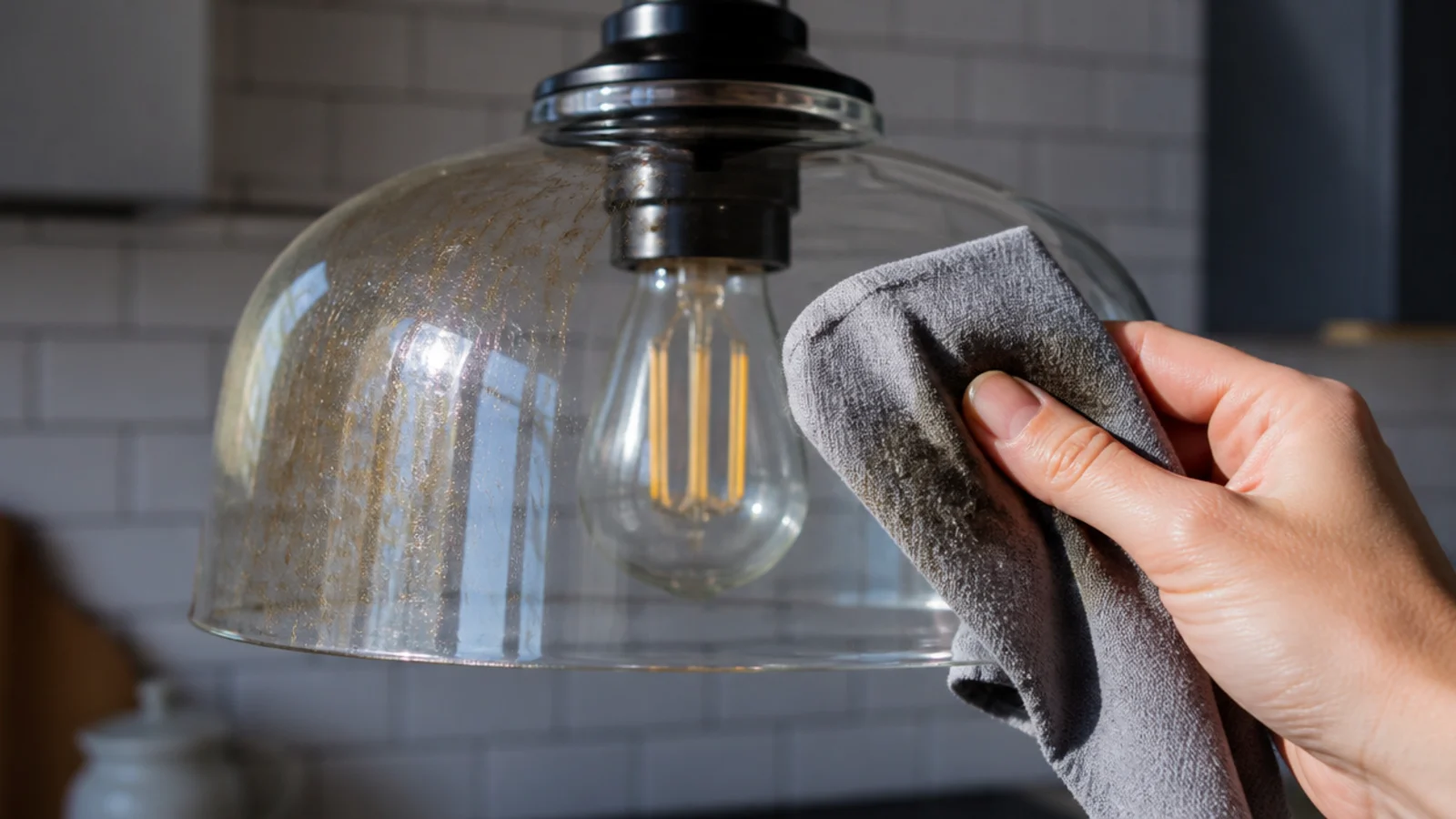
1. Two pendants at thirty two inches above the island
Thirty-two inches from the counter to the bottom of the shade is where most kitchens land inside the 30 to 36 inch range. It clears a stand mixer at around 17 inches, keeps the bulb above eye line from a stool and still puts usable light on a board. The full island walkthrough has the marking sequence.
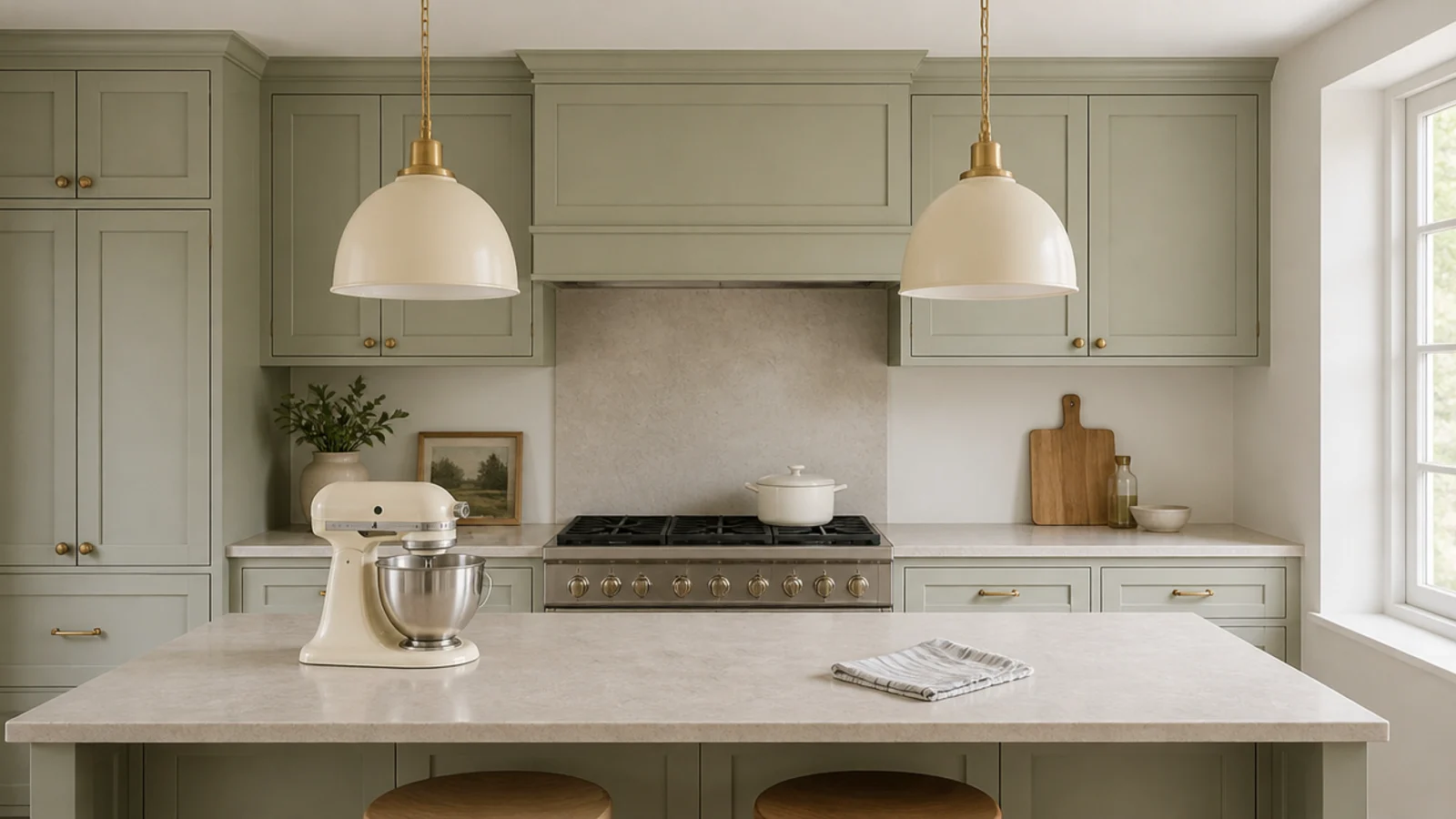
2. Three small shades over a longer island
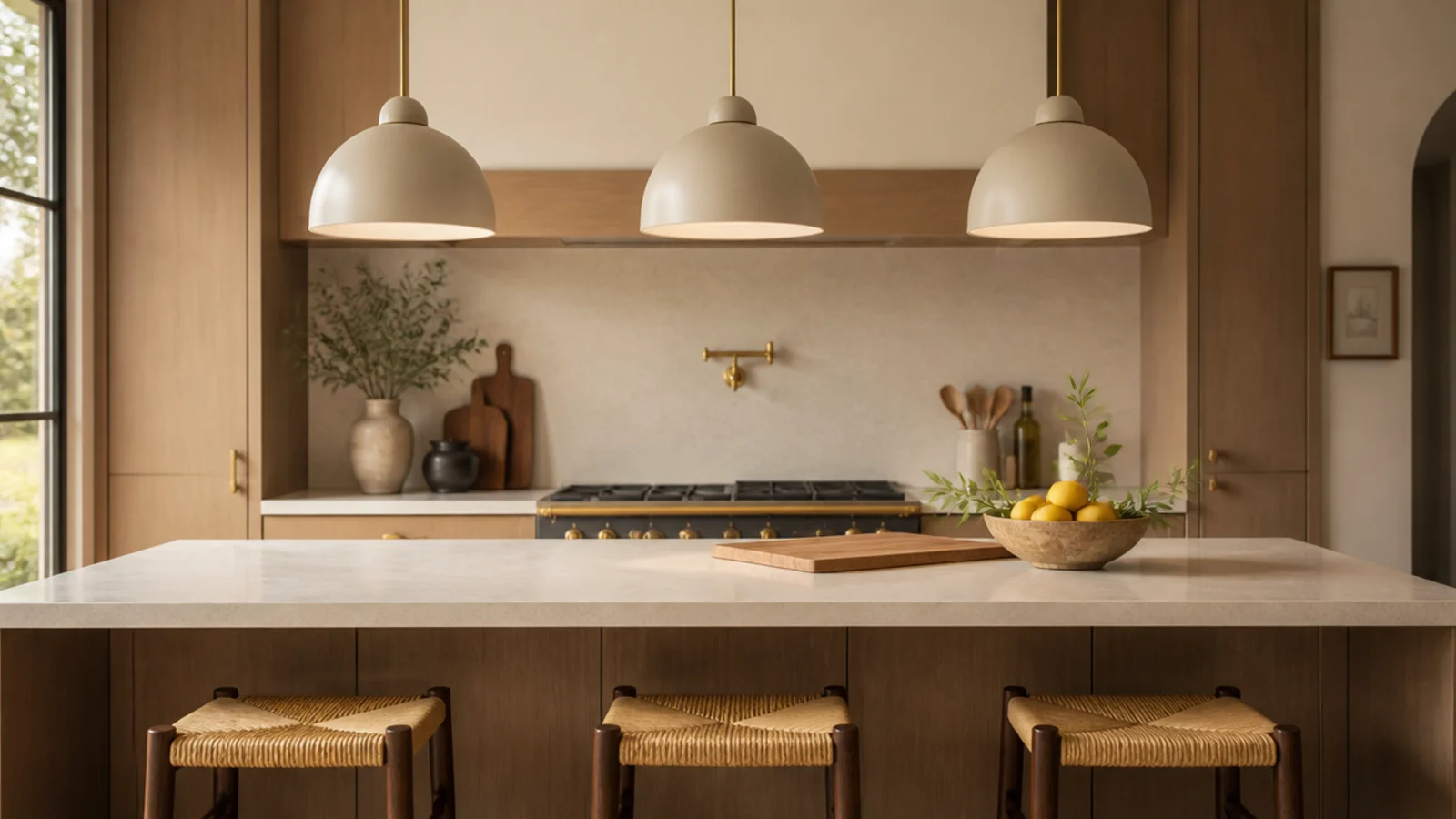
Past 7 feet, two shades leave a dark middle. Three 6 to 8 inch pendants at 24 inch centres cover it evenly and keep the total shade width under two thirds of the counter length, which is the point at which a row stops reading as lighting.
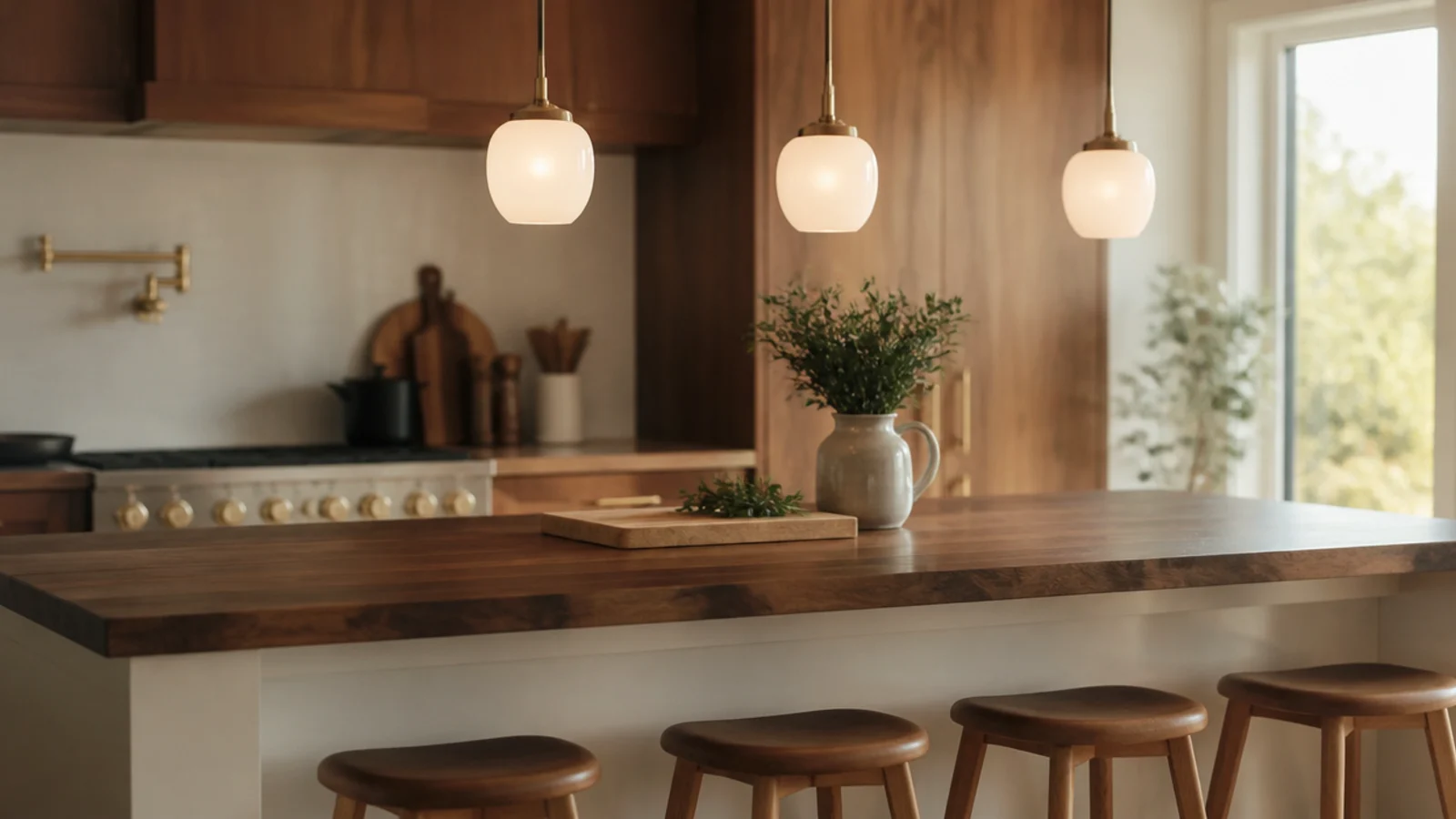
3. A single dome over the sink
The sink is a work surface and almost never gets its own light. One deep dome at 700 lumens, hung 30 to 34 inches above the rim, removes the shadow your own body casts when you stand at it. It is the single most useful pendant in most kitchens.
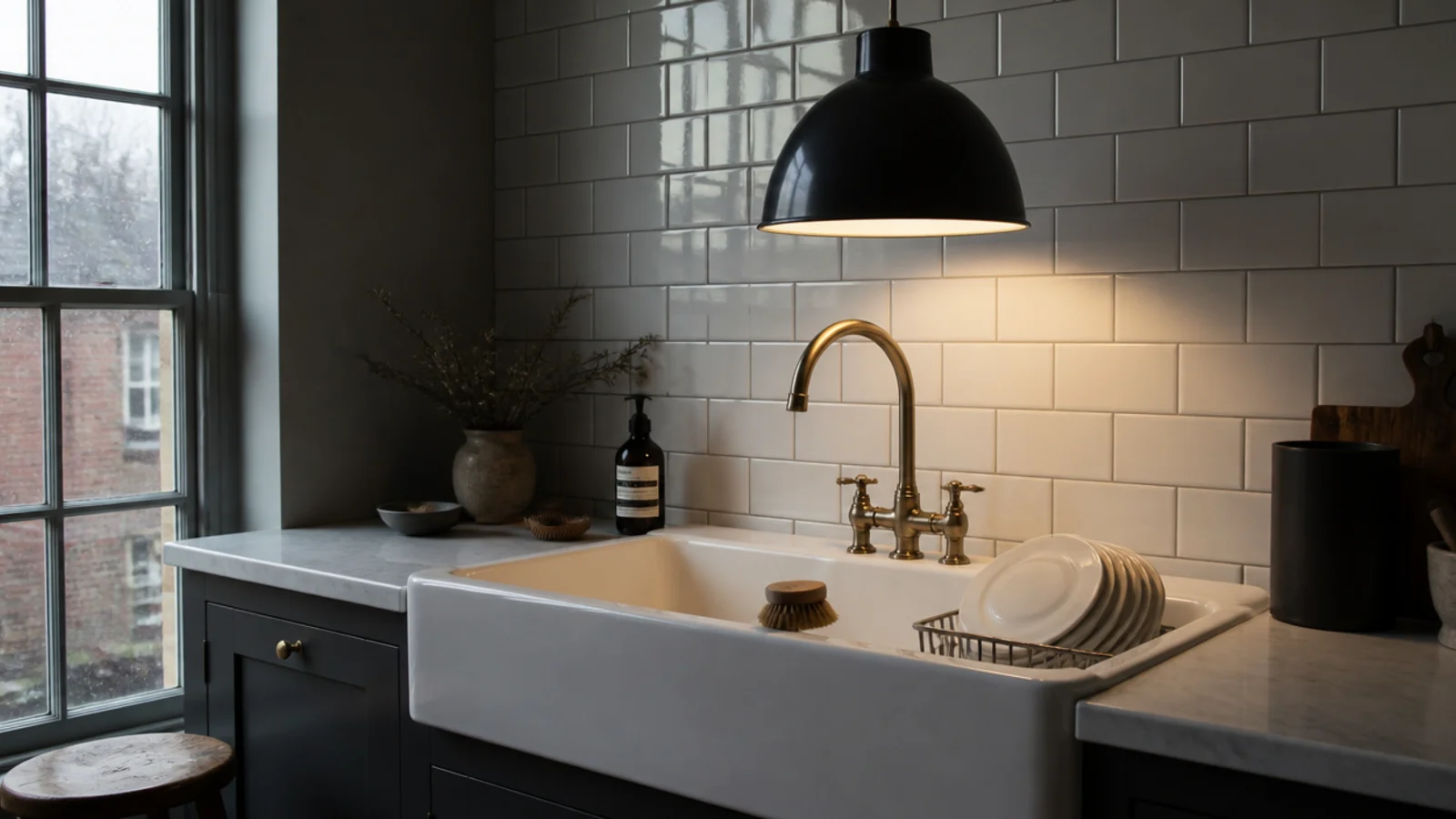
4. Under cabinet strips doing the real work
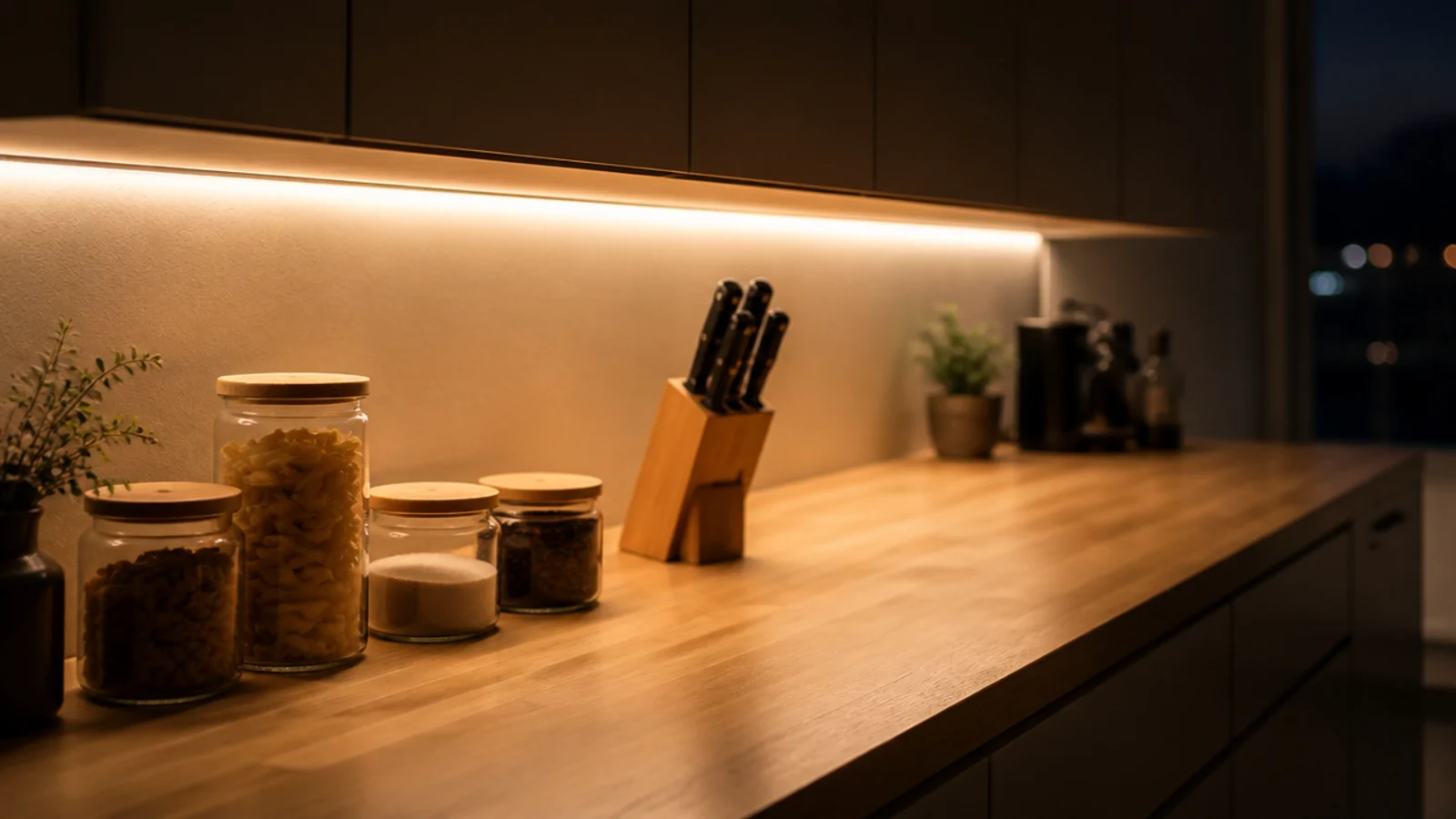
Pendants light islands; strips light everything else. A continuous warm LED strip at 3000K under the wall cabinets costs $30 to $80 for a full run and delivers more usable counter light than any ceiling fixture. Mount it at the front edge of the cabinet base so the light lands on the counter, not the splashback.
5. A linear bar over a peninsula
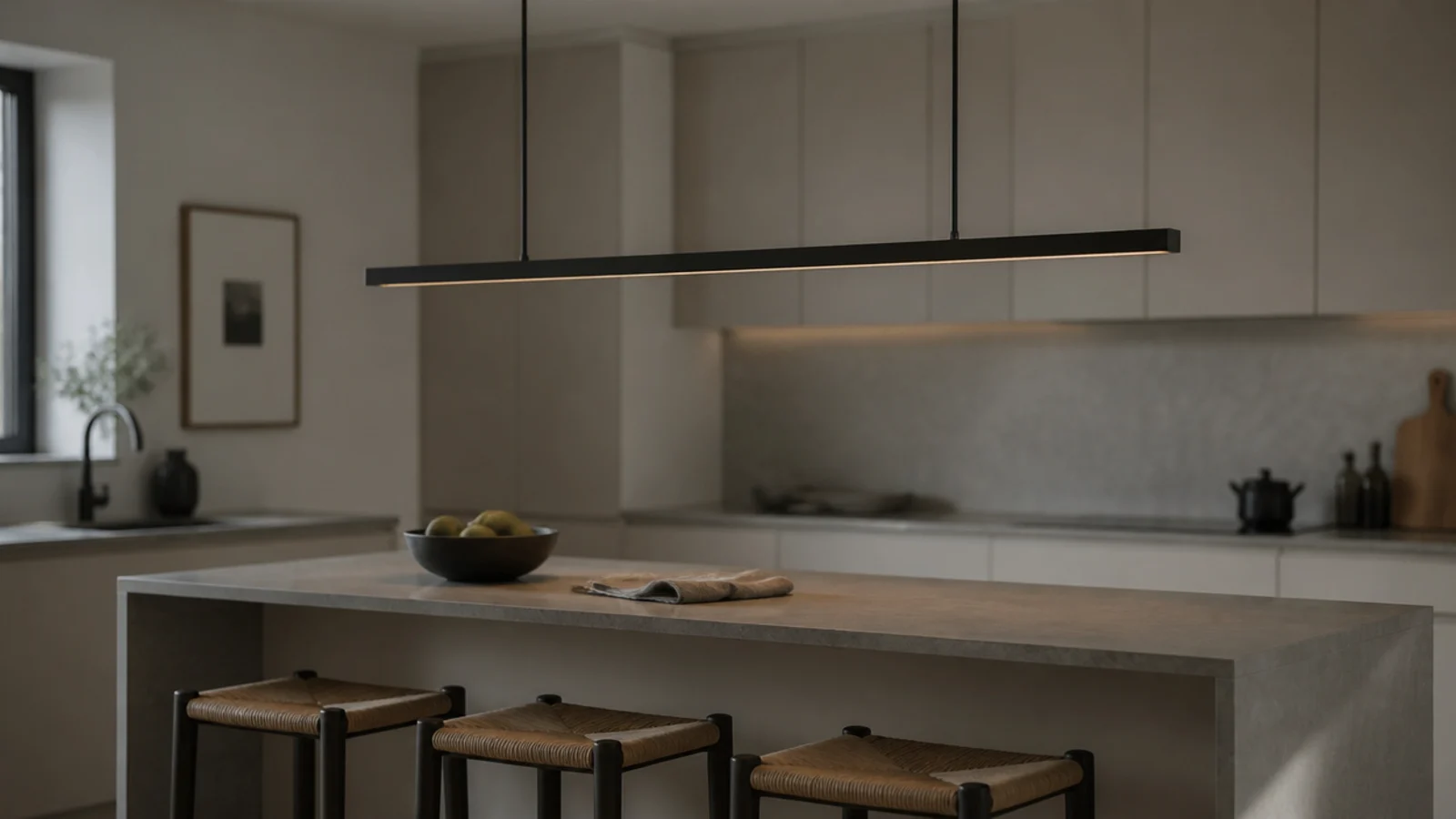
A peninsula is usually too narrow for a proper pendant row. A linear bar at half to two thirds of its length solves the spacing question entirely, hangs at the same 30 to 36 inches and puts even light down the whole surface. Painted steel versions start near $200.
6. Matching the shade metal to the tap
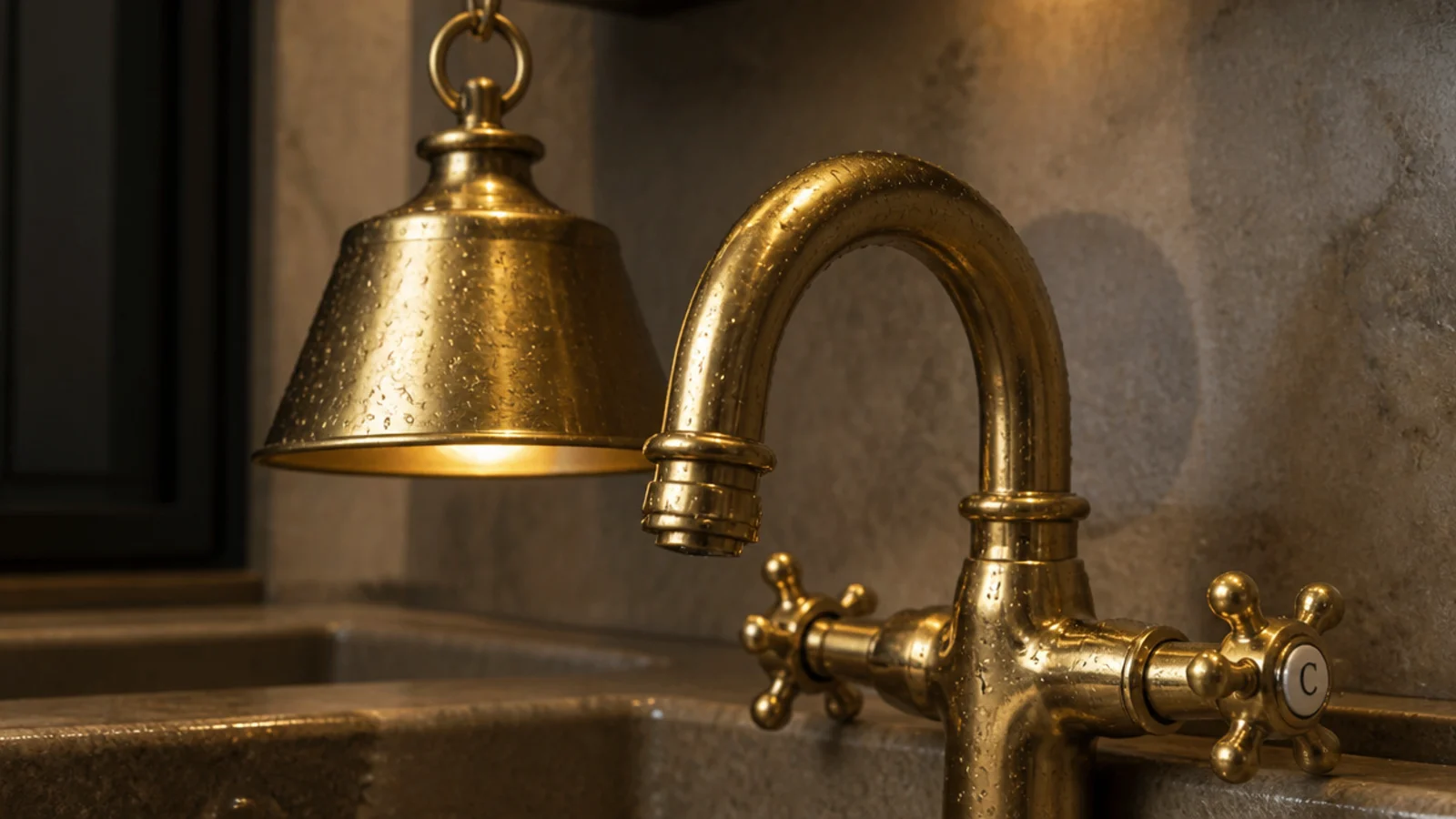
The single detail that makes lighting look specified rather than bought. Repeat the tap finish in the pendant collar or the cord grip — brass with brass, black with black. It costs nothing and does more for a kitchen than an upgraded shade would.
7. A shade with a white or brass interior
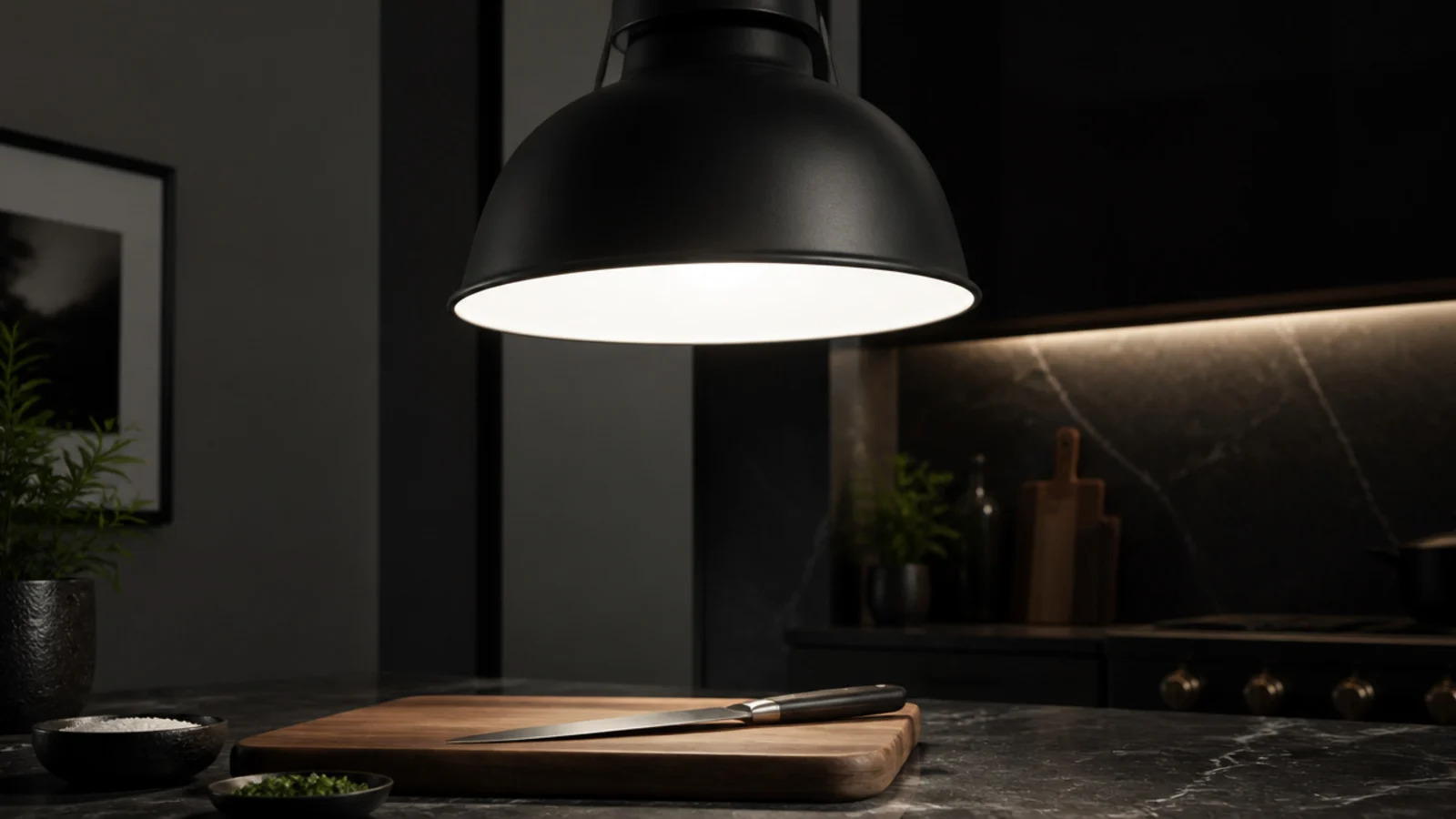
The inside of the shade decides how much light reaches the counter. On identical bulbs, a white-lined shade can deliver a third more usable light than a black-lined one. Look up into any shade before buying it, because the exterior finish tells you nothing about performance.
8. Three thousand kelvin at CRI ninety
Colour rendering is where cheap bulbs give themselves away. Under CRI 80, tomatoes go orange, oak goes grey and skin goes flat. CRI 90 and above renders all three properly, which matters in the one room where you judge food by eye.
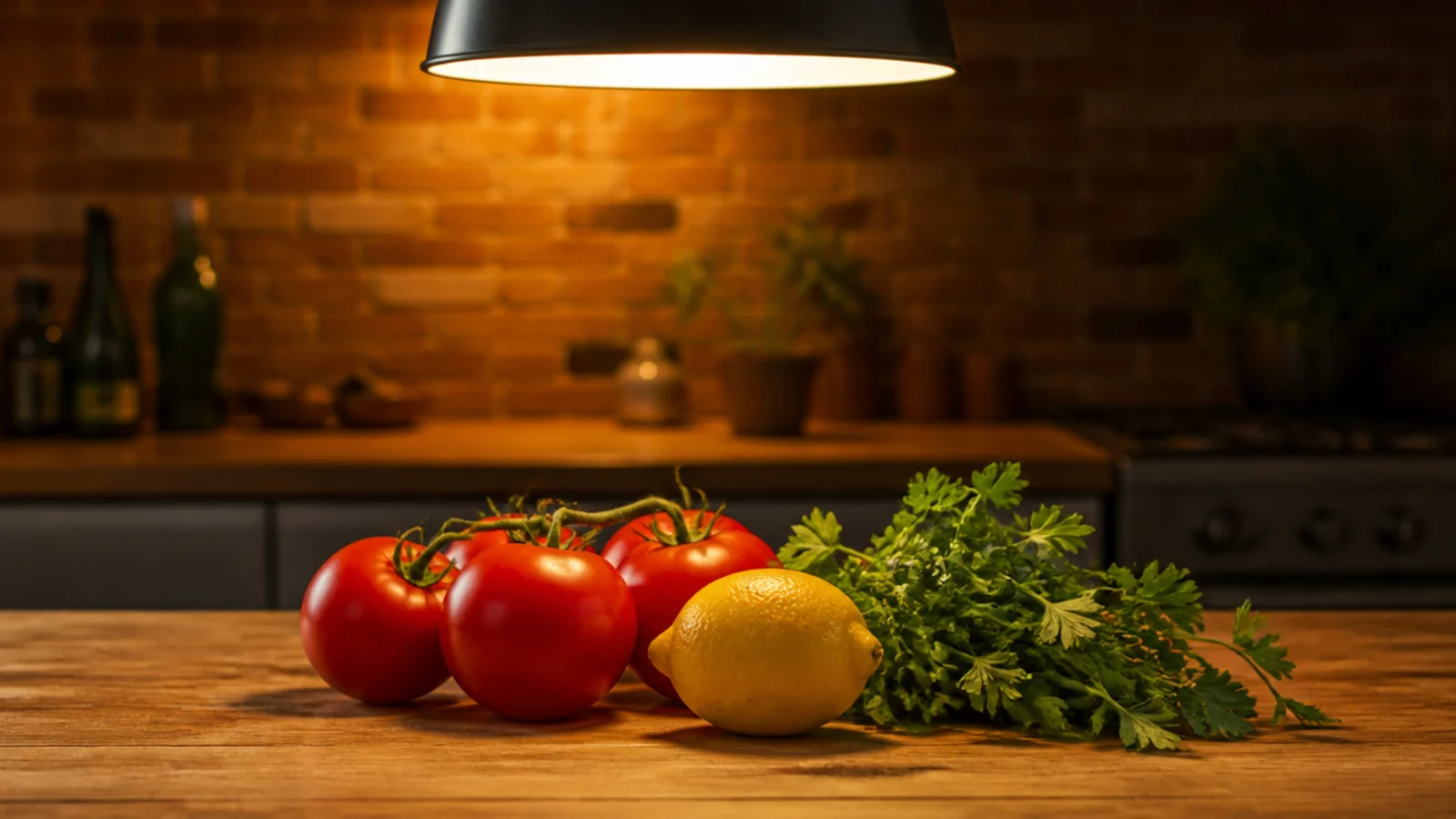
9. Seven hundred lumens in every pendant
Two pendants at 700 to 800 lumens over a 6 foot island gives around 75 lumens per square foot of counter. Anything under 500 per shade turns the fixture into decoration and leaves you working under the downlights again.
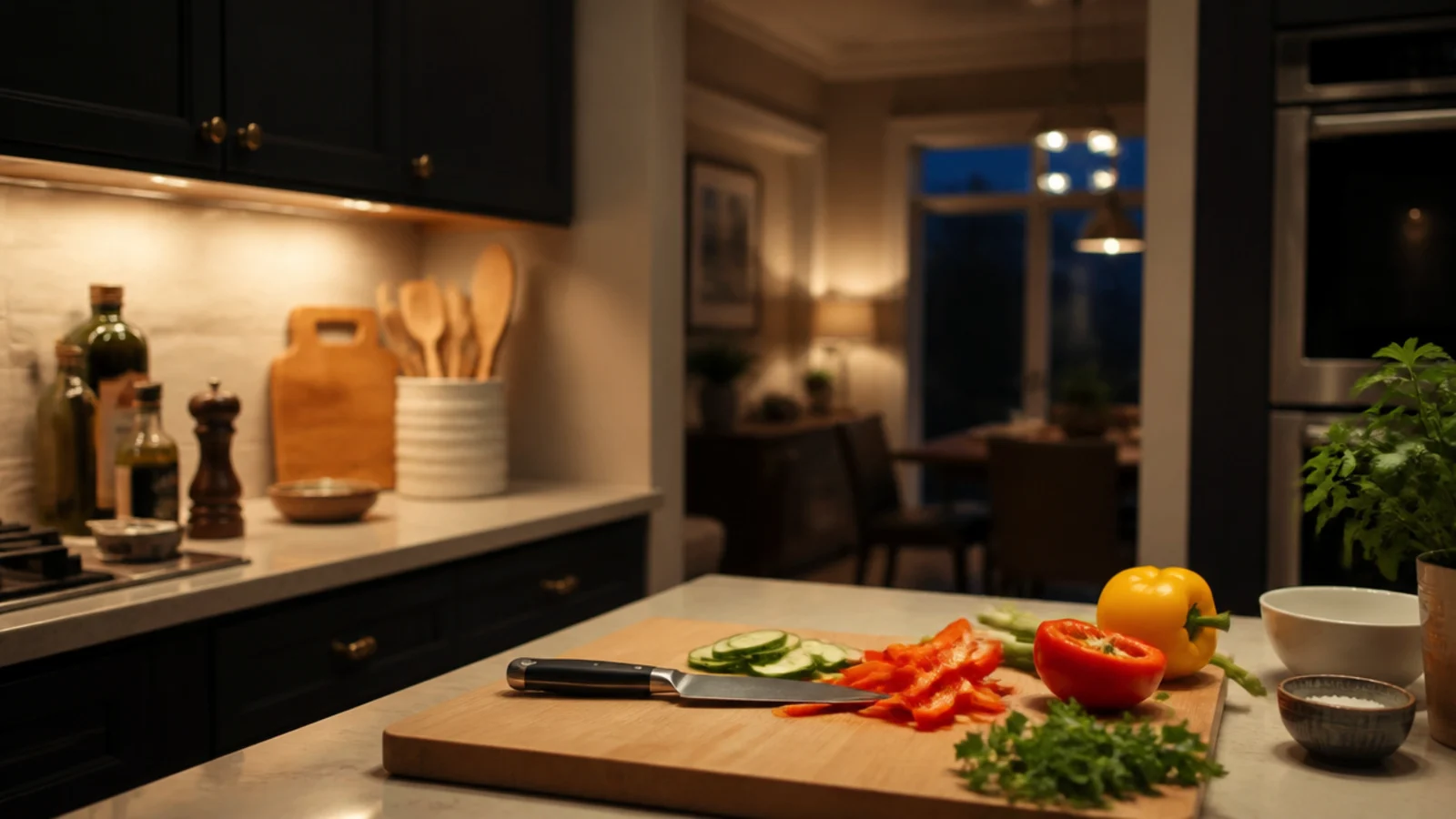
10. Clear glass over a breakfast bar
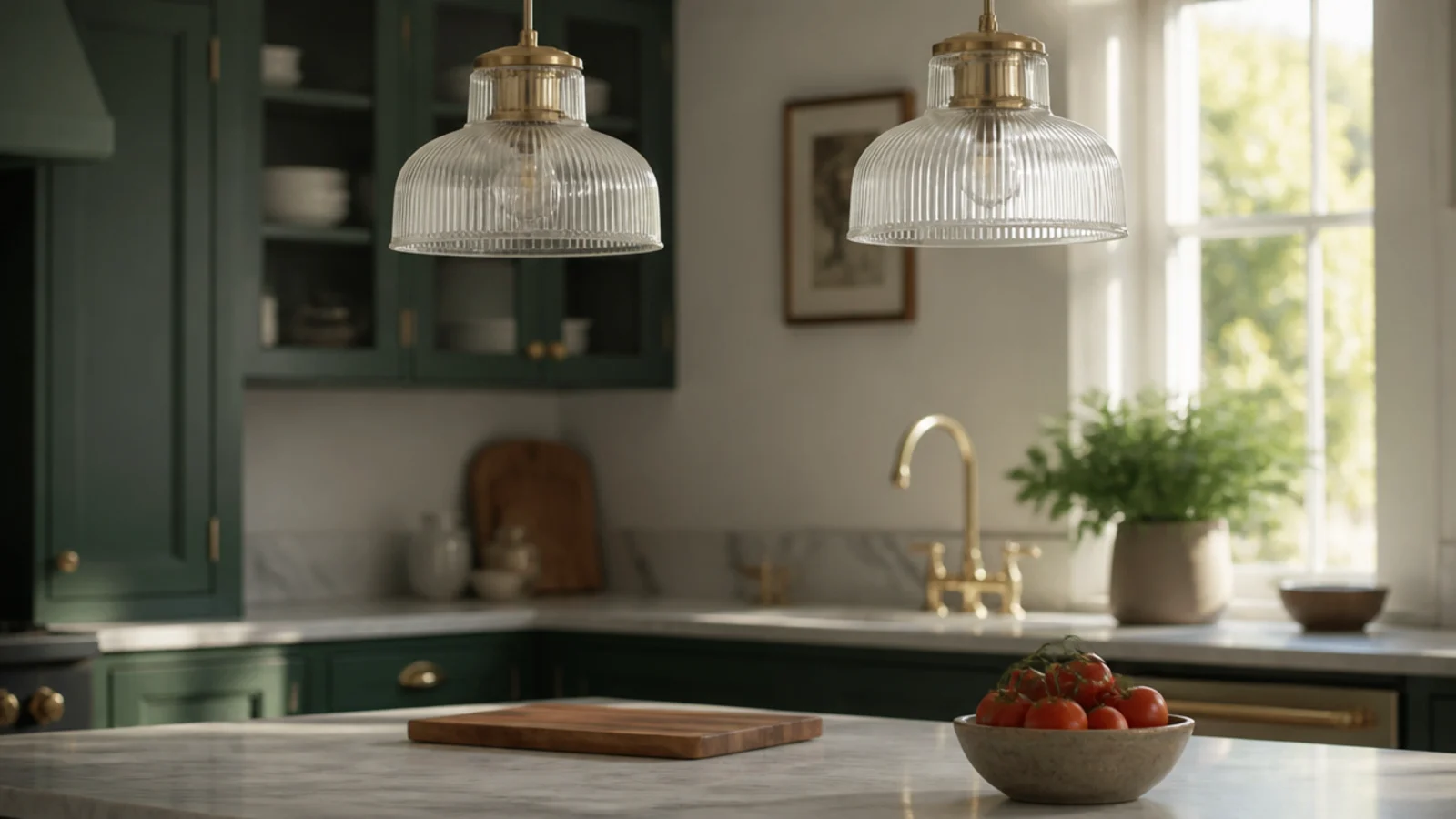
Where a bar sits between the kitchen and a living space, clear glass keeps the sightline open so the room still reads as one. Use an amber or opaque-tipped bulb under 500 lumens, and pair it with under-cabinet light so the glass shade is not doing the task work.
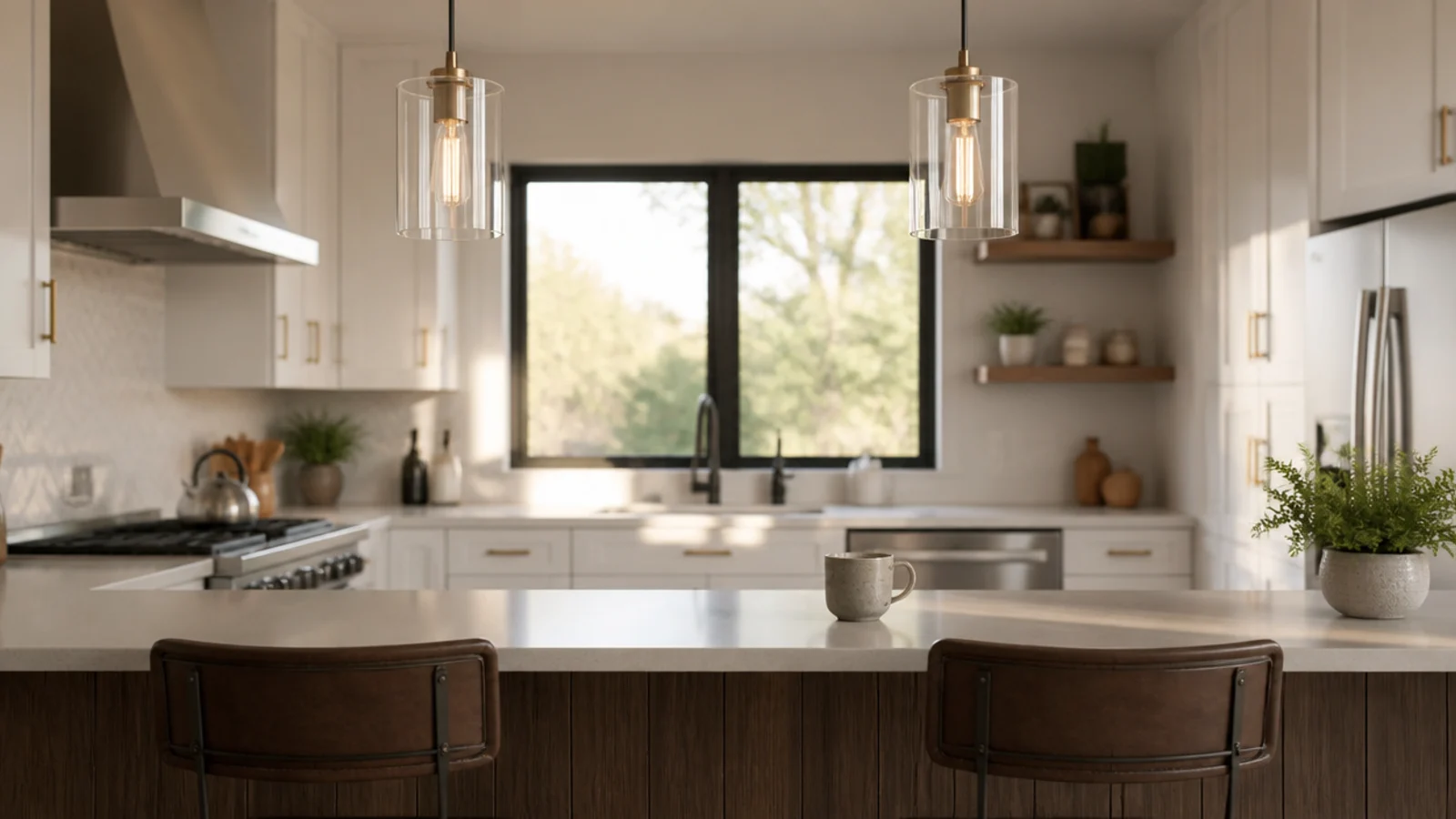
11. Wipeable finishes near the hob
Within about 3 feet of a hob, choose glass, glaze, powder coat or sealed metal. I have taken down rattan shades from over cooking zones that were unsalvageable in under two years. Porous shades belong at the table end of the room where the air is clean.
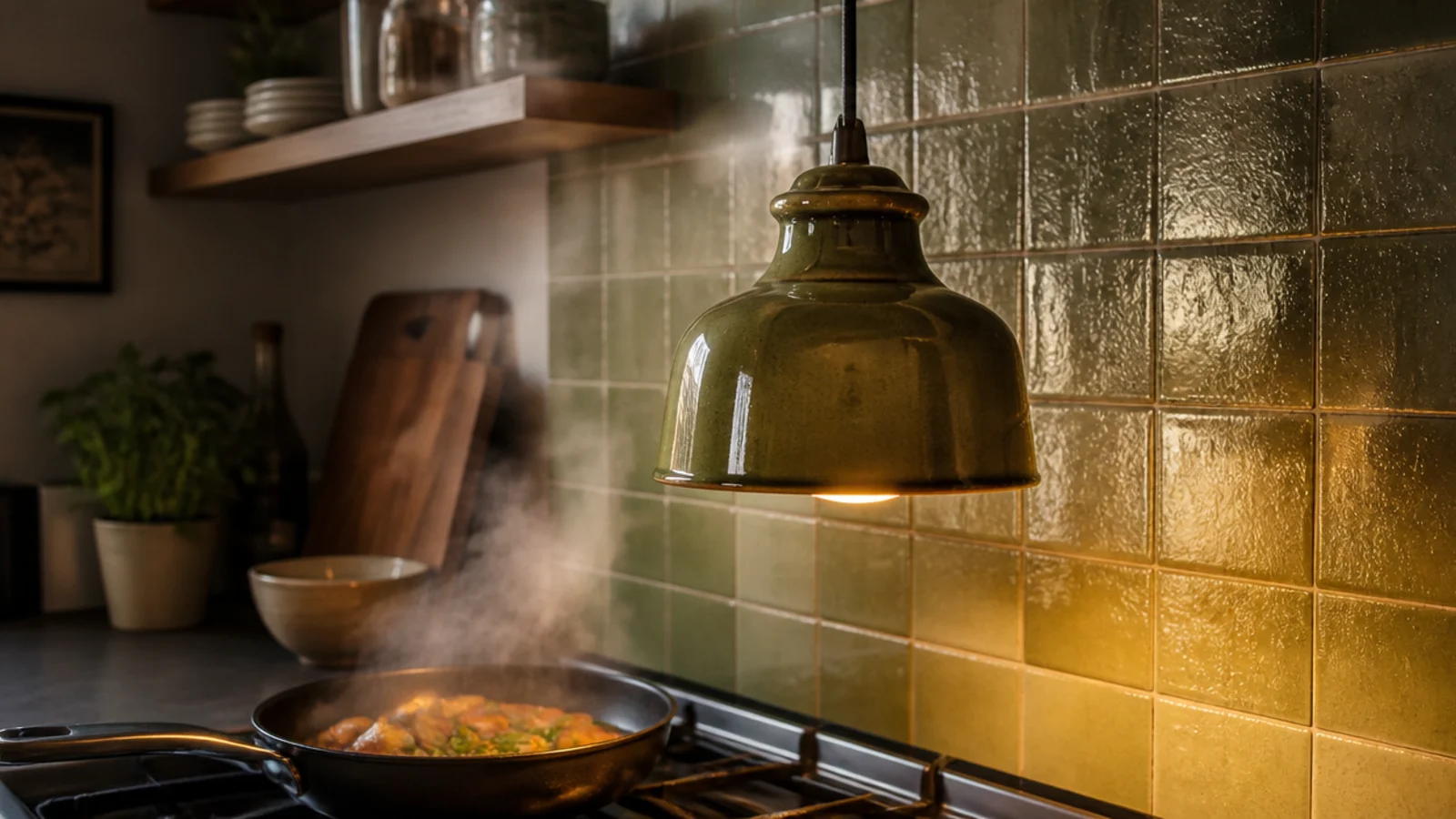
12. A pendant over the kitchen table end
The dining end wants a different fixture from the working end: softer, lower, warmer. A fabric or opal shade at 2700K, hung 30 to 34 inches above the tabletop, marks the change of use without needing a wall. Put it on its own switch.
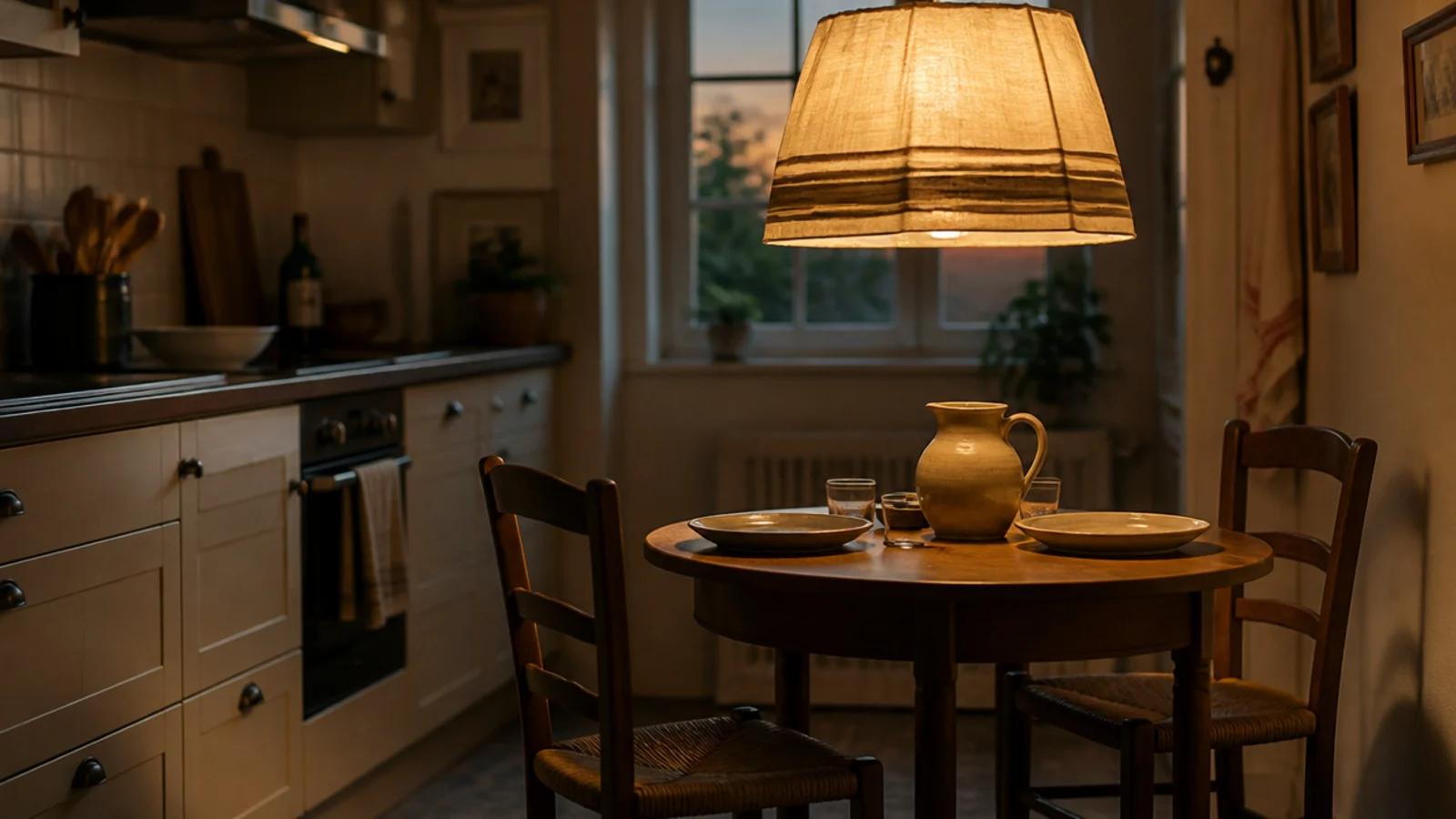
13. Clearance from a range hood
Keep shades out of the extraction path and at least 12 inches clear of the hood body, both for airflow and because that zone gets the heaviest grease. If the geometry is tight, move the pendant sideways rather than raising it — the light needs to stay over the counter.
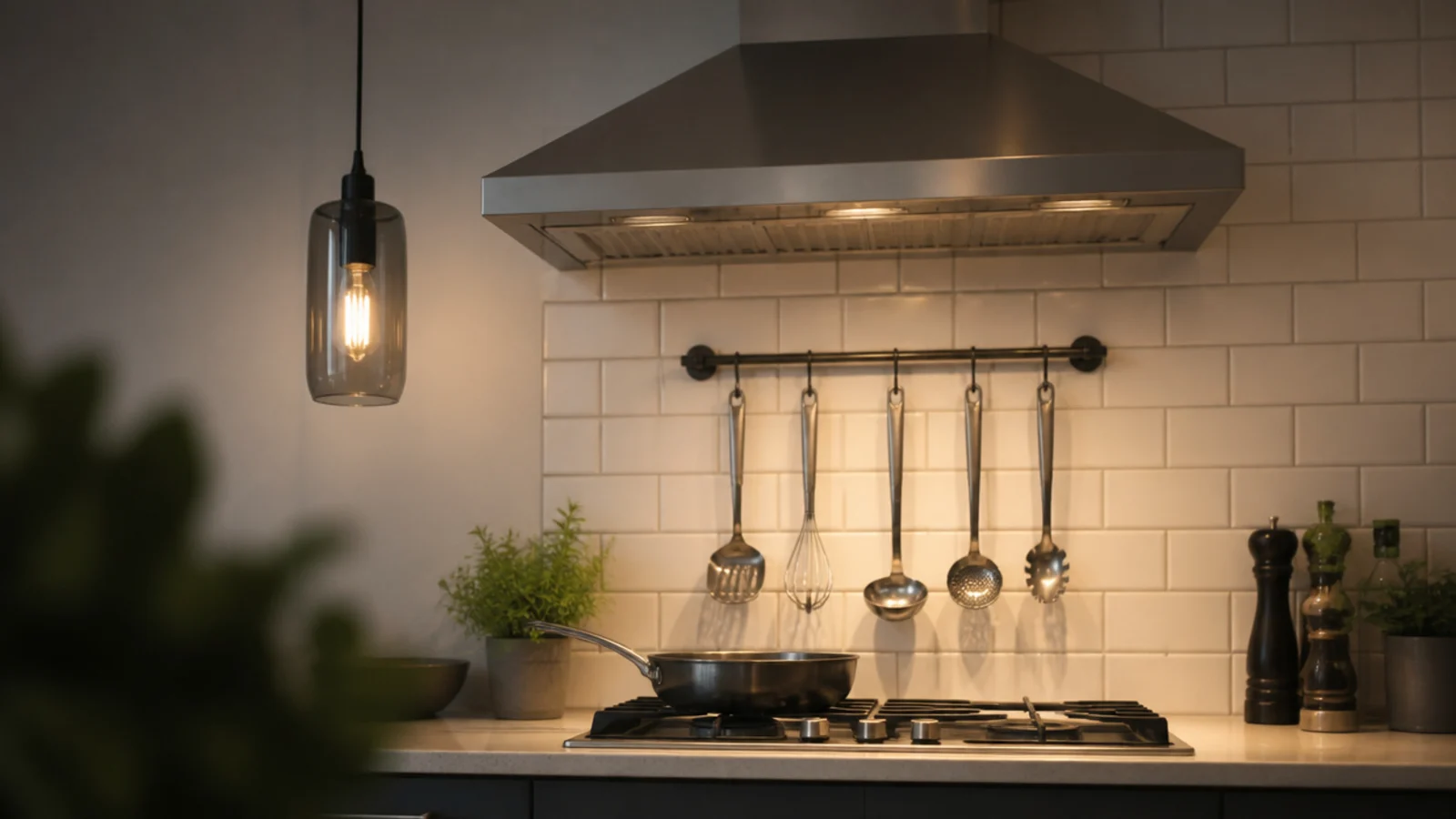
14. Semi flush fixtures in a low galley
Under 8 feet, a 7 foot walkway clearance leaves 12 inches for canopy, cord and shade together. Semi-flush fixtures sit 4 to 8 inches below the ceiling and are the only way to get a real shade into a low galley. Convertible models work in both houses.
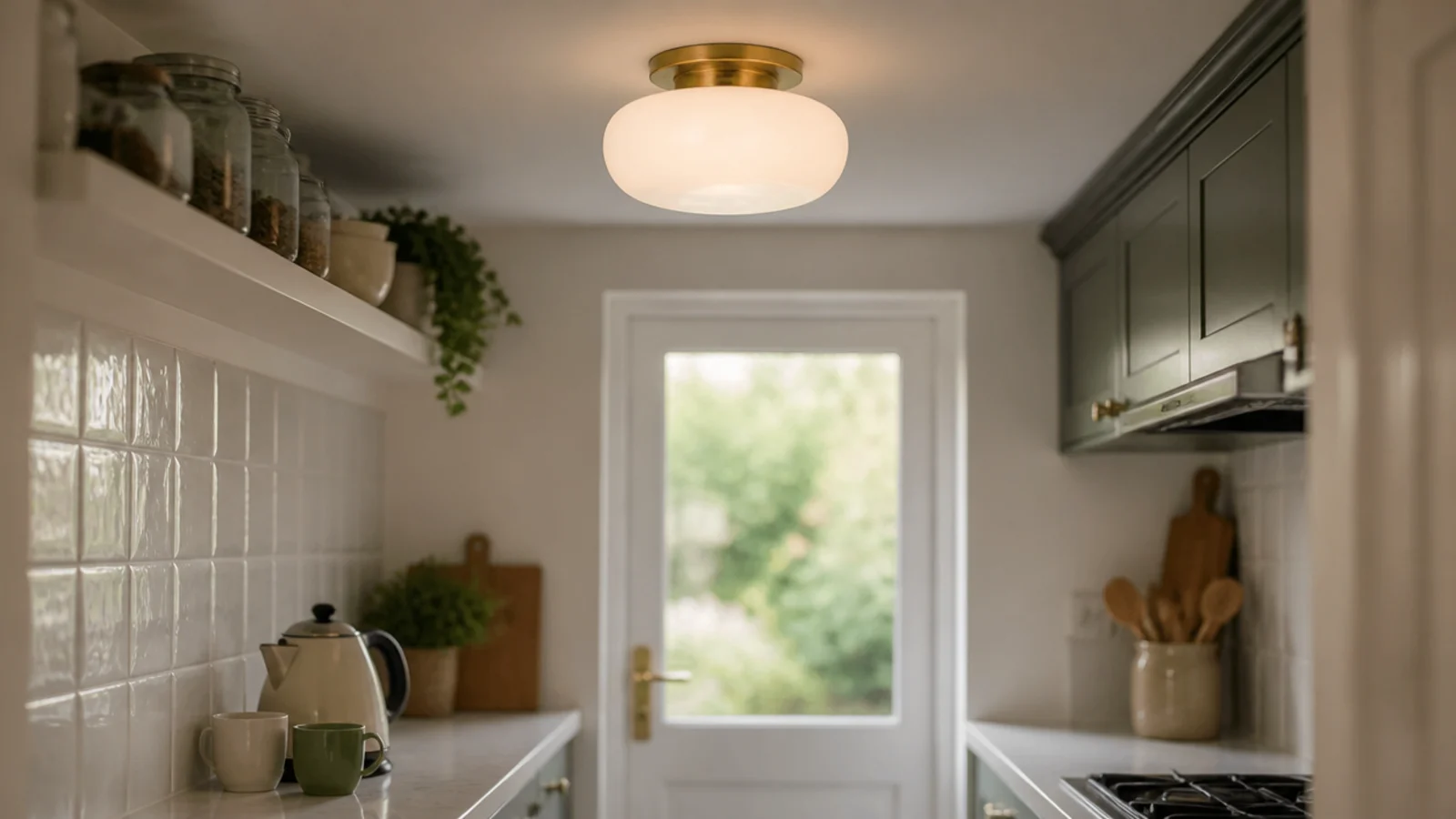
15. Pendants and downlights on separate switches
One switch means one setting. Splitting the pendant circuit from the downlights costs almost nothing at first fix and gives you a bright prep mode and a low evening mode. This is the change clients thank me for most, and it involves no fixture at all.
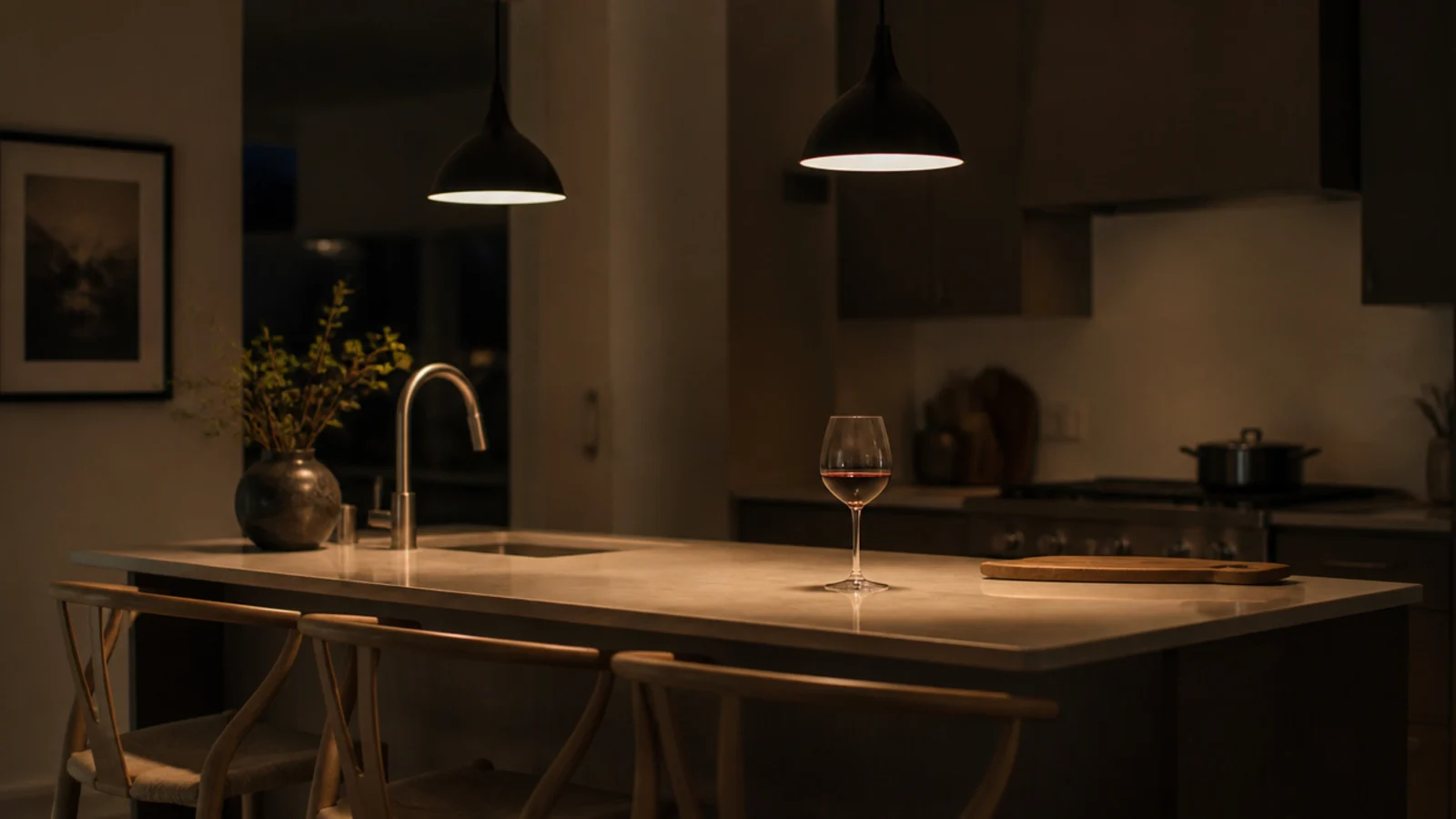
16. A rail of adjustable spots over the counter
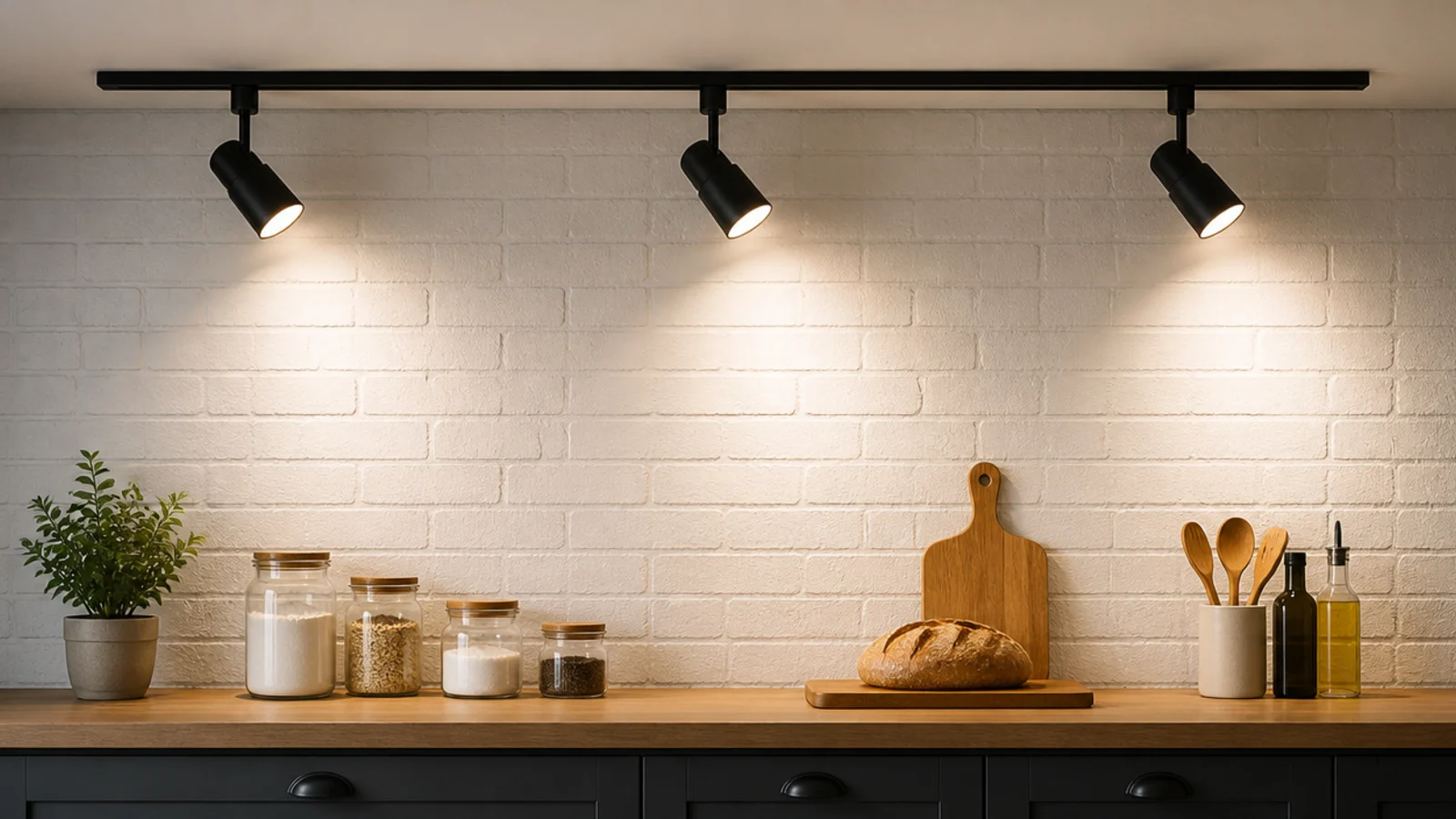
Where a pendant would block a sightline or a window, a slim ceiling rail with three adjustable spots aims light exactly at the counter. Aim each head about 30 degrees off vertical so the light lands in front of you rather than on your own shadow.
17. A conversion kit in a rented kitchen
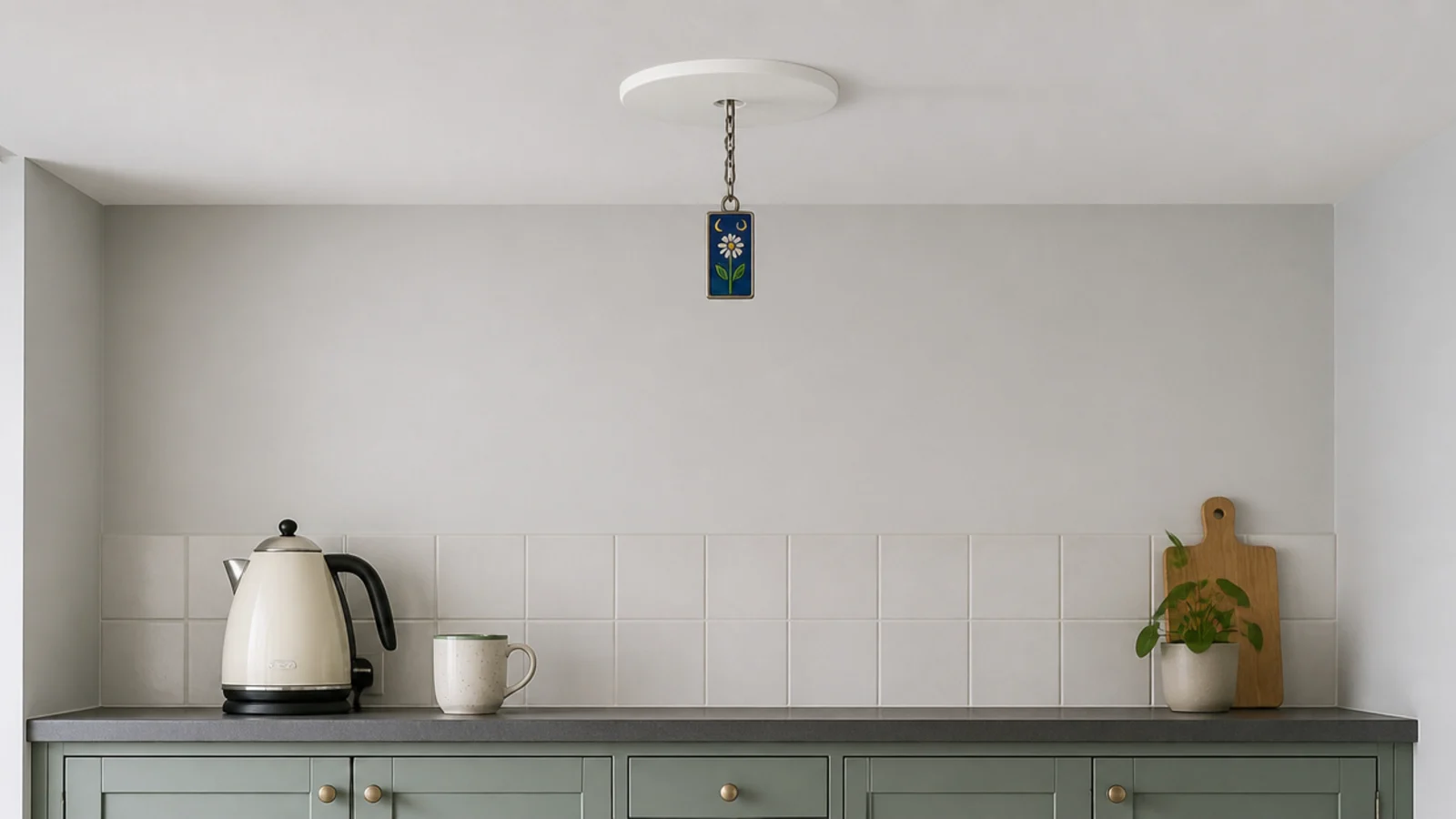
Rented kitchens are full of downlights and empty of options. A conversion kit screws into an existing can, drops a cord and shade below a trim plate for $18 to $40, and comes out cleanly on move-out. Two of them over a rented island change the room completely.
18. Cord grips that keep grease off the flex
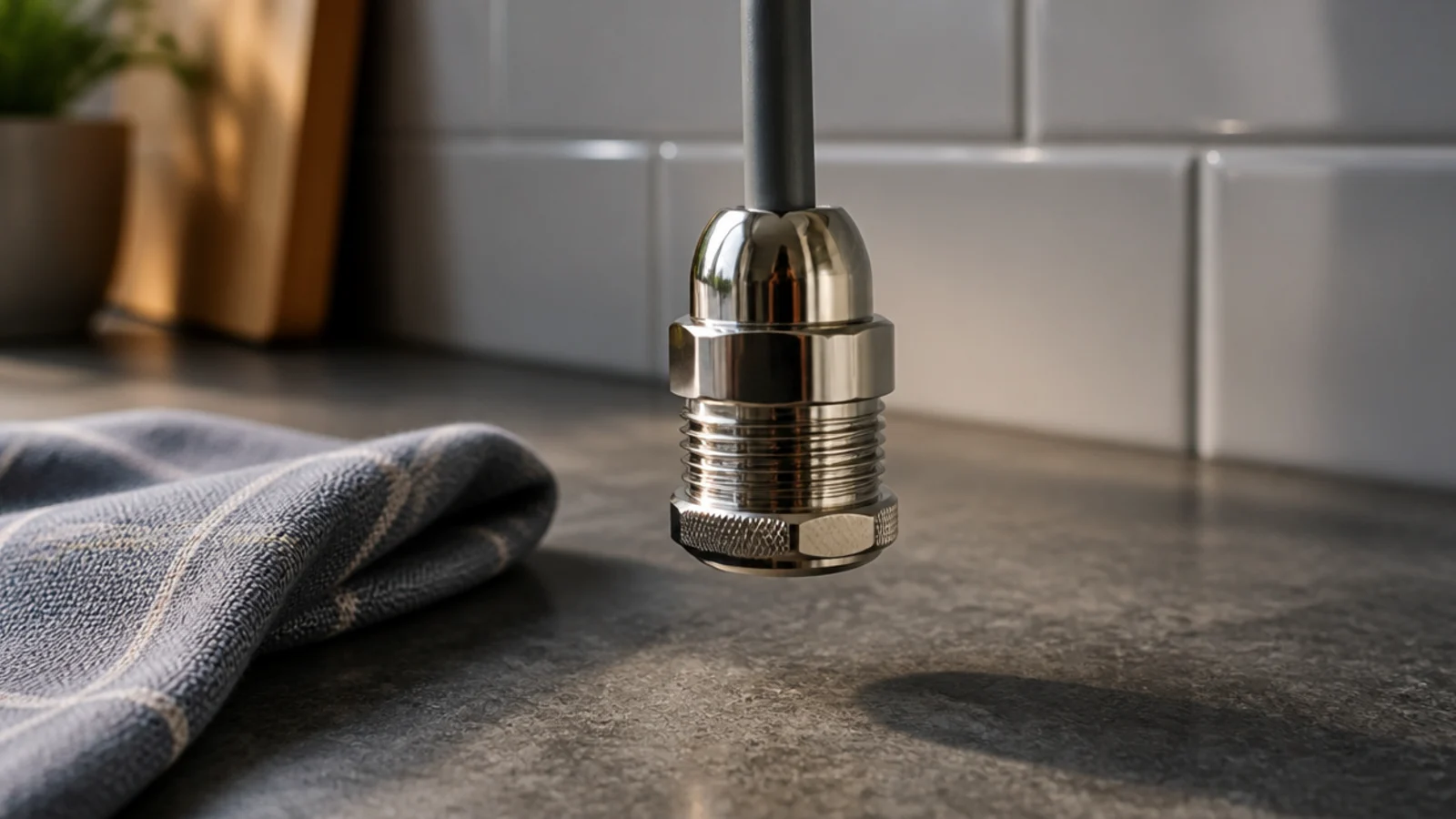
Smooth silicone or metal-sheathed cable wipes clean; braided fabric flex holds kitchen grease permanently. Over a hob or a busy island, choose the smooth version and a metal cord grip. It is a $10 decision you notice every time you clean.
19. A pendant above open kitchen shelving
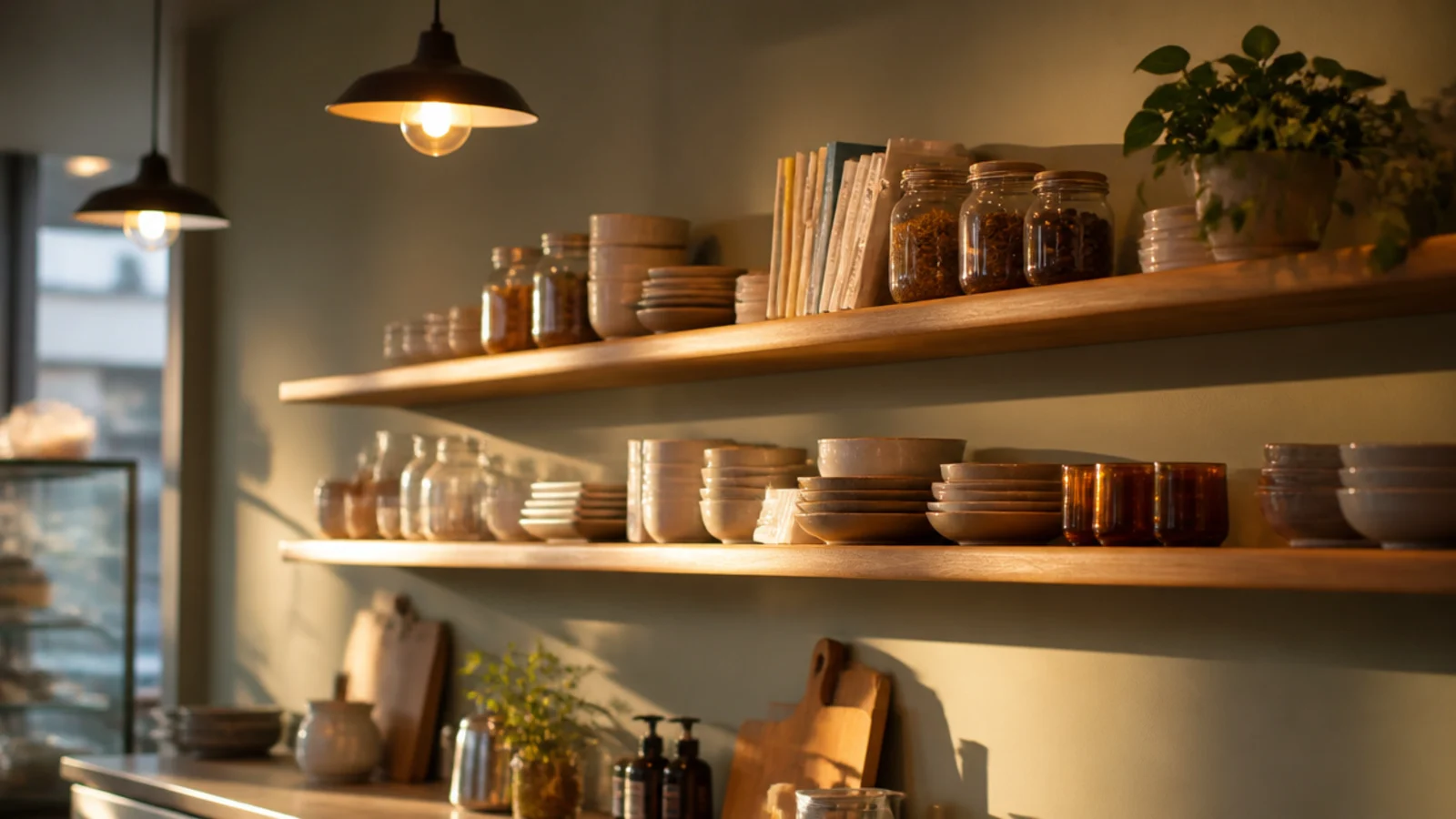
Open shelves go dark because the shelf above shades the one below. A pendant hung in front of the run at 400 to 600 lumens lights the ceramics rather than the wall. A coffee corner built into that run needs the same treatment.
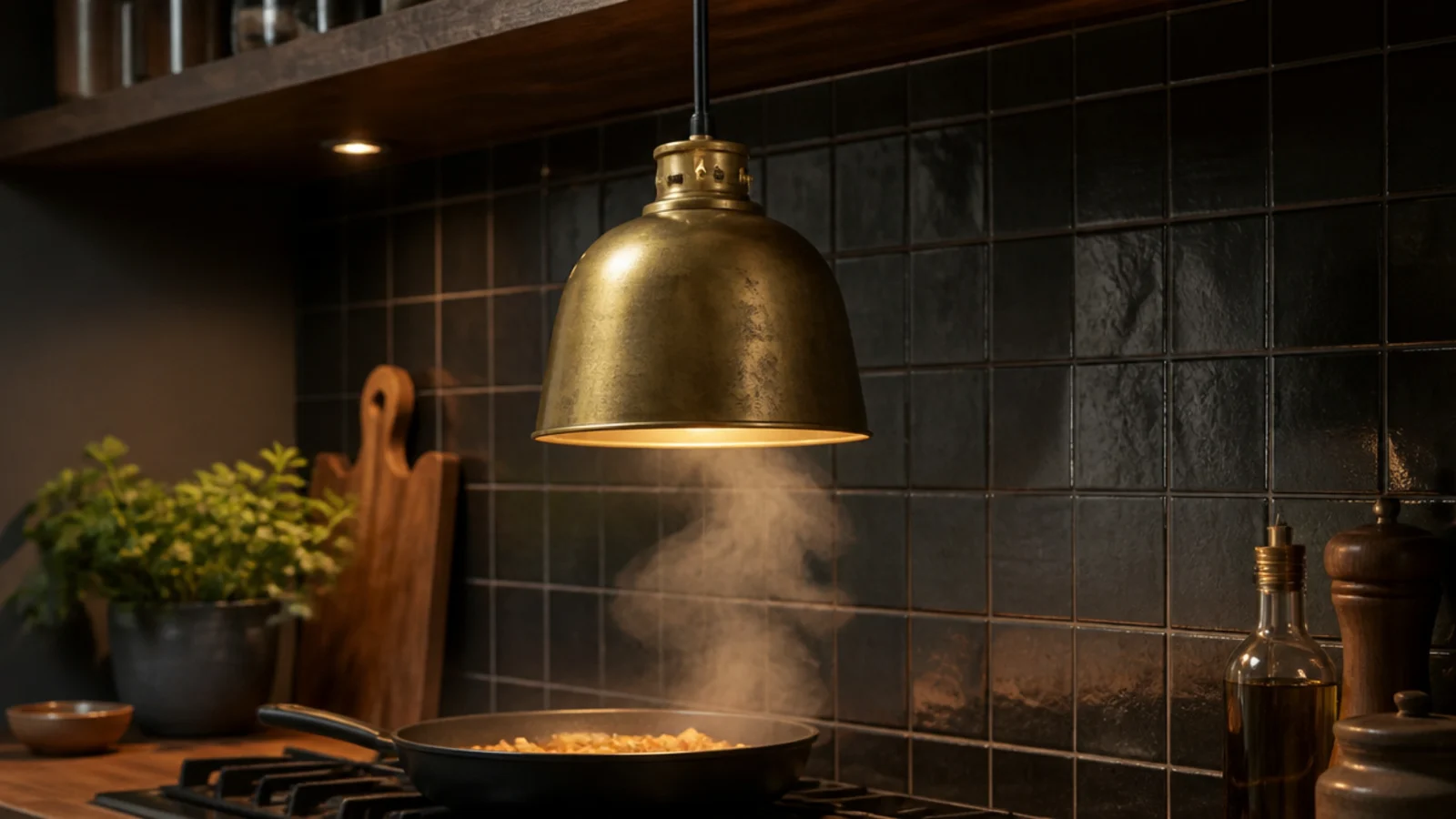
20. Unlacquered brass that ages in the steam
Unlacquered brass in a kitchen darkens fast and unevenly, which is either the point or the problem. If you like patina, it is the best-value finish here because it improves rather than wears. If you want it uniform, buy sealed or powder-coated instead.
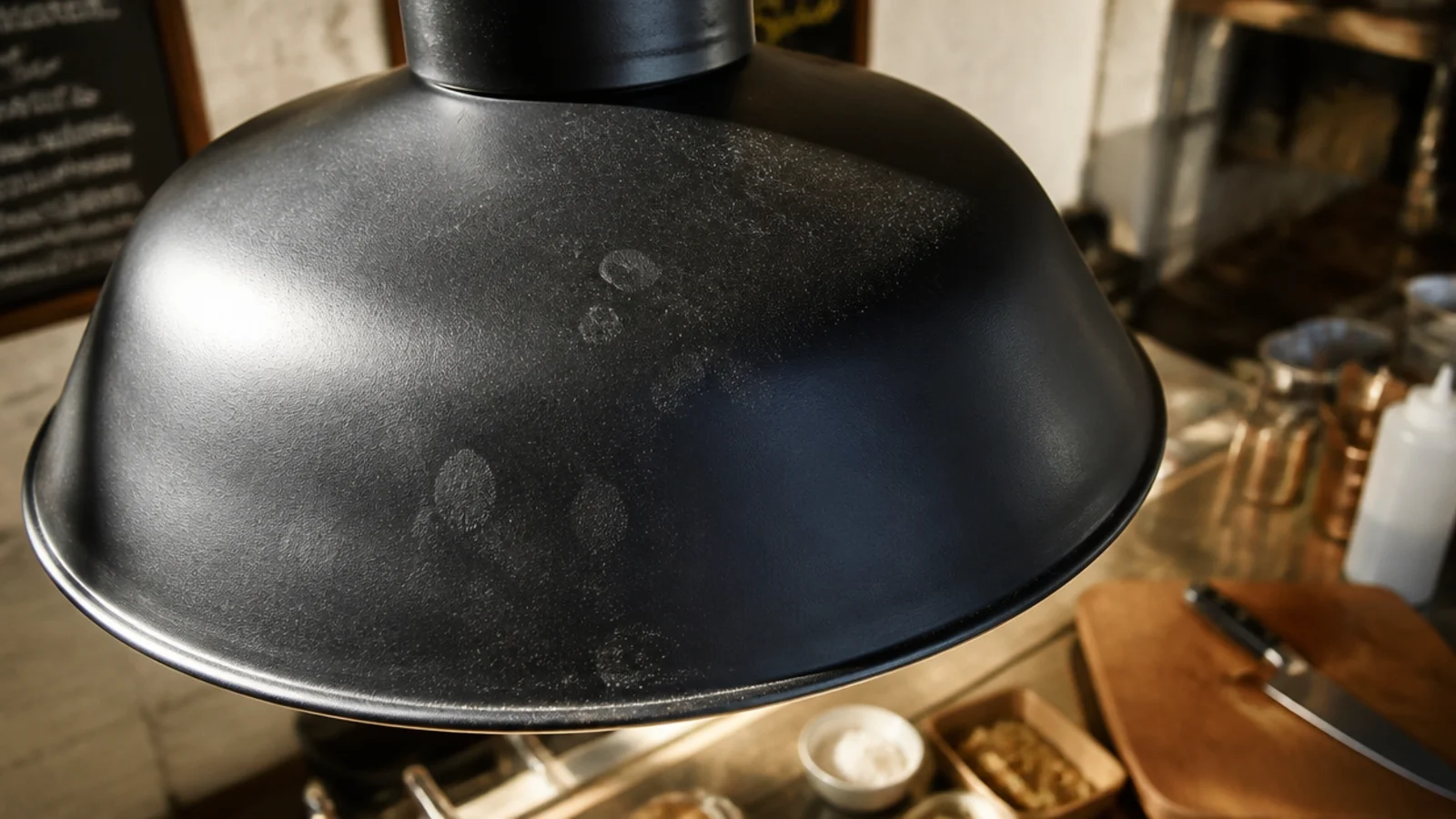
21. Matte black shades and the fingerprint problem
Matte black photographs beautifully and shows every finger mark and every speck of flour at close range. Over an island where people reach across, a satin or textured black hides handling far better than a flat one. Check the finish in raking light before buying.
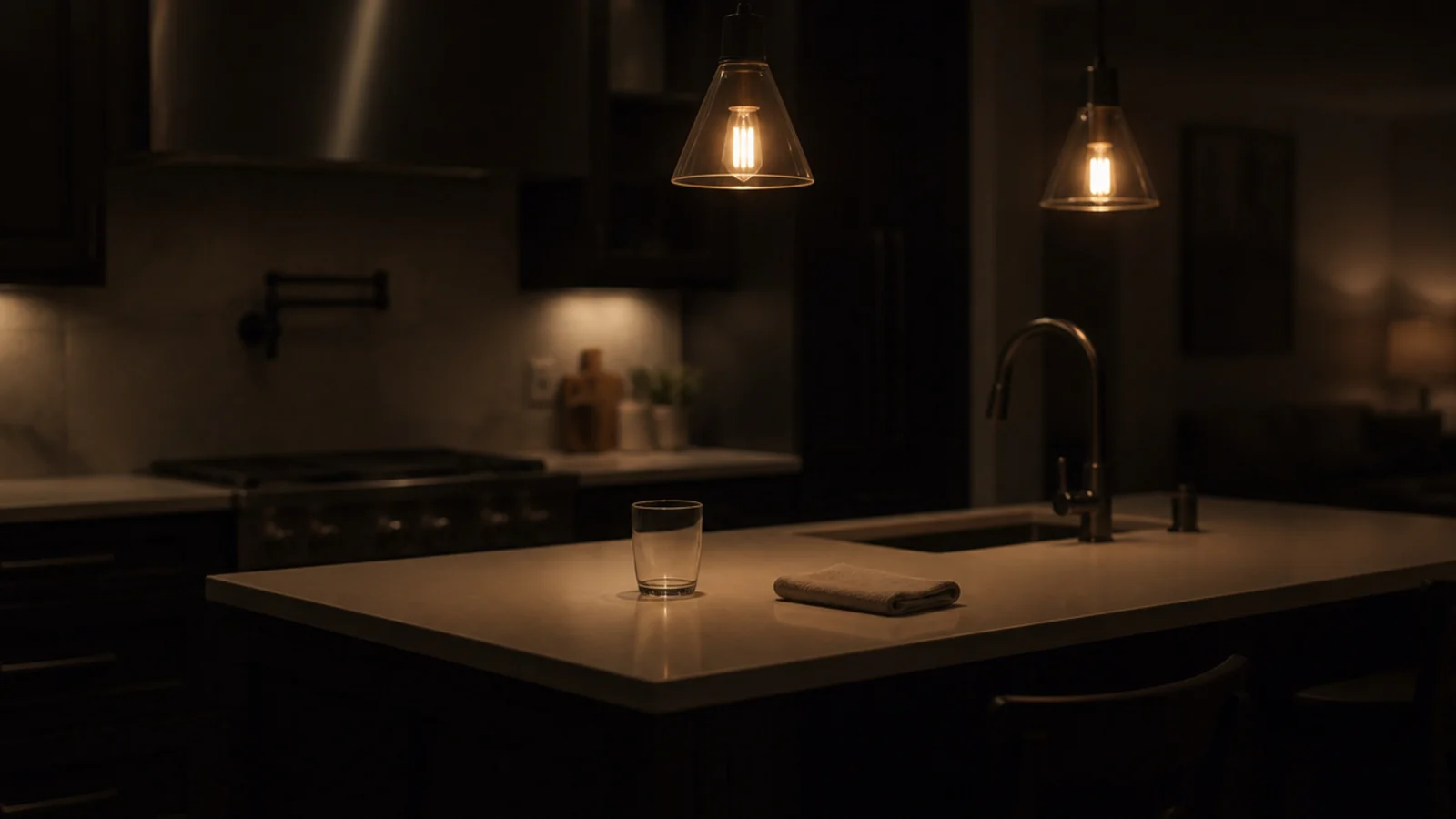
22. A dimmer for the evening kitchen
A kitchen at 20 per cent output stops being a workspace. A trailing-edge LED dimmer on the pendant circuit costs $20 to $35 and turns the room into somewhere people stay after dinner. Check the minimum load — many need 10 watts, which two small LEDs may not reach.
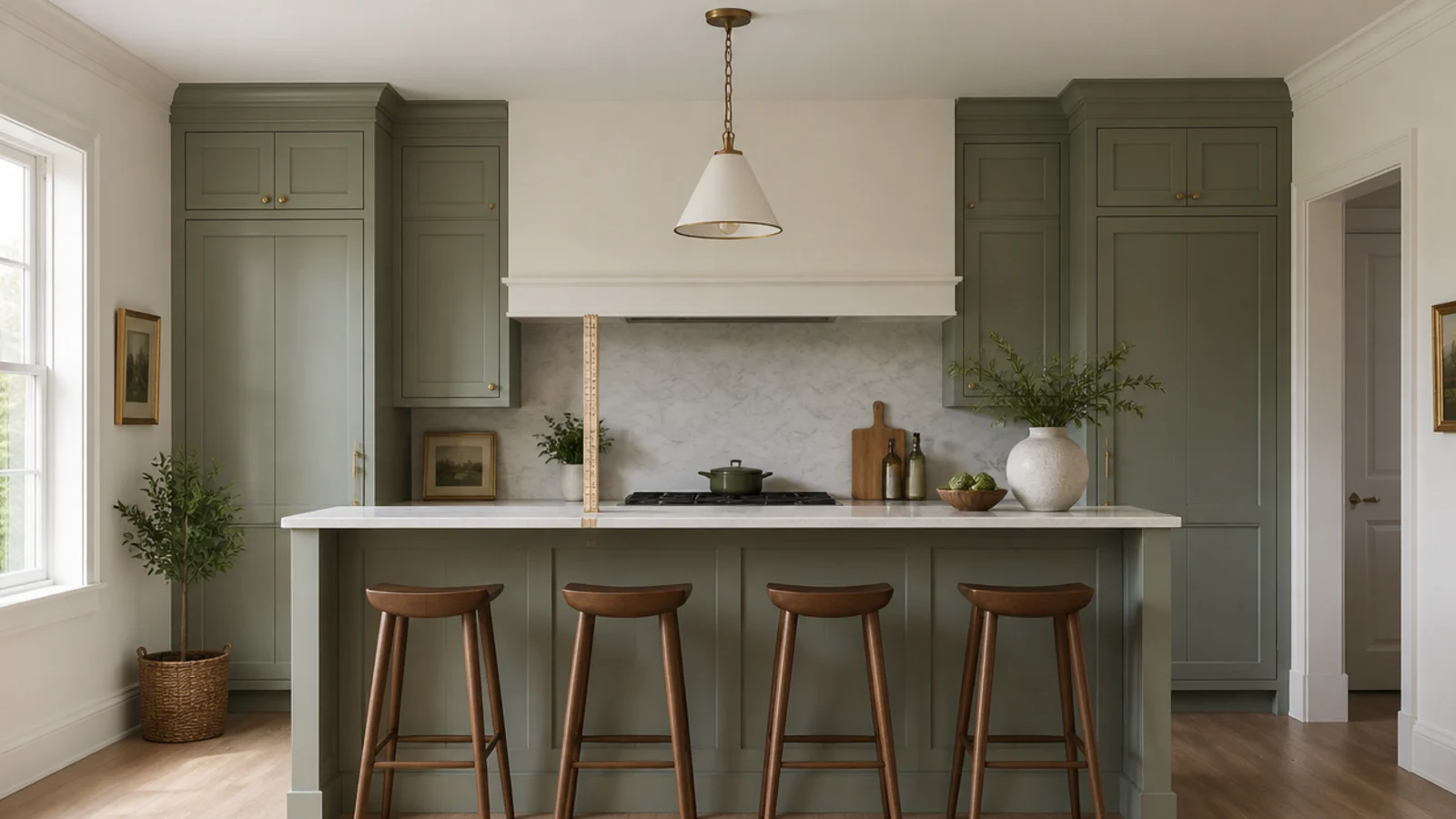
23. Height for a raised forty two inch bar
A raised bar changes the arithmetic. The 30 to 36 inch gap is measured from the bar surface, so a 42 inch bar puts the shade 6 inches higher overall than a 36 inch counter would. Check the result against your walkway clearance before ordering cords.
24. Choosing a shade you will actually clean
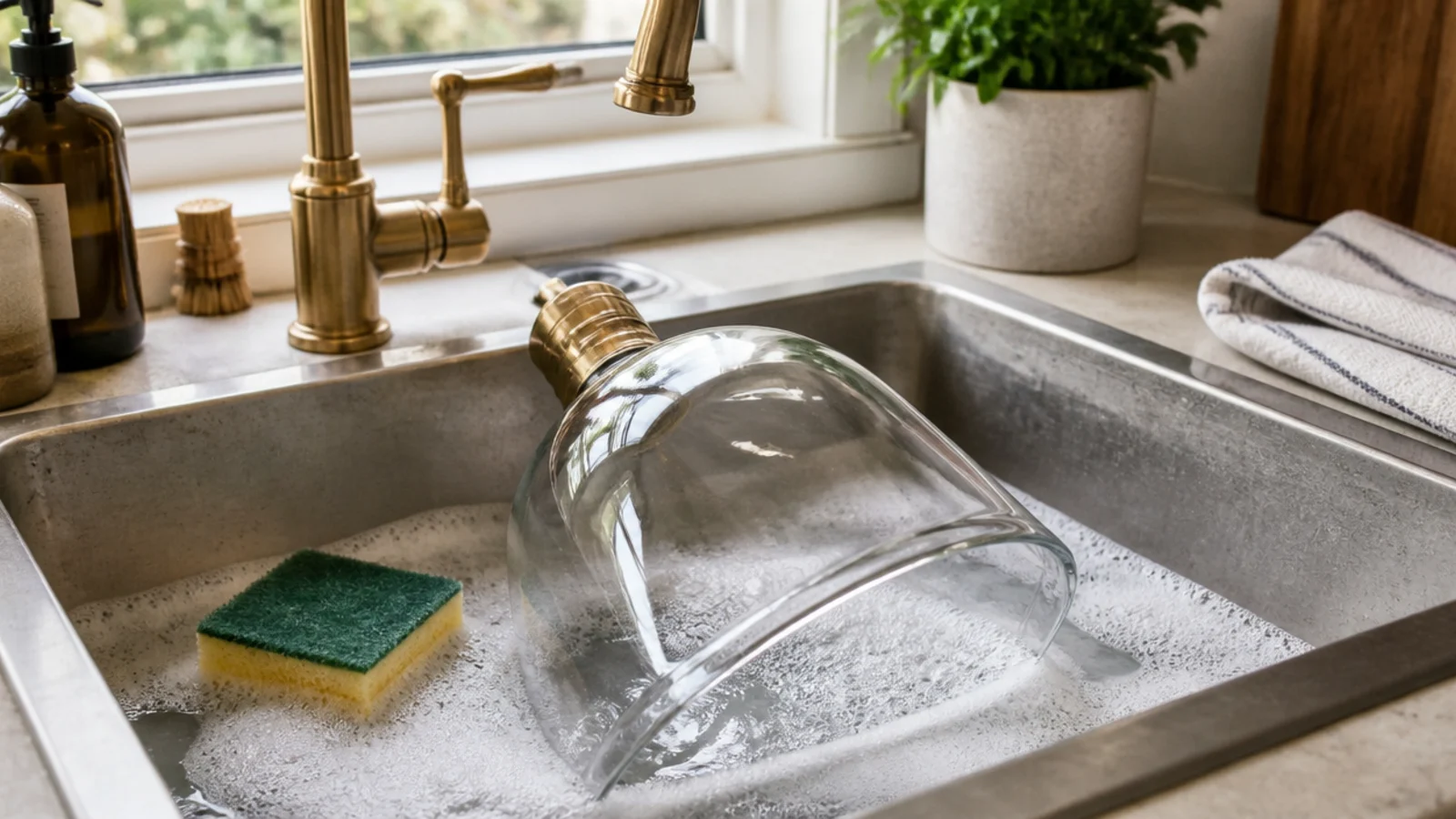
Be honest about maintenance. A shade that lifts off its holder and goes in the sink gets cleaned; one that needs a ladder and a cloth twice a year does not. In a kitchen this is a performance specification, not a preference. The same honesty applies to a luxury centre table finish in a room with children.
25. The ceiling box above a kitchen
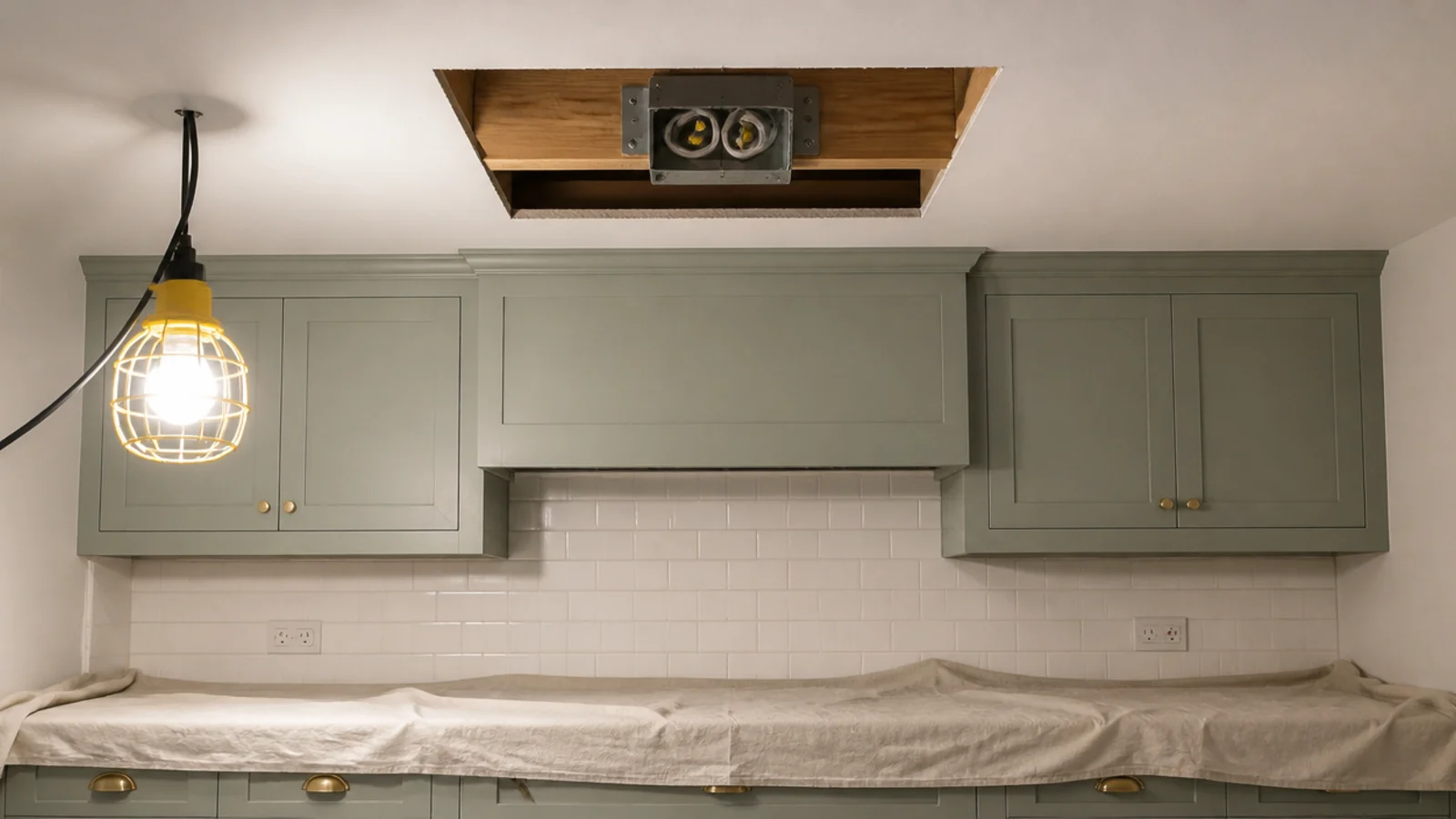
Kitchen ceilings hide pipework, ducts and the odd surprise. Before ordering anything, take the fitting down and look: a rated ceiling box carries the fixture weight, and where a joist does not land where you need it, an adjustable brace bar between joists costs $15 to $30.
If the shades themselves are the thing you are choosing between, wooden hanging lights compares timber fixtures by bulb type and by how each species copes with kitchen heat.
Mistakes to Skip
- Hanging a woven or paper shade near a hob. Airborne grease settles into the weave within months and there is no way to clean it out.
- Lighting the whole kitchen from the ceiling ring. Downlights behind you put your own shadow on the board, which is why so many kitchens feel dim while being technically bright.
- Buying bulbs on watts. The two numbers that matter are lumens and kelvin, and CRI is the third one worth reading before the price.
- Putting pendants and downlights on one switch. It is nearly free to split at install and close to impossible to change once the ceiling is closed up.
Frequently asked questions
What colour temperature suits a kitchen?
Use 3000K, with a CRI of 90 or above. At 2700K a kitchen reads cosy but food and worktops look slightly muddy, and at 4000K it reads clinical. The CRI number matters more than most people realise: below 80, tomatoes, oak and skin all lose their depth under the light.
How much light does a kitchen counter need?
Aim for 70 to 80 lumens per square foot of working counter, which usually means 700 to 800 lumens per pendant over an island plus under-cabinet strips elsewhere. Ambient ceiling light should sit lower, around 30 to 40 lumens per square foot, so the working surfaces read as the bright zone.
Which shade finishes survive a working kitchen?
Glass, glazed ceramic, powder-coated steel and sealed brass all wipe clean with a damp cloth. Unsealed rattan, paper and open weaves collect airborne grease within about a foot of a hob and cannot really be cleaned. Keep porous materials for the dining end of the room.
How high should a pendant hang over a breakfast bar?
Measure from the bar surface, not the floor. A standard 36 inch counter takes a shade bottom at 30 to 36 inches above it; a raised 42 inch bar takes the same 30 to 36 inches, which puts the fixture higher overall. Sit on a stool and check no bulb is in your eye line.
Should kitchen pendants be on their own switch?
Yes. Downlights and pendants doing different jobs on one switch means the kitchen has exactly one setting. Splitting them costs almost nothing at install and gives you a bright prep mode and a low evening mode. Add a dimmer on the pendant circuit at the same time.
Want more like this? Browse all 15 hanging lights guides — they all use the same measurements and budget tiers.

Pin it for later
Save this to your Hanging Lights board
Pin it now so it is waiting for you when the tape measure comes out — and so the next person hunting for this idea can find it too.
Save this pinKeep going
More ideas worth saving while you have the tape measure out.