Wall Clock · Review
15 Large Wall Clock Decor Ideas Compared By Size

Some links on this page may become affiliate links in future. I only recommend pieces I would put in my own home — see the affiliate disclosure.

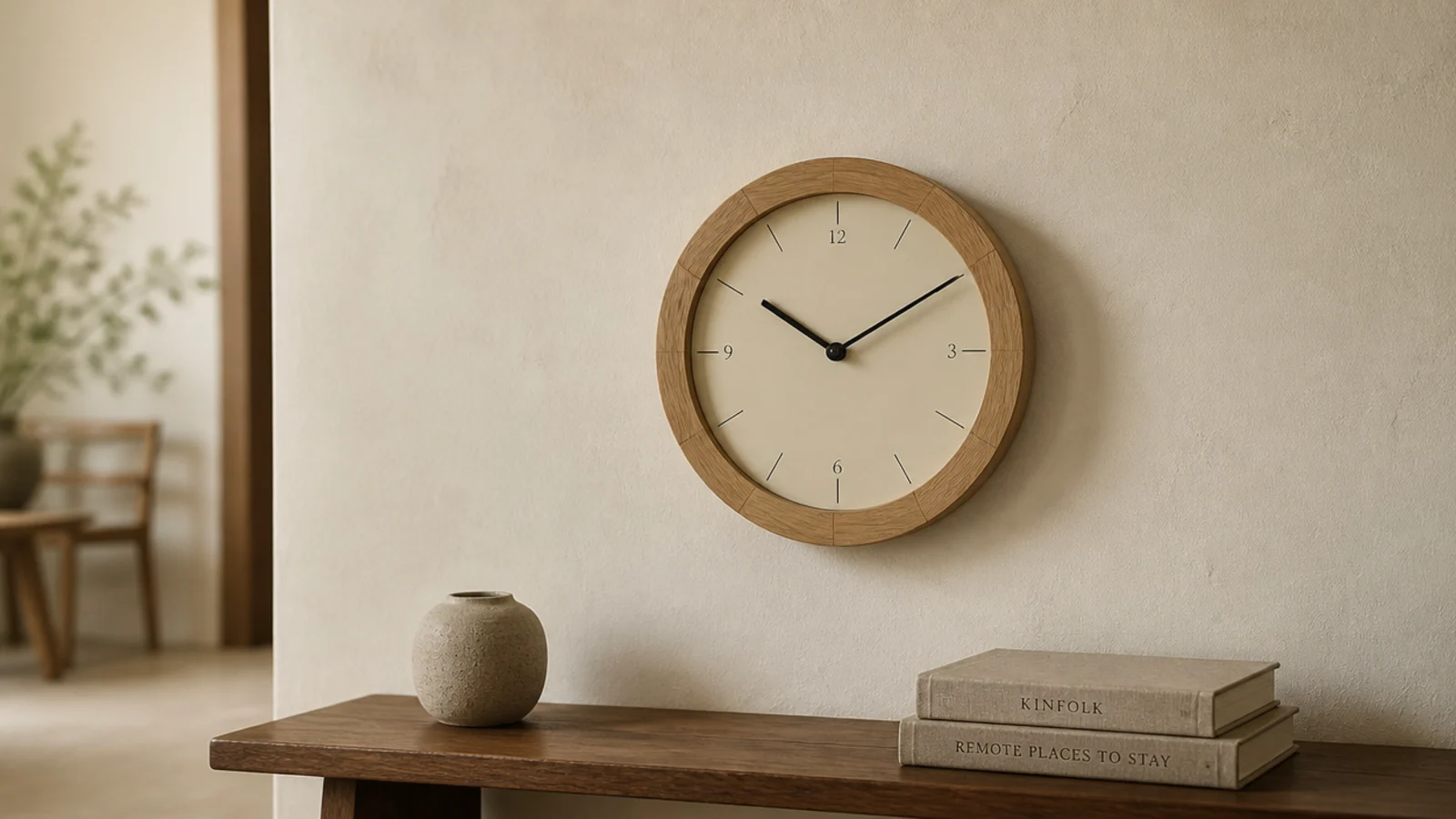
Size is the only thing about a big clock you cannot fix afterwards. Most large wall clock decor ideas are photographed on nine-foot walls in rooms with no furniture, which is why a 36-inch face so often arrives and immediately overwhelms an ordinary living room — or, more commonly, why a 24-inch one arrives and disappears. Below is every diameter worth considering, compared on wall width, viewing distance, weight and fixing, plus the seven formats I keep recommending.
In this guide10 sections — tap to openHide
- 1.How I Chose These Large Wall Clock Decor Ideas
- 2.The Full Comparison: 15 Clock Sizes By Wall
- 3.The 24-inch metal-rimmed dial
- 4.The 30-inch open-frame skeleton
- 5.The 36-inch exposed-gear face
- 6.The 40-inch numeral set fixed to the wall
- 7.The 28-inch solid timber rim
- 8.The 32-inch oversized station dial
- 9.The 48-inch French-cleat statement piece
- 10.What to Check Before You Buy
How I Chose These Large Wall Clock Decor Ideas
I judged every size on five things, in this order.
- Wall width it can carry. A clock should read as deliberate rather than apologetic, and the rough working rule is a diameter of about a third of the furniture below, or a quarter to a third of the free wall width where there is no furniture. That single ratio decides more of this than style does.
- Readable distance. Legibility runs at roughly an inch of numeral height per 10 feet of viewing distance, and numerals tend to sit at about a fifth of the dial diameter. A clock you cannot read from your own sofa is wall art, which is a fine thing to own deliberately and an expensive mistake to own by accident.
- Weight and where the load goes. This is the honest constraint. Under 8 pounds you have options; over it you need framing. Above a sofa or a bed I treat framing as mandatory at any weight, because the consequence of a fixing letting go is a person rather than a floor.
- Movement torque. Past about 24 inches, hands reach more than 6 inches from the centre and a standard quartz motor begins to stall on the climb from the half hour. The failure looks like bad timekeeping rather than an obvious fault, which is why so many large clocks are wrongly returned as faulty.
- Ceiling height. A 36-inch face under an 8-foot ceiling leaves very little air above and below once you allow the 8 to 12 inch gap over a sofa back. Vertical room is as real a limit as horizontal room.
I did not weight brand, finish trends or how a clock photographs on a bare studio wall. Everything below is described by size and construction, because the same format appears under a dozen labels and construction is what you are actually buying.
The Full Comparison: 15 Clock Sizes By Wall
Weights assume typical metal or solid timber construction; ply and rattan versions run considerably lighter. Fixings assume half-inch drywall over timber framing.
| Diameter | Suits a wall of | Reads clearly to | Typical weight | Fixing it needs |
|---|---|---|---|---|
| 12 in | Under 4 ft, or a narrow pier | About 15 ft | 2 to 4 lb | One good drywall anchor |
| 14 in | 4 to 5 ft | About 18 ft | 2 to 5 lb | One good drywall anchor |
| 16 in | 5 to 6 ft | About 20 ft | 3 to 6 lb | Two anchors, or one stud |
| 18 in | 6 to 7 ft | About 22 ft | 4 to 7 lb | Two anchors, or one stud |
| 20 in | 7 to 8 ft | About 25 ft | 4 to 8 lb | Stud preferred over anchors |
| 22 in | 7 to 9 ft | About 28 ft | 5 to 9 lb | Stud, or two spring toggles |
| 24 in | 8 to 9 ft | About 30 ft | 6 to 12 lb | Number eight screw into a stud |
| 26 in | 8 to 10 ft | About 32 ft | 7 to 13 lb | Number eight screw into a stud |
| 28 in | 9 to 10 ft | About 35 ft | 8 to 15 lb | Stud, and high torque advised |
| 30 in | 9 to 11 ft | About 38 ft | 9 to 16 lb | Stud, high torque movement |
| 32 in | 10 to 12 ft | About 40 ft | 10 to 18 lb | Stud, high torque movement |
| 36 in | 11 to 13 ft | About 45 ft | 12 to 20 lb | Two studs where the case allows |
| 40 in | 12 to 14 ft | About 50 ft | 14 to 24 lb | Two studs or a French cleat |
| 48 in | 14 to 17 ft | About 60 ft | 18 to 30 lb | French cleat across two studs |
| 60 in | Over 17 ft or double height | About 75 ft | Numeral sets only | Individual fixings on a template |
Seven of those sizes are the ones I keep specifying.
1. The 24-inch metal-rimmed dial
The workhorse, and the size most people should buy. It suits an 84-inch three-seat sofa almost exactly, reads clearly across a 30-foot room, and sits in the price band where good construction is genuinely available at $60 to $150.
It also sits right on the weight threshold. A steel-rimmed 24-inch clock runs 6 to 12 pounds depending on whether it has a glass lens, and glass adds 1 to 3 pounds on its own. That puts it into stud territory, particularly since its natural home is directly above where people sit. Check the hands: at 24 inches they reach about 10 inches from the centre, so this is the smallest size that routinely needs a high-torque movement.

2. The 30-inch open-frame skeleton
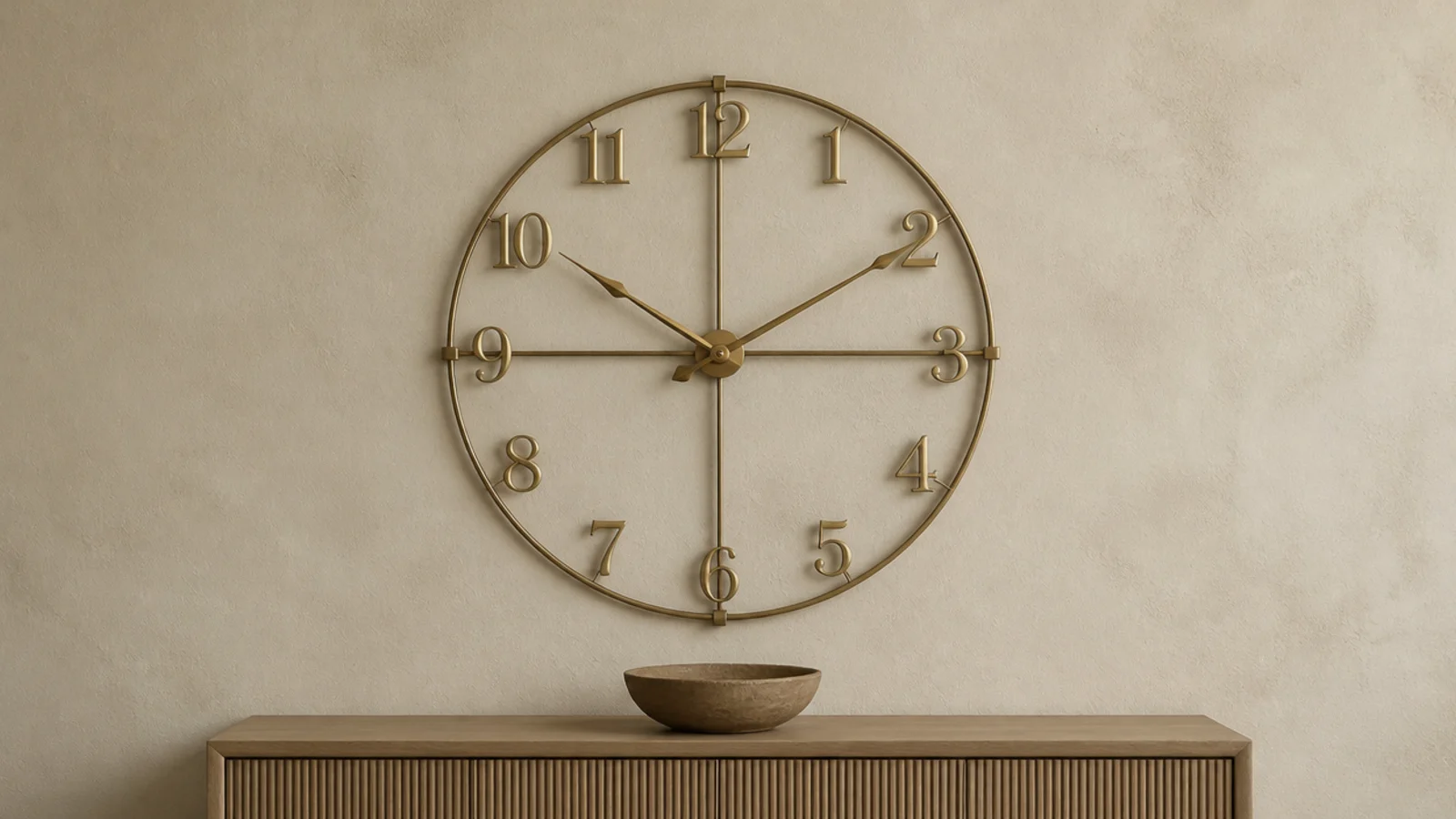
The one large format that works on a papered or heavily textured wall, because there is no dial plate and the surface reads straight through the numerals. It also weighs far less than a solid face of the same size — often 5 to 9 pounds — because most of it is air.
The condition is a pale wall. On dark paint the hands vanish from about 6 feet away and you have bought a very large ornament. Fixing is usually a single central plate, so a stud is essential; there is no way to spread the load across two points. Expect $70 to $180 at 30 inches.
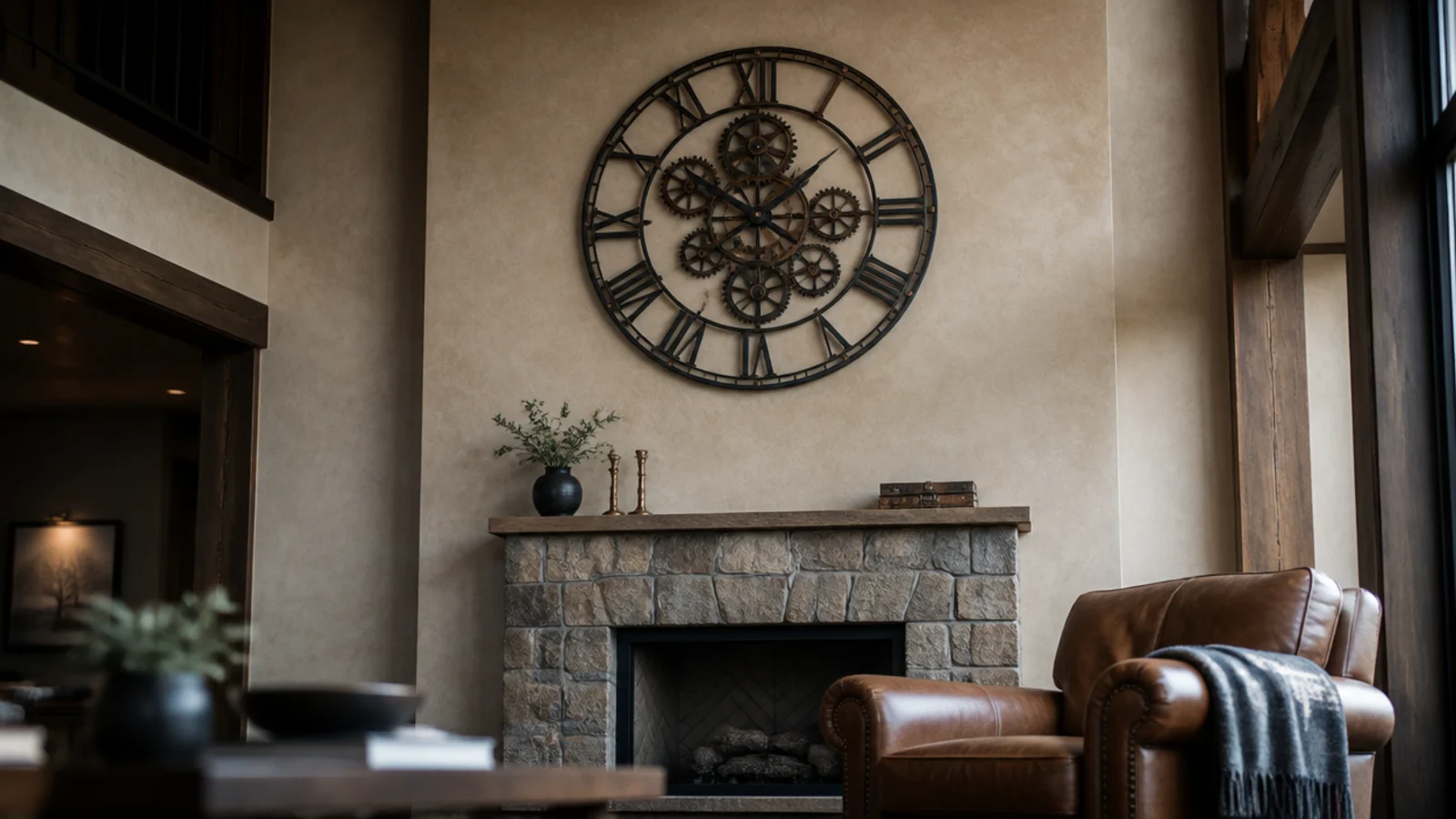
3. The 36-inch exposed-gear face
The right answer for a double-height wall, where a flat printed dial simply cannot hold the space. Visible moving parts still resolve from 15 feet back, and that is exactly the distance these are viewed from.
They are heavy: 12 to 20 pounds is normal and some cast versions pass 25. Two studs where the case allows it, and a genuine high-torque movement, because the hands are long and the decorative gears add drag. Ask whether the gears are driven or ornamental — most affordable versions are ornamental, which is fine, but it means the noise you hear is the movement rather than the mechanism. Around $120 to $350.
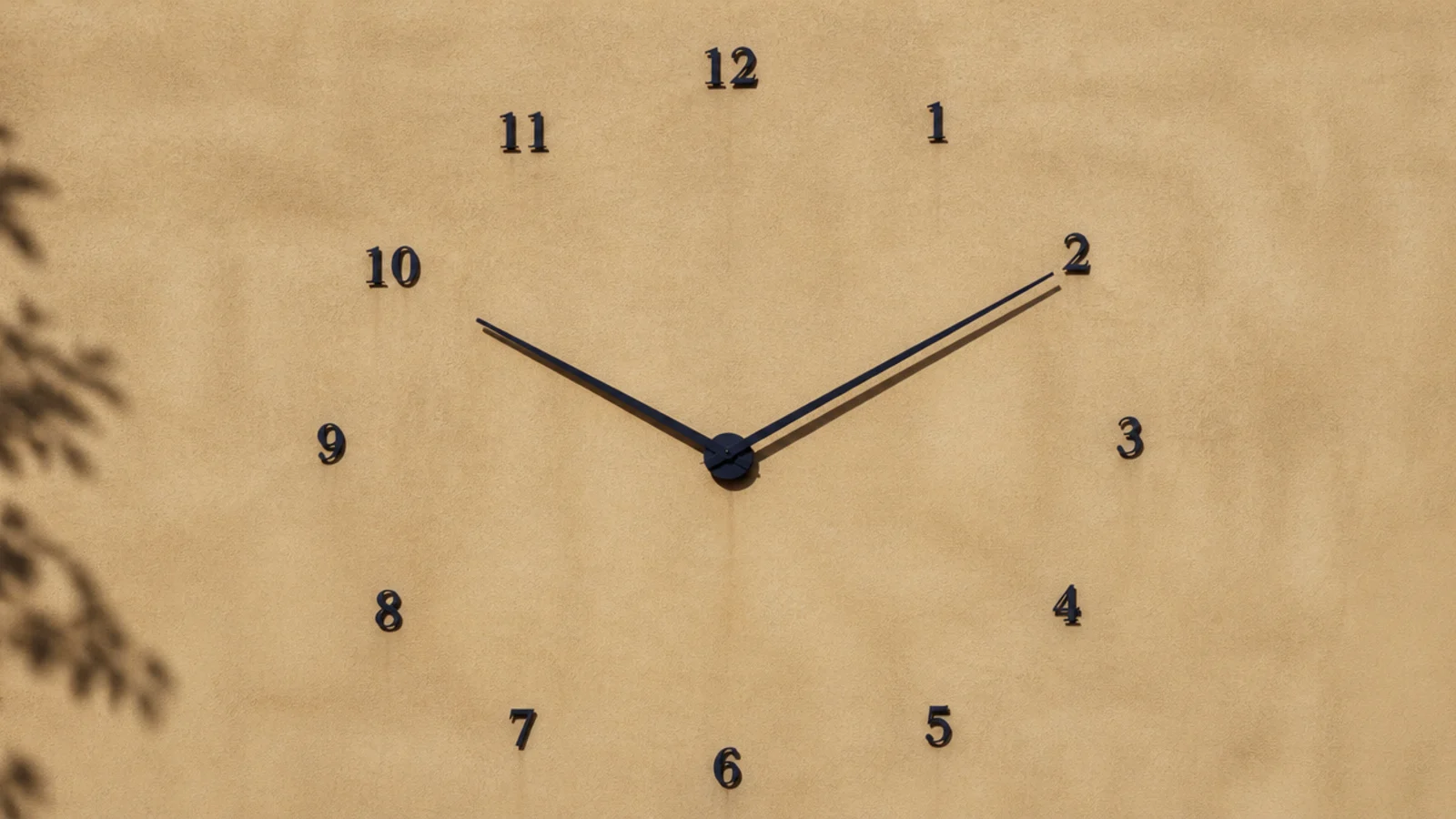
4. The 40-inch numeral set fixed to the wall
Individual numerals fixed in a circle around a central movement, with the plaster itself acting as the dial. It is the cheapest large format per inch of coverage at $80 to $250 for a kit, and the only one that scales past 48 inches without becoming unmanageable.
The whole job depends on a template. Twelve numerals placed by eye go visibly wrong, so cut a paper circle, mark the twelve positions on it and transfer them. Each numeral carries almost no weight, but the central movement needs a solid fixing, and the hands will be long enough that high torque is not optional.
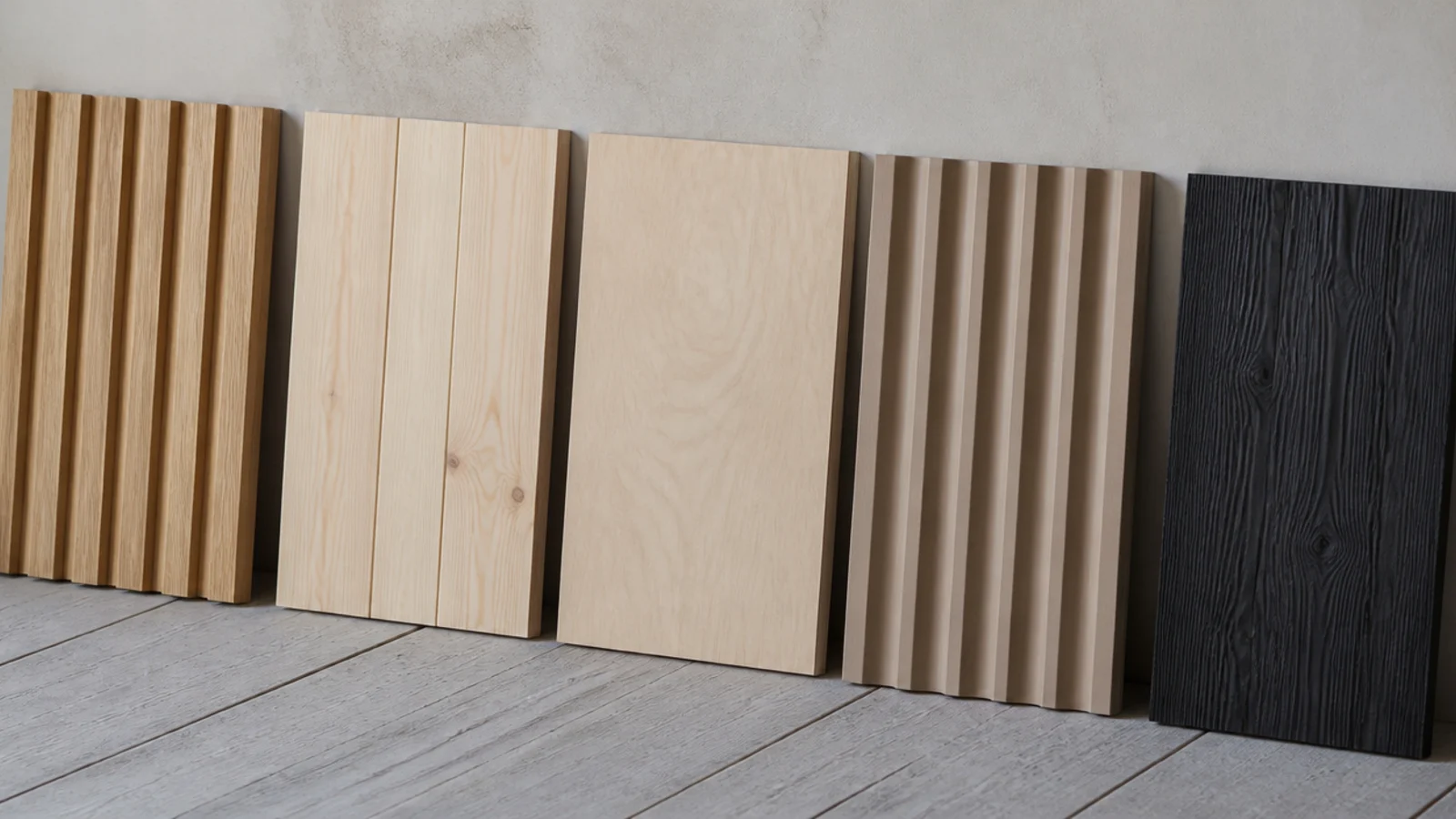
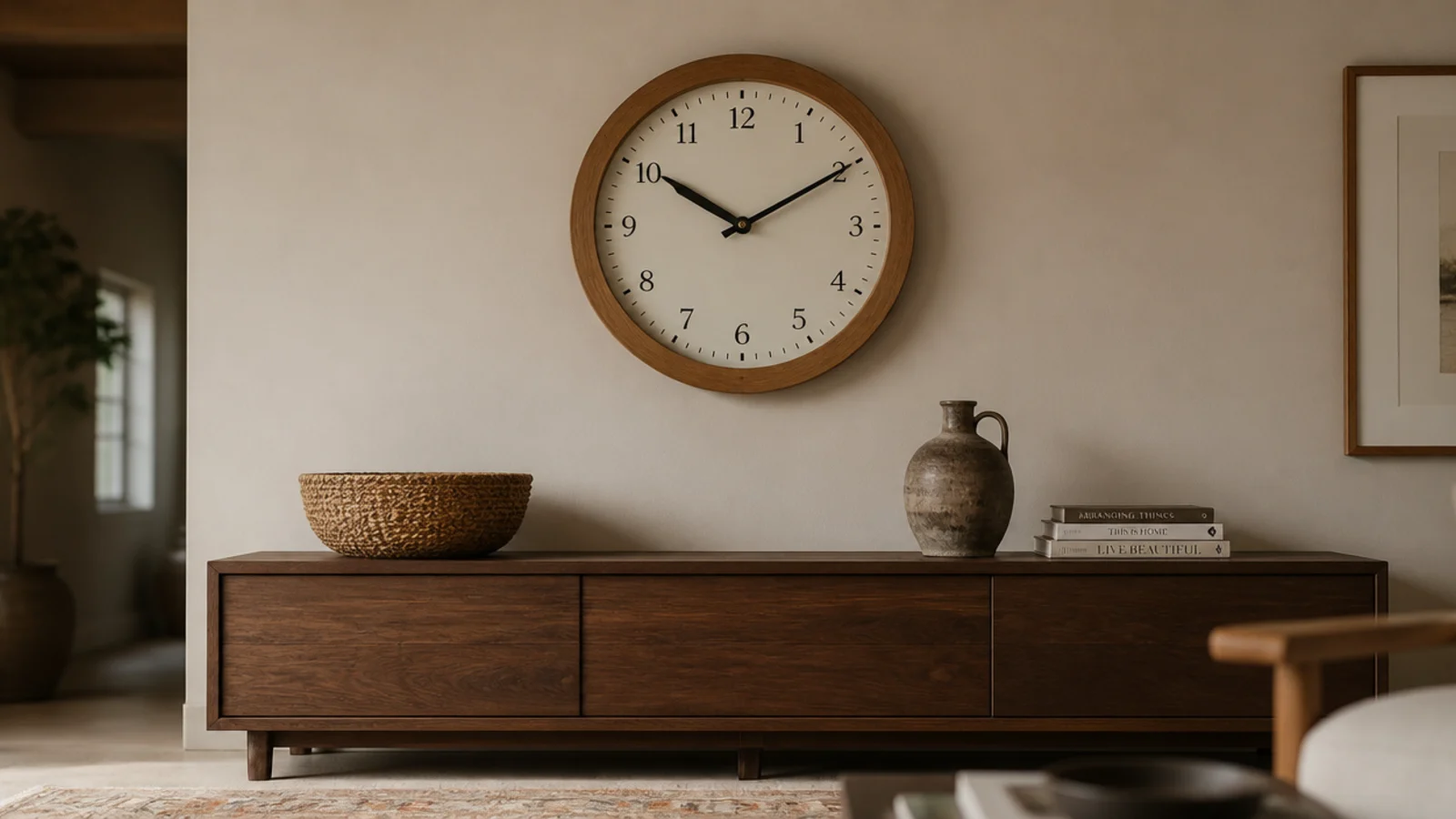
5. The 28-inch solid timber rim
Where a metal rim reads cold in a soft scheme, a wide oak or walnut rim at 28 inches gives you the same scale with warmth. Solid timber is lighter than you expect at this size, generally 8 to 15 pounds, and a segmented mitred rim stays flat where a glued-up disc would cup.
Check the construction on the back and check the shaft length if you are replacing the movement, because a thick timber dial can need a shaft over an inch — the long end of what is commonly stocked. Expect $120 to $300. There is more on species behaviour in the wood clock guide.
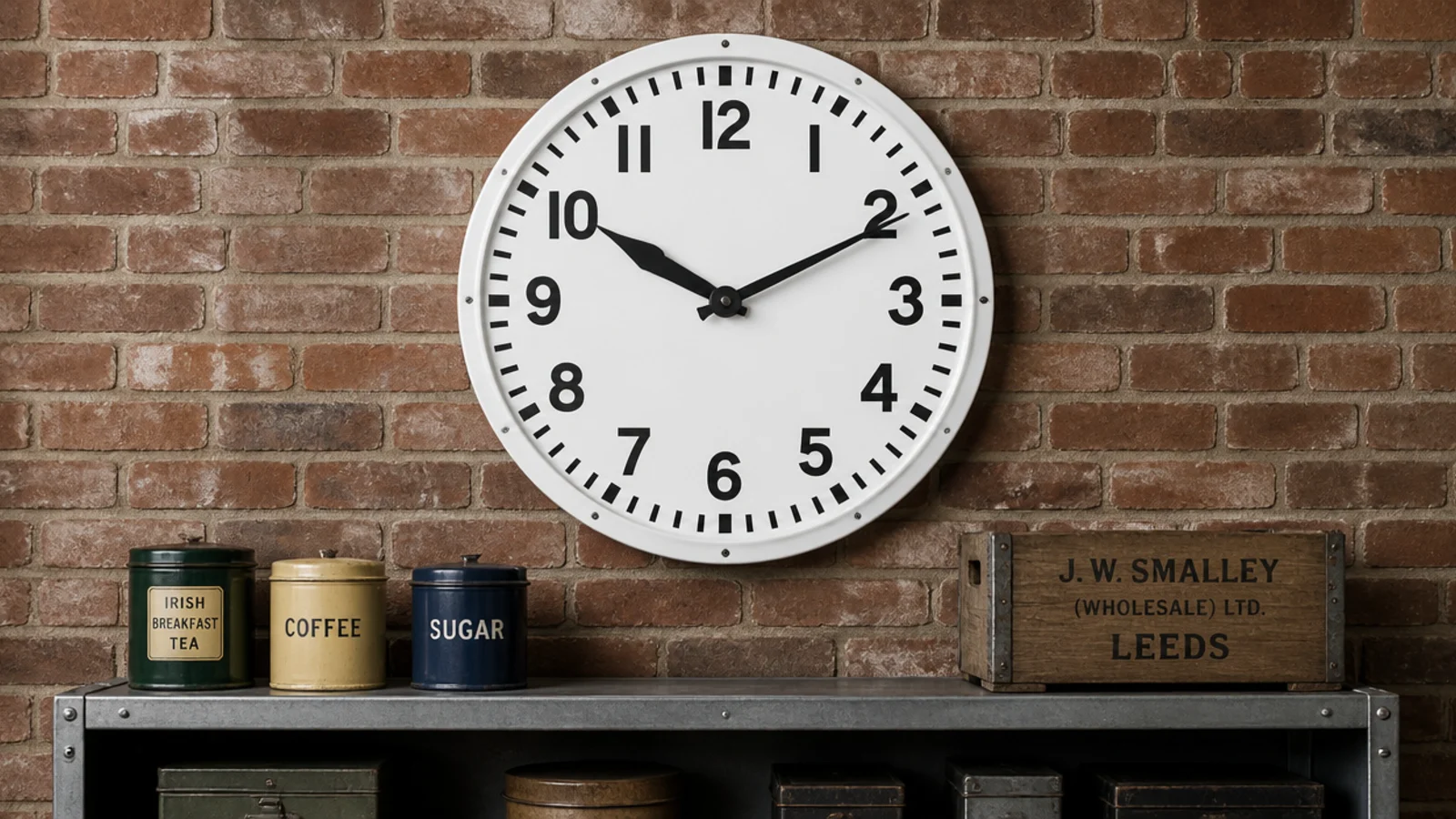
6. The 32-inch oversized station dial
The bold outer minute track is what makes this size readable from 40 feet, which is why it belongs in an open-plan room or a kitchen-diner rather than a small sitting room. It is the most functional large clock here by a distance.
Look for numerals at least a fifth of the dial diameter and a genuine printed track rather than fine tick marks, which disappear at scale. Steel-cased versions run 10 to 18 pounds. On brick, use a masonry sleeve anchor into the brick face rather than the mortar joint; on drywall it is a stud fixing without exception. $90 to $250.
7. The 48-inch French-cleat statement piece
At four feet across you are no longer hanging a clock, you are hanging a panel, and the fixing method changes accordingly. A French cleat spread across two studs carries 60 to 100 pounds comfortably, distributes the load along the whole top edge, and lets the clock lift straight off for battery changes.
It needs a wall of 14 feet or more and a ceiling well over 9 feet to breathe. Expect 18 to 30 pounds and $250 to $600. This is also the size where shipping damage becomes common, so check the rim carefully on delivery before the packaging goes out. For a wall this size, the grouping guide is worth reading first, since several medium faces sometimes beat one huge one.

What to Check Before You Buy
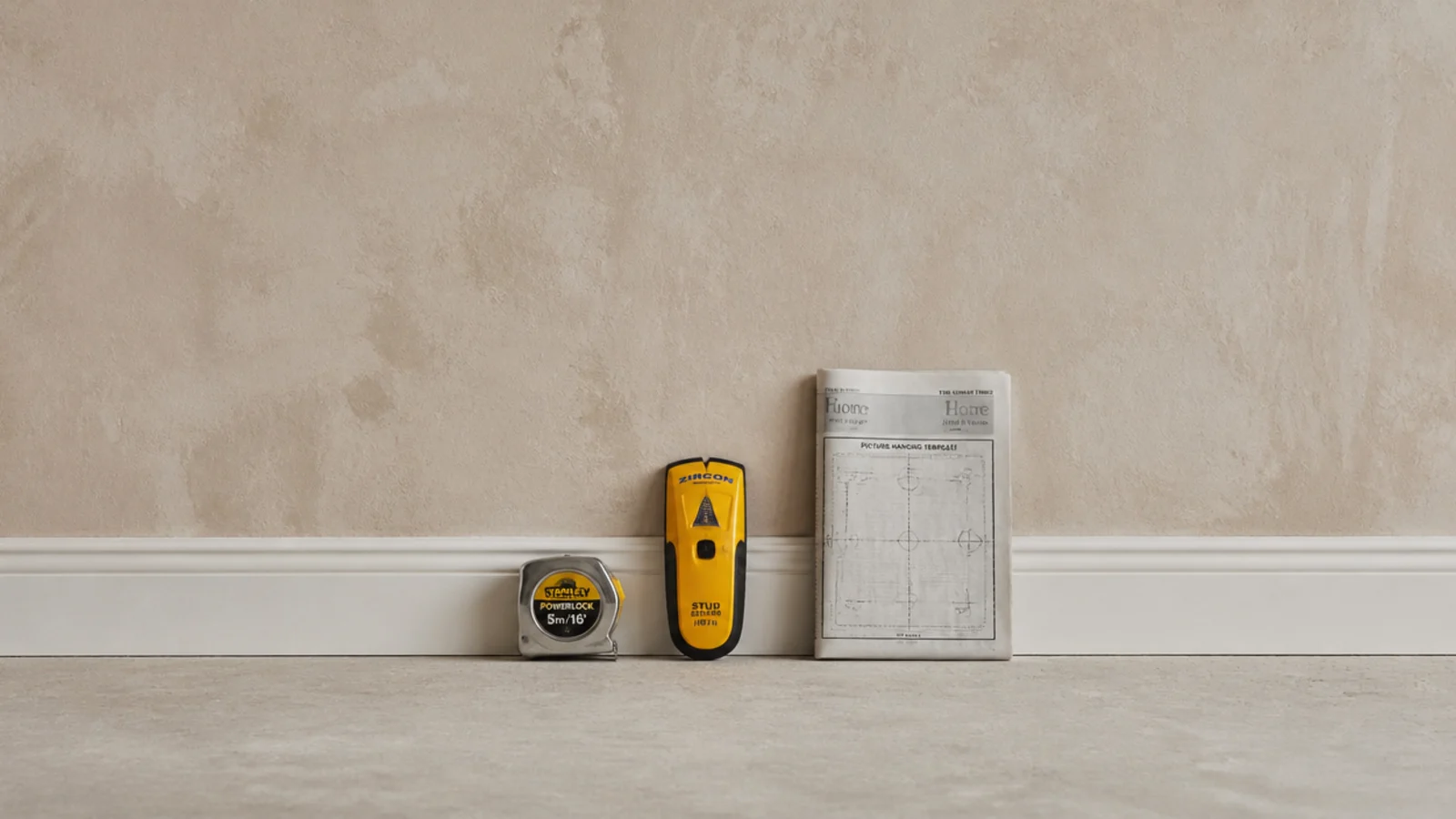
Measure the wall and the furniture, then template it. Cut a newspaper circle at the exact diameter and tape it up for a day. Every large clock looks smaller on a wall than it did in your hands, and this is the only reliable way to find out by how much before the holes are in.
Find the studs before you choose the size. Framing sits 16 inches apart, and knowing where it lands may move your clock 3 inches sideways or push you toward a cleat. It is far easier to discover this before you have bought a 20-pound face than afterwards.
Read the weight, not the material name. Concrete-effect resin at 24 inches is 3 to 5 pounds; real cast concrete at the same size is 12 to 20. The two look identical in a listing and need completely different fixings, so ask for the shipping weight if the product page does not say.
Check the movement torque explicitly. Anything with hands reaching past about 6 inches from the centre needs a high-torque unit. If a listing does not mention it on a clock over 24 inches, assume it is standard and budget $15 to $20 for a replacement.
Consider the ceiling as well as the wall. Under an 8-foot ceiling, 30 inches is usually the practical maximum above a sofa once you have allowed 8 to 12 inches of gap over the back cushions and kept the centre near 60 inches.
Test the tick before you commit to a quiet room. A step movement measures 25 to 30 decibels at a metre, and a large case amplifies it more than a small one. A sweep movement is silent for a few dollars more.
Think about the wall behind it. A very large clock on a wall that also carries a screen is two focal points fighting, and one of them always loses — the TV wall guide covers the compromise. Reflective pieces need the same care, which the mirror wall decor ideas go into.
Frequently asked questions
What counts as a large wall clock?
Anything from about 24 inches upward behaves differently from a normal clock. Below that you are choosing a decorative object, and above it you are choosing something that carries a wall on its own, weighs enough to need framing, and often needs a high-torque movement to drive its hands.
How big should a clock be on a twelve-foot wall?
Between 36 and 40 inches if the clock is the only thing on that wall. On a wall that wide, anything under about 30 inches reads as underscaled from across the room, and the plaster around it starts looking empty rather than generous.
Do large clocks need special movements?
Past roughly 24 inches across, yes. A standard quartz motor drives hands up to about 6 inches from the centre, and beyond that the minute hand stalls climbing from the half hour. A high-torque unit costs 15 to 20 dollars and solves it permanently.
What fixing does a 36-inch clock need?
A number eight screw two inches long into a stud, and two of them if the case allows. At 36 inches a metal or timber clock weighs 12 to 20 pounds, which is well past what any drywall plug should be asked to hold, particularly above a sofa or a bed.
Can I hang an oversized clock in a low-ceilinged room?
Only up to a point. Under an 8-foot ceiling, a 36-inch face leaves very little breathing space above and below once you allow for the gap over a sofa back. Around 30 inches is usually the practical ceiling in a standard-height room.
Buy for the wall width and the fixing you actually have, and the style question becomes the easy one it should be. If you are still deciding between one big face and several smaller ones, the main clock sizing guide works through both.
Want more like this? Browse all 15 wall clock guides — they all use the same measurements and budget tiers.
Pin it for later
Save this to your Wall Clock board
Pin it now so it is waiting for you when the tape measure comes out — and so the next person hunting for this idea can find it too.
Save this pinKeep going
More ideas worth saving while you have the tape measure out.