TV Wall Decor · Review
15 Wood Wall Design Finishes Compared By Cost

Some links on this page may become affiliate links in future. I only recommend pieces I would put in my own home — see the affiliate disclosure.
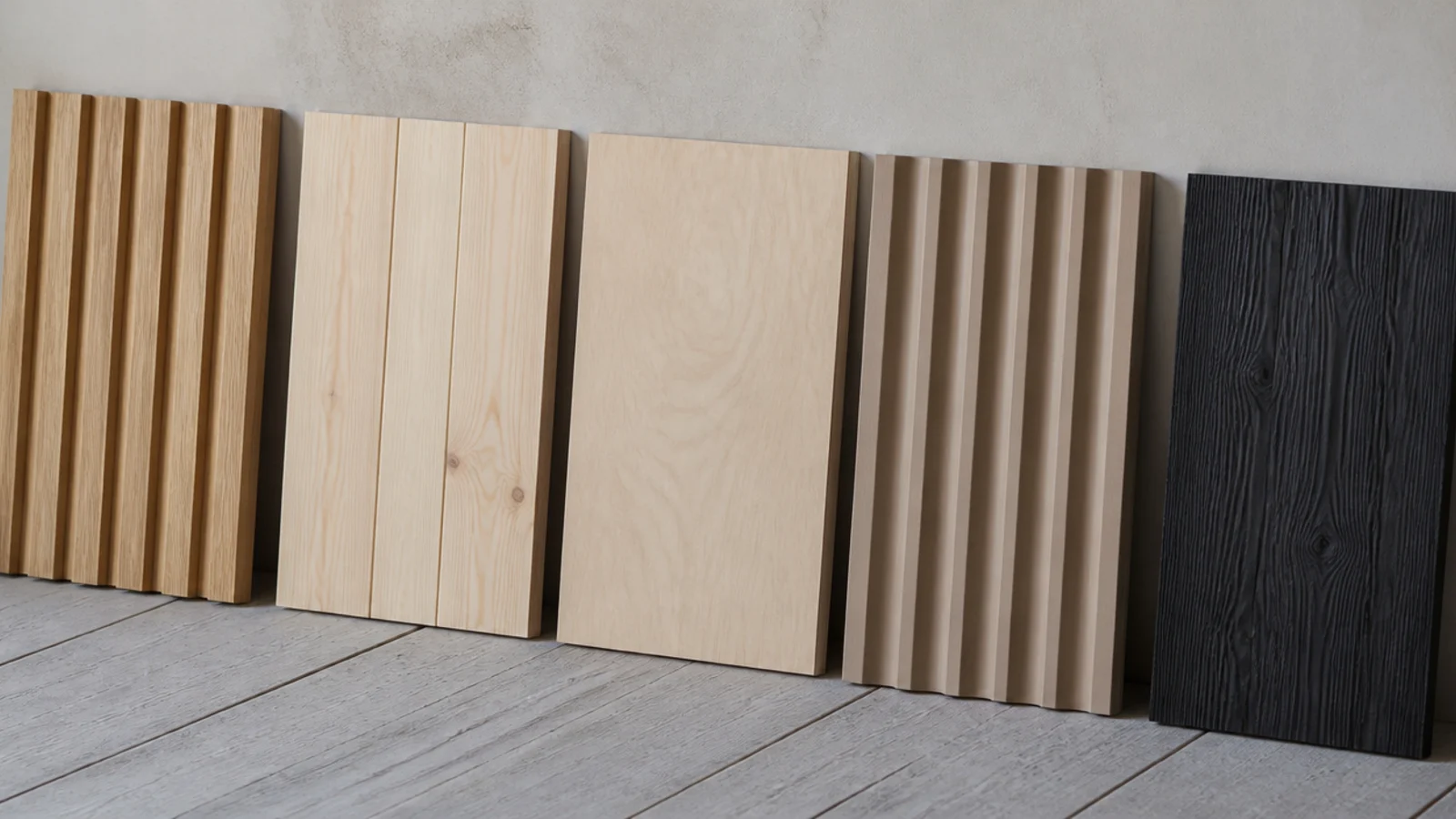
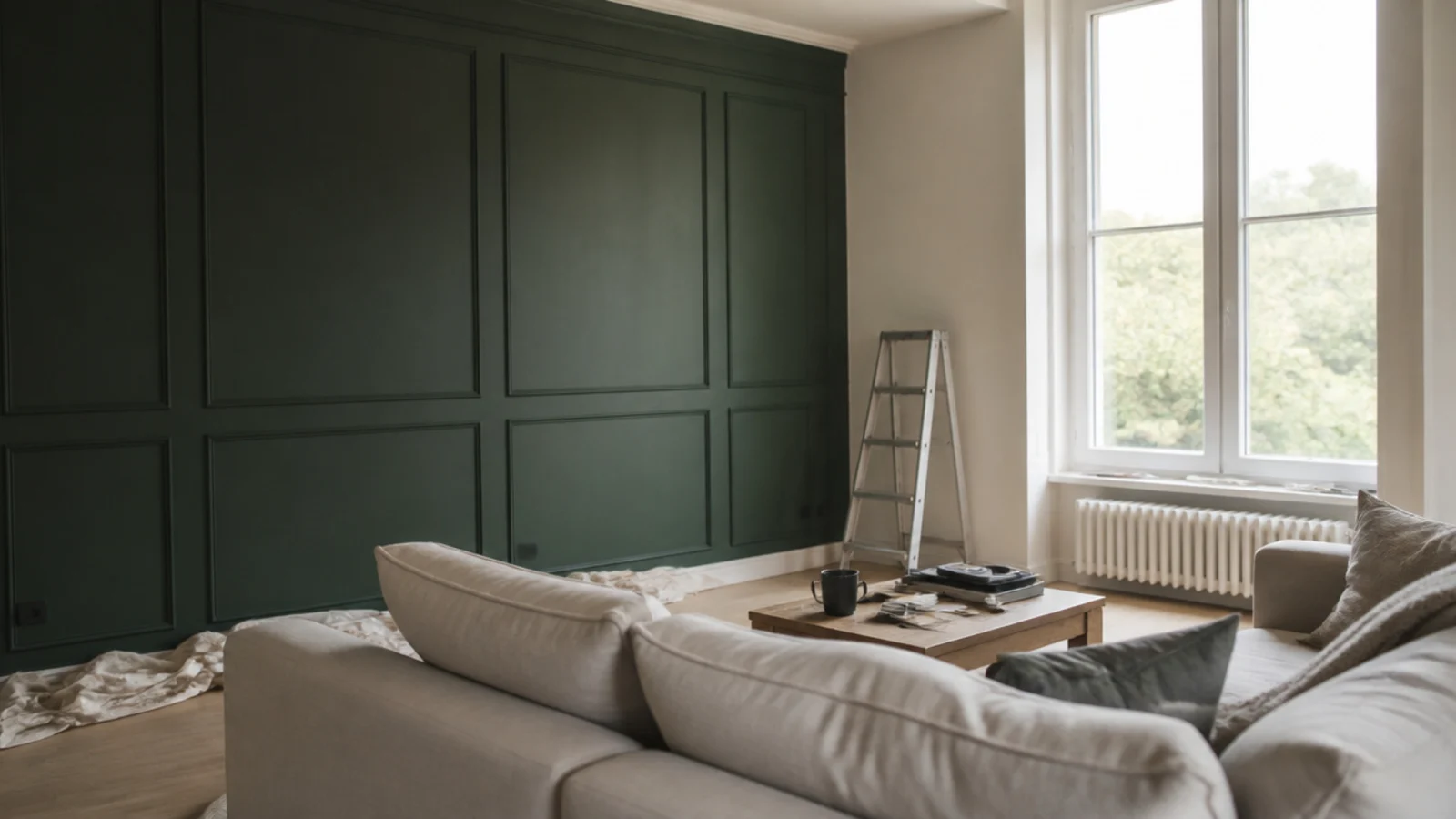
Timber on a wall costs anywhere from 10 dollars a square metre to well over 200, and the expensive end is not reliably better looking. Wood wall design decisions are usually made on a photograph, where a ripped whitewood batten painted deep green and a solid oak slat panel look almost identical. What separates them is weight, depth, how they age, and whether they come off a rented wall intact. Below is every timber finish worth considering, compared on cost and fixing, plus the eight I keep specifying.
In this guide11 sections — tap to openHide
- 1.How I Chose These Wood Wall Design Finishes
- 2.The Full Comparison: 15 Timber Wall Finishes
- 3.Softwood pine cladding
- 4.Ripped whitewood battens
- 5.Birch plywood sheet
- 6.Fluted MDF panel
- 7.Oak veneered MDF
- 8.Felt-backed acoustic slat panel
- 9.Reclaimed scaffold board
- 10.Charred cedar cladding
- 11.What to Check Before You Buy
How I Chose These Wood Wall Design Finishes
I judged each finish on five things, in this order.
- Cost per square metre, installed. Not the sheet price. A cheap board that needs a plywood substrate, adhesive and a hardwax finish is not cheap. Every figure below includes the fixing materials and the finish, because that is what actually leaves your account.
- Weight per square metre. This decides the fixing, and the fixing decides whether a renter can use it. Under about 8 kilograms a square metre, solvent-free grab adhesive on sound painted plaster is enough. Above that it is a framing job with mechanical fixings.
- Depth taken from the room. Peel-and-stick slats cost 8 to 10 millimetres, felt-backed panels 22 to 25, solid boards on battens 40 or more. In a room with a 26 inch walkway that difference is real, and it stacks on top of whatever a screen mount adds.
- How it ages. Pale softwood yellows in sunlight within a year. Oak silvers slowly and evenly. Charred cedar barely changes. Anything painted can be repainted, which is a genuine advantage nobody lists.
- Reversibility. How many holes, how big, and what comes away with the panel. This is the difference between a deposit returned and a bill for replastering.
I did not weight brand or supplier. The same board turns up under a dozen names, and construction is what you are buying.
The Full Comparison: 15 Timber Wall Finishes
Price tiers cover materials plus fixing and finish, per square metre: $ under 30 dollars · $$ 30 to 90 · $$$ over 90.
| Finish | Best for | Depth added | Price | Why it earns a place |
|---|---|---|---|---|
| Softwood pine cladding | Cottage rooms and ceilings | 12–18mm | $ | Cheapest real timber, easy to cut and paint |
| Ripped whitewood battens | Painted batten feature walls | 18mm | $ | One sheet covers a whole wall for pocket money |
| Beadboard tongue and groove | Hallways and half-height panelling | 9–12mm | $ | Fast coverage with a built-in shadow line |
| Birch plywood sheet | Modern rooms and studies | 12–18mm | $ | Edge laminations read as a deliberate detail |
| Fluted MDF panel | Media walls and alcoves | 18–25mm | $ | Plaster-like fluting at a fraction of the cost |
| Peel-and-stick slat panel | Renters and short tenancies | 8–10mm | $ | Genuine no-drill fixing, removable in an hour |
| Reclaimed scaffold board | Character and workshop looks | 30–38mm | $ | Age and saw marks nothing new can imitate |
| Oak veneered MDF | Grain-matched joinery walls | 18mm | $$ | Continuous grain across a whole run |
| Felt-backed acoustic slat | Living rooms with hard floors | 22–25mm | $$ | The only finish here that changes the acoustics |
| Engineered oak herringbone | Statement feature walls | 14–20mm | $$ | Floor-grade pattern used vertically |
| Bamboo slat panel | Warm rooms on a mid budget | 15–20mm | $$ | Harder than most timber and quick to grow |
| Thermally modified ash | Sun-facing and damp-prone walls | 20–26mm | $$ | Dimensionally stable where softwood moves |
| Charred cedar cladding | Matt black walls with texture | 18–22mm | $$ | Black that keeps a visible grain |
| Solid oak boards | Rooms where it must be real | 20–25mm | $$$ | Ages properly and can be sanded back |
| Walnut veneer panel | Dark timber joinery walls | 18mm | $$$ | Depth of colour no stain reproduces |
Eight of those are the ones I keep coming back to.
1. Softwood pine cladding
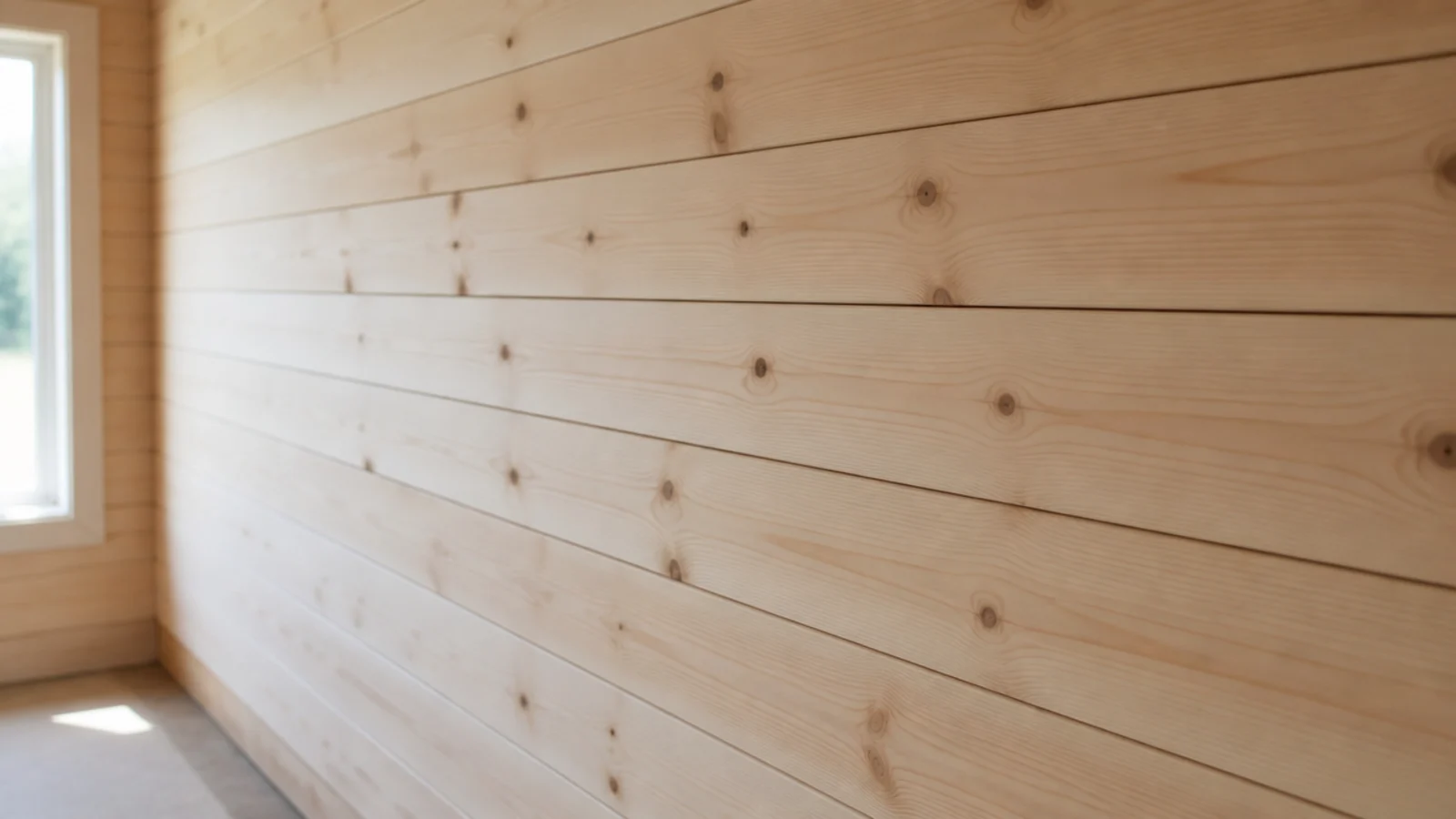
The default cheap timber, at roughly 18 to 28 dollars a square metre finished. Tongue and groove boards go straight onto battens with brads and no visible fixings.
The catch is movement. Pine takes on and gives up moisture readily, so boards shrink in a heated room over the first winter and open gaps at the joints. Let it acclimatise in the room for a week before fixing, leave a 2 millimetre expansion gap at each end of a run, and expect it to yellow noticeably in sunlight within a year unless you paint it.
2. Ripped whitewood battens
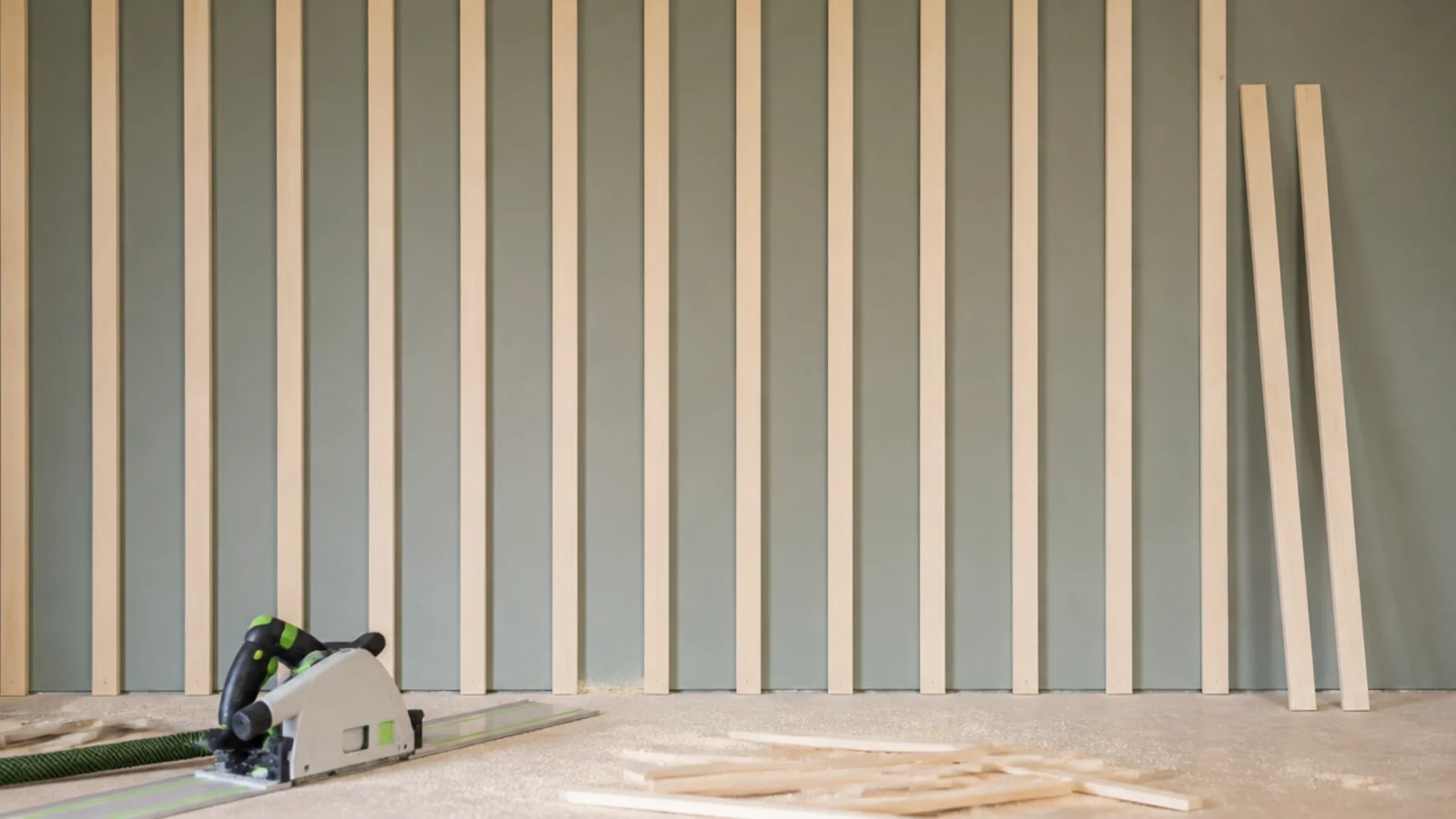
The best value on this list and the one I have used most. One 2440 by 1220 millimetre sheet of 18 millimetre MDF at 45 to 70 dollars rips into about sixteen 75 millimetre battens, covering a 3 metre wall at 16 inch centres with spares.
Finished cost lands near 10 to 18 dollars a square metre. Painted the same colour as the wall, at 12 to 16 inch spacing, it reads as proper board and batten. Prime the cut edges twice, because raw MDF drinks paint and every edge otherwise stays visibly duller than the faces.
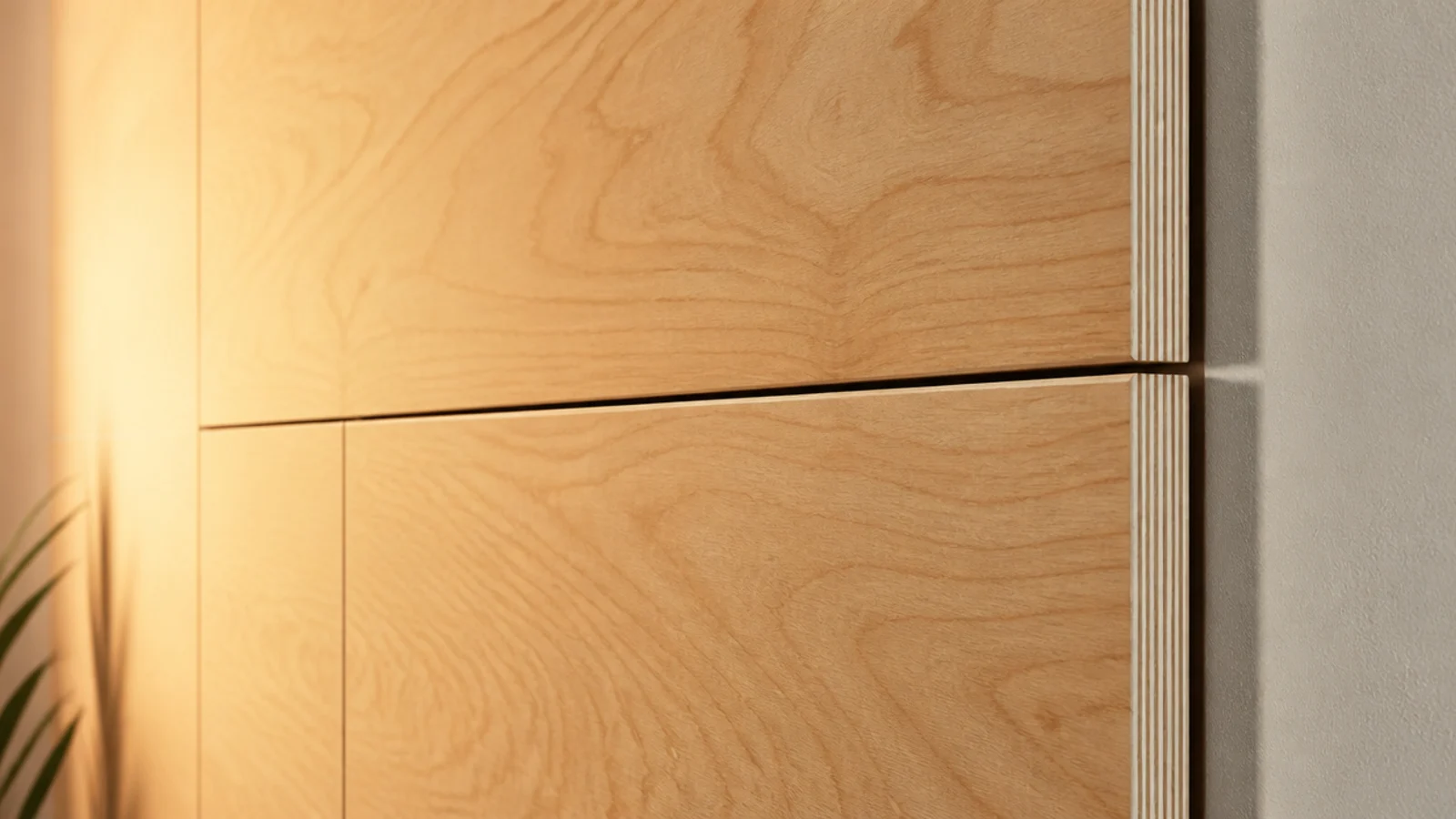
3. Birch plywood sheet
Around 25 to 45 dollars a square metre finished. The appeal is the edge: pale laminations at every shadow gap, which reads as deliberate rather than unfinished when the joints are planned.
Use 18 millimetre sheet rather than 12, because thinner ply telegraphs every unevenness in the wall behind it. Two coats of matt hardwax oil stop fingermarks and stop the face yellowing. If you want painted joinery instead, the laminations are a liability and a solid lipping is worth the extra afternoon.
4. Fluted MDF panel
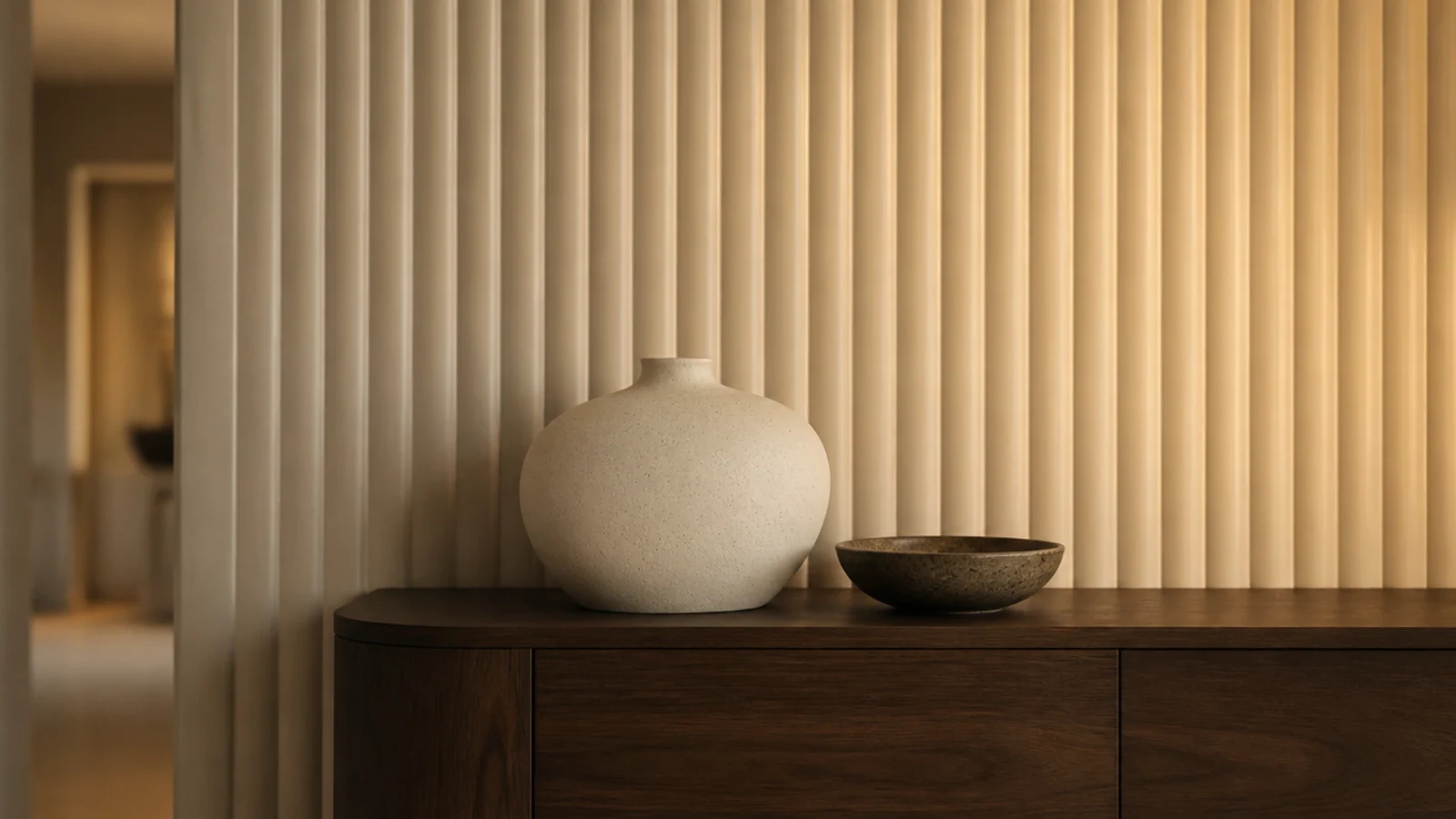
Roughly 30 to 60 dollars a square metre, in 2.4 metre lengths with half-round beads at 40 to 60 millimetre repeats. Painted, it reads as fluted plaster at normal viewing distance for about a quarter of the price.
Fix with beads of grab adhesive every 300 millimetres plus a few brads top and bottom. Paint with a mini foam roller so the grooves do not fill and lose their definition. Return the fluting into a corner or stop it behind a trim, because the exposed end profile is the detail that gives it away.
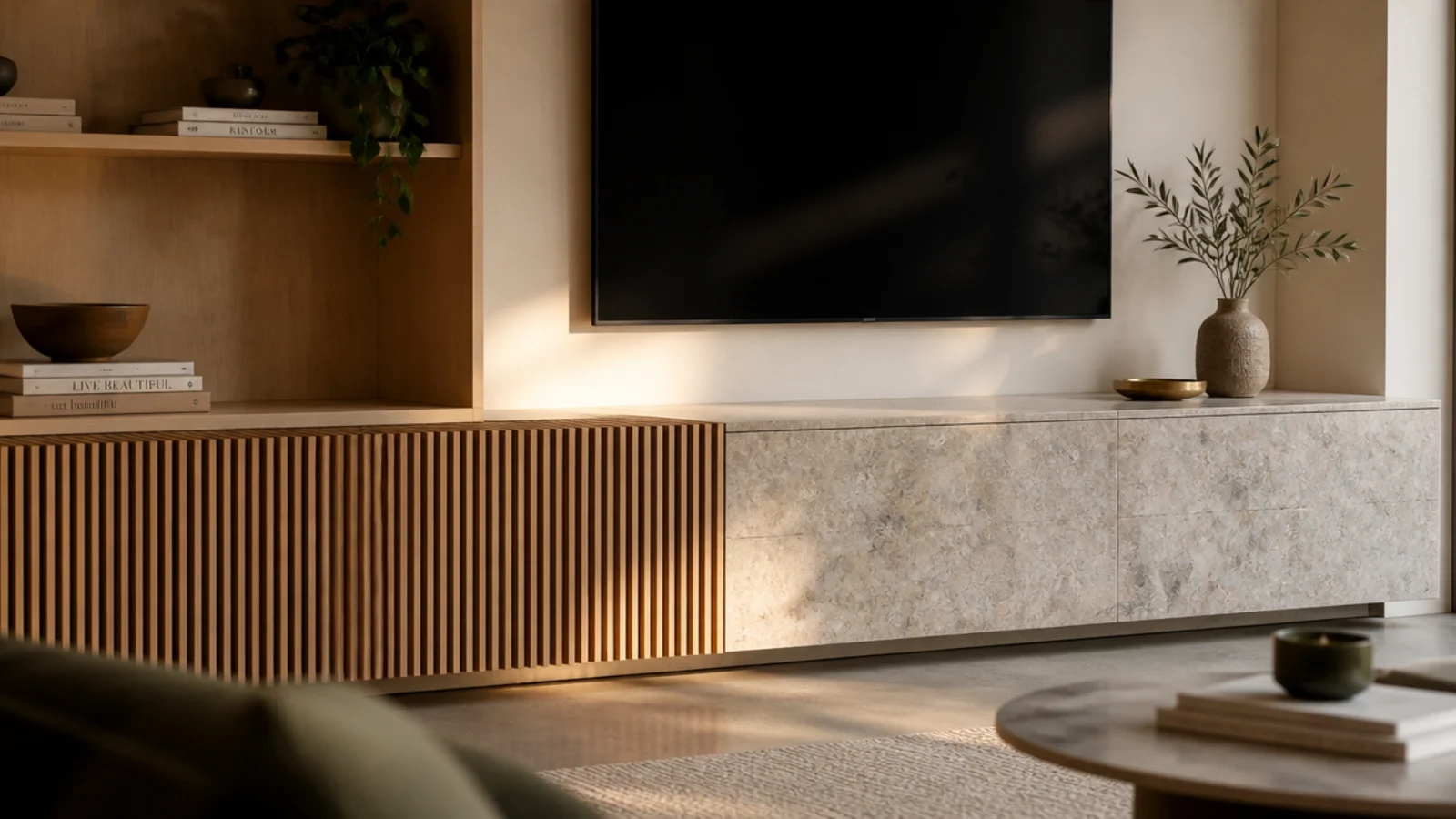
5. Oak veneered MDF
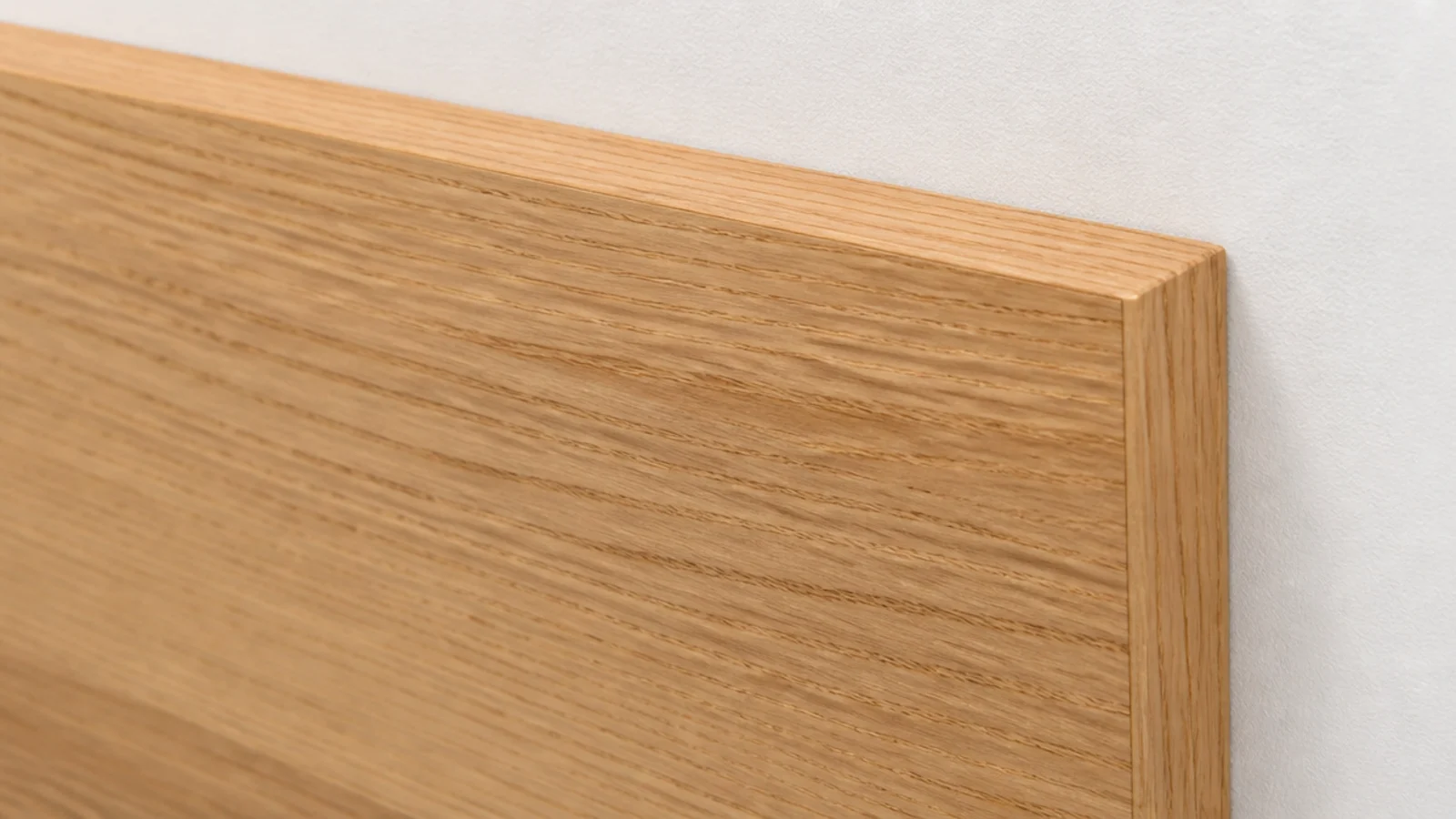
Forty-five to 90 dollars a square metre, and the sensible route to a timber wall that looks like joinery. Sheets at 90 to 180 dollars each cut into fronts and panels with the grain running continuously if you cut in sequence and number the pieces.
It is flatter and far more stable than solid boards, which cup in a room with a radiator under the window. Glue a 6 millimetre solid lipping along every exposed edge — that single detail is what makes veneer indistinguishable from solid once finished.
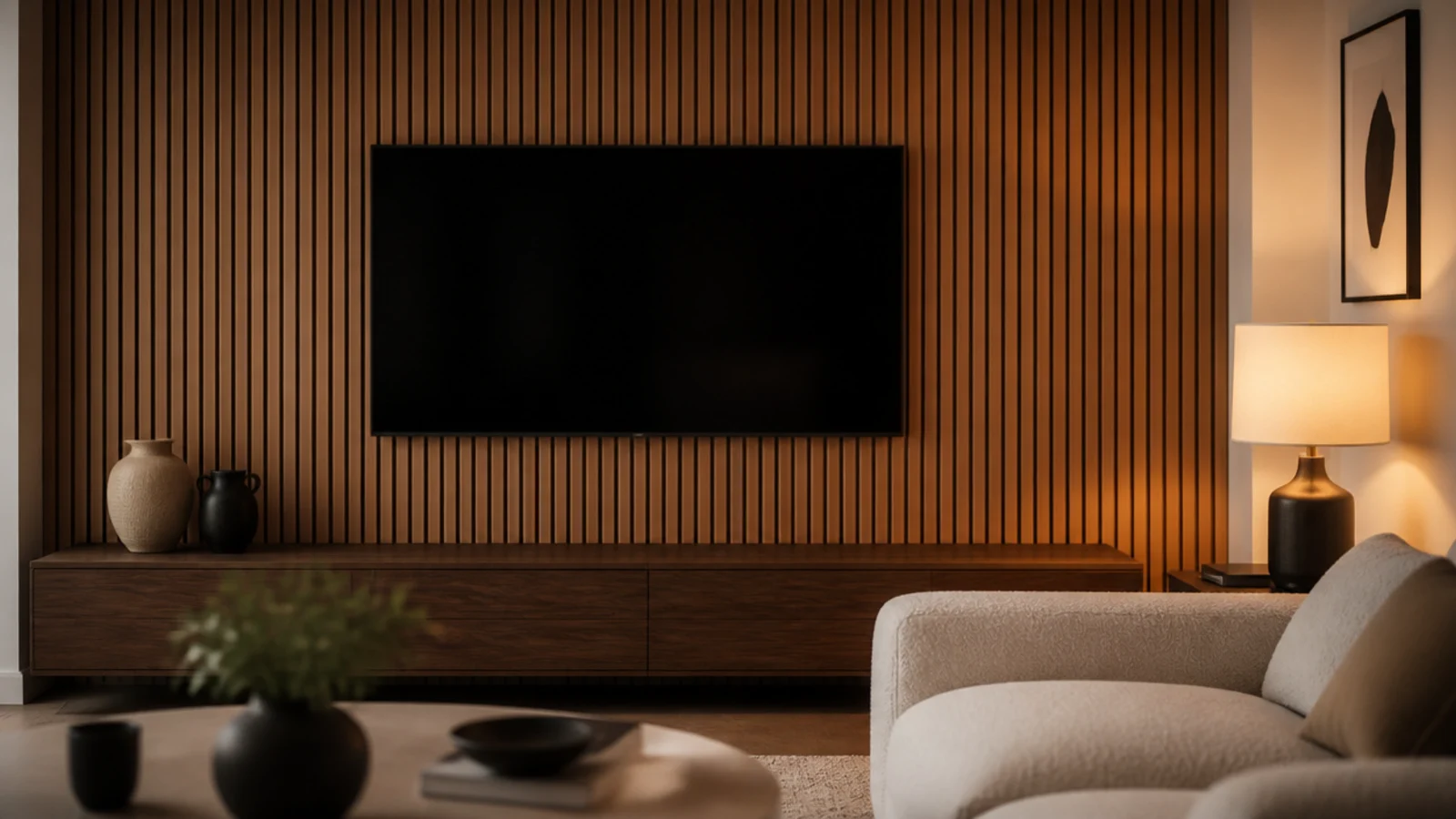
6. Felt-backed acoustic slat panel
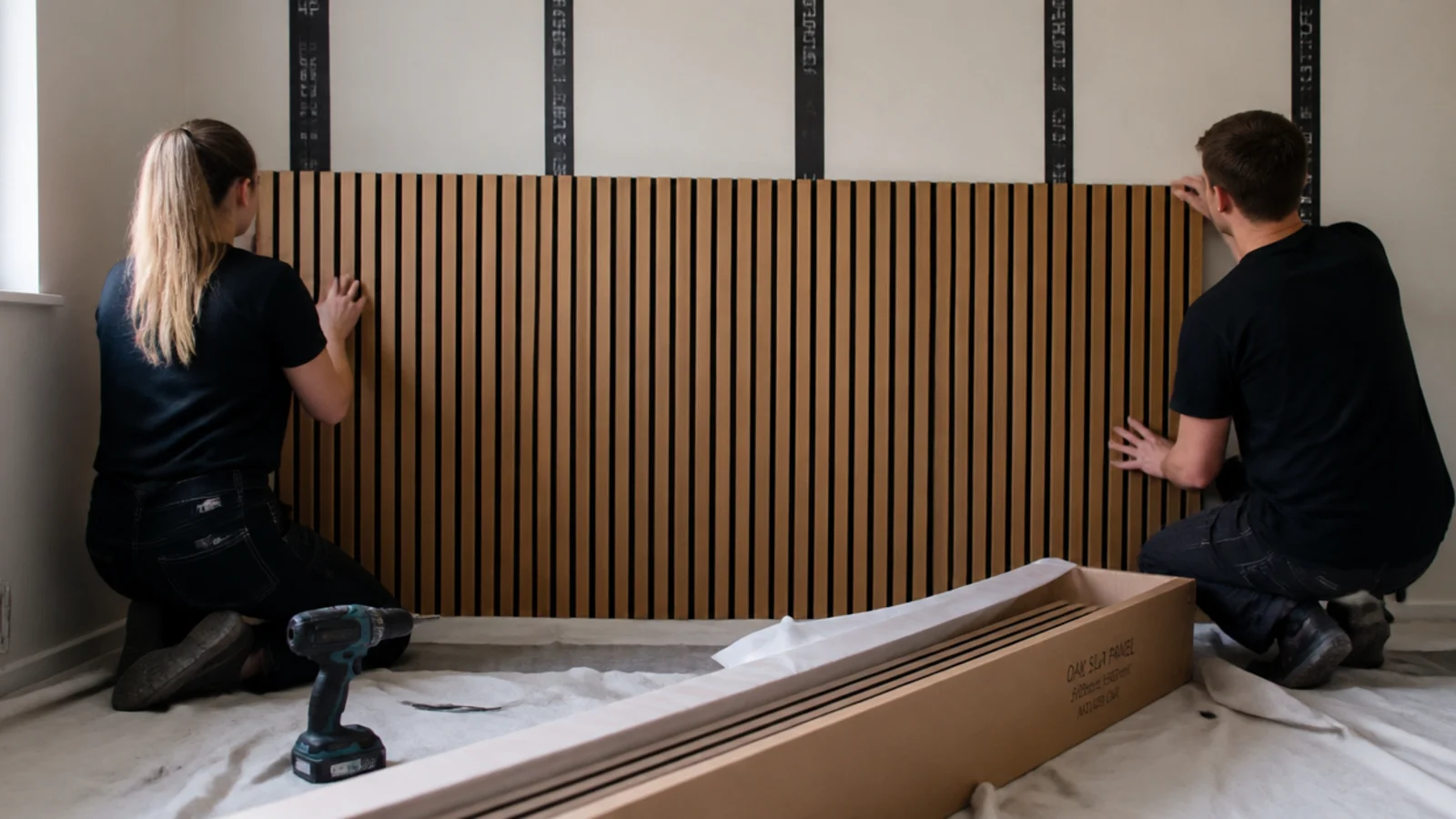
Forty to 90 dollars a square metre, in 240 by 60 centimetre panels weighing around 12 kilograms each. The only finish here that measurably changes how a room sounds, cutting speech echo in a space with hard floors and little upholstery.
That weight puts it firmly outside adhesive territory. Fix into framing at 16 inch or 400 millimetre centres, and expect a real acoustic difference at around four panels rather than one. The slat gaps also give you somewhere to route a cable, which no other finish on this list does.
7. Reclaimed scaffold board
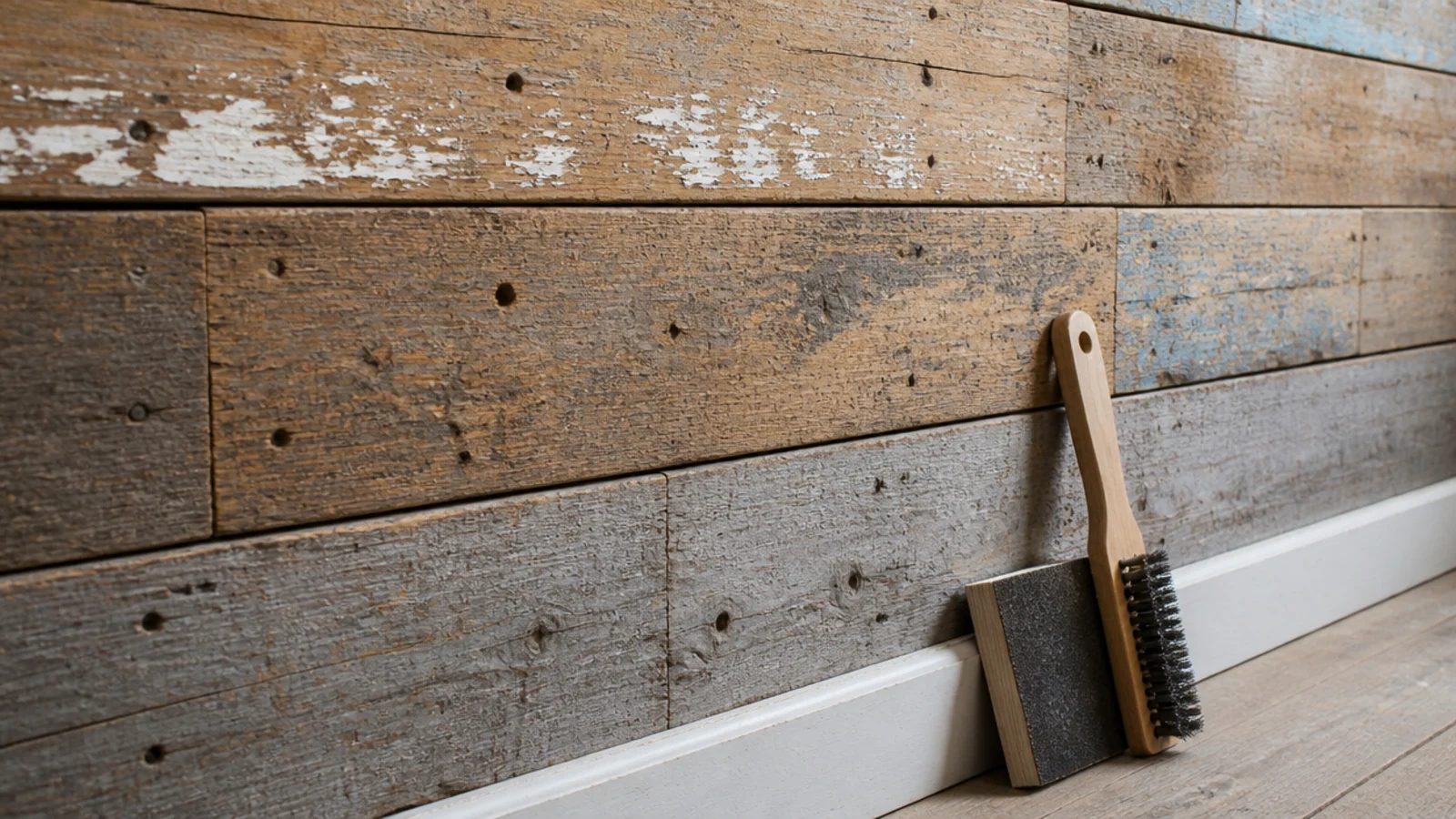
Fifteen to 40 dollars a square metre if you source locally, and the only material here that arrives with genuine age. Saw marks, nail holes and paint traces are the point, and no new board reproduces them.
Boards are 30 to 38 millimetres thick and heavy, so this is a battened, mechanically fixed job. Wire brush, then sand to 120 grit, and check for embedded grit and old nails before any blade goes near them. Finish with clear hardwax oil rather than lacquer, which looks wrong on a weathered surface.
8. Charred cedar cladding
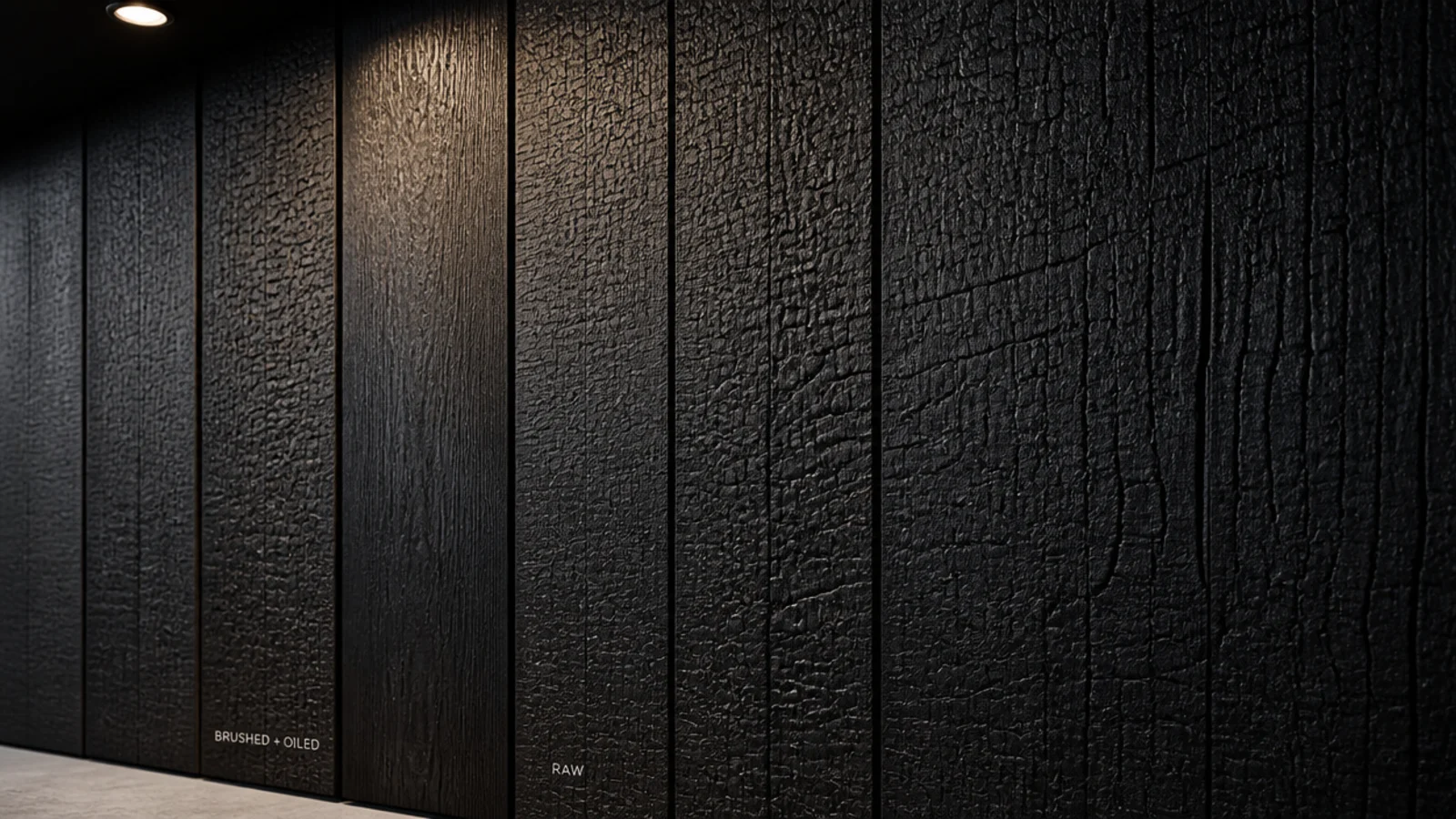
Sixty to 120 dollars a square metre, and the answer if you want a black wall with a visible grain rather than a flat coat of paint. The charring is stable, insect resistant and needs almost no maintenance indoors.
Brush the loose char off thoroughly before fixing or it marks everything it touches, then oil it. It suits a wall that gets strong side light, because the alligator surface texture only reads when something rakes across it. Flat frontal lighting flattens it to plain black. There is more on lighting texture in wall texture design ideas.
What to Check Before You Buy
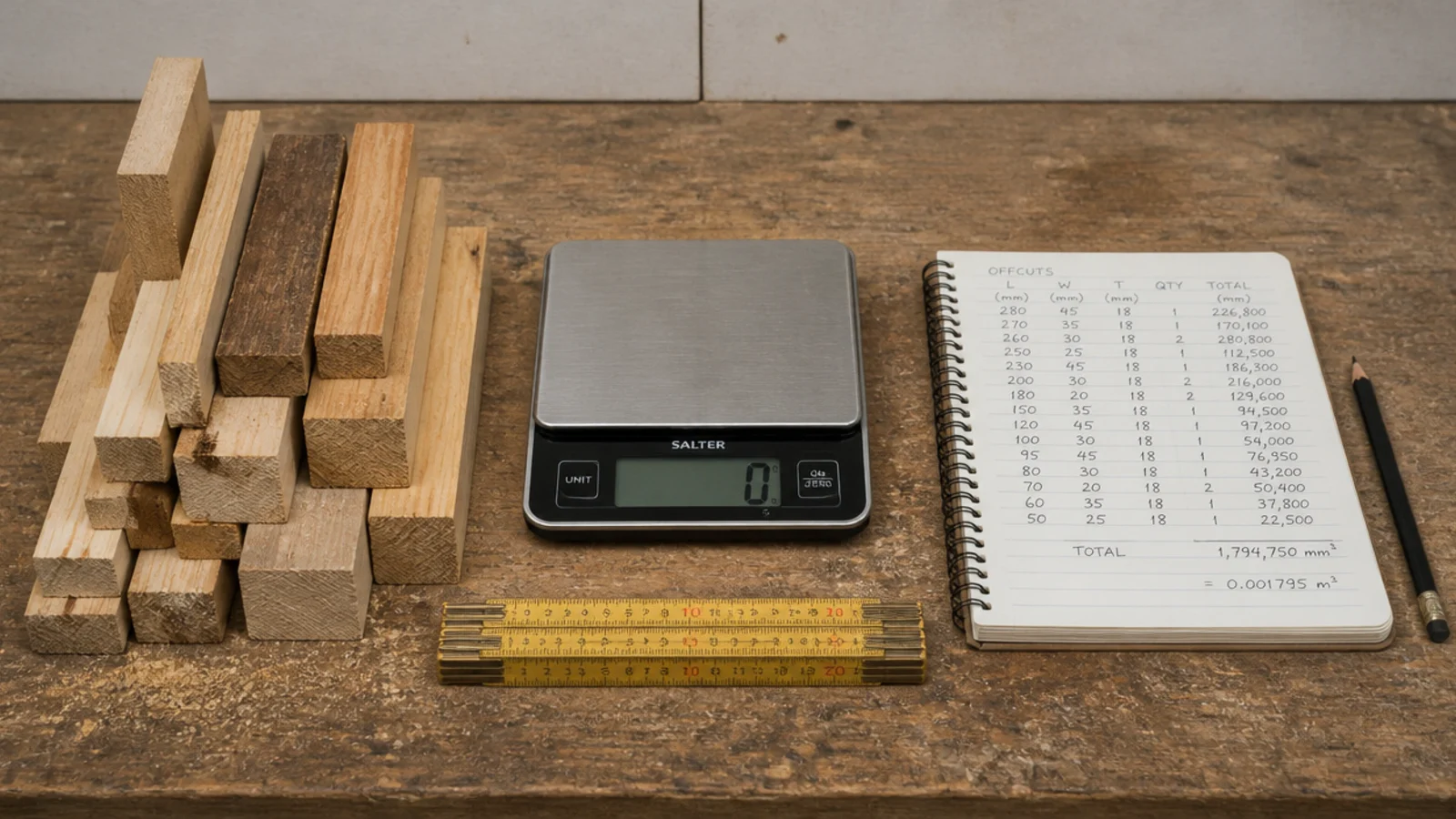
Weigh a sample before you choose a fixing. Under about 8 kilograms a square metre, grab adhesive on sound painted plaster more than four weeks old is genuinely enough. Above that, it is a framing job with mechanical fixings, and no adhesive rating changes that.
Add the depth to your mount stack. A felt-backed slat panel at 25 millimetres plus a fixed screen bracket at 25 puts the panel 50 millimetres into the room before the screen itself. Check it against a walkway that needs 24 inches of clear passage.
Let timber acclimatise for a week. Boards delivered from a cold warehouse into a heated room will move. A week standing loose in the room removes most of the shrinkage that otherwise opens every joint over the first winter.
Buy 10 percent extra from the same batch. Timber colour varies between deliveries and matching a single replacement board six months later is close to impossible. Keep the offcuts and a note of the finish.
Decide the finish before you fix. Oiling or lacquering flat on trestles takes a third of the time it takes on a wall, and the coverage is far more even. Two thin coats of hardwax oil is enough for interior cladding.
Plan the ending, not just the beginning. Cladding needs to stop at something real — a corner, an architrave, a chimney breast. A run that dies mid-wall reads as unfinished whatever the material cost.
Check what it does to the room acoustics. Hard timber over hard plaster makes a bright room brighter. If the floor is also hard, choose the felt-backed version or plan a rug and curtains alongside it.
Frequently asked questions
What is the cheapest wood wall finish?
Whitewood battens ripped from a single sheet or from lengths of construction timber, at roughly 10 to 18 dollars a square metre. One 2440 by 1220 millimetre sheet of 18 millimetre MDF at 45 to 70 dollars yields about sixteen 75 millimetre battens, which covers a 3 metre wall at 16 inch centres.
Do acoustic slat panels really reduce noise?
They reduce reverberation rather than block sound between rooms. The felt backing absorbs mid and high frequencies, so speech echo in a hard room drops noticeably. A single 240 by 60 centimetre panel will not change much — expect a real difference at around four panels or more in a normal living room.
How much depth does timber cladding take from a room?
Peel-and-stick slats add 8 to 10 millimetres, fluted MDF 18 to 25, felt-backed slat panels 22 to 25, and solid boards on battens 40 or more. Add that to a screen mount and check the total against the walkway, because 24 inches of clear passage is the number that matters.
Can timber cladding go up without drilling?
Thin lightweight panels can. Peel-and-stick slats and 9 millimetre MDF go on with solvent-free grab adhesive over sound painted plaster more than four weeks old. Anything over about 8 kilograms a square metre, including felt-backed oak panels, needs mechanical fixing into framing.
Does a wood wall need sealing?
Interior cladding needs a finish rather than a seal. Hardwax oil or a matt water-based lacquer stops fingermarks and stops pale timber yellowing unevenly in sunlight. Two thin coats is enough. Leave raw softwood unfinished only if you are happy for it to darken over the first year.
Match the material to the fixing you are allowed to make, and the timber choice becomes straightforward. If you rent, 30 renter-friendly wall panel designs covers the adhesive-only builds and the removal method, 30 TV wall design looks sets these finishes alongside paint and plaster, and TV unit decor in wooden designs covers the cabinet that usually sits beneath. For a timber wall in a bedroom, DIY headboard ideas has the versions built as a headboard instead. Save the pin so the price tiers are with you at the timber merchant.
Want more like this? Browse all 15 tv wall decor guides — they all use the same measurements and budget tiers.
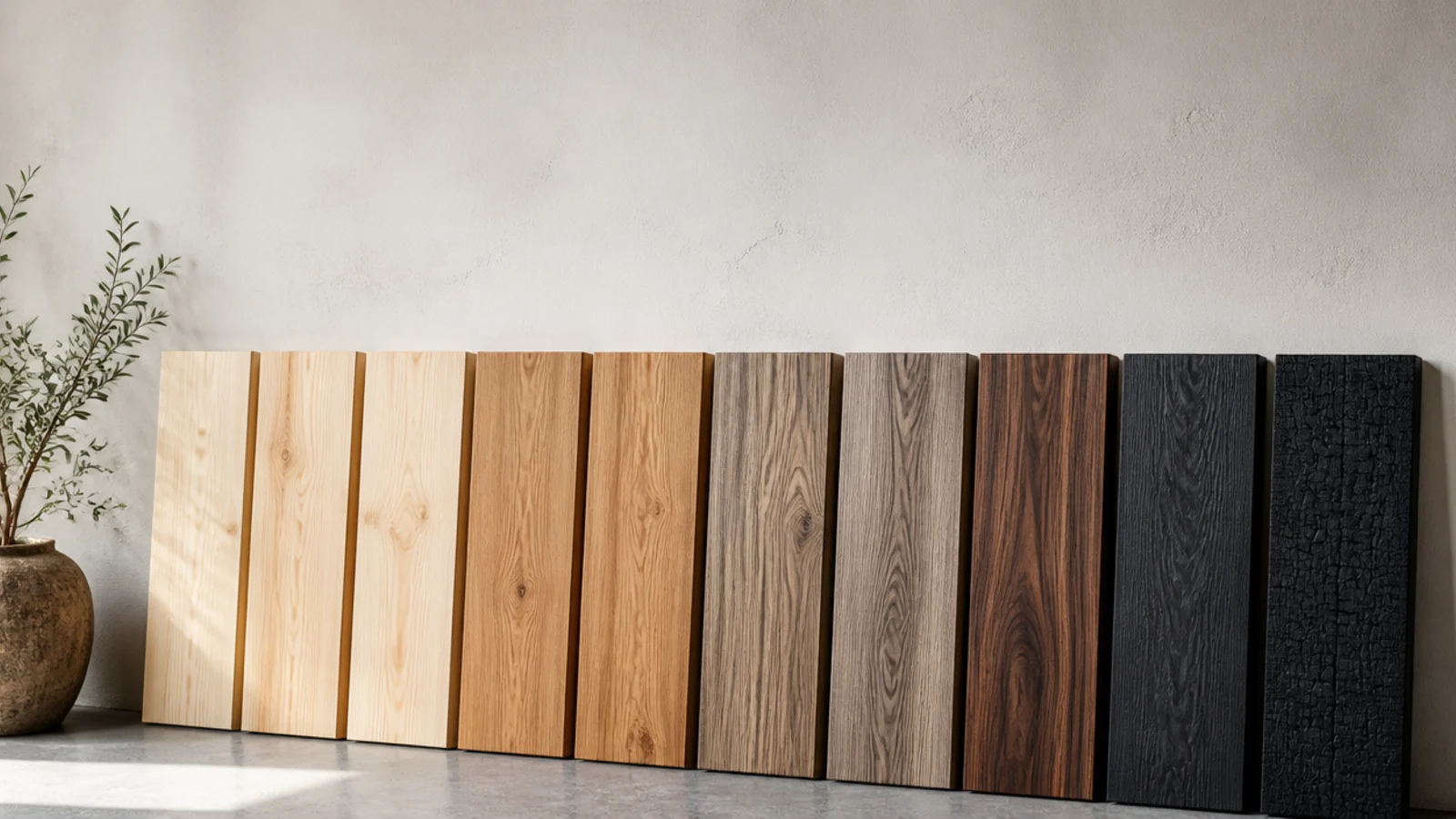
Pin it for later
Save this to your TV Wall Decor board
Pin it now so it is waiting for you when the tape measure comes out — and so the next person hunting for this idea can find it too.
Save this pinKeep going
More ideas worth saving while you have the tape measure out.