Wall Clock · Listicle
20 Beautiful Wood Wall Clock Styles That Last

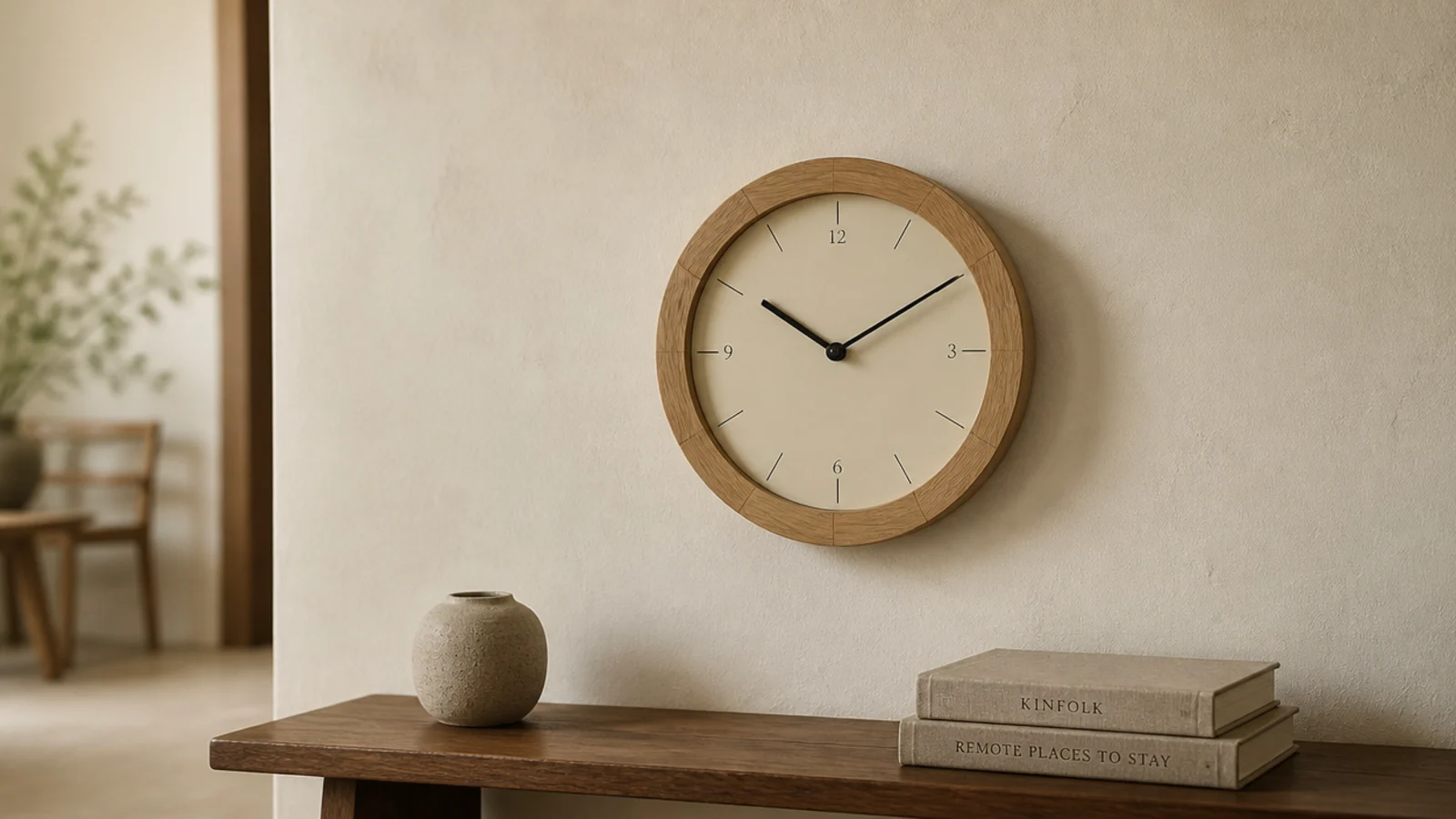
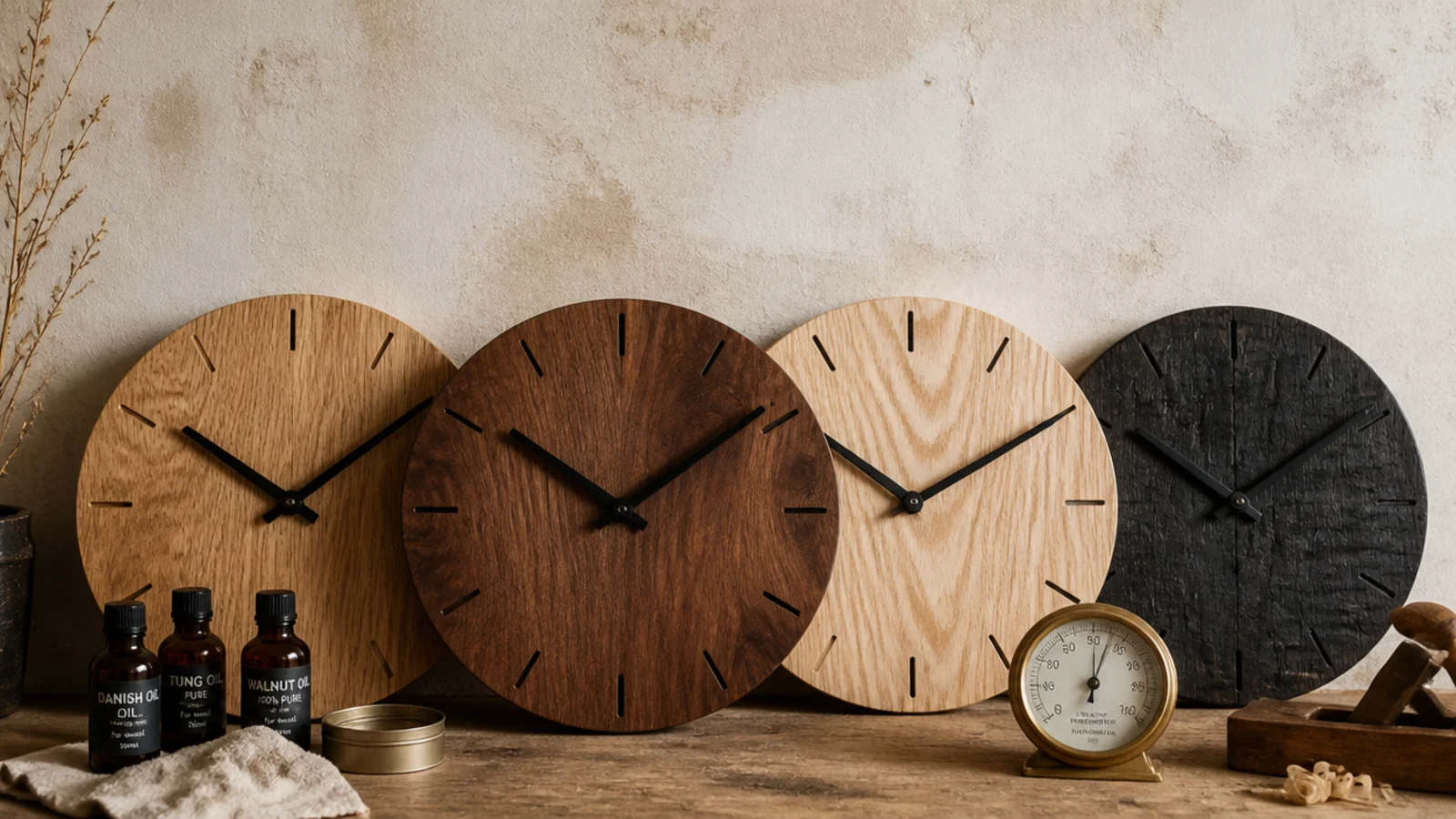
Timber is the only clock material that keeps changing after you hang it. A wood wall clock cups, darkens, opens at a joint or settles into something better looking than the day it arrived, and which of those happens comes down to species, construction and the humidity of the room. The face that photographs best in a showroom is frequently the one that goes wrong first — a wide glued-up disc of pale softwood, sitting above a radiator. Here are twenty styles that hold up, with the weights, finishes and movement details each one needs.
In this guide22 sections — tap to openHide
- 1.What a wood wall clock does over ten years
- 2.Solid white oak with a mitred rim
- 3.American walnut for a dark, stable case
- 4.Ash with a wide open grain
- 5.Birch ply with the edge on show
- 6.Reclaimed boards on battens
- 7.Teak or iroko for a humid room
- 8.Cherry, which darkens as it ages
- 9.Maple for a very pale scheme
- 10.Black-stained oak
- 11.A live-edge slab
- 12.A cross-cut log slice
- 13.A parquet-block face
- 14.A steam-bent bentwood rim
- 15.Inlaid markers instead of printed ones
- 16.A reeded or fluted oak case
- 17.A charred timber face
- 18.Bamboo, which is not actually a timber
- 19.Veneered board, and how to spot it
- 20.Limed or whitewashed oak
- 21.Oil, wax or lacquer, and what each costs you
- 22.Mistakes to Skip
What a wood wall clock does over ten years
Movement is the first thing to understand, and I mean the timber rather than the mechanism. Solid wood expands and contracts across the grain by roughly one percent for every four or five percent change in relative humidity. A room that swings from 30 percent in January to 65 in August will move a 20-inch disc by an eighth of an inch or more, and if that disc is glued up from wide boards, it cups. A rim built from mitred segments handles the same swing without complaint. Aim to keep the room between about 35 and 55 percent.
Construction matters more than species. Segmented rims, battened boards and laminated ply stay flat. Wide single-piece faces and green log slices do not. If a maker cannot tell you how a wide face is constructed on the back, assume it is glued up and treat it accordingly.
Then weight. A 20-inch solid oak disc three quarters of an inch thick comes in around 6 pounds; a rim-only version of the same diameter is 2 to 3. Live-edge slabs and thick log slices run 10 to 20 pounds, which means a number eight screw two inches long into a stud, never the plastic plug in the box — and always framing above a sofa or a bed regardless of the number.
Last, the movement shaft. Measure the dial thickness at the centre and add an eighth of an inch. A one-inch oak face therefore needs a shaft over an inch, which is at the long end of what is commonly stocked, so check before you commit. Budget $40 to $120 for a solid timber clock at 16 to 24 inches, and $150 to $400 for a slab. For building one yourself, the DIY clock projects guide covers the kit side.
1. Solid white oak with a mitred rim
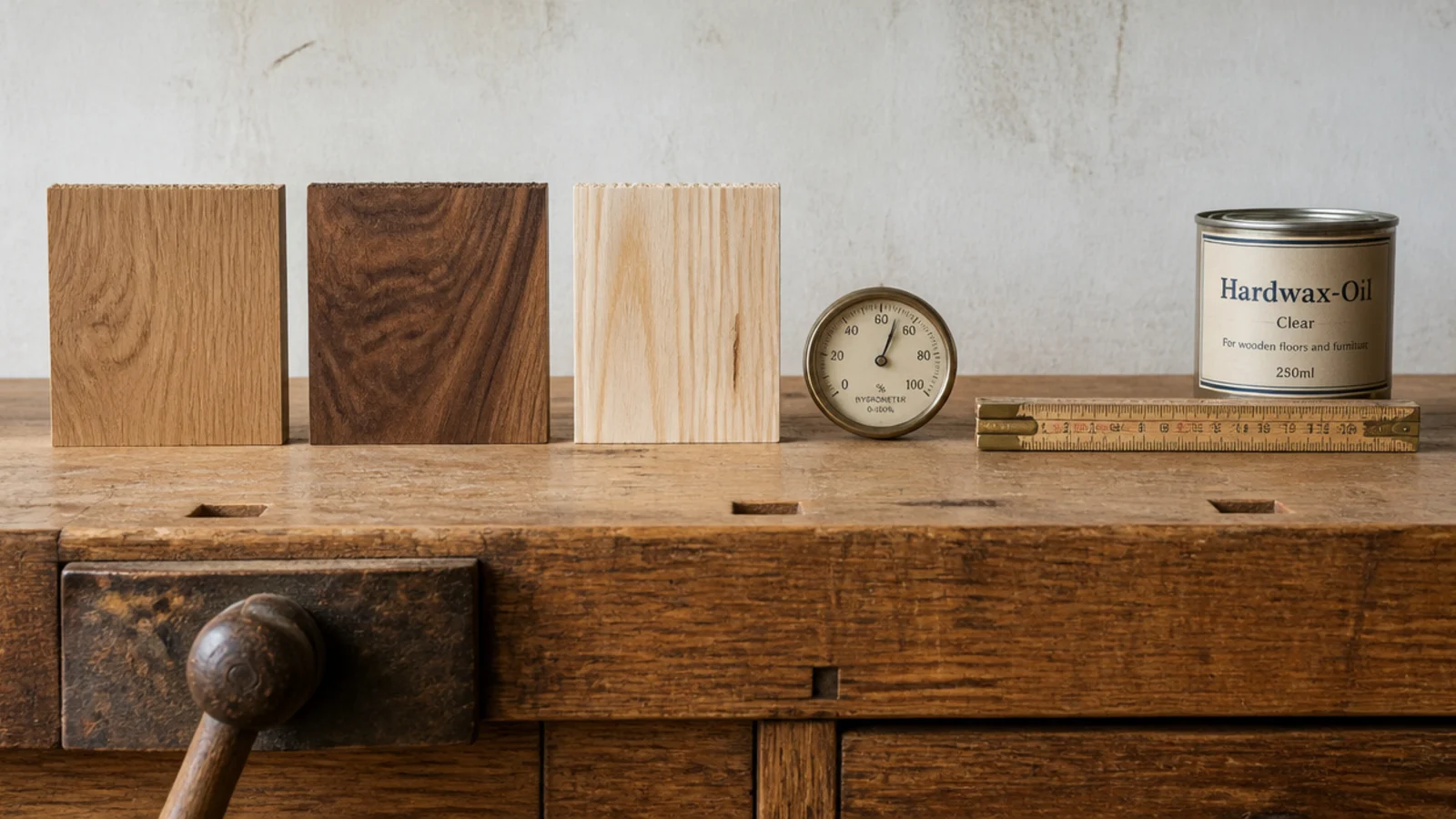
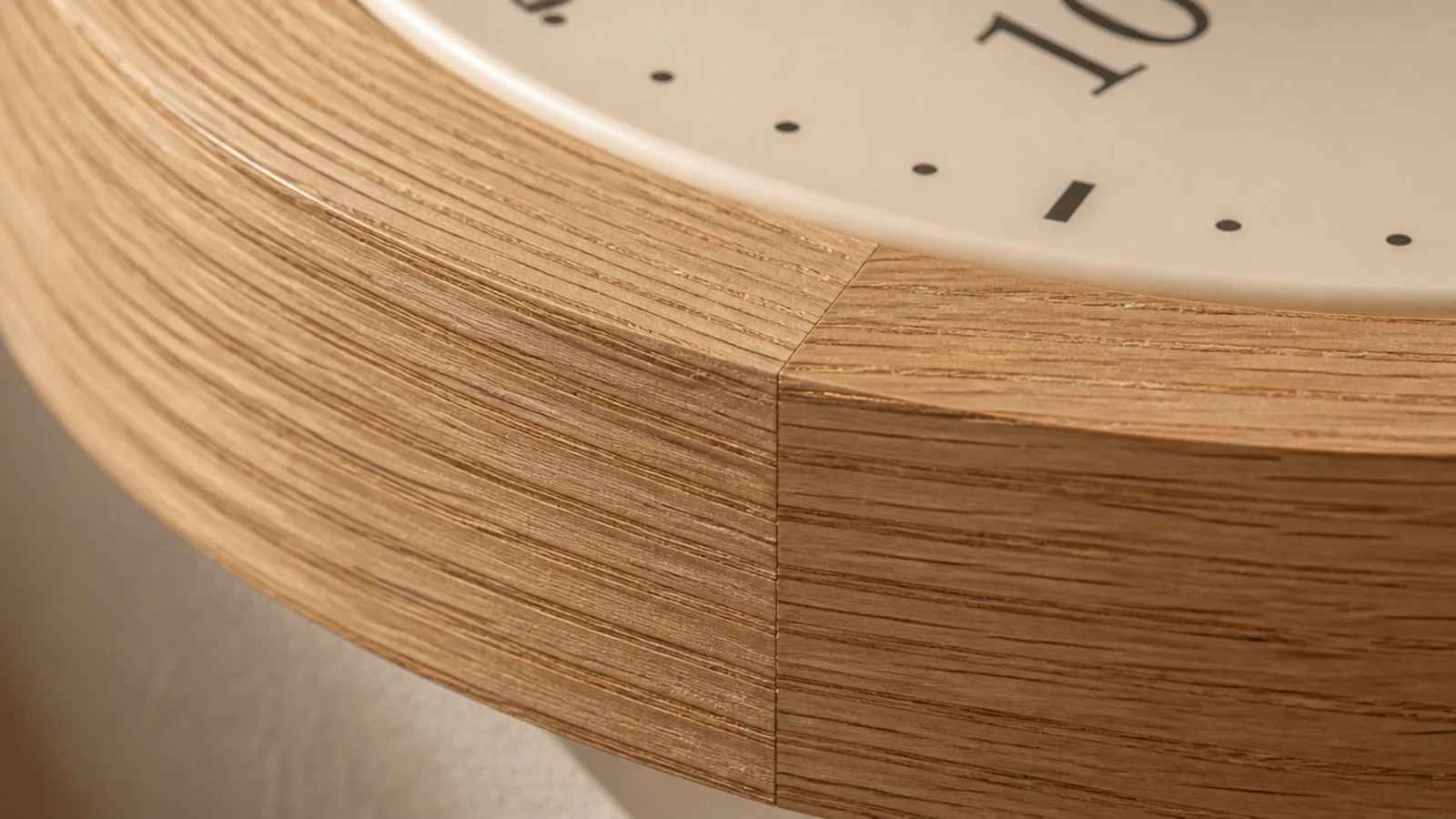
The benchmark. A rim built from eight or twelve mitred segments cut in sequence from one board gives you continuous grain around every joint and almost no seasonal movement, because each segment is short. Look at the corners: if the grain jumps at each mitre, the segments were cut from scrap. Expect $90 to $250 at 18 to 24 inches, weighing 3 to 5 pounds.
2. American walnut for a dark, stable case
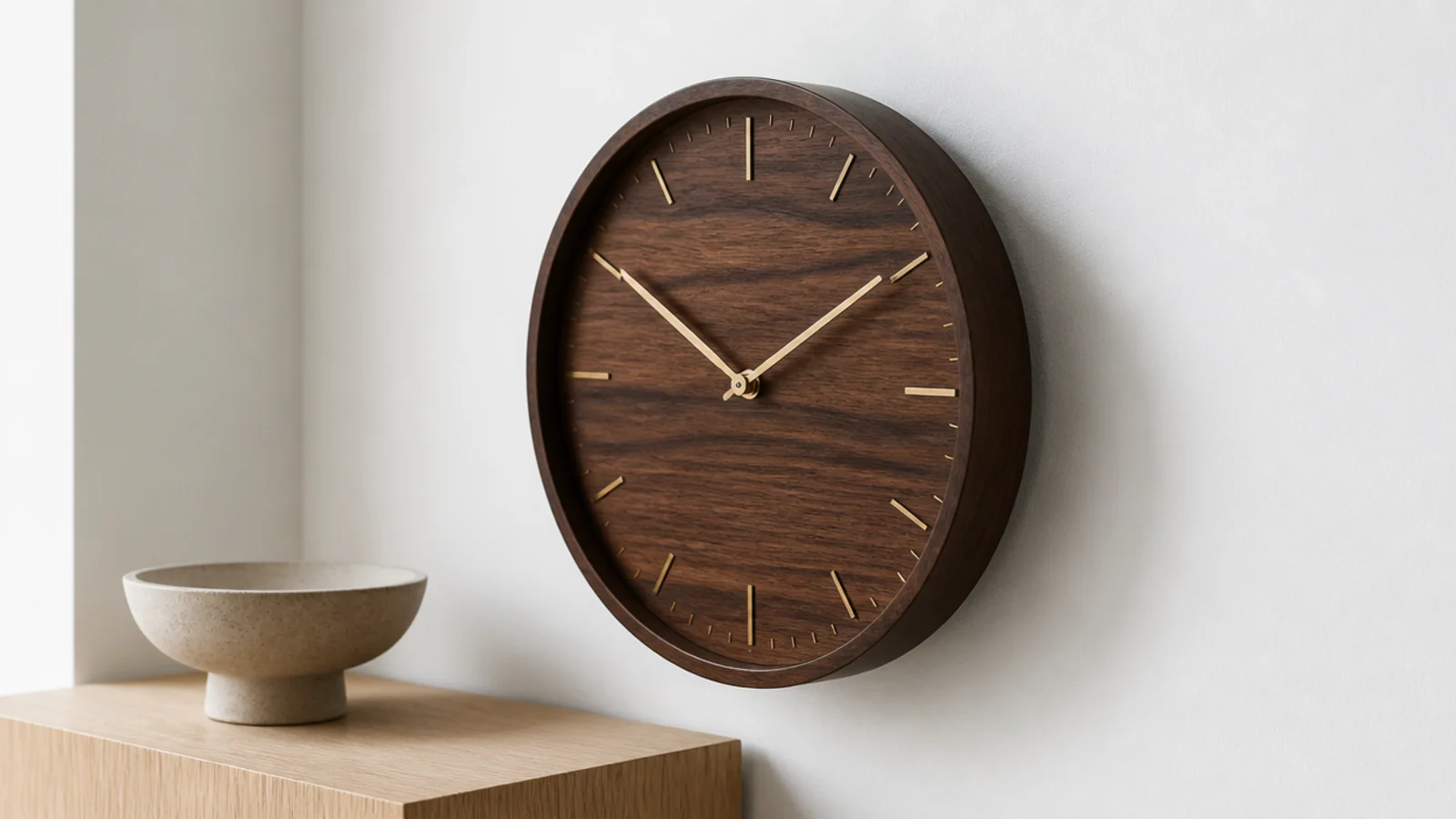
Walnut is among the most dimensionally stable furniture timbers, which is why it survives in centrally heated rooms that pull pine apart. It also darkens very little compared with cherry, so the tone you buy is roughly the tone you keep. It costs 30 to 50 percent more than oak for the same piece and it is worth it in a room with underfloor heating.
3. Ash with a wide open grain
Ash has strong open grain that reads as texture from 3 feet away, which gives a plain dial something to look at without adding pattern. It takes stain unevenly, so buy it clear-finished rather than coloured. It is also tough and light, at around 4 pounds for a 20-inch face.
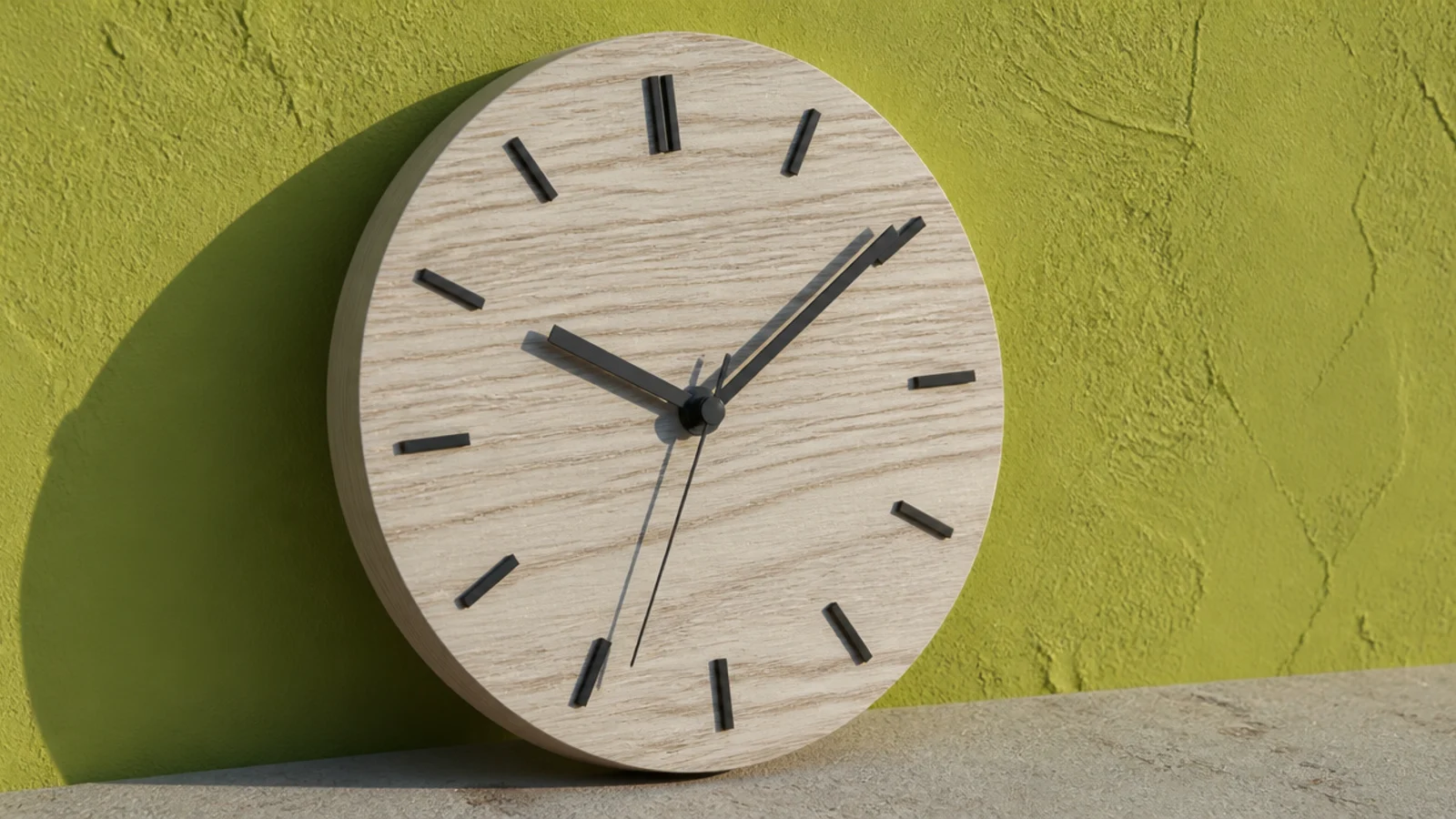
4. Birch ply with the edge on show
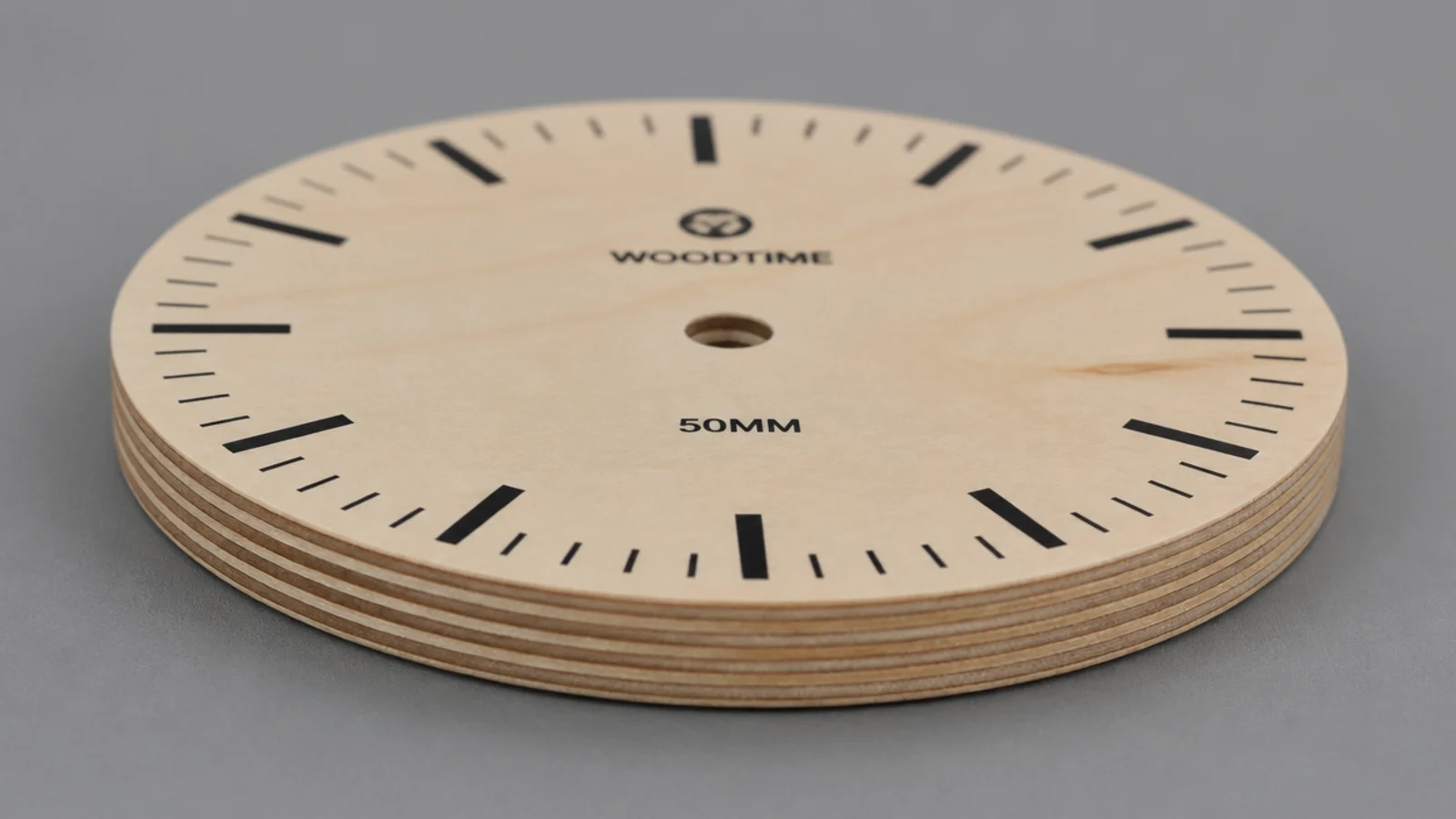
Laminated ply is the most stable timber product here — the alternating layers cancel each other's movement almost entirely. The striped edge is the design feature, so it needs sealing rather than hiding, or it fluffs and greys within a year. Half-inch birch ply at 18 inches costs about $12 to make and weighs under 3 pounds.
5. Reclaimed boards on battens
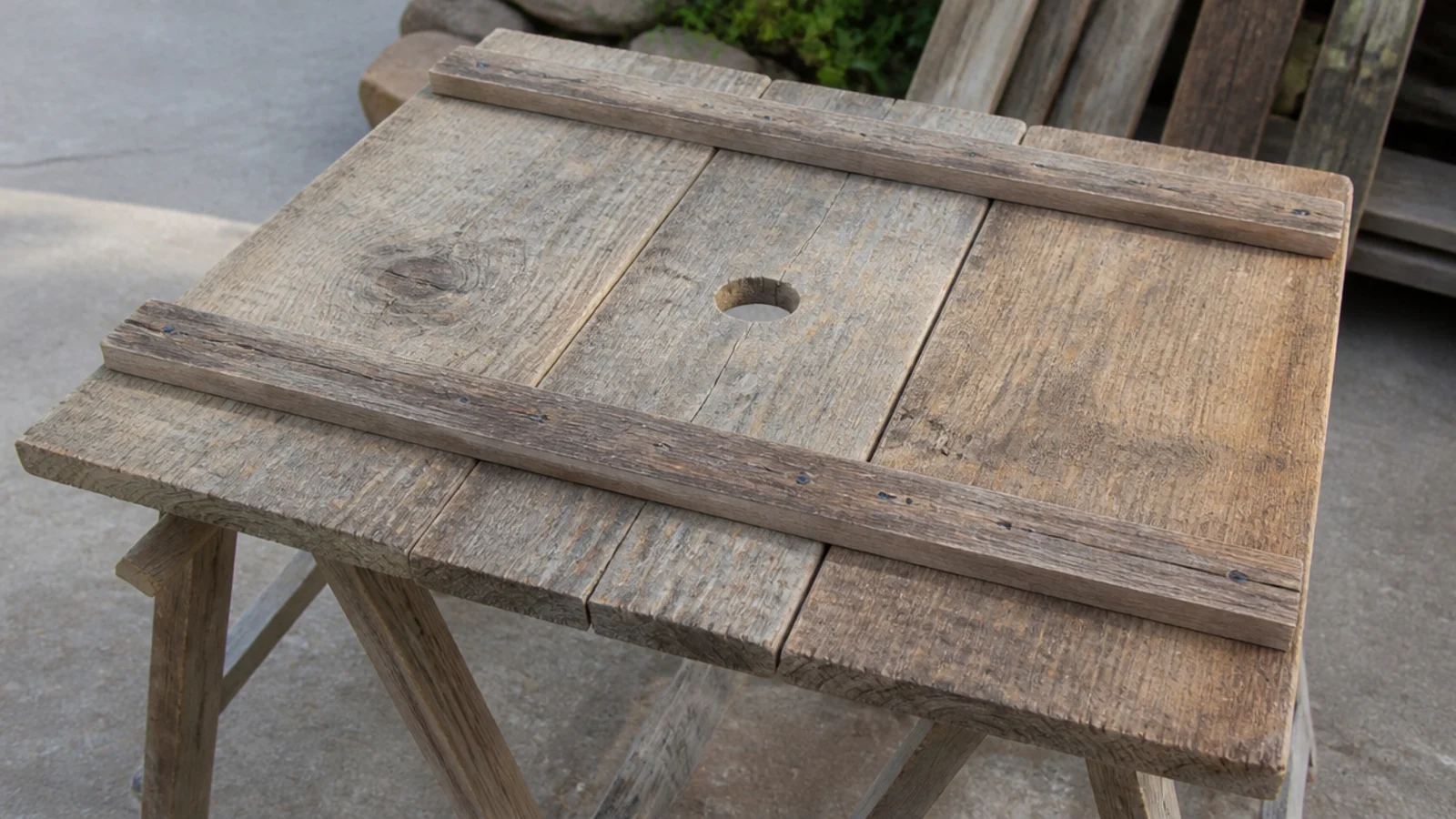
Old boards have already done most of their moving, which is exactly why they work. Two battens screwed across the back are not optional — without them, reclaimed boards cup within a season and the face stops sitting flat against the wall. Screw the battens through slotted holes so the boards can still move slightly.
6. Teak or iroko for a humid room
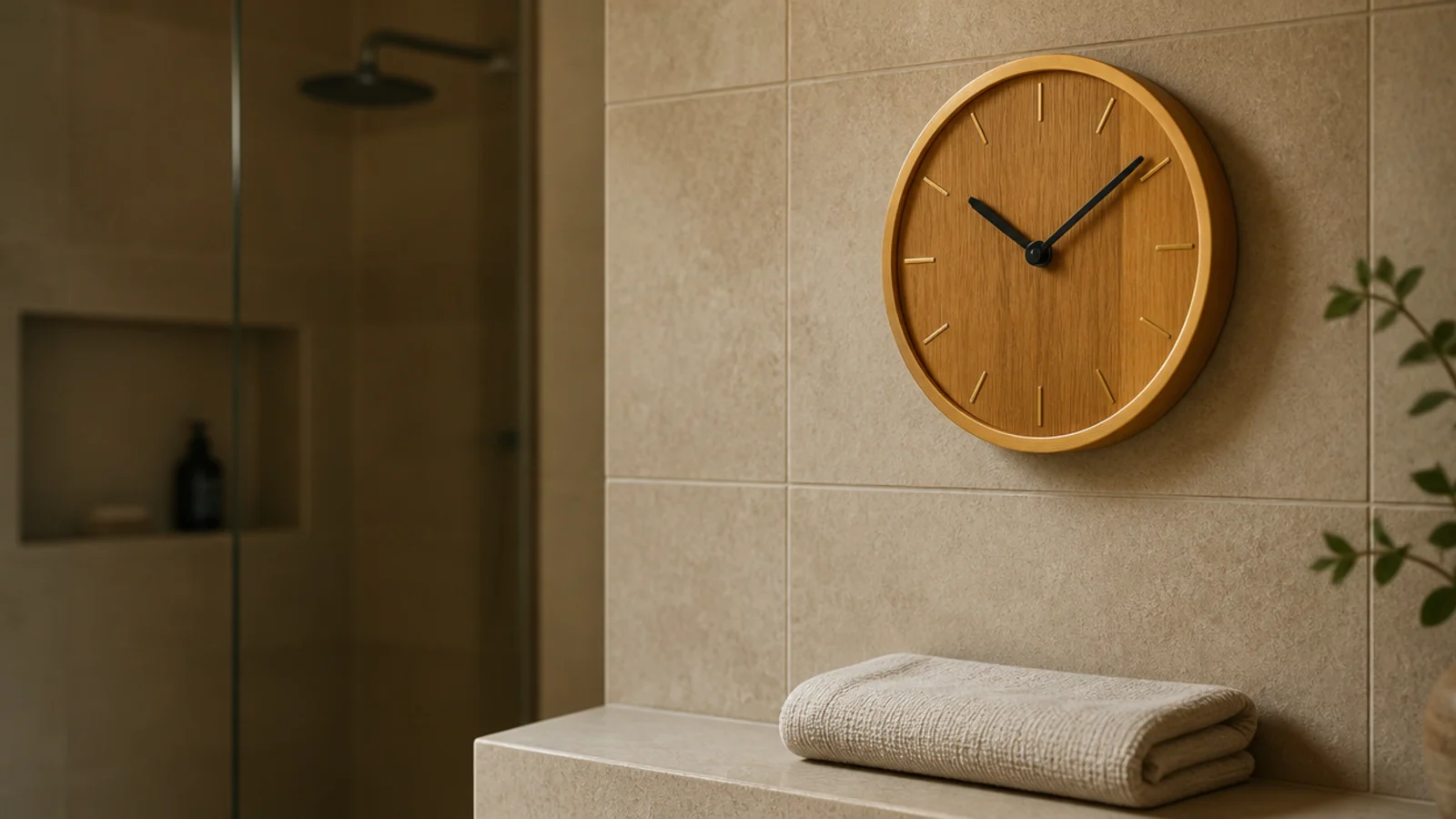
Naturally oily timbers tolerate a bathroom or a busy kitchen where oak and pine swell. Nothing beats simply keeping the clock out of the direct condensation zone, but if the room is genuinely damp, teak is the species that survives it. Expect $120 to $300, and re-oil once a year rather than lacquering.
7. Cherry, which darkens as it ages
Cherry deepens from pale pink-brown to a rich reddish tone over the first year or two of light exposure, and the change is permanent. It is lovely if you want it and irritating if you do not, particularly on a wall where part of the clock sits in shadow — the shaded portion darkens more slowly and the difference shows.
8. Maple for a very pale scheme
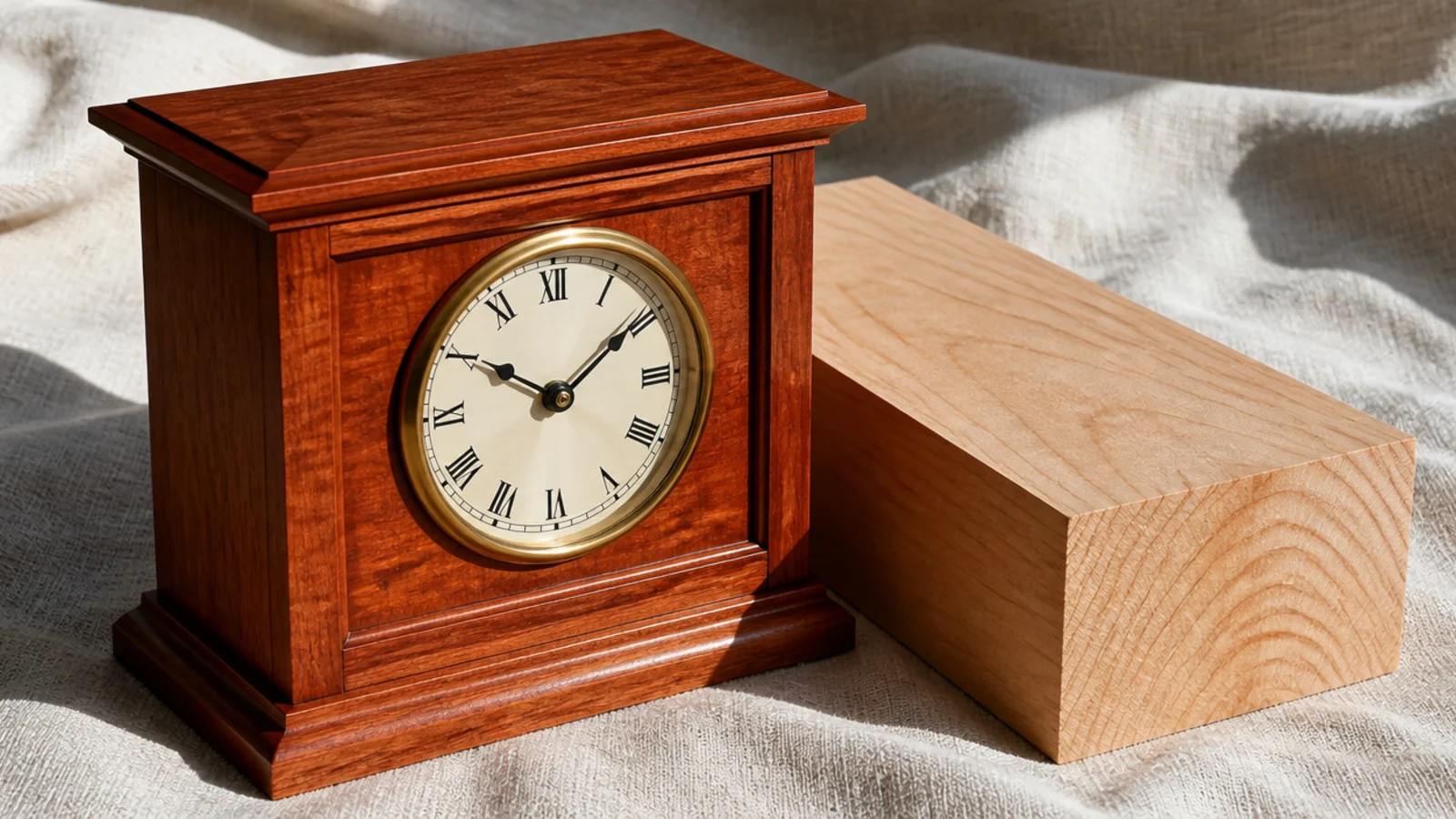
Close-grained, almost white, and it stays pale far longer than birch or pine, which yellow. It is dense for its colour at around 44 pounds per cubic foot, so a 20-inch solid maple face runs 5 to 6 pounds. Use dark hands, because pale hands on maple lose legibility at anything over 10 feet.
9. Black-stained oak
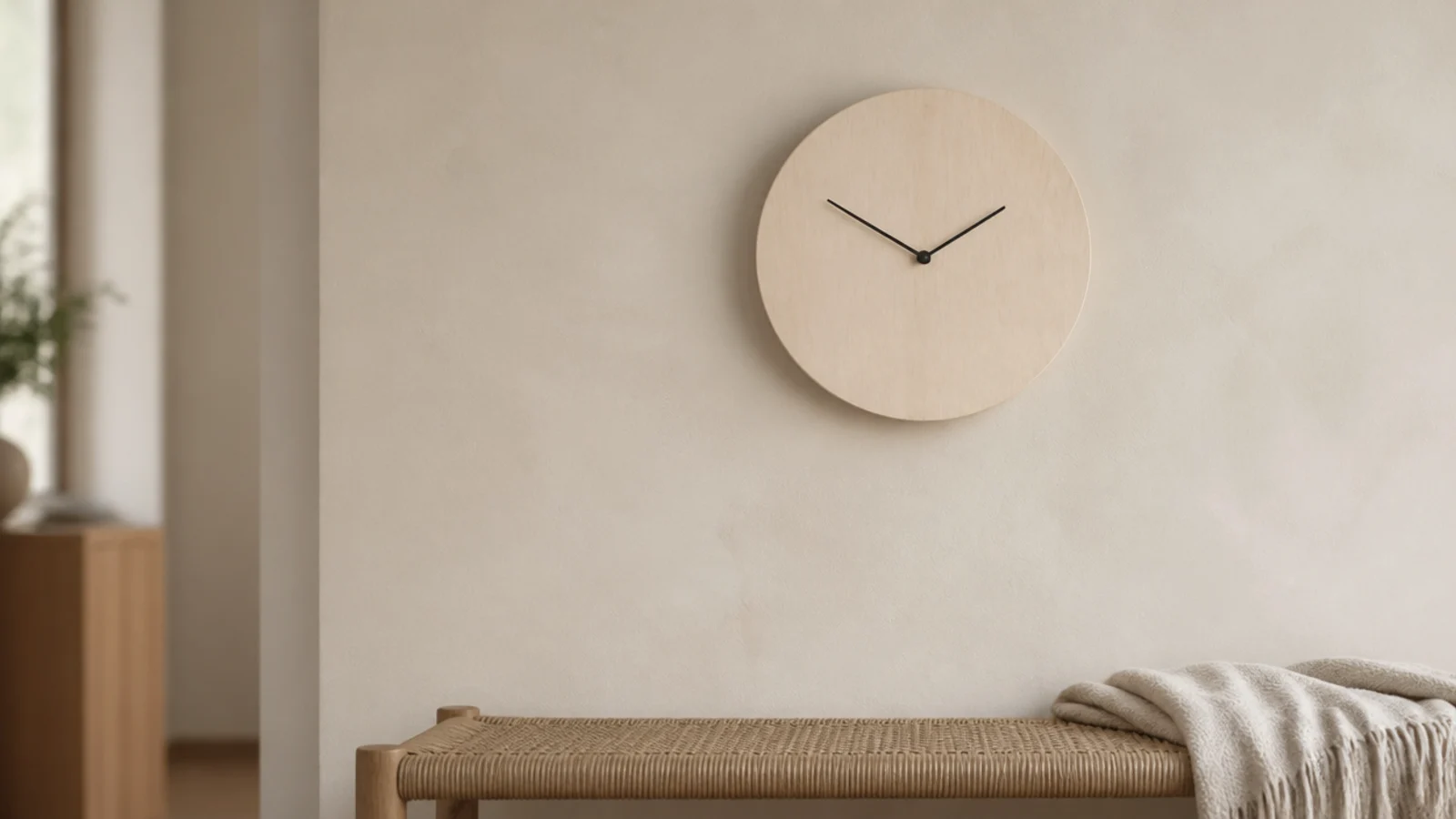
Stain lets the open grain read through the colour, where paint fills it and leaves you with a black disc. It is the right way to get a dark timber clock without paying walnut prices. Use a penetrating stain rather than a coloured varnish, and seal with hardwax oil rather than gloss lacquer.
10. A live-edge slab
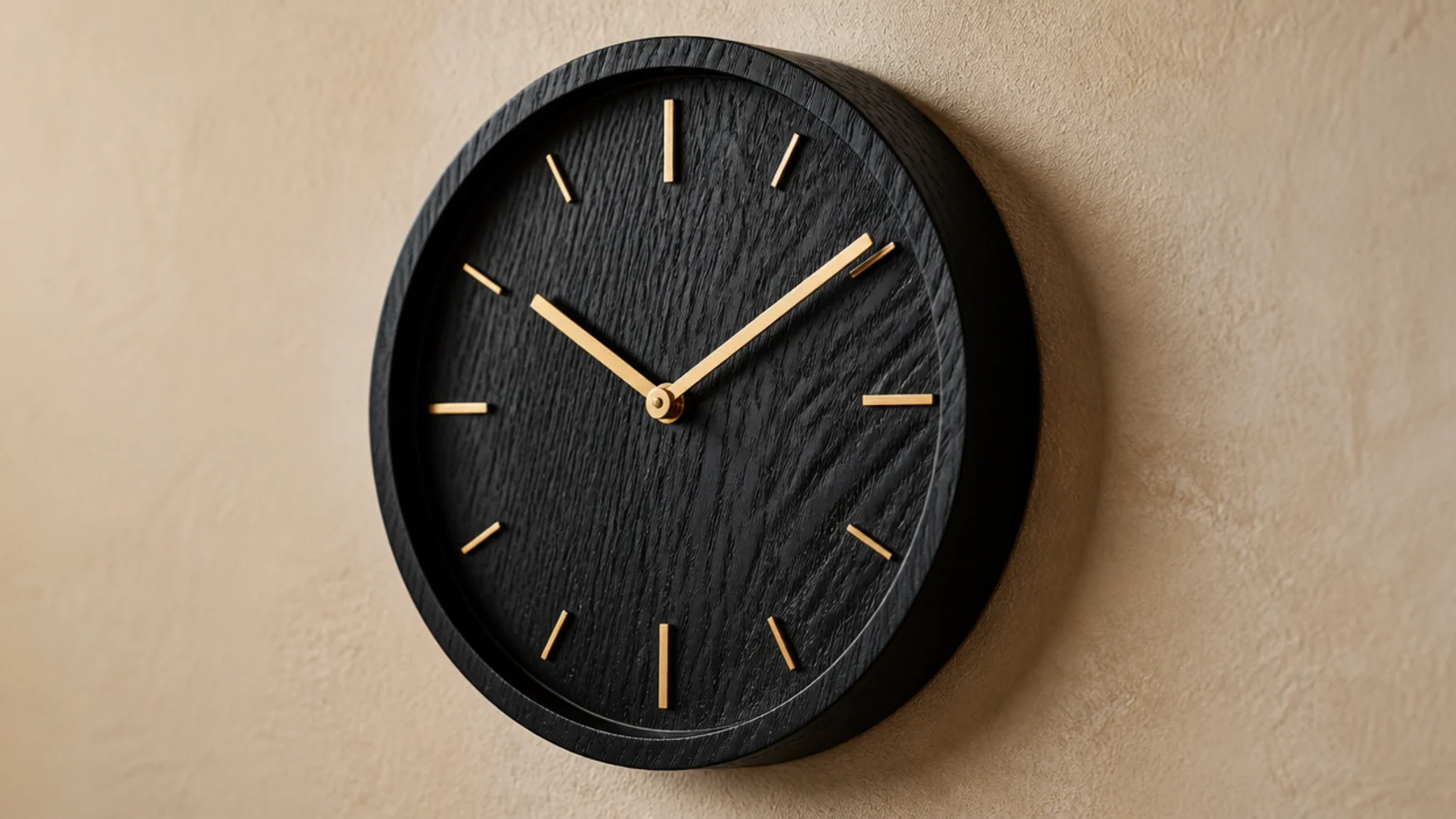
A slab with one natural bark edge is a genuine statement at 20 to 30 inches wide, and it weighs 10 to 20 pounds. That is framing only. Check the slab has been kiln dried to about 8 to 10 percent moisture content, because an air-dried slab brought into a heated room will check along the ends within months.
11. A cross-cut log slice
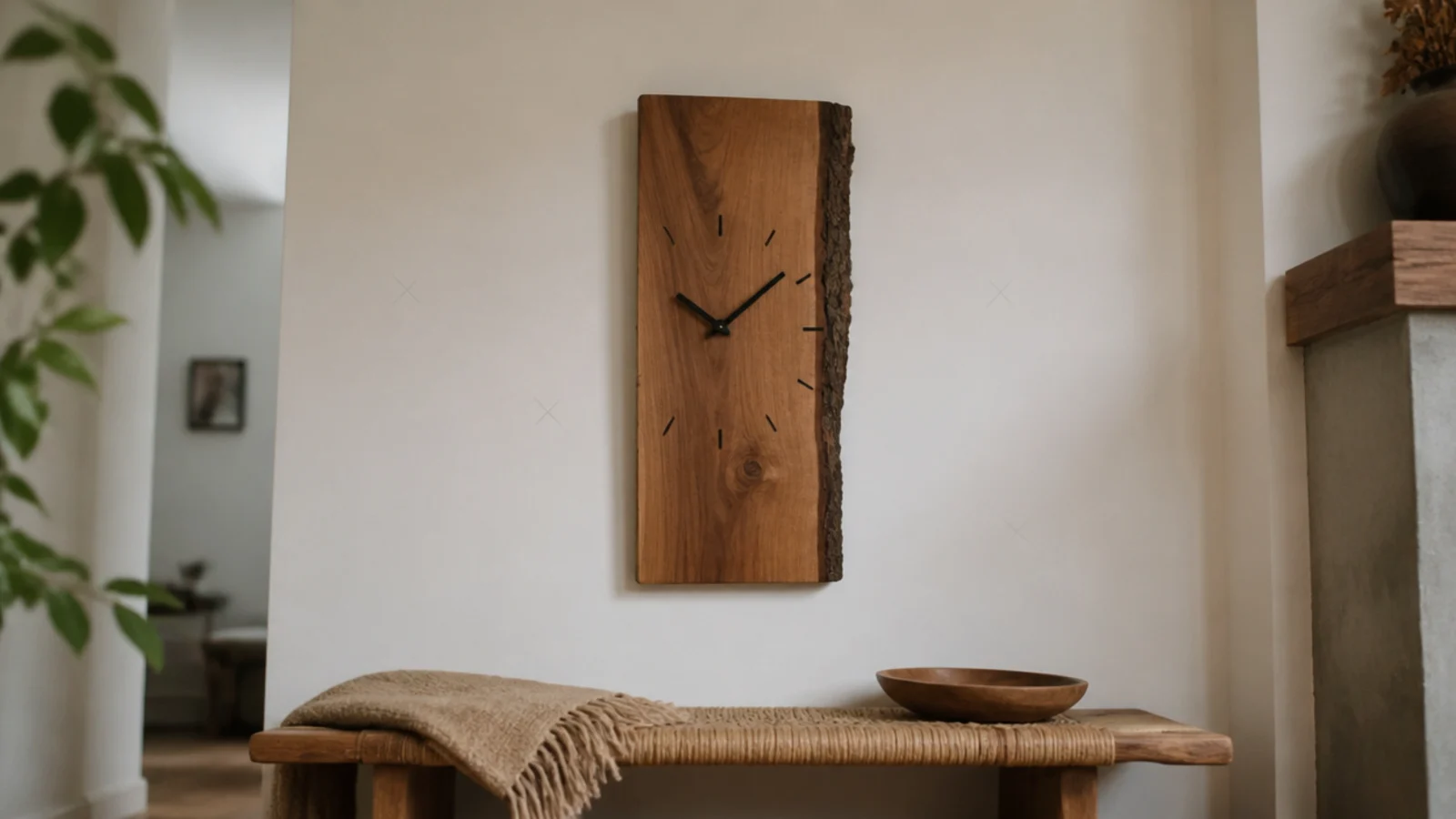
Beautiful, and the most likely thing here to disappoint you. A slice cut across the grain will split radially as it dries, no matter what you seal it with, unless it was properly kiln dried first. Buy dried or wait six months. A 12-inch slice at 1.5 inches thick weighs 5 to 8 pounds and needs a long shaft.
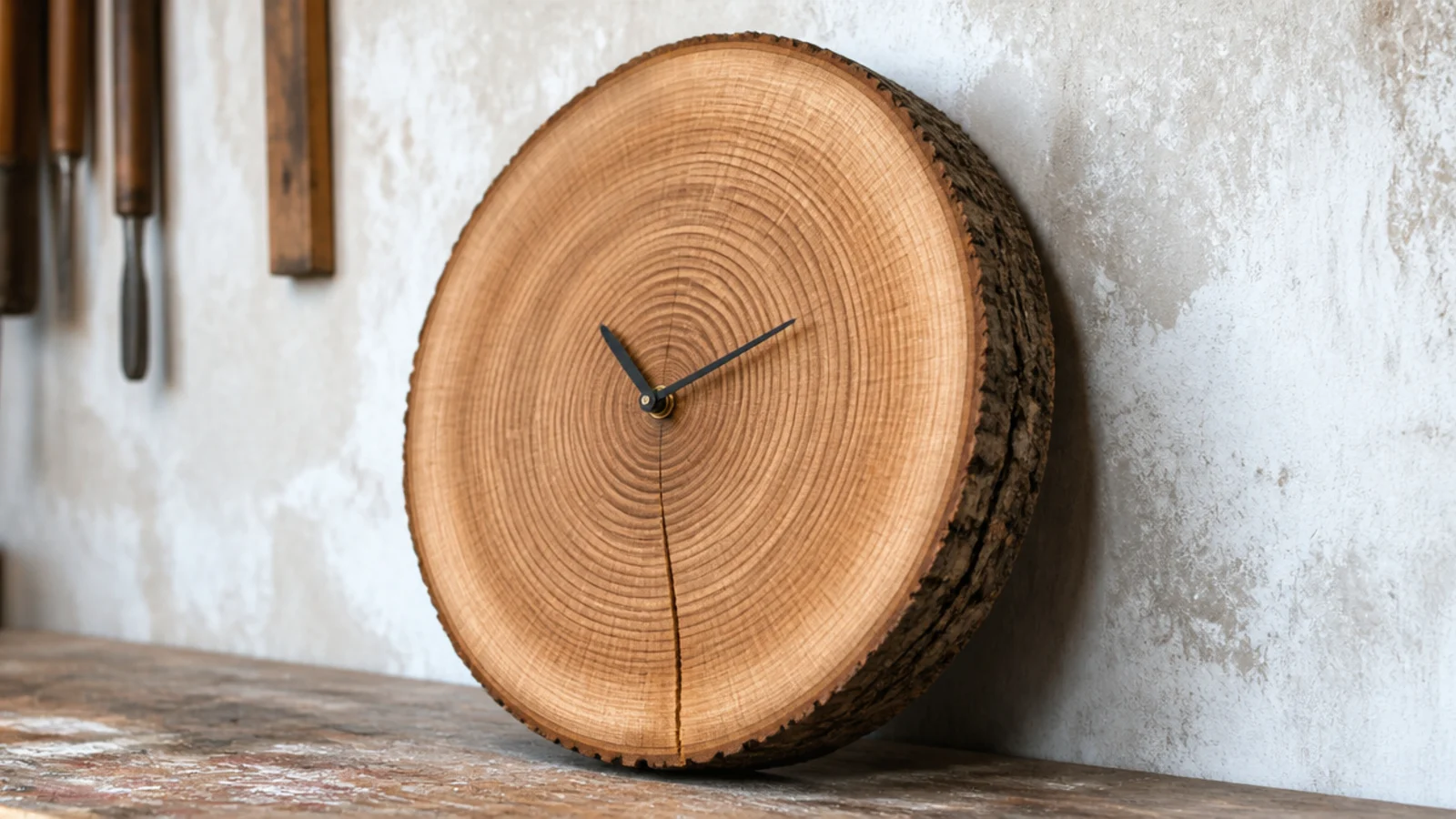
12. A parquet-block face
Small blocks laid in herringbone across a backing board give you pattern and stability at once, because no single piece is wide enough to move much. Flooring fitters give offcuts away. Lay the blocks first and cut the circle afterwards, which is far easier than fitting blocks to a curve.
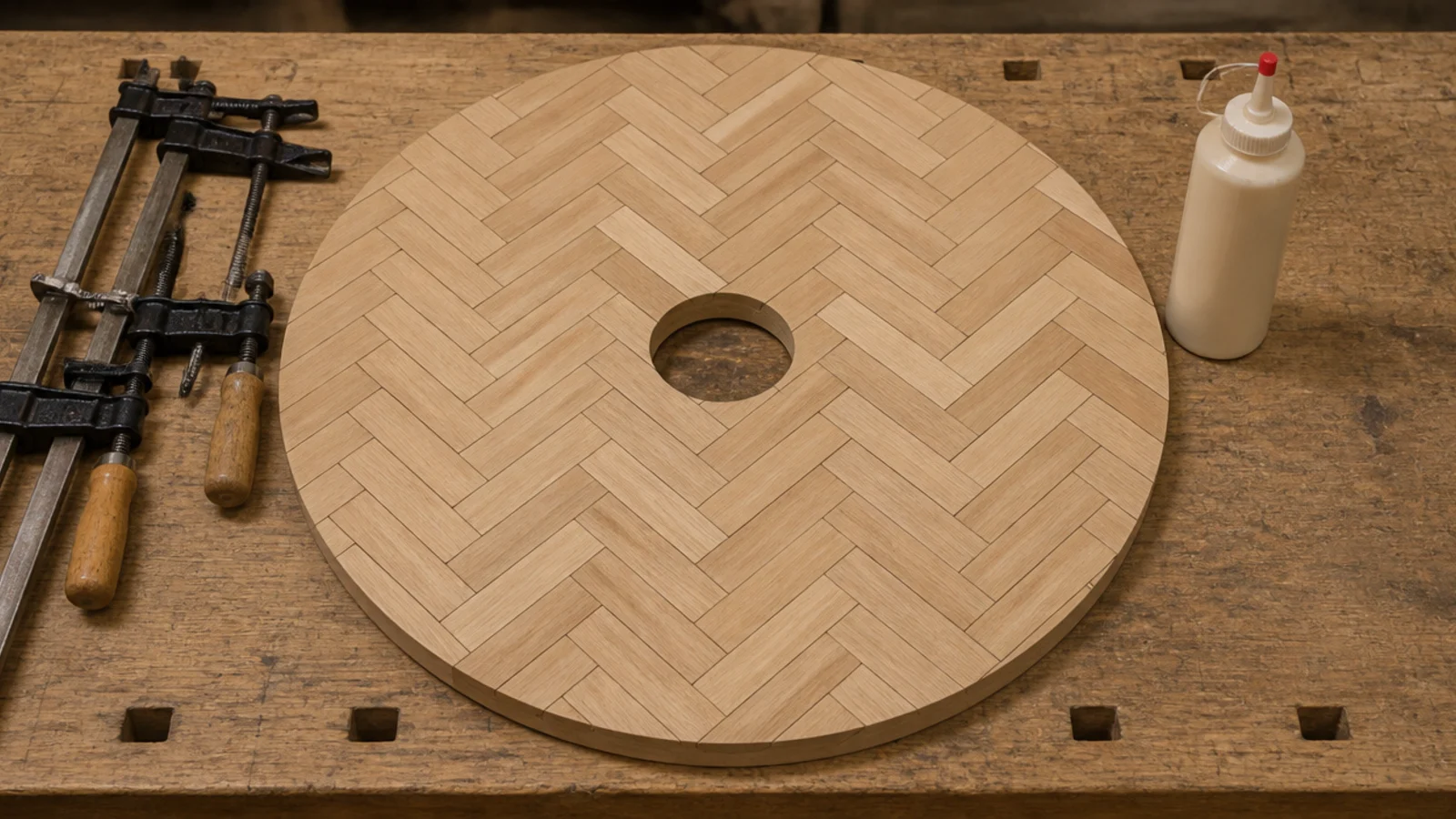
13. A steam-bent bentwood rim
One continuous strip bent round with a single scarf joint. It is the cleanest looking rim there is, and it costs more because bending is skilled and the failure rate is real. Keep it out of very dry rooms, where a bent rim can relax and open at the joint over a few winters.
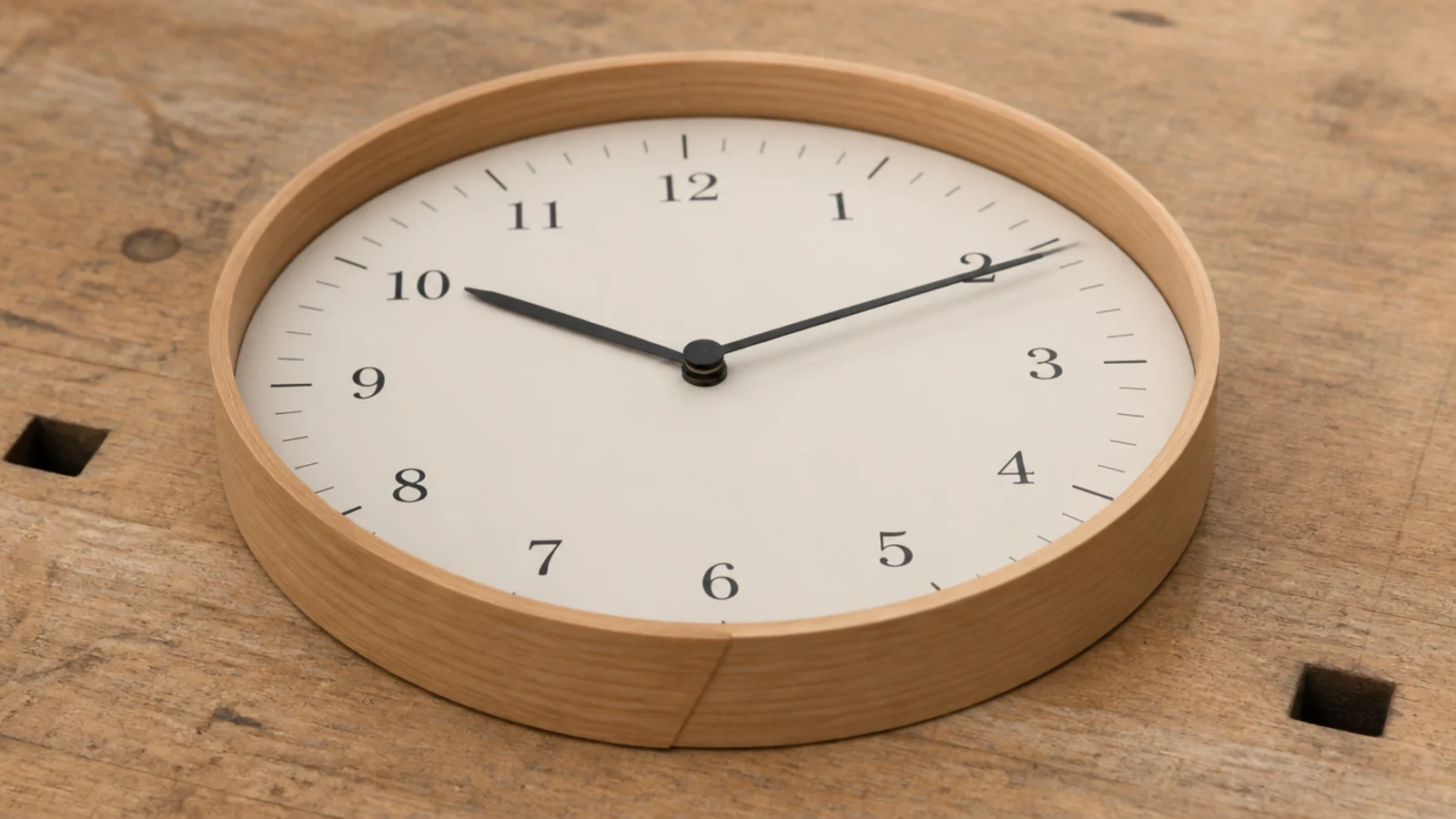
14. Inlaid markers instead of printed ones
Contrasting timber markers let into the face sit perfectly flush and cannot wear off, unlike printed or transferred markers which scuff at the twelve position where fingers land. Inlay adds $40 to $100 to the price of a comparable dial and it is the detail that still looks right in twenty years.
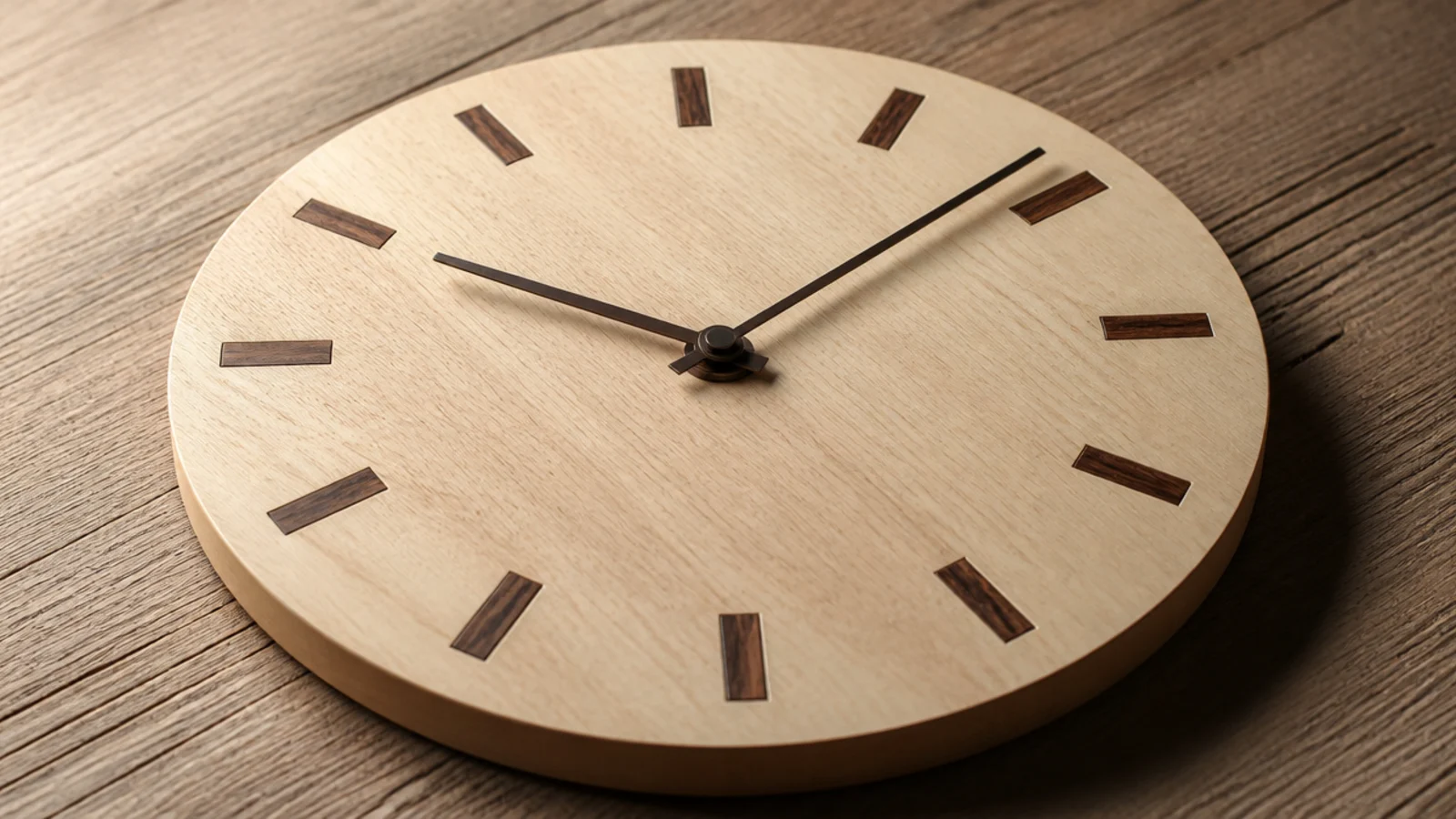
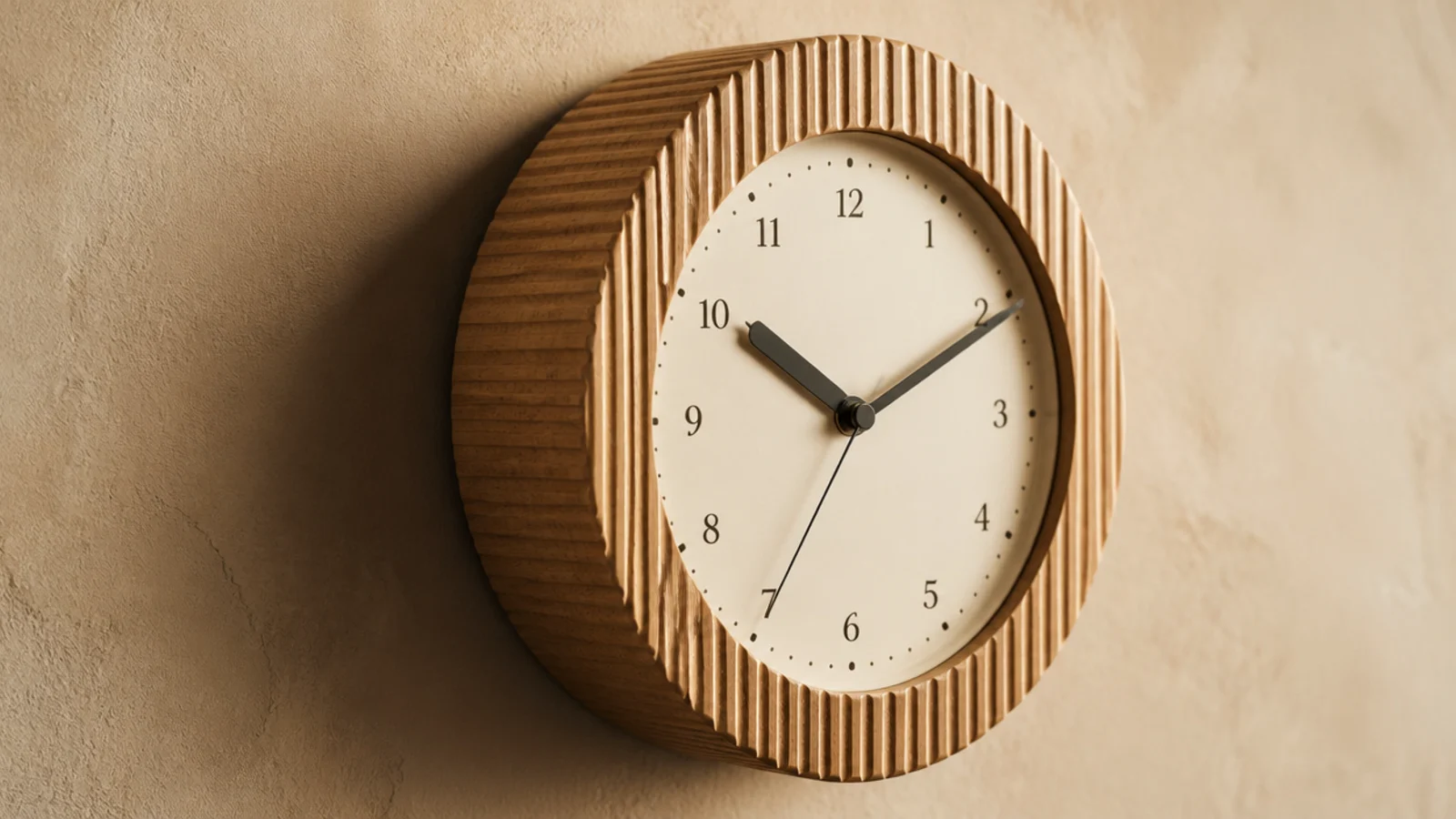
15. A reeded or fluted oak case
Fine grooves around the rim catch raking light along the entire edge, which turns a plain circle into something with a lot of quiet detail. Keep the grooves a few millimetres apart — wide flutes read heavy. It also hides small dents remarkably well, which suits a hallway. Similar detailing works on joinery, as in the TV wall design guide.
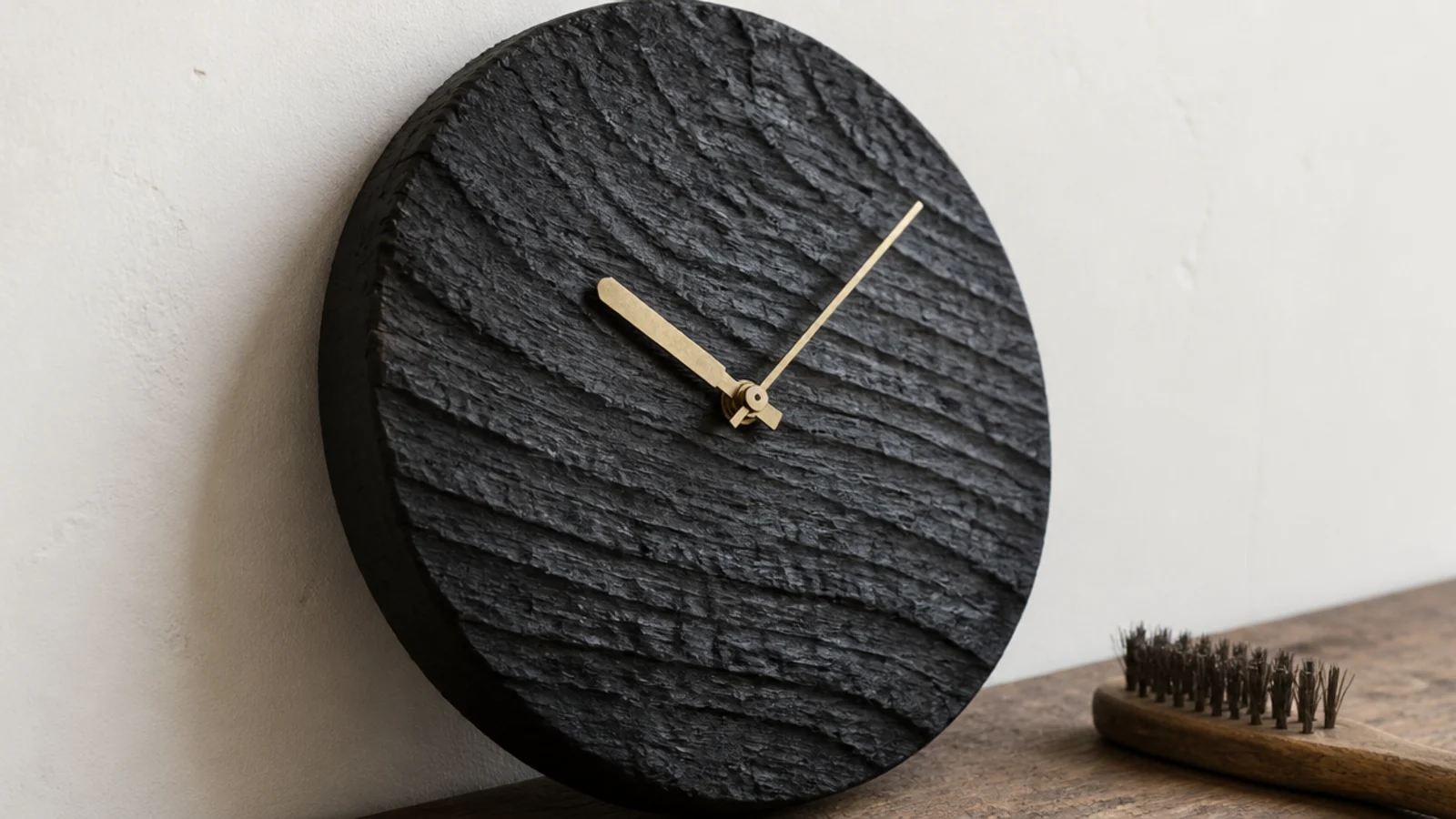
16. A charred timber face
Burning, brushing and oiling gives a matte blackened surface with a rippled texture that no stain reproduces. The char also stabilises the surface against moisture. It marks with fingerprints until it is properly oiled, so ask whether the finishing was done after the brushing rather than before.
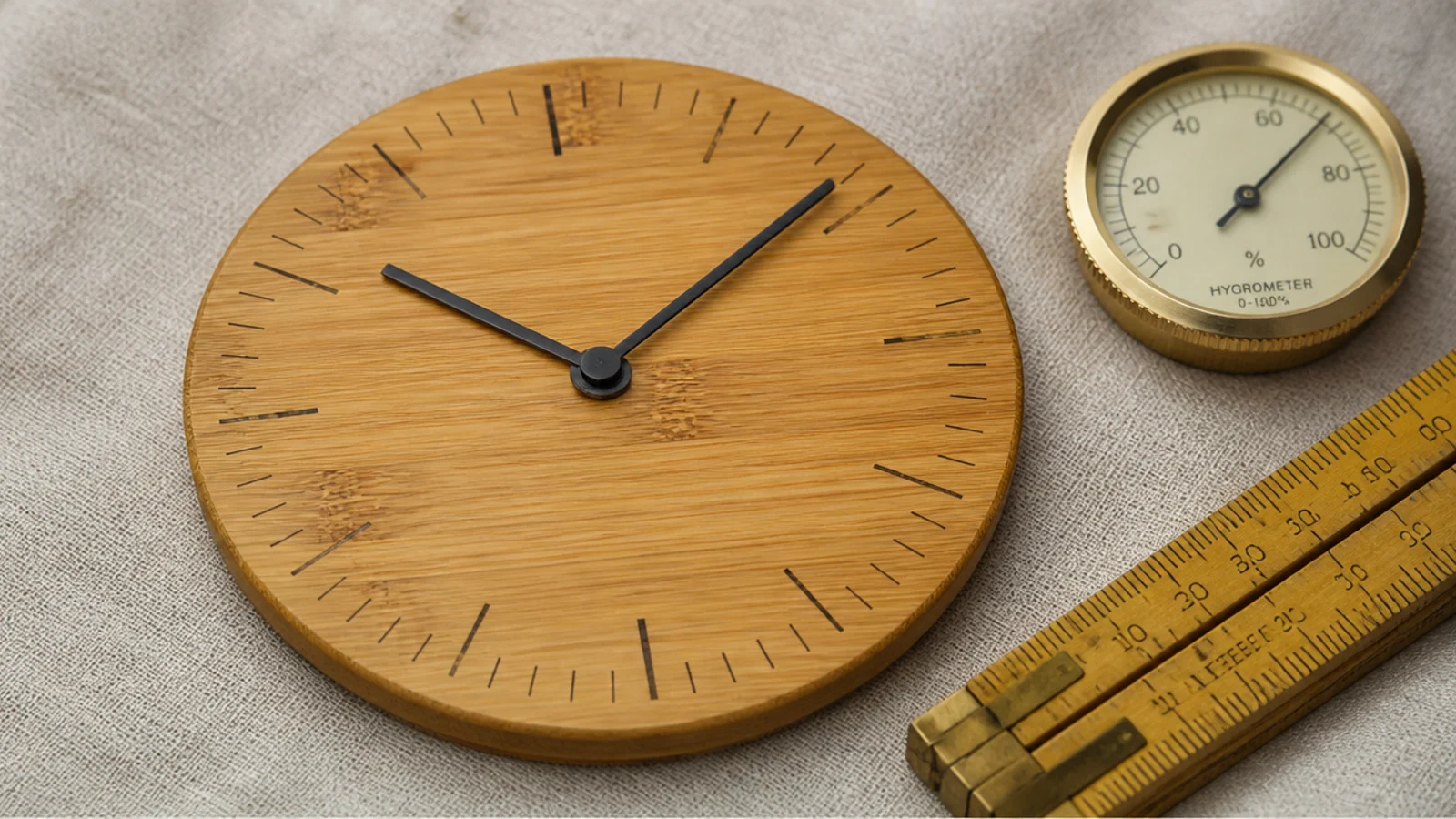
17. Bamboo, which is not actually a timber
Laminated bamboo is harder than oak, considerably more stable, and it costs less. The linear node markings read as a fine stripe rather than grain, which suits a modern room. It is a genuinely good choice for a kitchen, and a 16-inch face weighs about 3 pounds.
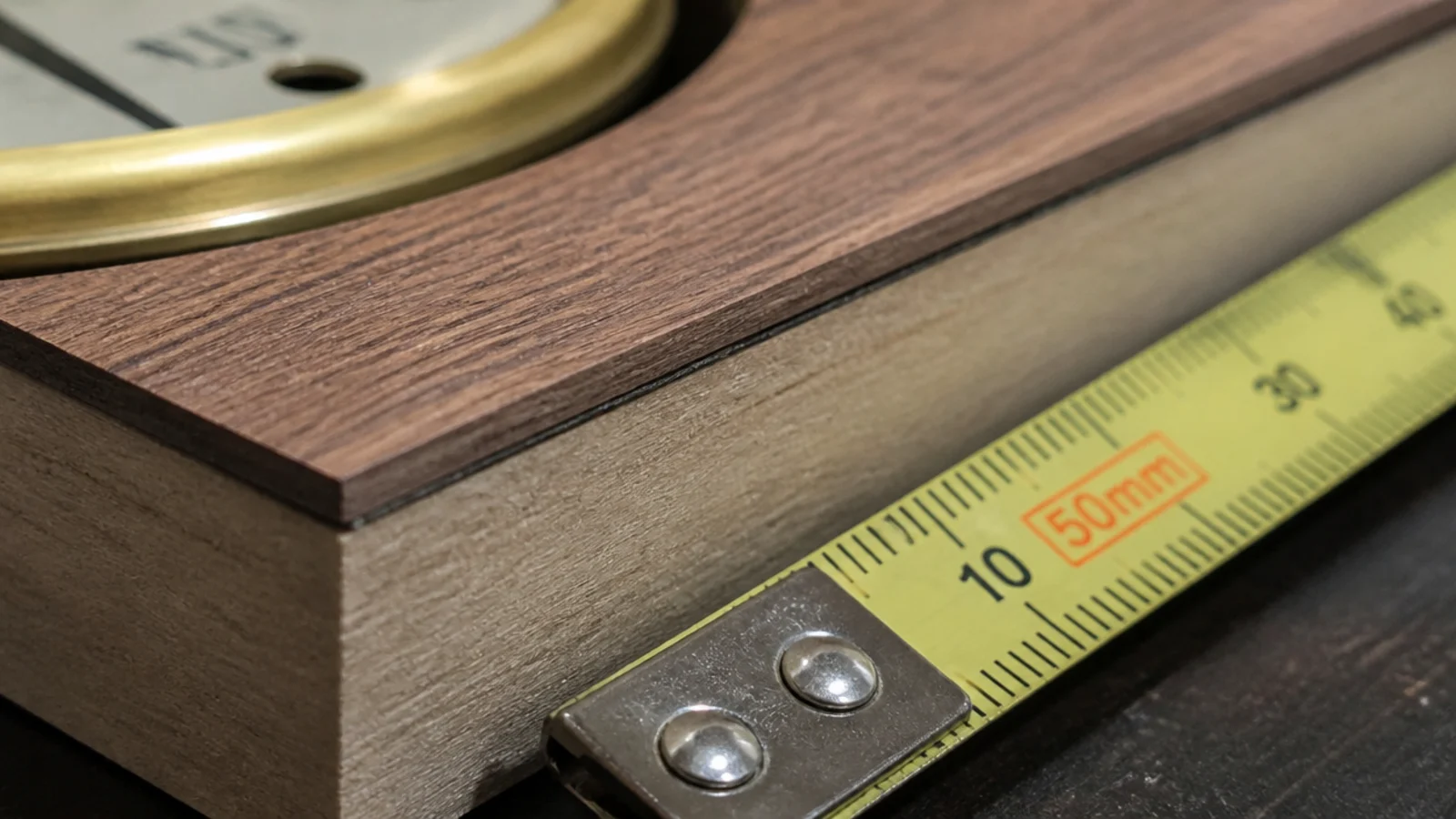
18. Veneered board, and how to spot it
Turn the clock edge-on. Veneered MDF shows a fine dark glue line under a paper-thin timber layer, and the grain pattern repeats every few inches because it was sliced from a rotating log. It is not automatically bad — it stays flat forever — but it should be priced as board, not as solid timber.
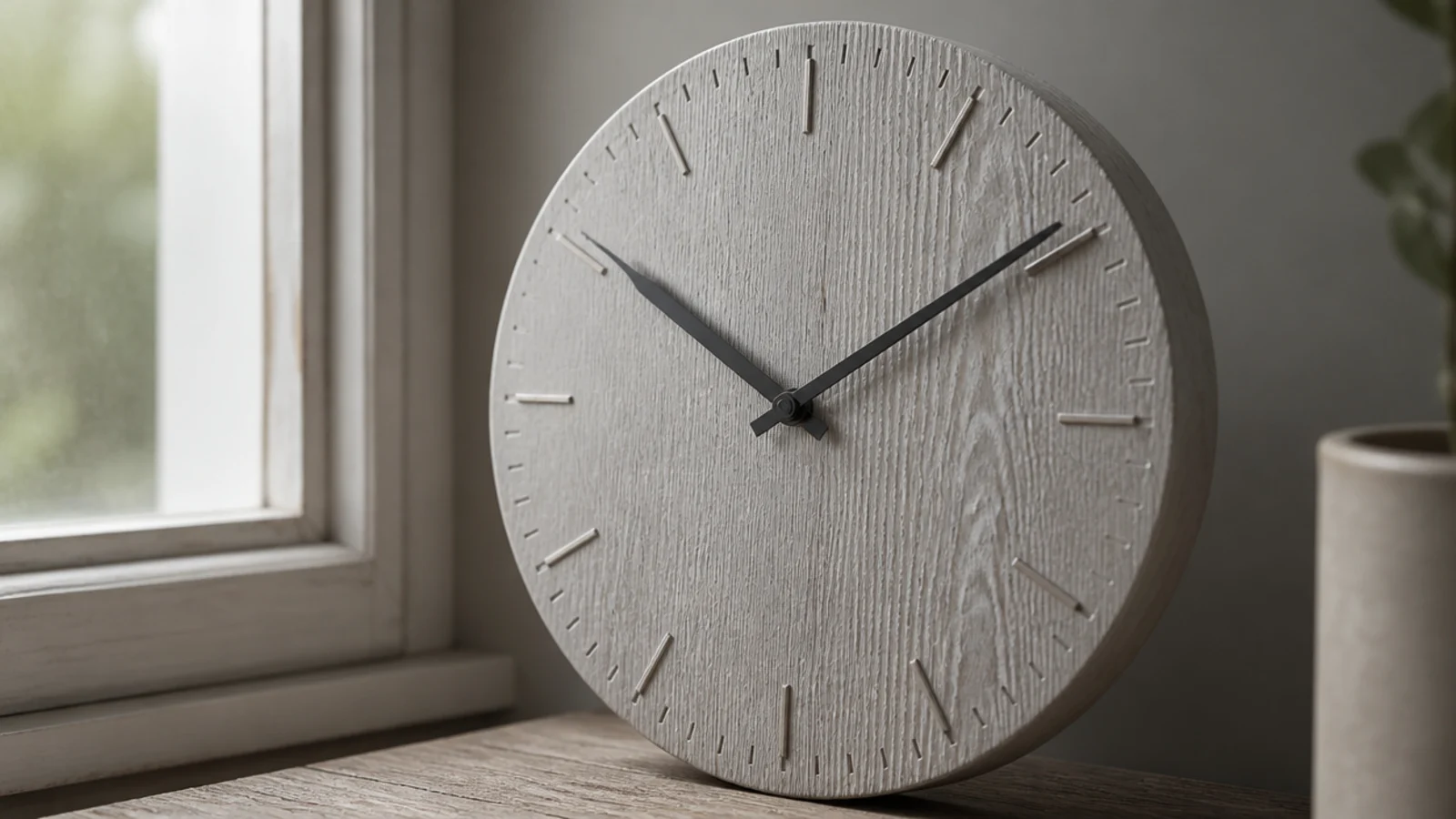
19. Limed or whitewashed oak
White pigment brushed into open grain and wiped back sits in the grain rather than on the surface, so the timber still reads as timber. It suits coastal and soft neutral schemes and it hides dust far better than dark oak. Re-wax every couple of years or the limed effect gradually greys.
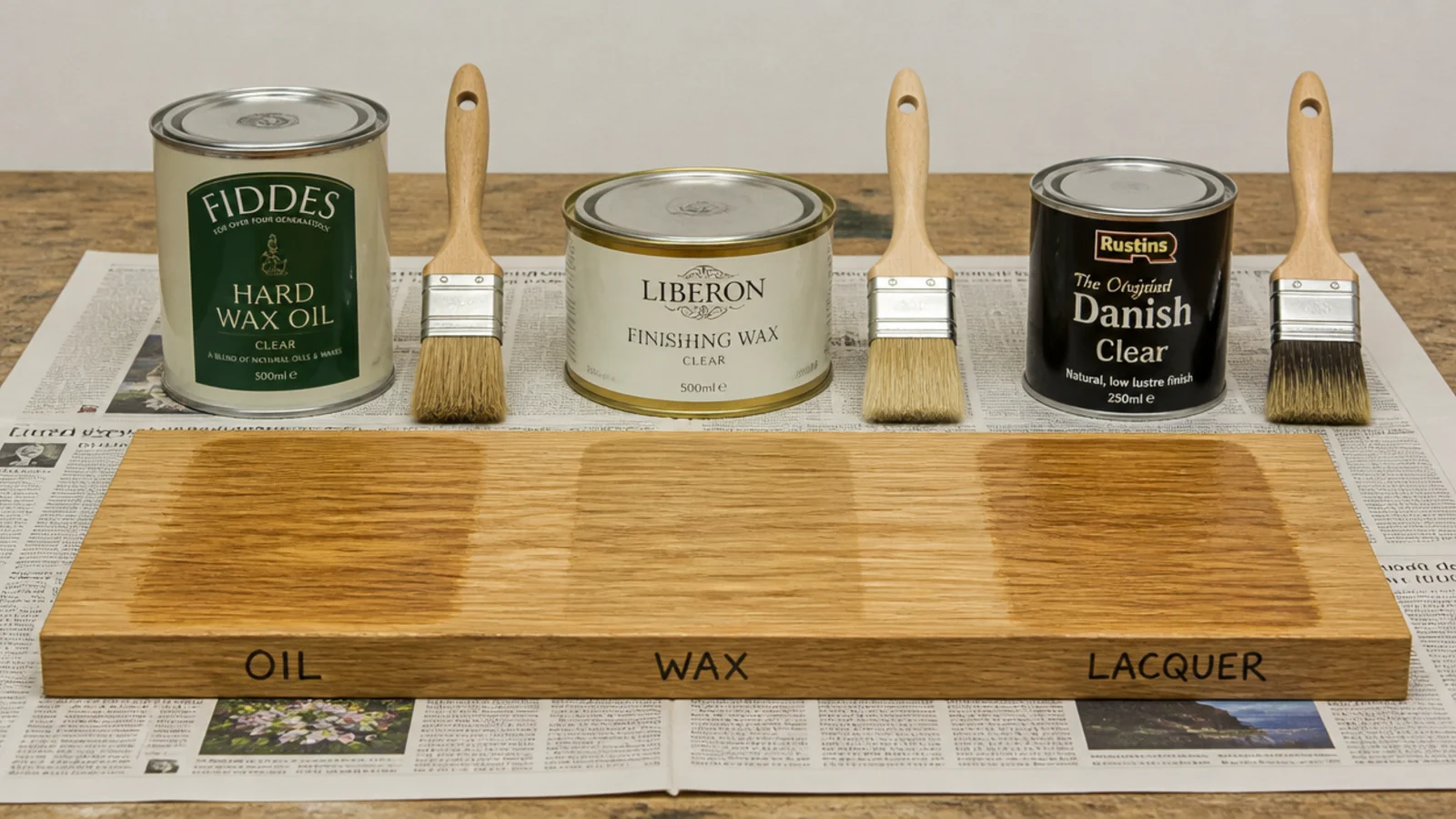
20. Oil, wax or lacquer, and what each costs you
Hardwax oil is two coats, eight hours apart, and repairs invisibly with a rub. Danish oil is three thin coats at six to eight hours and gives a lower sheen. Lacquer is the most protective and the least repairable — a scratch means refinishing the whole face. Test any of them on an offcut first, because the same oil looks entirely different on ash and on walnut. Pair timber clocks with timber shelving carefully, as the floating shelf ideas explain.
For older timber cases with genuine patina rather than new ones, the thrifted clock notes cover what to check before paying.
Mistakes to Skip
- Buying a green log slice because the rings look beautiful. It will split radially within a year regardless of the finish, and there is no repair that does not read as a repair.
- Hanging a live-edge slab on a drywall anchor. Ten to twenty pounds above a sofa is a stud fixing, and slabs are the heaviest thing in this whole category.
- Ordering a standard shaft for a thick timber dial. A one-inch face needs a shaft over an inch, and a short one simply will not take the nut, which turns a finished clock into a returned parcel.
- Putting untreated pine or exposed ply in a bathroom. Both swell within a season, and once the laminations of a ply edge have opened they never close again.
Frequently asked questions
Do solid wood clocks warp?
Solid timber moves with humidity, roughly one percent across the grain for every four or five percent change in relative humidity. A rim built from segments stays flat where a wide glued-up disc can cup. Keep the room between about 35 and 55 percent and most timber behaves indefinitely.
How can I tell solid wood from veneer?
Look at the outer edge. Veneered board shows a fine dark glue line and a grain pattern that repeats every few inches, while solid timber has continuous grain running through the thickness. Weight is the other tell, since veneered MDF is noticeably heavier than solid pine and duller to knock.
What timber suits a bathroom or kitchen?
Naturally oily species like teak and iroko, or a properly sealed hardwood. Avoid MDF, plywood with an exposed edge and untreated pine, all of which swell within a season in a humid room. Keep any timber clock away from the wall directly above a hob or a shower head.
What movement shaft do I need for a thick timber dial?
Measure the dial thickness at the centre hole and add about an eighth of an inch for the washer and nut. A one-inch thick oak face therefore needs a shaft over an inch, which is at the long end of what is commonly sold, so check availability before you build or buy.
How heavy is a solid wood clock?
A 20-inch solid oak disc three quarters of an inch thick comes in around 6 pounds, and a rim-only version of the same size is 2 to 3. Live-edge slabs and thick log slices run 10 to 20 pounds, which is a number eight screw into a stud rather than a wall plug.
Want more like this? Browse all 15 wall clock guides — they all use the same measurements and budget tiers.
Pin it for later
Save this to your Wall Clock board
Pin it now so it is waiting for you when the tape measure comes out — and so the next person hunting for this idea can find it too.
Save this pinKeep going
More ideas worth saving while you have the tape measure out.