Wall Clock · How-To
15 Steps To Plan Wall Clock Ideas Above A Sofa

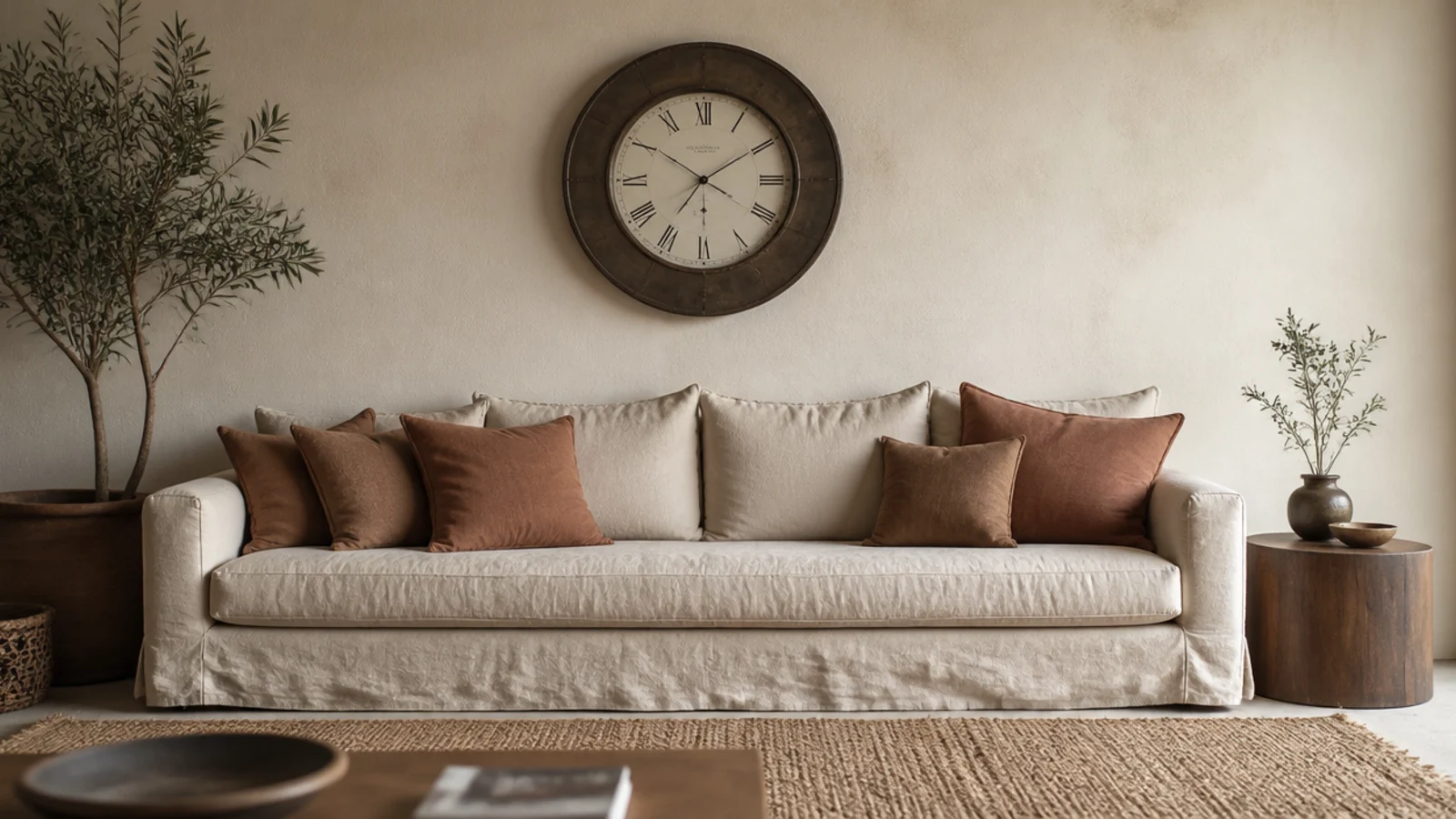
The wall above a sofa is the hardest one in the house to get right, because it is wide, it is always seen from a fixed seat, and the furniture underneath is almost never centred on it. Most wall clock ideas fail there for one of three reasons: the face is too small, the centre is too high, or the fixing is a plastic plug directly above where people sit. What follows is the order I plan a sofa wall in, from the first three measurements to the week of living with it before anything comes back down.
In this guide19 sections — tap to openHide
- 1.What wall clock ideas above a sofa depend on
- 2.What You'll Need
- 3.Step 1: Measure the sofa and write three numbers down
- 4.Step 2: Decide between one face and a grouping
- 5.Step 3: Set the diameter from the sofa width
- 6.Step 4: Map what else already lives on that wall
- 7.Step 5: Check the sightline from the seat opposite
- 8.Step 6: Mark the true centre of the sofa
- 9.Step 7: Set the bottom line above the back cushions
- 10.Step 8: Convert the bottom line to a centre height
- 11.Step 9: Tape a paper template up for a full day
- 12.Step 10: Test the balance with the lamps on
- 13.Step 11: Find the studs across the whole span
- 14.Step 12: Match the fixing to the weight you measured
- 15.Step 13: Plan for the quietest hour of the room
- 16.Step 14: Hang on two screws and level it
- 17.Step 15: Live with it a week, then edit the wall
- 18.Pro Styling Rules
- 19.Mistakes to Skip
What wall clock ideas above a sofa depend on
Three numbers, in this order. Diameter comes from the sofa width — about a third. An 84-inch three-seater suits 24 to 30 inches, a 72-inch two-seater 20 to 26, and a 96-inch sectional run 28 to 34. Under 18 inches on a full-size sofa, the clock reads as an accessory rather than an anchor.
The gap comes next. Eight to twelve inches of clear plaster between the top of the back cushions and the bottom of the rim. Under 8 the clock appears to rest on the sofa; over about 14 the two stop belonging to each other.
Height falls out of those two. Add the gap to the sofa back height, add the radius, and you should land near 57 to 60 inches to the centre — standing eye level and the line galleries hang art on. If the arithmetic sends you past a 65-inch centre, the clock is too large or the sofa back is unusually tall.
Then weight, which is a safety decision rather than a styling one because people sit underneath. Anything above a sofa goes on a number eight screw two inches long into a stud, not the plastic plug in the box, which is rated near 10 pounds when new and loses grip with every year and every door slam. Where no stud lands in the right place, a spring toggle holds 25 to 50 pounds in half-inch drywall. There is more on the whole-wall composition in the living room clock guide.
What You'll Need
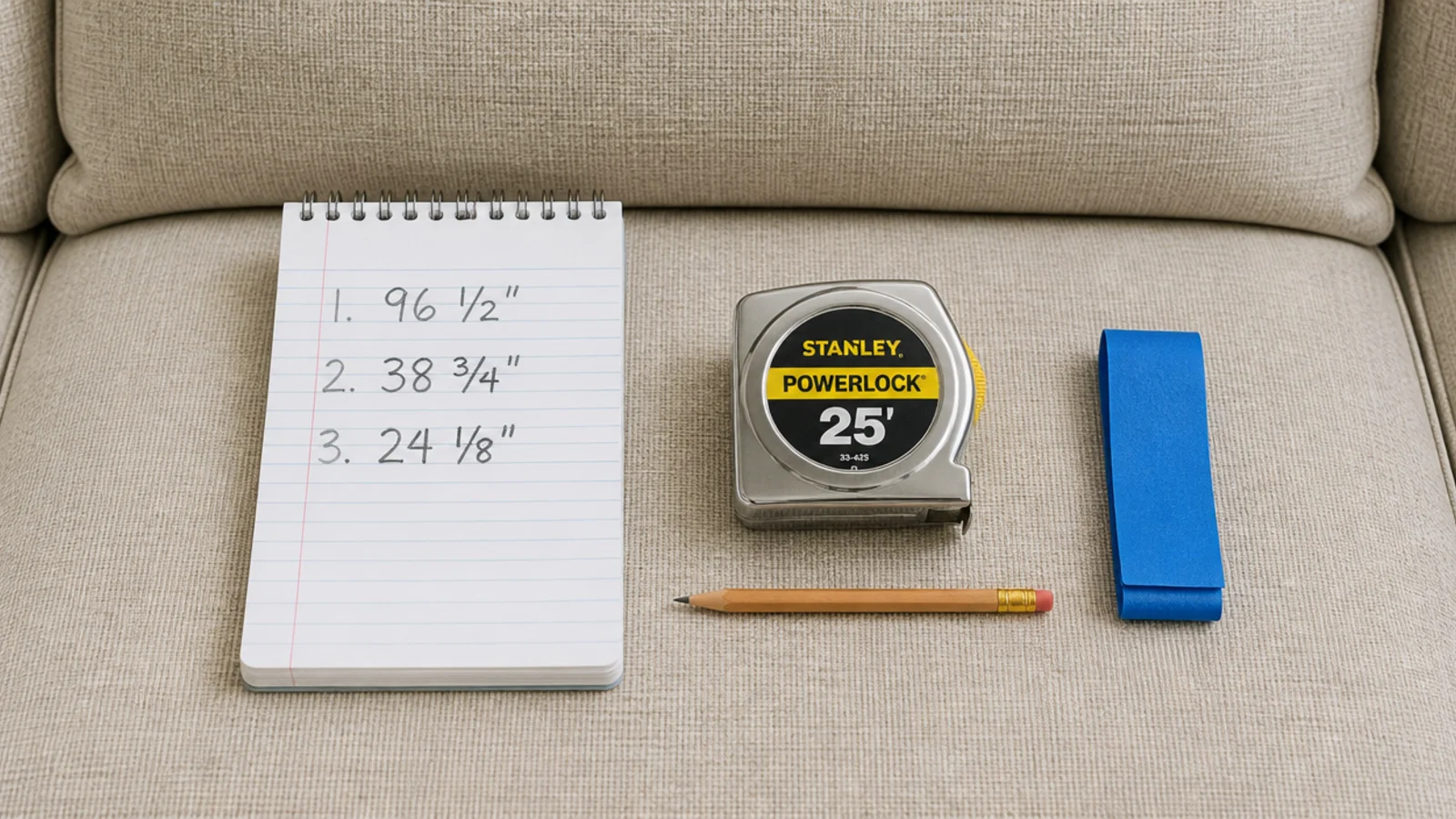
- Steel tape measure and a notepad. Three sofa measurements written down beat any amount of standing back and squinting.
- Painter tape. For marking the centre line and the bottom line on the wall, where you can see them from across the room and remove them without a trace.
- Newspaper or kraft paper and scissors for a full-size template. This is the step that saves the second set of holes.
- Stud finder. Run it across the whole span, not just the spot you have already decided on.
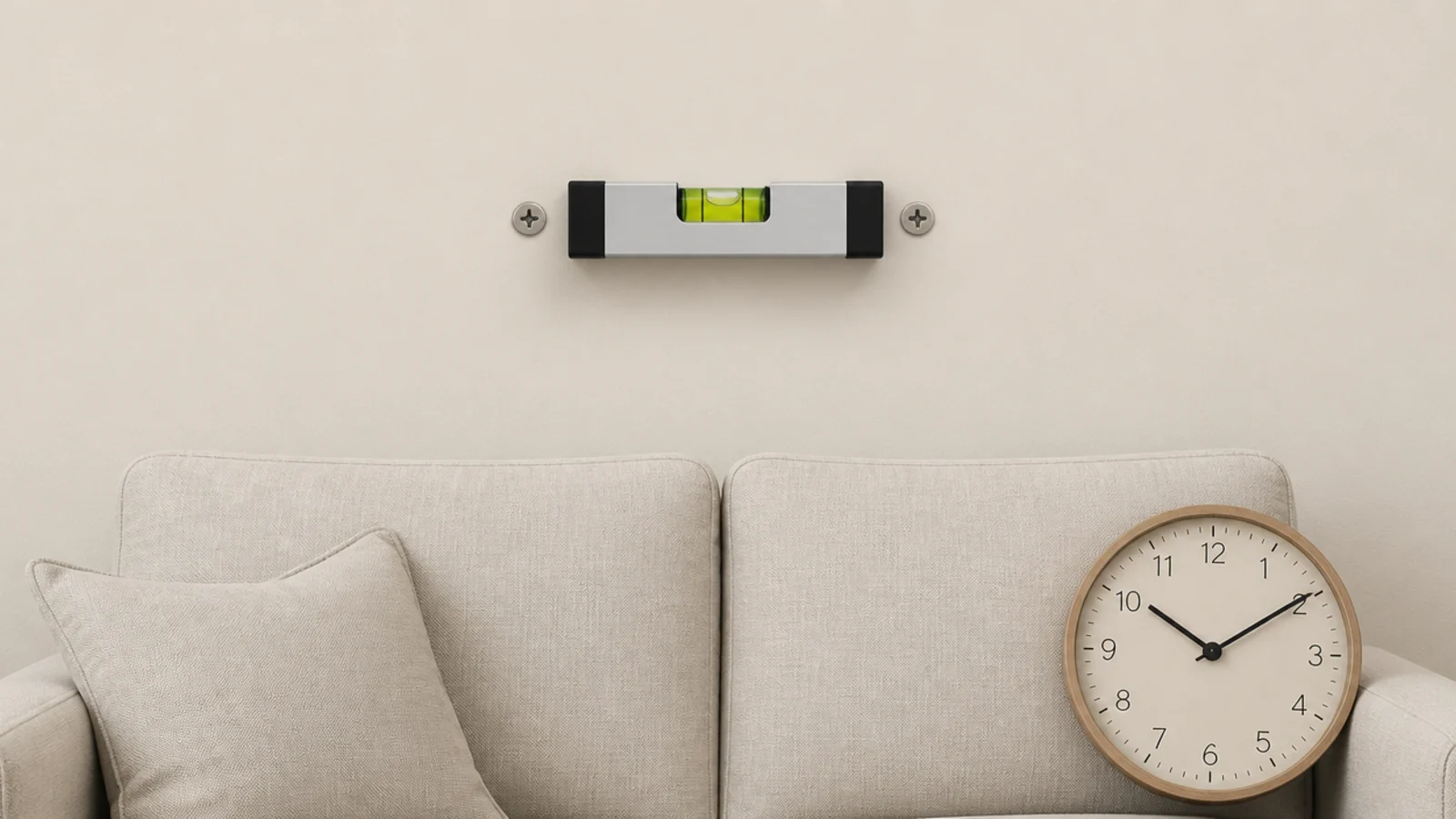
- A 24-inch spirit level. Long enough to bridge two hanging points, which a short torpedo level is not.
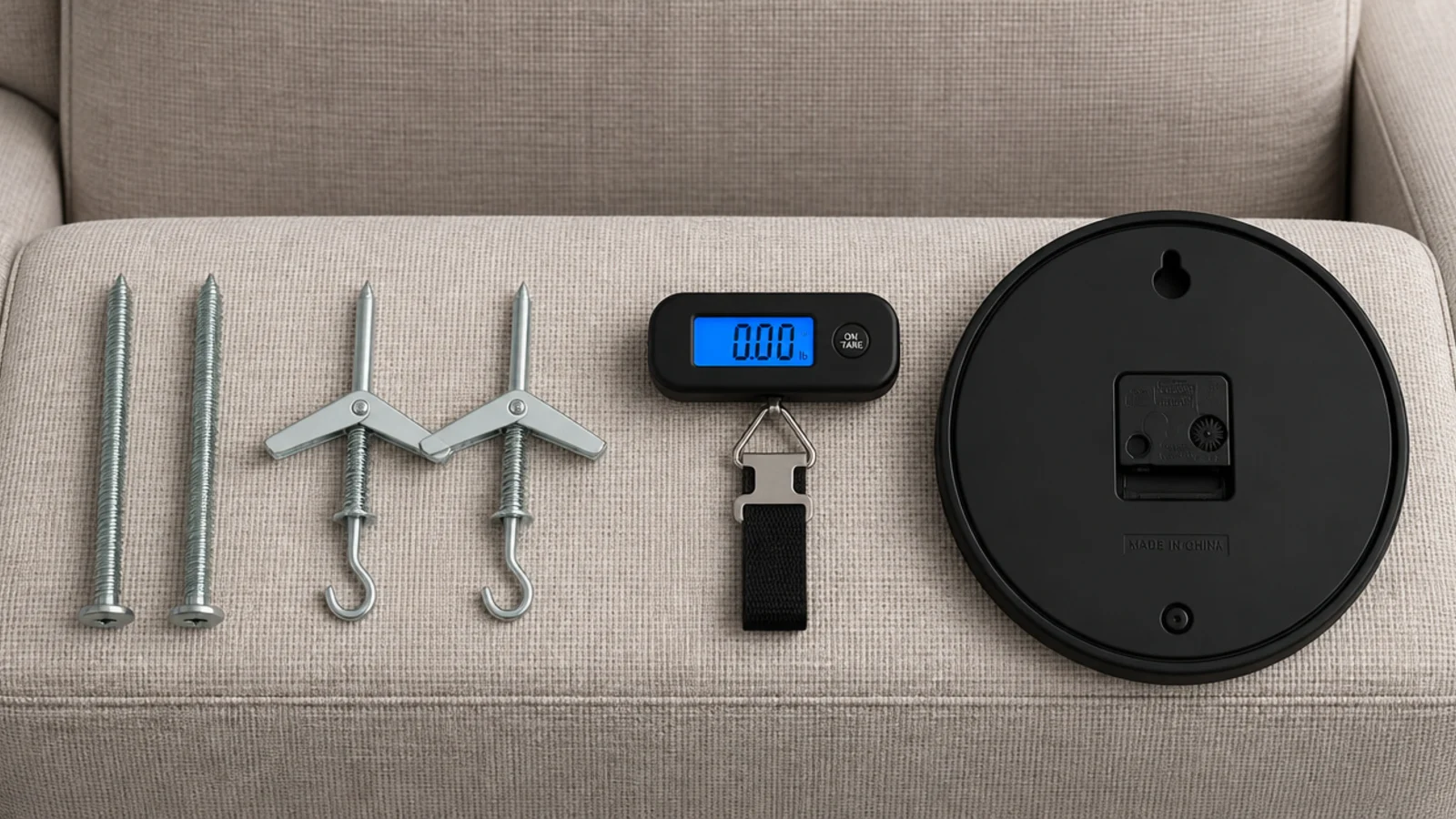
- Small luggage scale to weigh the clock before choosing anything.
- Cordless drill, number eight screws 2 inches long, and spring toggles for the positions with no framing behind them.
- Museum putty for a single-slot clock, and your phone for photographing the template from the seat you actually use.
Step 1: Measure the sofa and write three numbers down
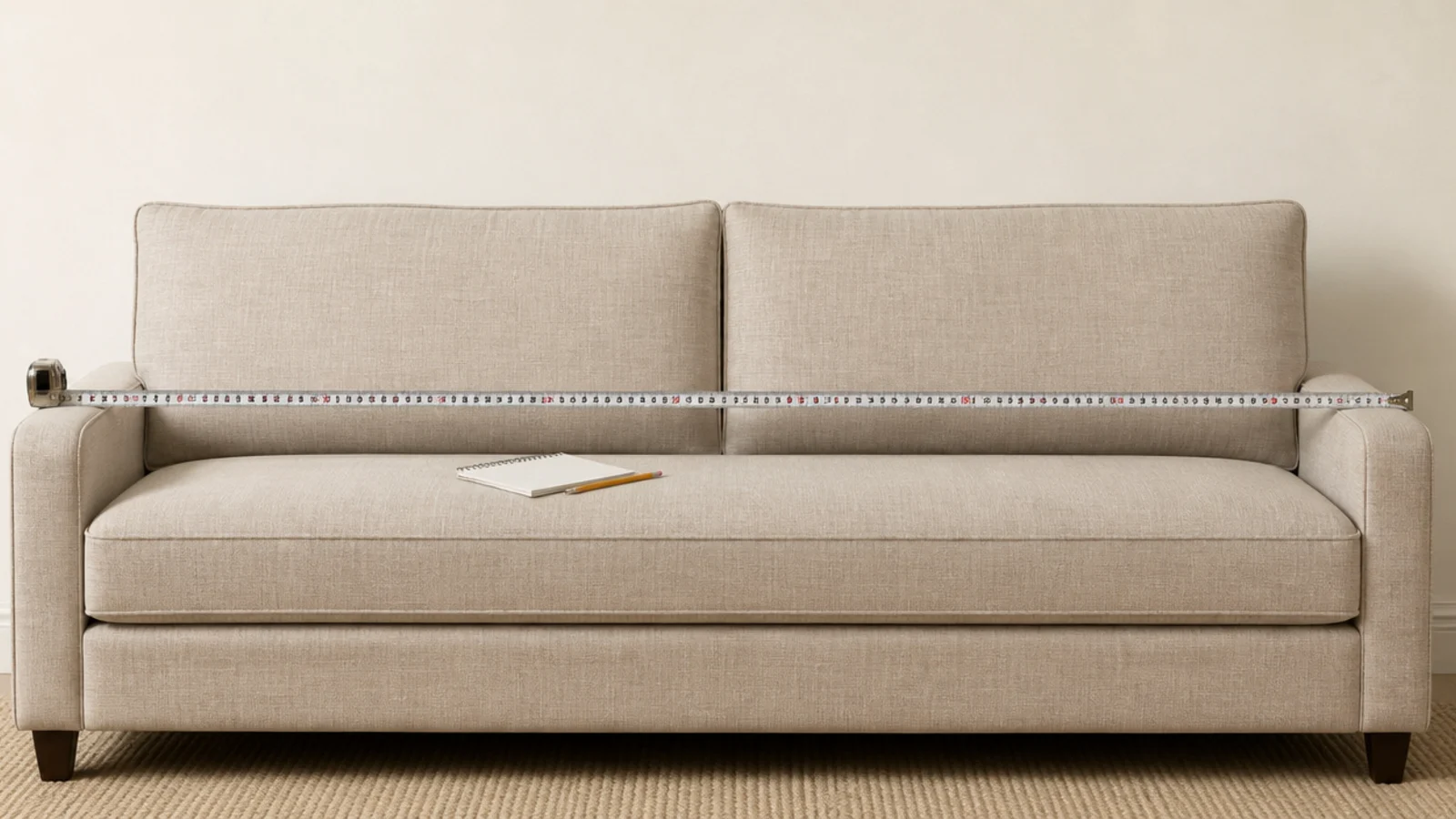
Width across the arms, height from the floor to the top of the back cushions, and the distance from the wall to the front of the seat. The first sets your diameter, the second sets the bottom line, the third tells you the viewing distance from the chair opposite. Write them on paper rather than trusting memory, because every later decision refers back to them.
Step 2: Decide between one face and a grouping
One large clock anchors a wall with a single fixing and no alignment problem. A grouping fills a wider wall and hides small errors, but needs consistent 2 to 3 inch spacing and multiplies the fixings. On a wall over 10 feet with a long sofa, one 30-inch face is usually the better answer and always the cheaper install.
Step 3: Set the diameter from the sofa width
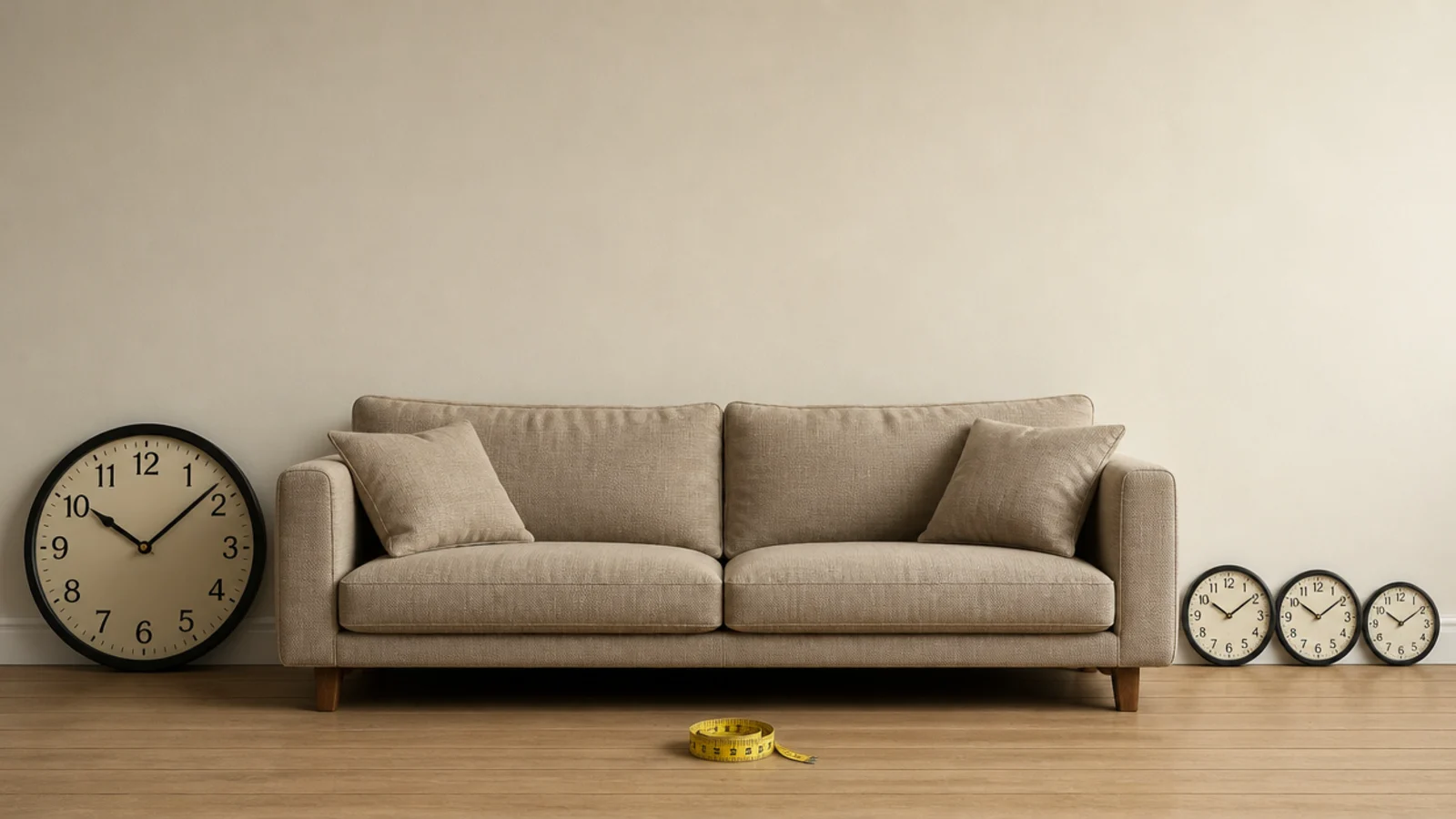
Take your width measurement and divide by three. Write the answer down and shop to it. Almost every clock online is photographed on an empty wall with nothing for scale, so a 16-inch face and a 30-inch one look identical in a listing. This is the decision no amount of styling corrects afterwards.
Step 4: Map what else already lives on that wall
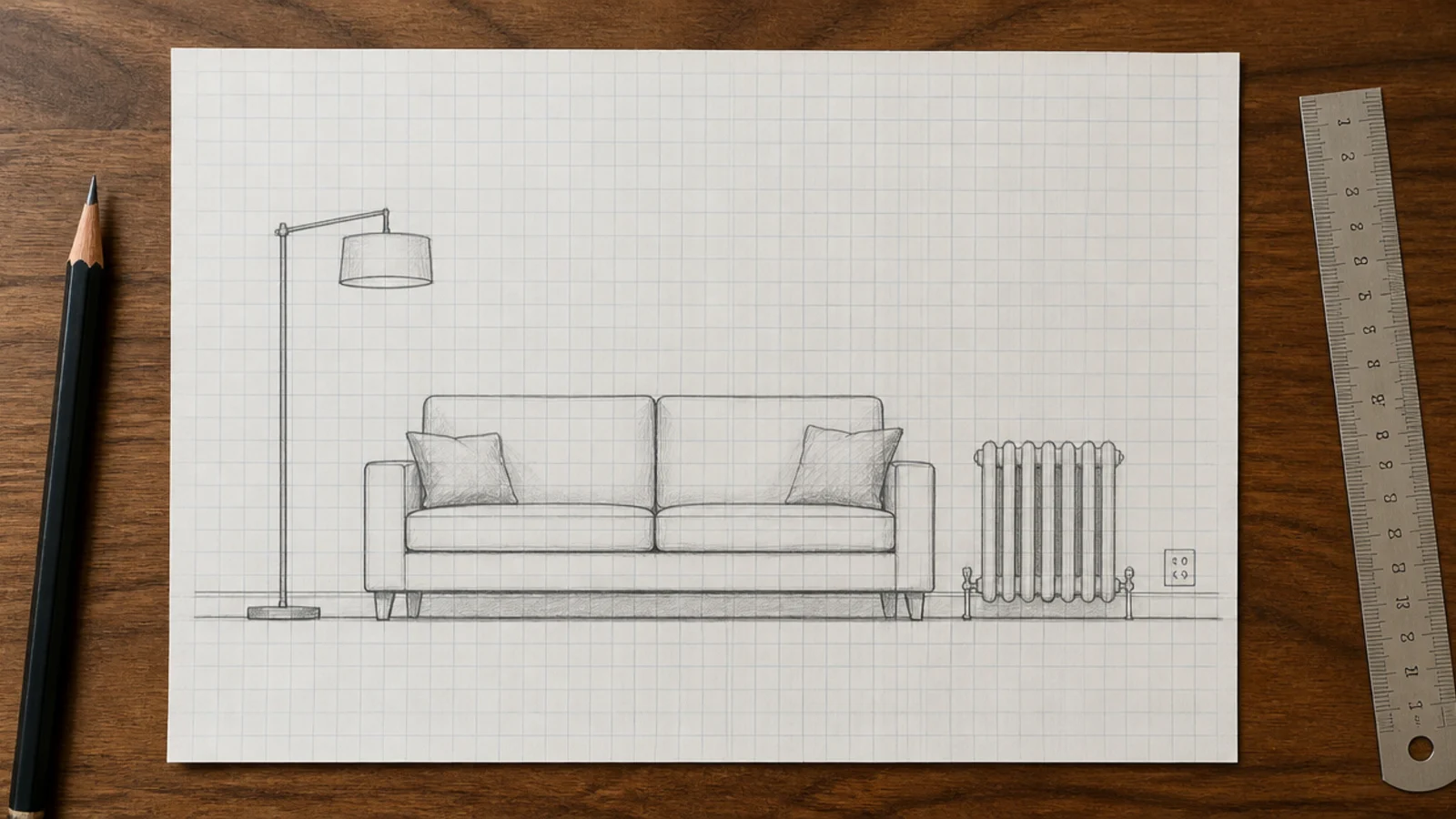
Sketch the wall on graph paper with the radiator, the sockets, the light switch and the floor lamp marked. Practical objects decide more sofa walls than taste does, and finding out that your ideal clock position sits directly above a socket is much cheaper on paper. If the wall also carries shelving, the built-in shelves guide covers leaving usable wall.
Step 5: Check the sightline from the seat opposite
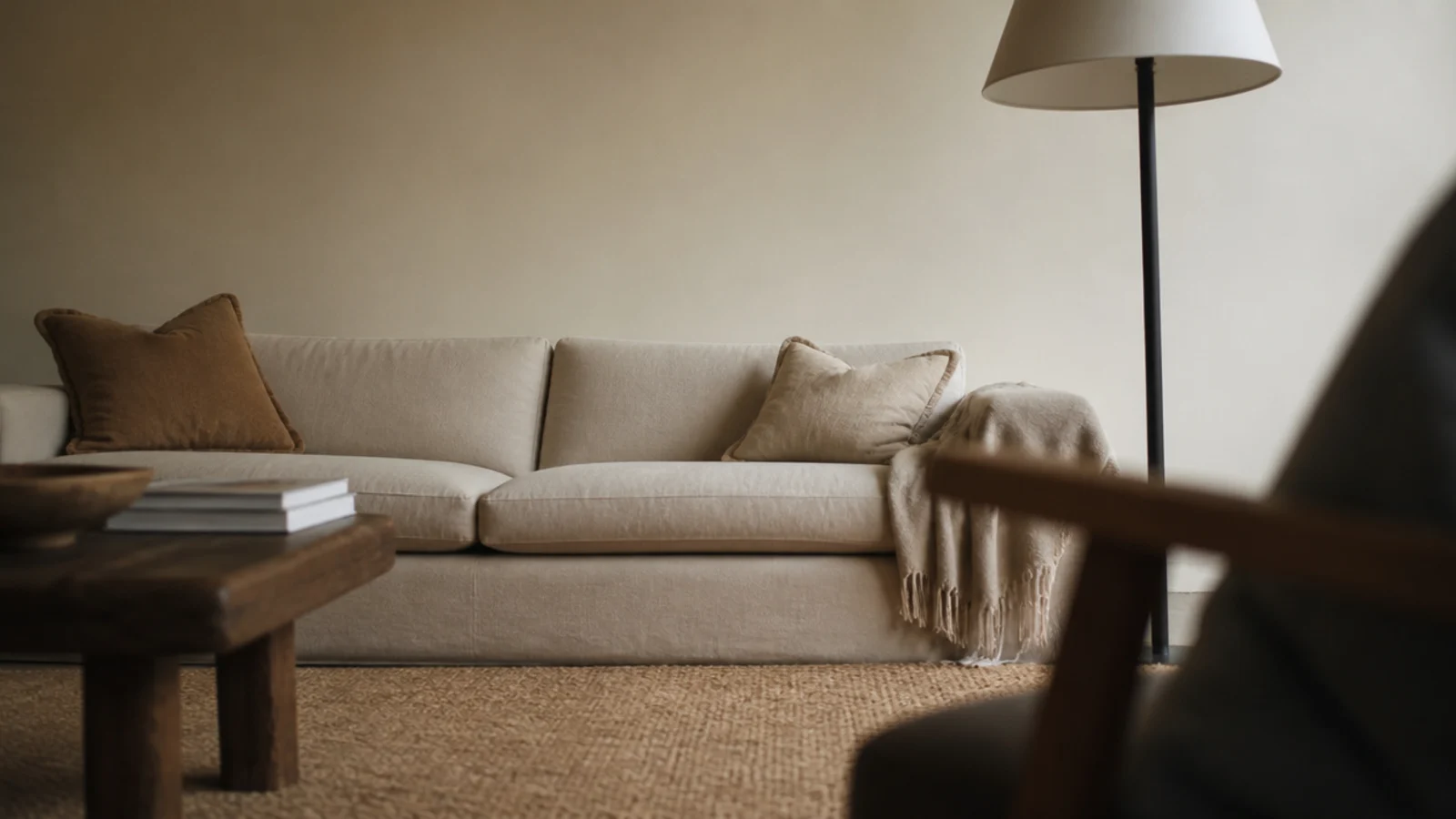
Sit in the chair you actually use and look at the wall. A sofa wall is judged from a fixed low viewpoint, not from the doorway, and the height that looks right standing up is often two inches too high from a low armchair. Take a photograph from that seat — a camera flattens the room the way your memory does not.
Step 6: Mark the true centre of the sofa
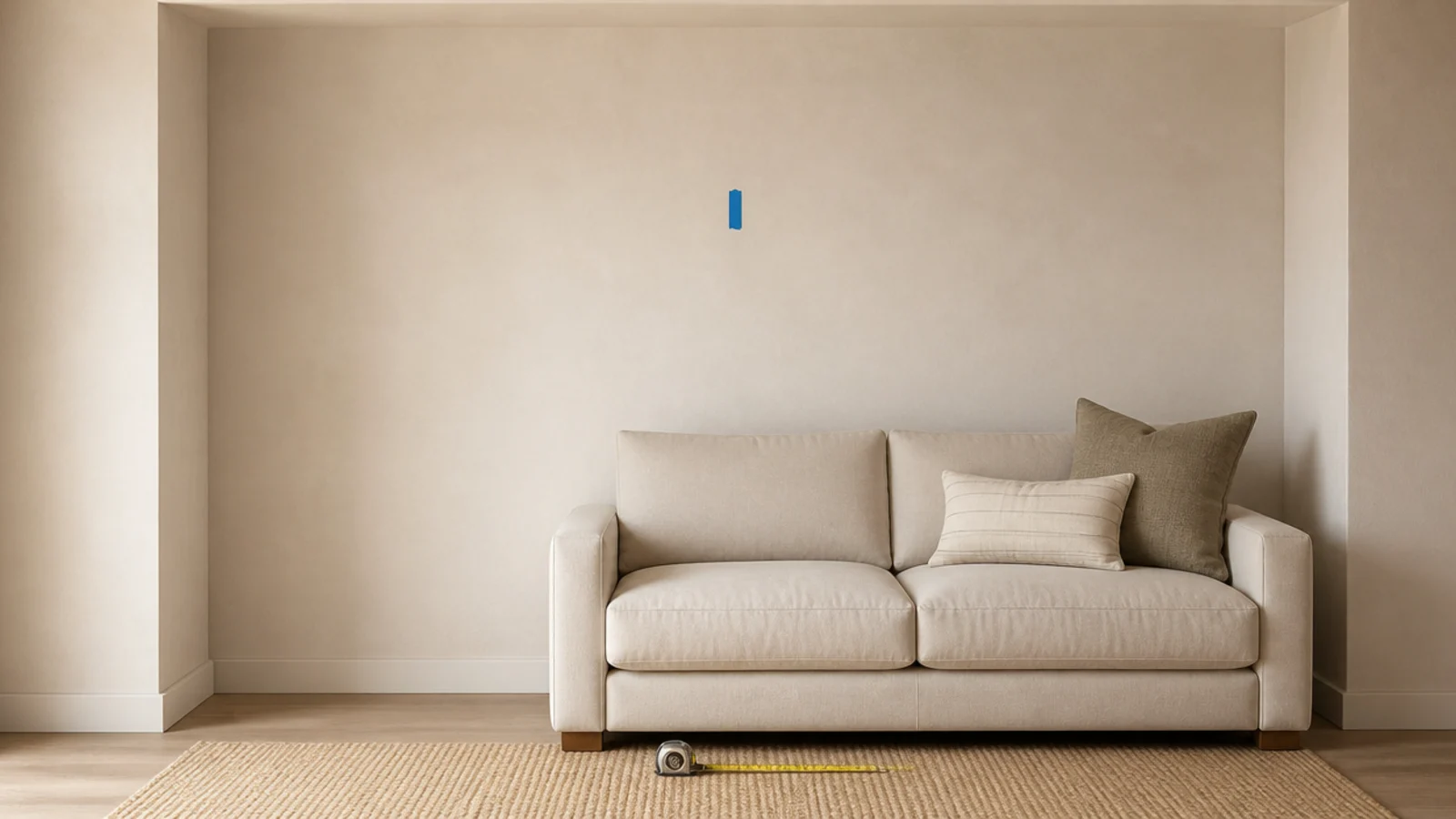
Find the midpoint of the sofa, not the midpoint of the wall, and run a short strip of painter tape vertically above it. In a room with a chimney breast, a door or a radiator, those two points are usually several inches apart, and the eye reads the furniture line first every single time.
Step 7: Set the bottom line above the back cushions
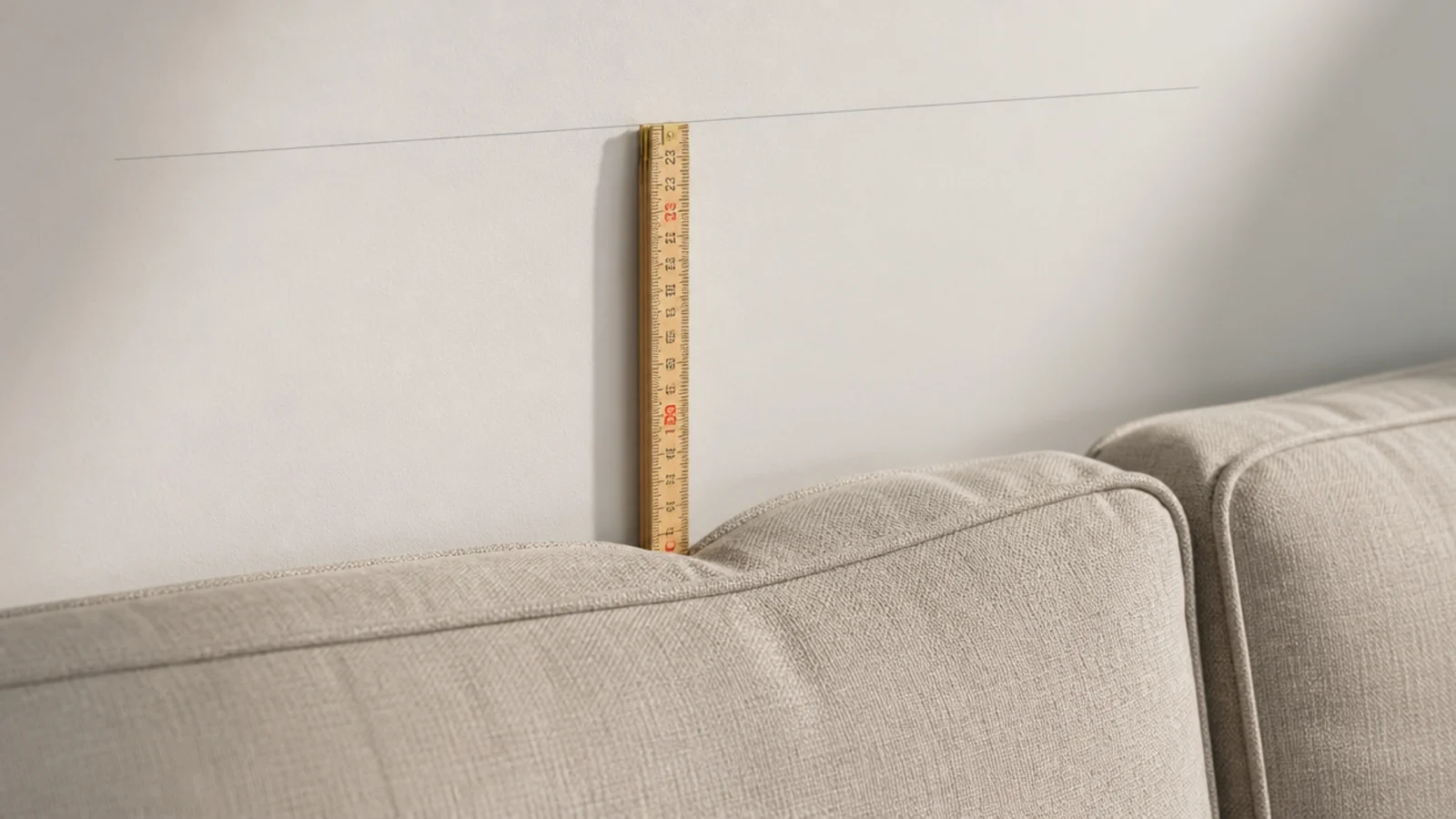
Press the back cushions down as they sit when someone is leaning on them, then measure up 8 to 12 inches and run a horizontal tape line. That is where the bottom of the rim goes. Cushions that are measured plumped read differently once the sofa is in daily use.
Step 8: Convert the bottom line to a centre height
Add the clock radius to the bottom line and check the result against 57 to 60 inches from the floor. If it lands higher than 65, either the clock is too big for the gap you left or the gap needs to shrink toward 8 inches. Adjust the gap before you adjust the diameter.
Step 9: Tape a paper template up for a full day
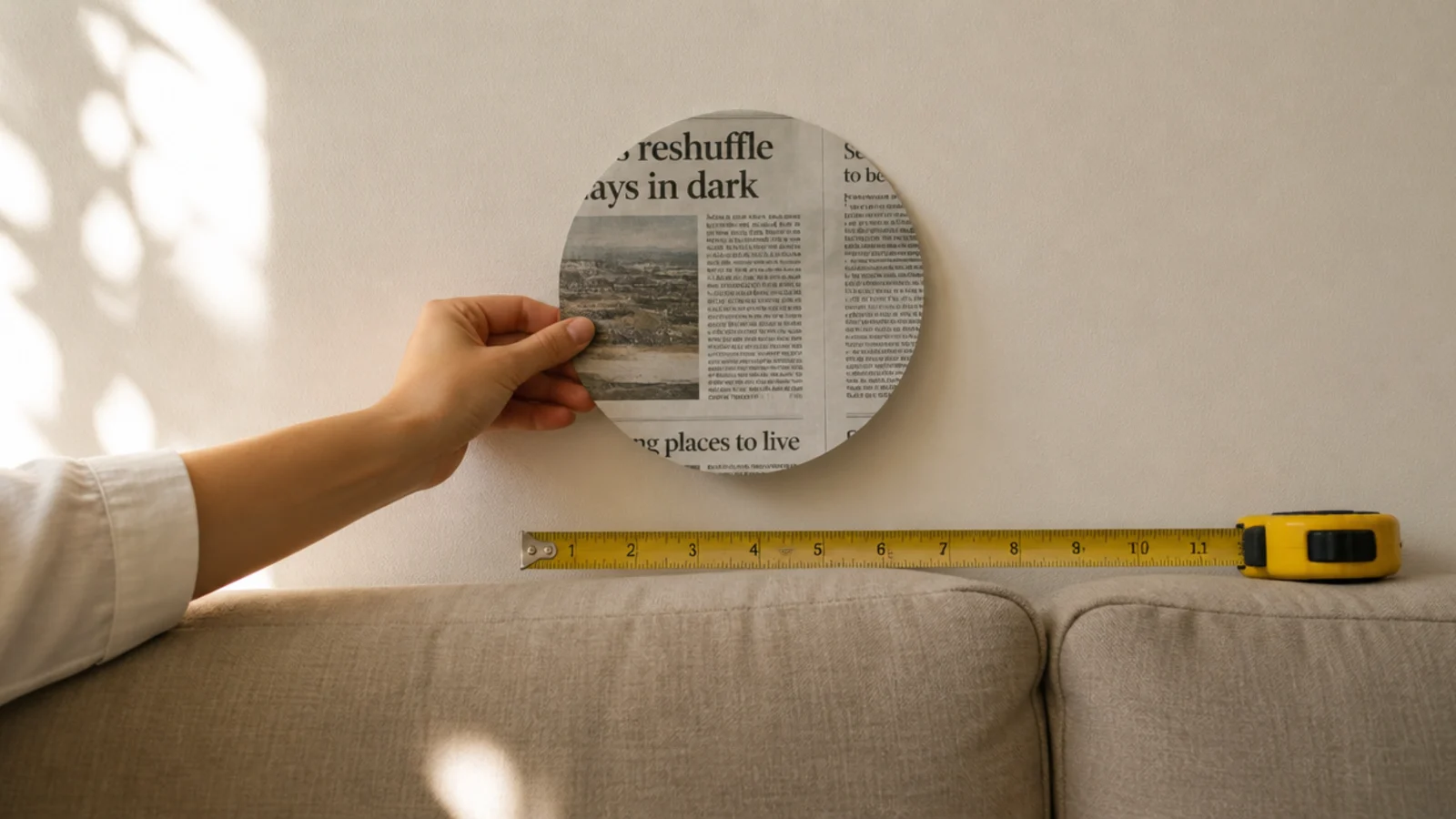
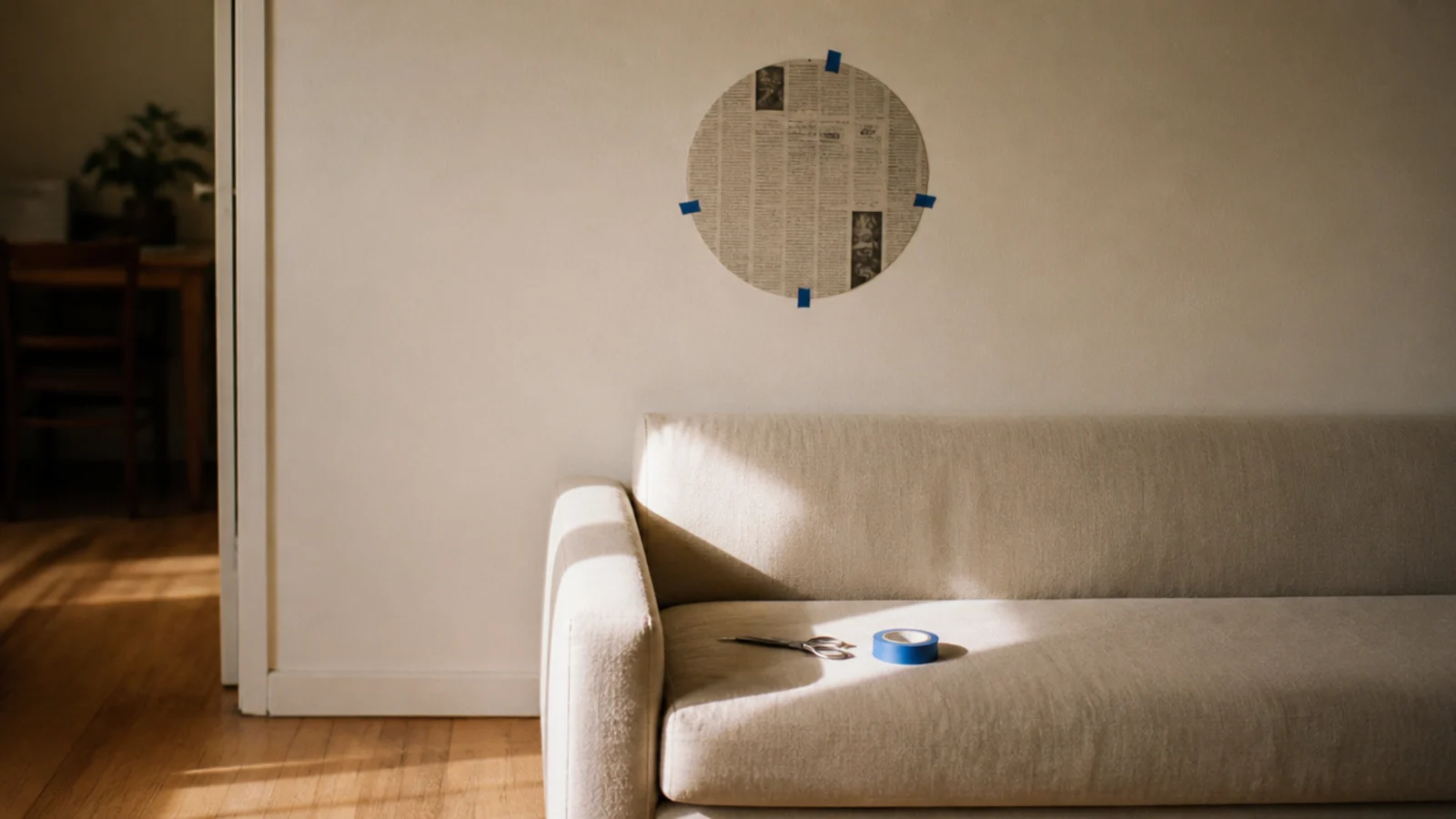
Cut a circle at the exact diameter and tape it in position. A day is not excessive: you want to see it in morning light, in flat afternoon light and with the curtains drawn. Almost every template I have put up has moved at least an inch before the drill came out.
Step 10: Test the balance with the lamps on
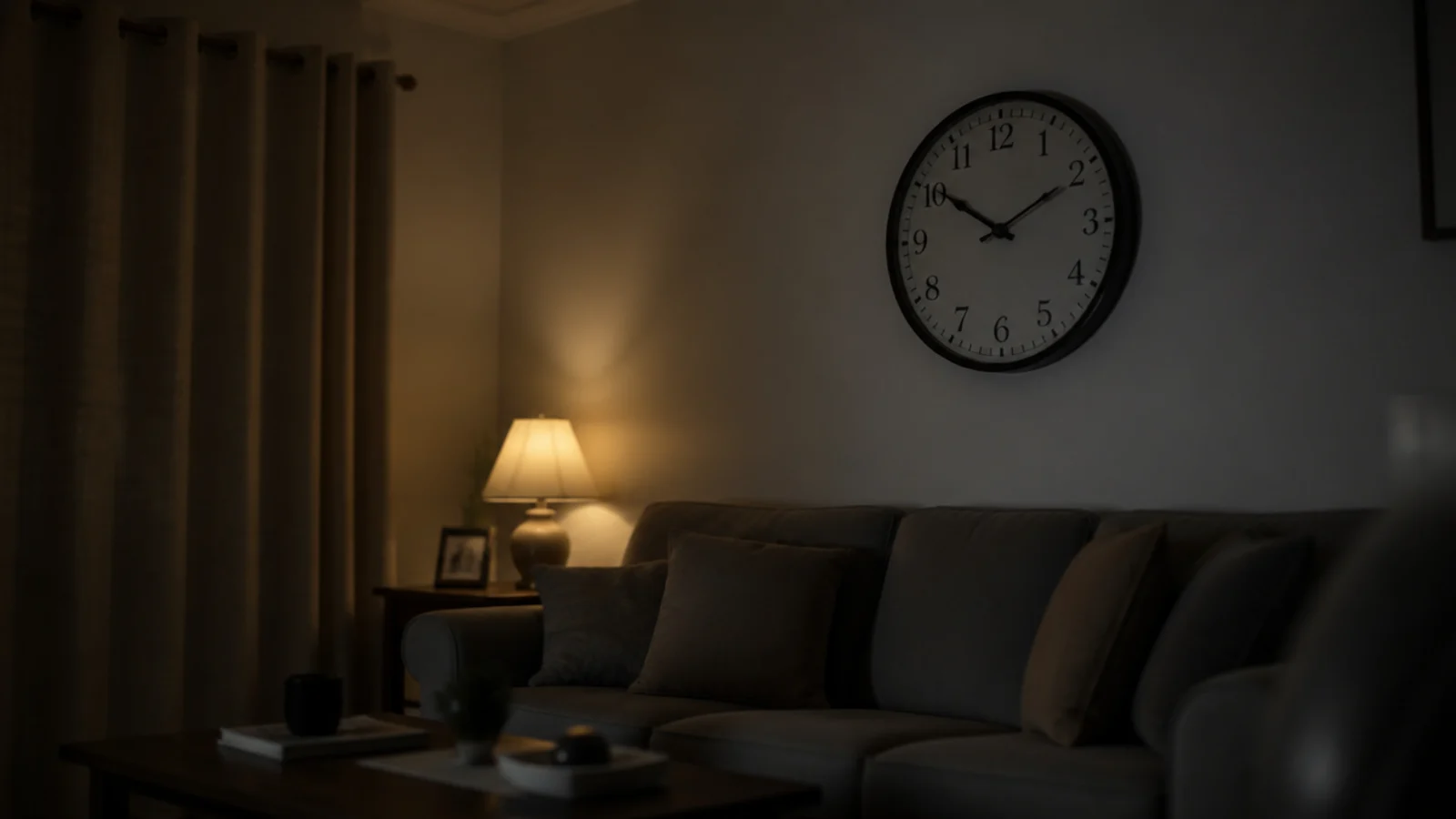
Evening light comes from lamps at 3 to 5 feet, not from a window at 6, so it lands on a wall completely differently. Switch everything on, sit down, and look at the template again. This is where a floor lamp shade cutting the bottom of the dial becomes obvious, and it is easily solved by moving the lamp 8 inches.
Step 11: Find the studs across the whole span
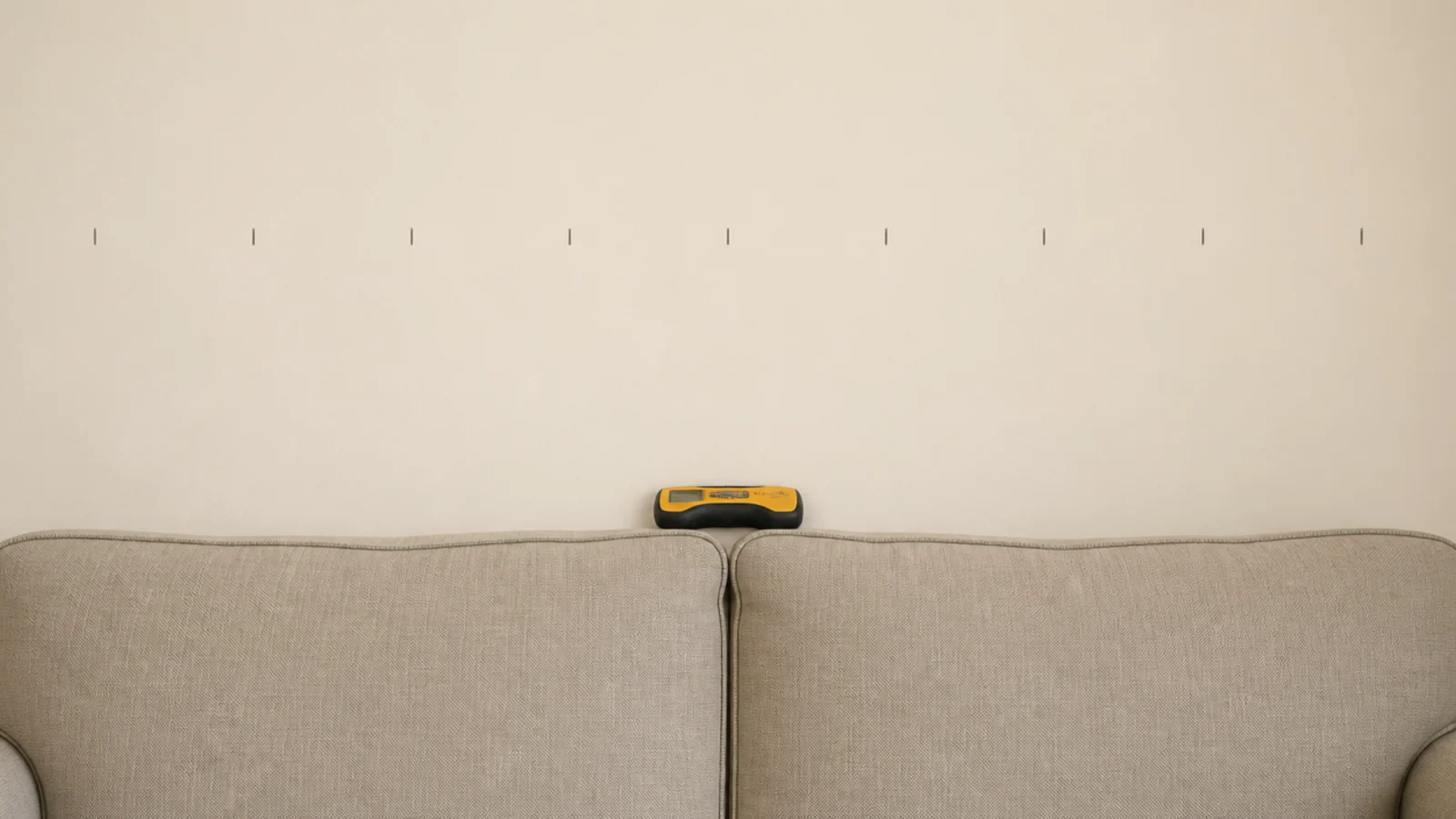
Run the detector across the full width of the wall and mark every hit, not just the one nearest your template. Studs sit 16 inches apart in most framing, so knowing where all of them are lets you shift the clock 3 inches sideways to catch one — a move nobody will ever notice.
Step 12: Match the fixing to the weight you measured
Hook the luggage scale into the hanging slot. Above a sofa, treat every clock as a framing job regardless of what the scale says, because the consequence of a failure is a person rather than a floor. Where framing is genuinely unavailable, use two spring toggles rather than one anchor and keep the clock under 15 pounds.
Step 13: Plan for the quietest hour of the room
Hold the running clock against the wall at night with the television off. A step-tick movement measures 25 to 30 decibels at a metre, which is inaudible at noon and dominant at eleven. A sweep movement costs $12 to $18 and settles it. Do this before the screws go in, not after.
Step 14: Hang on two screws and level it
Measure from the top rim to the hanging slot before you mark anything, because the slot never sits at the very top of the case. Then set two screws 3 to 4 inches apart, level them with the spirit level bridging both, and drop the clock on. Two points stop it pivoting every time the front door shuts.
Step 15: Live with it a week, then edit the wall
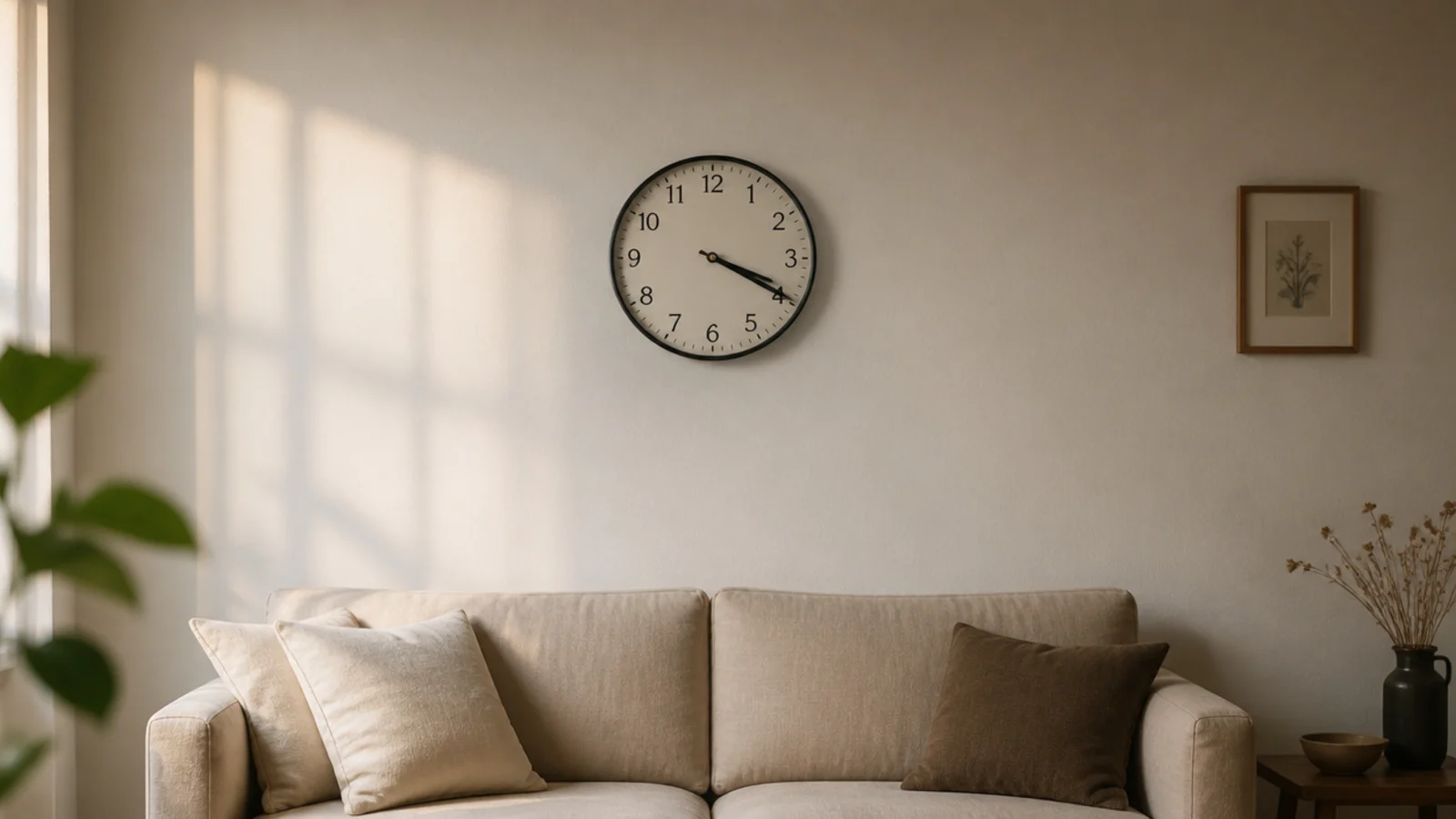
Leave everything else on the wall for seven days, then take two things off and see how it reads. Sofa walls almost always improve with subtraction, and a well-sized clock with clear plaster either side does more than the same clock surrounded by three frames. If a screen shares the wall, the living room TV wall guide covers balancing both.
Pro Styling Rules
For sizing a face that has to carry a wide wall on its own, the large clock comparison sets out what each diameter can actually hold.
Mistakes to Skip
- Hanging at the height that suits standing in a room that is used sitting down. Sit in the chair opposite and check before the drill comes out, because that is the only view this wall ever gets.
- Buying the clock before measuring the sofa. Diameter is the one decision you cannot correct by styling around it, and a third of the sofa width takes thirty seconds to work out.
- Using the plug that came in the box because the clock feels light. Above seating, a two dollar screw into framing is the whole difference between a fixing you check and one you forget about.
- Measuring to the centre of the dial and drilling there. The hanging slot sits below the top rim, and ignoring that gap is why so many carefully planned clocks end up an inch high.
Frequently asked questions
What size clock goes above a sofa?
Around a third of the sofa width. An 84-inch three-seater suits 24 to 30 inches across, a 72-inch two-seater suits 20 to 26, and anything under 18 inches on a full-size sofa reads as an accessory rather than the anchor that wall needs.
How far above the sofa should the clock hang?
Leave 8 to 12 inches of clear wall between the top of the back cushions and the bottom of the rim. Under 8 inches the clock looks like it is resting on the sofa, and over about 14 the two stop reading as a group and start looking like separate decisions.
Should the clock be centred on the sofa or the wall?
On the sofa, every time. In most real rooms the sofa is not centred on its wall because of a chimney breast, a door or a radiator, and the eye reads the furniture line first. A clock centred on the wall above an off-centre sofa always looks slightly wrong.
Can I hang a heavy clock above a sofa?
Only into framing. A number eight screw two inches long into a stud carries far more than any clock weighs, while the plastic plug supplied in the box is rated near ten pounds when new and weakens over time. Above seating, that margin is not worth saving two dollars on.
How do I stop the clock competing with a lamp?
Check the sightline sitting down with the lamps on. Nothing should overlap the bottom third of the dial from the seat you use most, and a tall floor lamp shade cutting across the rim is the most common conflict on a sofa wall.
Want more like this? Browse all 15 wall clock guides — they all use the same measurements and budget tiers.
Pin it for later
Save this to your Wall Clock board
Pin it now so it is waiting for you when the tape measure comes out — and so the next person hunting for this idea can find it too.
Save this pinKeep going
More ideas worth saving while you have the tape measure out.